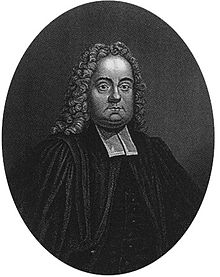
__________________________________________________________________ Title: Commentary on the Whole Bible Volume VI (Acts to Revelation) Creator(s): Henry, Matthew Print Basis: 1706-1721 Rights: Public domain. May be copied and distributed freely. CCEL Subjects: All; Bible; Classic LC Call no: BS490.H4 LC Subjects: The Bible Works about the Bible __________________________________________________________________ Matthew Henry's Commentary on the Whole Bible Unabridged Volume VI Acts to Revelation __________________________________________________________________ P R E F A C E. Acts to Revelation __________________________________________________________________ After much expectation, and many enquiries, the last volume of the late reverend Mr. Henry's Exposition now appears in the world. The common disadvantages that attend posthumous productions will doubtless be discerned in this; but we hope, though there are diversities of gifts, there will be found to be the same spirit. Some of the relations and hearers of that excellent person have been at the pains of transcribing the notes they took in short-hand of this part of the holy scripture, when expounded by him in his family or in the congregation; they have furnished us with very good materials for the finishing of this great work, and we doubt not but that the ministers who have been concerned in it have made that use of those assistances which may entitle this composure to the honour of Mr. Henry's name; and, if so, they can very willingly conceal their own. The New Testament may be very properly divided into two parts, the one historical the other epistolary. It is the exposition of the latter we now recommend, and shall offer some thoughts on the epistolary way of writing in general, and then proceed to observe the divine authority of these epistles, together with the style, matter, method, and design of them, leaving what might be said concerning the several inspired penmen to the prefaces appertaining to the particular epistles. As to the epistolary way of writing, it may be sufficient to observe that it has usually three properties:--It may in some things be more difficult to be understood, but then it is very profitable, and very pleasant; these will be found to be the properties of these sacred letters. We shall meet with things not easy to be understood, especially in some parts of them, where we cannot so well discover the particular occasions on which they were written or the questions or matters of fact to which they refer; but this is abundantly compensated by the profit which will accrue to those that read them with due attention. They will find the strongest reasoning, the most moving expostulations, and warm and pressing exhortations, mixed with seasonable cautions and reproofs, which are all admirably fitted to impress the mind with suitable sentiments and affections. And how much solid pleasure and delight must this afford to persons of a serious and religious spirit, especially when they wisely and faithfully apply to themselves what they find to suit their case! Thus they will appear to be as truly written to them as if their names were superscribed on them. It is natural for us to be very much pleased in perusing a wise and kind letter, full of instruction and comfort, sent to us by an absent friend: how then should we prize this part of holy scripture, when we consider herein that our God and Saviour has written these letters to us, in which we have the great things of his law and gospel, the things that belong to our peace! By these means not only the holy apostles, being dead, yet speak, but the Lord of the prophets and apostles continues to speak and write to us; and while we read them with proper affections, and follow them with suitable petitions and thanksgivings, a blessed correspondence and intercourse will be kept up between heaven and us, while we are yet sojourners in the earth. But it is the divine inspiration and authority of these epistles we are especially concerned to know; and it is of the last importance that in this our minds be fully established. And we have strong and clear evidence that these epistles were written by the apostles of our Lord Jesus, and that they (like the prophets of the Old Testament) spoke and wrote as they were moved by the Holy Ghost. These epistles have in all ages of the church been received by Christians as a part of those holy scriptures that are given by inspiration of God, and are profitable for doctrine, for reproof, for correction, and for instruction in righteousness, and are able to make us wise to salvation through faith which is in Jesus Christ; they are part of that perpetual universal rule of faith and life which contains doctrines and revelations we are bound to believe with a divine faith, as coming from the God of truth, and duties to be practised by us in obedience to the will of God, acknowledging that the things written therein are the commandments of God, 1 Cor. xiv. 37. And, for the same reasons that lead us to acknowledge the other parts of the Bible to be the word of God, we must own these to be so too. If there is good reason (as indeed there is) to believe that the books of Moses were written by inspiration of God, there is the same reason to believe that the writings of the prophets were also from God, because the law and the prophets speak the same things, and such things as none but the Holy Ghost could teach; and, if we must with a divine faith believe the Old Testament to be a revelation from God, we cannot with any good reason question the divine authority of the New, when we consider how exactly the histories of the one agree with the prophecies of the other, and how the dark types and shadows of the law are illustrated and accomplished in the gospel. Nor can any person who pretends to believe the divine authority of the historical part of the New Testament, containing the Gospels and the Acts, with good reason question the equal authority of the epistolary part; for the subject-matter of all these epistles, as well as of the sermons of the apostles, is the word of God (Rom. x. 17; 1 Thess. ii. 13; Col. i. 25), and the gospel of God (Rom. xv. 16; 2 Cor. xi. 7), and the gospel of Christ, 2 Cor. ii. 12. We are built upon the foundation of the apostles and prophets, Jesus Christ himself being the chief corner-stone; and, as Moses wrote of Christ, so did all the prophets, for the Spirit of Christ in them did testify of him. And the apostles confirmed what Christ himself began to teach, God also bearing them witness with signs, and wonders, and divers miracles, and gifts of the Holy Ghost, according to his will, Heb. ii. 3, 4. The manifestation of God in the flesh, and the things he began both to do and teach until the day in which he was taken up, together with his sufferings unto death, and his resurrection (which things are declared to us, and are firmly to be believed, and strictly regarded by us), do give us an ample account of the way of life and salvation by Jesus Christ; but still it was the will of our blessed Lord that his apostles should not only publish his gospel to all the world, but also that, after his resurrection, they should declare some things more plainly concerning him than he thought fit to do while he was here on earth, for which end he promised to send his Holy Spirit to teach them all things, to bring all things to their remembrance which he had spoken unto them, John xiv. 26. For he told them (John xvi. 12, 13), I have many things to say unto you, but you cannot bear them now; but when he, the Spirit of truth, is come, he shall lead you into all truth, and shall show you things to come. Accordingly we find there was a wonderful effusion of the Holy Spirit upon the apostles (who in these epistles are called the servants, ambassadors, and ministers of Christ, and stewards of the mysteries of God), under whose infallible guidance they preached the gospel, and declared the whole counsel of God, and that with amazing courage and success, Satan every where falling down before them like lightning from heaven. That in preaching the gospel they were under the influence of the infallible Spirit is undeniable, from the miraculous gifts and powers they received for their work, particularly that gift of tongues so necessary for the publication of the gospel throughout the world to nations of different languages; nor must we omit that mighty power that accompanied the word preached, bringing multitudes to the obedience of faith, notwithstanding all opposition from earth and hell, and the potent lusts in the hearts of those who were turned from idols to serve the living God, and to wait for his Son from heaven, whom he raised from the dead, even Jesus, that delivered us from the wrath to come. Now that they were under the same mighty influence in writing these epistles as in preaching cannot be denied. Such infallible assistance seems to be as needful at least to direct their writing as their preaching, considering that these epistles were written to keep in memory those things that had been delivered by word of mouth (2 Pet. i. 15), and to rectify the mistakes that might arise about some expressions that had been used in preaching (2 Thess. ii. 2), and were to remain as a standing rule and record to which believers were to appeal, for defending the truth and discovering error, and a proper means to transmit the truths of the gospel to posterity, even to the end of time. Besides, the writers of these epistles have declared that what they wrote was from God: now they must know whether they had the special assistance of the divine Spirit or no, in their writing as well as preaching; and they in all things appear to have been men of such probity that they would not dare to say they had the Spirit of God when they had it not, or if they so much as doubted whether they had it or not; yea, they are careful, when they speak their own private opinion, or only under some common influence, to tell the world that not the Lord, but they, spoke those things, but that in the rest it was not they but the Lord, 1 Cor. vii. 10, 12, &c. And the apostle Paul makes the acknowledgment of this their inspiration to be a test to try those that pretended to be prophets or spiritual: Let them (says he) acknowledge that the things I write unto you are the commandments of the Lord, 1 Cor. xiv. 37. And the apostle Peter gives this as the reason of his writing, that those he wrote to might after his decease have those things always in remembrance (2 Pet. i. 15), which afterwards he calls the commandment of the apostles of the Lord (ch. iii. 1, 2), and so of the Lord himself. And the apostles John declareth (1 John iv. 6), We are of God; he that knoweth God heareth us; he that is not of God heareth not us; by this we know the Spirit of truth, and the spirit of error. As to the style of these epistles, though it be necessary we should believe a divine influence superintending the several writers of them, yet it is not easy to explain the manner of it, nor to determine whether and in what particulars the words they wrote were dictated to them by the Holy Spirit, as mere amanuenses, or how far their own memories, and reasoning faculties, and other natural or acquired endowments, were employed under the inspection of the Spirit. We must believe that these holy men spoke and wrote as they were moved by the Holy Ghost, that he put them on and assisted them in this work. It is very probable that sometimes he not only suggested the very thoughts in their minds, but put words into their mouths, and always infallibly guided them into all truth, both when they expounded the scriptures of the Old Testament and when they gave rules for our faith and practice in the gospel church state. And yet perhaps it may be allowed, without any diminution to the authority of these epistles, that the penmen of them made some use of their own reasoning powers and different endowments in their manner of writing, as well as of their different sorts of chirography; and that by this we are to account for that difference of style which has been observed between the writings of Paul, who was brought up at the feet of Gamaliel, and those of Peter and John, who were fishermen. The like difference may be discerned between the style of the prophet Isaiah, who was educated in a court, and that of Amos, who was one of the herdsmen of Tekoa. However, the best way to understand these scriptures aright is not to criticise too nicely upon the words and phrases, but to attend carefully to the drift and design of these inspired writers in them. The subject-matter of these epistles is entirely conformable to the rest of the scriptures. In them we find frequent reference to some passages of the Old Testament, and explanations of them: in the epistle to the Hebrews we have the best exposition of the Levitical law. Indeed the New Testament refers to, and in a manner builds upon, the Old, showing the accomplishment of all the ancient promises and prophecies concerning the Messiah, and explains all the antiquated types and shadows of the good things that were then to come. But, besides these references to the preceding part of holy writ, in some of these epistles there are contained prophecies, either wholly new or at least more largely and plainly revealed, as that in the Revelation concerning the rise, reign, and fall of antichrist, of which great apostasy we have some account in 2 Thess. ii. 3, 4, and in 1 Tim. iv. 1-3. And in these epistles we have several of the great doctrines of the gospel more fully discussed than elsewhere, particularly the doctrine of original sin, of the sin that dwells in the regenerate, and of justification by the righteousness of Christ, of the abolishing of the Jewish rites and ceremonies, of the true nature and design of the seals of the new covenant, the obligations they bring us under, and their perpetual use in the Christian church. The general method of these epistles is such as best serves the end or design of them, which is indeed the end of the whole scripture--practical godliness, out of a principle of divine love, a good conscience, and faith unfeigned. Accordingly most of the epistles begin with the great doctrines of the gospel, the articles of the Christian faith, which, when received, work by love, purify the conscience, and produce evangelical obedience; and, after these principles have been laid down, practical conclusions are drawn and urged from them. In taking this method there is a regard paid to the nature and faculties of the soul of man (where the understanding is to lead the way, the will, affections, and executive powers, to follow after), and to the nature of religion in general, which is a reasonable service. We are not to be determined by superstitious fancies, nor by blind passions, but by a sound judgment and good understanding in the mind and will of God. By this we are taught how necessary it is that faith and practice, truth and holiness, be joined together, that the performance of moral duties will never be acceptable to God, nor available to our own salvation, without the belief of the truth, since those who make shipwreck of the faith seldom maintain a good conscience, and the most solemn profession of the faith will never save those that hold the truth in unrighteousness. The particular occasions upon which these epistles were written do not so evidently appear in them all as in some. The first to the Corinthians seems to have taken its rise from the unhappy divisions that so early rose in the churches of Christ, through the emulation of the ministers and personal affections of the people; but it does not confine itself to that subject. That to the Galatians seems directed chiefly against those judaizing teachers that went about to draw the Gentile converts away from the simplicity of the gospel in doctrine and worship. The epistle to the Hebrews is manifestly calculated to wean the converted Jews from those Mosaical rites and ceremonies for which they retained too great a fondness, and to reconcile them to the abolition of that economy. Those epistles that are directed to particular persons more evidently carry their design in them, which he that runs may read. But this is certain, none of these epistles are of private interpretation. Most of the psalms and of the prophecies of the Old Testament were penned or pronounced on particular occasions, and yet they are of standing and universal use, and very instructive even to us upon whom the ends of the world have come. And so are those epistles that seem to have been most limited in the rise and occasion of them. There will always be need enough to warn Christians against uncharitable divisions, against corrupting the faith and worship of the gospel; and, whenever the case is the same, these epistles are as certainly directed to such churches and persons as if they had been inscribed to them. These general observations, we suppose, may be sufficient to introduce the reader into the book itself; let us now take a short view of the whole work, of which this posthumous piece is the conclusion. It is now about fourteen years since the first part of this exposition of the Bible was made public. In five years' time the Old Testament was finished in four volumes. The first volume of the New Testament was longer in hand; for though the ever-memorable author was always fully employed in the ordinary work of his ministry, yet those last years of his life, in which he drew up the exposition upon the historical part of the New Testament, were less at his own command than any other had been. His removal to Hackney, his almost continual preaching from day to day, his journeys to Chester, and the necessity of more frequent visits to his friends in and about London, together with a gradual sensible decay of health, will more than excuse the three years' time that passed before that was finished. And under such difficulties none but a man of his holy zeal, unwearied industry, and great sagacity, could have gone through such a service in that space of time. He lived not to see that volume published, though left by him ready for the press. The church of God was suddenly deprived of one of the most useful ministers of the age. We have been gathering up the fragments of those feasts with which he used to entertain his family and friends, in his delightful work of opening the scriptures. What remains is that we recommend the whole of this work to the acceptance and blessing of our God and Saviour, to whose honour and interest it was from the first directed and devoted. We need not be very solicitous about the acceptance it may meet with in the world: what has been before published has been received and read with great pleasure and advantage by the most serious experienced Christians in Great Britain and Ireland; and the many loud calls there have been for the publishing of this supplement, and reprinting the whole, leave us no room to doubt but that it will meet with a hearty welcome. Though it must be acknowledged that we live in an age which by feeding upon ashes and the wind, has very much lost the relish of every thing that is spiritual and evangelical, yet we persuade ourselves there will still be found many who, by reason of use, have, their senses exercised to discern both good and evil. Those that may think the expository notes too long, especially for family worship, may easily relieve themselves, either by reading a less part of the chapter at one time, or by abridging the annotations, and perusing the rest when they have more leisure; for, though it must be owned they are somewhat copious, yet we are persuaded that those who peruse them seriously will find nothing in them superfluous or impertinent; and, if any where some things in the comment do not seem to flow so naturally and necessarily from the text, we believe when they are well considered and compared it will appear they come under the analogy and general reason of the subject, and truly belong to it. If there be any that think this exposition of the Bible is too plain and familiar, that it wants the beauties of oratory and the strength of criticism, we only wish that they will read it over again with due attention, and we are pretty confident they will find the style natural, clear, and comprehensive; and we think they will hardly be able to produce one valuable criticism out of the most learned commentators but they will have it in this exposition, though couched in plain terms, and not brought in as of a critical nature. No man was more happy than Mr. Henry in that useful talent of making dark things plain, while too many, that value themselves upon their criticising faculty, affect rather to make plain things dark. But we leave this great and good work to speak for itself, and doubt not but it will grow in its use and esteem, and will, through the blessing of God, help to revive and promote family religion and scriptural knowledge, and support the credit of scripture commentaries, though couched in human expressions. These have been always accounted the great treasures of the church, and when done with judgment, have been so far from lessening the authority of the Bible that they have greatly promoted its honour and usefulness. The following are the ministers by whom the Exposition on the Epistolary writings, and the Revelation, was completed, as given by J. B. Williams, Esq., LL.D.,F.S.A., in his Memoirs of the Life, Character, and Writings, of the Rev. Matthew Henry, 8vo. p. 308. Romans Mr. [afterwards Dr.] John Evans. 1 Corinthians Mr. Simon Browne. 2 Corinthians Mr. Daniel Mayo. Galatians Mr. Joshua Bayes. Ephesians Mr. Samuel Rosewell. Philippians } Mr. [afterwards Dr.] William Harris. Colossians 1 Thessalonians } Mr. Daniel Mayo. 2 Thessalonians 1 Timothy } Mr. Benjamin Andrews Atkinson. 2 Timothy Titus } Mr. Jeremiah Smith. Philemon Hebrews Mr. William Tong. James Dr. S. Wright. 1 Peter Mr. Zec. Merrill. 2 Peter Mr. Joseph Hill. 1, 2, and 3 John Mr. John Reynolds, of Shrewsbury. Jude Mr. John Billingsley. Revelation Mr. William Tong. __________________________________________________________________ __________________________________________________________________ Acts __________________________________________________________________ AN EXPOSITION, W I T H P R A C T I C A L O B S E R V A T I O N S, OF THE A C T S O F T H E A P O S T L E S. __________________________________________________________________ We have with an abundant satisfaction seen the foundation of our holy religion laid in the history of our blessed Saviour, its great author, which was related and left upon record by four several inspired writers, who all agree in this sacred truth, and the incontestable proofs of it, that Jesus is the Christ, the Son of the living God. Upon this rock the Christian church is built. How it began to be built upon this rock comes next to be related in this book which we have now before us, and of this we have the testimony only of one witness; for the matters of fact concerning Christ were much more necessary to be fully related and attested than those concerning the apostles. Had Infinite Wisdom seen fit, we might have had as many books of the Acts of the Apostles as we have gospels, nay, as we might have had gospels: but, for fear of over-burdening the world (John xxi. 25), we have sufficient to answer the end, if we will but make use of it. The history of this book (which was always received as a part of the sacred canon) may be considered. I. As looking back to the preceding gospels, giving light to them, and greatly assisting our faith in them. The promises there made we here find made good, particularly the great promises of the descent of the Holy Ghost, and his wonderful operations, both on the apostles (whom here in a few days we find quite other men than what the gospels left them; no longer weak-headed and weak-hearted, but able to say that which then they were not able to bear (John xvi. 12) as bold as lions to face those hardships at the thought of which they then trembled as lambs), and also with the apostles, making the word mighty to the pulling down of Satan's strong holds, which had been before comparatively preached in vain. The commission there granted to the apostles we here find executed, and the powers there lodged in them we here find exerted in miracles wrought on the bodies of people--miracles of mercy, restoring sick bodies to health and dead bodies to life--miracles of judgment, striking rebels blind or dead; and much greater miracles wrought on the minds of people, in conferring spiritual gifts upon them, both of understanding and utterance; and this in pursuance of Christ's purposes, and in performance of his promises, which we had in the gospels. The proofs of Christ's resurrection with which the gospels closed are here abundantly corroborated, not only by the constant and undaunted testimony of those that conversed with him after he arose (who had all deserted him, and one of them denied him, and would not otherwise have been rallied again but by his resurrection, but must have been irretrievably dispersed, and yet by that were enabled to own him more resolutely than ever, in defiance of bonds and deaths), but by the working of the Spirit with that testimony for the conversion of multitudes to the faith of Christ, according to the word of Christ, that his resurrection, the sign of the prophet Jonas, which was reserved to the last, should be the most convincing proof of his divine mission. Christ had told his disciples that they should be his witnesses, and this book brings them in witnessing for him,--that they should be fishers of men, and here we have them enclosing multitudes in the gospel-net,--that they should be the lights of the world, and here we have the world enlightened by them; but that day--spring from on high the first appearing of which we there discerned we here find shining more and more. The corn of wheat, which there fell to the ground, here springs up and bears much fruit; the grain of mustard-seed there is here a great tree; and the kingdom of heaven, which was then at hand, is here set up. Christ's predictions of the virulent persecutions which the preachers of the gospel should be afflicted with (though one could not have imagined that a doctrine so well worthy of all acceptation should meet with so much opposition) we here find abundantly fulfilled, and also the assurances he gave them of extraordinary supports and comforts under their sufferings. Thus, as the latter part of the history of the Old Testament verifies the promises made to the fathers of the former part (as appears by that famous and solemn acknowledgment of Solomon's, which runs like a receipt in full, 1 Kings viii. 56, There has not failed one word of all his good promises which he promised by the hand of Moses his servant), so this latter part of the history of the New Testament exactly answers to the world of Christ in the former part of it: and thus they mutually confirm and illustrate each other. II. As looking forward to the following epistles, which are an explication of the gospels, which open the mysteries of Christ's death and resurrection, the history of which we had in the gospels. This book introduces them and is a key to them, as the history of David is to David's psalms. We are members of the Christian church, that tabernacle of God among men, and it is our honour and privilege that we are so. Now this book gives us an account of the framing and rearing of that tabernacle. The four gospels showed us how the foundation of that house was laid; this shows us how the superstructure began to be raised, 1. Among the Jews and Samaritans, which we have an account of in the former part of this book. 2. Among the Gentiles, which we have an account of in the latter part: from thence, and downward to our own day, we find the Christian church subsisting in a visible profession of faith in Christ, as the Son of God and Saviour of the world, made by his baptized disciples, incorporated into religious societies, statedly meeting in religious assemblies, attending on the apostles' doctrine, and joining in prayers and the breaking of bread, under the guidance and presidency of men that gave themselves to prayer and the ministry of the word, and in a spiritual communion with all in every place that do likewise. Such a body as this thee is now in the world, which we belong to: and, to our great satisfaction and honour, in this book we find the rise and origin of it, vastly different from the Jewish church, and erected upon its ruins; but undeniably appearing to be of God, and not of man. With what confidence and comfort may we proceed in, and adhere to, our Christian profession, as far as we find it agrees with this pattern in the mount, to which we ought religiously to conform and confine ourselves! Two things more are to be observed concerning this book:--(1.) The penman of it. It was written by Luke, who wrote the third of the four gospels, which bears his name; and who (as the learned Dr. Whitby shows) was, very probably, one of the seventy disciples, whose commission (Luke x. 1, &c.) was little inferior to that of the twelve apostles. This Luke was very much a companion of Paul in his services and sufferings. Only Luke is with me, 2 Tim. iv. 11. We may know by his style in the latter part of this book when and where he was with him, for then he writes, We did so and so, as ch. xvi. 10; xx. 6; and thenceforward to the end of the book. He was with Paul in his dangerous voyage to Rome, when he was carried thither a prisoner, was with him when from his prison there he wrote his epistles to the Colossians and Philemon, in both which he is named. And it should seem that St. Luke wrote this history when he was with St. Paul at Rome, during his imprisonment there, and was assistant to him; for the history concludes with St. Paul's preaching there in his own hired house. (2.) The title of it: The Acts of the Apostles; of the holy Apostles, so the Greek copies generally read it, and so they are called, Rev. xviii. 20, Rejoice over her you holy apostles. One copy inscribes it, The Acts of the Apostles by Luke the Evangelist. [1.] It is the history of the apostles; yet there is in it the history of Stephen, Barnabas, and some other apostolical men, who, though not of the twelve, were endued with the same Spirit, and employed in the same work; and, of those that were apostles, it is the history of Peter and Paul only that is here recorded (and Paul was now of the twelve), Peter the apostle of the circumcision, and Paul the apostles of the Gentiles, Gal. ii. 7. But this suffices as a specimen of what the rest did in other places, pursuant to their commission, for there were none of them idle; and as we are to think what is related in the gospels concerning Christ sufficient, because Infinite Wisdom thought so, the same we are to think here concerning what is related of the apostles and their labours; for what more is told us from tradition of the labours and sufferings of the apostles, and the churches they planted, is altogether doubtful and uncertain, and what I think we cannot build upon with any satisfaction at all. This is gold, silver, and precious stones, built upon the foundation: that is wood, hay, and stubble. [2.] It is called their acts, or doings; Gesta apostolorum; so some. Praxeis--their practices of the lessons their Master had taught them. The apostles where active men; and though the wonders they did were by the word, yet they are fitly called their acts; they spoke, or rather the Spirit by them spoke, and it was done. The history is filled with their sermons and their sufferings; yet so much did they labour in their preaching, and so voluntarily did they expose themselves to sufferings, and such were their achievements by both, that they may very well be called their acts. __________________________________________________________________ A C T S. CHAP. I. The inspired historian begins his narrative of the Acts of the Apostles, I. With a reference to, and a brief recapitulation of, his gospel, or history of the life of Christ, inscribing this, as he had done that, to his friend Theophilus, ver. 1, 2. II. With a summary of the proofs of Christ's resurrection, his conference with his disciples, and the instructions he gave them during the forty days, of his continuance on earth, ver. 3-5. III. With a particular narrative of Christ's ascension into heaven, his disciples' discourse with him before he ascended, and the angels' discourse with them after he ascended, ver. 6-11. IV. With a general idea of the embryo of the Christian church, and its state from Christ's ascension to the pouring out of the Spirit, ver. 12-14. V. With a particular account of the filling up of the vacancy that was made in the sacred college by the death of Judas, by the electing of Matthias in his room, ver. 15-26. Proofs of Christ's Resurrection; Christ's Address to His Apostles. 1 The former treatise have I made, O Theophilus, of all that Jesus began both to do and teach, 2 Until the day in which he was taken up, after that he through the Holy Ghost had given commandments unto the apostles whom he had chosen: 3 To whom also he showed himself alive after his passion by many infallible proofs, being seen of them forty days, and speaking of the things pertaining to the kingdom of God: 4 And, being assembled together with them, commanded them that they should not depart from Jerusalem, but wait for the promise of the Father, which, saith he, ye have heard of me. 5 For John truly baptized with water; but ye shall be baptized with the Holy Ghost not many days hence. In these verses, I. Theophilus is put in mind, and we in him, of St. Luke's gospel, which it will be of use for us to cast an eye upon before we enter upon the study of this book, that we may not only see how this begins where that breaks off, but that, as in water face answers to face, so do the acts of the apostles to the acts of their Master, the acts of his grace. 1. His patron, to whom he dedicates this book (I should rather say his pupil, for he designs, in dedicating it to him, to instruct and direct him, and not to crave his countenance or protection), is Theophilus, v. 1. In the epistle dedicatory before his gospel, he had called him most excellent Theophilus; here he calls him no more than O Theophilus; not that he had lost his excellency, nor that it was diminished and become less illustrious; but perhaps he had now quitted his place, whatever it was, for the sake of which that title was given him,--or he was now grown into years, and despised such titles of respect more than he had done,--or Luke was grown more intimate with him, and therefore could address him with the more freedom. It was usual with the ancients, both Christian and heathen writers, thus to inscribe their writings to some particular persons. But the directing some of the books of the scripture so is an intimation to each of us to receive them as if directed to us in particular, to us by name; for whatsoever things were written aforetime were written for our learning. 2. His gospel is here called the former treatise which he had made, which he had an eye to in writing this, intending this for a continuation and confirmation of that, ton proton logon--the former word. What is written of the gospel is the word as truly as what was spoken; nay, we now know no unwritten word that we are to give credit to, but as it agrees with that which is written. He made the former treatise, and now is divinely inspired to make this, for Christ's scholars must go on towards perfection, Heb. vi. 1. And therefore their guides must help them on, must still teach the people knowledge (Eccl. xii. 9), and not think that their former labours, though ever so good, will excuse them from further labours; but they should rather be quickened and encouraged by them, as St. Luke here, who, because he had laid the foundation in a former treatise, will build upon it in this. Let not this therefore drive out that; let not new sermons and new books make us forget old ones, but put us in mind of them, and help us to improve them. 3. The contents of his gospel were that, all that, which Jesus began both to do and teach; and the same is the subject of the writings of the other three evangelists. Observe, (1.) Christ both did and taught. The doctrine he taught was confirmed by the miraculous works he did, which proved him a teacher come from God (John iii. 2); and the duties he taught were copied out in the holy gracious works he did, for he hath left us an example, and that such as proves him a teacher come from God too, for by their fruits you shall know them. Those are the best ministers that both do and teach, whose lives are a constant sermon. (2.) He began both to do and teach; he laid the foundation of all that was to be taught and done in the Christian church. His apostles were to carry on and continue what he began, and to do and teach the same things. Christ set them in, and then left them to go on, but sent his Spirit to empower them both to do and teach. It is a comfort to those who are endeavouring to carry on the work of the gospel that Christ himself began it. The great salvation at the first began to be spoken by the Lord, Heb. ii. 3. (3.) The four evangelists, and Luke particularly, have handed down to us all that Jesus began both to do and to teach; not all the particulars--the world could not have contained them; but all the heads, samples of all, so many, and in such variety, that by them we may judge of the rest. We have the beginnings of his doctrine (Matt. iv. 17), and the beginnings of his miracles, John ii. 11. Luke had spoken, had treated, of all Christ's sayings and doings, had given us a general idea of them, though he had not recorded each in particular. 4. The period of the evangelical story is fixed to the day in which he was taken up, v. 2. Then it was that he left this world, and his bodily presence was no more in it. St. Mark's gospel concludes with the Lord's being received up into heaven (Mark xvi. 19), and so does St. Luke's, Luke xxiv. 51. Christ continued doing and teaching to the last, till he was taken up to the other work he had to do within the veil. II. The truth of Christ's resurrection is maintained and evidenced, v. 3. That part of what was related in the former treatise was so material that it was necessary to be upon all occasions repeated. The great evidence of his resurrection was that he showed himself alive to his apostles; being alive, he showed himself so, and he was seen of them. They were honest men, and one may depend upon their testimony; but the question is whether they were not imposed upon, as many a well-meaning man is. No, they were not; for, 1. The proofs were infallible, tekmeria--plain indications, both that he was alive (he walked and talked with them, he ate and drank with them) and that it was he himself, and not another; for he showed them again and again the marks of the wounds in his hands, and feet, and side, which was the utmost proof the thing was capable of or required. 2. They were many, and often repeated: He was seen by them forty days, not constantly residing with them, but frequently appearing to them, and bringing them by degrees to be fully satisfied concerning it, so that all their sorrow for his departure was done away by it. Christ's staying upon earth so long after he had entered upon his state of exaltation and glory, to confirm the faith of his disciples and comfort their hearts, was such an instance of condescension and compassion to believers as may fully assure us that we have a high priest that is touched with the feeling of our infirmities. III. A general hint given of the instructions he furnished his disciples with, now that he was about to leave them, and they, since he breathed on them and opened their understandings, were better able to receive them. 1. He instructed them concerning the work they were to do: He gave commandments to the apostles whom he had chosen. Note, Christ's choice is always attended with his charge. Those whom he elected into the apostleship expected he should give them preferments, instead of which he gave them commandments. When he took his journey, and gave authority to his servants, and to every one his work (Mark xiii. 34), he gave them commandments through the Holy Ghost, which he was himself filled with as Mediator, and which he had breathed into them. In giving them the Holy Ghost, he gave them his commandments; for the Comforter will be a commander; and his office was to bring to their remembrance what Christ had said. He charged those that were apostles by the Holy Ghost; so the words are placed. It was their receiving the Holy Ghost that sealed their commission, John xx. 22. He was not taken up till after he had given them their charge, and so finished his work. 2. He instructed them concerning the doctrine they were to preach: He spoke to them of the things pertaining to the kingdom of God. He had given them a general idea of that kingdom, and the certain time it should be set up in the world (in his parable, Mark xiii.), but here he instructed them more in the nature of it, as a kingdom of grace in this world and of glory in the other, and opened to them that covenant which is the great charter by which it is incorporated. Now this was intended, (1.) To prepare them to receive the Holy Ghost, and to go through that which they were designed for. He tells them in secret what they must tell the world; and they shall find that the Spirit of truth, when he comes, will say the same. (2.) To be one of the proofs of Christ's resurrection; so it comes in here; the disciples, to whom he showed himself alive, knew that it was he, not only by what he showed them, but by what he said to them. None but he could speak thus clearly, thus fully, of the things pertaining to the kingdom of God. He did not entertain them with discourses of politics or the kingdoms of men, of philosophy or the kingdom of nature, but pure divinity and the kingdom of grace, the things which most nearly concerned them, and those to whom they were sent. IV. A particular assurance given them that they should now shortly receive the Holy Ghost, with orders given them to expect it (v. 4, 5), he being assembled together with them, probably in the interview at the mountain in Galilee which he had appointed before his death; for there is mention of their coming together again (v. 6), to attend his ascension. Though he had now ordered them to Galilee, yet they must not think to continue there; no, they must return to Jerusalem, and not depart thence. Observe, 1. The command he gives them to wait. This was to raise their expectations of something great; and something very great they had reason to expect from their exalted Redeemer. (1.) They must wait till the time appointed, which is now not many days hence. Those that by faith hope promised mercies will come must with patience wait till they do come, according to the time, the set time. And when the time draws nigh, as now it did, we must, as Daniel, look earnestly for it, Dan. ix. 3. (2.) They must wait in the place appointed, in Jerusalem, for there the Spirit must be first poured out, because Christ was to be as king upon the holy hill of Zion; and because the word of the Lord must go forth from Jerusalem; this must be the mother-church. There Christ was put to shame, and therefore there he will have this honour done him, and this favour is done to Jerusalem to teach us to forgive our enemies and persecutors. The apostles were more exposed to danger at Jerusalem than they would have been in Galilee; but we may cheerfully trust God with our safety, when we keep in the way of our duty. The apostles were now to put on a public character, and therefore must venture in a public station. Jerusalem was the fittest candlestick for those lights to be set up in. 2. The assurance he gives them that they shall not wait in vain. (1.) The blessing designed them shall come, and they shall find it was worth waiting for; You shall be baptized with the Holy Ghost; that is, [1.] "The Holy Ghost shall be poured out upon you more plentifully than ever." They had already been breathed upon with the Holy Ghost (John xx. 22), and they had found the benefit of it; but now they shall have larger measures of his gifts, graces, and comforts, and be baptized with them, in which there seems to be an allusion to those Old-Testament promises of the pouring out of the Spirit, Joel ii. 28; Isa. xliv. 3; xxxii. 15. [2.] "You shall be cleansed and purified by the Holy Ghost," as the priests were baptized and washed with water, when they were consecrated to the sacred function: "They had the sign; you shall have the thing signified. You shall be sanctified by the truth, as the Spirit shall lead you more and more into it, and have your consciences purged by the witness of the Spirit, that you may serve the living God in the apostleship." [3.] "You shall hereby be more effectually than ever engaged to your Master, and to his guidance, as Israel was baptized unto Moses in the cloud, and in the sea; you shall be tied so fast to Christ that you shall never, for fear of any sufferings, forsake him again, as once you did." (2.) Now this gift of the Holy Ghost he speaks of, [1.] As the promise of the Father, which they had heard of him, and might therefore depend upon. First, The Spirit was given by promise, and it was at this time the great promise, as that of the Messiah was before (Luke i. 72), and that of eternal life is now, 1 John ii. 25. Temporal good things are given by Providence, but the Spirit and spiritual blessings are given by promise, Gal. iii. 18. The Spirit of God is not given as the spirit of men is given us, and formed within us, by a course of nature (Zech. xii. 1), but by the word of God. 1. That the gift may be the more valuable, Christ thought the promise of the Spirit a legacy worth leaving to his church. 2. That it may be the more sure, and that the heirs of promise may be confident of the immutability of God's counsel herein. 3. That it may be of grace, peculiar grace, and may be received by faith, laying hold on the promise, and depending upon it. As Christ, so the Spirit, is received by faith. Secondly, It was the promise of the Father, 1. Of Christ's Father. Christ, as Mediator, had an eye to God as his Father, fathering his design, and owning it all along. 2. Of our Father, who, if he give us the adoption of sons, will certainly give us the Spirit of adoption, Gal. iv. 5, 6. He will give the Spirit, as the Father of lights, as the Father of spirits, and as the Father of mercies; it is the promise of the Father. Thirdly, This promise of the Father they had heard from Christ many a time, especially in the farewell sermon he preached to them a little before he died, wherein he assured them, again and again, that the Comforter should come. This confirms the promise of God, and encourages us to depend upon it, that we have heard it from Jesus Christ; for in him all the promises of God are yea, and amen. "You have heard it from me; and I will make it good." [2.] As the prediction of John Baptist; for so far back Christ here directs them to look (v. 5): "You have not only heard it from me, but you had it from John; when he turned you over to me, he said (Matt. iii. 11), I indeed baptize you with water, but he that comes after me shall baptize you with the Holy Ghost." It is a great honour that Christ now does to John, not only to quote his words, but to make this great gift of the Spirit, now at hand, to be the accomplishment of them. Thus he confirmeth the word of his servants, his messengers, Isa. xliv. 26. But Christ can do more than any of his ministers. It is an honour to them to be employed in dispensing the means of grace, but it his prerogative to give the Spirit of grace. He shall baptize you with the Holy Ghost, shall teach you by his Spirit, and give his Spirit to make intercession in you, which is more than the best ministers preaching with us. (3.) Now this gift of the Holy Ghost thus promised, thus prophesied of, thus waited for, is that which we find the apostles received in the next chapter, for in that this promise had its full accomplishment; this was it that should come, and we look for no other; for it is here promised to be given not many days hence. He does not tell them how many, because they must keep every day in a frame fit to receive it. Other scriptures speak of the gift of the Holy Ghost to ordinary believers; this speaks of that particular power which, by the Holy Ghost, the first preachers of the gospel, and planters of the church, were endued with, enabling them infallibly to relate to that age, and record to posterity, the doctrine of Christ, and the proofs of it; so that by virtue of this promise, and the performance of it, we receive the New Testament as of divine inspiration, and venture our souls upon it. Christ's Address to His Apostles; Christ's Ascension into Heaven. 6 When they therefore were come together, they asked of him, saying, Lord, wilt thou at this time restore again the kingdom to Israel? 7 And he said unto them, It is not for you to know the times or the seasons, which the Father hath put in his own power. 8 But ye shall receive power, after that the Holy Ghost is come upon you: and ye shall be witnesses unto me both in Jerusalem, and in all Judaea, and in Samaria, and unto the uttermost part of the earth. 9 And when he had spoken these things, while they beheld, he was taken up; and a cloud received him out of their sight. 10 And while they looked stedfastly toward heaven as he went up, behold, two men stood by them in white apparel; 11 Which also said, Ye men of Galilee, why stand ye gazing up into heaven? this same Jesus, which is taken up from you into heaven, shall so come in like manner as ye have seen him go into heaven. In Jerusalem Christ, by his angel, had appointed his disciples to meet him in Galilee; there he appointed them to meet him in Jerusalem again, such a day. Thus he would try their obedience, and it was found ready and cheerful; they came together, as he appointed them, to be the witnesses of his ascension, of which we have here an account. Observe, I. The question they asked him at this interview. They came together to him, as those that had consulted one another about it, and concurred in the question nemine contradicente--unanimously; they came in a body, and put it to him as the sense of the house, Lord, wilt thou at this time restore again the kingdom to Israel? Two ways this may be taken:-- 1. "Surely thou wilt not at all restore it to the present rulers of Israel, the chief priests and the elders, that put thee to death, and, to compass that design, tamely gave up the kingdom to Caesar, and owned themselves his subjects. What! Shall those that hate and persecute thee and us be trusted with power? This be far from thee." Or rather, 2. "Surely thou wilt now restore it to the Jewish nation, as far as it will submit to thee as their king." Now two things were amiss in this question:-- (1.) Their expectation of the thing itself. They thought Christ would restore the kingdom to Israel, that is, that he would make the nation of the Jews as great and considerable among the nations as it was in the days of David and Solomon, of Asa and Jehoshaphat; that, as Shiloh, he would restore the sceptre to Judah, and the lawgiver; whereas Christ came to set up his own kingdom, and that a kingdom of heaven, not to restore the kingdom to Israel, an earthly kingdom. See here, [1.] How apt even good men are to place the happiness of the church too much in external pomp and power; as if Israel could not be glorious unless the kingdom were restored to it, nor Christ's disciples honoured unless they were peers of the realm; whereas we are told to expect the cross in this world, and to wait for the kingdom in the other world. [2.] How apt we are to retain what we have imbibed, and how hard it is to get over the prejudices of education. The disciples, having sucked in this notion with their milk that the Messiah was to be a temporal prince, were long before they could be brought to have any idea of his kingdom as spiritual. [3.] How naturally we are biassed in favour of our own people. They thought God would have no kingdom in the world unless it were restored to Israel; whereas the kingdoms of this world were to become his, in whom he would be glorified, whether Israel should sink or swim. [4.] How apt we are to misunderstand scripture--to understand that literally which is spoken figuratively, and to expound scripture by our schemes, whereas we ought to form our schemes by the scriptures. But, when the Spirit shall be poured out from on high, our mistakes will be rectified, as the apostles' soon after were. (2.) Their enquiry concerning the time of it: "Lord, wilt thou do it at this time? Now that thou hast called us together is it for this purpose, that proper measures may be concerted for the restoring of the kingdom to Israel? Surely there cannot be a more favourable juncture than this." Now herein they missed their mark, [1.] That they were inquisitive into that which their Master had never directed nor encouraged them to enquire into. [2.] That they were impatient for the setting up of that kingdom in which they promised themselves so great a share, and would anticipate the divine counsels. Christ had told them that they should sit on thrones (Luke xxii. 30), and now nothing will serve them but they must be in the throne immediately, and cannot stay the time; whereas he that believeth doth not make haste, but is satisfied that God's time is the best time. II. The check which Christ gave to this question, like that which he had a little before given to Peter's enquiry concerning John, What is that to thee? v. 7, It is not for you to know the times and seasons. He does not contradict their expectation that the kingdom would be restored to Israel, because that mistake would soon be rectified by the pouring out of the Spirit, after which they never had any more thoughts of the temporal kingdom; and also because there is a sense of the expectation which is true, the setting up of the gospel kingdom in the world; and their mistake of the promise shall not make it of no effect; but he checks their enquiry after the time. 1. The knowledge of this is not allowed to them: It is not for you to know, and therefore it is not for you to ask. (1.) Christ is now parting from them, and parts in love; and yet he gives them this rebuke, which is intended for a caution to his church in all ages, to take heed of splitting upon the rock which was fatal to our first parents--an inordinate desire of forbidden knowledge, and intruding into things which we have not seen because God has not shown them. Nescire velle quae magister maximus docere non vult, erudita inscitia est--It is folly to covet to be wise above what is written, and wisdom to be content to be no wiser. (2.) Christ had given his disciples a great deal of knowledge above others (to you it is given to know the mysteries of the kingdom of God), and had promised them his Spirit, to teach them more; now, lest they should be puffed up with the abundance of the revelations, he here lets them understand that there were some things which it was not for them to know. We shall see how little reason we have to be proud of our knowledge when we consider how many things we are ignorant of. (3.) Christ had given his disciples instructions sufficient for the discharge of their duty, both before his death and since his resurrection, and in this knowledge he will have them to be satisfied; for it is enough for a Christian, in whom vain curiosity is a corrupt humour, to be mortified, and not gratified. (4.) Christ had himself told his disciples the things pertaining to the kingdom of God, and had promised that the Spirit should show them things to come concerning it, John xvi. 13. He had likewise given them signs of the times, which it was their duty to observe, and a sin to overlook, Matt. xxiv. 33; xvi. 3. But they must not expect nor desire to know either all the particulars of future events or the exact times of them. It is good for us to be kept in the dark, and left at uncertainty concerning the times and moments (as Dr. Hammond reads it) of future events concerning the church, as well as concerning ourselves,--concerning all the periods of time and the final period of it, as well as concerning the period of our own time. Prudens futuri temporis exitum Caliginosa nocte premit Deus-- But Jove, in goodness ever wise, Hath hid, in clouds of thickest night, All that in future prospect lies Beyond the ken of mortal sight. Hor. As to the times and seasons of the year, we know, in general, there will be summer and winter counterchanged, but we know not particularly which day will be fair or which foul, either in summer or in winter; so, as to our affairs in this world, when it is a summer-time of prosperity, that we may not be secure, we are told there will come a wintertime of trouble; and in that winter, that we may not despond and despair, we are assured that summer will return; but what this or that particular day will bring forth we cannot tell, but must accommodate ourselves to it, whatever it is, and make the best of it. 2. The knowledge of it is reserved to God as his prerogative; it is what the Father hath put in his own power; it is hid with him. None besides can reveal the times and seasons to come. Known unto God are all his works, but not to us, ch. xv. 18. It is in his power, and in his only, to declare the end from the beginning; and by this he proves himself to be God, Isa. xlvi. 10. "And though he did think fit sometimes to let the Old-Testament prophets know the times and the seasons (as of the Israelites' bondage in Egypt four hundred years, and in Babylon seventy years), yet he has not fit to let you know the times and seasons, no not just how long it shall be before Jerusalem be destroyed, though you be so well assured of the thing itself. He hath not said that he will not give you to know something more than you do of the times and seasons;" he did so afterwards to his servant John; "but he has put it in his own power to do it or not, as he thinks fit;" and what is in that New-Testament prophecy discovered concerning the times and the seasons is so dark, and hard to be understood, that, when we come to apply it, it concerns us to remember this work, that it is not for us to be positive in determining the times and the seasons. Buxtorf mentions a saying of the rabbin concerning the coming of the Messiah: Rumpatur spiritus eorum qui supputant tempora--Perish the men who calculate the time. III. He appoints them their work, and with authority assures them of an ability to go on with it, and of success in it. "It is not for you to know the times and the seasons--this would do you no good; but know this (v. 8) that you shall receive a spiritual power, by the descent of the Holy Ghost upon you, and shall not receive it in vain, for you shall be witnesses unto me and my glory; and your testimony shall not be in vain, for it shall be received here in Jerusalem, in the country about, and all the world over," v. 8. If Christ make us serviceable to his honour in our own day and generation, let this be enough for us, and let not us perplex ourselves about times and seasons to come. Christ here tells them, 1. That their work should be honourable and glorious: You shall be witnesses unto me. (1.) They shall proclaim him king, and publish those truths to the world by which his kingdom should be set up, and he would rule. They must openly and solemnly preach his gospel to the world. (2.) They shall prove this, shall confirm their testimony, not as witnesses do, with an oath, but with the divine seal of miracles and supernatural gifts: You shall be martyrs to me, or my martyrs, as some copies read it; for they attested the truth of the gospel with their sufferings, even unto death. 2. That their power for this work should be sufficient. They had not strength of their own for it, nor wisdom nor courage enough; they were naturally of the weak and foolish things of the world; they durst not appear as witnesses for Christ upon his trial, neither as yet were they able. "But you shall receive the power of the Holy Ghost coming upon you" (so it may be read), "shall be animated and actuated by a better spirit than your own; you shall have power to preach the gospel, and to prove it out of the scriptures of the Old Testament" (which, when they were filled with the Holy Ghost, they did to admiration, ch. xviii. 28), "and to confirm it both by miracles and by sufferings." Note, Christ's witnesses shall receive power for that work to which he calls them; those whom he employs in his service he will qualify for it, and will bear them out in it. 3. That their influence should be great and very extensive: "You shall be witnesses for Christ, and shall carry his cause," (1.) "In Jerusalem; there you must begin, and many there will receive your testimony; and those that do not will be left inexcusable." (2.) "Your light shall thence shine throughout all Judea, where before you have laboured in vain." (3.) "Thence you shall proceed to Samaria, though at your first mission you were forbidden to preach in any of the cities of the Samaritans." (4.) "Your usefulness shall reach to the uttermost part of the earth, and you shall be blessings to the whole world." IV. Having left these instructions with them, he leaves them (v. 9): When he had spoken these things, and had said all that he had to say, he blessed them (so we were told, Luke xxiv. 50); and while they beheld him, and had their eye fixed upon him, receiving his blessing, he was gradually taken up, and a cloud received him out of their sight. We have here Christ's ascending on high; not fetched away, as Elijah was, with a chariot of fire and horses of fire, but rising to heaven, as he rose from the grave, purely by his own power, his body being now, as the bodies of the saints will be at the resurrection, a spiritual body, and raised in power and incorruption. Observe, 1. He began his ascension in the sight of his disciples, even while they beheld. They did not see him come up out of the grave, because they might see him after he had risen, which would be satisfaction enough; but they saw him go up towards heaven, and had actually their eye upon him with so much care and earnestness of mind that they could not be deceived. It is probable that he did not fly swiftly up, but moved upwards gently, for the further satisfaction of his disciples. 2. He vanished out of their sight, in a cloud, either a thick cloud, for God said that he would dwell in the thick darkness; or a bright cloud, to signify the splendour of his glorious body. It was a bright cloud that overshadowed him in his transfiguration, and most probably this was so, Matt. xvii. 5. This cloud received him, it is probable, when he had gone about as far from the earth as the clouds generally are; yet it was not such a spreading cloud as we commonly see, but such as just served to enclose him. Now he made the clouds his chariot, Ps. civ. 3. God had often come down in a cloud; now he went up in one. Dr. Hammond thinks that the clouds receiving him here were the angels receiving him; for the appearance of angels is ordinarily described by a cloud, comparing Exod. xxv. 22 with Lev. xvi. 2. By the clouds there is a sort of communication kept up between the upper and lower world; in them the vapours are sent up from the earth, and the dews sent down from heaven. Fitly therefore does he ascend in a cloud who is the Mediator between God and man, by whom God's mercies come down upon us and our prayers come up to him. This was the last that was seen of him. The eyes of a great many witnesses followed him into the cloud; and, if we would know what became of him then, we may find (Dan. vii. 13), That one like the Son of man came with the clouds of heaven, and came to the Ancient of days, and they brought him in the clouds as he came near before him. V. The disciples, when he had gone out of their sight, yet still continued looking up stedfastly to heaven (v. 10), and this longer than it was fit they should; and why so? 1. Perhaps they hoped that Christ would presently come back to them again, to restore the kingdom to Israel, and were loth to believe they should now part with him for good and all; so much did they still dote upon his bodily presence, though he had told them that it was expedient for them that he should go away. or, they looked after him, as doubting whether he might not be dropped, as the sons of the prophets thought concerning Elijah (2 Kings ii. 16), and so they might have him again. 2. Perhaps they expected to see some change in the visible heavens now upon Christ's ascension, that either the sun should be ashamed or the moon confounded (Isa. xxiv. 23), as being out-shone by his lustre; or, rather, that they should show some sign of joy and triumph; or perhaps they promised themselves a sight of the glory of the invisible heavens, upon their opening to receive him. Christ had told them that hereafter they should see heaven opened (John i. 51), and why should not they expect it now? VI. Two angels appeared to them, and delivered them a seasonable message from God. There was a world of angels ready to receive our Redeemer, now that he made his public entry into the Jerusalem above: we may suppose these two loth to be absent then; yet, to show how much Christ had at heart the concerns of his church on earth, he sent back to his disciples two of those that came to meet him, who appear as two men in white apparel, bright and glittering; for they know, according to the duty of their place, that they are really serving Christ when they are ministering to his servants on earth. Now we are told what the angels said to them, 1. To check their curiosity: You men of Galilee, why stand you gazing up into heaven? He calls them men of Galilee, to put them in mind of the rock out of which they were hewn. Christ had put a great honour upon them, in making them his ambassadors; but they must remember that they are men, earthen vessels, and men of Galilee, illiterate men, looked upon with disdain. Now, say they, "Why stand you here, like Galileans, rude and unpolished men, gazing up into heaven? What would you see? You have seen all that you were called together to see, and why do you look any further? Why stand you gazing, as men frightened and perplexed, as men astonished and at their wits' end?" Christ's disciples should never stand at a gaze, because they have a sure rule to go by, and a sure foundation to build upon. 2. To confirm their faith concerning Christ's second coming. Their Master had often told them of this, and the angels are sent at this time seasonably to put them in mind of it: "This same Jesus, who is taken up from you into heaven, and whom you are looking thus long after, wishing you had him with you again, is not gone for ever; for there is a day appointed in which he will come in like manner thence, as you have seen him go thither, and you must not expect him back till that appointed day." (1.) "This same Jesus shall come again in his own person, clothed with a glorious body; this same Jesus, who came once to put away sin by the sacrifice of himself, will appear a second time without sin (Heb. ix. 26, 28), who came once in disgrace to be judged, will come again in glory to judge. The same Jesus who has given you your charge will come again to call you to an account how you have performed your trust; he, and not another," Job xix. 27. (2.) "He shall come in like manner. He is gone away in a cloud, and attended with angels; and, behold, he comes in the clouds, and with him an innumerable company of angels! He is gone up with a shout and with the sound of a trumpet (Ps. xlvii. 5), and he will descend from heaven with a shout and with the trump of God, 1 Thess. iv. 16. You have now lost the sight of him in the clouds and in the air; and whither he is gone you cannot follow him now, but shall then, when you shall be caught up in the clouds, to meet the Lord in the air." When we stand gazing and trifling, the consideration of our Master's second coming should quicken and awaken us; and, when we stand gazing and trembling, the consideration of it should comfort and encourage us. The Apostles in Jerusalem. 12 Then returned they unto Jerusalem from the mount called Olivet, which is from Jerusalem a sabbath day's journey. 13 And when they were come in, they went up into an upper room, where abode both Peter, and James, and John, and Andrew, Philip, and Thomas, Bartholomew, and Matthew, James the son of Alphaeus, and Simon Zelotes, and Judas the brother of James. 14 These all continued with one accord in prayer and supplication, with the women, and Mary the mother of Jesus, and with his brethren. We are here told, I. Whence Christ ascended--from the mount of Olives (v. 12), from that part of it where the town of Bethany stood, Luke xxiv. 50. There he began his sufferings (Luke xxii. 39), and therefore there he rolled away the reproach of them by his glorious ascension, and thus showed that his passion and his ascension had the same reference and tendency. Thus would he enter upon his kingdom in the sight of Jerusalem, and of those undutiful ungrateful citizens of his that would not have him to reign over them. It was prophesied of him (Zech. xiv. 4), That his feet should stand upon the mount of Olives, which is before Jerusalem, should stand last there; and presently it follows, The mount of Olives shall cleave in two. From the mount of Olives he ascended who is the good olive-tree, whence we receive the unction, Zech. iv. 12; Rom. xi. 24. This mount is here said to be near Jerusalem, a sabbath day's journey from it, that is, a little way; no further than devout people used to walk out on a sabbath evening, after the public worship was over, for meditation. Some reckon it a thousand paces, others two thousand cubits; some seven furlongs, others eight. Bethany indeed was fifteen furlongs from Jerusalem (John xi. 18), but that part of the mount of Olives which was next to Jerusalem, whence Christ began to ride in triumph, was but seven or eight furlongs off. The Chaldee paraphrast on Ruth 1 says, We are commanded to keep the sabbaths and the holy days, so as not to go above two thousand cubits, which they build upon Josh. iii. 4, where, in their march through Jordan, the space between them and the ark was to be two thousand cubits. God had not then thus limited them, but they limited themselves; and thus far it is a rule to us, not to journey on the sabbath any more than in order to the sabbath work; and as far as is necessary to this we are not only allowed, but enjoined, 2 Kings iv. 23. II. Whither the disciples returned: They came to Jerusalem, according to their Master's appointment, though there they were in the midst of enemies; but it should seem that though immediately after Christ's resurrection they were watched, and were in fear of the Jews, yet after it was known that they were gone into Galilee no notice was taken of their return to Jerusalem, nor any further search made for them. God can find out hiding-places for his people in the midst of their enemies, and so influence Saul that he shall not seek for David any more. At Jerusalem they went up into an upper room, and there abode; not that they all lodged and dieted together in one room, but there they assembled every day, and spent time together in religious exercises, in expectation of the descent of the Spirit. Divers conjectures the learned have about this upper room. Some think it was one of the upper rooms in the temple; but it cannot be thought that the chief priests, who had the letting of these rooms, would suffer Christ's disciples constantly to reside in any of them. It was said indeed, by the same historian, that they were continually in the temple (Luke xxiv. 53), but that was in the courts of the temple, at the hours of prayer, where they could not be hindered from attending; but, it should seem, this upper room was in a private house. Mr. Gregory, of Oxford, is of this opinion, and quotes a Syriac scholiast upon this place, who says that it was the same upper room in which they had eaten the passover; and though that was called anogeon, this hyperoon, both may signify the same. "Whether," says he, "it was in the house of St. John the evangelist, as Euodius delivered, or that of Mary the mother of John Mark, as others have collected, cannot be certain." Notes, [1]ch. xiii. III. Who the disciples were, that kept together. The eleven apostles are here named (v. 13), so is Mary the mother of our Lord (v. 14), and it is the last time that ever any mention is made of her in the scriptures. There were others that are here said to be the brethren of our Lord, his kinsmen according to the flesh; and, to make up the hundred and twenty spoken of (v. 15), we may suppose that all or most of the seventy disciples were with them, that were associates with the apostles, and were employed as evangelists. IV. How they spent their time: They all continued with one accord in prayer and supplication. Observe, 1. They prayed, and made supplication. All God's people are praying people, and give themselves to prayer. It was now a time of trouble and danger with the disciples of Christ; they were as sheep in the midst of wolves; and, Is any afflicted? Let him pray; this will silence cares and fears. They had new work before them, great work, and, before they entered upon it, they were instant in prayer to God for his presence with them in it. Before they were first sent forth Christ spent time in prayer for them, and now they spent time in prayer for themselves. They were waiting for the descent of the Spirit upon them, and therefore abounded thus in prayer. The Spirit descended upon our Saviour when he was praying, Luke iii. 21. Those are in the best frame to receive spiritual blessings that are in a praying frame. Christ had promised now shortly to send the Holy Ghost; now this promise was not to supersede prayer, but to quicken and encourage it. God will be enquired of for promised mercies, and the nearer the performance seems to be the more earnest we should be in prayer for it. 2. They continued in prayer, spent much time in it, more than ordinary, prayed frequently, and were long in prayer. They never missed an hour of prayer; they resolved to persevere herein till the Holy Ghost came, according to the promise, to pray, and not to faint. It is said (Luke xxiv. 53), They were praising and blessing God; here, They continued in prayer and supplication; for as praise for the promise is a decent way of begging for the performance, and praise for former mercy of begging further mercy, so, in seeking to God, we give him the glory of the mercy and grace which we have found in him. 3. They did this with one accord. This intimates that they were together in holy love, and that there was no quarrel nor discord among them; and those who so keep the unity of the Spirit in the bond of peace are best prepared to receive the comforts of the Holy Ghost. It also intimates their worthy concurrence in the supplications that were made; though but one spoke, they all prayed, and if, when two agree to ask, it shall be done for them, much more when many agree in the same petition. See Matt. xviii. 19. The Death of Judas; Matthias Elected to Be an Apostle. 15 And in those days Peter stood up in the midst of the disciples, and said, (the number of names together were about an hundred and twenty,) 16 Men and brethren, this scripture must needs have been fulfilled, which the Holy Ghost by the mouth of David spake before concerning Judas, which was guide to them that took Jesus. 17 For he was numbered with us, and had obtained part of this ministry. 18 Now this man purchased a field with the reward of iniquity; and falling headlong, he burst asunder in the midst, and all his bowels gushed out. 19 And it was known unto all the dwellers at Jerusalem; insomuch as that field is called in their proper tongue, Aceldama, that is to say, The field of blood. 20 For it is written in the book of Psalms, Let his habitation be desolate, and let no man dwell therein: and his bishopric let another take. 21 Wherefore of these men which have companied with us all the time that the Lord Jesus went in and out among us, 22 Beginning from the baptism of John, unto that same day that he was taken up from us, must one be ordained to be a witness with us of his resurrection. 23 And they appointed two, Joseph called Barsabas, who was surnamed Justus, and Matthias. 24 And they prayed, and said, Thou, Lord, which knowest the hearts of all men, show whether of these two thou hast chosen, 25 That he may take part of this ministry and apostleship, from which Judas by transgression fell, that he might go to his own place. 26 And they gave forth their lots; and the lot fell upon Matthias; and he was numbered with the eleven apostles. The sin of Judas was not only his shame and ruin, but it made a vacancy in the college of the apostles. They were ordained twelve, with an eye to the twelve tribes of Israel, descended from the twelve patriarchs; they were the twelve stars that make up the church's crown (Rev. xii. 1), and for them twelve thrones were designated, Matt. xix. 28. Now being twelve when they were learners, if they were but eleven when they were to be teachers, it would occasion every one to enquire what had become of the twelfth, and so revive the remembrance of the scandal of their society; and therefore care was taken, before the descent of the Spirit, to fill up the vacancy, of the doing of which we now have an account, our Lord Jesus, probably, having given directions about it, among other things which he spoke pertaining to the kingdom of God. Observe, I. The persons concerned in this affair. 1. The house consisted of about a hundred and twenty. This was the number of the names, that is, the persons; some think the men only, distinguished from the women. Dr. Lightfoot reckons that the eleven apostles, the seventy disciples, and about thirty-nine more, all of Christ's own kindred, country, and concourse, made up this one hundred and twenty, and that these were a sort of synod, or congregation of ministers, a standing presbytery (ch. iv. 23), to whom none of the rest durst join themselves (ch. v. 13), and that they continued together till the persecution at Stephen's death dispersed them all but the apostles (ch. viii. 1); but he thinks that besides these there were many hundreds in Jerusalem, if not thousands, at this time, that believed; and we have indeed read of many that believed on him there, but durst not confess him, and therefore I cannot think, as he does, that they were now formed into distinct congregations, for the preaching of the word and other acts of worship; nor that there was any thing of this till after the pouring out of the Spirit, and the conversions recorded in the following chapter. Here was the beginning of the Christian church: this hundred and twenty was the grain of mustard-seed that grew into a tree, the leaven that leavened the whole lump. 2. The speaker was Peter, who had been, and still was, the most forward man; and therefore notice is taken of his forwardness and zeal, to show that he had perfectly recovered the ground he lost by his denying his Master, and, Peter being designed to be the apostle of the circumcision, while the sacred story stays among the Jews, he is still brought in, as afterwards, when it comes to speak of the Gentiles, it keeps to the story of Paul. II. The proposal which Peter made for the choice of another apostle. He stood up in the midst of the disciples, v. 15. He did not sit down, as one that gave laws, or had any supremacy over the rest, but stood up, as one that had only a motion to make, in which he paid a deference to his brethren, standing up when he spoke to them. Now in his speech we may observe, 1. The account he gives of the vacancy made by the death of Judas, in which he is very particular, and, as became one that Christ had breathed upon, takes notice of the fulfilling of the scriptures in it. Here is, (1.) The power to which Judas had been advanced (v. 17): He was numbered with us, and had obtained part of this ministry which we are invested with. Note, Many are numbered with the saints in this world that will not be found among them in the day of separation between the precious and the vile. What will it avail us to be added to the number of Christians, if we partake not of the spirit and nature of Christians? Judas's having obtained part of this ministry was but an aggravation of his sin and ruin, as it will be of theirs who prophesied in Christ's name, and yet were workers of iniquity. (2.) The sin of Judas, notwithstanding his advancement to this honour. He was guide to those that took Jesus, not only informed Christ's persecutors where they might find him (which they might have done effectually though he had kept out of sight), but he had the impudence to appear openly at the head of the party that seized him. He went before them to the place, and, as if he had been proud of the honour, gave the word of command: That same is he, hold him fast. Note, Ringleaders in sin are the worst of sinners, especially if those that by their office should have been guides to the friends of Christ are guides to his enemies. (3.) The ruin of Judas by this sin. Perceiving the chief priests to seek the life of Christ and his disciples, he thought to save his by going over to them, and not only so, but to get an estate under them, of which his wages for his service, he hoped, would be but an earnest; but see what came of it. [1.] He lost his money shamefully enough (v. 18): He purchased a field with the thirty pieces of silver, which were the reward of his iniquity. He did not purchase the field, but the wages of his unrighteousness did, and it is very elegantly expressed thus, in derision of his projects to enrich himself by this bargain. He thought to have purchased a field for himself, as Gehazi did with what he got from Naaman by a lie (see 2 Kings v. 26), but it proved the purchase of a field to bury strangers in; and what was he or any of his the better for this? It was to him an unrighteous mammon, it deceived him; and the reward of his iniquity was the stumbling-block of his iniquity. [2.] He lost his life m ore shamefully. We were told (Matt. xxvii. 5) that he went away in despair, and was suffocated (so the word signifies there, and no more); here it is added (as latter historians add to those who went before) that, being strangled, or choked with grief and horror, he fell headlong, fell on his face (so Dr. Hammond), and partly with the swelling of his own breast, and partly with the violence of the fall, he burst asunder in the midst, so that all his bowels tumbled out. If, when the devil was cast out of a child, he tore him, threw him down, and rent him, and almost killed him (as we find Mark ix. 26; Luke ix. 42), no wonder if, when he had full possession of Judas, he threw him headlong, and burst him. The suffocation of him, which Matthew relates, would make him swell till he burst, which Peter relates. He burst asunder with a great noise (so Dr. Edwards), which was heard by the neighbours, and so, as it follows, it came to be known (v. 19): His bowels gushed out; Luke writes like a physician, understanding all the entrails of the middle and lower ventricle. Bowelling is part of the punishment of traitors. Justly do those bowels gush out that were shut up against the Lord Jesus. And perhaps Christ had an eye to the fate of Judas, when he said of the wicked servant that he would cut him in sunder, Matt. xxiv. 51. (4.) The public notice that was taken of this: It was known to all the dwellers in Jerusalem. It was, as it were, put into the newspapers, and was all the talk of the town, as a remarkable judgment of God upon him that betrayed his Master, v. 19. It was not only discoursed of among the disciples, but it was in every body's mouth, and nobody disputed the truth of the fact. It was known, that is, it was known to be true, incontestably so. Now one would think this should have awakened those to repentance that had had any hand in the death of Christ when they saw him that had the first hand thus made an example. But their hearts were hardened, and, as to those of them that were to be softened, it must be done by the word, and the Spirit working with it. Here is one proof of the notoriety of the thing mentioned, that the field which was purchased with Judas's money was called Aceldama--the field of blood, because it was bought with the price of blood, which perpetuated the infamy not only of him that sold that innocent precious blood, but of those that bought it too. Look how they will answer it, when God shall make inquisition for blood. (5.) The fulfilling of the scriptures in this, which had spoken so plainly of it, that it must needs be fulfilled, v. 16. Let none be surprised nor stumble at it, that this should be the exit of one of the twelve, for David had not only foretold his sin (which Christ had taken notice of, John xiii. 18, from Ps. xli. 9, He that eateth bread with me hath lifted up the heel against me), but had also foretold, [1.] His punishment (Ps. lxix. 25): Let his habitation be desolate. This Psalm refers to the Messiah. Mention is made but two or three verses before of their giving him gall and vinegar, and therefore the following predictions of the destruction of David's enemies must be applied to the enemies of Christ, and particularly to Judas. Perhaps he had some habitation of his own at Jerusalem, which, upon this, every body was afraid to live in, and so it became desolate. This prediction signifies the same with that of Bildad concerning the wicked man, that his confidence shall be rooted out of his tabernacle, and shall bring him to the king of terrors: it shall dwell in his tabernacle, because it is none of his; brimstone shall be scattered upon his habitation, Job xviii. 14, 15. [2.] The substitution of another in his room. His bishopric, or his office (for so the word signifies in general) shall another take, which is quoted from Ps. cix. 8. With this quotation Peter very aptly introduces the following proposal. Note, We are not to think the worse of any office that God has instituted (whether magistracy or ministry) either for the wickedness of any that are in that office or for the ignominious punishment of that wickedness; nor will God suffer any purpose of his to be frustrated, any commission of his to be vacated, or any work of his to be undone, for the miscarriages of those that are entrusted therewith. The unbelief of man shall not make the promise of God of no effect. Judas is hanged, but his bishopric is not lost. It is said of his habitation, that no man shall dwell therein, there he shall have no heir; but it is not said so of his bishopric, there he shall not want a successor. It is with the officers of the church as with the members of it, if the natural branches be broken off, others shall be grafted in, Rom. xi. 17. Christ's cause shall never be lost for want of witnesses. 2. The motion he makes for the choice of another apostle, v. 21, 22. Here observe, (1.) How the person must be qualified that must fill the vacancy. It must be one of these men, these seventy disciples, that have companied with us, that have constantly attended us, all the time that the Lord Jesus went in and out among us, preaching and working miracles for three years and a half, beginning from the baptism of John, from which the gospel of Christ commenced, unto that same day that he was taken up from us. Those that have been diligent, faithful, and constant, in the discharge of their duty in a lower station, are fittest to be preferred to a higher; those that have been faithful in a little shall be entrusted with more. And none should be employed as ministers of Christ, preachers of his gospel, and rulers in his church, but those that are well acquainted with his doctrine and doings, from first to last. None shall be an apostle but one that has companied with the apostles, and that continually; not that has visited them now and then, but been intimately conversant with them. (2.) To what work he is called that must fill up the vacancy: He must be a witness with us of his resurrection. By this it appears that others of the disciples were with the eleven when Christ appeared to them, else they could not have been witnesses with them, as competent witnesses as they, of his resurrection. The great thing which the apostles were to attest to the world was Christ's resurrection, for this was the great proof of his being the Messiah, and the foundation of our hope in him. See what the apostles were ordained to, not to a secular dignity and dominion, but to preach Christ, and the power of his resurrection. III. The nomination of the person that was to succeed Judas in his office as an apostle. 1. Two, who were known to have been Christ's constant attendants, and men of great integrity, were set up as candidates for the place (v. 23): They appointed two; not the eleven, they did not take upon them to determine who should be put up, but the hundred and twenty, for to them Peter spoke, and not to the eleven. The two they nominated were Joseph and Matthias, of neither of whom do we read elsewhere, except this Joseph be the same with that Jesus who is called Justus, of whom Paul speaks (Col. iv. 11), and who is said to be of the circumcision, a native Jew, as this was, and who was a fellow-worker with Paul in the kingdom of God and a comfort to him; and then it is observable that, though he came short of being an apostle, he did not therefore quit the ministry, but was very useful in a lower station; for, Are all apostles? Are all prophets? Some think this Joseph is he that is called Joses (Mark vi. 3), the brother of James the less (Mark xv. 40), and was called Joses the just, as he was called James the just. Some confound this with that Joses mentioned Acts iv. 36. But that was of Cyprus, this of Galilee; and, it should seem, to distinguish them, that was called Barnabas--a son of consolation; this Barsabas--a son of the oath. These two were both of them such worthy men, and so well qualified for the office, that they could not tell which of them was the fitter, but all agreed it must be one of these two. They did not propose themselves nor strive for the place, but humbly sat still, and were appointed to it. 2. They applied to God by prayer for direction, not which of the seventy, for none of the rest could stand in competition with these in the opinion of all present, but which of these two? v. 24, 25. (1.) They appeal to God as the searcher of hearts: "Thou, Lord, who knowest the hearts of all men, which we do not, and better than they know their own." Observe, When an apostle was to be chosen, he must be chosen by his heart, and the temper and disposition of that. Yet Jesus, who knew all men's hearts, for wise and holy ends chose Judas to be one of the twelve. It is comfortable to us, in our prayers for the welfare of the church and its ministers, that the God to whom we pray knows the hearts of all men, and has them not only under his eye, but in his hand, and turns them which way soever he will, can make them fit for his purpose, if he do not find them so, by giving them another spirit. (2.) They desire to know which of these God had chosen: Lord, show us this, and we are satisfied. It is fit that God should choose his own servants; and so far as he in any way by the disposals of his providence or the gifts of his Spirit, shows whom he hath chosen, or what he hath chosen, for us, we ought to comply with him. (3.) They are ready to receive him as a brother whom God hath chosen; for they are not contriving to have so much the more dignity themselves, by keeping out another, but desire to have one to take part of this ministry and apostleship, to join with them in the work and share with them in the honour, from which Judas by transgression fell, threw himself, by deserting and betraying his Master, from the place of an apostle, of which he was unworthy, that he might go to his own place, the place of a traitor, the fittest place for him, not only to the gibbet, but to hell--this was his own place. Note, Those that betray Christ, as they fall from the dignity of relation to him, so they fall into all misery. It is said of Balaam (Num. xxiv. 25) that he went to his own place, that is, says one of the rabbin, he went to hell. Dr. Whitby quotes Ignatius saying, There is appointed to every man idios topos--a proper place, which imports the same with that of God's rendering to every man according to his works. And our Saviour had said that Judas's own place should be such that it had been better for him that he had never been born (Matt. xxvi. 24)--his misery such as to be worse than not being. Judas had been a hypocrite, and hell is the proper place of such; other sinners, as inmates, have their portion with them, Matt. xxiv. 51. (4.) The doubt was determined by lot (v. 26), which is an appeal to God, and lawful to be used for determining matters not otherwise determinable, provided it be done in a solemn religious manner, and with prayer, the prayer of faith; for the lot is cast into the lap, but the whole disposal thereof is of the Lord, Prov. xvi. 33. Matthias was not ordained by the imposition of hands, as presbyters were, for he was chosen by lot, which was the act of God; and therefore, as he must be baptized, so he must be ordained, by the Holy Ghost, as they all were not many days after. Thus the number of the apostles was made up, as afterwards, when James, another of the twelve, was martyred, Paul was made an apostle. __________________________________________________________________ A C T S. CHAP. II. Between the promise of the Messiah (even the latest of those promises) and his coming many ages intervened; but between the promise of the Spirit and his coming there were but a few days; and during those days the apostles, though they had received orders to preach the gospel to every creature, and to begin at Jerusalem, yet lay perfectly wind-bound, incognito--concealed, and not offering to preach. But in this chapter the north wind and the south wind awake, and then they awake, and we have them in the pulpit presently. Here is, I. The descent of the Spirit upon the apostles, and those that were with them, on the day of pentecost, ver. 1-4. II. The various speculations which this occasioned among the people that were now met in Jerusalem from all parts, ver. 5-13. III. The sermon which Peter preached to them hereupon, wherein he shows that this pouring out of the Spirit was the accomplishment of an Old-Testament promise (ver. 14-21), that it was a confirmation of Christ's being the Messiah, which was already proved by his resurrection (ver. 22-32), and that is was a fruit and evidence of his ascension into heaven, ver. 33-36. IV. The good effect of this sermon in the conversion of many to the faith of Christ, and their addition to the church, ver. 37-41. V. The eminent piety and charity of those primitive Christians, and the manifest tokens of God's presence with them, and power in them, ver. 42-47. The Day of Pentecost. 1 And when the day of Pentecost was fully come, they were all with one accord in one place. 2 And suddenly there came a sound from heaven as of a rushing mighty wind, and it filled all the house where they were sitting. 3 And there appeared unto them cloven tongues like as of fire, and it sat upon each of them. 4 And they were all filled with the Holy Ghost, and began to speak with other tongues, as the Spirit gave them utterance. We have here an account of the descent of the Holy Ghost upon the disciples of Christ. Observe, I. When, and where, this was done, which are particularly noted, for the greater certainty of the thing. 1. It was when the day of pentecost was fully come, in which there seems to be a reference to the manner of the expression in the institution of this feast, where it is said (Lev. xxiii. 15), You shall count unto you seven sabbaths complete, from the day of the offering of the first-fruits, which was the next day but one after the passover, the sixteenth day of the month Abib, which was the day that Christ arose. This day was fully come, that is, the night preceding, with a part of the day, was fully past. (1.) The Holy Ghost came down at the time of a solemn feast, because there was then a great concourse of people to Jerusalem from all parts of the country, and the proselytes from other countries, which would make it the more public, and the fame of it to be spread the sooner and further, which would contribute much to the propagating of the gospel into all nations. Thus now, as before at the passover, the Jewish feasts served to toll the bell for gospel services and entertainments. (2.) This feast of pentecost was kept in remembrance of the giving of the law upon mount Sinai, whence the incorporating of the Jewish church was to be dated, which Dr. Lightfoot reckons to be just one thousand four hundred and forty-seven years before this. Fitly, therefore, is the Holy Ghost given at that feast, in fire and in tongues, for the promulgation of the evangelical law, not as that to one nation, but to every creature. (3.) This feast of pentecost happened on the first day of the week, which was an additional honour put on that day, and a confirmation of it to be the Christian sabbath, the day which the Lord hath made, to be a standing memorial in his church of those two great blessings--the resurrection of Christ, and the pouring out of the Spirit, both on that day of the week. This serves not only to justify us in observing that day under the style and title of the Lord's day, but to direct us in the sanctifying of it to give God praise particularly for those two great blessings; every Lord's day in the year, I think, there should be a full and particular notice taken in our prayers and praises of these two, as there is by some churches of the one once a year, upon Easter-day, and of the other once a year, upon Whit-sunday. Oh! that we may do it with suitable affections! 2. It was when they were all with one accord in one place. What place it was we are not told particularly, whether in the temple, where they attended at public times (Luke xxiv. 53), or whether in their own upper room, where they met at other times. But it was at Jerusalem, because this had been the place which God chose, to put his name there, and the prophecy was that thence the word of the Lord should go forth to all nations, Isa. ii. 3. It was now the place of the general rendezvous of all devout people: here God had promised to meet them and bless them; here therefore he meets them with this blessing of blessings. Though Jerusalem had done the utmost dishonour imaginable to Christ, yet he did this honour to Jerusalem, to teach his remnant in all places; he had this in Jerusalem. Here the disciples were in one place, and they were not as yet so many but that one place, and no large one, would hold them all. And here they were with one accord. We cannot forget how often, while their Master was with them, there were strifes among them, who should be the greatest; but now all these strifes were at an end, we hear no more of them. What they had received already of the Holy Ghost, when Christ breathed on them, had in a good measure rectified the mistakes upon which those contests were grounded, and had disposed them to holy love. They had prayed more together of late than usual (ch. i. 14), and this made them love one another better. By his grace he thus prepared them for the gift of the Holy Ghost; for that blessed dove comes not where there is noise and clamour, but moves upon the face of the still waters, not the rugged ones. Would we have the Spirit poured out upon us from on high? Let us be all of one accord, and, notwithstanding variety of sentiments and interests, as no doubt there was among those disciples, let us agree to love one another; for, where brethren dwell together in unity, there it is that the Lord commands his blessing. II. How, and in what manner, the Holy Ghost came upon them. We often read in the old Testament of God's coming down in a cloud; as when he took possession first of the tabernacle, and afterwards of the temple, which intimates the darkness of that dispensation. And Christ went up to heaven in a cloud, to intimate how much we are kept in the dark concerning the upper world. But the Holy Ghost did not descend in a cloud; for he was to dispel and scatter the clouds that overspread men's minds, and to bring light into the world. 1. Here is an audible summons given them to awaken their expectations of something great, v. 2. It is here said, (1.) That it came suddenly, did not rise gradually, as common winds do, but was at the height immediately. It came sooner than they expected, and startled even those that were now together waiting, and probably employed in some religious exercises. (2.) It was a sound from heaven, like a thunder-clap, Rev. vi. 1. God is said to bring the winds out of his treasuries (Ps. cxxxv. 7), and to gather them in his hands, Prov. xxx. 4. From him this sound came, like the voice of one crying, Prepare ye the way of the Lord. (3.) It was the sound of a wind, for the way of the Spirit is like that of the wind (John iii. 3), thou hearest the sound thereof, but canst not tell whence it comes nor whither it goes. When the Spirit of life is to enter into the dry bones, the prophet is told to prophecy unto the wind: Come from the four winds, O breath, Ezek. xxxvii. 9. And though it was not in the wind that the Lord came to Elijah, yet this prepared him to receive his discovery of himself in the still small voice, 1 Kings xix. 11, 12. God's way is in the whirlwind and the storm (Nah. i. 3), and out of the whirlwind he spoke to Job. (4.) It was a rushing mighty wind; it was strong and violent, and came not only with a great noise, but with great force, as if it would bear down all before it. This was to signify the powerful influences and operations of the Spirit of God upon the minds of men, and thereby upon the world, that they should be mighty through God, to the casting down of imaginations. (5.) It filled not only the room, but all the house where they were sitting. Probably it alarmed the whole city, but, to show that it was supernatural, presently fixed upon that particular house: as some think the wind that was sent to arrest Jonah affected only the ship that he was in (Jon. i. 4), and as the wise men's star stood over the house where the child was. This would direct the people who observed it whither to go to enquire the meaning of it. This wind filling the house would strike an awe upon the disciples, and help to put them into a very serious, reverent, and composed frame, for the receiving of the Holy Ghost. Thus the convictions of the Spirit make way for his comforts; and the rough blasts of that blessed wind prepare the soul for its soft and gentle gales. 2. Here is a visible sign of the gift they were to receive. They saw cloven tongues, like as of fire (v. 3), and it sat--ekathise, not they sat, those cloven tongues, but he, that is the Spirit (signified thereby), rested upon each of them, as he is said to rest upon the prophets of old. Or, as Dr. Hammond describes it, "There was an appearance of something like flaming fire lighting on every one of them, which divided asunder, and so formed the resemblance of tongues, with that part of them that was next their heads divided or cloven." The flame of a candle is somewhat like a tongue; and there is a meteor which naturalists call ignis lambens--a gentle flame, not a devouring fire; such was this. Observe, (1.) There was an outward sensible sign, for the confirming of the faith of the disciples themselves, and for the convincing of others. Thus the prophets of old had frequently their first mission confirmed by signs, that all Israel might know them to be established prophets. (2.) The sign given was fire, that John Baptist's saying concerning Christ might be fulfilled, He shall baptize you with the Holy Ghost and with fire; with the Holy Ghost as with fire. They were now, in the feast of pentecost, celebrating the memorial of the giving of the law upon mount Sinai; and as that was given in fire, and therefore is called a fiery law, so is the gospel. Ezekiel's mission was confirmed by a vision of burning coals of fire (ch. i. 13), and Isaiah's by a coal of fire touching his lips, ch. vi. 7. The Spirit, like fire, melts the heart, separates and burns up the dross, and kindles pious and devout affections in the soul, in which, as in the fire upon the altar, the spiritual sacrifices are offered up. This is that fire which Christ came to send upon the earth. Luke xii. 49. (3.) This fire appeared in cloven tongues. The operations of the Spirit were many; that of speaking with divers tongues was one, and was singled out to be the first indication of the gift of the Holy Ghost, and to that this sign had a reference. [1.] They were tongues; for from the Spirit we have the word of God, and by him Christ would speak to the world, and he gave the Spirit to the disciples, not only to endue them with knowledge, but to endue them with a power to publish and proclaim to the world what they knew; for the dispensation of the Spirit is given to every man to profit withal. [2.] These tongues were cloven, to signify that God would hereby divide unto all nations the knowledge of his grace, as he is said to have divided to them by his providence the light of the heavenly bodies, Deut. iv. 19. The tongues were divided, and yet they still continued all of one accord; for there may be a sincere unity of affections where yet there is a diversity of expression. Dr. Lightfoot observes that the dividing of tongues at Babel was the casting off of the heathen; for when they had lost the language in which alone God was spoken of and preached, they utterly lost the knowledge of God and religion, and fell into idolatry. But now, after above two thousand years, God, by another dividing of tongues, restores the knowledge of himself to the nations. (4.) This fire sat upon them for some time, to denote the constant residence of the Holy Ghost with them. The prophetic gifts of old were conferred sparingly and but at some times, but the disciples of Christ had the gifts of the Spirit always with them, though the sign, we may suppose, soon disappeared. Whether these flames of fire passed from one to another, or whether there were as many flames as there were persons, is not certain. But they must be strong and bright flames that would be visible in the day-light, as it now was, for the day was fully come. III. What was the immediate effect of this? 1. They were all filled with the Holy Ghost, more plentifully and powerfully than they were before. They were filled with the graces of the Spirit, and were more than ever under his sanctifying influences--were now holy, and heavenly, and spiritual, more weaned from this world and better acquainted with the other. They were more filled with the comforts of the Spirit, rejoiced more than ever in the love of Christ and the hope of heaven, and in it all their griefs and fears were swallowed up. They were also, for the proof of this, filled with the gifts of the Holy Ghost, which are especially meant here; they were endued with miraculous powers for the furtherance of the gospel. It seems evident to me that not only the twelve apostles, but all the hundred and twenty disciples were filled with the Holy Ghost alike at this time--all the seventy disciples, who were apostolic men, and employed in the same work, and all the rest too that were to preach the gospel; for it is said expressly (Eph. iv. 8, 11), When Christ ascended on high (which refers to this, v. 33), he gave gifts unto men, not only some apostles (such were the twelve), but some prophets and some evangelists (such were many of the seventy disciples, itinerant preachers), and some pastors and teachers settled in particular churches, as we may suppose some of these afterwards were. The all here must refer to the all that were together, v. 1; ch. i. 14, 15. 2. They began to speak with other tongues, besides their native language, though they had never learned any other. They spoke not matters of common conversation, but the word of God, and the praises of his name, as the Spirit gave them utterance, or gave them to speak apophthengesthai--apophthegms, substantial and weighty sayings, worthy to be had in remembrance. It is probable that it was not only one that was enabled to speak one language, and another another (as it was with the several families that were dispersed from Babel), but that every one was enabled to speak divers languages, as he should have occasion to use them. And we may suppose that they understood not only themselves but one another too, which the builders of Babel did not, Gen. xi. 7. They did not speak here and there a word of another tongue, or stammer out some broken sentences, but spoke it as readily, properly, and elegantly, as if it had been their mother-tongue; for whatever was produced by miracle was the best of the kind. They spoke not from any previous thought or meditation, but as the Spirit gave them utterance; he furnished them with the matter as well as the language. Now this was, (1.) A very great miracle; it was a miracle upon the mind (and so had most of the nature of a gospel miracle), for in the mind words are framed. They had not only never learned these languages, but had never learned any foreign tongue, which might have facilitated these; nay, for aught that appears, they had never so much as heard these languages spoken, nor had any idea of them. They were neither scholars nor travellers, nor had had any opportunity of learning languages either by books or conversation. Peter indeed was forward enough to speak in his own tongue, but the rest of them were no spokesmen, nor were they quick of apprehension; yet now not only the heart of the rash understands knowledge, but the tongue of the stammerers is ready to speak eloquently, Isa. xxxii. 4. When Moses complained, I am slow of speech, God said, I will be with thy mouth, and Aaron shall be thy spokesman. But he did more for these messengers of his: he that made man's mouth new-made theirs. (2.) A very proper, needful, and serviceable miracle. The language the disciples spoke was Syriac, a dialect of the Hebrew; so that it was necessary that they should be endued with the gift, for the understanding both of the original Hebrew of the Old Testament, in which it was written, and of the original Greek of the New Testament, in which it was to be written. But this was not all; they were commissioned to preach the gospel to every creature, to disciple all nations. But here is an insuperable difficulty at the threshold. How shall they master the several languages so as to speak intelligibly to all nations? It will be the work of a man's life to learn their languages. And therefore, to prove that Christ could give authority to preach to the nations, he gives ability to preach to them in their own language. And it should seem that this was the accomplishment of that promise which Christ made to his disciples (John xiv. 12), Greater works than these shall you do. For this may well be reckoned, all things considered, a greater work than the miraculous cures Christ wrought. Christ himself did not speak with other tongues, nor did he enable his disciples to do so while he was with them: but it was the first effect of the pouring out of the Spirit upon them. And archbishop Tillotson thinks it probable that if the conversion of infidels to Christianity were now sincerely and vigorously attempted, by men of honest minds, God would extraordinarily countenance such an attempt with all fitting assistance, as he did the first publication of the gospel. The Day of Pentecost. 5 And there were dwelling at Jerusalem Jews, devout men, out of every nation under heaven. 6 Now when this was noised abroad, the multitude came together, and were confounded, because that every man heard them speak in his own language. 7 And they were all amazed and marvelled, saying one to another, Behold, are not all these which speak Galilaeans? 8 And how hear we every man in our own tongue, wherein we were born? 9 Parthians, and Medes, and Elamites, and the dwellers in Mesopotamia, and in Judaea, and Cappadocia, in Pontus, and Asia, 10 Phrygia, and Pamphylia, in Egypt, and in the parts of Libya about Cyrene, and strangers of Rome, Jews and proselytes, 11 Cretes and Arabians, we do hear them speak in our tongues the wonderful works of God. 12 And they were all amazed, and were in doubt, saying one to another, What meaneth this? 13 Others mocking said, These men are full of new wine. We have here an account of the public notice that was taken of this extraordinary gift with which the disciples were all on a sudden endued. Observe, I. The great concourse of people that there was now at Jerusalem, it should seem more than was usual at the feast of pentecost. There were dwelling or abiding at Jerusalem Jews that were devout men, disposed to religion, and that had the fear of God before their eyes (so the word properly signifies), some of them proselytes of righteousness, that were circumcised, and admitted members of the Jewish church, others only proselytes of the gate, that forsook idolatry, and gave up themselves to the worship of the true God, but not to the ceremonial law; some of those that were at Jerusalem now, out of every nation under heaven, whither the Jews were dispersed, or whence proselytes were come. The expression is hyperbolical, denoting that there were some from most of the then known parts of the world; as much as ever Tyre was, or London is, the rendezvous of trading people from all parts, Jerusalem at that time was of religious people from all parts. Now, 1. We may here see what were some of those countries whence those strangers came (v. 9-11), some from the eastern countries, as the Parthians, Medes, Elamites, and dwellers in Mesopotamia, the posterity of Shem; thence we come in order to Judea, which ought to be mentioned, because, though the language of those in Judea was the same with that which the disciples spoke, yet, before, they spoke it with the north-country tone and dialect (Thou art a Galilean, and thy speech betrays thee), but now they spoke it as correctly as the inhabitants of Judea themselves did. Next come the inhabitants of Cappadocia, Pontus, and that country about Propontis which was particularly called Asia, and these were the countries in which those strangers were scattered to whom St. Peter writes. 1 Pet. i. 1. Next come the dwellers in Phrygia and Pamphylia, which lay westward, the posterity of Japhet, as were also the strangers of Rome; there were some also that dwelt in the southern parts of Egypt, in the parts of Libya about Cyrene; there were also some from the island of Crete, and some from the deserts of Arabia; but they were all either Jews originally, dispersed into those countries; or proselytes to the Jewish religion, but natives of those countries. Dr. Whitby observes that the Jewish writers about this time, as Philo and Josephus, speak of the Jews as dwelling every where through the whole earth; and that there is not a people upon earth among whom some Jews do not inhabit. 2. We may enquire what brought all those Jews and proselytes together to Jerusalem at this time: not to make a transient visit thither to the feast of pentecost, for they are said to dwell there. They took lodgings there, because there was at this time a general expectation of the appearing of the Messiah; for Daniel's weeks had just now expired, the sceptre had departed from Judah, and it was then generally thought that the kingdom of God would immediately appear, Luke xix. 11. This brought those who were most zealous and devout to Jerusalem, to sojourn there, that they might have an early share in the kingdom of the Messiah and the blessings of that kingdom. II. The amazement with which these strangers were seized when they heard the disciples speak in their own tongues. It should seem, the disciples spoke in various languages before the people of those languages came to them; for it is intimated (v. 6) that the spreading of the report of this abroad was that which brought the multitude together, especially those of different countries, who seem to have been more affected with this work of wonder than the inhabitants of Jerusalem themselves. 1. They observe that the speakers are all Galileans, that know no other than their mother tongue (v. 7); they are despicable men, from whom nothing learned nor polite is to be expected. God chose the weak and foolish things of the world to confound the wise and mighty. Christ was thought to be a Galilean, and his disciples really were so, unlearned and ignorant men. 2. They acknowledge that they spoke intelligibly and readily their own language (which they were the most competent judges of), so correctly and fluently that none of their own countrymen could speak it better: We hear every man in our own tongue wherein we were born (v. 8), that is, we hear one or other of them speak our native language. The Parthians hear one of them speak their language, the Medes hear another of them speak theirs; and so of the rest; v. 11, We do hear them speak in our tongues the wonderful works of God. Their respective languages were not only unknown at Jerusalem, but probably despised and undervalued, and therefore it was not only a surprise, but a pleasing surprise, to them to hear the language of their own country spoken, as it naturally is to those that are strangers in a strange land. (1.) The things they heard the apostles discourse of were the wonderful works of God, megaleia tou Theou--Magnalia Dei, the great things of God. It is probable that the apostles spoke of Christ, and redemption by him, and the grace of the gospel; and these are indeed the great things of God, which will be for ever marvellous in our eyes. (2.) They heard them both praise God for these great things and instruct the people concerning these things, in their own tongue, according as they perceived the language of their hearers, or those that enquired of them, to be. Now though, perhaps, by dwelling some time at Jerusalem, they were got to be so much masters of the Jewish language that they could have understood the meaning of the disciples if they had spoken that language, yet, [1.] This was more strange, and helped to convince their judgment, that this doctrine was of God; for tongues were for a sign to those that believed not, 1 Cor. xiv. 22. [2.] It was more kind, and helped to engage their affections, as it was a plain indication of the favour intended to the Gentiles, and that the knowledge and worship of God should no longer be confined to the Jews, but the partition-wall should be broken down; and this is to us a plain intimation of the mind and will of God, that the sacred records of God's wonderful works should be preserved by all nations in their own tongue; that the scriptures should be read, and public worship performed, in the vulgar languages of the nations. 3. They wonder at it, and look upon it as an astonishing thing (v. 12): They were all amazed, they were in an ecstacy, so the word is; and they were in doubt what the meaning of it was, and whether it was to introduce the kingdom of the Messiah, which they were big with the expectation of; they asked themselves and one another ti an theloi touto einai;--Quid hoc sibi vult?--What is the tendency of this? Surely it is to dignify, and so to distinguish, these men as messengers from heaven; and therefore, like Moses at the bush, they will turn aside, and see this great sight. III. The scorn which some made of it who were natives of Judea and Jerusalem, probably the scribes and Pharisees, and chief priests, who always resisted the Holy Ghost; they said, These men are full of new wine, or sweet wine; they have drunk too much this festival-time, v. 13. Not that they were so absurd as to think that wine in the head would enable men to speak languages which they never learned; but these, being native Jews, knew not, as the others did, that what was spoken was really the languages of other nations, and therefore took it to be gibberish and nonsense, such as drunkards, those fools in Israel, sometimes talk. As when they resolved not to believe the finger of the Spirit in Christ's miracles, they turned it off with this, "He casteth out devils by compact with the prince of the devils;" so, when they resolved not to believe the voice of the Spirit in the apostles' preaching, they turned it off with this, These men are full of new wine. And, if they called the Master of the house a wine-bibber, no marvel if they so call those of his household. Peter's Sermon at Jerusalem. 14 But Peter, standing up with the eleven, lifted up his voice, and said unto them, Ye men of Judaea, and all ye that dwell at Jerusalem, be this known unto you, and hearken to my words: 15 For these are not drunken, as ye suppose, seeing it is but the third hour of the day. 16 But this is that which was spoken by the prophet Joel; 17 And it shall come to pass in the last days, saith God, I will pour out of my Spirit upon all flesh: and your sons and your daughters shall prophesy, and your young men shall see visions, and your old men shall dream dreams: 18 And on my servants and on my handmaidens I will pour out in those days of my Spirit; and they shall prophesy: 19 And I will show wonders in heaven above, and signs in the earth beneath; blood, and fire, and vapour of smoke: 20 The sun shall be turned into darkness, and the moon into blood, before that great and notable day of the Lord come: 21 And it shall come to pass, that whosoever shall call on the name of the Lord shall be saved. 22 Ye men of Israel, hear these words; Jesus of Nazareth, a man approved of God among you by miracles and wonders and signs, which God did by him in the midst of you, as ye yourselves also know: 23 Him, being delivered by the determinate counsel and foreknowledge of God, ye have taken, and by wicked hands have crucified and slain: 24 Whom God hath raised up, having loosed the pains of death: because it was not possible that he should be holden of it. 25 For David speaketh concerning him, I foresaw the Lord always before my face, for he is on my right hand, that I should not be moved: 26 Therefore did my heart rejoice, and my tongue was glad; moreover also my flesh shall rest in hope: 27 Because thou wilt not leave my soul in hell, neither wilt thou suffer thine Holy One to see corruption. 28 Thou hast made known to me the ways of life; thou shalt make me full of joy with thy countenance. 29 Men and brethren, let me freely speak unto you of the patriarch David, that he is both dead and buried, and his sepulchre is with us unto this day. 30 Therefore being a prophet, and knowing that God had sworn with an oath to him, that of the fruit of his loins, according to the flesh, he would raise up Christ to sit on his throne; 31 He seeing this before spake of the resurrection of Chris