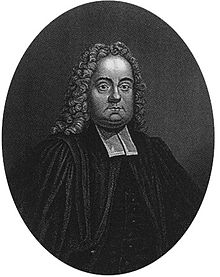
__________________________________________________________________ Title: Commentary on the Whole Bible Volume III (Job to Song of Solomon) Creator(s): Henry, Matthew Print Basis: 1706-1721 Rights: Public domain. May be copied and distributed freely. CCEL Subjects: All; Bible; Classic; Proofed LC Call no: BS490.H4 LC Subjects: The Bible Works about the Bible __________________________________________________________________ Matthew Henry's Commentary on the Whole Bible Unabridged Volume III Job to Song of Solomon __________________________________________________________________ P R E F A C E Job to Song of Solomon __________________________________________________________________ These five books of scripture which are contained in this third volume and which I have here endeavoured, according to the measure of the gift given to me, to explain and improve, for the use of those who desire to read them, not only with understanding, but to their edification--though they have the same divine origin, design, and authority, as those that went before, yet, upon some accounts, are of a very different nature from them, and from the rest of the sacred writings, such variety of methods has Infinite Wisdom seen fit to take in conveying the light of divine revelation to the children of men, that this heavenly food might have (as the Jews say of the manna) something in it agreeable to every palate and suited to every constitution. If every eye be not thus opened, every mouth will be stopped, and such as perish in their ignorance will be left without excuse. We have piped unto you, and you have not danced, we have mourned unto you, and you have not lamented, Matt. xi. 17. I. The books of scripture have hitherto been, for the most part, very plain and easy, narratives of matter of fact, which he that runs may read and understand, and which are milk for babes, such as they can receive and digest, and both entertain and nourish themselves with. The waters of the sanctuary have hitherto been but to the ankles or to the knees, such as a lamb might wade in, to drink of and wash in; but here we are advanced to a higher form in God's school, and have books put into our hands wherein are many things dark and hard to be understood, which we do not apprehend the meaning of so suddenly and so certainly as we could wish, the study of which requires a more close application of mind, a greater intenseness of thought, and the accomplishing of a diligent search, which yet the treasure hid in them, when it is found, will abundantly recompense. The waters of the sanctuary are here to the loins, and still as we go forward we shall find the waters still risen in the prophetical books, waters to swim in (Ezek. xlvii. 3-5), not fordable, nor otherwise to be passed over--depths in which an elephant will not find footing, strong meat for strong men. The same method is observable in the New Testament, where we find the plain history of Christ and his gospel placed first in the Evangelists and the Acts of the Apostles; then the mystery of both in the Epistles, which are more difficult to be understood; and, lastly, the prophesies of things to come in the apocalyptic visions. This method, so exactly observed in both the Testaments, directs us in what order to proceed both in studying the things of God ourselves and in teaching them to others; we must go in the order that the scripture does; and where can we expect to find a better method of divinity and a better method of preaching? 1. We must begin with those things that are most plain and easy, as, blessed be God, those things are which are most necessary to salvation and of the greatest use. We must lay our foundation firm, in a sound experimental knowledge of the principles of religion, and then the super-structure will be well reared and will stand firmly. It is not safe to launch out into the deep at first, nor to venture into points difficult and controverted until we have first thoroughly digested the elements of the oracles of God and turned them in succum et sanguinem--into juice and blood. Those that begin their Bible at the wrong end commonly use their knowledge of it in the wrong way. And, in training up others, we must be sure to ground them well at first in those truths of God which are plain, and in some measure level to their capacity, which we find they comprehend, and relish, and know how to make use of, and not amuse those that are weak with things above them, things of doubtful disputation, which they cannot apprehend any certainty of nor advantage by. Our Lord Jesus spoke the word to the people as they were able to hear it (Mark iv. 33) and had many things to say to his disciples which he did not say because as yet they could not bear them, John xvi. 12, 13. And those whom St. Paul could not speak to as unto spiritual--though he blamed them for their backwardness, yet he accommodated himself to their weakness, and spoke to them as unto babes in Christ, 1 Cor. iii. 1, 2. 2. Yet we must not rest in these things. We must not be always children that have need of milk, but nourished up with that, and gaining strength, we must go on to perfection (Heb. vi. 1), that having, by reason of use, our spiritual senses exercised (Heb. v. 14), we may come to full age, and put away childish things, and, forgetting the things which are behind, that is, so well remembering them (Phil. iii. 13) that we need not be still poring over them as those that are ever learning the same lesson, we may reach forth to the things which are before. Though we must never think to learn above our Bible, as long as we are here in this world, yet we must still be getting forward in it. You have dwelt long enough in this mountain; now turn and take your journey onward in the wilderness towards Canaan. Our motto must be Plus ultra--Onward. And then shall we know if thus, by regular steps (Hos. vi. 3), we follow on to know the Lord and what the mind of the Lord is. II. The books of scripture have hitherto been mostly historical, but now the matter is of another nature; it is doctrinal and devotional, preaching and praying; and in this way of writing, as well as in the former, a great deal of excellent knowledge is conveyed, which serves very valuable purposes. It will be of good use to know not only what others did that went before us, and how they fared, but what their notions and sentiments were, what their thoughts and affections were, that we may, with the help of them, form our minds aright. Plutarch's Morals are reputed as a useful treasure in the commonwealth of learning as Plutarch's Lives, and the wise disquisitions and discourses of the philosophers as the records of the historians; nor is this divine philosophy (if I may so call it), which we have in these books, less needful, nor less serviceable, to the church, than the sacred history was. Blessed be God for both. III. The Jews make these books to be given by a divine inspiration somewhat different from that both of Moses and the prophets. They divided the books of the Old Testament into the Law, the Prophets and the ktwbym--Writings, which Epiphanius emphatically translates grapheia--things written, and these books are more commonly called among the Greeks Hagiographa--Holy writings: the Jews attribute them to that distinct kind of inspiration which they call rwh hqds--The Holy Spirit. Moses they supposed to write by the Spirit in a way above all the other prophets, for with him God spoke mouth to mouth, even apparently (Num. xii. 8) knew him, that is, conversed with him face to face, Deut. xxxiv. 10. He was made partaker of divine revelation (as Maimonides distinguishes, De Fund. Legis, c. 7) per vigiliam--while awake, [1] whereas God manifested himself to all the other prophets in a dream or vision: and he adds that Moses understood the words of prophecy without any perturbation or astonishment of mind, whereas the other prophets commonly fainted and were troubled. But the writers of the Hagiographa they suppose to be inspired in a degree somewhat below that of the other prophets, and to receive divine revelation, not as they did by dreams, and visions, and voices, but (as Maimonides describes it, More Nevochim--part 2 c. 45) they perceived some power to rise within them, and rest upon them, which urged and enabled them to write or speak far above their own natural ability, in psalms or hymns, or in history or in rules of good living, still enjoying the ordinary vigour and use of their senses. Let David himself describe it. The Spirit of the Lord spoke by me, and his word was in my tongue; the God of Israel said, the Rock of Israel spoke to me, 2 Sam. xxiii. 2, 3. This gives such a magnificent account of the inspiration by which David wrote that I see not why it should be made inferior to that of the other prophets, for David is expressly called a prophet, Acts ii. 29, 30. But, since our hand is in with the Jewish masters, let us see what books they account Hagiographa. These five that are now before us come, without dispute, into this rank of sacred writers, and the book of the Lamentations is not unfitly added to them. Indeed the Jews, when they would speak critically, reckon all those songs which we meet with in the Old Testament among the Hagiographa; for though they were penned by prophets, and under the direction of the Holy Ghost, yet, because they were not the proper result of a visum propheticum--prophetic vision, they were not strictly prophecy. As to the historical books, they distinguish (but I think it is a distinction without a difference); some of them they assign to the prophets, calling them the prophetae priores--the former prophets, namely, Joshua, Judges, and the two books of the Kings; but others they rank among the Hagiographa, as the book of Ruth (which yet is but an appendix to the book of Judges), the two books of Chronicles, with Ezra, Nehemiah, and the book of Esther, which last the rabbin have a great value for, and think it is to be had in equal esteem with the law of Moses itself, that it shall last as long as that lasts, and shall survive the writings of the Prophets. And, lastly, they reckon the book of Daniel among the Hagiographa, [2] for which no reason can be given, since he was not inferior to any of the prophets in the gift of prophecy; and therefore the learned Mr. Smith thinks that their placing him among the Hagiographical writers was fortuitous by mistake. [3] Mr. Smith, in his Discourse before quoted, though he supposes this kind of divine inspiration to be more "pacate and serene than that which was strictly called prophecy, not acting so much upon the imagination, but seating itself in the higher and purer faculties of the soul, yet shows that it manifested itself to be of a divine nature, not only as it always elevated pious souls into strains of devotion, or moved them strangely to dictate matters of true piety and goodness, but as it came in abruptly upon the minds of those holy men, and transported them from the temper of mind they were in before, so that they perceived themselves captivated by the power of some higher light than that which their own understanding commonly poured out upon them; and this, says he, was a kind of vital form to that light of divine and sanctified reason which they were perpetually possessed of and that constant frame of holiness and goodness which dwelt in their hallowed minds." We have reason to glorify the God of Israel who gave such power unto men and has here transmitted to us the blessed products of that power. IV. The style and composition of these books are different from those that go before and those that follow. Our Saviour divides the books of the Old Testament into the Law, the Prophets, and the Psalms (Luke xxiv. 44), and thereby teaches us to distinguish those books that are poetical, or metrical, from the Law and the Prophets; and such are all these that are now before us, except Ecclesiastes, which yet, having something restrained in its style, may well enough be reckoned among them. They are books in verse, according to the ancient rules of versifying, though not according to the Greek and Latin prosodies. Some of the ancients call these five books the second Pentateuch of the Old Testament, [4] five sacred volumes which are as the satellites to the five books of the law of Moses. Gregory Nazianzen [5] (carm. 33, p. 98) calls these hai sticherai pente--the five metrical books; first Job (so he reckons them up), then David, then the three of Solomon-Ecclesiastes, the Song, and Proverbs. Amphilochius, bishop at Iconium, in his iambic poem to Seleucus, reckons them up particularly, and calls them sticheras pente Biblos--the five verse-books. Epiphanius (lib. de ponder. et mensur. p. 533) pente stichereis--the five verse-books. And Cyril. Hierosol. Collect. 4, p. 30 (mihi--in my copy), calls these five books ta stichera--books in verse. Polychronius, in his prologue to Job, says that as those that are without call their tragedies and comedies poietika--poetics, so, in sacred writ, those books which are composed in Hebrew metre (of which he reckons Job the first) we call stichera biblia--books in verse, written kata stichon--according to order. What is written in metre, or rhythm, is so called from metros--a measure, and arithmos--a number, because regulated by certain measures, or numbers of syllables, which please the ear with their smoothness and cadency, and so insinuate the matter the more movingly and powerfully into the fancy. Sir William Temple, [6] in his essay upon poetry, thinks it is generally agreed to have been the first sort of writing that was used in the world, nay, that, in several nations, poetical compositions preceded the very invention or usage of letters. The Spaniards (he says) found in America many strains of poetry, and such as seemed to flow from a true poetic vein, before any letters were known in those regions. The same (says he) is probable of the Scythians and Grecians: the oracles of Apollo were delivered in verse. Homer and Hesiod wrote their poems (the very Alcoran of the pagan daemonology) many ages before the appearing of any of the Greek philosophers or historians; and long before them (if we may give credit to the antiquities of Greece), even before the days of David, Orpheus and Linus were celebrated poets and musicians in Greece; and at the same time Carmenta, the mother of Evander, who was the first that introduced letters among the natives of Greece, was so called `a carmine--from a song, because she expressed herself in verse. And in such veneration was this way of writing among the ancients that their poets were called vates--prophets, and their muses were deified. But, which is more certain and considerable, the most ancient composition that we meet with in scripture was the song of Moses at the Red Sea (Exod. xv.), which we find before the very first mention of writing, for that occurs not until Exod. xvii. 14, when God bade Moses write a memorial of the war with Amalek. The first, and indeed the true and general end of writing, is a help of memory; and poetry does in some measure answer that end, and even in the want of writing, much more with writing, helps to preserve the remembrance of ancient things. The book of the wars of the Lord (Num. xxi. 14), and the book of Jasher (Josh. x. 13; 2 Sam. i. 18), seem to have been both written in poetic measures. Many sacred songs we meet with in the Old Testament, scattered both in the historical and prophetical books, penned on particular occasions, which, in the opinion of very competent judges, "have in them as true and noble strains of poetry and picture as are met with in any other language whatsoever, in spite of all disadvantages from translations into such different tongues and common prose, [7] nay, are nobler examples of the true sublime style of poetry than any that can be found in the Pagan writers; the images are so strong, the thoughts so great, the expressions so divine, and the figures so admirably bold and moving, that the wonderful manner of these writers is quite inimitable." [8] It is fit that what is employed in the service of the sanctuary should be the best in its kind. The books here put together are poetical. Job is an heroic poem, the book of Psalms a collection of divine odes or lyrics, Solomon's Song a pastoral and an epithalamium; they are poetical, and yet sacred and serious, grave and full of majesty. They have a poetic force and flame, with out poetic fury and fiction, and strangely command and move the affections, without corrupting the imagination or putting a cheat upon it; and, while they gratify the ear, they edify the mind and profit the more by pleasing. It is therefore much to be lamented that so powerful an art, which was at first consecrated to the honour of God, and has been so often employed in his service, should be debauched, as it has been, and is at this day, into the service of his enemies--that his corn, and wine, and oil should be prepared for Baal. V. As the manner of the composition of these books is excellent, and very proper to engage the attention, move the affections, and fix them in the memory, so the matter is highly useful, and such as will be every way serviceable to us. They have in them the very sum and substance of religion, and what they contain is more fitted to our hand, and made ready for use, than any part of the Old Testament, upon which account, if we may be allowed to compare one star with another in the firmament of the scripture, these will be reckoned stars of the first magnitude. All scripture is profitable (and this part of it in a special manner) for instruction in doctrine, in devotion, and in the right ordering of the conversation. The book of Job directs us what we are to believe concerning God, the book of Psalms how we are to worship him, pay our homage to him, and maintain our communion with him, and then the book of the Proverbs shows very particularly how we are to govern ourselves en pase anastrophe--in every turn of human life; thus shall the man of God, by a due attention to these lights, be perfect, thoroughly furnished for every good work. And these are placed according to their natural order, as well as according to the order of time; for very fitly are we first led into the knowledge of God, our judgments rightly formed concerning him, and our mistakes rectified, and then instructed how to worship him and to choose the things that please him. We have here much of natural religion, its principles, its precepts--much of God, his infinite perfections, his relations to man, and his government both of the world and of the church; here is much of Christ, who is the spring, and soul, and centre, of revealed religion, and whom both Job and David were eminent types of, and had clear and happy prospects of. We have here that which will be of use to enlighten our understandings, and to acquaint us more and more with the things of God, with the deep things of God--speculations to entertain the most contemplative, and discoveries to satisfy the most inquisitive and increase the knowledge of those that are most knowing. Here is that also which, with a divine light, will bring into the soul the heat and influence of a divine fire, will kindle and inflame pious and devout affections, on which wings we may soar upwards until we enter into the holiest. We may here be in the mount with God, to behold his beauty; and when we come down from that mount, if we retain (as we ought) the impressions of our devotion upon our spirits and make conscience of doing that good which the Lord our God here requires of us, our faces shall shine before all with whom we converse, who shall take occasion thence to glorify our Father who is in heaven, Matt. v. 16. Thus great, thus noble, thus truly excellent, is the subject, and thus capable of being improved, which gives me the more reason to be ashamed of the meanness of my performance, that the comment breathes so little of the life and spirit of the text. We often wonder at those that are not at all affected with the great things of God, and have no taste nor relish of them, because they know little of them; but perhaps we have more reason to wonder at ourselves, that conversing so frequently, so intimately, with them, we are not more affected with them, so as even to be wholly taken up with them, and in a continual transport of delight in the contemplation of them. We hope to be so shortly; in the mean time, though like the three disciples that were the witnesses of Christ's transfiguration upon the mount we are but dull and sleepy, yet we can say, Master, it is good to be here; here let us make tabernacles, Luke ix. 32, 33. I have nothing here to boast of--nothing at all, but a great deal to be humbled for, that I have not come up to what I have aimed at in respect of fulness and exactness. In the review of the work, I find many defects, and those who are critical, perhaps, will meet with some mistakes in it; but I have done it with what care I could, and desire to be thankful to God who by his grace has carried me on in his work thus far: let that grace have all the glory (Phil. ii. 13), which works in us both to will and to do whatever we will or do that is good or serves any good purpose. What is from God will, I trust, be to him, will be graciously accepted by him, according to what a man has, and not according to what he had not, and will be of some use to his church; and what is from myself (that is, all the defects and errors) will, I trust, be favourably passed by and pardoned. That prayer of St. Austin is mine, Domine Deus, quaecunque dixi in his libris de tuo, agnoscant et tui; et quae de meo, et tu ignosce et tui--Lord God, whatever I have maintained in these books correspondent with what is contained in thine grant that thy people may approve as well as thyself; whatever is but the doctrine of my book forgive thou, and grant that thy people may forgive it also. I must beg likewise to own, to the honour of our great Master, that I have found the work to be its own wages, and that the more we converse with the word of God the more it is to us as the honey and the honeycomb, Ps. xix. 10. In gathering some gleaning of this harvest for others we may feast ourselves; and, when we are enabled by the grace of God to do so, we are best qualified to feed others. I was much pleased with a passage I lately met with of Erasmus, that great scholar and celebrated wit, in an epistle dedicatory before his book De Ratione Concionandi, where, as one weary of the world and the hurry of it, he expresses an earnest desire to spend the rest of his days in secret communion with Jesus Christ, encouraged by his gracious invitation to those who labour and are heavy laden to come unto him for rest (Matt. xi. 28), and this alone is that which he thinks will yield him true satisfaction. I think his words worth transcribing, and such as deserve to be inserted among the testimonies of great men to serious godliness. Neque quisquam facile credat qu`am misere animus jamdudum affectet ab his laboribus in tranquillam otium secedere, quodque superest vitae (superest autem vix brevis palmus sive pugillus), solum cum eo solo colloqui, qui clamavit olim (nec hodie mutat vocem suam), "Venite ad me, omnes qui laboratis et onerati estis, ego reficiam vos;" quandoquidem in tam turbulento, ne dicam furente, saeculo, in tot molestiis quas vel ipsa tempora publice invehunt, vel privatim adfert oetas ac valetudo, nihil reperio in quo mens mea libentius conquiescat qu`am in hoc arcano colloquio--No one will easily believe how anxiously, for a long time past, I have wished to retire from these labours into a scene of tranquility, and, during the remainder of life (dwindled, it is true, to the shortest span), to converse only with him who once cried (nor does he now retract), "Come unto me, all you that labour and are heavy laden, and I will refresh you," for in this turbulent, not to say furious, age, the many public sources of disquietude, connected with the infirmities of advancing age, leave no solace to my mind to be compared with this secret communion. In the pleasing contemplation of the divine beauty and benignity we hope to spend a blessed eternity, and therefore in this work it is good to spend as much as may be of our time. One volume more, containing the prophetical books, will finish the Old Testament, if the Lord continue my life, and leisure, and ability of mind and body for this work. It is begun, and I find it will be larger than any of the other volumes, and longer in the doing; but, as God by his grace shall furnish me for it and assist me in it (without which grace I am nothing, less than nothing, worse than nothing), it shall be carried on with all convenient speed; and sat cito, si sat bene--if with sufficient ability, it will be with sufficient speed. I desire the prayers of my friends that God would minister seed to the sower and bread to the eaters (Isa. lv. 10), that he would multiply the seed sown and increase the fruits of our righteousness (2 Cor. ix. 10), that so he who sows and those who reap may rejoice together (John iv. 36); and the great Lord of the harvest shall have the glory of all. M. H. Chester, May 13, 1710. __________________________________________________________________ [1] See Mr. Smith's Discourses on Prophecy, c. 11. [2] Hil. Megil. c. 2, S: 11. [3] Vid. Hottinger. Thesaur. lib. 2, cap. 1, S: 3. [4] Damascen. Orthod. Fid. l. 4, cap. 18. [5] Vid. Suicer. Thesaur. in stichera. [6] Miscell, part 2. [7] Sir W. Temple, p. 329. [8] Sir R. Blackmore's preface to Job. __________________________________________________________________ __________________________________________________________________ Job __________________________________________________________________ AN EXPOSITION, W I T H P R A C T I C A L O B S E R V A T I O N S, OF THE BOOK OF J O B. __________________________________________________________________ This book of Job stands by itself, is not connected with any other, and is therefore to be considered alone. Many copies of the Hebrew Bible place it after the book of Psalms, and some after the Proverbs, which perhaps has given occasion to some learned men to imagine it to have been written by Isaiah or some of the later prophets. But, as the subject appears to have been much more ancient, so we have no reason to think but that the composition of the book was, and that therefore it is most fitly placed first in this collection of divine morals: also, being doctrinal, it is proper to precede and introduce the book of Psalms, which is devotional, and the book of Proverbs, which is practical; for how shall we worship or obey a God whom we know not? As to this book, I. We are sure that it is given by inspiration of God, though we are not certain who was the penman of it. The Jews, though no friends to Job, because he was a stranger to the commonwealth of Israel, yet, as faithful conservators of the oracles of God committed to them, always retained this book in their sacred canon. The history is referred to by one apostle (James v. 11) and one passage (ch. v. 13) is quoted by another apostle, with the usual form of quoting scripture, It is written, 1 Cor. iii. 19. It is the opinion of many of the ancients that this history was written by Moses himself in Midian, and delivered to his suffering brethren in Egypt, for their support and comfort under their burdens, and the encouragement of their hope that God would in due time deliver and enrich them, as he did this patient sufferer. Some conjecture that it was written originally in Arabic, and afterwards translated into Hebrew, for the use of the Jewish church, by Solomon (so Monsieur Jurieu) or some other inspired writer. It seems most probable to me that Elihu was the penman of it, at least of the discourses, because (ch. xxxii. 15, 16) he mingles the words of a historian with those of a disputant: but Moses perhaps wrote the first two chapters and the last, to give light to the discourses; for in them God is frequently called Jehovah, but not once in all the discourses, except ch. xii. 9. That name was but little known to the patriarchs before Moses, Exod. vi. 3. If Job wrote it himself, some of the Jewish writers themselves own him a prophet among the Gentiles; if Elihu, we find he had a spirit of prophecy which filled him with matter and constrained him, ch. xxxii. 18. II. We are sure that it is, for the substance of it, a true history, and not a romance, though the dialogues are poetical. No doubt there was such a man as Job; the prophet Ezekiel names him with Noah and Daniel, Ezek. xiv. 14. The narrative we have here of his prosperity and piety, his strange afflictions and exemplary patience, the substance of his conferences with his friends, and God's discourse with him out of the whirlwind, with his return at length to a very prosperous condition, no doubt is exactly true, though the inspired penman is allowed the usual liberty of putting the matter of which Job and his friends discoursed into his own words. III. We are sure that it is very ancient, though we cannot fix the precise time either when Job lived or when the book was written. So many, so evident, are its hoary hairs, the marks of its antiquity, that we have reason to think it of equal date with the book of Genesis itself, and that holy Job was contemporary with Isaac and Jacob; though not coheir with them of the promise of the earthly Canaan, yet a joint-expectant with them of the better country, that is, the heavenly. Probably he was of the posterity of Nahor, Abraham's brother, whose first-born was Uz (Gen. xxii. 21), and in whose family religion was for some ages kept up, as appears, Gen. xxxi. 53, where God is called, not only the God of Abraham, but the God of Nahor. He lived before the age of man was shortened to seventy or eighty, as it was in Moses's time, before sacrifices were confined to one altar, before the general apostasy of the nations from the knowledge and worship of the true God, and while yet there was no other idolatry known than the worship of the sun and moon, and that punished by the Judges, ch. xxxi. 26-28. He lived while God was known by the name of God Almighty more than by the name of Jehovah; for he is called Shaddai--the Almighty, above thirty times in this book. He lived while divine knowledge was conveyed, not by writing, but by tradition; for to that appeals are here made, ch. viii. 8; xxi. 29; xv. 18; v. 1. And we have therefore reason to think that he lived before Moses, because here is no mention at all of the deliverance of Israel out of Egypt, or the giving of the law. There is indeed one passage which might be made to allude to the drowning of Pharaoh (ch. xxvi. 12): He divideth the sea with his power, and by his understanding he smiteth through Rahab, which name Egypt is frequently called by in scripture, as Ps. lxxxvii. 4; lxxxix. 10; Isa. li. 9. But that may as well refer to the proud waves of the sea. We conclude therefore that we are here got back to the patriarchal age, and, besides its authority, we receive this book with veneration for its antiquity. IV. We are sure that it is of great use to the church, and to every good Christian, though there are many passages in it dark and hard to be understood. We cannot perhaps be confident of the true meaning of every Arabic word and phrase we meet with in it. It is a book that finds a great deal of work for the critics; but enough is plain to make the whole profitable, and it was all written for our learning. 1. This noble poem presents to us, in very clear and lively characters, these five things among others:--(1.) A monument of primitive theology. The first and great principles of the light of nature, on which natural religion is founded, are here, in a warm, and long, and learned dispute, not only taken for granted on all sides and not the least doubt made of them, but by common consent plainly laid down as eternal truths, illustrated and urged as affecting commanding truths. Were ever the being of God, his glorious attributes and perfections, his unsearchable wisdom, his irresistible power, his inconceivable glory, his inflexible justice, and his incontestable sovereignty, discoursed of with more clearness, fulness, reverence, and divine eloquence, than in this book? The creation of the world, and the government of it, are here admirably described, not as matters of nice speculation, but as laying most powerful obligations upon us to fear and serve, to submit to and trust in, our Creator, owner, Lord, and ruler. Moral good and evil, virtue and vice, were never drawn more to the life (the beauty of the one and the deformity of the other) than in this book; nor the inviolable rule of God's judgment more plainly laid down, That happy are the righteous, it shall be well with them; and Woe to the wicked, it shall be ill with them. These are not questions of the schools to keep the learned world in action, nor engines of state to keep the unlearned world in awe; no, it appears by this book that they are sacred truths of undoubted certainty, and which all the wise and sober part of mankind have in every age subscribed and submitted to. (2.) It presents us with a specimen of Gentile piety. This great saint descended probably not from Abraham, but Nahor; or, if from Abraham, not from Isaac, but from one of the sons of the concubines that were sent into the east-country (Gen. xxv. 6); or, if from Isaac, yet not from Jacob, but Esau; so that he was out of the pale of the covenant of peculiarity, no Israelite, no proselyte, and yet none like him for religion, nor such a favourite of heaven upon this earth. It was a truth therefore, before St. Peter perceived it, that in every nation he that fears God and works righteousness is accepted of him, Acts x. 35. There were children of God scattered abroad (John xi. 52) besides the incorporated children of the kingdom, Matt. viii. 11, 12. (3.) It presents us with an exposition of the book of Providence, and a clear and satisfactory solution of many of the difficult and obscure passages of it. The prosperity of the wicked and the afflictions of the righteous have always been reckoned two as hard chapters as any in that book; but they are here expounded, and reconciled with the divine wisdom, purity, and goodness, by the end of these things. (4.) It presents us with a great example of patience and close adherence to God in the midst of the sorest calamities. Sir Richard Blackmore's most ingenious pen, in his excellent preface to his paraphrase on this book, makes Job a hero proper for an epic poem; for, says he, "He appears brave in distress and valiant in affliction, maintains his virtue, and with that his character, under the most exasperating provocations that the malice of hell could invent, and thereby gives a most noble example of passive fortitude, a character no way inferior to that of the active hero," &c. (5.) It presents us with an illustrious type of Christ, the particulars of which we shall endeavour to take notice of as we go along. In general, Job was a great sufferer, was emptied and humbled, but in order to his greater glory. So Christ abased himself, that we might be exalted. The learned bishop Patrick quotes St. Jerome more than once speaking of Job as a type of Christ, who for the job that was set before him endured the cross, who was persecuted, for a time, by men and devils, and seemed forsaken of God too, but was raised to be an intercessor even for his friends and had added affliction to his misery. When the apostle speaks of the patience of Job he immediately takes notice of the end of the Lord, that is, of the Lord Jesus (as some understand it), typified by Job, James v. 11. 2. In this book we have, (1.) The history of Job's sufferings, and his patience under them (ch. i., ii., not without a mixture of human frailty, ch. iii. (2.) A dispute between him and his friends upon them, in which, [1.] The opponents were Eliphaz, Bildad, and Zophar. [2.] The respondent was Job. [3.] The moderators were, First, Elihu, ch. xxxii.-xxxvii. Secondly, God himself, ch. xxxviii.-xli. (3.) The issue of all in Job's honour and prosperity, ch. xlii. Upon the whole, we learn that many are the afflictions of the righteous, but that when the Lord delivers them out of them all the trial of their faith will be found to praise, and honour, and glory. __________________________________________________________________ J O B CHAP. I. The history of Job begins here with an account, I. Of his great piety in general (ver. 1), and in a particular instance, ver. 5. II. Of his great prosperity, ver. 2-4. III. Of the malice of Satan against him, and the permission he obtained to try his constancy, ver. 6-12. IV. Of the surprising troubles that befel him, the ruin of his estate (ver. 13-17), and the death of his children, ver. 18, 19. V. Of his exemplary patience and piety under these troubles, ver. 20-22. In all this he is set forth for an example of suffering affliction, from which no prosperity can secure us, but through which integrity and uprightness will preserve us. Job's Character and Possessions. (b. c. 1520.) 1 There was a man in the land of Uz, whose name was Job; and that man was perfect and upright, and one that feared God, and eschewed evil. 2 And there were born unto him seven sons and three daughters. 3 His substance also was seven thousand sheep, and three thousand camels, and five hundred yoke of oxen, and five hundred she asses, and a very great household; so that this man was the greatest of all the men of the east. Concerning Job we are here told, I. That he was a man; therefore subject to like passions as we are. He was Ish, a worthy man, a man of note and eminency, a magistrate, a man in authority. The country he lived in was the land of Uz, in the eastern part of Arabia, which lay towards Chaldea, near Euphrates, probably not far from Ur of the Chaldees, whence Abraham was called. When God called one good man out of that country, yet he left not himself without witness, but raised up another in it to be a preacher of righteousness. God has his remnant in all places, sealed ones out of every nation, as well as out of every tribe of Israel, Rev. vii. 9. It was the privilege of the land of Uz to have so good a man as Job in it; now it was Arabia the Happy indeed: and it was the praise of Job that he was eminently good in so bad a place; the worse others were round about him the better he was. His name Job, or Jjob, some say, signifies one hated and counted as an enemy. Others make it to signify one that grieves or groans; thus the sorrow he carried in his name might be a check to his joy in his prosperity. Dr. Cave derives it from Jaab--to love, or desire, intimating how welcome his birth was to his parents, and how much he was the desire of their eyes; and yet there was a time when he cursed the day of his birth. Who can tell what the day may prove which yet begins with a bright morning? II. That he was a very good man, eminently pious, and better than his neighbours: He was perfect and upright. This is intended to show us, not only what reputation he had among men (that he was generally taken for an honest man), but what was really his character; for it is the judgment of God concerning him, and we are sure that is according to truth. 1. Job was a religious man, one that feared God, that is, worshipped him according to his will, and governed himself by the rules of the divine law in every thing. 2. He was sincere in his religion: He was perfect; not sinless, as he himself owns (ch. ix. 20): If I say I am perfect, I shall be proved perverse. But, having a respect to all God's commandments, aiming at perfection, he was really as good as he seemed to be, and did not dissemble in his profession of piety; his heart was sound and his eye single. Sincerity is gospel perfection. I know no religion without it. 3. He was upright in his dealings both with God and man, was faithful to his promises, steady in his counsels, true to every trust reposed in him, and made conscience of all he said and did. See Isa. xxxiii. 15. Though he was not of Israel, he was indeed an Israelite without guile. 4. The fear of God reigning in his heart was the principle that governed his whole conversation. This made him perfect and upright, inward and entire for God, universal and uniform in religion; this kept him close and constant to his duty. He feared God, had a reverence for his majesty, a regard to his authority, and a dread of his wrath. 5. He dreaded the thought of doing what was wrong; with the utmost abhorrence and detestation, and with a constant care and watchfulness, he eschewed evil, avoided all appearances of sin and approaches to it, and this because of the fear of God, Neh. v. 15. The fear of the Lord is to hate evil (Prov. viii. 13) and then by the fear of the Lord men depart from evil, Prov. xvi. 6. III. That he was a man who prospered greatly in this world, and made a considerable figure in his country. He was prosperous and yet pious. Though it is hard and rare, it is not impossible, for a rich man to enter into the kingdom of heaven. With God even this is possible, and by his grace the temptations of worldly wealth are not insuperable. He was pious, and his piety was a friend to his prosperity; for godliness has the promise of the life that now is. He was prosperous, and his prosperity put a lustre upon his piety, and gave him who was so good so much greater opportunity of doing good. The acts of his piety were grateful returns to God for the instances of his prosperity; and, in the abundance of the good things God gave him, he served God the more cheerfully. 1. He had a numerous family. He was eminent for religion, and yet not a hermit, not a recluse, but the father and master of a family. It was an instance of his prosperity that his house was filled with children, which are a heritage of the Lord, and his reward, Ps. cxxvii. 3. He had seven sons and three daughters, v. 2. Some of each sex, and more of the more noble sex, in which the family is built up. Children must be looked upon as blessings, for so they are, especially to good people, that will give them good instructions, and set them good examples, and put up good prayers for them. Job had many children, and yet he was neither oppressive nor uncharitable, but very liberal to the poor, ch. xxxi. 17, &c. Those that have great families to provide for ought to consider that what is prudently given in alms is set out to the best interest and put into the best fund for their children's benefit. 2. He had a good estate for the support of his family; his substance was considerable, v. 3. Riches are called substance, in conformity to the common form of speaking; otherwise, to the soul and another world, they are but shadows, things that are not, Prov. xxiii. 5. It is only in heavenly wisdom that we inherit substance, Prov. viii. 21. In those days, when the earth was not fully peopled, it was as now in some of the plantations, men might have land enough upon easy terms if they had but wherewithal to stock it; and therefore Job's substance is described, not by the acres of land he was lord of, but, (1.) By his cattle--sheep and camels, oxen and asses. The numbers of each are here set down, probably not the exact number, but thereabout, a very few under or over. The sheep are put first, because of most use in the family, as Solomon observes (Prov. xxvii. 23, 26, 27): Lambs for thy clothing, and milk for the food of thy household. Job, it is likely, had silver and gold as well as Abraham (Gen. xiii. 2); but then men valued their own and their neighbours' estates by that which was for service and present use more than by that which was for show and state, and fit only to be hoarded. As soon as God had made man, and provided for his maintenance by the herbs and fruits, he made him rich and great by giving him dominion over the creatures, Gen. i. 28. That therefore being still continued to man, notwithstanding his defection (Gen. ix. 2), is still to be reckoned one of the most considerable instances of men's wealth, honour, and power, Ps. viii. 6. (2.) By his servants. He had a very good household or husbandry, many that were employed for him and maintained by him; and thus he both had honour and did good; yet thus he was involved in a great deal of care and put to a great deal of charge. See the vanity of this world; as goods are increased those must be increased that tend them and occupy them, and those will be increased that eat them; and what good has the owner thereof save the beholding of them with his eyes? Eccles. v. 11. In a word, Job was the greatest of all the men of the east; and they were the richest in the world: those were rich indeed who were replenished more than the east, Isa. ii. 6. Margin. Job's wealth, with his wisdom, entitled him to the honour and power he had in his country, which he describes (ch. xxix.), and made him sit chief. Job was upright and honest, and yet grew rich, nay, therefore grew rich; for honesty is the best policy, and piety and charity are ordinarily the surest ways of thriving. He had a great household and much business, and yet kept up the fear and worship of God; and he and his house served the Lord. The account of Job's piety and prosperity comes before the history of his great afflictions, to show that neither will secure us from the common, no, nor from the uncommon calamities of human life. Piety will not secure us, as Job's mistaken friends thought, for all things come alike to all; prosperity will not, as a careless world thinks, Isa. xlvii. 8. I sit as a queen and therefore shall see no sorrow. Job's Solicitude for His Children. (b. c. 1520.) 4 And his sons went and feasted in their houses, every one his day; and sent and called for their three sisters to eat and to drink with them. 5 And it was so, when the days of their feasting were gone about, that Job sent and sanctified them, and rose up early in the morning, and offered burnt offerings according to the number of them all: for Job said, It may be that my sons have sinned, and cursed God in their hearts. Thus did Job continually. We have here a further account of Job's prosperity and his piety. I. His great comfort in his children is taken notice of as an instance of his prosperity; for our temporal comforts are borrowed, depend upon others, and are as those about us are. Job himself mentions it as one of the greatest joys of his prosperous estate that his children were about him, ch. xxix. 5. They kept a circular feast at some certain times (v. 4); they went and feasted in their houses. It was a comfort to this good man, 1. To see his children grown up and settled in the world. All his sons were in houses of their own, probably married, and to each of them he had given a competent portion to set up with. Those that had been olive-plants round his table were removed to tables of their own. 2. To see them thrive in their affairs, and able to feast one another, as well as to feed themselves. Good parents desire, promote, and rejoice in, their children's wealth and prosperity as their own. 3. To see them in health, no sickness in their houses, for that would have spoiled their feasting and turned it into mourning. 4. Especially to see them live in love, and unity, and mutual good affection, no jars or quarrels among them, no strangeness, no shyness one of another, no strait-handedness, but, though every one knew his own, they lived with as much freedom as if they had had all in common. It is comfortable to the hearts of parents, and comely in the eyes of all, to see brethren thus knit together. Behold, how good and how pleasant it is! Ps. cxxxiii. 1. 5. It added to his comfort to see the brothers so kind to their sisters, that they sent for them to feast with them; for they were so modest that they would not have gone if they had not been sent for. Those brothers that slight their sisters, care not for their company, and have no concern for their comfort, are ill-bred, ill-natured, and very unlike Job's sons. It seems their feast was so sober and decent that their sisters were good company for them at it. 6. They feasted in their own houses, not in public houses, where they would be more exposed to temptations, and which were not so creditable. We do not find that Job himself feasted with them. Doubtless they invited him, and he would have been the most welcome guest at any of their tables; nor was it from any sourness or moroseness of temper, or for want of natural affection, that he kept away, but he was old and dead to these things, like Barzillai (2 Sam. xix. 35), and considered that the young people would be more free and pleasant if there were none but themselves. Yet he would not restrain his children from that diversion which he denied himself. Young people may be allowed a youthful liberty, provided they flee youthful lusts. II. His great care about his children is taken notice of as an instance of his piety: for that we are really which we are relatively. Those that are good will be good to their children, and especially do what they can for the good of their souls. Observe (v. 5) Job's pious concern for the spiritual welfare of his children, 1. He was jealous over them with a godly jealousy; and so we ought to be over ourselves and those that are dearest to us, as far as is necessary to our care and endeavour for their good. Job had given his children a good education, had comfort in them and good hope concerning them; and yet he said, "It may be, my sons have sinned in the days of their feasting more than at other times, have been too merry, have taken too great a liberty in eating and drinking, and have cursed God in their hearts," that is, "have entertained atheistical or profane thoughts in their minds, unworthy notions of God and his providence, and the exercises of religion." When they were full they were ready to deny God, and to say, Who is the Lord? (Prov. xxx. 9), ready to forget God and to say, The power of our hand has gotten us this wealth, Deut. viii. 12, &c. Nothing alienates the mind more from God than the indulgence of the flesh. 2. As soon as the days of their feasting were over he called them to the solemn exercises of religion. Not while their feasting lasted (let them take their time for that; there is a time for all things), but when it was over, their good father reminded them that they must know when to desist, and not think to fare sumptuously every day; though they had their days of feasting the week round, they must not think to have them the year round; they had something else to do. Note, Those that are merry must find a time to be serious. 3. He sent to them to prepare for solemn ordinances, sent and sanctified them, ordered them to examine their own consciences and repent of what they had done amiss in their feasting, to lay aside their vanity and compose themselves for religious exercises. Thus he kept his authority over them for their good, and they submitted to it, though they had got into houses of their own. Still he was the priest of the family, and at his altar they all attended, valuing their share in his prayers more than their share in his estate. Parents cannot give grace to their children (it is God that sanctifies), but they ought by seasonable admonitions and counsels to further their sanctification. In their baptism they were sanctified to God; let it be our desire and endeavour that they may be sanctified for him. 4. He offered sacrifice for them, both to atone for the sins he feared they had been guilty of in the days of their feasting and to implore for them mercy to pardon and grace to prevent the debauching of their minds and corrupting of their manners by the liberty they had taken, and to preserve their piety and purity. For he with mournful eyes had often spied, Scattered on Pleasure's smooth but treacherous tide, The spoils of virtue overpowered by sense, And floating wrecks of ruined innocence. Sir R. Blackmore. Job, like Abraham, had an altar for his family, on which, it is likely, he offered sacrifice daily; but, on this extraordinary occasion, he offered more sacrifices than usual, and with more solemnity, according to the number of them all, one for each child. Parents should be particular in their addresses to God for the several branches of their family. "For this child I prayed, according to its particular temper, genius, and condition," to which the prayers, as well as the endeavours, must be accommodated. When these sacrifices were to be offered, (1.) He rose early, as one in care that his children might not lie long under guilt and as one whose heart was upon his work and his desire towards it. (2.) He required his children to attend the sacrifice, that they might join with him in the prayers he offered with the sacrifice, that the sight of the killing of the sacrifice might humble them much for their sins, for which they deserved to die, and the sight of the offering of it up might lead them to a Mediator. This serious work would help to make them serious again after the days of their gaiety. 5. Thus he did continually, and not merely whenever an occasion of this kind recurred; for he that is washed needs to wash his feet, John xiii. 10. The acts of repentance and faith must be often renewed, because we often repeat our transgressions. All days, every day, he offered up his sacrifices, was constant to his devotions, and did not omit them any day. The occasional exercises of religion will not excuse us from those that are stated. He that serves God uprightly will serve him continually. Satan before God; Satan Permitted to Afflict Job. (b. c. 1520.) 6 Now there was a day when the sons of God came to present themselves before the Lord, and Satan came also among them. 7 And the Lord said unto Satan, Whence comest thou? Then Satan answered the Lord, and said, From going to and fro in the earth, and from walking up and down in it. 8 And the Lord said unto Satan, Hast thou considered my servant Job, that there is none like him in the earth, a perfect and an upright man, one that feareth God, and escheweth evil? 9 Then Satan answered the Lord, and said, Doth Job fear God for nought? 10 Hast not thou made a hedge about him, and about his house, and about all that he hath on every side? thou hast blessed the work of his hands, and his substance is increased in the land. 11 But put forth thine hand now, and touch all that he hath, and he will curse thee to thy face. 12 And the Lord said unto Satan, Behold, all that he hath is in thy power; only upon himself put not forth thine hand. So Satan went forth from the presence of the Lord. Job was not only so rich and great, but withal so wise and good, and had such an interest both in heaven and earth, that one would think the mountain of his prosperity stood so strong that it could not be moved; but here we have a thick cloud gathering over his head, pregnant with a horrible tempest. We must never think ourselves secure from storms while we are in this lower region. Before we are told how his troubles surprised and seized him here in this visible world, we are here told how they were concerted in the world of spirits, that the devil, having a great enmity to Job for his eminent piety, begged and obtained leave to torment him. It does not at all derogate from the credibility of Job's story in general to allow that this discourse between God and Satan, in these verses, is parabolical, like that of Micaiah (1 Kings xxii. 19, &c.), and an allegory designed to represent the malice of the devil against good men and the divine check and restraint which that malice is under; only thus much further is intimated, that the affairs of this earth are very much the subject of the counsels of the unseen world. That world is dark to us, but we lie very open to it. Now here we have, I. Satan among the sons of God (v. 6), an adversary (so Satan signifies) to God, to men, to all good: he thrust himself into an assembly of the sons of God that came to present themselves before the Lord. This means either, 1. A meeting of the saints on earth. Professors of religion, in the patriarchal age, were called sons of God (Gen. vi. 2); they had then religious assemblies and stated times for them. The King came in to see his guests; the eye of God was on all present. But there was a serpent in paradise, a Satan among the sons of God; when they come together he is among them, to distract and disturb them, stands at their right hand to resist them. The Lord rebuke thee, Satan! Or, 2. A meeting of the angels in heaven. They are the sons of God, ch. xxxviii. 7. They came to give an account of their negotiations on earth and to receive new instructions. Satan was one of them originally; but how hast thou fallen, O Lucifer! He shall no more stand in that congregation, yet he is here represented, as coming among them, either summoned to appear as a criminal or connived at, for the present, though an intruder. II. His examination, how he came thither (v. 7): The Lord said unto Satan, Whence comest thou? He knew very well whence he came, and with what design he came thither, that as the good angels came to do good he came for a permission to do hurt; but he would, by calling him to an account, show him that he was under check and control. Whence comest thou? He asks this, 1. As wondering what brought him thither. Is Saul among the prophets? Satan among the sons of God? Yes, for he transforms himself into an angel of light (2 Cor. xi. 13, 14), and would seem one of them. Note, It is possible that a man may be a child of the devil and yet be found in the assemblies of the sons of God in this world, and there may pass undiscovered by men, and yet be challenged by the all-seeing God. Friend, how camest thou in hither? Or, 2. As enquiring what he had been doing before he came thither. The same question was perhaps put to the rest of those that presented themselves before the Lord, "Whence came you?" We are accountable to God for all our haunts and all the ways we traverse. III. The account he gives of himself and of the tour he had made. I come (says he) from going to and fro on the earth. 1. He could not pretend he had been doing any good, could give no such account of himself as the sons of God could, who presented themselves before the Lord, who came from executing his orders, serving the interest of his kingdom, and ministering to the heirs of salvation. 2. He would not own he had been doing any hurt, that he had been drawing men from the allegiance to God, deceiving and destroying souls; no. I have done no wickedness, Prov. xxx. 20. Thy servant went nowhere. In saying that he had walked to and fro through the earth, he intimates that he had kept himself within the bounds allotted him, and had not transgressed his bounds; for the dragon is cast out into the earth (Rev. xii. 9) and not yet confined to his place of torment. While we are on this earth we are within his reach, and with so much subtlety, swiftness, and industry, does he penetrate into all the corners of it, that we cannot be in any place secure from his temptations. 3. He yet seems to give some representation of his own character. (1.) Perhaps it is spoken proudly, and with an air of haughtiness, as if he were indeed the prince of this world, as if the kingdoms of the world and the glory of them were his (Luke iv. 6), and he had now been walking in circuit through his own territories. (2.) Perhaps it is spoken fretfully, and with discontent. He had been walking to and fro, and could find no rest, but was as much a fugitive and a vagabond as Cain in the land of Nod. (3.) Perhaps it is spoken carefully: "I have been hard at work, going to and fro," or (as some read it) "searching about in the earth," really in quest of an opportunity to do mischief. He walks abut seeking whom he may devour. It concerns us therefore to be sober and vigilant. IV. The question God puts to him concerning Job (v. 8): Hast thou considered my servant Job? As when we meet with one that has been in a distant place, where we have a friend we dearly love, we are ready to ask, "You have been in such a place; pray did you see my friend there?" Observe, 1. How honourably God speaks of Job: He is my servant. Good men are God's servants, and he is pleased to reckon himself honoured in their services, and they are to him for a name and a praise (Jer. xiii. 11) and a crown of glory, Isa. lxii. 3. "Yonder is my servant Job; there is none like him, none I value like him, of all the princes and potentates of the earth; one such saint as he is worth them all: none like him for uprightness and serious piety; many do well, but he excelleth them all; there is not to be found such great faith, no, not in Israel." Thus Christ, long after, commended the centurion and the woman of Canaan, who were both of them, like Job, strangers to that commonwealth. The saints glory in God--Who is like thee among the gods? and he is pleased to glory in them--Who is like Israel among the people? So here, none like Job, none in earth, that state of imperfection. Those in heaven do indeed far outshine him; those who are least in that kingdom are greater than he; but on earth there is not his like. There is none like him in that land; so some good men are the glory of their country. 2. How closely he gives to Satan this good character of Job: Hast thou set thy heart to my servant Job? designing hereby, (1.) To aggravate the apostasy and misery of that wicked spirit: "How unlike him are thou!" Note, The holiness and happiness of the saints are the shame and torment of the devil and the devil's children. (2.) To answer the devil's seeming boast of the interest he had in this earth. "I have been walking to and fro in it," says he, "and it is all my own; all flesh have corrupted their way; they all sit still, and are at rest in their sins," Zech. i. 10, 11. "Nay, hold," saith God, "Job is my faithful servant." Satan may boast, but he shall not triumph. (3.) To anticipate his accusations, as if he had said, "Satan, I know thy errand; thou hast come to inform against Job; but hast thou considered him? Does not his unquestionable character give thee the lie?" Note, God knows all the malice of the devil and his instruments against his servants; and we have an advocate ready to appear for us, even before we are accused. V. The devil's base insinuation against Job, in answer to God's encomium of him. He could not deny but that Job feared God, but suggested that he was a mercenary in his religion, and therefore a hypocrite (v. 9): Doth Job fear God for nought? Observe, 1. How impatient the devil was of hearing Job praised, though it was God himself that praised him. Those are like the devil who cannot endure that any body should be praised but themselves, but grudge the just share of reputation others have, as Saul (1 Sam. xviii. 5, &c.) and the Pharisees, Matt. xxi. 15. 2. How much at a loss he was for something to object against him; he could not accuse him of any thing that was bad, and therefore charged him with by-ends in doing good. Had the one half of that been true which his angry friends, in the heat of dispute, charged him with (ch. xv. 4, xxii. 5), Satan would no doubt have brought against him now; but no such thing could be alleged, and therefore, 3. See how slyly he censured him as a hypocrite, not asserting that he was so, but only asking, "Is he not so?" This is the common way of slanderers, whisperers, backbiters, to suggest that by way of query which yet they have no reason to think is true. Note, It is not strange if those that are approved and accepted of God be unjustly censured by the devil and his instruments; if they are otherwise unexceptionable, it is easy to charge them with hypocrisy, as Satan charged Job, and they have no way to clear themselves, but patiently to wait for the judgment of God. As there is nothing we should dread more than being hypocrites, so there is nothing we need dread less that being called and counted so without cause. 4. How unjustly he accused him as mercenary, to prove him a hypocrite. It was a great truth that Job did not fear God for nought; he got much by it, for godliness is great gain: but it was a falsehood that he would not have feared God if he had not got this by it, as the event proved. Job's friends charged him with hypocrisy because he was greatly afflicted, Satan because he greatly prospered. It is no hard matter for those to calumniate that seek an occasion. It is not mercenary to look at the eternal recompence in our obedience; but to aim at temporal advantages in our religion, and to make it subservient to them, is spiritual idolatry, worshipping the creature more than the Creator, and is likely to end in a fatal apostasy. Men cannot long serve God and mammon. VI. The complaint Satan made of Job's prosperity, v. 10. Observe, 1. What God had done for Job. He had protected him, made a hedge about him, for the defence of his person, his family, and all his possessions. Note, God's peculiar people are taken under his special protection, they and all that belong to them; divine grace makes a hedge about their spiritual life, and divine providence about their natural life, so they are safe and easy. He had prospered him, not in idleness or injustice (the devil could not accuse him of them), but in the way of honest diligence: Thou hast blessed the work of his hands. Without that blessing, be the hands ever so strong, ever so skilful, the work will not prosper; but, with that, his substance has wonderfully increased in the land. The blessing of the Lord makes rich: Satan himself owns it. 2. What notice the devil took of it, and how he improved it against him. The devil speaks of it with vexation. "I see thou hast made a hedge about him, round about;" as if he had walked it round, to see if he could spy a single gap in it, for him to enter in at, to do him a mischief; but he was disappointed: it was a complete hedge. The wicked one saw it and was grieved, and argued against Job that the only reason why he served God was because God prospered him. "No thanks to him to be true to the government that prefers him, and to serve a Master that pays him so well." VII. The proof Satan undertakes to give of the hypocrisy and mercenariness of Job's religion, if he might but have leave to strip him of his wealth. "Let it be put to this issue," says he (v. 11); "make him poor, frown upon him, turn thy hand against him, and then see where his religion will be; touch what he has and it will appear what he is. If he curse thee not to thy face, let me never be believed, but posted for a liar and false accuser. Let me perish if he curse thee not;" so some supply the imprecation, which the devil himself modestly concealed, but the profane swearers of our age impudently and daringly speak out. Observe, 1. How slightly he speaks of the affliction he desired that Job might be tried with: "Do but touch all that he has, do but begin with him, do but threaten to make him poor; a little cross will change his tone." 2. How spitefully he speaks of the impression it would make upon Job: "He will not only let fall his devotion, but turn it into an open defiance--not only think hardly of thee, but even curse thee to thy face." The word translated curse is barac, the same that ordinarily, and originally, signifies to bless; but cursing God is so impious a thing that the holy language would not admit the name: but that where the sense requires it it must be so understood is plain form 1 Kings xxi. 10-13, where the word is used concerning the crime charged on Naboth, that he did blaspheme God and the king. Now, (1.) It is likely that Satan did think that Job, if impoverished, would renounce his religion and so disprove his profession, and if so (as a learned gentleman has observed in his Mount of Spirits) Satan would have made out his own universal empire among the children of men. God declared Job the best man then living: now, if Satan can prove him a hypocrite, it will follow that God had not one faithful servant among men and that there was no such thing as true and sincere piety in the world, but religion was all a sham, and Satan was king de facto--in fact, over all mankind. But it appeared that the Lord knows those that are his and is not deceived in any. (2.) However, if Job should retain his religion, Satan would have the satisfaction to see him sorely afflicted. He hates good men, and delights in their griefs, as God has pleasure in their prosperity. VIII. The permission God gave to Satan to afflict Job for the trial of his sincerity. Satan desired God to do it: Put forth thy hand now. God allowed him to do it (v. 12): "All that he has is in thy hand; make the trial as sharp as thou canst; do thy worst at him." Now, 1. It is a matter of wonder that God should give Satan such a permission as this, should deliver the soul of his turtle-dove into the hand of the adversary, such a lamb to such a lion; but he did it for his own glory, the honour of Job, the explanation of Providence, and the encouragement of his afflicted people in all ages, to make a case which, being adjudged, might be a useful precedent. He suffered Job to be tried, as he suffered Peter to be sifted, but took care that his faith should not fail (Luke xxii. 32) and then the trial of it was found unto praise, and honour, and glory, 1 Pet. i. 7. But, 2. It is a matter of comfort that God has the devil in a chain, in a great chain, Rev. xx. 1. He could not afflict Job without leave from God first asked and obtained, and then no further than he had leave: "Only upon himself put not forth thy hand; meddle not with his body, but only with his estate." It is a limited power that the devil has; he has no power to debauch men but what they give him themselves, nor power to afflict men but what is given him from above. IX. Satan's departure from this meeting of the sons of God. Before they broke up, Satan went forth (as Cain, Gen. iv. 16) from the presence of the Lord; no longer detained before him (as Doeg was, 1 Sam. xxi. 7) than till he had accomplished his malicious purpose. He went forth, 1. Glad that he had gained his point, proud of the permission he had to do mischief to a good man; and, 2. Resolved to lose no time, but speedily to put his project in execution. He went forth now, not to go to and fro, rambling through the earth, but with a direct course, to fall upon poor Job, who is carefully going on in the way of his duty, and knows nothing of the matter. What passes between good and bad spirits concerning us we are not aware of. The Calamities Brought on Job; The Death of Job's Children. (b. c. 1520.) 13 And there was a day when his sons and his daughters were eating and drinking wine in their eldest brother's house: 14 And there came a messenger unto Job, and said, The oxen were plowing, and the asses feeding beside them: 15 And the Sabeans fell upon them, and took them away; yea, they have slain the servants with the edge of the sword; and I only am escaped alone to tell thee. 16 While he was yet speaking, there came also another, and said, The fire of God is fallen from heaven, and hath burned up the sheep, and the servants, and consumed them; and I only am escaped alone to tell thee. 17 While he was yet speaking, there came also another, and said, The Chaldeans made out three bands, and fell upon the camels, and have carried them away, yea, and slain the servants with the edge of the sword; and I only am escaped alone to tell thee. 18 While he was yet speaking, there came also another, and said, Thy sons and thy daughters were eating and drinking wine in their eldest brother's house: 19 And, behold, there came a great wind from the wilderness, and smote the four corners of the house, and it fell upon the young men, and they are dead; and I only am escaped alone to tell thee. We have here a particular account of Job's troubles. I. Satan brought them upon him on the very day that his children began their course of feasting, at their eldest brother's house (v. 13), where, he having (we may suppose) the double portion, the entertainment was the richest and most plentiful. The whole family, no doubt, was in perfect repose, and all were easy and under no apprehension of the trouble, now when they revived this custom; and this time Satan chose, that the trouble, coming now, might be the more grievous. The night of my pleasure has he turned into fear, Isa. xxi. 4. II. They all come upon him at once; while one messenger of evil tidings was speaking another came, and, before he had told his story, a third, and a fourth, followed immediately. Thus Satan, by the divine permission, ordered it, 1. That there might appear a more than ordinary displeasure of God against him in his troubles, and by that he might be exasperated against divine Providence, as if it were resolved, right or wrong, to ruin him, and not give him time to speak for himself. 2. That he might not have leisure to consider and recollect himself, and reason himself into a gracious submission, but might be overwhelmed and overpowered by a complication of calamities. If he have not room to pause a little, he will be apt to speak in haste, and then, if ever, he will curse his God. Note, The children of God are often in heaviness through manifold temptations; deep calls to deep; waves and billows come one upon the neck of another. Let one affliction therefore quicken and help us to prepare for another; for, how deep soever we have drunk of the bitter cup, as long as we are in this world we cannot be sure that we have drunk our share and that it will finally pass from us. III. They took from him all that he had, and made a full end of his enjoyments. The detail of his losses answers to the foregoing inventory of his possessions. 1. He had 500 yoke of oxen, and 500 she-asses, and a competent number of servants to attend them; and all these he lost at once, v. 14, 15. The account he has of this lets him know, (1.) That it was not through any carelessness of his servants; for then his resentment might have spent itself upon them: The oxen were ploughing, not playing, and the asses not suffered to stray and so taken up as waifs, but feeding beside them, under the servant's eye, each in their place; and those that passed by, we may suppose, blessed them, and said, God speed the plough. Note, All our prudence, care, and diligence, cannot secure us from affliction, no, not from those afflictions which are commonly owing to imprudence and negligence. Except the Lord keep the city, the watchman, though ever so wakeful, wakes but in vain. Yet it is some comfort under a trouble if it found us in the way of our duty, and not in any by-path. (2.) That is was through the wickedness of his neighbours the Sabeans, probably a sort of robbers that lived by spoil and plunder. They carried off the oxen and asses, and slew the servants that faithfully and bravely did their best to defend them, and one only escaped, not in kindness to him or his master, but that Job might have the certain intelligence of it by an eye-witness before he heard it by a flying report, which would have brought it upon him gradually. We have no reason to suspect that either Job or his servants had given any provocation to the Sabeans to make this inroad, but Satan put it into their hearts to do it, to do it now, and so gained a double point, for he made both Job to suffer and them to sin. Note, When Satan has God's permission to do mischief he will not want mischievous men to be his instruments in doing it, for he is a spirit that works in the children of disobedience. 2. He had 7000 sheep, and shepherds that kept them; and all those he lost at the same time by lightning, v. 16. Job was perhaps, in his own mind, ready to reproach the Sabeans, and fly out against them for their injustice and cruelty, when the next news immediately directs him to look upwards: The fire of God has fallen from heaven. As thunder is his voice, so lightning is his fire: but this was such an extraordinary lightning, and levelled so directly against Job, that all his sheep and shepherds were not only killed, but consumed by it at once, and one shepherd only was left alive to carry the news to poor Job. The devil, aiming to make him curse God and renounce his religion, managed this part of the trial very artfully, in order thereto. (1.) His sheep, with which especially he used to honour God in sacrifice, were all taken from him, as if God were angry at his offerings and would punish him in those very things which he had employed in his service. Having misrepresented Job to God as a false servant, in pursuance of his old design to set Heaven and earth at variance, he here misrepresented God to Jacob as a hard Master, who would not protect those flocks out of which he had so many burnt-offerings. This would tempt Job to say, It is in vain to serve God. (2.) The messenger called the lightning the fire of God (and innocently enough), but perhaps Satan thereby designed to strike into his mind this thought, that God had turned to be his enemy and fought against him, which was much more grievous to him than all the insults of the Sabeans. He owned (ch. xxxi. 23) that destruction from God was a terror to him. How terrible then were the tidings of this destruction, which came immediately from the hand of God! Had the fire from heaven consumed the sheep upon the altar, he might have construed it into a token of God's favour; but, the fire consuming them in the pasture, he could not but look upon it as a token of God's displeasure. There have not been the like since Sodom was burned. 3. He had 3000 camels, and servants tending them; and he lost them all at the same time by the Chaldeans, who came in three bands, and drove them away, and slew the servants, v. 17. If the fire of God, which fell upon Job's honest servants, who were in the way of their duty, had fallen upon the Sabean and Chaldean robbers who were doing mischief, God's judgments therein would have been like the great mountains, evident and conspicuous; but when the way of the wicked prospers, and they carry off their booty, while just and good men are suddenly cut off, God's righteousness is like the great deep, the bottom of which we cannot find, Ps. xxxvi. 6. 4. His dearest and most valuable possessions were his ten children; and, to conclude the tragedy, news if brought him, at the same time, that they were killed and buried in the ruins of the house in which they were feasting, and all the servants that waited on them, except one that came express with the tidings of it, v. 18, 19. This was the greatest of Job's losses, and which could not but go nearest him; and therefore the devil reserved it for the last, that, if the other provocations failed, this might make him curse God. Our children are pieces of ourselves; it is very hard to part with them, and touches a good man in as tender a part as any. But to part with them all at once, and for them to be all cut off in a moment, who had been so many years his cares and hopes, went to the quick indeed. (1.) They all died together, and not one of them was left alive. David, though a wise and good man, was very much discomposed by the death of one son. How hard then did it bear upon poor Job who lost them all, and, in one moment, was written childless! (2.) They died suddenly. Had they been taken away by some lingering disease, he would have had notice to expect their death, and prepare for the breach; but this came upon him without giving him any warning. (3.) They died when they were feasting and making merry. Had they died suddenly when they were praying, he might the better have borne it. He would have hoped that death had found them in a good frame if their blood had been mingled with their feast, where he himself used to be jealous of them that they had sinned, and cursed God in their hearts--to have that day come upon them unawares, like a thief in the night, when perhaps their heads were overcharged with surfeiting and drunkenness--this could not but add much to his grief, considering what a tender concern he always had for his children's souls, and that they were now out of the reach of the sacrifices he used to offer according to the number of them all. See how all things come alike to all. Job's children were constantly prayed for by their father, and lived in love one with another, and yet came to this untimely end. (4.) They died by a wind of the devil's raising, who is the prince of the power of the air (Eph. ii. 2), but it was looked upon to be an immediate hand of God, and a token of his wrath. So Bildad construed it (ch. viii. 4): Thy children have sinned against him, and he has cast them away in their transgression. (5.) They were taken away when he had most need of them to comfort him under all his other losses. Such miserable comforters are all creatures. In God only we have a present help at all times. Job's Sorrow and Submission. (b. c. 1520.) 20 Then Job arose, and rent his mantle, and shaved his head, and fell down upon the ground, and worshipped, 21 And said, Naked came I out of my mother's womb, and naked shall I return thither: the Lord gave, and the Lord hath taken away; blessed be the name of the Lord. 22 In all this Job sinned not, nor charged God foolishly. The devil had done all he desired leave to do against Job, to provoke him to curse God. He had touched all he had, touched it with a witness; he whom the rising sun saw the richest of all the men in the east was before night poor to a proverb. If his riches had been, as Satan insinuated, the only principle of his religion now that he had lost his riches he would certainly have lost his religion; but the account we have, in these verses, of his pious deportment under his affliction, sufficiently proved the devil a liar and Job an honest man. I. He conducted himself like a man under his afflictions, not stupid and senseless, like a stock or stone, not unnatural and unaffected at the death of his children and servants; no (v. 20), he arose, and rent his mantle, and shaved his head, which were the usual expressions of great sorrow, to show that he was sensible of the hand of the Lord that had gone out against him; yet he did not break out into any indecencies, nor discover any extravagant passion. He did not faint away, but arose, as a champion to the combat; he did not, in a heat, throw off his clothes, but very gravely, in conformity to the custom of the country, rent his mantle, his cloak, or outer garment; he did not passionately tear his hair, but deliberately shaved his head. By all this it appeared that he kept his temper, and bravely maintained the possession and repose of his own soul, in the midst of all these provocations. The time when he began to show his feelings is observable; it was not till he heard of the death of his children, and then he arose, then he rent his mantle. A worldly unbelieving heart would have said, "Now that the meat is gone it is well that the mouths are gone too; now that there are no portions it is well that there are no children:" but Job knew better, and would have been thankful if Providence had spared his children, though he had little of nothing for them, for Jehovah-jireh--the Lord will provide. Some expositors, remembering that it was usual with the Jews to rend their clothes when they heard blasphemy, conjecture that Job rent his clothes in a holy indignation at the blasphemous thoughts which Satan now cast into his mind, tempting him to curse God. II. He conducted himself like a wise and good man under his affliction, like a perfect and upright man, and one that feared God and eschewed the evil of sin more than that of outward trouble. 1. He humbled himself under the hand of God, and accommodated himself to the providences he was under, as one that knew how to want as well as how to abound. When God called to weeping and mourning he wept and mourned, rent his mantle and shaved his head; and, as one that abased himself even to the dust before God, he fell down upon the ground, in a penitent sense of sin and a patient submission to the will of God, accepting the punishment of his iniquity. Hereby he showed his sincerity; for hypocrites cry not when God binds them, ch. xxxvi. 13. Hereby he prepared himself to get good by the affliction; for how can we improve the grief which we will not feel? 2. He composed himself with quieting considerations, that he might not be disturbed and put out of the possession of his own soul by these events. He reasons from the common state of human life, which he describes with application to himself: Naked came I (as others do) out of my mother's womb, and naked shall I return thither, into the lap of our common mother--the earth, as the child, when it is sick or weary, lays its head in its mother's bosom. Dust we were in our original, and to dust we return in our exit (Gen. iii. 19), to the earth as we were (Eccl. xii. 7), naked shall we return thither, whence we were taken, namely, to the clay, ch. xxxiii. 6. St. Paul refers to this of Job, 1 Tim. vi. 7. We brought nothing of this world's goods into the world, but have them from others; and it is certain that we can carry nothing out, but must leave them to others. We come into the world naked, not only unarmed, but unclothed, helpless, shiftless, not so well covered and fenced as other creatures. The sin we are born in makes us naked, to our shame, in the eyes of the holy God. We go out of the world naked; the body does, though the sanctified soul goes clothed, 2 Cor. v. 3. Death strips us of all our enjoyments; clothing can neither warm nor adorn a dead body. This consideration silenced Job under all his losses. (1.) He is but where he was at first. He looks upon himself only as naked, not maimed, not wounded; he was himself still his own man, when nothing else was his own, and therefore but reduced to his first condition. Nemo tam pauper potest esse quam natus est--no one can be so poor as he was when born.--Min. Felix. If we are impoverished, we are not wronged, nor much hurt, for we are but as we were born. (2.) He is but where he must have been at last, and is only unclothed, or unloaded rather, a little sooner than he expected. If we put off our clothes before we go to bed, it is some inconvenience, but it may be the better borne when it is near bed-time. 3. He gave glory to God, and expressed himself upon this occasion with a great veneration for the divine Providence, and a meek submission to its disposals. We may well rejoice to find Job in this good frame, because this was the very thing upon which the trial of his integrity was put, though he did not know it. The devil said that he would, under his affliction, curse God; but he blessed him, and so proved himself an honest man. (1.) He acknowledged the hand of God both in the mercies he had formerly enjoyed and in the afflictions he was now exercised with: The Lord gave, and the Lord has taken away. We must own the divine Providence, [1.] In all our comforts. God gave us our being, made us, and not we ourselves, gave us our wealth; it was not our own ingenuity or industry that enriched us, but God's blessing on our cares and endeavours. He gave us power to get wealth, not only made the creatures for us, but best owed upon us our share. [2.] In all our crosses. The same that gave hath taken away; and may he not do what he will with his own? See how Job looks above instruments, and keeps his eye upon the first Cause. He does not say, "The Lord gave, and the Sabeans and Chaldeans have taken away; God made me rich, and the devil has made me poor;" but, "He that gave has taken;" and for that reason he is dumb, and has nothing to say, because God did it. He that gave all may take what, and when, and how much he pleases. Seneca could argue thus, Abstulit, sed et dedit--he took away, but he also gave; and Epictetus excellently (cap. 15), "When thou art deprived of any comfort, suppose a child taken away by death, or a part of thy estate lost, say not apolesa auto--I have lost it; but apedoka--I have restored it to the right owner; but thou wilt object (says he), kakos ho aphelomenos--he is a bad man that has robbed me; to which he answers, ti de soi melei--What is it to thee by what hand he that gives remands what he gave?" (2.) He adored God in both. When all was gone he fell down and worshipped. Note, Afflictions must not divert us from, but quicken us to, the exercises of religion. Weeping must not hinder sowing, nor hinder worshipping. He eyed not only the hand of God, but the name of God, in his afflictions, and gave glory to that: Blessed be the name of the Lord. He has still the same great and good thoughts of God that ever he had, and is as forward as ever to speak them forth to his praise; he can find in his heart to bless God even when he takes away as well as when he gives. Thus must we sing both of mercy and judgment, Ps. ci. 1. [1.] He blesses God for what was given, though now it was taken away. When our comforts are removed from us we must thank God that ever we had them and had them so much longer than we deserved. Nay, [2.] He adores God even in taking away, and gives him honour by a willing submission; nay, he gives him thanks for good designed him by his afflictions, for gracious supports under his afflictions, and the believing hopes he had of a happy issue at last. Lastly, Here is the honourable testimony which the Holy Ghost gives to Job's constancy and good conduct under his afflictions. He passed his trials with applause, v. 22. In all this Job did not act amiss, for he did not attribute folly to God, nor in the least reflect upon his wisdom in what he had done. Discontent and impatience do in effect charge God with folly. Against the workings of these therefore Job carefully watched; and so must we, acknowledging that as God has done right, but we have done wickedly, so God has done wisely, but we have done foolishly, very foolishly. Those who not only keep their temper under crosses and provocations, but keep up good thoughts of God and sweet communion with him, whether their praise be of men or no, it will be of God, as Job's here was. __________________________________________________________________ J O B CHAP. II. We left Job honourably acquitted upon a fair trial between God and Satan concerning him. Satan had leave to touch, to touch and take, all he had, and was confident that he would then curse God to his face; but, on the contrary, he blessed him, and so he was proved an honest man and Satan a false accuser. Now, one would have thought, this would be conclusive, and that Job would never have his reputation called in question again; but Job is known to be armour of proof, and therefore is here set up for a mark, and brought upon his trial, a second time. I. Satan moves for another trial, which should touch his bone and his flesh, ver. 1-5. II. God, for holy ends, permits it, ver. 6. III. Satan smites him with a very painful and loathsome disease, ver. 7, 8. IV. His wife tempts him to curse God, but he resists the temptation, ver. 9, 10. V. His friends come to condole with him and to comfort him, ver. 11-13. And in this that good man is set forth for an example of suffering affliction and of patience. Satan Again Permitted to Afflict Job. (b. c. 1520.) 1 Again there was a day when the sons of God came to present themselves before the Lord, and Satan came also among them to present himself before the Lord. 2 And the Lord said unto Satan, From whence comest thou? And Satan answered the Lord, and said, From going to and fro in the earth, and from walking up and down in it. 3 And the Lord said unto Satan, Hast thou considered my servant Job, that there is none like him in the earth, a perfect and an upright man, one that feareth God, and escheweth evil? and still he holdeth fast his integrity, although thou movedst me against him, to destroy him without cause. 4 And Satan answered the Lord, and said, Skin for skin, yea, all that a man hath will he give for his life. 5 But put forth thine hand now, and touch his bone and his flesh, and he will curse thee to thy face. 6 And the Lord said unto Satan, Behold, he is in thine hand; but save his life. Satan, that sworn enemy to God and all good men, is here pushing forward his malicious prosecution of Job, whom he hated because God loved him, and did all he could to separate between him and his God, to sow discord and make mischief between them, urging God to afflict him and then urging him to blaspheme God. One would have thought that he had enough of his former attempt upon Job, in which he was so shamefully baffled and disappointed; but malice is restless: the devil and his instruments are so. Those that calumniate good people, and accuse them falsely, will have their saying, though the evidence to the contrary be ever so plain and full and they have been cast in the issue which they themselves have put it upon. Satan will have Job's cause called over again. The malicious, unreasonable, importunity of that great persecutor of the saints is represented (Rev. xii. 10) by his accusing them before our God day and night, still repeating and urging that against them which has been many a time answered: so did Satan here accuse Job day after day. Here is, I. The court set, and the prosecutor, or accuser, making his appearance (v. 1, 2), as before, ch. i. 6, 7. The angels attended God's throne and Satan among them. One would have expected him to come and confess his malice against Job and his mistake concerning him, to cry, Pecavi--I have done wrong, for belying one whom God spoke well of, and to beg pardon; but, instead of that, he comes with a further design against Job. He is asked the same question as before, Whence comest thou? and answers as before, From going to and fro in the earth; as if he had been doing no harm, though he had been abusing that good man. II. The judge himself of counsel for the accused, and pleading for him (v. 3): "Hast thou considered my servant Job better than thou didst, and art thou now at length convinced that he is a faithful servant of mine, a perfect and an upright man; for thou seest he still holds fast his integrity?" This is now added to his character, as a further achievement; instead of letting go his religion, and cursing God, he holds it faster than ever, as that which he has now more than ordinary occasion for. He is the same in adversity that he was in prosperity, and rather better, and more hearty and lively in blessing God than ever he was, and takes root the faster for being thus shaken. See, 1. How Satan is condemned for his allegations against Job: "Thou movedst me against him, as an accuser, to destroy him without cause." Or, "Thou in vain movedst me to destroy him, for I will never do that." Good men, when they are cast down, are not destroyed, 2 Cor. iv. 9. How well is it for us that neither men nor devils are to be our judges, for perhaps they would destroy us, right or wrong; but our judgment proceeds from the Lord, whose judgment never errs nor is biassed. 2. How Job is commended for his constancy notwithstanding the attacks made upon him: "Still he holds fast his integrity, as his weapon, and thou canst not disarm him--as his treasure, and thou canst not rob him of that; nay, thy endeavours to do it make him hold it the faster; instead of losing ground by the temptation, he gets ground." God speaks of it with wonder, and pleasure, and something of triumph in the power of his own grace; Still he holds fast his integrity. Thus the trial of Job's faith was found to his praise and honour, 1 Pet. i. 7. Constancy crowns integrity. III. The accusation further prosecuted, v. 4. What excuse can Satan make for the failure of his former attempt? What can he say to palliate it, when he had been so very confident that he should gain his point? Why, truly, he has this to say, Skin for skin, and all that a man has, will he give for his life. Something of truth there is in this, that self-love and self-preservation are very powerful commanding principles in the hearts of men. Men love themselves better than their nearest relations, even their children, that are parts of themselves, will not only venture, but give, their estates to save their lives. All account life sweet and precious, and, while they are themselves in health and at ease, they can keep trouble from their hearts, whatever they lose. We ought to make a good use of this consideration, and, while God continues to us our life and health and the use of our limbs and senses, we should the more patiently bear the loss of other comforts. See Matt. vi. 25. But Satan grounds upon this an accusation of Job, slyly representing him, 1. As unnatural to those about him, and one that laid not to heart the death of his children and servants, nor cared how many of them had their skins (as I may say) stripped over their ears, so long as he slept in a whole skin himself; as if he that was so tender of his children's souls could be careless of their bodies, and, like the ostrich, hardened against his young ones, as though they were not his. 2. As wholly selfish, and minding nothing but his own ease and safety; as if his religion made him sour, and morose, and ill-natured. Thus are the ways and people of God often misrepresented by the devil and his agents. IV. A challenge given to make a further trial of Job's integrity (v. 5): "Put forth thy hand now (for I find my hand too short to reach him, and too weak to hurt him) and touch his bone and his flesh (that is with him the only tender part, make him sick with smiting him, Mic. vi. 13), and then, I dare say, he will curse thee to thy face, and let go his integrity." Satan knew it, and we find it by experience, that nothing is more likely to ruffle the thoughts and put the mind into disorder than acute pain and distemper of body. There is no disputing against sense. St. Paul himself had much ado to bear a thorn in the flesh, nor could he have borne it without special grace from Christ, 2 Cor. xii. 7, 9. V. A permission granted to Satan to make this trial, v. 6. Satan would have had God put forth his hand and do it; but he afflicts not willingly, nor takes any pleasure in grieving the children of men, much less his own children (Lam. iii. 33), and therefore, if it must be done, let Satan do it, who delights in such work: "He is in thy hand, do thy worst with him; but with a proviso and limitation, only save his life, or his soul. Afflict him, but not to death." Satan hunted for the precious life, would have taken that if he might, in hopes that dying agonies would force Job to curse his God; but God had mercy in store for Job after this trial, and therefore he must survive it, and, however he is afflicted, must have his life given him for a prey. If God did not chain up the roaring lion, how soon would he devour us! As far as he permits the wrath of Satan and wicked men to proceed against his people he will make it turn to his praise and theirs, and the remainder thereof he will restrain, Ps. lxxvi. 10. "Save his soul," that is, "his reason" (so some), "preserve to him the use of that, for otherwise it will be no fair trial; if, in his delirium, he should curse God, that will be no disproof of his integrity. It would be the language not of his heart, but of his distemper." Job, in being thus maligned by Satan, was a type of Christ, the first prophecy of whom was that Satan should bruise his heel (Gen. iii. 15), and so he was foiled, as in Job's case. Satan tempted him to let go his integrity, his adoption (Matt. iv. 6): If thou be the Son of God. He entered into the heart of Judas who betrayed Christ, and (some think) with his terrors put Christ into his agony in the garden. He had permission to touch his bone and his flesh without exception of his life, because by dying he was to do that which Job could not do--destroy him that had the power of death, that is, the devil. Job Smitten with Disease; The Affliction of Job. (b. c. 1520.) 7 So went Satan forth from the presence of the Lord, and smote Job with sore boils from the sole of his foot unto his crown. 8 And he took him a potsherd to scrape himself withal; and he sat down among the ashes. 9 Then said his wife unto him, Dost thou still retain thine integrity? curse God, and die. 10 But he said unto her, Thou speakest as one of the foolish women speaketh. What? shall we receive good at the hand of God, and shall we not receive evil? In all this did not Job sin with his lips. The devil, having got leave to tear and worry poor Job, presently fell to work with him, as a tormentor first and then as a tempter. His own children he tempts first, and draws them to sin, and afterwards torments, when thereby he has brought them to ruin; but this child of God he tormented with an affliction, and then tempted to make a bad use of his affliction. That which he aimed at was to make Job curse God; now here we are told what course he took both to move him to it and move it to him, both to give him the provocation, else he would not have thought of it: thus artfully in the temptation managed with all the subtlety of the old serpent, who is here playing the same game against Job that he played against our first parents (Gen. iii.), aiming to seduce him from his allegiance to his God and to rob him of his integrity. I. He provokes him to curse God by smiting him with sore boils, and so making him a burden to himself, v. 7, 8. The former attack was extremely violent, but Job kept his ground, bravely made good the pass and carried the day. Yet he is still but girding on the harness; there is worse behind. The clouds return after the rain. Satan, by the divine permission, follows his blow, and now deep calls unto deep. 1. The disease with which Job was seized was very grievous: Satan smote him with boils, sore boils, all over him, from head to foot, with an evil inflammation (so some render it), an erysipelas, perhaps, in a higher degree. One boil, when it is gathering, is torment enough, and gives a man abundance of pain and uneasiness. What a condition was Job then in, that had boils all over him, and no part free, and those as of raging a heat as the devil could make them, and, as it were, set on fire of hell! The small-pox is a very grievous and painful disease, and would be much more terrible than it is but that we know the extremity of it ordinarily lasts but a few days; how grievous then was the disease of Job, who was smitten all over with sore boils or grievous ulcers, which made him sick at heart, put him to exquisite torture, and so spread themselves over him that he could lie down no way for any ease. If at any time we be exercised with sore and grievous distempers, let us not think ourselves dealt with any otherwise than as God has sometimes dealt with the best of his saints and servants. We know not how much Satan may have a hand (by divine permission) in the diseases with which the children of men, and especially the children of God, are afflicted, what infections that prince of the air may spread, what inflammations may come from that fiery serpent. We read of one whom Satan had bound many years, Luke xiii. 16. Should God suffer that roaring lion to have his will against any of us, how miserable would he soon make us! 2. His management of himself, in this distemper, was very strange, v. 8. (1.) Instead of healing salves, he took a potsherd, a piece of a broken pitcher, to scrape himself withal. A very sad pass this poor man had come to. When a man is sick and sore he may bear it the better if he be well tended and carefully looked after. Many rich people have with a soft and tender hand charitably ministered to the poor in such a condition as this; even Lazarus had some ease from the tongues of the dogs that came and licked his sores; but poor Job has no help afforded him. [1.] Nothing is done to his sore but what he does himself, with his own hands. His children and servants are all dead, his wife unkind, ch. xix. 17. He has not wherewithal to fee a physician or surgeon; and, which is most sad of all, none of those he had formerly been kind to had so much sense of honour and gratitude as to minister to him in his distress, and lend him a hand to dress or wipe his running sores, either because the disease was loathsome and noisome or because they apprehended it to be infectious. Thus it was in the former days, as it will be in the last days, men were lovers of their own selves, unthankful, and without natural affection. [2.] All that he does to his sores is to scrape them; they are not bound up with soft rags, not mollified with ointment, not washed or kept clean, no healing plasters laid on them, no opiates, no anodynes, ministered to the poor patient, to alleviate the pain and compose him to rest, nor any cordials to support his spirits; all the operation is the scraping of the ulcers, which, when they had come to a head and began to die, made his body all over like a scurf, as is usual in the end of the small-pox. It would have been an endless thing to dress his boils one by one; he therefore resolves thus to do it by wholesale--a remedy which one would think as bad as the disease. [3.] He has nothing to do this with but a potsherd, no surgeon's instrument proper for the purpose, but that which would rather rake into his wounds, and add to his pain, than give him any ease. People that are sick and sore have need to be under the discipline and direction of others, for they are often but bad managers of themselves. (2.) Instead of reposing in a soft and warm bed, he sat down among the ashes. Probably he had a bed left him (for, though his fields were stripped, we do not find that his house was burnt or plundered), but he chose to sit in the ashes, either because he was weary of his bed or because he would put himself into the place and posture of a penitent, who, in token of his self-abhorrence, lay in dust and ashes, ch. xlii. 6; Isa. lviii. 5; Jonah iii. 6. Thus did he humble himself under the mighty hand of God, and bring his mind to the meanness and poverty of his condition. He complains (ch. vii. 5) that his flesh was clothed with worms and clods of dust; and therefore dust to dust, ashes to ashes. If God lay him among the ashes, there he will contentedly sit down. A low spirit becomes low circumstances, and will help to reconcile us to them. The LXX. reads it, He sat down upon a dunghill without the city (which is commonly said, in mentioning this story); but the original says no more than that he sat in the midst of the ashes, which he might do in his own house. II. He urges him, by the persuasions of his own wife, to curse God, v. 9. The Jews (who covet much to be wise above what is written) say that Job's wife was Dinah, Jacob's daughter: so the Chaldee paraphrase. It is not likely that she was; but, whoever it was, she was to him like Michal to David, a scoffer at his piety. She was spared to him, when the rest of his comforts were taken away, for this purpose, to be a troubler and tempter to him. If Satan leaves any thing that he has permission to take away, it is with a design of mischief. It is his policy to send his temptations by the hand of those that are dear to us, as he tempted Adam by Eve and Christ by Peter. We must therefore carefully watch that we be not drawn to say or do a wrong thing by the influence, interest, or entreaty, of any, no, not those for whose opinion and favour we have ever so great a value. Observe how strong this temptation was. 1. She banters Job for his constancy in his religion: "Dost thou still retain thy integrity? Art thou so very obstinate in thy religion that nothing will cure thee of it? so tame and sheepish as thus to truckle to a God who is so far from rewarding thy services with marks of his favour that he seems to take a pleasure in making thee miserable, strips thee, and scourges thee, without any provocation given? Is this a God to be still loved, and blessed, and served?" Dost thou not see that thy devotion's vain? What have thy prayers procured but woe and pain? Hast thou not yet thy int'rest understood? Perversely righteous, and absurdly good? Those painful sores, and all thy losses, show How Heaven regards the foolish saint below. Incorrigibly pious! Can't thy God Reform thy stupid virtue with his rod? Sir R. Blackmore. Thus Satan still endeavours to draw men from God, as he did our first parents, by suggesting hard thoughts of him, as one that envies the happiness and delights in the misery of his creatures, than which nothing is more false. Another artifice he uses is to drive men from their religion by loading them with scoffs and reproaches for their adherence to it. We have reason to expect it, but we are fools if we heed it. Our Master himself has undergone it, we shall be abundantly recompensed for it, and with much more reason may we retort it upon the scoffers, "Are you such fools as still to retain your impiety, when you might bless God and live?" 2. She urges him to renounce his religion, to blaspheme God, set him at defiance, and dare him to do his worst: "Curse God and die; live no longer in dependence upon God, wait not for relief from him, but be thy own deliverer by being thy own executioner; end thy troubles by ending thy life; better die once than be always dying thus; thou mayest now despair of having any help from thy God, even curse him, and hang thyself." These are two of the blackest and most horrid of all Satan's temptations, and yet such as good men have sometimes been violently assaulted with. Nothing is more contrary to natural conscience than blaspheming God, nor to natural sense than self-murder; therefore the suggestion of either of these may well be suspected to come immediately from Satan. Lord, lead us not into temptation, not into such, not into any temptation, but deliver us from the evil one. III. He bravely resists and overcomes the temptation, v. 10. He soon gave her an answer (for Satan spared him the use of his tongue, in hopes he would curse God with it), which showed his constant resolution to cleave to God, to keep his good thoughts of him, and not to let go his integrity. See, 1. How he resented the temptation. He was very indignant at having such a thing mentioned to him: "What! Curse God? I abhor the thought of it. Get thee behind me, Satan." In other cases Job reasoned with his wife with a great deal of mildness, even when she was unkind to him (ch. xix. 17): I entreated her for the children's sake of my own body. But, when she persuaded him to curse God, he was much displeased: Thou speakest as one of the foolish women speaketh. He does not call her a fool and an atheist, nor does he break out into any indecent expressions of his displeasure, as those who are sick and sore are apt to do, and think they may be excused; but he shows her the evil of what she said, and she spoke the language of the infidels and idolaters, who, when they are hardly bestead, fret themselves, and curse their king and their God, Isa. viii. 21. We have reason to suppose that in such a pious household as Job had his wife was one that had been well affected to religion, but that now, when all their estate and comfort were gone, she could not bear the loss with that temper of mind that Job had; but that she should go about to infect his mind with her wretched distemper was a great provocation to him, and he could not forbear thus showing his resentment. Note, (1.) Those are angry and sin not who are angry only at sin and take a temptation as the greatest affront, who cannot bear those that are evil, Rev. ii. 2. When Peter was a Satan to Christ he told him plainly, Thou art an offence to me. (2.) If those whom we think wise and good at any time speak that which is foolish and bad, we ought to reprove them faithfully for it and show them the evil of what they say, that we suffer not sin upon them. (3.) Temptations to curse God ought to be rejected with the greatest abhorrence, and not so much as to be parleyed with. Whoever persuades us to that must be looked upon as our enemy, to whom if we yield it is at our peril. Job did not curse God and then think to come off with Adam's excuse: "The woman whom thou gavest to be with me persuaded me to do it" (Gen. iii. 12), which had in it a tacit reflection on God, his ordinance and providence. No; if thou scornest, if thou cursest, thou alone shalt bear it. 2. How he reasoned against the temptation: Shall we receive good at the hand of God, and shall we not receive evil also? Those whom we reprove we must endeavour to convince; and it is no hard matter to give a reason why we should still hold fast our integrity even when we are stripped of every thing else. He considers that, though good and evil are contraries, yet they do not come from contrary causes, but both from the hand of God (Isa. xlv. 7, Lam. iii. 38), and therefore that in both we must have our eye up unto him, with thankfulness for the good he sends and without fretfulness at the evil. Observe the force of his argument. (1.) What he argues for, not only the bearing, but the receiving of evil: Shall we not receive evil, that is, [1.] "Shall we not expect to receive it? If God give us so many good things, shall we be surprised, or think it strange, if he sometimes afflict us, when he has told us that prosperity and adversity are set the one over against the other?" 1 Pet. iv. 12. [2.] "Shall we not set ourselves to receive it aright?" The word signifies to receive as a gift, and denotes a pious affection and disposition of soul under our afflictions, neither despising them nor fainting under them, accounting them gifts (Phil. i. 29), accepting them as punishments of our iniquity (Lev. xxvi. 41), acquiescing in the will of God in them ("Let him do with me as seemeth him good"), and accommodating ourselves to them, as those that know how to want as well as how to abound, Phil. iv. 12. When the heart is humbled and weaned, by humbling weaning providence, then we receive correction (Zeph. iii. 2) and take up our cross. (2.) What he argues from: "Shall we receive so much good as has come to us from the hand of God during all those years of peace and prosperity that we have lived, and shall we not now receive evil, when God thinks fit to lay it on us?" Note, The consideration of the mercies we receive from God, both past and present, should make us receive our afflictions with a suitable disposition of spirit. If we receive our share of the common good in the seven years of plenty, shall we not receive our share of the common evil in the years of famine? Qui sentit commodum, sentire debet et onus--he who feels the privilege, should prepare for the privation. If we have so much that pleases us, why should we not be content with that which pleases God? If we receive so many comforts, shall we not receive some afflictions, which will serve as foils to our comforts, to make them the more valuable (we are taught the worth of mercies by being made to want them sometimes), and as allays to our comforts, to make them the less dangerous, to keep the balance even, and to prevent our being lifted up above measure? 2 Cor. xii. 7. If we receive so much good for the body, shall we not receive some good for the soul; that is, some afflictions, by which we partake of God's holiness (Heb. xii. 10), something which, by saddening the countenance, makes the heart better? Let murmuring therefore, as well as boasting, be for ever excluded. IV. Thus, in a good measure, Job still held fast his integrity, and Satan's design against him was defeated: In all this did not Job sin with his lips; he not only said this well, but all he said at this time was under the government of religion and right reason. In the midst of all these grievances he did not speak a word amiss; and we have no reason to think but that he also preserved a good temper of mind, so that, though there might be some stirrings and risings of corruption in his heart, yet grace got the upper hand and he took care that the root of bitterness might not spring up to trouble him, Heb. xii. 15. The abundance of his heart was for God, produced good things, and suppressed the evil that was there, which was out-voted by the better side. If he did think any evil, yet he laid his hand upon his mouth (Prov. xxx. 32), stifled the evil thought and let it go no further, by which it appeared, not only that he had true grace, but that it was strong and victorious: in short, that he had not forfeited the character of a perfect and upright man; for so he appears to be who, in the midst of such temptations, offends not in word, Jam. iii. 2; Ps. xvii. 3. Job Visited by His Friends. (b. c. 1520.) 11 Now when Job's three friends heard of all this evil that was come upon him, they came every one from his own place; Eliphaz the Temanite, and Bildad the Shuhite, and Zophar the Naamathite: for they had made an appointment together to come to mourn with him and to comfort him. 12 And when they lifted up their eyes afar off, and knew him not, they lifted up their voice, and wept; and they rent every one his mantle, and sprinkled dust upon their heads toward heaven. 13 So they sat down with him upon the ground seven days and seven nights, and none spake a word unto him: for they saw that his grief was very great. We have here an account of the kind visit which Job's three friends paid him in his affliction. The news of his extraordinary troubles spread into all parts, he being an eminent man both for greatness and goodness, and the circumstances of his troubles being very uncommon. Some, who were his enemies, triumphed in his calamities, ch. xvi. 10; xix. 18; xxx. 1, &c. Perhaps they made ballads on him. But his friends concerned themselves for him, and endeavoured to comfort him. A friend loveth at all times, and a brother is born for adversity. Three of them are here named (v. 11), Eliphaz, Bildad, and Zophar. We shall afterwards meet with a fourth, who it should seem was present at the whole conference, namely, Elihu. Whether he came as a friend of Job or only as an auditor does not appear. These three are said to be his friends, his intimate acquaintance, as David and Solomon had each of them one in their court that was called the king's friend. These three were eminently wise and good men, as appears by their discourses. They were old men, very old, had a great reputation for knowledge, and much deference was paid to their judgment, ch. xxxii. 6. It is probable that they were men of figure in their country-princes, or heads of houses. Now observe, I. That Job, in his prosperity, had contracted a friendship with them. If they were his equals, yet he had not that jealousy of them--if his inferiors, yet he had not that disdain of them, which was any hindrance to an intimate converse and correspondence with them. To have such friends added more to his happiness in the day of his prosperity than all the head of cattle he was master of. Much of the comfort of this life lies in acquaintance and friendship with those that are prudent and virtuous; and he that has a few such friends ought to value them highly. Job's three friends are supposed to have been all of them of the posterity of Abraham, which, for some descents, even in the families that were shut out from the covenant of peculiarity, retained some good fruits of that pious education which the father of the faithful gave to those under his charge. Eliphaz descended from Teman, the grandson of Esau (Gen. xxxvi. 11), Bildad (it is probable) from Shuah, Abraham's son by Keturah, Gen. xxv. 2. Zophar is thought by some to be the same with Zepho, a descendant from Esau, Gen. xxvi. 11. The preserving of so much wisdom and piety among those that were strangers to the covenants of promise was a happy presage of God's grace to the Gentiles, when the partition-wall should in the latter days be taken down. Esau was rejected; yet many that came from him inherited some of the best blessings. II. That they continued their friendship with Job in his adversity, when most of his friends had forsaken him, ch. xix. 14. In two ways they showed their friendship:-- 1. By the kind visit they paid him in his affliction, to mourn with him and to comfort him, v. 11. Probably they had been wont to visit him in his prosperity, not to hunt or hawk with him, not to dance or play at cards with him, but to entertain and edify themselves with his learned and pious converse; and now that he was in adversity they come to share with him in his griefs, as formerly they had come to share with him in his comforts. These were wise men, whose heart was in the house of mourning, Eccl. vii. 4. Visiting the afflicted, sick or sore, fatherless or childless, in their sorrow, is made a branch of pure religion and undefiled (Jam. i. 27), and, if done from a good principle, will be abundantly recompensed shortly, Matt. xxv. 36. (1.) By visiting the sons and daughters of affliction we may contribute to the improvement, [1.] Of our own graces; for many a good lesson is to be learned from the troubles of others; we may look upon them and receive instruction, and be made wise and serious. [2.] Of their comforts. By putting a respect upon them we encourage them, and some good word may be spoken to them which may help to make them easy. Job's friends came, not to satisfy their curiosity with an account of his troubles and the strangeness of the circumstances of them, much less, as David's false friends, to make invidious remarks upon him (Ps. xli. 6-8), but to mourn with him, to mingle their tears with his, and so to comfort him. It is much more pleasant to visit those in affliction to whom comfort belongs than those to whom we must first speak conviction. (2.) Concerning these visitants observe, [1.] That they were not sent for, but came of their own accord (ch. vi. 22), whence Mr. Caryl observes that it is good manners to be an unbidden guest at the house of mourning, and, in comforting our friends, to anticipate their invitations. [2.] That they made an appointment to come. Note, Good people should make appointments among themselves for doing good, so exciting and binding one another to it, and assisting and encouraging one another in it. For the carrying on of any pious design let hand join in hand. [3.] That they came with a design (and we have reason to think it was a sincere design) to comfort him, and yet proved miserable comforters, through their unskilful management of his case. Many that aim well do, by mistake, come short of their aim. 2. By their tender sympathy with him and concern for him in his affliction. When they saw him at some distance he was so disfigured and deformed with his sores that they knew him not, v. 12. His face was foul with weeping (ch. xvi. 16), like Jerusalem's Nazarites, which had been ruddy as the rubies, but were now blacker than a coal, Lam. iv. 7, 8. What a change will a sore disease, or, without that, oppressing care and grief, make in the countenance, in a little time! Is this Naomi? Ruth i. 19. So, Is this Job? How hast thou fallen! How is thy glory stained and sullied, and all thy honour laid in the dust! God fits us for such changes! Observing him thus miserably altered, they did not leave him, in a fright or loathing, but expressed so much the more tenderness towards him. (1.) Coming to mourn with him, they vented their undissembled grief in all the then usual expressions of that passion. They wept aloud; the sight of them (as is usual) revived Job's grief, and set him a weeping afresh, which fetched floods of tears from their eyes. They rent their clothes, and sprinkled dust upon their heads, as men that would strip themselves, and abase themselves, with their friend that was stripped and abased. (2.) Coming to comfort him, they sat down with him upon the ground, for so he received visits; and they, not in compliment to him, but in true compassion, put themselves into the same humble and uneasy place and posture. They had many a time, it is likely, sat with him on his couches and at his table, in his prosperity, and were therefore willing to share with him in his grief and poverty because they had shared with him in his joy and plenty. It was not a modish short visit that they made him, just to look upon him and be gone; but, as those that could have had no enjoyment of themselves if they had returned to their place while their friend was in so much misery, they resolved to stay with him till they saw him mend or end, and therefore took lodgings near him, though he was not now able to entertain them as he had done, and they must therefore bear their own charges. Every day, for seven days together, at the house in which he admitted company, they came and sat with him, as his companions in tribulation, and exceptions from that rule, Nullus ad amissas ibit amicus opes--Those who have lost their wealth are not to expect the visits of their friends. They sat with him, but none spoke a word to him, only they all attended to the particular narratives he gave of his troubles. They were silent, as men astonished and amazed. Curae leves loquuntur, ingentes stupent--Our lighter griefs have a voice; those which are more oppressive are mute. So long a time they held their peace, to show A reverence due to such prodigious woe. Sir R. Blackmore. They spoke not a word to him, whatever they said one to another, by way of instruction, for the improvement of the present providence. They said nothing to that purport to which afterwards they said much--nothing to grieve him (ch. iv. 2), because they saw his grief was very great already, and they were loth at first to add affliction to the afflicted. There is a time to keep silence, when either the wicked is before us, and by speaking we may harden them (Ps. xxxix. 1), or when by speaking we may offend the generation of God's children, Ps. lxxiii. 15. Their not entering upon the following solemn discourses till the seventh day may perhaps intimate that it was the sabbath day, which doubtless was observed in the patriarchal age, and to that day they adjourned the intended conference, because probably then company resorted, as usual, to Job's house, to join with him in his devotions, who might be edified by the discourse. Or, rather, by their silence so long they would intimate that what they afterwards said was well considered and digested and the result of many thoughts. The heart of the wise studies to answer. We should think twice before we speak once, especially in such a case as this, think long, and we shall be the better able to speak short and to the purpose. __________________________________________________________________ J O B CHAP. III. "You have heard of the patience of Job," says the apostle, Jam. v. 11. So we have, and of his impatience too. We wondered that a man should be so patient as he was (ch. i. and ii.), but we wonder also that a good man should be so impatient as he is in this chapter, where we find him cursing his day, and, in passion, I. Complaining that he was born, ver. 1-10. II. Complaining that he did not die as soon as he was born, ver. 11-19. III. Complaining that his life was now continued when he was in misery, ver. 20-26. In this it must be owned that Job sinned with his lips, and it is written, not for our imitation, but our admonition, that he who thinks he stands may take heed lest he fall. Job Curses His Day. (b. c. 1520.) 1 After this opened Job his mouth, and cursed his day. 2 And Job spake, and said, 3 Let the day perish wherein I was born, and the night in which it was said, There is a man child conceived. 4 Let that day be darkness; let not God regard it from above, neither let the light shine upon it. 5 Let darkness and the shadow of death stain it; let a cloud dwell upon it; let the blackness of the day terrify it. 6 As for that night, let darkness seize upon it; let it not be joined unto the days of the year, let it not come into the number of the months. 7 Lo, let that night be solitary, let no joyful voice come therein. 8 Let them curse it that curse the day, who are ready to raise up their mourning. 9 Let the stars of the twilight thereof be dark; let it look for light, but have none; neither let it see the dawning of the day: 10 Because it shut not up the doors of my mother's womb, nor hid sorrow from mine eyes. Long was Job's heart hot within him; and, while he was musing, the fire burned, and the more for being stifled and suppressed. At length he spoke with his tongue, but not such a good word as David spoke after a long pause: Lord, make me to know my end, Ps. xxxix. 3, 4. Seven days the prophet Ezekiel sat down astonished with the captives, and then (probably on the sabbath day) the word of the Lord came to him, Ezek. iii. 15, 16. So long Job and his friends sat thinking, but said nothing; they were afraid of speaking what they thought, lest they should grieve him, and he durst not give vent to his thoughts, lest he should offend them. They came to comfort him, but, finding his afflictions very extraordinary, they began to think comfort did not belong to him, suspecting him to be a hypocrite, and therefore they said nothing. But losers think they may have leave to speak, and therefore Job first gives vent to his thoughts. Unless they had been better, it would however have been well if he had kept them to himself. In short, he cursed his day, the day of his birth, wished he had never been born, could not think or speak of his own birth without regret and vexation. Whereas men usually observe the annual return of their birth-day with rejoicing, he looked upon it as the unhappiest day of the year, because the unhappiest of his life, being the inlet into all his woe. Now, I. This was bad enough. The extremity of his trouble and the discomposure of his spirits may excuse it in part, but he can by no means be justified in it. Now he has forgotten the good he was born to, the lean kine have eaten up the fat ones, and he is filled with thoughts of the evil only, and wishes he had never been born. The prophet Jeremiah himself expressed his painful sense of his calamities in language not much unlike this: Woe is me, my mother, that thou hast borne me! Jer. xv. 10. Cursed be the day wherein I was born, Jer. xx. 14, &c. We may suppose that Job in his prosperity had many a time blessed God for the day of his birth, and reckoned it a happy day; yet now he brands it with all possible marks of infamy. When we consider the iniquity in which we were conceived and born we have reason enough to reflect with sorrow and shame upon the day of our birth, and to say that the day of our death, by which we are freed from sin (Rom. vi. 7), is far better. Eccl. vii. 1. But to curse the day of our birth because then we entered upon the calamitous scene of life is to quarrel with the God of nature, to despise the dignity of our being, and to indulge a passion which our own calm and sober thoughts will make us ashamed of. Certainly there is no condition of life a man can be in in this world but he may in it (if it be not his own fault) so honour God, and work out his own salvation, and make sure a happiness for himself in a better world, that he will have no reason at all to wish he had never been born, but a great deal of reason to say that he had his being to good purpose. Yet it must be owned, if there were not another life after this, and divine consolations to support us in the prospect of it, so many are the sorrows and troubles of this that we might sometimes be tempted to say that we were made in vain (Ps. lxxxix. 47), and to wish we had never been. There are those in hell who with good reason wish they had never been born, as Judas, Matt. xxvi. 24. But, on this side hell, there can be no reason for so vain and ungrateful a wish. It was Job's folly and weakness to curse his day. We must say of it, This was his infirmity; but good men have sometimes failed in the exercise of those graces which they have been most eminent for, that we may understand that when they are said to be perfect it is meant that they were upright, not that they were sinless. Lastly, Let us observe it, to the honour of the spiritual life above the natural, that though many have cursed the day of their first birth, never any cursed the day of their new-birth, nor wished they never had had grace, and the Spirit of grace, given them. Those are the most excellent gifts, above life and being itself, and which will never be a burden. II. Yet it was not so bad as Satan promised himself. Job cursed his day, but he did not curse his God--was weary of his life, and would gladly have parted with that, but not weary of his religion; he resolutely cleaves to that, and will never let it go. The dispute between God and Satan concerning Job was not whether Job had his infirmities, and whether he was subject to like passions as we are (that was granted), but whether he was a hypocrite, who secretly hated God, and if he were provoked, would show his hatred; and, upon trial, it proved that he was no such man. Nay, all this may consist with his being a pattern of patience; for, though he did thus speak unadvisedly with his lips, yet both before and after he expressed great submission and resignation to the holy will of God and repented of his impatience; he condemned himself for it, and therefore God did not condemn him, nor must we, but watch the more carefully over ourselves, lest we sin after the similitude of this transgression. 1. The particular expressions which Job used in cursing his day are full of poetical fancy, flame, and rapture, and create as much difficulty to the critics as the thing itself does to the divines: we need not be particular in our observations upon them. When he would express his passionate wish that he had never been, he falls foul upon the day, and wishes, (1.) That earth might forget it: Let it perish (v. 3); let it not be joined to the days of the year, v. 6. "Let it be not only not inserted in the calendar in red letters, as the day of the king's nativity useth to be" (and Job was a king, ch. xxix. 25), "but let it be erased and blotted out, and buried in oblivion. Let not the world know that ever such a man as I was born into it, and lived in it, who am made such a spectacle of misery." (2.) That Heaven might frown upon it: Let not God regard it from above, v. 4. "Every thing is indeed as it is with God; that day is honourable on which he puts honour, and which he distinguishes and crowns with his favour and blessing, as he did the seventh day of the week; but let my birthday never be so honoured; let it be nigro carbone notandus--marked as with a black coal for an evil day by him that determines the times before appointed. The father and fountain of light appointed the greater light to rule the day and the less lights to rule the night; but let that want the benefit of both." [1.] Let that day be darkness (v. 4); and, if the light of the day be darkness, how great is that darkness! how terrible! because then we look for light. Let the gloominess of the day represent Job's condition, whose sun went down at noon. [2.] As for that night too, let it want the benefit of moon and stars, and let darkness seize upon it, thick darkness, darkness that may be felt, which will not befriend the repose of the night by its silence, but rather disturb it with its terrors. (3.) That all joy might forsake it: "Let it be a melancholy night, solitary, and not a merry night of music and dancing. Let no joyful voice come therein (v. 7); let it be a long night, and not see the eye-lids of the morning (v. 9), which bring joy with them." (4.) That all curses might follow it (v. 8): "Let none ever desire to see it, or bid it welcome when it comes, but, on the contrary, let those curse it that curse the day. Whatever day any are tempted to curse, let them at the same time bestow one curse upon my birth-day, particularly those that make it their trade to raise up mourning at funerals with their ditties of lamentation. Let those that curse the day of the death of others in the same breath curse the day of my birth." Or those who are so fierce and daring as to be ready to raise up the Leviathan (for that is the word here), who, being about to strike the whale or crocodile, curse it with the bitterest curse they can invent, hoping by their incantations to weaken it, and so to make themselves master of it. Probably some such custom might there be used, to which our divine poet alludes. "Let it be as odious as the day wherein men bewail the greatest misfortune, or the time wherein they see the most dreadful apparition;" so bishop Patrick, I suppose taking the Leviathan here to signify the devil, as others do, who understand it of the curses used by conjurors and magicians in raising the devil, or when they have raised a devil that they cannot lay. 2. But what is the ground of Job's quarrel with the day and night of his birth? It is because it shut not up the doors of his mother's womb, v. 10. See the folly and madness of a passionate discontent, and how absurdly and extravagantly it talks when the reins are laid on the neck of it. Is this Job, who was so much admired for his wisdom that unto him men gave ear, and kept silence at his counsel, and after his words they spoke not again? ch. xxix. 21, 11. Surely his wisdom failed him, (1.) When he took so much pains to express his desire that he had never been born, which, at the best was a vain wish, for it is impossible to make that which has been not to have been. (2.) When he was so liberal of his curses upon a day and a night that could not be hurt, or made any the worse for his curses. (3.) When he wished a thing so very barbarous to his own mother as that she had not brought him forth when her full time had come, which must inevitably have been her death, and a miserable death. (4.) When he despised the goodness of God to him in giving him a being (such a being, so noble and excellent a life, such a life, so far above that of any other creature in this lower world), and undervalued the gift, as not worth the acceptance, only because transit cum onere--it was clogged with a proviso of trouble, which now at length came upon him, after many years' enjoyment of its pleasures. What a foolish thing it was to wish that his eyes had never seen the light, that so they might not have seen sorrow, which yet he might hope to see through, and beyond which he might see joy! Did Job believe and hope that he should in his flesh see God at the latter day (ch. xix. 26), and yet would he wish he had never had a being capable of such a bliss, only because, for the present, he had sorrow in the flesh? God by his grace arm us against this foolish and hurtful lust of impatience. Job's Complaint of Life. (b. c. 1520.) 11 Why died I not from the womb? why did I not give up the ghost when I came out of the belly? 12 Why did the knees prevent me? or why the breasts that I should suck? 13 For now should I have lain still and been quiet, I should have slept: then had I been at rest, 14 With kings and counsellors of the earth, which built desolate places for themselves; 15 Or with princes that had gold, who filled their houses with silver: 16 Or as a hidden untimely birth I had not been; as infants which never saw light. 17 There the wicked cease from troubling; and there the weary be at rest. 18 There the prisoners rest together; they hear not the voice of the oppressor. 19 The small and great are there; and the servant is free from his master. Job, perhaps reflecting upon himself for his folly in wishing he had never been born, follows it, and thinks to mend it, with another, little better, that he had died as soon as he was born, which he enlarges upon in these verses. When our Saviour would set forth a very calamitous state of things he seems to allow such a saying as this, Blessed are the barren, and the wombs that never bore, and the paps which never gave suck (Luke xxiii. 29); but blessing the barren womb is one thing and cursing the fruitful womb is another! It is good to make the best of afflictions, but it is not good to make the worst of mercies. Our rule is, Bless, and curse not. Life is often put for all good, and death for all evil; yet Job here very absurdly complains of life and its supports as a curse and plague to him, and covets death and the grave as the greatest and most desirable bliss. Surely Satan was deceived in Job when he applied that maxim to him, All that a man hath will he give for his life; for never any man valued life at a lower rate than he did. I. He ungratefully quarrels with life, and is angry that it was not taken from him as soon as it was given him (v. 11, 12): Why died not I from the womb? See here, 1. What a weak and helpless creature man is when he comes into the world, and how slender the thread of life is when it is first drawn. We are ready to die from the womb, and to breathe our last as soon as we begin to breathe at all. We can do nothing for ourselves, as other creatures can, but should drop into the grave if the knees did not prevent us; and the lamp of life, when first lighted, would go out of itself if the breasts given us, that we should suck, did not supply it with fresh oil. 2. What a merciful and tender care divine Providence took of us at our entrance into the world. It was owing to this that we died not from the womb and did not give up the ghost when we came out of the belly. Why were we not cut off as soon as we were born? Not because we did not deserve it. Justly might such weeds have been plucked up as soon as they appeared; justly might such cockatrices have been crushed in the egg. Nor was it because we did, or could, take any care of ourselves and our own safety: no creature comes into the world so shiftless as man. It was not our might, or the power of our hand, that preserved us these beings, but God's power and providence upheld our frail lives, and his pity and patience spared our forfeited lives. It was owing to this that the knees prevented us. Natural affection is put into parents' hearts by the hand of the God of nature: and hence it was that the blessings of the breast attended those of the womb. 3. What a great deal of vanity and vexation of spirit attends human life. If we had not a God to serve in this world, and better things to hope for in another world, considering the faculties we are endued with and the troubles we are surrounded with, we should be strongly tempted to wish that we had died from the womb, which would have prevented a great deal both of sin and misery. He that is born to-day, and dies to-morrow, Loses some hours of joy, but months of sorrow. 4. The evil of impatience, fretfulness, and discontent. When they thus prevail they are unreasonable and absurd, impious and ungrateful. To indulge them is a slighting and undervaluing of God's favour. How much soever life is embittered, we must say, "It was of the Lord's mercies that we died not from the womb, that we were not consumed." Hatred of life is a contradiction to the common sense and sentiments of mankind, and to our own at any other time. Let discontented people declaim ever so much against life, they will be loth to part with it when it comes to the point. When the old man in the fable, being tired with his burden, threw it down with discontent and called for Death, and Death came to him and asked him what he would have with him, he then answered, "Nothing, but to help me up with my burden." II. He passionately applauds death and the grave, and seems quite in love with them. To desire to die that we may be with Christ, that we may be free from sin, and that we may be clothed upon with our house which is from heaven, is the effect and evidence of grace; but to desire to die only that we may be quiet in the grave, and delivered from the troubles of this life, savours of corruption. Job's considerations here may be of good use to reconcile us to death when it comes, and to make us easy under the arrest of it; but they ought not to be made use of as a pretence to quarrel with life while it is continued, or to make us uneasy under the burdens of it. It is our wisdom and duty to make the best of that which is, be it living or dying, and so to live to the Lord and die to the Lord, and to be his in both, Rom. xiv. 8. Job here frets himself with thinking that if he had but died as soon as he was born, and been carried from the womb to the grave, 1. His condition would have been as good as that of the best: I would have been (says he, v. 14) with kings and counsellors of the earth, whose pomp, power, and policy, cannot set them out of the reach of death, nor secure them from the grave, nor distinguish theirs from common dust in the grave. Even princes, who had gold in abundance, could not with it bribe Death to overlook them when he came with commission; and, though they filled their houses with silver, yet they were forced to leave it all behind them, no more to return to it. Some, by the desolate places which the kings and counsellors are here said to build for themselves, understand the sepulchres or monuments they prepared for themselves in their life-time; as Shebna (Isa. xxii. 16) hewed himself out a sepulchre; and by the gold which the princes had, and the silver with which they filled their houses, they understand the treasures which, they say, it was usual to deposit in the graves of great men. Such arts have been used to preserve their dignity, if possible, on the other side death, and to keep themselves from lying even with those of inferior rank; but it will not do: death is, and will be, an irresistible leveller. Mors sceptra ligonibus aequat--Death mingles sceptres with spades. Rich and poor meet together in the grave; and there a hidden untimely birth (v. 16), a child that either never saw light or but just opened its eyes and peeped into the world, and, not liking it, closed them again and hastened out of it, lies as soft and easy, lies as high and safe, as kings and counsellors, and princes, that had gold. "And therefore," says Job, "would I had lain there in the dust, rather than to lie here in the ashes!" 2. His condition would have been much better than now it was (v. 13): "Then should I have lain still, and been quiet, which now I cannot do, I cannot be, but am still tossing and unquiet; then I should have slept, whereas now sleep departeth from my eyes; then had I been at rest, whereas now I am restless." Now that life and immortality are brought to a much clearer light by the gospel than before they were placed in good Christians can give a better account than this of the gain of death: "Then should I have been present with the Lord; then should I have seen his glory face to face, and no longer through a glass darkly." But all that poor Job dreamed of was rest and quietness in the grave out of the fear of evil tidings and out of the feeling of sore boils. Then should I have been quiet; and had he kept his temper, his even easy temper still, which he was in as recorded in the two foregoing chapters, entirely resigned to the holy will of God and acquiescing in it, he might have been quiet now; his soul, at least, might have dwelt at ease, even when his body lay in pain, Ps. xxv. 13. Observe how finely he describes the repose of the grave, which (provided the soul also be at rest in God) may much assist our triumphs over it. (1.) Those that now are troubled will there be out of the reach of trouble (v. 17): There the wicked cease from troubling. When persecutors die they can no longer persecute; their hatred and envy will then perish. Herod had vexed the church, but, when he became a prey for worms, he ceased from troubling. When the persecuted die they are out of the danger of being any further troubled. Had Job been at rest in his grave, he would have had no disturbance from the Sabeans and Chaldeans, none of all his enemies would have created him any trouble. (2.) Those that are now toiled will there see the period of their toils. There the weary are at rest. Heaven is more than a rest to the souls of the saints, but the grave is a rest to their bodies. Their pilgrimage is a weary pilgrimage; sin and the world they are weary of; their services, sufferings, and expectations, they are wearied with; but in the grave they rest from all their labours, Rev. xiv. 13; Isa. lvii. 23. They are easy there, and make no complaints; there believers sleep in Jesus. (3.) Those that were here enslaved are there at liberty. Death is the prisoner's discharge, the relief of the oppressed, and the servant's manumission (v. 18): There the prisoners, though they walk not at large, yet they rest together, and are not put to work, to grind in that prison-house. They are no more insulted and trampled upon, menaced and terrified, by their cruel task-masters: They hear not the voice of the oppressor. Those that were here doomed to perpetual servitude, that could call nothing their own, no, not their own bodies, are there no longer under command or control: There the servant is free from his master, which is a good reason why those that have power should use it moderately, and those that are in subjection should bear it patiently, yet a little while. (4.) Those that were at a vast distance from others are there upon a level (v. 19): The small and great are there, there the same, there all one, all alike free among the dead. The tedious pomp and state which attend the great are at an end there. All the inconveniences of a poor and low condition are likewise over; death and the grave know no difference. Levelled by death, the conqueror and the slave, The wise and foolish, cowards and the brave, Lie mixed and undistinguished in the grave. Sir R. Blackmore. 20 Wherefore is light given to him that is in misery, and life unto the bitter in soul; 21 Which long for death, but it cometh not; and dig for it more than for hid treasures; 22 Which rejoice exceedingly, and are glad, when they can find the grave? 23 Why is light given to a man whose way is hid, and whom God hath hedged in? 24 For my sighing cometh before I eat, and my roarings are poured out like the waters. 25 For the thing which I greatly feared is come upon me, and that which I was afraid of is come unto me. 26 I was not in safety, neither had I rest, neither was I quiet; yet trouble came. Job, finding it to no purpose to wish either that he had not been born or had died as soon as he was born, here complains that his life was now continued and not cut off. When men are set on quarrelling there is no end of it; the corrupt heart will carry on the humour. Having cursed the day of his birth, here he courts the day of his death. The beginning of this strife and impatience is as the letting forth of water. I. He thinks it hard, in general, that miserable lives should be prolonged (v. 20-22): Wherefore is light in life given to those that are bitter in soul? Bitterness of soul, through spiritual grievances, makes life itself bitter. Why doth he give light? (so it is in the original): he means God, yet does not name him, though the devil had said, "He will curse thee to thy face;" but he tacitly reflects on the divine Providence as unjust and unkind in continuing life when the comforts of life are removed. Life is called light, because pleasant and serviceable for walking and working. It is candle-light; the longer it burns the shorter it is, and the nearer to the socket. This light is said to be given us; for, if it were not daily renewed to us by a fresh gift, it would be lost. But Job reckons that to those who are in misery it is doron adoron--gift and no gift, a gift that they had better be without, while the light only serves them to see their own misery by. Such is the vanity of human life that it sometimes becomes a vexation of spirit; and so alterable is the property of death that, though dreadful to nature, it may become desirable even to nature itself. He here speaks of those, 1. Who long for death, when they have out-lived their comforts and usefulness, are burdened with age and infirmities, with pain or sickness, poverty or disgrace, and yet it comes not; while, at the same time, it comes to many who dread it and would put it far from them. The continuance and period of life must be according to God's will, not according to ours. It is not fit that we should be consulted how long we would live and when we would die; our times are in a better hand than our own. 2. Who dig for it as for hidden treasures, that is, would give any thing for a fair dismission out of this world, which supposes that then the thought of men's being their own executioners was not so much as entertained or suggested, else those who longed for it needed not take much pains for it, they might soon come at it (as Seneca tells them) if they are pleased. 3. Who bid it welcome, and are glad when they can find the grave and see themselves stepping into it. If the miseries of this life can prevail, contrary to nature, to make death itself desirable, shall not much more the hopes and prospects of a better life, to which death is our passage, make it so, and set us quite above the fear of it? It may be a sin to long for death, but I am sure it is no sin to long for heaven. II. He thinks himself, in particular, hardly dealt with, that he might not be eased of his pain and misery by death when he could not get ease in any other way. To be thus impatient of life for the sake of the troubles we meet with is not only unnatural in itself, but ungrateful to the giver of life, and argues a sinful indulgence of our own passion and a sinful inconsideration of our future state. Let it be our great and constant care to get ready for another world, and then let us leave it to God to order the circumstances of our removal thither as he thinks fit: "Lord, when and how thou pleasest;" and this with such an indifference that, if he should refer it to us, we would refer it to him again. Grace teaches us, in the midst of life's greatest comforts, to be willing to die, and, in the midst of its greatest crosses, to be willing to live. Job, to excuse himself in this earnest desire which he had to die, pleads the little comfort and satisfaction he had in life. 1. In his present afflicted state troubles were continually felt, and were likely to be so. He thought he had cause enough to be weary of living, for, (1.) He had no comfort of his life: My sighing comes before I eat, v. 24. The sorrows of life prevented and anticipated the supports of life; nay, they took away his appetite for his necessary food. His griefs returned as duly as his meals, and affliction was his daily bread. Nay, so great was the extremity of his pain and anguish that he did not only sigh, but roar, and his roarings were poured out like the waters in a full and constant stream. Our Master was acquainted with grief, and we must expect to be so too. (2.) He had no prospect of bettering his condition: His way was hidden, and God had hedged him in, v. 23. He saw no way open of deliverance, nor knew he what course to take; his way was hedged up with thorns, that he could not find his path. See ch. xxiii. 8; Lam. iii. 7. 2. Even in his former prosperous state troubles were continually feared; so that then he was never easy, v. 25, 26. He knew so much of the vanity of the world, and the troubles to which, of course, he was born, that he was not in safety, neither had he rest then. That which made his grief now the more grievous was that he was not conscious to himself of any great degree either of negligence or security in the day of his prosperity, which might provoke God thus to chastise him. (1.) He had not been negligent and unmindful of his affairs, but kept up such a fear of trouble as was necessary to the maintaining of his guard. He was afraid for his children when they were feasting, lest they should offend God (ch. i. 5), afraid for his servants lest they should offend his neighbours; he took all the care he could of his own health, and managed himself and his affairs with all possible precaution; yet all would not do. (2.) He had not been secure, nor indulged himself in ease and softness, had not trusted in his wealth, nor flattered himself with the hopes of the perpetuity of his mirth; yet trouble came, to convince and remind him of the vanity of the world, which yet he had not forgotten when he lived at ease. Thus his way was hidden, for he knew not wherefore God contended with him. Now this consideration, instead of aggravating his grief, might rather serve to alleviate it. Nothing will make trouble easy so much as the testimony of our consciences for us, that, in some measure, we did our duty in a day of prosperity; and an expectation of trouble will make it sit the lighter when it comes. The less it is a surprise the less it is a terror. __________________________________________________________________ J O B CHAP. IV. Job having warmly given vent to his passion, and so broken the ice, his friends here come gravely to give vent to their judgment upon his case, which perhaps they had communicated to one another apart, compared notes upon it and talked it over among themselves, and found they were all agreed in their verdict, that Job's afflictions certainly proved him to be a hypocrite; but they did not attack Job with this high charge till by the expressions of his discontent and impatience, in which they thought he reflected on God himself, he had confirmed them in the bad opinion they had before conceived of him and his character. Now they set upon him with great fear. The dispute begins, and it soon becomes fierce. The opponents are Job's three friends. Job himself is respondent. Elihu appears, first, as moderator, and at length God himself gives judgment upon the controversy and the management of it. The question in dispute is whether Job was an honest man or no, the same question that was in dispute between God and Satan in the first two chapters. Satan had yielded it, and durst not pretend that his cursing his day was a constructive cursing of his God; no, he cannot deny but that Job still holds fast his integrity; but Job's friends will needs have it that, if Job were an honest man, he would not have been thus sorely and thus tediously afflicted, and therefore urge him to confess himself a hypocrite in the profession he had made of religion: "No," says Job, "that I will never do; I have offended God, but my heart, notwithstanding, has been upright with him;" and still he holds fast the comfort of his integrity. Eliphaz, who, it is likely, was the senior, or of the best quality, begins with him in this chapter, in which, I. He bespeaks a patient hearing, ver. 2. II. He compliments Job with an acknowledgment of the eminence and usefulness of the profession he had made of religion, ver. 3, 4. III. He charges him with hypocrisy in his profession, grounding his charge upon his present troubles and his conduct under them, ver. 5, 6. IV. To make good the inference, he maintains that man's wickedness is that which always brings God's judgments, ver. 7-11. V. He corroborates his assertion by a vision which he had, in which he was reminded of the incontestable purity and justice of God, and the meanness, weakness, and sinfulness of man, ver. 12-21. By all this he aims to bring down Job's spirit and to make him both penitent and patient under his afflictions. The Address of Eliphaz. (b. c. 1520.) 1 Then Eliphaz the Temanite answered and said, 2 If we assay to commune with thee, wilt thou be grieved? but who can withhold himself from speaking? 3 Behold, thou hast instructed many, and thou hast strengthened the weak hands. 4 Thy words have upholden him that was falling, and thou hast strengthened the feeble knees. 5 But now it is come upon thee, and thou faintest; it toucheth thee, and thou art troubled. 6 Is not this thy fear, thy confidence, thy hope, and the uprightness of thy ways? In these verses, I. Eliphaz excuses the trouble he is now about to give to Job by his discourse (v. 2): "If we assay a word with thee, offer a word of reproof and counsel, wilt thou be grieved and take it ill?" We have reason to fear thou wilt; but there is no remedy: "Who can refrain from words?" Observe, 1. With what modesty he speaks of himself and his own attempt. He will not undertake the management of the cause alone, but very humbly joins his friends with him: "We will commune with thee." Those that plead God's cause must be glad of help, lest it suffer through their weakness. He will not promise much, but begs leave to assay or attempt, and try if he could propose any thing that might be pertinent, and suit Job's case. In difficult matters it becomes us to pretend no further, but only to try what may be said or done. Many excellent discourses have gone under the modest title of Essays. 2. With what tenderness he speaks of Job, and his present afflicted condition: "If we tell thee our mind, wilt thou be grieved? Wilt thou take it ill? Wilt thou lay it to thy own heart as thy affliction or to our charge as our fault? Shall we be reckoned unkind and cruel if we deal plainly and faithfully with thee? We desire we may not; we hope we shall not, and should be sorry if that should be ill resented which is well intended." Note, We ought to be afraid of grieving any, especially those that are already in grief, lest we add affliction to the afflicted, as David's enemies, Ps. lxix. 26. We should show ourselves backward to say that which we foresee will be grievous, though ever so necessary. God himself, though he afflicts justly, does not afflict willingly, Lam. iii. 33. 3. With what assurance he speaks of the truth and pertinency of what he was about to say: Who can withhold himself from speaking? Surely it was a pious zeal for God's honour, and the spiritual welfare of Job, that laid him under this necessity of speaking. "Who can forbear speaking in vindication of God's honour, which we hear reproved, in love to thy soul, which we see endangered?" Note, It is foolish pity not to reprove our friends, even our friends in affliction, for what they say or do amiss, only for fear of offending them. Whether men take it well or ill, we must with wisdom and meekness do our duty and discharge a good conscience. II. He exhibits a twofold charge against Job. 1. As to his particular conduct under this affliction. He charges him with weakness and faint-heartedness, and this article of his charge there was too much ground for, v. 3-5. And here, (1.) He takes notice of Job's former serviceableness to the comfort of others. He owns that Job had instructed many, not only his own children and servants, but many others, his neighbours and friends, as many as fell within the sphere of his activity. He did not only encourage those who were teachers by office, and countenance them, and pay for the teaching of those who were poor, but he did himself instruct many. Though a great man, he did not think it below him (king Solomon was a preacher); though a man of business, he found time to do it, went among his neighbours, talked to them about their souls, and gave them good counsel. O that this example of Job were imitated by our great men! If he met with those who were ready to fall into sin, or sink under their troubles, his words upheld them: a wonderful dexterity he had in offering that which was proper to fortify persons against temptations, to support them under their burdens, and to comfort afflicted consciences. He had, and used, the tongue of the learned, knew how to speak a word in season to those that were weary, and employed himself much in that good work. With suitable counsels and comforts he strengthened the weak hands for work and service and the spiritual warfare, and the feeble knees for bearing up the man in his journey and under his load. It is not only our duty to lift up our own hands that hang down, by quickening and encouraging ourselves in the way of duty (Heb. xii. 12), but we must also strengthen the weak hands of others, as there is occasion, and do what we can to confirm their feeble knees, by saying to those that are of a fearful heart, Be strong, Isa. xxxv. 3, 4. The expressions seem to be borrowed thence. Note, Those should abound in spiritual charity. A good word, well and wisely spoken, may do more good than perhaps we think of. But why does Eliphaz mention this here? [1.] Perhaps he praises him thus for the good he had done that he might make the intended reproof the more passable with him. Just commendation is a good preface to a just reprehension, will help to remove prejudices, and will show that the reproof comes not from ill will. Paul praised the Corinthians before he chided them, 1 Cor. xi. 2. [2.] He remembers how Job had comforted others as a reason why he might justly expect to be himself comforted; and yet, if conviction was necessary in order to comfort, they must be excused if they applied themselves to that first. The Comforter shall reprove, John xvi. 8. [3.] He speaks this, perhaps, in a way of pity, lamenting that through the extremity of his affliction he could not apply those comforts to himself which he had formerly administered to others. It is easier to give good counsel than to take it, to preach meekness and patience than to practise them. Facile omnes, cum valemus, rectum consilium aegrotis damus--We all find it easy, when in health, to give good advice to the sick.--Terent. [4.] Most think that he mentions it as an aggravation of his present discontent, upbraiding him with his knowledge, and the good offices he had done for others, as if he had said, "Thou that hast taught others, why dost thou not teach thyself? Is not this an evidence of thy hypocrisy, that thou hast prescribed that medicine to others which thou wilt not now take thyself, and so contradictest thyself, and actest against thy own known principles? Thou that teachest another to faint, dost thou faint? Rom. ii. 21. Physician, heal thyself." Those who have rebuked others must expect to hear of it if they themselves become obnoxious to rebuke. (2.) He upbraids him with his present low-spiritedness, v. 5. "Now that it has come upon thee, now that it is thy turn to be afflicted, and the bitter cup that goes round is put into thy hand, now that it touches thee, thou faintest, thou art troubled." Here, [1.] He makes too light of Job's afflictions: "It touches thee." The very word that Satan himself had used, ch. i. 11, ii. 5. Had Eliphaz felt but the one-half of Job's affliction, he would have said, "It smites me, it wounds me;" but, speaking of Job's afflictions, he makes a mere trifle of it: "It touches thee and thou canst not bear to be touched." Noli me tangere--Touch me not. [2.] He makes too much of Job's resentments, and aggravates them: "Thou faintest, or thou art beside thyself; thou ravest, and knowest not what thou sayest." Men in deep distress must have grains of allowance, and a favourable construction put upon what they say; when we make the worst of every word we do not as we would be done by. 2. As to his general character before this affliction. He charges him with wickedness and false-heartedness, and this article of his charge was utterly groundless and unjust. How unkindly does he banter him, and upbraid him with the great profession of religion he had made, as if it had all now come to nothing and proved a sham (v. 6): "Is not this thy fear, thy confidence, thy hope, and the uprightness of thy ways? Does it not all appear now to be a mere pretence? For, hadst thou been sincere in it, God would not thus have afflicted thee, nor wouldst thou have behaved thus under the affliction." This was the very thing Satan aimed at, to prove Job a hypocrite, and disprove the character God had given of him. When he could not himself do this to God, but he still saw and said, Job is perfect and upright, then he endeavoured, by his friends, to do it to Job himself, and to persuade him to confess himself a hypocrite. Could he have gained that point he would have triumphed. Habes confitentem reum--Out of thy own mouth will I condemn thee. But, by the grace of God, Job was enabled to hold fast his integrity, and would not bear false witness against himself. Note, Those that pass rash and uncharitable censures upon their brethren, and condemn them as hypocrites, do Satan's work, and serve his interest, more than they are aware of. I know not how it comes to pass that this verse is differently read in several editions of our common English Bibles; the original, and all the ancient versions, put thy hope before the uprightness of thy ways. So does the Geneva, and most of the editions of the last translation; but I find one of the first, in 1612, has it, Is not this thy fear, thy confidence, the uprightness of thy ways, and thy hope? Both the Assembly's Annotations and Mr. Pool's have that reading: and an edition in 1660 reads it, "Is not thy fear thy confidence, and the uprightness of thy ways thy hope? Does it not appear now that all the religion both of thy devotion and of thy conversation was only in hope and confidence that thou shouldst grow rich by it? Was it not all mercenary?" The very thing that Satan suggested. Is not thy religion thy hope, and are not thy ways thy confidence? so Mr. Broughton. Or, "Was it not? Didst thou not think that that would be thy protection? But thou art deceived." Or, "Would it not have been so? If it had been sincere, would it not have kept thee from this despair?" It is true, if thou faint in the day of adversity, thy strength, thy grace, is small (Prov. xxiv. 10); but it does not therefore follow that thou hast no grace, no strength at all. A man's character is not to be taken from a single act. 7 Remember, I pray thee, who ever perished, being innocent? or where were the righteous cut off? 8 Even as I have seen, they that plow iniquity, and sow wickedness, reap the same. 9 By the blast of God they perish, and by the breath of his nostrils are they consumed. 10 The roaring of the lion, and the voice of the fierce lion, and the teeth of the young lions, are broken. 11 The old lion perisheth for lack of prey, and the stout lion's whelps are scattered abroad. Eliphaz here advances another argument to prove Job a hypocrite, and will have not only his impatience under his afflictions to be evidence against him but even his afflictions themselves, being so very great and extraordinary, and there being no prospect at all of his deliverance out of them. To strengthen his argument he here lays down these two principles, which seem plausible enough:-- I. That good men were never thus ruined. For the proof of this he appeals to Job's own observation (v. 7): "Remember, I pray thee; recollect all that thou hast seen, heard, or read, and give me an instance of any one that was innocent and righteous, and yet perished as thou dost, and was cut off as thou art." If we understand it of a final and eternal destruction, his principle is true. None that are innocent and righteous perish for ever: it is only a man of sin that is a son of perdition, 2 Thess. ii. 3. But then it is ill applied to Job; he did not thus perish, nor was he cut off: a man is never undone till he is in hell. But, if we understand it of any temporal calamity, his principle is not true. The righteous perish (Isa. lvii. 1): there is one event both to the righteous and to the wicked (Eccl. ix. 2), both in life and death; the great and certain difference is after death. Even before Job's time (as early as it was) there were instances sufficient to contradict this principle. Did not righteous Abel perish being innocent? and was he not cut off in the beginning of his days? Was not righteous Lot burnt out of house and harbour, and forced to retire to a melancholy cave? Was not righteous Jacob a Syrian ready to perish? Deut. xxvi. 5. Other such instances, no doubt, there were, which are not on record. II. That wicked men were often thus ruined. For the proof of this he vouches his own observation (v. 8): "Even as I have seen, many a time, those that plough iniquity, and sow wickedness, reap accordingly; by the blast of God they perish, v. 9. We have daily instances of that; and therefore, since thou dost thus perish and art consumed, we have reason to think that, whatever profession of religion thou hast made, thou hast but ploughed iniquity and sown wickedness. Even as I have seen in others, so do I see in thee." 1. He speaks of sinners in general, politic busy sinners, that take pains in sin, for they plough iniquity; and expect gain by sin, for they sow wickedness. Those that plough plough in hope, but what is the issue? They reap the same. They shall of the flesh reap corruption and ruin, Gal. vi. 7, 8. The harvest will be a heap in the day of grief and desperate sorrow, Isa. xvii. 11. He shall reap the same, that is, the proper product of that seedness. That which the sinner sows, he sows not that body that shall be, but God will give it a body, a body of death, the end of those things, Rom. vi. 21. Some, by iniquity and wickedness, understand wrong and injury done to others. Those who plough and sow them shall reap the same, that is, they shall be paid in their own coin. Those who are troublesome shall be troubled, 2 Thess. i. 6; Josh. vii. 25. The spoilers shall be spoiled (Isa. xxxiii. 1), and those that led captive shall go captive, Rev. xiii. 10. He further describes their destruction (v. 9): By the blast of God they perish. The projects they take so much pains in are defeated; God cuts asunder the cords of those ploughers, Ps. cxxix. 3, 4. They themselves are destroyed, which is the just punishment of their iniquity. They perish, that is, they are destroyed utterly; they are consumed, that is, they are destroyed gradually; and this by the blast and breath of God, that is, (1.) By his wrath. His anger is the ruin of sinners, who are therefore called vessels of wrath, and his breath is said to kindle Tophet, Isa. xxx. 33. Who knows the power of his anger? Ps. xc. 11. (2.) By his word. He speaks and it is done, easily and effectually. The Spirit of God, in the word, consumes sinners; with that he slays them, Hos. vi. 5. Saying and doing are not two things with God. The man of sin is said to be consumed with the breath of Christ's mouth, 2 Thess. ii. 8. Compare Isa. xi. 4; Rev. xix. 21. Some think that in attributing the destruction of sinners to the blast of God, and the breath of his nostrils, he refers to the wind which blew the house down upon Job's children, as if they were therefore sinners above all men because they suffered such things. Luke xiii. 2. 2. He speaks particularly of tyrants and cruel oppressors, under the similitude of lions, v. 10, 11. Observe, (1.) How he describes their cruelty and oppression. The Hebrew tongue has five several names for lions, and they are all here used to set forth the terrible tearing power, fierceness, and cruelty, of proud oppressors. They roar, and rend, and prey upon all about them, and bring up their young ones to do so too, Ezek. xix. 3. The devil is a roaring lion; and they partake of his nature, and do his lusts. They are strong as lions, and subtle (Ps. x. 9; xvii. 12); and, as far as they prevail, they lay all desolate about them. (2.) How he describes their destruction, the destruction both of their power and of their persons. They shall be restrained from doing further hurt and reckoned with for the hurt they have done. An effectual course shall be taken, [1.] That they shall not terrify. The voice of their roaring shall be stopped. [2.] That they shall not tear. God will disarm them, will take away their power to do hurt: The teeth of the young lions are broken. See Ps. iii. 7. Thus shall the remainder of wrath be restrained. [3.] That they shall not enrich themselves with the spoil of their neighbours. Even the old lion is famished, and perishes for lack of prey. Those that have surfeited on spoil and rapine are perhaps reduced to such straits as to die of hunger at last. [4.] That they shall not, as they promise themselves, leave a succession: The stout lion's whelps are scattered abroad, to seek for food themselves, which the old ones used to bring in for them, Nah. ii. 12. The lion did tear in pieces for his whelps, but now they must shift for themselves. Perhaps Eliphaz intended, in this, to reflect upon Job, as if he, being the greatest of all the men of the east, had got his estate by spoil and used his power in oppressing his neighbours, but now his power and estate were gone, and his family was scattered: if so, it was a pity that a man whom God praised should be thus abused. 12 Now a thing was secretly brought to me, and mine ear received a little thereof. 13 In thoughts from the visions of the night, when deep sleep falleth on men, 14 Fear came upon me, and trembling, which made all my bones to shake. 15 Then a spirit passed before my face; the hair of my flesh stood up: 16 It stood still, but I could not discern the form thereof: an image was before mine eyes, there was silence, and I heard a voice, saying, 17 Shall mortal man be more just than God? shall a man be more pure than his maker? 18 Behold, he put no trust in his servants; and his angels he charged with folly: 19 How much less in them that dwell in houses of clay, whose foundation is in the dust, which are crushed before the moth? 20 They are destroyed from morning to evening: they perish for ever without any regarding it. 21 Doth not their excellency which is in them go away? they die, even without wisdom. Eliphaz, having undertaken to convince Job of the sin and folly of his discontent and impatience, here vouches a vision he had been favoured with, which he relates to Job for his conviction. What comes immediately from God all men will pay a particular deference to, and Job, no doubt, as much as any. Some think Eliphaz had this vision now lately, since he came to Job, putting words into his mouth wherewith to reason with him; and it would have been well if he had kept to the purport of this vision, which would serve for a ground on which to reprove Job for his murmuring, but not to condemn him as a hypocrite. Others think he had it formerly; for God did, in this way, often communicate his mind to the children of men in those first ages of the world, ch. xxxiii. 15. Probably God had sent Eliphaz this messenger and message some time or other, when he was himself in an unquiet discontented frame, to calm and pacify him. Note, As we should comfort others with that wherewith we have been comforted (2 Cor. i. 4), so we should endeavour to convince others with that which has been powerful to convince us. The people of God had not then any written word to quote, and therefore God sometimes notified to them even common truths by the extraordinary ways of revelation. We that have Bibles have there (thanks be to God) a more sure word to depend upon than even visions and voices, 2 Pet. i. 19. Observe, I. The manner in which this message was sent to Eliphaz, and the circumstances of the conveyance of it to him. 1. It was brought to him secretly, or by stealth. Some of the sweetest communion gracious souls have with God is in secret, where no eye sees but that of him who is all eye. God has ways of bringing conviction, counsel, and comfort, to his people, unobserved by the world, by private whispers, as powerfully and effectually as by the public ministry. His secret is with them, Ps. xxv. 14. As the evil spirit often steals good words out of the heart (Matt. xiii. 19), so the good Spirit sometimes steals good words into the heart, or ever we are aware. 2. He received a little thereof, v. 12. And it is but a little of divine knowledge that the best receive in this world. We know little in comparison with what is to be known, and with what we shall know when we come to heaven. How little a portion is heard of God! ch. xxvi. 14. We know but in part, 1 Cor. xiii. 12. See his humility and modesty. He pretends not to have understood it fully, but something of it he perceived. 3. It was brought to him in the visions of the night (v. 13), when he had retired from the world and the hurry of it, and all about him was composed and quiet. Note, The more we are withdrawn from the world and the things of it the fitter we are for communion with God. When we are communing with our own hearts, and are still (Ps. iv. 4), then is a proper time for the Holy Spirit to commune with us. When others were asleep Eliphaz was ready to receive this visit from Heaven, and probably, like David, was meditating upon God in the night-watches; in the midst of those good thoughts this thing was brought to him. We should hear more from God if we thought more of him; yet some are surprised with convictions in the night, ch. xxxiii. 14, 15. 4. It was prefaced with terrors: Fear came upon him, and trembling, v. 14. It should seem, before he either heard or saw any thing, he was seized with this trembling, which shook his bones, and perhaps the bed under him. A holy awe and reverence of God and his majesty being struck upon his spirit, he was thereby prepared for a divine visit. Whom God intends to honour he first humbles and lays low, and will have us all to serve him with holy fear, and to rejoice with trembling. II. The messenger by whom it was sent--a spirit, one of the good angels, who are employed not only as the ministers of God's providence, but sometimes as the ministers of his word. Concerning this apparition which Eliphaz saw we are here told (v. 15, 16), 1. That it was real, and not a dream, not a fancy. An image was before his eyes; he plainly saw it; at first it passed and repassed before his face, moved up and down, but at length it stood still to speak to him. If some have been so knavish as to impose false visions on others, and some so foolish as to be themselves imposed upon, it does not therefore follow but that there may have been apparitions of spirits, both good and bad. 2. That it was indistinct, and somewhat confused. He could not discern the form thereof, so as to frame any exact idea of it in his own mind, much less to give a description of it. His conscience was to be awakened and informed, not his curiosity gratified. We know little of spirits; we are not capable of knowing much of them, nor is it fit that we should: all in good time; we must shortly remove to the world of spirits, and shall then be better acquainted with them. 3. That it puts him into a great consternation, so that his hair stood on end. Ever since man sinned it has been terrible to him to receive an express from heaven, as conscious to himself that he can expect no good tidings thence; apparitions therefore, even of good spirits, have always made deep impressions of fear, even upon good men. How well it is for us that God sends us his messages, not by spirits, but by men like ourselves, whose terror shall not make us afraid! See Dan. vii. 28; x. 8, 9. III. The message itself. Before it was delivered there was silence, profound silence, v. 16. When we are to speak either from God or to him it becomes us to address ourselves to it with a solemn pause, and so to set bounds about the mount on which God is to come down, and not be hasty to utter any thing. It was in a still small voice that the message was delivered, and this was it (v. 17): "Shall mortal man be more just than God, the immortal God? Shall a man be thought to be, or pretend to be, more pure than his Maker? Away with such a thought!" 1. Some think that Eliphaz aims hereby to prove that Job's great afflictions were a certain evidence of his being a wicked man. A mortal man would be thought unjust and very impure if he should thus correct and punish a servant or subject, unless he had been guilty of some very great crime: "If therefore there were not some great crimes for which God thus punishes thee, man would be more just than God, which is not to be imagined." 2. I rather think it is only a reproof of Job's murmuring and discontent: "Shall a man pretend to be more just and pure than God? more truly to understand, and more strictly to observe, the rules and laws of equity than God? Shall Enosh, mortal and miserable man, be so insolent; nay, shall Geber, the strongest and most eminent man, man at his best estate, pretend to compare with God, or stand in competition with him?" Note, It is most impious and absurd to think either others or ourselves more just and pure than God. Those that quarrel and find fault with the directions of the divine law, the dispensations of the divine grace, or the disposals of the divine providence, make themselves more just and pure than God; and those who thus reprove God, let them answer it. What! sinful man! (for he would not have been mortal if he had not been sinful) short-sighted man! Shall he pretend to be more just, more pure, than God, who, being his Maker, is his Lord and owner? Shall the clay contend with the potter? What justice and purity there is in man, God is the author of it, and therefore is himself more just and pure. See Ps. xciv. 9, 10. IV. The comment which Eliphaz makes upon this, for so it seems to be; yet some take all the following verses to be spoken in vision. It comes all to one. 1. He shows how little the angels themselves are in comparison with God, v. 18. Angels are God's servants, waiting servants, working servants; they are his ministers (Ps. civ. 4); bright and blessed beings they are, but God neither needs them nor is benefited by them and is himself infinitely above them, and therefore, (1.) He puts no trust in them, did not repose a confidence in them, as we do in those we cannot live without. There is no service in which he employs them but, if he pleased, he could have it done as well without them. He never made them his confidants, or of his cabinet-council, Matt. xxiv. 36. He does not leave his business wholly to them, but his own eyes run to and fro through the earth, 2 Chron. xvi. 9. See this phrase, ch. xxxix. 11. Some give this sense of it: "So mutable is even the angelical nature that God would not trust angels with their own integrity; if he had, they would all have done as some did, left their first estate; but he saw it necessary to give them supernatural grace to confirm them." (2.) He charges them with folly, vanity, weakness, infirmity, and imperfection, in comparison with himself. If the world were left to the government of the angels, and they were trusted with the sole management of affairs, they would take false steps, and everything would not be done for the best, as now it is. Angels are intelligences, but finite ones. Though not chargeable with iniquity, yet with imprudence. This last clause is variously rendered by the critics. I think it would bear this reading, repeating the negation, which is very common: He will put no trust in his saints; nor will he glory in his angels (in angelis suis non ponet gloriationem) or make his boast of them, as if their praises, or services, added any thing to him: it is his glory that he is infinitely happy without them. 2. Thence he infers how much less man is, how much less to be trusted in or gloried in. If there is such a distance between God and angels, what is there between God and man! See how man is represented here in his meanness. (1.) Look upon man in his life, and he is very mean, v. 19. Take man in his best estate, and he is a very despicable creature in comparison with the holy angels, though honourable if compared with the brutes. It is true, angels are spirits, and the souls of men are spirits; but, [1.] Angels are pure spirits; the souls of men dwell in houses of clay: such the bodies of men are. Angels are free; human souls are housed, and the body is a cloud, a clog, to it; it is its cage; it is its prison. It is a house of clay, mean and mouldering; an earthen vessel, soon broken, as it was first formed, according to the good pleasure of the potter. It is a cottage, not a house of cedar or a house of ivory, but of clay, which would soon be in ruins if not kept in constant repair. [2.] Angels are fixed, but the very foundation of that house of clay in which man dwells is in the dust. A house of clay, if built upon a rock, might stand long; but, if founded in the dust, the uncertainty of the foundation will hasten its fall, and it will sink with its own weight. As man was made out of the earth, so he is maintained and supported by that which cometh out of the earth. Take away that, and his body returns to its earth. We stand but upon the dust; some have a higher heap of dust to stand upon than others, but still it is the earth that stays us up and will shortly swallow us up. [3.] Angels are immortal, but man is soon crushed; the earthly house of his tabernacle is dissolved; he dies and wastes away, is crushed like a moth between one's fingers, as easily, as quickly; one may almost as soon kill a man as kill a moth. A little thing will destroy his life. He is crushed before the face of the moth, so the word is. If some lingering distemper, which consumes like a moth, be commissioned to destroy him, he can no more resist it than he can resist an acute distemper, which comes roaring upon him like a lion. See Hos. v. 12-14. Is such a creature as this to be trusted in, or can any service be expected from him by that God who puts no trust in angels themselves? (2.) Look upon him in his death, and he appears yet more despicable, and unfit to be trusted. Men are mortal and dying, v. 20, 21. [1.] In death they are destroyed, and perish for ever, as to this world; it is the final period of their lives, and all the employments and enjoyments here; their place will know them no more. [2.] They are dying daily, and continually wasting: Destroyed from morning to evening. Death is still working in us, like a mole digging our grave at each remove, and we so continually lie exposed that we are killed all the day long. [3.] Their life is short, and in a little time they are cut off. It lasts perhaps but from morning to evening. It is but a day (so some understand it); their birth and death are but the sun-rise and sun-set of the same day. [4.] In death all their excellency passes away; beauty, strength, learning, not only cannot secure them from death, but must die with them, nor shall their pomp, their wealth, or power, descend after them. [5.] Their wisdom cannot save them from death: They die without wisdom, die for want of wisdom, by their own foolish management of themselves, digging their graves with their own teeth. [6.] It is so common a thing that nobody heeds it, nor takes any notice of it: They perish without any regarding it, or laying it to heart. The deaths of others are much the subject of common talk, but little the subject of serious thought. Some think the eternal damnation of sinners is here spoken of, as well as their temporal death: They are destroyed, or broken to pieces, by death, from morning to evening; and, if they repent not, they perish for ever (so some read it), v. 20. They perish for ever because they regard not God and their duty; they consider not their latter end, Lam. i. 9. They have no excellency but that which death takes away, and they die, they die the second death, for want of wisdom to lay hold on eternal life. Shall such a mean, weak, foolish, sinful, dying creature as this pretend to be more just than God and more pure than his Maker? No, instead of quarrelling with his afflictions, let him wonder that he is out of hell. __________________________________________________________________ J O B CHAP. V. Eliphaz, in the foregoing chapter, for the making good of his charge against Job, had vouched a word from heaven, sent him in a vision. In this chapter he appeals to those that bear record on earth, to the saints, the faithful witnesses of God's truth in all ages, ver. 1. They will testify, I. That the sin of sinners is their ruin, ver. 2-5. II. That yet affliction is the common lot of mankind, ver. 6, 7. III. That when we are in affliction it is our wisdom and duty to apply to God, for he is able and ready to help us, ver. 8-16. IV. That the afflictions which are borne well will end well; and Job particularly, if he would come to a better temper, might assure himself that God had great mercy in store for him, ver. 17-27. So that he concludes his discourse in somewhat a better humour than he began it. The Address of Eliphaz. (b. c. 1520.) 1 Call now, if there be any that will answer thee; and to which of the saints wilt thou turn? 2 For wrath killeth the foolish man, and envy slayeth the silly one. 3 I have seen the foolish taking root: but suddenly I cursed his habitation. 4 His children are far from safety, and they are crushed in the gate, neither is there any to deliver them. 5 Whose harvest the hungry eateth up, and taketh it even out of the thorns, and the robber swalloweth up their substance. A very warm dispute being begun between Job and his friends, Eliphaz here makes a fair motion to put the matter to a reference. In all debates perhaps the sooner this is done the better if the contenders cannot end it between themselves. So well assured is Eliphaz of the goodness of his own cause that he moves Job himself to choose the arbitrators (v. 1): Call now, if there be any that will answer thee; that is, 1. "If there be any that suffer as thou sufferest. Canst thou produce an instance of any one that was really a saint that was reduced to such an extremity as thou art now reduced to? God never dealt with any that love his name as he deals with thee, and therefore surely thou art none of them." 2. "If there be any that say as thou sayest. Did ever any good man curse his day as thou dost? Or will any of the saints justify thee in these heats or passions, or say that these are the spots of God's children? Thou wilt find none of the saints that will be either thy advocates or my antagonists. To which of the saints wilt thou turn? Turn to which thou wilt, and thou wilt find they are all of my mind. I have the communis sensus fidelium--the unanimous vote of the faithful on my side; they will all subscribe to what I am going to say." Observe, (1.) Good people are called saints even in the Old Testament; and therefore I know not why we should, in common speaking (unless because we must loqui cum vulgo--speak as our neighbours), appropriate the title to those of the New Testament, and not say St. Abraham, St. Moses, and St. Isaiah, as well as St. Matthew and St. Mark; and St. David the psalmist, as well as St. David the British bishop. Aaron is expressly called the saint of the Lord. (2.) All that are themselves saints will turn to those that are so, will choose them for their friends and converse with them, will choose them for their judges and consult them. See Ps. cxix. 79. The saints shall judge the world, 1 Cor. vi. 1, 2. Walk in the way of good men (Prov. ii. 20), the old way, the footsteps of the flock. Every one chooses some sort of people or other to whom he studies to recommend himself, and whose sentiments are to him the test of honour and dishonour. Now all true saints endeavour to recommend themselves to those that are such, and to stand right in their opinion. (3.) There are some truths so plain, and so universally known and believed, that one may venture to appeal to any of the saints concerning them. However there are some things about which they unhappily differ, there are many more, and more considerable, in which they are agreed; as the evil of sin, the vanity of the world, the worth of the soul, the necessity of a holy life, and the like. Though they do not all live up, as they should, to their belief of these truths, yet they are all ready to bear their testimony to them. Now there are two things which Eliphaz here maintains, and in which he doubts not but all the saints concur with him:-- I. That the sin of sinners directly tends to their own ruin (v. 2): Wrath kills the foolish man, his own wrath, and therefore he is foolish for indulging it; it is a fire in his bones, in his blood, enough to put him into a fever. Envy is the rottenness of the bones, and so slays the silly one that frets himself with it. "So it is with thee," says Eliphaz, "while thou quarrellest with God thou doest thyself the greatest mischief; thy anger at thy own troubles, and thy envy at our prosperity, do but add to thy pain and misery: turn to the saints, and thou wilt find they understand their interest better." Job had told his wife she spoke as the foolish women; now Eliphaz tells him he acted as the foolish men, the silly ones. Or it may be meant thus: "If men are ruined and undone, it is always their own folly that ruins and undoes them. They kill themselves by some lust or other; therefore, no doubt, Job, thou hast done some foolish thing, by which thou hast brought thyself into this calamitous condition." Many understand it of God's wrath and jealousy. Job needed not be uneasy at the prosperity of the wicked, for the world's smiles can never shelter them from God's frowns; they are foolish and silly if they think they will. God's anger will be the death, the eternal death, of those on whom it fastens. What is hell but God's anger without mixture or period? II. That their prosperity is short and their destruction certain, v. 3-5. He seems here to parallel Job's case with that which is commonly the case of wicked people. 1. Job had prospered for a time, seemed confirmed, and was secure in his prosperity; and it is common for foolish wicked men to do so: I have seen them taking root--planted, and, in their own and others' apprehension, fixed, and likely to continue. See Jer. xii. 2; Ps. xxxvii. 35, 36. We see worldly men taking root in the earth; on earthly things they fix the standing of their hopes, and from them they draw the sap of their comforts. The outward estate may be flourishing, but the soul cannot prosper that takes root in the earth. 2. Job's prosperity was now at an end, and so has the prosperity of other wicked people quickly been. (1.) Eliphaz foresaw their ruin with an eye of faith. Those who looked only at present things blessed their habitation, and thought them happy, blessed it long, and wished themselves in their condition. But Eliphaz cursed it, suddenly cursed it, as soon as he saw them begin to take root, that is, he plainly foresaw and foretold their ruin; not that he prayed for it (I have not desired the woeful day), but he prognosticated it. He went into the sanctuary, and there understood their end and heard their doom read (Ps. lxxiii. 17, 18), that the prosperity of fools will destroy them, Prov. i. 32. Those who believe the word of God can see a curse in the house of the wicked (Prov. iii. 33), though it be ever so finely and firmly built, and ever so full of all good things; and they can foresee that the curse will, in time, infallibly consume it with the timber thereof, and the stones thereof, Zech. v. 4. (2.) He saw, at length, what he had foreseen. He was not disappointed in his expectation concerning him; the event answered it; his family was undone, and his estate ruined. In these particulars he plainly and very invidiously reflects on Job's calamities. [1.] His children were crushed, v. 4. They thought themselves safe in their eldest brother's house, but were far from safety, for they were crushed in the gate. Perhaps the door or gate of the house was highest built, and fell heaviest upon them, and there was none to deliver them from perishing in the ruins. This is commonly understood of the destruction of the families of wicked men, by the execution of justice upon them, to oblige them to restore what they have ill-gotten. They leave it to their children; but the descent shall not bar the entry of the rightful owners, who will crush their children, and cast them by due course of law (and there shall be none to help them), or perhaps by oppression, Ps. cix. 9, &c. [2.] His estate was plundered, v. 5. Job's was so. The hungry robbers, the Sabeans and Chaldeans, ran away with it, and swallowed it; and this, says he, I have often observed in others. What has been got by spoil and rapine has been lost in the same way. The careful owner hedged it about with thorns, and then thought it safe; but the fence proved insignificant against the greediness of the spoilers (if hunger will break through the stone walls, much more through thorn hedges), and against the divine curse, which will go through the thorns and briers, and burn them together, Isa. xxvii. 4. 6 Although affliction cometh not forth of the dust, neither doth trouble spring out of the ground; 7 Yet man is born unto trouble, as the sparks fly upward. 8 I would seek unto God, and unto God would I commit my cause: 9 Which doeth great things and unsearchable; marvellous things without number: 10 Who giveth rain upon the earth, and sendeth waters upon the fields: 11 To set up on high those that be low; that those which mourn may be exalted to safety. 12 He disappointeth the devices of the crafty, so that their hands cannot perform their enterprise. 13 He taketh the wise in their own craftiness: and the counsel of the froward is carried headlong. 14 They meet with darkness in the daytime, and grope in the noonday as in the night. 15 But he saveth the poor from the sword, from their mouth, and from the hand of the mighty. 16 So the poor hath hope, and iniquity stoppeth her mouth. Eliphaz, having touched Job in a very tender part, in mentioning both the loss of his estate and the death of his children as the just punishment of his sin, that he might not drive him to despair, here begins to encourage him, and puts him in a way to make himself easy. Now he very much changes his voice (Gal. iv. 20), and speaks in the accents of kindness, as if he would atone for the hard words he had given him. I. He reminds him that no affliction comes by chance, nor is to be attributed to second causes: It doth not come forth of the dust, nor spring out of the ground, as the grass doth, v. 6. It doth not come of course, at certain seasons of the year, as natural productions do, by a chain of second causes. The proportion between prosperity and adversity is not so exactly observed by Providence as that between day and night, summer and winter, but according to the will and counsel of God, when and as he thinks fit. Some read it, Sin comes not forth out of the dust, nor iniquity of the ground. If men be bad, they must not lay the blame upon the soil, the climate, or the stars, but on themselves. If thou scornest, thou alone shalt bear it. We must not attribute our afflictions to fortune, for they are from God, nor our sins to fate, for they are from ourselves; so that, whatever trouble we are in, we must own that God sends it upon us and we procure it to ourselves: the former is a reason why we should be very patient, the latter why we should be very penitent, when we are afflicted. II. He reminds him that trouble and affliction are what we have all reason to expect in this world: Man is brought to trouble (v. 7), not as man (had he kept his innocency he would have been born to pleasure), but as sinful man, as born of a woman (ch. xiv. 1), who was in the transgression. Man is born in sin, and therefore born to trouble. Even those that are born to honour and estate are yet born to trouble in the flesh. In our fallen state it has become natural to us to sin, and the natural consequence of that is affliction, Rom. v. 12. There is nothing in this world we are born to, and can truly call our own, but sin and trouble; both are as the sparks that fly upwards. Actual transgressions are the sparks that fly out of the furnace of original corruption; and, being called transgressors from the womb, no wonder that we deal very treacherously, Isa. xlviii. 8. Such too is the frailty of our bodies, and the vanity of all our enjoyments, that our troubles also thence arise as naturally as the sparks fly upwards--so many are they, so thick and so fast does one follow another. Why then should we be surprised at our afflictions as strange, or quarrel with them as hard, when they are but what we are born to? Man is born to labour (so it is in the margin), is sentenced to eat his bread in the sweat of his face, which should inure him to hardness, and make him bear his afflictions the better. III. He directs him how to behave himself under his affliction (v. 8): I would seek unto God; surely I would: so it is in the original. Here is, 1. A tacit reproof to Job for not seeking to God, but quarrelling with him: "Job, if I had been in thy case, I would not have been so peevish and passionate as thou art. I would have acquiesced in the will of God." It is easy to say what we would do if we were in such a one's case; but when it comes to the trial, perhaps it will be found not so easy to do as we say. 2. Very good and seasonable advice to him, which Eliphaz transfers to himself in a figure: "For my part, the best way I should think I could take, if I were in thy condition, would be to apply to God." Note, We should give our friends no other counsel than what we would take ourselves if we were in their case, that we may be easy under our afflictions, may get good by them, and may see a good issue of them. (1.) We must by prayer fetch in mercy and grace from God, seek to him as a Father and friend, though he contend with us, as one who is alone able to support and succour us. His favour we must seek when we have lost all we have in the world; to him we must address ourselves as the fountain and Father of all good, all consolation. Is any afflicted? let him pray. It is heart's-ease, a salve for every sore. (2.) We must by patience refer ourselves and our cause to him: To God would I commit my cause; having spread it before him, I would leave it with him; having laid it at his feet, I would lodge it in his hand. "Here I am, let the Lord do with me as seemeth him good." If our cause be indeed a good cause, we need not fear committing it to God, for he is both just and kind. Those that would seek so as to speed must refer themselves to God. IV. He encourages him thus to seek to God, and commit his cause to him. It will not be in vain to do so, for he is one in whom we shall find effectual help. 1. He recommends to his consideration God's almighty power and sovereign dominion. In general, he doeth great things (v. 9), great indeed, for he can do any thing, he doth do every thing, and all according to the counsel of his own will--great indeed, for the operations of his power are, (1.) Unsearchable, and such as can never be fathomed, can never be found out from the beginning to the end, Eccl. iii. 11. The works of nature are mysterious; the most curious searches come far short of full discoveries and the wisest philosophers have owned themselves at a loss. The designs of Providence are much more deep and unaccountable, Rom. xi. 33. (2.) Numerous, and such as can never be reckoned up. He doeth great things without number; his power is never exhausted, nor will all his purposes ever be fulfilled till the end of time. (3.) They are marvellous, and such as never can be sufficiently admired; eternity itself will be short enough to be spent in the admiration of them. Now, by the consideration of this, Eliphaz intends, [1.] To convince Job of his fault and folly in quarrelling with God. We must not pretend to pass a judgment upon his works, for they are unsearchable and above our enquiries; nor must we strive with our Maker, for he will certainly be too hard for us, and is able to crush us in a moment. [2.] To encourage Job to seek unto God, and to refer his cause to him. What more encouraging than to see that he is one to whom power belongs? He can do great things and marvellous for our relief, when we are brought ever so low. 2. He gives some instances of God's dominion and power. (1.) God doeth great things in the kingdom of nature: He gives rain upon the earth (v. 10), put here for all the gifts of common providence, all the fruitful seasons by which he filleth our hearts with food and gladness, Acts xiv. 17. Observe, When he would show what great things God does he speaks of his giving rain, which, because it is a common thing, we are apt to look upon as a little thing, but, if we duly consider both how it is produced and what is produced by it, we shall see it to be a great work both of power and goodness. (2.) He doeth great things in the affairs of the children of men, not only enriches the poor and comforts the needy, by the rain he sends (v. 10), but, in order to the advancing of those that are low, he disappoints the devices of the crafty; for v. 11 is to be joined to v. 12. Compare with Luke i. 51-53. He hath scattered the proud in the imagination of their hearts, and so hath exalted those of low degree, and filled the heart with good things. See, [1.] How he frustrates the counsels of the proud and politic, v. 12-14. There is a supreme power that manages and overrules men who think themselves free and absolute, and fulfils its own purposes in spite of their projects. Observe, First, The froward, that walk contrary to God and the interests of his kingdom, are often very crafty; for they are the seed of the old serpent that was noted for his subtlety. They think themselves wise, but, at the end, will be fools. Secondly, The Froward enemies of God's kingdom have their devices, their enterprises, and their counsels, against it, and against the loyal faithful subjects of it. They are restless and unwearied in their designs, close in their consultations, high in their hopes, deep in their politics, and fast-linked in their confederacies, Ps. ii. 1, 2. Thirdly, God easily can, and (as far as is for his glory) certainly will, blast and defeat all the designs of his and his people's enemies. How were the plots of Ahithophel, Sanballat, and Haman baffled! How were the confederacies of Syria and Ephraim against Judah, of Gebal, and Ammon, and Amalek, against God's Israel, the kings of the earth and the princes against the Lord and against his anointed, broken! The hands that have been stretched out against God and his church have not performed their enterprise, nor have the weapons formed against Sion prospered. Fourthly, That which enemies have designed for the ruin of the church has often turned to their own ruin (v. 13): He takes the wise in their own craftiness, and snares them in the work of their own hands, Ps. vii. 15, 16; ix. 15, 16. This is quoted by the apostle (1 Cor. iii. 19) to show how the learned men of the heathen were befooled by their own vain philosophy. Fifthly, When God infatuates men they are perplexed, and at a loss, even in those things that seem most plain and easy (v. 14): They meet with darkness even in the day-time: nay (as in the margin), They run themselves into darkness by the violence and precipitation of their own counsels. See ch. xii. 20, 24, 25. [2.] How he favours the cause of the poor and humble, and espouses that. First, He exalts the humble, v. 11. Those whom proud men contrive to crush he raises from under their feet, and sets them in safety, Ps. xii. 5. The lowly in heart, and those that mourn, he advances, comforts, and makes to dwell on high, in the munitions of rocks, Isa. xxxiii. 16. Sion's mourners are the sealed ones, marked for safety, Ezek. ix. 4. Secondly, He delivers the oppressed, v. 15. The designs of the crafty are to ruin the poor. Tongue, and hand, and sword, and all, are at work in order to this; but God takes under his special protection those who, being poor and unable to help themselves, being his poor and devoted to his praise, have committed themselves to him. He saves them from the mouth that speaks hard things against them and the hand that does hard things against them; for he can, when he pleases, tie the tongue and wither the hand. The effect of this is (v. 16), 1. That weak and timorous saints are comforted: So the poor, who began to despair, has hope. The experiences of some are encouragement to others to hope the best in the worst of times; for it is the glory of God to send help to the helpless and hope to the hopeless. 2. That daring threatening sinners are confounded: Iniquity stops her mouth, being surprised at the strangeness of the deliverance, ashamed of its enmity against those who appear to be the favourites of Heaven, mortified at the disappointment, and compelled to acknowledge the justice of God's proceedings, having nothing to object against them. Those that domineered over God's poor, that frightened them, menaced them, and falsely accused them, will not have a word to say against them when God appears for them. See Ps. lxxvi. 8, 9; Isa. xxvi. 11; Mic. vii. 16. 17 Behold, happy is the man whom God correcteth: therefore despise not thou the chastening of the Almighty: 18 For he maketh sore, and bindeth up: he woundeth, and his hands make whole. 19 He shall deliver thee in six troubles: yea, in seven there shall no evil touch thee. 20 In famine he shall redeem thee from death: and in war from the power of the sword. 21 Thou shalt be hid from the scourge of the tongue: neither shalt thou be afraid of destruction when it cometh. 22 At destruction and famine thou shalt laugh: neither shalt thou be afraid of the beasts of the earth. 23 For thou shalt be in league with the stones of the field: and the beasts of the field shall be at peace with thee. 24 And thou shalt know that thy tabernacle shall be in peace; and thou shalt visit thy habitation, and shalt not sin. 25 Thou shalt know also that thy seed shall be great, and thine offspring as the grass of the earth. 26 Thou shalt come to thy grave in a full age, like as a shock of corn cometh in in his season. 27 Lo this, we have searched it, so it is; hear it, and know thou it for thy good. Eliphaz, in this concluding paragraph of his discourse, gives Job (what he himself knew not how to take) a comfortable prospect of the issue of his afflictions, if he did but recover his temper and accommodate himself to them. Observe, I. The seasonable word of caution and exhortation that he gives him (v. 17): "Despise not thou the chastening of the Almighty. Call it a chastening, which comes from the father's love and is designed for the child's good. Call it the chastening of the Almighty, with whom it is madness to contend, to whom it is wisdom and duty to submit, and who will be a God all-sufficient (for so the word signifies) to all those that trust in him. Do not despise it;" it is a copious word in the original. 1. "Be not averse to it. Let grace conquer the antipathy which nature has to suffering, and reconcile thyself to the will of God in it." We need the rod and we deserve it; and therefore we ought not to think it either strange or hard if we feel the smart of it. Let not the heart rise against a bitter pill or potion, when it is prescribed for our good. 2. "Do not think ill of it; do not put it from thee (as that which is either hurtful or at least not useful, which there is not occasion for nor advantage by) only because for the present it is not joyous, but grievous." We must never scorn to stoop to God, nor think it a thing below us to come under his discipline, but reckon, on the contrary, that God really magnifies man when he thus visits and tries him, ch. vii. 17, 18. 3. "Do not overlook and disregard it, as if it were only a chance, and the production of second causes, but take great notice of it as the voice of God and a messenger from heaven." More is implied than is expressed: "Reverence the chastening of the Lord; have a humble awful regard to this correcting hand, and tremble when the lion roars, Amos iii. 8. Submit to the chastening, and study to answer the call, to answer the end of it, and then you reverence it." When God by an affliction draws upon us for some of the effects he has entrusted us with we must honour his bill by accepting it, and subscribing it, resigning him his own when he calls for it. II. The comfortable words of encouragement which he gives him thus to accommodate himself to his condition, and (as he himself had expressed it) to receive evil at the hand of God, and not despise it as a gift not worth the accepting. 1. If his affliction was thus borne, (1.) The nature and property of it would be altered. Though it looked like a man's misery, it would really be his bliss: Happy is the man whom God correcteth if he make but a due improvement of the correction. A good man is happy though he be afflicted, for, whatever he has lost, he has not lost his enjoyment of God nor his title to heaven. Nay, he is happy because he is afflicted; correction is an evidence of his sonship and a means of his sanctification; it mortifies his corruptions, weans his heart from the world, draws him nearer to God, brings him to his Bible, brings him to his knees, works him for, and so is working for him, a far more exceeding and eternal weight of glory. Happy therefore is the man whom God correcteth, Jam. i. 12. (2.) The issue and consequence of it would be very good, v. 18. [1.] Though he makes sore the body with sore boils, the mind with sad thoughts, yet he binds up at the same time, as the skilful tender surgeon binds up the wounds he had occasion to make with his incision-knife. When God makes sores by the rebukes of his providence he binds up by the consolations of his Spirit, which oftentimes abound most as afflictions do abound, and counterbalance them, to the unspeakable satisfaction of the patient sufferers. [2.] Though he wounds, yet his hands make whole in due time; as he supports his people, and makes them easy under their afflictions, so in due time he delivers them, and makes a way for them to escape. All is well again; and he comforts them according to the time wherein he afflicted them. God's usual method is first to wound and then to heal, first to convince and then to comfort, first to humble and then to exalt; and (as Mr. Caryl observes) he never makes a wound too great, too deep, for his own cure. Una eademque manus vulnus opemque tulit--The hand that inflicts the wound applies the cure. God tears the wicked and goes away; let those heal that will, if they can (Hos. v. 14); but the humble and penitent may say, He has torn and he will heal us, Hos. vi. 1. This is general, but, 2. In the following verses Eliphaz addresses himself directly to Job, and gives him many precious promises of great and kind things which God would do for him if he did but humble himself under his hand. Though then they had no Bibles that we know of, yet Eliphaz had sufficient warrant to give Job these assurances, from the general discoveries God had made of his good will to his people. And, though in every thing which Job's friends said they were not directed by the Spirit of God (for they spoke both of God and Job some things that were not right), yet the general doctrines they laid down expressed the pious sense of the patriarchal age, and as St. Paul quoted v. 13 for canonical scripture, and as the command v. 17 is no doubt binding on us, so these promises here may be, and must be, received and applied as divine promises, and we may through patience and comfort of this part of scripture have hope. Let us therefore give diligence to make sure our interest in these promises, and then view the particulars of them and take the comfort of them. (1.) It is here promised that as afflictions and troubles recur supports and deliverances shall be graciously repeated, be it ever so often: In six troubles he shall be ready to deliver thee; yea, and in seven, v. 19. This intimates that, as long as we are here in this world, we must expect a succession of troubles, that the clouds will return after the rain. After six troubles may come a seventh; after many, look for more; but out of them all will God deliver those that are his, 2 Tim. iii. 11; Ps. xxxiv. 19. Former deliverances are not, as among men, excuses from further deliverances, but earnests of them, Prov. xix. 19. (2.) That, whatever troubles good men may be in, there shall no evil touch them; they shall do them no real harm; the malignity of them, the sting, shall be taken out; they may hiss, but they cannot hurt, Ps. xci. 10. The evil one toucheth not God's children, 1 John v. 18. Being kept from sin, they are kept from the evil of every trouble. (3.) That, when desolating judgments are abroad, they shall be taken under special protection, v. 20. Do many perish about them for want of the necessary supports of life? They shall be supplied. "In famine he shall redeem thee from death; whatever becomes of others, thou shalt be kept alive, Ps. xxxiii. 19. Verily, thou shalt be fed, nay, even in the days of famine thou shalt be satisfied, Ps. xxxvii. 3, 19. In time of war, when thousands fall on the right and left hand, he shall redeem thee from the power of the sword. If God please, it shall not touch thee; or if it wound thee, if it kill thee, it shall not hurt thee; it can but kill the body, nor has it power to do that unless it be given from above." (4.) That, whatever is maliciously said against them, it shall not affect them to do them any hurt, v. 21. "Thou shalt not only be protected from the killing sword of war, but shalt be hidden from the scourge of the tongue, which, like a scourge, is vexing and painful, though not mortal." The best men, and the most inoffensive, cannot, even in their innocency, secure themselves from calumny, reproach, and false accusation. From these a man cannot hide himself, but God can hide him, so that the most malicious slanders shall be so little heeded by him as not to disturb his peace, and so little heeded by others as not to blemish his reputation: and the remainder of wrath God can and does restrain, for it is owing to the hold he has of the consciences of bad men that the scourge of the tongue is not the ruin of all the comforts of good men in this world. (5.) That they shall have a holy security and serenity of mind, arising from their hope and confidence in God, even in the worst of times. When dangers are most threatening they shall be easy, believing themselves safe; and they shall not be afraid of destruction, no, not when they see it coming (v. 21), nor of the beasts of the field when they set upon them, nor of men as cruel as beasts; nay, at destruction and famine thou shalt laugh (v. 22), not so as to despise any of God's chastenings or make a jest of his judgments, but so as to triumph in God, in his power and goodness, and therein to triumph over the world and all its grievances, to be not only easy, but cheerful and joyful, in tribulation. Blessed Paul laughed at destruction when he said, O death! where is thy sting? when, in the name of all the saints, he defied all the calamities of this present time to separate us from the love of God, concluding that in all these things we are more than conquerors, Rom. viii. 35, &c. See Isa. xxxvii. 22. (6.) That, being at peace with God, there shall be a covenant of friendship between them and the whole creation, v. 23. "When thou walkest over thy grounds thou shalt not need to fear stumbling, for thou shalt be at league with the stones of the field, not to dash thy foot against any of them, nor shalt thou be in danger from the beasts of the field, for they shall all be at peace with thee;" compare Hos. ii. 18, I will make a covenant for them with the beasts of the field. This implies that while man is at enmity with his Maker the inferior creatures are at war with him; but tranquillus Deus tranquillat omnia--a reconciled God reconciles all things. Our covenant with God is a covenant with all the creatures that they shall do us no hurt but be ready to serve us and do us good. (7.) That their houses and families shall be comfortable to them, v. 24. Peace and piety in the family will make it so. "Thou shalt know and be assured that thy tabernacle is and shall be in peace; thou mayest be confident both of its present and its future prosperity." That peace is thy tabernacle (so the word is); peace is the house in which those dwell who dwell in God, and are at home in him. "Thou shalt visit" (that is, enquire into the affairs of) "thy habitation, and take a review of them, and shalt not sin." [1.] God will provide a settlement for his people, mean perhaps and movable, a cottage, a tabernacle, but a fixed and quiet habitation. "Thou shalt not sin," or wander; that is, as some understand it, "thou shalt not be a fugitive and a vagabond" (Cain's curse), "but shalt dwell in the land, and verily, not uncertainly as vagrants, shalt thou be fed." [2.] Their families shall be taken under the special protection of the divine Providence, and shall prosper as far as is for their good. [3.] They shall be assured of peace, and of the continuance and entail of it. "Thou shalt know, to thy unspeakable satisfaction, that peace is sure to thee and thine, having the word of God for it." Providence may change, but the promise cannot. [4.] They shall have wisdom to govern their families aright, to order their affairs with discretion, and to look well to the ways of their household, which is here called visiting their habitation. Masters of families must not be strangers at home, but must have a watchful eye over what they have and what their servants do. [5.] They shall have grace to manage the concerns of their families after a godly sort, and not to sin in the management of them. They shall call their servants to account without passion, pride, covetousness, worldliness, or the like; they shall look into their affairs without discontent at what is or distrust of what shall be. Family piety crowns family peace and prosperity. The greatest blessing, both in our employments and in our enjoyments, is to be kept from sin in them. When we are abroad it is comfortable to hear that our tabernacle is in peace; and when we return home it is comfortable to visit our habitation with satisfaction in our success, that we have not failed in our business, and with a good conscience, that we have not offended God. (8.) That their posterity shall be numerous and prosperous. Job had lost all his children; "but," says Eliphaz, "if thou return to God, he will again build up thy family, and thy seed shall be many and as great as ever, and thy offspring increasing and flourishing as the grass of the earth (v. 25), and thou shalt know it." God has blessings in store for the seed of the faithful, which they shall have if they do not stand in their own light and forfeit them by their folly. It is a comfort to parents to see the prosperity, especially the spiritual prosperity, of their children; if they are truly good, they are truly great, how small a figure soever they may make in the world. (9.) That their death shall be seasonable, and they shall finish their course, at length, with joy and honour, v. 26. It is a great mercy, [1.] To live to a full age, and not to have the number of our months cut off in the midst. If the providence of God do not give us long life, yet, if the grace of God give us to be satisfied with the time allotted us, we may be said to come to a full age. That man lives long enough that has done his work and is fit for another world. [2.] To be willing to die, to come cheerfully to the grave, and not to be forced thither, as he whose soul was required of him. [3.] To die seasonably, as the corn is cut and housed when it is fully ripe; not till then, but then not suffered to stand a day longer, lest it shed. Our times are in God's hand; it is well they are so, for he will take care that those who are his shall die in the best time: however their death may seem to us untimely, it will be found not unseasonable. 3. In the last verse he recommends these promises to Job, (1.) As faithful sayings, which he might be confident of the truth of: "Lo, this we have searched, and so it is. We have indeed received these things by tradition from our fathers, but we have not taken them upon trust; we have carefully searched them, have compared spiritual things with spiritual, have diligently studied them, and been confirmed in our belief of them from our own observation and experience; and we are all of a mind that so it is." Truth is a treasure that is well worth digging for, diving for; and then we shall know both how to value it ourselves and how to communicate it to others when we have taken pains in searching for it. (2.) As well worthy of all acceptation, which he might improve to his great advantage: Hear it, and know thou it for thy good. It is not enough to hear and know the truth, but we must improve it, and be made wiser and better by it, receive the impressions of it, and submit to the commanding power of it. Know it for thyself (so the word is), with application to thyself, and thy own case; not only "This is true," but "this is true concerning me." That which we thus hear and know for ourselves we hear and know for our good, as we are nourished by the meat which we digest. That is indeed a good sermon to us which does us good. __________________________________________________________________ J O B CHAP. VI. Eliphaz concluded his discourse with an air of assurance; very confident he was that what he had said was so plain and so pertinent that nothing could be objected in answer to it. But, though he that is first in his own cause seems just, yet his neighbour comes and searches him. Job is not convinced by all he had said, but still justifies himself in his complaints and condemns him for the weakness of his arguing. I. He shows that he had just cause to complain as he did of his troubles, and so it would appear to any impartial judge, ver. 2-7. II. He continues his passionate wish that he might speedily be cut off by the stroke of death, and so be eased of all his miseries, ver. 8-13. III. He reproves his friends for their uncharitable censures of him and their unkind treatment, ver. 14-30. It must be owned that Job, in all this, spoke much that was reasonable, but with a mixture of passion and human infirmity. And in this contest, as indeed in most contests, there was fault on both sides. Job's Reply to Eliphaz. (b. c. 1520.) 1 But Job answered and said, 2 Oh that my grief were thoroughly weighed, and my calamity laid in the balances together! 3 For now it would be heavier than the sand of the sea: therefore my words are swallowed up. 4 For the arrows of the Almighty are within me, the poison whereof drinketh up my spirit: the terrors of God do set themselves in array against me. 5 Doth the wild ass bray when he hath grass? or loweth the ox over his fodder? 6 Can that which is unsavoury be eaten without salt? or is there any taste in the white of an egg? 7 The things that my soul refused to touch are as my sorrowful meat. Eliphaz, in the beginning of his discourse, had been very sharp upon Job, and yet it does not appear that Job gave him any interruption, but heard him patiently till he had said all he had to say. Those that would make an impartial judgment of a discourse must hear it out, and take it entire. But, when he had concluded, he makes his reply, in which he speaks very feelingly. I. He represents his calamity, in general, as much heavier than either he had expressed it or they had apprehended it, v. 2, 3. He could not fully describe it; they would not fully apprehend it, or at least would not own that they did; and therefore he would gladly appeal to a third person, who had just weights and just balances with which to weigh his grief and calamity, and would do it with an impartial hand. He wished that they would set his grief and all the expressions of it in one scale, his calamity and all the particulars of it in the other, and (though he would not altogether justify himself in his grief) they would find (as he says, ch. xxiii. 2) that his stroke was heavier than his groaning; for, whatever his grief was, his calamity was heavier than the sand of the sea: it was complicated, it was aggravated, every grievance weighty, and all together numerous as the sand. "Therefore (says he) my words are swallowed up;" that is, "Therefore you must excuse both the brokenness and the bitterness of my expressions. Do not think it strange if my speech be not so fine and polite as that of an eloquent orator, or so grave and regular as that of a morose philosopher: no, in these circumstances I can pretend neither to the one nor to the other; my words are, as I am, quite swallowed up." Now, 1. He hereby complains of it as his unhappiness that his friends undertook to administer spiritual physic to him before they thoroughly understood his case and knew the worst of it. It is seldom that those who are at ease themselves rightly weigh the afflictions of the afflicted. Every one feels most from his own burden; few feel from other people's. 2. He excuses the passionate expressions he had used when he cursed his day. Though he could not himself justify all he had said, yet he thought his friends should not thus violently condemn it, for really the case was extraordinary, and that might be connived at in such a man of sorrows as he now was which in any common grief would by no means be allowed. 3. He bespeaks the charitable and compassionate sympathy of his friends with him, and hopes, by representing the greatness of his calamity, to bring them to a better temper towards him. To those that are pained it is some ease to be pitied. II. He complains of the trouble and terror of mind he was in as the sorest part of his calamity, v. 4. Herein he was a type of Christ, who, in his sufferings, complained most of the sufferings of his soul. Now is my soul troubled, John xii. 27. My soul is exceedingly sorrowful, Matt. xxvi. 38. My God, my God, why hast thou forsaken me? Matt. xxvii. 46. Poor Job sadly complains here, 1. Of what he felt The arrows of the Almighty are within me. It was not so much the troubles themselves he was under that put him into this confusion, his poverty, disgrace, and bodily pain; but that which cut him to the heart and put him into this agitation, was to think that the God he loved and served had brought all this upon him and laid him under these marks of his displeasure. Note, Trouble of mind is the sorest trouble. A wounded spirit who can bear! Whatever burden of affliction, in body or estate, God is pleased to lay upon us, we may well afford to submit to it as long as he continues to the use of our reason and the peace of our consciences; but, if in either of these we be disturbed, our case is sad indeed and very pitiable. The way to prevent God's fiery darts of trouble is with the shield of faith to quench Satan's fiery darts of temptation. Observe, He calls them the arrows of the Almighty; for it is an instance of the power of God above that of any man that he can with his arrows reach the soul. He that made the soul can make his sword to approach to it. The poison or heat of these arrows is said to drink up his spirit, because it disturbed his reason, shook his resolution, exhausted his vigour, and threatened his life; and therefore his passionate expressions, though they could not be justified, might be excused. 2. Of what he feared. He saw himself charged by the terrors of God, as by an army set in battle-array, and surrounded by them. God, by his terrors, fought against him. As he had no comfort when he retired inward into his own bosom, so he had none when he looked upward towards Heaven. He that used to be encouraged with the consolations of God not only wanted those, but was amazed with the terrors of God. III. He reflects upon his friends for their severe censures of his complaints and their unskilful management of his case. 1. Their reproofs were causeless. He complained, it is true, now that he was in this affliction, but he never used to complain, as those do who are of a fretful unquiet spirit, when he was in prosperity: he did not bray when he had grass, nor low over his fodder, v. 5. But, now that he was utterly deprived of all his comforts, he must be a stock or a stone, and not have the sense of an ox or a wild ass, if he did not give some vent to his grief. He was forced to eat unsavoury meats, and was so poor that he had not a grain of salt wherewith to season them, nor to give a little taste to the white of an egg, which was now the choicest dish he had at his table, v. 6. Even that food which once he would have scorned to touch he was now glad of, and it was his sorrowful meat, v. 7. Note, It is wisdom not to use ourselves or our children to be nice and dainty about meat and drink, because we know not how we or they may be reduced, nor how that which we now disdain may be made acceptable by necessity. 2. Their comforts were sapless and insipid; so some understand v. 6, 7. He complains he had nothing now offered to him for his relief that was proper for him, no cordial, nothing to revive and cheer his spirits; what they had afforded was in itself as tasteless as the white of an egg, and, when applied to him, as loathsome and burdensome as the most sorrowful meat. I am sorry he should say thus of what Eliphaz had excellently well said, ch. v. 8, &c. But peevish spirits are too apt thus to abuse their comforters. 8 Oh that I might have my request; and that God would grant me the thing that I long for! 9 Even that it would please God to destroy me; that he would let loose his hand, and cut me off! 10 Then should I yet have comfort; yea, I would harden myself in sorrow: let him not spare; for I have not concealed the words of the Holy One. 11 What is my strength, that I should hope? and what is mine end, that I should prolong my life? 12 Is my strength the strength of stones? or is my flesh of brass? 13 Is not my help in me? and is wisdom driven quite from me? Ungoverned passion often grows more violent when it meets with some rebuke and check. The troubled sea rages most when it dashes against a rock. Job had been courting death, as that which would be the happy period of his miseries, ch. iii. For this Eliphaz had gravely reproved him, but he, instead of unsaying what he had said, says it here again with more vehemence than before; and it is as ill said as almost any thing we meet with in all his discourses, and is recorded for our admonition, not our imitation. I. He is still most passionately desirous to die, as if it were not possible that he should ever see good days again in this world, or that, by the exercise of grace and devotion, he might make even these days of affliction good days. He could see no end of his trouble but death, and had not patience to wait the time appointed for that. He has a request to make; there is a thing he longs for (v. 8); and what is that? One would think it should be, "That it would please God to deliver me, and restore me to my prosperity again;" no, That it would please God to destroy me, v. 9. "As once he let loose his hand to make me poor, and then to make me sick, let him loose it once more to put an end to my life. Let him give the fatal stroke; it shall be to me the coup de grace--the stroke of favour," as, in France, they call the last blow which dispatches those that are broken on the wheel. There was a time when destruction from the Almighty was a terror to Job (ch. xxxi. 23), yet now he courts the destruction of the flesh, but in hopes that the spirit should be saved in the day of the Lord Jesus. Observe, Though Job was extremely desirous of death, and very angry at its delays, yet he did not offer to destroy himself, nor to take away his own life, only he begged that it would please God to destroy him. Seneca's morals, which recommend self-murder as the lawful redress of insupportable grievances, were not then known, nor will ever be entertained by any that have the least regard to the law of God and nature. How uneasy soever the soul's confinement in the body may be, it must by no means break prison, but wait for a fair discharge. II. He puts this desire into a prayer, that God would grant him this request, that it would please God to do this for him. It was his sin so passionately to desire the hastening of his own death, and offering up that desire to God made it no better; nay, what looked ill in his wish looked worse in his prayer, for we ought not to ask any thing of God but what we can ask in faith, and we cannot ask any thing in faith but what is agreeable to the will of God. Passionate prayers are the worst of passionate expressions, for we should lift up pure hands without wrath. III. He promises himself effectual relief, and the redress of all his grievances, by the stroke of death (v. 10): "Then should I yet have comfort, which now I have not, nor ever expect till then." See, 1. The vanity of human life; so uncertain a good is it that it often proves men's greatest burden and nothing is so desirable as to get clear of it. Let grace make us willing to part with it whenever God calls; for it may so happen that even sense may make us desirous to part with it before he calls. 2. The hope which the righteous have in their death. If Job had not had a good conscience, he could not have spoken with this assurance of comfort on the other side death, which turns the tables between the rich man and Lazarus. Now he is comforted, and thou art tormented. IV. He challenges death to do its worst. If he could not die without the dreadful prefaces of bitter pains and agonies, and strong convulsions, if he must be racked before he be executed, yet, in prospect of dying at last, he would make nothing of dying pangs: "I would harden myself in sorrow, would open my breast to receive death's darts, and not shrink from them. Let him not spare; I desire no mitigation of that pain which will put a happy period to all my pains. Rather than not die, let me die so as to feel myself die." These are passionate words, which might better have been spared. We should soften ourselves in sorrow, that we may receive the good impressions of it, and by the sadness of the countenance our hearts, being made tender, may be made better; but, if we harden ourselves, we provoke God to proceed in his controversy; for when he judgeth he will overcome. It is great presumption to dare the Almighty, and to say, Let him not spare; for are we stronger than he? 1 Cor. x. 22. We are much indebted to sparing mercy; it is bad indeed with us when we are weary of that. Let us rather say with David, O spare me a little. V. He grounds his comfort upon the testimony of his conscience for him that he had been faithful and firm to his profession of religion, and in some degree useful and serviceable to the glory of God in his generation: I have not concealed the words of the Holy One. Observe, 1. Job had the words of the Holy One committed to him. The people of God were at that time blessed with divine revelation. 2. It was his comfort that he had not concealed them, had not received the grace of God therein in vain. (1.) He had not kept them from himself, but had given them full scope to operate upon him, and in every thing to guide and govern him. He had not stifled his convictions, imprisoned the truth in unrighteousness, nor done any thing to hinder the digestion of this spiritual food and the operation of this spiritual physic. Let us never conceal God's word from ourselves, but always receive it in the light of it. (2.) He had not kept them to himself, but had been ready, on all occasions, to communicate his knowledge for the good of others, was never ashamed nor afraid to own the word of God to be his rule, nor remiss in his endeavours to bring others into an acquaintance with it. Note Those, and those only, may promise themselves comfort in death who are good, and do good, while they live. VI. He justifies himself, in this extreme desire of death, from the deplorable condition he was now in, v. 11, 12. Eliphaz, in the close of his discourse, had put him in hopes that he should yet see a good issue of his troubles; but poor Job puts these cordials away from him, refuses to be comforted, abandons himself to despair, and very ingeniously, yet perversely, argues against the encouragements that were given him. Disconsolate spirits will reason strangely against themselves. In answer to the pleasing prospects Eliphaz had flattered him with, he here intimates, 1. That he had no reason to expect any such thing: "What is my strength, that I should hope? You see how I am weakened and brought low, how unable I am to grapple with my distempers, and therefore what reason have I to hope that I should out-live them, and see better days? Is my strength the strength of stones? Are my muscles brass and my sinews steel? No, they are not, and therefore I cannot hold out always in this pain and misery, but must needs sink under the load. Had I strength to grapple with my distemper, I might hope to look through it; but, alas! I have not. The weakening of my strength in the way will certainly be the shortening of my days," Ps. cii. 23. Note, All things considered, we have no reason to reckon upon the long continuance of life in this world. What is our strength? It is depending strength. We have no more strength than God gives us; for in him we live and move. It is decaying strength; we are daily spending the stock, and by degrees it will be exhausted. It is disproportionable to the encounters we may meet with; what is our strength to be depended upon, when two or three days' sickness will make us weak as water? Instead of expecting a long life, we have reason to wonder that we have lived hitherto and to feel that we are hastening off apace. 2. That he had no reason to desire any such thing: "What is my end, that I should desire to prolong my life? What comfort can I promise myself in life, comparable to the comfort I promise myself in death?" Note, Those who, through grace, are ready for another world, cannot see much to invite their stay in this world, or to make them fond of it. That, if it be God's will, we may do him more service and may get to be fitter and riper for heaven, is an end for which we may wish the prolonging of life, in subservience to our chief end; but, otherwise, what can we propose to ourselves in desiring to tarry here? The longer life is the more grievous will its burdens be (Eccl. xii. 1), and the longer life is the less pleasant will be its delights, 2 Sam. xix. 34, 35. We have already seen the best of this world, but we are not sure that we have seen the worst of it. VII. He obviates the suspicion of his being delirious (v. 13): Is not my help in me? that is, "Have I not the use of my reason, with which, I thank God, I can help myself, though you do not help me? Do you think wisdom is driven quite from me, and that I am gone distracted? No, I am not mad, most noble Eliphaz, but speak the words of truth and soberness." Note, Those who have grace in them, who have the evidence of it and have it in exercise, have wisdom in them, which will be their help in the worst of times. Sat lucis intus--They have light within. 14 To him that is afflicted pity should be showed from his friend; but he forsaketh the fear of the Almighty. 15 My brethren have dealt deceitfully as a brook, and as the stream of brooks they pass away; 16 Which are blackish by reason of the ice, and wherein the snow is hid: 17 What time they wax warm, they vanish: when it is hot, they are consumed out of their place. 18 The paths of their way are turned aside; they go to nothing, and perish. 19 The troops of Tema looked, the companies of Sheba waited for them. 20 They were confounded because they had hoped; they came thither, and were ashamed. 21 For now ye are nothing; ye see my casting down, and are afraid. Eliphaz had been very severe in his censures of Job; and his companions, though as yet they had said little, yet had intimated their concurrence with him. Their unkindness therein poor Job here complains of, as an aggravation of his calamity and a further excuse of his desire to die; for what satisfaction could he ever expect in this world when those that should have been his comforters thus proved his tormentors? I. He shows what reason he had to expect kindness from them. His expectation was grounded upon the common principles of humanity (v. 14): "To him that is afflicted, and that is wasting and melting under his affliction, pity should be shown from his friend; and he that does not show that pity forsakes the fear of the Almighty." Note, 1. Compassion is a debt owing to those that are in affliction. The least which those that are at ease can do for those that are pained and in anguish is to pity them,--to manifest the sincerity of a tender concern for them, and to sympathize with them,--to take cognizance of their case, enquire into their grievances, hear their complaints, and mingle their tears with theirs,--to comfort them, and to do all they can to help and relieve them: this well becomes the members of the same body, who should feel for the grievances of their fellow-members, not knowing how soon the same may be their own. 2. Inhumanity is impiety and irreligion. He that withholds compassion from his friend forsakes the fear of the Almighty. So the Chaldee. How dwells the love of God in that man? 1 John iii. 17. Surely those have no fear of the rod of God upon themselves who have no compassion for those that feel the smart of it. See Jam. i. 27. 3. Troubles are the trials of friendship. When a man is afflicted he will see who are his friends indeed and who are but pretenders; for a brother is born for adversity, Prov. xvii. 17; xviii. 24. II. He shows how wretchedly he was disappointed in his expectations from them (v. 15): "My brethren, who should have helped me, have dealt deceitfully as a brook." They came by appointment, with a great deal of ceremony, to mourn with him and to comfort him (ch. ii. 11); and some extraordinary things were expected from such wise, learned, knowing men, and Job's particular friends. None questioned but that the drift of their discourses would be to comfort Job with the remembrance of his former piety, the assurance of God's favour to him, and the prospect of a glorious issue; but, instead of this, they most barbarously fall upon him with their reproaches and censures, condemn him as a hypocrite, insult over his calamities, and pour vinegar, instead of oil, into his wounds, and thus they deal deceitfully with him. Note, It is fraud and deceit not only to violate our engagements to our friends, but to frustrate their just expectations from us, especially the expectations we have raised. Note, further, It is our wisdom to cease from man. We cannot expect too little from the creature nor too much from the Creator. It is no new thing even for brethren to deal deceitfully (Jer. ix. 4, 5; Mic. vii. 5); let us therefore put our confidence in the rock of ages, not in broken reeds-in the fountain of life, not in broken cisterns. God will out-do our hopes as much as men come short of them. This disappointment which Job met with he here illustrates by the failing of brooks in summer. 1. The similitude is very elegant, v. 15-20. (1.) Their pretensions are fitly compared to the great show which the brooks make when they are swollen with the waters of a land flood, by the melting of the ice and snow, which make them blackish or muddy, v. 16. (2.) His expectations from them, which their coming so solemnly to comfort him had raised, he compares to the expectation which the weary thirsty travellers have of finding water in the summer where they have often seen it in great abundance in the winter, v. 19. The troops of Tema and Sheba, the caravans of the merchants of those countries, whose road lay through the deserts of Arabia, looked and waited for supply of water from those brooks. "Hard by here," says one, "A little further," says another, "when I last travelled this way, there was water enough; we shall have that to refresh us." Where we have met with relief or comfort we are apt to expect it again; and yet it does not follow; for, (3.) The disappointment of his expectation is here compared to the confusion which seizes the poor travellers when they find heaps of sand where they expected floods of water. In the winter, when they were not thirsty, there was water enough. Every one will applaud and admire those that are full and in prosperity. But in the heat of summer, when they needed water, then it failed them; it was consumed (v. 17); it was turned aside, v. 18. When those who are rich and high are sunk and impoverished, and stand in need of comfort, then those who before gathered about them stand aloof from them, those who before commended them are forward to run them down. Thus those who raise their expectations high from the creature will find it fail them when it should help them; whereas those who make God their confidence have help in the time of need, Heb. iv. 16. Those who make gold their hope will sooner or later be ashamed of it, and of their confidence in it (Ezek. vii. 19); and the greater their confidence was the greater their shame will be: They were confounded because they had hoped, v. 20. We prepare confusion for ourselves by our vain hopes: the reeds break under us because we lean upon them. If we build a house upon the sand, we shall certainly be confounded, for it will fall in the storm, and we must thank ourselves for being such fools as to expect it would stand. We are not deceived unless we deceive ourselves. 2. The application is very close (v. 21): For now you are nothing. They seemed to be somewhat, but in conference they added nothing to him. Allude to Gal. ii. 6. He was never the wiser, never the better, for the visit they made him. Note, Whatever complacency we may take, or whatever confidence we may put, in creatures, how great soever they may seem and how dear soever they may be to us, one time or other we shall say of them, Now you are nothing. When Job was in prosperity his friends were something to him, he took complacency in them and their society; but "Now you are nothing, now I can find no comfort but in God." It were well for us if we had always such convictions of the vanity of the creature, and its insufficiency to make us happy, as we have sometimes had, or shall have on a sick-bed, a death-bed, or in trouble of conscience: "Now you are nothing. You are not what you have been, what you should be, what you pretend to be, what I thought you would have been; for you see my casting down and are afraid. When you saw me in my elevation you caressed me; but now that you see me in my dejection you are shy of me, are afraid of showing yourselves kind, lest I should thereby be emboldened to beg something of you, or to borrow" (compare v. 22); "you are afraid lest, if you own me, you should be obliged to keep me." Perhaps they were afraid of catching his distemper or of coming within smell of the noisomeness of it. It is not good, either out of pride or niceness, for love of our purses or of our bodies, to be shy of those who are in distress and afraid of coming near them. Their case may soon be our own. 22 Did I say, Bring unto me? or, Give a reward for me of your substance? 23 Or, Deliver me from the enemy's hand? or, Redeem me from the hand of the mighty? 24 Teach me, and I will hold my tongue: and cause me to understand wherein I have erred. 25 How forcible are right words! but what doth your arguing reprove? 26 Do ye imagine to reprove words, and the speeches of one that is desperate, which are as wind? 27 Yea, ye overwhelm the fatherless, and ye dig a pit for your friend. 28 Now therefore be content, look upon me; for it is evident unto you if I lie. 29 Return, I pray you, let it not be iniquity; yea, return again, my righteousness is in it. 30 Is there iniquity in my tongue? cannot my taste discern perverse things? Poor Job goes on here to upbraid his friends with their unkindness and the hard usage they gave him. He here appeals to themselves concerning several things which tended both to justify him and to condemn them. If they would but think impartially, and speak as they thought, they could not but own, I. That, though he was necessitous, yet he was not craving, nor burdensome to his friends. Those that are so, whose troubles serve them to beg by, are commonly less pitied than the silent poor. Job would be glad to see his friends, but he did not say, Bring unto me (v. 22), or, Deliver me, v. 23. He did not desire to put them to any expense, did not urge his friends either, 1. To make a collection for him, to set him up again in the world. Though he could plead that his losses came upon him by the hand of God and not by any fault or folly of his own,--that he was utterly ruined and impoverished,--that he had lived in good condition, and that when he had wherewithal he was charitable and ready to help those that were in distress,--that his friends were rich, and able to help him, yet he did not say, Give me of your substance. Note, A good man, when troubled himself, is afraid of being troublesome to his friends. Or, 2. To raise the country for him, to help him to recover his cattle out of the hands of the Sabeans and Chaldeans, or to make reprisals upon them: "Did I send for you to deliver me out of the hand of the mighty? No, I never expected you should either expose yourselves to any danger or put yourselves to any charge upon my account. I will rather sit down content under my affliction, and make the best of it, than sponge upon my friends." St. Paul worked with his hands, that he might not be burdensome to any. Job's not asking their help did not excuse them from offering it when he needed it and it was in the power of their hands to give it; but it much aggravated their unkindness when he desired no more from them than a good look, and a good word, and yet could not obtain them. It often happens that from man, even when we expect little, we have less, but from God, even when we expect much, we have more, Eph. iii. 20. II. That, though he differed in opinion from them, yet he was not obstinate, but ready to yield to conviction, and to strike sail to truth as soon as ever it was made to appear to him that he was in an error (v. 24, 25): "If, instead of invidious reflections and uncharitable insinuations, you will give me plain instructions and solid arguments, which shall carry their own evidence along with them, I am ready to acknowledge my error and own myself in a fault: Teach me, and I will hold my tongue; for I have often found, with pleasure and wonder, how forcible right words are. But the method you take will never make proselytes: What doth your arguing reprove? Your hypothesis is false, your surmises are groundless, your management is weak, and your application peevish and uncharitable." Note, 1. Fair reasoning has a commanding power, and it is a wonder if men are not conquered by it; but railing and foul language are impotent and foolish, and it is no wonder if men are exasperated and hardened by them. 2. It is the undoubted character of every honest man that he is truly desirous to have his mistakes rectified, and to be made to understand wherein he has erred; and he will acknowledge that right words, when they appear to him to be so, though contrary to his former sentiments, are both forcible and acceptable. III. That, though he had been indeed in a fault, yet they ought not to have given him such hard usage (v. 26, 27): "Do you imagine, or contrive with a great deal of art" (for so the word signifies), "to reprove words, some passionate expressions of mine in this desperate condition, as if they were certain indications of reigning impiety and atheism? A little candour and charity would have served to excuse them, and to put a better construction upon them. Shall a man's spiritual state be judged of by some rash and hasty words, which a surprising trouble extorts from him? Is it fair, is it kind, is it just, to criticize in such a case? Would you yourselves be served thus?" Two things aggravated their unkind treatment of him:--1. That they took advantage of his weakness and the helpless condition he was in: You overwhelm the fatherless, a proverbial expression, denoting that which is most barbarous and inhuman. "The fatherless cannot secure themselves from insults, which emboldens men of base and sordid spirits to insult them and trample upon them; and you do so by me." Job, being a childless father, thought himself as much exposed to injury as a fatherless child (Ps. cxxvii. 5) and had reason to be offended with those who therefore triumphed over him. Let those who overwhelm and overpower such as upon any account may be looked upon as fatherless know that therein they not only put off the compassions of man, but fight against the compassions of God, who is, and will be, a Father of the fatherless and a helper of the helpless. 2. That they made a pretence of kindness: "You dig a pit for your friend; not only you are unkind to me, who am your friend, but, under colour of friendship, you ensnare me." When they came to see and sit with him he thought he might speak his mind freely to them, and that the more bitter his complaints to them were the more they would endeavour to comfort him. This made him take a greater liberty than otherwise he would have done. David, though he smothered his resentments when the wicked were before him, would probably have given vent to them if none had been by but friends, Ps. xxxix. 1. But this freedom of speech, which their professions of concern for him made him use, had exposed him to their censures, and so they might be said to dig a pit for him. Thus, when our hearts are hot within us, what is ill done we are apt to misrepresent as if done designedly. IV. That, though he had let fall some passionate expressions, yet in the main he was in the right, and that his afflictions, though very extraordinary, did not prove him to be a hypocrite or a wicked man. His righteousness he holds fast, and will not let it go. For the evincing of it he here appeals, 1. To what they saw in him (v. 28): "Be content, and look upon me; what do you see in me that bespeaks me either a madman or a wicked man? Nay, look in my face, and you may discern there the indications of a patient and submissive spirit, for all this. Let the show of my countenance witness for me that, though I have cursed my day, I do not curse my God." Or rather, "Look upon my ulcers and sore boils, and by them it will be evident to you that I do not lie," that is, "that I do not complain without cause. Let your own eyes convince you that my condition is very sad, and that I do not quarrel with God by making it worse than it is." 2. To what they heard from him, v. 30. "You hear what I have to say: Is there iniquity in my tongue? that iniquity that you charge me with? Have I blasphemed God or renounced him? Are not my present arguings right? Do not you perceive, by what I say, that I can discern perverse things? I can discover your fallacies and mistakes, and, if I were myself in an error, I could perceive it. Whatever you think of me, I know what I say." 3. To their own second and sober thoughts (v. 29): "Return, I pray you, consider the thing over again without prejudice and partiality, and let not the result be iniquity, let it not be an unrighteous sentence; and you will find my righteousness is in it," that is, "I am in the right in this matter; and, though I cannot keep my temper as I should, I keep my integrity, and have not said, nor done, nor suffered, any thing which will prove me other than an honest man." A just cause desires nothing more than a just hearing, and if need be a re-hearing. __________________________________________________________________ J O B CHAP. VII. Job, in this chapter, goes on to express the bitter sense he had of his calamities and to justify himself in his desire of death. I. He complains to himself and his friends of his troubles, and the constant agitation he was in, ver. 1-6. II. He turns to God, and expostulates with him (ver. 7, to the end), in which, 1. He pleads the final period which death puts to our present state, ver. 7-10. 2. He passionately complains of the miserable condition he was now in, ver. 11-16. 3. He wonders that God will thus contend with him, and begs for the pardon of his sins and a speedy release out of his miseries, ver. 17-21. It is hard to methodize the speeches of one who owned himself almost desperate, ch. vi. 26. Job's Reply to Eliphaz. (b. c. 1520.) 1 Is there not an appointed time to man upon earth? are not his days also like the days of a hireling? 2 As a servant earnestly desireth the shadow, and as an hireling looketh for the reward of his work: 3 So am I made to possess months of vanity, and wearisome nights are appointed to me. 4 When I lie down, I say, When shall I arise, and the night be gone? and I am full of tossings to and fro unto the dawning of the day. 5 My flesh is clothed with worms and clods of dust; my skin is broken, and become loathsome. 6 My days are swifter than a weaver's shuttle, and are spent without hope. Job is here excusing what he could not justify, even his inordinate desire of death. Why should he not wish for the termination of life, which would be the termination of his miseries? To enforce this reason he argues, I. From the general condition of man upon earth (v. 1): "He is of few days, and full of trouble. Every man must die shortly, and every man has some reason (more or less) to desire to die shortly; and therefore why should you impute it to me as so heinous a crime that I wish to die shortly?" Or thus: "Pray mistake not my desires of death, as if I thought the time appointed of God could be anticipated: no, I know very well that that is fixed; only in such language as this I take the liberty to express my present uneasiness: Is there not an appointed time (a warfare, so the word is) to man upon earth? and are not his days here like the days of a hireling?" Observe, 1. Man's present place. He is upon earth, which God has given to the children of men, Ps. cxv. 16. This bespeaks man's meanness and inferiority. How much below the inhabitants of yonder elevated and refined regions is he situated! It also bespeaks God's mercy to him. He is yet upon the earth, not under it; on earth, not in hell. Our time on earth is limited and short, according to the narrow bounds of this earth; but heaven cannot be measured, nor the days of heaven numbered. 2. His continuance in that place. Is there not a time appointed for his abode here? Yes, certainly there is, and it is easy to say by whom the appointment is made, even by him that made us and set us here. We are not to be on this earth always, nor long, but for a certain time, which is determined by him in whose hand our times are. We are not to think that we are governed by the blind fortune of the Epicureans, but by the wise, holy, and sovereign counsel of God. 3. His condition during that continuance. Man's life is a warfare, and as the days of a hireling. We are every one of us to look upon ourselves in this world, (1.) As soldiers, exposed to hardship and in the midst of enemies; we must serve and be under command; and, when our warfare is accomplished, we must be disbanded, dismissed with either shame or honour, according to what we have done in the body. (2.) As day-labourers, that have the work of the day to do in its day and must make up their account at night. II. From his own condition at this time. He had as much reason, he thought, to wish for death, as a poor servant or hireling that is tired with his work has to wish for the shadows of the evening, when he shall receive his penny and go to rest, v. 2. The darkness of the night is as welcome to the labourer as the light of the morning is to the watchman, Ps. cxxx. 6. The God of nature has provided for the repose of labourers, and no wonder that they desire it. The sleep of the labouring man is sweet, Eccl. v. 12. No pleasure more grateful, more relishing, to the luxurious than rest to the laborious; nor can any rich man take so much satisfaction in the return of his rent-days as the hireling in his day's wages. The comparison is plain, the application is concise and somewhat obscure, but we must supply a word or two, and then it is easy: exactness of language is not to be expected from one in Job's condition. "As a servant earnestly desires the shadow, so and for the same reason I earnestly desire death; for I am made to possess, &c." Hear his complaint. 1. His days were useless, and had been so a great while. He was wholly taken off from business, and utterly unfit for it. Every day was a burden to him, because he was in no capacity of doing good, or of spending it to any purpose. Et vitae partem non attigit ullam--He could not fill up his time with any thing that would turn to account. This he calls possessing months of vanity, v. 3. It very much increases the affliction of sickness and age, to a good man, that he is thereby forced from his usefulness. He insists not so much upon it that they are days in which he has no pleasure as that they are days in which he does not good; on that account they are months of vanity. But when we are disabled to work for God, if we will but sit still quietly for him, it is all one; we shall be accepted. 2. His nights were restless, v. 3, 4. The night relieves the toil and fatigue of the day, not only to the labourers, but to the sufferers: if a sick man can but get a little sleep in the night, it helps nature, and it is hoped that he will do well, John xi. 12. However, be the trouble what it will, sleep gives some intermission to the cares, and pains, and griefs, that afflict us; it is the parenthesis of our sorrows. But poor Job could not gain this relief. (1.) His nights were wearisome, and, instead of taking any rest, he did but tire himself more with tossing to and fro until morning. Those that are in great uneasiness, through pain of body or anguish of mind, think by changing sides, changing places, changing postures, to get some ease; but, while the cause is the same within, it is all to no purpose; it is but a resemblance of a fretful discontented spirit, that is ever shifting, but never easy. This made him dread the night as much as the servant desires it, and, when he lay down, to say, When will the night be gone? (2.) These wearisome nights were appointed to him. God, who determines the times before appointed, had allotted him such nights as these. Whatever is at any time grievous to us, it is good to see it appointed for us, that we may acquiesce in the event, not only as unavoidable because appointed, but as therefore designed for some holy end. When we have comfortable nights we must see them also appointed to us and be thankful for them; many better than we have wearisome nights. 3. His body was noisome, v. 5. His sores bred worms, the scabs were like clods of dust, and his skin was broken; so evil was the disease which cleaved fast to him. See what vile bodies we have, and what little reason we have to pamper them or be proud of them; they have in themselves the principles of their own corruption: as fond as we are of them now, the time may come when we may loathe them and long to get rid of them. 4. His life was hastening apace towards a period, v. 6. He thought he had no reason to expect a long life, for he found himself declining fast (v. 6): My days are swifter than a weaver's shuttle, that is, "My time is now but short, and there are but a few sands more in my glass, which will speedily run out." Natural motions are more swift near the centre. Job thought his days ran swiftly because he thought he should soon be at his journey's end; he looked upon them as good as spent already, and he was therefore without hope of being restored to his former prosperity. It is applicable to man's life in general. Our days are like a weaver's shuttle, thrown from one side of the web to the other in the twinkling of an eye, and then back again, to and fro, until at length it is quite exhausted of the thread it carried, and then we cut off, like a weaver, our life, Isa. xxxviii. 12. Time hastens on apace; the motion of it cannot be stopped, and, when it is past, it cannot be recalled. While we are living, as we are sowing (Gal. vi. 8), so we are weaving. Every day, like the shuttle, leaves a thread behind it. Many weave the spider's web, which will fail them, ch. viii. 14. If we are weaving to ourselves holy garments and robes of righteousness, we shall have the benefit of them when our work comes to be reviewed and every man shall reap as he sowed and wear as he wove. 7 O remember that my life is wind: mine eye shall no more see good. 8 The eye of him that hath seen me shall see me no more: thine eyes are upon me, and I am not. 9 As the cloud is consumed and vanisheth away: so he that goeth down to the grave shall come up no more. 10 He shall return no more to his house, neither shall his place know him any more. 11 Therefore I will not refrain my mouth; I will speak in the anguish of my spirit; I will complain in the bitterness of my soul. 12 Am I a sea, or a whale, that thou settest a watch over me? 13 When I say, My bed shall comfort me, my couch shall ease my complaint; 14 Then thou scarest me with dreams, and terrifiest me through visions: 15 So that my soul chooseth strangling, and death rather than my life. 16 I loathe it; I would not live alway: let me alone; for my days are vanity. Job, observing perhaps that his friends, though they would not interrupt him in his discourse, yet began to grow weary, and not to heed much what he said, here turns to God, and speaks to him. If men will not hear us, God will; if men cannot help us, he can; for his arm is not shortened, neither is his ear heavy. Yet we must not go to school to Job here to learn how to speak to God; for, it must be confessed, there is a great mixture of passion and corruption in what he here says. But, if God be not extreme to mark what his people say amiss, let us also make the best of it. Job is here begging of God either to ease him or to end him. He here represents himself to God, I. As a dying man, surely and speedily dying. It is good for us, when we are sick, to think and speak of death, for sickness is sent on purpose to put us in mind of it; and, if we be duly mindful of it ourselves, we may in faith put God in mind of it, as Job does here (v. 7): O remember that my life is wind. He recommends himself to God as an object of his pity and compassion, with this consideration, that he was a very weak frail creature, his abode in this world short and uncertain, his removal out of it sure and speedy, and his return to it again impossible and never to be expected--that his life was wind, as the lives of all men are, noisy perhaps and blustering, like the wind, but vain and empty, soon gone, and, when gone, past recall. God had compassion on Israel, remembering that they were but flesh, a wind that passeth away and cometh not again, Ps. lxxviii. 38, 39. Observe, 1. The pious reflections Job makes upon his own life and death. Such plain truths as these concerning the shortness and vanity of life, the unavoidableness and irrecoverableness of death, then do us good when we think and speak of them with application to ourselves. Let us consider then, (1.) That we must shortly take our leave of all the things that are seen, that are temporal. The eye of the body must be closed, and shall no more see good, the good which most men set their hearts upon; for their cry is, Who will make us to see good? Ps. iv. 6. If we be such fools as to place our happiness in visible good things, what will become of us when they shall be for ever hidden from our eyes, and we shall no more see good? Let us therefore live by that faith which is the substance and evidence of things not seen. (2.) That we must then remove to an invisible world: The eye of him that hath here seen me shall see me no more there. It is hades--an unseen state, v. 8. Death removes our lovers and friends into darkness (Ps. lxxxviii. 18), and will shortly remove us out of their sight; when we go hence we shall be seen no more (Ps. xxxix. 13), but go to converse with the things that are not seen, that are eternal. (3.) That God can easily, and in a moment, put an end to our lives, and send us to another world (v. 8): "Thy eyes are upon me and I am not; thou canst look me into eternity, frown me into the grave, when thou pleasest." Shouldst thou, displeased, give me a frowning look, I sink, I die, as if with lightning struck. Sir R. Blackmore. He takes away our breath, and we die; nay, he but looks on the earth and it trembles, Ps. xiv. 29, 30. (4.) That, when we are once removed to another world, we must never return to this. There is constant passing from this world to the other, but vestigia nulla retrorsum--there is no repassing. "Therefore, Lord, kindly ease me by death, for that will be a perpetual ease. I shall return no more to the calamities of this life." When we are dead we are gone, to return no more, [1.] From our house under ground (v. 9): He that goeth down to the grave shall come up no more until the general resurrection, shall come up no more to his place in this world. Dying is work that is to be done but once, and therefore it had need be well done: an error there is past retrieve. This is illustrated by the blotting out and scattering of a cloud. It is consumed and vanisheth away, is resolved into air and never knits again. Other clouds arise, but the same cloud never returns: so a new generation of the children of men is raised up, but the former generation is quite consumed and vanishes away. When we see a cloud which looks great, as if it would eclipse the sun and drawn the earth, of a sudden dispersed and disappearing, let us say, "Just such a thing is the life of man; it is a vapour that appears for a little while and then vanishes away." [2.] To return no more to our house above ground (v. 10): He shall return no more to his house, to the possession and enjoyment of it, to the business and delights of it. Others will take possession, and keep it till they also resign to another generation. The rich man in hell desired that Lazarus might be sent to his house, knowing it was to no purpose to ask that he might have leave to go himself. Glorified saints shall return no more to the cares, and burdens, and sorrows of their house; nor damned sinners to the gaieties and pleasures of their house. Their place shall no more know them, no more own them, have no more acquaintance with them, nor be any more under their influence. It concerns us to secure a better place when we die, for this will no more own us. 2. The passionate inference he draws from it. From these premises he might have drawn a better conclusion that this (v. 11): Therefore I will not refrain my mouth; I will speak; I will complain. Holy David, when he had been meditating on the frailty of human life, made a contrary use of it (Ps. xxxix. 9, I was dumb, and opened not my mouth); but Job, finding himself near expiring, hastens as much to make his complaint as if he had been to make his last will and testament or as if he could not die in peace until he had given vent to his passion. When we have but a few breaths to draw we should spend them in the holy gracious breathings of faith and prayer, not in the noisome noxious breathings of sin and corruption. Better die praying and praising than die complaining and quarrelling. II. As a distempered man, sorely and grievously distempered both in body and mind. In this part of his representation is he is very peevish, as if God dealt hardly with him and laid upon him more than was meet: "Am I a sea, or a whale (v. 12), a raging sea, that must be kept within bounds, to check its proud waves, or an unruly whale, that must be restrained by force from devouring all the fishes of the sea? Am I so strong that there needs so much ado to hold me? so boisterous that no less than all these mighty bonds of affliction will serve to tame me and keep me within compass?" We are very apt, when we are in affliction, to complain of God and his providence, as if he laid more restraints upon us that there is occasion for; whereas we are never in heaviness but when there is need, nor more than the necessity demands. 1. He complains that he could not rest in his bed, v. 13, 14. There we promise ourselves some repose, when we are fatigued with labour, pain, or traveling: "My bed shall comfort me, and my couch shall ease my complaint. Sleep will for a time give me some relief;" it usually does so; it is appointed for that end; many a time it has eased us, and we have awaked refreshed, and with new vigour. When it is so we have great reason to be thankful; but it was not so with poor Job: his bed, instead of comforting him, terrified him; and his couch, instead of easing his complaint, added to it; for if he dropped asleep, he was disturbed with frightful dreams, and when those awaked him still he was haunted with dreadful apparitions. This was it that made the night so unwelcome and wearisome to him as it was (v. 4): When shall I arise? Note, God can, when he pleases, meet us with terror even where we promise ourselves ease and repose; nay, he can make us a terror to ourselves, and, as we have often contracted guilt by the rovings of an unsanctified fancy, he can likewise, by the power of our own imagination, create us much grief, and so make that our punishment which has often been our sin. In Job's dreams, though they might partly arise from his distemper (in fevers, or small pox, when the body is all over sore, it is common for the sleep to be unquiet), yet we have reason to think Satan had a hand, for he delights to terrify those whom it is out of his reach to destroy; but Job looked up to God, who permitted Satan to do this (thou scarest me), and mistook Satan's representations for the terror of God setting themselves in array against him. We have reason to pray to God that our dreams may neither defile nor disquiet us, neither tempt us to sin nor torment us with fear, that he who keeps Israel, and neither slumbers nor sleeps, may keep us when we slumber and sleep, that the devil may not then do us a mischief, either as an insinuating serpent or as a roaring lion, and to bless God if we lie down and our sleep is sweet and we are not thus scared. 2. He covets to rest in his grave, that bed where there are no tossings to and fro, nor any frightful dreams, v. 15, 16. (1.) He was sick of life, and hated the thoughts of it: "I loathe it; I have had enough of it. I would not live always, not only not live always in this condition, in pain and misery, but not live always in the most easy and prosperous condition, to be continually in danger of being thus reduced. My days are vanity at the best, empty of solid comfort, exposed to real griefs; and I would not be for ever tied to such uncertainty." Note, A good man would not (if he might) live always in this world, no, not though it smile upon him, because it is a world of sin and temptation and he has a better world in prospect. (2.) He was fond of death, and pleased himself with the thoughts of it: his soul (his judgment, he thought, but really it was his passion) chose strangling and death rather than life; any death rather than such a life as this. Doubtless this was Job's infirmity; for though a good man would not wish to live always in this world, and would choose strangling and death rather than sin, as the martyrs did, yet he will be content to live as long as pleases God, not choose death rather than life, because life is our opportunity of glorifying God and getting ready for heaven. 17 What is man, that thou shouldest magnify him? and that thou shouldest set thine heart upon him? 18 And that thou shouldest visit him every morning, and try him every moment? 19 How long wilt thou not depart from me, nor let me alone till I swallow down my spittle? 20 I have sinned; what shall I do unto thee, O thou preserver of men? why hast thou set me as a mark against thee, so that I am a burden to myself? 21 And why dost thou not pardon my transgression, and take away mine iniquity? for now shall I sleep in the dust; and thou shalt seek me in the morning, but I shall not be. Job here reasons with God, I. Concerning his dealings with man in general (v. 17, 18): What is man, that thou shouldst magnify him? This may be looked upon either, 1. As a passionate reflection upon the proceedings of divine justice; as if the great God did diminish and disparage himself in contending with man. "Great men think it below them to take cognizance of those who are much their inferiors so far as to reprove and correct their follies and indecencies; why then does God magnify man, by visiting him, and trying him, and making so much ado about him? Why will he thus pour all his forces upon one that is such an unequal match for him? Why will he visit him with afflictions, which, like a quotidian ague, return as duly and constantly as the morning light, and try, every moment, what he can bear?" We mistake God, and the nature of his providence, if we think it any lessening to him to take notice of the meanest of his creatures. Or, 2. As a pious admiration of the condescensions of divine grace, like that, Ps. viii. 4; cxliv. 3. He owns God's favour to man in general, even when he complains of his own particular troubles. "What is man, miserable man, a poor, mean, weak creature, that thou, the great and glorious God, shouldst deal with him as thou dost? What is man," (1.) "That thou shouldst put such honour upon him, shouldst magnify him, by taking him into covenant and communion with thyself?" (2.) "That thou shouldst concern thyself so much about him, shouldst set thy heart upon him, as dear to thee, and one that thou hast a kindness for?" (3.) "That thou shouldst visit him with thy compassions every morning, as we daily visit a particular friend, or as the physician visits his patients every morning to help them?" (4.) "That thou shouldst try him, shouldst feel his pulse and observe his looks, every moment, as in care about him and jealous over him?" That such a worm of the earth as man is should be the darling and favourite of heaven is what we have reason for ever to admire. II. Concerning his dealings with him in particular. Observe, 1. The complaint he makes of his afflictions, which he here aggravates, and (as we are all too apt to do) makes the worst of, in three expressions:--(1.) That he was the butt to God's arrows: "Thou hast set me as a mark against thee," v. 20. "My case is singular, and none is shot at as I am." (2.) That he was a burden to himself, ready to sink under the load of his own life. How much delight soever we take in ourselves God can, when he pleases, make us burdens to ourselves. What comfort can we take in ourselves if God appear against us as an enemy and we have not comfort in him. (3.) That he had no intermission of his griefs (v. 19): "How long will it be ere thou cause thy rod to depart from me, or abate the rigour of the correction, at least for so long as that I may swallow down my spittle?" It should seem, Job's distemper lay much in his throat, and almost choked him, so that he could not swallow his spittle. He complains (ch. xxx. 18) that it bound him about like the collar of his coat. "Lord," says he, "wilt not thou give me some respite, some breathing time?" ch. ix. 18. 2. The concern he is in about his sins. The best men have sin to complain of, and the better they are the more they will complain of it. (1.) He ingenuously owns himself guilty before God: I have sinned. God had said of him that he was a perfect and an upright man; yet he says of himself, I have sinned. Those may be upright who yet are not sinless; and those who are sincerely penitent are accepted, through a Mediator, as evangelically perfect. Job maintained, against his friends, that he was not a hypocrite, not a wicked man; and yet he owned to his God that he had sinned. If we have been kept from gross acts of sin, it does not therefore follow that we are innocent. The best must acknowledge, before God, that they have sinned. His calling God the observer, or preserver, of men, may be looked upon as designed for an aggravation of his sin: "Though God has had his eye upon me, his eye upon me for good, yet I have sinned against him." When we are in affliction it is seasonable to confess sin, as the procuring cause of our affliction. Penitent confessions would drown and silence passionate complaints. (2.) He seriously enquires how he may make his peace with God: "What shall I do unto thee, having done so much against thee?" Are we convinced that we have sinned, and are we brought to own it? We cannot but conclude that something must be done to prevent the fatal consequences of it. The matter must not rest as it is, but some course must be taken to undo what has been ill done. And, if we are truly sensible of the danger we have run ourselves into, we shall be willing to do any thing, to take a pardon upon any terms; and therefore shall be inquisitive as to what we shall do (Mic. vi. 6, 7), what we shall do to God, not to satisfy the demands of his justice (that is done only by the Mediator), but to qualify ourselves for the tokens of his favour, according to the tenour of the gospel-covenant. In making this enquiry it is good to eye God as the preserver or Saviour of men, not their destroyer. In our repentance we must keep up good thoughts of God, as one that delights not in the ruin of his creatures, but would rather they should return and live. "Thou art the Saviour of men; be my Saviour, for I cast myself upon thy mercy." (3.) He earnestly begs for the forgiveness of his sins, v. 21. The heat of his spirit, as, on the one hand, it made his complaints the more bitter, so, on the other hand, it made his prayers the more lively and importunate; as here: "Why dost thou not pardon my transgression? Art thou not a God of infinite mercy, that art ready to forgive? Hast not thou wrought repentance in me? Why then dost thou not give me the pardon of my sin, and make me to hear the voice of that joy and gladness?" Surely he means more than barely the removing of his outward trouble, and is herein earnest for the return of God's favour, which he complained of the want of, ch. vi. 4. "Lord, pardon my sins, and give me the comfort of that pardon, and then I can easily bear my afflictions," Matt. ix. 2; Isa. xxxiii. 24. When the mercy of God pardons the transgression that is committed by us the grace of God takes away the iniquity that reigns in us. Wherever God removes the guilt of sin he breaks the power of sin. (4.) To enforce his prayer for pardon he pleads the prospect he had of dying quickly: For now shall I sleep in the dust. Death will lay us in the dust, will lay us to sleep there, and perhaps presently, now in a little time. Job had been complaining of restless nights, and that sleep departed from his eyes (v. 3, 4, 13, 14); but those who cannot sleep on a bed of down will shortly sleep in a bed of dust, and not be scared with dreams nor tossed to and fro: "Thou shalt seek me in the morning, to show me favour, but I shall not be; it will be too late then. If my sins be not pardoned while I live, I am lost and undone for ever." Note, The consideration of this, that we must shortly die, and perhaps may die suddenly, should make us all very solicitous to get our sins pardoned and our iniquity taken away. __________________________________________________________________ J O B CHAP. VIII. Job's friends are like Job's messengers: the latter followed one another close with evil tidings, the former followed him with harsh censures: both, unawares, served Satan's design; these to drive him from his integrity, those to drive him from the comfort of it. Eliphaz did not reply to what Job had said in answer to him, but left it to Bildad, whom he knew to be of the same mind with himself in this affair. Those are not the wisest of the company, but the weakest rather, who covet to have all the talk. Let others speak in their turn, and let the first keep silence, 1 Cor. xiv. 30, 31. Eliphaz had undertaken to show that because Job was sorely afflicted he was certainly a wicked man. Bildad is much of the same mind, and will conclude Job a wicked man unless God do speedily appear for his relief. In this chapter he endeavours to convince Job, I. That he had spoken too passionately, ver. 2. II. That he and his children had suffered justly, ver. 3, 4. III. That, if he were a true penitent, God would soon turn his captivity, ver. 5-7. IV. That it was a usual thing for Providence to extinguish the joys and hopes of wicked men as his were extinguished; and therefore that they had reason to suspect him for a hypocrite, ver. 8-19. V. That they would be abundantly confirmed in their suspicion unless God did speedily appear for his relief, ver. 20-22. The Address of Bildad. (b. c. 1520.) 1 Then answered Bildad the Shuhite, and said, 2 How long wilt thou speak these things? and how long shall the words of thy mouth be like a strong wind? 3 Doth God pervert judgment? or doth the Almighty pervert justice? 4 If thy children have sinned against him, and he have cast them away for their transgression; 5 If thou wouldest seek unto God betimes, and make thy supplication to the Almighty; 6 If thou wert pure and upright; surely now he would awake for thee, and make the habitation of thy righteousness prosperous. 7 Though thy beginning was small, yet thy latter end should greatly increase. Here, I. Bildad reproves Job for what he had said (v. 2), checks his passion, but perhaps (as is too common) with greater passion. We thought Job spoke a great deal of good sense and much to the purpose, and that he had reason and right on his side; but Bildad, like an eager angry disputant, turns it all off with this, How long wilt thou speak these things? taking it for granted that Eliphaz had said enough to silence him, and that therefore all he said was impertinent. Thus (as Caryl observes) reproofs are often grounded upon mistakes. Men's meaning is not taken aright, and then they are gravely rebuked as if they were evil-doers. Bildad compares Job's discourse to a strong wind. Job had excused himself with this, that his speeches were but as wind (ch. vi. 26), and therefore they should not make such ado about them: "Yea, but" (says Bildad) "they are as strong wind, blustering and threatening, boisterous and dangerous, and therefore we are concerned to fence against them." II. He justifies God in what he had done. This he had no occasion to do at this time (for Job did not condemn God, as he would have it thought he did), or he might at least have done it without reflecting upon Job's children, as he does here. Could he not be an advocate for God but he must be an accuser of the brethren? 1. He is right in general, that God doth not pervert judgment, nor ever go contrary to any settled rule of justice, v. 3. Far be it from him that he should and from us that we should suspect him. He never oppresses the innocent, nor lays a greater load on the guilty than they deserve. He is God, the Judge; and shall not the Judge of all the earth do right? Gen. xviii. 25. If there should be unrighteousness with God, how should he judge the world? Rom. iii. 5, 6. He is Almighty, Shaddai--all sufficient. Men pervert justice sometimes for fear of the power of others (but God is Almighty, and stands in awe of none), sometimes to obtain the favour of others; but God is all-sufficient, and cannot be benefited by the favour of any. It is man's weakness and impotency that he often is unjust; it is God's omnipotence that he cannot be so. 2. Yet he is not fair and candid in the application. He takes it for granted that Job's children (the death of whom was one of the greatest of his afflictions) had been guilty of some notorious wickedness, and that the unhappy circumstances of their death were sufficient evidence that they were sinners above all the children of the east, v. 4. Job readily owned that God did not pervert judgment; and yet it did not therefore follow either that his children were cast-aways or that they died for some great transgression. It is true that we and our children have sinned against God, and we ought to justify him in all he brings upon us and ours; but extraordinary afflictions are not always the punishment of extraordinary sins, but sometimes the trial of extraordinary graces; and, in our judgment of another's case (unless the contrary appears), we ought to take the more favourable side, as our Saviour directs, Luke xiii. 2-4. Here Bildad missed it. III. He put Job in hope that, if he were indeed upright, as he said he was, he should yet see a good issue of his present troubles: "Although thy children have sinned against him, and are cast away in their transgression (they have died in their own sin), yet if thou be pure and upright thyself, and as an evidence of that wilt now seek unto God and submit to him, all shall be well yet," v. 5-7. This may be taken two ways, either, 1. As designed to prove Job a hypocrite and a wicked man, though not by the greatness, yet the by the continuance, of his afflictions. "When thou wast impoverished, and thy children were killed, if thou hadst been pure and upright, and approved thyself so in the trial, God would before now have returned in mercy to thee and comforted thee according to the time of thy affliction; but, because he does not so, we have reason to conclude thou art not so pure and upright as thou pretendest to be. If thou hadst conducted thyself well under the former affliction, thou wouldst not have been struck with the latter." Herein Bildad was not in the right; for a good man may be afflicted for his trial, not only very sorely, but very long, and yet, if for life, it is in comparison with eternity but for a moment. But, since Bildad put it to this issue, God was pleased to join issue with him, and proved his servant Job an honest man by Bildad's own argument; for, soon after, he blessed his latter end more than his beginning. Or, 2. As designed to direct and encourage Job, that he might not thus run himself into despair, and give up all for gone; there might yet be hope if he would take the right course. I am apt to think Bildad here intended to condemn Job, yet would be thought to counsel and comfort him. (1.) He gives him good counsel, yet perhaps not expecting he would take it, the same that Eliphaz had given him (ch. v. 8), to seek unto God, and that betimes (that is, speedily and seriously), and not to be dilatory and trifling in his return and repentance. He advises him not to complain, but to petition, to make his supplication to the Almighty with humility and faith, and to see that there was (what he feared had hitherto been wanting) sincerity in his heart ("thou must be pure and upright") and honesty in his house--"that must be the habitation of thy righteousness, and not filled with ill-gotten goods, else God will not hear thy prayers," Ps. lxvi. 18. It is only the prayer of the upright that is the acceptable and prevailing prayer, Prov. xv. 8. (2.) He gives him good hopes that he shall yet again see good days, secretly suspecting, however, that he was not qualified to see them. He assures him that, if he would be early in seeking God, God would awake for his relief, would remember him and return to him, though now he seemed to forget him and forsake him--that if his habitation were righteous it should be prosperity. When we return to God in a way of duty we have reason to hope that he will return to us in a way of mercy. Let not Job object that he had so little left to being the world with again that it was impossible he should ever prosper as he had done; no, "Though thy beginning should be ever so small, a little meal in the barrel and a little oil in the cruse, God's blessing shall multiply that to a great increase." This is God's way of enriching the souls of his people with graces and comforts, not per saltum--as by a bound, but per gradum--step by step. The beginning is small, but the progress is to perfection. Dawning light grows to noonday, a grain of mustard seed to a great tree. Let us not therefore despise the day of small things, but hope for the day of great things. 8 For enquire, I pray thee, of the former age, and prepare thyself to the search of their fathers: 9 (For we are but of yesterday, and know nothing, because our days upon earth are a shadow:) 10 Shall not they teach thee, and tell thee, and utter words out of their heart? 11 Can the rush grow up without mire? can the flag grow without water? 12 Whilst it is yet in his greenness, and not cut down, it withereth before any other herb. 13 So are the paths of all that forget God; and the hypocrite's hope shall perish: 14 Whose hope shall be cut off, and whose trust shall be a spider's web. 15 He shall lean upon his house, but it shall not stand: he shall hold it fast, but it shall not endure. 16 He is green before the sun, and his branch shooteth forth in his garden. 17 His roots are wrapped about the heap, and seeth the place of stones. 18 If he destroy him from his place, then it shall deny him, saying, I have not seen thee. 19 Behold, this is the joy of his way, and out of the earth shall others grow. Bildad here discourses very well on the sad catastrophe of hypocrites and evil-doers and the fatal period of all their hopes and joys. He will not be so bold as to say with Eliphaz that none that were righteous were ever cut off thus (ch. iv. 7); yet he takes it for granted that God, in the course of his providence, does ordinarily bring wicked men, who seemed pious and were prosperous, to shame and ruin in this world, and that, by making their prosperity short, he discovers their piety to be counterfeit. Whether this will certainly prove that all who are thus ruined must be concluded to have been hypocrites he will not say, but rather suspect, and thinks the application is easy. I. He proves this truth, of the certain destruction of all the hopes and joys of hypocrites, by an appeal to antiquity and the concurring sentiment and observation of all wise and good men; and an undoubted truth it is, if we take in the other world, that, if not in this life, yet in the life to come, hypocrites will be deprived of all their trusts and all their triumphs: whether Bildad so meant or no, we must so take it. Let us observe the method of his proof, v. 8-10. 1. He insists not on his own judgment and that of his companions: We are but of yesterday, and know nothing, v. 9. He perceived that Job had no opinion of their abilities, but thought they knew little. "We will own," says Bildad, "that we know nothing, are as ready to confess our ignorance as thou art to condemn it; for we are but of yesterday in comparison, and our days upon earth are short and transient, and hastening away as a shadow. And hence," (1.) "We are not so near the fountain-head of divine revelation" (which then for aught that appears, was conveyed by tradition) "as the former age was; and therefore we must enquire what they said and recount what we have been told of their sentiments." Blessed be God, now that we have the word of God in writing, and are directed to search that, we need not enquire of the former age, nor prepare ourselves to the search of their fathers; for, though we ourselves are but of yesterday, the word of God in the scripture is as nigh to us as it was to them (Rom. x. 8), and it is the more sure word of prophecy, to which we must take heed. If we study and keep God's precepts, we may by them understand more than the ancients, Ps. cxix. 99, 100. (2.) "We do not live so long as those of the former age did, to make observations upon the methods of divine providence, and therefore cannot be such competent judges as they in a cause of this nature." Note, The shortness of our lives is a great hindrance to the improvement of our knowledge, and so are the frailty and weakness of our bodies. Vita brevis, ars longa--life is short, the progress of art boundless. 2. He refers to the testimony of the ancients and to the knowledge which Job himself had of their sentiments. "Do thou enquire of the former age, and let them tell thee, not only their own judgment in this matter, but the judgment also of their fathers, v. 8. They will teach thee, and inform thee (v. 10), that all along, in their time, the judgments of God followed wicked men. This they will utter out of their hearts, that is, as that which they firmly believe themselves, which they are greatly affected with and desirous to acquaint and affect others with." Note, (1.) For the right understanding of divine Providence, and the unfolding of the difficulties of it, it will be of use to compare the observations and experiences of former ages with the events of our own day; and, in order thereto, to consult history, especially the sacred history, which is the most ancient, infallibly true, and written designedly for our learning. (2.) Those that would fetch knowledge from the former ages must search diligently, prepare for the search, and take pains for the search. (3.) Those words are most likely to reach to the hearts of the learners that come from the hearts of the teachers. Those shall teach thee best that utter words out of their heart, that speak by experience, and not by rote, of spiritual and divine things. The learned bishop Patrick suggests that Bildad being a Shuhite, descended from Shuah one of Abraham's sons by Keturah (Gen. xxv. 2), in this appeal which he makes to history he has a particular respect to the rewards which the blessing of God secured to the posterity of faithful Abraham (who hitherto, and long after, continued in his religion) and to the extirpation of those eastern people, neighbours to Job (in whose country they were settled), for their wickedness, whence he infers that it is God's usual way to prosper the just and root out the wicked, though for a while they may flourish. II. He illustrates this truth by some similitudes. 1. The hopes and joys of the hypocrite are here compared to a rush or flag, v. 11-13. (1.) It grows up out of the mire and water. The hypocrite cannot gain his hope without some false rotten ground or other out of which to raise it, and with which to support it and keep it alive, any more than the rush can grow without mire. He grounds it on his worldly prosperity, the plausible profession he makes of religion, the good opinion of his neighbours, and his own good conceit of himself, which are no solid foundation on which to build his confidence. It is all but mire and water; and the hope that grows out of it is but rush and flag. (2.) It may look green and gay for a while (the rush outgrows the grass), but it is light and hollow, and empty, and good for nothing. It is green for show, but of no use. (3.) It withers presently, before any other herb, v. 12. Even while it is in its greenness it is dried away and gone in a little time. Note, The best state of hypocrites and evil-doers borders upon withering; even when it is green it is going. The grass is cut down and withers (Ps. xc. 6); but the rush is not cut down and yet withers, withers before it grows up (Ps. cxxix. 6): as it has no use, so it has no continuance. So are the paths of all that forget God (v. 13); they take the same way that the rush does, for the hypocrite's hope shall perish. Note, [1.] Forgetfulness of God is at the bottom of men's hypocrisy, and of the vain hopes with which they flatter and deceive themselves in their hypocrisy. Men would not be hypocrites if they did not forget that the God with whom they have to do searches the heart and requires truth there, that he is a Spirit and has his eye on our spirits; and hypocrites would have no hope if they did not forget that God is righteous, and will not be mocked with the torn and the lame. [2.] The hope of hypocrites is a great cheat upon themselves, and, though it may flourish for a while, it will certainly perish at last, and they with it. 2. They are here compared to a spider's web, or a spider's house (as it is in the margin), a cobweb, v. 14, 15. The hope of the hypocrite, (1.) Is woven out of his own bowels; it is the creature of his own fancy, and arises merely from a conceit of his own merit and sufficiency. There is a great deal of difference between the work of the bee and that of the spider. A diligent Christian, like the laborious bee, fetches in all his comfort from the heavenly dews of God's word; but the hypocrite, like the subtle spider, weaves his out of a false hypothesis of his own concerning God, as if he were altogether such a one as himself. (2.) He is very fond of it, as the spider of her web; pleases himself with it, wraps himself in it, calls it his house, leans upon it, and holds it fast. It is said of the spider that she takes hold with her hands, and is in kings' palaces, Prov. xxx. 28. So does a carnal worldling hug himself in the fulness and firmness of his outward prosperity; he prides himself in that house as his palace, fortifies himself in it as his castle, and makes use of it as the spider of her web, to ensnare those he has a mind to prey upon. So does a formal professor; he flatters himself in his own eyes, doubts not of his salvation, is secure of heaven, and cheats the world with his vain confidences. (3.) It will easily and certainly be swept away, as the cobweb with the besom, when God shall come to purge his house. The prosperity of worldly people will fail them when they expect to find safety and happiness in it. They seek to hold fast their estates, but God is plucking them out of their hands; and whose shall all those things be, which they have provided? or what the better they will be for them? The confidences of hypocrites will fail them. I tell you, I know you not. The house built on the sand will fall in the storm, when the builder most needs it and promised himself the benefit of it. When a wicked man dies his expectation perishes. The ground of his hopes will prove false; he will be disappointed of the thing he hoped for, and his foolish hope with which he buoyed himself up will be turned into endless despair; and thus his hope will be cut off, his web, that refuge of lies, swept away, and he crushed in it. 3. The hypocrite is here compared to a flourishing and well-rooted tree, which, though it do not wither of itself, yet will easily be cut down and its place know it no more. The secure and prosperous sinner may think himself wronged when he is compared to a rush and a flag; he thinks he has a better root. "We will allow him his conceit," says Bildad, "and give him all the advantage he can desire, and bring him in suddenly cut off." He is here represented as Nebuchadnezzar was in his own dream (Dan. iv. 10) by a great tree. (1.) See this tree fair and flourishing (v. 16) like a green bay-tree (Ps. xxxvii. 35), green before the sun, it keeps its greenness in defiance of the scorching sun-beams, and his branch shoots forth under the protection of his garden-wall and with the benefit of his garden-soil. See it fixed, and taking deep root, never likely to be overthrown by stormy winds, for his roots are interwoven with the stones (v. 17); it grows in firm ground, not, as the rush, of mire and water. Thus does a wicked man, when he prospers in the world, think himself secure; his wealth is a high wall in his own conceit. (2.) See this tree felled and forgotten notwithstanding, destroyed from his place (v. 18), and so entirely extirpated that there shall remain no sign or token where it grew. The very place say, I have not seen thee; and the standers by shall say the same. I sought him, but he could not be found, Ps. xxxvi. 36. He made a great show and a great noise for a time, but he is gone of a sudden, and neither root nor branch is left him, Mal. iv. 1. This is the joy (that is, this is the end and conclusion) of the wicked man's way (v. 19); this is that which all his joy comes to. The way of the ungodly shall perish, Ps. i. 6. His hope, he thought, would in the issue be turned into joy; but this is the issue, this is the joy. The harvest shall be a heap in the day of grief and of desperate sorrow, Isa. xvii. 11. This is the best of it; and what then is the worst of it? But shall he not leave a family behind him to enjoy what he has? No, out of the earth (not out of his roots) shall others grow, that are nothing akin to him, and shall fill up his place, and rule over that for which he labored. Others (that is, others of the same spirit and disposition) shall grow up in his place, and be as secure as ever he was, not warned by his fall. The way of worldlings is their folly, and yet there is a race of those that approve their sayings, Ps. xlix. 13. 20 Behold, God will not cast away a perfect man, neither will he help the evil doers: 21 Till he fill thy mouth with laughing, and thy lips with rejoicing. 22 They that hate thee shall be clothed with shame; and the dwelling place of the wicked shall come to nought. Bildad here, in the close of his discourse, sums up what he has to say in a few words, setting before Job life and death, the blessing and the curse, assuring him that as he was so he should fare, and therefore they might conclude that as he fared so he was. 1. On the one hand, if he were a perfect upright man, God would not cast him away, v. 20. Though now he seemed forsaken of God, he would yet return to him, and by degrees would turn his mourning into dancing (Ps. xxx. 11) and comforts should flow in upon him so plentifully that his mouth should be filled with laughing, v. 21. So affecting should the happy change be, Ps. cxxvi. 2. Those that loved him would rejoice with him; but those that hated him, and had triumphed in his fall, would be ashamed of their insolence, when they should see him restored to his former prosperity. Now it is true that God will not cast away an upright man; he may be cast down for a time, but he shall not be cast away for ever. It is true that, if not in this world, yet in another, the mouth of the righteous shall be filled with rejoicing. Though their sun should set under a cloud, yet it shall rise again clear, never more to be clouded; though they go mourning to the grave, that shall not hinder their entrance into the joy of their Lord. It is true that the enemies of the saints will be clothed with shame when they see them crowned with honour. But it does not therefore follow that, if Job were not perfectly restored to his former prosperity, he would forfeit the character of a perfect man. 2. On the other hand, if he were a wicked man and an evil-doer, God would not help him, but leave him to perish in his present distresses (v. 20), and his dwelling-place should come to nought, v. 22. And here also it is true that God will not help the evil-doers; they throw themselves out of his protection, and forfeit his favour. He will not take the ungodly by the hand (so it is in the margin), will not have fellowship and communion with them; for what communion can there be between light and darkness? He will not lend them his hand to pull them out of the miseries, the eternal miseries, into which they have plunged themselves; they will then stretch out their hand to him for help, but it will be too late: he will not take them by the hand. Between us and you there is a great gulf fixed. It is true that the dwelling-place of the wicked, sooner or later, will come to nought. Those only who make God their dwelling-place are safe for ever, Ps. xc. 1; xci. 1. Those who make other things their refuge will be disappointed. Sin brings ruin on persons and families. Yet to argue (as Bildad, I doubt, slyly does) that because Job's family was sunk, and he himself at present seemed helpless, therefore he certainly was an ungodly wicked man, was neither just nor charitable, as long as there appeared no other evidence of his wickedness and ungodliness. Let us judge nothing before the time, but wait till the secrets of all hearts shall be made manifest, and the present difficulties of Providence be solved to universal and everlasting satisfaction, when the mystery of God shall be finished. __________________________________________________________________ J O B CHAP. IX. In this and the following chapter we have Job's answer to Bildad's discourse, wherein he speaks honourably of God, humbly of himself, and feelingly of his troubles; but not one word by way of reflection upon his friends, or their unkindness to him, nor in direct reply to what Bildad had said. He wisely keeps to the merits of the cause, and makes no remarks upon the person that managed it, nor seeks occasion against him. In this chapter we have, I. The doctrine of God's justice laid down, ver. 2. II. The proof of it, from his wisdom, and power, and sovereign dominion, ver. 3-13. III. The application of it, in which, 1. He condemns himself, as not able to contend with God either in law or battle, ver. 14-21. 2. He maintains his point, that we cannot judge of men's character by their outward condition, ver. 22-24. 3. He complains of the greatness of his troubles, the confusion he was in, and the loss he was at what to say or do, ver. 25-35. Job's Reply to Bildad. (b. c. 1520.) 1 Then Job answered and said, 2 I know it is so of a truth: but how should man be just with God? 3 If he will contend with him, he cannot answer him one of a thousand. 4 He is wise in heart, and mighty in strength: who hath hardened himself against him, and hath prospered? 5 Which removeth the mountains, and they know not: which overturneth them in his anger. 6 Which shaketh the earth out of her place, and the pillars thereof tremble. 7 Which commandeth the sun, and it riseth not; and sealeth up the stars. 8 Which alone spreadeth out the heavens, and treadeth upon the waves of the sea. 9 Which maketh Arcturus, Orion, and Pleiades, and the chambers of the south. 10 Which doeth great things past finding out; yea, and wonders without number. 11 Lo, he goeth by me, and I see him not: he passeth on also, but I perceive him not. 12 Behold, he taketh away, who can hinder him? who will say unto him, What doest thou? 13 If God will not withdraw his anger, the proud helpers do stoop under him. Bildad began with a rebuke to Job for talking so much, ch. viii. 2. Job makes no answer to that, though it would have been easy enough to retort it upon himself; but in what he next lays down as his principle, that God never perverts judgment, Job agrees with him: I know it is so of a truth, v. 2. Note, We should be ready to own how far we agree with those with whom we dispute, and should not slight, much less resist, a truth, though produced by an adversary and urged against us, but receive it in the light and love of it, though it may have been misapplied. "It is so of a truth, that wickedness brings men to ruin and the godly are taken under God's special protection. These are truths which I subscribe to; but how can any man make good his part with God?" In his sight shall no flesh living be justified, Ps. cxliii. 2. How should man be just with God? Some understand this as a passionate complaint of God's strictness and severity, that he is a God whom there is no dealing with; and it cannot be denied that there are, in this chapter, some peevish expressions, which seem to speak such language as this. But I take this rather as a pious confession of man's sinfulness, and his own in particular, that, if God should deal with any of us according to the desert of our iniquities, we should certainly be undone. I. He lays this down for a truth, that man is an unequal match for his Maker, either in dispute or combat. 1. In dispute (v. 3): If he will contend with him, either at law or at an argument, he cannot answer him one of a thousand. (1.) God can ask a thousand puzzling questions which those that quarrel with him, and arraign his proceedings, cannot give an answer to. When God spoke to Job out of the whirlwind he asked him a great many questions (Dost thou know this? Canst thou do that?) to none of which Job could give an answer, ch. xxxviii., xxxix. God can easily manifest the folly of the greatest pretenders to wisdom. (2.) God can lay to our charge a thousand offences, can draw up against us a thousand articles of impeachment, and we cannot answer him so as to acquit ourselves from the imputation of any of them, but must, by silence, give consent that they are all true. We cannot set aside one as foreign, another as frivolous, and another as false. We cannot, as to one, deny the fact, and plead not guilty, and, as to another, deny the fault, confess and justify. No, we are not able to answer him, but must lay our hand upon our mouth, as Job did (ch. xl. 4, 5), and cry, Guilty, guilty. 2. In combat (v. 4): "Who hath hardened himself against him and hath prospered?" The answer is very easy. You cannot produce any instance, from the beginning of the world to this day, of any daring sinner who has hardened himself against God, has obstinately persisted in rebellion against him, who did not find God too hard for him and pay dearly for his folly. Such transgressors have not prospered or had peace; they have had no comfort in their way nor any success. What did ever man get by trials of skill, or trials of titles, with his Maker? All the opposition given to God is but setting briers and thorns before a consuming fire; so foolish, so fruitless, so destructive, is the attempt, Isa. xxvii. 4; Ezek. xxviii. 24; 1 Cor. x. 22. Apostate angels hardened themselves against God, but did not prosper, 2 Pet. ii. 4. The dragon fights, but is cast out, Rev. xii. 9. Wicked men harden themselves against God, dispute his wisdom, disobey his laws, are impenitent for their sins and incorrigible under their afflictions; they reject the offers of his grace, and resist the strivings of his Spirit; they make nothing of his threatenings, and make head against his interest in the world. But have they prospered? Can they prosper? No; they are but treasuring up for themselves wrath against the day of wrath. Those that roll this will find it return upon them. II. He proves it by showing what a God he is with whom we have to do: He is wise in heart, and therefore we cannot answer him at law; he is mighty in strength, and therefore we cannot fight it out with him. It is the greatest madness that can be to think to contend with a God of infinite wisdom and power, who knows every thing and can do every thing, who can be neither outwitted nor overpowered. The devil promised himself that Job, in the day of his affliction, would curse God and speak ill of him, but, instead of that, he sets himself to honour God and to speak highly of him. As much pained as he is, and as much taken up with his own miseries, when he has occasion to mention the wisdom and power of God he forgets his complaints, dwells with delight, and expatiates with a flood of eloquence, upon that noble useful subject. Evidences of the wisdom and power of God he fetches, 1. From the kingdom of nature, in which the God of nature acts with an uncontrollable power and does what he pleases; for all the orders and all the powers of nature are derived from him and depend upon him. (1.) When he pleases he alters the course of nature, and turns back its streams, v. 5-7. By the common law of nature the mountains are settled and are therefore called everlasting mountains, the earth is established and cannot be removed (Ps. xciii. 1) and the pillars there of are immovably fixed, the sun rises in its season, and the stars shed their influences on this lower world; but when God pleases he can not only drive out of the common track, but invert the order and change the law of nature. [1.] Nothing more firm than the mountains. When we speak of removing mountains we mean that which is impossible; yet the divine power can make them change their seat: He removes them and they know not, removes them whether they will or no; he can make them lower their heads; he can level them, and overturn them in his anger; he can spread the mountains as easily as the husbandman spreads the molehills, be they ever so high, and large, and rocky. Men have much ado to pass over them, but God, when he pleases, can make them pass away. He made Sinai shake, Ps. lxviii. 8. The hills skipped, Ps. cxiv. 4. The everlasting mountains were scattered, Hab. iii. 6. [2.] Nothing more fixed than the earth on its axletree; yet God can, when he pleases, shake the earth out of its place, heave it off its centre, and make even its pillars to tremble; what seemed to support it will itself need support when God gives it a shock. See how much we are indebted to God's patience. God has power enough to shake the earth from under that guilty race of mankind which makes it groan under the burden of sin, and so to shake the wicked out of it (Job xxxviii. 13); yet he continues the earth, and man upon it, and does not make it, as once, to swallow up the rebels. [3.] Nothing more constant than the rising sun, it never misses its appointed time; yet God, when he pleases, can suspend it. He that at first commanded it to rise can countermand it. Once the sun was told to stand, and another time to retreat, to show that it is still under the check of its great Creator. Thus great is God's power; and how great then is his goodness, which causes his sun to shine even upon the evil and unthankful, though he could withhold it! He that made the stars also, can, if he pleases, seal them up, and hide them from our eyes. By earthquakes and subterraneous fires mountains have sometimes been removed and the earth shaken: in very dark and cloudy days and nights it seems to us as if the sun were forbidden to rise and the stars were sealed up, Acts xxvii. 20. It is sufficient to say that Job here speaks of what God can do; but, if we must understand it of what he has done in fact, all these verses may perhaps be applied to Noah's flood, when the mountains of the earth were shaken, and the sun and stars were darkened; and the world that now is we believe to be reserved for that fire which will consume the mountains, and melt the earth, with its fervent heat, and which will turn the sun into darkness. (2.) As long as he pleases he preserves the settled course and order of nature; and this is a continued creation. He himself alone, by his own power, and without the assistance of any other, [1.] Spreads out the heaven (v. 8), not only did spread them out at first, but still spreads them out (that is, keeps them spread out), for otherwise they would of themselves roll together like a scroll of parchment. [2.] He treads upon the waves of the sea; that is, he suppresses them and keeps them under, that they return not to deluge the earth (Ps. civ. 9), which is given as a reason why we should all fear God and stand in awe of him, Jer. v. 22. He is mightier than the proud waves Ps. xciii. 4; lxv. 7. [3.] He makes the constellations; three are named for all the rest (v. 9), Arcturus, Orion, and Pleiades, and in general the chambers of the south. The stars of which these are composed he made at first, and put into that order, and he still makes them, preserves them in being, and guides their motions; he makes them to be what they are to man, and inclines the hearts of man to observe them, which the beasts are not capable of doing. Not only those stars which we see and give names to, but those also in the other hemisphere, about the antarctic pole, which never come in our sight, called here the chambers of the south, are under the divine direction and dominion. How wise is he then, and how mighty! 2. From the kingdom of Providence, that special Providence which is conversant about the affairs of the children of men. Consider what God does in the government of the world, and you will say, He is wise in heart and mighty in strength. (1.) He does many things and great, many and great to admiration, v. 10. Job here says the same that Eliphaz had said (ch. v. 9), and in the original in the very same words, not declining to speak after him, though now his antagonist. God is a great God, and doeth great things, a wonder-working God; his works of wonder are so many that we cannot number them and so mysterious that we cannot find them out. O the depth of his counsels! (2.) He acts invisibly and undiscerned, v. 11. "He goes by me in his operations, and I see him not, I perceive him not. His way is in the sea," Ps. lxxvii. 19. The operations of second causes are commonly obvious to sense, but God does all about us and yet we see him not, Acts xvii. 23. Our finite understandings cannot fathom his counsels, apprehend his motions, or comprehend the measures he takes; we are therefore incompetent judges of God's proceedings, because we know not what he does or what he designs. The arcana imperii--secrets of government, are things above us, which therefore we must not pretend to expound or comment upon. (3.) He acts with an incontestable sovereignty, v. 12. He takes away our creature-comforts and confidences when and as he pleases, takes away health, estate, relations, friends, takes away life itself; whatever goes, it is he that takes it; by what hand so ever it is removed, his hand must be acknowledged in its removal. The Lord takes away, and who can hinder him? Who can turn him away? (Margin, Who shall make him restore?) Who can dissuade him or alter his counsels? Who can resist him or oppose his operations? Who can control him or call him to an account? What action can be brought against him? Or who will say unto him, What doest thou? Or, Why doest thou so? Dan. iv. 35. God is not obliged to give us a reason of what he does. The meanings of his proceedings we know not now; it will be time enough to know hereafter, when it will appear that what seemed now to be done by prerogative was done in infinite wisdom and for the best. (4.) He acts with an irresistible power, which no creature can resist, v. 13. If God will not withdraw his anger (which he can do when he pleases, for he is Lord of his anger, lets it out or calls it in according to his will), the proud helpers do stoop under him; that is, He certainly breaks and crushes those that proudly help one another against him. Proud men set themselves against God and his proceedings. In this opposition they join hand in hand. The kings of the earth set themselves, and the rulers take counsel together, to throw off his yoke, to run down his truths, and to persecute his people. Men of Israel, help, Acts xxi. 28; Ps. lxxxiii. 8. If one enemy of God's kingdom fall under his judgment, the rest come proudly to help that, and think to deliver that out of his hand: but in vain; unless he pleases to withdraw his anger (which he often does, for it is the day of his patience) the proud helpers stoop under him, and fall with those whom they designed to help. Who knows the power of God's anger? Those who think they have strength enough to help others will not be able to help themselves against it. 14 How much less shall I answer him, and choose out my words to reason with him? 15 Whom, though I were righteous, yet would I not answer, but I would make supplication to my judge. 16 If I had called, and he had answered me; yet would I not believe that he had hearkened unto my voice. 17 For he breaketh me with a tempest, and multiplieth my wounds without cause. 18 He will not suffer me to take my breath, but filleth me with bitterness. 19 If I speak of strength, lo, he is strong: and if of judgment, who shall set me a time to plead? 20 If I justify myself, mine own mouth shall condemn me: if I say, I am perfect, it shall also prove me perverse. 21 Though I were perfect, yet would I not know my soul: I would despise my life. What Job had said of man's utter inability to contend with God he here applies to himself, and in effect despairs of gaining his favour, which (some think) arises from the hard thoughts he had of God, as one who, having set himself against him, right or wrong, would be too hard for him. I rather think it arises from the sense he had of the imperfection of his own righteousness, and the dark and cloudy apprehensions which at present he had of God's displeasure against him. I. He durst not dispute with God (v. 14): "If the proud helpers do stoop under him, how much less shall I (a poor weak creature, so far from being a helper that I am very helpless) answer him? What can I say against that which God does? If I go about to reason with him, he will certainly be too hard for me." If the potter make the clay into a vessel of dishonour, or break in pieces the vessel he has made, shall the clay or the broken vessel reason with him? So absurd is the man who replies against God, or thinks to talk the matter out with him. No, let all flesh be silent before him. II. He durst not insist upon his own justification before God. Though he vindicated his own integrity to his friends, and would not yield that he was a hypocrite and a wicked man, as they suggested, yet he would never plead it as his righteousness before God. "I will never venture upon the covenant of innocency, nor think to come off by virtue of that." Job knew so much of God, and knew so much of himself, that he durst not insist upon his own justification before God. 1. He knew so much of God that he durst not stand a trial with him, v. 15-19. He knew how to make his part good with his friends, and thought himself able to deal with them; but, though his cause had been better than it was, he knew it was to no purpose to debate it with God. (1.) God knew him better than he knew himself and therefore (v. 15), "Though I were righteous in my own apprehension, and my own heart did not condemn me, yet God is greater than my heart, and knows those secret faults and errors of mine which I do not and cannot understand, and is able to charge me with them, and therefore I would not answer." St. Paul speaks to the same purport: I know nothing by myself, am not conscious to myself of any reigning wickedness, and yet I am not hereby justified, 1 Cor. iv. 4. "I dare not put myself upon that issue, lest God should charge that upon me which I did not discover in myself." Job will therefore wave that plea, and make supplication to his Judge, that is, will cast himself upon God's mercy, and not think come off by his own merit. (2.) He had no reason to think that there was anything in his prayers to recommend them to the divine acceptance, or to fetch in an answer of peace, no worth or worthiness at all to which to ascribe their success, but it must be attributed purely to the grace and compassion of God, who answers before we call and not because we call, and gives gracious answers to our prayers, but not for our prayers (v. 16): "If I had called, and he had answered, had given the thing I called to him for, yet, so weak and defective are my best prayers, that I would not believe he had therein hearkened to my voice; I could not say that he had saved with his right hand and answered me" (Ps. lx. 5), "but that he did it purely for his own name's sake." Bishop Patrick expounds it thus: "If I had made supplication, and he had granted my desire, I would not think my prayer had done the business." Not for your sakes, be it known to you. (3.) His present miseries, which God had brought him into notwithstanding his integrity, gave him too sensible a conviction that, in the ordering and disposing of men's outward condition in this world, God acts by sovereignty, and, though he never does wrong to any, yet he does not ever give full right to all (that is, the best do not always fare best, nor the worst fare worst) in this life, because he reserves the full and exact distribution of rewards and punishments for the future state. Job was not conscious to himself of any extraordinary guilt, and yet fell under extraordinary afflictions, v. 17, 18. Every man must expect the wind to blow upon him and ruffle him, but Job was broken with a tempest. Every man, in the midst of these thorns and briers, must expect to be scratched; but Job was wounded, and his wounds were multiplied. Every man must expect a cross daily, and to taste sometimes of the bitter cup; but poor Job's troubles came so thickly upon him that he had no breathing time, and he was filled with bitterness. And he presumes to say that all this was without cause, without any great provocation given. We have made the best of what Job said hitherto, though contrary to the judgment of many good interpreters; but here, no doubt, he spoke unadvisedly with his lips; he reflected on God's goodness in saying that he was not suffered to take his breath (while yet he had such good use of his reason and speech as to be able to talk thus) and on his justice in saying that it was without cause. Yet it is true that as, on the one hand, there are many who are chargeable with more sin than the common infirmities of human nature, and yet feel no more sorrow than that of the common calamities of human life, so, on the other hand, there are many who feel more than the common calamities of human life and yet are conscious to themselves of no more than the common infirmities of human nature. (4.) He was in no capacity at all to make his part good with God, v. 19. [1.] Not by force of arms. "I dare not enter the lists with the Almighty; for if I speak of strength, and think to come off by that, lo, he is strong, stronger than I, and will certainly overpower me." There is no disputing (said one once to Caesar) with him that commands legions. Much less is there any with him that has legions of angels at command. Can thy heart endure (thy courage and presence of mind) or can thy hands be strong to defend thyself, in the days that I shall deal with thee? Ezek. xxii. 14. [2.] Not by force of arguments. "I dare not try the merits of the cause. If I speak of judgment, and insist upon my right, who will set me a time to plead? There is no higher power to which I may appeal, no superior court to appoint a hearing of the cause; for he is supreme and from him proceeds every man's judgment, which he must abide by." 2. He knew so much of himself the he durst not stand a trial, v. 20, 21. "If I go about to justify myself, and to plead a righteousness of my own, my defence will be my offence, and my own mouth shall condemn me even when it goes about to acquit me." A good man, who knows the deceitfulness of his own heart, and is jealous over it with a godly jealousy, and has often discovered that amiss there which had long lain undiscovered, is suspicious of more evil in himself than he is really conscious of, and therefore will by no means think of justifying himself before God. If we say we have no sin, we not only deceive ourselves, but we affront God; for we sin in saying so, and give the lie to the scripture, which has concluded all under sin. "If I say, I am perfect, I am sinless, God has nothing to lay to my charge, my very saying so shall prove me perverse, proud, ignorant, and presumptuous. Nay, though I were perfect, though God should pronounce me just, yet would I not know my soul, I would not be in care about the prolonging of my life while it is loaded with all these miseries." Or, "Though I were free from gross sin, though my conscience should not charge me with any enormous crime, yet would I not believe my own heart so far as to insist upon my innocency nor think my life worth striving for with God." In short, it is folly to contend with God, and our wisdom, as well as duty, to submit to him and throw ourselves at his feet. 22 This is one thing, therefore I said it, He destroyeth the perfect and the wicked. 23 If the scourge slay suddenly, he will laugh at the trial of the innocent. 24 The earth is given into the hand of the wicked: he covereth the faces of the judges thereof; if not, where, and who is he? Here Job touches briefly upon the main point now in dispute between him and his friends. They maintained that those who are righteous and good always prosper in this world, and none but the wicked are in misery and distress; he asserted, on the contrary, that it is a common thing for the wicked to prosper and the righteous to be greatly afflicted. This is the one thing, the chief thing, wherein he and his friends differed; and they had not proved their assertion, therefore he abides by his: "I said it, and say it again, that all things come alike to all." Now, 1. It must be owned that there is very much truth in what Job here means, that temporal judgments, when they are sent abroad, fall both upon good and bad, and the destroying angel seldom distinguishes (though once he did) between the houses of Israelites and the houses of Egyptians. In the judgment of Sodom indeed, which is called the vengeance of eternal fire (Jude 7), far be it from God to slay the righteous with the wicked, and that the righteous should be as the wicked (Gen. xviii. 25); but, in judgments merely temporal, the righteous have their share, and sometimes the greatest share. The sword devours one as well as another, Josiah as well as Ahab. Thus God destroys the perfect and the wicked, involves them both in the same common ruin; good and bad were sent together into Babylon, Jer. xxiv. 5, 9. If the scourge slay suddenly, and sweep down all before it, God will be well pleased to see how the same scourge which is the perdition of the wicked is the trial of the innocent and of their faith, which will be found unto praise, and honour, and glory, 1 Pet. i. 7; Ps. lxvi. 10. Against the just th' Almighty's arrows fly, For he delights the innocent to try, To show their constant and their Godlike mind, Not by afflictions broken, but refined. Sir R. Blackmore. Let this reconcile God's children to their troubles; they are but trials, designed for their honour and benefit, and, if God be pleased with them, let not them be displeased; if he laugh at the trial of the innocent, knowing how glorious the issue of it will be, at destruction and famine let them also laugh (ch. v. 22), and triumph over them, saying, O death! where is thy sting? On the other hand, the wicked are so far from being made the marks of God's judgments that the earth is given into their hand, v. 24 (they enjoy large possessions and great power, have what they will and do what they will), into the hand of the wicked one (in the original, the word is singular); the devil, that wicked one, is called the god of this world, and boasts that into his hands it is delivered, Luke iv. 6. Or into the hand of a wicked man, meaning (as bishop Patrick and the Assembly's Annotations conjecture) some noted tyrant then living in those parts, whose great wickedness and great prosperity were well known both to Job and his friends. The wicked have the earth given them, but the righteous have heaven given them, and which is better--heaven without earth or earth without heaven? God, in his providence, advances wicked men, while he covers the faces of those who are fit to be judges, who are wise and good, and qualified for government, and buries them alive in obscurity, perhaps suffers them to be run down and condemned, and to have their faces covered as criminals by those wicked ones into whose hand the earth is given. We daily see that this is done; if it be not God that does it, where and who is he that does it? To whom can it be ascribed but to him that rules in the kingdoms of men, and gives them to whom he will? Dan. iv. 32. Yet, 2. It must be owned that there is too much passion in what Job here says. The manner of expression is peevish. When he meant that God afflicts he ought not to have said, He destroys both the perfect and the wicked; when he meant that God pleases himself with the trial of the innocent he ought not to have said, He laughs at it, for he doth not afflict willingly. When the spirit is heated, either with dispute or with discontent, we have need to set a watch before the door of our lips, that we may observe a due decorum in speaking of divine things. 25 Now my days are swifter than a post: they flee away, they see no good. 26 They are passed away as the swift ships: as the eagle that hasteth to the prey. 27 If I say, I will forget my complaint, I will leave off my heaviness, and comfort myself: 28 I am afraid of all my sorrows, I know that thou wilt not hold me innocent. 29 If I be wicked, why then labour I in vain? 30 If I wash myself with snow water, and make my hands never so clean; 31 Yet shalt thou plunge me in the ditch, and mine own clothes shall abhor me. 32 For he is not a man, as I am, that I should answer him, and we should come together in judgment. 33 Neither is there any daysman betwixt us, that might lay his hand upon us both. 34 Let him take his rod away from me, and let not his fear terrify me: 35 Then would I speak, and not fear him; but it is not so with me. Job here grows more and more querulous, and does not conclude this chapter with such reverent expressions of God's wisdom and justice as he began with. Those that indulge a complaining humour know not to what indecencies, nay, to what impieties, it will hurry them. The beginning of that strife with God is as the letting forth of water; therefore leave it off before it be meddled with. When we are in trouble we are allowed to complain to God, as the Psalmist often, but must by no means complain of God, as Job here. I. His complaint here of the passing away of the days of his prosperity is proper enough (v. 25, 26): "My days (that is, all my good days) are gone, never to return, gone of a sudden, gone ere I was aware. Never did any courier that went express" (like Cushi and Ahimaaz) "with good tidings make such haste as all my comforts did from me. Never did ship sail to its port, never did eagle fly upon its prey, with such incredible swiftness; nor does there remain any trace of my prosperity, any more than there does of an eagle in the air or a ship in the sea," Prov. xxx. 19. See here, 1. How swift the motion of time is. It is always upon the wing, hastening to its period; it stays for no man. What little need have we of pastimes, and what great need to redeem time, when time runs out, runs on so fast towards eternity, which comes as time goes! 2. How vain the enjoyments of time are, which we may be quite deprived of while yet time continues. Our day may be longer than the sun-shine of our prosperity; and, when that is gone, it is as if it had not been. The remembrance of having done our duty will be pleasing afterwards; so will not the remembrance of our having got a great deal of worldly wealth when it is all lost and gone. "They flee away, past recall; they see no good, and leave none behind them." II. His complaint of his present uneasiness is excusable, v. 27, 28. 1. It should seem, he did his endeavour to quiet and compose himself as his friends advised him. That was the good he would do: he would fain forget his complaints and praise God, would leave off his heaviness and comfort himself, that he might be fit for converse both with God and man; but, 2. He found he could not do it: "I am afraid of all my sorrows. When I strive most against my trouble it prevails most over me and proves too hard for me!" It is easier, in such a case, to know what we should do than to do it, to know what temper we should be in than to get into that temper and keep in it. It is easy to preach patience to those that are in trouble, and to tell them they must forget their complaints and comfort themselves; but it is not so soon done as said. Fear and sorrow are tyrannizing things, not easily brought into the subjection they ought to be kept in to religion and right reason. But, III. His complaint of God as implacable and inexorable was by no means to be excused. It was the language of his corruption. He knew better, and, at another time, would have been far from harbouring any such hard thoughts of God as now broke in upon his spirit and broke out in these passionate complaints. Good men do not always speak like themselves; but God, who considers their frame and the strength of their temptations, gives them leave afterwards to unsay what was amiss by repentance and will not lay it to their charge. 1. Job seems to speak here, (1.) As if he despaired of obtaining from God any relief or redress of his grievances, though he should produce ever so good proofs of his integrity: "I know that thou wilt not hold me innocent. My afflictions have continued so long upon me, and increased so fast, that I do not expect thou wilt ever clear up my innocency by delivering me out of them and restoring me to a prosperous condition. Right or wrong, I must be treated as a wicked man; my friends will continue to think so of me, and God will continue upon me the afflictions which give them occasion to think so. Why then do I labour in vain to clear myself and maintain my own integrity?" v. 29. It is to no purpose to speak in a cause that is already prejudged. With men it is often labour in vain for the most innocent to go about to clear themselves; they must be adjudged guilty, though the evidence be ever so plain for them. But it is not so in our dealings with God, who is the patron of oppressed innocency and to whom it was never in vain to commit a righteous cause. Nay, he not only despairs of relief, but expects that his endeavour to clear himself will render him yet more obnoxious (v. 30, 31): "If I wash myself with snow-water, and make my integrity ever so evident, it will be all to no purpose; judgment must go against me. Thou shalt plunge me in the ditch" (the pit of destruction, so some, or rather the filthy kennel, or sewer), "which will make me so offensive in the nostrils of all about me that my own clothes shall abhor me and I shall even loathe to touch myself." He saw his afflictions coming from God. Those were the things that blackened him in the eye of his friends; and, upon that score, he complained of them, and of the continuance of them, as the ruin, not only of his comfort, but of his reputation. Yet these words are capable of a good construction. If we be ever so industrious to justify ourselves before men, and to preserve our credit with them,--if we keep our hands ever so clean from the pollutions of gross sin, which fall under the eye of the world,--yet God, who knows our hearts, can charge us with so much secret sin as will for ever take off all our pretensions to purity and innocency, and make us see ourselves odious in the sight of the holy God. Paul, while a Pharisee, made his hands very clean; but when the commandment came and discovered to him his heart-sins, made him know lust, that plunged him in the ditch. (2.) As if he despaired to have a fair hearing with God, and that were hard indeed. [1.] He complains that he was not upon even terms with God (v. 32): "He is not a man, as I am. I could venture to dispute with a man like myself (the potsherds may strive with the potsherds of the earth), but he is infinitely above me, and therefore I dare not enter the lists with him; I shall certainly be cast if I contend with him." Note, First, God is not a man as we are. Of the greatest princes we may say, "They are men as we are," but not of the great God. His thoughts and ways are infinitely above ours, and we must not measure him by ourselves. Man is foolish and weak, frail and fickle, but God is not. We are depending dying creatures; he is the independent an immortal Creator. Secondly, The consideration of this should keep us very humble and very silent before God. Let us not make ourselves equal with God, but always eye him as infinitely above us. [2.] That there was no arbitrator or umpire to adjust the differences between him and God and to determine the controversy (v. 33): Neither is there any days-man between us. This complaint that there was not is in effect a wish that there were, and so the LXX. reads it: O that there were a mediator between us! Job would gladly refer the matter, but no creature was capable of being a referee, and therefore he must even refer it still to God himself and resolve to acquiesce in his judgment. Our Lord Jesus is the blessed days-man, who has mediated between heaven and earth, has laid his hand upon us both; to him the Father has committed all judgment, and we must. But this matter was not then brought to so clear a light as it is now by the gospel, which leaves no room for such a complaint as this. [3.] That the terrors of God, which set themselves in array against him, put him into such confusion that he knew not how to address God with the confidence with which he was formerly wont to approach him, v. 34, 35. "Besides the distance which I am kept at by his infinite transcendency, his present dealings with me are very discouraging: Let him take his rod away from me." He means not so much his outward afflictions as the load which lay upon his spirit from the apprehensions of God's wrath; that was his fear which terrified him. "Let that be removed; let me recover the sight of his mercy, and not be amazed with the sight of nothing but his terrors, and then I would speak and order my cause before him. But it is not so with me; the cloud is not at all dissipated; the wrath of God still fastens upon me, and preys on my spirits, as much as ever; and what to do I know not." 2. From all this let us take occasion, (1.) To stand in awe of God, and to fear the power of his wrath. If good men have been put into such consternation by it, where shall the ungodly and the sinner appear? (2.) To pity those that are wounded in spirit, and pray earnestly for them, because in that condition they know not how to pray for themselves. (3.) Carefully to keep up good thoughts of God in our minds, for hard thoughts of him are the inlets of much mischief. (4.) To bless God that we are not in such a disconsolate condition as poor Job was here in, but that we walk in the light of the Lord; let us rejoice therein, but rejoice with trembling. __________________________________________________________________ J O B CHAP. X. Job owns here that he was full of confusion (ver. 15), and as he was so was his discourse: he knew not what to say, and perhaps sometimes scarcely knew what he said. In this chapter, I. He complains of the hardships he was under (ver. 1-7), and then comforts himself with this, that he was in the hand of the God that made him, and pleads that, ver. 8-13. II. He complains again of the severity of God's dealings with him (ver. 14-17), and then comforts himself with this, that death would put an end to his troubles, ver. 18-22. Job's Reply to Bildad. (b. c. 1520.) 1 My soul is weary of my life; I will leave my complaint upon myself; I will speak in the bitterness of my soul. 2 I will say unto God, Do not condemn me; show me wherefore thou contendest with me. 3 Is it good unto thee that thou shouldest oppress, that thou shouldest despise the work of thine hands, and shine upon the counsel of the wicked? 4 Hast thou eyes of flesh? or seest thou as man seeth? 5 Are thy days as the days of man? are thy years as man's days, 6 That thou enquirest after mine iniquity, and searchest after my sin? 7 Thou knowest that I am not wicked; and there is none that can deliver out of thine hand. Here is, I. A passionate resolution to persist in his complaint, v. 1. Being daunted with the dread of God's majesty, so that he could not plead his cause with him, he resolves to give himself some ease by giving vent to his resentments. He begins with vehement language: "My soul is weary of my life, weary of this body, and impatient to get clear of it, fallen out with life, and displeased at it, sick of it, and longing for death." Through the weakness of grace he went contrary to the dictates even of nature itself. We should act more like men did we act more like saints. Faith and patience would keep us from being weary of our lives (and cruel to them, as some read it), even when Providence has made them most wearisome to us; for that is to be weary of God's correction. Job, being weary of his life and having ease no other way, resolves to complain, resolves to speak. He will not give vent to his soul by violent hands, but he will give vent to the bitterness of his soul by violent words. Losers think they may have leave to speak; and unbridled passions, as well as unbridled appetites, are apt to think it an excuse for their excursions that they cannot help them: but what have we wisdom and grace for, but to keep the mouth as with a bridle? Job's corruption speaks here, yet grace puts in a word. 1. He will complain, but he will leave his complaint upon himself. He would not impeach God, nor charge him with unrighteousness or unkindness; but, though he knew not particularly the ground of God's controversy with him and the cause of action, yet, in the general, he would suppose it to be in himself and willingly bear all the blame. 2. He will speak, but it shall be the bitterness of his soul that he will express, not his settled judgment. If I speak amiss, it is not I, but sin that dwells in me, not my soul, but its bitterness. II. A humble petition to God. He will speak, but the first word shall be a prayer, and, as I am willing to understand it, it is a good prayer, v. 2. 1. That he might be delivered from the sting of his afflictions, which is sin: "Do not condemn me; do not separate me for ever from thee. Though I lie under the cross, let me not lie under the curse; though I smart by the rod of a Father, let me not be cut off by the sword of a Judge. Thou dost correct me; I will bear that as well as I can; but O do not condemn me!" It is the comfort of those who are in Christ Jesus that, though they are in affliction, there is no condemnation to them, Rom. viii. 1. Nay, they are chastened of the Lord that they may not be condemned with the world, 1 Cor. xi. 32. This therefore we should deprecate above any thing else, when we are in affliction. "However thou art pleased to deal with me, Lord, do not condemn me; my friends condemn me, but do not thou." 2. That he might be made acquainted with the true cause of his afflictions, and that is sin too: Lord, show me wherefore thou contendest with me. When God afflicts us he contends with us, and when he contends with us there is always a reason. He is never angry without a cause, though we are; and it is desirable to know what the reason is, that we may repent of, mortify, and forsake the sin for which God has a controversy with us. In enquiring it out, let conscience have leave to do its office and to deal faithfully with us, as Gen. xlii. 21. III. A peevish expostulation with God concerning his dealings with him. Now he speaks in the bitterness of his soul indeed, not without some ill-natured reflections upon the righteousness of his God. 1. He thinks it unbecoming the goodness of God, and the mercifulness of his nature, to deal so hardly with his creature as to lay upon him more than he can bear (v. 3): Is it good unto thee that thou shouldst oppress? No, certainly it is not; what he approves not in men (Lam. iii. 34-36) he will not do himself. "Lord, in dealing with me, thou seemest to oppress thy subject, to despise thy workmanship, and to countenance thy enemies. Now, Lord, what is the meaning of this? Such is thy nature that this cannot be a pleasure to thee; and such is thy name that it cannot be an honour to thee. Why then dealest thou thus with me? What profit is there in my blood?" Far be it from Job to think that God did him wrong, but he is quite at a loss how to reconcile his providences with his justice, as good men have often been, and must wait until the day shall declare it. Let us therefore now harbour no hard thoughts of God, because we shall then see there was no cause for them. 2. He thinks it unbecoming the infinite knowledge of God to put his prisoner thus upon the rack, as it were, by torture, to extort a confession from him, v. 4-6. (1.) He is sure that God does not discover things, nor judge of them, as men do: He has not eyes of flesh (v. 4), for he is a Spirit. Eyes of flesh cannot see in the dark, but darkness hides not from God. Eyes of flesh are but in one place at a time, and can see but a little way; but the eyes of the Lord are in every place, and run to and fro through the whole earth. Many things are hidden from eyes of flesh, the most curious and piercing; there is a path which even the vulture's eye has not seen: but nothing is, or can be, hidden from the eye of God, to which all things are naked and open. Eyes of flesh see the outward appearance only, and may be imposed upon by a deceptio visus--an illusion of the senses; but God sees every thing truly. His sight cannot be deceived, for he tries the heart, and is a witness to the thoughts and intents of that. Eyes of flesh discover things gradually, and, when we gain the sight of one thing, we lose the sight of another; but God sees every thing at one view. Eyes of flesh are soon tired, must be closed every night but the keeper of Israel neither slumbers nor sleeps, nor does his sight ever decay. God sees not as man sees, that is, he does not judge as man judges, at the best secundum allegata et probata--according to what is alleged and proved, as the thing appears rather than as it is, and too often according to the bias of the affections, passions, prejudices, and interest; but we are sure that the judgment of God is according to truth, and that he knows truth, not by information, but by his own inspection. Men discover secret things by search, and examination of witnesses, comparing evidence and giving conjectures upon it, wheedling or forcing the parties concerned to confess; but God needs not any of these ways of discovery: he sees not as man sees. (2.) He is sure that as God is not short-sighted, like man, so he is not short-lived (v. 5): "Are thy days as the days of man, few and evil? Do they roll on in succession, or are they subject to change, like the days of man? No, by no means." Men grow wiser by experience and more knowing by daily observation; with them truth is the daughter of time, and therefore they must take time for their searches, and, if one experiment fail, must try another. But it is not so with God; to him nothing is past, nothing future, but every thing present. The days of time, by which the life of man is measured, are nothing to the years of eternity, in which the life of God is wrapped up. (3.) He therefore thinks it strange that God should thus prolong his torture, and continue him under the confinement of this affliction, and neither bring him to a trial nor grant him a release, as if he must take time to enquire after his iniquity and use means to search after his sin, v. 6. Not as if Job thought that God did thus torment him that he might find occasion against him; but his dealings with him had such an aspect, which was dishonourable to God, and would tempt men to think him a hard master. "Now, Lord, if thou wilt not consult my comfort, consult thy own honour; do something for thy great name, and do not disgrace the throne of thy glory," Jer. xiv. 21. 3. He thinks it looked like an abuse of his omnipotence to keep a poor prisoner in custody, whom he knew to be innocent, only because there was none that could deliver him out of his hand (v. 7): Thou knowest that I am not wicked. He had already owned himself a sinner, and guilty before God; but he here stands to it that he was not wicked, not devoted to sin, not an enemy to God, not a dissembler in his religion, that he had not wickedly departed from his God, Ps. xviii. 21. "But there is none that can deliver out of thy hand, and therefore there is no remedy; I must be content to lie there, waiting thy time, and throwing myself on thy mercy, in submission to thy sovereign will." Here see, (1.) What ought to quiet us under our troubles--that it is to no purpose to contend with Omnipotence. (2.) What will abundantly comfort us--if we are able to appeal to God, as Job here, "Lord, thou knowest that I am not wicked. I cannot say that l am not wanting, or I am not weak; but, through grace, I can say, I am not wicked: thou knowest I am not, for thou knowest I love thee." 8 Thine hands have made me and fashioned me together round about; yet thou dost destroy me. 9 Remember, I beseech thee, that thou hast made me as the clay; and wilt thou bring me into dust again? 10 Hast thou not poured me out as milk, and curdled me like cheese? 11 Thou hast clothed me with skin and flesh, and hast fenced me with bones and sinews. 12 Thou hast granted me life and favour, and thy visitation hath preserved my spirit. 13 And these things hast thou hid in thine heart: I know that this is with thee. In these verses we may observe, I. How Job eyes God as his Creator and preserver, and describes his dependence upon him as the author and upholder of his being. This is one of the first things we are all concerned to know and consider. 1. That God made us, he, and not our parents, who were only the instruments of his power and providence in our production. He made us, and not we ourselves. His hands have made and fashioned these bodies of ours and every part of them (v. 8), and they are fearfully and wonderfully made. The soul also, which animates the body, is his gift. Job takes notice of both here. (1.) The body is made as the clay (v. 9), cast into shape, into this shape, as the clay is formed into a vessel, according to the skill and will of the potter. We are earthen vessels, mean in our original, and soon broken in pieces, made as the clay. Let not therefore the thing formed say unto him that formed it, Why hast thou made me thus? We must not be proud of our bodies, because the matter is from the earth, yet not dishonour our bodies, because the mould and shape are from the divine wisdom. The formation of human bodies in the womb is described by an elegant similitude (v. 10, Thou hast poured me out like milk, which is coagulated into cheese), and by an induction of some particulars, v. 11. Though we come into the world naked, yet the body is itself both clothed and armed. The skin and flesh are its clothing; the bones and sinews are its armour, not offensive, but defensive. The vital parts, the heart and lungs, are thus clothed, not to be seen--thus fenced, not to be hurt. The admirable structure of human bodies is an illustrious instance of the wisdom, power, and goodness of the Creator. What a pity is it that these bodies should be instruments of unrighteousness which are capable of being temples of the Holy Ghost! (2.) The soul is the life, the soul is the man, and this is the gift of God: Thou hast granted me life, breathed into me the breath of life, without which the body would be but a worthless carcase. God is the Father of spirits: he made us living souls, and endued us with the power of reason; he gave us life and favour, and life is a favour--a great favour, more than meat, more than raiment--a distinguishing favour, a favour that puts us into a capacity of receiving other favours. Now Job was in a better mind than he was when he quarrelled with life as a burden, and asked, Why died I not from the womb? Or by life and favour may be meant life and all the comforts of life, referring to his former prosperity. Time was when he walked in the light of the divine favour, and thought, as David, that through that favour his mountain stood strong. 2. That God maintains us. Having lighted the lamp of life, he does not leave it to burn upon its own stock, but continually supplies it with fresh oil: "Thy visitation has preserved my spirit, kept me alive, protected me from the adversaries of life, the death we are in the midst of and the dangers we are continually exposed to, and blessed me with all the necessary supports of life and the daily supplies it needs and craves." II. How he pleads this with God, and what use he makes of it. He reminds God of it (v. 9): Remember, I beseech thee, that thou hast made me. What then? Why, 1. "Thou hast made me, and therefore thou hast a perfect knowledge of me (Ps. cxxxix. 1-13), and needest not to examine me by scourging, nor to put me upon the rack for the discovery of what is within me." 2. "Thou hast made me, as the clay, by an act of sovereignty; and wilt thou by a like act of sovereignty unmake me again? If so, I must submit." 3. "Wilt thou destroy the work of thy own hands?" It is a plea the saints have often used in prayer, We are the clay and thou our potter, Isa. lxiv. 8. Thy hands have made me and fashioned me, Ps. cxix. 73. So here, Thou madest me; and wilt thou destroy me (v. 8), wilt thou bring me into dust again? v. 9. "Wilt thou not pity me? Wilt thou not spare and help me, and stand by the work of thy own hands? Ps. cxxxviii. 8. Thou madest me, and knowest my strength; wilt thou then suffer me to be pressed above measure? Was I made to be made miserable? Was I preserved only to be reserved for these calamities?" If we plead this with ourselves as an inducement to duty, "God made me and maintains me, and therefore I will serve him and submit to him," we may plead it with God as an argument for mercy: Thou hast made me, new--make me; I am thine, save me. Job knew not how to reconcile God's former favours and his present frowns, but concludes (v. 13), "These things hast thou hidden in thy heart. Both are according to the counsel of thy own will, and therefore undoubtedly consistent, however they seem." When God thus strangely changes his way, though we cannot account for it, we are bound to believe there are good reasons for it hidden in his heart, which will be manifested shortly. It is not with us, or in our reach, to assign the cause, but I know that this is with thee. Known unto God are all his works. 14 If I sin, then thou markest me, and thou wilt not acquit me from mine iniquity. 15 If I be wicked, woe unto me; and if I be righteous, yet will I not lift up my head. I am full of confusion; therefore see thou mine affliction; 16 For it increaseth. Thou huntest me as a fierce lion: and again thou showest thyself marvellous upon me. 17 Thou renewest thy witnesses against me, and increasest thine indignation upon me; changes and war are against me. 18 Wherefore then hast thou brought me forth out of the womb? Oh that I had given up the ghost, and no eye had seen me! 19 I should have been as though I had not been; I should have been carried from the womb to the grave. 20 Are not my days few? cease then, and let me alone, that I may take comfort a little, 21 Before I go whence I shall not return, even to the land of darkness and the shadow of death; 22 A land of darkness, as darkness itself; and of the shadow of death, without any order, and where the light is as darkness. Here we have, I. Job's passionate complaints. On this harsh and unpleasant string he harps much, in which, though he cannot be justified, he may be excused. He complained not for nothing, as the murmuring Israelites, but had cause to complain. If we think it looks ill in him, let it be a warning to us to keep our temper better. 1. He complains of the strictness of God's judgment and the rigour of his proceedings against him, and is ready to call it summum jus--justice bordering on severity. That he took all advantages against him: "If I sin, then thou markest me, v. 14. (1.) If I do but take one false step, misplace a word, or cast a look awry, I shall be sure to hear of it. Conscience, thy deputy, will be sure to upbraid me with it, and to tell me that this gripe, this twitch of pain, is to punish me for that." If God should thus mark iniquities, we should be undone; but we must acknowledge the contrary, that, though we sin, God does not deal in extremity with us. (2.) That he prosecuted those advantages to the utmost: Thou wilt not acquit me from my iniquity. While his troubles he could not take the comfort of his pardon, nor hear that voice of joy and gladness; so hard is it to see love in God's heart when we see frowns in his face and a rod in his hand. (3.) That, whatever was his character, his case at present was very uncomfortable, v. 15. [1.] If he be wicked, he is certainly undone in the other world: If I be wicked, woe to me. Note, A sinful state is a woeful state. This we should each of us believe, as Job here, with application to ourselves: "If I be wicked, though prosperous and living in pleasure, yet woe to me." Some especially have reason to dread double woes if they be wicked. "I that have knowledge, that have made a great profession of religion, that have been so often under strong convictions, and have made so many fair promises--I that was born of such good parents, blessed with a good education, that have lived in good families, and long enjoyed the means of grace--if I be wicked, woe, and a thousand woes, to me." [2.] If he be righteous, yet he dares not lift up his head, dares not answer as before, ch. ix. 15. He is so oppressed and overwhelmed with his troubles that he cannot look up with any comfort or confidence. Without were fightings, within were fears; so that, between both, he was full of confusion, not only confusion of face for the disgrace he was brought down to and the censures of his friends, but confusion of spirit; his mind was in a constant hurry, and he was almost distracted, Ps. lxxxviii. 15. 2. He complains of the severity of the execution. God (he thought) did not only punish him for every failure, but punish him in a high degree, v. 16, 17. His affliction was, (1.) Grievous, very grievous, marvellous, exceedingly marvellous. God hunted him as a lion, as a fierce lion hunts and runs down his prey. God was not only strange to him, but showed himself marvellous upon him, by bringing him into uncommon troubles and so making him prodigy, a wonder unto many. All wondered that God would inflict and that Job could bear so much. That which made his afflictions most grievous was that he felt God's indignation in them; it was this that made them taste so bitter and lie so heavy. They were God's witnesses against him, tokens of his displeasure; this made the sores of his body wounds in his spirit. (2.) It was growing, still growing worse and worse. This he insists much upon; when he hoped the tide would turn, and begin to ebb, still it flowed higher and higher. His affliction increased, and God's indignation in the affliction. He found himself no better, no way better. These witnesses were renewed against him, that, if one did not reach to convict him, another might. Changes and war were against him. If there was any change with him, it was not for the better; still he was kept in a state of war. As long as we are here in this world we must expect that the clouds will return after the rain, and perhaps the sorest and sharpest trials may be reserved for the last. God was at war with him, and it was a great change. He did not use to be so, which aggravated the trouble and made it truly marvellous. God usually shows himself kind to his people; if at any time he shows himself otherwise, it is his strange work, his strange act, and he does in it show himself marvellous. 3. He complains of his life, and that ever he was born to all this trouble and misery (v. 18, 19): "If this was designed for my lot, why was I brought out of the womb, and not smothered there, or stifled in the birth?" This was the language of his passion, and it was a relapse into the same sin he fell into before. He had just now called life a favour (v. 12), yet now he calls it a burden, and quarrels with God for giving it, or rather laying it upon him. Mr. Caryl gives this a good turn in favour of Job. "We may charitably suppose," says he, "that what troubled Job was that he was in a condition of life which (as he conceived) hindered the main end of his life, which was the glorifying of God. His harp was hung on the willow-trees, and he was quite out of tune for praising God. Nay, he feared lest his troubles should reflect dishonour upon God and give occasion to his enemies to blaspheme; and therefore he wishes, O that I had given up the ghost! A godly man reckons that he lives to no purpose if he do not live to the praise and glory of God." If that was his meaning, it was grounded on a mistake; for we may glorify the Lord in the fires. But this use we may make of it, not to be over-fond of life, since the case has been such sometimes, even with wise and good men, that they have complained of it. Why should we dread giving up the ghost, or covet to be seen of men, since the time may come when we may be ready to wish we had given up the ghost and no eye had seen us? Why should we inordinately lament the death of our children in their infancy, that are as if they had not been, and are carried from the womb to the grave, when perhaps we ourselves may sometimes wish it had been our own lot? II. Job's humble requests. He prays, 1. That God would see his affliction (v. 15), take cognizance of his case, and take it into his compassionate consideration. Thus David prays (Ps. xxv. 18), Look upon my affliction and my pain. Thus we should, in our troubles, refer ourselves to God, and may comfort ourselves with this, that he knows our souls in adversity. 2. That God would grant him some ease. If he could not prevail for the removal of his trouble, yet might he not have some intermission? "Lord, let me not be always upon the rack, always in extremity: O let me alone, that I may take comfort a little! v. 20. Grant me some respite, some breathing-time, some little enjoyment of myself." This he would reckon a great favour. Those that are not duly thankful for constant ease should think how welcome one hour's ease would be if they were in constant pain. Two things he pleads:--(1.) That life and its light were very short: "Are not my days few? v. 20. Yes, certainly they are, very few. Lord, let them not be all miserable, all in the extremity of misery. I have but a little time to live; let me have some comfort of life while it does last." This plea fastens on the goodness of God's nature, the consideration of which is very comfortable to an afflicted spirit. And, if we would use this as a plea with God for mercy ("Are not my days few? Lord, pity me"), we should use it as a plea with ourselves, to quicken us to duty: "Are not my days few? Then it concerns me to redeem time, to improve opportunities, what my hand finds to do to do it with all my might, that I may be ready for the days of eternity, which shall be many." (2.) That death and its darkness were very near and would be very long (v. 21, 22): "Lord, give me some ease before I die," that is, "lest I die of my pain." Thus David pleads (Ps. xiii. 3), "Lest I sleep the sleep of death, and then it will be too late to expect relief; for wilt thou show wonders to the dead?" Ps. lxxxviii. 10. "Let me have a little comfort before I die, that I may take leave of this world calmly, and not in such confusion as I am now in." Thus earnest should we be for grace, and thus we should plead, "Lord, renew me in the inward man; Lord, sanctify me before I die, for otherwise it will never be done." See how he speaks here of the state of the dead. [1.] It is a fixed state, whence we shall not return ever again to live such a life as we now live, ch. vii. 10. At death we must bid a final farewell to this world. The body must then be laid where it will lie long, and the soul adjudged to that state in which it must be for ever. That had need be well done which is to be done but once, and done for eternity. [2.] It is a very melancholy state; so it appears to us. Holy souls, at death, remove to a land of light, where there is no death; but their bodies they leave to a land of darkness and the shadow of death. He heaps up expressions here of the same import to show that he has as dreadful apprehensions of death and the grave as other men naturally have, so that it was only the extreme misery he was in that made him wish for it. Come and let us look a little into the grave, and we shall find, First, That there is no order there: it is without any order, perpetual night, and no succession of day. All there lie on the same level, and there is no distinction between prince and peasant, but the servant is there free from his master, ch. iii. 19. No order is observed in bringing people to the grave, not the eldest first, not the richest, not the poorest, and yet every one in his own order, the order appointed by the God of life. Secondly, That there is no light there. In the grave there is thick darkness, darkness that cannot be felt indeed, yet cannot but be feared by those that enjoy the light of life. In the grave there is no knowledge, no comfort, no joy, no praising God, no working out our salvation, and therefore no light. Job was so much ashamed that others should see his sores, and so much afraid to see them himself, that the darkness of the grave, which would hide them and huddle them up, would upon that account be welcome to him. Darkness comes upon us; and therefore let us walk and work while we have the light with us. The grave being a land of darkness, it is well we are carried thither with our eyes closed, and then it is all one. The grave is a land of darkness to man; our friends that have gone thither we reckon removed into darkness, Ps. lxxxviii. 18. But that it is not so to God will appear by this, that the dust of the bodies of the saints, though scattered, though mingled with other dust, will none of it be lost, for God's eye is upon every grain of it and it shall be forth-coming in the great day. __________________________________________________________________ J O B CHAP. XI. Poor Job's wound's were yet bleeding, his sore still runs and ceases not, but none of his friends bring him any oil, any balm; Zophar, the third, pours into them as much vinegar as the two former had done. I. He exhibits a very high charge against Job, as proud and false in justifying himself, ver. 1-4. II. He appeals to God for his conviction, and begs that God would take him to task (ver. 5) and that Job might be made sensible, 1. Of God's unerring wisdom and his inviolable justice, ver. 6. 2. Of his unsearchable perfections, ver. 7-9. 3. Of his incontestable sovereignty and uncontrollable power, ver. 10. 4. Of the cognizance he takes of the children of men, ver. 11, 12. III. He assures him that, upon his repentance and reformation (ver. 13, 14), God would restore him to his former prosperity and safety (ver. 15-19); but that, if he were wicked it was in vain to expect it, ver. 20. The Address of Zophar. (b. c. 1520.) 1 Then answered Zophar the Naamathite, and said, 2 Should not the multitude of words be answered? and should a man full of talk be justified? 3 Should thy lies make men hold their peace? and when thou mockest, shall no man make thee ashamed? 4 For thou hast said, My doctrine is pure, and I am clean in thine eyes. 5 But oh that God would speak, and open his lips against thee; 6 And that he would show thee the secrets of wisdom, that they are double to that which is! Know therefore that God exacteth of thee less than thine iniquity deserveth. It is sad to see what intemperate passions even wise and good men are sometimes betrayed into by the heat of disputation, of which Zophar here is an instance. Eliphaz began with a very modest preface, ch. iv. 2. Bildad was a little more rough upon Job, ch. viii. 2. But Zophar falls upon him without mercy, and gives him very bad language: Should a man full of talk be justified? And should thy lies make men hold their peace? Is this the way to comfort Job? No, nor to convince him neither. Does this become one that appears as an advocate for God and his justice? Tantaene animis coelestibus irae?--In heavenly breasts can such resentment dwell? Those that engage in controversy will find it very hard to keep their temper. All the wisdom, caution, and resolution they have will be little enough to prevent their breaking out into such indecencies as we here find Zophar guilty of. I. He represents Job otherwise than what he was, v. 2, 3. He would have him thought idle and impertinent in his discourse, and one that loved to hear himself talk; he gives him the lie, and calls him a mocker; and all this that it might be looked upon as a piece of justice to chastise him. Those that have a mind to fall out with their brethren, and to fall foul upon them, find it necessary to put the worst colours they can upon them and their performances, and, right or wrong, to make them odious. We have read and considered Job's discourses in the foregoing chapters, and have found them full of good sense and much to the purpose, that his principles are right, his reasonings strong, many of his expressions weighty and very considerable, and that what there is in them of heat and passion a little candour and charity will excuse and overlook; and yet Zophar here invidiously represents him, 1. As a man that never considered what he said, but uttered what came uppermost, only to make a noise with the multitude of words, hoping by that means to carry his cause and run down his reprovers: Should not the multitude of words be answered? Truly, sometimes it is no great matter whether it be or no; silence perhaps is the best confutation of impertinence and puts the greatest contempt upon it. Answer not a fool according to his folly. But, if it be answered, let reason and grace have the answering of it, not pride and passion. Should a man full of talk (margin, a man of lips, that is all tongue, vox et praeterea nihil--mere voice) be justified? Should he be justified in his loquacity, as in effect he is if he be not reproved for it? No, for in the multitude of words there wanteth not sin. Should he be justified by it? Shall many words pass for valid pleas? Shall he carry the day with the flourishes of language? No, he shall not be accepted with God, or any wise men, for his much speaking, Matt. vi. 7. 2. As a man that made no conscience of what he said--a liar, and one that hoped by the impudence of lies to silence his adversaries (should thy lies make men hold their peace?)--a mocker, one that bantered all mankind, and knew how to put false colours upon any thing, and was not ashamed to impose upon every one that talked with him: When thou mockest shall no man make thee ashamed? Is it not time to speak, to stem such a violent tide as this? Job was not mad, but spoke the words of truth and soberness, and yet was thus misrepresented. Eliphaz and Bildad had answered him, and said what they could to make him ashamed; it was therefore no instance of Zophar's generosity to set upon a man so violently who was already thus harassed. Here were three matched against one. II. He charges Job with saying that which he had not said (v. 4): Thou hast said, My doctrine is pure. And what if he had said so? It was true that Job was sound in the faith, and orthodox in his judgment, and spoke better of God than his friends did. If he had expressed himself unwarily, yet it did not therefore follow but that his doctrine was true. But he charges him with saying, I am clean in thy eyes. Job had not said so: he had indeed said, Thou knowest that I am not wicked (ch. x. 7); but he had also said, I have sinned, and never pretended to a spotless perfection. He had indeed maintained that he was not a hypocrite as they charged him; but to infer thence that he would not own himself a sinner was an unfair insinuation. We ought to put the best construction on the words and actions of our brethren that they will bear; but contenders are tempted to put the worst. III. He appeals to God, and wishes him to appear against Job. So very confident is he that Job is in the wrong that nothing will serve him but that God must immediately appear to silence and condemn him. We are commonly ready with too much assurance to interest God in our quarrels, and to conclude that, if he would but speak, he would take our part and speak for us, as Zophar here: O that God would speak! for he would certainly open his lips against thee; whereas, when God did speak, he opened his lips for Job against his three friends. We ought indeed to leave all controversies to be determined by the judgment of God, which we are sure is according to truth; but those are not always in the right who are most forward to appeal to that judgment and prejudge it against their antagonists. Zophar despairs to convince Job himself, and therefore desires God would convince him of two things which it is good for every one of us duly to consider, and under all our afflictions cheerfully to confess:-- 1. The unsearchable depth of God's counsels. Zophar cannot pretend to do it, but he desires that God himself would show Job so much of the secrets of the divine wisdom as might convince him that they are at least double to that which is, v. 6. Note, (1.) There are secrets in the divine wisdom, arcana imperii--state-secrets. God's way is in the sea. Clouds and darkness are round about him. He has reasons of state which we cannot fathom and must not pry into. (2.) What we know of God is nothing to what we cannot know. What is hidden is more than double to what appears, Eph. iii. 9. (3.) By employing ourselves in adoring the depth of those divine counsels of which we cannot find the bottom we shall very much tranquilize our minds under the afflicting hand of God. (4.) God knows a great deal more evil of us than we do of ourselves; so some understand it. When God gave David a sight and sense of sin he said that he had in the hidden part made him to know wisdom, Ps. li. 6. 2. The unexceptionable justice of his proceedings. "Know therefore that, how sore soever the correction is that thou art under, God exacteth of thee less than thy iniquity deserves," or (as some read it), "he remits thee part of thy iniquity, and does not deal with thee according to the full demerit of it." Note, (1.) When the debt of duty is not paid it is justice to insist upon the debt of punishment. (2.) Whatever punishment is inflicted upon us in this world we must own that it is less than our iniquities deserve, and therefore, instead of complaining of our troubles, we must be thankful that we are out of hell, Lam. iii. 39; Ps. ciii. 10. 7 Canst thou by searching find out God? canst thou find out the Almighty unto perfection? 8 It is as high as heaven; what canst thou do? deeper than hell; what canst thou know? 9 The measure thereof is longer than the earth, and broader than the sea. 10 If he cut off, and shut up, or gather together, then who can hinder him? 11 For he knoweth vain men: he seeth wickedness also; will he not then consider it? 12 For vain man would be wise, though man be born like a wild ass's colt. Zophar here speaks very good things concerning God and his greatness and glory, concerning man and his vanity and folly: these two compared together, and duly considered, will have a powerful influence upon our submission to all the dispensations of the divine Providence. I. See here what God is, and let him be adored. 1. He is an incomprehensible Being, infinite and immense, whose nature and perfections our finite understandings cannot possibly form any adequate conceptions of, and whose counsels and actings we cannot therefore, without the greatest presumption, pass a judgment upon. We that are so little acquainted with the divine nature are incompetent judges of the divine providence; and, when we censure the dispensations of it, we talk of things that we do not understand. We cannot find out God; how dare we then find fault with him? Zophar here shows, (1.) That God's nature infinitely exceeds the capacities of our understandings: "Canst thou find out God, find him out to perfection? No, What canst thou do? What canst thou know?" v. 7, 8. Thou, a poor, weak, short-sighted creature, a worm of the earth, that art but of yesterday? Thou, though ever so inquisitive after him, ever so desirous and industrious to find him out, yet darest thou attempt the search, or canst thou hope to speed in it? We may, by searching find God (Acts xvii. 27), but we cannot find him out in any thing he is pleased to conceal; we may apprehend him, but we cannot comprehend him; we may know that he is, but cannot know what he is. The eye can see the ocean but not see over it. We may, by a humble, diligent, and believing search, find out something of God, but cannot find him out to perfection; we may know, but cannot know fully, what God is, nor find out his work from the beginning to the end, Eccl. iii. 11. Note, God is unsearchable. The ages of his eternity cannot be numbered, nor the spaces of his immensity measured; the depths of his wisdom cannot be fathomed, nor the reaches of his power bounded; the brightness of his glory can never be described, nor the treasures of his goodness reckoned up. This is a good reason why we should always speak of God with humility and caution and never prescribe to him nor quarrel with him, why we should be thankful for what he has revealed of himself and long to be where we shall see him as he is, 1 Cor. xiii. 9, 10. (2.) That it infinitely exceeds the limits of the whole creation: It is higher than heaven (so some read it), deeper than hell, the great abyss, longer than the earth, and broader than the sea, many parts of which are to this day undiscovered, and more were then. It is quite out of our reach to comprehend God's nature. Such knowledge is too wonderful for us, Ps. cxxxix. 6. We cannot fathom God's designs, nor find out the reasons of his proceedings. His judgments are a great deep. Paul attributes such immeasurable dimensions to the divine love as Zophar here attributes to the divine wisdom, and yet recommends it to our acquaintance. Eph. iii. 18, 19, That you may know the breadth, and length, and depth, and height, of the love of Christ. 2. God is a sovereign Lord (v. 10): If he cut off by death (margin, If he make a change, for death is a change; if he make a change in nations, in families, in the posture of our affairs),--if he shut up in prison, or in the net of affliction (Ps. lxvi. 11),--if he seize any creature as a hunter his prey, he will gather it (so bishop Patrick) and who shall force him to restore? or if he gather together, as tares for the fire, or if he gather to himself man's spirit and breath (ch. xxxiv. 14), then who can hinder him? Who can either arrest the sentence or oppose the execution? Who can control his power or arraign his wisdom and justice? If he that made all out of nothing think fit to reduce all to nothing, or to their first chaos again,--if he that separated between light and darkness, dry land and sea, at first, please to gather them together again,--if he that made unmakes, who can turn him away, alter his mind or stay his hand, impede or impeach his proceedings? 3. God is a strict and just observer of the children of men (v. 11): He knows vain men. We know little of him, but he knows us perfectly: He sees wickedness also, not to approve it (Hab. i. 13), but to animadvert upon it. (1.) He observes vain men. Such all are (every man, at his best estate, is altogether vanity), and he considers it in his dealings with them. He knows what the projects and hopes of vain men are, and can blast and defeat them, the workings of their foolish fancies; he sits in heaven, and laughs at them. He takes knowledge of the vanity of men (that is, their little sins; so some) their vain thoughts and vain words, and unsteadiness in that which is good. (2.) He observes bad men: He sees gross wickedness also, though committed ever so secretly and ever so artfully palliated and disguised. All the wickedness of the wicked is naked and open before the all-seeing eye of God: Will he not then consider it? Yes, certainly he will, and will reckon for it, though for a time he seem to keep silence. II. See here what man is, and let him be humbled, v. 12. God sees this concerning vain man that he would be wise, would be thought so, though he is born like a wild ass's colt, so sottish and foolish, unteachable and untameable. See what man is. 1. He is a vain creature--empty; so the word is. God made him full, but he emptied himself, impoverished himself, and now he is raca, a creature that has nothing in him. 2. He is a foolish creature, has become like the beasts that perish (Ps. xlix. 20, lxxiii. 22), an idiot, born like an ass, the most stupid animal, an ass's colt, not yet brought to any service. If ever he come to be good for any thing, it is owing to the grace of Christ, who once, in the day of his triumph, served himself by an ass's colt. 3. He is a wilful ungovernable creature. An ass's colt may be made good for something, but the wild ass's colt will never be reclaimed, nor regards the crying of the driver. See Job xxxix. 5-7. Man thinks himself as much at liberty, and his own master, as the wild ass's colt does, that is used to the wilderness (Jer. ii. 24), eager to gratify his own appetites and passions. 4. Yet he is a proud creature and self-conceited. He would be wise, would he thought so, values himself upon the honour of wisdom, though he will not submit to the laws of wisdom. He would be wise, that is, he reaches after forbidden wisdom, and, like his first parents, aiming to be wise above what is written, loses the tree of life for the tree of knowledge. Now is such a creature as this fit to contend with God or call him to an account? Did we but better know God and ourselves, we should better know how to conduct ourselves towards God. 13 If thou prepare thine heart, and stretch out thine hands toward him; 14 If iniquity be in thine hand, put it far away, and let not wickedness dwell in thy tabernacles. 15 For then shalt thou lift up thy face without spot; yea, thou shalt be stedfast, and shalt not fear: 16 Because thou shalt forget thy misery, and remember it as waters that pass away: 17 And thine age shall be clearer than the noonday; thou shalt shine forth, thou shalt be as the morning. 18 And thou shalt be secure, because there is hope; yea, thou shalt dig about thee, and thou shalt take thy rest in safety. 19 Also thou shalt lie down, and none shall make thee afraid; yea, many shall make suit unto thee. 20 But the eyes of the wicked shall fail, and they shall not escape, and their hope shall be as the giving up of the ghost. Zophar, as the other two, here encourages Job to hope for better times if he would but come to a better temper. I. He gives him good counsel (v. 13, 14), as Eliphaz did (ch. v. 8), and Bildad, ch. viii. 5. He would have him repent and return to God. Observe the steps of that return. 1. He must look within, and get his mind changed and the tree made good. He must prepare his heart; there the work of conversion and reformation must begin. The heart that wandered from God must be reduced--that was defiled with sin and put into disorder must be cleansed and put in order again--that was wavering and unfixed must be settled and established; so the word here signifies. The heart is then prepared to seek God when it is determined and fully resolved to make a business of it and to go through with it. 2. He must look up, and stretch out his hands towards God, that is, must stir up himself to take hold on God, must pray to him with earnestness and importunity, striving in prayer, and with expectation to receive mercy and grace from him. To give the hand to the Lord signifies to yield ourselves to him and to covenant with him, 2 Chron. xxx. 8. This Job must do, and, for the doing of it, must prepare his heart. Job had prayed, but Zophar would have him to pray in a better manner, not as an appellant, but as a petitioner and humble suppliant. 3. He must amend what was amiss in his own conversation, else his prayers would be ineffectual (v. 14): "If iniquity be in thy hand (that is, if there be any sin which thou dost yet live in the practice of) put it far away, forsake it with detestation and a holy indignation, stedfastly resolving not to return to it, nor ever to have any thing more to do with it. Ezek. xviii. 31; Hos. xiv. 9; Isa. xxx. 22. If any of the gains of iniquity, any goods gotten by fraud or oppression, be in thy hand, make restitution thereof" (as Zaccheus, Luke xix. 8), "and shake thy hands from holding them," Isa. xxxiii. 15. The guilt of sin is not removed if the gain of sin be not restored. 4. He must do his utmost to reform his family too: "Let not wickedness dwell in thy tabernacles; let not thy house harbour or shelter any wicked persons, any wicked practices, or any wealth gotten by wickedness." He suspected that Job's great household had been ill-governed, and that, where there were many, there were many wicked, and the ruin of his family was the punishment of the wickedness of it; and therefore, if he expected God should return to him, he must reform what was amiss there, and, though wickedness might come into his tabernacles, he must not suffer it to dwell there, Ps. ci. 3, &c. II. He assures him of comfort if he took this counsel, v. 15, &c. If he would repent and reform, he should, without doubt, be easy and happy, and all would be well. Perhaps Zophar might insinuate that, unless God did speedily make such a change as this in his condition, he and his friends would be confirmed in their opinion of him as a hypocrite and a dissembler with God. A great truth, however, is conveyed, That, the work of righteousness will be peace, and the effect of righteousness quietness and assurance for ever, Isa. xxxii. 17. Those that sincerely turn to God may expect, 1. A holy confidence towards God: "Then shalt thou lift up thy face towards heaven without spot; thou mayest come boldly to the throne of grace, and not with that terror and amazement expressed," ch. ix. 34. If our hearts condemn us not for hypocrisy and impenitency, then have we confidence in our approaches to God and expectations from him, 1 John iii. 21. If we are looked upon in the face of the anointed, our faces, that were dejected, may be lifted up--that were polluted, being washed with the blood of Christ, may be lifted up without spot. We may draw near in full assurance of faith when we are sprinkled from an evil conscience, Heb. x. 22. Some understand this of the clearing up of his credit before men, Ps. xxxvii. 6. If we make our peace with God, we may with cheerfulness look our friends in the face. 2. A holy composedness in themselves: Thou shalt be stedfast, and shalt not fear, not be afraid of evil tidings, thy heart being fixed, Ps. cxii. 7. Job was now full of confusion (ch. x. 15), while he looked upon God as his enemy and quarrelled with him; but Zophar assures him that, if he would submit and humble himself, his mind would be composed, and he would be freed from those frightful apprehensions he had of God, which put him into such an agitation. The less we are frightened the more we are fixed, and consequently the more fit we are for our services and for our sufferings. 3. A comfortable reflection upon their past troubles (v. 16): "Thou shalt forget thy misery, as the mother forgets her travailing pains, for joy that the child is born; thou shalt be perfectly freed from the impressions it makes upon thee, and thou shalt remember it as waters that pass away, or are poured out of a vessel, which leave no taste or tincture behind them, as other liquors do. The wounds of thy present affliction shall be perfectly healed, not only without a remaining scar, but without a remaining pain." Job had endeavoured to forget his complaint (ch. ix. 27), but found he could not; his soul had still in remembrance the wormwood and the gall: but here Zophar puts him in a way to forget it; let him by faith and prayer bring his griefs and cares to God, an leave them with him, and then he shall forget them. Where sin sits heavily affliction sits lightly. If we duly remember our sins, we shall, in comparison with them, forget our misery, much more if we obtain the comfort of a sealed pardon and a settled peace. He whose iniquity is forgiven shall not say, I am sick, but shall forget his sickness, Isa. xxxiii. 24. 4. A comfortable prospect of their future peace. This Zophar here thinks to please Job with, in answer to the many despairing expressions he had used, as if it were to no purpose for him to hope ever to see good days again in this world: "Yea, but thou mayest" (says Zophar) "and good nights too." A blessed change he here puts him in hopes of. (1.) That though now his light was eclipsed it should shine out again, and more brightly than ever (v. 17),--that even his setting sun should out-shine his noon-day sun, and his evening be fair and clear as the morning, in respect both of honour and pleasure.--that his light should shine out of obscurity (Isa. lviii. 10), and the thick and dark cloud, from behind which his sun should break forth, would serve as a foil to its lustre,--that it should shine even in old age, and those evil days should be good days to him. Note, Those that truly turn to God then begin to shine forth; their path is as the shining light which increases, the period of their day will be the perfection of it, and their evening to this world will be their morning to a better. (2.) That, though now he was in a continual fear and terror, he should live in a holy rest and security, and find himself continually safe and easy (v. 18): Thou shalt be secure, because there is hope. Note, Those who have a good hope, through grace, in God, and of heaven, are certainly safe, and have reason to be secure, how difficult soever the times are through which they pass in this world. He that walks uprightly may thus walk surely, because, though there are trouble and danger, yet there is hope that all will be well at last. Hope is an anchor of the soul, Heb. vi. 19. "Thou shalt dig about thee," that is, "Thou shalt be as safe as an army in its entrenchments." Those that submit to God's government shall be taken under his protection, and then they are safe both day and night. [1.] By day, when they employ themselves abroad: "Thou shalt dig in safety, thou and thy servants for thee, and not be again set upon by the plunderers, who fell upon thy servants at plough," ch. i. 14, 15. It is no part of the promised prosperity that he should live in idleness, but that he should have a calling and follow it, and, when he was about the business of it, should be under the divine protection. Thou shalt dig and be safe, not rob and be safe, revel and be safe. The way of duty is the way of safety. [2.] By night, when they repose themselves at home: Thou shalt take thy rest (and the sleep of the labouring man is sweet) in safety, notwithstanding the dangers of the darkness. The pillar of cloud by day shall be a pillar of fire by night: "Thou shalt lie down (v. 19), not forced to wander where there is no place to lay thy head on, nor forced to watch and sit up in expectation of assaults; but thou shalt go to bed at bedtime, and not only shall non hurt thee, but none shall make thee afraid nor so much as give thee an alarm." Note, It is a great mercy to have quiet nights and undisturbed sleeps; those say so that are within the hearing of the noise of war. And the way to be quiet is to seek unto God and keep ourselves in his love. Nothing needs make those afraid who return to God as their rest and take him for their habitation. (3.) That, though now he was slighted, yet he should be courted: "Many shall make suit to thee, and think it their interest to secure thy friendship." Suit is made to those that are eminently wise or reputed to be so, that are very rich or in power. Zophar knew Job so well that he foresaw that, how low soever this present ebb was, if once the tide turned, it would flow as high as ever; and he would be again the darling of his country. Those that rightly make suit to God will probably see the day when others will make suit to them, as the foolish virgins to the wise, Give us of your oil. III. Zophar concludes with a brief account of the doom of wicked people (v. 20): But the eyes of the wicked shall fail. It should seem, he suspected that Job would not take his counsel, and here tells him what would then come of it, setting death as well as life before him. See what will become of those who persist in their wickedness, and will not be reformed. 1. They shall not reach the good they flatter themselves with the hopes of in this world and in the other. Disappointments will be their doom, their shame, their endless torment. Their eyes shall fail with expecting that which will never come. When a wicked man dies his expectation perishes, Prov. xi. 7. Their hope shall be as a puff of breath (margin), vanished and gone past recall. Or their hope will perish and expire as a man does when he gives up the ghost; it will fail them when they have most need of it and when they expected the accomplishment of it; it will die away, and leave them in utter confusion. 2. They shall not avoid the evil which sometimes they frighten themselves with the apprehensions of. They shall not escape the execution of the sentence passed upon them, can neither out-brave it nor outrun it. Those that will not fly to God will find it in vain to think of flying from him. __________________________________________________________________ J O B CHAP. XII. In this and the two following chapters we have Job's answer to Zophar's discourse, in which, as before, he first reasons with his friends (see ch. xiii. 19) and then turns to his God, and directs his expostulations to him, from thence to the end of his discourse. In this chapter he addresses himself to his friends, and, I. He condemns what they had said of him, and the judgment they had given of his character, ver. 1-5. II. He contradicts and confronts what they had said of the destruction of wicked people in this world, showing that they often prosper, ver. 6-11. III. He consents to what they had said of the wisdom, power, and sovereignty of God, and the dominion of his providence over the children of men and all their affairs; he confirms this, and enlarges upon it, ver. 12-25. Job's Reply to Zophar. (b. c. 1520.) 1 And Job answered and said, 2 No doubt but ye are the people, and wisdom shall die with you. 3 But I have understanding as well as you; I am not inferior to you: yea, who knoweth not such things as these? 4 I am as one mocked of his neighbour, who calleth upon God, and he answereth him: the just upright man is laughed to scorn. 5 He that is ready to slip with his feet is as a lamp despised in the thought of him that is at ease. The reproofs Job here gives to his friends, whether they were just or no, were very sharp, and may serve for a rebuke to all that are proud and scornful, and an exposure of their folly. I. He upbraids them with their conceitedness of themselves, and the good opinion they seemed to have of their own wisdom in comparison with him, than which nothing is more weak and unbecoming, nor better deserves to be ridiculed, as it is here. 1. He represents them as claiming the monopoly of wisdom, v. 2. He speaks ironically: "No doubt you are the people; you think yourselves fit to dictate and give law to all mankind, and your own judgment to be the standard by which every man's opinion must be measured and tried, as if nobody could discern between truth and falsehood, good and evil, but you only; and therefore every top-sail must lower to you, and, right or wrong, we must all say as you say, and you three must be the people, the majority, to have the casting vote." Note, It is a very foolish and sinful thing for any to think themselves wiser than all mankind besides, or to speak and act confidently and imperiously, as if they thought so. Nay, he goes further: "You not only think there are none, but that there will be none, as wise as you, and therefore that wisdom must die with you, that all the world must be fools when you are gone, and in the dark when your sun has set." Note, It is folly for us to think that there will be any great irreparable loss of us when we are gone, or that we can be ill spared, since God has the residue of the Spirit, and can raise up others, more fit than we are, to do his work. When wise men and good men die it is a comfort to think that wisdom and goodness shall not die with them. Some think Job here reflects upon Zophar's comparing him (as he thought) and others to the wild ass's colt, ch. xi. 12. "Yes," says he, "we must be asses; you are the only men." 2. He does himself the justice to put in his claim as a sharer in the gifts of wisdom (v. 3): "But I have understanding (a heart) as well as you; nay, I fall not lower than you;" as it is in the margin. "I am as well able to judge of the methods and meanings of the divine providence, and to construe the hard chapters of it, as you are." He says not this to magnify himself. It was no great applause of himself to say, I have understanding as well as you; no, nor to say, "I understand this matter as well as you;" for what reason had either he or they to be proud of understanding that which was obvious and level to the capacity of the meanest? "Yea, who knows not such things as these? What things you have said that are true are plain truths, and common themes, which there are many that can talk as excellently of as either you or I." But he says it to humble them, and check the value they had for themselves as doctors of the chair. Note, (1.) It may justly keep us from being proud of our knowledge to consider how many there are that know as much as we do, and perhaps much more and to better purpose. (2.) When we are tempted to be harsh in our censures of those we differ from and dispute with we ought to consider that they also have understanding as well as we, a capacity of judging, and a right of judging for themselves; nay, perhaps they are not inferior to us, but superior, and it is possible that they may be in the right and we in the wrong; and therefore we ought not to judge or despise them (Rom. xiv. 3), nor pretend to be masters (Jam. iii. 1), while all we are brethren, Matt. xxiii. 8. It is a very reasonable allowance to be made to all we converse with, all we contend with, that they are rational creatures as well as we. II. He complains of the great contempt with which they had treated him. Those that are haughty and think too well of themselves are commonly scornful and ready to trample upon all about them. Job found it so, at least he thought he did (v. 4): I am as one mocked. I cannot say there was cause for this charge; we will not think Job's friends designed him any abuse, nor aimed at any thing but to convince him, and so, in the right method, to comfort him; yet he cries out, I am as one mocked. Note, We are apt to call reproofs reproaches, and to think ourselves mocked when we are but advised and admonished; this peevishness is our folly, and a great wrong to ourselves and to our friends. Yet we cannot but say there was colour for this charge; they came to comfort him, but they vexed him, gave him counsels and encouragements, but with no great opinion that either the one or the other would take effect; and therefore he thought they mocked him, and this added much to his grief. Nothing is more grievous to those that have fallen from the height of prosperity into the depth of adversity than to be trodden on, and insulted over, when they are down; and on this head they are too apt to be suspicious. Observe, 1. What aggravated this grievance to him. Two things:--(1.) That they were his neighbours, his friends, his companions (so the word signifies), and the scoffs of such are often most spitefully given, and always most indignantly received. Ps. lv. 12, 13, It was not an enemy that reproached me; then I would have slighted it, and so borne it; but it was thou, a man, my equal. (2.) That they were professors of religion, such as called upon God, and said that he answered them: for some understand that of the persons mocking. "They are such as have a regard to heaven, and an interest in heaven, whose prayers I would therefore be glad of and thankful for, whose good opinion I cannot but covet, and therefore whose censures are the more grievous." Note, It is sad that any who call upon God should mock their brethren (Jam. iii. 9, 10), and it cannot but lie heavily on a good man to be thought ill of by those whom he thinks well of, yet this is no new thing. 2. What supported him under it. (1.) That he had a God to go to, with whom he could lodge his appeal; for some understand those words of the person mocked, that he calls upon God and he answers him; and so it agrees with ch. xvi. 20. My friends scorn me, but my eye poureth out tears to God. If our friends be deaf to our complaints, God is not; if they condemn us, God knows our integrity; if they make the worst of us, he will make the best of us; if they give us cross answers, he will give us kind ones. (2.) That his case was not singular, but very common: The just upright man is laughed to scorn. By many he is laughed at even for his justice and his uprightness, his honesty towards men and his piety towards God; these are derided as foolish things, which silly people needlessly hamper themselves with, as if religion were a jest and therefore to be made a jest of. By most he is laughed at for any little infirmity or weakness, notwithstanding his justice and uprightness, without any consideration had of that which is so much his honour. Note, It was of old the lot of honest good people to be despised and derided; we are not therefore to think it strange (1 Pet. iv. 12), no, nor to think it hard, if it be our lot; so persecuted they not only the prophets, but even the saints of the patriarchal age (Matt. v. 12), and can we expect to fare better than they? 3. What he suspected to be the true cause of it, and that was, in short, this: they were themselves rich and at ease, and therefore they despised him who had fallen into poverty. It is the way of the world; we see instances of it daily. Those that prosper are praised, but of those that are going down it is said, "Down with them." He that is ready to slip with his feet and fall into trouble, though he has formerly shone as a lamp, is then looked upon as a lamp going out like the snuff of a candle, which we throw to the ground and tread upon, and is accordingly despised in the thought of him that is at ease, v. 5. Even the just upright man, that is in his generation as a burning and shining light, if he enter into temptation (Ps. lxxiii. 2) or come under a cloud, is looked upon with contempt. See here, (1.) What is the common fault of those that live in prosperity. Being full, and easy, and merry themselves, they look scornfully upon those that are in want, pain, and sorrow; they overlook them, take no notice of them, and study to forget them. See Ps. cxxiii. 4. The chief butler drinks wine in bowls, but makes nothing of the afflictions of Joseph. Wealth without grace often makes men thus haughty, thus careless of their poor neighbours. (2.) What is the common fate of those that fall into adversity. Poverty serves to eclipse all their lustre; though they are lamps, yet, if taken out of golden candlesticks, and put, like Gideon's, into earthen pitchers, nobody values them as formerly, but those that live at ease despise them. 6 The tabernacles of robbers prosper, and they that provoke God are secure; into whose hand God bringeth abundantly. 7 But ask now the beasts, and they shall teach thee; and the fowls of the air, and they shall tell thee: 8 Or speak to the earth, and it shall teach thee: and the fishes of the sea shall declare unto thee. 9 Who knoweth not in all these that the hand of the Lord hath wrought this? 10 In whose hand is the soul of every living thing, and the breath of all mankind. 11 Doth not the ear try words? and the mouth taste his meat? Job's friends all of them went upon this principle, that wicked people cannot prosper long in this world, but some remarkable judgment or other will suddenly light on them: Zophar had concluded with it, that the eyes of the wicked shall fail, ch. xi. 20. This principle Job here opposes, and maintains that God, in disposing men's outward affairs, acts as a sovereign, reserving the exact distribution of rewards and punishments for the future state. I. He asserts it as an undoubted truth that wicked people may, and often do, prosper long in this world, v. 6. Even great sinners may enjoy great prosperity. Observe, 1. How he describes the sinners. They are robbers, and such as provoke God, the worst kind of sinners, blasphemers and persecutors. Perhaps he refers to the Sabeans and Chaldeans, who had robbed him, and had always lived by spoil and rapine, and yet they prospered; all the world saw they did, and there is no disputing against sense; one observation built upon matter of fact is worth twenty notions framed by an hypothesis. Or more generally, All proud oppressors are robbers and pirates. It is supposed that what is injurious to men is provoking to God, the patron of right and the protector of mankind. It is not strange if those that violate the bonds of justice break through the obligations of all religion, bid defiance even to God himself, and make nothing of provoking him. 2. How he describes their prosperity. It is very great; for, (1.) Even their tabernacles prosper, those that live with them and those that come after them and descend from them. It seems as if a blessing were entailed upon their families; and that is sometimes preserved to succeeding generations which was got by fraud. (2.) They are secure, and not only feel no hurt, but fear none, are under no apprehensions of danger either from threatening providences or an awakened conscience. But those that provoke God are never the more safe for their being secure. (3.) Into their hand God brings abundantly. They have more than heart could wish (Ps. lxxiii. 7), not for necessity only, but for delight--not for themselves only, but for others--not for the present only, but for hereafter; and this from the hand of Providence too. God brings plentifully to them. We cannot therefore judge of men's piety by their plenty, nor of what they have in their heart by what they have in their hand. II. He appeals even to the inferior creatures for the proof of this--the beasts, and fowls, and trees, and even the earth itself; consult these, and they shall tell thee, v. 7, 8. Many a good lesson we may learn from them, but what are they here to teach us? 1. We may from them learn that the tabernacles of robbers prosper (so some); for, (1.) Even among the brute creatures the greater devour the less and the stronger prey upon the weaker, and men are as the fishes of the sea, Hab. i. 14. If sin had not entered, we may suppose there would have been no such disorder among the creatures, but the wolf and the lamb would have lain down together. (2.) These creatures are serviceable to wicked men, and so they declare their prosperity. Ask the herds and the flocks to whom they belong, and they will tell you that such a robber, such an oppressor, is their owner: the fishes and fowls will tell you that they are served up to the tables, and feed the luxury, of proud sinners. The earth brings forth her fruits to them (ch. ix. 24), and the whole creation groans under the burden of their tyranny, Rom. viii. 20, 22. Note, All the creatures which wicked men abuse, by making them the food and fuel of their lusts, will witness against them another day, Jam. v. 3, 4. 2. We may from them learn the wisdom, power, and goodness of God, and that sovereign dominion of his into which plain and self-evident truth all these difficult dispensations must be resolved. Zophar had made a vast mystery of it, ch. xi. 7. "So far from that," says Job, "that what we are concerned to know we may learn even from the inferior creatures; for who knows not from all these? v. 9. Any one may easily gather from the book of the creatures that the hand of the Lord has wrought this," that is, "that there is a wise Providence which guides and governs all these things by rules which we are neither acquainted with nor are competent judges of." Note, From God's sovereign dominion over the inferior creatures we should learn to acquiesce in all his disposals of the affairs of the children of men, though contrary to our measures. III. He resolves all into the absolute propriety which God has in all the creatures (v. 10): In whose hand is the soul of every living thing. All the creatures, and mankind particularly, derive their being from him, owe their being to him, depend upon him for the support of it, lie at his mercy, are under his direction and dominion and entirely at his disposal, and at his summons must resign their lives. All souls are his; and may he not do what he will with his own? The name Jehovah is used here (v. 9), and it is the only time that we meet with it in all the discourses between Job and his friends; for God was, in that age, more known by the name of Shaddai--the Almighty. IV. Those words--(v. 11), Doth not the ear try words, as the mouth tastes meat? may be taken either as the conclusion to the foregoing discourse or the preface to what follows. The mind of man has as good a faculty of discerning between truth and error, when duly stated, as the palate has of discerning between what is sweet and what is bitter. Job therefore demands from his friends a liberty to judge for himself of what they had said, and desires them to use the same liberty in judging of what he had said; nay, he seems to appeal to any man's impartial judgment in this controversy; let the ear try the words on both sides, and it would be found that he was in the right. Note, The ear must try words before it receives them so as to subscribe to them. As by the taste we judge what food is wholesome to the body and what not, so by the spirit of discerning we must judge what doctrine is sound, and savoury, and wholesome, and what not, 1 Cor. x. 15; xi. 13. 12 With the ancient is wisdom; and in length of days understanding. 13 With him is wisdom and strength, he hath counsel and understanding. 14 Behold, he breaketh down, and it cannot be built again: he shutteth up a man, and there can be no opening. 15 Behold, he withholdeth the waters, and they dry up: also he sendeth them out, and they overturn the earth. 16 With him is strength and wisdom: the deceived and the deceiver are his. 17 He leadeth counsellors away spoiled, and maketh the judges fools. 18 He looseth the bond of kings, and girdeth their loins with a girdle. 19 He leadeth princes away spoiled, and overthroweth the mighty. 20 He removeth away the speech of the trusty, and taketh away the understanding of the aged. 21 He poureth contempt upon princes, and weakeneth the strength of the mighty. 22 He discovereth deep things out of darkness, and bringeth out to light the shadow of death. 23 He increaseth the nations, and destroyeth them: he enlargeth the nations, and straiteneth them again. 24 He taketh away the heart of the chief of the people of the earth, and causeth them to wander in a wilderness where there is no way. 25 They grope in the dark without light, and he maketh them to stagger like a drunken man. This is a noble discourse of Job's concerning the wisdom, power, and sovereignty of God, in ordering and disposing of all the affairs of the children of men, according to the counsel of his own will, which none dares gainsay or can resist. Take both him and them out of the controversy in which they were so warmly engaged, and they all spoke admirably well; but, in that, we sometimes scarcely know what to make of them. It were well if wise and good men, that differ in their apprehensions about minor things, would see it to be for their honour and comfort, and the edification of others, to dwell most upon those great things in which they are agreed. On this subject Job speaks like himself. Here are no passionate complaints, no peevish reflections, but every thing masculine and great. I. He asserts the unsearchable wisdom and irresistible power of God. It is allowed that among men there is wisdom and understanding, v. 12. But it is to be found only with some few, with the ancient, and those who are blessed with length of days, who get it by long experience and constant experience; and, when they have got the wisdom, they have lost their strength and are unable to execute the results of their wisdom. But now with God there are both wisdom and strength, wisdom to design the best and strength to accomplish what is designed. He does not get counsel or understanding, as we do, by observation, but he has it essentially and eternally in himself, v. 13. What is the wisdom of ancient men compared with the wisdom of the ancient of days! It is but little that we know, and less that we can do; but God can do every thing, and no thought can be withheld from him. Happy are those who have this God for their God, for they have infinite wisdom and strength engaged for them. Foolish and fruitless are all the attempts of men against him (v. 14): He breaketh down, and it cannot be built again. Note, There is no contending with the divine providence, nor breaking the measures of it. As he had said before (ch. ix. 12), He takes away, and who can hinder him? so he says again. What God says cannot be gainsaid, nor what he does undone. There is no rebuilding what God will have to lie in ruins; witness the tower of Babel, which the undertakers could not go on with, and the desolations of Sodom and Gomorrah, which could never be repaired. See Isa. xxv. 2; Ezek. xxvi. 14; Rev. xviii. 21. There is no releasing those whom God has condemned to a perpetual imprisonment; if he shut up a man by sickness, reduce him to straits, and embarrass him in his affairs, there can be no opening. He shuts up in the grave, and none can break open those sealed doors--shuts up in hell, in chains of darkness, and none can pass that great gulf fixed. II. He gives an instance, for the proof of this doctrine in nature, v. 15. God has the command of the waters, binds them as in a garment (Prov. xxx. 4), holds them in the hollow of his hand (Isa. xl. 12); and he can punish the children of men either by the defect or by the excess of them. As men break the laws of virtue by extremes on each hand, both defects and excesses, while virtue is in the mean, so God corrects them by extremes, and denies them the mercy which is in the mean. 1. Great droughts are sometimes great judgments: He withholds the waters, and they dry up; if the heaven be as brass, the earth is as iron; if the rain be denied, fountains dry up and their streams are wanted, fields are parched and their fruits are wanted, Amos iv. 7. 2. Great wet is sometimes a great judgment. He raises the waters, and overturns the earth, the productions of it, the buildings upon it. A sweeping rain is said to leave no food, Prov. xxviii. 3. See how many ways God has of contending with a sinful people and taking from them abused, forfeited, mercies; and how utterly unable we are to contend with him. If we might invert the order, this verse would fitly refer to Noah's flood, that ever memorable instance of the divine power. God then, in wrath, sent the waters out, and they overturned the earth; but in mercy he withheld them, shut the windows of heaven and the fountains of the great deep, and then, in a little time, they dried up. III. He gives many instances of it in God's powerful management of the children of men, crossing their purposes and serving his own by them and upon them, overruling all their counsels, overpowering all their attempts, and overcoming all their oppositions. What changes does God make with men! what turns does he give them! how easily, how surprisingly! 1. In general (v. 16): With him are strength and reason (so some translate it), strength and consistency with himself: it is an elegant word in the original. With him are the very quintessence and extract of wisdom. With him are power and all that is; so some read it. He is what he is of himself, and by him and in him all things subsist. Having this strength and wisdom, he knows how to make use, not only of those who are wise and good, who willingly and designedly serve him, but even of those who are foolish and bad, who, one would think, could be made no way serviceable to the designs of his providence: The deceived and the deceiver are his; the simplest men that are deceived are not below his notice; the subtlest men that deceive cannot with all their subtlety escape his cognizance. The world is full of deceit; the one half of mankind cheats the other, and God suffers it to be so, and from both will at last bring glory to himself. The deceivers make tools of the deceived, but the great God makes tools of them both, wherewith he works, and none can hinder him. He has wisdom and might enough to manage all the fools and knaves in the world, and knows how to serve his own purposes by them, notwithstanding the weakness of the one and the wickedness of the other. When Jacob by a fraud got the blessing the design of God's grace was served; when Ahab was drawn by a false prophecy into an expedition that was his ruin the design of God's justice was served; and in both the deceived and the deceiver were at his disposal. See Ezek. xiv. 9. God would not suffer the sin of the deceiver, nor the misery of the deceived, if he knew not how to set bounds to both and bring glory to himself out of both. Hallelujah, the Lord God omnipotent thus reigns; and it is well he does, for otherwise there is so little wisdom and so little honesty in the world that it would all have been in confusion and ruin long ago. 2. He next descends to the particular instances of the wisdom and power of God in the revolutions of states and kingdoms; for thence he fetches his proofs, rather than from the like operations of Providence concerning private persons and families, because the more high and public the station is in which men are placed the more the changes that befal them are taken notice of, and consequently the more illustriously does Providence shine forth in them. And it is easy to argue, If God can thus turn and toss the great ones of the earth, like a ball in a large place (as the prophet speaks, Isa. xxii. 18), much more the little ones; and with him to whom states and kingdoms must submit it is surely the greatest madness for us to contend. Some think that Job here refers to the extirpation of those powerful nations, the Rephaim, the Zuzim, the Emim, and the Horites (mentioned Gen. xiv. 5, 6; Deut. ii. 10, 20), in which perhaps it was particularly noticed how strangely they were infatuated and enfeebled: if so, it is designed to show that whenever the like is done in the affairs of nations it is God that does it, and we must therein observe his sovereign dominion, even over those that think themselves most powerful, politic, and absolute. Compare this with that of Eliphaz, ch. v. 12, &c. Let us gather up the particular changes here specified, which God makes upon persons, either for the destruction of nations and the planting of others in their room or for the turning out of a particular government and ministry and the elevation of another in its room, which may be a blessing to the kingdom; witness the glorious Revolution in our own land twenty years ago, in which we saw as happy an exposition as ever was given of this discourse of Job's. (1.) Those that were wise are sometimes strangely infatuated, and in this the hand of God must be acknowledged (v. 17): He leadeth counsellors away spoiled, as trophies of his victory over them, spoiled of all the honour and wealth they have got by their policy, nay, spoiled of the wisdom itself for which they have been celebrated and the success they promised themselves in their projects. His counsel stands, while all their devices are brought to nought and their designs baffled, and so they are spoiled both of the satisfaction and of the reputation of their wisdom. He maketh the judges fools. By a work on their minds he deprives them of their qualifications for business, and so they become really fools; and by his disposal of their affairs he makes the issue and event of their projects to be quite contrary to what they themselves intended, and so he makes them look like fools. The counsel of Ahithophel, one in whom this scripture was remarkably fulfilled, became foolishness, and he, according to his name, the brother of a fool. See Isa. xix. 13, The princes of Zoan have become fools; they have seduced Egypt, even those that are the stay of the tribes thereof. Let not the wise man therefore glory in his wisdom, nor the ablest counsellors and judges be proud of their station, but humbly depend upon God for the continuance of their abilities. Even the aged, who seem to hold their wisdom by prescription, and think they have got it by their own industry and therefore have an indefeasible title to it, may yet be deprived of it, and often are, by the infirmities of age, which make them twice children: He taketh away the understanding of the aged, v. 20. The aged, who were most depended on for advice, fail those that depended on them. We read of an old and yet foolish king, Eccl. iv. 13. (2.) Those that were high and in authority are strangely brought down, impoverished, and enslaved, and it is God that humbles them (v. 18): He looseth the bond of kings, and taketh from them the power wherewith they ruled their subjects, perhaps enslaved them and ruled them with rigour; he strips them of all the ensigns of their honour and authority, and all the supports of their tyranny, unbuckles their belts, so that the sword drops from their side, and then no marvel if the crown quickly drops from their head, on which immediately follows the girding of their loins with a girdle, a badge of servitude, for servants went with their loins girt. Thus he leads great princes away spoiled of all their power and wealth, and that in which they pleased and prided themselves, v. 19. Note, Kings are not exempt from God's jurisdiction. To us they are gods, but men to him, and subject to more than the common changes of human life. (3.) Those that were strong are strangely weakened, and it is God that weakens them (v. 21) and overthrows the mighty. v. 19. Strong bodies are weakened by age and sickness; powerful armies moulder and come to nothing, and their strength will not secure them from a fatal overthrow. No force can stand before Omnipotence, no, not that of Goliath. (4.) Those that were famed for eloquence, and entrusted with public business, are strangely silenced, and have nothing to say (v. 20): He removeth away the speech of the trusty, so that they cannot speak as they intended and as they used to do, with freedom and clearness, but blunder, and falter, and make nothing of it. Or they cannot speak what they intended, but the contrary, as Balaam, who blessed those whom he was called to curse. Let not the orator therefore be proud of his rhetoric, nor use it to any bad purposes, lest God take it away, who made man's mouth. (5.) Those that were honoured and admired strangely fall into disgrace (v. 21): He poureth contempt upon princes. He leaves them to themselves to do mean things, or alters the opinions of men concerning them. If princes themselves dishonour God and despise him, if they offer indignities to the people of God and trample upon them, they shall be lightly esteemed, and God will pour contempt upon them. See Ps. cvii. 40. Commonly none more abject in themselves, nor more abused by others when they are down, than those who were haughty and insolent when they were in power. (6.) That which was secret, and lay hidden, is strangely brought to light and laid open (v. 22): He discovers deep things out of darkness. Plots closely laid are discovered and defeated; wickedness closely committed and artfully concealed is discovered, and the guilty are brought to condign punishment--secret treasons (Eccl. x. 20), secret murders, secret whoredoms. The cabinet-councils of princes are before God's eye, 2 Kings vi. 11. (7.) Kingdoms have their ebbings and flowings, their waxings and wanings; and both are from God (v. 23): He sometimes increases their numbers, and enlarges their bounds, so that they make a figure among the nations and become formidable; but after a while, by some undiscerned cause perhaps, they are destroyed and straitened, made few and poor, cut short and many of them cut off, and so they are rendered despicable among their neighbours, and those that were the head become the tail of the nations. See Ps. cvii. 38, 39. (8.) Those that were bold and courageous, and made nothing of dangers, are strangely cowed and dispirited; and this also is the Lord's doing (v. 24): He taketh away the heart of the chief of the people, that were their leaders and commanders, and were most famed for their martial fire and great achievements; when any thing is to be done they are heartless, and ready to flee at the shaking of a leaf. Ps. lxvi. 5. (9.) Those that were driving on their projects with full speed are strangely bewildered and at a loss; they know not where they are nor what they do, are unsteady in their counsels and uncertain in their motions, off and on, this way and that way, wandering like men in a desert (v. 24), groping like men in the dark, and staggering like men in drink, v. 25. Isa. lix. 10. Note, God can soon nonplus the deepest politicians and bring the greatest wits to their wits' end, to show that wherein they deal proudly he is above them. Thus are the revolutions of kingdoms wonderfully brought about by an overruling Providence. Heaven and earth are shaken, but the Lord sits King for ever, and with him we look for a kingdom that cannot be shaken. __________________________________________________________________ J O B CHAP. XIII. Job here comes to make application of what he had said in the foregoing chapter; and now we have him not in so good a temper as he was in then: for, I. He is very bold with his friends, comparing himself with them, notwithstanding the mortifications he was under, ver. 1, 2. Condemning them for their falsehood, their forwardness to judge, their partiality and deceitfulness under colour of pleading God's cause (ver. 4-8), and threatening them with the judgments of God for their so doing (ver. 9-12), desiring them to be silent (ver. 5, 13, 17), and turning from them to God, ver. 3. II. He is very bold with his God. 1. In some expressions his faith is very bold, yet that is not more bold than welcome, ver. 15, 16, 18. But, 2. In other expressions his passion is rather too bold in expostulations with God concerning the deplorable condition he was in (ver. 14, 19, &c.), complaining of the confusion he was in (ver. 20-22), and the loss he was at to find out the sin that provoked God thus to afflict him, and in short of the rigour of God's proceedings against him, ver. 23-28. Job's Reply to Zophar. (b. c. 1520.) 1 Lo, mine eye hath seen all this, mine ear hath heard and understood it. 2 What ye know, the same do I know also: I am not inferior unto you. 3 Surely I would speak to the Almighty, and I desire to reason with God. 4 But ye are forgers of lies, ye are all physicians of no value. 5 O that ye would altogether hold your peace! and it should be your wisdom. 6 Hear now my reasoning, and hearken to the pleadings of my lips. 7 Will ye speak wickedly for God? and talk deceitfully for him? 8 Will ye accept his person? will ye contend for God? 9 Is it good that he should search you out? or as one man mocketh another, do ye so mock him? 10 He will surely reprove you, if ye do secretly accept persons. 11 Shall not his excellency make you afraid? and his dread fall upon you? 12 Your remembrances are like unto ashes, your bodies to bodies of clay. Job here warmly expresses his resentment of the unkindness of his friends. I. He comes up with them as one that understood the matter in dispute as well as they, and did not need to be taught by them, v. 1, 2. They compelled him, as the Corinthians did Paul, to commend himself and his own knowledge, yet not in a way of self-applause, but of self-justification. All he had before said his eye had seen confirmed by many instances, and his ear had heard seconded by many authorities, and he well understood it and what use to make of it. Happy are those who not only see and hear, but understand, the greatness, glory, and sovereignty of God. This, he thought, would justify what he had said before (ch. xii. 3), which he repeats here (v. 2): "What you know, the same do I know also, so that I need not come to you to be taught; I am not inferior unto you in wisdom." Note, Those who enter into disputation enter into temptation to magnify themselves and vilify their brethren more than is fit, and therefore ought to watch and pray against the workings of pride. II. He turns from them to God (v. 3): Surely I would speak to the Almighty; as if he had said, "I can promise myself no satisfaction in talking to you. O that I might have liberty to reason with God! He would not be so hard upon me as you are." The prince himself will perhaps give audience to a poor petitioner with more mildness, patience, and condescension, than the servants will. Job would rather argue with God himself than with his friends. See here, 1. What confidence those have towards God whose hearts condemn them not of reigning hypocrisy: they can, with humble boldness, appear before him and appeal to him. 2. What comfort those have in God whose neighbours unjustly condemn them: if they may not speak to them with any hopes of a fair hearing, yet they may speak to the Almighty; they have easy access to him and shall find acceptance with him. III. He condemns them for their unjust and uncharitable treatment of him, v. 4. 1. They falsely accused him, and that was unjust: You are forgers of lies. They framed a wrong hypothesis concerning the divine Providence, and misrepresented it, as if it did never remarkably afflict any but wicked men in this world, and thence they drew a false judgment concerning Job, that he was certainly a hypocrite. For this gross mistake, both in doctrine and application, he thinks an indictment of forgery lies against them. To speak lies is bad enough, though but at second hand, but to forge them with contrivance and deliberation is much worse; yet against this wrong neither innocency nor excellency will be a fence. 2. They basely deceived him, and that was unkind. They undertook his cure, and pretended to be his physicians; but they were all physicians of no value, "idol-physicians, who can do me no more good than an idol can." They were worthless physicians, who neither understood his case nor knew how to prescribe to him--mere empirics, who pretended to great things, but in conference added nothing to him: he was never the wiser for all they said. Thus to broken hearts and wounded consciences all creatures, without Christ, are physicians of no value, on which one may spend all and be never the better, but rather grow worse, Mark v. 26. IV. He begs they would be silent and give him a patient hearing, v. 5, 6. 1. He thinks it would be a credit to them if they would say no more, having said too much already: "Hold your peace, and it shall be your wisdom, for thereby you will conceal your ignorance and ill-nature, which now appear in all you say." They pleaded that they could not forbear speaking (ch. iv. 2, xi. 2, 3); but he tells them that they would better have consulted their own reputation if they had enjoined themselves silence. Better say nothing than nothing to the purpose or that which tends to the dishonour of God and the grief of our brethren. Even a fool, when he holds his peace, is accounted wise, because nothing appears to the contrary, Prov. xvii. 28. And, as silence is an evidence of wisdom, so it is a means of it, as it gives time to think and hear. 2. He thinks it would be a piece of justice to him to hear what he had to say: Hear now my reasoning. Perhaps, though they did not interrupt him in his discourse, yet they seemed careless, and did not much heed what he said. He therefore begged that they would not only hear, but hearken. Note, We should be very willing and glad to hear what those have to say for themselves whom, upon any account, we are tempted to have hard thoughts of. Many a man, if he could but be fairly heard, would be fairly acquitted, even in the consciences of those that run him down. V. He endeavours to convince them of the wrong they did to God's honour, while they pretended to plead for him, v. 7, 8. They valued themselves upon it that they spoke for God, were advocates for him, and had undertaken to justify him and his proceedings against Job; and, being (as they thought) of counsel for the sovereign, they expected not only the ear of the court and the last word, but judgment on their side. But Job tells them plainly, 1. That God and his cause did not need such advocates: "Will you think to contend for God, as if his justice were clouded and wanted to be cleared up, or as if he were at a loss what to say and wanted you to speak for him? Will you, who are so weak and passionate, put in for the honour of pleading God's cause?" Good work ought not to be put into bad hands. Will you accept his person? If those who have not right on their side carry their cause, it is by the partiality of the judge in favour of their persons; but God's cause is so just that it needs no such methods for the support of it. He is a God, and can plead for himself (Judg. vi. 31); and, if you were for ever silent, the heavens would declare his righteousness. 2. That God's cause suffered by such management. Under pretence of justifying God in afflicting Job they magisterially condemned him as a hypocrite and a bad man. "This" (says he) "is speaking wickedly" (for uncharitableness and censoriousness are wickedness, great wickedness; it is an offence to God to wrong our brethren); "it is talking deceitfully, for you condemn one whom yet perhaps your own consciences, at the same time, cannot but acquit. Your principles are false and your arguings fallacious, and will it excuse you to say, It is for God?" No, for a good intention will not justify, much less will it sanctify, a bad word or action. God's truth needs not our lie, nor God's cause either our sinful policies or our sinful passions. The wrath of man works not the righteousness of God, nor may we do evil that good may come, Rom. iii. 7, 8. Pious frauds (as they call them) are impious cheats; and devout persecutions are horrid profanations of the name of God, as theirs who hated their brethren, and cast them out, saying, Let the Lord be glorified, Isa. lxvi. 5; John xvi. 2. VI. He endeavours to possess them with a fear of God's judgment, and so to bring them to a better temper. Let them not think to impose upon God as they might upon a man like themselves, nor expect to gain his countenance in their bad practices by pretending a zeal for him and his honour. "As one man mocks another by flattering him, do you think so to mock him and deceive him?" Assuredly those who think to put a cheat upon God will prove to have put a cheat upon themselves. Be not deceived, God is not mocked. That they might not think thus to jest with God, and affront him, Job would have them to consider both God and themselves, and then they would find themselves unable to enter into judgment with him. 1. Let them consider what a God he is into whose service they had thus thrust themselves, and to whom they really did so much disservice, and enquire whether they could give him a good account of what they did. Consider, (1.) The strictness of his scrutiny and enquiries concerning them (v. 9) "Is it good that he should search you out? Can you bear to have the principles looked into which you go upon in your censures, and to have the bottom of the matter found out?" Note, It concerns us all seriously to consider whether it will be to our advantage or no that God searches the heart. It is good to an upright man who means honestly that God should search him; therefore he prays for it: Search me, O God! and know my heart. God's omniscience is a witness of his sincerity. But it is bad to him who looks one way and rows another that God should search him out, and lay him open to his confusion. (2.) The severity of his rebukes and displeasure against them (v. 10): "If you do accept persons, though but secretly and in heart, he will surely reprove you; he will be so far from being pleased with your censures of me, though under colour of vindicating him, that he will resent them as a great provocation, as any prince or great man would if a base action were done under the sanction of his name and under the colour of advancing his interest." Note, What we do amiss we shall certainly be reproved for, one way or other, one time or other, though it be done ever so secretly. (3.) The terror of his majesty, which if they would duly stand in awe of they would not do that which would make them obnoxious to his wrath (v. 11): "Shall not his excellency make you afraid? You that have great knowledge of God, and profess religion and a fear of him, how dare you talk at this rate and give yourselves so great a liberty of speech? Ought you not to walk and talk in the fear of God? Neh. v. 9. Should not his dread fall upon you, and give a check to your passions?" Methinks Job speaks this as one that did himself know the terror of the Lord, and lived in a holy fear of him, whatever his friends suggested to the contrary. Note, [1.] There is in God a dreadful excellency. He is the most excellent Being, has all excellencies in himself and in each infinitely excels any creature. His excellencies in themselves are amiable and lovely. He is the most beautiful Being; but considering man's distance from God by nature, and his defection and degeneracy by sin, his excellencies are dreadful. His power, holiness, justice, yea, and his goodness too, are dreadful excellencies. They shall fear the Lord and his goodness. [2.] A holy awe of this dreadful excellency should fall upon us and make us afraid. This would awaken impenitent sinners and bring them to repentance, and would influence all to be careful to please him and afraid of offending him. 2. Let them consider themselves, and what an unequal match they were for this great God (v. 12): "Your remembrances (all that in you for which you hope to be remembered when you are gone) are like unto ashes, worthless and weak, and easily trampled on and blown away. Your bodies are like bodies of clay, mouldering and coming to nothing. Your memories, you think, will survive your bodies, but, alas! they are like ashes which will be shovelled up with your dust." Note, the consideration of our own meanness and mortality should make us afraid of offending God, and furnishes a good reason why we should not despise and trample upon our brethren. Bishop Patrick gives another sense of this verse: "Your remonstrances on God's behalf are no better than dust, and the arguments you accumulate but like so many heaps of dirt." 13 Hold your peace, let me alone, that I may speak, and let come on me what will. 14 Wherefore do I take my flesh in my teeth, and put my life in mine hand? 15 Though he slay me, yet will I trust in him: but I will maintain mine own ways before him. 16 He also shall be my salvation: for a hypocrite shall not come before him. 17 Hear diligently my speech, and my declaration with your ears. 18 Behold now, I have ordered my cause; I know that I shall be justified. 19 Who is he that will plead with me? for now, if I hold my tongue, I shall give up the ghost. 20 Only do not two things unto me: then will I not hide myself from thee. 21 Withdraw thine hand far from me: and let not thy dread make me afraid. 22 Then call thou, and I will answer: or let me speak, and answer thou me. Job here takes fresh hold, fast hold, of his integrity, as one that was resolved not to let it go, nor suffer it to be wrested from him. His firmness in this matter is commendable and his warmth excusable. I. He entreats his friends and all the company to let him alone, and not interrupt him in what he was about to say (v. 13), but diligently to hearken to it, v. 17. He would have his own protestation to be decisive, for none but God and himself knew his heart. "Be silent therefore, and let me hear no more of you, but hearken diligently to what I say, and let my own oath for confirmation be an end of the strife." II. He resolves to adhere to the testimony his own conscience gave of his integrity; and though his friends called it obstinacy that should not shake his constancy: "I will speak in my own defence, and let come on me what will, v. 13. Let my friends put what construction they please upon it, and think the worse of me for it; I hope God will not make my necessary defence to be my offence, as you do. He will justify me (v. 18) and then nothing can come amiss to me." Note, Those that are upright, and have the assurance of their uprightness, may cheerfully welcome every event. Come what will, bene praeparatum pectus--they are ready for it. He resolves (v. 15) that he will maintain his own ways. He would never part with the satisfaction he had in having walked uprightly with God; for, though he could not justify every word he had spoken, yet, in the general, his ways were good, and he would maintain his uprightness; and why should he not, since that was his great support under his present exercises, as it was Hezekiah's, Now, Lord, remember how I have walked before thee? Nay, he would not only not betray his own cause, or give it up, but he would openly avow his sincerity; for (v. 19) "If hold my tongue, and do not speak for myself, my silence now will for ever silence me, for I shall certainly give up the ghost," v. 19. "If I cannot be cleared, yet let me be eased, by what I say," as Elihu, ch. xxxii. 17, 20. III. He complains of the extremity of pain and misery he was in (v. 14): Wherefore do I take my flesh in my teeth? That is, 1. "Why do I suffer such agonies? I cannot but wonder that God should lay so much upon me when he knows I am not a wicked man." He was ready, not only to rend his clothes, but even to tear his flesh, through the greatness of his affliction, and saw himself at the brink of death, and his life in his hand, yet his friends could not charge him with any enormous crime, nor could he himself discover any; no marvel then that he was in such confusion. 2. "Why do I stifle and smother the protestations of my innocency?" When a man with great difficulty keeps in what he would say, he bites his lips. "Now," says he, "why may not I take liberty to speak, since I do but vex myself, add to my torment, and endanger my life, by refraining?" Note, It would vex the most patient man, when he has lost every thing else, to be denied the comfort (if he deserves it) of a good conscience and a good name. IV. He comforts himself in God, and still keeps hold of his confidence in him. Observe here, 1. What he depends upon God for--justification and salvation, the two great things we hope for through Christ. (1.) Justification (v. 18): I have ordered my cause, and, upon the whole matter, I know that I shall be justified. This he knew because he knew that his Redeemer lived, ch. xix. 25. Those whose hearts are upright with God, in walking not after the flesh but after the Spirit, may be sure that through Christ there shall be no condemnation to them, but that, whoever lays any thing to their charge, they shall be justified: they may know that they shall. (2.) Salvation (v. 16): He also shall be my salvation. He means it not of temporal salvation (he had little expectation of that); but concerning his eternal salvation he was very confident that God would not only be his Saviour to make him happy, but his salvation, in the vision and fruition of whom he should be happy. And the reason why he depended on God for salvation was because a hypocrite shall not come before him. He knew himself not to be a hypocrite, and that none but hypocrites are rejected of God, and therefore concluded he should not be rejected. Sincerity is our evangelical perfection; nothing will ruin us but the want of that. 2. With what constancy he depends upon him: Though he slay me, yet will I trust in him, v. 15. This is a high expression of faith, and what we should all labour to come up to--to trust in God, though he slay us, that is, we must be well pleased with God as a friend even when he seems to come forth against us as an enemy, ch. xxiii. 8-10. We must believe that all shall work for good to us even when all seems to make against us, Jer. xxiv. 5. We must proceed and persevere in the way of our duty, though it cost us all that is dear to us in this world, even life itself, Heb. xi. 35. We must depend upon the performance of the promise when all the ways leading to it are shut up, Rom. iv. 18. We must rejoice in God when we have nothing else to rejoice in, and cleave to him, yea, though we cannot for the present find comfort in him. In a dying hour we must derive from him living comforts; and this is to trust in him though he slay us. V. He wishes to argue the case even with God himself, if he might but have leave to settle the preliminaries of the treaty, v. 20-22. He had desired (v. 3) to reason with God, and is still of the same mind. He will not hide himself, that is, he will not decline the trial, nor dread the issue of it, but under two provisos:--1. That his body might not be tortured with this exquisite pain: "Withdraw thy hand far from me; for, while I am in this extremity, I am fit for nothing. I can make a shift to talk with my friends, but I know not how to address myself to thee." When we are to converse with God we have need to be composed, and as free as possible from every thing that may make us uneasy. 2. That his mind might not be terrified with the tremendous majesty of God: "Let not thy dread make me afraid; either let the manifestations of thy presence be familiar or let me be enabled to bear them without disorder and disturbance." Moses himself trembled before God, so did Isaiah and Habakkuk. O God! thou art terrible even in thy holy places. "Lord," says Job, "let me not be put into such a consternation of spirit, together with this bodily affliction; for then I must certainly drop the cause, and shall make nothing of it." See what a folly it is for men to put off their repentance and conversion to a sick-bed and a death-bed. How can even a good man, much less a bad man, reason with God, so as to be justified before him, when he is upon the rack of pain and under the terror of the arrests of death? At such a time it is very bad to have the great work to do, but very comfortable to have it done, as it was to Job, who, if he might but have a little breathing-time, was ready either, (1.) To hear God speaking to him by his word, and return an answer: Call thou, and I will answer; or, (2.) To speak to him by prayer, and expect an answer: Let me speak, and answer thou me, v. 22. Compare this with ch. ix. 34, 35, where he speaks to the same purport. In short, the badness of his case was at present such a damp upon him as he could not get over; otherwise he was well assured of the goodness of his cause, and doubted not but to have the comfort of it at last, when the present cloud was over. With such holy boldness may the upright come to the throne of grace, not doubting but to find mercy there. 23 How many are mine iniquities and sins? make me to know my transgression and my sin. 24 Wherefore hidest thou thy face, and holdest me for thine enemy? 25 Wilt thou break a leaf driven to and fro? and wilt thou pursue the dry stubble? 26 For thou writest bitter things against me, and makest me to possess the iniquities of my youth. 27 Thou puttest my feet also in the stocks, and lookest narrowly unto all my paths; thou settest a print upon the heels of my feet. 28 And he, as a rotten thing, consumeth, as a garment that is moth eaten. Here, I. Job enquires after his sins, and begs to have them discovered to him. He looks up to God, and asks him what was the number of them (How many are my iniquities?) and what were the particulars of them: Make me to know my transgressions, v. 23. His friends were ready enough to tell him how numerous and how heinous they were, ch. xxii. 5. "But, Lord," says he, "let me know them from thee; for thy judgment is according to truth, theirs is not." This may be taken either, 1. As a passionate complaint of hard usage, that he was punished for his faults and yet was not told what his faults were. Or, 2. As a prudent appeal to God from the censures of his friends. He desired that all his sins might be brought to light, as knowing they would then appear not so many, nor so mighty, as his friends suspected him to be guilty of. Or, 3. As a pious request, to the same purport with that which Elihu directed him to, ch. xxxiv. 32. That which I see not, teach thou me. Note, A true penitent is willing to know the worst of himself; and we should all desire to know what our transgressions are, that we may be particular in the confession of them and on our guard against them for the future. II. He bitterly complains of God's withdrawings from him (v. 24): Wherefore hidest thou thy face? This must be meant of something more than his outward afflictions; for the loss of estate, children, health, might well consist with God's love; when that was all, he blessed the name of the Lord; but his soul was also sorely vexed, and that is it which he here laments. 1. That the favours of the Almighty were suspended. God hid his face as one strange to him, displeased with him, shy and regardless of him. 2. That the terrors of the Almighty were inflicted and impressed upon him. God held him for his enemy, shot his arrows at him (ch. vi. 4), and set him as a mark, ch. vii. 20. Note, The Holy Ghost sometimes denies his favours and discovers his terrors to the best and dearest of his saints and servants in this world. This case occurs, not only in the production, but sometimes in the progress of the divine life. Evidences for heaven are eclipsed, sensible communications interrupted, dread of divine wrath impressed, and the returns of comfort, for the present, despaired of, Ps. lxxvii. 7-9; lxxxviii. 7, 15, 16. These are grievous burdens to a gracious soul, that values God's loving-kindness as better than life, Prov. xviii. 14. A wounded spirit who can bear? Job, by asking here, Why hidest thou thy face? teaches us that, when at any time we are under the sense of God's withdrawings, we are concerned to enquire into the reason of them--what is the sin for which he corrects us and what the good he designs us. Job's sufferings were typical of the sufferings of Christ, from whom not only men hid their faces (Isa. liii. 3), but God hid his, witness the darkness which surrounded him on the cross when he cried out, My God, my God, why hast thou forsaken me? If this were done to these green trees, what shall be done to the dry? They will for ever be forsaken. III. He humbly pleads with God his own utter inability to stand before him (v. 25): "Wilt thou break a leaf, pursue the dry stubble? Lord, is it for thy honour to trample upon one that is down already, or to crush one that neither has nor pretends to any power to resist thee?" Note, We ought to have such an apprehension of the goodness and compassion of God as to believe that he will not break the bruised reed, Matt. xii. 20. IV. He sadly complains of God's severe dealings with him. He owns it was for his sins that God thus contended with him, but thinks it hard, 1. That his former sins, long since committed, should now be remembered against him, and he should he reckoned with for the old scores (v. 26): Thou writest bitter things against me. Afflictions are bitter things. Writing them denotes deliberation and determination, written as a warrant for execution; it denotes also the continuance of his affliction, for that which is written remains, and, "Herein thou makest me to possess the iniquities of my youth," that is, "thou punishest me for them, and thereby puttest me in mind of them, and obligest me to renew my repentance for them." Note, (1.) God sometimes writes very bitter things against the best and dearest of his saints and servants, both in outward afflictions and inward disquiet; trouble in body and trouble in mind, that he may humble them, and prove them, and do them good in their latter end. (2.) That the sins of youth are often the smart of age both in respect of sorrow within (Jer. xxxi. 18, 19) and suffering without, ch. xx. 11. Time does not wear out the guilt of sin. (3.) That when God writes bitter things against us his design therein is to make us possess our iniquities, to bring forgotten sins to mind, and so to bring us to remorse for them as to break us off from them. This is all the fruit, to take away our sin. 2. That his present mistakes and miscarriages should be so strictly taken notice of, and so severely animadverted upon (v. 27): "Thou puttest my feet also in the stocks, not only to afflict me and expose me to shame, not only to keep me from escaping the strokes of thy wrath, but that thou mayest critically remark all my motions and look narrowly to all my paths, to correct me for every false step, nay, for but a look awry or a word misapplied; nay, thou settest a print upon the heels of my feet, scorest down every thing I do amiss, to reckon for it; or no sooner have I trodden wrong, though ever so little, than immediately I smart for it; the punishment treads upon the very heels of the sin. Guilt, both of the oldest and of the freshest date, is put together to make up the cause of my calamity." Now, (1.) It was not true that God did thus seek advantages against him. He is not thus extreme to mark what we do amiss; if he were, there were no abiding for us, Ps. cxxx. 3. But he is so far from this that he deals not with us according to the desert, no, not of our manifest sins, which are not found by secret search, Jer. ii.34. This therefore was the language of Job's melancholy; his sober thoughts never represented God thus as a hard Master. (2.) But we should keep such a strict and jealous eye as this upon ourselves and our own steps, both for the discovery of sin past and the prevention of it for the future. It is good for us all to ponder the path of our feet. V. He finds himself wasting away apace under the heavy hand of God, v. 28. He (that is, man) as a rotten thing, the principle of whose putrefaction is in itself, consumes, even like a moth-eaten garment, which becomes continually worse and worse. Or, He (that is, God) like rottenness, and like a moth, consumes me. Compare this with Hos. v. 12, I will be unto Ephraim as a moth, and to the house of Judah as rottenness; and see Ps. xxxix. 11. Note, Man, at the best, wears fast; but, under God's rebukes especially, he is soon gone. While there is so little soundness in the soul, no marvel there is so little soundness in the flesh, Ps. xxxviii. 3. __________________________________________________________________ J O B CHAP. XIV. Job had turned from speaking to his friends, finding it to no purpose to reason with them, and here he goes on to speak to God and himself. He had reminded his friends of their frailty and mortality (ch. xiii. 12); here he reminds himself of his own, and pleads it with God for some mitigation of his miseries. We have here an account, I. Of man's life, that it is, 1. Short, ver. 1. 2. Sorrowful, ver. 1. 3. Sinful, ver. 4. 4. Stinted, ver. 5, 14. II. Of man's death, that it puts a final period to our present life, to which we shall not again return (ver. 7-12), that it hides us from the calamities of life (ver. 13), destroys the hopes of life (ver. 18, 19), sends us away from the business of life (ver. 20), and keeps us in the dark concerning our relations in this life, how much soever we have formerly been in care about them ver. 21, 22. III. The use Job makes of all this. 1. He pleads it with God, who, he thought, was too strict and severe with him (ver. 16, 17), begging that, in consideration of his frailty, he would not contend with him (ver. 3), but grant him some respite, ver. 6. 2. He engages himself to prepare for death (ver. 14), and encourages himself to hope that it would be comfortable to him, ver. 15. This chapter is proper for funeral solemnities; and serious meditations on it will help us both to get good by the death of others and to get ready for our own. Brevity and Frailty of Human Life. (b. c. 1520.) 1 Man that is born of a woman is of few days, and full of trouble. 2 He cometh forth like a flower, and is cut down: he fleeth also as a shadow, and continueth not. 3 And dost thou open thine eyes upon such an one, and bringest me into judgment with thee? 4 Who can bring a clean thing out of an unclean? not one. 5 Seeing his days are determined, the number of his months are with thee, thou hast appointed his bounds that he cannot pass; 6 Turn from him, that he may rest, till he shall accomplish, as a hireling, his day. We are here led to think, I. Of the original of human life. God is indeed its great original, for he breathed into man the breath of life and in him we live; but we date it from our birth, and thence we must date both its frailty and its pollution. 1. Its frailty: Man, that is born of a woman, is therefore of few days, v. 1. This may refer to the first woman, who was called Eve, because she was the mother of all living. Of her, who being deceived by the tempter was first in the transgression, we are all born, and consequently derive from her that sin and corruption which both shorten our days and sadden them. Or it may refer to every man's immediate mother. The woman is the weaker vessel, and we know that partus sequitur ventrem--the child takes after the mother. Let not the strong man therefore glory in his strength, or in the strength of his father, but remember that he is born of a woman, and that, when God pleases, the mighty men become as women, Jer. li. 30. 2. Its pollution (v. 4): Who can bring a clean thing out of an unclean? If man be born of a woman that is a sinner, how can it be otherwise than that he should be a sinner? See ch. xxv. 4. How can he be clean that is born of a woman? Clean children cannot come from unclean parents any more than pure streams from an impure spring or grapes from thorns. Our habitual corruption is derived with our nature from our parents, and is therefore bred in the bone. Our blood is not only attainted by a legal conviction, but tainted with an hereditary disease. Our Lord Jesus, being made sin for us, is said to be made of a woman, Gal. iv. 4. II. Of the nature of human life: it is a flower, it is a shadow, v. 2. The flower is fading, and all its beauty soon withers and is gone. The shadow is fleeting, and its very being will soon be lost and drowned in the shadows of the night. Of neither do we make any account; in neither do we put any confidence. III. Of the shortness and uncertainty of human life: Man is of few days. Life is here computed, not by months or years, but by days, for we cannot be sure of any day but that it may be our last. These days are few, fewer than we think of, few at the most, in comparison with the days of the first patriarchs, much more in comparison with the days of eternity, but much fewer to most, who come short of what we call the age of man. Man sometimes no sooner comes forth than he is cut down--comes forth out of the womb than he dies in the cradle--comes forth into the world and enters into the business of it than he is hurried away as soon as he has laid his hand to the plough. If not cut down immediately, yet he flees as a shadow, and never continues in one stay, in one shape, but the fashion of it passes away; so does this world, and our life in it, 1 Cor. vii. 31. IV. Of the calamitous state of human life. Man, as he is short-lived, so he is sad-lived. Though he had but a few days to spend here, yet, if he might rejoice in those few, it were well (a short life and a merry one is the boast of some); but it is not so. During these few days he is full of trouble, not only troubled, but full of trouble, either toiling or fretting, grieving or fearing. No day passes without some vexation, some hurry, some disorder or other. Those that are fond of the world shall have enough of it. He is satur tremore--full of commotion. The fewness of his days creates him a continual trouble and uneasiness in expectation of the period of them, and he always hangs in doubt of his life. Yet, since man's days are so full of trouble, it is well that they are few, that the soul's imprisonment in the body, and banishment from the Lord, are not perpetual, are not long. When we come to heaven our days will be many, and perfectly free from trouble, and in the mean time faith, hope, and love, balance the present grievances. V. Of the sinfulness of human life, arising from the sinfulness of the human nature. So some understand that question (v. 4), Who can bring a clean thing out of an unclean?--a clean performance from an unclean principle? Note, Actual transgressions are the natural product of habitual corruption, which is therefore called original sin, because it is the original of all our sins. This holy Job here laments, as all that are sanctified do, running up the streams to the fountain (Ps. li. 5); and some think he intends it as a plea with God for compassion: "Lord, be not extreme to mark my sins of human frailty and infirmity, for thou knowest my weakness. O remember that I am flesh!" The Chaldee paraphrase has an observable reading of this verse: Who can make a man clean that is polluted with sin? Cannot one? that is, God. Or who but God, who is one, and will spare him? God, by his almighty grace, can change the skin of the Ethiopian, the skin of Job, though clothed with worms. VI. Of the settled period of human life, v. 5. 1. Three things we are here assured of:-- (1.) That our life will come to an end; our days upon earth are not numberless, are not endless, no, they are numbered, and will soon be finished, Dan. v. 26. (2.) That it is determined, in the counsel and decree of God, how long we shall live and when we shall die. The number of our months is with God, at the disposal of his power, which cannot be controlled, and under the view of his omniscience, which cannot be deceived. It is certain that God's providence has the ordering of the period of our lives; our times are in his hand. The powers of nature depend upon him, and act under him. In him we live and move. Diseases are his servants; he kills and makes alive. Nothing comes to pass by chance, no, not the execution done by a bow drawn at a venture. It is therefore certain that God's prescience has determined it before; for known unto God are all his works. Whatever he does he determined, yet with a regard partly to the settled course of nature (the end and the means are determined together) and to the settled rules of moral government, punishing evil and rewarding good in this life. We are no more governed by the Stoic's blind fate than by the Epicurean's blind fortune. (3.) That the bounds God has fixed we cannot pass; for his counsels are unalterable, his foresight being infallible. 2. These considerations Job here urges as reasons, (1.) Why God should not be so strict in taking cognizance of him and of his slips and failings (v. 3): "Since I have such a corrupt nature within, and am liable to so much trouble, which is a constant temptation from without, dost thou open thy eyes and fasten them upon such a one, extremely to mark what I do amiss? ch. xiii. 27. And dost thou bring me, such a worthless worm as I am, into judgment with thee who art so quick sighted to discover the least failing, so holy to hate it, so just to condemn it, and so mighty to punish it?" The consideration of our own inability to contend with God, of our own sinfulness and weakness, should engage us to pray, Lord, enter not into judgment with thy servant. (2.) Why he should not be so severe in his dealings with him: "Lord, I have but a little time to live. I must certainly and shortly go hence, and the few days I have to spend here are, at the best, full of trouble. O let me have a little respite! v. 6. Turn from afflicting a poor creature thus, and let him rest awhile; allow him some breathing time, until he shall accomplish as a hireling his day. It is appointed to me once to die; let that one day suffice me, and let me not thus be continually dying, dying a thousand deaths. Let it suffice that my life, at best, is as the day of a hireling, a day of toil and labour. I am content to accomplish that, and will make the best of the common hardships of human life, the burden and heat of the day; but let me not feel those uncommon tortures, let not my life be as the day of a malefactor, all execution-day." Thus may we find some relief under great troubles by recommending ourselves to the compassion of that God who knows our frame and will consider it, and our being out of frame too. Death Anticipated. (b. c. 1520.) 7 For there is hope of a tree, if it be cut down, that it will sprout again, and that the tender branch thereof will not cease. 8 Though the root thereof wax old in the earth, and the stock thereof die in the ground; 9 Yet through the scent of water it will bud, and bring forth boughs like a plant. 10 But man dieth, and wasteth away: yea, man giveth up the ghost, and where is he? 11 As the waters fail from the sea, and the flood decayeth and drieth up: 12 So man lieth down, and riseth not: till the heavens be no more, they shall not awake, nor be raised out of their sleep. 13 O that thou wouldest hide me in the grave, that thou wouldest keep me secret, until thy wrath be past, that thou wouldest appoint me a set time, and remember me! 14 If a man die, shall he live again? all the days of my appointed time will I wait, till my change come. 15 Thou shalt call, and I will answer thee: thou wilt have a desire to the work of thine hands. We have seen what Job has to say concerning life; let us now see what he has to say concerning death, which his thoughts were very much conversant with, now that he was sick and sore. It is not unseasonable, when we are in health, to think of dying; but it is an inexcusable incogitancy if, when we are already taken into the custody of death's messengers, we look upon it as a thing at a distance. Job had already shown that death will come, and that its hour is already fixed. Now here he shows, I. That death is a removal for ever out of this world. This he had spoken of before (ch. vii. 9, 10), and now he mentions it again; for, though it be a truth that needs not be proved, yet it needs to be much considered, that it may be duly improved. 1. A man cut down by death will not revive again, as a tree cut down will. What hope there is of a tree he shows very elegantly, v. 7-9. If the body of the tree be cut down, and only the stem or stump left in the ground, though it seem dead and dry, yet it will shoot out young boughs again, as if it were but newly planted. The moisture of the earth and the rain of heaven are, as it were, scented and perceived by the stump of a tree, and they have an influence upon it to revive it; but the dead body of a man would not perceive them, nor be in the least affected by them. In Nebuchadnezzar's dream, when his being deprived of the use of his reason was signified by the cutting down of a tree, his return to it again was signified by the leaving of the stump in the earth with a band of iron and brass to be wet with the dew of heaven, Dan. iv. 15. But man has no such prospect of a return to life. The vegetable life is a cheap and easy thing: the scent of water will recover it. The animal life, in some insects and fowls, is so: the heat of the sun retrieves it. But the rational soul, when once retired, is too great, too noble, a thing to be recalled by any of the powers of nature; it is out of the reach of sun or rain, and cannot be restored but by the immediate operations of Omnipotence itself; for (v. 10) man dieth and wasteth, away, yea, man giveth up the ghost, and where is he? Two words are here used for man:--Geber, a mighty man, though mighty, dies; Adam, a man of the earth, because earthy, gives up the ghost. Note, Man is a dying creature. He is here described by what occurs, (1.) Before death: he wastes away; he is continually wasting, dying daily, spending upon the quick stock of life. Sickness and old age are wasting things to the flesh, the strength, the beauty. (2.) In death: he gives up the ghost; the soul leaves the body, and returns to God who gave it, the Father of spirits. (3.) After death: Where is he? He is not where he was; his place knows him no more; but is he nowhere? So some read it. Yes, he is somewhere; and it is a very awful consideration to think where those are that have given up the ghost, and where we shall be when we give it up. It has gone to the world of spirits, gone into eternity, gone to return no more to this world. 2. A man laid down in the grave will not rise up again, v. 11, 12. Every night we lie down to sleep, and in the morning we awake and rise again; but at death we must lie down in the grave, not to awake or rise again to such a world, such a state, as we are now in, never to awake or arise until the heavens, the faithful measures of time, shall be no more, and consequently time itself shall come to an end and be swallowed up in eternity; so that the life of man may fitly be compared to the waters of a land-flood, which spread far and make a great show, but they are shallow, and when they are cut off from the sea or river, the swelling and overflowing of which was the cause of them, they soon decay and dry up, and their place knows them no more. The waters of life are soon exhaled and disappear. The body, like some of those waters, sinks and soaks into the earth, and is buried there; the soul, like others of them, is drawn upwards, to mingle with the waters above the firmament. The learned Sir Richard Blackmore makes this also to be a dissimilitude. If the waters decay and be dried up in the summer, yet they will return again in the winter; but it is not so with the life of man. Take part of his paraphrase in his own words:-- A flowing river, or a standing lake, May their dry banks and naked shores forsake; Their waters may exhale and upward move, Their channel leave to roll in clouds above; But the returning water will restore What in the summer they had lost before: But if, O man! thy vital streams desert Their purple channels and defraud the heart, With fresh recruits they ne'er will be supplied, Nor feel their leaping life's returning tide. II. That yet there will be a return of man to life again in another world, at the end of time, when the heavens are no more. Then they shall awake and be raised out of their sleep. The resurrection of the dead was doubtless an article of Job's creed, as appears, ch. xix. 26, and to that, it should seem, he has an eye here, where, in the belief of that, we have three things:-- 1. A humble petition for a hiding-place in the grave, v. 13. It was not only a passionate weariness of this life that he wished to die, but in a pious assurance of a better life, to which at length he should arise. O that thou wouldst hide me in the grave! The grave is not only a resting-place, but a hiding-place, to the people of God. God has the key of the grave, to let in now and to let out at the resurrection. He hides men in the grave, as we hide our treasure in a place of secresy and safety; and he who hides will find, and nothing shall be lost. "O that thou wouldst hide me, not only from the storms and troubles of this life, but for the bliss and glory of a better life! Let me lie in the grave, reserved for immortality, in secret from all the world, but not from thee, not from those eyes which saw my substance when first curiously wrought in the lowest parts of the earth," Ps. cxxxix. 15, 16. There let me lie, (1.) Until thy wrath be past. As long as the bodies of the saints lie in the grave, so long there are some remains of that wrath which they were by nature children of, so long they are under some of the effects of sin; but, when the body is raised, it is wholly past--death, the last enemy, will then be totally destroyed. (2.) Until the set time comes for my being remembered, as Noah was remembered in the ark (Gen. viii. 1), where God not only hid him from the destruction of the old world, but reserved him for the reparation of a new world. The bodies of the saints shall not be forgotten in the grave. There is a time appointed, a time set, for their being enquired after. We cannot be sure that we shall look through the darkness of our present troubles and see good days after them in this world; but, if we can but get well to the grave, we may with an eye of faith look through the darkness of that, as Job here, and see better days on the other side of it, in a better world. 2. A holy resolution patiently to attend the will of God both in his death and his resurrection (v. 14): If a man die, shall he live again? All the days of my appointed time will I wait until my change come. Job's friends proving miserable comforters, he set himself to be the more his own comforter. His case was now bad, but he pleases himself with the expectation of a change. I think it cannot be meant of his return to a prosperous condition in this world. His friends indeed flattered him with the hopes of that, but he himself all along despaired of it. Comforts founded upon uncertainties at best must needs be uncertain comforts; and therefore, no doubt, it is something more sure than that which he here bears up himself with the expectation of. The change he waits for must therefore be understood either, (1.) Of the change of the resurrection, when the vile body shall be changed (Phil. iii. 21), and a great and glorious change it will be; and then that question, If a man die, shall he live again? must be taken by way of admiration. "Strange! Shall these dry bones live! If so, all the time appointed for the continuance of the separation between soul and body my separate soul shall wait until that change comes, when it shall be united again to the body, and my flesh also shall rest in hope." Ps. xvi. 9. Or, (2.) Of the change at death. "If a man die, shall he live again? No, not such a life as he now lives; and therefore I will patiently wait until that change comes which will put a period to my calamities, and not impatiently wish for the anticipation of it, as I have done." Observe here, [1.] That it is a serious thing to die; it is a work by itself. It is a change; there is a visible change in the body, its appearance altered, its actions brought to an end, but a greater change with the soul, which quits the body, and removes to the world of spirits, finishes its state of probation and enters upon that of retribution. This change will come, and it will be a final change, not like the transmutations of the elements, which return to their former state. No, we must die, not thus to live again. It is but once to die, and that had need be well done that is to be done but once. An error here is fatal, conclusive, and not again to be rectified. [2.] That therefore it is the duty of every one of us to wait for that change, and to continue waiting all the days of our appointed time. The time of life is an appointed time; that time is to be reckoned by days; and those days are to be spent in waiting for our change. That is, First, We must expect that it will come, and think much of it. Secondly, We must desire that it would come, as those that long to be with Christ. Thirdly, We must be willing to tarry until it does come, as those that believe God's time to be the best. Fourthly, We must give diligence to get ready against it comes, that it may be a blessed change to us. 3. A joyful expectation of bliss and satisfaction in this (v. 15): Then thou shalt call, and I will answer thee. Now, he was under such a cloud that he could not, he durst not, answer (ch. ix. 15, 35; xiii. 22); but he comforted himself with this, that there would come a time when God would call and he should answer. Then, that is, (1.) At the resurrection, "Thou shalt call me out of the grave, by the voice of the archangel, and I will answer and come at the call." The body is the work of God's hands, and he will have a desire to that, having prepared a glory for it. Or, (2.) At death: "Thou shalt call my body to the grave, and my soul to thyself, and I will answer, Ready, Lord, ready--Coming, coming; here I am." Gracious souls can cheerfully answer death's summons, and appear to his writ. Their spirits are not forcibly required from them (as Luke xii. 20), but willingly resigned by them, and the earthly tabernacle not violently pulled down, but voluntarily laid down, with this assurance, "Thou wilt have a desire to the work of thy hands. Thou hast mercy in store for me, not only as made by thy providence, but new-made by thy grace;" otherwise he that made them will not save them. Note, Grace in the soul is the work of God's own hands, and therefore he will not forsake it in this world (Ps. cxxxviii. 8), but will have a desire to it, to perfect it in the other, and to crown it with endless glory. Complainings of Job. (b. c. 1520.) 16 For now thou numberest my steps: dost thou not watch over my sin? 17 My transgression is sealed up in a bag, and thou sewest up mine iniquity. 18 And surely the mountain falling cometh to nought, and the rock is removed out of his place. 19 The waters wear the stones: thou washest away the things which grow out of the dust of the earth; and thou destroyest the hope of man. 20 Thou prevailest for ever against him, and he passeth: thou changest his countenance, and sendest him away. 21 His sons come to honour, and he knoweth it not; and they are brought low, but he perceiveth it not of them. 22 But his flesh upon him shall have pain, and his soul within him shall mourn. Job here returns to his complaints; and, though he is not without hope of future bliss, he finds it very hard to get over his present grievances. I. He complains of the particular hardships he apprehended himself under from the strictness of God's justice, v. 16, 17. Therefore he longed to go hence to that world where God's wrath will be past, because now he was under the continual tokens of it, as a child, under the severe discipline of the rod, longs to be of age. "When shall my change come? For now thou seemest to me to number my steps, and watch over my sin, and seal it up in a bag, as bills of indictment are kept safely, to be produced against the prisoner." See Deut. xxxii. 34. "Thou takest all advantages against me; old scores are called over, every infirmity is animadverted upon, and no sooner is a false step taken than I am beaten for it." Now, 1. Job does right to the divine justice in owning that he smarted for his sins and transgressions, that he had done enough to deserve all that was laid upon him; for there was sin in all his steps, and he was guilty of transgression enough to bring all this ruin upon him, if it were strictly enquired into: he is far from saying that he perishes being innocent. But, 2. He does wrong to the divine goodness in suggesting that God was extreme to mark what he did amiss, and made the worst of every thing. He spoke to this purport, ch. xiii. 27. It was unadvisedly said, and therefore we will not dwell too much upon it. God does indeed see all our sins; he sees sin in his own people; but he is not severe in reckoning with us, nor is the law ever stretched against us, but we are punished less than our iniquities deserve. God does indeed seal and sew up, against the day of wrath, the transgression of the impenitent, but the sins of his people he blots out as a cloud. II. He complains of the wasting condition of mankind in general. We live in a dying world. Who knows the power of God's anger, by which we are consumed and troubled, and in which all our days are passed away? See Ps. xc. 7-9, 11. And who can bear up against his rebukes? Ps. xxxix. 11. 1. We see the decays of the earth itself. (1.) Of the strongest parts of it, v. 18. Nothing will last always, for we see even mountains moulder and come to nought; they wither and fall as a leaf; rocks wax old and pass away by the continual beating of the sea against them. The waters wear the stones with constant dropping, non vi, sed saepe cadendo--not by the violence, but by the constancy with which they fall. On this earth every thing is the worse for the wearing. Tempus edax rerum--Time devours all things. It is not so with the heavenly bodies. (2.) Of the natural products of it. The things which grow out of the earth, and seem to be firmly rooted in it, are sometimes by an excess of rain washed away, v. 19. Some think he pleads this for relief: "Lord, my patience will not hold out always; even rocks and mountains will fail at last; therefore cease the controversy." 2. No marvel then if we see the decays of man upon the earth, for he is of the earth, earthy. Job begins to think his case is not singular, and therefore he ought to reconcile himself to the common lot. We perceive by many instances, (1.) How vain it is to expect much from the enjoyments of life: "Thou destroyest the hope of man," that is, "puttest an end to all the projects he had framed and all the prospects of satisfaction he had flattered himself with." Death will be the destruction of all those hopes which are built upon worldly confidences and confined to worldly comforts. Hope in Christ, and hope in heaven, death will consummate and not destroy. (2.) How vain it is to struggle against the assaults of death (v. 20): Thou prevailest for ever against him. Note, Man is an unequal match for God. Whom God contends with he will certainly prevail against, prevail for ever against so that they shall never be able to make head again. Note further, The stroke of death is irresistible; it is to no purpose to dispute its summons. God prevails against man and he passes away, and lo he is not. Look upon a dying man, and see, [1.] How his looks are altered: Thou changest his countenance, and this in two ways:--First, By the disease of his body. When a man has been a few days sick what a change is there in his countenance! How much more when he has been a few minutes dead! The countenance which was majestic and awful becomes mean and despicable--that was lovely and amiable becomes ghastly and frightful. Bury my dead out of my sight. Where then is the admired beauty? Death changes the countenance, and then sends us away out of this world, gives us one dismission hence, never to return. Secondly, By the discomposure of his mind. Note, The approach of death will make the strongest and stoutest to change countenance; it will make the most merry smiling countenance to look grave and serious, and the most bold daring countenance to look pale and timorous. [2.] How little he is concerned in the affairs of his family, which once lay so near his heart. When he is in the hands of the harbingers of death, suppose struck with a palsy or apoplexy, or delirious in a fever, or in conflict with death, tell him then the most agreeable news, or the most painful, concerning his children, it is all alike, he knows it not, he perceives it not, v. 21. He is going to that world where he will be a perfect stranger to all those things which here filled and affected him. The consideration of this should moderate our cares concerning our children and families. God will know what comes of them when we are gone. To him therefore let us commit them, with him let us leave them, and not burden ourselves with needless fruitless cares concerning them. [3.] How dreadful the agonies of death are (v. 22): While his flesh is upon him (so it may be read), that is, the body he is so loth to lay down,: it shall have pain; and while his soul is within him, that is, the spirit he is so loth to resign, it shall mourn. Note, Dying work is hard work; dying pangs are, commonly, sore pangs. It is folly therefore for men to defer their repentance to a death-bed, and to have that to do which is the one thing needful when they are really unfit to do any thing: but it is true wisdom by making our peace with God in Christ and keeping a good conscience, to treasure up comforts which will support and relieve us against the pains and sorrows of a dying hour. __________________________________________________________________ J O B CHAP. XV. Perhaps Job was so clear, and so well satisfied, in the goodness of his own cause, that he thought, if he had not convinced, yet he had at least silenced all his three friends; but, it seems he had not: in this chapter they begin a second attack upon him, each of them charging him afresh with as much vehemence as before. It is natural to us to be fond of our own sentiments, and therefore to be firm to them, and with difficulty to be brought to recede from them. Eliphaz here keeps close to the principles upon which he had condemned Job, and, I. He reproves him for justifying himself, and fathers on him many evil things which are unfairly inferred thence, ver. 2-13. II. He persuades him to humble himself before God and to take shame to himself, ver. 14-16. III. He reads him a long lecture concerning the woeful estate of wicked people, who harden their hearts against God and the judgments which are prepared for them, ver. 17-35. A good use may be made both of his reproofs (for they are plain) and of his doctrine (for it is sound), though both the one and the other are misapplied to Job. Second Address of Eliphaz. (b. c. 1520.) 1 Then answered Eliphaz the Temanite, and said, 2 Should a wise man utter vain knowledge, and fill his belly with the east wind? 3 Should he reason with unprofitable talk? or with speeches wherewith he can do no good? 4 Yea, thou castest off fear, and restrainest prayer before God. 5 For thy mouth uttereth thine iniquity, and thou choosest the tongue of the crafty. 6 Thine own mouth condemneth thee, and not I: yea, thine own lips testify against thee. 7 Art thou the first man that was born? or wast thou made before the hills? 8 Hast thou heard the secret of God? and dost thou restrain wisdom to thyself? 9 What knowest thou, that we know not? what understandest thou, which is not in us? 10 With us are both the grayheaded and very aged men, much elder than thy father. 11 Are the consolations of God small with thee? is there any secret thing with thee? 12 Why doth thine heart carry thee away? and what do thy eyes wink at, 13 That thou turnest thy spirit against God, and lettest such words go out of thy mouth? 14 What is man, that he should be clean? and he which is born of a woman, that he should be righteous? 15 Behold, he putteth no trust in his saints; yea, the heavens are not clean in his sight. 16 How much more abominable and filthy is man, which drinketh iniquity like water? Eliphaz here falls very foul upon Job, because he contradicted what he and his colleagues had said, and did not acquiesce in it and applaud it, as they expected. Proud people are apt thus to take it very much amiss if they may not have leave to dictate and give law to all about them, and to censure those as ignorant and obstinate, and all that is naught, who cannot in every thing say as they say. Several great crimes Eliphaz here charges Job with, only because he would not own himself a hypocrite. I. He charges him with folly and absurdity (v. 2, 3), that, whereas he had been reputed a wise man, he had now quite forfeited his reputation; any one would say that his wisdom had departed from him, he talked so extravagantly and so little to the purpose. Bildad began thus (ch. viii. 2), and Zophar, ch. xi. 2, 3. It is common for angry disputants thus to represent one another's reasonings as impertinent and ridiculous more than there is cause, forgetting the doom of him that calls his brother Raca, and Thou fool. It is true, 1. That there is in the world a great deal of vain knowledge, science falsely so called, that is useless, and therefore worthless. 2. That this is the knowledge that puffs up, with which men swell in a fond conceit of their own accomplishments. 3. That, whatever vain knowledge a man may have in his head, if he would be thought a wise man he must not utter it, but let it die with himself as it deserves. 4. Unprofitable talk is evil talk. We must give an account in the great day not only for wicked words, but for idle words. Speeches therefore which do no good, which do no service either to God or our neighbour, or no justice to ourselves, which are no way to the use of edifying, were better unspoken. Those words which are as wind, light and empty, especially which are as the east wind, hurtful and pernicious, it will be pernicious to fill either ourselves or others with, for they will pass very ill in the account. 5. Vain knowledge or unprofitable talk ought to be reproved and checked, especially in a wise man, whom it worst becomes and who does most hurt by the bad example of it. II. He charges him with impiety and irreligion (v. 4): "Thou castest off fear," that is, "the fear of God, and that regard to him which thou shouldst have; and then thou restrainest prayer." See what religion is summed up in, fearing God and praying to him, the former the most needful principle, the latter the most needful practice. Where no fear of God is no good is to be expected; and those who live without prayer certainly live without God in the world. Those who restrain prayer do thereby give evidence that they cast off fear. Surely those have no reverence of God's majesty, no dread of his wrath, and are in no care about their souls and eternity, who make no applications to God for his grace. Those who are prayerless are fearless and graceless. When the fear of God is cast off all sin is let in and a door opened to all manner of profaneness. It is especially bad with those who have had some fear of God, but have now cast it off--have been frequent in prayer, but now restrain it. How have they fallen! How is their first love lost! It denotes a kind of force put upon themselves. The fear of God would cleave to them, but they throw it off; prayer would be uttered, but they restrain it; and, in both, they baffle their convictions. Those who either omit prayer or straiten and abridge themselves in it, quenching the spirit of adoption and denying themselves the liberty they might take in the duty, restrain prayer. This is bad enough, but it is worse to restrain others from prayer, to prohibit and discourage prayer, as Darius, Dan. vi. 7. Now, 1. Eliphaz charges this upon Job, either, (1.) As that which was his own practice. He thought that Job talked of God with such liberty as if he had been his equal, and that he charged him so vehemently with hard usage of him, and challenged him so often to a fair trial, that he had quite thrown off all religious regard to him. This charge was utterly false, and yet wanted not some colour. We ought not only to take care that we keep up prayer and the fear of God, but that we never drop any unwary expressions which may give occasion to those who seek occasion to question our sincerity and constancy in religion. Or, (2.) As that which others would infer from the doctrine he maintained. "If this be true" (thinks Eliphaz) "which Job says, that a man may be thus sorely afflicted and yet be a good man, then farewell all religion, farewell prayer and the fear of God. If all things come alike to all, and the best men may have the worst treatment in this world, every one will be ready to say, It is vain to serve God; and what profit is it to keep his ordinances? Mal. iii. 14. Verily I have cleansed my hands in vain, Ps. lxxiii. 13, 14. Who will be honest if the tabernacles of robbers prosper? ch. xii. 6. If there be no forgiveness with God (ch. vii. 21), who will fear him? Ps. cxxx. 4. If he laugh at the trial of the innocent (ch. ix. 23), if he be so difficult of access (ch. ix. 32), who will pray to him?" Note, It is a piece of injustice which even wise and good men are too often guilty of, in the heat of disputation, to charge upon their adversaries those consequences of their opinions which are not fairly drawn from them and which really they abhor. This is not doing as we would be done by. 2. Upon this strained innuendo Eliphaz grounds that high charge of impiety (v. 5): Thy mouth utters thy iniquity--teaches it, so the word is. "Thou teachest others to have the same hard thoughts of God and religion that thou thyself hast." It is bad to break even the least of the commandments, but worse to teach men so, Matt. v. 19. If we ever thought evil, let us lay our hand upon our mouth to suppress the evil thought (Prov. xxx. 32), and let us by no means utter it; that is putting an imprimatur to it, publishing it with allowance, to the dishonour of God and the damage of others. Observe, When men have cast off fear and prayer their mouths utter iniquity. Those that cease to do good soon learn to do evil. What can we expect but all manner of iniquity from those that arm not themselves with the grace of God against it? But thou choosest the tongue of the crafty, that is, "Thou utterest thy iniquity with some show and pretence of piety, mixing some good words with the bad, as tradesmen do with their wares to help them off." The mouth of iniquity could not do so much mischief as it does without the tongue of the crafty. The serpent beguiled Eve through his subtlety. See Rom. xvi. 18. The tongue of the crafty speaks with design and deliberation; and therefore those that use it may be said to choose it, as that which will serve their purpose better than the tongue of the upright: but it will be found, at last, that honesty is the best policy. Eliphaz, in his first discourse, had proceeded against Job upon mere surmise (ch. iv. 6, 7), but now he has got proof against him from his own discourses (v. 6): Thy own mouth condemns thee, and not I. But he should have considered that he and his fellows had provoked him to say that which now they took advantage of; and that was not fair. Those are most effectually condemned that are condemned by themselves, Tit. iii. 11; Luke xix. 22. Many a man needs no more to sink him than for his own tongue to fall upon him. III. He charges him with intolerable arrogancy and self-conceitedness. It was a just, and reasonable, and modest demand that Job had made (ch. xii. 3), Allow that I have understanding as well as you; but see how they seek occasion against him: that is misconstrued, as if he pretended to be wiser than any man. Because he will not grant to them the monopoly of wisdom, they will have it thought that he claims it to himself, v. 7-9. As if he thought he had the advantage of all mankind, 1. In length of acquaintance with the world, which furnishes men with so much the more experience: "Art thou the first man that was born; and, consequently, senior to us, and better able to give the sense of antiquity and the judgment of the first and earliest, the wisest and purest, ages? Art thou prior to Adam?" So it may be read. "Did not he suffer for sin; and yet wilt not thou, who art so great a sufferer, own thyself a sinner? Wast thou made before the hills, as Wisdom herself was? Prov. viii. 23, &c. Must God's counsels, which are as the great mountains (Ps. xxxvi. 6), and immovable as the everlasting hills, be subject to thy notions and bow to them? Dost thou know more of the world than any of us do? No, thou art but of yesterday even as we are," ch. viii. 9. Or, 2. In intimacy of acquaintance with God (v. 8): "Hast thou heard the secret of God? Dost thou pretend to be of the cabinet-council of heaven, that thou canst give better reasons than others can for God's proceedings?" There are secret things of God, which belong not to us, and which therefore we must not pretend to account for. Those are daringly presumptuous who do. He also represents him, (1.) As assuming to himself such knowledge as none else had: "Dost thou restrain wisdom to thyself, as if none were wise besides?" Job had said (ch. xiii. 2), What you know, the same do I know also; and now they return upon him, according to the usage of eager disputants, who think they have a privilege to commend themselves: What knowest thou that we know not? How natural are such replies as these in the heat of argument! But how simple do they look afterwards, upon the review! (2.) As opposing the stream of antiquity, a venerable name, under the shade of which all contending parties strive to shelter themselves: "With us are the gray-headed and very aged men, v. 10. We have the fathers on our side; all the ancient doctors of the church are of our opinion." A thing soon said, but not so soon proved; and, when proved, truth is not so soon discovered and proved by it as most people imagine. David preferred right scripture-knowledge before that of antiquity (Ps. cxix. 100): I understand more than the ancients, because I keep thy precepts. Or perhaps one or more, if not all three, of these friends of Job, were older than he (ch. xxxii. 6), and therefore they thought he was bound to acknowledge them to be in the right. This also serves contenders to make a noise with to very little purpose. If they are older than their adversaries, and can say they knew such a thing before their opponents were born, this will not serve to justify them in being arrogant and overbearing; for the oldest are not always the wisest, ch. xxxii. 9. IV. He charges him with a contempt of the counsels and comforts that were given him by his friends (v. 11): Are the consolations of God small with thee? 1. Eliphaz takes it ill that Job did not value the comforts which he and his friends administered to him more than it seems he did, and did not welcome every word they said as true and important. It is true they had said some very good things, but, in their application to Job, they were miserable comforters. Note, We are apt to think that great and considerable which we ourselves say, when others perhaps with good reason think it small and trifling. Paul found that those who seemed to be somewhat, yet, in conference, added nothing to him, Gal. ii. 6. 2. He represents this as a slight put upon divine consolations in general, as if they were of small account with him, whereas really they were not. If he had not highly valued them, he could not have borne up as he did under his sufferings. Note, (1.) The consolations of God are not in themselves small. Divine comforts are great things, that is, the comfort which is from God, especially the comfort which is in God. (2.) The consolations of God not being small in themselves, it is very lamentable if they be small with us. It is a great affront to God, and an evidence of a degenerate depraved mind, to disesteem and undervalue spiritual delights and despise the pleasant land. "What!" (says Eliphaz) "is there any secret thing with thee? Hast thou some cordial to support thyself with, that is a proprium, an arcanum, that nobody else can pretend to, or knows any thing of?" Or, "Is there some secret sin harboured and indulged in thy bosom, which hinders the operation of divine comforts?" None disesteem divine comforts but those that secretly affect the world and the flesh. V. He charges him with opposition to God himself and to religion (v. 12, 13): "Why doth thy heart carry thee away into such indecent irreligious expressions?" Note, Every man is tempted when he is drawn away of his own lust, Jam. i. 14. If we fly off from God and our duty, or fly out into anything amiss, it is our own heart that carries us away. If thou scornest, thou alone shalt bear it. There is a violence, an ungovernable impetus, in the turnings of the soul; the corrupt heart carries men away, as it were, by force, against their convictions. "What is it that thy eyes wink at? Why so careless and mindless of what is said to thee, hearing it as if thou wert half asleep? Why so scornful, disdaining what we say, as if it were below thee to take notice of it? What have we said that deserves to be thus slighted--nay, that thou turnest thy spirit against God?" It was bad that his heart was carried away from God, but much worse that it was turned against God. But those that forsake God will soon break out in open enmity to him. But how did this appear? Why, "Thou lettest such words go out of thy mouth, reflecting on God, and his justice and goodness." It is the character of the wicked that they set their mouth against the heavens (Ps. lxxiii. 9), which is a certain indication that the spirit is turned against God. He thought Job's spirit was soured against God, and so turned from what it had been, and exasperated at his dealings with him. Eliphaz wanted candour and charity, else he would not have put such a harsh construction upon the speeches of one that had such a settled reputation for piety and was now in temptation. This was, in effect, to give the cause on Satan's side, and to own that Job had done as Satan said he would, had cursed God to his face. VI. He charges him with justifying himself to such a degree as even to deny his share in the common corruption and pollution of the human nature (v. 14): What is man, that he should be clean? that is, that he should pretend to be so, or that any should expect to find him so. What is he that is born of a woman, a sinful woman, that he should be righteous? Note, 1. Righteousness is cleanness; it makes us acceptable to God and easy to ourselves, Ps. xviii. 24. 2. Man, in his fallen state, cannot pretend to be clean and righteous before God, either to acquit himself to God's justice or recommend himself to his favour. 3. He is to be adjudged unclean and unrighteous because born of a woman, from whom he derives a corrupt nature, which is both his guilt and his pollution. With these plain truths Eliphaz thinks to convince Job, whereas he had just now said the same (ch. xiv. 4): Who can bring a clean thing out of an unclean? But does it therefore follow that Job is a hypocrite, and a wicked man, which is all that he denied? By no means. Though man, as born of a woman, is not clean, yet, as born again of the Spirit, he is clean. 4. Further to evince this he here shows, (1.) That the brightest creatures are imperfect and impure before God, v. 15. God places no confidence in saints and angels; he employs both, but trusts neither with his service, without giving them fresh supplies of strength and wisdom for it, as knowing they are not sufficient of themselves, neither more nor better than his grace makes them. He takes no complacency in the heavens themselves. How pure soever they seem to us, in his eye they have many a speck and many a flaw: The heavens are not clean in his sight. If the stars (says Mr. Caryl) have no light in the sight of the sun, what light has the sun in the sight of God! See Isa. xxiv. 23. (2.) That man is much more so (v. 16): How much more abominable and filthy is man! If saints are not to be trusted, much less sinners. If the heavens are not pure, which are as God made them, much less man, who is degenerated. Nay, he is abominable and filthy in the sight of God, and if ever he repent he is so in his own sight, and therefore he abhors himself. Sin is an odious thing, it makes men hateful. The body of sin is so, and is therefore called a dead body, a loathsome thing. Is it not a filthy thing, and enough to make any one sick, to see a man eating swine's food or drinking some nauseous and offensive stuff? Such is the filthiness of man that he drinks iniquity (that abominable thing which the Lord hates) as greedily, and with as much pleasure, as a man drinks water when he is thirsty. It is his constant drink; it is natural to sinners to commit iniquity. It gratifies, but does not satisfy, the appetites of the old man. It is like water to a man in a dropsy. The more men sin the more they would sin. 17 I will show thee, hear me; and that which I have seen I will declare; 18 Which wise men have told from their fathers, and have not hid it: 19 Unto whom alone the earth was given, and no stranger passed among them. 20 The wicked man travaileth with pain all his days, and the number of years is hidden to the oppressor. 21 A dreadful sound is in his ears: in prosperity the destroyer shall come upon him. 22 He believeth not that he shall return out of darkness, and he is waited for of the sword. 23 He wandereth abroad for bread, saying, Where is it? he knoweth that the day of darkness is ready at his hand. 24 Trouble and anguish shall make him afraid; they shall prevail against him, as a king ready to the battle. 25 For he stretcheth out his hand against God, and strengtheneth himself against the Almighty. 26 He runneth upon him, even on his neck, upon the thick bosses of his bucklers: 27 Because he covereth his face with his fatness, and maketh collops of fat on his flanks. 28 And he dwelleth in desolate cities, and in houses which no man inhabiteth, which are ready to become heaps. 29 He shall not be rich, neither shall his substance continue, neither shall he prolong the perfection thereof upon the earth. 30 He shall not depart out of darkness; the flame shall dry up his branches, and by the breath of his mouth shall he go away. 31 Let not him that is deceived trust in vanity: for vanity shall be his recompence. 32 It shall be accomplished before his time, and his branch shall not be green. 33 He shall shake off his unripe grape as the vine, and shall cast off his flower as the olive. 34 For the congregation of hypocrites shall be desolate, and fire shall consume the tabernacles of bribery. 35 They conceive mischief, and bring forth vanity, and their belly prepareth deceit. Eliphaz, having reproved Job for his answers, here comes to maintain his own thesis, upon which he built his censure of Job. His opinion is that those who are wicked are certainly miserable, whence he would infer that those who are miserable are certainly wicked, and that therefore Job was so. Observe, I. His solemn preface to this discourse, in which he bespeaks Job's attention, which he had little reason to expect, he having given so little heed to and put so little value upon what Job had said (v. 17): "I will show thee that which is worth hearing, and not reason, as thou dost, with unprofitable talk." Thus apt are men, when they condemn the reasonings of others, to commend their own. He promises to teach him, 1. From his own experience and observation: "That which I have myself seen, in divers instances, I will declare." It is of good use to take notice of the providences of God concerning the children of men, from which many a good lesson may be learned. What good observations we have made, and have found benefit by ourselves, we should be ready to communicate for the benefit of others; and we may speak boldly when we declare what we have seen. 2. From the wisdom of the ancients (v. 18): Which wise men have told from their fathers. Note, The wisdom and learning of the moderns are very much derived from those of the ancients. Good children will learn a good deal from their good parents; and what we have learned from our ancestors we must transmit to our posterity and not hide from the generations to come. See Ps. lxxviii. 3-6. If the thread of the knowledge of many ages be cut off by the carelessness of one, and nothing be done to preserve it pure and entire, all that succeed fare the worse. The authorities Eliphaz vouched were authorities indeed, men of rank and figure (v. 19), unto whom alone the earth was given, and therefore you may suppose them favourites of Heaven and best capable of making observations concerning the affairs of this earth. The dictates of wisdom come with advantage from those who are in places of dignity and power, as Solomon; yet there is a wisdom which none of the princes of this world knew, 1 Cor. ii. 7, 8. II. The discourse itself. He here aims to show, 1. That those who are wise and good do ordinarily prosper in this world. This he only hints at (v. 19), that those of whose mind he was were such as had the earth given to them, and to them only; they enjoyed it entirely and peaceably, and no stranger passed among them, either to share with them or give disturbance to them. Job had said, The earth is given into the hand of the wicked, ch. ix. 24. "No," says Eliphaz, "it is given into the hands of the saints, and runs along with the faith committed unto them; and they are not robbed and plundered by strangers and enemies making inroads upon them, as thou art by the Sabeans and Chaldeans." But because many of God's people have remarkably prospered in this world, as Abraham, Isaac, and Jacob, it does not therefore follow that those who are crossed and impoverished, as Job, are not God's people. 2. That wicked people, and particularly oppressors and tyrannizing rulers, are subject to continual terrors, live very uncomfortably, and perish very miserably. On this head he enlarges, showing that even those who impiously dare God's judgments yet cannot but dread them and will feel them at last. He speaks in the singular number--the wicked man, meaning (as some think) Nimrod; or perhaps Chedorlaomer, or some such mighty hunter before the Lord. I fear he meant Job himself, whom he expressly charges both with the tyranny and with the timorousness here described, ch. xxii. 9, 10. Here he thinks the application easy, and that Job might, in this description, as in a glass, see his own face. Now, (1.) Let us see how he describes the sinner who lives thus miserably. He does not begin with that, but brings it in as a reason of his doom, v. 25-28. It is no ordinary sinner, but one of the first rate, an oppressor (v. 20), a blasphemer, and a persecutor, one that neither fears God nor regards man. [1.] He bids defiance to God, and to his authority and power, v. 25. Tell him of the divine law, and its obligations; he breaks those bonds asunder, and will not have, no, not him that made him, to restrain him or rule over him. Tell him of the divine wrath, and its terrors; he bids the Almighty do his worst, he will have his will, he will have his way, in spite of him, and will not be controlled by law, or conscience, or the notices of a judgment to come. He stretches out his hand against God, in defiance of him and of the power of his wrath. God is indeed out of his reach, but he stretches out his hand against him, to show that, if it were in his power, he would ungod him. This applies to the audacious impiety of some sinners who are really haters of God (Rom. i. 30), and whose carnal mind is not only an enemy to him, but enmity itself, Rom. viii. 7. But, alas! the sinner's malice is as impotent as it is impudent; what can he do? He strengthens himself (he would be valiant, so some read it) against the Almighty. He thinks with his exorbitant despotic power to change times and laws (Dan. vii. 25), and, in spite of Providence, to carry the day for rapine and wrong, clear of the check of conscience. Note, It is the prodigious madness of presumptuous sinners that they enter the lists with Omnipotence. Woe unto him that strives with his Maker. That is generally taken for a further description of the sinner's daring presumption (v. 26): He runs upon him, upon God himself, in a direct opposition to him, to his precepts and providences, even upon his neck, as a desperate combatant, when he finds himself an unequal match for his adversary, flies in his face, though, at the same time, he falls on his sword's point, or the sharp spike of his buckler. Sinners, in general, run from God; but the presumptuous sinner, who sins with a high hand, runs upon him, fights against him, and bids defiance to him; and it is easy to foretel what will be the issue. [2.] He wraps himself up in security and sensuality (v. 27): He covers his face with his fatness. This signifies both the pampering of his flesh with daily delicious fare and the hardening of his heart thereby against the judgments of God. Note, The gratifying of the appetites of the body, feeding and feasting that to the full, often turns to the damage of the soul and its interests. Why is God forgotten and slighted, but because the belly is made a god of and happiness placed in the delights of sense? Those that fill themselves with wine and strong drink abandon all that is serious and flatter themselves with hopes that tomorrow shall be as this day, Isa. lvi. 12. Woe to those that are thus at ease in Zion, Amos vi. 1, 3, 4; Luke xii. 19. The fat that covers his face makes him look bold and haughty, and that which covers his flanks makes him lie easy and soft, and feel little; but this will prove poor shelter against the darts of God's wrath. [3.] He enriches himself with the spoils of all about him, v. 28. He dwells in cities which he himself has made desolate by expelling the inhabitants out of them, that he might be placed alone in them, Isa. v. 8. Proud and cruel men take a strange pleasure in ruins, when they are of their own making, in destroying cities (Ps. ix. 6) and triumphing in the destruction, since they cannot make them their own but by making them ready to become heaps, and frightening the inhabitants out of them. Note, Those that aim to engross the world to themselves, and grasp at all, lose the comfort of all, and make themselves miserable in the midst of all. How does this tyrant gain his point, and make himself master of cities that have all the marks of antiquity upon them? We are told (v. 35) that he does it by malice and falsehood, the two chief ingredients of his wickedness who was a liar and a murderer from the beginning, They conceive mischief, and then they effect it by preparing deceit, pretending to protect those whom they design to subdue, and making leagues of peace the more effectually to carry on the operations of war. From such wicked men God deliver all good men. (2.) Let us see now what is the miserable condition of this wicked man, both in spiritual and temporal judgments. [1.] His inward peace is continually disturbed. He seems to those about him to be easy, and they therefore envy him and wish themselves in his condition; but he who knows what is in men tells us that a wicked man has so little comfort and satisfaction in his own breast that he is rather to be pitied than envied. First, His own conscience accuses him, and with the pangs and throes of that he travaileth in pain all his days, v. 20. He is continually uneasy at the thought of the cruelties he as been guilty of and the blood in which he has imbrued his hands. His sins stare him in the face at every turn. Diri conscia facti mens habet attonitos--Conscious guilt astonishes and confounds. Secondly, He is vexed at the uncertainty of the continuance of his wealth and power: The number of years is hidden to the oppressor. He knows, whatever he pretends, that they will not last always, and has reason to fear that they will not last long and this he frets at. Thirdly, He is under a certain fearful expectation of judgment and fiery indignation (Heb. x. 27), which puts him into, and keeps him in, a continual terror and consternation, so that he dwells with Cain in the land of Nod, or commotion (Gen. iv. 16), and is made like, Pashur, Magor-missabib--a terror round about, Jer. xx. 3, 4. A dreadful sound is in his ears, v. 21. He knows that both heaven and earth are incensed against him, that God is angry with him and that all the world hates him; he has done nothing to make his peace with either, and therefore he thinks that every one who meets him will slay him, Gen. iv. 14. Or he is like a man absconding for debt, who thinks every man a bailiff. Fear came in, at first, with sin (Gen. iii. 10) and still attends it. Even in prosperity he is apprehensive that the destroyer will come upon him, either some destroying angel sent of God to avenge his quarrel or some of his injured subjects who will be their own avengers. Those who are the terror of the mighty in the land of the living usually go down slain to the pit (Ezek. xxxii. 25), the expectation of which makes them a terror to themselves. This is further set forth (v. 22): He is, in his own apprehension, waited for of the sword; for he knows that he who killeth with the sword must be killed with the sword, Rev. xiii. 10. A guilty conscience represents to the sinner a flaming sword turning every way (Gen. iii. 24) and himself inevitably running on it. Again (v. 23): He knows that the day of darkness (or the night of darkness rather) is ready at his hand, that it is appointed to him and cannot be put by, that it is hastening on apace and cannot be put off. This day of darkness is something beyond death; it is that day of the Lord which to all wicked people will be darkness and not light and in which they will be doomed to utter, endless, darkness. Note, Some wicked people, though they seem secure, have already received the sentence of death, eternal death, within themselves, and plainly see hell gaping for them. No marvel that it follows (v. 24), Trouble and anguish (that inward tribulation and anguish of soul spoken of Rom. ii. 8, 9, which are the effect of God's indignation and wrath fastening upon the conscience) shall make him afraid of worse to come. What is the hell before him if this be the hell within him? And though he would fain shake off his fears, drink them away, and jest them away, it will not do; they shall prevail against him, and overpower him, as a king ready to the battle, with forces too strong to be resisted. He that would keep his peace, let him keep a good conscience. Fourthly, If at any time he be in trouble, he despairs of getting out (v. 22): He believeth not that he shall return out of darkness, but he gives himself up for gone and lost in an endless night. Good men expect light at evening time, light out of darkness; but what reason have those to expect that they shall return out of the darkness of trouble who would not return from the darkness of sin, but went on in it? Ps. lxxxii. 5. It is the misery of damned sinners that they know they shall never return out of that utter darkness, nor pass the gulf there fixed. Fifthly, He perplexes himself with continual care, especially if Providence ever so little frown upon him, v. 23. Such a dread he has of poverty, and such a waste does he discern upon his estate, that he is already, in his own imagination, wandering abroad for bread, going a begging for a meal's meat, and saying, Where is it? The rich man, in his abundance, cried out, What shall I do? Luke xii. 17. Perhaps he pretends fear of wanting, as an excuse of his covetous practices; and justly may he be brought to this extremity at last. We read of those who were full, but have hired out themselves for bread (1 Sam. ii. 5), which this sinner will not do. He cannot dig; he is too fat (v. 27): but to beg he may well be ashamed. See Ps. cix. 10. David never saw the righteous so far forsaken as to beg their bread; for, verily, they shall be fed by the charitable unasked, Ps. xxxvii. 3, 25. But the wicked want it, and cannot expect it should be readily given them. How should those find mercy who never showed mercy? [2.] His outward prosperity will soon come to an end, and all his confidence and all his comfort will come to an end with it. How can he prosper when God runs upon him? so some understand that, v. 26. Whom God runs upon he will certainly run down; for when he judges he will overcome. See how the judgments of God cross this worldly wicked man in all his cares, desires, and projects, and so complete his misery. First, He is in care to get, but he shall not be rich, v. 29. His own covetous mind keeps him from being truly rich. He is not rich that has not enough, and he has not enough that does not think he has. It is contentment only that is great gain. Providence remarkably keeps some from being rich, defeating their enterprises, breaking their measures, and keeping them always behind-hand. Many that get much by fraud and injustice, yet do not grow rich: it goes as it comes; it is got by one sin and spent upon another. Secondly, He is in care to keep what he has got, but in vain: His substance shall not continue; it will dwindle and come to nothing. God blasts it, and what came up in a night perishes in a night. Wealth gotten by vanity will certainly be diminished. Some have themselves lived to see the ruin of those estates which have been raised by oppression; but, where this is not the case, that which is left goes with a curse to those who succeed. De male quaesitis vix gaudet tertius haeres--Ill-gotten property will scarcely be enjoyed by the third generation. He purchases estates to him and his heirs for ever; but to what purpose? He shall not prolong the perfection thereof upon the earth; neither the credit nor the comfort of his riches shall be prolonged; and, when those are gone, where is the perfection of them? How indeed can we expect the perfection of any thing to be prolonged upon the earth, where every thing is transitory, and we soon see the end of all perfection? Thirdly, He is in care to leave what he has got and kept to his children after him. But in this he is crossed; the branches of his family shall perish, in whom he hoped to live and flourish and to have the reputation of making them all great men. They shall not be green, v. 32. The flame shall dry them up, v. 30. he shall shake them off as blossoms that never knit, or as the unripe grape, v. 33. They shall die in the beginning of their days and never come to maturity. Many a man's family is ruined by his iniquity. Fourthly, He is in care to enjoy it a great while himself; but in that also he is crossed. 1. He may perhaps be taken from it (v. 30): By the breath of God's mouth shall he go away, and leave his wealth to others; that is, by God's wrath, which, like a stream of brimstone, kindles the fire that devours him (Isa. xxx. 33), or by his word; he speaks, and it is done immediately. This night thy soul shall be required of thee; and so the wicked is driven away in his wickedness, the worldling in his worldliness. 2. It may perhaps be taken from him, and fly away like an eagle towards heaven: It shall be accomplished (or cut off) before his time (v. 32); that is, he shall survive his prosperity, and see himself stripped of it. Fifthly, He is in care, when he is in trouble, how to get out of it (not how to get good by it); but in this also he is crossed (v. 30): He shall not depart out of darkness. When he begins to fall, like Haman, all men say, "Down with him." It was said of him (v. 22), He believeth not that he shall return out of darkness. He frightened himself with the perpetuity of his calamity, and God also shall choose his delusions and bring his fears upon him (Isa. lxvi. 4), as he did upon Israel, Num. xiv. 28. God says Amen to his distrust and despair. Sixthly, He is in care to secure his partners, and hopes to secure himself by his partnership with them; but that is in vain too, v. 34, 35. The congregation of them, the whole confederacy, they and all their tabernacles, shall be desolate and consumed with fire. Hypocrisy and bribery are here charged upon them; that is, deceitful dealing both with God and man--God affronted under colour of religion, man wronged under colour of justice. It is impossible that these should end well. Though hand join in hand for the support of these perfidious practices, yet shall not the wicked go unpunished. (3.) The use and application of all this. Will the prosperity of presumptuous sinners end thus miserably? Then (v. 31) let not him that is deceived trust in vanity. Let the mischiefs which befal others be our warnings, and let not us rest on that broken reed which always failed those who leaned on it. [1.] Those who trust to their sinful ways of getting wealth trust in vanity, and vanity will be their recompence, for they shall not get what they expected. Their arts will deceive them and perhaps ruin them in this world. [2.] Those who trust to their wealth when they have gotten it, especially to the wealth they have gotten dishonestly, trust in vanity; for it will yield them no satisfaction. The guilt that cleaves to it will ruin the joy of it. They sow the wind, and will reap the whirlwind, and will own at length, with the utmost confusion, that a deceived heart turned them aside, and that they cheated themselves with a lie in their right hand. __________________________________________________________________ J O B CHAP. XVI. This chapter begins Job's reply to that discourse of Eliphaz which we had in the foregoing chapter; it is but the second part of the same song of lamentation with which he had before bemoaned himself, and is set to the same melancholy tune. I. He upbraids his friends with their unkind usage of him, ver. 1-5. II. He represents his own case as very deplorable upon all accounts, ver. 6-16. III. He still holds fast his integrity, concerning which he appeals to God's righteous judgment from the unrighteous censures of his friends, ver. 14-22. The Reply of Job to Eliphaz. (b. c. 1520.) 1 Then Job answered and said, 2 I have heard many such things: miserable comforters are ye all. 3 Shall vain words have an end? or what emboldeneth thee that thou answerest? 4 I also could speak as ye do: if your soul were in my soul's stead, I could heap up words against you, and shake mine head at you. 5 But I would strengthen you with my mouth, and the moving of my lips should assuage your grief. Both Job and his friends took the same way that disputants commonly take, which is to undervalue one another's sense, and wisdom, and management. The longer the saw of contention is drawn the hotter it grows; and the beginning of this sort of strife is as the letting forth of water; therefore leave it off before it be meddled with. Eliphaz had represented Job's discourses as idle, and unprofitable, and nothing to the purpose; and Job here gives his the same character. Those who are free in passing such censures must expect to have them retorted; it is easy, it is endless: but cui bono?--what good does it do? It will stir up men's passions, but will never convince their judgments, nor set truth in a clear light. Job here reproves Eliphaz, 1. For needless repetitions (v. 2): "I have heard many such things. You tell me nothing but what I knew before, nothing but what you yourselves have before said; you offer nothing new; it is the same thing over and over again." This Job thinks as great a trial of his patience as almost any of his troubles. The inculcating of the same things thus by an adversary is indeed provoking and nauseous, but by a teacher it is often necessary, and must not be grievous to the learner, to whom precept must be upon precept, and line upon line. Many things we have heard which it is good for us to hear again, that we may understand and remember them better, and be more affected with them and influenced by them. 2. For unskilful applications. They came with a design to comfort him, but they went about it very awkwardly, and, when they touched Job's case, quite mistook it: "Miserable comforters are you all, who, instead of offering any thing to alleviate the affliction, add affliction to it, and make it yet more grievous." The patient's case is sad indeed when his medicines are poisons and his physicians his worst disease. What Job says here of his friends is true of all creatures, in comparison with God, and, one time or other, we shall be made to see it and own it, that miserable comforters are they all. When we are under convictions of sin, terrors of conscience, and the arrests of death, it is only the blessed Spirit that can comfort effectually; all others, without him, do it miserably, and sing songs to a heavy heart, to no purpose. 3. For endless impertinence. Job wishes that vain words might have an end, v. 3. If vain, it were well that they were never begun, and the sooner they are ended the better. Those who are so wise as to speak to the purpose will be so wise as to know when they have said enough of a thing and when it is time to break off. 4. For causeless obstinacy. What emboldeneth thee, that thou answerest? It is a great piece of confidence, and unaccountable, to charge men with those crimes which we cannot prove upon them, to pass a judgment on men's spiritual state upon the view of their outward condition, and to re-advance those objections which have been again and again answered, as Eliphaz did. 5. For the violation of the sacred laws of friendship, doing by his brother as he would not have been done by and as his brother would not have done by him. This is a cutting reproof, and very affecting, v. 4, 5. (1.) He desires his friends, in imagination, for a little while, to change conditions with him, to put their souls in his soul's stead, to suppose themselves in misery like him and him at ease like them. This was no absurd or foreign supposition, but what might quickly become true in fact. So strange, so sudden, frequently, are the vicissitudes of human affairs, and such the turns of the wheel, that the spokes soon change places. Whatever our brethren's sorrows are, we ought by sympathy to make them our own, because we know not how soon they may be so. (2.) He represents the unkindness of their conduct towards him, by showing what he could do to them if they were in his condition: I could speak as you do. It is an easy thing to trample upon those that are down, and to find fault with what those say that are in extremity of pain and affliction: "I could heap up words against you, as you do against me; and how would you like it? how would you bear it?" (3.) He shows them what they should do, by telling them what in that case he would do (v. 5): "I would strengthen you, and say all I could to assuage your grief, but nothing to aggravate it." It is natural to sufferers to think what they would do if the tables were turned. But perhaps our hearts may deceive us; we know not what we should do. We find it easier to discern the reasonableness and importance of a command when we have occasion to claim the benefit of it than when we have occasion to do the duty of it. See what is the duty we owe to our brethren in their affliction. [1.] We should say and do all we can to strengthen them, suggesting to them such considerations as are proper to encourage their confidence in God and to support their sinking spirits. Faith and patience are the strength of the afflicted; whatever helps these graces confirms the feeble knees. [2.] To assuage their grief--the causes of their grief, if possible, or at least their resentment of those causes. Good words cost nothing; but they may be of good service to those that are in sorrow, not only as it is some comfort to them to see their friends concerned for them, but as they may be so reminded of that which, through the prevalency of grief, was forgotten. Though hard words (we say) break no bones, yet kind words may help to make broken bones rejoice; and those have the tongue of the learned that know how to speak a word in season to the weary. Grievances of Job. (b. c. 1520.) 6 Though I speak, my grief is not assuaged: and though I forbear, what am I eased? 7 But now he hath made me weary: thou hast made desolate all my company. 8 And thou hast filled me with wrinkles, which is a witness against me: and my leanness rising up in me beareth witness to my face. 9 He teareth me in his wrath, who hateth me: he gnasheth upon me with his teeth; mine enemy sharpeneth his eyes upon me. 10 They have gaped upon me with their mouth; they have smitten me upon the cheek reproachfully; they have gathered themselves together against me. 11 God hath delivered me to the ungodly, and turned me over into the hands of the wicked. 12 I was at ease, but he hath broken me asunder: he hath also taken me by my neck, and shaken me to pieces, and set me up for his mark. 13 His archers compass me round about, he cleaveth my reins asunder, and doth not spare; he poureth out my gall upon the ground. 14 He breaketh me with breach upon breach, he runneth upon me like a giant. 15 I have sewed sackcloth upon my skin, and defiled my horn in the dust. 16 My face is foul with weeping, and on my eyelids is the shadow of death; Job's complaint is here as bitter as any where in all his discourses, and he is at a stand whether to smother it or to give it vent. Sometimes the one and sometimes the other is a relief to the afflicted, according as the temper or the circumstances are; but Job found help by neither, v. 6. 1. Sometimes giving vent to grief gives ease; but, "Though I speak" (says Job), "my grief is not assuaged, my spirit is never the lighter for the pouring out of my complaint; nay, what I speak is so misconstrued as to be turned to the aggravation of my grief." 2. At other times keeping silence makes the trouble the easier and the sooner forgotten; but (says Job) though I forbear I am never the nearer; what am I eased? If he complained he was censured as passionate; if not, as sullen. If he maintained his integrity, that was his crime; if he made no answer to their accusations, his silence was taken for a confession of his guilt. Here is a doleful representation of Job's grievances. O what reason have we to bless God that we are not making such complaints! He complains, I. That his family was scattered (v. 7): "He hath made me weary, weary of speaking, weary of forbearing, weary of my friends, weary of life itself; my journey through the world proves so very uncomfortable that I am quite tired with it." This made it as tiresome as any thing, that all his company was made desolate, his children and servants being killed and the poor remains of his great household dispersed. The company of good people that used to meet at his house for religious worship, was now scattered, and he spent his sabbaths in silence and solitude. He had company indeed, but such as he would rather have been without, for they seemed to triumph in his desolation. If lovers and friends are put far from us, we must see and own God's hand in it, making our company desolate. II. That his body was worn away with diseases and pains, so that he had become a perfect skeleton, nothing but skin and bones, v. 8. His face was furrowed, not with age, but sickness: Thou hast filled me with wrinkles. His flesh was wasted with the running of his sore boils, so that his leanness rose up in him, that is, his bones, that before were not seen, stuck out, ch. xxxiii. 21. These are called witnesses against him, witnesses of God's displeasure against him, and such witnesses as his friends produced against him to prove him a wicked man. Or, "They are witnesses for me, that my complaint is not causeless," or "witnesses to me, that I am a dying man, and must be gone shortly." III. That his enemy was a terror to him, threatened him, frightened him, looked sternly upon him, and gave all the indications of rage against him (v. 9): He tears me in his wrath. But who is this enemy? 1. Eliphaz, who showed himself very much exasperated against him, and perhaps had expressed himself with such marks of indignation as are here mentioned: at least, what he said tore Job's good name and thundered nothing but terror to him; his eyes were sharpened to spy out matter of reproach against Job, and very barbarously both he and the rest of them used him. Or, 2. Satan. He was his enemy that hated him, and perhaps, by the divine permission, terrified him with apparitions, as (some think) he terrified our Saviour, which put him into his agonies in the garden; and thus he aimed to make him curse God. It is not improbable that this is the enemy he means. Or, (3.) God himself. If we understand it of him, the expressions are indeed as rash as any he used. God hates none of his creatures; but Job's melancholy did thus represent to him the terrors of the Almighty: and nothing can be more grievous to a good man than to apprehend God to be his enemy. If the wrath of a king be as messengers of death, what is the wrath of the King of kings! IV. That all about him were abusive to him, v. 10. They came upon him with open mouth to devour him, as if they would swallow him alive, so terrible were their threats and so scornful was their conduct to him. They offered him all the indignities they could invent, and even smote him on the cheek; and herein many were confederate. They gathered themselves together against him, even the abjects, Ps. xxxv. 15. Herein Job was a type of Christ, as many of the ancients make him: these very expressions are used in the predictions of his sufferings, Ps. xxii. 13, They gaped upon me with their mouths; and (Mic. v. 1), They shall smite the Judge of Israel with a rod upon the cheek, which was literally fulfilled, Matt. xxvi. 67. How were those increased that troubled him! V. That God, instead of delivering him out of their hands, as he hoped, delivered him into their hands (v. 11): He hath turned me over into the hands of the wicked. They could have had no power against him if it had not been given them from above. He therefore looks beyond them to God who gave them their commission, as David did when Shimei cursed him; but he thinks it strange, and almost thinks it hard, that those should have power against him who were God's enemies as much as his. God sometimes makes use of wicked men as his sword to one another (Ps. xvii. 13) and his rod to his own children, Isa. x. 5. Herein also Job was a type of Christ, who was delivered into wicked hands, to be crucified and slain, by the determinate counsel and fore-knowledge of God, Acts ii. 23. VI. That God not only delivered him into the hands of the wicked, but took him into his own hands too, into which it is a fearful thing to fall (v. 12): "I was at ease in the comfortable enjoyment of the gifts of God's bounty, not fretting and uneasy, as some are in the midst of their prosperity, who thereby provoke God to strip them; yet he has broken me asunder, put me upon the rack of pain, and torn me limb from limb." God, in afflicting him, had seemed, 1. As if he were furious. Though fury is not in God, he thought it was, when he took him by the neck (as a strong man in a passion would take a child) and shook him to pieces, triumphing in the irresistible power he had to do what he would with him. 2. As if he were partial. "He has distinguished me from the rest of mankind by this hard usage of me: He has set me up for his mark, the butt at which he is pleased to let fly all his arrows: at me they are directed, and they come not by chance; against me they are levelled, as if I were the greatest sinner of all the men of the east or were singled out to be made an example." When God set him up for a mark his archers presently compassed him round. God has archers at command, who will be sure to hit the mark that he sets up. Whoever are our enemies, we must look upon them as God's archers, and see him directing the arrow. It is the Lord; let him do what seemeth him good. 3. As if he were cruel, and his wrath as relentless as his power was resistless. As if he contrived to touch him in the tenderest part, cleaving his reins asunder with acute pains; perhaps they were nephritic pains, those of the stone, which lie in the region of the kidneys. As if he had no mercy in reserve for him, he does not spare nor abate any thing of the extremity. And as if he aimed at nothing but his death, and his death in the midst of the most grievous tortures: He pours out my gall upon the ground, as when men have taken a wild beast, and killed it, they open it, and pour out the gall with a loathing of it. He thought his blood was poured out, as if it were not only not precious, but nauseous. 4. As if he were unreasonable and insatiable in his executions (v. 14): "He breaketh me with breach upon breach, follows me with one wound after another." So his troubles came at first; while one messenger of evil tidings was speaking another came: and so it was still; new boils were rising every day, so that he had no prospect of the end of his troubles. Thus he thought that God ran upon him like a giant, whom he could not possibly stand before or confront; as the giants of old ran down all their poor neighbours, and were too hard for them. Note, Even good men, when they are in great and extraordinary troubles, have much ado not to entertain hard thoughts of God. VII. That he had divested himself of all his honour, and all his comfort, in compliance with the afflicting providences that surrounded him. Some can lessen their own troubles by concealing them, holding their heads as high and putting on as good a face as ever; but Job could not do so: he received the impressions of them, and, as one truly penitent and truly patient, he humbled himself under the mighty hand of God, v. 15, 16. 1. He now laid aside all his ornaments and soft clothing, consulted not either his ease or finery in his dress, but sewed sackcloth upon his skin; that clothing he thought good enough for such a defiled distempered body as he had. Silks upon sores, such sores, he thought, would be unsuitable; sackcloth would be more becoming. Those are fond indeed of gay clothing that will not be weaned from it by sickness and old age, and, as Job was (v. 8), by wrinkles and leanness. He not only put on sackcloth, but sewed it on, as one that resolved to continue his humiliation as long as the affliction continued. 2. He insisted not upon any points of honour, but humbled himself under humbling providences: He defiled his horn in the dust, and refused the respect that used to be paid to his dignity, power, and eminency. Note, When God brings down our condition, that should bring down our spirits. Better lay the horn in the dust than lift it up in contradiction to the designs of Providence and have it broken at last. Eliphaz had represented Job as high and haughty, and unhumbled under his affliction. "No," says Job, "I know better things; the dust is now the fittest place for me." 3. He banished mirth as utterly unseasonable, and set himself to sow in tears (v. 16): "My face is foul with weeping so constantly for my sins, for God's displeasure against me, and for my friends unkindness: this has brought a shadow of death upon my eyelids." He had not only wept away all his beauty, but almost wept his eyes out. In this also he was a type of Christ, who was a man of sorrows, and much in tears, and pronounced those blessed that mourn, for they shall be comforted. Testimony of Conscience; Job's Comfort in Conscious Integrity. (b. c. 1520.) 17 Not for any injustice in mine hands: also my prayer is pure. 18 O earth, cover not thou my blood, and let my cry have no place. 19 Also now, behold, my witness is in heaven, and my record is on high. 20 My friends scorn me: but mine eye poureth out tears unto God. 21 O that one might plead for a man with God, as a man pleadeth for his neighbour! 22 When a few years are come, then I shall go the way whence I shall not return. Job's condition was very deplorable; but had he nothing to support him, nothing to comfort him? Yes, and he here tells us what it was. I. He had the testimony of his conscience for him that he had walked uprightly, and had never allowed himself in any gross sin. None was ever more ready than he to acknowledge his sins of infirmity; but, upon search, he could not charge himself with any enormous crime, for which he should be made more miserable than other men, v. 17. 1. He had kept a conscience void of offence, (1.) Towards men: "Not for any injustice in my hands, any wealth that I have unjustly got or kept." Eliphaz had represented him as a tyrant and an oppressor. "No," says he, "I never did any wrong to any man, but always despised the gain of oppression." (2.) Towards God: Also my prayer is pure; but prayer cannot be pure as long as there is injustice in our hands, Isa. i. 15. Eliphaz had charged him with hypocrisy in religion, but he specifies prayer, the great act of religion, and professes that in that he was pure, though not from all infirmity, yet from reigning and allowed guile: it was not like the prayers of the Pharisees, who looked no further than to be seen of men, and to serve a turn. 2. This assertion of his own integrity he backs with a solemn imprecation of shame and confusion to himself if it were not true, v. 18. (1.) If there were any injustice in his hands, he wished it might not be concealed: O earth! cover thou not my blood, that is, "the innocent blood of others, which I am suspected to have shed." Murder will out; and "let it," says Job, "if I have ever been guilty if it," Gen. iv. 10, 11. The day is coming when the earth shall disclose her blood (Isa. xxvi. 21), and a good man as far from dreading that day. (2.) If there were any impurity in his prayers, he wished they might not be accepted: Let my cry have no place. He was willing to be judged by that rule, If I regard iniquity in my heart, the Lord will not hear me, Ps. lxvi. 18. There is another probable sense of these words, that he does hereby, as it were, lay his death upon his friends, who broke his heart with their harsh censures, and charges the guilt of his blood upon them, begging of God to avenge it and that the cry of his blood might have no place in which to lie hid, but might come up to heaven and be heard by him that makes inquisition for blood. II. He could appeal to God's omniscience concerning his integrity, v. 19. The witness in our own bosoms for us will stand us in little stead if we have not a witness in heaven for us too; for God is greater than our hearts, and we are not to be our own judges. This therefore is Job's triumph, My witness is in heaven. Note, It is an unspeakable comfort to a good man, when he lies under the censure of his brethren, that there is a God in heaven who knows his integrity and will clear it up sooner or later. See John v. 31, 37. This one witness is instead of a thousand. III. He had a God to go to before whom he might unbosom himself, v. 20, 21. See here, 1. How the case stood between him and his friends. He knew not how to be free with them, nor could he expect either a fair hearing with them or fair dealing from them. "My friends (so they call themselves) scorn me; they set themselves not only to resist me, but to expose me; they are of counsel against me, and use all their art and eloquence" (so the word signifies) "to run me down." The scorns of friends are more cutting than those of enemies; but we must expect them, and provide accordingly. 2. How it stood between him and God. He doubted not but that, (1.) God did now take cognizance of his sorrows: My eye pours out tears to God. He had said (v. 16) that he wept much; here he tells us in what channel his tears ran, and which way they were directed. His sorrow was not that of the world, but he sorrowed after a godly sort, wept before the Lord, and offered to him the sacrifice of a broken heart. Note, Even tears, when sanctified to God, give ease to troubled spirits; and, if men slight our grief, this may comfort us, that God regards them. (2.) That he would in due time clear up his innocency (v. 21): O that one might plead for a man with God! If he could but now have the same freedom at God's bar that men commonly have at the bar of the civil magistrate, he doubted not but to carry his cause, for the Judge himself was a witness to his integrity. The language of this wish is like that in Isa. l. 7, 8, I know that I shall not be ashamed, for he is near that justifies me. Some give a gospel sense of this verse, and the original will very well bear it; and he will plead (that is, there is one that will plead) for man with God, even the Son of man for his friend, or neighbour. Those who pour out tears before God, though they cannot plead for themselves, by reason of their distance and defects, have a friend to plead for them, even the Son of man, and on this we must bottom all our hopes of acceptance with God. IV. He had a prospect of death which would put a period to all his troubles. Such confidence had he towards God that he could take pleasure in thinking of the approach of death, when he should be determined to his everlasting state, as one that doubted not but it would be well with him then: When a few years have come (the years of number which are determined and appointed to me) then I shall go the way whence I shall not return. Note, 1. To die is to go the way whence we shall not return. It is to go a journey, a long journey, a journey for good and all, to remove from this to another country, from the world of sense to the world of spirits. It is a journey to our long home; there will be no coming back to out state in this world nor any change of our state in the other world. 2. We must all of us very certainly, and very shortly, go this journey; and it is comfortable to those who keep a good conscience to think of it, for it is the crown of their integrity. __________________________________________________________________ J O B CHAP. XVII. In this chapter, I. Job reflects upon the harsh censures which his friends had passed upon him, and looking upon himself as a dying man (ver. 1), he appeals to God, and begs of him speedily to appear for him, and right him, because they had wronged him, and he knew not how to right himself, ver. 2-7. But he hopes that, though it should be a surprise, it will be no stumbling-block, to good people, to see him thus abused, ver. 8, 9. II. He reflects upon the vain hopes they had fed him with, that he should yet see good days, showing that his days were just at an end, and with his body all his hopes would be buried in the dust, ver. 10-16. His friends becoming strange to him, which greatly grieved him, he makes death and the grave familiar to him, which yielded him some comfort. Deplorable Condition of Job; The Improvement of Job's Troubles. (b. c. 1520.) 1 My breath is corrupt, my days are extinct, the graves are ready for me. 2 Are there not mockers with me? and doth not mine eye continue in their provocation? 3 Lay down now, put me in a surety with thee; who is he that will strike hands with me? 4 For thou hast hid their heart from understanding: therefore shalt thou not exalt them. 5 He that speaketh flattery to his friends, even the eyes of his children shall fail. 6 He hath made me also a byword of the people; and aforetime I was as a tabret. 7 Mine eye also is dim by reason of sorrow, and all my members are as a shadow. 8 Upright men shall be astonied at this, and the innocent shall stir up himself against the hypocrite. 9 The righteous also shall hold on his way, and he that hath clean hands shall be stronger and stronger. Job's discourse is here somewhat broken and interrupted, and he passes suddenly from one thing to another, as is usual with men in trouble; but we may reduce what is here said to three heads:-- I. The deplorable condition which poor Job was now in, which he describes, to aggravate the great unkindness of his friends to him and to justify his own complaints. Let us see what his case was. 1. He was a dying man, v. 1. He had said (ch. xvi. 22), "When a few years have come, I shall go that long journey." But here he corrects himself. "Why do I talk of years to come? Alas! I am just setting out on that journey, am now ready to be offered, and the time of my departure is at hand. My breath is already corrupt, or broken off; my spirits are spent; I am a gone man." It is good for every one of us thus to look upon ourselves as dying, and especially to think of it when we are sick. We are dying, that is, (1.) Our life is going; for the breath of life is going. It is continually going forth; it is in our nostrils (Isa. ii. 22), the door at which it entered (Gen. ii. 7); there it is upon the threshold, ready to depart. Perhaps Job's distemper obstructed his breathing, and short breath will, after a while, be no breath. Let the Anointed of the Lord be the breath of our nostrils, and let us get spiritual life breathed into us, and that breath will never be corrupted. (2.) Our time is ending: My days are extinct, are put out, as a candle which, from the first lighting, is continually wasting and burning down, and will by degrees burn out of itself, but may by a thousand accidents be extinguished. Such is life. It concerns us therefore carefully to redeem the days of time, and to spend them in getting ready for the days of eternity, which will never be extinct. (3.) We are expected in our long home: The graves are ready for me. But would not one grave serve? Yes, but he speaks of the sepulchres of his fathers, to which he must be gathered: "The graves where they are laid are ready for me also," graves in consort, the congregation of the dead. Wherever we go there is but a step between us and the grave. Whatever is unready, that is ready; it is a bed soon made. If the graves be ready for us, it concerns us to be ready for the graves. The graves for me (so it runs), denoting not only his expectation of death, but his desire of it. "I have done with the world, and have nothing now to wish for but a grave." 2. He was a despised man (v. 6): "He" (that is, Eliphaz, so some, or rather God, whom he all along acknowledges to be the author of his calamities) "has made me a byword of the people, the talk of the country, a laughing-stock to many, a gazing-stock to all; and aforetime (or to men's faces, publicly) I was as a tabret, that whoever chose might play upon." They made ballads of him; his name became a proverb; it is so still, As poor as Job. "He has now made me a byword," a reproach of men, whereas, aforetime, in my prosperity, I was as a tabret, deliciae humani generis--the darling of the human race, whom they were all pleased with. It is common for those who were honoured in their wealth to be despised in their poverty. 3. He was a man of sorrows, v. 7. He wept so much that he had almost lost his sight: My eye is dim by reason of sorrow, ch. xvi. 16. The sorrow of the world thus works darkness and death. He grieved so much that he had fretted all the flesh away and become a perfect skeleton, nothing but skin and bones: "All my members are as a shadow. I have become so poor and thin that I am not to be called a man, but the shadow of a man." II. The ill use which his friends made of his miseries. They trampled upon him, and insulted over him, and condemned him as a hypocrite, because he was thus grievously afflicted. Hard usage! Now observe, 1. How Job describes it, and what construction he puts upon their discourses with him. He looks upon himself as basely abused by them. (1.) They abused him with their foul censures, condemning him as a bad man, justly reduced thus and exposed to contempt, v. 2. "They are mockers, who deride my calamities, and insult over me, because I am thus brought low. They are so with me, abusing me to my face, pretending friendship in their visit, but intending mischief. I cannot get clear of them; they are continually tearing me, and they will not be wrought upon, either by reason or pity, to let fall the prosecution." (2.) They abused him too with their fair promises, for in them they did but banter him. He reckons them (v. 5) among those that speak flattery to their friends. They all came to mourn with him. Eliphaz began with a commendation of him, ch. iv. 3. They had all promised him that he would be happy if he would take their advice. Now all this he looked upon as flattery, and as designed to vex him so much the more. All this he calls their provocation, v. 2. They did what they could to provoke him and then condemned him for his resentment of it; but he thinks himself excusable when his eye continued thus in their provocation: it never ceased, and he never could look off it. Note, The unkindness of those that trample upon their friends in affliction, that banter and abuse them then, is enough to try, if not to tire, the patience even of Job himself. 2. How he condemns it. (1.) It was a sign that God had hidden their heart from understanding (v. 4), and that in this matter they were infatuated, and their wonted wisdom had departed from them. Wisdom is a gift of God, which he grants to some and withholds from others, grants at some times and withholds at other times. Those that are void of compassion are so far void of understanding. Where there is not the tenderness of a man one may question whether there be the understanding of a man. (2.) It would be a lasting reproach and diminution to them: Therefore shalt thou not exalt them. Those are certainly kept back from honour whose hearts are hidden from understanding. When God infatuates men he will abase them. Surely those who discover so little acquaintance with the methods of Providence shall not have the honour of deciding this controversy! That is reserved for a man of better sense and better temper, such a one as Elihu afterwards appeared to be. (3.) It would entail a curse upon their families. He that thus violates the sacred laws of friendship forfeits the benefit of it, not only for himself, but for his posterity: "Even the eyes of his children shall fail, and, when they look for succour and comfort from their own and their father's friends, they shall look in vain as I have done, and be as much disappointed as I am in you." Note, Those that wrong their neighbours may thereby, in the end, wrong their own children more than they are aware of. 3. How he appeals from them to God (v. 3): Lay down now, put me in a surety with thee, that is, "Let me be assured that God will take the hearing and determining of the cause into his own hands, and I desire no more. Let some one engage for God to bring on this matter." Thus those whose hearts condemn them not have confidence towards God, and can with humble and believing boldness beg of him to search and try them. Some make Job here to glance at the mediation of Christ, for he speaks of a surety with God, without whom he durst not appear before God, nor try his cause at his bar; for, though his friends' accusations of him were utterly false, yet he could not justify himself before God but in a mediator. Our English annotations give this reading of the verse: "Appoint, I pray thee, my surety with thee, namely, Christ who is with thee in heaven, and has undertaken to be my surety let him plead my cause, and stand up for me; and who is he then that will strike upon my hand?" that is, "Who dares then contend with me? Who shall lay any thing to my charge if Christ be an advocate for me?" Rom. viii. 32, 33. Christ is the surety of the better testament (Heb. vii. 22), a surety of God's appointing; and, if he undertake for us, we need not fear what can be done against us. III. The good use which the righteous should make of Job's afflictions from God, from his enemies, and from his friends, v. 8, 9. Observe here, 1. How the saints are described. (1.) They are upright men, honest and sincere, and that act from a steady principle, with a single eye. This was Job's own character (ch. i. 1), and probably he speaks of such upright men especially as had been his intimates and associates. (2.) They are the innocent, not perfectly so, but innocence is what they aim at and press towards. Sincerity is evangelical innocency, and those that are upright are said to be innocent from the great transgression, Ps. xix. 13. (3.) They are the righteous, who walk in the way of righteousness. (4.) They have clean hands, kept clean from the gross pollutions of sin, and, when spotted with infirmities, washed with innocency, Ps. xxvi. 6. 2. How they should be affected with the account of Job's troubles. Great enquiry, no doubt, would be made concerning him, and every one would speak of him and his case; and what use will good people make of it? (1.) It will amaze them: Upright men shall be astonished at this; they will wonder to hear that so good a man as Job should be so grievously afflicted in body, name, and estate, that God should lay his hand so heavily upon him, and that his friends, who ought to have comforted him, should add to his grief, that such a remarkable saint should be such a remarkable sufferer, and so useful a man laid aside in the midst of his usefulness; what shall we say to these things? Upright men, though satisfied in general that God is wise and holy in all he does, yet cannot but be astonished at such dispensations of Providence, paradoxes which will not be unfolded till the mystery of God shall be finished. (2.) It will animate them. Instead of being deterred from and discouraged in the service of God, by the hard usage which this faithful servant of God met with, they shall be so much the more emboldened to proceed and persevere in it. That which was St. Paul's care (1 Thess. iii. 3) was Job's, that no good man should be moved, either from his holiness or his comfort, by these afflictions, that none should, for the sake hereof, think the worse of the ways or work of God. And that which was St. Paul's comfort was his too, that the brethren in the Lord would wax confident by his bonds, Phil. i. 14. They would hereby be animated, [1.] To oppose sin and to confront the corrupt and pernicious inferences which evil men would draw from Job's sufferings, as that God has forsaken the earth, that it is in vain to serve him, and the like: The innocent shall stir up himself against the hypocrite, will not bear to hear this (Rev. ii. 2), but will withstand him to his face, will stir up himself to search into the meaning of such providences and study these hard chapters, that he may read them readily, will stir up himself to maintain religion's just but injured cause against all its opposers. Note, The boldness of the attacks which profane people make upon religion should sharpen the courage and resolution of its friends and advocates. It is time to stir when proclamation is made in the gate of the camp, Who is on the Lord's side? When vice is daring it is no time for virtue, through fear, to hide itself. [2.] To persevere in religion. The righteous, instead of drawing back, or so much as starting back, at this frightful spectacle, or standing still to deliberate whether he should proceed or no (allude to 2 Sam. ii. 23), shall with so much the more constancy and resolution hold on his way and press forward. "Though in me he foresees that bonds and afflictions abide him, yet none of these things shall move him," Acts xx. 24. Those who keep their eye upon heaven as their end will keep their feet in the paths of religion as their way, whatever difficulties and discouragements they meet with in it [3.] In order thereunto to grow in grace. He will not only hold on his way notwithstanding, but will grow stronger and stronger. By the sight of other good men's trials, and the experience of his own, he will be made more vigorous and lively in his duty, more warm and affectionate, more resolute and undaunted; the worse others are the better he will be; that which dismays others emboldens him. The blustering wind makes the traveller gather his cloak the closer about him and gird it the faster. Those that are truly wise and good will be continually growing wiser and better. Proficiency in religion is a good sign of sincerity in it. Job Reproves His Three Friends; Vanity of Worldly Expectations. (b. c. 1520.) 10 But as for you all, do ye return, and come now: for I cannot find one wise man among you. 11 My days are past, my purposes are broken off, even the thoughts of my heart. 12 They change the night into day: the light is short because of darkness. 13 If I wait, the grave is mine house: I have made my bed in the darkness. 14 I have said to corruption, Thou art my father: to the worm, Thou art my mother, and my sister. 15 And where is now my hope? as for my hope, who shall see it? 16 They shall go down to the bars of the pit, when our rest together is in the dust. Job's friends had pretended to comfort him with the hopes of his return to a prosperous estate again; now he here shows, I. That it was their folly to talk so (v. 10): "Return, and come now, be convinced that you are in an error, and let me persuade you to be of my mind; for I cannot find one wise man among you, that knows how to explain the difficulties of God's providence or how to apply the consolations of his promises." Those do not go wisely about the work of comforting the afflicted who fetch their comforts from the possibility of their recovery and enlargement in this world; though that is not to be despaired of, it is at the best uncertain; and if it should fail, as perhaps it may, the comfort built upon it will fail too. It is therefore our wisdom to comfort ourselves, and others, in distress, with that which will not fail, the promise of God, his love and grace, and a well-grounded hope of eternal life. II. That it would he much more his folly to heed them; for, 1. All his measures were already broken and he was full of confusion, v. 11, 12. He owns he had, in his prosperity, often pleased himself both with projects of what he should do and prospects of what he should enjoy; but now he looked upon his days as past, or drawing towards a period; all those purposes were broken off and those expectations dashed. He had had thoughts about enlarging his border, increasing his stock, and settling his children, and many pious thoughts, it is likely, of promoting religion in his country, redressing grievances, reforming the profane, relieving the poor, and raising funds perhaps for charitable uses; but he concluded that all these thoughts of his heart were now at an end, and that he should never have the satisfaction of seeing his designs effected. Note, The period of our days will be the period of all our contrivances and hopes for this world; but, if with full purpose of heart we cleave to the Lord, death will not break off that purpose. Job, being thus put upon new counsels, was under a constant uneasiness (v. 12): The thoughts of his heart being broken, they changed the night into day and shortened the light. Some, in their vanity and riot, turn night into day and day into night; but Job did so through trouble and anguish of spirit, which were a hindrance, (1.) To the repose of the night, keeping his eyes waking, so that the night was as wearisome to him as the day, and the tossings of the night tired him as much as the toils of the day. (2.) To the entertainments of the day. "The light of the morning is welcome, but, by reason of this inward darkness, the comfort of it is soon gone, and the day is to me as dismal as the black and dark night," Deut. xxviii. 67. See what reason we have to be thankful for the health and ease which enable us to welcome both the shadows of the evening and the light of the morning. 2. All his expectations from this world would very shortly be buried in the grave with him; so that it was a jest for him to think of such mighty things as they had flattered him with the hopes of, ch. v. 19; viii. 21; xi. 17. "Alas! you do but make a fool of me." (1.) He saw himself just dropping into the grave. A convenient house, an easy bed, and agreeable relations, are some of those things in which we take satisfaction in this world: Job expected not any of these above ground; all he felt, and all he had in view, was unpleasing and disagreeable, but under ground he expected them. [1.] He counted upon no house but the grave (v. 13): "If I wait, if there be any place where I shall ever be easy again, it must be in the grave. I should deceive myself if I should count upon any out-let from my trouble but what death will give me. Nothing is so sure as that." Note, In all our prosperity it is good to keep death in prospect. Whatever we expect, let us be sure to expect that; for that may prevent other things which we expect, but nothing will prevent that. But see how he endeavours not only to reconcile himself to the grave, but to recommend it to himself: "It is my house." The grave is a house; to the wicked it is a prison-house (ch. xxiv. 19, 20); to the godly it is Bethabara, a passage-house in their way home. "It is my house, mine by descent, I am born to it; it is my father's house. It is mine by purchase. I have made myself obnoxious to it." We must everyone of us shortly remove to this house, and it is our wisdom to provide accordingly; let us think of removing, and send before to our long home. [2.] He counted upon no quiet bed but in the darkness: "There," says he, "I have made my bed. It is made, for it is ready, and I am just going to it." The grave is a bed, for we shall rest in it in the evening of our day on earth, and rise from it in the morning of our everlasting day, Isa. lvii. 2. Let this make good people willing to die; it is but going to bed; they are weary and sleepy, and it is time that they were in their beds. Why should they not go willingly, when their father calls? "Nay, I have made my bed, by preparation for it, have endeavoured to make it easy, by keeping conscience pure, by seeing Christ lying in this bed, and so turning it into a bed of spices, and by looking beyond it to the resurrection." [3.] He counted upon no agreeable relations but what he had in the grave (v. 14): I have cried to corruption (that is, to the grave, where the body will corrupt), Thou art my father (for our bodies were formed out of the earth), and to the worms there, You are my mother and my sister, to whom I am allied (for man is a worm) and with whom I must be conversant, for the worms shall cover us, ch. xxi. 26. Job complained that his kindred were estranged from him (ch. xix. 13, 14); therefore here he claims acquaintance with other relations that would cleave to him when those disowned him. Note, First, We are all of us near akin to corruption and the worms. Secondly, It is therefore good to make ourselves familiar with them, by conversing much with them in our thoughts and meditations, which would very much help us above the inordinate love of life and fear of death. (2.) He saw all his hopes from this world dropping into the grave with him (v. 15, 16): "Seeing I must shortly leave the world, where is now my hope? How can I expect to prosper who do not expect to live?" He is not hopeless, but his hope is not where they would have it be. If in this life only he had hope, he was of all men most miserable. "No, as for my hope, that hope which I comfort and support myself with, who shall see it? It is something out of sight that I hope for, not things that are seen, that are temporal, but things not seen, that are eternal." What is his hope he will tell us (ch. xix. 25), Non est mortale quod opto, immortale peto--I seek not for that which perishes, but for that which abides for ever. "But, as for the hopes you would buoy me up with, they shall go down with me to the bars of the pit. You are dying men, and cannot make good your promises. I am a dying man, and cannot enjoy the good you promise. Since, therefore, our rest will be together in the dust, let us all lay aside the thoughts of this world and set our hearts upon another." We must shortly be in the dust, for dust we are, dust and ashes in the pit, under the bars of the pit, held fast there, never to loose the bands of death till the general resurrection. But we shall rest there; we shall rest together there. Job and his friends could not agree now, but they will both be quiet in the grave; the dust of that will shortly stop their mouths and put an end to the controversy. Let the foresight of this cool the heat of all contenders and moderate the disputers of this world. __________________________________________________________________ J O B CHAP. XVIII. In this chapter Bildad makes a second assault upon Job. In his first discourse (ch. viii.) he had given him encouragement to hope that all should yet be well with him. But here there is not a word of that; he has grown more peevish, and is so far from being convinced by Job's reasonings that he is but more exasperated. I. He sharply reproves Job as haughty and passionate, and obstinate in his opinion, ver. 1-4. II. He enlarges upon the doctrine he had before maintained, concerning the miser of wicked people and the ruin that attends them, ver. 5-21. In this he seems, all along, to have an eye to Job's complaints of the miserable condition he was in, that he was in the dark, bewildered, ensnared, terrified, and hastening out of the world. "This," says Bildad, "is the condition of a wicked man; and therefore thou art one." Second Address of Eliphaz. (b. c. 1520.) 1 Then answered Bildad the Shuhite, and said, 2 How long will it be ere ye make an end of words? mark, and afterwards we will speak. 3 Wherefore are we counted as beasts, and reputed vile in your sight? 4 He teareth himself in his anger: shall the earth be forsaken for thee? and shall the rock be removed out of his place? Bildad here shoots his arrows, even bitter words, against poor Job, little thinking that, though he was a wise and good man, in this instance he was serving Satan's design in adding to Job's affliction. I. He charges him with idle endless talk, as Eliphaz had done (ch. xv. 2, 3): How long will it be ere you make an end of words? v. 2. Here he reflects, not only upon Job himself, but either upon all the managers of the conference (thinking perhaps that Eliphaz and Zophar did not speak so closely to the purpose as they might have done) or upon some that were present, who possibly took part with Job, and put in a word now and then in his favour, though it be not recorded. Bildad was weary of hearing others speak, and impatient till it came to his turn, which cannot be observed to any man's praise, for we ought to be swift to hear and slow to speak. It is common for contenders to monopolize the reputation of wisdom, and then to insist upon it as their privilege to be dictators. How unbecoming this conduct is in others every one can see; but few that are guilty of it can see it in themselves. Time was when Job had the last word in all debates (ch. xxix. 22): After my words they spoke not again. Then he was in power and prosperity; but now that he was impoverished and brought low he could scarcely be allowed to speak at all, and every thing he said was as much vilified as formerly it had been magnified. Wisdom therefore (as the world goes) is good with an inheritance (Eccl. vii. 11); for the poor man's wisdom is despised, and, because he is poor, his words are not heard, Eccl. ix. 16. II. With a regardlessness of what was said to him, intimated in that, Mark, and afterwards we will speak. And it is to no purpose to speak, though what is said be ever so much to the purpose, if those to whom it is addressed will not mark and observe it. Let the ear be opened to hear as the learned, and then the tongues of the learned will do good service (Isa. l. 4) and not otherwise. It is an encouragement to those that speak of the things of God to see the hearers attentive. III. With a haughty contempt and disdain of his friends and of that which they offered (v. 3): Wherefore are we counted as beasts? This was invidious. Job had indeed called them mockers, had represented them both as unwise and as unkind, wanting both in the reason and tenderness of men, but he did not count them beasts; yet Bildad so represents the matter, 1. Because his high spirit resented what Job had said as if it had been the greatest affront imaginable. Proud men are apt to think themselves slighted more than really they are. 2. Because his hot spirit was willing to find a pretence to be hard upon Job. Those that incline to be severe upon others will have it thought that others have first been so upon them. IV. With outrageous passion: He teareth himself in his anger, v. 4. Herein he seems to reflect upon what Job had said (ch. xiii. 14): Wherefore did I take my flesh in my teeth? "It is thy own fault," says Bildad. Or he reflected upon what he said ch. xvi. 9, where he seemed to charge it upon God, or, as some think, upon Eliphaz: He teareth me in his wrath. "No," says Bildad; "thou alone shalt bear it." He teareth himself in his anger. Note, Anger is a sin that is its own punishment. Fretful passionate people tear and torment themselves. He teareth his soul (so the word is); every sin wounds the soul, tears that, wrongs that (Prov. viii. 36), unbridled passion particularly. V. With a proud and arrogant expectation to give law even to Providence itself: "Shall the earth be forsaken for thee? Surely not; there is no reason for that, that the course of nature should be changed and the settled rules of government violated to gratify the humour of one man. Job, dost thou think the world cannot stand without thee; but that, if thou art ruined, all the world is ruined and forsaken with thee?" Some make it a reproof of Job's justification of himself, falsely insinuating that either Job was a wicked man or we must deny a Providence and suppose that God has forsaken the earth and the rock of ages is removed. It is rather a just reproof of his passionate complaints. When we quarrel with the events of Providence we forget that, whatever befals us, it is, 1. According to the eternal purpose and counsel of God. 2. According to the written word. Thus it is written that in the world we must have tribulation, that, since we sin daily, we must expect to smart for it; and, 3. According to the usual way and custom, the track of Providence, nothing but what is common to men; and to expect that God's counsels should change, his method alter, and his word fail, to please us, is as absurd and unreasonable as to think the earth should be forsaken for us and the rock removed out of its place. Miserable Condition of the Wicked. (b. c. 1520.) 5 Yea, the light of the wicked shall be put out, and the spark of his fire shall not shine. 6 The light shall be dark in his tabernacle, and his candle shall be put out with him. 7 The steps of his strength shall be straitened, and his own counsel shall cast him down. 8 For he is cast into a net by his own feet, and he walketh upon a snare. 9 The gin shall take him by the heel, and the robber shall prevail against him. 10 The snare is laid for him in the ground, and a trap for him in the way. The rest of Bildad's discourse is entirely taken up in an elegant description of the miserable condition of a wicked man, in which there is a great deal of certain truth, and which will be of excellent use if duly considered--that a sinful condition is a sad condition, and that iniquity will be men's ruin if they do not repent of it. But it is not true that all wicked people are visibly and openly made thus miserable in this world; nor is it true that all who are brought into great distress and trouble in this world are therefore to be deemed and adjudged wicked men, when no other proof appears against them; and therefore, though Bildad thought the application of it to Job was easy, yet it was not safe nor just. In these verses we have, I. The destruction of the wicked foreseen and foretold, under the similitude of darkness (v. 5, 6): Yea, the light of the wicked shall be put out. Even his light, the best and brightest part of him, shall be put out; even that which he rejoiced in shall fail him. Or the yea may refer to Job's complaints of the great distress he was in and the darkness he should shortly make his bed in. "Yea," says Bildad, "So it is; thou art clouded, and straitened, and made miserable, and no better could be expected; for the light of the wicked shall be put out, and therefore thine shall." Observe here, 1. The wicked may have some light for a while, some pleasure, some joy, some hope within, as well as wealth, and honour, and power without. But his light is but a spark (v. 5), a little thing and soon extinguished. It is but a candle (v. 6), wasting, and burning down, and easily blown out. It is not the light of the Lord (that is sun-light), but the light of his own fire and sparks of his own kindling, Isa. l. 11. 2. His light will certainly be put out at length, quite put out, so that not the least spark of it shall remain with which to kindle another fire. Even while he is in his tabernacle, while he is in the body, which is the tabernacle of the soul (2 Cor. v. 1), the light shall be dark; he shall have no true solid comfort, no joy that is satisfying, no hope that is supporting. Even the light that is in him is darkness; and how great is that darkness! But, when he is put out of this tabernacle by death, his candle shall be put out with him. The period of his life will be the final period of all his days and will turn all his hopes into endless despair. When a wicked man dies his expectation shall perish, Prov. xi. 7. He shall lie down in sorrow. II. The preparatives for that destruction represented under the similitude of a beast or bird caught in a snare, or a malefactor arrested and taken into custody in order to his punishment, v. 7-10. 1. Satan is preparing for his destruction. He is the robber that shall prevail against him (v. 9); for, as he was a murderer, so he was a robber, from the beginning. He, as the tempter, lays snares for sinners in the way, wherever they go, and he shall prevail. If he make them sinful like himself, he will make them miserable like himself. He hunts for the precious life. 2. He is himself preparing for his own destruction by going on in sin, and so treasuring up wrath against the day of wrath. God gives him up, as he deserves and desires, to his own counsels, and then his own counsels cast him down, v. 7. His sinful projects and pursuits bring him into mischief. He is cast into a net by his own feet (v. 8), runs upon his own destruction, is snared in the work of his own hands (Ps. ix. 16); his own tongue falls upon him, Ps. lxiv. 8. In the transgression of an evil man there is a snare. 3. God is preparing for his destruction. The sinner by his sin is preparing the fuel and then God by his wrath is preparing the fire. See here, (1.) How the sinner is infatuated, to run himself into the snare; and whom God will destroy he infatuates. (2.) How he is embarrassed: The steps of his strength, his mighty designs and efforts, shall be straitened, so that he shall not compass what he intended; and the more he strives to extricate himself the more will he be entangled. Evil men wax worse and worse. (3.) How he is secured and kept from escaping the judgments of God that are in pursuit of him. The gin shall take him by the heel. He can no more escape the divine wrath that is in pursuit of him than a man, so held, can flee from the pursuer. God knows how to reserve the wicked for the day of judgment, 2 Pet. ii. 9. 11 Terrors shall make him afraid on every side, and shall drive him to his feet. 12 His strength shall be hungerbitten, and destruction shall be ready at his side. 13 It shall devour the strength of his skin: even the firstborn of death shall devour his strength. 14 His confidence shall be rooted out of his tabernacle, and it shall bring him to the king of terrors. 15 It shall dwell in his tabernacle, because it is none of his: brimstone shall be scattered upon his habitation. 16 His roots shall be dried up beneath, and above shall his branch be cut off. 17 His remembrance shall perish from the earth, and he shall have no name in the street. 18 He shall be driven from light into darkness, and chased out of the world. 19 He shall neither have son nor nephew among his people, nor any remaining in his dwellings. 20 They that come after him shall be astonied at his day, as they that went before were affrighted. 21 Surely such are the dwellings of the wicked, and this is the place of him that knoweth not God. Bildad here describes the destruction itself which wicked people are reserved for in the other world, and which, in some degree, often seizes them in this world. Come, and see what a miserable condition the sinner is in when his day comes to fall. I. See him disheartened and weakened by continual terrors arising from the sense of his own guilt and the dread of God's wrath (v. 11, 12): Terror shall make him afraid on every side. The terrors of his own conscience shall haunt him, so that he shall never be easy. Wherever he goes, these shall follow him; which way soever he looks, these shall stare him in the face. It will make him tremble to see himself fought against by the whole creation, to see Heaven frowning on him, hell gaping for him, and earth sick of him. He that carries his own accuser, and his own tormentor, always in his bosom, cannot but be afraid on every side. This will drive him to his feet, like the malefactor, who, being conscious of his own guilt, takes to his heels and flees when none pursues, Prov. xxviii. 1. But his feet will do him no service; they are fast in the snare, v. 9. The sinner may as soon overpower the divine omnipotence as flee from the divine omniscience, Amos ix. 2, 3. No marvel that the sinner is dispirited and distracted with fear, for, 1. He sees his ruin approaching: Destruction shall be ready at his side, to seize him whenever justice gives the word, so that he is brought into desolation in a moment, Ps. lxxiii. 19. 2. He feels himself utterly unable to grapple with it, either to escape it or to bear up under it. That which he relied upon as his strength (his wealth, power, pomp, friends, and the hardiness of his own spirit) shall fail him in the time of need, and be hunger-bitten, that is, it shall do him no more service than a famished man, pining away for hunger, would do in work or war. The case being thus with him, no marvel that he is a terror to himself. Note, The way of sin is a way of fear, and leads to everlasting confusion, of which the present terrors of an impure and unpacified conscience are earnests, as they were to Cain and Judas. II. See him devoured and swallowed up by a miserable death; and miserable indeed a wicked man's death is, how secure and jovial soever his life was. 1. See him dying, arrested by the first-born of death (some disease, or some stroke that has in it a more than ordinary resemblance of death itself; so great a death, as it is called, 2 Cor. i. 10, a messenger of death that has in it an uncommon strength and terror), weakened by the harbingers of death, which devour the strength of his skin, that is, it shall bring rottenness into his bones and consume them. His confidence shall then be rooted out of his tabernacle (v. 14), that is, all that he trusted to for his support shall be taken from him, and he shall have nothing to rely upon, no, not his own tabernacle. His own soul was his confidence, but that shall be rooted out of the tabernacle of the body, as a tree that cumbered the ground. "Thy soul shall be required of thee." 2. See him dead, and see his case then with an eye of faith. (1.) He is then brought to the king of terrors. He was surrounded with terrors while he lived (v. 11), and death was the king of all those terrors; they fought against the sinner in death's name, for it is by reason of death that sinners are all their lifetime subject to bondage (Heb. ii. 15), and at length they will be brought to that which they so long feared, as a captive to the conqueror. Death is terrible to nature; our Saviour himself prayed, Father, save me from this hour. But to the wicked it is in a special manner the king of terrors, both as it is a period to that life in which they placed their happiness and a passage to that life where they will find their endless misery. How happy then are the saints, and how much indebted to the Lord Jesus, by whom death is so far abolished, and the property of it altered, that this king of terrors becomes a friend and servant! (2.) He is then driven from the light into darkness (v. 18), from the light of this world, and his prosperous condition in it, into darkness, the darkness of the grave, the darkness of hell, into utter darkness, never to see light (Ps. xlix. 19), not the least gleam, nor any hopes of it. (3.) He is then chased out of the world, hurried and dragged away by the messengers of death, sorely against his will, chased as Adam out of paradise, for the world is his paradise. It intimates that he would fain stay here; he is loth to depart, but go he must; all the world is weary of him, and therefore chases him out, as glad to get rid of him. This is death to a wicked man. III. See his family sunk and cut off, v. 15. The wrath and curse of God light and lie, not only upon his head and heart, but upon his house too, to consume it with the timber and stones thereof, Zech. v. 4. Death itself shall dwell in his tabernacle, and, having expelled him, shall take possession of his house, to the terror and destruction of all that he leaves behind. Even the dwelling shall be ruined for the sake of its owner: Brimstone shall be scattered upon his habitation, rained upon it as upon Sodom, to the destruction of which this seems to have reference. Some think he here upbraids Job with the burning of his sheep and servants with fire from heaven. The reason is here given why his tabernacle is thus marked for ruin: Because it is none of his; that is, it was unjustly got, and kept, from the rightful owner, and therefore let him not expect either the comfort or the continuance of it. His children shall perish, either with him or after him, v. 16. So that, his roots being in his own person dried up beneath, above his branch (every child of his family) shall be cut off. Thus the houses of Jeroboam, Baasha, and Ahab, were cut off; none that descended from them were left alive. Those who take root in the earth may expect it will thus be dried up; but, if we be rooted in Christ, even our leaf shall not wither, much less shall our branch be cut off. Those who consult the true honour of their family, and the welfare of its branches, will be afraid of withering it by sin. The extirpation of the sinner's family is mentioned again (v. 19): He shall neither have son nor nephew, child nor grandchild, to enjoy his estate and bear up his name, nor shall there be any remaining in his dwelling akin to him. Sin entails a curse upon posterity, and the iniquity of the fathers is often visited upon the children. Herein, also, it is probable that Bildad reflects upon the death of Job's children and servants, as a further proof of his being a wicked man; whereas all that are written childless are not thereby written graceless; there is a name better than that of sons and daughters. IV. See his memory buried with him, or made odious; he shall either be forgotten or spoken of with dishonour (v. 17): His remembrance shall perish from the earth; and, if it perish thence, it perishes wholly, for it was never written in heaven, as the names of the saints are, Luke x. 20. All his honour shall be laid and lost in the dust, or stained with perpetual infamy, so that he shall have no name in the street, departing without being desired. Thus the judgments of God follow him, after death, in this world, as an indication of the misery his soul is in after death, and an earnest of that everlasting shame and contempt to which he shall rise in the great day. The memory of the just is blessed, but the name of the wicked shall rot, Prov. x. 7. V. See a universal amazement at his fall, v. 20. Those that see it are affrighted, so sudden is the change, so dreadful the execution, so threatening to all about him: and those that come after, and hear the report of it, are astonished at it; their ears are made to tingle, and their hearts to tremble, and they cry out, Lord, how terrible art thou in thy judgments! A place or person utterly ruined is said to be made an astonishment, Deut. xxviii. 37; 2 Chron. vii. 21; Jer. xxv. 9, 18. Horrible sins bring strange punishments. VI. See all this averred as the unanimous sense of the patriarchal age, grounded upon their knowledge of God and their many observations of his providence (v. 21): Surely such are the dwellings of the wicked, and this is the place (this the condition) of him that knows not God! See here what is the beginning, and what is the end, of the wickedness of this wicked world. 1. The beginning of it is ignorance of God, and it is a wilful ignorance, for there is that to be known of him which is sufficient to leave them for ever inexcusable. They know not God, and then they commit all iniquity. Pharaoh knows not the Lord, and therefore will not obey his voice. 2. The end of it, and that is utter destruction. Such, so miserable, are the dwellings of the wicked. Vengeance will be taken of those that know not God, 2 Thess. i. 8. For those whom he has not honour from he will get himself honour upon. Let us therefore stand in awe and not sin, for it will certainly be bitterness in the latter end. __________________________________________________________________ J O B CHAP. XIX. This chapter is Job's answer to Bildad's discourse in the foregoing chapter. Though his spirit was grieved and much heated, and Bildad was very peevish, yet he gave him leave to say all he designed to say, and did not break in upon him in the midst of his argument; but, when he had done, he gave him a fair answer, in which, I. He complains of unkind usage. And very unkindly he takes it. 1. That his comforters added to his affliction, ver. 2-7. 2. That his God was the author of his affliction, ver. 8-12. 3. That his relations and friends were strange to him, and shy of him, in his affliction, ver. 20-22. II. He comforts himself with the believing hopes of happiness in the other world, though he had so little comfort in this, making a very solemn confession of his faith, with a desire that it might be recorded as an evidence of his sincerity, ver. 23-27. III. He concludes with a caution to his friends not to persist in their hard censures of him, ver. 28, 29. If the remonstrance Job here makes of his grievances may serve sometimes to justify our complaints, yet his cheerful views of the future state, at the same time, may shame us Christians, and may serve to silence our complaints, or at least to balance them. The Reply of Job to Bildad. (b. c. 1520.) 1 Then Job answered and said, 2 How long will ye vex my soul, and break me in pieces with words? 3 These ten times have ye reproached me: ye are not ashamed that ye make yourselves strange to me. 4 And be it indeed that I have erred, mine error remaineth with myself. 5 If indeed ye will magnify yourselves against me, and plead against me my reproach: 6 Know now that God hath overthrown me, and hath compassed me with his net. 7 Behold, I cry out of wrong, but I am not heard: I cry aloud, but there is no judgment. Job's friends had passed a very severe censure upon him as a wicked man because he was so grievously afflicted; now here he tells them how ill he took it to be so censured. Bildad had twice begun with a How long (ch. viii. 2, xviii. 2), and therefore Job, being now to answer him particularly, begins with a How long too, v. 2. What is not liked is commonly thought long; but Job had more reason to think those long who assaulted him than they had to think him long who only vindicated himself. Better cause may be shown for defending ourselves, if we have right on our side, than for offending our brethren, though we have right on our side. Now observe here, I. How he describes their unkindness to him and what account he gives of it. 1. They vexed his soul, and that is more grievous than the vexation of the bones, Ps. vi. 2, 3. They were his friends; they came to comfort him, pretended to counsel him for the best; but with a great deal of gravity, and affectation of wisdom and piety, they set themselves to rob him of the only comfort he had now left him in a good God, a good conscience, and a good name; and this vexed him to his heart. 2. They broke him in pieces with words, and those were surely hard and very cruel words that would break a man to pieces: they grieved him, and so broke him; and therefore there will be a reckoning hereafter for all the hard speeches spoken against Christ and his people, Jude 15. 3. They reproached him, (v. 3), gave him a bad character and laid to his charge things that he knew not. To an ingenuous mind reproach is a cutting thing. 4. They made themselves strange to him, were shy of him now that he was in his troubles, and seemed as if they did not know him (ch. ii. 12), were not free with him as they used to be when he was in his prosperity. Those are governed by the spirit of the world, and not by any principles of true honour or love, who make themselves strange to their friends, or God's friends, when they are in trouble. A friend loves at all times. 5. They not only estranged themselves from him, but magnified themselves against him (v. 5), not only looked shy of him, but looked big upon him, and insulted over him, magnifying themselves to depress him. It is a mean thing, it is a base thing, thus to trample upon those that are down. 6. They pleaded against him his reproach, that is, they made use of his affliction as an argument against him to prove him a wicked man. They should have pleaded for him his integrity, and helped him to take the comfort of that under his affliction, and so have pleaded that against his reproach (as St. Paul, 2 Cor. i. 12); but, instead of that, they pleaded his reproach against his integrity, which was not only unkind, but very unjust; for where shall we find an honest man if reproach may be admitted for a plea against him? II. How he aggravates their unkindness. 1. They had thus abused him often (v. 3): These ten times you have reproached me, that is, very often, as Gen. xxxi. 7; Num. xiv. 22. Five times they had spoken, and every speech was a double reproach. He spoke as if he had kept a particular account of their reproaches, and could tell just how many they were. It is but a peevish and unfriendly thing to do so, and looks like a design of retaliation and revenge. We better befriend our own peace by forgetting injuries and unkindnesses than by remembering them and scoring them up. 2. They continued still to abuse him, and seemed resolved to persist in it: "How long will you do it?" v. 2, 5. "I see you will magnify yourselves against me, notwithstanding all I have said in my own justification." Those that speak too much seldom think they have said enough; and, when the mouth is opened in passion, the ear is shut to reason. 3. They were not ashamed of what they did, v. 3. They had reason to be ashamed of their hard-heartedness, so ill becoming men, of their uncharitableness, so ill becoming good men, and of their deceitfulness, so ill becoming friends: but were they ashamed? No, though they were told of it again and again, yet they could not blush. III. How he answers their harsh censures, by showing them that what they condemned was capable of excuse, which they ought to have considered. 1. The errors of his judgment were excusable (v. 4): "Be it indeed that I have erred, that I am in the wrong through ignorance or mistake," which may well be supposed concerning men, concerning good men. Humanum est errare--Error cleaves to humanity; and we must be willing to suppose it concerning ourselves. It is folly to think ourselves infallible. "But be it so," said Job, "my error remaineth with myself," that is, "I speak according to the best of my judgment, with all sincerity, and not from a spirit of contradiction." Or, "If I be in an error, I keep it to myself, and do not impose it upon others as you do. I only prove myself and my own work by it. I meddle not with other people, either to teach them or to judge them." Men's errors are the more excusable if they keep them to themselves, and do not disturb others with them. Hast thou faith? Have it to thyself. Some give this sense of these words: "If I be in an error, it is I that must smart for it; and therefore you need not concern yourselves: nay, it is I that do smart, and smart severely, for it; and therefore you need not add to my misery by your reproaches." 2. The breakings out of his passion, though not justifiable, yet were excusable, considering the vastness of his grief and the extremity of his misery. "If you will go on to cavil at every complaining word I speak, will make the worst of it and improve it against me, yet take the cause of the complaint along with you, and weigh that, before you pass a judgment upon the complaint, and turn it to my reproach: Know then that God has overthrown me," v. 6. Three things he would have them consider:--(1.) That his trouble was very great. He was overthrown, and could not help himself, enclosed as in a net, and could not get out. (2.) That God was the author of it, and that, in it, he fought against him: "It was his hand that overthrew me; it is in his net that I am enclosed; and therefore you need not appear against me thus. I have enough to do to grapple with God's displeasure; let me not have yours also. Let God's controversy with me be ended before you begin yours." It is barbarous to persecute him whom God hath smitten and to talk to the grief of one whom he hath wounded, Ps. lxix. 26. (3.) That he could not obtain any hope of the redress of his grievances, v. 7. He complained of his pain, but got no ease--begged to know the cause of his affliction, but could not discover it--appealed to God's tribunal for the clearing of his innocency, but could not obtain a hearing, much less a judgment, upon his appeal: I cry out of wrong, but I am not heard. God, for a time, may seem to turn away his ear from his people, to be angry at their prayers and overlook their appeals to him, and they must be excused if, in that case, they complain bitterly. Woe unto us if God be against us! Job Complains of God's Displeasure; Job Complains of His Friends. (b. c. 1520.) 8 He hath fenced up my way that I cannot pass, and he hath set darkness in my paths. 9 He hath stripped me of my glory, and taken the crown from my head. 10 He hath destroyed me on every side, and I am gone: and mine hope hath he removed like a tree. 11 He hath also kindled his wrath against me, and he counteth me unto him as one of his enemies. 12 His troops come together, and raise up their way against me, and encamp round about my tabernacle. 13 He hath put my brethren far from me, and mine acquaintance are verily estranged from me. 14 My kinsfolk have failed, and my familiar friends have forgotten me. 15 They that dwell in mine house, and my maids, count me for a stranger: I am an alien in their sight. 16 I called my servant, and he gave me no answer; I intreated him with my mouth. 17 My breath is strange to my wife, though I intreated for the children's sake of mine own body. 18 Yea, young children despised me; I arose, and they spake against me. 19 All my inward friends abhorred me: and they whom I loved are turned against me. 20 My bone cleaveth to my skin and to my flesh, and I am escaped with the skin of my teeth. 21 Have pity upon me, have pity upon me, O ye my friends; for the hand of God hath touched me. 22 Why do ye persecute me as God, and are not satisfied with my flesh? Bildad had very disingenuously perverted Job's complaints by making them the description of the miserable condition of a wicked man; and yet he repeats them here, to move their pity, and to work upon their good nature, if they had any left in them. I. He complains of the tokens of God's displeasure which he was under, and which infused the wormwood and gall into the affliction and misery. How doleful are the accents of his complaints! "He hath kindled his wrath against me, which flames and terrifies me, which burns and pains me," v. 11. What is the fire of hell but the wrath of God? Seared consciences will feel it hereafter, but do not fear it now. Enlightened consciences fear it now, but shall not feel it hereafter. Job's present apprehension was that God counted him as one of his enemies; and yet, at the same time, God loved him, and gloried in him, as his faithful friend. It is a gross mistake, but a very common one, to think that whom God afflicts he treats as his enemies; whereas, on the contrary, as many as he loves he rebukes and chastens; it is the discipline of his sons. Which way soever Job looked he thought he saw the tokens of God's displeasure against him. 1. Did he look back upon his former prosperity? He saw God's hand putting an end to that (v. 9): "He has stripped me of my glory, my wealth, honour, power, and all the opportunity I had of doing good. My children were my glory, but I have lost them; and whatever was a crown to my head he has taken it from me, and has laid all my honour in the dust." See the vanity of worldly glory: it is what we may be soon stripped of; and, whatever strips us, we must see and own God's hand in it and comply with his design. 2. Did he look down upon his present troubles? He saw God giving them their commission, and their orders to attack him. They are his troops, that act by his direction, which encamp against me, v. 12. It did not so much trouble him that his miseries came upon him in troops as that they were God's troops, in whom it seemed as if God fought against him and intended his destruction. God's troops encamped around his tabernacle, as soldiers lay siege to a strong city, cutting off all provisions from being brought into it and battering it continually; thus was Job's tabernacle besieged. Time was when God's hosts encamped round him for safety: Hast thou not made a hedge about him? Now, on the contrary, they surrounded him, to his terror, and destroyed him on every side, v. 10. 3. Did he look forward for deliverance? He saw the hand of God cutting off all hopes of that (v. 8): "He hath fenced up my way, that I cannot pass. I have now no way left to help myself, either to extricate myself out of my troubles or to ease myself under them. Would I make any motion, take any steps towards deliverance? I find my way hedged up; I cannot do what I would; nay, if I would please myself with the prospect of a deliverance hereafter, I cannot do it; it is not only out of my reach, but out of my sight: God hath set darkness in my paths, and there is none to tell me how long," Ps. lxxiv. 9. He concludes (v. 10), "I am gone, quite lost and undone for this world; my hope hath he removed like a tree cut down, or plucked up by the roots, which will never grow again." Hope in this life is a perishing thing, but the hope of good men, when it is cut off from this world, is but removed like a tree, transplanted from this nursery to the garden of the Lord. We shall have no reason to complain if God thus remove our hopes from the sand to the rock, from things temporal to things eternal. II. He complains of the unkindness of his relations and of all his old acquaintance. In this also he owns the hand of God (v. 13): He has put my brethren far from me, that is, "He has laid those afflictions upon me which frighten them from me, and make them stand aloof from my sores." As it was their sin God was not the author of it; it is Satan that alienates men's minds from their brethren in affliction. But, as it was Job's trouble, God ordered it for the completing of his trial. As we must eye the hand of God in all the injuries we receive from our enemies ("the Lord has bidden Shimei curse David"), so also in all the slights and unkindnesses we receive from our friends, which will help us to bear them the more patiently. Every creature is that to us (kind or unkind, comfortable or uncomfortable) which God makes it to be. Yet this does not excuse Job's relations and friends from the guilt of horrid ingratitude and injustice to him, which he had reason to complain of; few could have borne it so well as he did. He takes notice of the unkindness, 1. Of his kindred and acquaintance, his neighbours, and such as he had formerly been familiar with, who were bound by all the laws of friendship and civility to concern themselves for him, to visit him, to enquire after him, and to be ready to do him all the good offices that lay in their power; yet these were estranged from him, v. 13. They took no more care about him than if he had been a stranger whom they never knew. His kinsfolk, who claimed relation to him when he was in prosperity, now failed him; they came short of their former professions of friendship to him and his present expectations of kindness from them. Even his familiar friends, whom he was mindful of, had now forgotten him, had forgotten both his former friendliness to them and his present miseries: they had heard of his troubles, and designed him a visit; but truly they forgot it, so little affected were they with it. Nay, his inward friends, the men of his secret, whom he was most intimate with and laid in his bosom, not only forgot him, but abhorred him, kept as far off from him as they could, because he was poor and could not entertain them as he used to do, and because he was sore and a loathsome spectacle. Those whom he loved, and who therefore were worse than publicans if they did not love him now that he was in distress, not only turned from him, but were turned against him, and did all they could to make him odious, so to justify themselves in being so strange to him, v. 19. So uncertain is the friendship of men; but, if God be our friend, he will not fail us in a time of need. But let none that pretend either to humanity or Christianity ever use their friends as Job's friends used him: adversity is the proof of friendship. 2. Of his domestics and family relations. Sometimes indeed we find that, beyond our expectation, there is a friend that sticks closer than a brother; but the master of a family ordinarily expects to be attended on and taken care of by those of his family, even when, through weakness of body or mind, he has become despicable to others. But poor Job was misused by his own family, and some of his worst foes were those of his own house. He mentions not his children; they were all dead, and we may suppose that the unkindness of his surviving relations made him lament the death of his children so much the more: "If they had been alive," would he think, "I should have had comfort in them." As for those that were now about him, (1.) His own servants slighted him. His maids did not attend him in his illness, but counted him for a stranger and an alien, v. 15. His other servants never heeded him; if he called to them they would not come at his call, but pretended that they did not hear him. If he asked them a question, they would not vouchsafe to give him an answer, v. 16. Job had been a good master to them, and did not despise their cause when they pleaded with him (ch. xxxi. 13), and yet they were rude to him now, and despised his cause when he pleaded with them. We must not think it strange if we receive evil at the hand of those from whom we have deserved well. Though he was now sickly, yet he was not cross with his servants, and imperious, as is too common, but he entreated his servants with his mouth, when he had authority to command; and yet they would not be civil to him, neither kind nor just. Note, Those that are sick and in sorrow are apt to take things ill, and be jealous of a slight, and to lay to heart the least unkindness done to them: when Job was in affliction even his servants' neglect of him troubled him. (2.) But, one would think, when all forsook him, the wife of his bosom should have been tender of him: no, because he would not curse God and die, as she persuaded him, his breath was strange to her too; she did not care for coming near him, nor took any notice of what he said, v. 17. Though he spoke to her, not with the authority, but with the tenderness of a husband, did not command, but entreated her by that conjugal love which their children were the pledges of, yet she regarded him not. Some read it, "Though I lamented, or bemoaned myself, for the children," that is, "for the death of the children of my own body," an affliction in which she was equally concerned with him. Now, it appeared, the devil spared her to him, not only to be his tempter, but to be his tormentor. By what she said to him at first, Curse God and die, it appeared that she had little religion in her; and what can one expect that is kind and good from those that have not the fear of God before their eyes and are not governed by conscience? (3.) Even the little children who were born in his house, the children of his own servants, who were his servants by birth, despised him, and spoke against him (v. 18); though he arose in civility to speak friendly to them, or with authority to check them, they let him know that they neither feared him nor loved him. III. He complains of the decay of his body; all the beauty and strength of that were gone. When those about him slighted him, if he had been in health, and at ease, he might have enjoyed himself. But he could take as little pleasure in himself as others took in him (v. 20): My bone cleaves now to my skin, as formerly it did to my flesh; it was this that filled him with wrinkles (ch. xvi. 8); he was a perfect skeleton, nothing but skin and bones. Nay, his skin too was almost gone, little remained unbroken but the skin of his teeth, his gums and perhaps his lips; all the rest was fetched off by his sore boils. See what little reason we have to indulge the body, which, after all our care, may be thus consumed by the diseases which it has in itself the seeds of. IV. Upon all these accounts he recommends himself to the compassion of his friends, and justly blames their harshness with him. From this representation of his deplorable case, it was easy to infer, 1. That they ought to pity him, v. 21. This he begs in the most moving melting language that could be, enough (one would think) to break a heart of stone: "Have pity upon me, have pity upon me, O you my friends! if you will do nothing else for me, be sorry for me, and show some concern for me; have pity upon me, for the hand of God hath touched me. My case is sad indeed, for I have fallen into the hands of the living God, my spirit is touched with the sense of his wrath, a calamity of all other the most piteous." Note, It becomes friends to pity one another when they are in trouble, and not to shut up the bowels of compassion. 2. That, however, they ought not to persecute him; if they would not ease his affliction by their pity, yet they must not be so barbarous as to add to it by their censures and reproaches (v. 22): "Why do you persecute me as God? Surely his rebukes are enough for one man to bear; you need not add your wormwood and gall to the cup of affliction he puts into my hand, it is bitter enough without that: God has a sovereign power over me, and may do what he pleases with me; but do you think that you may do so too?" No, we must aim to be like the Most Holy and the Most Merciful, but not like the Most High and Most Mighty. God gives not account of any of his matters, but we must give account of ours. If they did delight in his calamity, let them be satisfied with his flesh, which was wasted and gone, but let them not, as if that were too little, wound his spirit, and ruin his good name. Great tenderness is due to those that are in affliction, especially to those that are troubled in mind. Job's Confession of Faith; Happiness of the Redeemed. (b. c. 1520.) 23 Oh that my words were now written! oh that they were printed in a book! 24 That they were graven with an iron pen and lead in the rock for ever! 25 For I know that my redeemer liveth, and that he shall stand at the latter day upon the earth: 26 And though after my skin worms destroy this body, yet in my flesh shall I see God: 27 Whom I shall see for myself, and mine eyes shall behold, and not another; though my reins be consumed within me. 28 But ye should say, Why persecute we him, seeing the root of the matter is found in me? 29 Be ye afraid of the sword: for wrath bringeth the punishments of the sword, that ye may know there is a judgment. In all the conferences between Job and his friends we do not find any more weighty and considerable lines than these; would one have expected it? Here is much both of Christ and heaven in these verses: and he that said such things as these declared plainly that he sought the better country, that is, the heavenly; as the patriarchs of that age did, Heb. xi. 14. We have here Job's creed, or confession of faith. His belief in God the Father Almighty, the Maker of heaven and earth, and the principles of natural religion, he had often professed: but here we find him no stranger to revealed religion; though the revelation of the promised Seed, and the promised inheritance, was then discerned only like the dawning of the day, yet Job was taught of God to believe in a living Redeemer, and to look for the resurrection of the dead and the life of the world to come, for of these, doubtless, he must be understood to speak. These were the things he comforted himself with the expectation of, and not a deliverance from his trouble or a revival of his happiness in this world, as some would understand him; for besides that the expressions he here uses, of the Redeemer's standing at the latter day upon the earth, of his seeing God, and seeing him for himself, are wretchedly forced if they be understood of any temporal deliverance, it is very plain that he had no expectation at all of his return to a prosperous condition in this world. He had just now said that his way was fenced up, (v. 8) and his hope removed like a tree, v. 10. Nay, and after this he expressed his despair of any comfort in this life, ch. xxiii. 8, 9; xxx. 23. So that we must necessarily understand him of the redemption of his soul from the power of the grave, and his reception to glory, which is spoken of, Ps. xlix. 15. We have reason to think that Job was just now under an extraordinary impulse of the blessed Spirit, which raised him above himself, gave him light, and gave him utterance, even to his own surprise. And some observe that, after this, we do not find Job's discourses such passionate, peevish, unbecoming, complaints of God and his providence as we have before met with: this hope quieted his spirit, stilled the storm and, having here cast anchor within the veil, his mind was kept steady from this time forward. Let us observe, I. To what intent Job makes this confession of his faith here. Never did any thing come in more pertinently, or to better purpose. 1. Job was now accused, and this was his appeal. His friends reproached him as a hypocrite and contemned him as a wicked man; but he appeals to his creed, to his faith, to his hope, and to his own conscience, which not only acquitted him from reigning sin, but comforted him with the expectation of a blessed resurrection. These are not the words of him that has a devil. He appeals to the coming of the Redeemer, from this wrangle at the bar to the judgment of the bench, even to him to whom all judgment is committed, who he knew would right him. The consideration of God's day coming will make it a very small thing with us to be judged of man's judgment, 1 Cor. iv. 3, 4. How easily may we bear the unjust calumnies and reproaches of men while we expect the glorious appearance of our Redeemer, and his redeemed, at the last day, and that there will then be a resurrection of names, as well as bodies! 2. Job was now afflicted, and this was his cordial; when he was pressed above measure this kept him from fainting--he believed that he should see the goodness of the Lord in the land of the living; not in this world, for that is the land of the dying. II. With what a solemn preface he introduces it, v. 23, 24. He breaks off his complaints abruptly, to triumph his comforts, which he does, not only for his own satisfaction, but for the edification of others. Those now about him, he feared, would little regard what he said, and so it proved, He therefore wished it might be recorded for the generations to come. O that my words were now written, the words I am now about to say! As if he had said, "I own I have spoken many unadvised words, which I could wish might be forgotten, for they will neither do me credit nor do others good. But I am now going to speak deliberately, and that which I desire may be published to all the world and preserved for the generations to come, in perpetuam rei memoriam--for an abiding memorial, and therefore that it may be written plainly and printed, or drawn out in large and legible characters, so that he that runs may read it; and that it may not be left in loose papers, but put into a book; or, if that should perish, that it may be engraven like an inscription upon a monument, with an iron pen in lead, or in the stone; let the engraver use all his art to make it a durable appeal to posterity." That which Job here somewhat passionately wished for God graciously granted him. His words are written; they are printed in God's book; so that, wherever that book is read, there shall this be told for a memorial concerning Job. He believed, therefore he spoke. III. What his confession itself is; what are the words which he would have to be written; we here have them written, v. 25-27. Let us observe them. 1. He believes the glory of the Redeemer and his own interest in him (v. 25): I know that my Redeemer liveth, that he is in being and is my life, and that he shall stand at last, or stand the last, or at the latter day, upon (or above) the earth. He shall be raised up, or, He shall be, at the latter day, (that is, in the fulness of time: the gospel day is called the last time because that is the last dispensation) upon the earth: so it points at his incarnation; or, He shall be lifted up from the earth (so it points at his crucifixion), or raised up out of the earth (so it is applicable to his resurrection), or, as we commonly understand it, At the end of time he shall appear over the earth, for he shall come in the clouds, and every eye shall see him, so close shall he come to this earth. He shall stand upon the dust (so the word is), upon all his enemies, which shall be put a dust under his feet; and he shall tread upon them and triumph over them. Observe here, (1.) That there is a Redeemer provided for fallen man, and Jesus Christ is that Redeemer. The word is Goel which is used for the next of kin, to whom, by the law of Moses, the right of redeeming a mortgaged estate did belong, Lev. xxv. 25. Our heavenly inheritance was mortgaged by sin; we are ourselves utterly unable to redeem it; Christ is near of kin to us, the next kinsman that is able to redeem; he has paid our debt, satisfied God's justice for sin, and so has taken off the mortgage and made a new settlement of the inheritance. Our persons also want a Redeemer; we are sold for sin, and sold under sin; our Lord Jesus has wrought out a redemption for us, and proclaims redemption for us, and proclaims redemption to us, and so he is truly the Redeemer. (2.) He is a living Redeemer. As we are made by a living God, so we are saved by a living Redeemer, who is both almighty and eternal, and is therefore able to save to the uttermost. Of him it is witnessed that he liveth, Heb. vii. 8; Rev. i. 18. We are dying, but he liveth, and hath assured us that because he lives we shall live also, John xiv. 19. (3.) There are those that through grace have an interest in this Redeemer, and can, upon good grounds, call him theirs. When Job had lost all his wealth and all his friends, yet he was not separated from Christ, nor cut off from his relation to him: "Still he is my Redeemer." That next kinsman adhered to him when all his other kindred forsook him, and he had the comfort of it. (4.) Our interest in the Redeemer is a thing that may be known; and, where it is known, it may be triumphed in, as sufficient to balance all our griefs: I know (observe with what an air of assurance he speaks it, as one confident of this very thing), I know that my Redeemer lives. His friends have often charged him with ignorance or vain knowledge; but he knows enough, and knows to good purpose, who knows Christ to be his Redeemer. (5.) There will be a latter day, a last day, a day when time shall be no more, Rev. x. 6. That is a day we are concerned to think of every day. (6.) Our Redeemer will at that day stand upon the earth, or over the earth, to summon the dead out of their graves, and determine them to an unchangeable state; for to him all judgment is committed. He shall stand, at the last, on the dust to which this earth will be reduced by the conflagration. 2. He believes the happiness of the redeemed, and his own title to that happiness, that, at Christ's second coming, believers shall be raised up in glory and so made perfectly blessed in the vision and fruition of God; and this he believes with application to himself. (1.) He counts upon the corrupting of his body in the grave, and speaks of it with a holy carelessness and unconcernedness: Though, after my skin (which is already wasted and gone, none of it remaining but the skin of my teeth, v. 20) they destroy (those that are appointed to destroy it, the grave and the worms in it of which he had spoken, ch. xvii. 14) this body. The word body is added: "Though they destroy this, this skeleton, this shadow (ch. xvii. 7), this that I lay my hand upon," or (pointing perhaps to his weak and withered limbs) "this that you see, call it what you will; I expect that shortly it will be a feast for the worms." Christ's body saw not corruption, but ours must. And Job mentions this, that the glory of the resurrection he believed and hoped for might shine the more brightly. Note, It is good for us often to think, not only of the approaching death of our bodies, but of their destruction and dissolution in the grave; yet let not that discourage our hope of their resurrection, for the same power that made man's body at first, out of common dust, can raise it out of its own dust. This body which we now take such care about, and make such provision for, will in a little time be destroyed. Even my reins (says Job) shall be consumed within me (v. 27); the innermost part of the body, which perhaps putrefies first. (2.) He comforts himself with the hopes of happiness on the other side death and the grave: After I shall awake (so the margin reads it), though this body be destroyed, yet out of my flesh shall I see God. [1.] Soul and body shall come together again. That body which must be destroyed in the grave shall be raised again, a glorious body: Yet in my flesh I shall see God. The separate soul has eyes wherewith to see God, eyes of the mind; but Job speaks of seeing him with eyes of flesh, in my flesh, with my eyes; the same body that died shall rise again, a true body, but a glorified body, fit for the employments and entertainments of that world, and therefore a spiritual body, 1 Cor. xv. 44. Let us therefore glorify God with our bodies because there is such a glory designed for them. [2.] Job and God shall come together again: In my flesh shall I see God, that is, the glorified Redeemer, who is God. I shall see God in my flesh (so some read it), the Son of God clothed with a body which will be visible even to eyes of flesh. Though the body, in the grave, seem despicable and miserable, yet it shall be dignified and made happy in the vision of God. Job now complained that he could not get a sight of God (ch. xxiii. 8, 9), but hoped to see him shortly, never more to lose the sight of him, and that sight of him will be the more welcome after the present darkness and distance. Note, It is the blessedness of the blessed that they shall see God, shall see him as he is, see him face to face, and no longer through a glass darkly. See with what pleasure holy Job enlarges upon this (v. 27): "Whom I shall see for myself," that is, "see and enjoy, see to my own unspeakable comfort and satisfaction. I shall see him as mine, as mine with an appropriating sight," Rev. xxi. 3. God himself shall be with them and be their God; they shall be like him, for they shall see him as he is, that is seeing for themselves, 1 John iii. 2. My eyes shall behold him, and not another. First, "He, and not another for him, shall be seen, not a type or figure of him, but he himself." Glorified saints are perfectly sure that they are not imposed upon; it is no deceptio visus--illusion of the senses. Secondly, "I, and not another for me, shall see him. Though my flesh and body be consumed, yet I shall not need a proxy; I shall see him with my own eyes." This was what Job hoped for, and what he earnestly desired, which, some think, is the meaning of the last clause: My reins are spent in my bosom, that is, "all my desires are summed up and concluded in this; this will crown and complete them all; let me have this, and I shall have nothing more to desire; it is enough; it is all." With this the prayers of David, the son of Jesse, are ended. IV. The application of this to his friends. His creed spoke comfort to himself, but warning and terror to those that set themselves against him. 1. It was a word of caution to them not to proceed and persist in their unkind usage of him, v. 28. He had reproved them for what they had said, and now tells them what they should say for the reducing of themselves and one another to a better temper. "Why persecute we him thus? Why do we grieve him and vex him, by censuring and condemning him, seeing the root of the matter, or the root of the word, is found in him?" Let this direct us, (1.) In our care concerning ourselves. We are all concerned to see to it that the root of the matter be found in us. A living, quickening, commanding, principle of grace in the heart, is the root of the matter, as necessary to our religion as the root to the tree, to which it owes both its fixedness and its fruitfulness. Love to God and our brethren, faith in Christ, hatred of sin--these are the root of the matter; other things are but leaves in comparison with these. Serious godliness is the one thing needful. (2.) In our conduct towards our brethren. We are to believe that many have the root of the matter in them who are not in every thing of our mind--who have their follies, and weaknesses, and mistakes--and to conclude that it is at our peril if we persecute any such. Woe be to him that offends one of those little ones! God will resent and revenge it. Job and his friends differed in some notions concerning the methods of Providence, but they agreed in the root of the matter, the belief of another world, and therefore should not persecute one another for these differences. 2. It was a word of terror to them. Christ's second coming will be very dreadful to those that are found smiting their fellow servants (Matt. xxiv. 49), and therefore (v. 29), "Be you afraid of the sword, the flaming sword of God's justice, which turns every way; fear, lest you make yourselves obnoxious to it." Good men need to be frightened from sin by the terrors of the Almighty, particularly from the sin of rashly judging their brethren, Matt. vii. 1; Jam. iii. 1. Those that are peevish and passionate with their brethren, censorious of them and malicious towards them, should know, not only that their wrath, whatever it pretends, works not the righteousness of God, but that, (1.) They may expect to smart for it in this world: It brings the punishments of the sword. Wrath leads to such crimes as expose men to the sword of the magistrate. God himself often takes vengeance for it, and those that showed no mercy shall find no mercy. (2.) If they repent not, that will be an earnest of worse. By these you may know there is a judgment, not only a present government, but a future judgment, in which hard speeches must be accounted for. __________________________________________________________________ J O B CHAP. XX. One would have thought that such an excellent confession of faith as Job made, in the close of the foregoing chapter, would satisfy his friends, or at least mollify them; but they do not seem to have taken any notice of it, and therefore Zophar here takes his turn, enters the lists with Job, and attacks him with as much vehemence as before. I. His preface is short, but hot, ver. 2, 3. II. His discourse is long, and all upon one subject, the very same that Bildad was large upon (ch. xviii.), the certain misery of wicked people and the ruin that awaits them. 1. He asserts, in general, that the prosperity of a wicked person is short, and his ruin sure, ver. 4-9. 2. He proves the misery of his condition by many instances--that he should have a diseased body, a troubled conscience, a ruined estate, a beggared family, an infamous name and that he himself should perish under the weight of divine wrath: all this is most curiously described here in lofty expressions and lively similitudes; and it often proves true in this world, and always in another, without repentance, ver. 10-29. But the great mistake was, and (as bishop Patrick expresses it) all the flaw in his discourse (which was common to him with the rest), that he imagined God never varied from this method, and therefore Job was, without doubt, a very bad man, though it did not appear that he was, any other way than by his infelicity. Second Address of Zophar; Destruction of the Wicked. (b. c. 1520.) 1 Then answered Zophar the Naamathite, and said, 2 Therefore do my thoughts cause me to answer, and for this I make haste. 3 I have heard the check of my reproach, and the spirit of my understanding causeth me to answer. 4 Knowest thou not this of old, since man was placed upon earth, 5 That the triumphing of the wicked is short, and the joy of the hypocrite but for a moment? 6 Though his excellency mount up to the heavens, and his head reach unto the clouds; 7 Yet he shall perish for ever like his own dung: they which have seen him shall say, Where is he? 8 He shall fly away as a dream, and shall not be found: yea, he shall be chased away as a vision of the night. 9 The eye also which saw him shall see him no more; neither shall his place any more behold him. Here, I. Zophar begins very passionately, and seems to be in a great heat at what Job had said. Being resolved to condemn Job for a bad man, he was much displeased that he talked so like a good man, and, as it should seem, broke in upon him, and began abruptly (v. 2): Therefore do my thoughts cause me to answer. He takes no notice of what Job had said to move their pity, or to evidence his own integrity, but fastens upon the reproof he gave them in the close of his discourse, counts that a reproach, and thinks himself therefore obliged to answer, because Job had bidden them be afraid of the sword, that he might not seem to be frightened by his menaces. The best counsel is too often ill taken from an antagonist, and therefore usually may be well spared. Zophar seemed more in haste to speak than became a wise man; but he excuses his haste with two things:--1. That Job had given him strong provocation (v. 3): "I have heard the check of my reproach, and cannot bear to hear it any longer." Job's friends, I doubt, had spirits too high to deal with a man in his low condition; and high spirits are impatient of contradiction, and think themselves affronted if all about them do not say as they say; they cannot bear a check but they call it the check of their reproach, and then they are bound in honour to return it, if not to draw upon him that gave it. 2. That his own heart gave him a strong instigation. His thoughts caused him to answer (v. 2), for out of the abundance of the heart the mouth speaks; but he fathers the instigation (v. 3) upon the spirit of his understanding: that indeed should cause us to answer; we should rightly apprehend a thing and duly consider it before we speak of it; but whether it did so here or no is a question. Men often mistake the dictates of their passion for the dictates of their reason, and therefore think they do well to be angry. II. Zophar proceeds very plainly to show the ruin and destruction of wicked people, insinuating that because Job was destroyed and ruined he was certainly a wicked man and a hypocrite. Observe, 1. How this doctrine is introduced, v. 4, where he appeals, (1.) To Job's own knowledge and conviction: "Knowest thou not this? Canst thou be ignorant of a truth so plain? Or canst thou doubt of a truth which has been confirmed by the suffrages of all mankind?" Those know little who do not know that the wages of sin is death. (2.) To the experience of all ages. It was known of old, since man was placed upon the earth; that is, ever since man was made he has had this truth written in his heart, that the sin of sinners will be their ruin; and ever since there were instances of wickedness (which there were soon after man was placed on the earth) there were instances of the punishments of it, witness the exclusions of Adam and Cain. When sin entered into the world death entered with it: all the world knows that evil pursues sinners, whom vengeance suffers not to live (Acts xxviii. 4), and subscribes to that (Isa. iii. 11), Woe to the wicked; it shall be ill with him, sooner or later. 2. How it is laid down (v. 5): The triumphing of the wicked is short, and the joy of the hypocrite but for a moment. Observe, (1.) He asserts the misery, not only of those who are openly wicked and profane, but of hypocrites, who secretly practice wickedness under a show and profession of religion, because such a wicked man he looked upon Job to be; and it is true that a form of godliness, if it be made use of for a cloak of maliciousness, does but make bad worse. Dissembled piety is double iniquity, and the ruin that attends it will be accordingly. The hottest place in hell will be the portion of hypocrites, as our Saviour intimates, Matt. xxiv. 51. (2.) He grants that wicked men may for a time prosper, may be secure and easy, and very merry. You may see them in triumph and joy, triumphing and rejoicing in their wealth and power, their grandeur and success, triumphing and rejoicing over their poor honest neighbours whom they vex and oppress: they feel no evil, they fear none. Job's friends were loth to own, at first, that wicked people might prosper at all (ch. iv. 9), until Job proved it plainly (ch. ix. 24, xii. 6), and now Zophar yields it; but, (3.) He lays it down for a certain truth that they will not prosper long. Their joy is but for a moment, and will quickly end in endless sorrow. Though he be ever so great, and rich, and jovial, the hypocrite will be humbled, and mortified, and made miserable. 3. How it is illustrated, v. 6-9. (1.) He supposes his prosperity to be very high, as high as you can imagine, v. 6. It is not his wisdom and virtue, but his worldly wealth or greatness, that he accounts his excellency, and values himself upon. We will suppose that to mount up to the heavens, and, since his spirit always rises with his condition, you may suppose that with it his head reaches to the clouds. He is every way advanced; the world has done the utmost it can for him. He looks down upon all about him with disdain, while they look up to him with admiration, envy, or fear. We will suppose him to bid fair for a universal monarchy. And, though he cannot but have made himself many enemies before he arrived to this pitch of prosperity, yet he thinks himself as much out of the reach of their darts as if he were in the clouds. (2.) He is confident that his ruin will accordingly be very great, and his fall the more dreadful for his having risen so high: He shall perish for ever, v. 7. His pride and security were the certain presages of his misery. This will certainly be true of all impenitent sinners in the other world; they shall be undone, for ever undone. But Zophar means his ruin in this world; and indeed sometimes notorious sinners are remarkably cut off by present judgments; they have reason enough to fear what Zophar here threatens even the triumphant sinner with. [1.] A shameful destruction: He shall perish like his own dung or dunghill, so loathsome is he to God and all good men, and so willing will the world be to part with him, Ps. cxix. 119; Isa. lxvi. 24. [2.] A surprising destruction. He will be brought into desolation in a moment (Ps. lxxiii. 19), so that those about him, that saw him but just now, will ask, "Where is he? Could he that made so great a figure vanish and expire so suddenly?" [3.] A swift destruction, v. 8. He shall fly away upon the wings of his own terrors, and be chased away by the just imprecations of all about him, who would gladly get rid of him. [4.] An utter destruction. It will be total; he shall go away like a dream, or vision of the night, which was a mere phantasm, and, whatever in it pleased the fancy, it is quite gone, and nothing of it remains but what serves us to laugh at the folly of. It will be final (v. 9): The eye that saw him, and was ready to adore him, shall see him no more, and the place he filled shall no more behold him, having given him an eternal farewell when he went to his own place, as Judas, Acts i. 25. Misery of the Wicked. (b. c. 1520.) 10 His children shall seek to please the poor, and his hands shall restore their goods. 11 His bones are full of the sin of his youth, which shall lie down with him in the dust. 12 Though wickedness be sweet in his mouth, though he hide it under his tongue; 13 Though he spare it, and forsake it not; but keep it still within his mouth: 14 Yet his meat in his bowels is turned, it is the gall of asps within him. 15 He hath swallowed down riches, and he shall vomit them up again: God shall cast them out of his belly. 16 He shall suck the poison of asps: the viper's tongue shall slay him. 17 He shall not see the rivers, the floods, the brooks of honey and butter. 18 That which he laboured for shall he restore, and shall not swallow it down: according to his substance shall the restitution be, and he shall not rejoice therein. 19 Because he hath oppressed and hath forsaken the poor; because he hath violently taken away a house which he builded not; 20 Surely he shall not feel quietness in his belly, he shall not save of that which he desired. 21 There shall none of his meat be left; therefore shall no man look for his goods. 22 In the fulness of his sufficiency he shall be in straits: every hand of the wicked shall come upon him. The instances here given of the miserable condition of the wicked man in this world are expressed with great fulness and fluency of language, and the same thing returned to again and repeated in other words. Let us therefore reduce the particulars to their proper heads, and observe, I. What his wickedness is for which he is punished. 1. The lusts of the flesh, here called the sins of his youth (v. 11); for those are the sins which, at that age, people are most tempted to. The forbidden pleasures of sense are said to be sweet in his mouth (v. 12); he indulges himself in all the gratifications of the carnal appetite, and takes an inordinate complacency in them, as yielding the most agreeable delights. That is the satisfaction which he hides under his tongue, and rolls there, as the most dainty delicate thing that can be. He keeps it still within his mouth (v. 13); let him have that, and he desires no more; he will never part with that for the spiritual and divine pleasures of religion, which he has no relish or nor affection for. His keeping it still in his mouth denotes his obstinately persisting in his sin (he spares it when he should kill and mortify it, and forsakes it not, but holds it fast, and goes on frowardly in it), and also his re-acting of his sin by revolving it and remembering it with pleasure, as that adulterous woman (Ezek. xxiii. 19) who multiplied her whoredoms by calling to remembrance the days of her youth; so does this wicked man here. Or his hiding it and keeping it under his tongue denotes his industrious concealment of his beloved lust. Being a hypocrite, his haunts of sin are secret, that he may save the credit of his profession; but he who knows what is in the heart knows what is under the tongue too, and will discover it shortly. 2. The love of the world and the wealth of it. It is in worldly wealth that he places his happiness, and therefore he sets his heart upon it. See here, (1.) How greedy he is of it (v. 15): He has swallowed down riches as eagerly as ever a hungry man swallowed down meat; and is still crying, "Give, give." It is that which he desired (v. 20); it was, in his eye, the best gift, and that which he coveted earnestly. (2.) What pains he takes for it: It is that which he laboured for (v. 18), not by honest diligence in a lawful calling, but by an unwearied prosecution of all ways and methods, per fas, per nefas--right or wrong, to be rich. We must labour, not to be rich (Prov. xxiii. 4), but to be charitable, that we may have to give (Eph. iv. 28), not to spend. (3.) What great things he promises himself from it, intimated in the rivers, the floods, the brooks of honey and butter (v. 17); his being disappointed of them supposes that he had flattered himself with the hopes of them: he expected rivers of sensual delights. 3. Violence and oppression, and injustice in his poor neighbours, v. 19. This was the sin of the giants of the old world, and a sin that, as much as any, brings God's judgments upon nations and families. It is charged upon this wicked man, (1.) That he has forsaken the poor, taken no care of them, shown no kindness to them, nor made any provision for them. At first perhaps, for a pretence, he gave alms like the Pharisees, to gain a reputation; but, when he had served his turn by this practice, he left it off, and forsook the poor, whom before he seemed to be concerned for. Those who do good, but not from a good principle, though they may abound in it, will not abide in it. (2.) That he has oppressed them, crushed them, taken all advantages against them to do them a mischief. To enrich himself, he has robbed the spital, and made the poor poorer. (3.) That he has violently taken away their houses, which he had no right to, as Ahab took Naboth's vineyard, not by secret fraud, by forgery, perjury, or some trick in law, but avowedly, and by open violence. II. What his punishment is for this wickedness. 1. He shall be disappointed in his expectations, and shall not find that satisfaction in his worldly wealth which he vainly promised himself (v. 17): He shall never see the rivers, the floods, the brooks of honey and butter, with which he hoped to glut himself. The world is not that to those who love it, and court it, and admire it, which they fancy it will be. The enjoyment sinks far below the raised expectation. 2. He shall be diseased and distempered in his body; and how little comfort a man has in riches if he has not health! Sickness and pain, especially it they be in extremity, embitter all his enjoyments. This wicked man has all the delights of sense wound up to the height of pleasurableness; but what real happiness can he enjoy when his bones are full of the sins of his youth (v. 11), that is, of the effects of those sins? By his drunkenness and gluttony, his uncleanness and wantonness, when he was young, he contracted those diseases which are painful to him long after, and perhaps make his life very miserable, and, as Solomon speaks, consume his flesh and his body, Prov. v. 11. Perhaps he was given to fight when he was young, and then made nothing of a cut or a bruise in a fray; but he feels it in his bones long after. But can he get no ease, no relief? No, he is likely to carry his pains and diseases with him to the grave, or rather they are likely to carry him thither, and so the sins of his youth shall lie down with him in the dust; the very putrefying of his body in the grave is to him the effect of sin (ch. xxiv. 19), so that his iniquity is upon his bones there, Ezek. xxxii. 27. The sin of sinners follows them to the other side death. 3. He shall be disquieted and troubled in his mind: Surely he shall not feel quietness in his belly, v. 20. He has not that ease in his own mind that people think he has, but is in continual agitation. The ill-gotten wealth which he has swallowed down makes him sick, and, like undigested meat, is always upbraiding him. Let none expect to enjoy that comfortably which they have gotten unjustly. The unquietness of his mind arises, (1.) From his conscience looking back, and filling him with the fear of the wrath of God against him for his wickedness. Even that wickedness which was sweet in the commission, and was rolled under the tongue as a delicate morsel, becomes bitter in the reflection, and, when it is reviewed, fills him with horror and vexation. In his bowels it is turned (v. 14) like John's book, in his mouth as sweet as honey, but, when he had eaten it, his belly was bitter, Rev. x. 10. Such a thing is sin; it is turned into the gall of asps, than which nothing is more bitter, the poison of asps (v. 16), than which nothing more fatal, and so it will be to him; what he sucked so sweetly, and with so much pleasure, will prove to him the poison of asps; so will all unlawful gains be. The fawning tongue will prove the viper's tongue. All the charming graces that are thought to be in sin will, when conscience is awakened, turn into so many raging furies. (2.) From his cares, looking forward, v. 22. In the fulness of his sufficiency, when he thinks himself most happy, and most sure of the continuance of his happiness, he shall be in straits, that is, he shall think himself so, through the anxieties and perplexities of his own mind, as that rich man who, when his ground brought forth plentifully, cried out, What shall I do? Luke xii. 17. 4. He shall be dispossessed of his estate; that shall sink and dwindle away to nothing, so that he shall not rejoice therein, v. 18. He shall not only never rejoice truly, but not long rejoice at all. (1.) What he has unjustly swallowed he shall be compelled to disgorge (v. 15): He swallowed down riches, and then thought himself sure of them, and that they were as much his own as the meat he had eaten; but he was deceived: he shall vomit them up again; his own conscience perhaps may make him so uneasy in the keeping of what he has gotten that, for the quiet of his own mind, he shall make restitution, and that not with the pleasure of a virtue, but the pain of a vomit, and with the utmost reluctancy. Or, if he do not himself refund what he has violently taken away, God will, by his providence, force him to it, and bring it about, one way or other, that ill-gotten goods shall return to the right owners: God shall cast them out of his belly, while yet the love of the sin is not cast out of his heart. So loud shall the clamours of the poor, whom he has impoverished, be against him, that he shall be forced to send his children to them to soothe them and beg their pardon (v. 10): His children shall seek to please the poor, while his own hands shall restore them their goods with shame (v. 18): That which he laboured for, by all the arts of oppression, shall he restore, and shall not so swallow it down as to digest it; it shall not stay with him, but according to his shame shall the restitution be; having gotten a great deal unjustly, he shall restore a great deal, so that when every one has his own he will have but little left for himself. To be made to restore what was unjustly gotten, by the sanctifying grace of God, as Zaccheus was, is a great mercy; he voluntarily and cheerfully restored four-fold, and yet had a great deal left to give to the poor, Luke xix. 8. But to be forced to restore, as Judas was, merely by the horrors of a despairing conscience, has none of that benefit and comfort attending it, for he threw down the pieces of silver and went and hanged himself. (2.) He shall be stripped of all he has and become a beggar. He that spoiled others shall himself be spoiled (Isa. xxxiii. 1); for every hand of the wicked shall be upon him. The innocent, whom he has wronged, sit down by their loss, saying, as David, Wickedness proceedeth from the wicked, but my hand shall not be upon him, 1 Sam. xxiv. 13. But though they have forgiven him, though they will make no reprisals, divine justice will, and often makes the wicked to avenge the quarrel of the righteous, and squeezes and crushes one bad man by the hand of another upon him. Thus, when he is plucked on all sides, he shall not save of that which he desired (v. 20), not only he shall not save it all, but he shall save nothing of it. There shall none of his meat (which he coveted so much, and fed upon with so much pleasure) be left, v. 21. All his neighbours and relations shall look upon him to be in such bad circumstances that, when he is dead, no man shall look for his goods, none of his kindred shall expect to be a penny the better for him, nor be willing to take out letters of administration for what he leaves behind him. In all this Zophar reflects upon Job, who had lost all and was reduced to the last extremity. 23 When he is about to fill his belly, God shall cast the fury of his wrath upon him, and shall rain it upon him while he is eating. 24 He shall flee from the iron weapon, and the bow of steel shall strike him through. 25 It is drawn, and cometh out of the body; yea, the glittering sword cometh out of his gall: terrors are upon him. 26 All darkness shall be hid in his secret places: a fire not blown shall consume him; it shall go ill with him that is left in his tabernacle. 27 The heaven shall reveal his iniquity; and the earth shall rise up against him. 28 The increase of his house shall depart, and his goods shall flow away in the day of his wrath. 29 This is the portion of a wicked man from God, and the heritage appointed unto him by God. Zophar, having described the many embarrassments and vexations which commonly attend the wicked practices of oppressors and cruel men, here comes to show their utter ruin at last. I. Their ruin will take its rise from God's wrath and vengeance, v. 23. The hand of the wicked was upon him (v. 22), every hand of the wicked. His hand was against every one, and therefore every man's hand will be against him. Yet, in grappling with these, he might go near to make his part good; but his heart cannot endure, nor his hands be strong, when God shall deal with him (Ezek. xxii. 14), when God shall cast the fury of his wrath upon him and rain it upon him. Every word here speaks terror. It is not only the justice of God that is engaged against him, but his wrath, the deep resentment of provocations given to himself; it is the fury of his wrath, incensed to the highest degree; it is cast upon him with force and fierceness; it is rained upon him in abundance; it comes on his head like the fire and brimstone upon Sodom, to which the psalmist also refers, Ps. xi. 6. On the wicked God shall rain fire and brimstone. There is no fence against this, but in Christ, who is the only covert from the storm and tempest, Isa. xxxii. 2. This wrath shall be cast upon him when he is about to fill his belly, just going to glut himself with what he has gotten and promising himself abundant satisfaction in it. Then, when he is eating, shall this tempest surprise him, when he is secure and easy, and in apprehension of no danger; as the ruin of the old world and Sodom came when they were in the depth of their security and the height of their sensuality, as Christ observes, Luke xvii. 26, &c. Perhaps Zophar here reflects on the death of Job's children when they were eating and drinking. II. Their ruin will be inevitable, and there will be no possibility of escaping it (v. 24): He shall flee from the iron weapon. Flight argues guilt. He will not humble himself under the judgments of God, nor seek means to make his peace with him. All his care is to escape the vengeance that pursues him, but in vain: if he escape the sword, yet the bow of steel shall strike him through. God has weapons of all sorts; he has both whet his sword and bent his bow (Ps. vii. 12, 13); he can deal with his enemies cominus vel eminus--at hand or afar off. He has a sword for those that think to fight it out with him by their strength, and a bow for those that think to avoid him by their craft. See Isa. xxiv. 17, 18; Jer. xlviii. 43, 44. He that is marked for ruin, though he may escape one judgment, will find another ready for him. III. It will be a total terrible ruin. When the dart that has struck him through (for when God shoots he is sure to hit his mark, when he strikes he strikes home) comes to be drawn out of his body, when the glittering sword (the lightning, so the word is), the flaming sword, the sword that is bathed in heaven (Isa. xxxiv. 5), comes out of his gall, O what terrors are upon him! How strong are the convulsions, how violent are the dying agonies! How terrible are the arrests of death to a wicked man! IV. Sometimes it is a ruin that comes upon him insensibly, v. 26. 1. The darkness he is wrapped up in is a hidden darkness: it is all darkness, utter darkness, without the least mixture of light, and it is hid in his secret place, whither he has retreated and where he hopes to shelter himself; he never retires into his own conscience but he finds himself in the dark and utterly at a loss. 2. The fire he is consumed by is a fire not blown, kindled without noise, a consumption which every body sees the effect of, but nobody sees the cause of. It is plain that the gourd is withered, but the worm at the root, that causes it to wither, is out of sight. He is wasted by a soft gentle fire--surely, but very slowly. When the fuel is very combustible, the fire needs no blowing, and that is his case; he is ripe for ruin. The proud, and those that do wickedly, shall be stubble, Mal. iv. 1. An unquenchable fire shall consume him (so some read it), and that is certainly true of hell-fire. V. It is a ruin, not only to himself, but to his family: It shall go ill with him that is left in his tabernacle, for the curse shall reach him, and he shall be cut off perhaps by the same grievous disease. There is an entail of wrath upon the family, which will destroy both his heirs and his inheritance, v. 28. 1. His posterity will be rooted out: The increase of his house shall depart, shall either be cut off by untimely deaths or forced to run their country. Numerous and growing families, if wicked and vile, are soon reduced, dispersed, and extirpated, by the judgments of God. 2. His estate will be sunk. His goods shall flow away from his family as fast as ever they flowed into it, when the day of God's wrath comes, for which, all the while his estate was in the getting by fraud and oppression, he was treasuring up wrath. VI. It is a ruin which will manifestly appear to be just and righteous, and what he has brought upon himself by his own wickedness; for (v. 27) the heaven shall reveal his iniquity, that is, the God of heaven, who sees all the secret wickedness of the wicked, will, by some means or other, let all the world know what a base man he has been, that they may own the justice of God in all that is brought upon him. The earth also shall rise up against him, both to discover his wickedness and to avenge it. The earth shall disclose her blood, Isa. xxvi. 21. The earth will rise up against him (as the stomach rises against that which is loathsome), and will no longer keep him. The heaven reveals his iniquity, and therefore will not receive him. Whither then must he go but to hell? If the God of heaven and earth be his enemy, neither heaven nor earth will show him any kindness, but all the hosts of both are and will be at war with him. VII. Zophar concludes like an orator (v. 29): This is the portion of a wicked man from God; it is allotted him, it is designed him, as his portion. He will have it at last, as a child has his portion, and he will have it for a perpetuity; it is what he must abide by: This is the heritage of his decree from God; it is the settled rule of his judgment, and fair warning is given of it. O wicked man! thou shalt surely die, Ezek. xxxiii. 8. Though impenitent sinners do not always fall under such temporal judgments as are here described (therein Zophar was mistaken), yet the wrath of God abides upon them, and they are made miserable by spiritual judgments, which are much worse, their consciences being either, on the one hand, a terror to them, and then they are in continual amazement, or, on the other hand, seared and silenced, and then they are given up to a reprobate sense and bound over to eternal ruin. Never was any doctrine better explained, or worse applied, than this by Zophar, who intended by all this to prove Job a hypocrite. Let us receive the good explication, and make a better application, for warning to ourselves to stand in awe and not to sin. __________________________________________________________________ J O B CHAP. XXI. This is Job's reply to Zophar's discourse, in which he complains less of his own miseries than he had done in his former discourses (finding that his friends were not moved by his complaints to pity him in the least), and comes closer to the general question that was in dispute between him and them, Whether outward prosperity, and the continuance of it, were a mark of the true church and the true members of it, so that the ruin of a man's prosperity is sufficient to prove him a hypocrite, though no other evidence appear against him: this they asserted, but Job denied. I. His preface here is designed for the moving of their affections, that he might gain their attention, ver. 1-6. II. His discourse is designed for the convincing of their judgments and the rectifying of their mistakes. He owns that God does sometimes hang up a wicked man as it were in chains, in terrorem--as a terror to others, by some visible remarkable judgment in this life, but denies that he always does so; nay, he maintains that commonly he does otherwise, suffering even the worst of sinners to live all their days in prosperity and to go out of the world without any visible mark of his wrath upon them. 1. He describes the great prosperity of wicked people, ver. 7-13. 2. He shows their great impiety, in which they are hardened by their prosperity, ver. 14-16. 3. He foretels their ruin at length, but after a long reprieve, ver. 17-21. 4. He observes a very great variety in the ways of God's providence towards men, even towards bad men, ver. 22-26. 5. He overthrows the ground of their severe censures of him, by showing that the destruction of the wicked is reserved for the other world, and that they often escape to the last in this world (v. 27, to the end), and in this Job was clearly in the right. The Reply of Job to Zophar. (b. c. 1520.) 1 But Job answered and said, 2 Hear diligently my speech, and let this be your consolations. 3 Suffer me that I may speak; and after that I have spoken, mock on. 4 As for me, is my complaint to man? and if it were so, why should not my spirit be troubled? 5 Mark me, and be astonished, and lay your hand upon your mouth. 6 Even when I remember I am afraid, and trembling taketh hold on my flesh. Job here recommends himself, both his case and his discourse, both what he suffered and what he said, to the compassionate consideration of his friends. 1. That which he entreats of them is very fair, that they would suffer him to speak (v. 3) and not break in upon him, as Zophar had done, in the midst of his discourse. Losers, of all men, may have leave to speak; and, if those that are accused and censured are not allowed to speak for themselves, they are wronged without remedy, and have no way to come at their right. He entreats that they would hear diligently his speech (v. 2) as those that were willing to understand him, and, if they were under a mistake, to have it rectified; and that they would mark him (v. 5), for we may as well not hear as not heed and observe what we hear. 2. That which he urges for this is very reasonable. (1.) They came to comfort him. "No," says he, "let this be your consolations (v. 2); if you have no other comforts to administer to me, yet deny me not this; be so kind, so just, as to give me a patient hearing, and that shall pass for your consolations of me." Nay, they could not know how to comfort him if they would not give him leave to open his case and tell his own story. Or, "It will be a consolation to yourselves, in reflection, to have dealt tenderly with your afflicted friend, and not harshly." (2.) He would hear them speak when it came to their turn. "After I have spoken you may go on with what you have to say, and I will not hinder you, no, though you go on to mock me." Those that engage in controversy must reckon upon having hard words given them, and resolve to bear reproach patiently; for, generally, those that mock will mock on, whatever is said to them. (3.) He hoped to convince them. "If you will but give me a fair hearing, mock on if you can, but I believe I shall say that which will change your note and make you pity me rather than mock me." (4.) They were not his judges (v. 4): "Is my complaint to man? No, if it were I see it would be to little purpose to complain. But my complaint is to God, and to him do I appeal. Let him be Judge between you and me. Before him we stand upon even terms, and therefore I have the privilege of being heard as well as you. If my complaint were to men, my spirit would be troubled, for they would not regard me, nor rightly understand me; but my complaint is to God, who will suffer me to speak, though you will not." It would be sad if God should deal as unkindly with us as our friends sometimes do. (5.) There was that in his case which was very surprising and astonishing, and therefore both needed and deserved their most serious consideration. It was not a common case, but a very extraordinary one. [1.] He himself was amazed at it, at the troubles God had laid upon him and the censures of his friends concerning him (v. 6): "When I remember that terrible day in which I was on a sudden stripped of all my comforts, that day in which I was stricken with sore boils,--when I remember all the hard speeches with which you have grieved me,--I confess I am afraid, and trembling takes hold of my flesh, especially when I compare this with the prosperous condition of many wicked people, and the applauses of their neighbours, with which they pass through the world." Note, The providences of God, in the government of the world, are sometimes very astonishing even to wise and good men, and bring them to their wits' end. [2.] He would have them wonder at it (v. 5): "Mark me, and be astonished. Instead of expounding my troubles, you should awfully adore the unsearchable mysteries of Providence in afflicting one thus of whom you know no evil; you should therefore lay your hand upon your mouth, silently wait the issue, and judge nothing before the time. God's way is in the sea, and his path in the great waters. When we cannot account for what he does, in suffering the wicked to prosper and the godly to be afflicted, nor fathom the depth of those proceedings, it becomes us to sit down and admire them. Upright men shall be astonished at this, ch. xvii. 8. Be you so." Prosperity of the Wicked; Abuse of Earthly Prosperity. (b. c. 1520.) 7 Wherefore do the wicked live, become old, yea, are mighty in power? 8 Their seed is established in their sight with them, and their offspring before their eyes. 9 Their houses are safe from fear, neither is the rod of God upon them. 10 Their bull gendereth, and faileth not; their cow calveth, and casteth not her calf. 11 They send forth their little ones like a flock, and their children dance. 12 They take the timbrel and harp, and rejoice at the sound of the organ. 13 They spend their days in wealth, and in a moment go down to the grave. 14 Therefore they say unto God, Depart from us; for we desire not the knowledge of thy ways. 15 What is the Almighty, that we should serve him? and what profit should we have, if we pray unto him? 16 Lo, their good is not in their hand: the counsel of the wicked is far from me. All Job's three friends, in their last discourses, had been very copious in describing the miserable condition of a wicked man in this world. "It is true," says Job, "remarkable judgments are sometimes brought upon notorious sinners, but not always; for we have many instances of the great and long prosperity of those that are openly and avowedly wicked; though they are hardened in their wickedness by their prosperity, yet they are still suffered to prosper." I. He here describes their prosperity in the height, and breadth, and length of it. "If this be true, as you say, pray tell me wherefore do the wicked live?" v. 7. 1. The matter of fact is taken for granted, for we see instances of it every day. (1.) They live, and are not suddenly cut off by the strokes of divine vengeance. Those yet speak who have set their mouths against the heavens. Those yet act who have stretched out their hands against God. Not only they live (that is, they are reprieved), but they live in prosperity, 1 Sam. xxv. 6. Nay, (2.) They become old; they have the honour, satisfaction, and advantage of living long, long enough to raise their families and estates. We read of a sinner a hundred years old, Isa. lxv. 20. But this is not all. (3.) They are mighty in power, are preferred to places of authority and trust, and not only make a great figure, but bear a great sway. Vivit imo, et in senatum venit--He not only lives, but appears in the senate. Now wherefore is it so? Note, It is worth while to enquire into the reasons of the outward prosperity of wicked people. It is not because God has forsaken the earth, because he does not see, or does not hate, or cannot punish their wickedness; but it is because the measure of their iniquities is not full. This is the day of God's patience, and, in some way or other, he makes use of them and their prosperity to serve his own counsels, while it ripens them for ruin; but the chief reason is because he will make it to appear there is another world which is the world of retribution, and not this. 2. The prosperity of the wicked is here described to be, (1.) Complete and consummate. [1.] They are multiplied, and their family is built up, and they have the satisfaction of seeing it (v. 8): Their seed is established in their sight. This is put first, as that which gives both a pleasant enjoyment and a pleasing prospect. [2.] They are easy and quiet, v. 9. Whereas Zophar had spoken of their continual frights and terrors, Job says, Their houses are safe both from danger and from the fear of it (v. 9), and so far are they from the killing wounds of God's sword or arrows that they do not feel the smart of so much as the rod of God upon them. [3.] They are rich and thrive in their estates. Of this he gives only one instance, v. 10. Their cattle increase, and they meet with no disappointment in them; not so much as a cow casts her calf, and then their much must needs grow more. This is promised, Exod. xxiii. 26; Deut. vii. 14. [4.] They are merry and live a jovial life (v. 11, 12): They send forth their little ones abroad among their neighbours, like a flock, in great numbers, to sport themselves. They have their balls and music-meetings, at which their children dance; and dancing is fittest for children, who know not better how to spend their time and whose innocency guards them against the mischiefs that commonly attend it. Though the parents are not so very youthful and frolicsome as to dance themselves, yet they take the timbrel and harp; they pipe, and their children dance after their pipe, and they know no grief to put their instruments out of tune or to withhold their hearts from any joy. Some observe that this is an instance of their vanity, as well as of their prosperity. Here is none of that care taken of their children which Abraham took of his, to teach them the way of the Lord, Gen. xviii. 19. Their children do not pray, or say their catechism, but dance, and sing, and rejoice at the sound of the organ. Sensual pleasures are all the delights of carnal people, and as men are themselves so they breed their children. (2.) Continuing and constant (v. 13): They spend their days, all their days, in wealth, and never know what it is to want--in mirth, and never know what sadness means; and at last, without any previous alarms to frighten them, without any anguish or agony, in a moment they go down to the grave, and there are no bands in their death. If there were not another life after this, it were most desirable to die by the quickest shortest strokes of death. Since we must go down to the grave, if that were the furthest of our journey, we should wish to go down in a moment, to swallow the bitter pill, and not chew it. II. He shows how they abuse their prosperity and are confirmed and hardened by it in their impiety, v. 14, 15. 1. Their gold and silver serve to steel them, to make them more insolent, and more impudent, in their wickedness. Now he mentions this either, (1.) To increase the difficulty. It is strange that any wicked people should prosper thus, but especially that those should prosper who have arrived at such a pitch of wickedness as openly to bid defiance to God himself, and tell him to his face that they care not for him; nay, and that their prosperity should be continued, though they bear up themselves upon that, in their opposition to God; with that weapon they fight against him, and yet are not disarmed. Or, (2.) To lessen the difficulty. God suffers them to prosper; but let us not wonder at it, for the prosperity of fools destroys them, by hardening them in sin, Prov. i. 32; Ps. lxxiii. 7-9. 2. See how light these prospering sinners make of God and religion, as if because they have so much of this world they had no need to look after another. (1.) See how ill affected they are to God and religion; they abandon them, and cast off the thoughts of them. [1.] They dread the presence of God; they say unto him, "Depart from us; let us never be troubled with the apprehension of our being under God's eye nor be restrained by the fear of him." Or they bid him depart as one they do not need, nor have any occasion to make use of. The world is the portion they have chosen, and take up with, and think themselves happy in; while they have that they can live without God. Justly will God say Depart (Matt. xxv. 41) to those who have bidden him depart; and justly does he now take them at their word. [2.] They dread the knowledge of God, and of his will, and of their duty to him: We desire not the knowledge of thy ways. Those that are resolved not to walk in God's ways desire not to know them, because their knowledge will be a continual reproach to their disobedience, John iii. 19. (2.) See how they argue against God and religion (v. 15): What is the Almighty? Strange that ever creatures should speak so insolently, that ever reasonable creatures should speak so absurdly and unreasonably. The two great bonds by which we are drawn and held to religion are those of duty and interest; now they here endeavour to break both these bonds asunder. [1.] They will not believe it is their duty to be religious: What is the Almighty, that we should serve him? Like Pharaoh (Exod. v. 2), Who is the Lord, that I should obey his voice? Observe, First, How slightly they speak of God: What is the Almighty? As if he were a mere name, a mere cipher, or one they have nothing to do with and that has nothing to do with them. Secondly, How hardly they speak of religion. They call it a service, and mean a hard service. Is it not enough, they think, to keep up a fair correspondence with the Almighty, but they must serve him, which they look upon as a task and drudgery. Thirdly, How highly they speak of themselves: "That we should serve him; we who are rich and mighty in power, shall we be subject and accountable to him? No, we are lords," Jer. ii. 31. [2.] They will not believe it is their interest to be religious: What profit shall we have if we pray unto him? All the world are for what they can get, and therefore wisdom's merchandise is neglected, because they think there is nothing to be got by it. It is vain to serve God, Mal. iii. 13, 14. Praying will not pay debts nor portion children; nay, perhaps serious godliness may hinder a man's preferment and expose him to losses; and what then? Is nothing to be called gain but the wealth and honour of this world? If we obtain the favour of God, and spiritual and eternal blessings, we have no reason to complain of losing by our religion. But, if we have not profit by prayer, it is our own fault (Isa. lviii. 3, 4), it is because we ask amiss, Jam. iv. 3. Religion itself is not a vain thing; if it be so to us, we may thank ourselves for resting in the outside of it, Jam. i. 26. III. He shows their folly herein, and utterly disclaims all concurrence with them (v. 19): Lo, their good is not in their hand, that is, they did not get it without God, and therefore they are very ungrateful to slight him thus. It was not their might, nor the power of their hand, that got them this wealth, and therefore they ought to remember God who gave it them. Nor can they keep it without God, and therefore they are very unwise to lose their interest in him and bid him to depart from them. Some give this sense of it: "Their good is in their barns and their bags, hoarded up there; it is not in their hand, to do good to others with it; and then what good does it do them?" "Therefore," says Job, "the counsel of the wicked is far from me. Far be it from me that I should be of their mind, say as they say, do as they do, and take my measures from them. Their posterity approve their sayings, though their way be their folly ( Ps. xlix. 13); but I know better things than to walk in their counsel." Certain Punishments of the Wicked; Divine Sovereignty. (b. c. 1520.) 17 How oft is the candle of the wicked put out! and how oft cometh their destruction upon them! God distributeth sorrows in his anger. 18 They are as stubble before the wind, and as chaff that the storm carrieth away. 19 God layeth up his iniquity for his children: he rewardeth him, and he shall know it. 20 His eyes shall see his destruction, and he shall drink of the wrath of the Almighty. 21 For what pleasure hath he in his house after him, when the number of his months is cut off in the midst? 22 Shall any teach God knowledge? seeing he judgeth those that are high. 23 One dieth in his full strength, being wholly at ease and quiet. 24 His breasts are full of milk, and his bones are moistened with marrow. 25 And another dieth in the bitterness of his soul, and never eateth with pleasure. 26 They shall lie down alike in the dust, and the worms shall cover them. Job had largely described the prosperity of wicked people; now, in these verses, I. He opposes this to what his friends had maintained concerning their certain ruin in this life. "Tell me how often do you see the candle of the wicked put out? Do you not as often see it burnt down to the socket, until it goes out of itself? v. 17. How often do you see their destruction come upon them, or God distributing sorrows in his anger among them? Do you not as often see their mirth and prosperity continuing to the last?" Perhaps there are as many instances of notorious sinners ending their days in pomp as ending them in misery, which observation is sufficient to invalidate their arguments against Job and to show that no certain judgment can be made of men's character by their outward condition. II. He reconciles this to the holiness and justice of God. Though wicked people prosper thus all their days, yet we are not therefore to think that God will let their wickedness always go unpunished. No, 1. Even while they prosper thus they are as stubble and chaff before the stormy wind, v. 18. They are light and worthless, and of no account either with God or with wise and good men. They are fitted to destruction, and continually lie exposed to it, and in the height of their pomp and power there is but a step between them and ruin. 2. Though they spend all their days in wealth God is laying up their iniquity for their children (v. 19), and he will visit it upon their posterity when they are gone. The oppressor lays up his goods for his children, to make them gentlemen, but God lays up his iniquity for them, to make them beggars. He keeps an exact account of the fathers' sins, seals them up among his treasures (Deut. xxxii. 34), and will justly punish the children, while the riches, to which the curse cleaves, are found as assets in their hands. 3. Though they prosper in this world, yet they shall be reckoned with in another world. God rewards him according to his deeds at last (v. 19), though the sentence passed against his evil works be not executed speedily. Perhaps he may not now be made to fear the wrath to come, but he may flatter himself with hopes that he shall have peace though he go on; but he shall be made to feel it in the day of the revelation of the righteous judgment of God. He shall know it (v. 20): His eyes shall see his destruction which he would not be persuaded to believe. They will not see, but they shall see, Isa. xxvi. 11. The eyes that have been wilfully shut against the grace of God shall be opened to see his destruction. He shall drink of the wrath of the Almighty; that shall be the portion of his cup. Compare Ps. xi. 6 with Rev. xiv. 10. The misery of damned sinners is here set forth in a few words, but very terrible ones. They lie under the wrath of an Almighty God, who, in their destruction, both shows his wrath and makes known his power; and, if this will be his condition in the other world, what good will his prosperity in this world do him? What pleasure has he in his house after him? v. 21. Our Saviour has let us know how little pleasure the rich man in hell had in his house after him, when the remembrance of the good things he had received in his life-time would not cool his tongue, but added much to his misery, as did also the sorrow he was in lest his five brethren, whom he left in his house after him, should follow him to that place of torment, Luke xvi. 25-28. So little will the gain of the world profit him that has lost his soul. III. He resolves this difference which Providence makes between one wicked man and another into the wisdom and sovereignty of God (v. 22): Shall any pretend to teach God knowledge? Dare we arraign God's proceedings or blame his conduct? Shall we take upon us to tell God how he should govern the world, what sinner he should spare and whom he should punish? He has both authority and ability to judge those that are high. Angels in heaven, princes and magistrates on earth, are accountable to God, and must receive their doom from him. He manages them, and makes what use he pleases of them. Shall he then be accountable to us, or receive advice from us? He is the Judge of all the earth, and therefore no doubt he will do right (Gen. xviii. 25, Rom. iii. 6), and those proceedings of his providence which seem to contradict one another he can make, not only mutually to agree, but jointly to serve his own purposes. The little difference there is between one wicked man's dying so in pain and misery, when both will at last meet in hell, he illustrates by the little difference there is between one man's dying suddenly and another's dying slowly, when they will both meet shortly in the grave. So vast is the disproportion between time and eternity that, if hell be the lot of every sinner at last, it makes little difference if one goes singing thither and another sighing. See, 1. How various the circumstances of people's dying are. There is one way into the world, we say, but many out; yet, as some are born by quick and easy labour, others by that which is hard and lingering, so dying is to some much more terrible than to others; and, since the death of the body is the birth of the soul into another world, death-bed agonies may not unfitly be compared to child-bed throes. Observe the difference. (1.) One dies suddenly, in his full strength, not weakened by age or sickness (v. 23), being wholly at ease and quiet, under no apprehension at all of the approach of death, nor in any fear of it; but, on the contrary, because his breasts are full of milk and his bones moistened with marrow (v. 24), that is, he is healthful and vigorous, and of a good constitution (like a milch cow that is fat and in good liking), he counts upon nothing but to live many years in mirth and pleasure. Thus fair does he bid for life, and yet he is cut off in a moment by the stroke of death. Note, It is a common thing for persons to be taken away by death when they are in their full strength, in the highest degree of health, when they least expect death, and think themselves best armed against it, and are ready not only to set death at a distance, but to set it at defiance. Let us therefore never be secure; for we have known many well and dead in the same week, the same day, the same hour, nay, perhaps, the same minute. Let us therefore be always ready. (2.) Another dies slowly, and with a great deal of previous pain and misery (v. 25), in the betterness of his soul, such as poor Job was himself now in, and never eats with pleasure, has no appetite to his food nor any relish of it, through sickness, or age, or sorrow of mind. What great reason have those to be thankful that are in health and always eat with pleasure! And what little reason have those to complain who sometimes do not eat thus, when they hear of many that never do! 2. How undiscernible this difference is in the grave. As rich and poor, so healthful and unhealthful, meet there (v. 26): They shall lie down alike in the dust, and the worms shall cover them, and feed sweetly on them. Thus, if one wicked man die in a palace and another in a dungeon, they will meet in the congregation of the dead and damned, and the worm that dies not, and the fire that is not quenched, will be the same to them, which makes those differences inconsiderable and not worth perplexing ourselves about. Punishment of the Wicked. (b. c. 1520.) 27 Behold, I know your thoughts, and the devices which ye wrongfully imagine against me. 28 For ye say, Where is the house of the prince? and where are the dwelling places of the wicked? 29 Have ye not asked them that go by the way? and do ye not know their tokens, 30 That the wicked is reserved to the day of destruction? they shall be brought forth to the day of wrath. 31 Who shall declare his way to his face? and who shall repay him what he hath done? 32 Yet shall he be brought to the grave, and shall remain in the tomb. 33 The clods of the valley shall be sweet unto him, and every man shall draw after him, as there are innumerable before him. 34 How then comfort ye me in vain, seeing in your answers there remaineth falsehood? In these verses, I. Job opposes the opinion of his friends, which he saw they still adhered to, that the wicked are sure to fall into such visible and remarkable ruin as Job had now fallen into, and none but the wicked, upon which principle they condemned Job as a wicked man. "I know your thoughts," says Job (v. 27); "I know you will not agree with me; for your judgments are tinctured and biassed by your piques and prejudices against me, and the devices which you wrongfully imagine against my comfort and honour: and how can such men be convinced?" Job's friends were ready to say, in answer to his discourse concerning the prosperity of the wicked, "Where is the house of the prince? v. 28. Where is Job's house, or the house of his eldest son, in which his children were feasting? Enquire into the circumstances of Job's house and family, and then ask, Where are the dwelling-places of the wicked? and compare them together, and you will soon see that Job's house is in the same predicament with the houses of tyrants and oppressors, and may therefore conclude that doubtless he was such a one." II. He lays down his own judgment to the contrary, and, for proof of it, appeals to the sentiments and observations of all mankind. So confident is he that he is in the right that he is willing to refer the cause to the next man that comes by (v. 29): "Have you not asked those that go by the way--any indifferent person, any that will answer you? I say not, as Eliphaz (ch. v. 1), to which of the saints, but to which of the children of men will you turn? Turn to which you will, and you will find them all of my mind, that the punishment of sinners is designed more for the other world than for this, according to the prophecy of Enoch, the seventh from Adam, Jude 14. Do you not know the tokens of this truth, which all that have made any observations upon the providences of God concerning mankind in this world can furnish you with?" Now, 1. What is it that Job here asserts? Two things:--(1.) That impenitent sinners will certainly be punished in the other world, and, usually, their punishment is put off until then. (2.) That therefore we are not to think it strange if they prosper greatly in this world and fall under no visible token of God's wrath. Therefore they are spared now, because they are to be punished then; therefore the workers of iniquity flourish, that they may be destroyed for ever, Ps. xcii. 7. The sinner is here supposed, [1.] To live in a great deal of power, so as to be not only the terror of the mighty in the land of the living (Ezek. xxxii. 27), but the terror of the wise and good too, whom he keeps in such awe that none dares declare his way to his face, v. 31. None will take the liberty to reprove him, to tell him of the wickedness of his way, and what will be in the end thereof; so that he sins securely, and is not made to know either shame or fear. The prosperity of fools destroys them, by setting them (in their own conceit) above reproofs, by which they might be brought to that repentance which alone will prevent their ruin. Those are marked for destruction that are let alone in sin, Hos. iv. 17. And, if none dares declare his way to his face, much less dare any repay him what he has done and make him refund what he has obtained by injustice. He is one of those great flies which break through the cobwebs of the law, that hold only the little ones. This emboldens sinners in their sinful ways that they can brow-beat justice and make it afraid to meddle with them. But there is a day coming when those shall be told of their faults who now would not bear to hear of them, those shall have their sins set in order before them, and their way declared to their face, to their everlasting confusion, who would not have it done here, to their conviction, and those who would not repay the wrongs they had done shall have them repaid to them. [2.] To die, and be buried in a great deal of pomp and magnificence, v. 32, 33. There is no remedy; he must die; that is the lot of all men; but every thing you can think of shall be done to take off the reproach of death. First, He shall have a splendid funeral--a poor thing for any man to be proud of the prospect of; yet with some it passes for a mighty thing. Well, he shall be brought to the grave in state, surrounded with all the honours of the heralds' office and all the respect his friends can then pay to his remains. The rich man died, and was buried, but no mention is made of the poor man's burial, Luke xvi. 22. Secondly, He shall have a stately monument erected over him. He shall remain in the tomb with a Hic jacet--Here lies, over him, and a large encomium. Perhaps it is meant of the embalming of his body to preserve it, which was a piece of honour anciently done by the Egyptians to their great men. He shall watch in the tomb (so the word is), shall abide solitary and quiet there, as a watchman in his tower. Thirdly, The clods of the valley shall be sweet to him; there shall be as much done as can be with rich odours to take off the noisomeness of the grave, as by lamps to set aside the darkness of it, which perhaps was referred to in the foregoing phrase of watching in the tomb. But it is all a jest; what is the light, or what the perfume, to a man that is dead? Fourthly, It shall be alleged, for the lessening of the disgrace of death, that it is the common lot: He has only yielded to fate, and every man shall draw after him, as there are innumerable before him. Note, Death is the way of all the earth: when we are to cross that darksome valley we must consider, 1. That there are innumerable before us; it is a tracked road, which may help to take off the terror of it. To die is ire ad plures--to go to the great majority. 2. That every man shall draw after us. As there is a plain track before, so there is a long train behind; we are neither the first nor the last that pass through that dark entry. Every one must go in his own order, the order appointed of God. 2. From all this Job infers the impertinency of their discourses, v. 34. (1.) Their foundation is rotten, and they went upon a wrong hypothesis: "In your answers there remains falsehood; what you have said stands not only unproved but disproved, and lies under such an imputation of falsehood as you cannot clear it from." (2.) Their building was therefore weak and tottering: "You comfort me in vain. All you have said gives me no relief; you tell me that I shall prosper again if I turn to God, but you go upon this presumption, that piety shall certainly be crowned with prosperity, which is false; and therefore how can your inference from it yield me any comfort?" Note, Where there is not truth there is little comfort to be expected. __________________________________________________________________ J O B CHAP. XXII. Eliphaz here leads on a third attack upon poor Job, in which Bildad followed him, but Zophar drew back, and quitted the field. It was one of the unhappinesses of Job, as it is of many an honest man, to be misunderstood by his friends. He had spoken of the prosperity of wicked men in this world as a mystery of Providence, but they took it for a reflection upon Providence, as countenancing their wickedness; and they reproached him accordingly. In this chapter, I. Eliphaz checks him for his complaints of God, and of his dealings with him, as if he thought God had done him wrong, ver. 2-4. II. He charges him with many high crimes and misdemeanours, for which he supposes God was now punishing him. 1. Oppression and injustice, ver. 5-11. 2. Atheism and infidelity, ver. 12-14. III. He compares his case to that of the old world, ver. 15-20. IV. He gives him very good counsel, assuring him that, if he would take it, God would return in mercy to him and he should return to his former prosperity, ver. 21-30. Third Address of Eliphaz. (b. c. 1520.) 1 Then Eliphaz the Temanite answered and said, 2 Can a man be profitable unto God, as he that is wise may be profitable unto himself? 3 Is it any pleasure to the Almighty, that thou art righteous? or is it gain to him, that thou makest thy ways perfect? 4 Will he reprove thee for fear of thee? will he enter with thee into judgment? Eliphaz here insinuates that, because Job complained so much of his afflictions, he thought God was unjust in afflicting him; but it was a strained innuendo. Job was far from thinking so. What Eliphaz says here is therefore unjustly applied to Job, but in itself it is very true and good, I. That when God does us good it is not because he is indebted to us; if he were, there might be some colour to say, when he afflicts us, "He does not deal fairly with us." But whoever pretends that he has by any meritorious action made God his debtor, let him prove this debt, and he shall be sure not to lose it, Rom. xi. 35. Who has given to him, and it shall be recompensed to him again? But Eliphaz here shows that the righteousness and perfection of the best man in the world are no real benefit or advantage to God, and therefore cannot be thought to merit any thing from him. 1. Man's piety is no profit to God, no gain, v. 1, 2. If we could by any thing merit from God, it would be by our piety, our being righteous, and making our way perfect. If that will not merit, surely nothing else will. If a man cannot make God his debtor by his godliness, and honesty, and obedience to his laws, much less can he by his wit, and learning, and worldly policy. Now Eliphaz here asks whether any man can possibly be profitable to God. It is certain that he cannot. By no means. He that is wise may be profitable to himself. Note, Our wisdom and piety are that by which we ourselves are, and are likely to be, great gainers. Wisdom is profitable to direct, Eccl. x. 10. Godliness is profitable to all things, 1 Tim. iv. 8. If thou be wise, thou shalt be wise for thyself, Prov. ix. 12. The gains of religion are infinitely greater than the losses of it, and so it will appear when they are balanced. But can a man be thus profitable to God? No, for such is the perfection of God that he cannot receive any benefit or advantage by men; what can be added to that which is infinite? And such is the weakness and imperfection of man that he cannot offer any benefit or advantage to God. Can the light of a candle be profitable to the sun or the drop of the bucket to the ocean? He that is wise is profitable to himself, for his own direction and defence, his own credit and comfort; he can with his wisdom entertain himself and enrich himself; but can he so be profitable to God? No; God needs not us nor our services. We are undone, for ever undone, without him; but he is happy, for ever happy, without us. Is it any gain to him, any real addition to his glory or wealth, if we make our way perfect? Suppose it were absolutely perfect, yet what is God the better? Much less when it is so far short of being perfect. 2. It is no pleasure to him. God has indeed expressed himself in his word well pleased with the righteous; his countenance beholds them and his delight is in them and their prayers; but all that adds nothing to the infinite satisfaction and complacency which the Eternal Mind has in itself. God can enjoy himself without us, though we could have but little enjoyment of ourselves without our friends. This magnifies his condescension, in that, though our services be no real profit or pleasure to him, yet he invites, encourages, and accepts them. II. That when God restrains or rebukes us it is not because he is in danger from us or jealous of us (v. 4): "Will he reprove thee for fear of thee, and take thee down from thy prosperity lest thou shouldst grow too great for him, as princes sometimes have thought it a piece of policy to curb the growing greatness of a subject, lest he should become formidable?" Satan indeed suggested to our first parents that God forbade them the tree of knowledge for fear of them, lest they should be as gods, and so become rivals with him; but it was a base insinuation. God rebukes the good because he loves them, but he never rebukes the great because he fears them. He does not enter into judgment with men, that is, pick a quarrel with them and seek occasion against them, through fear lest they should eclipse his honour or endanger his interest. Magistrates punish offenders for fear of them. Pharaoh oppressed Israel because he feared them. It was for fear that Herod slew the children of Bethlehem and that the Jews persecuted Christ and his apostles. But God does not, as they did, pervert justice for fear of any. See ch. xxxv. 5-8. Job Accused of Various Crimes. (b. c. 1520.) 5 Is not thy wickedness great? and thine iniquities infinite? 6 For thou hast taken a pledge from thy brother for nought, and stripped the naked of their clothing. 7 Thou hast not given water to the weary to drink, and thou hast withholden bread from the hungry. 8 But as for the mighty man, he had the earth; and the honourable man dwelt in it. 9 Thou hast sent widows away empty, and the arms of the fatherless have been broken. 10 Therefore snares are round about thee, and sudden fear troubleth thee; 11 Or darkness, that thou canst not see; and abundance of waters cover thee. 12 Is not God in the height of heaven? and behold the height of the stars, how high they are! 13 And thou sayest, How doth God know? can he judge through the dark cloud? 14 Thick clouds are a covering to him, that he seeth not; and he walketh in the circuit of heaven. Eliphaz and his companions had condemned Job, in general, as a wicked man and a hypocrite; but none of them had descended to particulars, nor drawn up any articles of impeachment against him, until Eliphaz did so here, where he positively and expressly charges him with many high crimes and misdemeanours, which, if he had really been guilty of them, might well have justified them in their harsh censures of him. "Come," says Eliphaz, "we have been too long beating about the bush, too tender of Job and afraid of grieving him, which has but confirmed him in his self-justification. It is high time to deal plainly with him. We have condemned him by parables, but that does not answer the end; he is not prevailed with to condemn himself. We must therefore plainly tell him, Thou art the man, the tyrant, the oppressor, the atheist, we have been speaking of all this while. Is not thy wickedness great? Certainly it is, or else thy troubles would not be so great. I appeal to thyself, and thy own conscience; are not thy iniquities infinite, both in number and heinousness?" Strictly taken, nothing is infinite but God; but he means this, that his sins were more than could be counted and more heinous than could be conceived. Sin, being committed against Infinite Majesty, has in it a kind of infinite malignity. But when Eliphaz charges Job thus highly, and ventures to descend to particulars too, laying to his charge that which he knew not, we may take occasion hence, 1. To be angry at those who unjustly censure and condemn their brethren. For aught I know, Eliphaz, in accusing Job falsely, as he does here, was guilty of as great a sin and as great a wrong to Job as the Sabeans and Chaldeans that robbed him; for a man's good name is more precious and valuable than his wealth. It is against all the laws of justice, charity, and friendship, either to raise or receive calumnies, jealousies, and evil surmises, concerning others; and it is the more base and disingenuous if we thus vex those that are in distress and add to their affliction. Eliphaz could produce no instances of Job's guilt in any of the particulars that follow here, but seems resolved to calumniate boldly, and throw all the reproach he could on Job, not doubting but that some would cleave to him. 2. To pity those who are thus censured and condemned. Innocency itself will be no security against a false and foul tongue. Job, whom God himself praised as the best man in the world, is here represented by one of his friends, and he a wise and good man too, as one of the greatest villains in nature. Let us not think it strange if at any time we be thus blackened, but learn how to pass by evil report as well as good, and commit our cause, as Job did his, to him that judgeth righteously. Let us see the particular articles of this charge. I. He charged him with oppression and injustice, that, when he was in prosperity, he not only did no good with his wealth and power, but did a great deal of hurt with them. This was utterly false, as appears by the account Job gives of himself (ch. xxix. 12, &c.) and the character God gave of him, ch. i. And yet, 1. Eliphaz branches out this charge into divers particulars, with as much assurance as if he could call witnesses to prove upon oath every article of it. He tells him, (1.) That he had been cruel and unmerciful to the poor. As a magistrate he ought to have protected them and seen them provided for; but Eliphaz suspects that he never did them any kindness, but all the mischief his power enabled him to do,--that, for an inconsiderable debt, he demanded, and carried away by violence, a pawn of great value, even from his brother, whose honesty and sufficiency he could not but know (v. 6), Thou hast taken a pledge from thy brother for nought, or, as the LXX. reads it, Thou hast taken thy brethren for pledges, and that for nought, imprisoned them, enslaved them, because they had nothing to pay,--that he had taken the very clothes of his insolvent tenants and debtors, so that he had stripped them naked, and left them so (the law of Moses forbade this, Exod. xxii. 26, Deut. xxiv. 13),-- he had not been charitable to the poor, no, not to poor travellers, and poor widows: "Thou hast not given so much as a cup of cold water (which would have cost thee nothing) to the weary to drink, when he begged for it (v. 7) and was ready to perish for want of it, nay, thou hast withholden bread from the hungry in their extremity, hast not only not given it, but hast forbidden the giving of it, which is withholding good from those to whom it is really due, Prov. iii. 27. Poor widows, who while their husbands were living troubled nobody, but now were forced to seek relief, thou hast sent away empty from thy doors with a sad heart, v. 9. Those who came to thee for justice, thou didst send away unheard, unhelped; nay, though they came to thee full, thou didst squeeze them, and send them away empty; and, worst of all, the arms of the fatherless have been broken; those that could help themselves but little thou hast quite disabled to help themselves." This which is the blackest part of the charge, is but insinuated: The arms of the fatherless have been broken. He does not say, "Thou has broken them," but he would have it understood so, and if they be broken, and those who have power do not relieve them, they are chargeable with it. "They have been broken by those under thee, and thou hast connived at it, which brings thee under the guilt." (2.) That he had been partial to the rich and great (v. 8): "As for the mighty man, if he was guilty of any crime, he was never questioned for it: he had the earth; he dwelt in it. If he brought an action ever so unjustly, or if an action were ever so justly brought against him, yet he was sure to carry his cause in thy courts. The poor were not fed at thy door, while the rich were feasted at thy table." Contrary to this is Christ's rule for hospitality (Luke xiv. 12-14); and Solomon says, He that gives to the rich shall come to poverty. 2. He attributes all his present troubles to these supposed sins (v. 10, 11): "Those that are guilty of such practices as these commonly bring themselves into just such a condition as thou art now in; and therefore we conclude thou hast been thus guilty." (1.) "The providence of God usually crosses and embarrasses such; and snares are, accordingly, round about thee, so that, which way soever thou steppest or lookest, thou findest thyself in distress; and others are as hard upon thee as thou hast been upon the poor." (2.) "Their consciences may be expected to terrify and accuse them. No sin makes a louder cry there than unmercifulness; and, accordingly, sudden fear troubles thee; and, though thou wilt not own it, it is guilt of this kind that creates thee all this terror." Zophar had insinuated this, ch. xx. 19, 20. (3.) "They are brought to their wits' end, so amazed and bewildered that they know not what to do, and that also is thy case; for thou art in darkness that thou canst not see wherefore God contends with thee nor what is the best course for thee to take, for abundance of waters cover thee," that is, "thou art in a mist, in the midst of dark waters, in the thick clouds of the sky." Note, Those that have not shown mercy may justly be denied the comfortable hope that they shall find mercy; and then what can they expect but snares, and darkness, and continual fear? II. He charged him with atheism, infidelity, and gross impiety, and thought this was at the bottom of his injustice and oppressiveness: he that did not fear God did not regard man. He would have it thought that Job was an Epicurean, who did indeed own the being of God, but denied his providence, and fancied that he confined himself to the entertainments of the upper world and never concerned himself in the inhabitants and affairs of this. 1. Eliphaz referred to an important truth, which he thought, if Job had duly considered it, would have prevented him from being so passionate in his complaints and bold in justifying himself (v. 12): Is not God in the height of heaven? Yes, no doubt he is. No heaven so high but God is there; and in the highest heavens, the heavens of the blessed, the residence of his glory, he is present in a special manner. There he is pleased to manifest himself in a way peculiar to the upper world, and thence he is pleased to manifest himself in a way suited to this lower world. There is his throne; there is his court: he is called the Heavens, Dan. iv. 26. Thus Eliphaz proves that a man cannot be profitable to God (v. 2), that he ought not to contend with God (it is his folly if he does), and that we ought always to address ourselves to God with very great reverence; for when we behold the height of the stars, how high they are, we should, at the same time, also consider the transcendent majesty of God, who is above the stars, and how high he is. 2. He charged it upon Job that he made a bad use of this doctrine, which he might have made so good a use of, v. 13. "This is holding the truth in unrighteousness, fighting against religion with its own weapons, and turning its own artillery upon itself: thou art willing to own that God is in the height of heaven but thence thou inferrest, How doth God know?" Bad men expel the fear of God out of their hearts by banishing the eye of God out of the world (Ezek. viii. 12), and care not what they do if they can but persuade themselves that God does not know. Eliphaz suspected that Job had such a notion of God as this, that, because he is in the height of heaven, (1.) It is therefore impossible for him to see and hear what is done at so great a distance as this earth, especially since there is a dark cloud (v. 13), many thick clouds (v. 14), that come between him and us, and are a covering to him, so that he cannot see, much less can he judge of, the affairs of this lower world; as if God had eyes of flesh, ch. x. 4. The interposing firmament is to him as transparent crystal, Ezek. i. 22. Distance of place creates no difficulty to him who fills immensity, any more than distance of time to him who is eternal. Or, (2.) That it is therefore below him, and a diminution to his glory, to take cognizance of this inferior part of the creation: He walks in the circuit of heaven, and has enough to do to enjoy himself and his own perfections and glory in that bright and quiet world; why should he trouble himself about us? This is gross absurdity, as well as gross impiety, which Eliphaz here fathers upon Job; for it supposes that the administration of government is a burden and disparagement to the supreme governor and that the acts of justice and mercy are a toil to a mind infinitely wise, holy, and good. If the sun, a creature, and inanimate, can with his light and influence reach this earth, and every part of it (Ps. xix. 6), even from that vast height of the visible heavens in which he is, and in the circuit of which he walks, and that through many a thick and dark cloud, shall we question it concerning the Creator? Judgments Executed on the Wicked. (b. c. 1520.) 15 Hast thou marked the old way which wicked men have trodden? 16 Which were cut down out of time, whose foundation was overflown with a flood: 17 Which said unto God, Depart from us: and what can the Almighty do for them? 18 Yet he filled their houses with good things: but the counsel of the wicked is far from me. 19 The righteous see it, and are glad: and the innocent laugh them to scorn. 20 Whereas our substance is not cut down, but the remnant of them the fire consumeth. Eliphaz, having endeavoured to convict Job, by setting his sins (as he thought) in order before him, here endeavours to awaken him to a sight and sense of his misery and danger by reason of sin; and this he does by comparing his case with that of the sinners of the old world; as if he had said, "Thy condition is bad now, but, unless thou repent, it will be worse, as theirs was--theirs who were overflown with a flood, as the old world (v. 16), and theirs the remnant of whom the fire consumed" (v. 20), namely, the Sodomites, who, in comparison of the old world, were but a remnant. And these two instances of the wrath of God against sin and sinners are more than once put together, for warning to a careless world, as by our Saviour (Luke xvii. 26, &c.) and the apostle, 2 Pet. ii. 5, 6. Eliphaz would have Job to mark the old way which wicked men have trodden (v. 15) and see what came of it, what the end of their way was. Note, There is an old way which wicked men have trodden. Religion had but newly entered when sin immediately followed it. But though it is an old way, a broad way, a tracked way, it is a dangerous way and it leads to destruction; and it is good for us to mark it, that we may not dare to walk in it. Eliphaz here puts Job in mind of it, perhaps in opposition to what he had said of the prosperity of the wicked; as if he had said, "Thou canst find out here and there a single instance, it may be, of a wicked man ending his days in peace; but what is that to those two great instances of the final perdition of ungodly men--the drowning of the whole world and the burning of Sodom?" destructions by wholesale, in which he thinks Job may, as in a glass, see his own face. Observe, 1. The ruin of those sinners (v. 16): They were cut down out of time; that is, they were cut off in the midst of their days, when, as man's time then went, many of them might, in the course of nature, have lived some hundreds of years longer, which made their immature extirpation the more grievous. They were cut down out of time, to be hurried into eternity. And their foundation, the earth on which they built themselves and all their hopes, was overflown with a flood, the flood which was brought in upon the world of the ungodly, 2 Pet. ii. 5. Note, Those who build upon the sand choose a foundation which will be overflown when the rains descend and the floods come (Matt. vii. 27), and then their building must needs fall and they perish in the ruins of it, and repent of their folly when it is too late. 2. The sin of those sinners, which brought that ruin (v. 17): They said unto God, Depart from us. Job had spoken of some who said so and yet prospered, ch. xxi. 14. "But these did not (says Eliphaz); they found to their cost what it was to set God at defiance. Those who were resolved to lay the reins on the neck of their appetites and passions began with this; they said unto God, Depart; they abandoned all religion, hated the thoughts of it, and desired to live without God in the world; they shunned his word, and silenced conscience, his deputy. And what can the Almighty do for them?" Some make this to denote the justness of their punishment. They said to God, Depart from us; and then what could the Almighty do with them but cut them off? Those who will not submit to God's golden sceptre must expect to be broken to pieces with his iron rod. Others make it to denote the injustice of their sin: But what hath the Almighty done against them? What iniquity have they found in him, or wherein has he wearied them? Mic. vi. 3; Jer. ii. 5. Others make it to denote the reason of their sin: They say unto God, Depart, asking what the Almighty can do to them. "What has he done to oblige us? What can he do in a way of wrath to make us miserable, or in a way of favour to make us happy?" As they argue, Zeph. i. 12. The Lord will not do good, neither will he do evil. Eliphaz shows the absurdity of this in one word, and that is, calling God the Almighty; for, if he be so, what cannot he do? But it is not strange if those cast off all religion who neither dread God's wrath nor desire his favour. 3. The aggravation of this sin: Yet he had filled their houses with good things, v. 18. Both those of the old world and those of Sodom had great plenty of all the delights of sense; for they ate, they drank, they bought, they sold, &c. (Luke xvii. 27), so that they had no reason to ask what the Almighty could do for them, for they lived upon his bounty, no reason to bid him depart from them who had been so kind to them. Many have their houses full of goods but their hearts empty of grace, and thereby are marked for ruin. 4. The protestation which Eliphaz makes against the principles and practices of those wicked people: But the counsel of the wicked is far from me. Job had said so (ch. xxi. 16) and Eliphaz will not be behind him. If they cannot agree in their own principles concerning God, yet they agree in renouncing the principles of those that live without God in the world. Note, Those that differ from each other in some matters of religion, and are engaged in disputes about them, yet ought unanimously and vigorously to appear against atheism and irreligion, and to take care that their disputes do not hinder either their vigour or unanimity in that common cause of God, that righteous cause. 5. The pleasure and satisfaction which the righteous shall have in this. (1.) In seeing the wicked destroyed, v. 19. They shall see it, that is, observe it, and take notice of it (Hos. xiv. 9); and they shall be glad, not to see their fellow-creatures miserable, or any secular turn of their own served, or point gained, but to see God glorified, the word of God fulfilled, the power of oppressors broken, and thereby the oppressed relieved--to see sin shamed, atheists and infidels confounded, and fair warning given to all others to shun such wicked courses. Nay, they shall laugh them to scorn, that is, they justly might do it, they shall do it, as God does it, in a holy manner, Ps. ii. 4; Prov. i. 26. They shall take occasion thence to expose the folly of sinners and show how ridiculous their principles are, though they call themselves wits. Lo, this is the man that made not God his strength; and see what comes of it, Ps. lii. 7. Some understand this of righteous Noah and his family, who beheld the destruction of the old world and rejoiced in it, as he had grieved for their impiety. Lot, who saw the ruin of Sodom, had the same reason to rejoice, 2 Pet. ii. 7, 8. (2.) In seeing themselves distinguished (v. 20): "Whereas our substance is not cut down, as theirs was, and as thine is; we continue to prosper, which is a sign that we are the favourites of Heaven, and in the right." The same rule that served him to condemn Job by served him to magnify himself and his companions by. His substance is cut down; therefore he is a wicked man; ours is not; therefore we are righteous. But it is a deceitful rule to judge by; for none knows love or hatred by all that is before him. If others be consumed, and we be not, instead of censuring them and lifting up ourselves, as Eliphaz does here, we ought to be thankful to God and take it for a warning to ourselves to prepare for similar calamities. The Good Counsel of Eliphaz; Encouragements to Return to God. (b. c. 1520.) 21 Acquaint now thyself with him, and be at peace: thereby good shall come unto thee. 22 Receive, I pray thee, the law from his mouth, and lay up his words in thine heart. 23 If thou return to the Almighty, thou shalt be built up, thou shalt put away iniquity far from thy tabernacles. 24 Then shalt thou lay up gold as dust, and the gold of Ophir as the stones of the brooks. 25 Yea, the Almighty shall be thy defence, and thou shalt have plenty of silver. 26 For then shalt thou have thy delight in the Almighty, and shalt lift up thy face unto God. 27 Thou shalt make thy prayer unto him, and he shall hear thee, and thou shalt pay thy vows. 28 Thou shalt also decree a thing, and it shall be established unto thee: and the light shall shine upon thy ways. 29 When men are cast down, then thou shalt say, There is lifting up; and he shall save the humble person. 30 He shall deliver the island of the innocent: and it is delivered by the pureness of thine hands. Methinks I can almost forgive Eliphaz his hard censures of Job, which we had in the beginning of the chapter, though they were very unjust and unkind, for this good counsel and encouragement which he gives him in these verses with which he closes his discourse, and than which nothing could be better said, nor more to the purpose. Though he thought him a bad man, yet he saw reason to have hopes concerning him, that, for all this, he would be both pious and prosperous. But it is strange that out of the same mouth, and almost in the same breath, both sweet waters and bitter should proceed. Good men, though they may perhaps be put into a heat, yet sometimes will talk themselves into a better temper, and, it may be, sooner than another could talk them into it. Eliphaz had laid before Job the miserable condition of a wicked man, that he might frighten him into repentance. Here, on the other hand, he shows him the happiness which those may be sure of that do repent, that he might allure and encourage him to it. Ministers must try both ways in dealing with people, must speak to them from Mount Sinai by the terrors of the law, and from Mount Sion by the comforts of the gospel, must set before them both life and death, good and evil, the blessing and the curse. Now here observe, I. The good counsel which Eliphaz gives to Job; and good counsel it is to us all, though, as to Job, it was built upon a false supposition that he was a wicked man and now a stranger and enemy to God. 1. Acquaint now thyself with God. Acquiesce in God; so some. It is our duty at all times, especially when we are in affliction, to accommodate ourselves to, and quiet ourselves in, all the disposals of the divine Providence. Join thyself to him (so some); fall in with his interests, and act no longer in opposition to him. Our translators render it well, "Acquaint thyself with him; be not such a stranger to him as thou hast made thyself by casting off the fear of him and restraining prayer before him." It is the duty and interest of every one of us to acquaint himself with God. We must get the knowledge of him, fix our affections on him, join ourselves to him in a covenant of friendship, and then set up, and keep up, a constant correspondence with him in the ways he has appointed. It is our honour that we are made capable of this acquaintance, our misery that by sin we have lost it, our privilege that through Christ we are invited to return to it; and it will be our unspeakable happiness to contract and cultivate this acquaintance. 2. "Be at peace, at peace with thyself, not fretful, uneasy, and in confusion; let not thy heart be troubled, but be quiet and calm, and well composed. Be at peace with thy God; be reconciled to him. Do not carry on this unholy war. Thou complainest that God is thy enemy; be thou his friend." It is the great concern of every one of us to make our peace with God, and it is necessary in order to our comfortable acquaintance with him; for how can two walk together except they be agreed? Amos iii. 3. This we must do quickly, now, before it be too late. Agree with thy adversary while thou art in the way. This we are earnestly urged to do. Some read it, "Acquaint thyself, I pray thee, with him, and be at peace." God himself beseeches us; ministers, in Christ's stead, pray us to be reconciled. Can we gainsay such entreaties? 3. Receive the law from his mouth, v. 22. "Having made thy peace with God, submit to his government, and resolve to be ruled by him, that thou mayest keep thyself in his love." We receive our being and maintenance from God. From him we hope to receive our bliss, and from him we must receive law. Lord, what wilt thou have me to do? Acts ix. 6. Which way soever we receive the intimations of his will we must have our eye to him; whether he speaks by scripture, ministers, conscience, or Providence, we must take the word as from his mouth and bow our souls to it. Though, in Job's time, we do not know that there was any written word, yet there was a revelation of God's will to be received. Eliphaz looked upon Job as a wicked man, and was pressing him to repent and reform. Herein consists the conversion of a sinner--his receiving the law from God's mouth and no longer from the world and the flesh. Eliphaz, being now in contest with Job, appeals to the word of God for the ending of the controversy. "Receive that, and be determined by it." To the law and to the testimony. 4. Lay up his word in thy heart. It is not enough to receive it, but we must retain it, Prov. iii. 18. We must lay it up as a thing of great value, that it may be safe; and we must lay it up in our hearts, as a thing of great use, that it may be ready to us when there is occasion and we may neither lose it wholly nor be at a loss for it in a time of need. 5. Return to the Almighty, v. 23. "Do not only turn from sin, but turn to God and thy duty. Do not only turn towards the Almighty in some good inclinations and good beginnings, but return to him; return home to him, quite to him, so as to reach to the Almighty, by a universal reformation, an effectual thorough change of thy heart and life, and a firm resolution to cleave to him;" so Mr. Poole. 6. Put away iniquity far from thy tabernacle. This was the advice Zophar gave him, ch. xi. 14. "Let not wickedness dwell in thy tabernacle. Put iniquity far off, the further the better, not only from thy heart and hand, but from thy house. Thou must not only not be wicked thyself, but must reprove and restrain sin in those that are under thy charge." Note, Family reformation is needful reformation; we and our house must serve the Lord. II. The good encouragement which Eliphaz gives Job, that he shall be very happy, if he will but take this good counsel. In general, "Thereby good shall come unto thee (v. 21); the good that has now departed from thee, all the good thy heart can desire, temporal, spiritual, eternal good, shall come to thee. God shall come to thee, into covenant and communion with thee; and he brings all good with him, all good in him. Thou art now ruined and brought down, but, if thou return to God, thou shalt be built up again, and thy present ruins shall be repaired. Thy family shall be built up in children, thy estate in wealth, and thy soul in holiness and comfort." The promises which Eliphaz here encourages Job with are reducible to three heads:-- 1. That his estate should prosper, and temporal blessings should be bestowed abundantly on him; for godliness has the promise of the life that now is. It is promised, (1.) That he shall be very rich (v. 24): "Thou shalt lay up gold as dust, in such great abundance, and shalt have plenty of silver (v. 25), whereas now thou art poor and stripped of all." Job had been rich. Eliphaz suspected he got his riches by fraud and oppression, and therefore they were taken from him: but if he would return to God and his duty, [1.] He should have more wealth than ever he had, not only thousands of sheep and oxen, the wealth of farmers, but thousands of gold and silver, the wealth of princes, ch. iii. 15. Abundantly more riches, true riches, are to be got by the service of God than by the service of the world. [2.] He should have it more sure to him: "Thou shalt lay it up in good hands, and hold that which is got by thy piety by a surer tenure than that which thou didst get by thy iniquity." Thou shalt have silver of strength (for so the word is), which, being honestly got, will wear well--silver like steel. [3.] He should, by the grace of God, be kept from setting his heart so much upon it as Eliphaz thought he had done; and then wealth is a blessing indeed when we are not ensnared with the love of it. Thou shalt lay up gold; but how? Not as thy treasure and portion, but as dust, and as the stones of the brooks. So little shalt thou value it or expect from it that thou shalt lay it at thy feet (Acts iv. 35), not in thy bosom. (2.) That yet he shall be very safe. Whereas men's riches usually expose them to danger, and he had owned that in his prosperity he was not in safety (ch. iii. 26), now he might be secure; for the Almighty shall be thy defender; nay, he shall be thy defence, v. 25. He shall be thy gold; so it is in the margin, and it is the same word that is used (v. 24) for gold, but it signifies also a strong-hold, because money is a defence, Eccl. vii. 12. Worldlings make gold their god, saints make God their gold; and those that are enriched with his favour and grace may truly be said to have abundance of the best gold, and best laid up. We read it, "He shall be thy defence against the incursions of neighbouring spoilers: thy wealth shall not then lie exposed as it did to Sabeans and Chaldeans," which, some think, is the meaning of that, Thou shalt put away iniquity far from thy tabernacle, taking it as a promise. "The iniquity or wrong designed against thee shall be put off and shall not reach thee." Note, Those must needs be safe that have Omnipotence itself for their defence, Ps. xci. 1-3. 2. That his soul should prosper, and he should be enriched with spiritual blessings, which are the best blessings. (1.) That he should live a life of complacency in God (v. 26): "For then shalt thou have thy delight in the Almighty; and thus the Almighty comes to be thy gold by thy delighting in him, as worldly people delight in their money. He shall be thy wealth, thy defence, thy dignity; for he shall be thy delight." The way to have our heart's desire is to make God our heart's delight, Ps. xxxvii. 4. If God give us himself to be our joy, he will deny us nothing that is good for us. "Now, God is a terror to thee; he is so by thy own confession (ch. vi. 4; xvi. 9; xix. 11); but, if thou wilt return to him, then, and not till then, he will be thy delight; and it shall be as much a pleasure to thee to think of him as ever it was a pain." No delight is comparable to the delight which gracious souls have in the Almighty; and those that acquaint themselves with him, and submit themselves entirely to him, shall find his favour to be, not only their strength, but their song. (2.) That he should have a humble holy confidence towards God, such as those are said to have whose hearts condemn them not, 1 John iii. 21. "Then shalt thou lift up thy face to God with boldness, and not be afraid, as thou now art, to draw near to him. Thy countenance is now fallen, and thou lookest dejected; but, when thou hast made thy peace with God, thou shalt blush no more, tremble no more, and hang thy head no more, as thou dost now, but shalt cheerfully, and with a gracious assurance, show thyself to him, pray before him, and expect blessings from him." (3.) That he should maintain a constant communion with God, "The correspondence, once settled, shall be kept up to thy unspeakable satisfaction. Letters shall be both statedly and occasionally interchanged between thee and heaven," v. 27. [1.] "Thou shalt by prayer send letters to God: Thou shalt make thy prayer" (the word is, Thou shalt multiply thy prayers) "unto him, and he will not think thy letters troublesome, though many and long. The oftener we come to the throne of grace the more welcome. Under all thy burdens, in all thy wants, cares, and fears, thou shalt send to heaven for guidance and strength, wisdom, and comfort, and good success." [2.] "He shall, by his providence and grace, answer those letters, and give thee what thou askest of him, either in kind or kindness: He shall hear thee, and make it to appear he does so by what he does for thee and in thee." [3.] "Then thou shalt by thy praises reply to the gracious answers which he sent thee: Thou shalt pay thy vows, and that shall be acceptable to him and fetch in further mercy." Note, When God performs that which in our distress we prayed for we must make conscience of performing that which we then promised, else we do not deal honestly. If we promised nothing else we promised to be thankful, and that is enough, for it includes all, Ps. cxvi. 14. (4.) That he should have inward satisfaction in the management of all his outward affairs (v. 28): "Thou shalt decree a thing and it shall be established unto thee," that is, "Thou shalt frame all thy projects and purposes with so much wisdom, and grace, and resignation to the will of God, that the issue of them shall be to thy heart's content, just as thou wouldst have it to be. Thou shalt commit thy works unto the Lord by faith and prayer, and then thy thoughts shall be established; thou shalt be easy and pleased, whatever occurs, Prov. xvi. 3. This the grace of God shall work in thee; nay, sometimes the providence of God shall give thee the very thing thou didst desire and pray for, and give it thee in thy own way, and manner, and time. Be it unto thee even as thou wilt." When at any time an affair succeeds just according to the scheme we laid, and our measures are in nothing broken, nor are we put upon new counsels, then we must own the performance of this promise, Thou shalt decree a thing and it shall be established unto thee. "Whereas now thou complainest of darkness round about thee, then the light shall shine on thy ways;" that is, "God shall guide and direct thee, and then it will follow, of course, that he shall prosper and succeed thee in all thy undertakings. God's wisdom shall be thy guide, his favour thy comfort, and thy ways shall be so under both those lights that thou shalt have a comfortable enjoyment of what is present and a comfortable prospect of what is future," Ps. xc. 17. (5.) That even in times of common calamity and danger he should have abundance of joy and hope (v. 29): "When men are cast down round about thee, cast down in their affairs, cast down in their spirits, sinking, desponding, and ready to despair, then shalt thou say, There is lifting up. Thou shalt find that in thyself which will not only bear thee up under thy troubles, and keep thee from fainting, but lift thee up above thy troubles and enable thee to rejoice evermore." When men's hearts fail them for fear, then shall Christ's disciples lift up their heads for joy, Luke xxi. 26-28. Thus are they made to ride upon the high places of the earth (Isa. lviii. 14), and that which will lift them up is the belief of this, that God will save the humble person. Those that humble themselves shall be exalted, not only in honour, but in comfort. 3. That he should be a blessing to his country and an instrument of good to many (v. 30): God shall, in answer to thy prayers, deliver the island of the innocent, and have a regard therein to the pureness of thy hands, which is necessary to the acceptableness of our prayers, 1 Tim. ii. 8. But, because we may suppose the innocent not to need deliverance (it was guilty Sodom that wanted the benefit of Abraham's intercession), I incline to the marginal reading, The innocent shall deliver the island, by their advice (Eccl. ix. 14, 15) and by their prayers and their interest in heaven, Acts xxvii. 24. Or, He shall deliver those that are not innocent, and they are delivered by the pureness of thy hands; as it may be read, and most probably. Note, A good man is a public good. Sinners fare the better for saints, whether they are aware of it or no. If Eliphaz intended hereby (as some think he did) to insinuate that Job's prayers were not prevailing, nor his hands pure (for then he would have relieved others, much more himself), he was afterwards made to see his error, when it appeared that Job had a better interest in heaven than he had; for he and his three friends, who in this matter were not innocent, were delivered by the pureness of Job's hands, ch. xlii. 8. __________________________________________________________________ J O B CHAP. XXIII. This chapter begins Job's reply to Eliphaz. In this reply he takes no notice of his friends, either because he saw it was to no purpose or because he liked the good counsel Eliphaz gave him in the close of his discourse so well that he would make no answer to the peevish reflections he began with; but he appeals to God, begs to have his cause heard, and doubts not but to make it good, having the testimony of his own conscience concerning his integrity. Here seems to be a struggle between flesh and spirit, fear and faith, throughout this chapter. I. He complains of his calamitous condition, and especially of God's withdrawings from him, so that he could not get his appeal heard (ver. 2-5), nor discern the meaning of God's dealings with him (ver. 8, 9), nor gain any hope of relief, ver. 13, 14. This made deep impressions of trouble and terror upon him, ver. 15-17. But, II. In the midst of these complaints he comforts himself with the assurance of God's clemency (ver. 6, 7), and his own integrity, which God himself was a witness to, ver. 10-12. Thus was the light of his day like that spoken of, Zech. xiv. 6, 7, neither perfectly clear nor perfectly dark, but "at evening time it was light." The Reply of Job to Eliphaz; Job Appeals from Man to God. (b. c. 1520.) 1 Then Job answered and said, 2 Even to day is my complaint bitter: my stroke is heavier than my groaning. 3 Oh that I knew where I might find him! that I might come even to his seat! 4 I would order my cause before him, and fill my mouth with arguments. 5 I would know the words which he would answer me, and understand what he would say unto me. 6 Will he plead against me with his great power? No; but he would put strength in me. 7 There the righteous might dispute with him; so should I be delivered for ever from my judge. Job is confident that he has wrong done him by his friends, and therefore, ill as he is, he will not give up the cause, nor let them have the last word. Here, I. He justifies his own resentments of his trouble (v. 2): Even to day, I own, my complaint is bitter; for the affliction, the cause of the complaint, is so. There are wormwood and gall in the affliction and misery; my soul has them still in remembrance and is embittered by them, Lam. iii. 19, 20. Even to day is my complaint counted rebellion (so some read it); his friends construed the innocent expressions of his grief into reflections upon God and his providence, and called them rebellion. "But," says he, "I do not complain more than there is cause; for my stroke is heavier than my groaning. Even today, after all you have said to convince and comfort me, still the pains of my body and the wounds of my spirit are such that I have reason enough for my complaints, if they were more bitter than they are." We wrong God if our groaning be heavier than our stroke, like froward children, who, when they cry for nothing, have justly something given them to cry for; but we do not wrong ourselves though our stroke be heavier than our groaning, for little said is soon amended. II. He appeals from the censures of his friends to the just judgment of God; and this he thought was an evidence for him that he was not a hypocrite, for then he durst not have made such an appeal as this. St Paul comforted himself in this, that he that judged him was the Lord, and therefore he valued not man's judgment (1 Cor. iv. 3, 4), but he was willing to wait till the appointed day of decision came; whereas Job is impatient, and passionately wishes to have the judgment-day anticipated, and to have his cause tried quickly, as it were, by a special commission. The apostle found it necessary to press it much upon suffering Christians patiently to expect the Judge's coming, Jam. v. 7-9. 1. He is so sure of the equity of God's tribunal that he longs to appear before it (v. 3): O that I knew where I might find him! This may properly express the pious breathings of a soul convinced that it has by sin lost God and is undone for ever if it recover not its interest in his favour. "O that I knew how I might recover his favour! How I might come into his covenant and communion with him!" Mic. vi. 6, 7. It is the cry of a poor deserted soul. "Saw you him whom my soul loveth? O that I knew where I might find him! O that he who has laid open the way to himself would direct me into it and lead me in it!" But Job here seems to complain too boldly that his friends wronged him and he knew not which way to apply himself to God to have justice done him, else he would go even to his seat, to demand it. A patient waiting for death and judgment is our wisdom and duty, and, if we duly consider things, that cannot be without a holy fear and trembling; but a passionate wishing for death or judgment, without any such fear and trembling, is our sin and folly, and ill becomes us. Do we know what death and judgment are, and are we so very ready for them, that we need not time to get readier? Woe to those that thus, in a heat, desire the day of the Lord, Amos v. 18. 2. He is so sure of the goodness of his own cause that he longs to be opening it at God's bar (v. 4): "I would order my cause before him, and set it in a true light. I would produce the evidences of my sincerity in a proper method, and would fill my mouth with arguments to prove it." We may apply this to the duty of prayer, in which we have boldness to enter into the holiest and to come even to the footstool of the throne of grace. We have not only liberty of access, but liberty of speech. We have leave, (1.) To be particular in our requests, to order our cause before God, to speak the whole matter, to lay before him all our grievances, in what method we think most proper; we durst not be so free with earthly princes as a humble holy soul may be with God. (2.) To be importunate in our requests. We are allowed, not only to pray, but to plead, not only to ask, but to argue; nay, to fill our mouths with arguments, not to move God (he is perfectly apprized of the merits of the cause without our showing), but to move ourselves, to excite our fervency and encourage our faith in prayer. 3. He is so sure of a sentence in favour of him that he even longed to hear it (v. 5): "I would know the words which he would answer me," that is, "I would gladly hear what God will say to this matter in dispute between you and me, and will entirely acquiesce in his judgment." This becomes us, in all controversies; let the word of God determine them; let us know what he answers, and understand what he says. Job knew well enough what his friends would answer him; they would condemn him, and run him down. "But" (says he) "I would fain know what God would answer me; for I am sure his judgment is according to truth, which theirs is not. I cannot understand them; they talk so little to the purpose. But what he says I should understand and therefore be fully satisfied in." III. He comforts himself with the hope that God would deal favourably with him in this matter, v. 6, 7. Note, It is of great use to us, in every thing wherein we have to do with God, to keep up good thoughts of him. He believes, 1. That God would not overpower him, that he would not deal with him either by absolute sovereignty or in strict justice, not with a high hand, nor with a strong hand: Will he plead against me with his great power? No. Job's friends pleaded against him with all the power they had; but will God do so? No; his power is all just and holy, whatever men's is. Against those that are obstinate in their unbelief and impenitency God will plead with his great power; their destruction will come from the glory of his power. But with his own people, that love him and trust in him, he will deal in tender compassion. 2. That, on the contrary, he would empower him to plead his own cause before God: "He would put strength in me, to support me and bear me up, in maintaining my integrity." Note, The same power that is engaged against proud sinners is engaged for humble saints, who prevail with God by strength derived from him, as Jacob did, Hos. xii. 3. See Ps. lxviii. 35. 3. That the issue would certainly be comfortable, v. 7. There, in the court of heaven, when the final sentence is to be given, the righteous might dispute with him and come off in his righteousness. Now, even the upright are often chastened of the Lord, and they cannot dispute against it; integrity itself is no fence either against calamity or calumny; but in that day they shall not be condemned with the world, though God may afflict by prerogative. Then you shall discern between the righteous and the wicked (Mal. iii. 18), so vast will be the difference between them in their everlasting state; whereas now we can scarcely distinguish them, so little is the difference between them as to their outward condition, for all things come alike to all. Then, when the final doom is given, "I shall be delivered for ever from my Judge," that is, "I shall be saved from the unjust censures of my friends and from that divine sentence which is now so much a terror to me." Those that are delivered up to God as their owner and ruler shall be for ever delivered from him as their judge and avenger; and there is no flying from his justice but by flying to his mercy. Mystery of Providence. (b. c. 1520.) 8 Behold, I go forward, but he is not there; and backward, but I cannot perceive him: 9 On the left hand, where he doth work, but I cannot behold him: he hideth himself on the right hand, that I cannot see him: 10 But he knoweth the way that I take: when he hath tried me, I shall come forth as gold. 11 My foot hath held his steps, his way have I kept, and not declined. 12 Neither have I gone back from the commandment of his lips; I have esteemed the words of his mouth more than my necessary food. Here, I. Job complains that he cannot understand the meaning of God's providences concerning him, but is quite at a loss about them (v. 8, 9): I go forward, but he is not there, &c. Eliphaz had bid him acquaint himself with God. "So I would, with all my heart," says Job, "If I knew how to get acquainted with him." He had himself a great desire to appear before God, and get a hearing of his case, but the Judge was not to be found. Look which way he would, he could see no sign of God's appearing for him to clear up his innocency. Job, no doubt, believed that God is every where present; but three things he seems to complain of here:--1. That he could not fix his thoughts, nor form any clear judgment of things in his own mind. His mind was so hurried and discomposed with his troubles that he was like a man in a fright, or at his wits' end, who runs this way and that way, but, being in confusion, brings nothing to a head. By reason of the disorder and tumult his spirit was in he could not fasten upon that which he knew to be in God, and which, if he could but have mixed faith with it and dwelt upon it in his thoughts, would have been a support to him. It is the common complaint of those who are sick or melancholy that, when they would think of that which is good, they can make nothing of it. 2. That he could not find out the cause of his troubles, nor the sin which provoked God to contend with him. He took a view of his whole conversation, turned to every side of it, and could not perceive wherein he had sinned more than others, for which he should thus be punished more than others; nor could he discern what other end God should aim at in afflicting him thus. 3. That he could not foresee what would be in the end hereof, whether God would deliver him at all, nor, if he did, when or which way. He saw not his signs, nor was there any to tell him how long; as the church complains, Ps. lxxiv. 9. He was quite at a loss to know what God designed to do with him; and, whatever conjecture he advanced, still something or other appeared against it. II. He satisfies himself with this, that God himself was a witness to his integrity, and therefore did not doubt but the issue would be good. 1. After Job had almost lost himself in the labyrinth of the divine counsels, how contentedly does he sit down, at length, with this thought: "Though I know not the way that he takes (for his way is in the sea and his path in the great waters, his thoughts and ways are infinitely above ours and it would be presumption in us to pretend to judge of them), yet he knows the way that I take," v. 10. That is, (1.) He is acquainted with it. His friends judged of that which they did not know, and therefore charged him with that which he was never guilty of; but God, who knew every step he had taken, would not do so, Ps. cxxxix. 3. Note, It is a great comfort to those who mean honestly that God understands their meaning, though men do not, cannot, or will not. (2.) He approves of it: "He knows that, however I may sometimes have taken a false step, yet I have still taken a good way, have chosen the way of truth, and therefore he knows it," that is, he accepts it, and is well pleased with it, as he is said to know the way of the righteous, Ps. i. 6. This comforted the prophet, Jer. xii. 3. Thou hast tried my heart towards thee. From this Job infers, When he hath tried me I shall come forth as gold. Those that keep the way of the Lord may comfort themselves, when they are in affliction, with these three things:--[1.] That they are but tried. It is not intended for their hurt, but for their honour and benefit; it is the trial of their faith, 1 Pet. i. 7. [2.] That, when they are sufficiently tried, they shall come forth out of the furnace, and not be left to consume in it as dross or reprobate silver. The trial will have an end. God will not contend for ever. [3.] That they shall come forth as gold, pure in itself and precious to the refiner. They shall come forth as gold approved and improved, found to be good and made to be better. Afflictions are to us as we are; those that go gold into the furnace will come out no worse. 2. Now that which encouraged Job to hope that his present troubles would thus end well was the testimony of his conscience for him, that he had lived a good life in the fear of God. (1.) That God's way was the way he walked in (v. 11): "My foot hath held his steps," that is, "held to them, adhered closely to them; the steps he takes. I have endeavoured to conform myself to his example." Good people are followers of God. Or, "I have accommodated myself to his providence, and endeavoured to answer all the intentions of that, to follow Providence step by step." Or, "His steps are the steps he has appointed me to take; the way of religion and serious godliness--that way I have kept, and have not declined from it, not only not turned back from it by a total apostasy, but not turned aside out of it by any wilful transgression." His holding God's steps, and keeping his way, intimate that the tempter had used all his arts by fraud and force to draw him aside; but, with care and resolution, he had by the grace of God hitherto persevered, and those that will do so must hold and keep, hold with resolution and keep with watchfulness. (2.) That God's word was the rule he walked by, v. 12. He governed himself by the commandment of God's lips, and would not go back from that, but go forward according to it. Whatever difficulties we may meet with in the way of God's commandments, though they lead us through a wilderness, yet we must never think of going back, but must press on towards the mark. Job kept closely to the law of God in his conversation, for both his judgment and his affection led him to it: I have esteemed the words of his mouth more than my necessary food; that is, he looked upon it as his necessary food; he could as well have lived without his daily bread as without the word of God. I have laid it up (so the word is), as those that lay up provision for a siege, or as Joseph laid up corn before the famine. Eliphaz had told him to lay up God's words in his heart, ch. xxii. 22. "I do," says he, "and always did, that I might not sin against him, and that, like the good householder, I might bring forth for the good of others." Note, The word of God is to our souls what our necessary food is to our bodies; it sustains the spiritual life and strengthens us for the actions of life; it is that which we cannot subsist without, and which nothing else can make up the want of: and we ought therefore so to esteem it, to take pains for it, hunger after it, feed upon it with delight, and nourish our souls with it; and this will be our rejoicing in the day of evil, as it was Job's here. Job's Comfort in His Integrity. (b. c. 1520.) 13 But he is in one mind, and who can turn him? and what his soul desireth, even that he doeth. 14 For he performeth the thing that is appointed for me: and many such things are with him. 15 Therefore am I troubled at his presence: when I consider, I am afraid of him. 16 For God maketh my heart soft, and the Almighty troubleth me: 17 Because I was not cut off before the darkness, neither hath he covered the darkness from my face. Some make Job to complain here that God dealt unjustly and unfairly with him in proceeding to punish him without the least relenting or relaxation, though he had such incontestable evidences to produce of his innocency. I am loth to think holy Job would charge the holy God with iniquity; but his complaint is indeed bitter and peevish, and he reasons himself into a sort of patience per force, which he cannot do without reflecting upon God as dealing hardly with him, but he must bear it because he cannot help it; the worst he says is that God deals unaccountably with him. I. He lays down good truths, and truths which were capable of a good improvement, v. 13, 14. 1. That God's counsels are immutable: He is in one mind, and who can turn him? He is one (so some read it) or in one; he has no counsellors by whose interest he might be prevailed with to alter his purpose: he is one with himself, and never alters his mind, never alters his measures. Prayer has prevailed to change God's way and his providence, but never was his will or purpose changed; for known unto God are all his works. 2. That his power is irresistible: What his soul desires or designs even that he does, and nothing can stand in his way or put him upon new counsels. Men desire many things which they may not do, or cannot do, or dare not do. But God has an incontestable sovereignty; his will is so perfectly pure and right that it is highly fit he should pursue all its determinations. And he has an uncontrollable power. None can stay his hand. Whatever the Lord pleased that did he (Ps. cxxxv. 6), and always will, for it is always best. 3. That all he does is according to the counsel of his will (v. 14): He performs the thing that is appointed for me. Whatever happens to us, it is God that performs it (Ps. lvii. 2), and an admirable performance the whole will appear to be when the mystery of God shall be finished. He performs all that, and that only, which was appointed, and in the appointed time and method. This may silence us, for what is appointed cannot be altered. But to consider that, when God was appointing us to eternal life and glory as our end, he was appointing to this condition, this affliction, whatever it is, in our way, this may do more than silence us, it may satisfy us that it is all for the best; though what he does we know not now, yet we shall know hereafter. 4. That all he does is according to the custom of his providence: Many such things are with him, that is, He does many things in the course of his providence which we can give no account of, but must resolve into his absolute sovereignty. Whatever trouble we are in others have been in the like. Our case is not singular; the same afflictions are accomplished in our brethren, 1 Pet. v. 9. Are we sick or sore, impoverished and stripped? Are our children removed by death or our friends unkind? This is what God has appointed for us, and many such things are with him. Shall the earth be forsaken for us? II. He makes but a bad use of these good truths. Had he duly considered them, he might have said, "Therefore am I easy and pleased, and well reconciled to the way of my God concerning me; therefore will I rejoice in hope that my troubles will issue well at last." But he said, Therefore am I troubled at his presence, v. 15. Those are indeed of troubled spirits who are troubled at the presence of God, as the psalmist, who remembered God and was troubled, Ps. lxxvii. 3. See what confusion poor Job was now in, for he contradicted himself: just now he was troubled for God's absence (v. 8, 9); now he is troubled at his presence. When I consider, I am afraid of him. What he now felt made him fear worse. There is indeed that which, if we consider it, will show that we have cause to be afraid of God--his infinite justice and purity, compared with our own sinfulness and vileness; but if, withal, we consider his grace in a Redeemer, and our compliance with that grace, our fears will vanish and we shall see cause to hope in him. See what impressions were made upon him by the wounds of his spirit. 1. He was very fearful (v. 16): The Almighty troubled him, and so made his heart soft, that is, utterly unable to bear any thing, and afraid of every thing that stirred. There is a gracious softness, like that of Josiah, whose heart was tender, and trembled at the word of God; but this is meant of a grievous softness which apprehends every thing that is present to be pressing and every thing future to be threatening. 2. He was very fretful, peevish indeed, for he quarrels with God, (1.) Because he did not die before his troubles, that he might never have seen them (Because I was not cut off before the darkness, v. 17), and yet if, in the height of his prosperity, he had received a summons to the grave, he would have thought it hard. This may help to reconcile us to death, whenever it comes, that we do not know what evil we may be taken away from. But when trouble comes it is folly to wish we had not lived to see it and it is better to make the best of it. (2.) Because he was left to live so long in his troubles, and the darkness was not covered from his face by his being hidden in the grave. We should bear the darkness better than thus if we would but remember that to the upright there sometimes arises a marvellous light in the darkness; however, there is reserved for them a more marvellous light after it. __________________________________________________________________ J O B CHAP. XXIV. Job having by his complaints in the foregoing chapter given vent to his passion, and thereby gained some ease, breaks them off abruptly, and now applies himself to a further discussion of the doctrinal controversy between him and his friends concerning the prosperity of wicked people. That many live at ease who yet are ungodly and profane, and despise all the exercises of devotion, he had shown, ch. xxi. Now here he goes further, and shows that many who are mischievous to mankind, and live in open defiance to all the laws of justice and common honesty, yet thrive and succeed in their unrighteous practices; and we do not see them reckoned with in this world. What he had said before (ch. xii. 6), "The tabernacles of robbers prosper," he here enlarges upon. He lays down his general proposition (ver. 1), that the punishment of wicked people is not so visible and apparent as his friends supposed, and then proves it by an induction of particulars. I. Those that openly do wrong to their poor neighbours are not reckoned with, nor the injured righted (ver. 2-12), though the former are very barbarous, ver. 21, 22. II. Those that secretly practise mischief often go undiscovered and unpunished, ver. 13-17. III. That God punished such by secret judgments and reserves them for future judgments (ver. 18-20, and 23-25), so that, upon the whole matter, we cannot say that all who are in trouble are wicked; for it is certain that all who are in prosperity are not righteous. Outward Prosperity of the Wicked. (b. c. 1520.) 1 Why, seeing times are not hidden from the Almighty, do they that know him not see his days? 2 Some remove the landmarks; they violently take away flocks, and feed thereof. 3 They drive away the ass of the fatherless, they take the widow's ox for a pledge. 4 They turn the needy out of the way: the poor of the earth hide themselves together. 5 Behold, as wild asses in the desert, go they forth to their work; rising betimes for a prey: the wilderness yieldeth food for them and for their children. 6 They reap every one his corn in the field: and they gather the vintage of the wicked. 7 They cause the naked to lodge without clothing, that they have no covering in the cold. 8 They are wet with the showers of the mountains, and embrace the rock for want of a shelter. 9 They pluck the fatherless from the breast, and take a pledge of the poor. 10 They cause him to go naked without clothing, and they take away the sheaf from the hungry; 11 Which make oil within their walls, and tread their winepresses, and suffer thirst. 12 Men groan from out of the city, and the soul of the wounded crieth out: yet God layeth not folly to them. Job's friends had been very positive in it that they should soon see the fall of wicked people, how much soever they might prosper for a while. By no means, says Job; though times are not hidden from the Almighty, yet those that know him do not presently see his day, v. 1. 1. He takes it for granted that times are not hidden from the Almighty; past times are not hidden from his judgment (Eccl. iii. 15), present times are not hidden from his providence (Matt. x. 29), future times are not hidden from his prescience, Acts xv. 18. God governs the world, and therefore we may be sure he takes cognizance of it. Bad times are not hidden from him, though the bad men that make the times bad say one to another, He has forsaken the earth, Ps. xciv. 6, 7. Every man's times are in his hand, and under his eye, and therefore it is in his power to make the times of wicked men in this world miserable. He foresees the time of every man's death, and therefore, if wicked men die before they are punished for their wickedness, we cannot say, "They escaped him by surprise;" he foresaw it, nay, he ordered it. Before Job will enquire into the reasons of the prosperity of wicked men he asserts God's omniscience, as one prophet, in a similar case, asserts his righteousness (Jer. xii. 1), another his holiness (Hab. i. 13), another his goodness to his own people, Ps. lxxiii. 1. General truths must be held fast, though we may find it difficult to reconcile them to particular events. 2. He yet asserts that those who know him (that is, wise and good people who are acquainted with him, and with whom his secret is) do not see his day,--the day of his judging for them; this was the thing he complained of in his own case (ch. xxiii. 8), that he could not see God appearing on his behalf to plead his cause,--the day of his judging against open and notorious sinners, that is called his day, Ps. xxxvii. 13. We believe that day will come, but we do not see it, because it is future, and its presages are secret. 3. Though this is a mystery of Providence, yet there is a reason for it, and we shall shortly know why the judgment is deferred; even the wisest, and those who know God best, do not yet see it. God will exercise their faith and patience, and excite their prayers for the coming of his kingdom, for which they are to cry day and night to him, Luke xviii. 7. For the proof of this, that wicked people prosper, Job specifies two sorts of unrighteous ones, whom all the world saw thriving in their iniquity:-- I. Tyrants, and those that do wrong under pretence of law and authority. It is a melancholy sight which has often been seen under the sun, wickedness in the place of judgment (Eccl. iii. 16), the unregarded tears of the oppressed, while on the side of the oppressors there was power (Eccl. iv. 1), the violent perverting of justice and judgment, Eccl. v. 8. 1. They disseize their neighbours of their real estates, which came to them by descent from their ancestors. They remove the land-marks, under pretence that they were misplaced (v. 2), and so they encroach upon their neighbours' rights and think they effectually secure that to their posterity which they have got wrongfully, by making that to be an evidence for them which should have been an evidence for the rightful owner. This was forbidden by the law of Moses (Deut. xix. 14), under a curse, Deut. xxvii. 17. Forging or destroying deeds is now a crime equivalent to this. 2. They dispossess them of their personal estates, under colour of justice. They violently take away flocks, pretending they are forfeited, and feed thereof; as the rich man took the poor man's ewe lamb, 2 Sam. xii. 4. If a poor fatherless child has but an ass of his own to get a little money with, they find some colour or other to take it away, because the owner is not able to contest with them. It is all one if a widow has but an ox for what little husbandry she has; under pretence of distraining for some small debt, or arrears of rent, this ox shall be taken for a pledge, though perhaps it is the widow's all. God has taken it among the titles of his honour to be a Father of the fatherless and a judge of the widows; and therefore those will not be reckoned his friends that do not to their utmost protect and help them; but those he will certainly reckon with as his enemies that vex and oppress them. 3. They take all occasions to offer personal abuses to them, v. 4. They will mislead them if they can when they meet them on the high-way, so that the poor and needy are forced to hide themselves from them, having no other way to secure themselves from them. They love in their hearts to banter people, and to make fools of them, and do them a mischief if they can, especially to triumph over poor people, whom they turn out of the way of getting relief, threaten to punish them as vagabonds, and so force them to abscond, and laugh at them when they have done. Some understand those barbarous actions (v. 9, 10) to be done by those oppressors that pretend law for what they do: They pluck the fatherless from the breast; that is, having made poor infants fatherless, they make them motherless too; having taken away the father's life, they break the mother's heart, and so starve the children and leave them to perish. Pharaoh and Herod plucked children from the breast to the sword; and we read of children brought forth to the murderers, Hos. ix. 13. Those are inhuman murderers indeed that can with so much pleasure suck innocent blood. They take a pledge of the poor, and so they rob the spital; nay, they take the poor themselves for a pledge (as some read it), and probably it was under this pretence that they plucked the fatherless from the breast, distraining them for slaves, as Neh. v. 5. Cruelty to the poor is great wickedness and cries aloud for vengeance. Those who show no mercy to such as lie at their mercy shall themselves have judgment without mercy. Another instance of their barbarous treatment of those they have advantage against is that they take from them even their necessary food and raiment; they squeeze them so with their extortion that they cause them to go naked without clothing (v. 10) and so catch their death. And if a poor hungry family has gleaned a sheaf of corn, to make a little cake of, that they may eat it and die, even that they take away from them, being well pleased to see them perish for want, while they themselves are fed to the full. 4. They are very oppressive to the labourers they employ in their service. They not only give them no wages, though the labourer is worthy of his hire (and this is a crying sin, Jam. v. 4), but they will not so much as give them meat and drink: Those that carry their sheaves are hungry; so some read it (v. 10), and it agrees with v. 11, that those who make oil within their walls, and with a great deal of toil labour at the wine-presses, yet suffer thirst, which was worse than muzzling the mouth of the ox that treads out the corn. Those masters forget that they have a Master in heaven who will not allow the necessary supports of life to their servants and labourers, not caring whether they can live by their labour or no. 5. It is not only among the poor country people, but in the cities also, that we see the tears of the oppressed (v. 12): Men groan from out of the city, where the rich merchants and traders are as cruel with their poor debtors as the landlords in the country are with their poor tenants. In cities such cruel actions as these are more observed than in obscure corners of the country and the wronged have easier access to justice to right themselves; and yet the oppressors there fear neither the restraints of the law nor the just censures of their neighbours, but the oppressed groan and cry out like wounded men, and can no more ease and help themselves, for the oppressors are inexorable and deaf to their groans. II. He speaks of robbers, and those that do wrong by downright force, as the bands of the Sabeans and Chaldeans, which had lately plundered him. He does not mention them particularly, lest he should seem partial to his own cause, and to judge of men (as we are apt to do) by what they are to us; but among the Arabians, the children of the east (Job's country), there were those that lived by spoil and rapine, making incursions upon their neighbours, and robbing travellers. See how they are described here, and what mischief they do, v. 5-8. 1. Their character is that they are as wild asses in the desert, untamed, untractable, unreasonable, Ishmael's character (Gen. xvi. 12), fierce and furious, and under no restraint of law or government, Jer. ii. 23, 24. They choose the deserts for their dwelling, that they may be lawless and unsociable, and that they may have opportunity of doing the more mischief. The desert is indeed the fittest place for such wild people, ch. xxxix. 6. But no desert can set men out of the reach of God's eye and hand. 2. Their trade is to steal, and to make a prey of all about them. They have chosen it as their trade; it is their work, because there is more to be got by it, and it is got more easily, than by an honest calling. They follow it as their trade; they follow it closely; they go forth to it as their work, as man goes forth to his labour, Ps. civ. 23. They are diligent and take pains at it: They rise betimes for a prey. If a traveller be out early, they will be out as soon to rob him. They live by it as a man lives by his trade: The wilderness (not the grounds there but the roads there) yieldeth food for them and for their children; they maintain themselves and their families by robbing on the high-way, and bless themselves in it without any remorse of compassion or conscience, and with as much security as if it were honestly got; as Ephraim, Hos. xii. 7, 8. 3. See the mischief they do to the country. They not only rob travellers, but they make incursions upon their neighbours, and reap every one his corn in the field (v. 6), that is, they enter upon other people's ground, cut their corn, and carry it away as freely as if it were their own. Even the wicked gather the vintage, and it is their wickedness; or, as we read it, They gather the vintage of the wicked, and so one wicked man is made a scourge to another. What the wicked got by extortion (which is their way of stealing) these robbers get from them in their way of stealing; thus oftentimes are the spoilers spoiled, Isa. xxxiii. 1. 4. The misery of those that fall into their hands (v. 7, 8): They cause the naked, whom they have stripped, not leaving them the clothes to their backs, to lodge, in the cold nights, without clothing, so that they are wet with the showers of the mountains, and, for want of a better shelter, embrace the rock, and are glad of a cave or den in it to preserve them from the injuries of the weather. Eliphaz had charged Job with such inhumanity as this, concluding that Providence would not thus have stripped him if he had not first stripped the naked of their clothing, ch. xxii. 6. Job here tells him there were those that were really guilty of those crimes with which he was unjustly charged and yet prospered and had success in their villanies, the curse they laid themselves under working invisibly; and Job thinks it more just to argue as he did, from an open notorious course of wickedness inferring a secret and future punishment, than to argue as Eliphaz did, who from nothing but present trouble inferred a course of past secret iniquity. The impunity of these oppressors and spoilers is expressed in one word (v. 12): Yet God layeth not folly to them, that is, he does not immediately prosecute them with his judgments for these crimes, nor make them examples, and so evince their folly to all the world. He that gets riches, and not by right, at his end shall be a fool, Jer. xvii. 11. But while he prospers he passes for a wise man, and God lays not folly to him until he saith, Thou fool, this night thy soul shall be required of thee, Luke xii. 20. Present Impunity of Transgressors. (b. c. 1520.) 13 They are of those that rebel against the light; they know not the ways thereof, nor abide in the paths thereof. 14 The murderer rising with the light killeth the poor and needy, and in the night is as a thief. 15 The eye also of the adulterer waiteth for the twilight, saying, No eye shall see me: and disguiseth his face. 16 In the dark they dig through houses, which they had marked for themselves in the daytime: they know not the light. 17 For the morning is to them even as the shadow of death: if one know them, they are in the terrors of the shadow of death. These verses describe another sort of sinners who therefore go unpunished, because they go undiscovered. They rebel against the light, v. 13. Some understand it figuratively: they sin against the light of nature, the light of God's law, and that of their own consciences; they profess to know God, but they rebel against the knowledge they have of him, and will not be guided and governed, commanded and controlled, by it. Others understand it literally: they have the day-light and choose the night as the most advantageous season for their wickedness. Sinful works are therefore called works of darkness, because he that does evil hates the light (John iii. 20), knows not the ways thereof, that is, keeps out of the way of it, or, if he happen to be seen, abides not where he thinks he is known. So that he here describes the worst of sinners,--those that sin wilfully, and against the convictions of their own consciences, whereby they add rebellion to their sin,--those that sin deliberately, and with a great deal of plot and contrivance, using a thousand arts to conceal their villanies, fondly imagining that, if they can but hide them from the eye of men, they are safe, but forgetting that there is no darkness or shadow of death in which the workers of iniquity can hide themselves from God's eye, ch. xxxiv. 22. In this paragraph Job specifies three sorts of sinners that shun the light:--1. Murderers, v. 14. They rise with the light, as soon as ever the day breaks, to kill the poor travellers that are up early and abroad about their business, going to market with a little money or goods; and though it is so little that they are really to be called poor and needy, who with much ado get a sorry livelihood by their marketings, yet, to get it, the murderer will both take his neighbour's life and venture his own, will rather play at such small game than not play at all; nay, he kills for killing sake, thirsting more for blood than for booty. See what care and pains wicked men take to compass their wicked designs, and let the sight shame us out of our negligence and slothfulness in doing good. Ut jugulent homines, surgunt de nocte latrones, Tuque ut te serves non expergisceris?-- Rogues nightly rise to murder men for pelf; Will you not rouse you to preserve yourself? 2. Adulterers. The eyes that are full of adultery (2 Pet. ii. 14), the unclean and wanton eyes, wait for the twilight, v. 15. The eye of the adulteress did so, Prov. vii. 9. Adultery hides its head for shame. The sinners themselves, even the most impudent, do what they can to hide their sin: si non caste, tamen caute--if not chastely, yet cautiously; and after all the wretched endeavours of the factors for hell to take away the reproach of it, it is and ever will be a shame even to speak of those things which are done of them in secret, Eph. v. 12. It hides its head also for fear, knowing that jealousy is the rage of a husband, who will not spare in the day of vengeance, Prov. vi. 24, 25. See what pains those take that make provision for the flesh to fulfil the lusts of it, pains to compass, and then to conceal, that provision which, after all, will be death and hell at last. Less pains would serve to mortify and crucify the flesh, which would be life and heaven at last. Let the sinner change his heart, and then he needs not disguise his face, but may lift it up without spot. 3. House-breakers, v. 16. These mark houses in the day-time, mark the avenues of a house, and on which side they can most easily force their entrance, and then, in the night, dig through them, either to kill, or steal, or commit adultery. The night favours the assault, and makes the defence the more difficult; for the good man of the house knows not what hour the thief will come and therefore is asleep (Luke xii. 39) and he and his lie exposed. For this reason our law makes burglary, which is the breaking and entering of a dwelling-house in the night time with a felonious intent, to be felony without benefit of clergy. And, lastly, Job observes (and perhaps observes it as part of the present, though secret, punishment of such sinners as these) that they are in a continual terror for fear of being discovered (v. 17): The morning is to them even as the shadow of death. The light of the day, which is welcome to honest people, is a terror to bad people. They curse the sun, not as the Moors, because it scorches them, but because it discovers them. If one know them, their consciences fly in their faces, and they are ready to become their own accusers; for they are in the terrors of the shadow of death. Shame came in with sin, and everlasting shame is at the end of it. See the misery of sinners--they are exposed to continual frights; and yet see their folly--they are afraid of coming under the eye of men, but have no dread of God's eye, which is always upon them: they are not afraid of doing that which yet they are so terribly afraid of being known to do. Ultimate Ruin of the Wicked. (b. c. 1520.) 18 He is swift as the waters; their portion is cursed in the earth: he beholdeth not the way of the vineyards. 19 Drought and heat consume the snow waters: so doth the grave those which have sinned. 20 The womb shall forget him; the worm shall feed sweetly on him; he shall be no more remembered; and wickedness shall be broken as a tree. 21 He evil entreateth the barren that beareth not: and doeth not good to the widow. 22 He draweth also the mighty with his power: he riseth up, and no man is sure of life. 23 Though it be given him to be in safety, whereon he resteth; yet his eyes are upon their ways. 24 They are exalted for a little while, but are gone and brought low; they are taken out of the way as all other, and cut off as the tops of the ears of corn. 25 And if it be not so now, who will make me a liar, and make my speech nothing worth? Job here, in the conclusion of his discourse, I. Gives some further instances of the wickedness of these cruel bloody men. 1. Some are pirates and robbers at sea. To this many learned interpreters apply those difficult expressions (v. 18), He is swift upon the waters. Privateers choose those ships that are the best sailors. In these swift ships they cruise from one channel to another, to pick up prizes; and this brings them in so much wealth that their portion is cursed in the earth, and they behold not the way of the vineyards, that is (as bishop Patrick explains it), they despise the employment of those who till the ground and plant vineyards as poor and unprofitable. But others make this a further description of the conduct of those sinners that are afraid of the light: if they be discovered, they get away as fast as they can, and choose to lurk, not in the vineyards, for fear of being discovered, but in some cursed portion, a lonely and desolate place, which nobody looks after. 2. Some are abusive to those that are in trouble, and add affliction to the afflicted. Barrenness was looked upon as a great reproach, and those that fall under that affliction they upbraid with it, as Peninnah did Hannah, on purpose to vex them and make them to fret, which is a barbarous thing. This is evil entreating the barren that beareth not (v. 21), or those that are childless, and so want the arrows others have in their quiver, which enable them to deal with their enemy in the gate, Ps. cxxvii. 5. They take that advantage against and are oppressive to them. As the fatherless, so the childless, are in some degree helpless. For the same reason it is a cruel thing to hurt the widow, to whom we ought to do good; and not doing good, when it is in our power, is doing hurt. 3. There are those who, by inuring themselves to cruelty, come at last to be so exceedingly boisterous that they are the terror of the mighty in the land of the living (v. 22): "He draws the mighty into a snare with his power; even the greatest are not able to stand before him when he is in his mad fits: he rises up in his passion, and lays about him with so much fury that no man is sure of his life; nor can he at the same time be sure of his own, for his hand is against every man and every man's hand against him," Gen. xvi. 12. One would wonder how any man can take pleasure in making all about him afraid of him, yet there are those that do. II. He shows that these daring sinners prosper, and are at ease for a while, nay, and often end their days in peace, as Ishmael, who, though he was a man of such a character as is here given, yet both lived and died in the presence of all his brethren, as we are told, Gen. xvi. 12; xxv. 18: Of these sinners here it is said, 1. That it is given them to be in safety, v. 23. They seem to be under the special protection of the divine Providence; and one would wonder how they escape with life through so many dangers as they run themselves into. 2. That they rest upon this, that is, they rely upon this as sufficient to warrant all their violences. Because sentence against their evil works is not executed speedily they think that there is no great evil in them, and that God is not displeased with them, nor will ever call them to an account. Their prosperity is their security. 3. That they are exalted for a while. They seem to be the favourites of heaven, and value themselves as making the best figure on earth. They are set up in honour, set up (as they think) out of the reach of danger, and lifted up in the pride of their own spirits. 4. That, at length, they are carried out of the world very silently and gently, and without any remarkable disgrace or terror. "They go down to the grave as easily as snow-water sinks into the dry ground when it is melted by the sun;" so bishop Patrick explains v. 19. To the same purport he paraphrases v. 20, The womb shall forget him, &c. "God sets no such mark of his displeasure upon him but that his mother may soon forget him. The hand of justice does not hang him on a gibbet for the birds to feed on; but he is carried to his grave like other men, to be the sweet food of worms. There he lies quietly, and neither he nor his wickedness is any more remembered than a tree which is broken to shivers." And v. 24, They are taken out of the way as all others, that is, "they are shut up in their graves like all other men; nay, they die as easily (without those tedious pains which some endure) as an ear of corn is cropped with your hand." Compare this with Solomon's observation (Eccl. viii. 10), I saw the wicked buried, who had come and gone from the place of the holy, and they were forgotten. III. He foresees their fall however, and that their death, though they die in ease and honour, will be their ruin. God's eyes are upon their ways, v. 23. Though he keep silence, and seem to connive at them, yet he takes notice, and keeps account of all their wickedness, and will make it to appear shortly that their most secret sins, which they thought no eye should see (v. 15), were under his eye and will be called over again. Here is no mention of the punishment of these sinners in the other world, but it is intimated in the particular notice taken of the consequences of their death. 1. The consumption of the body in the grave, though common to all, yet to them is in the nature of a punishment for their sin. The grave shall consume those that have sinned; that land of darkness will be the lot of those that love darkness rather than light. The bodies they pampered shall be a feast for worms, which shall feed as sweetly on them as ever they fed on the pleasures and gains of their sins. 2. Though they thought to make themselves a great name by their wealth, and power, and mighty achievements, yet their memorial perished with them, Ps. ix. 6. He that made himself so much talked of shall, when he is dead, be no more remembered with honour; his name shall rot, Prov. x. 7. Those that durst not give him his due character while he lived shall not spare him when he is dead; so that the womb that bore him, his own mother, shall forget him, that is, shall avoid making mention of him, and shall think that the greatest kindness she can do him, since no good can be said of him. That honour which is got by sin will soon turn into shame. 3. The wickedness they thought to establish in their families shall be broken as a tree; all their wicked projects shall be blasted, and all their wicked hopes dashed and buried with them. 4. Their pride shall be brought down and laid in the dust (v. 24); and, in mercy to the world, they shall be taken out of the way, and all their power and prosperity shall be cut off. You may seek them, and they shall not be found. Job owns that wicked people will be miserable at last, miserable on the other side death, but utterly denies what his friends asserted, that ordinarily they are miserable in this life. IV. He concludes with a bold challenge to all that were present to disprove what he had said if they could (v. 25): "If it be not so now, as I have declared, and if it do not thence follow that I am unjustly condemned and censured, let those that can undertake to prove that my discourse is either, 1. False in itself, and then they prove me a liar; or, 2. Foreign, and nothing to the purpose, and then they prove my speech frivolous and nothing worth." That indeed which is false is nothing worth; where there is not truth, how can there be goodness? But those that speak the words of truth and soberness need not fear having what they say brought to the test, but can cheerfully submit it to a fair examination, as Job does here. __________________________________________________________________ J O B CHAP. XXV. Bildad here makes a very short reply to Job's last discourse, as one that began to be tired of the cause. He drops the main question concerning the prosperity of wicked men, as being unable to answer the proofs Job had produced in the foregoing chapter: but, because he thought Job had made too bold with the divine majesty in his appeals to the divine tribunal (ch. xxiii.), he in a few words shows the infinite distance there is between God and man, teaching us, I. To think highly and honourably of God, ver. 2, 3, 5. II. To think meanly of ourselves, ver. 4, 6. These, however misapplied to Job, are two good lessons for us all to learn. God Exalted and Man Abased. (b. c. 1520.) 1 Then answered Bildad the Shuhite, and said, 2 Dominion and fear are with him, he maketh peace in his high places. 3 Is there any number of his armies? and upon whom doth not his light arise? 4 How then can man be justified with God? or how can he be clean that is born of a woman? 5 Behold even to the moon, and it shineth not; yea, the stars are not pure in his sight. 6 How much less man, that is a worm? and the son of man, which is a worm? Bildad is to be commended here for two things:--1. For speaking no more on the subject about which Job and he differed. Perhaps he began to think Job was in the right, and then it was justice to say no more concerning it, as one that contended for truth, not for victory, and therefore, for the finding of truth, would be content to lose the victory; or, if he still thought himself in the right, yet he knew when he had said enough, and would not wrangle endlessly for the last word. Perhaps indeed one reason why he and the rest of them let fall this debate was because they perceived that Job and they did not differ so much in opinion as they thought: they owned that wicked people might prosper a while, and Job owned they would be destroyed at last; how little then was the difference! If disputants would understand one another better, perhaps they would find themselves nearer one another than they imagined. 2. For speaking so well on the matter about which Job and he were agreed. If we would all get our hearts filled with awful thoughts of God and humble thoughts of ourselves, we should not be so apt as we are to fall out about matters of doubtful disputation, which are trifling or intricate. Two ways Bildad takes here to exalt God and abase man:-- I. He shows how glorious God is, and thence infers how guilty and impure man is before him, v. 2-4. Let us see then, 1. What great things are here said of God, designed to possess Job with a reverence of him, and to check his reflections upon him and upon his dealings with him: (1.) God is the sovereign Lord of all, and with him is terrible majesty. Dominion and fear are with him, v. 2. He that gave being has an incontestable authority to give laws, and can enforce the laws he gives. He that made all has a right to dispose of all according to his own will, with an absolute sovereignty. Whatever he will do he does, and may do; and none can say unto him, What doest thou? or Why doest thou so? Dan. iv. 35. His having dominion (or being Dominus--Lord) bespeaks him both owner and ruler of all the creatures. They are all his, and they are all under his direction and at his disposal. Hence it follows that he is to be feared (that is, reverenced and obeyed), that he is feared by all that know him (the seraphim cover their faces before him), and that, first or last, all will be made to fear him. Men's dominion is often despicable, often despised, but God is always terrible. (2.) The glorious inhabitants of the upper world are all perfectly observant of him and entirely acquiesce in his will: He maketh peace in his high places. He enjoys himself in a perfect tranquillity. The holy angels never quarrel with him, nor with one another, but entirely acquiesce in his will, and unanimously execute it without murmuring or disputing. Thus the will of God is done in heaven; and thus we pray that it may be done by us and others on earth. The sun, moon, and stars, keep their courses, and never clash with one another: nay, even in this lower region, which is often disturbed with storms and tempests, yet when God pleases he commands peace, by making the storm a calm, Ps. cvii. 29; lxv. 7. Observe, The high places are his high places; for the heaven, even the heavens, are the Lord's (Ps. cxv. 16) in a peculiar manner. Peace is God's work; where it is made it is he that makes it, Isa. lvii. 19. In heaven there is perfect peace; for there is perfect holiness, and there is God, who is love. (3.) He is a God of irresistible power: Is there any number of his armies? v. 3. The greatness and power of princes are judged of by their armies. God is not only himself almighty, but he has numberless numbers of armies at his beck and disposal,--standing armies that are never disbanded,--regular troops, and well disciplined, that are never to seek, never at a loss, that never mutiny,--veteran troops, that have been long in his service,--victorious troops, that never failed of success nor were ever foiled. All the creatures are his hosts, angels especially. He is Lord of all, Lord of hosts. He has numberless armies, and yet makes peace. He could make war upon us, but is willing to be at peace with us; and even the heavenly hosts were sent to proclaim peace on earth and good will towards men, Luke ii. 14. (4.) His providence extends itself to all: Upon whom does not his light arise? The light of the sun is communicated to all parts of the world, and, take the year round, to all equally. See Ps. xix. 6. That is a faint resemblance of the universal cognizance and care God takes of the whole creation, Matt. v. 45. All are under the light of his knowledge and are naked and open before him. All partake of the light of his goodness: it seems especially to be meant of that. He is good to all; the earth is full of his goodness. He is Deus optimus--God, the best of beings, as well as maximus--the greatest: he has power to destroy; but his pleasure is to show mercy. All the creatures live upon his bounty. 2. What low things are here said of man, and very truly and justly (v. 4): How then can man be justified with God? Or how can he be clean? Man is not only mean, but vile, not only earthly, but filthy; he cannot be justified, he cannot be clean, (1.) In comparison with God. Man's righteousness and holiness, at the best, are nothing to God's, Ps. lxxxix. 6. (2.) In debate with God. He that will quarrel with the word and providence of God must unavoidably go by the worst. God will be justified, and then man will be condemned, Ps. li. 4; Rom. iii. 4. There is no error in God's judgment, and therefore there lies no exception against it, nor appeal from it. (3.) In the sight of God. If God is so great and glorious, how can man, who is guilty and impure, appear before him? Note, [1.] Man, by reason of his actual transgressions, is obnoxious to God's justice and cannot in himself be justified before him: he can neither plead Not guilty, nor plead any merit of his own to balance or extenuate his guilt. The scripture has concluded all under sin. [2.] Man, by reason of his original corruption, as he is born of a woman, is odious to God's holiness, and cannot be clean in his sight. God sees his impurity, and it is certain that by it he is rendered utterly unfit for communion and fellowship with God in grace here and for the vision and fruition of him in glory hereafter. We have need therefore to be born again of water and of the Holy Ghost, and to be bathed again and again in the blood of Christ, that fountain opened. II. He shows how dark and defective even the heavenly bodies are in the sight of God, and in comparison with him, and thence infers how little, and mean, and worthless, man is. 1. The lights of heaven, though beauteous creatures, are before God as clods of earth (v. 5): Behold even to the moon, walking in brightness, and the stars, those glorious lamps of heaven, which the heathen were so charmed with the lustre of that they worshipped them--yet, in God's sight, in comparison with him, they shine not, they are not pure; they have no glory, by reason of the glory which excelleth, as a candle, though it burn, yet does not shine when it is set in the clear light of the sun. The glory of God, shining in his providences, eclipses the glory of the brightest creatures, Isa. xxiv. 23. The moon shall be confounded, and the sun ashamed, when the Lord of hosts shall reign in Mount Sion. The heavenly bodies are often clouded; we plainly see spots in the moon, and, with the help of glasses, may sometimes discern spots upon the sun too: but God sees spots in them that we do not see. How durst Job then so confidently appeal to God, who would discover that amiss in him which he was not aware of in himself? 2. The children of men, though noble creatures, are before God but as worms of the earth (v. 6): How much less does man shine in honour, how much less is he pure in righteousness that is a worm, and the son of man, whoever he be, that is a worm!--a vermin (so some), not only mean and despicable, but noxious and detestable; a mite (so others), the smallest animal, which cannot be discerned with the naked eye, but through a magnifying glass. Such a thing is man. (1.) So mean, and little, and inconsiderable, in comparison with God and with the holy angels: so worthless and despicable, having his original in corruption, and hastening to corruption. What little reason has man to be proud, and what great reason to be humble! (2.) So weak and impotent, and so easily crushed, and therefore a very unequal match for Almighty God. Shall man be such a fool as to contend with his Maker, who can tread him to pieces more easily than we can a worm? (3.) So sordid and filthy. Man is not pure for he is a worm, hatched in putrefaction, and therefore odious to God. Let us therefore wonder at God's condescension in taking such worms as we are into covenant and communion with himself, especially at the condescension of the Son of God, in emptying himself so far as to say, I am a worm, and no man, Ps. xxii. 6. __________________________________________________________________ J O B CHAP. XXVI. This is Job's short reply to Bildad's short discourse, in which he is so far from contradicting him that he confirms what he had said, and out-does him in magnifying God and setting forth his power, to show what reason he had still to say, as he did (ch. xiii. 2), "What you know, the same do I know also." I. He shows that Bildad's discourse was foreign to the matter he was discoursing of--though very true and good, yet not to the purpose, ver. 2-4. II. That it was needless to the person he was discoursing with; for he knew it, and believed it, and could speak of it as well as he and better, and could add to the proofs which he had produced of God's power and greatness, which he does in the rest of his discourse (ver. 5-13), concluding that, when they had both said what they could, all came short of the merit of the subject and it was still far from being exhausted, ver. 14. Job's Reproof of Bildad. (b. c. 1520.) 1 But Job answered and said, 2 How hast thou helped him that is without power? how savest thou the arm that hath no strength? 3 How hast thou counselled him that hath no wisdom? and how hast thou plentifully declared the thing as it is? 4 To whom hast thou uttered words? and whose spirit came from thee? One would not have thought that Job, when he was in so much pain and misery, could banter his friend as he does here and make himself merry with the impertinency of his discourse. Bildad thought that he had made a fine speech, that the matter was so weighty, and the language so fine, that he had gained the reputation both of an oracle and of an orator; but Job peevishly enough shows that his performance was not so valuable as he thought it and ridicules him for it. He shows, I. That there was no great matter to be found in it (v. 3): How hast thou plentifully declared the thing as it is? This is spoken ironically, upbraiding Bildad with the good conceit he himself had of what he had said. 1. He thought he had spoken very clearly, had declared the thing as it is. He was very fond (as we are all apt to be) of his own notions, and thought they only were right, and true, and intelligible, and all other notions of the thing were false, mistaken, and confused; whereas, when we speak of the glory of God, we cannot declare the thing as it is, for we see it through a glass darkly, or but by reflection, and shall not see him as he is till we come to heaven. Here we cannot order our speech concerning him, ch. xxxvii. 19. 2. He thought he had spoken very fully, though in few words, that he had plentifully declared it, and, alas! it was but poorly and scantily that he declared it, in comparison with the vast compass and copiousness of the subject. II. That there was no great use to be made of it. Cui bono--What good hast thou done by all that thou hast said? How hast thou, with all this mighty flourish, helped him that is without power? v. 2. How hast thou, with thy grave dictates, counselled him that has no wisdom? v. 3. Job would convince him, 1. That he had done God no service by it, nor made him in the least beholden to him. It is indeed our duty, and will be our honour, to speak on God's behalf; but we must not think that he needs our service, or is indebted to us for it, nor will he accept it if it come from a spirit of contention and contradiction, and not from a sincere regard to God's glory. 2. That he had done his cause no service by it. He thought his friends were mightily beholden to him for helping them, at a dead lift, to make their part good against Job, when they were quite at a loss, and had no strength, no wisdom. Even weak disputants, when warm, are apt to think truth more beholden to them than it really is. 3. That he had done him no service by it. He pretended to convince, instruct, and comfort, Job; but, alas! what he had said was so little to the purpose that it would not avail to rectify any mistakes, nor to assist him either in bearing his afflictions or in getting good by them: "To whom has thou uttered words? v. 4. Was it to me that thou didst direct thy discourse? And dost thou take me for such a child as to need these instructions? Or dost thou think them proper for one in my condition?" Every thing that is true and good is not suitable and seasonable. To one that was humbled, and broken, and grieved in spirit, as Job was, he ought to have preached of the grace and mercy of God, rather than of his greatness and majesty, to have laid before him the consolations rather than the terrors of the Almighty. Christ knows how to speak what is proper for the weary (Isa. l. 4), and his ministers should learn rightly to divide the word of truth, and not make those sad whom God would not have made sad, as Bildad did; and therefore Job asks him, Whose spirit came from thee? that is, "What troubled soul would ever be revived, and relieved, and brought to itself, by such discourses as these?" Thus are we often disappointed in our expectations from our friends who should comfort us, but the Comforter, who is the Holy Ghost, never mistakes in his operations nor misses of his end. The Wisdom and Power of God. (b. c. 1520.) 5 Dead things are formed from under the waters, and the inhabitants thereof. 6 Hell is naked before him, and destruction hath no covering. 7 He stretcheth out the north over the empty place, and hangeth the earth upon nothing. 8 He bindeth up the waters in his thick clouds; and the cloud is not rent under them. 9 He holdeth back the face of his throne, and spreadeth his cloud upon it. 10 He hath compassed the waters with bounds, until the day and night come to an end. 11 The pillars of heaven tremble and are astonished at his reproof. 12 He divideth the sea with his power, and by his understanding he smiteth through the proud. 13 By his spirit he hath garnished the heavens; his hand hath formed the crooked serpent. 14 Lo, these are parts of his ways: but how little a portion is heard of him? but the thunder of his power who can understand? The truth received a great deal of light from the dispute between Job and his friends concerning those points about which they differed; but now they are upon a subject in which they were all agreed, the infinite glory and power of God. How does truth triumph, and how brightly does it shine, when there appears no other strife between the contenders than which shall speak most highly and honourably of God and be most copious in showing forth his praise! It were well if all disputes about matters of religion might end thus, in glorifying God as Lord of all, and our Lord, with one mind and one mouth (Rom. xv. 6); for to that we have all attained, in that we are all agreed. I. Many illustrious instances are here given of the wisdom and power of God in the creation and preservation of the world. 1. If we look about us, to the earth and waters here below, we shall see striking instances of omnipotence, which we may gather out of these verses. (1.) He hangs the earth upon nothing, v. 7. The vast terraqueous globe neither rests upon any pillars nor hangs upon any axle-tree, and yet, by the almighty power of God, is firmly fixed in its place, poised with its own weight. The art of man could not hang a feather upon nothing, yet the divine wisdom hangs the whole earth so. It is ponderibus librata suis--poised by its own weight, so says the poet; it is upheld by the word of God's power, so says the apostle. What is hung upon nothing may serve us to set our feet on, and bear the weight of our bodies, but it will never serve us to set our hearts on, nor bear the weight of our souls. (2.) He sets bounds to the waters of the sea, and compasses them in (v. 10), that they may not return to cover the earth; and these bounds shall continue unmoved, unshaken, unworn, till the day and night come to an end, when time shall be no more. Herein appears the dominion which Providence has over the raging waters of the sea, and so it is an instance of his power, Jer. v. 22. We see too the care which Providence takes of the poor sinful inhabitants of the earth, who, though obnoxious to his justice and lying at his mercy, are thus preserved from being overwhelmed, as they were once by the waters of a flood, and will continue to be so, because they are reserved unto fire. (3.) He forms dead things under the waters. Rephaim-giants, are formed under the waters, that is, vast creatures, of prodigious bulk, as whales, giant-like creatures, among the innumerable inhabitants of the water. So bishop Patrick. (4.) By mighty storms and tempests he shakes the mountains, which are here called the pillars of heaven (v. 11), and even divides the sea, and smites through its proud waves, v. 12. At the presence of the Lord the sea flies and the mountains skip, Ps. cxiv. 3, 4. See Hab. iii. 6, &c. A storm furrows the waters, and does, as it were, divide them; and then a calm smites through the waves, and lays them flat again. See Ps. lxxxix. 9, 10. Those who think Job lived at, or after, the time of Moses, apply this to the dividing of the Red Sea before the children of Israel, and the drowning of the Egyptians in it. By his understanding he smiteth through Rahab; so the word is, and Rahab is often put for Egypt; as Ps. lxxxvii. 4; Isa. li. 9. 2. If we consider hell beneath, though it is out of our sight, yet we may conceive the instances of God's power there. By hell and destruction (v. 6) we may understand the grave, and those who are buried in it, that they are under the eye of God, though laid out of our sight, which may strengthen our belief of the resurrection of the dead. God knows where to find, and whence to fetch, all the scattered atoms of the consumed body. We may also consider them as referring to the place of the damned, where the separate souls of the wicked are in misery and torment. That is hell and destruction, which are said to be before the Lord (Prov. xv. 11), and here to be naked before him, to which it is probable there is an allusion, Rev. xiv. 10, where sinners are to be tormented in the presence of the holy angels (who attended the Shechinah) and in the presence of the Lamb. And this may give light to v. 5, which some ancient versions read thus (and I think more agreeably to the signification of the word Rephaim): Behold, the giants groan under the waters, and those that dwell with them; and then follows, Hell is naked before him, typified by the drowning of the giants of the old world; so the learned Mr. Joseph Mede understands it, and with it illustrates Prov. xxi. 16, where hell is called the congregation of the dead; and it is the same word which is here used, and which he would there have rendered the congregation of the giants, in allusion to the drowning of the sinners of the old world. And is there any thing in which the majesty of God appears more dreadful than in the eternal ruin of the ungodly and the groans of the inhabitants of the land of darkness? Those that will not with angels fear and worship shall for ever with devils fear and tremble; and God therein will be glorified. 3. If we look up to heaven above, we shall see instances of God's sovereignty and power. (1.) He stretches out the north over the empty place, v. 7. So he did at first, when he stretched out the heavens like a curtain (Ps. civ. 2); and he still continues to keep them stretched out, and will do so till the general conflagration, when they shall be rolled together as a scroll, Rev. vi. 14. He mentions the north because his country (as ours) lay in the northern hemisphere; and the air is the empty place over which it is stretched out. See Ps. lxxxix. 12. What an empty place is this world in comparison with the other! (2.) He keeps the waters that are said to be above the firmament from pouring down upon the earth, as once they did (v. 8): He binds up the waters in his thick clouds, as if they were tied closely in a bag, till there is occasion to use them; and, notwithstanding the vast weight of water so raised and laid up, yet the cloud is not rent under them, for then they would burst and pour out as a spout; but they do, as it were, distil through the cloud, and so come drop by drop, in mercy to the earth, in small rain, or great rain, as he pleases. (3.) He conceals the glory of the upper world, the dazzling lustre of which we poor mortals could not bear (v. 9): He holds back the face of his throne, that light in which he dwells, and spreads a cloud upon it, through which he judges, ch. xxii. 13. God will have us to live by faith, not by sense; for this is agreeable to a state of probation. It were not a fair trial if the face of God's throne were visible now as it will be in the great day. Lest his high throne, above expression bright, With deadly glory should oppress our sight, To break the dazzling force he draws a screen Of sable shades, and spreads his clouds between. Sir R. Blackmore. (4.) The bright ornaments of heaven are the work of his hands (v. 13): By his Spirit, the eternal Spirit that moved upon the face of the waters, the breath of his mouth (Ps. xxxiii. 6), he has garnished the heavens, not only made them, but beautified them, has curiously bespangled them with stars by night and painted them with the light of the sun by day. God, having made man to look upward (Os homini sublime dedit--To man he gave an erect countenance), has therefore garnished the heavens, to invite him to look upward, that, by pleasing his eye with the dazzling light of the sun and the sparkling light of the stars, their number, order, and various magnitudes, which, as so many golden studs, beautify the canopy drawn over our heads, he may be led to admire the great Creator, the Father and fountain of lights, and to say, "If the pavement be so richly inlaid, what must the palace be! If the visible heavens be so glorious, what are those that are out of sight!" From the beauteous garniture of the ante-chamber we may infer the precious furniture of the presence-chamber. If stars be so bright, what are angels! What is meant here by the crooked serpent which his hands have formed is not certain. Some make it part of the garnishing of the heavens, the milky-way, say some; some particular constellation, so called, say others. It is the same word that is used for leviathan (Isa. xxvii. 1), and probably may be meant of the whale or crocodile, in which appears much of the power of the Creator; and why may not Job conclude with that inference, when God himself does so? ch. xli. II. He concludes, at last, with an awful et caetera (v. 14): Lo, these are parts of his ways, the out-goings of his wisdom and power, the ways in which he walks and by which he makes himself known to the children of men. Here, 1. He acknowledges, with adoration, the discoveries that were made of God. These things which he himself had said, and which Bildad had said, are his ways, and this is heard of him; this is something of God. But, 2. He admires the depth of that which is undiscovered. This that we have said is but part of his ways, a small part. What we know of God is nothing in comparison with what is in God and what God is. After all the discoveries which God has made to us, and all the enquiries we have made after God, still we are much in the dark concerning him, and must conclude, Lo, these are but parts of his ways. Something we hear of him by his works and by his word; but, alas! how little a portion is heard of him? heard by us, heard from us! We know but in part; we prophesy but in part. When we have said all we can, concerning God, we must even do as St. Paul does (Rom. xi. 33); despairing to find the bottom, we must sit down at the brink, and adore the depth: O the depth of the wisdom and knowledge of God! It is but a little portion that we hear and know of God in our present state. He is infinite and incomprehensible; our understandings and capacities are weak and shallow, and the full discoveries of the divine glory are reserved for the future state. Even the thunder of his power (that is, his powerful thunder), one of the lowest of his ways here in our own region, we cannot understand. See ch. xxxvii. 4, 5. Much less can we understand the utmost force and extent of his power, the terrible efforts and operations of it, and particularly the power of his anger, Ps. xc. 11. God is great, and we know him not. __________________________________________________________________ J O B CHAP. XXVII. Job had sometimes complained of his friends that they were so eager in disputing that they would scarcely let him put in a word: "Suffer me that I may speak;" and, "O that you would hold your peace!" But now, it seems, they were out of breath, and left him room to say what he would. Either they were themselves convinced that Job was in the right or they despaired of convincing him that he was in the wrong; and therefore they threw away their weapons and gave up the cause. Job was too hard for them, and forced them to quit the field; for great is the truth and will prevail. What Job had said (ch. xxvi.) was a sufficient answer to Bildad's discourse; and now Job paused awhile, to see whether Zophar would take his turn again; but, he declining it, Job himself went on, and, without any interruption or vexation given him, said all he desired to say in this matter. I. He begins with a solemn protestation of his integrity and of his resolution to hold it fast, ver. 2-6. II. He expresses the dread he had of that hypocrisy which they charged him with, ver. 7-10. III. He shows the miserable end of wicked people, notwithstanding their long prosperity, and the curse that attends them and is entailed upon their families, ver. 11-23. Job's Protestation of His Sincerity. (b. c. 1520.) 1 Moreover Job continued his parable, and said, 2 As God liveth, who hath taken away my judgment; and the Almighty, who hath vexed my soul; 3 All the while my breath is in me, and the spirit of God is in my nostrils; 4 My lips shall not speak wickedness, nor my tongue utter deceit. 5 God forbid that I should justify you: till I die I will not remove mine integrity from me. 6 My righteousness I hold fast, and will not let it go: my heart shall not reproach me so long as I live. Job's discourse here is called a parable (mashal), the title of Solomon's proverbs, because it was grave and weighty, and very instructive, and he spoke as one having authority. It comes from a word that signifies to rule, or have dominion; and some think it intimates that Job now triumphed over his opponents, and spoke as one that had baffled them. We say of an excellent preacher that he knows how dominari in concionibus--to command his hearers. Job did so here. A long strife there had been between Job and his friends; they seemed disposed to have the matter compromised; and therefore, since an oath for confirmation is an end of strife (Heb. vi. 16), Job here backs all he had said in maintenance of his own integrity with a solemn oath, to silence contradiction, and take the blame entirely upon himself if he prevaricated. Observe, I. The form of his oath (v. 2): As God liveth, who hath taken away my judgment. Here, 1. He speaks highly of God, in calling him the living God (which means everliving, the eternal God, that has life in himself) and in appealing to him as the sole and sovereign Judge. We can swear by no greater, and it is an affront to him to swear by any other. 2. Yet he speaks hardly of him, and unbecomingly, in saying that he had taken away his judgment (that is, refused to do him justice in this controversy and to appear in defence of him), and that by continuing his troubles, on which his friends grounded their censures of him, he had taken from him the opportunity he hoped ere now to have of clearing himself. Elihu reproved him for this word (ch. xxxiv. 5); for God is righteous in all his ways, and takes away no man's judgment. But see how apt we are to despair of favour if it be not shown us immediately, so poor-spirited are we and so soon weary of waiting God's time. He also charges it upon God that he had vexed his soul, had not only not appeared for him, but had appeared against him, and, by laying such grievous afflictions upon him had quite embittered his life to him and all the comforts of it. We, by our impatience, vex our own souls and then complain of God that he has vexed them. Yet see Job's confidence in the goodness both of his cause and of his God, that though God seemed to be angry with him, and to act against him for the present, yet he could cheerfully commit his cause to him. II. The matter of his oath, v. 3, 4. 1. That he would not speak wickedness, nor utter deceit--that, in general, he would never allow himself in the way of lying, that, as in this debate he had all along spoken as he thought, so he would never wrong his conscience by speaking otherwise; he would never maintain any doctrine, nor assert any matter of fact, but what he believed to be true; nor would he deny the truth, how much soever it might make against him: and, whereas his friends charged him with being a hypocrite, he was ready to answer, upon oath, to all their interrogatories, if called to do so. On the one hand he would not, for all the world, deny the charge if he knew himself guilty, but would declare the truth, the whole truth, and nothing but the truth, and take to himself the shame of his hypocrisy. On the other hand, since he was conscious to himself of his integrity, and that he was not such a man as his friends represented him, he would never betray his integrity, nor charge himself with that which he was innocent of. He would not be brought, no, not by the rack of their unjust censures, falsely to accuse himself. If we must not bear false witness against our neighbour, then not against ourselves. 2. That he would adhere to this resolution as long as he lived (v. 3): All the while my breath is in me. Our resolutions against sin should be thus constant, resolutions for life. In things doubtful and indifferent, it is not safe to be thus peremptory. We know not what reason we may see to change our mind: God may reveal to us that which we now are not aware of. But in so plain a thing as this we cannot be too positive that we will never speak wickedness. Something of a reason for his resolution is here implied--that our breath will not be always in us. We must shortly breathe our last, and therefore, while our breath is in us, we must never breathe wickedness and deceit, nor allow ourselves to say or do any thing which will make against us when our breath shall depart. The breath in us is called the spirit of God, because he breathed it into us; and this is another reason why we must not speak wickedness. It is God that gives us life and breath, and therefore, while we have breath, we must praise him. III. The explication of his oath (v. 5, 6): "God forbid that I should justify you in your uncharitable censures of me, by owning myself a hypocrite: no, until I die I will not remove my integrity from me; my righteousness I hold fast, and will not let it go." 1. He would always be an honest man, would hold fast his integrity, and not curse God, as Satan, by his wife, urged him to do, ch. ii. 9. Job here thinks of dying, and of getting ready for death, and therefore resolves never to part with his religion, though he had lost all he had in the world. Note, The best preparative for death is perseverance to death in our integrity. "Until I die," that is, "though I die by this affliction, I will not thereby be put out of conceit with my God and my religion. Though he slay me, yet will I trust in him." 2. He would always stand to it that he was an honest man; he would not remove, he would not part with, the conscience, and comfort, and credit of his integrity; he was resolved to defend it to the last. "God knows, and my own heart knows, that I always meant well, and did not allow myself in the omission of any known duty or the commission of any known sin. This is my rejoicing, and no man shall rob me of it; I will never lie against my right." It has often been the lot of upright men to be censured and condemned as hypocrites; but it well becomes them to bear up boldly against such censures, and not to be discouraged by them nor think the worse of themselves for them; as the apostle (Heb. xiii. 18): We have a good conscience in all things, willing to live honestly. Hic murus aheneus esto, nil conscire sibi. Be this thy brazen bulwark of defence, Still to preserve thy conscious innocence. Job complained much of the reproaches of his friends; but (says he) my heart shall not reproach me, that is, "I will never give my heart cause to reproach me, but will keep a conscience void of offence; and, while I do so, I will not give my heart leave to reproach me." Who shall lay any thing to the charge of God's elect? It is God that justifies. To resolve that our hearts shall not reproach us when we give them cause to do so is to affront God, whose deputy conscience is, and to wrong ourselves; for it is a good thing, when a man has sinned, to have a heart within him to smite him for it, 2 Sam. xxiv. 10. But to resolve that our hearts shall not reproach us while we still hold fast our integrity is to baffle the designs of the evil spirit (who tempts good Christians to question their adoption, If thou be the Son of God) and to concur with the operations of the good Spirit, who witnesses to their adoption. Condition of Hypocrites. (b. c. 1520.) 7 Let mine enemy be as the wicked, and he that riseth up against me as the unrighteous. 8 For what is the hope of the hypocrite, though he hath gained, when God taketh away his soul? 9 Will God hear his cry when trouble cometh upon him? 10 Will he delight himself in the Almighty? will he always call upon God? Job having solemnly protested the satisfaction he had in his integrity, for the further clearing of himself, here expresses the dread he had of being found a hypocrite. I. He tells us how he startled at the thought of it, for he looked upon the condition of a hypocrite and a wicked man to be certainly the most miserable condition that any man could be in (v. 7): Let my enemy be as the wicked, a proverbial expression, like that (Dan. iv. 19), The dream be to those that hate thee. Job was so far from indulging himself in any wicked way, and flattering himself in it, that, if he might have leave to wish the greatest evil he could think of to the worst enemy he had in the world, he would wish him the portion of a wicked man, knowing that worse he could not wish him. Not that we may lawfully wish any man to be wicked, or that any man who is not wicked should be treated as wicked; but we should all choose to be in the condition of a beggar, an out-law, a galley-slave, any thing, rather that in the condition of the wicked, though in ever so much pomp and outward prosperity. II. He gives us the reasons of it. 1. Because the hypocrite's hopes will not be crowned (v. 8): For what is the hope of the hypocrite? Bildad had condemned it (ch. viii. 13, 14), and Zophar (ch. xi. 20), and Job here concurs with them, and reads the death of the hypocrite's hope with as much assurance as they had done; and this fitly comes in as a reason why he would not remove his integrity, but still hold it fast. Note, The consideration of the miserable condition of wicked people, and especially hypocrites, should engage us to be upright (for we are undone, for ever undone, if we be not) and also to get the comfortable evidence of our uprightness; for how can we be easy if the great concern lie at uncertainties? Job's friends would persuade him that all his hope was but the hope of the hypocrite, ch. iv. 6. "Nay," says he, "I would not, for all the world, be so foolish as to build upon such a rotten foundation; for what is the hope of the hypocrite?" See here, (1.) The hypocrite deceived. He has gained, and he has hope; this is his bright side. It is allowed that he has gained by his hypocrisy, has gained the praise and applause of men and the wealth of this world. Jehu gained a kingdom by his hypocrisy and the Pharisees many a widow's house. Upon this gain he builds his hope, such as it is. He hopes he is in good circumstances for another world, because he finds he is so for this, and he blesses himself in his own way. (2.) The hypocrite undeceived. He will at last see himself wretchedly cheated; for, [1.] God shall take away his soul, sorely against his will. Luke xii. 20, Thy soul shall be required of thee. God, as the Judge, takes it away to be tried and determined to its everlasting state. He shall then fall into the hands of the living God, to be dealt with immediately. [2.] What will his hope be then? It will be vanity and a lie; it will stand him in no stead. The wealth of this world, which he hoped in, he must leave behind him, Ps. xlix. 17. The happiness of the other world, which he hoped for, he will certainly miss of. He hoped to go to heaven, but he will be shamefully disappointed; he will plead his external profession, privileges, and performances, but all his pleas will be overruled as frivolous: Depart from me, I know you not. So that, upon the whole, it is certain that a formal hypocrite, with all his gains and all his hopes, will be miserable in a dying hour. 2. Because the hypocrite's prayer will not be heard (v. 9): Will God hear his cry when trouble comes upon him? No, he will not; it cannot be expected he should. If true repentance come upon him, God will hear his cry and accept him (Isa. i. 18); but, if he continue impenitent and unchanged, let him not think to find favour with God. Observe, (1.) Trouble will come upon him, certainly it will. Troubles in the world often surprise those that are most secure of an uninterrupted prosperity. However, death will come, and trouble with it, when he must leave the world and all his delights in it. The judgment of the great day will come; fearfulness will surprise the hypocrites, Isa. xxxiii. 14. (2.) Then he will cry to God, will pray, and pray earnestly. Those who in prosperity slighted God, either prayed not at all or were cold and careless in prayer, when trouble comes will make their application to him and cry as men in earnest. But, (3.) Will God hear him then? In the troubles of this life, God has told us that he will not hear the prayers of those who regard iniquity in their hearts (Ps. lxvi. 19) and set up their idols there (Ezek. xiv. 4), nor of those who turn away their ear from hearing the law, Prov. xxviii. 9. Get you to the gods whom you have served, Judg. x. 14. In the judgment to come, it is certain, God will not hear the cry of those who lived and died in their hypocrisy. Their doleful lamentations will all be unpitied. I will laugh at your calamity. Their importunate petitions will all be thrown out and their pleas rejected. Inflexible justice cannot be biassed, nor the irreversible sentence revoked. See Matt. vii. 22, 23; Luke xiii. 26, and the case of the foolish virgins, Matt. xxv. 11. 3. Because the hypocrite's religion is neither comfortable nor constant (v. 10): Will he delight himself in the Almighty? No, not at any time (for his delight is in the profits of the world and the pleasures of the flesh, more than in God), especially not in the time of trouble. Will he always call upon God? No, in prosperity he will not call upon God, but slight him; in adversity he will not call upon God but curse him; he is weary of his religion when he gets nothing by it, or is in danger of losing. Note, (1.) Those are hypocrites who, though they profess religion, neither take pleasure in it nor persevere in it, who reckon their religion a task and a drudgery, a weariness, and snuff at it, who make use of it only to serve a turn, and lay it aside when the turn is served, who will call upon God while it is in fashion, or while the pang of devotion lasts, but leave it off when they fall into other company, or when the hot fit is over. (2.) The reason why hypocrites do not persevere in religion is because they have no pleasure in it. Those that do not delight in the Almighty will not always call upon him. The more comfort we find in our religion the more closely we shall cleave to it. Those who have no delight in God are easily inveigled by the pleasures of sense, and so drawn away from their religion; and they are easily run down by the crosses of this life, and so driven away from their religion, and will not always call upon God. Heritage of the Wicked. (b. c. 1520.) 11 I will teach you by the hand of God: that which is with the Almighty will I not conceal. 12 Behold, all ye yourselves have seen it; why then are ye thus altogether vain? 13 This is the portion of a wicked man with God, and the heritage of oppressors, which they shall receive of the Almighty. 14 If his children be multiplied, it is for the sword: and his offspring shall not be satisfied with bread. 15 Those that remain of him shall be buried in death: and his widows shall not weep. 16 Though he heap up silver as the dust, and prepare raiment as the clay; 17 He may prepare it, but the just shall put it on, and the innocent shall divide the silver. 18 He buildeth his house as a moth, and as a booth that the keeper maketh. 19 The rich man shall lie down, but he shall not be gathered: he openeth his eyes, and he is not. 20 Terrors take hold on him as waters, a tempest stealeth him away in the night. 21 The east wind carrieth him away, and he departeth: and as a storm hurleth him out of his place. 22 For God shall cast upon him, and not spare: he would fain flee out of his hand. 23 Men shall clap their hands at him, and shall hiss him out of his place. Job's friends had seen a great deal of the misery and destruction that attend wicked people, especially oppressors; and Job, while the heat of disputation lasted, had said as much, and with as much assurance, of their prosperity; but now that the heat of the battle was nearly over he was willing to own how far he agreed with them, and where the difference between his opinion and theirs lay. 1. He agreed with them that wicked people are miserable people, that God will surely reckon with cruel oppressors, and one time or other, one way or other, his justice will make reprisals upon them for all the affronts they have put upon God and all the wrongs they have done to their neighbours. This truth is abundantly confirmed by the entire concurrence even of these angry disputants in it. But, 2. In this they differed--they held that these deserved judgments are presently and visibly brought upon wicked oppressors, that they travail with pain all their days, that in prosperity the destroyer comes upon them, that they shall not be rich, nor their branch green, and that their destruction shall be accomplished before their time (so Eliphaz, ch. xv. 20, 21, 29, 32), that the steps of their strength shall be straitened, that terrors shall make them afraid on every side (so Bildad, ch. xviii. 7, 11), that he himself shall vomit up his riches, and that in the fulness of his sufficiency he shall be in straits, so Zophar, ch. xx. 15, 22. Now Job held that, in many cases, judgments do not fall upon them quickly, but are deferred for some time. That vengeance strikes slowly he had already shown (ch. xxi. and xxiv.); now he comes to show that it strikes surely and severely, and that reprieves are no pardons. I. Job here undertakes to set this matter in a true light (v. 11, 12): I will teach you. We must not disdain to learn even from those who are sick and poor, yea, and peevish too, if they deliver what is true and good. Observe, 1. What he would teach them: "That which is with the Almighty," that is, "the counsels and purposes of God concerning wicked people, which are hidden with him, and which you cannot hastily judge of; and the usual methods of his providence concerning them." This, says Job, will I not conceal. What God has not concealed from us we must not conceal from those we are concerned to teach. Things revealed belong to us and our children. 2. How he would teach them: By the hand of God, that is, by his strength and assistance. Those who undertake to teach others must look to the hand of God to direct them, to open their ear (Isa. l. 4), and to open their lips. Those whom God teaches with a strong hand are best able to teach others, Isa. viii. 11. 3. What reason they had to learn those things which he was about to teach them (v. 12), that it was confirmed by their own observation--You yourselves have seen it (but what we have heard, and seen and known, we have need to be taught, that we may be perfect in our lesson), and that it would set them to rights in their judgment concerning him--"Why then are you thus altogether vain, to condemn me for a wicked man because I am afflicted?" Truth, rightly understood and applied, would cure us of that vanity of mind which arises from our mistakes. That particularly which he offers now to lay before them is the portion of a wicked man with God, particularly of oppressors, v. 13. Compare ch. xx. 29. Their portion in the world may be wealth and preferment, but their portion with God is ruin and misery. They are above the control of any earthly power, it may be, but the Almighty can deal with them. II. He does it, by showing that wicked people may, in some instances, prosper, but that ruin follows them in those very instances; and that is their portion, that is their heritage, that is it which they must abide by. 1. They may prosper in their children, but ruin attends them. His children perhaps are multiplied (v. 14) or magnified (so some); they are very numerous and are raised to honour and great estates. Worldly people are said to be full of children (Ps. xvii. 14), and, as it is in the margin there, their children are full. In them the parents hope to live and in their preferment to be honoured. But the more children they leave, and the greater prosperity they leave them in, the more and the fairer marks do they leave for the arrows of God's judgments to be levelled at, his three sore judgments, sword, famine, and pestilence, 2 Sam. xxiv. 13. (1.) Some of them shall die by the sword, the sword of war perhaps (they brought them up to live by their sword, as Esau, Gen. xxvii. 40, and those that do so commonly die by the sword, first or last), or by the sword of justice for their crimes, or the sword of the murderer for their estates. (2.) Others of them shall die by famine (v. 14): His offspring shall not be satisfied with bread. He thought he had secured to them large estates, but it may happen that they may be reduced to poverty, so as not to have the necessary supports of life, at least not to live comfortably. They shall be so needy that they shall not have a competency of necessary food, and so greedy, or so discontented, that what they have they shall not be satisfied with, because not so much, or not so dainty, as what they have been used to. You eat, but you have not enough, Hag. i. 6. (3.) Those that remain shall be buried in death, that is, shall die of the plague, which is called death (Rev. vi. 8), and be buried privately and in haste, as soon as they are dead, without any solemnity, buried with the burial of an ass; and even their widows shall not weep; they shall not have wherewithal to put them in mourning. Or it denotes that these wicked men, as they live undesired, so they die unlamented, and even their widows will think themselves happy that they have got rid of them. 2. They may prosper in their estates, but ruin attends them too, v. 16-18. (1.) We will suppose them to be rich in money and plate, in clothing and furniture. They heap up silver in abundance as the dust, and prepare raiment as the clay; they have heaps of clothes about them, as plentiful as heaps of clay. Or it intimates that they have such abundance of clothes that they are even a burden to them. They lade themselves with thick clay, Hab. ii. 6. See what is the care and business of worldly people--to heap up worldly wealth. Much would have more, until the silver is cankered and the garments are moth-eaten, Jam. v. 2, 3. But what comes of it? He shall never be the better for it himself; death will strip him, death will rob him, if he be not robbed and stripped sooner, Luke xii. 20. Nay, God will so order it that the just shall wear his raiment and the innocent shall divide his silver. [1.] They shall have it, and divide it among themselves. In some way or other Providence shall so order it that good men shall come honestly by that wealth which the wicked man came dishonestly by. The wealth of the sinner is laid up for the just, Prov. xiii. 22. God disposes of men's estates as he pleases, and often makes their wills against their wills. The just, whom he hated and persecuted, shall have rule over all his labour, and, in due time, recover with interest what was violently taken from him. The Egyptians' jewels were the Israelites' pay. Solomon observes (Eccl. ii. 26) that God makes the sinners drudges to the righteous; for the sinner he gives travail to gather and heap up, that he may give to him that is good before God. [2.] They shall do good with it. The innocent shall not hoard the silver, as he did that gathered it, but shall divide it to the poor, shall give a portion to seven and also to eight, which is laying up the best securities. Money is like manure, good for nothing if it be not spread. When God enriches good men they must remember they are but stewards and must give an account. What bad men bring a curse upon their families with the ill-getting of good men bring a blessing upon their families with the well-using of. He that by unjust gain increaseth his substance shall gather it for him that will pity the poor, Prov. xxviii. 8. (2.) We will suppose them to have built themselves strong and stately houses; but they are like the house which the moth makes for herself in an old garment, out of which she will soon be shaken, v. 18. He is very secure in it, as a moth, and has no apprehension of danger; but it will prove of as short continuance as a booth which the keeper makes, which will quickly be taken down and gone, and his place shall know him no more. 3. Destruction attends their persons, though they lived long in health and at ease (v. 19): The rich man shall lie down to sleep, to repose himself in the abundance of his wealth (Soul, take thy ease), shall lie down in it as his strong city, and seem to others to be very happy and very easy; but he shall not be gathered, that is, he shall not have his mind composed, and settled, and gathered in, to enjoy his wealth. He does not sleep so contentedly as people think he does. He lies down, but his abundance will not suffer him to sleep, at least not so sweetly as the labouring man, Eccl. v. 12. He lies down, but he is full of tossings to and fro till the dawning of the day, and then he opens his eyes and he is not; he sees himself, and all he has, hastening away, as it were, in the twinkling of an eye. His cares increase his fears, and both together make him uneasy, so that, when we attend him to his bed, we do not find him happy there. But, in the close, we are called to attend his exit, and see how miserable he is in death and after death. (1.) He is miserable in death. It is to him the king of terrors, v. 20, 21. When some mortal disease seizes him what a fright is he in! Terrors take hold of him as waters, as if he were surrounded by the flowing tides. He trembles to think of leaving this world, and much more of removing to another. This mingles sorrow and wrath with his sickness, as Solomon observes, Eccl. v. 17. These terrors put him either [1.] Into a silent and sullen despair; and then the tempest of God's wrath, the tempest of death, may be said to steal him away in the night, when no one is aware or takes any notice of it. Or, [2.] Into an open and clamorous despair; and then he is said to be carried away, and hurled out of his place as with a storm, and with an east wind, violent, and noisy, and very dreadful. Death, to a godly man, is like a fair gale of wind to convey him to the heavenly country, but, to a wicked man, it is like an east wind, a storm, a tempest, that hurries him away in confusion and amazement, to destruction. (2.) He is miserable after death. [1.] His soul falls under the just indignation of God, and it is the terror of that indignation which puts him into such amazement at the approach of death (v. 22): For God shall cast upon him and not spare. While he lived he had the benefit of sparing mercy; but now the day of God's patience is over, and he will not spare, but pour out upon him the full vials of his wrath. What God casts down upon a man there is no flying from nor bearing up under. We read of his casting down great stones from heaven upon the Canaanites (Josh. x. 11), which made terrible execution among them; but what was that to his casting down his anger in its full weight upon the sinner's conscience, like the talent of lead? Zech. v. 7, 8. The damned sinner, seeing the wrath of God break in upon him, would fain flee out of his hand; but he cannot: the gates of hell are locked and barred, and the great gulf fixed, and it will be in vain to call for the shelter of rocks and mountains. Those who will not be persuaded now to fly to the arms of divine grace, which are stretched out to receive them, will not be able to flee from the arms of divine wrath, which will shortly be stretched out to destroy them. [2.] His memory falls under the just indignation of all mankind (v. 23): Men shall clap their hands at him, that is, they shall rejoice in the judgments of God, by which he is cut off, and be well pleased in his fall. When the wicked perish there is shouting, Prov. xi. 10. When God buries him men shall hiss him out of his place, and leave on his name perpetual marks of infamy. In the same place where he has been caressed and cried up he shall be laughed at (Ps. lii. 7) and his ashes shall be trampled on. __________________________________________________________________ J O B CHAP. XXVIII. The strain of this chapter is very unlike the rest of this book. Job forgets his sores, and all his sorrows, and talks like a philosopher or a virtuoso. Here is a great deal both of natural and moral philosophy in this discourse; but the question is, How does it come in here? Doubtless it was not merely for an amusement, or diversion from the controversy; though, if it had been only so, perhaps it would not have been much amiss. When disputes grow hot, better lose the question than lose our temper. But this is pertinent and to the business in hand. Job and his friends had been discoursing about the dispensations of Providence towards the wicked and the righteous. Job had shown that some wicked men live and die in prosperity, while others are presently and openly arrested by the judgments of God. But, if any ask the reason why some are punished in this world and not others, they must be told it is a question that cannot be answered. The knowledge of the reasons of state in God's government of the world is kept from us, and we must neither pretend to it nor reach after it. Zophar had wished that God would show Job the "secrets of wisdom" (ch. xi. 6). No, says Job, "secret things belong not to us, but things revealed," Deut. xxix. 29. And here he shows, I. Concerning worldly wealth, how industriously that is sought for and pursued by the children of men, what pains they take, what contrivances they have, and what hazards they run to get it, ver. 1-11. II. Concerning wisdom, ver. 12. In general, the price of it is very great; it is of inestimable value, ver. 15-19. The place of it is very secret, ver. 14, 20, 22. In particular, there is a wisdom which is hidden in God (ver. 23-27) and there is a wisdom which is revealed to the children of men, ver. 28. Our enquiries into the former must be checked, into the latter quickened, for that is it which is our concern. Extent of Human Discoveries. (b. c. 1520.) 1 Surely there is a vein for the silver, and a place for gold where they fine it. 2 Iron is taken out of the earth, and brass is molten out of the stone. 3 He setteth an end to darkness, and searcheth out all perfection: the stones of darkness, and the shadow of death. 4 The flood breaketh out from the inhabitant; even the waters forgotten of the foot: they are dried up, they are gone away from men. 5 As for the earth, out of it cometh bread: and under it is turned up as it were fire. 6 The stones of it are the place of sapphires: and it hath dust of gold. 7 There is a path which no fowl knoweth, and which the vulture's eye hath not seen: 8 The lion's whelps have not trodden it, nor the fierce lion passed by it. 9 He putteth forth his hand upon the rock; he overturneth the mountains by the roots. 10 He cutteth out rivers among the rocks; and his eye seeth every precious thing. 11 He bindeth the floods from overflowing; and the thing that is hid bringeth he forth to light. 12 But where shall wisdom be found? and where is the place of understanding? 13 Man knoweth not the price thereof; neither is it found in the land of the living. Here Job shows, 1. What a great way the wit of man may go in diving into the depths of nature and seizing the riches of it, what a great deal of knowledge and wealth men may, by their ingenious and industrious searches, make themselves masters of. But does it therefore follow that men may, by their wit, comprehend the reasons why some wicked people prosper and others are punished, why some good people prosper and others are afflicted? No, by no means. The caverns of the earth may be discovered, but not the counsels of heaven. 2. What a great deal of care and pains worldly men take to get riches. He had observed concerning the wicked man (ch. xxvii. 16) that he heaped up silver as the dust; now here he shows whence that silver came which he was so fond of and how it was obtained, to show what little reason wicked rich men have to be proud of their wealth and pomp. Observe here, I. The wealth of this world is hidden in the earth. Thence the silver and the gold, which afterwards they refine, are fetched, v. 1. There they lay mixed with a great deal of dirt and dross, like a worthless thing, of no more account than common earth; and abundance of them will so lie neglected, till the earth and all the works therein shall be burnt up. Holy Mr. Herbert, in his poem called Avarice, takes notice of this, to shame men out of the love of money:-- Money, thou bane of bliss, thou source of woe, Whence com'st thou, that thou art so fresh and fine? I know thy parentage is base and low; Man found thee poor and dirty in a mine. Surely thou didst so little contribute To this great kingdom which thou now hast got That he was fain, when thou wast destitute, To dig thee out of thy dark cave and grot. Man calleth thee his wealth, who made thee rich, And while he digs out thee falls in the ditch. Iron and brass, less costly but more serviceable metals, are taken out of the earth (v. 2), and are there found in great abundance, which abates their price indeed, but is a great kindness to man, who could much better be without gold than without iron. Nay, out of the earth comes bread, that is, bread-corn, the necessary support of life, v. 5. Thence man's maintenance is fetched, to remind him of his own original; he is of the earth, and is hastening to the earth. Under it is turned up as it were fire, precious stones, that sparkle as fire--brimstone, that is apt to take fire--coal, that is proper to feed fire. As we have our food, so we have our fuel, out of the earth. There the sapphires and other gems are, and thence gold-dust is digged up;, v. 6. The wisdom of the Creator has placed these things, 1. Out of our sight, to teach us not to set our eyes upon them, Prov. xxiii. 5. 2. Under our feet, to teach us not to lay them in our bosoms, nor to set our hearts upon them, but to trample upon them with a holy contempt. See how full the earth is of God's riches (Ps. civ. 24) and infer thence, not only how great a God he is whose the earth is and the fulness thereof (Ps. xxiv. 1), but how full heaven must needs be of God's riches, which is the city of the great King, in comparison with which this earth is a poor country. II. The wealth that is hidden in the earth cannot be obtained but with a great deal of difficulty. 1. It is hard to be found out: there is but here and there a vein for the silver, v. 1. The precious stones, though bright themselves, yet, because buried in obscurity and out of sight, are called stones of darkness and the shadow of death. Men may search long before they light on them. 2. When found out it is hard to be fetched out. Men's wits must be set on work to contrive ways and means to get this hidden treasure into their hands. They must with their lamps set an end to darkness; and if one expedient miscarry, one method fail, they must try another, till they have searched out all perfection, and turned every stone to effect it, v. 3. They must grapple with subterraneous waters (v. 4, 10, 11), and force their way through rocks which are, as it were, the roots of the mountains, v. 9. Now God has made the getting of gold, and silver, and precious stones, so difficult, (1.) For the exciting and engaging of industry. Dii laboribus omnia vendunt--Labour is the price which the gods affix to all things. If valuable things were too easily obtained men would never learn to take pains. But the difficulty of gaining the riches of this earth may suggest to us what violence the kingdom of heaven suffers. (2.) For the checking and restraining of pomp and luxury. What is for necessity is had with a little labour from the surface of the earth; but what is for ornament must be dug with a great deal of pains out of the bowels of it. To be fed is cheap, but to be fine is chargeable. III. Though the subterraneous wealth is thus hard to obtain, yet men will have it. He that loves silver is not satisfied with silver, and yet is not satisfied without it; but those that have much must needs have more. See here, 1. What inventions men have to get this wealth. They search out all perfection, v. 3. They have arts and engines to dry up the waters, and carry them off, when they break in upon them in their mines and threaten to drown the work, v. 4. They have pumps, and pipes, and canals, to clear their way, and, obstacles being removed, they tread the path which no fowl knoweth (v. 7, 8), unseen by the vulture's eye, which is piercing and quick-sighted, and untrodden by the lion's whelps, which traverse all the paths of the wilderness. 2. What pains men take, and what vast charge they are at, to get this wealth. They work their way through the rocks and undermine the mountains, v. 10. 3. What hazards they run. Those that dig in the mines have their lives in their hands; for they are obliged to bind the floods from overflowing (v. 11), and are continually in danger of being suffocated by damps or crushed or buried alive by the fall of the earth upon them. See how foolish man adds to his own burden. He is sentenced to eat bread in the sweat of his face; but, as if that were not enough, he will get gold and silver at the peril of his life, though the more is gotten the less valuable it is. In Solomon's time silver was as stones. But, 4. Observe what it is that carries men through all this toil and peril: Their eye sees every precious thing, v. 10. Silver and gold are precious things with them, and they have them in their eye in all these pursuits. They fancy they see them glittering before their faces, and, in the prospect of laying hold of them, they make nothing of all these difficulties; for they make something of their toil at last: That which is hidden bringeth he forth to light, v. 11. What was hidden under ground is laid upon the bank; the metal that was hidden in the ore is refined from its dross and brought forth pure out of the furnace; and then he thinks his pains well bestowed. Go to the miners then, thou sluggard in religion; consider their ways, and be wise. Let their courage, diligence, and constancy in seeking the wealth that perisheth shame us out of slothfulness and faint-heartedness in labouring for the true riches. How much better is it to get wisdom than gold! How much easier and safer! Yet gold is sought for, but grace neglected. Will the hopes of precious things out of the earth (so they call them, though really they are paltry and perishing) be such a spur to industry, and shall not the certain prospect of truly precious things in heaven be much more so? The Excellency of Wisdom. (b. c. 1520.) 14 The depth saith, It is not in me: and the sea saith, It is not with me. 15 It cannot be gotten for gold, neither shall silver be weighed for the price thereof. 16 It cannot be valued with the gold of Ophir, with the precious onyx, or the sapphire. 17 The gold and the crystal cannot equal it: and the exchange of it shall not be for jewels of fine gold. 18 No mention shall be made of coral, or of pearls: for the price of wisdom is above rubies. 19 The topaz of Ethiopia shall not equal it, neither shall it be valued with pure gold. Job, having spoken of the wealth of the world, which men put such a value upon and take so much pains for, here comes to speak of another more valuable jewel, and that is, wisdom and understanding, the knowing and enjoying of God and ourselves. Those that found out all those ways and means to enrich themselves thought themselves very wise; but Job will not own theirs to be wisdom. He supposes them to gain their point, and to bring to light what they sought for (v. 11), and yet asks, "Where is wisdom? for it is not here." This their way is their folly. We must therefore seek it somewhere else, and it will be found nowhere but in the principles and practices of religion. There is more true knowledge, satisfaction, and happiness, in sound divinity, which shows us the way to the joys of heaven, than in natural philosophy or mathematics, which help us to find a way into the bowels of the earth. Two things cannot be found out concerning this wisdom:-- I. The price of it, for that is inestimable; its worth is infinitely more than all the riches in this world: Man knows not the price thereof (v. 13), that is, 1. Few put a due value upon it. Men know not the worth of it, its innate excellency, their need of it, and of what unspeakable advantage it will be to them; and therefore, though they have many a price in their hand to get this wisdom, yet they have no heart to it, Prov. xvii. 16. The cock in the fable knew not the value of the precious stone he found in the dunghill, and therefore would rather have lighted on a barley-corn. Men know not the worth of grace, and therefore will take no pains to get it. 2. None can possibly give a valuable consideration for it, with all the wealth this world can furnish them with. This Job enlarges upon v. 15, &c., where he makes an inventory of the bona notabilia--the most valuable treasures of this world. Gold is five times mentioned; silver comes in also; and then several precious stones, the onyx and sapphire, pearls and rubies, and the topaz of Ethiopia. These are the things that are highest prized in the world's markets: but if a man would give, not only these, heaps of these, but all the substance of his house, all he is worth in the world, for wisdom, it would utterly be contemned. These may give a man some advantage in seeking wisdom, as they did to Solomon, but there is no purchasing wisdom with these. It is a gift of the Holy Ghost, which cannot be bought with money, Acts viii. 20. As it does not run in the blood, and so come to us by descent, so it cannot be got for money, nor does it come to us by purchase. Spiritual gifts are conferred without money and without price, because no money can be a price for them. Wisdom is likewise a more valuable gift to him that has it, makes him richer and happier, than gold or precious stones. It is better to get wisdom than gold. Gold is another's, wisdom our own; gold is for the body and time, wisdom for the soul and eternity. Let that which is most precious in God's account be so in ours. See Prov. iii. 14, &c. II. The place of it, for that is undiscoverable. Where shall wisdom be found? v. 12. He asks this, 1. As one that truly desired to find it. This is a question we should all put. While the most of men are asking, "Where shall money be found?" we should ask, Where may wisdom be found? that we may seek it and find it, not vain philosophy, or carnal policy, but true religion; for that is the only true wisdom, that is it which best improves our faculties and best secures our spiritual and eternal welfare. This is that which we should cry after and dig for, Prov. ii. 3, 4. 2. As one that utterly despaired of finding it any where but in God, and any way but by divine revelation: It is not found in this land of the living, v. 13. We cannot attain to a right understanding of God and his will, of ourselves and our duty and interest, by reading any books or men, but by reading God's book and the men of God. Such is the degeneracy of human nature that there is no true wisdom to be found with any but those who are born again, and who, through grace, partake of the divine nature. As for others, even the most ingenious and industrious, they can tell us no tidings of this lost wisdom. (1.) Ask the miners, and by them the depth will say, It is not in me, v. 14. Those who dig into the bowels of the earth, to rifle the treasures there, cannot in these dark recesses find this rare jewel, nor with all their art make themselves masters of it. (2.) Ask the mariners, and by them the sea will say, It is not in me. It can never be got either by trading on the waters or diving into them, can never be sucked from the abundance of the seas or the treasures hidden in the sand. Where there is a vein for the silver there is no vein for wisdom, none for grace. Men can more easily break through the difficulties they meet with in getting worldly wealth than through those they meet with in getting heavenly wisdom, and they will take more pains to learn how to live in this world than how to live for ever in a better world. So blind and foolish has man become that it is in vain to ask him, Where is the place of wisdom, and which is the road that leads to it? The Wisdom Hidden from Man; The Wisdom Revealed to Man. (b. c. 1520.) 20 Whence then cometh wisdom? and where is the place of understanding? 21 Seeing it is hid from the eyes of all living, and kept close from the fowls of the air. 22 Destruction and death say, We have heard the fame thereof with our ears. 23 God understandeth the way thereof, and he knoweth the place thereof. 24 For he looketh to the ends of the earth, and seeth under the whole heaven; 25 To make the weight for the winds; and he weigheth the waters by measure. 26 When he made a decree for the rain, and a way for the lightning of the thunder: 27 Then did he see it, and declare it; he prepared it, yea, and searched it out. 28 And unto man he said, Behold, the fear of the Lord, that is wisdom; and to depart from evil is understanding. The question which Job had asked (v. 12) he asks again here; for it is too worthy, too weighty, to be let fall, until we speed in the enquiry. Concerning this we must seek till we find, till we get some satisfactory account of it. By a diligent prosecution of this enquiry he brings it, at length, to this issue, that there is a twofold wisdom, one hidden in God, which is secret and belongs not to us, the other made known by him and revealed to man, which belongs to us and to our children. I. The knowledge of God's secret will, the will of his providence, is out of our reach, and what God has reserved to himself. It belongs to the Lord our God. To know the particulars of what God will do hereafter, and the reasons of what he is doing now, is the knowledge Job first speaks of. 1. This knowledge is hidden from us. It is high, we cannot attain unto it (v. 21, 22): It is hid from the eyes of all living, even of philosophers, politicians, and saints; it is kept close from the fowls of the air; though they fly high and in the open firmament of heaven, though they seem somewhat nearer that upper world where the source of this wisdom is, though their eyes behold afar off (ch. xxxix. 29), yet they cannot penetrate into the counsels of God. No, man is wiser than the fowls of heaven, and yet comes short of this wisdom. Even those who, in their speculations, soar highest, and think themselves, like the fowls of the air, above the heads of other people, yet cannot pretend to this knowledge. Job and his friends had been arguing about the methods and reasons of the dispensations of Providence in the government of the world. "What fools are we" (says Job) "to fight in the dark thus, to dispute about that which we do not understand!" The line and plummet of human reason can never fathom the abyss of the divine counsels. Who can undertake to give the rationale of Providence, or account for the maxims, measure, and methods of God's government, those arcana imperii--cabinet counsels of divine wisdom? Let us then be content not to know the future events of the Providence until time discover them (Acts i. 7) and not to know the secret reasons of Providence until eternity discover them. God is now a God that hideth himself (Isa. xlv. 15); clouds and darkness are round about him. Though this wisdom be hidden from all living, yet destruction and death say, We have heard the fame of it. Though they cannot give an account of themselves (for there is no wisdom, nor device, nor knowledge at all in the grave, much less this), yet there is a world on the other side death and the grave, on which those dark regions border, and to which we must pass through them, and there we shall see clearly what we are now in the dark about. "Have a little patience," says Death to the inquisitive soul: "I will fetch thee shortly to a place where even this wisdom will be found." When the mystery of God shall be finished it will be laid open, and we shall know as we are known; when the veil of flesh is rent, and the interposing clouds are scattered, we shall know what God does, though we know not now, John xiii. 7. 2. This knowledge is hidden in God, as the apostle speaks, Eph. iii. 9. Known unto God are all his works, though they are not known to us, Acts xv. 18. There are good reasons for what he does, though we cannot assign them (v. 23): God understands the way thereof. Men sometimes do they know not what, but God never does. Men do what they did not design to do; new occurrences put them upon new counsels, and oblige them to take new measures. But God does all according to the purpose which he purposed in himself, and which he never alters. Men sometimes do that which they cannot give a good reason for, but in every will of God there is a counsel: he knows both what he does and why he does it, the whole series of events and the order and place of every occurrence. This knowledge he has in perfection, but keeps to himself. Two reasons are here given why God must needs understand his own way, and he only:-- (1.) Because all events are now directed by an all-seeing and almighty Providence, v. 24, 25. He that governs the world is, [1.] Omniscient; for he looks to the ends of the earth, both in place and time; distant ages, distant regions, are under his view. We do not understand our own way, much less can we understand God's way, because we are short-sighted. How little do we know of what is doing in the world, much less of what will be done? But the eyes of the Lord are in every place; nay, they run to and fro through the earth. Nothing is, or can be, hidden from him; and therefore the reasons why some wicked people prosper remarkably and others are remarkably punished in this world, which are secret to us, are known to him. One day's events, and one man's affairs, have such a reference to, and such a dependence upon, another's, that he only to whom all events and all affairs are naked and open, and who sees the whole at one entire and certain view, is a competent Judge of every part. [2.] He is omnipotent. He can do every thing, and is very exact in all he does. For proof of this Job mentions the winds and waters, v. 25. What is lighter than the wind? Yet God hath ways of poising it. He knows how to make the weight for the winds, which he brings out of his treasuries (Ps. cxxxv. 7), keeping a very particular account of what he draws out, as men do of what they pay out of their treasuries, not at random, as men bring out their trash. Nothing sensible is to us more unaccountable than the wind. We hear the sound of it, yet cannot tell whence it comes, nor whither it goes; but God gives it out by weight, wisely ordering both from what point it shall blow and with what strength. The waters of the sea, and the rain-waters, he both weighs and measures, allotting the proportion of every tide and every shower. A great and constant communication there is between clouds and seas, the waters above the firmament and those under it. Vapours go up, rains come down, air is condensed into water, water rarefied into air; but the great God keeps an exact account of all the stock with which this trade is carried on for the public benefit and sees that none of it be lost. Now if, in these things, Providence be so exact, much more in dispensing frowns and favours, rewards and punishments, to the children of men, according to the rules of equity. (2.) Because all events were from eternity designed and determined by an infallible prescience and immutable decree, v. 26, 27. When he settled the course of nature he foreordained all the operations of his government. [1.] He settled the course of nature. Job mentions particularly a decree for the rain and a way for the thunder and lightning. The general manner and method, and the particular uses and tendencies, of these strange performances, both their causes and their effects, were appointed by the divine purpose; hence God is said to prepare lightnings for the rain, Ps. cxxxv. 7; Jer. x. 13. [2.] When he did that he laid all the measures of his providence, and drew an exact scheme of the whole work from first to last. Then, from eternity, did he see in himself, and declare to himself, the plan of his proceedings. Then he prepared it, fixed it, and established it, set every thing in readiness for all his works, so that, when any thing was to be done, nothing was to seek, nor could any thing unforeseen occur, to put it either out of its method or out of its time; for all was ordered as exactly as if he had studied it and searched it out, so that, whatever he does, nothing can be put to it nor taken from it, and therefore it shall be for ever, Eccl. iii. 14. Some make Job to speak of wisdom here as a person, and translate it, Then he saw her and showed her, &c., and then it is parallel with that of Solomon concerning the essential wisdom of the Father, the eternal Word, Prov. viii. 22, &c. Before the earth was, then was I by him, John i. 1, 2. II. The knowledge of God's revealed will, the will of his precept, and this is within our reach; it is level to our capacity, and will do us good (v. 28): Unto man he said, Behold, the fear of the Lord that is wisdom. Let it not be said that when God concealed his counsels from man, and forbade him that tree of knowledge, it was because he grudged him any thing that would contribute to his real bliss and satisfaction; no, he let him know as much as he was concerned to know in order to his duty and happiness; he shall be entrusted with as much of his sovereign mind as is needful and fit for a subject, but he must not think himself fit to be a privy-counsellor. He said to Adam (so some), to the first man, in the day in which he was created; he told him plainly it was not for him to amuse himself with over-curious searches into the mysteries of creation, nor to pretend to solve all the phenomena of nature; he would find it neither possible nor profitable to do so. No less wisdom (says archbishop Tillotson) than that which made the world can thoroughly understand the philosophy of it. But let him look upon this as his wisdom, to fear the Lord and to depart from evil; let him learn that, and he is learned enough; let this knowledge serve his turn. When God forbade man the tree of knowledge he allowed him the tree of life, and this is that tree, Prov. iii. 18. We cannot attain true wisdom but by divine revelation. The Lord giveth wisdom, Prov. ii. 6. Now the matter of that is not found in the secrets of nature or providence, but in the rules for our own practice. Unto man he said, not, "Go up to heaven, to fetch happiness thence;" or, "Go down to the deep, to draw it up thence." No, the word is nigh thee, Deut. xxx. 14. He hath shown thee, O man! not what is great, but what is good, not what the Lord thy God designs to do with thee, but what he requires of thee, Mic. vi. 8. Unto you, O men! I call, Prov. viii. 4. Lord, what is man that he should be thus minded, thus visited! Behold, mark, take notice of this; he that has ears let him hear what the God of heaven says to the children of men: The fear of the Lord, that is the wisdom. Here is, 1. The description of true religion, pure religion, and undefiled; it is to fear the Lord and depart from evil, which agrees with God's character of Job, ch. i. 1. The fear of the Lord is the spring and summary of all religion. There is a slavish fear of God, springing from hard thoughts of him, which is contrary to religion, Matt. xxv. 24. There is a selfish fear of God springing from dreadful thoughts of him, which may be a good step towards religion, Acts ix. 5. But there is a filial fear of God, springing from great and high thoughts of him, which is the life and soul of all religion. And, wherever this reigns in the heart, it will appear by a constant care to depart from evil, Prov. xvi. 6. This is essential to religion. We must first cease to do evil, or we shall never learn to do well. Virtus est vitium fugere--Even in our flight from vice some virtue lies. 2. The commendation of religion: it is wisdom and understanding. To be truly religious is to be truly wise. As the wisdom of God appears in the institution of religion, so the wisdom of man appears in the practice and observance of it. It is understanding, for it is the best knowledge of truth; it is wisdom, for it is the best management of our affairs. Nothing more surely guides our way and gains our end than being religious. __________________________________________________________________ J O B CHAP. XXIX. After that excellent discourse concerning wisdom in the foregoing chapter Job sat down and paused awhile, not because he had talked himself out of breath, but because he would not, without the leave of the company, engross the talk to himself, but would give room for his friends, if they pleased, to make their remarks on what he had said; but they had nothing to say, and therefore, after he had recollected himself a little, he went on with his discourse concerning his own affairs, as recorded in this and the two following chapters, in which, I. He describes the height of the prosperity from which he had fallen. And, II. The depth of the adversity into which he had fallen; and this he does to move the pity of his friends, and to justify, or at least excuse, his own complaints. But then, III. To obviate his friends' censures of him, he makes a very ample and particular protestation of his own integrity notwithstanding. In this chapter he looks back to the days of his prosperity, and shows, 1. What comfort and satisfaction he had in his house and family, ver. 1-6. 2. What a great deal of honour and power he had in his country, and what respect was paid him by all sorts of people, ver. 7-10. 3. What abundance of good he did in his place, as a magistrate, ver. 11-17. 4. What a just prospect he had of the continuance of his comfort at home (ver. 18-20) and of his interest abroad, ver. 21-25. All this he enlarges upon, to aggravate his present calamities; like Naomi, "I went out full," but am brought "home again empty." Former Prosperity of Job. (b. c. 1520.) 1 Moreover Job continued his parable, and said, 2 Oh that I were as in months past, as in the days when God preserved me; 3 When his candle shined upon my head, and when by his light I walked through darkness; 4 As I was in the days of my youth, when the secret of God was upon my tabernacle; 5 When the Almighty was yet with me, when my children were about me; 6 When I washed my steps with butter, and the rock poured me out rivers of oil; Losers may have leave to speak, and there is nothing they speak of more feelingly than of the comforts they are stripped of. Their former prosperity is one of the most pleasing subjects of their thoughts and talk. It was so to Job, who begins here with a wish (v. 2): O that I were as in months past! so he brings in this account of his prosperity. His wish is, 1. "O that I were in as good a state as I was in then, that I had as much wealth, honour, and pleasure, as I had then!" This he wishes, from a concern he had, not so much for his ease, as for his reputation and the glory of his God, which he thought were eclipsed by his present sufferings. "O that I might be restored to my prosperity, and then the censures and reproaches of my friends would be effectually silenced, even upon their own principles, and for ever rolled away!" If this be our end in desiring life, health, and prosperity, that God may be glorified, and the credit of our holy profession rescued, preserved, and advanced, the desire is not only natural, but spiritual. 2. "O that I were in as good a frame of spirit as I was in then!" That which Job complained most of now was a load upon his spirits, through God's withdrawing from him; and therefore he wishes he now had his spirit as much enlarged and encouraged in the service of God as he had then and that he had as much freedom and fellowship with him as then thought himself happy in. This was in the days of his youth (v. 4), when he was in the prime of his time for the enjoyment of those things and could relish them with the highest gust. Note, Those that prosper in the days of their youth know not what black and cloudy days they are yet reserved for. Two things made the months past pleasant to Job:-- I. That he had comfort in his God. This was the chief thing he rejoiced in, in his prosperity, as the spring of it and the sweetness of it, that he had the favour of God and the tokens of that favour. He did not attribute his prosperity to a happy turn of fortune, nor to his own might, nor to the power of his own hand, but makes the same acknowledgment that David does. Ps. xxx. 7, Thou, by thy favour, hast made my mountain stand strong. A gracious soul delights in God's smiles, not in the smiles of this world. Four things were then very pleasant to holy Job:--1. The confidence he had in the divine protection. They were the days when God preserved me, v. 2. Even then he saw himself exposed, and did not make his wealth his strong city nor trust in the abundance of his riches, but the name of the Lord was his strong tower; in that only he thought himself safe, and to that he ascribed it that he was then safe and that his comforts were preserved to him. The devil saw a hedge about him of God's making (ch. i. 10), and Job saw it himself, and owned it was God's visitation that preserved his spirit, ch. x. 12. Those only whom God protects are safe and may be easy; and therefore those who have ever so much of this world must not think themselves safe unless God preserve them. 2. The complacency he had in the divine favour (v. 3): God's candle shone upon his head, that is, God lifted up the light of his countenance upon him, gave him the assurances and sweet relishes of his love. The best of the communications of the divine favour to the saints in this world is but the candle-light, compared with what is reserved for them in the future state. But such abundant satisfaction did Job take in the divine favour that, by the light of that, he walked through darkness; that guided him in his doubts, comforted him in his griefs, bore him up under his burdens, and helped him through all his difficulties. Those that have the brightest sun-shine of outward prosperity must yet expect some moments of darkness. They are sometimes crossed, sometimes at a loss, sometimes melancholy. But those that are interested in the favour of God, and know how to value it, can, by the light of that, walk cheerfully and comfortably through all the darkness of this vale of tears. That puts gladness into the heart enough to counterbalance all the grievances of this present time. 3. The communion he had with the divine word (v. 4): The secret of God was upon my tabernacle, that is, God conversed freely with him, as one bosom-friend with another. He knew God's mind, and was not in the dark about it, as, of late, he had been. The secret of the Lord is said to be with those that fear him, for he shows them that in his covenant which others see not, Ps. xxv. 14. God communicates his favour and grace to his people, and receives the return of their devotion in a way secret to the world. Some read it, When the society of God was in my tabernacle, which Rabbi Solomon understands of an assembly of God's people that used to meet at Job's house for religious worship, in which he presided; this he took a great deal of pleasure in, and the scattering of it was a trouble to him. Or it may be understood of the angels of God pitching their tents about his habitation. 4. The assurance he had of the divine presence (v. 5): The Almighty was yet with me. Now he thought God had departed from him, but in those days he was with him, and that was all in all to him. God's presence with a man in his house, though it be but a cottage, makes it both a castle and a palace. II. That he had comfort in his family. Every thing was agreeable there: he had both mouths for his meat and meat for his mouths; the want of either is a great affliction. 1. He had a numerous offspring to enjoy his estate: My children were about me. He had many children, enough to compass him round, and they were observant of him and obsequious to him; they were about him, to know what he would have and wherein they might serve him. It is a comfort to tender parents to see their children about them. Job speaks very feelingly of this comfort now that he was deprived of it. He thought it an instance of God's being with him that his children were about him; and yet reckon amiss if, when we have lost our children, we cannot comfort ourselves with this, that we have not lost our God. 2. He had a plentiful estate for the support of this numerous family, v. 6. His dairy abounded to such a degree that he might, if he pleased, wash his steps with butter; and his olive-yards were so fruitful, beyond expectation, that it seemed as if the rock poured him out rivers of oil. He reckons his wealth, not by his silver and gold, which were for hoarding, but by his butter and oil, which were for use; for what is an estate good for unless we take the good of it ourselves and do good with it to others? 7 When I went out to the gate through the city, when I prepared my seat in the street! 8 The young men saw me, and hid themselves: and the aged arose, and stood up. 9 The princes refrained talking, and laid their hand on their mouth. 10 The nobles held their peace, and their tongue cleaved to the roof of their mouth. 11 When the ear heard me, then it blessed me; and when the eye saw me, it gave witness to me: 12 Because I delivered the poor that cried, and the fatherless, and him that had none to help him. 13 The blessing of him that was ready to perish came upon me: and I caused the widow's heart to sing for joy. 14 I put on righteousness, and it clothed me: my judgment was as a robe and a diadem. 15 I was eyes to the blind, and feet was I to the lame. 16 I was a father to the poor: and the cause which I knew not I searched out. 17 And I brake the jaws of the wicked, and plucked the spoil out of his teeth. We have here Job in a post of honour and power. Though he had comfort enough in his own house, yet he did not confine himself to that. We are not born for ourselves, but for the public. When any business was to be done in the gate, the place of judgment, Job went out to it through the city (v. 7), not in an affectation of pomp, but in an affection to justice. Observe, Judgment was administered in the gate, in the street, in the places of concourse, to which every man might have a free access, that every one who would might be a witness to all that was said and done, and that when judgment was given against the guilty others might hear and fear. Job being a prince, a judge, a magistrate, a man in authority, among the children of the east, we are here told, I. What a profound respect was paid to him by all sorts of people, not only for the dignity of his place, but for his personal merit, his eminent prudence, integrity, and good management. 1. The people honoured him and stood in awe of him, v. 8. The gravity and majesty of his looks and mien, and his known strictness in animadverting upon every thing that was evil and indecent, commanded all about him into due decorum. The young men, who could not keep their countenances, or, it may be, were conscious to themselves of something amiss, hid themselves, and got out of his way; and the aged, though they kept their ground, yet would not keep their seats: they arose and stood up to do homage to him; those who expected honour from others gave honour to him. Virtue and piety challenge respect from all, and usually have it; but those that not only are good, but do good, are worthy of double honour. Modesty becomes those that are young and in subjection as much as majesty becomes those that are aged and in power. Honour and fear are due to magistrates, and must be rendered to them, Rom. xiii. 7. But, if a great and good man was thus reverenced, how is the great and good God to be feared! 2. The princes and nobles paid great deference to him, v. 9, 10. Some think that these were inferior magistrates under him, and that the respect they paid him was due to his place, as their sovereign and supreme. It should rather seem that they were his equals in place, and joined in commission with him, and that the peculiar honour they gave him was gained by his extraordinary abilities and services. It was agreed that he excelled them all in quickness of apprehension, soundness of judgment, closeness of application, clearness and copiousness of expression; and therefore he was among his fellows an oracle of law, and counsel, and justice, and what he said all attended to and acquiesced in. When he came into court, especially when he stood up to speak to any business, the princes refrained talking, the nobles held their peace, that they might the more diligently hearken to what he said and might be sure to understand his meaning. Those that had been forward to speak their own thoughts, loved to hear themselves talk, and cared not much what any body else said, yet, when it came to Job's turn to speak, were as desirous to know his thoughts as ever they had been to vent their own. Those that suspected their own judgment were satisfied in his, and admired with what dexterity he split the hair and untied the knots which puzzled them and which they knew not what to make of. When the princes and nobles wrangled among themselves all agreed to refer the matters in dispute to Job and to abide by his judgment. Happy the men that are blessed with such eminent gifts as these; they have great opportunities of honouring God and doing good, but have great need to watch against pride. Happy the people that are blessed with such eminent men; it is a token for good to them. II. What a great deal of good he did in his place. He was very serviceable to his country with the power he had; and here we shall see what it was which Job valued himself by in the day of his prosperity. It is natural to men to have some value for themselves, and we may judge something of our own character by observing what that is upon which we value ourselves. Job valued himself, not by the honour of his family, the great estate he had, his large income, his full table, the many servants he had at his command, the ensigns of his dignity, his equipage and retinue, the splendid entertainments he gave, and the court that was made to him, but by his usefulness. Goodness is God's glory, and it will be ours; if we are merciful as God is, we are perfect as he is. 1. He valued himself by the interest he had in the esteem, affections, and prayers, of sober people; not by the studied panegyrics of the wits and poets, but the unconstrained praises of all about him. All that heard what he said, and saw what he did, how he laid out himself for the public good with all the authority and tender affection of a father to his country, blessed him, and gave witness to him, v. 11. Many a good word they said of him, and many a good prayer they put up for him. He did not think it an honour to make every body fear him (Oderint dum metuant--Let them hate, provided they also fear) nor to be arbitrary, and to have his own will and way, not caring what people said of him; but, like Mordecai, to be accepted of the multitude of his brethren, Esth. x. 3. He did not so much value the applauses of those at a distance as the attestations of those that were the witnesses of his conduct, that constantly attended him, saw him, and heard him, and could speak of their own knowledge, especially theirs who had themselves been the better for him and could speak by their own experience: such was the blessing of him who was ready to perish (v. 13) and who by Job's means was rescued from perishing. Let great men, and men of estates, thus do good, and they shall have praise of the same; and let those who have good done to them look upon it as a just debt they owe to their protectors and benefactors to bless them and give witness to them, to use their interest on earth for their honour and in heaven for their comfort, to praise them and pray for them. Those are ungrateful indeed who grudge these small returns. 2. He valued himself by the care he took of those that were least able to help themselves, the poor and the needy, the widows and fatherless, the blind and the lame, who could not be supposed either to merit his favour or ever to be in a capacity to recompense it. (1.) If the poor were injured or oppressed, they might cry to Job, and, if he found the allegations of their petitions true, they had not only his ear and his bowels, but his hand too: He delivered the poor that cried (v. 12) and would not suffer them to be trampled upon and run down. Nay (v. 16), he was a father to the poor, not only a judge to protect them and to see that they were not wronged, but a father to provide for them and to see that they did not want, to counsel and direct them, and to appear and act for them upon all occasions. It is no disparagement to the son of a prince to be a father to the poor. (2.) The fatherless that had none to help them found Job ready to help them, and, if they were in straits, to deliver them. He helped them to make the best of what little they had, helped them to pay what they owed and to get in what was owing to them, helped them out into the world, helped them into business, helped them to it, and helped them in it; thus should the fatherless be helped. (3.) Those that were ready to perish he saved from perishing, relieving those that were hungry and ready to perish for want, taking care of those that were sick, that were outcasts, that were falsely accused, or in danger of being turned out of their estates unjustly, or, upon any other account, were ready to perish. The extremity of the peril, as it quickened Job to appear the more vigorously for them, so it made his seasonable kindness the more affecting and the more obliging, and brought their blessings the more abundantly upon him. (4.) The widows that were sighing for grief, and trembling for fear, he made to sing for joy, so carefully did he protect them and provide for them, and so heartily did he espouse their interest. It is a pleasure to a good man, and should be so to a great man, to give those occasion to rejoice that are most acquainted with grief. (5.) Those that were upon any account at a loss Job gave suitable and seasonable relief to (v. 15): I was eyes to the blind, counselling and advising those for the best that knew not what to do, and feet to the lame, assisting those with money and friends that knew what they should do, but knew not how to compass it. Those we best help whom we help out in that very thing wherein they are defective and most need help. We may come to be blind or lame ourselves, and therefore should pity and succour those that are so, Isa. xxxv. 3, 4; Heb. xii. 13. 3. He valued himself by the conscience he made of justice and equity in all his proceedings. His friends had unjustly censured him as an oppressor. "So far from that," says he, "I always made it my business to maintain and support right." (1.) He devoted himself to the administration of justice (v. 14): I put on righteousness and it clothed me, that is, he had an habitual disposition to execute justice and put on a fixed resolution to do it. It was the girdle of his lions, Isa. xi. 5. It kept him tight and steady in all his motions. He always appeared in it, as in his clothing, and never without it. Righteousness will clothe those that put it on; it will keep them warm, and be comfortable to them; it will keep them safe, and fence them against the injuries of the season; it will adorn them, and recommend them to the favour both of God and man. (2.) He took pleasure in it, and, as I may say, a holy delight. He looked upon it as his greatest glory to do justice to all and injury to none: My judgment was as a robe and a diadem. Perhaps he did not himself wear a robe and a diadem; he was very indifferent to those ensigns of honour; those were most fond of them who had least intrinsic worth to recommend them. But the settled principles of justice, by which he was governed and did govern, were to him instead of all those ornaments. If a magistrate do the duty of his place, that is an honour to him far beyond his gold or purple, and should be, accordingly, his delight; and truly if he do not make conscience of his duty, and in some measure answer the end of his elevation, his robe and diadem, his gown and cap, his sword and mace, are but a reproach, like the purple robe and crown of thorns with which the Jews studied to ridicule our Saviour; for, as clothes on a dead man will never make him warm, so robes on a base man will never make him honourable. (3.) He took pains in the business of his place (v. 16): The cause which I knew not I searched out. He diligently enquired into the matters of fact, patiently and impartially heard both sides, set every thing in its true light, and cleared it from false colours; he laid all circumstances together, that he might find out the truth and the merits of every cause, and then, and not until then, gave judgment upon it. He never answered a matter before he heard it, nor did he judge a man to be righteous, however he seemed, for his being first in his own cause, Prov. xviii. 17. 4. He valued himself by the check he gave to the violence of proud and evil men (v. 17): I broke the jaws of the wicked. He does not say that he broke their necks. He did not take away their lives, but he broke their jaws, he took away their power of doing mischief; he humbled them, mortified them, and curbed their insolence, and so plucked the spoil out of their teeth, delivered the persons and estates of honest men from being made a prey of by them. When they had got the spoil between their teeth, and were greedily swallowing it down, he bravely rescued it, as David did the lamb out of the mouth of the lion, not fearing, though they roared and raged like a lion disappointed of his prey. Good magistrates must thus be a terror and restraint to evil-doers and a protection to the innocent, and, in order to this, they have need to arm themselves with zeal, and resolution, and an undaunted courage. A judge upon the bench has as much need to be bold and brave as a commander in the field. 18 Then I said, I shall die in my nest, and I shall multiply my days as the sand. 19 My root was spread out by the waters, and the dew lay all night upon my branch. 20 My glory was fresh in me, and my bow was renewed in my hand. 21 Unto me men gave ear, and waited, and kept silence at my counsel. 22 After my words they spake not again; and my speech dropped upon them. 23 And they waited for me as for the rain; and they opened their mouth wide as for the latter rain. 24 If I laughed on them, they believed it not; and the light of my countenance they cast not down. 25 I chose out their way, and sat chief, and dwelt as a king in the army, as one that comforteth the mourners. That which crowned Job's prosperity was the pleasing prospect he had of the continuance of it. Though he knew, in general, that he was liable to trouble, and therefore was not secure (ch. iii. 26, I was not in safety, neither had I rest), yet he had no particular occasion for fear, but as much reason as ever any man had to count upon the lengthening out of his tranquility. I. See here what his thoughts were in his prosperity (v. 18): Then I said, I shall die in my nest. Having made himself a warm and easy nest, he hoped nothing would disturb him in it, nor remove him out of it, till death removed him. He knew he had never stolen any coal from the altar which might fire his nest; he saw no storm arising to shake down his nest; and therefore concluded, To morrow shall be as this day; as David (Ps. xxx. 6), My mountain stands strong, and shall not be moved. Observe, 1. In the midst of his prosperity he thought of dying, and the thought was not uneasy to him. He knew that, though his nest was high, it did not set him out of the reach of the darts of death. 2. Yet he flattered himself with vain hopes, (1.) That he should live long, should multiply his days as the sand. He means as the sand on the sea-shore; whereas we should rather reckon our days by the sand in the hourglass, which will have run out in a little time. See how apt even good people are to think of death as a thing at a distance, and to put far from them that evil day, which will really be to them a good day. (2.) That he should die in the same prosperous state in which he had lived. If such an expectation as this arise from a lively faith in the providence and promise of God, it is well, but if from a conceit of our own wisdom, and the stability of these earthly things, it is ill-grounded and turns into sin. We hope Job's confidence was like David's (Ps. xxvii. 1, Whom shall I fear?), not like the rich fool's (Luke xii. 19), Soul, take thy ease. II. See what was the ground of these thoughts. 1. If he looked at home, he found he had a good foundation. His stock was all his own, and none of all his neighbours had any demand upon him. He found no bodily distemper growing upon him; his estate did not lie under any incumbrance; nor was he sensible of any worm at the root of it. He was getting forward in his affairs, and not going behind-hand; he lost no reputation, but gained rather; he knew no rival that threatened either to eclipse his honour or abridge his power. See how he describes this, v. 19, 20. He was like a tree whose root is not only spread out, which fixes it and keeps it firm, so that it is in no danger of being overturned, but spread out by the waters, which feed it, and make it fruitful and flourishing, so that it is in no danger of withering. And, as he thought himself blessed with the fatness of the earth, so also with the kind influences of heaven too; for the dew lay all night upon his branch. Providence favoured him, and made all his enjoyments comfortable and all his enterprises successful. Let none think to support their prosperity with what they draw from this earth without that blessing which is derived from above. God's favour being continued to Job, in the virtue of that his glory was still fresh in him. Those about him had still something new to say in his praise, and needed not to repeat the old stories: and it is only by constant goodness that men's glory is thus preserved fresh and kept from withering and growing stale. His bow also was renewed in his hand, that is, his power to protect himself and annoy those that assailed him still increased, so that he thought he had as little reason as any man to fear the insults of the Sabeans and Chaldeans. 2. If he looked abroad, he found he had a good interest and well confirmed. As he had no reason to dread the power of his enemies, so neither had he any reason to distrust the fidelity of his friends. To the last moment of his prosperity they continued their respect to him and their dependence on him. What had he to fear who so gave counsel as in effect to give law to all his neighbours? Nothing surely could be done against him when really nothing was done without him. (1.) He was the oracle of his country. He was consulted as an oracle, and his dictates were acquiesced in as oracles, v. 21. When others could not be heard all men gave ear to him, and kept silence at his counsel, knowing that, as nothing could be said against it, so nothing needed to be added to it. And therefore, after his words, they spoke not again, v. 22. Why should men meddle with a subject that has already been exhausted? (2.) He was the darling of his country. All about him were well pleased with every thing he said and did, as David's people were with him, 2 Sam. iii. 36. He had the hearts and affections of all his neighbours, all his servants, tenants, subjects; never was man so much admired nor so well beloved. [1.] Those were thought happy to whom he spoke, and they thought themselves so. Never were the dews of heaven so acceptable to the parched ground as his wise discourses were to those that attended on them, especially to those to whom they were particularly accommodated and directed. His speech dropped upon them, and they waited for its as for the rain (v. 22, 23), wondering at the gracious words which proceeded out of his mouth, catching at them, laying hold on them, and treasuring them up as apophthegms. His servants that stood continually before him to hear his wisdom would not have envied Solomon's. Those are wise, or are likely to be so, that know how to value wise discourse, that wish for it, and wait for it, and drink it in as the earth does the rain that comes often upon it, Heb. vi. 7. And those who have such an interest as Job had in the esteem of others whose ipse dixit--bare assertion goes so far, as they have a great opportunity of doing good, so they must take great care lest they do hurt, for a bad word out of their mouths is very infectious. [2.] Much more happy were those thought on whom he smiled, and they thought themselves so, v. 24. "If I laughed on them, designing thereby to show myself pleased in them, or pleasant with them, it was such a favour that they believed it not for joy," or because it was so rare a thing to see this grave man smile. Many seek the ruler's favour. Job was a ruler whose favour was courted and valued at a high rate. He to whom a great prince gave a kiss was envied by another to whom he only gave a golden cup. Familiarity often breeds contempt; but if Job at any time saw fit, for his own diversion, to make himself free with those about him, yet it did not in the least diminish the veneration they had for him: The light of his countenance they cast not down. So wisely did he dispense his favours as not to make them cheap, and so wisely did they receive them as not to make themselves unworthy of them another time. (3.) He was the sovereign of his country, v. 25. He chose out their way, sat at the helm, and steered for them, all referring themselves to his conduct and submitting themselves to his command. To this perhaps, in many countries, monarchy owed its rise: such a man as Job, that so far excelled all his neighbours in wisdom and integrity, could not but sit chief, and the fool will, of course, be servant to the wise in heart: and, if the wisdom did but for a while run in the blood, the honour and power would certainly attend it and so by degrees become hereditary. Two things recommended Job to the sovereignty:--[1.] That he had the authority of a commander or general. He dwelt as a king in the army, giving orders which were not to be disputed. Every one that has the spirit of wisdom has not the spirit of government, but Job had both, and, when there was occasion, could assume state, as the king in the army does, and say, "Go," "Come," and "Do this," Matt. viii. 9. [2.] That yet he had the tenderness of a comforter. He was as ready to succour those in distress as if it had been his office to comfort the mourners. Eliphaz himself owned he had been very good in that respect (ch. iv. 3): Thou hast strengthened the weak hands. And this he now reflected upon with pleasure, when he was himself a mourner. But we find it easier to comfort others with the comforts wherewith we ourselves have been formerly comforted than to comfort ourselves with those comforts wherewith we have formerly comforted others. I know not but we may look upon Job as a type and figure of Christ in his power and prosperity. Our Lord Jesus is such a King as Job was, the poor man's King, who loves righteousness and hates iniquity, and upon whom the blessing of a world ready to perish comes; see Ps. lxxii. 2, &c. To him therefore let us give ear, and let him sit chief in our hearts. __________________________________________________________________ J O B CHAP. XXX. It is a melancholy "But now" which this chapter begins with. Adversity is here described as much to the life as prosperity was in the foregoing chapter, and the height of that did but increase the depth of this. God sets the one over-against the other, and so did Job, that his afflictions might appear the more grievous, and consequently his case the more pitiable. I. He had lived in great honour, but now he had fallen into disgrace, and was as much vilified, even by the meanest, as ever he had been magnified by the greatest; this he insists much on, ver. 1-14. II. He had had much inward comfort and delight, but now he was a terror and burden to himself (ver. 15, 16) and overwhelmed with sorrow, ver. 28-31. III. He had long enjoyed a good state of health, but now he was sick and in pain, ver. 17-19, 29, 30. IV. Time was when the secret of God was with him, but now his communication with heaven was cut off, ver. 20-22. V. He had promised himself a long life, but now he saw death at the door, ver. 23. One thing he mentions, which aggravated his affliction, that it surprised him when he looked for peace. But two things gave him some relief:--1. That his troubles would not follow him to the grave, ver. 24. 2. That his conscience witnessed for him that, in his prosperity, he had sympathized with those that were in misery, ver. 25. Job's Humbled Condition. (b. c. 1520.) 1 But now they that are younger than I have me in derision, whose fathers I would have disdained to have set with the dogs of my flock. 2 Yea, whereto might the strength of their hands profit me, in whom old age was perished? 3 For want and famine they were solitary; fleeing into the wilderness in former time desolate and waste. 4 Who cut up mallows by the bushes, and juniper roots for their meat. 5 They were driven forth from among men, (they cried after them as after a thief;) 6 To dwell in the clifts of the valleys, in caves of the earth, and in the rocks. 7 Among the bushes they brayed; under the nettles they were gathered together. 8 They were children of fools, yea, children of base men: they were viler than the earth. 9 And now am I their song, yea, I am their byword. 10 They abhor me, they flee far from me, and spare not to spit in my face. 11 Because he hath loosed my cord, and afflicted me, they have also let loose the bridle before me. 12 Upon my right hand rise the youth; they push away my feet, and they raise up against me the ways of their destruction. 13 They mar my path, they set forward my calamity, they have no helper. 14 They came upon me as a wide breaking in of waters: in the desolation they rolled themselves upon me. Here Job makes a very large and sad complaint of the great disgrace he had fallen into, from the height of honour and reputation, which was exceedingly grievous and cutting to such an ingenuous spirit as Job's was. Two things he insists upon as greatly aggravating his affliction:-- I. The meanness of the persons that affronted him. As it added much to his honour, in the day of his prosperity, that princes and nobles showed him respect and paid a deference to him, so it added no less to his disgrace in his adversity that he was spurned by the footmen, and trampled upon by those that were not only every way his inferiors, but were the meanest and most contemptible of all mankind. None can be represented as more base than those are here represented who insulted Job, upon all accounts. 1. They were young, younger than he (v. 1), the youth (v. 12), who ought to have behaved themselves respectfully towards him for his age and gravity. Even the children, in their play, played upon him, as the children of Bethel upon the prophet, Go up, thou bald-head. Children soon learn to be scornful when they see their parents so. 2. They were of a mean extraction. Their fathers were so very despicable that such a man as Job would have disdained to take them into the lowest service about his house, as that of tending the sheep and attending the shepherds with the dogs of his flock, v. 1. They were so shabby that they were not fit to be seen among his servants, so silly that they were not fit to be employed, and so false that they were not fit to be trusted in the meanest post. Job here speaks of what he might have done, not of what he did: he was not of such a spirit as to set any of the children of men with the dogs of his flock; he knew the dignity of human nature better than to do so. 3. They and their families were the unprofitable burdens of the earth, and good for nothing. Job himself, with all his prudence and patience, could make nothing of them, v. 2. The young were not fit for labour, they were so lazy, and went about their work so awkwardly: Whereto might the strength of their hands profit me? The old were not to be advised with in the smallest matters, for in them was old age indeed, but their old age was perished, they were twice children. 4. They were extremely poor, v. 3. They were ready to starve, for they would not dig, and to beg they were ashamed. Had they been brought to necessity by the providence of God, their neighbours would have sought them out as proper objects of charity and would have relieved them; but, being brought into straits by their own slothfulness and wastefulness, nobody was forward to relieve them. Hence they were forced to flee into the deserts both for shelter and sustenance, and were put to sorry shifts indeed, when they cut up mallows by the bushes, and were glad to eat them, for want of food that was fit for them, v. 4. See what hunger will bring men to: one half of the world does not know how the other half lives; yet those that have abundance ought to think sometimes of those whose fare is very coarse and who are brought to a short allowance of that too. But we must own the righteousness of God, and not think it strange, if slothfulness clothe men with rags and the idle soul be made to suffer hunger. This beggarly world is full of the devil's poor. 5. They were very scandalous wicked people, not only the burdens, but the plagues, of the places where they lived, arrant scoundrels, the scum of the country: They were driven forth from among men, v. 5. They were such lying, thieving, lurking, mischievous people, that the best service the magistrates could do was to rid the country of them, while the very mob cried after them as after a thief. Away with such fellows from the earth; it is not fit they should live. They were lazy and would not work, and therefore they were exclaimed against as thieves, and justly; for those that do not earn their own bread by honest labour do, in effect, steal the bread out of other people's mouths. An idle fellow is a public nuisance; but it is better to drive such into a workhouse than, as here, into a wilderness, which will punish them indeed, but never reform them. They were forced to dwell in caves of the earth, and they brayed like asses among the bushes, v. 6, 7. See what is the lot of those that have the cry of the country, the cry of their own conscience, against them; they cannot but be in a continual terror and confusion. They groan among the trees (so Broughton) and smart among the nettles; they are stung and scratched there, where they hoped to be sheltered and protected. See what miseries wicked people bring themselves to in this world; yet this is nothing to what is in reserve for them in the other world. 8. They had nothing at all in them to recommend them to any man's esteem. They were a vile kind; yea, a kind without fame, people that nobody could give a good word to nor had a good wish for; they were banished from the earth as being viler than the earth. One would not think it possible that ever the human nature should sink so low, and degenerate so far, as it did in these people. When we thank God that we are men we have reason to thank him that we are not such men. But such as these were abusive to Job, (1.) In revenge, because when he was in prosperity and power, like a good magistrate, he put in execution the laws which were in force against vagabonds, and rogues, and sturdy beggars, which these base people now remembered against him. (2.) In triumph over him, because they thought he had now become like one of them. Isa. xiv. 10, 11. The abjects, men of mean spirits, insult over the miserable, Ps. xxxv. 15. II. The greatness of the affronts that were given him. It cannot be imagined how abusive they were. 1. They made ballads on him, with which they made themselves and their companions merry (v. 9): I am their song and their byword. Those have a very base spirit that turn the calamities of their honest neighbours into a jest, and can sport themselves with their griefs. 2. They shunned him as a loathsome spectacle, abhorred him, fled far from him, (v. 10), as an ugly monster or as one infected. Those that were themselves driven out from among men would have had him driven out. For, 3. They expressed the greatest scorn and indignation against him. They spat in his face, or were ready to do so; they tripped up his heels, pushed away his feet (v. 12), kicked him, either in wrath, because they hated him, or in sport, to make themselves merry with him, as they did with their companions at foot-ball. The best of saints have sometimes received the worst of injuries and indignities from a spiteful, scornful, wicked world, and must not think it strange; our Master himself was thus abused. 4. They were very malicious against him, and not only made a jest of him, but made a prey of him--not only affronted him, but set themselves to do him all the real mischief they could devise: They raise up against me the ways of their destruction; or (as some read it), They cast upon me the cause of their woe; that is, "They lay the blame of their being driven out upon me;" and it is common for criminals to hate the judges and laws by which they are punished. But under this pretence, (1.) They accused him falsely, and misrepresented his former conversation, which is here called marring his path. They reflected upon him as a tyrant and an oppressor because he had done justice upon them; and perhaps Job's friends grounded their uncharitable censures of him (ch. xxii. 6, &c.) upon the unjust and unreasonable clamours of these sorry people; and it was an instance of their great weakness and inconsideration, for who can be innocent if the accusations of such persons may be heeded? (2.) They not only triumphed in his calamity, but set it forward, and did all they could to add to his miseries and make them more grievous to him. It is a great sin to forward the calamity of any, especially of good people. In this they have no helper, nobody to set them on or to countenance them in it, nobody to bear them out or to protect them, but they do it of their own accord; they are fools in other things, but wise enough to do mischief, and need no help in inventing that. Some read it thus, They hold my heaviness a profit, though they be never the better. Wicked people, though they get nothing by the calamities of others, yet rejoice in them. 5. Those that did him all this mischief were numerous, unanimous, and violent (v. 14): They came upon me as a wide breaking in of waters, when the dam is broken; or, "They came as soldiers into a broad breach which they have made in the wall of a besieged city, pouring in upon me with the utmost fury;" and in this they took a pride and a pleasure: They rolled themselves in the desolation as a man rolls himself in a soft and easy bed, and they rolled themselves upon him with all the weight of their malice. III. All this contempt put upon him was caused by the troubles he was in (v. 11): "Because he has loosed my cord, has taken away the honour and power with which I was girded (ch. xii. 18), has scattered what I had got together and untwisted all my affairs--because he has afflicted me, therefore they have let loose the bridle before me," that is, "have given themselves a liberty to say and do what they please against me." Those that by Providence are stripped of their honour may expect to be loaded with contempt by inconsiderate ill-natured people. "Because he hath loosed his cord" (the original has that reading also), that is, "because he has taken off his bridle of restraint from off their malice, they cast away the bridle from me," that is, "they make no account of my authority, nor stand in any awe of me." It is owing to the hold God has of the consciences even of bad men, and the restraints he lays upon them, that we are not continually thus insulted and abused; and, if at any time we meet with such ill treatment, we must acknowledge the hand of God in taking off those restraints, as David did when Shimei cursed him: So let him curse, for the Lord hath bidden him. Now in all this, 1. We may see the uncertainty of worldly honour, and particularly of popular applause, how suddenly a man may fall from the height of dignity into the depth of disgrace. What little cause therefore have men to be ambitious or proud of that which may be so easily lost, and what little confidence is to be put in it! Those that to-day cry Hosannah may to-morrow cry Crucify. But there is an honour which comes from God, which if we secure, we shall find it not thus changeable and loseable. 2. We may see that it has often been the lot of very wise and good men to be trampled upon and abused. And, 3. That those who look only at the things that are seen despise those whom the world frowns upon, though they are ever so much the favourites of Heaven. Nothing is more grievous in poverty than that it renders men contemptible. Turba Remi sequitur fortunam, ut semper odit damnatos--The Roman populace, faithful to the turns of fortune, still persecute the fallen. 4. We may see in Job a type of Christ, who was thus made a reproach of men and despised of the people (Ps. xxii. 6; Isa. liii. 3), and who hid not his face from shame and spitting, but bore the indignity better than Job did. Job Complains of His Affliction. (b. c. 1520.) 15 Terrors are turned upon me: they pursue my soul as the wind: and my welfare passeth away as a cloud. 16 And now my soul is poured out upon me; the days of affliction have taken hold upon me. 17 My bones are pierced in me in the night season: and my sinews take no rest. 18 By the great force of my disease is my garment changed: it bindeth me about as the collar of my coat. 19 He hath cast me into the mire, and I am become like dust and ashes. 20 I cry unto thee, and thou dost not hear me: I stand up, and thou regardest me not. 21 Thou art become cruel to me: with thy strong hand thou opposest thyself against me. 22 Thou liftest me up to the wind; thou causest me to ride upon it, and dissolvest my substance. 23 For I know that thou wilt bring me to death, and to the house appointed for all living. 24 Howbeit he will not stretch out his hand to the grave, though they cry in his destruction. 25 Did not I weep for him that was in trouble? was not my soul grieved for the poor? 26 When I looked for good, then evil came unto me: and when I waited for light, there came darkness. 27 My bowels boiled, and rested not: the days of affliction prevented me. 28 I went mourning without the sun: I stood up, and I cried in the congregation. 29 I am a brother to dragons, and a companion to owls. 30 My skin is black upon me, and my bones are burned with heat. 31 My harp also is turned to mourning, and my organ into the voice of them that weep. In this second part of Job's complaint, which is very bitter, and has a great many sorrowful accents in it, we may observe a great deal that he complains of and some little that he comforts himself with. I. Here is much that he complains of. 1. In general, it was a day of great affliction and sorrow. (1.) Affliction seized him, and surprised him. It seized him (v. 16): The days of affliction have taken hold upon me, have caught me (so some); they have arrested me, as the bailiff arrests the debtor, claps him on the back, and secures him. When trouble comes with commission it will take fast hold, and not lose its hold. It surprised him (v. 27): "The days of affliction prevented me," that is, "they came upon me without giving me any previous warning. I did not expect them, nor make any provision for such an evil day." Observe, He reckons his affliction by days, which will soon be numbered and finished, and are nothing to the ages of eternity, 2 Cor. iv. 17. (2.) He was in great sorrow by reason of it. His bowels boiled with grief, and rested not, v. 27. The sense of his calamities was continually preying upon his spirits without any intermission. He went mourning from day to day, always sighing, always weeping; and such cloud was constantly upon his mind that he went, in effect, without the sun, v. 28. He had nothing that he could take any comfort in. He abandoned himself to perpetual sorrow, as one that, like Jacob, resolved to go to the grave mourning. He walked out of the sun (so some) in dark shady places, as melancholy people use to do. If he went into the congregation, to join with them in solemn worship, instead of standing up calmly to desire their prayers, he stood up and cried aloud, through pain of body, or anguish of mind, like one half distracted. If he appeared in public, to receive visits, when the fit came upon him he could not contain himself, nor preserve due decorum, but stood up and shrieked aloud. Thus he was a brother to dragons and owls (v. 29), both in choosing solitude and retirement, as they do (Isa. xxxiv. 13), and in making a fearful hideous noise as they do; his inconsiderate complaints were fitly compared to their inarticulate ones. 2. The terror and trouble that seized his soul were the sorest part of his calamity, v. 15, 16. (1.) If he looked forward, he saw every thing frightful before him: if he endeavoured to shake off his terrors, they turned furiously upon him: if he endeavoured to escape from them, they pursued his soul as swiftly and violently as the wind. He complained, at first, of the terrors of God setting themselves in array against him, ch. vi. 4. And still, which way soever he looked, they turned upon him; which way soever he fled, they pursued him. My soul (Heb., my principal one, my princess); the soul is the principal part of the man; it is our glory; it is every way more excellent than the body, and therefore that which pursues the soul, and threatens that, should be most dreaded. (2.) If he looked back, he saw all the good he had formerly enjoyed removed from him, and nothing left him but the bitter remembrance of it: My welfare and prosperity pass away, as suddenly, swiftly, and irrecoverably, as a cloud. (3.) If he looked within, he found his spirit quite sunk and unable to bear his infirmity, not only wounded, but poured out upon him, v. 16. He was not only weak as water, but, in his own apprehension, lost as water spilt upon the ground. Compare Ps. xxii. 14, My heart is melted like wax. 3. His bodily diseases were very grievous; for, (1.) He was full of pain, piercing pain, pain that went to the bone, to all his bones, v. 17. It was a sword in his bones, which pierced him in the night season, when he should have been refreshed with sleep. His nerves were affected with strong convulsions; his sinews took no rest. By reason of his pain, he could take no rest, but sleep departed from his eyes. His bones were burnt with heat, v. 30. He was in a constant fever, which dried up the radical moisture and even consumed the marrow in his bones. See how frail our bodies are, which carry in themselves the seeds of our own disease and death. (2.) He was full of sores. Some that are pained in their bones, yet sleep in a whole skin, but, Satan's commission against Job extending both to his bone and to his flesh, he spared neither. His skin was black upon him, v. 30. The blood settled, and the sores suppurated and by degrees scabbed over, which made his skin look black. Even his garment had its colour changed with the continual running of his boils, and the soft clothing he used to wear had now grown so stiff that all his garments were like his collar, v. 18. It would be noisome to describe what a condition poor Job was in for want of clean linen and good attendance, and what filthy rags all his clothes were. Some think that, among other diseases, Job was ill of a quinsy or swelling in his throat, and that it was this which bound him about like a stiff collar. Thus was he cast into the mire (v. 19), compared to mire (so some); his body looked more like a heap of dirt than any thing else. Let none be proud of their clothing nor proud of their cleanness; they know not but some disease or other may change their garments, and even throw them into the mire, and make them noisome both to themselves and others. Instead of sweet smell, there shall be a stench, Isa. iii. 24. We are but dust and ashes at the best, and our bodies are vile bodies; but we are apt to forget it, till God, by some sore disease, makes us sensibly to feel and own what we are. "I have become already like that dust and ashes into which I must shortly be resolved: wherever I go I carry my grave about with me." 4. That which afflicted him most of all was that God seemed to be his enemy and to fight against him. It was he that cast him into the mire (v. 19), and seemed to trample on him when he had him there. This cut him to the heart more than any thing else, (1.) That God did not appear for him. He addressed himself to him, but gained no grant--appealed to him, but gained no sentence; he was very importunate in his applications, but in vain (v. 20): "I cry unto thee, as one in earnest, I stand up, and cry, as one waiting for an answer, but thou hearest not, thou regardest not, for any thing I can perceive." If our most fervent prayers bring not in speedy and sensible returns, we must not think it strange. Though the seed of Jacob did never seek in vain, yet they have often thought that they did and that God has not only been deaf, but angry, at the prayers of his people, Ps. lxxx. 4. (2.) That God did appear against him. That which he here says of God is one of the worst words that ever Job spoke (v. 21): Thou hast become cruel to me. Far be it from the God of mercy and grace that he should be cruel to any (his compassions fail not), but especially that he should be so to his own children. Job was unjust and ungrateful when he said so of him: but harbouring hard thoughts of God was the sin which did, at this time, most easily beset him. Here, [1.] He thought God fought against him and stirred up his whole strength to ruin him: With thy strong hand thou opposest thyself, or art an adversary against me. He had better thoughts of God (ch. xxiii. 6) when he concluded he would not plead against him with his great power. God has an absolute sovereignty and an irresistible strength, but he never uses either the one or the other for the crushing or oppressing of any. [2.] He thought he insulted over him (v. 22): Thou lifted me up to the wind, as a feather or the chaff which the wind plays with; so unequal a match did Job think himself for Omnipotence, and so unable was he to help himself when he was made to ride, not in triumph, but in terror, upon the wings of the wind, and the judgments of God did even dissolve his substance, as a cloud is dissolved and dispersed by the wind. Man's substance, take him in his best estate, is nothing before the power of God; it is soon dissolved. 5. He expected no other now than that God, by these troubles, would shortly make an end of him: "If I be made to ride upon the wind, I can count upon no other than to break my neck shortly;" and he speaks as if God had no other design upon him than that in all his dealings with him: "I know that thou wilt bring me, with so much the more terror, to death, though I might have been brought thither without all this ado, for it is the house appointed for all living," v. 23. The grave is a house, a narrow, dark, cold, ill-furnished house, but it will be our residence, where we shall rest and be safe. It is our long home, our own home; for it is our mother's lap, and in it we are gathered to our fathers. It is a house appointed for us by him that has appointed us the bounds of all our habitations. It is appointed for all the living. It is the common receptacle, where rich and poor meet; it is appointed for the general rendezvous. We must all be brought thither shortly. It is God that brings us to it, for the keys of death and the grave are in his hand, and we may all know that, sooner or later, he will bring us thither. It would be well for us if we would duly consider it. The living know that they shall die; let us, each of us, know it with application. 6. There were two things that aggravated his trouble, and made it the less tolerable:--(1.) That it was a very great disappointment to his expectation (v. 26): "When I looked for good, for more good, or at least for the continuance of what I had, then evil came"--such uncertain things are all our worldly enjoyments, and such a folly is it to feed ourselves with great expectations from them. Those that wait for light from the sparks of their creature comforts will be wretchedly disappointed and will make their bed in the darkness. (2.) That is was a very great change in his condition (v. 31): "My harp is not only laid by, and hung upon the willow-trees, but it is turned to mourning, and my organ into the voice of those that weep." Job, in his prosperity, had taken the timbrel and harp, and rejoiced at the sound of the organ, ch. xxi. 12. Notwithstanding his gravity and grace, he had found time to be cheerful; but now his tune was altered. Let those therefore that rejoice be as though they rejoiced not, for they know not how soon their laughter will be turned into mourning and their joy into heaviness. Thus we see how much Job complains of; but, II. Here is something in the midst of all with which he comforts himself, and it is but a little. 1. He foresees, with comfort, that death will be the period of all his calamities (v. 24): Though God now, with a strong hand, opposed himself against him, "yet," says he, "he will not stretch out his hand to the grave." The hand of God's wrath would bring him to death, but would not follow him beyond death; his soul would be safe and happy in the world of spirits, his body safe and easy in the dust. Though men cry in his destruction (though, when they are dying, there is a great deal of agony and out-cry, many a sigh, and groan, and complaint), yet in the grave they feel nothing, they fear nothing, but all is quiet there. "Though in hell, which is called destruction, they cry, yet not in the grave; and, being delivered from the second death, the first to me will be an effectual relief." Therefore he wished he might be hidden in the grave, ch. xiv. 13. 2. He reflects with comfort upon the concern he always had for the calamities of others when he was himself at ease (v. 25): Did not I weep for him that was in trouble? Some think he herein complains of God, thinking it very hard that he who had shown mercy to others should not himself find mercy. I would rather take it as a quieting consideration to himself; his conscience witnessed for him that he had always sympathized with persons in misery and done what he could to help them, and therefore he had reason to expect that, at length, both God and his friends would pity him. Those who mourn with them that mourn will bear their own sorrows the better when it comes to their turn to drink of the bitter cup. Did not my soul burn for the poor? so some read it, comparing it with that of St. Paul, 2 Cor. xi. 29, Who is offended, and I burn not? As those who have been unmerciful and hard-hearted to others may expect to hear of it from their own consciences, when they are themselves in trouble, so those who have considered the poor and succoured them shall have the remembrance thereof to make their bed easy in their sickness, Ps. xli. 1, 3. __________________________________________________________________ J O B CHAP. XXXI. Job had often protested his integrity in general; here he does it in particular instances, not in a way of commendation (for he does not here proclaim his good deeds), but in his own just and necessary vindication, to clear himself from those crimes with which his friends had falsely charged him, which is a debt every man owes to his own reputation. Job's friends had been particular in their articles of impeachment against him, and therefore he is so in his protestation, which seems to refer especially to what Eliphaz had accused him of, ch. xxii. 6, &c. They had produced no witnesses against him, neither could they prove the things whereof they now accused him, and therefore he may well be admitted to purge himself upon oath, which he does very solemnly, and with many awful imprecations of God's wrath if he were guilty of those crimes. This protestation confirms God's character of him, that there was none like him in the earth. Perhaps some of his accusers durst not have joined with him; for he not only acquits himself from those gross sins which lie open to the eye of the world, but from many secret sins which, if he had been guilty of them, nobody could have charged him, with, because he will prove himself no hypocrite. Nor does he only maintain the cleanness of his practices, but shows also that in them he went upon good principles, that the reason of his eschewing evil was because he feared God, and his piety was at the bottom of his justice and charity; and this crowns the proof of his sincerity. I. The sins from which he here acquits himself are, 1. Wantonness and uncleanness of heart, ver. 1-4. 2. Fraud and injustice in commerce, ver. 4-8. 3. Adultery, ver. 9-12. 4. Haughtiness and severity towards his servants, ver. 13-15. 5. Unmercifulness to the poor, the widows, and the fatherless, ver. 16-23. 6. Confidence in his worldly wealth, ver. 24, 25. 7. Idolatry, ver. 26-28. 8. Revenge, ver. 29-31. 9. Neglect of poor strangers, ver. 32. 10. Hypocrisy in concealing his own sins and cowardice in conniving at the sins of others, ver. 33, 34. 11. Oppression, and the violent invasion of other people's rights, ver. 38-40. And towards the close, he appeals to God's judgment concerning his integrity, ver. 35-37. Now, II. In all this we may see, 1. The sense of the patriarchal age concerning good and evil and what was so long ago condemned as sinful, that is, both hateful and hurtful. 2. A noble pattern of piety and virtue proposed to us for our imitation, which, if our consciences can witness for us that we conform to it, will be our rejoicing, as it was Job's in the day of evil. Job's Vindication of Himself. (b. c. 1520.) 1 I made a covenant with mine eyes; why then should I think upon a maid? 2 For what portion of God is there from above? and what inheritance of the Almighty from on high? 3 Is not destruction to the wicked? and a strange punishment to the workers of iniquity? 4 Doth not he see my ways, and count all my steps? 5 If I have walked with vanity, or if my foot hath hasted to deceit; 6 Let me be weighed in an even balance, that God may know mine integrity. 7 If my step hath turned out of the way, and mine heart walked after mine eyes, and if any blot hath cleaved to mine hands; 8 Then let me sow, and let another eat; yea, let my offspring be rooted out. The lusts of the flesh, and the love of the world, are the two fatal rocks on which multitudes split; against these Job protests he was always careful to stand upon his guard. I. Against the lusts of the flesh. He not only kept himself clear from adultery, from defiling his neighbour's wives (v. 9), but from all lewdness with any women whatsoever. He kept no concubine, no mistress, but was inviolably faithful to the marriage bed, though his wife was none of the wisest, best, or kindest. From the beginning it was so, that a man should have but one wife and cleave to her only; and Job kept closely to that institution and abhorred the thought of transgressing it; for, though his greatness might tempt him to it, his goodness kept him from it. Job was now in pain and sickness of body, and under that affliction it is in a particular manner comfortable if our consciences can witness for us that we have been careful to preserve our bodies in chastity and to possess those vessels in sanctification and honour, pure from the lusts of uncleanness. Now observe here, 1. What the resolutions were which, in this matter, he kept to (v. 1): I made a covenant with my eyes, that is, "I watched against the occasions of the sin; why then should I think upon a maid?" that is, "by that means, through the grace of God, I kept myself from the very first step towards it." So far was he from wanton dalliances, or any act of lasciviousness, that, (1.) He would not so much as admit a wanton look. He made a covenant with his eyes, made this bargain with them, that he would allow them the pleasure of beholding the light of the sun and the glory of God shining in the visible creation, provided they would never fasten upon any object that might occasion any impure imaginations, much less any impure desires, in his mind; and under this penalty, that, if they did, they must smart for it in penitential tears. Note, Those that would keep their hearts pure must guard their eyes, which are both the outlets and inlets of uncleanness. Hence we read of wanton eyes (Isa. iii. 16) and eyes full of adultery, 2 Pet. ii. 14. The first sin began in the eye, Gen. iii. 6. What we must not meddle with we must not lust after; and what we must not lust after we must not look at; not the forbidden wealth (Prov. xxiii. 5), not the forbidden wine (Prov. xxiii. 31), not the forbidden woman, Matt. v. 28. (2.) He would not so much as allow a wanton thought: "Why then should I think upon a maid with any unchaste fancy or desire towards her?" Shame and sense of honour might restrain him from soliciting the chastity of a beautiful virgin, but only grace and the fear of God would restrain him from so much as thinking of it. Those are not chaste that are not so in spirit as well as body, 1 Cor. vii. 34. See how Christ's exposition of the seventh commandment agrees with the ancient sense of it, and how much better Job understood it than the Pharisees, though they sat in Moses's chair. 2. What the reasons were which, in this matter, he was governed by. It was not for fear of reproach among men, though that is to be considered (Prov. vi. 33), but for fear of the wrath and curse of God. He knew very well, (1.) That uncleanness is a sin that forfeits all good, and shuts us out from the hope of it (v. 2): What portion of God is there from above? What blessing can such impure sinners expect from the pure and holy God, or what token of his favour? What inheritance of the Almighty can they look for from on high? There is no portion, no inheritance, no true happiness, for a soul, but what is in God, in the Almighty, and what comes from above, from on high. Those that wallow in uncleanness render themselves utterly unfit for communion with God, either in grace here or in glory hereafter, and become allied to unclean spirits, which are for ever separated from him; and then what portion, what inheritance, can they have with God? No unclean thing shall enter into the New Jerusalem, that holy city. (2.) It is a sin that incurs divine vengeance, v. 3. It will certainly be the sinner's ruin if it be not repented of in time. Is not destruction, a swift and sure destruction, to those wicked people, and a strange punishment to the workers of this iniquity? Fools make a mock at this sin, make a jest of it; it is with them a peccadillo, a trick of youth. But they deceive themselves with vain words, for because of these things, how light soever they make of them, the wrath of God, the unsupportable wrath of the eternal God, comes upon the children of disobedience, Eph. v. 6. There are some sinners whom God sometimes out of the common road of Providence to meet with; such are these. The destruction of Sodom is a strange punishment. Is there not alienation (so some read it) to the workers of iniquity? This is the sinfulness of the sin that it alienates the mind from God (Eph. iv. 18, 19), and this is the punishment of the sinners that they shall be eternally set at a distance from him, Rev. xxii. 15. (3.) It cannot be hidden from the all-seeing God. A wanton thought cannot be so close, nor a wanton look so quick, as to escape his cognizance, much less any act of uncleanness so secretly done as to be out of his sight. If Job was at any time tempted to this sin, he restrained himself from it, and all approaches to it, with this pertinent thought (v. 4), Doth not he see my ways; as Joseph did (Gen. xxxix. 9), How can I do it, and sin against God? Two things Job had an eye to:--[1.] God's omniscience. It is a great truth that God's eyes are upon all the ways of men (Prov. v. 20, 21); but Job here mentions it with application to himself and his own actions: Doth not he see my ways? O God! thou hast searched me and known me. God sees what rule we walk by, what company we walk with, what end we walk towards, and therefore what ways we walk in. [2.] His observance. "He not only sees, but takes notice; he counts all my steps, all my false steps in the way of duty, all my by-steps into the way of sin." He not only sees our ways in general, but takes cognizance of our particular steps in these ways, every action, every motion. He keeps account of all, because he will call us to account, will bring every work into judgment. God takes a more exact notice of us than we do of ourselves; for who ever counted his own steps? yet God counts them. Let us therefore walk circumspectly. II. He stood upon his guard against the love of the world, and carefully avoided all sinful indirect means of getting wealth. He dreaded all forbidden profit as much as all forbidden pleasure. Let us see, 1. What his protestation is. In general, he had been honest and just in all his dealings, and never, to his knowledge, did any body any wrong. (1.) He never walked with vanity (v. 5), that is, he never durst tell a lie to get a good bargain. It was never his way to banter, or equivocate, or make many words in his dealings. Some men's constant walk is a constant cheat. They either make what they have more than it is, that they may be trusted, or less than it is, that nothing may be expected from them. But Job was a different man. His wealth was not acquired by vanity, though now diminished, Prov. xiii. 11. (2.) He never hasted to deceit. Those that deceive must be quick and sharp, but Job's quickness and sharpness were never turned that way. He never made haste to be rich by deceit, but always acted cautiously, lest, through inconsideration, he should do an unjust thing. Note, What we have in the world may be either used with comfort or lost with comfort if it was honestly obtained. (3.) His steps never turned out of the way, the way of justice and fair dealing; from that he never deviated, v. 7. He not only took care not to walk in a constant course and way of deceit, but he did not so much as take one step out of the way of honesty. In every particular action and affair we must closely tie ourselves up to the rules of righteousness. (4.) His heart did not walk after his eyes, that is, he did not covet what he saw that was another's, nor wish it his own. Covetousness is called the lust of the eye, 1 John ii. 16. Achan saw, and then took, the accursed thing. That heart must needs wander that walks after the eyes; for then it looks no further than the things that are seen, whereas it ought to be in heaven whither the eyes cannot reach: it should follow the dictates of religion and right reason: if it follow the eye, it will be misled to that for which God will bring men into judgment, Eccl. xi. 9. (5.) That no blot had cleaved to his hands, that is, he was not chargeable with getting any thing dishonestly, or keeping that which was another's, whenever it appeared to be so. Injustice is a blot, a blot to the estate, a blot to the owner; it spoils the beauty of both, and therefore is to be dreaded. Those that deal much in the world may perhaps have a blot come upon their hands, but they must wash it off again by repentance and restitution, and not let it cleave to their hands. See Isa. xxxiii. 15. 2. How he ratifies his protestation. So confident is he of his own honesty that, (1.) He is willing to have his goods searched (v. 6): Let me be weighed in an even balance, that is, "Let what I have got be enquired into and it will be found to weigh well"--a sign that it was not obtained by vanity, for then Tekel would have been written on it--weighed in the balance and found too light. An honest man is so far from dreading a trial that he desires it rather, being well assured that God knows his integrity and will approve it, and that the trial of it will be to his praise and honour. (2.) He is willing to forfeit the whole cargo if there be found any prohibited or contraband goods, any thing but what he came honestly by (v. 8): "Let me sow, and let another eat," which was already agreed to be the doom of oppressors (ch. v. 5), "and let my offspring, all the trees that I have planted, be rooted out." This intimates that he believed the sin did deserve this punishment, that usually it is thus punished, but that though now his estate was ruined (and at such a time, if ever, his conscience would have brought his sin to his mind), yet he knew himself innocent and would venture all the poor remains of his estate upon the issue of the trial. 9 If mine heart have been deceived by a woman, or if I have laid wait at my neighbour's door; 10 Then let my wife grind unto another, and let others bow down upon her. 11 For this is a heinous crime; yea, it is an iniquity to be punished by the judges. 12 For it is a fire that consumeth to destruction, and would root out all mine increase. 13 If I did despise the cause of my manservant or of my maidservant, when they contended with me; 14 What then shall I do when God riseth up? and when he visiteth, what shall I answer him? 15 Did not he that made me in the womb make him? and did not one fashion us in the womb? Two more instances we have here of Job's integrity:-- I. That he had a very great abhorrence of the sin of adultery. As he did not wrong his own marriage bed by keeping a concubine (he did not so much as think upon a maid, v. 1), so he was careful not to offer any injury to his neighbour's marriage bed. Let us see here, 1. How clear he was from this sin, v. 9. (1.) He did not so much as covet his neighbour's wife; for even his heart was not deceived by a woman. The beauty of another man's wife did not kindle in him any unchaste desires, nor was he ever moved by the allurements of an adulterous woman, such as is described, Prov. vii. 6, &c. See the original of all the defilements of the life; they come from a deceived heart. Every sin is deceitful, and none more so than the sin of uncleanness. (2.) He never compassed or imagined any unchaste design. He never laid wait at his neighbour's door, to get an opportunity to debauch his wife in his absence, when the good man was not at home, Prov. vii. 19. See ch. xxiv. 15. 2. What a dread he had of this sin, and what frightful apprehensions he had concerning the malignity of it--that it was a heinous crime (v. 11), one of the greatest vilest sins a man can be guilty of, highly provoking to God, and destructive to the prosperity of the soul. With respect to the mischievousness of it, and the punishment it deserved, he owns that, if he were guilty of that heinous crime, (1.) His family might justly be made infamous in the highest degree (v. 10): Let my wife grind to another. Let her be a slave (so some), a harlot, so others. God often punishes the sins of one with the sin of another, the adultery of the husband with the adultery of the wife, as in David's case (2 Sam. xii. 11), which does not in the least excuse the treachery of the adulterous wife; but, how unrighteous soever she is, God is righteous. See Hos. iv. 13, Your spouses shall commit adultery. Note, Those who are not just and faithful to their relations must not think it strange if their relations be unjust and unfaithful to them. (2.) He himself might justly be made a public example: For it is an iniquity to be punished by the judges; yea, though those who are guilty of it are themselves judges, as Job was. Note, Adultery is a crime which the civil magistrate ought to take cognizance of and punish: so it was adjudged even in the patriarchal age, before the law of Moses made it capital. It is an evil work, to which the sword of justice ought to be a terror. (3.) It might justly become the ruin of his estate; nay, he knew it would be so (v. 12): It is a fire. Lust is a fire in the soul: those that indulge it are said to burn. It consumes all that is good there (the convictions, the comforts), and lays the conscience waste. It kindles the fire of God's wrath, which, if not extinguished by the blood of Christ, will burn to the lowest hell. It will consume even to that eternal destruction. It consumes the body, Prov. v. 11. It consumes the substance; it roots out all the increase. Burning lusts bring burning judgments. Perhaps it alludes to the burning of Sodom, which was intended for an example to those who should afterwards, in like manner, live ungodly. II. That he had a very great tenderness for his servants and ruled them with a gentle hand. He had a great household and he managed it well. By this he evidenced his sincerity that he had grace to govern his passion as well as his appetite; and he that in these two things has the rule of his own spirit is better than the mighty, Prov. xvi. 32. Here observe, 1. What were Job's condescensions to his servants (v. 13): He did not despise the cause of his man-servant, no, nor of his maid-servant, when they contended with him. If they contradicted him in any thing, he was willing to hear their reasons. If they had offended him, or were accused to him, he would patiently hear what they had to say for themselves, in their own vindication or excuse. Nay, if they complained of any hardship he put upon them, he did not browbeat them, and bid them hold their tongues, but gave them leave to tell their story, and redressed their grievances as far as it appeared they had right on their side. He was tender of them, not only when they served and pleased him, but even when they contended with him. Herein he was a great example to masters, to give to their servants that which is just and equal; nay, to do the same things to them that they expect from them (Col. iv. 1, Eph. vi. 9), and not to rule them with rigour, and carry it with a high hand. Many of Job's servants were slain in his service (ch. i. 15-17); the rest were unkind and undutiful to him, and despised his cause, though he never despised theirs (ch. xix. 15, 16); but he had this comfort that in his prosperity he had behaved well towards them. Note, When relations are either removed from us or embittered to us the testimony of our consciences that we have done our duty to them will be a great support and comfort to us. 2. What were the considerations that moved him to treat his servants thus kindly. He had, herein, an eye to God, both as his Judge and their Maker. (1.) As his Judge. He considered, "If I should be imperious and severe with my servants, what then shall I do when God riseth up?" He considered that he had a Master in heaven, to whom he was accountable, who will rise up and will visit; and we are concerned to consider what we shall do in the day of his visitation (Isa. x. 3), and, considering that we should be undone if God should then be strict and severe with us, we ought to be very mild and gentle towards all with whom we have to do. Consider what would become of us if God should be extreme to mark what we do amiss, should take all advantages against us and insist upon all his just demands from us--if he should visit every offence, and take every forfeiture--if he should always chide, and keep his anger for ever. And let not us be rigorous with our inferiors. Consider what will become of us if we be cruel and unmerciful to our brethren. The cries of the injured will be heard; the sins of the injurious will be punished. Those that showed no mercy shall find none; and what shall we do then? (2.) As his and his servants' Creator, v. 15. When he was tempted to be harsh with his servants, to deny them their right and turn a deaf ear to their reasonings, this thought came very seasonably into his mind, "Did not he that made me in the womb make him? I am a creature as well as he, and my being is derived and depending as well as his. He partakes of the same nature that I do and is the work of the same hand: Have we not all one Father?" Note, Whatever difference there is among men in their outward condition, in their capacity of mind, or strength of body, or place in the world, he that made the one made the other also, which is a good reason why we should not mock at men's natural infirmities, nor trample upon those that are in any way our inferiors, but, in every thing, do as we would be done by. It is a rule of justice, Parium par sit ratio--Let equals be equally estimated and treated; and therefore since there is so great a parity among men, they being all made of the same mould, by the same power, for the same end, notwithstanding the disparity of our outward condition, we are bound so far to set ourselves upon the level with those we deal with as to do to them, in all respects, as we would they should do to us. Job's Compassion to the Poor. (b. c. 1520.) 16 If I have withheld the poor from their desire, or have caused the eyes of the widow to fail; 17 Or have eaten my morsel myself alone, and the fatherless hath not eaten thereof; 18 (For from my youth he was brought up with me, as with a father, and I have guided her from my mother's womb;) 19 If I have seen any perish for want of clothing, or any poor without covering; 20 If his loins have not blessed me, and if he were not warmed with the fleece of my sheep; 21 If I have lifted up my hand against the fatherless, when I saw my help in the gate: 22 Then let mine arm fall from my shoulder blade, and mine arm be broken from the bone. 23 For destruction from God was a terror to me, and by reason of his highness I could not endure. Eliphaz had particularly charged Job with unmercifulness to the poor (ch. xxii. 6, &c.): Thou hast withholden bread from the hungry, stripped the naked of their clothing, and sent widows away empty. One would think he could not have been so very positive and express in his charge unless there had been some truth in it, some ground, for it; and yet it appears, by Job's protestation, that it was utterly false and groundless; he was never guilty of any such thing. See here, I. The testimony which Job's conscience gave in concerning his constant behaviour towards the poor. He enlarges most upon this head because in this matter he was most particularly accused. He solemnly protests, 1. That he had never been wanting to do good to them, as there was occasion, to the utmost of his ability. He was always compassionate to the poor, and careful of them, especially the widows and fatherless, that were destitute of help. (1.) He was always ready to grant their desires and answer their expectations, v. 16. If a poor person begged a kindness of his, he was ready to gratify him; if he could but perceive by the widow's mournful craving look that she expected an alms from him, though she had not confidence enough to ask it, he had compassion enough to give it, and never caused the eyes of the widow to fail. (2.) He put a respect upon the poor, and did them honour; for he took the fatherless children to eat with him at his own table: they should fare as he fared, and be familiar with him, and he would show himself pleased with their company as if they had been his own, v. 17. As it is one of the greatest grievances of poverty that it exposes to contempt, so it is none of the least supports to the poor to be respected. (3.) He was very tender of them, and had a fatherly concern for them, v. 18. He was a father to the fatherless, took care of orphans, brought them up with him under his own eye, and gave them, not only maintenance, but education. He was a guide to the widow, who had lost the guide of her youth; he advised her in her affairs, took cognizance of them, and undertook the management of them. Those that need not our alms may yet have occasion for our counsel, and it may be a real kindness to them. This Job says he did from his youth, from his mother's womb. He had something of tenderness and compassion woven in his nature; he began betimes to do good, ever since he could remember; he had always some poor widow or fatherless child under his care. His parents taught him betimes to pity and relieve the poor, and brought up orphans with him. (4.) He provided food convenient for them; they ate of the same morsels that he did (v. 17), did not eat after him, of the crumbs that fell from his table, but with him, of the best dish upon his table. Those that have abundance must not eat their morsels alone, as if they had none but themselves to take care of, nor indulge their appetite with a dainty bit by themselves, but take others to share with them, as David took Mephibosheth. (5.) He took particular care to clothe those that were without covering, which would be more expensive to him than feeding them, v. 19. Poor people may perish for want of clothing as well as for want of food--for want of clothing to lie in by night or to go abroad in by day. If Job knew of any that were in this distress, he was forward to relieve them, and instead of giving rich and gaudy liveries to his servants, while the poor were turned off with rags that were ready to be thrown to the dunghill, he had good warm strong clothes made on purpose for them of the fleece of his sheep (v. 20), so that their loins, whenever they girt those garments about them, blessed him; they commended his charity, blessed God for him, and prayed God to bless him. Job's sheep were burned with fire from heaven, but this was his comfort that, when he had them, he came honestly by them, and used them charitably, fed the poor with their flesh and clothed them with their wool. 2. That he had never been accessory to the wronging of any that were poor. It might be said, perhaps, that he was kind here and there to a poor orphan that was a favourite, but to others he was oppressive. No, he was tender to all and injurious to none. He never so much as lifted up his hand against the fatherless (v. 21), never threatened or frightened them, or offered to strike them; never used his power to crush those that stood in his way or squeeze what he could out of them, though he saw his help in the gate, that is, though he had interest enough, both in the people and in the judges, both to enable him to do it and to bear him out when he had done it. Those that have it in their power to do a wrong thing and go through with it, and a prospect of getting by it, and yet do justly, and love mercy, and are firm to both, may afterwards reflect upon their conduct with much comfort, as Job does here. II. The imprecation with which he confirms this protestation (v. 22): "If I have been oppressive to the poor, let my arm fall from my shoulder-blade and my arm be broken from the bone," that is, "let the flesh rot off from the bone and one bone be disjointed and broken off from another." Had he not been perfectly clear in this matter, he durst not thus have challenged the divine vengeance. And he intimates that it is a righteous thing with God to break the arm that is lifted up against the fatherless, as he withered Jeroboam's arm that was stretched out against a prophet. III. The principles by which Job was restrained from all uncharitableness and unmercifulness. He durst not abuse the poor; for though, with his help in the gate, he could overpower them, yet he could not make his part good against that God who is the patron of oppressed poverty and will not let oppressors go unpunished (v. 23): "Destruction from God was a terror to me, whenever I was tempted to this sin, and by reason of his highness I could not endure the thought of making him my enemy." He stood in awe, 1. Of the majesty of God, as a God above him. He thought of his highness, the infinite distance between him and God, which possessed him with such a reverence of him as made him very circumspect in his whole conversation. Those who oppress the poor, and pervert judgment and justice, forget that he who is higher than the highest regards, and there is a higher than they, who is able to deal with them (Eccl. v. 8); but Job considered this. 2. Of the wrath of God, as a God that would certainly be against him if he should wrong the poor. Destruction from God, because it would be a certain and an utter ruin to him if he were guilty of this sin, was a constant terror to him, to restrain him from it. Note, Good men, even the best, have need to restrain themselves from sin with the fear of destruction from God, and all little enough. This should especially restrain us from all acts of injustice and oppression that God himself is the avenger thereof. Even when salvation from God is a comfort to us, yet destruction from God should be a terror to us. Adam, in innocency, was awed with a threatening. Job's Abhorrence of Idolatry. (b. c. 1520.) 24 If I have made gold my hope, or have said to the fine gold, Thou art my confidence; 25 If I rejoiced because my wealth was great, and because mine hand had gotten much; 26 If I beheld the sun when it shined, or the moon walking in brightness; 27 And my heart hath been secretly enticed, or my mouth hath kissed my hand: 28 This also were an iniquity to be punished by the judge: for I should have denied the God that is above. 29 If I rejoiced at the destruction of him that hated me, or lifted up myself when evil found him: 30 Neither have I suffered my mouth to sin by wishing a curse to his soul. 31 If the men of my tabernacle said not, Oh that we had of his flesh! we cannot be satisfied. 32 The stranger did not lodge in the street: but I opened my doors to the traveller. Four articles more of Job's protestation we have in these verses, which, as all the rest, not only assure us what he was and did, but teach us what we should be and do:-- I. He protests that he never set his heart upon the wealth of this world, nor took the things of it for his portions and happiness. He had gold; he had fine gold. His wealth was great, and he had gotten much. Our wealth is either advantageous or pernicious to us according as we stand affected to it. If we make it our rest and our ruler, it will be our ruin; if we make it our servant, and an instrument of righteousness, it will be a blessing to us. Job here tells us how he stood affected to his worldly wealth. 1. He put no great confidence in it: he did not make gold his hope, v. 24. Those are very unwise that do, and enemies to themselves, who depend upon it as sufficient to make them happy, who think themselves safe and honourable, and sure of comfort, in having abundance of this world's goods. Some make it their hope and confidence for another world, as if it were a certain token of God's favour; and those who have so much sense as not to think so yet promise themselves that it will be a portion for them in this life, whereas the things themselves are uncertain and our satisfaction in them is much more so. It is hard to have riches and not to trust in riches; and it is this which makes it so difficult for a rich man to enter into the kingdom of God, Matt. xix. 23; Mark x. 24. 2. He took no great complacency in it (v. 25): If I rejoiced because my wealth was great and boasted that my hand had gotten much. He took no pride in his wealth, as if it added any thing to his real excellency, nor did he think that his might and the power of his hand obtained it for him, Deut. viii. 17. He took no pleasure in it in comparison with the spiritual things which were the delight of his soul. His joy did not terminate in the gift, but passed through it to the giver. When he was in the midst of his abundance he never said, Soul, take thy ease in these things, eat, drink, and be merry, nor blessed himself in his riches. He did not inordinately rejoice in his wealth, which helped him to bear the loss of it so patiently as he did. The way to weep as though we wept not is to rejoice as though we rejoiced not. The less pleasure the enjoyment is the less pain the disappointment will be. II. He protests that he never gave the worship and glory to the creature which are due to God only; he was never guilty of idolatry, v. 26-28. We do not find that Job's friends charged him with this. But there were those, it seems, at that time, who were so sottish as to worship the sun and moon, else Job would not have mentioned it. Idolatry is one of the old ways which wicked men have trodden, and the most ancient idolatry was the worshipping of the sun and moon, to which the temptation was most strong, as appears Deut. iv. 19, where Moses speaks of the danger which the people were in of being driven to worship them. But as yet it was practised secretly, and durst not appear in open view, as afterwards the most abominable idolatries did. Observe, 1. How far Job kept from this sin. He not only never bowed the knee to Baal (which, some think, was designed to represent the sun), never fell down and worshipped the sun, but he kept his eye, his heart, and his lips, clean from this sin. (1.) He never so much as beheld the sun or the moon in their pomp and lustre with any other admiration of them than what led him to give all the glory of their brightness and usefulness to their Creator. Against spiritual as well as corporal adultery he made a covenant with his eyes; and this was his covenant, that, whenever he looked at the lights of heaven, he should by faith look through them, and beyond them, to the Father of lights. (2.) He kept his heart with all diligence, that that should not be secretly enticed to think that there is a divine glory in their brightness, or a divine power in their influence, and that therefore divine honours are to be paid to them. Here is the source of idolatry; it begins in the heart. Every man is tempted to that, as to other sins, when he is drawn away by his own lust and enticed. (3.) He did not so much as put a compliment upon these pretended deities, did not perform the least and lowest act of adoration: His mouth did not kiss his hand, which, it is likely, was a ceremony then commonly used even by some that yet would not be thought idolaters. It is an old-fashioned piece of civil respect among ourselves, in making a bow, to kiss the hand, a form which, it seems, was anciently used in giving divine honours to the sun and moon. They could not reach to kiss them, as the men that sacrificed kissed the calves (Hos. xiii. 2, 1 Kings xix. 18); but, to show their good will, they kissed their hand, reverencing those as their masters which God has made servants to this lower world, to hold the candle for us. Job never did it. 2. How ill Job thought of this sin, v. 28. (1.) He looked upon it as an affront to the civil magistrate: It were an iniquity to be punished by the judge, as a public nuisance, and hurtful to kings and provinces. Idolatry debauches men's minds, corrupts their manners, takes off the true sense of religion which is the great bond of societies, and provokes God to give men up to a reprobate sense, and to send judgments upon a nation; and therefore the conservators of the public peace are concerned to restrain it by punishing it. (2.) He looked upon it as a much greater affront to the God of heaven, and no less than high treason against his crown and dignity: For I should have denied the God that is above, denied his being as God and his sovereignty as God above. Idolatry is, in effect, atheism; hence the Gentiles are said to be without God (atheists) in the world. Note, We should be afraid of every thing that does but tacitly deny the God above, his providence, or any of his perfections. III. He protests that he was so far from doing or designing mischief to any that he neither desired nor delighted in the hurt of the worst enemy he had. The forgiving of those that do us evil, it seems, was Old-Testament duty, though the Pharisees made the law concerning it of no effect, by teaching, Thou shalt love thy neighbour and hate thy enemy, Matt. v. 43. Observe here, 1. Job was far from revenge. He did not only not return the injuries that were done him, not only not destroy those who hated him; but, (1.) He did not so much as rejoice when any mischief befel them, v. 29. Many who would not wilfully hurt those who stand in their light, or have done them a diskindness, yet are secretly pleased and laugh in their sleeve (as we say) when hurt is done them. But Job was not of that spirit. Though Job was a very good man, yet, it seems, there were those that hated him; but evil found them. He saw their destruction, and was far from rejoicing in it; for that would justly have brought the destruction upon him, as it is intimated, Prov. xxiv. 17, 18. (2.) He did not so much as wish in his own mind that evil might befel them, v. 30. He never wished a curse to his soul (curses to the soul are the worst of curses), never desired his death; he knew that, if he did, it would turn into sin to him. He was careful not to offend with his tongue (Ps. xxxix. 1), would not suffer his mouth to sin, and therefore durst not imprecate any evil, no, not to his worst enemy. If others bear malice to us, that will not justify us in bearing malice to them. 2. He was violently urged to revenge, and yet he kept himself thus clear from it (v. 31): The men of his tabernacle, his domestics, his servants, and those about him, were so enraged at Job's enemy who hated him, that they could have eaten him, if Job would but have set them on or given them leave. "O that we had of his flesh! Our master is satisfied to forgive him, but we cannot be so satisfied." See how much beloved Job was by his family, how heartily they espoused his cause, and what enemies they were to his enemies; but see what a strict hand Job kept upon his passions, that he would not avenge himself, though he had those about him that blew the coals of his resentment. Note, (1.) A good man commonly does not himself lay to heart the affronts that are done him so much as his friends do for him. (2.) Great men have commonly those about them that stir them up to revenge. David had so, 1 Sam. xxiv. 4; xxvi. 8; 2 Sam. xvi. 9. But if they keep their temper, notwithstanding the spiteful insinuations of those about them, afterwards it shall be no grief of heart to them, but shall turn very much to their praise. IV. He protests that he had never been unkind or inhospitable to strangers (v. 32): The stranger lodged not in the street, as angels might lately have done in the streets of Sodom if Lot alone had not entertained them. Perhaps by that instance Job was taught (as we are, Heb. xiii. 2) not to be forgetful to entertain strangers. He that is at home must consider those that are from home, and put his soul into their soul's stead, and then do as he would be done by. Hospitality is a Christian duty, 1 Pet. iv. 9. Job, in his prosperity, was noted for good house-keeping: He opened his door to the road (so it may be read); he kept the street-door open, that he might see who passed by and invite them in, as Abraham, Gen. xviii. 1. Job's Protestation of His Integrity. (b. c. 1520.) 33 If I covered my transgressions as Adam, by hiding mine iniquity in my bosom: 34 Did I fear a great multitude, or did the contempt of families terrify me, that I kept silence, and went not out of the door? 35 Oh that one would hear me! behold, my desire is, that the Almighty would answer me, and that mine adversary had written a book. 36 Surely I would take it upon my shoulder, and bind it as a crown to me. 37 I would declare unto him the number of my steps; as a prince would I go near unto him. 38 If my land cry against me, or that the furrows likewise thereof complain; 39 If I have eaten the fruits thereof without money, or have caused the owners thereof to lose their life: 40 Let thistles grow instead of wheat, and cockle instead of barley. The words of Job are ended. We have here Job's protestation against three more sins, together with his general appeal to God's bar and his petition for a hearing there, which, it is likely, was intended to conclude his discourse (and therefore we will consider it last), but that another particular sin occurred, from which he thought it requisite to acquit himself. He clears himself from the charge, I. Of dissimulation and hypocrisy. The general crime of which his friends accused him was that, under the cloak of a profession of religion, he had kept up secret haunts of sin, and that really he was as bad as other people, but had the art of concealing it. Zophar insinuated (ch. xx. 12) that he hid his iniquity under his tongue. "No," says Job, "I never did (v. 33), I never covered my transgression as Adam, never palliated a sin with frivolous excuses, nor made fig-leaves the shelter of my shame, nor ever hid my iniquity in my bosom, as a fondling, a darling, that I could by no means part with, or as stolen goods which I dreaded the discovery of." It is natural to us to cover our sins; we have it from our first parents. We are loth to confess our faults, willing to extenuate them and make the best of ourselves, to devolve the blame upon others, as Adam on his wife, not without a tacit reflection upon God himself. But he that thus covers his sins shall not prosper, Prov. xxviii. 13. Job, in this protestation, intimates two things, which were certain evidences of his integrity:--1. That he was not guilty of any great transgression or iniquity, inconsistent with sincerity, which he had now industriously concealed. In this protestation he had dealt fairly, and, while he denies some sins, was not conscious to himself that he allowed himself in any. 2. That what transgression and iniquity he had been guilty of (Who is there that lives and sins not?) he had always been ready to own it, and, as soon as ever he perceived he had said or done amiss, he was ready to unsay it and undo it, as far as he could, by repentance, confessing it both to God and man, and forsaking it: this is doing honestly. II. From the charge of cowardice and base fear. His courage in that which is good he produces as an evidence of his sincerity in it (v. 34): Did I fear a great multitude, that I kept silence? No, all that knew Job knew him to be a man of undaunted resolution in a good cause, that boldly appeared, spoke, and acted, in defence of religion and justice, and did not fear the face of man nor was ever threatened or brow-beaten out of his duty, but set his face as a flint. Observe, 1. What great conscience Job had made of his duty as a magistrate, or a man of reputation, in the place where he lived. He did not, he durst not, keep silence when he had a call to speak in an honest cause, or keep within doors when he had a call to go abroad to do good. The case may be such that it may be our sin to be silent and retired, as when we are called to reprove sin and bear our testimony against it, to vindicate the truths and ways of God, to do justice to those who are injured or oppressed, or in any way to serve the public or to do honour to our religion. 2. What little account Job made of the discouragements he met with in the way of his duty. He valued not the clamours of the mob, feared not a great multitude, nor did he value the menaces of the mighty: The contempt of families never terrified him. He was not deterred by the number or quality, the scorns or insults, or the injurious from doing justice to the injured; no, he scorned to be swayed and biassed by any such considerations, nor ever suffered a righteous cause to be run down by a high hand. He feared the great God, not the multitude, and his curse, not the contempt of families. III. From the charge of oppression and violence, and doing wrong to his poor neighbours. And here observe, 1. What his protestation is--that the estate he had he both got and used honestly, so that his land could not cry out against him nor the furrows thereof complain (v. 38), as they do against those who get the possession of them by fraud and extortion, Hab. ii. 9-11. The whole creation is said to groan under the sin of man; but that which is unjustly gained and held cries out against a man, and accuses him, condemns him, and demands justice against him for the injury. Rather than his oppression shall go unpunished the very ground and the furrows of it shall witness against him, and be his prosecutors. Two things he could say safely concerning his estate:--(1.) That he never ate the fruits of it without money, v. 39. What he purchased he paid for, as Abraham for the land he bought (Gen. xxiii. 16), and David, 2 Sam. xxiv. 24. The labourers that he employed had their wages duly paid them, and, if he made use of the fruits of those lands that he let out, he paid his tenants for them, or allowed it in their rent. (2.) That he never caused the owners thereof to lose their life, never got an estate, as Ahab got Naboth's vineyard, by killing the heir and seizing the inheritance, never starved those that held lands of him nor killed them with hard bargains and hard usage. No tenant, no workman, no servant, he had, could complain of him. 2. How he confirms his protestation. He does it, as often before, with a suitable imprecation (v. 40): "If I have got my estate unjustly, let thistles grow instead of wheat, the worst of weeds instead of the best of grains." When men get estates unjustly they are justly deprived of the comfort of them, and disappointed in their expectations from them. They sow their land, but they sow not that body that shall be. God will give it a body. It was sown wheat, but shall come up thistles. What men do not come honestly by will never do them any good. Job, towards the close of his protestation, appeals to the judgment-seat of God concerning the truth of it (v. 35-37): O that he would hear me, even that the Almighty would answer me! This was what he desired and often complained that he could not obtain; and, now that he had drawn up his own defence so particularly, he leaves it upon record, in expectation of a hearing, files it, as it were, till his cause be called. (1.) A trial is moved for, and the motion earnestly pressed: "O that one, any one, would hear me; my cause is so good, and my evidence so clear, that I am willing to refer it to any indifferent person whatsoever; but my desire is that the Almighty himself would determine it." An upright heart does not dread a scrutiny. He that means honestly wishes he had a window in his breast, that all men might see the intents of his heart. But an upright heart does particularly desire to be determined in every thing by the judgment of God, which we are sure is according to the truth. It was holy David's prayer, Search me, O God! and know my heart; and it was blessed Paul's comfort, He that judgeth me is the Lord. (2.) The prosecutor is called, the plaintiff summoned, and ordered to bring in his information, to say what he has to say against the prisoner, for he stands upon his deliverance: "O that my adversary had written a book--that my friends, who charge me with hypocrisy, would draw up their charge in writing, that it might be reduced to a certainty, and that we might the better join issue upon it." Job would be very glad to see the libel, to have a copy of his indictment. He would not hide it under his arm, but take it upon his shoulder, to be seen and read of all men, nay, he would bind it as a crown to him, would be pleased with it, and look upon it as his ornament; for, [1.] If it discovered to him any sin he had been guilty of, which he did not yet see, he should be glad to know it, that he might repent of it and get it pardoned. A good man is willing to know the worst of himself and will be thankful to those that will faithfully tell him of his faults. [2.] If it charged him with what was false, he doubted not but to disprove the allegations, that his innocency would be cleared up as the light, and he should come off with so much the more honour. But, [3.] He believed that, when his adversaries came to consider the matter so closely as they must do if they put the charge in writing, the accusations would be trivial and minute, and every one that saw them would say, "If this was all they had to say against him, it was a shame they gave him so much trouble." (3.) The defendant is ready to make his appearance and to give his accusers all the fair play they can desire. He will declare unto them the number of his steps, v. 37. He will let them into the history of his own life, will show them all the stages and scenes of it. He will give them a narrative of his conversation, what would make against him as well as what would make for him, and let them make what use they pleased of it; and so confident he is of his integrity that as a prince to be crowned, rather than a prisoner to be tried, he would go near to him, both to his accuser to hear his charge and to his judge to hear his doom. Thus the testimony of his conscience was his rejoicing. Hic murus aheneus esto, nil conscire sibi-- Be this thy brazen bulwark of defence, Still to preserve thy conscience innocence. Those that have kept their hands without spot from the world, as Job did, may lift up their faces without spot unto God, and may comfort themselves with the prospect of his judgment when they lie under the unjust censures of men. If our hearts condemn us not, then have we confidence towards God. Thus the words of Job are ended; that is, he has now said all he would say in answer to his friends: he afterwards said something in a way of self-reproach and condemnation (ch. xl. 4, 5, xlii. 2, &c.), but here ends what he had to say in a way of self-defence and vindication. If this suffice not he will say no more; he knows when he has said enough and will submit to the judgment of the bench. Some think the manner of expression intimates that he concluded with an air of assurance and triumph. He now keeps the field and doubts not but to win the field. Who shall lay any thing to the charge of God's elect? It is God that justifies. __________________________________________________________________ J O B CHAP. XXXII. The stage is clear, for Job and his three friends have sat down, and neither he nor they have any thing more to say; it is therefore very seasonable for a moderator to interpose, and Elihu is the man. In this chapter we have, I. Some account of him, his parentage, his presence at this dispute, and his sentiments concerning it, ver. 1-5. II. The apology he made for his bold undertaking to speak to a question which had been so largely and learnedly argued by his seniors. He pleads, 1. That, though he had not the experience of an old man, yet he had the understanding of a man, ver. 6-10. 2. That he had patiently heard all they had to say, ver. 11-13. 3. That he had something new to offer, ver. 14-17. 4. That his mind was full of this matter, and it would be a refreshment to him to give it vent, ver. 18-20. 5. That he was resolved to speak impartially, ver. 21, 22. And he did speak so well to this matter that Job made no reply to him, and God gave him no rebuke when he checked both Job himself and his other three friends. The Address of Elihu. (b. c. 1520.) 1 So these three men ceased to answer Job, because he was righteous in his own eyes.