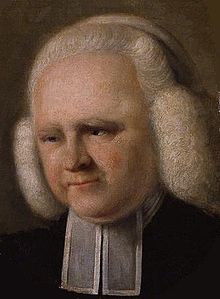
__________________________________________________________________ Title: Selected Sermons of George Whitefield Creator(s): Whitefield, George (1714-1770) Rights: Public Domain CCEL Subjects: All; Classic; Sermons LC Call no: BX9178.W52 LC Subjects: Christian Denominations Protestantism Post-Reformation Other Protestant denominations Presbyterianism. Calvinistic Methodism __________________________________________________________________ Selected Sermons of George Whitefield __________________________________________________________________ Table of Contents Sermons, sorted numerically [1]01. The Seed of the Woman, and the Seed of the Serpent [2]02. Walking with God [3]03. Abraham's Offering Up His Son Isaac [4]04. The Great Duty of Family Religion [5]05. Christ the Best Husband: Or an Earnest Invitation to Young Women to Come and See Christ Preached to a Society of Young Women, in Fetter-Lane [6]06. Britain's Mercies, and Britain's Duty Preached at Philadelphia, on Sunday, August 14, 1746 and Occasioned by the Suppression of the Late Unnatural Rebellion [7]07. Thankfulness for Mercies Received, a Necessary Duty [8]08. The Necessity and Benefits of Religious Society [9]09. The Folly and Danger of Being Not Righteous Enough [10]10. A Preservative Against Unsettled Notions, and Want of Principles, in Regard to Righteousness and Christian Perfection Being a More Particular Answer to Doctor Trapp's Four Sermons Upon the Same Text [11]11. The Benefits of an Early Piety [12]12. Christ the Believer's Husband [13]13. The Potter and the Clay [14]14. The Lord Our Righteousness [15]15. The Righteousness of Christ, an Everlasting Righteousness [16]16. The Observation of the Birth of Christ, the Duty of All Christians; Or the True Way of Keeping Christmas [17]17. The Temptation of Christ [18]18. The Heinous Sin of Profane Cursing and Swearing [19]19. Christ the Support of the Tempted [20]20. Worldly Business No Plea for the Neglect of Religion [21]21. Christ the Only Rest for the Weary and Heavy-Laden [22]22. The Folly and Danger of Parting with Christ for the Pleasures and Profits of Life [23]23. Marks of a True Conversion [24]24. What Think Ye of Christ? [25]25. The Wise and Foolish Virgins [26]26. "The Eternity of Hell-Torments" [27]27. Blind Bartimeus [28]28. Directions How to Hear Sermons [29]29. The Extent and Reasonableness of Self-Denial [30]30. Christ's Transfiguration [31]31. The Care of the Soul Urged as the One Thing Needful [32]32. A Penitent Heart, the Best New Year's Gift [33]33. The Gospel Supper [34]34. The Pharisee and Publican [35]35. The Conversion of Zaccheus [36]36. The Marriage of Cana [37]37. The Duty of Searching the Scriptures [38]38. The Indwelling of the Spirit, the Common Privilege of All Believers [39]39. The Resurrection of Lazarus [40]40. The Holy Spirit Convincing the World of Sin, Righteousness, and Judgment [41]41. Saul's Conversion [42]42. Marks of Having Received the Holy Ghost [43]43. The Almost Christian [44]44. Christ, the Believer's Wisdom, Righteousness, Sanctification and Redemption [45]45. The Knowledge of Jesus Christ the Best Knowledge [46]46. Of Justification by Christ [47]47. The Great Duty of Charity Recommended [48]48. Satan's Devices [49]49. On Regeneration [50]50. Christians, Temples of the Living God [51]51. Christ the Only Preservative Against a Reprobate Spirit [52]52. The Heinous Sin of Drunkenness [53]53. The Power of Christ's Resurrection [54]54. Intercession Every Christian's Duty [55]55. Persecution Every Christian's Lot [56]56. An Exhortation to the People of God Not to Be Discouraged in Their Way, by the Scoffs and Contempt of Wicked Men [57]57. Preached Before the Governor, and Council, and the House of Assembly, in Georgia, on January 28, 1770 [58]58. The Method of Grace [59]59. The Good Shepherd: A Farewell Sermon Sermons, sorted alphabetically [60]03. Abraham's Offering Up His Son Isaac [61]43. The Almost Christian [62]11. The Benefits of an Early Piety [63]27. Blind Bartimeus [64]06. Britain's Mercies, and Britain's Duty Preached at Philadelphia, on Sunday, August 14, 1746 and Occasioned by the Suppression of the Late Unnatural Rebellion [65]31. The Care of the Soul Urged as the One Thing Needful [66]12. Christ the Believer's Husband [67]44. Christ, the Believer's Wisdom, Righteousness, Sanctification and Redemption [68]05. Christ the Best Husband: Or an Earnest Invitation to Young Women to Come and See Christ Preached to a Society of Young Women, in Fetter-Lane [69]51. Christ the Only Preservative Against a Reprobate Spirit [70]21. Christ the Only Rest for the Weary and Heavy-Laden [71]19. Christ the Support of the Tempted [72]50. Christians, Temples of the Living God [73]30. Christ's Transfiguration [74]35. The Conversion of Zaccheus [75]28. Directions How to Hear Sermons [76]37. The Duty of Searching the Scriptures [77]26. "The Eternity of Hell-Torments" [78]56. An Exhortation to the People of God Not to Be Discouraged in Their Way, by the Scoffs and Contempt of Wicked Men [79]29. The Extent and Reasonableness of Self-Denial [80]09. The Folly and Danger of Being Not Righteous Enough [81]22. The Folly and Danger of Parting with Christ for the Pleasures and Profits of Life [82]59. The Good Shepherd: A Farewell Sermon [83]33. The Gospel Supper [84]47. The Great Duty of Charity Recommended [85]04. The Great Duty of Family Religion [86]40. The Holy Spirit Convincing the World of Sin, Righteousness, and Judgment [87]52. The Heinous Sin of Drunkenness [88]18. The Heinous Sin of Profane Cursing and Swearing [89]38. The Indwelling of the Spirit, the Common Privilege of All Believers [90]54. Intercession Every Christian's Duty [91]14. The Lord Our Righteousness [92]46. Of Justification by Christ [93]45. The Knowledge of Jesus Christ the Best Knowledge [94]23. Marks of a True Conversion [95]42. Marks of Having Received the Holy Ghost [96]36. The Marriage of Cana [97]58. The Method of Grace [98]08. The Necessity and Benefits of Religious Society [99]16. The Observation of the Birth of Christ, the Duty of All Christians; Or the True Way of Keeping Christmas [100]32. A Penitent Heart, the Best New Year's Gift [101]55. Persecution Every Christian's Lot [102]34. The Pharisee and Publican [103]10. A Preservative Against Unsettled Notions, and Want of Principles, in Regard to Righteousness and Christian Perfection Being a More Particular Answer to Doctor Trapp's Four Sermons Upon the Same Text [104]13. The Potter and the Clay [105]53. The Power of Christ's Resurrection [106]57. Preached Before the Governor, and Council, and the House of Assembly, in Georgia, on January 28, 1770 [107]49. On Regeneration [108]39. The Resurrection of Lazarus [109]15. The Righteousness of Christ, an Everlasting Righteousness [110]48. Satan's Devices [111]41. Saul's Conversion [112]01. The Seed of the Woman, and the Seed of the Serpent [113]17. The Temptation of Christ [114]07. Thankfulness for Mercies Received, a Necessary Duty [115]02. Walking with God [116]24. What Think Ye of Christ? [117]25. The Wise and Foolish Virgins [118]20. Worldly Business No Plea for the Neglect of Religion __________________________________________________________________ The Seed of the Woman, and the Seed of the Serpent Genesis 3:15 -- "And I will put Enmity between thee and the Woman, and between thy Seed and her Seed, it shall bruise thy Head, and thou shalt bruise his Heel." On reading to you these words, I may address you in the language of the holy angels to the shepherds, that were watching their flocks by night: "Behold, I bring you glad tidings of great joy." For this is the first promise that was made of a Savior to the apostate race of Adam. We generally look for Christ only in the New Testament; but Christianity, in one sense, is very near as old as the creation. It is wonderful to observe how gradually God revealed his Son to mankind. He began with the promise in the text, and this the elect lived upon, till the time of Abraham. To him, God made further discoveries of his eternal council concerning man's redemption. Afterwards, at sundry times, and in divers manners, God spoke to the fathers by the prophets, till at length the Lord Jesus himself was manifested in flesh, and came and tabernacled amongst us. This first promise must certainly be but dark to our first parents, in comparison of that great light which we enjoy: And yet, dark as it was, we may assure ourselves they built upon it their hopes of everlasting salvation, and by that faith were saved. How they came to stand in need of this promise, and what is the extent and meaning of it, I intend, God willing, to make the subject-matter of your present meditation. The fall of man is written in too legible characters not to be understood: Those that deny it, by their denying, prove it. The very heathens confessed, and bewailed it: They could see the streams of corruption running through the whole race of mankind, but could not trace them to the fountain-head. Before God gave a revelation of his Son, man was a riddle to himself. And Moses unfolds more, in this one chapter (out of which the text is taken) than all mankind could have been capable of finding out of themselves, though they had studied to all eternity. In the preceding chapter he had given us a full account, how God spoke the world into being; and especially how he formed man of the dust of the earth, and breathed into him the breath of life, so that he became a living soul. A council of the Trinity was called concerning the formation of this lovely creature. The result of that council was, "Let us make man in our image, after our likeness. So God created man in his own image, in the image of God created he him." Moses remarkably repeats these words, that we might take particular notice of our divine Original. Never was so much expressed in so few words: None but a man inspired could have done so. But it is remarkable, that though Moses mentions our being made in the image of God, yet he mentions it but twice, and that in a transient manner; as though he would have said, "man was made in honor, God make him upright, `in the image of God, male and female created he them.' But man so soon fell, and became like the beasts that perish, nay, like the devil himself, that it is scarce worth mentioning." How soon man fell after he was created, is not told us; and therefore, to fix any time, is to be wise above what is written. And, I think, they who suppose that man fell the same day in which he was made, have no sufficient ground for their opinion. The many things which are crowded together in the former chapter, such as the formation of Adam's wife, his giving names to the beasts, and his being put into the garden which God had planted, I think require a longer space of time than a day to be transacted in. However, all agree in this, "man stood not long." How long, or how short a while, I will not take upon me to determine. It more concerns us to inquire, how he came to fall from his steadfastness, and what was the rise and progress of the temptation which prevailed over him. The account given us in this chapter concerning it, is very full; and it may do us much service, under God, to make some remarks upon it. "Now the serpent (says the sacred historian) was more subtle than any beast of the field which the Lord God had made, and he said unto the woman, Yes, hath God said, ye shall not eat of every tree of the garden?" Though this was a real serpent, yet he that spoke was no other than the devil; from hence, perhaps, called the old serpent, because he took possession of the serpent when he came to beguile our first parents. The devil envied the happiness of man, who was made, as some think, to supply the place of the fallen angels. God made man upright, and with full power to stand if he would: He was just, therefore, in suffering him to be tempted. If he fell, he had no one to blame except himself. But how must Satan effect his fall? He cannot do it by his power, he attempts it therefore by policy: he takes possession of a serpent, which was more subtle than all the beasts of the field, which the Lord God had made; so that men who are full of subtlety, but have no piety, are only machines for the devil to work upon, just as he pleases. "And he said unto the woman." Here is an instance of his subtlety. He says unto the woman, the weaker vessel, and when she was alone from her husband, and therefore was more liable to be overcome; "Yes, hath God said, ye shall not eat of every tree of the garden?" These words are certainly spoken in answer to something which the devil either saw or heard. In all probability, the woman was now near the tree of knowledge of good and evil; (for we shall find her, by and by, plucking an apple from it) perhaps she might be looking at, and wondering what tree was in that tree more than the others, that she and her husband should be forbidden to take of it. Satan seeing this, and coveting to draw her into a parley with him, (for if the devil can persuade us not to resist, but to commune with him, he hath gained a great point) he says, "Yea, hath God said, ye shall not eat of every tree in the garden?" The first thing he does is to persuade he, if possible to entertain hard thoughts of God; this is his general way of dealing with God's children: "Yea, hath God said, ye shall not eat of every tree of the garden? What! Hath God planted a garden, and placed you in the midst of it, only to tease and perplex you? Hath he planted a garden, and yet forbid you making use of any of the fruits of it at all?" It was impossible for him to ask a more ensnaring question, in order to gain his end: For Eve was here seemingly obliged to answer, and vindicate God's goodness. And therefore, -- Verses 2 & 3. The woman said unto the serpent, "We may eat of the fruit of the trees of the garden: But of the fruit of the tree which is in the midst of the garden, God hath said, ye shall not eat of it, neither shall ye touch it, lest ye die." The former part of the answer was good, "We may eat of the fruit of the trees of the garden, God has not forbid us eating of every tree of the garden. No; we may eat of the fruit of the trees in the garden (and, it should seem, even of the tree of life, which was as a sacrament to man in the state of innocence) there is only one tree in the midst of the garden, of which God hath said, ye shall not eat of it, neither shall ye touch it, lest ye die." Here she begins to warp, and sin begins to conceive I her heart. Already she has contracted some of the serpent's poison, by talking with him, which she ought not to have done at all. For she might easily suppose, that it could be no good being that could put such a question unto her, and insinuate such dishonorable thoughts of God. She should therefore have fled from him, and not stood to have parleyed with him at all. Immediately the ill effects of it appear, she begins to soften the divine threatening. God had said, "the day thou eatest thereof, thou shalt surely die;" or, dying thou shalt die. But Eve says, "Ye shall not eat of it, neither shall ye touch it, lest ye die." We may be assured we are fallen into, and begin to fall by temptations, when we begin to think God will not be as good as his word, in respect to the execution of his threatenings denounced against sin. Satan knew this, and therefore artfully "Said unto the woman, (ver. 4) Ye shall not surely die," in an insinuating manner, "Ye shall not surely die. Surely; God will not be so cruel as to damn you only for eating an apple, it cannot be." Alas! How many does Satan lead captive at his will, by flattering them, that they shall not surely die; that hell torments will not be eternal; that God is all mercy; that he therefore will not punish a few years sin with an eternity of misery? But Eve found God as good as his word; and so will all they who go on in sin, under a false hope that they shall not surely die. We may also understand the words spoken positively, and this is agreeable to what follows; You shall not surely die; "It is all a delusion, a mere bugbear, to keep you in a servile subjection." For (ver. 5) "God doth know, that in the day ye eat thereof, then shall your eyes be opened, and ye shall be as gods, knowing good and evil." What child of God can expect to escape slander, when God himself was thus slandered even in paradise? Surely the understanding of Eve must have been, in some measure, blinded, or she would not have suffered the tempter to speak such perverse things. In what odious colors is God here represented! "God doth know, that in the day ye eat thereof, ye shall be as gods," (equal with God.) So that the grand temptation was, that they should be hereafter under no control, equal, if not superior, to God that made them, knowing good and evil. Eve could not tell what Satan meant by this; but, to be sure, she understood it of some great privilege which they were to enjoy. And thus Satan now points out a way which seems right to sinners, but does not tell them the end of that way is death. To give strength and force to this temptation, in all probability, Satan, or the serpent, at this time plucked an apple from the tree, and ate it before Eve; by which Eve might be induced to think, that the sagacity and power of speech, which the serpent had above the other beasts, must be owing, in a great measure, to his eating that fruit; and, therefore, if he received so much improvement, she might also expect a like benefit from it. All this, I think, is clear; for, otherwise, I do not see with what propriety it could be said, "When the woman saw that it was good for food." How could she know it was good for food, unless she had seen the serpent feed upon it? Satan now begins to get ground space. Lust had conceived in Eve's heart; shortly it will bring forth sin. Sin being conceived, brings forth death. Verse 6, "And when the woman saw that the tree was good for food, and that it was pleasant to the eyes, and a tree to be desired to make one wise, she took of the fruit thereof, and did eat, and gave also unto her husband, and he did eat." Our senses are the landing ports of our spiritual enemies. How needful is that resolution of holy Job, "I have made a covenant with mine eyes!" When Eve began to gaze on the forbidden fruit with her eyes, she soon began to long after it with her heart. When she saw that it was good for food, and pleasant to the eyes, (here was the lust of the flesh, and lust of the eye) but, above all, a tree to be desired to make one wise, wiser than God would have her be, nay, as wise as God himself; she took of the fruit thereof, and gave also unto her husband with her, and he did eat. As soon as ever she sinned herself, she turned tempter to her husband. It is dreadful, when those, who should be help-meets for each other in the great work of their salvation, are only promoters of each other's damnation: but thus it is. If we ourselves are good, we shall excite others to goodness; if we do evil, we shall entice others to do evil also. There is a close connection between doing and teaching. How needful then is it for us all to take heed that we do not sin any way ourselves, lest we should become factors for the devil, and ensnare, perhaps, our nearest and dearest relatives? "she gave also unto her husband with her, and he did eat." Alas! What a complication of crimes was there in this one single act of sin! Here is an utter disbelief of God's threatening; the utmost ingratitude to their Maker, who had so lately planted this garden, and placed them in it, with such a glorious and comprehensive charter. And, the utmost neglect of their posterity, who they knew were to stand or fall with them. Here was the utmost pride of heart: they wanted to be equal with God. Here's the utmost contempt put upon his threatening and his law: the devil is credited and obeyed before him, and all this only to satisfy their sensual appetite. Never was a crime of such a complicated nature committed by any here below: Nothing but the devil's apostasy and rebellion could equal it. And what are the consequences of their disobedience? Are their eyes opened? Yes, their eyes are opened; but, alas! It is only to see their own nakedness. For we are told (ver. 7) "That the eyes of them both were opened; and they knew that they were naked." Naked of God, naked of every thing that was holy and good, and destitute of the divine image, which they before enjoyed. They might rightly now be termed Ichabod; for the glory of the Lord departed from them. O how low did these sons of the morning then fall! Out of God, into themselves; from being partakers of the divine nature, into the nature of the devil and the beast. Well, therefore, might they know that they were naked, not only in body, but in soul. And how do they behave now they are naked? Do they flee to God for pardon? Do they seek to God for a robe to cove their nakedness? No, they were now dead to God, and became earthly, sensual, devilish: therefore, instead of applying to God for mercy, "they sewed or platted fig-leaves together, and made themselves aprons, "or things to gird about them. This is a lively representation of all natural man: we see that we are naked: we, in some measure, confess it; but, instead of looking up to God for succor, we patch up a righteousness of our own (as our first parents platted fig-leaves together) hoping to cover our nakedness by that. But our righteousness will not stand the severity of God's judgment: it will do us no more service than the fig-leaves did Adam and Eve, that is, none at all. For (ver. 8) "They heard the voice of the Lord God walking in the trees of the garden, in the cool of the day; and Adam and his wife (notwithstanding their fig-leaves) hid themselves from the presence of the Lord God, among the trees of the garden." They heard the voice of the Lord God, or the Word of the Lord God, even the Lord Jesus Christ, who is "the word that was with God, and the word that was God." They heard him walking in the trees of the garden, in the cool of the day. A season, perhaps, when Adam and Eve used to go, in a n especial manner, and offer up an evening sacrifice of praise and thanksgiving. The cool of the day. Perhaps the sin was committed early in the morning, or at noon; but God would not come upon them immediately, he staid till the cool of the day. And if we would effectually reprove others, we should not do it when they are warmed with passion, but wait till the cool of the day. But what an alteration is here! Instead of rejoicing at the voice of their beloved, instead of meeting him with open arms and enlarged hearts, as before, they now hide themselves in the trees of the garden. Alas, what a foolish attempt was this? Surely they must be naked, otherwise how could they think of hiding themselves from God? Whither could they flee from his presence? But, by their fall, they had contracted an enmity against God: they now hated, and were afraid to converse with God their Maker. And is not this our case by nature? Assuredly it is. We labor to cover our nakedness with the fig-leaves of our own righteousness: We hide ourselves from God as long as we can, and will not come, and never should come, did not the Father prevent, draw, and sweetly constrain us by his grace, as he here prevented Adam. Verse 9. "And the Lord God called unto Adam, and said unto him, Adam, where art thou?" "The Lord God called unto Adam." (for otherwise Adam would never have called unto the Lord God) and said, "Adam, where art thou? How is it that thou comest not to pay thy devotions as usual?" Christians, remember the Lord keeps an account when you fail coming to worship. Whenever therefore you are tempted to withhold your attendance, let each of you fancy you heard the Lord calling unto you, and saying, "O man, O woman, where art thou? It may be understood in another and better sense; "Adam, where art thou?" What a condition is thy poor soul in? This is the first thing the Lord asks and convinces a sinner of; when he prevents and calls him effectually by his grace; he also calls him by name; for unless God speaks to us in particular, and we know where we are, how poor, how miserable, how blind, how naked, we shall never value the redemption wrought out for us by the death and obedience of the dear Lord Jesus. "Adam, where art thou?" Verse 10. "And he said, I heard thy voice in the garden, and I was afraid." See what cowards sin makes us. If we knew no sin, we should know no fear. "Because I was naked, and I hid myself." Ver. 11, "And he said, who told thee that thou was naked? Hast thou eaten of the tree, whereof I (thy Maker and Law-giver) commanded thee, that thou shouldest not eat?" God knew very well that Adam was naked, and that he had eaten of the forbidden fruit, But God would know it from Adam's own mouth. Thus God knows all our necessities before we ask, but yet insists upon our asking for his grace, and confessing our sins. For, by such acts, we acknowledge our dependence upon God, take shame to ourselves, and thereby give glory to his great name. Verse 12. "And the man said, the woman which thou gavest to be with me, she gave me of the tree, and I did eat." Never was nature more lively delineated. See what pride Adam contracted by the fall! How unwilling he is to lay the blame upon, or take shame to himself. This answer is full of insolence towards God, enmity against his wife, and disingenuity in respect to himself. For herein he tacitly reflects upon God. "The woman that thou gavest to be with me." As much as to say, if thou hadst not given me that woman, I had not eaten the forbidden fruit. Thus, when men sin, they lay the fault upon their passions; then blame and reflect upon God for giving them those passions. Their language is, "the appetites that thou gavest us, they deceived us; and therefore we sinned against thee." But, as God, notwithstanding, punished Adam for hearkening to the voice of his wife, so he will punish those who hearken to the dictates of their corrupt inclinations. For God compels no man to sin. Adam might have withstood the solicitations of his wife, if he would. And so, if we look up to God, we should find grace to help in the time of need. The devil and our own hearts tempt, but they cannot force us to consent, without the concurrence of our own wills. So that our damnation is of ourselves, as it will evidently appear at the great day, notwithstanding all men's present impudent replies against God. As Adam speaks insolently in respect to God, so he speaks with enmity against his wife; the woman, or this woman, she gave me. He lays all the fault upon her, and speaks of her with much contempt. He does not say, my wife, my dear wife; but, this woman. Sin disunites the most united hearts: It is, the bane of holy fellowship. Those who have been companions in sin here, if they die without repentance, will both hate and condemn one another hereafter. All damned souls are accusers of their brethren. Thus it is, in some degree, on this side of the grave. "The woman whom thou gavest to be with me, she gave me of the tree, and I did eat." What a disingenuous [deceitful] speech was here! He makes use of no less than fifteen words to excuse himself, and but one or two (in the original) to confess his fault, if it may be called a confession at all. "The woman which thou gavest to be with me, she gave me of the tree;" here are fifteen words; "and I did eat." With what reluctance do these last words come out? How soon are they uttered are they uttered? "And I did eat." But thus it is with an unhumbled, unregenerate heart; It will be laying the fault upon the dearest friend in the world, nay, upon God himself, rather than take shame to itself. This pride we are all subject to by the fall; and, till our hearts are broken, and made contrite by the spirit of our Lord Jesus Christ, we shall be always charging God foolishly. "Against thee, and thee only, have I sinned, that thou mightest be justified in thy saying, and clear when thou art judged," is the language of none but those, who, like David, are willing to confess their faults, and are truly sorry for their sins. This was not the case of Adam; his heart was not broken; and therefore he lays the fault of his disobedience upon his wife and God, and not upon himself; "The woman which thou gavest to be with me, she gave me of the tree, and I did eat." Verse 13. "And the Lord God said, What is this that thou hast done?" What a wonderful concern does God express in this expostulation! "What a deluge of misery hast thou brought upon thyself, thy husband, and thy posterity? What is this that thou has done? Disobeyed thy God, obeyed the devil, and ruined thy husband, for whom I made thee to be an help-meet! What is this that thou hast done?" God would here awaken her to a sense of her crime and danger, and therefore, as it were, thunders in her ears: for the law must be preached to self-righteous sinners. We must take care of healing before we see sinners wounded, lest we should say, Peace, peace, where there is no peace. Secure sinners must hear the thunderings of mount Sinai, before we bring them to mount Zion. They who never preach up the law, it is to be feared, are unskillful in delivering the glad tidings of the gospel. Every minister should be a Boanerges, a son of thunder, as well as a Barnabus, a son of consolation. There was an earthquake and a whirlwind, before the small still voice came to Elijah: We must first show people they are condemned, and then show them how they must be saved. But how and when to preach the law, and when to apply the promises of the gospel, wisdom is profitable to direct. "And the Lord God said unto the woman, What is this that thou has done?" "And the woman said, The serpent beguiled me, and I did eat." She does not make use of so many words to excuse herself, as her husband; but her heart is as unhumbled as his. What is this, says God, that thou hast done? God here charges her with doing it. She dares not deny the fact, or say, I have not done it; but she takes all the blame off herself, and lays it upon the serpent; "The serpent beguiled me, and I did eat." She does not say, "Lord, I was to blame for talking with the serpent; Lord, I did wrong, in not hastening to my husband, when he put the first question to me; Lord, I plead guilty, I only am to blame, O let not my poor husband suffer for my wickedness!" This would have been the language of her heart had she now been a true penitent. But both were now alike proud; therefore neither will lay the blame upon themselves; "The serpent beguiled me, and I did eat. The woman which thou gavest to be with me, she gave me of the tree, and I did eat." I have been the more particular in remarking this part of their behavior, because it tends so much to the magnifying of Free-grace, and plainly shows us, that salvation cometh only from the Lord. Let us take a short view of the miserable circumstances our first parents were now in: They were legally and spiritually dead, children of wrath, and heirs of hell. They had eaten the fruit, of which God had commanded them, that they should not eat; and when arraigned before God, notwithstanding their crime was so complicated, they could not be brought to confess it. What reason can be given, why sentence of death should not be pronounced against the prisoners at the bar? All must own they are worthy to die. Nay, how can God, consistently with his justice, possibly forgive them? He had threatened, that they day wherein they eat of the forbidden fruit, they should "surely die;" and, if he did not execute this threatening, the devil might then slander the Almighty indeed. And yet mercy cries, spare these sinners, spare the work of thine own hands. Behold, then, wisdom contrives a scheme how God may be just, and yet be merciful; be faithful to his threatening, punish the offense, and at the same time spare the offender. An amazing scene of divine love here opens to our view, which had been from all eternity hid in the heart of God! Notwithstanding Adam and Eve were thus unhu7mbled, and did not so much as put up on single petition for pardon, God immediately passes sentence upon the serpent, and reveals to them a Savior. Verse 14. "And the Lord God said unto the serpent, because thou hast done this, thou art accursed above all cattle, and above every beast of the field; upon thy belly shalt thou go, and dust shalt thou eat all the days of thy life;" i.e. he should be in subjection, and his power should always be limited and restrained. "His enemies shall lick the very dust," says the Psalmist. (Verse 15.) "And I will put enmity between thee and the woman, and between thy seed and her seed: it shall bruise thy head, and thou shalt bruise his heel." Before I proceed to the explanation of this verse, I cannot but take notice of one great mistake which the author of the whole duty of man is guilty of, in making this verse contain a covenant between God and Adam, as though God now personally treated with Adam, as before the fall. For, talking of the second covenant in his preface, concerning caring for the soul, says he, "This second covenant was made with Adam, and us in him, presently after the fall, and is briefly contained in these words, Gen. 3:15 where God declares, `The seed of the woman shall break the serpent's head; and this was made up, as the first was, of some mercies to be afforded by God, and some duties to be performed by us." This is exceeding false divinity: for those words are not spoken to Adam; they are directed only to the serpent. Adam and Eve stood by as criminals, and God could not treat with them, because they had broken his covenant. And it is so far from being a covenant wherein "some mercies are to be afforded by God, and some duties to be performed by us," that here is not a word looking that way; it is only a declaration of a free gift of salvation through Jesus Christ our Lord. God the Father and God the Son had entered into a covenant concerning the salvation of the elect from all eternity, wherein God the Father promised, That, if the Son would offer his soul a sacrifice for sin, he should see his seed. Now this is an open revelation of this secret covenant, and therefore God speaks in the most positive terms, "It shall bruise thy head, and thou shalt bruise his heal." The first Adam, God had treated with before; he proved false: God therefore, to secure the second covenant from being broken, puts it into the hands of the second Adam, the Lord from heaven. Adam, after the fall, stood no longer as our representative; he and Eve were only private persons, as we are, and were only to lay hold on the declaration of mercy contained in this promise by faith, (as they really did) and by that they were saved. I do not say but we are to believe and obey, if we are everlastingly saved. Faith and obedience are conditions, if we only mean that they in order go before our salvation, but I deny that these are proposed by God to Adam, or that God treats with him in this promise, as he did before the fall under the covenant of works. For how could that be, when Adam and Eve were now prisoners at the bar, without strength to perform any conditions at all? The truth is this: God, as a reward of Christ's sufferings, promised to give the elect faith and repentance, in order to bring them to eternal life; and both these, and every thing else necessary for their everlasting happiness, and infallibly secured to them in this promise; as Mr. Rastan, an excellent Scots divine, clearly shows, in a book entitled, "A view of the covenant of grace." This is by no means an unnecessary distinction; it is a matter of great importance: for want of knowing this, people have been so long misled, They have been taught that they must do so and so, and though they were under a covenant of works, and then for doing this, they should be saved. Whereas, on the contrary, people should be taught, That the Lord Jesus was the second Adam, with whom the Father entered into covenant for fallen man; That they can now do nothing of or for themselves, and should therefore come to God, beseeching him to give them faith, by which they shall be enabled to lay hold on the righteousness of Christ; and that faith they will then show forth by their works, out of love and gratitude to the ever blessed Jesus, their most glorious Redeemer, for what he has done for their souls. This is a consistent scriptural scheme; without holding this, we must run into one of those two bad extremes; I mean Antinomianism on the one hand, or Arminianism on the other: from both which may the good Lord deliver us! But to proceed: By the seed of the woman, we are here to understand the Lord Jesus Christ, who, though very God of very God, was, for us men and our salvation, to have a body prepared for him by the Holy Ghost, and to be born of a woman who never knew man, and by his obedience and death make an atonement for man's transgression, and bring in an everlasting righteousness, work in them a new nature, and thereby bruise the serpent's head, i.e. destroy his power and dominion over them. By the serpent's seed, we are to understand the devil and all his children, who are permitted by God to tempt and sift his children. But, blessed be God, he can reach no further than our heel. It is to be doubted but Adam and Eve understood this promise in this sense; for it is plain, in the latter part of the chapter, sacrifices were instituted. From whence should those skins come, but from beasts slain for sacrifice, of which God made them coats? We find Abel, as well as Cain, offering sacrifice in the next chapter: and the Apostle tells us, he did it by faith, no doubt in this promise. And Eve, when Cain was born, said, "I have gotten a man from the Lord," or, (as Mr. Henry observes, it may be rendered) "I have gotten a man, -- the Lord, -- the promised Messiah." Some further suppose, that Eve was the first believer; and therefore they translate it thus, "The seed, (not of the, but) of this woman:" which magnifies the grace of God so much the more, that she, who was first in the transgression, should be the first partaker of redemption. Adam believed also, and was saved: for unto Adam and his wife did the Lord God make coats of skins, and clothed them: which was a remarkable type of their being clothed with the righteousness of our Lord Jesus Christ. This promise was literally fulfilled in the person of our Lord Jesus Christ. Satan bruised his heel, when he tempted him for forty days together in the wilderness: he bruised his heel, when he raised up strong persecution against him during the time of his public ministry: he in an especial manner bruised his heel, when our Lord complained, that his soul was exceeding sorrowful, even unto death, and he sweat great drops of blood falling upon the ground, in the garden; He bruised his heel, when he put it into the heart of Judas to betray him: ad he bruised him yet most of all, when his emissaries nailed him to an accursed tree, and our Lord cried out, "My God, my God, why hast thou forsaken me?" Yet, in all this, the blessed Jesus, the seed of the woman, bruised Satan's accursed head; for, in that he was tempted, he was able to succor those that are tempted. By his stripes we are healed. The chastisement of our peace was upon him. By dying, he destroyed him that had the power of death, that is, the devil. He thereby spoiled principalities and powers, and made a show of them openly, triumphing over them upon the cross. This promise has been fulfilled in the elect of God, considered collectively, as well before, as since the coming of our Lord in the flesh: for they may be called, the seed of the woman. Marvel not, that all who will live godly in Christ Jesus, must suffer persecution. In this promise, there is an eternal enmity put between the seed of the woman, and the seed of the serpent; so that those that are born after the flesh, cannot but persecute those that are born after the spirit. This enmity showed itself, soon after this promise was revealed, in Cain's bruising the heel of Abel: it continued in the church through all ages before Christ came in the flesh, as the history of the Bible, and the 11th chapter of the Hebrews, plainly show. It raged exceedingly after our Lord's ascension; witness the Acts of the Apostles, and the History of the Primitive Christians. It now rages, and will continue to rage and show itself, in a greater or less degree, to the end of time. But let not this dismay us; for in all this, the seed of the woman is more than conqueror, and bruises the serpent's head. Thus the Israelites, the more they were oppressed, the more they increased. Thus it was with the Apostles; thus it was with their immediate followers. So that Tertullian compares the church in his time to a mowed field; the more frequently it is cut, the more it grows. The blood of the martyrs was always the seed of the church. And I have often sat down with wonder and delight, and admired how God has made the very schemes which his enemies contrived, in order to hinder, become the most effectual means to propagate his gospel. The devil has had so little success in persecution, that if I did not know that he and his children, according to this verse, could not but persecute, I should think he would count it his strength to sit still. What did he get by persecuting the martyrs in Queen Mary's time? Was not the grace of God exceedingly glorified in their support? What did he get by persecuting the good old Puritans? Did it not prove the peopling of New-England? Or, to come nearer our own times, what has he got by putting us out of the synagogues? Hath not the word of God, since that, mightily prevailed? My dear hearers, you must excuse me for enlarging on this head; God fills my soul generally, when I come to this topic. I can say with Luther, "If it were not for persecution, I should not understand the scripture." If Satan should be yet suffered to bruise my heel further, and his servants should thrust me into prison, I doubt not, but even that would only tend to the more effectual bruising of his head. I remember a saying the then Lord Chancellor to the pious Bradford: "Thou hast done more hurt, said he, by thy exhortations in private in prison, than thou didst in preaching before thou was put in," or words to this effect. The promise of the text is my daily support: "I will put enmity between thy seed and her seed; it shall bruise thy head, and thou shalt bruise his heel." Further: this promise is also fulfilled, not only in the church in general, but in every individual believer in particular. In every believer there are two seeds, the seed of the woman, and the seed of the serpent; the flesh lusting against the spirit, and the spirit against the flesh. It is with the believer, when quickened with grace in his heart, as it was with Rebekah, when she had conceived Esau and Jacob in her womb; she felt a struggling, and began to be uneasy; "If it be so says she, why am I thus?" (Gen. 25:22) Thus grace and nature struggle (if I may so speak) in the womb of a believers heart: but, as it was there said, "The elder shall serve the younger;" so it is here, -- grace in the end shall get the better of nature; the seed of the woman shall bruise the serpent's head. Many of you that have believed in Christ, perhaps may find some particular corruption yet strong, so strong, that you are sometimes ready to cry out with David, "I shall fall one day by the hand of Saul." But, fear not, the promise in the text insures the perseverance and victory of believers over sin, Satan, death, and hell. What if indwelling corruption does yet remain, and the seed of the serpent bruise your heel, in vexing and disturbing your righteous souls? Fear not, though faint, yet pursue: you shall yet bruise the serpent's head. Christ hath died for you, and yet a little while, and he will send death to destroy the very being of sin in you. Which brings me To show the most extensive manner in which the promise of the text shall be fulfilled, vis. at the final judgment, when the Lord Jesus shall present the elect to his Father, without spot or wrinkle, or any such thing, glorified both in body and soul. Then shall the seed of the woman give the last and fatal blow, in bruising the serpent's head. Satan, the accuser of the brethren, and all his accursed seed, shall then be cast out, and never suffered to disturb the seed of the woman any more. Then shall the righteous shine as the sun in the kingdom of their Father, and sit with Christ on thrones in majesty on high. Let us, therefore, not be weary of well-doing; for we shall reap an eternal harvest of comfort, if we faint not. Dare, dare, my dear brethren in Christ, to follow the Captain of your salvation, who was made perfect through sufferings. The seed of the woman shall bruise the serpent's head. Fear not men. Be not too much cast down at the deceitfulness of your hearts. Fear not devils; you shall get the victory even over them. The Lord Jesus has engaged to make you more than conquerors over all. Plead with you Savior, plead: plead the promise in the tent. Wrestle, wrestle with God in prayer. If it has been given you to believe, fear not if it should also be given you to suffer. Be not any wise terrified by your adversaries; the king of the church has them all in a chain: be kind to them, pray for them; but fear them not. The Lord will yet bring back his ark; though at present driven into the wilderness; and Satan like lightening shall fall from heaven. Are there any enemies of God here? The promise of the text encourages me to bid you defiance: the seed of the woman, the ever-blessed Jesus, shall bruise the serpent's head. What signifies all your malice? You are only raging waves of the sea, foaming out your own shame. For you, without repentance, is reserved the blackness of darkness for ever. The Lord Jesus sits in heaven, ruling over all, and causing all things to work for his children's good: he laughs you to scorn: he hath you in the utmost derision, and therefore so will I. Who are you that persecute the children of the ever blessed God? Though a poor stripling, the Lord Jesus, the seed of the woman, will enable me to bruise your heads. My brethren in Christ, I think I do not speak thus in my own strength, but in the strength of my Redeemer. I know in whom I have believed; I am persuaded he will keep that safe, which I have committed unto him. He is faithful who hath promised, that the seed of the woman shall bruise the serpent's head. May we all experience a daily completion of this promise, both in the church and in our hearts, till we come to the church of the first-born, the spirits of just men made perfect, in the presence and actual fruition of the great God our heavenly Father! To whom, with the Son, and the Holy Ghost, be ascribed all honor, power, might, majesty, and dominion, now and for evermore. Amen. __________________________________________________________________ Walking with God Genesis 5:24 -- "And Enoch walked with God: and he was not; for God took him." Various are the pleas and arguments which men of corrupt minds frequently urge against yielding obedience to the just and holy commands of God. But, perhaps, one of the most common objections that they make is this, that our Lord's commands are not practicable, because contrary to flesh and blood; and consequently, that he is `an hard master, reaping where he has not sown, and gathering where he has not strewed'. These we find were the sentiments entertained by that wicked and slothful servant mentioned in the 25th of St. Matthew; and are undoubtedly the same with many which are maintained in the present wicked and adulterous generation. The Holy Ghost foreseeing this, hath taken care to inspire holy men of old, to record the examples of many holy men and women; who, even under the Old Testament dispensation, were enabled cheerfully to take Christ's yoke upon them, and counted his service perfect freedom. The large catalogue of saints, confessors, and martyrs, drawn up in the 11th chapter to the Hebrews, abundantly evidences the truth of this observation. What a great cloud of witnesses have we there presented to our view? All eminent for their faith, but some shining with a greater degree of luster than do others. The proto-martyr Abel leads the van. And next to him we find Enoch mentioned, not only because he was next in order of time, but also on account of his exalted piety; he is spoken of in the words of the text in a very extraordinary manner. We have here a short but very full and glorious account, both of his behavior in this world, and the triumphant manner of his entry into the next. The former is contained in these words, `And Enoch walked with God'. The latter in these, `and he was not: for God took him'. He was not; that is, he was not found, he was not taken away in the common manner, he did not see death; for God had translated him. (Heb. 11:5.) Who this Enoch was, does not appear so plainly. To me, he seems to have been a person of public character; I suppose, like Noah, a preacher of righteousness. And, if we may credit the apostle Jude, he was a flaming preacher. For he quotes one of his prophecies, wherein he saith, `Behold, the Lord cometh with ten thousands of his saints, to execute judgment upon all, and to convince all that are ungodly among them, of all their ungodly deeds which they have ungodly committed, and of all their hard speeches, which ungodly sinners have spoken against him'. But whether a public or private person, he has a noble testimony given him in the lively oracles. The author of the epistle to the Hebrews saith, that before his translation he had this testimony, `that he pleased God'; and his being translated, was a proof of it beyond all doubt. And I would observe, that it was wonderful wisdom in God to translate Enoch and Elijah under the Old Testament dispensation, that hereafter, when it should be asserted that the Lord Jesus was carried into heaven, it might not seem a thing altogether incredible to the Jews; since they themselves confessed that two of their own prophets had been translated several hundred hears before. But it is not my design to detain you any longer, by enlarging, or making observations, on Enoch's short but comprehensive character: the thing I have in view being to give a discourse, as the Lord shall enable, upon a weighty and a very important subject; I mean, walking with God. `And Enoch walked with God.' If so much as this can be truly said of you and me after our decease, we shall not have any reason to complain that we have lived in vain. In handling my intended subject, I shall, First, Endeavor to show what is implied in these words, walked with God. Secondly, I shall prescribe some means, upon the due observance of which, believers may keep up and maintain their walk with God. And, Thirdly, Offer some motives to stir us up, if we never walked with God before, to come and walk with God now. The whole shall be closed with a word or two of application. First, I am to show what is implied in these words, `walked with God'; or, in other words, what we are to understand by walking with God. And First, walking with God implies, that the prevailing power of the enmity of a person's heart be taken away by the blessed Spirit of God. Perhaps it may seem a hard saying to some, but our own experience daily proves what the scriptures in many places assert, that the carnal mind, the mind of the unconverted natural man, nay, the mind of the regenerate, so far as any part of him remains unrenewed, is enmity, not only an enemy, but enmity itself, against God; so that it is not subject to the law of God, neither indeed can it be. Indeed, one may well wonder that any creature, especially that lovely creature man, made after his Maker's own image, should ever have any enmity, much less a prevailing enmity, against that very God in whom he lives, and moves, and hath his being. But alas! so it is. Our first parents contracted it when they fell from God by eating the forbidden fruit, and the bitter and malignant contagion of it hath descended to, and quite overspread, their whole posterity. This enmity discovered itself in Adam's endeavoring to hide himself in the trees of the garden. When he heard the voice of the Lord God, instead of running with an open heart, saying Here I am; alas! he now wanted no communion with God; and still more discovered his lately contracted enmity, by the excuse he made to the Most High: `The woman (or, this woman) thou gavest to be with me, she gave me of the tree, and I did eat'. By saying thus, he in effect lays all the fault upon God; as though he had said, If thou hadst not given me this woman, I had not sinned against thee, so thou mayest thank thyself for my transgression. In the same manner this enmity works in the hearts of Adam's children. They now and again find something rising against God, and saying even unto God, What doest thou? `It scorns any meaner competitor (says the learned Dr. Owen, in his excellent treatise on indwelling sin) than God himself.' Its command is like that of the Assyrians in respect to Ahab -- shoot only at the king. And it strikes against every thing that has the appearance of real piety, as the Assyrians shot at Jehoshaphat in his royal clothes. But the opposition ceases when it finds that it is only an appearance, as the Assyrians left off shooting at Jehoshaphat, when they perceived it was not Ahab they were shooting at. This enmity discovered itself in accursed Cain; he hated and slew his brother Abel, because Abel loved, and was peculiarly favored by, his God. And this same enmity rules and prevails in every man that is naturally engendered of the offspring of Adam. Hence that a averseness to prayer and holy duties which we find in children, and very often in grown persons, who have notwithstanding been blessed with a religious education. And all that open sin and wickedness, which like a deluge has overflowed the world, are only so many streams running from this dreadful contagious fountain; I mean a enmity of man's desperately wicked and deceitful heart. He that cannot set his seal to this, knows nothing yet, in a saving manner, of the Holy Scriptures, or of the power of God. And all that do know this, will readily acknowledge, that before a person can be said to walk with God, the prevailing power of this heart-enmity must be destroyed: for persons do not use to walk and keep company together, who entertain an irreconcilable enmity and hatred against one another. Observe me, I say, the prevailing power of this enmity must be taken away; for the in-being of it will never be totally removed, till we bow down our heads, and give up the ghost. The apostle Paul, no doubt, speaks of himself, and that, too, not when he was a Pharisee, but a real Christian; when he complains, `that when he would do good, evil was present with him'; not having dominion over him, but opposing and resisting his good intentions and actions, so that he could not do the things which he would, in that perfection which the new man desired. This is what he calls sin dwelling in him. `And this is that phronhma sarko", which (to use the words of the ninth article of our church,) some do expound the wisdom, some sensuality, some the affectation, some the desire, of the flesh, which doth remain, yea, in them that are regenerated.' But as for its prevailing power, it is destroyed in every soul that is truly born of God, and gradually more and more weakened as the believer grows in grace, and the Spirit of God gains a greater and greater ascendancy in the heart. But Secondly, Walking with God not only implies, that the prevailing power of the enmity of a man's heart be taken away, but also that a person is actually reconciled to God the Father, in and through the all-sufficient righteousness and atonement of his dear Son. `Can two walk together, (says Solomon, [actually Amos 3:3]) unless they are agreed?' Jesus is our peace as well as our peace-maker. When we are justified by faith in Christ, then, but not till then, we have peace with God; and consequently cannot be said till then to walk with him, walking with a person being a sign and token that we are friends to that person, or at least, though we have been at variance, yet that now we are reconciled and become friends again. This is the great errand that gospel ministers are sent out upon. To us is committed the ministry of reconciliation; as ambassadors for God, we are to beseech sinners, in Christ's stead, to be reconciled unto God, and when they comply with the gracious invitation, and are actually by faith brought into a state of reconciliation with God, then, and not till then, may they be said so much as to begin to walk with God. Further, Thirdly, Walking with God implies a settled abiding communion and fellowship with God, or what in scripture is called, `The Holy Ghost dwelling in us'. This is what our Lord promised when he told his disciples that `the Holy Spirit would be in and with them'; not to be like wayfaring man, to say only for a night, but to reside and make his abode in their hearts. This, I am apt to believe, is what the apostle John would have us understand, when he talks of a person `abiding in him, in Christ, and walking as he himself also walked'. And this is what is particularly meant in the words of our text. `And Enoch walked with God', that is, he kept up and maintained a holy, settled, habitual, though undoubtedly not altogether uninterrupted communion and fellowship with God, in and through Christ Jesus. So that to sum up what has been said on this part of the first general head, walking with God consists especially in the fixed habitual bent of the will for God, in an habitual dependence upon his power and promise, in an habitual voluntary dedication of our all to his glory, in an habitual eyeing of his precept in all we do, and in an habitual complacence in his pleasure in all we suffer. Fourthly, walking with God implies our making progress or advances in the divine life. Walking, in the very first idea of the word, seems to suppose a progressive motion. A person that walks, though he move slowly, yet he goes forward, and does not continue in one place. And so it is with those that walk with God. They go on, as the Psalmist says, `from strength to strength'; or, in the language of the apostle Paul, `they pass from glory to glory, even by the Spirit of the Lord'. Indeed, in one sense, the divine life admits of neither increase nor decrease. When a soul is born of God, to all intents and purposes he is a child of God; and though he should live to the age of Methuselah, yet he would then be only a child of God after all. But in another sense, the divine life admits of decays and additions. Hence it is, that we find the people of God charged with backslidings and losing their first love. And hence it is that we hear of babes, young men, and fathers in Christ. And upon this account it is that the apostle exhorts Timothy, `to let his progress be made known to all men'. And what is here required of Timothy in particular, by St. Peter is enjoined on all Christians in general. `But grow in grace, (says he), and in the knowledge of our Lord and Savior Jesus Christ'. For the new creature increases in spiritual stature; and though a person can but be a new creature, yet there are some that are more conformed to the divine image than others, and will after death be admitted to a greater degree of blessedness. For want of observing this distinction, even some gracious souls, that have better hearts than heads, (as well as men of corrupt minds, reprobates concerning the faith) have unawares run into downright Antinomian principles, denying all growth of grace in a believer, or any marks of grace to be laid down in the scriptures of truth. From such principles, and more especially from practices naturally consequent on such principles, may the Lord of all lords deliver us! From what then has been said, we may now know what is implied in the words, `walked with God', viz. Our having the prevailing enmity of our hearts taken away by the power of the Spirit of God; our being actually reconciled and united to him by faith in Jesus Christ; our having and keeping up a settled communion and fellowship with him; and our making a daily progress in this fellowship, so as to be conformed to the divine image more and more. How this is done, or, in other words, by what means believers keep up and maintain their walk with God, comes to be considered under our second general head. And, First, Believers keep up and maintain their walk with God by reading of his holy word. `Search the scriptures', says our blessed Lord, `for these are they that testify of me'. And the royal Psalmist tells us `that God's word was a light unto his feet, and a lantern unto his paths'; and he makes it one property of a good man, `that his delight is in the law of the Lord, and that he exercises himself therein day and night'. `Give thyself to reading', (says Paul to Timothy); `And this book of the law, (says God to Joshua) shall not go out of thy mouth'. For whatsoever was written aforetime was written for our learning. And the word of God is profitable for reproof, for correction, and for instruction in righteousness, and every way sufficient to make every true child of God thoroughly furnished unto every good work. If we once get above our Bibles, and cease making the written word of God our sole rule both as to faith and practice, we shall soon lie open to all manner of delusion, and be in great danger of making shipwreck of faith and a good conscience. Our blessed Lord, though he had the Spirit of God without measure, yet always was governed by, and fought the devil with, `It is written'. This the apostle calls the `sword of the Spirit'. We may say of it, as David said of Goliath's sword, `None like this'. The scriptures are called the lively oracles of God: not only because they are generally made use of to beget in us a new life, but also to keep up and increase it in the soul. The apostle Peter, in his second epistle, prefers it even to seeing Christ transfigured upon the mount. For after he had said, chap. 1:18. `This voice which came from heaven we heard, when we were with him in the holy mount'; he adds, `We have also a more sure word of prophecy; whereunto ye do well that ye take heed, as unto a light shining in a dark place, until the day dawn, and the day-star arise in your hearts': that is, till we shake off these bodies, and see Jesus face to face. Till then we must see and converse with him through the glass of his word. We must make his testimonies our counselors, and daily, with Mary, sit at Jesus' feet, by faith hearing his word. We shall then by happy experience find, that they are spirit and life, meat indeed and drink indeed, to our souls. Secondly, Believers keep up and maintain their walk with God by secret prayer. The spirit of grace is always accompanied with the spirit of supplication. It is the very breath of the new creature, the fan of the divine life, whereby the spark of holy fire, kindled in the soul by God, is not only kept in, but raised into a flame. A neglect of secret prayer has been frequently an inlet to many spiritual diseases, and has been attended with fatal consequences. Origen observed, '`hat the day he offered incense to an idol, he went out of his closet without making use of secret prayer'' It is one of the most noble parts of the believers' spiritual armor. `Praying always', says the apostle, `with all manner of supplication.' `Watch and pray', says our Lord, `that ye enter not into temptation.' And he spake a parable, that his disciples should pray, and not faint. Not that our Lord would have us always upon our knees, or in our closets, to the neglect of our other relative duties. But he means, that our souls should be kept in a praying frame, so that we might be able to say, as a good man in Scotland once said to his friends on his death-bed, `Could these curtains, or could these walls speak, they would tell you what sweet communion I have had with my God here'. O prayer! Prayer! It brings and keeps God and man together. It raises man up to God, and brings God down to man. If you would there, O believers, keep up your walk with God; pray, pray without ceasing. Be much in secret, set prayer. And when you are about the common business of life, be much in ejaculatory prayer, and send, from time to time, short letters post to heaven upon the wings of faith. They will reach the very heart of God, and return to you again loaded with spiritual blessings. Thirdly, Holy and frequent meditation is another blessed means of keeping up a believer's walk with God. `Prayer, reading, temptation, and meditation', says Luther, make a minister.' And they also make and perfect a Christian. Meditation to the soul, is the same as digestion to the body. Holy David found it so, and therefore he was frequently employed in meditation, even in the night season. We read also of Isaac's going out into the fields to meditate in the evening; or, as it is in the margin, to pray. For meditation is a kind of silent prayer, whereby the soul is frequently as it were carried out of itself to God, and in a degree made like unto those blessed spirits, who by a kind of immediate intuition always behold the face of our heavenly Father. None but those happy souls that have been accustomed to this divine employ, can tell what a blessed promoter of the divine life, meditation is. `Whilst I was musing', says David, `the fire kindled.' And whilst the believer is musing on the works and word of God, especially that work of works, that wonder of wonders, that mystery of godliness, `God manifest in the flesh', the Lamb of God slain for the sins of the world, he frequently feels the fire of divine love kindle, so that he is obliged to speak with his tongue, and tell of the loving-kindness of the Lord to his soul. Be frequent therefore in meditation, all ye that desire to keep up and maintain a close and uniform walk with the most high God. Fourthly, Believers keep up their walk with God, by watching and noting his providential dealings with them. If we believe the scriptures, we must believe what our Lord hath declared therein, `That the very hairs of his disciples' heads are all numbered; and that a sparrow does not fall to the ground, (either to pick up a grain of corn, or when shot by a fowler), without the knowledge of our heavenly Father'. Every cross has a call in it, and every particular dispensation of divine providence has some particular end to answer in those to whom it is sent. If it be of an afflictive nature, God does thereby say, `My son, keep thyself from idols': if prosperous, he does, as it were by a small still voice, say, `My son, give me thy heart'. If believers, therefore, would keep up their walk with God, they must from time to time hear what the Lord has to say concerning them in the voice of his providence. Thus we find that Abraham's servant, when he went to fetch a wife for his master Isaac, eyed and watched the providence of God, and by that means found out the person that was designed for his master's wife. `For a little hint from providence', says pious Bishop Hall, `is enough for faith to feed upon.' And as I believe it will be one part of our happiness in heaven, to take a view of, and look back upon, the various links of the golden chain which drew us there; so those that enjoy most of heaven below, I believe, will be the most minute in remarking God's various dealings with them, in respect to his providential dispensations here on earth. Fifthly, In order to walk closely with God, his children must not only watch the motions of God's providence without them, but the motions also of his blessed Spirit in their hearts. `As many as are the sons of God, are led by the Spirit of God', and give up themselves to be guided by the Holy Ghost, as a little child gives its hand to be led by a nurse or parent. It is no doubt in this sense that we are to be converted, and become like little children. And though it is the quintessence of enthusiasm, to pretend to be guided by the Spirit without the written word; yet it is every Christian's bounden duty to be guided by the Spirit in conjunction with the written word of God. Watch, therefore, I pray you, O believers, the motions of God's blessed Spirit in your souls, and always try the suggestions or impressions that you may at any time feel, by the unerring rule of God's most holy word: and if they are not found to be agreeable to that, reject them as diabolical and delusive. By observing this caution, you will steer a middle course between the two dangerous extremes many of this generation are in danger of running into; I mean, enthusiasm, on the one hand, and deism, and downright infidelity, on the other. Sixthly, They that would maintain a holy walk with God, must walk with him in ordinances as well as providences, etc. It is therefore recorded of Zachary and Elizabeth, that `they walked in all God's ordinances, as well as commandments, blameless'. And all rightly informed Christians, will look upon ordinances, not as beggarly elements, but as so many conduit-pipes, whereby the infinitely condescending Jehovah conveys his grace to their souls. They will look upon them as children's bread, and as their highest privileges. Consequently they will be glad when they hear others say, `Come, let us go up to the house of the Lord'. They will delight to visit the place where God's honor dwelleth, and be very eager to embrace all opportunities to show forth the Lord Christ's death till he come. Seventhly and Lastly, If you would walk with God, you will associate and keep company with those that do walk with him. `My delight', says holy David, `is in them that do excel' in virtue. They were, in his sight, the excellent ones of the earth. And the primitive Christians, no doubt, kept up their vigor and first love, by continuing in fellowship one with another. The apostle Paul knew this full well, and therefore exhorts the Christians to see to it, that they did not forsake the assembling of themselves together. For how can one be warm alone? And has not the wisest of men told us, that `As iron sharpeneth iron, so doth the countenance of a man his friend?' If we look, therefore, into church history, or make a just observation of our own times, I believe we shall find, that as the power of God prevails, Christian societies, and fellowship meetings prevail proportionably. And as one decays, the other has insensibly decayed and dwindled away at the same time. So necessary is it for those that would walk with God, and keep up the life of religion, to meet together as they have opportunity, in order to provoke one another to love and good works. Proceed we now to the third general thing proposed: to offer some motives to excite all to come and walk with God. And, First, walking with God is a very honorable thing. This generally is a prevailing motive to persons of all ranks, to stir them up to any important undertaking. O that it may have its due weight and influence with you in respect to the matter now before us! I suppose you would all think it a very high honor to be admitted into an earthly prince's privy council, to be trusted with his secrets, and to have his ear at all times and at all seasons. It seems Haman thought it so when he boasted, Esther 5:11, that besides his being `advanced above the princes and servants of the king; yea, moreover, Esther the queen did let no man come in with the king unto the banquet that she had prepared, but myself; and to-morrow am I invited unto her also with the king'. And when afterwards a question was put to this same Haman, Chap. 6:6. `What shall be done unto the man whom the king delighteth to honor?' he answered, verse 8. `Let the royal apparel be brought which the king used to wear, and the horse that the king rideth upon, and the crown royal which is set upon his head; and let this apparel and horse be delivered to the hand of one of the king's most noble princes, that they may array the man withal whom the king delighteth to honor, and bring him on horseback through the street of the city and proclaim before him, Thus shall it be done to the man whom the king delighteth to honor.' This was all, then, it seems, that an ambitious Haman could ask, and the most valuable thing that he thought Ahasuerus, the greatest monarch upon earth, could give. But, alas, what is this honor in comparison of that which the meanest of those enjoy, that walk with God! Think ye it a small thing, sirs, to have the secret of the Lord of lords with you, and to be called the friends of God? And such honor have all God's saints. The secret of the Lord is with them that fear him: and `Henceforth(says the blessed Jesus) call I you no longer servants, but friends; for the servant knoweth not the will of his master'. Whatever you may think of it, holy David was so sensible of the honor attending a walk with God that he declares, `he had rather be a door-keeper in his house, than to dwell even in the tents of ungodliness'. O that all were like-minded with him! But, Secondly, As it is an honorable, so it is a pleasing thing, to walk with God. The wisest of men has told us, that `wisdom's ways are ways of pleasantness, and all her paths peace'. And I remember pious Mr. Henry, when he was about to expire, said to a friend, `You have heard many men's dying words, and these are mine: A life spent in communion with God, is the pleasantest life in the world'. I am sure I can set to my seal that this is true. Indeed, I have been listed under Jesus' banner only for a few years; but I have enjoyed more solid pleasure in one moment's communion with my god, than I should or could have enjoyed in the ways of sin, though I had continued to have gone on in them for thousands of years. And may I not appeal to all you that fear and walk with God, for the truth of this? Has not one day in the Lord's courts been better to you than a thousand? In keeping God's commandments, have you not found a present, and very great reward? Has not his word been sweeter to you than the honey or the honeycomb? O what have you felt, when, Jacob-like, you have been wrestling with your God? Has not Jesus often met you when meditating in the fields, and been made known to you over and over again in breaking of bread? Has not the Holy Ghost frequently shed the divine love abroad in your hearts abundantly, and filled you with joy unspeakable, even joy that is full of glory? I know you will answer all these questions in the affirmative, and freely acknowledge the yoke of Christ to be easy, and his burden light; or (to use the words of one of our collects), `His service is perfect freedom'. And what need we then any further motive to excite us to walk with God? But methinks I hear some among you say, `How can these things be? For, if walking with God, as you say, is such an honorable and pleasant thing, whence is it that the name of the people of this way is cast out as evil, and every where spoken against? How comes it to pass that they are frequently afflicted, tempted, destitute, and tormented? Is this the honor, this the pleasure, that you speak of?' I answer, Yes. Stop a while; be not over hasty. Judge not according to appearance, but judge righteous judgment, and all will be well. It is true, we acknowledge the `people of this way', as you, and Paul before you, when a persecutor, called them, have their names cast out as evil, and are a sect every where spoken against. But by whom? Even by the enemies of the most high God. And do you think it is disgrace to be spoken evil of by them? Blessed be God, we have not so learned Christ. Our royal Master has pronounced those `blessed, who are persecuted, and have all manner of evil spoken against them falsely'. He has commanded them `to rejoice and be exceeding glad', for it is the privilege of their discipleship, and that their reward will be great in heaven. He himself was thus treated. And can there be a greater honor put upon a creature, than to be conformed to the ever-blessed Son of God? And further, it is equally true that the people of this way are frequently afflicted, tempted, destitute, and tormented. But what of all this? Does this destroy the pleasure of walking with God? No, in no wise; for those that walk with God are enabled, through Christ strengthening them, to joy even in tribulation, and to rejoice when they fall into divers temptations. And I believe I may appeal to the experience of all true and close walkers with God, whether or not their suffering times have not frequently been their sweetest times, and that they enjoyed most of God when most cast out and despised by men? This we find was the case of Christ's primitive servants, when threatened by the Jewish sanhedrin, and commanded to preach no more in the name of Jesus; they rejoiced that they were accounted worthy to suffer shame for the sake of Jesus. Paul and Silas sang praises even in a dungeon; and the face of Stephen, that glorious proto-martyr of the Christian church, shone like the face of an angel. And Jesus is the same now as he was then, and takes care so to sweeten sufferings and afflictions with his love, that his disciples find, by happy experience, that as afflictions abound, consolations do much more abound. And therefore these objections, instead of destroying, do only enforce the motives before urged, to excite you to walk with God. But supposing the objections were just, and walkers with God were as despicable and unhappy as you would represent them to be; yet I have a third motive to offer, which if weighed in the balance of the sanctuary, will over-weigh all objections, viz. That there is a heaven at the end of this walk. For, to use the words of pious bishop Beveridge, `Though the way be narrow, yet it is not long: and though the gate be strait, yet it opens into everlasting life'. Enoch found it so. He walked with God on earth, and God took him to sit down with him for ever in the kingdom of heaven. Not that we are to expect to be taken away as he was: no, I suppose we shall all die the common death of all men. But after death, the spirits of those who have walked with God shall return to God that gave them; and at the morning of the resurrection, soul and body shall be for ever with the Lord; their bodies shall be fashioned like unto Christ's glorious body, and their souls filled with all the fullness of God. They shall sit on thrones; they shall judge angels. They shall be enabled to sustain an exceeding and eternal weight of glory, even that glory which Jesus Christ enjoyed with the Father before the world began. `O gloriam quantam et qualem', said the learned and pious Arndt, just before he bowed down his head, and gave up the ghost. The very thought of it is enough to make us `wish to leap our seventy years', as good Dr. Watts expresses himself, and to make us break out into the earnest language of the royal Psalmist, `My soul is athirst for God, yea, for the living God. When shall I come to appear in the presence of my God?' I wonder not that a sense of this, when under a more than ordinary irradiation and influx of divine life and love, causes some persons to faint away, and even for a time lose the power of their senses. A less sight than this, even the sight of Solomon's glory, made Sheba's queen astonished; and a still lesser sight than that, even a sight of Joseph's wagons, made holy Jacob faint, and for a while, as it were, die away. Daniel, when admitted to a distant view of this excellent glory, fell down at the feet of the angel as one dead. And if a distant view of this glory be so excellent, what must the actual possession of it be? If the first fruits are so glorious, how infinitely must the harvest exceed in glory? And now, what shall I, or, indeed, what can I well say more to excite you, even you that are yet strangers to Christ, to come and walk with God? If you love honor, pleasure, and a crown of glory, come, seek it where alone it can be found. Come, put ye on the Lord Jesus. Come, haste ye away and walk with God, and make no longer provision for the flesh, to fulfill the lust thereof. Stop, stop, O sinner! Turn ye, turn ye, O ye unconverted men, for the end of that way you are now walking in, however right it may seem in your blinded eyes, will be death, even eternal destruction both of body and soul. Make no longer tarrying, I say: at your peril I charge you, step not one step further on in your present walk. For how knowest thou, O man, but the next step thou takest may be into hell? Death may seize thee, judgment find thee, and then the great gulf will be fixed between thee and endless glory for ever and ever. O think of these things, all ye that are unwilling to walk with God. Lay them to heart. Show yourselves men, and in the strength of Jesus say, Farewell, lust of the flesh, I will no more walk with thee! Farewell, lust of the eye, and pride of life! Farewell, carnal acquaintance and enemies of the cross, I will no more walk and be intimate with you! Welcome Jesus, welcome thy word, welcome thy ordinances, welcome thy Spirit, welcome thy people, I will henceforth walk with you. O that there may be in you such a mind! God will set his almighty fiat to it, and seal it with the broad seal of heaven, even the signet of his holy Spirit. Yes, he will, though you have been walking with, and following after, the devices and desires of your desperately wicked hearts ever since you have been born. `I, the high and lofty One', says the great Jehovah, `that inhabiteth eternity, will dwell with the humble and contrite heart, even with the man that trembleth at my word.' The blood, even the precious blood of Jesus Christ, if you come to the Father in and through him, shall cleanse you from all sin. But the text leads me to speak to you that are saints as well as to you that are open and unconverted sinners. I need not tell you, that walking with God is not honorable, but pleasant and profitable also; for ye know it by happy experience, and will find it more and more so every day. Only give me leave to stir up your pure minds by way of remembrance, and to beseech you by the mercies of God in Christ Jesus, to take heed to yourselves, and walk closer with your God than you have in days past: for the nearer you walk with God, the more you will enjoy of him whose presence is life, and be the better prepared for being placed at his right hand, where are pleasures for evermore. O do not follow Jesus afar off! O be not so formal, so dead and stupid in your attendance on holy ordinances! Do not so shamefully forsake the assembling yourselves together, or be so niggardly or indifferent about the things of God. Remember what Jesus says of the church of Laodicea, `Because thou art neither hot nor cold, I will spew thee out of my mouth'. Think of the love of Jesus, and let that love constrain you to keep near unto him; and though you die for him, do not deny him, do not keep at a distance from him in any wise. One word to my brethren in the ministry that are here present, and I have done. You see, my brethren, my heart is full; I could almost say it is too big to speak, and yet too big to be silent, without dropping a word to you. For does not the text speak in a particular manner to those who have the honor of being styled the ambassadors of Christ, and stewards of the mysteries of God. I observed at the beginning of this discourse, that Enoch in all probability was a public person, and a flaming preacher. Though he be dead, does he not yet speak to us, to quicken our zeal, and make us more active in the service of our glorious and ever-blessed Master? How did Enoch preach! How did Enoch walk with God, though he lived in a wicked and adulterous generation! Let us then follow him, as he followed Jesus Christ, and ere long, where he is there shall we be also. He is not entered into his rest: yet a little while and we shall enter into ours, and that too much sooner than he did. He sojourned here below three hundred years; but blessed be God, the days of man are now shortened, and in a few days our walk will be over. The Judge is before the door: he that cometh will come, and will not tarry: his reward is with him. And we shall all (if we are zealous for the Lord of hosts) ere long shine as the stars in the firmament, in the kingdom of our heavenly Father, for ever and ever. To Him, the blessed Jesus, and eternal Spirit, be all honor and glory, now, and to all eternity. Amen, and Amen. __________________________________________________________________ Abraham's Offering Up His Son Isaac Genesis 22:12 -- "And he said, Lay not thine hand upon the lad, neither do thou any thing unto him, for now I know that thou fearest God, seeing thou hast not withheld thy Son, thine only Son from me." [1] The great Apostle Paul, in one of his epistles, informs us, that "whatsoever was written aforetime was written for our learning, that we through patience and comfort of the holy scripture might have hope." And as without faith it is impossible to please God, or be accepted in Jesus, the Son of his love; we may be assured, that whatever instances of a more than common faith are recorded in the book of God, they were more immediately designed by the Holy Spirit for our learning and imitation, upon whom the ends of the world are come. For this reason, the author of the epistle to the Hebrews, in the 11th chapter, mentions such a noble catalogue of Old Testament saints and martyrs, "who subdued kingdoms, wrought righteousness, stopped the mouths of lions, etc. and are gone before us to inherit the promises." A sufficient confutation, I think, of their error, who lightly esteem the Old Testament saints, and would not have them mentioned to Christians, as persons whose faith and patience we are called upon more immediately to follow. If this was true, the apostle would never have produced such a cloud of witnesses out of the Old Testament, to excite the Christians of the first, and consequently purest age of the church, to continue steadfast and unmoveable in the profession of their faith. Amidst this catalogue of saints, methinks the patriarch Abraham shines the brightest, and differs from the others, as one star differeth from another star in glory; for he shone with such distinguished luster, that he was called the "friend of God," the "father of the faithful;" and those who believe on Christ, are said to be "sons and daughters of, and to be blessed with, faithful Abraham." Many trials of his faith did God send this great and good man, after he had commanded him to get out from his country, and from his kindred, unto a land which he should show him; but the last was the most severe of all, I mean, that of offering up his only son. This, by the divine assistance, I propose to make the subject of your present meditation, and, by way of conclusion, to draw some practical inferences, as God shall enable me, from this instructive story. The sacred penman begins the narrative thus; verse 1. "And it came to pass, after these things, God did tempt Abraham." After these things, that it, after he had underwent many severe trials before, after he was old, full of days, and might flatter himself perhaps that the troubles and toils of life were now finished; "after these things, God did tempt Abraham." Christians, you know not what trials you may meet with before you die: notwithstanding you may have suffered, and been tried much already, yet, it may be, a greater measure is still behind, which you are to fill up. "Be not high-minded, but fear." Our last trials, in all probability, will be the greatest: and we can never say our warfare is accomplished, or our trials finished, till we bow down our heads, and give up the ghost. "And it came to pass, after these things, that God did tempt Abraham." "God did tempt Abraham." But can the scripture contradict itself? Does not the apostle James tell us, "that God tempts no man;" and God does tempt no man to evil, or on purpose to draw him into sin; for, when a man is thus tempted, he is drawn away of his own heart's lust, and enticed. But in another sense, God may be said to tempt, I mean, to try his servants; and in this sense we are to understand that passage of Matthew, where we are told, that, "Jesus was led up by the Spirit (the good Spirit) into the wilderness, to be tempted of the devil." And our Lord, in that excellent form of prayer which he has been pleased to give us, does not require us to pray that we may not absolutely be led into temptation, but delivered from the evil of it; whence we may plainly infer, that God sees it fit sometimes to lead us into temptation, that is, to bring us into such circumstances as will try our faith and other Christian graces. In this sense we are to understand the expression before us; "God did tempt or try Abraham." How God was pleased to reveal his will at this time to his faithful servant, whether by the Sheckinah, or divine appearance, or by a small still voice, as he spoke to Elijah, or by a whisper, like that of the Spirit to Philip, when he commanded him to join himself to the eunuch's chariot, we are not told, nor is it material to inquire. It is enough that we are informed, God said unto him, Abraham; and that Abraham knew it was the voice of God: for he said, "Behold, here I am." O what a holy familiarity (if I may so speak) is there between God and those holy souls that are united to him by faith in Christ Jesus! God says, Abraham; and Abraham said (it should seem without the least surprise) Behold, here I am. Being reconciled to God by the death and obedience of Christ, which he rejoiced in, and saw by faith afar off; he did not, like guilty Adam, seed the trees of the garden to hide himself from, but takes pleasure in conversing with God, and talketh with him, as a man talketh with his friend. O that Christ-less sinners knew what it is to have fellowship with the Father and the Son! They would envy the happiness of saints, and count it all joy to be termed enthusiasts and fools for Christ's sake. But what does God say to Abraham? Verse 2. "Take now thy son, thine only son Isaac, whom thou lovest, and get thee into the land of Moriah, and offer him there for a burnt-offering upon one of the mountains which I shall tell thee of." Every word deserves our particular observation. Whatever he was to do, he must do it now, immediately, without conferring with flesh and blood. But what must he do? "Take now thy son." Had God said, take now a firstling, or choicest lamb or beast of thy flock, and offer it up for a burnt-offering, it would not have appeared so ghastly; but for God to say, "take now thy son, and offer him up for a burnt-offering," one would imagine, was enough to stagger the strongest faith. But this is not all: it must not only be a son, but "thine only son Isaac, whom thou lovest." If it must be a son, and not a beast, that must be offered, why will not Ishmael do, the son of the bond-woman? No, it must be his only son, the heir of all, his Isaac, by interpretation laughter, the son of his old age, in whom his soul delighted, "whom thou lovest," says God, in whose life his own was wrapped up: and this son, this only son, this Isaac, the son of his love, must be taken now, even now, without delay, and be offered up by his own father, for a burnt offering, upon one of the mountains of the which God would tell him. Well might the apostle, speaking of this man of God, say, that "against hope he believed in hope, and, being strong in faith, gave glory to God." For, had he not been blessed with faith which man never before had, he must have refused to comply with this severe command. For now many arguments might nature suggest, to prove that such a command could never come from God, or to excuse himself from obeying it? "What! (might the good man have said) butcher my own child! It is contrary to the very law of nature: much more to butcher my dear son Isaac, in whose seed God himself has assured me of a numerous posterity. But supposing I could give up my own affections, and be willing to part with him, though I love him so dearly, yet, if I murder him, what will become of God's promise? Besides, I am now like a city built upon a hill; I shine as a light in the world, in the midst of a crooked and perverse generation: How then shall I cause God's name to be blasphemed, how shall I become a by-word among the heathen, if they hear that I have committed a crime which they abhor! But, above all, what will Sarah my wife say? How can I ever return to her again, after I have imbrued (to wet or stain) my hands in my dear child's blood? O that God would pardon me in this thing, or take my life in the place of my son's!" Thus, I say, Abraham might have argued, and that too seemingly with great reason, against complying with the divine command. But as before by faith he considered not the deadness of Sarah's womb, when she was past age, but believed on him, who said, "Sarah thy wife shall bear thee a son indeed;" so now, being convinced that the same God spoke to and commanded him to offer up that son, and knowing that God was able to raise him from the dead, without delay he obeys the heavenly call. O that unbelievers would learn of faithful Abraham, and believe whatever is revealed from God, though they cannot fully comprehend it! Abraham knew God commanded him to offer up his son, and therefore believed, notwithstanding carnal reasoning might suggest may objections. We have sufficient testimony, that God has spoken to us by his son; why should we not also believe, though many things in the New Testament are above our reason? For, where reason ends, faith begins. And, however infidels may stile themselves reasoners, of all men they are the most unreasonable: For, is it not contrary to all reason, to measure an infinite by a finite understanding, or think to find out the mysteries of godliness to perfection? But to return to the patriarch Abraham: We observed before what plausible objections he might have made; but he answered not a single word: no, without replying against his Maker, we are told, verse 3, that "Abraham rose up early in the morning, and saddled his ass, and took two of his young men with him, and Isaac his son, and clave the wood for the burnt- offering, and rose up and went unto the place of which God had told him." From this verse we may gather, that God spoke to Abraham in a dream, or vision of the night: For it is said, he rose up early. Perhaps it was near the fourth watch of the night, just before break of day, when God said, Take now thy son; and Abraham rises up early to do so; as I doubt not but he used to rise early to offer up his morning-sacrifice of praise and thanksgiving. It is often remarked of people in the Old Testament, that they rose early in the morning; and particularly of our Lord in the New, that he rose a great while before day to pray. The morning befriends devotion; and, if people cannot use so much self-denial as to rise early to pray, I know not how they will be able to die at a stake (if called to it) for Jesus Christ. The humility as well as the piety of the patriarch is observable: he saddled his own ass (great men should be humble) and to show the sincerity, though he took two of his young men with him, and Isaac his son, yet he keeps his design as a secret from them all: nay, he does not so much as tell Sarah his wife; for he knew not but she might be a snare unto him in this affair; and, as Rebekah afterwards, on another occasion, advised Jacob to flee, so Sarah also might persuade Isaac to hide himself; or the young men, had they known of it, might have forced him away, as in after-ages the soldiers rescued Jonathan out of the hands of Saul. But Abraham fought no such evasion, and therefore, like an Israelite indeed, in whom there was no guile, he himself resolutely "clave the wood for the burnt-offering, rose up and went unto the place of which God had told him." In the second verse God commanded him to offer up his son upon one of the mountains which he would tell him of. He commanded him to offer his son up, but would not then directly tell him the place where: this was to keep him dependent and watching unto prayer: for there is nothing like being kept waiting upon God; and, if we do, assuredly God will reveal himself unto us yet further in his own time. Let us practice what we know, follow providence so far as we can see already; and what we know not, what we see not as yet, let us only be found in the way of duty, and the Lord will reveal even that unto us. Abraham knew not directly where he was to offer up his son; but he rises up and sets forward, and behold now God shows him: "And he went to the place of which God had told him." Let us go and do likewise. Verse 4. "Then on the third day Abraham lifted up his eyes, and saw the place afar off." So that the place, of which God had told him, was no less than three days journey distant from the place where God first appeared to him, and commanded him to take his son. Was not this to try his faith, and to let him see that what he did, was not merely from a sudden pang of devotion, but a matter of choice of deliberation? But who can tell what the aged patriarch felt during these three days? Strong as he was in faith, I am persuaded his bowels often yearned over his dear son Isaac. Methinks I see the good old man walking with his dear child in his hand, and now and then looking upon him, loving him, and then turning aside to weep. And perhaps, sometimes he stays a little behind to pour out his heart before God, for he had no mortal to tell his case to. Then, methinks, I see him join his son and servants again, and talking to them of the things pertaining to the kingdom of God, as they walked by the way. At length, "on the third day, he lifts up his eyes, and saw the place afar off." And, to show that he was yet sincerely resolved to do whatsoever the Lord requested of him, he even how will not discover his design to his servants, but "said, verse 5. To his young men," (as we should say to our worldly thoughts, when about to tread the courts of the Lord's house) "Abide you here with the ass; and I and the lad will go up yonder and worship, and come again to you." This was a sufficient reason for their staying behind; and, it being their master's custom to go frequently to worship, they could have no suspicion of what he was going about. And by Abraham's saying, that he and the lad would come again, I am apt to think he believed God would raise him from the dead, if so be he permitted him to offer his child up for a burnt-offering. However that be, he is yet resolved to obey God to the uttermost; and therefore, Verse 6. "Abraham took the wood of the burnt-offering, and laid it upon Isaac his son; and he took the fire in his hand, and a knife, and they went both of them together." Little did Isaac think that he was to be offered on that very wood which he was carrying upon his shoulders; and therefore Isaac innocently, and with a holy freedom (for good men should not keep their children at too great a distance) "spake unto Abraham his father, and said, My father; and he (with equal affection and holy condescension) said, Here am I, my son." And to show how careful Abraham had been (as all Christian parents ought to do) to instruct his Isaac how to sacrifice to God, like a youth trained up in the way wherein he should go; Isaac said, "Behold the fire and the wood; but where is the lamb for a burnt-offering?" How beautiful is early piety! How amiable, to hear young people ask questions about sacrificing to God in an acceptable way! Isaac knew very well that a lamb was wanting, and that a lamb was necessary for a proper sacrifice: "Behold the fire and the wood; but where is the lamb for a burnt-offering?" Young men and maidens, learn of him. Hitherto, it is plain, Isaac knew nothing of his father's design: but I believe, by what his father said in answer to his question, that now was the time Abraham revealed it unto him. Verse 8. "And Abraham said, My son, God will provide himself a Lamb for a burnt-offering." Some think, that Abraham by faith saw the Lord Jesus afar off, and here spoke prophetically of that Lamb of God already slain in decree, and hereafter to be actually offered up for sinners. This was a lamb of God's providing indeed (we dared not have thought of it) to satisfy his own justice, and to render him just in justifying the ungodly. What is all our fire and wood, the best preparations and performances we can make or present, unless God had provided himself this Lamb for a burnt-offering? He could not away with them. The words will well hear this interpretation. But, whatever Abraham might intend, I cannot but think he here made an application, and acquainted his son, of God's dealing with his soul; and at length, with tears in his eyes, and the utmost affection in his heart, cried out, "Thou art to be the lamb, my Son;" God has commanded me to provide thee for a burnt-offering, and to offer thee upon the mountain which we are now ascending. And, as it appears from a subsequent verse, Isaac, convinced that it was the divine will, made no resistance at all; For it is said, "They went both of them together;" and again, when we are told, that Abraham bound Isaac, we do not hear of his complaining, or endeavoring to escape, which he might have done, being (as some think) near thirty years of age, and, it is plain, capable of carrying wood enough for a burnt-offering. But he was partaker of the like precious faith with his aged father, and therefore is as willing to be offered, as Abraham is to offer him: And "so they went both of them together." Ver. 9 At length "they came to the place of which God had told Abraham. He built an altar there, and laid the wood in order, and bound Isaac his son, and laid him on the altar upon the wood." And here let us pause a while, and by faith take a view of the place where the father has laid him. I doubt not but that blessed angels hovered round the altar, and sang. "Glory be to God in the highest," for giving such faith to man. Come, all ye tender hearted parents, who know what it is to look over a dying child: fancy that you saw the altar erected before you, and the wood laid in order, and the beloved Isaac bound upon it: fancy that you saw the aged parent standing by weeping. (For, why may we not suppose that Abraham wept, since Jesus himself wept at the grave of Lazarus?) O what pious, endearing expressions passed now alternately between the father and the son! Joseph records a pathetic speech made by each, whether genuine I now not: but methinks I see the tears trickle down the Patriarch Abraham's cheeks; and out of the abundance of the heart, he cries, Adieu, adieu, my son; the Lord gave thee to me, and the Lord calls thee away; blessed be the name of the Lord: adieu, my Isaac, my only son, whom I love as my own soul; adieu, adieu. I see Isaac at the same time meekly resigning himself into his heavenly Father's hands, and praying to the most High to strengthen his earthly parent to strike the stroke. But why do I attempt to describe what either son or father felt? It is impossible: we may indeed form some faint idea of, but shall never full comprehend it, till we come and sit down with them in the kingdom of heaven, and hear them tell the pleasing story over again. Hasten, O Lord, that blessed time! O let thy kingdom come! And now, the fatal blow is going to be given. "And Abraham stretched forth his hand, and took the knife to slay his son." But do you not think he intended to turn away his head, when he gave the blow? Nay, why may we not suppose he sometimes drew his hand in, after it was stretched out, willing to take another last farewell of his beloved Isaac, and desirous to defer it a little, though resolved at last to strike home? Be that is it will, his arm is now stretched out, the knife is in his hand, and he is about to put it to his dear son's throat. But sing, O heavens! and rejoice, O earth! Man's extremity is God's opportunity: for behold, just as the knife, in all probability, was near his throat, ver. 11, "the angel of the Lord, (or rather the Lord of angels, Jesus Christ, the angel of the everlasting covenant) called unto him, (probably in a very audible manner) from heaven, and said, Abraham, Abraham. (The word is doubled, to engage his attention; and perhaps the suddenness of the call made him draw back his hand, just as he was going to strike his son.) And Abraham said, Here am I." "And he said, Lay not thine hand upon the lad, neither do thou any thing unto him: for now know I that thou fearest God, seeing thou hast not withheld thy son, thine only son from me." Here then it was that Abraham received his son Isaac from the dead in a figure. He was in effect offered upon the altar, and God looked upon him as offered and given unto him. Now it was that Abraham's faith, being tried, was found more precious than gold purified seven times in the fire. Now as a reward of grace, though not of debt, for this signal act of obedience, by an oath, God gives and confirms the promise, "that in his seed all the nations of the earth should be blessed," ver. 17, 18. With what comfort may we suppose the good old man and his son went down from the mount, and returned unto the young men! With what joy may we imagine he went home, and related all that had passed to Sarah! And above all, with what triumph is he now exulting in the paradise of God, and adoring rich, free, distinguishing, electing, everlasting love, which alone made him to differ from the rest of mankind, and rendered him worthy of that title which he will have so long as the sun and the moon endure, "The Father of the faithful!" But let us now draw our eyes from the creature, and do what Abraham, if he was present, would direct to; I mean, fix them on the Creator, God blessed for evermore. I see your hearts affected, I see your eyes weep. (And indeed, who can refrain weeping at the relation of such a story?) But, behold, I show you a mystery, hid under the sacrifice of Abraham's only son, which, unless your hearts are hardened, must cause you to weep tears of love, and that plentifully too. I would willingly hope you even prevent me here, and are ready to say, "It is the love of God, in giving Jesus Christ to die for our sins." Yes; that is it. And yet perhaps you find your hearts, at the mentioning of this, not so much affected. Let this convince you, that we are all fallen creatures, and that we do not love God or Christ as we ought to do: for, if you admire Abraham offering up his Isaac, how much more ought you to extol, magnify and adore the love of God, who so loved the world, as to give his only begotten Son Christ Jesus our Lord, "that whosoever believeth on Him should not perish, but have everlasting life?" May we not well cry out, Now know we, O Lord, that thou hast loved us, since thou hast not withheld thy Son, thine only Son from us! Abraham was God's creature (and God was Abraham's friend) and therefore under the highest obligation to surrender up his Isaac. But O stupendous love! Whilst we were his enemies, God sent forth his Son, made of a woman, made under the law, that he might become a curse for us. O the freeness, as well as the infinity, of the love of God our Father! It is unsearchable: I am lost in contemplating it; it is past finding out. Think, O believers, think of the love of God, in giving Jesus Christ to be a propitiation for our sins. And when you hear how Abraham built an altar, and laid the wood in order, and bound Isaac his son, and laid him on the altar upon the wood; think how your heavenly Father bound Jesus Christ his only Son, and offered him upon the altar of his justice, and laid upon him the iniquities of us all. When you read of Abraham's stretching forth his hand to slay his son, Think, O think, how God actually suffered his Son to be slain, that we might live for evermore. Do you read of Isaac carrying the wood upon his shoulders, upon which he was to be offered? Let this lead you to mount Calvary (this very mount of Moriah where Isaac was offered, as some think) and take a view of the antitype Jesus Christ, the Son of God, bearing and ready to sink under the weight of that cross, on which he was to hang for us. Do you admire Isaac so freely consenting to die, though a creature, and therefore obliged to go when God called? O do not forget to admire infinitely more the dear Lord Jesus, that promised seed, who willingly said, "Lo, I come," though under no obligation so to do, "to do thy will," to obey and die for men, "O God!" Did you weep just now, when I bid you fancy you saw the altar, and the wood laid in order, and Isaac laid bound on the altar? Look by faith, behold the blessed Jesus, our all-glorious Emmanuel, not bound, but nailed on a accursed tree: see how he hangs crowned with thorns, and had in derision of all that are round about him: see how the thorns pierce him, and how the blood in purple streams trickle down his sacred temples! Hark how the God of nature groans! See how he bows his head, and at length humanity gives up the ghost! Isaac is saved, but Jesus, the God of Isaac, dies; A ram is offered up in Isaac's room, but Jesus has no substitute; Jesus must bleed, Jesus must die; God the Father provided this Lamb for himself from all eternity. He must be offered in time, or man must be damned for evermore. And now, where are your tears? Shall I say, refrain your voice from weeping? No; rather let me exhort you to look to him whom you have pierced, and mourn, as a woman mourneth for her first-born: for we have been the betrayers, we have been the murderers of this Lord of glory; and shall we not bewail those sins, which brought the blessed Jesus to the accursed tree? Having so much done, so much suffered for us, so much forgiven, shall we not love much! O! let us love Him with all our hearts, and minds, and strength, and glorify him in our souls and bodies, for they are his. Which leads me to a second inference I shall draw from the foregoing discourse. From hence we may learn the nature of true, justifying faith. Whoever understands and preaches the truth, as it is in Jesus, must acknowledge, that salvation is God's free gift, and that we are saved, not by any or all the works of righteousness which we have done or can do: no; we can neither wholly nor in part justify ourselves in the light of God. The Lord Jesus Christ is our righteousness; and if we are accepted with God, it must be only in and through the personal righteousness, the active and passive obedience, of Jesus Christ his beloved Son. This righteousness must be imputed, or counted over to us, and applied by faith to our hearts, or else we can in no wise be justified in God's sight: and that very moment a sinner is enabled to lay hold on Christ's righteousness by faith, he is freely justified from all his sins, and shall never enter into condemnation, notwithstanding he was a fire-brand of hell before. Thus is was that Abraham was justified before he did any good work: he was enabled to believe on the Lord Christ; it was accounted to him for righteousness; that is, Christ's righteousness was made over to him, and so accounted his. This, this is the gospel; this is the only way of finding acceptance with God: good works have nothing to do with our justification in his sight. We are justified by faith alone, as saith the article of our church; agreeable to which the apostle Paul says, "By grace ye are saved, through faith; and that not of yourselves; it is the gift of God." Notwithstanding, good works have their proper place: they justify our faith, though not our persons; they follow it, and evidence our justification in the sight of men. Hence it is that the apostle James asks, was not Abraham justified by works? (alluding no doubt to the story on which we have been discoursing) that is, did he not prove he was in a justified state, because his faith was productive of good works? This declarative justification in the sight of men, is what is directly to be understood in the words of the text; "Now know I, says God, that thou fearest me, since thou hast not withheld thy son, thine only son from me." Not but that God knew it before; but this is spoken in condescension to our weak capacities, and plainly shows, that his offering up his son was accepted with God, as an evidence of the sincerity of his faith, and for this, was left on record to future ages. Hence then you may learn, whether you are blessed with, and are sons and daughters of, faithful Abraham. You say you believe; you talk of free grace and free justification: you do well; the devils also believe and tremble. But has the faith, which you pretend to, influenced your hearts, renewed your souls, and, like Abraham's, worked by love? Are your affections, like his, set on things above? Are you heavenly-minded, and like him, do you confess yourselves strangers and pilgrims on the earth? In short, has your faith enabled you to overcome the world, and strengthened you to give up your Isaacs, your laughter, your most beloved lusts, friends, pleasures, and profits for God? If so, take the comfort of it; for justly may you say, "We know assuredly, that we do fear and love God, or rather are loved of him." But if you are only talking believers, have only a faith of the head, and never felt the power of it in your hearts, however you may bolster yourselves up, and say, "We have Abraham for our father, or Christ is our Savior," unless you get a faith of the heart, a faith working by love, you shall never sit with Abraham, Isaac, Jacob, or Jesus Christ, in the kingdom of heaven. But I must draw one more inference, and with that I shall conclude. Learn, O saints! From what has been said, to sit loose to all your worldly comforts; and stand ready prepared to part with everything, when God shall require it at your hand. Some of you perhaps may have friends, who are to you as your own souls; and others may have children, in whose lives your own lives are bound up: all I believe have their Isaacs, their particular delights of some kind or other. Labor, for Christ's sake, labor, ye sons and daughters of Abraham, to resign them daily in affection to God, that, when he shall require you really to sacrifice them, you may not confer with flesh and blood, any more than the blessed patriarch now before us. And as for you that have been in any measure tried like unto him, let his example encourage and comfort you. Remember, Abraham your father was tried so before you: think, O think of the happiness he now enjoys, and how he is incessantly thanking God for tempting and trying him when here below. Look up often by the eye of faith, and see him sitting with his dearly beloved Issac in the world of spirits. Remember, it will be but a little while, and you shall sit with them also, and tell one another what God has done for your souls. There I hope to sit with you, and hear this story of his offering up his Son from his own mouth, and to praise the Lamb that sitteth upon the throne, for what he hath done for all or souls, for ever and ever. __________________________________________________________________ [1] Full Text: Genesis 22:1-12 __________________________________________________________________ The Great Duty of Family Religion Joshua 24:15 -- "As for me and my house, we will serve the Lord." These words contain the holy resolution of pious Joshua, who having in a most moving, affectionate discourse recounted to the Israelites what great things God had done for them, in the verse immediately preceding the text, comes to draw a proper inference from what he had been delivering; and acquaints them, in the most pressing terms, that since God had been so exceeding gracious unto them, they could do not less, than out of gratitude for such uncommon favors and mercies, dedicate both themselves and families to his service. "Now therefore, fear the Lord, and serve him in sincerity and truth, and put away the Gods which your fathers served on the other side of the flood." And by the same engaging motive does the prophet Samuel afterwards enforce their obedience to the commandments of God, 1 Sam. 12:24, "Only fear the Lord, and serve him in truth, with all your heart; for consider how great things he hath done for you." But then, that they might not excuse themselves (as too many might be apt to do) by his giving them a bad example, or think he was laying heavy burdens upon them, whilst he himself touched them not with one of his fingers, he tells them in the text, that whatever regard they might pay to the doctrine he had been preaching, yet he (as all ministers ought to do) was resolved to live up to and practice it himself: "Choose you therefore, whom you will serve, whether the Gods which your fathers served, or the Gods of the Amorites, in whose land ye dwell: but as for me and my house, we will serve the Lord." A resolution this, worthy of Joshua, and no less becoming, no less necessary for every true son of Joshua, that is entrusted with the care and government of a family in our day: and, if it was ever seasonable for ministers to preach up, or people to put in practice family-religion, it was never more so than in the present age; since it is greatly to be feared, that out of those many households that call themselves Christians, there are but few that serve God in their respective families as they ought. It is true indeed, visit our churches, and you may perhaps see something of the form of godliness still subsisting amongst us; but even that is scarcely to be met with in private houses. So that were the blessed angels to come, as in the patriarchal age, and observe our spiritual oeconomy [meaning not in dictionary, but oecumenical=ecumenical, so oeconomy may be same as economy] at home, would they not be tempted to say as Abraham to Abimilech, "Surely, the fear of God is not in this place?" Gen. 20:11. How such a general neglect of family-religion first began to overspread the Christian world, is difficult to determine. As for the primitive Christians, I am positive it was not so with them: No, they had not so learned Christ, as falsely to imagine religion was to be confined solely to their assemblies for public worship; but, on the contrary, behaved with such piety and exemplary holiness in their private families, that St. Paul often styles their house a church: "Salute such a one, says he, and the church which is in his house." And, I believe, we must for ever despair of seeing a primitive spirit of piety revived in the world, till we are so happy as to see a revival of primitive family religion; and persons unanimously resolving with good old Joshua, in the words of the text, "As for me and my house, we will serve the Lord." From which words, I shall beg leave to insist on these three things. I. First, That it is the duty of every governor of a family to take care, that not only he himself, but also that those committed to his charge, "serve the Lord." II. Secondly, I shall endeavor to show after what manner a governor and his household ought to serve the Lord. And, III. Thirdly, I shall offer some motives, in order to excite all governors, with their respective households, to serve the Lord in the manner that shall be recommended. And First, I am to show that it is the duty of every governor of a family to take care, that not only he himself, but also that those committed to his charge, should serve the Lord. And this will appear, if we consider that every governor of a family ought to look upon himself as obliged to act in three capacities as a prophet, to instruct: as a priest, to pray for and with; as a king, to govern, direct, and provide for them. It is true indeed, the latter of these, their kingly office, they are not so frequently deficient in, (nay in this they are generally too solicitous) but as for the two former, their priestly and prophetic office, like Gallio, they care for no such things. But however indifferent some governors may be about it, they may be assured, that God will require a due discharge of these offices at their hands. For if, as the apostle argues, "He that does not provide for his own house," in temporal things, has denied the faith, and is worse than an infidel;" to what greater degree of apostasy must he have arrived, who takes no thought to provide for the spiritual welfare of his family! But farther, persons are generally very liberal of their invectives against the clergy, and think they justly blame the conduct of that minister who does not take heed to and watch over the flock, of which the Holy Ghost has made him overseer: but may not every governor of a family, be in a lower degree liable to the same censure, who takes no thought for those souls that are committed too his charge? For every house is as it were a little parish, every governor (as was before observed) a priest, every family a flock; and if any of them perish through the governor's neglect, their blood will God require at their hands. Was a minister to disregard teaching his people publicly, and from house to house, and to excuse himself by saying, that he had enough to do to work out his own salvation with fear and trembling, without concerning himself with that of others; would you not be apt to think such a minister, to be like the unjust judge, "One that neither feared God, nor regarded man?" And yet, odious as such a character would be, it is no worse than that governor of a family deserves, who thinks himself obliged only to have his own soul, without paying any regard to the souls of his household. For (as was above hinted) every house is as it were a parish, and every master is concerned to secure, as much as in him lies, the spiritual prosperity of every one under his rood, as any minister whatever is obliged to look to the spiritual welfare of every individual person under his charge. What precedents men who neglect their duty in this particular, can plead for such omission, I cannot tell. Doubtless not the example of holy Job, who was so far from imagining that he had no concern, as governor of a family, with any one's soul but his own, that the scripture acquaints us, "When the days of his children's feasting were gone about, that Job sent and sanctified them, and offered burnt-offerings, according to the number of them all; for Job said, It may be that my sons have sinned and cursed God in their hearts: thus did Job continually." Nor can they plead the practice of good old Joshua, whom, in the text, we find as much concerned for his household's welfare, as his own. Nor lastly, that of Cornelius, who feared God, not only himself, but with all his house: and were Christians but of the same spirit of Job, Joshua, and the Gentile centurion, they would act as Job, Joshua, and Cornelius did. But alas! If this be the case, and all governors of families ought not only to serve the Lord themselves, but likewise to see that their respective households do so too; what will then become of those who not only neglect serving God themselves, but also make it their business to ridicule and scoff at any of their house that do? Who are not content with "not entering into the kingdom of heaven themselves; but shoe also that are willing to enter in, they hinder." Surely such men are factors for the devil indeed. Surely their damnation slumbereth not: for although God, is in his good providence, may suffer such stumbling-blocks to be put in his children's way, and suffer their greatest enemies to be those of their own households, for a trial of their sincerity, and improvemen