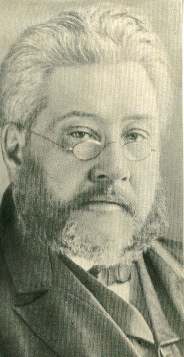
__________________________________________________________________ Title: Spurgeon's Sermons Volume 17: 1871 Creator(s): Spurgeon, Charles Haddon (1834-1892) CCEL Subjects: All; Sermons; LC Call no: BV42 LC Subjects: Practical theology Worship (Public and Private) Including the church year, Christian symbols, liturgy, prayer, hymnology Times and Seasons. The church year __________________________________________________________________ Life In Christ A Sermon (No. 968) Delivered on Lord's-day Morning, January 1st, 1871 by C. H. SPURGEON, At the Metropolitan Tabernacle, Newington "Because I live, ye shall live also."--John 14:19. THIS world saw our Lord Jesus for a very little time, but now it seeth him no more. It only saw him with the outward eye and after a carnal sort, so that when the clouds received him and concealed him from bodily vision, this spiritually blind world lost sight of him altogether. Here and there, however, among the crowds of the sightless there were a few chosen men who had received spiritual sight; Christ had been light to them, he had opened their blind eyes, and they had seen him as the world had not seen him. In a high and full sense they could say, "We have seen the Lord," for they had in some degree perceived his Godhead, discerned his mission, and learned his spiritual presence of its object, those persons who had seen Jesus spiritually, saw him after he had gone out of the world unto the Father. We who have the same sight still see him. Read carefully the words of the verse before us: "Yet a little while, and the world seeth me no more; but ye see me." It is a distinguishing mark of a true follower of Jesus that he sees his Lord and Master when he is not to be seen by the bodily eye; he sees him intelligently and spiritually; he knows his Lord, discerns his character, apprehends him by faith, gazes upon him with admiration as our first sight of Christ brought us into spiritual life, for we looked unto him and were saved, so it is by the continuance of this spiritual sight of Christ that our spiritual life is consciously maintained. We lived by looking, we live still by looking. Faith is still the medium by which life comes to us from the life-giving Lord. It is not only upon the first day of the Christian's life that he must needs look to Jesus only, but every day of that life, even until the last, his motto must be, "Looking unto Jesus, the author and finisher of our faith." The world sees him no more, for it never saw him aright; but ye have seen him and lived, and now, through continuing still to see him, you remain in life. Let us ever remember the intimate connection between faith and spiritual life. Faith is the life-look. we must never think that we live by works, by feelings, or by ceremonies. "The just shall live by faith." We dare not preach to the ungodly sinner a way of obtaining life by the works of the law, neither dare we hold up to the most advanced believer a way of sustaining life by legal means. We should in such a case expect to hear the apostle's expostulation, "Are ye so foolish? having begun in the Spirit, are ye now made perfect by the flesh?" Our glorifying is that our life is not dependent on ourselves, but is safe in our Lord, as saith the apostle, "I am crucified with Christ: nevertheless I live; yet not I, but Christ liveth in me: and the life which I now live in the flesh I live by the faith of the Son of God, who loved me, and gave himself for me." Because he lives, we live, and shall live for ever. God grant that our eye may ever be clear towards Jesus, our life. May we have no confidence but in our Redeemer; may our eyes be fixed upon him, that no other object may in any measure or degree shut out our view of him as our all in all. The text contains in it very much of weighty truth, far more than we shall be able to bring forth from it this morning. First, we see in it a life; secondly, that life preserved; and thirdly, the reason for the preservation of that life: "Because I live, ye shall live also." I. First, we have LIFE here spoken of. We must not confound this with existence. It were indeed to reduce a very rich text to a poverty-stricken sentence if we read it, "Because I exist, ye shall exist also." We could not say of such a use of words that the water of ordinary speech was turned to wine, but rather that the wine was turned to water. Before the disciples believed in Jesus they existed, and altogether apart from him as their spiritual life their existence would have been continued; it was something far other and higher than immortal existence which our Lord was here dealing with. Life, what is it? We know practically, but we cannot tell in words. We know it, however, to be a mystery of different degrees. As all flesh is not the same flesh, so all life is not the same life. There is the life of the vegetable, the cedar of Lebanon, the hyssop on the wall. There is a considerable advance when we come to animal life--the eagle or the ox. Animal life moves in quite a different world from that in which the plant vegetates--sensation, appetite, instinct, are things to which plants are dead, though they may possess some imitation of them, for one life mimics another. Animal life rises far above the experience and apprehension of the flower of the field. Then there is mental life, which we all of us possess, which introduces us into quite another realm from that which is inhabited by the mere beast. To judge, to foresee, to imagine, to invent, to perform moral acts, are not these new functions which the ox hath not? Now, let it be clear to you, that far above mental life there is another form of life of which the mere carnal man can form no more idea than the plant of the animal, or the animal of the poet. The carnal mind knoweth not spiritual things, because it has no spiritual capacities. As the beast cannot comprehend the pursuits of the philosopher, so the man who is but a natural man cannot comprehend the experience of the spiritually minded. Thus saith the Scripture: "The natural man receiveth not the things of the Spirit of God: for they are foolishness unto him: neither can he know them, because they are spiritually discerned. But he that is spiritual judgeth all things, yet he himself is judged of no man." There is in believers a life which is not to be found in other men--nobler, diviner for education cannot raise the natural man into it, neither can refinement reach it; for at its best, "that which is born of the flesh is flesh," and to all must the humbling truth be spoken, "Ye must be born again." It is to be remarked concerning our life in Christ, that it is the removal of the penalty which fell upon our race for Adam's sin. "In the day that thou eatest thereof thou shalt surely die," was the Lord's threatening to our first parent, who was the representative of the race. He did eat of the fruit, and since God is true, and his word never fails, we may be sure of this, that in that selfsame day Adam died. It is true that he did not cease to exist, but that is quite another thing from dying. The threatening was not that he should ultimately die, but "In the day thou eatest thereof thou shalt surely die;" and it is beyond all doubt that the Lord kept his word to the letter. If the first threatening was not carried out we might take liberty to trifle with all others. Rest assured, then, that the threat was on the spot fulfilled. The spiritual life departed from Adam; he was no longer at one with God, no more able to live and breathe in the same sphere as the Lord. He fell from his first estate; he had need if he should enter into spiritual life to be born again, even as you and I must be. As he hides himself from his Maker, and uttersvain excuses before his God, you see that he is dead to the life of God, dead in trespasses and sins. We also, being heirs of wrath even as others, are through the fall dead, dead in trespasses and sins; and if ever we are to possess spiritual life, it must be said of us, "And you hath he quickened." We must be as "those that are alive from the dead." The world is the valley of dry bones, and grace raises the chosen into newness of life. The fall brought universal death, in the deep spiritual sense of that word, over all mankind; and Jesus delivers us from the consequences of the fall by implanting in us a spiritual life. By no other means can this death be removed: "He that believeth on the Son hath everlasting life: and he that believeth not the Son shall not see life; but the wrath of God abideth on him." The work of regeneration, in which the new life is implanted, effectually restores the ruin of the fall, for we are born again, "not of corruptible seed, but of incorruptible, by the word of God which liveth and abideth for ever." But you remind me that still sin remains in us after we have received the divine life. I know it does, and it is called "the body of this death;" and this it is which rages within, between the power of the death in the first Adam, and the power of the life in the second Adam; but the heavenly life will ultimately overcome the deadly energy of sin. Even to-day our inner life groans after deliverance, but with its groan of "O wretched man that I am! who shall deliver me from the body of this death?" it mingles the thankful song, "I thank God through Jesus Christ our Lord." This life is of a purely spiritual kind. We find analogies and resemblances of it in the common mental life, but they are only analogies, the spiritual life is far and high above the carnal life, and altogether out of sight of the fleshly mind. Scarce are there words in which it can be described. To know this life you must have it; it must pulsate within your own bosom, for no explanations of others can tell you what this life is; it is one of the secrets of the Lord. It would not be possible for us with the greatest skill to communicate to a horse any conception of what imagination is; neither could we by the most diligent use of words, communicate to carnal minds what it is to be joined unto the Lord so as to be one spirit. One thing we know of it, namely, that the spiritual life is intimately connected with the indwelling of the Holy Spirit in the soul. When he comes we are "born again from above," "born of the Spirit." While he works in us mightily our life is active and powerful if he withdraws his active operations our new life becomes faint and sickly. Christ is our life, but he works in us through his Holy Spirit, who dwelleth in us evermore. Further, we know that this life very much consists in union with God. "For to be carnally minded is death; but to be spiritually minded is life and peace. Because the carnal mind is enmity against God: for it is not subject to the law of God, neither again can be. So then they that are in the flesh cannot please God." Death as to the body consists in the body being separated from the soul; the death of the soul lies mainly in the soul's being separated form its God. For the soul to be in union with God is the soul's highest life; in his presence it unfolds itself like an opening flower; away from him it pines, and loses all its beauty and excellence, till it is as a thing destroyed. Let the soul obey God, let it be holy, pure, gracious, then is it happy, an truly living; but a soul saundered from God is a soul blasted, killed, destroyed; it exists in a dreadful death; all its true peace, dignity, and glory, are gone; it is a hideous ruin, the mere corpse of manhood. The new life brings us near to God, makes us think of him, makes us love him, and ultimately makes us like him. My brethren, it is in proportion as you get near to God that you enter into the full enjoyment of life--that life which Jesus Christ gives you, and which Jesus Christ preserves in you. "In his favour is life." Psalm 30:5. "The fear of the Lord is a fountain of life." Prov. 14:27. To turn to God is "repentance unto life." To forget God is for a man to be "dead whilst he liveth." To believe the witness of God is to possess the faith which overcometh the world. "He that believeth on the Son of God hath the witness in himself: he that believeth not God hath made him a liar; because he believeth not the record that God gave of his Son. And this is the record, that God hath given to us eternal life, and this life is in his Son. He that hath the Son hath life; and he that hath not the Son of God hath not life." This life within the soul bears fruit on earth in righteousness and true holiness. It blooms with sweetest of flowers of fellowship with God below, and it is made perfect in the presence of God in heaven. The life of glorified spirits above is but the life of justified men here below; it is the same life, only it is delivered from encumbrances, and has come to the fullness of its strength. The life of heaven is in every believer even now. The moment a sinner believes in Jesus he receives from God that selfsame life which shall look down serenely upon the conflagration of earth, and the passing away of those lower skies. Blessed is that man who hath everlasting life, who is made a partaker of the divine nature, who is born again from above, who is born of God by a seed which remaineth in him, for he is the man upon whom the second death hath no power, who shall enjoy life eternal when the wicked go away into everlasting punishment. Thus much concerning this life. We have now to ask each of you whether you have received it. Have you been born, not of blood, nor of the will of the flesh, nor of the will of man, but of God? Was there a time with you when you passed from death unto life, or are you abiding in death? Have you the witness in yourself that you have been operated upon by a divinely spiritual power? Is there something in you which was not once there, not a faculty developed by education, but a life implanted by God himself? Do you feel an inward craving unknown to carnal minds, a longing desire which this world could neither excite nor gratify? Is there a strange sighing for a land as yet unseen, of which it is a native, and for which it yearns? Do you walk among the sons of men as a being of another race, not of the world, even as Christ was not of the world? Can you say, with the favoured apostle, "We know that the Son of God is come, and hath given us an understanding, that we may know him that is true, and we are in him that is true, even in his Son Jesus Christ. This is the true God, and eternal life." Oh! then, thank God for this, and thank God yet more that you have an infallible guarantee for this, and thank God yet more that you have an infallible guarantee that your life shall be continued and perfected, for so saith the text, "Because I live, ye shall live also." II. Our second head treats of LIFE PRESERVED. "Because I life, ye shall live also." There stands the promise, " Ye shall live also. This heavenly life of yours which ye have received shall be preserved to you. Concerning this sentence, let me draw your attention, first of all, to its fullness: "Ye shall live." I think I see in that much more than lies upon the surface. Whatever is meant by living shall be ours. All the degree of life which is secured in the covenant of grace, believers shall have. Moreover, all your new nature shall live, shall thoroughly live, shall eternally live. By this word it is secured that the eternal life implanted at regeneration shall never die out. As our Lord said so shall it be. "Whosoever drinketh of the water that I shall give him shall never thirst; but the water that I shall give him shall be in him a well of water springing up into everlasting life." We may not view this precious word as referring to all the essential spiritual graces which make up the new man? Not even, in part, shall the new man die. "Ye shall live," applies to all the parts of our new-born nature. If there be any believer here who has not lived to the full extent he might have done, let him lay hold upon this promise; and seeing that it secures the preservation of all his new nature, let him have courage to seek a higher degree of health. "I am come," saith Christ, "that ye might have life, and have it more abundantly." There is no reason, Christian, why your love to Jesus should not become flaming, ardent, conquering; for it lives, and ever must live. As to your faith, it also has immortal vitality in it, and even though it be just now weak, and staggering, lift up the hands that hang down and confirm the feeble knees, for your faith shall not die out. Here in your Lord's promise the abiding nature of the vital faculties of your spirit is guaranteed. There is no stint in the fullness of Christian life. Beneath the skies I would labour to attain it, but herein is my joy , that it shall be most surely mine, for this word is faithful and true. As surely as I have this day eternal life by reason of faith in Christ Jesus, so surely shall I reach its fullness when Christ who is my life shall appear. Even here on earth I have the permit to seek for the fullest development of this life; nay I have a precept in this promise bidding me to seek after it. "Ye shall live," means that the new life shall not be destroyed--no, not as to any of its essentials. All the members of the spiritual man shall be safe; we may say of it as of the Lord himself, "Not a bone of him shall be broken." The shield of Christ's own life covers all the faculties of our spiritual nature. We shall not enter into life halt or maimed; but he will present us faultless before the presence of his glory, not having spot or wrinkle, or any such thing, much less nay dead limbs or decayed faculties. It is a grand promise, and covers the spiritual nature as with the wings of God, so that we may apply to it the words of David, in the ninety-first Psalm: "Surely he shall deliver thee from the snare of the fowler, and from the noisome pestilence. He shall cover thee with his feathers, and under his wings shalt thou trust: his truth shall be thy shield and buckler. Thou shalt not be afraid for the terror by night; nor for the arrow that flieth by day; nor for the pestilence that walketh in darkness; nor for the destruction that wasteth at noonday. A thousand shall fall at thy side, and ten thousand at thy right hand; but it shall not come nigh thee." The text secures that the death-penalty of the law shall never fall upon believers. The quickened man shall never fall back into the old death from which he has escaped; He shall not be numbered with the dead, and condemned either in this life or the next. Never shall the spiritually living become dead again in sin. As Jesus being raised form the dead dieth no more, death hath no more dominion over him; even so sin shall not have dominion over us again. Once, through the offense of one, death reigned in us; but now having received abundance of grace and of the gift of righteousness, we shall reign in life by one, Christ Jesus. Rom. 5:17. "For if, when we were enemies, we were reconciled to God by the death of his Son, much more, being reconciled, we shall be saved by his life." Rom. 5:10. We are united to Christ this day by bands of spiritual life which neither things present nor things to come can separate. Our union to Jesus is eternal. It may be assailed; but it shall never be destroyed. The old body of this death may for awhile prevail, and like Herod it may seek the young child's life, but it cannot die. Who shall condemn to death that which is not under the law? Who shall slay that which abides under the shadow of the Almighty? Even as sin reigned unto death, even so must grace reign unto eternal life, by Jesus Christ our Lord. Remark carefully the continuance insisted upon in this verse. Continuance is indeed the main element of this promise--"Ye shall live." It means certainly that during our abode in this body we shall live. We shall not be again reduced to our death-state during our sojourn here. Ten thousand attempts will be made to bring us under dominion to the law of sin and death, but this one word baffles all. Your soul may be so assailed that it shall seem as if you could not keep your hold on Christ, but Christ shall keep his hold on you. The incorruptible seed may be crushed, bruised, buried, but the life within it shall not extinguished, it shall yet arise. "Ye shall live." When ye see all around you ten thousand elements of death, think ye believers, how grand is this word, "Ye shall live." No falling from grace for you, no being cast out of the covenant, no being driven from the Father's house and left to perish. "Ye shall live." Nor is this all, for when the natural death comes, which indeed to us is no longer death, our inner life shall suffer no hurt whatsoever; it will not even be suspended for a moment. It is not a thing which can be touched by death. The shafts of the last enemy can have no more effect upon the spiritual, than a javelin upon a cloud. Even in the very crisis, when the soul is separated from the body, no damage shall be done to the spiritual nature. And in the awful future, when the judgment comes, when the thrones are set, and the multitudes are gathered, and to the right the righteous, and to the left the wicked, let what may of terror and of horror come frothy, the begotten of God shall live. Onward through eternity, whatever may be the changes which yet are to be disclosed, nothing shall affect our God-given life. Like the life of God himself--eternal, and ever-blessed, it shall continue. Should all things else be swept away, the righteous must live on; I mean not merely that they shall exist, but they shall live in all the fullness of that far-reaching, much-comprehending word "life." Bearing the nature of God as far as the creature can participate in it, the begotten from the dead shall prove the sureness of the promise, "Ye shall live." Let me further call to your notice that the fact here stated is univeral, in application to all spiritual life. The promise is, "Ye shall live," that is to say, every child of God shall live. Every one who sees Christ, as the world sees him not, is living and shall live. I can understand such a promised given to eminent saints who live near to God, but my soul would prostrate herself before the throne in reverent loving wonder when she hears this word spoken to the very least and meanest of the saints, "Ye shall live." Thou art not exempted, thou whose faith is but as a smoking flax, thou shalt live. The Lord bestows security upon the least of his people as well as upon the greatest. It is plain that the reason given for the preservation of the new life is as applicable to one saint as another. If it had been said, "Because your faith is strong, ye shall live" then weak faith would have perished; but when it is written, "Because I live," the argument is as powerful in the one case as in the other. Take it home to thyself, my brother, however heavy thy heart, or dim thy bone, Jesus lives, and you shall live. Remark yet again that this text is exceeding broad. Mark its breadth and see how it meets everything to the contrary, and overturns all the hopes of the adversary. "Ye shall live." Then the inbred corruption which rides within us shall not stifle the new creature. Chained as the spirit seem to be to the loathsome and corrupt body of this death, it shall live in spite of its hideous companionship. Though besetting sins may be as arrows, and fleshly lusts like drawn swords, yet grace shall not be slain. Neither the fever of hasty passion, nor the palsy of timorousness, nor the leprosy of covetousness, nor any other disease of sin, shall so break forth in the old nature as to destroy the new. Nor shall outward circumstances overthrow the inner life. "For he shall give his angels charge over thee, to keep thee in all thy ways." They shall bear thee up in their hands, lest thou dash thy foot against a stone. If providence should cast you into a godless family, where you dwell as in a sepulcher, and the air you breathe is laden with the miasma of death, yet shall you live. Evil example shall not poison your spirit, you shall drink this deadly thing and it shall not hurt you, you shall be kept from giving way to evil. You shall not be decoyed by fair temptation, you shall not be cowed by fierce persecution: mightier is he that is in you than he which is in the world. Satan will attack you, and his weapons are deadly, but you shall foil him at all points. To you is it given to tread upon the lion and adder, the young lion and the dragon shall you trample under foot. If God should allow you for awhile to be sorely tried, as he did his servant Job, and if the devil should have all the world to help him in his attempt to destroy your spiritual life, yet even on the dunghill of poverty, and in the wretchedness of sickness, your spirit shall still maintain its holy life, and you shall prove it so by blessing and magnifying God, notwithstanding all. We little dream what may be reserved for us; we may have to climb steeps of prosperity, slippery and dangerous, but we shall live; we may be called to sink into the dark waters of adversity, all God's waves and billows may go over us, but we shall live. WE may traverse persilent swamps of error, or burning dewerts of unbelief, but the divine life shall live amid the domains of death. Let the future be bright or black, we need not wish to turn the page; that which we prize best, namely, our spiritual life, is hid with Christ in God, beyond the reach of harm, and we shall live. If old age shall be our portion, and our crown shall be delayed till we have fought a long and weary battle, yet nevertheless we shall live; or if sudden death should cut short the time of our trial here, yet we shall have lived in the fullness of that word. III. Our third point is, THE REASON FOR THE SECURITY OF THE SPIRITUAL LIFE. The reason assigned is this, "Because I live, ye shall live also." Christ has life essentially as God. Christ, as man, having fulfilled his life-work, having offered full atonement for human sin, dieth no more, death hath no more dominion over him. His life is communicated to us, and becomes the guarantee to us that we shall live also. Observe, first, that this is the sole reason of the believer's spiritual life. "Because I live, ye shall live also." The means by which the soul is pardoned is found in the precious blood of Jesus; the cause of its obtaining spiritual life at first is found in Christ's finished work; and the only reason why the Christian continues still to live after he is quickened, lies in Jesus Christ, who liveth and was dead and is alive for evermore. When I first come to Christ, I know I must find all in him, for I feel I have nothing of my own; but all my life long I am to acknowledge the same absolute dependence; I am still to look for everything to him. " I am the vine, ye are the branches: he that abideth in me, and I in him, the same bringeth forth much fruit: for without me, yet can do nothing." the temptation is after we have looked to Jesus and found life there, to fancy that in future time we are to sustain ourselves in spiritual existence by some means within ourselves, or by supplies extra and apart from Christ. But it must not be so; all for the future as well as all for the past is wrapped up in the person and the work of the Lord Jesus. Because he died, ye are pardoned; because he lives, ye live; all your life still lies in him who is the way, the truth, and the life. Does not the Christian's life depend upon his prayerfulness? Could he be a Christian if he ceased to pray? We reply, the Christian's spiritual health depends upon his prayerfulness, but that prayerfulness depends on something else. The reason why the hands of the clock move may be found first in a certain wheel which operates upon them, but if you go to the primary cause of all, you reach the main-spring, or the weight, which is the source of all the motion. Many secondary causes tend to sustain spiritual life; but the primary cause, the first and foremost, is because Jesus Christ lives. "All my fresh springs are in thee." While Jesus lives, he sends the Spirit; the Spirit being sent, we pray; our payer becomes the evidence of our spiritual life. "But are not good works essential to the maintenance of the spiritual life?" Certainly, if there be no good works, we have no evidence of spiritual life. In its season the tree must bring forth its fruit and its leaves; if there be no outward sign we suspect that there is no motion of the sap within. Still, to the tree the fruit is not the cause of life, but the result of it, and to the life of the Christian, good works bear the same relationship, they are its outgrowth, not its root. If then my spiritual life is low, what am I to look to? I am not to look to my prayers, I am not to find comfort in my works. I may from these discover how declining I am; but if I want my life to be renovated, I must fly to the fountain of my life, even Jesus, for there, and there only, shall I find restoration. Do let us recollect this, that we are not saved because of anything that we are, or anything that we do; and that we do not remain saved because of anything we are or can be. A man is saved because Christ died for him he continues saved because Christ lives for him. The sole reason why the spiritual life abides is because Jesus lives. This is to get upon a rock, above the fogs which cover all things down below. If my life rests on something within me, then to-day I live, and to-morrow I die; but if my spiritual life rests in Christ, then in my darkest frames-ay, and when sin has most raged against my spirit- still I live in the ever-living One, whose life never changes. Secondly, it is a sufficient cause for my life. "Because I live, ye shall live also." It must be enough to make believers live that Christ lives; for first, Christ's life is a proof that his work has accomplished the absolution of his people from their sins. He would have been in the tomb to this hour had he not made a complete satisfaction for their sins, but his rising again from the dead is the testimony of God that he has accepted the atonement of his dear Son; his resurrection is our full acquittal. Then if the living Christ be our acquittal, how can God condemn us to die for sins which he has by the fact of Christ's resurrection declared to be for ever blotted out? If Jesus lives, how can we die? Shall there be two deaths for one sin, the death of Christ and the death of those for whom he died? God forbid that there should be any such injustice with the Most High. The very fact that Jesus lives, proves that our sin has been atoned for, that we are absolved, and therefore cannot die. Jesus is the representative of those for whom he is the federal head. Shall the representative live, and yet those represented die? How shall the living represent the dead? But in his life I see my own life, for as Levi was in the loins of Abraham, so is every saint in the loins of Christ, and the life of Christ is representatively the life of all his people. Moreover, he is the surety for his people, under bonds and pledges to bring his redeemed safely home. His own declaration is, "I give unto my sheep eternal life, and they shall never perish, neither shall any pluck them out of my hands." Will he break his covenant bonds? Shall his suretyship be cast to the winds? It cannot be. The fact that if any of his people for whom he died, to whom he has given spiritual life, should after all die, Christ would be disappointed of his intent, which supposition involves the grossest blasphemy. What so many shall he have for his reward? The purchase-price shall not be given in vain; a redemption so marvelous as that which he has presented upon the tree, shall never in any degree become a failure. His life, which proves his labour to be over, guarantees to people. Know ye not, my brethren, that if one of those to whom Christ has given spiritual life should after all fall from it and die, it would argue either that he had a want of power to keep them, or a want of will to do so. Shall we conceive him to be devoid of power? Then how he is mighty God? Is he devoid of will to keep his people- is that conceivable? Cast out the traitorous thought! He must be as willing as he is able, and as able as he is willing. While he was in this world, he kept his people; having loved his own, he loved them to the end; he is "the same yesterday, to-day, and for ever," he will not suffer one of these little ones to perish. Recollect, and this perhaps will cheer you most of all, that all who have spiritual life are one with Christ Jesus. Jesus is the head of the mystical body, they are the members. Suppose one of the members of the mystical body of Christ should die, then from that moment, with reverence be it spoken, Christ is not a complete Christ. What were the head without the body? A most ghastly sight. What were the head with only a part of the members? Certainly not perfect. There must be every member present to make a complete body. Therefore we gather that you, brother, though you think yourself the meanest part of the body, are nevertheless, essential to its perfection; and you, sister, though you fancy yourself to be one of the uncomely portions of the body, yet you must be there, or else the body cannot be perfect, and Christ cannot be a complete Christ. From him, the head, the life streams into all the members and while that head lives as a perfect head of a perfect body, all members must live also. As we have often said, as long as a man's head is above water you cannot drown his limbs; as long as our head is above the reach of spiritual death we also are the same-no weapons can hurt, no poison can destroy, not all hell's fires could burn, nor all earth's floods could drown, the spiritual life within us: it must be safe because it is indissolubly one with Jesus Christ the Lord. What comfort, then, lies in this, the sole but sufficient reason for the eternal maintenance of the new-born life within us, is this, "Because I live, ye shall live also." And be it remembered, that this reason is an abiding reason--"Because I live, ye shall live also"--a reason which has as much force at one time as another. From causes variable the effects are variable; but remaining causes produce permanent effects. Now Jesus always lives. Yesterday, dear brother you were exalted in fellowship with him, and stood upon the mountain top; then your heart was glad, and your spirit rejoiced, and you could say, "I live in Christ." To-day darkness has intervened, you do not feel the motions of the inner life as you did yesterday, but do not therefore conclude that the life is not there. What is to be your sign; what is to be the rainbow of the covenant to you? Why, that Jesus lives. Do you doubt that he lives? You dare not. You trust him, doubt not then that you live, for your life is as sure as his. Believe also that you shall live, for that also is as sure as the fact that he lives. God gave to Noah, a token that he would not destroy the earth-it was the rainbow: but then the rainbow is not often seen; there are peculiar circumstances before the bow is placed in the cloud. You, brother, you have a token of God's covenant given you in the text which can always be seen, neither sun nor shower are needful to its appearance. The living Christ is the token that you live too. God gave to David the token of the sun and the moon; he said if the ordinances of day and night should be changed, then would he cast off the seed of David. But there are times when neither sun nor moon appear, but your token is plain when these are hidden. Christ at all times lives. When you are lowest, when you cannot pray, when you can hardly groan, when you do not seem to have spiritual life enough even to heave a desire, still if you cling to Jesus this life is as surely in you as there is life in Christ himself at the right hand of the Father. And lastly, it is a most instructive cause. It instructs us in many ways: let us hint at three. It instructs us to admire the condescension of Christ. Look at the two pronouns, "ye" and "I"; shall they ever come into contact? yes, here they stand in close connection with each other. "I"--the I AM the Infinite; "ye" the creatures of an hour; yet I, the Infinite, come into union with you, the finite; I the Eternal, take up you the fleeting, and I make you live because I live. What? Is there such a bond between me and Christ? Is there such a link between his life and mine? Blessed be his name! Adored be his infinite condescension! It demands of us next abundance of gratitude. Apart from Christ we are dead in trespasses and sins; look at the depth of our degradation! But in Christ we live, live with his own life. Look at the height of our exaltation, and let our thankfulness be proportioned to this infinity of mercy. Measure if you can from the lowest hell to the highest heaven, and so great let your thankfulness be to him who has lifted you from death to life. Let the last lesson be see the all-importance of close communion with Jesus. Union with Christ makes you live; keep up your enjoyment of that union, that you may clearly perceive and enjoy your life. Begin this year with the prayer, "Nearer to thee, my Lord, nearer to thee." Think much of the spiritual life and less of this poor carnal life, which will be soon be over. Go to the source of life for an increase of spiritual life. Go to Jesus. Think of him more than you have done, pray to him more; use his name more believingly in your supplications. Serve him better, and seek to grow up into his likeness in all things. Make an advance this year. Life is a growing thing. Your life only grows by getting nearer to Christ; therefore, get under the beams of the Sun of the Righteousness. Time brings you nearer to him, you will soon be where he is in heaven; let grace bring you nearer also. You taste more of his love as fresh mercies come, give him more of your love, more of your fellowship. Abide in him, and may his word abide in you henceforth and for ever, and all shall be to his glory. Amen. PORTION OF SCRIPTURE READ BEFORE SERMON--Colossians 3. * This text has been sent us by a venerable clergyman of the Church of England, who has for many years selected a new year's text for us, and others of his friends. In the calm enjoyment of divine consolations, such as this verse affords, may his last days pass away in tranquility and rejoicing. __________________________________________________________________ Rest, Rest A Sermon (No. 969) Delivered on Lord's-day Morning, January 8th, 1871, by C. H. SPURGEON, At the Metropolitan Tabernacle, Newington "Come unto me, all ye that labor and are heavy laden, and I will give you rest. Take my yoke upon you, and learn of me; for I am meek and lowly in heart; and ye shall find rest unto your souls. For my yoke is easy, and my burden is light."--Matthew 11:28-30. WE have oft repeated those memorable words, and they have brought us much comfort; but it is possible that we may never have looked deeply into them, so as to have seen the fulness of their meaning. The works of man will seldom bear close inspection. You shall take a needle which is highly polished, which appears to be without the slightest inequality upon its surface, and you shall put it under a microscope, and it will look like a rough bar of iron; but you shall select what you will from nature, the bark or the leaf of a tree, or the wing or the foot of an insect, and you shall discover no flaw, magnify it as much as you will, and gaze upon it as long as you please. So take the words of man. The first time you hear them they will strike you; you may hear them again and still admire their sentiment, but you shall soon weary of their repetition, and call them hackneyed and over-estimated. The words of Jesus are not so, they never lose their dew, they never become threadbare. You may ring the changes upon his words, and never exhaust their music: you may consider them by day and by night, but familiarity shall not breed contempt. You shall beat them in the mortar of contemplation, with the pestle of criticism, and their perfume shall but become the more apparent. Dissect, investigate, and weigh the Master's teaching word by word, and each syllable will repay you. When loitering upon the Island of Liddo, off Venice, and listening to the sound of the city's bells, I thought the music charming as it floated across the lagune; but when I returned to the city, and sat down in the centre of the music, in the very midst of all the bells, the sweetness changed to a horrible clash, the charming sounds were transformed into a maddening din; not the slightest melody could I detect in any one bell, while harmony in the whole company of noisemakers was out of the question. Distance had lent enchantment to the sound. The words of poets and eloquent writers may, as a whole, and heard from afar, sound charmingly enough; but how few of them bear a near and minute investigation! Their belfry rings passably, but one would soon weary of each separate bell. It is never so with the divine words of Jesus. You hear them ringing from afar and they are sweetness itself. When as a sinner, you roamed at midnight like a traveller lost on the wilds, how sweetly did they call you home! But now you have reached the house of mercy, you sit and listen to each distinct note of love's perfect peal, and wonderingly feel that even angelic harps cannot excel it. We will, this morning, if we can, conduct you into the inner chambers of out text, place its words under the microscope, and peer into the recesses of each sentence. We only wish our microscope were of a greater magnifying power, and our ability to expound the text more complete; for there are mines of instruction here. Superficially read, this royal promise has cheered and encouraged tens of thousands, but there is a wealth in it which the diligent digger and miner shall alone discover. Its shallows are cool and refreshing for the lambs, but in its depths are pearls for which we hope to dive. Our first head, this morning, is rest: "Come unto me, all ye that labor and are heavy laden, and I will give you rest." The second head is rest: "Take my yoke upon you, and learn of me, for I am meek and lowly in heart: and ye shall find rest unto your souls." I. Let us begin at the beginning with the first REST, and here we will make divisions only for the sake of bringing out the sense more clearly. 1. Observe the person invited to receive this first rest: "Come unto me, all ye that labor and are heavy laden." The word "all" first demands attention: "All ye that labor." There was need for the insertion of that wide word. Had not the Saviour said a little before, "I thank thee, O Father, Lord of heaven and earth, because thou hast hid these things from the wise and prudent, and hast revealed them to babes?" Some one who had been listening to the Saviour, might have said, "The Father, then, has determined to whom he will reveal the Christ; there is a number chosen, according to the Father's good pleasure, to whom the gospel is revealed; while from another company it is hidden!" The too hasty inference, which it seems natural for man to draw from the doctrine is, "Then there is no invitation for me; there is no hope for me; I need not listen to the gospel's warnings and invitations." So the Saviour, as if to answer that discouraging notion, words his invitation thus, "Come unto me, all ye that labor and are heavy laden." Let it not be supposed that election excludes any of you from the invitation of mercy; all of you who labor, are bidden to come. Whatever the great doctrine of predestination may involve, rest assured that it by no means narrows or diminishes the extent of gospel invitations. The good news is to be preached to "every creature" under heaven, and in this particular passage it is addressed to all the laboring and heavy laden. The description of the person invited is very full. It describes him both actively and passively. "All ye that labor"--there is the activity of men bearing the yoke, and ready to labor after salvation; "heavy laden"--there is the passive form of their religious condition, they sustain a burden, and are pressed down, and sorely wearied by the load they bear. There are to be found many who are actively engaged in seeking salvation; they believe that if they obey the precepts of the law they will be saved, and they are endeavoring to the utmost to do them; they have been told that the performance of certain rites and ceremonies will also save them, they are performing those with great care; the yoke is on their shoulders, and they are laboring diligently. Some are laboring in prayer, some are laboring in sacraments, others in self-denials and mortifications, but as a class they are awakened to feel the need of salvation, and they are intensely laboring to save themselves. It is to these the Saviour addresses his loving admonition: in effect he tells them, "This is not the way to rest, your self-imposed labors will end in disappointment; cease your wearisome exertions, and believe in me, for I will at once give you rest--the rest which my labors have earned for believers." Very speedily those who are active in self-righteously working for salvation fall into the passive state, and become burdened; their labor of itself becomes a burden to them. Besides the burden of their self-righteous labor, there comes upon them the awful, tremendous, crushing burden of past sin, and a sense of the wrath of God which is due to that sin. A soul which has to bear the load of its own sin, and the load of divine wrath, is indeed heavily laden. Atlas with the world upon his back had a light load compared with a sinner upon whom mountains of sin and wrath are piled. Such persons frequently are burdened, in addition, by fears and apprehensions; some of them correct, others of them baseless, but anyhow the burden daily grows. Their active labors do not diminish their passive sufferings. The acute anguish of their souls will often be increased in proportion as their endeavors are increased; and while they hope at first that if they labor industriously they will gradually diminish the mass of their sin, it happens that their labor adds to their weariness beneath its pressure; they feel a weight of disappointment, because their labor has not brought them rest; and a burden of despair, because they fear that deliverance will never come. Now these are the persons whom the Saviour calls to himself--those who are actively seeking salvation, those who are passively bearing the weight of sin and of divine wrath. It is implied, too, that these are undeserving of rest, for it is said, "Come unto me, and I will give you rest." A gift is not of merit but of grace; wages and reward are for those who earn, but a gift is a matter of charity. O you who feel your unworthiness this morning, who have been seeking salvation earnestly, and suffering the weight of sin, Jesus will freely give to you what you cannot earn or purchase, he will give it as an act of his own free, rich, sovereign mercy; and he is prepared, if you come to him, to give it to you now, for so has he promised, "Come unto me, all ye that labor and are heavy laden, and I will give you rest." 2. Notice next, the precept here laid down: "Come." It is not "Learn," it is not "Take my yoke"--that is in the next verse, and is intended for the next stage of experience-but in the beginning the word of the Lord is, "Come unto me," "Come." A simple word, but very full of meaning. To come is to leave one thing and to advance to another. Come, then, ye laboring and heavy laden, leave your legal labors, leave your self-reliant efforts, leave your sins, leave your presumptions, leave all in which you hitherto have trusted, and come to Jesus, that is, think of, advance towards, rely upon the Saviour. Let your contemplations think of him who bore the load of human sin upon the cross of Calvary, where he was made sin for us. Let your minds consider him who from his cross hurled the enormous mass of his people's transgressions into a bottomless sepulchre, where it was buried forever. Think of Jesus, the divinely-appointed substitute and sacrifice for guilty man. Then, seeing that he is God's own Son, let faith follow your contemplation; rely upon him, trust in him as having suffered in your stead, look to him for the payment of the debt which is due from you to the wrath of God. This is to come to Jesus. Repentance and faith make up this "Come"--the repentance which leaves that place where you now stand, the faith which comes into reliance upon Jesus. Observe, that the command to "Come" is put in the present tense, and in the Greek it is intensely present. It might be rendered something like this: "Hither to me all ye that labor and are heavy laden!" It is a "Come" which means not "Come to-morrow or next year," but "Now, at once." Advance, ye slaves, flee from your task-master now! Weary ones recline on the promise now, and take your rest! Come now! By an act of instantaneous faith which will bring instantaneous peace, come and rely upon Jesus, and he will now give you rest. Rest shall at once follow the exercise of faith. Perform the act of faith now. O may the eternal Spirit lead some laboring heavy laden soul to come to Jesus, and to come at this precise moment! It is "Come unto me." Notice that. The Christ in his personality is to be trusted in. Not "Come to John, and hear him say, "Repent, for the kingdom of heaven is at hand,'" for no rest is there. John commands a preparation for the rest, but he has no rest to give to the soul. Come not to the Pharisees, who will instruct you in tradition, and in the jots and tittles of the law; but go past these to Jesus, the man, the God, the mediator, the Redeemer, the propitiation for human guilt. If you want rest come to Christ in Gethsemane, to Christ on Calvary, to Christ risen, to Christ ascended. If you want rest, O weary souls, ye can find it nowhere until ye come and lay your burdens down at his dear pierced feet, and find life in looking alone to him. There is the precept then. Observe it is nothing but that one word, "Come." It is not "Do;" it is not even "Learn." It is not, "Take up my yoke," that will follow after, but must never be forced out of its proper place. To obtain the first rest, the rest which is a matter of gift--all that is asked of you is that you come to have it. Now, the least thing that charity itself can ask when it gives away its alms, is that men come for it. Come ye needy, come and welcome; come and take the rest ye need. Jesus saith to you, "Come and take what I freely give." Without money come, without merit come, without preparation come. It is just, come, come now; come as you are, come with your burden, come with your yoke, though the yoke be the yoke of the devil, and the burden be the burden of sin, yet come as you are, and the promise shall be fulfilled to you, "I will give you rest." 3. Notice next the promise spoken, "I will give you rest." "I will give." It is a rest that is a gift; not a rest found in our experience by degrees, but given at once. As I shall have to show you, the next verse speaks of the rest that is found, wrought out, and discovered; but this is a rest given. We come to Jesus; we put out the empty hand of faith, and rest is given us at once most freely. We possess it at once, and it is ours forever. It is a present rest, rest now; not rest after death; not rest after a time of probation and growth and advancement; but it is rest given when we come to Jesus, given there and then. And it is perfect rest too; for it is not said, nor is it implied, that the rest is incomplete. We do not read, "I will give you partial rest," but "rest," as much as if there were no other form of it. It is perfect and complete in itself. In the blood and righteousness of Jesus our peace is perfect. I shall not stay except to ask you now, brethren and sisters, whether you know the meaning of this given rest. Have you come to Jesus and has he given you perfect and present rest? If so, I know your eye will catch joyously those two little words, "And I," and I would bid you lovingly remember the promiser who speaks. Jesus promises and Jesus performs. Did not all your rest, when first your sin was forgiven, come from him? The load was gone, but who took it? The yoke was removed, but who lifted it from off the shoulder? Do you not give to Jesus, this day, the glory of all your rest from the burden of guilt? Do you not praise his name with all your souls? Yes, I know you do. And you know how that rest came to you. It was by his substitution and your faith in that substitution. Your sin was not pardoned by a violation of divine justice; justice was satisfied in Jesus; he gave you rest. The fact that he has made full atonement is the rest of your spirit this morning. I know that deep down in your consciences, the calm which blesses you springs from a belief in your Lord's vicarious sacrifice. He bore the unrest that you might have the rest, and you receive rest this day as a free gift from him. You have done now with servile toils and hopeless burdens, you have entered into rest through believing; but all the rest and deliverance still comes to you as a gift from his dear hands, who purchased with a price this blessing for your souls. I earnestly wish that many who have never felt that rest, would come and have it; it is all they have to do to obtain it--to come for it; just where they now are, if God enables them to exercise a simple act of faith in Jesus, he will give them rest from all their past sins, from all their efforts to save themselves, a rest which shall be to his glory and to their joy. II. We must now advance to our second head--REST. It looks rather strange that after having received rest, the next verse should begin: "Take my yoke upon you." "Ah! I had been set free from laboring, am I to be a laborer again?" Yes, yes, take my yoke and begin. "And my burden is light." "Burden? Why, I was heavy laden just now, am I to carry another burden?" Yes. A yoke--actively and a burden--passively, I am to bear both of these. "But I found rest by getting rid of my yoke and my burden!" And you are to find a further rest by wearing a new yoke, and bearing a new burden. Your yoke galled, but Christ's yoke is easy; your burden was heavy, but Christ's burden is light. Before we enter into this matter more fully, let us illustrate it. How certain it is that a yoke is essential to produce rest, and without it rest is unknown! Spain found rest by getting rid of that wretched monarch Isabella; an iron yoke was her dominion upon the nation's neck, crushing every aspiration after progress by an intolerable tyranny. Up rose the nation, shook off its yoke, and threw aside its burden, and it had rest in a certain sense, rest from evil. But Spain has not fully rested yet, and it seems that she will never find permanent rest till she has voluntarily taken up another yoke, and found for herself another burden. In a word, she must have a strong, settled, recognized government, and then only will her distractions cease. This is just a picture of the human soul. It is under the dominion of Satan, it wears his awful yoke, and works for him; it bears his accursed burden, and groans under it; Jesus sets it free--but has it, therefore, a perfect rest? Yes, a rest from, but not a rest in. What is wanted now is a new government; the soul must have a sovereign, a ruling principle, a master-motive; and when Jesus has taken that position, rest is come. This further rest is what is spoken of in the second verse. Let me give you another symbol. A little stream flowed through a manufacturing town; an unhappy little stream it was, for it was forced to turn huge wheels and heavy machinery, and it wound its miserable way through factories where it was dyed black and blue, until it became a foul and filthy ditch, and loathed itself. It felt the tyranny which polluted its very existence. Now, there came a deliverer who looked upon the streamlet and said, "I will set thee free and give thee rest." So he stopped up the water-course, and said, "abide in thy place, thou shalt no more flow where thou art enslaved and defiled." In a very few days the brooklet found that it had but exchanged one evil for another. Its waters were stagnating, they were gathering into a great pool, and desiring to find a channel. It was in its very nature to flow on, and it foamed and swelled, and pressed against the dam which stayed it. Every hour it grew more inwardly restless, it threatened to break the barrier, and it made all who saw its angry looks tremble for the mischief it would do ere long. It never found rest until it was permitted to pursue an active course along a channel which had been prepared for it among the meadows and the corn fields. Then, when it watered the plains and made glad the villages, it was a happy streamlet, perfectly at rest. So our souls are made for activity, and when we are set free from the activities of our self-righteousness and the slavery of our sin we must do something, and we shall never rest until we find that something to do. Hence in the text you will be pleased to see that there is something said about a yoke, which is the ensign of working, and something about a burden, which is the emblem of enduring. It is in man's mortal nature that he must do or endure, or else his spirit will stagnate and be far from rest. 1. We will consider this second rest, and notice that it is rest after rest. "I will give you rest" comes before "Ye shall find rest." It is the rest of a man who is already at rest, the repose of a man who has received a given rest, and now discovers the found rest. It is the rest of a learner--"Learn of me, and ye shall find rest." It is not so much the rest of one who was aforetime laboring and heavy laden, as of one who is to-day learning at the Saviour's feet. It is the rest of a seeker evidently, for finding usually implies a search. Having been pardoned and saved, the saved man in the course of his experience discovers more and more reason for peace; he is learning, and seeking, and he finds. The rest is evidently lighted upon, however, as a thing unknown, which becomes the subject of discovery. The man had a rest from his burden; now he finds a rest, in Christ, which exceeds what he asked or even thought. I have looked at this rest after rest as being a treasure concealed in a precious box. The Lord Jesus gives to his people a priceless casket, called the gift of rest; it is set with brilliants and inlaid with gems, and the substance thereof is of wrought gold; whosoever possesses it feels and knows that his warfare is accomplished and his sin is pardoned. After awhile the happy owner begins to examine his treasure. It is all his own, but he has not yet seen it all, for one day he detects a secret drawer, he touches a hidden spring, and lo! Before him lies a priceless Koh-i-noor surpassing all the rest. It had been given him it is certain, but he had not seen it at first, and therefore he finds it. Jesus Christ gives us in the gift of himself all the rest we can ever enjoy, even heaven's rest lies in him; but after we have received him we have to learn his value, and find out by the teaching of his Spirit the fulness of the rest which he bestows. Now, I say to you who are saved, you who have looked to Jesus Christ, whether you looked this morning or twenty years ago, have you found out all that there is in the gift which Christ has given you? Have you found out the secret drawer yet? He has given you rest, but have you found the innermost rest which he works in your hearts? It is yours, for it is included in the one gift; but it is not yours enjoyed, understood, and triumphed in as yet unless you have found it, for the rest here meant is a rest after rest, a spiritual, experienced rest, which comes only to those who find it by experience. 2. Further observe that the rest in this second part of our text is a rest in service. It is coupled with a yoke, for activity--"Take my yoke;" it is connected with a burden, for endurance--"My burden is light." He who is a Christian will not find rest in being idle. There is no unrest greater than that of the sluggard. If you would rest take Christ's yoke, be actively engaged in his service. As the bullock has the yoke put upon its neck and then begins to draw, so have the yoke of Christ put on your neck and commence to obey him. The rest of heaven is not the rest of sleep; they serve him day and night in his temple. They are always resting, and yet, in another sense, they rest not day nor night. Holy activity in heaven is perfect rest. True rest to the mind of the child of God is rest on the wing, rest in motion, rest in service, not rest with the yoke off, but with the yoke on. We are to enter upon this service voluntarily; we are to take his yoke upon us voluntarily. You observe, it does not say, "Bear my yoke when it is laid upon you, but take it." Do not need to be told by the minister, "My dear brother, such-and-such a work you are bound to do," but take up the yoke of your own accord. Do not merely submit to be the Lord's servant, but seek his service. Ask, "What can I do?" Be desirous to do it' voluntarily, cheerfully, do all that lieth in you for the extension of his kingdom who has given you rest, and you shall find that the rest of your soul shall lie in your doing all you can for Jesus. Every active Christian will tell you he is never happier than when he has much to do; and, on the whole, if he communes with Jesus, never more at rest than when he has least leisure. Look not for your rest in the mere enjoyments and excitements of religion, but find your rest in wearing a yoke which you love, and which, for that reason, is easy to your neck. But, my dear brother, you must also be willing to bear Christ's burden. Now the burden of Christ is his cross, which every Christian must take up. Expect to be reproached, expect to meet with some degree of the scandal of the cross, for the offence of it never ceases. Persecution and reproach are a blessed burden; when your soul loves Jesus it is a light thing to suffer for him, and therefore never, by any cowardly retirement or refusal to profess your faith, evade your share of this honorable load. Woe unto those who say, "I will never be a martyr." No rest is sweeter than the martyr's rest. Woe unto those who say, "We will go to heaven by night along a secret road, and so avoid the shame of the cross." The rest of the Christian is found not in cowardice but in courage; it lies not in providing for ease but in the brave endurance of suffering for the truth. The restful spirit counts the reproach of Christ to be greater riches than all the treasures of Egypt; he falls in love with the cross, and counts the burden light, and so finds rest in service, and rest in suffering. Note that well. 3. The rest before us is rest through learning. Does a friend say, "I do not see how I am ever to get rest in working, and rest in suffering?" My dear brother, you never will except you go to school, and you must go to school to Christ. "Learn of me," saith he, "for I am meek and lowly in heart." Now, in order to learn of Christ it is implied that we lay aside all prejudices of the past. These things much prevent our finding peace. Have you any preconceived notions of what religion should be? Have you fashioned on your own anvil ideas of what the doctrines of the gospel ought to be? Throw them all away; learn of Jesus, and unlearn your own thoughts. Then, when you are willing to learn, please to note what is to be learned. In order to get perfect rest of mind you have to learn of Jesus not only the doctrines which he teaches, but a great deal more than that. To go to school to be orthodox is a good enough thing, but the orthodoxy which brings rest is an orthodoxy of the spirit. Observe the text, "Take my yoke upon you, and learn of me." What? For I am wise and learned, and can teach you? No; you are to learn from his example to be "meek and lowly in heart," and in learning that you will "find rest unto your souls." To catch the spirit of Jesus is the road to rest. To believe what he teaches me is something, to acknowledge him as my religious leader and as my Lord is much, but to strive to be conformed to his character, not merely in its external developments but in its interior spirit, this is the grammar of rest. Learn to be like the meek and lowly-hearted One, and ye shall find rest. He tells us the two points in which we are to learn of him. First, he is meek, then he says he is lowly in heart. Take the work "meek" first. I think that refers to the yoke-bearing, the active labor. If I actively labor for Christ I can only find rest in the labor by possessing the meek spirit of my Lord; for if I go forth to labor for Christ without a meek spirit, I shall very soon find that there is no rest in it, for the yoke will gall my shoulder. Somebody will begin objecting that I do not perform my work according to his liking. If I am not meek I shall find my proud spirit rising at once, and shall be for defending myself; I shall be irritated, or I shall be discouraged and inclined to do no more, because I am not appreciated as I should be. A meek spirit is not apt to be angry, and does not soon take offence, therefore if others find fault, the meek spirit goes working on, and is not offended; it will not hear the sharp word, nor reply to the severe criticism. If the meek spirit be grieved by some cutting censure and suffers for a moment, it is always ready to forgive and blot out the past, and go on again. The meek spirit in working only seeks to do good to others; it denies itself; it never expected to be well treated; it did not aim at being honored; it never sought itself, but purposed only to do good to others. The meek spirit bowed its shoulder to the yoke, and expected to have to continue bowing in order to keep the yoke in the right place for labor. It did not look to be exalted by yoke-bearing; it is fully contented if it can exalt Christ and do good to his chosen ones. Remember how meek and lowly Jesus was in all his service, and how calmly, therefore, he bore with those who opposed him? The Samaritans would not receive him, and therefore John, who felt the yoke a little galling to his unaccustomed shoulder, cried, "Master, call fire from heaven." Poor John! But Christ bore the yoke of service so well because of his meek spirit that he would do nothing of the kind. If one village would not receive him he passed on to another, and so labored on. Your labor will become very easy if your spirits are very meek. It is the proud spirit that gets tired of doing good if it finds its labors not appreciated; but the brave, meek spirit, finds the yoke to be easy. "Consider him who endured such contradictions of sinners against himself lest ye be weary and faint in your minds." If ye learn his meekness his yoke will be pleasant to your shoulder, and you will never wish to have it removed. Then, as to the passive part of our rest-lesson, note the text, "I am lowly in heart." We shall all have to bear something for the truth's sake so long as we are here. The reproach is a part of the gospel. The rod is a blessing of the covenant. The lowly heart finds the burden very light because it acquiesces in the divine will. The lowly heart says, "Not my will but thine be done; let God be glorified in me, it shall be all I ask. Rich, poor, sick, or in health, it is all the same to me. If God the great One has the glory, what matters where such a little one as I am may be placed?" The lowly spirit does not seek after great things for itself, it learns in whatsoever state it is therewith to be content. If it be poor, "Never mind," says the lowly one, "I never aspired to be rich; among the great ones of this earth I never desired to shine." If it be denied honor, the humble spirit says, "I never asked for earthly glory, I seek not mine own honor but his that sent me. Why should I be honored, a poor worm like me? If nobody speaks a good word of me, if I get Christ to say, "Well done, good and faithful servant," that is enough. And if the lowly-hearted have little wordly pleasure, he says, "This is not my place for pleasure, I deserve eternal pain, and if I do not have pleasures here I shall have them hereafter. I am well content to abide my time." Our blessed Lord was always of that lowly spirit. He did not strive, nor cry, nor cause his voice to be heard in the streets. The baubles of empire had no charm for him. Had fame offered to sound her trumpet for none but him he would have cared not one whit for the offer. The kingdoms of this world and the glory thereof were offered him, and he repelled the tempter. He was gentle, unobtrusive, self-denying; hence he treated his burden of poverty and shame as a light thing. "He endured the cross, despising the shame." If we once learn Christ's spirit we shall find rest unto our souls. 4. But we must pass on to notice, that it is very evident that the rest which we are to find is a rest which grows entirely out of our spirits being conformed to the spirit of Christ. "Learn of me, and ye shall find rest." It is then a spiritual rest altogether independent of circumstances. It is a vain idea of ours, to suppose that if our circumstances were altered we should be more at rest. My brother, if you cannot rest in poverty, neither would you in riches; if you cannot rest in the midst of persecution, neither would you in the midst of honor. It is the spirit within that gives the rest, that rest has little to do with any thing without. Men have sat on thrones and have found them uneasy places, while others on the rack have declared that they were at rest. The spirit is the spring of rest, as for the outward surroundings they are of small account. Let but your mind be like the mind of Christ, and you shall find rest unto your souls: a deep rest, a growing rest, a rest found out more and more, an abiding rest, not only which you have found, but which you shall go on to find. Justification gave you rest from the burden of sin, sanctification will give you rest from molesting cares; and in proportion as it becomes perfect, and you are like your Saviour, your rest shall become more like that of heaven. I desire one other thing to be called to your mind before I turn to the practical use of the text, and that is that here, as in the former rest, we are led to adore and admire the blessed person of our Lord. Observe the words, "For I." Oh! it all comes from him still, the second rest as much as the first, the casket and the treasure in the secret drawer. It all hinges there, "For I am." In describing the second rest there is more said concerning him than in the first. In the first part of our text it only says, "I will give you rest;" but in the second part his character is more fully explained--"For I am meek and lowly in heart;" as if to show that as believers grow in grace, and enjoy more rest, they see more of Jesus and know more of him. All they know when sin is pardoned is that he gives it, perhaps they hardly know how; but afterwards when they come to rest in him in sweet fellowship, they know more of his personal attributes, and their rest for that very reason becomes more deep and perfect. Come we now to the practical use of all this. Read the chapter before us and find the clue. First, my dear brethren, if you find rest to your souls you will not be moved by the judgment of men. The children in the market-place were the type of our Lord's generation, who railed both at John the Baptist and at our Lord. The generation which now is follows the same course, men are sure to cavil at our service. Never mind; take Christ's yoke on you, live to serve him; take Christ's burden, make it a point to bear all things for his sake, and you will not be affected either by praise or censure, for you will find rest to your souls in surrendering yourself to the Father's will. If you learn of Jesus you will have rest from the fear of men. I recollect, before I came to London, being at a prayer-meeting where a very quaint brother prayed for me that I might be delivered from the "bleating of the sheep." I understood it after awhile, he meant that I might live above the fear of man, that when such a person said "How much we have been edified today," I might not be puffed up; or if another said, "How dull the discourse was to-day," I might not be depressed. You will be delivered from "the bleating of the sheep" when you have the spirit of the Good Shepherd. Next you will be delivered from fretfulness at want of success. "Then began he to upbraid the cities wherein most of his mighty works were done, because they repented not." He had wrought his mighty works, and preached the gospel, and they did not repent. Was Jesus discouraged? Was he, as we sometimes are, ready to quit the work? No; his heart rested even then. If we come to Jesus, and take his yoke and burden, we too shall find rest, though Israel be not gathered. Then, too, our Lord denounced judgments upon those who repented not. He told them that those who had heard the gospel and rejected it would find it more tolerable for Sodom and Gomorrah in the day of judgment than for them. There are some who quarrel with the judgments of God, and declare that they cannot bear to think of the condemnation of the impenitent. Is not this because they do not bear the burden of the Lord, but are self-willed? The saints are described in the book of Revelation as singing "Hallelujah" while the smoke of Babylon goeth up for ever and ever. We shall never receive with humble faith the judgment of God in its terror until we take Christ's yoke, and are lowly in heart. When we are like Jesus we shall not feel that the punishment is too much for the sin, but we shall sympathize with the justice of God, and say "Amen" to it. When the mind is lowly it never ventures to sit in judgment upon God, but rests in the conviction that the Judge of all must do right. It is not even anxious to make apologies and smooth down the fact, for it feels, it is not mine to justify him, he can justify himself. So, again, with regard to the divine sovereignty. Notice the rest of the Saviour's mind upon that matter: "I thank thee, O Father, Lord of heaven and earth, that thou hast hid these things from the wise and prudent." Learning of Jesus we too shall rest in reference to divine decrees; we shall rejoice in whatever the Lord determines; predestination will not cast a gloom over us, but we shall thank God for all he ordains. What a blessed rest! As we open it up, does not its compass and depth surprise you? How sweet to lie passive in his hands, reconciled to every mystery, content with every dispensation, honored by every service satisfied in God! Now, I do not know whether I am right, but it struck me, when considering this text from various points, that probably our Saviour meant to convey an idea of deeper fellowship than we have yet considered. Did not he mean this--that he carried a yoke on his shoulder, which he calls, "my yoke?" When bullocks are yoked, there are generally two. I have watched them in Northern Italy, and noticed that when two are yoked together, and they are perfectly agreed, the yoke is always easy to both of them. If one were determined to lie down and the other to stand up, the yoke would be very uncomfortable; but when they are both of one mind you will see them look at each other with those large, lustrous, brown eyes of theirs so lovingly, and with a look they read each other's minds, so that when one wants to lie down, down they go, or when one wishes to go forward, forward they both go, keeping step. In this way the yoke is easy. Now I think the Saviour says to us, "I am bearing one end of the yoke on my shoulder; come, my disciple, place your neck under the other side of it, and then learn of me. Keep step with me, be as I am, do as I do. I am meek and lowly in heart; your heart must be like mine, and then we will work together in blessed fellowship, and you will find that working with me is a happy thing; for my yoke is easy to me, and will be to you. Come, then, true yoke-fellow, come and be yoked with me, take my yoke upon you, and learn of me." If that be the meaning of the text, and perhaps it is, it invites us to a fellowship most near and honorable. If it be not the meaning of the text, it is at any rate a position to be sought after, to be laborers together with Christ, bearing the same yoke. Such be our lot. Amen. PORTION OF SCRIPTURE READ BEFORE SERMON--Matthew 11. __________________________________________________________________ The Lost Silver Piece A Sermon (No. 970) Delivered on Lord's-day Morning, January 15th, 1871 by C. H. SPURGEON, At the Metropolitan Tabernacle, Newington "Either what woman having ten pieces of silver, if she lose one piece, doth not light a candle, and sweep the house, and seek diligently till she find it? And when she hath found it, she calleth her friends and her neighbours together, saying, Rejoice with me; for I have found the piece which I had lost. Likewise, I say unto you, there is joy in the presence of the angels of God over one sinner that repenteth."--Luke 15:8-10. THIS CHAPTER IS FULL OF GRACE and truth. Its three consecutive parables have been thought to be merely a repetition of the same doctrine under different metaphors, and if that were so, the truth which it teaches is so important that it could not be rehearsed too often in our hearing. Moreover, it is one which we are apt to forget, and it is well to have it again and again impressed upon our minds. The truth here taught is just this--that mercy stretches forth her hand to misery, that grace receives men as sinners, that it deals with demerit, unworthiness, and worthlessness; that those who think themselves righteous are not the objects of divine compassion, but the unrighteous, the guilty, and the undeserving, are the proper subjects for the infinite mercy of God; in a word, that salvation is not of merit but of grace. This truth I say is most important, for it encourages penitents to return to their Father; but it is very apt to be forgotten, for even those who are saved by grace too often fall into the spirit of the elder brother, and speak as if, after all, their salvation depended on the works of the law. But, my dear friends, the three parables recorded in this chapter are not repetitions; they all declare the same main truth, but each one reveals a different phase of it. The three parables are three sides of a vast pyramid of gospel doctrine, but there is a distinct inscription upon each. Not only in the similitude, but also in the teaching covered by the similitude, there is variety, progress, enlargement, discrimination. We have only need to read attentively to discover that in this trinity of parables, we have at once unity of essential truth and distinctness of description. Each one of the parables is needful to the other, and when combined they present us with a far more complete exposition of their doctrine than could have been conveyed by any one of them. Note for a moment the first of the three which brings before us a shepherd seeking a lost sheep. To whom does this refer? Who is the shepherd of Israel? Who brings again that which has gone astray? Do we not clearly discern the ever glorious and blessed Chief Shepherd of the sheep, who lays down his life that he may save them? Beyond a question, we see in the first parable the work of our Lord Jesus Christ. The second parable is most fitly placed where it is. It, I doubt not, represents the work of the Holy Spirit, working, through the church, for the lost but precious souls of men. The church is that woman who sweeps her house to find the lost piece of money, and in her the Spirit works his purposes of love. How the work of the Holy Spirit follows the work of Christ. As here we first see the shepherd seeking the lost sheep, and then read of the woman seeking the lost piece of money, so the great Shepherd redeems, and then the Holy Spirit restores the soul. You will perceive that each parable is thoroughly understood in its minute details when so interpreted. The shepherd seeks a sheep which has wilfully gone astray, and so far the element of sin is present; the lost piece of money does not bring up that idea, nor was it needful that it should, since the parable does not deal with the pardon of sin as the first does. The sheep, on the other hand, though stupid is not altogether senseless and dead, but the piece of money is altogether unconscious and powerless, and therefore all the fitter emblem of man as the Holy Ghost begins to deal with him, dead in trespasses and sins. The third parable evidently represents the divine Father in his abundant love receiving the lost child who comes back to him. The third parable would be likely to be misunderstood without the first and the second. We have sometimes heard it said--here is the prodigal received as soon as he comes back, no mention being made of a Savior who seeks and saves him. Is it possible to teach all truths in one single parable? Does not the first one speak of the shepherd seeking the lost sheep? Why need repeat what had been said before? It has also been said that the prodigal returned of his own free will, for there is no hint of the operation of a superior power upon his heart, it seems as if he himself spontaneously says, "I will arise, and go unto my Father." The answer is, that the Holy Spirit's work had been clearly described in the second parable, and needed not to be introduced again. If you put the three pictures in a line, they represent the whole compass of salvation, but each one apart sets forth the work in reference to one or other of the divine persons of the blessed Trinity. The shepherd, with much pain and self-sacrifice, seeks the reckless, wandering sheep; the woman diligently searches for the insensible but lost piece of money; the father receives the returning prodigal. What God has joined together, let no man put asunder. The three life-sketches are one, and one truth is taught in the whole three, yet each one is distinct from the other, and by itself instructive. May we be taught of God while we try to discover the mind of the Spirit in this parable, which, as we believe, represents the work of the Holy Spirit in and through the church. The church is evermore represented as a woman, either the chaste bride of Christ, or the shameless courtesan of Babylon; as for good a woman sweeps the house, so for evil a woman takes the leaven and hides it in the meal till all is leavened. Towards Christ a wife and towards men a mother, the church is most fitly set forth as a woman. A woman with a house under her control is the full idea of the text, her husband away and herself in charge of the treasure: just such is the condition of the church since the departure of the Lord Jesus to the Father. To bring each part of the text under inspection we shall notice man in three conditions--lost, sought, found. I. First, the parable treats of man, the object of divine mercy, as lost. Notice, first, the treasure was lost in the dust. The woman had lost her piece of silver, and in order to find it she had to sweep for it, which proves that it had fallen into a dusty place, fallen to the earth, where it might be hidden and concealed amid rubbish and dirt. Every man of Adam born is as a piece of silver lost, fallen, dishonored, and some are buried amid foulness and dust. If we should drop many pieces of money they would fall into different positions; one of thorn might fall into actual mire, and be lost there; another might fall upon a carpet, a cloth, or a clean, well-polished floor, and be lest there. If you have lost your money, it is equally lost into whatever place it may have fallen. So all men are alike lost, but they have not all fallen into the like condition of apparent defilement. One man from the surroundings of his childhood and the influences of education, has never indulged in the coarser and more brutalising vices; he has never keen a blasphemer, perhaps never openly even a Sabbath-breaker, yet he may be lost for all that. Another, on the other hand, has fallen into great excess of riot; he is familiar with wantonness and chambering, and all manner of evil; he is lost, he is lost with an emphasis: but the more decorous sinner is lost also. There may be some here this morning (and we wish always to apply the truth as we go on), who are lost in the very worst of corruption: I would to God that they would take hope and learn from the parable before us, that the church of God and the Spirit of God are seeking after them, and they may be among the found ones yet. Since, on the other hand, there are many here who have not dropped into such unclean places, I would affectionately remind them that they are nevertheless lost, and they need as much to be sought for by the Spirit of God as if they were among the vilest of the vile. To save the moral needs divine grace as certainly as to save the immoral. If you be lost, my dear hearer, it will be small avail to you that you perished respectably, and were accursed in decent company: if you lack but one thing, yet if the deficiency be fatal, it will be but a poor consolation that you had only one lack. If one leak sent the vessel to the bottom; it was no comfort to the crew that their ship only leaked in one place. One disease may kill a man; he may be sound everywhere else, but it will be a sorry comfort to him to know that he might have lived long had but that one organ been sound. If, dear hearer, thou shouldst have no sin whatever save only an evil heart of unbelief, if all thy external life should be lovely and amiable, yet if that one fatal sin be in thee, thou canst draw small consolation from all else that is good about thee. Thou art lost by nature, and thou must be found by grace, whoever thou mayst be. In this parable that which was lost was altogether ignorant of its being lost. The silver coin was not a living thing, and therefore had no consciousness of its being lost or sought after. The piece of money lost was quite as content to be on the floor or in the dust, as it was to be in the purse of its owner amongst its like. It knew nothing about its being lost, and could not know. And it is just so with the sinner who is spiritually dead in sin, he is unconscious of his state, nor can we make him understand the danger and terror of his condition. When he feels that he is lost, there is already some work of grace in him. When the sinner knows that he is lost, he is no longer content with his condition, but begins to cry out for mercy, which is evidence that the finding work has already began. The unconverted sinner will confess that he is lost because he knows the statement to be scriptural, and therefore out of compliment to God's word he admits it to be true; but he has no idea of what is meant by it, else would he either deny it with proud indignation, or he would bestir himself to pray that he might be restored to the place from which he has fallen, and be numbered with Christ's precious property. O my hearers, this it is that makes the Spirit of God so needful in all our preachings, and every other soul-saving exercise, because we have to deal with insensible souls. The man who puts the fire-escape against the window of a burning house, may readily enough rescue those who are aware of their danger, and who rush to the front and help him, or at least are submissive to him in his work of delivering them; but if a man were insane, if he played with the flames, if he were idiotic and thought that some grand illumination were going on, and knew nothing of the danger but was only "glamoured by the glare," then would it be hard work for the rescuer. Even thus it is with sinners. They know not, though they profess to know, that sin is hell, that to be an alien from God is to be condemned already, to live in sin is to be dead while you live. The insensibility of the piece of money fairly pictures the utter indifference of souls unquickened by divine grace. The silver piece was lost but not forgotten. The woman knew that she had ten pieces of silver originally; she counted them over carefully, for they were all her little store, and she found only nine, but she well remembered that one more was hers and ought to be in her hand. This is our hope for the Lord's lost ones, they are lost but not forgotten, the heart of the Savior remembers them, and prays for them. O soul, I trust you are one whom Jesus calls his own, if so he remembers the pangs which he endured in redeeming you, and he recollects the Father's love which was reflected on you from old eternity, when the Father gave you into the hands of his beloved Son. You are not forgotten of the Holy Spirit who seeks you for the Savior. This is the minister's hope, that there is a people whom the Lord remembers and whom he never will forget, though they forget him. Strangers to him, far-off, ignorant, callous, careless, dead, yet the everlasting heart in heaven throbs towards them with love; and the mind of the Spirit, working on earth, is directed to them. These, who were numbered and reckoned up of old are still in the inventory of the divine memory; and though lost they are earnestly remembered still. In some sense this is true of every sinner here. You are lost, but that you are remembered is evident, for I am sent to-day to preach the gospel of Jesus to you. God has thoughts of love concerning you, and bids you turn unto him and live. Have respect, I pray you, to the word of his salvation. Next, the piece of silver was lost but still claimed. Observe that the woman called the money, "my piece which was lost." When she lost its possession she did not lose her right to it; it did not become somebody else's when it slipped out of her hand and fell upon the floor. Those for whom Christ hath died, whom he hath peculiarly redeemed, are not Satan's even when they are dead in sin. They may come under the devil's usurped dominion, but the monster shall be chased from his throne. Christ has received them of old of the Father, and he has bought them with his precious blood, and he will have them; he will chase away the intruder and claim his own. Thus saith the Lord, "Your covenant with death is disannulled, and your agreement with hell shall not stand." Ye have sold yourselves for nought; and ye shall be redeemed without money. Jesus shall have his own, and none shall pluck them from his hold; he will defend his claim against all comers. Further, observe that the lost piece of money was not only remembered and claimed, but it was also valued. In these three parables the value of the lost article steadily rises. This is not very clear at first sight, because it may be said that a sheep is of more value than a piece of money; but notice that the shepherd only lost one sheep out of a hundred, but the woman lost one piece out of ten, and the father one son out of two. Now, it is not the value of the thing in itself which is here set forth, for the soul of a man, as absolutely valued in comparison with the infinite God, is of small esteem; but because of his love it is of great value to him. The one piece of money to the woman was a tenth part of all she had, and it was very valuable in her esteem. To the Lord of love a lost soul is very precious: it is not because of its intrinsic value, but it has a relative value which God sets at a high rate. The Holy Spirit values souls, and therefore the church prizes them too. The church sometimes says to herself, "We have but few conversions, few members; many are called, but few chosen." She counts over her few converts, her few members, and one soul is to her all the more precious because of the few there are who in these times are in the treasury of Christ, stamped with the image of the great Being, and made of the precious genuine silver of God's own grace. O dear friend, you think yourself of small value, you who are conscious that you have sinned, but the church does not think you of small value, and the Holy Spirit does not despise you. He sets a high price upon you, and so do his people. We value your souls, we only wish we knew how to save them; we would spare no expense or pains if we might but be the means of finding you, and bringing you once more into the great Owner's hand. The piece of money was lost, but it was not lost hopelessly. The woman had hopes of recovering it, and therefore she did not despair, but set to work at once. It is a dreadful thing to think of those souls which are lost hopelessly. Their state reminds me of a paragraph I have cut from this week's newspaper:--"The fishing smack Veto, of Grimshy, S. Cousins, master, arrived in port from the Dogger Bank on Saturday night. The master reports that on the previous Wednesday, when about two hundred miles from Spurn, he sighted to the leeward what at first appeared to be a small schooner in distress, but on bearing down to her found her to be a full-sized lifeboat, upwards of twenty feet long, and full of water up to her corks. There was no name on the boat, which had evidently belonged to some large ship or steamer. It was painted white both inside and out, with a brown streak round the rim. When alongside, on closer examination, three dead sailors were perceived lying aft, huddled together, and a fourth athwart in the bow, with his head hanging over the rowlocks. They seemed from their dress and general appearance to be foreigners, but the bodies had been frightfully; washed about,' and were in a state of decomposition, and had evidently been dead some weeks. The water-logged waif drifted on with its ghastly cargo, and the horrible sight so shocked the crew of the Veto that afterwards they were almost too unnerved to attend to their trawling, and the smack, in consequence, returned to port with a comparatively small catch, and sooner than expected." Do you wonder at the men sickening in the presence of this mystery of the sea? I shudder as I think I see that Charon-like boat floating on and on; mercy need not follow it, she can confer no boon; love need not seek it, no deed of hers can save. My soul sees, as in a vision, souls hopelessly lost, drifting on the waves of eternity, beyond all hope or help. Alas! Alas! Millions of our race are now in that condition. Upon them has passed the second death, and powerless are we all to save them. Towards them even the gospel has no aspect of hope. Our joy is that we have to deal to-day with lost souls who are not yet hopelessly lost. They are dead in sin, but there is a quickening power which can make them live. O mariner of the sea of life, fisher of men upon this stormy sea, those castaways whom you meet with are accessible to your efforts of compassion, they can be rescued from the pitiless deeps; your mission is not a hopeless one. I rejoice over the ungodly man here to-day that he is not in torment, not in hell, he is not among those whose worm dieth not and whose fire is not quenched. I congratulate the Christian church too, that her piece of money has not fallen where she cannot find it. I rejoice that the fallen around us are not past hope; yea, though they dwell in the worst dens of London, though they be thieves and harlots, they are not beyond the reach of mercy. Up, O church of God, while possibilities of mercy remain! Gird up your loins, be soul-winners, and resolve by the grace of God that every hour of hope shall be well employed by you. One other point is worthy of notice. The piece of silver was lost, but it was lost in the house, and the woman knew it to be so. If she had lost it in the streets, the probabilities are she would not have looked for it again, for other hands might have closed over it. If she had lost it in a river, or dropped it in the sea, she might very fairly have concluded that it was gone for ever, but evidently she was sure that she had lost it in the house. Is it not a consolation to know that those here, who are lost, are still in the house? They are still under the means of grace, within the sphere of the church's operations, within the habitation of which she is the mistress, and where the Holy Spirit works. What thankfulness there ought to be in your minds that you are not lost as heathens, nor lost amid Romish or Mohammedan superstition, but lost where the gospel is faithfully and plainly preached to you; where you are lovingly told, that whosoever believeth in Christ Jesus is not condemned. Lost, but lost where the church's business is to look after you, where it is the Spirit's work to seek and to find you. This is the condition of the lost soul, depicted as a lost piece of silver. II. Secondly, we shall notice the soul under another condition, we shall view it as sought. By whom was the piece of silver sought? It was sought by its owner personally. Notice, she who lost the money lit a candle and swept the house, and sought diligently till she found it. So, brethren, I have said that the woman represents the Holy Spirit, or rather the church in which the Holy Spirit dwells. Now, there will never be a soul found till the Holy Spirit seeks after it. He is the great soul finder. The heart will continue in the dark until he comes with his illuminating power. He is the owner, he possesses it, and he alone can effectually seek after it. The God to whom the soul belongs must seek the soul. But he does it by his church, for souls belong to the church too; they are sons and daughters of the chosen mother, they are her citizens and treasures. For this reason the church must personally seek after souls. She cannot delegate her work to anybody. The woman did not pay a servant to sweep the house, but she swept it herself. Her eyes were much better than a servant's eyes, for the servant's eyes would only lock after somebody else's money, and perhaps would not see it; but the mistress would look after her own money, and she would be certain to light upon it if it were anywhere within sight. When the church of God solemnly feels, "It is our work to look after sinners, we must not delegate it even to the minister, or to the City-missionary, or the Biblewoman, but the church as a church must look after the souls of sinners," then I believe souls will be found and saved. When the church recognizes that these lost souls belong to her, she will be likely to find them. It will be a happy day when every church of God is actively at work for the salvation of sinners. It has been the curse of Christendom that she has ventured to delegate her sacred duties to men called priests, or that she has set apart certain persons to be called the religious who are to do works of mercy and charity and of evangelization. We are, every one of us who are Christ's, bound to do our own share; nay, we should deem it a privilege of which we will not be deprived, personally to serve God, personally to sweep the house and search after the lost spiritual treasures. The church herself, in the power of the indwelling Spirit of God, must seek lost souls. Note that this seeking became a matter of chief concern with the woman. I do not know what other business she had to do, but I do know that she put it all by to find the piece of money. There was the corn to be ground for the morning meal, perhaps that was done, at any rate, if not so, she left it unprepared. There was a garment to be mended, or water to be drawn, or the fire to be kindled, or the friends and neighbors to be conversed with--never mind, the mistress forgets everything else, she has lost her piece of money, and she must find it at once. So with the church of God, her chief concern should be to seek the perishing sons of men. To bring souls to know Jesus, and to be saved in him with a great salvation should be the church's great longing and concern. She has other things to do. She has her own edification to consider, she has other matters to be attended to in their place, but this first, this evermore and always first. The woman evidently said, "The money is lost, I must find that first." The loss of her piece of silver was so serious a matter that if she sat down to her mending, her hands would miss their nimbleness, or if any other household work demanded her attention, it would be an irksome task to her, for she was thinking of that piece of coin. If her friend came and talked with her, she would say to herself, "I wish she were gone, for I want to be looking after my lost money." I wish the church of God had such an engrossing love for poor sinners that she would feel everything to be an impertinence which hindered her from soul-saving. We have every now and then, as a church, a little to do with politics, and a little to do with finance, for we are still in the world, but I love to see in all churches everything kept in the background, compared with soul-saving work. This must be first and foremost. Educate the people--yes, certainly; we take an interest in everything which will do good to our fellow citizens, for we are men as well as Christians; but first and foremost our business is to win souls, to bring men to Jesus, to hunt up those who bear heaven's image, though lost and fallen. This is what we must be devoted to, this is the main and chief concern of believers, the very reason for the existence of a church; if she regard it not, she forgets her highest end. Now note, that the woman having thus set her heart to find her money, she used the most fit and proper means to accomplish her end. First, she lit a candle. So doth the Holy Spirit in the church. In Eastern dwellings it would be necessary, if you lost a piece of money and wanted to find it, to light a candle at any time; for in our Savior's day glass was not used, and the windows of houses were only little slits in the side of the wall, and the rooms were very dark. Almost all the Oriental houses are very dark to this day, and if anything be dropped as small as a piece of silver, it must be looked for with a candle even at high noon. Now, the sphere in which the church moves here on earth is a dim twilight of mental ignorance, and moral darkness, and in order to find a lost soul, light must be brought to bear upon it. The Holy Spirit uses the light of the gospel; he convinces men of sin, of righteousness, and of judgment to come. The woman lit a candle, and even thus the Holy Spirit lights up some chosen man whom he makes to be a light in the world. He calls to himself whomsoever he wills, and makes him a lamp to shine upon the people. Such a man will have to be consumed in his calling, like a candle he will be burnt up in light-giving. Earnest zeal, and laborious self-sacrifice, will eat him up. So may this church, and every church of God, be continually using up her anointed men and women, who shall be as lights in the midst of a crooked and perverse generation, to find out lost souls. But she was not content with her candle, she fetched her broom, she swept the house. If she could not find the silver as things were in the house, she brought the broom to bear upon the accumulated dust. Oh, how a Christian church, when it is moved by the Holy Spirit, cleanses herself and purges all her work! "Perhaps," saith she, "some of our members are inconsistent, and so men are hardened in sin; these offenders must be put away. The tone of religion is low--that may be hindering the conversion of souls, it must be raised. Perhaps our statements of truth, and our ways of proclaiming it, are not the most likely to command attention, we must amend them; we must use the best possible methods, we must in fact sweep the whole house." I delight to see an earnest house-sweeping by confession of sin at a prayer meeting, or by a searching discourse, a house-sweeping when every one is earnest to reform himself, and to get nearer to God himself by a revival of his own personal piety. This is one of the means by which the church is enabled to find the hidden ones. Besides this, all the neighborhood round the church (for the house is the sphere in which the church moves), must be ransacked, stirred, turned over, in a word "swept." A church that is really in earnest after souls will endeavor to penetrate the gloom of poverty and stir the heaps of profligacy. She will hunt high and hunt low if by any means she may rescue from destruction the precious thing upon which her heart is set. Carefully note that this seeking after the lost piece of silver with fitting instruments, the broom and the candle, was attended with no small stir. She swept the house--there was dust for her eyes; if any neighbors were in the house there was dust for them. You cannot sweep a house without causing some confusion and temporary discomfort. We sometimes hear persons complain of certain Christians for making too much ado about religion. The complaint shows that something is being done, and in all probability some success being achieved. Those people who have no interest in the lost silver are annoyed at the dust; it is getting down their throats, and they cough at it; never mind, good woman, sweep again, and make them grumble more. Another will say, "I do not approve of religious excitement, I am for quiet and orderly modes of procedure." I dare say that this good woman's neighbor, when she came in to make a call, exclaimed in disgust, "Why, mistress, there is not a chair to sit down upon in comfort, and you are so taken up about this lost money that you scarce give me an answer. Why, you are wasting candle at a great rate, and seem quite in a fever." "Well," the good woman would answer, "but I must find my piece of silver, and in order to seek it out I can bear a little dust myself, and so must you if you wish to stop here while I am searching." An earnest church will be sure to experience a degree of excitement when it is soul-hunting, and very cautious, very fastidious, very critical people will find fault. Never mind them, my brethren, sweep on and let them talk on. Never mind making a dust if you find the money. If souls be saved irregularities and singularities are as the small dust of the balance. If men be brought to Jesus, care nothing what cavillers say. Sweep on, sweep on, even though men exclaim, "They that turn the world upside down are come hither also." Though confusion and stir, and even persecution be the present result, yet if the finding of an immortal soul be the ultimate effect, you will be well repaid for it. It is to be remarked, also, that in the seeking of this piece of silver the coin was sought in a most engrossing manner. For a time nothing was thought of but the lost silver. Here is a candle: the good woman does not read by the light of it, nor mend her garments; no, but the candle-light is all spent on that piece of money. All its light is consecrated to the search. Here is a broom: there is other work for the broom to do, but for the present it sweeps for the silver and for nothing else. Here are two bright eyes in the good woman's head: ay, but they look for nothing but the lost money; she does not care what else may be in the house or out of it--her money she cares for, and that she must find; and here she is with candle, broom, strength, eyesight, faculties of mind, and limbs of body, all employed in searching for the lost treasure. It is just so when the Holy Ghost works in a church, the preacher, like a candle, yields his light, but it is all with the view of finding out the sinner and letting him see his lost estate. Whether it be the broom of the law or the light of the gospel, all is meant for the sinner. All the Holy Spirit's wisdom is engaged to find the sinner, and all the living church's talent and substance and power are put forth if by any means the sinner may be saved. It is a fair picture, may I see it daily. How earnestly souls are sought for when the Spirit of God is truly in his church! One other thought only. This woman sought for her piece of silver continuously--"till she found it." May you and I, as parts of the church of God, look after wandering souls till we find them. We say they discourage us. No doubt that piece of silver did discourage the woman who sought it. We complain that men do not appear inclined to religion. Did the piece of money lend the housewife any help? Was it any assistance to her? She did the seeking, she did it all. And the Holy Ghost through you, my brother, seeks the salvation of the sinner, not expecting the sinner to help him, for the sinner is averse to being found. What, were you repulsed the other day by one whose spiritual good you longed for? Go again! Were your invitations laughed at? Invite again! Did you become the subject of ridicule through your earnest entreaties? Entreat again! Those are not always the least likely to be saved who at first repel our efforts. A harsh reception is sometimes only an intimation that the heart recognises the power of the truth, though it does not desire at present to yield to it. Persevere, brother, till you find the soul you seek. You who spend so much effort in your Sunday-school class, use still your candle, enlighten the child's mind still, sweep the house till you find what you seek; never give up the child till it is brought to Christ. You, in your senior class, dealing with that young man or young woman, cease not from your private prayers and from your personal admonitions, till that heart belongs to Jesus. You who can preach in the streets, or visit the lodging-houses, or go from door to door with tracts, I charge you all, for you can all do something, never give up the pursuit of sinners until they are safely lodged in Jesus' hands. We must have them saved! With all the intense perseverance of the woman who turned everything upside down, and counted all things but loss that she might but find her treasure, so may we also, the Spirit of God working in us, upset everything of rule and conventionality, and form and difficulty, if we may but by any means save some, and bring out of the dust those who bear the King's image, and are dear to the King's heart. III. Time has fled, alas! too swiftly, and so I must close with the third point, which is the piece of silver FOUND. Found! In the first place, this was the woman's ultimatum, and nothing short of it. She never stopped until the coin was found. So it is the Holy Spirit's design, not that the sinner should be brought into a hopeful state, but that he should be actually saved: and this is the church's great concern, not that people be made hearers, not that they be made orthodox professors, but that they be really changed and renewed, regenerated and born again. The woman herself found the piece of money. It did not turn up by accident, nor did some neighbor step in and find it. The Spirit of God himself finds sinners, and the church of God herself as a rule is the instrument of their recovery. Dear brethren, a few years ago there was a kind of slur cast upon the visible church, by many enthusiastic but mistaken persons, who dreamed that the time was come for doing away with organised effort, for irregular agencies outside of the visible church were to do all the work. Certain remarkable men sprang up whose ferocious censures almost amounted to attacks upon the recognised churches. Their efforts were apart from the regular ministry, and in some cases ostentatiously in opposition to it. It was as much their aim to pull down the existing church as to bring in converts. I ask any man who has fairly watched these efforts, what they have come to? I never condemned them, nor will I; but I do venture to say to-day in the light of their history, that they have not superseded regular church work and never will. The masses were to be aroused, but where are the boasted results? What has become of many of these much-vaunted works? Those who have worked in connection with a church of God have achieved permanent usefulness; those who acted as separatist agencies, though they blazed for awhile before the public eye and filled the corners of the newspapers with spiritual puffery, are now either altogether or almost extinct. Where are the victories which were to be won by these freebooters? Echo answers, Where? We have to fall back on the old disciplined troops. God means to bless the church still, and it is through the church that he will continue to send a benediction upon the sons of men. I am glad to hear of anybody preaching the gospel if Christ is preached I therein do rejoice, yea, and will rejoice. I remember the Master's words, "Forbid them not! He that is not against us is for us." Still the mass of conversions will come through the church, and by her regular organised efforts. The woman who lights the candle and sweeps the house, to whom the silver belongs, will herself find it. Now notice when she had found it what she did, she rejoiced. The greater her trouble in searching, the higher her joy in finding. What joy there is in the church of God when sinners are converted! We have our high holidays, we have our mirthful days downstairs in the lecture hall, when we hear of souls turned from the paths of the destroyer--and in the vestries behind, your pastors and elders often experience such joy as only heaven can equal, when we have heard the stories of souls emancipated from the slavery of sin, and led into the perfect liberty which Jesus gives. The church rejoices. Next, she calls her friends and neighbors to share her joy. I am afraid we do not treat our friends and neighbors with quite enough respect, or remember to invite them to our joys. Who are they? I think the angels are here meant; not only the angels in heaven, but those who are watching here below. Note well, that when the shepherd took home the sheep, it is written, "There shall be joy in heaven over one sinner that repenteth;" but it does not mention heaven here, nor speak of the future, but it is written, "There is joy in the presence of the angels of God." Now, the church is on earth, and the Holy Spirit is on earth, at work; when there is a soul saved, the angels down below, who keep watch and ward around the faithful, and so are our friends and neighbors, rejoice with us. Know ye not that angels are present in our assemblies? for this reason the apostle tells us that the woman hath her head covered in the assembly. He saith, "Because of the angels, for they love order and decorum." The angels are wherever the saints are, beholding our orders and rejoicing in our joy. When we see conversions we may bid them rejoice too, and they will praise God with us. I do not suppose the rejoicing ends there; for as angels are always ascending and descending upon the Son of Man, they soon convey the tidings to the hosts above, and heaven rejoices over one repenting sinner. The joy is a present joy; it is a joy in the house, in the church in her own sphere; it is the joy of her neighbors who are round about her here below. All other joy seems swallowed up in this: as every other occupation was suspended to find the lost silver, so every other joy is hushed when the precious thing is found. The church of God has a thousand joys--the joy of her saints ascending to the skies, the joy of her saints ripening for glory, the joy of such as contend with sin and overcome it, and grow in grace and receive the promise; but the chief Joy in the church, which swallows all others, as Aaron's rod swallowed up the other rods, is the joy over the lost soul which, after much sweeping and searching, is found at last. The practical lesson to the unconverted is just this. Dear friend, see what value is set upon you. You think that nobody cares for you--why, heaven and earth care for you! You say, "I am as nothing, a castaway, and I am utterly worthless." No, you are not worthless to the blessed Spirit, nor worthless to the church of God--she longs for you. See, again, how false that suspicion of yours is that you will not be welcome if you come to Christ. Welcome! welcome! why, the church is searching for you; the Spirit of God is searching for you. Do not talk of welcome, you will be a great deal more than welcome. Oh, how glad will Christ be, and the Spirit be, and the church be, to receive you! Ah! but you complain that you have done nothing to make you fit for mercy. Talk not so, what had the lost piece of money done? What could it do? It was lost and helpless. They who sought it did all; he who seeks you will do all for you. O poor soul, since Christ now bids thee come, come! If his Spirit draws thee, yield it Since the promise now speaks, "Come now, and let us reason together: though your sins be as scarlet, they shall be as white as snow; though they be red like crimson, they shall be as wool," accept the promise. Believe in Jesus. God bless you and save you, for Jesus' sake. Amen. PORTION OF SCRIPTURE READ BEFORE SERMON--Psalm 126 and Luke 15. __________________________________________________________________ The Open Fountain A Sermon (No. 971) Delivered on Lord's-day Morning, January 22nd, 1871 by C. H. SPURGEON, At the Metropolitan Tabernacle, Newington "In that day there shall be a fountain opened to the house of David and to the inhabitants of Jerusalem for sin and for uncleanness."--Zechariah 13:1. WE DO NOT GRUDGE to the seed of Israel after the flesh the first application of this very precious promise. There will be a day when those who have so long refused to acknowledge Jesus as the Messias shall discern the marks of his mission, and shall mourn that they have pierced him. When the tribes of Israel shall lament their sin with holy earnestness, there shall be no mourning to exceed it, they shall weep even as in the mourning of Hadadrimmon in the valley of Megiddo, when the wellbeloved Josiah was slain. Discovering that their nation rejected the Son of God, when they crucified Jesus of Nazareth their deeply religious spirit shall be filled with the utmost bitterness of repentance, and each man and each woman shall cry for pardon to the Lord of mercy. Then, close upon the heels of the weeping shall come the full and complete forgiveness; the transgression of the tribes shall be put away in one day; they shall perceive that the very side which they pierced has yielded a fountain to cleanse them from their sin; joyfully shall they behold on Calvary the brazen serpent lifted up for their healing, the Paschal Lamb slain for their redemption, the sin-offering sacrificed in their stead. What a blessed day will that be when "all Israel shall be saved: as it is written, There shall come out of Zion the Deliverer, and shall turn away ungodliness from Jacob." O that you and I might live to see that happy era when all the Jewish race shall behold their Messiahs; for then shall the fullness of the Gentiles be gathered in. Our history is wrapped up with theirs. "Through their fall salvation is come unto the Gentiles. Now if the fall of them be the riches of the world, and the diminishing of them the riches of the Gentiles; how much more their fullness?" "Wake, harp of Zion, wake again, Upon thine ancient hill, On Jordan's long deserted plain, By Kedron's lowly rill. The hymn shall yet in Zion swell That sounds Messiah's praise, And thy loved name, Immanuel! As once in ancient days. For Israel yet shall own her King, For her salvation waits, And hill and dale shall sweetly sing With praise in all her gates." Having said thus much, however, we shall now take our text as belonging to ourselves in common with Israel, for in the gospel no promise is now set about with a hedge, and reserved for any race peculiarly; there is now "neither Jew nor Greek, there is neither bond nor free, there is neither male nor female: for ye are all one in Christ Jesus." This promise is our joy at this hour. O that I might be able so to speak of it that many anxious hearts might now see its meaning and appropriate its blessedness! In order to explain the text we shall dwell upon three notes; if these three be clearly sounded we shall understand the passage--a fountain--opened--still open. I. A FOUNTAIN. What is this fountain which is said to be opened, and when and how was it opened? It is a fountain opened to the house of David, and the inhabitants of, for sin and for uncleanness. We observe, therefore, that the blessing here spoken of deals with the greatest evils to which mankind is subject--sin and uncleanness. We have all fallen; we have all proved our fall by our sinful practice. Sin has separated us from God and brought upon us the divine wrath; uncleanness, which is a tendency still to sin, a defilement of our nature, prevents our returning to our heavenly Father, and entering into renewed fellowship with aim. This great evil in its double form is, according to the text, distinctly recognized by God; it is not winked at, it is not treated as a trifle that may remain, and yet man may be beloved of God and be happy; no, but the evil being there, preparation is made for its removal. The text says, not that the filthiness is concealed, that the transgression is excused, but that there is a fountain opened for the effectual removal of sin and uncleanness. In the gospel God never trifles with human sin. We proclaim full, free, immediate forgiveness to the very chief of sinners, but it is not in a way which makes men think that sin is trivial in God's esteem, for there is coupled with the declaration of pardon a description of the way in which God by the sacrifice of his Son renders it possible for him to be merciful without being unjust. In the substitution of Christ Jesus we see justice and mercy peacefully embracing, and conferring double honor upon each other. I repeat the word, the uncleanness is not concealed, the sin is not winked at, but there is a fountain prepared for the purging away of the defilement, and it is opened to the house of David, for the great and mighty, and to the inhabitants of Jerusalem--the poor, common people of every class. Hear this, ye who feel yourselves sinners, God has provided means for delivering you from your sins. The text recalls to your notice the double nature of the evil of sin, and the character of the provision which meets the double evil. The fountain is opened for sin, that refers, no doubt, to the guilt of sin, to sin as offending God and deserving punishment. There is a fountain opened in the atonement, by which the offense rendered to God's honor and dignity is put away. What if we have sinned, yet the Lord has punished that sin in the person of his own Son, he has thus fulfilled his threatening, and proven the truth of his word. In Jesus Christ, therefore, the guilt of those for whom he was a substitute is put away consistently with the righteousness of the great Lawgiver. God is just and yet the justifier of him that believeth in Jesus. But this would not be enough; there is a second mischief, namely, that our nature has become unclean and consequently estranged from God. Through our natural corruption and the effect of our past sin, we are diseased morally and spiritually, our mind is in itself biassed towards evil and averse from good. God does not pardon sin and leave the sinner as he was in other respects, but wherever forgiveness of the guilt is bestowed a renewal of the nature is wrought; the fountain opened for pardon is also opened for purification. The washing which takes away the offense before heaven removes also the love of offending. Herein is double joy, for does not every true penitent feel that mere pardon would be a poor boon to him if it allowed him to continue in sin? My God, deliver me from sin itself, for this is the great burden of my soul. Oh, could I have the past forgiven, and yet live an enemy to my God, enslaved by evil and a stranger to holiness--then were I still accursed! What if God ceases to punish wickedness, yet sin in itself is a curse; to love the wrong is the beginning of hell. Blessed be the Lord, when he opened the fountain to cleanse his sinful people, he made it "of sin the double cure," that it might at the same time cleanse us from its guilt and power. For our double need there is, according to the text, one only supply; no mention is made of two fountains, neither are there two methods for the putting away of sin. But the one method is divine, God himself has devised, ordained, and prepared it. Wouldst thou have sin forgiven thee? Wash, for there is a fountain opened. Wouldst thou have sin eradicated from thy nature, and thy heart made pure? Wash, for heaven declares that the fountain is opened for this also. Imagine not that God has proposed an ineffectual means of purgation. His arrangements are never failures. Man may through his poverty provide a feast which is so bare as to mock the hunger of those invited; his starveling hospitality may be an insult to the greatness of human necessity; but it is never so with God. For his banquet of mercy oxen and fatlings are killed, milk and wine run in rivers, fat things full of marrow are heaped up; no stint is found at Jehovah's board. When God appoints a supply for any need, we may be assured that it is a real and sufficient provision. O penitent souls, rest assured that in Jesus' sacrifice there is an effectual provision for the forgiveness of sin, and an infallible means for the purging of your nature from its tendency to sin. God in the covenant of grace provides no seeming, superficial semblance, but in very deed he satisfies the longing soul O men and women, there is provided for your sin and your uncleanness that which exactly meets your need. According to the verse before us this provision is inexhaustible. There is a fountain opened; not a cistern nor a reservoir, but a fountain. A fountain continues still to bubble up, and is as full after fifty years as at the first; and even so the provision and the mercy of God for the forgiveness and the justification of our souls continually flows and overflows. There is a supply so large that when thousands of the sons of Adam come they find that there is enough for their demands, and as new generations continue still to come all along the centuries, they shall find that the supply has not in any degree been diminished. For the sin of Adam and Abel the atonement was sufficient, but it shall be equally so for the last repenting sinner. David saw the cleansing flood, and washed away his crimson sins, but he left the fountain undefiled, and it is as effectual for you and for me as it was for him. For sinners in the last days the fountain is as full, as cleansing, and as free, as for sinners in the first ages of the world. Thus I have testified to you that for the great necessity of men in this double form, there is a divinely appointed and inexhaustible supply, and it is intended for high and low, rich and poor, for the royal and the ragged, the prince and the pauper. When was this fountain opened? When was this divine and inexhaustible supply revealed to men? The answer may be given thus. The fountain was opened for sin and for uncleanness when the Lord Jesus died. God, the everlasting Word, was made flesh and dwelt among us, and in fullness of time the weight of human sin was laid on him. In order to put that sin away he must die, for death was the penalty for guilt; up to the cross he went through agonies unspeakable, and at the last he yielded up his soul; and when he did so sin was put away, and the fountain for the cleansing of sin was effectually opened. When the soldier with the spear pierced his side, and forthwith there came forth blood and water, then was it proven that this was he who came not with water only, but by water and by blood, a Savior who takes away the offense of sin as touching God, and the defilement of sin in human nature. Furthermore, the fountain may be said to be opened to each one of us when the gospel is preached to us. "In that day there shall be a fountain opened," means secondarily, that whenever the gospel of Jesus Christ is fully and faithfully preached, then the cleansing efficacy of the atonement of Jesus which aforetime was as a sealed fountain, is opened to those who hear. And best of all, according to the connection of the text, this fountain is opened in the day when men repent of sin. Doth it not say that they shall mourn each family apart, and their wives apart, and in that day shall there be a fountain opened! The sinner does not find a Savior until he bewails his sin; when he sees his own filthiness then it is that the way to have that filthiness removed is made clear to him. God is always willing to forgive, but we are not always willing to be forgiven. The fountain is experimentally opened to each one of us when we spiritually discern it, believe in it, and are made partners of its cleansing power. Years ago a German prince who was entertained by the French Government, was taken to the galleys of Toulon, where a number of men were held as convicts on account of their crimes. The commandant decreed that in honor of the prince's visit, some prisoner whom he might choose should be set at liberty. The prince went round amongst the prisoners, and talked with them, they all knowing that he had the power to liberate some one of them. He found that according to their talk they were nearly all innocent, and had been condemned by mistake, or by flagrant injustice. He passed them all by, and spoke with one who talked in another style. He was guilty upon his own confession. "I certainly," said he, "have no reason to complain of my hard work in the galleys, for if I had my due I should have been put to death for my crimes." He went on to acknowledge with much humility the former evils of his life, and the justice of his sentence. The prince set him free, and said, "This is the only man in the whole of this place who is fit to be pardoned; he has a sense of his transgressions, he may be trusted in society." So too, the pardoning mercy of God passes by those who say each one in their souls, "I am not guilty, I have not been more sinful than other people, I see nothing very remarkable in my case, and if I were sent to hell the sentence would be too severe." Although there is a fountain for sin and uncleanness by Jesus Christ, it is not opened personally to your experience, you cannot see it, do not appreciate it, and will not participate in its benefits unless you know yourself to be a sinner; but if there be here one really guilty, one who feels his sin to be deserving the wrath of God, then this day I have authority from the Most High to say to him, there is a fountain opened for sin and uncleanness. You mourn your sin, you confess your guilt, you wish you could mourn it more, you feel yourself undeserving and unworthy--then you are the man to whom the mercy of heaven is this day freely proclaimed. Jesus has come forth on purpose to bind up the broken-hearted, to proclaim liberty to the captives, and the opening of the prison to them that are bound. The time for the actual opening of the cleansing fountain to us is the time when the heart confesses its guilt, and desires pardon of the Most High. Dear friend, has this time come to you? I pray you as you love your soul consider your ways, acknowledge your transgressions, and rest not till the blood of atonement has made you clear from guilt. Need the subject be pressed upon you? Surely your own reason should lead you to be anxious upon a matter so vital to your soul's eternal interests. How sad it will be if there be a fountain and yet you die unwashed! If there be a Savior, and you perish for ever, what wretchedness it will be! II. My chief business, this morning, is to sound forth the second note of my text--it is a fountain OPEN. The means by which sin and sinfulness can be put away are at this moment accessible to the sons of men. The atonement is not a fountain hid and concealed, and closed and barred and bolted, it is a fountain open. The doctrine I have to teach is very simple and plain; there is no room here for oratory and elocution, and polished periods; it is the plainest gospel doctrine in the world, and yet I am very, very happy to have to speak it to you, for I do trust God may bless it to many, that they may find the pardon of their sin, and the removal of their uncleanness. I would sooner tell you the good news from heaven in broken accents than anything else with the tongue of an angel. The fountain which God has provided is open at this day. Now what is meant by this? It means partly that the gospel is so preached that you can understand it; the gospel at this day is not concealed in Latin, as it was before the days of Luther, it is not wrapped up in types and shadows, as it was in the old dispensation; the gospel is preached in many places in this country as plainly as words could deliver it, so plainly that he that runs may read it. I will tell it to you again. God must punish sin, but he has laid the punishment on Christ, and whosoever believeth in Christ Jesus is forgiven. Why do not men accept the Savior? Why do they not come and trust him? for when they trust him they are saved at once. Ah! my hearers, if any of you do not wash from your uncleanness it is not because you do not know how; if our gospel be hid it is not our fault, it is hid to them that are lost, in whom the God of this world hath blinded their eyes. God is our witness, we have never sought after excellency of speech, nor the gaudiness or elegance of language, but as of simplicity, we have set before your souls this fact that Jesus Christ is the substitute for sinners, and that you must simply trust in him and you shall be saved. At your own peril be it if you reject the gospel; but if you do so, at least bear us this witness, that we have set forth Christ visibly crucified among you, not hanging up veils of human speculation of our own spinning, or curtains embroidered with curious devices of logic and theology, or of ceremony and ritual. We have cried aloud in plain words-- "There is life in a look at the Crucified One." We have bidden you look to Jesus, and have told you, in God's name, that as you look to the Crucified you shall find eternal life. Blessed are the people that know the joyful sound; more blessed still if they yield obedience thereto. In the next place, it is meant that the provision made in Jesus is accessible to you all, and there is no barrier on account of uncircumcision or natural descent. When first Peter began to preach the gospel, if he had heard that there was a Gentile in the congregation I am afraid he would have put in a question as to whether a Gentile could be saved; it took some time to bring Peter's mind round to the belief that to the Gentiles also the gospel was to be preached. Paul seemed far more readily to imbibe that idea; but now to me, a Gentile preaching to you Gentiles, this difficulty does not arise, but how thankful we ought to be that it does not! "Is he the God of the Jews only? Is he not also the God of the Gentiles? Yes, of the Gentiles also." Our Lord Jesus, by his death, has rent the veil, and pulled down every wall of separation, so that the same Messiah who was sent to the seed of Abraham after the flesh is sent to us also who were sinners of the Gentiles, but who become of the seed of Abraham when we believe in Christ, for Abraham was the "father of the faithful." The fountain is open then in the removal of the barrier which divided the natural Israel from the rest of mankind. So, too, at this day, when we read that the provision made for the removal of sin and sinfulness is open, we learn that it is personally approachable by us. Certain fanatics in our day will have it that grace comes to us through priests; there is the fountain, but you must not touch a drop of the purifying stream yourself; that venerable gentleman in white, or black, or blue, or scarlet, or violet, as the day of the month or the change of the moon may be, must stand at the fountain head and catch the water as it flows, and then after he has practiced upon it sundry manipulations you may drink from his hand, but you who are unordained must not go to the fountain for yourselves. Ah, my brethren, but we know better than to make gods of men, or saviours of sinners like ourselves. We dispense with priests, for we know that the fountain of salvation is open for us to come personally, and directly, and without any intervention. There is one Mediator between God and man, the Man Christ Jesus, but no other mediator is there. One of our colporteurs, some years ago abroad, was selling his Testaments, when the cure of a parish said to him, "Your books say a very great deal about pardon, but I do not see much in them about confession." The colporteur was about to reply, when a public notary, who was present, taking up the Testament, said to the priest, "Ah, my dear sir, what you say is very true, the New Testament does not say much about confession to priests; do you not remember that Jesus Christ saved the dying thief without the help of a priest, and that St. Stephen, when he was stoned was not shriven by a confessor, but entered glory without a priest!" "Ah," said the cur,--"but the rules of the church were very different in those days from what they are now." Full surely they were! We will go back however to the primitive times, and as the dying thief said, "Lord, remember me," so will we turn our eyes to that once crucified Savior, sitting in the highest heaven, and breathe the selfsame prayer, "Lord, remember me:" and as Stephen looked up directly into heaven, and found peace even amidst that stony shower, so on our dying bed, our glance shall be to the Christ in the open heaven; and we shall find rest in our last hours. Blessed be God, the doctrine of justification by faith is now so openly declared that priestcraft cannot hold us captives. The nations no longer need to crouch at the feet of shaveling impostors. Now that there is a fountain open, we can say, "Begone, ye priests, the whole herd of you, to whichever church ye belong; we who have believed are truly priests every one of us, and ye are mere pretenders. We have done with you; a plague and curse to humanity have ye been too long, and the gospel ends your detestable trade. The text yet further signifies that the fountain is not marred by any amount of sin which we have already committed. If there be a fountain opened on purpose to remove filth, that man must be insane who shall say that his need of washing is a barrier to prevent his using it. Shall I stand outside the bath and say, "I am prevented from bathing because I am filthy"? everyone detects at once my illogical talk. If the fountain is open for sin, then sin is a qualification for washing in it. If Christ be a Savior for sinners, then no man may say that on the ground of sin Jesus cannot be his Savior; rather might he say, "The more truly I am a sinner the more surely is Christ Jesus suited to me." The exceeding heinousness of my sin, though I had been guilty of adultery, of murder, of crimes innumerable, cannot be a preventative to my being washed in the fount of atonement, because on account of my sin that fountain is provided, on purpose to put it away that cleansing flood was poured forth. Yet it ever is of the nature of sin, when the soul begins to know the bitterness of it, to make us fear that sin is a disqualification for mercy, and a reason why we should not believe in Christ Jesus the great propitiation for sin. O sinner, do not believe that sin unfits thee for a Savior, but believe that the Redeemer is come on purpose to save such as thou art. Some little time ago an earnest lady seeking the good of others, met with a poor girl some twenty years of age, who had most fearfully fallen and become a gross sinner, though still so young. She talked with her frequently, and at last saw in her tokens of repentance, but the poor girl's complaint was, "I can never be restored, I am so bad, nobody would ever take notice of me." "Have you not a mother?" "No," said the girl, "she died years ago." "Have you not a father?" "Yes, but I have not heard of him for years." "Does he know where you are?" "No, I do not want he should." "Do not you think he would receive you back into his house?" "No, that I know he would not, I could not expect him to do so; if I were in his place I would not receive such a one as I am." "Have you ever written to him since you have gone astray?" "No, I have kept out of the way of everybody that knew me; I do not want anybody to know what I am." "Have you tried your father whether he will receive you?" "No, I knew it was no good, pray do not mention it." "But," said the good sister, "who can tell? I think I will try and see if your father will receive you now that you are truly penitent for the past." "Oh, yes, I hate the sin, but my father would not receive me, it is of no use to ask him." "Well," said the visitor, "I will try;" and so she wrote a note to the father, giving him the daughter's address, telling him about her repentance, and entreating that she might be forgiven. What do you suppose was the reply? The next post brought the penitent girl a letter, on the envelope of which was written in large letters, "IMMEDIATE;" and when she opened it--well, I cannot tell you all her father said, but it just came to this, "Come and welcome, I am ready to forgive you; I have been praying night and day that you might be restored to me." Now, just what that father was to his poor lost girl, in tenderness and readiness to forgive, God is to sinners; if there be any unwillingness it is not on his part, it is all in their hearts, for the answer to every prayer for mercy is, God is ready, nay, he waiteth to be gracious, his heart yearneth over his erring ones. "How shall I give thee up?" saith he; "How shall I make thee as Adam how shall I set thee as Zeboim? mine heart is turned within me, my repentings are kindled together. I will not return to destroy Ephraim: for I am God, and not man." Our guilt therefore is no legitimate reason why we should not avail ourselves of the provisions of grace. Neither is there any effectual barrier in the consideration of our inward sinfulness. If you say, "I could not be a Christian, I have such a bad disposition, I could not become holy it is impossible." This is true so far as you are concerned, but things impossible with men are possible with God. There is a fountain open for this very reason that this uncleanness of yours might be put away. Christ's blood will prove more than a match for the evil of your heart; his Spirit can renew you, make you a new creature, and from this day forward the things you hated you shall love, and the evil things you have delighted in shall become detestable to you. Is it not written, "Behold, I make all things new"? The fountain of cleansing is not sealed by any demands in the gospel requiring one to prepare yourself for it before you come. The fountain is open, and if you are filthy, you are welcome to come to it. All that is asked of you is that you believe in Jesus; this he gives you, it is his own work in you. You must also repent and hate the sin which you have committed; this also he works in you, causing you by his Spirit to loathe the sin which aforetime you delighted in. Had there been a sort of purgatorial preparation, had there been a kind of quarantine through which the sinner had to pass before he could be renewed and forgiven, then were not the fountain completely open; but between you, a sinner, and acceptation before God, there need not be even a step of delay; believe now, and by believing you shall obtain the perfect pardon and the renewal of your soul. Nor is there any other real barrier to shut up the fountain from the sinner. Some will say, "Perhaps I am not elected." My friend, read the text, the fountain is open; open for all ranks, "the house of David and the inhabitants of Jerusalem." The doctrine of election, true as it is, does not make my text a falsehood, or close the fount of grace upon any seeking soul. Can you think of any other doctrine? Does any other truth discourage you? Whatever it is I need only quote the text in order to answer your suspicion: The fountain is open for sin and for uncleanness, who dares say it is shut? If any theologian should say so, methinks I would push him into the fountain to make way for the sinner to come. There cannot be anything in theology, nor in nature, nor in heaven, nor earth, nor hell, which can shut what God declares to be open. If thou wiliest to be saved, if thou comest to Christ believing in him, there is nothing to shut up the fountain of life or prevent thee from being cleansed and healed. If there be any shutting and forbidding it is thy heart that is closed, and thy pride which forbids. No difficulties remain save only difficulties of thine own creating, there is none with God. There is a fountain opened by him for sin and for uncleanness, and thou hast enough of both, therefore come with them even as thou art. "I believe in the forgiveness of sins;" dost thou? It is an old doctrine of the Christian church--dost thou believe it? Methinks I hear thee say, "I believe in the forgiveness of everybody's sin but mine own." Brother, I believe in the forgiveness of thy sins. There was a time when it would not have troubled me to believe for thee, but it troubled me to believe for myself; now, can I believe for myself and for thee also. If thou desires forgiveness, take it; if thou desires a new heart and a right spirit, Jesus will give them to thee; the fountain is open, and none shall dare to deny access to the anxious heart. Jesus says, "Him that cometh unto me I will in no wise cast out." Would God that some were drawn of the Holy Spirit to come to-day and partake of the mercy which is so richly provided and so freely presented. III. We have a rich consolation in the last point. The fountain is OPEN STILL. The text says the fountain is opened, and I do not upon the closest inspection discover that it declares that it was afterwards shut; I find no intimation that the opening was for an occasion only; on the contrary, the opening is left as a fact accomplished. What a blessing is this to every child of God here; the fountain is still open for sin and uncleanness! What a comfort it is to that young man who but lately believed. Some little time after conversion there usually comes a period of surprising discoveries. The heart has believed in Jesus and found rest, and it has deluded itself into the idea that it is now so clean delivered from sin that it will never fall into it any more; but on a sudden it is tempted, it is overtaken in a fault, and then the devil cries, "You! Why, you are not saved, you are not a believer, see where you are now." Many remind me of a little girl who I trust was converted to God she in her simplicity quoted that sweet little hymn to her teacher, and said, "Teacher, I laid my sins on Jesus,' and now I love him so much that I never mean to do any more sins to lay on him." That is just what we thought when we were first pardoned; we did not quite say so, but we thought so. "All the past? Yes, that is all on him; now for the love we bear his name we will never sin again." So we thought; but, alas! we soon found that we were in the body still. When sin is seen to be still within us, how sweetly does the text ring out, like a silver bell, glad tidings of great joy--there is a fountain opened! You went at first to Jesus, young believer, go again. The fountain is not shut; you have washed in it once, it is not closed nor dried up, wash again; the same Christ you wanted when you first believed is there now as ready and willing as ever. His blood is equally efficacious, go, thou surprised one, and wash again:-- "This fountain from guilt not only makes pure, And gives, soon as felt, infallible cure; But if guilt removed return, and remain, Its power may be proved again and again." It will happen as we grow older and make progress in the Christian life, that we shall discover every day some fresh degree of defilement acquired by our pilgrimage through a sinful world. Do you ever go to rest a single night without feeling that you have been in many places during the day, and that there is fresh dust upon the garment, new soil upon the feet? Ah! bethink thee every night there is a fountain opened. To-day's sins can be as easily put away as yesterday's sins; and to-day's sinfulness, which I feel unconquerable for the moment, can be conquered still. I can go to Christ again and say, "Let thy blood kill this sin of mine, and soften my heart into tenderness and holiness once more." The fountain is still open, and no man can shut it. I know that you in business, coming into contact with the world, must sometimes encounter some very trying circumstances. When perhaps you thought all would be plain sailing you meet with terrible storms. Though minded to live in peace, you fall into a sort of wrestling match with ungodly men; you are obliged to stand up for your own, and you try to do so with moderation of temper, yet your spirit becomes ruffled; and you have to say afterwards, when undergoing self-examination, "I do not know that I did exactly what I ought to have done; besides, my quiet walk with Christ has been broken by this strife with the sons of men; woe is me that I dwell in Mesech and tabernacle in the tents of Kedar." Beloved, there is a fountain open, go again by simple faith and look to Jesus once again and you will find fresh pardon, and the grace which restores the heart to its repose in Jesus. Your inner life will be again refreshed as you wash in the life-restoring fount prepared for you. If you are at all like me you will at times feel your inner life to be sadly declining. I am ashamed to confess it, but even when I seek to live nearest to God, I feel an evil heart of unbelief struggling within me. There may come times when you will anxiously enquire, "Can I be a child of God at all? I cannot arouse my feelings towards God, my passions will not stir; even in holy duties I lack the living power; there is the wood, but where is the fire for the burnt offering? I would fain be zealous, earnest, intense, fervent, but I am sluggish, a very dolt in the Master's cause." At such times we are apt to say, "I must try to make myself somewhat better than this by some means, before I dare again to hope in God;" and then we go off to our own selves and our own works, and we sink in the deep mire where there is no standing. It is a happy thing if at such moments we turn again to Christ, end say, "O my Master, unworthy as I am to be thy follower, though vilest of all those those names are written on thy roll, yet I do believe in thee still. To thy cross I will cling, I will never let go my hope, for thou hast come to save sinners even such as I am, and on thee I will continue to trust. "My dear brethren, you will find that while this restores your peace, it at the same time excites you to seek after higher degrees of holiness. It is the idea of the worldling that if sin be pardoned so easily men will live in it, but it is not so; to the spiritual mind the great love displayed in the pardon of sin is the very highest motive for overcoming every unhallowed propensity. A sense of blood-bought pardon seals the death-warrant of the most favored sin. Ever shall we find our safest mode of battling with sin to be a new resort to the cross. Happy is it for us that the blood cleanseth from all sin; that is, it continues to do so every day. I should die in despair if it were not for this truth, that there is a fountain open still. Some of us may have a long time to live possibly, but we shall never outlive that open fountain. Others may die soon, but, dear brother, in the last moment your eye may glance at the open fountain, and if the sins of all your life should rise before you, if in grim procession your transgressions should pass before your eyes each one accusing you, you may fly to the open fountain and they will disappear; and if the old Adam should rise even at the last, and some strong corruption should seek to prevail, there is the fountain open which will purge away the corruption of the flesh, and work in you the new nature yet more mightily, and preserve you to the Lord's eternal kingdom and glory. I desire to close this sermon, all too poverty-stricken, with this thought. See here what our work is as a church. We have not to provide an atonement for the sinners round about us, but we have to point them to the fountain which is already opened. I want every one of you church members to be always telling others of the way of salvation. "It is so simple," you say; well, then you have no excuse if you do not tell it. Make your neighbors know the way of salvation, din it into their ears, constrain them to know it, so that if they die it shall not be for want of knowing the way of life. I want to remind you as a church of one most important fact. Here is our preparation for the season of revival which I hope God is about to give us. The fountain open for the sinner is also open for the child of God. Let us all wash again. Have you grown cold? Come and get your spiritual life revived. Do any of you fear that you are becoming worldly and carnal? Come to Jesus, for where you first found life there you shall find it more abundantly. Come and wash again. I desire as your pastor to receive another baptism in the sacred atoning flood, and then to come and preach to you in its heavenly power. I pray God, that my dear brethren, the deacons and elders, may each one individually apart confess his sin, and apart receive the washing. And then I want every member, every Sunday-school teacher, and every worker, to prepare to serve God by receiving another of these blessed cleansings. In the old tabernacle there was a laver, and the priests washed their feet and their hands in it, which had to be filled up every now and then, because it was exhausted or foul; now we have not a brazen laver, but we have a fountain which never can be dried, and never becomes defiled. If you wash your feet in a little pool, the water is muddy directly, but if you wash in a running stream, as I have often done when climbing the Alps, or in a living fountain, you may wash, hundreds of you, and the water bears all defilement away and is just as bright as if it had never been touched by your feet. So there is here for all the church members a blessed flowing fountain; come and wash, I beseech you, even now. I pray God backsliders may come hither, that those who have gone farther astray than in heart, and have wandered into outward actions of rebellion, may come to the fountain which is still open, and be cleansed anew. What sin it will be on our part if we neglect what God has provided! Though we have often come before, let us come again. I should like to suggest that this afternoon we each of us should spend a season alone, and pray for a renewed application of that blood which speaketh better things than that of Abel. The Master, after the last Supper, took a towel and girded himself, and went round with a basin and washed all his disciples' feet, and when he had done it said, "And ye are clean every whit." That is what I want him to do to all the members of this my beloved church now. You cannot serve God while you are defiled; you need fresh cleansing for successful service. O may he take the towel now in his infinite condescension, and visit each one and wash you one by one. Pastors, deacons, elders, members, may we all avail ourselves of the open fountain at this hour. O that the Holy Spirit might give to each one of us that cleansing which shall make us fit for service, O that we shall be useful during the coming months in the ingathering of his poor lost ones, to his praise and glory. May God grant it, for his name's sake. Amen. PORTIONS OF SCRIPTURE READ BEFORE SERMON--Zechariah 12, and 13:1. __________________________________________________________________ New Uses for Old Trophies A Sermon (No. 972) Delivered on Lord's-day Evening, November 20th, 1870 by C. H. SPURGEON, At the Metropolitan Tabernacle, Newington "King David's spears and shields, that were in the temple of the Lord."--2 Kings 11:10. WHEN DAVID HAD FOUGHT with an adversary, and overcome him, he took away his armor and his weapons, and as other victorious heroes were wont to do, he bore them home as mementoes of his prowess, the trophies of the battle. These were placed in the house of the Lord. Perhaps David at the same time dedicated in like manner the shield and the sword which he had himself used in battle. After Solomon had built the temple, these trophies, which seem to have been very numerous, were hung up there. So they adorned the walls. So they illustrated the velour of noble sires. So they served to kindle emulation, I doubt not, in the breasts of true-hearted sons. Thus it was while generations sprung up and passed away; till at length other days dawned, darker scenes transpired, and sadder things filled up the chronicles of the nation. You will all of you remember the crisis to which my text refers. Athaliah, daughter of Ahab, wife of Jehoram, king of Judah, the usurping queen of Judah, had played the tyrant for well-nigh seven years. The endurance of the people had been tried to the uttermost; a just recompense was in store, and a well-concerted plan ready for execution. The time had come when she should be put to death, and the young prince who had been hidden away should be proclaimed king. It was arranged that he should be proclaimed in the temple court, yet the men that were to be the body-guard were not armed with weapons, for fear an alarm might be given, and the matter discovered too soon. But these weapons that were hung up of old in the temple were taken down, and the Levites and other friends were armed with them. When Athaliah came in and saw the young king surrounded by his body-guard, thus strangely equipped with the old weapons of former days ready to protect him, she rent her clothes, and cried, "Treason, Treason:" but her doom was sealed, escape was impossible, she was slain. To such good account there and then was the good old armor turned. This simple fact appears to me to suggest a striking moral. The matter I shall speak to you about to-night will lie under four heads. We will give them to you as they occur to us. I. And the first is this, IT IS WELL FOR US TO HANG ALL OUR TROPHIES IN THE HOUSE OF THE LORD. We, too, are warriors. Every genuine Christian has to fight. Every inch of the way between here and heaven we shall have to fight, for as hitherto every single step of our pilgrimage has been one prolonged conflict. Sometimes we have victories, a presage of that final victory, that perfect triumph we shall enjoy with our Great Captain for ever. "Oh! I have seen the day When with a single word, God helping me to say 'My trust is in the Lord,' My soul has quelled a thousand foes, Fearless of all that could oppose." When we have these victories it behoves us to be especially careful that in all good conscience we hang up the trophies thereof in the house of the Lord. The reason for this lies here: it is to the Lord that we owe any success we have ever achieved. We have been defeated when we have gone in our own strength; but when we have been victorious it has always been because the strength of the Lord was put forth for our deliverance. You never fought with a sin, with a temptation, or with a doubt, and overthrew it, except by the Spirit's aid. You never won a soul for Jesus, you never spoke a valiant word that repelled an error, you never did an enterprising deed which really told well for the success of the kingdom, but God was in it all--virtually, nay, actually enabling you; and he did it of his own good will. What is it but a simple matter of justice that he who wrought the wonder should have the honor of it? It would have been a crying shame if Miriam had sung to the praise of Moses and Aaron at the Red Sea. They were but the outward instruments of the people's coming out of Egypt. As she took her timbre!, she rightly said, in the hymn that Moses had given her for the occasion: "Let us sing unto the Lord, for he hath triumphed gloriously." So in every struggle that transpires in our hearts, in every combat waged in the world, ascribe the power to him to whom it belongs, "The right hand of the Lord is exalted; the right hand of the Lord doeth valiantly." As before the fight in his name we set up our banner, so after the fight in his name again we give the conquering banner to the breeze. "All glory be unto him that won the victory." This will save us from pride and self-sufficiency. Scarcely can God trust us with a victory, lest we begin fingering it with our own hands, as if our own ingenuity, our own wisdom, or our own strength had done marvels. As of old, Israel sacrificed to her net when a great draught of fish was taken, or to her drag when a great harvest had been threshed out, so are we too apt to sacrifice to our own ability, our own industry, our own superiority in one respect or another, and think that there is some virtue or merit in us to which the Almighty has awarded the palm. Instead of looking only to God we begin to look in some degree to ourselves. You cannot do otherwise than put the honor somewhere. If you do not ascribe it to God the temptation will be too strong for you, you will be sure to take it for yourself; and if you do this the most fatal consequences will follow, for they that walk in pride God will assuredly abase. No matter how dear you are to him, if pride be harboured in your spirit he will whip it out of you. They that go up in their own estimation must come down again by his discipline. You cannot be exalted in self without being by-and-by brought low before him. God will have it so; it is always the rule, "He hath put down the mighty from their seat, and hath exalted them of low degree." He goes forts with the axe, and this is the work he does among the thick trees--he cuts down the high tree and dries up the green tree, but he exalts the low tree, and makes the dry tree to flourish, that all the glory may be unto himself alone; for, saith he, I the Lord have spoken and have done it. Let us take care, however, that we ascribe the glory to God, and do not forget to honor him. We have received so many mercies, my brethren, that they come to us as common things. We receive them, and scarcely know, perhaps, that we have received them. According to the old proverb we do not know the value of our mercies till we miss them; but it ought not to be so. Must we be defeated in order to let us know that God gives us victory? Is it needful that you and I should suffer some great disaster in order to make us grateful for past success? Will you never prize health as one of the choicest boons of heaven till some grievous malady has sapped your strength, and made all the enjoyments of life tasteless or even nauseous? Well, if it be needful, it is a necessity of our own producing. The more the pity that we should challenge the ills we complain of, and incur the reverses we so bitterly deplore. O that we may never slight the good things we have, or trifle with the benefits we receive from the hand of the Lord! Especially, my dear brethren, let us bless God for every spiritual success achieved, and take care to make a record of it on the tablet of our grateful heart. If we should one day have to flee before the enemy, if our work for God should one day seem to be without success, we may look back with much smiting of heart upon those ungrateful times when God dealt so generously with us, and yet we did not take the trouble to sing him a psalm or offer up a vow, or do any act of homage to express our gratitude to him. Hang up Goliath's sword; do not put it by to rust. Hang up the shields and the spears of the Philistines. If by God's help you have taken them, set store by them, and make the world see what the Lord has done on your behalf, whereof you are glad. Hake the church to join your grateful song. There is too much of the cold silence of ingratitude amongst us. Too seldom do we chant forth our Te Deum laudamus with solemn, lively air. Stir the hearts of others because your own heart heaves with deep emotions of thankfulness to the Most High. I am persuaded, my brethren, that it is only in this way that we can secure for ourselves future success. David's life was a series of dilemmas and deliverances. With what sort of face, think you, could he have invoked rescue from fresh perils, had he failed to recognize God's help in past preservation? If, when flushed with victory, he had usurped the honor to himself, what assistance would he have received the next time he was curried with impending disaster? Or, had he not taught the Israelites in the hour of triumph to sing, "Non nobis, Domine"--"Not unto us, O Lord, not unto us, but unto thy name give glory;" how could he have engaged their hearts in the hour of trial to wail forth the litany of supplication--"The Lord hear thee in the day of trouble; the name of the God of Jacob defend thee, send thee help from the sanctuary, and strengthen thee out of Zion." Without consistency we cannot exert any moral influence with men, or obtain any spiritual prevalence with God. May not many of our barren seasons be ascribed to the fact that we did not thank God for fruitful ones? If the preacher has been honored in his ministry to win souls to Christ, but has not duly blessed his God for the enabling of the Holy Ghost granted to himself, and for the witness of the Holy Ghost given to the people; or, worse still if he has complimented himself on his own talents, and the use he makes of them; need he wonder if, when next he goes forth, as Samson of old, and shakes himself as aforetime, he finds his strength has departed from him? "Give unto the Lord, O ye mighty, give unto the Lord glory and strength. Give unto the Lord the glory due unto his name;" else when most you need him, you may find his strength is taken from you and your honors will have departed too. Hang up the shield, hang up the spear, let Jehovah's name be exalted. Bring forth the forgotten memorials of lovingkindness, expose them to public view, put them before your own mind's eye to-night, gratefully remember them, lovingly praise him and magnify his name. I am sure we, as a church whom God has blessed so long, ought not to be slow to hang up the trophies of his loving kindness in our midst. If God has done anything for you, tell it. If he has delivered you out of trouble, tell it. If he has fed your soul in the wilderness, tell it. If you have lately been converted, tell it. If you have found Christ precious to you, though just now you were a poor lost soul, tell it. Hang up the shields and spears. Let each individual do it, let the whole church do it; and often by our enlarged endeavors for the dear Savior's sake, by our consecrated self-denials, let us show that we do feel how much we owe to the infinite power of the God of victory, who maketh us strong in the day of battle. That is the first point. If we have any victories, let all the trophies be dedicated to the Lord. II. The second is this: THESE TROPHIES MAY COME IN USEFUL AT SUCH TIMES AS WE CANNOT FORESEE, AND UNDER SUCH CIRCUMSTANCES AS WE WOT NOT OF. Little could David have thought when he gave Abiathar the sword of Goliath, that he would ever go to the priests of Gad and ask them to lend him a sword, and that they should say, We have no sword here, save the sword of Goliath, the Philistine, whom thou slewest in the Valley of Elah, behold it is wrapped in a cloth behind the ephod. He gave it to God, but he did not think that he would ever have it back again with a priestly blessing on it, so that he should be able to say, "There is none like that: give it me." And when, in after years, he hung up the swords and shields which he had taken away from Philistine heroes, he did not surmise that one of his descendants, or the seed royal, would find the need to employ his own, his grandsire's, or, further back, from himself--his forefather's trophies--in order to establish himself on the throne. We never know, my brethren, when we praise God for mercies, but what the very praises might come back into our bosoms, and the offerings we make to God in the way of thankfulness may be our own enrichment in the days to come. The memorials we put up to record God's goodness, may be to us in after years among the most useful things in all our treasury. To ourselves and others the memorials of the victories we have won may be signally profitable, strangely opportune, seemingly indispensable. Let me try to show this. Years ago you and I were fighting battles with unbelief. We were struggling after a Savior. Our sins rose up against us thick and furious. The fiery darts of the enemy rained upon us like hail. That conflict we never shall forget; we bear the scars of it to this very day. Glory be to God! by his grace we won the victory and overcame through the blood of the Lamb. We looked at Jesus Christ upon the cross, and in that moment our sins fled away. The whole host of them was defeated. A dying Savior was the symbol of victory. What then? Let us use the mementoes we laid up before the Lord of that day--the trophies that we took in that battle--for ourselves and for others. For ourselves. If ever we have another struggle against sin--perhaps we shall have many--I mean such alarming assaults as involve severe struggles--let us recollect how Jesus met with us the first time, and "if, when we were enemies, we were reconciled to God by the death of his Son, much more, being reconciled, we shall be saved by his life." He saved us with a great salvation when we first came home as prodigals covered with rags, will he not help us now, when he come to him as his own children, clothed in his own righteousness, and say, "Abba, Father," being already accepted in the Beloved? I do think it often proves a great blessing to a man that he had a terrible conflict, a desperate encounter, a hard-fought engagement in passing from the empire of Satan into the kingdom of God's dear Son. Sooner or later each saved man will have his hand-to-hand fight with the prince of darkness; and as a general rule, it is a great mercy to have it over on the outset of one's career, and be able afterwards to feel, "Whatever comes upon me, I never can suffer as I suffered when I was seeking Christ. Whatever staggering doubt, or hideous blasphemy, or ghastly insinuations, even of suicide itself, may assail my feeble heart, they cannot outdo the horror of great darkness through which my spirit passed when I was struggling after a Savior." Now I do not say that it is desirable that we should have this painful ordeal, much less that we should seek it as an evidence of regeneration, but when we have passed through it victoriously, we may so use it that it may be a perpetual armoury to us. If we can now defy all doubts and fears that come, because they cannot be so potent as those which already in the name of Jesus Christ our Savior we have overthrown, shall we not use that for ourselves? and can we not equally well use it for others? Full often have I found it good, when I have talked with a young convert in deep distress about his sin, to tell him something more of his anxious plight than he knew how to express and he wondered where I had found it, though he would not have wondered if he knew where I had been, and how much deeper in the mire than he; when he has talked about some horrible thought that he has had, with regard to the impossibility of his own salvation, and I have said, "Why, I have thought that a thousand times, and yet have overcome it through the help of God's Spirit." I know that a man's own experience is one of the very best weapons he can use in fighting with evil in other men's hearts. Often their misery and despondency, aggravated, as it commonly is by a feeling of solitariness, will be greatly relieved before it is effectually driven out when they find that a brother has suffered the same, and yet has been able to overcome. Do I show him how precious the Savior is to my soul he glorifies God in me. Right soon will he look into the same dear face and be lightened; and then he will magnify the Lord with me, and we shall exalt his name together. Thus good it is, you see, to take the old shields and spears away from the enemies and to use them again against new foes of the house of David. Since that time, dear brethren, when we had the first struggle, we have had to fight with many evil passions and propensities. Perhaps we have had one besetting sin. We were a long time before we came up to beard that. We avoided it, and refrained from rising up against it, until at length we perceived that it must be killed or it would kill us. It was very like pulling out our eyes, but we saw it must be done; we stood foot to foot with it. A sharp time it was, for the sin threatened to prevail against us; if we threw it down it seemed to rise again, like the giant of old, strengthened by its fall. Did you ever have a personal, mental, moral conflict with some great dragon of besetting sin? If so be you have been enabled to smite it valiantly, and slay it utterly, I know you have gained trophies to hang in the house of God. To do so will be of no small advantage to ourselves, because you can take them down and use them in future; and you will find they are footholds of your strength to fight with the next sin that comes upon you. The strength which God has educated and fostered in the last struggle will greatly assist you in the next. The man who gives way to one sin will very readily give way to another, but a man who through God's grace has won a very high vantage ground by mastering one sin, will be very likely to win another. The spoils taken from the last Philistine will help us to go forth and win more, and in the name of God we shall get the victory. Many a man has had a hard struggle at first. He has been drawn to Christ, proved the grace of acceptance, and taken the vows of allegiance, and henceforth it behoves him to depart from iniquity, and not turn again to folly. Perhaps he has been addicted to swearing, and he has to get rid of that wicked habit at any cost. Perhaps he has been accustomed to frequent the public house, to sit in the seat of the scornful, and enliven his companions with jest and song, he has forthwith to relinquish that place, and take leave of that company for ever. Then perhaps there has been some other vice which he has cherished in secret, and clung to with the more tenacity because it so tenacious!, clung to him; of that evil he has purged himself, and from that bondage he has escaped. Is it not possible that there yet remains one transgression which lurks in the breast of such a one? Very likely at this time he has a passionate temper. Down with it, my brother. You slew the lion, and you slew the bear, and this uncircumcised Philistine shall be as one of them. Do not be afraid to grapple with it. Do not say, "I have a quick temper, and I cannot help it." There is no need for it. God's grace can drive it out even as the rest. Beard it in the name of the Most High, and use the trophies that you stole from past success--nay, fairly won them from the foes you have vanquished--use those with which to combat sins that now assail you. To change the figure, it is the lot of some of us to be called to withstand great errors. We have been sorely harassed at times with doubts and misgivings about some established truth. I suppose no one is a firm believer who has not once been a doubter. He knows no faith who never had a fear; for candid enquiry must go before absolute credence. How can any one know the proofs and vouchers of his faith unless he has taken pains to dig into the volume of evidence that lies at its base? Now it is a fine, a noble thing, when you have had a conflict in your own soul with some plausible heresy, some seductive perversion of the truth, and have put it to flight with the sword of the Spirit, which is the word of God; it is a noble feat, I say, to capture the arms of your assailant and to use the very weapons of the adversary against him. You have detected his sophistry, you have found out his devices, and now for the future you will not be so readily carried away with every wind of doctrine. This time you are too old to be taken with his chaff. You were deceived once, but by God's grace you are not willing any longer to lend a ready ear to the fair speech which casts a mist over plain facts, but you henceforth resolve to prove the spirits whether they be of God. So from the spoils of past conflicts you are made strong to win present victories. Texts of Scripture are sometimes used by the adversaries of the gospel, and turned against us. I know some ministers who, when they meet with a passage that they cannot immediately reconcile with the orthodox faith, alter the reading, or put a fresh sense on the words, or twist it and turn it to suit their purpose. It is a bad plan, my brethren; the texts of Scripture are to be taken as they stand, and you may rest assured they will always defend, never overturn, the faith once delivered to the saints. When I have seen a text sometimes in the hand of the enemy made use of against the deity of Christ, or against the doctrine of election, or against some other important and vital doctrine, I have not felt at all inclined to give up the text or think lightly of it. I rather admire those Americans in the South, who when they had lost some guns, were asked by the commanding officer whether they had not spiked the guns before they gave them up to the foe? "Spiked them! no," said they, "we did not like to spoil such beautiful guns; we will take them again tomorrow." And so they did. I would not have a text touched. Grand old text! we honor thee even while we cannot keep the field, or ward thee from the aggression of the invader. But shall we spoil it, or give it up as lost? Never, we will take it out of the hand of the enemy, use it for the defense of the gospel, and show that it does not mean what they think, or answer the ends to which they would apply it. Are we baffled in attack, or do we lose ground in an argument, it is for us by more diligent study, and closer research, to take the guns, the good old guns, and use those which the enemy used against ourselves--to turn them round and use them against him. Depend upon it the great temple of truth is not like a house divided against itself. Nothing equivocal or prevaricating hath come forth at any time from the mouth of the Lord. As for our understanding, it is always weak, and as for our tactics in upholding the right, they are often at fault. But the word of God is steadfast; it does not change with the times or yield to suit any man's purpose. The weapons of our warfare are good, it is the hands that wield them that are so unskillful. Thus I might continue to show that in all the battles we fight, the trophies which we win should be stored; for they may come in for future use at some time or other. There is no experience of a Christian that will not have some ultimate service to render him. He may say to himself, "What can be the good of this feeling, what can be the practical advantage of that agony of mind through which I passed?" My brother, you know not what may be the history of your life, it is unfinished yet; if you did know you would see that in this present trial there is a preparation for some future emergency, which will enable you to come out of it in triumph. The shields and spears of David are hung up for future action. III. In the third place, our text may mean that David hung up the spears and shields which he was accustomed to use himself; and if so, we shall remark that ANCIENT WEAPONS ARE GOOD FOR PRESENT USE. I should like to show you this by taking you on to a battle-field. I did take you there just now, but you did not recognize it, perhaps, as a battle-ground. We will go to it. It is not Sadowa or Sedan, it is a grander arena far--the old seventy-seventh. Turn to the seventy-seventh Psalm, and you have a battle-field there. Should you ever have to fight the same battle, by looking through this Psalm, you will see David's shields and spears, and you will soon learn how to screen yourself with the one, and how to do exploits with the other. Here is David fighting with despondency--an old enemy of mine. I daresay some of you are afflicted with it. But observe how he fought with it. The first weapon he drew out of the scabbard was the weapon of all-prayer. And how grandly he used it! "I cried unto God with my voice, even unto God with my voice." Satan trembles when he hears the sound of prayer. They are the conquering legions that know how to pray. Despondency soon flies when a man knows how to ply this all-conquering and ever-useful weapon of petition to the Most High. Then note how he used this weapon continually. "My hand was stretched out all night," saith he, according to the marginal reading of the second verse. If the first prayer did not help him, he prayed again; if an hour's prayer did not bring him peace, he would pray two hours; and all night long he kept at it. You will get a like result too, my brother, if you exercise a like perseverance, you must get a like result if you know how to linger at the mercy-seat. When he had used the weapon of prayer, what did he do next? He took out another spear. It was that of remembering God. He had long enough pored in thought over himself and his present sinfulness and weakness, and now he remembered God's mercy, God's faithfulness, God's lovingkindness, God's power, God's covenant, God in the person of Christ. Oh! this is indeed to prepare a salvo against the enemy, and to fortify one's own position with fresh succours. He can win the battle that knows how to use this artillery of remembering God. Going on with the strategy of war, what next? Why, in the fifth verse we read how he maintained his courage and his constancy--"I considered the days of old." He enquired of hoary fathers, and looked back upon the inspired traditions, if I may be allowed the expression, of the early church. He tamed to see whether God ever did forsake any of his people, rightly judging that if he never did he never would, and firmly resolving that till he could find a clear case of God's unfaithfulness he would not yield an inch of soil, nor give up a stone of any fortress, but would hold on and fight the battle out. That inward musing helped him much. The enemy began to weary, while he recruited his strength. But now he used another weapon. He looked to his own experience--see the sixth verse. "I called to remembrance my song in the night." Past experience acknowledged gratefully, and taken as the index of what the future will be--this is another of David's shields and spears. And then he seemed to put a whole path of spears before the enemy, and hold up an entire wall of shields when he came to close quarters with him, and said, "Will the Lord cast off for ever? Will he be favorable no more? Is his mercy clean gone for ever? Doth his promise fail for evermore? Hath God forgotten to be gracious? Hath he in anger shut up his tender mercies?" Oh! this is how to win the battle. The next time, dear friend, you find yourself downcast in trouble, do not run away because Giant Despair is so strong. Though pressed by danger and beset by foes, feed not this frenzy of the soul with gloomy black forebodings. Armed with David's shield and spears, attack him; show a bold front, and so shall yet resist the devil and find that he flees from you, and you shall come back from the conflict with louder notes of victory than you had dreamed before. There are some persons here, however, who are not yet far enough advanced to understand this battle of the seventy-seventh. I will take them to another battle, the battle of the fifty-first. That is the sinner's battle; we shall see David's shields and spears there. A tremendous battle it was with sin, with a guilty conscience, with despairing thoughts. Some of you, perhaps, are fighting such a battle to-night. I rather hope you are. I was preaching the other day, I think it was last Tuesday evening, at Acton. I went my way after service hopeful, prayerful that some fruits might be reaped from my labors. Not long after I received a letter from the minister to this effect: "My dear friend, I could not help writing to tell you that last Tuesday night when I was in bed and asleep, there was a knock at my door, and I came down and found a railway porter wanting to see me. "O sir," said he, "I cannot sleep; I was obliged to come and knock you up though it is late. I heard the sermon at your chapel to-night, and I want to know what I must do to be saved? It is time for me to seek the Lord, and I shall never get rest till I find him." Oh! it is good for us to be knocked up at night to answer any one that comes on such an errand as that. Would God it were every night in the year, if it were to hear a sinner saying, "What must I do to be saved?" Now, if one here present be in such a condition as that, just let him follow me to this battle-field, and see how David fought. His shields and spears in such case consisted first in an appeal to God's mercy. Do not appeal to justice, sinner. That is against you; appeal to mercy. "Have mercy upon me, O God, according to thy lovingkindness!" Prayer he brings before God, but it is prayer tipped with a hope in the mercy in God. Go, sinner, and plead with God and fight your sins with hope in his mercy. When he had done that he then turns to confession: "I acknowledge my transgression, and my sin is ever before me." No weapon to drive away guilty fears like making a clean breast of your sins. Tell your Father you have offended; do not plead any extenuations or mitigations. Confess that you deserve his wrath. Put yourself before the throne of God's clemency. Confess that if it were turned to a throne of vengeance you deserve it well. Prayers, tears, pleas for mercy, and full confession--these are weapons to conquer with. But note the master weapon! See where the battle began to turn into victory. It is here when he cries in the seventh verse, "Purge me with hyssop, and I shall be clean; wash me, and I shall be whiter than snow." You know that hyssop was a little bunch, a brush used to dip into the blood--a basin full of blood, and then with this brush of hyssop the priest sprinkled the guilty man, the unclean man, and he was counted clean. So the master argument in this verse is blood. Oh! how this destroys our sins, how this scatters all our doubts and fears--the almighty weapon of the cross, the divine weapon of the atonement. Let sins come on, and let them be more than the hairs of my head, loftier than mountains and deeper than the unfathomed ocean, let them come on--God's flaming wrath behind them, hell itself coming to devour me; yet if I can but take the cross and hold it up before me, if I can plead the precious blood I shall be safe, for I shall be saved and prove a conqueror, notwithstanding all. Beloved, then, see that in all your fights you use the old, old weapons of David himself--his shields and spears--by these same weapons shall you also win the day. IV. And now, lastly, let me suggest to you a fourth version of the text. DID NOT DAVID HEREIN PREFIGURE HIM THAT WAS TO COME--DAVID'S SON AND DAVID'S LORD? Jesus Christ, our King, has hung up many shields and spears in the house of the Lord. I shall not occupy many minutes, but I invite every believer's heart to look at the great temple that Christ has builded, and see how he has hung it round with trophies of his victory. Sin--Christ has borne it in himself, endured its penalty and overcome it; he has hung up the handwriting of ordinances that was against us as a trophy in the house of the Lord. He has nailed it to the cross. Satan--our great foe--he met him foot to foot in the wilderness and discomfited him--met him in the garden--overcame him on the cross. Now hell, too, is vanquished--Christ is Lord. The prince of the power of the air is but his serf. The King of kings hath led captivity captive, and all the crowns of this prince of the power of the air are hung up as trophies. Broken are their spears: their shields all battered and vilely cast away, hang up as memorials of what Christ has done. Death, too, the last enemy, Christ hath taken spoils from him when he rose again himself from his prison house, and ascended on high, leading captivity captive. And the enmity of the human heart, my brethren. Oh I how many of these enmities has Christ hung up in the hall, for he has conquered that enmity and made the hater into a lover. My heart, your heart, I hope that all our hearts, too, are trophies of what Christ's love can do. There are some great sinners at this day who are wonderful tokens of the power of love. When we look round the temple and see the shields and spears hung up, we say, "Who did those shields and spears belong to?" One says, "Why, that is the shield and spear of John Newton, the old blasphemer!" Glory be to God, Christ conquered him. Whose shield and spears are those? Why, that is the shield and spear of John Bunyan, the blasphemer on the village green. God's mercy conquered him. Yes, there will be a pillar for many of us, and I do not know which will bring Christ most honor, for he had much ado to bring us down. I wonder whether there will be a place for you, you old sailor? These many year you have been living without God and without Christ. You have been a frequenter of every place of sin, every filthy haunt in London. I do trust God's grace will meet with you. The poor harlot, Mary, the woman that was a sinner--there hangs her shield and spear. She was a hard fighter, a very Amazon, but Christ conquered her, hung up her shield and spear, and there it shall hang for ever, to the praise of the glory of his grace, who vanquished even her, and made her his willing servant, nay, his beloved friend. What will heaven be when all of us shall be trophies of his power to save, and when our bodies shall be there as well as our souls! "O death, where is thy sting? O grave, where is thy victory?"--when not only souls, but bodies shall be in heaven too, all trophies of what Christ has done when he plucked his people from the jaws of the grave and delivered them from the grasp of the sepulcher. I came just now, before I entered here, from a sight which did my very soul good. One of our dear and well-beloved sisters, lies very sick, I think sue is dying--in all human probability a few hours will see her in another world. I looked at her as one of the trophies of Christ's power to save. I would not have missed the visit for I know not what. She was not only calm, but joyous; nay, triumphant, expecting the time of her departure and longing for it, speaking of everlasting faithfulness, of sure promises, and of the presence of Christ as a reality, which she enjoyed even now, before the veil of flesh is rent that hides his blessed face from ours. I said to her, "How long is it since the cloud has broken away from you?" She said, "I have had a good deal of peace of mind, but never such joy as I have now. Now that I am going hence I shall soon see his face without a veil between." The victories of dying spirits substantiate the gospel. When Christian people have no motive to overrate their assurance, and certainly no inducement to play the hypocrite, when they have nothing in their present sensations to inspire courage, raise enthusiasm, or buoy them up with suspicious comfort--for heart and flesh fail--there is much to admire in their constancy, much to animate us in their faith: "Our dying friends are pioneers to smoothe Our rugged path to death, to break those bars Of terror and abhorrence Nature throws Cross our obstructed way, and thus to make Welcome, as safe, our port from every storm." When you can see the eye, soon to be closed, sparkling with ecstacy, and hear the voice feeble because the throat is choking, as brave, and braver still than ever it has been before, and when you mark the look of deep composure, nay, of heavenly expectancy, upon the pale, pale face--oh! this makes our soul, my brethren, to feel that we have a faith that is worth prizing, a Christ that is worth trusting. These are trophies; and these death-bed trophies are hung up in that part of the temple where we can see them. Let us take care that we have good confidence, always walking by faith, be the path of our pilgrimage rough or smooth, arid ever maintaining the fight of faith, however fierce our temptations or fiery our trials. So when we come to die we may hang up our trophies too, saying to death and hell that we bid them defiance, for Christ is with us to the last, making our darkest moments to be bright with the light of his presence. God grant that all of us may be trophies of Christ, and hung up thus as memorials for ever. Amen. PORTION OF SCRIPTURE READ BEFORE SERMON--Psalm 72. NEW WORK BY C. H. SPURGEON.--SECOND Edition, price 2s. sd. "FEATHERS FOR ARROWS;" Or, Illustrations for Preachers and Teachers, from my Note Book. "Racy and designed to hit, and marvelously calculated to accomplish the purpose. We forbear to make a single quotation, but urge our readers to procure the book."--The Watchman. "A new supply of illustrations remarkable for freshness and force, raciness and robustness. To men who lack imagination the book will prove a stimulus of no common kind, partly by supplying material, but chiefly by suggesting the manifold ways in which the events of daily life may illustrate, and enforce the teaching of The Bible."--General Baptist Magazine. __________________________________________________________________ The Power of Christ Illustrated by the Resurrection A Sermon (No. 973) Delivered on Lord's-day Morning, January 19th, 1871 by C. H. SPURGEON, At the Metropolitan Tabernacle, Newington "For our conversation is in heaven; from whence we also we look for the Savior; the Lord Jesus Christ: who shall change our vile body, that it may be fashioned like unto his glorious body, according to the working whereby he is able even to subdue all things unto himself,"--Philippians 3:20,21. I SHOULD MISLEAD YOU if I called these verses my text, for I intend only to lay stress upon the closing expression, and I read the two verses because they are needful for its explanation. It would require several discourses to expound the whole of so rich a passage as this. Beloved, how intimately is the whole of our life interwoven with the life of Christ! His first coming has been to us salvation, and we are delivered from the wrath of God through him. We live still because he lives, and never is our life more joyous than when we look most steadily to him. The completion of our salvation in the deliverance of our body from the bondage of corruption, in the raising of our dust to a glorious immortality, that also is wrapped up with the personal resurrection and quickening power of the Lord Jesus Christ. As his first advent has been our salvation from sin, so his second advent shall be our salvation from the grave. He is in heaven, but, as the apostle saith, "We look for the Savior, the Lord Jesus Christ: who shall change our vile body, that it may be fashioned like unto his glorious body." We have nothing, we are nothing, apart from him. The past, the present, and the future are only bright as he shines upon them. Every consolation, every hope, every enjoyment we possess, we have received and still retain because of our connection with Jesus Christ our Lord. Apart from him we are naked, and poor, and miserable. I desire to impress upon your minds, and especially upon my own, the need of our abiding in him. As zealous laborers for the glory of God I am peculiarly anxious that you may maintain daily communion with Jesus, for as it is with our covenant blessings, so is it with our work of faith and labor of love, everything depends upon him. All our fruit is found in Jesus. Remember his own words, "Without me ye can do nothing." Our power to work comes wholly from his power. If we work effectually it must always be according to the effectual working of his power in us and through us. Brethren, I pray that our eyes may be steadfastly turned to our Master at this season when our special services are about to commence. Confessing our dependence upon him, and resorting to him in renewed confidence, we shall proceed to our labor with redoubled strength. May we remember where our great strength lieth, and look to him and him alone, away from our own weakness and our own strength too--finding all in him in our work for others as we have found all in him in the matter of the salvation of our own souls. When the multitudes were fed, the disciples distributed the bread, but the central source of that divine commissariat was the Master's own hand. He blessed, he brake, he gave to the disciples, and then the disciples to the multitude. Significant also was one of the last scenes of our Lord's intercourse with his disciples before he was taken up. They had been fishing all the night, but they had taken nothing; it was only when he came that they cast the net on the right side of the ship, and then the net was filled with a great multitude of fishes. Ever must it be so; where he is souls are taken by the men-fishers, but nowhere else. Not the preaching of his servants alone, not the gospel of itself alone, but his presence with his servants is the secret of success. "The Lord working with them," his co-operating presence in the gospel, this is it which makes it "the power of God unto salvation." Lift up your eyes then, my brethren, confederate with us for the spread of the Redeemer's kingdom, to the Savior, the Lord Jesus, who is the Captain of our salvation, through whom and by whom all things shall be wrought to the honor of God, but without whom the most ardent desires, and the most energetic efforts must most certainly fail. I have selected this text with no less a design than this--that every eye may by it be turned to the omnipotent Savior before we enter upon the hallowed engagements which await us. In the text notice, first of all, the marvel to be wrought by our Lord at his coming; and then gather from it, in the second place, helps to the consideration of the power which is now at this time proceeding from him and treasured in him; and then, thirdly, contemplate the work which we desire to see accomplished, and which we believe will be accomplished on the ground of the power resident in our Lord. I. First, we have to ask you to CONSIDER BELIEVINGLY THE MARVEL WHICH IS TO BE WROUGHT BY OUR LORD AT HIS COMING. When he shall come a second time he will change our vile body and fashion it like unto his glorious body. What a marvellous change! How great the transformation! How high the ascent! Our body in its present state is called in our translation a "vile body," but if we translate the Greek more literally it is much more expressive, for there we find this corporeal frame called "the body of our humiliation." Not "this humble body," that is hardly the meaning, but the body in which our humiliation is manifested and enclosed. This body of our humiliation our Lord will transform until it is like unto his own. Here read not alone "his glorious body," for that is not the most literal translation, but "the body of his glory;" the body in which he enjoys and reveals his glory. Our Savior had a body here in humiliation; that body was like ours in all respects except that it could see no corruption, for it was undefiled with sin; that body in which our Lord wept, and sweat great drops of blood, and yielded up his spirit, was the body of his humiliation. He rose again from the dead, and he rose in the same body which ascended up into heaven, but he concealed its glory to a very great extent, else had he been too bright to be seen of mortal eyes. Only when he passed the cloud, and was received out of sight, did the full glory of his body shine forth to ravish the eyes of angels and of glorified spirits. Then was it that his countenance became as the sun shining in its strength. Now, beloved, whatever the body of Jesus may be in his glory, our present body which is now in its humiliation is to be conformed unto it; Jesus is the standard of man in glory. "We shall be like him, for we shall see him as he is." Here we dwell in this body of our humiliation, but it shall undergo a change, "in a moment, in the twinkling of an eye, at the last trump: for the trumpet shall sound, and the dead shall be raised incorruptible, and we shall be changed." Then shall we come into our glory, and our body being made suitable to the glory state, shall be fitly called the body of glory. We need not curiously pry into the details of the change, nor attempt to define all the differences between the two estates of our body; for "it doth not yet appear what we shall be," and we may be content to leave much to be made known to us hereafter. Yet though we see through a glass darkly, we nevertheless do see something, and would not shut our eyes to that little. We know not yet as we are known, but we do know in part, and that part knowledge is precious. The gates have been ajar at times, and men have looked awhile, and beheld and wondered. Three times, at least, human eyes have seen something of the body of glory. The face of Moses, when he came down from the mount, shone so that those who gathered around him could not look thereon, and he had to cover it with a veil. In that lustrous face of the man who had been forty days in high communion with God, you behold some gleams of the brightness of glorified manhood. Our Lord made a yet clearer manifestation of the glorious body when he was transfigured in the presence of the three disciples. When his garments became bright and glistering, whiter than any fuller could make them, and he himself was all aglow with glory, his disciples sew end marvelled. The face of Stephen is a third window as it were through which we may look at the glory to be revealed, for even his enemies as they gazed upon the martyr in his confession of Christ, saw his face as it had been the face of an angel. Those three transient gleams of the morning light may serve as tokens to us to help us to form some faint idea of what the body of the glory of Christ and the body of our own glory will be. Turning to that marvellous passage in the Corinthians, wherein the veil seems to be more uplifted than it ever had been before or since, we learn a few particulars worthy to be rehearsed. The body while here below, is corruptible, subject to decay; it gradually becomes weak through old age, at last it yields to the blows of death, falls into the ground, and becomes the food of worms. But the new body shall be incorruptible, it shall not be subject to any process of disease, decay, or decline, and it shall never, through the lapse of ages, yield to the force of death. For the immortal spirit it shall be the immortal companion. There are no graves in heaven, no knell ever saddened the New Jerusalem. The body here is weak, the apostle says "it is sown in weakness;" it is subject to all sorts of infirmities in life, and in death loses all strength. It is weak to perform our own will, weaker still to perform the heavenly will; it is weak to do and weak to suffer: but it is to be "raised in power, all infirmity being completely removed." How far this power will be physical and how far spiritual we need not speculate; where the material ends and the spiritual begins we need not define; we shall be as the angels, and we have found no difficulty in believing that these pure spirits "excel in strength," nor in understanding Peter when he says that angels are "greater in power and might." Our body shall be "raised in power." Here, too, the body is a natural or soulish body--a body fit for the soul, for the lowest faculties of our mental nature but according to the apostle in the Corinthians, it is to be raised a spiritual body, adapted to the noblest portion of our nature, suitable to be the dwelling-place and the instrument of our new-born grace-given life. This body at present is no assistance to the spirit of prayer or praise; it rather hinders than helps us in spiritual exercises. Often the spirit truly is willing, but the flesh is weak. We sleep when we ought to watch, and faint when we should pursue. Even its joys as well as its sorrows tend to distract devotion: but when this body shall be transformed, it shall be a body suitable for the highest aspirations of our perfected and glorified humanity--a spiritual body like unto the body of the glory of Christ. Here the body is sinful, its members have been instruments of unrighteousness. It is true that our body is the temple of the Holy Ghost; but, alas! there are traces about it of the time when it was a den of thieves. The spots and wrinkles of sin are not yet removed. Its materialism is not yet so refined as to be an assistance to the spirit; it gravitates downwards, and it has a bias from the right line; but it awaits the last change, and then it shall be perfectly sinless, as alabaster white and pure, upon which stain of sin did never come; like the newly driven snow, immaculately chaste. "As we have borne the image of the earthy, we shall also bear the image of the heavenly." Being sinless, the body when it shall be raised again shall be painless. Who shall count the number of our pains while in this present house of clay? Truly we that are in this tabernacle do groan. Does it not sometimes appear to the children of sickness as if this body were fashioned with a view to suffering; as if all its nerves, sinews, veins, pulses, vessels, and valves, were parts of a curious instrument upon which every note of the entire gamut of pain might be produced? Patience, ye who linger in this shattered tenement, a house not made with hands awaits you. Up yonder no sorrow and sighing are met with; the chastising rod shall fall no longer when the faultiness is altogether removed. As the new body will be without pain, so will it be superior to weariness. The glorybody will not yield to faintness, nor fail through languor. Is it not implied that the spiritual body does not need to sleep, when we read that they serve God day and night in his temple? In a word, the bodies of the saints, like the body of Christ, will be perfect; there shall be nothing lacking and nothing faulty. If saints die in the feebleness of age they shall not rise thus; or if they have lost a sense or a limb or are halt or maimed, they shall not be so in heaven, for as to body and soul "they are without fault before the throne of God." "We shall be like him," is true of all the saints, and hence none will be otherwise than fair, and beautiful, and perfect. The righteous shall be like Christ, of whom it is still true that not a bone of him shall be broken, so not a part of our body after its change shall be bruised, battered, or otherwise than perfect. Put all together, brethren, and what a stretch it is from this vile body to the glorious body which shall be! yet when Christ comes this miracle of miracles shall be wrought in the twinkling of an eye. Heap up epithets descriptive of the vileness of this body, think of it in all its weakness, infirmity, sin, and liability to death; then admire our Lord's body in all its holiness, happiness, purity, perfection, and immortality; and know assuredly that, at Christ's coming, this change shall take place upon every one of the elect of God. All believers shall undergo this marvellous transformation in a moment. Behold and wonder! Imagine that the change should occur to you now. What a display of power! My imagination is not able to give you a picture of the transformation; but those who will be alive and remain at the coming of the Son of God will undergo it, and so enter glory without death. "For this corruptible must put on incorruption, and this mortal must put on immortality," and therefore the bodies of living believers shall in the twinkling of an eye pass from the one state into the other; they shall be transformed from the vile to the glorious, from the state of humiliation into the state of glory, by the power of the coming Savior. The miracle is amazing, if you view it as occurring to those who shall be alive when Christ comes. Reflect, however, that a very large number of the saints when the Lord shall appear a second time will already be in their graves. Some of these will have been buried long enough to have become corrupt. If you could remove the mould and break open the coffin-lid, what would you find but foulness and putrefaction? But those mouldering relics are the body of the saint's humiliation, and that very body is to be transformed into the likeness of Christ's glorious body. Admire the miracle as you survey the mighty change! Look down into the loathsome tomb, and, if you can endure it, gaze upon the putrid mass; this, even this, is to be transformed into Christ's likeness. What a work is this! And what a Savior is he who shall achieve it! Go a little further. Many of those whom Christ will thus raise will have been buried so long that all trace of them will have disappeared; they will have melted back into the common dust of earth, so that if their bones were searched for not a vestige of them could be found, nor could the keenest searcher after human remains detect a single particle. They have slept in quiet through long ages in their lonely graves, till they have become absorbed into the soil as part and parcel of mother earth. No, there is not a bone, nor a piece of a bone left; their bodies are as much one with earth as the drop of rain which fell upon the wave is one with the sea: yet shall they be raised. The trumpet call shall fetch them back from the dust with which they have mingled, and dust to dust, bone to bone, the anatomy shall be rebuilded and then refashioned. Does your wonder grow? does not your faith accept with joy the marvel, and yet feel it to be a marvel none the less? Son of man, I will lead thee into an inner chamber more full of wonder yet. There are many thousands of God's people to whom a quiet slumber in the grave was denied; they were cut off by martyrdom, were sawn asunder, or cast to the dogs. Tens of thousands of the precious bodies of the saints have perished by fire, their limbs have been blown in clouds of smoke to the four winds of heaven, and even the handful of ashes which remained at the foot of the stake their relentless persecutors have thrown into rivers to be carried to the ocean, and divided to every shore. Some of the children of the resurrection were devoured by wild beasts in the Roman ampitheatres or left a prey to kites and ravens on the gibbet. In all sorts of ways have the saints' bodies been hacked and hewn, and, as a consequence, the particles of those bodies have no doubt been absorbed into various vegetable growths, and having been eaten by animals have mingled with the flesh of beasts; but what of that? "What of that?" say you, how can these bodies be refashioned? By what possibility can the selfsame bodies be raised again? I answer it needs a miracle to make any of these dry bones live, and a miracle being granted, impossibility vanishes. He who formed each atom from nothing can gather each particle again from confusion. The omniscient Lord of providence tracks each molecule of matter, and knows its position and history as a shepherd knows his sheep; and if it be needful to constitute the identity of the body, to regather every atom, he can do it. It may not, however, be needful at all, and I do not assert that it will be, for there may be a true identity without sameness of material; even as this my body is the same as that in which I lived twenty years ago, and yet in all probability there is not a grain of the same matter in it. God is able then to cause that the same body which on earth we wear in our humiliation, which we call a vile body, shall be fashioned like unto Christ's body. No difficulties, however stern, that can be suggested from science or physical law, shall for a single instant stand in the way of the accomplishment of this transformation by Christ the King. What marvels rise before me! indeed, it needs faith, and we thank God we have it. The resurrection of Christ has for ever settled in our minds, beyond all controversy, the resurrection of all who are in him; "For if we believe that Jesus died and rose again, even so them also which sleep in Jesus will God bring with him." Still it is a marvel of marvels, a miracle which needs the fullness of the deity. Of whom but God, very God of very God, could it be said that he shall change our bodies, and make them like unto his glorious body? I know how feebly I have spoken upon this sublime subject, but I am not altogether regretful of that, for I do not wish to fix your thoughts on my words for a single moment; I only desire your minds to grasp and grapple with the great thought of the power of Christ, by which he shall raise and change the bodies of the saints. II. We will now pass on. Here is the point we aim at. Consider, in the second place, that THIS POWER WHICH IS TO RAISE THE DEAD IS RESIDENT IN CHRIST AT THIS MOMENT. So saith the text, "according to the working whereby he is able to subdue all things unto himself." It is not some new power which Christ will take to himself in the latter days and then for the first time display, but the power which will arouse the dead is the same power which is in him at this moment, which is going forth from him at this instant in the midst of his church and among the sons of men. I call your attention to this, and invite you to follow the track of the text. First notice that all the power by which the last transformation will be wrought is ascribed to our Lord Jesus Christ now as the Savior. "We look for the Savior, the Lord Jesus." When Christ raises the dead it will be as a Savior, and it is precisely in that capacity that we need the exercise of his power at this moment. Fix this, my brethren, in your hearts; we are seeking the salvation of men, and we are not seeking a hopeless thing, for Jesus Christ is able as a Savior, to subdue all things, to himself; so the text expressly tells us. It doth not merely say that as a raiser of the dead he is able to subdue all things, but as the Savior, the Lord Jesus Christ. His titles are expressly given, he is set forth to us as the Lord, the Savior, the Anointed, and in that capacity is said to be able to subdue all things to himself. Happy tidings for us! My brethren, how large may our prayers be for the conversion of the sons of men, how great our expectations, how confident our efforts! Nothing is too hard for our Lord Jesus Christ; nothing in the way of saving work is beyond his power. If as a Savior he wakes the dead in the years to come, he can quicken the spiritually dead even now. These crowds of dead souls around us in this area and in these galleries, he can awaken by his quickening voice and living Spirit. The resurrection is to be according to the working of his mighty power, and that same energy is in operation now. In its fullness the power dwells in him, let us stir him up, let us cry unto him mightily, and give him no rest till he put forth that selfsame power now. Think not, my brethren, that this would be extraordinary and unusual. Your own conversion, if you have truly been raised from your spiritual death, was by the same power that we desire to see exerted upon others. Your own regeneration was indeed as remarkable an instance of divine power as the resurrection itself shall be. Ay, and I venture to say it, your spiritual life this very day or any day you choose to mention, is in itself a display of the same working which shall transform this vile body into its glorious condition. The power of the resurrection is being put forth to-day, it is pulsing through the quickened portion of this audience, it is heaving with life each bosom that beats with love to God, it is preserving the life-courses in the souls of all the spiritual, so that they go not back to their former death in sin. The power which will work the resurrection will be wonderful, but it will be no new thing. It is everywhere to be beheld in operation in the church of God at this very moment by those who have eyes to see it; and herein I join with the apostle in his prayer "that the God of our Lord Jesus Christ, the Father of glory, may give unto you the spirit of wisdom and revelation in the knowledge of him: the eyes of your understanding being enlightened; that ye may know what is the hope of his calling, and what the riches of the glory of his inheritance in the saints, and what is the exceeding greatness of his power to us-ward who believe, according to the working of his mighty power, which he wrought in Christ, when he raised him from the dead, and set him at his own right hand in the heavenly places' far above all principality, and power, and might, and dominion, and every name that is named, not only in this world, but also in that which is to come: and hath put all things under his feet, and gave him to be the head over all things to the church, which is his body, the fullness of him that filleth all in all." Note next that the terms of our text imply that opposition may be expected to this power, but that all resistance will be overcome. That word "subdue" supposes a force to be conquered and brought into subjection. "He is able even to subdue all things unto himself." Herein is a great wonder! There will be no opposition to the resurrection. The trumpet sound shall bring the dead from their graves, and no particle shall disobey the summons; but to spiritual resurrection there is resistance--resistance which only omnipotence can vanquish. In the conversion of sinners natural depravity is an opposing force; for men are set upon their sins, and love not the things of God, neither will they hearken to the voice of mercy. My brethren, to remove all our fears concerning our Lord's ability to save, the word is here used, "He is able," not only to raise all things from the dead, but "to subdue all things to himself." Here again I would bid you take the encouragement the text presents you. If there be opposition to the gospel, he is able to subdue it. If in one man there is a prejudice, if in another man the heart is darkened with error, if one man hates the very name of Jesus, if another is so wedded to his sins that he cannot part from them, if opposition has assumed in some a very determined character, does not the text meet every case? "He is able to subdue all things," to conquer them, to break down the barriers that interpose to prevent the display of his power, and to make I hose very barriers the means of setting forth that power the more gloriously. "He is able even to subdue all things." O take this to the mercy-seat, you who will be seeking the souls of men this month! Take it to him and plead this word of the Holy Spirit in simple, childlike faith. When there is a difficulty you cannot overcome, take it to him, for he is "able to subdue." Note next, that the language of our text includes all supposable cases. He is able to "subdue all things unto himself," not here and there one, but "all things." Brethren, there is no man in this world so fallen, debased, depraved, and wilfully wicked, that Jesus cannot save him--not even among those who live beyond the reach of ordinary ministry. He can bring the heathen to the gospel, or the gospel to them. The wheels of providence can be so arranged that salvation shall be brought to the outcasts; even war, famine, and plague, may become messengers for Christ, for he, too, rides upon the wings of the wind. There lived some few years ago in Perugia, in Italy, a man of the loosest morale and the worst conceivable disposition. He had given up all religion, he loathed God, and had arrived at such a desperate state of mind that he had conceived an affection for the devil, and endeavored to worship the evil one. Imagining Satan to be the image and embodiment of all rebellion, free-thinking, and lawlessness, he deified him in his own mind, and desired nothing better than to be a devil himself. On one occasion, when a Protestant missionary had been in Perugia preaching, a priest happened to say in this man's hearing, that there were Protestants in Perugia, the city was being defiled by heretics. "And who do you think Protestants are?" said he. "They are men who have renounced Christ and worship the devil." A gross and outrageous lie was this, but it answered far other ends than its author meant. The man hearing this, thought, "Oh, then, I will go and meet with them, for I am much of their mind;" and away he went to the Protestant meeting, in the hope of finding an assembly who propagated lawlessness and worshipped the devil. He there heard the gospel, and was saved. Behold in this and in ten thousand cases equally remarkable, the ability of our Lord to subdue all things unto himself. How can any man whom God ordains to save escape from that eternal love which is as omnipresent as the deity itself? "He is able to subdue all things to himself." If his sword cannot reach the far off ones his arrows can, and even at this hour they are sharp in his enemy's hearts. No boastful Goliath can stand before our David; though the weapon which he uses to-day be but a stone from the brook, yet shall the Philistine be subdued. If there should be in this place a Deist, an Atheist, a Romanist, or even a lover of the devil, if he be but a man, mercy yet can come to him. Jesus Christ is able to subdue him unto himself. None have gone too far, and none are too hardened. While the Christ lives in heaven we need never despair of any that are still in this mortal life--"He is able to subdue all things unto himself." You will observe, in the text that nothing is said concerning the unfitness of the means. My fears often are lest souls should not be saved by our instrumentality because of faultiness in us; we fear lest we should not be prayerful enough or energetic or earnest enough; or that it should be said, "He could not do many mighty works there because of their unbelief." But the text seems to obliterate man altogether--"He is able to subdue all things unto himself"--that is to say, Jesus does it, Jesus can do it, will do it all. By the feeblest means he can work mightily, can take hold of us, unfit as we are for service, and make us fit, can grasp us in our folly and teach us wisdom, take us in our weakness and make us strong. My brethren, if we had to find resources for ourselves, and to rely upon ourselves, our enterprise might well be renounced, but since he is able, we will cast the burden of this work on him, and go to him in believing prayer, asking him to work mightily through us to the praise of his glory, for "He is able even to subdue all things unto himself." Note that the ability is said in the text to be present with the Savior now. I have already pointed that out to you, but I refer to it again. The resurrection is a matter of the future, but the working which shall accomplish the resurrection is a matter of the present. "According to the working whereby he is able even to subdue all things unto himself," Jesus is as strong now as he ever will be, for he changes not. At this moment he is as able to convert souls as at the period of the brightest revival, or at Pentecost itself. There are no ebbs and flows with Christ's power. Omnipotence is in the hand that once was pierced, permanently abiding there. Oh, if we could but rouse it; if we could but bring the Captain of the host to the field again, to fight for his church, to work his servants! What marvels should we see, for he is able. We are not straitened in him, we are straitened in ourselves if straitened at all. Once more, for your comfort be it remembered that the fact of there having been, as it were, a considerable time in which few have been converted to Christ, is no proof that his power is slackening; for it is well known to you that very few have as yet been raised from the dead, only here and there one like Lazarus and the young man at the gates of Nain, but you do not therefore doubt the Lord's power to raise the dead. Though he tarrieth we do not mistrust his power to fulfill his promise in due time. Now the power which is restrained, as it were, so that it does not work the resurrection yet, is the same which may hare been restrained in the Christian church for awhile, but which will be as surely put forth ere long in conversion as it will be in the end of time to accomplish the resurrection. Let us cry unto our Lord, for he has but to will it and thousands of sinners will be saved; let us lift up our hearts to him who has but to speak the word and whole nations shall be born unto him. The resurrection will not be a work occupying centuries, it will be accomplished at once; and so it may be in this house of prayer, and throughout London, and throughout the world, Christ will do a great and speedy work to the amazement of all beholders. He will send forth the rod of his strength out of Zion, and rule in the midst of his enemies. He will unmask his batteries, he will spring his mines, he will advance his outworks, he will subdue the city of his adversaries, and ride victoriously through the Bozrah of his foes. Who shall stay his hand? Who shall say unto him, "What doest thou?" I wish we had time to work out the parallel which our text suggests, between the resurrection and the subduing of all things. The resurrection will be worked by the divine power, and the subduing of sinners is a precisely similar instance of salvation. All men are dead in sin, but he can raise them. Many of them are corrupt with vice, but he can transform them. Some of them are, as it were, lost to all hope, like the dead body scattered to the winds, desperate cases for whom even pity seems to waste her sighs; but he who raises the dead of all sorts, with a word can raise sinners of all sorts by the selfsame power. And as the dead when raised are made like to Christ, so the wicked when converted are made like to Jesus too. Brilliant examples of virtue shall be found in those who were terrible instances of vice; the most depraved and dissolute shall become the most devout and earnest. From the vile body to the glory-body, what a leap, and from the sinner damnable in lust to the saint bright with the radiance of sanctity, what a space! The leap seems very far, but omnipotence can bridge the chasm. The Savior, the Lord Jesus Christ is able to do it; he is able to do it in ten thousand thousand cases, able to do it at this very moment. My anxious desire is to engrave this one thought upon your hearts, my brethren and sisters, yea, to write it on the palms of those hands with which you are about to serve the Lord, learn it and forget it not--almighty power lies with Jesus to achieve the purpose upon which our heart is set, namely, the conversion of many unto himself. III. I said I would ask you to consider, in the third place, THE WORK WHICH WE DESIRE TO SEE ACCOMPLISHED. I will not detain you however, with that consideration farther than this. Brethren, we long to see the Savior subduing souls unto himself. Not to our way of thinking, not to our church, not to the honor of our powers of persuasion, but "unto himself." "He is able even to subdue all things unto himself." O sinner, how I wish thou wert subdued to Jesus, to kiss those dear feet that were nailed for thee, to love in life him who loved thee to the death. Ah! soul, it were a blessed subjection for thee. Never subject of earthly monarch so happy in his king as thou wouldst be. God is our witness, we who preach the gospel, we do not want to subdue you to ourselves, as though we would rule you and be lords over your spirits. It is to Jesus, to Jesus only that we would have you subdued. O that you desired this subjection, it would be liberty, and peace, and joy to you! Notice that this subjection is eminently to be desired, since it consists in transformation. Catch the thought of the text. He transforms the vile body into his glorious body, and this is a part of the subjection of all things unto himself. But do you call that subjection? Is it not a subjection to be longed after with an insatiable desire, to be so subdued to Christ that I, a poor, vile sinner, may become like him, holy, harmless, undefiled? This is the subjection that we wish for you, O unconverted ones. We trust we have felt it ourselves, we pray you may feel it too. He is able to give it to you. Ask it of him at once. Now breathe the prayer, now believe that the Savior can work the transformation even in you, in you at this very moment. And, O my brethren in the faith, have faith for sinners now. While they are pleading plead for them that this subjection which is an uplifting, this conquering which is a liberating, may be accomplished in them. For, remember again, that to be subjected to Christ is, according to our text, to be fitted for heaven. He will change our vile body and make it like the body of his glory. The body of the glory is a body fitted for glory, a body which participates in glory. The Lord Jesus can make you, sinner, though now fitted for hell, fitted for heaven, fitted for glory, and breathe into you now an anticipation of that glory, in the joy and peace of mind which his pardon will bring to you. It must be a very sad thing to be a soldier under any circumstances; to have to cut and hack and kill and subdue, even in a righteous cause, is cruel work; but to be a soldier of King Jesus is an honor and a joy. The service of Jesus is a grand service. Brethren, we have been earnestly seeking to capture some hearts that are here present, to capture them for Jesus. It has been a long and weary siege up till this hour. We have summoned them to surrender, and opened fire upon them with the gospel, but as yet in vain. I have striven to throw a few live shells into the very heart of their city, in the form of warning and threatening and exhortation. I know there have been explosions in the hearts of some of you, which have done your sins some damage, killed some of the little ones that would have grown up to greater iniquity. You have been carefully blockaded by providence and grace. Your hearts have found no provision for joy in sin, no helps to peace in unrighteousness. How I wish I could starve you out until you would yield to my Lord, the crown Prince, who again to-day demands that you yield to him. It is dreadful to compel a city to open its gates unwillingly to let an enemy come in; for however gentle be the enemy his face is an unwelcome sight to the vanquished. But oh! how I wish I could burst open the gates of a sinner's heart to-day, for the Prince Emmanuel to come in. He who is at your gates is not an alien monarch, he is your rightful prince, he is your friend and lover. It will not be a strange face that you will see, when Jesus comes to reign in you. When the King in his beauty wins your soul, you will think yourselves a thousand fools that you did not receive him before. Instead of fearing that he will ransack your soul, you will open all its doors and invite him to search each room. You will cry, "Take all, thou blessed monarch, it shall be most mine when it is thine. Take all, and reign and rule." I propound terms of capitulation to you, O sinner. They are but these: yield up yourself to Christ, give up your works and ways, both good and bad, and trust in him to save you, and be his servant henceforth and for ever. While I thus invite you, I trust he will speak through me to you and win you to himself. I shall not plead in vain, the word shall not fall to the ground. I fall back upon the delightful consolation of our text, "He is able to subdue all things unto himself." May he prove his power this morning. Amen and Amen. PORTIONS OF SCRIPTURE READ BEFORE SERMON--Philippians 3. MESSRS, PASSMORE AND ALABASTER, 18, Paternoster Row, beg to inform the sermon readers that the second volume of MR. SPURGEON'S GREAT WORK UPON THIS PSALMS is receiving the most favorable notice of the reviewers. The first edition of Vol. I is nearly exhausted, and a second edition will be issued. The large volumes, unusually crowded with matter, are published at 8s. each, a price far below the usual charge for such books. The following extract is from the Baptist Magazine:-- "It seems to us that Mr. Spurgeon has got himself not only to the devout and scholarly exposition of the Psalms, but also to the rendering of his work positively fascinating by its many charms. . . . In the possession of this book the young will find themselves at college, with the learned and the good of all ages for their tutors; and maturer Christians will have the largest spiritual knowledge increased, and its richest experiences strengthened." __________________________________________________________________ Compassion for Souls A Sermon (No. 974) Delivered on Lord's-day Morning, February 5th, 1871 by C. H. SPURGEON, At the Metropolitan Tabernacle, Newington "She went, and sat her down over against him a good way off, as it were a bowshot; for she said, Let me not see the death of the child. And she sat over against him, and lift up her voice, and wept."--Genesis 21:16. BRIEFLY LET US REHEARSE the circumstances. The child Isaac was, according to God's word, to be the heir of Abraham. Ishmael, the elder son of Abraham, by the bondwoman Hagar, resided at home with his father till he was about eighteen years of age; but when he began to mock and scoff at the younger child whom God had ordained to be the heir, it became needful that he and his mother should be sent away from Abraham's encampment. It might have seemed unkind and heartless to have sent them forth, but God having arranged to provide for them sent a divine command which at once rendered their expulsion necessary, and certified its success. We may rest assured that whatever God commands he will be quite certain to justify. He knew it would be no cruelty to Hagar or Ishmael to be driven into independence, and he gave a promise which secured them everything which they desired. "Also of the son of the bondwoman will I make a great nation;" and again, "I have blessed him, and will make him fruitful, and will multiply him exceedingly; twelve princes shall he beget, and I will make him a great nation." Had they both been able to go forth from Abraham's tent in faith they might have trodden the desert with a joyous footstep, fully assured that he who bade them go, and he who promised that he would bless them, would be certain to provide all things needful for them. Early in the morning they were sent forth on their journey, with as much provision as they could carry, and probably they intended to make their way to Egypt, from which Hagar had come. They may have lost their way; at any rate, they are spoken of as wandering. Their store of food became exhausted, the water in the skin bottle was all spent; both of them felt the fatigue of the wilderness, and the heat of the pitiless sand; they were both faint and weary, and the younger utterly failed. As long as the mother could sustain the tottering, fainting footsteps of her boy, she did so; when she could do so no longer, he swooned with weakness, and she laid him down beneath the slight shade of the desert tamarisk, that he might be as far as possible screened from the excessive heat of the sun. Looking into his face and seeing the pallor of coming death gathering upon it, knowing her inability to do anything whatever to revive him, or even to preserve his life, she could not bear to sit and gaze upon his face, but withdrew just far enough to be able still to watch with all a mother's care. She sat down in the brokenness of her spirit, her tears gushed forth in torrents, and heartrending cries of agony startled the rocks around. It was needful that the high spirit of the mother and her son should be broken down before they received prosperity: the mother had been on a former occasion graciously humbled by being placed in much the same condition, but she had probably relapsed into a haughty spirit, and had encouraged her boy in his insolence to Sarah's son, and therefore she must be chastened yet again; and it was equally needful that the high-spirited lad should for little bear the yoke in his youth, and that he who would grow up to be the wild man, the father of the unconquerable Arab, should feel the power of God ere he received the fulfillment of the promise given to him in answer to Abraham's prayer. If I read the text aright while the mother was thus weeping, the child, almost lost to all around, was nevertheless conscious enough of his own helpless condition, and sufficiently mindful of his father's God to cry in his soul to heaven for help; and the Lord heard not so much the mother's weeping (for the feebleness of her faith, which ought to have been stronger in memory of a former deliverance, hindered her prayer), but the silent, unuttered prayers of the fainting lad went up into the ears of Elohim, and the angel of Elohim appeared, and pointed to the well. The child received the needed draught of water, was soon restored, and in him and his posterity the promise of God received and continues to receive a large fulfillment. I am not about to speak upon that narrative except as it serves me with an illustration for the subject which I would now press upon you. Behold the compassion of a mother for her child expiring with thirst, and remember that such a compassion ought all Christians to feel towards souls that are perishing for lack of Christ, perishing eternally, perishing without hope of salvation. If the mother lifted up her voice arid wept, so also should we; and if the contemplation of her dying, child was all too painful for her, so may the contemplation of the wrath to come, which is to pass upon every soul that dies impenitent, become too painful for us, but yet it the same time it should stimulate us to earnest prayer and ardent effort for the salvation of our fellow men. I shall speak, this morning, upon compassion for souls, the reasons which justify it, the sight it dreads, the temptation it must fight against, the paths it should pursue, the encouragement it may receive. I. COMPASSION FOR SOULS--THE REASONS WHICH JUSTIFY IT, NAY, COMPEL IT. It scarce needs that I do more than rehearse in bare outline the reasons why we should tenderly compassionate the perishing sons of men. For first, observe, the dreadful nature of the calamity which will overwhelm them. Calamities occurring to our fellow men naturally awaken in us a feeling of commiseration; but what calamity under heaven can be equal to the ruin of a soul? What misery can be equal to that of a man cast away from God, and subject to his wrath world without end! To-day your hearts are moved as you hear the harrowing details of war. They have been dreadful indeed; houses burnt, happy families driven as vagabonds upon the face of the earth, domestic circles and quiet households broken up, men wounded, mangled, massacred by thousands, and starved, I was about to say, by millions; but the miseries of war, if they were confined to this world alone, were nothing compared with the enormous catastrophe of tens of thousands of spirits accursed by sin, and driven by justice into the place where their worm dieth not, and their fire is not quenched. The edge of the sword grows blunt at last, the flame of war dies out for want of fuel, but, lo! I see before me a sword which is never quiet, a fire unquenchable. Alas! that the souls of men should fall beneath the infinite ire of justice. All your hearts have been moved of late with the thought of famine, famine in a great city. The dogs of war, and this the fiercest mastiff of them all, have laid hold upon the fair throat of the beautiful city which thought to sit as a lady for ever and see no sorrow; you are hastening with your gifts, if possible to remove her urgent want and to avert her starvation; but what is a famine of bread compared with that famine of the soul which our Lord describes when he represents it as pleading in vain for a drop of water to cool its tongue tormented in the flame? To be without bread for the body is terrible, but to be without the bread of life eternal, none of us can tell the weight of horror which lies there! When Robert Hall in one of the grand flights of his eloquence pictured the funeral of a lost soul, he made the sun to veil his light, and the moon her brightness; he covered the ocean with mourning and the heavens with sackcloth, and declared that if the whole fabric of nature could become animated and vocal, it would not be possible for her to utter a groan too deep, or a cry too piercing to express the magnitude and extent of the catastrophe. Time is not long enough for the sore lamentation which should attend the obsequies of a lost soul. Eternity must be charged with that boundless woe, and must utter it in weeping and wailing and gnashing of teeth. Not the tongues of prophets, nor of seraphs, could se forth all the sorrow of what it is to be condemned from the mouth of mercy, damned by the Savior who died to save, pronounced accursed by rejected love. The evil is so immense that imagination finds no place, and understanding utterly fails. Brethren, if our bowels do not yearn for men who are daily hastening towards destruction, are we men at all? I could abundantly justify compassion for perishing men, even on the ground of natural feelings. A mother who did not, like Hagar, weep for her dying child--call her not "mother," call her "monster." A man who passes through the scenes of misery which even this city presents in its more squalid quarters, and yet is never disturbed by them, I venture to say he is unworthy of the name of man. Even the common sorrows of our race may well suffuse our eyes with tears, but the eternal sorrow, the infinite lake of misery--he who grieves not for this, write him down a demon, though he wear the image and semblance of a man. Do not think the less of this argument because I base it upon feelings common to all of woman born, for remember that grace does not destroy our manhood when it elevates it to a higher condition. In this instance what nature suggests grace enforces. The more we become what we shall be, the more will compassion rule our hearts. The Lord Jesus Christ, who is the pattern and mirror of perfect manhood, what said he concerning the sins and the woes of Jerusalem? He knew Jerusalem must perish; did he bury his pity beneath the fact of the divine decree, and steel his heart by the thought of the sovereignty or the justice that would be resplendent in the city's destruction? Nay, not he, but with eyes gushing like founts, he cried, "O Jerusalem, Jerusalem, how often would I have gathered thy children together as a teen gathereth her chickens under her wings! and ye would not." If you would be like Jesus, you must be tender and very pitiful. Ye would be as unlike him as possible if we could sit down in grim content, and, with a Stoic's philosophy, turn all the flesh within you into stone. If it be natural, then, and above all, if it be natural to the higher gracegiven nature, I beseech you, let your hearts be moved with pity, do not endure to see the spiritual death of mankind. Be in agony as often as you contemplate the ruin of any soul of the seed of Adam. Brethren, the whole ruin and current, and tenour and spirit of the gospel influences us to compassion. Ye are debtors, for what were ye if compassion had not come to your rescue? Divine compassion, all undeserved and free, has redeemed you from your vain conversation. Surely those who receive mercy should show mercy; those who owe all they have to the pity of God, should not be pitiless to their brethren. The Savior never for a moment tolerates the self-righteous isolation which would make you despise the prodigal, and cavil at his restoration, much less the Cainite spirit which cries, "Am I my brother's keeper?" No doctrine is rightly received by you if it freezes the genial current of your Christian compassion. You may know the truth of the doctrine, but you do not know the doctrine in truth if it makes you gaze on the wrath to come without emotions of pity for immortal souls. You shall find everywhere throughout the gospel that it rings of brotherly love, tender mercy, and weeping pity. If you have indeed received it in its power, the love of Christ will melt your spirit to compassion for those who are despising Christ, and sealing their own destruction. Let me beseech you to believe that it is needful as well as justifiable that you should feel compassion for the sons of men. You all desire to glorify Christ by becoming soul-winners--I hope you do--and be it remembered that, other things being equal, he is the fittest in God's hand to win souls who pities souls most. I believe he preaches best who loves best, and in the Sunday-school and in private life each soul-seeker shall have the blessing very much in proportion to his yearning for it. Paul becomes a saviour of many because his heart's desire and prayer to God is that they may be saved. If you can live without souls being converted, you shall live without their being converted; but if your soul breaketh for the longing that it hath towards Christ's glory and the conversion of the ungodly, if like her of old you say, "Give me children, or I die," your insatiable hunger shall be satisfied, the craving of your spirit shall be gratified. Oh! I would to God there should come upon us a divine hunger which cannot stay itself except men yield themselves to Jesus; an intense, earnest, longing, panting desire that men should submit themselves to the gospel of Jesus. This will teach you better than the best college training how to deal with human hearts. This will give the stammering tongue the ready word; the hot heart shall burn the cords which held fast the tongue. You shall become wise to win souls, even though you never exhibit the brilliance of eloquence or the force of logic. Men shall wonder at your power--the secret shall be hidden from them, the fact being that the Holy Ghost shall overshadow you, and your heart shall teach you wisdom, God teaching your heart. Deep feeling on your part for others shall make others feel for themselves, and God shall bless you, and that right early. But I stand not here any longer to justify what I would far rather commend and personally feel. "Did Christ o'er sinners weep, And shall our cheeks be dry? Let floods of consecrated grief Stream forth from every eye," Is God all love, and shall God's children be hard and cold? Shall heaven compassionate and shall not earth that has received hearer's mercy send back the echo of compassion? O God, make us imitators of thee in thy pity towards erring men. II. We shall pass on to notice THE SIGHT WHICH TRUE COMPASSION DREADS. Like Hagar, the compassionate spirit says, "Let me not see the death of the child," or as some have read it, "How can I see the death of the child?" To contemplate a soul passing away without hope is too terrible a task! I do not wonder that ingenious persons have invented theories which aim at mitigating the terrors of the world to come to the impenitent. It is natural they should do so, for the facts are so alarming as they are truthfully given us in God's word, that if we desire to preach comfortable doctrine and such as will quiet the consciences of idle professors, we must dilute the awful truth. The revelation of God concerning the doom of the wicked is so overwhelming as to make it penal, nay, I was about to say damnable, to be indifferent and careless in the work of evangelising the world. I do not wonder that this error in doctrine springs up just now when abounding callousness of heart needs an excuse for itself. What better pillow for idle heads than the doctrine that the finally impenitent become extinct? The logical reasoning of the sinner is, "Let us eat and drink, for to-morrow we die," and the professing Christian is not slow to feel an ease of heart from pressing responsibilities when he accepts so consolatory an opinion. Forbear this sleeping draught, I pray you, for in very deed the sharp stimulant of the truth itself is abundantly needful; even when thus bestirred to duty we are sluggish enough, and need not that these sweet but sleep-producing theories should operate upon us. For a moment, I beseech you, contemplate that which causes horror to every tender heart; behold, I pray you, a soul lost, lost beyond all hope of restitution. Heaven's gates have shut upon the sanctified, and the myriads of the redeemed are there, but that soul is not among them, for it passed out of this world without having washed its robes in Jesus' blood. For it there are no harps of gold, no thrones of glory, no exultation with Christ; from all the bliss of heaven it is for ever excluded. This punishment of loss were a heavy enough theme for contemplation. The old divines used to speak much of the poena damni, or the punishment of loss; there were enough in that phase of the future to make us mourn bitterly, as David did for Absalom. My child shut out of heaven! My husband absent from the seats of the blessed! My sister, my brother not in glory! When the Lord counts up his chosen, my dear companion outside the gates of pearl, outside the jewelled battlements of the New Jerusalem! O God, tis a heartbreaking sorrow to think of this. But then comes the punishment added to the loss. What saith the Savior? "Where their worm dieth not, and the fire is not quenched." "These shall go away into everlasting punishment." And yet again, "And shall cut him asunder, and appoint him his portion with the hypocrites." And yet again, "Into outer darkness: there shall be weeping and gnashing of teeth." "Metaphors," say you. It is true, but not meaningless metaphors. There is a meaning in each expression--and rest assured though man's metaphors sometimes exaggerate, God's never do; his symbols everywhere are true; never is there an exaggeration in the language of inspiration. Extravagances of utterance! He uses them not; his figures are substantial truth. Terrible as the scriptural emblems of punishment are, they set forth matters of undoubted fact, which if a man could look upon this day, the sight might blanch his hair, and quench his eye. If we could hear the wailings of the pit for a moment, we should earnestly entreat that we might never hear them again. We have to thank God that we are not allowed to hear the dolorous cries of the lost, for if we did they would make our life bitter as gall. I cast a veil over that which I cannot paint; like Hagar I cannot bear to look at the dread reality which it breaks my heart to think upon. How all this gathers intensity, when it comes to be our own child, our own friend! Hagar might perhaps have looked upon a dying child, but not upon her dying Ishmael. Can you bear now to think for a moment of the perdition of your own flesh and blood? Does not your spirit flinch and draw back with horror instinctively at the idea of one of your own family being lost? Yet, as a matter of stern fact, you know that some of them will be lost if they die as they are now living? At God's right hand they cannot stand unless they be made new creatures in Christ Jesus. You know that, do not try to forget it. It will greatly add to your feeling of sorrow if you are forced to feel that the ruin of your child or of any other person may have been partly caused by your example. It must be a dreadful thing for a father to feel, "My boy learned to drink from me; my child heard the first blasphemous word from his father's lips." Or mother, if your dying daughter should say, "I was led into temptation by my mother's example," what a grief will this be! O parents, converted late in life, you cannot undo the evil which you have already done; God has forgiven you, but the mischief wrought in your children's characters is indelible, unless the grace of God step in. I want you to seek after that grace with great earnestness. As you must confess that you have helped to train your child as a servant of sin, will you not long to see your evil work undone before it ends in your child's eternal destruction? If we shall have to feel that the ruin of any of our friends or relations is partly occasioned by our own personal neglect of religion, it will cause us bitter pangs. If our example has been excellent and admirable in all respects, but that we have forgotten the Lord and his Christ, it will have been none the less injurious to men's souls. I sometimes think that these examples are the very worst in their effect. Immoral, ungodly men can hardly work the same measure of mischief as moral but unchristian men. I will tell you why. The ungodly quote the orderly life of the moralist as an argument that there can be goodness apart from Christianity, and this often helps men to rest satisfied apart from Christ Jesus. And what, O moralist, though you never taught your child a vice, if you taught it unbelief, and if your example helped to harm its heart in bold rebellion against God! Ah! then, how will you blame yourself when you are converted, or curse yourself if both you and your child perish. Dear friends, it makes a terrible addition to the sight of a soul being lost if we have to feel we were under responsibility concerning it, and have been in any measure unfaithful. I cannot bear the idea of any of my congregation perishing, for in addition to the compassion I hope I feel, I am influenced by a further additional consideration, for I am set as a watchman to your souls. When any die, I ask myself, "Was I faithful? Did I speak all the truth? And did I speak it from my very soul every time I preached?" John Walsh, the famous Scotch preacher, was often out of bed in the coldest night, by the hour together, in supplication; and when some one wondered that he spent so many hours upon his knees, he said, "Ah, man, I have three thousand souls to give account of in the day of judgment, and I do not know but what it is going very ill with some of them." Alas! I have more than that to give account of, and well may I cry to God that I may not see you perish. O may it never be that you shall go from these pews to the lowest hell. You, too, my fellow Christian, have your own responsibilities, each one in your measure--your children, your school classes, your servants, ay, and your neighbors, for if you are not doing any good and do not assume any responsibility towards the regions in which you dwell, that responsibility rests upon you none the less. You cannot live in a district without being responsible to God for doing something towards the bettering of the people among whom you reside. Can you endure it then, that your neighbors should sink into hell? Do not your hearts long for their salvation? Is it not an awful thing that a soul should perish with the gospel so near? If Ishmael had died, and the water had been within bow-shot, and yet unseen till too late, it had been a dreadful reflection for the mother. Would she not have torn her hair with double sorrow? And yet many of you are being lost with the gospel ringing in your ears; you are perishing while Christ is lifted up before you; you are dying in the camp through the serpent's bite, though the brazen serpent is yonder before your eyes, and with many tears we cry to you, "Look unto Jesus Christ, and live!" Ah, woe is me, woe is me, if you perish when salvation is brought so close home to you. Some of you are very near the kingdom of God; you are very anxious, very concerned, but you have not believed in Jesus; you have much that is good, but one thing you lack. Will you perish for lack of only one thing? A thousand pities will it be if you make shipwreck in the harbour's mouth and go to hell from the gates of heaven. We must add to all this, the remembrance that it is not one soul which is lost, but tens of thousands are going down to the pit. Mr. Beecher said in one of his sermons, "If there were a great bell hung high in heaven which the angels swung every time a soul was lost, how constantly would its solemn toll be heard!" A soul lost! The thunder would not suffice to make a knell for a lost spirit. Each time the clock ticks a soul departs out of this world, perhaps oftener than that, and out of those who make the last journey how few mount to the skies; what multitudes descend to endless woe! O Christians, pull up the sluices of your souls, and let your hearts pour out themselves in rivers of compassion. III. In the third place, I said I would speak upon COMPASSION FOR THE SOULS OF MEN--THE TEMPTATION IT MUST RESIST. We must not fall into the temptation to imitate the example of Hagar too closely. She put the child under the shrubs and turned away her gaze from the all too mournful spectacle. She could not endure to look, but she sat where she could watch in despair. There is a temptation with each one of us to try to forget that souls are being lost. I can go home to my house along respectable streets, and naturally should choose that way, for then I need not see the poverty of the lowest quarters of the city, but am I right if I try to forget that there are Bethnal Greens and Kent Streets, and such like abodes of poverty? The close courts, the cellars, the crowded garrets, the lodging-houses--am I to forget that these exist? Surely the only way for a charitable mind to sleep comfortably in London is to forget how one half of the population lives; but is it our object to live comfortably? Are we such brute beasts that comfort is all we care for; like swine in their stye? Nay, brethren, let us recall to our memories the sins of our great city, its sorrows and griefs, and let us remember also the sins and sorrows of the wide, wide world, and the tens of thousands of our race who are passing constantly into eternity. Nay, look at them! Do not close those eyes! Does the horror of the vision make your eyeballs ache? Then look until your heart aches too, and your spirit breaks forth in vehement agony before the Lord. Look down into hell a moment; open wide the door; listen, and listen yet again. You say you cannot, it sickens your soul; let it be sickened, and in its swooning let it fall back into the arms of Christ the Savior, and breathe out a cry that he would hasten to save men from the wrath to come. Do not ignore, I pray you, what does exist. It is a matter of fact that in this congregation many are going down to hell, that in this city there are multitudes who are hastening as certainly to perdition as time is hastening to eternity. It is no dream, no fiction of a fevered brain that there is a hell. If you think so, then why dare you call yourselves Christians? Renounce your Bible, renounce your baptism, renounce your profession if one spark of honesty remains in you. Call not yourselves Christians when you deny the teaching of your Master. Since assuredly there is a dreadful hell, shut not your eyes to it, put not the souls of your fellows away among the shrubs, and sit not down in supineness. Come and look, come and look, I say, till your hearts break at the sight. Hear the cries of dying men whose consciences are awakened too late. Hear the groans of spirits who are feeling the sure consequences of sin, where sin's cure will never avail them. Let this stir you, my brethren, to action--to action immediate and intense. You tell me I preach dreadful things; ay, and they are wanted, they are wanted. Was there ever such a happy age as this? Were there ever such sleepy persons as ourselves? Take heed lest you take sad precedence of all others in the accusations of conscience, because knowing the gospel, and enjoying it, you nevertheless use so little exertion in spreading it abroad among the human race. Let us shun the temptation which Hagar's example might suggest. IV. I will now speak upon THE PATH WHICH TRUE COMPASSION WILL BE SURE TO FOLLOW; and what is that? First of all, true pity does all it can. Before Hagar sat down and wept, she had done her utmost for her boy; she had given him the last drop from the bottle; she had supported his tottering footsteps, she had sought out the place under the shrubs where he might be a little sheltered she had laid him down gently with soothing words, and then, but not till then, she sat herself down. Have we done all that it is possible for us to do for the unconverted around us? There are preventible causes of men's ruin. Some causes you and I cannot touch, but there are some we ought at once to remove. For instance, it is certain that many perish through ignorance. It ought never to be that a soul should perish of ignorance within a mile of where a Christian lives. I would even allot a wider area in regions where the people dwell not so thickly. It should at least be the resolve of each Christian, "Within this district where I live, so far as my ability goes, everybody shall know the gospel by some means or other. If I cannot speak to each one will send something for him to read; it shall not be said that a man lost his way for ever because he had no Bible. The Holy Ghost alone can lead men into the truth, but it is our part to put the letter of the word before all men's eyes. Prejudice, too, is another preventible cause of unbelief. Some will not hear the gospel, or listen to it, because of their notions of its sternness, or of the moroseness of its professors. Such a prejudice may effectually close their hearts; be it yours to remove it. Be kind to the ungodly; be loving, be tender, be affable, be generous to them, so that you may remove all unnecessary antipathy to the gospel of Jesus. Do them all the good you can for their bodies, that they may be the more likely to believe in your love towards their souls. Let it be said by each one here, "If a soul perishes, I, at least, will have done all in my power to reclaim it." But what next does compassion do? Having done all it can, it sits down and weeps over its own feebleness. I have not the pathos wherewith to describe to you the mother sitting there and pouring out her tears, and lifting up her plaintive voice over her child. The voice of a broken heart cannot be described, it must be heard. But, ah! there is wonderful power with God in the strong crying and tears of his people. If you know how to weep before the Lord, he will yield to tears what he will not yield to anything besides. O ye saints, compassionate sinners; sigh and cry for them; be able to say, as Whitfield could to his congregation, "Sirs, if ye are lost, it is not for want of my weeping for you, for I pour out my soul day and night in petitions unto God that ye may live." When Hagar's compassion had wailed itself out, she looked unto God, and God heard her. Take care that your prayers be abundant and continuous for those who are dying without hope. And then what else doth Hagar teach us? She stood there ready to do anything that was needful after the Lord had interposed. The angel opened her eyes; until then she was powerless, and sat and wept, and prayed, but when he pointed to the well, did she linger for a minute? Was she unprepared with the bottle wherewith to draw water? Did she delay to put it to her child's lips? Was she slack in the blessed task? Oh, no! with what alacrity did she spring to the well; with what speed did she fill the bottle; with what motherly joy did she hasten to her child, and gave him the saving draught! And so I want every member here to stand ready to mark the faintest indication of grace in any soul. Watch always for the beginning of their conversion, be ready with the bottle of promise to carry a little comfort to their parched lips; watch with a mother's earnestness, watch for the opportunity of doing good to souls; yearn over them, so that when God shall work you shall work with him instanter, and Jesus shall not be hindered because of your carelessness and want of faith. This is the path which the true Christian should pursue. He is earnest for souls, and therefore he lays himself out for them. If we did really know what souls are, and what it is for them to be cast away, those of us who have done very little or nothing would begin to work for Christ directly. It is said in old classic story, that a certain king of Lydia had a son who had been dumb from his birth, but when Lydia was captured, a soldier was about to kill the king, when the young man suddenly found a tongue, and cried out, "Soldier, would you kill the king?" He had never spoken a word before, but his astonishment and fear gave him speech. And methinks if ye had been dumb to that moment, if ye indeed saw your own children and neighbors going down into the pit, you would cry out, "Though I never spoke before I will speak now. Poor souls, believe in Christ, and ye shall be saved." You do not know how such an utterance as that, however simple, might be blessed. A very little child once found herself in company with an old man of eighty, a fine old man who loved little children, and who took the child upon his knee to fondle it. The little one turning round to him said, "Sir, I got a grandpa just like you, and my grandpa love Jesus Christ, does you?" He said, "I was eighty-four years of age and had lived always among Christian people, but nobody ever thought it worth his while to say as much as that to me." That little child was the instrument of the old man's conversion. So have I heard the story. He knew he had not loved the Savior, and he began to seek him, and in his old age he found salvation. If as much as that is possible to a child it is possible to you. O dear brother, if you love Jesus, burst the bonds of timidity, or it may be of supineness; snap all fetters, and from this day feel that you cannot bear to think of the ruin of a soul, and must seek its salvation if there be in earth or heaven ways and means by which you can bring a blessing to it. V. But I must close, and the last point shall be THE ENCOURAGEMENT WITH TRUE COMPASSION FOR SOULS WILL ALWAYS RECEIVE. First take the case in hand. The mother compassionated, God compassionated too. You pity, God pities. The motions of God's Spirit in the souls of his people are the footfalls of God's eternal purposes about to be fulfilled. It is always a hopeful sign for a man that another man prays for him. There is a difficulty in getting a man to hell whom a child of God is drawing towards heaven by his intercessions. Satan is often defeated in his temptations by the intercession of the saints. Have hope then that your personal sense of compassion for souls is an indication that such souls God will bless. Ishmael, whom Hagar pitied, was a lad about whom promises had been made large and broad; he could not die; she had forgotten that, but God had not. No thirst could possibly destroy him, for God had said he would make of him a great nation. Let us hope that those for whom you and I are praying and laboring are in God's eternal purpose secured from hell, because the blood of Christ has bought them, and they must be the Lord's. Our prayers are ensigns of the will of God. The Holy Ghost leads us to pray for those whom he intends effectually to call. Moreover, those we pray for, we may not know it, but there may be in their souls at this time a stirring of divine life. Hagar did not know that her son was praying, but God did. The lad did not speak, but God heard his heart cry. Children are often very reticent to their parents. Often and often have I talked with young lads about their souls, who have told me that they could not talk to their fathers upon such matters. I know it was so with me. When I was under concern of soul the last persons I should have elected to speak to upon religion would have been my parents, not out of want of love to them, nor absence of love on their part; but so it was. A strange feeling of diffidence pervades a seeking soul, and drives it from its friends. Those whom you are praying for may be praying too, and you do not know it; but the time of love will come when their secret yearnings will be revealed to your earnest endeavors. The lad was preserved after all, the well of waters was revealed, and the bottle put to his lips. It will be a great comfort to you to believe that God will hear importunate prayers. Your child will be saved, your husband will be brought in yet, good woman, only pray on. Your neighbor shall be brought to hear the truth and be converted, only be earnest about it. I do not know how to preach, this morning; the tongue cannot readily speak when the heart feels too much. I pray that we may have a great revival of religion in our midst as a church; my spirit longs and pants for it. I see a great engine of enormous strength, and a well-fashioned machine: the machine cannot work of itself, it has no power in it, but if I could get the band to unite the machine with the engine, what might be done! Behold, I see the omnipotence of God, and the organisation of this church. O that I could get the band to bind the two together! The band is living faith. Do you possess it? Brethren, help me to pass it round the fly wheel, and oh, how God will work, and we will work through his power, and what glorious things shall be done for Christ! We must receive power from on high, and faith is the belt that shall convey that power to us. The divine strength shall be manifest through our weakness. Cease not to pray. More than you ever have done, intercede for a blessing, and the Lord will bless us: he will bless us, and all the ends of the earth shall fear him. Amen. PORTIONS OF SCRIPTURE READ BEFORE SERMON--Romans 10.; and Genesis 21:1-21. __________________________________________________________________ The Parable of the Wedding Feast A Sermon (No. 975) Delivered on Lord's-day Morning, February 12th, 1871 by C. H. SPURGEON, At the Metropolitan Tabernacle, Newington "The kingdom of heaven is like unto a certain king, which made a marriage for his son, and sent forth his servants to call them that were bidden to the wedding: and they would not come. Again, he sent forth other servants, saying, Tell them which are bidden, Behold, I have prepared my dinner: my oxen and my fatlings are killed and all things are ready: come unto the marriage."--Matthew 22:2,3,4. IF GOD GRANT ME STRENGTH I hope to go through this parable, but at this present we shall confine our thoughts to the opening scene of the royal festival. Before, however, we proceed further, it is most fitting that we give expression to our deep gratitude, that it has pleased the infinite mind to stoop to our narrow capacities, and instruct us by parable. How tenderly condescending is God to devise similitudes, that his children may learn the mysteries of the kingdom! If it be sometimes marvelled at among men that great minds are ever ready to stoop, what a far greater marvel that God himself should bow the heavens and come down to meet our ignorance and slowness of comprehension! When the learned professor has been instructing his class in the hall in recondite matters of deep philosophy, and then goes home and takes his child upon his knee, and tries to bring down great truth to the grasp of his child's mind, then you see the great love of the man's heart: and when the eternal God, before whom seraphim are but insects of an hour, condescends to instruct our childishness and make us wise unto salvation, we may well say, "herein is love." Just as we give our children pictures that we may win the attention, and may by pleasing means fix truth upon their memories, so the Lord with loving inventiveness has become the author of many a charming metaphor, type, and allegory, by which he may gain our interest, and through his Holy Spirit enlighten our minds. If he who thunders till the mountains tremble, yet deigns to speak with us in a still small voice, let us gladly sit in Mary's place at his gracious feet, and willingly learn of him. O that God would give to each one a teachable spirit, for this is the greatest step towards understanding the mind of God. He who is willing to learn, in a childlike spirit, is already in a considerable measure taught of God. May we all so study this instructive parable as to be quickened by it to all that is well-pleasing in the sight of God, for after all true learning in godliness may be judged of by its result; upon our lives. If we are holier we are wiser, practical obedience to the will of the Lord Jesus is the surest evidence of an understanding heart. In order to understand the parable before us we must first direct our attention to the design of the "certain king" here spoken of. He had a grand object in view; he desired to do honor to his son upon the occasion of his marriage. We shall then notice the very generous method by which he proposed to accomplish his purpose; he made a dinner, and bade many: there were other modes of honoring his son, but the great king elected the mode which would best display his bounty. We shall then observe, with sad interest, the serious hindrance which arose to the carrying out of his generous design--those who were bidden would not come. There was nothing to hinder the magnificence of the festival in the riches of the prince--he lavished out his stores for the feast; but here was a hindrance strange and difficult to remove, they would not come. Then our thoughts will linger admiringly over the gracious rejoinder which the king made to the opposers of his design; he sent other servants to repeat the invitation, "Come ye to the marriage." If we shall drink deep into the meaning of these three verses, we shall have more than enough for one meditation. I. A certain king of wide dominions and great power designed to give a magnificent banquet, with a GRAND OBJECT in view. The crown prince, his well beloved heir, was about to take to himself a fair bride, and therefore the royal father desired to celebrate the event with extraordinary honors. From earth, look up to heaven. The great object of God the Father is to glorify his Son. It is his will "that all men should honor the Son, even as they honor the Father." (John 5:23.) Jesus Christ, the Son of God, is glorious already in his divine person. He is ineffably blessed, and infinitely beyond needing honor. All the angels of God worship him, and his glory fills all heaven. He has appeared on the stage of action as the Creator and as such his glory is perfect, "For by him were all things created, that are in heaven, and that are in earth, visible and invisible, whether they be thrones, or dominions, or principalities, or powers: all things were created by him, and for him." He said, "Light be," and it flamed forth. He bade the mountains lift their heads, and their summits pierced the clouds. He created the water-floods, he bade them seek their channels, and he appointed their bounds. Nothing is lacking to the glory of the Word of God, who was in the beginning with God, who spake and it was done, who commanded, and it stood forth. He is highly exalted also as the preserver, for he is before all things, and by him all things consist. He is that nail fastened in a sure place, upon which all things hang. The keys of heaven, and death, and hell, are fastened to his girdle, and the government shall be upon his shoulders, and his name shall be called Wonderful. He hath a name which is above every name, before which all things shall bow, in heaven, and earth, and under the earth. He is God over all. He is blessed for ever. To him that is, and was, and is to come, the universal song goeth up. But there is another relation in which the Son of God has graciously been pleased to stand towards us. He has undertaken to be a Savior, in order that he might be a bridegroom. He had enough glory before, but in the greatness of his heart, he would magnify his compassion even above his power, and he therefore condescended to take into union with himself the nature of man, in order that he might redeem the beloved objects of his choice from the penalty due to their sins, and might enter into the nearest conceivable union with them. It is as Savior that the Father seeks to honor the Son, and the gospel feast is not for the honor of his person merely, but for the honor of his person in this new, yet anciently purposed relationship. It is for the honor of Jesus as entering into spiritual union with his church, that the gospel is prepared as a royal entertainment. Brethren, when I said that here was a grand occasion, it certainly is so in God's esteem, and it should be so in ours; we should delight to glorify the Son of God. To all loyal subjects in any realm, the marriage of one of the royal family is a matter of great interest, and it is usual and fitting to give expression to congratulations and sympathies by suitable rejoicings. In the instance before us the occasion calls for special joy from all the subjects of the great king of kings. For the occasion in itself is a subject for great delight and thankfulness to us personally. The marriage is with whom? With angels? He took not up angels. It is a marriage with our own nature, "he took up the seed of Abraham." Shall we not rejoice when heaven's great Lord is incarnate as a man, and stoops to redeem humanity from the ruin of the fall? Angels rejoice but they have no such share in the joy as we have. It is the highest personal joy to manhood that Jesus Christ who thought it not robbery to be equal with God, was made in the likeness of men that he might be one flesh with his chosen. Arise ye who slumber! If there was ever an occasion when ye should bestir your spirits and cry "wake up my glory, awake psaltery and harp" it is now, when Jesus comes to be affianced to his church, to make himself of one flesh with her, that he may redeem her, and afterwards exalt her to sit with him upon his throne. Here were abundant reasons why the invited guests should come with joyful steps, and count themselves thrice happy to be bidden to such a banquet. There is overwhelming reason wily mankind should rejoice in the glorious gospel of Jesus and hasten to avail themselves of it. Beside that we must consider the royal descent of the Bridegroom. Remember that Jesus Christ our Savior is very God of very God. Are we asked to do him honor? It is right, for to whom else should honor be given? Surely we should glorify our Creator and Preserver! Wilful must be the disobedience which will not pay reverence to one so highly exalted and so worthy of all homage. It is heaven to serve such a Lord. His glory reacheth unto the clouds; let him be adored for ever and ever; O come let us worship and bow down, let us cheerfully obey those commands of God which aim at the honor of his Son. Remember also the person of Immanuel, and you will desire his glory. This glorious Son, whose fame is to be spread abroad, is most certainly God--of that we have spoken, but he is also most assuredly man, our brother, bone of our bone, and flesh of our flesh. Do we not delight to believe that he, tempted in all points as we are, has never yet submitted to be stained by sin? Never such a man as he, head of the race, the second Adam, the everlasting Father--who among us would not do him reverence? Will we not seek his honor, seeing that now he lifts our race to be next to the throne of God. Remember, too, his character. Was there ever such a life as his? I will not so much speak of his divine character, though that furnishes abundant reason for worship and adoration, but think of him even as a man. O beloved, what tenderness, what compassion, yet what holy boldness; what love for sinners, and yet what love for truth! Men who have not loved him have nevertheless admired him, and hearts in which we least expected to see such recognition of his excellence have nevertheless been deeply affected as they have studied his life. We must praise him, for He is "chief among ten thousand, and altogether lovely." It were treason to be silent when the hour has come to speak of him who is peerless among men and matchless among angels. Clap, clap your hands at the thought of the marriage of the King's Son, for whom his bride hath made herself ready. Think, too, of his achievements. We take into reckoning whenever we do honor to a prince all that he may have done for the nation over which he rules. What, then, has Jesus done for us? Rather let me say what has he not done? Upon his shoulders were laid our sins; he carried them into the wilderness, and they are gone for ever. Against him came forth our foes; he met them in shock of battle, and where are they now? They are cast into the depths of the sea. As for death itself, that last of foes, he has virtually overcome it, and ere long the weakest of us through him shall say "O death, where is thy sting? O grave, where is thy victory?" He is the hero of heaven. He returned to his Father's throne amidst the acclamations of the universe. Do we not, for whom he fought, for whom he conquered, do we not desire to honor him? I feel I speak with bated breath upon a theme where all our powers of speech should be let loose. Bring forth the royal diadem and crown him! Is it not the universal verdict of all who know him? Ought it not to be the cry of all the sons of men? East and west, and north and south, ought they not to ring the joy bells and hang out streamers on his marriage day, for joy of him? Is the King's Son to be married, is there a festival in his honor? O then let him be great, let him be glorious! Long live the King! Let the maidens go forth with their timbrels, and the sons of music make sweet melody--yea, let all creatures that have breath break forth with his praises. "Hosanna! Hosanna! Blessed is he that cometh in the name of the Lord." II. Secondly, here is a GENEROUS METHOD of accomplishing the design. A king's son is to be honored on the day of his marriage, in what way shall it be done? Barbarous nations have their great festivals, and alas, that men should have sunk so low; on such occasions rivers of human blood are made to flow. To this very day, on the borders of civilisation, there is found a wretched tyrant whose infernal customs, for I dare not call them by a less severe term, command the murder of hundreds of his fellow creatures in cold blood, on certain high days and festivals. Thus would the monster honor his son by acting like a fiend. No blood is poured forth to honor the Son of heaven's great King. I doubt not Jesus will have honor even in the destruction of men if they reject his mercy, but it is not so that God elects to glorify his Son. Jesus the Savior, on his wedding-day with manhood, is glorified by mercy, not by wrath. If blood be mentioned on such a day, it is his own by which he is glorified. The slaughter of mankind would bring no joy to him, he is meek and lowly, a lover of the sons of men. It has been the custom of most kings to signalise a princely wedding by levying a fresh tax, or demanding an increased subsidy from their subjects. In the case of the anticipated wedding of our beloved Queen's daughter, the dowry sought will be given with greater pleasure than upon any former occasion, and none of us would lift a whisper of complaint; but the parable shows that the King of kings deals with us not after the manner of man. He asks no dowry for his Son; he makes the marriage memorable not by demands but by gifts. Nothing is sought for from the people, but much is prepared for them, gifts are lavishly bestowed, and all that is requested of the subjects is, that they for awhile merge the subject in the more honorable character of the guest, and willingly come to the palace, not to labor or serve at the table, but to feast and to rejoice. Observe, then, the generous method by which God honors Christ is set forth here under the form of a banquet. I noted Matthew Henry's way of describing the objects of a feast, and with the alliteration of the Puritans, he says, "A feast is for love and for laughter, for fullness and for fellowship." It is even so with the gospel. It is for love; in the gospel, sinner, you are invited to be reconciled to God, you are assured that God forgives your sins, ceases to be angry, and would have you reconciled to him through his Son. Thus love is established between God and the soul. Then it is for laughter, for happiness, for joy. Those who come to God in Christ Jesus, and believe in him, have their hearts filled with overflowing peace, which calm lake of peace often lifts up itself in waves of joy, which clap their hands in exultation. It is not to sorrow but to joy that the great King invites his subjects, when he glorifies his Son Jesus. It is not that you may be distressed, but that you may be delighted that he bids you believe in the crucified Savior and live. A feast, moreover, is for fullness. The hungry famished soul of man is satisfied with the blessings of grace. The gospel fills the whole capacity of our manhood. There is not a faculty of our nature which is not made to feel its need supplied when the soul accepts the provisions of mercy; our whole manhood is satisfied with good things and our youth is renewed like the eagles. "For I have satisfied the weary soul, and I have replenished every sorrowful soul." To crown all, the gospel brings us into fellowship with the Father and his Son Jesus Christ. In Christ Jesus we commune with the sacred Trinity. God becomes our Father, and reveals his paternal heart. Jesus manifests himself unto us as he doth not unto the world, and the communion of the Holy Ghost abides with us. Our fellowship is like that of Jonathan with David, or Jesus with John. We feast on the bread of heaven, and drink wines on the lees well refined. We are brought into the heavenly banqueting house where the secret of the Lord is revealed to us, and our heart pours itself out before the Lord Very near is our communion with God; most intimate love and condescension does he show to us. What say you to this? Is there not here a rich repast worthy of him who prepares it. Here all your capacious powers can wish, O sinner, shall be given to you; all you want for time and for eternity God prepares in the person of his dear Son, and bids you receive it without money and without price. I have already told you that all the expense lies with him. It was a very sumptuous festival, there were oxen, and there were fatlings, but none of these were taken from the pastures, or stalls of the guests. The gospel is an expensive business; the very heart of Christ was drained to find the price for this great festival; but it costs the sinner nothing, nothing of money, nothing of merit, nothing of preparation. You rosy come as you are to the gospel feast, for the only wedding dress required is freely provided for you. Just as you are, you are bidden to believe in Jesus. You have nothing to do but to receive of his fullness, for to "as many as received him, to them gave he power to become the sons of God, even to them that believe on his name." You are not asked to contribute to the provision, but to be a feaster at the divine banquet of infinite compassion. How honorable, too, is the gospel to those who receive it. An invitation to a regal marriage was a high honor to those who were bidden. I do not suppose that many of us are likely to be invited to the Princess's wedding, and, if we were, we should probably be greatly elated, for we should most of us feel it to be one of the great events of our lives. So was it with these people. A king's son is not married every day, and it is not everybody that is bidden to the monarch's entertainment. All their lives long they would say, "I was at his wedding, and saw all the splendor of the marriage festival." Probably some of them had never before enjoyed such a feast as the luxurious potentate had prepared for that day, and had never before been in such good company. My brethren nothing so honors a man as for him to accept the gospel. While his faith honors Christ, Christ honors him. It is no mean thing to be a king's son, but those who come to the marriage feast of God's own Son shall become King's sons themselves--themselves participators in the glory of the great heir of all things. While I am speaking of this generous method my heart glows with sacred ardor, and my wonder rises that men do not come to the banquet of love which honors all its guests. When the banquet is so costly to the host, so free to the guests, and so honorable to all concerned, how is it that there should be found any so unwise as to refuse the favor. Surely here is an illustration of the folly of the unrenewed heart, and a proof of the deep depravity which sin has caused. If men turn their backs on Moses with his stony tables, I do not marvel, but to despise the loaded tables of grace, heaped up with oxen and fatlings--this is strange. To resist the justice of God is a crime, but to repel the generosity of heaven, what is this? We must invent a term of infamy with which to brand the base ingratitude. To resist God in majesty of terror is insanity but to spurn him in the majesty of his mercy is something more than madness. Sin reaches its climax when it resolves to starve sooner than owe anything to divine goodness. I feel I must anticipate the period for delivering my message, and as I have described to you the way in which God honors his Son, I must at once proclaim the invitation, and cry to you, "Come to the wedding feast. Come ye, and glorify Jesus by accepting the provisions of grace. Your works will not honor him, if you set them up as a righteousness in competition with his righteousness. Not even your repentance can glorify him, if you think to make it a rival to his precious blood. Come, guilty sinner, as you are, and take the mercy Jesus freely presents to you, and accept the pardon which his blood secures to those who believe in him." Methinks when the messenger went out from the King and first of all marked signs of neglect among those who were bidden, and saw that they would not come, he must have been mute with astonishment. He had seen the oxen, and seen the fatlings, and all the goodly preparations, he knew the King, he knew his Son, he knew what joy it was to be at such a feast; and when the bidden ones began to turn their backs on him, and go their way to their farms, the messenger, repeated his message over and over again with eagerness, wondering all the while at the treason which dared insult so good a Being. I think I see him, at first indignant for his Master's sake, and afterwards melted to pity as he saw what would surely come of such an extravagance of ingratitude, such a superfluity of insolence. We mourned that his fellow-citizens whom he loved should be such fools as to reject so good an offer, and spurn so blessed a proclamation. I, too, am tossed to and fro in soul, with mingled but vehement feelings. O, my God, thou hast provided the gospel, let none in this house reject it, and so slight thy Son and dishonor thee, but may all rejoice in thy generous way of glorifying Jesus Christ, the Bridegroom of his church, and may they come, and willingly grace the festival of thy love. III. We now advance to our third point, and regretfully remember THE SERIOUS HINDRANCE which for awhile interfered with the joyful event. The king had thought in his mind, "I will make a great feast, I will invite a large number. They shall enjoy all my kingdom can afford, and I shall thus show how much I love my son, and moreover all the guests will have sweet memories in connection with his marriage." When his messengers went out to intimate to those who had received previously an express invitation that the time was come, it is written, "They would not come;" not they could not, but they "would not come." Some for one reason, some for another, but without exception they would not come. Here was a very serious hindrance to the grand business. Cannot the king drag his guests to the table? Yes, but then it would not accomplish his purpose. He wants not slaves to grace his throne. Persons compelled to sit at a marriage-feast would not adorn it. What credit could it be to a king to force his subjects to feast at his table? No for once, as I have said before, the subject must be merged in the guest. It was essential to the dignity of the festival that the guests should come with cheerfulness to the festival, but they would not come. Why? Why would they not come? The answer shall be such as to answer another question--Why do not you come and believe in Jesus! With many of them it was an indifference to the whole affair. They did not see what concern they had in the king or his son. Royal marriages were high things and concerned high people; they were plain-speaking men, farmers who went hedging and ditching, or tradesmen who made out bills and sold by the yard or pound. What cared they for the court, the palace, the king, the prince, his bride, or his dinner! They did not say quite that, but such was their feeling; it might be a fine thing, but it was altogether out of their line. How many run in the same groove at this hour? We have heard it said, "What has a working man to do with religion?" and we have heard others of another grade in life affirm that persons who are in business cannot afford time for religion, but had better mind the main chance. The Lord have mercy upon your folly! Here is one great obstacle to the gospel, the stolid indifference of the human mind concerning this grandest of all conceptions--God's glorifying his dear Son by having mercy upon sinners. At the bottom the real reason for the refusal of those in the parable was that they were disloyal, they would not come to the supper because they saw an opportunity for the loyal to be glad, and not being loyal they did not wish to hear the songs and acclamations of others who were. By staying away they insulted the king, and declared that they cared not whether he was a king or not, whether his son was a prince or not. They determined to disavow their allegiance by refusing the invitation. They said in effect, "Anyhow, if he be a king and his son a prince, we will do him no honor, we will not be numbered with those who surround his board and show forth his splendor. No doubt a feast is worth having, and such a feast as there will be provided t'were well for us to participate in, but for once we will deny our appetites that we may indulge our pride. We proclaim a revolt. We declare we will not go." Ah, ye who believe not in Jesus, at the bottom of it your unbelief is enmity to your Maker, sedition against the great Ruler of the universe, who deserves your homage. "The ox knoweth his owner, and the ass his master's crib," but ye know not, neither do ye consider; ye are rebels against the Majesty of heaven. Moreover, the refusal was a slight to the prince as well as to his father, and in some cases the gospel is refused mainly with this intent, because the unbeliever rejects the deity of Christ, or despises his atonement. O sirs, beware of this, I know of no rock more fatal than to dishonor Christ by denying his sonship and his deity. Split not upon it, I beseech you--"Kiss the Son, lest he be angry, and ye perish from the way when his wrath is kindled but a little." Indifference covered the refusal in the text, "they made light of it," but if you take off the film you will see that at the bottom there was treason against the majesty of the king, and distaste to the dignity of his son. No doubt some of them despised the feast itself. They must have known that with such a king it could not be a starveling meal, but they pretended to despise the feast. How many there are who despise the gospel which they do not understand, I say which they do not understand, for almost invariably if you hear a man depreciate the gospel, you will find that he has scarcely even read the New Testament and is a utter stranger to the doctrines of grace. Listen to a man who is voluble in condemnation of the gospel, and you may rest assured that he is fond because he is empty. If he understood the subject better he would find, if he were indeed a man of candour, that he would be led at least to be silent in admiration if he did not become loyal in acceptance. Beloved friends, the feast is such as you greatly need, let me tell you what it is. It is pardon for the past, renewal of nature for the present, and glory for the future. Here is God to be our helper, his Son to be our shepherd, the Spirit to be our instructor. Here is the love of the Father to be our delight, the blood of the Son to be our cleansing, the energy of the Holy Spirit to be life from the dead to us. You cannot want anything that you ought to want, but what is provided in the gospel, and Jesus Christ will be glorified if you accept it by faith. But here is the hindrance, men do not accept it, "they would not come." Some of us thought that if we put the gospel in a clear light, and if we were earnest in stating it our hearers must be converted, and God forbid we should ever try to do otherwise than make it plain and be earnest, but for all that the best ministry that ever was, or ever could be, will be unsuccessful in a measure; yea, and altogether so, unless the effectual work of the Spirit be present. Still will the cry go up, "Who hath believed our report?" Still will those who serve their Master best, have reason to mourn that they sow on stony ground, and cast their bread on thankless waters. Even the prince of preachers had to say, "Ye search the scriptures, for in them ye think ye have eternal life, but ye will not come to me that ye might have life." Alas, alas, that mercy should be rejected and heaven spurned. IV. So now we must close with the most practical matter of consideration, THE GRACIOUS REJOINDER of the king to the impertinence which interfered with his plans. What did he say? You will observe that they had been bidden, and then called; after the Oriental custom, the call intimated that the festival was now approaching, so that they were not taken unawares, but knew what they did. The second invitation they rejected in cold blood, deliberately, and with intent. What did the monarch do? Set their city in a blaze, and at once root out the rebels? No, but in the first place, he winked at their former insolent refusal. He said in himself, "Peradventure they mistook my servants, peradventure they did not understand that the hour was come. Perhaps the message that was delivered to them was too brief, and they missed its meaning. Or, if perchance, they have fallen into some temporary enmity against me, on reconsideration, they will wish that they had not been so rude, and ungenerous to me. What have I done that they should refuse my dinner? What has my son done that they should not be willing to honor him by feasting at my table. Men lone feasting, my son deserves their honor--why should they not come? I will pass over the past and begin again." My hearers, there are many of you who have rejected Christ after many invitations, and this morning my Lord forgets your former unkindnesses, and sends me again with the same message, again to bid you "come to the wedding." It is no small patience which overlooks the past and perseveres in kindness, honestly desiring your good. The King sent another invitation--"all things are ready, come ye to the marriage," but you will please to observe that he changed the messenger. "Again he sent forth other servants." Yes, and I will say it, for my soul feels it, if a change of messengers will win you, much as I love the task of speaking in my Master's name, I would gladly die now, where I am, that some other preacher might occupy this platform, if thereby you might be saved. I know my speech to some of you must be monotonous. I seek out images fresh and many, and try to vary my voice and manner, but for all that one man must grow stale to you when heard so often. Perhaps my modes are not the sort to touch your peculiarities of temperament--well, good Master, set thy servant aside, and consider him not. Send other messengers if perchance they may succeed. But to some of you I am another messenger, not a better, but another, since my brethren have failed with you. Oh, then, when my voice cries, "Come unto Jesus, trust in his atonement, believe in him, look to him and live," let the new voice be successful, where former heralds have been disregarded. You notice, too, that the message was a little changed. At first it was very short. Surely if men's hearts were right, short sermons would be enough. A very brief invitation might suffice if the heart were right, but since hearts are wrong God bids his servants enlarge, expand, and expound. "Come, for all things are ready. I have prepared my dinner, my oxen and my fatlings are killed, all things are ready, come to the marriage." One of the best ways of bringing sinners to Christ is to explain the gospel to them. If we dwell upon its preparations, if we speak of its richness and freeness, some may be attracted whom the short message which merely tells the plan of salvation might not attract. To some it is enough to say, "Believe in the Lord Jesus Christ and thou shalt be saved," for they are asking, "Sirs, what must I do to be saved?" but others need to be attracted to the wedding feast by the description of the sumptuousness of the repast. We must try to preach the gospel more fully to you, but we shall never tell you of all the richness of the grace of God. As high as the heavens are above the earth, so high are his thoughts above your thoughts, and his ways above your ways. Forsake your sins and your thoughts and turn to the Lord, for he will abundantly pardon you. He will receive you to his heart of love, and give you the kiss of his affection at this hour, if, like prodigal children, you come back and seek your Father's face. The gospel is a river of love, it is a sea of love, it is a heaven of love, it is a universe of love, it is all love. Words there are none, fully to set forth the amazing love of God to sinners, no sin too big or too black, no crime too crimson or too cursed for pardon. If you do but look to his dear crucified Son all manner of sin and of blasphemy shall be forgiven you. There is forgiveness. Jesus gives repentance and remission. And then the happiness which will be brought to you here and hereafter are equally beyond description. You shall have heaven on earth and heaven in heaven; God shall be your God, Christ shall be your friend, and eternal bliss shall be your portion. In this last message the "guests were pressed very delicately, but still in a way which if they had possessed any generosity of heart at all, must have touched them. You see how the evangelist puts it, he does not say, "Come, or else you will miss the feast; come, or else the king will be angry; come, come, or else you will be the losers." No, but--he puts it, as I read it, in a very remarkable way. I venture to say--if I be wrong, the Master forgive me so saying--the king makes himself the object of sympathy, as though he were an embarrassed host. See here, "My dinner is ready, but there is no one to eat it; my oxen and fatlings are all killed, but there are no guests." "Come, come," he seems to say, "for I am a host without guests." So sometimes in the gospel you will see God speaks as if he would represent himself as getting an advantage by our being saved. Now we know that herein he condescends in love to speak after the manner of men. What can he gain by us? If we perish what is he the loser? But he makes himself often in the gospel to be like a father who yearns over his child, longing for him to come home. He makes himself, the infinite God, turn beggar to his own creatures, and beseeches them to be reconciled. Wondrous stoop; for, like a chapman who sells his wares, he cries, "Ho, every one that thirsteth, come ye to the waters; and he that hath no money, let him come." Do you observe how Christ, as he wept over Jerusalem, seems to weep for himself as well as for them. "How often would I have gathered thy children together." And God, in the prophets, puts it as his own sorrow, "How can I set thee as Admah, how can I make thee as Zeboim," as if it were not the child's loss alone, but the father's loss also, if the sinner died. Do you not feel, as it were, a sympathy with God when you see his gospel rejected? Shall the cross be lifted high, and none look to it? Shall Jesus die, and men not be saved by his death? O blessed Lord, we feel, if nothing else should draw us, we must come when we see, as it were, thyself represented as a host under our embarrassment, for lack of guests. Great God, we come, we come right gladly, we come to participate of the bounties which thou hast provided, and to glorify Jesus Christ by receiving as needy sinners that which thy mercy has provided. Brethren and sisters since Christ finds many loath to honor him, my exhortation is to you who love him, honor him the more since the world will not. You who have been constrained to come, remember to sing as you sit at his table, and rejoice and bless his name. Next go home and intercede for those who will not come, that the Lord will enlighten their understandings, and change their wills, that they may be yet constrained to believe in Jesus; and as for those of you who feel half inclined this morning by the soft touches of his grace to come and feast, let me bid you come. It is a glorious gospel--the feast is good. He is a glorious king--the Host is good. He is a blessed Savior, he who is married, he is good. It is all good, and you shall be made good too, if your souls accept the invitation of the gospel which is given to you this day. "He that believeth and is baptised shall be saved: he that believeth not shall be damned." "Believe on the Lord Jesus Christ and thou shalt be saved." The Lord send his Spirit to make the call effectual, for his dear Son's sake. Amen. PORTION OF SCRIPTURE READ BEFORE SERMON--Matthew 21. __________________________________________________________________ The Wedding Garment A Sermon (No. 976) Delivered on Lord's-day Morning, February 19th, 1871 by C. H. SPURGEON, At the Metropolitan Tabernacle, Newington "And when the king came in to see the guests, he saw there a man which had not on a wedding garment: And he saith unto him, Friend, how camest thou in hither not having a wedding garment? And he was speechless. Then said the king to the servants, Bind him hand and foot, and take him away, and cast him into outer darkness; there shall be weeping and gnashing of teeth. For many are called, but few are chosen."--Matthew 22:11-14. APPARENTLY the parable of the marriage feast would have been complete without this addition, but there was infinite wisdom in appending this sequel. This is seen practically in the experience of the church of God. Those who are permitted to see large additions to the church will find this parable of the wedding garment to be singularly appropriate and timely. Whenever there is a revival and many are brought to Christ, it seems inevitable that at the same time a proportion of unworthy persons should enter the church. However diligent may be the oversight there will be pretenders creeping in unawares who have no true part or lot in the matter, and hence, when the preacher is most earnest for the ingathering of souls to Christ, he needs to couple therewith a holy jealousy, lest those who come forward to make a profession of faith should be moved by carnal motives, and should not really have given their hearts to God. We must use the net to draw in the many, but all are not good fishes that are taken therein. On the threshing floor of Zion the heap is not all pure wheat, the chaff is mingled with the grain, and therefore the winnowing fan is wanted. God's furnace is in Zion, and there is good need for it, for the gold is yet in the ore and needs to be separated from the dross. Wood, hay, and stubble building is quick work, but it is a waste of effort; we need continually to examine our materials, and see that we use only gold, silver, and precious stones. It is most needful in times of religious excitement, to remind men that godliness does not consist in profession, but must be proved by inward vitality and outward holiness. Everything will have to be tested by a heart-searching God, and if, when he comes to search us, we are found wanting, we shall be expelled even from the marriage feast itself; for there is a way to hell from the very gates of heaven. In a word, it is well for all to be reminded that the enemies of the great King are not only outside the church, but they are even in it; while a part refuse to come to the wedding of his Son, others press into the banquet and are still his foes. May God grant that this subject may have a heart-searching effect. May it be as the north wind when it blows through the marrow of the bones. May it lead us to desire to be searched and tried of God, whether we are truly in the faith, or are reprobates in his esteem. The parable may be discoursed upon under five heads. Here is an enemy at the feast; here is the king at the feast; that king becomes the judge at the feast; and hence the enemy becomes the criminal at the feast; and swiftly is removed by the executioner at the feast. I. We see in the text AN ENEMY AT THE FEAST. He came into the banquet when he was bidden, but he came only in appearance, he came not in heart. The banquet was intended for the honour of the son, but this man meant not so; he was willing to eat the good things, but he intended no respect to the prince. He did not, like others, say, "I will not come, for I will not have this man to reign over me"; but he said, "I will come, but it shall be in such a way that the royal purpose shall not be served, but rather hindered. I shall be present as an onlooker, but take no share in the ceremony; I will, on the contrary, show that I have no care for the business in hand, except so far as it serves my turn." The man came in full exercise of self-will and self-love. He resolved to yield no homage, but to assert his independent self-sovereignty. He would show the king even at his table, where his bounties were so largely dispensed, that he was not afraid to affront him. When he came to the door of the feast, he found the guests all putting on the garment suitable for the marriage banquet. As here, in our own country, at a funeral, each mourner is expected to put on the articles of mourning which are provided, so at the wedding feast each person was expected to wear the bridegroom's favours, the garment which, as a badge, marked him as an attendant at the wedding, and as one who rejoiced in it. While others cheerfully put on this wedding dress the traitor would not; he resolved to defy the rules of the palace, and to insult the king by appearing in his own garments. He scorned to wear the livery of respectful joy, he preferred to make himself conspicuous by his daring insolence. The badge was intended to show that the wearer was a real participator in the joy of the feast, and for that very reason he would not put it on. He did not acknowledge the king nor the prince, nor care one atom about the gladsome event. He had no objection to be there, to eat the dainties, or recline upon the seats, and see the pomp and the show, but he was only in it, and not of it; he was there in body, but not in spirit. Are there not crowds of people whose union to the church is nothing better than an insult to God? Custom sways them, and not sincere faith. They have no regard to the great Head of the church or to the heart-searching God. They treat church membership as a trifle, and have no tenderness of heart touching the matter. They, in effect, say, "The table of the Lord is contemptible." "Spots are they in our feasts, feeding themselves without fear." Many a time the question has been asked: "What was the wedding garment?" It is a question which need not be curiously pried into. So many answers have been given that I conclude that if our Saviour had intended any one specific thing he would have expressed himself more plainly, so that we would have been able, without so much theological disputing, to have understood what he meant. It seems to me that our Lord intended much more than any one thing. The guests were bidden to come to the wedding to show their respect to the king and prince; some would not come at all, and so showed their sedition; this man came, and when he heard the regulation, that a certain garment should be put on, comely in appearance and suitable for the occasion, he determined that he would not wear it. In this act of rebellion, he went as far in opposition as they did who would not come at all, and he went a little further, for in the very presence of the guests and of the king he dared to declare his disloyalty and contempt. Alas, how many are willing enough to receive gospel blessings, but they are still at enmity with God and have no delight in the only Begotten Son. Such will dare to use the forms of godliness, and yet their hearts are full of rebellion against the Lord. The wedding garment represents anything which is indispensable to a Christian, but which the unrenewed heart is not willing to accept, anything which the Lord ordains to be a necessary attendant of salvation, against which selfishness rebels. Hence it may be said to be Christ's righteousness imputed to us, for alas, many nominal Christians kick against the doctrine of justification by the righteousness of the Saviour and set up their own self-righteousness in opposition to it. To be found in Christ, not having our own righteousness, which is of the law, but having the righteousness which is of God by faith, is a very prominent badge of a real servant of God, and to refuse it is to manifest opposition to the glory of God, and to the name, person, and work of his exalted Son. But we might with equal truth say that the wedding dress is a holy character, the imparted righteousness which the Holy Spirit works in us, and which is equally necessary as a proof of grace. If you question such a statement, I would remind you of the dress which adorns the saints in heaven. What is said of it? "They have washed their robes and made them white in the blood of the Lamb." Their robes therefore were such as once needed washing; and this could not be said in any sense of the righteousness of the Lord Jesus Christ; that was always perfect and spotless. It is clear then that the figure is sometimes applied to saints in reference to their personal character. Holiness is always present in those who are loyal guests of the great King, for "without holiness no man shall see the Lord." Too many professors pacify themselves with the idea that they possess imputed righteousness, while they are indifferent to the sanctifying work of the Spirit. They refuse to put on the garment of obedience, they reject the white linen which is the righteousness of saints. They thus reveal their self-will, their enmity to God, and their nonsubmission to his Son. Such men may talk what they will about justification by faith, and salvation by grace, but they are rebels at heart, they have not on the wedding dress any more than the self-righteous, whom they so eagerly condemn. The fact is, if we wish for the blessings of grace, we must in our hearts submit to the rules of grace without picking and choosing. It is idle to dispute whether the wedding garment is faith or love, as some have done, for all the graces of the Spirit and blessings of the covenant go together. No one ever had the imputed righteousness of Christ without receiving at the same time a measure of the righteousness wrought in us by the Holy Spirit. Justification by faith is not contrary to the production of good works: God forbid. The faith by which we are justified is the faith which produces holiness, and no one is justified by faith which does not also sanctify him and deliver him from the love of sin. All the essentials of the Christian character may be understood as making up the great wedding garment. In one word, we put on Christ, and he is "made of God unto us wisdom, righteousness, sanctification, and redemption." The wedding garment is simply mentioned here as being a test of loyalty to those who came to the marriage feast, and as a mode by which rebellion was avowed and loyalty made apparent. Here was a man then who came into the gospel feast, and yet refused to comply with the command which related to that feast. He willfully preferred self to God, his heart was full of enmity and pride, he despised the gifts of grace, he scorned the rule of love, he stood a defiant rebel even at the banquet of mercy which his king had spread. His sin lay, first of all, in coming in there at all without the wedding garment. If he did not mean to be of one heart with his fellow guests and his lord, why did he come? If a man does not intend to yield himself up to God's will, why does he profess to be of God's church? If a man is not saved by the righteousness of Christ, why does he profess to be a believer in Christ? If he will not be obedient to Christ's holy will, why does he pretend to be follower of Christ? It is a grave mistake for any person to imagine that he can be in the church of God to his own advantage unless his heart is renewed, unless he means what he declares, and sincerely loves the rule under which he professes to put himself. The intruder's sin was aggravated by the fact that after he had unlawfully come into the feast he still continued there without the wedding robe. He does not appear to have had any compunction, or to have thought of amending his error. Only when the king came in and said, "Take him away," had the insolent rebel any idea of removing. Had he come in there, as I fear some of you have come into the church, under a mistake, thinking that there was no need of the wedding dress, when he looked around and saw all other persons wearing it, and observed that it was the peculiar mark of a guest, he would have felt uneasy and have gone to those who kept the royal wardrobe to get such a robe for himself; and then his sin in the matter would not have been laid to his charge. But he persisted in remaining where he was, and as he was. O my dear hearers, if you have already perpetrated the sin of union with the visible church of God without having the prerequisites, without being indeed submissive to God in heart and desirous to honour Christ, I entreat you, seek what is wanted, seek faith in God, seek a new heart, seek holiness of life, seek to become a loyal subject of the King, and be not content until you have these things, for the King will soon come in: he gives you time as yet, may he also give you grace to see to it that, being now where you ought never to have been, you may yet make your position a right one by obtaining that which will justify you in remaining where you are. The guest in his own clothes was a speckled bird amongst that company, it was possible for him even then to have become one of them; but he would not, he continued to defy the King. This persistence he retained though he probably knew the fate of those who had refused to come. He knew that the king had sent forth his armies and destroyed those wicked men who had molested his messengers, and yet he dared to recline at his ease in the very teeth, and defying the terrible power of the monarch. He made his brow as brass and hardened his heart as adamant, and forced his way into a position where his seditious spirit would be able to display itself conspicuously. He said within his soul, "I care nothing for this marriage. I will make sport of it; I will intrude myself into that feast and show my contempt. I will take the provisions, but the son shall have no honour from me, and the king shall not find me bend my will to his command." Thus he had the audacity to disport himself as a willful rebel at the feast of mercy. Are there any such among you here? The tendency will be for those who are not so to begin to condemn themselves. I know already one who has said, "I am that guest that had not on a wedding garment." She is not that one, for she is not even a member of the church, and therefore it cannot concern her; but many like her write bitter things against themselves. Another will be saying, "I am that one," whereas, if there be one that lives near to God and whose desire is to be like Christ, and to be in all things conformed to the divine will, he is the man. You who are most assuredly right will probably be suspicious that you are not, and you who are insincere and have never submitted yourselves to the will of God will probably say, "What does it matter? I am doing as well as others, I give as much, I attend the means as much, surely there can be no cause for concern In me." God grant that you may feel anxiety and fear before the Lord. II. We pass on to the next point--THE KING AT THE FEAST. "The king came in to see the guests." What an honour and privilege this was to the poor creatures whom his royal munificence had brought together! Was it not indeed the chief point of the entire festival'? One of our greatest joys is to sing-- The king himself comes near And feasts his saints today! What would church fellowship be if it had not the fellowship of God with it? To sit with my dear brethren and rejoice in their love is exceedingly delightful; but the best wine is fellowship with the Father, and with his Son Jesus Christ. The king did not provide the banquet and leave his guests to eat by themselves, but he "came in," and into every gospel church gathered according to his command the King will come. I am sure the most fervent desire of this church is that the King may personally visit us. We trust he is with us, but we want him yet more fully to reveal himself. Our cry is, "Come, great King, with all thy glorious power, with thy Spirit and with thy glorious Son, and manifest thyself to us as thou dost not unto the world." When the king came into the banqueting chamber he saw the guests, and they also saw him. It was a mutual revelation. Ever sweet is this to the saints, that their God looks upon them; his look brings no terror to our minds when we are loyal and loving. "Thou God seest me" is sweet music. We desire to abide for ever beneath the divine inspection, for it is an inspection of unbounded love. He sees our faults, it is to remove them; he notes our imperfections, it is to cleanse them away. Behold me, O great King, and lift up thine eyes upon me, accepting me in the Beloved. What joy it is to us who are saved in Christ Jesus that we also can see him! "Through a glass darkly," I grant you we behold him, for as yet we are not fit to behold the full splendour of his Godhead! but yet how sweetly doth he reveal himself to our souls and unveil his eternal love. Then it is that the feast is most fully a banquet of wine, when the banner of love waves over us, and the king's voice fills us with unspeakable delight. "The king came in to see his guests." This, I say, was the crowning point of the entire banquet. Observe that he came in after they were in their places. They did not see him before they had entered his halls. When an inferior entertains a superior he always advances to the door to meet him and waits until he comes. If her Majesty the Queen were entertained by one of her nobles, he would be in waiting, and at the threshold would meet her; but when a superior entertains an inferior the inferior may take his seat at the table, and when all is ready the noble host will come in. It is so in the banquet of mercy. You and I see nothing of God, by way of communion with him, until first we have been brought in by the message of mercy to the marriage-feast of the gospel; for, indeed, until then a sight of God would strike us with terror-- "Till God in human flesh I see, My thoughts no comfort find; The holy, just, and sacred Three Are terrors to my mind; But when Immanuel's face appear, My hope, my joy, begins; His name forbids my slavish fear, His grace removes my sins." When I get to the banquet of mercy, then it is that I can dare to look at the King of kings, but not until then. What a joyous sight, a vision of the God and Father of our Lord Jesus Christ, the Father of glory as he appears in the gospel, feasting us upon his fatlings. An incarnate God makes God visible to us and makes us happy in the sight. "How canst thou see my face and live?" was the old question, but, behold, it is answered this day. At the marriage union of Christ with his people we see the face of the King in his beauty, and our souls not only live, but we have life more abundantly. Observe, dear brethren, that the King has special times for this. He is not always in the festal chamber; to our sorrow we sometimes miss the King's presence at his table. We have the ordinances always, but we do not always enjoy the God of ordinances. The means of grace are abiding, but the grace of the means will come and go according to the sovereign good pleasure of our God. The King has his times of coming in. These are glad times to his people, but they are trying times to the mass of professors. When are these times? So far as unworthy guests are concerned, the times of God's visitation are those seasons when character is manifested. All times and periods do not reveal character. A lion may lie all day asleep, you may scarce know but what it is tame; but when the night brings the time for it to go forth to its prey, then it howls, and displays its ferocity. And so an ungodly man may lie down in the church of God with the lambs of the flock, and nothing may lead you to suspect his true character, but when the time comes for him to make profit by sin, or to get pleasure by sin, or to escape from persecution by sin, then you find out what he is. These providences are the King's coming in to scrutinize the guests. Changes in the conditions of the church, changes in the condition of the individual, all sorts of providential events go to make up the great sieve by which the wheat and the chaff are separated. A great and most solemn coming in of the King to see the guests is, when having looked over the church, unknown to us, he decides that such and such a hypocrite has had space enough for repentance and time enough for mischief, and must now be summoned to the dread tribunal by death. The time when the King comes in to see his guests is not the last judgment, for that is the coming of the Son and not of the Father, and if it were intended in the parable, we would read that the prince came in to see his guests. We are led to view the King himself as continually judging professors and detecting the rebels who place themselves among the saints; by this judgment of God men are taken away from the church in their transgressions, bound hand and foot, and cast into the outer darkness, where there is weeping and gnashing of teeth. I do not know, my dear brethren, when God may be visiting this church, and taking away the men that are rebels in our midst, but I do know that when professors die it is not certain that all of them sleep in Jesus; but some of them are rooted up, like tares from among the wheat, and are bound up in bundles to burn. The division is going on constantly. The King's presence is known to believers in the joy which they feel, but it is made known to hypocrites by his cutting them off and appointing them their portion in eternal woe. If, however, there is any one time when we may be quite sure that the King comes in to see the guests, it is after large ingatherings from the world, for notice here, when the servants had gathered in guests in large numbers, it was then that the king came in. Now it will be after the time of revival which we are feeling just now, when I hope a great many will be added to the church, that the Lord will search and sift us. If there has been no visitation of the church before for purposes of love or judgment--for they go together--we shall be quite sure to have such a visit from the great Lord himself at this time. III. Solemnly think of THE JUDGE AT THE FEAST. To all the rest at the festival he was the king, the beloved monarch, the munificent donor of a splendid banquet, and all eyes feasted as they looked at him: it was joy enough to behold the king in his beauty, and to see his Son with all his royal jewels on, attired for the wedding feast; but he was a judge to the hypocritical intruder. The day of comfort to his saints is also the day of vengeance of our God. He who comes to comfort all that mourn comes at the same time to smite the rebellious with a rod of iron. The judge begins, as you perceive, by seeing, "He saw there a man." What eyes are those of Omniscience! The parable represents but one such man as present, yet the All-seeing King saw him at once, he fixed his flaming eyes on that one. I suppose it was a greater crowd than this, but the king fixed his eyes on the solitary offender at once. Does the parable speak of only one because we may expect to find only one hypocrite in a church? Alas! there have been many such at the wedding feast, but one only is mentioned to show us that if there were but one, God would find him out; and, being many, the sinners in Zion may be the more sure that they will not escape. It is possible that none of the guests may have noticed the man's garments; the parable makes no remark upon any expostulations made to him by others; perhaps they were all so taken up with the sight of the king, and so glad to be at the feast themselves, that they had no heart to make remarks upon others. But this is certain, that the king detected at once the absence of what was requisite to the marriage feast. It was not the presence of anything offensive, but the absence of something which was requisite. He did not say to the unworthy guest, "Thou hast rags upon thee," or "thou art filthy." or "thou hast an unwashed face"; he enquired solely into the absence of the peculiar badge which denoted a loving guest. God will judge, and does continually judge his church upon this question, the absence of what is absolutely necessary to being a Christian, the absence of honouring the Son, and obeying the Father. O soul, if thou art a professor of religion, and yet dost not love Jesus, and dost not fear the great King of kings, thou lackest the wedding robe, and what dost thou here? The King will see at once that thou lackest it. Thy morality, thy generosity, thy high sounding prayers, ay, and even thine eloquent discoursings, these cannot conceal from him the fact that thy heart is not with him. The one thing needful is to accept loyally the Lord as King. The king next began to deal with the rebel. Note how he spoke with him. He took him on his own ground. It was too high a day for the king to use rough speech; the man pretended to be a friend, and he addressed him as such, but though the word I doubt not was uttered softly, it must have stung him if he had any feeling left. Judas exemplified in his own person this character. When he gave the Saviour the traitor's kiss, our Lord addressed him as "friend." He pretended to be a friend. A friend, indeed, to insult his king at his own table, and to select for the insult the delicate occasion of the prince's marriage to which he had been hospitably invited! This was infamous! Friend indeed! Where will you find enemies if such shall be called friends? The king put it to him, "How camest thou in hither?" What business hast thou here? What could have induced thee so maliciously to defy me? To smite me in my tenderest point, and mock my guests, and trample on my son? Didst thou intend such daring insolence? "How camest thou in hither? In hither? Was there nowhere else to pour forth thy sedition, no other spot in which to play the traitor? Needest thou come into my palace, and to my table, and before my son on his wedding day to reveal thy enmity? Was there a need to do this?" So may the Lord say to some of us. "Were there no other ways to sin, but that you must profess to be my servant when you were not so? Were there no other bowls that you could drink from, that ye must profane the cups of my table? Was there no other bread that you could put into your wicked mouths but the bread that represents the body of my Son? Had you nowhere else to sin in that you must needs sin in the church? Could you do nothing else to show your spite but that you must make a lying profession of faith in my Son, who bled upon the cross to redeem the sons of men? Could you assail me nowhere else but through the wounds of my only-begotten Son? Could you vex my Spirit by no other means than by pretending to be my friend, and thrusting yourself in hither, while defiantly rejecting that which was necessary to do me honour, and to do my Son honour, at the festival of my grace?" I dare not dwell upon the topic. I give you the text; I pray that your conscience may preach the sermon. Notice however, one thing, and that is, that the king, when he thus turned a judge, dealt with this man only about himself. "How camest thou in hither?" Did I hear a whisper in some one's mind, "Well, if I am unfit to be a church member, there are a great many others who are in the same condemnation." What is that to you? See to thyself! When the king came in to see the guests he did not say to this man, "How came yonder persons here without the wedding garment?" His dealings were personal with him alone: "How camest thou in hither, not having on the wedding garment?" Professor, look to thyself, look to thyself. Let thy charity begin at home. Cast out the beam from thine own eye, and then mayst thou see clearly to cast out the mote that is in thy brother's eye. He fixed on the one man, made him his entire audience, and directed to him the solemn question, "Friend, how camest thou in hither?" Ah, my dear hearers, as the pastor of this church it has been a very great joy to me to see our numbers increased; many have been added to us, and many have gone forth from us to form other churches; my joy has been constant in God concerning this matter. Our beloved brethren associated with me in office have done their best to keep any of you back who have sought membership in whom we could see no fruits corresponding. We have not used our office deceitfully; as in the sight of God we have tried to be neither too severe nor too lax, but for all that I cannot but know that there are some of you who are not Christians though you bear the name. Like those of old, you say you are Jews and are not, but do lie. I am not now speaking of any who have fallen into sin and have suffered our rebuke, or have been separated from us by excommunication and yet remain in the congregation; I mean others of you whose lives are all that could be desired openly, and yet there is a worm at the heart of your profession; you are not vitally godly, you have a name to live, and you keep that name untarnished as yet, but you are dead. Search ye yourselves; do not from this tabernacle descend into hell; let your prayer be, "Gather not my soul with sinners, nor my life with bloody men." I am as concerned about myself as about you, that I should be found "accepted in the Beloved;" lest after having preached to others I myself should be a castaway! Do let it be a matter of solemn anxiety with each one. If you have never come to Jesus, come now; if you have never sought holiness of life, seek it now. If you have never had the wedding garment, it is yet procurable; go ye to him who freely gives it, the Lord will not refuse you; go to-day and he will accept you. IV. He who was the unworthy guest is now THE CRIMINAL AT THE FEAST. The king has now become a judge to him; the question has been personally put to him, and he is speechless. Why is he silent? Surely it was because he was convicted of open, undeniable disloyalty. No evidence was required; he had come there on set purpose with malice aforethought to display his disloyalty, and had done so in the presence of the King. I do not think he represents at all a person who enters the church through ignorance, with a sincere but ignorant intention, but he pourtrays one who makes a profession without care to make it true--willfully despising the Lord's commands. He is a man willing to be saved by grace, and professing to be so, but refusing to acknowledge his duty to God and his obligations to the Son. He was speechless; he could not have chosen a worse place, nor a more impertinent method of ventilating his disloyalty than that which he selected; there was nothing he could say in self-defense. At that moment, when the King looked him through and through, he saw the full horror of his position; his loins were loosed, like Belshazzar of old when he saw the handwriting on the wall; he saw now that his time to insult was over, and the day of retribution had come. He was taken in the very fact, and could not escape. He had been guilty of a superfluity of naughtiness, of an unnecessary extravagance of wickedness in coming into the feast to air his pride. He had committed a suicidal intrusion. He might have kept himself away at any rate, and not have thrust himself into the Judge's presence. He saw now that the cause of sedition was hopeless, the King was there and he was in his power and none could rescue him. Why did he not burst into tears? Why did he not confess the wrong? Why did he not say, "My king, I have insulted thee, have pity upon me"? His proud heart would not let him. Sin made him incapable of repentance. There is a verse in one of Hart's hymns which runs thus-- "Fixed is their everlasting state: Could they repent, tis now too late." That is true enough, but it supposes an impossibility, and I think it would have been far better to have said-- "Fixed is their everlasting state; They can't repent, tis now too late." Because the sinner goes on to sin he continues still to suffer; he will not turn, he cannot turn. As the Ethiopian cannot change his skin, nor the leopard his spots, so when sin has reached its height the man cannot bend, or bow, or retrace his steps. Oh, if he could have repented even then! But he could not; and the tears that came after the king had pronounced the sentence where no tears of penitence, but only of despairing pride. He stood speechless. It was not only that he had no excuse, but he would not confess his wrong. Have I anyone here in such a condition of heart, that while he has been sinning by making a false profession, and knows it, yet he sullenly refuses to confess his fault? Yield thee, man! Yield at once. Fall at the King's feet at once. Even if you are not a hypocrite, if you have any suspicion that you are, fall down and say, "My King, make me sincere; I submit myself to thy will, and am ready to put on the wedding badge; if there is any method by which I can honour thy Son, I cavil not at it; let me wear his colours, and be known by all men to be truly a lover of the great Prince." But now, lastly, while he stood speechless in the king's presence, the king gave place to THE EXECUTIONER, for he uttered these words, "Bind him hand and foot." He was lawless, make him feel the law; he said, "I am free, and I will do as I like," let him never be free again; bind him, pinion him. Executioner, do your duty, prepare him for death. Alas, there are some who are bound and pinioned even before the breath is out of their bodies. In their dying hours false professors have often found that they could not pray, and could not repent; like dying Spira, that arch-hypocrite and apostate, they have been sensible of misery, but not penitent, and no gospel promise has availed to comfort them. Their hearts were seared, they were twice dead before they were dead. Then came the sentence, "Take him away," which is sometimes executed by the church in her excommunications--deceivers are taken away from the gospel feast by just discipline; but which is more fully carried out in the hour of death when the man's hope fails him. Ah, sirs, what will ye do if ye have no true grace in your hearts when you are taken away from the Lord's table, taken away from the baptism in which you gloried, taken away from the doctrines of the gospel which you understood so well by head, but which you did not know in your heart. John Bunyan's description of the man dragged by seven devils, bound with cords, comes up before my mind. "Bind him hand and foot and take him away." How thankful I am that the servants who brought them in are not the same who were commanded to take them away. The Douloi brought them in, the diakonoi took them away, the King has a special order of servants for the taking of deceivers away; his angels do that in the hour of death--they execute his vengeance. He gives us ministers a better office, he bids us be his heralds of mercy. Then the judge said, "Cast him," fling him like a useless, worthless thing. That wretch has dared pollute my marriage feast, cast him away, as men fling weeds over the garden wall or shake off vipers into the fire. There is none in heaven or earth thought more despicable, more fit to be thrown away as rubbish and offal, than a man who had a Christian name, but had not the essentials of the Christian nature. Cast him away. Where? "Into outer darkness" far from the banquet hall where torches flame and lamps are bright; drive him out into the cold, chilly midnight air. He has once seen the light, it will be all the darker now for him when he is driven into the dark. There is no darkness so dark as the darkness of the man who once saw light. Cast him into outer darkness. What will he do there? We are not told what would be done to him, it was not needful; we learn elsewhere as much as could be revealed to us, but we are told what he did, for "there shall be weeping," not the gush of tears which gives relief but the everlasting dropping of scalding tears which create fresh sorrow and enlarge their own source. The outcast shed no tears of regret, but of sullen disappointment, because he could not after all dishonour the king, and had even served to illustrate the royal justice and power, and so had brought glory to the king whom he hated in soul. Then came the "gnashing of teeth," caused by wrath and envy because he could do no more mischief. No sorrow is equal to that of a malicious spirit, that having attempted a daring deed of atrocious wickedness, has been defeated and has contributed to the triumph of the good and excellent. The misery of hell is not a misery which God arbitrarily creates, it is the necessary result of sin, it is sin itself come to ripeness. Here you see the picture of the man who was insolent enough to come into the church without being a Christian, and now for ever he gnashes with his teeth against that glorious Majesty of heaven which it will never be in his power to injure, but which it will always be in his heart to hate; and this will be his hell--that he hates God, this his darkness--that he cannot see beauty in God, and this the outerness of the darkness--that he cannot enter into God's will. "Depart ye cursed," is only love repelling that which is not lovely, it is only justice giving to man what his fallen nature craved after. "Get away from me, ye did not honour me; when ye did come to me it was with your lips only. Go where your hearts were; depart from me, you cursed." Oh, may God grant that not one here may come under the lash of this terrible parable, but may we be found of the Lord in peace in the day of his appearing. You see, then, how the Lord sifts us. First we are sifted by the preaching of the gospel, and many will not come--there is one heap of chaff: next, by the judgment of God in his church, and others are found wanting--there is another heap of chaff. Ah, when this is done, and the two great sieves are used, shall we be found among the wheat? Do you say, "the sermon has nothing to do with me, I never made a profession, I shall go home easy enough." Come hither friend, I must not let you go. There is a vagabond brought before the magistrate accused of theft, he says he is perfectly innocent, but he is convicted and has to suffer for it; after him comes a bragging fellow, who says, "I do not make any profession of being honest, I rob anybody I can, and I mean to do so, I do not pretend to keep the law." Why, methinks the magistrate would say, "I condemned the one who did at least pretend to something decent, but to you I give double punishment, you are evidently incorrigible, and your case needs no consideration." You who do not say you are Christians, who confess you are not, you avow yourselves the enemies of Christ; get no comfort therefore out of this parable I pray you, but yield yourselves to the Saviour, and believe in him, for he that believeth and is baptized shall be saved. PORTION OF SCRIPTURE READ BEFORE SERMON--Epistle of Jude. The attention of all our friends is earnestly directed to the SERIES OF SPECIAL SERVICES AT THE TABERNACLE. In order that London friends may unite with us we publish the meetings week by week, and at the same time our country friends can join with us in spirit:-- Lord's-day, February 26th.--Sermon to the Sabbath School and young people generally. By C.H.S., at 3 p.m. Monday, February 27th.--Prayer-meeting for females only, at six. Young people's prayer-meeting at the same time. At seven, Elders and Deacons will deliver addresses to the unconverted at the usual prayer-meeting. Tuesday, February 28th.--Great meeting of butcher's men, invited by Mr. Henry Varley. Addresses in the Tabernacle at 7. (Tickets.) C.H.S. to preside. Wednesday, March 1st.--Prayer-meetings at the houses of our friends, according to the list, which will be issued. May the prayers of all the households be heard in heaven. Thursday, March 2nd.--Mothers' prayer-meeting at six. Meeting for persons under concern of soul at half-past eight, after the lecture. Fathers' prayer-meeting at 8:30. Friday, March 3rd.--Meeting of our young friends above fifteen, and yet unsaved. Tea at six. (Tickets to be had of the Elders.) __________________________________________________________________ The Master's Profession--The Disciple's Pursuit A Sermon (No. 977) Delivered on Thursday Evening, April 21st, 1870 by C. H. SPURGEON, At the Metropolitan Tabernacle, Newington. In aid of the Baptist Young Men's Missionary Association. "I have preached righteousness in the great congregation: lo, I have not refrained my lips, O Lord, thou knowest. I have not hid thy righteousness within my heart, I have declared thy faithfulness and thy salvation: I have not concealed thy lovingkindness and thy truth from the great congregation."--Psalm 40:9,10. WHO IS THE SPEAKER that gives utterance to these marvellous words? In the first instance they must be understood to proceed from our Lord Jesus Christ. By the Spirit of prophecy in the Old Testament they were spoken of him, and by the Spirit of interpretation in the New Testament they have been applied to him. Mark, then, how vehemently he here declares that he has fully discharged the work which he was sent to accomplish. When, in the days of his flesh, he was crying to his Father for preservation in a season of dire distress, he might well ask that he should then be helped, since all the previous strength he possessed had been laid out in his Father's service. But because this profession emphatically belongs to our Savior we need not suppose that it exclusively belongs to him. On the other hand, Christ being our forerunner and our example, we are encouraged to emulate the high calling and the dutiful obedience he so perfectly exhibited. I. UNDOUBTEDLY OUR LORD JESUS CHRIST, AS WE READ HIS HISTORY IN THE FOUR EVANGELISTS, MOST GLORIOUSLY FULFILLED HIS LIFE-MISSION. He was constantly testifying to the gospel of God, the gospel of his righteousness and of his grace. From the first moment when he, being full of the Holy Ghost, began to preach the gospel, until the day when he was taken up into heaven, while he blessed his disciples, he was instant in season and out of season. There were no waste moments of time, no neglected opportunities, no talents held in reserve. "I must work," was his motto. The zeal of God's house consumed him. It was his meat and his drink to do the will of him that sent him. A marvellous study is this life of Christ on earth; and as one looks at it thought begets thought, for-- "Kindred objects kindred thoughts inspire, As summer clouds flash forth electric fire." Mark ye not how he concentrated every attribute of his nature, ever faculty of his mind, and every power of his body in the one work he had undertaken--to do his Father's will? He seems all his life through to have challenged the enquiry, "Wist ye not that I must be about my Father's business?" He was continually preaching the gospel. "Never man spake as this man," may apply to the quantity as well as the quality of his utterances. All places seemed to be alike suitable to his ministry. Your gowns and your pulpits, your chancels and naves, your aisles and transepts were of no account with him. He wanted no toga or rostrum, nor did he need a preconcerted arrangement of the assembly to lend grace to his discourses when he made known the word of God to the people and astonished them with his doctrine. He could speak anywhere--even along the crowded thoroughfare, where the multitudes thronged him. He went down the lowest streets, and from the poorest beggars he didn't turn aside. He was not thwarted by the sneers, and sarcasms, and subtle questioning of the Pharisees and Sadducees. One thought possessed him, and he persistently wrought it out. His life-sermon as so thorough that nothing of earthly splendor could allure or distract him, or break the thread. He was always and everywhere either pleading with God for men, or else pleading with men for God. The reiterated expressions of these two verses are emphatically the truth: the asseverations are vehement, yet the effect is a noble vindication of integrity. "I have preached righteousness in the great congregation: lo, I have not refrained my lips, O Lord, thou knowest. I have not hid thy righteousness within my heart; I have declared thy faithfulness and thy salvation: I have not concealed thy lovingkindness, and thy truth from the great congregation." He was the great Witness for God, the great Testifier, who went proclaiming everywhere the kingdom of God, and the good tidings of salvation to man. Do not these words likewise suggest to you the thought that Christ testified frequently to the greatest crowds? "I have preached righteousness in the great congregation. . . . I have not concealed thy lovingkindness and thy truth from the great congregation." On the hill-top, where his disciples came unto him and he began with his benediction of "Blessed," the multitude that gathered together, when he sat down and taught them, was doubtless imposing. The people sometimes thronged to hear him in such numbers that the historian describes them as innumerable, and tells us that they trod one upon another. From the statement given us, that there were at one time five thousand and at another time four thousand men, besides women and children, collected together in the desert place and the wilderness, when he fed them, we might reasonably infer that in populous places the crowds assembled on a yet vaster scale. Of course, the whole population off Judea, scattered all over the land, was scarcely equal to the population of this city, and therefore greater crowds may be collected in London than could have been gathered in Jerusalem; yet the concourse there must at times have been exceedingly great and the spectacle unusually grand, especially when at the great feast our Lord stood up before the people, and rang out, in words clear and distinct--"If any man thirst, let him come unto me and drink." Why, for years afterwards, the very tones of his voice must have haunted the memories of those who stood and listened to him, if they rejected the message. It is not easy to stand up before a crowded assembly; let those who think so come and try. Oftentimes it tests a man's valor. It brings him many trials to his spirit to be prepared for the work. But our Lord Jesus Christ was fully equipped for his blessed ministry. He was a great preacher, with a great message, full of a great love, with a great Father by whom he was commissioned, sustained, cheered. All the qualities of his character and conduct were congruous. With a great assembly he was at home; for his sympathy was mighty in its aggregate and minute in its detail. At the same time, Christ did not want a great congregation to enable him to preach. The first verse of our text, if I catch the heart of its meaning, seems to me to intimate that he could speak personally to one or to two: "Lo, I have not refrained my lips, O Lord, thou knowest." From the court of human conscience to the court of divine omniscience the appeal is carried. Fame hath not heard of this private fidelity. Howbeit he that dwelleth in the heavens takes cognisance of it. "O Lord, thou knowest, and canst bear witness to it. When there was but one woman at the well's brink, I refrained not my lips." When there were but two--his disciples, as he was going to Emmaus--he opened his mouth. Whether they were those whom he had made or would make his disciples, he had a word for all at all times and at all seasons. In this we ought to imitate the Master. Be ready to tell of Christ not only when your heart is prepared for it at a set time, but at all times, whether you have prepared for it or not. Your spirit should be always on the alert; you should always be on the watch for souls. Fain would I be like the eagle that is on its way to the eyrie, and looks for it long before it comes in sight, and no sooner discerns it than, like a lightning-flash, it darts off and alights upon it. O for a heart that is set on winning souls, that is set on glorifying God, that is set on coming nearer to the model and being more conformed in this matter unto Christ our Head! Our Lord could truly assert that he had not kept back the gospel; he had preached it publicly to the crowds, and he had declared it privately, as opportunity allowed. That he never did seal his lips or stifle his testimony, he could call God to witness. Does not the tenth verse, in its first clause, intimate that Christ's preaching was never heartless preaching? "I have not hid thy righteousness within my heart." As if he had said, "It is in my heart, but I have never concealed it there. What I have received of thee, O my Father, I have made known unto the people: forsooth, thy will, which I have observed in heaven, and engaged to fulfill on earth; thy righteousness, as it appears in the justice of thy throne and the benevolence of thy laws; thy faithfulness, as it is verified in the stability of thy covenant and the perpetuity of thine ordinances; thy salvation, as it was prepared in thy counsels of old, and is displayed when thou makes bare thy right hand and thy holy arm; thy lovingkindness which flows in one perpetual stream of mercy; and thy truth, which sets the final seal to thy testimonies;--all these have I treasured in my heart, not to hide them from the children of men, but to manifest them for the glory of thy name and the welfare of thy people." Is it so? Then this solemn protest before God is of vital interest to us. Henceforth every word, every statute, every precept of the gospel, comes to us distilled through the heart of Christ. I like the idea of pouring our sermons out of our own hearts. They must gone from our hearts, or they will not go to our hearers' hearts. But, oh, how full of gracious secrets our hearts ought to be, priceless secrets, which though hidden from the wise and prudent, are revealed unto babes! Jesus, we thank thee for this, that thou hast not concealed thy Father's lovingkindness and truth from us. See, too, our Master kept always to vital matters. We notice here how he uses words which show that his teaching had a distinct reference to God. "I have not hid thy righteousness; I have declared thy faithfulness and thy salvation; I have not concealed thy lovingkindness and thy truth from the great congregation." Our Lord in his teaching never seems to have diverged from the great central truth. We are too apt to be taken up with the mere externals, and if we do not become mere sectarians, it is just possible that points of our creed of the least importance occupy the most prominent place in our thought and conversation. Our Lord, with eagle eye, descries what is most important for men to know, and upon that he dwells. Sinners must know of God's righteousness; they will never know their sinfulness else, or knowing it they will think it to be a little thing. The righteousness of God comes like a stream of light into the soul, and reveals its corruption. God's salvation, again, must be shown in its true colors. It does not owe its origin, its accomplishment, or its application to our works or our merits, but it proceeds from God's grace, and redounds to his glory. I hold that this should be the cherished motive of the gospel preacher, to glorify God! While it should be the chief end and aim of Christians ordinarily, it is to be the chief end and aim of the preacher extraordinarily. Beyond everyone else, he is concerned with that which, beyond everything else, brings glory to him who is first, last, midst, and without end. Jesus Christ preached God's righteousness, and showed God's righteousness even in salvation, and then he preached that salvation fully. Nor, dear friends, did he withhold his testimony of the other attributes of God. Think for an instant of God's faithfulness. Oh, what a delightful theme! As immutability is a glory that belongs to all his attributes, so faithfulness pertains to all his purposes and promises. Well may his people everywhere rely upon his fidelity. Well may we tell that we serve no mutable God. "He is not a man that he should lie; neither the Soul of Man that he should repent. Hath he said, and shall he not do it? Or hath he spoken, and shall he not make it good?" Moreover he will rest in his love, "for the Lord will not forsake his people for his great name's sake." He is "the Father of lights, with whom is, no variableness, neither shadow of turning." His promises and his threatenings abide steadfast. Side by side with the faithfulness of God there is witness of his lovingkindness. Oh, what a glorious revelation! the God and Father of our Lord Jesus Christ is the God of pity and of pardon, the God of love. Not of love as with us, in a mere effeminate sense, as though it were only an impulse of human admiration that would wink at iniquities. He is Love, love in the essence, love essentially divine; love consistent with holiness, that hums like flames of fire. In justice deep and terrible is God; in majesty he doth ride on the wings of the wind. This God of tempest, is the God of God, and this is the God whom Jesus preached; and while he did not conceal the sterner attributes of the Almighty, yet he did not forget to depict the heart of mercy and the hand that is ready to help. The God whom he preached is full of gentleness and tenderness. May we learn to believe in the God and Father whom his only begotten Son Jesus Christ delighted to make known, and if called to testify of Him may we testify fully and heartily as Jesus did. To sum up all, we may say that our Lord's three years' ministry was matchless in its perfection, such as he could look back upon without a single regret, but with unsullied complacency. It was matchless as to its doctrines, and as to its completeness it was unsurpassed. More might be said of his manner, which was full of tenderness to the men among whom he walked, and of his majestic oratory, which we may admire and seek to imitate, but which we can reach only at a distance, for it is peerless beyond all competition, it stands alone; "Never yet man spake like this man," shall be true of him to the world's end. All his life long there is no flaw, there is no excess. "I have finished the work which thou gavest me to do," he could truly say, as he laid down his earthly ministry, and ascended to exercise his ministrations before the throne. In the retrospect of his labors there was no occasion for self-reproach, no cause for a fault to be found, even by the accuser of the brethren. All was to be joy and rejoicing when he had completed his life-work. Thus much concerning our Lord. I have only opened the door for you to enter. I wonder whether it will ever be given to us to be able to say, as Christians, in our humbler measure, what he said, as the very Christ in such exalted strains? II. Let us now use the text IN REFERENCE TO OURSELVES. It ought to be the ambition of every believer here, in a sense more or less extensive, to be able to say, "I have preached righteousness; I have not refrained my lips; I have not hid thy righteousness within my heart; I have declared thy faithfulness and thy salvation; I have not concealed thy and thy truth." It is quite certain that many careless Christians will never be able to lay this unction to their heart. In all our churches there is a very large proportion of idle people. I hope they are saved; the Lord knows whether they are or not, but whatever else they are saved from, certainly they are not saved from laziness. We have in the visible church a large proportion of flesh that is not living, or if it is alive it gives very little indication of life. Now, I do like as pastor to be in fellowship with a living church, all alive, and everybody active. Though it may be our happy lot to have a goodly preponderance in this church of living men and women, I know there is a considerable portion of added flesh about it. Albeit, there are some portions of the body which may be said to be ornamental, it is equally true that they also have some distinct service; there is not one of them put there to do nothing. Some Christians seem to think themselves "a thing of beauty and a joy for ever" to the church, and that they have nothing to do in it for the common weal. They must imagine that they are ornaments, for certainly they are of no use, so far as any good offices are concerned. It used to be almost thought that the whole duty of man consisted in taking your sitting, paving your quarter's rent, filling up your place, and listening with more or less attention to the sermons that were preached. As to the idea of everybody doing something for Christ, and the exhortation to them as good soldiers of the cross not to shirk their duty, these people said that it was sheer madness. To do or dare, to labor or suffer in the cause of the Captain of our salvation, was no article of their creed. Sleepy souls, they presently become victims of their own infatuation. As men who habituate themselves to take opium, they grow soporific. Then their Christianity becomes like a dream. It may be they are filled with flattering illusions, but in full many a case they are scared with strange spectres that issue in the short sighs, weak cries, and dismal groans of doubt and fear. Alas for them! they will not be able to say, "I have preached righteousness; lo, I have not refrained my lips, O Lord, thou knowest. I have not hid thy righteousness within my heart; I have declared thy faithfulness and thy salvation; I have not concealed thy lovingkindness and thy truth." Nay, nay; when their conscience is awakened, they shall have poignant regrets that they have neglected so many glorious opportunities of bringing crowns to Christ. Nor will cowardly people be able to make this protest. Many Christians are of a retiring disposition, and their retiring disposition is exemplified somewhat in the same way as that of the soldier who felt himself unworthy to stand in the front ranks. He felt that it would be too presumptuous a thing for him to be in front, where the cannon balls were mowing down men on the right hand and on the left, and therefore he would rather be in the van-guard. I always look upon those very retiring and modest people as arrant cowards, and I shall venture to call them so. I ask not every man and woman to rush into the front ranks of service, but I do ask every converted man and woman to take some place in the ranks, and to be prepared to make some sacrifice in that position they choose or think themselves fit to occupy. But ah! there are some who shrink back from any post that demands toil or vigilance. When they were young their ardor was never kindled, the spirit of enterprise was never stirred within them. Had they shown any mettle then, they might have been lion-hearted now; had they done Nothing then, their career of usefulness might have been in full vigor now. But alas for the man upon whom there is the rust of wasted years; he waits, he doubts, he parleys still, and shelters himself under a fictitious humility. Would God I had more courage myself, but I will tell you one thing, I dare not fold my arms, nor dare I hold my tongue; it seems to me so awful a thing not to be doing good, and it seems to me so dastardly a thing to shrink back when opportunities lie in one's path. I do wish that some of you would learn to imitate the character of the godly man-- "Who holds no parley with unmanly fears; Where duty bids, he confidently steers, Faces a thousand dangers at her call And, trusting in his God, surmounts them all." The cowards will not be able to say, "I have preached righteousness: lo, I have not refrained my lips, O Lord, thou knowest. I have not hid thy righteousness within my heart; I have declared thy faithfulness and thy salvation: I have not concealed thy lovingkindness and thy truth." Nor, again, will spasmodic people be able to adopt this language. There are some people who, if there is a revival, are so marvellously zealous and earnest that we are ready to clap our hands, but all on a sudden they stop. That Sunday-school class they were just getting into right order, but before there was an opportunity to reap the fruit they felt it was not precisely what they were called to. That Young Men's Bible Class--yes, that was a happy thought, the pastor was delighted; but, unfortunately, some little difficulty occurred that you had not foreseen, and that also has fallen through. So it has been in other cases. Know therefore that those who cannot, like the Master, look back upon a continuous and persevering testimony, will not be able to speak with a clear conscience as he did. But although so many classes of those who profess and call themselves Christians will not be able to take a happy retrospect of their lives, yet there are not wanting those who could do so. I have known men of one talent who without any self-righteousness could say, "I have preached righteousness; I have not regained my lips, O Lord, thou knowest. I have not hid thy righteousness within my heart; I have declared thy faithfulness and thy salvation; I have not concealed thy lovingkindness and thy truth." Dear good men in many a country village whose Dames will never be known to fame have gathered just a few people together and have preached on, on, on for years, and when they come to die in the Lord and rest from their labors, their works will follow them, and their life-service will be as acceptable as the services of, many men with ten times the talents and ten times the scope for their exercise. Perhaps the Master will say to them, "Well done!" with a stronger emphasis than to some who were better known. That poor girl whose only work she could do for Christ was to teach those two little children who were entrusted to her, and that nursery maid with but one gift, and one only, may be able to say, "I have preached righteousness; lo! I have not refrained my lips: I have declared thy faithfulness and thy salvation; I have not concealed thy lovingkindness and thy truth." You one-talent servants, you have this within your reach. And those, too, with an extremely narrow sphere may be able to say this. It is not, perhaps, the man who can stand and talk to thousands, but it may be you in the family--the housewife, the kitchen maid, the serving-man, or the woman who has been bed-ridden for years, whose only audience will be a few poor neighbors, or perhaps, now and then, a generous friend--it is you within these narrow spheres who may yet be able to say, "I have preached righteousness; I have not refrained my lips, O Lord, thou knowest; I have not hid thy righteousness within my heart; I have declared thy faithfulness and thy salvation; I have not concealed thy lovingkindness and thy truth." I have sat by a bedside where I have envied the poor woman despite the agonies and pains of body she suffered, because she yet could praise and magnify the lovingkindness revealed to her there. But, brethren, we may be, able to quote these words, some of us to whom greater talents have been committed. Though we may feel that we have not preached as earnestly as we could have wished; that we have not done our utmost towards those whom we have taught; that in our house-to-house visitation we have not been so earnest with poor souls as we might have been in this respect, for alas! alas! we are all unprofitable servants; yet we can say, "I have preached righteousness; I have not refrained my lips, O Lord, thou knowest. I have not hid thy righteousness within my heart; I have declared thy faithfulness and thy salvation; I have not concealed thy lovingkindness and thy truth." Fervently do I hope that those of you with the largest opportunities may yet be privileged to make this good profession with all sincerity. I am not afraid for those friends who have but narrow spheres--sometimes I wish that mine were such--I am not afraid for those in humbler fields, but oh, if with such spheres, and such churches as God here and there allots to some of his servants, they can thus give account of their stewardship, it will be grace indeed, and to grace alone will the honor be due. Yet let us hope that we too may be able to say, "I have preached righteousness in the great congregation; lo, I have not refrained my lips, O Lord, thou knowest. I have not hid thy righteousness within my heart; I have declared thy faithfulness and thy salvation; I have not concealed thy lovingkindness and thy truth from the great congregation." III. It is with an overwhelming sense of the importance as well as the moral grandeur of this profession that I repeat it to you again and again; for when we are able to feel this, and to say it humbly and confidently, with good faith and without guile, IT CASTS MUCH COMFORTABLE LIGHT ON MANY SOLEMN subjects. How awful to remember that every hour there are hundreds of men and women who are dying without Christ. Turn to the bills of mortality of this one city. Be our sentiments ever so charitable, let us judge with the utmost liberality, the dreadful fact fills our mind, and every knell speaks it to our heart, "They go out of this world unforgiven; they go before their Maker's bar without a hope!" I think our hearts would break with the dread recollection of this if we could not say, "I have preached righteousness in the great congregation; lo, I have not refrained my lips, O Lord, thou knowest. I have not hid thy righteousness within my heart; I have declared thy faithfulness and thy salvation: I have not concealed thy lovingkindness and thy truth from the great congregation." And how many deaths there always are among our hearers! What comfort can any Christian who knows you have, if you die unsaved, unless he is able to appeal to God, and say, "My Father, I did all I could to teach that soul the way of salvation; I did all I could to persuade him to accept the Christ of God"? Dear friends, whenever you see any of your neighbors, your relatives, your acquaintance die, can you forbear to ask yourselves, shall their blood be required at my hands? Are your skirts stained? Are there no blood drops there? Come, look them down, and say if you can ponder with a clear conscience the fact of a sinner dying in a Christless state without your being able to say, "I have done all I could to bring that soul to Christ"? And as for that dreadful outlook--the hereafter of the lost--would that we could believe the softer theories which some so eagerly embrace! We would, but dare not. We believe that those who die in their sins when they pass from this life into the next, shall find that second death to be no extinction of existence, but an eternity of sin and of misery, Ah! how can any of us bear to think of this if we feel that we are morally responsible for any one soul that is damned? Yet are we so, I speak but the bare truth, until we have delivered ourselves from that responsibility by faithful earnestness. Is there a Cain here who says, "Am I my brother's keeper?" I shall not appeal to your most sympathetic soul, but leave you to your Judge. But to the Christian I say, "No man liveth to himself." When you think of a spirit in despair, cast out for ever from the presence of his God and from the glory of his power, may you, friends, be able to say, "Great God, though I understand not thy ways, for thy judgments are a great deep; yet I warned the sinner, I admonished him to lay hold on Christ, and if he perished it was not for want of preaching to or for praying over; my warnings and tears were never spared. I did what was in me to prevent his ruin." Put in that light, we may look at least with some degree of serenity upon the doctrine of divine sovereignty. I must confess that the sovereignty of God is a great mountain whose top we cannot scale. I often marvel at the coldness with which some men talk of the sovereignty of God, as though it were of small concern whether men were lost or saved. They seem to take these things as easily as if they were only talking of blocks of wood, or fields filled with tares. I do not think that we can equitably plead the divine sovereignty as a counterpart to our futile efforts, till we can say, "I have done all that was possible to bring that soul to God, I have prayed over him and wept over him, and now if he perish I must believe that this man wilfully rejected Christ, that his iniquities are upon his own head, and that in him, as a vessel of wrath, God will get glory as well as in vessels of mercy. The doom of the heathen is a subject in like manner of which it were too painful for any of us to speak unless we can say, "I have, as far as lieth in me, sought to do something for them." This is a thing about which we ought not to think with any ease, unless we feel that we would fain save them, and give them the knowledge of the gospel of Jesus Christ; and to carry out this, our cherished purpose, we will do the best we can. The uprisings of error often cause us dismay. Every now and then we see some old form of error spring up that was stamped out, as we supposed, in the days of our ancestors. Not unfrequently a foul old heresy is brought out as a brand new discovery, and all the world admires it, and wonders whence it came. Now, whenever these old heresies crop up, and are brought out as new, and lead men astray, it is a great comfort when you and I are able to say, "I have preached righteousness in the great congregation; lo, I have not refrained my lips, O Lord, thou knowest. I have not hid thy righteousness within my heart; I have declared thy faithfulness and thy salvation; I have not concealed thy lovingkindness and thy truth from the great congregation." Let men propagate whatever errors they choose, if we have no share in misleading the people, and are continually engaged in instructing them, we may wrap ourselves in our integrity, and lay the matter before our God to vindicate our righteous cause. The apathy of the church, which has lasted so long, is truly disheartening. With many a deep-drawn sigh do we bewail it. O that we could get the church to awake! You might sound the trump of the archangel before you could rouse full many to the appalling destitution by reason of which the people perish for lack of knowledge. Even the cries of lost souls, and the shrieks of the sinners in this Metropolis, rushing headlong to the pit that is bottomless, do not startle some of us. Yes, but if we can say, "I have preached righteousness; I have not refrained my lips, O Lord, thou knowest. I have declared thy faithfulness and thy salvation," then we may take courage to work nobly and to persevere under terrible difficulties. Though for awhile we should see no conversions; and though for a season the ploughshare should break against the rock, or against even the very adamant itself, yet still if we can say, "I have preached righteousness, I have not refrained my lips, O Lord, thou knowest. I have not hid thy righteousness within my heart; I have declared thy faithfulness and thy salvation; I have not concealed thy lovingkindness and thy truth"--we are exonerated from blame; nay, more, we are unto God a sweet savor of Christ in the testimony we have delivered. Yes, brethren, I apprehend that amongst the sweetest dying-bed recollections, and amongst the minor comforts, in taking our farewell of the world as it is, not the least will be that of having been constant and faithful all our lives to the gospel of Jesus Christ. Give me a few minutes longer while I turn this sermon into the special direction which it was intended to take. I do not know that there are many more "young men" present to-night than there are usually at our week-day lecture. I generally find when I preach a sermon for any of our societies it so happens that everybody connected with the society seems to stay away. They would be willing enough to come if it were for the Primitive Methodist, or any other denomination. They are in love with everybody else except their own relations. I do not say this by way of censure, but surely if there be a people under heaven without a grain of clannishness it is that denomination to which we belong. If it had been a sermon for Jews or Turks the building would have been crowded; but as it is for ourselves it does not signify. However, if they are not present for whom it was intended, they may probably read the sermon; so I will add a few words expressly for them. Young man, it may be that you are one of those who ought to become a missionary; it may be that you ought to dedicate your life to some work for God either at home or abroad. Well, if it be so, do not mistake your path in life. We do not urge you to rush into the ministry, much less into the foreign ministry, unless you are called to it, for that is the very last place for a man to be in who is not called to the work. Act as a Christian young man for once in your life by asking whether it may not be your vocation to bear the cross of Christ into lands where as yet it is unknown. Surely, whatever answer you may feel called upon to give you will be ready for it. You will at least be willing to give yourself up to the very hardest form of service to which you maybe called. I should like you, then, to be sure about this on the outset lest you should in the turn of the road miss the path and so not be able to say at the last: "I have preached righteousness; lo, I have not refrained my lips, O Lord, thou knowest. I have not hid thy righteousness within my heart; I have declared thy faithfulness and thy salvation; I have not concealed thy lovingkindness and thy truth from the great congregation." I should not like you, if meant by the gifts of God for a great missionary, to die a millionaire. I should not like it, were you fitted to be a missionary, that you should drivel down into a king; for what are all your kings, what are all your nobles, what are all your stars, what are all your garters, what are all your diadems and your tiaras, when you put them all together, compared with the dignity of winning souls for Christ, with the special honor of building for Christ, not on another man's foundation, but preaching Christ's gospel in regions yet far beyond? I reckon him to be a man honored of men who can do a foreign work for Christ, but he who shall go farthest in self-annihilation and in the furtherance of the glory of Christ, he shall be a king among men, though he wear no crown that carnal eyes can see. Ask yourselves the question then, Christian young men, whether that is your vocation. Should it happen that you feel convinced this is not your calling, remember you may still in your daily business be able to say these words. Some of my friends here never will be able to say them. They have been church members for twenty years, and during all those twenty years they have not preached righteousness, they have refrained their lips, they have hidden his righteousness, they have not declared his faithfulness and his salvation, they have concealed his lovingkindness and his truth. You, young men and women, have an opportunity of doing what is gone from them. Though they might publish Christ abroad from now till they die, there are twenty years they must ever regret and look back upon as waste land for which they will have to give an account at the last. You have, it may be, those twenty years before you, and it is a noble thing to begin working young, and so long as ever you live to go on building on that work. I have heard it said that you should not put young converts to work for which they are not qualified. Ah! say I, put the youngsters in; they will never learn to swim if they are not put in at once. Why should you, young men and women, be received as church members at all unless you are prepared to do something for Christ? Work becomes you as well as worship. I mean, of course, if not disqualified by sickness, and even then there is a sphere for testimony. You can make a sick bed a pulpit to preach Christ, while by patience and resignation you show forth his praise. No one should join a church without seeking out something to do for the glory of Jesus Christ. Do start your lives, young men, with high purpose, that you may close them with holy cheer. In order to do this, you will need much more zeal than you are likely to possess by making resolutions, and much more grace than you will ordinarily get without much self-denial and devout consecration. You have need to be baptised into the Holy Ghost and in fire. I do like those converts who are thoroughly purged from the corruptions of the world, and thoroughly converted to God, every faculty of the mind and every member of the body being surrendered to Christ, all of them as instruments of righteousness. We seem to get some people who are not half converted. I hope their hearts are converted, but the effect is not to drain their pockets or to set their hands to work. You need, dear friends, to go much to Jesus Christ, to live much in communion with him, for this life-service has many expenses, and you have no ready money. You must go to the great exchequer of the King of kings and draw from its inexhaustible treasury. Do so. Do resolve to live lavishly in the service of Christ, and the divine storehouse will supply all that you need, be your ambition as large as it may. There are habits, it is true, to be acquired which must be the result of growth, for they cannot be matured without the manifold experience of sunshine and shower, summer and winter, heat and cold; to all of these you will be exposed. But when once you have yielded ourselves to those divine influences which foster life, you will prove that by all these things men live. To this I can bear you witness. Drudgery ceases to be irksome when the ruling passion of laboring for the Lord has begun to ferment in your breasts, and the sweet assurance that your labor is not in vain in the Lord has quickened a sacred enthusiasm in your spirit. It may be that in your apprenticeship you have to encounter many hardships, but it shall be that in the full discharge of your vocation you will reap a harvest of joy. God help you never to refrain from preaching the truth, never to withhold any part of it; may you be clear in all these matters as before the living God. Oh! yours will be cheerful dying if you familiarise yourselves with such noble living as this. You will have a welcome entrance into heaven if such has been your life on earth. The pastor, when he can preach no more the gospel, will say, "I preached when there was time, and now I will sing when sermons all are o'er." You Sunday-school teachers cannot teach any longer, but your Sabbath recreations below will prove the sweet prelude to your Sabbatic felicities above. Tract distributors, now that all your work is over, you will say, "I did but distribute the leaves of the tree of life for the healing of the people, but now I feed myself on all its luscious fruits." I do not say that rewards are given as mere rewards of merit, but this I do assuredly know, there are rewards given in respect of service through the grace of our Lord Jesus Christ, and I pray you seek the prize. So run that you may obtain it. May you be able to say, "While I was down below where service could be done for my Master-- "In works which perfect saints above, And holy angels cannot do," with all my might I labored to excel, and now I enter into the bliss of him who helped and strengthened me, who revealed his grace in me, and counted me worthy to put me into some part of the ministry of his church." God bless you, dear friends, and make you earnest to tell to others those things he has made known unto you, for our Lord Jesus Christ's sake. Amen. PORTION OF SCRIPTURE READ BEFORE SERMON--Psalm 40. __________________________________________________________________ All Fulness in Christ A Sermon (No. 978) Delivered on Lord's-day Morning, February 26th, 1871 by C. H. SPURGEON, At the Metropolitan Tabernacle, Newington "For it pleased the Father that in him should all fullness dwell."--Colossians 1:19. THE PREACHER IS UNDER NO DIFFICULTIES this morning as to the practical object to be aimed at in his discourse. Every subject should be considered with an object, every discourse should have a definite spiritual aim; otherwise we do not so much preach as play at preaching. The connection plainly indicates what our drift should be. Read the words immediately preceding the text, and you find it declared that our Lord Jesus is in all things to have the pre-eminence. We would seer; by this text to yield honor and glory to the ever-blessed Redeemer, and enthrone him in the highest seat in our hearts. O that we may all be in an adoring frame of mind, and may give him the pre-eminence in our thoughts, beyond all things or persons in heaven or earth. Blessed is he who can do or think: the most to honor such a Lord as our Immanuel. The verse which succeeds the text, shows us how we may best promote the glory of Christ, for since he came into this world that he might reconcile the things in heaven and the things in earth to himself, we shall best glorify him by falling in with his great design of mercy. By seeking to bring sinners into a state of reconciliation with God, we are giving to the great Reconciler the pre-eminence. On gospel shall be the gospel of reconciliation on this occasion. May the reconciling word come home by the power of Christ's Spirit to many, so that hundreds of souls may from this day forth glorify the great Ambassador who has made peace by the blood of his cross. The text is a great deep, we cannot explore it, but we will voyage over its surface joyously, the Holy Spirit giving us a favorable wind. Here are plenteous provisions far exceeding, those of Solomon, though at the sight of that royal profusion, Sheba's queen felt that there was no more spirit in her, and declared that the half had not been told to her. It may give some sort of order to our thoughts if they fall under four heads. What is here spoken of--"all fullness." Where is it placed--"in him," that is, in the Redeemer. We are told why, because "it pleased the Father;" and we have also a note of time, or when, in the word "dwell." "It pleased the Father that in him should all fullness dwell." Those catch words, what, where, why, and when, may help you to remember the run of the sermon. I. First, then, let us consider the subject before us, or WHAT--"It pleased the Father that in him should all fullness dwell." Two mighty words; "fullness a substantial, comprehensive, expressive word in itself, and "all," a great little word including everything. When combined in the expression, "all fullness," we have before us a superlative wealth of meaning. Blessed be God for those two words. Our hearts rejoice to think that there is such a thing in the universe as "all fullness," for in the most of mortal pursuits utter barrenness is found. "Vanity of vanity all is vanity." Blessed be the Lord for ever that he has provided a fullness for us, for in us by nature there is all emptiness and utter vanity. "In me, that is, in my flesh, there dwelleth no good thing." In us there is a lack of all merit, an absence of all power to procure any, and even an absence of will to procure it if we could. In these respects human nature is a desert, empty, and void, and waste, inhabited only by the dragon of sin, and the bittern of sorrow. Sinner, saint, to you both alike these words, "all fullness," sound like a holy hymn. The accents are sweet as those of the angel-messenger when he sang, "Behold, I bring you glad tidings of great joy." Are they not stray notes from celestial sonnets? "All fullness." You, sinner, are all emptiness and death, you, saint, would be so if it were not for the "all fullness" of Christ of which you have received; therefore both to saint and sinner the words are full of hope. There is joy in these words to every soul conscious of its sad estate, and humbled before God. I will ring the silver bell again, "all fullness," and another note charms us; it tells us that Christ is substance, and not shadow, fullness, and not foretaste. This is good news for us, for nothing but realities will meet our case. Types may instruct, but they cannot actually save. The patterns of the things in the heavens are too weak to serve our turn, we need the heavenly things themselves. No bleeding bird nor slaughtered bullock, nor running stream, nor scarlet wool and hyssop, can take away our sins. "No outward forms can make me clean, The leprosy lies deep within." Ceremonies under the old dispensation were precious because they set forth the realities yet to be revealed, but in Christ Jesus we deal with the realities themselves, and this is a happy circumstance for us; for both our sins and our sorrows are real, and only substantial mercies can counteract them. In Jesus, we have the substance of all that the symbols set forth. He is our sacrifice, our altar, our priest, our incense, our tabernacle, our all in all. The law had "the shadow of good things to come," but in Christ we have "the very image of the things."Hebrews 10:1. What transport is this to those who so much feel their emptiness that they could not be comforted by the mere representation of a truth, or the pattern of a truth, or the symbol of a truth, but must have the very substance itself! "The law was given by Moses, but grace and truth came by Jesus Christ."John 1:16. I must return to the words of the text again, for I perceive more honey dropping from the honeycomb. "All fullness" is a wide, far-reaching, all-comprehending term, and in its abundant store it offers another source of delight. What joy these words give to us when we remember that our vast necessities demand a fullness, yea, "all fullness," before they can be supplied! A little help will be of no use to us, for we are altogether without strength. A limited measure of mercy will only mock our misery. A low degree of grace will never be enough to bring us to heaven, defiled as we are with sin, beset with dangers, encompassed with infirmities, assailed by temptations, molested with afflictions, and all the while bearing about with us "the body of this death." But "all fullness," ay, that will suit us. Here is exactly what our desperate estate demands for its recovery. Had the Savior only put out his finger to help our exertions, or had he only stretched out his hand to perform a measure of salvation's work, while he left us to complete it, our soul had for ever dwelt in darkness. In these words, "all fullness," we hear the echo of his death-cry, "It is finished." We are to bring nothing, but to find all in him, yea, the fullness of all in him: we are simply to receive out of his fullness grace for grace. We are not asked to contribute, nor required to make up deficiencies, for there are none to make up--all, all is laid up in Christ. All that we shall want between this place and heaven, all we could need between the gates of hell, where we lay in our blood, to the gates of heaven, where we shall find welcome admission, is treasured up for us in the Lord Christ Jesus. "Great God, the treasures of thy love Are everlasting mines, Deep as our helpless miseries are, And boundless as our sins." Did I not say well that the two words before us are a noble hymn? Let them, I pray you, lodge in your souls for many days; they will be blessed guests. Let these two wafers, made with honey, lie under your tongue; let them satiate your souls, for they are heavenly bread. The more you bemoan your emptiness the sweeter these words will be; the more you feel that you must draw largely upon the bank of heaven, the more will you rejoice that your drafts will never diminish the boundless store, for still will it retain the name and the quality of "all fullness." The expression here used denotes that there is in Jesus Christ the fullness of the Godhead; as it is written, "In him dwelleth all the fullness of the Godhead bodily." When John saw the Son of Man in Patmos, the marks of Deity were on him. "His head and his hairs were white like wool, as white as snow"--here was his eternity; "His eyes were as a flame of fire"--here was his omniscience; "Out of his mouth went a sharp two-edged sword"--here was the omnipotence of his word; "And his countenance was as the sun shineth in his strength"--here was his unapproachable and infinite glory. He is the Alpha and Omega, the beginning and the end, the first and the last. Hence nothing is too hard for him. Power, wisdom, truth, immutability, and all the attributes of God are in him, and constitute a fullness inconceivable and inexhaustible. The most enlarged intellect must necessarily fail to compass the personal fullness of Christ as God; therefore we do no more than quote again that noble text: "In him dwelleth all the fullness of the Godhead bodily; and ye are complete in him." Fulness, moreover, dwells in our Lord not only intrinsically from his nature, but as the result of his mediatorial world. He achieved by suffering as well as possessed by nature a wondrous fullness. He carried on his shoulders the load of our sin; he expiated by his death our guilt, and now he has merit with the Father, infinite, inconceivable, a fullness of desert. The Father has stored up in Christ Jesus, as in a reservoir, for the use of all his people, his eternal love and his unbounded grace, that it may come to us through Christ Jesus, and that we may glorify him. All power is put into his hands, and life, and light, and grace, are to the full at his disposal. "He shutteth and no man openeth, he openeth and no man shutteth." He has received gifts for men; yea, for the righteous also. Not only as the Mighty God, the Everlasting Father, is he the possessor of heaven and earth, and therefore filled with all fullness, but seeing that as the Mediator he has finished our redemption, "he is made of God unto us wisdom, and righteousness, and sanctification, and redemption." Glory be to his name for this double fullness. Turn the thought round again, and remember that all fullness dwells in Christ towards God and towards men. All fullness towards God and--I mean all that God requires of man; all that contents and delights the eternal mind, so that once again with complacency he may look down on his creature and pronounce him "very good." The Lord looked for grapes in his vineyard, and it brought forth wild grapes, but now in Christ Jesus the great Husbandman beholds the true vine which bringeth forth much fruit. The Creator required obedience, and he beholds in Christ Jesus the servant who has never failed to do the Master's will. Justice demanded that the law should be kept, and, lo, Christ is the end of the law for righteousness to everyone that believeth. Seeing that we had broken the law, justice required the endurance of the righteous penalty, and Jesus has borne it to the full, for he bowed his head to death, even the death of the cross. When God made man a little lower than the angels, and breathed into his nostrils the breath of life, and so made him immortal, he had a right to expect singular service from so favored a being--a service perfect, joyful, continuous; and our Savior has rendered unto the Father that which perfectly contents him; for he cries, "This is my beloved Son in whom I am well pleased." God is more glorified in the person of his Son than he would have been by an unfallen world. There shines out through the entire universe a display of infinite mercy, justice, and wisdom, such as neither the majesty of nature nor the excellence of providence could have revealed. His work in God's esteem is honorable and precious; for his righteousness sake, God is well pleased. The Eternal mind is satisfied with the Redeemer's person, work, and sacrifice; for "unto the Son, he saith, Thy throne, O God, is for ever and ever: a scepter of righteousness is the scepter of thy kingdom. Thou hast loved righteousness, and hated iniquity; therefore God, even thy God, hath anointed thee with the oil of gladness above thy fellows."Hebrews 1:8,9. What unspeakable consolations arise from this truth, for, dear brethren, if we had to render to God something by which we should be accepted, we should be always in jeopardy; but now since we are "accepted in the Beloved," we are safe beyond all hazard. And we to find wherewithal we should appear before the Most High God, we might still be asking, "Shall I come before him with burnt offerings, with calves of a year old? Will the Lord be pleased with thousands of rams, or with ten thousands of rivers of oil?" But now hear the voice which saith, "Sacrifice and offering and burnt offerings and offering for sin thou wouldest not, neither hadst pleasure therein:" we hear the same divine voice add, "Lo, I come to do thy will," and we rejoice as we receive the witness of the Spirit, saying, "By the which will ye are sanctified through the offering of the body of Jesus Christ once for all," for henceforth is it said, "Their sins and iniquities will I remember no more for ever." The all-fullness of Christ is also man-ward, and that in respect of both the sinner and the saint. There is a fullness in Christ Jesus which the seeking sinner should behold with joyfulness. What dost thou want, sinner? Thou wantest all things, but Christ is all. Thou wantest power to believe in him--he giveth power to the faint. Thou wantest repentance--he was exalted on high to give repentance as well as remission of sin. Thou wantest a new heart: the covenant runs thus, "A new heart also will I give them, and a right spirit will I put within them." Thou wantest pardon--behold his streaming wounds wash thou and be clean. Thou wantest healing: he is "the Lord that healeth thee." Thou wantest clothing--his righteousness shall become thy dress. Thou wantest preservation--thou shalt be preserved in him. Thou wantest life, and he has said, "Awake, thou that sleepest, and arise from the dead, and Christ shall give thee life." He is come that we might have life. Thou wantest--but indeed, the catalogue were much too long for us to read it through at this present, yet be assured though thou pile up thy necessities till they rise like Alps before thee, yet the all-sufficient Savior can remove all thy needs. You may confidently sing-- "Thou, O Christ, art all I want, More than all in thee I find." This is true also of the saint as well as the sinner. O child of God, thou art now saved, but thy wants are not therefore removed. Are they not as continuous as thy heart-beats? When are we not in want, my brethren? The more alive we are to God, the more are we aware of our spiritual necessities. He who is "blind and naked," thinks himself to be "rich and increased in goods," but let the mind be truly enlightened, and we feel that we are completely dependent upon the charity of God. Let us be glad, then, as we learn that there is no necessity in our spirit but what is abundantly provided for in the all fullness of Jesus Christ. You seek for a higher platform of spiritual attainments, you aim to conquer sin, you desire to be plentiful in finis unto his glory, you are longing to be useful, you are anxious to subdue the hearts of others unto Christ; behold the needful grace for all this. In the sacred armoury of the Son of David behold your battle-ax and your weapons of war; in the stores of him who is greater than Aaron see the robes in which to fulfill your priesthood; in the wounds of Jesus behold the power with which you may become a living sacrifice. If you would glow like a seraph, and serve like an apostle, behold the grace awaiting you in Jesus. If you would go from strength to strength, climbing the loftiest summits of holiness, behold grace upon grace prepared for you if you are straitened, it will not be in Christ; if there be any bound to your holy attainments, it is set by yourself. The infinite God himself gives himself to you in the person of his dear Son, and he saith to you, "All things are yours." "The Lord is the portion of your inheritance and of your cup." Infinity is ours. Be who gave us his own Son has in that very deed given us all things. Bath he not said, "I am the Lord thy God, which brought thee out of the land of Egypt; open thy mouth wide, and I will fill it"? Let me remark that this is not only true of saints on earth, but it is true also of saints in heaven, for all the fullness of the church triumphant is in Christ as well as that of the church militant. They are nothing even in heaven without him. The pure river of the water of life of which they drink, proceedeth out of the throne of God and of the Lamb. He hath made them priests and kings, and in his power they reign. Those snowy robes were washed and made white in his blood. The Lamb is the temple of heaven (Revelation 21:22), the light of heaven (Revelation 21:23), his marriage is the joy of heaven (Revelation 19:7), and the Song of Moses, the servant of God, and the song of the Lamb, is the song of heaven (Revelation 15:3). Not all the harps above could make a heavenly place if Christ were gone; for he is the heaven of heaven, and filleth all in all. It pleased the Father that for all saints and sinners all fullness should be treasured up in Christ Jesus. I feel that my text overwhelms me. Men may sail round the world, but who can circumnavigate so vast a subject as this? As far as the east is from the west so wide is its reach of blessings. "Philosophers have measured mountains, Fathomed the depths of seas, of states, and kings, Walked with a staff to Heaven, and traced fountains: But there are two vast spacious things, The which to measure it doth more behove: Yet few there are that sound them: Grace and Love." Who is he that shall be able to express all that is meant by our text? for here we have "all" and "fullness"--and in fullness and a fullness in all. The words are both exclusive and inclusive. They deny that there is any fullness elsewhere, for they claim all for Christ. They shut out all others. "It pleased the Father that in him should all fullness dwell." Not in you, ye pretended successors of the apostles, can anything dwell that I need. I can do well enough without you; nay, I would not insult my Savior by trading with, you, for since "all fullness" is in him, what call there be in you that I can require? Go to your dupes who know not Christ, but those who possess the exceeding riches of Christ's grace bow not to you. We are "complete in Christ" without you, O hierarchy of bishops; without you, ye conclave of cardinals; and without you, O fallible infallible, unholy Holiness of Rome. He who has all in Christ would be insane indeed if he looked for more, or having fullness craved for emptiness. This text drives us from all confidence in men, ay, or even in angels, by making us see that everything is treasured up in Jesus Christ. Brethren, if there be any good in what is called catholicism, or in ritualism, or in the modern philosophical novelties, let religionists have what they find there; we shall not envy them, for they can find nothing worth having in their forms of worship or belief but what we must have already in the person of the all-sufficient Savior. What if their candles burn brightly, the sun itself is ours! What if they are successors of the apostles, we follow the Lamb himself whithersoever he goeth! What if they be exceeding wise, we dwell with the Incarnate Wisdom himself! Let them go to their cisterns, we will abide by the fountain of living water. But indeed there is no light in their luminaries, they do but increase the darkness; they are blind leaders of the blind. They put their sounding emptinesses into competition with the all-fullness of Jesus, and preach another gospel which is not another. The imprecation of the apostle be upon them. They add unto the words of God, and he shall add to them its plagues. While the text is exclusive it is also inclusive. It shuts in everything that is required for time and for eternity for all the blood-bought. It is an ark containing all good things conceivable, yea, and many that are as yet inconceivable; for by reason of our weakness we have not yet conceived the fullness of Christ. Things which ye yet have not asked nor even thought, he is able to give you abundantly. If you should arrive at the consecration of martyrs, the piety of apostles, the purity of angels, yet should you never have seen or be able to think of anything pure, lovely, and of good report, that was not already treasured up in Christ Jesus. All the rivers flow into this sea, for from this sea they, came. As the atmosphere surrounds all the earth, and all things live in that sea of air, so all good things are contained in the blessed person of our dear Redeemer. Let us join to praise him. Let us extol him with heart and voice, and let sinners be reconciled unto God by him. If all the good things are in him which a sinner can require to make him accountable with God, then let the sinner come at once through Such a mediator. Let doubts and fears vanish at the sight of the mediatorial fullness. Jesus must be able to save to the uttermost, since all fullness dwells in him. Come, sinner; come and receive him. Believe thou in him and thou shalt find thyself made perfect in Christ Jesus. "The moment a sinner believes, And trusts in his crucified God, His pardon at once he receives, Redemption in full through his blood." II. Having thus spoken of what, we now turn to consider WHERE. "It pleased the Father that in him should all fullness dwell." Where else could all fullness have been placed? There was wanted a vast capacity to contain "all fullness." Where dwells there a being with nature capacious enough to compass within himself all fullness? As well might we ask, "Who hath measured the waters in the hollow of his hand, and meted out heaven with the span, and comprehended the dust of the earth in a measure, and weighed the mountains in scales, and the hills in a balance?" To him only could it belong to contain "all fullness," for he must be equal with God, the Infinite. How suitable was the Son of the Highest, who "was by him, as one brought up with him," to become the grand storehouse of all the treasures of wisdom, and knowledge and grace, and salvation. Moreover, there was wanted not only capacity to contain, but immutability to retain the fullness, for the text says, "It pleased the Father that in him should all fullness dwell" that is, abide, and remain, for ever. Now if any kind of fullness could be put into us mutable creatures, yet by reason of our frailty we should prove but broken cisterns that can hold no water. The Redeemer is Jesus Christ, the same yesterday, to-day, and for ever: therefore was it meet that all fullness should be placed in him. "The Son abideth ever." "He is a priest for ever after the order of Melchisedec." "Being made perfect he became the author of eternal salvation unto all they that obey him." "His name shall endure for ever: his name shall be continued as long as the sun: and men shall be blessed in him: all nations shall call him blessed." Perhaps the sweetest thought is, that the "all fullness" is fitly placed in Christ Jesus, because in him there is a suitability to distribute it, so that we may obtain it from him. How could we come to God himself for grace? for "even our God is a consuming fire." But Jesus Christ while God is also man like ourselves, truly man, of a meek lowly spirit, and therefore easily approachable. They who know him, delight in nearness to him. Is it not sweet that all fullness should be treasured up in him who was the friend of publicans and sinners: and who came into the world to seek and to save that which was lost? The Man who took the child up on his knee and said, "Suffer the little children to come unto me," the Man who was tempted in all points like as we are, the Man who touched the sick, nay, who "bore their sicknesses," the Man who gave his hands to the nails, and his heart to the spear; that blessed Man, into the print of whose nails his disciple Thomas put his finger, and into whose side he thrust his hand; it is he, the incarnate God, in whom all fullness dwells. Come, then, and receive of him, you who are the weakest, the most mean, and most sinful of men. Come at once, O sinner, and fear not. "Why art thou afraid to come, And tell him all thy ease? He will not pronounce thy doom, Nor frown thee from his face. Wilt thou fear Immanuel? Or dread the Lamb of (God, Who, to save thy soul from hell, Has shed his precious blood?" Let it be noted here, however, very carefully, that while fullness is treasured up in Christ, it is not said to be treasured up in the doctrines of Christ; though they are full and complete, and we need no other teachings when the Spirit reveals the Son in us; nor is it said to be treasured up in the commands of Christ, although they are amply sufficient for our guidance; but it is said, "It pleased the Father that in him," in his person, "should all fullness dwell." In him, as God incarnate dwelleth in all the fullness of the godhead bodily;" not as a myth, a dream, a thought, a fiction, but as a living, real personality. We must lay hold of this. I know that the fullness dwells in him officially as Prophet, Priest, and King--but the fullness lies not in the prophetic mantle, nor in the priestly ephod, nor in the royal vesture, but in the person that wears all these. "It pleased the Father that in him should all fullness dwell." You must get to the very Christ in your faith and rest alone in him, or else you have not reached the treasury wherein all fullness is stored up. All fullness is in him radically; if there be fullness in his work, or his gifts, or his promises, all is derived from his person, which gives weight and value to all. All the promises are yea and amen in Christ Jesus. The merit of his death lies mainly in his person, because he was God who gave himself for us, and his own self bare our sins in his own body on the tree. The excellence of his person gave fullness to his sacrifice.Hebrews 1:3. His power to save at this very day lies in his person, for "he is able to save to the uttermost them that come unto God by him, seeing he ever liveth to make intercession for them." I desire you to see this, and feel it; for when your soul clasps the pierced feet of Jesus, and looks up into the face more marred than that of any man, even if you cannot understand all his works and offices, yet if you believe in him, you have reached the place wherein all fullness dwells, and of his fullness you shall receive. Beloved, remember our practical aim. Praise his person, ye saints! Be ye reconciled to God through his person, ye sinners! Ye angels, lead us in the song! Ye spirits redeemed by blood, sing, "Worthy is the Lamb that was slain," and our hearts shall keep tune with yours, for we owe the same debt to him. Glory be unto the person of the blessed Lamb. "Blessing, and glory, and wisdom, and thanksgiving, and honor, and power, and might, be unto our God for ever and ever." Would God we could see him face to face, and adore him as we would. O sinners, will you not be reconciled to God through him, since all fullness is in him, and he stoops to your weakness, and holds forth his pierced hands to greet you? See him stretching out both his hands to receive you, while he sweetly woos you to come to God through him. Come unto him. O come with hasty steps, ye penitents; come at once, ye guilty ones! Who would not be reconciled unto God by such a one as this, in whom all fullness of grace is made to dwell? III. The third question is, WHY? "It pleased the Father." That is answer enough. He is a sovereign, let him do as he wills. Ask the reason for election, you shall receive no other than this, "Even so, Father, for so it seemed good in thy sight." That one answer may reply to ten thousand questions, "It is the Lord, let him do what seemeth him good." Once "it pleased the Father to bruise him," and now "it pleased the Father that in him should all fullness dwell." Sovereignty may answer the question sufficiently, but hearken! I hear justice speak, should not be silent. Justice saith there was no person in heaven or under heaven so meet to contain the fullness of grace as Jesus. None so meet to be glorified as the Savior, who "made himself of no reputation, and took upon himself the form of a servant, and being found in fashion as a man, humbled himself, and became obedient to death, even the death of the cross." It is but justice that the grace which he has brought to us should be treasured up in him. And while justice speaks wisdom will not withhold her voice. Wise art thou, O Jehovah, to treasure up grace in Christ, for to him men can come; and to him coming, as unto a living stone, chosen of God and precious, men find him precious also to their souls. The Lord has laid our hell, in the right place, for he has laid it upon one that is mighty, and who is as loving as he is mighty, as ready as he is able to save. Moreover, in the fitness of things the Father's pleasure is the first point to be considered, for all things ought to be to the good pleasure of God. It is a great underlying rule of the universe that all things were created for God's pleasure. God is the source and fountain of eternal love, and it is but meet that he should convey it to us by what channel he may elect. Bowing, therefore, in lowly worship at his throne, we are glad that in this matter the fullness dwells where it perpetually satisfies the decree of heaven. It is well that "it pleased the Father." Now, brethren, if it pleased the Father to place all grace in Christ, let us praise the elect Savior. What pleases God pleases us. Where would you desire to have grace placed, my brethren, but in the Well-beloved? The whole church of God is unanimous about this. If I could save myself I would not; I would think salvation to be no salvation if it did not glorify Jesus. This is the very crown and glory of being saved, that our being saved will bring honor to Christ. It is delightful to think that Christ will have the glory of all God's grace; it were shocking if it were not so. Who could bear to see Jesus robbed of his reward? We are indignant that any should usurp his place, and ashamed of ourselves that we do not glorify him more. No joy ever visits my soul like that of knowing that Jesus is highly exalted, and that to him "every knee shall bow and every tongue confess that Jesus Christ is Lord, to the glory of God the Father." A sister in Christ, in her kindness and gratitude, used language to me the other day which brought a blush to my cheek, for I felt ashamed to be so undeserving of the praise. She said, "Your ministry profits me because you glorify Christ so much." Ah, I thought, if you knew how I would glorify him if I could, and how far I fall below what I fain would do for him, You would not commend me. I could weep over the best sermons I have ever preached because I cannot extol my Lord enough, and my conceptions are so low, and my words so poor. Oh, if one could but attain really to honor him, and put another crown upon his head, it were heaven indeed! We are in this agreed with the Father, for if it pleases him to glorify his Son, we sincerely feel that it pleases us. Ought not those who are yet unrenewed, to hasten to be reconciled to God by such a Redeemer? If it pleases the Father to put all grace in Christ, O sinner, does it not please you to come and receive it through Christ? Christ is the meeting-place for a sinner and his God. God is in Christ, and when you come to Christ, God meets you, and a treaty of peace is made between you and the Most High. Are you not agreed with God in this--that Christ shall be glorified? Do you not say, "I would glorify him by accepting this morning all his grace, love, and mercy"? Well, if you are willing to receive Jesus, God has made you willing, and therein proved his willingness to save you. He is pleased with Christ. Are you pleased with Christ? If so, there is already peace between you and God, for Jesus "is our peace." IV. We must close by dwelling upon the WHEN. When is all fullness in Jesus? It is there in all time, past, present, and to come. "It pleased the Father that in him should all fullness dwell." Fulness, then, was in Christ of old, is in Christ to-day, will be in Christ for ever. Perpetuity is here indicated; all fullness was, is, shall be in the person of Jesus Christ. Every saint saved under the old dispensation found the fullness of his salvation in the coming Redeemer, every saint saved since the advent is saved through the selfsame fullness. From the streaming fount of the wounds of Christ on Calvary, redemption flows evermore; and as long as there is a sinner to be saved, or one elect soul to be ingathered, Christ's blood shall never lose its power, the fullness of merit and grace shall abide the same. While the expression "dwell" indicates perpetuity, does not it indicate constancy and accessibility? A man who dwells in a house is always to be found there, it is his home. The text seems to me to say that this fullness of grace is always to be found in Christ, ever abiding in him. Knock at this door by prayer, and you shall find it at home. If a sinner anywhere is saving, "God be merciful to me!" mercy has not gone out on travel, it dwells in Christ both night and day; it is there now at this moment. There is life in a look at the crucified One, not at certain canonical hours, but at any hour, in any place, by any man who looks. "From the end of the earth will I cry unto thee, when my heart is overwhelmed," and my prayer shall not be rejected. There is fullness of mercy in Christ to be had at any time, at any season, from any place. It pleased the Father that all fullness should permanently abide in him as in a house whose door is never shut. Above all, we see here immutability. All fullness dwells in Christ--that is to say, it is never exhausted nor diminished. On the last day wherein this world shall stand before it is given up to be devoured with fervent heat, there shall be found as much fullness in Christ as in the hour when the first sinner looked unto him and was lightened. O sinner, the bath that cleanses is as efficacious to take out spots to-day as it was when the dying thief washed therein. O thou despairing sinner, there is as much consolation in Christ to-day as when he said to the woman, "Thy sins are forgiven thee, go in peace." His grace has not diminished. He is to-day as great a Savior as when Magdalen was delivered from seven devils. Till time shall be no more he will exercise the same infinite power to forgive, to renew, to deliver, to sanctify, to perfectly save souls. Shall not all this make us praise Christ, since all fullness is permanent in him? Let our praises abide where the fullness abides. "All thy works praise thee, O God, but thy saints shall bless thee;" yea, they shall never cease their worship, because thou shalt never abate thy fullness This is a topic upon which we who love Christ, are all agreed. We can dispute about doctrines, and we have different views upon ordinances; but we have all one view concerning our Lord Jesus. Let him sit on a glorious high throne. When shall the day dawn that he shall ride through our streets in triumph? When shall England and Scotland, and all the nations become truly the dominions of the great King? Our prayer is that he may hasten the spread of the gospel, and his own coming as seemeth good in his sight. O that he were glorious in the eyes of men! And surely if all fullness abides perpetually in Christ, there is good reason why the unreconciled should this morning, avail themselves of it. May the blessed Spirit show thee, O sinner, that there is enough in Jesus Christ to meet thy wants, that thy, weakness need not keep thee back, nor even the hardness of thy heart, nor the inveteracy of thy will; for Christ is able even to subdue all things to himself. If you seek him he will be found of you. Seek him while he may be found. Leave not the seat until your soul is bowed at his feet. I think I see him; cannot your hearts picture him, glorious to-day, but yet the same Savior who was nailed like a felon to the cross for guilty ones? Reach forth thy hand and touch the silver scepter of mercy which he holds out to thee, for those who touch it live. Look into that dear face where tears once made their furrows, and grief its lines; look, I say, and live. Look at that brow radiant with many a glittering gem, it once wore a crown of thorns; let his love melt you to repentance. Throw yourself into his arms now feeling, "If I perish I will perish there. He shall be my only hope." As the Lord liveth, before whom I stand, there shall never be a soul of you lost who will come and trust in Jesus. Heaven and earth shall pass away but this word of God shall never pass away. "He that believeth and is baptised shall be saved." God has said it; will he not do it? He has declared it, it must stand fast. "Whosoever believeth in him shall not perish, but have everlasting life." O trust ye him! I implore you by the mercy of God, and by the fullness of Jesus, trust him now, this day! God grant you may, for Christ's sake. Amen. PORTION OF SCRIPTURE READ BEFORE SERMON--Colossians 1. The attention of all our friends is earnestly directed to the SERIES OF SPECIAL SERVICES AT THE TABERNACLE. In order that London friends may unite with us we publish the meetings week by week, and at the same time our country friends will join with us in spirit:-- Lord's-day, March 5th.--A deputation will address Mrs. Bartlett's class and the senior classes of the Sabbath School; as also Mrs. Bartlett's children's meeting at the Almshouses. Monday, March 6th.--Prayer-meeting for females only, at six. For young people at the same time. Special prayer-meetings at seven for the various agencies of the church. Meetings for enquirers at half-past eight. Tuesday, March 7th.--The Pastor and others will meet the parents of the Sabbath School to tea, and speak with them upon heavenly things. Wednesday, March 8th.--Annual Meeting of Mrs. Bartlett's class. Thursday, March 9th.--Closing gathering. May our hearts be filled with adoring praise. We shall meet to commemorate our Lord's death. Members will please show their tickets. Spectators will find room in the gallery. __________________________________________________________________ Faith and Regeneration A Sermon (No. 979) Delivered on Lord's-day Morning, March 5th, 1871 by C. H. SPURGEON, At the Metropolitan Tabernacle, Newington "Whosoever believeth that Jesus is the Christ is born of God: and everyone that loveth him that begot loveth him also that is begotten of him."--1 John 5:1. FOR THE PREACHER of the gospel to make full proof of his ministry will be a task requiring much divine teaching. Besides much care in the manner and spirit, he will need guidance as to his matter. One point of difficulty will be to preach the whole truth in fair proportion, never exaggerating one doctrine, never enforcing one point, at the expense of another, never keeping back any part, nor yet allowing it undue prominence. For practical result will much depend upon an equal balance, and a right dividing of the word. In one case this matter assumes immense importance because it affects vital truths, and may lead to very serious results unless rightly attended to; I refer to the elementary facts involved in the work of Christ for us, and the operations of the Holy Spirit in us. Justification by faith is a matter about which there must be no obscurity much less equivocation; and at the same time we must distinctly and determinately insist upon it that regeneration is necessary to every soul that shall enter heaven. "Ye must be born again" is as much a truth as that clear gospel statement, "He that believeth and is baptized shall be saved." It is to be feared that some zealous brethren have preached the doctrine of justification by faith not only so boldly and so plainly, but also so baldly and so out of all connection with other truth, that they have led men into presumptuous confidences, and have appeared to lend their countenance to a species of Antinomianism very much to be dreaded. From a dead, fruitless, inoperative faith we may earnestly pray, "Good Lord, deliver us," yet may we be unconsciously, fostering it. Moreover to stand up and cry, "Believe, believe, believe," without explaining what is to be believed, to lay the whole stress of salvation upon faith without explaining what salvation is, and showing that it means deliverance from the power as well as from the guilt of sin, may seem to a fervent revivalist to be the proper thing for the occasion, but those who have watched the result of such teaching have had grave cause to question whether as much hurt may not be done by it as good. On the other hand, it is our sincere conviction that there is equal danger in the other extreme. We are most certain that a man must be made a new creature in Christ Jesus, or he is not saved; but some have seen so clearly the importance of this truth that they are for ever and always dwelling upon the great change of conversion, and its fruits, and its consequences, and they hardly appear to remember the glad tidings that whosoever believeth on Christ Jesus hath everlasting life. Such teachers are apt to set up so high a standard of experience, and to be so exacting as to the marks and signs of a true born child of God, that they greatly discourage sincere seekers, and fall into a species of legality from which we may again say, "Good Lord, deliver us." Never let us fail most plainly to testify to the undoubted truth that true faith in Jesus Christ saves the soul, for if we do not we shall hold in legal bondage many who ought long ago to have enjoyed peace, and to have entered into the liberty of the children of God. It may not be easy to keep these two things in there proper position, but we must aim at it if we would be wise builders. John did so in his teaching. If you turn to the third chapter of his gospel it is very significant that while he records at length our Saviour's exposition of the new birth to Nicodemus, yet in that very same chapter he gives us what is perhaps the plainest piece of gospel in all the Scriptures: "And as Moses lifted up the serpent in the wilderness, even so must the Son of man be lifted up: that whosoever believeth in Him should not perish, but have everlasting life." So, too, in the chapter before us he insists upon a man's being born of God; he brings that up again and again, but evermore does he ascribe wondrous efficacy to faith; he mentions faith as the index of our being born again, faith as overcoming the world, faith as possessing the inward witness, faith as having eternal life--indeed, he seems as if he could not heap honour enough upon believing, while at the same time he insists upon the grave importance of the inward experience connected with the new birth. Now, if such difficulty occurs to the preacher, we need not wonder that it also arises with the hearer, and causes him questioning. We have known many who, by hearing continually the most precious doctrine that belief in Jesus Christ is saving, have forgotten other truths, and have concluded that they were saved when they were not, have fancied they believed when as yet they were total strangers to the experience which always attends true faith. They have imagined faith to be the same thing as a presumptuous confidence of safety in Christ, not grounded upon the divine word when rightly understood, nor proved by any facts in their own souls. Whenever self-examination has been proposed to them they have avoided it as an assault upon their assurance, and when they have been urged to try themselves by gospel tests, they have defended their false peace by the notion that to raise a question about their certain salvation would be unbelief. Thus, I fear, the conceit of supposed faith in Christ has placed them in an almost hopeless position, since the warnings and admonitions of the gospel have been set aside by their fatal persuasion that it is needless to attend to them, and only necessary to cling tenaciously to the belief that all has been done long ago for us by Christ Jesus, and that godly fear and careful walking are superfluities, if not actually an offence against the gospel. On the other hand, we have known others who have received the doctrine of justification by faith as a part of their creed, and yet have not accepted it as a practical fact that the believer is saved. They so much feel that they must be renewed in the spirit of their minds, that they are always looking within themselves for evidences, and are the subjects of perpetual doubts. Their natural and frequent song is-- "Tis a point I long to know, Oft it causes anxious thought; Do I love the Lord, or no? Am I his, or am I not?" These are a class of people to be much more pitied than condemned. Though I would be the very last to spread unbelief, I would be the very first to inculcate holy anxiety. It is one thing for a person to be careful to know that he is really in Christ, and quite another thing for him to doubt the promises of Christ, supposing that they are really made to him. There is a tendency in some hearts to look too much within, and spend more time studying their outward evidences and their inward feelings, than in learning the fullness, freeness, and all sufficiency of the grace of God in Christ Jesus. They too much obscure the grand evangelical truth that the believer's acceptance with God is not in himself, but in Christ Jesus, that we are cleansed through the blood of Jesus, that we are clothed in the righteousness of Jesus, and are, in a word, "accepted in the Beloved." I earnestly long that these two doctrines may be well balanced in your souls. Only the Holy Spirit can teach you this. This is a narrow path which the eagle's eye has not seen, and the lions whelp has not trodden. He whom the Holy Ghost shall instruct will not give way to presumption and despise the Spirit's work within, neither will he forget that salvation is of the Lord Jesus Christ, "who of God is made unto us wisdom, and righteousness, and sanctification, and redemption." The text appears to me to blend these two truths in a very delightful harmony, and we will will try to speak of them, God helping us. "He that believeth that Jesus is the Christ is born of God." We shall consider this morning, first of all, the believing which is here intended; and then, secondly, how it is a sure proof of regeneration; and then, thirdly, dwelling for awhile upon the closing part of the verse we shall show how it becomes an argument for Christian love: "Every one that loveth him that begat loveth him also that is begotten of him." I. WHAT IS THE BELIEVING INTENDED IN THE TEXT? We are persuaded, first of all, that the believing here intended is that which our Lord and his apostles exhorted men to exercise, and to which the promise of salvation is always appended in the word of God; as for instance that faith which Peter inculcated when he said to Cornelius, "To him give all the prophets witness, that through his name whosoever believeth in him shall receive the remission of sins;" and which our Lord commanded when he came into Galilee, saying to men, "Repent ye, and believe the gospel" (Mark i. 15). Certain persons have been obliged to admit that the apostles commanded, and exhorted, and besought men to believe, but they tell us the kind of believing which the apostles bade men exercise was not saving faith. Now, God forbid we should ever in our zeal to defend a favorite position, be driven to an assertion so monstrous. Can we imagine for a moment apostles with burning zeal and ardor, inspired by the Spirit of God within them, going about the world exhorting men to exercise a faith which after all would not save them? To what purpose did they run on so fruitless an errand, so tantalizing to human need, so barren of results? When our Lord bade his disciples go into all the world and preach the gospel to every creature, and added, "he that believeth and is baptized shall be saved," the faith which was to be preached was evidently none other than a saving faith, and it is frivolous to say otherwise. I must confess that I felt shocked the other day to read in a certain sermon the remark that the words of Paul to the jailor "were spoken in a conversation held at midnight under peculiar circumstances, and the evangelist who wrote them was not present at the interview." Why, had it been at high noon, and had the whole world been present, the apostle could have given no fitter answer to the question, "What must I do to be saved?" than the one he did give, "Believe in the Lord Jesus Christ, and thou shalt be saved." It is, I repeat, a mere frivolity or worse, to say that the faith enjoined by the apostles was a mere human faith which does not save, and that there is no certainty that such faith saves the soul. That cause must be desperate that calls for such a defence. Furthermore, the faith here intended is the duty of all men. Read the text again: "Whosoever believeth that Jesus is the Christ is born of God." It can never be less than man's duty to believe the truth; that Jesus is the Christ is the truth, and it is the duty of every man to believe it. I understand her by "believing," confidence in Christ, and it is surely the duty of men to confide in that which is worthy of confidence, and that Jesus Christ is worthy of the confidence of all men is certain, it is therefore the duty of men to confide in him. Inasmuch as the gospel command, "Believe in the Lord Jesus Christ and thou shalt be saved," is addressed by divine authority to every creature, it is the duty of every man so to do. What saith John: "This is his commandment, That we should believe on the name of his Son Jesus Christ," and our Lord himself assures us, "He that believeth on him is not condemned: but he that believeth not is condemned already, because he hath not believed in the name of the only-begotten Son of God." I know there are some who will deny this, and deny it upon the ground that man has not the spiritual ability to believe in Jesus, to which I reply that it is altogether an error to imagine that the measure of the sinners moral ability is the measure of his duty. There are many things which men ought to do which they have now lost the moral and spiritual, though not the physical, power to do. A man ought to be chaste, but if he has been so long immoral that he cannot restrain his passions, he is not thereby free from the obligation. It is the duty of a debtor to pay his debts, but if he has been such a spendthrift that he has brought himself into hopeless poverty, he is not exonerated from his debts thereby. Every man ought to believe that which is true, but if his mind has become so depraved that he loves a lie and will not receive the truth, is he thereby excused? If the law of God is to be lowered according to the moral condition of sinners, you would have a law graduated upon a sliding- scale to suit the degrees of human sinfulness; in fact, the worst man would be under the least law, and become consequently the least guilty. God's requirements would be a variable quantity, and, in truth, we should be under no rule at all. The command of Christ stands good however bad men may be, and when he commands all men everywhere to repent, they are bound to repent, whether their sinfulness renders it impossible for them to be willing to so or not. In every case it is man's duty to do what God bids him. At the same time, this faith, wherever it exists, is in every case, without exception, the gift of God and the work of the Holy Spirit. Never yet did a man believe in Jesus with the faith here intended, except the Holy Spirit led him to do so. He has wrought all our works in us, and our faith too. Faith is too celestial a grace to spring up in human nature till it is renewed: faith is in every believer "the gift of God." You will say to me, "Are these two things consistent?" I reply, "Certainly, for they are both true." "How consistent?" say you. "How inconsistent?" say I, and you shall have as much difficulty to prove them inconsistent as I to prove them consistent. Experience makes them consistent, if theory does not. Men are convinced by the Holy Spirit of sin--"of sin," saith Christ, "because they believe not on me;" here is one of the truths; but the selfsame hearts are taught the same Spirit that faith is of the operation of God. (Col. ii. 2) Brethren be willing to see both sides of the shield of truth. Rise above the babyhood which cannot believe two doctrines until it sees the connecting link. Have you not two eyes, man? Must you needs put one of them out in order to see clearly? Is it impossible to you to use a spiritual stereoscope, and look at two views of truth until they melt into one, and that one becomes more real and actual because it is made up of two? Man men refuse to see more than one side of a doctrine, and persistently fight against anything which is not on its very surface consistent with their own idea. In the present case I do not find it difficult to believe faith to be at the same time the duty of man and the gift of God; and if others cannot accept the two truths, I am not responsible for their rejection of them; my duty is performed when I have honestly borne witness to them. Hitherto we have only been clearing the way. Let us advance. The faith intended in the text evidently rests upon a person--upon Jesus. "Whosoever believeth that Jesus is the Christ is born of God." It is not belief about a doctrine, nor an opinion, nor a formula, but belief concerning a person. Translate the words, "Whosoever believeth that Jesus is the Christ," and they stand thus: "Whosoever believeth that the Saviour is the Anointed is born of God." By which is assuredly not meant, whosoever professes to believe that he is so, for many do that whose lives prove that they are not regenerate; but, whosoever believes it to be the fact, as truly and in very deed to receive Jesus as God has set him forth and anointed him, is a regenerate man. What is meant by "Jesus is the Christ," or, Jesus is the Anointed? First, that he is the Prophet; secondly, that he is the Priest; thirdly, that he is the King of the church, for in all these three senses he is the Anointed. Now, I may ask myself this question: Do I this day believe that Jesus is the great Prophet anointed of God to reveal to me the way of salvation? Do I accept him as my teacher and admit that he has the words of eternal life? If I so believe, I shall obey his gospel and possess eternal life. Do I accept him to be henceforth the revealer of God to my soul, the messenger of the covenant, the anointed prophet of the Most High? But he is also a priest. Now, a priest is ordained among men to offer sacrifices; do I firmly believe that Jesus was ordained to offer his one sacrifice for the sins of mankind, by the offering of which sacrifice once for all he has finished the atonement and made complete expiation? Do I accept his atonement as an atonement for me, and receive his death as an expiation upon which I rest my hope for forgiveness of all my transgressions? Do I in fact believe Jesus to be the one sole, only propitiating Priest, and accept him to act as priest for me? If so, then I have in part believed that Jesus is the Anointed. But he is also King, and if I desire to know whether I possess the right faith, I further must ask myself, "Is Jesus, who is now exalted in heaven, who once bled on the cross, is he King to me? Is his law my law? Do I desire to submit myself entirely to his government? Do I hate what he hates, and love what he loves? Do I live to praise him? Do I, as a loyal subject, desire to see his kingdom come and his will be done on earth as it is in heaven?" My dear friend, if thou canst heartily and earnestly say, "I accept Jesus Christ of Nazareth to be Prophet, Priest, and King to me, because God has anointed him to exercise those three offices; and in each of these three characters I unfeignedly trust him," then, dear friend, you have the faith of God's elect, for it is written, "He that believeth that Jesus is the Christ is born of God." Now we go a little further. True faith is reliance. Look at any Greek lexicon you like, and you will find that the word pisteuein does not merely mean to believe, but to trust, to confide in, to commit to, entrust with, and so forth; and the marrow of the meaning of faith is confidence in, reliance upon. Let me ask, then, every professor her who professes to have faith, is your faith the faith of reliance? You give credit to certain statements, do you also place trust in the one who glorious person who alone can redeem? Have you confidence as well as credence? A creed will not save you, but reliance upon the Anointed Saviour is the way of salvation. Remember, I beseech you, that if you could be taught an orthodoxy unadulterated with error, and could learn a creed written by the pen of the Eternal God himself, yet a mere notional faith, such as men exercise when they believe in the existence of men in the moon, or nebulae in space, could not save your soul. Of this we are sure, because we see around us many who have such a faith, and yet evidently are not the children of God. Moreover, true faith is not a flattering presumption, by which a man says, "I believe I am saved, for I have such delightful feelings, I have had a marvelous dream, I have felt very wonderful sensations;" for all such confidence may be nothing but mere assumption. Presumption, instead of being faith, is the reverse of faith; instead of being the substance of things hoped for, it is a mere mirage. Faith, is as correct as reason, and if her arguments are considered, she is as secure in her conclusions as though she drew them by mathematical rules. Beware, I pray you, of a faith which has no basis but your own fancy. Faith, again, is not the assurance that Jesus died for me. I sometimes feel myself a little at variance with that verse-- "Just as I am--without one plea But that thy blood was shed for me." It is eminently suitable for a child of God, but I am not sure as to its being the precise way for putting the matter for a sinner. I do not believe in Jesus because I am persuaded that his blood was shed for me, but rather I discover that his blood was shed especially for me from the fact that I have been led to believe in him. I fear me there are thousands of people who believe that Jesus died for them, who are not born of God, but rather are hardened in their sin by their groundless hopes of mercy. There is no particular efficacy in a man's assuming that Christ has died for me; for it is a mere truism, if it true as some teach, that Jesus died for everybody. On such a theory every believer in a universal atonement would necessarily be born of God, which is very far from being the case. When the Holy Ghost leads us to rely upon the Lord Jesus, then the truth that God gave his only begotten Son that whosoever believeth in him might be saved, is opened up to our souls, and we see that for us who are believers, Jesus died with the special intent that we should be saved. For the Holy Spirit to assure us that Jesus shed his blood for us in particular is one thing, but merely to conclude that Jesus for us on the notion that he died for everybody is as far as the east is from the west, from being real faith in Jesus Christ. Neither is it faith for me to be confident that I am saved, for it may be the case that I am not saved, and it can never be faith to believe a lie. Many have concluded rashly that they were saved when they were still in the gall of bitterness. That was not the exhibition of confidence in Christ but the exhibition of a base presumption destructive to the last degree. To come back to where we started from, faith, in a word, is reliance upon Jesus Christ. Whether the Redeemer died in special and particular for me or not, is not the question to be raised in the first place; I find that he came into the world to save sinners, under that general character I come to him, I find that whosoever trusteth him shall be saved, I therefore trust him, and having done so, I learn from his word that I am the object of his special love, and that I am born of God. In my first coming to Jesus I can have no knowledge of any personal and special interest in the blood of Jesus; but since it is written, "God hath set him forth to be a propitiation for our sins: and not for ours only, but also for the sins of the whole world," I come and trust myself to that propitiation; sink or swim I cast myself on the Saviour. Great Son of God, thou hast lived and died, thou hast bled and suffered, and made atonement for sin for all such as trust thee, and I trust thee, I lean upon thee, I cast myself upon thee. Now, whoever has such faith as this is born of God, he has true faith which is proof positive of the new birth. Judge ye, therefore, whether ye have this faith or no. Let me tarry just one minute longer over this. The true faith is set forth in Scripture by figures, and one or two of these we will mention. It was an eminent type of faith when the Hebrews father in Egypt slew the lamb and caught the warm blood in the basin, then took a bunch of hyssop and dipped it in the blood and marked the two posts of his door, and then struck a red mark across the lintel. That smearing of the door represented faith. The deliverance was wrought by the blood; and the blood availed through the householder's own personally striking it upon his door. Faith does that; it takes of the things of Christ, makes them its own, sprinkles the soul, as it were, with the precious blood, accepts the way of mercy by which the Lord passes over us and exempts his people from destruction. Faith was shown to the Jews in another way. When a beast was offered in sacrifice for sin, the priest and sometimes the representatives of the tribes or the individual laid their hands upon the victim in token that they desired their sins to be transferred to it, that it might suffer for them as a type of the great substitute. Faith lays her hands on Jesus, desiring to receive the benefit of his substitutionary death. A still more remarkable representation of faith was that of the healing look of the serpent-bitten Israelites. On the great standard in the midst of the camp Moses lifted up a serpent of brass; high overhead above all the tents this serpent gleamed in the sun, and whoever of all the dying host would but look to it was made to live. looking was a very simple act, but it indicated that the person was obedient to God's command. He looked as he was bidden, and the virtue of healing came from the brazen serpent through a look. Such is faith. It is the simplest thing in the world, but it indicates a great deal more than is seen upon its surface: "There is life for a look at the Crucified One." To believe in Jesus is but to glance the eye of faith to him, to trust him with thy soul. That poor woman who came behind our Saviour in the press offers us another figure of what faith is. She said, "If I may but touch the hem of his garment I shall be made whole." Taking no medicines, making no profession, and performing no ceremonies, she simply touched the ravelling of the Saviour's robe, and she was healed at once. O soul, if thou canst get into contact with Christ by simply trusting him, though that trust be ever so feeble, thou hast the faith of God's elect; thou hast the faith which is in every case the token of the new birth. II. We must now pass on to show that WHEREVER IT EXISTS IT IS THE PROOF OF REGENERATION. There never was a grain of such faith as this in the world, except in a regenerate soul, and there never will be while the world standeth. It is so according to the text, and if we had no other testimony this one passage would be quite enough to prove it. "Whosoever believeth that Jesus is the Christ is born of God." "Ah!" I hear thee say, poor soul, "the new birth is a great mystery; I do not understand it; I am afraid I am not a partaker in it." You are born again if you believe that Jesus is the Christ, if you are relying upon a crucified Saviour you are assuredly begotten again unto a lively hope. Mystery or no mystery, the new birth is yours if you are a believer. Have you never noticed that the greatest mysteries in the world reveal themselves by the simplest indications. The simplicity and apparent easiness of faith is no reason why I should not regard its existence as an infallible indication of the new birth within. How know we that the new-born child lives except by its cry? Yet a child's cry--what a simple sound it is! how readily could it be imitated! a clever workman could with pipes and strings easily deceive us; yet was there never a child's cry in the world but what it indicated the mysteries of breathing, heart-beating, blood-flowing, and all the other wonders which come with life itself. Do you see yonder person just drawn out of the river? Does she live? Yes, life is there. Why? Because the lungs still heave. But does it not seem an easy thing to make lungs heave? A pair of billows blown into them, might not that produce the motion? Ah, yes, the thing is easily imitated after a sort; but no lungs heave except where life is. Take another illustration. Go into a telegraph office at any time, and you will see certain needles moving right and left with unceasing click. Electricity is a great mystery, and you cannot see or feel it; but the operator tells you that the electric current is moving along the wire. How does he know? "I know it by the needle." How is that? I could move your needles easily. "Yes; but do not you see the needle has made two motions to the right, one to the left, and two to the right again? I am reading a message." "But," say you, "I can see nothing in it; I could imitate the clicking and moving very easily." Yet he who is taught the art sees before him in those needles, not only electric action, but a deeper mystery still; he perceives that a mind is directing an invisible force, and speaking by means of it. Not to all, but to the initiated is it given to see the mystery hidden within the simplicity. The believer sees in the faith, which is simple as the movements of the needle, an indication that God is operating on the human mind, and the spiritual man discerns that there is an inner secret intimated thereby, which the carnal eye cannot decipher. To believe in Jesus is a better indicator of regeneration than anything else, and in no case did it ever mislead. Faith in the living God and his Son Jesus Christ is always the result of the new birth, and can never exist except in the regenerate. Whoever has faith is a saved man. I beg you to follow me a little in this argument. A certain divine has lately said, "A man's act of believing is not the same as his being saved: it is only in the direction of being saved." This is tantamount to a denial that every believer in Christ is at once saved; and the inference is that a man may not conclude that he is saved because he believes in Jesus. Now, observe how opposed this is to Scripture. It is certain from the Word of God that the man who believes in Jesus is not condemned. Read John iii. 18, and many other passages. "He that believeth on Him is not condemned." Now is not every unregenerate man condemned? Is not a man who is not condemned a saved man? When you are sure on divine authority that the believer is not condemned, how in the name of everything that is rational can you deny that the believer is saved? If he is not condemned, what has he to fear? Will he not rightly conclude that being justified by faith, he has peace with God through our Lord Jesus Christ? Note, secondly, that faith in the fourth verse of the chapter before us is said to "overcome the world." "This is the victory that overcomes the world, even our faith." What, then, does faith overcome the world in persons who are not saved? How can this be possible when the apostle saith that that which overcomes the world is born of God? Read the fourth verse: "Whatsoever is born of God overcometh the world:" but faith overcomes the world. therefore the man who has faith is regenerate; and what means that but that he is saved, and that his faith is the instrument by which he achieves victories. Further, faith accepts the witness of God, and more, he that hath faith has the witness in himself to the truth of God. Read the tenth verse of the chapter: "He that believeth on the Son of God hath the witness in himself." It is not said, "He that does this or feels that," but "He that believeth hath the witness in himself," his heart bears witness to the truth of God. Has any unsaved man an experimental witness within? Will you tell me that a man's inner experience bears witness to God's gospel and yet the man is in a lost state, or only hopeful of being saved ultimately? No, sir, it is impossible. He that believeth has that change wrought in him which enables by his own consciousness to confirm the witness of God, and such a man must be in a state of salvation. It is not possible to say of him that he is an unsaved man. Again, note in this chapter, at the thirteenth verse, that wherever there is faith there is eternal life; so run the words, "these things have I written unto you that believe on the name of the Son of God; that ye may know that ye have eternal life." Our Lord himself, and his apostles, in several places have declared, "He that believeth on him hath everlasting life." Do not tell me that a sinner who believes in Jesus is to make an advance before he can say he is saved, that a man who trusts Christ is only on his way to salvation, and must wait until he has used the ordinances, and has grown in grace, before he may know that he is saved. No, the moment that the sinner's trust in placed on the finished work of Jesus he is saved. Heaven and earth may pass away, but that man shall never perish. If only one second ago I trusted the Saviour I am safe; just as safe as the man who has believed in Jesus fifty years, and who has all the while walked uprightly. I do not say that the new born convert is as happy, nor as useful, nor as holy, nor as ripe for heaven, but I do say that the words, "he that believeth on him hath everlasting life," is a truth with general bearings, and relates as much to the babe in faith as does to the man who has attained to fullness of stature in Jesus Christ. As if this chapter were written on purpose to meet the gross error that faith does not bring immediate salvation, it extols faith again and again, yea, and I may add, our Lord himself crowns faith, because faith never wears the crown, but brings all the glory to the dear Redeemer. Now, let me say a word or two in reply to certain questions. But must not a man repent as well as believe? Reply: No man ever believed but what he repented at the same time. Faith and repentance go together. they must. If I trust Christ to save me from sin, I am at the same time repenting of sin, and my mind is changed in relation to sin, and everything else that has to do with its state. All the fruits meet for repentance are contained in faith itself. You will never find that a man who trusts Christ remains an enemy of God, or a lover of sin. The fact that he accepts the atonement provided is proof positive that he loathes sin, and that his mind is thoroughly changed in reference to God. Moreover, as to all the graces which are produced in the Christian afterwards, are they not all to be found in embryo in faith? "Only believe, and you shall be save," is the cry which many sneer at, and others misunderstand; but do you know what "only believe" means? Do you know what a world of meaning lies in that word? Read that famous chapter to the Hebrews, and see what faith has done and is still able to do, and you will see that it is no trifle. Wherever there is faith in a man let it but develop itself and there will be a purging of himself from sin, a separating himself from the world, a conflict with evil, and a warring for the glory of Christ, which nothing else could produce. Faith is in itself one of the noblest of graces; it is the compendium of all virtues; and as sometimes there will lie within one single ear enough seed to make a whole garden fertile, so, within that one word "faith," there lies enough of virtue to make earth blessed; enough of grace, if the Spirit make it to grow, to turn the fallen into the perfect. Faith is not the easy and light thing men think. Far are we from ascribing salvation to the profession of a mere creed, we loathe the idea; neither do we ascribe salvation to a fond persuasion, but we do ascribe salvation to Jesus Christ, and the obtaining of it to that simple, child like confidence which lovingly casts itself into the arms of him who gave both his hands to the nail and suffered to the death for the sins of his people. He who believes, then, is saved--rest assured of that. "Whosoever believeth that Jesus is the Christ is born of God." III. Now what flows out of this? Love is the legitimate issue! We must love if we are begotten of God all those who are also born of God. It would be an insult to you if I were to prove that a brother should love his brother. Doth not nature herself teach us that? Those, then, who are born of God ought to love all those of the same household. And who are they? Why, all those who have believed that Jesus is the Christ, and are resting their hopes where we rest ours, namely, on Christ the Anointed One of God. We are to love all such. We are to do this because we are of the family. We believe, and therefore we have been begotten of God. Let us act as those who are of the divine family; let us count it our privilege we are received into the household, and rejoice to perform the lovely obligations of our high position. We look around us and see many others who have believed in Jesus Christ; let us love them because they are of the same kindred. "But they are some of them unsound in doctrine, they make gross mistakes as to the Master's ordinances." We are not to love their faults, neither ought we to expect them to love ours, we are nevertheless to love their persons, for "whosoever believeth that Jesus is the Christ is born of God," and therefore he is one of the family, and as we love the Father who begat we are to love all those who are begotten of him. First, I love God, and therefore I desire to promote God's truth and to keep God's gospel free from taint. But then I am to love all those whom God has begotten, despite the infirmities and errors I see in them, being also myself compassed about with infirmities. Life is the reason for love, the common life which is indicated by the common faith in the dear Redeemer is to bind us to each other. I must confess, though I would pay every deference to every brother's conscientious judgment, I do not know how I could bring my soul as a child of God to refuse any man communion at my Master's table, who believed that Jesus is the Christ. I have proof in his doing do, if he be sincere (and I can only judge of that by his life), that he is born of God; and has not every child a right to come to the Father's table? I know in the olden times, parent used to make their children go without meals as a punishment, but everybody tell us now this is cruel and unwise, for it injures the child's constitution to deprive it of necessary food. There are rods in the Lord's house, and there is no need to keep disobedient children away from supper. Let them come to the Lord's table, and eat and drink with the Lord Jesus and with all his saints, in the hope that when their constitution bestows stronger they will throw out the disease which now they labor under, and come to be obedient to the whole gospel, which saith, "He that believeth and is baptized shall be saved." Let me beg the members of this church to exhibit mutual love to one another. Are there many feeble among you? Comfort them. Are there any who want instruction? Bring your knowledge to their help. Are there any in distress? Assist them. Are they backsliding? Restore them. "Little children, love one another," is the rule of Christ's family, may we observe it. May the love of God which has been she abroad in our hearts by the Holy Ghost which is given unto us, reveal itself by our love to all the saints. And, remember, other sheep he has which are not yet of this fold; them also he must bring in. Let us love those who are yet to be brought in, and lovingly go forth at once to seek them; in whatever other form of service God has given us, let us with loving eyes look after our prodigal brothers, and who knows, we may bring into the family this very day some for whom there will be joy in the presence of the angels of God, because the lost one has been found. God bless and comfort you, for Jesus Christ's sake. Amen. PORTION OF SCRIPTURE READ BEFORE SERMON--1 John 5. __________________________________________________________________ Hidden Manna A Sermon (No. 980) Delivered on Lord's-Day Morning, March 12th, 1871, by C. H. SPURGEON, At the Metropolitan Tabernacle, Newington "Thy words were found, and I did eat them; and thy word was unto me the joy and rejoicing of mine heart: for I am called by thy name, O Lord God of hosts,"--Jeremiah 15:16. Jeremiah was a man of exceedingly sensitive temperament; the very reverse of Elijah. Yet he was sent of God to execute a duty which apparently required a person of great sternness and slender sensibility. It was his unhappy duty to denounce the judgments of God upon a people whom he dearly loved, but whom it was impossible to save; for even his deep anguish of heart and melting pathos were powerless with them, and rather excited their ridicule than their attention. Either they did not believe that he was sent of God at all, or else they neither cared for Jehovah nor for his prophet. Naturally mild and retiring, his strong sense of allegiance to God and love to Israel made him bear a fearless testimony for the truth; but the reproaches, insults, and threats, which were heaped upon him, sorely wounded his soul; and even deeper was his anguish, because he well knew that his rejected warnings were terribly true. He carried before his mind's eye at all times the picture of Jerusalem captured by her foes, and her wretched sons and daughters given up to the sword. There is no line in the whole of his prophecy more characteristic of him than that exclamation, "O that my head were waters, and mine eyes a fountain of tears, that I might weep day and night for the slain of the daughter of my people." He was eminently the man that had seen affliction, and yet in the midst of a wilderness of woe he discovered fountains of joy. Like that Blessed One, who was "the man of sorrows" and the acquaintance of grief, he sometimes rejoiced in spirit and blessed the name of the Lord. It will be both interesting and profitable to note the root of the joy which grew up in Jeremiah's heart, like a lone palm tree in the desert. Here was its substance. It was an intense delight to him to have been chosen to the prophetic office; and when the words of God came to him, he fed upon them as dainty food. They were often very bitter in themselves, for they mainly consisted of denunciations, yet being God's words, such was the prophet's love to his God, that he ate every syllable, bitter or not. This also was evermore a consolation to him--that he was known by the people to be a prophet of Jehovah. This distinction, whatever persecution it brought upon him, was his joy "I am called by thy name." God's word received, God's name named upon him, and God's work entrusted to him, these were stars which cheered the midnight of his grief. However hard his lot might be, and none seem to have fallen upon worse times, there were secret sweetnesses of which none could deprive him. When he was "filled with bitterness, and drunken with wormwood," he still drank of that ever-flowing river, the streams whereof make glad the city of our God. The basis of faith's joy lies deeper than the water-floods of affliction; no torrents of misery can remove the firm foundations of our peace. May our hearts be so moulded by divine grace that the words of the weeping prophet in this verse may be proper language for us to use. Especially do I speak to those who during the last few weeks have found a Savior; my prayer and cry to God for you, beloved friends, is that you may say sincerely, "Thy words were found, and I did eat them; and thy word was unto me the joy and rejoicing of mine heart: for I am called by thy name, O Lord God of hosts." I. In considering these words, we shall begin by dwelling upon A MEMORABLE DISCOVERY--"Thy words were found." As Jeremiah meant them, they signified this: that certain messages came to him most clearly from God, and he recognised them as such; he ascertained how far the thoughts which passed through his mind were originated by the Spirit of God, and how far they were merely his own imaginings; he separated between the precious and the vile, and when he had found, discovered, and discerned God's word, then it was that he fed upon it. But the words, as we may use them, may signify something more. Beloved, it is a great thing to find God's word, and discern it for ourselves. Many have heard it for years and yet have never found it. I may say of them as of the heathen gods, "Eyes have they, but they see not: ears have they, but they hear not." Content with the outward letter of the Scriptures, the inner meaning is hid from their eyes. O that they had known the life-giving truth! O that they had found the "treasure hid in the field!" The word of God to them might as well be the word of King James the First, whose name dishonors our authorised version, for they have never felt that its truths proceed immediately from the throne of God, and bear the sign-manual of the King of kings. Hence they have never felt the weight of authority with which its authorship impresses holy writ. What is meant by finding God's words! The expression suggests the mode. A thing found has usually been sought for. Happy is that man who reads the Scriptures and hears the word--searching all the while for the hidden spiritual sense, which is indeed the voice of God. The letter of the truth contains a kernel, which is the inner life of it. Like some tropical fruits, which are very large, but in which the actual life-germ is a comparatively small thing, so within the sacred volume are many words and books, but the living secret may be summed up in a few syllables. The mystery which was hid from ages, is a secret something which flesh and blood cannot reveal unto us. "Understandest thou what thou readest?" is a vital and heartsearching question, meaning more than appears at once. The chosen of God dig into the mines of revelation, believing that "Surely there is a vein for the silver, and a place for gold where they fine it;" therefore they give their hearts to meditation, and cry mightily unto God to reveal himself unto them. Such seekers winnow sermons as the husbandman winnows his corn; they care little for the chaff of fair speeches; they desire only the fine wheat of the Lord's own truth. Solomon tells us the method of finding the true wisdom, in that cheering word at the commencement of the second chapter of the Proverbs, "My son, if thou wilt incline thine ear to wisdom, and apply thine heart to understanding; yea, if thou criest after knowledge, and liftest up thy voice for understanding; if thou seekest her as silver, and searches for her as for hid treasures; then shalt thou understand the fear of the Lord, and find the knowledge of God." Though occasionally the Lord in his infinite sovereignty has been pleased to reveal his salvation to those who sought it not, according to his own word, "I am found of them that sought me not," yet there is no promise to this effect; the promise is to those who seek. To find God's words, means that we have been made to understand them. A man may be well versed in Scripture, both in the English and in the original tongue; he may be accustomed to read the best of commentaries, and be acquainted with Eastern manners, and yet he may be quite ignorant as to the word of God. For the understanding of this Book, as to its depth of meaning, does not lie within the range of natural learning and human research; reason alone is blinded by the excess of light, and wanders in darkness at noon day; for "the natural man receiveth not the things of the Spirit of God: for they are foolishness unto him: neither can he know them, because they are spiritually discerned." Before my conversion I was accustomed to read the Scriptures, to admire their grandeur, to feel the charm of their history, and wonder at the majesty of their language; but I altogether missed the Lord's intent therein; but when the Spirit came with his divine life, and quickened all the page to my newly-enlightened soul, the inner meaning-shone forth with quickening glory. The Bible is to many carnal minds almost as dull a book for reading as an untranslated Latin work would be to an ignorant ploughman, because they cannot get at the internal sense, which is to the words as juice to the grape, or the kernel to the nut. It is a tantalising riddle till you get the key; but the clue once found, the volume of our Father's grace absorbs our attention, delights our intellect, and enriches our heart. To find the word of God means not only to understand it, but to appropriate it as belonging to yourself. To read a will is not an interesting occupation--repetitions, legal phrases, tautologies multiplied to utter weariness; but if there be a legacy left to you in that will, no writing will be more fascinating; you will trip lightly over the lawyer's fences and five-barred gates, and rejoice as one that findeth spoil when you reach those clauses which leave certain "messages, tenements, and hereditaments" to yourself and heirs. In such a case every repetition becomes musical, and technical phrases sound harmoniously. After this manner we learn to enjoy the word of God by discovering that we have a part and lot in it. When we perceive that the Lord is calling us and blessing us, then have we found his word. When the divine promise assures us personally that our sin is forgiven, that our spirit is clothed in the righteousness of Christ, that heaven is for us, that we are accepted in the Beloved, then the word is found indeed. I will ask each hearer here, whether in this respect he has found God's word. Have you an ear to hear gospel truth as the voice of the Infinite God addressed to your own soul? The Dutch farmers at the Cape, at no very distant period, considered the hottentots around them to be little better than beasts, quite incapable of anything beyond mere eating, drinking, stealing, and lying. After our missionaries had labored among the natives for a time, one of them was found reading the Bible by the roadside. The Dutchman enquired of him, "What book are you reading?"--"The Bible." "The Bible! Why that book was never intended for you."--"Indeed it was," said the black man, "for I see my name here." "Your name: Where?" cried the farmer. "Show it to me."--"There," said the Hottentot, putting his finger on the word "sinners." "That's my name; I am a sinner, and Jesus Christ came to save me." It were well indeed if men would but read the Bible, saying, "In this volume the great God condescends to speak to me, and bids me come and reason with him that my scarlet sins may become white; therein he appeals to my weakness that he may remove it, to my wilfulness that he may subdue it, to my distance from him that he may bring me near!" Happy is that man who hears or reads the word of God for himself, feeling evermore a living power witnessing within his soul, and operating mightily upon him. Unapplied truth is useless. Unappropriated truth may condemn but cannot save. The word of God to an unregenerate heart is like a trumpet at the ear of a corpse: the sound is lost. Beloved, I pray that you may discern the truth, and then may grasp it as your own. May your interest and title to the promises be clearly made out, so that not presumptuously, but with the full approbation of your conscience, you may know yourself to be beloved of the Lord. "Thy word was found." Yes, indeed, it has been found by many of us, and a blessed find it was! Recollect, my brethren, the time when you first found God's word. Recall the period of your conversion; let the remembrance kindle in you anew the flame of gratitude. Magnify the divine grace which revealed the heavenly word to you. What a removal of darkness, and bursting in of glory you then felt! It was a discovery far more memorable than the finding of a new continent by Columbus, or the discovery of gold mines in the southern continent--you found eternal life in God's word. May you who have never found the life-giving word, be led to desire it. We pray for you, that the Lord may open your eyes to see wondrous things in his law. II. Secondly, our text testifies to AN EAGER RECEPTION. "Thy words were found, and I did eat them." It is not "I did hear them," for that he might have done, and yet have perished. Herod heard John gladly, and yet became his murderer. He does not say, "I did learn them by heart"--hundreds have committed chapters to memory, and were rather wearied than benefited thereby. The Scribes fought over the jots and titles of the law, but were blind leaders of the blind not withstanding. It is not "Thy words were found, and I did repeat them," for that he might have done as a parrot repeats language it is taught: nor is it even, "Thy words were found, and I remembered them;" for though its an excellent thing to store truth in the memory, yet the blessed effect of the divine words comes rather to those who ponder them in their hearts. "Thy words were found, and I did eat them." What is meant by eating God's words? The phrase signifies more than any other word could express. It implies an eager study--"I did eat them." I could not have too much of them, could not enter too thoroughly into their consideration. He who loves the Savior desires to grow in knowledge of him; he cannot read or hear too much or too often concerning his great Redeemer. He turns to the holy page with ever new delight; he seeks the blessing of the man who meditates in God's law, both day and night. It is pleasing to notice the sharp-set, spiritual appetite of a new convert; he hungers and thirsts after righteousness; he will hear a sermon without fatigue, though he may have to stand in an uncomfortable position; and when one discourse is over, he is ready for another. O that we all had our first appetites back again! Some professors grow very squeamish and proudly delicate; they cannot feed on heavenly truth, because forsooth they see defects in the style of the preacher, or in the manner of the service. Some of you need a dose of bitters to keep you from quarrelling with your food. When the word was found by my soul I did not stand to remark upon an inelegant expression or a misplaced word, but I seized at once the marrow of the truth, and left the bones to the dogs. I drank in the expressed juice of the sacred clusters, and left the husks to the swine. I was greedy for the truth. My soul hungered even to ravenousness to be fed upon the bread of heaven. The expression also implies cheerful reception. "I did eat them." I was so in love with thy word that I not merely held it, rejoiced in it, and embraced it, but I received it into my inner man. I was not in a frame of mind to judge God's word, but I accepted all without demur; I did not venture to sit in judgment upon my judge, and become the reviser of the unerring God. Whatever I found to be in his word I received with intense joy. The stamp of divine authority upon any teaching is enough for the believer. Proud self-will demands to have doctrines proved by reasoning, but faith lets the declaration of Jehovah stand in the place of argument. Others may cry, "Let us spin our creed out of our own bowels like the spiders; let us find in the easings of the great the grounds of our beliefs, or let us remain in a state of suspense, to be moulded by fresh discoveries;" but we are committed to revelation, our minds are made up; we confess that we have eaten God's word and intend still to feed upon it--upon the whole of it, and upon nothing else. Open your mouths, ye wild asses of the wilderness, and snuff up wind; our food is more substantial, and we will not leave it to wander with you. The expression signifies also an intense belief. "Thy words were found, and I did eat them." He did not say, "Perhaps it is true, and if it be so it is of no great consequence," but he made practical use of it at once. He set about testing the power of the word to nourish his soul; he brought it into the most intimate contact with his being, and allowed it to operate upon his vital parts. We have heard that God's word is life; be it ours to possess that life abundantly. The truth makes men strong, free, pure, god-like. Let us then eat it, that it may purify, strengthen, liberate and elevate us. Whatever God's word by his Spirit can do for man, it should be our desire to experience for ourselves. Blessed is that man who is so humbled as to become like a little child in the submission of his mind, his judgment, and all his faculties to the operation of the word of divine truth; he has eaten it, and shall live by it. The language before us means besides both the diligent treasuring up of the truth and the inward digestion of the same. Food eaten does not long continue as it was; the juices of the body operate upon it, and the substance is dissolved and absorbed, so that it becomes a part of the man's body. So when we find God's truth, we delight to meditate, con template, and consider. We let it dwell in our hearts richly till at last its sustaining, upbuilding, nourishing influence is felt, and we grow thereby. It is not a hasty swallowing of the word which is blessed to us, but a deliberate eating of it. Our inward life acts upon the truth, and the truth acts upon our life. We become one with the truth, and the truth one with us. I would to God we were all more given to feeding and lying down in the green pastures of God's word; the sheep fattens as it chews the cud at peace, and so do we. Establishment in the gospel is the result of meditation, and nothing is more desirable at this present crisis than that all believers should more constantly study and weigh the word of God. Neglect in this matter has weakened, is weakening, and will weaken the church. We want at this time not merely persons who have been aroused by solemn exhortation, and led to give their hearts to Christ under the influence of deep emotion, but Christians well instructed in the things which are verily believed among us, rooted and grounded in gospel doctrines. Many professing Christians think very lightly of Scriptural knowledge, and especially of an experimental acquaintance with divine truth. Few nowadays have studied the doctrines of grace so as to be able to give a reason for the hope that is in them. Too often converts are made by excitement, and, as a consequence, when the excitement is gone, they grow cold; some of them go back to the world, and prove that they were never taught of God, and others linger on in a half-starved condition, because soul-sustaining truth is hidden from them. The man who knows the truth, and feels that the truth has made him free, is the man who will continue a free man at all hazards. There are enemies of the faith about nowadays; error is put in very tempting forms. Those who try to subvert the gospel are exceedingly dextrous, and know how to make every falsehood fascinating. These will rend and devour, but who will be their victims? Not the instructed saints, not those who can say "Thy words were found, and I did eat them," but the mixed multitude in nominal union with the church, who scarce know what they believe, or knowing it merely in the letter have no inward vital acquaintance therewith. We read in the word of God of certain deceivers who would, if it were possible, deceive the very elect, from which we gather that the elect cannot be deceived, and that for this reason--that the truth is not held in the hand of the elect man as a staff which can be wrenched from him, but he has eaten it: it has entered into his vital substance. You cannot tear away from a man what has become assimilated to himself. You might draw the silken thread out of a piece of tapestry, and in so doing injure the material, but you cannot remove the truth which is interwoven into the fabric of our new-born nature by the Holy Spirit. A Christian is dyed ingrain with the truth--he wears no flying nor fading colors; he can as soon cease to be as cease to believe what he has learned by the Spirit's teaching. In olden times, the fury of persecutors has failed to make the servants of Christ deny the faith. The saints were taken to the stake, but the fires which devoured their bodies only burned their testimonies into the hearts of other witnesses. They were faithful even unto death. This glorious firmness in the faith is greatly needed now to resist the insidiousness of error. Besides, dear friends, it may in the providence of God happen that some of you will be taken away from the ministry which now feeds you, and what will you do if the word of God be not in your inmost souls? I have observed many who did run well when under a gospel ministry, who, when they have been removed into a barren region, have lagged and loitered in the race. Some whose principles were never very deep have given them up when placed in society which despised them. I pray you get such a hold of the gospel, that you need not be dependent upon the preacher or upon earnest companions. Let not your faith stand in the wisdom of man, but in the power of God. No truth will be of any use to you unless it is branded into you; yea, and made to penetrate the marrow of your being. If you could give up truth you have never received it. He only has the truth of God who so holds it that he could never part with it. A person takes a piece of bread and eats it. He who gave it to him demands it back. If he had put that bread upon a shelf, or laid it in a cupboard, he can hand it down; but if he can reply, "I have eaten it," there is an end to the request; no human power can reproduce what is already eaten. "Give up justification by faith and trust in sacraments," says the Ritualist. "Give up faith and follow reason," cries the Infidel. We are utterly unable to do either. And why? Because our spiritual nature has absorbed the truth into itself, and none can separate it from us, or us from it. To live upon the truth is the sure method to prevent apostacy. "Be not carried about with divers and strange doctrines. For it is a good thing that the heart be established with grace; not with meats, which have not profited them that have been occupied therein." May you all be rooted and built up in Christ Jesus, and established in the faith as ye have been taught, abounding therein with thanksgiving. Besides, good friend, you cannot be very useful to others if you are an unintelligent Christian. To do much good, we must have truth ready to hand, and be apt to teach. I desire that you may grow up, you who are new-born into the Christian family, to become fathers and mothers in Israel; but this cannot be, unless you as new-born babes desire the unadulterated milk of the word, that you may grow thereby. O for a race of Bible-reading Christians! We have long had a society for selling the Bible, but who shall found a society for getting the Bible read? A young man who never had read his Bible was tempted to do so, and led to conversion by the gift of a bookmarker, presented to him by a relative. The gift was made upon the condition that it should be put into his Bible, but should never stop two days in a place. He meant to shift it, and not to read the book, but his eye glanced on a text; after awhile he became interested, by-and-by he became converted, and then the bookmarker was moved with growing pleasure. I am afraid that even some professors cannot say that they shift their bookmark every day. Probably of all the books printed, the most widely circulated, and the least read volume, is the word of God. Books about the Bible are read, I fear, more than the Book itself. Do you believe we should see all these parties and sects if people studiously followed the teaching of inspiration? The Word is one; whence these many creeds? We cry, "the Bible, and the Bible alone, is the religion of Protestants;" but it is not true of half the Protestants. Some overlay the Bible with the Prayer-book, and kill its living meaning; others read through the spectacles of a religious leader, and rather follow man's gloss than God's text. Few indeed come to the pure fount of gospel undefiled. A second-hand religion suits most, for it spares them the trouble of thinking, which to many is a labor too severe while to be taught of man is so much easier than to wait upon the Holy Spirit for instruction. Remember ye, my beloved children in Christ, the words of David, and make them your own. "I will delight myself in thy statutes: I will not forget thy word." "How sweet are thy words unto my taste! yea, sweeter than honey to my mouth." "Thy testimonies have I taken as an heritage for ever: for they are the rejoicing of my heart." "Mine eyes prevent the night watches, that I might meditate in thy word." "My soul hath kept thy testimonies; and I love them exceedingly. I have kept thy precepts and thy testimonies: for all my ways are before thee." III. Thirdly, the text tells us of HAPPY CONSEQUENCES. "Thy word was unto me the joy and rejoicing of mine heart." He who has spiritually found God's word, and consequently feeds upon it, is the happy man. But in order to get joy from God's word we must receive it universally. Jeremiah first speaks of God's "words," then he changes the number and speaks of God's "word." We are not only to receive parts of the gospel, but the whole of it, and then it will afford us great joy. That man's heart is right with God who can honestly say that all the testimonies of God are dear to him. "But," saith one, "that is impossible: parts of the Bible are full of terrible denunciations; can they afford us joy?" In this way, brethren. If God appoints that sin should be punished, we are not to rebel against his righteous ordinance, nor to close our minds to the consideration of divine justice: God's judgments are right, and what is right we must rejoice in. Moreover, by the threatenings of the word many are led to forsake their sin, and thus the warning itself is a means of grace. To tender-hearted Jeremiah I have no doubt it was a trial to say, "Your city will be destroyed, and your women and your children will be slain." But when he considered that some might be led to repentance he would with tearful vehemence deal out the thunder of the Lord. But, brethren, God's word is not all threatening. How much of it consists of exceeding great and precious promises? grace drops from it like honey from the comb. How would even Jeremiah brush away the falling tear, while that face usually so clouded would beam as the sun when he spoke of the Messiah? Surely, if there be anything in the whole range of truth which can make our hearts leap for joy, it is the part of it which touches upon the lovely person and finished work of our adorable Redeemer, to whom be honor and glory for ever. Receive the whole of God's word. Do not cut a single text out of Scripture or desire to pervert its meaning. Hold the truth in its entirety and harmony, and then as a matter of certainty it will become to you the joy and rejoicing of your spirit. Allow me to interject another thought. No word of God to Jeremiah would have given him joy if he had not been obedient to it. If he had kept back a part of his Master's message, it would have been a burden intolerable to his conscience. What a wound it makes in the heart if we have inwardly to confess, "I have been unfaithful. I have neglected a command of the Host High." Never, I beseech you, allow any text of Scripture to accuse you of having neglected its teaching or denied its obvious meaning. There are ordinances to which some of you have not submitted yourselves which you know to be the will of Jesus Christ. How can the Scriptures be a joy and rejoicing to you when their pages accuse you of disobedience to your Master's will? In order to have the full joy of the testimony of God, your mind must yield itself to what God reveals as the plastic clay to the potter's touch, your willing spirit must be prompt to run as with winged feet in the ways of obedience to all that Christ commands. Then the word being found, and you having eaten it, it will be to you a song in the house of your pilgrimage. Let me refresh your memories for a moment by reminding you of certain choice truths in God's word which are brimming with comfort. There is the doctrine of election: the Lord has a people whom he has chosen, and whom he loved before the foundations of the world. I will suppose that you have found it out for yourself, and have read the riddle, and like the apostle Paul, can say, "Whom he did foreknow, he also did predestinate to be conformed to the image of his Son; and whom he did predestinate, them he also called: and whom he called, them he also justified." I will suppose that you know yourself to be called, and therefore know yourself to be predestinated. Is not this the joy and rejoicing of your heart? Is it not to you a very heaven below to believe that ere the hills were made God loved you, ere sin was born or Satan fell, your name was in his book, and he regarded you with infinite affection? Could any doctrine be a more abundant table, spread for you in the presence of your enemies? Take the other doctrine, the doctrine of the immutability of divine love. Before you knew the secret of it, it was a mere dogma; but now you understand that Jesus never changes, and therefore the promises are yea and amen, you will, you must rejoice. Having loved his own, he loved them to the end. Is not this music to your ear? "I have loved thee with an everlasting love," is not this a heavenly assurance? As you sit down and consider for yourself, "God has loved me, for he has given me salvation in Jesus Christ, and the mountains may depart, and the hills be removed, but the covenant of his grace cannot depart from me;" will not your cup run over, and your soul dance before the ark of God? Of course it will not be so till you have found the word for yourself, and have eaten it, but then it shall be marrow and fatness to you. Thousands of God's people live in doubts and fears, because they have not eaten God's word as they should; they do not know the fullness of the blessings of the gospel of peace. How many are in bondage through the fear that after all though they have been for years believers they are not yet saved, whereas if they read the Scriptures, and received their meaning, they would know that the moment the sinner believes in Christ he is saved in that very instant he has passed from death into life, and shall never come into condemnation. If they read the Scriptures, would they endure such doubts about being left to perish after having believed? The thing is impossible. The people of his choice Jehovah cannot cast away. No members of Christ's body shall be suffered to perish, or else the body of Christ would be mangled, and he himself would be the head of a dismembered frame. To have a clear understanding of the gospel, to know the covenant which like a mighty rock underlies all gospel blessings, to know Christ and our union with him, to know his righteousness, his perfection and our perfection in him, to know the indwelling of the Holy Ghost, these things must inevitably make us strong in the joy of the Lord. Half our doubts and fears would vanish if we had more acquaintance with the Lord's statutes. Other knowledge brings sorrow, but this wisdom is the joy and rejoicing of the heart. Beloved, if there is a quarrel between you and any text of Scripture, end the dispute by giving way at once, for the word of God is right, and you are wrong. Do not say, "We have always been of one way of thinking, and our parents were so before us." Have respect unto God, and sit at Jesus' feet. The Lord's teaching is in this Book, and may be opened to you by his Spirit. Test everything by the word; prove the spirits whether they be of God. Do not be such fools as to take your religion from fallible men when you may have it from the infallible God. Some who do so are not fools in other matters, but in this case it may be said of them as it was once said of the people of an Italian city, "They were not fools, but they acted as if they were." Persons who would not take the opinion of anybody else as to the goodness of a half-crown, will leave their religion to be settled by an Act of Parliament, or by convocation, or by conference. What are brains given to us for? Are we for ever to be the slaves of majorities and follow a multitude to do evil? God forbid! Stand upright, O Christian man, and be a man. God has given you a judgment, and his Spirit waits to enlighten it. Search the Scriptures! See whether the things handed down by tradition came from the devil or from God, for many an ancient maxim may be traced to the infernal pit. To the law and to the testimony, if they speak not according to this word it is because there is no light in them. May we have grace given us like Ezekiel to receive the roll from the Lord's hand, to eat it, and to find it in our mouth as honey for sweetness. IV. The fourth point is A DISTINGUISHING TITLE. "I am called by thy name, O Lord God of hosts." This may not appear to some of you a very joyful thing--to Jeremiah it was pre-eminently so. In Jeremiah's day the name of the Lord God of hosts was despised. The God of hosts was the subject of derision among the rabble of Jerusalem, and the weeping prophet of mournful countenance, who spoiled their mirth, came in for his full share of scorn. Now. Jeremiah, instead of feeling it a hard thing to be associated with the Lord in this contempt of the wicked, was glad to be so honored. The reproaches of them that reviled the Lord fell upon his poor servant, and he was content to have it so. O you who love Jesus Christ, never shun the scandal of his cross! Count it glory to be despised for his sake. Let fear be far from you. Remember Moses, of whom it is written, "he esteemed the reproach of Christ to be greater riches than all the treasures of Egypt." It does not say he esteemed Christ to be greater riches, an ordinary believer would do that; but he reckoned the worst thing connected with Christ to be better than the best thing about the world. The reproach of Christ he esteemed above Pharaoh's crown. Disciples of Jesus, be willing to bear all the contumely the wicked pour upon you for your Lord's sake, for in so doing they help to make you blessed. Through the mire, and through the slough, march side by side with truth, for those who share her pilgrimage shall share her exaltation. Be content to abide with Christ in his humiliation, for only so may you be sure that you shall be with him in his glory. It was a comfort to Jeremiah that he bore the name of the despised God. It made him the object of very much persecution as well as contempt; the king put him in the dungeon; he was made to eat the bread of affliction, and was in tribulations oft, but he took it all joyfully for the Lord's sake. And if to serve Christ to-day, and bear his name, should entail suffering extreme, as in the days of Rome's tyranny, yet, my brethren, we ought to be cheerful in the bearing of it, and glad that we are counted worthy to suffer for the name of Jesus Christ. Yet I am afraid I am speaking to some who do not count it a fair thing to bear the name of the Most High. I gather this from their conduct. They have a belief in Jesus, they hope they have, but they have nev