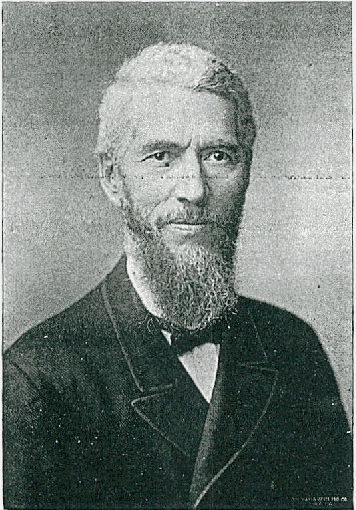
_________________________________________________________________ Title: The New Testament Commentary Vol. III: John Creator(s): Johnson, B.W. Print Basis: St. Louis: Christian Pulishing Company, 1886 Rights: Public Domain CCEL Subjects: All; Bible; Commentary LC Call no: BS2615.J6 LC Subjects: The Bible New Testament Special parts of the New Testament _________________________________________________________________ The New Testament Commentary Volume III John A Commentary for the People Based on both versions. Author of “A Vision of the Ages,” “Christian Lesson Commentary,” etc. Christian Board of Publication St. Louis 3, Missouri COPYRIGHTED, 1886, BY CHRISTIAN PUBLISHING COMPANY [This text is in the public domain.] To Sarah A. Johnson, the faithful companion of a long pilgrimage, whose constant watchcare has greatly multiplied the labors of a not strong constitution, this volume is affectionately inscribed by the author. _________________________________________________________________ Preface I have had in view, in writing this Commentary on John, the wants of the ordinary reader, rather than critics, preachers and theologians, and have therefore aimed to write in plain and simple language, avoiding technical phrases and Greek words which would only be intelligible to the learned. While I have endeavored to avail myself of the studies of the great Biblical scholars I have sought to present in a popular form the results of their studies, rather than their methods. As it has been the aim of my life to speak or write for the benefit of the common people, so in this volume I have constantly had before my mind that class to whom the Great Teacher so adapted his instruction that “they heard him gladly.” I have felt the more need of simple forms of speech, copious illustration and application, in that the Fourth Gospel itself, on account of its lofty themes, rises to an elevation far above the ordinary channels of human thought, and is less likely to be understood by the common reader than the more matter of fact treatises that precede it in the New Testament. It is fitting that I should acknowledge my indebtedness to those of whose studies I have freely availed myself. With most of the commentaries of note in the English language at hand for consultation, I have industriously compared them, often adopting their views, and even when I did not, frequently receiving suggestions that have aided me to a satisfactory conclusion. Where I have quoted an author I have given proper credit, but I cannot refrain from expressing my especial obligation to the critical Greek Testament of Dean Alford. I have found no other author whose calm and impartial temper and sound judgment were so generally trustworthy. I also place a high value upon the work of Canon Westcott. I have thought it would help to an understanding of the text to give the Revision and the Common Version, side by side. The former, while not likely to become the “Accepted Version” until it has undergone further revision, is probably the most accurate translation yet made, and often clears up obscure passages. While it is given, and used in the comment, it is not made the basis for the reason that it is not yet the Accepted Version of the English speaking world. On the difficult question of the Chronology of the ministry of our Lord I have, in the main, followed Andrews, from whose very careful arrangement, a departure is not lightly to be made, though in one or two instances I have thought there were sufficient reasons for a deviation. It will be seen that John, while passing many details, follows the natural order of events and, in order that each may be seen and studied in its proper connection, I have aimed to outline, in their place, the incidents of our Savior's history which are to be supplied from the other Evangelists. Whatever imperfections of style the reader may discover are to be ascribed, in part, to the fact that this work has been written at intervals snatched from a very busy life. While the study of the writings of John has been a pursuit and joy for years, the writer feels that the quiet and studious repose of the library would have been more favorable to satisfactory arrangement of the results than the hurry of an editorial career. Still he trusts that his labors may aid some of his fellow mortals to a fuller knowledge of Him whom to have seen and known is to have seen the Father. He commits this study of the last and greatest of the Gospels to the public with the prayer that it may be blessed as a means of leading men to “believe that Jesus is the Christ, the Son of God, and that believing, they might have life through his name.” _________________________________________________________________ Introduction. _________________________________________________________________ The Authorship. The Fourth Gospel has in all ages been ascribed by the Church to John, the son of Zebedee, an apostle of Jesus Christ. Within less than an hundred years of the date of his death Christian writers living in different portions of the world, whose writings are still extant, indicate to us that this was the universal belief of the Church. The testimony to the authorship is stronger than can be furnished in behalf of almost any uninspired writing of antiquity, and it would hardly be worth while to allude to the question had not a class of modern critics arisen who decide the question of the authorship of a portion of Scripture by the agreement or non-agreement of its teachings with their own views. Since the Fourth Gospel is more emphatic in affirming the pre-existence and divine majesty of Jesus Christ than the other three, a school of recent rationalistic critics has held that it is not the work of an apostle. I will very briefly show the reasons why its authorship must be conceded to John. 1. It is certain that it was written by a Jew. The familiarity which is constantly shown with Jewish locations proves that the author must have been a resident of Palestine. Places are named that are not spoken of elsewhere in the Old or New Testament, and of the existence of which we would have had no knowledge were it not for the fact that they are mentioned in this Gospel. Some of these, whose sites were unknown for ages, have been brought to light by recent exploration. “Ænon near to Salim” is an example. Not only does the author exhibit the most intimate knowledge of places, but of Jewish rites, customs, prejudices and feelings. This is so constantly exhibited as to demonstrate that the Gospel could not be the work of a Gentile. Every ancient writer, not of the Jewish race, who attempts to describe the Jewish people falls into the greatest errors, and the exact acquaintance with Jewish life, portrayed in almost every chapter, leaves no doubt that the Fourth Gospel is the product of a man born and reared under Jewish influences. Not only does the author exhibit an intimate knowledge of Jewish life, usages, and religious views and feelings, but also of the Jewish Scriptures. These are quoted with great frequency and it is noted by scholars that these quotations are often not taken from the Septuagint, the version into the Greek language, in which only these writings were known to the Gentile world. They are at times from the Hebrew, where it differs from the Septuagint, and at times the translation is original, instead of that of the Greek version. This establishes beyond a doubt, not only that the author was a Hebrew, but a Hebrew of Palestine. Among the Jews dispersed abroad (The Dispersion) the service of the synagogue was conducted, not in Hebrew, but in Greek by means of the Septuagint version. To Gentiles of all conditions of life and to Jews of the Dispersion with rare exceptions, the Hebrew Scriptures were, even in the Apostolic Age and earlier centuries, unknown. No instance is known of a Gentile in those times becoming possessed of such knowledge. To the same conclusions the Hebraic style of the book bears testimony. Dr. Ewald, the greatest Hebrew scholar of the nineteenth century, declares “The Greek language of our author bears the strongest marks of a genuine Hebrew who, born among the Jews of the Holy Land, and having grown up among them, had learned the Greek language in later life, but still exhibits in the midst of the whole the spirit and air of his native tongue.” 2. The Jewish author must have been a personal attendant of the Savior and a witness of the scenes which he describes. There is a life-like portraiture and an attention to details that could not come from hearsay. The first chapter furnishes an illustration in its account of the witness of John, the disciples directed to the Lamb of God, the disciples gathering around Jesus, and the conversation with Nathanael. The same characteristic is seen in the account of the wedding feast at Cana of Galilee, at the feeding of the Five Thousand, in the conversation at the Passover Supper, and on many other occasions. The writer must either describe as an eye-witness what he saw and heard, or he must have manufactured the details, a hypothesis utterly improbable, for reasons that will be given elsewhere. He claims to have been an eye-witness, and the internal evidence declares that his claim is true. 3. If the writer was a Jew, an attendant on Christ and a disciple, he must have been an apostle. There were none others who were with him from the beginning to the end of his earthly ministry. He must have been an apostle, too, who was admitted to the most sacred intimacy with the Lord, and who shared his thoughts to a degree not common even to the apostolic band. There is no other portion of the Scriptures, not excepting the other Gospels, that so completely reveals the inmost thoughts of our Lord. Elsewhere we have the Savior portrayed as the teacher of Israel and as He appeared in his conflicts with his adversaries. Here, in addition, we hear his confidential counsels to his chosen disciples, his tender consolation and intense solicitude; we behold the very pulsations of his loving heart as he stands revealed as Lord and Master, Friend and Brother. Of the apostolic band only three, Peter and the two sons of Zebedee, were admitted to the inner circle of the Savior's confidence. Peter could not have been the author, because (1) the style and mode of thought differ materially from what we observe in Peter's addresses and the two Epistles of which he was the author, and (2) all antiquity holds that the Gospel of Mark was written under the supervision of Peter. James could not have written it, for he suffered martyrdom at the hands of Herod long before the date to which it must be assigned. John only, remains, and it follows from this induction that it must have been written by John the Apostle. 4. This harmonizes with the statements made in the Gospel itself and with its internal character. Certain facts should be noted. (1) The author never mentions John the Apostle by name, and barely once names the sons of Zebedee. When he names John the Baptist, he calls him simply John, as if no other John was worthy of mention. (2) The author was an intimate companion of Peter. It was to him Peter whispered at the Supper; he and Peter come to the sepulcher together; they were fishing together in Galilee when the risen Savior appeared; it was of his future fate that Peter asked the Lord on this same occasion. When we turn to the history of Peter and John we find that the same intimacy existed, they were fishermen together and partners before they became disciples of Jesus; they were constant companions and fellow-workers in the early preaching of the Gospel as recorded in Acts. 5. There can be no doubt but that the same person was the author of the Fourth Gospel who wrote the First Epistle of John. There is an identity of thought and a similarity of phraseology that are unmistakable. If it is from the hand of John, as is generally conceded, so must be the Gospel also. We have now considered the internal evidence of authorship which points unmistakably to the younger of the two sons of Zebedee. It will be of service to inquire whether this view is confirmed by the testimony of antiquity. As stated by Lucke, who has made an exhaustive examination of the subject, “down to the end of the second century this Gospel was universally recognized and attributed to the apostle whose name it bears.” In the Canon Muratori, the first list of the New Testament writings, a fragment which belongs to somewhere near A. D. 180, it is named and ascribed to John. About the close of the century or the beginning of the next, Clement of Alexandria, Tertullian of Carthage, and Irenæus of Gaul, all bear similar testimony. That the reader may see his opportunity for full knowledge upon the subject we will quote from Irenæus. This eminent writer, an earnest Christian and a martyr, says: “I can even describe the place where the blessed Polycarp used to sit and discourse—his going out and his coming in—his general mode of life and personal appearance, together with the discourses he delivered to the people; also how he spoke of his familiar intercourse with John, and with the rest of those who had seen the Lord; and how he could call their words to remembrance. . . . What I heard of him I wrote, not on paper, but in my heart, and by the grace of God I constantly keep it in mind.” It will be seen that Irenæus was a pupil of Polycarp who was a pupil of John, and surely had every opportunity of knowing just what John did write. He states it as an undoubted fact that John wrote the Gospel that bears his name. The testimony stands as follows. 1. All the internal evidence points directly to John as the author. 2. Men who talked with those who were his companions, affirm that be was the author. 4. The universal voice of the Church at the close of the second century harmonizes in ascribing the Gospel to John; an array of testimony that can leave no doubt that it came from the pen of the beloved apostle. If we reverse the order of proof it stands as follows: 1. In the fourth century all the ancient Greek manuscripts of the New Testament, including the Sinaitic and Vatican, which belongs to the age of Constantine, and are copies of older manuscripts; all the ancient versions made during the second and third centuries, and all the canons of the books of the New Testament contain John and ascribe it to the apostle. 2. The Greek and Latin Fathers up to the middle of the second century, without a dissenting voice, bear the same testimony. This includes Jerome who died A. D. 419, Eusebius (340), Origen (254), Tertullian (200), Clement (190), Irenæus who wrote about A. D. 178, Theophilus (180), Muratorian Canon (170), Tatian (155-170) who quotes the Gospel, Justin Martyr (103-166) who also quotes it. It may be added that Polycarp, the disciple of John, of whose writings only a fragment is preserved, in it quotes the First Epistle of John, but it is conceded that it had the same author as the Gospel. This martyr died A. D. 155, when about 86 years old, and was 25 or 30 years old when John went to rest. If, then, John did not write the Fourth Gospel, it must have been written about the time he died by a great Unknown, the mightiest mind of the Gospel historians and palmed off on the men who knew John personally and had been educated at his feet as the genuine composition of the last of the apostles. This must have been done so skilfully that no dissenting voice in the Church protested against the fraud! Either we must have here truths which Christ taught reported by one who lived after the spiritual and catholic character of Christianity had begun to show its actual development, and who, therefore, comprehended his profounder instructions as they were not comprehended during his lifetime; or else we must believe that the centuries immediately following the Christian era produced a spiritual genius whose insight into the profounder truths of human experience, when inflamed into more than merely human life by the inbreathing of God, makes him the equal if not the superior of the Jesus portrayed in the three Synoptic Gospels, and yet one who has been utterly unknown to fame, and who has left no other monument to his memory than a document that is a fraud if not a forgery. The skepticism that asserts this lays too heavy a tax on human credulity. It asks us to believe not only in a Socrates who had no Plato to reveal his teachings and his influences, but in one who did not hesitate to employ a petty and a useless fraud as a setting for the most transcendent spiritual truth.—Abbott. _________________________________________________________________ The Author's Life. John the Apostle, was evidently born and reared in the vicinity of the sea where he afterwards assisted his father in the calling of a fisherman. It has been thought that Bethsaida on the northern shore was his early home. As James is usually mentioned first, John is supposed to have been the younger of the two sons of Zebedee. Salome, his mother, is thought to have been a sister of Mary the mother of Christ, a hypothesis that would make John the cousin of our Savior. He was probably a few years younger than Jesus as all antiquity testifies that he lived until the year 98 of our era. His parents seem to have been in comfortable circumstances, since we have an allusion to the hired servants of his father, and his mother was one of that band of noble women who followed Jesus, supported him with their means, who brought spices to his tomb, and who were last at the cross and first at the open sepulcher. John was himself a personal acquaintance of the high priest and seems to have had a home in Jerusalem into which he received the mother of our Lord after the crucifixion. The fact that he was called on to do so favors the idea that he was a kinsman. He was pronounced by the Jews (Acts 4:13) an “unlearned and ignorant man.” This, however, does not mean that he was illiterate, but that he had taken no theological course in the rabbinical schools, without which they thought that it was great presumption for any one to assume to be a teacher of religion. The education of John was such as all respectable Jewish children were wont to receive and we know that they were better educated than the children of any other nation in the world. There never was a people where the requirements of home education were so rigid and, in addition, a school was attached to the synagogue. Familiarity with the Scriptures in the Hebrew original was required from the earliest childhood, five years being the age named by the Jewish writers as that at which the child should begin to read, and the education was continued by regular gradations to the age of eighteen. John had not only passed through this course but had also been a disciple of John the Baptist and enjoyed the benefit of his preparation for the ministry of Christ. In addition to this, before he entered upon the work of the Twelve as the representatives of the will of Christ on the earth, he had sat for three years at the feet of Jesus and enjoyed the benefit of his constant teachings. Surely with these opportunities few men have enjoyed such educational opportunities as the author of the Fourth Gospel. It was while attending upon John as his disciple that he was pointed to Jesus by the Forerunner, and left him to become a disciple of our Lord. This incident occurred on the banks of the Jordan where John was baptizing, shortly after the Temptation. A little later he was enrolled as one of the Twelve, and becomes one of the Three who stood nearest of all to Christ, who beheld his transfiguration and the scene of the Garden of Gethsemane. He leaned on the bosom of Christ at the last Supper, followed him to the court of the high priest, alone of all the apostles stood near the cross at the crucifixion, and was entrusted by the dying Savior with the care of his mother. He was the first to recognize the Savior at the sea of Galilee, and seems to have had a rare faculty of spiritual perception, shown in the reception of the deepest sayings of the Lord. While quiet, contemplative and loving, he was not without traits of a different character. It is James and John who are styled by the Savior the Sons of Thunder, a name which seems to imply a fiery, energetic temper; it is James and John who wish to call down fire upon the Samaritan village which had refused to receive Jesus (Luke 9:54-56); it is John who forbade others who were doing a good work in the name of Christ, because they were not of the apostolic circle (Luke 9:49); it is Salome who asks, in behalf of her two sons, that they may be the prime ministers of Christ in the earthly kingdom that they expected him to establish; and it is John who in his epistles exhibits the most intense indignation over the wiles of opposers. Here every one who dishonors the Christian profession is a liar; one who hates his brother a murderer; one who sins wilfully a child of the devil, and those who deny the incarnation are Antichrist. Evidently John's was a strong, fiery nature, of intense feeling, but sweetened down by the love of Christ and guided by the Holy Spirit. From the era of the founding of the Church on Pentecost John stands along with Peter as one of the foremost characters. At a little later period Paul speaks of Peter and James and John “as seeming to be the pillars” (Gal. 2:9), and as apostles of the circumcision, while Paul and Barnabas represented the uncircumcision. With Peter he heals the cripple at the gate of the temple; he is arrested with Peter and threatened by the Sanhedrim, and with him he was sent to confirm the Christian converts at Samaria. While it is evident that he made his home in Jerusalem and Judea for twenty or thirty years after the establishment of the Church, he seems to have stood aloof from the Judaizing controversy that assumed such prominence during that period. Though not mentioned by name he is included in those said to be present at the conference on this question about A. D. 50 or 51, and Paul, in Gal. 2:9, referring to a visit to Jerusalem which is believed to have been at this time, says expressly that he saw him. At the fifth and last visit of Paul, made some eight or ten years later, he saw only James (Acts 21:18). All the apostles living had dispersed to other fields of labor. It seems probable from this that before the year 60 John had left Jerusalem. He must have made that city his home until the death of Mary, but from this time we have no scriptural testimony of his whereabouts until we behold him as an exile on the island of Patmos. The gap that remains between his disappearance from Jerusalem and his reappearance at Patmos can only be partly filled from the testimony of the early church. There can be no doubt but that he passed many years in Asia Minor with his headquarters at Ephesus, but it is almost certain that he did not remove there until after the death of Paul, placed by the best authorities in A. D. 68. According to Conybeare and Howson Paul wrote to Titus from Ephesus in A. D. 67, and in the same year wrote to Timothy at Ephesus. In neither epistle is the name of John mentioned, which is sufficient proof that he was not yet in that part of the world. Already the disturbances had begun which culminated three years later in the destruction of Jerusalem, and as after a few years John was at Ephesus, we are justified in concluding that on, or shortly before, the overthrow of the Jewish state, he left Judea, and finally was led by the need of apostolic influence in the flourishing churches of Asia Minor, after the death of their founder, to locate at Ephesus. This change could hardly have taken place until after the fall of Jerusalem. Concerning the length of the period John spent in this section of the world, or the details of his evangelical labors, we can do little more than conjecture. It is only in the dim twilight of the apostolic age that we again behold him certainly as the exile of Patmos. Of the following facts we may be sure: 1. That at some time during this period he wrote his Gospel, the Epistles ascribed to him, and Revelation. 2. That he was exiled for a season to Patmos and while there wrote the last named book. 3. That the Seven Churches of Asia, of which Ephesus was the center, were to him special objects of solicitude (Rev. 1:11), and if we accept the voice of antiquity he died and was buried at Ephesus in the reign of Trajan, and at that place his grave was pointed out for centuries. It is a pleasing picture that the early writers draw of the closing years of the last of the Apostles. He is described as the apostle of love, who in his extreme old age was carried on the arms of the disciples to the place of meeting, and repeated again and again the exhortation, “Little children, love one another.” Various legends have come down, some of which may be true, but are not confirmed by satisfactory testimony. _________________________________________________________________ The Place and Date. We have found that the later years of John were passed in Asia Minor and principally at Ephesus. Irenæus, who had such excellent sources of information and who was himself educated in the same region by a disciple of John, declares that the Gospel was written at Ephesus; with him agree Jerome and later writers. Irenæus also states that it was the latest written of the Gospels, and this agrees with judgment of all commentators. It was therefore written after the departure of the Apostle to this portion of the world, and there can be little doubt that its place of composition was the great metropolis of this portion of the world, and for along period after the fall of Jerusalem, the chief center of Christianity. “After the destruction of Jerusalem Ephesus became the center of Christian life in the East. Even Antioch, the original source of missions to the Gentiles, and the future metropolis of the Christian patriarch, appears for a time less conspicuous in the obscurity of early church history than Ephesus, to which Paul inscribed his Epistle, and in which John found a dwelling place and a tomb. This half Greek, half Oriental city, visited by ships from all parts of the Mediterranean, and united by great roads with the markets of the interior, was the common meeting place of various characters and classes of men.”—Conybeare and Howson. Of the date we can have no certain knowledge. There are internal evidences that would refer it to the last quarter of the first century. It has been held by some critics that it is the last composition of the New Testament, but I think it contains internal evidence that it was composed before Revelation, while the latter seems in its final words to close the sacred canon. In addition, the voice of the early church agrees that the Gospel had the earlier date. It was almost certainly composed between A. D. 75 and A. D. 90. A vague tradition that it was written during the exile to Patmos has no authority. Alford fixes the date between A. D. 70 and 85; Macdonald at A. D. 86 or 86; Godet between A. D. 80 and 90; Tholuck at not far from A. D. 100. _________________________________________________________________ Character of the Gospel. The last record made of the Life and Words of our Lord is contained in the Fourth Gospel. The only survivor of the band that had attended his footsteps, heard his words, beheld his life, and been a witness of his resurrection, was John. The consciousness that he was closing the record, giving the last witness, and paying the last tribute to the Master which would come from a personal witness, must have produced a profound impression upon John when he undertook the task of outlining the ministry of Christ. Apart from all promptings of the Spirit, which would bring, all things to remembrance, he would be moved by his love and reverence for the Savior to give the truest possible revelation of his heart, life and majesty. That this consciousness was ever present is manifest from the first to the last line of the Gospel. The last is the deepest, the highest, the most tender and loving, the most spiritual and the best of all the Gospels. Origen calls it “the crown of all the Gospels.” Dr. Schaff pronounces it the most influential work of literature that was ever given to the world. There can be no doubt that John, with the exception of Paul, is the greatest human force that has appeared in Church history, and it may be regarded certain that no single book of the Bible has exerted as profound and far-reaching an influence as the Gospel of John. Nor is it difficult to account for this. He not only wrote after all the other apostles had passed from earth; after Jerusalem had fallen, the Jewish nation scattered, the church separated from the synagogue, the Jewish and Gentile Christians moulded into one, and the Jews regarded by even Jewish converts as an alien people, but he was a member of the apostolic band; one, too, of the sacred inner circle who were permitted to look into the very heart of Christ. Nay, more, of these three he was the “beloved apostle,” the one who leaned on the bosom of the Lord, who spoke with him as a confidential friend, and who had charge of the mother of Christ after the tragedy of the cross. Surely there never was anyone else who enjoyed such precious advantages or who so nobly used them. The appreciative reader is struck with the difference between John and the other Evangelists as soon as he reads the first sentence. He is conscious that a loftier and sweeter key has been struck. He has entered the Holy of Holies of the New Testament. He is in the presence of the Divine. It is not the tender, helpless Babe of Bethlehem, hanging on the bosom of an earthly mother, that meets him at the threshold, but the Incarnate Word, the Word who was in the beginning with God and is God. Yet while the Lord first appears clothed with Divine majesty, and though no one else has so exalted his matchless glory, yet, on the other hand, no one else has so lifted the veil from the humanity of the Master, revealed his heart and the tenderness of his soul in the intimacy of his private life. It is John who takes us within the sacred circle and allows us to sit at the Master's feet and listen to his “table talk” with his own beloved disciples. While we have combined, such exalted revelations of the “One sent by the Father,” on the one hand, and such near views of the loving Brother, upon the other, all is told in a plain, clear and natural way; simple as the story of a child and yet lofty as the flight of a seraph. If we search for the peculiarities that make it different from the other Gospels the following will be most apparent: I. It is the Gospel of the Incarnation. The emphasis is upon the grand truth that Christ is the Word made flesh, the One sent from the Father, the Bread of Life come down from heaven, the One who hath life in himself and is therefore the Life of men, the Vine from whence the branches draw their life, the Light that cometh into the world, the I AM, the Son of God. John expressly disclaims having recorded all the words and deeds of the Lord, and assures us that he had selected from almost infinite resources. He has omitted much that is recorded in the other Gospels; he has added five miracles that they omitted and a series of discourses to which they hardly alluded, but a study of his material will show that the leading thought has been its bearing upon the oneness of Christ with the Father. We search in vain for many things found in the other Evangelists that portray the human side of the Redeemer's nature. No genealogies are given, there is no mention of the birth at Bethlehem, or of the life at Nazareth; the childhood is passed over as well as the baptism of our Lord, and the Lord appears before the reader, in the very beginning, not only as the Son of man but as the Son of God. The Divine Word is traced, step by step, as he speaks and acts in human form, as he controls the elements of nature, creates food and drink for man, creates new organs in those without them from birth, unlocks the tomb and calls forth a friend from the embrace of death, as he speaks to friends and foes of his relations to the Father, as he suffers and is humiliated, and in the sublimest of all miracles, overthrows Death who claimed him as a victim. He is traced when he comes forth a conqueror because “he had life in himself,” and after a continued manifestation to his disciples, ascends in order that the Comforter might come “to abide with them forever.” Never for a moment does John lose sight of the truth that the Savior in the “brightness of the Father's glory and the express image of his person.” Yet it must not be supposed that in this respect there is any contradiction between John and the other Gospels. While the Savior is regarded from different standpoints the pictures are in complete harmony. John shows us the mother and “his brethren,” the Baptist as the “Voice in the wilderness” who bears witness of Christ; he reveals the Lord “groaning” and “troubled in spirit,” as weeping at the grave of a friend, or weary at Jacob's well. He attests that with his own eyes he saw him wounded to death and die, and indeed he concedes all they narrate of the human life of our Lord. On the other hand, they affirm, if with less emphasis, the matchless majesty of the Son of God. He is conceived without sin, is the Lord of David (Matt. 22:43), claims power on earth to forgive sins, declares himself the judge of the world (Matt. 7:21 and 25:31-46), will come riding on the clouds of heaven, will come in his glory with his holy angels with him, will take his seat on the throne of glory to judge all nations, is seen on the Mount of Transfiguration shining with heavenly glory, declares after the resurrection that all power in heaven and earth is given into his hands, associates himself with the Father and the Holy Spirit in the baptismal formula, as the connecting link between the two and thus assumes a place on the very throne of the Deity. There is nothing in the Johannean conception of the Son that is higher. This statement with which Matthew closes shows in what sense he uses the term Immanuel, “God with us,” in the very first chapter of his Gospel (1:23). Indeed, it is strange that any candid man should have held that the Christ of John is a different conception from the Christ of the three Evangelists. With all four he is the Son of man, but with all four he is the Son of God, not a son, but the Son of God, and it is because he made this claim before the Sanhedrim, according to these Gospels, that he was condemned to death. In the earlier Gospels the Son of David, the Son of Mary, is demonstrated to be the Son of God; in the last Gospel he is seen as the Godhead in bodily form, the Son of God who is the manifestation of the Father. In the first three the human is divine; in the Fourth the Divine is human. II. The Gospel of John is the Gospel of Love. It is true that the same doctrine is taught by the others. There the Savior declares that love is the very basis of eternal life; there is taught, perhaps the sweetest of all parables, that of the Good Samaritan. Yet there is an emphasis of love by John not found elsewhere. He it is who declares, “God is love,” and of this he gives the highest possible proof in the fact that “God so loved the world that he gave his only begotten Son, that whosoever believeth on him should not perish, but have eternal life.” Here it is that Christ is revealed as the “Good Shepherd who layeth down his life for his sheep;” here is also given the New Commandment, “Love one another, as I have loved you;” and here it is, also, the sin of unbelief in rejecting a Savior whose very being is love, is most fully described. III. It is the most Spiritual Gospel. Within about a hundred years of the time when it was written Clement of Alexandria declared that John wrote a Gospel of spiritual things, while the earlier Evangelists wrote Gospels of material things. By this he meant that they were more matter of fact, and did not enter into the deep questions, or take the deep spiritual views which are constantly exhibited in John. As the student of Scripture drinks more deeply into the word of God he will observe this more and more. Not only does John bring to the front the profoundest questions, but he beholds a significance in every act of Christ. Every miracle and act becomes a kind of parable. The water of the well of Jacob gives occasion to the precious utterances concerning the Living Water; the feeding of the Five Thousand brings out the discourses on the Bread of Life; the rejection of the healed blind man by his spiritual shepherds calls out the beautiful picture of the Good Shepherd; the fruit of the Vine on the table of the Last Supper occasions the delineation of the True Vine. Not only does John unfold a deep spiritual meaning, as just described, but he gives an emphasis to the Holy Spirit that is not found in the preceding Gospels. They are by no means silent; they speak of the baptism of the Holy Spirit, the sin against it, praying for it, baptism in the name of the Father, Son and Holy Spirit, and of the promise of the Father that the disciples shall be endued with its power in Jerusalem, but it is John who unfolds the great doctrine of the Comforter, outlines his work, and declares in explicit terms that he shall be a perpetual possession of the church. Nor can it be doubted that when he penned, “He shall guide you into all truth,” “shall bring all things to your remembrance,” that he was gratefully conscious of the Spirit's help in bringing the Savior's life and discourses vividly to memory, a half century after his ascension to the heavenly throne. _________________________________________________________________ The Analysis of John. The plan of John is much more systematic, clear and simple than those of the other three Evangelists. It will be a help in a connected study of this part of Holy Scripture to have an analysis. I am indebted to Dr. Schaff for the outlines of the following plan, though I have modified and condensed the view he gives in his History of the Apostolic Church. I have marked by a star those sections which are not found in the other Gospels. *I. The Prologue. 1:1-18. (1) The Word in Relation to God. 1:1, 2. (2) The Word in Relation to the World. 1:3-5. (3) The Word in Relation to John the Baptist and the Jews. 1:6-13. (4) The Word Made Flesh. 1:14-18. II. Manifestation of the Word in Life and Work. 1:19 to 12:50. *(1) John bearing witness of and pointing to the Lamb of God. 1:19-37. *(2) Gathering of the First Disciples. 1:38-51. *(3) The First Miracle. 2:1-11. First sojourn in Capernaum. 2:12. First Passover at Jerusalem. 2:13. *(4) First Cleansing of the Temple. 2:14-25. *(5) Conversation with Nicodemus and the New Birth. 3:1-21. *(6) Labors of Christ in Judea. The Testimony of John the Baptist. 3:22-36. *(7) Labors in Samaria. At Jacob's Well. The Samaritan Woman. 4:1-42. (8) Public Teaching in Galilee. 4:43-45. Compare Matt. 4:17; Mark 1:14; Luke 4:14. *(9) Nobleman's Son at Capernaum Healed. 4:46-54. *(10) Second Journey to Jerusalem to a Feast supposed to be the Passover; The Healing at the Pool of Bethesda. 5:1-18. The Beginning of the Enmity of the Jews that finally led to the Crucifixion. The discourse of Christ on his Relation to the Father. 5:19-47. *(11) The Feeding of the Five Thousand and the Stilling of the Tempest. 6:1-21. *(12) The discourse on the Bread of Life. 6:22-71. *(13) Third Visit to Jerusalem, at the Feast of Tabernacles. The Discourse at the Temple. The Increase of Hostility. Attempt to Seize the Lord. 7:1-52. *(14) The Woman taken in Adultery. 7:53 to 8:11. *(15) Discourse on the Light of the World. The Children of God and the Children of the Evil One. Attempt to Stone Jesus. 8:12-59. *(16) The Healing of the Man Born Blind, on a Sabbath; His Testimony of the Pharisees. 9:1-41. *(17) The Good Shepherd, the Sheepfold and the Sheep. 10:1-21. *(18) Discourse at the Feast of Dedication in Solomon's Porch. 10:22-39. *(19) Departure to the Country beyond the Jordan. 10:40-42. *(20) The Resurrection of Lazarus at Bethany, and its effect in increasing the Enmity of the Jews. The Counsel of Caiaphas. 11:1-53. *(21) Jesus retires to Ephraim. 11:54-57. (22) The Anointing by Mary at Bethany at the Feast. 12:1-8. (23) The Counsel of the Chief Priests. 12:9-11. (24) The Entry into Jerusalem as a King. 12:12-19. Compare Matt. 21:1-17; Mark 11:1-11; Luke 19:29-44. *(25) The Visit of the Greeks to Jesus. Discourse on the Grain of Wheat that must die to bear Fruit. The Voice from Heaven. 12:20-50. It will be observed that, thus far, most of the matter is peculiar to John. The same is true of the discourses to the disciples which now follow. III. Christ Manifested to His Disciples. The time is during the last Passover week. The place is Jerusalem. 13:1 to 17:26. *(1) Jesus washes the feet of his Disciples at the Passover Meal. 13:1-20. (2) He Announces the Traitor and Judas departs. 13:21-30. *(3) The New Commandment of Love. (The Lord's Supper supposed to be Instituted.) 13:31-35. (4) Peter's Denial Predicted. 13:36-38. *(5) The Farewell Discourses to the Disciples. The House of Many Mansions. The Father in the Son. The Conditions of Enjoying the Divine Presence. Promise of Answer to Prayer. Benediction of Peace. 14:1-33. *(6) The Promise of the Comforter. The Work of the Spirit. 15:1-27. *(7) The True Vine and the Branches. The Spirit and the World. 16:1-33. *(8) The Prayer for the Apostles; for Believers in all ages; for the Unity of the Church. 17:1-26. IV. Christ Lifted Up; On the Cross. From the Tomb. 18:1 to 20:31. (1) Passage of the Kedron and the Betrayal. 18:1-11. (2) Jesus before the High Priest. 18:12-24. (3) Peter's Denial. 18:15-27. (4) Jesus before Pilate the Roman Governor. 18:28 to 19:16. (5) The Crucifixion. 19:17-37. (6) The Burial of Christ. 19:38-42. (7) The Resurrection. Mary Magdalene, John and Peter at the empty tomb. 20:1-10. (8) Christ appears to Mary Magdalene on the first Lord's day. 20:11-18. *(9) Christ appears to the Apostles. Thomas not present. 20:19-23. *(10) Christ appears to all the Apostles, Thomas included, on the second Lord's day. 20:26-29. *(11) The object of John's Gospel. Written in order to cause men to believe that Jesus is the Christ, the Son of God. 20:30, 31. *The Appendix and Epilogue. 21:1-25. While the other Gospels allude to the appearance of the risen Lord in Galilee the incidents of this chapter are narrated only by John. (1) Christ appears to Seven Disciples on the shores of the Sea of Galilee. The third time he had revealed himself to his Apostles. 21:1-14. (2) The Dialogue with Simon Peter. His Restoration. 21:15-22. (3) The intimation concerning John tarrying until he came. 21:21-23. (4) The attestation to the authorship of the Gospel. 21:24, 25. An examination of the stars prefixed to the sections peculiar to John will show how far his history is independent of the other Gospels. Up to the beginning of the eighteenth chapter only five incidents are named, I believe, which are narrated by the other writers. The accounts of the trial, crucifixion, burial, resurrection, and appearances, are more nearly parallel, but the last chapter is, again, entirely new matter. These facts serve to show how much of the Savior's words and life would have been lost to the world if the Fourth Gospel had never been written. They also demonstrate the infinite resources from whence the Gospel historians drew their accounts; resources so vast, that after three historians wrote the life of the Redeemer, a fourth was still able to write another history, in full harmony with what was already written, but composed almost entirely of new matter, not less important or interesting than what had already been narrated. _________________________________________________________________ Chapter I. _________________________________________________________________ Preliminary Note. The reader who opens the Gospel of John at once notices a marked difference between it and the three preceding gospels. They begin with the times of Jesus Christ upon the earth, while the fourth carries the reader back to the unknown period that lies before the dawn of Creation. The question will at once arise why John introduces his history of Christ with the profound exposition of the WORD which occupies the first eighteen verses of this chapter. It must always be kept in mind that he wrote many years later than the authors of the other Gospels, wrote far away from Judea among a people deeply imbued with the philosophical spirit of Grecian civilization. At Ephesus he was in a center of Grecian culture, and even the church would be more or less affected by the prevalent speculations of the philosophers. In the earlier part of the century there lived at Alexandria in Egypt, a great center of Grecian learning where the greatest library of the ancient world was gathered, a Jew named Philo, born about b.c. 20, who, writing in the Greek language, had indulged in, or rather had gathered from various sources, a system of profound speculation upon the nature and essence of the Divine Being. He held that the absolute Deity was incapable of coming in contact with, or influencing matter, or manifesting himself to other intelligences, but that he gave forth certain divine powers or influences, which surround God as the members of a court surround an earthly monarch. The highest of these he called the Logos, or Word, a term that not only indicates Reason, but is the expression of thought in language. He also held that God was pure and absolute Light. His philosophy would possess little interest for us were it not for the fact that it was developed into a system called Gnosticism which reached its climax in the second century, and was already, before the close of the first century, a troublesome heresy. It took the idea of Philo of an absolute Deity, and taught that there were various emanations from God, among which were Reason, the Word, Power, Light and Life, which were all a kind of lesser deities. Even Jehovah, the revealed God of the Jews, was one of these inferior deities, and Jesus Christ was another, but a higher manifestation. These theories had begun to disturb the church before the death of Paul who refers to them a number of times (Col. 2:18; 2 Tim. 2:16–18), and John at Ephesus would at once come in contact with their subtle influence. He therefore, in the very outset of his Gospel, shows that these speculations do not harmonize with the revelation of Jesus Christ. The first eighteen verses are the profoundest exposition of the unity of the God-head, and the absolute divinity of the Word manifested in the flesh, that was ever penned. The first section (verses 1–4) contains a description of the essence of the Divine Word. He was before time began, was in association with God and was God. He was also the uncreated source of all created things, was the Power of God; and was also the Light, and the fountain of existence, the Life of men. He is not only these things, but is shining in upon the darkness. This Word became flesh and dwelt among men in the person of Jesus Christ, who is, therefore, God, divine, the Power, the Light, the Life, the light and life of men. To him the prophets have borne witness, and most of all, John, who was not himself the Light, but came as a witness of the Light. These grand declarations, which cover the ground of the Gnostic heresy, and which show its errors, are kept in view in the whole Gospel. The Son of man is revealed as the Son of God, as Divine, the Light of the world, the Resurrection and the Life, the Bread and Water of Life, and as the manifestation of the Father, the whole reaching its climax in the declaration, “These things are written that you might believe that Jesus Christ is the Son of God.” This Word (logos), which John introduces without explanation, is not used in the sense of Philo and the Gnostics, as representing Reason, nor is it ever used in that sense by the writers of the Bible. Nor is it an attribute of God, but an acting reality, personal, instead of an abstraction or personification, a Person who appeared upon the earth in human form. Jesus Christ, the Son of God, is the Word of God, not because he speaks the word, nor because he is spoken of, nor because he is the author and source of the word as spoken in the Scriptures, but because the Word dwells in him, acts through him, and speaks from him. He is not only the Word, but the Light and Life, for similar reasons; the Light dwells in and shines from him, and the Life lives in and works from him. It is because he is the Light that he has filled the world with light; because he is the Life that the dead of the earth hear his voice, become new creatures, live a new life, and the world itself is regenerated. It is because he is the Word that he spake as never man spake, spoke in the morning of time, and at his voice order came out of the primeval chaos, spoke to the dead when he was upon the earth, and they rose from the tomb, and shall speak to those that are in their graves and they shall hear his voice and come forth in the resurrection. It was this Word which was pre-existent, before time, that was manifested in the fulness of time in the flesh to carry out the gracious ends of divine love. _________________________________________________________________ The Word Made Flesh. 1. In the beginning was the Word, and the Word was with God, and the Word was God. This sublime preface of John carries us back to the account given in Genesis of the beginning of all things, when, “In the beginning God made the heavens and the earth.” The passage declares that at that time, before creation, the Word existed, was with God and separate from him, but was God, or divine. What this Word is we learn from verse 14th, where it is stated that it became flesh and dwelt among men in the person of Christ. This deep disquisition upon the divine Word, almost too deep for human understanding, was penned by John on account of certain false philosophies which began to creep into and to trouble the church. Much has been written, very learnedly, upon those heresies and upon the Word and its relation to the Father, but I will pass by all speculation and confine myself to what is the manifest meaning of the Scripture. This passage then affirms: 1. That the person afterwards manifest as the Christ existed before creation began; 2. That he was present with God; 3. That he was divine; 4. That he was the Word; 5. That by or through him were all things made that were made (verse 3). The first chapter of Genesis helps us to understand its meaning. God said, “Let there be light,” “Let there be a firmament,” “Let the earth bring forth,” etc., and it was done. God exhibits his creative power through the Word, and also manifests his will through the Word. Every careful reader of the Old Testament is struck with the prominence given to the Word of the Lord, and also with the frequent reference in the Pentateuch to the Angel of Jehovah through whom the Lord manifests himself. When Jesus came he was “the brightness of the Father's glory, and the express image of his person,” the manifestation of the Father, the “Word made flesh and dwelling among men.” There are mysteries belonging to the divine nature and to the relation between the Son and the Father that we have to wait for eternity to solve. They are too deep for human solution, but this is clear: that God creates and speaks to man through the Word. As we clothe our thoughts in words, God reveals his will by the Word, the Lord Jesus Christ. (Joh 1:2) 2. The same was in the beginning with God. John reiterates a part of his first statement, partly for emphasis, and partly to bring out the thought that there is a real distinction between the Word and the Father. He labors to make clear two thoughts, that the Word was divine, God, and yet had an individuality of its own. From the beginning, that unknown epoch, before creation began, he was with God. (Joh 1:3) 3. And all things were made by him. Having affirmed the divine and uncreated nature of the Word, John next proceeds to tell of his relation to creation. All things, the world and all it contains, and the whole universe, were made by or through him. Paul declares (Heb. 1:2), “Through him the worlds were made.” The account of creation in Genesis helps us to understand. It was God who said, “Let there be light,” and there was light. It was when the Word was employed that the sun, moon, and stars took their place in the sky. All things that were made were spoken into being, or made through the Word. The Word was not yet named Jesus Christ, for he had not yet been manifested as our Savior, nor is it certain that he was called the Son of God until he appeared upon earth as the Son of Man. (Joh 1:4) 4. In him was life, and the life was the light of men. Here is a grand affirmation. He is a fountain of life from whence life flows like a river. From him life flowed in the beginning. Man can construct the statue, but he cannot breathe it into existence. The Word could create the form and endow it with life. And when the Word became flesh, he became a “fountain of living waters,” a well springing up to eternal life. Because he had life in himself, the dead heard his voice and lived, and when he was slain the grave could not hold him, but he came forth and brought to light life and immortality. Hence the sublime utterance, “I am the resurrection and the life.” “The life was the light of men.” Man was created in the divine image. In him was fuller life than in the brute creation. Hence he is intelligent, capable of reasoning, of learning, of progress. His life is light, in the sense that it enlightens him. Then, in him can dwell the Word, which is the true light that enlightens the world. As the sun chases away darkness, so Jesus, the light of the mind and soul, chases away error, ignorance and superstition. The Life will overcome death and the Light will fill the redeemed world with his glory. (Joh 1:5) 5. And the light shineth in darkness. Now the apostle comes more plainly to the thought that Christ is the light of the world. He is the light that shineth in the darkness, has shone in it as the Word, and who continues to shine. The sun shines in the heavens, but bats and owls that hate the light hide from his rays. So, too, Christ shines, but men who love darkness rather than light, can reject him and abide in darkness. The darkness comprehended it not. The sun shines upon the darkness and the darkness disappears, but when John wrote the true Light was shining in the earth and the people in darkness understood it not. Christ, the Light of the world, came to his own and his own received him not. They had eyes and saw not, hence were not enlightened. The difficulty was not that there was not light, but they loved darkness rather than light because their deeds were evil. There is a sad tone running through this and the following verses to verse 14. (Joh 1:6) 6. There was a man sent from God whose name was John. Having declared the pre-existence of Christ, the apostle now begins the history of the Word being made flesh and dwelling among men as the Light of the World. He first presents the messenger who preceded him and who came to bear witness of the Light. He was a man “sent from God,” predicted by Isaiah and Malachi, and by the angel that appeared to Zacharias. Notice that John the apostle calls the great forerunner simply John, instead of John the Baptist, as do the other writers, as if the Baptist was the only John entitled to distinction. (Joh 1:7) 7. The same came for a witness to bear witness of the Light. John came, not so much as a reformer, as a witness. His work, as declared by Malachi, was to be a messenger to go before the Lord. In all his preaching he testified of Christ. When he preached repentance he declared the Kingdom was at hand. When he baptized he declared that there was one coming who would baptize with the Holy Spirit and fire. He said, “I am not he that should come, but there cometh one whose shoes I am unworthy to loose.” He pointed his disciples to Jesus and declared him the Lamb of God. That through him all men might believe. That John's preparation and testimony should cause men to believe upon the Light. The earliest disciples of Christ, including at least a part of the apostles, were men who had been prepared by John. John bore witness to Christ before he was manifested, The apostles bore witness after, for the same purpose, to cause men to believe. This too is the work of the church and of every preacher of the word. (Joh 1:8) 8. He was not that Light, but was sent to bear witness. An early heretical sect held that John the Baptist was the Messiah. The apostle is explicit in order to correct this error. It is said by the Savior, of the Baptist (John 5:35), that he was a shining light. It is well to keep in mind that the term here translated light is different. It is a word that means original, self-shining light, like the sun; in 5:35 it is one that means a reflected light, like the moon. Christ shines by his own light; John shone by Christ's light. (Joh 1:9) 9. That was the true light, which lighteth every man that cometh into world. That was the real light who enlightens all men. Christ is the universal light. The Revision reads, “There was the true light, even the light which lighteth every man, coming into the world.” Grammatically, both in the Greek and the English, coming may belong to the light, or every man. We believe that it should agree with light. That was the true or real light who, when he comes into the world, enlightens every man. Jesus says (John 12:46), “I am come a light into the world.” Here John affirms that he came into the world to lighten every man. It should be kept in mind that the apostle is now about to treat of the personal coming into the world of the Light in the form of the Christ. As the Creator of natural things, as the Word that has been spoken to man from the beginning, and as God manifest in the flesh, he is the source of all the moral and spiritual light the world has ever known. (Joh 1:10) 10. He was in the world, and the world was made by him, and the world knew him not. John has just spoken of the personal coming of the Light of the world. Lest any one should forget that he was already in the world as the Word, he says that he was in the world and was its Creator, and had been in it from the beginning, though the world did not recognize him. There is a connection between this and the following verse. This declares that (1) he was in the world, (2) the world was made by him, (3) it did not recognize him. The next verse states (1) that he came, personally, to his own. He took upon himself a fleshly form and came to the race to which he was united by fleshly ties; (2) his own received him not. The world is humanity in general, which knew him not; his own is the Jewish nation, who received him not. (Joh 1:11) 11. He came to his own, and his own received him not. It is stated above that he was in the world, from the beginning. Here it is stated that he came, to his own, when he came to Judea as the son of Mary, and, therefore, of the Jewish race. This passage is full of pathos and is an epitome of the Savior's earthly history. When the kingly babe came there was “no room” found even in the inn; a few days later he was carried to Egypt to save him from the murderous Herod; when he entered upon his ministry he was met by hatred, reviling and conspiracy; at last the Sanhedrim of the nation condemned him to death; and before Pontius Pilate, choosing a robber in his stead, they cried, “Away with him; crucify him!” His own people received him not. Even his townsmen of Nazareth sought to put him to death. (Joh 1:12) 12. To as many as received him, to them gave he power to become the sons of God. The Revision reads, “Children of God,” which is better. While the nation rejected him, some received him. To such as receive him in every age he gives power to become the children of God. The manner in which he is received is given; even to those who believe upon his name. It is not declared that they are made children by believing, but to the believer he gives the “power to become” a child. When one believes in Christ, his faith becomes a power to lead him to yield himself to God and to receive the Word into his heart. He can now repent of sin, surrender to the will of the Father, and then, “being baptized into Christ he puts on Christ,” is his brother and a child of God by adoption, whereupon, “because he is a son, God sends his Spirit into his heart,” enabling him to say: “Abba! Father.” Wesley says, “The moment we believe we are sons.” The Scriptures do not so teach, but that when we believe, Christ “gives us power to become children.” Without “belief upon his name” the “power” to become a child is impossible. (Joh 1:13) 13. Who were born, not of blood, nor by the will of the flesh. The Jews prided themselves on being Abraham's children, and trusted in their blood for salvation. John declares that blood, or race, has nothing to do with becoming the children of God; nor has this new birth which makes one a child of God aught to do with natural generation (the will of the flesh), nor earthly adoption (the will of the man). It is not a fleshly birth at all, but the spirit of the subject is born of God. In John 3:1–8 the Savior explains this birth more particularly. Faith, repentance and obedience prepare us for the gift of the Spirit, and we are thus made new creatures in Christ Jesus. (Joh 1:14) 14. And the word was made flesh, and dwelt among us. The Word assumed a human form and became incarnate as the child of Mary. It did not merely manifest itself, but dwelt among us for about thirty-three years. There was already a heretical sect, the Gnostics referred to in 2 John 7, who denied that Christ had come in the flesh. The apostle here makes this positive statement to meet this heresy. And we beheld his glory. Peter, James and John not only beheld the sinless and godlike life of Christ, but they saw the glory of the Mount of Transfiguration, “the glory as of the only begotten of the Father.” Full of grace and truth. The Word incarnate, Christ, was full of grace and truth; his mission was one of grace or favor to men, and he was the Truth, as well as the Way and the Life. (Joh 1:15) 15. John testified of him. Verse 7 declares that John came to testify of Christ and here the substance of his testimony is given. When he saw Jesus he cried, “This is he of whom I said, He that cometh after me is preferred before me because he was before me.” (Joh 1:16) 16. Out of his fulness have we all received. It is John, the apostle, who speaks. The thought refers to the two preceding verses. John had seen the glory of Christ, who was “full” of grace and truth, and the Baptist declares that Christ existed before he came into the world, and then John declares, “We have all received of his fulness, and favor upon favor.” (Joh 1:17) 17. The law was given by Moses. It was not a system of grace, nor could it make men perfect; in contrast with it the system of grace and truth (see verse 14) were given by Jesus Christ. (Joh 1:18) 18. No man hath seen God, with bodily eyes, but he was manifested as the Word and at last the “only begotten Son hath declared him.” “He that hath seen me,” said Christ, “hath seen the Father. The Father is in me and I in him.” Christ came in human form, in order to reveal the Father to a race who knew him not. _________________________________________________________________ Practical Observations. 1. What wonderful condescension that so glorious a being as the Word should take upon himself our nature, dwell among men, suffer and die for us! “This is the love of God that he hath sent the Son into the world, not to condemn the world, but in order that the world might be saved.” 2. How can any one treat lightly the Word of the Lord when he learns that “In the beginning was the Word, and the Word was with God, and the Word was God?” It is said that the Jews refused even to throw upon the earth slips that had printed or written upon them passages of Scripture. We have infinitely more reason for reverencing the Word than the Jews. Every passage of the inspired testimony has come to us through the medium of him who is the Word. 3. Christ is the light of the World. Take a map and delineate those countries which are most enlightened in bright colors, then shade others more and more as you approach barbarism and ignorance. Then make another map in which the countries that most truly receive the Bible and Christ are represented in bright colors, shade those lands that have a corrupted Christianity, shading according to the degree of corruption, and put those in darkest colors where nothing is known of Christ. Then compare the two maps. It will be found that there are not two maps, but two copies of one map. 4. The Word made flesh. God, the uncreated, the incomprehensible, the invisible, attracted few worshipers; a philosopher might admire so noble a conception, but the crowd turned away in disgust from words that presented no image to their minds. It was before Deity, embodied in human form, working among men, partaking of their infirmities, leaning on their bosoms, weeping over their graves, bleeding on the cross, that the prejudices of the synagogue, and the doubts of the academy, and the pride of the portico, and the fasces of the lictors, and the swords of thirty legions, were humbled in the dust.—Macaulay. _________________________________________________________________ The Witness of John. 19. And this is the record of John. The history now begins its sweep onward. All before is prefatory. The historian passes by the incidents connected with the birth of John and of Jesus, the early history, and even the account of John's preaching and the baptism of Christ, given in the other Gospels. He wrote at a much later period and these facts are supposed to be well known. The witness here noted was given after the baptism and probably while Christ was in the wilderness at the time of the temptation. When the Jews sent priests and Levites. John uses the term “Jews” as though he was not of that race. He was now an old man and for many years had transferred his allegiance to another nation (1 Peter 2:9), and for a long time had been dwelling in Asia Minor, among Gentile Christians. That his Jewish feelings had gradually passed away is often shown in his language. Usually “the Jews” means the ruling classes of Judea. In this case it refers to the SANHEDRIM. As this court fills a conspicuous place in the New Testament history it will help the student to have a clear understanding of its nature. The Jewish writers claim that it originated with the seventy elders whom Moses (Num. 11:16, 17) was directed to associate with himself in the government of Israel, who, with himself, would make a court of seventy-one persons. Hence it was composed of seventy-one members. There is, however, no positive proof of its existence during the period of the Jewish kings, and it only appears in unmistakable form during the later days of the Hebrew commonwealth. Its very name, Sanhedrim, or more correctly, Sanhedrin, is Greek, and this fact points to a period after the Macedonian conquest of the East, when it assumed shape. According to the Jews themselves (Jerusalem Gemara), forty years before the destruction of Jerusalem the right to inflict capital punishment was taken away from it, which agrees with the answer of the Jews to Pilate (John 19:31). It was a supreme court to which belonged the trial of a tribe fallen into idolatry, false prophets, and accused priests. As an administrative council its jurisdiction was still more extensive. Jesus was arraigned before this body as a false prophet (John 11:47) and condemned as a blasphemer (Matt. 26:65). Peter, John, Stephen and Paul were arraigned by it as false teachers and deceivers of the people. It was entirely in harmony with its prerogatives that it should send an official deputation to ascertain the character of John. He had produced a profound sensation and stirred the whole land, and it was the duty of the Sanhedrim, from its standpoint, to examine into his claims. There is nothing in the language to show whether this deputation was hostile or friendly, and it is probable that it was neither, but only one of inquiry. Its members were all of the sacerdotal tribe. (Joh 1:20) 20. I am not the Christ. The idea had already begun to receive currency that John might be the expected Christ. In his preaching recorded by Matthew he denied this with great emphasis and explained his relation to the Coming One. Here he is equally emphatic. The stress which the apostle here lays on this denial shows that he had in mind that later class of the disciples of John, who in the latter half of the first century, asserted that he was the Christ. (Joh 1:21) 21. They asked him, What then? Art thou Elias? Malachi (4:5) had declared that Elias would precede the Messiah. Hence when John denied that he was the Christ, the next question was whether he was Elias. He said that he was not; he was not the literal Elias whom they expected; nor is it certain that God had revealed to John that he was the spiritual Elias. He was greater than he himself knew. He was, in many respects, in mission, manner of life, fearlessness and ruggedness, an Elias, and was the Elias foretold by the prophet (Matt. 17:12), though Elias did literally come on the mount of transfiguration. Art thou that prophet? They ask still another question. Moses had predicted a prophet like himself (Deut. 18:15), but John denies that he is the fulfillment. It was later (Acts 3:22; 7:37) when the apostles understood that Jesus was he of whom Moses did speak. (Joh 1:22) 22. Who art thou? The conjectures are exhausted and they demand an explicit answer, that they may carry the information to “them that sent them,” or to the Sanhedrim. (Joh 1:23) 23. I am the voice of one crying in the wilderness. John answers this question by quoting Isaiah 40:3, where the prophet describes his mission. The passage is applied to John, Matt. 3:3; Mark 1:2, and Luke 3:4. He sinks his own personality, and is simply the “voice of one crying in the wilderness, Make straight the way of the Lord.” His work was that of preparation for the Lord. (Joh 1:24) 24. Of the Pharisees. The messengers were not only of the religious tribe, but of the strictest of Jewish sects. The Pharisees were far more attentive to external rites than any other class, and as the next question is concerning such a rite, the fact that they were Pharisees is noted. (Joh 1:25) 25. Why baptizest thou then? This question shows that John's baptism was, to them, a new rite. They could understand that Christ, or Elias, or “that prophet” might establish a new ordinance by the divine authority, but if John is none of these, why does he do so? Their perplexity shows that, in some way, the baptismal rite was new to them. It is claimed that Gentile proselytes to the Jewish faith were baptized (immersed according to all the Jewish authorities) before this time, but the only proof offered is the testimony of the Talmud, written two or three centuries later. Even if proselyte baptism had been instituted, John's rite presented the new feature of baptizing Jews, those who considered themselves God's people. In that it called the chosen people to baptism it was a new rite. (Joh 1:26) 26. I baptize with water. The correct rendering is in water, and the preposition en is thus rendered by the American Committee of the Revisers, as well as by Canon Westcott of the Church of England and the most judicious scholars. Even in the Common Version, out of 2,660 times that en occurs in the Greek of the New Testament, it is rendered by “in” 2,060 times. There is no good reason why it should not be so rendered every time it occurs in connection with baptism. The translators of the Catholic Bible in English, the Douay Version, were more honest than King James' revisers, and have always so rendered it. John does not answer the question of the Pharisees directly, but points to one already standing among them. The baptism of water connects itself with that pre-eminent being. Standeth among you. This points out that the Christ was already on the earth, in Judea, though unknown and unrecognized by the people. (Joh 1:27) 27. Whose shoe's latchet I am not worthy to unloose. The latchet was the thong by which the sandal was bound on the foot. To loose or fasten it was the work of a menial. The dignity of Christ was so exalted, that John counted himself unworthy even to attend to this office. (Joh 1:28) 28. These things were done in Bethabara, beyond Jordan, where John was baptizing. The Revision substitutes Bethany for Bethabara. Both terms are found in the manuscripts, but Bethany has the better authority. The Bethany named was not the one near Jerusalem, but a village, whose site is not now known, on the east bank of the Jordan. Bethany is said to mean “the house of the boat,” and Bethabara “the house of the ford,” both alike pointing to a ferry or ford of the Jordan. We have three allusions to the localities of John's baptismal rite, all showing that abundance of water was an essential; Matt. 3:5, 6 and 13; John 3:23, and the present passage. The sending of this deputation is a proof of the great stir caused throughout Judea by the teaching of John. That he exerted a profound influence upon the nation and was accounted a prophet are evident from Jewish writers. Josephus, a Jewish priest and general, a contemporary of John and Christ, says (Antiquities, book 18, chap. 5): “Now some of the Jews thought that the destruction of Herod's army came from God, and that very justly, as a punishment of what he did against John, that was called the Baptist: for Herod slew him, who was a good man, and one who commanded the Jews to exercise virtue, both as to righteousness toward one another, and piety toward God, and so to come to him for baptism; for that the washing with water would be acceptable to him, if they made use of it, not in order to the putting away (or the remission) of some sins (only), but for the purification of the body: supposing still that the soul was thoroughly purified beforehand by righteousness. Now when (many) others came into crowds about him, for they were greatly moved by hearing his words, Herod, who feared lest the great influence which John had over the people might put it into his power and inclination to raise a rebellion (for they seemed ready to do anything he might advise), thought it best, by putting him to death, to prevent any mischief he might cause, and not to bring himself into difficulties, by sparing a man who might make him to repent of it when it should be too late. Accordingly he was sent a prisoner, out of Herod's suspicious temper, to Machærus, the castle I have before mentioned, and put to death there.” _________________________________________________________________ Christ's Ministry Begins. At this point Jesus breaks suddenly in upon the narrative. The Fourth Gospel passes by all the details contained in the other three concerning the early life of the Savior; the miraculous conception, the birth at Bethlehem, the flight to Egypt, the return to Nazareth, the visit to the temple when Jesus was twelve years old, and even his baptism a short time before in the Jordan. This is referred to, and a familiarity with it implied, but its history is not given. In these facts we have additional evidence that John wrote many years after the other evangelists and supposed his readers to be acquainted with the facts that they narrated. Jesus was at this time thirty years old, had lived a singularly blameless life with his home at Nazareth, where he had worked at the trade of Joseph, and hence is spoken of as “the carpenter” and “the carpenter's son.” He had never attended the great schools of the Jewish law in which all the Rabbins obtained their education, but went from the carpenter's bench to John's baptism, was anointed with the Holy Spirit, retired to the desert for forty days of lonely preparation, and then reappears at this point, to begin his ministry. (Joh 1:29) 29. The next day John seeth Jesus. The next day after the visit of the deputation of the Sanhedrim. It was not the first visit of Jesus to John. About forty days before he had presented himself and demanded baptism. He doubtless knew Jesus personally before this, for he testifies to the blameless purity of his life, but it had not then been revealed to him that Jesus was the Christ; only that the One upon whom he should see the Spirit descending was the King of whom he bore witness. After this baptism Jesus had retired to the wilderness to meet the tempter alone. It is at the period of his return that John points him out as the Lamb of God which taketh away the sin of the world. The lamb was a very familiar object of sacrifice to the Jews. It was slain by every Jewish family at the passover, was commonly used for a sin offering (Lev. 4:32); in the cleansing of the leper (Lev. 14:10); at both the morning and the evening sacrifice (Exod. 29:38); at all the great feasts, and on special occasions. When John pointed out Jesus, not as a, but the Lamb of God, it can only mean that God had provided him as a sacrificial offering. Every lamb offered on Jewish altars pointed to him; Isaiah, in chapter LIII, points out that he was “lead as a lamb to the slaughter.” In Revelation he is declared to be the Lamb, “as it were slain.” There is no escape from the idea that Jesus became a sacrificial offering for the world. This is entirely in harmony with the class of passages which affirm that “his blood cleanseth from all sin.” We may not be able to fathom all the mysteries of the atonement, but it is the part of faith to accept and trust fully, what is so clearly taught. It will be seen, also, that John, by inspiration, is enabled to grasp the magnitude of the Savior's work. He is to take away the sin, not of Jews only, but of the world. The reader should not fail to note, at the beginning of the Savior's ministry, that the idea that he is more than a Jewish deliverer comes into prominence. He is the Lamb of God who taketh away sin, not the sin of Israel only, but the sin of the world. John, by inspiration, is enabled to rise above the idea of a Jewish Messiah, the sphere of whose blessings would be confined to the narrow limits of the race of Abraham, and at once points his followers to Jesus as the Messiah of man, the Redeemer of the world who taketh away the sin thereof. Here, at the outset, is a divergence from the Messianic ideas of the Jews, and the germ of that disappointment of their hopes by seeing in Jesus the founder of a universal spiritual kingdom, rather than a worldly national empire, which led to their rejection of the Christ. (Joh 1:30) 30. This is he of whom I said. In verse 27 the words he refers to are given. The One who will come after him in point of time, precedes him in eminence, for he was before him in existence. John might be first known on earth and older by human birth, but Christ had existed from eternity. (Joh 1:31) 31. I knew him not. Knew not whom God had chosen as the Christ. He knew Jesus personally, but did not know he was the Christ until God pointed him out. Therefore am I come baptizing with (in) water. His whole mission of preaching and baptizing was to prepare for and reveal the Christ. In his baptizing the Christ became manifest in the way stated in the following verses. (Joh 1:32) 32. John bare record. Gave witness to the fact, either at this or some subsequent time. I saw the Spirit descending from heaven like a dove. See Matt. 3:16. At this time, as Jesus came up out of the water, the Spirit was seen descending in the form of a dove, and the voice of God was heard declaring, “This is my beloved Son, in whom I am well pleased.” Thus Jesus was anointed with the Spirit, and was thenceforward the Christ, the Anointed. It is significant that this took place at the time of baptism. Why should any Christian disparage a rite the Lord has so honored? (Joh 1:33) 33. And I knew him not. Knew not who was the Messiah. The Lord had however, given him a sign by which he could recognize him. Upon whomsoever the Spirit visibly descended and abode, the same would baptize in the Holy Spirit. The only one baptizing in the Holy Spirit is the Christ. The Spirit in its fulness abode with him, and hence he was able to impart its fulness in the baptism of the spirits of his disciples. Christ did not baptize in the Holy Spirit until after he had ascended, the first instance being recorded in Acts 2:1–4. (Joh 1:34) 34. And I saw and bare record that this is the Son of God. While the apostle does not give the history of the Savior's baptism, his allusions to it are very full and can only be understood by comparing them with the accounts given in the other Gospels. John “saw” all that is recorded by Matthew (3:13–17) and heard the Divine voice. Hence he “bare record that this is the Son of God.” This language was spoken the “next day” after the deputation of the Sanhedrim had waited upon him, and that event is thus located after the baptism and temptation of Christ. The order of events, in the gospel history, up to this date, is about as follows: 1. The Annunciation to Mary; 2. The Birth of John the Baptist; 3. The Birth of Jesus; 4. Jesus in the Temple with the Doctors; 5. The Preaching of John; 6. The Baptism of Jesus; 7. The Temptation in the Wilderness; 8. The Deputation of the Sanhedrim to John; 9. The Return of Jesus to John. _________________________________________________________________ The First Disciples. 35. Again the the next day after, Jesus stood, and two of his disciples. In verses 19–28, the account is given of the visit of the priests and Levites, sent by the Sanhedrim to John. “The next day” after this John sees Jesus and points him out as the Lamb of God, giving a discourse of which, in verses 29–34, we have a synopsis. On the “next day” after this, the third day after the deputation of the Sanhedrim, and the second after the return of Jesus from the wilderness, John stood with two of his disciples. One of these two, we learn from verse 40, was Andrew; the other, we have reason to believe, was John, the apostle. The statement that they were John's disciples, shows that they had accepted his message and been baptized by him. All the earlier disciples of Christ had been prepared for him by the Forerunner. At first glance it might seem as if John was merely repeating the testimony that he had given in verse 29, but there the testimony is general; it is not stated to whom it was spoken; here it is specific, and spoken to two disciples who were afterwards, almost certainly, apostles of Jesus. (Joh 1:36) 36. Behold the Lamb of God! On the preceding day John had recognized Jesus in a public discourse as “the Lamb of God that taketh away the sins of the world.” Now he personally points the disciples to him. The lamb, throughout Old Testament times, was commonly used as a sin-offering (Lev. 4:32), at the morning and evening sacrifice (Ex. 12:21–27), at the great feasts (Num. 28:11), and on special occasions (1 Chron. 29:21). The paschal lamb was offered by every family in Israel at every passover. In pointing out Jesus as the Lamb of God, John declares that he is the great sin-offering of which all the lambs slain on Jewish altars were the types. “He taketh away the sins of the world;” he is the great sin-bearer, not for a single generation, but for all time; not for a single family or race, but for the world. These words teach a sacrifice and an atonement, but were not understood by John himself, as we learn by turning to Matt. 11:2–6. “Under the Old Testament were provided by the sinner, lambs, whose sacrifice took sins away from the individual or the nation, but for the time only, and therefore the sacrifice had to be continually repeated; under the New Testament one Lamb is provided, the Lamb of God, whose sacrifice takes away the sin of the whole world, and therefore needs never to be repeated.”—Abbott. (Joh 1:37) 37. And they followed Jesus. As John intended, the two disciples at once left him and followed the footsteps of Jesus. They did not become followers in the religious sense, but literally followed him, possibly from curiosity, possibly from a yearning desire to know more of the Lamb of God. (Joh 1:38) 38. Jesus turned . . . and saith, What seek ye? Jesus does not ask this in order that he may know their object, but to open a conversation and to draw them out. Such was his custom; for example, see the conversation with the woman at Sychar (Chap. 4:10–16). The Christian teacher may find a valuable hint in the example of the Master. His teaching was almost all by conversation and his methods are incomparable. Rabbi. A term of very ancient origin, signifying teacher, or master. Ahasuerus set a Rab, or master, over the tables of his feast (Esther 1:8). Among the Jews there are three degrees—Rabban, Rab, and Rabbi—the last being the lowest. It is by the highest that Mary addresses the Lord at the tomb after his resurrection. Where dwellest thou? The disciples dared not probably, from their timidity, to express fully their motives in following Jesus, but asked for his temporary abiding place and where he might be found. This question, which some might have regarded impertinent curiosity to be met by a rebuff, was met by a kind invitation that attached the disciples to Jesus for life. Here again we should note the effect of gentleness and hospitality. Note, too, that Jesus is not sought in vain. “They that seek shall find.” (Joh 1:39) 39. They abode with him that day, for it was about the tenth hour. The Jew commenced the hours with 6 A. M. and hence the tenth hour would be 4 P. M. As it was near the close of the day the disciples remained over night. The conversation of that evening is unrecorded, but the impression that it made upon the minds of the two guests is seen in their conduct the next day. All doubts had passed away and they were ready to seek their friends with the joyful message: We have found the Messiah. (Joh 1:40) 40. One of the two . . . was Andrew, Simon Peter's brother. Andrew and his brother Simon were sons of Jonas, of the town of Bethsaida in Galilee, and were fishermen by trade. The description of Andrew as Peter's brother shows the importance assigned by John to the apostle who was to open the doors of the kingdom. Andrew was afterwards one of the Twelve. The other “one of the two” is supposed to be John, the apostle, for the reason that he never mentions his own name, but invariably those of other disciples. (Joh 1:41) 41. He first findeth his own brother Simon. Andrew sought and found Simon, before he sought anyone else. This is the true spirit. Unless one is ready to tell the joyful story to his own relatives and neighbors, we have a poor opinion of his zeal for the conversion of the Zulus or Congo negroes. Christ and the apostles began their work at home and extended it in an ever widening circle. We have found the Messias. The Anointed, the Hebrew term which corresponds to the word Christ. It was with the utmost joy that Andrew told this joyful story. It was the fruition of the long delayed hope of Israel. Andrew's exclamation of delight on finding the Messiah is the same attributed to Archimedes when he made his discovery of the amount of adulteration in Hiero's crown. The, cry of each was Eureka, “I have found.” The grandest discovery ever made, greater than that of a continent, was the finding of Christ, the hope of the world. (Joh 1:42) 42. Thou art Simon . . . thou shalt be called Cephas. There was no hesitation on the part of Peter to go at once to see him of whom Andrew spoke. He, also, as one of John's disciples, was waiting for the King. To his name Simon, Christ added another by which afterwards he was known. Cephas is Hebrew, and means a stone; Peter means the same in Greek; not rock, as some have urged. The word for that in the Greek is petra, while the word anglicised as Peter is petros. In Matt. 16:18, Christ says, in response to Peter's confession, “Thou art Petros (a stone), and upon this petra (a solid rock) I will build my church.” The Rock was the “Stone cut out without hands.” Peter was a fragment of rock built upon the Stone by the great confession. Christ is the Rock; Peter was a rockman. (Joh 1:43) (Joh 1:44) 43. The day following. The next day after Andrew brought Peter to Jesus. According to Meyer, the order of this interesting week is as follows: First day, John's conference with the priests and Levites (verses 19–28); second day, John's testimony of Jesus (29–34); third day, the two disciples pointed to Jesus (35–39); fourth day, Peter brought to Jesus (40–42); fifth day, Nathanael brought to Jesus (43–51); seventh day, (one day intervening,) the marriage at Cana, (chap. 2). Findeth Philip, and saith unto him, Follow me. This is the first recorded instance of the Savior calling a disciple to follow him. Philip, it must be borne in mind, is not Philip, “one of the seven,” but “one of the Twelve,” a citizen of Bethsaida, of Galilee, and a fellow-townsman of Andrew and Peter. (Joh 1:45) 45. Philip findeth Nathanael. As we learn from John 21:2, Nathanael, like Peter and Andrew, James and John, and Philip, was a Galilean, his home being at “Cana of Galilee.” His name only occurs in these two places. He is supposed to have been one of the Twelve, the same one mentioned in the other Gospels as Bartholomew, which is a patronymic, meaning son of Tolmai. The use of the name in John 21:2 favors this hypothesis. We have found him of whom Moses in the law, and the prophets, did write. There was only one to whom this could refer, “The prophet like unto Moses,” the Messiah; and when Philip names Jesus of Nazareth, Nathanael is at once skeptical whether the Messiah could come out of Nazareth. Note, 1. That although Cana was not far from Nazareth, so quiet had been the life of Jesus, thus far, Nathanael does not seem to have heard of him; 2. As soon as Philip becomes a disciple he at once begins to seek others, an excellent example for all young Christians. For references in the books of Moses to the Messiah, see Gen. 3:15; 17:7; and Deut. 18:15–19. (Joh 1:46) 46. Nathanael said . . . can there any good thing come out of Nazareth? The Jews of Jerusalem despised Galilee and scornfully rejected the Galilean teacher, while the rest of Galilee seems to have despised Nazareth. From the manner in which the mob thrust Jesus out of the synagogue and tried to kill him, its population could not have been of high moral type. The Jews were wont to associate all moral and religious good with Jerusalem, and could hardly conceive that the King would come from elsewhere than the capital of David. Come and see. That is the best answer to the skeptic. Bring him to Christ, let him consider him, and what he has done for mankind. The strongest proof that Jesus is the Christ is Jesus himself. The unbelieving John Stuart Mill said that no one could find a better rule of virtue than “to endeavor to live so that Christ would approve his life.” Renan pronounces him “the greatest and purest of the sons of men.” (Joh 1:47) 47. Behold an Israelite indeed, in whom is no guile! The Savior salutes Nathanael with a tribute to his honest, guileless character. He was a true Israelite, without hypocrisy, worshiping God with sincere soul, according to the light he had received. (Joh 1:48) 48. Whence knowest thou me? Nathanael, who had never met Jesus before, was surprised to hear himself spoken of as one known. When thou wast under the fig tree. There was Something about this answer that filled Nathanael with astonishment. Under the shade and shelter of the fig tree he had had some rare experience that is not recorded, and that he supposed unknown to man. That Jesus knew of it and read his soul startled him and dissipated his unbelief. (Joh 1:49) 49. Thou art the Son of God; the King of Israel. Philip had said, “Jesus, the Son of Joseph,” as he supposed, but Nathanael, convinced, declared him the Son of God. This is the first confession of the divinity of Jesus, and is the spirit, rather than the letter of Old Testament prophecy of the Messiah. Nathanael, devout, a devoted student of prophecy, living in the great hope, rises to the heights of the Messianic prophecies. (Joh 1:50) 50. Thou shalt see greater things than these. Nathanael, as a follower of Christ, did see greater things than the revelation of hidden knowledge that convinced him. So, too, if all believers faithfully use their present opportunities they shall have greater. There is a growth in grace and knowledge. (Joh 1:51) 51. Ye shall see the heavens open, and the angels of God ascending. Jacob, old Israel, in his dream at Bethel, saw the ladder that reached to heaven with the angels upon it (Gen. 28:12). Christ is that ladder, the way from earth to heaven, the way heaven sends messages to the world and the way we must go to reach it. Nathanael would be permitted to see that Jesus was the Mediator, that through him the Father speaks to man; that through him there is intercommunication between earth and heaven. Nathanael sees heaven open, not opened. It still stands open, and has been since the vail of the temple was rent. _________________________________________________________________ Practical Observations. 1. Jesus is the Lamb of God that taketh away the sins of the world. He who refuses the sacrifice of the Lamb hath none other. There is “none other name under heaven, given among men, whereby we must be saved.” 2. The best reply to the honest doubter is to bid him, “Come and see.” If he is a quibbler, it is vain to talk with him. If he is an honest skeptic, do not seek to argue, but get him to look at and study Christ. “I know men,” said Napoleon Bonaparte on St. Helena, “and I tell you that Jesus Christ is not a man.” 3. The examples in the lesson are well worthy of imitation. 1. As soon as Andrew found the Messiah, he at once sought his brother to bring him to Christ. Let every Christian, young or old, seek to bring the members of his own family to the Savior. 2. As soon as Philip was called, he sought, at once, for Nathanael and induced him to go and meet the Savior. Every Christian should labor to bring all his friends to the Redeemer. 4. God's ways are not man's ways. When he called a leader to deliver Israel from bondage, he chose a shepherd of Midian; when he chose the founder of the line of Jewish kings, he took a shepherd boy of Bethlehem; when the “Word became flesh,” it dwelt in the person of Jesus in the despised town of Nazareth, while the Jews all expected that the Messiah would appear in Jerusalem of the princes or great men of Israel. Still he chooses the weak and humble to confound the mighty; “the things that are not to confound the things that are.” _________________________________________________________________ Note on “the Son of Man.” In verse 51 occurs for the first time in the Gospel of John the phrase “the Son of man.” This remarkable designation is the one the Lord usually applies to himself. It occurs thirty times in the Gospel according to Matthew, thirteen times in Mark, twenty-five times in Luke, and twelve times in John. In the Gospels it is never used by the historians or disciples as a designation of Christ, and is used only by the Lord in speaking of himself. Hence, it only occurs once beyond the range of the Gospels, in Acts 7:56, and the Lord never uses it after his resurrection. It will be found that the passages in which the Lord uses the phrase may be grouped into two classes: 1. Those which refer to the earthly work of the Lord during the period of his humiliation, and 2. Those which refer to his future coming in glory. It is used in the present instance in the latter sense. Another striking example of this use is found in Matt. 25:31, “When the Son of man shall come in his glory, and all his holy angels with him” to take his seat on the throne of judgment. Such passages show that the Son of man is a divine being who shall sit surrounded by angels upon the throne of eternal judgment. The phrase is not an equivalent to the word “Messiah,” or Christ, but one that expresses the universal humanity of our Divine Lord. He describes himself, not as the Son of Mary, nor as the Son of Abraham, but as the Son of man. He appeared upon earth, not as the kindred of the family of Nazareth, or of the Jewish nation, but as the kindred of humanity. He is the brother of the Greek, the Roman, the Gaul, the American, the African, as well as of the Jew. Nor did he ever call himself a Jew, but in all his relations with the Jewish nation he held himself as one not of their race. He always spoke to them, not of our but of your law. And it is as the brother of our race that the Son of man shall judge the world. _________________________________________________________________ Chapter II. _________________________________________________________________ The First Miracle. “On the third day” after the events narrated in the closing portion of the last chapter there occurred the first exercise of miraculous power on the part of the Savior. The scene was Cana of Galilee, the northern district of Palestine, to which he had returned immediately after the witness of John (Chap. 1:43). (Joh 2:1) 1. And the third day there was a marriage. It is well known that the marriage ceremonies of the Jews began at twilight. It was the custom in Palestine “To bear away The bride from home at blushing shut of day,” 2. Both Jesus and his disciples were invited. He now had disciples, those called in the few days before, John, Andrew, Peter, Philip and Nathanael. As the invitation of Jesus is named apart from that of Mary it was probably sent after he and his disciples had returned to Galilee. (Joh 2:3) 3. And when they wanted wine. The Revision says, “When the wine failed.” From some cause, perhaps from a larger number of guests than was expected, the wine gave out. “None but those who know how sacred in the East is the duty of lavish hospitality, and how passionately the obligation to exercise to the utmost it is felt, can realize the gloom which this incident would have thrown over the occasion, or the misery and mortification it would have caused to the wedded pair. They would have felt it to be, as in the East it is still felt to be, an indelible disgrace.”—Farrar. It has been supposed that this deficiency was due to the presence of the disciples of Jesus, who had been invited after all the preparations were made. The mother of Jesus saith to him, They have no wine. The solicitude of Mary could hardly be expected from one not a relative, but why did she appeal to Jesus? In part, because it was natural to speak to him in her perplexity, and in part, likewise, because she hoped he would meet the difficulty. She knew who he was, and could not doubt his ability to do what had been done for the widow's cruse of oil (1 Kings 17:14). Perhaps, also, she felt that the failure of the supply was due to his bringing his five disciples. If his “hour was come,” why should he not create the supply needed? (Joh 2:4) 4. Woman, what have I to do with thee? These words in our language sound harsh and almost rude, but the term rendered woman was so respectful that it might be addressed to the queenliest, and so gentle that it might be spoken to those most tenderly loved. It is used by servants to queens, and Christ uses it when he, from the cross, commends his mother to the care of John. The time, too, had come for Jesus to act no longer as Mary's son; henceforth earthly ties of blood were not to bind him. “Whosoever did his will,” the same was to be “mother and sister and brother.” This is implied in his question. Mary must understand that, henceforth, he is the Son of man and the Son of God, rather than her son, and under her authority. Chrysostom says, “The answer is not that of one rejecting his mother, but of one who would show her that, having borne him, would avail nothing, were she not faithful,” and St. Augustine adds: “As much as to say, thou art not the mother of that in me which worketh miracles.” This language, partly a rebuke to Mary, shows very plainly that the Catholic fiction of Mary being immaculate, the “Queen of Heaven,” and “the Mother of God,” is all nonsensical. Mine hour is not yet come. The hour of his full manifestation, as the divine King of Israel. If his mother was rebuked for attempting to direct him in the days of his flesh, how absurd to address her as if she had the right to command him on the throne of glory!—Wesley. (Joh 2:5) 5. Whatsoever he saith unto you, do it. The words of Mary to the servants show: 1. That the family where the wedding took place were in comfortable circumstances; 2. That Mary had some right to direct, being probably a relative; 3. That she understood from the manner of the reply, more than from the words, that Jesus would relieve the difficulty in some way. (Joh 2:6) 6. There were set there six water-pots of stone. These water-pots were to supply water for the washings usual at feasts (see Mark 7:4). The Jews were regarded ceremonially unclean if they did not wash both before and after eating. This was done in a formal manner, and was, with the washing of cups, pots and brazen vessels, a ritual observance on which the Pharisees laid great stress. The six water-pots, on this occasion, each held two or three firkins, meaning, it is supposed, the Hebrew bath, a measure of seven and a half gallons. The pots would hold about twenty gallons each, and the whole capacity would be about one hundred and twenty gallons. (Joh 2:7) 7. Jesus said, Fill the water-pots with water. Some have commented on the amount of wine made by Jesus. 1. There is no proof that he made more than was needed for the number of guests and the length of the feast, where wine was the common beverage of the people. 2. It is God's way to pour out his bounty in abundance. When the 5,000 were fed there was twelve baskets over. (Joh 2:8) 8. He said, Draw out now, and bear unto the governor of the feast. They had poured in water and they took out wine. “He that had made wine that day in those six water-pots does the same every year in the vines. For as what the servants put in the water-pots was changed into wine by the operation of the Lord, just so what the clouds pour forth is changed into wine by the operation of the same law.”—Augustine. (Joh 2:9) 9. When the ruler of the feast had tasted. The ruler of the feast, and the governor of verse 8th, are the same. It was customary to choose, sometimes by lot, a president who regulated the whole order of festivities. The ruler of the feast on this occasion was a guest, chosen to this honorary office. As he presided at the banquet he had known nothing of the failure of the wine, or the source from whence the new supply came. Called the bridegroom. Probably called to him across the table. (Joh 2:10) 10. Every man at the beginning doth set forth good wine. The language of the ruler is sportive, but still he states a custom. The best wine was offered when the appetite of the guests was sharpest and most critical. After they were well filled and had entered fully into the spirit of the feast, poorer was offered. Are drunken. Not intoxicated, but have drunk considerable. The Revision says, “Have well drunk.” Satan gives his good wine first; so the drunkard finds it; so did the prodigal son. Afterwards he gives the bitter; red eyes, pain, hunger, wretchedness. Thou hast kept the good wine until now. What meaneth Christ making wine. It must be borne in mind that among the Greeks and Romans and in Palestine there were three kinds of wine: 1. Fermented wines, which, however, were very unlike our fiery liquors, and contained only a small per cent. of alcohol. These were mixed with two or three parts of water. The laws of Zaleucus, the Locrian, put to death anyone who drank unmixed wine, except as medicine. The fermented wine, at first mild, and then diluted with water, was a drink as used, that had no intoxicating power unless used in enormous quantities. 2. New wine, the fresh juice of the grape, like our new cider, not intoxicating. 3. Wines in which, by boiling the unfermented juice of the grape, or by the addition of certain drugs, the process of fermentation was stopped, and which had no intoxicating properties. We cannot surely determine which kind the Savior made here, but we agree with Whedon, who says: “We see no reason for supposing that the wine of the present occasion was that upon which Scripture places its strongest interdict, (Proverbs 20:1; 23:31; Isaiah 22:13,) rather than that eulogized as a blessing (Psalms 104:15; Isaiah 55:1).” Even adopting the view that it was fermented wine, it was totally unlike the fiery and undiluted drinks sold as wines in saloons, used in many families, offered at hotels and wine parties, and even poured out at communion tables. In the use of the usual wine of Palestine there is not the slightest apology for drinking as a beverage the alcoholic drinks which are the curse of our times. With regard to them the only safe rule is “to touch not, taste not, handle not.” They are the “cup of Devils.” It is a shame that anyone should pretend to quote the example of Christ as an apology for being a modern tippler. (Joh 2:11) 11. This beginning of miracles. This was the first miracle of Christ. The stories told in Catholic fables and in the Apocryphal New Testament are baseless. He had refused to make bread to feed his own hunger in the wilderness, but he was ready to supply the needs of others. A miracle is a supernatural act, in which a higher power employs, modifies, or suspends the laws of nature. Jesus did this by his own power; his apostles in his name. Peter says: “In the name of Jesus of Nazareth, arise and walk.” Christ says: “Young man, I say unto thee, arise!” Manifested forth his glory. This was the first supernatural manifestation of his divine power; that he by whom all things were made controlled the powers of nature. His disciples believed in him. They already believed, but their faith was made firmer. The five named in the last chapter are meant. (Sec 2) _________________________________________________________________ Practical Observations. 1. See how marriage is honored! God solemnized the first marriage in Eden. Christ wrought his first miracle on a marriage occasion. 2. It is to be noted that he was not an ascetic, nor did he delight in asceticism. He not only attended the joyous festivities of the marriage feast, but he even contributed to the means of enjoyment. He would still rather see us bright, joyous and thankful, than long-faced, doleful and fault finding. His ministry was to be one of joy and peace; his sanction is to be given, not to a crushing asceticism, but to genial innocence; his approval, not to compulsory celibacy, but to a sacred union.—Farrar. 3. The first miracle of Moses was to turn the river of a guilty nation into blood; the first of Jesus to fill the water pots of an innocent family with wine. 4. The world giveth its best and richest first. At the board it spreads the viands may not fail; nay, may even grow in number and improve in quality, but they soon pall on the sated appetite, and the end of the world's feast is always worse and less enjoyable than the beginning. Who has found it so of the provisions of the Savior's grace, of those quiet, soothing, satisfying pleasures, that true faith imparts? There the appetite grows with the food it feeds upon. . . . Of each new cup from the heavenly Provider we may say: “Thou hast kept the good wine even until now.”—Hanna. 5. “Let no table be spread to which He who graced the marriage feast of Cana could not be invited; let no pleasure be indulged in that could not live in the light of his countenance.” Then thou wilt be an invited guest to the marriage supper of the Lamb of God. Rev. 19:9. _________________________________________________________________ The Brethren of the Lord. 12. After this he went down to Capernaum. Capernaum was situated on the northern shore of the Sea of Galilee, and the road thence was “down” from the hill country where Cana was located. His mother and brethren according to the flesh went with him, and this city became his favorite abode during his earthly ministry. The “disciples” who accompanied him were the same who were present at Cana. His mother and his brethren. Who were the brethren of our Lord who are attending his mother? Before attempting to answer this question it is well to explain that as no mention is made of the presence of Joseph after Jesus was twelve years old he is supposed by all commentators to have died before the Lord began his ministry. This seems to be confirmed by his charge to John from the cross to provide for his mother and furnish her a home. As to the brethren there have been various views. The term is used in the Bible with some latitude, as it is with us. It sometimes means kindred, cousins, those of the same race, and also the disciples of the Lord. Still it is not used with greater latitude than among us, as we apply it in till these significations, and hence the apparent meaning to an English reader of the term “his brothers” is to be taken unless there are reasons for its rejection. The expression “his brethren” occurs nine times in the Gospels and once in Acts. Of these the first three (Matt. 12:46; Mark 3:32; Luke 8:19) tell of his mother and brethren coming to speak with him; the two next (Matt. 13:55; Mark 6:3), mention his brothers in connection with his mother and sisters; the sixth is this passage; in three more his brethren are represented as urging him to show himself to the world, and it is stated that they did not believe on him (John 7:3). In Acts 1:14 it is said that the Apostles “continued in prayer and supplication with the women, and with his brethren.” In addition, Paul (1 Cor. 9:5) speaks of “the rest of the apostles and the brethren of the Lord,” and in Gal. 1:19 he speaks of “James, the Lord's brother.” These passages would seem to establish beyond doubt that Jesus was the first-born son of Mary, and that she had four other sons, whose names are given, besides daughters. To this it is objected (1) that early tradition, accepted by the Catholic and Greek churches, holds that Mary remained a virgin, and she is worshiped as the Virgin Mary. To this it may be answered that the tradition was not universally accepted in the early Church, and has none of the marks of authentic history. (2) It is urged that Jesus would not have committed Mary to the care of John if she had other sons. To this it may be replied that at that time his brethren were unbelievers (John 7:5), though after his resurrection their unbelief passed away. (3) It is further urged that they were all the Lord's cousins, the sons of a sister of Mary, also named Mary, and of Alphæus or Cleophas. This argument relies on the fact that their names were “James, and Joses, and Judas, and Simon” (Matt. 13:55); while there was also a “Mary the mother of James and Joses,” (Matt. 27:56) and a “James and Judas were the sons of Alphæus” (Luke 6:15). To this we answer that, (a) While Mary had a sister (John 19:25), there is no evidence that she was named Mary; nor is there any parallel case of two Jewish sisters having the same name; nor is there any evidence that she was the wife of Cleophas; (b) It could not be true that his cousins are meant because “his brethren” were not apostles, nor believers, and he had cousins who believed and were among the apostles, if this theory be correct; (c) Nor does it prove anything that the names James and Joses occur as those of the children of another Mary, as the names were very common. There are five Jameses in the New Testament, several Judes, and Josephus, who lived at this time, names twenty-one Simons, seventeen Joseses, and sixteen Judes. On the other hand the expression, first-born son, in Luke 2:7, implies that Mary had other and younger children, and Matt. 1:25, implies that what was true before the birth of Christ was not after. Common sense will indicate that if Mary continued a virgin, Matthew would have chosen different language. To these passages we may add the general tone of the Gospels in all the passages cited above. The “brothers” of Jesus are constantly represented as attending his mother, without a hint that they were not her children. These cogent facts cannot be set aside by a tradition or by conjectures. Alford well sums up the argument in a few words which we quote: 1. There were four persons known as the brethren “of him,” or “of the Lord,” not of the number of the Twelve. 2. That these persons are found in all places, but one or two, in immediate connection with Mary, the mother of Jesus. 3. That not a word is anywhere dropped to prevent us from inferring that the brothers and sisters were his relations in the same literal sense that we know his mother to have been. 4. All explanations which make them aught else than the children of his mother are mere conjectures. 5. The silence of the Scripture narrative leaves Christians free to believe that they were real (younger) brethren and sisters of our Lord. _________________________________________________________________ The Cleansing of the Temple. The Gospels are silent concerning any visit of Jesus after his twelfth year until the first passover after his ministry began. The Lord, after his baptism, the temptation, and the witness of John, had begun his work rather quietly in Galilee, but when the passover season came he joined the vast crowds who were seeking the city of David, and repaired to the national capital where popular expectation held that the Messiah would reveal himself. The following events have a fuller significance when it is borne in mind that it is the Lord's first visit to the temple after his work began. The cleansing is an assertion of his Lordship, and authority over the temple, a declaration to the religious rulers that the Holy One of Israel had come. (Joh 2:13) 13. And the Jews' passover was at hand. Observe that John writes as one far from Judea and among Gentiles. He does not say the, but the Jews' passover. For an account of the institution of this annual feast, see Exodus, chapter XII. There is no account that John the Baptist ever went to Jerusalem, but the Savior attended all the passovers but one during his ministry. A short time before he had been baptized and anointed for his ministry; since then his time had mostly been spent in Galilee. Now, first, since his work began he visited the capital of the nation and the Temple. His life had thus far been quiet, but it behooved him to assert his authority in the very center of national worship, and his collision with the corruptions of the times brought upon him immediately the antagonism of the priesthood and Pharisees. From this time onward his pathway is stormy. (Joh 2:14) 14. And he found in the temple. The Jewish worship centered in the temple. There the nation gathered at the great religious festivals; there all sacrifices were offered and the priesthood were consecrated. First there was the Tabernacle, the movable temple of the wilderness; then the temple of Solomon, destroyed at the time of the Captivity; then the second temple built by Zerubbabel; lastly, the temple of Herod, a great enlargement of the second temple, one of the most costly and beautiful buildings on the earth. It was of white marble, with roofs of cedar, and was rather a collection of buildings, courts and porches than a single building, all within the temple enclosure covering nineteen acres. The plan on the following page will give a better idea of it than any description. ntc3051 Temple Plan. In the center was the Holy of Holies, only entered by the High Priest once a year, at the feast of the atonement; next without was the Holy Place, entered only by the priests; without the entrance of this was the Court of Israel; then the Court of Women; then still without, the Court of the Gentiles. It was in this last named court that the traffic was conducted that aroused the indignation of the Savior. Those that sold oxen and sheep and doves. These were for the sacrifices. It is stated that at the passover 200,000 paschal lambs were required, and as the vast throngs who came from distant parts could not bring them it was needful to buy them in Jerusalem. The traffic in these and the victims required for sacrifices, oxen, sheep, kids and doves, became an enormous one. Instead of being conducted at stock-yards it was installed in the temple itself, under the eye and patronage of a venal priesthood. The Court of Gentiles, designed as a “house of prayer for all nations” (Mark 11:15–19), was converted into cattle stalls, filled with their ordure, and noisy with their lowing and the din of traffic. And the changers of money sitting. The Jew was required to pay for the support of the temple service a half shekel annually (Exodus 30:13; Matt. 17:24). No heathen coin could be put into the temple treasury because they usually had images upon them which the priests regarded idolatrous; the Jewish shekels were not in general circulation, and hence it was needful that the current coin be changed before the temple tax could be paid. This money brokerage had also installed itself in the temple and much gain was made by the commissions charged. (Joh 2:15) 15. Made a scourge of small cords. The original implies that it was made of rushes, which were carried in as bedding for cattle. It was not a formidable weapon of itself; was chosen more as a symbol, and was probably not laid in violence upon any one. Drove them all out of the temple. His indignation was aroused at the desecration. As the representative of the Father he had the right to cleanse the Sanctuary, and here, first, he asserts his authority. The traffickers fled before his glance; not in terror of his scourge, or of one man whom they might have defied, but there was something about him that struck consternation; an authority, a divine majesty, a mysterious power that could not be resisted. The act was superhuman. If any one doubts it let him try to clean a market of thousands of greedy traffickers with a harmless scourge, and see how soon he will bite the earth. Along with the traders he drove out their cattle, and overturned the tables of the money changers. (Joh 2:16) 16. Said unto them that sold doves. Cattle could be driven out, the money overturned, but the doves were in cages and could only be carried out, or released and lost. Christ's object was to cleanse the temple, not to destroy any one's property. Hence, he commands them to carry them out. Make not my Father's house a house of merchandise. His authority for his act is that this is his Father's house. He does not say our, but my Father, or in other words, he acts as the Son of God. His act is really a public proclamation of his divine authority. He still looks with indignation upon the desecration of his Father's House. How often still it is converted into a house of merchandise! This cleansing of the temple must not be confounded with the later one that occurred on his last visit to Jerusalem. His ministry in the Holy city very appropriately begins and ends with a protest against the desecration of the temple. (Joh 2:17) 17. His disciples remembered. As they beheld his flaming zeal and thought of the wrath that it would bring down upon him, they thought of the words in Ps. 69:9, “The zeal of thine house hath eaten me up.” (Joh 2:18) 18. Then answered the Jews. I suppose that “the Jews” has an official signification as in John 1:19. As soon as they have time to recover from their surprise, the officials demand his authority for these acts. They are evidently full of resentment. The enmity that grew more and more bitter until its object was nailed to the cross, had begun. They call for a sign, some miraculous demonstration of his rights. One had just been given. (Joh 2:19) 19. Destroy this temple, and in three days I will raise it up. To the demand for a sign, made more than once during his ministry, this was his constant answer. Unbelief would do its work in destroying the temple of his body, and its argument would be overthrown by his resurrection from the dead. The temple itself was only a type of the spiritual body of Christ. His body contained within itself the spiritual temple that would be developed. It was appropriate to point to it as the temple, though the Jews did not comprehend his words. (Joh 2:20) (Joh 2:21) 20. Forty and six years was this temple in building. It had been forty-six years since Herod the Great had begun his work. At this time the work was not fully completed and workmen were still engaged on some of its parts. It was eighty years from the time it was begun before it was fully completed by Herod Agrippa II. a.d. 64. The Jews did not understand him, nor is it certain that he designed they should. To the obstinate and hostile unbelievers he often spoke in parables. To honest seekers for truth his language was plain and simple. (Joh 2:22) 22. When therefore he was risen from the deed his disciples remembered. They remembered and understood his words then; they did not now. Then “they believed the Scripture” which foretold his death and resurrection, though they had never understood it before. (Joh 2:23) 23. Many believed in his name when they saw the miracles. The miracles that he worked at this passover season are not recorded, but this passage affirms them, as well as John 3:2. Their belief was rather an intellectual assent that he was a divine teacher than an obedient trust in him as the Savior. (Joh 2:24) 24. He did not commit himself to them. He knew too well that theirs was not a heartfelt trust to reveal himself unreservedly to them. (Joh 2:25) 25. He know what was in man. He knew their hearts, because he possessed the divine omniscience that could fathom the depths of every heart. _________________________________________________________________ Practical Observations. 1. The Master still looks with indignation upon the conversion of the Temple into a house of merchandise. It is still done by a corrupt priesthood, a greedy ministry, or a membership who try to make gain by professed godliness. When a priesthood sells its offices, makes its set charges for absolution, extreme unction, the burial of the dead, masses and indulgences; or in Protestant churches the ministry become a set of hirelings, in the market for the highest bidder; or the membership convert the house of God into a place for shows, festivals, raffles, etc., the Father's House is made a house of merchandise. There is need of the whip of small cords to scourge out the traffickers. 2. When corruption and avarice enshrined themselves in the Jewish temple the time of its overthrow was near. Soon God departed from it and “their place was left unto them desolate.” When the church becomes sordid instead of spiritual God will abandon it to destruction. 3. The Master still knows what is in every heart. He has no need to be told what is in mine or yours, but he sees every thought and motive every day. Our lives are naked and open to him with whom we have to do. _________________________________________________________________ Chapter III. _________________________________________________________________ Christ and Nicodemus. This chapter relates another and a remarkable incident of this visit to Jerusalem, an interview with a member of the Sanhedrim, a prominent Pharisee. The last verses of the second chapter state that there were many who believed in Jesus when they saw his miracles, not with that unfaltering trust that commits everything to the Lord, but a belief that he was a man of God. One of this number was Nicodemus, who came confessing that Jesus must be “a teacher come from God,” because no man could do such miracles unless God was with him, and who sought to learn more in a private interview. In order to understand the significance of the Savior's words to him, the reader must inform himself as to the position of this “ruler of the Jews.” He was a prominent member of the most influential sect of Israel, of an order who were in great repute on account of their reputation for holiness, a body of Hebrew saints elevated above the rest of the Jews by their devotion to the law of God. The body probably had its beginning about the time of the Captivity, but we discover it first as a power in Israel at the time of the great revival of the Maccabees, about two centuries before the time of this interview. At that time there was a determined effort to detach the Jewish nation from the religion of their fathers and to induce them to adopt the ways of the Syrian Greeks. Against this attempt the Pharisees set themselves with the sternness of Puritans and were a buckler to the Maccabees in their effort to re-establish the national freedom with the ancient religion. Seeking, at first, the preservation of the law of Moses with all its rites in their original purity, they gradually degenerated into a set of formalists who kept the letter of the law while its spirit was lost. In the time of the Savior the two fundamental rules were to pay tithes of everything, even to mint and cumin, and to keep rigidly every ceremonial required to secure legal purification. Hence, they made a great show of sanctity, were outwardly very religious, and esteemed themselves much holier than the rest of the people, but at the same time were proud, puffed up, and really corrupt at heart. My space will not allow me to go into details, but these would show in them one of the most conspicuous examples on record of the complete loss of the spiritual life in a slavish bondage to forms. At the same time they regarded themselves as the favorites of heaven, entitled to the approval of God by their righteousness, and the very nucleus of the kingdom of God. Hence, when one of these holy ones, with the prejudices of his order, but more open-hearted, inquiring and teachable than his brethren, came to the great “Rabbi” from Galilee for information, the occasion is a remarkable one, and the Savior, in his first utterance, fells to the earth the Pharisaic pride when he declares: “Except a man be born again, he cannot see the kingdom of God.” Nor need we wonder at the perplexity of Nicodemus concerning the “New Birth,” when we realize that he deemed the natural birth of the race of Abraham together with a rigid observance of the law as the essentials to membership in that kingdom. (Joh 3:1) 1. There was a man of the Pharisees, named Nicodemus, a ruler of the Jews. Nicodemus is named three times by John, and not elsewhere; here, in chapter 7:50, where he protests against condemning Jesus unheard, and in chapter 19:39, where he aids Joseph of Arimathæa, in the burial of Jesus. There are untrustworthy traditions about him and an allusion in the Jewish Talmud to a Nicodemus who lived about this time, but it may have been another man. Two facts are here stated: (1) That he was a Pharisee of the powerful, self-righteous sect which laid such stress on ceremonial observances and Jewish birth; and (2) That he was a ruler, a member of the Sanhedrim, the congress of seventy persons who held the chief authority in Israel. The allusion to him in verse 10 as a “teacher in Israel,” would imply that he was one of the prominent doctors of the law. (Joh 3:2) 2. The same came to Jesus by night. He probably chose the night in order to escape observation. The radical act of Jesus in driving the cattle and the dealers, as well as the money changers, from the temple court, had excited the wrath of the priests who derived gain from the desecration. The holy and uncalculating zeal of the young Teacher on this occasion, like that of an old Hebrew prophet, his teachings and miracles in Jerusalem, had excited much discussion. Nicodemus was deeply moved, yet dared not provoke the scorn and opposition of his fellow-rulers by going openly to Jesus. Rabbi, we know that thou art a teacher come from God. Nicodemus confesses, not only his belief, but that of his fellow Pharisees and rulers. The miracles of Jesus convinced them, even if they would not admit it, that he was a teacher sent from God. No man whom God did not send could do such works. There is more in the words of Nicodemus than his words. He really intends a question. He was one of those who waited for the salvation of Israel. John had preached that the long expected kingdom was at hand. Now, while John was still preaching, this Galilean Teacher had startled all Jerusalem by his act of authority in the temple, by his teaching and miracles. Nicodemus wants to know what he has to do with, and to say about, the Kingdom. (Joh 3:3) 3. Verily, verily, I say unto thee. This form of expression was often upon the lips of Jesus to give emphasis to an unusually solemn and weighty declaration. See Matt. 5:18. It occurs twenty-four times in John. Except a man be born again, he cannot see the kingdom of God. The term translated “again” is rendered “anew” in the Revision, which is better. It is the great doctrine, so fundamental in the Gospel, of Regeneration, a new Birth, being made a new creature, the same doctrine spoken of in chapter 1:12, 13. Nicodemus, like all Jews, supposed that all who were born as children of Abraham would, as Abraham's seed, be citizens of the kingdom. John had rejected this idea and denounced the claim of special privileges because they had Abraham for their father, but Nicodemus seems to have had his breath fairly taken away by the declaration that no man could see (enjoy) the Kingdom unless he was born anew; that the Jew, ruler, Pharisee, priest and Levite were not exceptions, and stood on the same footing as the despised Gentile. Life begins visibly with birth; the new life must begin with a new birth; no one can be a new creature in Christ Jesus unless he is born anew. We are born naturally into the kingdom of nature, to live the natural life; if we enter the kingdom of heaven, the kingdom of grace, it must be by a new birth. The doctrine that a man can bury his old sinful life, and begin a new one with the freshness of youthful hope, is foreshadowed in the Old Testament (Isaiah 1:18; Jer. 31:33; Ezek. 11:19; 36:26), and taught in the New Testament (Rom. 6:8; 8:3; 12:2; 2 Cor. 5:17; Gal. 6:15,16). (Joh 3:4) 4. How can a man be born again when he is old? The question of Nicodemus indicates his surprise and skepticism. He ought to have apprehended the meaning of Jesus better. The Jews were wont to admit Gentile proselytes to the Jewish religion and to speak of them as born again. They even insisted that the proselyte was no longer kin to his old relations and might marry his nearest kin without offence, because old relationships were destroyed by his new birth. This doctrine of naturalization ought to have given him a better conception of the Savior's meaning. (Joh 3:5) 5. Except a man be born of water and of the Spirit he cannot enter the kingdom of God. Jesus does not reply directly to the question of Nicodemus, but proceeded to give a more explicit statement concerning the new birth. One must be born of water and of the Spirit. Whatever this may mean, it will be admitted by all, 1. That no one is a member of the kingdom of God until he is born again; 2. That the Savior declares the impossibility of one entering who is not born of water and of the Spirit. One cannot enter by being born of water alone, nor of the Spirit alone, but must be born of water and of the Spirit. Otherwise he cannot enter. What, then, is the meaning of these two words? Concerning the birth of the Spirit we need say little, as there is little controversy about it. Concerning born of water we agree with Alford that it refers to baptism, while “of the Spirit” refers to the inward change. He adds: “All attempts to get rid of these two plain facts have sprung from doctrinal prejudices by which the views of expositors have been warped.” Abbott says: “We are to understand Christ as he expected his auditor to understand him. The Jewish proselyte, as a sign that he had put off his old faiths, was baptized on entering the Jewish church. John the Baptist baptized both Jew and Gentile as a sign of purification by repentance from past sins. Nicodemus would then have certainly understood by the expression, born of water, a reference to this rite of baptism.” Milligan, of Scotland, says: “John said: I baptize with water; the One coming baptizes with Spirit; but Christ says: The baptism of both is necessary. One must be born of water and of the Spirit.” See also Titus 3:5 and Rom. 6:4. (Joh 3:6) 6. That which is born of the flesh is flesh; . . . of the Spirit is spirit. Our fleshly bodies are born of our human parents and are like them, endowed with carnal passions and are sinful; but it is the inward man, the spirit, that is renewed by the Spirit and the subject of the new birth of the Spirit. Like, in each case, produces like. (Joh 3:7) 7. Marvel not that I said unto thee, Ye must be born again. The necessity and reasonableness of the new birth is explained more fully below. It is implied in the word kingdom. No one born a citizen of England can become a citizen of the United States without complying with our naturalization laws. The kingdom of God has its naturalization laws and there is no other way of entrance than to be born of water and of the Spirit. We may not understand all the mysteries of the new birth, any more than we do those of the natural birth, but we can understand what has to be done and what is necessary. It is plain that a new spirit is essential to a new life. (Joh 3:8) 8. The wind bloweth where it listeth, and thou hearest the sound thereof, but canst not tell whence it cometh, and whither it goeth: so is every one that is born of the Spirit. No passage, probably, in the New Testament, has caused more bewilderment or controversy than this verse. Most commentators have held that it means: “As the wind moves mysteriously, so does the Spirit, and it breathes upon whom it will, effecting the inward change called the birth of the Spirit arbitrarily.” This view we believe to be incorrect and caused by a wrong translation, sanctioned, not by the Greek, but by current theology. Let it be noted that, 1. Exactly the same term is rendered “wind” and “Spirit” in this verse. It is a violation of all law that the same word should experience so radical a change of meaning in the same sentence. 2. That word (pneuma) is not translated “wind” elsewhere, although it occurs scores of times in the New Testament, but is always “Spirit.” 3. Another word in the Greek, anemos, is usually used to represent “wind” in the New Testament. 4. This erroneous idea creates a confusion of figures. It makes Christ to say: The wind blows where it listeth; so is (not the Spirit, but) every one born of the Spirit. It affirms of him just what is affirmed of the wind, a thing the Savior never did. These facts are sufficient to show that the rendering “wind” is wrong. All we have to do is to translate pneuma here, as is done in the latter part of the verse and elsewhere in the New Testament. The verse then reads: “The Spirit breathes where it pleases and thou hearest the voice thereof, but canst not tell whence it comes nor whither it goes. So (by hearing its voice) is every one born of the Spirit.” The meaning is: The Spirit breathes where it wills and you recognize its manifestation by its voice; by the words spoken by men of God as the Holy Spirit gives them utterance. You cannot tell whence the Spirit comes or whither it goes, but you can hear its voice when it does come. So, by listening to the voice of the Spirit, is every one born of the Spirit. He who receives by faith the communications of the Spirit is born of the Spirit. The birth of the Spirit is not the gift of the Spirit. To those who are born the Spirit is given. “Because ye are sons, God hath sent the Spirit of his Son unto your hearts, crying, Abba, Father.” Gal.4:6. Hence, in harmony with the above view, Peter says, “Being born again, not by corruptible seed, but incorruptible, through the word of God, which liveth and abideth forever.” (Joh 3:9) 9. How can these things be? His skeptical tone is gone and he is an humble inquirer. He has been sobered and awed by the earnestness and moral power of Christ, like the Samaritan woman, or Festus and Agrippa. (Joh 3:10) 10. Art thou a master in Israel, and knowest not these things? The question implies that Nicodemus was one of the doctors of the law. These made very arrogant claims of superior knowledge. Christ intends to show their ignorance of the fundamental principles of the kingdom. Though the prophets had indicated the new heart and spirit as one of its conditions they had entirely overlooked it. (Joh 3:11) 11. Verily, verily, I say unto thee. This is the third time these words have occurred. Each time they mark a new stage of the discourse. We speak that which we do know . . . ye receive not our witness. Why does Christ change to the plural? Various answers have been given, but we believe that the change of “thou” to “ye” explains it. “Ye” includes Nicodemus and all Jews who failed to confess him; “we” includes himself and those who should testify of him as the Holy Spirit gave them utterance. They I knew and testified that they had “seen.” This is closely connected in thought with verse 8th. The birth of the Spirit is due to hearing the “voice of the Spirit,” to being “born of the word of God,” to believing the things witnessed by the Spirit. (Joh 3:12) 12. If I have told you earthly things, and ye believe not. He had spoken of the things that belonged to the kingdom of God on earth, of the new birth. If Nicodemus could not understand and believe this, so plain, easily understood and connected with human life, how would he receive testimony concerning the heavenly kingdom, God, and eternal glory? He had said: “We know that thou art a teacher, come from God;” Christ now declares that he is not “a man sent from God” like John, but has come down from heaven, still is of heaven, and therefore, can bear witness of heavenly things. (Joh 3:13) 13. For no man hath ascended up to heaven, but he that came down . . . the Son of man which is in heaven. No man has gone to heaven and returned to bear witness of heavenly things and the counsels of God. The only witness is the Son of man who came down and is still in heaven, because divine and in constant communication therewith. This implies: 1. That he existed before he appeared on earth. 2. That heaven was his true abode. 3. That, on earth, his spirit was in communication with heaven. (Joh 3:14) (Joh 3:15) 14, 15. As Moses lifted up the serpent in the wilderness, so must the Son of Man be lifted up. The reference is to Numbers 21:4–9. The Israelites sinned through unbelief and were bitten by fiery serpents and died. Moses, at the command of God, raised on a pole a brazen serpent and those bitten who looked in faith were healed. So the world is in sin and dying because bitten by the serpent of sin through unbelief. Christ, he declares, will be lifted up on the cross, and whosoever looks to the crucified Savior and believes upon him will not perish, but have everlasting life. This implies that those who reject the uplifted Christ win perish. (Joh 3:16) 16. For God so loved the world that he gave his only begotten Son, etc. There is no sweeter verse in the Bible. It declares, 1. That God is love. 2. That he loved the world instead of hating it. 3. That he so loved that he gave his Son. The Son did not come to appease the Father's wrath, but the Father sent him because he loved so well. 4. That he came to keep men from perishing;—to save them. 5. That those who believe upon him, so as to receive him, will not perish but have everlasting life. God's love is not limited;—“he loved the world.” Men limit its grace by refusing to receive its medium, “the only begotten Son.” (Joh 3:17) 17. God sent not his Son to condemn the world. Christ came to be the Savior. His mission was to “save his people from their sins.” There is condemnation, but it is because of unbelief. “This is the condemnation, that light is come into the world, and men loved darkness rather than light, because their deeds were evil.” (Joh 3:18) 18. He that believeth on him is not condemned. “He that believeth and is baptized shall be saved.” Faith in Christ is essential to salvation, because it is the power that leads to obedience to him. Belief in him must be strong enough to sway all the life and soul. Is condemned already. “He that believeth not shall be damned.” The unbeliever condemns himself. He is lost and refuses to be saved by Christ. He is dead and refuses to be made alive. The judgment is already passed upon him; the day of judgment will only make it manifest. Hath not believed in the name. The name Jesus, which means Savior. To disbelieve that name is to reject the salvation of Jesus; the only name whereby we must be saved. (Joh 3:19) (Joh 3:20) 19, 20. This is the condemnation. The ground of condemnation. The light had come into the world, Christ, the true Light, but men chose to walk in darkness because they loved it rather than light. The evil doer shuns light because it exposes. Birds and beasts of prey, thieves and evil doers, love the night because it hides their deeds. There is nothing that frauds of every kind dread so much as investigation. They hate the light lest their deeds should be reproved. The fact that men love sin accounts for the unbelief and spiritual darkness of our race. Myriads do not want truth or light which condemns their evil deeds. (Joh 3:21) 21. He that doeth truth cometh to the light. Truth is not an abstract idea; it is something that must be lived. Many a life is a false one, a lie; many a life is a true one, an illustration of the truth. He that does the truth, is conscious of a true and genuine life, seeks the light, and is willing that his deeds should be manifest. _________________________________________________________________ Practical Observations. 1. One cannot creep secretly into the kingdom of heaven. He must come out openly on the side of the Savior and publicly confess him. 2. Earthly birth, or station, does not entitle to spiritual privileges. The kingdom is not composed of sons of Abraham, or priests, or nobles, or princes, but of those who have been born again. 3. No one can enter the kingdom who is not “born of water and of the Spirit.” To baptize a babe, or anyone without faith, cannot make it a member of the kingdom, because it is not born of the Spirit. Nor can one enter who may claim that he is born of the Spirit unless he is “born of water” also. The proof that one has received the “Spirit is that he receives the things of the Spirit.” 4. The Spirit breathes upon whom he wills and then he “speaks as the Holy Spirit gives him utterance.” His voice was heard. So, by hearing his voice and obeying, every one is born of the Spirit. Vain are the claims of men to the new birth who refuse to obey the Spirit's commands. 5. Those who believe upon the Son are born of the Spirit, and have everlasting life. He that believeth that Jesus Christ is the Son of God is born of God, because his belief, if of the heart, leads him to a truthful and obedient acceptance of him who is the life. _________________________________________________________________ John at Ænon. 22. After these things came Jesus and his disciples into the land of Judea. Shortly after the passover and the interview with Nicodemus, he left the Jewish metropolis. It had refused to hear him and he retired to the country districts, probably on the banks of the Jordan. There he tarried with them and baptized. This is the first intimation of Christ administering the baptismal rite. He did not baptize in person, but by his disciples (John 4:2). His baptism at this time could not have been the Christian rite that he instituted after his resurrection, but was preparatory like John's. Christian baptism could not exist until the Son had demonstrated his relation to the Father by the resurrection, and until the Holy Spirit was given. The baptismal formula recognizes the authority of the Father, and the Son, and the Holy Spirit. (Joh 3:23) 23. John also was baptizing at Ænon near to Salim. The location of Ænon was long in doubt, and it was left for Lieut. Conder, of the British Palestine Exploration, to settle the question so satisfactorily that the authorities on the sacred localities, Robinson, Stanley, Thompson, Schaff and McGarvey, have accepted his discovery. He, the only man who has made a scientific survey of Palestine, locates it northeast of Samaria, in a beautiful valley, not far from the Jordan. He says (Tent Work, p. 92): “The valley is open in most of its course, and we find in it the two requisites for the scene of the baptism of a large multitude,—an open space and abundance of water. Not only does the name Salim occur in the village three miles south of the valley, but the name Ænon, signifying 'springs,' is recognized as the village of Ainun, four miles north of the stream. There is only one other place of the latter name in Palestine, Beit Ainun, near Hebron, but this is a place that has no fine supply of water and no Salim near it. On the other hand there are many other Salims all over Palestine, but none of them has an Ænon near it. The site of Wady Far'ah is the only one where all the requisites are met,—the two names, the fine water supply, the proximity of the desert, and the open character of the ground.” Prof. McGarvey, who visited the locality, says: “The much water we found all the way, and although the season was exceptionally dry, pools well suited for baptizing were abundant. . . . Here, then, was the open space required, and a more suitable place for the gathering of a multitude could not be found on the banks of any stream in Palestine. . . . We cut an oleander cane apiece from the bank of the stream, and took a bath in one of its pools.”—Lands of the Bible, pp. 508–9. Because there was much water there. This is assigned as a reason, not why John was at Ænon, or preached at Ænon, but why he baptized at Ænon. It explains “baptizing.” “Much water” was essential to baptism in New Testament times, and Ænon provided it. It shows the stress of Pedobaptists when they insist that he chose Ænon because the great multitudes would require much water for domestic purposes. The Scripture explains its necessity otherwise. Nor does the criticism that polla hudata means “many waters” help their cause. The phrase is applied in the Septuagint to the Euphrates (Jer. 51:13), and in Revelation to the Tiber (Rev. 17:1). It may mean either “much” or “many” waters. There were many fountains at Ænon and many pools in the stream they created. Whatever polla hudata may mean it explains the reason why John was baptizing there, a fact that can be reconciled only with immersion. The reason why the historian gives this explanation is that all the other accounts of John's baptizing locate him at the river Jordan. As it is here affirmed that he was baptizing at a place some distance from the Jordan, it is explained that there “was much water there” also. (Joh 3:24) 24. For John was not yet cast into prison. This incident occurred just before the seizure of John. The testimony following is the last words recorded of the great forerunner before he was sent to prison and from thence to death. As the other Gospels omit this incident, and, after the baptism of Christ, mention John next in prison, the author of the Fourth Gospel is particular to say “he was not yet cast into prison.” (Joh 3:25) 25. There arose a question between John's disciples and the Jews. The Revision reads “a Jew” which is supported by the best manuscripts. We can only conjecture the nature of this dispute. “The Jew,” evidently not a disciple of either John or Jesus, but perhaps a Pharisee (see John 4:1), associated baptism with the bathings of the Jewish law for purification. The context shows that in a discussion with disciples of John he gave preference either to Christ's baptism, or to Christ himself, over John and his baptism. He probably also spoke of the great numbers who resorted to Christ. (Joh 3:26) 26. Rabbi, he that was with thee beyond Jordan, . . . the same baptizeth. Full of jealousy for the reputation of their master, they rush to him with their complaint, as if the growing influence of Jesus and his practice of baptism were an infringement on the rights of John. Note that they had been impressed by the witness that John had borne to Jesus at Bethabara. (Joh 3:27) (Joh 3:28) 27, 28. A man can receive nothing except it be given him from heaven. This trial of John would have been a sore one had he been swayed by human feeling. To see his great popularity and influence gradually waning, and another coming up to take his place, was well calculated to arouse jealousy. But John, in the spirit of his mission, rose to a sublime superiority over carnal weakness. He declares, first, that what he is, and what Jesus is, is due to the will of heaven. Each will fill his appointed mission “given him from heaven.” Next, he cites his own words before spoken, of which they were witnesses, in which he declared that he was not the Christ, but only the messenger who went before the King to prepare his way. The superiority of Jesus was only what he himself had predicted. (Joh 3:29) 29. He that hath the bride is the bridegroom. This expressive figure is often used. The church, espoused to Christ, is the bride; Christ, the bridegroom. John, in the growing influence of Christ, already sees in anticipation the bridegroom united to the bride. As the friend of the bridegroom he rejoices in the happiness of the bridegroom The good news that his disciples bring him of Christ, so far from arousing envy, causes him to rejoice. He feels that his own work is done: “My joy therefore is fulfilled.” (Joh 3:30) 30. He must increase, but I must decrease. As the light of the moon fades out before the rising sun, so John must decrease before the bright light of the Sun of Righteousness. His own decrease is, however, only a proof of the increase and fulness of Christ. These last words of John are in the spirit of Christian sacrifice and are a fitting close of his work. (Joh 3:31) 31. He that cometh from above is above all. It is generally supposed that the following words are, not those of John the Baptist, but of the Apostle. There is a contrast of style, and a part of what follows contains references to the words of our Lord. The one that cometh from above is Christ, who is above every earthly teacher, prophets, apostles, and John the Baptist. (Joh 3:32) 32. What he hath seen and heard, he testifieth. He hath no need for instruction, for the one from heaven knows personally of what he testifies. No, man receiveth his testimony. The world, in John the apostle's time still rejected Christ. Here and there were churches who honored the Master, but mankind refused to receive his testimony. (Joh 3:33) 33. Hath set his seal that God is true. A few, comparatively, had received his testimony, and these thereby demonstrated their conviction that God is true; that his promises have been fulfilled in Christ. To attach a seal to a document is to confirm it. (Joh 3:34) 34. He whom God hath sent speaketh the words of God. So Christ affirmed of himself. It was the Father who spoke in him. He had the fulness of the Spirit. It is the testimony of the whole world, believing and unbelieving, that “he spake as man never spake.” The reason of this is plain. It was the Father speaking through him. (Joh 3:35) 35. The Father loveth the Son. Therefore he had the Spirit without measure, and in him dwelt the “fulness of the Godhead.” (Joh 3:36) 36. He that believeth on the Son hath everlasting life. Eternal life and death turn on the question of faith in Christ. They turn on this principle because “without faith we cannot please God,” for we cannot live the life, while unbelievers, that pleases him. Faith is the mightiest power of earth to move men to action, and faith in Christ moves to the life that is needful to become the sons of God. He who believes with a heartfelt, obedient faith, a faith that trusts all and surrenders all to the will of Christ, is born again and “hath eternal life,” while the unbeliever remains in disobedience and abides in death. It is not “faith alone” that gives life, but “faith made perfect” by obedience. See James 2:22. _________________________________________________________________ Practical Observations. 1. Those who neglect, or disparage the rites which God has established, trample under foot the example of the Master. He obeyed, preached, and practiced John's baptism. Much the more ought all his followers to regard that which the Lord has enacted. 2. The true servant of God seeks not his own honor, but the glory of Christ. A godly preacher will hide himself behind the Master and be forgetful of himself so that Christ is honored. “God forbid that he should glory, save in Christ and him crucified.” It is no credit to a preacher that his hearers should go away from his preaching thinking and talking of himself. He only preaches effectually who fixes their thoughts on Christ. _________________________________________________________________ Chapter IV. _________________________________________________________________ Jesus at the Well. After the Savior's Passover and the conversation with Nicodemus, he tarried in the land of Judea, probably until the late fall of the year (chapter 4:35). He had not yet called his apostles nor ordained his baptism, but he co-operated with John in administering his baptism, through his disciples (chapter 3:22). A question concerning this baptismal rite was raised with John's disciples by the Jews, evidently to provoke jealousy of Christ, which led these disciples to come to John with a complaint. This gave him another opportunity to give a noble testimony to Christ. The jealousy of the Pharisees and the arrest of John, caused the Lord in the fall to return to Galilee. On the route occurred the memorable conversation with the woman of Sychar. The Jews, whose discussion had thus deeply moved the followers of John, may well have been of the prominent Pharisees, and our Lord soon became aware that they were watching his proceedings with an unfriendly eye. Their hostility to John was a still deeper hostility against him, for the very reason that his teaching was already more successful. Perhaps in consequence of this determined rejection of the earliest steps of his teaching—perhaps also out of regard for the wounded feelings of John's followers—but most of all because at this very time the news reached him that John had been seized by Herod Antipas and thrown into prison—Jesus left Judea and again departed into Galilee. Being already in the north of Judea, he chose the route which led through Samaria. The fanaticism of Jewish hatred, the fastidiousness of Jewish Pharisaism, which led his countrymen when traveling alone to avoid that route, could have no existence for him, and were things rather to be discouraged than approved.—Farrar. The historic setting of the visit to Sychar is so entirely harmonized with the facts, that the account must have been penned by an eye-witness. “We are confronted with the historic antagonism of the Jews and Samaritans, which still survives in Nablus, the modern Shechem, where the Samaritan Pentateuch and the Samaritan synagogue are still shown to the stranger; here we see the genuine humanity of Jesus, as he sat 'wearied with his journey,' though not weary of his work of saving souls, his elevation above rabbinical prejudices which forbade conversing with any woman out of doors, his superhuman knowledge and dignity, and his surpassing wisdom of parabolic teaching; here the life-like sketch of a sinful, yet quick-witted woman, full of curiosity and interest in the religious question of the day, and running to tell her neighbors her great discovery of the prophet who had touched her conscience, excited her thirst for the water of life, and led her from Jacob's well to the fountain of salvation, and from the dispute about the place of worship to the highest conception of God as an omnipotent Spirit to be worshiped in spirit and truth. Truly, no poet could have invented such a story. (Joh 4:1) 1. When therefore the Lord knew how the Pharisees had heard that Jesus made and baptized more disciples than John. These verses explain why Christ left Judea and returned to Galilee. Evidently the controversy noted in the last chapter (3:22–27) had stirred up no little excitement. “The Jew” who disputed with John's disciples was probably a Pharisee. This bitter sect was noting the increasing influence of Christ. There were, therefore, two reasons for departure; first, to avoid arousing the jealousy of John's disciples, and secondly, to prevent a premature conflict with the Pharisees. (Joh 4:2) 2. Though the Lord did not himself baptize, but his disciples. Christ's message at this time was John's: “Repent, for the kingdom of heaven is at hand,” and his baptism was that of John. Hence it was needful that it be administered by servants, rather than the Master. His own baptism could not be observed until after the death, burial and resurrection, since it is a planting in the likeness of his death. (Joh 4:3) (Joh 4:4) 3, 4. He must needs go through Samaria. Samaria was between Judea and Galilee, and hence the route led through it. It seems probable from John 4:35, that it was in the latter part of the fall that he departed from Judea. [1]See comment on verse 35. The scene at Jacob's well presents a most graphic, and yet most unartificial picture of nature and human life, as it still remains, though in decay, at the foot of Gerizim and Ebal, the most beautiful section of Palestine. There is still the well of Jacob, recognized as such by Samaritans, Jews, Mohammedans and Christians alike; there is the sanctuary on the top of Gerizim, where the Passover is annually celebrated by the remnant of the Samaritan sect, according to the prescription of Moses; there are the waving grain-fields, ripening for the harvest in the well-watered, fertile valley.—Schaff. (Joh 4:5) 5. Then cometh he to a city of Samaria, which is called Sychar. Samaria was the district, embracing the ancient city of Samaria, which lay between Judea and Galilee. As it was interposed between, when our Lord would go from Judea to Galilee “he must needs go through Samaria,” unless he would take a very circuitous route east of the Jordan. The district of Samaria comprised the country formerly occupied by the tribe of Ephraim and the half tribe of Manasseh. When the Ten Tribes were carried to Babylon the Assyrian king sent in other tribes to occupy the country. These, on account of calamities, and probably influenced by Israelites who had been left in the country, requested of the Assyrian king a Hebrew priest, and one was sent. Henceforth they had a religion partly Jewish and partly pagan. When the Jews returned from Captivity and began to rebuild the temple the Samaritans offered to aid them, but were sternly repulsed. Henceforth a bitter feeling existed between the two peoples. When Manasseh, a priest, was expelled from Jerusalem by Nehemiah, for an unlawful marriage, he fled to Samaria, took charge of their worship, and a temple was erected on Mt. Gerizim, in opposition to the one at Jerusalem. Henceforth the Samaritans, claiming to be the children of Israel (Jacob), insisted that Gerizim, the Mount of Blessing, was the place chosen by God for worship. As the later Jewish Scriptures recognized Jerusalem as the seat of divine worship, they were rejected by the Samaritans, who received the five books of Moses alone. Sychar. This place was the ancient Shechem, so famous in the early history. It was forty miles, north of Jerusalem, and was situated between Mount Gerizim and Mount Ebal, the Mounts of Blessing and Cursing (Joshua 8:30–35). Here Jacob built his first altar (Gen. 33:18); here Joseph was buried in the land given him by his father (Joshua 24:32); and here also the covenant of Israel was renewed with amens to the blessings and curses, after Joshua had conquered Canaan. Few spots in all Israel had a more interesting history. The word Sychar signifies a drunkard and a liar, and was, doubtless, first applied by the Jews in derision. It was afterwards called Neapolis, and at present a village called Nablous exists with a population of two thousand, about two hundred of whom are Samaritans and preserve their ancient worship. Near to the parcel of ground that Jacob gave to his son Joseph. In this parcel Joseph was buried when Israel came up out of Egypt, his bones having been carried with them in accordance with his dying wish. His tomb is still shown and it can hardly be doubted that his bones really rest in the place pointed out. (Joh 4:6) 6. Now Jacob's well was there. It is still seen by the traveller, cut through the solid rock, between eight and nine feet in diameter, and about seventy-five feet deep. When visited by Maundrel, two hundred years ago, it was over a hundred feet deep. The accumulation of rubbish at the bottom has lessened its depth and there is now no water visible. It is about two miles from Nablous. There is no account of Jacob digging the well, and it has been asked why he should have dug it when there was an abundance of springs within two miles. Probably because the springs belonged to others and were occupied. At any rate, some one did dig the well, and a tradition that Christ did not reject and which John seems to admit, ascribed it to the patriarch. Jesus . . wearied . . sat thus on the well. The wells were usually curbed around with stone and covered. On this curb the Savior sat sheltered from the sun at noon, the sixth hour being twelve o'clock. His body was human and subject to all the infirmities of ours. The morning journey had wearied him; he could hunger; he sank under the weight of the cross. (Joh 4:7) (Joh 4:8) 7, 8. There cometh a woman of Samaria. A Samaritan woman of the city of Sychar. Why she should come so far from the city for water is a matter of conjecture. It was the custom for women to work in the fields, and she was probably employed near, and came at the noon hour, the hour of rest and refreshment, to the well for water. She had lived a checkered and, in part, disreputable life, and this might account for her not being accompanied by any of her sex. The Savior had been left alone by his disciples, who had gone to the village to buy food, and he opened a conversation by asking the woman to give him a drink of water, a request that the children of the East regard it an obligation to comply with most cheerfully, even to strangers and enemies. In that parched land water is the chiefest of blessings; Jesus pronounced a blessing upon him who should give a cup of cold water; Mahomet enjoined that it should never be refused; the servant of Abraham had asked it of the daughter of Nahor; the request of Jesus, even to a strange woman, was the custom of the East. (Joh 4:9) 9. How is it that thou, being a Jew, askest drink of me? She saw by his dress, appearance, and the direction whence he came that he was of the Jewish race. The antipathy between the Jews and Samaritans was so bitter that, although there might be some trade and they could buy food of each other on a journey, they were never wont to ask any hospitable rite. The woman's reply is not a refusal of the Lord's request, but an expression of astonishment that a Jew should ask a favor of a Samaritan. “The maxims of the Jews respecting intercourse with the Samaritan people varied much at different times and it is not easy to say what rules prevailed at the period with which we are here concerned. One precept in the Talmud approves their mode of preparing the flesh of animals, others commend their unleavened bread, their cheese, their food. Elsewhere, however, we find restrictions; and the wine, vinegar, etc., of the Samaritans were forbidden to every Israelite, their country with its roads and other products only being regarded clean. This narrative shows that it was held lawful to buy food in a Samaritan town, so that the words of this verse must be understood to mean that the Jews had no hospitable intercourse with the Samaritans.”—Milligan. Dr. Robinson says: “If of old the Jews had no dealings with the Samaritans, the latter at the present day reciprocate the feeling, and neither eat, nor drink, nor marry with the Jews, but only trade with them.” (Joh 4:10) 10. If thou knewest the gift of God, and who it is that saith to thee, Give me to drink. The gift of God is not water, nor even peace of soul, but Christ himself, God's “unspeakable gift.” “God gave his only begotten Son.” She neither knew of God's unspeakable gift, nor that the Son given was at that moment speaking to her. Had she known, the Savior declares: Thou wouldst have asked of him, and he would have given thee living water. Observe: 1. That Christ asks a favor in order to confer a greater one; makes a request in order to open up a conversation that will give access to a heart. 2. The well and the water suggest the thirst of the soul and the waters of life. With him natural objects, the sparrows, the lilies, the storm, the harvest, the water, the sower, the seed, etc., were constantly made texts for teaching spiritual truth. Living water meant, literally, “running” water, the water from a fountain or stream. It is known from the term used for well in the Greek of verse 6 (pege) that it was a fountain fed by subterranean springs, not a deep cistern supplied with rainwater. The “living water,” water that fails not while it quenches thirst, but flows right on perennially, is taken by the Savior as a symbol of himself, the one who quenches the thirst of the soul. Elsewhere he says: “The Spirit and the Bride say come; and let him that is athirst come and partake of the waters of life freely.” (Joh 4:11) 11. Sir, thou hast nothing to draw with . . . whence then hast thou that living water? She was deeply impressed by his manner and his words. This is shown by her calling him Sir (Kurie, Lord), but she fails to rise above the material meaning of his words. The well is a hundred feet deep; it, like the wells of the country usually, has no bucket; he has brought no vessel with him as, she has done; how then can he furnish her this water from the fountain? She cannot understand. (Joh 4:12) 12. Art thou greater than our father Jacob? The question indicates still further her dawning conviction of the greatness of the stranger. It was from Joseph, the son of Jacob, that the Samaritans claimed descent. Jesus spoke of giving living water; Jacob, their great ancestor, had given this well; he, his flocks, his children and his servants had drunk of it; it was a sacred object of reverence; was Jesus greater than the giver of the well? Perhaps it was because the well was deemed holy that she had come there to obtain water. Often those least truly religious in life have most faith in relics. (Joh 4:13) 13. Whosoever drinketh of this water shall thirst again. Her own experience would confirm his words. Nothing earthly satisfies long. Raiment, food, drink, all have to be supplied again. (Joh 4:14) 14. Whosoever drinketh of the water that I shall give him shall never thirst. The water of which he speaks is a gift which he gives to humanity. It is not given to him but is his own gift. No prophet ever spoke thus, no man, only Jesus Christ. His language is always that of the Son of God. He says, “I am the life;” “Come to me ye that labor and are heavy laden and I will give you rest;” “I am the bread of life;” “He that believeth on me shall never thirst;” “If any man thirst let him come and drink * * * from him shall flow rivers of living water.” Such words could not fall from human lips. “The water that I shall give him shall be in him a well of water springing up to eternal life.” Springing up into everlasting life. The water that Christ bestows, the living water, the water of life, not only satisfied the longings of the soul, but is the real “elixir vitae,” and quickens it into a new life that never ends. (Joh 4:15) 15. Sir, give me this water, that I thirst not. The mysterious words of the Jewish stranger she cannot yet understand, but she is deeply stirred, and one thing seemed plain—if she could have this water she would thirst no more, and would not be compelled to come to the well. She is bewildered, but eager to comprehend the nature of the gift. The tenor of the whole narrative shows that she was neither flippant, nor sluggish. (Joh 4:16) 16. Go, call thy husband, and come hither. The woman has asked for the water; before she can receive it she must be fully conscious of her need, of her soul's thirst, of her sinfulness and wretchedness. Hence Jesus makes a demand that will awake her to a sense of her condition. His abrupt words are designed to recall her past life. (Joh 4:17) 17. I have no husband. The words have their designed effect. Probably with the deep blush and confusion of shame she admits that she has no husband. She has a man, but not a husband. The emphasis is on the word husband. (Joh 4:18) 18. Thou hast had five husbands; and he whom thou now hast is not thy husband. The Lord accepts her statement as true in words, but reveals to her his knowledge of the real facts. She had been married five times; the easy divorce laws of the age, permitting a “divorce for any cause,” would allow many changes without the death of either party. Some of her husbands may have died; a part were almost certainly divorced. Her sixth alliance did not even have the apology of such a marriage. It was illegal and condemned even by her unenlightened conscience as sinful. The Savior's words are like a probe, keen, severe, but gentle. (Joh 4:19) 19. Sir, I perceive that thou art a prophet. Every word that Jesus had uttered had excited her wonder more and more, and when he lifted the curtain off her life, she was convinced at once of his superhuman knowledge. She had heard of the ancient prophets; he must be one. (Joh 4:20) 20. Our fathers worshiped in this mountain; and ye say, that in Jerusalem is the place where men ought to worship. Partly to turn attention from her sinful life, and partly to have him settle a great controversy, she appeals to him to say where men ought to worship God. The Jews went up to Jerusalem to the temple. From the time of Jeroboam the Ten Tribes had worshiped elsewhere. When the Israelites returned from the Captivity and repulsed the Samaritans, Manasseh, the renegade priest, conducted this worship on Mt. Gerizim, the “Mount of Blessing.” In the reign of Alexander the Great, according to Josephus, a temple was erected there. At a later period it was destroyed by John Hyrcanus, the Jewish prince, but still the altar was kept up, and the Samaritans made it their holy place. Note that the woman worshiped there because “our fathers” did. The “fathers” were wrong. Many now keep up infant sprinkling and other corruptions because their “fathers” practiced it. Fathers are no authority in such matters; only Christ and the word of God. (Joh 4:21) 21. The hour cometh, when neither in this mountain, nor yet at Jerusalem. Now comes the announcement of one of the grandest truths revealed by Christ. The Jews said that men must worship at Jerusalem to worship acceptably; the Samaritans contended for Mt. Gerizim as the true holy place; the Mahometan insists on a pilgrimage to Mecca; the Catholic on praying at some holy shrine, but Christ says that the time even then was at hand when no holy place need be sought for worship. A little later God emphasized this lesson by the destruction of the temple at Jerusalem. In verse 23d the reason is given. (Joh 4:22) 22. Salvation is of the Jews. In the controversy between the Jews and Samaritans, the former were right on the great issue. The Samaritans, worshiped, but knew not what they worshiped, because they rejected the prophets who would have directed them. In this the Jews had the advantage, and the salvation of the world was to come through the Jews, through Christ of the seed of David. “Ye” refers to the Samaritans; “we” to the Jews. (Joh 4:23) 23. The hour cometh, and now is, when the true worshipers shall worship the Father in spirit and truth. This verse is linked with verse 21st. The time is at hand, says the Lord, when a worship of forms, or at holy places, will not meet the demands of the Father. He must be worshiped with the heart, in spirit and in truth. Spiritual worship can be offered in any land, wherever the soul can humble itself before God. God is seeking for such true, spiritual worshipers. (Joh 4:24) 24. God is a Spirit. Rather, “God is Spirit.” This declaration is fundamental. 1. God is not material, according to the gross conception of the pagans. 2. He is not a material force, nor an abstract force as some scientists urge. 3. Nor is he a kind of blind, impersonal power, “that makes for righteousness,” as Matthew Arnold urges. 4. He is Spirit, fills the universe, is omnipresent, and hence can be worshiped anywhere, because he is everywhere. Since he is Spirit, he must be worshiped in spirit. A material worship, a worship of forms, is not in harmony with his nature. The heart and spirit must be lifted up. (Joh 4:25) 25. I know that Messias cometh, which is called Christ. Her heart had been made lighter with the great hope of the world. The words of Jesus carried her thoughts to that hope. He had told her much; the Messiah would tell her all things, and give light on every dark question. (Joh 4:26) 26. I that speak unto thee am he. This is the first recorded confession of Jesus that he was the Christ. His disciples learned to believe the truth, but until Peter's confession the last year of his ministry, there was no open admission. Perhaps we never can tell why he chose to make his first acknowledgment of his mission to a poor, wretched, Samaritan woman. _________________________________________________________________ Practical Observations. 1. Christ's followers should, like their Master, seize every opportunity to preach the gospel. 2. Natural objects and passing events should always impart religious lessons. 3. Earthly food cannot permanently satisfy any want. The soul's wants can never be satisfied on husks. Only the “living Bread” and the “living Water” will sate its hunger and thirst. 4. One cannot partake of the “water of life” until he is athirst. He must be conscious of his sinfulness before he can be delivered from sin in Christ. 5. The customs of “our fathers” should not make us content to follow in their footsteps without comparing their course with the New Testament. 6. God is Spirit; everywhere we may meet him, and pray and worship; everywhere he sees us and takes note of our conduct. 7. Outward, formal worship, counting beads, genuflections, waving incense, pilgrimages, etc., are not worship, but an insult to God. He is not matter. He demands that those who worship him shall lift up their spirits. 8. Besides her individual character, there was also the circumstance that she was a Samaritan. It is the first time that Jesus comes into close, private, personal contact with one who is not of the seed of Israel; for though she claimed Jacob as her father, neither this woman, nor any of the tribe she belonged to, were of Jewish descent. “I am not come,” said Jesus, afterwards defining the general boundaries of his personal ministry, “but to the lost sheep of the house of Israel.” When he sent out the Seventy, his instructions to them were: “Go not into the way of the Gentiles, and into any city of the Samaritans, enter ye not.” And yet there were a few occasions, and this is the first of them, in which Christ broke through the restraints under which it pleased him ordinarily to act. I believe that there are just four instances of this kind recorded in the Savior's life: that of the woman of Samaria, of the Roman Centurion, of the Canaanitish woman, and of the Greeks who came up to Jerusalem. All these were instances of our Lord's dealings with those who stood without the pale of Judaism, and as we come upon them in the narrative, we shall be struck with the singular interest which Jesus took in each; the singular tact that he bestowed in testing and bringing out to view the simplicity and strength of the desire towards him, and faith in him, that were displayed; the fulness of the revelations of himself that he made, and of that satisfaction and delight with which he contemplated the issue. It was the great and good shepherd, stretching out his hand across the fence, and gathering in a lamb or two from the outfields, in token of the truth that there were other sheep which were out of the Jewish fold whom, also, he was in due time to bring in, so that there should be one fold and one shepherd.—Hanna. The interview with the Samaritan woman marks a great epoch in the development of religion. While the Jews had been forbidden to make any graven image to represent the Deity, and had been taught his omnipresence and spiritual being, like other races, it had been hard for them to rise to any just conception of the Almighty. Hence Jerusalem was the Holy City of their race where they expected the peculiar presence of Jehovah, and forgetting the spiritual meaning of the ordinances given to their nation, their worship had degenerated into outward and, often, frivolous forms. The Samaritans had still lower spiritual conceptions than the Jews, and clung to the idea that on Mt. Gerizim alone could true and acceptable sacrifice be offered to the Almighty, while the heathen faith was either godless or given to the most materialistic, sensual and debasing forms of idolatry. It also had its sacred shrines where the gods must be met, its Delphos, Dodona, and seat of Jupiter Ammon, and seemed to have even in its most cultured philosophers, only the most vague conception of an omnipresent deity. Hence, it was new and revolutionary when Christ proclaimed the dawn of a spiritual religion, the worship of the only true God, an omnipresent Spirit, not content with outward sacrifices, gorgeous forms, counting beads, making signs, or going on long pilgrimages to supposed holy places, but demanding the heart, the worship of an uplifted spirit, and present everywhere to hear the prayers and bless the worship of those who gathered in his name. Only such a religion could be adapted to the whole race, as well fitted to Europe, America, and the isles of the sea, as to western Asia. Hence, in the words to the woman of Samaria there lies imbedded the Gospel for all nations. _________________________________________________________________ Sowing and Reaping. The hearty reception given by the Samaritans to the Jewish teacher shows that their hearts were much more open to the reception of divine truths than the conceited and bigoted Jews. It seems strange, with such readiness to receive him on their part, that we do not hear more of our Lord's intercourse with the Samaritans. His heart, full of the love of man, not of a single race, seemed bursting to reach out and embrace all the lost children of Adam. He is the “Son of Man,” not of David or Abraham; he “came to save the world,” not the Jewish race alone; he is “the Lamb slain for the sins of the world.” Yet, when he gives his apostles their first commission, he forbids them to go to the Samaritans and Gentiles. Why is this? Because he was “born of woman, made under the law.” The law of Moses was yet in force. He kept it in all points blamelessly. It was still the law of God, but when the “handwriting of ordinances was nailed to the cross,” then the “middle wall of partition was broken down,” the “Old Covenant was taken away to give place to the new,” and then, under the New Covenant, a covenant that embraced mankind instead of the children of Abraham, the Lord directed his disciples to preach the gospel “in Jerusalem, and Judea, and Samaria, and unto the uttermost parts of the earth.” (Joh 4:27) 27. Upon this came his disciples and marvelled that he talked with the woman. His disciples had left him alone at the well, while they went to the village of Sychar to buy food. As they return they see him in the clear air of that country and on the elevated site of the well on the mountain side, engaged in conversation with a woman. They probably approached near before the conversation ended, and paused and wondered that he would talk with a woman, and especially with a Samaritan woman. It was considered by the Jews indecorous to talk with a woman in public, and the Rabbis held that to talk with such an inferior creature was beneath the dignity of a doctor of the law. Their surprise well illustrates the state in which woman was held before Christ lifted her to the side of man as his equal and companion. Among the Greeks, Socrates, their best and wisest teacher, thanked the gods daily, that he was born neither a slave nor a woman; the Roman law gave the husband absolute authority over the wife, even to put her to death; among the Jews the wife could be divorced “for any cause,” their most renowned doctor, Hillel, insisting that for her to burn the bread in baking was a sufficient reason. It is in the New Testament, first, that woman stands forth as the minister of Christ and the helper in the gospel. Christ's disciples had not yet been emancipated from their false teachings, and hence they were filled with surprise at the condescension of the Master. Yet such was their awe that none interrupted, or asked a reason for his departure from all that they had ever known. They soon learned better. (Joh 4:28) 28. And the woman left her water-pot and went her way. Her soul was so stirred that she forgot the errand on which she came to the well. She had got a taste of the “living water,” and forgot her need of the water of the well. The Savior had told her to call her husband. Her soul was so full of the strange, good news, that she wished to tell every one. What a touch of nature in her forgetting her water-pot in her excitement! Such little things prove the truth of the narrative. (Joh 4:29) 29. Come and see a man who told me all things I ever did. He had told her some things about her own life, and conscience had told her more. She felt that all was known to him, and naturally exaggerates by saying, “He told me all my life.” Notice that as soon as she believes she seeks to spread the tidings. Notice, too, her unconscious skill. Instead of asserting, she asks them to come and see for themselves. She believed him to be the Christ, but she asks: Is not this the Christ? Chrysostom speaks of her zeal and wisdom: “She said not, Come, see the Christ, but, with the same condescension with which Christ had netted her, she draws men to him; Come, she saith, See a man who told me all I ever did. Is not this the Christ? She neither declared the fact plainly, nor was she silent She desired, not to bring them in by her own assertion, but to make them share her opinion by hearing him.” Had she asserted they would hardly have believed her, but her modest manner arouses their curiosity and makes them eager to see and hear. There is a good example here for all Christian workers. (Joh 4:30) 30. And then went they out of the city. Her success was immediate. Their curiosity was aroused and they were eager to hear. It is evident, by the effect of her words, that they were not a skeptical people, but were waiting for the Christ. (Joh 4:31) 31. His disciples prayed him, saying, Master, eat. While the woman was gone, spreading the tidings, this episode occurs with the disciples. They had returned with food, which they now pressed upon the Master whom they had left wearied and hungry. To their surprise, although it was now past the noon hour, he hesitated to touch the food. (Joh 4:32) 32. I have meat to eat ye know not of. “Man shall not live by bread alone.” The Lord who could go forty days in the wilderness without food, in the exaltation of soul caused by his baptism and the descent of the Holy Spirit, would forget the hunger of the body also, when he was pouring out the water of life to a poor, thirsty soul. He had been lifted above hunger by the eagerness of his spirit in his holy work. This forgetfulness of the needs of the body at such an hour was not surprising or supernatural. It constantly occurs to those whose spirits are deeply stirred. (Joh 4:33) 33. Hath any man brought him ought to eat? Their ideas were still as gross as those of the Samaritan woman, who at first could not comprehend the “living water.” They cannot think of spiritual food, heavenly manna, bread of life. Yet, long before, the prophet had spoke of this food and had said, “Ye that have no money, come, buy bread, and eat.” They fancy, therefore, that he has received food, and wonder who has brought it. (Joh 4:34) 34. My meat is to do the will of him that sent me, and to finish his work. It must be borne in mind that “meat” in the Scripture, means not only flesh, but any kind of food. The Savior then declares, in explanation of the perplexity, to his disciples, that to do the will of God is food to him; that is, discharges the same offices as food. 1. It was an enjoyment; 2. He longed for it, as the hungry long for food; 3. It refreshed and strengthened him. This is always true of doing the will of God. The character of his service is such that the faithful (1) Delight in it; (2) Are made better and stronger by it, all the time. His work does not weary, but refreshes the soul. Some have insisted that Christ says: “My meat is in order to do his will, etc.” or that his soul is fed that he may do it. Though the original may be thus translated it does not harmonize with verse 32. He is explaining what the meat is that has taken away his hunger, not what it is for. The whole passage is one of many similar sayings. See Matt. 4:4; John 5:30; 6:38; 15:10, etc. (Joh 4:35) 35. Say not ye, There are yet four months, and then cometh harvest? Harvest began about the middle of April in Palestine. The time when the Savior spoke would then be about the middle of December. This would indicate that he had passed eight months in Judea, as he had come from Galilee to attend the passover. Of this period of his ministry but little is recorded, save the incidents of the passover, the conversation with Nicodemus, and the fact that Christ preached and baptized (through his disciples) more converts than John. Now the idea of the harvest suggests, as the water and the food had done, another spiritual lesson. From their elevated position on the mountain side the road to Sychar is visible, filled with the throngs who are flocking to “see and hear” the Stranger of whom the woman has told. He points to them and says: “Lift up your eyes and look on the (spiritual) fields. They are already white for the harvest.” The words, “Lift up your eyes,” show clearly that he pointed to what was visible, the fields with a harvest of men ready to be gathered. (Joh 4:36) 36. He that reapeth receiveth wages. The figure is kept up. The reaper in the harvest fields receives wages, and so shall those who reap the harvest of souls; not earthly pay in money, or fame, or position, but the happiness of doing the noblest work, and beyond, the crown of life shining with stars. “They that turn many to righteousness shall shine as stars forever and ever. In the reaping there is joy on earth and, on high, the joy of bringing sheaves to the Lord. Gathereth fruit. Souls, that are gathered as sheaves, into the eternal gainer. There, the saved souls and the reaper who gathered them “rejoice together.” (Joh 4:37) 37. One soweth, and another reapeth. This was a common proverb, growing out of constant human experience, true of worldly and spiritual things. How often has the patient pastor sowed, and then the evangelist has reaped in a meeting the results! (Joh 4:38) 38. I sent you to reap that whereon ye bestowed no labor. The verb “sent” is past, and refers to some event before the present incident. It can only be explained by referring it to the events of the last eight months. The disciples had baptized multitudes, “more than John” (chapter 4:1); so many that John's disciples reported “all men come unto him” (chapter 3:26). The disciples of Christ who baptized all of these (chapter 4:2), were reaping the fruit of John's sowing, to a great extent, supplemented by the labors of Christ. John had sown; they were reaping. Other men labored. John and other holy men, but the disciples had entered in upon their labors. So, too, Christ sowed, and at Pentecost, in Judea, and in Samaria, they afterwards entered into his labors. See the reaping of what he had sowed in Samaria, at this time, in Acts 8:5–8. (Joh 4:39) 39. And many of the Samaritans believed on him for the saying of the woman. She had borne witness, wisely, gladly, as best she could, and though a very humble creature, she had not preached Christ in vain. (Joh 4:40) 40. So when the Samaritan were come. Because already faith was sprung up in their hearts, they insisted that he should tarry with them. A strange invitation for a Samaritan village to give to a Jew. It was also a strange thing for a Jewish teacher to accept the invitation. (Joh 4:41) 41. Many more believed because of his own word. They saw and heard for themselves. He worked no miracles, but he poured the waters of life with the result that they recognized in him a divine teacher. He wrought miracles at Jerusalem, but how different the course of the self-righteous Pharisees! (Joh 4:42) 42. Know that this is indeed the Christ, the Savior of the world. The Samaritan hearts were good soil, ready for the word, open and honest, and hence there was a wonderful result. To the woman Jesus had said, that he was the Christ. Now by his teachings, many months before Peter's confession, the Samaritans pronounce him the Christ, the Savior, not of Jews only, or Jews and Samaritans, but of the world. It indicates a wonderful freedom from the narrow prejudices of their times that they should proclaim him as the world's Savior. _________________________________________________________________ Practical Observations. 1. God's work does not fatigue and weaken. It refreshes and strengthens. It is meat for the soul. It is the idlers in the vineyard who are sickly. It is the workers who are fresh, vigorous, and full of rejoicing. 2. Harvest is a season of rejoicing. Pentecost, when the first fruits were waved, was a festival of joy. The “Harvest Home” has been an era of gladness in every land. What a time of heavenly rejoicing when the reapers in life's harvest and their sheaves stand together in the presence of the Lord, and rejoice together! 3. The fields are now white for the harvest; the harvest is plenteous, but the laborers are few. Pray ye, therefore, the Lord of the harvest, that he may send laborers into his harvest. 4. Though wearied, he does not neglect the occasion and opportunity offered to him. He commences the conversation by a natural request. He opens the woman's heart by requesting from her a favor. He passes, by a natural transition from the physical to the spiritual world, from nature to the truth of which nature testifies.—Abbott. 5. Had you but stood by Jacob's well and seen the look of Jesus, and listened to the tones of his voice, or, had you been in Sychar during those two bright and happy days, hearing the instruction, so freely given, and so gratefully received, you would have had the evidence of sense to tell you with what abounding joy to all who are waiting and who are willing, Jesus breaks the bread and pours out the water of everlasting life. Multiplied a thousand fold is the evidence to the same effect now offered to the eye and ear of faith. Still, from the lips of the Savior of the world, over all the world the words are sounding forth: “If any man thirst, let him come to me and drink.” Still, the manner of his dispensation of the great gift, stands embodied in the words: “Thou wouldst have asked, and I would have given thee living water.” And still the other voices are heard catching up and re-echoing our Lord's own gracious invitation: “And the Spirit and the bride say, Come. And let him that heareth say, Come. And let him that is athirst come. And whosoever will, let him take of the water of life freely.”—Hanna. 6. In the temple, between the court of the Gentiles and the next inner court, was a marble screen or curiously carved fence, some two feet high, beyond which no Gentile could venture. Had a Samaritan put his foot inside of that “wall of partition,” he would have been whirled away in a fury of rage and stoned to death in the twinkling of an eye. But Jesus was treading down that partition wall. This visit in Samaria is of singular importance, at the opening of Christ's ministry, in two respects: First, as a deliberate repudiation and rebuke of the exclusiveness of the Jewish church; and secondly, and even more significantly, as to the humane manner of his treatment of a sinning woman. It was the text from which flowed two distinguishing elements of his ministry—sympathy with mankind, and the tenderest compassion for those who have sinned and stumbled. _________________________________________________________________ The Nobleman's Son. This lesson, though it follows the last without a break in John's Gospel, is thought to be separated in time by a short interval from the last. It will be noted that Jesus, on leaving Samaria, does not return to his old home at Nazareth, the home of his mother and brethren, but goes to Cana, where he made the water wine, the home of Nathanael or Bartholomew, one of his disciples. It is well known that John did not aim to give a full history of the words and deeds of Jesus (John 21:25), but rather to supply what had been omitted by Matthew, Mark and Luke. It is thought by many that the teaching in the synagogue of Nazareth, related in Luke 4:16–30, occurred at this time, immediately after his departure from Samaria. It certainly occurred early in his ministry, and it is probable that it was at this time. If this view is correct, Jesus passed a Sabbath, soon after his sojourn at Sychar, at his old home, and attended the synagogue where he had often worshiped; was handed the Scripture to read the lesson of the day, as a teacher of established fame; read from Isaiah and spoke words that were at first listened to with profound attention, but soon with disapproval; and when he rebuked sternly the implied demand that he should work a miracle for their gratification, they rose in an angry mob and endeavored to take his life. Passing from their midst, by the exercise of a power, either moral or supernatural, which he often exerted, he turned his back on Nazareth never to return. “For,” says John, “Jesus himself testified, that a prophet hath no honor in his own country.” Therefore he went into other parts of Galilee. This view is made more probable by the fact that in going from Sychar to Cana, Jesus would pass either through, or very near to Nazareth, it lying almost directly between the two former places. See also Matt. 13:57; Mark 6:4, and Luke 4:24, in each of which passages the same statement is made as in verse 44 by John, and in each case refers to the rejection of Christ by the people of Nazareth. The return of Jesus brings him once more in that part of Palestine in which his youth was passed and where, until the last year of his ministry, he did most of his teachings and wrought most of his miracles. Though Nazareth might be filled with narrow prejudice against the exalted claims of the boy who had grown up in the humble carpenter's family, whom it had seen so often playing on its hills, or had beheld in his manhood working at the bench, and who, it knew, had never attended any of the great schools of Jewish theology, yet the Galileans, as a body, were far more disposed to listen with favor to his teachings than the proud Jews of the national capital. Though Galilee was not free from its conflicts, yet it furnished Christ all the apostles but one, and that one proved a traitor, and we find evidence that his teachings exerted a profound effect on the Galilean mind in the fact that, after his resurrection, “five hundred brethren at once” were permitted to behold the risen Lord in Galilee. The Galileans, remote from the influence of the temple, and brought into closer contact with Gentile influences, were less prejudiced and narrow, more simple in their faith, and of more open hearts than the Jerusalem Jews. It was among this teachable people that the Savior seemed to love to linger; there was Capernaum “his own city,” there he fed the five thousand who attended his ministry on two different occasions, there the transfiguration occurred, there the enthusiastic multitudes sought to make him a king by force, and when on the last Sunday of his earthly ministry he made his entry as a king into Jerusalem, the multitude who surrounded him were mostly Galileans. (Joh 4:43) 43. After two days he departed thence and went into Galilee. Two days were spent delightfully in sowing the seed of the kingdom in the “good ground” of the Samaritan hearts. Then he went on to Galilee, for which he had started, and which he had left about eight months before. Luke 4:14, 15, which probably refers to this time, makes it probable that he spent a short time teaching elsewhere before reaching Nazareth. (Joh 4:44) 44. For Jesus himself testified that a prophet hath no honor in his own country. The “for” explains why Jesus did not tarry at Nazareth, but went to other parts of Galilee and stopped at Capernaum. This statement of Jesus is recorded four times and in three of these certainly refers to the rejection of Jesus by his neighbors and kindred at Nazareth (see Matt. 13:57; Mark 6:4; Luke 4:24). This must be its meaning here, and is evidently based on the incident recorded in Luke 4:14–30. It declares a general truth. Judea persecuted Isaiah and Jeremiah; Israel, Elijah; Columbus had to go to a foreign land to got help to discover America. The interpretation of this passage, suggested by comparison with the parallel passages, that it explains his turning aside from Nazareth to sojourn elsewhere, is so easy and natural that it is a surprise to the writer that so many commentators reject it for far-fetched and complicated explanations. (Joh 4:45) 45. When he was come into Galilee the Galileans received him. He had honor abroad in Galilee, though rejected at his own home. The ready reception of the Galileans is explained in the statement that they had seen all that he had done at the feast, his cleansing of the temple, and his miracles. John explains, for the benefit of Gentile readers, that “the Galileans also attended the feast,” as was customary with all devout Israelites. The hearty reception of the Galileans is in striking contrast with the opposition of the priests, Levites and rulers of Jerusalem. This helps us to understand why Jesus spent so large a portion of his ministry in Galilee and selected Galileans for his apostles. (Joh 4:46) 46. So Jesus came again to Cana, where he had made the water wine. It was the home of Nathanael, who, there is reason to believe, had followed him in his journey to Judea, and some think that it was now the home of Mary, but this is mere conjecture. And there was a certain nobleman, whose son was sick. The Greek word translated “nobleman” is Basileukos, from Basileus, a king, and implies one connected in some way with royalty. “Origen thinks he may have been one of Cæsar's household, having business in Judea at this time. But the usage of Josephus is the safest guide. He uses the word Basileukos to distinguish the soldiers, or courtiers, or officers of the kings (Herod and others), but never to designate the royal family. He may have been Chuza, Herod's steward (Luke 8:3), but this is pure conjecture. This man seems to have been a Jew.—“Alford. He was probably a king's officer of Herod Antipas, tetrarch of Galilee, and was stationed at Capernaum. Capernaum. The site of this city, so interesting as the “Lord's own city,” his earthly home for two years of his ministry, is certainly known. That of Cana is in dispute, but it was probably distant twenty or twenty-five miles from the former. Cana was in the hill country; Capernaum, “down” on the shores of the Sea of Galilee. Hence Jesus is besought to “come down.” (Joh 4:47) 47. When he heard that Jesus was come out of Judea. Either he had been to Jerusalem to the feast, or he had heard of the deeds of Jesus from others. The fact that he comes, as soon as he heard of the return of the Lord, shows that he was already regarded as a prophet in Galilee. Note that: 1. The nobleman has already “faith as a grain of mustard seed” in Jesus; 2. That faith moves him to seek the aid of Jesus; 3. To make sure of his help he comes in person, instead of sending servants; 4. While he thought he could heal his son, he did not comprehend that it could be done unless Jesus came to where he was; 5. He thought it would be too late if the son died before his coming. His faith was very imperfect. (Joh 4:48) 48. Except ye see signs and wonders, ye will not believe. Jesus had just come from Sychar where, without a miracle, but because his words and character met the needs of their souls, the people believed on him and declared him “the Christ, the Savior of the world.” The nobleman, in his sore distress, has some faith, caused only by the fame of the “signs and wonders” wrought. His faith is still imperfect, far below the holy trust of the Samaritans. He is the type of a class whose belief depended on outward signs, while a higher, nobler faith, is that which recognizes in Jesus the Bread of life, that satisfies the hunger of the soul. A “sign” was a miracle wrought as a proof; the term “wonder” does not demand such a motive for the miracle. (Joh 4:49) 49. Sir, come down ere my child die. Fearing, by the Savior's reply, that he did not intend to grant his request, he makes an impassioned appeal. “Not a moment was to be lost. Soon it would be too late. Come down, at once, before the child is dead.” Christ is educating his faith. It is made more complete by the next utterance. (Joh 4:50) 50. Go thy way; thy son liveth. These words were spoken like the Son of God. There was no hesitation; no doubt; the fact is as firm as the hills of Cana. The manner of the Lord at once carried conviction to the heart of the sorrowing father. The man believed. At the time of his coming he had a partial belief that Jesus was a prophet; now he believes upon him; believes his word; believes that at the moment he said, “Thy son liveth,” his disease was arrested. He did not comprehend the Savior's mission and character, but he now had such faith in him that he was ready to accept all his words. (Joh 4:51) 51. And as he was going down. He did not hurry back. He might have reached Capernaum the same evening, as the Savior had dismissed him at one o'clock, but his anxiety was gone. It was on the next morning that his servants met him with the good news that his son was well. (Joh 4:52) 52. Yesterday, at the seventh hour, the fever left him. At the exact hour that Jesus had spoken the fever disappeared. The seventh hour is one o'clock. (Joh 4:53) 53. Himself believed, and his whole house. Henceforth this household was among the believers. It is a natural and pardonable curiosity that leads us to seek their further history. He was an officer of Herod, and the fact that “Joanna, the wife of Chuza, Herod's steward,” was one who ministered to him in his Galilean ministry, has suggested that he may have been the nobleman. Acts 13:1, names Manaen, “who had been brought up with Herod the tetrarch,” as a prominent Christian of Antioch. He may have been the man whose son was healed. (Joh 4:54) 54. This is again the second miracle. The word is “sign” in the Greek. He had wrought other miracles in Judea, but this was the second wrought in Galilee. The seat of the first was Cana; the Lord was at Cana when he wrought the second, but the subject of it was at Capernaum. _________________________________________________________________ Practical Observations. 1. Christ is the Great Physician; the healer of the sickness of our souls. 2. He hears our prayers on his heavenly throne and from thence can say when we pray that our children may drink of the “living water,” “Thy son liveth.” 3. “Blessed are they who, not having seen, have believed,” because they have found in Christ Him who meets every want of the soul. 4. How often those who have the best spiritual opportunities are slowest to appreciate them. R. G. Ingersoll was the son of a preacher. We have known many other preacher's sons who were wicked blasphemers. The people of Nazareth rejected Christ. 'He came to his own and his own received him not.' “Many shall come from the east and the west (from afar off), and sit down with Abraham, and Isaac and Jacob in the kingdom of heaven; but the children of the kingdom shall be cast out.” _________________________________________________________________ Chapter V. _________________________________________________________________ Jesus at Bethesda. Thus far in his history of Christ John has followed the chronological order closely, and there is little difficulty in assigning the approximate date of each event. While he aims to select those events that illustrate his great aim, and often to supply what the other writers have omitted, rather than to give a full history, yet we can locate each occurrence in its proper connection until we come to the miracle at the pool of Bethesda. It occurred at “a feast of the Jews,” on the occasion of the second visit of the Lord to Jerusalem after he began his ministry. It was after the occurrence at the well of Jacob, or the latter part of the fall, and before the feeding of the five thousand, which was about the first of April. This fact has made most commentators think that the feast attended was that of Purim, in early March. I do not harmonize with this view because, 1. The rigor of the season would have prevented the sick lying on couches exposed in the open air (5:3); 2. The short interval of three weeks to the passover makes it improbable that he would leave Jerusalem for a journey to Galilee; and, 3. The feast of Purim was not one ordained by the Jewish law, but an observance based on human tradition. The whole spirit of the Savior's teaching was opposed to such observances, and in the absence of testimony, I cannot believe that he ever came to Jerusalem to attend a feast of this kind. There is far greater probability that the passover named in John 6:4, was a year later and that a whole year of the Lord's ministry had intervened in the interval. This is the view of Irenæus, Eusebius, Lightfoot, Neander, Greswell, and of Andrews. According to their view, Christ went to Galilee in December and returned in the spring to Jerusalem to attend his second passover. The passover was, of all Jewish festivals, that in which Christ showed the greatest interest. He attended one at twelve years of age, another when he drove out the money changers, and probably the third, at this time, just one year later, on his second visit to Judea. John names two more passovers after this that the Savior attended, making, with this, four after his ministry began, and five including the one when he was twelve years of age. This much is certain, that it was our Lord's second visit to Jerusalem after his baptism, and that it occurred about a year after his first visit, as he had spent eight months in Judea, and a considerable time in Galilee, before his return. The location of the pool of Bethesda cannot be certainly determined. There were various pools around Jerusalem which were used for bathing, and more than one now fed by intermittent springs which agitate the water at intervals. The portion beginning with “waiting for the moving of the water” in the third verse and including the fourth verse, is omitted by the Revised Version, is not found in the best manuscripts, and is evidently an interpolation by some monkish scribbler who wanted to explain his ideas of how the water was moved. This passage in the life of Christ, apart from other interest, is deeply significant as the first conflict between Jesus and the authorities at Jerusalem. At his visit one year before they had questioned his proceedings. The miracle at the pool of Bethesda causes them to seek to kill him (John 5:18). (Joh 5:1) 1. There was a feast of the Jews. John did not think it important to indicate what feast this was and we cannot certainly tell. It is remarkable that John in this case alone of all his allusions to Jewish feasts should have failed to give its name. Dr. William Milligan, in the International Lesson Commentary, suggests the following explanation of this omission: “Why did John, whose custom it is to mark clearly each festival of which he speaks (see 2:13, 23; 6:4; 7:2; 10:22; 11:55; 12:1; 13:1; 18:39; 19:14), write so indefinitely here? The only reply that it is possible is that the indefiniteness is the result of design. The Evangelist omits the name of the feast, that the reader may not attach to it a significance that was not intended. To John,—through clearness of insight, not from power of fancy,—every action of his Master was fraught with deep significance; and no one who receives the Lord Jesus as he received him can hesitate to admit in all his words and deeds a fulness of meaning, a perfection of fitness, immeasurably beyond what can be attributed to the highest of human prophets. Our Lord's relation to the whole Jewish economy is never absent from John's thought. Jesus enters the Jewish temple (chapter 2:4). His words can be understood only by those who recognize that he is himself the true temple of God. The ordained feasts of the nation find their fulfillment in him. Never, we may say, is any festival named in this Gospel in connection with our Lord, without an intention on the author's part that we should see the truth which he saw, and behold in it a type of his Master or his work. If this be true, the indefiniteness of the language here is designed to prevent our resting upon the thought of this particular festival as fulfilled in Jesus, and lead to the concentration of our thought on the Sabbath shortly to be mentioned, which in this chapter has an importance altogether exceptional.” Two things ought to be added: 1. That the whole conflict that follows is about the Sabbath; 2. The feast of Purim, could not be celebrated on the Sabbath. (Joh 5:2) 2. There is at Jerusalem . . . a pool. It has been held that this language proves that John wrote before Jerusalem was destroyed. It only proves that he knew of the existence of such a pool and as far as he knew it still existed. Even if the city was destroyed the pools would mostly survive, and many exist to this day. (Joh 5:3) (Joh 5:4) 3, 4. In these lay a great multitude. All that follows “waiting” to the beginning of the 5th verse is wanting in the ancient manuscripts and is an interpolation. The efficacy of the pool might have been due to mineral elements, or even to effect on the imagination. (Joh 5:5) 5. And a certain man was there, which had an infirmity thirty and eight years. In the porches around this pool a great number of afflicted persons were gathered on account of a belief that the waters had a miraculous virtue. The Scripture does not say (leaving out the interpolation) whether they had or not, but the multitude thought so. One was, probably, a paralytic who had been diseased thirty-eight years and had now been long waiting at the pool. (Joh 5:6) 6. Wilt thou be made whole? On the Sabbath day, while Jesus was attending the feast, he walked out to the pool of Bethesda, and seeing this poor sufferer and knowing that he had long been there without relief, he asked him the above question. He certainly knew that the man would like to be healed, but he asked the question to secure the man's attention. In almost every miracle he requires attention and an act of the will on the part of the subject. So in healing of sin, the will of the sinner must be reached and act, in order that he may be saved. “Almost every miracle is a parable of redemption.” (Joh 5:7) 7. I have no man, when the water is troubled, to put me into the pool. His attention was excited, but his only thought was of being healed by the pool. He explains that he has no man to put him into the pool, and his movements are so slow on account of his infirmity that some one else always anticipates him. His answer reveals the ideas that prevailed. The water was agitated at intervals, probably by an intermittent spring, and they supposed that the first one to enter after would receive the benefit. Only one could be healed at a time. No doubt many were, even without a miracle. In nervous diseases faith is the great healing power. (Joh 5:8) 8. Rise, take up thy bed, and walk. Then came the command to rise and walk. When the Lord commanded there was always prompt obedience. He spoke not as man, but as the Son of God. He healed not by some other power, as did prophets and apostles, but by his own. His commands are always imperative, whether to the winds, the waves, the dead, the sick and infirm, and are always followed by immediate obedience. The powers of nature recognize it as the same voice that said, “Let there be light, and there was light.” Note, however, that while Christ speaks with divine authority, the act of obedience is required. The man must rise, take up his bed, and walk. The bed was either a mattress which served as a couch by night and a seat by day, or a low bedstead. He was commanded to take it in order to emphatically show that he was a perfectly cured man. (Joh 5:9) 9. Immediately the man was made whole. Nature always recognized Jesus at once as her King. There was no slow process of healing, but the cure was immediate. Lazarus came forth at once; the lame walked at his voice. This man at once heard the command, was whole, took up his bed and walked. The result seems like an echo of the command. Observe the process: 1. Christ addresses the man; 2. He commands; 3. The man obeys. It is the obedience of faith. 4. In the act of obedience he is healed. Christ is the healer, but he is healed by the obedience of faith. (Joh 5:10) 10. The Jews, therefore, said unto him. “Therefore,” points to the fact that he was carrying his bed on the Sabbath day. The term, “the Jews,” does not refer to the people, but to the authorities. John always uses it to signify, not the multitude, but the rulers. The man was officially stopped and questioned. The bearing of burdens on the Sabbath was forbidden, not only by Jewish tradition, but by the law. See Exodus 31:13; Jeremiah 17:21 and Nehemiah 13:15–19. The Pharisees, however, had carried the matter to extremes never designed. Their doctors had gravely decided that “on the Sabbath a nailed shoe could not be worn; it was a burden; but an unnailed shoe could be worn; that a person could go with two shoes on, but not with only one; and that one man could carry a loaf of bread, but that two men could not carry it between them.” The spirit of love, rest, worship and peace in the original Sabbath had given way to the iron bondage of formality. It was needful for one who was “Lord of the Sabbath” to teach them that “the Sabbath was made for man.” These rigid martinets who delighted in frivolous minutiæ and forgot the spirit of the law, at once interrupted the man who was healed and accused him of breaking the law. (Joh 5:11) 11. He that made me whole said unto me. The defence of the man is that he was ordered to do it. He knew not who had healed him. Christ had suddenly appeared, spoken the words of healing and then disappeared in the crowd. He had never seen the Lord before, and he was little known at Jerusalem, only having visited the city once before, since he began his ministry. (Joh 5:12) 12. What man is it that said unto thee, Take up thy bed, and walk? This question betrays the narrow bigotry of these officials. They do not ask, “Who healed thee?” but confine themselves to the charge of Sabbath breaking. They care nothing that the man is healed, and would far rather that he was lying on his couch, sick, and unable to move, than that he should carry it on the Sabbath. (Joh 5:13) 13. For Jesus had conveyed himself away. It is explained why the man did not know who healed him. As soon as Jesus spoke the words he disappeared in the multitude, none of whom probably knew him. In the later portion of his ministry crowds attended his footsteps and the whole land rang with his words and deeds, but at this stage he was comparatively unknown in Jerusalem. Christ never worked his miracles for popular applause or seemed to seek observation. The man had faith in him who commanded him to rise and walk, but had no idea who he was. (Joh 5:14) 14. Afterward Jesus findeth him in the temple. The man probably went there, moved with gratitude, to give thanks for the great mercy he had received. Still the temple was the great place of public resort in Jerusalem of all classes; great crowds gathered there, and he may only have wished to see and mingle again among his fellows, and to visit scenes from which he had long been excluded. Sin no more, lest a worse thing come unto thee. His own sins, thirty-eight years before, had brought on his infirmity. What was their nature we are not informed, but we know that often our fleshly ills can thus be accounted for. The words of Jesus show to the man that he knew his whole life, and brought up a flood of memories. His sins when he was young had ruined his health; now he is well, but is warned to beware lest a worse thing come upon him. (Joh 5:15) 15. The man departed, and told the Jews that it was Jesus. The second time he saw him he learned that it was Jesus. The authorities had demanded to know who it was that told him to “carry his bed;” in obedience to the demand when he had learned he told “who had made him whole.” He had probably been charged to carry word and did so to exculpate himself. The Jews thought of the violation of the Sabbath; he thought of being made whole. (Joh 5:16) 16. The Jews persecute Jesus. The word is literally rendered “pursued Jesus.” At once they hunted him and attacked him. They did not at first “seek to slay him.” This is omitted by the Revision and does not appear in the old manuscripts. But the officials now come to Jesus to learn why he has done this act. It is the second time they have met him face to face; the first time after he had cleansed the temple (John 2:14); then he had claimed authority over the temple as his Father's house. Now he has laid his hand on the Sabbath day and claims to be its Lord. He had wrought the miracle on the Sabbath; commanded the man to take away his couch on the Sabbath; and in the wonderful address that he makes “to the Jews” justifies his course by the example of God, and makes “himself equal with God.” (Joh 5:17) 17. My Father worketh hitherto, and I work. The answer of Jesus to his accusers goes to the very root of the matter. The basis on which the Sabbath rested was that God had ceased his creative labors on the seventh day. Jesus shows that God's rest was not idleness. His government, providence, and direction of nature were not suspended on the seventh day, or ever since creation. The Father had continued his works of love and mercy. He worked in these works right on till Jesus came; “now,” says the Son, “I work as my Father works. There is no suspension on the Sabbath of works of benevolence and mercy.” The Father's example is the pattern given to direct man. By this example the work of love is never a violation of the true Sabbath law. Comparing with Matt. 12:8 and Mark 2:27, we deduce as the Savior's teaching: 1. The Son of Man is Lord of the Sabbath; above it; can modify or change it at his will. 2. It was made for man; for all men; for the poor, the bond as well as the free. What helps man is lawful on the Sabbath. 3. The Father's example is the true rule. He worked right on, but with a change of work. Work, like his, to help and bless humanity, is proper. It is rest that should be activity; a change from secular toil for our own interests, to work for the benefit of man. There is rest by a change of work to a higher kind of activity. (Joh 5:18) 18. Because he not only had broken the Sabbath. The Pharisees were horrified, not only at what they deemed the breaking of the Sabbath, but at the high ground on which the Lord placed his defence. They could not understand how the Sabbath could be kept without placing the soul under bondage to outward forms. Jesus broke these bonds and gave the soul liberty, pointing out the essential spirit of the law, which consisted in following the divine pattern. The Pharisee would have kept this poor man on his bed all day watching it to keep it from being stolen; Christ bids him to take it to its proper place that he may appear in the temple and worship. The Pharisee would have placed him under a bondage that would have made the day one of secular anxiety; Christ frees him and allows him to keep the day in the worship of God. But said also that God was his Father. This high claim seemed to them blasphemous. They understood his language to mean that he was personally God's own Son, therefore of Divine nature, and equal with God. They understood him aright, but such a claim seemed to them astounding and blasphemous. They regarded him only as a man, however wonderful, and for a man to claim that he was Divine! Hence “they sought the more to kill him.” They did not undertake to carry out his death at once, for that was not possible save by outright murder, but to prepare the way for his condemnation. Over two years later it was on this very charge that he was condemned. When all other charges failed the high priest asked him if he was the Son of God, and when he affirmed, he cried, “He blasphemes,” and the Sanhedrim voted,” He is worthy of death.” _________________________________________________________________ Practical Observations. 1. Like our Savior we should seek out objects who need our help. There are the needy all around us. We cannot excuse ourselves because we do not see them. We should hunt them up. 2. Christ is the great Healer. He can heal us of the diseases that paralyze our souls. In order that he may heal us we must (1) Listen to him; (2) Believe in his words; (3) Obey him. Whatever he bids us do must be done. 3. Sin is pregnant with evil. Our calamities are almost all born of our own sins. Those who live debauched lives destroy their bodies. Most of those who live in constant bodily affliction can trace the origin of the trouble to their own acts. Sin will curse in this life and curse in the life to come. Jesus will save from the eternal curse of their sins all who come to him. 4. A law may be kept in the letter and yet violated in the spirit. Outward forms alone cannot serve God. A bondage to frivolous forms cannot enable us to keep the Lord's day right. There must be the free spirit that seeks in all things to glorify God and bless man. 5. As Christ followed in the footsteps of the Father, so we must follow Christ. “It is lawful to do good” on the Lord's day. Works of mercy and love are pleasing in the sight of God. We may relieve suffering, journey to worship, or bear burdens that will free us from cares that keep us from divine worship. It is better to ride on the street cars in order to attend church, than to break the Savior's law by staying away. 6. Why did Jesus choose the Sabbath day to walk in the porches of Bethesda? He chose that day, and he selected that man, and he laid on him the command he did, for the very purpose of bringing himself front to front with the Jewish rulers. To this miracle we are indebted for one of the most wonderful discourses of the Savior. 7. According to rabbinical authorities it was forbidden to travel more than two thousand cubits on the Sabbath, to kill the most offensive kinds of vermin, to write two letters of the alphabet, to use a wooden leg or a crutch, to carry a purse, or for a woman to carry a seal-ring or a smelling-bottle, to wear a high head-dress or a false tooth. Among other restraints laid upon animals, the fat-tailed sheep was not allowed to use the little truck on which the tail was borne to save the animal from suffering. These are a portion of thirty-nine prohibitions of the same kind.—Canon Cook. _________________________________________________________________ The Glory of the Son. 19. Then answered Jesus. To their charge that he was guilty of blasphemy in making himself equal with God. In his answer he abates nothing from the high claims he has just made, but he meets their thoughts and purposes by a justification. The Son can do nothing of himself. He asserts his Sonship, but shows that the power of the Son comes from the Father. Perfect Sonship involves perfect identity of will and action, and hence, “Whatsoever the Father doeth, these also doeth the Son.” (Joh 5:20) 20. He will show him greater works than these. The miracle of healing that has just occurred shall be followed by greater works which, on account of the love of the Father, the Son will be permitted to do. (Joh 5:21) 21. So the Son quickeneth whom he will. The Father is the fountain of life, and can restore life to the dead. The Son possesses the same power and will show it forth. (Joh 5:22) 22. Hath committed all judgment to the Son. In the 20th, 21st and 22d verses are given three proofs of the exaltation of the Son, all introduced by “for.” The Son is loved of the Father, shall quicken the dead, and shall judge the world. (Joh 5:23) 23. He that honoreth not the Son, honoreth not the Father. Because the Son speaks the words, does the works, and is the manifestation of the Father. (Joh 5:24) 24. Hath everlasting life. The conditions of eternal life are (1) knowledge of the revelation of the Son; (2) a belief of it such as to cause its acceptance. (Joh 5:25) 25. The dead shall hear the voice . . . and live. Primarily the reference is to those spiritually dead. They shall hear and the Son will give them eternal life. It was already true that these heard his words and were made alive. It shall also be true of those in the graves at the resurrection (verse 28). The power of Christ to give life was shown in Jerusalem a little later in the case of Lazarus. (Joh 5:26) (Joh 5:27) 26, 27. Son of man. These verses affirm that God has not only given to the Son to have life in himself, or to be a fountain of life, but has also made him, the judge of mankind, because he is the Son of man, a judge who can share the nature of those called to judgment. (Joh 5:28) 28. Marvel not at this. What marvel that the Son should give spiritual life to those dead in sins and sit as Judge, when even those in their graves shall come forth at his command? He who had power to rescue Lazarus from the grave, surely has the power to give life to the soul and to confer immortality. (Joh 5:29) 29. And shall come forth. At the general resurrection all shall come forth from the tomb; those who have wrought good to life eternal; the evil doers to damnation. It is clear from this passage that there is a judgment beyond the grave. (Joh 5:30) 30. As I hear, I judge. The judgment of the Son is based on a perfect knowledge of the will of the Father. It is the Father's will that moves him, his own will being merged in the will of the Father. (Joh 5:31) 31. If I bear witness of myself. I is the emphatic word and is equivalent to “I only.” He' cites other witnesses that these Jews ought to heed. (Joh 5:32) 32. There is another that beareth witness of me. I believe the reference is to the Father, referred to again in verse 37. I think that verse 34 shows that he does not mean John. (Joh 5:33) (Joh 5:34) (Joh 5:35) 33, 34, 35. Ye sent unto John and he bare witness. See Chap. 1:19. John had borne positive testimony and the Jews, in great part, believed him to be a prophet of God. Jesus did not receive human testimony, but referred them to John's witness that “they might be saved.” (Joh 5:36) 36. I have greater witness. His works. Christ's life and deeds were a proof that the Jews could not answer. See Chap. 3:2. (Joh 5:37) 37. And the Father himself . . . hath borne witness. God hath borne witness in the prophecies that were so wonderfully fulfilled in Christ, he also bore witness in the power he gave to Christ, and he bore witness by his voice at his baptism, and after this date, at the transfiguration, though these Jews had neither seen nor heard. (Joh 5:38) 38. Ye have not his word abiding in you. The proof of it was that they did not believe the one whom God had sent, though the word bore continual witness to him. (Joh 5:39) 39. Search the Scriptures. Or rather, “ye search the Scriptures” for eternal life. Yet those Scriptures were full of the testimony of Christ. Of him had all the prophets borne witness. He of whom the Scriptures spoke was the Life, yet they refused to come to him that they (Joh 5:40) 40. Might have life. They turned away from the life that was in their own Scriptures. The word search implies painstaking, exhaustive examination. (Joh 5:41) 41. I receive not honor from men. This seems to connect itself with a thought which he detected in their hearts that he had rebuked them from disappointment. (Joh 5:42) (Joh 5:43) 42, 43. I know you. He read their hearts. The love of God. Love of God is always manifest in obedience to his will. The rejection of Christ, who came in the Father's name, was proof that they were without the love of God. They rejected the Christ of God, but would readily follow a human deceiver. This was verified in their history. (Joh 5:44) 44. How can ye believe? They sought human glory and elevation, and hence could not be of the contrite and lowly spirit needful for belief. (Joh 5:45) 45. Do you think that I will accuse you? Moses will be their accuser. They had failed to keep the spirit of the law, or to accept his testimony. (Joh 5:46) (Joh 5:47) 46, 47. Had ye believed Moses, ye would have believed me. Moses recorded various prophecies that were fulfilled in Christ, and all the types, shadows and symbols pointed to him. Had they believed Moses they ought to have accepted Christ. The reader should note the reverence with which Christ always alludes to the writings of Moses. The fault that he charges upon the Jews is not that they reverence Moses too highly, but that they disregard his sayings. There is not the slightest intimation that he regarded the Pentateuch aught else but the genuine composition of Moses. Those critics of our times, who profess a profound reverence for the authority of Christ, but insist that the books assigned to Moses are frauds of a later age than his time, should learn a lesson from the example of Christ. _________________________________________________________________ Practical Observations. 1. Unbelief is due to the heart rather than to the mind. The unbeliever chooses unbelief. Christ said of the Jews: Ye will not believe. 2. Sonship implies the reproduction of the Father's will in the Son. If we are the children of God our will must be lost, in his. Every child of God will pray, “Thy will be done.” 3. The prophets, John, the Father himself, his own sinless life, his divine wisdom, his superhuman power, and his ability to transform the souls of men and to give them a new life, all bear witness that Jesus is the Son of God. 4. Christ is our life. He has power to quicken the soul into new life, to make it a new creature and to give it a deathless existence. This stupendous and beneficent result is due to “hearing his voice.” “They that hear shall live.” They that “have ears and hear not” will remain in death. Every “one that hath ears let him hear.” _________________________________________________________________ Chapter VI. _________________________________________________________________ The History of a Year. If the view that I have adopted concerning the time of the healing of the impotent man at the pool of Bethesda is correct, John leaves a whole year of the ministry of Christ, that between the Lord's second passover and the third, which is named in the present chapter, to be supplied from the other Evangelists. That year was one of activity. Following the [2]chronological table of Andrews, given in the Appendix, and referring to the three preceding Gospels, we trace the Savior from the passover in April to Galilee in the latter part of the month, where he enters vigorously upon his ministry, as though the fierce opposition from the religious authorities at the capital of the nation had only incited him to a more determined effort to win Galilee to the gospel. Making Capernaum his home, from thence he made the circuit of the province, teaching and healing. At an early period of the year occurred the miracle of the first draught of fishes in the Sea of Galilee. Immediately after it four fishermen, James and John, Andrew and Peter were called upon to leave their nets and follow him; the next Sabbath he healed a man with an unclean spirit in the synagogue of Capernaum; shortly after Peter's wife's mother was cured of a fever; and then followed many miracles of which the details are not given. Shortly after a leper was healed in a “certain city;” then one palsied who was let down through the roof, whose healing offended the Scribes because Jesus said to the paralytic: “Thy sins be forgiven thee.” Next comes the call of Matthew, also called Levi, the publican, who left the receipt of custom to follow the Master, and then on a Sabbath the Pharisees were greatly offended because on that day he healed a man with a withered hand, and “they took counsel with the Herodians against him how they might destroy him.” On this account he drew himself off into retirement for a season but was still sought by the multitudes. After a night of lonely prayer on a Galilean mountain he called the twelve Apostles, probably in the summer of a.d. 28, and soon after preached the wonderful sermon, known as the Sermon on the Mount, which has for fifteen hundred years been the basis of the moral systems of the world. Soon after he returned to Capernaum where he healed the servant of the centurion, and the day after went to Nain where be raised the dead son of a widow as he was on the bier being carried to the tomb. About this time John, who was now in Herod's prison, sent disciples to Jesus to inquire of him concerning his mission, probably not so much to satisfy John himself as to direct his disciples to Christ. Afterwards, in the house of a Pharisee, a sinful woman anointed his head with ointment and washed his feet with tears, giving occasion to an impressive lesson. Then follows a circuit of Galilee, preaching and healing, in which he was attended by the twelve and certain women whom he had healed and who ministered to him of their substance. During this circuit he preached much, uttered many parables, and left many precious words of which we have a record. In the autumn he stilled a tempest as he crossed the Sea of Galilee to Gadara, and there healed the demoniacs. On his return to Capernaum he attended Matthew's feast, healed the woman with the issue of blood, raised the daughter of Jairus, healed two blind men, and sent out the twelve to preach the coming kingdom. This probably occurred in the winter and later in the season occurred the murder of John the Baptist, the return of the twelve from their preaching tour, the news of Herod's desire to see Christ, and then, probably in the latter part of March or early April, the Savior retired from Herod's jurisdiction to a desert district belonging to Bethsaida, where the five thousand were fed. This summary of the history of the year demonstrates its intense activity, the growing influence of Christ, and the growing intensity of the hatred of his enemies. _________________________________________________________________ The Five Thousand Fed. This miracle is the only one recorded by all the Evangelists, and as the details vary somewhat, a study of all the accounts (Matt. 14:13–21; Mark 6:30–44; Luke 9:10–17) is needful to get the entire history. At Jerusalem, in the last chapter, Christ revealed himself as the Giver of life; here in Galilee he shows himself as the Support and Guide of life. (Joh 6:1) 1. After these things. If I am correct in regarding the feast at which the miracle of Bethesda was wrought, the passover, this incident is about a year after. We are aided in locating it by the account of Matthew. He declares that Christ had just heard that John the Baptist was put to death. It is agreed by the most judicious scholars that John was beheaded about the third year of Christ's ministry. This began some months before his first passover, when he cleansed the temple; the miracle of Bethesda was at his second passover and in the second year of his ministry; this passover season (see verse 4) was in the third year. The date of this miracle tends to confirm the view that the feast of John 5:1 was the passover. Jesus went over the Sea of Galilee. Matthew (14:13) says that he went because he heard that Herod had slain John. He wished to have a season of retirement, probably for reflection, and he went out of Herod's jurisdiction. Mark indicates (6:30) that he retired for rest. Luke adds a fact that helps us to understand the reason. He says, “Herod sought to see Jesus.” The news of the death of the Baptist, of the design of Herod to see him, the return of the Twelve from their mission (Luke 9:10), and the need of rest all co-operated to cause him to seek the wilderness over the sea. Sea of Tiberias. Another name of the Sea of Galilee at that time better known to Gentile readers. (Joh 6:2) 2. And a great multitude followed. When the death of the Baptist occurred the popularity of Jesus was at its height in Galilee. Great multitudes follow him wherever he goes, and so throng him that he has no leisure even to eat. From every part of the land they come to listen to his teachings and to be healed. Nor may we ascribe this concourse merely to curiosity and selfishness. (Joh 6:3) 3. And Jesus went up into a mountain. The mountains on the eastern shore of the sea rise to the height of nearly two thousand feet above the level of the water. The region was uninhabited, and therefore a quiet place for communing with his disciples, and rest. (Joh 6:4) 4. And the passover, a feast of the Jews, was nigh. This statement gives us a note of time and shows that the country was green with the freshness of spring. It was not far from April 1st, and the trees were in full leaf. The proximity of the greatest of the festivals that were celebrated at Jerusalem (the passover, which began that year a.d. 29, on April 17th), would give occasion for a large increase of visitors around Galilee, as the crowds gathered for the journey. The gathering at such a time of a crowd of 5,000 men, attracted by so famous a teacher, is not incredible. The mention of the passover is an aid to the chronology of the Lord's ministry. The feast named in John 5:1 could hardly be that of Purim, for then he would not have left Jerusalem before the passover, it following only about a month later. If that feast was a passover, we have now reached a period of two years from the passover at which he cleansed the temple (2:13). It is clear that the feast, now so near at hand, was not attended by the Savior, the only one that he seems to have omitted during his ministry. Perhaps the plots to kill him when last in Jerusalem explain his absence. “His hour was not yet come.” (Joh 6:5) 5. When Jesus lifted up his eyes and saw a great company. The other historians tell us that he was filled with compassion. They were destitute of teachers. They had no guides but the blind Scribes and Pharisees. They had no spiritual food but man-made traditions. Let us never forget that our Lord is the same yesterday, to-day, and forever. He never changes. High in heaven at God's right hand he still pities the ignorant and them that are out of the way. Whence shall we buy bread? He had spent the greater part of the day in teaching and healing. As the evening came his disciples came to him asking him to dismiss the multitude that they might return to the villages and procure food, and probably as a result of their importunity he asked this question of Philip. (Joh 6:6) 6. He himself knew what he would do. He was in no perplexity as to what would be done, though he asked the question. He often asked questions for the sake of their moral effect upon others. (Joh 6:7) 7. Two hundred pennyworth of bread is not sufficient for them. This sum is mentioned mainly because it was an estimate of how much it would cost to give each one a little (John 6:7). Some have supposed that this is the amount of money they had in their common treasury, but it seems rather to be mentioned as a sum beyond their ability to pay. It was equal to $30, or £6, 5s.; a large amount of money then, since a denarius, or “penny,” was the hire of a day's labor. The penny, or denarius, was about seventeen cents, and was equivalent to about one dollar now, so that the whole sum would reach $200. (Joh 6:8) 8. One of his disciples, Andrew, . . . saith. The answer of Andrew is to the question of the Savior reported in Mark 6:38. He bade them to examine and report what food they have, and Andrew replies that a lad has five loaves and two fishes. (Joh 6:9) 9. Five barley loaves and two small fishes. The loaves here were of barley-meal made into small, thin cakes, baked hard on the side of the oven, so as to be broken. Probably this was the whole stock of provisions then at the command of the disciples—no more than enough for one meal to them. The fishes were salt and dried, and used for a relish, according to a common custom of the country. Plain common food. Barley was the food only of the lower classes. It was a very small amount, as is shown by the fact that a “lad,” a “little boy” in the Greek, carried them. What were they among so many? (Joh 6:10) 10. Make the men sit down. We learn from Mark that they sat down in companies. Our word parties, in its convivial acceptation, is, as nearly as possible, a reproduction of the original term. The multitude was to be arranged in a suite of parties, no doubt semicircularly adjusted, after the form of Roman triclinia, or Grecian symposia. Such a semicircular or three-sided style of parties had become common among the Jews, being adopted from the Greeks and Romans; and hence the frequent reference, in the New Testament, to reclining at meals. There was much grass there. It was in Nisan, “the month of flowers,” and the slopes were rich with the soft green of the spring grass. About five thousand. Thus there was one loaf to every thousand men. Matthew adds, “besides women and children,” of whom there were doubtless many. It was customary then, as now, in the East, for men to eat alone, reclining, and the women and children by themselves, sitting. It was easy to number the men, who were arranged in companies of hundreds and fifties; but not the women and children, who perhaps sat around promiscuously. (Joh 6:11) 11. When he had given thanks. It was held by the Jews, that “he who partakes of anything without giving thank acts as if he were stealing it from God.” The prayer of thanks was always pronounced by the father of the family; and Jesus never neglects it, nor ought any Christian. (Joh 6:12) 12. Gather up the fragments that remain. God does not allow wastefulness. Nature wastes nothing, not an ounce of matter. It is the waste of man that causes want. There is food enough for all. The waste of our nation is appalling;—$800,000,000 per year on liquor; $50,000,000 on tobacco, besides all the extravagance of life. Christ bids us save; save the fragments. It is by wasting the fragments that the great wastes occur. (Joh 6:13) 13. Filled twelve baskets with the fragments. Only one basket in the beginning, but twelve after all were fed. Baskets were taken by Jews on journeying, to carry their provisions, etc., that they might not have to depend on Gentiles, and so incur the risk of ceremonial pollution. (Joh 6:14) 14. Of a truth this is that prophet. The long expected prophet, foretold Deut. 18:15, 16, and referred to by the delegation sent to visit John the Baptist (John 1:21). This expected prophet was to be the king of Israel, the head of the kingdom of God on the earth. In other words they said: “This is the Christ.” (Joh 6:15) 15. Perceived that they would come and take him by force, and make him a king. Convinced that he was Christ, they sought to proclaim him king, to raise his standard, and establish his government. This miracle worked up to the highest pitch their enthusiasm in behalf of the recognition of Jesus as the Messiah. Might not this, indeed, be taken as the commencement of his reign? Hitherto his acts had been those of individual beneficence. But here was a public act, performed in the sight of thousands, and of which thousands had shared the benefit. Who so fit to be their king as he who could banish want and labor from their borders, and revive the good old times when their fathers were fed by bread from heaven? To escape their well meant efforts Jesus retired to a mountain alone. We learn from Mark that he went to pray. (Joh 6:16) 16. When even was come his disciples went down to the sea. They were sent down. See Matthew and Mark. The disciples were probably ready to join the people in an enterprise which would fulfil their remaining carnal expectations regarding the Messiahship of their Master. Hence our Lord dismissed them, sending them where they would feel the need of his presence. (Joh 6:17) 17. Entered a ship. A fishing boat large enough to carry a dozen persons, but not too large to be propelled by oars. To Capernaum. Mark says to Bethsaida, but this was on the way to Capernaum. Mark names the first landing place, but John the end of the journey. (Joh 6:18) 18. The sea rose by reason of a great wind. Sudden gusts are common on the Sea of Galilee. Prof. McGarvey reports one that caught his party on the same sea. The winds rush down from the mountains of Lebanon or up the Jordan Valley. Thompson says he encountered one of such fury that no rowers could row a boat across the lake. (Joh 6:19) 19. Rowed five and twenty or thirty furlongs. About three or three and a half miles. The lake is here about six miles wide. They were about the middle of the lake. It was about three o'clock in the morning. They had toiled nearly through the night, but could make no headway against the wind and waves. Walking upon the sea. The words, “walking on the sea,” are common to the Evangelists, and can have no other meaning here than that the Lord walked bodily on the surface of the water.—Alford. We may see in it something like an anticipation (not unconnected, it may be, with the intensity of that crisis in his life) of that spiritual body of which we see another manifestation in the transfiguration, and which became normal after the resurrection, reaching its completeness in the wonder of the ascension.—Ellicott. They were afraid. Mark says, They cried out in fright. They regarded the appearance seen through the darkness an apparition and thought it a harbinger of evil. (Joh 6:20) 20. It is I; be not afraid. This is the gospel message of peace, on the ground—the simple ground—“It is I.” Christ's presence is peace to the soul.—Jacobus. How often has he to speak this word of encouragement, even to his own! almost always when they are brought suddenly, or in an unusual way, face to face with him! It is I. Literally, I am. The same language used by Jesus in Jerusalem (John 8:58), for which the Pharisees would have stoned him, and in the Old Testament to designate Jehovah (Exodus 3:14). Here I should prefer to give it this meaning: Christ says not merely, “It is I, your Friend and Master;” he says, at least implies, it is the “I AM,” who is coming to you, the Almighty One who rules wind and waves, who made them, and whom they obey.—Abbott. (Joh 6:21) 21. He went up . . . into the ship. John says, “they willingly received him;” and, on account of the wind abating, they came at once to port. Christ's getting in the ship was their salvation. He can both calm the tempest round us, and carry us safe to heaven. Immediately the ship was at the land. Unless the word “immediately” has more latitude than is common with us, this implies another miracle. _________________________________________________________________ Practical Observations. 1. He who could make the grain grow could also multiply the loaves. 2. Our duties and our privileges are not measured by what we can do of ourselves, but by what God is willing to do through us. We cannot turn the machinery of the factory, but we can let the water on to the wheel. We cannot push the steamship across the ocean, but we can let on the steam for the engine to do it. 3. By feeding the hungry bodies of men we often get access to their souls. This has been well illustrated in the famines of India and China. 4. Jesus had bidden the disciples to cross the sea. It ought to have comforted them, to remember that he himself had constrained them to enter into the ship. They were evidently in the path of duty. How, then, could any evil befall them? It is a great comfort to us when we can feel sure that we are doing the will of God; for, whatever trouble may threaten us, we can trust Jesus to bring relief in the storm. 5. We often learn more of faith in one month of darkness and storm, than in years of sunshine. When God would prepare us for higher work, for sweeter peace, for clearer light, he brings them by an increase of faith, and increases our faith by trying our faith. 6. Jesus sometimes leaves us alone, that we may know ourselves and our own weakness, but he never leaves us out of sight.—Quesnell. 7. There are often “contrary winds,” even in the way of duty. We must expect them, and not be discouraged, nor turn out of the way. _________________________________________________________________ Jesus the Bread of Life. The reader should note the progressive revelation of the divine majesty of Christ as unfolded by John. In the temple at his first passover, he asserted his authority over his “Father's house;” at his second passover he demonstrated his power over diseases and gave intimation of his coming dominion over the grave; in his miracle of the loaves and fishes he revealed the secret that his hand gave the increase of the earth and seas, while the quelling of the storm on Galilee showed that the winds and the seas obeyed his voice. In the discourse that follows he proclaims himself the Bread of life. After the feeding of the 5,000 the apostles embark in their boat; Christ goes up into the hills to pray; the people linger awhile for his return, then conclude that he has returned to Capernaum, and go back to Capernaum themselves; on the following Sabbath morning he enters the synagogue; their astonishment at his approach is great; they break out in questioning, How did you get here? His answer diverts them from mere astonishment to a serious consideration of spiritual truth: “Ye are seeking me, not because of the evidence I have given of my divine commission, but because ye did eat of the loaves and were filled. Labor not for the meat (food) that perisheth, but for that meat which endureth unto everlasting life.”—Abbott. This gives occasion for one of the remarkable discourses that occur so frequently in John's gospel. There is no reason to believe that we have more than a condensed report. The whole discourse can be read in five minutes, and it is likely that the Savior occupied much more time in its delivery. (Joh 6:22) 22. The day following. The day after the miracle, when five thousand were fed, and after the night storm on the sea of Galilee. “The people who had stood on the other side and been fed,” remained awhile because there were no other vessels, and the more willingly, because they raw that Jesus had not gone with his disciples. (Joh 6:23) 23. There came other boats from Tiberias. Tiberias was the largest city on the sea, built by Herod, and named after Tiberius Cæsar. Herod Antipas usually occupied it as his capital. It was a place the Lord never entered, though often near it. It is explained that vessels came from there to the place where Christ had fed the five thousand, by which many of them returned to Capernaum. Others had probably dispersed to the neighboring towns and villages, but Capernaum was “on the other side of the sea.” (Joh 6:24) 24. Came to Capernaum, seeking Jesus. As they did not see the Lord longer on the eastern shore, they sought him at the place where he made his home. These seekers were deeply impressed by the miracle of the day before, and were among those who would have made him king. They were eager to again And him, follow him, be fed by him, and partake of his glory. (Joh 6:25) 25. Rabbi, when camest thou hither? While they had come to Capernaum seeking him, they were astonished to find him there. He had not crossed the sea with his disciples; he had not come with them; how and when did he come? Of course they had not seen him walking the waves in the darkness. (Joh 6:26) 26. Ye seek me, not because ye saw the miracles. The Savior reveals to them the true motives which induced them to seek him. They may not have been aware themselves of the fact that they were led by selfish purposes, a desire of temporal benefits. They followed him, not because they saw in him “that prophet who should come into the world,” but because he supplied their lowest needs. Henry says: “Not because he taught them, but because he fed them; not for love, but for loaves. Thus do all who seek in religion secular advantages and follow Christ for the sake of secular preferments.” People are more clamorous for earthly bread, than anxious concerning food for their souls. (Joh 6:27) 27. Labor not for the meat that perisheth. The Savior does not prohibit laboring for food, but making the acquisition of food and worldly things the leading object of life. He means: Do not manifest a chief anxiety for bodily food, for the food that perishes with the using, but rather seek the meat that endureth to eternal life. The food of the soul; the Bread of Life. He had discoursed with the woman at Sychar of that which imparted eternal life to the soul under the similitude of water: he here speaks of the same things under the similitude of food. Our Lord bids us work for the food of eternal life. How few are doing it! This food he declares that the Son of Man will give. Him hath the Father sealed. Sealing is the mark of approval, of authority. A legal document must bear the seal of the State to give it force. The Father had commissioned, authorized, and stamped his seal upon the work of the Son. His miracles were a divine seal. In the East a document was always authenticated by the seal of the maker, instead of by the signature of a name, as with us. (Joh 6:28) 28. What shall we do, that we might work the works of God. These seekers of Christ are eager for more information. He had bidden them work for the food of eternal life. What works then shall they do that they may please God and receive the divine gift? The word work had impressed their minds. They had been painfully keeping the law and the rabbinical precepts in the hope that thus they should do the works of God. If, however, there was something more, if Jesus had requirements that would impart to them a share in the kingdom, they wished to know of them. Their question shows a teachable disposition. (Joh 6:29) 29. This is the work of God, that ye believe on him whom he hath sent. They are startled by hearing that to please God the first requirement is faith in Christ. This is “the work of God” that pleases him. “Without faith it in impossible to please God.” It is not works, but one work, that is required, a faith that will enable them to lay hold upon, follow in all things, and appropriate to the souls, him who is the Bread of Life. From such faith would spring a Christlike life. Pharisees, Romanists and Pagans have ever sought to “do the works of God” by pilgrimages, penances, vows, and mortifications. So Luther thought to do as he climbed on his knees up Pilate's staircase at Rome, and heard the words coming to him like the voice of God: “The just shall live by faith.” (Joh 6:30) 30. What sign showest thou then, that we may see, and believe thee? He had pointed to himself as the object of faith, making his claim such as had never been made by mortal man. He had spoken of his seal, or sign. They ask now for a sign. The miracle of the day before had excited their surprise, but had not yet satisfied them that eternal life was to be found by believing in him as the Son of man sent by God. What mighty work can he do that will carry conviction? (Joh 6:31) 31. Our fathers did eat manna in the wilderness. He may have fed a few thousands on the day before, but what was that to the feeding of the whole host of Israel for forty years in the wilderness? Is he as great a leader as Moses in whose time the manna fell? The sign they suggest shows that Christ had read their hearts when he said that they sought him because of the loaves and fishes. (Joh 6:32) 32. Moses gave you not that bread from heaven. It was not Moses, with whom they were disposed to compare him, that furnished the manna in the wilderness, but the Angel of the Lord. This Angel of the covenant is supposed, from Malachi 3:1, to have been Christ. If so, not Moses, but “the prophet like unto Moses,” was the dispenser of the bread from heaven, that sustained old Israel while journeying to the Promised Land. He still feeds the Israel of God on its way to the heavenly Canaan. My Father giveth you the true bread from heaven. The true bread is not the manna. That perished like all earthly food. The true bread is for the soul instead of the body. It satisfies the soul's hunger and keeps it alive. The Father gives it by sending the Son, the true Bread of Life. Of the true bread the manna was a type. (Joh 6:33) 33. The bread of God is he which cometh down from heaven. He here defines the marks of the true bread: 1. It comes from heaven; 2. It bestows life upon the soul and sustains it; 3. It is for the world, not for a single race. The manna did not last longer than a single day; all who ate it died; it was for a single nation. These things are not true of the bread of God. God feeds his people, not with bread made on earth, but prepared by his own hands from heavenly materials. (Joh 6:34) 34. Lord, evermore give us this bread. One cannot fail to see the resemblance to the case of the woman of Sychar. There the emblem is water, here bread; there Christ offers water that will permanently satisfy the soul's thirst, here food that satisfies its hunger; there the woman asks for this water, here they ask for this bread, not yet fully comprehending what it is. Like Ponce de Leon, who sought the fountain of immortal youth in Florida, they thought that this food would literally make them immortal and eagerly clamored for such a boon. (Joh 6:35) 35. Jesus says, I am the bread of life. They ask for this bread. He answers, It is here; I am that bread. The work of God is that you receive it by believing upon him whom he hath sent. He that cometh to me shall never hunger. He that cometh shall not hunger; he that believeth shall not thirst. It is thus shown that faith is the power that brings us to Christ. We come to him by believing. They who thus come will have their souls satisfied, and they who abide with him shall not hunger or thirst more. “Coming” and “believing in” are clearly equivalent to “eating” and “drinking.” (Joh 6:36) 36. I said unto you, That ye also have seen me, and believe not. They had asked a work in order that they might believe, which was a confession of their unbelief. They ask for the bread of life, but they can only partake of it by believing in him. He therefore points out the one obstacle to obtaining what they had just asked for. (Joh 6:37) 37. All that the Father giveth me will come to me. Christ here, as elsewhere, shows that the power is of the Father. The Jews may reject him, but all whom the Father gives, of every race, will come to him. The whole body of believers, Gentiles as well as the Jews, are given to the Son by the Father. Christ is God's gift to men, but the believers are his gift to Christ. “The gift of the Father must not be understood of a predestinating decree. Here, and in other passages, when we read of God giving his Son to his people it is the moral and spiritual state of the heart that is thought of under the word. This state of heart by which they are induced to listen to the voice of Jesus is due to God alone.” Schaff. I will in no wise cast out. Every one that cometh is sure of a hearty welcome. No suppliant, however humble or despised, is rejected. (Joh 6:38) 38. For I came down from heaven, not to do mine own will. Christ will refuse none who come to him; all such are given by the Father and he came to do the Father's will. He did not come to choose such followers only as were congenial to him, nor to follow his own inclinations, but to do the Father's will, which was that he should save the world. All was to be subordinated to this purpose. (Joh 6:39) 39. That of all which he hath given me I should lose nothing. He would not cast out any one coming to him, for such were given of the Father, and his will was that the Son should lose none of those given, but should raise every soul at the last day. Whoever receives the Son hath life eternal, and at the last day the Son raises such because they have eternal life. Those “given,” “come” to Christ, but they must “abide” in him, if they would continue to live. (Joh 6:40) 40. This is the will of the Father. The will of the Father is paramount. That will is that “every one who sees the Son and believes upon him,” thus coming to, following and abiding in him, feeding upon him as the soul's food, should have eternal life, and that in the resurrection day Christ should raise him from the grave. These verses show, 1. That there is not any secret decree of election. The will of the Father applies to every one who believes upon the Son. 2. The condition of eternal life is a faith that leads to and appropriates Christ; that makes him the Lord of the soul. 3. Christ hath brought to light immortality. He is “the resurrection and the life.” He says, “I will raise him at the last day.” He is the life of the world, and in eternity all will praise him as the true Bread of Life that came down from heaven. _________________________________________________________________ Practical Observations. 1. Too many seek Christ for the loaves and fishes. Persons often choose a church to improve their social condition, or to secure a professional practice, or to build up a trade. It is said that A. T. Stewart, when starting in business, carefully selected out a church that he thought would furnish him patronage in business. Such motives are sordid and carnal. 2. The Lord has made it needful that we should labor for food, but this should not be the great object of life. The body and its food will perish; the soul can abide forever. We should work to procure the food that will enable it to enjoy eternal life. 3. God hath sent down the Bread of Life from heaven. Nothing else will satisfy the soul. It may feed on the husks of pleasure, or applause, or show and pride, and yet perish with hunger. Why should ye seek that which is not bread and satisfies not? 4. “If any man be idle and gluttonous, and careth for luxury, that man worketh for the meat that perisheth. So, too, if a man by his labor should feed Christ, and give him drink, and clothe him, who is so senseless and mad as to say that such an one labors for the meat that perisheth, when there is for this the promise of the kingdom that is to come and its good things? This meat endureth forever.”—Chrysostom. 5. That is food which sustains life. Bread, as the great life sustainer, is called the staff of life. To the hungry nothing is so precious. Once a hungry Arab on the desert sought a spring of which he knew to quench his thirst. As he rose he saw a bag, dropped by some traveler, and he joyfully exclaimed, “Here is food.” Eagerly he tore it open, and then in bitter disappointment he cried, “Alas, it is only pearls!” Nothing will feed the soul but Christ. To the hungry soul he is more precious than the gems of Golconda. 6. To feed on the Bread of Life we must come to Christ. We come by hearing and believing upon him. The evidence of our real belief upon him is the surrender of our lives to his will. Those who thus believe, he will never cast out; he invites all such to his arms; they feed upon him by faith and make his life their life. They have eternal life for he will raise them at the last day. 7. Bread is a dead thing in itself; the life it supports it did nothing to originate. But the bread from heaven brings with it the life it afterwards sustains.—Hanna. _________________________________________________________________ Feeding Upon Christ. At this point our Lord's discourse is interrupted. Hitherto he had been addressing the multitude; now for the first time we read “the Jews,” which, as already explained, means adherents of the ruling party which was violently hostile to Christ. Whether these Jews were among the multitude hitherto addressed in this discourse we cannot tell. If so, they had not made themselves prominent and were lost in the crowd. It may be that the regular discourse in the synagogue ended with verse 40, that these official “Jews” were not present, but were soon informed of what he said, and came with their objections. Or, they may have been in the synagogue and kept silence to this point. They may have been sent from Jerusalem to watch Jesus. Mark 3:22 and 7:1 distinctly intimate that Scribes came from Jerusalem to Galilee, and the phrase “the Jews” seems to convey a kind of official meaning. Since the term “Jews” describes, not Galileans, but natives of Judea, it is applied by John, almost without exception, to those connected in some way with the authorities at Jerusalem, and since also, we learn from the passages just cited that officials came from Jerusalem to take note of the words and acts of the Galilean prophet, it is probable that these “Jews” were representatives of the authorities at the Capital. If this view is correct, of which there can hardly be a doubt, it shows the jealousy with which the Sanhedrim watched over Jesus during his entire ministry in Galilee, as well as Judea. (Joh 6:41) 41. The Jews murmured. They found fault and tried to raise discontent among those who had listened willingly to Christ. (Joh 6:42) 42. Is not this Jesus, the son of Joseph? If he was Joseph's son, how could he have come from heaven, or be bread from heaven? Their argument is that he was human born and, hence, only a man. They were, no doubt, ignorant of the miraculous conception, and Christ never refers to it in his teachings. He did not bear witness of himself. (Joh 6:43) 43. Murmur not among yourselves. The reply of Jesus is a rebuke. These men were not honest inquirers but cavilers. (Joh 6:44) 44. No man can come to me, except the Father which hath sent me draw him. Two elements are concerned in coming to Christ, the human will and the divine drawing. No man comes unless he wills to come. It was the charge of Christ against the Jews: “Ye will not come to me that ye might have life” (John 5:40). In Matthew 23:37 he exclaims to Jerusalem: “How often I would have gathered your children . . . but ye would not.” A man can refuse to come and God does not compel, but he says “whosoever will, let him come and partake of the water of life freely.” This is the human side. On the divine side God “draws,” not so as to coerce the human will, but to induce the desire to come. “The gospel is the power of God unto salvation.” It is the drawing power. It draws by its manifestation of the love of God, by its revelation of the crucified Savior, and his adaptation to the needs of the soul. God often mellows the human heart by his providences so that it becomes a fit soil for the Word, and by the gospel, the sword of the Spirit, his providence, the invitations of the Spirit, he “draws” men. If our will consents, and we yield to the drawing, we come. If we “will not,” and refuse to be drawn, we do not come. The ball that I hold in my hand is “drawn” to the earth by attraction but is kept away by another force. So, too, the sinner may be “drawn” by the influence that the Father exerts, but, under the influence of other forces, refuse to be drawn to Christ. No man comes to the Son unless he yields his own will and is drawn by the love of the Father. I will raise him. The Father draws the soul to Christ; then the Son takes up the work and will raise him from the dead. (Joh 6:45) 45. It is written in the prophets, They shall be all taught of God. Christ makes more explicit how the Father draws. It is by teaching men. All taught of God, who “have heard and learned of the Father,” come to the Son. It is what they learn from the Father that makes them willing to come. (Joh 6:46) 46. Not that any man hath seen the Father. Men do not learn of the Father by seeing and hearing him personally, but they learn the Father's will and words from the Son. (Joh 6:47) 47. He that believeth. Here he returns to his former subject and affirms that belief in himself is the source of life. (Joh 6:48) (Joh 6:49) (Joh 6:50) (Joh 6:51) 48, 49, 50, 51. I am that bread of life. The multitude had spoken of the manna given to their fathers. They had all perished, for it was not the bread of life, and could not communicate life, but the true Bread was that which came from heaven, the appropriation of which would impart immortality because it had life in itself. He is that Bread. If a man eat of this bread, he shall live forever. He now goes one step further, and declares that that bread is his flesh. (Joh 6:52) 52. The Jews strove among themselves. They could not comprehend what had just been said, and they discussed how Jesus “could give his flesh to eat.” (Joh 6:53) (Joh 6:54) 53. Except ye eat the flesh of the Son of man, and drink his blood, ye have no life in you. The Jews had already stumbled over the statement that his flesh must be eaten, but the Savior, as was his custom (see the case of Nicodemus and the woman of Sychar), reiterates his statement in still stronger language. Not only must his flesh be eaten, but they must drink his blood if they would have life, a startling statement to those who had not learned the lesson of the cross, and one that has caused no little discussion in the Christian world. Let us seek his meaning. He had revealed himself already as the Life. In some way he would give immortality to those who partook of his life. He had declared himself to the Samaritan woman as the giver of the Water of life, and in this discourse, as the Bread of life. He had plainly taught that the partakers of himself, the Water of life, the Bread of life, should have eternal life. But how shall that Bread be eaten, or in other words, how shall mortals so partake of Christ as to receive the life he had himself, and thus have eternal life? The answer is that they must eat his flesh and drink his blood, but how? Those who accept the doctrine of transubstantiation assert that this is done in the Lord's Supper; that the bread and wine are literally transformed into the flesh and blood of Christ, and thus his flesh and blood are eaten and drunk. Others affirm that his language is parabolic, and that he means that the emblems that represent his body and blood must be appropriated. I believe that he means that every man must become a partaker of the benefits of his death, his slain body and shed blood, by an appropriation of them to himself, in order to live. It is only after his death that his flesh can be said to be eaten. The flesh of animals we eat is dead flesh, but this is living Bread; not dead flesh, but living Flesh. It is, then, not literally eaten, but is otherwise appropriated so that the living flesh of the Son of God becomes the sustenance and the life of those who partake of it. At death he shed his blood to wash our sins away; in his resurrection and ascension his glorified flesh was raised and ascended to heaven. As Alford says: “I cannot see how anything short of his death can be meant. By that death he has given his flesh for the life of the world.” How shall one, then, eat his flesh and blood? Verses 47 and 48 show that the Bread of life is appropriated by believing. There must, then, be such a belief, not merely in Christ as a divine teacher, but in his death and resurrection, as will induce us to be planted in the likeness of his death and raised in the likeness of his resurrection. We eat the bread on our tables because we believe it to be bread and that it will sustain life; he that believeth upon the crucified Lord enters into the fellowship of his sufferings, is crucified with him by repentance, buried into his death, raised in the likeness of his resurrection with the new life to walk in newness of life. See Rom. 6:1–8. It is shown in verse 63 that it is not the literal flesh eaten that makes alive, but the spirit and the words of Christ are endowed with spirit and life. It is said, Heb. 4:12, that the word of God is quick (alive, living) and powerful. By the appropriation of the words of Christ, faith in the crucified and risen Savior, and the incorporation of the will and life, as expressed in his word, into our lives, we are made alive. (Joh 6:55) 55. My flesh is most indeed. Is food indeed. The body does not feed upon it, but the soul. Its hunger and thirst are satisfied, and by the appropriation of this, it becomes endowed with the vital principle of the Bread of life. (Joh 6:56) 56. Dwelleth in me, and I in him. By this eating one enters into. Christ and partakes of his life. See Rom. 6:1–8. (Joh 6:57) 57. The living Father. The Father who is the fountain of life. He sent Christ endowed with his life. So Christ endows with life those who “eat” him. It was the meat of Jesus to do the will of the Father. We eat Christ, our meat, by making his will the will of our lives. (Joh 6:58) 58. Your fathers did eat manna. That food might sustain life for a season, but could not impart it, for it was dead food. The Bread from heaven is endued with life, and hence, gives eternal life. (Joh 6:59) 59. These things said he. This ends the discourses in the synagogue. There is a third discourse to his disciples. Synagogue. See note on the Jewish synagogue at the close of this chapter. (Joh 6:60) (Joh 6:61) 60, 61. Doth this offend you? His disciples could not take in what had just been said. They expected an earthly king, not a crucified Savior. Hence they murmured and were offended. (Joh 6:62) 62. What and if ye shall see the Son of man ascend? He points out a still greater marvel than eating his flesh and blood. He came from heaven and he will return there. This passage is remarkable as furnishing the only instance in which the Lord spoke in specific terms of his ascension during his earthly ministry. It is true that he often speaks of his return to the Father, but he does not explain whether it is a spiritual return or in what sense it was meant. Here he speaks positively of his ascension, and his words must be regarded a prophecy of his ascent from the heights of Olivet, in the presence of his disciples. (Joh 6:63) 63. It is the spirit that quickeneth. These words we may paraphrase as follows: “I shall ascend to heaven so that my flesh cannot be literally eaten; the flesh literally profits nothing. It is the spirit that makes alive. The spirits of men must eat, or partake of me, and be thus quickened by my spirit. My words are spirit and life, and he who feeds upon them makes them his soul food, governs his life by them and will be made alive.” He had spoken “in parables” to the Jews, but explains to his disciples his meaning as was his custom. See Matt. 13:10, 11. (Joh 6:64) 64. There are some of you who believe not. Had no living, appropriating, trusting faith. (Joh 6:65) 65. Except it were given him. See, for explanation, [3]verses 44, [4]45. (Joh 6:66) 66. Many of his disciples went back. They were of the unbelieving. Their faith was not strong enough to accept the great doctrine of eating his flesh. (Joh 6:67) (Joh 6:68) 67, 68. To whom shall we go? Christ, apparently sad that these had turned away, asked the twelve whether they would go also. Peter, always prompt, even impetuous, answers: To whom shall we go? The world may well ask this question. If it turns from Christ, to whom shall it go? He only has the words of eternal life. (Joh 6:69) 69. We believe . . that thou art the Christ. It is worthy of remark that the same confession made at Cesarea Philippi is here made by Peter. (Joh 6:70) 70. One of you is a devil. Is “diabolical” comes nearer the idea. I chose you and one has fallen away. The shadow of sorrow is still upon his spirit. The word in Greek is diabolos, not daimonion. (Joh 6:71) 71. He spake of Judas Iscariot. At that time none knew of whom he spoke. The words were well calculated to cause each one to examine himself. Judas Iscariot, the son of Simon. The Revision reads, “the son of Simon Iscariot,” which is the proper rendering of the Greek. Simon, the father of Judas, is called Iscariot as well as his son, which shows the word is not a surname but evidently designates place. They were men of Kerioth, a place in Judah named in Joshua 15:25. Some have endeavored to identify the father of Judas with “Simon the Canaanite,” one of the apostles, others with “Simon the leper,” who lived at Bethany, but there is just as much warrant for identifying him with Simon Barjona, or Simon the Galilean Pharisee, or Simon, one of the brethren of our Lord. The name was a very common one and we have nothing particular about this Simon except that he was the father of Judas and a man of Kerioth. In this remarkable chapter there are given three discourses of the Savior, or three separate sections of one discourse. The bread with which the five thousand had been fed furnishes the text, as the water of the well of Jacob did when he discoursed of the Water of life. An examination of his words will show the gradual development of his thought. He announces: 1. Verse 33, the Bread of God, which cometh from heaven, and giveth life to the world. 2. In verses 48 and 50 he declares: “I am the Bread of life.” . . . This is the bread which cometh down from heaven that a man may eat of it and not die. 3. Verses 51–56 show that the Bread of life must be eaten by becoming partakers of his flesh and blood, or by becoming the kindred of Christ and dwelling in him and having him abide in us. 4. Verse 63 shows that eating his flesh and drinking his blood are not literal acts, but are symbolical expressions. The literal flesh profiteth nothing. The words of Christ are spirit and life. The spirit of man is quickened (made alive) by feeding upon those divine words which are endued with life. _________________________________________________________________ Practical Observations. 1. “Man doth not live by bread alone, but by every word that proceedeth out of the mouth of God.” The “Word became flesh and dwelt among men.” That Word is the Bread of life of which, if a man eat, he shall have life, and “he hath given his flesh for the life of the world.” Yet the flesh in itself “profiteth nothing.” “It is the spirit that quickeneth.” Christ's words “are spirit and life.” He who feeds upon his words shall live. Thus the lesson is brought out that we are made alive by hearing, receiving into our souls, incorporating into our being as life principles, the words of Christ. It is thus he is eaten. The spirit of man thus feeds upon the spirit of Christ. 2. A common life only exists in the most Intimate union. Christ hath the life of, because he is in the Father and the Father in him. So, too, Christ must be in us and we must be and abide in Christ in order to be partakers of his life. 3. The ordinances appointed by Christ symbolize the intimate union of his disciples with the Lord. They believe upon him, are baptized into him (Rom. 6:3) and thus put on Christ (Gal. 3:27) and henceforth dwell in him (Rom. 8:1) and are new creatures in Christ Jesus. In the Lord's Supper the disciples partake of the symbols of his flesh and blood, and by faith enjoy “the communion of his body and blood.” 4. We may not always understand the words of Christ; they may be too deep for us; but we can receive them in loving trust as the words of our Lord. If we were to turn from Christ where could we go? Not to Buddha, or Mahomet, or to the philosophers and theorists. When the children ask for bread they give them a stone. None other than Christ can feed to the soul the Bread of life and give it rest. He only has the words of eternal life. _________________________________________________________________ Note on the Jewish Synagogue. It will be of service, in understanding the incidents at Capernaum, as well as the many passages of the New Testament which refer to the synagogue, to have a comprehensive idea of this peculiar Jewish institution. It is not known when the synagogue originated, but it is certain that, when the temple was destroyed by Nebuchadnezzar and the remnant of the nation carried into captivity, the knowledge of the word was preserved by establishing in every community of Jews a place where the law was read and taught to the people. When the nation was again established in their own land, as their institutions emerge into the clearer light of the period near the beginning of our era, the synagogue is found existing in, not only the towns and cities of Palestine, but in every foreign city where there was a Jewish population. In them the Savior, in the earlier portion of his ministry, was a frequent teacher, and Paul in his missionary tours to foreign cities always first sought the synagogue of his own race. It was a kind of Jewish local church, and permitted the worship of God on every Sabbath at places far away from the temple. Wherever ten Jews could be found it was permitted to, organize one. In it on the Sabbath the Scriptures were read, prayers were offered and instruction was given. No priest was required, there was no professional clergy; there was, however, a “Ruler” with his “elders,” there were subordinate officers, and there was a regular prescribed course of reading. At one end of the synagogue was an “ark” or receptacle where the roll of the law was sacredly preserved and from which it was taken with the most profound reverence. On an elevated platform sat the “Ruler of the synagogue” and the elders; prayers were offered, and after these two lessons were always read, one from the Law, and one from the Prophets; these lessons might be read by any competent person who was designated by the ruler for the duty, and the reader might add his comment. When the Lord appeared in the synagogue at Nazareth he read from Isa. LXI, and then sat down to deliver his sermon, or comment. Any scholar in the law who might happen to be present could be called on for the comment, as there was no appointed preacher, and hence it frequently occurred that when Paul entered a Jewish synagogue in some Gentile city he was invited to deliver the address. The character of the address was more conversational than the modern sermon. Questions were not out of place, objections could be made, and often in the reports of discourses in the New Testament we see the marks of these interruptions. The synagogue, in Its organization, in many respect's like the Christian congregation, had also the power of discipline, but its penalties were not entirely spiritual. Scourging could be inflicted upon delinquents, and hence the Savior, in Matt. 10:17, speaks of his disciples being delivered to the synagogues to be scourged. The following account of an attempt of the students of Newton Theological Seminary to reproduce the worship of the synagogue in the time of Christ, given by J. H. Garrison, will aid the reader to a correct understanding: “About a score of the young men performed this service. They were appropriately rigged with the conventional uniform, and went through their various parts with becoming reverence. The Law and the Prophets were read in Hebrew and translated by an interpreter into the vernacular of their hearers, which was the custom of the Jews in their synagogue service, after the Hebrew ceased to be the language of the people. The chanting was very good, perhaps much better than that heard in the average synagogue in the time of our Savior. The Law from which they read was a veritable Hebrew scroll, secured from a Rabbi in Germany. Various readers were called out from their number, and while one was reading several others carefully scrutinized each word to see that the reading was correctly done. Every action indicated the greatest reverence for their sacred Scriptures. When the portions of both the Law and the Prophets were read, a speaker was sought for, and the messenger of the ruler of the synagogue had no little trouble in finding some one to address the people. When he found one at last who agreed to 'say on,' according to the invitation extended to Paul and Barnabas, the preacher took his seat in front of the congregation and proceeded to exhort his brethren to faithfulness in the observance of the law of their God. He evinced no little feeling when he alluded to their Gentile oppressors. The address, which was in English, being ended, he asked for questions. A number were asked, indicating by their character, and by the answers, the tendency of the Jews to split hairs on fine points of their law, at that period of their history, a characteristic which is brought out prominently in the gospel narratives. Some further responsive chanting, and a prayer, closed this interesting and instructive service, which was witnessed by a large audience. It explained how Paul would have an opportunity to speak in the Jewish synagogues wherever he went, and brought out very vividly that scene in the synagogue at Nazareth when Jesus read the wonderful prophecy concerning himself, and, when all eyes were fastened upon him, proceeded to announce its fulfillment that day. For the reader was sometimes, though not always, the speaker. The reading of the Scriptures was the main thing in the synagogue service; the speaking was only incidental. It may be safely questioned whether the reading of the word of God has the prominence in our Lord's day service that it ought to have.” _________________________________________________________________ Chapter VII. _________________________________________________________________ The Feast of Tabernacles. The discourse in the synagogue at Capernaum occurred, according to Andrews, in the spring of a.d. 29; the visit to Jerusalem at the feast of Tabernacles, took place in the early autumn of the same year. An interval of about six months lies between, concerning the history of which John is silent. In order that the reader may rightly locate the incidents of chapter VII., I will note the outlines of the Lord's ministry, as given by the other Evangelists, for this period. After the discourse at Capernaum, the Savior visited the coasts of Tyre and Sidon, the only time in his ministry when he passed beyond the boundaries of Israel to a Gentile country. Here he heals the daughter of the Syro-Phoenician woman, and returning to the region of Decapolis, heals one with an impediment in his speech, and afterwards feeds 4,000 persons. At Capernaum he comes in contact with the Pharisees; soon after crosses the sea, and at Bethsaida heals a blind man. From thence he goes, accompanied by his apostles, to the neighborhood of Cesarea Philippi, and there occurs the remarkable conversation in which Peter declares that “Jesus is the Christ the Son of the living God,” and the Lord, after commending Peter and declaring that he shall be a stone or splinter of the Rock, affirms, “On this Rock,” the great foundation truth Peter had uttered, “I will build my church, and the gates of the unseen world shall not prevail against it.” They were then in the vicinity of “a high mountain apart,” Mt. Hermon, the highest peak of Syria, and, ascending it, his heavenly glory broke through the bonds of humanity, and he was transfigured in the presence of his disciples. Following this remarkable event, henceforth teaching his approaching death at Jerusalem, after healing a lunatic child, paying the tribute money at Capernaum, and traversing Galilee, teaching his disciples, he sets out to Jerusalem to attend the feast of Tabernacles. Three times a year the whole adult population of Judea was required to assemble at Jerusalem to attend the great feasts. The finest seasons of the year, spring and autumn, were chosen for these gatherings of the people. Separated into the various tribes, these annual gatherings must have served to cement the bond of national unity and establish acquaintance and friendship. Another advantage was the opportunity of an interchange of sentiment on every subject of interest. Whatever was an engrossing topic was sure to be discussed in the great assemblages. Since the Savior had healed the paralytic at the pool of Bethesda, about eighteen months before, there is no account that he had visited Jerusalem, but the story of his wonderful teaching and works in Galilee was spread broadcast over the land, and at this gathering at the feast of Tabernacles the great question was whether he would come to the feast. Among the vast crowds a search was made to know whether he was not present, but when in the midst of the feast he suddenly appeared in the temple, not only the multitude, but the temple authorities, seem to have been startled. The feast of Tabernacles was instituted to commemorate the time when the Israelites had dwelt in tents during their sojourn in the desert. To bring vividly to remembrance the forty years of tent life, the people were enjoined, during the seven days of the feast, to dwell in huts made of the branches of trees. The flat house-tops of the city were covered with these leafy bowers, which became the temporary home of the family; while the open places and surrounding hills were also occupied by the vast crowd of sojourners. The feast began on the fifteenth of the month of Tisri, which this year answered to October 11th, and continued eight days, seven of which were spent in the leafy huts. While it lasted the Jews gave themselves up to festivity and rejoicing. There is a proverb: “He who has not seen the rejoicing at the pouring out of the water of Siloam at the feast of Tabernacles has never seen rejoicing in his life.” For the time, manner, and reason of this feast, see Lev. chapter 23. It is a remarkable fact that after so long and systematic an absence from Jerusalem, as eighteen months prior to this feast, our Lord should attend every feast for the next six months, the last of his ministry, in their order.—Greswell. This feast was the last of the Jewish year, and in some respects it was its crown of glory. Its characteristic was joyousness—(1) For deliverance from Egypt; (2) For care in the wilderness—fit emblems these, in every Christian experience, for deliverance from the bitter bondage of sin, and for care in the heavenly ways.—Vincent. (Joh 7:1) 1. After these things. After the discourse in the synagogue at Capernaum. The report of “the Jews” to the authorities at Jerusalem had intensified the enmity that had been created when the man at the pool of Bethesda was healed, and the Savior refrained from rushing into danger until “his time” had nearly come. Six months passed, “after these things,” before he went to the feast of Tabernacles, and during this time he traveled and taught in Galilee. The Jews sought to kill him. This illustrates the sense in which John uses the term “Jews.” Christ's disciples and friends were all Jews by race, but when John wrote all disciples had merged their race distinctions into Christ and were Christians. “The Jews” were still a hostile people, and when the word is used without qualification it has this hostile sense. (Joh 7:2) 2. Now the Jews' feast of Tabernacles was at hand. It is spoken of as a feast that belonged to a stranger people. This feast stood pre-eminent among the Jewish festivals. Josephus says that it “was the holiest and greatest of their feasts.” Occurring at the vintage season, after the crops were garnered, it was a season of thanksgiving. It fell from the 15th to the 22d days of the month Tisri, covering the last part of September and first of October, and was about six months after and before the passover. Its date, therefore, shows us that six months of Christ's ministry had intervened between the discourse at Capernaum and this time. Matthew gives some the details of this interval in chapters XII.-XVII., XXI. (Joh 7:3) 3. His brethren, therefore, said unto him. His brethren according to the flesh, whose names were James and Joses and Simon and Jude (Matt. 13:55). For discussion of their relationship to him, [5]see notes on John 2:12. The theory that they were his cousins, the sons of Alpheus and Mary, the sister of the mother of Christ, is disproved by this passage: “James, the son of Alpheus, and Jude the brother of James,” were apostles and believers, but “these brethren” at this time were not believers and even seemed to be disposed to scoff. Depart hence and go into Judæa. A year had passed since the Savior had been at Jerusalem, and his brothers thought it inconsistent with his high claims that he should avoid the national center of religious culture and influence. That thy disciples also may see the works that thou doest. This language is partly ridicule and partly entreaty. His brothers were astonished and puzzled, but he was so different from their conception of the Christ that they refused to believe. They insist that he shall go to Judea and show what he can do. (Joh 7:4) 4. For no man doeth anything in secret. No prophet and inspired teacher. Such a teacher, they urge, seeks the multitudes and there, in the most public manner, exhibits his supernatural power. If thou do these things. If implies that they were doubters. The next verse affirms that they were unbelievers. While the counsel of these brothers, from a worldly point of view, might seem wise, it is in another form the same counsel offered by the devil in the second temptation, and spurned by our Lord. (Joh 7:5) 5. For neither did his brethren believe in him. It shows the stress to which those who hold the tradition that the mother of our Lord always remained a virgin are put that they should insist on a theory that requires three out of four of these unbelievers to be apostles! A clear distinction is made here between “the brothers of him” (Greek) and his disciples. The distinction is still clearer in Matt. 12:47. They afterwards became believers (Acts 1:14). (Joh 7:6) 6. My time is not yet come. The time for the full manifestation of himself had not yet come. He had revealed himself gradually, step by step, until his apostles had recognized and declared him as the Christ, the Son of the living God (John 6:69; Matt. 16:16). He had satisfied the woman of Sychar that he was the Christ, and had revealed himself in the synagogue at Capernaum, as the Bread of life. Three of his apostles had been eye witnesses of his majesty on the Mount of Transfiguration, but the time for the grand final lesson of the cross, the tomb, the resurrection and the Ascension had not come. His presence in the church, in the hearts of believers, as a power has gone on increasingly ever since, but his full manifestation to the world does not take place until his second coming, when “every eye shall see him.” His disciples had to be prepared for the manifestation of his divine Christhood to them; and the church and world has to be prepared for his coming. Your time is always ready. Those who have no set work are always ready, and the world is always ready for those who have no message to it. He who has a work must make ready for it. He who has a message for the world must educate it to receive his message. (Joh 7:7) 7. The world cannot hate you. In that case it would hate those who had its spirit and were of it. It will not hate itself. It only hates those who rebuke its sins and oppose its ways. Me it hateth because I testify . . . the works thereof are evil. It always hates those who expose and denounce its sins. Socrates had to drink hemlock because he rebuked the folly of the Athenians; Savonarola and Huss had to be burned because they exposed the corruptions of Rome; Isaiah, Jeremiah and John the Baptist all suffered because they denounced sin in high places; and when Jesus came exposing the corruptions of the priests, the hypocrisy of the Pharisees, the worldliness and debauchery of the Sadducees and Herodians, it was inevitable that he should be hated, persecuted and hunted to death. Still the world hates him. The hate of such men as Voltaire, Tom Paine and Ingersoll, and of their disciples, is due to the fact that Christ and his kingdom are a rebuke to, and condemnation of their lives. (Joh 7:8) (Joh 7:9) 8, 9. Go ye . . . I go not up yet to this feast. A more literal translation is: “I am not now going to this feast.” He does not use the future but the present tense. We cannot be certain whether he had yet determined to go at all. It would have defeated his purpose to have gone with those who were determined that he should make an exhibition of himself. Hence, after the departure of his brethren and the great caravan of Galilean pilgrims, he yet remained in Galilee. (Joh 7:10) 10. Then went he up also to the feast, not openly. After the departure of the multitude of Galileans he followed after, no doubt accompanied by his apostles, though we have no account of the journey, unless it be referred to in Luke 9:51, 52. The journey was made quietly, not clandestinely, but unostentatiously and in such a way as not to attract observation. As Meyer says: “Not in company of a caravan of pilgrims, or in any other way of outward observation, but so that the journey to the feast is represented as made in secrecy, and consequently quite differently from his last entry at the feast at the passover.” He seems not to have reached Jerusalem until after the feast was in progress. (Joh 7:11) 11. Then the Jews sought him at the feast. His fame had become so great that his appearance at this feast was looked forward to with expectation, and the Jews were on the watch for him in order to observe his conduct and hear his words. These Jews probably sought him among the crowds who came from Galilee. They ask, as they seek: “Where is he?” or rather, “that man.” Only one man could be meant, for all the land was busy with talk of the great Galilean teacher. The question was probably about half curiosity and half ill will. (Joh 7:12) 12. There was much murmuring among the people. Muttering and secret discussion. By the people are meant the multitudes. They must be kept in the mind as distinct from “the Jews.” This chapter brings out a vivid picture of Jewish life and of the various elements that composed the nation. We have “the disciples” or personal followers and believers in Christ; “his brethren,” who were brothers according to the flesh but were yet unbelievers; “the Jews,” officials, or those under official influence, and arrayed in opposition to Christ; “the people,” the vast body of the nation who were fined with marvel, were not yet convinced, but were discussing the claims of Jesus; “the Pharisees” (verse 32) here named by John for the first time as opposed to the Lord; “the chief priests,” the Sadducean hierarchy who hated him, not for religious reasons like the Pharisees, but because they were sensual, time-serving materiaIists; “the Pharisees and chief priests” (verses 32 and 45), evidently the Sanhedrim; “Nicodemus” (verse 50), a member of the Sanhedrim, but inclined favorably to Christ. The contact with all of these is personal and direct. He deceiveth the people. While some insisted that he was a good man, others urged that he was leading the people astray. (Joh 7:13) 13. No man spake openly. These discussions were private rather than public. The people all felt that “the Jews,” the ruling powers, were intensely opposed to Christ, and they feared that open discussion would bring down evil upon themselves. Those who held both opinions “mistrusted the hierarchy; even those of hostile opinions were afraid, so long as the Sanhedrim had not given its official decision, that their verdict might be reversed. A true indication of an utterly Jesuitical domination of the people.”—Meyer. _________________________________________________________________ Jesus in the Temple. 14. About the midst of the feast. About the middle. It lasted, altogether, eight days. This indicates the time, probably, when Jesus reached Jerusalem. Bengel calculates that on this year the middle of the feast would come on the Sabbath day; the temple would, therefore, be unusually crowded, and the day itself would suggest the remarks about the Sabbath which are found in verses 22, 23. Went up into the temple and taught. He had come secretly and had refused to make a show of himself, but he did not hesitate to proclaim his doctrine in the most public manner. He seems to flash upon the Jewish multitude on this occasion with the suddenness of the lightning flash. How he came to Jerusalem, whether he dwelt in a leafy booth as others, whether his voice was heard in the Hallel, we are not told. All we know is that suddenly he presents himself in the temple, the very stronghold of his enemies. Eighteen months had passed since he was last in Jerusalem. Then, although the miracle at Bethesda had aroused a controversy and had called for teaching, he had not presented himself as the public teacher of Israel. Now, however, throwing off all concealment, and apparently passing from extreme caution to the very verge of daring, he plants himself in the temple and addresses the multitude in a capacity that was assumed only by the oldest and most renowned Rabbis of Israel. Olshausen, following Tholuck, thinks that the Savior on the Sabbath day, did not merely teach in the open court, but delivered a formal discourse in the synagogue which was situated in the court of the women. As the Lord appears suddenly in the temple, on this great festal occasion, as a public teacher, we are reminded of Malachi 3:1. (Joh 7:15) 15. How knoweth this man letters? Jesus had never studied in the great Jewish schools of theology. In the preceding generation Hillel had presided over the school or university in which all who became doctors of the law were expected to take their course. At this time Gamaliel, a disciple of Hillel, had succeeded him in the supervision of this renowned school. Here “letters,” the written law, and the unwritten interpretations and traditions, were made the subjects of study. No person was expected to become a rabbin, a public teacher of the synagogue or temple, until he had passed regularly through such a course. Yet Jesus, who had never learned of any of the doctors, never attended any of the rabbinical schools, now stood forth publicly in the temple as a teacher of religion. The Jews “marvelled” at this, but their question implies more. They question the right of one who had not a Doctor's diploma to appear thus as a public teacher. (Joh 7:16) 16. My doctrine is not mine. These words are an answer to the question of the Jews. The Rabbis were wont to proclaim of whom they “received” their teaching. Jesus declares that his is not human learning, was not learned in any of the schools of men, but came from God. (Joh 7:17) 17. If any man will do his will he shall know the doctrine. Literally, “If any man wills to do his will,” etc. A willing obedience to the will of God is essential to knowledge where Christ is a divine teacher. This does not promise that he who seeks to obey the will of God shall be able to solve every difficulty of theology, but it does promise that he will be able to know whether Christ taught divine truth and is therefore the Savior of mankind. In other words, the purpose to do God's will so clears the spiritual insight that the soul will be able to recognize the nature and mission of Christ. If this be true, unbelief originates in an indisposition to do the will of God. The honest soul, eager to do God's will, will recognize Christ as a divine teacher. I believe that the experience of humanity confirms this declaration. I have never heard of one who devoutly sought to know and do the will of God who remained in unbelief. As far as my observation has gone skeptics have been more anxious to follow their own will than the will of God. The antidote to unbelief is for the heart to say, not my will but thine be done. Indeed, the conscience is not right before God until there is a determination to do his will. Until that point is reached there is not “the good and honest heart” in which the seed of the word can germinate. In these words the Savior points out to the Jews the spiritual difficulty in the way of their understanding his claims. They were not willing, in spite of all their religious pretensions, to do the will of God. (Joh 7:18) 18. He that speaketh of himself seeketh his own glory. The true teacher of men does not preach himself. Christ came to speak of and exalt the Father. The true preacher hides his own personality behind Christ. The general truth is stated. Whenever a preacher is met who keeps himself prominently before his hearers he is not a true man; but when one forgets himself in the message of his Lord “the same is true.” Egotism and the spirit of Christ are not in concord. (Joh 7:19) 19. Did not Moses give you the law? I take it that this remark is designed to convict the Jews of not “willing to do the will of God.” The law of Moses was recognized by them as the will of God, yet they violated it. It commanded, “Thou shalt not kill,” yet at that very time “the Jews” were plotting his death. (Joh 7:20) 20. The people answered. This answer is not given by “the Jews,” of whom the Savior's words were just spoken (see verse 15), but by “the people,” the great multitude of the nation who were yet undecided. There were people standing there, “people of Jerusalem” (verse 25), who knew of the plot to assassinate him, but the great body of the people were probably ignorant of it and, therefore, spoke honestly. It seemed to them so abhorrent that there should be a purpose to murder him that they think that the error must have been impressed on his mind by demoniacal influence. They mean nearly what we would say if we were to say of one that he is under a delusion, or is “mad.” Hast a devil. See note on Demons at the end of this chapter. (Joh 7:21) 21. I have done one work, and ye all marvel. Dropping the matter of their purpose to kill him, which time would reveal, the Lord cites them to the marvellous work, which had aroused the first purpose of “the Jews” to slay him. That work had taken place eighteen months before, on the occasion of his last visit to Jerusalem ([6]see John Chap. V.). It had been performed on the Sabbath day, which had, probably, caused them to marvel more, than that a man bound for thirty-eight years should be made whole. (Joh 7:22) 22. Moses gave you circumcision. The rite of circumcision, given at first to Abraham, and therefore, “of the fathers,” was a part of the Mosaic law. The child was to be circumcised on the eighth day and if this came on the Sabbath, the day was disregarded and the rite performed in order “that the law of Moses might not be broken.” (Joh 7:23) 23. Are ye angry at me? The Rabbis said, “Circumcision drives away the Sabbath.” It was, they held, “of the fathers,” a patriarchal institution, and therefore, of older date than the Sabbath, which was of Moses; therefore, the Sabbath gave way before the duty of attending to circumcision on the eighth day. The law of mercy was older than either circumcision or the Sabbath; the Jews were, therefore, inconsistent in their indignation against him because he had performed an act of mercy, “made a man every whit whole, on the Sabbath day.” Mercy was God's eternal law. (Joh 7:24) 24. Judge with righteous judgment. They judged by “appearances” when they condemned Christ for healing on the Sabbath, and forgot the eternal principles of righteousness. Sometimes one law is broken in order to obey a higher law. They should always ask whether this was the case before they condemned, and then “judge with righteous judgment.” (Joh 7:25) (Joh 7:26) 25, 26. Then said some of them of Jerusalem. There were hundreds of thousands of strangers in the city who would know little of the purposes of “the Jews,” but these residents of the city would be more likely to know. They therefore express surprise that he “whom they sought to kill” is speaking boldly. Do the rulers know indeed that this is the very Christ? They are bewildered. They do not either condemn or approve the purpose of the rulers, but they cannot understand why it is not carried out. Is it possible that the rulers have found out that this is the Christ? Does that explain their neglect to carry out their purpose? (Joh 7:27) 27. When Christ cometh, no man knoweth whence he is. There was an expectation, probably due to Dan. 7:13, that the Messiah would suddenly appear in Jerusalem without any one knowing whence he came. These men, therefore, reason that this cannot be the Christ because they knew from whence he was. They knew that he came from Galilee and probably that his early home was at Nazareth, but were ignorant of the fact that Bethlehem was his birthplace. Nor did they know of his heavenly origin, so that it was literally true that the Christ was before them and no man knew whence he came. It might be well to add that the Jewish tradition held that Bethlehem would be the Messiah's birthplace, but he would be caught away by spirits and tempests and lie hidden until he should miraculously appear to enter upon his mission. (Joh 7:28) 28. Ye both know me and know whence I am. These words are directly suggested by their argument against his being the Christ. There is a certain irony in the answer, as though he should say: “You profess to know all about me, whence I came; yet if this were true you would believe, for I came not of myself, but was sent by one who is true; you do not even know who sent me.” Whom ye know not. They knew not God. Had they known him, recognized his true character, they would have known Immanuel. (Joh 7:29) 29. I know him. His knowledge was not that of hearsay, but of experience, for he came from God. (Joh 7:30) 30. Then they sought to take him. The charge that they were without the knowledge of God so angered them that they sought to lay hands on him. “They of Jerusalem” are referred to. It was the attempt of a mob. Because his hour was not yet come. They were in some way restrained, perhaps by awe, and no man could yet do him violence, for the set time had not come. (Joh 7:31) 31. And many of the people believed on him. Not “the Jews,” or “they of Jerusalem,” but the multitude. They were convinced that he was a teacher from God and were ready to follow him, though as yet not certain that he was the Christ. Hence they asked, “When Christ comes will he do more miracles than this man does?” It must be remembered that Jesus did not proclaim himself to be the Christ. He demonstrated it by his works. His apostles already knew who he was; the multitude had not yet learned. (Joh 7:32) 32. The Pharisees heard that the people. These active and watchful adversaries discovered that the people were being convinced and thought it time to act. The most powerful and most religious of the Jewish sects, they were the bitterest enemies of Christ. Great sticklers for ceremonials, worshiping the letter of the law while careless of its spirit, intensely Jewish and Mosaic, they were early alarmed by the teaching of Christ (John 4:1), though this is the first place where we have the positive declaration of the enmity of the sect in the headquarters of ritualism. The Pharisees and chief priests. This phrase describes the Sanhedrim, composed of the chief priests who were Sadducees, and the leaders of the Pharisees. It is apparent that the Sanhedrim was quickly called together, it was announced that Jesus was in Jerusalem and teaching in the temple, also that the people were moved by his doctrine and ready to acknowledge him; it was therefore determined to send at once “the officers,” temple guards always on service within the sacred precincts and composed of Levites, to arrest him. (Joh 7:33) (Joh 7:34) 33, 34. Then Jesus said unto them. Now he gives another part of his discourse. His first words show that he is aware of the beginning of the end. He will not be arrested now for “yet a little while I am with you,” but the triumph of his enemies will come shortly, for “I go to him who sent me,” “and ye shall seek me and not find me.” This is very plain to us in the light of subsequent history, but it is not strange that his hearers on the other side of the cross, did not understand. (Joh 7:35) (Joh 7:36) 35, 36. Then said the Jews. They could not comprehend. Did he mean that he was going also to the Jews dispersed among the Gentiles? Would he teach them and the Gentiles, as well as the Jews of Judea and the Galileans? Their perplexity was genuine, but as the Jews of Jerusalem looked with scorn on those dispersed abroad, the insinuation is designed for a taunt. The question indicates the scorn in which “the Jews” held all whose religious privileges were less than their own. There was only a less degree of contempt for foreign Jews and Galileans than for Gentiles. In verse 52 the contempt of Galilee is indicated in the rebuke of Nicodemus. This contempt did not arise so much from pride of blood, as from pride of superior sanctity and religious learning. Jerusalem was then the great center of Rabbinical learning, while the outlying districts were regarded unlettered and scorned as the homes of ignorance. “If any one wishes to be rich, let him go north; if he wishes to be wise, let him come south,” was a saying of the Rabbins. When Nathanael asked, “Can anything good come out of Nazareth?” he only spoke in the spirit of the times. Puffed up with the pride of Rabbinical learning, “the Jews” exhibited an offensive contempt for all who could not be measured by their standard. _________________________________________________________________ Jesus the Christ. 37. On the last day, that great day of the feast. Whether the great day, so emphatically mentioned, was the seventh, or the eighth day, is a point that has been much discussed and which cannot be certainly settled. There were seven active days of the feast and the eighth was a day of holy rest. It is probable that he to whom all the feasts of Israel pointed, chose this eighth day, the last day, for the proclamation of himself as the hope and joy of Israel. Seven days in tents commemorated the sojourn in the desert, but the eighth day, it is supposed, was devoted more especially to rejoicing and thanksgiving for the blessings of the year. It was a kind of “harvest home.” If any man thirst, let him come unto me and drink. Every morning whilst the Israelites were gathered in the temple courts, one of the priests brought water drawn in a golden urn from the pool of Siloam, and amid the sounding of trumpets and other demonstrations of joy, poured the water upon the altar. This rite is not mentioned in the Old Testament; but, as a commemoration of the miraculous supply of water from the rock of Horeb in the wilderness, it was in harmony with the spirit of the festival. The chanting of the great Hallel (Ps. 113–118) celebrated the past, but the Talmud declares that the Jews connected with this ceremony the words of Isaiah 12:3: “Therefore with joy shall ye draw water out of the wells of salvation,” and saw in it a type of the effusion of the Holy Spirit. It is held that it is with reference to this pouring out of water, the Savior cried, “If any man thirst, let him come to me and drink.” Alford holds that for seven days the water was poured every morning, but that on the eighth there was a blank, and that then he invited them to the living water which would really quench the thirst of the soul and not leave them unsatisfied. (Joh 7:38) 38. He that believeth on me, as the Scripture hath said. Notice that “believing” corresponds to “coming” in the preceding verse, showing that faith is the means that brings us to Christ. The reference is not to any single passage, but to the spirit of the Scripture, notably such passages as Isaiah 55:1; 58:11; Ps. 36:8, 9. Out of his belly shall flow rivers of living water. Below the spot on which Jesus stood while speaking in the temple courts, was a vast reservoir of water. It is probably to this subterranean supply Joel referred when he spoke of a fountain that “shall come forth from the house of the Lord,” and to which Zechariah alluded when he said that “in that day living waters shall go out of Jerusalem.” Christ now shows that the living waters shall go forth because every one who drinks shall himself become a fountain. It will be observed that the promise takes a wider sweep. He who drinks shall not only never thirst but becomes himself a running fountain, an unfailing supply of the waters of life. Meyer says: “The mutual and inspired intercourse of Christians from Pentecost downward, the speaking in psalms, and hymns, and spiritual songs, the mutual edification of Christian assemblies by means of inspired gifts, even to the speaking of tongues, the entire work of the apostles, and the early evangelists, furnish an abundant commentary on this text.” Christ is the living water; he who believes upon Christ has Christ formed within him, and hence must become a fountain to dispense the living water wherever he goes. (Joh 7:39) 39. This spake he of the Spirit, which they that believe on him should receive. This declaration of John makes the second chapter of Acts the best commentary on the preceding verse. Luther says: “So St. Peter, by one sermon on the day of Pentecost, as by a rushing of water, delivered three thousand men from the devil's kingdom, washing them in an hour from sin, death and Satan.” Because Jesus was not yet glorified. Let it be noted, 1. That the Holy Spirit was not given until after the death and ascension of Jesus. 2. The disciples of Christ did not become “fountains of living water” until the Holy Spirit was sent. This marks Pentecost as the beginning of the preaching of the gospel authoritatively by his disciples. The sermon of Peter was the first sermon under the great Commission, the first declaration of the conditions of the gospel, the first preaching by men as “the Holy Spirit gave them utterance.” It was only after Jesus was glorified that he could send the Holy Spirit, and on Pentecost it was declared, “He hath shed forth the things which you do see and hear.” (Joh 7:40) 40. Of a truth this is the Prophet. There were conflicting views among those who listened to him. Some of these impressions are now given. Some said he was “the Prophet,” spoken of in Deut. 18:15, and referred to in John 1:15. All agreed that a prophet was to come at the Messianic period, but some held that he was to be the Messiah himself, and others that he was to be the forerunner. Hence the deputation of the Sanhedrim put three questions to John: “Art thou Elias? Art thou that prophet? Art thou the Christ?” (Joh 7:41) 41. Others said, This is the Christ. Others asserted that he was the Christ. The opponents denied this and based their opposition, not upon his character, or his teaching, but upon the fact that he came from Galilee. Jesus, reared at Nazareth, coming to Jerusalem from Galilee, was supposed by the Jews to have been born there, and they were well aware of the fact that Christ was to be born at Bethlehem. (Joh 7:42) 42. Christ cometh of the seed of David, and from Bethlehem. Even the Talmud explains Micah 5:2, as declaring that Bethlehem should be Christ's birthplace. The wise men who came to Jerusalem seeking the young Babe heard the same thing from the priests. Nor was anything more clearly predicted than that he should be of the seed of David. See on this Isaiah 11:1; Jer. 23:5; Ps. 89:36. (Joh 7:43) 43. So there was a division among the people. The Greek word for division is schism, or implies a violent split. They were rent into two parties and there was fierce contention. (Joh 7:44) 44. Some of them would have taken him. In the heat and bitter animosity of the dispute some were eager to lay violent hands on him. For a year and a half the Jewish leaders had been looking for a pretext to seize him, and when he appeared at this feast they sought to carry out their purposes. Though officers were sent to apprehend him, and a mob was ready to seize him, yet “no man laid hands on him,” “for his hour was not yet come.” (Joh 7:45) 45. Then came the officers to the chief priests and Pharisees. These were the temple police, Levites under the direction of the chief priests. In verse 32 we are told that the chief priests, instigated by the Pharisees, had sent the officers to arrest him. This was the act of the Sanhedrim, and was the first official attempt to arrest him, the beginning of the course that resulted, six months later, in the final arrest, trial and crucifixion. These officers returned without the expected prisoner, and the reason was demanded by the Sanhedrim which was in session, apparently waiting for their return. (Joh 7:46) 46. Never man spake like this man. The only answer the officers could make to the demand why they had not carried out orders was, “Man never spake like this man.” The multitude had not overawed them, but the words of Christ. There is no stronger testimony to the moral power of the presence of Christ than this confession of the rough temple police. “To listen to him was not only to be disarmed in every attempt against him, but it was even to be half converted from bitter enemies to awe-struck disciples.” (Joh 7:47) (Joh 7:48) 47, 48. Then answered the Pharisees. . . . . Have any of the rulers, etc.? The Pharisees, always the bitterest foes of Christ, charge the officers in language of scorn. Have any of the rulers believed? By rulers are meant the Sanhedrim. In the matter of deciding on the claims of the Messiah they hold that the judgment of the “rulers” must be decisive. They were not probably aware that Nicodemus was really in secret a believer, and that another “senator,” Joseph, would reveal himself at the proper time. At this time the Pharisees controlled the Sanhedrim. (Joh 7:49) 49. This people . . . are accursed. Their argument was, “Not the Sanhedrim, not the powerful and religious Pharisees, but the rabble are the believers upon him. They are utterly ignorant of the law and are accursed. On account of their ignorance they are easily led astray.” (Joh 7:50) 50. Nicodemus said. It was a “ruler” who now spoke. The impression made on Nicodemus in that night interview, long before, had been permanent. (Joh 7:51) 51. Doth our law judge any man before it hear him? There is a keen sarcasm in this question. Of course it did not, yet they who boasted of their knowledge of the law, were breaking it in their blind rage. The answer of the Pharisees shows that the question of Nicodemus cut to the quick. Instead of a direct answer they reply with a sneer. (Joh 7:52) 52. Art thou also of Galilee? Are you a follower of the Galilean? Then they assert, “Out of Galilee hath arisen no prophet;” a false statement. Jonah was of Galilee (2 Kings 14:25); Elijah probably so (1 Kings 17:1), and Nahum, also (Nahum 1:1). In their scorn of Galilee they held it impossible that a man of God could come out of that province. With such recrimination the session of the Sanhedrim broke up. _________________________________________________________________ Practical Observations. 1. If any man thirst. In those hot and arid regions there is no fiercer want than thirst and no greater blessing than the cool draught of water. The Savior knew that there was a thirst no earthly fountain could satisfy, a deep inward thirst that dries up the spirit. Such he bids to come and drink. 2. A condition of coming to the living fountain is thirst. “Ho, everyone that thirsteth, come ye to the waters.” “If any thirst, let him come.” “Come ye that are weary and heavy laden.” There must be a felt need of Christ, before anyone can come to him. If the world satisfies the soul it has no room for Christ. 3. Those who drink must become flowing fountains. Moses struck the rock of Horeb and it flowed in a living stream. Christ strikes our barren hearts and lives and they flow forth in his love, a stream of life to others. Those who have eternal life must lead others to eternal life. 4. There is no ignorance so deep as the ignorance that will not know; no blindness so incurable as the blindness that will not see. And the dogmatism of a narrow and stolid prejudice which believes itself to be theological learning is, of all others, the most ignorant and blind. Such was the spirit in which, ignoring the mild justice of Nicodemus, and the marvellous impression made by Jesus on their own officers, the majority of the Sanhedrim broke up, and went each to his own home.—Farrar. 5. When the Interpreter had done, he takes them out into his garden again, and led them to a tree whose inside was all rotten and gone; and yet it grew and had leaves. Then said Mercy, “What means this?”—“This tree,” said he, “whose outside is fair, and whose inside is rotten, is it to which many may be compared that are in the garden of God; who with their mouths speak high in behalf of God, but in deed will do nothing for him; whose leaves are fair, but their heart good for nothing but to be tinder for the devil's tinder-box.”—Bunyan's Pilgrim's Progress. _________________________________________________________________ Note on Demons. While John does not give a single account of the casting out of devils, or demons more correctly, he refers in no less than four places to demoniac possession. In chapter 7:20, the multitude exclaim, “Thou hast a devil (demon): who goeth about to kill thee?” In 8:48, his enemies insult him by declaring: “Thou art a Samaritan and hast a devil.” In 8:52, they exclaim: “Now we know thou hast a devil,” and in 10:20, they say, “He hath a devil and is mad.” In all these places the Greek term is demon (daimonion), not devil (diabolos). It is the same term that is constantly used by the other Evangelists when they speak of demoniac possession. The subject is one that requires, to a correct understanding, more than a brief note, and I will add the substance, condensed, of what has been said by Trench (Miracles), Alford and Smith (Dictionary of the Bible) upon the subject. There has been presented no less than three theories of demoniacal possession: 1. Strauss and his school hold that there was nothing of the kind and that all language that seems to imply it is to be spiritualized. The possession of devils is only a lively symbol of the prevalence and power of evil in the world, and the casting out of devils is a corresponding symbol of our Lord's conquest of evil by his spiritual power. This theory is a part of that mythical explanation of everything miraculous in the life of Christ of which Strauss is the expounder. It is a sufficient answer to say that it is utterly inconsistent with the plain, matter of fact narratives of the New Testament. 2. The second theory holds that our Lord found a general belief in demoniacal agency, which attributed to demons various diseases, including some forms of lunacy, and epilepsy, that he did not combat this belief, but healed the diseases by miraculous power, and that there is really no such thing as demoniacal possession. The principal argument advanced is that we are not able to discover demoniac possession now, and hence, we ought to conclude there never was anything of the kind. To this view I will let Alford answer: (1) The Gospel narratives are distinctly pledged to the historic truth of these occurrences. Either they are true, or the Gospels are false. The accounts are too explicit, the details are given too fully, and the recognition of the demons by the Savior is too clear to admit of doubt. (2) Not only are the “demons,” “evil spirits,” “unclean spirits” recognized by the writers of the Gospels, but by the Savior himself. He speaks of them, to them, and commands them. His recognition is such that he has given testimony to their reality. If they are unreal he did that which is wholly at variance with the Christian idea of truthfulness. (3) The possession by demons was more than bodily disease. It is distinguished from sickness, lunacy and palsy by all being mentioned together (Matt. 4:24). It is shown not to be epilepsy by the spirits recognizing Jesus as the Son of God, pleading with him not to torment them before their time, speaking of their number, and passing from men into a herd of swine. It is shown to be a demoniac power by emphasis of the need of great spiritual power to control it (Matt. 9:29). (4) As to the statement that there is no such thing now that cannot be proved. One of the miraculous gifts was “discerning of spirits,” and it is possible if this gift was restored we would be able to explain many a mysterious case by reference to this cause. It is known that insanity often cannot be traced to any physical cause and there are cases that can be explained most easily by reference to such a possession. We often, too, meet with cases where there seems, as in the possessed of the New Testament, to be a kind of a double will power, a feeble struggling against some force that sustains the man and leads him to a life that his other nature abhors. Perhaps, too, there may sometimes be something in the claims of writing and trance mediums, who insist that they are controlled by spirits. There are millions who believe in spiritualism, and it may not be entirely delusion. If there is any basis for their belief the whole system is ancient demonology in our age. Still it is not strange if demons should have less power now than 1800 years ago. Then was the “hour and power of darkness.” The leaven of Christianity has been infusing itself through the world and has, no doubt, immensely limited the power of Satan. 3. What is this possession? The demons are described as “evil spirits,” “unclean spirits,” “the powers of the air,” etc. Satan, the same as Beelzebub, is spoken of as the “prince of demons.” He, a fallen angel, drew after him “angels that kept not their first estate” and is the spiritual chief of a realm of wicked spirits. These, doing his bidding, when they find a human heart prepared for their reception, enter in, take possession, sway the will and control the actions of the unfortunate being. The possession sometimes manifests itself in physical, and sometimes also in mental infirmities, nor can we reject the existence of demons unless we deny the existence of the world of spirits altogether. _________________________________________________________________ Chapter VIII. _________________________________________________________________ The Adulterous Woman. By referring to the Revised Version the reader will see that the last verse of Chap. VII. and eleven verses of Chap. VIII. are omitted. It is not in harmony with the purpose of this commentary to enter into a critical discussion of the reasons why they are rejected, further than to say that they are wanting in most of the very ancient manuscripts, and terms are also used that John nowhere else adopts. On the other hand the account is so much in harmony with the spirit of Christ, so characteristic, and bears such marks of real history, that I am compelled to believe that it gives a real incident of the life of the Master. With the stern ideas that grew up in the succeeding centuries it would have been impossible to have invented such a story, and the suggestion of some of the early Fathers, Augustine for one, that it had been stricken from some of the manuscripts because it might be tortured into a license for sin, is more likely. Whether or not penned by John it is so full of, Christ that I believe it is true, though it might have been added to the Gospel after it was written. “The whole scene, the arrest of the woman, the demand on Jesus, the Pharisaic contempt of public morality in obtruding the crime and the criminal on public attention in the temple courts; the attempt to entrap Jesus; the skill of his reply; the subtle recognition of the woman's shame and despair,—and the gentle avoidance of adding to it by turning the public gaze from her to himself as he wrote upon the ground; the final confusion of the Pharisees and the release of the woman, bear the marks of real history. It is impossible to believe that any monkish mind conceived of this and added it to the narrative. The deed is the deed of Christ, whether or no the record is the record of John.”—Abbott. (Joh 8:1) 1. Jesus went to the mount of Olives. The last verse of Chap. VII. says that “every man went to his own house.” Those who disputed with him had homes in Jerusalem to which they retired, but “Jesus went to the Mount of Olives,” perhaps to the shades of Gethsemane where he rested under a leafy olive tree, possibly to the bower of some of his Galilean friends, constructed of branches as was the custom at this feast, possibly to the loved home of Lazarus and his sisters which was situated on the farther slope of the mount, about two miles from the city. This is somewhat remarkable as the only place where John mentions by name this hallowed mount, although it soon acquires a striking prominence in his history from its relation to the scenes of Bethany, Gethsemane and the triumphal entry into Jerusalem. It was separated from the city by the valley of Jehoshaphat, through which flowed the brook Kedron, and overlooked Jerusalem from the east. The road to Jericho, the Jordan, and Perea lay across, or rather around its brow. On its eastern slope were the sacred localities of Bethphage and Bethany. (Joh 8:2) 2. Early in the morning. Of the first day after the feast had ended (see (Chap. VII. 37), if this narrative is in its proper place in his life. And he sat down and taught them. We learn from verse 20, that he was now in “the treasury of the temple.” John does not give the words of teaching for the reason, as I believe, that as soon as the Savior had taken his place as a teacher and the throngs were gathered, an interruption took place. The Scribes and Pharisees were awaiting his coming and at once obtruded upon him. (Joh 8:3) (Joh 8:4) 3. The scribes and Pharisees. This is the only place where John mentions the Scribes, though they are often named by the other Evangelists. From the time of Ezra they had been a distinct class. Gradually they became the most influential teachers of Israel, having far more to do in shaping the religious life of the people than the priests. To this order belonged the Rabbins, the great Doctors of the law, such men as Hillel, Shammai and Gamaliel. When Christ began to teach, at once the people began to compare his methods with those of the Scribes. They did not speak “with authority,” but fortified their decisions with the opinions of great Doctors, “teaching for doctrines the commandments of men.” He, on the other hand, spoke as one drawing upon a fountain of absolute truth within himself, “with authority and not as the Scribes.” The phrase, “Scribes and Pharisees,” has almost the same meaning as “the Jews,” so frequently used by John. Brought unto him a woman. She had possibly been arrested during the night. As Jerusalem was crowded with strangers and this feast was a gay, joyous one, there was probably more license than usual. There was no reason why they should bring her to him. The law of Moses was clear and they could understand that Judea was a Roman province and the Roman civil law was now in force in Judea, which did not punish adultery with death. The man was equally guilty according to the Mosaic law, but pursuing the usual course of corrupt men they let him go and fastened upon the helpless woman. (Joh 8:5) 5. Moses commanded such should be stoned. The Mosaic enactment is found in Deut. 22:22, and Lev. 20:10. It required stoning in the case of a betrothed virgin, and also made the infidelity of a wife punishable with death. It was no feeling of outraged purity that brought these learned Scribes, thoroughly posted in the Mosaic teachings, to Christ. Long since the rigid observance of the Levitical law had been laid aside in questions of morals, and the nation under the influence of association with heathen, had become corrupt. The Scribes and Pharisees were themselves “whited sepulchers.” They only thought that, by means of this guilty woman whom they had entrapped, they could annoy, possibly entangle and gain ground for accusing the Prophet of Galilee. (Joh 8:6) 6. This they said, tempting him. The dilemma corresponds to that of the tribute money. To affirm the binding validity and force of the Mosaic enactment, would be to counsel a course of action contrary to the Roman law, and would also be incongruous with the merciful spirit of him who had called publicans and permitted “sinners” to weep unrebuked upon his feet. On the other hand, to set aside the Mosaic judgment would make him liable to the charge of breaking the law of Moses and would be a powerful aid in breaking down his influence with the people. In one case they could accuse him to the Romans and place him under the ban of the civil power; in the other they could denounce him a setter aside of their cherished law. With his finger wrote on the ground. His act was a significant object lesson which said that he would pay no attention to them. When anyone speaks to me and I busy myself with something else it signifies that I do not consider him worthy of attention. It may be noted that this is the only record given that Christ ever wrote a line. It is vain to conjecture what he may have written with his finger in the dust, but if it had come down to us it would probably be found to have a marvellous adaptation to the circumstances. (Joh 8:7) 7. He lifted himself up and said. As they were determined not to be foiled they kept pressing the question, “What sayest thou?” until he arose, looked at them with a look that seemed to pierce their very hearts, and to unveil their thoughts and lives, and then he said, “Let him that is without sin among you cast the first stone.” They knew their lives were known; that he saw them polluted with impure thoughts and deeds; yet his answer bids the sinless one among them to step forth and, in accordance with the law of Moses, hurl the first stone at the poor, shame-stricken, agonized sinner who cowered before them. The answer was like a bolt of lightning. It affirmed nothing, but hurled them back on their own hearts and bade them thus decide. It said to them, “Thou art inexcusable, O man, whosoever thou art that judgest; for wherein thou judgest another, thou condemnest thyself: for thou that judgest doest the same things.” (Joh 8:8) 8. Again he stooped down, and wrote. Resuming his former attitude he left them to ponder what he had said and to act upon it. There, for a little while, stood the silent scene; the stooping Lord slowly tracing characters with his fingers upon the earth; the crouching and weeping woman held by her accusers, and the haughty Scribes and Pharisees with shame upon their countenances, perplexed faces and eyes cast upon the earth; a scene worthy of a painter. They had forgotten that the Mosaic law provided that the witnesses on whose testimony the accused was condemned should cast the first stone (Deut. 17:5–7), and also that a guilty husband could not demand punishment upon a guilty wife, according to their Rabbinical law. Before the judgment of the law of Moses could be carried out, therefore, they must settle the question of their own innocence, yet his language reveals a knowledge of their guilt. (Joh 8:9) 9. Being convicted by their own conscience, went out. As he wrote and left them to their own thoughts, conscience began to do its work. “The word of the Lord was quick and powerful.” In the presence of one who read their hearts they were helpless, and, one by one, they began to go quietly out, the eldest and guiltiest leading the way, and in a little while the only figures left of the group were Jesus, still writing, and the woman whom they had left behind. She might have followed, but I trust that she remained because her heart yearned for forgiveness and a new life in the presence of the Sinless One before her. (Joh 8:10) 10. Woman, where are thine accusers? Then he lifted himself up, looked around and saw that his enemies were gone, and then addressed the woman. As Augustine says: “Misery was in the presence of Mercy.” “Doth no man condemn thee?” Is there no accuser to prove thy guilt? (Joh 8:11) 11. No man, Lord. . . . Neither do I condemn thee. He will not pronounce sentence upon her. He does not palliate her sin, but gives her the opportunity for repentance. In the words, “Go and sin no more,” there is an implied rebuke of her past life, a charge to repent and live a better life, and an opening of the door of hope in case she heeded his words. _________________________________________________________________ Practical Observations. 1. Men often do not know themselves. These Scribes and Pharisees regarded themselves very religious men, and very loyal to Moses. They kept the letter of the ceremonial law. They trampled under foot its spirit. 2. Men in their eagerness to entrap others often fall into their own snares. Many a man has fallen into the pit that he has digged for others. These Scribes and Pharisees in seeking to confuse Jesus brought confusion on themselves. 3. Before we condemn others we should examine ourselves and see whether we are free from the sin we condemn. “With what measure we mete unto others, it shall be measured unto us again.” 4. “The merciful shall obtain mercy.” On the one hand in the Scriptures stand the proud, religious, punctilious Pharisees, scorning to touch a publican or a “sinner.” On the other hand stands the merciful Jesus, “the Friend of publicans and sinners,” who had come to call, “not the righteous, but sinners to repentance.” 5. Still our mercy must be like that of Jesus, sorrow for the sinner, but indignation for sin. It must not degenerate into indifference. Like Christ, our mercy should lead us to “seek to save men from their sins,” to call sinners to repentance, to open the door of hope to the fallen if they will only “go and sin no more.” Sin is not the less sinful that there is mercy offered to the penitent sinner. _________________________________________________________________ The Light of the World. After this, “seated in the Treasury—either some special building of the temple so-called, or that part of the court of the women which contained thirteen chests with trumpet-shaped openings, into which the people, and especially the Pharisees, cast their gifts—he taught as recorded in the present section. In this court were two gigantic candelabra, fifty cubits high, sumptuously gilded, on the summit of which at night during the feast, lamps were lighted which threw their light over the city.” In the presence of these lamps, so admired by the throng, probably because attention was just then drawn to them, he exclaimed: “I am the light of the world,” in accordance with his custom of fixing his words indelibly by referring to surrounding objects. His statement, fitting from the grandest character the earth has ever known, seemed to the Pharisees presumptuous, but he declares that he had the support of his Father's testimony. This statement led to various questions which resulted in their claim that Abraham was their father and the discourse that we now are called to study. (Joh 8:12) 12. I am the light of the world. If the account of the woman is in the right place, it would seem that, after that case had reached its settlement, he began his discourse to the people. He had said to his disciples in the Sermon on the Mount that he was the light of the world; now he declares it to the Jewish nation in the temple. It is to be remarked that light was regarded as an accompaniment of the presence of the Lord. Moses beheld the burning bush in Horeb; when he returned from the presence of the Lord on Sinai his face was shining with heavenly radiance; the pillar of fire that lighted Israel on the pilgrimage was the emblem of the presence of God; the Shekinah descended into the Holy of Holies in a blaze of light. While the fiery cloud had lighted Israel Christ makes a more stupendous claim and asserts he is the light of the world. It is easy for us to understand that he is the Sun that chases ignorance, the clouds of doubt and the darkness of despair away, and who fills the soul with the light of heavenly knowledge and hope. When he uttered these words three of those who heard him must have thought of his radiance as they had beheld him shining on the Mount of Transfiguration. It is to be noted that Christ always rises above the thought of being only a national Savior. He bore on his heart the woes of humanity. Other religious teachers have come as “the Light of Asia,” or of a particular race, but he came as the “Light of the world,” and hence he bade, “Go into all the world and preach the gospel to every creature.” He that followeth me shall not walk in darkness. The pillar of fire is referred to which lighted Israel on the march. So shall his followers be lighted by him, and shall have not only light, but “the light of life.” “In him was life and the life was the light of men” (John 1:4). His disciples are not in darkness because be imparts to them the new life which fills the soul with light in the reception of the word of God. (Joh 8:13) 13. Thou bearest record of thyself; thy record is not true. Perhaps these Pharisees have in mind what is recorded in Chap. V. 31. Had they said, “The testimony is not sufficient to convince us,” they might have merited more respectful treatment, but they bluntly affirm that his statement is false. (Joh 8:14) 14. Though I bear record of myself, my record is true. A man is not usually competent to bear witness of himself on account of the frailty of human understanding and must have corroborative testimony. I suppose that Mahomet, Ellen Smith, and other enthusiasts really thought that they were inspired. But Christ was not subject to human limitations. He knew himself, what he was, whence he came, whither he would return, the secrets of his Father, was dowered with omniscience, and hence, was qualified to speak absolute truth. No man understands even his own being, but Christ knew all things, and hence never spoke doubtingly, or hesitatingly, never stumbled, or had to change his answers. “He spake as never man spake.” (Joh 8:15) 15. Ye judge after the flesh. They looked upon outward appearances, material forms, and judged, like the world, from a superficial examination. They had not the spiritual discernment that was requisite to the recognition of Christ as one that came from God. Some “have eyes and see not,” because some things have to be “spiritually discerned.” There must be a certain preparation of heart before one can receive or comprehend Christ. To coarse, sensual, worldly hearts he is an enigma; to “Greeks” of every age, “foolishness; and to Jews a stumbling block.” I judge no man. Re knows men, but he lets their own deeds judge them. When he sits on the throne of eternal judgment and the “books” are opened and men see their lives, they will not need that he judge them. Their consciences will approve or condemn. (Joh 8:16) 16. If I judge, my judgment is true. He came not into the world to judge the world, but to save it, but he does not refrain from judging because he could not pass a judgment that was infallibly true. His Father would judge in him, and all lives were “naked and opened” to the sight of the Father. (Joh 8:17) 17. It is also written in your law. The Jewish law which they accepted as divine. It declared (Deut. 19:15) that the testimony of two witnesses was to be accepted. In this case, besides his own witness, there was other testimony to confirm it. It will be noticed that Jesus does not say our law. He never classes himself with the Jews. (Joh 8:18) 18. The Father that sent me beareth witness of me. There was his own testimony that he came from the Father. Then, there was in addition, the testimony of the Father. The witness of the Father was given in all the Prophets who spoke of Christ, was given at the Baptism by testimony from heaven, was given in the divine wisdom, sinless nature, and mighty works of Christ, for “no one could do these things unless God was with him.” The divine presence was manifested in his life to such a degree that when Philip inquires for the Father (John 14:8) the Savior's reply is in a tone of sorrow: “Have I been so long time with thee and hast thou not known me?” (Joh 8:19) 19. Where is thy Father? This question is asked, not for information, but in a scornful spirit. They could not see his Father, therefore they disputed his words. The Savior strikes at the root of their difficulty in his reply: Ye neither know me, nor my Father. Had they known Christ this would have led them to a knowledge of the Father, for it is thus we learn to know God, by beholding him manifest in the flesh. The mighty Jehovah, clothed in majesty and sitting on his throne in the heavens, may be above our comprehension, but the Savior, weeping with tenderness and beaming with love, we can comprehend. On the other hand, it is a demonstration that men know not God who do not recognize Christ, for “in him is the fulness of the Godhead.” By their rejection of Christ these Pharisees demonstrated that they “knew not God.” (Joh 8:20) 20. These words spake Jesus in the treasury. The treasury of the temple was in the court of the women, the most public part of the temple. See Mark 12:41; Luke 21:1. The mention of the locality shows the boldness of the Lord's teaching. The Sanhedrim held its sessions, usually, in the hall Gazith, which was situated in the wall between the court of women and the inner court. Jesus was teaching within hearing of the very headquarters of his enemies, from whence had issued the orders, shortly before (Chap. VII. 32, 45), for his arrest. “Yet no man laid hands on him; for his hour was not yet come.” Until the passover, six months in the future, that the plans of his enemies should all fail, and “his hour should not come,” was clearly known to the Lord. (Joh 8:21) 21. I go my way, . . . ye shall die in your sins. We now pass to another stage in the discourse, either continued at that time, or resumed by a connection of thought, afterwards. His words are no longer confined to the Pharisees, but addressed to “the Jews,” the whole class of official opposers, and he carries them forward to judgment. He will depart and they shall seek him when it is too late and shall not find him but die in their sin (see Revised Version), the sin of rejecting the only Savior who could save them from their sins, and the result will be that where he is they cannot come. The meaning of his words is plain in the light of subsequent events. 1. He went back to heaven from the cross, the tomb, and the Mount of Ascension. 2. These Jewish hearers will die in their sin. 3. Therefore, they cannot go where Christ will have gone. 4. In other words, those who die in sin cannot find entrance into heaven. Coupled with the next three verses it is strongly opposed to the doctrine of universal restoration, as it is also, to an effectual repentance upon the death bed. It teaches us to “seek the Lord while he may be found,” for the time comes when men shall seek him and not find him. (Joh 8:22) 22. Will he kill himself? I do not suppose that these “Jews” were so dull as their question implies. They probably asked this question in scorn. They did not understand the Lord because they did not want to understand. They mean that, as he proposes to go where they cannot come, he must be going to Gehenna, where all suicides go, rather than to heaven, where all Pharisees expected to go. The Jews placed suicides along with murder and held that the darkest regions of the under world were reserved for those who were guilty of the crime. (Joh 8:23) 23. Ye are from beneath. Their words were full of mockery and the Lord increases his severity. Understanding their allusion to the world beneath in their question, he replies, “You are from beneath,” earthly, fleshly, worldly, of a spirit that will cause you to go to your own place, but I am from above. Hence, when he “goes away,” he will return whence he came. (Joh 8:24) 24. I said therefore, ye shall die in your sins. Because “they are from beneath,” “of the world.” The only way that there is of escape from the fearful fate that he predicts is stated: “If ye believe not that I am, ye shall die in your sins.” Their unbelief was due to their obstinacy and wilful blindness; there is still one door of hope; that is belief on him. He who dies in unbelief dies in sin. (Joh 8:25) 25. Who art thou? He had said, “believe that I am;” they said, “believe that thou art what? Who art thou?” Their words were no doubt spoken with a sneer, as though they said, “Whom, then, dost thou fancy thyself to be?” His answer is not such as he was wont to give to honest, earnest seekers, but such as mockers merited: “Even the same that I said from the beginning.” I refer you to my words and what they testify of me. His teaching was a demonstration of his character. This answer of Christ has provoked much discussion, not so much concerning its meaning, as its proper translation. The early Greek Fathers, such men as Chrysostom and Cyril, men who spoke Greek as their native tongue, held that the Savior said, “Why am I even speaking to you at all?” Or, in other words, Why will he condescend to speak at all to men upon whom his words are wasted? This gives a clear and harmonious idea. (Joh 8:26) 26. I have many things to say and judge of you. Still he continues to speak. His words will only make them more bitter, but he represents divine truth and the message must be given to the world. He will only speak what he “has heard” of God, though he has much to say in the way of admonition and censure. (Joh 8:27) 27. They understood not that he spake of the Father. They were so pre-occupied with thoughts of earthly things that they did not perceive what is so plain to us, that he declared that he would not speak his own words and judgments, but only what he “had heard of the Father.” He had not designated by any title the One who had sent him. His meaning, to them, was partly veiled, as in his parables, in order that unawares, some seeds of truth should find a lodgment in their hearts. As Alford says: “There is no accounting for the ignorance of unbelief, as any minister of Christ knows by painful experience.” (Joh 8:28) 28. When ye have lifted up the Son of man, then shall ye know that I am. Though his Jewish hearers did not understand the import of his words, they are clear to us. The “lifting up” always points to the cross, and this victory of his enemies and humiliation of the Son of God, is always pointed to as the crisis in which his cause is won and his salvation made sure. Two years and a half before, in the interview with Nicodemus, he had said, “As Moses lifted up the serpent in the wilderness, even so must the Son of Man be lifted up, that whosoever believeth on him should not perish but have eternal life.” He taught in these and other passages that his “lifting up” would be the means of breaking down unbelief and leading men to “know him.” The prediction was realized. His disciples were few in number until after he died, but the very act that his enemies fondly hoped would blot his name from history was the means of filling the world with believers. Fifty days after his crucifixion thousands of those who had “crucified and slain” him, cried, “Men and brethren, what shall we do?” A few weeks after thousands more of those concerning whom Peter said, “I know that through ignorance you crucified the Lord of life and glory,” became believers. Thus the work went on until the cross became a badge of honor, instead of a symbol of shame. The Lord, and indeed the whole Scripture, points to the death of Jesus as the central act of the Christian religion. It is his death that gives life to the world. (Joh 8:29) 29. He that sent me is with me. He always has a sense of the presence of the Father. He was not so much an ambassador from God, as “the Brightness of the Father's glory and the express image of his person,” the manifestation of God. I do the things which please him always. “Always” is emphatic. He was completely resigned to the will of the Father. Even in Gethsemane his prayer was, “Not my will, but thine be done.” Because his will was lost in the will of God, the “Father did not leave him alone.” So, too, every child of God can have a consciousness of the presence of the Father if he will always do those things that please him. (Joh 8:30) 30. Many believed on him. From the instructions that follow it is evident that they did more than give assent to the proposition that he was an inspired man of God. They were evidently moved in heart to trust and follow him. _________________________________________________________________ Jesus and Abraham. 31. If ye continue in my word, then are ye my disciples indeed. The words spoken by the Savior in the preceding discourse convinced many of his hearers. They “believed on him,” but their faith was not yet made perfect by obedience. Hence he adds the conditions of discipleship. They must do more than believe; their belief must move them to accept his word and obey it. There is a condition, continue in my word; a promise, shall be my disciples. To abide in the word, is the condition of being Christ's disciples. This harmonizes with the entire gospel. The New Testament nowhere teaches justification by a faith that does not lead to obedience. (Joh 8:32) 32. And ye shall know the truth. Disciples are learners. Their object is to know the truth. The way to know the truth is, not to engage in study, but to obey the truth. He declares (John 7:17): “If any man will do his will he shall know of the doctrine whether it be of God.” This shows that the best way to silence doubts is to practice the duties of Christian life. It is certain that the faithful doers of the will of God are not the doubters, and it is also certain that those who become skeptics begin by neglecting their duties. Those who walk devoutly in the footsteps of Christ are not troubled by doubts. And the truth shall make you free. The truth known through obedience to Christ's words. Too often churches seek to bring those who would obey Christ into bondage to creeds, traditions of men and human forms. The gospel obeyed frees—frees from the yoke of Satan, from spiritual task-masters, from fear, fills the soul with hope and the free spirit of a man who serves the Father from love. (Joh 8:33) 33. They answered. Probably not the Jews who believed, but the opposers in the throng. We be Abraham's seed, and were never in bondage. It was the proud boast of the Jews that they were descendants of Abraham. They trusted in their blood rather than in obedience to the God of Abraham. Their proud language was false. Their nation had been in bondage for over six hundred years, to Babylon, to Persia, to Macedon, to Syria, to Rome. It had been in bondage to idolatry in past time and was scourged by God with the captivity. It was at that very moment in bondage to Rome politically, and spiritually to the Rabbis, to tradition, to human commandments, to spiritual pride, and to sin. Those are most deeply enslaved who call their bondage freedom. (Joh 8:34) 34. Whosoever committeth sin is the servant of sin. According to his custom, Christ makes no direct argument in reply, but states a truth and leaves them to apply it. The sinner is the slave of sin. Action forms habit, and habit is a second nature. We say of the drunkard, the tobacco chewer, the opium eater, the swearer, or the gambler, that he is the slave of habit. The same principle is involved in all evil doing, which tends to fasten evil habits upon the soul. Whoever sins is binding upon himself the chains of slavery. This is a law of our being. How many there are who become conscious of their weak, sinful condition and sigh for deliverance. See Rom. 7:9–24. (Joh 8:35) 35. The servant abideth not in the house forever. The servant has no claim to remain continually in the same family, but may be changed at will. The son can remain because he is a son. Hagar, the bondwoman, was sent forth from the home of Abraham. The Jews, bondmen instead of children, who claimed that they dwelt in the house of God and enjoyed his favor, would soon be expelled; only those who were made free by the Son and thus become children would continue to abide in the Lord's house. (Joh 8:36) 36. If the son, therefore, shall make you free, ye shall be free indeed. Ye are not truly free, but servants of sin, children of the bondwoman who was cast out. If you would be free indeed you must have the freedom that the Son bestows and become children. In order to fully comprehend the figure read Gal. 4:19–21, which is the best commentary on this verse. (Joh 8:37) 37. I know that ye are Abraham's seed. He admits their boast that they are the fleshly children of Abraham, “but ye seek to kill me, because my word hath no place in you;” a proof that they were not spiritually Abraham's children. Abraham had no such spirit. John the Baptist found it needful to rebuke the Jewish boast, and declared “God could of these stones raise up children to Abraham,” a hint that the children of the promise should be Abraham's children, not by fleshly descent, but by the will of God. (Joh 8:38) 38. I speak that which I have seen with my Father. Jesus was the Son; he had dwelt in the Father's house; he declared what he had seen and heard there; this they rejected, and did what they “had seen with their father;” not Abraham, whom they claimed, but the father named in verse 44. (Joh 8:39) (Joh 8:40) (Joh 8:41) (Joh 8:42) (Joh 8:43) 39–43. Abraham is our father. To Christ's allusion to their father they again assert that they are Abraham's offspring. This might be true according to the flesh, but spiritually they had another father. See verse 44. Ye seek to kill me. A thing totally unlike Abraham, and showing that they are not his spiritual children. Ye do the deeds of your father. The father named in verse 44. If God were your father. This is in reply to their claim that they are God's children. Their assertion is disproved by their hate of him who was sent from God. God's spiritual children would welcome “God manifest in the flesh.” Cannot hear my word. They could not understand him, because they were morally incapable of hearing him. Satan, their father, had them captive, and their minds were so preoccupied, that they could not receive Christ's truth. (Joh 8:44) 44. Ye are of your father, the devil. He shows that there are two households on the earth; that of God, composed of his children; and that of the devil, composed of his children. All who hear the voice of Christ become God's children by adoption (Rom. 8:15–17), and all who refuse to hear him, do so because they belong to the devil's household and hear his voice. He was a murderer from the beginning. Not merely because he inspired Cain's murder of Abel, but because he seduced the human race into disobedience and sought to destroy it. The temptation in Eden was a case of attempted murder, and has resulted in all the murders of earth, and the spiritual death of myriads. They (the Jews) were the children of a murderer; hence they sought to kill Christ (see verse 40). (Joh 8:45) 45. Because I tell you the truth, ye believe me not. He has just declared that the devil is the father of liars and that they are his children; hence they would refuse to receive the truth. They had in them the spirit of their father which would lead them to reject the truth and to prefer falsehood. There are many such in the earth still, who fight against the truth and resort to every dishonest quibble in order to overthrow it. They do not love the truth and this has so warped their nature that they will believe a lie more readily than the truth. (Joh 8:46) 46. Which of you convinceth me of sin? He points to his sinless character as a proof that there can be no falsehood in his words. The argument is: “If I am not the Son of God, find out some human defect or weakness that proves that I am only a man, and therefore, imperfect like all others.” This is Christ's method with deists. Point out a single flaw in his matchless character. You cannot. Then listen to the words of the sinless man as to a voice from heaven. “If I am not convicted of any sin, I speak the truth. Why then do you not believe me?” (Joh 8:47) 47. He that is of God heareth God's words. These Pharisees claimed to be of God, but proved they were not by rejecting the words of the Son. (Joh 8:48) 48. Thou art a Samaritan, and hast a devil? They resort to the language of passion and vituperation. Of all men they hated the Samaritans most and hence this charge; they next accuse him, not of having a devil, but being possessed with a demon, or evil spirit. The charge had been before made that he cast out devils by Beelzebub the prince of devils. See Matt. 12:24. The evil spirits, or demons, are represented as fallen angels (2 Peter 2:4); subject to Satan (Matt. 9:34); working miracles (Rev. 16:14). (Joh 8:49) 49. I honor my Father. He passes by in silence their first charge; the second he denies, and shows that it cannot be true, for he honors his Father, which a demon could not do; and yet the Jews dishonored him, while he honored the Father. (Joh 8:50) 50. I seek not mine own glory. He cared little therefore for their abuse, and sought not to defend himself. The “one that seeketh and judgeth” would take care of his reputation. God's children may disregard the unrighteous judgments of men, but God will Judge righteously. (Joh 8:51) 51. If a man keep my word, he shall never see death. Here again is a condition and a promise. Notice 1. Its universal character. If any one, Jew or Gentile, male or female, bond or free. 2. The condition: Keep my words. Again, obedience essential; no life without it; by obedience we are not only freed, but enter into life. 3. Shall not see death. Death of the body is not reckoned death, but merely the gate through which the believer enters upon a more perfect life. “They who live and believe upon him shall never die.” (Joh 8:52) 52. Abraham is dead, and the prophets. Everybody had died, even the best and greatest; how then could any one escape seeing death? (Joh 8:53) 53. Art thou greater than our father Abraham? Their argument is: They that heard the word of God are dead, and shall they who have heard thee not die? Their question is asked in scorn. Compare with John 4:12. (Joh 8:54) 54. If I honor myself, my honor is nothing. They had just asked: Whom makest thou thyself? The Father, who honoreth him, will settle that question by his resurrection from the dead and exaltation. (Joh 8:55) 55. Ye have not known him, but I know him. They claimed to be worshipers of Abraham's God. He now shows, that despite their claims, they did not know him, but that he knew and revealed him. Nor could he deny it, for he must tell the truth. (Joh 8:56) 56. Your father Abraham rejoiced to see my day . . . and was glad. Saw it in promise by prophetic vision; whether or not “Abraham was greater” he rejoiced in the hope of the revelation of Christ. (Joh 8:57) 57. Thou art not yet fifty years old, and hast thou soon Abraham? They do not attempt to give his age, but a round period that will cover it. It had been about 2,000 years since the time of Abraham. Jesus did not say he had seen Abraham, but they pervert his words. (Joh 8:58) 58. Verily, verily, I say unto you, Before Abraham was, I am. A solemn and official declaration preceded by” Verily, verily.” The utterance is a remarkable one. It does not merely assert that he was before Abraham, but, before Abraham was, I AM. It identifies him with the I AM of the Old Testament. Divinity has no past tense, nor future tense, but always the present. God is not eternity or infinity, but eternal and infinite. His hands are laid upon the past as well as the future. (Joh 8:59) 59. They took up stones to stone him. They regarded his language blasphemy. If he had been only a man it would have been. Hence, in a sudden rage, without waiting for a trial, they sought to inflict the penalty of blasphemy by mob violence. Stoning was the legal penalty of blasphemy, but could not be inflicted without a trial and judgment. But Jesus hid himself. Quietly disappeared in the crowd and departed from the temple, while they were raging around to gather stones. It is not probable there was a miracle, as he never worked one for his own benefit. _________________________________________________________________ Practical Observations. 1. This discourse embodies Christ's teaching concerning himself in the following points: (1) He is the light, the moral and spiritual illuminator of the world; (2) He is superhuman in his origin (verse 23); (3) The manifestation of the Father (verse 29); (4) The freer of those who obey his words (verses 31–36); (5) Sinless (verse 46); (6) The life-giver to those who obey him (verse 51); (7) The great I AM (verse 58).—Barnes. 2. To become his disciples we must abide in his words. We must not only receive them, but obey them and continue to live in them. No one is his disciple who continues in disobedience. 3. To secure life we must keep his words. There is no promise to any but those who seek to do his will. To those who make it their meat to do his will, the death of the body is only the opening of the portals of the eternal home. 4. There are two households, two armies, two churches; one of Satan, and the other of God. He who does the will of Satan is of the first; he who does God's will as revealed by Christ, is of the second. It is easy for each one to determine where he belongs. 5. All true Christians are brothers and sisters of Christ, and heirs with him of God his father. His riches are their riches; his joys, their joys; his character, their character; his home, their home. 6. I AM.—The word “I am” in Hebrew is equivalent in meaning to Jehovah, and differs from it very slightly in form. This is much obscured by our substitution of Lord for Jehovah. The name, which Moses was thus commissioned to use, was at once new and old: old in its connection with previous revelations; new in its full interpretation and in its bearing upon the covenant of which Moses was the destined mediator.—Cook. And here we cannot but be reminded of the remarkable words of our Savior (John 8:58), “Before Abraham was, I am.” The expression is so strikingly parallel that we know not how to resist the conclusion that there was a real, though mysterious identity in the essential nature of the two speakers; so that whatever was meant by Jehovah in saying to Moses, “I am hath sent me to you,” the same was meant by the saying of Jesus, “Before Abraham was, I am.”—Bush. _________________________________________________________________ Chapter IX. _________________________________________________________________ Jesus and the Blind Man. This miracle is reported only by John, a fact that is not strange when we remember that he alone gives a report of the ministry in Judea in which it occurred. The time cannot be certainly determined. Some have supposed that it occurred on the same day, only a few moments after Christ had escaped from the attempt to stone him; others regard it improbable that he should have stopped at such a moment to perform a miracle. All that is certain is that it was on the Sabbath day; a fact that intensified the animosity of his strict, sanctimonious, but unscrupulous enemies. We are, however, inclined to think that it occurred on the same day as the events of the last chapter. (Joh 9:1) 1. And as Jesus passed by, he saw a man which was blind from his birth. The last verse of the preceding chapter states that Jesus, “going through the midst of them, so passed by.” This chapter begins, “As Jesus passed by.” When we remember that there was no break into chapters when John wrote the passage, it seems certain that he designed to say that this occurred immediately after. In this case it was Jesus who came to the blind man, not the blind man to him. Blindness from birth is usually incurable by modern science. Like most such unfortunates then, the man was a beggar. See verse 8. (Joh 9:2) 2. Master, who did sin? The disciples observed the Savior's look, resting sympathetically on the sufferer. They ask the solution of a troublesome question. It was the current opinion of the Jews that such an infliction was a punishment for some sin. Traces of this belief are often found in the Scriptures. When Job was a sufferer from an unprecedented sorrow, his friends insisted that he must have been a great sinner. The prophet, describing the sufferings of Christ, declared that the people would say, “He is smitten of God and afflicted.” When Paul placed the bundle of sticks on the fire after the shipwreck, and the viper came out and fastened on his hand, the barbarians decided at once that he was a murderer or, at least, a great criminal. The world still believes that great calamities are judgments. When a great misfortune comes on a nation or an individual, the question is asked, “How did they sin?” Even Christ had said to the paralytic at the pool of Bethesda, “Go, and sin no more, lest a worse thing come upon thee.” This man. Usually our sorrows are the direct result of our own sins. Men are broken in health, reputation, or fortune, because they have transgressed. When the drunkard has delirium tremens, or the rake is on the rack of a ruined constitution, or an outcast woman is dying in shame, they are all reaping what they have sown. The disciples knew this to be true, and did not stop to consider that the man's own sins could not have caused him to be born blind. Or his parents. The disciples knew well that the sins of parents are often visited upon the children. Many a child has received the legacy of a feeble constitution, or a hereditary disease, or of vicious habits, or of a shameful name, from its parents. Nor is such a question strange concerning a member of a race which has inherited the consequences of sin from Adam. (Joh 9:3) 3. Neither hath this man sinned, nor his parents. Jesus, does not affirm that they were sinless, but that their sins were not the cause of the calamity. We are not justified in asserting that the sufferer is a sinner. Job's friends tried to prove his guilt by his calamities; the enemies of Christ, when he suffered on the cross, said, “He is smitten of God, and afflicted.” Christ here shows that there may be other reasons for sorrow than personal or family sins. But that the works of God should be made manifest in him. By his miraculous cure the work of God shall be made manifest. It is the work of God to believe on Christ (John 6:29), and the blindness of this man was the occasion of faith being produced not only in him, but others. Thus Christ shows a nobler use of suffering. It is often a means of grace, and the saints are often called upon to suffer, that they may themselves be purified, or to show God's grace to others. “The Father chasteneth every son whom he loveth.” “If ye be without chastening ye are not sons.” “The blood of martyrs is the seed of the church.” (Joh 9:4) 4. The night cometh, when no man can work. The works of God are to be made manifest in the blind man; Christ must work those works while the short day of life lasteth; the night of death soon cometh to everyone when no man can work. It is probable, when these words were spoken, the afternoon was moving toward night when the work of the day would be over. His night of death was near at hand, and he was diligent to finish his work. So, too, it soon comes to every man. What is to be done must be done first. If we have not “worked out our own salvation with fear and trembling,” it will be too late. (Joh 9:5) 5. I am the light of the world. He was the sun that caused the day of life and hope to the soul. He sheds moral and spiritual light upon the world. It was prophesied that he should give sight to the blind. He not only opened blind souls, but blind eyes. At that moment he was about to be light to one who had been wrapped in darkness all his life. (Joh 9:6) 6. He spat on the ground, and made clay of the spittle. Why he did this we cannot be sure. The ancients believed there was a virtue in saliva, but one way of healing was as easy to the Savior as another. It is probable that this means was adopted in order to send the man to the pool of Siloam to wash. It was Christ's rule to give all who were healed something to do as a test of faith. He had volunteered the cure in this case; he therefore anointed the blind man's eyes and bade him go and wash off the ointment. (Joh 9:7) 7. Go, wash in the pool of Siloam. A pool in the environs of Jerusalem, called Siloah or Shiloah in Neh. 3:15 and Isa. 8:6. South of the temple mount is a basin hewn out of the rock in part and partly built of masonry, fifty-three feet long, eighteen feet wide and nineteen feet deep, which is identified as Siloam. A stream, rising in the fount of Siloam, passes through the reservoir, which is used for domestic purposes and irrigation by the people of the adjacent village of Siloam. Sent. The name of the pool was one of the titles of Christ. He was the Shiloah (Sent), it was Siloam. Came seeing. The man went in obedience, as Naaman went and washed in Jordan. The result in each case was the same. The divine power healed, but the act of obedience was demanded of the man. (Joh 9:8) (Joh 9:9) 8, 9. Is not this he that sat and begged? The only doubt arose from the fact that that was a blind beggar, but this man could see. Apparently, he was a well-known beggar, but their surprise was so great that it required his affirmation before they were sure of his identity. “Both beggary and blindness are much more common in the East than with us,—the former owing to unjust taxation, uneven distribution of wealth, and the total absence of public and systematized charities; the latter owing to lack of cleanliness, and to exposure to an almost tropical sun, and to burning sands.”—Abbott. (Joh 9:10) (Joh 9:11) 10, 11. How were thine eyes opened? They were astounded. In surprise they demand an explanation. His reply is so laconic as to stamp him as a more than ordinary man. The literal rendering of the account of what he, himself, did is, “And going, and washing, I see.” (Joh 9:12) 12. Where is he? This question may have been asked out of curiosity. These questioners were the neighbors of the blind man. (Joh 9:13) 13. They brought him to the Pharisees. It was a notable event that demanded investigation. Hence they brought him to religious men of great influence. These Pharisees were then the ruling sect, and the blind man is brought to leaders among them for an informal investigation of his case. The Pharisees, as a sect, were hypocritical, but there were upright men among them. Nicodemus, Joseph of Arimathea, Gamaliel and Saul of Tarsus, were of this sect. (Joh 9:14) 14. It was the Sabbath day. Saturday, the Jewish Sabbath. We have found in the case of the miracle at the pool of Bethesda how they were angered by any apparent violation of the day. They tried to observe the day in the letter and constantly broke it in the spirit. (Joh 9:15) (Joh 9:16) 15, 16. This man is not of God, because he keepeth not the Sabbath day. The Pharisees questioned the man, learned that his eyes had been smeared with spittle, and then declared that Jesus had broken the Sabbath. The Jewish doctors of the law, while binding burdens that God had never imposed, declared that on the Sabbath no man could even anoint one of his own eyes with spittle. Hence, according to their logic, Jesus had broken the Sabbath, and was not a man of God. But on the other hand was the wonderful miracle. How could one whom God did not help open the eyes of one blind from birth! Hence, “there was a division among them.” (Joh 9:17) 17. He said, He is a prophet. They ask for each man's opinion and, finally, in their perplexity and division, turned to the man healed. A little while before he had said that “a man called Jesus” healed him; now he declares that “he is a prophet;” a little later he is prepared to receive him as the Son of God. His convictions constantly deepened. (Joh 9:18) 18. But the Jews did not believe . . . that he had been blind. In verses 13–17, the examination of the blind man is conducted by the Pharisees; now not that sect alone, but “the Jews,” the official influence of Jerusalem, including also the Pharisees, undertake the investigation. Their only way of escape from the admission that Jesus had wrought an unprecedented miracle is to insist that the young man had not been born blind. They begin this examination by calling his parents. It is to be noted that this is an official examination. (Joh 9:19) (Joh 9:20) (Joh 9:21) 19, 20, 21. How then doth he now see? They ask two questions: 1. Was he blind from birth? 2. How was he cured? for the fact that he now sees is indisputable. The manner of asking the first question is designed to express doubts: “Is this your son, that you say was born blind?” The parents reply: 1. He is our son; 2. He was born blind; 3. He now sees, but by what means he was cured we know not. They refer them to their son for further information as a competent witness. Being of age “he could speak for himself.” (Joh 9:22) (Joh 9:23) 22. Because they feared the Jews. The parents were non-committal concerning how their son was cured from fear of those same official classes who were now questioning them. We learn that an agreement had already been reached that any one confessing that Jesus was the Christ should be excommunicated. Though Jesus had not openly proclaimed himself as the Christ this decision of the rulers shows that the people were considering that very question and that the opinion that he was the Christ was gaining credence. The terror of the parents shows that to be “put out of the synagogue” was a punishment of great severity to a Jew. There were, according to Rabbinical writers, various degrees of excommunication, the mildest of thirty days duration. The effect of even the mildest grade was to render the offender a heathen, to cut him off from religious privileges, from association with his Jewish friends and neighbors, and even from his own family. If, at the end of thirty days, the offence was not repented of, a severer punishment was administered. This resolution to expel all confessors of Christ from the synagogue became a fixed rule after the crucifixion, when the gospel began to be preached with such success. Christ predicts it in Matt. 10:17. (Joh 9:24) 24. Give God the praise. Failing to obtain any satisfaction from the parents, they send for the son. They aim in this second interview to overawe him, and force him to the admission that there was some deception or mistake about Jesus having healed him. “Give glory to God” (see Joshua 7:19) seems to have been a formula used when a criminal, thought to be concealing a part of the truth, was urged to make a full confession. It means, “Remembering that the eyes of God are upon you,” and therefore, honor God by telling the truth. The evidence that they urge as proof of a deception is we know that this man is a sinner. Their proof of this was that he healed on the Sabbath. (Joh 9:25) 25. He answered. His answer shows that he was the wrong kind of material to be overawed. He enters into no dispute whether the Healer was a sinner or not, but of one thing there could be no doubt: he had been blind, but now he saw. (Joh 9:26) 26. What did he to thee? They begin a cross examination in the hope that some flaw in the chain of proof might be developed. (Joh 9:27) (Joh 9:28) 27. I have told you already. See verse 15. He had answered these questions to the Pharisees who were an important part of “the Jews.” His answers show a growing impatience. Will ye also be his disciples? This question is sarcastic. They seem so interested, have insisted on him telling the story of his cure the second time, ask so many questions; is it that they wish to be his disciples? The “also” implies that he is a disciple. This was bold irony to the stately Sanhedrists. (Joh 9:29) 29. We know that God spake to Moses. Hence they argue that they are on sure ground in clinging to Moses, but as to being the disciple of “this fellow, they do not even know whence he is.” (Joh 9:30) 30. Herein is a marvellous thing, that ye know not whence he is. Now follows a marvellous scene, a ragged mendicant who was only that morning begging his bread, in this conclave of great ecclesiastics, expounds theology to the very men who “sat in Moses' seat” and shows a better knowledge of the Scriptures than the self-righteous Pharisees who prided themselves so much on doctrinal knowledge! He frankly declares it a “marvellous thing” that they do not know after the great miracle of opening his eyes. One who wrought such a miracle must be from God. (Joh 9:31) 31. Now we know that God heareth not sinners. His argument was that of the distinguished “master in Israel,” Nicodemus, who declared to Christ, “No man can do the miracles thou doest, except God be with him” (John 3:2). In the same spirit the man cured of blindness declares that God only hears true worshipers and those who do his will. (Joh 9:32) (Joh 9:33) 32, 33. Since the world began . . . one that was born blind. He was right. No similar miracle is recorded even in the Scriptures. Nor in ordinary cases of congenital blindness is there any cure even by the developments of modern optical science. However, in certain kinds of blindness, cures are not unknown, but usually a cure is hopeless. This unheard of cure, he insists, can only be due to the favor and power of God; hence Jesus must be a man of God. (Joh 9:34) 34. Thou wast altogether born in sins. In verse 2 it is asked: “Did this man sin that he should be born blind?” They, probably in reference to that belief, declare that he was born “in sins,” yet he would presume to teach great doctors like themselves! In their rage there is an implied acknowledgement of the miracle. And they cast him out. Cast him out, not only from their presence, but also from their sympathy, and intercourse with them and the people. It is implied that he was made an outcast, and no doubt their act would be followed by exclusion from the synagogue of which he was a member. Tholuck remarks: “The narrative of this miracle has a special value in apologetics. How often do we hear the wish expressed that Christ's miracles had been put on documentary record; and had been subjected to a thorough judicial examination! Here we have the very thing desired; judicial personages, and these too, the avowed enemies of Christ, investigate a miracle of Christ in repeated hearings and they can find no flaw.” If the reader will observe he will find that the people refer the case to a great religious order composed of enemies of Christ; that members of this order first examine the facts; then the case is referred to a higher tribunal, the official representatives of the nation, who cross-examine the parents, as well as the subject of the miracle. This judicial investigation shows by the testimony of both that the young man was born blind, that he now saw, and his own testimony was given that he was healed by Jesus. The attempt to disprove the miracle was an utter failure and the court sought to discredit it by excommunicating the chief witness. (Joh 9:35) 35. Jesus heard that they had cast him out. Whereupon he at once sought him. The man had lost the world, but Christ was ready to give him heaven. Dost thou believe on the Son of God? Many manuscripts read, the Son of Man, but at any rate the man knew so little of Jesus that he did not know who was meant. (Joh 9:36) 36. Who is he, Lord? He does not ask this question in doubt, but that he may receive the information which will lead to a complete faith. He has full confidence in Jesus, but has not learned that he is the Son of God, and probably waits to hear him affirm it. (Joh 9:37) 37. Thou hast seen him. Those eyes that have been opened are permitted to see him in the person of the great Healer and he that speaks at that moment is the Son of God. It is a striking fact that this declaration of himself, spontaneously, to the outcast from the synagogue, only has one parallel case, the revelation of Christ to the outcast woman of Samaria (John 4:26). (Joh 9:38) 38. I believe, Lord, and he worshiped him. At once there is an outspoken confession of faith, followed by an act of homage. The believer believes with the heart, confesses with the lips, and shows forth this faith by obedience. (Joh 9:39) 39. For judgment I am come into this world. He came into the world to save it, but the effect of his coming is to reveal every man's true condition. The light reveals the stains that would otherwise be unseen, and Christ's presence reveals the presence and power of sin in the hearts of men. He is the touch stone. His coming not only gave sight to the blind but opened the eyes of those who were in the darkness of ignorance. Publicans and sinners were enabled to see, while “Jews” and Pharisees, who claimed to be enlightened, were left in darkness, because they closed their eyes. (Joh 9:40) 40. Are we blind also? The form of the question implies that these Pharisees supposed that Christ would answer in the negative. He had spoken of two classes, those who did not see who should see; and those who saw, or had the highest spiritual opportunities, who should become blind by wilfully closing their eyes. The Pharisees think that they belong to neither class. (Joh 9:41) 41. If ye were blind, ye should have no sin. If they were blind, utterly without knowledge, they would have no moral responsibility, but they claimed to see and had the highest opportunities for knowing; hence, when they closed their eyes and thus wilfully refused to see, they were guilty. To other sins was added the sin of the rejection of the light. Our responsibility is measured by our opportunities. _________________________________________________________________ Practical Observations. 1. Sinners are blind to their own interests, to God, heaven, spiritual life. 2. They are not only blind, but beggars, unable to cure themselves, needing help from God and man. 3. The miracles are “parables of redemption.” Observe: (1) The man is in darkness; the state of the sinner; (2) Christ is the light; (3) The condition of receiving the light is faith and obedience; (4) The man believes and obeys and “came seeing.” 4. The sinner is blind to his best good, to God's goodness and love, to Jesus, to the Bible, to heaven. He is blind and a beggar, needing help from others. Blind, and grinding in the mill, like Samson among the Philistines. 5. None are so guilty as those who boast that they are enlightened and yet refuse to receive the light. Moral responsibility is measured by opportunity. 6. Sometimes men are called to suffer that “the glory of God may be manifest.” Bunyan could never have written the Pilgrim's Progress had he not been cast into prison, nor Milton, Paradise Lost had he not been blind and forsaken by the world. So, too, God's children are sometimes called to endure chastisement in order that they might yield the peaceable fruit of righteousness. They that bear Christ's cross shall wear his crown. They that wear the white robes on high are those who have come up through much tribulation and washed their robes in the blood of the Lamb. See Rev. 7:14. _________________________________________________________________ Chapter X. _________________________________________________________________ The Good Shepherd. This discourse undoubtedly immediately followed, and sprang out of the conflict with the Jews related in the preceding chapter. As Alford says: “The more we carefully study this wonderful Gospel, the more we shall see that the idea of this close connection is never to be dismissed as imaginary, and that our Evangelist never passes, without notice, to an entirely different and disjointed discourse.” In the last chapter Christ had been in conflict with those who claimed to be the shepherds of the people, the Pharisees and Sanhedrists, the men “who sat in Moses' seat,” and boasted of their knowledge of the law of God. These professed shepherds had just cast out from their fold a poor lamb for the crime of refusing to believe that the person who had opened his eyes was a sinner. The last words spoken before this chapter begins were a rebuke to these haughty spiritual shepherds, who, while having the law and the prophets which pointed out the Christ, the best of opportunities, and who prided themselves on their great knowledge of divine things, still blinded themselves by their intense prejudice and obstinate rejection of the Holy One of Israel. Hence he continues and points out the characteristics of those who are real shepherds, in contrast with spiritual robbers. “I understand this lesson to be a parable with a double application. First, Christ compares the Pharisees to shepherds, himself to the door, and declares that those only are true shepherds who enter through the door; that is, through Christ and his authority. All others are thieves and robbers. Then he changes the application and declares himself the good shepherd whose praises David and Isaiah sung, and indicates the nature of the service that he will render unto his sheep by giving for them his life.”—Abbott. The figure of the shepherd and his sheep is always a favorite one in the Scriptures. Abraham, the founder of the Jewish race, and the father of whom all Christians are children by faith, was a shepherd, as were Isaac, Jacob, the twelve patriarchs, and all the Jewish race up to the time of their settlement in Canaan. Upon the hills of Canaan the shepherd's vocation was always a favorite employment, and David, the great king, was called from his flocks to the throne. It was David who sang, “The Lord is my Shepherd; I shall not want,” and all through the Scriptures the Lord is presented in the position of the shepherd of his people. It is Christ who is the Good Shepherd. (Joh 10:1) 1. He that entereth not by the door into the sheepfold. The sheepfold is a figure of the church, the door into which is Christ. The sheepfolds of the East are large enclosures, open to the sky, but walled around with reeds, or stone, or brick in order to afford a protection against robbers, wolves, and other beasts of prey. There is a large door at which the shepherd enters with the sheep. Sometimes leopards, panthers and robbers clamber over the walls elsewhere in order to prey upon the sheep. At the doors of the large sheepfolds, where many thousands of sheep are protected, a porter, or doorkeeper, remains on guard, and this doorkeeper will only admit those who have the right to enter. (See Sheepfold, in Smith's Bible Dictionary.) All those who climb into the sheepfold some other way than by the door are thieves and robbers. “Those low, flat buildings on the sheltered side of the valley are sheepfolds. They are called marah; and when the nights are cold the flocks are shut up in them, but in ordinary weather they are merely kept within the yard. This, you observe, is defended by a wide stone wall, crowned all around with thorns, which the prowling wolf will rarely attempt to scale. The nimer, however, and the faked, the wolf and the panther of this country, when pressed with hunger, will overleap this thorny hedge, and with one tremendous bound land in the frightened fold. Then is the time to try the nerve and heart of the faithful shepherd. These humble types of him, who leadeth Joseph like a flock, never leave their helpless charge alone, but accompany them by day and abide with them by night.”—Thompson's The Land and the Book. (Joh 10:2) 2. He that entereth by the door. The one who comes in by the door is the shepherd. The figure is very plain to those familiar with Eastern sheepfolds. The door is for the shepherd and the sheep, while those who get in otherwise are robbers who seek to prey upon the sheep. (Joh 10:3) 3. To him the porter openeth. The gatekeeper, whose business it is to guard the entrance. This servant was furnished with arms to fight off intruders, but the shepherd he would let in. There has been much speculation what Christ signified by the porter. The sheepfold is the church, he is the door by which all enter; he is also the Good Shepherd; there are also the shepherds or teachers under him who enter by the door; the saints are the sheep; those who seek to become leaders of God's people, but have not come in through Christ, are false leaders, thieves and robbers. It is not certain that Christ intended to make the porter a figure of any spiritual thing, but if so, he would represent God, who has decided who shall enter through the door. And the sheep hear his voice. “This is true to the letter. The sheep are so tame and so trained that they follow their keeper with the utmost docility. He leads them forth from the fold just where he pleases.”—Thompson. The Eastern shepherds lead their flocks, while in our country we drive them. A traveler in the Holy Land says: “Two flocks were moving slowly up the slope of the hill, one of sheep, and the other of goats. The shepherd was going before the sheep, and they followed as he led the way to the Jaffa gate; we could not but remember the Savior's words: 'When he putteth forth his own sheep, he goeth before them, and the sheep follow him; for they know his voice.'” He calleth his own sheep by name. This corresponds exactly with the facts of Eastern shepherd life. They give names to sheep as we do to horses, cows and dogs. “Passing by a flock of sheep,” says Mr. Hartley, “I asked the shepherd to call one of his sheep. He instantly did so, and it left its pasturage and its companions, and ran to the shepherd with a promptitude and signs of pleasure that I never witnessed before.” (Joh 10:4) 4. The sheep follow him, for they know his voice. “As we ate and looked, almost spellbound, the silent hillsides around us were in a moment filled with sounds and life. The shepherds led their flocks forth from the gates of the city. They were in full view and we watched and listened to them with no little interest. Thousands of sheep and goats were there in dense, confused masses. The shepherds stood together until all came out. Then they separated, each shepherd taking a different path, and uttering, as he advanced, a shrill, peculiar call. The sheep heard them. At first the masses swayed and moved as if shaken with some internal convulsion; then points struck out in the direction taken by the shepherds; these became longer and longer, until the confused masses were resolved into long, living streams, flowing after their leaders. Such a sight was not new to me, still it had lost none of its interest. It was, perhaps, one of the most vivid illustrations which human eyes could witness of that beautiful discourse of our Savior recorded by John.”—Porter. (Joh 10:5) 5. And a stranger they will not follow. The sheep refuse to follow a strange voice. A traveler once said to a Palestine shepherd that it was the dress of the master that the sheep knew and not his voice. The shepherd asserted that it was the voice, and to settle the point, he and the traveler changed dresses and went among the sheep. The traveler called them in the shepherd's dress, but they refused to follow him, for they knew not his voice. On the other hand they ran at once at the shepherd's call, though he was in strange attire. The application of this is easy. The sheep of the Good Shepherd hear his voice, know it, and follow him. They will not listen to the voice of a stranger who would call them away. The proof that we are Christ's sheep is that we hear his voice and follow him. (Joh 10:6) 6. This parable spake Jesus unto them. The Greek word rendered here “parable,” is not so rendered elsewhere. The above figure is not a parable in the same sense as the term is used elsewhere. There is not a true parable in the whole gospel of John. This is rather a simile. Christ's hearers could not understand the application. Hence he explains in the following verses: (Joh 10:7) 7. I am the door of the sheep. Verses 1–5, speak of shepherds in general. These shepherds enter into the fold and go out by the same door as the sheep. Christ is that door; the Door of the sheep, the one door for all, both sheep and shepherds, into the fold, into the company of God's people, into the church of the living God, to the Father. There is no other way in, for “there is no other name, under heaven, given among men, whereby we must be saved.” (Joh 10:8) 8. All that ever came before me are thieves and robbers. This passage has caused much difference of opinion. Alford holds that Satan came before Christ in Eden to sway our race, and that the language refers to Satan and his followers. Abbott holds that the idea is, “All who came, not entering through the door, but claiming to be before me, having the precedence, independent of me, are thieves and robbers.” Westcott says that he refers to false messiahs and teachers who had preceded him. I believe that the truth is to be sought by a combination of all these views. That he does not mean in point of time alone by “come before me” is evident because this view would assign Moses, the prophets and John the Baptist to the class of spiritual robbers. There was, however, the body of Jewish religious teachers, the Scribes, the doctors and the Pharisees, who had claimed for centuries before to be the spiritual shepherds but were “blind leaders of the blind,” “devourers of widows' houses,” and these also in their pride turned away from Christ as too lowly to receive their deference. In point of spiritual precedence they placed themselves “before” him. The underlying principle is that all who claim to be religious and moral leaders and who turn away from Christ as their teacher are not real shepherds whose aim is to save the flock, but “robbers” who wish to prey upon it. This view includes the Jewish rabbis, the Greek philosophers, the pretended prophets, and the “Infallible Pope.” These all refuse to bow to his authority. But the sheep did not hear them. The true sheep. It was the goats that wandered off after such leaders. (Joh 10:9) 9. By me, if any man enter in, he shall be saved. Christ is at once the door, the shepherd and the pasture. His pasture is the bread of life and the water of life. They who enter by him, in the way he has appointed, are saved, and shall never be lost if they continue to hear his voice. (Joh 10:10) 10. The thief cometh not, but to steal. All those who enter otherwise than by the door, wish to prey upon the flock. Their object is not to save the lives of the flock, but to destroy them. Christ came to give life, and to give it an abundant development. False religion robs men; true religion blesses and enriches. And to destroy. The false and selfish teacher is not only a thief who steals the substance and the opportunities of the flock, but a destroyer. This is a universal truth that any person of wide observation has seen illustrated too often. He destroys the spiritual life of the flock, leads it away from the Good Shepherd, fills it with false notions, destroys the faith that is in men's hearts, and scatters the flock abroad until the sheep can no longer be found. (Joh 10:11) 11. I am the good shepherd. This title, applied to Jehovah in Psalm 23 and in Ezekiel 34:12, Christ here applies to himself. The mark of the good shepherd is that he giveth his life for his sheep. In that unsettled country the shepherd had often to defend his flock. Dr. Thompson says: “The faithful shepherd has often to put his life into his hand to defend the flock. I have known more than one case in which he had literally to lay it down in the contest. A poor, faithful fellow, last spring, between Tiberias and Tabor, instead of fleeing, actually fought three Bedouin robbers until he was hacked to pieces and died among the sheep he was defending.” Thus the Good Shepherd loves his sheep. So, too, does every faithful shepherd among his followers. (Joh 10:12) 12. But the hireling . . . . leaveth his sheep and fleeth. It is not the bare fact of a man receiving pay that makes him a hireling. “The laborer is worthy of his hire.” He is a hireling who would not work were it not for this hire. Such hirelings, who are moved by self-interest alone, will abandon the flock in the moment of danger. He only cares for his gains. Thus true and false shepherds are distinguished. (Joh 10:13) 13. The hireling fleeth, because he is an hireling. Because he cares for his hire, but not for the sheep. He is bound to them, not by love, but by self-interest. When the yellow fever struck Memphis the hireling shepherds fled to the North. (Joh 10:14) 14. I am the good shepherd. The Lord does not say that he is the only shepherd. God had in times past sent other shepherds to lead the flock of Israel who had led it to the best of their ability, though imperfectly, but he is distinguished from them as the Good Shepherd. He is the “True Vine” (15:1); the “True Bread” (6:32), as well as the Good Shepherd. The great characteristic of the Good Shepherd is indicated in verse 11, as his devotion of his own life to the sheep. I know my sheep. He knows every one of them, personally, tenderly, lovingly, by name. The very hairs of our heads are numbered. (Joh 10:15) 15. As the Father knoweth me. As the Father knew the Son and the Son the Father, so is there a tender bond between the sheep of Christ and the Good Shepherd. For them he was then giving and would give his life. (Joh 10:16) 16. I have also other sheep, not of this fold. Not Jews, of whom all his followers then were, but Gentiles who would soon be called to him. These would hear his voice, enter through the door, into the same fold as the Jewish Christians, so that there would be “one fold and one shepherd.” There is only one Church and one door into it, and one Shepherd over it. All through the Savior's ministry there shines forth the grand truth that he is the Redeemer of the world, instead of a Jewish Messiah. To Nicodemus he declared, at the first passover of his ministry, that God had sent him, not to condemn the world, but that the world might be saved by him. At Samaria, shortly after, his teachings so overleaped the narrow bounds of Judaism that the believing Samaritans pronounced him “the Savior of the world.” Here in no ambiguous language he announces the breaking down of the “wall of partition” between Jew and Gentile, and the gathering of his sheep “not of this fold” into the same fold where his sheep of the Jewish race were gathered, so that there would be “one fold and one shepherd.” Some narrow critics have held that Paul gave to Christianity its impulse to become a universal religion, but not only the prophets, but the life and teaching of Christ, from the time when John pointed to him on the banks of Jordan as the “Lamb of God that taketh away the sins of the world,” down do the world-wide commission given as he ascended on high, all declare that he came to be the world's Savior. (Joh 10:17) 17. Therefore doth my Father love me. The ground of the Father's love was that Christ had given himself for man. The Father loves those of us best who are most like Christ in this respect. (Joh 10:18) 18. I lay it down of myself. His life. He gave himself for man of his free will. He laid down his life on the cross; he took it again when he rose from the dead. The plots of men would have been of no avail had he not consented. Indeed his whole life from the time his ministry began was a laying of it down. While constantly bearing the cross he was marching straight to the cross. From the very beginning of his teaching there are references to the death he should die (see John 3:14). (Joh 10:19) 19. There was a division, therefore, again among the Jews. In John 7:43, the division was among the multitude; in 9:16, among the Pharisees; now among “the Jews,” or ruling body. Some were wonderfully impressed by his miracles and teachings, while others were obstinately blind. We can hardly wonder at the perplexity of the more honest sort when we are reminded that Jesus did not in any respect, except power and wisdom, answer to their conceptions of the Christ. To accept him was to abandon their national hope, and to accept, instead, the hope of the world. (Joh 10:20) 20. Many said, He hath a devil and is mad. It was a common belief among the Jews that the agency of demons could produce supernatural effects. See Matt. 12:24. It was a very convenient way, therefore, of explaining the miraculous power of Christ. (Joh 10:21) 21. These are not the words of him that hath a devil (demon). No person under demoniac influence had ever taught like Christ, and hence the better sort assert that his teachings disprove the charge. Besides it had never been known that a demon could open the eyes of the blind. There had been a display of a mightier power. _________________________________________________________________ Practical Observations. 1. There is no way to the fold of God but through Christ. Those who reject him reject eternal life. 2. Those who are Christ's disciples will hear his voice; that is, obey him. All who live in disobedience are following other leaders. 3. Any teacher who teaches contrary to Christ, who sets aside his authority, or teaches falsely, is not a shepherd but a robber. His object is to prey upon the sheep. 4. There are robbers who will destroy the sheep and there are hireling shepherds. Robbers lead astray; hireling shepherds are those who work for pay alone. They are mercenary men. They will abandon the flock as soon as they can get better pay somewhere else. 5. Followers of Jesus should be like their leader in looking beyond trial to triumph. 6. It is almost universally agreed that by thieves and robbers we are to understand rapacious persons, intent on gain. That most of the high priests were such persons the history of Josephus abundantly testifies.—Bloomfield. He was teaching in Jerusalem and the thieves and robbers were in the temple. 7. God has only “one fold,” one church. The division of the Christian world into warring sects is sinful. _________________________________________________________________ End of Three Months' Ministry in Jerusalem. An interval of more than two months passed between the time of the healing of the man born blind and the feast of Dedication, the date of the controversy recorded in the remainder of this chapter. Some have held that in the interval the Lord went to Galilee and made his last circuit of its cities. This is the view of Andrews, but I agree rather with those who hold that his ministry in Jerusalem was continuous from the time of the feast of Tabernacles until he retired just after the feast of Dedication. It was a last and supreme effort to lead the nation to salvation. The feast of Dedication was not one of the divinely appointed festivals, and there is nothing in the Savior's ministry to create the idea that he would observe it, but he was in Jerusalem and it afforded an opportunity to reach the people of which he availed himself. The feast was established by Judas Maccabæus, in the year b.c. 164, to commemorate the purification of the temple after its defilement by the Syrian Greeks under Antiochus Epiphanes, which occurred b.c. 167. It was observed for eight days, was a patriotic observance much like our Fourth of July in spirit, and was celebrated in all the towns and cities of Judea as well as Jerusalem. It was instituted by the Maccabees who were priests and of the most rigid caste, and was observed only by the more rigid Jews; hence it is not strange that the adversaries of Christ on this occasion display unusual bigotry. (Joh 10:22) 22. It was winter. This feast came in December. This fact is probably mentioned to explain why the Savior walked in Solomon's porch. (Joh 10:23) 23. Waked in Solomon's porch. A long, covered colonnade, or veranda, with the roof resting on pillars. It is generally supposed to have been in the southeast part of the temple inclosure, overlooking the valley of the Kedron. Josephus describes it as a stadium, or furlong, in length, and as having three parts, two of them thirty feet wide each, and the middle one forty-five feet. Its height varied from fifty to one hundred in different parts. He contends that it was built by Solomon, which is, at least, doubtful. (Joh 10:24) 24. Then came the Jews about him. Jesus was in a place of public resort and an opportunity was afforded for a decisive interview. They were determined to bring matters to a focus and hence came and surrounded him. It must be remembered that these were men of official station. How long dost thou keep us in suspense? Their question represents the uncertainty and discussion that prevailed in Jerusalem, rather than their own feelings. Their act related in verse 31, shows that they had made up their minds, but their demand that (Joh 10:25) he should tell whether he was the Christ shows the extent of the discussion in Jerusalem. 25. I told you, and ye believed not. He had told them repeatedly (5:19; 8:36, 56, 58), not as plainly, it is true, as he told the Samaritan woman (4:26) and the man blind from birth (9:37), but more plainly than he ever told his disciples before the confession of Peter (Matt. 16:16). He knew what was in their hearts and he simply pointed them to his works, as he had done John the Baptist when his messengers came asking, “Art thou he that should come?” (Matt. 11:2–6.) Indeed the profoundest evidence of his divinity is not his word, but his superhuman life, teachings and works, especially the work that he has continued to do in the world. Even if he had said he was the Christ they would not have understood him, as their idea of the Christ differed as far as the poles from the real Christ. (Joh 10:26) 26. Ye believe not, because ye are not of my sheep. The reason of their unbelief was not the lack of proof, but the lack within themselves. He means, in substance, until my teachings and examples attract you so that you will follow me like my sheep, ye will not believe, for you cannot be convinced by purely intellectual arguments. You cannot believe in Christ as your personal Savior until you recognize and follow his examples as a man and prophet. It is the one who “will do his will that shall know the doctrine, whether it be of God” (7:17). Had they been attracted by his voice to follow him like sheep they would have believed. (Joh 10:27) (Joh 10:28) 27, 28. I give unto them eternal life. I have omitted any special study of the phrase “eternal life” hitherto, although it has several times occurred in John. It occurs forty-four times in the New Testament, and of these occurrences seventeen are in the Fourth Gospel and six in the First Epistle of John, making twenty-three instances of its use by this single author. It never means simply endless existence, but always implies a blessed immortality. In Matt. 25:46, it is opposed to everlasting punishment, which is endless existence in a state of punishment, while eternal life is endless existence in a state of bliss. The word rendered life (zoee) means, in its primary sense, “existence” as opposed to non-existence or annihilation. In this sense it occurs thirteen times in the New Testament, of which (1 Cor. 15:19), “If in this life only we have hope, we are of all men the most miserable,” is a good example. It is also used in the sense of spiritual life quite frequently and especially by John; for instance, “Ye will not come to me that ye might have life.” It is also used without the adjective for eternal life as in John 5:29: “They that have done good shall come forth to the resurrection of life,” or into a blessed existence beyond the grave. The word life, as used by John when predicated of God, means absolute being. Man created in the image of God hath this being from God and “in him lives and moves and has his being.” A man may have this life and yet in another sense be dead. “Let the dead bury their dead” (Matt. 8:22), “He that believeth . . . hath passed from death unto life” (John 5:24), “This my son who was dead is alive again” (Luke 15:24). The usage of the New Testament sanctions the following conclusions: 1. All humanity are endowed with existence (zoee), nor is there any indication that this existence ever comes to an end. At death man yields up the soul (psuchee, in classic Greek “the breath”), the spirit (pneuma) returns to God who gave it, but there is no indication that the existence (zoee) closes. When Christ said, “I lay down my life,” he used psuchee instead of zoee. The same is true when he says, “He that loseth his life shall find it.” Much confusion has arisen from not distinguishing these two Greek words of different meaning in the translation. The zoee, (life, existence) is never said to end, or perish. It is the psuchee (breath, or animal life), that is laid down, or perishes. Death and destruction are not used in the sense of non-existence. 2. Life, in the sense of spiritual being, spiritual life, is the gift of Christ, and in its origin differs from the natural life. Those only have the spiritual life who are in union with Christ. He is the Bread of Life, the Water of Life, and came in order to bestow life (spiritual life, not mere existence) upon the world. 3. Eternal life is the inheritance of all who have been born of water and the Spirit, who have the spiritual life, and who, “by a patient continuance in well doing, seek for glory, honor and immortality.” It is the gift of Jesus Christ. It is a blessed immortality, and the phrase is never applied to an existence in a state of condemnation. The deathless angels that sinned do not have eternal life, but only those who have been freed from sin and delivered from the dominion of the grave by our Lord. It cannot be made too clear that eternal life is different from and higher than eternal existence and that therefore the fact that it is a gift does not imply that all who do not receive this gift are annihilated beyond the grave. The rich man in hades had existence beyond the grave but not eternal life; Lazarus, in Abraham's bosom, enjoying “good things,” had eternal life. (Joh 10:29) 29. No man, etc. It has been held that these verses teach the doctrine of the “final perseverance of the saints,” or “once in grace always in grace.” They rather teach that Christ watches over his sheep as a good shepherd; the sheep hear his voice; none that continue to hear his voice will ever perish, nor be plucked out of his hand. The condition is “hearing his voice,” and upon this condition is based the promise. All who hear him shall be protected against their own weaknesses and against the strength of assailants from without. None shall ever fall away from want of divine grace, or the power of adversaries, but because they cease to hear his voice. My Father . . . is greater than all. These words are intended to give further an absolute assurance of the perfect safety of those who hear the voice of Christ. Even the Father's hand shall hold them, and out of his mighty hand none can pluck them. This safety rests upon the Fatherhood of God. (Joh 10:30) 30. I and the Father are one. Not my, but the Father. Nor does he affirm that the Son and the Father are one, but here, in the presence of these Jews, he makes the statement that he and the Father are one, one in essence, one in purpose, and one in person, for he uses the plural verb. Since there is a unity of purpose and power the Father is pledged to protect the sheep that hear the voice of the Son. He says: “My sheep shall never perish, since my Father is greater than all, and he gave them into my hand, and I am one with him. (Joh 10:31) 31. Then the Jews took up stones again to stone him. The word “again” carries us back to chapter 8:52. These high ecclesiasts held that he had just been guilty of blasphemy in asserting that he and the Father are one, the penalty of which was stoning, and they proposed to inflict it without a trial. The stones used in the temple repairs, which were still in progress, would furnish material. The manner in which the mob was arrested shows the wonderful moral power of Jesus. (Joh 10:32) 32. Many good works . . . for which of those works do you stone me? In chapter 8:46 he had asked: Which of you convinceth me of sin? Now he calls for the specifications of the crime for which they have sentenced him. (Joh 10:33) 33. For blasphemy . . . thou makest thyself God. They reply that they would stone him for blasphemy in that he made himself divine. This charge was often made against him. When he said, “Thy sins be forgiven thee,” or spoke of God as his Father, or said that he and the Father were one, or when on trial before the Sanhedrim he declared that he was the Christ, the Son of God, it was uniformly pronounced blasphemy and it was on this charge that the Sanhedrim condemned him to death (Matt. 26:65.) Had Jesus been only a man his words would have been blasphemous; they were appropriate to the Son of God. (Joh 10:34) (Joh 10:35) (Joh 10:36) 34, 35, 36. Is it not written . . I said ye are gods. The quotation is from Ps. 82, which contains a reproof of unjust judges: “I have said that ye are gods, and all of you are children of the Most High, but ye shall die like men and fall like one of the princes.” The argument of Christ is: If in your law judges are called gods, and allowed to have, in some sense, the divine characteristics, and are called children of God, why should you pronounce me guilty of blasphemy for saying that I am the Son of God? And the Scripture cannot be broken. This parenthetic declaration is a very significant testimony to the inspiration of the Old Testament. Modern theologues who deal so freely with it find no warrant for their course in the example of Christ. Whom the Father hath sanctified. The word sanctify means “to make holy, or to set apart.” It is here used in the latter sense. Son of God. There is no article before Son in the Greek. Some have regarded this whole passage as an explanation of the Sonship of Christ in a way that would make it possible for any good man to be a Son in the same sense. If it were the only passage in the New Testament bearing on the subject it might be so explained, but if the circumstances are regarded, it will be seen that there is nothing that conflicts with the statements of his divine character elsewhere. The Jews were about to rush upon him in a mob to stone him to death, because of his affirmation that he was the Son of God, and one with the Father. He arrested them by an appeal to those Scriptures that they held in such sanctity. He neither affirms nor discusses the difference of his relation to God from those whom the Scriptures had spoken of as gods because they were appointed judges of men, as God is Judge of all the earth, but demands why they should pronounce him a blasphemer for declaring that he was the Son of God, when their Scriptures had called men gods. See Exod. 22:28 as well as Ps. 82:6. We would not look for a revelation of the highest truths concerning Christ's nature to an angry mob, not that he would conceal or modify the truth to avert danger, but because they were in no condition to receive it, and he would only present such truths as their souls were in a condition to apprehend. For full information of Christ's character we must look to his quiet conferences with his own disciples. [7]See Chapter XIV. (Joh 10:37) (Joh 10:38) 37, 38. If I do not the works of my Father, believe me not. The passage just quoted from their law showed that those who did the work assigned to them by God were recognized, as in some sense, partakers of the divine nature. Christ, therefore, points to his own works as a test. If he does the works of the Father, then they should recognize in him the Sonship. He refers not to his miracles alone, but to his whole life, the effects of his ministry, and the divine mercy as well as power in his miracles. These works, of which they had ample knowledge, proved that “the Father was in him, and he in the Father.” If they had prejudices against his person, they ought to consider the works without prejudice. The Father in me, and I in him. The Father is in the Son because he lives and moves in him; is the divine life that animates and controls the man Jesus; he is in the Father because a full partaker of the divine nature, filled with the divine will, purposes and desires, and animated by the one thought of doing the Father's work. (Joh 10:39) 39. They sought again to take him. Not to stone him, for their passion had cooled, but to arrest him. His escape was not probably due to miracle, but with many friends among the throng, he could readily withdraw through their aid. “They dared not stone him, but as he was alone and defenseless in their midst, they tried to seize him. But they could not. His presence overawed them. They could only make a passage for him, and glare their hatred upon him as he passed from among them. But once more, here was a clear sign that all teaching among them was impossible. He could as little descend to their notions of a Messiah, as they could rise to his. To stay among them was but to daily imperil his life to no purpose. Judea was, therefore, closed to him, as Galilee was now closed to him. There seemed but one district to be remaining in his native land which was safe for him, and that was Perea, the district beyond the Jordan. He retired, therefore, to the other Bethany (Bethabara), the Bethany beyond the Jordan, where John had been baptizing and there he stayed.”—Farrar. This ends three months of stormy ministry in Jerusalem. Twice there were attempts to mob him (8:59; 10:31); twice efforts to arrest him (7:32, 45; 10:39), and in addition secret plans for his assassination had been laid (7:19; 8:37). John is the only historian of this eventful period of the Savior's life, though several incidents reported by other writers may belong to the interval. (Joh 10:40) 40. Went beyond Jordan . . where John at first baptized. For the time the Lord retired before the threatening storm. His “hour had not yet come,” and would not until the passover, three months in the future. In this region, where John had done his work of preparation so thoroughly, a more friendly reception might be expected. (Joh 10:41) (Joh 10:42) 41, 42. Many resorted to him. This Perean ministry was fruitful for “many believed on him,” this being due to the fact that “all things John spake of this man were true.” What were the incidents of this last stay, or the exact length of its continuance, we cannot certainly know. We see, however, that it was not exactly private, for John tells us that many resorted to him there, and believed on him, and bore witness that John—whom they held to be a prophet, though he had done no miracle—had borne emphatic witness to Jesus in that very place (John 1:28), and that all which he witnessed was true.—Farrar. In the other Gospels a number of incidents are recorded which are supposed to belong to this ministry beyond the Jordan. An example of these is found in the Savior's teaching upon the subject of divorce, found in Matthew 19:1–12. _________________________________________________________________ Practical Observations. Christ and the Father are one; not one in person, but indissolubly blended in spirit, purpose, will and work, so much so that he that hath seen Christ hath seen the Father. This fact, that “he and the Father are one,” is the basis of his prayer that all his followers shall be one, “even as he and the Father are one.” Upon this, Maurice forcibly says: Do you think sects would last for even an hour, if there was not in the heart of each of them a witness for a fellowship that combinations and shibboleths did not create and which, thank God, this cannot destroy? The Shepherd makes his voice heard through all the noise and clatter of earthly shepherds; the sheep hear his voice and know that it is calling them into a common fold where all may rest and dwell together; and when once they understand the still deeper message which is uttering here, “I and my Father are one;” when they understand that the unity of the church and the unity of mankind depends on this eternal distinction and unity in God himself, and not on the authority or decrees of any mortal pastor, the sects will crumble to pieces, and there will be in very deed one flock and one Shepherd. _________________________________________________________________ Chapter XI. _________________________________________________________________ The Resurrection of Lazarus. The ministry of Christ was a manifestation of God in him; of the Father in the Son; of the Son by his own works and words. The miracles selected by John out of the great number wrought by the Redeemer, are chosen according to their bearing on this manifestation and reach their climax in the resurrection of Lazarus, the fitting prelude to the resurrection of the Lord himself from the dead. In this wonderful miracle he reveals himself as the Resurrection and the Life, the Conqueror of Death in his very dominions, while his own resurrection manifests him as having life in himself, the very fountain of life, and hence, divine. The other Gospels give no account of this part of the Savior's ministry. It was from a fruitful ministry beyond the Jordan that the Lord was recalled to Bethany near Jerusalem by the death of Lazarus. It is not in our power to determine certainly the exact time of the raising of Lazarus, but the order of the narrative shows that it was after the incidents of the last two lessons. In chapter 10:39, 40, we are informed that the Jews of Jerusalem attempted to seize him, that he escaped from them and retired beyond the Jordan into the locality where John had at first baptized. Then for a few weeks he engaged in teaching, and from thence he was summoned by the call to aid his friend Lazarus of Bethany. The Lord waits two days after receiving the message of the sisters before he starts to Bethany. Tholuck thinks that he could not have made the journey (probably about 30 miles) in a single day, and hence parts of two days were required. He supposes, therefore, that Lazarus died the night of the messenger's arrival, was buried the next day, and that Jesus reached Bethany on the fifth day. There was the day of death, two days of waiting, one of journeying, and the fifth day of arrival and his visit to the tomb. Abbott says: “I believe the resurrection of Lazarus took place in the latter part of February or the early part of March a.d. 30, and that it was followed, after a brief retirement to Ephraim, by the triumphal march of Christ and his disciples into Jerusalem, and by his Passion and death there.” Why should John alone give the account of the resurrection of Lazarus? He alone gives the history of the ministry in Judea in which it occurred, though the other writers refer to that ministry. They alone give an account of the Galilean ministry, though John refers to it. Still there seemed to be special reasons why Matthew, Mark and Luke, who wrote many years before John, should be very reticent about the family of Bethany. All speak of it, but only Luke names the sisters. Farrar says: “There may have been special reasons for not recording a miracle which would have brought into dangerous prominence a man who was still living, but whom the Jews had sought to get rid of because he was a witness of Christ's wonder working power. (John 12:10.)” Long before John wrote, Jerusalem itself had been destroyed, and the reasons that may have caused the silence of the earlier writers no longer existed. (Joh 11:1) 1. Now a certain man was sick, named Lazarus. The name of Lazarus is not mentioned by any of the sacred writers but John, but his family is named or referred to by Matthew, Mark and Luke. With his sisters we know, from Luke 10:38, that Jesus had a previous acquaintance, and that is presupposed in John's narrative. It would seem from Luke's account that Martha was the head of the family, and therefore it is thought that Lazarus was a younger brother. Putting together John 12:1–11, and Matt. 26:6–13, and Mark 14:1–9, it seems certain that Simon the leper was in some way connected with the family, but just how is a matter of conjecture. The family was one of some property. They owned their house, had their tomb in a garden, and were able to give a costly token of honor to Christ in an alabaster box of ointment worth, when we compare with modern values, three hundred dollars. Bethany, the town of Mary and her sister Martha. It lies on the eastern slope of Olivet, about two miles from Jerusalem. It seems to have been the constant retreat of the Savior while sojourning at Jerusalem. It is distinguished from another Bethany beyond Jordan, and especially named as the home of the sisters who were such attached friends of Christ. Although John has not before named them, he speaks of them as well known. They had been named by Luke and were well known to the church at the late day when John wrote. (Joh 11:2) 2. It was that Mary which anointed the Lord with ointment. There were a number of Marys distinguished in gospel history, Mary the mother of the Lord, Mary Magdalene, Mary the mother of Mark, Mary the wife of Cleophas. Hence, John, to distinguish this one, names an incident related by all the historians and known to every Christian reader. She was the one who anointed the Lord. For his own account of this, see chapter 12:1–11. (Joh 11:3) 3. Lord, behold, he whom thou lovest is sick. In their distress the sisters turn to one whom they know to be a sympathizing friend. They have complete confidence in him and are assured he will do what is best. They do not urge any petition, but simply report their trouble. (Joh 11:4) 4. This sickness is not unto death. Death was not its object. It had been permitted for another reason; viz., for the glory of God. He was glorified by the manifestation of the divine power of Christ in rescuing Lazarus from the jaws of death, as well as in the sublime teaching for which the case of Lazarus gave occasion. (Joh 11:5) 5. Now Jesus loved Martha, and her sister, and Lazarus. This statement is made (1) to explain why the sisters sent to Christ such a message, and (2) to show that his delay was not caused by indifference. (Joh 11:6) 6. He abode still two days in the same place. He did not hurry off at once, probably because his work beyond Jordan was not yet completed. His great personal sympathy could not induce him to abandon a work that was only half done. His ministry was above the claims of friendship. Besides, his delay, and the long interval it caused between the burial of Lazarus and his resurrection, would make the miracle more striking, and would silence every caviller who might contend that Lazarus was not really dead. (Joh 11:7) (Joh 11:8) 7, 8. Let us go into Judea again. His proposal to recross the Jordan, and to return to the locality where his enemies were gathered, was opposed by his disciples. They knew well that the authorities at Jerusalem had determined on his death; they therefore reminded him that he had just escaped from an attempt to stone him. Why should he return into the danger? (Joh 11:9) (Joh 11:10) 9, 10. Are there not twelve hours in the day? The Jews always divided the space from sunrise to sunset into twelve hours, whether the days were long or short, the hours varying in length according to the season of year. There were twelve hours of the daylight, and during this daylight a man could see clearly where he was walking. Christ loved to speak by simile, and he declares in this way that he knows just what he purposes to do. He is not stumbling in the dark. He is not groping in the night or walking uncertainly. He has a clear pathway on which the sun is shining. Whether it leads him to Judea, to Jerusalem, to his enemies, to death, he will walk in the light. What was dark to them was clear as sunlight to him. God's true servants will have their twelve hours for walking and toil. (Joh 11:11) 11. Our friend Lazarus sleepeth. It seems probable that an interval had passed after Christ's last words. Christ was wont to speak of death as a sleep. See Mark 5:39. In the order of things over which he presides, death is death no longer, but assumes the character of a temporary slumber.—Godet. To speak of death as a sleep, is an image common, I suppose, to all languages and nations. Thereby the reality of death is not denied, but only the fact implicitly assumed, that death, will be followed by a resurrection, as sleep is by an awakening.—Trench. The term sleep is used as a symbol of death in 2 Chron. 14:1; Psalms 13:8; Jer. 51:57; Job 14:12; Dan. 12:2; Matt. 27:52; Acts 7:60; 1 Cor. 7:39; 1 Thes. 4:13. (Joh 11:12) (Joh 11:13) (Joh 11:14) 12, 13, 14. If he sleep, he will do well. The disciples took the Lord's words literally. They were all interested in the case of Lazarus and regarded him as a friend, but did not wish Jesus to return to the vicinity of Jerusalem; hence, they intimate that if he was sleeping the case was hopeful and there was little need for the Lord's presence. Often a quiet sleep is the turning point of the disease and a presage of recovery. An ancient sage said: “Sleep is a remedy for every disease.” Hence, it was needful for the Master to tell them that he referred to the sleep of death. Some skeptical writers have thought that the disciples were very stupid, not to understand him at first. Their mistake was a very natural one. (Joh 11:15) 15. I am glad for your sakes that I was not there. Had he been at the home of Lazarus before his death he would have felt constrained to heal him. Such a miracle would have been less striking and less proof of his divine power than the one which would now take place. For the sake of his disciples, for the sake of their increase in faith, for a demonstration of his mastery of the realms of death, he was glad of the opportunity to do what he proposed to do, to the end that they might believe. To bring back from the shades of death a man four days buried, after decomposition began, was as mighty a manifestation of divine power as to create a world. (Joh 11:16) 16. Then said Thomas, called Didymus. “Thomas the Twin,” one of the apostles, the doubter after the Lord's resurrection. See John 20:24–29. Let us go also, that we may die with him. He looked upon his return to Jerusalem, where the hate of him was so intense, where his death was already determined, where his enemies resided, as a return to certain death. The remark of Thomas shows a true-hearted fidelity and illustrates the power of Jesus to bind men to him. For him and with him Thomas was willing to die. Christ might have reached Bethany on the evening of the first day's journey, but more probably about midday of the second. On his arrival he paused without the village for some reason. He was close to Jerusalem, the seat of his deadly enemies; while he never shrank from danger, neither did he rush heedlessly into it, and it was therefore desirable that the Lord should act with caution. (Joh 11:17) 17. He found that he had lain in the grave four days already. Christ had in Galilee raised two persons from the dead, one soon after death; the other from the bier on which he was carried to burial. Now, in Judea, right at Jerusalem, in the face of his enemies, and just before his own death and burial, a crowning miracle is to be wrought. He will demonstrate that he is “the Resurrection and the Life” by demanding back from the grave one buried, buried four days, a period so long that in that hot climate decomposition had begun. The miracle is to be wrought under circumstances such that the most captious cannot question the reality of the death, or the resurrection. (Joh 11:18) 18. Now Bethany was nigh unto Jerusalem. It was on the eastern slope of Mt. Olivet, distant fifteen stadia, or furlongs. The stadium was 600 feet, so that the distance was 9,000 feet, or a little less than two miles. (Joh 11:19) 19. And many of the Jews came to Martha and Mary. By “Jews” John distinguishes the inhabitants of Judea and usually means those of influence or official character. They came to “comfort.” Pharisaism arranged that friends and professional mourners should, after the funeral, sit with the afflicted on the floor, silent, unless the latter spoke, but always ready to take up the word and add some instruction. Thirty days of mourning were prescribed, divided into three periods, with rigid rules for each period. (Joh 11:20) 20. Martha . . . went and met him. Where Christ, either from caution, or because the mourning customs were offensive to him, or that the family might be prepared, had paused. The bustling, active sister, the type of all the Marthas, goes; the quiet Mary, so absorbed that she did not hear the message, remains. (Joh 11:21) (Joh 11:22) 21, 22. If thou hadst been here, etc. These words express a conviction, a lamentation and a slight degree of reproach, all combined. She cannot realize that “All things work for good to them that love God” and groans in her sorrow, but at the same time intimates a faint hope, that she hardly dares to express, in the words, “I know, that even now, whatsoever thou wilt ask of God, God will give it thee.” She had a hope, probably hardly defined in her own mind. (Joh 11:23) (Joh 11:24) 23, 24. Thy brother shall rise again. Martha does not understand this as an assurance that Lazarus shall be raised now, nor do I know that the Savior wished her so to understand it. His object was to lead her to a higher faith in himself as the “Resurrection and the Life.” She declares her belief that he will rise at the last day, a belief that she held in common with all Jews except the Sadducees. (Joh 11:25) 25. I am the resurrection, and the life. She had declared her belief in the resurrection. Christ makes the grand, striking declaration that he is the RESURRECTION AND THE LIFE, words that never could have fallen from the lips of a sane mortal. They mean that he is the power which opens every grave, gives life to the sleepers, and calls them forth to a new existence; that the life that endows men with eternal being is in him and proceeds from him. In the light of his own resurrection they mean that when he burst open the tomb he did it for humanity and in him humanity has won the victory over death. His utterance was far above what mere man could utter; it proclaimed a divine being and power, but the resurrection of Lazarus, a few moments later, was the demonstration of the truth of his words. His utterance was grander than man, Godlike, but immediately followed by a Godlike act in demonstration. It is another mode of declaring the same truth uttered when he told the Samaritans that he was the Water of Life, or the Galileans that he was the Bread of Life. (Joh 11:26) 26. Whosoever liveth and believeth in me shall never die. Those dead, who believed in him, shall be raised and live, and those living who believe, shall never perish. Death will only be a change to a better existence and is to be disregarded. Whoever has faith in Christ, has Christ in him the hope of glory, never knows death, but passes at once “to be with Christ,” to join the “general assembly and church of the first born whose names are written in heaven.” There is no purgatory, no dismal Hades, no long period of unconsciousness, no death, because there is no cessation of their life in Christ. (Joh 11:27) 27. I believe that thou art the Christ, etc. He asks about her faith. She responds by the good confession that embraces all, Martha's creed, Peter's creed, the true “Apostles' creed,” the only creed of the Apostolic church. (Joh 11:28) (Joh 11:29) (Joh 11:30) 28, 29, 30. Called Mary her sister secretly. The Lord had evidently directed her to do this, for she said, “The Master calleth for thee.” At once, with a promptitude that shows her joy, Mary arose and hastened out of the town to the place where the Lord still tarried. (Joh 11:31) 31. She goeth to the grave to weep there. The message to Mary was secret. When she suddenly arose and left hurriedly the only explanation that suggested itself to the Jews was that she had gone to weep at the tomb, a custom of Jewish women. They at once followed obtrusively, thus preventing a private interview of the Master with Mary such as he had had with Martha. (Joh 11:32) 32. She fell down at his feet. Her act depicts her grief, her dependence, and her faith in Christ. Her words are the same that Martha had uttered. Had the Lord been there her brother would not have died. (Joh 11:33) (Joh 11:34) 33, 34. He groaned in spirit and was troubled. The word rendered “groaned,” undoubtedly means “was indignant” and is so rendered in the margin of the Revision. Jesus was deeply moved by the grief of Mary, but the hypocritical weeping of the Jews who followed her and who were acting according to the rules, filled him with indignation. Instead of pausing to console Mary, he asked at once for the place of sepulture. Empty forms were odious to him. (Joh 11:35) 35. Jesus wept. The shortest verse in the Bible and one of the most touching. I see in the Lord weeping over the sins of Jerusalem, the Prophet; but in the Lord weeping at the tomb of Lazarus, the Brother. (Joh 11:36) (Joh 11:37) 36, 37. Behold how he loved him! Some of the Jews were touched by his evidence of tender affection. Others, remembering the healing of the blind man right there at Jerusalem, asked if he could not have saved Lazarus from death. The latter, however, spoke sneeringly in all probability. The occurrence of the words “groaning in himself” (was indignant) in verse 38, shows that there was something in their words to provoke his displeasure. The Greek particle rendered “And,” means rather “but” and is so rendered by the Revision. Their argument is rather: “If he opened the eyes of a blind man, why could he not save a friend from death?” (Joh 11:38) 38. Jesus . . . cometh to the grave. Graves were sometimes cut perpendicularly in the rock, as we dig them in the earth, and sometimes were horizontally cut into the side of the hill. Sometimes natural eaves were selected and sometimes artificial. This family vault was a cave, closed by a stone that covered the entrance. For references to graves see Genesis 23:9 and 35:8; 1 Kings 2:24; Isaiah 14:15 and 22:16; Matthew 27:60; John 19:41. (Joh 11:39) (Joh 11:40) 39, 40. Take ye away the stone. The large stone that closed the entrance and which several persons would be required to remove. The practical Martha at once interposes. The body had been four days in the tomb, a period so long that decomposition must have begun. It will be offensive. She seems to have thought that the Lord's object was to look upon the dead body of his friend. He reminds her of his promise, conditioned upon their faith, contained in the message sent them (see verse 4). Their faith was to be shown, not in expectation, but in faithful obedience to his commands. Martha, at once, ceased to object, and the stone was removed. Faith, manifested in obedience, is a fundamental condition of divine blessing. (Joh 11:41) (Joh 11:42) 41, 42. And Jesus lifted up his eyes. The Son always sought to honor the Father and to show that the Father was in him as he was in the Father. I thank thee that thou hast heard me. Constantly in communion with the Father he had the Father's answer already and assent to what he was about to do. Thou hearest me always. Even in Gethsemane, when the cup was not taken away; but he was now thankful that God had assented to his prayer, because such a miracle would induce the people to “believe that God had sent him.” (Joh 11:43) 43. He cried in aloud voice. A suggestion of the “voice like the sound of many waters” (Rev. 1:15) at which all who are in their graves shall come forth (1 Thess. 4:16). It was the voice of authority. Lazarus, come forth. “Lazarus, here, out,” is the literal rendering of the Greek; two words, simple, efficacious. (Joh 11:44) 44. And he that was dead came forth. The earth had never beheld a more wonderful or startling sight. At once the sleeper arose, came forth from the dark and cold bed where he had lain for four days, bound with his grave clothes, with the napkin still upon his face that had been bound under his jaw to keep it from falling. The lookers on, astonished, dazed, were only recalled to themselves, when the Lord bade them “Loose him and let him go.” The winding sheet would interfere with his motion. A being with whom to will is to do, is divine. God said, Let there be light, and there was light. Christ said to the buried Lazarus, Come forth! and he came. There was not a moment's delay. So in all his miracles. Nature heard his voice at once. He spoke and it was done. This miracle, the climax of the wonderful works of Christ, and the immediate cause of final plans for the arrest and crucifixion, is related only by John. The other Gospels describe the raising of the son of the widow of Nain, and of the daughter of Jairus, but are silent concerning the resurrection at Bethany. Much wonder has been expressed at this silence and I can find no better explanation than that, during the intense hostility that existed in Judea during the earlier years of Christianity, to have pointed out Lazarus by name would have endangered his life, but when John wrote the power of Judaism had been forever broken. The significance of this miracle, as an evidence that Christ is a divine being, has always been acknowledged, and those who dispute this have attempted various rationalistic explanations. There are three of these: 1. The mythical, of which Strauss is the author, which holds that the story is a myth which grew up out of some slight foundation, assumed its present shape in the second or third century, and was interpolated in this Gospel by some forger, who used John's name to give sanction to the story. This theory, in substance, is that John did not write the account. The positive evidence that John wrote the Fourth Gospel (see [8]Introduction) refutes this hypothesis. 2. The second theory is that the story was created to illustrate the truth that Christ is the resurrection and the life. The simplicity of the narrative, giving life-like details without the slightest air of fiction, or any attempt whatever to give a coloring or draw conclusions, is a refutation of this speculation. 3. Renan suggests that the miracle was a pious fraud, contrived by the Bethany family and the friends of Jesus to give eclat to his anticipated entry into Jerusalem, and that he lent himself to this fraud in a moment of intense fanatical enthusiasm. The folly of such an explanation is shown by its utter inconsistency with the character of Christ as portrayed by Renan himself, and as acknowledged by other skeptical writers, such as Rousseau and John Stuart Mill. The account recorded by John is plain, matter of fact, crowded with minute and natural details, exhibits no marks of painting and draws no conclusions. It is told as an eye witness would tell the story who had no opinions of his own upon the subject. He does not even say that a miracle was wrought, or the dead raised, but tells what he saw and leaves the reader to draw his own conclusions. Even a scientific commission could not report the facts with more absolute impartiality. Had the writer invented the story for the sake of glorifying his Master there would have been indications of his purpose in pointing out the power and glory of him at whose word, Lazarus come forth! the dead came forth wrapped in the robes of the tomb. Had he invented it in order to prove some doctrine, there would have been an indication of this in the application. Instead, it is just such a story as might be expected from an intelligent, honest, impartial eye-witness, and almost all readers, both friends and foes, have come to the only reasonable conclusion,—that it is a genuine and faithful account of a real resurrection from the dead. _________________________________________________________________ Practical Observations. 1. In our troubles we should send a message for Christ, as did the sisters of Bethany. 2. Even if Christ delays his response we should not doubt that our troubles are for the glory of God and our own good. “All things work for good,” etc. 3. We should look upon Christ always as an all-sufficient helper. If present he can always deliver. “If thou hadst been here my brother had not died.” 4. We should always be assured of the tender sympathy of the Lord. “He can be touched with a feeling of our infirmities.” He weeps with those who weep and rejoices with those who rejoice. 5. We should never forget that He is the Fountain of Life; the Resurrection and the Life. If we have eaten the Bread of Life, drunk the Water of Life, have Christ the hope of glory formed in us, we have eternal life. It is begun. We are immortal. We shall never die. What is called death “Is only a narrow sea That divides the heavenly land from ours.” 6. We have been told that there is inscribed on the monument over the clay of the infidel Hume, at Edinburg, Scotland, I AM THE RESURRECTION AND THE LIFE. In that grand truth is the hope of mankind. 7. As he cried to Lazarus, Come forth, so shall he speak with the voice of an archangel to all that are in their graves and they shall come forth and live. 8. “I go, that I may awake him out of sleep.” There seems to me to be contained in these few words one of the most powerful charms in the world to lull the bitterness of death, and to make us anxious to become such that we may humbly apply them to ourselves.—Thomas Arnold. _________________________________________________________________ The Sanhedrim in Session. 45. Many of the Jews who came to Mary. Verse 19 speaks of many Jews of Jerusalem who came to the house of Martha and Mary. Verse 31 speaks of them remaining in the house with Mary and following her when she went forth; now, therefore, they are named in connection with her. Believed on him. They had seen what had been done and were compelled to believe that Jesus was a man of God. (Joh 11:46) 46. But some . . went to the Pharisees. They, as was usual, divided into two classes. Others, though unable to explain the miracle, were hostile and went at once to the Pharisees with a report. As this sect was now in declared enmity to Christ, this report was no doubt an unfriendly act. (Joh 11:47) 47. The chief priests therefore and the Pharisees gathered a council. The chief priests, including Caiaphas, the acting high priest, and Annas, who had been high priest, as well as other great hierarchs, were Sadducees and the leaders of that party. The old feuds between them and the Pharisees were now forgotten and the two great sects unite in a call for a meeting of the Sanhedrim. This session is a notable event. It is the first case recorded in the Gospels where we meet with a formal account of the meeting of this great body. This meeting settles on the plans that are henceforth pushed with vigor and which lead a few weeks later to the arrest, trial and condemnation of Christ. For an account of the Sanhedrim [9]see notes on chapter 1:19. What do we? They do not ask what they shall do, but reproach themselves that they are doing nothing. “This man,” a designation intended to show contempt, is doing many miracles and yet we are idle, doing nothing to counteract their influence. This body admitted the miracles and was without excuse. As at least two of the members were afterwards Christians, Joseph of Arimathea and Nicodemus, it would be easy to learn what passed on this note-worthy occasion. (Joh 11:48) 48. If we let him thus alone, all men will believe. They take it for granted that his miracles were calculated to produce belief. They also held that the people would regard him the Messiah and would rise in insurrection, or raise tumults that would induce the Romans to interfere. The Romans . . . will take away our place and nation. The Romans were already there, for Judea was a Roman province, there was a Roman governor, and also a Roman garrison was stationed in the tower of Antonia overlooking the temple itself. But they had their place still, were priests with great revenues, or members of the Sanhedrim with great power. If there were seditions they might lose “their place,” as they did a generation later. To take away “their place” would be to destroy the ecclesiastical organization, while to destroy the civil organization would be to take away “the nation” in the sense they used the term. (Joh 11:49) 49. Caiaphas, being high priest that year. John does not mean that the high priesthood was an annual office, but places the emphasis on “that year.” With him the “year of our Lord” was the year of his death. In that ever memorable year Caiaphas was high priest. Caiaphas was a Sadducee, a crafty, powerful, unscrupulous man, who was high priest in all for eighteen years, from a.d. 18 to a.d. 36, an unusual tenure of office in those times when the Romans made and unmade high priests at will, there being twenty-five in the century preceding the fall of Jerusalem. Ye know nothing at all. “Ye” is the emphatic word. “Ye who dwell on these scruples and fears do not even know the simplest rule of statesmanship, that one must be sacrificed to the many.” The proud Sadducee contrasts the timid, hesitating policy of others with his fixed, clear policy of putting Jesus to death. His language is bitterly sarcastic and he charges the Sanhedrim with blindness to its own interest. (Joh 11:50) 50. Nor consider that it is expedient for us. What was “expedient for us” was the main thing to consider. This required “one man to die for the people (laos, Jewish race in its relation to God), that the whole nation (ethnos, the nation as a civil organization) perish not.” The word “nation” is applied many times to the Jews, in the singular, but never in the plural. It is then translated “Gentiles.” (Joh 11:51) 51. This he spake not of himself. He thought he spoke it of himself, but unwittingly he uttered a prophecy. The high priest represented the divine headship of the Jewish nation and through him, of old, an inspired decision was given on questions of doubt. So Caiaphas by virtue of his office utters a prophecy, and like Balaam, while wickedly counseling the death of Christ, interprets the results of his death truly. (Joh 11:52) 52. Should gather in one the children of God. Christ died for his enemies, for the Jewish nation, and not for it alone, but his death broke down the barrier between Jew and Gentile and made friends of the hostile clans and nations of the earth. Jew, Gentile, Indian, African and Anglo-Saxon;—all who are gathered into him, are brethren and are drawn to each other by the ties of universal brotherhood. What Rome could not do with the sword was accomplished by the cross when Christ was nailed there, and there was cemented in his blood the foundations of a universal empire in which there would be neither Jew nor Greek, bond nor free, male nor female, but all one in the Lord. (Joh 11:53) 53. From that day they took counsel. From the time of this meeting they were brought over to the policy of Caiaphas and steadfast in carrying out their plans for the death of Christ. Here is the official culmination of Jewish hatred, and what had been a decree before (5:18) now becomes a settled plan. John points out the development and successive steps of this enmity and the reader can trace them by consulting 5:16–18; 7:32, 45; 8:59; 9:22; 10:39; 11:47. (Joh 11:54) 54. Jesus therefore walked no more openly among the Jews. The Savior once more retired from Jerusalem to avoid the blow that was ready to be struck and retired for a short time into a city called Ephraim. Its location is not surely known, but it is supposed to be an Ophrah named in Joshua 18:23, called Ephraim in 2 Chron. 13:19, and now a village called et Taiyibeh. It is about sixteen miles northeast of Jerusalem on the borders of a wild wilderness region. To this place the Lord must have retired immediately after the resurrection of Lazarus, and here he remained until six days before the passover. His “disciples,” meaning more especially the apostles, were with him in this retirement, and he was, no doubt, actively engaged in training them for their great work. This was his last retirement from Jerusalem and he went from Ephraim to attend his last passover and to die. (Joh 11:55) 55. The Jews' passover was near at hand. It could not have been more than a few weeks away when he went to Ephraim. Many went out of the country. They gathered to the great national festivals, not only from all parts of Judea and Galilee, but from the foreign countries where Jews were scattered abroad. To purify themselves. They came in advance of the time of the passover that they might have time to purify themselves from ceremonial uncleanness before the feast. Though no special rites of purification were enjoined before the passover, yet the people were expected to purify themselves before any important event (Exodus 19:10, 11), and were accustomed to go through certain special rites of purification before the passover (2 Chron. 30:13–20). (Joh 11:56) 56. Then sought they for Jesus. There was a restless curiosity among these country people to know more of the wonderful Teacher of whom they had heard so much. As they gathered in groups in the temple they discussed the probability of his coming, and that the more eagerly as they knew that, (Joh 11:57) 57. The chief priests and the Pharisees had given a commandment. The Sanhedrim had published an edict commanding any man who knew of his whereabouts to reveal it in order that they might take him. Godet is of the opinion that this order was given to intimidate Christ and his disciples so as to prevent their coming to the passover. They certainly could have traced him to Ephraim and when he did appear they had to lay their plans very carefully and nearly a week passed before they dared to arrest him. Lightfoot reports a Jewish tradition that, during forty days preceding the passover, an officer of the Sanhedrim “publicly proclaimed that this man, who by his imposture had seduced the people, ought to be stoned, and that any one who could say aught in his defence was to come forward and speak. But no one doing so he was hanged on the evening before the passover.” It maybe that John refers to some such proclamation. _________________________________________________________________ Chapter XII. John shows a logical order in developing the causes of the hostility of the Jewish authorities to Christ, which is not found in the other Gospels. From the time when, at his first passover, the Lord drove the money changers out of the temple, their hatred had grown deeper at every fresh visit to Jerusalem, until, just before his retirement to Ephraim, the Sanhedrim had officially resolved upon his death as soon as it could be brought about on some charge that would be plausible in the eyes of the Roman rulers. The Lord knew full well that his “hour was at hand” and went into retirement before the storm, not to escape his fate, but to defer it until the appointed time at the passover. As that time approached he left Ephraim and, it seems, crossed over to the east of the Jordan, joined the crowds that were hastening to the feast, and crossing the Jordan near Jericho, passed through that city, where he healed the blind men, converted Zaccheus and abode at his house. From thence he went with his disciples and the crowds of pilgrims, who then thronged the thoroughfares, along the winding route that led through the mountain passes from the plain of Jericho up to Jerusalem. Reaching Bethany he parted from the throngs and stopped to rest in the home of friends who were among the truest he had on earth. There is a difference of opinion among scholars whether he arrived at Bethany on the evening of the Sabbath day or the day before. It is well to admit that there is much disagreement concerning the exact date of several of the momentous events of the week, extending from the arrival of the Lord in Bethany until his resurrection. Even the “six days before the passover” has been variously interpreted by the commentators. Andrews, whose chronology I have usually followed, and who is one of the best of authorities on chronological questions, adopts Friday as the date of the arrival at Bethany, and supposes that the Lord left Jericho, eighteen miles from Jerusalem, in the morning, reaching Bethany about sunset, and stopped with his apostles over the Sabbath. In the evening of the next day, the Sabbath, the feast was made at the house of Simon the leper. The events of this most wonderful week in the history of the world are tabulated as follows: Saturday. Nisan 9. March 31. Supper at Bethany. Sunday. Nisan 10. April 1. Entry into Jerusalem. Monday. Nisan 11. April 2. Second cleansing of the temple. Tuesday. Nisan 12. April 3. Last visit to the temple. The prophecy of Matthew, chapter XXIV. Wednesday. Nisan 13. April 4. Savior resting at Bethany. Thursday. Nisan 14. April 6. The Savior eats the passover; the Lord's Supper instituted. Friday. Nisan 15. April 6. The Lord crucified. The Jews eat the passover. Saturday. Nisan 16. April 7. The Lord in the tomb. Sunday. Nisan 17. April 8. The Resurrection. While I am sensible that there are certain difficulties in this arrangement I believe that there are fewer than are presented by any other scheme and I shall follow it, not as certain, but as supported by the best authorities and most probable. Reasons will be given, under different heads, for the date assigned to the events considered. _________________________________________________________________ Anointed for Burial. One cannot enter upon the study of the portion of the Gospel that now opens before us without feeling that he is entering upon the most tender, solemn and sacred portion of the sacred story. This journey to Jerusalem is the last journey, is the Lord's last appeal to that untoward generation, is the history of the Lamb consciously going to the altar of sacrifice, the innocent and holy condemned one seeking his doom. A little later Paul went to Jerusalem “knowing that bonds and imprisonment awaited him;” but now the Lord goes knowing that he is certainly going the cross. The account of the feast at Bethany is given by Matthew, chapter XXVI and Mark, chapter XIV. These accounts, although differing somewhat in details, no doubt describe the same occurrence that John narrates in the present passage. The anointing described by Luke in chapter VII, is regarded by all the commentators as a different affair which occurred in Galilee at the house of a Pharisee named Simon. The only serious apparent discrepancy between the accounts of John and the earlier writers is that they seem to locate the feast at Bethany two days before the passover. It should be kept in mind, however, that neither Matthew nor Luke adhere to the chronological order of Christ's ministry, nor do they assert that the feast took place two days before the passover. That date is assigned to a meeting of the Sanhedrim held to devise means to seize the Savior by craft, and at this meeting an opportunity presents itself in the offer of one of the apostles to betray his Master by leading a band of armed men to his resting place at night. Then these evangelists naturally go back to give an account of the feast at Bethany where the disappointment of Judas developed his purpose to sell his Lord. This account they throw in as an episode, and then return to the plot of the Sanhedrim and the treachery of Judas. It is but just to admit that some judicious scholars hold that Matthew and Mark give the real date of the feast, and insist that John declares the time when Christ came to Bethany, but not the time of the feast. The attention John usually gives to the order of events, his language, and the probabilities are opposed to this view. (Joh 12:1) 1. Then Jesus six days before the passover. The passover meal was the beginning of the feast of unleavened bread, which lasted for seven days. The whole paschal week was termed the feast of unleavened bread; the passover was, strictly speaking, the 15th of Nisan, “the great day of the feast.” Jesus reached Bethany on Friday, rested the Sabbath day or Saturday, and the feast took place on Saturday evening, after the Sabbath ended. Bethany. A village about two miles east of Jerusalem (John 11:18), being on the other side of the Mount of Olives. It was the home of Mary and Martha, where Christ was wont to visit when in Jerusalem (Luke 10:38–41; Matt. 21:17; Mark 11:11, 12). It was the scene of the resurrection of Lazarus (John, chap. 11), and of Christ's own ascension (Luke 24:50). It is not mentioned in the Old Testament.—Abbott. Then is rendered by the Revision more correctly “therefore.” It marks a close connection with what precedes, and especially with 11:55, which speaks of the approaching passover and the gathering multitudes. We have seen the Lord retiring for a season from the vicinity of Jerusalem, out of the immediate presence of the rulers who had now officially decided upon his death, and secluding himself in the quiet retreat of Ephraim in order to wait for this very passover. As he had been present at two preceding feasts, and as Jerusalem has been the principal seat of his ministry for about six months, it is not strange that the great topic of conversation among the pilgrims was whether he would come to the passover. Would the well-known purpose of the Sanhedrim keep him away? “Therefore, he came six days before the passover,” though fully apprised of their designs, and conscious that they would be carried out at that very time. Nor was there any concealment about his coming. As we learn from the other Gospels, he crossed the Jordan from Ephraim and joined in Perea, the immense crowds who were hastening to Jerusalem, moved through Jericho in a kind of triumphal procession, with vast multitudes thronging his steps, and moving with them to Bethany, parted from them, not to seek seclusion, but to attend a public feast. The time for all concealment was now past, and in the scenes at Jericho, the feast at Bethany, the kingly march into Jerusalem, the second cleansing of the temple and the final appeal to Jerusalem recorded in Matthew XXI., he not only seemed to seek publicity, but to invite the malice of his enemies to do its worst. (Joh 12:2) 2. There they made him a supper; and Martha served. It is not said at whose house the feast took place, only that it was at Bethany, that Martha served, that Lazarus was one of those at the table, and that Mary was there. Matthew and Mark say that it took place at the house of “Simon the leper.” Of him we know nothing and all is conjecture. He may have been the father of the three, or the husband of Martha, or some other relative. He may have been dead and Martha his widow. Christ may have healed him of his leprosy. The only thing certain is that the feast was at his house; the Bethany family were there, and Martha was active in providing the feast. The feast may have been made by the citizens of Bethany in his honor, in gratitude for the wonderful miracle that he had restored one of their townsmen to life. “They” has no antecedent expressed and is as likely to refer to the people as any one else. In that case there is no need for supposing any relationship to the Bethany family. Martha, in accordance with all that we have learned of her active, practical nature, would be busy “serving;” Mary would naturally be forgetful of all else but her beloved Lord. We are told that a favorite time with the Jews for a feast was the evening after the Sabbath day had passed. (Joh 12:3) 3. Then took Mary a pound of ointment of spikenard, very costly. Spikenard, from which the ointment was, made, was an aromatic herb of the valerian family. It was imported from an early age from Arabia, India, and the Far East. It was the costliest anointing oil of antiquity, and was sold throughout the Roman Empire, where it fetched a price that put it beyond any but the wealthy. Mary had bought a vase or flask of it containing twelve ounces. And anointed the feet of Jesus. We learn from the other accounts some additional facts. The ointment was contained in an alabaster vase which she broke. It was all for Christ. Nothing was kept back. She anointed first his head, and then his feet. She came up behind as he reclined at table and poured it on his head, and then stooped down to his feet. It must be borne in mind that the Jews did not sit but reclined at table with their feet extended behind. The anointing of the head was also a distinction which was conferred upon the guest of honor (Luke 7:46),—not only among the Jews, but generally in the East, and among the ancients. In connection with the anointing of the head, was the washing of the feet with water. Thus it was an elevation of the custom to the highest point of honor when the head and the feet were alike anointed with oil. Wiped his feet with her hair. The same is said of “a woman that was a sinner” (Luke 7:37). That occurrence took place in Galilee and is a different incident. That woman washed his feet with her tears of sorrow; those of Mary were tears of gratitude. The house was filled with the odor. The ointments were very fragrant. Perhaps the rich perfume was the first intimation to many of what had been done. Service to Christ is full of fragrance to all within reach of its influence. (Joh 12:4) 4. Then saith one of his disciples, Judas Iscariot. Matthew (26:8) states that “the disciples” had indignation; Mark reports that “some had indignation;” John (12:4), as knowing who had whispered the first word of blame, fixes the uncharitable judgment on “Judas Iscariot, Simon's son.” The narrow, covetous soul of the traitor could see nothing in the lavish gift but a “waste.” His indignation, partly real, partly affected, was perhaps honestly shared by some of his fellow-disciples. His own soul was too narrow and sordid to rejoice over the honor done the Savior. (Joh 12:5) 5. Why was not this ointment sold for three hundred pence? About $45. A penny here is the denarius, a Roman silver coin worth 15 to 17 cents. The wretch, who is just going to sell the only Son of God for 30 pence (pieces of silver), values at 300 a little ointment, perfume, and vapor.—Quesnel. As the penny, or denarius, was the price of a day's labor then, and would buy as much as a dollar now, the whole sum would be equivalent to $300 now, a sum large enough to arouse the greed of Judas. So costly a treasure shows that the Bethany family possessed considerable wealth. Given to the poor. He cared nothing for the poor. This was only a pretext. Those who are the best friends of Christ will do most for the poor. (Joh 12:6) 6. Because he had the bag. Judas was treasurer of the little company. They must have had a meagre purse; and it was too much for him to see all this money thrown away on the mere sentiment of love, when it might have gone into their treasury, from which he could steal it, for he was a thief. But he concealed his true motive, and gained the really good disciples over to his side by pleading the love of the poor. He was the type of all those treasurers, cashiers, etc., who steal trust funds. (Joh 12:7) 7. Let her alone: against the day of my burying hath she kept this. Their indignation was roused against the poor, shrinking Mary as if she had robbed them. No doubt Judas felt as if he had been robbed. Then Christ interposed with authority and silenced them, adding a commendation, saying, “She has anticipated the hour of my decease; anointing my body before death, and thus preparing it for burial.” It is worthy of note that this was all the anointing which our Lord's body received from the hand of Mary or her female friends, inasmuch as he had risen before they reached the sepulchre with their spices. It was, therefore, in verity, an anointing beforehand, although she was not aware of the full import of her act of love. (Joh 12:8) 8. For the poor always ye have with you. You will have plenty of opportunities to aid them; and the more they did for their Master, the more they would do for the poor, for the poor are left in his stead, and through them will be expressed the increased love of the Master. It is the want of love, not of money, that allows any poor to suffer; so that all gifts to Christ which increase our love will increase the gifts to the poor. (Joh 12:9) 9. Much people of the Jews therefore know that he was there. The language indicates that he tarried there for several days, from Friday till Sunday, and throngs came to see him. He was not seeking privacy now. (Joh 12:10) (Joh 12:11) 10, 11. The chief priests consulted . . . . . put Lazarus to death. Lazarus was a living testimonial to the divine power of Christ and they desired to get him out of the way. (Joh 12:12) 12. On the next day. This was Sunday, often called Palm Sunday, because on this day the multitude took the branches of palm trees. Much people that were come to the feast. Josephus says that from two to three millions attended a passover. All the Gospels give an account of this entry into Jerusalem and all ought to be read. See Matt. 21:1–11; Mark 11:1–11, and Luke 19:29–44. (Joh 12:13) 13. Took branches of palm trees, and went out to meet him. They carpeted the Savior's pathway with their garments and the gigantic leaves of the palm tree. The “branches of palm trees” are not strictly, branches at all, but the enormous leaves, twelve to sixteen feet long, which spring from the top of the tall, straight trunk. A few palm trees are still to be seen in Jerusalem. Combining the four accounts, we get the following features: Some took off their outer garments, the burnoose, and bound it on the colt as a kind of saddle; others cast their garments in the way, a mark of honor to a king (2 Kings 9:13); others climbed the trees, cut down the branches, and strewed them in the way (Matt. 21:8); others gathered leaves and twigs and rushes. This procession was made up largely of Galileans; but the reputation of Christ, increased by the resurrection of Lazarus, had preceded him, and many came out from the city to swell the acclamations and increase the enthusiasm. Hosanna. A Greek modification of the Hebrew words, “Save now, I beseech thee,” in Ps. 118:25, the next verse of which formed part of their song, “Blessed,” etc. It is used as an expression of praise, like hallelujah. That cometh in the name of the Lord. The words are taken in part from Ps. 118:25, 26, a hymn which belonged to the great hallelujah chanted at the end of the Paschal Supper and the Feast of Tabernacles. The people were accustomed to apply it to the Messiah.—Godet. Christ came in the name of the Lord, because sent and appointed by the Lord,—his ambassador, proclaiming the message of the Lord. (Joh 12:14) 14. And Jesus, when he had found a young ass, sat thereon. This was Christ's triumphal entry into Jerusalem and the people expected him to become king at once. The outside of this triumph was very mean. He rode upon an ass's colt, which made no figure. This colt was borrowed. Christ went upon the water in a borrowed boat, ate the Passover in a borrowed chamber, was buried in a borrowed sepulchre, and here rode on a borrowed ass. He had no rich trappings, but only the garments of others.—Matthew Henry. (Joh 12:15) 15. Fear not, daughter of Sion: behold, thy King cometh. Each of the four evangelists goes back to the prophecy (Zech. 9:9) as fulfilled in this remarkable event,—the only known instance in which Jesus ever rode upon any animal.—Cowles. Hitherto he had entered the holy city on foot: this day he would enter as David and judges of Israel were wont,—riding on the specially Jewish ass.—Geikie. (Joh 12:16) 16. These things understood not his disciples at first. There was much connected with his ministry that never became clear until he had suffered and risen. Then in the clear light of the Holy Spirit all was like a sunbeam. _________________________________________________________________ Practical Observations. 1. Affection desires to express itself in costly sacrifices for the loved. 2. The motive, the love, gives value to the deed; as Hermon and Pisgah were but common mountains till Christ was transfigured on the one, and Moses saw the promised land from the other. 3. The worldly heart can never understand the blessedness and power of enthusiasm, and gifts of love. 4. Bad men always put forward good motives for their bad deeds. 5. Expressions of affection are of great value. We all need sympathy, and that it be expressed, especially the poor, the sick, the sorrowing. 6. God does not need our gifts; he is rich enough without: but he wants the giving, the spirit of sacrifice. 7. The gifts for the gospel, for the church, for Christ's sake, always increase the gifts to the poor. 8. Reasons for Triumphal Procession. Till then he had withdrawn from popular expressions of homage; but once, at least, he wished to show himself as King Messiah of his people. It was a last call addressed by him to the population of Jerusalem. This course, besides, could no longer compromise his work. He knew that in any case death awaited him in the capital.—Godet. He would have a public testimony to the fact that it was their King the Jews crucified. It is not merely the Messiah that saves, nor the crucified One that saves, but the Messiah crucified (1 Cor. 1:23). An analogous commission to prepare the Passover was given to Peter and John (Luke 22:8). They may have been the two sent forth.—Abbott. 9. Celebration of Triumph. In September, a.d. 61, about 30 years after Christ's triumphal entry, the most magnificent triumph ever seen in Rome was given to Pompey. For two days the grand procession of trophies from every land, and a long retinue of captives, moved into the city along the Via Sacra. Brazen tablets were carried, on which were engraved the names of the conquered nations, including 1,000 castles and 900 cities. The remarkable circumstance of the celebration was, that it declared him conqueror of the whole world. So the triumphant procession of Christ into Jerusalem was but a faint shadow of the coming of the Prince of peace, when all nations and the wealth and glory of them shall take part in his glorious triumph. And the day is fast approaching.—After Foster's Cyclopædia. _________________________________________________________________ Gentiles Seeking Christ. 17. The people . . . bare record. John has just narrated a wonderful passage in the life of the Redeemer, his entry into the city of his enemies, who had resolved to slay him, in triumphal procession with vast crowds raising acclamations and shouting his kingly glory. He now pauses to observe that the miracle at Bethany had its effect on this demonstration. The people who had seen the miracle bore record. (Joh 12:18) 18. For this came also the people met him. Thousands who had not seen the miracle were moved by the story of the eye-witnesses, and eagerly went out to meet him and joined in the acclamations. They could not be regarded as believers but belonged to the fickle throng who went with the tide; who would one day shout, “Hosannah to the son of David,” and a few days later, would swell the cry, “Crucify him; crucify him!” (Joh 12:19) 19. The Pharisees therefore said among themselves. These subtle opposers, were astounded and frightened by the proofs of the popularity of Jesus. They had joined with the Sanhedrim in a determination to put Christ to death; he had retired from the city and disappeared for a time from sight; an order had been issued that any one who knew his hiding place should point it out that he might be seized; yet now he had returned, entered Jerusalem as the old kings were wont to enter, with shouting crowds around him doing him homage. Hence these baffled sectarians exclaim: “Behold how ye prevail nothing; the world is gone after him.” Matthew describes the commotion in the city that so stirred up the Pharisees: “And when he was come into Jerusalem, all the city was moved, saying, Who is this? And the multitude said, This is Jesus the prophet of Nazareth of Galilee” (Matt. 21:10, 11). When the Lord came into the city he entered into the temple. Mark 11:11, declares: “Jesus entered Jerusalem, and into the temple: and when he had looked round about on all things, and now the eventide was come, he went out to Bethany with the Twelve.” The interview sought by the Greeks, of which we next have an account, either occurred this afternoon, while the Savior was in the temple, or on Monday. John does not say when it occurred, and most scholars have referred it to the next day, when the Savior cleansed the temple a second time, made his final appeal to the Jewish nation, and retired from the temple forever, speaking his farewell in the wonderfully pathetic words recorded in Matt. 23:34–39. This discourse recorded by John seems to have contained his last words to the people, and after his words were uttered “he was hidden from them,” to appear no more in person with the offer of salvation until they should say, “Blessed is he that cometh in the name of the Lord.” (Joh 12:20) 20. And there were certain Greeks among them that came up to worship at the feast. A remarkable circumstance is related. The passover feast was for the Jews, and those who came there to worship were of the seed of Abraham, but on this occasion, “among those who came to worship” were Greeks, members of the great Gentile division of the race which embraced all that were not Jews. These were not Jews who spoke the Grecian language and lived in Greek countries; those are called in the original Greek, Hellenistoi. We find them in the Jerusalem church in large numbers. See Acts 6:1. These who seek to visit Jesus were Hellenes, a term only used of the Greek race. Where they came from we do not know. The Greek race was scattered all over the East from the time of Alexander's conquests. Eusebius mentions a tradition that they were an embassy from the king of Edessa who thus sought to invite Jesus to visit his kingdom. It is probable rather that they belonged to the large class of “devout Greeks,” met everywhere by Paul, who were sick of heathenism and were attracted by the grand Hebrew revelation of the unity of God. On this great national occasion they had accompanied Jews settled abroad as they returned to worship in the city of David. The visit of these Greeks to Jerusalem indicates an unusual hunger for the truth which they had failed to find in heathenism. The aversion shown by a high caste Brahmin for an outcast is not greater than the Jews, in the age of the Savior, exhibited for Gentiles. Beyond the court of the Gentiles in the temple grounds was an inscription over the gateway: “Let no Gentile go farther under pain of death.” No pious Jew could sit down to eat at the table of a Gentile (Acts 11:3; Gal. 2:12). If a heathen were invited to a Jewish house, we learn from the Mishna, that he could not be left alone in the room, else every article of food or drink on the table was to be regarded, henceforth, as unclean. Milk drawn from a cow by heathen hands could not be used. It was not lawful to let either house or field, or to sell cattle, to a heathen, and any article, however distantly connected with heathenism, was to be destroyed. In distant lands, or districts of Palestine where the Gentiles were numerous, the Jews became less intolerant, but in Jerusalem the aversion was most intense. An illustration of this is afforded in the address that Paul delivered from the steps, after he was rescued from the temple mob, which listened to him patiently until he spoke of the Lord sending him to the Gentiles, on which his listeners were at once transported into fury. (Joh 12:21) 21. The same came to Philip. In the court of the Gentiles where the Lord then was waiting and “looking around.” He observed much that required correction and on the next day, Monday, he again drove out the stock traders and the money changers. The name Philip is Grecian, as well as Andrew, and those of the seven deacons of Acts, chapter 6. It is not unlikely from this fact that Philip had been thrown under Greek influences and spoke the Greek language, as did Peter, John, Paul, and other apostles. This, probably, explains why they came to Philip. He had a Greek name and was acquainted with their race. We would see Jesus. They ask an interview. They had probably seen him as he came into Jerusalem in triumphal procession; they could see him every day as he taught publicly, but Jerusalem was ringing with the fame of the resurrection of Lazarus, his other miracles and the wonders of his teaching. They were seeking a better faith than that of their fathers and they wished to talk personally with the great Teacher. Possibly curiosity had something to do with their desire. (Joh 12:22) 22. Philip cometh and telleth Andrew. Andrew was also of Bethsaida and he and Philip seem to have been inseparable friends. The fact that Philip wanted some one to go with him to Christ shows how his character had inspired with awe even those who were nearest to him. Perhaps the Greeks followed the two apostles to the presence of Christ. It is not said whether he granted the interview or not. He probably did. John reports the address of the Savior to which the application gave rise. That Philip should hesitate to make this request is not strange in view of the fact that Christ had told his disciples when they were sent forth to preach, to go only to the lost sheep of the house of Israel. It has been noticed that Gentiles, the Wise men, came to honor his birth, and now Gentiles, the Greeks, do him homage as he is about to ascend the cross. (Joh 12:23) 23. The hour is come, that the Son of man should be glorified. The answer of Christ may have been to Philip and Andrew, and the Greeks may have heard and understood it. The substance is that the time for his glorification had come and that glorification would draw all men, Greek, Gentiles as well as Jews, to him. After his glorification, accomplished by his death, there would be no wall of partition, but to him the Gentiles should seek, and there should be neither bond nor free, male nor female, Jew nor Greek, but all one in Christ Jesus. (Joh 12:24) 24. Except a corn of wheat fall into the ground and die, it abideth alone. This statement, prefaced by the verily, verily, that gives solemn emphasis, enforces a great truth. The grain of wheat may remain in the granary for a thousand years and be preserved, but it is useless there. It neither reproduces, nor is food. Grains were found in the wrappings of Egyptian mummies that were 4,000 years old, but they had never produced another grain. It is when it falls into the ground and undergoes dissolution, that it brings forth fruit. It is fruitful by giving itself up. So, too, Christ must give himself up. Must die, be placed in the ground, before he can be glorified and draw all men to him. His death was needful in order that he might impart life to the nations. (Joh 12:25) 25. He that loveth his life shall lose it. Then he announces a principle that underlies all exaltation. He gave his life and found eternal exaltation; the grain gives its life and lives a hundred fold; those who consecrate their lives, give them up for others, dedicate them to their holy work, will live eternally. Those who seek to save their lives, live for this present life, live for pleasures and gains and honors, shall lose their lives. The man who says he will get as much out of life as possible, the worldling, is the one who “loveth his life.” The one who disregards present pleasures, or worldly interests, but dedicates his life to Christ, is the one who hateth his life. (Joh 12:26) 26. If any man serve me, let him follow me. This is Christ's direct answer to the Greeks. His service is to be rendered, not by secret interviews, but by obeying him, for so the word “follow.” is to be understood. If any man serve me, him will my Father honor. God demands that “every knee should bow and every tongue confess that he is Christ.” The Christian's ambition should be to follow Christ, to be Christlike, to serve him well, and leave all else to the will of the Father. (Joh 12:27) 27. Now is my soul troubled. “Now a sudden change comes over the spirit of the Redeemer. His eye closes on the crowd without; he ceases to think of, or to speak with man; he is alone with the Father. A dark cloud descends and wraps him in its folds.”—Hanna. It is the shadow of the cross and the tomb. The horror just before him falls upon his soul with terrific power. It is a foreshadowing of the struggle of Gethsemane. The best comment on this verse is to compare it with the account of the agony in the garden. Here he exclaims: Father, save me from this hour. There, “If it be possible, let this cup pass from me.” Here he adds: But for this cause came I unto this hour. There “Nevertheless, not my will but thine be done.” Here the perfect resignation that follows the struggle in his soul is in the prayer, Father, glorify thy name. It required a fearful struggle, but he “had hated his life” and given it for his work's sake. (Joh 12:28) 28. Then came a voice from heaven, saying, I have glorified it, etc. At Gethsemane the angel came to strengthen him; here the Father's voice speaks in approval. Three times the Father's voice was heard from the sky; first, when Christ was buried in Jordan, a type of his own burial; second,