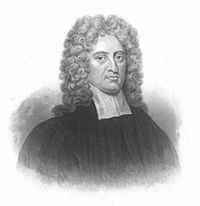
__________________________________________________________________ Title: The Whole Works of the Rev. John Howe, M.A. with a Memoir of the Author. Vol. VIII. Creator(s): Howe, John (1630-1705) Print Basis: London: F. Westley. (1822) CCEL Subjects: All __________________________________________________________________ THE WHOLE WORKS OF THE REV. JOHN HOWE, M.A. WITH A MEMOIR OF THE AUTHOR. IN EIGHT VOLUMES. __________________________________________________________________ VOL. VIII. __________________________________________________________________ CONTAINING THE PRINCIPLES OF THE ORACLES OF GOD. PART II. CONCLUDED. 6. THE GENERAL AND SPECIAL GRACE OF GOD, IN ORDER TO THE RECOVERY OF APOSTATE SOULS, IN THREE LECTURES. SERMONS: THE GOSPEL COMMENDING ITSELF TO EVERY MAN'S CONSCIENCE. (SEVEN SERMONS.) THE GOSPEL HID TO THOSE WHO ARE LOST. (SIX SERMONS.) ON HOPE. (FOURTEEN SERMONS.) ON FRIENDSHIP WITH GOD. (TEN SERMONS.) ON REGENERATION. (THIRTEEN SERMONS.) __________________________________________________________________ EDITED BY THE REV. JOHN HUNT, OF CHICHESTER. __________________________________________________________________ London: PUBLISHED BY F. WESTLEY, 10, STATIONERS' COURT AND AVE-MARIA LANE: AND SOLD BY WAUGH AND INNES, EDINBURGH; AND CHALMERS AND COLLINS, GLASGOW. 1822 __________________________________________________________________ B. Bensley, Bolt Court, Fleet Street. __________________________________________________________________ THE PRINCIPLES OF THE ORACLES OF GOD, IN TWO PARTS, NEVER BEFORE PUBLISHED. __________________________________________________________________ __________________________________________________________________ PART II. CONCLUDED. __________________________________________________________________ CONTAINING VI. THE GENERAL AND SPECIAL GRACE OF GOD, IN ORDER TO THE RECOVERY OF APOSTATE SOULS, IN THREE LECTURES, ON LUKE ii. 14. __________________________________________________________________ LECTURE XLIII. [1] LUKE ii. 14. Good will towards men. [The whole verse runs thus,--Glory to God in the highest, on earth peace, and good will towards men.] YOU know we have been largely, and very lately, discoursing to you of the apostacy, the fall of the first man, and the fallen state of men, with the continual descent of a corrupt nature through all the generations of men hereupon. It now follows, of course, (and according to the natural order of things as they lie,) to speak of man's recovery. And in order thereunto, in the first place, of God's kind propension towards men; which is to be considered as that which leads on the whole of any design or endeavour to that purpose; His good-will, the original, the source, the fountain, the well-head, of the glorious design which he hath set on foot for the recovery of such a lost and lapsed creature. This is more especially held forth to us in the close of this verse now read; and not more distinctly and fully any where else in Scripture. But it is in conjunction (as we shall come more particularly to take notice of by and by) with other things which we shall not overlook, though that which I design to fasten upon, is this particular only--"Good will towards men." And if, with reference to what we have heard, we do but consider the summary import of these words, "Glory to God in the highest, on earth peace, and good will towards men," it might fill us with amazement and wonder. And sure it would do so, if these things were now altogether new to us, or did now come at this time to our notice and hearing. Upon what hath been so largely discoursed concerning the fall, and the degenerate state of fallen creatures; how sin and death have spread themselves through this world; how an impure and poisoned nature was continually descending, and transmitting from age to age, a nature envenomed with enmity against the Best of beings, the Sovereign rightful Lord of all: and that by this continual descent and transmitting of such a nature, (which as you have heard it did not seem meet to the divine wisdom to hinder by preternatural means,) here was, hereupon, a continual war maintained, and kept upon earth against heaven; and this, war carried on in an open hostility from age to age. Upon the discovery (I say) of all this the true representation (however defective and short of the full) of the state of the case between God and man; if we did not live under the gospel, or had no notice, no intimation or hint, of any such thing before, as now comes to be laid in open view before our eyes, we should be the most transported creatures that ever God made: the children of men would generally be so. And certainly, upon the supposition already made, two things we would have expected. And two things we would little ever have expected or thought of. We would, 1. Sure, have expected mat there should have been an efficacious revelation of wrath from heaven. There hath been a verbal one, and a real one in degree; we would sure have expected it to have been most efficacious and total. We would wonder that it hath not been long ago; that it hath not turned this world into flames and ashes, many a day since; and in that way put a period to the propagation of a wicked nature, and the continuation of a war and hostility against heaven, and the Lord of heaven and earth. And we would have expected, 2. That, whereas men have been accomplices with the devil, in this apostacy from God, and in the continuation of this rebellion and war against him, from age to age; (accomplices with a sort of creatures of an higher order, a great part of the heavenly host that first made a defection from God, and drew in man with them into the same apostacy;) I say, we would sure have expected that none should have been more ready executioners of the just wrath of God upon those disingenuous, apostate, ungrateful generations and race of creatures, than those angels that retained their integrity, that left not their first estate. We would have expected that they should have been the most prepared, expedite instruments of God's vengeance upon such a generation of creatures as we were, and have been most willing, to have come upon that errand, to vindicate their rightful Sovereign Lord, from all indignities and dishonours that have been done him, by the creatures of their own order first, who had drawn into a confederation with them, a whole race of creatures of an inferior nature and order. One would think that love to God, and a zeal for his honour and interest, should so universally have inspired them, the glorious inhabitants of heaven, that no errand would have been more grateful to them, than to be sent as the quick executioners of the divine revenge upon such a wicked world as this. And again, upon the forementioned supposition, there are two things that we should as little ever have expected, to wit: 1. That there should ever have been a thought of favour and kindness in heaven, and with the God of heaven, towards such creatures as we. That we would little have looked for, that ever the sound of such a voice should have been heard from heaven towards such an apostate degenerate race of creatures, as "peace on earth, and good-will towards men." Who would ever have looked for it? That when they were breathing nothing but war, and enmity, and hostility, against heaven, there should be a proclamation from thence, of peace towards men on earth, proceeding from (as it could proceed from nothing else but) good will. And again, 2. We would as little have expected, that the angels of God should be the messengers of such tidings to this world, whose dutiful and loyal breasts we must conceive filled with indignation against apostate creatures, that had left, and put themselves off from so kind, so benign, so gracious, and so rightful a Lord. One would little have thought, that they should have come upon such an errand; that when they would rather have been waiting for a commission to execute the just wrath of God upon this wretched world, they should be sent to proclaim peace, and to signify the divine good-will towards men. Though, indeed, for the same reason for which they would have been executioners of the divine revenge upon this wretched world, they would also be messengers of such glad tidings, to wit, because they were obsequious, dutiful, and loyal; and had but one will with him, whose creatures and servants they were. His will, so far as it is notified and made known, is always perfectly complied with in heaven, as we are to desire it should be here on earth. But that was the case here; the angels are sent upon this errand first, to bespeak "glory to God in the highest," and to speak out, "peace upon earth, and good will towards men." And now finding ourselves outdone every way, that what we would most of all have expected, we find not; but what we would never have expected, that we find; That as to the most dismal and dreadful things that we would have looked for, we meet with a grateful disappointment: but as to such things that we would never have looked for, we meet with a most grateful surprise. When we find (I say) the matter to be so, then would our narrow minds begin to fall a wondering at somewhat else; to wit, that since wrath did not break forth upon this world, to put a sudden end and period to it; and that God having so many mighty and powerful agents to employ as instruments therein, prest and ready at his command, they were not yet employed in that work; but, on the contrary, grace breathes from heaven upon this forlorn world, and the angels of God are here made the first ministers (as it were) thereof, to publish it and make it known; we would, then, wonder why was not this much earlier? Why was it not many ages before? Why did not that gracious, kind design break forth sooner, so as to have mollified the world, to have assuaged and conquered down that enmity, and to have prevented the insolencies of wickedness, which, through a succession of many ages, for almost four thousand years together, had prevailed, and been acted on the stage of this rebellious world. But we see that in all respects, "God's ways are not as our ways, nor his thoughts as our thoughts; but as the heavens are high above the earth, so are his ways above our ways, and his thoughts above our thoughts," Isaiah lv, 7. What was, with deepest and most profound wisdom, forelaid with him in the eternal counsel of his will, it was to have a gradual, and a very gradual, discovery and revelation to this world; and not to have its fulness of accomplishment till the fulness of time set for it. Every part of that method, which he had laid with himself, every juncture in it being, by divine counsel, affixed to so many parts, and points of time, so as that every thing belonging to that glorious design must fall into that very season which was fore-determined for it, and then receive its punctual accomplishment: according to that of the Apostle James, that sage saying of his, Acts xv. 18, "Known unto God are all his works from the beginning of the world." Not only known that they shall be, but known when every thing shall be, in what time, with what dependencies upon other things, with what references unto things that are to follow and ensue; according to that scheme and model which lay in the all-comprehending, Divine Mind; the thoughts and purposes of that mind being not hitherto unformed, but only unrevealed; hid in God, (as the expression is, Eph. i. 19;) folded up in mystery, and so concealed from ages and generations by past; in a mystery that was (as it were) inwrapt in rich glory, or in the riches of glory, as Eph. i. 22. This mysterious design, with the method of it, was not to come into view, but in the determinate season; all things being left by the supreme wisdom, in the dependence of one thing upon another, and with a particular reference to such and such seasons, that all things must have in the course and current of time. Long it was, therefore, that this world was let sleep on in sin and darkness, unapprehensive generally, that there were any such kind thoughts in heaven towards them. Little was that thought of; and, indeed, for the most part, it was as little desired, as expected, that ever God should have given such relief or redress, to the sad, forlorn state of things in the world. It was, I say, as little desired, as it was expected or hoped; for, as the most deplorable things in this our calamitous state, such as distance from God, ignorance of him, unacquaintance with him, the presence of the sensible, and the debasement of the intellectual nature. These were not men's more real misery than they were their imagined felicity: things that they were generally very well pleased with; that which was their doom, was their choice. It was in every man's heart to say unto God, "Depart from us, we desire not the knowledge of thy ways; we had rather live alone apart from God." If any scattered beam of divine light shone here and there, it shone amidst the darkness which refused to comprehend it; a malignant darkness, that was naturally bent to exclude and shut it out. So that it might be truly said, The wretchedness of this world was become con-natural to it--its very element; and men did enjoy their misery: those viperous lusts, that, as so many serpents, were inwrapping and preying upon the hearts and vitals of men, they were hugged as their only delectable darlings; and all their business, every where, was to make provision for these lusts, and to satisfy, to the utmost, what was insatiable, and could not be satisfied. So that there was not less need of divine power, to apply a remedy in such a case, than there was of wisdom to contrive, or kindness to design it. And thereupon, as men did all this while generally (as it were) enjoy (as we said) their own misery, enjoy it to themselves; so God did all this while enjoy his own love to himself; pleased himself in this design of his, which yet, for the most part, was concealed and hid in God, as was before noted to you; and he might do so, the whole method of that design, in all the parts and junctures of it, being so surely and firmly laid, and one thing so connected with another, that it was altogether undisappointable; he being Master of the design, having it perfectly in his power, and it being impossible any thing should intervene the accomplishment of whatsoever he had determined, and purposed within himself. He enjoyed his own love, this good will of his towards men, as it was a fountain of that designed good, which they should enjoy, and which, through the several successions of some ages of time, they did, in some measure, enjoy. And that also was an ever springing fountain to himself; for nothing can satisfy God but God: an everlasting complacency, therefore, he must be supposed to take in his own benignity, in the goodness of his own will, with all the other perfections thereof. But now, at length, in the fulness of time, this design of his breaks forth unto men too; not till time was come to its fulness, its parturient fulness, and was to be disburthened of that birth, the greatest and most glorious that ever lay in the womb of time, or was possible so to do. When the Son of God was to appear here upon this stage, and to be brought forth into this world, then it was not fit that so glorious a work as that, the manifestation of the Son of God in human flesh, should come forth without a previous knowledge. When he was come, it was fit it should be known what he was come for: and so Christ and a gospel, they do, in this world, commence both together: that is, now doth the Sun of Righteousness arise and shed his beams upon this world. Our Lord Jesus Christ himself was that Sun; the gospel was the beams of it, the radiations of that Sun. And this beaming out of the light and grace of the gospel, it was, at first, in a way as extraordinary, as the thing itself was. How extraordinary was the thing, that God should descend, be manifested in human flesh, put on man, take the name of "Emanuel, God with us:" a God among men, how extraordinary was that thing? And the way of its discovery, it was suitably, it was correspondently, extraordinary, too: that is, by an embassy of angels, this should be first made known to the world. They were not to be the ordinary ambassadors of those glad tidings among men, but they were ambassadors extraordinary. So you find this matter is represented in this context. First, one angel appears to a company of shepherds, and tells them, (as soon as they were recovered out of their sudden affright,) that he was come to publish to them glad tidings of great joy, that should be to all people--and by and by there is a numberless host, a vast chorus, a choir of angels; a multitude of the heavenly host, who all come together upon the same errand, to publish what we have here contained in the Scripture: "Glory to God in the highest, on earth peace, and good will towards men." So that look upon Christ as the Sun of Righteousness; look upon the gospel as the beaming forth, the irradiation of that. Sun; and you may look upon this text as the epitome, or that which hath in it the contracted beams of all that irradiation: for a sum of the gospel it is. Look into the particulars of it, and it is made up especially of these parts. 1. The final issue and effect of this great and glorious undertaking of the Son of God, in descending and coming down into this world, putting on human flesh, and being manifested therein. And that is two-fold--supreme and subordinate. (1.) Supreme: "Glory to God in the highest." That is the thing in which this whole dispensation shall finally result; all shall terminate in the highest glory to God above; to God that inhabits those highest and most glorious regions, that is there enthroned: all shall have a final resultancy into his highest glory, who inhabiteth those highest and most glorious regions of the universe. And then, (2.) There is the subordinate effect, or final issue, out of which that glory is to result unto God: "Peace on earth." There is a peace-making design yet on foot. It shall not be abortive. It shall have its effect, and take place. God will, upon certain terms, be reconciled unto men. Men shall be brought first or last (many of them, multitudes of them) to comply and fall in with those terms. And so where there was nothing else but war, there shall be peace: the Prince of Peace is now arrived into this world, and it shall not be without effect: his kingdom is a kingdom of peace, a peaceful kingdom. That peace is principally, and, in the first place, to be between the offended God, and his offending creatures here below. Other peace will proportionably, and in due time, ensue. This is the final issue and effect of this undertaking of our Lord: that is, the ultimate effect--"Glory to God in the highest;" and the subordinate effect--"peace on earth." And that is the first part that we have considerable here of the words made up of these two. And, 2. The principal, the original, the source and fountain, of that whole undertaking of our Lord, and of this two-fold effect, which is to result from it: and that is God's good will towards men. From this fountain shall spring forth both peace on earth, and glory to God; the former more immediately, and the latter ultimately: the former being subordinate to the latter, as the supreme and last end of that. And so as to this matter, the same account is here given of the whole gospel-constitution, as we find given in that Ephes. i. 4, 5, 6. "According as he hath chosen us in him, that we might be holy and without blame before him in love; having predestinated us to the adoption of children, according to the riches of his grace in Christ Jesus, to the praise and the glory of his grace, wherein he hath made us accepted in the beloved." So that take the whole scheme of the gospel-revelation together, and it bears this inscription: It is a frame of things finally and ultimately dedicated to God, as all things must be to him, as well as from him. He that is the author is the end of all. He can do nothing but for himself. How or in what sense he doth so, to wit, doth things for his own glory, we shall have occasion to open more distinctly hereafter. But this being now the first thing that we have in view here; and which I design to touch upon as previous to that which comes last in the text, and is the main I intend to insist upon. Something, I say, I shall speak in reference to this--"Glory to God in the highest." This you see is the final effect and issue of this mighty undertaking of a Redeemer. The Son of God descending and coming down into the world. Why, what shall be effected hereby? What shall be brought about? Why, "Glory to God in the highest." That should not fail to be effected. God would, it is true, have been glorified in the destruction of this world altogether: if it had been all laid in ruin; if it had been turned into one heap, he would have had his glory. He might have continued that as an ever lasting trophy of his power and justice; of his justice by his power. But that was not the way chosen; and he will not lose by it, as to all revenue that it is possible can be added to me divine treasure. Nothing can be really added. Glory can be added, to wit, reputation, (as the word signifies,) which, therefore, must be supposed to have its place in the intelligent and apprehensive minds of men. For the word made use of here, comes from a word that signifies esteem, or to judge. There must be some that are capable of judging of what is honourable and glorious: God himself is the Supreme Judge: and, indeed, there is no competent judge besides. As it is altogether impossible that any should be his peer, or capable of making an estimate of what will be fully and adequately answerable to him in point of honour and glory. And as the matter doth relate to him, as he is to be himself the judge of honour, of what is becoming of God, what will be an honour to himself; so it is here considered, (1.) Objectively, as the glory that could only be the thing designed by himself, to himself; to wit, the complacency that he takes in himself, which must bear some proportion to the excellency of his nature and being. And that cannot lie in the mere opinion that he hath in the minds of his creatures, (be those minds never so right, and never so comprehensive,) but the satisfaction that he receives to himself, in himself. This is an end worthy of God, and suitable unto God. Nothing can be an adequate satisfaction unto him, but what is in himself. Now there is an objective glory in himself--the glory of all his excellencies, of all his perfections: and this is the object in which he satisfies himself, and takes his own complacency there. There are, indeed, beamings forth of that excellency into the minds of creatures, but this cannot be his end; to wit, to be well thought of, or well spoken of, by his creatures: they are inconsiderable unto him. The whole creation is even as the dust of the balance, or the drop of the bucket; lighter than nothing and vanity, in comparison with him. But there is, I say, to be considered, first, an objective glory, the excellency, the becomingness of the order of things, as they lie in God, which only comes under the notion of creatures, as he is pleased to make the discovery; and when he so doth, that shines into their enlightened minds, which was, indeed, before; to wit, the order of things, that harmony, that comely dependance and reference of one thing to another, as it lies in the counsel of God's wisdom from eternity. Here is that glory which he beholds first in himself, and so he satisfies himself on the rectitude and perfection of all that is in him, and all that immediately proceeds from him, as it doth more immediately proceed. This only can be God's end. Indeed, the creature's end must be the display of this glory, when once it doth shine forth and come under their notice; then they are to reflect it from one to another, and to diffuse it among one another; so that there must be very different notions of the divine glory as it is his end, and as it is the creature's end. And that this matter may be the more distinctly explicated withal, consider two things here: first, the form, and, secondly, the matter, of this saying of the angels in this part of it. "Glory to God in the highest," which is the principal part of the effect or end of this under taking, the Redeemer's descent into this world; it was to produce glory to God in the highest, as it should produce, in due time, peace on earth, a reconciliation between God and man. I say, the former of this speech is to be inquired into. What doth it mean, that it should be here said, "Glory to God in the highest?" And then, the matter of it, and what is signified under it, we shall come more distinctly to inquire into afterwards. (1.) For the form of this speech, that it may be rightly understood, we must consider from what mouth it comes, or who are the speakers, who they are that utter it: they are an heavenly host; a most numerous heavenly host; an host of angels that descend upon this account, in this juncture of time, (as it were,) upon a visit, upon a kind visit unto our earth, and to pay a dutiful homage unto the Son of God, whose descent they wait upon at his first arrival into this world of ours. The form of expression will very much be collected by considering the speakers. And nothing, indeed, could be more decorous, more becoming, than that they should be first employed upon such an errand as this, who are the speakers and mouth by whom this first summary of the gospel is communicated amongst men, here in our world. It was fit there should be such messengers employed and sent; to wit, to celebrate his arrival into our world, who was so great an one, and who came upon so great an errand. Let us but take notice, by the way, (before we come to collect from hence what the form of this saying must import,) why it should be said by such speakers, a multitude, a choir of angels, who were employed to utter it. Why, that was not all their business, to utter this saying here to a company of shepherds; that falls in with it, and that very aptly; but their great business is to wait upon the first arrival of the Son of God into this world, as a due honour to him. Upon which account we are told, (Heb. i. 6.) "That when he brought his first born into the world, all the angels of God were to worship him," or to pay an homage to him. When he brought this his first-born into the world, this was (as it were) a decree then published in heaven: "Now let all the angels of God worship him." The thing also refers to 1 Tim. iii. 6. "Great is the mystery of godliness, God was manifest in the flesh, justified in the Spirit, seen of angels." Seen? How seen? Not barely looked upon as by a company of gazers, or of idle, unconcerned spectators; but seen, beheld with an adoring eye; every one seeing and adoring at once. It was a suitable dignity and honour to them; and it was very suitable from them, considering what a state the Son of God was now coming into. A state that was to be "a little lower than the angels," as Heb. ii. 7. quoted from the 8th Psalm, or "lower for a little while." So the word admits to be read. That in as much as this humiliation of his was spontaneous and voluntary, he might not lose their homage by it: and undoubtedly they tendered it him. That self-depression was elective, not necessitated; therefore, he was not to lose by it: he descends, goes down into a state a little lower than the angels; therefore, the justice of heaven determined thus concerning him, and the justice of their minds could not but so consent and fall in with it. "You shall pay your homage to the descending Son of God; he shall lose nothing that is due from you (coelites) the inhabitants of heaven, for this self-debasement." Therefore, though this descent of his was to look with a dark side towards this our earth, because here he was to appear in obscurity; the ends of his coming down here among men would never have been composed and brought about, if he had been td shine as an illustrious person, in bright celestial glory, visibly and openly attended with guards of angels; is work would never have been done; he could never, on those terms, have arrived to the cross, which was finally the thing he had in his eye and design. Therefore, I say, this descent of his must look with a dark side here towards us here below. But yet, care was taken that it should look with a bright side in heaven above, that the glorious inhabitants there, might be kept in a dutiful, adhering posture towards him, as understanding their own subserviency, and subjection to him; and that he was their Lord still, though he did voluntarily go down into a state a little lower than theirs; lower for a little while. Therefore, upon occasion, their subserviency to him is plainly signified, when he was at the lowest, in his last agonies, angels came and ministered unto him. And so his descent looks with a bright side towards heaven, and those vaster numbers of intelligent minds, that do inhabit those regions; all was lightsome thitherwards, and must be, though it was necessary it should look with a dark kind of gloominess and obscurity towards men on earth, that the design might be accomplished and not frustrated, for which he did descend and comedown into this world. And so much being premised, it is now obvious to collect what the form is of this same diction, this same saying, by these excellent, dutiful creatures. It must carry with it, [1.] The form of an acclamation, giving glory to God; proclaiming the divine glory, upon this wonderful product of his wisdom and love, that began now to appear, and obtain, and take place in this world. It was an acknowledgment that he was worthy to receive all honour, and glory, upon this account. And, [2.] It must bear, too, the form of an apprecation, that is, wishing he might continually do so; that all glory and honour might be continually given to God in the highest. And, [3.] It might carry in it, too, the form of a narration, there being no verb in the sentence; and therefore, is to be understood as much as if it had been said, "Glory is to God in the highest;" that is, it is a representation how well the glorious inhabitants of the upper world were at that time employed, to wit, in celebrating the divine glory, and giving glory to him. This is the business of heaven: and upon this account, that the Son of God is now descended and come down upon this earth, it is their business on earth to be all giving glory to God in the highest. Or, [4.] It may be also an invitation to angels above, and men below, so to do. All the glorious inhabitants of heaven, who behold and see; and so, likewise, all the men, and wretched and miserable inhabitants of this earth, who are concerned in all that is now done, join in this, giving glory to God in the highest. And, [5.] It may be a demand or claim of glory to God in the highest; not only a mere invitation, but a challenge: "Let God have his due glory; withhold not his glory from him. Let every thing that hath breath praise the Lord." Psalm cl. last. Let the universe praise him, upon account of this marvellous undertaking, that his own Son is come down in glory, veiled and obscured into this world. And it may, in the last place, [6.] Carry with it the form of a prediction; Glory shall be to God in the highest. As heaven is now full of this thing, earth shall be full of it; God will have his glory, even to the full, out of this wonderful thing, a thing infinitely more wonderful than the creation of this world was; even the extraction of such an universe out of nothing: that God should come down, and be manifest in such flesh as the children of men do wear, and carry about them here upon earth. We do all predict Glory to God in the highest hereupon. So great a thing can never be, but there must be a production of glory to God in the highest, some time or another, as far proportionable hereunto, as the capacity of such creatures can admit. He will not lose his glory. We foretel he shall have his glory, even from all the ends of the earth, directed to him in the highest, arising and springing up from this very thing. But then, (2.) The matter expressed and signified under this various form, that will also require some further explication too, which now I shall not enter into: but, in the mean time, let us consider, [Use.] Doth heaven appear to have been so full of this thing, the descent of the Son of God into this world, when we were the persons concerned? What amazing stupidity is it, that our souls should not be more taken up about it? It was, indeed, partly duty to God, and to the Son of God, that these blessed angels should be in such a transport upon this occasion: but it was also benignity and kindness, and wonderful kindness towards us. When they saw what was designed to us, they give glory to God in the highest, upon the prospect they had of peace springing up towards us on earth, and of the view they had by retrospection upon the divine good-will: finding now that anciently, and heretofore, his delights must have been with the children of men; (as miserable as their state and condition was;) not upon the account of what they now were, but upon the account of what he would one day make them. He would yet one day make them a delectable sort of creatures. The angels or God are full of this; and heaven was full of it. And we are not to think it was only so seventeen hundred years ago; that the thoughts and apprehensions of the glorious inhabitants of heaven are lower about these matters now: no; there is the same occasion, and the same sense. They are in the same joyous and dutiful raptures, upon account of what was doing and designing hereupon earth, for producing of peace to men, and glory to himself. What an amazing stupidity is it, that all this should signify so little with us? That when we are the persons chiefly concerned; when hell may be designing upon us from beneath, heaven is designing upon us from above; yet we are in a deep sleep all this while, neither feel the drawings of hell downward, nor the drawings of heaven upward. Hell is working upon us, and heaven is working upon, us, and we seem insensible of the designs of either; the destructive designs of the one, or the kind designs of the other: but vanity fills our minds, and we wear out a few days here upon this earth, without considering what we are here for, or what the Son of God did one day come hither for! What awakenings do we need f And before God shall have his glory, and the earth its peace, what wonderful changes are there yet to be wrought in the minds and spirits of men? And surely if God have any kindness for us, there will be great change wrought upon us. __________________________________________________________________ [1] Preached, December 29, 1694. __________________________________________________________________ LECTURE XLVI. [2] But now to go on to the second thing, the material import of these words; that is, that whereas, by universal consent, the glory of God is the end of all things, it must be very differently understood as it is his end, and as it is the creature's end. It cannot be understood in reference to both the same way. In reference to the creature, it ought to be their design (to wit, the design of all reasonable creatures) to glorify God, by owning and by diffusing his glory to the uttermost. Their glorifying God consists in these two things; the first whereof is fundamental to the second, the agnition of his glory, and the manifestation of his glory. The acknowledgment of it in their own minds and souls, owning him to be the most glorious one. They add no glory to him; it is not possible they can; but they only acknowledge and take notice of, and adore, that which is; confess him to be what he is, and what he should be. And the manifestation of his glory; the spreading and propagating of it, as much as is possible, from one to another, through the world, even to their uttermost, at least, in the wish and desire of their own hearts. "Be thou exalted above the heavens, and thy glory over all the earth," as it is again and again found in Psalm lvii. and in multitudes of like passages of Scripture. "So is our light to shine before men, that they may see our good works, and glorify our father which is in heaven." Matt. v. 16. That his glory may be transmitted by some to others, and by them to others, and so spread to our uttermost universally unto all. But the matter is quite otherwise to be understood, when we speak of God's glory, as his own end. And it is very needful that we should state this matter to ourselves aright, lest we otherwise take tip thoughts very unsuitable, and very dishonourable, and very injurious, to the great and blessed God.. That design which hath been already mentioned, upon our first acknowledgment in our own minds and hearts, the excellent glory of the divine being, then to diffuse and spread it, is a most worthy and becoming end for creatures, nothing more. It ought to be their very terminative end; the end of ends with them; to wit, the end that must terminate all that they do. "Whether you eat or drink, or whatsoever you do, do all to the glory of God," is that great practical maxim, 1 Cor. x. 31. Whatsoever we do, must be done, must be all consecrated unto this end, have a stamp of holiness put upon it, by a dedication "to the glory of God." That is (as it were) to be the inscription upon every design, and upon every action, in pursuance of any of our designs. What can be expressed with larger and fuller universality. Whatsoever ye do (eating and drinking not excepted) is to have, and be levelled at this end, the glory of God, as being most suitable to the creature. But this is no end worthy of God, the matter being understood and taken so. Indeed, it is suitable enough for any one to design the praise of another; but it is not suitable to any one to design his own praise as his end. It would be thought unworthy of a wise and good man, to do such and such good actions for this as his principal end, that he may be well thought of, and may be well spoken of by others. But the goodness, and suitableness, and agreeableness, of good actions in themselves to his own spirit, is his great inducement to any one that doth partake of the image of God, and that is so far become God-like. But when we speak of God's having his own glory for his end, (whereas his glory as it is our end, doth but signify our agnition of it, or our manifestation of it, which is not his essential glory,) it is God's essential glory that must be his end; for he can have no end but himself. He is his own first and last: his own Alpha and Omega: and so his glory is, then, his essential glory, which is the lustre of all the excellencies of his being, shining to his own eye, which is his end. For only wisdom can be a competent judge of infinite excellency. And glory doth import and carry in the notion of it, a reference to a judicative principle, as the word from whence esteem doth come, plainly enough imports. He only is capable of judging what is worthy of himself: and so it is the rectitude of his own designs, as they lie in his own eternal mind, that lies before him under the notion of his end. But it must be understood, too, that this is not his end neither, to be pursued by a desiderative will, but only by a fruitive; not by a desiderative will, as if there were any thing wanting to him; with us, indeed, all our end is always looked upon by us, as a thing to be attained; and that is suitable to the state of a creature, to act for an end to be obtained, and which we are yet short of. But all things are always present to him, to his all-comprehending mind, and especially that which belongs only to his own being, to which there can be no addition. He doth will himself; not with a desiderative will, but with a fruitive, a complacential will; and so doth act within himself, not from indigency, (as creatures do,) but from a superabundant, all-sufficient, self-sufficient fulness: He enjoys himself in himself. And this is obvious enough to every one that will use his understanding to consider, as well as it is a philosophical maxim, in which all sorts of considering and studious men have agreed. And, I say, it is apprehensible enough to others when it is considered, that ones end, and one's good, are convertible terms, and signify the same thing. Finis et bonus, convertuntur, philosophers use to say; to wit, that which is any one's ultimate end, which is so de jure, is his highest and chiefest good. Now nothing is plainer than that there is no good adequate to God, but himself: so that he cannot have his ultimate, final complacency, in any thing besides himself. And his glory, his essential glory, the lustre of all the excellencies of his being, is his end: not that which he covets and proposes as distant and unattained; but which he enjoyeth, and acquiesceth in, and which he cannot but have always in his own possession, as he cannot but be in the entire, uninterrupted, everlasting, possession of the excellencies of his own being. And it ought seriously to be considered, that so we may not in our own thoughts debase the eternal, most excellent, and most blessed Being, by supposing that he proposeth it to himself as his end, to aim at that which would be thought unworthy of a wise and good man to aim at: that is, only to be well thought of, and applauded. This is a thing that is consequent, and which ought to be, and which we ought to propose to ourselves as our end. But it is too low and mean an end for God. We may design that for another man, to wit, his praise, which no other man, who is wise and good, will design for himself; but take pleasure in the rectitude of his design, and that goodness of his own actions; and enjoy them as every good man doth in bearing the image of God upon him. And therefore, this is a god-like thing; and so must be in the highest perfection in the ever blessed God himself, and in the excellency of his own being, and in the correspondent rectitude of all his own designs. But this is that which must consequently, and secondarily, come under the common notice of his intelligent and apprehensive creatures, whereupon it is their business, and indispensable duty, to own, and adore, and honour him, for the good that is in him; to wit, to think well and honourably of him, and speak well and honourably of him, upon this account, even as goodness in men, and amongst men, is a thing that claims and challenges acknowledgment and praises from them within whose notice it comes. And then, 2. That being the primary thing here spoken of, which is to result out of this great design, "Glory to God in the highest," all capable and apprehensive creatures being obliged, to their uttermost, to celebrate and glorify him, upon the account of what he was now doing in reference to this wretched world; that being, I say, the first result of this undertaking, upon which our Lord Jesus Christ was now descending and coming down into this world, the second is--"Peace on earth." And that former was to spring out of this latter, as the whole economy of grace in that mentioned 4th chapter to the Ephesians, a design for the glory of God's grace; to wit, it is to be designed by all the subjects, and all the observers thereof. And now concerning this peace on earth, I shall speak but very briefly to it, m my way to the third thing which I most principally intended, in my pitching upon this Scripture; to wit, the original and fountain or all the good-will after mentioned. This peace upon earth must be understood to design, first, somewhat more primarily; and then, secondly, somewhat more secondarily, and dependent upon the former. The primary intendment of it must be peace between God and man, the inhabitants of this earth, its principal and more noble inhabitants, in relation to the state of war and hostility that was between him and them, they having revolted from him, agreed and combined in a rebellion against him; not only with one another, but with the other apostate creatures, who had made a defection before, the angels that fell and so drew man in as their accomplices in that horrid revolt. And this must be observed as spoken too with discrimination, as we shall have hereafter occasion to note to you: "Peace on earth"--not with hell: there is no proclamation of peace reaching that place. Those kind, benign creatures, this glorious host of angels, this celestial chorus, though it is like enough it might have been suitable to their inclinations (if that had been the design and counsel of heaven) to have carried tidings, and a message of peace, to their fellow creatures, of their own order and rank, in the creation of God; yet while it appears this had no place in the divine counsel, and they being so perfectly resigned creatures, and having the same will (objectively considered) with the divine, that is, not willing a different sort of objects from what he willed; they joyfully come on this errand to men on earth. The will of God is perfectly complied with in heaven; that will which our desires, while we are here on earth, are to be guided by; in our measure we are to desire God's will may be done on earth, as it is done in heaven. It is perfectly complied with in heaven: they cannot have a dissentient will from their Maker; and, therefore, must be understood to have been contented employed upon this errand, to proclaim peace, peace to the inhabitants of this earth, when they had none to proclaim for the inhabitants of that other horrid region; knowing that they, who were their brethren, and of their own order, in the creation of God, were bound up in the chains of everlasting darkness, without remedy or mercy, and reserved unto the judgment of the great day, they willingly come upon this errand, to proclaim peace to the inhabitants of this earth, and are made use of as heralds in this proclamation. And as this peace must principally be between God and man, so it must be understood to be mutual in the intendment of it between both, that God should be reconciled to them, and they should be reconciled unto God. And, indeed, there can be no such thing as peace between God and man upon other terms: for if he were willing upon other terms to be reconciled to man, it would be altogether insignificant, and to no purpose. He would be reconciled to an unreconciled or irreconcileable man, whose heart should still remain filled with enmity, poisoned with malignity and venom against God. It would be to no purpose to him, for man would be no nearer felicity: and it is impossible for me to be happy in what I hate: and it is also impossible for the children of men to be happy in any thing but God. .Now supposing this peace to be mutual between God and man; to wit, he is reconciled to them, and they are reconciled to him, the prosecution of his justice doth cease, and their enmity towards him ceaseth; there is no longer a contest kept up between his justice and their injustice; then this mutual peace must carry in it two things, agreeable to what is carried in the notion of peace between one nation, or sort of people, and another that have been mutually at war with one another; that is, there is somewhat privative, and somewhat positive, carried in such cases in the notion of peace;--1st. a cessation of hostility, and, 2ndly, freedom of commerce. 1. A cessation of hostility. They no longer war with one another; God doth no longer pursue them with revenge, with hostile acts in that kind; that is, if once a peace be brought about, whenever this peace obtains, and hath its effect, he doth no longer follow them with acts of vengeance. And they do no longer rise up against him in acts of hatred and aversion: they no longer say to him, "Depart from us, we desire not the knowledge of thy ways:" they are no longer. fighting against the righteousness and equity of his holy precepts, as the carnal mind is "enmity against God, and is not subject to his law, nor indeed can be." All this ceaseth; that is, it cannot be now in any prevalency, in a prevailing degree. And thereupon, 2. That which is positive doth ensue. As it was between nation and nation, which were at war, there is not only a cessation of hostilities, but there is a setting on foot a commerce, an amicable commerce, a free commerce; so it is between God and man now: there is not only no war, but there is a communion, there is a friendly intercourse: God freely flows in upon them in acts of grace, kindness, and goodness. His Spirit was under a restraint before, (according to the doom and judgment past--"My Spirit shall no longer strive,") is now at liberty, set at liberty, from under these restraints. It now freely breathes upon those souls, emits its light, lets it shine in upon them, pours in the influence of the Sun of Righteousness, the vital, sanative influences of that Sun, who is said to "arise with healing in his wings," or beams. These vital, healing beams are, by the Spirit of Christ, freely transmitted, let into the very hearts and souls of such creatures, as were at utmost distance from God before. Alas! there was nothing to do between God and them, in a way of kindness or friendliness: his Spirit was a stranger to them; no beams of holy light ever shone upon them; no influence of grace; they went with barren and desolate souls, wrapt up in darkness and death: but now the way is open and free; there is no law against it, no bar, but the communications of the Holy Ghost may be without obstruction. And, thereupon, their spirits are set at liberty towards God, and his Spirit is at liberty towards them, and \not withheld. "Where the Spirit of the Lord is, there is liberty," 2 Cor. iii. 17. Their soul was under restraint and clouds before, a prisoner under the divine wrath and justice. They could not act, could not move, could not stir, God-ward; not so much as breathe, nor direct a breath towards God; no holy desires, no holy motions. But now when commerce is restored, as the Divine Spirit freely breathes on them, it enables them freely to breathe after God, to send forth desires, and take up their highest delight in him, so as to enable them to say, "Whom have I in heaven but thee, or whom can I desire on earth in comparison of thee?" Psalm lxxiii. 25. This is the primary intendment of this peace, proclaimed by this glorious host of angels: this is the thing primarily intended to be brought about, and which shall have its effect, more or less, and more largely, before the world ends. But then, there is, 2. That which is consequential thereunto, to be considered, and that is--peace upon earth, among the inhabitants of it towards one another. This is not the primary design, but it is the secondary, consequential aim and effect of the great Peace-Maker's undertaking, whereof there was a precedent and a leading case in the reconciliation that was first to be brought about between Jew and Gentile. "He is our peace, having made both one," Ephes. ii. 13. so as that the highest enmities and animosities that ever were between one sort of people and another, were to be taken up between these Jews and Gentiles. How contumeliously were the Jews wont to speak of the Gentiles; and how ignominously did they again speak of them. And the fraction was yet more fierce between the Jews and the Samaritans, that were all Israelites, all of one house: insomuch that common courtesies could not pass between them, as appears by that in the 4th chapter of John. "How dost thou," (saith the Samaritan woman to Christ,) being a Jew, ask water of me, that am a Samaritan? How strange is it, how can you expect that I, being a Samaritan, should give drink to you that are a Jew?" And so great was the distance between the Jews and other nations, that pagan writers have taken much notice of it. Non monstrare vias (saith a pagan poet) cadem insi sacra volenti; that a few would not so much as shew the way to one that was not of their own religion; no, not that common courtesy to tell a traveller his way. Why, he is our peace, he that brings it about, that shall finally, sooner or later, bring about an universal peace, not only between Jew and Gentile, (which was a precedent, a ruling case,) but among the several nations of the earth. "He is our peace, when the Assyrian is in our land," and it is to be an universal thing foretold and prophesied; to wit, that "swords are to be beaten into plough shares, and spears into pruning hooks, and that men should learn war no more," when once the peaceful tendency of the kingdom of the Messiah doth reach its final and full effect; when it hath effect according to its tendency, so that, at the same time that the earth shall be filled with the knowledge of God, as the waters cover the seas, then is there to be that universal peace on earth too, among men towards one another; not only no more hurting or destroying in all the mountain of his holiness, but nation shall not lift up sword or hand against nation, and men shall be untaught that fierceness of nature, which a continued enmity against God had inferred on them: for when the union was once broken between God and man, it must appear, they must be made to understand and know to their cost, that that was central. And that union being dissolved, all union was dissolved besides, that they can never be at peace one with another, when they have broken with God, and the breach remains between him and them. According to what was emblematically held forth in reference to God, and the people of Israel and Judah; that is, by the two staves of beauty and of bands; the staff of beauty signifying the union between him and them; and the staff of bands the union between them with one another. But when one of these staves is broken, the other is shivered and shaken all to pieces. Why this is the import of what is here proclaimed, the final and ultimate import of it--"Glory to God in the highest," and then, "peace on earth." This is the double effect of this great undertaking, upon which our Lord did now descend and come down into this world. But here comes next to be considered, The principle, the well-spring, the eternal well-spring of this glorious and kind design; a design so glorious to God, and so kind to man, what is the fountain and wellspring of all? Nothing else but his own good-will. And this is the thing I mainly intended to insist upon from this scripture. That having so largely discoursed to you of the apostacy, the fall of the first man, and then of the fallen state of man; and of the way wherein man hath been continued in this fallen state, from age to age, and from generation to generation, I might afterwards come to speak of his designed restitution and recovery. And being so to do, (as the order of discourse should lead,) I shall tell you briefly what the scheme of our discourse now must be; to wit, I. To speak of the original and fountain of this designed restitution of such fallen and lapsed creatures. And, II. Of the constitution of a Redeemer and a Mediator in order hereunto. And, III. To shew what sort of person this Redeemer or Mediator must be; to wit, to treat of his person, of his nature, of his offices, and of his performances. And then, IV. To lay before you the doctrine of the Covenant of God in Christ. And, V. The office and operations of the Holy Ghost in the dispensation, and pursuantly to the design of the Covenant. And then, VI. The effects wrought in all that shall actually appertain and belong to God, and be brought home to him, in and by Christ, this Great Head of the reducees, of returning souls. And then, VII. The way and course of such as shall be thus savingly wrought upon, that holy work in which they are thereupon to be engaged, and wherein they are to persist, till they reach the end of that way. And then, lastly, VIII. The end of all things, with the several things that shall be coincident thereunto. The first thing in the course and order of discourse comes naturally to be insisted upon, (when we are to consider this business of the restitution of man,) is the original of such a design. Whence sprung it? What is the fountain, the well-head and spring of this great design? Why, good-will towards men. This is the summary account that the matter admits of. It can be from nothing else but mere good-will towards men. And in speaking to this, I have a two-fold subject of discourse; to wit, first, God's general good-will, and, 2ndly, his special good-will. His good-will wherein it doth appear and is expressed towards men generally and indefinitely considered; and his good will in its more peculiar expressions, and exertions of itself towards a select sort of men. And so two things to be evinced. 1. That God's good-will, it hath some reference unto all. But, 2. That it hath not equal reference to all alike. There will be that two-fold subject of discourse distinctly to be pursued. And the former of these I chiefly intend from this scripture; the latter I intend from another more suitable scripture. But, in the mean time, pray well inlay this in your own minds, that there are two such distinct sorts of divine good will, or benignity, respecting men generally, and respecting some men especially; and that these two are by no means in the world opposed to one another. The doing of which, as it is a most unreasonable thing in itself, so it is a thing of the worst consequence that can be supposed; that is, it tends to confound the whole Christian Economy, to break the frame of Christianity, and make it an unintelligible scheme, as incoherent with itself; and this without any pretence, or shadow of a pretence. For these two things--general good-will, and special good-will; or as the generality of divines are wont to distinguish, common and special grace; these two, I say, are as distinguishable things, and as capable of being distinctly apprehended, as the general and special natures of any thing else that we can think of. Now nothing could be more absurd to pretend, that because I have the notion of such and such a general nature, therefore, I must not admit the notion of a special nature, that is narrower than that; and superadds distinguishing to the former. As if when a person hath under stood that God hath made such a sort of creatures as we are wont to call animals, living creatures, (that being the notion of a living creature at large,) that therefore, I should pretend there should be a difficulty of understanding the nature of man, one particular under that general; because I have the notion of a living creature taken at large, to wit, a creature that useth sense, that can see, and hear, and exerciseth spontaneous motion, can move this way and that, this, therefore, should be an hindrance to me in conceiving the special nature of man, a nobler sort of creature, that can do all this and something else; to wit, can reason and understand, and lay designs and pursue them, and is a subject susceptible of religion too, as well as ratiocination, would any man of ordinary understanding pretend an inconsistency between these two; or that I cannot fitly conceive the one sort of nature, because I do conceive the other? Because I do conceive the general notion of a living creature, an animal taken at large, therefore, I can the less conceive or take in the special notion of a particular sort of living creatures, that can do more than an ordinary living creature, taken at large. And the difficulty is not greater if we carry the matter higher or further, and consider that man, as man, having the natural image of God upon him, as such, may be conceived accordingly. And so that object, God's natural image remaining in him, terminates a general divine benignity. And consider, also, the same sort of creatures having, likewise somewhat beyond and superadded to the mere natural image of God, to wit, his holy image; this is the effect, (wherever it is, as the case of man is now become,) and can be the effect of nothing else, but special grace: but this I only lay before you by the way to that which we are to insist upon particularly. __________________________________________________________________ [2] Preached, January 12, 1694. __________________________________________________________________ LECTURE XLV. [3] LUKE II. 14. Good-will towards Men. THE former branches of this verse, wherein these angels proclaim, "Glory to God in the highest, and on earth peace," have been opened, and something hath been said about this good-will towards men, both as it is general and special. Now as to this general good-will of God to men, I shall, 1. Labour to evince it to you in an absolute consideration. And then, shall, 2. Speak in comparison of the way of his dealing with another sort of offending creatures, of an higher and nobler order than men. Now, 1. To evince this general good-will to men, according to the absolute consideration that is to be had of it, I shall make use of two sorts of mediums or arguments to that purpose, (1.) Of such as are antecedent to a more express gospel revelation; and which will therefore respect them that have not the gospel, or that never had it. And, (2.) Such as may be taken from the gospel itself, of which you have a summary, an epitome, in this same angelical proclamation from heaven: it Seeming suitable to the majesty of God, to make his angels, though not the ordinary ambassadors, yet the extraordinary ones, of this gracious declaration of his mind and counsel towards men. But as to both these sorts of arguments, I have this to advertise you, that the main thing I shall propose to myself in alleging them, will not be so much the evincing of the truth in this matter: for that is clear in itself, shines in its own light; and indeed as to this part of God's general good-will to men, or that which is usually called common grace, I can have no adversary, we have none to oppose us in this thing, except Atheists. It is true, indeed, as to the other part, (his special grace,) there we have very subtil adversaries; and when we come to that part, I do hope, through God's assistance, we shall be enabled to maintain the truth against them. But here my more principal design is, to let you see, by the arguments I shall allege, (which will clear the truth too,) the mighty importance of what we are now asserting, and to what purpose it is that we ought to assert this general good-will of God to men. Indeed, that we shall have occasion more distinctly to shew, when we come to the use. But I shall hint some of the more eminent purposes now, that it may the more engage the attention of all our minds unto what is to be insisted on to this purpose. It will be of most direct use to convince, and (if it will seem good to God so far to bless his word) to mollify the hearts of hardened sinners that have yet nothing of special grace appearing to them, or in them, so as to make way for that, it being God's course to work methodically; and to make things, which have an aptitude thereto, subservient unto other things, that are to be consequent thereupon It would certainly induce any, that would use their thoughts, to look upon it as a black and horrid thing to be, in the course of my life, with an obstinate, obdurate heart fighting continually against goodness itself, and against kindness and good-will. And it is of mighty importance, too, for the relieving of awakened and doubting souls, that may be hurried with terrors and temptations about their state God-wards; and who, though (it may be) special grace hath taken place in them, yet think it hath not; so as to let them see what relief is yet in their case, (as black as it looks to be,) while they are under the dispensation of more general and common grace, as hath a leadingness and tendency in it unto special. And there is that too, which will be of general import to all of us, every day, to wit, that we may be brought more to value, and to savour, and relish those mercies which commonly go into the account, and under the census of common mercies, of which (God knows) we have too little sense. It is a most unaccountable absurdity, (that I have often reflected on in my own thoughts,) that very generally mercies should be thought less valuable, for that very reason for which they are the more valuable. And so it is commonly in reference to those that are called common mercies: they are less valued for, the self-same reason for which they should be more valued; that is, because they come in an ordinary and in a constant course. As health, because it is constant, or is more ordinary, with the most, it may be, it is for that very reason less valued: but every body that considers, knows, that for that very reason it is the more valuable. It is better sure to have continual health, than health intermitted. So the use of our senses, our sight, (for instance,) the noblest of all the rest, because it is a common mercy, therefore it is cheap, and of less account with the most. How great a thing would it be thought, if a man should see but one hour in the day! How would the return of that hour be longed for! Or if but one day in the year; O when will that day come! We need to have the value enhanced more with us of such things as are indications of God's good-will towards men in general, that they may have their due weight with us, and that grateful savour and relish in our spirits which they challenge. And let us, therefore, 1. Upon such considerations go on to take notice of those arguments of the first rank, those which lie without the compass of the gospel-revelation, that were antecedent to that more explicit revelation of it, and do fill a larger sphere and region than that whither the gospel light diffuses and extends itself: for though it be true that the text hath a special reference to that glorious revelation which was now to commence, we are not to think that this good will was then first to commence, as if God did then but begin more distinctly and explicitly to own it, and speak it out; but there were not obscure indications of it before, and which did commonly obtain all the world over, even there where gospel light obtained not. I shall, therefore, in speaking to that head of arguments, shew what it is that men might collect (if they would use their thoughts and understandings aright) from such appearances of divine favour towards them. And because that the reasonings of men may be looked upon as having an uncertainty in them, a sort of lubricity, and that we cannot with so much clearness conclude from mere arguings that are to be fetched from principles that lie without the compass of scripture; lest any one should think them infirm upon that account, I shall shew you, as we go along, how scripture doth strengthen the same sort of arguments; and how we are directed and prompted even by scripture itself, to make use of them to the same purposes. And that which I shall insist on, is, 1. The very nature of God, whereof all men that have the use of their understandings, have or are capable of having some notion or other. For he hath stamped more or less of his nature upon the very nature of man, upon the human nature that carries in it a signature of God. There is somewhat that may be known of God in men generally. But there is no notion of God that is more obvious unto any that do apprehend the existence of a Deity at large, than that he is the Best of Beings, the first seat of all goodness, kindness, and benignity. And this revelation of God, though it be natural, it is from himself, who is the author of all nature, and of this very nature in special; the immediate author, the author so as to be the exemplar of it to the human nature; that is a godlike nature in its first origination. And we are confirmed in it, that is not a false conception of God which we find to have obtained generally in the pagan world, Optimus Maximus, that hath been the common heathen language concerning him. But this is an impression from himself upon the mind of man, by which he is taught and instructed, even by nature itself, so to conceive of him. And he speaks agreeably hereunto of himself, when he tells us his name. There is this sculpture, this signature of his name upon the minds of men every where, till men have studiously and industriously abolished and rased it out, which yet totally they cannot do neither; not so, but that the remainders of such a notion as this, cleaving to their minds, do fill their souls with so much the more horror by intervals, that they have been lately engaged in a course of wickedness, and in an hostility even against the Best of Beings, against Goodness itself. Those pangs which such do find at such times in their own spirits from a secret and remaining suspicion, that when they have done all they can to think God out of being, they have been but rolling a returning stone; they have been but labouring for the wind; they can effect nothing when the thoughts return upon them, when in spite of them they must be yet constrained to conceive with a certain formido, that God is, though it may have been the wish of their hearts, O that he were not! then the main engine of their torture must be the apprehended goodness of God: For, Do but consider if indeed he is, (whom we would fain think into nothing if it were possible,) then it cannot be but he must excel in goodness; the first thing conceptible in his nature, must be goodness. Mere philosophy hath taught men so to think of God, to think of the God, as a notion antecedent unto that of power and might. They place that in the very summitude of all that excellency, which they ascribe to the Divine Being. And so when God himself will expressly tell us his name, the Lord, the Lord God, merciful and gracious, long suffering and abundant in goodness and truth, forgiving iniquity, transgression, and sin; though he will in no wise clear the guilty--a thing most consistent with the most excellent goodness; for that goodness were fatuity, were stolidity, that were unaccompanied with such a severity, that were unexpressive of it. So he speaks of himself, who best knows his own nature, Exod. xxxiv. 6, 7, 8. And the scripture is full of it elsewhere. That there is such a natural notion as this generally obtaining in the minds of men, is above all demonstration,--that it cannot but be so, that it must be so; for what is universal, must proceed from an universal cause; but there is no universal cause, but God alone. And then, 2. This good-will of God towards men, is to be further argued from his continuing of man (though apostate, though revolted from him) in a possession of those original excellencies of his nature, that were most essential to it, through the several successions of time so long. That is as to such excellencies as are essential to the nature of man, these he is pleased to continue man in the possession of from age to age, and from generation to generation, though he be a revolted apostate creature. He might have transformed him into another thing. Men might have produced monsters from one generation to another, and that as a mark of divine severity, for that once they did apostatize. Into what an horrid thing might man have been turned upon the first transgression; and so this habitable world be inhabited only by creatures that should be terrors to themselves, and one to another! It may be said, that they are turned into worse than monsters by sin; and it is very true, they are so. But that is their own production, and not God's; so they have made themselves, that is true: they are in a moral sense monsters; but so they are their miscreants; they might hare been so in a natural sense, and that could have been no injury or reflection upon the Author of their nature. Merely natural evil is justly punitive of, and doth animadvert upon that, which is moral. But that it is not so; that man should be still as to his naturals, the same intelligent creature that he was; that he should from age to age appear upon the stage of this earth, with a mind and understanding capable of comprehending so great things; that this understanding power should be so many ways improveable; that the soul to which it belongs should be so commodiously lodged in a tabernacle so curiously wrought by divine art, with God's own hand, and all the parts and members thereof written in his book; a contemplation, that put the psalmist into a transport, "Fearfully and wonderfully was I made, and that my soul knoweth right well. And how precious are thy thoughts to me, O God!" They were these thoughts that he was reflecting on, concerning the very frame, and make, and nature of man, in that 139th Psalm, and which he considers in so high a rapture of spirit. We are encompassed with wonders, and we take no notice of them; that such creatures as we should spring up in a succession, a noble sort of creatures, God-like bearing the natural image of God upon us. Thug it is with man; though revolted, yet God lets him live upon this earth, and propagate, and continue his kind. Let him (saith he) wear my image, to put him in mind, and that they may put one another in mind, whence they were, and who was the original of life and being to him, and of that nature which they have: a strange indulgence, and a most emphatical argument of the divine benignity, that he will let such creatures go up and down in this world, with his image upon them, though they have fallen from him, and are universally engaged in a war and hostility against him! You have heard, heretofore, (and I hope generally have not forgotten, at least cannot be ignorant,) of the necessary distinction of the natural image of God and the moral. And this is the wonder, that where the moral image of God is gone, men have put it away and blotted it out, that yet the natural remains. And God lets it be so, and lets such a sort of creatures still descend, and possess, and inhabit, this world; minds, spirits, so commodiously lodged in so aptly figured tabernacles of flesh, where they have so many organs for the use and improvement of the reasonable and immortal mind, that is put into those tabernacles as the inhabitant; by which it can exercise sense, and take in all the light, and lustre, and glory, of this world, and enjoy the sensitive objects wherewith it is so variously replenished. A continual argument of God's benignity and good-will towards men: but especially that he continues him an intelligent understanding creature upon this earth. A thing that Pagans have been apprehensive of with gratitude; and it is a shame that we should not consider it more. It is that which history hath transmitted to us, concerning that noble Pagan, Plato, that when he lay a dying, he solemnly gave God thanks that he had made him a man, and not a beast; and that he had made him a Grecian, and not a Barbarian; and that he had made him to live in the time wherein Socrates lived, who was so great a luminary in his time. But how great things have we to recount as additional to the human nature. The human nature itself is that which I am now principally pointing at, as an argument to us, of God's good-will towards men, that he lets men continue as to their natural being, what they were through so many ages wherein they have been in an apostacy from him, and rebellion against him; especially when we consider that it is improveable; for religion hath its ground, its foundation in humanity, in the human nature; otherwise, a brute or a stone might be a capable subject of religion. But inasmuch as God doth continue the human nature, and make that descend, he doth thereby continue capable subjects of religion, and capable subjects of blessedness; since religion and felicity are the two most connatural things to one another in all the world. And thus scripture doth also teach us to recount with ourselves; to consider, to deduce, and make our collections from it, when it tells us of the spirit that is in man, and that the inspiration of the Almighty gives him understanding, to make him wiser than the fowls of the air, and the beasts of the field. And when we are elsewhere told that the spirit of a man is the candle of the Lord, searching into the inward parts of the belly; to wit, into the most abstruse and hidden things, those that are most recondite within a man's-self. And, again, 3. This is a further argument of God's good-will towards men, generally considered, that they are taught and prompted even by nature itself, to consider and look upon God as some way related to them; to look upon him as upon a natural account, a father to them. For this is a true account. It is true, also, that there is a more special notion under which he is so to some, as we shall have occasion hereafter to shew; but he is so in a common notion too. So natural light hath taught men to account and reckon when they have spoken of God as the paternal mind. They have considered themselves as all having minds, and they have conceived of the divine mind, as the paternal mind, the Father of all those minds. They have spoken of themselves as God's offspring, and you see the scripture quotes that from one of their writers, and approves and justifies the notion, Acts xvii. 28. "We are all his offspring, as one of your own Poets hath affirmed." The thing is true, (saith he,) your own Poets have spoken thus concerning men, that they are the offspring of God: and they have apprehended the matter aright; they are so, he is upon a natural account a father to them: as Adam is said to be the Son of God on the same account. And it is a conception that carries a gleam of light with it, that God should style himself the Father of spirits, but more particularly the God of the spirits of all flesh, as in that, Numbers xxvii. 16. It is true, that he is in a more particular way and sense the God of some. But they are his own words, to call himself also the God of all, of all spirits that inhabit and dwell in flesh. He doth not call himself the God of another sort of spirits, that inhabit not flesh, that have sinned against him, that are apostate spirits; (as the spirits of men also are;) but he calls himself the God of the spirits of all flesh, implying, that he hath not universally abandoned the spirits of men. As if he should have said. "I do not renounce, I do not quit all claim to them, I have affairs to transact with them, as I have not with those other spirits, that are thrown out of my sight, and bound up in chains of darkness, and reserved to the judgment of the great day;" as I shall have occasion more directly to speak, when I come to speak of God's good will to men, considered comparatively with the course of his dispensation towards that other order of apostate creatures. And, 4. The constant exercise of God's patience is a great argument of his good-will towards men. This is that whereof they not only have a notion in their minds, comprehended and included in that common notion of his benignity and goodness, but they have experience of it in fact; and it is from that I am now arguing: and it is a mighty cogent and convictive argument of God's good-will, if it be but considered what men have to argue from, in reference hereunto, especially these two topics, their own guilt, and God's power. Their own guilt; whereof, since man hath been a sinner, he hath had some natural conscience of guilt always accompanying him. And more or less men have consciences accusing and excusing, by turns, as the matter lies in view before us, Romans ii. 15. Now let recourse be had to that topic of men's own guiltiness, that hath deserved ill at the hands of God; this is a common notion with men. Many of your heathens, though they do not know how the apostacy came about, have generally granted that man was in a state of apostacy; that he is not in the state that he was at first made in, but in a degenerate sinful state; and it is spoken of as a thing common to men, what I noted to you but now, out of Romans ii. 15., that they carry accusing consciences about with them. I say, then, do but consider that topic, and from thence go to the other, that of the divine power: and nothing is more obvious to men, (if they will use their thoughts,) than to consider this, that he that made such a world as this, can easily right himself upon such creatures as we are in a moment, at his pleasure. Then lay but these two things together, (which are obvious to common apprehension,) that we are guilty creatures, and he is an omnipotent God; we have deserved that he should severely animadvert upon us, and he can do it at pleasure; hath it in his power to do it when he will; and yet we are spared. What doth all this signify, but a continual miracle of divine patience? And what is that to be resolved into, but divine goodness? "Despisest thou the riches of his goodness and long suffering, not knowing that the goodness of God should lead thee to repentance?" When we argue from hence to persuade sinners to turn unto God, do we argue from a feigned thing? Is it not a great reality from which we are thus directed to argue, when the Scripture itself gives us the direction? It teaches men so to consider the matter themselves, as in that, 2 Peter iii. 9, 10. "The Lord is not slack concerning his promise, as some men count slackness; but he is long-suffering, not willing that any should perish; but that they may come to the knowledge of the truth, and be saved." And we are to account the long-suffering of the Lord salvation. What doth he bear with an offending creature for, in so continued a course, when he hath so many advantages against him, so many thunderbolts in command at a moment? Why doth he spare, when the creature is guilty, and he is mighty? And yet he spares: what judgment is to be made of all this? Why, the Apostle tells you: Count the long-suffering of the Lord salvation; to wit, that he doth use this method as an apt medium, as a proper means to bring men to consider: and if they will not consider, they are loading themselves with guilt; so much the more, when they will not consider what is so obvious, what lies so much in view before them. And I might add, again, this farther argument, from, 5. The common exercise of God's bounty towards the children of men; that is, that he doth not only spare, but sustain them; not only withhold and keep off from them destructive evils, but supply them needful good things. That he should preserve this world in so much consistency, for the use and entertainment of offending and rebellious creatures, those that seldom or never take notice of him, and rarely ever give him thanks. That this earth should be so strangely fertile, through all the successions of time, and productive of so delicious things, so pleasant things; not only such things as are necessary for the support of human life, but such things as are delectable too, yielding a pleasing entertainment to man during his residence and abode here. Oh, the riches of the Divine goodness towards apostate, degenerate, fallen creatures! These very things have a ducture, a leadingness with them. When God doth immediately please and gratify sense, there is an aptitude in this to instruct minds to reach the understandings of men, to oblige and prompt men to consider whence all this is, and upon what terms, and for what ends and purposes. There are divers other things congenerous to these, which I cannot go through with now, as the continual care that he takes of men's lives, that he hath put a self-preserving principle into men. It is true, that is natural, but how came it to be so? It is from the Author of all nature, he could have made (if he had pleased) the contrary as natural; that he hath prompted men to live in societies for common mutual defence; that he hath so severely threatened the sin of homicide, of killing or destroying a man; and for that very reason, because he bears his image. "This creature of mine I will not have touched, for he carries my image upon him: I will not have any violence offered to my image." That he did take so particular a care even of that wicked Cain himself; put his mark upon him, lest any finding him should slay him. It speaks a strange tendency of man, (though now an apostate,) that there is a peculiar sacredness put upon the life of man, beyond all other creatures that do inhabit this earth; because this is an improveable life; this is a thing that may be grafted upon; noble grafts may be inserted here into an human life; therefore, that I will have counted precious, and preserved as such; so as, that if any man shall make a breach upon the human life, he shall break through my law, which I set as a boundary and guard, to preserve so valuable and so precious a thing. And then he takes such care for the keeping up of common order in this world, that he hath appointed magistracy, government, and laws, in order hereunto, that all may not run into confusion. They must break his laws before they can break one another's peace; that he hath obliged men to the mutual love of one another, wherein, if it were observed and complied with, what a calm peaceful region would this world be! So that men might have an opportunity to consider, at leisure, the greater concernments of another world. He hath, as to this, done several things most highly becoming the goodness and benignity of a God towards such creatures as we were become. And then the obligation that he holds men under unto natural religion, and the several exercises of it. Here is a mighty demonstration of his good-will towards men, that he will not dispense with them as to this thing; but as common as human nature is, so common is his law running in that nature, obliging men to some religion or other; in general to be religious, obliging them, unto the several principles and duties of natural religion; to trust in God, and to love him as their supreme good, with all their heart and soul, and might, and mind, which is a natural law: to pray to him, to praise him, and give him thanks. And that, whereas he is pleased to have an house, a dwelling here on earth, that house is called the house of prayer to all nations, and he will have all flesh come to him; and complains that they do not come to him, nor will come. When looking down upon the children of men, to see who inquires and seeks after God, he finds all gone out of the way, that they will not do this; that they will not say, Where is God my Maker? This he complains of. All this carries a mighty argument in it, that there is still a good-will in heaven towards men on earth, as neglectful of God and themselves as the children of men are generally become. And it is necessary that men should understand, and now that when they are charged, when God doth so highly charge them with sinning against his goodness, it is not a nullity that they are charged to offend against, in all their neglects of God: and, in justice to him, we are obliged to heighten and magnify his goodness to men; that so such as will never be won and overcome by this goodness of his, may be so much the more glorious trophies to that Justice which will vindicate the wrong upon them at last. __________________________________________________________________ [3] Preached January 19, 1694. __________________________________________________________________ __________________________________________________________________ __________________________________________________________________ SERMONS. I. On the gospel recommending itself to every man's conscience. Seven sermons, from 2 Cor. iv. 2. II. They to whom the gospel is hid, are lost souls. Six sermons, from 2 Cor. iv. 3. III. On hope. Fourteen sermons, from Rom. viii. 24. IV. Friendship with God. Ten Sermons, from James ii. 23. V. On Regeneration. Thirteen sermons, from 1 John v. 1. __________________________________________________________________ __________________________________________________________________ SERMON I. [4] 2 CORINTHIANS, iv. 2. Commending ourselves to every man's conscience in the sight of God. THESE words, joined with what goes before, run thus: "therefore, seeing we have this ministry, as we have received mercy, we faint not: but have renounced the hidden things of dishonesty, not walking in craftiness, nor handling the word of God deceitfully; but, by manifestation of the truth, commending ourselves to every man's conscience." The import of this text and context is exceeding plain. The Apostle gives an account in them of his way in managing that work of the ministry, wherein he was engaged; that is, that his way of managing thereof was suitable to his end; his method to the design he drove at: he gives in the whole verse a double account of his way in managing his ministerial work--A negative account, and a positive. 1. A negative one, we have nothing to do in it, (as if he had said,) with the things of dishonesty or shame. Those things we have renounced; those hidden things that are wont to be accompanied with the pungent stings of shame and disgrace, (if they should not be hid.) That is, we have nothing to do with any thing whereof we have cause to be ashamed. Let them hide themselves and their designs, and work in the dark; let them wear masks and vizards, and transact their affairs under ground, and with all possible privacy, who drive designs that they have reason to be ashamed of; whose business is either to trifle, or to do hurt; whose designs are either too low or little for wise men, or too base for good men. We, for our parts, design nothing but the service of God, the honour of Christ, and (as that which is subservient to these) the welfare of men. This is all that we aim at, that we may serve God, honour Christ, and bring in as many souls as we can unto him. We intend no worse to the world and the inhabitants of it, than to our utmost to make them good and happy Christians in this world, and glorious creatures in another world. And, therefore, all we have to do may very well be transacted above ground, and upon the square; we have no occasion to walk in craftiness, to use fraudulent arts or tricks; our business requires it not; nor do we need to handle the word of God deceitfully: we do not falsify (so the word signifies) it, disguise it, clothe it with other colours; for as it naturally looks with its own, it serves our purpose best of all, if we give it no other appearance or representation, than that which is still genuine and most proper to itself. We do none of these things that are mentioned in the former part of the verse. And then comes, 2. The positive account in the latter part of the verse. "By manifestation of the truth," we make it our business to commend ourselves to every man's conscience in the sight of God. Where the last of these words do sufficiently express that sense which I design to insist upon in some following discourses. And herein, we see there is a principle in man, (here called conscience,) that renders him, in some measure, capable of judging what is proposed to him in the name of God, or under the notion of divine,--whether as such it ought to be received, or refused as not such. And here we have it signified to us, that there is in the great things of God, contained in the gospel, or which the gospel revelation doth suppose, a self-recommending evidence, by which such things do (as it were) approve themselves to that principle: and he lets us see that the faithful preachers of this gospel have the whole business directly and immediately lying with the consciences of men; or that they are to apply themselves to that principle in man called conscience. And further, that this treaty with the consciences of men is to be managed under divine inspection, under the eye of God. And this being the import of the words considered in themselves; if also you consider them in their relation to what goes before; so the import of the context, and of them, as they fall into it, will be most plain. In the close of the foregoing chapter, the Apostle having spoken above of the gospel ministration, as contra-distinguished to that of the law, and most highly excelling it in point of light, and in point of efficacy; both of them glorious things, and in respect whereof, he calls it the ministration of glory; so that, though that of mount Sinai was very glorious, yet this did so much excel it in glory, that the very glory of that was no glory, in comparison of the glory of this; for that by it, we, as in a glass (he so concludes the chapter) beholding the glory of the Lord, are changed into the same image, from glory to glory, even as by the Spirit of the Lord. That as is not similitudinis but identitatis; it doth not signify likeness, but sameness: that is, there is so transforming a work wrought by the glory of the Lord shining through the glass, as doth speak its author to be the Spirit; such a work is done as none but the Divine Spirit could do; so that any one might see there was such a transformation wrought, as by the Spirit of the Lord is wont to be wrought; the Spirit doth like itself, as itself, it works as a Divine Almighty Spirit might be expected to do in this case. This is the account which he gives of the ministry, wherein he was engaged. Now, in the beginning of this next chapter, it runs thus;--having received such a ministry as this, (so apt and so animated to serve its proper end and purpose,) "as we have received mercy, we faint not;" he resolves the vigour, and fortitude, and undauntedness of his heart in this great work, that was put into his hands, into the nature and kind of this ministry wherewith he was intrusted; considered in its own aptitude to serve its end, as it was managed and replenished with power and efficacy from the Divine Spirit. Having such a ministry, we faint not, we go on with all vigour and resolvedness imaginable in our work. And, thereupon, renounce all the hidden things of dishonesty, we go on with open face, as being well assured we shall be owned in our work one way or another; and make it our business hereupon, to apply ourselves immediately and directly to the consciences of men in the sight of God. And these several things, upon the whole, may be observed and taken up for our instruction and use from this portion of scripture. 1. that the great things of the gospel, or of religion in general, do carry with them a self-recommending evidence to the consciences of men. 2. That the business of the faithful ministers of this gospel lies, first and most immediately, in a transaction with men's consciences about these things. 3. That this transaction with men's consciences about such things, is to be managed in the sight of God, under the inspection of the Divine Mind. And, 4. That thereupon, such as are engaged with uprightness and fidelity in this work, have the most vigorous and unfainting resolution and fortitude in it. I begin with the first. 1st. Doctrine. That the great things of the gospel, or of religion, do carry with them a self-recommending evidence to the consciences of men. Here, 1. It will be requisite to say somewhat concerning the principle of conscience. And, 2. Then to evince the truth of the assertion, that the great things of the gospel, or religion, do carry with them a self-recommending evidence to men's consciences. 1. It is requisite to be said concerning conscience, thus much briefly; to wit, that it is a principle which is to be appealed to about such matters; and this doth, in the general notion of it, import an ability to judge, a certain dijudicative power. And it must be looked upon according to a double reference which it bears;--1st. To the matter which it is to judge about. And, 2ndly. To the Supreme Ruler under whom it is to judge, such things being to be judged of in the sight of God; for the latter of these references we shall come to speak to it under another observation: but for the former, we are to consider of it now. Conscience, it doth import a power of judging, or an ability to judge about such and such matters; but what those matters are, we are more particularly to consider. In the general, it is matter of duty about which conscience is to judge; or such things in reference whereunto we are one way or other under obligation to do, or not to do. And so it is the actions of men, that conscience is to judge about; as they are measurable by laws and rules to which they are properly and truly obliged. And so our actions may be considered two ways--either as to be done, or as done. And they come under the judgment and cognizance of conscience, both ways--either as to be done, or as done; and so the judgment of conscience is two-fold, either concerning things, or concerning ourselves; for conscience hath both its prospect and its retrospect:--its prospect, that is, as it is to see our way before us, and to judge for us, Am I to do this, or am I to do that, or am I to let it alone; and decline doing such and such things? Here is the prospect of conscience; it is to discern and make a judgment aforehand, concerning the way that we are to take, to see our way for us. And then it hath its retrospect; when we come to make a stand, and look back upon our former course in general, or upon this or that particular action, Have I done well, or have I done ill? have I held a strict and regular course? or have I made a wrong or false step? Now for conscience under this latter notion; that is, for the retrospect of conscience, I have had occasion to speak to it at large, in the hearing of many of you, from another scripture, that of 2 Cor. i. 12. This is our rejoicing, the testimony of our conscience;--here is the exercise of conscience in reference to what is past, in reference to a course transacted already. So that you may plainly see our present subject doth not lead us to consider conscience under that notion at all; but only to consider it according to its prospect, as it doth prospicere. As it looks forward to discern and make a judgment;--Is such a course to be taken? or are such and such things directed to be complied with, yea or no? And so the matter of which conscience is to judge is of this kind; to wit, what we are to do, or our actions as they are future, or to be done, must be taken with a latitude; so as not barely or chiefly to concern our external actions, the actions of the outward man; no, nor merely or only to concern those actions of the inward man, that proceed immediately from the will, and from the affections, and from the executive power in the first rise of it; but also so as to comprehend, and take in too, the actions of the mind and understanding;--all this is within the compass of this matter, about which, conscience is to be exercised. We are not to consider what is to be done by the reflective faculty, but what is to be done by the directive faculty, the mind and understanding itself; that is, whether such and such things propounded to us, be to be assented to, yea or no. This is as much matter of conscience as any thing else; that is, the assenting or not assenting of our minds and understandings to such and such things; supposing they are things in reference whereunto we come under obligation; suppose that they are not such things wherein, we are left at liberty to judge and think as we please, as we are in multitudes of theological speculations, wherein we are not laid under a law, as a main duty, to know, and understand, and observe, and mind such things. But this refers to such things wherein our giving our assent so and so, it is made matter of duty; or in reference whereunto, we are laid under an obligation. All that doth come as much within the compass of that matter, wherein conscience is to Judge as any thing else: that is, these acts of our minds, which are to be exerted and put forth immediately there, as they are part of our duty, about which we are accountable at last; so they are matters of conscience, and in reference whereunto conscience must, and ought to have too, a present exercise before hand. Am I so or so to assent, or am I not? Thus, by manifestation of the truth, we commend ourselves to every man's conscience in the sight of God. And so much is all that we need to say concerning the former of these heads, the principle that is to be applied unto, and to which the things or religion do, by a self-recommending evidence, approve themselves. 2. The second thing we nave to do, is to evince and clear this to you, that there is such a self-recommending evidence in the things of religion, by which they become approved, or do approve themselves to the very consciences of men. And here, that you may understand this aright, what it is that I am to prove and make out to you,--you are not to take it thus, as though every thing that lies within the compass of truth, and which we are accordingly to embrace and close with, were self-evident; so as at first sight it must necessarily beget a conviction in a man's judgment and conscience, that it ought to be entertained and closed with; that is not the meaning; every thing in religion that hath competent evidence with it, hath not that primary evidence as immediately, as soon, as it is heard and proposed, to command the mind to close in with it. But the meaning is this, that whereas there are some things of that kind that carry their own light so apparently m them as to captivate the mind into a present consent; there are many other things that are capable of being clothed with that light, or having that evidence added to them, by which they also may be enabled to recommend themselves. Every truth, is not a first truth; but there is nothing which God hath made it necessary to the salvation of our souls to give entertainment unto; but that, if it be not evident in itself, it is capable of being so evidenced, as that it may, by that evidence (at least) that shall be added thereto, come to recommend itself to men's consciences, unless they be men so under the power of a vitious prejudice, and abandoned by God for their indulgence thereunto, that (as it follows in the next words) the gospel is only hid to them, because they are lost. "If our gospel be hid, it is hid to them that are lost." And it is hid to them for having rebelled and sinned against the light of it so long; and this being the point, we come now to make it out to you, that the great things of religion, which we are to give entertainment to, as necessary to our final welfare and blessedness, they are things that carry with them such a self-recommending evidence to the consciences of men; they carry it with them, either as being primary self-evident truths, or as being capable of being evidenced by such things as are so; that is, either by their own light, or by such a light as may be imparted to them, and wherewith they may fairly admit to be clothed. And the way of proving this, will be fittest and most proper, by giving instances; by instancing to you in divers of the most important things which we are required to give entertainment to, in order to our final salvation and blessedness;--and so to submit the matter to your own judgment, whether these things do not recommend themselves to conscience, yea or no; which is the best and most effectual way of proving any thing, when the inward sense of our mind is immediately directed to; we appeal to that immediately, so that you have the judgment in your own breast or bosom, concerning this or that thing. Is it not clear, doth it not speak itself in my own conscience? And the instances I shall give, will be especially under these four heads;--to wit, 1st. Of Truths.--2ndly. Of Precepts.--3rdly. Of Prohibitions; and 4thly. Of Judgments. 1. Of Truths, you must understand that I am only going to give instances under each of these heads; otherwise, you must suppose that the whole body of theology would be the subject of our present discourse, as every thing would come in here that belongs to the substance of a theological treatise. And that (as I was saying) I may instance, first, in truths propounded to us, they will be of two sorts,--Positive and Argumentative;--Positive, those that we simply lay down; or Argumentative, those that in the way of argumentation may be annexed to the former, either, first, as reasons to prove them; or, secondly, as inferences and deductions proved by them. And this order and reference, which one truth may have to another, we are not to understand it so, as if there must be constantly that methodical relation, or a relation in that method; for the relation may be transposed, according as this or that particular discourse may be. But I shall give you instances of these together, or as now they may be represented to relate to one another; and so shall briefly instance to you;--1st. In those truths that do concern the original of all things.--2ndly. That do concern the apostacy and fall of man.--3rdly. Some that do concern the redemption by the Son of God; and 4thly. Some that do concern the final issue of all things. 1 For those that do concern the original of all things, take these, (1.) That this world, (look upon it as one system, one complexion,) it is all a made thing. This whole universe, it is all a made thing; why sure, either this hath such light with it, that any conscience of a considering man must presently say, it is true, in my conscience it is true; or it will easily be made evident. It is one of the great things (as being of natural revelation) that is mightily insisted upon by philosophers, as fundamental to all things else. You find that so the Deity was proved by the apostle in that text we so lately insisted on, Rom. i. 20. "The invisible things of God, even his eternal power and godhead, are clearly seen by the things that are made;" by this whole entire scheme and frame of made things. "By faith, we understand that the worlds were framed by the word of God." Heb. xi. 2. Thus largely too doth the apostle discourse the efficiency of the Creator, Acts xvii. in a very great part of that chapter. And so the account is given in the very beginning of that revelation of the mind of God to man contained in the Bible. Gen. i. 1. It begins with the beginning of all things. "In the beginning God created the heavens and the earth." And so too doth that gospel, John i. 12. wrote by the Evangelist John: "In the beginning was the word, and the word was with God, and the word was God: by him were all things made that were made." Now this is a matter that will let its light appear, if you will but revolve it a little in your minds, and think of it; for you manifestly see that all this world is full of changes; but there can be no change of a necessary Being; of a self-existing Being; what exists necessarily, and of itself, must be always as it is; whence that goes for a maxim with all that have set themselves to consider, Eternum non patitur novum: That which is eternal, admits of no innovation, nothing of new in it. And the matter would yet carry more convictive and clearer evidence to those that are less apt or less used to the exercise of thoughts, if they would but bring it to their own case; that is, suppose it be told you in particular, you are a creature, you are a made thing; let this be said to any body that hath the use of the ordinary understanding of a man with him, and it presently strikes the conscience; it is very true, I, in my own conscience, judge it true, I am a made thing. If any should hesitate at it, do but take a turn or two in thinking, and the matter would strike you with fresh light again and again. Why, what? Do not ye know that you hare been in being but a little while? It is but so many years ago, and you were not; no such one as you was heard of in the world. Whatsoever began to be, must be a made thing. You did but lately begin to be, it is plain then you have been made; for nothing could of itself begin to be, or arise out of nothing of itself. That strikes every man's conscience that considers. Do not you, in your consciences, think and judge, that if nothing were in being, nothing could ever be in being? It is impossible that any thing should arise up of itself out of nothing. Therefore, if you begin to be, you are a made thing. And then, 2ndly. There are truths that will belong to this, by way of revelation and deduction. As then, (1.) You have a Maker; every made thing must have a maker; do not your consciences tell you that this is true? In my conscience this is true, if I be a made thing, then I must have a maker. And then, again, (2.) You may collect what kind of maker that must be; what kind of thing am I? I said, (among other things be longing to me,) there is a power of thought belonging to me; I have then a spiritual intellectual nature belonging to me; and therefore, certainly, such excellencies as I have in me, and as I find the rest of the creation hath in it, must be in the Maker of them all, much more eminently, and much more transcendently. And, therefore, as the apostle speaks, when he had said from a pagan,--"In him we live and move, and have our being; and we are all his offspring;" he immediately subjoins. Acts xvii. 28, 29. "For as we are the offspring of God, we ought not to think that the Godhead is like unto silver and gold, or stone graven by the art of man." If there be such and such things that are the effects of an invisible divine power of the Godhead; that is, if there be intellectual and spiritual beings, then he must be such an one: and then we are no longer (saith the apostle) to amuse and mislead ourselves with the foolish misconceit of a golden deity, or of a wooden and stone deity. The deity must be such a being as hath such excellencies belonging to it, as we find are in his offspring. We find he hath an offspring of an intelligent and spiritual nature, and therefore, sure, such must he be. And again, (3.) It will be further recollected, that if I am a made thing, a creature, and thereupon, have a maker, I have also an owner too, as well as a maker; he that made me, must be my owner and proprietor; and to him I must belong, and in his power I am; and I must be at his disposal; and he may do with me what he will, and I am to do with myself only what he will have me do. Doth this not also strike conscience? Doth not this approve itself to every conscience of man? Am I a made thing? Then he that made me, owns, and he is to use me as his own. And again, (4.) Am I a made thing, and do therefore appear to have a maker, and to have an owner? Then I have a ruler too; one that is to prescribe to me, and give me laws; to tell me what I am to do, and what not, through the whole of my course. This speaks to every conscience of man; every man that will use conscience in the case, must needs say, In my conscience, this is true; it cannot but be true. And again, (5.) If I have such a maker, one that is the author and original of my life and being to me; he that is the author, must be the end of it; he that is the first to me, must be the last also. I am a creature, and a made thing; I did not come of myself into the world; and what could not be by itself, must not be for itself. Will not any man's conscience say this is true? Is not conscience smitten with light in this case? Methinks this doth recommend itself to my very conscience. I, that could never have come by myself into this world; I must not live in it for myself; it is inconsistent with the state of a creature to be its own end. Thus, in this kind, you may find there are things that concern the original of all things, that do by their own light recommend themselves to the consciences of men. And then, 2. Concerning the apostacy of man. To instance briefly therein man is a fallen creature; he is not in the state that was original to him or primitive, or wherein he was made. This, (one would think,) in the first speaking or hearing, should strike conscience with its own light; but if it should not with any that are more stupid and less considerate, let men but refer themselves to their own original state and nature, consider their nature abstract, and then compare themselves with what they may easily discern and find of their present state and case. The most general consideration that you can have of, or concerning your own nature is, I am a sort of creature, that can think, that can use thoughts well; do but look to your present state, the common state of men according to that representation and description that is given us of it; "all the imaginations of the thoughts of man's heart are only evil, and that continually." Gen. vi. 5. What? can any man imagine that God did make a thinking creature; endowed a creature with a power of thought, originally from the beginning, to think nothing but what was evil, and continually evil? And let but men see whether this be not a true account of themselves, that the scripture gave so long ago. If they would but inspect and look into themselves, would they not be inforced to say, Have I not thoughts full of vanity, full of earthliness, full of impurity, from day to day? And, unless they be imposed and thrust in upon me, am I not a stranger to serious thoughts, to divine thoughts, to heavenly thoughts? Therefore the matter will again strike conscience with its own light. I am not only a creature, but a fallen creature; sure God never made me such a creature as I am become, as I have made myself; a creature, endowed with o noble intellectual powers, to debase myself; to make so sublime a thing, as an intelligent immortal mind, perpetually to grovel in the dust, and enslave itself to sensual and brutal lusts, and to mean and base designs that time measureth; and to leave myself to sink and perish eternally at length; so that to this very soul and spirit, for want of being employed about a good suitable to itself, and means and methods of compassing that, nothing but misery can be its portion. The thing speaks itself; I am a fallen creature, and as long as this continues my posture, and the state and temper of my mind and spirit, I may see the matter will issue ill at last. I am a degenerate creature, especially if it be considered how the stream and current of my thoughts and affections run out towards other things, as they stand in competition with the eternal, ever-blessed God; for can any man think God made a creature to despise himself? To neglect himself, and to prefer the most despicable vanities before himself, when he hath made him capable of knowing, minding, adoring, and serving him? Thence also it would be collected, I may hence judge, whether also my present state is a safe state, or a bad state. It is a lamentable thing to be a fallen creature, fallen from its pristine excellency; and it may easily be collected hence, it is an unsafe state; for if I am fallen low already, I am still liable to fall lower; and I cannot tell whether I may fall, how low I may sink, and what finally will become of me; for I am falling lower and lower all the while I am a stranger to God, and a vassal to sensual inclinations. And I here again appeal, doth not all this speak to conscience? And doth not every one find in himself somewhat to which all this doth approve itself, and commend itself; so that he must needs say, In my very conscience this is true? I cannot now run through what I have to say hereupon. Pause hereupon a little, and consider what this is like to come to at last. If a man do, in a stated continual course from day to day, and from year to year, run counter to the judgment of his own conscience; if he lives continually a rebel against conscience, (for that is to be a rebel against God too,) what will it come to? Oh! might that be but seriously considered of, sure it would be of use to us, to bring us to a suitable disposition to hear of other things that will be of the greatest following concernment to us, in order to our future and eternal welfare. __________________________________________________________________ [4] Preached January 11, 1690. __________________________________________________________________ SERMON II. [5] 2 Corinthians, iv. 2. Commending ourselves to every man's conscience. THAT which we have in hand of the several things observed to you from the text and context, is, That the great things of religion do carry with them a self-recommending evidence to the consciences of men. And we have shewn, first, what that principle is, here called conscience. And, secondly, have touched upon the proof of the assertion. The principle itself which is to be applied and appealed to, was considered as to its prospect and retrospect. As to the former, it is the business of conscience to see before us, to discern the way we are to go. If a man do not, with good conscience, proceed in his way; if he go wavering, and with a suspenseful mind, and in continual doubt, shall I, in so doing, do right or wrong? Such an one can never steer his course acceptably to God, or comfortably to himself; and, according to its retrospect, conscience is to make a stand, look back upon the way that a man hath taken, and thereupon make its judgment; whether he hath done aright, or wrong, in either respect, conscience is to judge; to judge of practice both as to what is done, and what is to be done; and it is principally conscience, in reference to its prospect, that we have to do with it here; though it is one and the same principle that doth both; and the turn is quick and easy, from looking forward to what we are to do, to looking backward to see what we have done; and to see what may belong to us by way of reward, or by way of penalty hereupon. And so we proceed to prove the assertion; and here again you were told, that both such things as are within the disco very of natural light, and which relate to religion; and such things too, as are super-naturally revealed one way or other, come to have this self-recommending evidence to the consciences of men; and this we proposed to prove to you, by some instances, upon which such an appeal is to be made to conscience itself, which is the clearest and most convictive way of proving any thing in the world; when we therein speak to the very inward sense of a man's own mind. And we propounded to give instances, under these four heads; to wit, of truths, or precepts, of prohibitions, and of judgments, or Divine determinations concerning what is due unto a person, as he is found complying, or not complying, with the divine preceptive will, in point of penalty or reward. We did propose to give instances of truths which concern--1st. The beginning of all things.--2ndly. The apostacy of man.--3rdly. His redemption by Christ;--and 4thly. The final issue of all things. And as to the two first of these, you had instances the last day. Now to go on, 3. To instance somewhat concerning the redemption of man by Christ; as that man, being in so lost and forlorn a condition, God did send his own Son down into this world to be a Redeemer and Saviour to him. This is a thing, not evident at first sight; it was not upon the first proposal discovered; it is not as soon as we hear it evident to any of us; but it may admit to be clothed with that evidence wherewith it must recommend itself to the consciences of such as shall consider. There is enough to make it plain, both who he was that came under the notion of a Redeemer into this world, and what he came for; that doing the part of a Redeemer, was really the design and end of his coming. 1. Who he was. That he was what he gave himself out to be, the Son of God; that he came down as a God, to dwell awhile in this world among men, having made himself like us, and become one of us. Though this, I say, was not evident at first view, there was enough to make it evident; that is, that he who was spoken of, under the name of the Son of God, a thousand years before he came, accordingly came about such a time which was foretold: any man that should consider it, must needs say, In my conscience this is so; this is the Son of God. Psalm ii. 6. "I will declare the decree, thou art my son, this day have I begotten thee." This was said one thousand years before he came: and whereas, it was so plainly said, he should come about such a time as he did, within the time of the second temple: and that he did appear under such a character as could agree to none but this very person; when he came, his glory immediately shone as "the glory of the only begotten of the Father, full of grace and truth." John i. 14. It sparkled round about wherever he came, in whatsoever he spake, in whatsoever he did. We beheld his glory, as the glory of the only begotten of the Father: this could be no other but the Son of God; this could not but speak itself; and this still cannot but speak itself in the consciences of those that do consider; and that he afterwards was testified unto, by a voice from heaven, from the excellent glory, again and again, in the hearing of a competent number, and at some other time, of very numerous witnesses;--This is my Son, my beloved Son, hear him; I recommend him to you, I set him over you, I make him arbiter of all your affairs; attend him, submit to him, (hearing him imports so much.) This must speak in every conscience of considering men: this is very true, that he must be the Son of God! He that wrought such wonders in the world; restoring (upon all occasions as they occurred to him) hearing to the deaf, sight to the blind, soundness to the maimed, and life to the dead, even by a word speaking: all these things being purposely recorded, that we might know that this Jesus was Christ, the Son of God; and that by believing, we might have life through his name. John xx. 31. He certainly was the Son of God. Here is sufficient evidence that doth speak the thing to any man's conscience that doth consider;--yea, he that did display such beams of His Majesty and Glory, living in flesh, that even the devils themselves were constrained to do him homage, under that notion, "the Christ, the Son of the living God;" surely this must tell any man's conscience, this cannot but be so, it must be so; he, whose death in the circumstances of it, (the sun darkened, the earth shaken, the graves opened,) extorted an acknowledgment from that Pagan Captain; "Verily, this is the Son of God:" He that afterwards was declared to be the Son of God, with power, by the spirit of holiness that raised him from the dead; upon all this, the matter speaks itself to the consciences of considering men;--this cannot but be the Son of God. And then, 2. That this great Person, this glorious Person, should die (as we know he did) upon a cross; that certainly speaks the end of his coming into the world, as a Redeemer; it could not be that one who was so plainly demonstrated to be the Son of God, should die for his own fault, or otherwise, than by his own consent, when it had been the easiest thing in the world to him to have avoided that fate, of dying like a malefactor on a cross. He had legions of angels at his command, and ways enough to have warded off the blow: it was neither by his default, nor without his consent, that he did die; this speaks itself evidently to every conscience of man. Then what was it for? It could be upon no other account than to redeem and save lost sinners; so that the design is thus generally evident; that is, is capable of being evidenced, made evident to any conscience of man that doth consider; and more especially, that he died to procure the pardon of sin for poor sinners; died that they might be exempted and saved from the necessity of dying, that is, eternally: and that he died to recover men from under the power of sin, nothing is in itself more evident, if you consider this in the place wherein it stands, and which belongs to it in the series of gospel doctrine: that is, it can never be, that so great, so wise, so holy a person as the Son of God was, should die to procure pardon for men, and yet leave them slaves to lust and sin. it is evident to every conscience of man, that if he died to save sinners, he died to sanctify, as well as pardon them, and that he was exalted to be a Prince and a Saviour, to give repentance and remission of sins both together. Acts v. 31. That his dying could not but have that design; that "he bare our sins in his body on the tree; that we, being dead to sin, should live unto righteousness." 1 Peter ii. 24. Being healed, by his stripes, of the wounds, and distempers, and diseases, that infested our spirits; and this all carried so much evidence with it, that (as the apostle saith to the Galatians) they must be bewitched, that do not see and look into the inmost verity that lies in such truth; the very inwards of that truth. There is a centre of truth, a centering of truth, and if you do not refer the beams of that truth to the centre they proceed from, truly they are insignificant little things, and as little capable of subsisting apart, as the beams of the sun would be, cut off from the sun. You must make a rational design of this whole business, suitable to the wisdom of a Deity, and suitable to the vast comprehension of a Divine mind, or you do nothing. Then, I say, look upon these things as they do refer to one centre and juncture of Divine truth; and all runs into this, That Christ died upon this account, and with this design, that he might pardon and transform men together; that he might pardon them and renew them; pardon them and make them new creatures; pardon them, and divest them of the old man, and put on them the new man; for can any considering conscience of man admit the thought, that he died for sinners to procure them pardon, leaving them enemies to God as they were; leaving them with blind minds as they were; leaving them with natures poisoned with enmity and malignity against the Author of their beings as they were, and yet design these persons to blessedness? That were, to design an impossible thing; to design that man, or that sort of men, to a blessed state in heaven, that have at the same time, an hell within them. One that hath not an holy nature, hath hell within him. This speaks itself to any conscience of man that doth but consider;--do but think, and you must say, In my conscience it must be so; so that, if any do not subject their souls to the design of that gospel that hath revealed this to them; it may be said to them, Oh! foolish creatures, that you should not believe this truth, before whose eyes Jesus Christ hath been evidently set forth crucified among you; (Gal. iii. 1.) that have had such a representation of a crucified Christ, and never made it your business to know for what,--what was the design of it. I pray what did it finally aim at, but to Christianize the world, so far as his design should extend and have its effect? That is, to turn them into the image of that Christ, that was crucified for them; to make them pure, and holy, and heavenly creatures, and devoted to God as he was. And as the apostle adds here,--"If our gospel be hid, it is hid to them that are lost:" if so plain a gospel as this, that carries such evidence with it to the consciences of men, cannot yet be understood, it shews what a dreadful character these souls lie under; these must be struck with a penal blindness, and with a diabolical blindness withal, which is equivalent with this phrase of being bewitched; "in whom the God of this world hath blinded the eyes of them that believe not," as the next words are in the 4th verse of this chapter. And so much, therefore, concerning the design of redemption by the Son of God, who came down into this world upon this account, may be represented with that evidence, as to command any conscience of man that considers, into an assent: This cannot but be so, in my conscience this is so. And then, 4. Concerning the final issue of all: there is such truth shining, as must needs strike conscience, if it be attended to; it is clothed with that evidence, or easily admits to be, as must overpower the consciences of men into an assent. As, 1. Concerning the final issue of things; that this present state of things shall have an end. Any body that considers, cannot but say, in my very conscience it cannot but be so, it must be so: things are not to run on always sure as they now do. This state and posture of things certainly is not to be eternal; for is it a likely thing, that God will perpetuate his own dishonour, that he will have the generations of men in a continual succession to rise up one after another, full of alienation and estrangement from the Author of their being, and always to live upon the earth, while they live, to no other purpose than to express their contempt of him that gave them breath? Will not this have an end? Sure any conscience of man must need say, This state of things will have an end. 1 Peter iv. 7. So that when this truth is spoken to us; "The end of all things is at hand," is approaching; (to that fore-seeing Spirit, that spake those words, and whose breath they were, me end of all things is at hand, just at hand;) there is no conscience of man that allows itself to think, but must think so it will be, and this state of things cannot last always: though w are taught that while things do continue thus, it is with design, and it is from patience; and that design shall be accomplished, and that patience must have its limits and bounds. We are told it is not from negligence, but from patience; it is not that God doth neglect or disregard the state of things; it is not from supine ossitancy, but divine patience. Why, in my very conscience, this is true, must every one say that considers; He that hath made such a world as this, and been the immediate Author of such a sort of intelligent creatures in it, who are to have immediate presidence and dominion here in this present lower world; it is not to be imagined that he doth neglect the creatures that he hath made, and made after his own image; stamped with his own likeness; it is not likely he should be indifferent how they live, what they do, and what their posture and dispositions towards him are: any man that thinks, must needs say this is very true, it is God's patience, not his negligence, that such a sort of creatures are so long, from age to age, suffered to inhabit this world, and breathe upon this earth. Therefore, when it is told us from the divine word, "The Lord is not slack concerning the promise of his coming, as some men count slackness; but is patient and long suffering towards sinners, not willing that any should perish, but that all should come to repentance;" (2 Peter iii. 9.) such truth, when it is laid before us, is so con-natural, so agreeable to the very conscience of man, that he must say, This sure is true, it falls within my mind; my mind gives it, it cannot be from negligence, or unconcernedness; but from wise designing patience, that things run on in this course so long. And then, again, 2. This cannot but be evident concerning the end of all things, to those that consider, that sure their end will be glorious, suitable to their glorious beginning and glorious Author; that God will, in putting an end to things so like himself, and so, as it is worthy of God, there is no doubt but he will: any conscience of man must needs say so. God will do at length like himself; men have done all this while like themselves; they, like men, have transgressed, and perpetuated, to their utmost, their rebellions in this World against their rightful Lord; thus they have been in all things while doing like men; and God will at length do like God, no doubt but he will. There can be in him no variableness, nor shadow of turning; His nature alters not; He is the I Am, and is what he is; and, therefore, there will be an issue of all things, that will demonstrate, to all apprehensive creatures, the glory of the great Lord of heaven and earth; even to the highest, and in ways most suitable to himself; that is, it shall go well with all that have been sincere lovers of him--devoted to him, studious to please him; that valued his favour, and despised it not as the most do; but for the rest, this world, the stage of their wickedness, where they have been sinning from age to age, is reserved on purpose for the perdition of ungodly men; and reserved unto fire for that end and purpose. 2 Peter iii. 7. That things will end thus, as to all those that know not God, and were in conspiracy against him and his Messiah; saying, "Let us break their bonds asunder, and cast away their cords from us." Psalm ii. 3. And that never turned, never made their peace; that the day that comes for them, it must be to consume them in the common ruin, when the heavens shall pass away with a great noise, and the elements melt with fervent heat, and the earth and all things therein be consumed and burnt up; for this world is reserved unto fire, for the perdition of ungodly men, as we see the expressions are. 2 Peter iii. 7. And thus are they to have their perdition in those flames, that is, that the fire of the Almighty, which will at last catch hold of this world, whereby the heavens shall be shrivelled up as a scroll, and pass away with great noise; then it will be seen, that both ways God hath done like himself; he hath done suitably to an excellent, great, and glorious majesty, long despised by the work of his own hands. Now, when these things come to be represented, they do carry in them that evident appearance of verity and truth, that more than very similitude, that every conscience of man must say, These things are very agreeable to truth, cannot but be true. There is a con-naturalness between the soul of man and truth, between the mind of man, the conscience of man that is to judge of truth, so that any must say that consider, It cannot but be thus; in my very conscience it will be so. Then to go on, 2. To the next head, that of precepts; wherein, as in reference to the former, it was the business of conscience to discern of truth and falsehood; so in reference to this, it will be the business of conscience to discern of right and wrong; but here we shall only mention those two great comprehensive precepts,--"Thou shall love the Lord thy God, with all thy heart, and with all thy soul, and with all thy might, and with all thy mind, and shalt love thy neighbour as thyself." Deut. vi. 5. Matt. xxii. 37. Precepts (as our Herbert said of them) as dark as day; having no more of darkness in them, than is in the brightest day, or the clearest light. What? do not these approve themselves to every conscience of man? that He who is most good, and contains in himself all excellency, all perfection, all glory, all blessedness; and which he is ready to communicate to receptive capable subjects, should be loved by me with all my heart, and with all my soul, and with all my might, and with all my mind; for in my heart and conscience, it ought to be so, any conscientious man will say. And then, that he whom God hath set in a certain order and rank as a fellow creature; a creature of the same order, having the same nature that I have, and the same natural capacities, both as to knowledge and enjoyment, should be loved by me as myself: Do not my fellow creatures of the same order deserve as much love as I do deserve? And, therefore, can it be a reasonable thing that I should cut off myself from the community to which I do belong? That order of creatures in which I am and live, only within a private course of my own, apart from the rest of mankind? It cannot be, I must love my neighbour as myself; whatsoever there can be in my nature, that must draw and attract love, must be in them that have the same nature, that have the same capacities that I have; so that every one that considers, must say, this is true, even to the light and sense of my own conscience; thus it ought to be; this is the very right of the case; and he that laid this law upon me, doth by this law require no more than the very nature of the thing requires. But then considering that apostate, lapsed creatures cannot arrive hither to this loving of God above all, with all the heart, all the soul, all the might and mind; neither can there be that redintegration of kind dispositions and affections, mutually towards one another, that is required in that other precept; having all lapsed and fallen, without a reparation and renewal of their frames, without having their frame repaired towards God and towards one another; this makes the Gospel necessary to come in, in reference to fallen lost creatures. This was the original duty of man, and still is incumbent upon him as a just duty; but he can not come at it till there be a reparation and renewal of his nature; and for this the gospel (as was hinted) doth contain prescriptions, or a proscribed course. Now as to God, the gospel runs upon duty, suitably to our lost state, under two heads, Repentance towards God, and Faith in our Lord Jesus Christ; this law lying with its eternal invariable obligation upon all intelligent nature, upon every reasonable creature,--"Thou shalt love the Lord thy God with all thy heart."--Aye, so I ought, saith conscience, but I have not done it, I have been a rebel against him; a thing very inconsistent with dutiful love. I have been a stranger and an alien to him, alienated from the life of God; a very inconsistent thing with communion love, with conversible love. What then is to be done? here is no returning to my duty and pristine state again, for a fallen creature, for one that hath degenerated and been in a state of enmity and rebellion against God, (as I have been,) but by Repentance. I can never come to love again till I repent. Here is that, therefore, which the gospel does injoin in the first place,--Repentance towards God. I was under an obligation to him, as I was the work of his hands; and as a reasonable creature, I was to love him with all my heart, soul, might, and mind, and I have been a rebel to him, and an enemy against him; but through his grace I repent of it; I repent of it with all my heart, and with all my soul. And by repentance, it is, that the soul is to return into the exercise of this vast all-comprehending love, towards the all-comprehending good; it comprehends all our duty towards him, who comprehends in himself all excellencies, majesty, glory, and felicity. Now will not any considering man's conscience say to this, It cannot but be so; that he who was under so natural an obligation to love God with all his heart, soul, might, and mind; and hath been disloyal, an enemy, and false to him, and a rebel against him, ought to repent of it? In my very conscience he ought; every man that considers will say so. What? Have I been a traitor to him that gave me breath, and shall I not repent of it? or doth that gospel enjoin me a wrongful thing that calls me to repentance? And shall I not be a vile creature if, being so called, I will never repent; but bear within me an impenitent heart, an heart than can not repent, as that fearful expression is, Romans ii. 14? The words carry that in them, which may affright a congregation, and strike the hearts of all that hear them with terror. An heart that cannot repent! A heart that could sin, that would offend and affront God, but that cannot repent; repentance is hid from it! To the sense of any man's conscience, this is an horrid creature that hath been an offender all his days, but will never repent. The gospel calls him to repentance; the gentle alluring voice of the gospel; but he will not repent. This carries evidence with it to the consciences of men, what there is of right, and what there is of wrong, in this matter. And so for Faith in our Lord Jesus Christ, doth not the thing carry evidence with it to the consciences of men, That he who is to make up (upon such terms as you have heard) that which otherwise must have been an everlasting breach between God and the sinner, should not have the soul, when called thereto in the gospel, and being now in its return to God, take him in its way, and pay a dutiful homage to him whom God hath set over all the affairs of lost souls, to be to them a Prince and a Saviour, to give repentance and remission of sins? But in order thereunto, here it must be begun, for the poor soul thus to own him in the high authority of his office. This is the homage, which is in sum, the meaning of faith in Christ; the paying deference to him whom God hath set over all the affairs of souls; that is, by resigning themselves up to him: that is the homage that you owe him. And herein lies the substance of faith,--gospel-faith, self-resignation, a self-surrender, whereby you put yourselves absolutely into the hands of Christ, and own his high authority, as he is a Prince and a Saviour. And is not this the most reasonable thing in all the world? Doth not every conscience of man say so when he considers, If ever I will be reconciled to God, it must be by the blood of Christ: and he hath an office over this lost world, founded in his blood? And shall I not come and pay my deference to him at the footstool of that throne which God hath set up for him? When he hath said to the Son, "Thy throne, O God, is for ever and ever," shall not I come and pay my homage to this Son of God, at that throne? (Psalm iv. 5.) the Redeemer's throne; and say, Lord, being now convinced of this state of my case, and being reduced to this, to bethink myself of returning to God, and I know there is no coming at him, but by thee; and this throne is set up in the way for returning souls; I therefore come and pay my homage at this throne; that is, I come and resign my soul, give up myself, put myself into thy hands to be under thy conduct: thou didst die the just for the unjust to bring them unto God; and now I come to thee to be brought, I submit to thy authority, I commit myself to thy grace. This is faith, gospel faith, and can any thing more approve itself to the conscience, than the right and equity or doing so? Is it not a righteous thing, and a just thing, that this law should be laid upon returning sinners? If you go to God immediately,--No, saith he, go and do homage to my Son; there is no coming to me, but in him; and when you do so, when you thus receive the gospel, take hold of the gospel covenant, take him for Lord and Christ, and resign and give up yourselves. This sums up that duty, and the subservient duty of repentance towards God, as the way that leads to the end. And see now, whether the gospel of our Lord, both as to the truths of it, and as to the precepts of it, do not carry with it a self-recommending evidence unto the consciences of men. __________________________________________________________________ [5] Preached January 18, 1690. __________________________________________________________________ SERMON III. [6] 2 Corinthians, iv. 2. Commending ourselves to every Man's Conscience in the sight of God. THE matter is in itself so obvious, that this self-recommendation is not thus spoken of the persons, personally considered, but with reference to their work of dispensing the gospel of Christ, and holding forth the great things contained in it: that that laid our ground fairly enough in view, for that which I mainly intended to insist upon from these words, and that is; That the great things of religion do carry in them a self-recommending evidence to the consciences of men. And here, having shewn you what is meant by conscience, what that principle is that is to be applied unto, appealed unto, in this work of ours; we come to evince to you the truth of the thing, that there is that self-recommending evidence in the great things of religion, even to the very consciences of men. We propounded, (as you know,) to prove it by instances, and we have proved it, 1. By instances under the head of truths, or the doctrines unto which assent is to be given; and we have proved it. 2. By instances under the head of precepts, duties, enjoined to be done;--and now we shall farther prove it. 3. By instancing in prohibitions of sin to be avoided; and in them you will find the same recommending evidence to men's consciences, if such prohibitions, as do but come under your notice, be considered a little; as that general one, "Oh, do not that abominable thing which I hate." (Jer. xliv. 4.) What convictive light doth it carry to every conscience of man, that allows himself to think and consider? I, a creature, the work of God's own hand, in whose power and pleasure it was, whether I should ever be or not be, whether ever I should draw a breath, or see the light in this world, yea or no; that I being lately sprung into being, by his pleasure and vouchsafement, should allow myself despitefully to do the thing he hates, and that he hath declared himself to hate? How can this, (if men do think,) how can it but strike conscience? What f to spite the God of all grace; Him, whose nature is love itself, goodness itself, kindness? For me to do the thing that I know he hates, how is it possible but this should recommend itself to conscience, if men do not shut the eye and stop the ear of conscience, that it shall not be allowed to discharge any part of its proper office and work? But to descend to more particular prohibitions, there the thing will be still plain; do not live after the flesh, if you do, it is mortal to you; "If ye live after the flesh, ye shall die." (Rom. viii. 13.) What evidence doth this carry with it to conscience? Take the prohibition and the inforcement together, as we should do in the former instances; Do not this, do not the thing I hate. When we do know ourselves to be a sort of compound creatures, made up of flesh and spirit, can we be ignorant which is the nobler part? Can any man's conscience allow him to think, that flesh ought to rule; that it belongs to the baser flesh to be the governing thing? "Do not walk after the flesh;" doth not the thing carry its own evidence with it, that we should not; that the mind and spirit should not be enslaved to so base a thing as flesh? Again, "Do not grieve the Spirit of God, do not quench the Spirit; (1 Thess. v. 9.) What evidence doth this carry with it to any conscience of man? Our own hearts tell us, if we consider, we need a guide in this wilderness; we need an enlightener, we need a sanctifier, we need a quickener, we need a comforter within, an internal one of all these. What? Is it reasonable to think; doth not the matter speak itself to our consciences; when it is said to us, whatsoever ye do, do not grieve the Spirit? (Eph. iv. 3.) You are lost if you do; what desolate creatures will ye be if you do! What forsaken wretches! You will run yourselves into a thousand miseries and deaths, if you be forsaken of that Spirit; your end can be nothing but perdition, if you be not under the constant conduct of that Spirit. I might preach to you thus, upon as many several texts as I give you instances in this case, to shew the truth of this one thing, how God doth speak to men's consciences in the gospel-dispensation. When again he saith to men, love not this world, nor the things of this world; If any man love the world, the love of the Father is not in him; (1 John ii. 15.) that is, do not so love this world, as thereby to stifle, as thereby to exclude the love of God, that it shall and can have no place in you. Doth not this carry its own light with it, its own evidence? What a foolish wretch art thou that thinkest this world can be to thee, in the room and stead of God! Can this world be a God to thee? Can this world fill up God's vacant places? What a pitiful sorry God wilt thou find it in a few years or days? Thou who dost turn God out of thy soul, and wilt have it filled and replenished only with this world, doth not this carry with it conviction to conscience? What can, if this do not? Again, do not take more care for this temporal life, than for spiritual and eternal life; or to give it you in the words of our Saviour, "Labour not for the meat that perisheth; but for that which endureth to life eternal, which the Son of Man shall give." John vi. 27. Doth not this carry its own evidence to you with it? That is, when I know I have but a short temporal life; which, do what I can, will soon come to an end; and there is an eternal state of life which must come after wards. I know I am a creature made for eternity, and for an everlasting state. Doth not this carry its own evidence with it, when I am forbid to take more care for this mortal life, than for life eternal? When I am forbidden to make more solicitous provision for this perishing life, than an immortal life? Doth not the reason of the thing speak itself in my conscience? But I go on, 4. To the last head which I proposed to give instances of. We have gone upon divine truths, divine precepts, divine prohibitions; we shall only instance further, upon the head of divine judgments, or judicial determinations. I cannot call what I intend by a fitter name, or nearer to that of the apostle, who knowing the judgment of God, that they who do such things are worthy of death,--here is the divine judicial determination, de debito retributionis, what is justly to be retributed to those that are found to disobey the stated known rules of his government. His judgments in this sense, they are a light that goeth forth; Hosea vi. 5. (to borrow that expression;) they carry their own convictive evidence with them to the consciences of men. Hosea vi. 5. How equal they are! take those two in the general, that we have confronted to one another. "Say ye to the righteous, it shall be well with him; for they shall eat the fruit of their doings; Woe unto the wicked, it shall be ill with him; for the reward of his hands shall be given him." Isaiah iii. 10, 11. Doth not this speak itself, that when we know the world is divided into good and bad, into righteous and wicked, it should fare ill with them that did ill, and well with them that did well? Doth not this carry its own evidence with it to conscience, that God should render to every man according to his works; that is, the course of his work, and, consequently, the habitual inclinations from whence they proceed; every thing working as it is, and men working, as they are, either according to what by nature they were, or according to what by grace they are become; so they ought to be judged? When we know the world is divided into two parts, under two great parents, as the apostle calls them the children of God, and the children of the devil, herein are the children of God manifest, and the children of the devil. 1 John iii. 10. These two families, these two sorts of posterities, do divide the world to every man's sense, and the world being so divided, is it to be expected that God should deal with his own children and the devil's children alike? Let conscience be appealed to in this case: they that live here all their days in this world under the law, and according to the dictates of the prince of the darkness of this world, despising God, hating his ways, throwing him out of their thoughts, making it only their design to please themselves, and do the devil's work, when we know there is such a sort of men in this world, and that there is another sort that have given up themselves to God in Christ, have taken hold of Christ and of God in him, to be theirs; being born, "not of flesh, nor of the will of man, but of God;" (John i. 13.) as all they that do receive Christ are. When we know, I say, there is such a contradistinction between a race and a race, a family and a family, can any man in his conscience expect that God should deal with all alike? And therefore, when you have particular determinations to the particular distinguishing characters of the one sort, and of the other, the equity and reasonableness of the determination cannot but speak itself in every man's conscience that doth consider the case. As, for instance, the love of Christ: it is determined on the one hand; "Grace be upon all them that love our Lord Jesus Christ in sincerity." Ephes. vi. 21. And, on the other hand, "If any man love not the Lord Jesus Christ, let him be Anathema Maranatha;" (1 Cor. xvi. 22.) an execrable thing, an accursed thing, till the Lord come to plead his own cause and quarrel himself. To what conscience of man doth not the equity of this determination or distinguishing judgment appear and recommend itself? What! do we think (when men must have their final felicity from the blessed Judge, if ever they be happy) that he is to dispense equally to them that love him, and to them that hate him? And so, when the business of obedience to his gospel, the laws of his kingdom, is mentioned as the contra distinguishing character to that of disobedience and rebellion. He will be "the Author of eternal salvation unto all them that obey him," Hebrews v. 9; and will come in flaming fire to take vengeance on them that obey him not. 2 Thess. i. 8. Doth not this distinguishing judgment approve itself to any man's conscience? That when every man must be beholden for this salvation to Christ the eternal Son of God, into whose hands and power this world is put, the whole universe, indeed, all the affairs of heaven and earth; do you think he will make no difference at the last between them that obeyed him, subjected themselves to that vast just power of his; and they that lived in continual rebellion against him, and defiance to his power and authority? And so, if we should take the determination which is given us, concerning the stated method of God's final procedure in that which is called the day of wrath, and the revelation of his righteous judgment; to wit, that to them who, by patient continuance in well doing, seek for glory, and honour, and immortality, he will give eternal life; (Rom. ix. 7.) such as, by patient continuance in well doing, do steer their course answerable to so high an hope and expectation of honour, glory, and immortality, said God: nothing but eternal glory and blessedness will answer the enlargedness of the capacity, desires, and aspirings, of these souls; they shall have their seeking. These are a sort of souls that breathe after nothing but the celestial glory and felicity, being refined from the mixture, dross, and baseness, of this earth: no terrene good will satisfy them, or serve their turn; for they are all for heaven, all for glory, and immortality: I will give them eternal life. This is the judgment that is made aforehand; eternal life shall be theirs. But then there is another sort, that are contentious, and will not obey the truth; Rom. ii. 8, 9 that is, that are contentious against the truth they should obey, and that should govern them: no, they will not be governed by truth; they will be governed by lust, by terrene inclinations, which bear them downwards towards this earth: "Indignation and Wrath, tribulation and anguish, on every soul of man: it will be upon them, every soul of them, that do evil, whether Jew or Gentile; because there is no respect of persons with God, Romans ii. 11. What can more approve itself to the judgment of conscience than this determination doth? Yea, God hereupon makes his appeal to men: Are not my ways equal? Ezek. xviii. 25-29. Be you, your very conscience itself, in the judgment seat, and Jet that pronounce, Are not my ways equal? what conscience of man but must submit here, and fall in with the choir of them that say, "Great and marvellous are thy works, Lord God Almighty; just and true are thy ways." Rev. xv. 3. There is nothing to be said against all this; every conscience of man must yield and submit to God in this case. It remains to say somewhat by way of use. 1. We learn hence, that upon the whole, there cannot but be much sinning against light in this world; and especially under the gospel, where there are those so clear, evident, and convictive things, that are insisted upon so much from time to time, which even make their own way to men's consciences; though through them they do not make their way to their more abstracted hearts. Do but appeal to yourselves; what are the things that you hear of in these assemblies from one Lord's day to another? Are they not the things as I have now given you instances in, and in former discourses? Do not you hear of such things most? And do not these things speak themselves in your very consciences? Yet, is it not apparent that the course and tenor of men's lives run counter to the tendency of all these things? Oh, then, how apparent and insolent sinning against light is there among us in our days! A fearful thing to think of! that men should in their consciences know that such and such things are true; and that, if they be true, they must be considerable; if they be true, they are as important truths as can be thought of; and yet they will not think of them. They know such and such things are commanded; but they never set themselves about them. Such and such things are forbidden, but they take no care to avoid them. Such and such judgments are fixed and determined by the righteous will of God, and they take no care; have no forethought to make a title clear to the reward that is promised, or to avoid the penalties threatened. What sinning against light is all this? And what is the issue of all this like to be? 2. You may further see hence, that if man be so capable a creature, through his having that principle settled in him of judging of things; to wit, truths, precepts, prohibitions, divine determinations, or judgments, as you have heard, then he is as capable a creature, by the same principle, of judging of himself, and of his own case hereupon. I pray consider it, it is one and the self same principle by which I am first to judge, Is such a thing a part of divine truth, and to be received accordingly? and afterwards to judge, Have I received it accordingly; yea or no? And so, in reference to the other several heads, it is but the same principle that I am to use, and put in exercise, both ways. If I am a creature capable of judging of truth, of duty, of sin, of desert in general; then I am capable of judging some what of the state of my own case hereupon, in reference to all these. And pray let that be considered only in the way to what is further to be considered. 3. It is, then, a very strange kind of stupidity, that men do not more generally lay themselves under judgment, one way or another, when they have this principle in them, that is so capable of doing, and the proper direct use whereof (at least) is to do it. It is strange that men should spend all their days amidst the light by which they must be finally judged, and never go about such a thing as the forming of a preventive judgment concerning themselves. And yet we are told that this is the only way of escaping the severity of a destructive doom at last from the supreme Judge. "Judge yourselves, and ye shall not be judged." That people should pass away their days, and under a gospel, and never find time (as it is, God knows, with too many) to ask themselves the question, Into what sort and class of men am I to cast myself? There are those that do belong to God as his own children, the members of his family, his special domestics. Am I of that family, or am I not? Do I belong to God, or do I not (Do the characters of a righteous person or a wicked one belong to me? Am I one that fears God, or, one of them that fear him not? That love him, or that love him not? Am I (in short) a regenerate person, or an unregenerate? A convert, or an unconverted one? It is strange how men can dream away their time under a gospel as we live, and never ask themselves such questions as these are, in reference to so great and important a case; let one day come and go after another, and take it for granted that things are well, without ever inquiring. To what purpose, I pray, is there such a principle in the souls of men (as conscience, when this signifies nothing? It is thus tied and chained up from doing any thing of its proper business in their souls. If it be brought into true light, (as it may be with some, if their case do infer so,) it will speak comfortably to them, if their case doth admit it. But if you have no converse with your own consciences, have nothing to do with them, never converse with them, never commune with them, they never speak to you one way or other; you have neither comfort from them, nor are awakened by them. But again, 4. We further note to you, that sure, upon the whole matter, man is become a very degenerate creature. The state of things with men living under the gospel, gives so much the more clear and certain judgment of the state of things with men more generally and indefinitely considered; for if they that live under the gospel, notwithstanding the clearer representation of things there which are of the greatest concernment to them, and the most earnest inculcation of such things by them who have that part incumbent on them to open and preach the great things of the gospel among them; I say, if among these there Be so deep a somnolency, the spirit of a deep sleep poured out; if even these men are generally unconcerned, and do not care what becomes of their souls, and what the state of things is between God and them, certainly, upon the whole matter, man must needs be a very degenerate creature, to have such a principle of conscience in him to so little purpose, so much in vain, which was designed in his original and instituted state to be his guide and conductor all along through the whole of his course; but now-a-days it doth not, for the most part, or at least not in reference to men's greatest concernment, the state of their affairs and case God-ward, and as things lie between them and him. And again, 5. We may learn wherein the degeneracy of man doth generally and principally consist and lie, and what is the most mortal ail and evil that hath befallen men by the fall; that is, the interruption and breach of the order between the faculties, that which should lead and guide, and those which should obey and follow: here lies the principal maim and hurt of the soul by the fall; it lies in this chiefly, that the order is battered and broken between faculty and faculty, between the practical judgment (which is the same with conscience) and the executive power, which should act and do according to the dictate of that judgment or conscience: here is the maim; it doth not lie so much in this, a mere ignorance, or (suppose that) in a mere inaptitude to know, or an incapacity of knowing the things that are needful to be known; but it lies chiefly in this, that the things we do know, they signify no more with men, than if they knew them not; the inferior powers do not obey and follow the superior: as, for instance, now, among us, who believe the Bible to be the word of God, and who do profess the Christian name, take a man that is under the dominion of this or that particular lust in his nature, it is plain this lust carries him against a thousand texts of scripture; what will a text of scripture signify to a man that is under the violent hurry or impetuosity of a lust? Though conscience tells him, at the same time, this is a divine word, a divine dictate; this word is from God, and it speaks like itself in my conscience, that it is a divine word. Alas! how little doth a text, or multitudes of texts of scripture, prevail in such a case, when a man's heart is carried by the power of such a lust? "The lusts of your fathers ye will do," (John viii. 44.) as our Saviour told the Jews; so that is the true state of man's case, naturally: a degenerate creature he is; and herein lies his degeneration, or principal maim, that he hath got by his fall; the order is broken between the faculties, insomuch, that now a man's knowing, or having the notion of this or that thing to be done, or not to be done, signifies no more to him, than if there were no such notions, no such knowledge; when there is a competition between the judgment of conscience, and an inclination of heart, you may lay a thousand to one on the side of the inclination, that carries it: here is our maim, and it is fit we should understand, and needful we should consider, where it is, and what is our hurt by the fall: we see our way, but have no inclination to go in it; we see what we should do, but we do not do it; tike here in the poet,--"Video meliora proboque deteriora sequar;"--the same maim that Pagans have complained of, I see the better, and do the worse. It were a sad case if we should lie under such a evil as this is, and never know it, never take notice of it, where our hurt lies, and where our cure must be wrought. And that is the next thing, 6. I would infer, to wit, wherein regeneration most principally lies: when a man understands what it is to be degenerate, he will the better know what it is to be regenerate; it must lie in this, in the exalting the law of the mind into its proper dominion and government, the placing that upon the throne which is to beget a man, spirit of spirit; whereas, before, he was only begotten flesh of flesh; for when flesh is a ruling and governing nature, then the man is called flesh; but when the spirit is become the ruling and governing thing, (which is the new nature,) then he is called spirit; and he is made spirit before he ought to be called so. And this is the effect of regeneration, the creating of a man's spirit again, that is restoring him to himself. "That which is born of the flesh is flesh, and that which is born of the spirit is spirit." John iii. 6. When a man's light becomes a vital thing, a powerful efficacious thing, then he is a child of light. "You were darkness, now are ye light in the Lord; walk as children of light." Ephes, v. 8. And we are never to look on ourselves as regenerate, till it comes to this; till the Divine Spirit have exalted our spirits into their proper dominion; till there be a principle begotten that shall make divine discoveries significant; when it may be said, "The law of the spirit of life in Christ Jesus hath made us free from the law of sin and death." Romans viii. 2. And thereupon we may infer, 7. That a degenerate and an unregenerate man is a miserable creature; as he is a most depraved creature, so he is a most wretched creature; for, take the state of his case, as things are with the unregenerate man, his soul is the seat and stage of a continual war, to no purpose. Indeed, the soul of a saint in this world is the seat of war, but it is a war to a good purpose; a war wherein he finally prevails, and wherein he is habitually victorious all along. But the soul of an unregenerate man is he seat of war in vain; for the right principle is always worsted, perpetually worsted; there is not a war as there is in the regenerate, in the faculties taken separately and apart, as in the very heart itself, and in the will itself. The regenerate person hath a war; there is a love to God, with its opposite; but that love is the prevailing inclination: there is faith with unbelief; but then faith is habitually prevailing in the regenerate person. In the unregenerate person there is no such thing as faith in the heart, love in the heart; but a total unbelief, a total enmity, and total fearlessness of God, and a total vacancy of desire after him, and delight in him; but there is light in his conscience: his conscience tells him God is worthy to be loved, worthy to be desired, worthy to be delighted in, but there is nothing in his heart correspondent, so that this soul is a continual seat of war, in vain, and to no purpose; for the bent of his heart always carries it against the light of his mind and conscience; so that, although he doth acknowledge in his conscience that God is the chief good, he always keeps off from him; that he is the highest authority, yet he always disobeys him; never fears him, never stands in awe of him; as such, therefore, this sort of creature is a miserable creature, he is a creature composed for torment, having a principle in him that always tells him what he should do, but no principle to enable him so to do; so that continually he doth against what he should do. This is as much as is possible to be made for torment; but then remember, it is self-composed; you have made yourselves so: if this be the case with any of us, we have fought against the grace and Spirit of Christ, by which this sad case should have been redressed: and we have habituated ourselves to a course of living after the flesh, by which flesh hath got dominion over conscience; whereupon conscience can never come to rule it, but dictates to it always in vain. Again, 8. They are very happy souls in whom there is a reconciliation brought about between the light of their consciences and the temper and inclination of their hearts, by the conforming of the latter to the former. This creates an heaven within them, when a poor soul sees its way, and walks in it; sees that God ought to be loved, and he loves him; that he ought to be trusted, and trusts in him; that he ought to be delighted in, and delights in him: this is heaven on this side heaven, this is heaven under heaven, when conscience is the governing thing in his whole conversation; so that he doth not consider, Wherein shall I advantage myself by this and this negociation and affair? increase my estate and my condition in this world? He doth not, finally, and ultimately, consider that, but how shall I manage this affair to please God, so as I may approve myself to him, and so as that my own heart and conscience shall not reproach me about it? O happy man that walks by this rule! This is the new creature's rule; they that walk according to it, peace shall be upon them, and mercy upon the Israel of God. Gal. vi. 16. When a man hath been busy about his affairs, he may be abroad all day, and can come home and visit his tabernacle at night, and not sin. Job v. 24. Oh blessed thing! What can be the meaning of that? Can any man suppose it a sin to go home to his own house? No, but that he can visit his tabernacle without conscience of sin. I have kept a good conscience this day, blessed be God: it may be I have met with temptations, to be in a debauch by those that would have insulted over the weakness of my flesh; it may be I have, but God hath kept me. Blessed be God, now I can visit my tabernacle without sin, and lay me down in rest and peace; I can visit my tabernacle without spot, without any such spot. What a blessed thing is it, when God brings about that reconciliation between him and them, and where the peace is kept and continued between a man and his own conscience, not by stupifying of conscience, (a fearful thing that is,) but by the conforming of a man's, heart and inclinations and ways thereunto. __________________________________________________________________ [6] Preached, January 25, 1690. __________________________________________________________________ SERMON IV. [7] 2 Corinthians, iv. 2. Commending ourselves to every man's conscience in the sight of God. WE have had occasion several times of considering the context; "We all with open face beholding, as in a glass, the glory of the Lord, are changed into the same image, from glory to glory, as by the Spirit of the Lord; so ends the foregoing chapter. "Therefore, (so begins this chapter,) seeing we have this ministry, as we have received mercy we faint not, but have renounced the hidden things of dishonesty, not walking in craftiness, nor handling the word of God deceitfully, but by manifestation of the truth commending ourselves to every man's conscience in the sight of God." You know what observations have been recommended to you from this portion of scripture, principally from these last words, but relatively considered, as well as absolutely. As, 1. That there is such a principle in every man, as that of conscience, unto which the great things of religion do carry with them a self-recommending evidence. 2. That the business of the gospel ministry doth lie very principally in a transaction with the very consciences of men. 3. That this transaction is to be managed in the sight of God. And, 4. That from all this proceeds, in very great part, the unfainting vigour and resolvedness of faithful ministers in their work. We have insisted upon the first of these; we will now proceed as far as we can with the rest, and begin with the next in order; which is, 2d Doctrine. That the great business of the gospel ministry doth very principally lie in a transaction with men's conscience. We are here to shew you, 1st. wherein this transaction lies; and, 2dly, to shew that the work of the ministry lies in it, and must so do very principally. 1st. Wherein this transaction with the consciences of men doth lie. Why, 1. In dealing with men about such things chiefly as do most directly come under, and as are most apt to take hold of their consciences; in insisting (I say) chiefly upon such things as are most likely to fasten upon conscience, and take hold of that. 2. In endeavouring to set such things in as clear light as may be, to represent them as advantageously as we can, that conscience may have nothing to do but to discern the very evidence of the things. This is plain, this is clear: to represent things so that at first sight they may be assented and submitted unto as much as in us lies. And, 3. To appeal hereupon to conscience about it; that is our business, recommending ourselves to every man's conscience; that is what we have to do, provocare, to call unto conscience: Come, do thy part; see if there be not evidence in this and that truth; see if there be not equity in this or that precept; see if there be not wickedness or danger in this or that sin; see if there be not righteousness and reasonableness in this or that judgment or determination, that we find recorded in the word, and pronounced in reference to such and such cases. These (you know) were the four heads instanced in, to let you see the things of religion that do carry in them a self-recommending evidence to the consciences of men. Our business must be to appeal to conscience about such things; to call upon it to do its office, to judge and pronounce, Are not these things so? And, 4. To endeavour to awaken conscience, supposing it drowsy and somnolent, as God knows, it is too much with the most; when we have appealed to conscience, to appeal again, as that petitioner did to that great prince: "1 appeal from thee," said she.--"From me? (said the prince.) Whither will you appeal?"--"I appeal (said she) from you, asleep: you were asleep just now, while I was telling my story: I appeal from you asleep, to you awake." So we are to appeal from conscience to conscience; from conscience asleep to conscience awake. That must be our business, to endeavour, as much as in us is, to awaken conscience to the exercise of its office in that great business, that we recommend ourselves to it about. And, 5. To answer what we can the cavils and foolish counter-reasonings of carnal hearts against truth and against duty, or in favour of any way of sin, that the litigating humour may (as much as in us is) be repressed, and men's spirits be subdued, that they may have no more to say; but that their mouths may be stopped, and they laid under a restraint to lie down silenced and convinced before the Lord. And, 6. To urge conscience to its final answer, to its determination upon the whole, as there is such a thing as an answer of conscience to be finally given in particular cases, that we may apply ourselves to men about. And if conscience be rectified and sanctified, and sprinkled with the blood of Jesus, it will be brought at length to give a good answer, a complying answer, a yielding answer; as that which the apostle speaks of: "A like figure whereunto (having spoken of the ark before, that saved Noah and his household from perishing in the universal inundation) even baptism doth now save us; not the putting away the filth of the flesh, (not the external sign,) but the answer of a good conscience towards God, by the resurrection of Jesus Christ." 1 Peter iii. 21. The main and principal thing that we do apply ourselves to men, and the consciences of men, about, is, to bring them back to God; that is, whereas the bond was broken between God and men, we would fain have them under new bonds, we would fain there should be a redintigration, that they may come into a covenant relation to God, through Christ, again; of such a covenant entered into between God and the returning souls of men, baptism was a seal; the confirmation. It is not the external part of baptism that will avail a man any thing, not the washing away the filth of the flesh; why, will not that do? No, but that whereunto baptism is to seal; that is, the answer of a good conscience. When sinners are dealt withal, Come, will you yet have God to be your God,--God the Father, Son, and Spirit, to be your God? And the soul is brought at length to yield a ready, free, complying answer; Aye, with all my heart.' This is that will save a man; this brings him as into an ark, to save him from the common deluge of wickedness and wrath that do overwhelm this world. Then he is safe, then he is in the ark; that is, when his conscience hath given a complying answer, with a sincere conscience, I do take God to be my God. The sign (it may be) that was applied many years ago, avails nothing, without the thing signified: but if the thing signified do come to obtain, to take place, here is one that takes God to be his God; then the business is done; then the man is safe, when the sign before applied is now answered and filled up; there is that which is correspondent to it; the soul is now won, and brought to give its answer; the covenant stands between God and it, it is a sealed covenant; and so is such an one marked out for safety and preservation from the common ruin. And this is that which we have to deal with the consciences of men about, to bring them to a final answer. Sinner, wilt thou still live without God in the world? Wilt thou still wander from God? go astray from God? Dost thou still think it safe to live in estrangement from God, and neglect of him? never thinking of worshipping him, trusting on him, loving him, and delighting in him, from day to day? Or wilt thou yet at length be brought, upon the many applications that have been made to thy conscience, to answer, with a sincere conscience, Now I am willing, from my very soul, that God shall be mine; and I will be his in and through Christ. It is herein that our transaction doth receive its happy issue. This is the issue we drive at to bring conscience to a final answer, if it be possible, I am won, I am overcome; I do answer, in my very conscience; I judge it best and safest, most equal, most dutiful, and most comfortable, to fall in with the gospel offer, and take God in Christ, for my God.' But, 2dly. Why must our business thus lie in a transaction of men's consciences? To that I shall need to say very little, because the things speaks itself. That is, 1. That there being this principle in man, which signifies nothing else but a power to judge in such matters, relating to such practices as shall be laid before him. And, 2. The objects carrying in themselves (as you have heard) a self-recommending evidence to this principle, nothing remains, nothing is left, but that in the course of our ministry, in the way of our dealings with men's souls, that we do thus apply ourselves, do thus deal with this principle of conscience. Touching these objects, it is the office of conscience to judge of things, and the things themselves carry with them an evidence that comes under the notion, cognizance, and judgment of conscience; even by that very light wherewith they are clothed, and therefore the matter speaks itself; our business must lie there or nowhere; if we do not in these matters apply ourselves to the consciences of men, and treat with them, we had as good talk with stones and pillars. Therefore I shall leave that, and speak somewhat to the third observation, the use of which too will best fall in afterwards together. 3rd Doctrine.--This transaction with the consciences of men must be in the sight of God, there it must be made. I shall here briefly shew, 1st, what this means; and, 2ndly, why it must be so. 1st. What meaneth that such a resolution should be taken, and such a course held, we will transact, and do transact with the consciences of men in the sight of God? What can the meaning of that be? Why, 1. Negatively, the meaning of it is not, barely, that God shall see, or will see, how this transaction is managed. That is not all that is meant by it, for it is very manifest that the import of this speech holds forth to us somewhat electively done in this matter; but God's seeing us is not a thing subject to our's, or any man's choice, he will see whether we will or no; and if that were all that were resolved in the case, it were to resolve God's part, and not our own part; and this were idle and foolish for us to do; he will do his own part, and this in particular; he will see, look on, and behold whatsoever we do, and whatsoever you do. "All things are naked and manifest to his eye, with whom we have to do." (Heb. iv. 12.) And, therefore, it were a piece of very impertinent officiousness for us, to take upon us to determine and resolve, that God should see what we do in this matter, should look upon you and us, and see how the transaction between us and your consciences is ordered, that he shall take notice of it; that cannot be the thing meant; as if any man should say, I will do such or such a thing in the light of the sun; nobody will understand the meaning of that to be, I will make the sun shine, or cause the sun to shine while I do such a thing: he can resolve nothing, but in reference to his own act, and in reference to his own part. And so it is here, it is only in reference to our own part, that we resolve such a transaction in the sight of God. Therefore, positively, 2. There is a part or act of our own implied in this, that we will do such and such a thing, and this in particular in the sight of God. And what is that? That is, we will appeal to the sight of God, and to his judgment, about what we do in this matter. And this is a thing electively and voluntarily done, as a matter of choice, that we will appeal to his eye: it is true, it is no matter of choice that God will see, but it is matter of choice that we will appeal to that eye of his. And this is the great character of sincere ones, often mentioned in scripture; that is, that as they know God beholds and sees them in every thing, so they do study and labour to approve themselves to his eye, and (as it were) invocate his observation. "Search me, O God, and know my heart; try me, and know my thoughts, and see if there be any wicked way in me, and lead me in the way everlasting." (Psalm cxxxix. 23, 24.) It was a dignostick of sincerity, that was enjoined as a test upon Abraham; "I am God all-sufficient, walk before me, and be perfect or upright." (Gen. xvii. 1.) Walk before me, walk so as apprehending my inspection, and so as to approve thyself to the observation of mine eye, through thy whole course; and with this, there is a conjunction mentioned of his uprightness; implying that to be a dignostick of this: "Walk before me and be upright;" walk as in my sight, (as only the upright man will do,) and therein shew thyself an upright man. So the Psalmist, "I will walk before the Lord in the land of the living." (Psalm cxvi. 9.) I will studiously approve myself, through the whole of my walking, unto the view and judgment of his observing eye. And so it is said of them who do truly, or that do the truth, that they bring their deeds to the light, "that they may be manifest that they are wrought in God." (John iii. 21.) They do willingly expose their deeds to be viewed in the light, from the secret consciousness that there is a divine power and presence with them that doth help them on in their way and course: and this, they desire, should be made manifest, that they do not live at the common rate; that they do not walk as men, (as the expression is, 1 Cor. iii.) That it may be seen that their course is managed in the power of a divine principle, that their works are wrought in God. Here is an elective appeal all along to the divine eye; which hypocrites and unsound persons would decline and shun even to the uttermost; "they will not come to the light, lest their deeds should be reproved." (John iii. 20.) And when it is said, "there is no darkness or shadow of death, where the workers of iniquity can hide themselves," it implies, fain they would keep in the dark from the eyes of the looker upon the ways of men, who sees their goings. They are for the night, for a corner, for darkness, but they can find none; they vainly seek it, though this be the wish of their hearts, as the poet expresseth it, "Da mihi noctem, da mihi nubem;" Oh for a cloud, Oh for a dark night! We do appeal to the consciences of men, in the sight of God; we appeal to his eye voluntarily and freely desiring him to be judge when we deal and treat with men upon this account, whether we do not sincerely desire their best good, and highest glory, in this negociation of ours. This, therefore, is the plain meaning of doing what we do in this case "in the sight of God;" that is, as electively appealing to the eye of God, in the transaction and management of this affair. And so there are now two parts manifestly distinguishable; that is, God's part looking on, and man's part in appealing to his observing eye, and expressing a desire of his complacency in reference to those things he is looking upon; but then, as to our own part, or man's part, wherein we are concerned, which lies under our present consideration, that you may also see is two-fold; that is, there is the preacher's part, and there is the hearer's part: it is the former of these that is directly here meant; and the latter implicitly and by consequence. 1. The former is meant directly, that is, they whose business it is, as ministers of the gospel, to treat and deal with the souls of men; their part is directly there expressed, to appeal to the eye of God, concerning their own integrity and the uprightness of their aims, in all the applications they make from him, and upon his account to souls. But then, 2. The hearer's part is implied; not as that in reference whereto we can undertake, but as that in reference whereto we do and must endeavour; that is, that they also may be brought to appeal to the eye of God, in this transaction that is between us and their consciences. This is that we must endeavour. As, 1. We must endeavour to make them sensible of the divine presence, in which we are at such times as these. That is incumbent upon us on our part, that we engage you as much as in us is, to do your part; that is, to appeal jointly with us to the eye of God, about that for which we appeal to you and your consciences; our business must be to make you apprehensive and sensible, that we are in the presence of God; that there is a divine eye inspecting us, looking upon us: we must put you in mind of this, that we speak, and you hear in the presence of God: and under the observation of his eye, his piercing eye is upon us, he sees with what mind and design the speaker preacheth; he observes with what temper and disposition of mind every hearer heareth. This we are to our utmost to make you apprehensive of. And, 2. Supposing deviations and wanderings, (to which we are always too prone,) we must summon you into the divine presence, so as to let the matter we deal with you about, be transacted as in that presence: we must deal with you as upon such a supposition as this, It is an easy thing for you to put off a man that speaks to you?--you think you may boldly and safely slight the words of a poor mortal man: but we must have you into the presence of God, and all this affair must be transacted as under his eye. If you do disregard what a poor mortal man saith to you, come, let you and I go before the Lord now, here he is upon the throne; pray, let him have the hearing of the controversy between you and us; give him the hearing of it, let him see the state of the case, submit the matter between us to his judgment, whether you ought not to receive such and such truths, whether you ought not to comply and yield to the authority of such and such precepts, and whether you ought not to dread and shun to the uttermost such and such sins. Pray, let the great God have the hearing of the business; we summon you into his presence, and would not have you regard us in what we say, but him. And if we should go to particular instances; it may be, there are such and such sins that divers of you have been from time to time admonished of, and it hath been all in vain; you would never give us the hearing; we have spoke (as it were) to the wind. Suppose a licentious young man have given up himself to walk in the way of his own heart; and we have reasoned the matter with such, and debated it with them, whether it were not safer for them to be under the divine government, to walk according to divine prescriptions, than follow the hurry and impetus of sensual inclinations; telling them this will be your death, this will be your ruin, this you will rue for another day; but they will not hear us. Then we only say in this case, Come, and let you and I go before the Lord;' and let the matter be reasoned out in his sight, or in his hearing, and let him judge between you and us, whether you ought not to hearken, whether it will be fit for you, a creature, to oppose the will of your Creator; one that was raised out of the dust but the other day, to oppose your appetite and inclination to his authority, to his wisdom, to his good, and righteous, and holy will? Do but try, and see what courage and confidence you can have, thus to give the cause to your own will, fancy, and humour, against his will, wisdom, and authority; now you are brought before his throne, and now the matter comes to be transacted immediately as under his eye, between, you and a poor messenger of his, that he employs in his work; and so, though we can only directly do our own part in this business, as appealing to conscience under God's eye; we must likewise put you upon your part, that is, must summon you, and draw you in with us, into such an. appeal to God, when we are dealing with your consciences in their souls' concerns. Now, by this time, I hope you see what this transaction with the consciences of men, as in the sight of God doth mean. And if. 2ndly. You would know why it must be thus, why this transaction should be with the consciences of men in the sight of God, manifold reasons presently offer themselves. As, 1. It is his work that we are employed in, his business that we go about, when we speak to men to turn and live, when we would have them repent and believe the gospel; when we would have you come back to God, and pay your homage unto him, it is his work that we are doing all this time. And why should we not, as much as it is possible, aim and endeavour, that we may see how his work is done? That is, that we bring you under his eye as much as in us is. 2. We go about this work of his continually in his name. It is his work, and done in his name; by his authority we continue in it, being sent of him. Why should not what is done in his name, be done under his eye, even of our own design and choice, as much as is possible, on the one hand and the other? For whatsoever we are to do, we are to do in the Lord's name; we that speak, are to speak in the Lord's name; you that hear, are to hear in the Lord's name, or hear what is spoken in his name. And why should it not be a matter of choice with us, that all be transacted as under his eye and in his sight? And, 3. He hath equal power over us, and over you; his power obtains alike over all; and where we are sure his power is alike over all, why should we not all endeavour alike to walk under his eye, and labour to approve ourselves to his ye, under which all are? And, 4. He perfectly knows all matters of fact that do belong to this transaction; and, therefore, since we are sure he doth, it is better that we consider it, and accordingly, study to approve ourselves to his inspection, he doth know all the matter of fact; he knows my thoughts, and all your thoughts, throughout this whole transaction, on such a day, and at such a time as this. And, 5. He is the only competent judge of the matter of right; whether you or I do right or wrong, in reference to what is spoken and heard. And lastly, 6. To be sure, he will be the final judge; it is good for us to consent and agree to it, that he shall be the present judge, and that then this transaction be carried on designedly under his eye; he will be the judge at last, when the secret of all hearts shall be laid open, and there is no declining his judgment; certainly, therefore, it is the wisest and best course, as much as possible by consent, and willingly to bring things under his eye, and notice now; and endeavour to approve all this transaction to the inspection, the present inspection of that eye, the final judgment whereof we cannot avert. And so way is made for somewhat of use, in reference to this two-fold observation, that we have thus far insisted on: many things might be said, but for present take this. We may see by all this what the case is like, of them that live long disobedient to the voice of the gospel, under which they live. See a little and judge of the state of their case and affairs, They that live statedly under the gospel, must be supposed to have many applications made to their consciences, for that is the very business of the gospel, immediately to apply itself to the very consciences of men; for you that have lived long under the gospel, (whether successfully or unsuccessfully,) there have been many applications made to your consciences, by those that have been employed in this work about matters of the highest importance and concern; you had best consider with what success and with what effect; but if it hath been with little, that is, if hitherto you have disobeyed the voice of that gospel, under which you have so long lived, it cannot but have been with very great regret, many turns and reclamations of your consciences: if conscience were not a capable principle of judgment, when it is applied unto, when appeals are made to it,--it would be the vainest thing in all the world to talk of commending ourselves to the consciences of men, in the sight of God, as the apostle here speaks. Why to their consciences? It were as good do it to any thing else as conscience,--if conscience be not a principle susceptible of conviction, when it is applied unto. Therefore now let it be considered, that conscience is a judge wherever it hath place and is applied unto; it doth (as it were) keep its power; and, indeed, it is capable of sustaining several parts: where there is a judicature, there is a registry too; and it is as well capable of recording things as of judging them. It may be, many have made it their business to slur and blot the records that are kept in the court of conscience. But that is a vain thing, this shall all come into view again. Every time that thou hast come, with a vain heart, into the presence of God; every time thou hast offered here the sacrifice of a fool; every time thou hast come like such an one, with thine eyes in the ends of the earth, when they should have been, intent upon the Divine Majesty, to pay thy homage to him, every time thou hast opposed resolution against conviction of conscience, thou wert convinced in thy conscience, certainly there must be a change, and a reformation; things must not be with me as they have been; it is not a right way I have been, but thou hast resolved I will not reform,--I will live as I have lived, do as I have done: every time that Christ hath been offered to thee, and thou hast refused him, and he hath had cause to complain, as in the prophet, "My people would not hearken to my voice; Israel would have none of me." (Psalm lxxxi. 11.) They that call themselves mine, profess themselves Christians; call themselves by my name, would have none of me; every time thou hast been urged, If thou wilt have life, thou must have the Son; "he that hath the Son, hath life; and he that hath not the Son, hath not life." (John v. 12.) Come, (saith God,) wilt thou have my Son? Thou hast not said yea; thy heart hath not consented; and that is all one as if thou hast said, No; when the thing hath not been done so often, hast thou been recorded a refuser of the Son of God? thy conscience hath been convinced over and over, I ought to receive the Son of God; this command being brought to me from heaven, to believe in his name; that is, to resign myself to him, and submit myself to him; but I never did, I never have; this is a most fearful case, that there ever should be such records in a man's conscience against him; to which there have been continual additions, from Lord's day to Lord's day, through a long tract of time, and yet my course hath been the same. Notwithstanding all the reclamations of conscience, there hath been no reformation in my heart, none in my life; I am just the same as I was seven or ten years ago; so many convictions of conscience yet to be answered, for they never have been yet. Oh, think of the state of their affairs that have lived long under the "gospel, disobedient to it. Conscience hath been still applied to, and appealed to in the sight of God, under his eye and notice; and yet there hath been no consent, no compliance given; "Happy is he that condemneth not himself in that thing which he alloweth." (Rom. xiv. 22.) That carries a dreadful intimation, Cursed is he that condemneth himself in that thing which he alloweth; that he alloweth. It was a good thing to have accepted the Son of God, to have turned to God, and come to an agreement with him in and by his Son, and to have broken off every evil way, and to have betaken myself to a strict and regular course of walking with God, a very good thing! What a cursed thing, a dismal thing is it then to condemn oneself in the thing which he alloweth? I allow all this to be good, and so am self-condemned for not doing it. "If our hearts condemn us, God is greater than our hearts." (1 John iii. 29.) When a man is condemned in his own heart; when he hath a judgment in his conscience about any matter, indefinitely considered, and his practice runs counter, so as to bring himself unawares, under the judgment of it. "Thou art inexcusable, O man, whosoever thou art that judgest, for wherein thou judgest another, thou condemneth thyself." (Rom. ii. 1.) Which is spoken in reference to what was said in the foregoing words," Who, knowing the judgment of God, that they who commit such things, are worthy of death, not only do the same, but take pleasure in those that do them." (Rom. i. last verse.) They know that judgment; it stands as a judgment, and a righteous one in their view; they themselves have judged this judgment to be right. Thou art then inexcusable, O man, that judgest in what thou judgest; thou hast judged such and such a way to be evil, and such and such a determination in reference thereunto to be righteous, and yet by doing that thing, thou dost run thyself under such a judgment and doom. Oh! what an inexcusable creature art thou! __________________________________________________________________ [7] Preached February 8, 1690. __________________________________________________________________ SERMON V. [8] 2 Corinthians, iv. 2. Commending ourselves to every man's conscience. OUR business must be at this time (as you foreknow) the application of two of those observations together, which have been gathered from these words, (two doctrines applied together;) to wit, the second, that the great business of the ministry lies in an immediate transaction with men's consciences; and the third, That this transaction with the conscience of men is to be managed in the sight of God. These two have been opened, and are now to be applied together; and there are many things which it is very obvious to infer from the one or the other of them. As, 1. That therefore, in carrying on the ministerial work, such things are mostly to be insisted on, as are most accommodate to conscience, and are apt to take hold of it; and about which we may, with the greatest confidence and clearness, appeal to the consciences of men: when once it is understood what principle in men we are to apply ourselves to in the ministerial work, it is then very obvious to collect what sort of things we are principally, to insist upon in the managing of it. And you see what that principle is; it is not that we are wont to call wit, or fancy, or honour, or even the speculative understanding, or a disposition to religious disputes, about little, and doubtful, and less necessary matters; much less is it carnal appetite and inclination, that is to be concerned, so as to be pleased, or (at least) not to be displeased, not to be crossed, not to be vexed, not contended against; and, therefore, the things we have to say to men, in carrying on of our ministerial work, they must be quite of another nature from what would accommodate such principles as these in them. And you may easily apprehend how instructive this inference may be to all of you; and I hope you do apprehend it, though in the direct aspect of it, it doth only respect gospel ministers. And you might very well think it strange, and very little worth the while, that so many hundreds of persons should come together, only to hear ministers preach to one another; but yet, when you do understand what is fit for us to preach, you will also understand what is fit for you to hear, and what is necessary for you to receive, and to expect, and covet to hear most of all, and before other things; and so you cannot but see of how universal concernment, what I now infer, must be to us all; that is, that you are not to expect from us, (if we will faithfully pursue that which is our proper work, of applying ourselves directly and closely to the consciences of men;) you are not to expect (I say) fine and quaint sentences, elegant and well-formed orations; you are not to expect curious airy notions, and speculations; and much less are you to expect, that we should only prophesy to you smooth and pleasant things, that we may be sure will not offend, that will not bear hard upon any man's inclinations, how ill or irregular soever they may be; you cannot think any thing of this to be our business, when we have conscience to deal with in this matter, and are to apply ourselves immediately and directly thither, and in the sight of God, and under his eye: nor are you to expect that we should entertain you much with perplexed disputes about little and disputable matters; and which, commonly, by how much the more disputable they are, are so much the less necessary, God having so mercifully provided, that those things that should be most necessary, should be always plain, and so should need the least dispute. I know some have wondered, that when divers have very much concerned themselves in this juncture of time, both from the pulpit, and by the press, to propagate disputes about lesser differences, in matters of religion there should be so great a silence about these things among us; and we must really and freely declare to you, we have no leisure to mind those lesser things, we are taken up about greater, and we think we are Hound to be taken up about unspeakably greater things. I do consider again and again, that saying of the apostle, "Study to be quiet, and do your own business." (Thess. iv. 11.) And for my part, I think this to be our business,--to deal with the consciences of men in the plainest and most important things, such as are most apt to fasten upon and take hold of conscience, for as to those lesser things, there is much that is very disputable about them; some indeed do think those things to be indifferent, which others think to be unlawful in the worship of God; yet this is plain then, by consent on both sides, that they may be safely enough let alone, as to what they carry in themselves; and, therefore, we content ourselves to let them alone. This is plain, they may be well let alone: and when the apostle doth here speak of this thing, "by manifestation of the truth, commending ourselves to every man's conscience in the sight of God," you see what, and about what things it was, by what follows:--"If our gospel be hid, it is hid to them that are lost;" why then, by the manifestation of such truth as is necessary to prevent men being lost; that is, as is necessary in itself to their salvation, that they may not be lost; it was by such things by which they sought to commend themselves to the conscience of every man, in the sight of God. I know, indeed, there is a necessity, commonly alleged by some for these lesser things; that is, that though they are not necessary in themselves, they may become necessary as being enjoined. It is very true, indeed, if that were agreed on both sides, that they were indifferent,--we could readily say so with them; but they themselves very well know that that is not the state of the case between them and us; while on the one side such things are indifferent, on the other side, it is said, in the worship of God it is unlawful. And though it be true, indeed, that we are bound to obey every injunction of man, for the Lord's sake; yet we are bound to obey none of them against him; therefore, that is plain, about things in dispute, the safest way is to be unconcerned, in matters of which, there is some doubt. And every good man must concur with us in this principle, though the particular application of it to this or that case, the peculiarity and difference of their own judgment, obligeth them to disagree; but we shall certainly agree with all good and serious men, that differ from us about these lesser matters, in insisting principally and chiefly upon such matters as are necessary to save souls from being lost; for it is plain, that good and serious men do so too. And let those matters alone for the most part, and have as little mind to concern themselves about them, as we have; and no doubt, but that when we shall more generally agree to pursue such things most, as tend to promote and propagate the power of godliness, and keep it alive, and prevent (as much as in us is) all from acquiescing and taking up their rest, in any form whatsoever without it; when we shall all agree to make it our common business, to press the things that do belong to living, real substantial godliness; and mutually to seek one another's common welfare, as we would do our own: when we agree to press and insist on these two great capital things, upon which hang all the law and the prophets; that is, loving the Lord our God, with all our hearts, and with all our souls, and with all our might, and with all our mind, and loving our neighbour as ourselves; I doubt not, but as to all these lesser differences, or differences about lesser matters, either we shall come to an agreement about them too, in time; or our disagreement will be upon the matter, equal to an agreement;--that is, we shall disagree without displeasure, without being angry at one another for our disagreement; or, because that such and such will not make our consciences the measure and standard of their's,--a poor matter of quarrel, and certainly a most unrighteous one, that I should be offended at any man, because he will not make my conscience the measure of his; and it is upon the matter, all one in this our present state, whether there be a full and throughout agreement in every little thing, in judgment or practice; or, whether we can, very contentedly, bear with one another's differences. If we can do so, if we can disagree with one another modestly, and without expecting that another should resign and surrender the judgment of his conscience to the government of mine: If we can disagree with an humble sense of our common, yet remaining ignorance, and how little do all of us know, and how much yet needs to be added to our knowledge, even about the most important things; truly, disagreement upon such terms, so placid, so charitable, so calm, so unapt to offend, and which doth so little offend, will be a good step,--the next step to a perfect throughout agreement. It may be, that will never be in this world, or while our earthly state continues. But if our disagreement be thus managed, it will be less material; whether it be or no unto our peace, it can never be necessary unto them that are of a peaceable temper and disposition of themselves aforehand; but they who are not so, that have an unpeaceable temper and disposition in them, will always find one matter of quarrel, and another; and if such things were once composed and taken up, would be sure to find out others; but this we may always reckon upon, that such as will be faithful in the ministerial work, we must expect to hear from them such things (as you have heard) that may carry in them a recommendableness to the consciences of men: in which, when conscience is urged with matter of duty upon them, it will apprehend a bonum: my conscience tells me I shall be the better for it if I take this course, if I walk in such away as the great things which concern the substance of religion direct unto, whereas those lesser matters, when you come to seek in them for a bonum, search into them for what they have of real good in them; you think to grasp at them for somewhat, and you grasp at nothing; you go to embrace them, and you embrace only a shadow, and hug an empty cloud and no more. They are things which conscience cannot feel to have any real and substantial goodness in them;--that then is the first thing hence inferred. Are we, in our ministerial work, to apply and commend ourselves to the consciences of men, and even in the sight of God? We then must deal with them about such things; that are most apt and accommodate to this purpose, to take hold of men's consciences. 2. If the work of the ministry do lie so much about men's consciences, we must reckon that the work of the Holy Ghost (who is to animate this ministry, and make it prosperous) must lie first and most immediately about the consciences of men too; not that it takes up there, but it is through conscience that it must touch men's hearts. "We commend ourselves to every man's conscience in the sight of God; but if our gospel be hid, it is hid to them that are lost, in whom the God of this world hath blinded the minds of them that believe not. But God who commanded the light to shine out of darkness, hath shined into our hearts, to give us the light of the knowledge of the glory of God, in the face of Jesus Christ." If you view the series of the discourse, you will find that that speaks (as well as the matter speaks) itself, that God's way is to shine into hearts through convinced consciences: and this ministration, in all the foregoing chapter that the apostle refers to, is called the manifestation of the Spirit, and by it we are "changed into the same image from glory to glory, beholding, as in a glass, the glory of the Lord; to wit, as by the Spirit of the Lord." "Therefore," (saith the apostle) in the following words, "having received this ministry, we faint not;" a ministry, managed by the Holy Ghost. Now, if the immediate first subject of this ministry hath to do with the consciences of men, then the consciences of men must be that which the Holy Ghost must have to do with too; for the supreme Agent, and the subordinate, are both to operate upon the same subject,--as you now that are writing, your hand and pen write upon the same paper, and not your hand upon one, and your pen upon another. It is conscience that is the seat of conviction, and thither the Holy Ghost, by the gospel ministry, doth apply itself for this purpose; "When he is come, he shall convince the world of sin, and of righteousness, and of judgment." (John xvi. 8.) The Comforter, (so we read it,) when he is come, shall do so and so, but sure we do much misread it when we read it so. Paracletos is the word, the paraclete, the proper signification is the advocate or pleader, a pleader as at law. The disciples were here overwhelmed with sorrow, to think what would become of them when their Lord was gone, of which he had been immediately foretelling them; "Because I have told you that I must be gone from you, sorrow hath filled your heart;" that is, they did recount with themselves, since he had told them, in the close of the foregoing chapter, that they should be witnesses for him, because they had been with him from the beginning; then, think they, the whole weight and stress of the Christian cause in this world lies upon our shoulders, and we shall surely sink under it; Who are we that we should think to set up a new religion in the world,--a religion, against which all sorts, both Jews and Gentiles have so rooted and natural a prejudice? What, are we for this? Why, saith our Lord Christ, never trouble yourselves, when I go, the advocate shall come,--that pleader, that mighty pleader; and he shall make strange work in the world when once he comes; he shall take up my cause; whereas I have been traduced and charged as a seducer, and a deceiver, he shall convince the world of sin, because they believe not in me, and of my righteousness and the equity of my righteous cause; and, thereupon, of the very completing and perfection of that righteousness, which is to be had by me, which depends thereupon; and of judgment, when I shall be known to be enthroned, and to have all government, and principality, and power, put under me, or into my hands, and so the Christian cause shall live, and spread, and triumph, when I am gone, and so much the more for my being so, for if I be not gone, that great pleader will not come, and when he comes, this shall be his great business, conviction,--he shall fasten such conviction upon the consciences of men, they shall not be able to withstand and baffle. Oh, when that mighty Spirit comes among us, then will no man be able to persist in a carnal course and habit of heart and life; but this Spirit will make them weary of it, they will never be able to endure the weight and pressure of his convictions, when through the gospel ministry he comes to fasten and take hold of consciences, and to implead them upon such an account. What? Is this christianity? Is this like a living union with the Son of God, the Lord from heaven? To live continually like worms of this earth, grovelling in the dust, always minding and savouring no higher, and no greater thing? But, again, 3. Is the ministerial work to be managed in the very sight of God, with the consciences of men? Then (this having a very ill look upon the kingdom and interest of the wicked one) it is obvious further to infer, that the devil's work must lie very much too about the consciences of men; that is to blind conscience, to cheat conscience, to deceive conscience, to disguise and misrepresent things to the consciences of men; so you see it allows, if our gospel be hid,--if it doth not reach home with convictive and energetical light to the very consciences of men, it is because "the god of this world hath blinded their minds;" it doth reach home with such light, except to them that are lost, in whom the god of this world hath blinded their minds. If men cannot see what is their way and duty in very plain and evident things; as that a man, who was a sinner even by nature, and under wrath, can never be acceptable to God, but for the sake of a Redeemer; and never for his sake, if he have not living union with him, if he be not in him, and so in him as to be a new creature,--old things being done away, and all things being become new. If men cannot see truth in so plain matters as these, that speak themselves to every man's conscience, it is, because the God of this world hath blinded their eyes. If the work of the Gospel, and of the Spirit that breathes in it, be with the consciences of men, the devil's work must lie there too; if it be possible to blind conscience and disguise things to conscience; that is, to corrupt men's judgments of things, and to make them to apprehend things otherwise than they are. And so it was that he did apply himself to our first parents, only by putting false glosses upon those plain preceptive and minatory words that should have obliged and awed conscience. Oh, never think God meaneth such severity to you, ye shall not die if you eat of this fruit; never think he intended you should die; no, this is that will make you wise and knowing, far beyond what you arc, you will be as gods, knowing good and evil. His business was to put a false gloss and colour upon things, to deceive their judgments and consciences, and to lead them into transgression, and this his design is still to keep men in that state of apostacy into which he had drawn them from returning to God, only by imposing upon and cheating their consciences. Notwithstanding this loose and careless course you hold, never trouble yourselves, all will be well enough, a formal religion will serve the turn, and be less painful and laborious to you than that real one, and that living one that is from time to time so much pressed upon you. It will serve your turn to go to church, or go to a meeting, and hear a sermon on the Lord's day, and live as you list all the week long, you never need concern yourselves further. All the devil's care is to keep conscience from doing its duty and its proper office, that if it be applied and appealed to by us, in the ministry of the gospel, you may not attend it; it may not be at leisure to hear what we say, that it may be kept asleep, or diverted some way or other, or that it may otherwise attend things than according to the truth, 4. We may further infer, hence, that since the business of the ministry is to transact with conscience, from time to time, in the very sight of God: they that live under such a ministry, if conscience ever come to be awakened into exercise, they must live a very weary life, if they live in a course of sin and estrangement from God. They that will, (I say,) under such a ministry, sin on still, and wander from God, still they will lead a very weary life; it must needs be a very uneasy course that such must hold in the world; for if conscience be awakened and do attend, they will be continually hearing things that tend to disturb and disquiet them, and make them apprehend danger, and see themselves like to be ruined, and undone, and lost, in the course that they hold: and therefore, certainly, the case is very deplorable of such persons, who, under such a minis try, do still live in sin, whether they live in a course of very gross wickedness, or whether they keep in a course of vain formal religion, and no more. They must be very uneasy if conscience be awake; and if conscience be not awake, it is worse, and their case more deplorable. And really it is dismal to think of it, that such persons should hear so much, from day to day, that hath a tendency in it to make them to fear and suspect their present way, and present state, with so little effect; for on they go, only because (though that be uneasy to them) they apprehend to get that sin subdued and mortified, that hath governed in them and had the throne, will be more uneasy; and since it comes to pass, that, things being brought to this pass, either sin must be mortified, or conscience must be mortified, they betake themselves to the latter. If they cannot be patient of it, that, sin must die, and undergo mortification, then, of consequence, they must betake themselves to this, that conscience must undergo this dying and mortification; and so, really, they have a very uneasy task of it, that they must, for their own peace sake, be continually fighting against conscience, from one Lord's day to another, and endeavouring that it may let them alone in their old security, in their old carnality, in their old neglect of God. Here is their business with their consciences. Oh, conscience, let me live in neglect of Christ, and be quiet! Let me live fearless of God in this life, and be quiet! Let me live a prayerless life, and be quiet! But conscience cannot very easily submit to let such be quiet, because there are such courses taken, from time to time, while they live under such a ministry, whereby we must be applying ourselves to their consciences, in the sight of God. This awakens conscience afresh, and then it must be laid asleep again; so toilsome and uneasy a way of it have some to perdition; they are fain to fight their way to hell, even through so many and so great difficulties. And, 5. We may further infer, that if the gospel ministry is principally to be taken up in dealing with the consciences of men in the sight of God, it can be no shame to any man to be in this way conquered and subdued, and brought under to the foot of God in Christ; it can be no shame to any body to be thus conquered: for to be conquered by conscience, is, upon the matter, to be conquered by himself. You have no reason to be ashamed to be conquered by yourself; you yield to yourself in the case; you yield to your own light, that which God hath made your own; you yield to your convinced judgment; you have no cause to be ashamed of that. It is a shame for a man to be cheated, to be imposed upon, to be made to appear a fool, as every sinner is that goes on in the way of his own heart, "disobedient, and deceived, serving divers lusts and pleasures." Titus iii. 3. But it is no shame for a man to be undeceived; it is no shame for a man to be brought to exercise a right judgment, once certified and set aright in him. This is a glory, to be thus conquered; you are indeed conquered; you alter your course; you cease to be what you were: but it is brought to that pass, you do but yield to yourself, yield to your own light, yield to your own judgment, and to the power of that conviction you see is no longer to be withstood. And upon the same account, 6. They that do conquer conscience and gospel-light in such a sense, have no reason to boast of their victory; they have very little reason to brag; they that can say and tell their companions, I have heard such and such a sermon, and it put me into a deadly qualm; I knew not what to do; my heart almost failed me, and began to misgive me; and I began to think within myself, I must alter my course, must become a Christian in good earnest: I had such thoughts as these, and such inclinations, but I have over come them; I have conquered conscience; I have got the victory over them. Alas! these men have little reason to boast of this, of having conquered their reason, judgment, conscience, and light, and made these to give place to lust and sensual inclinations; when a man hath been summoned and called into the presence of God, and hath had so mighty a load laid upon his spirit, as to have such a thing contested with him in the sight of God, and under the divine eye, yet he hath conquered it, got the victory; this, certainly, he hath no cause to boast or brag of. A dismal victory! a few such victories as these. will undo him quite. If God should let you carry the cause, carry the victory, from day to day, this victory will end in a total and endless ruin. Again, 7. We may further infer, that, since this ministerial work is to be managed with the very consciences of men in the sight of God, it is one of the most weighty solemn things that a man can possibly go about, to hear a sermon where he is likely to be dealt with at this rate; that is, generally to go to hear a gospel sermon, according to the true import of the gospel, and the true design of the gospel ministry, it is one of the awfullest solemnest things that a man can go about in the world; for he ought to reckon in this case, I am now going to such a place, and for what? Why, it is to hear a sermon, in which I expect my conscience is to be appealed to all along; and it is to be appealed unto in the sight of God; and the minister will summon me into the presence of God: and if I do not yield,--but my heart hesitates, and stands off,--I expect to hear this from him; Come, let you and I debate this matter in the sight of God, before the throne of God, and see if you know how to baffle conscience, and reject its convictions, in the sight of God, and while God looks on and audits the business between you and me, and between you and your own consciences. It is a great thing to go to hear a sermon upon such terms: many little think what they do, when they run to a sermon as they would to a play, or to such a meeting as they would to a bear-baiting: but if they would but consider what the gospel ministry is, and wherein it lies, in a transaction with men's consciences, and that transaction to be managed in the sight of God, they would find it an awful thing to go to hear a sermon upon these terms. 2d Use. And, therefore, now for a conclusion to be added to these inferences, as somewhat of further use, pray let this put you, in the next place, upon reflection, upon considering; you have lived long under the gospel, under the ministry of it; the very business whereof was to transact with your consciences in the sight of God. Pray do but inquire, 1. Have you been wont to engage your consciences in. this transaction? And, 2. Have you been wont to do it as in the sight of God, yea or nay? for hitherto you have been called, to this you have been called; your consciences have been applied and appealed to: have you heard their voice answering thus; Why, I am called to a transaction, to my part in a transaction I agree readily, my conscience shall be appealed to? And, further, have you agreed the transaction shall be in the sight of God, answering thus; "I am willing to be judged by the impartial supreme Judge, and if I cannot approve myself in his sight, I will condemn and abase myself in his sight?" I pray, hath it been wont to be so with you in that long tract of time wherein you have sat under the gospel? Have you engaged conscience in such a transaction as this? And have you done it in the sight of God, from time to time? If you have not, hence is your not profiting; hence is your sitting under the gospel, from year to year, to no purpose. Conscience hath been spoken to, and would never answer; you have been careful to keep it asleep, to keep it undisturbed; you have declined the divine presence; you would not come and present yourselves before the judicature of God; you have laboured to stifle all such thoughts as much as in you was; your case is, then, as our Saviour represents it with the Jews: "Whereto shall I liken this generation; they are like children sitting in the market place, and calling their fellows, and saying, we have piped unto you, and ye have not danced; we have mourned unto you, and ye have not lamented." Matt. xi. 16. Even so it is with this generation. And is it not so with our generation, too? We speak to the consciences of men, and they do not echo back; they give no correspondent answer: when we would transact with them, they are dead, or asleep. And hence, no good is done; conscience is not engaged; it will not advert to the business in hand; it minds it not: and thereupon the kingdom of God doth not suffer violence, (Matt. xi. 12.) as in that same context; "For until now (saith our Saviour) the kingdom of heaven suffereth violence, and the violent take it by force." But now there is a dead calm, a dead flat, and we pipe to men, and they do not dance; we mourn to them, and they do not lament; there is no echo, no correspondent voice. This is now (saith he) the case of this generation. But I might here be a little more particular in my inquiry. And, 1. You know you have been often urged and pressed, as to a thing wherein the very substance of all religion doth inchoatively consist and He, all serious and living religion; that is, a solemn surrender of yourselves to God in Christ. "Yield yourselves to God." Rom. vi. 13. "Present yourselves to him a living sacrifice." Rom. xii. 1. As it is said of those Christians, "They gave themselves to the Lord." 2; Cor. viii. 5. Hath not this been a thing plain to your consciences, that you ought to have done so? And have none of you lived in the neglect of it to this day? You could never find a leisure time wherein solemnly to apply yourselves to God in Christ, and say, Lord, I now come to surrender to thee thine own; I have brought thee back a stray, a wandering creature, myself, my own self: accept a poor wandering soul, that now desires to give up itself to thee, and take thee, in Christ, for mine. A plain thing as anything can be to any conscience of man: conscience hath been frequently applied to in this case, as in the sight of God, and yet, from year to year, no such thing as this hath ever been done. Again, 2. To consider how often you have been spoken to about solemn preparation for such a day's work as this; to come with prepared hearts, in some measure, at least to design to come prepared to the holy solemnities of such a day. God knows how often you have been applied to, and conscience hath been spoken to in this matter; but with what effect, you in great part know, that still are wont to rush upon the sacred solemnities of such a day without considering--It is for my life, for my soul; it is in order to eternity, that I am approaching into the presence of God; and that it is that God that made me, I have to do with; him I am going to serve, him I am going to seek. 3. How often hath conscience been appealed to about prayer? A course of prayer? Of secret closet prayer, and family prayer? God knows with what effect. A dismal thing, if any of you have suffered a conviction of conscience about this years ago, and yet still live in the neglect of this, against conscience, to this very day. And, 4. About the great business of watchfulness, concerning which we have heard so much of late. Conscience hath been there applied to, as in the sight of God. Pray consider, are any of us become more watchful for it over our spirits, and over our way and course? It will be of great concernment to us, to urge ourselves, faithfully, and impartially, with such questions and inquiries as these. And then, to close all, pray hereupon let us be persuaded and prevailed upon more to commune with conscience, and to commune with it in the sight of God, seeing we are in the sight of God put upon it. And to comply with conscience, yield to it, comport with it, and if (as was said) we cannot find our case to admit of it, that our consciences should justify us before God, let our consciences condemn us before God, let them judge us before God. If we judge ourselves, we shall not be judged of the Lord: we shall then have the matter thus taken up between him and us; otherwise, we still remain liable to his severe and uncontroulable judgment. And to urge. this, pray do but weigh these few things. 1. That conscience, often baffled, will grow stupid. It is the way to stupify conscience to baffle it often: if you get an habit of that, of running counter to light, and of imposing upon conscience, and bearing it down, it will become so tamely passive, that it will lay no restraint upon you,--you may do what you will; conscience will say no more, but let you take your course. 2. If you do so, the Spirit of God will retire too, and withdraw, and not assist conscience, which (as we are told) it doth in a way of reflex operation; but it doth as much (no doubt) in a way of direct operation, too: it works with conscience; and then conscience ceaseth, when there is a cessation of all such exercise with conscience; the Spirit can no more converse with us, than with that which is dead; when that thing is dead, quite dead, mortified into a total utter death, wherewith the Spirit of God should converse with us, then it retires, and is gone, in displeasure, as being grieved, vexed, and quenched. Oh, what a dreadful thing is that! It is a terrible thing when the Spirit is retired and gone, merely upon that resistance that he hath met with in our consciences. His business was to co-operate with them, to work with them, and by them. And we have made it our business to stupify conscience, to stifle and suppress it: and if the Spirit be gone thereupon in displeasure, this is a fearful thing. And consider, 3. That if, through the mercy of God, conscience should ever yet awake, and the Spirit return, by how much the longer it hath been stifled, so much the more terrible it will roar upon you, when it doth return. And if you be saved at length, you will be "saved as by fire," as I may allude to those words of the apostle. But, 4. If it never awake in this world, by how much the more industriously it hath been kept asleep in you, and by how much the less it hath done the part of an instructor and director, so much the more it will do the work of a tormentor hereafter, an everlasting tormentor. And this is a most dismal thing, for an intelligent immortal spirit to come down into perdition, into the place of torment, with open eyes, and to be asked there, "How earnest thou hither?" and to be forced to answer, "It was by running all my time against my light; it was by contending against my conscience, and the grace of the Spirit of God, to the very last; so I made my way to perdition." Then that conscience that could never be heard before, will be heard then, and will be felt; the worm that dies not, gnawing eternally, even eternally upon the soul, amidst that fire and those flames that shall never be quenched. But, in the last place, 5. Consider, too, the sweet peace and tranquillity that must ensue upon complying with conscience all along; following its light, obeying its convictions, keeping up a correspondence betwixt your judgments and consciences, and the temper of your spirits, and the course of your walking. This is an heaven upon earth. If our hearts condemn us not, then have we confidence towards God. Upon these terms we may look in upon our souls, and be hold all quiet: I have seen my way, and walked in it, as the grace of God hath kept me. "This is my rejoicing, the testimony of a good conscience, that in simplicity and godly sincerity; not by fleshly wisdom, but by the grace of God, I have had my conversation in the world;" which is heaven on this side heaven. How pleasant Sabbaths would you keep on these terms, when, looking back upon the last week, you have the testimony of your conscience; I have laboured to my uttermost to exercise a good conscience towards God and towards men, according to the light that I have received from his word, and by that gospel ministry under which I am? With how much peace shall a man upon one Lord's day look back upon his course through the foregoing week, since the former Lord's day? This would make Sabbaths pleasant days to you, upon the review of that sweet commerce you have had with him in former times, and in expectation of being thus led on, from Sabbath to Sabbath, to the everlasting Sabbath, at length, that remains for the people of God. __________________________________________________________________ [8] Preached January 19, 1690. __________________________________________________________________ SERMON VI. [9] 2 Corinthians, iv. 2. Commending ourselves to every man's conscience in the sight of God. WE have considered the words according to what, in themselves, they do import, and it remains now only to consider them (as we also proposed to do) in the reference to which they bear to the foregoing verse. "Therefore, as we have received this ministry, we faint not, but have renounced the hidden things of dishonesty, commending ourselves." And so it appears very plain that this course which the servants of God have held, in managing their ministerial work, to apply themselves directly therein to the consciences of men, hath been one of their great preservations against fainting in their work; so that they have pursued it with so much the more vigour and resolution upon this account, that herein they have made it their business to recommend themselves in the very sight of God to the consciences of men. And so we have this observation, as hath been already told you. 4th Doctrine. That the faithful ministers of the gospel, from their applying in their work to the very consciences of men, have very great encouragement to go on in it without fainting. And hence it will be requisite only, 1. To shew, briefly, what this fainting means. And then, 2, To shew you how great an encouragement against it this is; to wit, their applying themselves all along directly to the very consciences of men, even in the sight of God. 1. What this not fainting meaneth. Fainting (as was told you) is two-fold, as is obvious to all, either bodily, or mental; and it is manifest, this is mental fainting that is here disclaimed and disavowed, such as we find mentioned in Hebrews xii. 3. "Lest ye be weary and faint in your minds." Our minds do not faint in our work, while we are enabled to recommend ourselves in it to every man's conscience in the sight of God; and that fainting of the mind is again two-fold, it signifies either sloth or laziness, or else despondency and dejection of spirit: the word rendered fainting, hath this double import in the other places of scripture, where we find the same word used: "Our Lord spake a parable to such a purpose, to teach us to pray always, and not to faint." Luke xviii. at the beginning. That we neither grow slothful in it, nor despond upon it, so, be not weary of well doing, for in due season we shall reap, if we faint not. Gal. vi. 9. If you do not grow worse, if you do not suffer yourselves to be seized with a spirit of sloth, and if you do not yield to a desponding spirit. Now to be encouraged in our spirits doth include the opposite of these; for by how much the more there is of holy fortitude in any man's soul, so much the more there will be of lively and active vigour accompanying and going along with it. And it is the design of the Apostle in this negative expression, to conjoin both these, fortitude and diligence, in opposition to despondency and sloth; and that there doth arise a very great spring of such enlivening vigour and fortitude, from this very reflection, that the faithful ministers of Christ may have upon the course of their procedure in their work, viz., That they have constantly all along in it, made it their business to recommend themselves to the consciences of men in the sight of God. That is the thing. I am now, 2. To make out unto you, (having shewn you what this not fainting meaneth;) and this encouragement (which, from our applying ourselves to the consciences of men we do receive) will appear to be different, or to arise to us in different ways, according to the different consideration we may have of the thing itself, this application to conscience in the sight of God; that may be considered two ways, either in the effect or in the design. In the effect; the immediate effect I mean, and that is the conviction of conscience. The immediate effect of such application to conscience, is, the conviction of conscience; and the design thereof, that imports our steady aimings at this thing, to fasten conviction on men's consciences, as much as is possible to us: the former of these, therefore, speaks the convictiveness of this application to conscience, and the latter speaks the sincerity of it. The former is grounded on, and referred to, the former words in the text, "commending ourselves to every man's conscience;" and the latter refers to the latter words, "in the sight of God;" for as the convictiveness of this application terminates upon conscience itself: so sincerity herein terminates upon God, or upon the eye of God, who is the only judge of sincerity; hereupon these are the two things that are so very encouraging in this case, the convictiveness of this application to conscience, and the sincerity of it. 1. The convictiveness of it; that is, a very encouraging, enlivening, fortifying thing to the heart of a serious minister, and one who is faithful in his work, and that from a two-fold account; to wit, as considering such a conviction of the consciences of men, (for we are now considering the effect and the aptitude of this application to produce and work it;) I say, considering this conviction of men's consciences,--1st. As the direct way to their conversion. And 2ndly, As that which however gains for the great God a testimony in their own very souls. 1st. It is a mighty encouraging thing, as it is the direct way to their conversion. If men be convinced, if the words of the gospel do once take hold of their consciences, this leads to conversion, it hath a tendency thitherward; and though we do not know that we convince the consciences of men; we do not certainly know it, but when we arc told; we sometimes are told, some do come to us, and own their convictions, and declare them to us; yet if we do but hope from the very evidence of what we see, that conscience is taken hold of, that some conviction is impressed on the consciences of them that hear us; this hope invigorates, enlivens, animates us, helps somewhat against fainting in our work. "Having this hope," (saith the Apostle in the close of the foregoing chapter, and referring to the self-same thing,) "we use great boldness of speech;" we read it plainness of speech, boldness it signifies; having this hope, we use great parressy, we use great freedom of speech; we speak as men that do expect to prevail, as those that look not to be baffled, nor to be disappointed in what we are designing in this matter, in our treaties and transactions with the souls, and especially with the consciences of men. We use great freedom of speech, having this hope, saith he; and so, in the following chapter, knowing the terrors of the Lord, we persuade men; we persuade men, and are made manifest to God, and we trust, also, we are manifest in your consciences. 2 Cor. v. 11. We trust we are, we hope we are, manifest in your consciences; and, therefore, we persuade with so much the more vigour, and so much the more earnestness, as apprehending, as trusting, and hoping, that you do in your consciences believe the things to be true, and real, and important, that we deal with you about: and that this must needs be a very enlivening thing, and tends much to animate a serious minister of Christ, and one who is in good earnest with his work, will appear if you do but consider these two things;--1st. What reason a man hath to hope, that conviction of conscience may end in conversion. And 2ndly. Consider how encouraging a thing this hope of conversion must itself be. These two things are distinctly to be considered, to make out our present purpose. 1. There is reason to hope, that when conviction hath taken hold of men's consciences, it may end in conversion; and so the hope of this, arising from the very plain evidence of things, that there is some conviction wrought in the minds and consciences of men, it gives ground to a farther hope, to an higher hope; if they become convinced more may become of it. If our blessed Lord Jesus Christ hath by this means made way into their consciences, it is, to be hoped he will find a way into their hearts; and sure hope of converting souls is not altogether without ground, if we may hope that there are convictions wrought in the mind and conscience, and that upon these several accounts, to wit, (1.) This is the only way by which, ordinarily and according to the constitution of human nature, the hearts of men are accessible. They are accessible but this way, that is, through their convinced consciences:--they are not otherwise accessible, than as light is let into their consciences, by which they may discern the truth, the greatness, the importance, the necessity of the things themselves that we deal with them about. And, (2.) This is the gaining of a soul in part, the convincing of his conscience, the design is an entire conquest of the whole soul; this is a work that consists of parts, and is to be done by parts; and when the conscience is won, here is part of this work done, and there is so much the less behind; there is less to do than if men's consciences were not in the least apprehensive as yet what they were to believe, or what they were to do in order to their being saved. (3.) The very leading part, the introductive part of the work is done, when this is done; when conscience is convinced about the great things proposed to men in the gospel; so that they say, I do in my conscience apprehend this to be reasonable, just, and necessary, which I am required to do by the same gospel; when this (1 say) is done, the leading introductive part of the work is done. As in going about to take a rebel-garrison, there is a mighty thing done if a port be gained, and especially if the noblest port belonging to such a garrison be taken. And it is the Apostle's similitude afterwards in this Epistle, 2 Cor. x. 4, 5. "For the weapons of our warfare are not carnal, but mighty through God, to the pulling down of strong holds, and the subjecting every thought and imagination to the obedience of Christ." The conscience or practical judgment is subjected, so that we have an end of men's counter-risings; they have nothing in their judgment to oppose, their imaginations they are gained, their notions, their thoughts, their apprehensions are certified and set right in these points. This is now a great thing, for it is the leading thing, and the introductive thing, in order to the work of conversion. The judgment, which, (I say) in reference to matters of practice, is conscience; that is the leading faculty, and when once that is gained, and a conquest is obtained over that, it is as if, in the taking (as was said) of a rebel garrison, the counter-scarp is won, or the great port-royal is won, which is a great thing. And, (4.) Not only when conscience is convinced is the soul so far won, gained, subdued, and brought under; but it is also turned against the rest that hold out, as if in the taking of some principal fortress; besides tht5t the opposition, from what part is gained ceaseth, suppose a battery be placed there against the rest that stands out; and this is the case, when conscience is once brought under conviction by the power and evidence of the great things of the gospel; here is a battery placed against an obstinate will, against perverse inclinations, against unruly, tumultuous affections and passions; so that now the man is made to batter himself if conscience be once convinced; but if there be an inclination in the sinner still to persist, and go on in his way of sin, he doth it at his own peril, and even at his own peril from himself, for a convinced conscience will infer this, that he must be continually battering himself, and galling himself, and shooting arrows and darts against himself. And when the matter is once brought to this, there is some hope in the case that the sinner will turn, is like to turn, for there is not only so much of his strength gone for persevering in a sinful course, but it is turned and bent against him. Christ hath now got a party within him, and the colours of our great Lord and Redeemer are displayed in the fort-royal, he is then demanding entrance into the soul. Let the everlasting gates of the soul fly open, that the King of Glory may enter in; the kingdom of God is nigh, just at the door, even at the very door, when conscience is convinced about the great things of the gospel, the very port is taken, and the ensigns of our glorious Lord displayed there, so that it must require a great deal of obstinacy against him; now that the kingdom of God and the kingdom of Christ are so very near at the door, and the voice of the summons sounds at the gate, Sinner, surrender now to thy rightful Lord, yield or perish. If this be said to him, and he is convinced already, I have no other way but to yield or die, and there is hope of safety in yielding; this carries a great appearance that conversion is towards, the matter is drawing to a blessed issue with such a poor soul. And, (5.) When conscience is thus gained and won upon by so immediate direct application to it in the management f this work, the way is now open for the intromitting and setting in whatsoever considerations besides may be of any use towards the bringing of the soul to a surrender and compliance with the Lord Jesus; that closure with him wherein the work of conversion doth most formally consist and lie; a turning to the Lord, as the expression is in the close of the foregoing chapter. If conscience be convinced, then is here way made for terrible considerations to be let in upon the soul. And if conscience be convinced, here is way made for most comfortable considerations to be let in upon the soul too; the way is open to reach and apply both these great principles of fear and of hope, which are mighty engines, by which the souls of men are turned this way or that: here are all the tremendous considerations that can be thought of, for which way is open, if conscience be convinced, lam a sinner, a guilty creature, I lie obnoxious to Divine justice and revenge every moment; indignation and wrath, tribulation and anguish, they are my portion; nothing else is due to me. And then, at the same time, if conscience be convinced of the truth of the gospel, here is an open way made for all consolatory considerations that might move the principle of hope; Christ is represented as ready to receive a returning soul. The sinner must be supposed to believe, in his own conscience, that it is most certainly true, Christ will not reject a poor soul that throws itself at his feet, as ready to perish: "Him that cometh to me I will in no wise cast out." In my conscience, must the sinner say, I believe this is true: he would never have come down into this world, and become man, and have died on a cross, to save sinners, if he would throw away a soul that returns to him, and casts itself upon him: I believe, in my conscience, this is true, that as I am lost if I come not to a closure with the Son of God in believing, so I cannot but be safe if I do. Again, (6.) There is reason for this hope that such convictions may end in conversion, because that very ministry that is thus directed to conscience, that is levelled at conscience, and hath done it with such effect already, is the ministration of the Holy Ghost, the ministration of the Spirit and life, as it is largely discoursed in the foregoing chapter throughout, and which makes the apostle say, "having this ministry, as we have received mercy, we faint not." This ministry; what ministry? Not a dead letter, but an animated ministry; that is, (as it were,) the very vehicle of life and spirit; therefore, we faint not; therefore, we go on with all the vigour which a lively hope can give us in our work; as if he should have said, Why should we not hope to prevail, when we apply ourselves to the spirits of men, of creatures that can understand, that can use thought? Our business doth not lie with stocks, and stones, and brutes; but we apply ourselves to the very consciences of men, the very spirits of men; and we do it under the conduct of the Divine Spirit, whose ministration it is that is put into our hands; why then should we not hope to prevail? Why should we not hope, that they that come unconverted, should go away converted, at least if we can prevail upon them so far as that they are once brought to admit of conviction? And yet, (7.) There is further reason for this hope, from what hath been done already in the same way, and by the same agency. We have read of thousands that have fallen under the power of this ministry; thousands at once, as in that, Acts ii. 37, who have been pierced to the very heart, and cried out; "Men and brethren, what shall we do?" Heart doth comprehend and take in conscience there; the governing faculty, together with the governed, as is usual in scripture, to take heart in that latitude. A serious faithful servant of Christ in this work hath reason to argue thus; Quicquid fieri potuit potest. That which hath been done, and by the same agency, that method which hath succeeded to so happy purposes before, the like may be done again in the same way, by the same agency, and in the same method, why should not we expect, why should not we hope for it? especially if we add, (8.) Lastly, that this ministry, in connection with the same power and presence, is promised to be continued to the end of the world: "Go and teach all nations;" I appoint you to go and make my claim to all the creation; for all power is given me, both in heaven and earth; and go you and teach all nations; disciple them, proselyte them to me; gather in the world, lay my claim for me, and in my name, to all the world, and tell men every where what I am, the Redeemer, and what I have, by my blood, the price of that redemption, purchased, even an absolute dominion and power over all the world; I died, and was buried, and rose again, that I might become Lord both of living and dead. All power hereby is consigned and made over to me, and by virtue of that power, I commission you: go forth every where, and challenge the world, upon that account, to submit to me, their rightful Lord. And herein lies being converted, when the hearts of men are brought seriously to do so, to recognize the Redeemer's right, and to make an absolute surrender and resignation of their souls to him, and to God through him. Now this ministry, and thus attended, is promised to continue to the end of the world: "Go and teach all nations, baptizing them in the name of the Father, and of the Son, and of the Holy Ghost; and lo! I am with you always, even to the end of the world." We know very well those particular persons were to shut up their time with that age, and yet this work was always to go on till the end of time, and through all ages: and why should not we expect, who come with the same authority and commission, but that when we do, in the business of this ministry, apply ourselves directly to the consciences of men in the sight of God, there should still be some success, even as long as this world lasts, and as long as this ministry lasts, why should we not always hope? But then, 2. Supposing there be ground for such an hope, that our applying ourselves to the consciences of men, so as to convince them, may end in conversion, how doth it appear this hope is encouraging? If there be reason for this hope, is there any reason to be assigned why this hope should give courage, vigour, and liveliness, to those that are employed in this work? The evidencing that there is, will rest upon two things; 1st. that the faithful ministers of Christ do very seriously desire the conversion of souls; and, 2dly, that the hopefulness of what a man desires cannot but be a very enlivening thing to the spirit of any man. Let these two be put together, and it evidenceth our present purpose; that is, that the serious ministers of the gospel do desire the conversion of souls, and that the hopefulness of any thing that a man desires, must needs be very reviving and consolatory to him. 1. The former of these doth sufficiently speak itself; and I doubt not, in all your consciences, you never knew any minister of Christ, whom you had any reason to look upon as serious in his work, but you could not but apprehend him very much to desire the conversion of souls: for, (1.) It is the very end of their office. How can it be but we must desire to reach the end for which our very office itself is appointed, and for which we were put into it? (2.) The desire of the conversion of souls, it is nothing else but spiritualized humanity; that is, supposing we do believe a future state, or (as the apostle expresseth it in the next chapter) do in any measure understand the terrors of the Lord, the tenors of the judgment day, which is there referred to; "We must all appear before the judgment seat of Christ; knowing therefore the terrors of the Lord, we persuade men. And herein we are manifest unto God, and we trust, also in your consciences." You must suppose if we should understand and know any thing of the terrors of the Lord, and of a judgment day, that we must desire the conversion of souls: you will not look upon as so inhumane creatures, that we should have a prospect before our eyes, of so dreadful a destruction as unconverted souls will certainly fall into, and not desire their escape, not desire they may fly "from the wrath to come;" effectually so to fly as to escape that wrath. And again, (3.) It is a required conformity to our blessed Lord, in whose name we come to you, whom we find to have been a mighty lover of souls. Did not his descent into this world testify it? Was not his death upon the cross the most significant? And is not the remembrance of it a standing testimony hereof? And how can we bear his name, and sustain to be called the ministers of Christ, and not mightily desire the conversion of souls? And, 2. If we do, then the hope of it cannot but be a very enlivening and encouraging thing. The hopefulness of what a man desires, and hath his heart set upon, carries the most invigorating power with it that any thing can be supposed to do. For, (l.) It is very plain, despair of any design or undertaking, damps all endeavours. No man can rationally endeavour that whereof he hath no hope. It sinks a man's spirit to be engaged in a work in which, from time to time, he can hope to do nothing, as common experience and the reason of things do speak. And, (2.) On the other hand, it is very plain, that hope is the great engine which keeps the world in motion, and at work every where: it is the spring of all action all the world over, and of every kind whatsover; the intelligent world, I mean. No man propounds an end to himself, but the hope of effecting it is the very thing that sets him and keeps him on work through the whole course of that endeavour that is requisite to it. The merchant trades in hope; yea, and (go to the very meanest employment) the ploughman ploughs in hope, and sows in hope, that he may be partaker of his hope. And sure we are not in our work to deviate from the common rules that guide all mankind in every undertaking whatsoever, and that doth influence them throughout that undertaking. Why are not we (think you) to plough in hope, and sow in hope, that we may be partakers of our hope? Then, these two things being evident, that it is in the eyes of serious ministers of Christ a desirable thing; and that they that do seriously desire it, must needs be very much encouraged in their design and endeavour of it, when it doth appear to them an hopeful thing; so far as there is hope that the conviction that is taking hold of the consciences of men, may end in their conversion. Then this apprehension must needs contribute a great deal to their not fainting in their work, who are in good earnest engaged in it. I might add, (2.) That it is an encouraging thing, an heart-strengthening thing, thus to apply ourselves to the very consciences of men in the pursuit of this work, that however it will be as to the former thing, yet we are sure to gain, in men's consciences, a testimony for the great God. If conscience be but convinced, if we can so far recommend ourselves to the consciences of men, as that they come to be convinced, this is truth, this is duty, here lies my danger, there lies my hope. If men are in their consciences convinced of these things, and yet will go on in their destructive ways in the paths that lead down to the chambers of death, we have gained this, however, that, if they will go on, if they will perish, it will be a testimony for God in their own consciences. And this will be a great thing; for, as it follows presently after, in the 5th verse of this chapter, "we preach not ourselves, but Christ Jesus the Lord, and ourselves your servants for Jesus sake." Not ourselves finally, but only ourselves your servants for Jesus sake; and therefore his interest and his concernment must be greatest and highest in our eye: it is to him, therefore, we owe the principal deference and highest honour. And there will be a convincing testimony for him in your very consciences, whether you turn or not turn. If we can but prevail so far, in applying to conscience, as to convince it, you will go down with conviction into the place of torment, and thereby a testimony will be gained for our glorious Lord, that his overtures were all easy, all reasonable, all kind, and all indulgent: and this is a great thing we shall have gained, though it be but secunda post naufragium tabula. It is a consolation, though it be a consolation against a sad case, a very sad case, that any should descend to perdition, from under the gospel, with convinced consciences. But no more of this at present. __________________________________________________________________ [9] Preached February 22, 1690. __________________________________________________________________ SERMON VII. [10] 2 Corinthians, iv. 2. Commending ourselves to every man's conscience in the sight of God. WE have considered the words, according to what they import in themselves, and we have it now in hand to consider them, according to that reference which they bear to those of the foregoing verse. "Therefore, seeing we have this ministry, as we have received mercy, we faint not;" whence we have collected,--That the application which the faithful ministers of Christ do make to the consciences of men in the sight of God, affords them very great relief and encouragement to go on with an unfainting vigour and resolution in their work; and we proposed to show that it is so, upon a double account, to wit, the convictiveness, and the sincerity of it: the convictiveness of it towards them, and the sincerity of it towards God. We have hitherto been shewing you how encouraging it is upon the former account, in respect of the convictiveness of the thing; and so it is, encouraging upon a two-fold more particular account. 1st. As thereby there is very great hope conceived of conversion. And, 2dly. As hereby a testimony is, however, gained to the great God and our Lord Jesus Christ in the very consciences of men. The former was fully insisted on; and now I go on further, to the second, to wit, That the convictiveness of such application tends to gain a testimony to our great God and Saviour in their very souls. And this is a very encouraging thing, an heart strengthening thing, to a serious faithful minister of Christ, that he shall hereby gain such a testimony in men's consciences for God and his blessed Son. They will be obliged to acknowledge and own, that the great truths of the gospel, upon which the principal weight and stress is laid, as to their salvation, do carry a clear and convictive evidence with them; and that they are required to believe nothing to this purpose, which is not most evidently true; but must be forced to say,--I think, in my very conscience, these things are so; they are as they are represented; I am not imposed upon; there is no fraudulency or artifice used to disguise things, or to make them seem otherwise than they are. And thus it is also with the things we are to do, and we are warned to avoid, as by no means to be done; and likewise, the constitutions and judgments we find settled and declared in the gospel concerning them, that do well, and them that do ill, and that are to be the last measures of the final judgment, are all most unexceptionably equal and righteous; we have nothing to say against them, and so, concerning the whole frame and design of the gospel, that it is wisely adapted to its end; that it carries that efficacy with it, when once it takes hold of conscience, that men must say, Here is a power not to be withstood; we cannot resist the power and spirit where with such and such things are spoken; things come to us in the evidence and demonstration of the Spirit and of power; they must say there is kindness and love beyond all that could be expected or conceived in the whole frame and contrivance of it: here is manifestly a design to pluck souls out of death, to reduce backsliders unto God, to save lost creatures from perishing; and upon the whole, therefore, here must be a testimony gained to the truth of God, to his authority, to the equity and reasonableness of his laws and sanctions, to his wonderful wisdom, which he hath shewn in methodizing things so as the gospel acquaints us, in order to the recovery and salvation of souls; and to his kindness, goodness, and mercifulness, towards poor perishing sinners, beyond all that could have entered into the heart of man to expect. It is plain, that when such applications are made immediately, directly, and properly to conscience, such a testimony is gained to the great God and Saviour in all these respects. And now it is evident, that this cannot but be an encouraging thing to every serious faithful minister of Christ; for you must consider (as they will do) to whom they do belong; they consider whose they are, and whom they are obliged to serve: and if these two things be eyed and looked upon together; to wit, that glorious Lord to whom they are related, and their most entire devotedness and fidelity to him: these two things concurring, cannot but make such encouragement as this arise naturally from the above-mentioned ground. I. It is to be considered, that the Lord, to whom they are related, he is infinitely more than all this world; the whole creation is but a tittle, a nothing to him, his honour and glory are more worth than all things. If all this world, as it was raised up out of nothing, were presently to be reduced to nothing again, that is, a thing little to be mattered, in comparison, if we bring it into comparison with the glory of this great name: which glory will shine satisfyingly to itself, even to all eternity, whatsoever should become of this created sphere and universal thing; consider this in the state of their case. And then, consider, 2. That in the temper of their minds, there must be entire devotedness and fidelity to this great Lord: and so as the glory of his name is a greater thing in itself than all things besides, so it must be to them; because, with their relation to this great Lord, there is conjunct that most entire affection and devotedness to him, that whatever be comes of all things else, this must always be principal in their eye, the glory of the great Lord: you find, therefore, that this is the main design they drive at, and are obliged to do in all their ministrations; that is, that there be such convictions upon the consciences of men, as from whence a glory may result, "a glorious testimony unto God in Christ," saith the Apostle, (speaking of his own labours in the ministry,) "according to my expectation, and my hope, that in nothing I shall be ashamed, (that my heart should never sink through shame, nor through fear,) but that, with all boldness, as always, so now also Christ shall be magnified in my body, whether it be by life, or by death." Phil. iii. 17-20. If one had said to him, What need you toil and harass yourself in such labours, and to run such hazards as you do, in a continual course? What are you to gain by it? Gain, saith he, why I shall gain my point. I shall gain my great design, the only thing I am solicitous for, and the only thing, in comparison, that I aim at; that is, that Christ may be magnified in my body, whether by life or by death; whether I live, or whether I die, all is one to me; I am content to run through a thousand deaths for the glory of that name;--that that name may be glorified in my living and dying. Here is a continual glory arising to that name out of this application to men's consciences, when all men, out of conviction of conscience, must be forced to own and acknowledge the truth, and authority, and righteousness, the power, wisdom, and goodness, which are all comprehended in this great name; and therefore, it is, that the ministers of Christ are to make this a measure to themselves, in all their ministrations, to direct them to this very end and mark; that is, the bringing men under such convictions, that a just testimony may result to this great name,--the name and honour of their glorious Lord. The Apostle's reasonings do most evidently imply this, which you find he useth in that 14th chapter of his former Epistle to these Corinthians, verse 24; he is there directing and ordering how they should order, manage, and methodize their ministrations, so as that they might be most apt to convince; that they should prefer plain instructive words, before strange tongues, though that might very much amuse, and gain to them (it may be) a great deal of applause, that such and such could speak in assemblies so many languages; but, (saith the apostle,) when the business of instruction by prophecy, (as the word must there be used, and it is frequently, when that is attended to,) if there comes in one that is unlearned, such an one is convinced of all, and judged of all; and thus are the secrets of his heart made manifest, and so, falling down on his face, he will worship God, and report that God is in you of a truth. This, (saith the apostle,) I must have all your ministrations directed unto; you must aim at this, to carry things so, that the hitherto Pagan world, (as they shall have opportunity to observe and know what things are taught among you,) from the plain evidence of the things, may be judged and condemned in their own spirits, and may be brought down on the knee, to fall and kneel, and confess God is in the midst of this people; God is in these ministrations of a truth: you must order things so, that this end may be effectually obtained, observably gaining a testimony to God out of the consciences of those you shall have to do with; and if this be any one's end, upon which his heart is set, upon which he is principally intent, according as his success is, in order to this, his great and principal end, so will his encouragement be, and the strength and vigour of his spirit in prosecuting his work: according as his labour is either more actually successful, or hopeful, accordingly is his spirit raised up and kept up within him in his work; and this is a thing which carries its own proper right with it, whether it do fall in with the conversion of souls, or whether it be severed from it. (1.) If it fall in with it, it adds the greater weight to it, for the poising and bearing up a man's spirit in his work; for then this testimony ariseth so much the more clearly, and so much the more fully, when it proceeds at once from the concurrence of an enlightened mind and convinced conscience; and also, a renewed changed heart, when it is the sense of the mind, and of the heart, together. Oh, how joyful and raised a testimony do convinced and converted ones bear to the truth, and righteousness, and authority, and wisdom, and power, and grace of God in Christ? When hearts are won, with what complacency do they then celebrate all the glories that have shone forth to them with efficacy and success, through the gospel dispensation? What pleasure do they take to speak highly of his great name, whose power they have felt, whose light they have seen, whose grace they have tasted of, in and by this dispensation? But then, (2.) If these should be severed, yet so much the greater thing is a testimony to the great God, and his Christ: that there is in that case, more to poise and weigh up the spirit of a faithful servant of Christ, than there can be in the want of the other, to sink and press it down. These two things being compared with one another, the glorious testimony that is borne to this name, and the actual infelicity of a soul, which hath refused to be happy, and did peremptorily choose the way to perdition, that takes hold of hell, and leads down to the chambers of death; so much a greater thing is the former of these, than the latter, that there is more to buoy up the spirit of a faithful servant of Christ in his ministerial work, than there can be to press and sink it down. And so, upon that former account; to wit, the convictiveness of such an application to the conscience, doth very great encouragement arise to those that are faithful in their work of preaching the gospel, to go on with unfainting vigour in it, as this convictive application to conscience, both is the way to the conversion of souls; and also, as it tends to gain a testimony to the name of God, and our Lord Jesus Christ. But then, as we have to consider to this purpose the convictiveness of this application to conscience, so we have to consider well in the next place, 3. The sincerity of such application to conscience: we apply and commend ourselves to the consciences of men, in the very sight of God, under the eye of God; he sees our aim and design, and our whole transaction, from step to step, from point to point; there is no thought in our minds, no word in our mouths to this purpose, but comes all under his immediate notice and cognizance; and hence ariseth our strength and vigour in our work, hence it is we faint not; we serve our Lord Christ, we serve the great God, to whom we have devoted ourselves under his own eye. To the sincere, it is a great consolation their sincerity is known; one may serve a man in great sincerity, and yet never be understood, for he cannot look into the thoughts, he cannot discern the intention and bent of the heart: but when every thing lies open (as we know it doth) to his immediate view, with whom we have to do, and for whom we are concerned, this is a very encouraging thing to the sincere to know that it is known. It escapes not the especial notice of his eye, in whose approbation and complacency we are most of all concerned; for hereupon, these two most encouraging things do most necessarily succeed and follow;--1st. That by this, their sincerity, they are directly and immediately in a good posture towards God, so as to receive the highest encouragement from him. And, 2dly. They are consequentially, by most manifest and direct consequence, in a good state towards men; so as at least, from them not to receive any hurtful or sinking discouragement: I say, it puts their affairs into a good posture towards God, from whom they are to have the highest encouragement; and it puts them consequentially into so good a posture towards men, as that, from thence, they shall receive no hurtful, heart-dejecting, or heart-sinking discouragement. As to God, 1st. As to the former, the posture and state wherein it puts their affairs towards God, is, 1st. They are sure of acceptance. And, 2dly. They are sure of reward; be the success of their ministration what it will or can be supposed to be, or the worst that can be supposed. They shall be accepted with God, and shall not lose their reward, whatever the issue of their labour be. Some scriptures do conjoin these together, or give us good ground upon which to apprehend the certain conjunction of them, that they are not severed one from another, as in the nature of the thing we are sure they cannot be. Do but observe to this purpose that known and famous place, Isaiah xlix. 5. It is spoken directly and principally of our great Lord himself; but it is applicable, in a subordinate sense, most justly unto all that do serve under him. In the third verse of that chapter, it is said, "Thou art my servant, O Israel, in whom I will be glorified." And verse 4th. "I have laboured in vain; I have spent my strength for nought and in vain." That name of Israel is put upon him, as sometimes, elsewhere, the name of Jacob is, as signifying Christ-mystical, and comprehending all his people with him and in him. "Then I said, I have laboured in vain; yet, surely my judgment is with the Lord, and my work with my God. And now saith the Lord, that formed me from the womb to be his servant, to bring Jacob to him: Though Israel be not gathered, yet shall I be glorious in the eyes of the Lord, and my God shall be my strength." I shall not stay to dilate (as I might with much point) upon this scripture. Again, look back to the 2nd chapter of this epistle, where our text lies, and you will see, from the 14th verse onward, much to this same purpose. The apostle speaks of the pleasant savour which the faithful ministers of Christ do carry with them in their ministrations, or in respect to the gospel which they dispense, both in reference to them that are saved, and in reference to them that perish. "Thanks be to God, (saith he,) which always causeth us to triumph in Christ, (and they that triumph in Christ are far from fainting,) and maketh manifest by us, the savour of his knowledge in every place: for we are to God, a sweet savour of Christ in them that are saved, and in them that perish. To the one, we are the savour of death unto death; and to the other, we are the savour of life unto life." It is true that we are so; a sweet savour of God in Christ to the one and the other, or in reference to the one and the other. And where there is a certain acceptation, there is a certain reward, which, when our Lord himself did eye, we are not disallowed to eye, you may be sure; "for the joy that was set before him, he endured the cross, despised the shame, and is sat down at the right hand of God." Heb. xii. 3. That great and eminent servant of his, Moses, it is recorded of him, not as a blemish, but to his honour, that he had respect to the recompence of reward. Heb. xi. 7. And the apostle Paul tells concerning himself, when he avowed himself to be the apostle and servant of Jesus Christ, (as in the beginning of his epistle to Titus,) he adds, "in hope of eternal life, which God, who cannot lie, hath promised;" as if he would, by that answer an inquiry, which (it may be) some, who had heard of his name, might wonderingly make, What should be the matter that Paul, that wise man, that learned man, that man so strenuous an assertor of Judaism, and so devoted to the strictest sect of Pharisaism, should suffer himself to be imposed upon, so as to espouse the despised Christian name and interest? He, it seems, is become a minister of the gospel of Christ, a servant of him that was crucified at Jerusalem not long ago, as a common malefactor; how comes such an one as Paul to espouse that interest and profess that name? Why, I do it, (saith he,) "in hopes of eternal life, which God, that cannot lie, hath promised." Here is enough to keep me from fainting and sinking in this work, may a faithful minister of Christ say, notwithstanding whatsoever of labour and toil it carries in it; and, notwithstanding whatsoever inconvenience it may draw after it; it is all in hope of eternal life, which God, that cannot lie, hath promised. And they know their Master and Lord that employs them, that he who will not suffer so mean a thing as a cup of cold water, to a disciple, in the name of a disciple, to lose its reward, will never let a devoted life, spent in his service, and in an endeavour of serving that great design of his, which his heart doth so appear to be always set upon the saving of souls, to lose a correspondent reward: therefore, such sincerity, in applying to the consciences of men in the sight of God, knows who sees it, who judgeth of it, carries in it encouragement enough, directly God-ward, and Christ-ward, from whom they are encouraged, and principally concerned to expect and seek it. But, As to men. 2dly. It carries enough in it by consequence, to fortify them against every thing of discouragement from men. What is there from men to discourage? principally two things, reproach and danger. They may be liable to reproach, but sincerity is a guard against it. "According to my earnest expectation, and my hope," (saith the Apostle,) "that in nothing I shall be ashamed." Phil. i. 20. And so in the words immediately before the text, "We have renounced the hidden things of dishonesty or shame, (as the word may be rendered;) not walking in craftiness, or handling the word of God deceitfully, out by manifestation of the truth commending," &c. And, as in the close of the 2nd chapter of this epistle, "We are not as many which corrupt the word of God," (adulterate it caupoinzeing it,) "but as of sincerity, as of God speak we in Christ." We do nothing we need to be ashamed of, as long as we do but apply ourselves about such things as carry their own evidence in them to the consciences of men. Our work admits well enough to be done above board; we need seek no corner, no darkness, no shadow of death, wherein to lie hid; we may well go open faced in all that we do; we have no other design, but to convince men, and bring them back from their destructive ways, and finally, become instruments of their being safe and happy. And then for any thing of danger; it is true, they may be liable thereto, even from them whom they do convince: convictions do sometimes work that unnatural way, that is, to enrage, to exasperate; we read of some who were pricked to the heart, who cried out thereupon, "Men and brethren, what shall we do?" Acts ii. 37. We read of others cut to the heart by that sermon of the first martyr, Stephen. Acts vii. 54. And they, thereupon, immediately gnash their teeth; and their business is to gather up stones, and stone him to death. This, it is true, may be, and admit it to be so, the sincere desire of his glory for whom they so expose themselves in their ministration, approving itself to his very eye, carries enough in it to fortify them against the most formidable appearances of this kind. The apostle makes this supposition, even of running the hazard of a fiery trial; when he is exhorting them that speak, "To speak as becomes the oracles of God." 1 Peter iv. 11. And with this same design, that our great Lord, for whom we speak, may be glorified, may have a glorious testimony arising to him. "If any man speak, let him speak as the oracles of God; if any man minister, let him do it as of the. ability that God giveth; that God in all things may be glorified through Jesus Christ." And the very next words are, "Beloved, think it not strange concerning the fiery trial, which is sent to try you;" never be concerned for yourselves, though there be danger of a fiery trial incurred, if you can but be conscious to yourselves of your own sincerity, that you speak as becomes the oracles of God, with this design, that God and our Lord Jesus may be glorified." And so doth the transaction of all this affair, in the sight of God, carry with it a great matter of encouragement; that is, sincerity puts our affairs directly into the best posture that can be wished, towards God and Christ; and leaves them not in so ill a posture towards men, as that any thing should be feared from them, or can possibly arise from them, to cause dejection or despondency of spirit, in any one who is with such sincerity engaged in this great work. Use. Therefore, now briefly to apply all:--there are sundry things, which it is obvious to collect and gather from all that hath been said to this point, that may be very useful and instructive to us. As, 1. That such as are sincerely, and with due seriousness, engaged in the work of the ministry, they cannot but be solicitous about the issue of their work, how it will succeed, what will become of it; they do, (it is true,) through the mercy of God, go on in their work without fainting, as it is their business to apply themselves to the consciences of men, in the sight of God; but yet, with very great concern; for what do they apply themselves to the consciences of men about? It is about things upon which their salvation depends,--it is, that they may not be lost. "If our gospel be hid, it is hid to them that are lost." We consider them as perishing creatures, if our gospel should be hid from them; therefore, we make it our business to apply ourselves to their consciences, in the sight of God, that it may not be hid. And hence is our not fainting; it shews in those that do seriously concern themselves, and serve Christ in the work of the ministry: there is great solicitude about the issue of their work, lest souls should miscarry and be lost under it. 2. We may collect, that the true reason of this solicitude is the uncertainty of the issue; they do not know how matters will succeed with them about whom they are concerned. It may be life, it may be death; it may be they will be saved, it may be they will be lost; some may be the one, some may be the other. Seeing that they need sup port against fainting, it shews that they are solicitous, and whence their solicitude doth arise, and what is the true cause of it; and though it is true indeed, there is support from the consciousness of their own sincerity, and from the aptitude of such means as they use, that souls may not be lost; yet, all this while, the Dubiousness and uncertainty of the event doth so much deject them, and make them liable to fainting, that they reckon it a very great mercy that they do not faint: "therefore, having such a ministry, as we have received mercy, we faint not." It is the mercy of God to us that we sink not, nor faint in our work, to think how little hold is taken upon the consciences of men, and how apt men are to run counter to the conviction of their own consciences. It is God's great mercy we do not faint, and quite give off, and say, we will never speak in this name more, to be so little heard, regarded, attended to, and complied with in the design of all that we say, And again, 3. We may gather hence, that God hath so graciously ordered the matter, that the very cause of a faithful minister's solicitude shall yield him the matter of his relief; that is, his sincerity, his applying himself to the consciences of men in the sight of God. It is a man's sincerity in this case, that makes him be concerned, for they that are insincere, will never be concerned; they care not what becomes of their hearers, if they can but discourse plausibly an hour when they must, they are little further concerned. But then, (I say,) observe the goodness of God, that from the same thing, whence their concern comes, their relief comes; that is, their sincerity; if they were not sincere, they would not be concerned: but, because they are sincere, thereby they are relieved, they transact all in the sight of God; and so, the same thing that gives them trouble, gives them relief. 4. We may further gather hence, that where there is the least need of relief, there is the least to be had. They have no need of relief against any solicitude, and heart-affecting concern, about the issue and success of their work, who are not sincere in it; and thereupon they have not that relief which otherwise would arise in this case. These things do measure one another: where no relief is needful, none is had. They need no relief, where there is no concern; and they have none, because they are not sincere. And again, 5. It is plain, that the safety of souls that do attend upon the gospel dispensation, and the comfort of their ministers, do very much depend upon the same thing; that is, the successfulness of the application to conscience in the sight of God. If conscience be first convinced, and those convictions be complied with, and answered in the inclination of the heart, and course of the outward practice, such souls are safe and happy; and, according to the prospect and appearance that can be had hereof, those who are engaged in this great design of saving them, are relieved and comforted so much abundantly the more; their fullest consolation, and the salvation and happiness of the souls they are concerned for, meet in the same point. And therefore, again, 6. If any do miscarry under the gospel, by which, and in the ministration whereof, applications are still made to their consciences in the sight of God, they perish under a double guilt, as having not only been accessary to their own ruin, but to the discouragement, as much as in them lies, of those in their work, that were intent upon saving them. And this is a double guilt, guilty of their own ruin, and guilty of the sorrow and solicitude, and afflicting care and grief, of them that would have saved them. And that this consideration doth not weigh nothing, you may plainly see, in that such use is made of it, as we find else where. This apostle urgeth the Christians, Philipp. ii. 16. that they would demean themselves, "as sons of God without rebuke in the midst of a crooked and perverse generation, among whom they lived, and shined as lights in the world:" that, as light was, through the word of God in the gospel, let into their consciences, it might shine through again in their conversations, that they might hold forth the word of life; and why? upon what design or consideration? "That we may be comforted," that we may rejoice, as not having run in vain, or laboured in vain. Whatsoever greater weight there was to be in the consideration of their own salvation, and eternal well-being, this consideration also was not without its weight; it cannot be said of it, that it had no weight. That we may rejoice, too, and rejoice with you, in the day of Christ, as not having run in vain, or laboured in vain. But, in the last place, 7. We may further collect, that, if there be a final disappointment as to any, so that (as the expression is after the text) they come at length to be "lost;" and here is the utmost cause given, that can be given from men, of discouragement and heart-fainting to the ministers of Christ; yet all doth proceed from men's baffling their consciences: these dreadful consequences do result from thence. If men would but use their consciences, and be true to their consciences; if they would but receive the truth whereof conscience is convinced, and comply with the precepts and rules that conscience doth discern the equity and necessity of, all would be well; we should be comforted, and you would be saved. But if neither of these be, you see whence all proceeds; it is from baffling of conscience, from either it's not admitting of conviction, or it's not complying with conviction that v hath been admitted. Therefore, I shall shut up all with this only double word of counsel; that is, 1. That you labour to keep conscience always awake, and bring it awake to such attendances upon the dispensation of the preaching of the gospel; labour aforehand to pre-engage conscience; tell your souls beforehand, when you are to come to such an assembly as this, O my soul, thou art going to a place where thy conscience is to be dealt withal, and in the sight of God! there is a great transaction to lie between thee and some or other servant of Christ, and the whole business is managed under the divine eye; then say to thy conscience, Awake! awake! be in a prepared posture, in a ready posture: let me not carry conscience slumbering, conscience dreaming, conscience in a deep sleep, unto such an ordinance, but labour to have it awake, in order hereunto: and that it may be so, urge upon it those former heads. That you may bring wakeful consciences to these holy assemblies, from time to time, you are very much concerned to keep them awake all the week long: if, from day to day, and from morning to night, you will buy and sell without conscience, and eat and drink without conscience, and manage your affairs in your families without conscience, then it is likely you will come without conscience, or with a drowsy slumbering conscience, on the Lord's day, to the assembly too; you will find conscience on those days as you use it on other days. And then, 2. When you are under these holy assemblies, and particularly under the ministration of the gospel, labour then to keep conscience in actual exercise, endeavour that your consciences may go along with all that is said, and put them on giving their assent, their actual assent: take it from them, that so you may be (as it were) preaching to yourselves all the while the minister is preaching to you; that conscience may be preaching over and over again; that there may be an echo within from conscience, repeating the very voice of the minister in your own hearts; and if this were done, if there were such a conscientious attendance upon this holy ministration, with respect to the eye that observes you, as well as us, and a design all along driven to one and the same purpose, to approve ourselves to that eye, we might hope somewhat would come of our having the gospel so long continued among us, and of having our holy assemblies, with so much freedom to resort unto. But if nothing of this be, but still conscience must be kept asleep from duty to duty, there is nothing to be said, but that hereafter it will awake for torment. __________________________________________________________________ [10] Preached March 8, 1690. __________________________________________________________________ __________________________________________________________________ __________________________________________________________________ SERMON VI1I. [11] 2 Corinthians, iv. 3. But if our gospel be hid, it is hid to them that are lost. UPON what hath been so largely discoursed to you from the immediately foregoing words, I know not how to over look these, that are so immediately and apparently sub joined. Though they have much of terror in them, they may have much use, and may be useful (even as they are terrible) to promote and help our escape from that most terrible issue of things that they import. The reasonableness of their connexion with the foregoing words, is obvious to every eye: "We have renounced the hidden things of dishonesty, not walking in craftiness, nor handling the word of God deceitfully, but by manifestation of the truth commending ourselves to every man's conscience in the sight of God. But if our gospel be hid, it is hid to them that are lost." The reason of the thing speaks itself. If we do insist upon such matters as do carry in them a convictive self-recommending evidence to every man's conscience; if we do directly and immediately apply ourselves to the very consciences of men, in all our ministrations; if we endeavour to draw them into the Divine presence, and manage all our transactions with their very consciences, under God g immediate eye, and debate matters with their consciences before the throne of God; if this be our way of treating with the souls of men, so as that when they do not hear us,--will not listen to us, we do arrest them, we do arraign them; Come, I must have you into the presence of God, and debate the matter with you, under the eye of him that made you, and that made me: if this be the course of our dealing with souls, and they will not hear, and our gospel remains to them yet an hidden thing, it is all one to them, as if we had said nothing; if it "be hid, it is hid to them that are lost." This is the plain series of the discourse in this context. And so the import of the words, in themselves, is as plain as any other words a man can make use of. This is the doctrine. Doctrine. They to whom the gospel of Christ is an hid den gospel, they are lost souls. In speaking to this, we are, 1st, to open to you the meaning of the gospel's being hid, the thing supposed here; and, 2dly, to shew what is meant by being lost, the thing asserted upon that supposition; and then to show, 3dly, the connexion between the one and the other of these, upon which the use of the whole will ensue. 1. What is meant by the gospel's being hid? It may be said to be hidden several ways, according to the several ways wherein it may be said to be revealed. And there is a fourfold gradation to be taken notice of in the revealing of the gospel, or the things contained in the gospel, unto men, as there is a fourfold principle that is herein to be applied unto. As, (1.) There is the principle of external sense, unto which the gospel is first to be brought. "Faith comes by hearing," (Romans x. 17.) as the apostle tells us. And then, (2.) There is the principle of understanding and intellect, unto which that hearing is subservient and introductive: men are to hear, that they may understand; and it is a plague and doom upon them, when they hear and do not understand. And, (3.) There is a principle of conscience, which is the mind and understanding, as it hath to do with practical matters; (as we have formerly told you;) being to judge concerning them, either as things to be done, or as things that have been done. And so we judge, either by way of prospect, or retrospect: as you have heard, conscience is the principle, and as such a principle, it is to be applied unto: so much we have lately insisted upon to you. And then, (4.) Another principle is the heart, at which the gospel revelation doth finally and terminatively aim. It aims more immediately at conscience, but ultimately, and finally, at the very heart, as you see afterwards in this very context: "In whom the god of this world hath blinded the minds of them that believe not, lest the light of the glorious gospel of Christ, who is the image of God, should shine into them." But how should it shine into them? or what of them should it shine into? The sixth verse tells you, "God, who commanded the light to shine out of darkness, hath shined into our hearts to give us the light;" so that there are these several steps in the revelation of the gospel, or of the things contained in the gospel, unto men. 1. By the external sense, that by which that discovery is to be transmitted to the mind or understanding. And that it may be excluded, and shut out from thence, the god of this world is mightily industrious to blind men's minds, that the gospel may meet with a stop there; not make its entrance so far. And then, 2. It is further aimed at to be revealed to men's consciences, that through the mind it may strike conscience, and fasten convictions, upon men there, concerning what they are to do, or what they are not to do, or what they have, or what they have not done, or what they are there upon to expect God to do, or not to do, against them, or for them. And then, 3. Finally, the gospel is to be revealed to the very hearts of men. He that hath made the light to shine out of darkness, hath shone into our hearts, wherein the design of the god of this world is defeated and disappointed; so that the beams of gospel light do strike through, (notwithstanding all the resistance and opposition he makes in the minds and consciences of men,) and, at length penetrating to the heart, hath shone into our hearts, to give us the light of the knowledge of the glory of God in the face of Jesus Christ. And, accordingly, these several ways may the gospel be said to be hid. As, 1. When it is never preached to a people at all; so the great things that it contains, and unfolds in itself, they remain a great and continued secret, as they may have done long to many a people, and yet do to very many. In that sense, for several foregoing ages, the gospel had been an unrevealed thing, as we are told by the apostle, Romans xvi. 25. "Now to him that is of power to establish you according to my gospel, and the preaching of Jesus Christ, according to the revelation of the mystery which was kept secret since the world began, but now is made manifest, and by the scriptures of the prophets, according to the commandment of the everlasting God, made known to all nations for the obedience of faith." That gospel which had been so long kept secret, it became then revealed, when the preaching or it was set on foot, even in all the several nations, by permission, there being no restraint, no prohibition, to preach it to any nation; no nation being excluded, but a commission given to preach it to all indefinitely; that is, to any, as there should be opportunity. Now, it is said to be, in that sense, an hidden gospel, the same thing that we have elsewhere: "The mystery which hath been hid from ages and generations, but is now made manifest to the saints; to whom God would make known what is the riches of the glory of this mystery among the Gentiles, (Colossians i. 26.) which is Christ in you, (or among you,) the hope of glory." That is one sense wherein the gospel is an hidden gospel. Where it is not so much as preached, nor hath been; where the external dispensation of it hath never come, there hath been no application made to men's external sense by it, or concerning it. This is not the direct intendment of the apostle here; he speaks to them whom he supposeth to have had the gospel hitherto, and at this time to have it. We are, in the gospel dispensation, actually applying ourselves to the consciences of men in the sight of God, and yet he supposeth the gospel to be hid. It is not hidden, therefore, in that sense; or its being so hid, that is here meant. 2. It may be hid when it is (though preached) not under stood: and though it be revealed to the external sense, it is not revealed to the minds of men: and so, though there be an external light, there still needs an internal one, to make it, in the useful and designed sense, a revealed gospel. So it often is, that men may sit very long underneath the dispensation of this gospel, and yet remain very ignorant of the true import and meaning, even of the most principal and noble part of it, and which it is of the greatest concern for them to understand. The frame and scheme of gospel truth and notions, it may have found no place in the minds of many that have long sat under the dispensation of it. They may have been yet ignorant (as the apostle speaks to those Christian Hebrews) which be the first principles of the oracles of God, though they had the gospel long with them, whose design it is to acquaint them with, and instruct them in, these things. They may be such as the apostle elsewhere speaks of, as are ever learning, and never come to the knowledge of the truth. And though they have this gospel among them,--they have this book in their hands, yet it is a sealed book, and they have never concerned themselves to get it unsealed: they read it, and yet it is sealed; they open it, and yet it is shut; really shut up. If one say to them, Understandeth thou what thou readest? they do not. They hear the word as a tale that is told, that passeth through their ears, but enters not into their minds; so may things be said to be hid that get not so far; they pass not the tegument or involucrum of a dark mind, a blind mind that admits them not. The expression is of that import, in reference to a particular thing, that our Saviour had been discoursing of to his disciples often, when he was among them. It is said, that the saying did not enter into their minds, for it was hid from them: "They understood not this saying, and it was hidden from them, that they perceived it not." Luke ix. 45. The business was what he had foretold them of again and again, touching his own approaching sufferings: it met with obstructed minds; they could not endure to hear with that ear. There was the same sense latent with them all, which Peter was more alert and open in owning and speaking: "Master, favour thyself, these things shall not be unto thee." They who had so high an expectation of his temporal reign and kingdom, such a thing as this, though he had told it them over and over, and told them again, in this chapter, upon his transfiguration, or a little after, that such and such things he must suffer, such and such things should be done to him, it entered not into their minds, they perceived it not, it passed as water glides over a rock, that admits it not. And so it is with the greatest and most important truths of the gospel that can be spoken about, that can be brought under their notice. Commonly they do give them the hearing when they come to such assemblies: they hear of the lost undone state of sinners, as they are such, and that there is reconciliation to be had by a Redeemer; but that Redeemer must and will have the throne; have their hearts changed, and their natures renewed. God's kingdom must be set up in their souls, and in its power take place in them; and sensual lusts and inclinations must go down, be subdued, and brought under. Men hear such things, but they do not enter into their minds, they will not allow them to sink into their minds; and so they hear them as if they heard them not. It can not be said, they were never told them, that they never heard them. The first passage towards the heart, the ear, there the word goes through; but at the mind, there, with many it stops. They do not, that is, they will not, bend their minds and understandings to take in so plain and so important things. And, 3. The gospel, it may be hid from conscience; so, as though it do enter into the mind, there it meets with another obstruction; conscience excludes and shuts it out. Many will not allow themselves so much as to understand any thing of it; as many, too, will not allow themselves so much as to hear it,--keep quite out of the hearing: but if it be heard, and if it be understood, yet here, at this third passage, which it should have to the heart, it meets with obstruction; that is, conscience doth not admit of conviction about it, a conviction of what is to be done, or what hath been misdone, or unduly omitted to be done, and what is due hereupon in point of vindication of the jealous holy God. In this respect, the gospel may still be an unrevealed gospel; that is, that it doth not get into the consciences of men, so as to strike them with conviction about these things, and to make them see and determine, and pronounce a judgment within themselves: This and that, and the other thing, an holy righteous God hath required me to do, that I might live, is all equal, and righteous, and good. It is so far an unrevealed gospel to them, that men will not be brought to see this, though it be never so plain; or again, to see that what I ought to have done, in order to my being in a reconciled state, and a safe and happy state, towards God, I have hitherto not done. I have not exercised repentance towards God; I have not believed on the Son of God; I have not come to a covenant closure with God in Christ; one thing or other, from day to day, hath shifted these important matters off: though I have heard, indeed, such and such things should be done, yet so much of life-time is worn away with me, and I could never find the hour, the leisure time, when to get into a corner, to enter into my closet, and shut myself up with God, and say, I am now come to thee about the affairs of my soul; to make over a soul unto thee, according to the tenor of thine own covenant, and there solemnly to take hold of that covenant, and give up that soul. "They gave themselves to the Lord, and unto us by the will of God." 2 Cor. viii. So plain a thing as this is, the yielding themselves unto God, conscience will not see it, and be convinced, that thus it ought to be; but days, and months, and years, are worn out under the gospel, and so great things as these omitted. Men are continually called upon to turn, that they may live; but they never find a time to turn. They will not settle this judgment with a convinced conscience, I must break off this course, or I am undone; that is, a course of estrangement from God, a living without God in the world. The gospel is, in this sense, a hid and unrevealed gospel; it doth not go so far as to take hold of conscience, though conscience is applied and appealed unto, from time to time. And then, 4. It is hid from their hearts, and that is another sense wherein the gospel may be an unrevealed gospel, as it is not yet effectually discovered; or the great things contained in it, are not with a penetrating light pierced into the heart, which is the thing the gospel dispensation doth finally aim at. As you have it in this very context, the thing designed is, that through the ear, and through the mind, and through the conscience, the heart may be at last invaded, and the light of the gospel may seat itself there, in that very centre of the soul, and so there become vital light, diffusive of power, and influence through the whole man: and this is yet an heavier case, when conscience is convinced, and yet the hearts of men are not struck, not struck through; the word doth not strike into them, as our Saviour said to the Jews: "My word hath no place in you:" you do not give it a place, it cannot find room; there is a resisting heart, that excludes and shuts it out. It is in these latter senses that the gospel must be under stood to be spoken of as an hidden gospel here, as the mind understands it not, or as the conscience is not convinced of it, or as the heart doth not entertain or give reception to it. You find, in the foregoing chapter, that the case of the Jews being spoken unto, upon the occasion of that comparison, which the apostle had been making, in the whole of that chapter, between the Mosaical or Judaical, (2 Cor. iii.) and the evangelical dispensation, he gives the preference (as there was cause) to the evangelical dispensation, far above the Mosaical and Judaical, in this respect, that there was a clearness which went with the gospel dispensation, which did not accompany the Mosaical one; and, likewise, that there was a power and efficacy that went with the gospel, that went not with the law. Towards the latter end of the foregoing chapter, he discourseth to them, that, in opposition to the former dispensation, there was a clearness of light in the latter dispensation. Whenever the law was read among the Jews, it was a veiled thing: he refers to that which is an usage among them, at this day, when the law is read, to have a veil covering them, as I have seen, (and it is like many of you have seen,) looking into their synagogues: but the apostle, you see, speaks there of the veil on the heart; which, as the former doth import opposition to the clearness and perspicuity of light, that did shine in the gospel dispensation, this speaks somewhat opposite to that efficacy and power upon the heart, which did accompany that dispensation too; so as that souls should be transformed and changed by it, into the image and glory of it. "We all with open face, beholding, as in a glass; so we read it, and we read it with disadvantage, considering i he similitude that he had made use of before: for the word we read open, signifies unveiled, he having been, a little while before, speaking of the veil. "We all, with unveiled face, (so it should be, to make the matter clearer, though the sense be the same,) behold, as in a glass, the glory of the Lord:" but, for that poor people, they had. a veil not only upon their faces, but a veil upon their hearts, so as that nothing should enter there. But when it shall turn to the Lord, the veil shall be taken away: when it shall, the expression is impersonal; when there shall be a turning to the Lord; when the season of the general turning of that people to the Lord shall be, the veil shall be done away. And now we, for the present, with unveiled face, behold, as in a glass, the glory of the Lord, and are changed into the same image. And when the gospel is hid in this sense, it is a very dismal thing; that is, that it should go through the ear, and through the mind, and through the conscience, and, after all this, stop at the very heart. A veil enwrapping the heart, shuts it up: light shines, shines round about in the external dispensation, shines into the mind, things are competently understood; shines into the conscience, and that is convinced that those things are true and right which the gospel doth hold forth; and my practice, in reference thereunto, hath been wrong, injurious, altogether inexcusable, and, consequently, unsafe: and yet the heart holds out; this last fort yet surrenders not, is not taken; the glory of the gospel is not revealed there, doth not shine into the heart, so as there to take in the glory of God in the face of Jesus Christ; as the 6th verse of this chapter speaks. You may be sure, if there be a revelation in the last sense, there is a revelation in all the foregoing senses. If the gospel be thus revealed in the very heart, then we may be sure it was in the conscience, it was so in the mind and understanding, and it hath been so in the external discovery and dispensation of the gospel to the ear and outward sense. But if it hath not been revealed in the first of these senses, it is in none of the rest. If you speak by way of affirmation, the affirmation of the last implies the affirmation of all the former; if you speak by way of negation, the negation of the first implies the negation of all the consequents. But as was told you at first, on this occasion, that it is not the hiddenness of the gospel, in the first sense, as having never been heard and preached, that is intended here; but in the latter sense it is chiefly meant; that is, if persons who hear this gospel, never understanding it; or, understand it, but are never convinced of it; or are convinced of it, and their hearts are never altered, never effectually changed by it,--then is the gospel an hidden gospel to them in the sense here meant. And so the hiddenness of the gospel, in the intended sense, may be two-fold; or may be considered under two distinct notions, either as sinful, or as penal. 1. As sinful. And in the first sense, (which I have told you is not meant,) ordinarily, the gospel cannot be said to be hid in a sinful sense. Those that live in the remotest parts and quarters of the world, it is not their sin that they have not the gospel, while there was no means or opportunities of their ever having it; nor will it be charged upon them, where there was a simple impossibility or coming by that knowledge, which the gospel contains, or is the means of; it will never be imputed as their sin, that they had it not. As it is said in reference to the law, (and indeed, by the law there is meant the whole revelation of the mind and will of God;) "They that sin without the law, shall be judged without the law; and so, they that have sinned without the gospel, shall be judged without the gospel; they that have sinned with the law, shall be judged by the law; and they that have sinned against the gospel, shall be judged by the gospel." Law is there taken in that sense, for that revelation of the mind of God, which is superadded to natural light; "They that have sinned without this, shall be judged without this; and they that have sinned under it or against it, shall be judged by it." There will be no excuse to them from punishment, if they have violated and resisted that law and light which they had; if they go about to excuse themselves, any of them that way, I had not an express written law; when you sinned without law, you shall suffer without law. It will be but a like case with that of the soldier's excuse to the commander, Pericles, the Athenian General, when he charged him with a fault, and asked him how he came to do it, invitus feci, invitus ergo poenas dabis. "I did it unwillingly," and you shall, therefore, suffer unwillingly. But the great iniquity is, or then is the gospel hid in a sinful sense, when men have it among them, or may have it, and will not hear it; or do hear it, and never understand it; that is, never apply or set themselves to understand it; or receive no conviction from it, or receive no suitable impression on their hearts from it. Thus, all the while, is the gospel hid to them by their own iniquity, that they do voluntarily make resisting efforts against it, as every thing of sin must have somewhat of voluntarium in it; it supposeth, that otherwise, a brute agent might be as capable of sin as a rational one, and that cannot be. But here lies the iniquity, that men might understand, and they will not; might consider and be convinced, and they will not; and there is a natural faculty that should turn them, even in their very hearts, but there is a sinful disinclination, and they will not turn: for it is the will that is not turned; "You will not come to me that you might have life." And so, when the gospel is hid, it is hid, not because men cannot see, but because they will not; they do (as it were) pretend the veil; stretch forth the veil before their eyes, or bind it close over their own eyes, hoodwink themselves that they will not see. As the case is stated by the apostle: "Alienated from the life of God, through the ignorance that is in them; and because of the blindness of their hearts, through the ignorance that is in them." Ephes. iv. 18. But what kind of ignorance is that? See how it is paraphrased,--it is a blindness of heart,--it is a blindness, because they will not see, a voluntary affected blindness: and this makes the hiddenness of the gospel to be so in a sinful sense, for here is voluntarium in the case; the same thing that we find spoken in reference to natural light in the pagan world; that is, that there was that which might be known of God among them, it was manifest in them, for God had revealed it to them, or among them, as the particle there used may signify: but they liked not to retain God in their knowledge. Rom. i. 20-28. As it there follows; "That knowledge was ungrateful to them, and an unwelcome thing to them; and, therefore, they fence against it, and exclude it from among them, what they can, as a man, would keep off fire from his bosom; such was the light of God which shone to them; "Light shineth in darkness, but the darkness will not comprehend it." John iii. 19. The minds of men do fortify themselves against this light, as much as in them is: so in reference to gospel light too, "This is the condemnation, that light is come into the world." John iii. 19. Here was supervening light, accessary light, come into the world; "But men loved darkness, rather than light, because their deeds were evil." And so the gospel is an hidden thing to them, because they do exclude it, even to the very uttermost; stop it where they can stop it, either by not understanding it, or not considering it, or by not admitting conviction about it, or by not obeying from the heart. And then, 2. Being thus far sinfully hidden, it comes also to be penally hidden by a nemesis, hidden by a just vindicta; ye will not understand, then ye shall not understand; you will harden your hearts against light, against grace, and against the design of the gospel, and they shall be hardened; that is, God doth only say, "I will let you have your own design:" he doth harden, non pertirudo Malhiham, sed non impertiendo gratiam; as Austin's apt speech was of old, to that sense; you do make it your business to harden your hearts, and fence and fortify them against the light and grace of the gospel; and since you will have it so, so let it be. So long (it may be) a contest hath been driven on with such souls; but at last, God sees fit to recede, to retire, to give off; now you have conquered, enjoy your victory: these are victories, that undo men, that tend to their ruin. We are never to suppose, that the doom passeth before the desert, such a doom as that especially; "Let them that be filthy, be filthy still; they that are unjust, be unjust still." Rev. xxii. "And when I would have purged you, and you would not be purged, your iniquity shall not be purged from you till you die." Ezekiel. But when that hath been persisted in long and highly, as the case was, in reference to the old world, it comes to this at last, "My spirit shall not always strive with men." Gen. vi. 3. God did contend long, even by his Spirit, against the wickedness of an apostate world, till at length, a deluge and flood comes; and a little before that, the determination goes forth; "My Spirit shall no longer strive with man:" I see men are intent upon perishing, they will be lost, let them, be lost: I have been striving with them, so long, and they will have that course that ends in perishing; my Spirit shall give them obstruction in their way no longer." And this was the determination, at length, in reference to that people of the Jews, that peculiar people that he singled out from the rest of the world; he bore their manners long, he contended with them long, while they always resisted the Holy Ghost; (as Stephen tells them;) "As your fathers did, so do ye." Acts vii. 51. Implying this to be, with that people, an intailed war upon their posterity, with the Spirit of God: you do but keep up a war against the Divine Spirit from age to age, as your fathers did before you; "They rebelled, and vexed his Holy Spirit, till he turns and fights against them, and becomes their enemy." Isaiah lxiii. 9. But what did things come to in this contest, between the Spirit of God, and the fathers of this people, to whom Stephen speaks? Why, in reference to them, it comes at last to that terrible doom, which we have in the 6th chapter of Isaiah, and 10th verse. All that goes before in that chapter, is nothing else but a terrible preparation for that awful solemnity, of pronouncing this doom. Here is a glorious appearance of the great God in the temple, in the very year of King Uzziah's death, of which you may read in the known story; "I saw" (saith the Prophet) "the Lord sitting upon a throne, high and lifted up, and his train filled the temple; above it stood the seraphims, each of them had six wings; with twain he covered his face, with twain he covered his feet, and with twain he did fly." One of these seraphims crying to another, "Holy, holy, holy, Lord God of Hosts, the whole earth is full of thy glory." Here is a most magnificent, splendid, and glorious appearance; And what was it for? What was the design of it? The prophet is called forth, he is astonished at the sight, and cries out, "Woe is me, I am undone, I am a man of unclean lips, for mine eyes have seen the King, the Lord of Hosts." Well, he is fortified, being almost sunk in his spirits upon the terrible majestic glory of this appearance. One of the seraphims flies to him, with a live coal in his hand, lays it on his mouth, toucheth his lips, tells him his iniquity is purged away. Well, what is after all this? Now, saith God, "Thou art thus prepared, I have a message for thee to go upon." And what is that? Why, saith he, "Go and tell this people, hear ye indeed, but understand not; see ye indeed, but perceive not; make the heart of this people fat, and their ear heavy, and shut their eyes; lest they see with their eyes, and hear with their ears, and understand with their hearts, and be converted and be healed." This is the design of this glorious appearance, and this solemn message, after this august manner; a thing, that might even shake the foundation of heaven and earth, to have the case represented and in view, as really it was: and you find that this very thing, this passage in this chapter, it is with the greatest awfulness imaginable, reiterated again and again in the New Testament: several times by our Saviour, and at length by the Apostle Paul, when finally testifying at Rome against that more perverse infidelity of this people, than ever he met with among Pagans; as indeed, it was always observable of them, they were more high, and haughty, and peremptory, and malicious, in their unbelief. Some, indeed, (when the apostle had convened them together at his dwelling house in Rome,) believed the things that were spoken, and some believed not. "And when they agreed not among themselves, they departed." (Acts xxviii. 25, 26, 27.) After the apostle had spoken our word; and it is this terrible word repeated and recollected; "Well spake the Holy Ghost, by Isaiah the Prophet, to our fathers; Go unto this people, and any, Hear ye indeed, but understand not, and see ye indeed, but perceive not; for the heart of this people is waxed gross, and their ears are dull of hearing, and their eyes have they closed; lest they should see with their eyes, and understand with their hearts, and they should be converted, and I should heal them." This the matter may come to, conversion and healing; and I am speaking to you, to represent it to you, that it may come to this, on purpose to prevent (if God will) the other ever doing so; and if it be considered seriously, and taken to heart, as the importance of such a case doth require; it will never come to this sad issue among you. If there be none of you that do bend your minds, and fortify your consciences, and obdure your own hearts against the truth, and against the grace, and against the gospel of our Lord, things will have a better issue with you; they shall issue in things "that accompany salvation, though I thus speak." Heb. vi. 9. __________________________________________________________________ [11] Preached March 22, 1690-91. __________________________________________________________________ SERMON IX. [12] 2 Corinthians, iv. 3. But if our Gospel be hid, it is hid to them that are lost. WE have shewn (and the matter is in itself plain) how these words relate to those that go before; that, in as much as it is the design of the faithful ministers of Christ, in the course of their ministry, to commend themselves to the consciences of men in the sight of God:. and that the great things that they deal with men about, are therefore supposed to be such as do carry in them a self-recommending evidence to men's consciences, as you have heard they do; that in this state of the case, things being thus, if yet the gospel do remain an hidden gospel, those to whom it is so, must be lost souls; and that is it, which is with us the ground of discourse from these words, to wit, Doctrine. That the gospel being hid to them, who continually live under it, is a very sad token of their being lost; it was propounded in speaking of this to open to you. 1. In what sense the gospel may be said, and is here meant to be hid. 2. To shew what this being lost must mean. 3. What connexion there is between these two,--The gospel being hid to any, and their being lost. And then the use will ensue. The first we have shewed already, what is meant hereby, the gospel's being hid. We are now next to shew you. 2. What this being lost doth signify. In general, it is not an external or temporal ruin that is here spoken of, but a spiritual and eternal one: it is the soul's being lost, and lost for ever, which is manifestly the thing here meant; that being lost, which doth certainly ensue upon blindness of mind, infidelity, and exclusion of the light of the glorious gospel of Christ, as the following words shew; and which, therefore, shews that it must be a spiritually eternal ruin that is here meant. But that being the meaning in the general, we must know that men may be lost two ways; that is either actually, as it is with them who are al ready in hell, on whom the infernal pit hath already shut its mouth; or else as they are liable and tending to such a ruin. And it must be in this latter sense that they are spoken of as lost here, to whom the gospel is an hidden gospel. It is spoken for the warning of survivors, and to make such look about them that do as yet live fruitless lives, and are unimpressed under the gospel, which in the name of the eternal God is from time to time preached to them. And nothing is more ordinary, either in scripture or in common speech, than to speak of men as lost who are in visible tendency unto destruction, though they are not yet actually destroyed. Now for this liableness to be lost, or this tendency to destruction that is here manifestly meant, and in respect whereof those here spoken of may be said to be lost; that may again be twofold: that is, either it may be such a liableness to destruction as is common to the apostate children of men as such: or else that liableness to destruction which is special with some more than others, or as having somewhat peculiar in it which renders their case worse than the common case. In the former sense all the apostate world is spoken of as lost; all the apostate world that remains yet unreconciled, unconverted; "The Son of Man came to seek and save that which Js lost." Matthew xviii. 11. Every unconverted sinner is in this sense a lost creature. And so indeed they may be said to be all lost; Luke xix. 10. the whole apostate world yet continuing in their apostacy; upon a double account, 1st. In wickedness; and 2nd. Under wrath. 1st. In wickedness. So all unconverted sinners are lost creatures, lost in sin; nothing is indeed more ordinary than to speak of a wicked person (even as he is such) under the notion of a lost person. Even among pagans themselves, of a very wicked man, a debauched person, they say he is perdite nequam, and that he is a man perdidissimus moribus; a flagitious person is a lost person, and the word that is commonly used in the Greek in profane authors (as you have it used again and again in Scripture too, Asotos and Asolia) signifies one that is lost, or one that is unsaved, or cannot be saved. So all the ungodly world is lost in sin and wickedness; which sin is death began, being in its prevailing power over them, they, being under the dominion of it, are dead. "To be carnally minded is death," that is, to be under the dominion of a carnal mind is death; he is a dead man, he is a lost man that is under the dominion of a mind habitually carnal, not capable of savouring divine things, the things of the Spirit. Rom. viii. 5, 6. "You hath he quickened who were dead in trespasses and sins." Eph. ii. 1. who were dead, lost in death. Death hath a present and actual dominion over all this apostate and unreconciled world; reigns over it in conjunction with sin. That is not to be understood barely of liableness to natural death, that is a low diminishing sense of that reign of death spoken of Rom. v. The restitution of that life is meant which was lost in Adam's transgression, by which not only did men become not only mortal but sinful: not only mortal as to their bodies, but sinful (and so under death) as to their souls; which was also the plain meaning of their being all dead; "The love of Christ constrains us, because we thus judge, that if Christ died for all, then we were all dead." 2 Cor. v. 14. An universal death stretching its wings over all this world, and covering it with a deadly shade every where; and all were alienated from the life of God, destitute and forsaken of the divine, the vital presence; God departed and withdrawn and gone, as he is from this apostate world yet unreconciled: and so are all said to be lost in wickedness, perdite nequam, as the common phrase is. 2dly. All were lost in wrath too, or under wrath; "The wrath of God being revealed from heaven against all ungodliness and unrighteousness of men," Rom. i. 17. who hold the truth in unrighteousness, as men universally do. And so, in this double respect, men being generally said to be lost; lost in sin, and lost under divine wrath; the phrase of their being lost is so applicable to them as the like phrase would be to any man in this case, supposing these two things to concur in the particular case of any man; 1st. That he is a person dreadfully diseased, that some mortal disease is upon him that is likely to be the end of him very soon; and 2nd. That he is an offending criminal besides, that he hath fallen under the sentence of the law that condemns him to die. When these things concur in any particular person's case, that is, he is a most dangerously diseased person, hath a mortal disease upon him, and that he is under a sentence and doom to die at the same time; who would not say the man were lost? It is a great question whether his disease or the halter will dispatch him soonest. But he is lost the one way or the other: so it is with the apostate world; they are lost in sin; this is their disease which carries death in it. "To be carnally minded is death;" these men carry their own death about them wherever they go: and then they are under a doom besides; that is, all the impenitent unbelieving world lie under a doom, under a sentence. "There is no condemnation to them that are in Christ Jesus, who walk not after the flesh, but after the Spirit." Rom. viii. 1. What doth this imply, but that there is condemnation to all the rest, only those are excepted from condemnation who are in Christ, walking not after the flesh but after the Spirit? all the rest then are condemned men, dead men, all lost? This is one notion wherein those not actually destroyed, or on whom the infernal pit hath not already shut its mouth, may yet be said to be lost, as being liable to be lost, and as in a visible manifest tendency to destruction, that being continually impendent and approaching. But then, Besides this common case wherein men may be thus said to be lost, there is somewhat special in the case of some that renders their case far worse than the common case; so as that if all may (in the forementioned respects, till redeeming mercy have taken place in reference to them). be said to be lost, they much more, as having somewhat in their case much more dismal, much more frightful than is or can be in the common case of unreconciled sinners merely as such. You would think the case to be very dismal of Sodom and Gomorrah destroyed by vindictive flames that caught hold of them from heaven: hell rained down upon them (as it were) out of heaven, fire and brimstone and an horrible tempest. Yet our Lord tells us of some whose case was much more dismal than that of Sodom and Gomorrah; some that were under his own preaching, under his own ministry, from day to day he was preaching grace and life among them in that gospel which was designed the savour of life unto souls. Many that heard it were surprised and admired, "wondering at the gracious words that proceeded out of his mouth." Luke iv. And yet even among these, there were some whose case was worse by far, and more dreadful than that of Sodom and Gomorrah; and it is easy to apprehend in general wherein. I shall not descend to particulars now, but reserve that to a further place afterwards in our discourse. It is very evident that among those that are lost in the sense and intendment that hath been mentioned; that is, as being liable to perish, and whose destruction is approaching and impending; among these some are yet, though lost, recoverably lost, others are irrecoverably, of the common case of the apostate world as such; though it be said of them they are all lost, yet they are recoverably lost; that is, if you consider no more than the common case as such; for there are proper apt means appointed for recovery and salvation which may probably have their effect upon them, their blessed effect, to recover and save them. And though there be degrees, very different degrees of danger, some may be more in danger, some are less so; yet the case admits of very vast difference when the gospel first comes among a people, and when it hath long continued among them. (1.) When it first comes among them, here are the proper apt means set on foot for the saving that which was lost: the Redeemer approacheth them, makes his first trial upon them: Have you a mind to be saved, have you a mind to accept of a Saviour, of a Redeemer, to put yourselves under his shelter, and under his government, which you must do at the same time? Here are hopeful appearances in these men's cases. It is true the Redeemer comes to them as a company of lost creatures; but he comes on purpose to propose to them the certain means and methods of their being saved. And you that now have a mind to fall in with the Redeemer, you may have him; you must then take him to be yours, and give up yourselves to be his: and if this agreement on your part be cordial and vital, and you are in good earnest in it, you are safe in the midst of danger; yea, though you live in surrounding deaths that do ingulf and are ready to swallow up, and are sure to swallow up all that do not so. But consider here, (2.) That a people among whom the gospel hath long continued, and it may be with happy success as to many, many have been gathered in; but there are also such as yet stand out: they have heard the words of grace sounding in their ears often, which have sounded to them like a tale that is told. All that hath been said to them of the Son of God's having come down into this world to die a reconciling sacrifice for lost sinners, that he might bring about union and peace and friendship between the offended Majesty of heaven and them, hath made no more impression on them than so many breaths of air would do upon a rock. Sure the case is far worse with these men than the common case of sinners, as such, can be supposed to be. There may be even of these yet some whose case is not altogether desperate; we do not know what wonders the power of grace may yet work, but there may be among these some also that are lost irrecoverably, upon whom an irrevocable doom is past; so as that repentance is hid on both sides, both from God's eye and theirs; they will never repent, and he will never repent: they have an heart that can never repent, and God hath passed his doom that he will never repent. And now as touching this case, that such a case there is, plain Scriptures put us out of all doubt; some that are never to be for given in this world, nor in the world to come. I need not tell you for what crime. "All sin and blasphemy shall be for given to men, excepting that one, the blasphemy against the Holy Ghost, which shall never be forgiven in this world, nor in the world to come." Matt. xii. 31. But I say as to their case, who may be thus said to be irrecoveraby lost, while they yet are on this side hell, whether it may be known to others, or even to themselves that they are so lost, I shall say nothing now; I have spoken my mind to that very publicly another way in that book called "The Redeemer's Tears;" and may say somewhat more to it in the use, before I pass from this subject. But that there are some (I say) so irrecoverably lost, while they as yet are under the gospel is out of all doubt; whether they can know it, or others know it, which is less to be supposed, I shall say no more now. But concerning them, of whom this is not to be said of them, that they are irrecoverably lost, though their case be much worse than the common case: yet there may be degrees in it of greater, and less probability of their yet being wrought upon to their recovery and salvation. And that we shall come to and consider by and by, when we speak of the connection between these two, the gospel's being hid, and their being lost. But as to the import and meaning of the phrase here, it is plain it doth chiefly refer to the latter sort of men, that is, that are lost in a worse sense than the common case doth amount to. It is not to be supposed that men's being lost in the common sense, can be the thing here intended in this scripture, "If our gospel be hid, it is hid to them that are lost:" why, all are lost! it must therefore be meant in a peculiar sense. It is evident then he doth not speak here of men's being lost in that sense wherein all are lost by nature; but he speaks of them that live under the gospel, and are not yet recovered and saved by it, whether these may be said to be recoverably, or irrecoverably lost; yea, or no; whether it be the one or the other of them, the thing is sad; and because the determination is so very distinct, how to bring a determining line between those that are, under the gospel, lost irrecoverably, and them that are lost recoverably; and since we cannot tell among all, those who belong to the one rank, and who belong to the other rank, and it may be no one person can tell concerning himself, that he doth most certainly belong to that more horrid view of such as are lost irrecoverably; therefore we shall only take the matter indefinitely concerning those that are lost, in a worse sense than men in general can be said to be. And so we pass on in the next place, 3. To shew the connection between these two, the gospel being hid and such men being lost; for I told you, in the doctrine that the gospel being hid unto such, is a sad token of their being lost, that I may state this connection to you; you may in the general take this for a ground, that those are to be reckoned the significant tokens that do belong to the thing they betoken, either as causes or effects of it; or whatsoever things are connected with one another as cause and effect, the one of these doth significantly betoken the other. Now that connection which there is between these two, the gospel's being hid, and the soul's being lost, is a connection of cause and effect. And this connection may be mutual and interchangeable; that is, something of the gospel's being hid may be the cause of the soul's being lost; and again, the soul's being lost may be the cause of the gospel's being hid. And so they may change places; they may be alternate, as it were, in the matter; they may be mutual causes and effects to one another. We shall consider, 1. The connection between these two the former way, that is, the gospel's being hid being the cause why they are lost. And if it be hid it must needs endanger their being lost by a casual contribution that it hath thereunto, whether we can say they are recoverably lost or irrecoverably; the gospel's being hid to them is a cause of it, a manifest cause of it; if they are at last lost; into this it most manifestly results, the gospel was hid from them. If it be always hid they are surely lost; if it be so hid that at length the veil be done away, it will appear, that though they were lost they were not remedilessly lost, but upon a two-fold account the gospel's being hid must be the cause of the soul's being lost. 1st. As the gospel's being hid doth include in it the want of somewhat that's necessary to salvation; and, 2ndly, as the gospel's being hid doth include somewhat in it that promotes their destruction. These two ways the gospels being hid is the cause of their souls being lost. 1. As it carries in it the want of somewhat that was necessary to salvation is the gospel hid to them, then they must want that without which they cannot be saved so long as the gospel is hid to them. The knowledge and belief of gospel truths, the acceptance of gospel offers, and subjection to gospel commands, are things without which they cannot be saved. But while the gospel is hid to them these things must be wanting: they must want the saving knowledge of gospel truths; they must want true acceptance of gospel grace and offers; they must want entire and sincere obedience to gospel commands; and without these they will be lost: these they can never attain to while the gospel remains hid; while it is an hidden gospel all things contained in it may be represented to them, but they are all so many parables, they understand nothing of the meaning of them; all that is said to them is only as a story told to a man asleep, or between sleeping and waking, and whereof there is no more perfect sense begot in their minds than there is of any thing that you mutter to the ear of a man asleep. They cannot believe what they do not understand, and they cannot accept those offers that depend upon truths which they do not believe; and they can never yield obedience to those commands which stand in conjunction with such offers, and their obedience and subjection thereunto must be in equal connection with their acceptance of those offers. I cannot take Christ to be my Saviour, but I must take him to be my Lord at the same time; and he that takes him to be his Lord, doth it without despair; but with hope that he shall be entertained by him, and treated by him as a Saviour. But nothing of this can be where the gospel is hid, and while it remains still an hidden gospel. So all this, while these souls do yet continue lost souls, even for this very cause, for this as the cause, that the gospel being an hidden gospel doth imply the want of things necessary to salvation. But also, 2. The gospel's being an hidden gospel doth imply also that which manifestly tends to promote their destruction. And under that head two things do come to be considered, indisposition on their part, and provocation on God's part; and both these growing so much the more, by how much the longer they continue void of impression under the gospel. (1.) An indisposition on their part to all the duty they are to do, and to all the advantages they are to use and enjoy in order to their salvation; they grow more and more in disposed the longer they live under the gospel as an hidden gospel. It is necessary, in order to their salvation, that they should exercise "repentance towards God, and faith in our Lord Jesus Christ." But they grow more and more indisposed to these, by how much the longer they continue under the gospel as an hidden gospel to them; and that in several respects. 1. The great things contained in the gospel that should influence them hereunto, they grow from time to time less and less considerable to them: what should have influence to the turning of a soul through Christ to bring him to exercise "repentance towards God, and faith in our Lord Jesus Christ," grows from time to time less considerable. These mighty weighty motives are contained in the gospel. Sinner, if thou dost not turn thou diest! If thou dost not fall into a closure with the Son of God as thy Redeemer, Saviour, and Lord, thou art a ruined creature to all eternity. Lo, here is a glorious heaven before thee, that will be the reward of thy gospel obedience. Here is a place and state of torment, a fiery gulf, a flaming hell before thee, and in view too, that must determine thy place, and the state of thy eternal torment and punishment if thou turn not, if thou do not obey the gospel, if thou becomest not a serious penitent and sincere believer, a faithful dutiful subject to God in Christ. Here, are the great considerations which the gospel presents men with, to influence their turning, their renovation and conversion to God through Christ. Now the longer men continue under the gospel, while it yet continues an hidden gospel to them, the less do these considerations signify with them from day to day; because the force of them hath been spent upon them (as it were) heretofore, and now they signify little, still less and less. Such considerations as these, though they are the weightiest and most important that can be imagined, yet they have been blown upon; and, saith the obdurate sinner, I have learned long ago to make light of these things; and, what? do you tell me of these things now? These are the greatest things that can be told them, or mentioned to them. But these things they have learned long ago to make very little of, so as they can say, in case you talk of heaven to me now, pray what doth it signify more now than it did ten or twenty years ago? Is heaven grown a better thing than it was seven or ten years ago? and I made light of it then. And is hell grown a more terrible thing now than it was seven or ten years ago? and I made light of it then; and, pray, why cannot I as well do so now? These considerations, which should have the mightiest power upon the spirits of men, they still-signify less and less, when they continue long under the gospel, while it remains still an hidden gospel to them; for these are blown upon, and men have taught themselves to make light of them, and to have them signify little or nothing to them:--if you cannot speak to me of somewhat greater than heaven and hell, eternal blessedness and eternal misery, you move not me, for these things I have heard and made light of long ago. And, 2. The longer the gospel is hid, the minds of men grow the blinder, as if there be no ability to face the sun without prejudice; the longer you face it the more your prejudice will be. There is a way of beholding that glorious light which shines in the gospel without prejudice, and with the greatest advantage, its beams being refracted as they are allayed by grace; and so it is not an amazing astonishing glory, but a cheering, reviving heart-exhilarating glory, that shines through the glass of the gospel dispensation. But if the gospel be so hid from men that it cannot be thus looked upon, then their minds grow blinder and blinder. The sun hath put out their eyes, as the god of this world is said to do in the very next verse. It is a very dreadful thing to be struck blind with gospel light; but that is the case with many,--gospel light strikes them blind, and their minds grow Jess and less receptive, the longer they remain under this gospel without effect, without receiving the proper impressions of it. The proper impression of it would contemper the eye to the object, the visible power to that glory that clothes the object; but while nothing of this is done, the longer the light of the gospel shines, the less perspicuity there is in the eye of their minds; it is less perceptive, less capable of taking it in. And, 3. Conscience is grown weaker; and so they are more indisposed to all the duties, and the use of the advantages that are requisite to their salvation. Conscience, it grows weaker, and is more debilitated for the doing its proper office. The context shews us plainly how the state of this case must be understood; that is, that in the ministration of this gospel, they, whose work it is, do apply themselves to the very consciences of men in the sight of God; and that truth which they preach carries in it (as you have heard) a self-recommending evidence to the consciences of men. Hereupon there is a close grappling between such truth and conscience; for they do apply themselves in the sight of God, in preaching such truths to the consciences of men, that they do, and that they must do; truth then is insinuating, and gets within; as it must be supposed to do-when it is held in unrighteousness. "The wrath of God is revealed from heaven against all ungodliness and unrighteousness of men, (Rom. i. 18,) who hold the truth in unrighteousness." They that hold the truth in unrighteousness do hold it; it is got within them. Then, I say, there is a close and immediate grapple and tug between truth let in, truth intermitted, and conscience; but they have got the victory. Truth, so far as conscience receives it in, is engaged against corrupt inclinations, against vicious appetites, against a carnal heart that is averse and disaffected to God. Here lies the grapple between truth in the conscience, and the power of corrupt inclination in the heart. Well, vicious inclination hath got the victory; every such victory makes the next easier; every former victory makes way for a following one, with so much the greater facility; and conscience having been baffled once by the power of corrupt and carnal inclination can the more easily be baffled again. As you know, if there be two combatants engaged with one another in a very close tug and grapple, he that is conquered and receives the foil hath spent a great deal of his strength, and is grown weaker, and so is the more easily thrown again if there succeed another grapple. So it is in this case, when men have once brought conscience to yield, when they have succeeded so far in the design of mortifying conscience, further conquest is the more easy; for (as it hath been heretofore told you upon some occasion) when these two are engaged against one another, carnal inclination in the heart, and light in the mind, or conscience, they being opposite one to another, and mutually engaged one against another, the one must die; either conscience must be mortified, or corrupt inclination must be mortified. And whereas, the design, intendment, and tendency of gospel truth is to in force a mortification of corrupt inclination; but the gospel is hid and doth not prevail in order thereunto, then the other part is doomed to death. There can be no consent, no yielding to it, that corrupt inclination should die: then that of course must be yielded to, let conscience die; if there must be a mortification, let it be upon conscience, and not upon appetite, not upon corrupt inclination, let that live, and let conscience die. And so much now is done towards the killing and mortifying of it; and so it grows weaker and weaker still, by how much the more the resistance to a gospel yet hid hath been continued and kept on foot. And so the indisposition grows more and more, the longer the gospel is hid; and so there is so much the more likelihood to be a being finally lost. That such will be finally lost, are in the way, and tending to it apace, in the concurrence of such things as do now meet in their case; as we would say of a vessel in a storm, and as was said of that wherein the Apostle Paul was, all hope that they should be saved was taken away; Acts xxvii. 20. No hope left of being saved. You may suppose such a concurrence in such a case, that there shall appear very little hope; here are so violent storms upon the soul that hath abandoned and surrendered itself, against conscience, to the government of lust and corrupt inclination. And here is the Spirit of God gone; as we shall have occasion to show more hereafter. And here is the devil let loose upon a man. "In whom the god of this world hath blinded their eyes." Any one that looks upon this endangered vessel would say the ship were lost, it doth not obey the helm; for so the man doth not whose conscience hath no power over him, doth not govern him; she doth not answer the helm; she falls from the helm; she is lost, would we say of such a vessel. The storm is violent upon it; corrupt inclination grows stronger; God is gone, and the devil hath seized it, and taken possession, and is putting out the eyes of the poor creature as fast as he can. The man is visibly lost. We do not know what miracles God may work; we know not what he may do, but in all appearance the man is lost. There are other things to be said concerning the growing indisposition upon such a soul, as to the things that are necessary to its being saved; and many things that will show the provocation grows on God's part while this indisposition is growing on man's part. And, take all together, and it seems a very hopeless case, if it be not altogether desperate. Truly there is very little hope left in such a case, that they should be saved at length to whom, the gospel doth thus remain hid. __________________________________________________________________ [12] Preached, March 20, 1691. __________________________________________________________________ SERMON X. [13] 2 Corinthians, iv. 3. But if our gospel be hid, it is hid to them that are lost. I HAVE already opened unto you what is meant by the gospel being hid, and what is meant by their being lost to whom it is so; and shewn you in what peculiar sense both those must be taken, different from what is the common case of the apostate unconverted world: that both here must be understood to superadd somewhat to that common case, wherein men as sinners in the state of apostacy, in the most general sense have the gospel hid to them, and are themselves in a lost state. We have from hence gone on to shew you the connection between these two, the gospel's being hid and their being lost; and you have heard the one of these may be spoken of as betokening the other, and so they are manifestly put together here; and that these tokens are most significant when the token and the thing betokened have the relation of cause and effect one to another; that these two may be understood to have that mutual and reciprocal relation to one another. That is, that the gospel being hid may be the cause that such are lost to whom it is so hid, and their being lost the effect; and back again, that their being lost may be the cause, and the gospel's being hid the effect; and, accordingly, with some difference may this context be understood, according to that two-fold sense, or reference, that one of these may have to the other. Take the former reference or habitude of these to the other, and the sense will run thus; that is, that since the great things of the gospel, about which we apply ourselves to the very consciences of men in the sight of God, are so very plain, and do carry so clear and convictive light with them, as they do, if yet the gospel shall remain hid to such as are thus dealt with from time to time, their minds will grow, in all likelihood, more and more indisposed to comport with the design of it; God will grow more and more displeased, his displeasure will rise higher and higher; their guilt will grow greater and greater, and they will be more visibly in danger of being finally lost; or, according to the latter reference, the sense will be thus, that the great things of the gospel are of such evidence, and of such manifest importance, that the consciences of men being applied to, and dealt with from time to time about them, it is hardly conceivable such things can be hid to such persons unless they be lost. The matter is otherwise unaccountable, why such things should not take hold of men; surely they are lost that such things will not fasten upon them. You know, according to the former reference, as being hid is the cause, being lost is the effect; this we have spoken already, and shewed you that the gospel being hid must be the cause of their being lost to whom it is so; both as its being hid doth exclude what is necessary to their salvation, and as it doth include what contributes to their destruction. And now we go on to the other reference that the one of these hath to the other; that is, as being lost may be the cause, and the gospel's being hid may be the effect: and it is exceeding agreeable to the design of this context to under stand the matter so. We do, saith he, in this ministry of our's commend ourselves to the consciences of men in the sight of God. This is plain; and this is our constant course. And what? is it a supposeable thin" that our gospel should be hid to them while we do so? How can it be? t can be upon no other account but that they are lost; it must needs argue and suppose them a lost sort of men, upon whom a gospel, so applying itself to conscience, doth not fasten, takes no hold. But then (will you say,) How must being lost be under stood? I have told you already how it must be understood in this place; you are sure it cannot be that they are eventually lost, or already in hell; it cannot be understood so; and it cannot be understood that they are lost in that sense that is common to the apostate world, in respect whereof the Son of Man is said to have come to seek and "save that which was lost." But there are two things besides that it may and must mean in this case. 1. That they are sinfully lost; they are lost in sin; they are lost in carnality, and that in a deeper degree than is common to the rest of the world. There is a greater and more confirmed dominion of sin in them, in their several faculties and powers, than in the generality of the unconverted world, as such; greater, deeper, blacker darkness upon their minds; the god of this world (as it follows in the next verse) hath put out their eyes, hath blinded them, so as they have less light, less eye-sight than before they had, (so it must be understood,) or than men commonly have, otherwise there were no peculiar reason in the case why this should be said of them. But we find it said. If it were to be understood that the god of this world hath no otherwise blinded them than he hath blinded the unconverted world, why should it be said that they are lost more than all others upon that account? That would argue and be a reason that all are lost alike, if all were blind alike. But he hath "blinded the minds of them that believe not;" he hath been dealing with them all the while they have been otherwise dealt with by another hand, to be brought to faith; he hath been endeavouring to confirm them in their unbelief, and hath made their minds more blind than ever they were; and they are at a remoter distance from believing than ever, as that fascination by which he hath possessed their minds, hath more and more taken hold of them. And it must be understood that they are lost more in heart-sins; disaffection to the holy designs of the gospel, enmity against God and against Christ hath prevailed to a greater height in them, and so they are lost, lost in sin. And, 2. They must be understood hereupon to be lost under deeper guilt and an heavier doom, that is from God, penally upon them; so that he hath been even provoked to "swear against them, in his wrath, that they should not enter into his rest;" as in that Heb. iii. 11, quoted from the 95th Psalm, that was sworn against them that believed not; as it was here in this context said, the minds were blinded of them that believed not. But this (you may say) is very severe. And truly it is so. But how can we help it? We cannot by our thought, this way or that, alter the nature of things. They will lie as they do; but we may, by a due use of our thoughts, and according to that light which the Holy Scriptures afford us, come to understand things more to advantage. And some things I shall offer to you that may tend partly to justify and partly to mollify this severity. It is indeed very severe, that men under the gospel should arrive to that state, to that pitch, to be so far lost, as that to suppose them now to continue never so long under it, they shall never be the better for it. Let the plainest things that can be thought or spoken be said to them, they shall be always hid to them, because they are lost. A fearful thing! But do but consider a little what I shall offer to you, which may have that double tendency, that I spoke of, partly to justify this severity, and partly to mollify it. As, 1. Consider this, that those that are thus lost, hereupon is likely to be still a hidden gospel to them, let them hear it never so long, they are like to be never the better for it. I say, Consider, that if any are thus lost, they were not always so lost. This is a thing that is come upon them, and which they have drawn upon themselves. It must be understood with reference to a former day which they have had, wherein the matter was otherwise, wherein they lay not under that dreadful stupefaction, and that heavy doom which now will come upon them. They had their day; those had so in that 95th Psalm, who are given us for a sort of paradigm, they against whom God "sware in his wrath that they should not enter into his rest." He bare their manners in the wilderness forty years, as the expression is, in the 7th of Acts, of dying Stephen. There is time supposed to have been afforded to such under the gospel, to whom the matter is come to this. They had their day; those that live within the compass of that light which revelation adds to the common light of natural reason; they have their more special day, and have always had so. There is a time, concerning which it is said to sinners, "To-day, if ye will hear my voice, harden not your hearts." He limits a certain day, a certain now; and this is a more critical now. There is a more peculiar crisis of time with such as live under the gospel than is with other men that have not that peculiar light which is afforded to the church of Go d in the world. God did, in a sort, connive at the nations of the earth that went every one in their own way, as it is said in the 17th of Acts, did overlook them, did not look upon them with so curious, so narrow, so inquisitive an eye; (as it were, speaking of God after the manner of men;) "but now (saith the Apostle) he commandeth all men every where to repent." As that Roman Consul, who, treating with Antiochus, (who made war upon some allies of the Roman state,) demanded of him in the name of the senate and commonwealth of Rome to withdraw his forces from molesting such a place. Saith the king, What time do you allow me to think of this, or consider it? He immediately draws, with a rod he had in his hand, a circle about the king, and tells him,--Now, before you stir out of this circle, declare whether you will be a friend to the senate and people of Rome, or an enemy:--so doth God circumscribe men, and set them limits. Now, out of hand, it be in reference to some of us here in this assembly; the determination may be now, before you stir out of this place, Declare whether you will be reconciled, or persist in your enmity and unreconciled state. How many passages of Scripture do speak to this sense! "Seek the Lord while he may be found, and call upon him while he is near; let the wicked forsake his way, and the unrighteous man his thoughts, and let him return unto the Lord, and he will have mercy upon him, and unto our God, for he will abundantly pardon." Isaiah lv. 5, 6. Now or never; now you have time for it; it may be, shortly you will have none, nor any ever after. It is a great thing which you find in that somewhat parallel text, (Luke xix. 42.) our Saviour beholds Jerusalem with weeping eyes, in his approach to it, being then upon the opposite hill, the Mount of Olives, between which and that whereon Jerusalem stood there was a valley, in which ran the Brook Kidron; when he was on the opposite hill, and on his descent of that, he having a convenient view of Jerusalem, as it lay before him, he weeps over it in such words as these, (mingled with tears,) "Oh! that thou hadst known, at least, in this thy day, the things that belong to thy peace! But now they are hid from thine eyes." Tears intermingle with, and at length interrupt the words, and cause that apotheosis, so as that the sentence was not filled up. "If thou hadst known, in this thy day, the things that belong to thy peace." It is filled up with a more speaking silence, by a silence more emphatical than words could be,--"If thou hadst known;" we are only left to conceive what had been if they had known the things that belong to their peace in that their day; "but now they are hid from thine eyes!" Oh, how terribly emphatical is that now! Now they are hid, a little while ago they were not hid; now they are. The curtain is drawn that creates (for aught we know) an eternal night; that curtain being drawn between the wretched soul and that glorious light that did shine upon it:--"Now is the accepted time, now is the day of salvation." 2 Cor. vi. 1, 2. There is such a now, and there is another now; wherein this now is over, as in that 2 Cor. vi. 2. referred to that of the Prophet Isaiah, xlix. 8; supposing then, any to be thus lost, they were not always so lost; the case was in this respect sometimes otherwise with them. And then, 2. Supposing them thus lost, and the gospel thereupon thus hid, permanently hid, this must refer to the former provocation; with many of them God was not well pleased; they who had that day in the wilderness, whose carcases fell in the wilderness. If our congregations be full of car cases, if there he so many walking carcases that fill our streets from day to day, God is not well pleased; if the gospel be a lifeless gospel, God is not well pleased, he is provoked. But, further, 3. The causes of that provocation are high and great, so that we have no reason to think it strange if the effects that ensue have very dreadful severity in them. Let me but instance to you, in some concurrences that do make the cause of such displeasure and provocation. As, (1.) That when men let themselves thus be lost under the gospel by their neglect of it, and their non-attendance to it; they are the greatest things imaginable which they did neglect, to which they refused their attendance, which they would not regard. When the gospel did in the first age of it begin to shed its light upon the world, (though in that more wonderful manner the things were not more wonderful than now,) you hear in that (Acts ii. 11.) that when that gift of tongues was so amazingly, by miracle, first conferred, all the people in that vast confluence at Jerusalem, at that time, from so many several countries, each one heard in his own tongue.--What did he hear?--"The wonderful things of God." The gospel is not another gospel from what it was then; it acquaints us with most wonderful things still. This was the aggravation upon Israel of old, upon Ephraim; "I have written unto them the great things of my law, and they have accounted them a strange thing," counted them strange to them. Hos. viii. 12. That might have been more commodiously expressed according to the significancy of the word there used, "were counted to the man alien thing," a foreign thing; a thing that concerned them not, which they had nothing to do with, which they looked upon as we used to look upon strangers, men that we never saw or knew before; we look upon them wistly; so they looked upon the wonderful things of the law of God, and so those do here upon the wonderful things of the gospel: whereas they are great and wonderful, they should command a man's ears, and engage the attention of his mind to consider and take notice of them; they look upon them as strange things, as alien and foreign to them, and which they had nothing to do with. This is very provoking, when such things are brought to our notice, as "angels stoop down to look into." The descent of the glorious Son of God into the world, how did it amaze the glorious angels above! What is the meaning of this? say they. They look down after him.--What is the intention of this strange descent?--What is it for that the heir of heaven should go down into that lost, forlorn, wretched world? He that was the brightness of his Father's glory, and the express image of his person, is going down to visit that dark region of death. What means he there? What would he do there? Did they think he went down to die? Did they think he went down to be a man? Did they think he went down to offer himself a sacrifice upon a tree for the redemption and salvation of such? When so wonderful things as these are made known; and about these things (saith the Apostle) we apply ourselves to the consciences of men in the sight of God; we appeal to their consciences about the rights of the Redeemer, and what duty, and what homage, must be owed to him from the redeemed. And, if our gospel be hid you are lost; if you will not regard such a gospel, though having in it so great things, you must be lost. And then, (2.) These great things are set in the gospel dispensation before men, in the clearest light. They are not represented darkly and unintelligibly, and in parables; but the most important things, and those about which they are most of all dealt with, are the plainest things, that every one that runs may read. What? is there so much of mystery in "repentance towards God, and faith in our Lord Jesus Christ," and in loving the Lord our God with all our hearts, and souls, and might, and our neighbour as ourselves? Is there so much of mystery in these, that men will not regard the greatest things, and clothed with the clearest light? What else doth that mean--We recommend ourselves to the consciences of men in the sight of God? They are such things, as every conscience of man may be expected to admit conviction about out of hand, without more ado; then, sure, if the gospel be hid, it is hid to them that are lost. It comes from hence that they are a lost sort of men, otherwise such things could not be hid from them. And, (3.) They are things that men are dealt with about in the highest name; for, when we come to you, to deal with you about these things, we do not come upon our own errand; we do not come to you in our own name; but the ministers of this gospel are ministers of Christ, and they come to you in the name of Christ; and he hath expressly said; "He that heareth you, heareth me; and he that heareth me, heareth him that sent me." This same gospel dispensation is the ministry of the Son of God, as the case is plainly stated before us in that 1st of Hebrews, beginning, "God, that spake many other ways in former times, hath now spoken to us by his Son;" and continues speaking to us by his Son; and (as he represents the case in the next chapter) "How shall we escape if we neglect so great salvation, which began to be spoken by the Lord, and was confirmed to us by them that heard him; God bearing them witness?" And afterwards, in the 12th chapter and 25th verse, "See that ye refuse not him that speaketh; for if they escaped not who refused him that spake on earth, much more shall not we escape if we turn away from him that speaketh from heaven." This is said, when we are told that our Lord was at the right hand of God on the throne of the Majesty on high; as in the 3d verse of that chapter, having given an account of our being under this ministry of the Son of God; though we are told, that, "he, having purged our sins by himself, he sat down on the right hand of the Majesty on high;" yet still we are under his dispensation, and still he is the great Speaker to us; so that now, when any suffer themselves to be thus lost under the gospel, in their own sinful and chosen deceiving blindness and enmity against it, no wonder if it be deter mined that it shall be an hidden gospel to them, and they lie long enough under the dispensation of it, and be never the better; for they have been affronting the Majesty of the Son of God under the dispensation all this time. He that did seek and command greater attention, and greater reverence, and greater subjection of spirit, and upon higher right and title than when there was that terrible appearance upon Mount Sinai, that shook the earth, and that seemed as if it would have put the creation into a paroxysm; there hath been a greater obligation to the deepest reverence and veneration upon them. And how just is the provocation when this gospel is neglected, and men lose themselves under it, for him to say and determine this,--Well now, as to you it shall always be an hidden gospel! And again, (4.) There is this farther in the case, that these great things in that great name, in that most excellent name, have been hinted, not once but often; and often inculcated and urged over and over again in the authority of the same name. What a mighty weight doth this add to the same load of guilt! and how much matter doth it supply to feed the indignation, to heighten the provocation, that such were applied to from time to time, in a continued course, for many years together. "The earth, that drinketh in the rain that cometh oft upon it, and brings forth herbs meet for him by whom it is dressed, receiveth blessing from; God: if there be fruit, a blessing comes upon it, and follows it; if there be no fruit, nothing but briers and thorns, then it is followed with a curse, and a dreadful curse,--"It is nigh unto cursing, and its end is to be burned." Heb. vi. 7, 8. "He that being often reproved, hardeneth his neck, shall suddenly be destroyed, and that without remedy." Prov. xxix. 1. A fearful thing, when the gospel itself shall not be my remedy!--shall be destroyed without remedy; no remedy shall remedy your case. And, (5.) We must suppose the Spirit to have often been at work in this time, and while such things were from time to time inculcated; so it was with the people of Israel; "you do always resist the Holy Ghost." Acts vii. He was then always striving, more or less, otherwise there could not always be a resistance. That is doing "despite to the Spirit of grace." Heb. x. 29. And herein is the greatest provocation, as I have told you heretofore, there is a remarkable accent in that expression, "the Spirit of grace." Oh, that Spirit of all kindness, and grace, and sweetness, and benignity! to despite him, what an high provocation is this? When he comes and toucheth any of your minds, and makes some impression on your hearts, saith he, secretly and inwardly: "Sinner, wilt thou yet return? Hast thou yet no desire after God?--no inclination to know a Redeemer, and choose and close with him? Now to spite a Spirit of grace, when he speaks to you so kindly, and so sweetly, and so tenderly,--Oh, sinner, do not go on, and perish for ever!--here is the very height of provocation." The word, in the original, signifies to in jure inwardly the Spirit of grace, to make the injury enter into him, as it were; it imports to sting a man to the heart, to the very soul; as if it had been said, your injury pierceth into that Spirit of grace, that Spirit of Jove, kindness, and goodness; it enters into it. Thus it must be, when in such days, and at such times as these, the great things of the gospel are heard with no effect. And, (6.) It must be supposed, conscience was in some mea sure convinced at this time; for applications were made to it in the plainest cases. We. have applied ourselves to the consciences of men in the sight of God, saith the Apostle. And now if our gospel be hid, it is that you are lost. And, (7.) It must be supposed too, that affections have been stirred in some measure and variously; there have been some desires enkindled, and some fears awakened, and some hopes and joys possibly raised, and some tastes and relishes of the sweetness that is in this Gospel, and of the things contained therein; as it is supposed in that Heb. iv. 4, 5. after all this, to lose yourselves in darkness and wickedness; now if the gospel be hid, there is no recovering such by repentance, as he thereafterwards speaks. But, (8.) This adds weight to all the rest, that they were very light matters for which men have exposed themselves to this fearful loss, even of themselves, of their very souls: a loss that nothing can recompense, nothing can make up. "What shall a man give in exchange for his soul?" Matt, xvi. 26. What hast thou had in exchange for thy soul? The smallest matters imaginable, the temporary satisfaction of a lust. I sold my soul (may one say) to please my friend. I sold my soul (may another say) for the love I had, for the lust I had, to a cup of drink. I sold my soul (may a third say) for the pleasure I took in a vain idle companion. These are the things that kept me from closing with God, uniting with my Redeemer, and from engaging and persisting in the way of life. O that God, and Christ, and heaven, should be set so low! Thou didst break with me, (must the great God say, and must the Redeemer that died for you say,) thou didst break with me for a trifle, for a thing of nought; yea, thou didst prefer before me the vilest things, the most odious things. Thou didst rather choose to be a vassal, a slave to lust, than to live under the easy yoke and government of a compassionate and merciful Redeemer and Saviour. The deformities of wickedness were more amiable in thine eyes than the beauties of holiness. What can be said in this case, when the story comes to be told, and the matter is to be represented just as it is, that it is thus as you have heard? And that is the third thing to be considered in this case:--That as former provocation must have been supposed, so that provocation must have been very high and very great upon these sundry mentioned accounts. But then I add upon all this, 4. That if any hereupon be thus lost (as you have heard) it is only that God hath retired from them, withdrawn from them. He hath not positively hurt them; he never put any ill thoughts into them, or any ill disposition of mind. If it be severe in itself, and dreadful to you, that you are now a lost creature, God hath no hand in it, otherwise than as he retired from you:--"Thy destruction is of thyself, but in him is thy help found." Hos. xiii. 9. He was ready to help thee, and to save thee, thou only destroyed thyself; he only withdrew that presence for which thou didst not care, that Spirit which thou didst vex and grieve; that is all: he never put any ill thought or inclination into thy mind and heart, thou destroyedst thyself; he did but say, These wretched creatures do not care for me, do not care for my Son, do not care for my Spirit; well, I will retire, I will let them alone, I will let them have their own way. He had said to you, "Turn ye at my reproof, I will pour out my Spirit upon you, I will make known my words unto you; I called and ye refused, I stretched out my hands, and no man regarded." Prov. i. Well, I behold your destruction now. It is not said, I will destroy you, but "I will laugh at your calamity, and mock when your fear cometh;" and it will certainly come. God tempteth no man, neither is he tempted by any; but every man is "tempted when he is led away of his own lust and enticed." James i. 14. And then I would add lastly, 5. That although all this be very certain, yet we cannot suppose the Apostle here to be absolutely decisive in his judgment concerning the final states of particular persons: such may be more lost, and in a worse and more dreadful sense lost than many others in the world, than the generality of the pagan world. But though they are so, it is not for all that determined that they are so lost as that they cannot be recovered. And we are sure they are not so lost as that they cannot be recovered, if they have not sinned that sin which cannot be pardoned; and which I do in the general believe that no man hath ever committed, or is guilty of, that is afraid he hath; indeed, your case is more dangerous than before, which should awaken you so much the more, because it is dangerous, and you are upon hazardous terms. They may be said to be lost, as being more out of the reach of the ordinary methods of grace, who yet are not absolutely lost, not sure to be finally lost. And no man hath reason to apprehend he is so lost, finally lost, irrecoverably lost, that comes once to be solicitous about it. No, if our God hath brought you to consider and bethink yourself; I am in danger to be lost, I know not what will become of me, or of my case at length, if I that have been such a stranger to God should continue much longer a stranger to him; if I that have neglected to capitulate with the Son of God should much longer neglect it; I know not what will become of this, it may be bitterness in the end. If you begin thus to consider, I hope the issue will prove thus, that it will be said of you as it was of the Prodigal Son, "This my son was dead and is alive, he was lost but is found." But more to this purpose, (as I have partly intimated already,) I shall speak in the use. __________________________________________________________________ [13] Preached April 12, 1691. __________________________________________________________________ SERMON XI. [14] 2 Corinthians, iv. 3. But if our Gospel be hid, it is hid to them that are lost. They are lost souls to whom the gospel is an hidden gospel. This (you know) we have been upon from these words; and we have in this shewed you what is meant by the gospel's being hid, and what is meant by the soul's being lost; and that both these are to be understood in a sense peculiar and different from the common case of men; and in what reference the gospel's being hid, and their being lost, doth differ from the common case, we have particularly shewn you: and have further shewn the connection between these things, the gospel's being hid, and soul's being lost, to whom it is so; the one doth betoken the other, and they are the most significant tokens which have connection with the thing betokened; as causes and effects, the one to the other. I have shewn this is the case here: that the gospel's being hid, it is a cause of the soul's being lost, both as it excludes what is necessary to their salvation, and as it includes what promotes their destruction. I have again shewed you too, that being lost may also be the cause of the gospel's being hid; and shewn how being lost is to be taken in that case: lost in wickedness, as men more extremely wicked are said to be, and lost under a divine doom. So they must be understood to be to whom the gospel is therefore hid, men given up and forsaken of God, and then the God of this world blinds them. And because this appears very severe, therefore I did by sundry considerations endeavour partly to justify, and partly to mollify, this severity; now I come to the use of this important truth. And it will be useful, Use 1. To inform us of sundry truths that by way of inference may be deduced here. As, 1. That it is no sufficient ground upon which any may conclude their state to be safe and good, that they live under the gospel: I pray consider it. It is not enough hereupon to ground a conclusion concerning your good and safe final state, that you live under the gospel. No, though you had apostolical preachers among you, for such these Corinthians had to whom this is with so much terror spoken. No, though you had angelical preachers, such as could speak to you, not with the tongues of men only, but of angels; for the Jews had that word before that was given to them as a gospel; (as the Apostle takes notice, Heb. iii.) unto them was the gospel preached, as well as to us. And their gospel was called the law, as that whole revelation went under the name of the law: "They that have sinned without the law, shall perish without the law." In those days when the law was the more conspicuous part of it, they had it "by the ministration of angels, but they kept it not." Acts vii. 53. Nay, though it were by the most divine preacher, our blessed Lord himself; "How can we escape if we neglect so great salvation, which began to be spoken by the Lord himself?" Heb. ii. 2. even that gospel was preached by the Son of God himself, and as it was, so was an hidden gospel to many, and they lost souls under it. A man may perish as well under an hidden gospel, as under no gospel. And again, 2. We are to infer, That the proper design of the gospel is the salvation of souls. If the gospel be hid it is hid to them that are lost; if it were not hid they would not be lost, that is plainly implied: but that which hath no design or tendency to save would not save, whether hidden or not hidden. But there is no interveniency in this case to hinder a person's being saved by the gospel, but only its being hid: therefore that which would save souls if not hid, must have an aptitude and designation to this purpose. Here is nothing to hinder a soul being saved by the gospel if it be not hid: by this you learn therefore that the true and apt tendency and design of the gospel is, to save souls. How often is it called by names that signify so much? "To you is the word of this salvation sent." Acts xiii. 22. "After you heard the word of truth, the gospel of your salvation." Eph. i. 13. "How can we escape if we neglect so great salvation, which first began to be spoken?" Heb. ii. 3. What doth the words of this gospel speak?--It speaks salvation. It is a great matter to know the gospel by its true name, and to understand it accordingly: to think what God hath sent among you, when he hath sent his gospel among you; and that which is its end and design, ought to be yours in attending it. The gospel would make great and glorious work (I doubt not) among us, if it were more generally come to this, that the true end of the gospel were our end, were convinced when we come to attend; how would it confound many a one if they were to give an account of their end in coming to attend, and wait on the ministry of the gospel? I am going to such a place, such an assembly, such a church, such a meeting-house. Well saith one, and what are you going for? I am going to hear what such a man can say; I am going to please my fancy and curiosity, to gratify my novel humour. God knows how few come to such assemblies with that temper of mind so as that they can truly say, being asked, He that knows all things, knows I go to look after the salvation of my own soul; it is a gospel of salvation that I go to attend upon, and I go to attend upon it as such, on purpose that I may be saved, that I may in this way be working out my own salvation. But what an affront is it to the great and glorious Lord of heaven and earth to pervert the design of this gospel. What? Have men nothing to play with but sacred things: things that carry the stamp of the authority and majesty, as well as the grace and goodness of Heaven upon them? Is there nothing else to be trifled with but things of that sacred and awful import? No wonder if the gospel be hid, and no wonder if souls be lost by multitudes at this rate. But again, 3. We may further learn, That while a man lives under the gospel, the great question that depends concerning him is, Shall I be saved, or shall I be lost? Here is the great question that depends concerning every one, and which they ought to recount with themselves over and over again. Here is this case depending concerning me; shall I be finally saved or lost? Oh! what an awful thought is this that every day that goes over my head, and every time I go to hear a sermon, still this question lies under consideration; shall I in the issue, or end of my course, be a saved or a lost man? Sure at this rate we should be working out our salvation with fear and trembling; nothing becomes us more, nothing is more suitable to the state of our case. And, 4. We further learn hence, That men may be lost on this side hell. If our gospel be hid, it is hid to them that are lost; hid before they reach hell, whither no gospel comes; and so lost before they reach thither. And then again, 5. By parity of reason, Men may be saved on this side heaven, as well as they may be lost on this side hell. We know the great Emmanuel was otherwise called Jesus, because he should save his people from their sins. If this blessed word hath taken effect upon thy soul, it is saved; that is, it is so far saved now from sin, as that it governs now no longer. Its empire is broken, its throne is thrown down in the soul. Here is salvation on this side heaven: salvation is this day come to this house, to this soul, he is already a saved one. There is inchoate salvation; salvation begun that ascertains consummate salvation, and from which that will not be separated. The New Jerusalem, that glorious city that comes down out of heaven from God; Rev. xxi 4. (supposing that be meant of a state of the church of God on earth;) the nations of them that are saved, walk in it. As soon as they enter into it, there they walk as saved ones. The nations of the saved, there they dwell, there they inhabit the city of God. 6. They to whom the gospel is not hid are not lost, or are of these saved ones; if they to whom the gospel is hid be lost, they to whom it is not hid are saved. They are in this state of salvation already. Oh! happy creatures and blessed state that you are come into. The gospel is no longer a hidden gospel to you, though it is to many a one beside. With what admiration may you say, "I thank thee, (Oh Father,) Lord of heaven and earth, that when such things have been hid from many a wise and prudent one, thou hast revealed them unto me!" Matt. xi. 24, 25. hast caused thine own bright light to penetrate, to strike through into my very soul, to shine into my heart, as it follows in this context: "And thereupon, though I was a wanderer, a stray and lost creature, thou hast sought thy servant, I went astray like a lost sheep; seek thy servant, for I do not forget thy commandments." Psalm cxix. last verse. Thou hast sought thy servant, and found him out. And thou mayest say of thy soul, as the father of his prodigal son; "This my soul was lost and is found." Luke xv. last verse. "We all went astray as lost sheep, and he bare the iniquities of us all," Isaiah liii. 6. that we might be recovered and saved at last. Oh you that find gospel light to enter into your souls, bless God, and admire! The gospel is not hid from me, I am therefore saved out of my lost state. But besides these inferences of truth, there is a further and another sort of use that I must proceed to. Use 2. It may be (upon what hath been before said in opening the doctrine of this text to you) some awakenings may be upon the spirits of some, perhaps some may have been in a going among us, and may say in their hearts, And what is likely upon all this to become of me? What is my final state like to prove? Shall I be saved, or shall I be lost? I would fain give some help in this case, and would in order to it, lead such into some distinction of thoughts, that they may not be confounded in their inquiry. Now this inquiry in general may be capable of being formed into three questions. Either 1st. The meaning of their inquiry may be, Shall I be certainly saved at last; or 2ndly. The meaning of their inquiry may be, How shall I do, certainly to know if I am certainly to be lost? or 3dly. The meaning of their inquiry maybe, How shall I evidence it to myself, or have it evidenced to me, that there is any thing of hope in my case? That, going on in the use of prescribed and appointed means, things may be brought at length to an happy issue? That I may have such a present view of my case, as to judge and think of it, that it may be possible that I may be saved at last? 1. Now as to the first of these questions, supposing it to be the question of any whom God hath begun lately to work on; of any that he hath begun lately to awaken:--Then I must needs say to that question; Friend, you are too hasty, you make too much haste to think, that when God hath but newly begun with you, you should presently be at a certainty that you shall be saved. This may be more haste than good speed. When you have gone on a considerable tract of time in a serious endeavour of working out your salvation with fear and trembling; and giving all diligence to make your calling and election sure, it will be time enough to put this question then; it is yet unseasonable for you. And then. 2. Supposing that the next be the question with any, How shall I know that I shall be certainly lost? As the former question is an unseasonable one, this is a vain one, altogether vain. If you shall certainly be lost, what can it avail you to know that you shall? or do you think it is possible you should ever come to know it on this side being in hell? It must be by some revelation from God, mediate or immediate; but God doth not use to do vain things, to reveal any thing to no purpose: and this can be to no imaginable purpose. If you shall certainly be lost it can do you no good to foreknow it; and therefore the revelation of it is not to be expected from God any ways, mediately or immediately, and consequently it is a foolish vain question. But, 3. If the question be, How may it appear that there is any thing of hope in my case, that in the use of the prescribed and appointed means, I may, through the grace of God, possibly be saved at last? This is a sober question, and becoming a serious and considerate man, and one that hath a value for his soul, and a reverence for God, the great Disposer of our everlasting soul's concernments. And therefore in reference to this I would be assisting the best I can, and as God shall enable me. And there are many things that are to be said to it. As, 1. That you always ought to hope till there be most apparent reason for total despair. If there be not a reason for total despair, then you are under obligation to admit of some hope; nothing is plainer, that a reasonable creature, capable of futurity and of another state, he hath it as a law in his nature to use prospect, and to exercise hope, in reference to futurity. And I cannot but recollect a noted passage of that Platonic Jew, Philo Judaeus, "That hope towards God, in reference to men's future concernments, is of the very essence of man; and he is not to be called a man, a human creature, that hath not hope in reference to his future concernments." And there is a great deal in it: it is to be looked upon as somewhat else than a lavish expression, for God hath (no doubt) contempered the frame of all his creatures to their state: and having made man capable of futurity and eternity in another state; hope cannot but be an essentiating principle in his very nature. And therefore it is very unnatural and a doing violence to ourselves, to endeavour to take away all hope in reference to that futurity which is yet before you, and which you have yet in prospect. You ought to hope while there is no apparent cause of total despair; for whatsoever doth not admit totallity, there must be somewhat of the contrary, by reason whereof it doth not so. There can be no imaginable ground upon which a man should not admit of a total despair, but as there is some hope If there were no hope, despair would be total; if there be found hope, despair cannot be total. And it is matter of duty to you, always to entertain and cherish some hope when there is no apparent reason for total despair. That I fore-lay in the first place. 2. There can be no reason for total despair while the gospel stands unrepealed; while it is neither generally repealed, nor repealed particularly as to you. All that while the connection remains between faith in Christ and salvation: "God so loved the world, that he gave his only begotten Son, that whosoever believeth in him, should not perish, but have everlasting life." John iii. 16. While this gospel that makes this connection between believing in the Son of God and not perishing, not being lost, but being saved, stands unrepealed, we have no reason for total despair. Still if I believe, I shall be saved; if I believe in the Son of God, I shall live. I have been a vile creature, it is true; a great rebel, not only against the authority, but against the grace of God; and I have deserved to perish a thousand times over, and to be given up as lost without remedy. But the gospel is not yet repealed that saith, Whosoever believes in the Son of God shall not perish, shall not be lost, but have everlasting life; it is not repealed in general, nor shall be to the end of the world. And what? Will any man say it is repealed as to him? It is repealed as to me? Pray shew that repeal! you can not say that it is repealed as to you, unless you had a Bible reached down from heaven that saith, whosoever believeth shall be saved, whosoever believeth on the Son of God shall not perish, but have everlasting life, except John such an one, or Thomas such an one, or Elizabeth such an one. Shew me such a Bible that saith the gospel is repealed as to you; though I believe never so much I shall not be saved, I am an excepted person. Where is the exception? Shew me the Bible wherein is that exception. Aye, but you may say, it is very true, I doubt not, that if yet I believe I may be saved; but alas! what reason have I to hope that I shall ever be brought to believe, ever be enabled to believe, who have resisted the grace of God, and the Spirit of God so long, so often, so injuriously, so insolently, as I have done? What hope is that I shall ever be brought to believe? I add therefore, S. That there is not only hope, nay, I may say, ground of confidence, that if you believe you shall be saved, but there is also ground of very great hope, if you do indeed set your minds to inquire and consider about this matter, that you shall be brought to believe. For that is the head which I lay down here as the third in order: that all the while the command, the law, stands in force as to you, that obligeth you to believe, all that while there is a ground and reason left you to hope, that you shall be enabled to believe, when the evangelical law doth particularly oblige you amongst the rest that live under the gospel, to believe in the Son of God, that you may not perish but have everlasting life, as much as if there were a law made in your case alone. If there were a particular law made concerning you, and laying the charge upon you--Do thou believe on the Son of God, that thou mayest not perish, but have everlasting life; I say you are as much obliged to believe on the Son of God, as if there were a particular law made concerning you, and none but you, concerning you alone. This is the command of God, this is the law, "that we believe on him whom he hath sent." John iii. 33. It cannot be said that because there is such a law that obligeth you to believe in Jesus Christ, therefore you certainly shall believe; but it is to be collected with the greatest clearness imaginable, that there being such a law obliging you to believe, you have reason to hope you shall be enabled to believe if you do seriously design the thing. Is it to be thought that God should come (as it were) directly to you, that the Son of God should apply himself directly to you, sinner: I charge thee, accept my Son, believe in my Son, take him to be thy Redeemer, thy Saviour, thy Lord; and that there should be no hope that ever you should do so, or that he will give you any help in order thereunto? This is the most unimaginable thing in all the world. Question. But you may perhaps say, How shall I do to understand this, that I am under obligation to believe on the Son of God, that I may not perish, that I may not be lost? Answer. To that I say, (that I may leave this a clear and undisputed thing in your thoughts,) either you must be so obliged to believe in the Son of God, to receive and take him for your's, your Lord and Saviour, or else, your not doing so is no sin. Now, where is that person that dares to produce himself, and say, I live under the gospel, that gospel is come to me, whereof this is the great fundamental law, the command of the great Author of it, even of the God of heaven; this is his commandment, that we believe on his Son: but it is a commandment that doth not oblige me? Where is the man that dares say, If I live an infidel under the gospel all the rest of my time, I am no sinner in it? If believing be not your duty, not believing is not your sin, but what? Is there any body that can say, or dare say, that to refuse Christ is not his sin? Then to accept him is duty. Therefore doth this gospel, still as you live under it, urge it on you as a duty out of hand to come to an agreement with the Son of God; resign thyself up to him, put thyself into his hands, and at his feet; into his hands to be saved, and at his feet to be subject, and to obey him. This the gospel chargeth on you; and while it doth so, while it calls you to repentance, and calls you to faith, you have reason to hope still; I have God's warrant, why should I not expect his help? If he calls me, why shall I not think he will help me, help me to repent, and help me to believe in his Son, that I may not be finally and for ever lost! And again, 4. You can do nothing in your circumstances more pleasing and grateful to God than to hope in his mercy; thus to state your case, I am naturally a lost creature, a perishing creature, I have deserved to perish over and over; that a Spirit of divine light and grace should never visit my soul more, or look after me more, I have highly deserved it; but yet I have heard of the nature of God, that he is immensely good and gracious; his name hath told me his nature, "The Lord, the Lord God, gracious and merciful, long suffering, abundant in goodness and truth, pardoning iniquity, transgression and sin." Exod. xxxiv. 5. I will throw myself upon that name, I will cast myself on his mercy; I have nothing to do but that; and that, why should I stick to do? Now, I say, you please him, you please him beyond all things that in your circumstances you are any way capable of doing. The Lord takes pleasure in them that fear him and that hope in his mercy, pleasure in them! Strange that any act of an abject, guilty, impure, perishing wretch should be pleasing and grateful to the pure, holy, glorious, ever-blessed, God; that he should be pleased with any act of mine. Why, it is not as it is your's, but it is with reference to the object, as it is a thing suitable unto him, a tribute due to his great and glorious name. It is the best acknowledgment you can make of his deity, of his godhead, of his most excel lent perfect nature, comprehensive of all perfection, but wherein we are taught to conceive this as the most eminent, when we are told that God is love. Here is a poor creature, as insolent as he hath been, (saith God,) as proud, as full of enmity and malignity against me, now I see he comes to acknowledge me to be God, that is, acknowledgeth me to be merciful, infinitely, immensely merciful, beyond limits merciful, beyond expression merciful. He takes pleasure in them that hope in his mercy. Now (saith he) they give me my due, now they acknowledge me to be God, that they will yet hope in my mercy. Remember all this while that it is hope that I am encouraging you to without security; you have reason to hope, but you have no reason to be secure, no more than he hath who in a battle encompassed with thousands about him alive yet, yet alive, but still deaths are flying about him as thick as hail. You have reason to hope, but no reason to be secure; but if you hope, you do the most grateful thing to God, you pay him, the most pleasant grateful tribute that such an abject creature as any of us is capable of rendering to him: you give him the proper glory of the deity, boundlessly good and gracious, rich in mercy. This is to own him to be God, to own him to be infinite, to own that his ways do as far exceed your ways, and his thoughts your thoughts, as east and west, and heaven and earth, are asunder. Isa. lv. 8, 9. Again, 5. Know that it is not for you to prescribe limits to the exercise of this mercy, it is not for you to set bounds to it. If God limit himself and any way signify that he hath done so, so be it; but that he hath no way signified. But it is great insolency for any of us to talk of limiting him; to say, so far the patience of God shall extend, and no further; beyond such a sermon he will never give me one minute's addition to the day of grace. It is not for you to limit him; if he limit himself, you have nothing to say to that, but that he hath never told you he hath done, or will do in reference to your case. But I would have you to be possessed with the apprehension how uncreaturely a thing it is for any of us to take upon us to limit God, and set a day to the exercise of his patience, his sparing mercy, his bounty, and his saving mercy. If you do rightly take up this matter, you will understand, that there is in despair the highest presumption. There is not in any thing higher presumption than there is in absolute despair. If you allow yourselves absolutely to despair, and say, God will never look after my soul; then nothing remains to me but to abandon it to perish. I say, you cannot be guilty of an higher presumption than doth lie in this despair; for it is for you to take upon you to limit God, to measure God; you take upon you hereby to determine what infiniteness can do, and what it cannot do. This is very bold presumption. This is most uncreaturely arrogance; for you to take upon you to set God his limits and bounds. No; say I will always wait, and always hope, let him defer as long as he pleaseth; but let me lie a prostrate creature at his foot, still in fears, and tears, and tremblings; though it be till I perish, I will perish in this posture, rather than ever to say he cannot help me, he will not save me; it will not consist with the limits of his patience and bounty towards a poor wretch to save me. Take heed of saying so. There is high presumption in this despair. There are many other things behind. __________________________________________________________________ [14] Preached April 19, 1691. __________________________________________________________________ SERMON XII. [15] 2 Corinthians, iv. 3. But if our Gospel be hid. WE have the use in hand of this terrible word; sundry inferences of truth we recommended to you from it; and proceeded to other uses, wherein the design was to speak suitably to the case of awakened souls among us, that have made known their case, and their solicitous sad thoughts. We have had regard to this great inquiry, What shall we do that we may understand our own case, and how matters are like finally to issue with us?--Shall we be saved, or shall we be lost? And several things were spoken to that which we stated as a sober question; which answers were general, and more fundamental to what was to ensue. And those things being forelaid, we shall now go on to give some characters that may be distinguishing some what of the state of persons under the gospel; so as that, if they be found, will give ground of hope; if they be not found, it will administer much ground of fear. But here you must take the matter thus: that, for such characters as those which I shall mention, the discerning of them actually upon yourselves is never intended so to encourage your hope as if no apprehension of danger should still remain; you are not to hope without apprehension of danger; and if such characters are not found, you are not to fear without apprehension of remedy; because (as hath been told you) the design is not to tell you who shall certainly be saved, or who certainly lost; but only to shew what cause there is, or may be, of more or less hope or fear, in reference to the final issue of things with you. And so, 1. It gives much ground of hope when any do find in themselves a formed desire of understanding distinctly the terms of life and death; when any would fain know upon what terms they may expect to be saved or perish in the final issue of things; when they do not desire to be unacquainted with the true tenor of the gospel as touching these matters; but accurately to know what is required, that they may live, and escape the wrath that is to come. That hiddenness of the gospel that is in connection with the being lost, is with those with whom it hath this fatal event, a chosen thing, a voluntary thing; it is hid by an affected blindness of heart. Men are blind, as being unwilling to see. (Ephes. iv. 18.) "If thou hadst known, even thou, at least, in this thy day, the things that belong to thy peace; but now they are hid from thine eyes." If thou hadst known; it is plain, that that not knowing was faulty, inasmuch as their being afterwards hid was penal; and it could not be faulty but as being voluntary, that they did not desire to know the things of their peace; whoever of you can avow it before the great Searcher of hearts, and speak it to him as the sense of your souls, "Lord, thou that knoweth all things, knowest that I do desire to understand what the tenor and import of that rule is by which souls are to live or die forever; I desire to understand it as it is,--not to have it disguised to me,--not to have it misrepresented, according as the foregoing expressions are; wherein the apostle protests against the disguising of the word, and clothing of things with specious false colours; but approving and commending themselves in the manifestation of the very truth to every man's conscience in the sight of God. 2 Cor. iv. 1, 2. They (I say) that can avow this have ground of hope; and they that would not have it so, they are persons to whom the gospel is hid, and are lost, as the series of discourse shews. You have much cause to hope God will drive things to a good issue with you at length, if you do seriously desire to understand his mind in the gospel, what it doth determine concerning the way of saving sinners; which, if they take, they are saved; if they do not, they are lost. When this is your sense, "For thy name's sake lead me and guide me; Shew me thy way, I would fain walk in thy truth!" But for such as desire only to have smooth things said unto them; and if the true doctrine of the gospel will be terrible; if it will look with an unfavourable aspect upon my vicious inclinations,--Let me never hear it. If any say to God, "Depart from us, we desire not the knowledge of thy ways;" (Job xxi. 14.) "Cause the Holy One of Israel to cease from among us." Isaiah xxx. 11. They say to the prophets, Prophesy not; we do not desire to have that bright light stand so directly in view before our eyes; Oh, might it cease! Oh, might it disappear! This is a dreadful token; a very dreadful token; and if any, more than others, are in danger of being lost under the gospel, these are the men. They that receive not the love of the truth that they might be saved, (their spirits could by no means comport with the truth,) are given up that they might perish,--that they "might be damned." 2 Thess. ii. 10, 11. And, It is very hopeful where there is a great sense of remaining ignorance; when any do think very meanly of the knowledge that they have of those great and important things of God, that do concern souls so very nearly. Agur is brought in saying, "I am more brutish than any man, and have not the understanding of a man;" (Prov. xxx. 2.) when there is a very humble, self-abasing opinion taken up and maintained of our own meanness, blindness, and darkness, the great imperfection and defectiveness of our knowledge in the most needful things. This looks very hope fully; and on the other hand it is a very dreadful token, when any think themselves so wise that they need be taught no more. There is more hope of a fool than of such an one, that is wise in his own conceit; he seems marked out for destruction, that thinks he is so well acquainted with all the great secrets and mysteries of godliness that he needs no further instruction; and thereupon despises and hates it. "He that hateth instruction shall die." They are plain, peremptory words; and nothing is in the nature of the thing of a more destructive tendency. As the moralist said, Multi pervenissent ad sapientiam, &c. many might have attained to wisdom if they had not thought they had attained to it already. So many might have attained to the saving knowledge of God in Christ, if they had not thought they had already attained. Again, 3. It is a very hopeful token, when there is any perception of knowledge growing in these great things; when we can apprehend that light doth come in by the appointed means; that God hath shined into our hearts, as it follows in this context: "If our gospel be hid, it is hid to them that are lost; in whom the god of this world hath blinded the minds of them that believe not, lest the light of the glorious gospel of Christ, who is the image of God, should shine unto them:" but "God, who commanded the light to shine out of darkness, hath shined into our hearts." 2 Cor. iv. 5, 6. That is a sign then the gospel is not quite hid, if some beams of light be darted in, be injected. If you find there is an increase, it is to be increased with the in crease of God," as the apostle's expression is, (Coloss. ii. 19;) for this is divine knowledge that we are speaking of, the "knowledge of the glory of God in the face of Jesus Christ." And it is to them that do observe themselves a perceptible thing, and a thing to be perceived with pleasure, when there is an increase. How grateful is the appulse, the first arrival of any new beam of light, any new thought; when the mind comes to be more and more opened, and things let in upon it, which it is of concernment to it to understand and know. And do but consider, such of you as are more solicitous about the state of your case and what is like to be the final issue of things with you: You have lived a considerable time under the gospel; and, What, have you gained no acquaintance with the great contents thereof? There are many things discovered concerning the state of man by nature, Do you understand nothing of them? Do you not know that he is a degenerate creature, that he hath a blind mind, a corrupt, depraved heart? That he is wrapped up in guilt, and exposed thereupon to divine displeasure? It reveals much of a Redeemer; Do you understand nothing of that?--who this Redeemer is, the eternal Son of God, the brightness of his Father's glory, the heir of all things; that he came into this world, took human flesh, and died a sacrifice for sin? Do not you understand this? and that hereupon God is well pleased with him for his righteousness sake, that divine justice acquiesceth, expects no higher, no other sacrifice?--that, whereas there must be a great change wrought in the temper of men's spirits to make them capable of the duty of time, and the felicity of eternity; an Almighty Spirit is obtained by the blood of that sacrifice, that it should go forth to do this great work upon the souls of men; so that you are not to be left hopeless, struggling in your own impotence to attempt and undertake (as it were) a new creation in your own souls; but that Spirit will be given to them that ask it, and you may draw in its influences as so much vital breath. These things the gospel acquaints you with; and do you understand nothing of them? Hath no light come in by all this discovery all this while? Indeed it is a fearful token, where there is no knowledge by long-sitting under the gospel; when any man's case doth admit it to be said of them, they are "ever learning, and never come to the knowledge of the truth;" a sort of persons marked out for separation from God and all good men; from such turn aside; such as have a form of godliness, but deny the power of it; (2 Tim. iii. 7.) and are "ever learning, but never come to the knowledge of the truth;" it is a people of no understanding, "therefore he that made them will not have mercy on them, and he that formed them will shew them no favour;" (Isaiah xxvii. 11.) for, (as hath been said,) ignorance under the gospel, of that it hath made necessary to be understood, and done in order to salvation; it is most voluntary, and therefore comes to be punished by the gospel's being hid, and their being lost, if they finally prove to be so. And again, 4. It yet will look well and hopefully, if you find that you have a real value for the gospel; if you esteem highly of it; if you consider it as the "word of life," as the gospel of your salvation; and if such notions as are given you of it, and under whish you are taught to conceive of it, have recommended it to you, and you look upon it as a sacred and venerable thing; if you do not come to hear a sermon as if you were to hear a story told you; to hear the word of God as a tale that is told; but the word of it recommends itself to you as a majestic thing, as carrying a divine stamp and impress upon it; if you be in any measure awed by it, so as to tremble at the divine word,--this is a most comfortable character where it can be found. It is towards such that God is looking with favour, when any come and sit trembling under his word. He will not look with slight and despising eyes upon such; he looks upon them with indulgence and a favourable regard. (Isaiah lxvi. 2.) and you may look upon it, that he is in the way with you, while you find that disposition in your own spirits towards his word. That he may reckon, I will speak to such, and not be disregarded in what I say. if there be not so pleasant a relish of divine truths; if yet there be an awe of them: though they do not appear amiable to you, if yet they appear awful and majestic; and you consider, when you attend upon gospel dispensations, you have to do with divine things; and you consider the word that you do hear, not as the words of men, but as they are, indeed, the words of God; there is hope in this case: this hath a good aspect, looks promisingly towards a good issue. But when the gospel itself is looked upon as a contemptible thing, as much regard would be shewed to a fable; this is of most dreadful import; when the very means of our salvation is come into contempt with us, as they that in a dangerous sickness are brought to despise the only proper remedies that can be thought of, as capable for recovering them, and saving their lives, this is a dangerous token. Again, 5. It looks hopefully, if you find that the intention of your mind is much engaged in hearing the word; it is a natural consequent of your having awful thoughts of it, of your esteeming highly of it as a divine revelation; that which should be immediately consequent hereupon must be a very earnest intention of spirit in hearing of it, to attend it as that wherein my very life is concerned; the word saith, "Hear, and your souls shall live." (Isaiah lv. 3.) Thereupon you must say, I will hear, that my soul may live. If this be your design in hearing, it is very hopeful indeed, that you are not likely to be lost under the gospel. If this be the temper of your minds, I come to hear that my soul may live; and so you watch every word; you observe and bend the strength of your minds, as much as in you is, to attend and listen to what you hear; as the eyes of the assembly are said to be fastened on our Lord when he took the book of God, and expounded and opened it to them. Luke iv. 20. But if there be no attention in hearing; if persons come to such assemblies as these to see, or help to make a shew only, to see a reed shaken with the wind. If this be your errand, you come to please your fancy, or you come because you do not else know what to do with so much time; you do not know how to employ an otherwise waste hour, and therefore go to this or that church or meeting, (as it happens,) throw yourself in here or there; this is of very threatening import. If this temper of mind should continue with you, it looks as fatally as any can be thought; that a man will be lost under that gospel at last which he never regards, to which he gives no attention. It may be, you are not at leisure, your thoughts are otherwise taken up; as it was with Ezekiel's hearers, "They sit before thee as my people," (Ezek. xxxiii. 31.) and with their mouths they shew much love, (with their countenances they do, they carry the appearance and shew of those that come out of love to my worship, and to exercise devotedness to me;) but their hearts go after their covetousness; their heart was wandering all the while. I do not speak, in this case, of the incursion, the surprising incursion of vain and unsuitable thoughts, the wanderings which we sincerely bind and set ourselves against, and can not totally hinder; but I speak of letting our spirits at liberty to wander, keeping them under no restraint, letting our thoughts rove for such an hour or two together, when we are to be attending to things that concern the life and death of our souls. This is a very dismal token, where soever it is to be found. If it be thus usually with any, none more likely to be lost under the gospel than such. And again, 6. It looks hopefully, if, so far as you have understood, and, by earnest attention from time to time, come to know the true meaning and import of the gospel, and what the terms of life and death for souls really are; you do there upon desire to have your hearts wrought up to those terms; and there is no wish entertained with you, that you give harbour to, that the tenor of the whole gospel were otherwise than it is; you do not desire that the terms of life and death should be brought down to a compliance with your inclinations; but you desire your hearts may be wrought up to them; and say, Do not make me a gospel like myself, but make me like the gospel. Is that your sense? It looks very encouragingly; I would take this gospel just as it is; I find it requires the receiving Christ Jesus as a Saviour and as a Lord; I am willing it should be thus; I do not desire there should be any change to gratify any ill inclination of mine in this tenor of the gospel. I find it forbids all manner of sin; and reigning sin, under the severest penalty; that wherever it reigns it dooms too. I submit to this state of the case; I desire to have every thing of sin down, not to be in dominion. It may be, there are some fainter desires of this kind having place where a real thorough work is not yet wrought. But it is well there is so far a tendency towards it; that you are right in your aims and designs, and that you have the true mark before your eye; that is, to have the great and proper impression of the gospel inwrought into your souls, and they made agreeable to it; and that you do not wish to have a gospel formed on purpose to be more agreeable to you. When once a soul is transformed into the likeness and image of the gospel; this is it that doth most certainly characterize it for heaven and eternal glory. You have "obeyed from the heart that form of doctrine which was delivered unto you," (or into which you have been delivered, as that may be read. Rom. vi. 17.) this is to have that "fruit unto holiness" habitually first, the end whereof will be "eternal life," as it follows in the same chapter; and while you are aiming at this, and tending to this, the matter carries a very hopeful aspect with it. As on the other hand, it is very dreadful, when that, whatsoever wit and skill any have more than others is all employed this way, to wrest and torture, and mis-shape the rule by which their present practice is to be measured, and by which God's final judgment is to be measured concerning them. When the gospel is not to transform you, but you to transform the gospel; you would not be shapen according to it, but you will fain shape it according to yourselves, according to your own hearts; nothing doth look more like one to be lost and perish under the gospel than this. And, 7. Whereas, that gospel by which you are to be saved, (if ever you be saved,) is a gospel of reconciliation; it is a very hopeful character if you do really desire and value friendship with God; if his love and favour be of real value with you; when you can speak this as the sense of your souls, "In his favour is life;" (Psalm xxx. 5.) which you must understand did not only hold forth the truth of the thing, but the sense of a good man, a well-minded man concerning that truth. It is very true, indeed, that, if you consider the thing itself, objectively taken, in the favour of God stands the life of every one; but this doth not only speak the truth of the thing, but it speaks the sense of a good and honest heart; that he accounts that in the favour of God stands his very life. And, do you really account so?--so a whatever you have to enjoy in the world besides that, cannot satisfy you, if your hearts yet hang in doubt within you concerning your state God-ward. It is not corn, and wine, and oil, that you wish for, and can satisfy yourselves with; but, "Lord, lift thou up the light of thy countenance, and that will put more joy into our hearts than when corn, and wine, and oil increase!" Oh, there can be no worse character, than when it is a matter of indifference with any, whether God have a favour for them, or no favour! His friendship and his enmity is all one to them. Under a gospel of reconciliation, how likely are such to be lost, when the very end of this gospel of reconciliation between God and them is a disregarded, despised thing; when men can go all the day long through the hurry of their affairs and businesses, and their thoughts are filled and taken up with vanity and with impertinences, in comparison, but no room is left for one such thought through out a whole day, How stand things between me and heaven? Am I under the divine favour, or disfavour? How fearful was the case of those Israelites, when they had, at the same time, meat in their mouths and wrath upon their heads? God "gave them quails for their use, and they did eat, and the wrath of God came upon them while they were eating;" (Psalm lxxviii. 30, 31.) "On the wicked he rains snares, fire, and brimstone, and an horrible tem pest;" (Psalm xi. 6.) "He is angry with the wicked every day." (Psalm vii. 11.) They that concern not themselves about any such matters, it is all one to them, Give me what will please my appetite, sense, or flesh, and let God be pleased or displeased. I am willing to run the hazard of that. This looks very fatally, when it is so. And then again, as consequent to this, 8. Truly, fear itself doth give much ground of hope. It is a very hopeful character upon you, when you are really afraid lest a controversy should still depend, and not be taken up between God and you: "Blessed is he that (thus) feareth always." Prov. xxviii. 14. And so it is, on. the other hand, a very black character, where there is no such thing:. He that hardeneth his heart against such fear? shall fall into mischief. And again,. 9. Where there is much consideration about the affairs of your souls, and your hearts are much, taken up in musing and meditating on these matters, it is an hopeful sign. An unconsidering soul is a perishing soul,--hath the character upon it of a lost soul. But if your mind be full of thoughts from time to time; or, if there be many times when you can set yourselves on purpose to consider the state of your souls, and your case God-ward, this looks very hopefully; that is, that God is at work with you, that he is dealing with your spirits; for you are not to assume it to yourselves that there are any such good thoughts, any which have that tendency, which have that look. "We are not sufficient to think any thing as of ourselves;" (2 Cor. iii. 5.) that is, which is good. Indeed, one ground why many are so apt excessively to torture and disquiet their spirits with the apprehension of an irrecoverable lost state, is from too much arrogance; that is, they are apt to arrogate to themselves such things, which, upon reflection, they cannot deny are in them; for you must know there is common grace that leads to special. If it hath not reached up to special, it hath a tendency and leadingness thitherward. If God be dealing with spirits by his common grace, it looks hopefully if it be comported with; and when thoughts do throng in from time to time with you, that you cannot do as the most do, that is, throw away all concern about your souls, as it may be the generality, so far as you have opportunity to observe, trouble not themselves (as you can discern) with any thoughts at all, what shall become of them hereafter. But there have been such thoughts which have been struck in as so many darts and arrows into your hearts. You are not to think that you have been the authors of them to yourselves, but that God is at work with you, is dealing with you, is in the way with you; and this (I say) looks hopefully, if it be duly comported with. And yet, again, 10. It is a very hopeful, encouraging character, if you should find upon consideration that you have arrived no farther, and that you have not gotten to a firmer, more settled state in holiness and walking with God, yet you do also find a great disposition in yourself to self-accusing; that you are apt to criminate yourself, to find fault with yourself, and to lay load on yourself with blame; to wrap up yourself (as it were) with shame; that your proficiency hath been so slow and little all this while. This looks very hopefully; when this is the sense of your souls, looking in, and looking up at the same time, "God be merciful to me a sinner!" The publican's character was a good character, and an hopeful one, compared with the opposite one of the Pharisee. Luke xviii. 13. The Pharisee and the Publican both go up together to the temple to pray; the Pharisee hath nothing to take notice of in himself but his good deeds, (and very pitiful ones they were;) "I fast twice in the week; I give alms of all I possess;" I pay "tithes, mint, anise, and cummin;" (we are told elsewhere they punctually paid these tithes;) "I am not as other men, nor as this Publican." The Publican hath nothing to say; but, standing at awful distance, cries out, "God be merciful to me a sinner!" And the Publican (it is said) "went home to his house justified rather than the other." Such as are full of self-accusing thought, they live with perhaps too tormenting fears concerning their state Godward, yet there is that of intermingled good with it that leads towards a good issue at length, and which carries a plain indication, that they are not to look upon their state as a lost state. And, especially, 11. If there be any relentings towards God, any tender relenting and self-bemoaning. There may be self-accusing without these kindly genuine touches of remorse that there should be; and there may be of them too, and in too low a degree, and in too transient a manner. But while there is any thing of them, there is real ground of hope that God it dealing with you, and is likely to carry on the work further, according as you duly comport with him in what he hath began, and is yet doing. "I have heard Ephraim bemoaning himself." Jer. xxxi. 18. Refer that to what goes before, and you will see there is "hope in their end." "I have heard Ephraim bemoaning himself;"--things are like to have a good issue yet, though he hath been wayward, cross, perverse, and rebellious; yet, let me listen to him; Do not I hear him bemoaning himself?--"I have surely heard Ephraim bemoaning himself, and secretly saying, Turn thou me, and I shall be turned, for thou art the Lord my God." There is hope in the end, as to this case. It looks as if it would have a good end at last. A heart hard as a rock under the gospel, is a dreadful thing; the impenitent heart, the heart that cannot repent. And I add, lastly, 12. If there be yet a resolution to persist, to go on in the way that leads towards life, this looks well; you have not yet attained; you are not yet at a certainty; but yet you are resolved to go on, to hold on your course according to that warning given by good Samuel to the people of Israel, that were now set a trembling, and in a most dreadful consternation, what would become of them; they dreamed of nothing, when God thundered upon them, and when the lightning from heaven testified divine displeasure; they, I say, thought of nothing but destruction. Well, (saith Samuel,) do not you, for your part, "turn aside from following the Lord;" he will not cast you off if you persevere in your way, and turn not aside from following him. He will not cast off his people, because it hath pleased the Lord to make them his people; he will cast off none that do not first cast off him. And many such, too, he may recall and recover; but while there is a resolution with you, come of it what will, I will never forsake the holy way; I will spend my days in prayers and tears: I will never give over waiting and seeking, what ever comes of it. Oh! what an emphatical benediction is that we find pronounced in this case! "Blessed is the man that heareth me, watching daily at my gates, waiting at the posts of my doors; for whoso findeth me findeth life, and shall obtain favour of the Lord." Prov. viii. 34, 35. There is a blessing upon all waiting ones. Pray, take that blessing home, whosoever of you are yet trembling ones, suspenseful ones,--you that have hearts full of doubt, you know not what will become of things with you; if there be that resolution to wait and persist in a known prescribed way of duty, he that so doth, hath a blessing pronounced from the God of his salvation; there is a blessing over his head from the God of his salvation, to shew you now little liable he is to the heavy doom of being irrecoverably lost. That God, who glories in the title of the God of our salvation, he is breathing down a blessing upon you all, while that you are resolved upon a course or waiting; I will wait till I die; "I will call upon him as long as I live;" I will never give over following him, let him do what he will with me. This is the course that is never likely to have an ill end. __________________________________________________________________ [15] Preached April 26, 1691. __________________________________________________________________ SERMON XIII. [16] 2 Corinthians, iv. 3. But if our Gospel be hid, it is hid to them that are lost. WE are, upon the use of this, and the last we insisted upon was of inquiry; or, we intended therein to assist their inquiry who may be solicitous touching the state of their own case, whether they are not lost irrecoverably while they live under a gospel that aims at the saving of souls, but which they apprehend doth them no good, and they fear never will. I have in reference to such, the last time, given sundry characters that will bespeak their state upon whom they are found, not to be hopeless; that it is such, as concerning which they ought by no means to conclude that they are lost, that they are out of the reach of mercy. And, as to what thereupon remains, I have only this further to do, that is, to Jay down two conclusions, in which I shall sum up much of the meaning of what hath been said; that is, 1. That there can be no hope that their state shall be good and safe at last, who continually live in the neglect of those methods which the gospel they live under prescribes in order to their salvation. And, 2. That there can be no ground for them to fear they shall be finally lost, who, with dependence on the grace of the Spirit of Christ, are resolved, to their uttermost, to use the methods which the gospel doth prescribe in order to salvation. The one sort have, in their present state, no reasonable ground to hope; the other, in their present posture, have no reasonable ground of despairing fear. These two conclusions sum up what I would leave with you upon this subject. And thereupon I shall say some what: 1. By way of warning; and (if that will not do) by way of lamentation to the former sort. And, 2dly, some what by way of exhortation and encouragement to the latter. 1. As to the former, I must repeat it to them, that they have no ground for a present hope that they shall be saved, in the continued neglect of those means and methods which the gospel hath prescribed for salvation. And I would recommend to such, for their warning, those plain and awful words, "Work out your own salvation with fear and trembling, for God worketh in you to will and to do of his own good pleasure." Phil. ii. 12, 13. There is an injunction with the reason of it, and both the injunction and the reason have their distinct parts. As to the injunction, there is the substance of it, with its modification. And the enforcing reason thereof hath in it considerable too of the substance thereof, and its modification, each of the latter corresponding with each of the former: Work you, why f for God works; do you work with fear and trembling, for God works at will and pleasure. You have reason to work, because God works. You have reason to work "with fear and trembling," because he works under no obligation, but at absolute liberty, so that he may desist when he will. If you resist, if you withstand, if you work not in subserviency, in subordination to his gracious work, he may retire and leave you to perish when he will; he works at will and pleasure, therefore do you work with "fear and trembling." And since we find the Scripture doth speak after this tenor, here and in many other places, "Strive to enter in at the straight gate,"--"Give diligence to make your calling and election sure,"--"They that run in a race, run all, but one obtains the prize; so run that you may obtain:" as if he should say, Do you so run as if you were the only person in all the world that should be saved, and you might be that one; that is, as if you did know, that but one person in all the world should be saved, and you might be that one. "But one obtains the prize;" run as though there were but one that should be saved, and that you may be that one. Since, (I say,) this is the tenor of Scripture in reference to the great affairs of our salvation, or that we may not be finally lost under this gospel; there can be no present hope, no ground for a present rational hope for them that do counterwork these stated methods that God hath prescribed for the saving of souls. I will not say, that God will never reclaim you; we know not what boundless immense goodness, and the riches of mercy, that are with him, may do;--but, I say, you have not a ground for a present rational hope; the way you are in takes hold of hell, and leads down to the chambers of death. You are in the way to perish. Such as have determined within themselves they will continue in a sinful endeavour of pleasing their flesh, and in a sinful neglect of saving their souls, and will admit no thought that tends to their disquiet, and to cross them in their sinful course; but they live under the gospel. They (I say) that do so conjoin with the profession of the gospel the contempt of it, are never to expect that they are to be saved by the gospel they despise; or that the grace of it shall save them, while the authority of it doth not rule them. They have no reason to expect that. Therefore, if this should be the continued resolution of any, (I hope better things as to you, and things that accompany salvation, though I thus speak;) but if this should be the continuing resolution and posture of any soul, nothing rema4ns but to lament their case. I would take up a lamentation for such, and invite all that are serious to join with me in lamenting the wretched forlorn state of such as are perishing upon these terms. Sundry things concur to give us here the representation and prospect of a most dismal and deplorable condition; a state that doth even claim and challenge from us to be lamented; that we lament, while all endeavours of remedying it seem still frustrate and in vain. Why, (1.) Such are perishing under the gospel; that is, they are benighted at noon; they have created to themselves an horrid darkness in the midst of a bright and clear day;--they are lost in a day of salvation. This is the day of salvation; it is so (it is to be hoped) to many others; and, oh, what a fearful thing it is to be lost, and perish amidst a company that are taking hold of salvation, or of whom salvation is taking hold? And, (2.) They are the more fearfully lost, not only under the means of salvation, but by them; gospel light strikes them blind: "this is the condemnation, that light is come into the world, but men love darkness rather than light;" the sweet vital savours of the gospel strike them dead; become to them the "savour of death unto death." They are so much the more miserably lost, by how the more there is of apt and suitable endeavours used in vain for the saving of them. The blessed God opens to them the design he hath in hand of saving sinners; he hath sent his Son with direct application to them, "to seek and to save them that are lost;" his Spirit strives with them, and against all its motions, all its convictions, they are breaking their own way to eternal ruin. How dismal is the case, to think that they are so often invited, yet are lost; warned, and yet lost! lost! Exhorted, and yet lost! Besought, and yet lost! Wept over, and yet lost! They descend, and go down and perish under the intreaties, and against the prayers and cries of friends and relations, and of such to whom their souls are dear even as their own souls. And again, (3.) It is to be considered that it is their souls that are lost. This is the subject of the loss. Ah, poor wretch! if thou hadst only lost an estate; if thou hadst only lost an eye; if thou hadst only lost a limb, a hand, a foot, a leg, an arm, here had been either some remedy, or some relief for this loss; but to lose a soul, an immortal spirit; to have that precipitated and plunged into an eternal ruin,--what reparation, what remedy for this loss? And, (4.) Such are lost when they never thought of it, or, it may be, when they had the positive thought all the while of being saved; when they speak peace, peace, to themselves, sudden destruction, a surprising destruction, comes upon them. Wast thou not wont to say, I shall be safe in my neglect of God? I shall live a prayerless life, and be safe? I shall live a vicious life, and be safe? I may please my flesh, and gratify my sense all my days, and be safe? Are they not wont to think so? They perish when they think not of it; they are ingulphed and swallowed up in an unfeared ruin; sunk the worse, and so much the more dreadfully by much the less it was dreaded, the more fearfully the less it was feared. And, (5.) It is very deplorable, in their case, to think of the companions that they have been formerly associated with, and that they are associated with now. Such as have been companions with them in exercises of religion, such as have been companions with them in acts of wickedness, and such as are now companions with them in torments, fearful aggravations of their being thus lost, arise from such. Those that they have been wont to hear sermons with, and that they have been associated with in the drunken debauches that have drowned all the remembrance of them. Those that they have been with (it may be) under convictions, under some good impressions; and with them, in those acts of wickedness that have stupified their souls, and bereft them of sense, and abolished and obliterated all the impressions that were made on them before. What heightenings will here be of the woe!--what inforcement of the torment of that state, when the wretched partakers therein together shall fall to mutual upbraidings, criminations, and recriminations of one another!--when one shall say, Oh, cursed be the day that ever I saw thy face; and the other shall retort, and say, Oh, cursed be the day that ever I saw thine!--that we who did sometimes pray together, and sat under the word of God together, could encourage and heighten one another to that pitch of wickedness, to be sensual together, debauched together, vain together, drunken together, wicked together, in affront to all that light that shone in our faces, and that shone in our very consciences? And, (6.) What a mighty addition will it make to be perpetually reflecting, in that state wherein thou canst not chuse, canst not cease to be an everlasting companion to thyself?--when one is to be but his own companion, as he hath made himself very ill company to himself, he cannot but be much worse in the infernal state, when there shall be an everlasting self-consciousness of former wickedness and present resentments that cannot be avoided, and against which it is impossible his soul should now be able to fortify itself. Oh, the pitiable state of going down to perdition with an enlightened mind! Consider that. Think of it over again. The pitiable state (I say) of going down to perdition with an enlightened mind! To descend with rational principles in a man's soul, which by how much the less heretofore they did serve for government, do so much the more effectually now serve for torment;--that light that did not govern, did then condemn, and doth now torment. The clearer the light the more fervent the fire, when that light turns all into flames, and tormenting flames; so much the more light, so much the more the fervour of that flame. To reflect in that cursed society, that every man shall be to himself his own cursed companion in the place of torment, upon the rational principles that he had admitted, understood, and assented to before; and to think then how very reasonable, (oh, how very reasonable!) were such sentiments as these, often inculcated on me in my former state, that a creature can never have been made to be his own end; that it could never be supposed that a reasonable, intelligent, immortal spirit was principally designed to serve a piece of clay; that a religion, that could never suffice to govern a man, would never suffice to save him; that that which doth not sufficiently distinguish one from a wicked world, shall never distinguish him from a perishing world. How often have such things as these been inculcated! and who sees not the reason of them now? But when they shall be revived in the future state, in that state wherein the wretched creature finds himself finally and irrecoverably lost, how will the light of all these rational principles glare in his face! Then what a stupid foolish creature was I that could not consider these plain things before, when I saw how plain they were! When one shall reflect and bethink himself, How often was I told that that religion, which should end in felicity, must begin in transformation! If it shall make my soul happy hereafter it must change me now, it must have changed it in the former state; it must have implanted the love of God in it,--it must have inwrought into it the primordial principles of the divine likeness, otherwise the temper of my own soul must banish me from the divine presence, and associate me with devils and damned spirits, throughout a long eternity. How often did I hear these things! How plain were they, and unanswerable! How impossible to oppose any thing to the light and evidence of them! These are things wherein the gospel doth recommend itself to the very consciences of men that sit under it, as the foregoing words speak, "we commend ourselves to every man's conscience in the sight of God." They have done so, who have spoken to you at this rate, and about such things as these. If such a gospel be hid; if the things contained in it, that carry so convictive cogent light and evidence in them; if these things (I say) be hid, what can the issue be but to be lost? And how terrible will that be! How dreadful must the case be, when any find themselves finally lost, and to have nothing to do in a vast immense eternity, but to revolve these plain convictive thoughts in their own wretched minds! And again, it may be added, (7.) What an additional weight of misery will there be from reflecting upon those that were companions with many such in their former state, and did take the right and safe way, and persisted and persevered in it to the end! What tormenting resentments will arise from the thoughts of such! To think of such and such an one, we have gone to the assemblies together, we have sat together under the same sermons. It may be such an one was convinced, and so was I; perhaps we compared thoughts with one another; the convictions with such and such issued in a thorough work. Such and such an one being convinced did shut up himself in secret; he wrought out the matter in prayer with the blessed God. The thing issued at length in a solemn covenant between him and the Redeemer; he gave up his soul, infolded in the bonds of an everlasting covenant, into his hands who is the great and only Saviour of souls. And why did not I do so too? We have had the same warning; "My son, when sinners entice thee, consent thou not." Prov. i. 10. Oh, why did he take warning, and why did not I? Why did he pray, and why did not I? Why did he covenant with God, and why did not I? Why did he say, God should be his God, and I would never be brought to say it? And why was he true and stedfast to that covenant, but I was false and unsteady? And, (8.) How will it wound to think how near the matter was to a determination the other way, at some particular juncture of time; sometimes, when I was deliberating, the balances seemed to hang even, and I was just upon resolving the safe and happy way! O wretched creature that I was! what came into my mind that I should recede and revolt, and fly back when I was urged to it, to come just now to a closure with God in Christ: Accept and resign; take him, and give up myself? What madness possessed me, that, when I was just going to do it, I did it not? What plucked me back? Oh, to think how very light matters turned the scale! the other season of sensual delights; this and that vainly to be tried once again; less than a feather cast the balance against my God and my soul, and my eternal well-being; what will these things do in an eternity, when a man hath no other employment for his thoughts? And, lastly, to think, (9.) That I took him for my adviser whom I might easily have known to be the destroyer of souls, and against whom I know to be the Saviour of them. The counsels that come from our blessed Lord and Redeemer, and the temptations of the wicked one, they carry their own differences so manifestly along with them, that nothing could have been easier than to have discerned and perceived the difference; whose was the voice in the one, and whose in the other; whose language was now spoke, and whose language then. How easy is it to discern the difference when there are suggestions thrown into the mind, "Soul, take thine ease," pursue thy pleasures, admit of no disturbing disquieting thoughts; what were thy faculties made for but to be gratified and indulged? And when it is on the other band said, Thou dost not know how long thou shall live; thou hast no command of another breath; thou art to make no boast of to-morrow, for thou dost not know whether ever thou shalt see a to-morrow. "Seek the Lord while he may be found, and call upon him while he is nigh;" turn to him while he invites thee to turn, and while thou mayest turn and be accepted. How easily are these voices distinguishable! But for a man to have given himself up to be led captive by Satan at his will, so as he hath no other will but the devil's will; it is the devil's will I should neglect God, I should forfeit my soul, and throw off all thoughts and cares about my eternal concernments; and he hath signified his will in such and such temptations. Oh, that a man should be so infatuated as to comply with the known will of the devil, who is a murderer from the beginning; a liar, and a destroyer of souls; and that against him who is love, and kindness, and goodness itself, and the Redeemer and Saviour of souls! If there be reason to apprehend there are any sitting under the gospel; under its daily teachings, solicitations, warnings, and counsels; that will yet perish in their own way, till they finally perish, if they will perish unreclaimed, let them not perish unlamented; let us throw tears over ruining and perishing souls; follow them with lamentations to the brink of the pit, though we cannot save them from precipitating themselves into it. 2. But I must change my voice, somewhat turn my style, and apply myself a little to that other sort, such as are full of solicitude Jest they should at length perish and be lost under this gospel, as having it still an hidden gospel to them that hath never done them good, and that they are afraid they never shall be the better for. I must repeat to such, that, in the way of your duty, and while with dependance on the grace and Spirit of Christ you are resolved to comply with the prescribed methods of the gospel, you have no cause to fear you shall be lost; you have as little cause for that fear as the others have for their mad presumptuous hopes. I must leave some things with such, the more fully to convince them of this. As, (1.) You are in the present way of salvation; the way you are in hath a good tendency; it looks well: it looks towards a good end; it hath a pleasing aspect with it: never fear you shall miscarry while you are in this way; it is the way of life, and the way that tends to life; that is, there is life in the beginning of it, and the further any one makes progress in it, the more and more he penetrates into the regions of life. There is a continual tendency to life in that way; that is, as any do persist and go on further, they do come into fuller and fuller vitality, till they arrive to the present fulness thereof, for eternal life; and the inchoate life of this present state, are both of apiece. There are some previous essays tending to life that you are under the present seizure of, even now, while you are looking heaven-ward, looking God-ward; it is somewhat of life, or of preparatory workings that have that tendency, and that cognation have taken hold of you, because that it is plain such thoughts are internal, and so are the springs of an internal motion; and there is no internal motion, or from within, which is not to be looked upon as a kind of vital motion; though it is true, indeed, there are fainter beginnings that are extinguishable, yet there is a great matter to have some beginnings; for if they are yet such as are extinguishable, they are yet also such as are improveable, and may rise and come higher, till they come beyond the sphere and verge of common grace, into the verge of special grace, which two spheres do very closely border and touch upon one another; and he that is upon the extremity, the extreme verge (as I may speak) of common grace, is often upon the very verge and brink of special grace. And, (2.) As you are in the way of God, a way that hath a good look and tendency, God is in the way with you, it cannot but be; but that he is with you, and will be with you, while you are with him; you find him with you; you are to impute it to his being with you, to his presence with you, that there are inclinations and dispositions that tend heavenward, that tend towards that good and blessed state. You are to take heed of arrogating any thing in this kind to yourselves. Suppose it be yet but common grace,--common grace is grace; and if it be grace, it is not nature; it is not to be attributed to you,--you are not to arrogate and claim it to yourselves; This is of me. The thinking of a good thought, we have not a sufficiency for, as of ourselves; we are not to claim that: and there is many a good thought that may be short of saving grace; but we should take heed of assuming it to ourselves; and therefore, if there be inclinations and dispositions towards that way, and towards that state which you are to design for, and professedly bending your thoughts towards, yet say, you have a divine presence with you; for these things are to be ascribed to him. All such previous workings and dispositions, you must say, they do all lay claim to a divine author; such a wretch as I must lay claim to nothing that hath any the least appearance of good in it. And, (3.) You are to consider for excitation and encouragement jointly, that this is the proper state of conflict wherein now you are; your present state is a conflicting state. You are with great and earnest contention of spirit to make your way to heaven and eternal life; it is the business of the state wherein you are; a state of probation, and a state of preparation for a final eternal state. Resolve upon doing suitable to your state. And consider, (4.) That it will not last long. The time of trial will soon be over; rest, and enjoyment, and rejoicing, and triumph, will ensue. Conflict and fidelity therein to the death. Entertain yourselves with such pleasant words as those which have come from that mouth into which, and by which all grace is poured, "He that endureth to the end shall be saved." Matt. xxiv. 13. "To him that overcometh shall be given to sit on my throne, as I have overcome, and am sat down with my Father on his throne." Rev. iii. 21. "He that overcometh shall be a pillar in the house of my God, and shall go no more out." Rev. iii. 12. "To him that overcometh shall be given the new name in the white stone, which none knoweth but he that hath it." Rev. iii. 17. "He that overcometh shall be fed with the heavenly manna. And he that overcometh shall inherit all things." Rev. ii. 17. Strive and labour now as one that designs and expects to overcome; and never fear you can be lost in so doing. It is unreasonable to fear a being lost in that only method which is prescribed for salvation. For, what? Do we think the blessed God hath prescribed inaptly, unsuitably, vainly, and with no accommodation or subserviency to the design for which he hath professedly prescribed it? And again, (5.) As that which should excite you greatly, consider that the contest is for your souls; it is for eternal life; there is no giving out so long as you can say I am on this side eternity, my life is yet whole in me; I have this spirit, this soul, that was infused by the Almighty, yet in me; I am never to throw away this soul so long as I have it; so long as I find this spirit is in me, that inspiration of the Almighty that first gave me understanding. I am never to abandon this soul; and it is abandoned if you should throw away all hope; you can do nothing for your souls if there be no hope; despair binds up all rational endeavours. There is not one step more ever made, in order to salvation, after it becomes totally despaired of; that is an actual participation of hell. You put yourself into the infernal state too soon, and without warrant, while you have no pretence, no ground for it. Why should a man devilize himself, when God hath not done it? He doth distinguish your state from that of devils, why should you make it the same with them? There is no such thing as praying in hell; no such thine as supplication for mercy, or expectation of it; no possible expectation. Why should a man turn his present state into a final state, and that which is so accursedly final. Your present state is in order to another that admits of no change, and which can refer to none beyond it. And consider, too, (6.) That your business lies with God, who is pleased to make himself known by most sweet and pleasant titles,--"The God of all grace,"--"God who is rich in mercy;"--and by such a name as, "The Lord, the Lord God, gracious and merciful, long-suffering, abundant in goodness and truth, forgiving iniquity, transgression, and sin, though he will by no means clear the guilty;" that is, those that will have none of his mercy; they that by impenitency and infidelity bind down their own guilt upon their own souls, he will never clear them; but he is most ready (even from what he saith to be his nature) to receive returning souls, complying souls, those that are willing to take his way, and fall in with his methods; otherwise he must forego his own name, and no longer be called gracious, merciful, abundant in goodness. Will you not believe him when he protests and swears by his own life? "As I live, saith the Lord, I desire not me death of a sinner, but that he return and live. Turn ye, turn ye, for why will ye die, oh, house of Israel?" Do you think that God trifles with men, when he bespeaks them at this rate? Do not these words carry a signification with them, the most pleasant, the most emphatical that can be thought, to any soul that is inclined to turn to him? They import nothing of encouragement to those that will not turn, or to them that securely and resolvedly go on in the way of their own hearts, otherwise than as they do still invite their return: but supposing no returning disposition, there are other words that speak the mind of God towards that other sort of men. "He will wound the hairy scalp of them that go on still in their trespasses." Psalm lxviii. 21. "He is angry with the wicked every day." Psalm vii. 11. "He rains snares upon them, fire and brimstone, and an horrible tempest. This is the portion of their cup." Psalm xi. 6. "It is a fearful thing to fall into the hands of the living God." So he represents himself towards them who are resolved to continue the contest with him, and will rush upon the thick bosses of his buckler." Job xv. 21. But if any will take hold of his strength, and make peace with him, they shall make peace. Isa. xxvii. 4, 5. Fury is not in him, but though he can easily, as a devouring fire, burn up briars and thorns, yet if any will take hold of his strength, and make peace with him, they shall make peace. This is God-like, this is suitable to his present nature, every way suitable to the perfection of the Deity. Consider with what a God you have to do: you have no cause to fear having to do with such a God, as will not let you be lost and perish finally: you have no cause to fear that he will, when you find in your heart a disposition to comply with him, and a desire to do so; fain I would do so, fain I would be what he would have me be, and do what he would have me do. It is a blasphemy against the divine goodness, against the very nature of God, to suppose that he will throw away a soul that so inclines towards him. And, 7. It is against the express word of Christ to suppose that he will let such a soul be lost. "Come unto me all ye that labour and are heavy laden, and I will give you rest." Matt. xi. 28. "He that cometh unto me, I will in no wise cast out." John vi. 37. And what? Will you not believe him? What cause did he ever give you to disbelieve him? To whom did he ever shew himself guileful, or apt to deceive? He that came into this world, full of grace and truth, how horrid is it to take up a suspicious thought of him! And lastly consider, 8. That it is not only contrary to his word, but it is contrary to his nature and design to let such a soul miscarry, be lost and perish in his sight, and under his eye, that desires to comply with the methods that he hath prescribed in his gospel. It is against his nature, his nature is expressed by the divine name which is in him; "My name is in him," as we are told by God himself, concerning Christ, the great Angel of the covenant. Exod. xxiii. 21. "Provoke him not, for my name is in him." And what is God's name? The Lord, the Lord God, gracious,--as you heard before. My name is in him, that is, my very nature is in him, whereof that name is expressive. And it is contrary to his design for what? Do you think he came on purpose into this world to save sinners, and yet to let them be lost, when they are willing to take his prescribed way, and comply with his methods? How can it be so? What, is he not true to himself? Doth he not agree with himself? consist with himself? Hath he forgotten what he died for, what he took human nature for, and what he hung upon an ignominious cross for? All the difficulties he had to contend with for the saving of souls are all over come aid over already. He is to be scourged no more, buffeted no more, crucified no more, to be in travail for souls, and in agonies under the divine anger no more, he hath done all that was toilsome, laborious, and painful, borne all that was grievous and bitter; he hath nothing now to do but what is pleasant work, to emit the influences of life and grace to craving and desiring souls: and so he will do, if the desires of our souls be indeed towards him; he cannot forego himself, and quit his own design; he was so intent upon that design of saving, as to run through the greatest difficulties imaginable, all the terrors of death, and all the powers of hell and darkness could not stand in his way; no, he would make through them all to save souls. Will he then let yours be lost, when you are crying after him, and reaching towards him, to put yourselves into the hands and arms of his saving mercy? It cannot be. And so as I have shewn how reasonable it is to hope, I shall (God willing) the next time take a text on purpose to shew you how necessary it is to hope, that as from what has been said, you may understand somewhat of the ground of hope in this case, (for you are not to hope without ground,) so you may understand somewhat of the great importance of hope in it too. I shall therefore next (God willing) make it my business to shew of how mighty influence hope is, towards bringing about that great work which is to be done upon souls, in order to their eternal well-being. __________________________________________________________________ [16] Preached, May 10, 1691. __________________________________________________________________ __________________________________________________________________ __________________________________________________________________ SERMON XIV. [17] Romans viii. 24. We are saved by hope. I DID let you know the last time, that I intended to speak on these words; that as I had shewn you what ground there is of hope for solicitous, awakened souls, that they shall not finally be lost; so they might from thence see of what importance it is to them to hope that they shall be saved. Their very salvation itself depends very greatly upon their hope of it. If there should be any here (which God forbid!) to whom salvation itself is a little thing, the hopes of it cannot but be less. If there should be any with whom it is inconsiderable, and who do not use to trouble their thoughts with any such matter, whether they be saved or not saved; the hope of being saved cannot with such, but by consequence, be very inconsiderable; a thing that will weigh very little with them. But for such whom God hath awakened, and made to bestir themselves, such as are afraid of perishing, and to whom destruction from the Almighty is a terror, such whose hearts tremble within them, to think of any possibility or hazard that they may yet be lost under a gospel of salvation; to such (methinks) these words should carry a grateful reviving sound. And as they must be supposed to have this their wont, to revive this great question upon their minds, and be at it upon their hearts; What (oh what!) shall I do that I may be saved? Methinks it should be grateful to them to have so apposite and present an answer to their question,--why, you are to be saved by hope. The hope of being saved must do something to save you. We know by common experience, that hope is that mighty powerful engine, which moves all the intelligent world, and rules and governs the whole frame and course of rational nature every where; so as that no design is driven on, no undertaking ever set on foot, but as men are influenced, and led on by hope. In reference to any thing whereof they have no hope, they sit still and do nothing. And as it is so in reference to common affairs, it would be proportionably so too, in reference to the affairs of our salvation, if this great engine, which is planted in the very soul of every man, were but rightly and duly managed and turned this way. And so much the more effectual it must be, and work with so much the more energy, by how much the more its ground is better and firmer, in reference to those affairs that do relate to our souls, and to our final salvation. God hath set no such connection between the most earnest endeavours and answerable success, with reference to external and secular affairs. He hath given men no ground to be confident, that if they labour to be rich, they shall be rich; if they labour to be great and honourable in the world, they shall be so: but he hath given sufficient ground to be confident, that no man that seriously mindeth and manageth the affairs relating to his salvation, shall be lost. Therefore, whereas in reference to other affairs, hope is the causa sine qua non, here it is the causa sine qua non et cum qua; that is, in reference to other affairs, hope is the principle, without which nothing could be done or at tempted; but in reference to those affairs that relate to our final and eternal well being, not only the attempt, but a good issue, will ensue upon the use of a true hope. And that is it therefore which I design to insist on from this scripture; That is, to shew you, (which you must take for the ground of our discourse,) Doctrine. That whosoever are finally saved, are saved by hope. And in speaking to this I shall shew, 1. What this hope is, of which this is said. 2. What influence it hath towards our salvation. 1. What this hope is. It would be a very useless thing to discourse philosophically to you about hope in general; which every one doth better understand by feeling, by the sensation he hath of it in his own mind, than he could do by the most accurate definition of a philosopher. It is easy to be collected what hope in general is, by considering the nature of man, and his present state, in comparison with one another. The nature of man makes him covet to be happy, and he finds his present state admits of no such thing; whereupon hope is that passion which must of course arise from such a complexion of the rational nature, and such a state of the common case of men. "It is that passion of the soul, by which it reacheth forth itself to the uttermost, in the pursuit of somewhat that appears to be good, and likely to better its state, and that is attain able, possible to be attained, but not to be attained without difficulty." This is hope in general. But when we have this account of hope in the general notion of it, we are yet to seek of what hope this is said, that it saves, that we are saved by it. We are sure this is not universally true of all hope. There is much hope in the world that signifies nothing to men's salvation; yea, much that signifies a great deal to their destruction. Many are not only lost, notwithstanding their hopes, but they are destroyed by them: they might have been safe and happy if they had had no such hope. And therefore, what this hope is, concerning which this is said, we are more narrowly to inquire: and we do not find that the text itself doth suffice to give us a distinguishable account of it. It doth not assign its proper characters; it describes it no way, but only by its remote final issue,--We are saved by it. But since it is manifest that all hope doth not save, and that much hope doth destroy, it is sufficiently intimated to us, that there must be somewhat very particular and distinguishing in the nature of that hope, to which this effect is ascribed, when we are told we are saved by it. It is intimated to us, that there is an hope that is saving. We must consider in what sense therefore hope may be said to be saving. It is in a twofold sense that hope may admit to have this said of it, in opposition to such nope of which it cannot be said. 1. As salvation hath a certain connection with it. There is an hope with which it hath a certain connection; a hope true at first, and which therefore continues, and which being continued, doth terminate upon salvation, and takes hold of it, as all of apiece with it. "Gird up the loins of your minds, and be sober, and hope to the end, for the grace that shall be brought unto you at the revelation of Jesus Christ." 1 Peter i. 13. When we are there told of "receiving the end of our faith, the salvation of our souls;" verse 9. and are told of "them that believe, to the saving of the soul;" Heb. x. last verse; we find this believing, or that faith, described in the very next words, Heb. xi. 1. "to be the substance of things hoped for, the evidence of things not seen;" so that faith and hope (we may shew you hereafter with what difference) have their exercise upon one and the same objects, till they actually end in salvation, with which therefore they have a firm and immediate connection; even as a thing hath with itself; as that which is begun, and is yet imperfect, has with the same thing having arrived to its consummate and perfect state. But then, 2. Hope may be said also to be saving, not where it hath an immediate connection only with salvation, but where" also it hath a leadingness and tendency thereunto, though that effect may not certainly ensue. And accordingly there must be a twofold hope. There is an hope that we are to reckon an effect of the Spirit of holiness, a real part of the new creature, a divine production in the soul. "The God of hope fill you with all joy and peace in believing, that you may abound in hope, by the power of the Holy Ghost." Rom. xv. 13. There is such a hope as that; and there is also a rational human hope, which may have its exercise about the same thing, about the same final object, and about many things that lie intermediate thereunto, as means for the attaining of it; and which, being assisted by the common grace of the Spirit, may end in the former hope, and consequently in salvation. Now it is the former hope that must be aimed at, and for this latter hope it is neither to be rejected nor rested in. It is not to be rejected.--A rational human hope, as such, when it is employed about divine objects, while we have no more in us, it any have nothing more, yet in him; this he ought not to reject, nor ought he to rest in it by any means; but labour to cherish it as an improvable thing, as that which by the influence and operation of the Divine Spirit falling in, may be heightened and raised up into that which shall be certainly saving hope; or the hope that shall be in immediate next connection with salvation. And both these are very distinguishable from the hope that hath no tendency to save, hut hath a most direct aptitude in it to destroy, ruin, and undo souls for ever. They are both of them very distinguishable from that. And to speak a little more particularly, I shall therefore here, 1. Shew you what hope it is that hath not this tendency, and is not like to have this end of saving. And, 2. Then shall shew you what it is. 1. What hope is not saving? It is not that which is quite wrong and false, both as to its object, and as to its ground; or in reference to the one or the other of these. Take them distinctively, that hope which is wrong, either as to its object or as to its ground, is none of the hope that hath any tendency to the saving of us. 1. If it be wrong as to its object, its material object, the thing we hope for; if that be quite alien, and of another kind from the business of our salvation, and final felicity, it can contribute nothing thereto: all that hope wherein the minds of men do go besides the proper business, and run into things of quite another kind: it is plain that hope can do a man no good, in order to his being saved. That hope whereof the object is a worldly felicity, or prosperity, whether it be for one-self, or whether it be the felicity or prosperity of any party of men in secular respects, to which he hath thought fit to adjoin himself, and to make one with: this can signify nothing, it is plain, to the saving of him. "If in this life only, we have hope in Christ, we are of all men most miserable." 1 Cor. xv. 19. This hope doth not only not save, but it destroys, carnalizes men's minds, habituateth them to this earth, and transforms them into the image of it. And do men think to carry a piece of earth with them up into heaven, when that is all their hope terminateth upon, or is concerned about? No; this is so far from helping to their salvation, that it hurts and hinders all that can be. It is by such an inclination of mind as this, that men run themselves into snares and temptations, and come at length to be drowned in perdition and destruction. 1 Tim. vi. 9. The root of all evil is that very desire that is twisted into this hope. And suppose it be a good state of things in this world, from any community or party to which they have adjoined themselves, so as that their minds and hopes fly no higher, but only that things may go well with them and their party, here in an earthly state. This signifies as little to final, eternal salvation; yea, though the party and design be never so right with which any such have united themselves. It is very true, it is no unlawful thing, yea, it is an highly commendable thing, a praiseworthy thing, to have one's mind very much concerned and taken up about the prosperity and success of a just cause, of a good and honest interest in this world, supposing these two things be provided against. (1.) That we do not mind and employ our thoughts and hopes about things of that nature finally and term i natively, so as to exclude the great things of me other world, and that last end that runs into eternity. An everlasting felicity to ourselves and the church of God, wherein he is to have out of us, and from all, his entire, complete, and consummate glory. Supposing that the intention of our minds and thoughts, and the exercises of our hopes about these temporary things, do not exclude and shut out their higher and more vigorous exercise, proportionally to the higher excellency of the things themselves, about these superior things. Supposing that in the first place. And, (2.) Supposing too, that we do not so mind such concernments, as thereby to debase and weaken religion. It is a very usual thing, and hardly to be avoided, and which is actually avoided (I doubt) but by a few, where there is a complication of secular interests and religious interests, together with one another, so to let our minds be involved and run into the one as to look off from the other. And thereby in that very complication, religion suffers, 1st. A debasement; and 2nd. A defilement, an enfeeblement; it is made a weak thing first, and thereupon a feeble and impotent thing. But how few are there in the world that do mind the concernments of it, in reference to the concernments of another world; and that do exercise their thoughts about its present concernments with an universalized mind, a truly enlarged mind, that takes in the interests of God and Christ as the main thing, and the interests of men as men, and of Christians as christians, under a common notion? But how mean is it, and debasing to the spirit of a man, and how enfeebling to religion itself, when all the intention of men's souls runs about the little separate interests of this or that party, even as it is such, without considering the reference of things to God and the Redeemer? It is this that hath made religion a mean, sordid, terrene, and earthly thing. A political religion is that which, of all things, I cannot but consider with dread, according as I find verging, degenerating, and declining more and more into that. Let each orb be kept apart, and distinct from one another; and religion for the proper ends and purposes of religion, to refine men's minds, to bring them nearer to God, to make them capable of his converse and enjoyment, and to fit them for a blessed eternity. Let religion do its own work as such; and let all secular concernments be only minded in subserviency hereto, as they serve to promote the interest of such religion, as is really worthy the name, and will do the work of religion. But in the mean time, hopes that do fill the minds of men with thoughts about, whether their own private, or more common and public secular affairs, so as to eat up the thoughts of heaven, and to emasculate the strength and vigour of their spirits, that should work thitherward: all these hopes signify no more than a dream towards their salvation; and have no more reference to it, but to prejudice and to hinder our pursuit of it, and our final attaining of it. And, 2. Suppose that hope be placed on salvation itself, (and certainly that hope must subserve to salvation, must be the hope of salvation, as it is called, 1. Thes. v. 8.) yet if the ground of it be wrong, it can signify nothing to this end. If a man hope to be saved upon no ground that will bear the burden of such an hope, or that can rationally support it. That is, (1.) If men do hope in themselves, if they hope to be saved from their own worthiness, through the apprehensions they have, whether of their own excellency, or if it be but of their own innocency; here is an hope that will betray them to perdition, while it is with them the hope of salvation. Or again, (2.) If they hope in Christ, but not upon his terms: many are very full of hopes that they shall be saved; and confess themselves to be sinners, and pretend to despair of being saved for their own sakes, or upon their own account; but it must be for Christ's sake, and upon his account. But then they hope for it upon none of his terms: as if a man hope to be saved by Christ, without ever being made holy by him. "He that hath this hope, purifieth himself." 1 John iii. 3. It must be an hope right first, as to its end, as to its final object: that is, an hope of seeing God as he is, and then right as to the way; that is, of being made like him, as that which only can agree with such a vision, or make the soul capable of it. "It doth not yet appear what we shall be, but when he shall appear, we shall be like him, for we shall see him as he is. And every one that hath this hope in him, (it may well enough be under stood of Christ, to have reference to him,) purifies himself, as he is pure;" that hope, it will attemper the soul to the final object. It is exercised, and taken up about a state wherein men are to be like God, upon their seeing of him as he is; "every one that hath this hope, purifies himself." It drains the soul from terrene dross, and from every thing that is defiling and impure: a man cannot converse with so glorious objects but by an hope that carries (as it were) a printive power and property with it; for it is by hope that we do enjoy the object hoped for at a distance. This I say, cannot be, but that objects will impress their image, and beget somewhat like themselves in the soul. The soul that is directed and carried, by the power of its own expectation, to a continual converse with God, as him whom he expects to see as he is, and to be made perfectly like him, by the power of this hope, it will be growing liker and liker to him, and will be purifying itself as he is pure. But he that hopes to be saved, without ever undergoing any such change in the present temper of his spirit, he that hopes to be saved without ever being regenerate, he that hopes to be saved against the plain word of Christ, is so far from hoping upon his terms, that he doth hope against the terms which he hath expressly laid down in the gospel; whereas he hath said in his gospel, "Except a man be born again, John iii. 5. except a man be regenerate, born from above, (as the word admits to be read,) he can never see, or enter into the kingdom of God. Yet I will hope that I shall enter into that kingdom, and possess that kingdom, though I never be regenerate, though I remain the same man I was all my days. And whereas Christ hath said, "Except ye repent, ye shall all likewise perish," Luke xiii. 3. yet men will hope they shall be saved, though they never repent. And whereas Christ hath said, they that believe "shall not perish, but have everlasting life," John iii. 16. they will yet hope to be saved without gospel faith; and that, notwithstanding the gospel itself so expressly saith, "He that believeth not shall be damned;" Mark xvi. 16. "he that believeth not is condemned already;" John iii. 18. "he that believeth not, the wrath of God abideth on him." John iii. 36. And whereas, again, the word of the gospel hath said that Christ will be the author of eternal salvation to all them that obey him," Heb. v. 9 men will yet hope that he shall be to them the author of eternal salvation, though they continually disobey him, and live in affronts to him, to his known laws, and the sceptre of his government; and that, also, notwithstanding he hath so expressly said that Christ will "come in flaming fire, taking vengeance upon all that obey not his gospel." 2 Thess. i. 8. Such as do hope for salvation by Christ altogether without ground, are never to think that that hope will save them, but betray them into perdition, or at length, be the very instrument of a self-destruction to them; their own instrument, and of their own destruction. This is an hope that will never save, but will do more to destroy than to save them. That hope, that is first totally wrong in its object; and, secondly, is altogether without ground, be the object what it will, yet it rests upon no ground that can sustain such an hope. But then, 2. We shall briefly shew what the hope must be that hath this tendency to save; hath (at least) a tendency to it. It must, (1.) Be an hope rightly terminated as to its object. As I told you before, it must be the hope of salvation, which is said to be that part of the spiritual armour, which is thought fit to be expressed by the name of an helmet. The helmet is to defend the head. You all know the head is the seat of design, where projects are formed, where counsels are laid. Now no man (as you heard before) designs for that of which he hath no hope; that confounds all designs. If a man hath formed in his head never so specious models; when once any thing appears in view which shews the whole business to be impracticable, so as there is no hope of succeeding, all those models are confounded and lost; there is an end of them. Therefore, there needs an helmet to protect the head, the seat of counsels and designs. And this is that which doth it,--"the hope of salvation." If there be a firm, well-laid hope of salvation, this keeps the mind clear, and in a composed posture, ready still for deliberation, and to contrive the way, and course, and method, that may best serve on the one hand, and to countermine whatsoever may obstruct, and hinder in the prosecution of it, on the other hand. This hope must have for its final object the divine glory and likeness, as that which we are to behold, as that which we are to bear, as that into which we are to be transformed; as above in this chapter; "I reckon that the sufferings of this present time are not worthy to be compared with the glory that shall be revealed in us." And it is the hope of this that saves, taking in the other requisites, of which you will hear more hereafter. So, (Rom. v. 1, 2.) "being justified by faith, we have peace with God, and rejoice in hope"--of what?--"of the glory of God." The great thing that terminates this hope must be "salvation by our Lord Jesus Christ, with eternal glory." As the apostle conjoins the privative and positive expressions there; whereas, when there is no such conjunction, either put alone serves for both, when a man's hope is pitched upon this final term and end; that (as was intimated before) draws his heart, and keeps it under the transforming influence of the object which the Divine Spirit accompanies.. The Divine Spirit doth the transforming work, even at first, and progressively afterwards; but it doth it by objects, by glorious objects, by objects blending in the gospel. We are first changed, and continually "changed into the same image, from glory to glory;" but it is "by the Spirit of the Lord." 2 Cor. iii. last verse. And then, (2.) This hope must be right as to its ground, as well as in reference to its object; and that can be nothing else but the covenant of God in Christ,--God in Christ to be apprehended and closed with in a covenant; or, as he is pleased to give a sinner the advantage of taking hold of him, as he hath brought himself under the bonds of a covenant. I will be such and such to you; my Son shall be such and such to you. I engage in a covenant: it shall be so, if you take hold. Here is the only firm, secure ground of such an hope; and this is that which the soul actually must do, or must (at least) be actually designing to do; and accordingly may its hope be either certainly saving, or have a leadingness and tendency thereunto, as was told you before. If the heart can bear record in the sight of God, I have taken hold of the gospel-covenant, and therein of God in Christ upon gospel-terms, my heart regretting nothing of them; but readily, and with good liking falling in with every thing; then I have that hope in me, that, while it lasts, is a piece of salvation; salvation and it are of a piece. But suppose I am not arrived to that pitch yet, that I dare avow it before the Lord, that I have come to such a closure; I am not sure of the sincerity of my own heart; yet, if this be the thing I design, I abandon all other hopes, and all other grounds of hope; and this is that I am aiming and driving at, to come to a sincere closure with God in Christ upon the terms of the gospel. I do not yet know whether I am come up to it fully or not; but I am aiming at it, making towards it as I can. This, even this is saving hope, in one of the senses before explained; that is, as having a tendency and leadingness to salvation; and which, as it is not to be rested in till it come to a plerophery; so, nor is it to be rejected neither; it is to be cherished and complied with. God may make somewhat of this more trembling hope, though my anchor be not yet so firmly cast within the veil, or I do not know that it is; while I yet abandon and renounce all other hopes, and look to be saved in no other way; and am aiming to be saved in this way, it is a good sign, for there can be no aim without some hope; total despair throweth you off from every thing of endeavour, and every thing of design, for heaven and eternity; gives you up to perish, and delivers you up to eternal perdition. But while you cannot say your hope is saving, as that which will certainly save you at last, yet it may be said to be saving while it is tending towards a state of salvation, and carrying your hearts for wards towards that state. And this account, that is, that though you are not sure you have actually built upon the proper ground, yet you have the proper ground in view before you, and there you design to build, and you wilt build no where else. Why all this, while there is that hope which hath a leadingness and tendency to salvation, and which ought to be cherished, that it may save. When it is so far (as hath been said) right, as to its object, and when it is so far designingly right as to its ground. This, in the one sense or the other, is the thing whereof the text speaks; "We are saved by hope." Then, 2. The second thing is, to shew the influence that such hope hath upon, and towards salvation; and that would be very easy to shew you by representing to you what it is that is necessary to salvation; or what are the certain characters of the saved ones. They do make a select community, distinct from all the rest of the world. The nations of them that are saved, (as they are called Rev. xxi. 24.) they are all gathered into that city of God; they make a very distinct community from all the rest of the world; and must be understood to be distinguished from them by that which is characteristical of them that are saved ones. And so the distinction must consist in something or other that doth notify them to be the subjects of salvation. If it doth appear that such an hope be necessary to that, it must be concluded to be necessary to salvation too. That that is necessary for that which is necessary for salvation, is itself too necessary to salvation: Causa causae est causa causati; do but agree what thing or things are necessary to salvation, and it hope have a necessary influence upon these things, it must itself be in the way to salvation also. And if it be productive of those things it will be productive of salvation too; and not only be the cause without which salvation cannot be, but by which it will be. Now it is very plain that these two things are necessary to salvation: 1. Thorough conversion; the bringing of a person into a state of grace:--And, 2. Continual perseverance therein unto the end. Both these are necessary to salvation. And if such hope as we have already in some measure described to you be necessary to both these, it must be necessary to salvation too. And that is it which, in future discourses, I shall labour to shew you; that hope is necessary to conversion first, and then to perseverance. The soul's conversion; its turning to God in Christ, it is with hope; it is not the act of a despairing soul; it cannot be; it is no more possible for a despairing man than for a despairing devil to repent and turn to God, and to close with Christ. I do not speak of the difference of the law; that signifies nothing in this case; but I speak in reference to the complexion of the mind and spirit; and in respect of that, despair would as much keep a sinful man from turning to God through Christ, as it doth an apostate devil. __________________________________________________________________ [17] Preached May 17, 1691. __________________________________________________________________ SERMON XV. [18] Romans viii. 24. We are saved by hope. THAT which I proposed to do in discoursing to you from this passage was, 1st, to shew what hope that is of which this is said, inasmuch as it is apparently not to be said of all hope. There is an hope that will not save. There is an hope that will destroy; and to that head we have already spoken. We have shewn you what hope it is not; and then have positively shewed you what hope it is, concerning which this is spoken, that it saves. And now, 2. Our further business is to shew you which way hope doth operate towards salvation, or what influence it hath in order thereunto. We told you (entering on this head last time) that the understanding of this matter will depend upon our conceiving aright what is more immediately and certainly necessary to salvation; for if hope will be found to influence such things as are of most apparent confessed necessity unto salvation, it will be then found to have a necessary influence on salvation too. If it be necessary to that which is necessary, it must be itself also necessary. And it must be somewhat in itself exceeding great, and so that needs all the suitable and proper influences imaginable to bring it about, that shall distinguish them that are saved from them who shall perish; or, in short, the things that are more immediately necessary to salvation, must be understood to be very great things, and things that are not to be wrought at an easy rate, but which will require the help and concurrence of whatsoever may have an apt subserviency thereto; for the differences of them that are to be saved from them that will be finally lost, must be understood to be fundamental to the eternal differences of heaven and hell. And think how vastly different are the states of men hereafter, who shall be plunged and sunk into an abyss of woe and misery to eternity, and of them who shall be eternally rejoicing and exulting in the highest and most perfect felicity and glory. There is the embryo of heaven and hell in the very hearts of men on this side both; and therefore the differences must be vastly great, even here in this world, between them that are in a state of salvation and them that are not in that state. The inhabitants of the New Jerusalem, that comes down from heaven, they make up the community of them that are to be the saved ones, as was noted from that 21st chapter of Revelations, 24th verse: "The nations of them that are saved do walk in the light thereof." How vastly another sort of men, in all reason, are they to be from the rest of the perishing world, who are to be exempt from the common ruin, who, when the rest of the world must perish in vindictive flames, are to be caught up in the clouds, and meet their Redeemer in the air, and so be for ever with the Lord! How vast (I say) must we suppose the differences between these two sorts of men, when there is the seed, the very primordia of heaven and hell, the very beginnings of heaven and hell, to be found on earth in these two sorts of men! Therefore the distinction of the saved ones must be great and eminent from those that are not to be saved. And what is their distinction I have generally told you already. It lies in these two things: in thorough regeneration, or conversion to God, by which they are brought into a good and safe state at first; and then, in their per severance herein unto the end. 1. They are such as are "born from heaven."--"from above;" and the expression (John iii. 3, 4.) may as well be read "born from above," as "born again;" they are an heaven-born sort of men; a community of persons that are all of a divine family,--of the family of God, to be the sons and daughters of the Most High; not by adoption only, as if their sonship were no more than a relative thing; but by regeneration too, which is a real thing, and which makes an internal subjective change, the greatest that can be wrought in this world upon the subject where it hath p