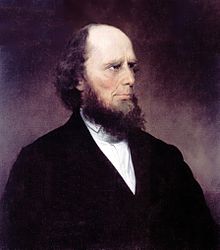
_________________________________________________________________ Title: Sermons on Gospel Themes Creator(s): Finney, Charles G. (1792-1875) Rights: Public Domain CCEL Subjects: All; Sermons; Theology; LC Call no: BX7233.F45 S4 LC Subjects: Christian Denominations Protestantism Post-Reformation Other Protestant denominations Congregationalism _________________________________________________________________ SERMONS ON GOSPEL THEMES By CHARLES G. FINNEY Author of “Lectures on Revivals of Religion,” “Lectures to Professing Christians,” etc. 1876 _________________________________________________________________ PREFACE These sermons were preached by Pres. Finney at Oberlin during the years 1845-1861, and reported from his lips by myself. In taking these reports I aimed to give the heads of the sermons and all the important statements verbatim, to retain always the substance of thought, and especially to seize upon the illustrations and present their essential points. Taken down in a species of short-hand, they were subsequently written out, and in every case read to Pres. Finney in his study for any corrections he might desire, and for his endorsement. Consequently these reports present truthfully the great doctrines preached, and in good measure it is believed the method and manner of his preaching. Few preachers in any age have surpassed Pres. Finney in clear and well-defined views of conscience, and of man’s moral convictions; few have been more fully at home in the domain of law and government; few have learned more of the spiritual life from experience and from observation; not many have discriminated the true from the false more closely, or have been more skillful in putting their points clearly and pungently. Hence, these sermons under God were full of spiritual power. They are given to the public in this form, in the hope that at least a measure of the same wholesome saving power may never fail to bless the reader. HENRY COWLES. _________________________________________________________________ I. GOD’S LOVE FOR A SINNING WORLD _________________________________________________________________ “For God so loved the world that he gave his only begotten Son, that whosoever believeth in Him should not perish, but have everlasting life.”-John 3:16 Sin is the most expensive thing in the universe. Nothing else can cost so much. Pardoned or unpardoned, its cost is infinitely great. Pardoned, the cost falls chiefly on the great atoning Substitute; unpardoned, it must fall on the head of the guilty sinner. The existence of sin is a fact everywhere experienced—everywhere observed. There is sin in our race everywhere and in awful aggravation. Sin is the violation of an infinitely important law—a law designed and adapted to secure the highest good of the universe. Obedience to this law is naturally essential to the good of creatures. Without obedience there could be no blessedness even in heaven. As sin is a violation of a most important law, it cannot be treated lightly. No government can afford to treat disobedience as a trifle, inasmuch as everything—the entire welfare of the government and of all the governed—turns upon obedience. Just in proportion to the value of the interests at stake is the necessity of guarding law and of punishing disobedience. The law of God must not be dishonoured by anything He shall do. It has been dishonoured by the disobedience of man; hence, the more need that God should stand by it, to retrieve its honour. The utmost dishonour is done to law by disowning, disobeying, and despising it, All this, sinning man has done. Hence, this law being not only good, but intrinsically necessary to the happiness of the governed, it becomes of all things most necessary that the law-giver should vindicate his law. He must by all means do it. Hence, sin has involved God’s government in a vast expense. Either the law must be executed at the expense of the wellbeing of the whole race, or God must submit to suffer the worst results of disrespect to His law—results which in some form must involve a vast expense. Take for example any human government. Suppose the righteous and necessary laws which it imposes are disowned and dishonoured. In such a case the violated law must be honoured by the execution of its penalty, or something else not less expensive, and probably much more so, must be endured. Transgression must cost happiness, somewhere, and in vast amount. In the case of God’s government it has been deemed advisable to provide a substitute—one that should answer the purpose of saving the sinner, and yet of honouring the law. This being determined on, the next great question was—How shall the expense be met? The Bible informs us how the question was in fact decided. By a voluntary conscription—shall I call it—or donation? Call it as we may, it was a voluntary offering. Who shall head the subscription? Who shall begin where so much is to be raised? Who will make the first sacrifice? Who will take the first step in a project so vast? The Bible informs us. It began with the Infinite Father. He made the first great donation. He gave His only begotten Son—this to begin with—and having given Him first, He freely gives all else that the exigencies of the case can require. First, He gave His Son to make the atonement due to law; then gave and sent His Holy Spirit to take charge of this work. The Son on His part consented to stand as the representative, of sinners, that, He might honour the law, by suffering in their stead. He poured out His blood, made a whole life of suffering a free donation on the altar—withheld not His face from spitting, nor His back from stripes—shrunk not from the utmost contumely that wicked men could heap on Him. So the Holy Ghost also devotes Himself to most self-denying efforts unceasingly, to accomplish the great object. It would have been a very short method to have turned over His hand upon the wicked of our race, and sent them all down quick to hell, as once He did when certain angels “kept not their first estate.” Rebellion broke out in heaven. Not long did God bear it, around His lofty throne. But in the case of man He changed His course—did not send them all to hell, but devised a vast scheme of measures, involving most amazing self-denials and self-sacrifices, to gain men’s souls back to obedience and heaven. For whom was this great donation made? “God so loved the World,” meaning the whole race of men. By the “world in this connection cannot be meant any particular part only, but the whole race. Not only the Bible, but the nature of the case, shows that the atonement must have been made for the whole world. For plainly if it had not been made for the entire race, no man of the race could ever know that it was made for himself, and therefore not a man could believe on Christ in the sense of receiving by faith the blessings of the atonement. There being an utter uncertainty as to the persons embraced in the limited provisions which we now suppose to be made, the entire donation must fail through the impossibility of rational faith for its reception. Suppose a will is made by a rich man bequeathing certain property to certain unknown persons, described only by the name of “the elect.” They are not described otherwise than by this term, and all agree that although the maker of the will had the individuals definitely in his mind, yet that he left no description of them, which either the persons themselves, the courts, nor any living mortal can understand. Now such a will is of necessity altogether null and void. No living man can claim under such a will, and none the better though these elect were described as residents of Oberlin. Since it does not embrace all the residents of Oberlin, and does not define which of them, all is lost. All having an equal claim and none any definite claim, none can inherit. If the atonement were made in this way, no living man would have any valid reason for believing himself one of the elect, prior to his reception of the Gospel. Hence he would have no authority to believe and receive its blessings by faith. In fact, the atonement must be wholly void—on this supposition—unless a special revelation is made to the persons for whom it is intended. As the case is, however, the very fact that a man belongs to the race of Adam—the fact that he is human, born of woman, is all-sufficient. It brings him within the pale. He is one of the world for whom God gave His Son, that whosoever would believe in Him might not perish, but have everlasting life. The subjective motive in the mind of God for this great gift was love, love to the world. God so loved the world that He gave His Son to die for it. God loved the universe also but this gift of His Son sprang from love to our world. True in this great act He took pains to provide for the interests of the universe. He was careful to do nothing that could in the least let down the sacredness of His law. Most carefully did He intend to guard against misapprehension as to His regard for His law and for the high interests of obedience and happiness in his moral universe. He meant once for all to preclude the danger lest any moral agent should be tempted to undervalue the moral law. Yet farther, it was not only from love to souls, but from respect to the spirit of the law of His own eternal reason, that He gave up His Son to die. In this the purpose to give up His Son originated. The law of His own reason must be honoured and held sacred. He may do nothing inconsistent with its spirit. He must do everything possible to prevent the commission of sin and to secure the confidence and love of His subjects. So sacred did He hold these great objects that He would baptize His Son in His own blood, sooner than peril the good of the universe. Beyond a question it was love and regard for the highest good of the universe that led Him to sacrifice His own beloved Son. Let us next consider attentively the nature of this love. The text lays special stress on this—God so loved—His love was of such a nature, so wonderful and so peculiar in its character, that it led Him to give up His only Son to die. More is evidently implied in this expression than simply its greatness. It is most peculiar in its character. Unless we understand this, we shall be in danger of falling into the strange mistake of the Universalists, who are forever talking about God’s love for sinners, but whose notions of the nature of this love never lead to repentance or to holiness. They seem to think of this love as simply good nature, and conceive of God only as a very good-natured being, whom nobody need to fear. Such notions have not the least influence towards holiness, but the very opposite. It is only when we come to understand what this love is in its nature that we feel its moral power promoting holiness. It may be reasonably asked, If God so loved the world with a love characterized by greatness, and by greatness only, why did He not save all the world without sacrificing His Son? This question suffices to show us that there is deep meaning in this word so, and should put us upon a careful study of this meaning. 1. This love in its nature is not complacency—a delight in the character of the race. This could not be, for there was nothing amiable in their character. For God to have loved such a race complacently would have been infinitely disgraceful to Himself. 2. It was not a mere emotion or feeling. It was not a blind impulse, though many seem to suppose it was. It seems to be often supposed that God acted as men do when they are borne away by strong emotion. But there could be no virtue in this. A man might give away all he is worth under such a blind impulse of feeling, and be none the more virtuous. But in saying this we do not exclude all emotion from the love of benevolence, nor from God’s love for a lost world. He had emotion, but not emotion only. Indeed, the Bible everywhere teaches us that God’s love for man, lost in his sins, was paternal—the love of a father for his offspring—in this case, for a rebellious, froward, prodigal offspring. In this love there must of course blend the deepest compassion. 3. On the part of Christ, considered as Mediator, this love was fraternal. ”He is not ashamed to call them brethren.” In one point of view, He is acting for brethren, and in another for children. The Father gave Him up for this work and of course sympathizes in the love appropriate to its relations. 4. This love must be altogether disinterested, for He had nothing to hope or to fear—no profit to make out of His children if they should be saved. Indeed, it is impossible to conceive of God as being selfish, since His love embraces all creatures and all interests according to their real value. No doubt He took delight in saving our race—why should He not? It is a great salvation in every sense, and greatly does it swell the bliss of heaven—greatly will it affect the glory and the blessedness of the Infinite God. He will eternally respect Himself for love so disinterested. He knows also that all His Holy creatures will eternally respect Him for this work and for the love that gave it birth. But let it also be said, He knew they would not respect Him for this great work unless they should see that He did it for the good of sinners. 5. This love was zealous—not that cold-hearted state of mind which some suppose—not an abstraction, but a love deep, zealous, earnest, burning in his soul as a fire that nothing can quench. 6. The sacrifice was a most self-denying one. Did it cost the Father nothing to give up His own beloved Son to suffer, and to die such a death? If this be not self-denial, what can be? Thus to give up His Son to so much suffering—is not this the noblest self-denial? The universe never could have the idea of great self-denial but for such an exemplification. 7. This love was particular because it was universal; and also universal because it was particular. God loved each sinner in particular, and therefore loved all. Because He loved all impartially, with no respect of persons, therefore He loved each in particular. 8. This was a most patient love. How rare to find a parent so loving his child as never to be impatient. Let me go round and ask, how many of you, parents, can say that you love all your children so well, and with so much love, and with love so wisely controlling, that you have never felt impatient towards any of them—so that you can take them in your arms under the greatest provocations and love them down, love them out of their sins, love them into repentance and into a filial spirit? Of which of your children can you say, Thank God, I never fretted against that child—of which, if you were to meet him in heaven, could you say, I never caused that child to fret? Often have I heard parents say, I love my children, but oh, how my patience fails me! And, after the dear ones are dead, you may hear their bitter moans, Oh, my soul, how could I have caused my child so much stumbling and so much sin! But God never frets—is never impatient. His love is so deep and so great that He is always patient. Sometimes, when parents have unfortunate children—poor objects of compassion—they can bear with anything from them; but when they are very wicked, they seem to feel that they are quite excusable for being impatient. In God’s case, these are not unfortunate children, but are intensely wicked—intelligently wicked. But oh, His amazing patience—so set upon their good, so desirous of their highest welfare, that however they abuse Him, He sets Himself to bless them still, and weep them down, and melt them into penitence and love, by the death of His Son in their stead! 9. This is a jealous love, not in a bad sense, but in a good sense—in the sense of being exceedingly careful lest anything should occur to injure those He loves. Just as husband and wife who truly love each other are jealous with ever wakeful jealousy over each other’s welfare, seeking always to do all they can to promote each other’s true interests. This donation is already made—made in good faith—not only promised, but actually made. The promise, given long before, has been fulfilled. The Son has come, has died, has made the ransom and lives to offer it—a prepared salvation to all who will embrace it. The Son of God died not to appease vengeance, as some seem to understand it, but under the demands of law. The law had been dishonoured by its violation. Hence, Christ undertook to honour it by giving up to its demands His suffering life and atoning death. It was not to appease a vindictive spirit in God, but to secure the highest good of the universe in a dispensation of mercy. Since this atonement has been made, all men in the race have a right to it. It is open to every one who will embrace it. Though Jesus still remains the Father’s Son, yet by gracious right He belongs in an important sense to the race—to everyone; so that every sinner has an interest in His blood if he will only come humbly forward and claim it. God sent His Son to be the Saviour of the world—of whomsoever would believe and accept this great salvation. God gives His Spirit to apply this salvation to men. He comes to each man’s door and knocks, to gain admittance, if He can, and show each sinner that he may now have salvation. Oh, what a labour of love is this! This salvation must be received, if at all, by faith. This is the only possible way. God’s government over sinners is moral, not physical, because the sinner is himself a moral and not a physical agent. Therefore, God can influence us in no way unless we will give Him our confidence. He never can save us by merely taking us away to some place called heaven—as if change of place would change the voluntary heart. There can, therefore, be no possible way to be saved but by simple faith. ‘Now do not mistake and suppose that embracing the Gospel is simply to believe these historical facts without truly receiving Christ as your Saviour. If this had been the scheme, then Christ had need only to come down and die; then go back to heaven and quietly wait to see who would believe the facts. But how different is the real case! Now Christ comes down to fill the soul with His own life and love. Penitent sinners hear and believe the truth concerning Jesus, and then receive Christ into the soul to live and reign there supreme and for ever. On this point many mistake, saying, If I believe the facts as matters of history it is enough. No! No! This is not it by any means. “With the heart man believeth unto righteousness.” The atonement was indeed made to provide the way so that Jesus could come down to human hearts and draw them into union and sympathy with Himself—so that God could let down the arms of His love and embrace sinners—so that law and government should not be dishonoured by such tokens of friendship shown by God toward sinners. But the atonement will by no means save sinners only as it prepares the way for them to come into sympathy and fellowship of heart with God. Now Jesus comes to each sinner’s door and knocks. Hark! what’s that? what’s that? Why this knocking? Why did He not go away and stay in heaven if that were the system, till men should simply believe the historical facts and be baptized, as some suppose, for salvation. But now, see how He comes down—tells the sinner what He has done—reveals all His love—tells him how holy and sacred it is, so sacred that He can by no means act without reference to the holiness of His law and the purity of His government. Thus impressing on the heart the most deep and enlarged ideas of His holiness and purity, He enforces the need of deep repentance and the sacred duty of renouncing all sin. _________________________________________________________________ REMARKS 1. The Bible teaches that sinners may forfeit their birthright and put themselves beyond the reach of mercy. It is not long since I made some remark to you on the manifest necessity that God should guard Himself against the abuses of His love. The circumstances are such as create the greatest danger of such abuse, and, therefore, He must make sinners know that they may not abuse His love, and cannot do it with impunity. 2. Under the Gospel, sinners are in circumstances of the greatest possible responsibility. They are in the utmost danger of trampling down beneath their feet the very Son of God. Come, they say, let us kill Him and the inheritance shall be ours. When God sends forth, last of all, His own beloved Son, what do they do? Add to all their other sins and rebellions the highest insult to this glorious Son! Suppose something analogous to this were done under a human government. A case of rebellion occurs in some of the provinces. The king sends his own son, not with an army, to cut them down quick in their rebellion, but all gently, meekly, patiently, he goes among them, explaining the laws of the kingdom and exhorting them to obedience. What do they do in the case? With one consent they combine to seize him and put him to death! But you deny the application of this, and ask me, Who murdered the Son of God? Were they not Jews? Aye, and have you, sinners, had no part in this murder? Has not your treatment of Jesus Christ shown that you are most fully in sympathy with the ancient Jews in their murder of the Son of God? If you had been there, would any one have shouted louder than you, Away with Him—crucify Him, crucify Him? Have you not always said, Depart from us—for we desire not the knowledge of Thy ways? 3. It was said of Christ that, Though rich He became poor that we through His poverty might be rich. How strikingly true is this? Our redemption cost Christ His life; it found Him rich, but made Him poor; it found us infinitely poor, but made us rich even to all the wealth of heaven. But of these riches none can partake till they shall each for himself accept them in the legitimate way. They must be received on the terms proposed, or the offer passes utterly away, and you are left poorer even than if no such treasures had ever been laid at your feet. Many persons seem entirely to misconceive this case. They seem not to believe what God says, but keep saying, If, if, if there only were any salvation for me—if there were only an atonement provided for the pardon of my sins. This was one of the last things that was cleared up in my mind before I fully committed my soul to trust God. I had been studying the atonement; I saw its philosophical bearings—saw what it demanded of the sinner; but it irritated me, and I said—If I should become a Christian, how could I know what God would do with me? Under this irritation I said foolish and bitter things against Christ—till my own soul was horrified at its own wickedness, and I said—I will make all this up with Christ if the thing is possible. In this way many advance upon the encouragements of the Gospel as if it were only a peradventure, an experiment. They take each forward step most carefully, with fear and trembling, as if there were the utmost doubt whether there could be any mercy for them. So with myself. I was on my way to my office, when the question came before my mind—What are you waiting for? You need not get up such an ado. All is done already. You have only to consent to the proposition—give your heart right up to it at once—this is all. Just so it is. All Christians and sinners ought to understand that the whole plan is complete—that the whole of Christ—His character, His work, His atoning death, and His ever-living intercession—belong to each and every man, and need only to be accepted. There is a full ocean of it. There it is. You may just as well take it as not. It is as if you stood on the shore of an ocean of soft, pure water, famishing with thirst; you are welcome to drink, and you need not fear lest you exhaust that ocean, or starve anybody else by drinking yourself. You need not feel that you are not made free to that ocean of waters; you are invited and pressed to drink—yea to drink abundantly! This ocean supplies all your need. You do not need to have in yourself the attributes of Jesus Christ, for His attributes become practically yours for all possible use. As saith the Scripture—He is of God made unto us wisdom, righteousness, sanctification, and redemption. What do you need? Wisdom? Here it is. Righteousness? Here it is. Sanctification? Here you have it. All is in Christ. Can you possibly think of any one thing needful for your moral purity, or your usefulness which is not here in Christ? Nothing. All is provided here. Therefore you need not say, I will go and pray and try, as the hymn, “I’ll go to Jesus tho’ my sin Hath like a mountain rose, Perhaps He will admit my plea; Perhaps will hear my prayer.” There is no need of any perhaps. The doors are always open. Like the doors of Broadway Tabernacle in New York, made to swing open and fasten themselves open, so that they could not swing back and shut down upon the crowds of people thronging to pass through. When they were to be made, I went myself to the workmen and told them by all means to fix them so that they must swing open and fasten themselves in that position. So the door of salvation is open always—fastened open, and no man can shut it—not the Pope, even, nor the devil, nor any angel from heaven or from hell. There it stands, all swung back and the passage wide open for every sinner of our race to enter if he will. Again, sin is the most expensive thing in the universe. Are you well aware, O sinner, what a price has been paid for you that you may be redeemed and made an heir of God and of heaven? O what an expensive business for you to indulge in sin. And what an enormous tax the government of God has paid to redeem this province from its ruin! Talk about the poor tax of Great Britain and of all other nations superadded; all is nothing to the sin-tax of Jehovah’s government—that awful sin-tax! Think how much machinery is kept in motion to save sinners! The Son of God was sent down—angels are sent as ministering spirits to the heirs of salvation; missionaries are sent, Christians labour, and pray and weep in deep and anxious solicitude—all to seek and save the lost. What a wonderful-enormous tax is levied upon the benevolence of the universe to put away sin and to save the sinner! If the cost could be computed in solid gold what a world of it—a solid globe of itself! What an array of toil and cost, from angels, Jesus Christ, the Divine Spirit, and living men Shame on sinners who hold on to sin despite of all these benevolent efforts to save them! who instead of being ashamed out of sin, will say—Let God pay off this tax; who cares! Let the missionaries labour, let pious women work their very fingers off to raise funds to keep all this human machinery in motion; no matter: what is all this to me? I have loved my pleasures and after them I will go! What an unfeeling heart is this Sinners can very well afford to make sacrifices to save their fellow sinners. Paul could for his fellow sinners. He felt that he had done his part toward making sinners, and now it became him to do his part also in converting them back to God. But see there—that young man thinks he cannot afford to be a minister, for he is afraid he shall not be well supported. Does he not owe something to the grace that saved his soul from hell? Has he not some sacrifices to make, since Jesus has made so many for him, and Christians too, in Christ before him—did they not pray and suffer and toil for his soul’s salvation? As to his danger of lacking bread in the Lord’s work, let him trust his Great Master. Yet let me also say that churches may be in great fault for not comfortably supporting their pastors. Let them know God will assuredly starve them if they starve their ministers. Their own souls and the souls of their children shall be barren as death if they avariciously starve those whom God in His providence sends to feed them with the bread of life. How much it costs to rid society of certain forms of sin, as for example, slavery. How much has been expended already, and how much more yet remains to be expended ere this sore evil and curse and sin shall be rooted from our land! This is part of God’s great enterprise, and He will press it on to its completion. Yet at what an amazing cost! How many lives and how much agony to get rid of this one sin! Woe to those who make capital out of the sins of men! Just think of the rumseller—tempting men while God is trying to dissuade them from rushing on in the ways of sin and death! Think of the guilt of those who thus set themselves in array against God! So Christ has to contend with rumsellers who are doing all they can to hinder His work. Our subject strikingly illustrates the nature of sin as mere selfishness. It cares not how much sin costs Jesus Christ—how much it costs the Church, how much it taxes the benevolent sympathies and the self-sacrificing labours of all the good in earth or heaven; no matter; the sinner loves self-indulgence and will have it while he can. How many of you have cost your friends countless tears and trouble to get you back from your ways of sin? Are you not ashamed when so much has been done for you, that you cannot be persuaded to give up your sins and turn to God and holiness? The whole effort on the part of God for man is one of suffering and self-denial. Beginning with the sacrifice of His own beloved Son, it is carried on with ever renewed sacrifices and toilsome labours—at great and wonderful expense. Just think how long a time these efforts have been protracted already—how many tears, poured out like water, it has cost—how much pain in many forms this enterprise has caused and cost—yea, that very sin which you roll as a sweet morsel under your tongue! God may well hate it when He sees how much it costs, and say—O do not that abominable thing that I hate! Yet God is not unhappy in these self-denials. So great is His joy in the results, that He deems all the suffering but comparatively a trifle, even as earthly parents enjoy the efforts they make to bless their children. See them; they will almost work their very hands off; mothers sit up at night to ply their needle till they reel with fatigue and blindness; but if you were to see their toil, you would often see also their joy, so intensely do they love their children. Such is the labour, the joy, and the self-denial of the Father, the Son and the Holy Ghost, in their great work for human salvation. Often are they grieved that so many will refuse to be saved. Toiling on in a common sympathy, there is nothing, within reasonable limits, which they will not do or suffer to accomplish their great work. It is wonderful to think how all creation sympathizes, too, in this work and its necessary sufferings. Go back to the scene of Christ’s sufferings. Could the sun in the heavens look down unmoved on such a scene? O no, he could not even behold it—but veiled his face from the sight! All nature seemed to put on her robes of deepest mourning. The scene was too much for even inanimate nature to bear. The sun turned his back and could not look down on such a spectacle! The subject illustrates forcibly the worth of the soul. Think you God would have done all this if He had had those low views on this subject which sinners usually have? Martyrs and saints enjoy their sufferings—filling up in themselves what is lacking of the sufferings of Christ; not in the atonement proper, but in the subordinate parts of the work to be done. It is the nature of true religion to love self-denial. The results will fully justify all the expense. God had well counted the cost before He began. Long time before He formed a moral universe He knew perfectly what it must cost Him to redeem sinners, and He knew that the result would amply justify all the cost. He knew that a wonder of mercy would be wrought—that the suffering demanded of Christ, great as it was, would be endured; and that results infinitely glorious would accrue therefrom. He looked down the track of time into the distant ages—where, as the cycles rolled along, there might be seen the joys of redeemed saints, who are singing their songs and striking their harps anew with the everlasting song, through the long long, LONG eternity of their blessedness; and was not this enough for the heart of infinite love to enjoy? And what do you think of it, Christian? Will you say now, I am ashamed to ask to be forgiven? How can I bear to receive such mercy! It is the price of blood, and how can I accept it? How can I make Jesus so much expense? You are right in saying that you have cost Him great expense—but the expense has been cheerfully met—the pain has all been endured, and will not need to be endured again, and it will cost none the more if you accept than if you decline; and moreover still, let it be considered Jesus Christ has not acted unwisely; He did not pay too much for the soul’s redemption—not a pang more than the interests of God’s government demanded and the worth of the soul would justify. O, when you come to see Him face to face, and tell Him what you think of it—when you are some thousands of years older than you are now, will you not adore that wisdom that manages this scheme, and the infinite love in which it had its birth? O what will you then say of that amazing condescension that brought down Jesus to your rescue! Say, Christian, have you not often poured out your soul before your Saviour in acknowledgment of what you have cost Him, and there seemed to be a kind of lifting up as if the very bottom of your soul were to rise, and you would pour out your whole heart. If anybody had seen you they would have wondered what had happened to you that had so melted your soul in gratitude and love. Say now, sinners will you sell your birthright? How much will you take for it? How much will you take for your interest in Christ? For how much will you sell your soul? Sell your Christ! Of old they sold Him for thirty pieces of silver; and ever since, the heavens have been raining tears of blood on our guilty world. If you were to be asked by the devil to fix the sum for which you would sell your soul, what would be the price named? Lorenzo Dow once met a man as he was riding along a solitary road to fulfil an appointment, and said to him—Friend, have you ever prayed? No. How much will you take never to pray hereafter? One dollar. Dow paid it over, and rode on. The man put the money in his pocket, and passed on, thinking. The more he thought, the worse he felt. There, said he, I have sold my soul for one dollar! It must be that I have met the devil! Nobody else would tempt me so. With all my soul I must repent, or be damned forever! How often have you bargained to sell your Saviour for less than thirty pieces of silver! Nay, for the merest trifle! Finally, God wants volunteers to help on this great work. God has given Himself, and given His Son, and sent His Spirit; but more labourers still are needed; and what will you give? Paul said, I bear in my body the marks of the Lord Jesus. Do you aspire to such an honour? What will you do—what will you suffer? Say not, I have nothing to give. You can give yourself—your eyes, your ears, your hands, your mind, your heart, all; and surely nothing you have is too sacred and too good to be devoted to such a work upon such a call! How many young men are ready to go? and how many young women? Whose heart leaps up, crying, Here am I! send me? _________________________________________________________________ II. ON TRUSTING IN THE MERCY OF GOD. “I will trust in the mercy of God forever and ever.”-Ps. 52:8. IN discussing this subject I shall enquire, I. What mercy is. II. What is implied in trusting in the mercy of the Lord forever. III. Point out the conditions on which we may safely trust in God’s mercy. IV. Allude to several mistakes which are made on this subject. _________________________________________________________________ I. What Mercy is. 1.Mercy as an attribute of God, is not to be confounded with mere goodness. This mistake is often made. That it is a mistake, you will see at once if you consider that mercy is directly opposed to justice, while yet justice is one of the natural and legitimate developments of goodness. Goodness may demand the exercise of justice; indeed it often does; but to say that mercy demands the exercise of justice, is to use the word without meaning. Mercy asks that justice be set aside. Of course mercy and goodness stand in very different relations to justice, and are very different attributes. 2. Mercy is a disposition to pardon the guilty. Its exercise consists in arresting and setting aside the penalty of law, when that penalty has been incurred by transgression. It is, as has been said, directly opposed to justice. justice treats every individual according to his deserts; mercy treats the criminal very differently from what he deserves to be treated. Desert is never the rule by which mercy is guided while it is precisely the rule of justice. 3. Mercy is exercised only where there is guilt. It always pre-supposes guilt. The penalty of the law must have been previously incurred, else there can be no scope for mercy. 4. Mercy can be exercised no farther than one deserves punishment. It may continue its exercise just as long as punishment is deserved, but no longer; just as far as ill desert goes, but no farther. If great punishment is deserved, great mercy can be shown; if endless punishment is due, there is then scope for infinite mercy to be shown, but not otherwise. _________________________________________________________________ II. I am to show what is implied in trusting in the mercy of God. 1. A conviction of guilt. None can properly be said to trust in the mercy of God unless they have committed crimes, and are conscious of this fact. justice protects the innocent, and they may safely appeal to it for defence or redress. But for the guilty nothing remains but to trust in mercy. Trusting in mercy always implies a deep, heartfelt conviction of personal guilt. 2. Trust in mercy—always implies that we have no hope on the score of justice. If we had anything to expect from justice, we should not look to mercy. The human heart is too proud to throw itself upon mercy while it presumes itself to have a valid claim to favor on the score of justice. Nay more, to appeal to mercy when we might rightfully appeal to justice is never demanded either by God’s law or gospel, nor can it be in harmony with our relations to Jehovah’s government. In fact, the thing is, in the very nature of the mind, impossible. 3. Trust in mercy implies a just apprehension of what mercy is. On this point many fail because they confound mercy with mere goodness, or with grace, considered as mere favor to the undeserving. The latter may be shown where there is no mercy, the term mercy being applied to the pardon of crime. We all know that God shows favor, or grace in the general sense, to all the wicked on earth. He makes His sun to rise on the evil and on the good, and sends His rain on the unjust as well as on the just. But to trust in this general favor shown to the wicked while on trial here is not trusting in the mercy of God. We never trust in mercy till we really understand what it is—pardon for the crimes of the guilty. 4. Trust in God’s mercy implies a belief that He is merciful. We could not trust Him if we had no such belief. This belief must always lie at the foundation of real trust. Indeed, so naturally does this belief beget that out-going of the soul and resting upon God which we call trust, that in the New Testament sense it commonly includes both. Faith, or belief, includes a hearty committal of the soul to God, and a cordial trust in Him. 5. “Trusting in the mercy of God forever and ever” implies a conviction of deserving endless punishment. Mercy is co-extensive with desert of punishment, and can in its nature go no farther. It is rational to rely upon the exercise of mercy for as long time as we deserve punishment, but no longer. A prisoner under a three years’ sentence to State’s prison may ask for the exercise of mercy in the form of pardon for so long a time; but he will not ask a pardon for ten years when he needs it only for three, or ask a pardon after his three years’ term has expired. This principle is perfectly obvious; where desert of punishment ceases, there mercy also ceases and our trust in it. While desert of punishment continues, so may mercy, and our trust in its exercise. When therefore the Psalmist trusts in the mercy of God forever, he renounces all hope of being ever received to favor on the score of justice. 6. Trusting in mercy implies a cessation from all excuses and excuse-making. The moment you trust in mercy, you give up all apologies and excuses at once and entirely; for these imply a reliance upon God’s justice. An excuse or apology is nothing more nor less than an appeal to justice; a plea designed to justify our conduct. Trusting in mercy forever implies that we have ceased from all excuses forever. Thus a man on trial before a civil court, so long as he pleads justifications and excuses, appeals to justice; but if he goes before the court and pleads guilty, offering no justification or apology whatever, he throws himself upon the clemency of the court. This is quite another thing from self-justification. It sometimes happens that in the same trial, the accused party tries both expedients. He first attempts his own defense; but finding this vain, he shifts his position, confesses his crime and ill desert, and throws himself upon the mercy of the court. Perhaps he begs the court to commend him to the mercy of the executive in whom is vested the pardoning power. Now it is always understood that when a man pleads guilty he desists from making excuses, and appeals only to mercy. So in any private matter with my neighbor. If I justify myself fully, I surely have no confession to make. But if I am conscious of having done him wrong, I freely confess my wrong, and appeal to mercy. Self-justification stands right over against confession. So in parental discipline. If your child sternly justifies himself, he makes no appeal to mercy. But the moment when he casts himself upon your bosom with tears, and says, I am all wrong, he ceases to make excuses, and trusts himself to mercy. So in the government of God. Trust in mercy is a final giving up of all reliance upon justice. You have no more excuses; you make none. _________________________________________________________________ III. We must next consider the conditions upon which we may confidently and securely trust in the mercy of God forever. 1. Public justice must be appeased. Its demands must be satisfied. God is a great public magistrate, sustaining infinitely responsible relations to the moral universe. He must be careful what He does. Perhaps no measure of government is more delicate and difficult in its bearings than the exercise of mercy. It is a most critical point. There is eminent danger of making the impression that mercy would trample down law. The very thing that mercy does is to set aside the execution of the penalty of law; the danger is lest this should seem to set aside the law itself. The great problem is, How can the law retain its full majesty, the execution of its penalty being entirely withdrawn? This is always a difficult and delicate matter. In human governments we often see great firmness exercised by the magistrate. During the scenes of the American Revolution, Washington was earnestly importuned to pardon André. The latter was eminently an amiable, lovely man; and his case excited a deep sympathy in the American army. Numerous and urgent petitions were made to Washington in his behalf; but no, Washington could not yield. They besought him to see André, in hope that a personal interview might touch his heart; but he refused even to see him. He dared not trust his own feelings. He felt that this was a great crisis, and that a nation’s welfare was in peril. Hence his stem, unyielding decision. It was not that he lacked compassion of soul. He had a heart to feel. But under the circumstances, he knew too well that no scope must be given to the indulgence of his tender sympathies. He dared not gratify these feelings, lest a nation’s ruin should be the penalty. Such cases have often occurred in human governments when every feeling of the soul is on the side of mercy and makes its strong demand for indulgence; but justice forbids. Often in family government the parent has an agonizing trial; he would sooner bear the pain himself thrice told than to inflict it upon his son; but interests of perhaps infinite moment are at stake, and must not be put in peril by the indulgence of his compassions. Now if the exercise of mercy in such cases is difficult how much more so in the government of God? Hence, the first condition of the exercise of mercy is that something be done to meet the demands of public justice. It is absolutely indispensable that law be sustained. However much disposed God may be to pardon, yet He is too good to exercise mercy on any such conditions or under any such circumstances as will impair the dignity of His law, throw out a license to sin, and open the very flood-gates of iniquity. Jehovah never can do this. He knows He never ought to. On this point it only need be said at present that this difficulty is wholly removed by the atonement of Christ. 2. A second condition is that we repent, Certainly no sinner has the least ground to hope for mercy until he repents. Will God pardon the sinner while yet in his rebellion? Never. To do so would be most unjust in God—most ruinous to the universe. It would be virtually proclaiming that sin is less than a trifle—that God cares not how set in wickedness the sinner’s heart is; He is ready to take the most rebellious heart, unhumbled, to His own bosom. Before God can do this He must cease to be holy. 3. We must confess our sins. “He that confesseth,” and he only, “shall find mercy.” Jehovah sustains such relations to the moral universe that He cannot forgive without the sinner’s confession. He must have the sinner’s testimony against himself and in favor of law and obedience. Suppose a man convicted and sentenced to be hung. He petitions the governor for pardon, but is too proud to confess, at least in public. “May it please your Honor,” he says, “between you and me, I am willing to say that I committed that crime alleged against me, but you must not ask me to make this confession before the world. You will have some regard to my feelings and to the feelings of my numerous and very respectable friends. Before the world there. fore I shall persist in denying the crime. I trust, however, that you will duly consider all the circumstances and grant me a pardon.” Pardon you, miscreant, the governor would say—pardon you when you are condemning the whole court and jury of injustice, and the witnesses of falsehood; pardon you while you set yourself against the whole administration of justice in the State? Never! never! You are too proud to take your own place and appear in your own character; how can I rely on you to be a good citizen—how can I expect you to be anything better than an arch villain? Let it be understood, then, that before we can trust in the mercy of God, we must really repent and make our confession as public as we have made our crime. Suppose again that a man is convicted and sues for pardon, but will not confess at all. O, he says, I have no crimes to confess; I have done nothing particularly wrong; the reason of my acting as I have is that I have a desperately wicked heart. I cannot repent and never could. I don’t know how it happens that I commit murder so easily; it seems to be a second nature to me to kill my neighbor; I can’t help it. I am told that you are very good, very merciful, he says to the governor; they even say that you are love itself, and I believe it; you surely will grant me a pardon then, it will be so easy for you—and it is so horrible for me to be hung. You know I have done only a little wrong, and that little only because I could not help it; you certainly cannot insist upon my making any confession. What! have me bung because I don’t repent? You certainly are too kind to do any such thing. I don’t thank you for your good opinion of me, must be the indignant reply; the law shall take its course; your path is to the gallows. See that sinner; hear him mock God in his prayer: “trust in the mercy of God, for God is love.” Do you repent? “I don’t know about repentance—that is not the question God is love—God is too good to send men to hell; they are Partialists and slander God who think that He ever sends anybody to hell.” Too good! you say; too good! so good that He will forgive whether the sinner repents or not; too good to hold the reins of His government firmly; too good to secure the best interests of His vast kingdom! Sinner, the God you think of is a being of your own crazy imagination— not the God who built the prison of despair for hardened sinners—not the God who rules the universe by righteous law and our race also on a Gospel system which magnifies that law and makes it honorable. 4. We must really make restitution so far as lies in our power. You may see the bearing of this in the case of a highway robber. He has robbed a traveller of ten thousand dollars, and is sentenced to State’s prison for life. He petitions for pardon. Very sorry he is for his crime; will make any confession that can be asked, ever so public; but will he make restitution? Not he; no—he needs that money himself. He will give up half of it, perhaps, to the government; vastly patriotic is he all at once, and liberal withal; ready to make a donation of five thousand dollars for the public good! ready to consecrate to most benevolent uses a splendid sum of money; but whose money? Where is his justice to the man he has robbed? Wretch! consecrate to the public what you have torn from your neighbor and put it into the treasury of the government! No; such a gift would burn right through the chest! What would you think if the government should connive at such an abomination? You would abhor their execrable corruption. See that man of the world, His whole business career is a course of over-reaching. He slyly thrusts his hands into his neighbor’s pockets and thus fills up his own. His rule is uniformly to sell for more than a thing is worth and buy for less. He knows how to monopolize and make high prices, and then sell out his accumulated stocks. His mind is forever on the stretch to manage and make good bargains. But this man at last must prepare to meet God. So he turns to his money to make it answer all things. He has a large gift for God. Perhaps he will build a church or send a missionary—something pretty handsome at least to buy a pardon for a life about which his conscience is not very easy. Yes, he has a splendid bribe for God. Ah, but will God take it? Never! God burns with indignation at the thought. Does God want your price of blood—those gains of oppression? Go and give them back to the suffering poor whose cries have gone up to God against you. O shame to think to filch from thy brother and give to God! Not merely rob Peter to pay Paul, but rob man to pay God! The pardon of your soul is not bought so! 5. Another condition is that you really reform. Suppose there is a villain in our neighborhood who has become the terror of all the region round about. He has already murdered a score of defenseless women and children; burns down our houses by night; plunders and robs daily; and every day brings tidings of his crimes at which every ear tingles. None feel safe a moment. He is an arch and bloody villain. At last he is arrested, and we all breathe more easily. Peace is restored. But this miscreant having received sentence of death, petitions for pardon. He professes no penitence whatever, and makes not even a promise of amendment; yet the governor is about to give him a free pardon. If be does it, who will not say, He ought to be hung up himself by the neck till he is dead, dead! But what does that sinner say? “I trust,” says he, “in the great mercy of God. I have nothing to fear.” But does he reform? No. What good can the mercy of God do him if he does not reform? 6. You must go the whole length in justifying the law and its penalty. Mark that convicted criminal, He doesn’t believe that government has any right to take life for any crime; he demurs utterly to the justice of such a proceeding, and on this ground insists that he must have a pardon. Will he get it? Will the governor take a position which is flatly opposed to the very law and constitution which he is sworn to sustain? Will he crush the law to save one criminal, or even a thousand criminals? Not if he has the spirit of a ruler in his bosom. That guilty man if he would have mercy from the Executive must admit the right of the law and of the penalty Else he arrays himself against the law and cannot be trusted in the community. Now hear that sinner. How much he has to say against his ill desert and against the justice of eternal punishment. He denounces the laws of God as cruelly and unrighteously severe. Sinner, do you suppose God can forgive you while you pursue such a course? He would as soon repeal His law and vacate His throne. You make it impossible for God to forgive you. 7. No sinner can be a proper object of mercy who is not entirely submissive to all those measures of the government that have brought him to conviction, Suppose a criminal should plead that there had been a conspiracy to waylay and arrest him; that witnesses had been bribed to give false testimony; that the judge had charged the jury falsely, or that the jury had given an unrighteous verdict; could he hope by such false allegations to get a pardon? Nay, verily. Such a man cannot be trusted to sustain law and order in a community, under any government, human or divine. But hear that sinner complain and cavil. Why, he says, did God suffer sin and temptation to enter this world at all? Why does God let the sinner live at all to incur a doom so dreadful? And why does God block up the sinner’s path by His providence, and cut him down in his sins? Yet this very sinner talks about trusting in God’s mercy! Indeed; while all the time he is accusing God of being an infinite tyrant, and of seeking to crush the helpless, unfortunate sinner! What do these cavils mean? What are they but the uplifted voice of a guilty rebel arraigning his Maker for doing good and showing mercy to His own rebellious creatures? For it needs but a moment’s thought to see that the temptation complained of is only a good placed before a moral agent to melt his heart by love. Yet against this the sinner murmurs, and pours out his complaints against God, Be assured that unless you are willing to go the full length of justifying all God does, He never can give you pardon. God has no option to pardon a self-justifying rebel. The interests of myraids of moral beings forbid His doing it. When you will take the ground most fully of justifying God and condemning yourself, you place yourself where mercy can reach you, and then it surely will. Not before. 8. You must close in most cordially with the plan of salvation. This plan is based on the assumption that we deserve everlasting death and must be saved, if ever, by sovereign grace and mercy. Nothing can save but mercy—mercy which meets the sinner in the dust, prostrate, without an excuse or an apology, giving to God all the glory and taking to himself all the guilt and shame. There is hope for thee, sinner, in embracing this plan with all the heart. _________________________________________________________________ IV. We now notice some mistakes into which many fall. 1. Many really trust in justice and not in mercy. They say, “God is just—God will do me no injustice—I mean to do as well as I can, and then I can safely leave myself in the hands of a just God.” True, God will do you no injustice. You never need fear that. But how terrible if God should do you strict justice! How fearful if you get no mercy! If God does not show you infinite mercy you are forever lost, as surely as you are a sinner! This trusting in God’s justice is a fatal rock. The sinner who can do it calmly has never seen God’s law and his own heart. The Psalmist did not say, I trust in the justice of God forever and ever. 2. Many trust professedly in the mercy of God without fulfilling the conditions on which only mercy can be shown. They may hold on in such trusting till they die—but no longer. 3. Sinners do not consider that God cannot dispense with their fulfilling these conditions. He has no right to do so. They spring out of the very constitution of His government, from His very nature, and must therefore be strictly fulfilled. Sooner than dispense with their fulfillment, God would send the whole race, yea, the whole universe, to hell If God were to set aside these conditions and forgive a sinner while unhumbled, impenitent, and unbelieving, He would upset His throne, convulse the moral universe, and kindle another hell in His own bosom. 4. Many are defeating their own salvation by self-justification. Pleas that excuse self, and cavils that arraign God, stand alike and fatally in the way of pardon. Since the world began it has not been known that a sinner has found mercy in this state. 5. Many pretend to trust in mercy who yet profess to be punished for their sins as they go along. They hope for salvation through mercy, and yet they are punished for all their sins in this life. Two more absurd and self-contradictory things were never put together. Punished as much as they deserve here, and yet saved through mercy! Why don’t they say it out that they shall be saved after death through justice? Surely if they are punished all they deserve as they go along, justice will ask no more after death. 6. Persons who in the letter plead for mercy, often rely really upon justice. The deep conviction of sin and ill-desert does not sink into their soul till they realize what mercy is, and feel that they can rely on nothing else. 7. Some are covering up their sins, yet dream of going to heaven. Do they think they can hide those sins from the Omniscient Eye? Do they think to cover their sins and yet it prosper,” despite of God’s awful word? 8. We cannot reasonably ask for mercy beyond our acknowledged and felt guilt; and they mistake fatally who suppose that they can. Without a deep conviction of conscious guilt we cannot be honest and in earnest in supplicating mercy. Hear that man pray who thinks sin a trifle and its deserved punishment a small affair. “O Lord, I need a little mercy, only a little; my sins have been few and of small account; grant me, Lord, exemption from the brief and slight punishment which my few errors and defects may have deserved.” Or hear that Universalist pray: “O Lord, Thou knowest that I have been punished for my sins as I have passed along; I have had a fit of sickness and various pains and losses, nearly or quite enough, Thou knowest, to punish all the sins I have committed; now, therefore, I pray Thee to give me salvation through Thy great mercy.” How astonishing that sane men should hold such nonsense! How can a Universalist pray at all? What should they pray for? Not for pardon, for on their principles they have a valid claim to exemption from punishment on the score of justice, as the criminal has who has served out his sentence in the State’s prison. The only rational prayer that can be made is that God will do them justice and let them off, since they have already been punished enough. But why should they pray for this? God may be trusted to do justice without their praying for it. I don’t wonder that Universalists pray but little; what have they to pray for? Their daily bread? Very well. But the mercy of God they need not on their scheme, for they suffer all they deserve. Pleasing delusion; flattering enough to human pride, but strange for rational minds and horribly pernicious! Restoration takes substantially the same ground, only leaving a part of the penalty to De worked out in purgatory, but claiming salvation on the ground of justice and not mercy. Mercy can have no place in any system of Universalism. Every form of this system arrays God in robes of justice—inflexible, fearful justice—yet these men trust, they say, in the mercy of God! But what have they done with the Gospel—what with all the Bible says about free pardon to the guilty? They have thrust it out of the Bible; and what have they given us instead? Only justice, justice—punishment enough for sin in this world, or at least in a few years of purgatory: sin a trifle—government a mere farce—God a liar—hell a bugbear and a humbug! What is all this but dire blasphemy as ever came from hell? If we ask for but little mercy, we shall get none at all. This may seem strange, but is none the less true. If we get anything, we must ask for great blessings. Suppose a man deserved to be hung, and yet asks only for a little favor; suppose he should say so, can he be forgiven? No. He must confess the whole of his guilt in its full and awful form, and show that he feels it in his very soul. So, sinner, must you come and confess your whole guilt as it is, or have no mercy. Come and get down, low, lower, infinitely low before God, and take mercy there. Hear that Universalist. All he can say at first is, “I thank God for a thousand things.” But he begins to doubt whether this is quite enough. Perhaps he needs a little more punishment than he has suffered in this life; he sees a little more guilt; so he prays that God would let him off from ten years of deserved punishment in hell. And if he sees a little more guilt, he asks for a reprieve from so much more of punishment. If truth flashes upon his soul and he sees his own heart and life in the light of Jehovah’s law, he gets down lower and lower, as low as he can, and pours out his prayer that God would save him from that eternal hell which he deserves. “O,” he cries out, “can God forgive so great a sinner!” Yes, and by so much the more readily, by how much the more you humble yourself, and by how much the greater mercy you ask and feel that you need. Only come down and take such a position that God can meet you. Recollect the prodigal son, and that father running, falling on his neck, weeping, welcoming, forgiving! O! how that father’s heart gushed with tenderness! It is not the greatness of your sins, but your pride of heart that forbids your salvation. It is not anything in your past life, but it is your present state of mind that makes your salvation impossible. Think of this. You need not wait to use means with God to persuade Him to save you. He is using means with you to persuade you to be saved. You act as if God could scarcely be moved by any possible entreaties and submissions to exercise mercy. Oh, you do not see how His great heart beats with compassion and presses the streams of mercy forth in all directions, pouring the river of the waters of life at your very feet, creating such a pressure of appeal to your heart that you have to brace yourself against it, lest you should be persuaded to repent. O, do you see how God would fain persuade you and break your heart in penitence, that He may bring you where He can reach you with forgiving mercy—where He can come and bless you without resigning His very throne! To deny your desert of endless punishment is to render your salvation utterly impossible. God never can forgive you on this ground, because you are trying to be saved on the score of justice. You could not make your damnation more certain than you thus make it, if you were to murder every man you meet. You tie up the hands of mercy and will not let her pluck you from the jaws of death. It is as if your house were on fire and you seize your loaded rifle to shoot down every man that comes with his bucket to help you. You stand your ground amid the raging element until you sink beneath the flames. Who can help you? What is that man doing who is trying to make his family believe Universalism? It is as if he would shoot his rifle at the very heart of Mercy every time she comes in view. He seems determined to drive off Mercy, and for this end plies all the enginery of Universalism and throws himself into the citadel of this refuge of lies! O! what a work of death is this! Mercy shall not reach him or his family; so he seems determined—and Mercy cannot come. See how she bends from heaven—Jehovah smiles in love—and weeps in pity—and bends from the very clouds and holds out the pierced hand of the crucified One. But no! I don’t deserve the punishment; away with the insult of a pardon offered through mere mercy! What can be more fatal, more damning, more ruinous to the soul? You see very clearly why all are not saved. It is not because God is not willing to save all, but because they defeat the efforts God makes to save them. They betake themselves to every possible refuge and subterfuge; resist conviction of guilt, and repel every call of mercy. What ails those young men? What are they doing? Has God come down in His red wrath and vengeance, that they should rally all their might to oppose Him? O, no, He has only come in mercy—this is all—and they are fighting against His mercy, not His just retributions of vengeance. If this were His awful arm of vengeance you would bow right soon or break beneath its blow. But God’s mercy comes in its soft whispers (would you but realize it)—it comes to win your heart; and what are you doing? You band yourselves together to resist its calls—you invent a thousand excuses—you run together to talk, and talk away all solemn thought—you run to some infidel or Universalist to find relief for an uneasy conscience. Ah, sinner, this can do you no good. You flee away from God—why? What’s the matter? Is God pouring down the floods of His great wrath? No, no; but Mercy has come, and would fain gather you under her outspread wings where storms of wrath can never come. But no, the sinner pleads against it—cavils, runs, fights, repels the angel of mercy—dashes from his lips the waters of life. Sinner, this scene is soon to close. The time is short. Soon God comes— death shakes his dart—that young man is sick—hear his groans. Are you going to die, my young friend? Are you ready? O, I don’t know; I am in great pain. O! O! how can I live so? Alas, how can I die? I can’t attend to it now—too late—too late! Indeed, young man, you are in weakness now. God’s finger has touched you. O, if I could only tell you some of the death-bed scenes which I have witnessed—if I could make you see them, and hear the deep wailings of unutterable agony as the soul quivered, shuddered, and fain would shrink away into annihilation from the awful eye—and was swept down swift to hell! Those are the very men who ran away from mercy! Mercy could not reach them, but death can. Death seizes its victim. See, he drags the frightened, shrieking soul to the gate-way of hell; how that soul recoils—groans—what an unearthly groan—and he is gone! The sentence of execution has gone out and there is no reprieve. Thai sinner would not have mercy when he might; now he cannot when he would. All is over now. Dying sinner, you may just as well have mercy today as not. All your past sins present no obstacle at all if you only repent and take the offered pardon. Your God proffers you life. “As I live,” saith the Lord, “I have no pleasure in your death; turn ye, turn ye, for why will ye die?” Why will you reject such offered life? And will you still persist? Be astonished, O ye heavens! Indeed, if there ever was anything that filled the universe with astonishment, it is the sinner’s rejection of mercy. Angels were astonished when they saw the Son of God made flesh, and when they saw Him nailed to a tree—how much more now to see the guilty sinner, doomed to hell, yet spurning offered pardon! What do they see! That sinner putting off and still delaying and delaying still, until—what? Until the last curtain falls, and the great bell tolls, tolls, tolls the awful knell of the sinner’s death eternal! Where is that sinner? Follow him—down he goes, weeping, wailing, along the sides of the pit—he reaches his own final home; in “his own place” now and forevermore! Mercy followed him to the last verge of the precipice, and could no longer. She has done her part. What if a spirit from glory should come and speak to you five minutes—a relative, say—perhaps your mother—what would she say? Or a spirit from that world of despair—O could such a one give utterance to the awful realities of that prison house, what would be say? Would he tell you that the preacher has been telling you lies? Would he say, Don’t be frightened by these made-up tales of horror? O, no, but that the half has not been told you and never can be. O, how he would press you, if he might, to flee from the wrath to come! _________________________________________________________________ III. THE WAGES OF SIN “The wages of sin is death.”-Romans 6:23 THE death here spoken of is that which is due as the penal sanction of God’s law. In presenting the subject of our text, I must- I. Illustrate the nature of sin; II. Specify some of the attributes of the penal sanctions of God’s law; III. Show what this penalty must be. _________________________________________________________________ I. Illustrate the nature of sin; An illustration will give us the best practical view of the nature of sin. You have only to suppose a government established to secure the highest well-being of the governed, and of the ruling authorities also. Supposed the head of this government to embark all his attributes in the enterprise—all his wealth, all his time, all his energies—to compass the high end of the highest general good. For this purpose he enacts the best possible laws—laws which, if obeyed, will secure the highest good of both subject and Prince. He then takes care to affix adequate penalties; else all his care and wisdom must come to naught. He devotes to the interests of his government all he is and all he has, without reserve or abatement. But some of his subjects refuse to sympathize with this movement. They say, “Charity begins at home,” and they are for taking care of themselves in the first place; in short, they are thoroughly selfish. It is easy to see what this would be in a human government. The man who does this becomes the common enemy of the government and of all its subjects. This is sin. This illustrates precisely the case of the sinner. Sin is selfishness, It sets up a selfish end, and to gain it uses selfish means; so that in respect to both its end and its means, it is precisely opposed to God and to all the ends of general happiness which he seeks to secure. It denies God’s rights; discards God’s interests. Each sinner maintains that his own will shall be the law. The interest he sets himself to secure is entirely opposed to that proposed by God in His government. All law must have sanctions. Without sanctions it would be only advice. It is therefore essential to the distinctive and inherent nature of law that it have sanctions. These are either remuneratory or vindicatory. They promise reward for obedience, and they also threaten penalty for disobedience. They are vindicatory, inasmuch as they vindicate the honour of the violated law. Again, sanctions may be either natural or governmental. Often both forms exist in other governments than the divine. Natural penalties are those evil consequences which naturally result without any direct interference of government to punish. Thus in all governments the disrespect of its friends falls as a natural penalty on transgressors. They are the natural enemies of all good subjects. In the divine government, compunctions of conscience and remorse fall into this class, and indeed many other things which naturally result to obedience on the one hand and to disobedience on the other. There should also be governmental sanctions. Every governor should manifest his displeasure against the violation of his laws. To leave the whole question of obedience to mere natural consequences is obviously unjust to society. Inasmuch as governments are established to sustain law and secure obedience, they are bound to put forth their utmost energies in this work. Another incidental agency of government under some circumstances is that which we call discipline. One object of discipline is to go before the infliction of penalty, and force open unwilling eyes, to see that law has a government to back it up, and the sinner a fearful penalty to fear. Coming upon men during their probation, while as yet they have not seen or felt the fearfulness of penalty, it is designed to admonish them—to make them think and consider. Thus its special object is the good of the subject on whom it falls and of those who may witness its administration. It does not propose to sustain the dignity of law by exemplary inflictions. This belongs exclusively to the province of penalty. Discipline, therefore, is not penal in the sense of visiting crime with deserved punishment, but aims to dissuade the subject of law from violating its precepts. Disciplinary agency could scarcely exist under a government of pure law, for the reason that such a government cannot defer the infliction of penalty. Discipline presupposes a state of suspended penalty. Hence penal inflictions must be broadly distinguished from disciplinary. We are sinners, and therefore have little occasion to dwell on the remuneratory features of God’s government. We can have no claim to remuneration under law, being precluded utterly by our sin. But with the penal features we have everything to do. I therefore proceed to enquire. _________________________________________________________________ II. What are the attributes of the penal sanctions of God’s law? God has given us reason. This affirms intuitively and irresistibly all the great truths of moral government. There are certain attributes which we know must belong to the moral law, e.g., one is intrinsic justice. Penalty should threaten no more and no less than is just. Justice must be an attribute of God’s law; else the whole universe must inevitably condemn it. Intrinsic justice means and implies that the penalty be equal to the obligation violated. The guilt of sin consists in its being a violation of obligation. Hence the guilt must be in proportion to the magnitude of the obligation violated, and consequently the penalty must be measured by this obligation. Governmental justice is another attribute. This feature of law seeks to afford security against transgression. Law is not governmentally just unless its penalty be so graduated as to afford the highest security against sin which the nature of the case admits. Suppose under any government the sanctions of law are trifling, not at all proportioned to the end to be secured. Such a government is unjust to itself, and to the interests it is committed to maintain. Hence a good government must be governmentally just, affording in the severity of its penalties and the certainty of their just infliction, the highest security that its law shall be obeyed. Again, penal sanctions should be worthy of the end aimed at by the law and by its author. Government is only a means to an end, this proposed end being universal obedience and its consequent happiness. If law is indispensable for obtaining this end, its penalty should be graduated accordingly. Hence the penalty should be graduated by the importance of the precept. If the precept be of fundamental importance—of such importance that disobedience to it saps the very existence of all government—then it should be guarded by the greatest and most solemn sanctions. The penalties attached to its violation should be of the highest order. Penalty should make an adequate expression of the lawgiver’s views of the value of the end he proposes to secure by law; also of his views of the sacredness of his law; also of the intrinsic guilt of disobedience. Penalty aims to bring forth the heart of the lawgiver—to show the earnestness of his desire to maintain the right, and to secure that order and well-being which depend on obedience. In the greatness of the penalty the lawgiver brings forth his heart and pours the whole influence of his character upon his subjects. The object of executing penalty is precisely the same; not to gratify revenge, as some seem to suppose, but to act on the subjects of government with influences toward obedience. It has the same general object as the law itself has. Penal sanctions should be an adequate expression of the lawgiver’s regard for the public good and of his interest in it. In the precept he gave some expression; in the penalty, he gives yet more. In the precept we see the object in view and have a manifestation of regard for the public interests; in the penalty, we have a measure of this regard, showing us how great it is. For example, suppose a human law were to punish murder with only a trifling penalty. Under the pretence of being very tender-hearted, the lawgiver amerces this crime of murder with a fine of fifty cents! Would this show that he greatly loved his subjects and highly valued their life and interests? Far from it. You cannot feel that a legislator has done his duty unless he shows how much he values human life, and unless he attaches a penalty commensurate in some good degree with the end to be secured. One word as to the infliction of capital punishment in human governments. There is a difference of opinion as to which is most effective, solitary punishment for life, or death. Leaving this question without remark, I have it to say that no man ever doubted that the murderer deserves to die. If some other punishment than death is to be preferred, it is not by any means because the murderer does not deserve death. No man can doubt this for a moment. It is one of the unalterable principles of righteousness, that if a man sacrifices the interest of another, he sacrifices his own; an eye for an eye; life for life. We cannot but affirm that no government lays sufficient stress on the protection of human life unless it guards this trust with its highest penalties. Where life and all its vital interests are at stake, there the penalty should be great and solemn as is possible. Moral agents have two sides to their sensibility; hope and fear; to which you may address the prospect of good and the dread of evil. I am now speaking of penalty. This is addressed only to fear. I have said in substance that penalty should adequately assert and vindicate the rightful authority of the lawgiver; should afford if possible an adequate rebuke of sin and should be based on a just appreciation of its nature. God’s moral government embraces the whole intelligent universe, and stretches with its vast results onward through eternity. Hence the sweep and breadth of its interests are absolutely unlimited, and consequently the penalties of its law, being set to vindicate the authority of this government and eyond measure dreadful. If anything beyond and more dreadful than the threatened penalty could be conceived, all minds would say, “This is not enough.” With any just views of the relations and the guilt of sin, they could not be satisfied unless the penalty is the greatest that is conceivable. Sin is so vile, so mischievous, so terribly destructive and so far-sweeping in its ruin, moral agents could not feel that enough is done so long as more can be. _________________________________________________________________ III. What is the penalty of God’s moral law? Our text answers, ”death.“ This certainly is not animal death, for saints die and animals also, neither of whom can be receiving the wages of sin. Besides, this would be no penalty if, after its infliction, men went at once to heaven. Such a penalty, considered as the wages of sin, would only be an insult to God’s government. Again, it cannot be spiritual death, for this is nothing else than a state of entire disobedience to the law. You cannot well conceive anything more absurd than to punish a man for disobedience by subjecting him to perpetual disobedience—an effort to sustain the law by dooming such offenders to its perpetual violation—and nothing more. But this death is endless misery, corresponding to the death-penalty in human governments. Everybody knows what this is. It separates the criminal from society forever; debars him at once and utterly from all the privileges of the government, and consigns him over to hopeless ruin. Nothing more dreadful can be inflicted. It is the extreme penalty, fearful beyond any other that is possible for man to inflict. There can be no doubt that death as spoken of in our text is intended to correspond to the death-penalty in human governments. You will also observe that in our text the “gift of God” which is “eternal life through Jesus Christ our Lord,” is directly contrasted with death, the wages of sin. This fact may throw light on the question respecting the nature of this death. We must look for the antithesis of “eternal life.” Now this eternal life is not merely an eternal existence. Eternal life never means merely an eternal existence, in any case where it is used in Scripture; but it does mean a state of eternal blessedness, implying eternal holiness as its foundation. The use of the term “life” in Scripture in the sense of real life—a life worth living i.e., real and rich enjoyment, is so common as to supersede the necessity of special proof. The penalty of death is therefore the opposite of this viz., eternal misery. I must here say a few words upon the objections raised against this doctrine of eternal punishment. All the objections I have ever heard amount only to this, that it is unjust. They may be expressed in somewhat various phraseology, but this is the only idea which they involve, of any moment at all. (1.) It is claimed to be unjust because “life is so short.” How strangely men talk! Life so short, men have not time to sin enough to deserve eternal death! Do men forget that one sin incurs the penalty due for sinning? How many sins ought it to take to make one transgression of the law of God? Men often talk as if they supposed it must require a great many. As if a man must commit a great many murders before he has made up the crime of murder enough to fall under the sentence of the court! What? shall a man come before the court and plead that although he has broken the law to be sure, yet he has not lived long enough, and has not broken the law times enough, to incur its penalty? What court on earth ever recognized such a plea as proving any other than the folly and guilt of him who made it? (2.) It is also urged that “man is so small, so very insignificant a being that he cannot possibly commit an infinite sin.” What does this objection mean? Does it mean that sin is an act of creation, and to be measured therefore by the magnitude of that something which it creates? This would be an exceedingly wild idea of the nature of sin. Does the objection mean that man cannot violate an obligation of infinite strength? Then his meaning is simply false, as everybody must know. Does he imply that the guilt of sin is not to be measured by the obligation violated? Then he knows not what he says, or wickedly denies known truth. What? man so little that he cannot commit much sin! Is this the way we reason in analogous cases? Suppose your child disobeys you. He is very much smaller than you are! But do you therefore exonerate him from blame? Is this a reason which nullifies his guilt? Can no sin be committed by inferiors against their superior? Have sensible men always been mistaken in supposing that the younger and smaller are sometimes under obligations to obey the older and the greater? Suppose you smite down the magistrate; suppose you insult, or attempt to assassinate the king is this a very small crime, almost too excusable to be deemed a crime at all, because forsooth, you are in a lower position and he in a higher? You say, “I am so little, so very insignificant! How can I deserve so great a punishment?” Do you reason so in any other case except your own sins against God? Never. (3.) Again, some men say, “Sin is not an infinite evil.” This language is ambiguous. Does it mean that sin would not work infinite mischief if suffered to run on indefinitely? This is false, for if only one soul were ruined by it, the mischief accruing from it would be infinite. Does it mean that sin is not an infinite evil, as seen in its present results and relations? Suppose this admitted; it proves nothing to our purpose, for it may be true that the sum total of evil results from each single sin will not all be brought out in any duration less than eternity. How then can you measure the evil of sin by what you see today? But there are still other considerations to show that the penalty of the law must be infinite. Sin is an infinite natural evil. It is so in this sense, that there are no bounds to the natural evil it would introduce if not governmentally restrained. If sin were to ruin but one soul, there could be no limit set to the evil it would thus occasion. Again, sin involves infinite guilt, for it is a violation of infinite obligation. Here it is important to notice a common mistake, growing out of confusion of ideas about the ground of obligation. From this, result mistakes in regard to what constitutes the guilt of sin. Here I might show that when you misapprehend the ground of obligation, you will almost of necessity misconceive the nature and extent of sin and guilt. Let us recur to our former illustration. Here is a government, wisely framed to secure the highest good of the governed and of all concerned. Whence arises the obligation to obey? Certainly from the intrinsic value of the end sought to be secured. But how broad is this obligation to obey; or, in other words, what is its true measure? I answer, it exactly equals the value of the end which the government seeks to secure, and which obedience will secure, but which sin will destroy. By this measure of God the penalty must be graduated. By this the lawgiver must determine how much sanction, remuneratory and vindicatory, he must attach to his law in order to meet the demands of justice and benevolence. Now God’s law aims to secure the highest universal good. Its chief and ultimate end is not, strictly speaking, to secure supreme homage to God, but rather to secure the highest good of all intelligent moral beings—God, and all His creatures. So viewed, you will see that the intrinsic value of the end to be sought is the real ground of obligation to obey the precept. The value of this end being estimated, you have the value and strength of the obligation. This is plainly infinite in the sense of being unlimited. In this sense we affirm obligation to be without limit. The very reason why we affirm any obligation at all is that the law is good and is the necessary means of the highest good of the universe. Hence the reason why we affirm any penalty at all compels us to affirm the justice and necessity of an infinite penalty. We see that intrinsic justice must demand an infinite penalty for the same reason that it demands any penalty whatever. If any penalty be just, it is just because law secures a certain good. If this good aimed at by the law be unlimited in extent, so must be the penalty. Governmental justice thus requires endless punishment; else it provides no sufficient guaranty for the public good. Again, the law not only designs but tends to secure infinite good. Its tendencies are direct to this end. Hence its penalty should be infinite. The law is not just to the interests it both aims and tends to secure unless it arms itself with infinite sanctions. Nothing less than infinite penalty can be an adequate expression of God’s view of the value of the great end on which His heart is set. When men talk about eternal death being too great a penalty for sin, what do they think of God’s efforts to restrain sin all over the moral universe? What do they think of the death of His well-beloved Son? Do they suppose it possible that God could give an adequate or a corresponding expression to His hatred of sin by any penalty less than endless? Nothing less could give an adequate expression to His regard for the authority of law. O, how fearful the results and how shocking the very idea, if God should fail to make an adequate expression of His regard for the sacredness of that law which underlies the entire weal of all His vast kingdom? You would insist that He shall regard the violation of His law as Universalists do. How surely he would bring down an avalanche of ruin on all His intelligent creatures if He were to yield to your demands! Were He to affix anything less than endless penalty to His law, what holy being could trust the administration of His government! His regard to the public good forbids His attaching a light or finite penalty to His law. He loves His subjects too well. Some people have strange notions of the way in which a ruler should express his regard for his subjects. They would have him so tender-hearted toward the guilty that they should absorb his entire sympathy and regard. They would allow him perhaps to fix a penalty of sixpence fine for the crime of murder, but not much if anything more. The poor murderer’s wife and children are so precious you must not take away much of his money, and as to touching his liberty or his life—neither of these is to be thought of. What! do you not know that human nature is very frail and temptable. and therefore you ought to deal very sparingly with penalties for murder? Perhaps they would say, you may punish the murderer by keeping him awake one night—just one, no more; and God may let a guilty man’s conscience disturb him about to this extent for the crime of murder! The Universalists do tell us that they will allow the most High God to give a man conscience that shall trouble him a little if he commits murder—a little, say for the first and perhaps the second offence; but they are not wont to notice the fact that under this penalty of a troubling conscience, the more a man sins, the less he has to suffer. Under the operation of this descending scale, it will soon come to this that a murderer would not get so much penalty as the loss of one night’s sleep. But such are the notions that men reach when they swing clear of the affirmations of an upright reason and of God’s revealing Word. Speaking now to those who have a moral sense to affirm the right as well as eyes to see the operation of law, I know you cannot deny the logical necessity of the death-penalty for the moral law of God. There is a logical clinch to every one of these propositions which you cannot escape. No penalty less than infinite and endless can be an adequate expression of God’s displeasure against sin and of His determination to resist and punish it. The penalty should run on as long as there are subjects to be affected by it—as long as there is need of any demonstration of God’s feelings and governmental course toward sin. Nothing less is the greatest God can inflict, for He certainly can inflict an endless and infinite punishment. If therefore the exigency demands the greatest penalty He can inflict, this must be the penalty—banishment from God and endless death. But I must pass to remark that the Gospel everywhere assumes the same. It holds that by the deeds of the law no flesh can be justified before God. Indeed, it not only affirms this, but builds its entire system of atonement and grace upon this foundation. It constantly assumes that there is no such thing as paying the debt and canceling obligation and therefore that the sinner’s only relief is forgiveness through redeeming blood. Yet again, if the penalty be not endless death, what is it? Is it temporary suffering? Then how long does it last? When does it end? Has any sinner ever got through; served out his time and been taken to heaven? We have no testimony to prove such a case, not the first one; but we have the solemn testimony of Jesus Christ to prove that there never can be such a case. He tells us that there can be no passing from hell to heaven or from heaven to hell. A great gulf is fixed between, over which none shall ever pass. You may pass from earth to heaven, or from earth to hell; but these two states of the future world are wide extremes, and no man or angel shall pass the gulf that divides them. But you answer my question—What is the penalty? by the reply—It is only the natural consequences of sin as developed in a troubled conscience. Then it follows that the more a man sins the less he is punished, until it amounts to an infinitesimal quantity of punishment, for which the sinner cares just nothing at all. Who can believe this? Under this system, if a man fears punishment, he has only to pitch into sinning with the more will and energy; he will have the comfort of feeling that he can very soon get over all his compunctions, and get beyond any penalty whatever! And do you believe this is God’s only punishment for sin? You cannot believe it. Universalists always confound discipline with penal sanctions. They overlook this fundamental distinction and regard all that men suffer here in this world as only penal. Whereas it is scarcely penal at all, but is chiefly disciplinary. They ask, What good will it do a sinner to send him to an endless hell? Is not God perfectly benevolent; and if so, how can He have any other object than to do the sinner all the good He can? I reply, Punishment is not designed to do good to that sinner who is punished. It looks to other, remoter, and far greater good. Discipline, while he was on earth, sought mainly his personal good; penalty looks to other results. If you ask, Does not God aim to do good to the universal public by penalty? I answer, Even so; that is precisely what He aims to do. Under human governments, the penalty may aim in part to reclaim. So far, it is discipline. But the death-penalty—after all suspension is past and the fatal blow comes, aims not to reclaim, and is not discipline, but is only penalty. The guilty man is laid on the great public altar and made a sacrifice for the public good. The object is to make a fearful, terrible impression on the public mind of the evil of transgression and the fearfulness of its consequences. Discipline looks not so much to the support of law as to the recovery of the offender. But the day of judgment has nothing to do with reclaiming the lost sinner. That and all its issues are purely penal. It is strange that these obvious facts should be overlooked. There is yet another consideration often disregarded, viz., that, underlying any safe dispensation of discipline, there must be a moral law, sustained by ample and fearful sanctions, to preserve the law-giver’s authority and sustain the majesty and honour of his government. It would not be safe to trust a system of discipline, and indeed it could not be expected to take hold of the ruined with much force; if it were not sustained by a system of law and penalty. This penal visitation on the unreclaimed sinner must stand forever, an appalling fact, to show that justice is realized, law vindicated, God honoured; and to make an enduring and awful impression of the evil of sin and of God’s eternal hostility against it. _________________________________________________________________ REMARKS We hear a great many cavils against future punishment. At these we should not so much wonder, but for the fact that the Gospel assumes this truth, and then proposes a remedy. One would naturally suppose the mind would shrink from those fearful conclusions to which it is pressed when the relations of mere laws are contemplated; but when the Gospel interposes to save, then it becomes passing strange that men should admit the reality of the Gospel, and yet reject the law and its penalties. They talk of grace; but what do they mean by grace? When men deny the fact of sin, there is no room and no occasion for grace in the Gospel. Admitting nominally the fact of sin, but virtually denying its guilt, grace is only a name. Repudiating the sanctions of the law of God, and labouring to disprove their reality, what right have men to claim that they respect the Gospel? They make it only a farce—or at least a system of amends for unreasonably severe legislation under the legal economy. Let not men who so traduce the law assume that they honour God by applauding His Gospel! The representations of the Bible with regard to the final doom of the wicked are exceedingly striking. Spiritual truths are revealed by natural objects: e.g., the gates and walls of the New Jerusalem, to present the splendours and glories of the heavenly state. A spiritual telescope is put into our hands; we are permitted to point it towards the glorious city “whose builder and Maker is God;” we may survey its inner sanctuary, where the worshipping hosts praise God without ceasing. We see their flowing robes of white—the palms of victory in their hands—the beaming joy of their faces—the manifestations of ineffable bliss in their souls. This is heaven portrayed in symbol. Who supposes that this is intended as hyperbole? Who arraigns these representations as extravagant in speech, as if designed to overrate the case, or raise unwarrantable expectations? No man believes this. No man ever brings this charge against what the Bible says of heaven. What is the object in adopting this figurative mode of representation? Beyond question, the object is to give the best possible conception of the facts. Then we have the other side. The veil is lifted, and you come to the very verge of hell to see what is there. Whereas on the one hand all was glorious, on the other all is fearful, and full of horrors. There is a bottomless pit. A deathless soul is cast therein it sinks and sinks and sinks, going down that awful pit which knows no bottom, weeping and wailing as it descends, and you hear its groans as they echo and re-echo from the sides of that dread cavern of woe! Here is another image. You have a “lake of fire and brimstone,” and you see lost sinners thrown into its waves of rolling fire; and they lash its burning shore, and gnaw their tongues for pain. There the worm dieth not, and their fire is not quenched, and “not one drop of water” can reach them to “cool their tongues”—“tormented in that flame.” What think you? Has God said these things to frighten our poor souls? Did He mean to play on our fears for His own amusement? Can you think so? Nay, does it not rather grieve His heart that He must build such a hell, and must plunge therein the sinners who will not honour His law—will not embrace salvation from sinning. through His grace? Ah, the waves of death roll darkly under the eye of the Holy and compassionate One! He has no pleasure in the death of the sinner! But He must sustain His throne, and save His loyal subjects if He can. Turn to another scene. Here is a death-bed. Did you ever see a sinner die? Can you describe the scene? Was it a friend, a relative, dear, very dear to your heart? How long was he dying? Did it seem to you the death-agony would never end? When my last child died, the struggle was long; O, it was fearfully protracted and agonizing twenty-four hours in the agonies of dissolving nature! It made me sick I could not see it! But suppose it had continued till this time. I should long since have died myself under the anguish and nervous exhaustion of witnessing such a scene. So would all our friends. Who could survive to the final termination of such an awful death? Who would not cry out, “My God, cut it short, cut it short in mercy!” When my wife died, her death-struggles were long and heart-rending. If you had been there, you would have cried mightily to God, “Cut it short! O, cut it short and relieve this dreadful agony! But suppose it had continued, on and on, by day and by night-day after day, through its slow moving hours, and night after night—long nights, as if there could be no morning. The figure of our text supposes an eternal dying. Let us conceive such a case. Suppose it should actually occur in some dear circle of sympathizing friends. A poor man cannot die! He lingers in the death—agony a month, a year, five years, ten years—till all his friends are broken down, and fall into their graves under the insupportable horror of the scene: but still the poor man cannot die! He outlives one generation—then another and another; one hundred years he is dying in mortal agony, and yet he comes no nearer to the end! What would you think of such a scene? It would be an illustration—that is all—a feeble illustration of the awful “second death!” God would have us understand what an awful thing sin is, and what fearful punishment it deserves. He would fain show us by such figures how terrible must be the doom of the determined sinner. Did you ever see a sinner die? and did you not cry out—Surely the curse of God has fallen heavily on this world! Ali, this is only a faint emblem of that heavier curse that comes in the “second death!“ The text affirms that death is the “wages of sin.” It is just what sin deserves. Labour earns wages, and creates a rightful claim to such remuneration. So men are conceived as earning wages when they sin. They become entitled to their pay. God deems Himself holden to give them their well-deserved wages. As I have often said, I would not say one word in this direction to distress your souls, if there were no hope and no mercy possible. Would I torment you before the time? God forbid! Would I hold out the awful penalty before you, and tell you there is no hope? No. I say these things to make you feel the need of escaping for your life. Think of this: “the wages of sin is death!” God is aiming to erect a monument that shall proclaim to all the universe—Stand in awe and sin not! So that whenever they shall look on this awful expression, they shall say—What an awful thing sin is! People are wont to exclaim—O, how horrible the penalty! They are but too apt to overlook the horrible guilt and ill-desert of sin! When God lays a sinner on his death-bed before our eyes, He invites us to look at the penalty of sin. There he lies, agonizing, groaning, quivering, racked with pain, yet he lives, and lives on. Suppose he lives on in this dying state a day, a week, a month, a year, a score of years, a century, a thousand years, a thousand ages, and still he lives on, “dying perpetually, yet never dead:” finally, the universe passes away; the heavens are rolled together as a scroll—and what then? There lies that sufferer yet. He looks up and cries out, ”How long, O HOW LONG?” Like the knell of eternal death, the answer comes down to him, “Eternally, ETERNALLY.” Another cycle of eternal ages rolls on, and again he dares to ask, how long? and again the answer rolls back, ”Eternally, ETERNALLY!” O how this fearful answer comes down thundering through all the realms of agony and despair We are informed that in the final consummation of earthly scenes, “the judgment shall sit and the books shall be opened.” We shall be there, and what is more, there to close up our account with our Lord and receive our allotment. Which will you have on that final settlement day? The wages of sin? Do you say, “Give me my wages—give me my wages; I will not be indebted to Christ? “Sinner, you shall have them. God will pay you without fail or stint. He has made all the necessary arrangements, and has your wages ready. But take care what you do! Look again before you take your final leap. Soon the curtain will fall, probation close, and all hope will have perished. Where then shall I be? And you, where? On the right hand or on the left? The Bible locates hell in the sight of heaven. The smoke of their torment as it rises up forever and ever, is in full view from the heights of the Heavenly City. There, you adore and worship; but as you cast your eye afar off toward where the rich man lay, you see what it costs to sin. There, not one drop of water can go to cool their burning tongues. Thence the smoke of their torment rises and rises for evermore. Take care what you do today! Suppose you are looking into a vast crater, where the surges of molten lava boil and roll up, and roll and swell, and ever and anon belch forth huge masses to deluge the plains below. Once in my life, I stood in sight of Etna, and dropped my eye down into its awful mouth. I could not forbear to cry out “tremendous, TREMENDOUS!” There, said I, is an image of hell! O, sinner, think of hell, and of yourself thrust into it. It pours forth its volumes of smoke and flame forever, never ceasing, never exhausted. Upon that spectacle the universe can look and read, “The wages of sin is death! O, sin not, since such is the doom of the unpardoned sinner!” Think what a demonstration this is in the government of God! What an exhibition of His holy justice, of His inflexible purpose to sustain the interests of holiness and happiness in all His vast dominions! Is not this worthy of God, and of the sacredness of His great scheme of moral government? Sinner, you may now escape this fearful doom. This is the reason why God has revealed hell in His faithful Word. And now shall this revelation, to you, be in vain and worse than in vain? What would you think if this whole congregation were pressed by some resistless force close up to the very brink of hell: but just as it seemed that we are all to be pushed over the awful brink, an angel rushes in, shouting as with seraphic trump, ”Salvation is possible—Glory to God, GLORY TO GOD, GLORY TO GOD!” You cry aloud—Is it possible? Yes, yes, he cries, let me take you up in my broad, loving arms, and bear you to the feet of Jesus, for He is mighty and willing to save! Is all this mere talk? Oh, if I could wet my lips with the dews of heaven, and bathe my tongue in its founts of eloquence, even then I could not describe the realities. Christian people, are you figuring round and round to get a little property, yet neglecting souls? Beware lest you ruin souls that can never live again! Do you say—I thought they knew it all? They reply to you, “I did not suppose you believed a word of it yourselves. You did not act as if you did. Are you going to heaven? Well, I am going down to hell! There is no help for me now. You will sometimes think of me then, as you shall see the smoke of my woe rising up darkly athwart the glorious heavens. After I have been there a long, long time, you will sometimes think that I, who once lived by your side, am there. O remember, you cannot pray for me then; but you will remember that once you might have warned and might have saved me.” O methinks, if there can be bitterness in heaven, it must enter through such an avenue and spoil your happiness there! _________________________________________________________________ IV. THE SAVIOUR LIFTED UP, AND THE LOOK OF FAITH. _________________________________________________________________ “As Moses lifted up the serpent in the wilderness, even so must the Son of Man be lifted up: that whosoever believeth in him should not perish, but have eternal life.”-John iii. 14, 15. “And I, if I be lifted up from the earth, will draw all men unto me. (This he said, signifying what death he should die.)”-John xii. 32, 33. IN order to make this subject plain, I will read the passage referred to-Num. xxi. 6-9. “And the Lord sent fiery serpents among the people, and they bit the people; and much people of Israel died. Therefore the people came to Moses, and said, We have sinned, for we have spoken against the LORD, and against thee; pray unto the LORD, that He take away the serpents from us. And Moses prayed for the people. And the LORD said unto Moses, Make thee a fiery serpent, and set it upon a pole: and it shall come to pass, that every one that is bitten, when he looketh upon it shall live. And Moses made a serpent of brass, and put it upon a pole, and it came to pass, that if a serpent had bitten any man, when he beheld the serpent of brass, he lived.” This is the transaction to which Christ alluded in the text. The object in both cases was to save men from the bite of the serpent, its influence being unchecked, is the death of the body: the effects of sin, unpardoned and uncleansed from the heart, are the ruin of the soul. Christ is lifted up, to the end that sinners, believing in Him, may not perish, but may have eternal life. In such a connection, to perish cannot mean annihilation, for it must be the antithesis of eternal life, and this is plainly much more than eternal existence. It must be eternal happiness—real life in the sense of exquisite enjoyment. The counterpart of this, eternal misery, is presented under the term “perish.” It is common in the Scriptures to find a state of endless misery contrasted with one of endless happiness. We may observe two points of analogy between the brazen serpent and Christ. 1. Christ must be lifted UP as the serpent was in the wilderness. From the passage quoted above out of John xii. it is plain that this refers to His being raised up from the earth upon His cross at His crucifixion. 2. Christ must be held up as a remedy for sin, even as the brazen serpent was as a remedy for a poison. It is not uncommon in the Bible to see sin represented as a malady. For this malady, Christ had healing power. He professed to be able to forgive sin and to cleanse the soul from its moral pollution. Continually did He claim to have this power and encourage men to rely upon Him and to resort to Him for its application. In all His personal instructions He was careful to hold up Himself as having this power, and as capable of affording a remedy for sin. In this respect the serpent of brass was a type of Christ. Whoever looked upon this serpent was healed. So Christ heals not from punishment only, for to this the analogy of healing is less pertinent—but especially from sinning—from the heart to sin. He heals the soul and restores it to health. So it was said by the announcing angel, “Thou shalt call His name Jesus, for He shall save His people from their sins. His power avails to cleanse and purify the soul. Both Christ and the serpent were held up each as a remedy. and let it be specially noted—as a full and adequate remedy, The ancient Hebrews, bitten by fiery serpents, were not to mix up nostrums of their own devising to help out the cure: it was all-sufficient for them to look up to the remedy of God’s own providing. God would have them understand that the healing was altogether His own work. The serpent on a pole was the only external object connected with their cure; to this they were to look, and in this most simple way—only by an expecting look, indicative of simple faith, they received their cure. Christ is to be lifted up as a present remedy. So was the serpent. The cure wrought then was present, immediate. It involved no delay. This serpent was God’s appointed remedy. So is Christ, a remedy appointed of God, sent down from heaven for this express purpose. It was indeed very wonderful that God should appoint a brazen serpent for such a purpose such a remedy for such a malady; and not less wonderful is it that Christ should be lifted up in agony and blood, as a remedy for both the punishment and the heart-power of sin. The brazen serpent was a divinely-certified remedy; not a nostrum gotten up as thousands are, under high-sounding names and flaming testimonials; but a remedy prepared and brought forth by God Himself, under His own certificate of its ample healing virtues. So was Christ. The Father testifies to the perfect adequacy of Jesus Christ as a remedy for sin. Jesus Christ must now be held up from the pulpit as one crucified for the sins of men. His great power to save lay in His atoning, death. He must not only be held up from the pulpit, but this exhibition of His person and work must be endorsed, and not contradicted by the experience of those who behold Him. Suppose that in Moses’ time many who looked were seen to be still dying; who could have believed the unqualified declaration of Moses, that “every one that is bitten, when he looketh upon it, shall live?” So here in the Gospel and its subjects. Doubtless the Hebrews had before their eyes many living witnesses who had been bitten and yet bore the scars of those wounds; but who, by looking, had been healed. Every such case would go to confirm the faith of the people in God’s word and in His own power to save. So Christ must be represented in His fullness, and this representation should be powerfully endorsed by the experience of His friends. Christ represents Himself as one ready and willing to save This, therefore, is the thing to be shown. This must be sustained by the testimony of His living witnesses, as the first point of analogy is the lifting up of the object to be looked upon, the second is this very looking itself. Men looked upon the serpent, expecting divine power to heal them. Even those ancient men, in that comparatively dark age, understood that the serpent was only a type, not the very cause in itself of salvation. So is there something very remarkable in the relation of faith to healing. Take, for illustration, the case of the woman who had an issue of blood. She had heard something about Jesus, and somehow had caught the idea that if she could but touch the hem of His garment, she should be made whole. See her pressing her way along through the crowd, faint with weakness, pale, and trembling; if you had seen her you would perhaps have cried out, What would this poor dying invalid do? She knew what she was trying to do. At last unnoticed of all, she reached the spot where the Holy One stood and put forth her feeble hand and touched His garment. Suddenly He turns Himself and asks, Who was it that touched me? Somebody touched me: who was it? The disciples, astonished at such a question, put under such circumstances, reply—The multitude throng Thee on every side, and scores are touching Thee every hour; why then ask—Who touched me? The fact was, somebody had touched Him with faith to be healed thereby, and He knew that the healing virtue had gone forth from Himself to some believing heart. How beautiful an illustration this of simple faith! And how wonderful the connection between the faith and the healing! Just so the Hebrews received that wonderful healing power by simply looking toward the brazen serpent. No doubt this was a great mystery to them, yet it was none the less a fact. Let them look; the looking brings the cure, although not one of them can tell how the healing virtue comes. So we are really to look to Christ, and in looking, to receive the healing power. It matters not how little we understand the mode in which the looking operates to give us the remedy for sin. This looking to Jesus implies that we look away from ourselves. There is to be no mixing up of quack medicines along with the great remedy. Such a course is always sure to fail. Thousands fail in just this way, forever trying to be healed partly by their own stupid, self-willed works, as well as partly by Jesus Christ. There must be no looking to man or to any of man’s doings or man’s help. All dependence must be on Christ alone. As this is true in reference to pardon, so is it also in reference to sanctification. This is done by faith in Christ. It is only through and by faith that you get that divine influence which sanctifies the soul—the Spirit of God; and this in some of its forms of action was the power that healed the Hebrews in the wilderness. Looking to Christ implies looking away from ourselves in the sense of not relying at all on our own works for the cure desired, not even on works of faith. The looking is toward Christ alone as our all-prevalent, all-sufficient and present remedy. There is a constant tendency in Christians to depend on their own doings, and not on simple faith in Christ. The woman of the blood-issue seems to have toiled many years to find relief before she came to Christ; had no doubt tried everybody’s prescriptions, and taxed her own ingenuity bee sides to its utmost capacity, but all was of no avail. At last she heard of Jesus. He was said to do many wonderful works. She said within herself—This must be the promised Messiah —who was to “bear our sicknesses” and heal all the maladies of men. O let me rush to Him, for if I may but touch the hem of His garment, I shall be whole. She did not stop to philosophize upon the mode of the cure; she leaned on no man’s philosophy, and had none of her own; she simply said—I have heard of One who is mighty to save, and I flee to Him. So of being healed of our sins. Despairing of all help in ourselves or in any other name than Christ’s, and assured there is virtue in Him to work out the cure, we expect it of Him and come to Him to obtain it. Several times within the last few years, when persons have come to me with the question, Can I anyhow be saved from my sins—actually saved, so as not to fall again into the same sins, and under the same temptations? I have said—Have you ever tried looking to Jesus? O yes. But have you expected that you should be actually saved from sin by looking to Jesus, and be filled with faith, love, and holiness? No; I did not expect that. Now, suppose a man had looked at the brazen serpent for the purpose of speculation. He has no faith in what God says about being cured by looking, but he is inclined to try it. He will look a little and watch his feelings to see how it affects him. He does not believe God’s word, yet since he does not absolutely know but it may be true, he will condescend to try it. This is no looking at all in the sense of our text. It would not have cured the bitten Israelite; it can. not heal the poor sinner. There is no faith in it. Sinners must look to Christ with both desire and design to be saved. Salvation is the object for which they look. Suppose one had looked towards the brazen serpent, but with no willingness or purpose to be cured. This could do him no good. Nor can it do sinners any good to think of Christ otherwise than as a Saviour, and a Saviour for their own sins. Sinners must look to Christ as a remedy for all sin. To wish to make some exception, sparing some sins, but consenting to abandon others, indicates rank rebellion of heart, and can never impose on the All-seeing One. There cannot be honesty in the heart which proposes to itself to seek deliverance from sin only in part. Sinners may look to Christ at once—without the least delay. They need not wait till they are almost dead under their malady. For the bitten Israelite, it was of no use to wait and defer his looking to the serpent till he found himself in the jaws of death. He might have said—I am wounded plainly enough, but I do not see as it swells much yet; I do not feel the poison spreading through my system; I cannot look yet, for my case is not yet desperate enough; I could not hope to excite the pity of the Lord in my present condition, and therefore I must wait. I say, there was no need of such delay then and no use of it. Nor is there any more need or use for it in the sinner’s case now. We must look to Christ for blessings promised, not to works, but to faith. It is curious to see how many mistakes are made on this point. Many will have it that there must be great mental agony, long fasting, many bitter tears and strong crying for mercy before deliverance can be looked for. They do not seem to think that all these manifestations of grief and distress are of not the least avail, because they are not simple faith, nor any part of faith, nor indeed any help toward faith: nor are they in anywise needed for the make of acting on the sympathies of the Saviour. It is all as if under the serpent-plague of the wilderness, men had set their wits at work to get up quack remedies; fixing up plasters, and ointments, and plying the system with depletions, cathartics, and purifiers of the blood. All this treatment could avail nothing; there was but one effective cure, and if a man were only bitten and knew it, this would be the only preparatory step necessary to his looking as directed for his cure. So in the case of the sinner. If he is a sinner and knows it, this constitutes his preparation and fitness for coming to Jesus. It is all of no avail that he should go about to get up quack prescriptions, and to mix up remedies of his own devising with the great Remedy which God has provided. Yet there is a constant tendency in religious efforts toward this very thing—toward fixing up and relying upon an indefinite multitude and variety of spiritual quack remedies. See that sinner. How he toils and agonizes. He would compass heaven and earth to work out his own salvation, in his own way, to his own credit, by his own works. See how he worries himself in the multitude of his own devisings! Commonly before he arrives at simple faith, he finds himself in the deep mire of despair. Alas, he cries, There can be no hope for me! O! my soul is lost! But at last the gleam of a thought breaks through the thick darkness, “possibly Jesus can help me! If He can, then I shall live, but not otherwise, for surely there is no help for me but in Him.” There he is in his despair—bowed in weariness of soul, and worn out with his vain endeavors to help himself in other ways. He now bethinks himself of help from above. “There is nothing else I can do but cast myself utterly in all my hopelessness upon Jesus Christ. Will He receive me? Perhaps He will; and that is enough for me to know.” He thinks on a little further, “Perhaps, yes, perhaps He will; nay, more, I think He will, for they tell me He has done so for other sinners. I think He will—yes, I know He will—and here’s my guilty heart! I will trust Him—yea, though He slay me, I will trust in Him.” Have any of you experienced anything like that? “Perhaps He will admit my plea. Perhaps will hear my prayer.” This is as far as the sinner can dare to go at first. But soon you hear him crying out—He says He will; I must believe Him! Then faith gets hold and rests on promised faithfulness, and, ere he is aware, his “soul is like the chariots of Amminadab,” and he finds his bosom full of peace and joy as one on the borders of heaven. _________________________________________________________________ REMARKS. 1. When it is said in John xii., “If I be lifted up, I will draw all men unto Me,” the language is indeed universal in form, but cannot be construed as strictly universal without being brought into conflict with Bible truth and known facts. It is indeed only a common mode of speaking to denote a great multitude. I will draw great numbers—a vast “multitude that no man can number.” There is nothing here in the context or in the subject to require the strictly universal interpretation. 2. This expedient of the brazen serpent was no doubt designed to try the faith of the Israelites. God often put their faith to the test, and often adapted His providences to educate their faith—to draw it out and develop it. Many things did He do to prove them. So now. They had sinned. Fiery serpents came among them and many were poisoned and dying on every hand. God said, Make a brazen serpent and set it upon a pole, and raise it high before the eyes of all the people. Now let the sufferers look on this serpent and they shall live. This put their faith to the test. 3. It is conceivable that many perished through mere unbelief, although the provisions for their salvation were most abundant. We, look at a serpent of brass—they might say scornfully—as if there were not humbugs enough among the rabble, but Moses must give us yet another! Perhaps some set themselves to philosophizing on the matter. We, they say, will much sooner trust our tried physicians than these “old wives’ fables.” What philosophical connection can any man see between looking upon a piece of brass and being healed of a serpent’s bite? So, many now blow at the gospel. They wonder how any healing power can come of Gospel faith. True, they hear some say they are healed, and that they know the healing power has gone to their very soul, and they cry, “I looked to Jesus and I was healed and made whole from that very hour.” But they count all this as mere fanatical delusion. They can see none of their philosophy in it. But is this fanaticism? Is it any more strange than that a man bitten of poisonous serpents should be healed by looking at God’s command on a brazen serpent? 4. Many are stumbled by the simplicity of the Gospel. They want something more intelligible! They want to see through it. They will not trust what they cannot explain. It is on this ground that many stumble at the doctrine of sanctification by faith in Christ. It is so simple their philosophy cannot see through it. Yet the analogy afforded in our text is complete. Men are to look to Jesus that they may not perish, but may have eternal life. And who does not know that eternal life involves entire sanctification? 5. The natural man always seeks for some way of salvation that shall be altogether creditable to himself He wants to work out some form of self-righteousness and does not know about trusting in Christ alone. It does not seem to him natural or philosophical. 6. There is a wonderful and most alarming state of things in many churches abroad: almost no Christ in their experience. It is most manifest that He holds an exceedingly small space in their hearts. So far from knowing what salvation is as a thing to be attained by simply believing in Christ, they can only give you an experience of this sort. How did you become a Christian? I just made up my mind to serve the Lord. Is that all? That’s all. Do you know what it is to receive eternal life by simply looking to Jesus? Don’t know as I understand that. Then you are not a Christian. Christianity, from beginning to end, is received from Christ by simple faith. Thus, and only thus, does the pardon of sin come to the soul, and thus only can come that peace of God, passing all understanding, which lives in the soul with faith and love. Thus sanctification comes through faith in Christ. What, then, shall we think of that religion which leaves Christ out of view? Many are looking for some wonderful sign or token, not understanding that it is by faith they are to be brought completely into sympathy with Christ and into participation with His own life. By faith Christ unites them to Himself. Faith working by love, draws them into living union with His own moral being. All this is done by the mind’s simply looking to Christ in faith. When the serpent was up, no doubt many perished because they would not accept and act upon so simple a plan of remedy. Many perished because they did not and would not realize their danger. If they saw men cured, they would say—We don’t believe it was done by the brazen serpent on the pole. Those men were not much poisoned—would not have died anyhow. They assume that those who ascribe their cure to the power of God are mistaken. Many perished also from delay. They waited to see whether they were in danger of dying. And still they waited—till they were so bedizened and crazed, they could only lie down and die. So now in regard to the Gospel. Some are occupied with other matters more important just now, and of course they must delay. Many are influenced by others’ opinions. They hear many stories. Such a man looked and yet lost his life. Another man did not look and yet was saved. So men have different opinions about their professedly Christian neighbors, and this stumbles many. They hear that some set out strong for religion, but seem to fail. They looked as they thought, but all in vain. Perhaps it was so; for they might have looked without real faith. Some will philosophize till they make themselves believe it is all a delusion to look. They think they see many pretend to look and appear to look, who yet find no healing. Who can believe where there are so many stumbling-blocks? These discouraging appearances drove some into despair in the wilderness, we may suppose; and certainly we see that the same causes produce these effects here in the case of sinners. Some think they have committed the unpardonable sin. They class themselves among those who “having been once enlightened,” “there remains for them no more sacrifice for sins, but a certain looking for of vengeance and fiery indignation.” Some are sure it is too late for them now. Their heart is hard as the nether mill-stone. All is dark and desolate as the grave. See him; his very look is that of a lost soul! Ah, some of you are perhaps reasoning and disbelieving in this very way! Many neglected because they thought they were getting better. They saw some change of symptoms, as they supposed. So with sinners; they feel better for going to meeting, and indeed there is so much improvement, they take it they are undoubtedly doing well. Many of the ancient Hebrews may have refused to look because they had no good hope; because, indeed, they were full of doubts. If you had been there you would have found a great variety of conflicting views, often even between brothers and sisters, fathers and mothers, parents and children. Some ridicule; some are mad; some wont believe anyhow. And must I say it—some sinners who ought to be seeking Christ are deterred by reasons fully as frivolous and foolish as these. It is easy for us all to see the analogy between the manner of looking and the reasons for not looking at the brazen serpent and to Christ the Saviour. I need not push the analogy into its minute particulars any further. But the question for you all now is: Do you really believe that as “Moses lifted up the serpent in the wilderness, even so is the Son of man lifted up, that whosever believeth in him shall not perish, but shall have eternal life.” Do you understand the simple remedy of faith? Perhaps you ask—What were they to believe? This, that if they really looked at the brazen serpent on the pole, they should certainly experience the needed healing. It was God’s certified remedy, and they were so to regard it. And what are you now to believe? That Christ is the great antitype of that serpent lifted up in the wilderness, and that you are to receive from Him by simple faith all the blessings of a full and free salvation. By simple faith, I say, and do you understand this? Do I hear you say to these things—What, may I, a sinner, just fix my eye in simple faith on Jesus? Who—who may do this? Is it I? How can it be that I should have this privilege? I see here today the faces of some whom I saw last fall in the meetings for inquiry. What have you been doing? Have you been trying to work yourselves into some certain state of mind? Are you wishing intensely that you could only feel so and so—according to some ideal you have in your mind? Do you understand that you are really to look by faith, and let this look of faith be to you as the touch of the poor woman with an issue of blood was to her dying body, believing that if you look in simple trust He surely will receive you, and give you His divine love and peace and life and light, and really make them pulsate through your whole moral being? Do you believe it? Nay, don’t you see that you do not believe it? Oh, but you say, “It is a great mystery!” I am not going to explain it, nor shall I presume that I can do so, any more than I can explain how that woman was healed by touching the hem of the Saviour’s garment. The touch in this case and the looking in that, are only the means, the media, by which the power is to be received. The manner in which God operates is a thing of small consequence to us; let us be satisfied that we know what we must do to secure the operations of His divine Spirit in all things that pertain to life and godliness. You have doubtless had confused notions of the way of salvation, perhaps contriving and speculating, and working upon your own feelings. Now you pray, and having prayed, you say, Now let me watch and see if this prayer has given me salvation! This course is much as if the Hebrew people when bitten by serpents and commanded to look to the serpent of brass, had gone about to apply here a plaster, there a blister, and then a probe, all the time losing sight of just that one thing which God told them would infallibly cure. Oh! why should men forget, and why not understand that all good needed by us comes from God to simple faith? When we see any want, there is Christ, to be received by faith alone; and His promises leave no want unprovided for. Now, if this is the way of salvation, how wonderful that sinners should look every other way but toward Christ, and should put forth all other sorts of effort except the effort to look at once in simple faith to their Saviour! How often do we see them discouraged and confounded, toiling so hard and so utterly in vain. No wonder they should be so greatly misled. Go round among the churches and ask. Did you ever expect to be saved from sin in this world? No; but you expect to be saved at death. Inasmuch as He has been quite unsuccessful in His efforts to sanctify your soul during your life, you think He will send death on in season to help the work through! Can you believe this? While Christians disown the glorious doctrine of sanctification by faith in Christ, present, and according to each man’s faith so done to him. it cannot be expected that they will teach sinners with intelligible clearness how to look to Christ in simple faith for pardon. Knowing so little of the power of faith in their own experience, how can they teach others effectively, or even truthfully? Thus blind leading blind, it is no wonder that both are found together where the Bible proverb represents both the leaders and the led as terminating their mutual relations, There seems to be no remedy for such a finality except for professing Christians to become the light of the world; and for this end, to learn the meaning and know the experience of simple faith. Faith once learned, they will experience its transforming power, and be able to teach others the way of life. _________________________________________________________________ V. THE EXCUSES OF SINNERS CONDEMN GOD “Wilt thou also disannul my judgment? Wilt thou condemn me, that thou mayest be righteous?”-Job xl. 8. ALTHOUGH in the main, Job had spoken correctly of God, yet in his great anguish and perturbation under his sore trials, he had said some things which were hasty and abusive. For these the Lord rebuked him. This rebuke is contained in our context: “Moreover the Lord answered Job, and said—Shall he that contendeth with the Almighty instruct Him? He that reproveth God, let him answer it. “Then Job answered the Lord, and said—Behold I am vile; what shall I answer thee? I will lay my hand upon my mouth. Once have I spoken but I will not answer; yea, twice, but I will proceed no further. “Then answered the Lord unto Job out of the whirlwind, and said—Gird up thy loins now like a man; I will demand of thee, and declare thou unto me. Wilt thou also disannul my judgment? Wilt thou condemn me, that thou mayest be righteous?“-Job xl. 1-8 It is not, however, my object to discuss the original purpose and connection of these words, but rather to consider their present application to the case of sinners. In pursuing this object, I shall I. Show that every excuse for sin condemns God. II. Consider some of these excuses in detail. III. Show that excuse for sin adds insult to injury. _________________________________________________________________ I. Every excuse for sin condemns God. This will be apparent if we consider, 1. That nothing can be sin for which there is a justifiable excuse. This is entirely self-evident. It therefore needs neither elucidation nor proof. 2. If God condemns that for which there is a good excuse, He must be wrong. This also is self-evident. If God condemns what we have good reason for doing, no intelligence in the universe can justify Him. 3. But God does condemn all sin. He condemns it utterly, and will not allow the least apology or excuse for it. Hence, either there is no apology for it, or God is wrong. 4. Consequently, every excuse for sin charges blame upon God, and virtually accuses Him of tyranny. Whoever pleads an excuse for sin, therefore, charges God with blame. _________________________________________________________________ II. We will consider some of these excuses, and see whether the principles I have laid down are not just and true. 1. INABILITY. No excuse is more common. It is echoed and re-echoed over every Christian land, and handed down age after age, never to be forgotten. With unblushing face it is proclaimed that men cannot do what God requires of them. Let us examine this and see what it amounts to God, it is said, requires what men cannot do. And does He know that men cannot, do it? Most certainly. Then He has no apology for requiring it, and the requisition is most unreasonable. Human reason can never justify it. It is a natural impossibility. But again, upon what penalty does God require what man cannot do? The threatened penalty is eternal death! Yes, eternal death, according to the views of those who plead inability as an excuse. God requires me, on pain of eternal death, to do that which He knows I cannot do. Truly this condemns God in the worst sense. You might just as well charge God outright with being an infinite tyrant. Moreover, it is not for us to say whether on these conditions we shall or shall not charge God with infinite tyranny, for we cannot help it. The law of our reason demands it. Hence, those who plant themselves upon these grounds charge God with infinite tyranny. Perhaps, sinner, you little think when you urge the excuse of inability, that you are really arraigning God on the charge of infinite tyranny. And you, Christian, who make this dogma of inability a part of your “orthodox” creed, may have little noticed its blasphemous hearings against the character of God; but your failure to notice it alters not the fact. The black charge is involved in the very doctrine of inability, and cannot be explained out of it. I have intimated that this charge is blasphemous against, God—and most truly. Far be it from God to do any such thing! Shall God require natural impossibilities, and denounce eternal death upon men for not doing what they have no natural power to do? Never! Yet good men and bad men agree together to charge God with doing this very thing, and doing it not once or twice only, but uniformly through all ages, with all the race, from the beginning to the end of time! Horrible! Nothing in all the government of God ever so insulted and abused Jehovah! Nothing was ever more blasphemous and false! God says, “his commandments are not grievous;” but you, by this excuse of inability, proclaim that God’s words are false. You declare that His commands are not only grievous, but are even naturally impossible! Hark! what does the Lord Jesus say? “My yoke is easy and my burden is light.” And do you deny this? Do you rise up in the very face of His words and say, “Lord, Thy yoke is so hard that no man can possibly endure it; Thy burden is so heavy that no man can ever bear it?” Is not this gainsaying and blaspheming Him who can not lie? But you take the ground that no man can obey the law of God. As the Presbyterian Confession of Faith has it, ”No man is able, either by himself, or by any grace received in this life, perfectly to keep the commandments of God; but doth daily break them in thought, word, and deed.” Observe, this affirms not only that no man is naturally able to keep God’s commands, but also that no man is able to do it “by any grace received in this life;“ thus making this declaration a libel on the Gospel as well as a palpable misrepresentation of the law of its Author, and of man’s relations to both. It is only moderate language to call this assertion from the Confession of Faith a libel. If there is a lie, either in hell or out of hell, this is a lie, or God is an infinite tyrant. If reason be allowed to speak at all, it is impossible for her to say less or otherwise than thus. And has not God constituted the reason of man for the very purpose of taking cognizance of the rectitude of all his ways? Let God be true though every man be proved a liar! In the present case, the remarkable fact that no man can appease his own conscience and satisfy himself that he is truly unable to keep the law, shows that man lies, not God. 2. A second excuse which sinners make is want of time. Suppose I tell one of my sons, “Go, do this or that duty, on pain of being whipped to death.” He replies, “Father, I can’t possibly do it, for I have not time. I must be doing that other business which you told me to do; and besides, if I had nothing else to do, I could not possibly do this new business in the time you allow.” Now if this statement be the truth, and I knew it when I gave him the command, then I am a tyrant. There is no evading this charge. My conduct toward my son is downright tyranny. So if God really requires of you what you have not time to do, He is infinitely to blame. For He surely knows how little time you have, and it is undeniable that He enforces His requisitions with most terrific penalties. What! is God so reckless of justice, so regardless of the well-being of His creatures, that He can sport with red-hot thunder-bolts, and burl them, despite of justice and right, among His unfortunate creatures? Never! NEVER! This is not true; it is only the false assumption which the sinner makes when he pleads as his excuse, that he has not time to do what God demands of him. Let me ask you, sinner, how much time will it take you to do the first great duty which God requires namely, give Him your heart? How long will this take? How long need you be in making up your mind to serve and love God? Do you not know that this, when done, will be done in one moment of time? And how long need you be in persuading yourself to do it? Your meaning may be this: Lord, it takes me so long to make up my mind to serve thee, it seems as if I never should get time enough for this; even the whole of life seems almost too short for me to bring my mind to this unwelcome decision. Is this your meaning, sinner? But let us look on all sides of the subject. Suppose I say to my son, “Do this now, my son;” and he replies, “I can’t, father, for I must do that other thing you told me to do.” Does God do so? No. God only requires the duty of each moment in its time. This is all. He only asks us to use faithfully just all the power He has given us—nothing more. He only requires that we do the best we can. When He prescribes the amount of love which will please Him, He does not say —Thou shalt love the Lord thy God with the powers of an angel—with the burning heart of a seraph—no, but only “with all thy heart“ this is all. An infinitely ridiculous plea is this of the sinner’s, that he can not do as well as he can—can not love God with all his own heart, and soul, and mind, and strength. Thou shalt do the best that thou art able to do, says God to the sinner. Ah, says the sinner, I am not able to do that. Oh, what stupid nonsense! You charge that God is unreasonable. The truth is, God is the most reasonable of all beings. He asks only that we should use each moment for Him, in labour, or in rest, whichever is most for His glory. He only requires that with the time, talents, and strength which He has given us, we should do all we can. to serve Him. Says that mother, “How can I be religious? I have to take care of all my children.” Indeed! and can’t you get time to serve God? What does God require of you? That you should forsake and neglect your children? No, indeed; He asks you to take care of your children—good care of them; and do it all for God. He says to you—Those are my children; and He puts them into your hands, saying—Take care of them for Me, and I will give thee wages. And now will it require more time to take care of your children for God, than to take care of them for yourself? O, but you say, I cannot be religious, for I must be up in the morning and get my breakfast. And how much longer will it take you to get your breakfast ready to please God, than to do the same to please yourself? How much longer time must you have to do your duties religiously, than to do them selfishly? What, then, do you mean by this plea? The fact is, all these excuses show that the excuser is mad—not insane, but mad. For what does God require so great that you should be unable to do it for want of time? Only this, that you should do all for God. Persons who make this plea seem to have entirely overlooked the real nature of religion, and of the requisitions that God makes of them. So it is with the plea of inability. The sinner says, I am unable.” Unable to do what? Just what you can do for God never requires anything beyond this. Unless, therefore, you assume that God requires of you more than you can do, your plea is false, and even ridiculous. If, on the other hand, you do not assume this, then your plea, if true, would not show God to be unjust. But I was saying that in this plea of having no time to be religious, men entirely overlook or pervert the true idea of religion. The farmer pleads, “I can’t be religious; I can’t serve God—I must sow my wheat.” Well, sow your wheat but do it for the Lord. O but you have so much to do! Then do it all for the Lord. Another can’t be religious for he must get his lesson. Well, get your lesson, but get it for the Lord, and this will be religious. The man who should neglect to sow his wheat or neglect to get his lessons because he wants to be religious, is crazy. He perverts the plainest things in the worst way. If you are to be religious, you must be industrious. The farmer must sow his wheat, and the student must get his lesson. An idle man can no more be religious than the devil can be. This notion that men can’t be religious, because they have some business to do, is the merest nonsense. It utterly overlooks the great truth that God never forbids our doing the appropriate business of life, but only requires that we shall do all for Himself If God did require us to serve Him in such a way as would compel us to neglect the practical duties of life, it would be truly a hard case. But now the whole truth is, that He requires us to do precisely these duties, and do them all honestly and faithfully for Hinz, and in the best possible manner. Let the farmer take care of his farm, and see that he does it well, and above all, do it for God. It is God’s farm, and the heart of every farmer is God’s heart, therefore let the farm be tilled for God, and the heart be devoted to Him alone. 3. Men plead a sinful nature for their excuse. And pray, what is this sinful nature? Do you mean by it that every faculty and even the very essence of your constitution were poisoned and made sinful in Adam, and came down in this polluted state by inheritance to you? Do you mean that you were so born in sin that the substance of your being is all saturated with it, and so that all the faculties of your constitution ire themselves sin? Do you believe this? I admit if this were true, it would make out a hard case. A hard case indeed! Until the laws of my reason are changed, it would compel me to speak out openly and say—Lord, this is a hard case, that Thou shouldst make my nature itself a sinner, and then charge the guilt of its sin upon me! I could not help saying this; the deep echoings of my inner being would proclaim it without ceasing, and the breaking of ten thousand thunderbolts over my head would not deter me from thinking and saying so. The reason God has given me would forever affirm it. But the dogma is an utter absurdity. For, pray, what is sin? God answers, “transgression of law.” And now you hold that your nature is itself a breach of the law of God—nay, that it has always been a breach of God’s law, from Adam to the day of your birth; you hold that the current of this sin came down in the veins and blood of your race—and who made it so? Who created the veins and blood of man? From whose hand sprang this physical constitution and this mental constitution? Was man his own creator? Did sin do a part of the work in creating your physical and your mental constitution? Do you believe any such thing? No you ascribe your nature and its original faculties to God, and upon Him, therefore, you charge the guilty authorship of your sinful nature.” But how strange a thing is this! If man is in fault for his sinful nature, why not condemn man for having blue or black eyes? The fact is, sin never can consist in having a nature, nor in what nature is; but only and alone in the bad use which we make of our nature. This is all. Our Maker will never find fault with us for what He has Himself done or made; certainly not. He will not condemn us, if we will only make a right use of our powers—of our intellect, our sensibility, and our will. He never holds us responsible for our original nature. If you will observe, you will find that God has given no law prescribing what sort of nature and constitutional powers we should have. He has given no law on these points, the transgression of which, if given, might somewhat resemble the definition of sin. But now since there is no law about nature, nature cannot be a transgression. Here let me say, that if God were to make a law prescribing what nature or constitution a man must have, it could not possible be otherwise than unjust and absurd, for the reason that man’s nature is not a proper subject for legislation, precept, and penalty, inasmuch as it lies entirely without the pale of voluntary action, or of any action of man at all. And yet thousands of men have held the dogma that sin consists in great part in having a sinful nature. Yes, through long ages of past history, grave theologians have gravely taught this monstrous dogma; it has resounded from pulpits, and has been stereotyped for the press, and men have seemed to be never weary of glorifying this dogma as the surest test of sound orthodoxy! Orthodoxy!! There never was a more infamous libel on Jehovah! It would be hard to name another dogma which more violently outrages common sense. it is nonsense—absurd and utter NONSENSE! I would to God that it were not even worse than nonsense! Think what mischief it has wrought! Think how it has scandalized the law, the government, and the character of God! Think how it has filled the mouths of sinners with excuses from the day of its birth to this hour Now I do not mean to imply that the men who have held this dogma have intelligently insulted God with it. I do not imply that they have been aware of the impious and even blasphemous bearings of this dogma upon Jehovah: I am happy to think that some at least have done all this mischief ignorantly. But the blunder and the mischief have been none the less for the honest ignorance in which they were done. 4. Sinners, in self-excuse, say they are willing to be Christians. They are willing, they say, to be sanctified. O yes, they are very willing; but there is some great difficulty lying further back or something else—perhaps they do not know just where—but it is somewhere, and it will not let them become Christians. Now the fact is, if we are really willing, there is nothing more which we can do. Willing is all we have to do morally in the case, and all we can do. But the plea, as in the sinner’s mouth, maintains that God requires of us what is naturally impossible. It assumes that God requires of us something more than right willing; and this, be it what it may, is, of course, to us, an impossibility. If I will to move my muscles, and no motion follows, I have done all I can do; there is a difficulty beyond my reach, and I am in no blame for its existence, or for its impediment. Just so, if I were to will to serve God, and absolutely no effect should follow, I have done my utmost, and God never can demand anything more. In fact, to will is the very thing which God does require. “If there be first a willing mind, it is accepted.” Do tell me, parent, if you had told your child to do anything, and you saw him exerting himself to the utmost, would you ask anything more? If you should see a parent demanding and enforcing of a child more than he could possibly do, however willing, would you not denounce that parent as a tyrant? Certainly you would. The slave-driver, even, is not wont to beat his slave, if he sees him willing to do all he can. This plea is utterly false, for no sinner is willing to be any better than be actually is. If the will is right, all is right; and universally the state of the will is the measure of one’s moral character. Those men, therefore, who plead that they are willing to be Christians while yet they remain in their sins, talk mere nonsense. 5. Sinners say they are waiting God’s time. A lady in Philadelphia had been in great distress of mind for many years. On calling to see her, I asked, “What does God require of you? What is your case?” “Oh,” said she, God waited on me a long time before I began to seek Him at all, and now I must wait for Him as long as He did for me. So my minister tells me. You see, therefore, that I am waiting in great distress for God to receive me.” Now what is the real meaning of this? It comes to this; God urges me to duty, but is not ready for me to do it; He tells me to come to the Gospel feast, and I am ready; but He is not ready to let me in. Now does not this throw all the blame upon God? Could anything do so more completely than this does? The sinner says, “I am ready, and willing, and waiting; but God is not yet ready for me to stop sinning. His hour has not yet come. When I first began to preach, I found this notion almost universal. Often, after pressing men to duty, I have been accosted, “What, you throw all the blame upon the sinner!” “Yes, indeed I do,” would be my reply. An old lady once met me after preaching and broke out, “What! you set men to getting religion themselves! You tell them to repent themselves? You don’t mean so, do you? Indeed I do,” said I. She had been teaching for many years that the sinner’s chief duty is to await God’s time. 6. Sinners plead in excuse, that their circumstances are very peculiar. I know my duty well enough, but my circumstances are so peculiar. And does not God understand your circumstances? Nay, has not His providence been concerned in making them what they are? If so, then you are throwing blame upon God. You say, “O Lord, Thou art a hard master, for Thou hast never made any allowance for my circumstances.” But how much, sinner, do you really mean in making this plea? Do you mean that your circumstances are so peculiar that God ought to excuse you from becoming religious, at least for the present? If you do not mean as much as this, why do you make your circumstances your excuse at all? If you do mean this, then you are just as much mistaken as you can be. For God requires you, despite of your circumstances, to abandon your sin. If, now, your circumstances are so peculiar that you cannot serve God in them, you must abandon them or lose your soul. If they are such as admit of your serving God in them, then do so at once. But you say, “I can’t get out of my circumstances.” I reply, You can; you can get out of the wickedness of them; for if it is necessary in order to serve God, you can change them; and if not, you can repent and serve God in them. 7. The sinner’s next excuse is that his temperament is peculiar. “Oh,” he says, I am very nervous; or my temperament is very sluggish I seem to have no sensibility.” Now what does God require? Does He require of you another or a different sensibility from your own? Or does He require only that you should use what you have according to the law of love? But such is the style of a multitude of excuses. One has too little excitement; another, too much; so neither can possibly repent and serve God! A woman came to me, and pleaded that she was naturally too excitable, and dared not trust herself; and therefore could not repent. Another has the opposite, trouble—too sluggish—scarce ever sheds a tear—and therefore could make nothing out of religion if he should try. But does God require you to shed more tears than you are naturally able to shed? Or does He only require that you should serve Him? Certainly this is all. Serve Him with the very powers He has given you. Let your nerves be ever so excitable, come and lay those quivering sensibilities over into the hands of God—pour out that sensibility into the heart of God! This is all that He requires. I know how to sympathize with that woman, for I know much about a burning sensibility; but does God require feeling and excitement? Or only a perfect consecration of all our powers to Himself? 8. But, says another, my health is so poor that I can’t go to meeting, and therefore can’t be religious. Well, what does God require? Does He require that you should go to all the meetings, by evening or by day, whether you have the requisite health for it or not? Infinitely far from it. If you are not able to go to meeting, yet you can give God your heart. If you can not go in bad weather, be assured that God is infinitely the most reasonable being that ever existed. He makes all due allowance for every circumstance. Does He not know all your weakness? Indeed He does. And do you suppose that He comes into your sickroom and denounces you for not being able to go to meeting, or for not attempting when unable, and for not doing all in your sickness that you might do in health? No, not He; but He comes into your sick-room as a Father. He comes to pour out the deepest compassions of His heart in pity and in love; and why should you not respond to His loving-kindness? He comes to you and says, “Give me your heart, my child.” And now you reply, “I have no heart.” Then He has nothing to ask of you—He thought you had; and thought, too, that He had done enough to draw your heart in love and gratitude to Himself He asks, “What can you find in all my dealings with you that is grievous? If nothing, why do you bring forward pleas in excuse for sin that accuse and condemn God?” 9. Another excuse is in this form, ”My heart is so hard, that I can not feel.” This is very common, both among professors and non-professors. In reality it is only another form of the plea of inability. In fact, all the sinner’s excuses amount only to this, “I am unable“, “I can’t do what God requires.” If the plea of a hard heart is any excuse at all, it must be on the ground of real inability. But what is hardness of heart? Do you mean that you have so great apathy of the sensibility that you can not get up any emotion? Or, do you mean that you have no power to will or to act right? Now on this point, it should be considered that the emotions are altogether involuntary. They go and come according to circumstances, and therefore are never required by the law of God, and are not, properly speaking, either religion itself, or any part of it. Hence, if by a hard heart you mean a dull sensibility, you mean what has no concern with the subject. God asks you to yield your will, and consecrate your affections to Himself, and He asks this, whether you have any feeling or not. Real hardness of heart, in the Bible use of the phrase, means stubbornness of will. So in the child, a hard heart means a will set in fixed stubbornness against doing its parent’s bidding. The child may have in connection with this, either much or little emotion. His sensibilities may be acute and thoroughly aroused, or they may be dormant; and yet the stubborn will may be there in either case. Now the hardness of heart of which God complains in the sinner is precisely of this sort. The sinner cleaves to his self-indulgence, and will not relinquish it, and then complains of hardness of heart. What would you think of a child, who, when required to do a most reasonable thing, should say, “My heart is so hard, I can’t yield.” “O,” he says, “my will is so set to have my own way that I cannot possibly yield to my father’s authority.” This complaint is extremely common. Many a sinner makes it, who has been often warned, often prayed with and wept over, who has been the subject of many convictions. And does he really mean by this plea that he finds his will so obstinate that he can not make up his mind to yield to God’s claims? Does he mean this, and does he intend really to publish his own shame? Suppose you go to the devils in hell, and press on them the claims of God, and they should reply, “O, my heart is so hard, I can’t”—what would be their meaning? Only this: I am so obstinate—my will is so set in sin, that I can not for a moment indulge the thought of repentance. This would be their meaning, and if the sinner tells the truth of himself, and uses language correctly, he must mean the same. But oh, how does he add insult to injury by this declaration! Suppose a child should plead this—I can not find it in my heart to love my father and my mother; my heart is so hard towards them; I never can love them; I can feel pleasure only in abusing them, and trampling down their authority. What a plea is this? Does not this heap insult upon wrong? Or suppose a murderer arraigned before the court, and permitted before his sentence to speak, if he had ought to say why sentence should not be passed: suppose he should rise and say, “May it please the court, my heart for a long time has been as hard as a millstone. I have murdered so many men, and have been in the practice so long, that I can kill a man without the least compunction of conscience. Indeed, I have such an insatiable thirst for blood that I can not help murdering whenever I have a good opportunity. In fact, my heart is so bard that I find I like this employment full as well as any other.” Well, how long will the court listen to such a plea? “Hold there! hold!” the judge would cry, “you infamous villain, we can hear no more such pleas! Here, sheriff, bring in a gallows, and hang the man within these very walls of justice, for I will not leave the bench until I see him dead! He will murder us all here in this house if he can!” Now what shall we think of the sinner who says the same thing? O God, he says, my heart is so hard I never can love Thee. I hate Thee so sincerely I never can make up my mind to yield this heart to Thee in love and willing submission. Sinners, how many of you (in this house) have made this plea, “My heart is so hard, I can’t repent. I can’t love and serve God!” Go write it down; publish it to the universe—make your boast of being so hard-hearted that no claims of God can ever move you. Methinks if you were to make such a plea, you would not be half through before the whole universe would hiss you from their presence and chase you from the face of these heavens till you would cry out for some rocks or mountains to hide you from their scathing rebukes! Their voice of indignation would rise up and ring along the arch of heaven like the roar of ten thousand tornadoes, and whelm you with unutterable confusion and shame! What, do you insult and abuse the Great Jehovah? Oh! do you condemn that very God who has watched over you in unspeakable love—fanned you with His gentle zephyrs in your sickness—feasted you at His own table, and you would not thank Him, or even notice His providing hand? And then when the sympathy of your Christian friends has pressed you with entreaties to repent, and they have made you a special subject of their prayers—when angels have wept over you, and unseen spirits have lifted their warning voices in your pathway to hell—you turn up your face of brass towards Jehovah, and tell Him your heart is so hard you can’t repent, and don’t care whether you ever do or not! You seize a spear and plunge it into the heart of the crucified One, and then cry out, “I can’t be sorry, not I; my heart is hard as a stone! I don’t care, and I will not repent What a wretch you are, sinner, if this is your plea. But what does your plea amount to? Only this—that your heart is fully set to do evil. The sacred writer has revealed your case most clearly, “Because vengeance against an evil work is not executed speedily, therefore the heart of the sons of men is fully set in them to do evil.” You stand before the Lord just in this daring, blasphemous attitude fully set in your heart to do evil. 10. Another form of the same plea is, My heart is so wicked I can’t. Some do not hesitate to avow this wickedness of heart. What do they mean by it? Do they mean that they are so hardened in sin, and so desperately wicked, that they will not bow? This is the only proper sense of their language, and this is the precise truth. Since you bring this forward, sinner, as your excuse, your object must be to charge this wickedness of heart upon God. Covertly, perhaps, but really, you imply that God is concerned in creating that wicked heart! This is it, and this is the whole of it. You would feel no interest in the excuse, and it would never escape your lips but for this tacit implication that God is in fault for your wicked heart. This is only the plea of inability, coupled with its twin sister, original sin, coming down in the created blood and veins of the race, under the Creator’s responsibility. 11. Another kindred plea is My heart is so deceitful. Suppose a man should make this excuse for deceiving his neighbour, “I can’t help cheating you. I can’t help lying to you and abusing you; my heart is so deceitful! “Would any man in his senses ever suppose that this could be an apology or excuse for doing wrong? Never. Of course, unless the sinner means in this plea to set forth his own guilt and condemn himself, he must intend it as some sort of justification; and, if so, he must, in just so far, cast the blame upon God. And this is usually his intention. He does not mean sincerely to confess his own guilt; no, he charges the guilt of his deceitful heart upon God. 12. Another excuses himself by the plea, I have tried to become a Christian. I have done all I can do; I have tried often, earnestly, and long. You have tried, then, you say, to be a Christian; what is being a Christian? Giving your heart to God. And what is giving your heart to God? Devoting your voluntary powers to Him; ceasing to live for yourself and living for God. This is being a Christian—the state you profess to have been trying to attain. No excuse is more common than this. And what is legitimately implied in this trying to be a Christian. A willingness to do your duty is always implied; that the heart, that is, the will is right already; and the trying refers only to the such a God! Why not say with the man who dreamed that he was just going to hell, and as he was parting with his brother—going, as his dream had it, to heaven, he said, “I am going down to hell, but I want you to tell God from me that I am greatly obliged to Him for ten thousand mercies which I never deserved; He has never done me the least injustice; give Him my thanks for all the unmerited good He has done me.” At this point he awoke, and found himself bathed in tears of repentance and gratitude to his Father in heaven. O, if men would only act as reasonably as that man dreamed, it would be noble—it would be right. If, when they suppose themselves to have sinned away the day of grace, they would say, “I know God is good—I will at least send Him my thanks—He has done me no injustice.” If they would take this course they might have at least the satisfaction of feeling that it is a reasonable and a fit one in their circumstances. Sinner, will you do this? 14. Another, closely pressed, says, ”I have offered to give my heart to Christ, but He won’t receive me. I have no evidence that He receives me or ever will.“ In the last inquiry meeting, a young woman told me she had offered to give her heart to the Lord, but He would not receive her. This was charging the lie directly upon Christ, for He has said, “Him that cometh to Me, I will in no wise cast out.” You say, I came and offered myself, and He would not receive me. Jesus Christ says, “Behold I stand at the door and knock; if any man”—not if some particular, some favoured one—but if any man “hear my voice and open the door, I will come in to him.” And yet when you offered Him your heart, did He spurn you away? Did He say—Away, sinner, BEGONE? No, sinner, He never did it, never. He has said He never would do it. His own words are, “Him that cometh unto Me, I will in no wise cast out.” ”He that seeketh, findeth: to him that knocketh it shall be opened.” But you say, I have sought and I did not find. Do you mean to make out that Jesus Christ is a liar? Have you charged this upon Him to His very face? Do you make your solemn affirmation, “Lord, I did seek—I laid myself at Thy gate and knocked—but all in vain?” And do you mean to bring this excuse of yours as a solemn charge of falsehood against Jesus Christ and against God? This will be a serious business with you before it is done with. 15. But another says, ”There is no salvation for me.” Do you mean that Christ has made no atonement for you? But he says, He tasted death for every man. It is declared that God so loved the world that He gave His only begotten Son that whomsoever believeth on Him shall have eternal life. And now do you affirm that there is no salvation provided and possible for you,? Are you mourning all your way down to hell because you cannot possibly have salvation? When the cup of salvation is placed to your lips, do you dash it away, saying, That cannot be for me? And do you know this? Can you prove it even against the word of God Himself? Stand forth, then, if there be such a sinner on this footstool of God—speak it out, if you have such a charge against God, and if you can prove it true. Ah, is there no hope? none at all? Oh, the difficulty is not that there is no salvation provided for and offered to you, but that there is no heart for it. “Wherefore is there a price put into the hands of a fool to get wisdom, seeing he hath no heart for it?” 16. But perhaps you say in excuse, “I cannot change my own heart.” Cannot? Suppose Adam had made this excuse when God called him to repent after his first sin. “Make you a new heart and a right spirit,” said the Lord to him. “I cannot change my own heart myself,” replies Adam. Indeed, responds his Maker, how long is it since you changed your heart yourself? You changed it a few hours ago from holiness to sin, and will you tell your Creator that you can’t change it from sin to holiness? The sinner should consider that the change of heart is a voluntary thing. You must do it for yourself or it is never done. True, there is a sense in which God changes the heart, but it is only this: God influences the sinner to change, and then the sinner does it. The change is the sinner’s own voluntary act. 17. You say, again, you can’t change your heart without more conviction. Do 1 you mean by this that you have not knowledge enough of your duty and your sin? You cannot say this. You do know your sin and your duty. You know you ought to consecrate yourself to God. What, then, do you mean? Can’t you do that which you know you ought to do? Ah, there is the old lie—that shameless refuge of lies—that same foul dogma of inability. What is implied in this new form of it? This—that God is not willing to convict you enough to make it possible for you to repent. There is a work and a responsibility for God, and He will not do His work—will not bear His responsibility. Hence, you, alas, have no alternative but to go down to hell. And because God will not do His part towards your salvation! Do you really believe that, sinner. 18. Again, you say in excuse, that you must first have more of the Spirit. And yet you resist the Spirit every day. God offers you His Spirit, nay, more, God bestows His Spirit but you resist it. What, then, do you mean when you pretend to want more of the Spirit’s influence? The truth is, you do not want it—you only want to make it appear that God does not do His part to help you to repent, and that as you can’t repent without His help, therefore the blame of your impenitence rests on God. It is only another refuge of lies—another form of the old slander upon God—He has made me unable and won’t help me out of my inability. 19. The sinner also excuses himself by saying—God must change my heart. But in the sense in which God requires you to do it, He cannot do it Himself God is said to change the heart only in the sense of persuading you to do it. As in a man’s change of politics, one might say, “Such a man changed my heart—he brought me over,” which, however, by no means implies that you did not change your own mind. The plain meaning is that he persuaded, and you yielded. But this plea made by the sinner as his excuse implies that there is something more for God to do before the sinner can become religious. I have heard many professors of religion take this very ground. Yes, thousands of Christian ministers, too, have said to the sinner, “Wait for God He will change your heart in His own good time; you can’t do it yourself, and all that you can do is to put yourself in the way for the Lord to change your heart. When this time comes, He will give you a new heart, while you are asleep, perhaps, in a state of unconsciousness. God acts in this matter as a sovereign, and does His own work in His own way. So they teach—filling the mouth of the sinner with excuses and making his heart like an adamant against the real claims of God upon his conscience. 2O. The sinner pleads, again ”I can’t live a Christian life if I were to become a Christian. It is unreasonable for me to expect to succeed where I see so many fail.” I recollect the case of a man who said, “It is of no use for me to repent and be a Christian, for it is altogether irrational for me to expect to do better than others have done before me.” So sinners who make this excuse come forward very modestly and tell God, “I am very humble; Thou seest, Lord, that I have a very low opinion of myself; I am so zealous of Thine honour, and so afraid that I shall bring disgrace upon Thy cause; it does not seem at all best for me to think of becoming a Christian, I have such a horror of dishououring Thy name. Yes; and what then? “Therefore, I will sin on and trample the blessed Gospel under my feet. I will persecute Thee, O my God, and make war on Thy cause, for it is better by far not to profess religion than to profess and then disgrace my profession.” What logic! Fair specimen of the absurdity of the sinner’s excuses. This excuse assumes that there is not grace enough provided and offered to sustain the soul in a Christian life. The doctrine is, that it is irrational to expect that we can, by any grace received in this life, perfectly obey the law of God. There is not. grace and help enough afforded by God! And this is taught as BIBLE THEOLOGY! Away with such teaching to the nether pit whence it came! What! is God so weak that He can’t hold up the soul that casts itself on Him? Or is He so parsimonious in bestowing His gracious aid that it must be expected always to fall short of meeting the wants of His dependent and depending child? So you seem to suppose. So hard to persuade the Lord to give you a particle of grace Can’t get grace enough to live a Christian life with honour What is this but charging God of withholding sufficient grace. But what say the word and the oath of Jehovah? We read that “God, willing more abundantly to show unto the heirs of promise the immutability of His counsel, confirmed it by an oath; that by two immutable things in which it is impossible for God to lie, we might have strong consolation who have fled for refuge to lay hold upon the hope set before us.” You say, however, “If I should flee and lay hold of this hope I should fail for want of grace. I could have no `consolation’ in reposing upon the word of Him who cannot lie. The oath of the immutable God can never suffice for me.” So you belie the word of God, and make up a miserably slim and guilty apology for your impenitence. 21. Another excuse claims that this is a very dark, mysterious subject. This matter of faith and regeneration—I can’t understand it. Sinner, did you ever meet the Lord with this objection, and say, “Lord, Thou hast required me to do things which I can’t understand?” You know that you can understand well enough that you are a sinner—that Christ died for you—that you must believe on Him and break off your sins by repentance. All this is so plain that “the wayfaring man, though a fool, need not err therein.” Your plea, therefore, is as false as it is foul. It is nothing better than a base libel on God! 22. But you say, ”I can’t believe.” You mean (do you?) that you can’t believe a God of infinite veracity as you can believe a fellow man? Would you imply that God asks you to believe things that are really incredible—things so revolting to reason that you cannot admit them on any testimony that even God himself can adduce? And do you expect to make out this case against God? Do you even believe the first point in it yourself? But you urge again that you can’t realize these things. You know these things to be true, but you can’t realize—you can’t realize that the Bible is true—that God does offer to forgive—that salvation is actually provided and placed within your reach. What help can there be for a case like yours? What can make these truths more certain? But, on your own showing, you do not want more evidence. Why not, then, act upon the known truth? What more can you ask? Do you ever carry your case before God and say, “O Lord, Thou sayest that Christ died for me, but I can’t realize that it is so; and, therefore, Lord, I can’t possibly embrace Him as my Saviour?” Would this be a rational excuse? But you also plead that you can’t repent. You can’t be sorry you have abused God. You can’t make up your mind now to break off from all sin. If this be really so, then you cannot make up your mind to obey God, and you may as well make up your mind to go to hell! There is no alternative! But at any rate, you can’t become a Christian now. You mean to be converted some time, but you can’t make up your mind to it Now. Well, God requires it now, and of course you must yield or abide the consequences. But do you say, You can’t now? Then God is very much to blame for asking it. If, however, the truth be that you can, then the lie is on your side, and it is a most infamous and abusive lie against your Maker. _________________________________________________________________ III. All excuses for sin add insult to injury. 1. A plea that reflects injuriously upon the court or the lawgiver is an aggravation of the original crime. It is always so regarded in all tribunals. It must be pre-eminently so between the sinner and his infinite Lawgiver and Judge. 2. The same is true of any plea made in self-justification. If it be false, it is considered an aggravation of the crime charged. This is a case which sometimes happens, and whenever it does, it is deemed to add fresh insult and wrong. For a criminal to come and spread out his lie upon the records of the court—to declare what he knows to be false; nothing can prejudice his case so fearfully. On the other hand, when a man before the court appears to be honest, and confesses his guilt, the judge, if he has any discretion in the case, puts down his sentence to the lowest point possible. But if the criminal resorts to dodging—if he equivocates and lies, then you will see the strong arm of the law come down upon him. The judge comes forth in all the thunders of judicial majesty and terror, and feels that he may not spare his victim. Why? The man has lied before the very court of justice. The man sets himself against all law, and he must be put down, or law itself is down. 3. It is truly abominable for the sinner to abuse God, and then excuse himself for it. Ah, this is only the old way of the guilty. Adam and Eve in the garden fled and hid themselves when they heard the voice of the Lord approaching. And what had they done? The Lord calls them out and begins to search them: “Adam, what hast thou done? Has thou eaten of the forbidden tree in the centre of the garden?” Adam quailed, but fled to an excuse: “The woman whom Thou gavest to be with me, she gave me of the tree and I did eat.” God, he says, gave him his tempter. God, according to his excuse, had been chiefly to blame in the transaction. Next He turns to the woman: “What is that thou hast done?” She, too, has an excuse: “The serpent beguiled me and I did eat.” Ah, this perpetual shuffling the blame back upon God! It has been kept up through the long line of Adam’s imitators down to this day. For six thousand years God has been hearing it, and still the world is spared, and the vengeance of God has not yet burst forth to smite all His guilty calumniators to hell! O! what patience in God! And who have ever abused His patience and insulted Him by their excuses more than sinners in this house? _________________________________________________________________ REMARKS 1. No sinner under the light of the Gospel lives a single hour in sin without some excuse, either tacit or avowed, by which he justifies himself. It seems to be a law of man’s intelligent nature that when accused of wrong, either by his conscience or by any other agent, he must either confess or justify. The latter is the course taken by all impenitent sinners. Hence, the reason why they have so much occasion for excuses, and why they find it convenient to have so great a variety. It is remarkable with what facility they fly from one to another, as if these refuges of lies might make up in number what they lack in strength. Conscious that not one of all the multitude is valid in point of truth and right, they yet, when pressed on one, fly to another, and when driven from all in succession they are ready to come back and fight the same ground over again. It is so hard to abandon all excuses and admit the humbling truth that they themselves are all wrong and God all right. Hence, it becomes the great business of a Gospel minister to search out and expose the sinner’s excuses; to go all round and round, and, if possible, demolish the sinner’s refuges of lies, and lay his heart open to the shafts of truth. 2. Excuses render repentance impossible. For excuses are justifications; and who does not know that justification is the very opposite of confession and repentance? To seek after and embrace excuses, therefore, is to place one’s self at the farthest possible remove from repentance. Of course the self-accusing sinner makes it impossible for God to forgive him. He places the Deity in such a position toward himself, and, I might say, places himself in such an attitude toward the government of God, that his forgiveness would be ruin to the very throne of God. What would heaven say, and hell too, and earth besides, if God were to forgive a sinner while he, by his excuses, is justifying himself and condemning his Maker? 3. Sinners should lay all their excuses at once before God. Surely this is most reasonable. Why not? If a man owed me, and supposed he had a reasonable excuse for not paying the debt, he should come to me and let me understand the whole case. Perhaps he will satisfy me that his views are right. Now, sinner, have you ever done so in regard to God? Have you ever brought up one excuse before the Lord, saying, “Thou requirest me to be holy, but I can’t be; Lord, I have a good excuse for not obeying Thee?” No, sinner; you are not in the habit of doing this—probably you have not done it the first time yet in all your life. In fact, you have no particular encouragement to carry your excuses before God, for you have not one yet that you yourself believe to be good for anything except to answer the purpose of a refuge of lies. Your excuses won’t stand the ordeal of your own reason and conscience. How then can you hope they will stand before the searching eye of Jehovah? The fact that you never come with your excuses to God shows that you have no confidence in them. 4. What infinite madness to rest on excuses which you dare not bring before God now! How can you stand before God in the judgment, if your excuses are so mean that you cannot seriously think of bringing one of them before God in this world? O, sinner, that coming day will be far more searching and awful than anything you have seen yet. See that dense mass of sinners drawn up before the great white throne—far as the eye can sweep they come surging up—a countless throng; and now they stand, and the awful trump of God summons them forward to bring forth their excuses for sin. Ho, sinners—any one of you, all—what have you to say why sentence should not be passed on you? Where are all those excuses you were once so free and bold to make? Where are they all? Why don’t you make them now? Hark! God waits; He listens; there is silence in heaven—all through the congregated throng—for half an hour—an awful silence that may be felt; but not a word—not a moving lip among the gathered myriads of sinners there; and now the great and dreadful Judge arises and lets loose His thunders. O, see the waves of dire damnation roll over the ocean—masses of self-condemned sinners! Did you ever see the judge rise from his bench in court to pass sentence of death on a criminal? There, see, the poor man reels—he falls prostrate—there is no longer any strength in him, for death is on him and his last hope has perished! O, sinner, when that sentence from the dread throne shall fall on thee! Your excuses are as millstones around your neck as you plunge along down the sides of the pit to the nethermost hell! 5. Sinners don’t need their excuses. God does not ask for even one. He does not require you to justify yourself—not at all. If you needed them for your salvation I could sympathize with you, and certainly would help you all I could. But you don’t need them. Your salvation does not turn on your successful self-vindication. You need not rack your brain for excuses. Better say, I don’t want them—don’t deserve them—have not one that is worth a straw. Better say, ”I am wicked. God knows that’s the truth, and it were vain for me to attempt to conceal it. I AM WICKED, and if I ever live, it must be on simple mercy!” I can recollect very well the year I lived on excuses, and how long it was before I gave them up. I had never heard a minister preach on the subject. I found, however, by my experience, that my excuses and lies were the obstacles in the way of my conversion. As soon as I let these go utterly, I found the gate of mercy wide open. And so, sinner, would you. 6. Sinners ought to be ashamed of their excuses, and repent of them. Perhaps you have not always seen this as plainly as you may now. With the light now before you it becomes you to beware. See to it that you never make another excuse, unless you intend to abuse God in the most horrible manner. Nothing can be a more grievous abomination in the sight of God than excuses made by a sinner who knows they are utterly false and blasphemous. O, you ought to repent of the insult you have already offered to God—and Now, too, lest you find yourself thrust away from the gate of mercy. 7. You admit your obligation, and of course are estopped from making excuses. For if you have any good excuse, you are not under obligation. If any one of you has a good excuse for disobeying God, you are no longer under obligation to obey. But since you are compelled to admit obligation, you are also compelled to relinquish excuses. 8. Inasmuch as you do and must admit your obligation, then if you still plead excuses you insult God to His face. You insult Him by charging Him with infinite tyranny. Now, what use do you calculate to make of this sermon? Are you ready to say, “I will henceforth desist from all my excuses, now and for ever; and God shall have my whole heart? What do you say? Will you set about to hunt up some new excuse? Do you at least say, “Let me go home first—don’t press me to yield to God here on the spot—let me go home and then I will?” Do you say this? And are you aware how tender is this moment—how critical this passing hour? Remember it is not I who press this claim upon you—but it is God. God Himself commands you to repent today—this hour. You know your duty—you know what religion is—what it is to give God your heart. And now I come to the final question: Will you do it? Will you abandon all your excuses, and fall, a self-condemned sinner, before a God of love, and yield to him yourself—your heart, and your whole being, henceforth and for ever? WILL YOU COME? _________________________________________________________________ VI. THE SINNER’S EXCUSES ANSWERED Elihu also proceeded and said, Suffer me a little, and I will shew thee that I have yet to speak on God’s behalf. I will fetch my knowledge from afar, and will ascribe righteousness to my Maker.”-Job xxxvi. 1-3 ELIHU was present and heard the controversy between Job and his friends. The latter maintained that God’s dealings with Job proved him wicked. This Job denied, and maintained that we could not judge men to be good or bad, from God’s providential dealings with them, because facts show that the present is not a state of rewards and punishments. They, however, regarded this as taking part with the wicked, and hence did not shrink from accusing Job of doing this. Elihu had previously said—My desire is that Job may be tried in regard to what he has said of wicked men. But ere the discussion closed, he saw that Job had confounded his three friends, maintaining unanswerably that it was not because of any hypocrisy or special guilt that he was so signally scourged. Yet plainly even Job had not the key to explain the reason of God’s dealings with him. To him it was still a mystery. He did not see that God might have been seeking to test and discipline his piety, or even to make an example of his integrity and submissiveness to confound the devil with. Elihu purposed to speak in God’s behalf and ascribed righteousness to his Maker. It is my present object to do the same in regard to sinners who refuse to repent, and who complain of God’s ways. But before I proceed, let me advert to a fact. Some years since, in my labours as an evangelist, I became acquainted with a man prominent in the place of his residence for his general intelligence, and whose two successive wives were daughters of Old School Presbyterian clergymen. Through them he had received many books to read on religious subjects, which they and their friends supposed would do him good, but which failed to do him any good at all. He denied the inspiration of the Bible, and on grounds which those books did not in his view obviate at all. Indeed, they only served to aggravate his objections. When I came into the place, his wife was very anxious that I should see and converse with him. I called; she sent for him to come in and see the new minister; to which he replied that he was sure he could do him no good, since he had conversed with so many and found no light on the points that so much stumbled him; but upon her urgent entreaty, he consented for her sake to come in. I said to him in the outset, “Don’t understand me as having called here to have a quarrel with you, and provoke a dispute. I only wish at your wife’s request to converse with you, if you are perfectly willing, upon the great subject of divine resure to have such a conversation, and accordingly I asked him to state briefly his position. He replied “I admit the truths of natural religion, and believe most fully in the immortality of the soul, but not in the inspiration of the Scriptures. I am a Deist.” But, said I, on what ground do you deny the inspiration of the Bible? Said he, I know it cannot be true. How do you know that? It contradicts the affirmations of my reason. You admit and I hold that God created my nature, both physical and moral. Here is a book, said to be from God, but it contradicts my nature. I therefore know it cannot be from God. This of course opened the door for me to draw from him the particular points of his objection to the Bible as teaching what his nature contradicted. These points and my reply to them will constitute the body of my present discourse. 1. The Bible cannot be true because it represents God as unjust. I find myself possessed of convictions as to what is just and unjust. These convictions the Bible outrages. It represents God as creating men and then condemning them for another’s sin. Indeed, said I, and where? Say, where does the Bible affirm this? Why, does it not? said he. No. Are you a Presbyterian? said he? Yes. He then began to quote the catechism. Stop, stop, said I, that is not, the Bible. That is only a human catechism. True, said he, but does not the Bible connect the universal sin of the race with the sin of Adam? Yes, said I, it does in a particular way, but it is quite essential to our purpose to understand in what way. The Bible makes this connection incidental and not direct; and it always represents the sinner condemned as really sinning himself, and as condemned for his own sin. But, continued he, children do suffer for their father’s sins. Yes said I, in a certain sense it is so, and must be so. Do you not see yourself, everywhere, that children must suffer for the sins of their parents? and he blessed also by the piety of their parents? You see this and you find no fault with it. You see that children must be implicated in the good or ill conduct of their parents; their relation as children makes this absolutely unavoidable. Is it not wise and good that the happiness or misery of children should depend on their parents, and thus become one of the strongest possible motives to them to train them up in virtue? Yet it is true that the son is never rewarded or punished punitively for his parents’ sins. The evil that befalls him through his connection with his parents is always disciplinary—never punitive. Again, he said, the Bible certainly represents God as creating men sinners, and as condemning them for their sinful nature. No, replied I; for the Bible defines sin as voluntary transgression of law, and it is absurd to suppose that a nature can be a voluntary transgressor. Besides, it is in the nature of the case impossible that God should make a sinful nature. It is in fact doubly impossible, for the thing is a natural impossibility, and if it were not, it would yet be morally impossible that be should do it. He could not do it for the same reason that He can not sin. In harmony with this is the fact that the Bible never represents God as condemning men for their nature, either here or at the judgment. Nowhere in the Bible is there the least intimation that God holds men responsible for their created nature, but only for the vile and pertinacious abuse of their nature. Other views of this matter, differing from this, are not the Bible, but are only false glosses put upon it usually by those whose philosophy has led them into absurd interpretations. Everywhere in the Bible men are condemned only for their voluntary sins, and are required to repent of these sins, and of these only. Indeed, there can possibly be no other sins than these. Again, it is said, the Bible represents God as being cruel, inasmuch as He commanded the Jews to wage a war of extermination against the ancient Canaanites. But why should this be called cruel? The Bible expressly informs us that God commanded this because of their awful wickedness. They were too awfully wicked to live. God could not suffer them to defile the earth and corrupt society. Hence He arose in His zeal for human welfare, and commanded to wash the land clean of such unutterable abominations. The good of the race demanded it. Was this cruel? Nay, verily, this was simply benevolent. It was one of the highest acts of benevolence to smite down such a race and sweep them from the face of the earth. And to employ the Jews as His executioners, giving them to understand distinctly why He commanded them to do it, was putting them in a way to derive the highest moral benefit from the transaction. In no other way could they have been so solemnly impressed with the holy justice of Jehovah. And now will any man find fault with God for this? None can do so, reasonably. But the Bible allows slavery. What? The Bible allow slavery? In what sense allow it? and under what circumstances? and what kind of slavery? These are all very important inquiries if we wish to know the certainty and the meaning of the things we say. The Bible did indeed allow the Jews, in the case of captives taken in war, to commute death for servitude. When the customs of existing nations put captives taken in war to death, God authorized the Jews in certain cases to spare their captives and employ them as servants. By this means they were taken out from among idolatrous nations and brought into contact with the worship and ordinances of the true God. Moreover, God enacted statutes for the protection of the Hebrew servant, which made his case infinitely better than being cut off in his sins. And who shall call this cruel? Jewish servitude was not American slavery, nor scarcely an approximation toward it. It would require too much time to go into the detail of this subject here. All that objected God is unmerciful, vindictive, and implacable. The gentleman to whom I have alluded said—I don’t believe the Bible is from God when it represents Him as so vindictive and implacable that He would not forgive sin until He had first taken measures to kill His own Son. Now it was by no means unnatural that, under such instructions he had received, he should think so. I had felt so myself. This very objection had stumbled me. But I afterwards saw the answer so plainly that it left nothing more to be desired. The answer indeed is exceedingly plain. It was not an implacable disposition in God which led Him to require the death of Christ as the ground of forgiveness. It was simply his benevolent regard for the safety and blessedness of His kingdom. He knew very well that it was unsafe to forgive sin without such a satisfaction. Indeed, this was the strongest possible exhibition of a forgiving disposition, to consent to the sacrifice of His Son for this purpose. He loved His Son, and certainly would not inflict one needless pang upon Him. He also loved a sinning race, and saw the depth of that ruin toward which they were rushing. Therefore He longed to forgive them, and to prepare a way in which He could do so with safety. He only desired to avoid all misapprehension. To forgive without such atonement as would adequately express His abhorrence of sin, would leave the intelligent universe to think that He did not care how much any beings should sin. This would not do. Let it be considered also that the giving up of Jesus Christ was only a voluntary offering on God’s part to sustain law, so that He could forgive without peril to His government. Jesus was not in any sense punished; He only volunteered to suffer for sinners that they might be freed from the governmental necessity of suffering. And was not mercy manifested in this? Certainly. How could it be manifested more signally? But, says the objector, God is unjust, inasmuch as He requires impossibilities on pain of endless death. Does He, indeed? Then where? In the law, is it, or in the Gospel? In these taken together we have the aggregate of all God’s requirements. In what part, then, of either law or Gospel do you find the precept contained which requires impossibilities? Is it in the law? But the law says only Thou shall love the Lord thy God with all thy heart;” not with another man’s heart, but simply with thine own; only with all thine own heart, not with more than all. Read on still further: “and with all thy strength.” Not with the strength of an angel—not with the strength of any other being than thyself, and only with such an amount of strength as you actually have for the time being. The demands of the law, you see, exactly meet your ability; nothing more and nothing else. Indeed, said he, this is a new view of the subject. Well but is not this just as it should be? Does not the law carry with it, its own vindication in its very terms? How can any one say that the law requires of us impossible service—things we have no power to do? The fact is, it requires us to do just what we can and nothing more. Where, then, is this objection to the Bible? Where is the impossibility of which you speak? But, resumed he, is it not true that “no mere man since the fall has been able wholly to keep the commandments of God, but doth daily break them in thought, word, and deed?” Ah, my friend, that’s catechism, not Bible; we must be careful not to impute to the Bible all that human catechisms have said. The Bible only requires you to consecrate to God what strength and powers you actually have, and is by no means responsible for the affirmation that God requires of man more than he can do. No, verily, the Bible nowhere imputes to God a requisition so unreasonable and cruel. No wonder the human mind should rebel against such a view of God’s law. If any human law were to require impossibilities, there could be no end to the denunciations that must fall upon it. No human mind could possibly approve of such a law. Nor can it be supposed that God can reasonably act on principles which would disgrace and ruin any human government. But, resumed he, here is another objection. The Bible represents men as unable to believe the Gospel unless they are drawn by God, for it reads, “No man can come to me except the Father who hath sent me draw him.” Yet sinners are required to believe on pain of damnation. How is this? To this the reply is, first, the connection shows that Christ referred to drawing by means of teaching or instruction; for to confirm what He had said, He appeals to the ancient scriptures, “It is written, They shall all be taught of God.” Without this teaching, then, none can come. They must know Christ before they can come to Him in faith. They cannot believe till they know what to believe. In this sense of coming, untaught heathen are not required to come. God never requires any to come, who have not been taught. Once taught, they are bound to come, may be and arefuse. But, replied he, the Bible does really teach that men cannot serve the Lord, and still it holds them responsible for doing it. Joshua said to all the people, “Ye cannot serve the Lord, for He is an holy God.” Let us see. Joshua had called all the people together and had laid before them their obligation to serve the Lord their God. When they all said so readily and with so little serious consideration that they would, Joshua replied, “Ye cannot serve the Lord for He is a holy God; He is a jealous God; He will not forgive your transgressions nor your sins.” What did he mean? Plainly this—Ye cannot serve God, because you have not heartily abandoned your sins. You cannot get along with a God so holy and so jealous, unless you give up sinning. You cannot serve God with a selfish heart. You cannot please Him till you really renounce your sins altogether. You must begin by making to yourselves a new heart. Joshua doubtless saw that they had not given up their sins and had not really begun to serve God at all, and did not even understand the first principles of true religion. This is the reason why he seemed to repulse them so suddenly. It is as if he would say— Stop; you must go back and begin with utterly putting away all your sins. You cannot serve a holy and jealous God in any other way, for He will not go along with you as His people if you persist in sinning against Him. It is a gross perversion of the Bible to make it mean that men have no power to do what God requires. It is true indeed, that in this connection it sometimes uses the words can and can not, but these and similar words should be construed according to the nature of the subject. All reasonable men construe thus intuitively in all common use of language. The Bible always employs the language of common life and in the way of common usage. Hence it should be thus interpreted. When it is said that Joseph’s brethren hated him and could not speak peaceably to him, the meaning is not that their organs of speech could not articulate kind words; but it points us to a difficulty in the heart. They hated him so badly they could not speak pleasantly. Nor does the sacred historian assume that they could not at once subdue this hatred and treat Joseph as brother should treat brother. The sacred writers are the last men in the world to apologize for sin on this wise. There is the case of the angels sent to hasten Lot out of guilty Sodom. One said, “Haste thee escape thither, for I can not do anything until thou be come thither.” Does this mean that the Almighty God had no power to overwhelm Sodom so long as Lot was in it? Certainly not. It meant only that it was His purpose not to destroy the city till Lot was out. Indeed, all men use language thus in common life. You go into one of our village stores and say to the merchant, Can you lift a ton of your goods at once? No. Can you sell me that piece of cloth for a shilling a yard? No. Does this it can mean the same as the other? By no means. But how is it that you detect the difference? How is it that you come to know so readily which is the physical cannot and which the moral? The nature of the subject tells you. But, you say, the same word ought always to mean the same thing. Well, if it ought to, it does not, in any language ever yet spoken by man. And yet there is no difficulty in understanding even the most imperfect of human languages if men are honest in speaking and honest in hearing, and will use their common sense. They intuitively construe language according to the nature of the subject spoken of The Bible always assumes that sinners can not do right and please God with a wicked heart. It always takes the ground that God abhors hypocrisy—that He can not be satisfied with mere forms and professions of service when the heart is not in it, and hence that all acceptable service must begin with making a new and sincere heart. But here is another difficulty. Can I make to myself a new heart? Yes, and you could not doubt but that you could, if you only understood what the language means. and what the thing is. See Adam and Eve in the garden. What was their heart? Did God create it? No; it is not possible that He should, for a heart in this sense is not the subject of physical creation. When God made Adam, giving him all the capacities for acting morally, he had no heart good or bad until he came to act morally. When did he first have a moral heart? When he first waked to moral consciousness and gave his heart to God. When first he saw God manifested, and put confidence in Him as his Father, and yielded up his heart to Him in love and obedience. Observe, he first had this holy heart because he yielded up his will to God in entire consecration. This was his first holy heart. But at length the hour of temptation came, alluring him to withdraw his heart from God and turn to pleasing himself. To Eve the tempter said “Hath God indeed said—Ye shall not surely die? “Ah, is that so? Then he raised the question either as to the fact that God had really threatened death for sin, or as to the justice of doing so. In either case it raised a question about obedience and opened the heart to temptation. Then that fruit came before her mind. It was fair and seemed good for food. Her appetite enkindles and clamours for indulgence. Then, it was said to be fitted to “make one wise,” and by eating it she might “be as the gods, knowing good and evil.” This appealed to her curiosity. Yielding to this temptation and making up her mind to please herself, she made herself a new heart of sin; she changed her heart from holiness to sin, and fell from her first moral position. When Adam yielded to temptation, he made the same change in his heart; he gave himself up to selfishness and sin. This accounts for all future acts of selfishness in after life. Adam and Eve are again brought before God. God says to Adam—Give me thy heart. Change your heart. What! says Adam, I cannot change my own heart! But God replies, How long is it since you have done it? It is but yesterday that you changed your own heart from holiness to sin; why can’t you change it back? So in all cases. Changing the ruling preference, the governing purpose of the mind, is the thing, and who can say, I cannot do that. Cannot you do that? Cannot you give yourself to God? The reason you cannot please God in your executive acts, is that your governing purpose is not right. While your leading motive is wrong, all you do is selfish, because it is all done for the single object of pleasing yourself. You do nothing for the sake of pleasing God, and with the governing design and purpose of doing all His holy will; hence all you do, even your religious duties, only displease God. If the Bible had anywhere represented God as being pleased with your hypocritical services it would be proven false, for this is perfectly impossible. But you say, the Bible requires me to begin with the inner man—the heart—and you say yon cannot get at this; that you cannot reach your own heart or will to change it. Indeed, you are entirely mistaken. This is the very thing that is most entirely within your power. Of all things conceivable, this is the very thing that you can do most certainly—that is most absolutely within your power. If God had made your salvation turn upon your walking across the room, you might not be able to do it; or if upon lifting your eyelids or rising from your seat, or any the least movement of your muscles, you might be utterly unable to do it. You could will the motion required, and you could try; but the muscles might have no power to act. You often think that if God had only conditioned your salvation upon some motions of your muscles, it would have been so easy; if He had only asked you to control the outside; but, oh, you say, how can I control the inside? The inside is the very thing you can move and control. If it had been the outside, you might strive and groan till you die, and not be able to move a muscle, even on pain of an eternal hell. But now inasmuch as God only says, “Change your will,” all is brought within your control. This is just the thing you always can do; you can always move your will. You can always give your heart, at your own option. Where, then, is your difficulty and objection? God requires you to act with your freedom; to exercise the powers of free voluntary action that He has given you. He asks you to put your hand on the fountainhead of all your own power, to act just where your central power lies—where YOU ALWAYS HAVE POWER so long as you have a rational mind and a moral nature. Your liberty does not consist in a power to move your muscles at pleasure, for the connection between your muscles and your will may be broken, and at all events is always necessary when your body is in its normal state; therefore God does not require you to perform any particular movement of the muscles, but only to change your will. This, compared with all other things, is that which you can always do, and can do more surely than anything else. Again, considering volitions as distinct from ultimate purposes, and as standing next before executive acts, it is not volitions that God requires, but He lays His requisition directly upon the ultimate purposes. The ultimate purposes being given, these subordinate volitions follow naturally and necessarily. Your liberty, therefore, does not, strictly speaking, lie in these subordinate volitions—such as the volition to sit, to walk, to speak. But the ultimate purpose controlling all volition, and relating to the main object you shall pursue, as, for example, whether you shall in all things strive to please God, or, on the other hand, strive to please yourself; this being the precise point wherein your liberty of free action lies, is the very point upon which God lays his moral requisitions. The whole question is, will you please God, or please yourself? Will you give your heart to Him, or give it to your own selfish enjoyment? go long as you give your heart to selfish pleasure and withhold it from God, it will be perfectly natural for you to sin. This is precisely the reason why it is so natural for sinners to sin. It is because the will, the heart, is set upon it, and all they have to do is to carry out this ruling propensity and purpose. But, just change this governing purpose, and you will find obedience equally natural and equally easy in all its executive acts. It will then become natural to please God in everything. Now pleasing yourself is natural enough. Why? Because you are consecrated to pleasing yourself. But change this purpose; make a new and totally opposite consecration; reverse the committed heart, and let it be for God and not for self; then all duty will be easy for the same reason that all sin is so easy now. So far is it from being true that you are unable to make your heart new, the fact is you would long ago have done it if you had not resisted God in His efforts to move you to repentance. Do you not know that you have often resisted God’s Spirit? You know it well. So clear were your convictions that you ought to live for God, you had to resist every appeal of your own conscience, and march right in the face of known duty, and press your way along directly against God. If you had only listened to the voice of your reason, and to the demands of your conscience, you would have had a new heart long ago. But you resisted God when He tried to persuade you to have a new heart. O, sinner, how strong you have been to resist God! How strong to resist every consideration addressed to your intelligence and to your reason! How strangely have you listened to the considerations for sinning! O, the miserable petty things—tell me, what were they? Suppose Christ should question you, and ask—What is there in earth that you should love it so well? What in sin that you should prize it above my favour and my love? What are those little indulgences—those very small things that always perish with the using? Vanity of vanities, all is vanity. Most utterly contemptible! You have been holding on to sin with no reasonable motive for so doing. But O, consider what motives you have fought against and resisted—motives of almost infinite force! Think of the motives resulting from God’s law—so excellent in itself, but so dreadful in its penalties against transgressors; and then think also of God’s infinite love in the Gospel; how he opened the life-tides of His great heart, and let blessings flow with fullness like a God! Yet consider how, despite of this love, you have abused your God exceedingly. You have gone on as if the motives to sin were all-persuasive, and as if sin’s promises of good were more reliable than God’s. When God spread out before you the glories of heaven, made all attractive and delightful in the beauties of holiness, you coolly replied-Earth is far better! Give me earth while I can have it, and heaven only when I can have earth no longer! O, sinner, you would have been converted a long time ago if you had not opposed God and trodden under foot His invitations and His appeals. O, what a thing is this moral agency! How awful its power, and how momentous, therefore, must be its responsibilities. When God is pouring forth influences in waves of light and power, with a kind of moral omnipotence, you resist and withstand all! As if you could do anything you pleased despite of God! As if His influence were almost utterly powerless to move your heart from its fixed purpose to sin! Does it require great strength to lay down your weapons? Indeed, this is quite a new thing; for one would suppose it must rather require great strength to resist and to fight. And so you put forth your great strength in fighting against God, and would fain believe that you have not got strength enough to lay your weapons down! O, the absurdity of sin and of the sinner’s apology for sinning! But you say—I must have the Holy Ghost. I answer, Yes; but only to overcome your voluntary opposition. That is all. After I had gone over this ground with my friend, as I have already explained, he became very much agitated. The sweat started from every pore; his feelings overcame him; he dropped his head down upon his knees, buried in intensest thought and full of emotion. I rose and went to the meeting. After it had progressed awhile he came in; but O, how changed! Said he, “Dear wife, I don’t know what has become of my infidelity. I ought to be sent to hell! What charges I have been making against God! And yet with what amazing mercy did my God bear with me and let me live!” In fact, he found he had been all wrong and he broke all down and became as a little child before God. And you, too, sinner, know you ought to live for God, yet you have not; you know that Jesus made Himself an offering to the injured dignity of that law which you violated, yet you have rejected Him. He gave Himself a voluntary offering, not to suffer the penalty of the law, but as your legal substitute; and shall He have done all this in vain? Do you say, “O, I’m so prejudiced against God and the Bible!” What, so prejudiced that you will not repent? How horrible! O let it suffice that you have played the fool so long and erred so exceedingly. It has been all wrong! At once return and devote yourself to God. Why should you live to yourself at all? You can get no good so! Come to God—He is so easily pleased! It is so much easier to please Him than to please and satisfy yourself. The veriest little child can please Him. Children often have the most delightful piety, because it is so simple-hearted. They know what to do to please God, and, meaning honestly to please Him, they can not fail. No matter how simple-hearted they are, if they mean to please God, they surely will. And can not you at least do so much as honestly to choose and aim to please God? _________________________________________________________________ VII. ON REFUGES OF LIES. _________________________________________________________________ “Judgment also will I lay to the line, and righteousness to the plummet, and the hail shall sweep away the refuge of lies, and the waters shall overflow the hiding place.”-Isaiah xxviii. 17. ALL men know themselves to be sinners against God. They know also, that, as sinners, they are in peril and are not safe. Hence their anxiety to find some refuge for They know they might find this in the way of forsaking sin and turning to the Lord; but they do not choose to forsake their sins. Hence there seems to be no convenient resource but to hide themselves under some refuge. Our text speaks of “the refuge of lies.” Yet it is obvious that men who resort to lies for a refuge regard those lies not as lies, but as truth. This fact leads us to raise the primary fundamental question—Have we any rule or standard which will show what is truth, and what is falsehood? Men have countless opinions about religion; these can not all be true; how can we determine which are true and which not true? We have an infallible test. Salvation, to be real and available, must be salvation from sin. Everything else fails. Any system of religion which does not break the power of sin, is a lie. If it does not expel selfishness and lust, and if it does not beget love to God and man, joy, peace, and all the fruits of the Spirit, it is false and worthless. Any system that fails in this vital respect is a lie—can be of no use—is no better than a curse. That which does not, beget in us the spirit of heaven and make us like God, no matter whence it comes, or by what sophistry defended, is a lie, and if fled to as a refuge, it is a “refuge of lies.” Again, if it does not beget prayer, does not unify us with God, and bring us into fellowship and sympathy with Him, it is a lie. If it does not produce a heavenly mind, and expel a worldly mind, and wean us from the love of the world, it is a lie. If it does not beget in us the love required in the Scriptures, the love of God and of His worship and of His people—indeed, of all mankind: if it does not produce all those states of mind which fit the soul for heaven, it fails utterly of its purpose. Here I must stop a moment to notice an objection. It is said, “The Gospel does not, in fact, do for men all you claim. It does not make professed Christians heavenly-minded, dead to the world, full of love, joy, and peace.” I reply: Here is medicine which, applied in a given disease, will certainly cure. This healing power is just what it has and what we claim for it. But it must be fairly applied. A man may buy the medicine, and because it is bitter, may lay it up in his cupboard and never take it; he may provide himself with a counterfeit to take in its stead; or he may follow it with something that will instantly counteract its influence in the system. In any such case, the efficacy of the medicine is not disproved; you only prove that you have not used it fairly and honestly. So with the Gospel. You must take it and use it according to directions; else its failure is not its fault, but yours. It is of no avail, then, to say that the Gospel does not save men from sin. It may indeed be counterfeited; it may be itself rejected; but he who receives it to his heart will surely find his heart blessed thereby. The Gospel does transform men from sin to holiness—does make men peaceful, holy, heavenly, in life and in death. Millions of such cases lie out on the face of the world’s history. Their lives evince the reality and preciousness of the salvation which the Gospel promises. I will now proceed to name some things that lack this decisive characteristic. They do not save the soul from sin. 1. An unsanctifying hope of heaven. Speaking of what God’s children shall be, John says “We know that when He shall appear we shall be like Him, for we shall see Him as He is. And every man that hath this hope in him (Christ) purifieth himself even as He is pure.” A good hope, then, does purify the heart. But there certainly are hopes indulged that fail to purify the heart of those who hold them. Those hopes are lies. They cannot possibly be sound and true. On their very face, it stands revealed that they are worthless—a mere refuge of lies. The stronger and more unwavering they are, so much the more are they delusive. What hope in Christ is that which does not bring the heart to Christ? 2. An old experience, that is all old, is a lie. You have, perhaps, heard of the man who had his old experience all written down and laid away with his deeds of land to keep till his time of need. This being all the evidence he had, he used to refer to it from time to time for his comfort. At length, when the time came for him to die, he felt the need of this record of his religion, and sent his little daughter to bring it. She returned with only the sad story that the mice had found their way to his drawer and had eaten up the paper—all the dying man’s evidence of piety! Alas! he must die in despair! He had no other hope but this! On the face of it, such a refuge is only lies. 3. There are two forms of self-righteousness—the legal and the Gospel—both of which are refuges of lies. The legal depends on duty—doing—evermore trying to work out salvation by deeds of law. The Gospel form sets itself to get grace by works. Men try to get a new heart not by trying to turn from all sin, but by praying for it. I meet such a man. He says, “I tried to become religious.” Indeed, and, what did you do? “I prayed for a new heart.” You did! But you did not do what God says you must “Make yourself a new heart and a new spirit; “you did not repent—you did not bow your heart to God. Therefore, all your doings come short of what God requires. They fail of saving the soul from sin. There is a great deal of this Gospel self-righteousness—this throwing off the responsibility upon God. 4. Universalism is an old refuge of lies. And here let me give you a case. Being out from home in my carriage, I overtook a young man and invited him to ride. Almost immediately he told me he was a Universalist and came out strongly in defence of his system. I said to him, “I am not well and may not live long, and I do not dare to be deceived in this matter.” He said for his part he was sure enough of its truth. He had heard smart men say so, and prove it from Scripture. I said to him—I have one objection. There is a certain train of facts which I cannot account for, if Universalism be true. I have known families once reputed orthodox, which were then upright, moral, and justly respected. These same families I have known become loose in morals, forsake the house of God, turn to strong drink, and become fearfully vicious. Such families I have observed along with this change almost always become Universalists. This is one set of facts. On the other hand, I have never known a holy, prayerful Universalist backslide into orthodoxy—forsake his Universalism and his morality and degenerate into vice and orthodoxy by one uniform and simultaneous declension. I have known men reformed from drunkenness and vice, and then become orthodox; but I have never known men reform from vice into Universalism. In short, it seems to me that thousands of facts evince a natural sympathy between vice and Universalism on the one hand, and between virtue and orthodoxy on the other. By this time, he began to feel troubled, and said, “I am afraid I am all wrong. Would you believe it?” said he, “I am running away from being converted. There is a revival in my place, and I am running away from it.” You are said I. And do you think it will hurt you? Will it do you any harm? He looked deeply anxious and said, “Had not I better go back? My good father and mother looked sad when I left my home. I don’t believe Universalism can save me. Everybody knows it never did save anybody and never can.” The same must be said of proper Unitarianism. Some who bear this name are not such in fact. But where you find men who deny depravity, regeneration, atonement, you will certainly find that their system does not make them heavenly-minded, holy and humble. You need not reason with them to find this out; you need only to take the facts of their history. So of Davisism—the doctrines of Andrew Jackson Davis. Do these doctrines make men holy? Never. I have known a man, once a friend and patron of Gospel reforms, who turned back to Andrew Jackson Davis. Did this change make him more holy? No, indeed. He said, “It makes me more happy.” No doubt; and for the reason that before he was only and always under, conviction, never enjoying the peace of the Gospel. What is the use of reasoning about his Universalism? Look at the facts! They alone are sufficient to show its utter falsehood. Universalism never saved any man from sin. It throws no influence in that direction. So of Mormonism, and all similar delusions. We need not stop to write books against this and such like lies—it stands out on the fore-front of this system that it saves no man from sin. It is therefore a refuge of lies—deceiving men into hopes that can never be realized. So of every creed and system that does not save men from sin and fit them for heaven. And now let my hearers take notice of what God says. He declares, “The hail shall sweep away the refuge of lies and the waters shall overflow the hiding-place.” No doubt this hail is the symbol of God’s displeasure. It is fit that God should be displeased with these refuges of lies. He loves truth too well to have the least sympathy with lies. He loves the souls of men too deeply to have any patience with agencies so destructive. Therefore, He loathes all these refuges of lies, and has solemnly declared that the hail shall sweep them all away. The waters, He declares, shall overflow the hiding-places. Every resort that leaves the soul in sin is a hiding-place. All religious affectation is such, and is nothing better. To put on the mere appearance of devoutness and sanctimony, as if God could be made to believe you sincere and could not see through it all. This is a flimsy hiding-place indeed. So of all religious formality—going through the forms of worship, being in the Church, being baptized —what avails it all unless their piety be instinct with life and that life be the soul of real holiness? A great many people hide in the church. Judas Iscariot crept in there to hide. A minister of the Dutch Reformed Church told me once of a case in point just here. A man who had been confirmed in that church was out at sea in a fearful storm. It was a time of intense alarm, and many were exceedingly fearful of death, not to say also of that terrible state beyond. When they said to him, How is it that you are so cool? He replied, “What have I to fear—I belong to the South Dutch!” Many hide under orthodox creeds. They are not Unitarians; they are not Mormons; they are not Universalists; they are orthodox! Such religious opinions held so tenaciously must, they think, ensure their safety. Others hide under the plea of a sinful nature. They are naturally unable to do anything. Here they have found a sure retreat. They are very willing to do all their duty; but this sinful nature is all against them, and what can they do? This is a refuge of lies. Some dodge under professors of religion. I fear there are many such here among us. Alas, your hiding-place will fail you in the day of trial! When the hail comes and the storm rolls up fearfully, and the awful thunder breaks with appalling crash, you will try in vain to find your professor—to hide under his wing! Where is he now? Suppose he were as bad as you claim, how much can he help you in that all-devouring storm? If he is not as good as he should be, you ought to be better than he, and not try to hide yourself under his shortcomings. _________________________________________________________________ REMARKS. Sinners know these things to be refuges of lies, because they do not save men from their sins. Certainly they must see this and know it to be the truth. They resort to these refuges, not as being quite fully true, but as an excuse for delay. Miserable subterfuge, this. They are not honest, and therefore need not think it strange if they are deluded. They admit that if one lives like Christ, all will be well; and they know that nothing less than this will avail for their safety. Of course, to seek a refuge of lies is to tempt God to destroy you. How can it be otherwise? Remember the test—this one plain simple principle: That and only that which saves from sin is true; all else is false and ruinous. Now you all have some hope of a happy future; what is this hope? Good or bad? Is it truthful and sure, or is it a refuge of lies? Does your hope sanctify you—does it make you humble, holy, prayerful? Does your faith purify your heart? Have you the fruits of the Spirit—love, joy, peace, long-suffering? Have you daily communion with God? Are you so united to Him that you can say—Truly we have fellowship with the Father? If so, this will be a hiding-place indeed—not one which the hail shall sweep away, but one which shall save the soul. Have you the life of God in your soul? Does it pervade your heart, and diffuse itself over all the chambers of your soul? Let nothing less than this avail to satisfy your mind. Hear Catholics talk about the Virgin and the sacraments and absolution; what are all these things, and a thousand more such, good for if they do not save from sin? What is the use of running after these things that do not save? But you say—I love to believe that all will be saved; it makes me so happy. But does it make you holy? Does it renew your heart? This is the only sure test. But you say, “I do not believe as you do.” I answer, here are great facts. You are in sin. Are you saved from your sin by your system? If so, well; if not so, then it is not well. Will your believing it to be one way or the other make it so? Does believing a lie make it the truth? If you were to believe that you could walk on the water, or that water could not drown you, and should leap overboard, would your belief save you? Dying sinner, all those refuges of lies will surely deceive and destroy you. It is time for you to arise and say—I must have the religion of Jesus. Not having it, I can not go where Jesus is. With a lie in my right hand, what have I to hope for? None of you, I hope, have reached that forlorn state described by the prophet, “A deceived heart hath turned him aside, neither can he say to his soul, There is a lie in my right hand.” O, sinner, there is a Refuge for you which is not one of lies. There is a Hiding-place for you which no waters can reach to overwhelm. It lies far above their course. O, take refuge in Christ! away with these refuges of lies! Cry out—Give me Christ and none besides! Christ and Him only—for what have I to do with lies and delusions? You need to come into such communion with Christ that His power and presence and fullness shall flow through your heart fully and freely, and be in you a well of water springing up into everlasting life. _________________________________________________________________ VIII. THE WICKED HEART SET TO DO EVIL. _________________________________________________________________ “Because sentence against an evil work is not executed speedily, therefore the heart of the sons of men is fully set in them to do evil.”-Eccl. viii. 11. THIS text manifestly assumes that the present is not a state of rewards and punishments, in which men are treated according to their character and conduct. This fact is not indeed affirmed, but it is assumed, as it is also everywhere throughout the Bible. Everybody knows that ours is not a state of present rewards and punishments; the experience and observation of every man testifies to this fact with convincing power, Hence it is entirely proper that the Bible should assume it as a known truth. Every man who reads his Bible must see that many things in it are assumed to be true, and that these are precisely those things which every man knows to be true, and which none could know more certainly if God had affirmed them on every page of the Bible. In the case of this truth, every man knows that he is not himself punished as he has deserved to be in the present Every man sees the same thing in the case of his neighbors. The Psalmist was so astounded by the manifest injustice of things in this world, as between the various lots of the righteous and of the wicked, that he was greatly stumbled, “until,” says he, “I went into the sanctuary of God; then understood I their end.” It is also assumed in this passage that all men have by nature a common heart. One general fact is asserted of them all, and in this way they are assumed to have a common character. “The heart of the sons of men is fully set in them to do evil.” So elsewhere. “God saw that every imagination of the thoughts of his heart was only evil continually.” This is the common method in which God speaks of sinners in His Word. He always assumes that by nature they have the same disposition. The text also shows what the moral type of the sinner’s heart is: “fully set to do evil.” But we must here pause a moment to inquire what is meant in our passage by the term “heart.” It is obvious that this term is used in the Bible in various shades of meaning; sometimes for the conscience, as in the passage which affirms, “If our heart condemn us, God is greater than our heart,” and may be expected the more to condemn us; sometimes the term is used for the intelligence; but here most evidently for the will, because this is the only faculty of the mind which can be said to be set—fixed—bent, determined upon a given course of voluntary action. The will is the faculty which fixes itself upon a chosen course; hence in our text, the will must be meant by the term heart; for otherwise no intelligible sense can be put upon the passage. But in what direction and to what object is the will of wicked men fully set? Answer, to do evil. So God’s Word solemnly affirms. But, let it be said in way of explanation, this does not imply that men do evil for the sake of the evil itself; it does not imply that sinning, considered as disobedience to God, is their direct object—no; the drunkard does not drink because it is wicked to drink, but he drinks notwithstanding it is wicked. He drinks for the present good it promises—not for the sake of sinning. So of the man who tells lies. His object is not to break God’s law, but to get some good to himself by lying; yet he tells the lie notwithstanding God’s prohibition. His heart may become fully set upon the practice of lying whenever it suits his convenience, and for the good he hopes thus to gain; and it is in vain that God labors by fearful prohibitions and penalties to dissuade him from his course. So of stealing, adultery, and other sins. We are not to suppose that men set their heart upon these sins out of love to pure wickedness; but they do wickedly for the sake of the good they hope to gain thereby. The licentious man would perhaps be glad if it were not wicked to gratify his passion; but wicked though it is, he sets his heart to do it. Adam and Eve ate the forbidden fruit; why? Because they saw it was beautiful, and they were told it would make them wise; hence, for the good they hoped to gain, and despite of God’s prohibition, they took and ate. I know it is sometimes said that sinners love sin for its own sake, out of a pure love of sin as sin, simply because it is disobedience to God, with a natural relish, as wolves love flesh; but this is not true—certainly not in many cases; but the simple truth is, men do not set their hearts upon the sin for its own sake, but upon sinning for the sake of the good they hope to get from it. Notice particularly now the language, ”heart fully set to do evil.” One man is avaricious; he sets his heart upon getting rich, honestly, if he can, but rich any way; to get money by fair means if possible, but be sure and get it. Another is ambitious. The love of reputation fills and fires his soul, and therefore, perhaps, he becomes very polite and very amiable in his manners—sometimes, very religious—if religion is popular, but altogether selfish, and none the less so for being so very religious. Selfishness takes on a thousand forms and types; but each and all are sinful, for the whole mind should give itself up to serve God and to perform every duty as revealed to the reason. What did Eve do? Give herself up to gratify her propensity for knowledge, and for the good of self-indulgence. She consented to believe the lying spirit who told her it was “a tree to be desired to make one wise.” This she thought must be very important. It was also, apparently, good for food, and her appetite became greatly excited; the more she looked the more excited she became, and now what should she do? God had forbidden her to touch it: shall she obey God, or obey her own excited appetite? Despite of God’s command, she ate it. Was that a sin? Many would think it a very small sin; but it was real rebellion against God, and He could not do otherwise than visit it with His terrific frown! So everywhere, to yield to the demands of appetite and passion against God’s claims, is grievous sin. All men are bound to fear and obey God, however much self-denial and sacrifice it may cost. I said that selfishness often assumes a religious type. In the outset the mind may be powerfully affected by some of the great and stirring truths of the Gospel; but it presently comes to take an entirely selfish view, caring only to escape punishment, and make religion a matter of gain. It is wonderful to see how in such cases the mind utterly misapprehends the design of the Gospel, quite losing sight of the great fact that it seeks to eradicate man’s selfishness, and draw out his heart into pure benevolence. Making this radical mistake, it conceives of the whole Gospel system as a scheme for indulgences. You may see this exemplified in the view which some take of the imputation of Christ’s righteousness, which they suppose to be reckoned to them while they are living in sin. That is, they suppose that they secure entire exemption from the penalty of violating law, and even have the honors and rewards of full obedience while yet they have all the self-indulgences of a life of sin. Horrible! Were ever Romish indulgences worse than this? Examine such a case thoroughly and you will see that selfishness is at the bottom of all the religion there is in it. The man was worldly before and is devout now; but devout for the same reason that he was worldly. The selfish heart forms alike the basis of each system. The same ends are sought in the same spirit; the moral character remains unchanged. He prays, perhaps; but if so, he asks God to do some great things for him, to promote his own selfish purposes. He has not the remotest idea of making such a committal of himself to God’s interests that he shall henceforth be in perfect sympathy with God, desiring and seeking only God’s interests, and having no interests other than God’s to serve at all. To illustrate this point, let us suppose that a parent should say to his children, “I will give you my property if you will work with me, and truly identify your interests with mine; and if you are not willing to do this, I shall disinherit you.” Now some of the children may take a perfectly selfish view of this offer, and may say within themselves—Now I will do just enough for father to get his money; I will make him think that I am very zealous for his interests, and I will do just enough to secure the offered rewards; but why should I do any more? Or suppose the case of a human government which offers rewards to offenders on condition of their returning to obedience. The real spirit of the offer goes the length of asking the sincere devotion of their hearts to the best good of the government. But they may take a wholly selfish view of the case, and determine to accept the proposal only just far enough to secure the rewards, and only for the sake of the rewards. The Ruler wants and expects the actual sympathy of their hearts—their real good-will; and this being given, would love to reward them most abundantly; but how can He be satisfied with them if they are altogether selfish? Now a man may be, as selfish in praying as in stealing, and even far more wicked: for be may more grievously mock God, and more impiously attempt to bribe the Almighty to subserve his own selfish purposes. As if he supposed he could make the Searcher of hearts his own tool; he may insolently try to induce Him to play into his own hands, and thus may most grievously tempt Him to His face. But the text affirms that “the heart of men is fully set in them to do evil.” Perhaps some of you think otherwise; you don’t believe in such depravity. `O,’ says that fond mother, `I think my daughter is friendly to religion. Do you think she is converted?’ O no, not converted, but I think she is friendly; she feels favorably toward religion. Does she meet the claims of God like a friend to His government and to His reputation? I can not say about that. Ask her to repent and what does she say? She will tell you she can not.” How striking the fact that you may go through the ranks of society and you will meet almost everywhere with this position; the sinner says, “I can not, repent—I can not believe.” What is the matter? Where is the trouble? Go to that daughter, thought to be so friendly to religion; she is so amiable and gentle that she can not bear to see any pain inflicted; but mark; present to her the claims of God and what does she say? I can not; no, I can not obey God, in one of His demands. I can not repent of my sin, she says. But what is it to repent, that this amiable lady, so friendly to religion withal, should be incapable of repenting? What is the matter? Is God so unreasonable in His demands that He imposes upon you things quite impossible for you to do? Or is it the case that you are so regardless of His feelings and so reckless of the truth that for the sake of self-justification, you will arraign Him on the charge of the most flagrant injustice, and falsely imply that—the wrong is all on His side and none on yours? Is this a very amiable trait of character in you? Is this one of your proofs that the human heart is not fully set to do evil? You can not repent and love God! You find it quite impossible to make up your mind to serve and please God! What is the matter? Are there no sufficient reasons apparent to your mind why you should give up your heart to God? No reasons? Heaven, earth, and hell may all combine to pour upon you their reasons for fearing and loving God, and yet you can not! Why? Because your heart is fully set within you to do evil rather than good. You are altogether committed to the pleasing of self. Jesus may plead with you—your friends may plead; heaven and hell may lift up their united voices to plead, and every motive that can press on the heart from reason, conscience, hope and fear, angels and devils, God and man, may pass in long and flashing array before your mind—but alas! your heart is so fully set to do evil that no motive to change can move you. What is this can not? Nothing less or more than a mighty will not! That amiable lady insists that she is not much depraved. O no, not she. She will not steal! True, her selfishness takes on a most tender and delicate type. She has most gushing sensibilities; she can not bear to see a kitten in distress; but what does she care for God’s rights? What for the rights of Jesus Christ? What does she care for God’s feelings? What does she care for the feelings and sympathies of the crucified Son of God? just nothing at all. What, then, are all her tender sensibilities worth? Doves and kittens have even more of this than she. Many tender ties has she, no doubt, but they are all under the control of a perfectly selfish heart. Mother Eve, too, was most amiable. Indeed, she was A truly pious woman before she sinned—and Adam no doubt thought she could be trusted everywhere; but mark how terribly she fell! So her daughters. Giving up their hearts to a refined selfishness, they repel God’s most righteous claims, and they are fallen! So go through all the ranks of society and you see the same thing. Go to the pirate ship, the captain armed to the teeth and the fire of hell in his eye; ask him to receive an offered Saviour and repent of his sins, and he gives the very same answer as that amiable daughter does—he can not repent. His heart, too, is so fully set within him to do evil that he can not get his own consent to turn from his sins to God. O this horrible committal of the heart to do evil! It is the only reason why the Holy Ghost is needed to change the sinner’s heart. But for this you would no more need the Holy Ghost than an angel of light does. O how fearfully strong is the sinner’s heart against God! just where the claims of God come in he seems to have almost an omnipotence of strength to oppose and resist! The motives of truth may roll mountain high and beat upon his iron heart, yet see how he braces up his nerves to withstand God What can he not resist sooner than submit his will to God Another thing lies in this text, incidentally brought out—assumed, but not affirmed—viz., that sinners are already under sentence. The text says, “Because sentence is not executed speedily,” implying that sentence is already passed and only waits its appointed time for execution. You who have attended courts of justice know that after trial and conviction next comes sentence. The culprit takes his seat on the criminal’s bench. The judge arises—all is still as death; he reviews the case, and comes shortly to the solemn conclusion: you are convicted by this court of the crime alleged, and now you are to receive your sentence. Sentence is then pronounced. After this solemn transaction, execution is commonly deferred for a period longer or shorter according to circumstances. The object may be either to give the criminal opportunity to secure a pardon, or if there be no hope of this, at least to give him some days or weeks for serious reflection in which he may secure the peace of his soul with God. For such reasons, execution is usually delayed. But after sentence, the case is fully decided. No further doubt of guilt can interpose to affect the case; the possibility of pardon is the only remaining hope. The awful sentence seals his doom—unless it be possible that pardon may be had. That sentence—how it sinks into the heart of the guilty culprit! “You are now,” says the judge, “remanded to the place from whence you came; there to be kept in irons. under close confinement, until the day appointed; then to be taken forth from your prison between the hours of ten and twelve, as the case maybe, and hung by the neck until you are dead. And may God have mercy on your soul!” The sentence has passed now—the court have done their work; it only remains for the sheriff to do his as the executioner of justice and the fearful scene closes. So the Bible represents the case of the sinner. He is under sentence, but his sentence is not executed speedily. Some respite is given. The arrangements of the divine government require no court, no jury; the law itself says” The soul that sinneth, it shall die;” “Cursed is every one that continueth not in all the things written in the book of the law to do them;” so that the mandate of the law involves the sentence of law on every sinner—a sentence from which there can be no escape and no reprieve except by a pardon. What a position is this for the sinner! But next consider another strange fact. Because sentence is not executed speedily; because there is some delay of execution; because Mercy prevails to secure for the condemned culprit a few days’ respite, so that punishment shall not tread close on the heels of crime, therefore ”the heart of the sons of men is fully set in them to do evil.” How astounding! What a perversion and abuse of the gracious design of the King in granting a little respite from instant execution! Let us see how it would look in the case of our friend or neighbor. He has committed a fearful crime, is arrested, put on trial, convicted, sentenced, handed over to the sheriff to await the day and hour of his execution. The judge says I defer the execution that you may have opportunity to secure a pardon from the governor. I assure you the governor is a most compassionate man—he loves to grant pardons; he has already pardoned thousands; if you will give up your spirit of rebellion he will most freely forgive you all; I beg of you, therefore, that you will do no such thing as attempt a justification; don’t think of escaping death otherwise than by casting yourself upon his mercy; don’t flatter yourself that there can be any other refuge. Now suppose this man begins, “I have done nothing—just nothing at all. I am simply a martyr to truth and justice I At all events, I have done nothing very bad—nothing that any government ought to notice. I don’t believe I shall be sentenced—(the man is condemned already!) I shall live as long as the best of you.” So he sets himself to making excuses. He goes to work as if he was preparing for a trial, and as if he expected to prove his innocence before the court. Nay, perhaps he even sets himself to oppose and curse the government, railing at its laws and at its officers, deeming nothing too bad to say of them, indulging himself in the most outrageous opposition, abusing the very men whose mercy has spared his forfeited life! How would all men be shocked to see such a case—to see a man who should so outrage all propriety as to give himself up to abuse the government whose righteous laws he had just broken and then whose clemency he had most flagrantly abused! Yet this text affirms just this to be the case of the sinner, and all observation sustains it. You have seen it acted over ten thousand tunes; you can look back and see it in your own case. You know it is all true—fearfully, terribly true. If it were in some striking, awful manner revealed to you this night that your soul is damned, you would be thunder-struck. You do not believe the simple declaration of Jehovah as it stands recorded on the pages of the Bible. You are continually saying to yourself—I shall not be condemned at last—I will venture along. I will dare to tempt His forbearance yet. I do not at all believe He will send me to hell. At least, I will venture on a season longer and turn about by and by if I find it quite advisable; but at present why should I fear to set my heart fully in the way God has forbidden? Where will you find a parallel to such wickedness? Only think of a state of moral hardihood that can abuse God’s richest mercies—that can coolly say—God is so good that I will abuse Him all I can; God loves me so much that I shall venture on without fear to insult Him and pervert His long-suffering to the utmost hardening of my soul in sin and rebellion. Let each sinner observe—the day of execution is really set. God will not pass over it. When it arrives, there can be no more delay. God waits not because He is in doubt about the justice of the sentence—not because His heart misgives Him in view of its terrible execution; but only that He may use means with you and see if He cannot persuade you to embrace mercy. This is all; this the only reason why judgment for a long time has lingered and the sword of justice has not long since smitten you down. Here is another curious fact. God has not only deferred execution, but at immense cost has provided means for the safe exercise of mercy. You know it is naturally a dangerous thing to bestow mercy—there is so much danger lest it should weaken the energy of law and encourage men to trample it down in hope of impunity. But God has provided a glorious testimony in favor of law, going to show that it is in His heart to sustain it at every sacrifice, He could not forgive sin until His injured and insulted law is honored be, fore the universe. Having done all this in the sacrifice of His own Son on Calvary, He can forgive without fear of consequences, provided only that each candidate for pardon shall first be penitent. Now, therefore, God’s heart of mercy is opened wide and no fear of evil consequences from gratuitous pardons disturbs the exercise of mercy. Before atonement, justice stood with brandished sword, demanding vengeance on the guilty; but by and through atoning blood, God rescued His law from peril—He lifted it up from beneath the impious foot of the transgressor, and set it on high in safety and glory; and now opens wide the blessed door of mercy. Now He comes in the person of His Spirit and invites you in. He comes to your very heart and room, sinner, to offer you the freest possible pardon for all your sin. Do you hear that gentle rap at your door? “Behold, I stand at the door and knock; if any man hear my voice and open the door, I will come in to him and sup with him, and be with me.” Look at those hands. Have they not been pierced? Do you know those hands? Do you know where they have been to be nailed through and through? Mark those locks wet with the dew. Ah, how long have they been kept without in waiting for the door to open! Who is it that comes? Is it the sheriff of justice? Has he come with his armed men to drag you away to execution? Oh, no, no; but One comes with the cup of mercy in His hands; He approaches your prison-gate, His eye wet with the tear of compassion, and through the diamond of your grate He extends that cup of mercy to your parched lips. Po you see that visage, so marred more than any man’s—and you are only the more fully set to do evil? Ah, young man! alas, young woman! is such your heart toward the God of mercy? Where can we find a parallel to such guilt? Can it be found anywhere else in the universe but in this crazy world? The scenes and transactions of earth must excite a wonderful interest in heaven. Angels desire to look into these things. O how the whole universe look on with inquisitive wonder to see what Christ has done, and how the sinners for whom He has suffered and done all, requite His amazing love! When they see you set your heart only the more fully to do evil, they stand back aghast at such unparalleled wickedness! What can be done for such sinners but leave them to the madness and doom of their choice? God has no other alternative. If you will abuse Him, He must execute His law, and its fearful sentence of eternal death. Suppose it were a human government and a similar state of facts should occur; who does not see that government might as well abdicate at once as forbear to punish? So of God. Although He has no pleasure in the sinner’s death, and although He will never slay you because He delights in it, yet how can He do otherwise than execute His law if He would sustain it? And how can He excuse Himself for any failure in sustaining it? Will you stand out against Him, and flatter yourself that He will fail of executing His awful sentence upon you? Oh, sinner, there is no possibility that you can pass the appointed time without execution. Human laws may possibly fail of execution: God’s laws can fail never! And who is it that says, “Their judgment now of a long time lingereth not, and their damnation slumbereth not?” _________________________________________________________________ REMARKS. 1. Let me ask professors of religion—Do you think you believe these truths? Let me suppose that here is a father and also a mother in this house, and you have a child whom you know and admit to be under sentence of death. You don’t know but this is the very day and hour set for his execution. How much do you feel? Does the knowledge and belief of such facts disturb your repose? Now your theory is that the case of your child is infinitely worse than. this. A death eternal in hell you know must be far more awful than any public execution on earth. If your own son were under sentence for execution on earth, how would you feel? Professing to believe him under the far more awful sentence to hell, how do you in fact feel? But let us spread out this case a little. Place before you that aged father and mother. Their son went years ago to sea. Of a long time they have not seen him nor even heard a word from him. How often have their troubled minds dwelt on his case! They do not know how it fares with him, but they fear the worst. They had reason to know that his principles were none too well fixed when he left home and they are afraid he has fallen into worse and still worse society until it may be that he has become a bold transgressor. As they are talking over these things and searching from time to time all the newspapers they can find, to get, if they can, some clew to their son’s history, all at once the door-bell rings; a messenger comes in and hands a letter; the old father takes it, breaks the seal—reads a word and suddenly falls back in his seat, the letter drops from his hand; oh, he can’t read it! The mother wonders and inquires; she rushes forward and seizes the fallen letter; she reads a word and her heart breaks with agony. What’s the matter? Their son is sentenced to die, and he sends to see if his father and mother can come and see him before be dies. In early morning they are off. The sympathizing neighbors gather round; all are sorrowful, for it is a sad thing and they feel it keenly. The parents hasten away to the prison, and learn the details of the painful case. They see at a glance that there can be no hope of release but in a pardon. The governor lives near, they rush to his house; but sad for them, they find him stem and inexorable. With palpitating hearts and a load on their aching bosoms, they plead and plead, but all seems to be in vain. He says—Your son has been so wicked and has committed such crimes, he must be hung. The good of the nation demands it, and I can not allow my sympathies to overrule my sense of justice and my convictions of the public good. But the agonized parents must hold on. O what a conflict in their minds! How the case burns upon their hearts! At last the mother breaks out: Sir, are you a father? Have you a son? Yes, one son. Where is he? Gone to California. How long since you heard from him? Suppose he too should fall! Suppose you were to feel such griefs as ours, and have to mourn over a fallen son! The governor finds himself to be a father. All the latent sensibilities of the father’s heart are aroused within him. Calling to his private secretary, he says, Make out a pardon for their son! O what a flood of emotions they pour out! All this is very natural. No man deems this strange at all. But right over against this, see the case of the sinner, condemned to an eternal hell. If your spiritual ears were opened, you would hear the chariot wheels rolling—the great judge coming in His car of thunder; you would see the sword of Death gleaming in the air and ready to smite down the hardened sinner. But hear that professedly Christian father pray for his ungodly son. He thinks he ought to pray for him once or twice a day, so he begins; but ah, he has almost forgot his subject. He hardly knows or thinks what he is praying about. God says, pray for your dying son! Lift up your cries for him while yet Mercy lingers and pardon can be found. But alas! where are the Christian parents that pray as for a sentenced and soon-to-be-executed son! They say they believe the Bible, but do they? Do they act as if they believed the half of its awful truths about sentenced sinners ready to go down to an eternal hell? Yet mark—as soon as they are spiritually awake, then how they feel! And how they act! What ails that professor who has no spirit of prayer and no power with God? He is an infidel! What, when God says he is sentenced to die and his angel of death may come in one hour and cut him down in his guilt and sin, and send his spirit quick to hell, and yet the father or the mother have no feeling in the case they are infidels; they do not believe what God has said. 2. Yet make another supposition. These afflicted parents have gone to the governor; they have poured out their griefs before him and have at last wrenched a pardon from his stern hands. They rush from his house toward the prison, so delighted that they scarcely touch the ground; coming near they hear songs of merriment, and they say, How our son must be agonized with company and scenes so unsuited and so uncongenial! They meet the sheriff. Who, they ask, is that who can sing so merrily in a prison? It is your own son. He has no idea of being executed; he swears he will burn down the governor’s house; indeed, he manifests a most determined spirit, as if his heart were fully set on evil. Ah, say they, that is distressing; but we can subdue his wicked and proud heart. We will show him the pardon and tell him how the governor feels. We are sure this will subdue him. He can not withstand such kindness and compassion. They come to the door; they gain admittance and show him the pardon. They tell him how much it has cost them and how tenderly the governor feels in the case. He seizes it, tears it to pieces, and tramples it under his feet! O, say they, he must be deranged! But suppose it is only depravity of the heart, and they come to see it, and know that such must be the case. Alas, they cry, this is worst of all! What! not willing to be pardoned—not willing to be saved! This is worse than all the rest. Well, we must go to our desolate home. We have done with our son! We got a pardon for him with our tears, but he will not have it. There is nothing more that we can do. They turn sadly away, not caring even to bid him farewell. They go home doubly saddened—that he should both deserve to die for his original crimes, and also for his yet greater crime of refusing the offered pardon. The day of execution comes; the sheriff is on hand to do his duty; from the prison he takes his culprit to the place of execution; the multitude throng around and follow sadly along—suddenly a messenger rushes up to say to the criminal, “You have torn to pieces one pardon, but here is yet one more; will you have this?” With proud disdain he spurns even this last offer of pardon! And now where are the sympathies of all the land? Do they say, How cruel to hang a young man, and for only such a crime? Ah, no; no such thing at all. They see the need of law and justice; they know that law so outraged must be allowed to vindicate itself in the culprit’s execution. And now the sheriff proclaims, “Just fifteen minutes to live;” and even these minutes be spends in abusing the governor, and insulting the majesty of law. The dreadful hour arrives, and its last moment—the drop falls; he trembles a minute under the grasp of Death, and all is still forever! He is gone and Law has been sustained in the fearful execution of its sentence. All the people feel that this is righteous. They can not possibly think otherwise. Even those aged parents have not a word of complaint to utter. They approve the governor’s course; they endorse the sentence. They say, We did think he would accept the pardon! but since he would not, let him be accursed! We love good government, we love the blessings of law and order in society more than we love iniquity and crime. He was indeed our son, but he was also the son of the devil! But let us attend the execution of some of these sinners from our own congregation. You are sent for to come out for execution. We see the messenger; we hear the sentence read—we see that your fatal hour has come. Shall we turn and curse God? NO, NO! We shall do no such thing. When your drop falls, and you gasp, gasp, and die, your guilty, terror-stricken soul goes wailing down the sides of the pit, shall we go away to complain of God and of His justice? No, Why not? Because you might have had mercy, but you would not. Because God waited on you long, but you only became in heart more fully set to do evil. The universe look on and see the facts in the case; and with one voice that rings through the vast arch of heaven, they cry, “Just and righteous art thou in all thy ways, thou most Holy Lord God!” Who says this is cruel? What! shall the universe take up arms against Jehovah? No. When the universe gather together around the great white throne, and the dread sentence goes forth, “Depart, accursed;” and away they move in dense and vast masses as if old ocean had begun to flow off-down, down, they sink to the depths of their dark home; but the saints with firm step, yet solemn heart, proclaim God’s law is vindicated; the insulted majesty of both Law and Mercy is now upheld in honor, and all is right. Heaven is solemn, but joyful; saints are solemn, yet they cannot but rejoice in their own glorious Father. See the crowds and masses is they move up to heaven. They look back over the plains of Sodom and see the smoke of her burning ascend up like the smoke of a great furnace. But they pronounce it just, and have not one word of complaint to utter. To the yet living sinner, I have it to say today that the hour of your execution has not yet arrived. Once more the bleeding hand offers Mercy’s cup to your lips. Think a moment; your Saviour now offers you mercy. Come, O come now and accept it. What will you say? I’ll go on still in my sins? Again all we can say is that the bowels of divine love are deeply moved for you—that God has done all to save you that He wisely can do. God’s people have felt a deep and agonizing interest in you and are ready now to cry, How can we give them up? But what more can we do—what more can even God do? With bleeding heart and quivering lip has Mercy followed you. Jesus Himself said, “How often would I have gathered you— O Jerusalem, Jerusalem! How often I would have saved you, but ye would not!” Shall Jesus behold and weep over you, and say, “O that thou hadst known, even thou in this thy day—but now it is hidden from thine eyes?” What, O dying sinner, will you say? Shall not your response be, “It is enough—I have dashed away salvation’s cup long and wickedly enough; you need not say another word, O that bleeding hand! those weeping eyes! Is it possible that I have withstood a Saviour’s love so long? I am ready to beg for mercy now; and I rejoice to hear that our God has a father’s heart.” He knows you have sinned greatly and grievously, but O, He says—My compassions have been bleeding and gushing forth toward you these many days. Will you close in at once with terms of mercy and come to Jesus? What do you say? Suppose an angel comes down, in robes so pure and so white; unrolls his papers, and produces a pardon in your name, sealed with Jesus’ own blood. He opens the sacred book and reads the very passage which reveals the love of God, and asks you if you will believe and embrace it? What will you do? And what shall I say to my Lord and Master? When I come to report the matter, must I bear my testimony that you would not hear? When Christ comes so near to you, and would fain draw you close to His warm heart, what will you do? Will you still repeat the fatal choice, to spurn His love and dare His injured justice? _________________________________________________________________ IX. MORAL INSANITY. _________________________________________________________________ “The heart of the sons of men is full of evil, and madness is in their heart while they live.”-Eccl. ix. 3. THE Bible often ascribes to unconverted men one common heart or disposition. It always makes two classes, and only two, of our race—saints and sinners; the one class converted from their sin and become God’s real friends; the other remaining His unconverted enemies. According to the Bible, therefore, the heart, in all unrenewed men, is the same in its general character. In the days of Noah, God testified “that the wickedness of man was great on the earth, and that every imagination of the thought of his heart was only evil continually.” Observe, He speaks of the thought of their heart, as if they had one common heart—all alike in moral character. So by Paul, God testifies that “the carnal mind is enmity against God,” testifying thus, not of one man, or of a few men, but of all men of carnal mind. So in our text, the phraseology is expressive: “the heart of the sons of men is full of evil”—as if the sons of men had but one heart—all in common—and this one heart were “full of evil.” You will notice this affirmation is not made of one or two men, nor of some men, merely; but “of the sons of men:” as if of them all. 1. But what is intends by affirming that “madness is in their heart while they live?” This is not the madness of anger, but of insanity. True, sometimes people are mad with anger; but this is not the sense of our text. The Bible, as well as customary speech, employs this term, “madness”—to express insanity. This we understand to be its sense here. Insanity is of two kinds. One of the head; the other of the heart. In the former, the intellect is disordered, latter, the will and voluntary powers. Intellectual insanity destroys moral agency. The man, intellectually insane, is not, for the time, a moral agent; moral responsibility is suspended because he can not know his duty, and can not choose responsibly as to doing or not doing it. True, when a man makes himself temporarily insane, as by drunkenness, the courts are obliged to hold him responsible for his acts committed in that state; but the guilt really attaches to the voluntary act which creates the insanity. A man who gets intoxicated by intelligently drinking what he knows is intoxicating, must be held responsible for his acts during the ensuing intoxication. The reason of this is, that he can foresee the danger, and can easily avoid it. The general law is that, while the intellect retains its usual power, so long moral obligation remains unimpaired. Moral insanity, on the other hand, is will-madness. The man retains his intellectual powers unimpaired. but he sets his heart fully to He refuses to yield to the demands of his conscience. He practically discards the obligations of moral responsibility. He has the powers of free moral agency, but persistently abuses them. He has a reason which affirms obligation, but he refuses obedience to its affirmations. In this form of insanity, the reason remains unimpaired; but the heart deliberately disobeys. The insanity spoken of in the text is moral. that of the heart. By the heart here, is meant the will—the voluntary power. While the man is intellectually sane, he yet acts as if he were intellectually insane. It is important to point out some of the manifestations of this state of mind. Since the Bible affirms it to be a fact that sinners are mad in heart, we may naturally expect to see some manifestations of it. It is often striking to see how perfectly the Bible daguerreotypes human character; has it done so in reference to this point? Let us see. Who are the morally insane? Those who, not being intellectually insane, yet ACT as if they were. For example, those who are intellectually insane, treat fiction as if it were reality, and reality as if it were fiction. They act as if truth were not truth, and as if falsehood were truth. Every man knows that insane people actually follow the wild dreams of their own fancy, as if they were the most stem reality, and can scarcely be made to feel the force of anything truly real. So men, in their sins, treat the realities of the spiritual world as if they were not real, but follow the most empty phantoms of this world, as if they were stern realities. They also act as if self were of supreme importance, and everything else of relatively no importance. Suppose you were to see a man acting this out in common life. He goes round, day after day, assuming that he is the Supreme God, and practically insisting that everybody ought to have a supreme regard to his rights, and comparatively little or no regard for other people’s rights. Now, if you were to see a man saying this and acting it out, would you not account him either a blasphemer or insane? Observe, now, the wonderful fact, that while wicked men talk so sensibly as to show that they know better, yet they act as if all this were true—as if they supposed their own self-interest to be more important than everything else in the universe, and that God’s interests, and rights even, are nothing in comparison. Practically, every sinner does this. It is an essential element in all sin. Selfish men never regard the rights of anybody else, unless they are in some way linked with their own. If wicked men really believed their own rights and interests to be supreme in the universe, it would prove them intellectually insane, and we should hasten to shut them up in the nearest mad-house; but when they show that they know better, yet act on this groundless assumption, in the face of their better knowledge, we say, with the Bible, that “madness is in their hearts while they live.” Again, see this madness manifested in his relative estimate of time and of eternity. His whole life declares that, in his view, it is by far more important to secure the good of time than the good of eternity. Yet, if a man should reason thus should, argue to prove it, and should soberly assert it—you would know him to be insane, and would help him to the mad-house. But, suppose he does not say this—dares not say it—knows it is not true; yet constantly acts it out, and lives on the assumption of its truth, what then? Simply this—he is morally mad. Madness is in his heart. Now precisely this is the practice of every one of you who is living in sin. You give the preference to time over eternity, You practically say—O give me the joys of time: why should I trouble myself yet about the trivial matters of eternity? In the same spirit you assume that the body is more than the soul. But if a man were to affirm this and go round trying to prove it, you would know him to be insane. O, if he were a friend of yours, how your heart would break for his sad misfortune reason lost! But if he knows better, yet practically lives as if it were even so, you only say, he is morally insane—that is all! Suppose you see a man destroying his own property, not by accident or mistake, but deliberately; injuring his own health, also, as if he had no care for his own interests; you might bring his case before a judge and sue out a commission of lunacy against him; under which the man’s goods should be taken out of his own control, and he be no longer suffered to squander them. Yet, in spiritual things, wicked men will deliberately act against their own dearest interests; having a price put into their hands to get wisdom, they will not use it; having the treasures of heaven placed within their reach, they do not try to secure them; with an infinite wealth of blessedness proffered for the mere acceptance, they will not take it as a gift. Indeed! How plain it is that, if men were to act in temporal things as they do in spiritual, they would be pronounced by everybody insane. Any man would take his oath of it. They would say—Only see; the man acts against his own interests in everything! Who can deny that he is insane? Certainly sane men never do this! But, in moral questions, wicked men seem to take the utmost pains to subvert their own interests, and make themselves insolvent forever! O, how they beggar their souls, when they might have the riches of heaven. Again, they endeavor to realize manifest impossibilities. For example, they try to make themselves happy in their sins and their selfishness, Yet they know they can not do it. Ask them, and they will admit the thing is utterly impossible; and yet, despite of this conviction, they keep up the effort perpetually to try—as if they expected by and by to realize a manifest impossibility. Now, in moral things, it may not strike you as specially strange, for it is exceedingly common; but suppose, in matters of the world, you were to see a man doing the same sort of thing, what would you think of him? For example, you see him working hard to build a very long ladder, and you ask him what for. He says, “I am going to scale the moon.” You see him ex. pending his labor and his money, with the toil of a life, to get up a mammoth ladder with which to scale the moon I Would you not say—He is certainly insane? For unless he were really insane, he would know it to be an utter impossibility. But, in spiritual things, men are all the time trying to realize a result at least equally impossible—that of being happy in sin—happy with a mutiny among their own constitutional powers, the heart at war against reason and conscience. The pursuit of happiness in sin is as if a man were seeking to bless himself by mangling his own flesh, digging out his own eyes, knocking in his teeth. Yet men as really know that they can not obtain happiness in sin and selfishness, as they know they can not ensure health and comfort by mutilating their own flesh and tearing their own nerves in sunder. Doing thus madly what they know will always defeat and never ensure real happiness, they show themselves to be morally insane. Another manifestation of intellectual insanity is loss of confidence in one’s best friends. Often this is one of the first and most painful evidences of insanity—the poor man will have it that his dearest friends are set to ruin him. By no amount of evidence can he be persuaded to think they are his real friends. Just so sinners in their madness treat God. While they inwardly know He is their real friend, yet they practically treat Him as their worst enemy. By no motives can they be persuaded to confide in Him as their friend. In fact, they treat Him as if He were the greatest liar in the universe. Wonderful to tell, they practically reverse the regard due respectively to God and to Satan—treating Satan as if he were God, and God as if He were Satan. Satan they believe and obey; God they disown, dishonor, and disobey. How strangely would they reverse the order of things! They would fain enthrone Satan over the universe, giving him the highest seat in heaven; the Almighty and holy God they would send to hell. They do not hesitate to surrender to Satan the place of power over their own hearts which is due to God only. I have already noticed the fact that insane people treat their best friends as if they were their worst enemies, and that this is often the first proof of insanity, If a husband, he will have it that his dear wife is trying to poison him. I have a case in my recollection—the first case of real insanity I ever saw, and, for that reason perhaps, it made a strong impression on my mind. I was riding on horseback, and, coming near a house, I noticed a chamber window up and heard a most unearthly cry. As soon as I came near enough to catch the words, I heard a most wild, imploring voice, “Stranger, stranger, come here—here is the great whore of Babylon; they are trying to kill me, they will kill me.” I dismounted; came up to the house, and there I found a man shut up in a cage, and complaining most bitterly of his wife. As I turned towards her I saw she looked sad, as if a load of grief lay heavy on her heart. A tear trembled in her eye. Alas, her dear husband was a maniac! Then I first learned how the insane are wont to regard their best friends. Now, sinners know better of God and of their other real friends; and yet they very commonly treat them in precisely this way. Just as if they were to go into the places of public resort, and lift up their voices to all bystanders—Hallo, there, all ye—be it known to you, “the Great God is an almighty tyrant! He is not fit to be trusted or loved!” Now, everybody knows they treat God thus practically. They regard the service of God—religion—as if it were inconsistent with their real and highest happiness. I have often met with sinners who seemed to think that every attempt to make them Christians is a scheme to take them in and sell them into slavery. They by no means estimate religion as if it came forth from a God of love. Practically, they treat religion as if embraced it would be their ruin. Yet, in all this, they act utterly against their own convictions. They know better. If they did not, their guilt would be exceedingly small compared with what it is. Another remarkable manifestation of insanity is, to be greatly excited about trifles, and apathetic about the most important matters in the universe. Suppose you see a man excited about straws and pebbles—taking unwearied pains to gather them into heaps, and store them away as treasures; yet, when a fire breaks out around his dwelling and the village is in flames, he takes no notice of it, and feels no interest; or people may die on every side with the plague, but he heeds it not; would you not say, he must be insane? But this is precisely true of sinners. They are almost infinitely excited about worldly good—straws and pebbles, compared with God’s proffered treasures; but O, how apathetic about the most momentous events in the universe! The vast concerns of their souls scarcely stir up one earnest thought. If they did not know better, you would say—Certainly, their reason is dethroned; but since they do know better, you can not say less than that they are morally insane, “madness is in their heart while they live.” The conduct of impenitent men is the perfection of irrationality. When you see it as it is, you will get a more just and vivid idea of irrationality than you can get from any other source. You see this in the ends to which they devote themselves, and in the means which they employ to secure them. All is utterly unreasonable. An end madly chosen—sought by means madly devised; this is the life-history of the masses who reject God. If this were the result of wrong intellectual judgments, we should say at once that the race have gone mad. Bedlam itself affords no higher evidence of intellectual insanity than every sinner does of moral. You may go to Columbus, and visit every room occupied by the inmates of the Lunatic Asylum; you can not find one insane person who gives higher evidence of intellectual insanity than every sinner does of moral. If bedlam itself furnishes evidence that its bedlamites are crazy, intellectually; so does every sinner that he is mad, morally. Sinners act as if they were afraid they should be saved. Often they seem to be trying to make their salvation as difficult as possible. For example, they all know what Christ has said about the danger of riches and the difficulty of saving rich men. They have read from His lips, “How hardly shall they that have riches enter into the kingdom of God.” “It is easier for a camel to go through the eye of a needle than for a rich man to enter into the kingdom of God.” This they know, and yet how many of them are in mad haste to be rich! For this end, some are ready to sacrifice their conscience—some their health—all seem ready, deliberately, to sacrifice their souls! How could they more certainly ensure their own damnation! Thus they regard damnation as if it were salvation, and salvation as if it were damnation. They rush upon damnation as if it were heaven, and flee salvation as if it were hell. Is this exaggeration? No; this is only the simple truth. Sinners press down the way to hell as if it were the chief good of their existence, and shun the way to heaven as if it were the consummation of evil. Sinner, this is your own moral state. The picture gives only the naked facts of the case, without exaggeration. 3. This moral insanity is a state of unmingled wickedness. The special feature of it which makes it a guilty state, is that it is altogether voluntary. It results not from the less of reason, but from the abuse of reason. The will persists in acting against reason and conscience. Despite of the affirmations of reason, and reckless of the admonitions of conscience, the sinner presses on in his career of rebellion against God and goodness. In such voluntary wickedness, must there not be intrinsic guilt? Besides, this action is oftentimes deliberate, The man sins in his cool, deliberate moments, as well as in his excited moments. If he sins most overtly and boldly in his excited moments he does not repent and change his position towards God in his deliberate moments, but virtually endorses then the hasty purposes of his more excited hours. This heightens his guilt. Again, his purposes of sin are obstinate and unyielding. In ten thousand ways, God is bringing influences to bear on his mind to change his purposes; but usually in vain. This career of sin is in violation of all his obligations. Who does not know this? The sinner never acts from right motives—never yields to the sway of a sense of obligation—never Practically recognizes his obligation to love his neighbor as himself, or to honor the Lord his God. It is a total rejection of both God’s law and Gospel. The law he will not obey; the Gospel of pardon he will not accept. He seems determined to brave the Omnipotence of Jehovah, and dare His vengeance. Is he not mad upon his idols? Is it saying too much when the Bible affirms, “Madness is in their heart while they live?” _________________________________________________________________ REMARKS. 1. Sinners strangely accuse saints of being mad and crazy. Just as soon as Christian people begin to act as if the truth they believe is a reality, then wicked men cry out, “See, they are getting crazy.” Yet those very sinners admit the Bible to be true, and admit those things which Christians believe as true to be really so; and, further still, they admit that those Christians are doing only what they ought to do, and only as themselves ought to act; still, they charge them with insanity. It is curious that even those sinners themselves know these Christians to be the only rational men on the earth. I can well recollect that I saw this plainly before my conversion. I knew then that Christians were the only people in all the world who had any valid claim to be deemed sane. 2. If intellectual insanity be a shocking fact, how much more so is moral? I have referred to my first impressions at the sight of one who was intellectually insane, but a case of moral insanity ought to be deemed far more afflictive and astounding. Suppose the case of a Webster. His brain becomes softened; he is An idiot! There is not a man in all the land but would feel solemn. What! Daniel Webster—that great man, an idiot! How have the mighty fallen! What a horrible sight! But how much more horrible to see him become a moral idiot—to see a selfish heart run riot with the clear decisions of his gigantic intellect—to see his moral principles fading away before the demands of selfish ambition—to see such a man become a drunkard, a debauchee, a loafer; if this were to occur in a Daniel Webster, how inexpressively shocking! Intellectual idiocy is not to be named in the comparison! 3. Although some sinners may be externally fair, and may seem to be amiable in temper and character, yet every real sinner is actually insane. In view of all these solemnities of eternity, he insists on being controlled only by the things of time. With the powers of an angel, he aims not above the low pursuits of a selfish heart. How must angels look on such a case! Eternity so vast, and its issues so dreadful, yet this sinner drives furiously to hell as if he were on the high-road to heaven! And all this only because he is infatuated with the pleasures of sin for a season. At first view, Le seems to have really made the mistake of hell for heaven; but, on a closer examination, you see it is no real mistake of the intellect; he knows very well the difference between hell and heaven; but he is practically deluding himself under the impulses of his mad heart! The mournful fact is, he loves sin, and after that he will go! Alas, alas! so insane, he rushes greedily on his own damnation, just as if he were in pursuit of heaven! We shudder at the thought that any of our friends are be. coming idiotic or lunatic; but this is not half so bad as to have one of them become wicked. Better have a whole family become idiotic than one of them become a hardened sinner. Indeed, the former, compared with the latter, is as nothing. For the idiot shall not always be so. When this mortal is laid away in the grave, the soul may look out again in the free air of liberty, as if it had never been immured in a dark prison; and the body, raised again, may bloom in eternal vigor and beauty; but, alas, moral insanity only waxes worse and worse forever! The root of this being not in a diseased brain, but in a diseased heart and soul, death can not cure it; the resurrection will only raise him to shame and everlasting contempt; and the eternal world will only give scope to his madness to rage on with augmented vigor and wider sweep forever. Some persons are more afraid of being called insane than of being called wicked. Surely they show the fatal delusion that is on their hearts. Intellectual insanity is only pitiable, not disgraceful; but moral insanity is unspeakably disgraceful. None need wonder that God should say, “Some shall arise to shame and everlasting contempt.” Conversion to God is becoming morally sane. It consists in restoring the will and the affections to the just control of the intelligence, the reason, and the conscience, so as to put the man once more in harmony with himself—all his faculties adjusted to their true positions and proper functions. Sometimes persons who have become converted, but not well established, backslide into moral insanity. Just as persons sometimes relapse into intellectual insanity, after being apparently quite restored. This is a sad case, and brings sorrow upon the hearts of friends. Yet, in no case can it be so sad as a case of backsliding into moral insanity. An intellectual bedlam is a mournful place. How can the heart of any human sensibility contemplate such a scene without intense grief? Mark, as you pass through those halls, the traces of intellectual ruin; there is a noble-looking woman, perfectly insane; there is a man of splendid mien and bearing—all in ruins! How awful! Then, if this be so, what a place is hell! These, intellectual bedlams are awful; how much more the moral bedlam! Suppose we go to Columbus and visit its Lunatic Ayslum; go round to all its wards and study the case of each inmate; then we will go to Indiana; then to New York, and so through all the Asylums of each several State. Then we will visit London and its Asylum, where we may find as many insane as in all our Union. Would not this be a mournful scene? Would not you cry out long before we had finished—Enough! Enough! How can I bear these sights of mad men! How can I endure to behold such desolation! Suppose, then, we go next to the great moral bedlam of the universe—the hell of lost souls; for if men will make themselves mad, God must shut them up in one vast bedlam cell. Why should not He? The weal of His empire demands that all the moral insanity of His kingdom should be withdrawn from the society of the holy, and shut up alone and apart. There are those whose intellects are right, but whose hearts are all wrong. Ah, what a place must that be in which to spend one’s eternity! The great mad-house of the universe! Sometimes sinners here, aware of their own insanity, set glimpses of this fearful state. I recollect that, at one time, I got this idea that Christians are the only persons who can claim to be rational, and then I asked myself—Why should I not so? Would it hurt me to obey God? Would it ruin my peace, or damage my prospects for either this life or the next? Why do I go on so? I said to myself—I can give no account of it, only that I am mad. All that I can say is that my heart is set on iniquity, and will not turn. Alas, poor maniac! Not unfortunate, but wicked! How many of you know that this is your real case? O, young man, did your father think you were sane when he sent you here? Ah, you were so intellectually, perhaps, but not morally. As to your moral nature and functions, all was utterly deranged. My dear young friend, does your own moral course commend itself to your conscience and your reason? If not, what are you but a moral maniac? Young man, young woman, must you in truth write yourselves down moral maniacs? Finally, the subject shows the importance of not quenching the Spirit. This is God’s agency for the cure of moral maniacs. O, if you put out His light from your souls, there remains to you only the blackness of darkness forever! Said a young man in Lane Seminary, just dying in his sins—Why did you not tell me there is such a thing as eternal damnation? Weld, why did not you tell me? I did. Oh, I am going there—how can I die so? It’s growing dark; bring in a light! And so he passed away from this world of light and hope! O sinner, take care that you put not out the light which God has cast into your dark heart, lest, when you pass away it shall grow dark to your soul at midday—the opening into the blackness of darkness forever. _________________________________________________________________ X. CONDITIONS OF BEING SAVED “What must I do to be saved?”-Acts xvi. 30. I BRING forward this subject today not because it is new to many in this congregation, but because it is greatly needed. I am happy to know that the great inquiry of our text is beginning to be deeply and extensively agitated in this community, and under these circumstances it is the first duty of a Christian pastor to answer it, fully and plainly. The circumstances which gave occasion to the words of the text were briefly these. Paul and Silas had gone to Philippi to preach the Gospel. Their preaching excited great opposition and tumult; they were arrested and thrown into prison, and the jailer was charged to keep them safely. At midnight they were praying and singing praises—God came down- the earth quaked and the prison rocked—its doors burst open, and their chains fell off; the jailer sprang up affrighted, and, supposing his prisoners had fled, was about to take his own life, when Paul cried out, “Do thyself no harm; we are all here. “He then called for a light, and sprang in and came trembling, and fell down before Paul and Silas, and brought them out and said, “Sirs, what must I do to be saved?” This is briefly the history of our text; and I improve it now, by showing; I. What sinners must not do to be saved; and II. What they must do. _________________________________________________________________ I. What sinners must not do to be saved; It has now come to be necessary and very important to tell men what they must not do in order to be saved. When the Gospel was first preached, Satan had not introduced as many delusions to mislead men as he has now. It was then enough to give, as Paul did, the simple and direct answer, telling men only what they must at once do. But this seems to be not enough now. So many delusions and perversions have bewildered and darkened the minds of men that they need often a great deal of instruction to lead them back to those simple views of the subject which prevailed at first. Hence the importance of showing what sinners must not do, if they intend to be saved. 1. They must not imagine that they have nothing to do. In Paul’s time nobody seems to have thought of this. Then the doctrine of Universalism was not much developed. Men had not begun to dream that they should be saved without doing anything. They had not learned that sinners have nothing to do to be saved. If this idea, so current of late, had been rife at Philippi, the question of our text would not have been asked. No trembling sinner would have cried out, What must I do to be saved? If men imagine they have nothing to do, they are never likely to be saved. It is not in the nature of falsehood and lies to save men’s souls, and surely nothing is more false than this notion. Men know they have something to do to be saved. Why, then, do they pretend that all men will be saved whether they do their duty, or constantly refuse to do it? The very idea is preposterous, and is entertained only by the most palpable outrage upon common sense and an enlightened conscience. 2. You should not mistake what you have to do. The duty required of sinners is very simple, and would be easily understood were it not for the false ideas that prevail as to what religion is, and as to the exact things which God requires as conditions of salvation. On these points erroneous opinions prevail to a most alarming extent. Hence the danger of mistake. Beware lest you be deceived in a matter of so vital moment. 3. Do not say or imagine that you cannot do what God requires. On the contrary, always assume that you can. If you assume that you cannot, this very assumption will be fatal to your salvation. 4. Do not procrastinate. As you ever intend or hope to be saved, you must set your face like a flint against this most pernicious delusion. Probably no other mode of evading present duty has ever prevailed so extensively as this, or has destroyed so many souls. Almost all men in Gospel lands intend to prepare for death—intend to repent and become religious before they die. Even Universalists expect to become religious at some time—perhaps after death— perhaps after being purified from their sins by purgatorial fires; but somehow they expect to become holy, for they know they must before they can see God and enjoy His presence. But you will observe, they put this matter of becoming holy off to the most distant time possible. Feeling a strong dislike to it now, they flatter themselves that God will take care that it shall be done up duly in the next world, how much soever they may frustrate His efforts to do it in this. So long as it remains in their power to choose whether to become holy or not, they improve the time to enjoy sin; and leave it with God to make them holy in the next world—if they can’t prevent it there! Consistency is a jewel! And all those who put off being religious now in the cherished delusion of becoming so in some future time, whether in this world or the next, are acting out this same inconsistency. You fondly hope that will occur which you are now doing your utmost to prevent. So sinners by myriads press their way down to hell under this delusion. They often, when premed with the claims of God, will even name the time when they will repent. It may be very near—perhaps as soon as they get home from the meeting, or as soon as the sermon is over; or it may be more remote, as, for example, when they have finished their education, or become settled in life, or have made a little more property, or get ready to abandon some business of questionable morality; but no matter whether the time set be near or remote, the delusion is fatal—the thought of procrastination is murder to the soul. Ah, such sinners are little aware that Satan himself has poured out his spirit upon them and is leading them whithersoever he will. He little cares whether they put off for a longer time or a shorter. If he can persuade them to a long delay, he likes it well; if only to a short one, he feels quite sure he can renew the delay and get another extension—so it answers his purpose fully in the end. Now mark, sinner, if you ever mean to be saved you must resist and grieve away this spirit of Satan. You must cease to procrastinate. You can never be converted so long as you operate only in the way of delaying and promising yourself that you will become religious at some future time. Did you ever bring anything to pass in your temporal business by procrastination? Did procrastination ever begin, prosecute, and accomplish any important business? Suppose you have some business of vast consequence, involving your character, or your whole estate, or your life, to be transacted in Cleveland, but you do not know precisely how soon it must be done. It may be done with safety now, and with greater facility now than ever hereafter; but it might possibly be done although you should delay a little time, but every moment’s delay involves an absolute uncertainty of your being able to do it at all. You do not know but a single hour’s delay will make yon too late. Now in these circumstances what would a man of sense and discretion do? Would be not be awake and up in an instant? Would be sleep on a matter of such moment, involving such risks and uncertainties? No. You know that the risk of a hundred dollars, pending on such conditions, would stir the warm blood of any man of business, and you could not tempt him to delay an hour. O, he would say, this is the great business to which I must attend, and everything else must give way. But suppose he should act as a sinner does about repentance, and promise himself that tomorrow will be as this day and much more abundant—and do nothing today, nor tomorrow, nor the next month, nor the next year—would you not think him beside himself? Would you expect his business to be done, his money to be secured, his interests to be promoted? So the sinner accomplishes nothing but his own ruin so long as he procrastinates. Until he says, “Now is my time—today I will do all my duty”—he is only playing the fool and laying up his wages accordingly. O, it is infinite madness to defer a matter of such vast interest and of such perilous uncertainty! 5. If you would be saved you must not wait for God to do what He commands you to do. God will surely do all that He can for your salvation. All that the nature of the case allows of His doing, He either has done or stands ready to do as soon as your position and course will allow Him to do it. Long before you were born He anticipated your wants as a sinner, and began on the most liberal scale to make provision for them. He gave His Son to die for you, thus doing all that need be done by way of an atonement. Of a long time past He has been shaping His providence so as to give you the requisite knowledge of duty has sent you His Word and Spirit. Indeed, He has given you the highest possible evidence that He will be energetic and prompt on His part—as one in earnest for your salvation. You know this. What sinner in this house fears lest God should be negligent on His part in the matter of his salvation? Not one. No, many of you are not a little annoyed that God should press you so earnestly and be so energetic in the work of securing your salvation. And now can you quiet your conscience with the excuse of waiting for God to do your duty? The fact is, there are things for you to do which God can not do for you. Those things which He has enjoined and revealed as the conditions of your salvation, He cannot and will not do Himself. If He could have done them Himself, He would not have asked you to do them. Every sinner ought to consider this. God requires of you repentance and faith because it is naturally impossible that any one else but you should do them. They are your own personal matters—the voluntary exercises of your own mind; and no other being in heaven, earth, or hell, can do these things for you in your stead. As far as substitution was naturally possible, God has introduced it, as in the case of the atonement. He has never hesitated to march up to meet and to bear all the self-denials which the work of salvation has involved. 6. If you mean to be saved, you must not wait for God to do anything whatever. There is nothing to be waited for. God has either done all on His part already, or if anything more remains, He is ready and waiting this moment for you to do your duty that He may impart all needful grace. 7. Do not flee to any refuge of lies. Lies cannot save you. It is truth, not lies, that alone can save. I have often wondered how men could suppose that Universalism could save any man. Men must be sanctified by the truth. There is no plainer teaching in the Bible than this, and no Bible doctrine is better sustained by reason and the nature of the case. Now does Universalism sanctify anybody? Universalists say you must be punished for your sins, and that thus they will be put away—as if the fires of purgatory would thoroughly consume all sin, and bring out the sinner pure. Is this being sanctified by the truth? You might as well hope to be saved by eating liquid fire! You might as well expect fire to purify your soul from sin in this world, as in the next! Why not? It is amazing that men should hope to be sanctified and saved by this great error, or, indeed, by any error whatever. God says you must be sanctified by the truth. Suppose you could believe this delusion, would it make you holy? Do you believe that it would make you humble, heavenly-minded, sin-hating, benevolent? Can you believe any such thing? Be assured that Satan is, only the father of lies, and he cannot save you—in fact, he would not if he could; he intends his lies not to save you, but to destroy your very soul, and nothing could be more adapted to its purpose. Lies are only the natural poison of the soul. You take them at your peril! 8. Don’t seek for any self-indulgent method of salvation. The great effort among sinners has always been to be saved in some way of self-indulgence. They are slow to admit that self-denial is indispensable—that total, unqualified self-denial is the condition of being saved. I warn you against supposing that you can be saved in some easy, self-pleasing way. Men ought to know, and always assume, that it is naturally indispensable for selfishness to be utterly put away and its demands resisted and put down. I often ask—Does the system of salvation which I preach so perfectly chime with the intuitions of my reason that I know from within myself that this Gospel is the thing I need? Does it in all its parts and relations meet the demands of my intelligence? Are its requisitions obviously just and right? Does its prescribed conditions of salvation obviously befit man’s moral position before God, and his moral relations to the government of God? To these and similar questions I am constrained to answer in the affirmative. The longer I live the more fully I see that the Gospel system is the only one that can alike meet the demands of the human intelligence, and supply the wants of man’s sinning, depraved heart. The duties enjoined upon the sinner are just those things which I know must in the nature of the case be the conditions of salvation. Why, then, should any sinner think of being saved on any other conditions? Why desire it even if it were ever so practicable? 9. Don’t imagine you will ever have a more favourable time. Impenitent sinners are prone to imagine that just now is by no means so convenient a season as may be expected hereafter. So they put off in hope of a better time. They think perhaps that they shall have more conviction, and fewer obstacles, and less hindrances. So thought Felix. He did not intend to forego salvation, any more than you do; but he was very busy just then—had certain ends to be secured which seemed peculiarly pressing, and so he begged to be excused on the promise of very faithful attention to the subject at the expected convenient season. But did the convenient season ever come? Never. Nor does it ever come to those who in like manner resist God’s solemn call, and grieve away His Spirit. Thousands are now waiting in the pains of hell who said just as he did, “Go thy way for this time, when I have a convenient season I will call for thee.” Oh, sinner, when will your convenient season come I Are you aware that no season will ever be “convenient” for you, unless God calls up your attention earnestly and solemnly to the subject? And can you expect Him to do this at the time of your choice, when you scorn His call at the time of His choice? Have you not heard Him say, “Because I have called, and ye refused, I have stretched out my hand, and no man regarded, but ye have set at nought all my counsel, and would none of my reproof; I also will laugh at your calamity; I will mock when your fear cometh. When your fear cometh as desolation, and your destruction cometh as a whirlwind, when distress and anguish cometh upon you; then shall they call upon me, but I will not answer; they shall seek me early, but they shall not find me.” O, sinner, that will be a fearful and a final doom! And the myriad voices of God’s universe will say, amen. 10. Do not suppose that you will find another time as good, and one in which you can just as well repent as now. Many are ready to suppose that though there may be no better time for themselves, there will at least be one as good. Vain delusion! Sinner, you already owe ten thousand talents, and will you find it just as easy to be forgiven this debt while you are showing that you don’t care how much and how long you augment it? In a case like this, where everything turns upon your securing the good-will of your creditor, do you hope to gain it by positively insulting him to his face? Or take another view of the case. Your heart you know must one day relent for sin, or you are forever damned. You know also that each successive sin increases the hardness of your heart, and makes it a more difficult matter to repent. How, then, can you reasonably hope that a future time will be equally favourable for your repentance? When you have hardened your neck like an iron sinew, and made your heart like an adamant stone, can you hope that repentance will yet be as easy to you as ever? You know, sinner, that God requires you to break off from your sins now. But you look up into His face and say to Him, “Lord, it is just as well to stop abusing Thee at some future convenient time. Lord, if I can only be saved at last, I shall think it all my gain to go on insulting and abusing Thee as long as it will possibly answer. And since Thou art so very compassionate and long-suffering, I think I may venture on in sin and rebellion against Thee yet these many months and years longer. Lord, don’t hurry me—do let me have my way; let me abase Thee if Thou pleasest, and spit in Thy face—all will be just as well if I only repent in season so as finally to be saved. I know, indeed, that Thou art entreating me to repent now, but I much prefer to wait a, season, and it will be just as well to repent at some future time.” And now do you suppose that God will set His seal to this—that He will say, “You are right, sinner, I set my seal of approbation upon your course—it is well that you take so just views of your duty to your Maker and your Father; go on; your course will ensure your salvation.” Do you expect such a response from God as this? 11. If you ever expect to be saved, don’t wait to see what others will do or say. I was lately astonished to find that a young lady here under conviction was in great trouble about what a beloved brother would think of her if she should give her heart to God. She knew her duty; but he was impenitent, and how could she know what he would think if she should repent now! It amounts to this. She would come before God and say, “O Thou great God, I know I ought to repent, but I can’t; for I don’t know as my brother will like it. I know that he too is a sinner, and must repent or lose his soul, but I am much more afraid of his frown than I am of Thine, and I care more for his approbation than I do for Thine, and consequently, I dare not repent till he does! “How shocking is this! Strange that on such a subject men will ever ask “What will others say of me?” Are you amenable to God? What, then, have others to say about your duty to Him? God requires you and them also to repent, and why don’t you do it at once? Not long since, as I was preaching abroad, one of the principal men of the city came to the meeting for inquiry, apparently much convicted and in great distress for his soul. But being a man of high political standing, and supposing himself to be very dependent upon his friends, he insisted that he must consult them, and have a regard for their feelings in this matter. I could not possibly beat him off from this ground, although I spent three hours in the effort. He seemed almost ready to repent—I thought he certainly would; but he slipped away, relapsed by a perpetual backsliding, and I expect will be found at last among the lost in perdition. Would you not expect such a result if he tore himself away under such an excuse as that? O, sinner, you must not care what others say of you—let them say what they please. Remember, the question is between your own soul and God, and “He that is wise shall be wise for himself, and he that scorneth, he alone shall bear it.” You must die for yourself, and for yourself must appear before God in judgment! Go, young woman, ask your brother, “Can you answer for me when I come to the judgment? Can you pledge yourself that you can stand in my stead and answer for me there?” Now until you have reason to believe that he can, it is wise for you to disregard his opinions if they stand at all in your way. Whoever interposes any objection to your immediate repentance, fail not to ask him—Can you shield my soul in the judgment? If I can be assured that you can and will, I will make you my Saviour; but if not, then I must attend to my own salvation, and leave you to attend to Yours. I never shall forget the scene which occurred while my own mind was turning upon this great point. Seeking a retired place for prayer, I went into a deep grove, found a perfectly secluded spot behind some large logs, and knelt down. All suddenly, a leaf rustled and I sprang, for somebody must be coming and I shall be seen here at prayer. I had not been aware that I cared what others said of me, but looking back upon my exercises of mind here, I could see that I did care infinitely too much what others thought of me. Closing my eyes again for prayer, I heard a rustling leaf again, and then the thought came over me like a wave of the sea, “I am ashamed of confessing my sin!” What! thought I, ashamed of being found speaking with God! O, how ashamed I felt of this shame! I can never describe the strong and overpowering impression which this thought made on my mind. I cried aloud at the very top of my voice, for I felt that though all the men on earth and all the devils in hell were present to hear and see me I would not shrink and would not cease to cry unto God; for what is it to me if others see me seeking the face of my God and Saviour? I am hastening to the judgment: there I shall not be ashamed to have the Judge my friend. There I shall not be ashamed to have sought His face and His pardon here. There will be no shrinking away from the gaze of the universe. O, if sinners at the judgment could shrink away, how gladly would they; but they cannot! Nor can they stand there in each other’s places to answer for each other’s sins. That young woman, can she say then—O, my brother, you must answer for me; for to please you, I rejected Christ and lost my soul? That brother is himself a guilty rebel, confounded, and agonized, and quailing before the awful Judge, and how can he befriend you in such an awful hour! Fear not his displeasure now, but rather warn him while you can, to escape for his life ere the wrath of the Lord wax hot against him, and there be no remedy. 12. If you would be saved, you must not indulge prejudices against either God, or His ministers, or against Christians, or against anything religious. There are some persons of peculiar temperament who are greatly in danger of losing their souls because they are tempted to strong prejudices. Once committed either in favour of or against any persons or things they are exceedingly apt to become so fixed as never more to be really honest. And when these persons or things in regard to which they become committed, are so connected with religion, that their prejudices stand arrayed against their fulfilling the great conditions of salvation, the effect can be nothing else than ruinous. For it is naturally indispensable to salvation that you should be entirely honest. Your soul must act before God in the open sincerity of truth, or you cannot be converted. I have known persons in revivals to remain a long time under great conviction, without submitting themselves to God, and by careful inquiry I have found them wholly hedged in by their prejudices, and yet so blind to this fact that they would not admit that they had any prejudice at all. In my observation of convicted sinners, I have found this among the most common obstacles in the way of the salvation of souls. Men become committed against religion, and remaining in this state it is naturally impossible that they should repent. God will not humour your prejudices, or lower His prescribed conditions of salvation to accommodate your feelings. Again, you must. give up all hostile feelings in cases where you have been really injured. Sometimes I have seen persons evidently shut out from the kingdom of heaven, because having been really injured, they would not forgive and forget, but maintained such a spirit of resistance and revenge, that they could not, in the nature of the case, repent of the sin toward God, nor could God forgive them. Of course they lost heaven. I have heard men say, “I cannot forgive—I will not forgive—I have been injured, and I never will forgive that wrong.” Now mark: you must not hold on to such feelings; if you do, you cannot be saved. Again, you must not suffer yourself to be stumbled by the prejudices of others. I have often been struck with the state of things in families, where the parents or older persons had prejudices against the minister, and have wondered why those parents were not more wise than to lay stumbling-blocks before their children to ruin their souls. This is often the true reason why children are not converted. Their minds are turned against the Gospel, by being turned against those from whom they hear it preached. I would rather have persons come into my family, and curse and swear before my children, than to have them speak against those who preach to them the Gospel. Therefore I say to all parents—take care what you say, if you would not shut the gate of heaven against your children! Again, do not allow yourself to take some fixed position, and then suffer the stand you have taken to debar you from doing any obvious duty. Persons sometimes allow themselves to be committed against taking what is called “the anxious seat;” and consequently they refuse to go forward under circumstances when it is obviously proper that they should, and where their refusal to do so, places them in an attitude unfavourable, and perhaps fatal to their conversion. Let every sinner beware of this! Again, do not hold on to anything about which you have any doubt of its lawfulness or propriety. Cases often occur in which persons are not fully satisfied that a thing is wrong, and yet are not satisfied that it is right. Now in cases of this sort it should not be enough to say, “such and such Christians do so;” you ought to have better reasons than this for your course of conduct. If you ever expect to be saved, you must abandon all practices which you even suspect to be wrong. This principle seems to be involved in the passage, “He that doubteth is damned if he eat; for whatsoever is not of faith is sin.” To do that which is of doubtful propriety is to allow yourself to tamper with the divine authority, and cannot fail to break down in your mind that solemn dread of sinning which, if you would ever be saved, you must carefully cherish. Again, if you would be saved, do not look at professors and wait for them to become engaged as they should be in the great work of God. If they are not what they ought to be, let them alone. Let them bear their own awful responsibility. It often happens that convicted sinners compare themselves with professed Christians, and excuse themselves for delaying their duty, because professed Christians are delaying theirs. Sinners must not do this if they would ever be saved. It is very probable that you will always find guilty professors enough to stumble over into hell if you will allow yourself to do so. But on the other hand, many professors may not be nearly so bad as you suppose, and you must not be censorious, putting the worst constructions upon their conduct. You have other work to do than this. Let them stand or fall to their own master. Unless you abandon the practice of picking flaws in the conduct of professed Christians, it is utterly impossible that you should be saved. Again, do not depend upon professors—on their prayers or influence in any way. I have known children hang a long time upon the prayers of their parents, putting those prayers in the place of Jesus Christ, or at least in the place of their own present efforts to do their duty. Now this course pleases Satan entirely. He would ask nothing more to make sure of you. Therefore, depend on no prayers—not even those of the holiest Christians on earth. The matter of your conversion lies between yourself and God alone, as really as if you were the only sinner in all the world, or as if there were no other beings in the universe but yourself and your God. Do not seek for any apology or excuse whatever. I dwell upon this and urge it the more because I so often find persons resting on some excuse without being themselves aware of it. In conversation with them upon their spiritual state, I see this and say, “There you are resting on that excuse.” “Am I?” say they, “I did not know it.” Do not seek for stumbling-blocks. Sinners, a little disturbed in their stupidity, begin to cast about for stumbling-blocks for self-vindication. All at once they become wide awake to the faults of professors, as if they had to bear the care of all the churches. The real fact is, they are all engaged to find something to which they can take exception, so that they can thereby blunt the keen edge of truth upon their own consciences. This never helps along their own salvation. Do not tempt the forbearance of God. If you do, you are in the utmost danger of being given over forever. Do not presume that you may go on yet longer in your sins, and still find the gate of mercy. This presumption has paved the way for the ruin of many souls. Do not despair of salvation and settle down in unbelief, saying, “There is no mercy for me.” You must not despair in any such sense as to shut yourself out from the kingdom. You may well despair of being saved without Christ and without repentance; but you are bound to believe the Gospel; and to do this is to believe the glad tidings that Jesus Christ has come to save sinners, even the chief, and that “Him that cometh to Him He will in no wise cast out.” You have no right to disbelieve this, and act as if there were no truth in it. You must not wait for more conviction. Why do you need any more? You know your guilt and know your present duty. Nothing can be more preposterous, therefore, than to wait for more conviction. If you did not know that you are a sinner, or that you are guilty for sin, there might be some fitness in seeking for conviction of the truth on these points. Do not wait for more or for different feelings. Sinners are often saying, “I must feel differently before I can come to Christ,” or, “I must have more feeling.” As if this were the great thing which God requires of them. In this they are altogether mistaken. Do not wait to be better prepared. While you wait you are growing worse and worse, and are fast rendering your salvation impossible. Don’t wait for God to change your heart. Why should you wait for Him to do what Heo His command? Don’t try to recommend yourself to God by prayers or tears or by anything else whatsoever. Do you suppose your prayers lay God under any obligation to forgive you? Suppose you owed a man five hundred talents, and should go a hundred times a week and beg him to remit to you this debt; and then should enter your prayers in account against your creditor, as so much claim against him. Suppose you should pursue this course till you had canceled the debt, as you suppose— could you hope to prove anything by this course except that you were mad? And yet sinners seem to suppose that their many prayers and tears lay the Lord under real obligation to them to forgive them. Never rely on. anything else whatever than Jesus Christ, and Him crucified. It is preposterous for you to hope, as many do, to make some propitiation by your own sufferings. In my early experience I thought I could not expect to be converted at once, but must be bowed down a long time. I said to myself, “God will not pity me till I feel worse than I do now. I can’t expect Him to forgive me till I feel a greater agony of soul than this.” Not even if I could have gone on augmenting my sufferings till they equalled the miseries of hell, it could not have changed God. The fact is, God does not ask of you that you should suffer. Your sufferings cannot in the nature of the case avail for atonement. Why, therefore, should you attempt to thrust aside the system of God’s providing, and thrust in one of your own? There is another view of the case. The thing God demands of you is that you should bow your stubborn will to Him. Just as a child in the attitude of disobedience, and required to submit, might fall to weeping and groaning, and to every expression of agony, and might even torture himself, in hope of moving the pity of his father, but all the time refuses to submit to parental authority. He would be very glad to put his own sufferings in the place of the submission demanded. This is what the sinner is doing. He would fain put his own sufferings in the place of submission to God, and move the pity of the Lord so much that He would recede from the hard condition of repentance and submission. If you would be saved you must not listen at all to those who pity you, and who impliedly take your part against God, and try to make you think you are not so bad as you are. I once knew a woman who, after a long season of distressing conviction, fell into great despair; her health sank, and she seemed about to die. All this time she found no relief, but seemed only to wax worse and worse, sinking down in stem and awful despair. Her friends, instead of dealing plainly and faithfully with her, and probing her guilty heart to the bottom, had taken the course of pitying her, and almost complained of the Lord that He would not have compassion on the poor agonized, dying woman. At length, as she seemed in the last stages of life—so weak as to be scarcely able to speak in a low voice, there happened in a minister who better understood how to deal with convicted sinners. The woman’s friends cautioned him to deal very carefully with her, as she was in a dreadful state and greatly to be pitied; but he judged it best to deal with her very faithfully. As he approached her bed-side, she raised her faint voice and begged for a little water. “Unless you repent, you will soon be,” said he, “where there is not a drop of water to cool your tongue.” “O,” she cried, “must I go down to hell?” “Yes, you must, and you will, soon, unless you repent and submit to God. Why don’t you repent and submit immediately?” “O,” she replied, “it is an awful thing to go to hell!” “Yes, and for that very reason Christ has provided an atonement through Jesus Christ, but you won’t accept it. He brings the cup of salvation to your lips, and you thrust it away. Why will you do this? Why will you persist in being an enemy of God and scorn His offered salvation, when you might become His friend and have salvation if you would?” This was the strain of their conversation, and its result was, that the woman saw her guilt and her duty, and turning to the Lord, found pardon and peace. Therefore I say, if your conscience convicts you of sin, don’t let anybody take your part against God. Your wound needs not a plaster, but a probe. Don’t fear the probe; it is the only thing that can save you. Don’t seek to hide your guilt, or veil your eyes from seeing it, nor be afraid to know the worst, for you must know the very worst, and the sooner you know it the better. I warn you, don’t look after some physician to give you an opiate, for you don’t need it. Shun, as you would. death itself, all those who would speak to you smooth things and prophesy deceits. They would surely ruin your soul. Again, do not suppose that if you become a Christian, it will interfere with any of the necessary or appropriate duties of life, or with anything whatever to which you ought to attend. No; religion never interferes with any real duty. So far is this from being the case, that in fact a proper attention to your various duties is indispensable to your being religious. You cannot serve God without. Moreover, if you would be saved you must not give heed to anything that ld be saved. No consideration thrown in your way should be allowed to have the weight of a straw or a feather. Jesus Christ has illustrated and enforced this by several parables, especially in the one which compares the kingdom of heaven to “a merchant-man seeking goodly pearls, who when he had found one pearl of great price went and sold all that he had and bought it.” In another parable, the kingdom of heaven is said to be “like treasure hid in a field, which, when a man hath found, he hideth, and for joy thereof goeth and selleth all that he hath and buyeth that field.” Thus forcibly are men taught that they must be ready to make any sacrifice whatever which may be requisite in order to gain the kingdom of heaven. Again, you must not seek religion selfishly. You must not make your own salvation or happiness the supreme end. Beware, for if you make this your supreme end you will get a false hope, and will probably glide along down the pathway of the hypocrite into the deepest hell. _________________________________________________________________ II. What sinners must do to be saved. 1. You must understand what you have to do. It is of the utmost importance that you should see this clearly. You need to know that you must return to God, and to understand what this means. The difficulty between yourself and God is that you have stolen yourself and run away from His service. You belong of right to God. He created you for Himself, and hence had a perfectly righteous claim to the homage of your heart, and the service of your life. But you, instead of living to meet His claims, have run away—have deserted from God’s service, and have lived to please yourself. Now your duty is to return and restore yourself to God. 2. You must return and confess your sins to God. You must confess that you have been all wrong, and that God has been all right. Go before the Lord and lay open the depth of your guilt. Tell Him you deserve just as much damnation as He has threatened. These confessions are naturally indispensable to your being forgiven. In accordance with this the Lord says, “If then their uncircumcised hearts be humbled, and they then accept of the punishment of their iniquity, then will I remember my covenant.” Then God can forgive. But so long as you controvert this point, and will not concede that God is right, or admit that you are wrong, He can never forgive you. You must moreover confess to man if you have injured any one. And is it not a fact that you have injured some, and perhaps many of your fellow-men? Have you not slandered your neighbour and said things which you have no right to say? Have you not in some instances, which you could call to mind if you would, lied to them, or about them, or covered up or perverted the truth; and have you not been willing that others should have false impressions of you or of your conduct? If so, you must renounce all such iniquity, for “He that covereth his sins shall not prosper; while he that confesseth and forsaketh them shall find mercy.” And, furthermore, you must not only confess your sins to God and to the men you have injured, but you must also make restitution. You have not taken the position of a penitent before, God and man until you have done this also. God cannot treat you as a penitent until you have done it. I do not mean by this that God cannot forgive you until you have carried into effect your purpose of restitution by finishing the outward act, for sometimes it may demand time, and may in some cases be itself impossible to you. But the purpose must be sincere and thorough before you can be forgiven of God. 3. You must renounce yourself. In this is implied, (1.) That you renounce your own righteousness, forever discarding the very idea of having any righteousness in yourself. (2.) That you forever relinquish the idea of having done any good which ought to commend you to God, or be ever thought of as a ground of your justification. (3.) That you renounce your own will, and be ever ready to say not in word only, but in heart, “Thy will be done, on earth as it is in heaven.” You must consent most heartily that God’s will shall be your supreme law. (4.) That you renounce your own way and let God have His own way in everything. Never suffer yourself to fret and be rasped by anything whatever; for since God’s agency extends to all events, you ought to recognize His hand in all things; and of course to fret at anything whatever is to fret against God who has at least permitted that thing to occur as it does. So long, therefore, as you suffer yourself to fret, you are not right with God. You must become before God as a little child, subdued and trustful at His feet. Let the weather be fair or foul, consent that God should have His way. Let all things go well with you, or as men call it, ill; yet let God do His pleasure, and let it be your part to submit in perfect resignation. Until you take this ground you cannot be saved. 4. You must come to Christ. You must accept of Christ really and fully as your Saviour. Renouncing all thought of depending on anything you have done or can do, you must accept of Christ as your atoning sacrifice, and as your ever-living Mediator before God. Without the least qualification or reserve you must place yourself under His wing as your Saviour. 5. You must seek supremely to please Christ, and not yourself. It is naturally impossible that you should be saved until you come into this attitude of mind—until you are so well pleased with Christ in all respects as to find your pleasure in doing His. It is in the nature of things impossible that you should be happy in any other state of mind, or unhappy in this. For, His pleasure is infinitely good and right. When, therefore, His good pleasure becomes your good pleasure, and your will harmonizes entirely with His, then you will be happy for the same reason that He is happy, and you cannot fail of being happy any more than Jesus Christ can. And this becoming supremely happy in God’s will is essentially the idea of salvation. In this state of mind you are saved. Out of it you cannot be. It has often struck my mind with great force, that many professors of religion are deplorably and utterly mistaken on this point. Their real feeling is that Christ’s service is an iron collar—an insufferably hard yoke. Hence, they labour exceedingly to throw off some of this burden. They try to make it out that Christ does not require much, if any, self-denial—much, if any, deviation from the course of worldliness and sin. O, if they could only get the standard of Christian duty quite down to a level with the fashions and customs of this world! How much easier then to live a Christian life and wear Christ’s yoke! But taking Christ’s yoke as it really is, it becomes in their view an iron collar. Doing the will of Christ, instead of their own, is a hard business. Now if doing Christ’s will is religion, (and who can doubt it?) then they only need enough of it; and in their state of mind they will be supremely wretched. Let me ask those who groan under the idea that they must be religious—who deem it awful hard—but they must—how much religion of this kind would it take to make hell? Surely not much! When it gives you no joy to do God’s pleasure, and yet you are shut up to the doing of His pleasure is the only way to be saved, and are thereby perpetually dragooned into the doing of what you hate, as the only means of escaping hell, would not this be itself a hell? Can you not see that in this state of mind you are not saved and cannot be? To be saved you must come into a state of mind in which you will ask no higher joy than to do God’s pleasure. This alone will be forever enough to fill your cup to overflowing. You must have all confidence in Christ, or you cannot so saved. You must absolutely believe in Him—believe all His words of promise. They were given you to be believed, and unless you believe them they can do you no good at all. So far from helping you without you exercise faith in them, they will only aggravate your guilt for unbelief. God would be believed when He speaks in love to lost sinners. He gave them these “exceeding great and precious promises, that they, by faith in them, might escape the corruption that is in the world through lust.” But thousands of professors of religion know not how to use these promises, and as to them or any profitable use they make, the promises might as well have been written on the sands of the sea. Sinners, too, will go down to hell in unbroken masses, unless they believe and take hold of God by faith in His promise. O, His awful wrath is out against them! And He says, “I would go through them, I would burn them up together; or let him take hold of My strength, that he may make peace with Me, and he shall make peace with Me.” Yes, let him stir up himself and take hold of My arm, strong to save, and then he may make peace with Me. Do you ask how take hold? By faith. Yes, by faith; believe His words and take hold; take hold of His strong arm and swing right out over hell, and don’t be afraid any more than if there were no hell. But you say—I do believe, and yet I am not saved. No, you don’t believe. A woman said to me, “I believe, I know I do, and yet here I am in my sins.” No, said 1, you don’t. Have you as much confidence in God as you would have in me if I had promised you a dollar? Do you ever pray to God? And, if so, do you come with any such confidence as you would have if you came to me to ask for a promised dollar? Oh, until you have as much faith in God as this, aye and more— until you have more confidence in God than you would have in ten thousand men, your faith does not honour God, and you cannot hope to please Him. You must say—Let God be true though every man be a liar.” But you say, “O, I am a sinner, and how can I believe? I know you are a sinner, and so are all men to whom God has given these promises. “O, but I am a great sinner!” Well, “It is a faithful saying and worthy of all acceptation, that Jesus Christ came into the world to save sinners, of whom,” Paul says, “I am the chief” So you need not despair. 7. You must forsake all that you have, or you cannot be Christ’s disciple. There must be absolute and total self-denial. By this I do not mean that you are never to eat again, or never again to clothe yourself, or never more enjoy the society of your friends—no, not this; but that you should cease entirely from using any of these enjoyments selfishly. You must no longer think to own yourself: your time, your possessions, or anything you have ever called your own. All these things you must hold as God’s, not yours. In this sense you are to forsake all that you have, namely, in the sense of laying all upon God’s altar to be devoted supremely and only to His service. When you come back to God for pardon and salvation, come with all you have to lay all at his feet. Come with your body, to offer it as a living sacrifice upon His altar. Come with your soul and all its powers, and yield them in willing consecration to your God and Saviour. Come, bring them all along—everything, body, soul, intellect, imagination, acquirements—all, without reserve. Do you say—Must I bring them all? Yes, all—absolutely ALL; do not keep back anything—don’t sin against your own soul, like Ananias and Sapphira, by keeping back a part, but renounce your own claim to everything, and recognize God’s right to all. Say—Lord, these things are not mine. I had stolen them, but they were never mine. They were always Thine; I’ll have them no longer. Lord, these things are all Thine, henceforth and forever. Now, what wilt Thou have me to do? I have no business of my own to do—I am wholly at Thy disposal. Lord, what work hast Thou for me to do? In this spirit you must renounce the world, the flesh, and Satan. Your fellowship is henceforth to be with Christ, and not with those objects. You are to live for Christ, and not for the world, the flesh, or the devil. 8. You must believe the record God hath given of His Son. He that believes not does not receive the record—does not set to his seal that God is true. “This is the record that God has given us eternal life, and this life is in His Son.” The condition of your having it is that you believe the record, and of course that you act accordingly. Suppose here is a poor man living at your next door, and the mail brings him a letter stating that a rich man has died in England, leaving him 100,000 pounds sterling, and the cashier of a neighbouring bank writes him that he has received the amount on deposit for him, and holds it subject to his order. Well, the poor man says, I can’t believe the record. I can’t believe there ever was any such rich man; I can’t believe there is 100,000 pounds for me. So he must live and die as poor as Lazarus, because he won’t believe the record. Now, mark; this is just the case with the unbelieving sinner. God has given you eternal life, and it waits your order; but you don’t get it because you will not believe, and therefore will not make out the order, and present in due form the application. Ah, but you say, I must have some feeling before I can believe—how can I believe till I have the feeling? So the poor man might say—How can I believe that the 100,000 pounds is mine; I have not got a farthing of it now; I am as poor as ever. Yes, you are poor because you will not believe. If you would believe, you might go and buy out every store in this country. Still you cry, I am as poor as ever. I can’t believe it; see my poor worn clothes—I was never more ragged in my life; I have not a particle of the feeling and the comforts of a rich man. So the sinner can’t believe till he gets the inward experience! He must wait to have some of the feeling of a saved sinner before he can believe the record and take hold of the salvation! Preposterous enough! So the poor man must wait to get his new clothes and fine house before he can believe his documents and draw for his money. Of course he dooms himself to everlasting poverty, although mountains of gold were all his own. Now, sinner, you must understand this. Why should you be lost when eternal life is bought and offered you by the last will and testament of the Lord Jesus Christ? Will you not believe the record and draw for the amount at once! Do for mercy’s sake understand this and not lose heaven by your own folly! I must conclude by saying, that if you would be saved you must accept a prepared salvation, one already prepared and full, and present. You must be willing to give up all your sins, and be saved from them, all, now and henceforth! Until you consent to this, you cannot be saved at all. Many would be willing to be saved in heaven, if they might hold on to some sins while on earth—or rather they think they would Eke heaven on such terms. But the fact is, they would as much dislike a pure heart and a holy life in heaven as they do on earth, and they deceive themselves utterly in supposing that they are ready or even willing to go to such a heaven as God has prepared for His people. No, there can be no heaven except for those who accept a salvation from all sin in this world. They must take the Gospel as a system which holds no compromise with sin—which contemplates full deliverance from sin even now, and makes provision accordingly. Any other gospel is not the true one, and to accept of Christ’s Gospel in any other sense is not to accept it all. Its first and its last condition is swarn and eternal renunciation of all sin. _________________________________________________________________ REMARKS 1. Paul did not give the same answer to this question which a consistent Universalist would give. The latter would say, You are to be saved by being first punished according to your sin. All men must expect to be punished all that their sins deserve. But Paul did not answer thus. Miserable comforter had he been if he had answered after this sort: “You must all be punished according to the letter of the law you have broken.” This could scarcely have been called gospel. Nor again did Paul give the Universalist’s answer and say, “Do not concern yourself about this matter of being saved, all men are sure enough of being saved without any particular anxiety about it.” Not so Paul; no—he understood and did not forbear to express the necessity of believing on the Lord Jesus Christ as the condition of being saved. 2. Take care that you do not sin willfully after saying understood the truth concerning the way of salvation. Your danger of this is great precisely in proportion as you see your duty clearly. The most terrible damnation must fall on the head of those who “knew their duty, but who did it not.” When, therefore, you are told plainly and truly what your duty is, be on your guard lest you let salvation slip out of your hands. It may never come so near your reach again. 3. Do not wait, even to go home, before you obey God. Make up your mind now, at once, to close in with the offers of salvation. Why not? Are they not most reasonable? 4. Let your mind act upon this great proposal and embrace it just as you would any other important proposition. God lays the proposition before you; you hear it explained, and you understand it; now the next and only remaining step is—to embrace it with all your heart. just as any other great question (we may suppose it a question of life or death) might come before a community—the case be fully stated, the conditions explained, and then the issue is made. Will you subscribe? Will you engage to meet these conditions? Do you heartily embrace the proposition? Now all this would be intelligible. Just so, now, in the case of the sinner. You understand the proposition. You know the conditions of salvation. You understand the contract into which you are to enter with your God and Saviour. You covenant to give your all to God—to lay yourself upon His altar to be used up there just as He pleases to use you. And now the only remaining question is, Will you consent to this at once? Will you go for full and everlasting consecration with all your heart? 5. The jailer made no excuse. When he knew his duty, in a moment he yielded. Paul told him what to do, and he did it. Possibly he might have heard something about Paul’s preaching before this night; but probably not much. But now he fears for his life. How often have I been struck with this case! There was a dark-minded heathen. He had heard, we must suppose, a great deal of slang about these apostles; but notwithstanding all, he came to them for truth; hearing, he is convinced, and being convinced, he yields at once. Paul uttered a single sentence—he received it, embraced it, and it is done. Now you, sinner, know and admit all this truth, and yet infinitely strange as it is, you will not, in a moment, believe and embrace it with all your heart. O, will not Sodom and Gomorrah rise up against you in the judgment and condemn you! That heathen jailer—how could you bear to see him on that dread day, and stand rebuked by his example there! 6. It is remarkable that Paul said nothing about the jailer’s needing any help in order to believe and repent. He did not even mention the work of the Spirit, or allude to the jailer’s need of it. But it should be noticed that Paul gave the jailer just those directions which would most effectually secure the Spirit’s aid and promote his action. 7. The jailer seems to have made no delay at all, waiting for no future or better time; but as soon as the conditions are before him be yields and embraces; no sooner is the proposition made than he seizes upon it in a moment. I was once preaching in a village in New York, and there sat before me a lawyer who had been greatly offended with the Gospel. But that day I noticed he sat with fixed eye and open mouth, leaned forward as if he would seize each word as it came. I was explaining and simplifying the Gospel, and when I came to state just how the Gospel is offered to men, he said to me afterwards: I snatched at it—I put out my hand, (suiting the action to the thought), and seized it —and it became mine. So in my own case while in the woods praying, after I had burst away from the fear of man, and began to give scope to my feelings, this passage fell upon me, “Ye shall seek for Me and find Me when ye shall search for Me with all your heart.” For the first time in the world I found that I believed a passage in the Bible. I had supposed that I believed before, but surely never before as I now did. Now, said I to myself, “This is the word of the everlasting God. My God, I take Thee at Thy word. Thou sayest I shall find Thee when I search for Thee with all my heart, and now, Lord, I do search for Thee, I know, with all my heart.” And true enough, I did find the Lord. Never in all my life was I more certain of anything than I was then that I had found the Lord. This is the very idea of His promises—they were made to be believed—to be laid hold of as God’s own words, and acted upon as if they actually meant just what they say. When God says, “Look unto Me and be ye saved,” He would have us look unto Him as if He really had salvation in His hands to give, and withal a heart to give it. The true spirit of faith is well expressed by the Psalmist, “When Thou saidst, `Seek ye my face,’ my heart replied—‘Thy face, Lord, will I seek.” This is the way—let your heart at once respond to the blessed words of invitation and of promise. Ah, but you say, I am not a Christian. And you never will be till you believe on the Lord Jesus Christ as your Saviour. If you never become a Christian, the reason will be because you do not and will not believe the Gospel and embrace it with all your heart. The promises were made to be believed, and belong to an one who will believe them. They reach forth their precious words to all, and whoever will, may take them as his own. Now will you believe that the Father has given you eternal life? This is the fact declared; will you believe it? You have now been told what you must not do and what you must do to be saved; are you pre pared to act? Do you say, I am ready to renounce my own pleasure, and henceforth seek no other pleasure than to please God? Can you forego everything else for the sake of this? Sinner, do you want to please God, or would you choose to please yourself? Are you willing now to please God and to begin by believing on the Lord Jesus Christ unto salvation? Will you be as simple-hearted as the jailer was? And act as promptly? I demand your decision now. I dare not have you go home first, lest you get to talking about something else, and let slip these words of life and this precious opportunity to grasp an offered salvation. And whom do you suppose I am now addressing? Every impenitent sinner in this house—every one. I call heaven and earth to record that I have set the Gospel before you today. Will you take it? Is it not reasonable for you to decide at once? Are you ready, now, to say before high heaven and before this congregation, “I will renounce myself and yield to God! I am the Lord’s, and let all men and angels bear me witness—I am forevermore the Lord’s.” Sinner, the infinite God waits for your consent! _________________________________________________________________ XI. THE SINNER’S NATURAL POWER AND MORAL WEAKNESS. “Of whom a man is overcome, of the same is he brought in bondage.”-2 Peter ii. 19. I PROPOSE in my present discourse to discuss the moral state of the sinner. _________________________________________________________________ I. All men are naturally free The first important fact to be noted is, that all men are naturally free, and none the less so for being sinners. They naturally have freedom of will. By natural freedom I do not mean that they have a right to do as they please; for this can by no means be true. Nor do I mean that they are free agents merely in the sense of being able to do as they will to do. In fact, men sometimes can and sometimes can not execute their purposes of will; but be this as it may, moral liberty does not consist in the power to accomplish one’s purposes. You are aware that some old philosophers defined liberty of will to be the power to do what you will to do. This, for many reasons, can not be the true idea of freedom of the will. For look at the department of doing which is embraced in muscular action. The simple fact is, that some of our muscles are not under the control of the will at all, while others are under its control by a law of the sternest necessity. In regard to this latter class, all the freedom there is pertains to the will—none of it to the action of the muscles controlled by the will. It is then a sheer mistake to deny the location of freedom where it is, and to locate it where it is not. If there be any such thing as necessity in the universe, it is found in the absolute control held by the will over those physical muscles which are placed under its control. The obedience of the muscles is absolute—not free or voluntary in any sense whatever. Hence the absurdity of locating human freedom there. This freedom is in the will itself, and consists in its power of free choice. To do, or not to do—this is its option. It has by its own nature the function of determining its own volitions. The soul wills to do or not to do, and thus is a moral sovereign over its own activities. In this fact lies the foundation for moral agency. A being so constituted that he can will to do or not to do, and has moreover knowledge and appreciation of his moral obligations, is a moral agent. None other can be. It deserves special notice here that every man knows that he has a conscience which tells him how he ought to act, as well as a moral power in the exercise of which he can either heed or repel its monitions. That a man is free in the sense of determining his own activities is proved by each man’s own consciousness. This proof requires no chain of reasoning. It is strong as need be, without any reasoning at all. A man is just as much aware and as well aware of originating his own acts as he is of acting at all. Does he really act himself? Yes. And does he know that he acts himself? Yes. How does he know these things?, By consciousness. But he has the same evidence of being free—for this is equally proved by his own consciousness. Still further: man can distinguish between those acts in which he is free, and those in which he is acted upon by influences independent of his own choice. He knows that in some things he is a recipient of influences and of actions exerted upon himself, while in other things he is not a recipient in the same sense, but a voluntary actor. The fact of this discrimination proves the possession of free agency. The difference to which I now refer is one of everyday consciousness. Sometimes a man can not tell whence his thoughts come. Impressions are made upon his mind the origin of which be can not trace. They may be from above—they may be from beneath: he knows but little of their source, and little about them, save that they are not his own free volitions. Of his own acts of will there can be no such uncertainty. He knows their origin. He knows that they are the product of an original power in himself, for the exercise of which he is compelled to hold himself primarily responsible. Not only has he this direct consciousness, but he has, as already suggested, the testimony of his own conscience. This faculty, by its very nature, takes cognizance of his moral acts, requiring certain acts of will and forbidding others. This faculty is an essential condition of free moral agency. Possessing it, and also man’s other mental powers, he must be free and under moral obligation. It is inconceivable that man should be under moral law and government, without the power of free moral action. The logical condition of the existence of a conscience in man is that he should be free. That man is free is evident from the fact that he is conscious of praise or blameworthiness. He could not reasonably blame himself unless it were a first truth that he is free. By a first truth, I mean one that is known to all by a necessity of their own nature. There are such truths—those which none can help knowing, however much they may de. sire to ignore them. Now unless it were a first truth, necessarily known to all, that man is free, he could not praise or blame himself. As conscience implies moral agency, so, where there is a conscience, it is impossible for men really to deny moral responsibility. Men can not but blame themselves for wrong doing. Conscious of the forewarning of conscience against the wrong act, how can they evade the conviction that the act was wrong? Again, the Bible always treats men as free agents, commanding them to do or not to do as if of course they had all the power requisite to obey such commands. A young minister once said to me, “I preach that men ought to repent, but never that they can.” ”Why not preach also that they can?” said I. He replied, “The Bible does not affirm that they can.” To this I replied that it would be most consummate trifling for a human legislature, having required certain acts, to proceed to affirm that its subjects have the power to obey. The very requirement is the strongest possible affirmation, that in the belief of the enacting power, the subjects are able to do the things required. If the law-makers did not believe this, how in reason could they require it? The very first assumption to be made concerning good rulers is, that they have common sense and common honesty. To deny, virtually, that God has these qualities, is blasphemous. Freedom of will lies among the earliest and most resistless convictions. Probably no one living can remember his first idea of oughtness—his first convictions of right and wrong. It is also among our most irresistible convictions. We assume the freedom of our own will from the very first. The little child affirms it in its first infantile efforts to accomplish its purposes. See him reach forth to get his food or his playthings. The little machinery of a freely acting agent begins to play long ere he can understand it. He begins to act on his own responsibility, long before he can estimate what or how great this responsibility is. The fact of personal responsibility is fastened on us so that we might as well escape from ourselves as from this conviction. _________________________________________________________________ II. Men are in moral bondage While it is true, past a rational denial, that men have this attribute of moral liberty, it is equally true that they are morally enslaved—in moral bondage. The liberty they have by created constitution; the bondage comes by voluntary perversion and abuse of their powers. The Bible represents men as being in bondage. As having the power to resist temptation to sin, but yet as voluntarily yielding to those temptations. Just as our dough-faced politicians might, but do not and will not, resist the demands of the slave power. Just such is the bondage of sinners under temptation. The Bible represents Satan as ruling the hearts of men at his will, just as the men who wield the slave power of the South rule the dough faces of the North at their will, dictating the choice of our Presidents and the entire legislation of the Federal Government. So Satan ruled Eve in the garden; so he now “works in the children of disobedience.” What the Bible thus represents, experience proves to be true. Wicked men know that they are in bondage to Satan. What do you think puts it into the heart of young men to plot iniquity and drink it in like water? Is it not the devil? How many young men do we meet with who, when tempted, seem to have no moral stamina to resist, but are swept away by the first gust of temptation. Men are in bondage to their appetites. Appetite excited leads them away as it led Eve and Adam. What can be the reason that some young men find it so hard to give up the use of tobacco? They know the habit is filthy and disgusting; they know it must injure their health; but appetite craves, and the devil helps on its demands; the poor victim makes a feeble effort to deliver himself, but the devil turns the screw again and holds him the tighter, and then drags him back to a harder bondage. So when a man is in bondage to alcohol, and so with every form of sensual indulgence. Satan helps on the influence of sensuality, and does not care much what the particular form of it may be, provided its power be strong enough to ruin, the soul. It all plays into his hand and promotes his main purpose. So men are in bondage to the love of money; to the fashions of the world: to the opinions of mankind. By these they are enslaved and led on in the face of the demands of duty. Every man is really enslaved who is in fact led counter to his convictions of duty. He is free only when he acts in accordance with those convictions. This is the true idea of liberty. Only when reason and conscience control the will is a man free—for God made men intelligent and moral beings to act normally, under the influence of their own enlightened conscience and reason. This is such freedom as God exercises and enjoys; none can be higher or nobler. But when a moral agent is in bondage to his low appetites and passions, and is led by them to disregard the dictates of his conscience and of his reason, he is simply a galley slave, and to a very hard and cruel master. God made men to be free, giving them just such mental powers as they need in order to control their own activities as a rational being should wish to. Their bondage, then, is altogether voluntary. They choose to resist the control of reason, and submit to the control of appetite and passion. Every impenitent man is conscious of being really in bondage to temptation. What man, not saved from sin through grace, does not know that he is an enigma to himself? I should have little respect for any man who should say he was never ashamed of himself, and never found himself doing things he could not well account for. Especially I should be ashamed and afraid, too, if I were to hear a student say he had never been impressed with a sense of his moral weakness. Such ignorance would only show his utter lack of reflection, and his consequent failure to notice the most obvious moral phenomena of his inner life. What! does he not know that his weakest desires carry his will, the strongest convictions of his reason and conscience to the contrary notwithstanding? This is a most guilty state, because so altogether voluntary—so needless, and so opposed to the convictions of his reason and of his understanding, and withal so opposed to his convictions of God’s righteous demands. To go counter to such convictions, he must be supremely guilty. Of course such conduct must be most suicidal. The sinner acts in most decided opposition to his own best interests, so that if he has the power to ruin himself this course must certainly do it. The course he pursues is of all others best adapted to destroy both body and soul; how, then, can it be anything but suicidal? He practically denies all moral obligation. And yet he knows the fact of his moral obligation, and denies it in the face of his clearest convictions. How can this be otherwise than suicidal? I have many times asked sinners how they could account for their own conduct. The honest ones answer, “I cannot at all; I am an enigma to myself.” The real explanation is, that while by created constitution they are free moral agents, yet, by the infatuation of sin, they have sold themselves into moral bondage, and are really slaves to Satan and their own lusts. This is a state of deep moral degradation. Intrinsically it is most disgraceful. Everybody feels this in regard to certain forms of sin and classes of sinners. We all feel that drunkenness is beastly. A drunkard we regard as a long way toward beasthood. See him reeling about, mentally besotted and reeking in his own filth! Is not he almost a beast? Nay, rather must we not ask pardon of all beasts for this comparison, for not one is so mean and so vile—not one excites in our bosom such a sense of voluntary degradation. Compared with the self-besotted drunkard, any one of them is a noble creature. So we all say, looking only from our human standpoint. But there is another and a better standpoint. How do angels look upon this self-made drunkard? They see in him one made only a little lower than themselves, and one who might have aspired to companionship with them; yet he chose rather to sink himself down to a level with swine! O how their souls must recoil from the sight of such self-made degradation! To see the noble quality of intellect discarded; and yet nobler moral qualities disowned, and trodden under foot as if they were only an incumbrance—this is too much for angels to bear. How they must feel! Nor is the drunkard alone in the contempt which his sensual degradation entails. See the tobacco-smoker. The correct taste of community demands that by conventional laws he be excluded from parlors, steamboat-cabins, first-class rail-cars, churches, and indeed all really decent places. Yet, for the sake of this low indulgence, the smoker is willing to descend into places not decent. See him steal out of his place among respectable people in the rail-car, and herd with rowdies in the smoking-car, for the sake of his filthy indulgence. If he were only obliged to ride all day in the society to which he sinks himself by this indulgence, it might admonish him of the cost of his sensuality! It might help to open his eyes! I have taken these forms of sensual indulgence as illustrations of the real degradation of sin. In these cases the good sense of mankind has been evinced by the grade of debasement to which they consign these votaries of low self-indulgence. If we only saw things in their right light we should take the same view of the moralist. I recollect that in talking with a great moralist he said, “How can I act from regard to God or to the right? How can I go to meeting from the high motive of pleasing God? I can go from a desire to promote my own selfish ends, but how can I go for the sake of pleasing God?” Yes, that is precisely his difficulty and his guilt. He does not care how little he pleases God! That is the least of his concern. The very lowest class of motives sways his will and his life. He stands entirely afar from the reach of the highest and noblest. In this consists his self-made degradation and his exceeding great guilt. So of the miser when he gets beyond all motives but the love of hoarding; when his practical question is—not, How shall I honor my race, or bless my generation, or glorify my Maker; but, How can I make a few coppers? Even when urged to pray, he would ask, “What profit shall I have if I do pray unto Him?” When you find a man thus incapable of being moved by noble motives, what a wretch he is! How ineffably mean! So I might bring before you the ambitious scholar, who is too low in his aims to be influenced by the exalted motive of doing good, and who feels only that which touches his reputation. Is not this exceedingly low and mean? What would you think of the preacher who should lose all regard for the welfare of souls, and think only of fishing for his reputation? What would you say of him? You would declare that he was too mean and too wicked to live, and fit only for hell! What would you think of one who might shine like Lucifer among the morning stars of intellect and genius, but who should debase himself to the low and miserable vocation of snuffing round after applause, and fishing for compliments to his talents? Would you not say that such self-seeking is unutterably contemptible? With all heaven from above beckoning them on to lofty purposes and efforts, there they are, working their “muck-rake,” and nosing after some little advantage to their small selves! See that ambitious man who so longs to please everybody that he conforms his own to everybody’s opinions, and never has one that is really his own! Must not he be low enough to satisfy any of those whose ambition seems strangely reversed, so that they only aspire to dive and sink—never to soar; whose impulses all tend downwards and never up? One would suppose they would have degradation enough to satisfy any ordinary ambition. All this comes of bondage to base selfishness. Alas, that there should be so much of this in our world that public sentiment rarely estimates it anywise according to its real nature! _________________________________________________________________ REMARKS. Our subject reveals the case of those who are convicted of the right, but cannot be persuaded to do it. For example, on the subject of temperance, he is convicted as to duty—knows he ought to reform absolutely, but yet he will not change. Every temperance lecture carries conviction, but the next temptation sweeps it by the board, and he returns like the dog to his vomit. But mark this—every successive process of temperance—conviction and temptation’s triumph, leaves him weaker than before, and very soon you will find him utterly prostrate. Miserable man! How certainly he will die in his sins! No matter what the form of the temptation may be, he who, when convinced of his duty, yet takes no corresponding action, is on the high-road to perdition. Inevitably this bondage grows stronger and stronger with every fresh trial of its strength. Every time you are convinced of duty and yet resist that conviction, and refuse to act in accordance with it, you become more and more helpless; you commit yourself more and more to the control of your iron-hearted master. Every fresh case renders you only the more fully a helpless slave. There may be some young men here who have already made themselves a moral wreck. There may be lads not yet sixteen who have already put their conscience effectually beneath their feet. Already you have learned, perhaps, to go against all your convictions of duty. How horrible! Every day your hands are growing stronger. With each day’s resistance, your soul is more deeply and hopelessly lost. Poor miserable, dying sinner! “He that, being often reproved, hardeneth his neck, shall suddenly be destroyed, and that without remedy!” Suddenly, you dash upon the breakers and are gone! Your friends move solemnly along the shore, and took out upon those rocks of damnation on which your soul is wrecked, and weeping as they go, they mournfully say. “There is the wreck of one who knew his duty, but did it not, Thousands of times the appeals of conviction came home to his heart, but he learned to resist them—he made it his business to resist, and, alas! he was only too successful!” How insane the delusion, that the sinner’s case while yet in his sins, is growing better, As well might the drunkard fancy he is growing better because every temperance lecture convicts him of his sin and shame, while yet every next day’s temptation leaves him drunk as ever! Growing better! There can be no delusion so false and so fatal as this! You see the force of this delusion in clearer light when you notice how slight are the considerations that sway the soul against all the vast motives of God’s character and kingdom. Must not that be a strong and fearful delusion which can make considerations so slight outweigh motives so vast and momentous? The guilt of this state is to be estimated by the insignificance of the motives which control the mind. What would you think of the youth who could murder his father for a sixpence? What! you would exclaim, for so mean a pittance be bribed to murder his father! You would account his guilt the greater by how much less the temptation. Our subject shows the need of the Holy Spirit to impress the truth on the hearts of sinners. You may also see how certainly sinners will be lost if they grieve the Spirit of God away. Your earthly friends might be discouraged, and yet you might be saved; but if the Spirit of God becomes discouraged and leaves you, your doom is sealed forever. “Woe unto them when I depart from them!” This departure of God from the sinner gives the signal for tolling the knell of his lost soul. Then the mighty, angel begins to toll, TOLL, TOLL! the great bell of eternity: one more soul going to its eternal doom! _________________________________________________________________ XII. ON THE ATONEMENT. _________________________________________________________________ “How that Christ died for our sins according to the Scriptures.”-1 Cor. xv. 3. “For he hath made him to be sin for us, who knew no sin; that we might be made the righteousness of God in him.”-2 Cor. v. 21. “But God commendeth his love toward us, in that while we were yet sinners, Christ died for us.”-Rom. v. 8. “The Lord is well pleased for his Righteousness’ sake: he will magnify the law and make it honorable.”-Isa. xlii. 21. “Whom God hath set forth to be a propitiation, through faith in his blood, to declare his righteousness for the remission of sins that are past, through the forbearance of God To declare, I say, at this time his righteousness: that he might be just and the justifier of him which believeth in JESUS.”-Rom. iii. 25, 26. IN this last passage, the apostle states, with unusual fullness, the theological, and, I might even say, the philosophical design of Christ’s mission to our world—that is, o set forth before created beings, God’s righteousness in forgiving sins. It is here said that Christ is set forth as a propitiation that God may be just in forgiving sin, assuming that God could not have been just to the universe, unless Christ had been first set forth as a sacrifice. When we seriously consider the irresistible convictions of our own minds in regard to our relations to God and His government, we cannot but see that we are sinners, and are lost beyond hope on the score of law and justice. The fact that we are grievous sinners against God is an ultimate fact of human consciousness, testified to by our irresistible convictions, and no more to be denied than the fact that there is such a thing as wrong. Now, if God be holy and good, it must be that He disapproves wrong-doing, and will punish it. The penalty of His law is pronounced against it. Under this penalty, we stand condemned, and have no relief save through some adequate atonement, satisfactory to God, because safe to the interests of His kingdom. Thus far we may advance safely and on solid ground, by the simple light of nature. If there were no Bible, we might know so much with absolute certainty. So far, even infidels are compelled to go. Here, then, we are, under absolute and most righteous condemnation. Is there any way of escape? If so, it must be revealed to us in the Bible; for from any other source it can not come. The Bible does profess to reveal a method of escape. This is the great burden of its message. It opens with a very brief allusion to the circumstances under which sin came into the world. Without being very minute as to the manner in which sin entered, it is exceedingly full, clear, and definite in its showing as to the fact of sin in the race. That God regards the race as in sin and rebellion is made as plain as language can make it. It is worthy of notice that this fact and the connected fact of possible pardon, are affirmed on the same authority —with the same sort of explicitness and clearness. These facts stand or fall together. Manifestly God intended to impress on all minds these two great truths—first, that man is ruined by his own sin; secondly, that he may be saved through Jesus Christ. To deny the former is to gainsay both our own irresistible convictions and God’s most explicit revealed testimony to deny the latter, is to shut the door, of our own free act and accord, against all hope of our own salvation. The philosophical explanations of the reasons and governmental bearings of the atonement must not be confounded with the fact of an atonement. Men may be saved by the fact if they simply believe it, while they may know nothing about the philosophical explanation. The apostles did not make much account of the explanation, but they asserted the fact most earnestly, gave miracles as testimony to prove their authority from God, and so besought men to believe the fact and be saved. The fact, then, may be savingly believed, and yet the explanation be unknown. This has been the case, no doubt, with scores of thousands. Yet it is very useful to understand the reasons and governmental grounds of the atonement. It often serves to remove skepticism. It is very common for lawyers to reject the fact, until they come to see the reasons and governmental bearings of the atonement this seen, they usually admit the fact. There is a large class of minds who need to see the governmental bearings, or they will reject the fact. The reason why the fact is so often doubted is, that the explanations given have been unsatisfactory. They have misrepresented God. No wonder men should reject them, and with them, the fact of any atonement at all. The atonement is a governmental expedient to sustain law without the execution of its penalty on the sinner. Of course, it must always be a difficult thing in any government to sustain the authority of law, and the respect due to it, without the execution of penalty. Yet God has accomplished it most perfectly. A distinction must here be made between public and retributive justice. The latter visits on the head of the individual sinner a punishment corresponding to the nature of his offence. The former, public justice, looks only toward the general good, and must do that which will secure the authority and influence of law, as well as the infliction of the penalty would do it. It may accept a substitute, provided it be equally effective to the support of law and the ensuring of obedience. Public justice, then. may be satisfied in one of two ways, to wit—either by the full execution of the penalty, or by some substitute, which shall answer the ends of government at least equally well. When, therefore, we ask—What is necessary for the ends of public justice? The answer is, 1. Not the literal execution of the penalty; for if so, it must necessarily fall on the sinner, and on no one else. Besides, it could be no gain to the universe for Christ to suffer the full and exact penalty due to every lost sinner who should be saved by Him. The amount of suffering being the same in the one case as in the other, where is the gain? And yet, further, if the administration of justice is to be retributive, then it cannot fall on Christ, and must fall on the sinner himself. If not retributive, it certainly may be, as compared with that due the sinner, far different in kind and less in degree. It has sometimes been said that Christ suffered all in degree and the same in kind as all the saved must else have suffered; but human reason revolts at this assumption, and certainly the Scriptures do not affirm it. 2. Some represent that God needs to be appeased, and to have His feelings conciliated. This is an egregious mistake. It utterly misrepresents God and misconceives the atonement. 3. It is no part of public justice that an innocent being should suffer penalty or punishment, in the proper sense of these terms. Punishment implies crime—of which Christ had none. Christ, then, was not punished. Let it be distinctly understood that the divine law originates in God’s benevolence, and has no other than benevolent ends in view. It was revealed only and solely to promote the greatest possible good, by means of obedience. Now, such a law can allow of pardon, provided an expression can be given which will equally secure obedience—making an equal revelation of the law-giver’s firmness, integrity, and love. The law being perfect, and being most essential to the good of His creatures, God must not set aside its penalty without some equivalent influence to induce obedience. The penalty was designed as a testimony to God’s regard for the precept of His law, and to His purpose to sustain it. An atonement, therefore. which should answer as a substitute for the infliction of this penalty, must be of such sort as to show God’s regard for both the precept and penalty of His law. It must be adapted to enforce obedience. Its moral power must be in this respect equal to that of the infliction of the penalty on the sinner. Consequently, we find that, in this atonement, God has expressed His high regard for His law and for obedience to it. The design of executing the penalty of the law was to make a strong impression of the majesty, excellence, and utility of the law. Anything may answer as a substitute, which will as thoroughly demonstrate the mischief and odiousness of sin, God’s hatred to it, and His determination to carry out His law in all its demands. Especially may the proposed substitute avail if it shall also make a signal manifestation of God’s love to sinners. This, the atonement, by the death of Christ, has most emphatically done. Every act of rebellion denounces the law. Hence, before God can pardon rebellion, He must make such a demonstration of His attitude toward sin as shall thrill the heart of the created universe, and make every ear tingle. Especially for the ends of the highest obedience, it was needful to make such demonstration as shall effectually secure the confidence and love of subjects toward their Lawgiver—such as shall show that He is no tyrant, and that He seeks only the highest obedience and consequent happiness of His creatures. This done, God will be satisfied. Now, what can be done to teach these lessons, and to impress them with great and everlasting emphasis on the universe? God’s testimony must be so given as to be well understood. Obviously, the testimony to be given must come from God, for it is His view of law, penalty, and substitute that needs to be revealed. Every one must see that if He were to execute law on the sinner, this would show at once His view of the value of the law. But, plainly, His view of the same thing must be shown with equal force by any proposed substitute, before He could accept it as such. Again, in this transaction, the precept of the law must be accepted and honored both by God and by Jesus as Mediator. The latter, as the representative of the race, must honor the law by obeying it, and by publicly endorsing it—otherwise, the requisite homage can not be shown to the divine law in the proposed atonement. This has been done. Again, to make adequate provision for the exercise of mercy to the race, it is plainly essential that, in the person of their mediator, both the divine and the human should be united. God and man are both to be represented in the atonement; the divine Word represented the Godhead; the man Jesus represented the race to be redeemed. What the Bible thus asserts, is verified in the history of Jesus, for He said and did things which could not have been said and done unless He had been man, and equally could not have been unless He were also God. On the one hand, too weak to carry His cross, through exhaustion of the human; and on the other, mighty to hush the tempest and to raise the dead, through the plenitude of divine power. Thus God and man are both represented in Jesus Christ. The thing to be done, then, required that Jesus Christ should honor the law and fully obey it; this He did. Standing for the sinner, he must, in an important sense, bear the curse of the law—not the literal penalty, but a vast amount of suffering, sufficient, in view of His relations to God and the universe, to make the needed demonstration of God’s displeasure against sin, and yet of His love for both the sinner and all His moral subjects. On the one hand, Jesus represented the race; on the other, He represented God. This is a most divine philosophy. The sacrifice made on Calvary is to be understood as God’s offering to public justice—God Himself giving up His Son to death, and this Son pouring forth His life’s blood in expiation for sin—thus throwing open the folding gates of mercy to a sinning, lost race. This must be regarded as manifesting His love to sinners. This is God’s ransom provided for them. Look at the state of the case. The supreme Law-giver, and indeed the government of the universe, had been scouted by rebellion; of course there can be no pardon till this dishonor done to God and His law is thoroughly washed away. This is done by God’s free-will offering of His own Son for these great sins. This being all done for you, sinners, what do you think of it? What do you think of that appeal which Paul writes and God makes through him, “I beseech you, therefore, by the mercies of God, that ye present your bodies a living sacrifice, holy, acceptable to God, which is your reasonable service.” Think of those mercies. Think how Christ poured out His life for you. Suppose He were to appear in the midst of you today, and holding up His hands, dripping with blood, should say, “I beseech you by the mercies shown you by God, that ye present your bodies a living sacrifice, holy, acceptable to God!” Would you not feel the force of His appeal that this is a “reasonable service?“ Would not this love of Christ constrain you? What do you think of it? Did He die for all that they which live should not henceforth live unto themselves, but unto Him that loved them and gave Himself for them? What do you say? just as the uplifted ax would otherwise have fallen on your neck, He caught the blow on His own. You could have had no life if He had not died to save it; then what will you do? Will you have this offered mercy or reject it? Yield to Him the life He has in such mercy spared, or refuse to yield it? _________________________________________________________________ REMARKS. 1. The governmental bearings of this scheme are perfectly apparent. The whole transaction tends powerfully to sustain God’s law, and to reveal His love and even mercy to sinners. It shows that He is personally ready to forgive, and needs only to have such an arrangement made that He can do it safely as to His government. What could show His readiness to forgive so strikingly as this? See how carefully He guards against the abuse of pardon! Always ready to pardon, yet ever watchful over the great interests of obedience and happiness, lest they be imperilled by its freeness and fullness! 2. Why should it ever be thought incredible that God should devise such a scheme of atonement? Is there anything in it that is unlike God or inconsistent with His revealed character? I doubt whether any moral agent can understand this system and yet think it incredible. Those who reject it as incredible, must have failed to understand it. 3. The question might be asked—Why did Christ die at all, if not for us! He had never sinned; did not die on His own account as a sinner; nor did He die as the infants of our race do, with a moral nature yet undeveloped, and who yet belong to a sinning race. The only account to be given of His death is, that He died not for Himself, but for us. It might also be asked—Why did He die so I See Him expiring between two thieves, and crushed down beneath a mountain weight of sorrow. Why was this? Other martyrs have died shouting; He died in anguish and grief, cast down and agonized beneath the hidings of His Father’s face. All nature seemed to sympathize with His griefs. Mark—the sun is clothed in darkness; the rocks are rent; the earth quakes beneath your feet; all nature is convulsed. Even a heathen philosopher exclaimed—Surely the universe is coming to an end, or the Maker of the universe is dying! Hark, that piercing cry, “My God, my God; why hast Thou forsaken Me?” On the supposition of His dying as a Saviour for sinners, all is plain. He dies for the government of God, and must needs suffer these things to make a just expression of God’s abhorrence of sin. While He stands in the place of guilty sinners, God must frown on Him and hide His face. This reveals both the spirit of God’s government and His own infinite wisdom. 4. Some have impeached the atonement as likely to encourage sin. But such persons neglect the very important distinction between the proper use of a thing and its abuse. No doubt the best things in the universe may be abused, and by abuse be perverted to evil, and all the more by how much the better they are in their legitimate use. Of the natural tendency of the atonement to good, it would seem that no man can rationally doubt. The tendency of manifesting such love, meekness, and self-sacrifice for us, is to make the sinner trust and love, and to make him bow before the cross with a broken and contrite heart. But many do abuse it; and the best things, abused, become the worst. The abuse of the atonement is the very reason why God sends sinners to hell. He says, “He that despised Moses’ law, died without mercy under two or three witnesses; of how much sorer punishment, suppose ye, shall he be thought worthy, who hath trodden under foot the Son of God, and counted the blood of the covenant an unholy thing, and hath done despite to the Spirit of grace?” Hence, if any sinner will abuse atoning blood, and trample down the holy law, and the very idea of returning to God in penitence and love, God will say of him, “Of how much sorer punishment shall he be thought worthy” than he who despised Moses’ law and fell beneath its vengeance? 5. It is a matter of fact, that this manifestation of God in Christ does break the heart of sinners. It has subdued many hearts, and will thousands more. If they believe it and hold it as a reality, must it not subdue their heart to love and grief? Do not you think so? Certainly, if you saw it as it is, and felt the force of it in your heart, you would sob out on your very seat, break down and cry out—Did Jesus love me so? And shall I love sin any more? Ah, your heart would melt as thousands have been broken and melted in every age, when they have seen the love of Jesus as revealed on the cross. That beautiful hymn puts the case truthfully- “I saw One hanging on a tree, In agony and blood; Who fixed His languid eyes on me, As near the cross I stood.” But it was not the first look that fully broke his heart. It was only when- “A second look He gave which said, I freely all forgive; This blood is for thy ransom paid- I die that thou mayest live,” that his whole heart broke, tears fell like rain, and he withheld no power of his being in the full consecration of his soul to this Saviour. This is the genuine effect of the sinner’s understanding the Gospel and giving Jesus Christ credit for His loving-kindness in dying for the lost. Faith thus breaks the stony heart. If this demonstration of God’s love in Christ does not break your heart, nothing else will. If this death and love of Christ do not constrain you, nothing else can. But if you do not look at it, and will not set your mind upon it, it will only work your ruin. To know this Gospel only enough to reject and disown it. can serve no other purpose save to make your guilt the greater, and your doom the more fearful. 6. Jesus was made a sin-offering for us. How beautifully this was illustrated under the Mosaic system! The victim was brought out to be slain; the blood was carried in and sprinkled on the mercy-seat. This mercy-seat was no other than the sacred cover or lid of the ark which contained the tables of the law and other sacred memorials of God’s ancient mercies. There they were, in that deep recess—within which none might enter on pain of death, save the High Priest, and he only once a year, on the great day, of atonement. On this eventful day, the sacred rites culminated to their highest solemnity. Two goats were brought forward, upon which the High Priest laid his hands and confessed publicly his own sins and the sins of all the people. Then one was driven far away into the wilderness, to signify how God removes our sins far as the east is from the west; the other was slain, and its blood borne by the High Priest into the most holy place, and sprinkled there upon the mercy-seat beneath the cherubim. Meanwhile, the vast congregation stood without, confessing their sins, and expecting remission only through the shedding of blood. It was as if the whole world had been standing around the base of Calvary, confessing their sins, While Jesus bore His cross to the summit, to hang thereon, and bleed and die for the sins of men. How fitting that, while Christ is dying, we should be confessing! Some of you may think it a great thing to go on a foreign mission. But Jesus has led the way. He left heaven on a foreign mission; came down to this more than heathen world, and no one ever faced such self-denial. Yet He fearlessly marched up without the least hesitation to meet the consequences. Never did He shrink from disgrace, from humiliation, or torture. And can you shrink from following the footsteps of such a leader? Is anything too much for you to suffer, while you follow in the lead of such a Captain of your salvation? _________________________________________________________________ XIII. WHERE SIN OCCURS GOD CANNOT WISELY PREVENT IT. _________________________________________________________________ “It is impossible but that offences come; but woe unto him through whom they come!”-Luke xvii. 1. AN “offence” as used in this passage, is an occasion of falling into sin. It is anything which causes another to sin and fall. It is plain that the author of the offence is in this passage conceived of as voluntary and as sinful in his act; else the woe of God would not be denounced upon him. Consequently the passage assumes that this sin is in some sense necessary and unavoidable. What is true of this sin in this respect is true of all other sin. Indeed any sin may become an offence in the sense of a temptation to others to sin, and therefore its necessity and unavoidableness would then be affirmed by this text. The doctrine of this text, therefore, is that sin, under the government of God, can not be prevented. I purpose to examine this doctrine; to show that, nevertheless, sin is utterly inexcusable as to the sinner; then answer some objections, and conclude with remarks. 1. When we say it is impossible to prevent sin under the government of God, the statement still calls for another inquiry, viz.: Where does this impossibility lie? Is it on the part of the sinner, or on the part of God? Which is true; that the sinner can not possibly forbear to sin, or that God can not prevent his sinning? The first supposition answers itself, for it could not be sin if it were utterly unavoidable. It might be his misfortune; but nothing could be more unjust than to impute it to him as his crime. But we shall better understand where this impossibility does and must lie, if we first recall to mind some of the elementary principles of God’s government. Let us, then, consider that God’s government over men is moral, and known to be such by every intelligent being. By the term moral, I mean that it governs by motives, and does not move by physical force. It adapts itself to mind, not to matter. It contemplates mind as having intellect to understand truth, sensibility to appreciate its bearing upon happiness, conscience to judge of the right, and a will to determine a course of voluntary action in view of God’s claims, So God governs mind. Not so does He govern matter. The planetary worlds are controlled by quite a different sort of agency. God does not move them in their orbits by motives, but by a physical agency. I said, all men know this government to be moral by their own consciousness. When its precepts and its penalties come before their minds, they are conscious that an appeal is made to their voluntary powers. They are never conscious of any physical agency coercing obedience. God’s government implies in man the power to will, or not to will; to will right, or to will wrong: to choose or to refuse the great good which Jehovah promises. It also implies intelligence. The beings to whom law is addressed are capable of understanding it. They have also, as I have said, a conscience, by which they can appreciate and must affirm its obligations. You need to distinguish broadly between the influence of motive on mind and of mechanical force upon matter. The former implies voluntariness; the latter does not. The former is adapted to mind and has no adaptation to matter the latter equally is adapted to matter, but has no possible application to mind. In God’s government over the human mind, all is voluntary; nothing is coerced as by physical force. Indeed, it is impossible that physical force should directly influence mind. Compulsion is precluded by the very nature of moral agency. Where compulsion begins, moral agency ends. If it were possible for God to force the will as He forces the moon along in her orbit, to do so would subvert the very idea of a moral government. Neither praise nor blame could attach to any actions of beings, so moved. Persuasion, brought to bear upon mind, is always such in its nature that it can be resisted. By the very nature of the case, God’s creatures must have power to resist any amount of even His persuasion. There can be no power in heaven or earth to coerce the will, as matter is coerced. The nature of mind forbids its possibility. And if it were possible, it would still be true that in just so far as God should coerce the human will, He would cease to govern morally. God is infinitely wise. Men can no more doubt this than they can doubt their own existence. He has infinite knowledge. He knows everything i.e., all objects of knowledge; and knows them all perfectly. He is also infinitely good, If is will being always conformed to His perfect knowledge and always controlled by infinite benevolence. His infinite goodness implies that He does the best He can, always, and everywhere. In no instance does He ever fail to do the very best He can do, so that He can appeal to every creature and say—What more can I do to prevent sin than I am doing! Indeed, He does so appeal to every intelligent mind. He made this appeal through Isaiah to the ancient Jews, “And now, O inhabitants of Jerusalem, and men of Judah, judge, I pray you, betwixt me and my vineyard. What could have been done more to my vineyard, that I have not done in it?” Every moral agent in the universe knows that God has done the best He could do in regard to sin. Do not you know this, each one of you? Certainly you do. He Himself, in all His infinite wisdom, could not suggest a better course than that which He has taken. Men know this truth so well, they never can know it better. You may at some future day realize it more fully when you shall come to see its millions of illustrations drawn out before your eyes; but no demonstration can make its proof more perfect than it is to your own minds today. Now sin does, in fact, exist under God’s government. For this sin, God either is or is not to blame. Every man knows that God is not to blame for this sin, for man’s own nature affirms that He would prevent it if He wisely could. Certainly if He was able wisely to prevent sin in any case where it actually occurs, then not to do so nullifies all our conceptions of His goodness and wisdom. He would be the greatest sinner in the universe if, with power and wisdom adequate to the prevention of sin, He had failed to prevent it. Let me here note, also, that what God can not do wisely, He can not (speaking morally) do at all. For He can not act unwisely. He can not do things which wisdom forbids. To do so would be to undeify Himself. The supposition would make Him cease to be perfect, and this were equivalent to ceasing to be God. Or thus: If He were to interpose unwisely to prevent a sinner from sinning, He would sin Himself. I speak now of each instance in which God does not, in fact, interpose to prevent sin. In any of these cases, if He were to interpose unwisely to prevent sin, He would prevent a man from sinning at the expense of sinning Himself. Here, then, is the case. A sinner is about to fall before temptation, or in more correct language, is about to rush into some new sin. God cannot wisely prevent his doing so. Now what shall be done? Shall He let that sinner rush on to his chosen sin and self-wrought ruin; or shall He step forward, unwisely, sin Himself, and incur all the frightful consequences of such a step? He lets the sinner bear his own responsibility. Why should not He? Who would wish to have God sin? This is a full explanation of every case in which man does in fact sin and God does not prevent it. And this is not conjecture, but is logical certainly. No truth can be more irresistibly and necessarily certain than this. I once heard a minister say in a sermon, “It is not irrational to suppose that in each case of sin, it occurs as it does because God can not prevent it.” After he retired from the pulpit, I said to him—Why did you leave the matter so? You left your hearers to infer that perhaps it might be in some other way; that this was only a possible theory, yet that some other theory was perhaps even more probable. Why did you not say, This theory is certain and must necessarily be true? Thus the impossibility of preventing sin lies not in the sinner, but wholly with God. Sin, it should be remembered, is nothing else than an act of free will, always committed against one’s conviction of right. Indeed, if a man did not know that selfishness is sin, it would not be sin in his case. Once more, sin is always committed against and in despite of motives of infinitely greater weight than those which induce to sin. The very fact that his conscience condemns the sin is his own judgment on the question, proving that in his own view the motives to sin are infinitely contemptible when put in the scale to measure those against the sin in question. Every sinner knows that sin is a willful abuse of his own powers as a moral agent-of those noblest powers of his being in view of which he is especially said to be made in the image of God. Made like God with these exalted attributes, capable of determining his own voluntary activities intelligently if he will; in accordance with his reason and his conscience if he will; he yet in every act of sin abuses and degrades these powers, tramples down in the very dust the image of God enstamped on his being, and with the capacities of becoming an angel, makes himself a fool. Clothed with a dignity of nature akin to that of his Maker, he chooses to debase himself to the level of brutes and of devils. With a face naturally looking upwards; with an intelligence that grasps the great truths of God; with a reason that postulates and affirms the great necessary principles involved in his moral duties and relations; with capacities which fit him to sit on a nation’s throne; he yet says—Let me take this glorious image of God and debase it in the dust! Let me cast myself down, till there shall be no lower depth of degradation to which I can sink! Sin is in every instance a dishonoring of God. This every sinner must know. It casts off His authority, spurns His advice, maltreats His love. Truly does God Himself say, “A son honoreth his father and a servant his master; if then I be a father, where is mine honor? and if I be a master, where is my fear?” What sinner ever supposed that God neglects to do anything He wisely can do to prevent sin? If this be not true, what is conscience but a lie and a delusion? Conscience always affirms that God is clear of all guilt in reference to sin, In every instance in which conscience condemns the sinner, it necessarily must, and actually does, fully acquit God. These remarks will suffice to show that sin in every instance of its commission is utterly inexcusable. We are next to notice some objections. 1. “If God is infinitely wise and good, why need we pray at all? If He will surely do the best possible thing always and all the good He can do, why need we pray?” I answer. Because His infinite goodness and wisdom enjoin it upon us. Who could ask a better reason than this? If you believe in His infinite wisdom and goodness, and make this belief the basis of your objection, you will certainly, if honest, be satisfied with this answer. But again I answer. It might be wise and good for Him to do many things if sought unto in prayer, which He could not wisely do, unasked. You can not, therefore, infer that prayer never changes the course which God voluntarily pursues. 2. Objecting again, you ask why we should pray to God to prevent sin, if He can not prevent it? If under the circumstances in which sin exists, God can not, as you hold, prevent sin, why go to Him and pray Him to prevent it? I answer. We pray for the very purpose of changing the circumstances. This is our object. And prayer does change the circumstances. If we step forward and offer fervent, effectual prayer, this quite changes the state of the case. Look at Moses pleading with God to spare the nation after their great sin in the matter of the golden calf. God said to him, “Let me alone that I may destroy them, and I will make of thee a great nation.” Nay, said Moses, for what will the Egyptians say? And what will all the nations say? They have long time said, The God of that people will not be able to get them through that vast wilderness; now therefore, what will thou do for Thy great name? “Yet now, if Thou wilt, forgive their sin; and if not, blot me, I pray Thee, out of Thy book which Thou hast written.” This prayer, coming up before God, greatly changed the circumstances of the case. For this prayer, God could honorably spare the nation—it was so honorable for Him to answer this prayer. 3. Yet further objecting, you ask, “Why did God create moral agents at all if He foresaw that He could not prevent their sinning?” I answer. Because He saw that on the whole it was better to do so. He could prevent some sin in this race of moral agents; could overrule what He could not wisely prevent, to as to bring out from it a great deal of good, and so that in the long run, He saw it better, with all the results before Him, to create than to forbear; therefore, wisdom and love made it necessary that He should create. Having the power to create a race of moral beings—having also power to convert and save a vast multitude of them, and power also to overrule the sin He should not prevent so that it should evolve immense good, how could He forbear to create as He did? 4. But if God can not prevent sin, will He not be unhappy? No; He is entirely satisfied to do the best He can, and accept the results. 5. But some will say—Is not this “limiting the Holy One of Israel?” No. It is no proper limitation of God’s power to say that He can not do anything that is unwise. Nor do we limit His power when we say—He can not move mind just as He moves a planet. That is no proper subject of power which is in its own nature absurd and impossible. Yet these are the only directions in which we have spoken of any limitations to His power. But you say, Could not God prevent sin by annihilating each moral agent the instant before he would sin? Doubtless He could; but we say if this were wise He would have done it. He has not done it, certainly not in all cases, and therefore it is not always wise. But you say, Let Him give more of His Holy Spirit. I answer, He does give all He can wisely, under existing circumstances. To suppose He might give more than He does, circumstances being the same, is to impeach His wisdom or His goodness. Some people seem greatly horrified at the idea of setting limits to God’s power. Yet they make assumptions which inevitably impeach His wisdom and His goodness. Such persons need to consider that if we must choose between limiting His power on the one hand, or His wisdom and His love on the other, it is infinitely more honorable to Him to adopt the former alternative than the latter. To strike a blow at His moral attributes, is to annihilate His throne. And further, let it be also considered, as we have already suggested, that you do not in any offensive sense limit His power when you assume that He can not do things naturally impossible, and can not act unwisely. Let these remarks suffice in the line of answer to objections I know that you who are students will say that this must be true. You are accustomed to notice the action of your own moral powers. You have a moral sense, and it has been in some good degree developed. You know it is utterly impossible that God should act unwisely. You know He must act benevolently, always doing the best thing He can do. He has given you a nature which affirms, postulates, intuits these truths. Else there could be no conscience. The presence and action of a conscience implies that these great truths respecting the moral nature of God are indisputably affirmed in your soul by your own moral nature. I address you, therefore, as those who have a conscience. Suppose it were otherwise. Suppose all that we call conscience—the entire moral side of your nature—should suddenly drop out, and I should find myself speaking to a shoal of moral idiots—beings utterly void of a conscience! How desolate the scene! But I am not speaking to such an audience. Therefore I am sure that you will understand and appreciate what I say. _________________________________________________________________ REMARKS. 1. We may see the only sense in which God could have purposed the existence of sin. It is simply negative. He purposed not to prevent it in any case where it does actually occur. He does not purpose to make moral agents sin; not, for example, Adam and Eve in the garden, or Judas in the matter of betraying Christ. All He purposed to do Himself was to leave them with only a certain amount of restraint—as much as He could wisely impose; and then if they would sin, let them bear the responsibility. He left them to act freely and did not positively prevent their sinning. He never uses means to make men sin. He only forbears to use unwise means to prevent their sinning. Thus His agency in the existence of sin is only negative. 2. The existence of sin does not prove that it is the necessary means of the greatest good. Some of you are aware that this point has been often mooted in theological discussions. I do not purpose now to go into it at length, but will only say that in all cases wherein men sin, they might obey God instead of sinning. Now the question here is—If they were to obey rather than sin, would not a greater good accrue? We have these two reasons for the affirmative: (1), that by natural tendency, obedience promotes good and disobedience evil: and (2), that in all those cases, God earnestly and positively enjoins obedience. It is fair to presume that He would enjoin that which would secure the greatest good. 3. The human conscience always justifies God. This is an undeniable fact—a fact of universal consciousness. The proof of it can never be made stronger, for it stands recorded in each man’s bosom. Yet a very remarkable book has recently appeared, “The Conflict of Ages”—which is obviously built upon the opposite assumption, viz., that the human conscience does not unqualifiedly condemn man; but except under the light of this peculiar theory, does in fact condemn God. This theory, adopted professedly to vindicate God as against the human conscience, holds that there was a pre-existent state in which we all lived and sinned, and there forfeited our title to a moral nature, unbiased toward sinning. There we had a fair probation. Here, if we suppose this to be the commencement of our moral agency, we do not have a fair probation, and conscience therefore does not, and in truth can not, justify God except on the supposition of a pre-existent state. The entire book, therefore, is built on the assumption of a conflict between the human conscience and God. A shocking assumption! A brother remarked to me of this that it seemed to him to be the most outrageous and blasphemous indictment against God that could be drawn. Yet the author intended no such thing. He is undoubtedly a good man, but, in this particular, egregiously mistaken. The fact is, conscience does always condemn the sinner and justify God. It could not affirm obligation without justifying God. The real controversy, therefore, is not between God and the conscience, but between God and the heart. In every instance in which sin exists, conscience condemns the sinner and justifies God. This of itself is a perfect and sufficient answer to the whole doctrine of that book. It knocks out the only and whole foundation on which it is built. If that book be true, men never should have had a conscience until that book was published, read, understood, and believed. No man should ever have been convicted of sin until he came to see that he had existed in a previous state and began his sinning there. Yet the facts arc right over against this. Everywhere in all ages, with no deference to this book, and no disposition to wait for its tardy developments—everywhere and through all time the human conscience has stood up to condemn each sinner and compel him to sign his own death-warrant; and acquit his Maker of all blame. These are the facts of human nature and life. 4. Conversion consists precisely in this: the heart’s consent to these decisions of the conscience. It is for the heart to come over to the ground occupied by the conscience, and thoroughly acquiesce in it as right and true. Conscience has a long time been speaking; it has always held one doctrine, and has long been resisted by the heart. Now, in conversion, the heart comes over, and gives in its full assent to the decisions of conscience; that God is right, and that sin and himself a sinner are utterly wrong. And now do any of you want to know how you may become a Christian? This is it. Let your heart justify God and condemn sin, even as your conscience does. Let your voluntary powers yield to the necessary affirmations of your reason and conscience. Then all will be peaceful within because all will be right. But you say, I am trying to do this! Ah, I know it to be the case with some of you that you are trying to resist to your utmost. You settle down, as it were, with your whole weight while God would fain draw you by His truth and Spirit. Yet you fancy you are really trying to yield your heart to God. A most unaccountable delusion! 5. In the light of this subject we can see the reason for a general judgment. God intends to clear Himself from all imputation of wrong in the matter of sin before the entire moral universe. Strange facts have transpired in His universe, and strange insinuations have been made against His course. These matters must all be set right. For this He will take time enough. He will wait till all things are ready. Obviously He could not bring out His great trial-day till the deeds of earth have all been wrought—till all the events of this wondrous drama have had their full development. Until then He will not be ready to make a full exposé of all His doings. Then He can and will do it most triumphantly and gloriously. The revelations of that day will doubtless show why God did not interpose to prevent every sin in the universe. Then He will satisfy us as to the reasons He had for suffering Adam and Eve to sin and for leaving Judas to betray his Master. We know now that He is wise and good, although we do not know all the particular reasons for His conduct in the permission of sin. Then He will reveal those particular reasons, as far as it may be best and possible. No doubt He will then show that His reasons were so wise and good that He could not have done better. 6. Sin will then appear infinitely inexcusable and odious. It will then be seen in its true relations toward God and His intelligent creatures, inexpressibly blameworthy and guilty. Take a case. Suppose a son has gone far away from the paths of obedience and virtue. He has had one of the best of fathers, but be would not hear his counsels. He had a wise and affectionate mother, but he sternly resisted all the appeals of her tenderness and tears. Despite of the most watchful care of parents and friends, he would go astray. As one madly bent on self-ruin, he pushed on, reckless of the sorrow and grief he brought upon those he should have honored and loved. At last the issues of such a course stand revealed. The guilty youth finds himself ruined in constitution, in fortune, and in good name. He has sunk far too low to retain even self-respect. Nothing remains for him but agonizing reflections on past folly and guilt. Hear him bewail his own infatuation. “Alas,” he cries, “I have almost killed my venerable father, and long ago I had quite broken my mother’s heart. All that folly and crime in a son could do, I have done to bring down their gray hairs with sorrow to the grave. No wonder that having done so much to ruin my best friends, I have plucked down a double ruin on my own head. No sinner ever more richly deserved to be doubly damned than myself” Thus truth flashes upon his soul and thus his heart quails and his conscience thunders condemnation. So it must be with every sinner when all his sins against God shall stand revealed before his eyes, and there shall be nothing left for him but intense and unqualified self-condemnation. 7. God’s omnipotence is no guaranty to any man that either himself or any other sinner will be saved. I know the Universalist affirms it to be. He will ask—Does not the fact of God’s omnipotence, taken in connection with His infinite love, prove that all men will be saved? I answer, No! It does not prove that God will save one soul. With ever so much proof of God’s perfect wisdom, love, and power we could not infer that He would save even one sinner. We might just as reasonably infer that He would send the whole race to hell. How could we know what His wisdom would determine? How could we infer what the exigencies of His government might demand? In fact, the only ground we have for the belief that He will save any sinner is not at all our inference from His wisdom, love, and power; but is wholly and only His own declarations as to this matter. Our knowledge is wholly from revelation. God has said so; and this is all we know about it. Yet further I reply to the Universalist, that God’s omnipotence saves nobody. Salvation is not wrought by physical omnipotence. It is only by moral power that God saves, and this can save no man unless he consents to be saved. 8. How bitter the reflections which sinners must have on their death-bed, and how fearfully agonizing when they pass behind the veil and see things in their true light. Did you ever think when you have seen a sinner dying in his sins what an awful thing it is for a sinner to die? You mark the lines of anguish on his countenance; you see the look of despair; you observe he can not bear to hear the word of the awful future. There be lies, and death pushes on his stem assault. The poor victim struggles in vain against his dreaded foe. He sinks, and sinks, his pulse runs lower, and yet lower; look in his glassy eye; mark that haggard brow; there, he breathes not; but all suddenly he stares as one affrighted; throws up his hands wildly, screams frightfully; sinks down and is gone to return no more! And where is he now? Not beyond the scope of thought and reflection. He can see back into the world he has left. Still he can think. Alas, his misery is that he can do nothing but think! As said the prisoner in his solitary cell: I could bear torture or I could endure toil; but O, to have nothing to do but to think! To hear the voice of friend no more—to say not a word—to do nothing from day to day and from year to year but to think! that is awful. So of the lost sinner. Who can measure the misery of incessant self-agonizing thought? Now, when at any time your reflections press uncomfortably and you feel that you shall almost go deranged, you can find some drop of comfort for your fevered lips; you can for a few moments, at least, fall asleep, and so forget your sorrows and find a transient rest; but oh! when you shall reach the world where the wicked find no rest—where there can be no sleep—where not one drop of water can reach you to cool your tongue. Alas, how can your heart endure or your hands be strong in that dread hour! God tried in vain to bless and save you. You fought Him back and plucked down on your guilty head a fearful damnation! 9. What infinite consolation will remain to God after He shall have closed up the entire scenes of earth! He has banished the wicked and taken home the righteous to His bosom of love and peace. I have done, says He, all I wisely could to save the race of man. I made sacrifices cheerfully; sent my well-beloved Son gladly; waited as long as it seemed wise to wait, and now it only remains to overrule all this pain and woe for the utmost good, and rejoice in the bliss of the redeemed forevermore. There are the guilty lost. Their groans swell out and echo up the walls of their pit of woe; it is to so much evidence that God is good and wise and will surely sustain His throne in equity and righteousness forever. It teaches most impressive lessons upon the awful doom of sin, There let it stand and bear its testimony, to warn other beings against a course so guilty and a doom so dreadful! There, in that world of woe, may be some of our pupils possibly some of our own children. But God is just and His throne stainless of their blood. It shall not mar the eternal joy of His kingdom, that they would pull down such damnation on their heads. They insisted they would take the responsibility, and now they have it. Sinner, do you not care for this today? Will you come to the inquiry meeting this evening to trifle about your salvation? I can tell you where you will not trifle. When the great bell of time shall toll the death-knell of earth and call her millions of sons and daughters to the final judgment, you will not be in a mood to trifle! You will surely be there! It will be a time for serious thought—an awful time of dread. Are you ready to face its revelations and decisions? Or do you say, Enough, ENOUGH! I have long enough withstood His grace and spurned His love; I will now give, my heart to God, to be His only, forevermore? _________________________________________________________________ XIV. THE INNER AND THE OUTER REVELATION. _________________________________________________________________ THERE are many who believe that a loose indefinite infidelity has rarely, if ever, been more prevalent in our country than at this time, especially among young men. I am not prepared to say it is an honest infidelity, yet it may very probably be real. Young men may really doubt the inspiration of the Christian Scriptures, not because they have honestly studied those Scriptures and their numerous evidences, but because they have read them little and reasoned legitimately yet less. Especially have they almost universally failed to study the intuitive affirmations of their own minds. They have not examined the original revelation that God has made in each human soul, to see how far this would carry them. and how wonderfully it opens the way for understanding and indeed for embracing the revelation given in God’s Word. To bring these and kindred points before your minds, I have taken as my text, the words of Paul, “By manifestation of the truth commending ourselves to every man’s conscience in the sight of God.-2 Cor. iv. 2. Paul is speaking of the Gospel ministry which he received, and is stating how he fulfilled it. He shows plainly that he, sought to preach to the human conscience. He found in each man’s bosom a conscience to which he could appeal, an to which the manifestation of the truth commended, itself. Probably no thoughtful man has ever read the Bible without noticing that there has been a previous revelation given in some way to man. It assumes many things as known already. I may have said in the hearing of some of you that I was studying in my law-office when I bought my first Bible, and that I bought it as one of my law-books. No sooner had I opened it than I was struck to see how many things it assumed as known, and therefore states with no attempt at proof. For instance, the first verse in the Bible”In the beginning God created the heavens and the earth.” This assumes the existence of God. It does not aim to prove this truth; it goes on the presumption that this revelation—the existence of a God—has been made already to all who are mature enough to understand it, The Apostle Paul also, in his epistle to the Romans, asserts that the real Godhead and eternal power of the one God, though in some sense “invisible things,” are yet “clearly seen,” in the creation of the world, “being understood by the things that are, made,” so that all wicked men are. without excuse. His doctrine is that the created universe reveals God. And if this be true of the universe without us, it is no less true of the universe within us. Our own minds—their convictions, their necessary affirmations—do truly reveal God and many of the great truths that respect our relations to Him and to His government. When we read the Bible attentively, and notice how many things, of the utmost importance, it assumes, and bases its precepts on them, without attempting to prove them, we can not forbear to inquire—Are these assumptions properly made? The answer to this question is found when we turn our eye within and inquire for the intuitive affirmations of our own minds. Then we shall see that we possess an intellectual and moral nature which as truly reveals great truths concerning God and our relations to Him and to law, as the material, world reveals His eternal power and Godhead. For instance, we shall see that man has a moral nature related to spiritual and moral truth, as really as he has la physical nature related to the physical world. As his senses—sight, touch, hearing—intuit certain truths respecting the external world, so does his spiritual nature intuit certain, truths respecting the spiritual world. No man can well consider the first class of truths without being forced to consider and believe the second. Let us see if this be true. It is not long since I had interviews with a young lady of considerable intelligence who was a skeptic. She professed to believe in a God and in those great truths pertaining to His attributes which are embraced in Deism; but she quite rejected the Bible and all that pertains to a revealed way of salvation. I began with presenting to her mind some of the great truths taught by the mind’s own affirmations concerning God, His attributes, and government,; and then from this I passed on to show her how the Bible came in to make out a system of truth needful to man as a lost sinner. She admitted the first, of course; and then she saw that the second. must be true if the first was, or there could be nothing for man but hopeless ruin. Starting back in horror from the gulf of despair, she saw that only her unbelief was ruining her soul; and then renouncing this, she yielded her heart to God and found Gospel peace and joy in believing. I propose now to present much the same course of thought to you as I did to her. And here the first great inquiry is—What ideas does our own nature—God’s first revelation—give us? (1.) Undoubtedly, the idea of God. Our own minds affirm that there is and must be a God; that He must have all power and all knowledge. Our mind also gives us God’s moral attributes. No man can doubt that God is good and Just. Men are never afraid that God will do anything wrong. If at all afraid of God, it is because He is good—is just and holy. (2). Man’s nature gives him the idea of law-moral law. He can no more doubt the existence of a moral law, imposed, too, on himself, than he can doubt the existence of his own soul and body. He knows he ought not to be selfish—ought to be benevolent. He knows he is bound to love his neighbor as himself—bound to seek the higher at the sacrifice, if need be, of the lower good. How is it that men get these ideas? I answer, They must, have them by nature; they must be in the mind before any direct instruction from human lips, else you could never teach a child these ideas, more than you could teach them to a horse. The child knows these things before he is taught, and can not remember when he first had them. Suppose you were to close your Bible and ask, Now, apart from all this book teaches, how much do I know? How much must I admit? You would find that your moral nature gives you the idea of a God, and affirms His existence; it gives you His attributes, natural and moral, and also your own moral relations to Him and to your fellow-beings. In proof of this I can appeal to you—not one of you can say, I am under no obligation to love God; I am not bound to love my fellow-men. Your moral nature gives you these things—it affirms to you these truths, even more directly and undeniably than your senses give you the facts of the external world. Moreover, your moral nature not only gives you the law of supreme love to God, and of love equal and impartial toward your fellow-men, but it affirms that you are sinners; that you have displeased God—have utterly failed to please Him, and of course that you are under condemnation from His righteous law. You know that God’s good law must condemn you, because you have not been good in the sense required by that law. Hence, you must know that you are in the position of an outlaw, condemned by law, and without hope from the administration of justice. Another thing it gives you, viz., that you are still in penitence (I speak of those who know this to be their case); your own conscience affirms this to you past all contradiction. It affirms that you are still living in sin, and have not reformed in such a sense that God can accept your reformation. You know that you do violence to: your own conscience, and that while you are doing this you can neither respect yourself nor be respected by God. You know that! long as this is the case with you, God can not forgive you. Nay, more, if He should, it would do you no good; you could not be happy; you could not respect yourself even if you were told that you were forgiven. Indeed, if your nature, spake out unbiased, it would not let you believe yourself really forgiven, so long as you are doing violence to conscience. I can remember When these thoughts were in my mind like fire. I saw that no man could doubt them, any more than he can doubt his own existence. So you may see these truths and feel their force, You know, then, that by your sins, you have forfeited the favor of God, and have no claim on Him at all on the score of justice. You have cast off His authority, have disowned subjection to His law and government; indeed, you have cast all His precepts beneath your feet. You can no longer, come before God and say, “Thou oughtest not to cast me off; I have not deserved it at Thy hand.” You can no more say this honestly, than you can deny your own existence. Did you ever think of this? Have you ever tried this, to see what you can honestly do and say before God? Have you ever tried to go into God’s presence and tell Him solemnly that He has no right to punish you? Not one of you can tell Him so without being conscious in yourself of blasphemy It is a good method, because it may serve to show you how the case really stands. Suppose, then, you try it. See what you can honestly and with an approving conscience say before God, when your soul is deeply impressed with the sense of His presence. Consider I am not asking you whether you can harden your heart and violate your conscience enough to blaspheme God to His face; not this, but I am asking you to put the honest convictions of your own conscience to the test and see what they are and what they will allow you to do and to say before God. Can you kneel down before Him and say, “I deny that I have cast off God. I have never refused to treat Him as a friend. I have never treated Him as an enemy?” You know you can make no issue of this sort with God without meeting the rebukes of your own mm Again, you can see no reason to hope for forgiveness under the law. With all the light of your Deism you can discern no ground of pardon. Outside the Bible, all is dark as death. There is no hope. If you cherish aictions. Why do you think it is so difficult to induce a discreet governor to grant a pardon? When Jerome Bonaparte was monarch of Spain, why did Napoleon send him that earnest rebuke for pardoning certain criminals? What were the principles underlying that remarkably able state paper? Have you ever studied those principles, as they were grasped and presented so vigorously by the mighty mind of Napoleon? You can never infer from the goodness of God that He can forgive; much less, that He must. One of the first Universalist preachers I ever heard announced in the outset that he should infer from the goodness of God that He would save all men. I can well remember how perfectly shallow his sophistry appeared to me and how absurd his assumptions. I was no Christian then, but I saw at a glance that he might far better infer from the goodness of God that He would forgive none than that He would forgive all. It seemed to me most clear that if God were good and had made a good law, He would sustain it. Why not? I must suppose that His law is a good one; how could a Being of infinite wisdom and love impose any other than a good law? And if it were a good law, it had a good end to answer; and a good God could not suffer it to fail of answering those ends by letting it come to naught through inefficiency in its administration. I knew enough about law and government then to see that a firm hand in administration is essential to any good results from ever so good a law. Of course I knew that if law were left to be trampled under foot by hardened, blasphemous transgressors, and then to cap the climax, an indiscriminate pardon were given, and nothing done to sustain law, there would be an end of all authority and a positive annihilation of all the good hoped for under its administration. What shall rational men undertake to infer from God’s goodness that He will pardon all sinners? Suppose the spirit of riot and misrule now so rampant at Erie, Pa., to go on from bad to worse; that the rioters perpetrate every form of mischief in their power; they tear up the rails, burn down the bridges, fire into the cars, run whole trains off the track and crush the quivering flesh of hundreds en masse into heaps of blood and bones; and by and by, when the guilty are arrested and convicted by due course of law, then the question comes up, Shall the governor pardon them? He might be very much inclined to do so, if he wisely could; but the question. is—Can a good governor do it? Supposing him to be purely, good and truly wise, what would he do? Will you say, O he is too good to punish—he is so good, he will certainly pardon? Will you say that pardon indiscriminately given, and given to all, and according to previous assurance, moreover, will secure the highest respect for law and the best obedience?, Everybody knows that this is superlative nonsense. No man who ever had anything to do under the responsibilities of government, or who has ever learned the A B C of human nature in this relation, can for one moment suppose that Pardon—in such ways—can supplant punishment with any other result than utter ruin. No: if the ruler is good, he will surely punish; and all the more surely, by how much the more predominant is the element of goodness in his character. You, sinners, are under law. If you sin, you must see great reason why God should punish and not forgive. Here is another fact. When you look upon yourself and your moral position, you find yourself twice dead. You are civilly dead in the sense of being condemned by law, an outcast from governmental favor. You are also morally dead, for you do not love God, do not serve Him, have no tendencies that draw you back into sympathy with God; but, on the other hand, you are dead to all considerations that look in this direction. You are indeed alive to your own low, selfish interests, but dead to God’s interests; you care nothing for God only to avoid Him and escape His judgment. All this you know, beyond all question. In this condition, without a further revelation, where is your hope? You have none, and have no ground for any. Furthermore, if a future revelation is to be made, revealing some ground of pardon, you can see with the light now before you on what basis it must rest. You can see what more you need from God. The first revelation shuts you up to God—shows you that if help ever comes, it can not come out of yourself, but must come from God—can not come of His, justice, but must come from His mercy—can not come out of law, but must come from some extra provision whereby law may have its demands satisfied otherwise than through the execution of its penalty on the offender. Somebody, you can see, must interpose for you, who can take your part and stand in your stead before the offended law. Did you never think of this? In the position where you stand, and where your own nature and your own convictions place you, you are compelled to say—My case is hopeless! I need a double salvation—from condemnation and from sinning; first from the curse, and secondly from the heart to sin—from the tendency and disposition to commit sin. Inquiring for a revelation to meet these wants of my lost soul, where can I find it? Is it to be found in all the book of nature Nowhere. Look into the irresistible convictions of your own moral being; they tell you of your wants, but they give you no supply. They show what you need, but they utterly fail to give it. Your own moral nature shows that you need an atoning Saviour and a renewing Spirit. Nothing less can meet the case of a sinner condemned, outlawed, and doubly dead by the moral corruption of all his voluntary powers. The worst mischief of infidelity is that it ignores all this; it takes no notice of one entire side of our nature, and that the most important side; talking largely about philosophy, it yet restricts itself to the philosophy of the outer world and has no eye for the inner and higher nature. It ignores the fact that our moral nature affirms one entire class of great truths, with even more force and certainty than the senses affirm the facts of the external world. Verily, this is a grand and a fatal omission! _________________________________________________________________ REMARKS. 1. Without the first revelation the second could not be satisfactorily proved. When the Bible reveals God, it assumes that our minds affirm His existence and that we need no higher proof When it reveals His law, it pre-supposes that we are capable of understanding it, and of appreciating its moral claims. When it prescribes duty, it assumes that we ought to feel the force of obligation to obey it. Now, the fact that the Bible does make many assumptions of this sort establishes an intimate and dependent connection between it on the one hand, and the laws of the human mind on the other. If these assumptions are well and truly made, then the divine authority of the Bible is abundantly sustained by its correspondence and harmony with the intellectual and moral nature of man. It fits the beings to whom it is given. But, on the other hand, if these assumptions had, on examination, proved false, it would be impossible to sustain the credit of the Scriptures as coming from a wise and honest Being. 2. Having the first revelation, to reject the second is most absurd. The second is, to a great extent, a re-affirmation of the first, with various important additions of a supplementary sort, e.g. the atonement, and hence the possibility of pardon the gift and work of the Spirit, and hence the analogous possibility of being saved from sinning. Now those things which the first revelation affirms and the second re-affirms are so fundamental in any revelation of moral duty to moral beings, that, having them taught so intuitively, so undeniably, we are left self-convicted of extreme absurdity if we then reject the second. Logically, there seems no ground left on which to base a denial of the written revelation. Its supplementary doctrines are not, to be sure intuitive truths, but they are so related to man’s wants as a lost sinner, and so richly supply those wants; they, moreover, are so beautifully related to the exigencies of God’s government, and so amply meet them, that no intelligent mind, once apprehending all these things in their actual relations, can fail to recognize their truthfulness. 3. The study of the first secures an intellectual reception of the second. I do not believe it possible for a man to read and understand the first thoroughly and then come to the second and fairly apprehend its relation to his own moral nature and moral convictions, and also his moral wants without being compelled to say—All is true; this book is all true! They coincide so wondrously, and the former sustains the latter so admirably and so triumphantly, a man can no more deny the Bible after knowing all his own moral relations than he can deny his own existence. 4. You see why so many reject the Bible. They have not well read themselves. They have not looked within, to read carefully the volume God has put on record there. They have contrived to hush and smother down the ever-rising convictions of their own moral nature. They have refused to listen to the cry of want which swells up from their troubled bosom of guilt. Hence, there is yet one whole volume of revelation of which they are strangely ignorant. This ignorance accounts for their rejection of the Bible. A little attention to the subject will show you that the ground here indicated is beyond question that on which the masses in every Christian land really repose their faith in the Bible. Scarce one in ten thousand of them has studied the historical argument for divine revelation extensively and carefully, so as intelligently to make this a corner-stone for his faith in the Bible. It is not reasonable to demand that they should. There is an argument shorter and infinitely more convincing. It is a simple problem; given, a soul guilty, condemned and undone; required, some adequate relief. The Gospel solves the problem. Who will not accept the solution? It answers every condition perfectly; it must, therefore, come from God; it is at least our highest wisdom to accept it. If it be replied to this, that such a problem meets the case of those only who give their hearts to God, it may be modified for yet another, class, on this wise:; given, a moral nature which affirms God, law, obligation, guilt, ruin; required, to know whether a written revelation is reliable, which is built upon the broad basis of man’s intuitive affirmations; which gives them the sanction of man’s Creator; which appends a system of duty and of salvation of such sort that it interlocks itself inseparably with truth, intuitive to man, and manifestly fills out a complement of moral instructions and agencies in perfect adaptation to both man and his Maker. In the Bible, we have the very thing required. A key that threads the countless wards of such a lock must have been made to fit. Each came from the same Author. You can not grant to man an origin from God, but you must grant the same origin to the Bible. When I came to examine these things in the light of my own convictions, I wondered I had not seen them truly before, Suppose I should stand here and announce to you the two great precepts of the moral law; would not their obvious nature and bearings enforce on your mind the conviction that these precepts must be true and must be from God? As I should descend to particulars, you would still affirm—these must be true; these must certainly have come down from heaven. If I were even to go back to the Mosaic law (a law which many object against, because they do not understand the circumstances that called for such a law)—yet if I should explain their peculiar circumstances, and the reasons for such statutes, every man must affirm the rectitude of even those statutes, The Old Testament, I am aware, reveals truth under a veil, the world not being prepared then for its clearer revelation. The veil was taken away when, in the fullness of time, people were prepared for unclouded revealings of God in the flesh. The reason, therefore, why the masses receive the Bible, is not that they are credulous, and hence swallow down absurdities with ease; but the reason is that it commends itself so irresistibly to each man’s own nature and to his deep and resistless convictions, he is shut up to receive it he must do violence to his inner convictions if he reject it. Man’s whole nature cries out—This is just what I need! That young lady of whom I spake could not help but abandon her infidelity and yield up her heart to God, when she had reached this point. I said—Do you admit a God? She answered—Yes. Do you admit a law? Yes. Do you admit your personal guilt? Yes. And your need of salvation? O, yes. Can you help yourself? said I. Ah, no, indeed, she said, I do not believe I can ever be saved. But God can save you. Surely nothing is too hard for Him. Alas, she replied, my own nature has shut me up—I am in despair; there is no way of escape for me;. the Bible, you know, I don’t receive; and here I am in darkness and despair! At this point I began to speak of the Gospel. Said I to her—See there; God has done such and such things as revealed in the Gospel; He came down and dwelt in human flesh to meet the case of such sinners as you are; He made an ample atonement for sin; there, what do you think of that? “That is what I need exactly,” said she,” “if it were only true.” If it is not true, said 1, you are lost beyond hope! Then why not believe? I can not believe it, she said, because it is incredible. It is a great deal too good to be true! And is not God good, said I—infinitely good? Then why do you object that anything He does is too good to be true? That is what I need,” again she repeated, “but how can it be so?” Then you can not give God credit for being so good! said I. Alas, I see it is my unbelief; but I cannot believe. It is what I need, I can plainly see; but how can I believe it? At this point I rose up and said to her solemnly—The crisis has come! There is now only one question for you—Will you believe the Gospel? She raised her eyes, which had been depressed and covered for half an hour or more; every feature bespoke the most intense agitation; while I repeated—Will you believe God? Will you give Him credit for sincerity? She threw herself upon her knees, and burst into loud weeping. What a scene—to see a skeptic beginning to give her God credit for love and truth! To see the door of light and hope opened, and heaven’s blessed light breaking in upon a desolate soul! Have you ever witnessed such a scene? When she next opened her lips, it was to show forth a Saviour’s praise! The Bible assumes that you have light enough to see, and to do your duty, and to find the way to heaven. A great many of you are perhaps bewildered as to your religious opinions, holding loose and skeptical notions. You have not seen that it is the most reasonable thing in the world to admit and embrace this glorious truth. Will you allow yourself to go on, bewildered, without considering that you are yourself a living, walking revelation of truth? Will you refuse to come into such relations to God and Christ as will save your soul? In my early life, when I was tempted to skepticism, I can well recollect that I said to myself—It is much more probable that ministers and the multitudes of good men who believe the Bible are right, than that I am. They have examined the subject, but I have not. It is, therefore, entirely unreasonable for me to doubt. Why should you not say—I know the Gospel is suited to my warts. I know I am afloat on the vast ocean of life, and if there is no Gospel, there is nothing that can save me. It is, therefore, no way for me to stand here and cavil. I must examine—must look into this matter. I can at least see that if God offers me mercy, I must not reject it. Does not this Gospel show you how you can be saved from hell and from sin? O, then believe it! Let the blessed truth find a heart open for its admission. When you shall dare to give God credit for all His love and truth, and when you shall bring your heart under the power of this truth, and yield yourself up to its blessed sway, that will be the dawn of morning to your soul! Whosoever will, let him come and take of the waters of life, freely. _________________________________________________________________ XV. QUENCHING THE SPIRIT. “Quench not the Spirit.”-1 Thess. v. 19. IN discussing the subject presented in this text, I shall aim, I. To show how the Holy Spirit influences the mind; II. To deduce some inferences from the known mode of the Spirit’s operations; III. Show what it is to quench the Spirit; IV. Show how this may be done; and, V. The consequences of quenching the Spirit. _________________________________________________________________ I. How does the Holy Spirit influence the human mind? I answer, not by physical agency—not by the interposition of direct physical power. The action of the will is not influenced thus, and can not be. The very supposition is absurd. That physical agency should produce voluntary mental phenomena just as it does physical, is both absurd and at war with the very idea of free age. That the same physical agency which moves a planet should move the human will it absurd. But further: the Bible informs us that the Spirit influences the human mind by means of truth, The Spirit persuades men to act in view of truth, as we ourselves influence our fellow-men by truth presented to their minds. I do not mean that God presents truth to the mind in the same manner as we do. Of course His mode of doing it must differ from ours. We use the pen, the lips, the gesture; we use the language of words and the language of nature. God does not employ these means now; yet still He reaches the mind with truth. Sometimes His providence suggests it; and then His Spirit gives it efficiency, setting it home upon the heart with great power. Sometimes the Lord makes use of preaching; indeed, His ways are various. But, whatever the mode, the object is always the same namely, to produce voluntary action in conformity to His law. Now, it the Bible were entirely silent on this subject, we should still know from the nature of mind, and from the nature of those influences which. only can move the human mind, that the Spirit must exert not physical, but moral influences on the mind. Yet we are not now left to a merely metaphysical inference; we have the plain testimony of the Bible to the fact that the Spirit employs truth in converting and sanctifying men. _________________________________________________________________ II. We next inquire what is implied in this fact and what must be inferred from it? God is physically omnipotent, and yet His moral influences exerted by the Spirit may be resisted. You will readily see that if the Spirit moved men by physical omnipotence, no mortal could possibly resist His influence. The Spirit’s power would, of course, be irresistible—for who could withstand omnipotence? But now we know it to be a fact that men can resist the Holy Ghost; for the nature of moral agency implies this and the Bible asserts it, The nature of moral agency implies the voluntary action, of one who can yield to motive and follow. light or not as he pleases. Where this power does. not exist, moral agency can not exist; and at whatever point this power ceases, there moral agency ceases also. Hence, if our action is that of moral agents, our moral freedom to do or not do must remain. It can not be set aside or in any way overruled. If God should in any way set aside our voluntary agency, he would of necessity terminate at once, our moral and responsible action. Suppose God should seize hold of a man’s arm with physical omnipotence and forcibly use it in deeds of murder or of arson; who does not see that the moral, responsible agency of that man would be entirely superseded? Yet not more so than if, in an equally irresistible manner, God should seize the man’s will and compel it to act as Himself listed. The very idea that moral influence can ever be irresistible originates in an entire mistake as to the nature of the wilt and of moral action. The will of man never can act otherwise than freely in view of truth and of the motives it presents for action. Increasing the amount of such influence has no sort of tendency to impair the freedom of the will. Under any possible vividness of truth perceived, or amount of motive present to the mind, the will has still the same changeless power to yield or not yield—to act or refuse to act in accordance with this perceived truth. Force and moral agency are terms of opposite meaning, They can not both co-exist. The one effectually precludes the other. Hence, to say that if God is physically omnipotent, He can and will force a moral agent in his moral action, is to talk stark nonsense. This fact shows that any work of God carried on by more and not by physical power not only can be resisted by man, but that man may be in very special danger of resisting it. If the Lord carries the work forward by means of revealed truth, there may be most imminent danger lest men will neglect to study and understand this truth, or lest, knowing, they shall refuse to obey it. Surely it is fearfully within the power of every man to shut out this truth from his consideration, and bar his heart against its influence. _________________________________________________________________ III. We next inquire what it is to quench the Spirit. We all readily understand this when we come to see distinctly what the work of the Spirit is. We have already seen that it is to enlighten the mind into truth respecting God, ourselves, and our duty. For example, the Spirit enlightens the mind into the meaning and self-application of the Bible, It takes the things of Christ and shows them to us. Now there is such a thing as refusing to receive this light You can shut your eyes against it. You have the power to turn your eye entirely away and scarcely see it at all. You can utterly refuse to follow it when seen; and in this case God ceases to hold up the truth before your mind. Almost every one knows by personal experience that the Spirit has the power of shedding a marvelous light upon revealed truth, so that this truth shall stand before the mind in a new and most impressive form, and shall operate upon it with astonishing energy. But this light of the Spirit may be quenched. Again: there is, so to speak, a sort of heat, a warmth and vitality attending the truth when enforced by the Spirit. Thus we say if one has the Spirit of God his soul is warm if he has not the Spirit, his heart is cold. This vital heat produced by the Divine Spirit may be quenched. Let a man resist the Spirit, and he will certainly quench this vital energy which it exerts upon the heart. _________________________________________________________________ IV. We are next to notice some of the ways in which the Spirit may be quenched. 1. Men often quench the Spirit by directly resisting the truth He presents to their minds. Sometimes men set themselves deliberately to resist the truth, determined they will not yield to its power, at least for the present. In such cases it is wonderful to see how great the influence of the will is in resisting the truth. Indeed, the will can always resist any moral considerations; for, as we have seen, there is no such thing as forcing the will to yield to truth. In those cases wherein the truth presses strongly on the mind, there is presumptive evidence that the Spirit is present by His power. And it is in precisely these cases that men are especially prone to set themselves against the truth, and thus are in the utmost peril of quenching the Spirit. They hate the truth presented—it crosses their chosen path, of indulgence—they feel vexed and harassed by its claims; they resist and quench the Spirit of the Lord. You have doubtless often seen such cases, and if so, you have doubtless noticed this other remarkable fact of usual occurrence—that after a short struggle in resisting truth, the conflict is over, and that particular truth almost utterly ceases to affect the mind. The individual becomes hardened to its power—he seems quite able to overlook it and thrust it from his thoughts; or if this fails and the truth is thrown before his mind, yet he finds it comparatively easy to resist its claims, He felt greatly annoyed by that truth until he had quenched the Spirit; now he is annoyed by it no longer. If you have seen cases of this sort you have doubtless seen how as the truth pressed upon their minds they became restive, sensitive—then perhaps angry—but still stubborn in resisting—until at length the conflict subsides; the truth makes no more impression, and is henceforth quite dead as to them; they apprehend it only with the greatest dimness, and care nothing about it. And here let me ask—Have not some of you had this very experience? Have you not resisted some truth until it has ceased to affect your minds? If so, then you may conclude that you in that case quenched the Spirit of God. 2. The Spirit is often quenched by endeavoring to support error. Men are sometimes foolish enough to attempt by argument to support a position which they have good reason to know is a false one. They argue, it till they get committed; they indulge in a dishonest state of mind; thus they quench the Spirit, and are usually left to believe the very lie which they so unwisely attempted to advocate. Many such cases have I seen when men began to defend and maintain a position known to be false, and kept on till they quenched the Spirit of God—believed their own lie, and, it is to be feared, will die under its delusions. 3. By uncharitable judgments. Perhaps nothing more certainly quenches the Spirit than to impeach the motives of others and judge them uncharitably. It is so unlike God, and so hostile to the law of love, no wonder the Spirit of God is utterly averse to it, and turns away from those who indulge in it. 4. The Spirit. is grieved by harsh and vituperative language. How often do persons grieve the Spirit of God by using such language toward those who differ from them. It is always safe to presume that persons who indulge such a temper have already grieved the Spirit of God utterly, away, 5. The Spirit of God is quenched by a bad temper. When a bad temper and spirit are stirred up in individuals or in a community, who has not seen how suddenly a revival of religion ceases—the Spirit of God is put down and quenched; there is no more prevailing prayer and no more sinners are converted. 6. Often the Spirit is quenched by diverting the attention from the truth. Since the Spirit operates through the truth, it is most obvious that we must attend to this truth which the Spirit would keep before our minds. If we refuse to attend, as we always can if we choose to do so, we shall almost certainly quench the Holy Spirit. 7. We often quench the Spirit by indulging intemperate excitement on any subject. If the subject is foreign. from practical, divine truth, strong excitement diverts attention. from such truth and renders it almost impossible to feel its power. While the mind sees and feels keenly on the subject in which it is excited, it sees dimly and feels but coldly on the vital things of salvation. Hence the Spirit is quenched. But the intemperate excitement may be on some topic really religious. Sometimes I have seen a burst—a real tornado of feeling in a revival; but in such cases, truth loses its hold on the minds of the people; they are too much excited to take sober views of the truth and of the moral duties it inculcates. Not all religious excitement, however, is to be condemned. By no means. There must be excitement enough to arouse the mind to serious thought—enough to give the truth edge and power; but it is always well to avoid that measure of excitement which throws the mind from its balance and renders its perceptions of truth obscure or fitful. 8. The Spirit is quenched by indulging prejudice. Whenever the mind is made up on any subject before it is thoroughly canvassed, that mind is shut against the truth and the Spirit is quenched. When there is great prejudice it seems impossible for the Spirit to act, and of course His influence is quenched. The mind is so committed that it resists, the first efforts of the Spirit. Thus have thousands done. Thus thousands ruin their souls for eternity. Therefore let every man keep big mind open to conviction and be sure to examine carefully all important questions, and especially all such as involve great questions of duty to God and man. I am saying nothing now against being firm in maintaining your position after you thoroughly understand it and are sure it is the truth. But while pursuing your investigations, be sure you are really candid and yield your mind to all the reasonable evidence you can find. 9. The Spirit is often quenched by violating conscience. There are circumstances under which to violate conscience seems to quench the light of God in the soul forever. Perhaps you have seen cases of this sort where persons have had a very tender conscience on some subject, but all at once they come to have no conscience at all on that subject, I am aware that change of conduct sometimes results from change of views without any violation of conscience; but the case I speak of is where the conscience seems to be killed. All that remains of it seems hard as a stone. I have sometimes thought the Spirit of God had much more to do with conscience than we usually suppose. The fact is undeniable that men sometimes experience very great and sudden changes in the amount of sensibility of conscience which they feel on some subjects. How is this to be accounted for? Only by the supposition that the Spirit has power to arouse the conscience and make it pierce like an arrow; and then when men, notwithstanding, the reproaches of conscience, will sin, the Spirit is quenched; the conscience loses all its sensibility; an entire change takes place, and the man goes on to sin as if he never had any conscience to forbid it. It sometimes happens that the mind is awakened just on the eve of committing some particular sin. Perhaps something seems to say to him—If you do this you will be forsaken of God. A strange presentiment forewarns him to desist. Now if he goes on the whole mind receives a dreadful shock; the very eyes of the mind seem to be almost put out: the moral perceptions are strangely deranged and beclouded; a fatal violence is done to the conscience on that particular, subject at least, and indeed the injury to the conscience seems to affect all departments of moral action. In such circumstances the Spirit of God seems to turn away and say “I can do no more for you; I have warned you faithfully and can warn you no more.” All these results sometimes accrue from neglect of plainly revealed duty. Men shrink from known duty through fear of the opinions of others, or through dislike of some self-denial. In this crisis of trial the Spirit does not leave them in a state of doubt or inattention as to duty, but keeps the truth and the claims of God vividly before the mind. Then if men go on and commit the sin despite of the Spirit’s warnings, the soul is left in awful darkness—the light of the Spirit of God is quenched perhaps forever. I know not in how many cases I have seen persons in great agony and even despair who had evidently quenched the Spirit in the manner just described. Many of you may know the case of a young man who has been here. He had a long trial on the question of preparing himself for the ministry. He balanced the question for a long time, the claims of God being clearly set before him; but at last resisting the convictions of duty, he went off and got married, and turned away from the work to which God seemed to call him. Then the Spirit left him. For some few years he remained entirely hardened as to what he had done and as to any claims of God upon him, but finally his wife sickened and died. Then his eyes were opened; he saw what he had done. He sought the Lord, but sought in vain. No light returned to his darkened, desolate soul. It no longer seemed his duty to prepare for the ministry; that call of God had ceased. His cup of wretchedness seemed to be filled to the brim. Often he spent whole nights in most intense agony, groaning, crying for mercy, or musing in anguish upon the dire despair that spread its universe of desolation all around him. I have often feared be would take his own life, so perfectly wretched was be under these reproaches of a guilty conscience and these thoughts of deep despair. I might mention many other similar cases. Men refuse to do known duty, and this refusal does fatal violence to their own moral sense and to the Spirit of the Lord, and consequently there remains for them only a “certain fearful looking for of judgment and fiery indignation.” 10. Persons often quench the Spirit by indulging their appetites and passions. You would be astonished if you were to know how often the Spirit is grieved by this means until a crisis is formed of such a nature that they seem to quench the light of God at once from their souls. Some persons indulge their appetite for food to the injury of their health, and though they know they are injuring themselves, and the! Spirit of God remonstrates and presses them hard to desist from ruinous self-indulgence, yet they persist in their course—are given up of God, and henceforth their appetites lord it over them to the ruin of their spirituality and of their souls. The same may be true of any form of sensual indulgence. 11. The Spirit is often quenched by indulging in dishonesty. Men engaged in business will take little advantages in buying and selling.” Sometimes they are powerfully convinced of the great selfishness of this, and see that this is by, no means loving their neighbor as themselves. It may happen that a man about to drive a good bargain will raise the question—Is this right? Will balance it long in his mind will say, “Now this neighbor of mine needs this article, very much, and will suffer if he does not get it; this will give me a grand chance to put on a price; but then, would this be doing as I would be done by?” He looks and thinks—he sees duty, but finally decides in favor of his selfishness. Eternity alone will disclose the consequences of such a decision. When the Spirit of God has followed such persons a long time—has made them see their danger—has kept the truth before them, and finally seizing the favorable moment, makes a last effort and this proves unavailing—the die is cast; thereafter all restraints are gone, and the selfish man abandoned of God, goes on worse and worse, to State’s prison perhaps, and certainly to hell! 12. Often men quench the Spirit by casting off fear and restraining prayer. Indeed, restraining prayer must always quench the Spirit. It is wonderful to see how naturally and earnestly the Spirit leads us to pray. If we were really led by the Spirit, we should be drawn many times a day to secret prayer, and should be continually lifting up our hearts in silent ejaculations whenever the mind unbends itself from other pressing occupations. The Spirit in the hearts of saints is pre-eminently a spirit of prayer, and of course to restrain, prayer must always quench the Spirit. Some of you, perhaps, have been in this very case. You have once had the spirit of prayer—now you have none of it; you had access to God—now you have it no longer; you have no more enjoyment in prayer—have no groaning and agonizing over the state of the church and of sinners. And if this spirit of prayer is gone, where are you now? Alas, you have quenched the Spirit of God—you have put out His light and repelled His influences from your soul. 13. The Spirit is quenched by idle conversation. Few seem to be aware how wicked this is and how certainly it quenches the Holy Spirit. Christ said “that for every idle word that men shall speak, they shall give account thereof in the day of judgment.” 14. Men quench the Holy Ghost by a spirit of levity and trifling. Again by indulging a peevish and fretful spirit. Also by a spirit of indolence. Many indulge in this to such an extent as altogether to drive away the Holy Spirit. Again by a spirit of procrastination, and by indulging themselves in making excuses for neglect of duty. This is a sure way to quench the Spirit of God in the soul. 15. It is to be feared that many have quenched the Spirit by resisting the doctrine and duty of sanctification. This subject has been for a few years past extensively discussed; and the doctrine has also been extensively opposed. Several ecclesiastical bodies have taken ground against it, and sometimes it is to be feared that members have said and done what they would not by any means have said or done in their own closets or pulpits. Is it not also probable that many ministers and some laymen have been influenced by this very ecclesiastical action to oppose the doctrine the fear of man thus becoming a snare to their souls? May it not also be the case that some have opposed the doctrine really because it raises a higher standard of personal holiness than they like—too high, perhaps, to permit them to hope as Christians, too high for their experience, and too high to suit their tastes and habits for future life? Now who does not see that opposition to the doctrine and duty of sanctification on any such grounds must certainly and fatally quench the Holy Spirit? No work can lie more near the heart of Jesus than the sanctification of His people. Hence nothing can so greatly grieve Him as to see this work impeded—much more to see it opposed and frustrated. A solemn and awful emphasis is given to these considerations when you contemplate the facts respecting the prevalent state of piety in very many churches throughout the land. You need not ask—A revivals enjoyed—are Christians prayerful, self-denying, alive in faith and in love to God and to man. You need not ask if the work of sanctifying the Church is moving on apace, and manifesting itself by abounding fruits of righteousness; the answer meets you before you can well frame the question. Alas, that the Spirit should be quenched under the diffusion of the very truth which ought to sanctify the Church I What can save if Gospel promise in all its fullness is so perverted or resisted as to quench the Spirit and thus serve only to harden the heart? _________________________________________________________________ V. I am lastly to speak of the consequences of quenching the Holy Spirit. 1. Great darkness of mind. Abandoned of God, the mind sees truth so dimly that it makes no useful impression. Such persons read the Bible without interest or profit. It becomes to them a dead-letter, and they generally lay it aside unless some controversy leads them to search it. They take no such spiritual interest in it as makes its perusal delightful. Have not some of you been in this very state of mind? this is that darkness of nature which is common to men, when the Spirit of God is withdrawn. 2. There usually results great coldness and stupidity in regard to religion generally. It leaves to the mind no such interest in spiritual things as men take in worldly things. Persons often get into such a state that they are greatly interested in some worldly matters, but not in spiritual religion. Their souls. are all awake while worldly things are the subject; but suggest some spiritual subject, and their interest is gone at once. You can scarcely get them to attend a prayer-meeting. They are in a worldly state of mind you may know, for if the Spirit of the Lord was with them, they, would be more deeply interested in religious services than in anything else. But now, mark them. Get up a political meeting or a theatrical exhibition and their souls are all on fire; but go and appoint a prayer-meeting or a meeting to promote a revival, and they are not there; or if there, they feel no interest in the object. Such persons often seem not to know themselves. They perhaps think they attend to these worldly things, only for the glory of God; I will believe this when I see them interested in spiritual things as much. When a man has quenched the Spirit of God his religion is all outside. His vital, heart-affecting interest in spiritual things is gone. It is indeed true that a spiritual man will take some interest in worldly things because he regards them as a part of his duty to God, and to him they are spiritual things. 3. The mind falls very naturally into diverse errors in religion. The heart wanders from God, loses its hold on the truth, and perhaps the man insists that he now takes a much more liberal and enlightened view of the subject than before; A short time since, I had a conversation with a man who had given up the idea that the Old Testament was inspired—had given up the doctrine of the atonement, and indeed every distinctive doctrine of the Bible. He remarked to me, “I used to think as you do; but I have now come to take a more liberal and enlightened view of the subject.” Indeed! this a more liberal and enlightened view! So blinded as not to see that Christ sanctioned the Old Testament as the oracles of God, and yet he flatters himself that he now takes a more liberal and enlightened view! There can be nothing stronger than Christ’s affirmations respecting the inspiration of the Old Testament; and yet this man admits these affirmations to be true and yet denies the very thing they affirm! Most liberal and enlightened view, truly! How can you possibly account for such views except on the ground that for some reason the man has fallen into a strange, unnatural state of mind—a sort of mental fatuity in which moral truths are beclouded or distorted? Everybody knows that there can not be a greater absurdity than to admit the divine authority of the teachings of Christ and yet reject the Old Testament. The language of Christ affirms and implies the authority of the Old Testament in all those ways in which, on the supposition that the Old Testament is inspired, He might be expected to affirm and imply this fact. The Old Testament does not indeed exhaust divine revelation; it left more things to be revealed. Christ taught much, but nothing more clearly than the divine authority of the Old Testament. 4. Quenching the Spirit often results in infidelity. What can account for such a case as that I have just mentioned, unless this—that God has left the mind to fall into very great darkness? 5. Another result is great hardness of heart. The mind becomes callous to all that class of truths which make it yielding and tender. The mobility of the heart under truth depends entirely upon its moral hardness. If very hard, truth makes no impression; if soft, then it is yielding as air, and moves quick to the touch of truth in any direction. 6. Another result is deep delusion in regard to their spiritual state. How remarkable that persons will claim to be Christians when they have rejected every distinctive doctrine of Christianity. Indeed, such persons do sometimes claim that by thus rejecting almost the whole of the Bible, and all its great scheme of salvation by an atonement, they have become real Christians. Now they have got the true light. Indeed! How can such a delusion be accounted for except on the ground that the Spirit of God has abandoned the man to his own ways and left him to utter and perfect delusion? 7. Persons in this state often justify themselves in most manifest wrong, because they put darkness for light and light for darkness. They intrench themselves in perfectly false principles, as if those principles were true and could amply justify their misdeeds. _________________________________________________________________ REMARKS. 1. Persons often are not aware what is going on in their minds when they are quenching the Spirit of God. Duty is presented and pressed upon them, but they do not realize that this is really the work of the Spirit of God. They are not aware of the present voice of the Lord to their hearts, nor do they see that this solemn impression of the truth is nothing other than the effect of the Holy Ghost on their minds. 2. So when they come to take different views and to abandon their former opinions, they seem not conscious of the fact that God has departed from them. They flatter themselves that they have become very liberal and very much enlightened withal, and have only given up their former errors. Alas, they do not see that the light they now walk in is darkness—all sheer darkness! “Woe to them who put light for darkness and darkness for light!” You see how to account for the spiritual state of some persons. Without the clue which this subject affords, you might be much misled. In the case just described, suppose that I had taken it for granted that this man was in truth taking a more rational and liberal view; I should have been misguided entirely. 3. I have good reason to know how persons become Unitarians and Universalists, having seen at least some hundreds of instances. It is not by becoming more and more men of prayer and real spirituality—not by getting nearer and nearer to God; they do not go on progressing in holiness, prayer, communion with God, until in their high attainments they reach a point where they deny the inspiration of the Bible, give up public prayer, the ordinances of the Gospel, and probably secret prayer along with the rest. Those who give up these things are not led away while wrestling in prayer and while walking humbly and closely with God; no man ever got away from orthodox views while in this state of mind. But men first get away from God and quench His Spirit; then embrace one error after another; truth falls out of the mind and we might almost sly truthfulness itself, or those qualities or moral attributes which capacitate the mind to discern and apprehend the truth; and then darkness becomes so universal and so deceptive I that men suppose themselves to be wholly in the light, 4. Such a state of mind is most deplorable and often hopeless. What can be done when a man has grieved the Spirit of God away? 5. When an individual or a people have quenched the Spirit, they are in the utmost danger of being given up to some delusion that will bring them by a short route to destruction. 6. They take entirely false ground who maintain that if a religious movement is the work of God, it can not be resisted. For example, I have often seen cases where persons would stop a revival, and then say, “It was not a real revival, for if it had been it would not have stopped.” Let a man adopt the opinion that he can not stop the work of God in his own soul; nothing can be more perilous. Let a people adopt the notion that revivals come and go without our agency and by the agency of God only, and it will bring perfect ruin on them. There never was a revival that could exist three days under such a delusion. The solemn: truth is that the Spirit is most easily quenched. There is no moral work of His that can not be resisted” 7. An immense responsibility pertains to revivals. There Is always fearful danger lest the Spirit should be resisted. So when the Spirit is with an individual, there is the greatest danger lest something be said, ruinous to the soul. Many persons here are in the greatest danger. The Spirit often labors with sinners here, and many have grieved away, 8. Many seem not to realize the nature of the Spirit’s operations, the possibility always of resisting, and the great danger of quenching that light of God in the soul. How many young men could I name here, once thoughtful, now stupid. Where are those young men who were so serious, and who attended the inquiry meeting so long in our last revival? Alas, have they quenched the Holy Spirit? Is not this the case with you, young man? with you, young woman? Have not you quenched the Spirit until now your mind is darkened and your heart woefully hardened? How long are the death-knell shall toll over you and your soul go down to hell? How long before you will lose your hold on all truth and the Spirit will have left you utterly? But let me bring this appeal home to the hearts of those who have not yet utterly quenched the light of God in the soul. Do you find that truth still takes hold of your conscience—that God’s word flashes on your mind—that heaven’s light is not yet utterly extinguished, and there is still a quivering of conscience? You hear of a sudden death, like that of the young man the other day, and trembling seizes your soul, for you know that another blow may single out you. Then by all the mercies of God I beseech you take care what you do. Quench not the Holy Ghost, lest your sun go down in everlasting darkness. just as you may have seen the sun set when it dipped into a dark, terrific, portentous thunder-cloud. So a benighted sinner dies! Have you ever seen such a death? Dying, he seemed to sink into an awful cloud of fire and storm and darkness. The scene was fearful, like a sun-setting of storms, and gathering clouds, and rolling thunders, and forked lightnings. The clouds gather low in the west; the spirit of storm rides on the blast; belching thunders seem as if they would cleave the solid earth; behind such a fearful cloud the sun drops, and all is darkness! So have I seen a sinner give up the ghost and drop into a world of storms, and howling tempests, and flashing fire. O, how unlike the setting sun of a mild summer evening. All nature seems to put on her sweetest smile as she bids the king of day adieu. So dies the saint of God. There may be paleness on his lip and cold sweat on his brow, but there is beauty in that eye and glory in the soul. I think of a woman just converted, when she was taken sick—brought down to the gates of death—yet was her soul full of heaven. Her voice was the music of angels; her countenance shone, her eye sparkled as if the forms of heavenly glory were embodied in her dying features. Nature at last sinks—the moment of death has come; she stretches out her dying hands and hails the waiting spirit-throng. “Glory to God!” she cries; “I am coming! I am coming!” Not going—observe—she did not say, “I am going,” but, “I am coming!“ But right over against this, look at the sinner dying. A frightful glare is on his countenance as if he saw ten thousand demons! As if the setting sun should go down into an ocean of storms—to be lost in a world charged with tornadoes, storms, and death! Young man, you will die just so if you quench the Spirit of God. Jesus Himself has said, “If ye will not believe, ye shall die in your sins.” Beyond such a death, there is an awful hell. _________________________________________________________________ XVI. THE SPIRIT NOT STRIVING ALWAYS. “And the Lord said, My Spirit shall not always strive with man.”-Gen. vi. 3. IN speaking from this text I shall pursue the following outline of thought, and attempt to show: I. What is implied in the assertion, My Spirit shall not always strive with man; II. What is not intended by the Spirit’s striving; III. What is intended by it; IV. How it maybe known when the Spirit strives with an individual; V. What is intended by His not striving always; VI. Why He will not always strive; and, VII. Some consequences of His ceasing to strive with men. _________________________________________________________________ I. What is implied in the assertion, “My Spirit shall not always strive with man?” 1. It is implied in this assertion, that the Spirit does some times strive with men. It is nonsense to affirm that He will not strive always, if the fact of His striving sometimes be not implied. Beyond all question, the text assumes the doctrine that God by His Spirit does strive sometimes with sinning men. 2. It is also implied that men resist the Spirit. For there can be no strife unless there be resistance. If sinners always yielded at once to the teachings and guidance of the Spirit, there could be no “striving” on the part of the Spirit, in the sense here implied, and it would be altogether improper to use the language here employed. In fact, the language of our text implies long-continued resistance—so long continued that God declares that the struggle shall not be kept up on His part forever. I am well aware that sinners are prone to think that they do not resist God. They often think that they really want the Spirit of God to be with them,and to strive with them. What, indeed! Think of this! If a sinner really wanted the Spirit of God to convert or to lead him, how could he resist the Spirit? But in fact he does resist the Spirit. What Stephen affirmed of the Jews of his time, is true in general of all sinners, “Ye do always resist the Holy Ghost.” For if there were no resistance on the sinner’s part, there could be no striving on the part of the Spirit. So that it is a mere absurdity that a sinner in a state of mind to resist the Spirit should yet sincerely desire to be led into truth and duty by the Spirit. But sinners are sometimes so deceived about themselves as to suppose that they want God to strive with them, while really they are resisting all He is doing, and are ready to resist all He will do. So blinded to their own true characters are sinners. _________________________________________________________________ II. What is not intended by the Spirit’s striving. Here the main thing to be observed is that it is not any form of physical struggling or effort whatever. It is not any force applied to our bodies. It does not attempt to urge us literally along toward God or heaven. This is not to be thought of at all. _________________________________________________________________ III. What, then, is the striving of the Spirit? I answer, it is an energy of God, applied to the mind of man, setting truth before his mind, debating, reasoning, convincing, and persuading. The sinner resists God’s claims, cavils and argues against them; and then God, by His Spirit, meets the sinner and debates with him, somewhat as two men might debate and argue with each other. You are not, however, to understand that the Holy Ghost does this with an audible voice, to the human ear, but He speaks to the mind and to the heart. The inner ear of the soul can hear its whispers. Our Saviour taught that when the Comforter should come He would “reprove the world of sin, of righteousness and of judgment.” (John xvi. 7-11.) The term here rendered “reprove” refers, in its proper sense, to judicial proceedings. When the judge has heard all the testimony and the arguments of counsel, he sums up the whole case and lays it before the jury, bringing out all the strong points and making them bear with all their condensed and accumulated power upon the condemnation of the criminal. This is reproving him in the original and legitimate sense of the word used here by our Saviour. Thus the Holy Ghost reproves the world of sin, of righteousness, and of judgment. Thus does the Spirit convince or convict the sinner by testimony, by argument, by arraying all the strong points of the case against him under circumstances of affecting solemnity and power. _________________________________________________________________ IV. How may it be known when the Spirit of God strives with an individual! Not by direct perception of His agency, through any of your physical senses; for His presence is not manifested to these organs. Not directly by our consciousness; for the only proper subjects of consciousness are the acts and states of our own minds. But we know the presence and agency of the Spirit by His works. The results He produces are the legitimate proofs of His presence. Thus a person under the Spirit’s influence, finds his attention arrested to the great concerns of his soul. The solemn questions of duty and responsibility to God are continually intruding themselves upon his mind. If he is a student over his lesson, his mind is drawn away continually, ere he is aware, to think of God and of the judgment to come. He turns his attention back to his books, but soon it is off again. How can he neglect these matters of infinite moment to his future well-being? So with men of every calling; the Spirit of God turns the mind, and draws it to God and the concerns of the soul. When such results take place, you may know that the Spirit of God is the cause. For who does not know that this drawing and inclining of the mind toward God is by no means natural to the human heart? When it does occur, therefore, we may know that the special agency of God is in it. Again, when a man finds himself convinced of sin, he may know that this is the Spirit’s work. Now it is one thing to know one’s self to be a sinner, and quite another to feel a realizing sense of it, and to have the truth take hold mightily of the deepest sensibilities of the soul. The latter sometimes takes place. You may see the man’s countenance fallen, his eye downcast, his whole aspect is as if he had disgraced himself by some foul crime, or as if be had suddenly lost all the friends he ever had. I have often met with impenitent sinners who looked condemned, as if conscious guilt had taken hold of their inmost soul. They would not be aware that they were revealing in their countenances the deep workings of their hearts, but the observing eye could not help seeing it. I have also seen the same among backslidden professors, resulting from the same cause—the Spirit of God reproving them of sin. Sometimes this conviction is of a general and sometimes of a more special nature. It may enforce only the general impression, “I am all wrong; I am utterly odious and hateful to God; my whole heart is a sink of abomination in His sight;” or in other cases it may seize upon some particular form of sin, and hold it up before the sinner’s mind, and make him see his infinite odiousness before God for this sin. It may be a sin he has never thought of before, or he may have deemed it a very light matter; but now, through the Spirit, it shall rise up before his mind, in such features of ugliness and loathsomeness, that he will abhor himself. He sees sin in a perfectly new light. Many things are sins now which he never deemed sins before. Again, the Spirit not only convinces of the fact that such and such things are sins, but convicts the mind of the great guilt and ill-desert of sin. The sinner is made to feel that his sin deserves the direst damnation. The case of an infidel of my acquaintance may serve to illustrate this. He had lived in succession with two pious wives; had read almost every book then extant on the inspiration of the Scriptures—had disputed, and caviled, and often thought himself to have triumphed over believers in the Bible, and in fact he was the most subtle infidel I ever saw. It was remarkable that in connection with his infidelity he had no just views of sin. He had indeed heard much about some dreadful depravity which had come down in the cur rent of human blood from Adam, and was itself a physical thing; but as usual be had no oppressive consciousness of guilt for having his share of this original taint. His mind consequently was quite easy in respect to the guilt of his own sin. But at length a change came over him, and his eyes were opened to see the horrible enormity of his guilt. I saw him one day so borne down with sin and shame that he could not look up. He bowed his head upon his knees, covere