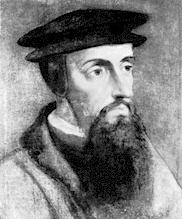
__________________________________________________________________ Title: Commentary on Genesis - Volume 2 Creator(s): Calvin, John (1509-1564) (Alternative) (Translator) Print Basis: Baker, 1996 Rights: Public Domain LC Call no: BS485 LC Subjects: The Bible Works about the Bible __________________________________________________________________ COMMENTARIES ON THE FIRST BOOK OF MOSES CALLED GENESIS BY JOHN CALVIN TRANSLATED FROM THE ORIGINAL LATIN, AND COMPARED WITH THE FRENCH EDITION, BY THE REV. JOHN KING, M.A., OF QUEEN'S COLLEGE, CAMBRIDGE, INCUMBENT OF CHRIST'S CHURCH, HULL VOLUME SECOND CHRISTIAN CLASSICS ETHEREAL LIBRARY GRAND RAPIDS, MI [1]http://www.ccel.org __________________________________________________________________ CHAPTER 24. __________________________________________________________________ Genesis 24:1-67 1. And Abraham was old, and well stricken in age: and the LORD had blessed Abraham in all things. 1. Abraham autem senex venit in dies, et Iehova benedixerat Abraham in omnibus. 2. And Abraham said unto his eldest servant of his house, that ruled over all that he had, Put, I pray thee, thy hand under my thigh: 2. Et dixit Abraham ad servum suum seniorem domus suae, qui praeerat omnibus qui erant ei, Pone nunc manum tuam sub femore meo: 3. And I will make thee swear by the LORD, the God of heaven, and the God of the earth, that thou shalt not take a wife unto my son of the daughters of the Canaanites, among whom I dwell: 3. Et adjurabo to per Iehovam Deum coeli, et Deum terrae, quod non capies uxorem filio meo de filiabus Chenaanaei, in cujus medio ego habito: 4. But thou shalt go unto my country, and to my kindred, and take a wife unto my son Isaac. 4. Sed ad terram meam, et ad cognationem meam perges, et capies uxorem filio meo Ishac. 5. And the servant said unto him, Peradventure the woman will not be willing to follow me unto this land: must I needs bring thy son again unto the land from whence thou camest? 5. Et dixit ad eum servus, Si forsitan noluerit mulier venire post me ad terram hanc, numquid reducendo reducam filium tuum ad terram unde egressus es? 6. And Abraham said unto him, Beware thou that thou bring not my son thither again. 6. Et dixit ad eum Abraham Cave tibi ne forte reducas filium meum illuc. 7. The LORD God of heaven, which took me from my father's house, and from the land of my kindred, and which spake unto me, and that sware unto me, saying, Unto thy seed will I give this land; he shall send his angel before thee, and thou shalt take a wife unto my son from thence. 7. Iehova Deus coeli, qui tulit me e domo patris mei, et e terra cognationis meae, et qui loquutus est mihi, et qui juravit mihi, dicendo, Semini tuo dabo terram hane: ipse mittet Angelum suum ante to, et capies uxorem filio meo inde. 8. And if the woman will not be willing to follow thee, then thou shalt be clear from this my oath: only bring not my son thither again. 8. Quodsi noluerit mulier pergere post to, mundus eris ab adjuratione mea ista: duntaxat filium meum ne reducas illuc. 9. And the servant put his hand under the thigh of Abraham his master, and sware to him concerning that matter. 9. Et posuit servus manum suam sub femore Abraham domini sui, et juravit ei super re hac. 10. And the servant took ten camels of the camels of his master, and departed; for all the goods of his master were in his hand: and he arose, and went to Mesopotamia, unto the city of Nahor. 10. Et accepit servus decem camelos e camelis domini sui, et perrexit: quia omne bonum domini sui erat in manu ejus: et surrexit, et profectus est in Aram-naharaim, ad civitatem Nachor. 11. And he made his camels to kneel down without the city by a well of water at the time of the evening, even the time that women go out to draw water 11. Et genu flectere fecit camelos extra civitatem ad puteum aquae, tempore vespertino, tempore quo egrediuntur mulieres, quae hauriunt. 12. And he said, O LORD God of my master Abraham, I pray thee, send me good speed this day, and shew kindness unto my master Abraham. 12. Et dixit, Iehova Deus domini mei Abraham, occurrere fac nunc coram me hodie, et fac misericordiam cum domino meo Abraham. 13. Behold, I stand here by the well of water; and the daughters of the men of the city come out to draw water: 13. Ecce, ego sto juxta fontem aquae, et filiae virorum civitatis egrediuntur ad hauriendam aquam. 14. And let it come to pass, that the damsel to whom I shall say, Let down thy pitcher, I pray thee, that I may drink; and she shall say, Drink, and I will give thy camels drink also: let the same be she that thou hast appointed for thy servant Isaac; and thereby shall I know that thou hast shewed kindness unto my master. 14. Sit ergo, puella ad quam dixero, Inclina nunc hydriam tuam, et bibam: et dixerit, Bibe, et etiam camelis tuis potum dabo: ipsam praeparaveris servo tuo Ishac: et per hoc sciam quod feceris misericordiam cum domino meo. 15. And it came to pass, before he had done speaking, that, behold, Rebekah came out, who was born to Bethuel, son of Milcah, the wife of Nahor, Abraham's brother, with her pitcher upon her shoulder. 15. Et fuit, antequam ipse complevisset loqui, ecce, Ribca egrediebatur, quae nata erat Bethuel filio Milchah uxoris Nachor fratris Abraham, et hydria ejus erat super humerum ejus. 16. And the damsel was very fair to look upon, a virgin, neither had any man known her: and she went down to the well, and filled her pitcher, and came up. 16. Puella autem erat pulchra aspectu valde, virgo, et vir non cognoverat eam: quae descendit ad fontem, et implevit hydriam suam, et ascendit. 17. And the servant ran to meet her, and said, Let me, I pray thee, drink a little water of thy pitcher. 17. Itaque cucurrit servus in occursum ejus, et dixit, Potum da mihi nunc parum aquae ex hydria tua. 18. And she said, Drink, my lord: and she hasted, and let down her pitcher upon her hand, and gave him drink. 18. Et dixit, Bibe, domine mi: et festinavit, et demisit hydriam suam super manum suam, et potum dedit ei. 19. And when she had done giving him drink, she said, I will draw water for thy camels also, until they have done drinking. 19. Ubi complevit potum dare ei: tune dixit, Etiam camelis tuis hauriam, donec compleverint bibere. 20. And she hasted, and emptied her pitcher into the trough, and ran again unto the well to draw water, and drew for all his camels. 20. Et festinavit, et effudit hydriam suam in canale, et cucurrit adhuc ad puteum ut hauriret: et hausit omnibus camelis ejus. 21. And the man wondering at her held his peace, to wit whether the LORD had made his journey prosperous or not. 21. Porro vir stupebat super ea tacens, ut sciret utrum secundasset Iehova viam suam, an non. 22. And it came to pass, as the camels had done drinking, that the man took a golden earring of half a shekel weight, and two bracelets for her hands of ten shekels weight of gold; 22. Et fuit, quum complevissent cameli bibere, protulit vir inaurem auream, semissis pondus ejus: et duas armillas, et posuit super manus ejus: decem aurei pondus earum. 23. And said, Whose daughter art thou? tell me, I pray thee: is there room in thy father's house for us to lodge in? 23. Et jam dixerat, Filia, cujus es? indica nunc mihi, numquid est in domo patris tui locus nobis ad pernoctandum? 24. And she said unto him, I am the daughter of Bethuel the son of Milcah, which she bare unto Nahor. 24. Et dixerat ad eum, Filia Bethuel sum, filii Milchah, quem peperit ipsa nachor. 25. She said moreover unto him, We have both straw and provender enough, and room to lodge in. 25. Et dixit ad eum, Etiam palea, etiam pabulum multum est apud nos, etiam locus ad pernoctandum. 26. And the man bowed down his head, and worshipped the LORD. 26. Et inclinavit se vir, et incurvavit se Iehova. 27. And he said, Blessed be the LORD God of my master Abraham, who hath not left destitute my master of his mercy and his truth: I being in the way, the LORD led me to the house of my master's brethren. 27. Et dixit, Benedictus Iehova Deus domini mei Abraham, qui non dereliquit misericordiam suam et veritatem suam a domino meo. Ego in via, duxit me Iehova ad domum fratrum domini mei. 28. And the damsel ran, and told them of her mother's house these things. 28. Et cucurrit puella, et nuntiavit domui matris suae secundum verba haec. 29. And Rebekah had a brother, and his name was Laban: and Laban ran out unto the man, unto the well. 29. Et ipsi Ribca erat frater, et nomen ejus Laban: et cucurrit Laban ad virum foras ad fontem. 30. And it came to pass, when he saw the earring and bracelets upon his sister's hands, and when he heard the words of Rebekah his sister, saying, Thus spake the man unto me; that he came unto the man; and, behold, he stood by the camels at the well. 30. Fuit autem, quum vidisset inaurem et armillas in manibus sororis suae, et quum audisset ipse verba Ribca sororis suae, dicendo, Sic loquutus est ad me vir: venit a virum, et ecce, stabat juxta camelos, juxta fontem. 31. And he said, Come in, thou blessed of the LORD; wherefore standest thou without? for I have prepared the house, and room for the camels. 31. Et dixit, Ingredere benedicte Iehovae, ut quid manes foris? et ego paravi domum, et locum camelis. 32. And the man came into the house: and he ungirded his camels, and gave straw and provender for the camels, and water to wash his feet, and the men's feet that were with him. 32. Et venit vir ad domum, et solvit camelos, et dedit paleam et pabulum camelis, et aquam ad lavandum pedes ejus, et pedes virorum qui erant cum eo. 33. And there was set meat before him to eat: but he said, I will not eat, until I have told mine errand. And he said, Speak on. 33. Et positum est coram eo, ut comederet: et dixit, Non comedam, donec loquutus fuero verba mea. Et dixit, Loquere. 34. And he said, I am Abraham's servant. 34. Dixit igitur, Servus Abraham sum. 35. And the LORD hath blessed my master greatly; and he is become great: and he hath given him flocks, and herds, and silver, and gold, and menservants, and maidservants, and camels, and asses. 35. Iehova autem benedixit domino meo valde, et magnificatus est, et dedit ei pecudes et boves, et argentum, et aurum, et servos, et ancillas, et camelos, et asinos. 36. And Sarah my master's wife bare a son to my master when she was old: and unto him hath he given all that he hath. 36. Et peperit Sarah uxor domini mei filium domino meo post senectutem suam, et dedit ei omnia quae sunt ei. 37. And my master made me swear, saying, Thou shalt not take a wife to my son of the daughters of the Canaanites, in whose land I dwell: 37. Et jurare fecit me dominus meus, dicendo, Non capies uxorem filio meo de filiabus Chenaanaei, in cujus terra ego habito: 38. But thou shalt go unto my father's house, and to my kindred, and take a wife unto my son. 38. Sed ad domum patris mei perges, et ad familiam meam, et capies uxorem filio meo. 39. And I said unto my master, Peradventure the woman will not follow me. 39. Et dixi domino meo, Forsitan non perget mulier post me. 40. And he said unto me, The LORD, before whom I walk, will send his angel with thee, and prosper thy way; and thou shalt take a wife for my son of my kindred, and of my father's house: 40. Et dixit ad me, Iehova, in cujus conspectu ambulavi, mittet Angelum suum tecum, et secundabit viam tuam: et capies uxorem filio meo de familia mea, et de domo patris mei. 41. Then shalt thou be clear from this my oath, when thou comest to my kindred; and if they give not thee one, thou shalt be clear from my oath. 41. Tunc mundus eris ab adjuratione mea, si veneris ad familiam meam: et si non dederint tibi, eris mundus ab adjuratione mea. 42. And I came this day unto the well, and said, O LORD God of my master Abraham, if now thou do prosper my way which I go: 42. Veni igitur hodie ad fontem, et dixi, Iehova Deus domini mei Abraham, si tu nunc secundas viam meam, per quam ego ambulo: 43. Behold, I stand by the well of water; and it shall come to pass, that when the virgin cometh forth to draw water, and I say to her, Give me, I pray thee, a little water of thy pitcher to drink; 43. Ecce, ego sto juxta fontem aquae: itaque sit, virgo quae egredietur ad hauriendum, et dixero ei, Da mihi potum nunc parum aquae ex hydria tua: 44. And she say to me, Both drink thou, and I will also draw for thy camels: let the same be the woman whom the LORD hath appointed out for my master's son. 44. Et dixerit mihi, Etiam tu bibe, et etiam camelis tuis hauriam: ipsa sit uxor, quam praeparavit Iehova filio domini mei. 45. And before I had done speaking in mine heart, behold, Rebekah came forth with her pitcher on her shoulder; and she went down unto the well, and drew water: and I said unto her, Let me drink, I pray thee. 45. Ego antequam complerem loqui in corde meo, ecce, Ribca egrediebatur, et hydria ejus erat super humerum ejus, et descendit ad fontem, et hausit: et dixi ad eam, Da mihi potum nunc. 46. And she made haste, and let down her pitcher from her shoulder, and said, Drink, and I will give thy camels drink also: so I drank, and she made the camels drink also. 46. Et festinavit, et demisit hydriam suam desuper se, et dixit, Bibe, et etiam camelis tuis potum dabo. Et bibi, et etiam camelis dedit potum. 47. And I asked her, and said, Whose daughter art thou? And she said, The daughter of Bethuel, Nahor's son, whom Milcah bare unto him: and I put the earring upon her face, and the bracelets upon her hands. 47. Et interrogavi eam, et dixi, Filia cujus es? Et dixit, Filia Bethuel filii nachor, quem peperit ei Milchah. Et posui inaurem super nares ejus, et armillas super manus ejus. 48. And I bowed down my head, and worshipped the LORD, and blessed the LORD God of my master Abraham, which had led me in the right way to take my master's brother's daughter unto his son. 48. Et inclinavi me, incurvavique me Iehovae, et benedixi Iehovae Deo domini mei Abraham, qui duxit me per viam veritatis, (vel certam fidem,) ut acciperem filiam fratris domini mei filio ejus. 49. And now if ye will deal kindly and truly with my master, tell me: and if not, tell me; that I may turn to the right hand, or to the left. 49. Et nunc si facitis misericordiam et veritatem cum domino meo, indicate mihi: et si non, indicate mihi, et vertam me ad dexteram vel ad sinistram. 50. Then Laban and Bethuel answered and said, The thing proceedeth from the LORD: we cannot speak unto thee bad or good. 50. Et responderunt Laban et Bethuel, et dixerunt, A Iehova egressa est res: non possumus loqui ad to malum vel bonum. 51. Behold, Rebekah is before thee, take her, and go, and let her be thy master's son's wife, as the LORD hath spoken. 51. Ecce, Ribca coram to, accipe, et vade: et sit uxor filio domini tui, quemadmodum loquutus est Iehova. 52. And it came to pass, that, when Abraham's servant heard their words, he worshipped the LORD, bowing himself to the earth. 52. Et fuit, quando audivit servus Abraham verba eorum, incurvavit se super terram Iehovae. 53. And the servant brought forth jewels of silver, and jewels of gold, and raiment, and gave them to Rebekah: he gave also to her brother and to her mother precious things. 53. Et protulit servus vasa argentea, et vasa aurea, et vestes, et dedit ipsi Ribcae, et pretiosa dedit fratri ejus, et matri ejus. 54. And they did eat and drink, he and the men that were with him, and tarried all night; and they rose up in the morning, and he said, Send me away unto my master. 54. Et comederunt, et biberunt, ipse et viri qui erant cum eo, et pernoctaverunt: et surrexerunt mane: et dixit, Dimitte me, ut vadam ad dominum meum. 55. And her brother and her mother said, Let the damsel abide with us a few days, at the least ten; after that she shall go. 55. Et dixit frater ejus et mater ejus, Maneat puella nobiscum per dies, vel decem: postea ibis, (vel ibit.) 56. And he said unto them, Hinder me not, seeing the LORD hath prospered my way; send me away that I may go to my master. 56. Et dixit ad eos, Ne retardetis me, quando Iehova secundavit viam meam: dimittite me, et ibo ad dominum meum. 57. And they said, We will call the damsel, and enquire at her mouth. 57. Et dixerunt, Vocemus puellam, et interrogemus os ejus. 58. And they called Rebekah, and said unto her, Wilt thou go with this man? And she said, I will go. 58. Et vocaverunt Ribcam, et dixerunt ad eam, Numquid ibis cum viro isto? Et dixit, Ibo. 59. And they sent away Rebekah their sister, and her nurse, and Abraham's servant, and his men. 59. Et dimiserunt Ribcam sororem suam, et nutricem ejus, et servum Abraham, et viros ejus. 60. And they blessed Rebekah, and said unto her, Thou art our sister, be thou the mother of thousands of millions, and let thy seed possess the gate of those which hate them. 60. Et benedixerunt Ribcae, et dixerunt ei, Soror nostra es, sis in millia decem millium, et haereditet semen tuum portam odio habentium illud. 61. And Rebekah arose, and her damsels, and they rode upon the camels, and followed the man: and the servant took Rebekah, and went his way. 61. Et surrexit Ribea et puellae ejus, et ascenderunt super camelos, et perrexerunt post virum: et tulit servus Ribcah, et abiit. 62. And Isaac came from the way of the well Lahairoi; for he dwelt in the south country. 62. Ishac autem veniebat, qua venitur a Puteo viventis videntis me: et ipse habitabat in terra Meridiana. 63. And Isaac went out to meditate in the field at the eventide: and he lifted up his eyes, and saw, and, behold, the camels were coming. 63. Et egressus erat Ishac ad orandum in agro, dum declinaret vespera: et elevavit oculos suos, et vidit, et ecce, cameli veniebant. 64. And Rebekah lifted up her eyes, and when she saw Isaac, she lighted off the camel. 64. Tunc elevavit Ribcah oculos suos, et vidit Ishac, et projecit se de camelo. 65. For she had said unto the servant, What man is this that walketh in the field to meet us? And the servant had said, It is my master: therefore she took a vail, and covered herself. 65. Iam autem dixerat ad servum, Quis est vir iste, qui ambulat per agrum in occursum nostrum? Et dixit servus, Ipse est dominus meus: et accepit velum, et operuit se. 66. And the servant told Isaac all things that he had done. 66. Et narravit servus ipsi Ishac omnia quae fecerat. 67. And Isaac brought her into his mother Sarah's tent, and took Rebekah, and she became his wife; and he loved her: and Isaac was comforted after his mother's death 67. Et introduxit eam Ishac in tabernaculum Sarah matris suae, et accepit Ribcah, fuitque ei in uxorem, at delexit cam: et consolatus est se Ishac post matrem suam. 1. And Abraham was old. [1] Moses passes onwards to the relation of Isaac's marriage, because indeed Abraham, perceiving himself to be worn down by old age, would take care that his son should not marry a wife in the land of Canaan. In this place Moses expressly describes Abraham as an old man, in order that we may learn that he had been admonished, by his very age, to seek a wife for his son: for old age itself, which, at the most, is not far distant from death, ought to induce us so to order the affairs of our family, that when we die, peace may be preserved among our posterity, the fear of the Lord may flourish, and rightly-constituted order may prevail. The old age of Abraham was indeed yet green, as we shall see hereafter; but when he reckoned up his own years he deemed it time to consult for the welfare of his son. Irreligious men, partly because they do not hold marriage sufficiently in honor, partly because they do not consider the importance attached especially to the marriage of Isaac, wonder that Moses, or rather the Spirit of God, should be employed in affairs so minute; but if we have that reverence which is due in reading the Sacred Scriptures, we shall easily understand that here is nothing superfluous: for inasmuch as men can scarcely persuade themselves that the Providence of God extends to marriages, so much the more does Moses insist on this point. He chiefly, however, wishes to teach that God honored the family of Abraham with especial regard, because the Church was to spring from it. But it will be better to treat of everything in its proper order. 2. And Abraham said unto his eldest servant. Abraham here fulfils the common duty of parents, in laboring for and being solicitous about the choice of a wife for his son: but he looks somewhat further; for since God had separated him from the Canaanites by a sacred covenant, he justly fears lest Isaac, by joining himself in affinity with them, should shake off the yoke of God. Some suppose that the depraved morals of those nations were so displeasing to him, that he conceived the marriage of his son must prove unhappy if he should take a wife from among them. But the special reason was, as I have stated, that he would not allow his own race to be mingled with that of the Canaanites, whom he knew to be already divinely appointed to destruction; yea, since upon their overthrow he was to be put into possession of the land, he was commanded to treat them with distrust as perpetual enemies. And although he had dwelt in tranquility among them for a time, yet he could not have a community of offspring with them without confounding things which, by the command of God, were to be kept distinct. Hence he wished both himself and his family to maintain this separation entire. Put, I pray thee, thy hand. It is sufficiently obvious that this was a solemn form of swearing; but whether Abraham had first introduced it, or whether he had received it from his fathers, is unknown. The greater part of Jewish writers declare that Abraham was the author of it; because, in their opinion, this ceremony is of the same force as if his servant had sworn by the sanctity of the divine covenant, since circumcision was in that part of his person. But Christian writers conceive that the hand was placed under the thigh in honor of the blessed seed. [2] Yet it may be that these earliest fathers had something different in view; and there are those among the Jews who assert that it was a token of subjection, when the servant was sworn on the thigh of his master. The more plausible opinion is, that the ancients in this manner swore by Christ; but because I do not willingly follow uncertain conjectures, I leave the question undecided. Nevertheless the latter supposition appears to me the more simple; namely, that servants, when they swore fidelity to their lords, were accustomed to testify their subjection by this ceremony, especially since they say that this practice is still observed in certain parts of the East. That it was no profane rite, which would detract anything from the glory of God, we infer from the fact that the name of God is interposed. It is true that the servant placed his hand under the thigh of Abraham, but he is adjured by God, the Creator of heaven and earth; and this is the sacred method of adjuration, whereby God is invoked as the witness and the judge; for this honor cannot be transferred to another without casting a reproach upon God. Moreover, we are taught, by the example of Abraham, that they do not sin who demand an oath for a lawful cause; for this is not recited among the faults of Abraham, but is recorded to his peculiar praise. It has already been shown that the affair was of the utmost importance, since it was undertaken in order that the covenant of God might be ratified among his posterity. He was therefore impelled, by just reasons, most anxiously to provide for the accomplishment of his object, by taking an oath of his servant: and beyond doubt, the disposition, and even the virtue of Isaac, were so conspicuous, that in addition to his riches, he had such endowments of mind and person, that many would earnestly desire affinity with him. His father, therefore, fears lest, after his own death, the inhabitants of the land should captivate Isaac by their allurements. Now, though Isaac has hitherto steadfastly resisted those allurements, the snares of which few young men escape, Abraham still fears lest, by shame and the dread of giving offense, he may be overcome. The holy man wished to anticipate these and similar dangers, when he bound his servant to fidelity, by interposing an oath; and it may be that some secret necessity also impelled him to take this course. 3. That thou shalt not take a wife. The kind of discipline which prevailed in Abraham's house is here apparent. Although this man was but a servant, yet, because he was put in authority by the master of the family, his servile condition did not prevent him from being next in authority to his lord; so that Isaac himself, the heir and successor of Abraham, submitted to his direction. To such an extent did the authority of Abraham and reverence for him prevail, that when he substituted a servant in his place, he caused this servant, by his mere will or word, to exercise a power which other masters of families find it difficult to retain for themselves. The modesty also of Isaac, who suffered himself to be governed by a servant, is obvious; for it would have been in vain for Abraham to enter into engagements with his servant, had he not been persuaded that his son would prove submissive and tractable. It here appears what great veneration he cherished towards his father; because Abraham, relying on Isaac's obedience, confidently calls his servant to him. Now this example should be taken by us as a common rule, to show that it is not lawful for the children of a family to contract marriage, except with the consent of parents; and certainly natural equity dictates that, in a matter of such importance, children should depend upon the will of their parents. How detestable, therefore, is the barbarity of the Pope, who has dared to burst this sacred bond asunder! Wherefore the wantonness of youths is to be restrained, that they may not rashly contract nuptials without consulting their fathers. 4. But thou shalt go unto my country and to my kindred. It seems that, in the choice of the place, Abraham was influenced by the thought, that a wife would more willingly come from thence to be married to his son, when she knew that she was to marry one of her own race and country. But because it afterwards follows that the servant came to Padan Aram, some hence infer that Mesopotamia was Abraham's country. The solution, however, of this difficulty is easy. We know that Mesopotamia was not only the region contained between the Tigris and the Euphrates, but that a part also of Chaldea was comprehended in it; for Babylon is often placed there by profane writers. The Hebrew name simply means, "Syria of the rivers." They give the name Aram to that part of Syria which, beginning near Judea, embraces Armenia and other extensive regions, and reaches almost to the Euxine Sea. But when they especially designate those lands which are washed or traversed by the Tigris and Euphrates, they add the name "Padan:" for we know that Moses did not speak scientifically, but in a popular style. Since, however, he afterwards relates that Laban, the son of Nahor, dwelt at Charran, (Genesis 29:4,) it seems to me probable that Nahor, who had remained in Chaldea, because it would be troublesome to leave his native soil, in process of time changed his mind; either because filial piety constrained him to attend to his decrepit and declining father, or because he had learned that he might have there a home as commodious as in his own country. It certainly appears from the eleventh chapter Genesis 11:1 that he had not migrated at the same time with his father. [3] 5. And the servant said unto him. Since he raises no objection respecting Isaac, we may conjecture that he was so fully persuaded of his integrity as to have no doubt of his acquiescence in his father's will. We must also admire the religious scrupulosity of the man, seeing he does not rashly take an oath. What pertained to the faithful and diligent discharge of his own duty he might lawfully promise, under the sanction of an oath; but since the completion of the affair depended on the will of others, he properly and wisely adduces this exception, "Peradventure the woman will not be willing to follow me." 6. Beware that thou bring not my son thither again. If the woman should not be found willing, Abraham, commending the event to God, firmly adheres to the principal point, that his son Isaac should not return to his country, because in this manner he would have deprived himself of the promised inheritance. He therefore chooses rather to live by hope, as a stranger, in the land of Canaan, than to rest among his relatives in his native soil: and thus we see that, in perplexed and confused affairs, the mind of the holy man was not drawn aside from the command of God by any agitating cares; and we are taught, by his example, to follow God through every obstacle. However, he afterwards declares that he looks for better things. By such words he confirms the confidence of his servant, so that he, anticipating with greater alacrity a prosperous issue, might prepare for the journey. 7. The Lord God of heaven. By a twofold argument Abraham infers, that what he is deliberating respecting the marriage of his son will, by the grace of God, have a prosperous issue. First, because God had not led him forth in vain from his own country into a foreign land; and secondly, because God had not falsely promised to give the land, in which he was dwelling as a stranger, to his seed. He might also with propriety be confident that his design should succeed, because he had undertaken it only by the authority, and, as it were, under the auspices of God; for it was his exclusive regard for God which turned away his mind from the daughters of Canaan. He may, however, be thought to have inferred without reason that God would give his son a wife from that country and kindred to which he himself had bidden farewell. But whereas he had left his relatives only at the divine command, he hopes that God will incline their minds to be propitious and favorable to him. Meanwhile he concludes, from the past kindnesses of God, that his hand would not fail him in the present business; as if he would say, "I, who at the command of God left my country, and have experienced his continued help in my pilgrimage, do not doubt that he will also be the guide of thy journey, because it is in reliance on his promise that I lay upon thee this injunction." He then describes the mode in which assistance would be granted; namely, that God would send his angel, for he knew that God helps his servants by the ministration of angels, of which he had already received many proofs. By calling God the God of heaven, he celebrates that divine power which was the ground of his confidence. 10. And the servant took ten camels. He takes the camels with him, to prove that Abraham is a man of great wealth, in order that he may the more easily obtain what he desires. For even an open-hearted girl would not easily suffer herself to be drawn away to a distant region, unless on the proposed condition of being supplied with the conveniences of life. Exile itself is sad enough, without poverty as its attendant. Therefore, that the maid might not be deterred by the apprehension of want, but rather invited by the prospect of affluence, he ladens ten camels with presents, to give sufficient proof to the inhabitants of Chaldea of the domestic opulence of Abraham. What follows, namely, that "all the substance of Abraham was in the hand of his servant," some of the Hebrews improperly explain as meaning that the servant took with him an account of all Abraham's wealth, described and attested in written documents. It is rather the assigning of the reason of the fact, which might appear improbable, that the servant assumed so much power to himself. Therefore Moses, having said that a man who was but a servant set out on a journey with such a sumptuous and splendid equipage, immediately adds, that he did this of his own accord, because he had all the substance of Abraham in his hand. In saying that he came to the city of Nahor, he neither mentions the name of the city nor the part of Chaldea, or of any other region, where he dwelt, but only says, in general terms, that he came to "Syria of the rivers," concerning which term I have said something above. 12. O lord God of my master Abraham. The servant, being destitute of counsel, retakes himself to prayers. Yet he does not simply ask counsel of the Lord; but he also prays that the maid appointed to be the wife of Isaac should be brought to him with a certain sign, from which he might gather that she was divinely presented to him. It is an evidence of his piety and faith, that in a matter of such perplexity he is not bewildered, as one astonished; but breaks forth into prayer with a collected mind. But the method which he uses [4] seems scarcely consistent with the true rule of prayer. For, first, we know that no one prays aright unless he subjects his own wishes to God. Wherefore there is nothing more unsuitable than to prescribe anything, at our own will, to God. Where, then, it may be asked, is the religion of the servant, who, according to his own pleasure, imposes a law upon God? Secondly, there ought to be nothing ambiguous in our prayers; and absolute certainty is to be sought for only in the Word of God. Now, since the servant prescribes to God what answer shall be given, he appears culpably to depart from the suitable modesty of prayer; for although no promise had been given him, he nevertheless desires to be made fully certain respecting the whole affair. God, however, [5] in hearkening to his wish, proves, by the event, that it was acceptable to himself. Therefore we must know, that although a special promise had not been made at the moment, yet the servant was not praying rashly, nor according to the lust of the flesh, but by the secret impulse of the Spirit. Moreover, the general law, by which all the pious are bound, does not prevent the Lord, when he determines to give something extraordinary, from directing the minds of his servants towards it; not that he would lead them away from his word, but only that he makes some peculiar concession to them in their mode of praying. The sum of the prayer before us is this: "O Lord, if a damsel shall present herself who, being asked to give me drink, shall also kindly and courteously offer it to my camels, I will seek after her as a wife for my master Isaac, just as if she were delivered into my hand by thee." He seems, indeed, to be laying hold on some dubious conjecture; but since he reposes on the Providence of God, he is certainly persuaded that this token shall be to him equivalent to an oracle; because God, who is the guardian of his enterprise, will not suffer him to err. Meanwhile this is worthy of remark, that he does not fetch the sign of recognition from afar, but takes it from something present; for she who shall be thus humane to an unknown guest, will, by that very act, give proof of an excellent disposition. This observation may be of use to prevent inquisitive men from adducing this example as a precedent for vain prognostications. In the words themselves the following particulars are to be noticed: first, that he addresses himself to the God of his master Abraham; not as being himself a stranger to the worship of God, but because the affair in question depends upon the promise given to Abraham. And truly he had no confidence in prayer, from any other source than from the covenant into which God had entered with the house of Abraham. The expression "cause to meet me this day," [6] Jerome renders, "meet me, I pray, this day." But the verb is transitive, and the servant of Abraham intimates by the use of it, that the affairs of men were so ordered by the counsel and the hand of God, that the issue of them was not fortuitous; as if he would say, O Lord, in vain shall I look on this side and on that; in vain shall I catch at success by my own labor, industry and various contrivances, unless thou direct the work. And when he immediately afterwards subjoins, show kindness to my master, he implies that in this undertaking he rests upon nothing but the grace which God had promised to Abraham. 15. Before he had done speaking. The sequel sufficiently demonstrates that his wish had not been foolishly conceived. For the quickness of the answer manifests the extraordinary indulgence of God, who does not suffer the man to be long harassed with anxiety. Rebekah had, indeed, left her house before he began to pray; but it must be maintained that the Lord, at whose disposal are both the moments of time and the ways of man, had so ordered it on both sides as to give clear manifestation of his Providence. For sometimes he keeps us the longer in suspense, till, wearied with praying, we may seem to have lost our labor; but in this affair, in order that his blessing might not seem doubtful, he suddenly interposed. The same thing also happened to Daniel, unto whom the angel appeared, before the conclusion of his prayer. (Daniel 9:21.) Now, although it frequently happens that, on account of our sloth, the Lord delays to grant our requests, it is, at such times, expedient for us, that what we ask should be delayed. In the meantime, he has openly and conspicuously proved, by unquestionable examples, that although the event may not immediately respond to our wishes, the prayers of his people are never in vain: yea, his own declaration, that before they cry he is mindful of their wants, is invariably fulfilled. (Isaiah 65:24.) 21. And the man, wondering at her, held his peace. This wondering of Abraham's servant, shows that he had some doubt in his mind. He is silently inquiring within himself, whether God would render his journey prosperous. Has he, then, no confidence concerning that divine direction, of which he had received the sign or pledge? I answer, that faith is never so absolutely perfect in the saints as to prevent the occurrence of many doubts. There is, therefore, no absurdity in supposing that the servant of Abraham, though committing himself generally to the providence of God, yet wavers, and is agitated, amidst a multiplicity of conflicting thoughts. Again, faith, although it pacifies and calms the minds of the pious, so that they patiently wait for God, still does not exonerate them from all care; because it is necessary that patience itself should be exercised, by anxious expectation, until the Lord fulfill what he has promised. But though this hesitation of Abraham's servant was not free from fault, inasmuch as it flowed from infirmity of faith; it is vet, on this account, excusable, because he did not turn his eyes in another direction, but only sought from the event a confirmation of his faith, that he might perceive God to be present with him. 22. The man took a golden ear-ring. His adorning the damsel with precious ornaments is a token of his confidence. For since it is evident by many proofs that he was an honest and careful servant, he would not throw away without discretion the treasures of his master. He knows, therefore, that these gifts will not be ill-bestowed; or, at least, relying on the goodness of God, he gives them, in faith, as an earnest of future marriage. But it may be asked, Whether God approves ornaments of this kind, which pertain not so much to neatness as to pomp? I answer, that the things related in Scripture are not always proper to be imitated. Whatever the Lord commands in general terms is to be accounted as an inflexible rule of conduct; but to rely on particular examples is not only dangerous, but even foolish and absurd. Now we know how highly displeasing to God is not only pomp and ambition in adorning the body, but all kind of luxury. In order to free the heart from inward cupidity, he condemns that immoderate and superfluous splendor, which contains within itself many allurements to vice. Where, indeed, is pure sincerity of heart found under splendid ornaments? Certainly all acknowledge this virtue to be rare. It is not, however, for us expressly to forbid every kind of ornament; yet because whatever exceeds the frugal use of such things is tarnished with some degree of vanity; and more especially, because the cupidity of women is, on this point, insatiable; not only must moderation, but even abstinence, be cultivated as far as possible. Further, ambition silently creeps in, so that the somewhat excessive adorning of the person soon breaks out into disorder. With respect to the earrings and bracelets of Rebekah, as I do not doubt that they were those in use among the rich, so the uprightness of the age allowed them to be sparingly and frugally used; and yet I do not excuse the fault. This example, however, neither helps us, nor alleviates our guilt, if, by such means, we excite and continually inflame those depraved lusts which, even when all incentives are removed, it is excessively difficult to restrain. The women who desire to shine in gold, seek in Rebekah a pretext for their corruption. Why, therefore, do they not, in like manner, conform to the same austere kind of life and rustic labor to which she applied herself? But, as I have just said, they are deceived who imagine that the examples of the saints can sanction them in opposition to the common law of God. Should any one object that it is abhorrent to the modesty of a virtuous and chaste maiden to receive earrings and bracelets from a man who was a stranger, and whom she had never before seen. In the first place, it may be, that Moses passes over much conversation held on both sides, by which it is probable she was induced to venture on the reception of them. It may also be, that he relates first what was last in order. For it follows soon afterwards in the context, that the servant of Abraham inquired whose daughter she was. We must also take into account the simplicity of that age. Whence does it arise that it was not disreputable for a maid to go alone out of the city, unless that then the morals of mankind did not require so severe a guard for the preservation of modesty? Indeed, it appears from the context, that the ornaments were not given her for a dishonorable purpose; [7] but a portion is offered to the parents to facilitate the contract for marriage. Interpreters are not agreed respecting the value of the presents. Moses estimates the earrings at half a shekel, and the bracelets at ten shekels. Jerome, instead of half a shekel, reads two shekels. I conceive the genuine sense to be, that the bracelets were worth ten shekels, and the frontal ornament or earrings worth half that sum, or five shekels. For since nothing is added after the word B+Q+E+ (bekah,) it has reference to the greater number. [8] Otherwise here is no suitable proportion between the bracelets and the ornaments for the head. Moreover, if we take the shekel for four Attic drachms, the value is trifling; therefore I think the weight of gold is indicated, which makes the sum much greater than the piece of money called a shekel. 26. And the man bowed down his head. When the servant of Abraham hears that he had alighted upon the daughter of Bethel, he is more and more elated with hope. Yet he does not exult, as profane men are wont to do, as if the occurrence were fortuitous; but he gives thanks to God, regarding it, as the result of Providence, that he had been thus opportunely led straight to the place he had wished. He does not, therefore, boast of his good fortune; but he declares that God had dealt kindly and faithfully with Abraham; or, in other words, that, for his own mercy's sake, God had been faithful in fulfilling his promises. It is true that the same form of speech is applied to the persons present; just as it follows soon after in the same chapter, (Genesis 24:49,) "If ye will deal kindly and truly with my master tell me." The language is, however, peculiarly suitable to the character of God, both because he gratuitously confers favors upon men, and is specially inclined to beneficence: and also, by never frustrating their hope, he proves himself to be faithful and true. This thanksgiving, therefore, teaches us always to have the providence of God before our eyes, in order that we may ascribe to him whatever happens prosperously to us. 28. And the damsel ran and told them of her mother's house. It is possible, that the mother of Rebekah occupied a separate house; not that she had a family divided from that of her husband, but for the purpose of keeping her daughters and maidens under her own custody. The expression may, however, be more simply explained to mean, that she came directly to her mother's chamber; because she could more easily relate the matter to her than to her father. It is also probable, that when Bethuel was informed of the fact, by the relation of his wife, their son Laban was sent by both of them to introduce the stranger. Other explanations are needless. 33. I will not eat until I have told my errand [9] Moses begins to show by what means the parents of Rebekah were induced to give her in marriage to their nephew. That the servant, when food was set before him, should refuse to eat till he had completed his work is a proof of his diligence and fidelity; and it may with propriety be regarded as one of the benefits which God had vouchsafed to Abraham, that he should have a servant so faithful, and so intent upon his duty. Since, however, this was the reward of the holy discipline which Abraham maintained, we cannot wonder that very few such servants are to be found, seeing that everywhere they are so ill-governed. Moreover, although the servant seems to weave a superfluous story, yet there is nothing in it which is not available to his immediate purpose. He knew that it was a feeling naturally inherent in parents, not willingly to send away their children to a distance. He therefore first commemorates Abraham's riches, that they might not hesitate to connect their daughter with a husband so wealthy. He secondly explains that Isaac was born of his mother in her old age; not merely for the purpose of informing them that he had been miraculously given to his father, whence they might infer that he had been divinely appointed to this greatness and eminence; but that an additional commendation might be given on account of Isaac's age. In the third place, he affirms that Isaac would be the sole heir of his father. Fourthly, he relates that he had been bound by an oath to seek a wife for his master Isaac, from among his own kindred; which special choice on the part of Abraham was very effectual in moving them to compliance. Fifthly, he states that Abraham, in full confidence that God would be the leader of his journey, had committed the whole business to him. Sixthly, he declares, that whatever he had asked in prayer he had obtained from the Lord; whence it appeared that the marriage of which he was about to treat was according to the will of God. We now see the design of his narration: First, to persuade the parents of Rebekah that he had not been sent for the purpose of deceiving them, that he had not in anything acted craftily, or by oblique methods, but in the fear of the Lord, as the religious obligation of marriage requires. Secondly, that he was desiring nothing which would not be profitable and honorable for them. And lastly, that God had been the director of the whole affair. Moreover, since the servant of Abraham, though persuaded that the angel of God would be the guide of his journey, yet neither directs his prayers nor his thanksgivings to him, we may hence learn that angels are not, in such a sense, constituted the ministers of God to us, as that they should be invoked by us, or should transfer to themselves the worship due to God; a superstition which prevails nearly over the whole world to such a degree, that men turn aside a portion of their faith from the only fountain of all good to the rivulets which flow from it. The clause, the Lord, before whom I walk, (Genesis 24:40,) which some refer to the probity and good conscience of Abraham, I rather explain as applying to the faith, by which he set God before him, as the governor of his life, being confident that he was the object of God's care, and dependent upon his grace. If ye will deal kindly [10] I have lately related the force of this expression; namely, to act with humanity and good faith. He thus modestly and suppliantly asks them to consent to the marriage of Isaac and Rebekah: should he meet with a repulse from them, he says, he will go either to the right hand or to the left; that is, he will look around elsewhere. For he places the right hand and the left in contrast with the straight way in which he had been led to them. It is, however, with fertile ingenuity that some of the Hebrews explain the words as meaning, that he would go to Lot, or to Ishmael. 50. The thing proceedeth from the Lord. Whereas they are convinced by the discourse of the man, that God was the Author of this marriage, they avow that it would be unlawful for them to offer anything in the way of contradiction. They declare that the thing proceedeth from the Lord; because he had, by the clearest signs, made his will manifest. Hence we perceive, that although the true religion was in part observed among them, and in part infected with vicious errors, yet the fear of God was never so utterly extinguished, but this axiom remained firmly fixed in all their minds, that God must be obeyed. If, then, wretched idolaters, who had almost fallen away from religion, nevertheless so subjected themselves to God, as to acknowledge it to be unlawful for them to swerve from his will, how much more prompt ought our obedience to be? Therefore, as soon as the will of God is made known to us, not only let our tongues be silent, but let all our senses be still; because it is an audacious profanation to admit any thought which is opposed to that will. 52. He worshipped. Moses again repeats that Abraham's servant gave thanks to God; and it is not without reason that he so often inculcates this religious duty; because, since God requires nothing greater from us, the neglect of it betrays the most shameful indolence. The acknowledgment of God's kindness is a sacrifice of sweet-smelling savor; yea, it is a more acceptable service than all sacrifices. God is continually heaping innumerable benefits upon men. Their ingratitude, therefore, is intolerable, if they fail to exercise themselves in celebrating those benefits. 54. And they rose up in the morning. On this point Moses insists the more particularly; partly, for the purpose of commending the faithful industry of the servant in fulfilling his master's commands; partly, for that of teaching, that his mind was inflamed by the Spirit of God, for he is so ardent as to allow no truce to others, and no relaxation to himself. Thus, although he conducted himself as became an honest and prudent servant, it is still not to be doubted that the Lord impelled him, for Isaac's sake, to act as he did. So the Lord watches over his own people while they sleep, expedites and accomplishes their affairs in their absence, and influences the dispositions of all, so far as is expedient, to render them assistance. It is by a forced interpretation, that some would explain the ten days, during which Laban and his mother desire the departure of Rebekah to be deferred, as meaning years or months. For it was merely the tender wish of the mother, who could ill bear that her daughter should thus suddenly be torn away from her bosom. 57. We will call the damsel. Bethuel, who had before unreservedly given his daughter in marriage, now seems to adhere, with but little constancy, to his purpose. When, however, he had previously offered his daughter, without making any exception, he is to be understood as having done it, only so far as he was able. But now, Moses declares that he did not exercise tyranny over his daughter, so as to thrust her out reluctantly, or to compel her to marry against her will, but left her to her own free choice. Truly, in this matter, the authority of parents ought to be sacred: but a middle course is to be pursued, so that the parties concerned may make their contract spontaneously, and with mutual consent. It is not right to understand that Rebekah in answering so explicitly, showed contempt for the paternal roof, or too anxiously desired a husband; [11] but since she saw that the affair was transacted by the authority of her father, and with the consent of her mother, she also herself acquiesced in it. 59. And they sent away Rebekah. Moses first relates, that Rebekah was honorably dismissed; because her nurse was given unto her. Moreover, I doubt not that they had domestic nurses, who were their handmaidens; not that mothers entirely neglected that duty, but that they committed the care of education to one particular maid. They therefore who assisted mothers with subsidiary service were called nurses. Moses afterwards adds, that Rebekah's relatives "blessed her," (Genesis 24:60,) by which expression he means, that they prayed that her condition might be a happy one. We know that it was a solemn custom, in all ages, and among all people, to accompany marriages with all good wishes. And although posterity has greatly degenerated from the pure and genuine method of celebrating marriages used by the fathers; yet it is God's will that some public testimony should stand forth, by which men may be admonished, that no nuptials are lawful, except those which are rightly consecrated. Now, the particular form of benediction which is here related, was probably in common use, because nature dictates that the propagation of offspring is the special end of marriage. Under the notion of victory (Genesis 24:60) is comprehended a prosperous state of life. The Lord, however, directed their tongues to utter a prophecy of which they themselves were ignorant. To possess the gates of enemies, means to obtain dominion over them; because judgment was administered in the gates, and the bulwarks of the city were placed there. 63. And Isaac went out. It appears that Isaac dwelt apart from his father; either because the family was too large, or because such was the custom. And perhaps Abraham had already married another wife; so that, for the sake of avoiding contentions, it would seem more convenient for him to have a house of his own. Thus great wealth has its attendant troubles. Doubtless, of all earthly blessings granted by God, none would have been sweeter to Abraham than that of living with his son. However, I by no means think that he was deprived of his society and assistance. For such was the piety of Isaac, that he undoubtedly studied to discharge every duty towards his father: this alone was wanting, that they did not live in the same house. Moses also relates how it happened that Isaac met with his wife before she reached his home. For he says, that Isaac went out in the evening to meditate or to pray. For the Hebrew word ShW+X+ (soach) may mean either. It is probable that he did this according to his custom, and that he sought a place of retirement for prayer, in order that his mind, being released from all avocations, might be the more at liberty to serve God. Whether, however, he was giving his mind to meditation or to prayer, the Lord granted him a token of his own presence in that joyful meeting. 64. And Rebekah lifted up her eyes. We may easily conjecture that Isaac, when he saw the camels, turned his steps towards them, from the desire of seeing his bride; this gave occasion to the inquiry of Rebekah. Having received the answer, she immediately, for the sake of doing honor to her husband, dismounted her camel to salute him. For that she fell, struck with fear, as some suppose, in no way agrees with the narrative. She had performed too long a journey, under the protection of many attendants, to be so greatly afraid at the sight of one man. But these interpreters are deceived, because they do not perceive, that in the words of Moses, the reason is afterwards given to this effect, that when Rebekah saw Isaac, she alighted from her camel; because she had inquired of the servant who he was, and had been told that he was the son of his master Abraham. It would not have entered into her mind to make such inquiry respecting any person whom she might accidentally meet: but seeing she had been informed that Abraham's house was not far distant, she supposes him at least to be one of the domestics. Moses also says that she took a veil: which was a token of shame and modesty. For hence also, the Latin word which signifies "to marry," [12] is derived, because it was the custom to give brides veiled to their husbands. That the same rite was also observed by the fathers, I have no doubt. [13] So much the more shameful, and the less capable of excuse, is the licentiousness of our own age; in which the apparel of brides seems to be purposely contrived for the subversion of all modesty. 67. And Isaac brought her into his mother Sarah's tent. He first brought her into the tent, then took her as his wife. By the very arrangement of his words, Moses distinguishes between the legitimate mode of marriage and barbarism. And certainly the sanctity of marriage demands that man and woman should not live together like cattle; but that, having pledged their mutual faith, and invoked the name of God, they might dwell with each other. Besides, it is to be observed, that Isaac was not compelled, by the tyrannical command of his father, to marry; but after he had given his mind to her he took her freely, and cordially gave her the assurance of conjugal fidelity. And Isaac was comforted after his mother's death. Since his grief for the death of his mother was now first assuaged, we infer how great had been its vehemence; for a period sufficiently long had already elapsed. [14] We may also hence infer, that the affection of Isaac was tender and gentle: and that his love to his mother was of no common kind, seeing he had so long lamented her death. And the knowledge of this fact is useful to prevent us from imagining that the holy patriarchs were men of savage manners and of iron hardness of heart, and from becoming like those who conceive fortitude to consist in brutality. Only care must be taken that grief should be duly mitigated; lest it burst forth in impious murmurings, or subvert the hope of a future resurrection. I do not however entirely excuse the sorrow of Isaac; I only advise, that what belongs to humanity, ought not to be altogether condemned. And although it was culpable not to be able to efface grief from the mind, until the opposite joy of marriage prevailed over it; Moses still reckons it among the benefits conferred by God, that he applies a remedy of any kind to his servant. __________________________________________________________________ [1] Abraham was a hundred years old when Isaac was born, (Genesis 21:5,) and Isaac was forty years old when he was married, (Genesis 25:20.) This makes Abraham's age a hundred and forty years. -- Ed. [2] Under my thigh. "A sign which Jacob also required of his son Joseph, (Genesis 47:29,) either to signify subjection, or for a further mystery of the covenant of circumcision, or rather of Christ the promised seed, who was to come out of Abraham's loins or thigh." -- Ainsworth. [3] See Genesis 11:31. [4] "Divinatio qua utitur." The word divinatio seems to be too strong for the occasion. The servant certainly sought a sign from heaven; and may seem improperly to have prescribed to God in what way his prayer should be answered. He might, however, be acting under a divine impulse, and the context would lead to such an inference. But if it was a weakness in this good man to be thus minute in his stipulations, it was one which God neither reproved nor condemned; and therefore it seems harsh to give it the name of divination. Calvin's object, however, is, in thus strongly stating the case, to meet it as an objection, by a conclusive answer. A method which, the reader will have observed, he frequently adopts. -- Ed. [5] Calvin's answer to the objection above stated begins here. -- Ed. [6] "Et dixit Iehova Deus domini mei Abraham, occurrere fac nunc coram me hodie, et fac misericordiam cum domino meo Abraham." Dathe seems to have taken the same view of the passage with Calvin. "O Iova Deus domini mei Abrahami, fac pro tuo erga dominum meum Abrahamum amore, ut mihi jam quam quoero, occurrat." "O Lord God of my master Abraham, cause, according to thy love towards my master Abraham, that she whom I seek may meet me." The English version is simply, "I pray thee, send me good speed this day." But probably the more specific meaning attached by Calvin and Dathe to the passage is the true one. Calvin properly objects against the translation of the Vulgate as being intransitive, whereas H+Q+R+H+ (hakreh) is transitive. -- Ed [7] "Non turpis lenocinii causa datum esse." [8] Some suppose that by the ear-rings is meant an ornament for the face or forehead, as appears in the margin of our version, and as Calvin here seems to intimate. But the increased knowledge of Eastern customs which recent times have furnished, has given weight to the opinion of older commentators, that a nose-jewel is here intended. This ornament was not suspended from the central cartilaginous substance of the nose, but from one side, which was bored for the purpose. Calvin's interpretation, that the weight of this ornament was the half of ten shekels, instead of half a shekel, cannot be admitted. Though, according to its weight, it might not be worth more than ten or twelve shillings; yet its workmanship might be costly; and if it contained some precious stone, which is not improbable, it might be of very great value. There can be no doubt that the presents generally were exceedingly valuable. -- Ed. [9] It was the custom of the ancients on occasions of this kind first to take their meal together, and when the wants of nature had been supplied, and the spirit had been exhilarated, to open the subject of communication; but Abraham's servant purposely reverses this order, to show his earnestness in attending to his master's business; and perhaps also his confidence of success, in consequence of the favorable indications which God had given in answer to his prayers. See Dathe and Le Clerc. -- Ed. [10] "Si facitis misericordiam." [11] "Vel procax juvencula maritum nimis cupide appeteret." [12] "Verbum nubendi." The original meaning of the word nubere is to veil, or cover. [13] "Isaac was walking, and it would therefore have been the highest breach of Oriental good manners, to have remained on the camel when presented to him. No doubt they all alighted and walked to meet him, conducting Rebekah as a bride to meet the bridegroom." -- Bush. -- Ed. [14] The time from the death of Sarah to Isaac's marriage was three years. -- Ed. __________________________________________________________________ __________________________________________________________________ CHAPTER 25. __________________________________________________________________ Genesis 25:1-34 1. Then again Abraham took a wife, and her name was Keturah. 1. Et addidit Abraham, et accepit uxorem, cujus nomen erat Cetura. 2. And she bare him Zimran, and Jokshan, and Medan, and Midian, and Ishbak, and Shuah. 2. Et peperit ei Zimram, et Iocsan, et Medan, et Midian, et Isbah, et Suah 3. And Jokshan begat Sheba, and Dedan. And the sons of Dedan were Asshurim, and Letushim, and Leummim. 3. Et Iocsan genuit Seba, et Dedan. Filii autem Dedan fuerunt Assurim, et Letusim, et Leummin. 4. And the sons of Midian; Ephah, and Epher, and Hanoch, and Abida, and Eldaah. All these were the children of Keturah. 4. Filii vero Midian, Hephah, et Hepher, et Hanoch, et Abidah, et Eldaah: omnes isti, filii Ceturae. 5. And Abraham gave all that he had unto Isaac. 5. Porro dedit Abraham omnia, quae sua erant, ipsi Ishac. 6. But unto the sons of the concubines, which Abraham had, Abraham gave gifts, and sent them away from Isaac his son, while he yet lived, eastward, unto the east country. 6. Et filiis concubinarum quas habebat Abraham, dedit Abraham dona; et emisit eos ab Ishac filio suo, quum adhuc viveret, ad Orientem, ad terram Orientalem. 7. And these are the days of the years of Abraham's life which he lived, an hundred threescore and fifteen years. 7. Porro isti sunt dies annorum vitae Abraham quos vixit, centum anni et septuaginta anni et quinque anni. 8. Then Abraham gave up the ghost, and died in a good old age, an old man, and full of years; and was gathered to his people. 8. Et obiit, et mortuus est Abraham in senectute bona, senex et satur: et congregatus est ad populos suos. 9. And his sons Isaac and Ishmael buried him in the cave of Machpelah, in the field of Ephron the son of Zohar the Hittite, which is before Mamre; 9. Et sepelierunt eum Ishac et Ismael filii ejus in spelunca duplici, in agro Ephron filii Sohar Hittaei, quae est ante Mamre, 10. The field which Abraham purchased of the sons of Heth: there was Abraham buried, and Sarah his wife. 10. In agro quem emit Abraham a filiis Heth: ibi sepultus est Abraham et Sarah uxor ejus. 11. And it came to pass after the death of Abraham, that God blessed his son Isaac; and Isaac dwelt by the well Lahairoi. 11. Et fuit, postquam mortuus est Abraham, benedixit Deus Ishac filio ejus; et habitavit Ishac apud Puteum viventis videntis me. 12. Now these are the generations of Ishmael, Abraham's son, whom Hagar the Egyptian, Sarah's handmaid, bare unto Abraham: 12. Istae autem generationes Ismael filii Abraham, quem peperit Hagar AEgyptia ancilla Sarah ipsi Abraham. 13. And these are the names of the sons of Ishmael, by their names, according to their generations: the firstborn of Ishmael, Nebajoth; and Kedar, and Adbeel, and Mibsam, 13. Et haec nomina filiorum Ismael per nomina sua, per generationes suas: primogenitus Ismael, Nebajoth, et Cedar, et Abdeel, et Mibsam, 14. And Mishma, and Dumah, and Massa, 14. Et Mismah, et Dumah, et Masa, 15. Hadar, and Tema, Jetur, Naphish, and Kedemah: 15. Hadar, et Thema, Jetur, Naphis, et Cedmah. 16. These are the sons of Ishmael, and these are their names, by their towns, and by their castles; twelve princes according to their nations. 16. Isti sunt filii Ismael, et ista nomina eorum per villas suas, et per castella sua, duodecim principes per familias suas. 17. And these are the years of the life of Ishmael, an hundred and thirty and seven years: and he gave up the ghost and died; and was gathered unto his people. 17. Et isti sunt anni vitae Ismael, centum anni, et triginta anni, et septem anni: et obiit, et mortuus est, et congregatus est ad populos suos. 18. And they dwelt from Havilah unto Shur, that is before Egypt, as thou goest toward Assyria: and he died in the presence of all his brethren. 18. Et habitaverunt ab Havilah usque ad Sur, quae est ante AEgyptum, dum pergis in Assur: coram omnibus fratribus suis habitavit. 19. And these are the generations of Isaac, Abraham's son: Abraham begat Isaac: 19. Istae vero sunt generationes Ishac filii Abraham: Abraham genuit Ishac. 20. And Isaac was forty years old when he took Rebekah to wife, the daughter of Bethuel the Syrian of Padanaram, the sister to Laban the Syrian. 20. Et erat Ishac quadragenarius, quando accepit Ribcam filiam Bethuel Aramaei de Padan Aram, sororem Laban Aramaei, sibi in uxorem. 21. And Isaac intreated the LORD for his wife, because she was barren: and the LORD was intreated of him, and Rebekah his wife conceived. 21. Et oravit Ishac Iehovam respectu uxoris suae, quia sterilis erat: et exoratus est ab ipso Iehova, et concepit Ribca uxor ejus. 22. And the children struggled together within her; and she said, If it be so, why am I thus? And she went to enquire of the LORD. 22. Et collidebant se filii in utero ejus, et dixit, Si ita, ut quid ego? 23. And the LORD said unto her, Two nations are in thy womb, and two manner of people shall be separated from thy bowels; and the one people shall be stronger than the other people; and the elder shall serve the younger. 23. Tune dixit Iehova ad eam, Duae gentes sunt in utero tuo, et duo populi a visceribus tuis separabunt se: et populus populo robustior erit, et major serviet minori. 24. And when her days to be delivered were fulfilled, behold, there were twins in her womb. 24. Et impleti sunt dies ejus ut pareret, et ecce gemini erant in utero ejus. 25. And the first came out red, all over like an hairy garment; and they called his name Esau. 25. Egressus est autem prior rufus, totus ipse sicut pallium pilosum: et vocaverunt nomen ejus Esau. 26. And after that came his brother out, and his hand took hold on Esau's heel; and his name was called Jacob: and Isaac was threescore years old when she bare them. 26. Et postea egressus est frater ejus, et manus ejus tenebat calcaneum Esau, et vocarunt nomen Iahacob. Ishac autem erat sexagenarius, quando peperit eos. 27. And the boys grew: and Esau was a cunning hunter, a man of the field; and Jacob was a plain man, dwelling in tents. 27. Et creverunt pueri: et fuit Esau vir peritus venationis, vir agricola: sed Iahacob erat vir integer, manens in tabernaculis. 28. And Isaac loved Esau, because he did eat of his venison: but Rebekah loved Jacob. 28. Et dilexit Ishac Esau, quia venatio erat in ore ejus, et Ribca diligebat Iahacob. 29. And Jacob sod pottage: and Esau came from the field, and he was faint: 29. Coxit autem Iahacob coctionem: et venit Esau ex agro, et erat lassus. 30. And Esau said to Jacob, Feed me, I pray thee, with that same red pottage; for I am faint: therefore was his name called Edom. 30. Et dixit Esau ad Iahacob, Fac me comedere nunc de rufo, rufo isto: quia lassus sum: idcirco vocarunt nomen ejus Edom. 31. And Jacob said, Sell me this day thy birthright. 31. Tunc dixit Iahacob, Vende hoc tempore primogenituram tuam mihi. 32. And Esau said, Behold, I am at the point to die: and what profit shall this birthright do to me? 32. Et dixit Esau, Ecce ego vado ut moriar, et utquid mihi primogenitura? 33. And Jacob said, Swear to me this day; and he sware unto him: and he sold his birthright unto Jacob. 33. Dixit itaque Iahacob, Iura mihi hoc tempore. Et juravit ei: et vendidit primogenituram suam ipsi Iahacob. 34. Then Jacob gave Esau bread and pottage of lentiles; and he did eat and drink, and rose up, and went his way: thus Esau despised his birthright. 34. Et Iahacob dedit Esau panem et coctionem lenticularum, et comedit, atque bibit: et surrexit, et abiit, contempsitque Esau primogenituram. 1. Then again Abraham took a wife [15] It seems very absurd that Abraham, who is said to have been dead in his own body thirty-eight years before the decease of Sarah, should, after her death, marry another wife. such an act was, certainly, unworthy of his gravity. Besides, when Paul commends his faith, (Romans 4:19,) he not only asserts that the womb of Sarah was dead, when Isaac was about to be born, but also that the body of the father himself was dead. Therefore Abraham acted most foolishly, if, after the loss of his wife, he, in the decrepitude of old age, contracted another marriage. Further, it is at variance with the language of Paul, that he, who in his hundredth year was cold and impotent, [16] should, forty years afterwards, have many sons. Many commentators, to avoid this absurdity, suppose Keturah to have been the same person as Hagar. But their conjecture is immediately refuted in the context; where Moses says, Abraham gave gifts to the sons of his concubines. The same point is clearly established from 1 Chronicles 1:32. Others conjecture that, while Sarah was yet living, he took another wife. This, although worthy of grave censure, is however not altogether incredible. We know it to be not uncommon for men to be rendered bold by excessive license. Thus Abraham having once transgressed the law of marriage, perhaps, after the dispute respecting Hagar, did not desist from the practice of polygamy. It is also probable that his mind had been wounded, by the divorce which Sarah had compelled him to make with Hagar. Such conduct indeed was disgraceful, or, at least, unbecoming in the holy patriarch. Nevertheless no other, of all the conjectures which have been made, seems to me more probable. If it be admitted, the narrative belongs to another place; but Moses is frequently accustomed to place those things which have precedence in time, in a different order. And though this reason should not be deemed conclusive, yet the fact itself shows an inverted order in the history. [17] Sarah had passed her ninetieth year, when she brought forth her son Isaac; she died in the hundred and twenty-seventh year of her age; and Isaac married when he was forty years old. Therefore, nearly four years intervened between the death of his mother and his nuptials. If Abraham took a wife after this, what was he thinking of, seeing that he had been during so many years accustomed to a single life? It is therefore lawful to conjecture that Moses, in writing the life of Abraham, when he approached the closing scene, inserted what he had before omitted. The difficulty, however, is not yet solved. For whence proceeded Abraham's renovated vigor, [18] since Paul testifies that his body had long ago been withered by age? Augustine supposes not only that strength was imparted to him for a short space of time, which might suffice for Isaac's birth; but that by a divine restoration, it flourished again during the remaining term of his life. Which opinion, both because it amplifies the glory of the miracle, and for other reasons, I willingly embrace. [19] And what I have before said, namely, that Isaac was miraculously born, as being a spiritual seed, is not opposed to this view; for it was especially on his account that the failing body of Abraham was restored to vigor. That others were afterwards born was, so to speak, adventitious. Thus the blessing of God pronounced in the words, "Increase and multiply," which was annexed expressly to marriage, is also extended to unlawful connexions. Certainly, if Abraham married a wife while Sarah was yet alive, (as I think most probable,) his adulterous connection was unworthy of the divine benediction. But although we know not why this addition was made to the just measure of favor granted to Abraham, yet the wonderful providence of God appears in this, that while many nations of considerable importance descended from his other sons, the spiritual covenant, of which the rest also bore the sign in their flesh, remained in the exclusive possession of Isaac. 6. But unto the sons of the concubines. Moses relates, that when Abraham was about to die, he formed the design of removing all cause of strife among his sons after his death, by constituting Isaac his sole heir, and dismissing the rest with suitable gifts. This dismissal was, indeed, apparently harsh and cruel; but it was agreeable to the appointment and decree of God, in order that the entire possession of the land might remain for the posterity of Isaac. For it was not lawful for Abraham to divide, at his own pleasure, that inheritance which had been granted entire to Isaac. Wherefore, no course was left to him but to provide for the rest of his sons in the manner here described. If any person should now select one of his sons as his heir, to the exclusion of the others, he would do them an injury; and, by applying the torch of injustice, in disinheriting a part of his children, he would light up the flame of pernicious strifes in his family. Wherefore, we must note the special reason by which Abraham was not only induced, but compelled, to deprive his sons of the inheritance, and to remove them to a distance; namely, lest by their intervention, the grant which had been divinely made to Isaac should, of necessity, be disturbed. We have elsewhere said that, among the Hebrews, she who is a partaker of the bed, but not of all the goods, is styled a concubine. The same distinction has been adopted into the customs, and sanctioned by the laws of all nations. So, we shall afterwards see, that Leah and Rachel were principal wives, but that Bilhah and Zilpah were in the second rank; so that their condition remained servile, although they were admitted to the conjugal bed. Since Abraham had made Hagar and Keturah his wives on this condition, it seems that he might lawfully bestow on their sons, only a small portion of his goods; to have transferred, however, from his only heir to them, equal portions of his property, would have been neither just nor right. It is probable that no subsequent strife or contention took place respecting the succession; but by sending the sons of the concubines far away, he provides against the danger of which I have spoken, lest they should occupy a part of the land which God had assigned to the posterity of Isaac alone. 7. And these are the days. Moses now brings us down to the death of Abraham; and the first thing to be noticed concerning his age is the number of years during which he lived as a pilgrim; for he deserves the praise of wonderful and incomparable patience, for having wandered through the space of a hundred years, while God led him about in various directions, contented, both in life and death, with the bare promise of God. Let those be ashamed who find it difficult to bear the disquietude of one, or of a few years, since Abraham, the father of the faithful, was not merely a stranger during a hundred years, but was also often cast forth into exile. Meanwhile, however, Moses expressly shows that the Lord had fulfilled his promise, Thou shalt die in a good old age: for although he fought a hard and severe battle, yet his consolation was neither light nor small; because he knew that, amidst so many sufferings, his life was the object of Divine care. But if this sole looking unto God sustained him through his whole life, amidst the most boisterous waves, amidst many bitter griefs, amidst tormenting cares, and in short an accumulated mass of evils; let us also learn -- that we may not become weary in our course -- to rely on this support, that the Lord has promised us a happy issue of life, and one truly far more glorious than that of our father Abraham. 8. Then Abraham gave up the ghost [20] They are mistaken who suppose that this expression denotes sudden death, as intimating that he had not been worn out by long disease, but expired without pain. Moses rather means to say that the father of the faithful was not exempt from the common lot of men, in order that our minds may not languish when the outward man is perishing; but that, by meditating on that renovation which is laid up as the object of our hope, we may, with tranquil minds, suffer this frail tabernacle to be dissolved. There is therefore no reason why a feeble, emaciated body, failing eyes, tremulous hands, and the lost use of all our members, should so dishearten us, that we should not hasten, after the example of our father, with joy and alacrity to our death. But although Abraham had this in common with the human race, that he grew old and died; yet Moses, shortly afterwards, puts a difference between him and the promiscuous multitude of men as to manner of dying; namely, that he should die in a good old age, and satisfied with life. Unbelievers, indeed, often seem to participate in the same blessing; yea, David complains that they excelled in this kind of privilege; and a similar complaint occurs in the book of Job, namely, that they fill up their time happily, till in a moment they descend into the grave. [21] But what I said before must be remembered, that the chief part of a good old age consists in a good conscience and in a serene and tranquil mind. Whence it follows, that what God promises to Abraham, can only apply to those who truly cultivate righteousness: for Plato says, with equal truth and wisdom, that a good hope is the nutriment of old age; and therefore old men who have a guilty conscience are miserably tormented, and are inwardly racked as by a perpetual torture. But to this we must add, what Plato knew not, that it is godliness which causes a good old age to attend us even to the grave, because faith is the preserver of a tranquil mind. To the same point belongs what is immediately added, he was full of days, so that he did not desire a prolongation of life. We see how many are in bondage to the desire of life; yea, nearly the whole world languishes between a weariness of the present life and an inexplicable desire for its continuance. That satiety of life, therefore, which shall cause us to be ready to leave it, is a singular favor from God. And was gathered to his people. I gladly embrace the opinion of those who believe the state of our future life to be pointed out in this form of expression; provided we do not restrict it, as these expositors do, to the faithful only; but understand by it that mankind are associated together in death as well as in life. [22] It may seem absurd to profane men, for David to say, that the reprobate are gathered together like sheep into the grave; but if we examine the expression more closely, this gathering together will have no existence if their souls are annihilated. [23] The mention of Abraham's burial will presently follow. Now he is said to be gathered to his fathers, which would be inconsistent with fact if human life vanished, and men were reduced to annihilation: wherefore the Scripture, in speaking thus, shows that another state of life remains after death, so that a departure out of the world is not the destruction of the whole man. 9. And his sons Isaac and Ishmael buried him. Hence it appears, that although Ishmael had long ago been dismissed, he was not utterly alienated from his father, because he performed the office of a son in celebrating the obsequies of his deceased parent. Ishmael, rather than the other sons did this, as being nearer. 12. Now these are the generations of Ishmael. This narration is not superfluous. In the commencement of the chapter, Moses alludes to what was done for the sons of Keturah. Here he speaks designedly more at large, for the purpose of showing that the promise of God, given in the seventeenth chapter (Genesis 17:1-22,) was confirmed by its manifest accomplishment. In the first place, it was no common gift of God that Ishmael should have twelve sons who should possess rank and authority over as many tribes; but inasmuch as the event corresponded with the promise, we must chiefly consider the veracity of God, as well as the singular benevolence and honor which he manifested towards his servant Abraham, when, even in those benefits which were merely adventitious, he dealt so kindly and liberally with him; for that may rightly be regarded as adventitious which was superadded to the spiritual covenant: therefore Moses, after he has enumerated the towns in which the posterity of Ishmael was distributed, buries that whole race in oblivion, that substantial perpetuity may remain only in the Church, according to the declaration in Psalm 102:28, "the sons of sons shall inhabit." [24] Further, Moses, as with his finger, shows the wonderful counsel of God, because, in assigning a region distinct from the land of Canaan to the sons of Ishmael, he has both provided for them in future, and kept the inheritance vacant for the sons of Isaac. 18. He died in the presence of all his brethren [25] The major part of commentators understand this of his death; as if Moses had said that the life of Ishmael was shorter than that of his brethren, who long survived him: but because the word N+P+L+ (naphal) is applied to a violent death, and Moses testifies that Ishmael died a natural death, this exposition cannot be approved. The Chaldean Paraphrast supposes the word "lot" to be understood, and elicits this sense, that the lot fell to him, so as to assign him a habitation not far from his brethren. Although I do not greatly differ in this matter, I yet think that the words are not to be thus distorted. [26] The word N+P+L+ (naphal) sometimes signifies to lie down, or to rest, and also to dwell. The simple assertion therefore of Moses is, that a habitation was given to Ishmael opposite his brethren, so that he should indeed be a neighbor to them, and yet should have his distinct boundaries: [27] for I do not doubt that he referred to the oracle contained in the sixteenth chapter (Genesis 16:1) where, among other things, the angel said to his mother Hagar, He shall remain, or pitch his tents in the presence of his brethren. Why does he rather speak thus of Ishmael than of the others, except for this reason, that whereas they migrated towards the eastern region, Ishmael, although the head of a nation, separated from the sons of Abraham, yet retained his dwelling in their neighborhood? Meanwhile the intention of God is also to be observed, namely, that Ishmael, though living near his brethren, was yet placed apart in an abode of his own, that he might not become mingled with them, but might dwell in their presence, or opposite to them. Moreover, it is sufficiently obvious that the prediction is not to be restricted personally to Ishmael. 19. These are the generations of Isaac. Because what Moses has said concerning the Ishmaelites was incidental, he now returns to the principal subject of the history, for the purpose of describing the progress of the Church. And in the first place, he repeats that Isaac's wife was taken from Mesopotamia. He expressly calls her the sister of Laban the Syrian, who was hereafter to become the father-in-law of Jacob, and concerning whom he had many things to relate. But it is chiefly worthy of observation that he declares Rebekah to have been barren during the early years of her marriage. And we shall afterwards see that her barrenness continued, not for three or four, but for twenty years, in order that her very despair of offspring might give greater lustre to the sudden granting of the blessing. But nothing seems less accordant with reason, than that the propagation of the Church should be thus small and slow. Abraham, in his extreme old age, received (as it seems) a slender solace for his long privation of offspring, in having all his hope centred in one individual. Isaac also, already advanced in years, and bordering on old age, was not yet a father. Where, then, was the seed which should equal the stars of heaven in number? Who would not suppose that God was dealing deceitfully in leaving those houses empty and solitary, which, according to his own word, ought to be replenished with teeming population? But that which is recorded in the psalm must be accomplished in reference to the Church, that "he maketh her who had been barren to keep house, and to be a joyful mother of many children." (Psalm 113:9.) For this small and contemptible origin, these slow and feeble advances, render more illustrious that increase, which afterwards follows, beyond all hope and expectation, to teach us that the Church was produced and increased by divine power and grace, and not by merely natural means. It is indeed possible, that God designed to correct or moderate any excess of attachment in Isaac. But this is to be observed as the chief reason for God's conduct, that as the holy seed was given from heaven, it must not be produced according to the common order of nature, to the end, that we learn that the Church did not originate in the industry of man, but flowed from the grace of God alone. 21. And Isaac entreated the Lord for his wife. Some translate the passage, Isaac entreated the Lord in the presence of his wife; and understand this to have been done, that she also might add her prayers, and they might jointly supplicate God. But the version here given is more simple. Moreover, this resort to prayer testifies that Isaac knew that he was deprived of children, because God had not blessed him. He also knew that fruitfulness was a special gift of God. For although the favor of obtaining offspring was widely diffused over the whole human race, when God uttered the words "increase and multiply;" yet to show that men are not born fortuitously, he distributes this power of production in various degrees. Isaac, therefore, acknowledges, that the blessing, which was not at man's disposal, must be sought for by prayer from God. It now truly appears, that he was endued with no ordinary constancy of faith. Forasmuch as the covenant of God was known to him, he earnestly (if ever any did) desired seed. It, therefore, had not now, for the first time, entered into his mind to pray, seeing that for more than twenty years he had been disappointed of his hope. Hence, although Moses, only in a single word, says that he had obtained offspring by his prayers to God; yet reason dictates that these prayers had continued through many years. The patience of the holy man is herein conspicuous, that while he seems in vain to pour forth his wishes into the air, he still does not remit the ardor of his devotion. And as Isaac teaches us, by his example, to persevere in prayer; so God also shows that he never turns a deaf ear to the wishes of his faithful people, although he may long defer the answer. 22. And the children struggled together. Here a new temptation suddenly arises, namely, that the infants struggle together in their mother's womb. This conflict occasions the mother such grief that she wishes for death. And no wonder; for she thinks that it would be a hundred times better for her to die, than that she have within her the horrible prodigy of twin -- brothers, shut up in her womb, carrying on intestine war. They, therefore, are mistaken, who attribute this complaint to female impatience, since it was not so much extorted by pain or torture, as by abhorrence of the prodigy. For she doubtless perceived that this conflict did not arise from natural causes, but was a prodigy portending some dreadful and tragic end. She also necessarily felt some fear of the divine anger stealing over her: as it is usual with the faithful not to confine their thoughts to the evil immediately present with them, but to trace it to its cause; and hence they tremble through the apprehension of divine judgment. But though in the beginning she was more grievously disturbed than she ought to have been, and, breaking out into murmurings, preserved neither moderation nor temper; yet she soon afterwards receives a remedy and solace to her grief. We are thus taught by her example to take care that we do not give excessive indulgence to sorrow in affairs of perplexity, nor inflame our minds by inwardly cherishing secret causes of distress. It is, indeed, difficult to restrain the first emotions of our minds; but before they become ungovernable, we must bridle them, and bring them into subjection. And chiefly we must pray to the Lord for moderation; as Moses here relates that Rebekah went to ask counsel from the Lord; because, indeed, she perceived that nothing would be more effectual in tranquilizing her mind, than to aim at obedience to the will of God, under the conviction that she was directed by him. For although the response given might be adverse, or, at least, not such as she would desire, she yet hoped for some alleviation from a gracious God, with which she might be satisfied. A question here arises respecting the way in which Rebekah asked counsel of God. It is the commonly received opinion that she inquired of some prophet what was the nature of this prodigy: and Moses seems to intimate that she had gone to some place to hear the oracle. But since that conjecture has no probability, I rather incline to a different interpretation; namely, that she, having sought retirement, prayed more earnestly that she might receive a revelation from heaven. For, at that time, what prophets, except her husband and her father-in-law, would she have found in the world, still less in that neighborhood? Moreover, I perceive that God then commonly made known his will by oracles. Once more, if we consider the magnitude of the affair, it was more fitting that the secret should be revealed by the mouth of God, than manifested by the testimony of man. In our times a different method prevails. For God does not, at this day, reveal things future by such miracles; and the teaching of the Law, the Prophets, and the Gospel, which comprises the perfection of wisdom, is abundantly sufficient for the regulation of our course of life. 23. Two nations. In the first place, God answers that the contention between the twin-brothers had reference to something far beyond their own persons; for in this way he shows that there would be discord between their posterities. When he says, there are two nations, the expression is emphatical; for since they were brothers and twins, and therefore of one blood, the mother did not suppose that they would be so far disjoined as to become the heads of distinct nations; yet God declares that dissension should take place between those who were by nature joined together. Secondly, he describes their different conditions, namely, that victory would belong to one of these nations, forasmuch as this was the cause of the contest, that they could not be equal, but one was chosen and the other rejected. For since the reprobate give way reluctantly, it follows of necessity that the children of God have to undergo many troubles and contests on account of their adoption. Thirdly, the Lord affirms that the order of nature being inverted, the younger, who was inferior, should be the victor. We must now see what this victory implies. They who restrict it to earthly riches and wealth coldly trifle. Undoubtedly by this oracle Isaac and Rebekah were taught that the covenant of salvation would not be common to the two people, but would be reserved only for the posterity of Jacob. In the beginning, the promise was apparently general, as comprehending the whole seed: now, it is restricted to one part of the seed. This is the reason of the conflict, that God divides the seed of Jacob (of which the condition appeared to be one and the same) in such a manner that he adopts one part and rejects the other: that one part obtains the name and privilege of the Church, the rest are reckoned strangers; with one part resides the blessing of which the other is deprived; as it afterwards actually occurred: for we know that the Idumaeans were cut off from the body of the Church; but the covenant of grace was deposited in the family of Jacob. If we seek the cause of this distinction, it will not be found in nature; for the origin of both nations was the same. It will not be found in merit; because the heads of both nations were yet enclosed in their mother's womb when the contention began. Moreover God, in order to humble the pride of the flesh, determined to take away from men all occasion of confidence and of boasting. He might have brought forth Jacob first from the womb; but he made the other the firstborn, who, at length, was to become the inferior. Why does he thus, designedly, invert the order appointed by himself, except to teach us that, without regard to dignity, Jacob, who was to be the heir of the promised benediction, was gratuitously elected? The sum of the whole, then, is, that the preference which God gave to Jacob over his brother Esau, by making him the father of the Church, was not granted as a reward for his merits, neither was obtained by his own industry, but proceeded from the mere grace of God himself. But when an entire people is the subject of discourse, reference is made not to the secret election, which is confirmed to few, but the common adoption, which spreads as widely as the external preaching of the word. Since this subject, thus briefly stated, may be somewhat obscure, the readers may recall to memory what I have said above in expounding the seventeenth chapter ([2]Genesis 17:1) namely, that God embraced, by the grace of his adoption, all the sons of Abraham, because he made a covenant with all; and that it was not in vain that he appointed the promise of salvation to be offered promiscuously to all, and to be attested by the sign of circumcision in their flesh; but that there was a special chosen seed from the whole people, and these should at length be accounted the legitimate sons of Abraham, who by the secret counsel of God are ordained unto salvation. Faith, indeed, is that which distinguishes the spiritual from the carnal seed; but the question now under consideration is the principle on which the distinction is made, not the symbol or mark by which it is attested. God, therefore, chose the whole seed of Jacob without exception, as the Scripture in many places testifies; because he has conferred on all alike the same testimonies of his grace, namely, in the word and sacraments. But another and peculiar election has always flourished, which comprehended a certain definite number of men, in order that, in the common destruction, God might save those whom he would. A question is here suggested for our consideration. Whereas Moses here treats of the former kind of election, [28] Paul turns his words to the latter. [29] For while he attempts to prove, that not all who are Jews by natural descent are heirs of life; and not all who are descended from Jacob according to the flesh are to be accounted true Israelites; but that God chooses whom he will, according to his own good pleasure, he adduces this testimony, the elder shall serve the younger. (Romans 9:7,8,12.) They who endeavor to extinguish the doctrine of gratuitous election, desire to persuade their readers that the words of Paul also are to be understood only of external vocation; but his whole discourse is manifestly repugnant to their interpretation; and they prove themselves to be not only infatuated, but impudent in their attempt to bring darkness or smoke over this light which shines so clearly. They allege that the dignity of Esau is transferred to his younger brother, lest he should glory in the flesh; inasmuch as a new promise is here given to the latter. I confess there is some force in what they say; but I contend that they omit the principal point in the case, by explaining the difference here stated, of the external vocation. But unless they intend to make the covenant of God of none effect, they must concede that Esau and Jacob were alike partakers of the external calling; whence it appears, that they to whom a common vocation had been granted, were separated by the secret counsel of God. The nature and object of Paul's argument is well known. For when the Jews, inflated with the title of the Church, rejected the Gospel, the faith of the simple was shaken, by the consideration that it was improbable that Christ, and the salvation promised through him, could possibly be rejected by an elect people, a holy nation, and the genuine sons of God. Here, therefore, Paul contends that not all who descend from Jacob, according to the flesh, are true Israelites, because God, of his own good pleasure, may choose whom he will, as heirs of eternal salvation. Who does not see that Paul descends from a general to a particular adoption, in order to teach us, that not all who occupy a place in the Church are to be accounted as true members of the Church? It is certain that he openly excludes from the rank of children those to whom (he elsewhere says) pertaineth the adoption; whence it is assuredly gathered, that in proof of this position, he adduces the testimony of Moses, who declares that God chose certain from among the sons of Abraham to himself, in whom he might render the grace of adoption firm and efficacious. How, therefore, shall we reconcile Paul with Moses? I answer, although the Lord separates the whole seed of Jacob from the race of Esau, it was done with a view to the Church, which was included in the posterity of Jacob. And, doubtless, the general election of the people had reference to this end, that God might have a Church separated from the rest of the world. What absurdity, then, is there in supposing that Paul applies to special election the words of Moses, by which it is predicted that the Church shall spring from the seed of Jacob? And an instance in point was exhibited in the condition of the heads themselves of these two nations. For Jacob was not only called by the external voice of the Lord, but, while his brother was passed by, he was chosen an heir of life. That good pleasure of God, which Moses commends in the person of Jacob alone, Paul properly extends further: and lest any one should suppose, that after the two nations had been rendered distinct by this oracle, the election should pertain indiscriminately to all the sons of Jacob, Paul brings, on the opposite side, another oracle, I will have mercy on whom I will have mercy; where we see a certain number severed from the promiscuous race of Jacob's sons, in the salvation of whom the special election of God might triumph. Whence it appears that Paul wisely considered the counsel of God, which was, in truth, that he had transferred the honor of primogeniture from the elder to the younger, in order that he might choose to himself a Church, according to his own will, out of the seed of Jacob; not on account of the merits of men, but as a matter of meres grace. And although God designed that the means by which the Church was to be collected should be common to the whole people, yet the end which Paul had in view is chiefly to be regarded; namely, that there might always be a body of men in the world which should call upon God with a pure faith, and should be kept even to the end. Let it therefore remain as a settled point of doctrine, that among men some perish, some obtain salvation; but the cause of this depends on the secret will of God. For whence does it arise that they who are born of Abraham are not all possessed of the same privilege? The disparity of condition certainly cannot be ascribed either to the virtue of the one, or to the vice of the other, seeing they were not yet born. Since the common feeling of mankind rejects this doctrine, there have been found, in all ages, acute men, who have fiercely disputed against the election of God. It is not my present purpose to refute or to weaken their calumnies: let it suffice us to hold fast what we gather from Paul's interpretation; that whereas the whole human race deserves the same destruction, and is bound under the same sentence of condemnation, some are delivered by gratuitous mercy, others are justly left in their own destruction: and that those whom God has chosen are not preferred to others, because God foresaw they would be holy, but in order that they might be holy. But if the first origin of holiness is the election of God, we seek in vain for that difference in men, which rests solely in the will of God. If any one desires a mystical interpretation of the subject, [30] we may give the following: [31] whereas many hypocrites, who are for a time enclosed in the womb of the Church, pride themselves upon an empty title, and, with insolent boastings, exult over the true sons of God; internal conflicts will hence arise, which will grievously torment the mother herself. 24. And when her days to be delivered were fulfilled. Moses shows that the intestine strife in her womb continued to the time of bringing forth; for it was not by mere accident that Jacob seized his brother by the heel and attempted to get out before him. The Lord testified by this sign that the effect of his election does not immediately appear; but rather that the intervening path was strewed with troubles and conflicts. Therefore Esau's name was allotted to him on account of his asperity; which even from earliest infancy assumed a manly form; but the name Jacob signifies that this giant, vainly striving in his boasted strength, had still been vanquished. [32] 27. And the boys grew. Moses now briefly describes the manners of them both. He does not, indeed, commend Jacob on account of those rare and excellent qualities, which are especially worthy of praise and of remembrance, but only says that he was simple. The word T+M% (tam,) although generally taken for upright and sincere, is here put antithetically. After the sacred writer has stated that Esau was robust, and addicted to hunting, he places on the opposite side the mild disposition of Jacob, who loved the quiet of home so much, that he might seem to be indolent; just as the Greeks call those persons oikositous oikositous, who, dwelling at home, give no evidence of their industry. In short, the comparison implies that Moses praises Esau on account of his vigor, but speaks of Jacob as being addicted to domestic leisure; and that he describes the disposition of the former as giving promise that he would be a courageous man, while the disposition of the latter had nothing worthy of commendation. Seeing that, by a decree of heaven, the honor of primogeniture would be transferred to Jacob, why did God suffer him to lie down in his tent, and to slumber among ashes; unless it be, that he sometimes intends his election to be concealed for a time, lest men should attribute something to their own preparatory acts? 28. And Isaac loved Esau. That God might more clearly show his own election to be sufficiently firm, to need no assistance elsewhere, and even powerful enough to overcome any obstacle whatever, he permitted Esau to be so preferred to his brother, in the affection and good opinion of his father, that Jacob appeared in the light of a rejected person. Since, therefore, Moses clearly demonstrates, by so many circumstances, that the adoption of Jacob was founded on the sole good pleasure of God, it is an intolerable presumption to suppose it to depend upon the will of man; or to ascribe it, in part, to means, (as they are called,) and to human preparations. [33] But how was it possible for the father, who was not ignorant of the oracle, to be thus predisposed in favor of the firstborn, whom he knew to be divinely rejected?. It would rather have been the part of piety and of modesty to subdue his own private affection, that he might yield obedience to God. The firstborn prefers a natural claim to the chief place in the parent's affection; but the father was not at liberty to exalt him above his brother, who had been placed in subjection by the oracle of God. That also is still more shameful and more unworthy of the holy patriarch, which Moses adds; namely, that he had been induced to give this preference to Esau, by the taste of his venison. Was he so enslaved to the indulgence of the palate, that, forgetting the oracle, he despised the grace of God in Jacob, while he preposterously set his affection on him whom God had rejected? Let the Jews now go and glory in the flesh; since Isaac, preferring food to the inheritance destined for his son, would pervert (as far as he had the power) the gratuitous covenant of God! For there is no room here for excuse; since with a blind, or, at least, a most inconsiderate love to his firstborn, he undervalued the younger. It is uncertain whether the mother was chargeable with a fault of the opposite kind. For we commonly find the affections of parents so divided, that if the wife sees any one of the sons preferred by her husband, she inclines, by a contrary spirit of emulation, more towards another. Rebekah loved her son Jacob more than Esau. If, in so doing, she was obeying the oracle, she acted rightly; but it is possible that her love was ill regulated. And on this point the corruption of nature too much betrays itself. There is no bond of mutual concord more sacred than that of marriage: children form still further links of connection; and yet they often prove the occasion of dissension. But since we soon after see Rebekah chiefly in earnest respecting the blessing of God, the conjecture is probable, that she had been induced, by divine authority, to prefer the younger to the firstborn. Meanwhile, the foolish affection of the father only the more fully illustrates the grace of the divine adoption. 29. And Jacob sod pottage. This narration differs little from the sport of children. Jacob is cooking pottage; his brother returns from hunting weary and famishing, and barters his birthright for food. What kind of bargain, I pray, was this? Jacob ought of his own accord to have satisfied the hunger of his brother. When being asked, he refuses to do so: who would not condemn him for his inhumanity? In compelling Esau to surrender his right of primogeniture, he seems to make an illicit and frivolous compact. God, however, put the disposition of Esau to the proof in a matter of small moment; and still farther, designed to present an instance of Jacob's piety, or, (to speak more properly,) he brought to light what lay hid in both. Many indeed are mistaken in suspending the cause of Jacob's election on the fact, that God foresaw some worthiness in him; and in thinking that Esau was reprobated, because his future impiety had rendered him unworthy of the divine adoption before he was born. Paul, however, having declared election to be gratuitous, denies that the distinction is to be looked for in the persons of men; and, indeed, first assumes it as an axiom, that since mankind is ruined from its origin, and devoted to destruction, whosoever are saved are in no other way freed from destruction than by the mere grace of God. And, therefore, that some are preferred to others, is not on account of their own merits; but seeing that all are alike unworthy of grace, they are saved whom God, of his own good pleasure, has chosen. He then ascends still higher, and reasons thus: Since God is the Creator of the world, he is, by his own right, in such a sense, the arbiter of life and death, that he cannot be called to account; but his own will is (so to speak) the cause of causes. And yet Paul does not, by thus reasoning, impute tyranny to God, as the sophists triflingly allege in speaking of his absolute power. But whereas He dwells in inaccessible light, and his judgments are deeper than the lowest abyss, Paul prudently enjoins acquiescence in God's sole purpose; lest, if men seek to be too inquisitive, this immense chaos should absorb all their senses. It is therefore foolishly inferred by some, from this place, that whereas God chose one of the two brothers, and passed by the other, the merits of both had been foreseen. For it was necessary that God should have decreed that Jacob should differ from Esau, otherwise he would not have been unlike his brother. And we must always remember the doctrine of Paul, that no one excels another by means of his own industry or virtue, but by the grace of God alone. Although, however, both the brothers were by nature equal, yet Moses represents to us, in the person of Esau, as in a mirror, what kind of men all the reprobate are, who, being left to their own disposition, are not governed by the spirit of God. While, in the person of Jacob, he shows that the grace of adoption is not idle in the elect, because the Lord effectually attests it by his vocation. Whence then does it arise that Esau sets his birthright to sale, but from this cause, that he, being deprived of the Spirit of God, relishes only the things of the earth? And whence does it happen that his brother Jacob, denying himself his own food, patiently endures hunger, except that under the guidance of the Holy Spirit, he raises himself above the world and aspires to a heavenly life? Hence, let us learn, that they to whom God does not vouchsafe the grace of his Spirit, are carnal and brutal; and are so addicted to this fading life, that they think not of the spiritual kingdom of God; but them whom God has undertaken to govern, are not so far entangled in the snares of the flesh as to prevent them from being intent upon their high vocation. Whence it follows, that all the reprobate remain immersed in the corruptions of the flesh; but that the elect are renewed by the Holy Spirit, that they may be the workmanship of God, created unto good works. If any one should raise the objection, that part of the blame may be ascribed to God, because he does not correct the stupor and the depraved desires inherent in the reprobate, the solution is ready, that God is exonerated by the testimony of their own conscience, which compels them to condemn themselves. Wherefore, nothing remains but that all flesh should keep silence before God, and that the whole world, confessing itself to be obnoxious to his judgment, should rather be humbled than proudly contend. 30. Feed me, I pray thee, with that same red pottage [34] Although Esau declares in these words that he by no means desires delicacies, but is content with food of any kind, (seeing that he contemptuously designates the pottage from its color only, without regard to its taste,) we may yet lawfully conjecture that the affair was viewed in a serious light by his parents; for his own name had not been given him on account of any ludicrous matter. In desiring and asking food he commits nothing worthy of reprehension; but when he says, Behold I am at the point to die, and what profit shall this birthright do to me? he betrays a profane desire entirely addicted to the earth and to the flesh. It is not, indeed, to be doubted that he spake sincerely, when he declared that he was impelled by a sense of the approach of death. For they are under a misapprehension who understand him to use the words, "Behold I die," as if he meant merely to say, that his life would not be long, because, by hunting daily among wild beasts, his life was in constant danger. Therefore, in order to escape immediate death, he exchanges his birthright for food; notwithstanding, he grievously sins in so doing, because he regards his birthright as of no value, unless it may be made profitable in the present life. For, hence it happens, that he barters a spiritual for an earthly and fading good. On this account the Apostle calls him a "profane person," (Hebrews 12:16,) as one who settles in the present life, and will not aspire higher. But it would have been his true wisdom rather to undergo a thousand deaths than to renounce his birthright; which, so far from being confined within the narrow limits of one age alone, was capable of transmitting the perpetuity of a heavenly life to his posterity also. [35] Now, let each of us look well to himself; for since the disposition of us all is earthly, if we follow nature as our leader, we shall easily renounce the celestial inheritance. Therefore, we should frequently recall to mind the Apostle's exhortation, "Let us not be profane persons as Esau was." 33. And Jacob said, Swear to me. Jacob did not act cruelly towards his brother, for he took nothing from him, but only desired a confirmation of that right which had been divinely granted to him; and he does this with a pious intention, that he may hereby the more fully establish the certainty of his own election. Meanwhile the infatuation of Esau is to be observed, who, in the name and presence of God, does not hesitate to set his birthright to sale. Although he had before rushed inconsiderately upon the food under the maddening impulse of hunger; now, at least, when an oath is exacted from him, some sense of religion should have stolen over him to correct his brutal cupidity. But he is so addicted to gluttony that he makes God himself a witness of his ingratitude. 34. Then Jacob gave. Although, at first sight, this statement seems to be cold and superfluous, it is nevertheless of great weight. For, in the first place, Moses commends the piety of holy Jacob, who in aspiring to a heavenly life, was able to bridle the appetite for food. Certainly he was not a log of wood; in preparing the food for the satisfying of his hunger, he would the more sharpen his appetite. Wherefore he must of necessity do violence to himself in order to bear his hunger. But he would never have been able in this manner to subdue his flesh, unless a spiritual desire of a better life had flourished within him. On the other side, the remarkable indifference of his brother Esau is emphatically described in few words, he did eat and drink, and rose up and went his way. For what reason are these four things stated? Truly, that we may know what is declared immediately after, that he accounted the incomparable benefit of which he was deprived as nothing. The complaint of the Lacedemonian captive is celebrated by the historians. The army, which had long sustained a siege, surrendered to the enemy for want of water. After they had drunk out of the river, O comrades, (he exclaimed,) for what a little pleasure have we lost an incomparable good! He, miserable man, having quenched his thirst, returned to his senses, and mourned over his lost liberty. But Esau having satisfied his appetite, did not consider that he had sacrificed a blessing far more valuable than a hundred lives, to purchase a repast which would be ended in half an hour. Thus are all profane persons accustomed to act: alienated from the celestial life, they do not perceive that they have lost anything, till God thunders upon them out of heaven. As long as they enjoy their carnal wishes, they cast the anger of God behind them; and hence it happens that they go stupidly forward to their own destruction. Wherefore let us learn, if, at any time, we, being deceived by the allurements of the world, swerve from the right way, quickly to rouse ourselves from our slumber. __________________________________________________________________ [15] "Et addidit Abraham et accepit uxorem." The Geneva version of our own Bible has it: "Nov Abraham had taken him another wife called Keturah;" and adds in the margin, "while Sarah was yet alive," which agrees, as will appear in what follows, with the opinion of Calvin, expressed in this Commentary. -- Ed. [16] "Frigidus, et ad generandum impotens." [17] "Atque ut haec ratio non urgeat, res tamen ipsa ostendit esse in hac historia, "husteron proteron." "Et encore que ceste raison ne presse point, toutefois le faict monstre, qu'en ceste histoire il y a des choses mises devant derriere." -- French Tr The old English translator has it: "And though this reason serve not; yet nevertheless the matter itself declareth, that there is in this history a Hysteron proteron, that is, a setting of the cart before the horse." -- Ed [18] "Unde enim novus illi ad muliebrem concubitum vigor." [19] On the question, whether Abraham married Keturah during Sarah's life, or not till after her death, authorities are much divided. Whichever side is taken the difficulties are great, yet perhaps on neither side insuperable. So far as merely human probabilities are concerned, the evidence would turn in favor of Calvin's hypothesis, which is supported by Dr. A. Clarke and Professor Bush; the arguments of the latter writer, which seem to be mainly drawn from Calvin, are very forcibly put. On the other hand, great consideration is due to the authority of such men as Patrick, Le Clerc, Kidder, and Scott, who would preserve the present order of the sacred narrative; and would account for the events related on the ground of a miraculous renewal and continuance of strength, which Calvin himself allows to have taken place. It is in favor of this latter mode of interpretation, that it certainly better accords with the general character of Abraham, and is more consistent with the testimony which the Scriptures bear to his faith, than the other hypothesis; besides which the order of the narrative remains undisturbed. See this question treated at length in Exercitationes Andreae Riveti in Genesin, p 548. Lugd. 1633. -- Ed. [20] "Et obiit Abraham." And Abraham died. The expression "gave up the ghost" is not a literal rendering of the original. -- Ed. [21] See Psalm 73:4. "There are no bands in their death; but their strength is firm;" and Job 21:13, "They spend their days in wealth, and in a moment go down to the grave." -- Ed. [22] Rivetus speaks in similar language on this clause. "This is never said concerning beasts when they die; and, therefore, from this form of speech, it is to be observed, that men by death are not reduced to nothing, nor does the whole of man die.... The Scripture, in speaking thus, points out some other state; so that departure out of the world is not the destruction of the whole man." -- Exercitatio cxiii. p. 553. [23] See Psalm 49. [24] "Filii filiorum habitabunt." In the English it is, "The children of thy servants shall continue." -- Ed. [25] "Coram omnibus fratribus suis habitavit." He dwelt in the presence of all his brethren. [26] This is the interpretation of Vatablus, favored by Professor Bush, who says, "As Ishmael's death has already been mentioned, and as the term `fall' is seldom used in the Scriptures in reference to `dying,' except in cases of sudden and violent death, as when one `falls' in battle, the probability is, that it here signifies that his territory or possessions `fell' to him in the presence of his brethren, or immediately contiguous to their borders." -- Bush. [27] Calvin's interpretation, though opposed to the Vulgate and to our own version, is supported by the Septuagint, the Targum Onkelos, the Syriac, and Arabic versions. See Walton's Polyglott. -- Ed. [28] Namely, that which is general or national. -- Ed. [29] Namely, that which is particular or individual. -- Ed. [30] Si quis anagogen desideret. [31] Nous pourrons dire. -- French Tr. The original has no corresponding expression; but one to the same effect is obviously understood. -- Ed. [32] The names of the two brothers was significant of their character. Esau is called Edom, which signifies red, because he was of sanguinary temperament. He is said to have been hairy or shaggy, "ShE+R+," from which word the mountainous country he inhabited was called Seir. The name Jacob, "J+E+Q+B+," means to supplant, or trip up the heels. -- Ed [33] Cest une outrecuidance insupportable de la vouloir faire dependre de la volonte de l'homme, ou transporter une partie d'icelle aux moyens et preparatifs humain. -- French Tr. [34] Literally the passage would run, "Feed me, I pray thee, with that red, that read," the word pottage being understood. "the repetition of the epithet, and the omission of the substantive, indicated the extreme haste and eagerness of the asker. His eye was caught by the color of the dish; and being faint with hunger and fatigue, he gave way to the solicitations of appetite, regardless of consequences." -- Bush. [35] It is to be remembered that the birthright included not merely earthly advantages, but those also which were spiritual. Till the tribe of Levi was accepted by God, in lieu of all the first-born of Israel, the eldest son was the priest of the family as well as its natural head. And this was probably the part of the birthright which Esau treated with peculiar contempt, and for which the Apostle Paul styles him a "profane person." -- Ed. __________________________________________________________________ __________________________________________________________________ CHAPTER 26. __________________________________________________________________ Genesis 26:1-35 1. And there was a famine in the land, beside the first famine that was in the days of Abraham. And Isaac went unto Abimelech king of the Philistines unto Gerar. 1. Deinde fuit fames in terra praeter famem superiorem, quae fuerat in diebus Abraham: et profectus est Ishac ad Abimelech regem Pelisthim in Gerar 2. And the LORD appeared unto him, and said, Go not down into Egypt; dwell in the land which I shall tell thee of: 2. Nam visus est ei Iehova, et dixit, Ne descendas in AEgyptum: habita in terra quam dicam tibi. 3. Sojourn in this land, and I will be with thee, and will bless thee; for unto thee, and unto thy seed, I will give all these countries, and I will perform the oath which I sware unto Abraham thy father; 3. Inhabita terram hanc, et ero tecum, et benedicam tibi: quia tibi et semini tuo dabo omnes terras istas: et statuam juramentum quod juravi ad Abraham patrem tuum. 4. And I will make thy seed to multiply as the stars of heaven, and will give unto thy seed all these countries; and in thy seed shall all the nations of the earth be blessed; 4. Et multiplicare faciam semen tuum sicut stellas coeli, et dabo semini tuo omnes terras istas: benedicenturque in semine tuo omnes gentes terrae: 5. Because that Abraham obeyed my voice, and kept my charge, my commandments, my statutes, and my laws. 5. Eo quod obedierit Abraham voci meae, et custodierit custodiam meam, praecepta mea, statuta mea, et leges meas. 6. And Isaac dwelt in Gerar: 6. Et habitavit Ishac in Gerar. 7. And the men of the place asked him of his wife; and he said, She is my sister: for he feared to say, She is my wife; lest, said he, the men of the place should kill me for Rebekah; because she was fair to look upon. 7. Et interrogaverunt incolae regionis de uxore ejus; et dixit, Soror mea est: quia timuit dicere, uxor mea est: ne forte occiderent me incolae regionis propter Ribcam, quia pulchra aspectu erat. 8. And it came to pass, when he had been there a long time, that Abimelech king of the Philistines looked out at a window, and saw, and, behold, Isaac was sporting with Rebekah his wife. 8. Verum fuit, quum protracti essent ei ibi dies, aspexit Abimelech rex Pelisthim per fenestram, et vidit, et ecce Ishac ludebat cum Ribca uxore sua. 9. And Abimelech called Isaac, and said, Behold, of a surety she is thy wife: and how saidst thou, She is my sister? And Isaac said unto him, Because I said, Lest I die for her. 9. Tunc vocavit Abimelech Ishac, et dixit, Vere ecce uxor tua est; et quomodo dixisti, Soror mea est? Et dixit ad eum Ishac, Quia dixi, Ne forte moriar propter eam. 10. And Abimelech said, What is this thou hast done unto us? one of the people might lightly have lien with thy wife, and thou shouldest have brought guiltiness upon us. 10. Et dixit Abimelech, Quid hoc fecisti nobis? paulum abfuit quin dormierit unus e populo cum uxore tua, et venire fecisses super nos delictum. 11. And Abimelech charged all his people, saying, He that toucheth this man or his wife shall surely be put to death. 11. Praecepit itaque Abimelech omni populo, dicendo, Qui tetigerit virum hunc, et uxorem ejus, noriendo morietur. 12. Then Isaac sowed in that land, and received in the same year an hundredfold: and the LORD blessed him. 12. Et sevit Ishac in terra ipsa, et reperit in anno ipso centum modios: et benedixit ei Iehova. 13. And the man waxed great, and went forward, and grew until he became very great: 13. Et crevit vir, et perrexit pergendo et crescendo, donec cresceret valde. 14. For he had possession of flocks, and possession of herds, and great store of servants: and the Philistines envied him. 14. Et fuit ei possessio pecudum, et possessio boum, et proventus multus: et inviderunt ei Pelisthim. 15. For all the wells which his father's servants had digged in the days of Abraham his father, the Philistines had stopped them, and filled them with earth. 15. Itaque omnes puteos, quos foderant servi patris sui in diebus Abraham patris sui, obturaverunt Pelisthim, et impleverunt eos terra. 16. And Abimelech said unto Isaac, Go from us; for thou art much mightier than we. 16. Et dixit Abimelech ad Ishac, Abi a nobis: quia longe fortior es nobis. 17. And Isaac departed thence, and pitched his tent in the valley of Gerar, and dwelt there. 17. Abiit ergo inde Ishac, et mansit in valle Gerar, et habitavit ibi. 18. And Isaac digged again the wells of water, which they had digged in the days of Abraham his father; for the Philistines had stopped them after the death of Abraham: and he called their names after the names by which his father had called them. 18. Postquam reversus est Ishac, fodit puteos aquae, quos foderant in diebus Abraham patris sui: quia obturaverant eos Pelisthim mortuo Abraham: et vocavit eos nominibus secundum nomina, quibus vocaverat eos pater suus. 19. And Isaac's servants digged in the valley, and found there a well of springing water. 19. Et foderunt servi Ishac in valle, et invenerunt ibi puteum aquae vivae. 20. And the herdmen of Gerar did strive with Isaac's herdmen, saying, The water is ours: and he called the name of the well Esek; because they strove with him. 20. Sed litigaverunt pastores Gerar cum pastoribus Ishac, dicendo, Nostra est aqua: et vocavit nomen putei Hesech, quia litigaverunt cum eo. 21. And they digged another well, and strove for that also: and he called the name of it Sitnah. 21. Et foderunt puteum alium, et litigaverunt etiam super eo: et vocavit nomen ejus Sitnah. 22. And he removed from thence, and digged another well; and for that they strove not: and he called the name of it Rehoboth; and he said, For now the LORD hath made room for us, and we shall be fruitful in the land. 22. Et transtulit se inde, et fodit puteum alium, et non litigaverunt super eo: ideo vocavit nomen ejus Rehoboth: et dixit, Quia nunc dilatationem fecit Iehova nobis, et crevimus in terra. 23. And he went up from thence to Beersheba. 23. Et ascendit inde in Beer-sebah. 24. And the LORD appeared unto him the same night, and said, I am the God of Abraham thy father: fear not, for I am with thee, and will bless thee, and multiply thy seed for my servant Abraham's sake. 24. Et visus est ei Iehova necte ipsa, et dixit, Ego sum Deus Abraham patris tui: ne timeas, quia tecum sum, et benedicam tibi, et multiplicare faciam semen tuum propter Abraham servum meum. 25. And he builded an altar there, and called upon the name of the LORD, and pitched his tent there: and there Isaac's servants digged a well. 25. Tunc aedificavit ibi altare, et invocavit nomen Iehovae, et tetendit ibi tabernaculum suum: et foderunt ibi servi Ishac puteum. 26. Then Abimelech went to him from Gerar, and Ahuzzath one of his friends, and Phichol the chief captain of his army. 26. Porro Abimelech profectus est ad eum ex Gerar, et Ahuzath qui erat ex amicis ejus, et Phichol princeps exercitus ejus. 27. And Isaac said unto them, Wherefore come ye to me, seeing ye hate me, and have sent me away from you? 27. Et dixit ad eos Ishac, Cur venistis ad me, et vos odio habuistis me, et emisistis me ne essem vobiscum? 28. And they said, We saw certainly that the LORD was with thee: and we said, Let there be now an oath betwixt us, even betwixt us and thee, and let us make a covenant with thee; 28. Et dixerunt, Videndo vidimus quod esset Iehova tecum, et diximus, Sit nunc juramentum inter nos, inter nos et inter to, et percutiamus foedus tecum. 29. That thou wilt do us no hurt, as we have not touched thee, and as we have done unto thee nothing but good, and have sent thee away in peace: thou art now the blessed of the LORD. 29. Si feceris nobiscum malum: quemadmodum non tetigimus to, et quemadmodum fecimus tecum duntaxat bonum, et dimisimus to in pace: tu nunc es benedictus Iehovae. 30. And he made them a feast, and they did eat and drink. 30. Instruxit autem eis convivium, et ederunt, atque biberunt. 31. And they rose up betimes in the morning, and sware one to another: and Isaac sent them away, and they departed from him in peace. 31. Et surrexerunt mane: et juraverunt alter alteri: et deduxit eos Ishac, et abierunt ab eo in pace. 32. And it came to pass the same day, that Isaac's servants came, and told him concerning the well which they had digged, and said unto him, We have found water. 32. Adhaec fuit, in die ipsa venerunt servi Ishac, et nuntiaverunt ei de puteo quem foderant, et dixerunt ei, Invenimus aquam. 33. And he called it Shebah: therefore the name of the city is Beersheba unto this day. 33. Et vocavit eum Sibhah: idcirco nomen urbis est Beer-sebah usque ad diem hanc. 34. And Esau was forty years old when he took to wife Judith the daughter of Beeri the Hittite, and Bashemath the daughter of Elon the Hittite: 34. Erat autem Esau quadragenarius, et accepit uxorem Iehudith filiam Beeri Hittaei, et Bosmath filiam Elon Hittaei. 35. Which were a grief of mind unto Isaac and to Rebekah. 35. Et irritabant spiritum Ishac et Ribcae. 1. And there was a famine. Moses relates that Isaac was tried by nearly the same kind of temptation as that through which his father Abraham had twice passed. I have before explained how severe and violent was this assault. The condition in which it was the will of God to place his servants, as strangers and pilgrims in the land which he had promised to give them, seemed sufficiently troublesome and hard; but it appears still more intolerable, that he scarcely suffered them to exist (if we may so speak) in this wandering, uncertain, and changeable kind of life, but almost consumed them with hunger. Who would not say that God had forgotten himself, when he did not even supply his own children, -- whom he had received into his especial care and trust, -- however sparingly and scantily, with food? But God thus tried the holy fathers, that we might be taught, by their example, not to be effeminate and cowardly under temptations. Respecting the terms here used, we may observe, that though there were two seasons of dearth in the time of Abraham, Moses alludes only to the one, of which the remembrance was most recent. [36] 2. And the Lord appeared unto him. I do not doubt but a reason is here given why Isaac rather went to the country of Gerar than to Egypt, which perhaps would have been more convenient for him; but Moses teaches that he was withheld by a heavenly oracle, so that a free choice was not left him. It may here be asked, why does the Lord prohibit Isaac from going to Egypt, whither he had suffered his father to go? Although Moses does not give the reason, yet we may be allowed to conjecture that the journey would have been more dangerous to the son. The Lord could indeed have endued the son also with the power of his Spirit, as he had done his father Abraham, so that the abundance and delicacies of Egypt should not have corrupted him by their allurements; but since he governs his faithful people with such moderation, that he does not correct all their faults at once, and render them entirely pure, he assists their infirmities, and anticipates, with suitable remedies, those evils by which they might be ensnared. Because, therefore, he knew that there was more infirmity in Isaac than there had been in Abraham, he was unwilling to expose him to danger; for he is faithful, and will not suffer his own people to be tempted beyond what they are able to bear. (1 Corinthians 10:13.) Now, as we must be persuaded, that however arduous and burdensome may be the temptations which alight upon us, the Divine help will never fail to renew our strength; so, on the other hand, we must beware lest we rashly rush into dangers; but each should be admonished by his own infirmity to proceed cautiously and with fear. Dwell in the land. God commands him to settle in the promised land, yet with the understanding that he should dwell there as a stranger. The intimation was thus given, that the time had not yet arrived in which he should exercise dominion over it. God sustains indeed his mind with the hope of the promised inheritance, but requires this honor to be given to his word, that Isaac should remain inwardly at rest, in the midst of outward agitations; and truly we never lean upon a better support than when, disregarding the appearance of things present, we depend entirely upon the word of the Lord, and apprehend by faith that blessing which is not yet apparent. Moreover, he again inculcates the promise previously made, in order to render Isaac more prompt to obey; for so is the Lord wont to awaken his servants from their indolence, that they may fight valiantly for him, while he constantly affirms that their labor shall not he in vain; for although he requires from us a free and unreserved obedience, as a father does from his children, he yet so condescends to the weakness of our capacity, that he invites and encourages us by the prospect of reward. 5. Because that Abraham obeyed my voice. Moses does not mean that Abraham's obedience was the reason why the promise of God was confirmed and ratified to him; but from what has been said before, (Genesis 22:18,) where we have a similar expression, we learn, that what God freely bestows upon the faithful is sometimes, beyond their desert, ascribed to themselves; that they, knowing their intention to be approved by the Lord, may the more ardently addict and devote themselves entirely to his service: so he now commends the obedience of Abraham, in order that Isaac may be stimulated to an imitation of his example. And although laws, statutes, rites, precepts, and ceremonies, had not yet been written, Moses used these terms, that he might the more clearly show how sedulously Abraham regulated his life according to the will of God alone -- how carefully he abstained from all the impurities of the heathen -- and how exactly he pursued the straight course of holiness, without turning aside to the right hand or to the left: for the Lord often honors his own law with these titles for the sake of restraining our excesses; as if he should say that it wanted nothing to constitute it a perfect rule, but embraced everything pertaining to absolute holiness. The meaning therefore is, that Abraham, having formed his life in entire accordance with the will of God, walked in his pure service. 7. And the men of the place asked him. Moses relates that Isaac was tempted in the same manner as his father Abraham, in having his wife taken from him; and without doubt he was so led by the example of his father, that he, being instructed by the similarity of the circumstances, might become associated with him in his faith. Nevertheless, on this point he ought rather to have avoided than imitated his father's fault; for no doubt he well remembered that the chastity of his mother had twice been put in great danger; and although she had been wonderfully rescued by the hand of God, yet both she and her husband paid the penalty of their distrust: therefore the negligence of Isaac is inexcusable, in that he now strikes against the same stone. He does not in express terms deny his wife; but he is to be blamed, first, because, for the sake of preserving his life, he resorts to an evasion not far removed from a lie; and secondly, because, in absolving his wife from conjugal fidelity, he exposes her to prostitution: but he aggravates his fault, principally (as I have said) in not taking warning from domestic examples, but voluntarily casting his wife into manifest danger. Whence it appears how great is the propensity of our nature to distrust, and how easy it is to be devoid of wisdom in affairs of perplexity. Since, therefore, we are surrounded on all sides with so many dangers, we must ask the Lord to confirm us by his Spirit, lest our minds should faint, and be dissolved in fear and trembling; otherwise we shall be frequently engaged in vain enterprises, of which we shall repent soon, and yet too late to remedy the evil. 8. Abimelech, king of the Philistines, looked out at a window. Truly admirable is the kind forbearance of God, in not only condescending to pardon the twofold fault of his servant, but in stretching forth his hand, and in wonderfully averting, by the application of a speedy remedy, the evil which he would have brought upon himself. God did not suffer -- what twice had occurred to Abraham -- that his wife should be torn from his bosom; but stirred up a heathen king, mildly, and without occasioning him any trouble, to correct his folly. But although God sets before us such an example of his kindness, that the faithful, if at any time they may have fallen, may confidently hope to find him gentle and propitious; yet we must beware of self-security, when we observe, that the holy woman who was, at that time, the only mother of the Church on earth, was exempted from dishonor, by a special privilege. Meanwhile, we may conjecture, from the judgment of Abimelech, how holy and pure had been the conduct of Isaac, on whom not even a suspicion of evil could fall; and further, how much greater integrity flourished in that age than in our own. For why does he not condemn Isaac as one guilty of fornication, since it was probable that some crime was concealed, when he disingenuously obtruded the name of sister, and tacitly denied her to be his wife? And therefore I have no doubt that his religion, and the integrity of his life, availed to defend his character. By this example we are taught so to cultivate righteousness in our whole life, that men may not be able to suspect anything wicked or dishonorable respecting us; for there is nothing which will more completely vindicate us from every mark of infamy than a life passed in modesty and temperance. We must, however, add, what I have also before alluded to, that lusts were not, at that time, so commonly and so profusely indulged, as to cause an unfavourable suspicion to enter into the mind of the king concerning a sojourner of honest character. Wherefore, he easily persuades himself that Rebekah was a wife and not a harlot. The chastity of that age is further proved from this, that Abimelech takes the familiar sporting of Isaac with Rebekah as an evidence of their marriage. [37] For Moses does not speak about marital intercourse, but about some too free movement, which was a proof of either dissolute exuberance or conjugal love. But now licentiousness has so broken through all bounds, that husbands are compelled to hear in silence of the dissolute conduct of their wives with strangers. 10. What is this thou hast done unto us? The Lord does not chastise Isaac as he deserved, perhaps because he was not so fully endued with patience as his father was; and, therefore, lest the seizing of his wife should dishearten him, God mercifully prevents it. Yet, that the censure may produce the deeper shame, God constitutes a heathen his master and his reprover. We may add, that Abimelech chides his folly, not so much with the design of injuring him, as of upbraiding him. It ought, however, deeply to have wounded the mind of the holy man, when he perceived that his offense was obnoxious to the judgment even of the blind. Wherefore, let us remember that we must walk in the light which God has kindled for us, lest even unbelievers, who are wrapped in the darkness of ignorance, should reprove our stupor. And certainly when we neglect to obey the voice of God, we deserve to be sent to oxen and asses for instruction. [38] Abimelech, truly, does not investigate nor prosecute the whole offense of Isaac, but only alludes to one part of it. Yet Isaac, when thus gently admonished by a single word, ought to have condemned himself, seeing that, instead of committing himself and his wife to God, who had promised to be the guardian of them both, he had resorted, through his own unbelief, to an illicit remedy. For faith has this property, that it confines us within divinely prescribed bounds, so that we attempt nothing except with God's authority or permission. Whence it follows that Isaac's faith wavered when he swerved from his duty as a husband. We gather, besides, from the words of Abimelech, that all nations have the sentiment impressed upon their minds, that the violation of holy wedlock is a crime worthy of divine vengeance, and have consequently a dread of the judgment of God. For although the minds of men are darkened with dense clouds, so that they are frequently deceived; yet God has caused some power of discrimination between right and wrong to remain, so that each should bear about with him his own condemnation, and that all should be without excuse. If, then, God cites even unbelievers to his tribunal, and does not suffer them to escape just condemnation, how horrible is that punishment which awaits us, if we endeavor to obliterate, by our own wickedness, that knowledge which God has engraven on our consciences? 11. And Abimelech charged all his people. In denouncing capital punishment against any who should do injury to this stranger, we may suppose him to have issued this edict as a special privilege; for it isnot customary thus rigidly to avenge every kind of injury. Whence, then, arose this disposition on the part of the king to prefer Isaac to all the native inhabitants of the country, and almost to treat him as an equal, except that some portion of the divine majesty shone forth in him, which secured to him this degree of reverence? God, also, to assist the infirmity of his servant, inclined the mind of the heathen king, in every way, to show him favor. And there is no doubt that his general modesty induced the king thus carefully to protect him; for he, perceiving him to be a timid man, who had been on the point of purchasing his own life by the ruin of his wife, was the more disposed to assist him in his dangers, in order that he might live in security under his own government. 12. Then Isaac sowed. Here Moses proceeds to relate in what manner Isaac reaped the manifest fruit of the blessing promised to him by God; for he says, that when he had sowed, the increase was a hundredfold: which was an extraordinary fertility, even in that land. He also adds, that he was rich in cattle, and had a very great household. Moreover, he ascribes the praise of all these things to the blessing of God; as it is also declared in the psalm, that the Lord abundantly supplies what will satisfy his people while they sleep. (Psalm 127:2.) It may, however, be asked, how could Isaac sow when God had commanded him to be a stranger all his life? Some suppose that he had bought a field, and so translate the word Q+N+H+ (kanah) a possession; but the context corrects their error: for we find soon afterwards, that the holy man was not delayed, by having land to sell, from removing his effects elsewhere: besides, since the purchasing of land was contrary to his peculiar vocation and to the command of God, Moses undoubtedly would not have passed over such a notable offense. To this may be added, that since express mention is immediately made of a tent, we may hence infer, that wherever he might come, he would have to dwell in the precarious condition of a stranger. We must, therefore, maintain, that he sowed in a hired field. For although he had not a foot of land in his own possession, yet, that he might discharge the duty of a good householder, it behaved him to prepare food for his family; and perhaps hunger quickened his care and industry, that he might with the greater diligence make provision for himself against the future. Nevertheless, it is right to keep in mind, what I have lately alluded to, that he received as a divine favor the abundance which he had acquired by his own labor. 14. And the Philistines envied him. We are taught by this history that the blessings of God which pertain to the present earthly life are never pure and perfect, but are mixed with some troubles, lest quiet and indulgence should render us negligent. Wherefore, let us all learn not too ardently to desire great wealth. If the rich are harassed by any cause of disquietude, let them know that they are roused by the Lord, lest they should fall fast asleep in the midst of their pleasures; and let the poor enjoy this consolation, that their poverty is not without its advantages. For it is no light good to live free from envy, tumults, and strifes. Should any one raise the objection, that it can by no means be regarded as a favor, that God, in causing Isaac to abound in wealth, exposed him to envy, to contentions, and to many troubles; there is a ready answer, that not all the troubles with which God exercises his people, in any degree prevent the benefits which he bestows upon them from retaining the taste of his paternal love. Finally, he so attempers the favor which he manifests towards his children in this world, that he stirs them up, as with sharp goads, to the consideration of a celestial life. It was not, however, a slight trial, that the simple element of water, which is the common property of all animals, was denied to the holy patriarch; with how much greater patience ought we to bear our less grievous sufferings! If, however, at any time we are angry at being unworthily injured; let us remember that, at least, we are not so cruelly treated as holy Isaac was, when he had to contend for water. Besides, not only was he deprived of the element of water, but the wells which his father Abraham had dug for himself and his posterity were filled up. This, therefore, was the extreme of cruelty, not only to defraud a stranger of every service due to him, but even to take from him what had been obtained by the labor of his own father, and what he possessed without inconvenience to any one. 16. And Abimelech said unto Isaac. It is uncertain whether the king of Gerar expelled Isaac of his own accord from his kingdom, or whether he commanded him to settle elsewhere, because he perceived him to be envied by the people. He possibly might, in this manner, advise him as a friend; although it is more probable that his mind had become alienated from Isaac; for at the close of the chapter Moses relates, that the holy man complains strongly of the king as well as of others. But since we can assert nothing with certainty respecting the real feelings of the lying, let it suffice to maintain, what is of more importance, that in consequence of the common wickedness of mankind, they who are the most eminent fall under the suspicion of the common people. Satiety, indeed, produces ferocity. Wherefore there is nothing to which the rich are more prone than proudly to boast, to carry themselves more insolently than they ought, and to stretch every nerve of their power to oppress others. No such suspicion, indeed, could fall upon Isaac; but he had to bear that envy which was the attendant on a common vice. Whence we infer, how much more useful and desirable it often is, for us to be placed in a moderate condition; which is, at least, more peaceful, and which is neither exposed to the storms of envy, nor obnoxious to unjust suspicions. Moreover, how rare and unwonted was the blessing of God in rendering Isaac prosperous, may be inferred from the fact, that his wealth had become formidable both to the king and to the people. A large inheritance truly had descended to him from his father; but Moses shows, that from his first entrance into the land, he had so greatly prospered in a very short time, that it seemed no longer possible for the inhabitants to endure him. 18. And Isaac digged again the wells of water. First, we see that the holy man was so hated by his neighbors, as to be under the necessity of seeking a retreat for himself which was destitute of water; and no habitation is so troublesome and inconvenient for the ordinary purposes of life as that which suffers from scarcity of water. Besides, the abundance of his cattle and the multitude of his servants -- who were like a little army -- rendered a supply of water very necessary; whence we learn that he was brought into severe straits. But that this last necessity did not instigate him to seek revenge, is a proof of singular forbearance; for we know that lighter injuries will often rack the patience even of humane and moderate men. If any one should object to this view, that he was deficient in strength; I grant, indeed, that he was not able to undertake a regular war; but as his father Abraham had armed four hundred servants, he also certainly had a large troop of domestics, who could easily have repelled any force brought against him by his neighbors. But the hope which he had entertained when he settled in the valley of Gerar, was again suddenly cut off. He knew that his father Abraham had there used wells which were his own, and which he had himself discovered; and although they had been stopped up, yet they were well known to have sufficient springs of water to prevent the labor of digging them again from being misspent. Moreover, the fact that the wells had been obstructed ever since the departure of Abraham, shows how little respect the inhabitants had for their guest; for although their own country would have been benefited by these wells, they chose rather to deprive themselves of this advantage than to have Abraham for a neighbor; for, in order that such a convenience might not attract him to the place, they, by stopping up the wells, did, in a certain sense, intercept his way. It was a custom among the ancients, if they wished to involve any one in ruin, and to cut him off from the society of men, to interdict him from water, and from fire: thus the Philistine, for the purpose of removing Abraham from their vicinity, deprive him of the element of water. He called their names. He did not give new names to the wells, but restored those which had been assigned them by his father Abraham, that, by this memorial, the ancient possession of them might be renewed. But subsequent violence compelled him to change their names, that at least he might, by some monument, make manifest the injury which had been done by the Philistines, and reprove them on account of it: for whereas he calls one well strife, or contention, another hostility, he denies that the inhabitants possessed that by right, or by any honest title, which they had seized upon as enemies or robbers. Meanwhile, it is right to consider, that in the midst of these strifes he had a contest not less severe with thirst and deficiency of water, whereby the Philistines attempted to destroy him; such is the scope of the history. First, Moses, according to his manner, briefly runs through the summary of the affair: namely, that Isaac intended to apply again to his own purpose the wells which his father had previously found, and to acquire, in the way of recovery, the lost possession of them. He then prosecutes the subject more diffusely, stating that, when he attempted the work, he was unjustly defrauded of his labor; and whereas, in digging the third well, he gives thanks to God, and calls it Room, [39] because, by the favor of God, a more copious supply is now afforded him, he furnishes an example of invincible patience. Therefore, however severely he may have been harassed, yet when, after he had been freed from these troubles, he so placidly returns thanks to God, and celebrates his goodness, he shows that in the midst of trials he has retained a composed and tranquil mind. 23. And he went up from thence to Beer-sheba. Next follows a more abundant consolation, and one affording effectual refreshment to the mind of the holy man. In the tranquil enjoyment of the well, he acknowledges the favor which God had showed him: but forasmuch as one word of God weighs more with the faithful than the accumulated mass of all good things, we cannot doubt that Isaac received this oracle more joyfully than if a thousand rivers of nectar had flowed unto him: and truly Moses designedly commemorates in lofty terms this act of favor, that the Lord encouraged him by his own word, (Genesis 26:24;) whence we may learn, in ascribing proper honor to each of the other gifts of God, still always to give the palm to that proof of his paternal love which he grants us in his word. Food, clothing, health, peace, and other advantages, afford us a taste of the Divine goodness; but when he addresses us familiarly, and expressly declares himself to be our Father, then indeed it is that he thoroughly refreshes us to satiety. Moses does not explain what had been the cause of Isaac's removal to Beer-sheba, the ancient dwelling-place of his fathers. It might be that the Philistines ceased not occasionally to annoy him; and thus the holy man, worn out with their implacable malice, removed to a greater distance. It is indeed probable, taking the circumstance of the time into account, that he was sorrowful and anxious; for as soon as he had arrived at that place, God appeared unto him on the very first night. Here, then, something very opportune is noticed. Moreover, as often as Moses before related that God had appeared unto Abraham, he, at the same time, showed that the holy man was either tormented with grievous cares, or was held in suspense under some apprehension, or was plunged in sadness, or, after many distresses, was nearly borne down by fatigue, so as to render it apparent that the hand of God was seasonably stretched out to him as his necessity required, lest he should sink under the evils which surrounded him. So now, as I explain it, he came to Isaac, for the purpose of restoring him, already wearied and broken down by various miseries. 24. And the Lord appeared unto him. This vision (as I have elsewhere said) was to prepare him to listen more attentively to God, and to convince him that it was God with whom he had to deal; for a voice alone would have had less energy. Therefore God appears, in order to produce confidence in and reverence towards his word. In short, visions were a kind of symbols of the Divine presence, designed to remove all doubt from the minds of the holy fathers respecting him who was about to speak. Should it be objected, that such evidence was not sufficiently sure, since Satan often deceives men by similar manifestations, being, as it were, the ape of God; -- we must keep in mind what has been said before, that a clear and unambiguous mark was engraven on the visions of God, by which the faithful might certainly distinguish them from those which were fallacious, so that their faith should not be kept in suspense: and certainly, since Satan can only delude us in the dark, God exempts his children from this danger, by illuminating their eyes with the brightness of his countenance. Yet God did not fully manifest his glory to the holy fathers, but assumed a form by means of which they might apprehend him according to the measure of their capacities; for, as the majesty of God is infinite, it cannot be comprehended by the human mind, and by its magnitude it absorbs the whole world. Besides, it follows of necessity that men, on account of their infirmity, must not only faint, but be altogether annihilated in the presence of God. Wherefore, Moses does not mean that God was seen in his true nature and greatness, but in such a manner as Isaac was able to bear the sight. But what we have said, namely, that the vision was a testimony of Deity, for the purpose of giving credibility to the oracle, will more fully appear from the context; for this appearance was not a mute spectre; but the word immediately followed, which confirmed, in the mind of Isaac, faith in gratuitous adoption and salvation. I am the God of Abraham. This preface is intended to renew the memory of all the promises before given, and to direct the mind of Isaac to the perpetual covenant which had been made with Abraham, and which was to be transmitted, as by tradition, to his posterity. The Lord therefore begins by declaring himself to be the God who had spoken at the first to Abraham, in order that Isaac might not sever the present from the former oracles: for as often as he repeated the testimony of his grace to the faithful, he sustained their faith with fresh supports. Yet he would have that very faith to remain based upon the first covenant by which he had adopted them to himself: and we must always keep this method in mind, in order that we may learn to gather together the promises of God, as they are combined in an inseparable bond. Let this also ever occur to us, as a first principle, that God thus kindly promises us his grace because he has freely adopted us. Fear not. Since these words are elsewhere expounded, I shall now be the more brief. In the first place, we must observe, that God thus addresses the faithful for the purpose of tranquillizing their minds; for, if his word be withdrawn, they necessarily become torpid through stupidity, or are tormented with disquietude. Whence it follows, that we can receive peace from no other source than from the mouth of the Lord, when he declares himself the author of our salvation; not that we are then free from all fear, but because the confidence of faith is sufficiently efficacious to assuage our perturbations. Afterwards the Lord gives proofs of his love, by its effect, when he promises that he will bless Isaac. 25. And he builded an altar there. From other passages we are well aware that Moses here speaks of public worship; for inward invocation of God neither requires an altar; nor has any special choice of place; and it is certain that the saints, wherever they lived, worshipped. But because religion ought to maintain a testimony before men, Isaac, having erected and consecrated an altar, professes himself a worshipper of the true and only God, and by this method separates himself from the polluted rites of heathens. He also built the altar, not for himself alone, but for his whole family; that there, with all his household, he might offer sacrifices. Moreover, since the altar was built for the external exercises of faith, the expression, he called upon God, implies as much as if Moses had said that Isaac celebrated the name of God, and gave testimony of his own faith. The visible worship of God had also another use; namely, that men, according to their infirmity, may stimulate and exercise themselves in the fear of God. Besides, since we know that sacrifices were then commanded, we must observe that Isaac did not rashly trifle in worshipping God, but adhered to the rule of faith, that he might undertake nothing without the word of God. Whence also we infer how preposterous and erroneous a thing it is to imitate the fathers, unless the Lord join us with them by means of a similar command. Meanwhile, the words of Moses clearly signify, that whatever exercises of piety the faithful undertake are to be directed to this end, namely, that God may be worshipped and invoked. To this point, therefore, all rites and ceremonies ought to have reference. But although it was the custom of the holy fathers to build an altar in whatever place they pitched their tent, we yet gather, from the connection of the words, that after God appeared to his servant Isaac, this altar was built by him in token of his gratitude. And there Isaac's servants digged a well. It is remarkable that whereas this place had already received its name from the well which had been dug in it, Isaac should there again have to seek water, especially since Abraham had purchased, for himself and his posterity, the right to the well from the king. Moreover, the digging itself was difficult and labourious; for Moses had a design in saying, that afterwards the servants came and said to him, We have found water. I have, therefore, no doubt, that throughout the whole of that region a conspiracy had been entered into by the inhabitants, for the purpose of expelling the holy man, through want of water; so that this well of Sheba also had been fraudulently stopped up. The context also shows, that the first care of the holy patriarch concerned the worship of God, because Moses relates that an altar was erected, before he speaks of the well. Now it is of importance to observe with what great troubles these holy fathers continually had to contend; which they never would have been able to overcome or to endure, unless they had been far removed from our delicate course of living. For how severely should we feel the loss of water, seeing that we often rage against God if we have not abundance of wine? Therefore, by such examples, let the faithful learn to accustom themselves to patient endurance: and if at any time food and other necessaries of life fail them, let them turn their eyes to Isaac, who wandered, parched with thirst, in the inheritance which had been divinely promised him. [40] 26. Then Abimelech went to him. We have had an exactly similar narrative in Genesis 21:22. The Lord, therefore, followed Isaac with the same favor which he had before shown to his father Abraham. For it was no common blessing, that Abimelech should voluntarily seek his friendship. Besides, he would be relieved from no little care and anxiety, when his neighbors, who had harassed him in so many ways, being now themselves afraid of him, desire to secure his friendship. Therefore the Lord both confers signal honor upon his servant, and provides at the same time for his tranquility. There is not the least doubt that the king was led to this measure, by a secret divine impulse. For, if he was afraid, why did he not resort to some other remedy? Why did he humble himself to supplicate a private man? Why, at least, did he not rather send for him, or command him with authority to do what he wished? But God had so forcibly impressed his mind, that he, forgetting his regal pride, sought for peace and alliance with a man who was neither covetous, nor warlike, nor furnished with a great army. Thus we may learn, that the minds of men are in the hand of God, so that he not only can incline those to gentleness who before were swelling with fury, but can humble them by terror, as often as he pleases. 27. And Isaac said unto them, Wherefore come ye to me? Isaac not only expostulates concerning injuries received, but protests that in future he can have no confidence in them, since he had found in them a disposition so hostile to himself. This passage teaches us, that it is lawful for the faithful to complain of their enemies, in order, if possible, to recall them from their purpose of doing injury, and to restrain their force, frauds, and acts of injustice. For liberty is not inconsistent with patience: nor does God require of his own people, that they should silently digest every injury which may be inflicted upon them, but only that they should restrain their minds and hands from revenge. [41] Now, if their minds are pure and well regulated, their tongues will not be virulent in reproaching the faults of others; but their sole purpose will be to restrain the wicked by a sense of shame from iniquity. For where there is no hope of profiting by complaints, it is better to cherish peace by silence; unless, perhaps, for the purpose of rendering those who delight themselves in wickedness inexcusable. We must, indeed, always beware, lest, from a desire of vengeance, our tongues break out in reproaches; and, as Solomon says, hatred stirreth up strifes. (Proverbs 10:12.) 28. We saw certainly that the Lord was with thee. By this argument they prove that they desired a compact with Isaac, not insidiously, but in good faith, because they acknowledge the favor of God towards him. For it was necessary to purge themselves from this suspicion, seeing that they now presented themselves so courteously to one against whom they had before been unreasonably opposed. This confession of theirs, however, contains very useful instruction. Profane men in calling one, whose affairs all succeed well and prosperously, the blessed of the Lord, bear testimony that God is the author of all good things, and that from him alone flows all prosperity. Exceedingly base, therefore, is our ingratitude, if, when God acts kindly towards us, we pass by his benefits with closed eyes. Again, profane men regard the friendship of one whom God favors, as desirable for themselves; considering that there is no better or holier commendation than the love of God. Perversely blind, therefore, are they, who not only neglect those whom God declares to be dear unto him, but also iniquitously vex them. The Lord proclaims himself ready to execute vengeance on any one who may injure those whom he takes under his protection; but the greater part, unmoved by this most terrible denunciation, still wickedly afflict the good and the simple. We here, however, see that the sense of nature dictated to unbelievers, what we scarcely credit when spoken by the mouth of God himself. Still it is surprising that they should be afraid of an inoffensive man; and should require from him an oath that he would do them no injury. They ought to have concluded, from the favor which God had showed him, that he was a just man, and therefore there could be no danger from him; yet because they form their estimate of him from their own disposition and conduct, they also distrust his probity. Such perturbation commonly agitates unbelievers, so that they are inconsistent with themselves; or at least waver and are tossed between conflicting sentiments, and have nothing fixed and equable. For those principles of right judgment, which spring up in their breasts, are soon smothered by depraved affections. Hence it happens, that what is justly conceived by them vanishes; or is at least corrupted, and does not bring forth good fruit. 29. As we have not touched thee. An accusing conscience urges them to desire to hold him closely bound unto them; and therefore they require an oath from him that he will not hurt them. For they knew that he might rightfully avenge himself on them for the sufferings he had endured: but they dissemble on this point, and even make a wonderful boast of their own acts of kindness. At first, indeed, the humanity of the king was remarkable, for he not only entertained Isaac with hospitality, but treated him with peculiar honor; yet he by no means continued to act thus to the end. It accords, however, with the common custom of men, to disguise their own faults by whatever artifice or color they can invent. But if we have committed any offense, it rather becomes us ingenuously to confess our fault, than by denying it, to wound still more deeply the minds of those whom we have injured. Nevertheless Isaac, since he had already sufficiently pierced their consciences, does not press them any further. For strangers are not to be treated by us as domestics; but if they do not receive profit, they are to be left to the judgment of God. Therefore, although Isaac does not extort from them a just confession; yet, that he may not be thought inwardly to cherish any hostility towards them, he does not refuse to strike a covenant with them. Thus we learn from his example, that if any have estranged themselves from us, they are not to be repelled when they again offer themselves to us. For if we are commanded to follow after peace, even when it seems to fly from us, it behoves us far less to be repulsive, when our enemies voluntarily seek reconciliation; especially if there be any hope of amendment in future, although true repentance may not yet appear. And he receives them to a feast, not only for the sake of promoting peace, but also for the sake of showing that he, having laid aside all offense, has become their friend. Thou art now the blessed of the Lord. This is commonly explained to mean that they court his favor by flatteries, just as persons are accustomed to flatter when they ask favor; but I rather think this expression to have been added in a different sense. Isaac had complained of their injuries in having expelled him through envy: they answer, that there was no reason why any particle of grief should remain in his mind, since the Lord had treated him so kindly and so exactly according to his own wish; as if they had said, What dost thou want? Art thou not content with thy present success? Let us grant that we have not discharged the duty of hospitality towards thee; yet the blessing of God abundantly suffices to obliterate the memory of that time. Perhaps, however, by these words, they again assert that they are acting towards him with good faith, because he is under the guardianship of God. 31. And sware one to another. Isaac does not hesitate to swear; partly, that the Philistines may be the more easily appeased; partly, that he may not be suspected by them. And this is the legitimate method of swearing, when men mutually bind themselves to the cultivation of peace. A simple promise, indeed, ought to have sufficed; but since dissimulations or inconstancy causes men to be distrustful of each other, the Lord grants them the use of his name, that this more holy confirmation may be added to our covenants; and he does not only permit, he even commands us to swear as often as necessity requires it. (Deuteronomy 6:13.) Meanwhile we must beware, lest his name be profaned by rashly swearing. 32. And it came to pass the same day. Hence it appears, (as I have said a little before,) that the waters were not found in a moment of time. If it be asked, whence a supply of water had been obtained for his cattle and his household during the intervening days, I doubt not, indeed, that he either bought it, or was compelled to go to a distance to see if any one would be found from whom he might obtain it by entreaty. With respect to the name, (Sheba,) they are mistaken, in my judgment, who deem it to be any other than that which Abraham had first given to the well. For since the Hebrew word is ambiguous, Abraham alluded to the covenant which he had struck with the king of Gerar; but now Isaac recalling this ancient memorial to mind, joins with it the covenant in which he had himself engaged. 34. And Esau was forty years old. For many reasons Moses relates the marriages of Esau. Inasmuch as he mingled himself with the inhabitants of the land, from whom the holy race of Abraham was separated, and contracted affinities by which he became entangled; this was a kind of prelude of his rejection. It happened also, by the wonderful counsel of God, that these daughters-in-law were grievous and troublesome to the holy patriarch (Isaac) and his wife, in order that they might not by degrees become favorable to that reprobate people. If the manners of the people had been pleasing, and they had had good and obedient daughters, perhaps also, with their consent, Isaac might have taken a wife from among them. But it was not lawful for those to be bound together in marriage, whom God designed to be perpetual enemies. For how would the inheritance of the land be secured to the posterity of Abraham, but by the destruction of those among whom he sojourned for a time? Therefore God cuts off all inducements to these inauspicious marriages, that the disunion which he had established might remain. It appears hence, with what perpetual affection Esau was loved by Isaac; for although the holy man justly regarded his son's wives with aversion, and his mind was exasperated against them, he never failed to act with the greatest kindness towards his son, as we shall afterwards see. We have elsewhere spoken concerning polygamy. This corruption had so far prevailed in every direction among many people, that the custom, though vicious, had acquired the force of law. It is not, therefore, surprising that a man addicted to the flesh indulged his appetite by taking two wives. __________________________________________________________________ [36] Abimelech, king of the Philistines, mentioned in this verse, was not he who is spoken of in Genesis xxi., but perhaps his descendant. "It is probable the name was common to the kings of Gerar, as Pharaoh was to the kings of Egypt. The meaning of the word #B+J+M+L+K% is, My father the king. Kings ought to be the fathers of their country." -- Menochius in Poli Syn. [37] The following passage is here omitted in the translation: -- "Non enim de coitu loquitur Moses, sed de aliquo liberiore gestu, qui vel dissolute lasciviae, vel conjugalis amoris testis esset." [38] The allusion is obviously to Isaiah 1:3: "The ox knoweth his owner, and the ass his master's crib; but Israel doth not know, my people doth not consider." -- Ed. [39] Latitudines, a literal Latin translation of the Hebrew word R+H+B+T+ (Rehoboth,) a plural form, expressing the notion of abundant enlargement and room. -- Ed [40] Qui siticulosus in haereditate sibi divinitus promissa erravit. Qui est errant en l'heritage qui Dieu lui avoit promis, et tarrissant de soif. -- Fr. Tr. [41] Neque hoc a suis requirit Deus, ut quicquid noxae illatum fuerit, taciti devorent; sed tantum ut animos et manus contineant a vindicta. Dieu ne requiert point des siens, qu'ils avallent sans mot dire toutes les nuisances qu'on leur fera, mais seulement qu'ils gardent leurs coeurs et leur mains de vengence. -- Fr. Tr. __________________________________________________________________ __________________________________________________________________ CHAPTER 27. __________________________________________________________________ Genesis 27:1-46 1. And it came to pass, that when Isaac was old, and his eyes were dim, so that he could not see, he called Esau his eldest son, and said unto him, My son: and he said unto him, Behold, here am I. 1. Fuit autem quum senuisset Ishac, et caligassent oculi ejus ita ut non videret, vocavit Esau filium suum majorem, et dixit ad eum, Fili mi. Et dixit ad eum, Ecce adsum. 2. And he said, Behold now, I am old, I know not the day of my death: 2. Et dixit, Ecce nunc senui: non novi diem quo moriar. 3. Now therefore take, I pray thee, thy weapons, thy quiver and thy bow, and go out to the field, and take me some venison; 3. Nunc igitur cape quaeso instrumenta tua, pharetram tuam, et arcum tuum, et egredere in agrum, et venare mihi venationem. 4. And make me savoury meat, such as I love, and bring it to me, that I may eat; that my soul may bless thee before I die. 4. Et fac mihi cibos sapidos, quemadmodum diligo, et affer mihi, et comedam: ut benedicat tibi anima mea antequam moriar. 5. And Rebekah heard when Isaac spake to Esau his son. And Esau went to the field to hunt for venison, and to bring it 5. Ribca autem audiebat, dum loqueretur Ishac ad Esau filium suum: et perrexit Esau in agrum, ut venaretur venationem, ut afferret. 6. And Rebekah spake unto Jacob her son, saying, Behold, I heard thy father speak unto Esau thy brother, saying, 6. Tunc Ribca dixit ad Iahacob filium suum, dicendo, Ecce, audivi patrem tuum loquentem ad Esau fratrem tuum, dicendo, Ecce, audivi patrem tuum loquentem ad Esau fratrem tuum, dicendo, 7. Bring me venison, and make me savoury meat, that I may eat, and bless thee before the LORD before my death. 7. Affer mihi venationem, et fac mihi cibos, et comedam, et benedicam tibi coram Domino antequam moriar. 8. Now therefore, my son, obey my voice according to that which I command thee. 8. Nunc igitur, fili mi, obedi voci neae in eo quod praecipio tibi. 9. Go now to the flock, and fetch me from thence two good kids of the goats; and I will make them savoury meat for thy father, such as he loveth: 9. Vade nunc ad pecudes, et cape mihi inde duos hoedos caprarum bonos, et faciam ex eis escas sapidas patri tuo, quemadmodum diligit. 10. And thou shalt bring it to thy father, that he may eat, and that he may bless thee before his death. 10. Et afferes patri tuo, et comedet, ut benedicat tibi antequam moriatur. 11. And Jacob said to Rebekah his mother, Behold, Esau my brother is a hairy man, and I am a smooth man: 11. Et dixit Iahacob ad Ribcam matrem suam, Ecce Esau frater meus est vir pilosus, et ego vir laevis: 12. My father peradventure will feel me, and I shall seem to him as a deceiver; and I shall bring a curse upon me, and not a blessing. 12. Si forte palpaverit me pater meus, ero im oculis ejus tanquam illusor: et venire faciam super me maledictionem et non benedictionem. 13. And his mother said unto him, Upon me be thy curse, my son: only obey my voice, and go fetch me them 13. Tunc dixit ei mater ejus, Super me sit maledictio tua, fili mi: veruntamen obedi voci meae et vade, cape mihi. 14. And he went, and fetched, and brought them to his mother: and his mother made savoury meat, such as his father loved. 14. Profectus est itaque, et accepit, et attulit matri suae, et fecit mater ejus cibos sapidos, quemadmodum diligebat pater ejus. 15. And Rebekah took goodly raiment of her eldest son Esau, which were with her in the house, and put them upon Jacob her younger son: 15. Et accepit Ribca vestes Esau filii sui majoris delectabiles, quae erant apud se in domo, et induit Iahacob filium suum minorem. 16. And she put the skins of the kids of the goats upon his hands, and upon the smooth of his neck: 16. Et pelles hoedorum caprarum circumdedit manibus ejus, et laevitati colli ejus. 17. And she gave the savoury meat and the bread, which she had prepared, into the hand of her son Jacob. 17. Deditque cibos sapidos et panem, quos paraverat, in manu Iahacob filii sui. 18. And he came unto his father, and said, My father: and he said, Here am I; who art thou, my son? 18. Venit ergo ad patrem suum, et dixit, Pater mi. Ille autem respondit, Ecce adsum: qui es, fili mi? 19. And Jacob said unto his father, I am Esau thy firstborn; I have done according as thou badest me: arise, I pray thee, sit and eat of my venison, that thy soul may bless me. 19. Et dixit Iahacob ad patrem suum, Ego sum Esau primogenitus tuus, feci quemadmodum loquutus es ad me: surge nunc, sede, et comede de venatione mea, ut benedicat mihi anima tua. 20. And Isaac said unto his son, How is it that thou hast found it so quickly, my son? And he said, Because the LORD thy God brought it to me. 20. Et dixit Ishac ad filium suum, Quid hoc quod festinasti ad inveniendum, fili mi? Cui respondit, Quia occurrere fecit Iehova Deus tuus coram me. 21. And Isaac said unto Jacob, Come near, I pray thee, that I may feel thee, my son, whether thou be my very son Esau or not. 21. Tunc dixit Ishac ad Iacob, Appropinqua nunc, et palpabo to, fili mi, utrum sis ipse filius meus Esau, an non. 22. And Jacob went near unto Isaac his father; and he felt him, and said, The voice is Jacob's voice, but the hands are the hands of Esau. 22. Et appropinquavit Iahacob Ishac patri suo: qui palpavit eum, et dixit, Vox vox Iahacob est: at manus, manus Esau. 23. And he discerned him not, because his hands were hairy, as his brother Esau's hands: so he blessed him. 23. Et non agnovit eum: quia erant manus ejus sicut manus Esau fratris sui pilosae: et benedixit ei: 24. And he said, Art thou my very son Esau? And he said, I am 24. Et dixit, Tu es ipse filius meus Esau? Respondit, Sum. 25. And he said, Bring it near to me, and I will eat of my son's venison, that my soul may bless thee. And he brought it near to him, and he did eat: and he brought him wine, and he drank. 25. Tunc dixit, Admove mihi, et comedam de venatione filii mei, ut benedicat tibi anima mea. Et admovit ei, et comedit: attulitque ei vinum, et babit. 26. And his father Isaac said unto him, Come near now, and kiss me, my son. 26. Et dixit ad eum Ishac pater ejus, Apppropinqua nunc, et osculare me, fili mi. 27. And he came near, and kissed him: and he smelled the smell of his raiment, and blessed him, and said, See, the smell of my son is as the smell of a field which the LORD hath blessed: 27. Et appropinquavit, et osculatus est eum: et odoratus est odorem vestimentorum ejus: et benedixit ei, et dixit, Vide, odorem filii mei sicut odorem agri, cui benedixit Iehova. 28. Therefore God give thee of the dew of heaven, and the fatness of the earth, and plenty of corn and wine: 28. Et det tibi Deus de rore coeli, et de pinguedinibus terrae, et multitudinem frumenti et musti novi. 29. Let people serve thee, and nations bow down to thee: be lord over thy brethren, and let thy mother's sons bow down to thee: cursed be every one that curseth thee, and blessed be he that blesseth thee. 29. Serviant tibi populi, et incurvent se tibi populi: esto dominus fratribus tuis, et incurvent se tibi filii matris tuae: maledicentes tibi, maledicti erunt, et benedicentes tibi, benedicti. 30. And it came to pass, as soon as Isaac had made an end of blessing Jacob, and Jacob was yet scarce gone out from the presence of Isaac his father, that Esau his brother came in from his hunting. 30. Et fuit, quando complevit Ishac benedicere Iahacob: fuit, inquam, tantum egrediendo egressus erat Iahacob a facie Ishac patris sui, tunc Esau frater ejus venit a venatione sua. 31. And he also had made savoury meat, and brought it unto his father, and said unto his father, Let my father arise, and eat of his son's venison, that thy soul may bless me. 31. Et fecit etiam ipse cibos sapidos, et attulit patri suo: dixitque patri suo, Surgat pater meus, et comedat de venatione filii sui, ut benedicat mihi anima tua. 32. And Isaac his father said unto him, Who art thou? And he said, I am thy son, thy firstborn Esau. 32. Et dixit ei Ishac Pater ejus, Quis es? Ille respondit, Ego sum filius tuus, primogenitus tuus Esau. 33. And Isaac trembled very exceedingly, and said, Who? where is he that hath taken venison, and brought it me, and I have eaten of all before thou camest, and have blessed him? yea, and he shall be blessed. 33. Et expavit Ishac pavore magno vehementissime, et dixit, Quis est, et ubi est qui venatus est venationem, et attulit mihi, et comedi ex omnibus antequam venires? et benedixi ei, etiam benedictus erit. 34. And when Esau heard the words of his father, he cried with a great and exceeding bitter cry, and said unto his father, Bless me, even me also, O my father. 34. Quum audisset Esau verba patris sui, clamavit clamore magno, et amaro valde valde, dixitque patri suo, Benedic mihi: etiam ego filius tuus sum, pater mi. 35. And he said, Thy brother came with subtilty, and hath taken away thy blessing. 35. Et dixit, Venit frater tuus dolose et accepit benedictionem tuam. 36. And he said, Is not he rightly named Jacob? for he hath supplanted me these two times: he took away my birthright; and, behold, now he hath taken away my blessing. And he said, Hast thou not reserved a blessing for me? 36. Dixit ergo, Vere vocatum est nomen ejus Iahacob, quia supplantavit me jam duabus vicibus: primogenituram meam accepit, et ecce nunc accepit benedictionem mean. Et dixit, Annon reservasti mihi apud to benedictionem? 37. And Isaac answered and said unto Esau, Behold, I have made him thy lord, and all his brethren have I given to him for servants; and with corn and wine have I sustained him: and what shall I do now unto thee, my son? 37. Et respondit Ishac, et dixit ad Esau, Ecce, dominum posui eum tibi, et omnes fratres ejus dedi ei in servos, frumentumque et vinum addixi ei: et tibi nunc quid faciam, fili mi? 38. And Esau said unto his father, Hast thou but one blessing, my father? bless me, even me also, O my father. And Esau lifted up his voice, and wept. 38. Tunc dixit Esau ad patrem suum, Numquid benedictio una est tibi, pater mi? benedic mihi, et etiam ego filius tuus, pater mi: et elevavit Esau vocem suam et flevit. 39. And Isaac his father answered and said unto him, Behold, thy dwelling shall be the fatness of the earth, and of the dew of heaven from above; 39. Tunc respondit Ishac pater ejus, et dixit ad eum, Ecce, de pinguedinibus terrae erit habitatio tua et de rore coeli desuper. 40. And by thy sword shalt thou live, and shalt serve thy brother; and it shall come to pass when thou shalt have the dominion, that thou shalt break his yoke from off thy neck. 40. Et in gladio tuo vives, et fratri tuo servies: et erit, quando dominaberis, franges jugum ejus a collo tuo. 41. And Esau hated Jacob because of the blessing wherewith his father blessed him: and Esau said in his heart, The days of mourning for my father are at hand; then will I slay my brother Jacob. 41. Itaque odio habuit Esau Iahacob propter benedictionem, qua benedixerat ei pater ejus: et cogitavit Esau in corde suo, Appropinquabunt dies luctus patris mei, et occidam Iahacob fratrem meum. 42. And these words of Esau her elder son were told to Rebekah: and she sent and called Jacob her younger son, and said unto him, Behold, thy brother Esau, as touching thee, doth comfort himself, purposing to kill thee. 42. Et nuntiata sunt Ribcae verba Esau filii sui majoris: et misit, et vocavit Iahacob filium suum minorem, et dixit ad eum, Ecce, Esau frater tuus consolatur se super to, ut occidat to. 43. Now therefore, my son, obey my voice; and arise, flee thou to Laban my brother to Haran; 43. Et nunc fili mi, obedi voci meae, et surge, et fuge ad Laban fratrem meum in Charan. 44. And tarry with him a few days, until thy brother's fury turn away; 44. Et habita cum eo dies aliquot, donec avertatur furor fratris tui a to. 45. Until thy brother's anger turn away from thee, and he forget that which thou hast done to him: then I will send, and fetch thee from thence: why should I be deprived also of you both in one day? 45. Donec avertatur ira fratris tui a to, et obliviscatur eorum quae fecisti ei: et mittam, et accipiam to inde: utquid orbabor etiam ambobus vobis die una? 46. And Rebekah said to Isaac, I am weary of my life because of the daughters of Heth: if Jacob take a wife of the daughters of Heth, such as these which are of the daughters of the land, what good shall my life do me? 46. Et dixit Ribca ad Ishac, Angustiis affecta sum in vita mea propter filias Heth: si acceperit Iahacob uxorem de filiabus Heth, sicut istas de filiabus terrae, utquid est mihi vita? 1. And it came to pass that when Isaac was old. In this chapter Moses prosecutes, in many words, a history which does not appear to be of great utility. It amounts to this; Esau having gone out, at his father's command, to hunt; Jacob, in his brother's clothing, was, by the artifice of his mother, induced to obtain by stealth the blessing due by the right of nature to the firstborn. It seems even like child's play to present to his father a kid instead of venison, to feign himself to be hairy by putting on skins, and, under the name of his brother, to get the blessing by a lie. But in order to learn that Moses does not in vain pause over this narrative as a most serious matter, we must first observe, that when Jacob received the blessing from his father, this token confirmed to him the oracle by which the Lord had preferred him to his brother. For the benediction here spoken of was not a mere prayer but a legitimate sanction, divinely interposed, to make manifest the grace of election. God had promised to the holy fathers that he would be a God to their seed for ever. They, when at the point of death, in order that the succession might be secured to their posterity, put them in possession, as if they would deliver, from hand to hand, the favor which they had received from God. So Abraham, in blessing his son Isaac, constituted him the heir of spiritual life with a solemn rite. With the same design, Isaac now, being worn down with age, imagines himself to be shortly about to depart this life, and wishes to bless his firstborn son, in order that the everlasting covenant of God may remain in his own family. The Patriarchs did not take this upon themselves rashly, or on their own private account, but were public and divinely ordained witnesses. To this point belongs the declaration of the Apostle, "the less is blessed of the better." (Hebrews 7:7.) For even the faithful were accustomed to bless each other by mutual offices of charity; but the Lord enjoined this peculiar service upon the patriarchs, that they should transmit, as a deposit to posterity, the covenant which he had struck with them, and which they kept during the whole course of their life. The same command was afterwards given to the priests, as appears in Numbers 6:24, and other similar places. Therefore Isaac, in blessing his son, sustained another character than that of a father or of a private person, for he was a prophet and an interpreter of God, who constituted his son an heir of the same grace which he had received. Hence appears what I have already said, that Moses, in treating of this matter, is not without reason thus prolix. But let us weigh each of the circumstances of the case in its proper order; of which this is the first, that God transferred the blessing of Esau to Jacob, by a mistake on the part of the father; whose eyes, Moses tells us, were dim. The vision also of Jacob was dull when he blessed his grandchildren Ephraim and Manasseh; yet his want of sight did not prevent him from cautiously placing his hands in a transverse direction. But God suffered Isaac to be deceived, in order to show that it was not by the will of man that Jacob was raised, contrary to the course of nature, to the right and honor of primogeniture. 2. Behold, now I am old, I know not the day of my death. There is not the least doubt that Isaac implored daily blessings on his sons all his life: this, therefore, appears to have been an extraordinary kind of benediction. Moreover, the declaration that he knew not the day of his death, is as much as if he had said, that death was every moment pressing so closely upon him, a decrepit and failing man, that he dared not promise himself any longer life. Just as a woman with child when the time of parturition draws near, might say, that she had now no day certain. Every one, even in the full vigor of age, carries with him a thousand deaths. Death claims as its own the foetus in the mother's womb, and accompanies it through every stage of life. But as it urges the old more closely, so they ought to place it more constantly before their eyes, and should pass as pilgrims through the world, or as those who have already one foot in the grave. In short, Isaac, as one near death, wishes to leave the Church surviving him in the person of his son. 4. That my soul may bless thee. Wonderfully was the faith of the holy man blended with a foolish and inconsiderate carnal affection. The general principle of faith flourishes in his mind, when, in blessing his son, he consigns to him, under the direction of the Holy Spirit, the right of the inheritance which had been divinely promised to himself. Meanwhile, he is blindly carried away by the love of his firstborn son, to prefer him to the other; and in this way he contends against the oracle of God. For he could not be ignorant of that which God had pronounced before the children were born. If any one would excuse him, inasmuch as he had received no command from God to change the accustomed order of nature by preferring the younger to the elder; this is easily refuted: because when he knew that the firstborn was rejected, he still persisted in his excessive attachment. Again, in neglecting to inquire respecting his duty, when he had been informed of the heavenly oracle by his wife, his indolence was by no means excusable. For he was not altogether ignorant of his calling; therefore, his obstinate attachment to his son was a kind of blindness, which proved a greater obstacle to him than the external dimness of his eyes. Yet this fault, although deserving of reprehension, did not deprive the holy man of the right of pronouncing a blessing; but plenary authority remained with him, and the force and efficacy of his testimony stood entire, just as if God himself had spoken from heaven; to which subject I shall soon again allude. 5. And Rebekah heard. Moses now explains more fully the artifice by which Jacob attained the blessing. It truly appears ridiculous, that an old man, deceived by the cunning of his wife, should, through ignorance and error, have given utterance to what was contrary to his wish. And surely the stratagem of Rebekah was not without fault; for although she could not guide her husband by salutary counsel, yet it was not a legitimate method of acting, to circumvent him by such deceit. For, as a lie is in itself culpable, she sinned more grievously still in this, that she desired to sport in a sacred matter with such wiles. She knew that the decree by which Jacob had been elected and adopted was immutable; why then does she not patiently wait till God shall confirm it in fact, and shall show that what he had once pronounced from heaven is certain? Therefore, she darkens the celestial oracle by her lie, and abolishes, as far as she was able, the grace promised to her son. Now, if we consider farther, whence arose this great desire to bestir herself; her extraordinary faith will on the other hand appear. For, as she did not hesitate to provoke her husband against herself, to light up implacable enmity between the brothers, to expose her beloved son Jacob to the danger of immediate death, and to disturb the whole family; this certainly flowed from no other source than her faith. [42] The inheritance promised by God was firmly fixed in her mind; she knew that it was decreed to her son Jacob. And therefore, relying upon the covenant of God, and keeping in mind the oracle received, she forgets the world. Thus, we see, that her faith was mixed with an unjust and immoderate zeal. This is to be carefully observed, in order that we may understand that a pure and distinct knowledge does not always so illuminate the minds of the pious as to cause them to be governed, in all their actions, by the Holy Spirit, but that the little light which shows them their path is enveloped in various clouds of ignorance and error; so that while they hold a right course, and are tending towards the goal, they yet occasionally slide. Finally, both in Isaac and in his wife the principle of faith was preeminent. But each, by ignorance in certain particulars, and by other faults, either diverged a little from the way, or, at least, stumbled in the way. But seeing that, nevertheless, the election of God stood firm; nay, that he even executed his design through the deceit of a woman, he vindicates, in this manner, the whole praise of his benediction to his own gratuitous goodness. 11. And Jacob said to Rebekah. That Jacob does not voluntarily present himself to his father, but rather fears lest, his imposture being detected, he should bring a curse upon himself, is very contrary to faith. [43] For when the Apostle teaches, that "whatsoever is not of faith is sin," (Romans 14:23,) he trains the sons of God to this sobriety, that they may not permit themselves to undertake anything with a doubtful and perplexed conscience. This firm persuasion is the only rule of right conduct, when we, relying on the command of God, go intrepidly wheresoever he calls us. Jacob, therefore, by debating with himself, shows that he was deficient in faith; and certainly, although he was not entirely without it, yet, in this point, he is convicted of failure. But by this example we are again taught, that faith is not always extinguished by a given fault; yet, if God sometimes bears with his servants thus far, that he turns, what they have done perversely, to their salvation, we must not hence take a license to sin. It happened by the wonderful mercy of God, that Jacob was not cut off from the grace of adoption. Who would not rather fear than become presumptuous? And whereas we see that his faith was obscured by doubting, let us learn to ask of the Lord the spirit of prudence to govern all our steps. There was added another error of no light kind: for why does he not rather reverence God than dread his father's anger? Why does it not rather occur to his mind, that a foul blot would stain the hallowed adoption of God, when it seemed to owe its accomplishment to a lie? For although it tended to a right end, it was not lawful to attain that end, through this oblique course. Meanwhile, there is no doubt that faith prevailed over these impediments. For what was the cause why he preferred the bare and apparently empty benediction of his father, [44] to the quiet which he then enjoyed, to the conveniences of home, and finally to life itself? According to the flesh, the father's benediction, of which he was so desirous, that he knowingly and willingly plunged himself into great difficulties, was but an imaginary thing. Why did he act thus, but because in the exercise of simple faith in the word of God, he more highly valued the hope which was hidden from him, shall the desirable condition which he actually enjoyed? Besides, his fear of his father's anger had its origin in the true fear of God. He says that he feared lest he should bring upon himself a curse. But he would not so greatly have dreaded a verbal censure, if he had not deemed the grace deposited in the hands of his father worth more than a thousand lives. It was therefore under an impulse of God that he feared his father, who was really God's minister. For when the Lord sees us creeping on the earth, he draws us to himself by the hand of man. [45] 13. Upon me be thy curse, my son. Here Rebekah sins again, because she burns with such hasty zeal that she does not consider how highly God disapproves of her evil course. She presumptuously subjects herself to the curse. But whence this unheeding confidence? Being unfurnished with any divine command, she took her own counsel. Yet no one will deny that this zeal, although preposterous, proceeds from special reverence for the word of God. For since she was informed by the oracle of God, that Jacob was preferred in the sight of God, she disregarded whatever was visible in the world, and whatever the sense of nature dictated, in comparison with God's secret election. Therefore we are taught by this example, that every one should walk modestly and cautiously according to the rule of his vocation; and should not dare to proceed beyond what the Lord allows in his word. 14. And he went and fetched. Although it is probable that Jacob was not only influenced by a desire to yield obedience to the authority of his mother, but was also persuaded by her seasonings, he yet sinned by overstepping the bounds of his vocation. When Rebekah had taken the blame upon herself, she told him, doubtless, that injury was done to no one: because Jacob was not stealing away another's right, but only seeking the blessing which was decreed to him by the celestial oracle. It seemed a fair and probable excuse for the fraud, that Isaac, unless he should be imposed upon, was prepared to invalidate the election of God. Therefore Jacob, instead of simply declining from what was right in submission to his mother, was rather obeying the word of God. In the meantime (as I have said) this particular error was not free from blame: because the truth of God was not to be aided by such falsehoods. The paternal benediction was a seal of God's grace, I confess it; but she ought rather to have waited till God should bring relief from heaven, by changing the mind and guiding the tongue of Isaac, than have attempted what was unlawful. For if Balaam, who prostituted his venal tongue, was constrained by the Spirit, contrary to his own wish, to bless the elect people, whom he would rather have devoted to destruction, (Numbers 22:12,) how much more powerfully would the same spirit have influenced the tongue of holy Isaac, who was not a mercenary man, but one who desired faithfully to obey God, and was only hurried by an error in a contrary direction? Therefore, although in the main, faith shone preeminently in holy Jacob, yet in this respect he bears the blame of rashness, in that he was distrustful of the providence of God, and fraudulently gained possession of his father's blessing. 19. And Jacob said unto his father, I am Esau [46] At first Jacob was timid and anxious; now, having dismissed his fear, he confidently and audaciously lies. By which example we are taught, that when any one has transgressed the proper bounds of duty, he soon allows himself unmeasured license. Wherefore there is nothing better than for each to keep himself within the limits divinely prescribed to him, lest by attempting more than is lawful, he should open the door to Satan. I have before shown how far his seeking the blessing by fraud, and insinuating himself into the possession of it by falsehood, was contrary to faith. Yet this particular fault and divergence from the right path, did not prevent the faith which had been produced by the oracle from holding on, in some way, its course. In excusing the quickness of his return by saying that the venison was brought to him by God, he speaks in accordance with the rule of piety: he sins, however, in mixing the sacred name of God with his own falsehoods. Thus, when there is a departure from truth, the reverence which is apparently shown to God is nothing else than a profanation of his glory. It was right that the prosperous issue of his hunting should be ascribed to the providence of God, lest we should imagine that any good thing was the result of chance; but when Jacob pretended that God was the author of a benefit which had not been granted to himself, and that, too, as a cloak for his deception, his fault was not free from perjury. 21. Come near, I pray thee, that I may feel thee. It hence appears that the holy man was suspicious of fraud, and therefore hesitated. Whence it may seem that the benediction was vain, seeing it had no support of faith. But it thus pleased God so to perform his work by the hand of Isaac, as not to make him, who was the instrument, a willing furtherer of his design. Nor is it absurd that Isaac, like a blind man, should ignorantly transfer the blessing to a different person from him whom he intended. The ordinary function of pastors has something of a similar kind; for since by the command of God, they reconcile men to him, yet they do not discern to whom this reconciliation comes; thus they cast abroad the seed, but are uncertain respecting the fruit. Wherefore God does not place the office and power with which he has invested them, under the control of their own judgment. In this way the ignorance of Isaac does not nullify the heavenly oracles; and God himself, although the senses of his servant fail, does not desist from the accomplishment of his purpose. Here we have a clear refutation of the figment of the Papists, that the whole force of the sacrament depends upon the intention of the man who consecrates; as if, truly, it were left to the will of man to frustrate the design of God. Nevertheless, what I have already so often said must be remembered, that however Isaac might be deceived in the person of his son, he yet did not pronounce the blessing in vain: because a general faith remained in his mind and in part governed his conduct. In forming his judgment from the touch, disregarding the voice, he did not act according to the nature of faith. And, therefore, with respect to the person, he was plainly in error. This, however, did not happen in consequence of negligence; since he diligently and even anxiously turned every way, that he might not deprive the firstborn of his right. But it pleased the Lord thus to render his senses dull, partly for the purpose of showing, how vain it is for men to strive to change what he has once decreed, (because it is impossible hut that his counsel should remain firm and stable though the whole world should oppose it,) and partly, for the purpose of correcting, by this kind of chastisement, the absurd attachment by which Isaac was too closely bound to his firstborn. For whence arose this minute investigation, except from the fact that an inordinate love of Esau, which had taken entire possession of his mind, turned him aside from the divine oracle? Therefore, since he yielded an excessive indulgence to natural feeling, he deserved in every way to be blinded. So much the greater care ought we to take that, in carrying on God's work, we should not give the reins to our human affections. 26. Come near now, and kiss me. We know that the practice of kissing was then in use, which many nations retain to this day. Profane men, however, may say, that it is ludicrous for an old man, whose mind was already obtuse, and who moreover had eaten and drunk heartily, should pour forth his benedictions upon a person who was only acting a part. [47] But whereas Moses has previously recorded the oracle of God, by which the adoption was destined for the younger son, it behoves us reverently to contemplate the secret providence of God, towards which profane men pay no respect. Truly Isaac was not so in bondage to the attractions of meat and drink as to be unable, with sobriety of mind, to reflect upon the divine command given unto him, and to undertake in seriousness, and with a certain faith in his own vocation, the very work in which, on account of the infirmity of his flesh, he vacillated and halted. Therefore, we must not form our estimate of this blessing from the external appearance, but from the celestial decree; even as it appeared at length, by the issue, that God neither vainly sported, nor that man rashly proceeded in this affair: and, truly, if the same religion dwells in us which flourished in the patriarch's heart, nothing will hinder the divine power from shining forth the more clearly in the weakness of man. 27. See, the smell of my son is as the smell of a field. The allegory of Ambrose on this passage is not displeasing to me. Jacob, the younger brother, is blessed under the person of the elder; the garments which were borrowed from his brother breathe an odour grateful and pleasant to his father. In the same manner we are blessed, as Ambrose teaches, when, in the name of Christ, we enter the presence of our Heavenly Father: we receive from him the robe of righteousness, which, by its odour, procures his favor; in short, we are thus blessed when we are put in his place. But Isaac seems here to desire and implore nothing for his son but what is earthly; for this is the substance of his words, that it might be well with his son in the world, that he might gather together the abundant produce of the earth, that he might enjoy great peace, and shine in honor above others. There is no mention of the heavenly kingdom; and hence it has arisen, that men without learning, and but little exercised in true piety, have imagined that these holy fathers were blessed by the Lord only in respect to this frail and transitory life. But it appears from many passages to have been far otherwise: and as to the fact that Isaac here confines himself to the earthly favors of God, the explanation is easy; for the Lord did not formerly set the hope of the future inheritance plainly before the eyes of the fathers, (as he now calls and raises us directly towards heaven,) but he led them as by a circuitous course. Thus he appointed the land of Canaan as a mirror and pledge to them of the celestial inheritance. In all his acts of kindness he gave them tokens of his paternal favor, not indeed for the purpose of making them content with present good, so that they should neglect heaven, or should follow a merely empty shadow, as some foolishly suppose; but that, being aided by such helps, according to the time in which they lived, they might by degrees rise towards heaven; for since Christ, the first-fruits of those who rise again, and the author of the eternal and incorruptible life, had not yet been manifested, his spiritual kingdom was, in this way, shadowed forth under figures only, until the fullness of the time should come; and as all the promises of God were involved, and in a sense clothed in these symbols, so the faith of the holy fathers observed the same measure, and made its advances heavenwards by means of these earthly rudiments. Therefore, although Isaac makes the temporal favors of God prominent, nothing is further from his mind than to confine the hope of his son to this world; he would raise him to the same elevation to which he himself aspired. Some proof of this may be drawn from his own words; for this is the principal point, that he assigns him the dominion over the nations. But whence the hope of such a dignity, unless he had been persuaded that his race had been elected by the Lord, and, indeed, with this stipulation, that the right of the kingdom should remain with one son only? Meanwhile, let it suffice to adhere to this principle, that the holy man, when he implores a prosperous course of life for his son, wishes that God, in whose paternal favor stands our solid and eternal happiness, may be propitious to him. 29. Cursed be every one that curseth thee. What I have before said must be remembered, namely, that these are not bare wishes, such as fathers are wont to utter on behalf of their children, but that promises of God are included in them; for Isaac is the authorized interpreter of God, and the instrument employed by the Holy Spirit; and therefore, as in the person of God, he efficaciously pronounces those accursed who shall oppose the welfare of his son. This then is the confirmation of the promise, by which God, when he receives the faithful under his protection, declares that he will be an enemy to their enemies. The whole force of the benediction turns to this point, that God will prove himself to be a kind father to his servant Jacob in all things, so that he will constitute him the chief and the head of a holy and elect people, will preserve and defend him by his power, and will secure his salvation in the face of enemies of every kind. 30. Jacob was yet scarce gone out. Here is added the manner in which Esau was repulsed, which circumstance availed not a little to confirm the benediction to Jacob: for if Esau had not been rejected, it might seem that he was not deprived of that honor which nature had given him: but now Isaac declares, that what he had done, in virtue of his patriarchal office, could not but be ratified. Here, truly, it again appears, that the primogeniture which Jacob obtained, at the expense of his brother, was made his by a free gift; for if we compare the works of both together, Esau obeys his father, brings him the produce of his hunting, prepares for his father the food obtained by his own labor, and speaks nothing but the truth: in short, we find nothing in him which is not worthy of praise. Jacob never leaves his home, substitutes a kid for venison, insinuates himself by many lies, brings nothing which would properly commend him, but in many things deserves reprehension. Hence it must be acknowledged, that the cause of this event is not to be traced to works, but that it lies hid in the eternal counsel of God. Yet Esau is not unjustly reprobated, because they who are not governed by the Spirit of God can receive nothing with a right mind; only let it be firmly maintained, that since the condition of all is equal, if any one is preferred to another, it is not because of his own merit, but because the Lord has gratuitously elected him. 33. And Isaac trembled very exceedingly [48] Here now again the faith which had been smothered in the breast of the holy man shines forth and emits fresh sparks; for there is no doubt that his fear springs from faith. Besides, it is no common fear which Moses describes, but that which utterly confounds the holy man: for, whereas he was perfectly conscious of his own vocation, and therefore was persuaded that the duty of naming the heir with whom he should deposit the covenant of eternal life was divinely enjoined upon him, he no sooner discovered his error than he was filled with fear, that in an affair so great and so serious God had suffered him to err; for unless he had thought that God was the director of this act, what should have hindered him from alleging his ignorance as an excuse, and from becoming enraged against Jacob, who had stolen in upon him by fraud and by unjustifiable arts? But although covered with shame on account of the error he had committed, he nevertheless, with a collected mind, ratifies the benediction which he had pronounced; and I do not doubt that he then, as one awaking, began to recall to memory the oracle to which he had not been sufficiently attentive. Wherefore, the holy man was not impelled by ambition to be thus tenacious of his purpose, as obstinate men are wont to be, who prosecute to the last what they have once, though foolishly, begun; but the declaration, I have blessed him, yea, and he shall be blessed, was the effect of a rare and precious faith; for he, renouncing the affections of the flesh, now yields himself entirely to God, and, acknowledging God as the Author of the benediction which he had uttered, ascribes due glory to him in not daring to retract it. The benefit of this doctrine pertains to the whole Church, in order that we may certainly know, that whatever the heralds of the gospel promise to us by the command of God, will be efficacious and stable, because they do not speak as private men, but as by the command of God himself; and the infirmity of the minister does not destroy the faithfulness, power, and efficacy of God's word. He who presents himself to us charged with the offer of eternal happiness and life, is subject to our common miseries and to death; yet, notwithstanding, the promise is efficacious. He who absolves us from sins is himself a sinner; but because his office is divinely assigned him, the stability of this grace, having its foundation in God, shall never fail. 34. He cried with a great and exceeding bitter cry. Though Esau persists in imploring the blessing, he yet gives a sign of desperation, which is the reason why he obtains no benefit, because he enters not by the gate of faith. True piety, indeed, draws forth tears and great cries from the children of God; but Esau, trembling and full of fears, breaks out in wailings; afterwards he casts, at a venture, his wish into the air, that he also may receive a blessing. But his blind incredulity is reproved by his own words; for whereas one blessing only had been deposited with his father, he asks that another should be given to him, as if it were in his father's power indiscriminately to breathe out blessings, independently of the command of God. Here the admonition of the Apostle may suggest itself to our minds, "that Esau, when he sought again the forfeited blessing with tears and loud lamentations, found no place for repentance," (Hebrews 12:17;) for they who neglect to follow God when he calls on them, afterwards call upon him in vain, when he has turned his back. So long as God addresses and invites us, the gate of the kingdom of heaven is in a certain sense open: this opportunity we must use, if we desire to enter, according to the instruction of the Prophet, "Seek ye the Lord while he may be found; call ye upon him while he is near." (Isaiah 55:6.) Of which passage Paul is the interpreter, in defining that to be the acceptable time of the day of salvation in which grace is brought unto us by the gospel. (2 Corinthians 6:2.) They who suffer that time to pass by, may, at length, knock too late, and without profit, because God avenges himself of their idleness. We must therefore fear lest if, with deafened ears, we suffer the voice of God now to pass unheeded by, he should, in turn, become deaf to our cry. But it may be asked, how is this repulse consistent with the promise, "If the wicked will turn from all his sins that he has committed, and keep all my statutes, and do that which is lawful and right, he shall surely live?" (Ezekiel 18:21.) Moreover, it may seem at variance with the clemency of God to reject the sighings of those who, being crushed by misery, fly for refuge to his mercy. I answer, that repentance, if it be true and sincere, will never be too late; and the sinner who, from his soul, is displeased with himself, will obtain pardon: but God in this manner punishes the contempt of his grace, because they who obstinately reject it, do not seriously purpose in their mind to return to him. Thus it is that they who are given up to a reprobate mind are never touched with genuine penitence. Hypocrites truly break out into tears, like Esau, but their heart within them will remain closed as with iron bars. Therefore, since Esau rushes forward, destitute of faith and repentance, to ask a blessing, there is no wonder that he should be rejected. 36. Is he not rightly named Jacob? That the mind of Esau was affected with no sense of penitence appears hence; he accused his brother and took no blame to himself. But the very beginning of repentance is grief felt on account of sin, together with self-condemnation. Esau ought to have descended into himself, and to have become his own judge. Having sold his birthright, he had darted, like a famished dog, upon the meat and the pottage; and now, as if he had done no wrong, he vents all his anger on his brother. Further, if the blessing is deemed of any value, why does he not consider that he had been repelled from it, not simply by the fraud of man, but by the providence of God? We see, therefore, that like a blind man feeling in the dark, he cannot find his way. 37. Behold, I have made him thy Lord. Isaac now more openly confirms what I have before said, that since God was the author of the blessing, it could neither be vain nor evanescent. For he does not here magnificently boast of his dignity, but keeps himself within the bounds and measure of a servant, and denies that he is at liberty to alter anything. For he always considers, (which is the truth,) that when he sustains the character of God's representative, it is not lawful for him to proceed further than the command will bear him. Hence, indeed, Esau ought to have learned from whence he had fallen by his own fault, in order that he might have humbled himself, and might rather have joined himself with his brother, in order to become a partaker of his blessing, as his inferior, than have desired anything separately for himself. But a depraved cupidity carries him away, so that he, forgetful of the kingdom of God, pursues and cares for nothing except his own private advantage. Again, we must notice Isaac's manner of speaking, by which he claims a certain force and efficacy for his benediction, as if his word carried with it dominion, abundance of corn and wine, and whatever else God had promised to Abraham. For God, in requiring the faithful to depend on himself alone, would nevertheless have them to rest securely upon the word, which, at his command, is declared to them by the tongue of men. In this way they are said to remit sins, who are only the messengers and interpreters of free forgiveness. 38. Hast thou but one blessing? Esau seems to take courage; but he neglects the care of his soul, and turns, like a swine, to the pampering of his flesh. He had heard that his father had nothing left to grant; because, truly, the full and entire grace of God so rested upon Jacob, that out of his family there was no happiness. Wherefore, if Esau sought his own welfare, he ought to have drawn from that fountain, and rather to have subjected himself to his brother, than to have cut himself off from a happy connection with him. He chose, however, rather to be deprived of spiritual grace, provided he might but possess something of his own, and apart from his brother, than to be his inferior at home. He could not be ignorant, that there was one sole benediction by which his brother Jacob had been constituted the heir of the divine covenant: for Isaac would be daily discoursing with them concerning the singular privilege which God had vouchsafed to Abraham and his seed. Esau would not previously have complained so bitterly, unless he had felt that he had been deprived of an incomparable benefit. Therefore, by departing from this one source of blessing, he indirectly renounces God, and cuts himself off from the body of the Church, caring for nothing but this transitory life. But it would have been better for him, miserably to perish through the want of all things in this world, and with difficulty to draw his languishing breath, than to slumber amidst temporal delights. What afterwards follows, -- namely, that he wept with loud lamentations, -- is a sign of fierce and proud indignation, rather than of penitence; for he remitted nothing of his ferocity, but raged like a cruel beast of prey. So the wicked, when punishment overtakes them, bewail the salvation they have lost; but, meanwhile, do not cease to delight themselves in their vices; and instead of heartily seeking after the righteousness of God, they rather desire that his deity should be extinct. Of a similar character is that gnashing of teeth and weeping in hell which, instead of stimulating the reprobate to seek after God, only consumes them with unknown torments 39. Behold, thy dwelling shall be the fatness of the earth. At length Esau obtains what he had asked. For, perceiving himself to be cast down from the rank and honor of primogeniture, he chooses rather to have prosperity in the world, separated from the holy people, than to submit to the yoke of his younger brother. But it may be thought that Isaac contradicts himself, in offering a new benediction, when he had before declared, that he had given to his son Jacob all that was placed at his disposal. I answer, that what has been before said concerning Ishmael must be noted in this place. For God, though he hearkened to Abraham's prayer for Ishmael, so far as concerned the present life, yet immediately restricts his promise, by adding the exception implied in the declaration, that in Isaac only should the seed be called. I do not, however, doubt, that the holy man, when he perceived that his younger son Jacob was the divinely ordained heir of a happy life, would endeavor to retain his firstborn, Esau, in the bond of fraternal connection, in order that he might not depart from the holy and elect flock of the Church. But now, when he sees him obstinately tending in another direction, he declares what will be his future condition. Meanwhile the spiritual blessing remains in its integrity with Jacob alone, to whom Esau refusing to attach himself, voluntarily becomes an exile from the kingdom of God. The prophecy uttered by Malachi, (Malachi 1:3,) may seem to be contradictory to this statement. For, comparing the two brothers, Esau and Jacob, with each other, he teaches that Esau was hated, inasmuch as a possession was given to him in the deserts; and yet Isaac promises him a fertile land. There is a twofold solution: either that the Prophet, speaking comparatively, may with truth call Idumea a desert in comparison with the land of Canaan, which was far more fruitful; or else that he was referring to his own times. For although the devastations of both lands had been terrible, yet the land of Canaan in a short time flourished again, while the territory of Edom was condemned to perpetual sterility, and given up to dragons. Therefore, although God, with respect to his own people, banished Esau to desert mountains, he yet gave to him a land sufficiently fertile in itself to render the promise by no means nugatory. For that mountainous region both had its own natural fruitfulness, and was so watered by the dew of heaven, that it would yield sustenance to its inhabitants. 40. By thy sword shalt thou live, and shalt serve thy brother. It is to be observed that events are here predicted which were never fulfilled in the person of Esau; and therefore, that the prophecy is concerning things at that time far distant. For Jacob was so far from having obtained dominion over his brother, that on his return from Padan-aram, he suppliantly tendered him his obedience; and the breaking off of the yoke which Isaac here mentions, is referred to a very remote period. He is therefore relating the future condition of Esau's posterity. And he says first, that they shall live by their sword: which words admit a twofold sense, either that, being surrounded by enemies, they shall pass a warlike and unquiet life; or that they shall be free, and their own masters. For there is no power to use the sword where there is no liberty. The former meaning seems the more suitable; namely, that God would limit his promise, lest Esau should be too much exalted: for nothing is more desirable than peace. The holy people also are warned that there will always be some enemies to infest them. This, however, is a very different thing from living by his own sword; which is as if he had said, that the sons of Esau, like robbers, should maintain their security by arms and violence, rather than by legitimate authority. A second limitation of the promise is, that though armed with the sword, he should still not escape subjection to his brother. For the Idumeans were, at length, made tributary to the chosen people; [49] but the servitude was not long continued; because when the kingdoms were divided, the power by which they had held all their neighbors in subjection and fear, was cut off; yet the Lord would have the Idumeans brought into subjection for a short time, that he might furnish a visible demonstration of this prophecy. As to the rest of the time, the restless and unbridled liberty of Esau was more wretched than any state of subjection. 41. And Esau hated Jacob. It hence appears more clearly, that the tears of Esau were so far from being the effect of true repentance, that they were rather evidences of furious anger. For he is not content with secretly cherishing enmity against his brother, but openly breaks out in wicked threats. And it is evident how deeply malice had struck its roots, when he could indulge himself in the desperate purpose of murdering his brother. Even a profane and sacrilegious contumacy betrays itself in him, seeing that he prepares himself to abolish the decree of God by the sword. I will take care, he says, that Jacob shall not enjoy the inheritance promised to him. What is this but to annihilate the force of the benediction, of which he knew that his father was the herald and the minister? Moreover, a lively picture of a hypocrite is here set before us. He pretends that the death of his father would be to him a mournful event: and doubtless it is a religious duty to mourn over a deceased father. But it was a mere pretense on his part, to speak of the day of mourning, when in his haste to execute the impious murder of his brother, the death of his father seemed to come too slowly, and he rejoiced at the prospect of its approach. [50] With what face could he ever pretend to any human affection, when he gasps for his brother's death, and at the same time attempts to subvert all the laws of nature? It is even possible, that an impulse of nature itself, extorted from him the avowal, by which he would the more grievously condemn himself; as God often censures the wicked out of their own mouth, and renders them more inexcusable. But if a sense of shame alone restrains a cruel mind, this is not to be deemed worthy of great praise; nay, it even betrays a stupid and brutal contempt of God. Sometimes, indeed, the fear of man influences even the pious, as we have seen, in the preceding chapter, Genesis 26:1, respecting Jacob: but they soon rise above it, so that with them the fear of God predominates; while forgetfulness of God so pervades the hearts of the wicked, that they rest their hopes in men alone. Therefore, he who abstains from wickedness merely through the fear of man, and from a sense of shame, has hitherto made but little progress. Yet the confession of the Papists is chiefly honored by them with this praise, that it deters many from sin, through the fear lest they should be compelled to proclaim their own disgrace. But the rule of piety is altogether different, since it teaches our conscience to set God before us as our witness and our judge. 42. And these words of Esau... were told to Rebekah. Moses now makes a transition to a new subject of history, showing how Jacob, as a wanderer from his father's house, went into Mesopotamia. Without doubt, it was an exceedingly troublesome and severe temptation to the holy matron, to see that, by her own deed, her son was placed in imminent danger of death. But by faith she wrestled to retain the possession of the grace once received. For, if she had been impelled by a merely womanly attachment to her younger son, it certainly would have been her best and shortest method, to cause the birthright to be restored to Esau: for thus the cause of emulation would have been removed; and he who was burning with grief at the loss of his right, would have had his fury appeased. It is therefore an evidence of extraordinary faith, that Rebekah does not come to any agreement, but persuades her son to become a voluntary exile, and chooses rather to be deprived of his presence, than that he should give up the blessing he had once received. The benediction of the father might now seem illusory; so as to make it appear wonderful that so much should be made of it by Rebekah and Jacob: nevertheless, they were so far from repenting of what they had done, that they do not refuse the bitter punishment of exile, if only Jacob may carry with him the benediction uttered by his father. Moreover, we are taught by this example, that we must bear it patiently, if the cross attends the hope of a better life, as its companion; or even if the Lord adopts us into his family, with this condition, that we should wander as pilgrims without any certain dwelling-place in the world. For, on this account, Jacob is thrust out from his paternal home, where he might quietly have passed his life, and is compelled to migrate to a strange land; because the blessing of God is promised unto him. And as he did not attempt to purchase temporal peace with his brother by the loss of the grace received; so must we beware lest any carnal advantage or any allurements of the world should draw us aside from the course of our vocation: let us rather bear with magnanimity losses of all kinds, so that the anchor of our hope nay remain fixed in heaven. When Rebekah says that Esau consoled himself with the thought, that he would slay his brother; the meaning is, that he could not be pacified by any other means, than by this wicked murder 44. And tarry with him a few days. This circumstance mitigates the severity of banishment. For the shortness of the time of suffering avails not a little to support us in adversity. And it was probable that the enmity of Esau would not prove so obstinate as to be unassuaged by his brother's absence. In the Hebrew expression which is translated "a few days," the word few is literally "one" put in the plural number. [51] Rebekah means, that as soon as Jacob should have gone away of his own accord, the memory of the offense would be obliterated from the mind of Esau; as if she had said, Only depart hence for a little while, and we shall soon assuage his anger. 45. Why should I be deprived of you both in one day? Why does Rebekah fear a double privation? for there was no danger that Jacob, endued with a disposition so mild and placid, should rise up against his brother. We see, therefore, that Rebekah concluded that God would be the avenger of the iniquitous murder. Moreover, although God, for a time, might seem to overlook the deed, and to suspend his judgment, it would yet be necessary for him to withdraw from the parricide. Therefore, by this law of nature, Rebekah declares that she should be entirely bereaved; because she would be compelled to dread and to detest him who survived. But if Rebekah anticipated in her mind what the judgment of God would be, and devoted the murderer to destruction, because she was persuaded that wickedness so great would not be unpunished; much less ought we to close our eyes against the manifest chastisements of God. [52] 46. And Rebekah said to Isaac. When Jacob might have fled secretly, his mother, nevertheless, obtains leave for his departure from his father; for so a well-ordered domestic government and discipline required. In giving another cause than the true one to her husband, she may be excused from the charge of falsehood; inasmuch as she neither said the whole truth nor left the whole unsaid. No doubt, she truly affirms that she was tormented, even to weariness of life, on account of her Hittite daughters-in-law: but she prudently conceals the more inward evil, lest she should inflict a mortal wound on her husband: and also, lest she should the more influence the rage of Esau; for the wicked, often, when their crime is detected, are the more carried away with desperation. Now, although in consequence of the evil manners of her daughters-in-law, affinity with the whole race became hateful to Rebekah, yet in this again the wonderful providence of God is conspicuous, that Jacob neither blended, nor entangled himself, with the future enemies of the Church. __________________________________________________________________ [42] This is a dangerous position, however it may be modified or explained. True faith never leads to sin. It was the mixture, not to say the predominance of unbelief, which caused Rebekah, instead of waiting for the fulfillment of God's promises in his own way, to plot and to execute a scheme of imposture, which involved herself and her family in perpetual disquietude. What Calvin calls zeal, he ought to have called rashness and something worse. -- Ed. [43] There is a great want of Calvin's accustomed caution and soundness in all this reasoning. It certainly was right that Jacob should feel and express the fear, lest the deception which his mother required him to practice should be detected, and should bring a curse upon him and not a blessing. It would indeed have been a still higher proof of integrity, and a still stronger exercise of faith, had he repelled the importunities of his mother, saying, "How shall I do this wickedness, and sin against God?" -- Ed. [44] Quid enim fuit causae cur nuda et in speciem inania patris vota... praeferret? Tymme translates vota "wishes," and either for the sake of making sense of the passage, or because the edition from which he made his version had a different reading, he puts the word "mother" in the place of "father." But as the Amsterdam and Berlin editions both have the word patris and not matris, the translation above given seems to be required. It agrees substantially with the French version, which is as follows: Car qui a este cause qu'il a prefere la benediction de son pere, laquelle sembloit nue et vaine en apparence, au repos duquel il jouissoit lors, &e. -- Ed. [45] It is much more probable that Jacob was influenced by a precipitate and ambitious desire to snatch the blessing from the hand of his brother; and though he paused for a moment at the apprehension of consequences, should his mother's scheme fail, yet he too readily acquiesced, and exposed himself to subsequent dangers, not from a supreme regard to the will of God, but from that self-love which so often overshoots its mark. -- Ed. [46] "In his speech of Jacob's there are three direct falsehoods. 1st, `I am Esau;' 2d, `I have done according as thou badest me;' 3d, `Eat of my venison.' We ought not to be extremely solicitous to find excuses for all the actions for holy men." -- Cornelius a Lapide in Poli Syn. [47] Vota sua in comicam personam effundit. Espande ses voeus et benedictions sur une personne disguisee et masquee. Should bestow his vows and benedictions upon a person masked and disguised. -- Fr. Tr. [48] The original is very forcible, and cannot be fully expressed in a translation. "Isaac trembled with a great trembling exceedingly." The Septuagint represents him as in an ecstasy of astonishment. -- Ed. [49] That is, under King David. -- Ed. [50] The Greek translateth, `Let the days of my father's mourning be nigh, that I may kill Jacob my brother;' so making it a wish for his father's speedy death; and the Hebrew also will bear that translation." -- Ainsworth. [51] Hebraice ad verbum habetur, Unis diebus J+M+J+M% #X+D+J+M% (yamim achedim). There is no mode of giving a literal rendering of the expression in the English language. -- Ed [52] The French is more diffuse: "Tant plus nous faut -- il appercevoir les fleaux de Dieu qui sont manifestes, et ne faut point ciller les yeux en ne faisant semblant de les voir." So much the more ought we to perceive the scourges of God, which are manifest; and we ought not to wink as pretending not to see them. -- Fr. Tr. __________________________________________________________________ __________________________________________________________________ CHAPTER 28. __________________________________________________________________ Genesis 28:1-22 1. And Isaac called Jacob, and blessed him, and charged him, and said unto him, Thou shalt not take a wife of the daughters of Canaan. 1. Vocavit ergo Ishac Iahacob, et benedixit ei: praecepitque, et dixit ei, Non capies uxorem de filiabus Chenaan. 2. Arise, go to Padanaram, to the house of Bethuel thy mother's father; and take thee a wife from thence of the daughters of Laban thy mother's brother. 2. Surge, vade in Padan Aram, ad domum Bethuel patris matris tuae, et cape tibi inde uxorem de filiabus Laban fratris matris tuae. 3. And God Almighty bless thee, and make thee fruitful, and multiply thee, that thou mayest be a multitude of people; 3. Deus autem omnipotens benedicat tibi, et crescere faciat to, et multiplicare faciat to, et sis in coetum populorum. 4. And give thee the blessing of Abraham, to thee, and to thy seed with thee; that thou mayest inherit the land wherein thou art a stranger, which God gave unto Abraham. 4. Et det tibi benedictionem Abraham, tibi et semini tuo tecum, ut haereditate accipias terram peregrinationum tuarum, quam dedit Deus ipsi Abraham. 5. And Isaac sent away Jacob: and he went to Padanaram unto Laban, son of Bethuel the Syrian, the brother of Rebekah, Jacob's and Esau's mother. 5. Et misit Ishac Iahacob, et profectus est in Padan Aram ad Laban filium Bethuel Aramaei fratris Ribcae, matris Iahacob et Esau. 6. When Esau saw that Isaac had blessed Jacob, and sent him away to Padanaram, to take him a wife from thence; and that as he blessed him he gave him a charge, saying, Thou shalt not take a wife of the daughters of Canaan; 6. Et vidit Esau quod benedixisset Ishac Iahacob, et misisset eum in Padan Aram, ut caperet sibi inde uxorem: et benedicendo ei, praecepisset ei, dicendo, Non accipies uxorem de filiabus Chenaan: 7. And that Jacob obeyed his father and his mother, and was gone to Padanaram; 7. Et obedivisset Iahacob patri suo et matri suae, et ivisset in Padan Aram. 8. And Esau seeing that the daughters of Canaan pleased not Isaac his father; 8. Videns praeterea Esau quod malae filiae Chenaan in oculis Ishac patris sui: 9. Then went Esau unto Ishmael, and took unto the wives which he had Mahalath the daughter of Ishmael Abraham's son, the sister of Nebajoth, to be his wife. 9. Tunc abiit Esau ad Ismael, et accepit Mahalath filiam Ismael filii Abraham sororem Nebajoth, super uxores suas, sibi in uxorem. 10. And Jacob went out from Beersheba, and went toward Haran. 10. Iahacob vero egressus est e Beer-sebah, et perrexit in Aram: 11. And he lighted upon a certain place, and tarried there all night, because the sun was set; and he took of the stones of that place, and put them for his pillows, and lay down in that place to sleep. 11. Et occurrit in locum, et pernoctavit ibi, quia occubuerat sol: et tulit de lapidibus loci, et posuit sub capite suo, et dormivit in loco eodem. 12. And he dreamed, and behold a ladder set up on the earth, and the top of it reached to heaven: and behold the angels of God ascending and descending on it. 12. Et somniavit, et ecce scala erecta erat super terram, et caput ejus tangebat coelum; et ecce, Angeli Dei ascendebant per eam. 13. And, behold, the LORD stood above it, and said, I am the LORD God of Abraham thy father, and the God of Isaac: the land whereon thou liest, to thee will I give it, and to thy seed; 13. Et ecce, Iehova stabat super eam, et dixit, Ego Iehova Deus Abraham patris tui, et Deus Ishac: terram, super quam tu dormis, tibi dabo et semini tuo. 14. And thy seed shall be as the dust of the earth, and thou shalt spread abroad to the west, and to the east, and to the north, and to the south: and in thee and in thy seed shall all the families of the earth be blessed. 14. Et erit semen tuum sicut pulvis terrae, et multiplicaberis ad Occidentem, et ad Orientem, et ad Aquilonem, et ad Meridiem: et benedicentur in to omnes familiae terrae, et in semine tuo. 15. And, behold, I am with thee, and will keep thee in all places whither thou goest, and will bring thee again into this land; for I will not leave thee, until I have done that which I have spoken to thee of. 15. Et ecce sum tecum, et custodiam to quocunque profectus fueris, et redire faciam to ad terram hanc: quia non derelinquam to, donec faciam quod loquutus sum tibi. 16. And Jacob awaked out of his sleep, and he said, Surely the LORD is in this place; and I knew it not. 16. Deinde expergefactus est Iahacob a somno suo, et dixit, Vere est Iehova in loco isto, et ego nesciebam. 17. And he was afraid, and said, How dreadful is this place! this is none other but the house of God, and this is the gate of heaven. 17. Timuit ergo, et dixit, Quam terribilis est locus iste! non est hic nisi domus Dei, et hic est porta coeli. 18. And Jacob rose up early in the morning, and took the stone that he had put for his pillows, and set it up for a pillar, and poured oil upon the top of it. 18. Surrexit autem Iahacob mane, et tulit lapidem, quem posuerat sub capite suo, et posuit eum in statuam, et effudit oleum supra summitatem ejus. 19. And he called the name of that place Bethel: but the name of that city was called Luz at the first. 19. Et vocavit nomen loci ipsius Beth-el, et posuit eum in statuam, et effudit oleum supra summitatem ejus. 20. And Jacob vowed a vow, saying, If God will be with me, and will keep me in this way that I go, and will give me bread to eat, and raiment to put on, 20. Adhaec vovit Iahacob votum, dicendo, Si fuerit Iehova Deus mecum, et custodierit me in via ista, quam ego ingredior, et dederit mihi panem ad vescendum, et vestimentum ad operiendum: 21. So that I come again to my father's house in peace; then shall the LORD be my God: 21. Et reversus fuero in pace ad domum patris mei, erit Iehova mihi in Deum. 22. And this stone, which I have set for a pillar, shall be God's house: and of all that thou shalt give me I will surely give the tenth unto thee. 22. Et lapis iste, quem posui in statuam, erit domus Dei: et omne quod dederis mihi, decimando decimabo illud tibi. 1. And Isaac called Jacob, and blessed him. It may be asked, whether the reason why Isaac repeats anew the benediction which he had before pronounced, was that the former one had been of no force; whereas, if he was a prophet and interpreter of the will of God, what had once proceeded from his mouth ought to have been firm and perpetual. I answer, although the benedictions was in itself efficacious, yet the faith of Jacob required support of this kind: just as the Lord, in reiterating, frequently the same promises, derogates nothing either from himself or from his word, but rather confirms the certainty of that word to his servants, lest, at any time, their confidence should be shaken through the infirmity of the flesh. What I have said must also be kept in mind, that Isaac prayed, not as a private person, but as one furnished with a special command of God, to transmit the covenant deposited with himself to his son Jacob. It was also of the greatest importance that now, at length, Jacob should be blessed by his father, knowingly and willingly; lest at a future time a doubt, arising from the recollection of his father's mistake and of his own fraud, might steal over his mind. Therefore Isaac, now purposely directing his words to his son Jacob, pronounces the blessing to be due to him by right, lest it should be thought that, having been before deceived, he had uttered words in vain, under a false character. 2. Arise, go to Padan-aram. In the first place, he commands him to take a wife from his maternal race. He might have sent for her by some one of his servants, as Rebekah had been brought to him; but perhaps he took this course to avoid the envy of Esau, who might regard it as a reproach if more solicitude were manifested about his brother's marriage than about his own. 3. And God Almighty bless thee. Here follows the form of benediction, which slightly differs in words from the former, but nevertheless tends to the same end. First, he desires that Jacob should be blessed by God; that is, that he should be so increased and amplified in his own offspring, as to grow into a multitude of nations; or, in other words, that he should produce many people who might combine into one body under the same head; as if he had said, Let there arise from thee many tribes, who shall constitute one people. And this truly was, in some measure, fulfilled when Moses distributed the people into thirteen divisions. Nevertheless, Isaac looked for a further result, namely, that many were at length to be gathered together out of various nations, to the family of his son, that, in this manner, from a vast and previously scattered multitude, might be formed one assembly. For it is not to be doubted, that he wished to hand down what he had received; seeing that he immediately afterwards celebrates the memory of the original covenant, deriving his present benediction from thence as its source: as if he had said, that he transferred whatever right he had from his father; to his son Jacob, in order that the inheritance of life might remain with him, according to the covenant of God made with Abraham. They who expound this as being said in the way of comparison, as if Isaac [53] wished those benefits which God had before conferred on Abraham to be in the same manner granted to his son, attenuate the meaning of the words. For since God, in making his covenant with Abraham, had annexed this condition, that it should descend to his posterity, it was necessary to trace its commencement to his person as its root. Therefore, Isaac constitutes his son Jacob the heir of Abraham, as successor to the benediction deposited with him, and promised to his seed. This also appears more clearly from the context following, where he assigns to him the dominion over the land, because it had been given to Abraham. Moreover, we perceive, in this member of the sentence, with what consistency of faith the holy fathers rested on the word of the Lord; for otherwise, they would have found it no small temptation to be driven about as strangers and pilgrims in the very land, the possession of which had been divinely assigned them a hundred years before. But we see, that in their wanderings and their unsettled mode of life, they no less highly estimated what God had promised them, than if they had already been in the full enjoyment of it. And this is the true trial of faith; when relying on the word of God alone, although tossed on the waves of the world, we stand as firmly as if our abode were already fixed in heaven. Isaac expressly fortifies his son against this temptation, when he calls the land of which he constitutes him lord, the land of his wanderings. For by these words he teaches him that it was possible he might be a wanderer all the days of his life: but this did not hinder the promise of God from being so ratified, that he, contented with that alone, might patiently wait for the time of revelation. Even the plural number [54] seems to express something significant, namely, that Jacob would be a wanderer not once only, but in various ways and perpetually. Since, however, the Hebrew plural has not always such emphasis, I do not insist on this interpretation. It is more worthy of notice, that the faith of Jacob was proved by a severe and rigid trial, seeing, that for this very reason, the land is promised to him in word only, while in fact, he is cast far away from it. For he seems to be the object of ridicule, when he is commanded to possess the dominion of the land, and yet to leave it and to bid it farewell, and to depart into distant exile. 6. When Esau saw. A brief narration concerning Esau is here inserted, which it is useful to know; because we learn from it that the wicked, though they exalt themselves against God, and though, in contempt of his grace, they please themselves in obtaining their desires, are yet not able to despise that grace altogether. So now, Esau is penetrated with a desire of the blessing; not that he aspires to it sincerely and from his heart; but perceiving it to be something valuable, he is impelled to seek after it, though with reluctance. A further fault is, that he does not seek it as he ought: for he devises a new and strange method of reconciling God and his father to himself; and therefore all his diligence is without profit. At the same time he does not seem to be careful about pleasing God, so that he may but propitiate his father. Before all things, it was his duty to cast aside his profane disposition, his perverse manners, and his corrupt affections of the flesh, and then to bear with meekness the chastisement inflicted upon him: for genuine repentance would have dictated to him this sentiment, Seeing I have hitherto rendered myself unworthy of the birthright, my brother is deservedly preferred before me. Nothing, therefore, remains for me but to humble myself, and since I am deprived of the honor of being the head, let it suffice me to be at least one of the members of the Church. And, certainly, it would have been more desirable for him to remain in some obscure corner of the Church, than, as one cut off and torn away from the elect people, to shine with a proud preeminence on earth. He aims, however, at nothing of this kind, but attempts, by I know not what prevarications, to appease his father in whatever way he may be able. Moses, in this example, depicts all hypocrites to the life. For as often as the judgment of God urges them, though they are wounded with the pain of their punishment, they yet do not seek a true remedy; for having aimed at offering one kind of satisfaction only, they entirely neglect a simple and real conversion: and even in the satisfaction offered, they only make a pretense. Whereas Esau ought thoroughly to have repented, he only tried to correct the single fault of his marriage; and this too in a most absurd manner. Yet another defect follows: for while he retains the wives who were so hateful to his parents, he supposes he has discharged his duty by marrying a third. But by this method, neither was the trouble of his parents alleviated, nor his house cleansed from guilt. And now truly, whence does he marry his third wife? From the race of Ishmael, whom we know to have been himself degenerate, and whose posterity had departed from the pure worship of God. A remarkable proof of this is discernible at the present day, in the pretended and perfidious intermeddlers, who imagine they can admirably adjust religious differences by simply adorning their too gross corruptions with attractive colors. [55] The actual state of things compels them to confess that the vile errors and abuses of Popery have so far prevailed as to render a Reformation absolutely necessary: but they are unwilling that the filth of this Camarine marsh be stirred; [56] they only desire to conceal its impurities, and even that they do by compulsion. For they had previously called their abominations the sacred worship of God; but since these are now dragged to light by the word of God, they therefore descend to novel artifices. They flatter themselves, however; in vain, seeing they are here condemned by Moses, in the person of Esau. Away, then, with their impure pretended reformation, which has nothing simple nor sincere. Moreover, since it is a disease inherent in the human race, willingly to attempt to deceive God by some fictitious pretext, let us know that we do nothing effectually, until we tear up our sins by the roots, and thoroughly devote ourselves to God. 10. And Jacob went out. In the course of this history we must especially observe, how the Lord preserved his own Church in the person of one man. For Isaac, on account of his age, lay like a dry trunk; and although the living root of piety was concealed within his breast, yet no hope of further offspring remained in his exhausted and barren old age. Esau, like a green and flourishing branch, had much of show and splendor, but his vigor was only momentary. Jacob, as a severed twig, was removed into a far distant land; not that, being ingrafted or planted there, he should acquire strength and greatness, but that, being moistened with the dew of heaven, he might put forth his shoots as into the air itself. For the Lord wonderfully nourishes him, and supplies him with strength, until he shall bring him back again to his father's house. Meanwhile, let the reader diligently observe, that while he who was blessed by God is cast into exile; occasion of glorying was given to the reprobate Esau, who was left in the possession of everything, so that he might securely reign without a rival. Let us not, then, be disturbed, if at any time the wicked sound their triumphs, as having gained their wishes, while we are oppressed. Moses mentions the name of Beersheba, because, as it formed one of the boundaries of the land of Canaan, and lay towards the great desert and the south, it was the more remote from the eastern region towards which Jacob was going. He afterwards adds Charran, (Genesis 29:1,) where Abraham, when he left his own country, dwelt for some time. Now, it appears that not only the pious old man Terah, when he followed his son, or accompanied him on his journey, came to Charran where he died; but that his other son Nahor, with his family, also came to the same place. For we read in the eleventh chapter (Genesis 11:1,) that Terah took his son Abraham, and Lot his grandson, and Sarai his daughter-in-law. Whence we infer that Nahor, at that time, remained in Chaldea, his native country. But now, since Moses says, that Laban dwelt at Charran, we may hence conjecture, that Nahor, in order that he might not appear guilty of the inhumanity of deserting his father, afterwards gathered together his goods and came to him. Moses here, in a few words, declares what a severe and arduous journey the holy man (Jacob) had, on account of its great length: to which also another circumstance is added; namely, that he lay on the ground, under the open sky, without a companion, and without a habitation. But as Moses only briefly alludes to these facts, so will I also avoid prolixity, as the thing speaks for itself. Wherefore, if, at any time, we think ourselves to be roughly treated, let us remember the example of the holy man, as a reproof to our fastidiousness. 12. And he dreamed. Moses here teaches how opportunely, and (as we may say) in the critical moment, the Lord succoured his servant. For who would not have said that holy Jacob was neglected by God, since he was exposed to the incursion of wild beasts, and obnoxious to every kind of injury from earth and heaven, and found nowhere any help or solace? But when he was thus reduced to the last necessity, the Lord suddenly stretches out his hand to him, and wonderfully alleviates his trouble by a remarkable oracle. As, therefore, Jacob's invincible perseverance had before shone forth, so now the Lord gives a memorable example of his paternal care towards the faithful. Three things are here to be noticed in their order; first, that the Lord appeared unto Jacob in a dream; secondly, the nature of the vision as described by Moses; thirdly, the words of the oracle. When mention is made of a dream, no doubt that mode of revelation is signified, which the Lord formerly was wont to adopt towards his servants. (Numbers 12:6.) Jacob, therefore, knew that this dream was divinely sent to him, as one differing from common dreams; and this is intimated in the words of Moses, when he says that God appeared to him in a dream. For Jacob could not see God, nor perceive him present, unless his majesty had been distinguishable by certain marks. And behold a ladder. Here the form of the vision is related, which is very pertinent to the subject of it; namely, that God manifested himself as seated upon a ladder, the extreme parts of which touched heaven and earth, and which was the vehicle of angels, who descended from heaven upon earth. The interpretation of some of the Hebrews, that the ladder is a figure of the Divine Providence, cannot be admitted: for the Lord has given another sign more suitable. [57] But to us, who hold to this principle, that the covenant of God was founded in Christ, and that Christ himself was the eternal image of the Father, in which he manifested himself to the holy patriarchs, there is nothing in this vision intricate or ambiguous. For since men are alienated from God by sin, though he fills and sustains all things by his power; yet that communication by which he would draw us to himself is not perceived by us; but, on the other hand, so greatly are we at variance with him, that, regarding him as adverse to us, we, in our turn, flee from his presence. Moreover the angels, to whom is committed the guardianship of the human race, while strenuously applying themselves to their office, yet do not communicate with us in such a way that we become conscious of their presence. It is Christ alone, therefore, who connects heaven and earth: he is the only Mediator who reaches from heaven down to earth: he is the medium through which the fullness of all celestial blessings flows down to us, and through which we, in turn, ascend to God. He it is who, being the head over angels, causes them to minister to his earthly members. Therefore, (as we read in John 1:51,) he properly claims for himself this honor, that after he shall have been manifested in the world, angels shall ascend and descend. If, then, we say that the ladder is a figure of Christ, the exposition will not be forced. For the similitude of a ladder well suits the Mediator, through whom ministering angels, righteousness and life, with all the graces of the Holy Spirit, descend to us step by step. We also, who were not only fixed to the earth, but plunged into the depths of the curse, and into hell itself, ascend even unto God. Also, the God of hosts is seated on the ladder; because the fullness of the Deity dwells in Christ; and hence also it is, that it reaches unto heaven. For although all power is committed even to his human nature by the Father, he still would not truly sustain our faith, unless he were God manifested in the flesh. And the fact that the body of Christ is finite, does not prevent him from filling heaven and earth, because his grace and power are everywhere diffused. Whence also, Paul being witness, he ascended into heaven that he might fill all things. They who translate the particle E+L+ (al) by the word "near," entirely destroy the sense of the passage. For Moses wishes to state that the fullness of the Godhead dwelt in the person of the Mediator. Christ not only approached unto us, but clothed himself in our nature, that he might make us one with himself. That the ladder was a symbol of Christ, is also confirmed by this consideration, that nothing was more suitable than that God should ratify his covenant of eternal salvation in his Son to his servant Jacob. And hence we feel unspeakable joy, when we hear that Christ, who so far excels all creatures, is nevertheless joined with us. The majesty, indeed, of God, which here presents itself conspicuously to view, ought to inspire terror; so that every knee should bow to Christ, that all creatures should look up to him and adore him, and that all flesh should keep silence in his presence. But his friendly and lovely image is at the same time depicted; that we may know by his descent, that heaven is opened to us, and the angels of God are rendered familiar to us. For hence we have fraternal society with them, since the common Head both of them and us has his station on earth. 13. I am the Lord God of Abraham. This is the third point which, I said, was to be noticed: for mute visions are cold; therefore the word of the Lord is as the soul which quickens them. The figure, therefore, of the ladder was the inferior appendage of this promise; just as God illustrates and adorns his word by external symbols, that both greater clearness and authority may be added to it. Whence also we prove that sacraments in the Papacy are frivolous, because no voice is heard in them which may edify the soul. We may therefore observe, that whenever God manifested himself to the fathers, he also spoke, lest a mute vision should have held them in suspense. Under the name J+H+W+H+Jehovah God teaches that he is the only Creator of the world, that Jacob might not seek after other gods. But since his majesty is in itself incomprehensible, he accommodates himself to the capacity of his servant, by immediately adding, that he is the God of Abraham and Isaac. For though it is necessary to maintain that the God whom we worship is the only God; yet because when our senses would aspire to the comprehension of his greatness, they fail at the first attempt; we must diligently cultivate that sobriety which teaches us not to desire to know more concerning him than he reveals unto us; and then he, accommodating himself to our weakness, according to his infinite goodness, sill omit nothing which tends to promote our salvation. And whereas he made a special covenant with Abraham and Isaac, proclaiming himself their God, he recalls his servant Jacob to the true source of faith, and retains him also in his perpetual covenant. This is the sacred bond of religion, by which all the sons of God are united among themselves, when from the first to the last they hear the same promise of salvation, and agree together in one common hope. And this is the effect of that benediction which Jacob had lately received from his father; because God with his own mouth pronounces him to be the heir of the covenant, lest the mere testimony of man should be thought illusive. The land whereon thou liest. We read that the land was given to his posterity; yet he himself was not only a stranger in it to the last, but was not permitted even to die there. Whence we infer, that under the pledge or earnest of the land, something better and more excellent was given, seeing that Abraham was a spiritual possessor of the land, and contented with the mere beholding of it, fixed his chief regard on heaven. We, may observe, however, that the seed of Jacob is here placed in opposition to the other sons of Abraham, who, according to the flesh, traced their origin to him, but were cut off from the holy people: yet, from the time when the sons of Jacob entered the land of Canaan, they had the perpetual inheritance unto the coming of Christ, by whose advent the world was renewed. 14. And thy seed shall be as the dust of the earth. The sum of the whole is this, Whatever the Lord had promised to Abraham, Jacob transmitted to his sons. Meanwhile it behoved the holy man, in reliance on this divine testimony, to hope against hope; for though the promise was vast and magnificent, yet, wherever Jacob turned himself, no ray of good hope shone upon him. He saw himself a solitary man; no condition better than that of exile presented itself; his return was uncertain and full of danger; but it was profitable for him to be thus left destitute of all means of help, that he might learn to depend on the word of God alone. Thus, at the present time, if God freely promises to give us all things, and yet seems to approach us empty-handed, it is still proper that we should pay such honor and reverence to his word, that we may be enriched and filled with faith. At length, indeed, after the death of Jacob, the event declared how efficacious had been this promise: by which example we are taught that the Lord by no means disappoints his people, even when he defers the granting of those good things which he has promised, till after their death. And in thee, and in thy seed, shall all the families of the earth be blessed [58] This clause has the greater weight, because in Jacob and in his seed the blessing is to be restored from which the whole human race had been cut off in their first parent. But what this expression means, I have explained above; namely, that Jacob will not only be an exemplar, or formula of blessing, but its fountain, cause, or foundation; for though a certain exquisite degree of happiness is often signified by an expression of this kind; yet, in many passages of Scripture, it means the same as to desire from any one his blessing, and to acknowledge it as his gift. Thus men are said to bless themselves in God, when they acknowledge him as the author of all good. So here God promises that in Jacob and his seed all nations shall bless themselves, because no happiness will ever be found except what proceeds from this source. That, however, which is peculiar to Christ, is without impropriety transferred to Jacob, in whose loins Christ then was. Therefore, inasmuch as Jacob, at that time, represented the person of Christ, it is said that all nations are to be blessed in him; but, seeing that the manifestation of a benefit so great depended on another, the expression in thy seed is immediately added in the way of explanation. That the word seed is a collective noun, forms no objection to this interpretation, (as I have elsewhere said,) for since all unbelievers deprive themselves of honor and of grace, and are thus accounted strangers; it is necessary to refer to the Head, in order that the unity of the seed may appear. Whoever will reverently ponder this, will easily see that, in this interpretation, which is that of Paul, there is nothing tortuous or constrained. 15. I am with thee, and will keep thee. God now promptly anticipates the temptation which might steal over the mind of holy Jacob; for though he is, for a time, thrust out into a foreign land, God declares that he will be his keeper until he shall have brought him back again. He then extends his promise still further; saying, that he will never desert him till all things are fulfilled. There was a twofold use of this promise: first, it retained his mind in the faith of the divine covenant; and, secondly, it taught him that it could not be well with him unless he were a partaker of the promised inheritance. 16. And Jacob awaked. Moses again affirms that this was no common dream; for when any one awakes he immediately perceives that he had been under a delusions in dreaming. But God impressed a sign on the mind of his servant, by which, when he awoke, he might recognize the heavenly oracle which he had heard in his sleep. Moreover, Jacob, in express terms, accuses himself, and extols the goodness of God, who deigned to present himself to one who sought him not; for Jacob thought that he was there alone: but now, after the Lord appeared, he wonders, and exclaims that he had obtained more than he could have dared to hope for. It is not, however, to be doubted that Jacob had called upon God, and had trusted that he would be the guide of his journey; but, because his faith had not availed to persuade him that God was thus near unto him, he justly extols this act of grace. So, whenever God anticipates our wishes, and grants us more than our minds have conceived; let us learn, after the example of this patriarch, to wonder that God should have been present with us. Now, if each of us would reflect how feeble his faith is, this mode of speaking would appear always proper for us all; for who can comprehend, in his scanty measure, the immense multitude of gifts which God is perpetually heaping upon us? 17. And he was afraid, and said. It seems surprising that Jacob should fear, when God spoke so graciously to him; or that he should call that place "dreadful," where he had been filled with incredible joy. I answer, although God exhilarates his servants, he at the same time inspires them with fear, in order that they may learn, with true humility and self-denial, to embrace his mercy. We are not therefore to understand that Jacob was struck with terror, as reprobates are, as soon as God shows himself; but he was inspired with a fear which produces pious submission. He also properly calls that place the gate of heaven, on account of the manifestation of God: for, because God is placed in heaven as on his royal throne, Jacob truly declares that, in seeing God, he had penetrated into heaven. In this sense the preaching of the gospel is called the kingdom of heaven, and the sacraments may be called the gate of heaven, because they admit us into the presence of God. The Papists, however, foolishly misapply this passage to their temples, as if God dwelt in filthy places. [59] But if we concede, that the places which they designate by this title, are not polluted with impious superstitions, yet this honor belongs to no peculiar place, since Christ has filled the whole world with the presence of his Deity. Those helps to faith only, (as I have before taught,) by which God raises us to himself, can be called the gates of heaven. 18. And Jacob rose up early. Moses relates that the holy father was not satisfied with merely giving thanks at the time, but would also transmit a memorial of his gratitude to posterity. Therefore he raised a monument, and gave a name to the place, which implied that he thought such a signal benefit of God worthy to be celebrated in all ages. For this reason, the Scripture not only commands the faithful to sing the praises of God among their brethren; but also enjoins them to train their children to religious duties, and to propagate the worship of God among their descendants. And set it up for a pillar. Moses does not mean that the stone was made an idol, but that it should be a special memorial. God indeed uses this word M+ZJB+H+ (matsbah,) when he forbids statues to be erected to himself, (Leviticus 26:1,) because almost all statues were objects of veneration, as if they were likenesses of God. But the design of Jacob was different; namely, that he might leave a testimony of the vision which had appeared unto him, not that he might represent God by that symbol or figure. Therefore the stone was not there placed by him, for the purpose of depressing the minds of men into any gross superstition, but rather of raising them upward. He used oil as a sign of consecration, and not without reason; for as, in the world, everything is profane which is destitute of the Spirit of God, so there is no pure religion except that which the heavenly unction sanctifies. And to this point the solemn right of consecration, which God commanded in his law, tends, in order that the faithful may learn to bring in nothing of their own, lest they should pollute the temple and worship of God. And though, in the times of Jacob, no teaching had yet been committed to writing; it is, nevertheless, certain that he had been imbued with that principle of piety which God from the beginning had infused into the hearts of the devout: wherefore, it is not to be ascribed to superstition that he poured oil upon the stone; but he rather testified, as I have said, that no worship can be acceptable to God, or pure, without the sanctification of the Spirit. Other commentators argue, with more subtlety, that the stone was a symbol of Christ, on whom all the graces of the Spirit were poured out, that all might draw out of his fullness; but I do not know that any such thing entered the mind of Moses or of Jacob. I am satisfied with what I have before stated, that a stone was erected to be a witness or a memorial (so to speak) of a vision, the benefit of which reaches to all ages. It may be asked, Whence did the holy man obtain oil in the desert? They who answer that it had been brought from a neighboring city are, in my opinion, greatly deceived; for this place was then void of inhabitants, as I shall soon show. I therefore rather conjecture, that on account of the necessity of the times, seeing that suitable accommodations could not always be had, he had taken some portion of food for his journey along with him; and as we know that great use was made of oil in those parts, it is no wonder if he carried a flagon of oil with his bread. 19. And he called the name of that place Beth-el. It may appear absurd that Moses should speak of that place as a city, respecting which he had a little while before said that Jacob had slept there in the open air; for why did not he seek an abode, or hide himself in some corner of a house? But the difficulty is easily solved, because the city was not yet built; neither did the place immediately take the name which Jacob had assigned, but lay long concealed. Even when a town was afterwards built on the spot, no mention is made of Beth-el, as if Jacob had never passed that way; for the inhabitants did not know what had been done there, and therefore they called the city Luz, [60] according to their own imagination; which name it retained until the Israelites, having taken possession of the land, recalled into common use, as by an act of restoration, the former name which had been abolished. And it is to be observed, that when posterity, by a foolish emulation, worshipped God in Beth-el, seeing that it was done without a divine command, the prophets severely inveighed against that worship, calling the name of the place Bethaven, that is, the house of iniquity: whence we infer how unsafe it is to rely upon the examples of the fathers without the word of God. The greatest care, therefore, must be taken, in treating of the worship of God, that what has been once done by men, should not be drawn into a precedent; but that what God himself has prescribed in his word should remain an inflexible rule. 20. And Jacob vowed a vow. The design of this vow was, that Jacob would manifest his gratitude, if God should prove favorable unto him. Thus they offered peace-offerings under the law, to testify their gratitude; and since thanksgiving is a sacrifice of a sweet odour, the Lord declares vows of this nature to be acceptable to him; and therefore we must also have respect to this point, when we are asked what and how it is lawful to vow to God; for some are too fastidious, who would utterly condemn all vows rather than open the door to superstitions. But if the rashness of those persons is perverse, who indiscriminately pour forth their vows, we must also beware lest we become like those on the opposite side, who disallow all vows without exception. Now, in order that a vow may be lawful and pleasing to God, it is first necessary that it should tend to a right end; and next, that men should devote nothing by a vow but what is in itself approved by God, and what he has placed within their own power. When the separate parts of this vow are examined, we shall see holy Jacob so regulating his conduct as to omit none of these things which I have mentioned. In the first place, he has nothing else in his mind than to testify his gratitude. Secondly, he confines whatever he is about to do, to the lawful worship of God. Inthe third place, he does not proudly promise what he had not the power to perform, but devotes the tithe of his goods as a sacred oblation. Wherefore, the folly of the Papists is easily refuted; who, in order to justify their own confused farrago of vows, catch at one or another vow, soberly conceived, as a precedent, when in the meantime their own license exceeds all bounds. Whatever comes uppermost they are not ashamed to obtrude upon God. One man makes his worship to consist in abstinence from flesh, another in pilgrimages, a third in sanctifyingcertain days by the use of sackcloth, or by other things of the same kind; and not to God only do they make their vows, but also admit any dead person they please into a participation of this honor. They arrogate to themselves the choice of perpetual celibacy. What do they find in the example of Jacob which has any similitude or affinity to such rashness, that they should hence catch at such a covering for themselves? But, for the purpose of bringing all these things clearly to light, we must first enter upon an explanation of the words. It may seem absurd that Jacob here makes a covenant with God, to be his worshipper, if he will give him what he desires; as if truly he did not intend to worship God for nothing. I answer, that, by interposing this condition, Jacob did not by any means act from distrust, as if he doubted of God's continual protection; but that in this manner made provision against his own infirmity, in preparing himself to celebrate the divine goodness by a vow previously made. [61] The superstitious deal with God just as they do with mortal man; they try to soothe him with their allurements. The design of Jacob was far different; namely, that he might the more effectually stimulate himself to the duties of religion. He had often heard from the mouth of God, I will be always with thee; and he annexes his vow as an appendage to that promise. He seems indeed, at first sight, like a mercenary, acting in a servile manner; but since he depends entirely upon the promises given unto him, and forms both his language and his affections in accordance with them, he aims at nothing but the confirmation of his faith, and gathers together those aids which he knows to be suitable to his infirmity. When, therefore, he speaks of food and clothing, we must not, on that account, accuse him of solicitude respecting this earthly life alone; whereas he rather contends, like a valiant champion, against violent temptations. He found himself in want of all things; hunger and nakedness were continually threatening him with death, not to mention his other innumerable dangers: therefore he arms himself with confidence, that he might proceed through all difficulties and obstacles, being fully assured that every kind of assistance was laid up for him in the grace of God: for he confesses himself to be in extreme destitution, when he says, If the Lord will supply me with food and raiment. It may nevertheless be asked, since his grandfather Abraham had sent his servant with a splendid retinue, with camels and precious ornaments; why does Isaac now send away his son without a single companion, and almost without provisions? It is possible that he was thus dismissed, that the mind of cruel Esau might be moved to tenderness by a spectacle so miserable. Yet, in my judgment, another reason was of greater weight; for Abraham, fearing lest his son Isaac should remain with his relatives, took an oath from his servant that he would not suffer his son to go into Mesopotamia. But now, since necessity compels holy Isaac to determine differently for his son Jacob; he, at least, takes care not to do anything which might retard his return. He therefore supplies him with no wealth, and with no delicacies which might ensnare his mind, but purposely sends him away poor and empty, that he might be the more ready to return. Thus we see that Jacob preferred his father's house to all kingdoms, and had no desire of settled repose elsewhere. 21. Then shall the Lord be my God. In these words Jacob binds himself never to apostatize from the pure worship of the One God; for there is no doubt that he here comprises the sum of piety. But he may seem to promise what far exceeds his strength; for newness of life, spiritual righteousness, integrity of heart, and a holy regulation of the whole life, were not in his own power. I answer, when holy men vow those things which God requires of them, and which are due from them as acts of piety; they, at the same time, embrace what God promises concerning the remission of sins by the help of his Holy Spirit. Hence it follows that they ascribe nothing to their own strength; and also, that whatever falls short of entire perfection does not vitiate their worship, because God, mercifully and with paternal indulgence, pardons them. 22. And this stone which I have set for a pillar. This ceremony was an appendage to divine worship; for external rites do not make men true worshippers of God, but are only aids to piety. But because the holy fathers were then at liberty to erect altars wherever they pleased, Jacob poured a libation upon the stone, because he had then no other sacrifice to offer; not that he worshipped God according to his own will, (for the direction of the Spirit was instead of the written law,) but he erected in that place a stone -- as he was permitted to do by the kindness and permission of God, which should be a testimony of the vision. Moreover, this form of speech, that the stone shall be Beth-el, is metonymical; as we are sanctioned, by common usage, to transfer to external signs what properly belongs to the things represented. I have lately shown how ignorantly posterity has abused this holy exercise of piety. What next follows respecting the offering of tithes, is not a simple ceremony, but has a duty of charity annexed; for Jacob enumerates, in a threefold order, first, the spiritual worship of God; then the external rite, by which he both assists his own piety, and makes profession of it before men; in the third place, an oblation, by which he exercises himself in giving friendly aid to his brethren; for there is no doubt that tithes were applied to that use. __________________________________________________________________ [53] In the editions of Amsterdam and Berlin, the name Jacob is here inserted; and the old English version has it too. The mistake is obvious, and stands corrected in the French translation. -- Ed. [54] Terram peregrinationum -- the land of wanderings. [55] The Council of Trent is here obviously referred to, which held its sessions from the year 1545 to the year 1563. This council was the Romanist reaction upon the Protestant reformation. Father Paul gives a singular and graphic description of the persons, the characters, and the arguments, by which this last council of the Church of Rome was distinguished. It will be remembered that Calvin's Commentary on Genesis was published about the middle of this protracted period. -- Ed. [56] Camarina was a city on the south of Sicily, placed near the mouths of two rivers, close to which was a march or lake, called the Camarine lake, injurious to health, and often producing pestilence. It is reported that the inhabitants consulted Apollo whether or not they should drain it. The answer was, that it would be better undrained. This answer they disregarded, and in consequence the enemy found it easy to attack and plunder the city. Hence the proverb, "Ne moveas Camarinam;" that is, "Do not get rid of one evil to bring on you a greater." -- Ed. [57] Whatever force and truth, as well as beauty, there may be in the exposition of Calvin which follows, he appears to have dismissed too hastily the opinion of the Jews, that the vision was symbolical of Divine Providence. The circumstances of Jacob seemed to require some such intimations of Divine protection and care during his journey, as this interpretation of the vision presents. And in every way the passage thus understood is both useful and encouraging. There is, however, no need to question, that the higher mystical interpretation, on which Calvin exclusively insists, is the legitimately applicable, as conveying the ultimate and, in short, the most important meaning of the vision. The reader may consult the 123d Exercitation of Rivetus on this subject. -- Rivetus in Gen., p. 602. [58] Et benedicent se in to omnes fines terrae. "And all the ends of the earth shall bless themselves in thee." The reader will perceive that Calvin's remarks turn chiefly on the expression "bless themselves," which does not appear in our version. -- Ed. [59] In foetidis lupanaribus. [60] The word L+W+Z+ (Luz) signifies an almond-tree, and the town may have derived this name from the fact that almond-trees abounded in the neighborhood. Yet the verb from which it is taken means "to turn away, to depart, to go back;" also "to be perverse, or wicked;" and it is not impossible that this name may have been assigned to it on account of the wickedness of its inhabitants. See the Lexicons of Schindler, Gesenius, etc. -- Ed [61] See desposant a celebrer la bonnet de Dieu, en se vouant expressement a luy. Preparing himself to celebrate the goodness of God, in devoting himself expressly to him. -- Fr. Tr. __________________________________________________________________ __________________________________________________________________ CHAPTER 29. __________________________________________________________________ Genesis 29:1-35 1. Then Jacob went on his journey, and came into the land of the people of the east. 1. Et levavit Iahacob pedes suos, et perrexit ad terram filiorum Orientalium. 2. And he looked, and behold a well in the field, and, lo, there were three flocks of sheep lying by it; for out of that well they watered the flocks: and a great stone was upon the well's mouth. 2. Et vidit, et ecce puteus erat in agro, ecce quoque ibi tres greges pecudum, qui cubabant juxta illum: qua e puteo ipso potum dabant gregibus, et lapis magnus erat super os putei. 3. And thither were all the flocks gathered: and they rolled the stone from the well's mouth, and watered the sheep, and put the stone again upon the well's mouth in his place. 3. Et congregabant se illuc omnes greges, et revolvebant lapidem ab ore putei potumque dabant pecudibus: et restituebant lapidem super os putei in locum suum. 4. And Jacob said unto them, My brethren, whence be ye? And they said, Of Haran are we. 4. Dixit ergo ad eos Iahacob, Fratres mei unde estis? Et dixerunt, Novimus. 5. And he said unto them, Know ye Laban the son of Nahor? And they said, We know him 5. Tunc dixit ad eos, Numquid nostis Laban filium Nachor? Et dixerunt, Novimus. 6. And he said unto them, Is he well? And they said, He is well: and, behold, Rachel his daughter cometh with the sheep. 6. Et dixit ad eos, Numquid est pax ei? Et dixerunt, Pax: et ecce Rachel filia ejus veniens cum pecudibus. 7. And he said, Lo, it is yet high day, neither is it time that the cattle should be gathered together: water ye the sheep, and go and feed them 7. Tunc dixit, Ecce, adhuc dies magnus: non est tempus ut congregetur pecus: potum date pecudibus, et ite, pascite. 8. And they said, We cannot, until all the flocks be gathered together, and till they roll the stone from the well's mouth; then we water the sheep. 8. Qui dixerunt, Non possumus, donec congregentur omnes greges, et revolvant lapidem ab ore putei, et potum demus pecudibus. 9. And while he yet spake with them, Rachel came with her father's sheep: for she kept them. 9. Adhuc eo loquente cum eis, Rachel venit cum pecudibus quae erant patris sui: quia ipsa pascebat. 10. And it came to pass, when Jacob saw Rachel the daughter of Laban his mother's brother, and the sheep of Laban his mother's brother, that Jacob went near, and rolled the stone from the well's mouth, and watered the flock of Laban his mother's brother. 10. Fuit autem quando vidit Iahacob Rachel filiam Laban fratris matris suae, et pecudes Laban fratris matris suae, accessit Iahacob, et revolvit lapidem ab ore putei, et potum dedit pecudibus Laban fratris matris suae. 11. And Jacob kissed Rachel, and lifted up his voice, and wept. 11. Et osculatus est Iahacob Rachel, qui elevavit vocem suam, et flevit. 12. And Jacob told Rachel that he was her father's brother, and that he was Rebekah's son: and she ran and told her father. 12. Et nuntiavit Iahacob ipsi Rachel quod frater patris sui esset, et quod filius Ribcae esset: cucurrit itaque, et nuntiavit patri suo. 13. And it came to pass, when Laban heard the tidings of Jacob his sister's son, that he ran to meet him, and embraced him, and kissed him, and brought him to his house. And he told Laban all these things. 13. Et fuit, quum audisset Laban sermonem (vel, nuntium) Iahacob filii sororis suae, cucurrit in occursum ejus, et amplexatus est eum, osculatusque est eum, et deduxit eum ad domum suam, et narravit ipsi Laban omnia haec. 14. And Laban said to him, Surely thou art my bone and my flesh. And he abode with him the space of a month. 14. Tunc dixit ei Laban, Profecto os meum et caro mea es. Et habitavit cum eo mensem integrum. 15. And Laban said unto Jacob, Because thou art my brother, shouldest thou therefore serve me for nought? tell me, what shall thy wages be? 15. Dixit autem Laban ad Iahacob, Num quoniam frater meus es, servies mihi gratis? indica mihi quae sit merces tua. 16. And Laban had two daughters: the name of the elder was Leah, and the name of the younger was Rachel. 16. Et Laban erant duae filiae: nomen majoris, Leah, et nomen minoris Rachel. 17. Leah was tender eyed; but Rachel was beautiful and well favoured. 17. Oculi autem Leah erant teneri: at Rachel erat pulchra forma, et pulchra aspectu. 18. And Jacob loved Rachel; and said, I will serve thee seven years for Rachel thy younger daughter. 18. Dilexit itaque Iahacob Rachel: et dixit, Serviam tibi septem annos pro Rachel filia tua minore. 19. And Laban said, It is better that I give her to thee, than that I should give her to another man: abide with me. 19. Tunc dixit Laban, Melius est ut dem eam tibi, quam dem eam viro alteri: mane mecum. 20. And Jacob served seven years for Rachel; and they seemed unto him but a few days, for the love he had to her. 20. Servivit itaque Iahacob pro Rachel septem annos; et fuerunt in oculis ejus sicut dies pauci, eo quod diligeret eam. 21. And Jacob said unto Laban, Give me my wife, for my days are fulfilled, that I may go in unto her. 21. Postea dixit Iahacob ad Laban, Da uxorem meam: quia completi sunt dies mei, ut ingrediar ad eam. 22. And Laban gathered together all the men of the place, and made a feast. 22. Et congregavit Laban omnes viros loci, et fecit convivium. 23. And it came to pass in the evening, that he took Leah his daughter, and brought her to him; and he went in unto her. 23. Fuit autem vesperi, in vespera accepit Leah filiam suam, et adduxit eam ad illum, et ingressus est ad eam. 24. And Laban gave unto his daughter Leah Zilpah his maid for an handmaid. 24. Et dedit Laban ei Zilpah ancillam suam, Leah filiae suae ancillam. 25. And it came to pass, that in the morning, behold, it was Leah: and he said to Laban, What is this thou hast done unto me? did not I serve with thee for Rachel? wherefore then hast thou beguiled me? 25. Et fuit mane, et ecce erat Leah, et dixit ad Laban, Quid hoc fecisti mihi? numquid non pro Rachel servivi tibi? et utquid decepisti me? 26. And Laban said, It must not be so done in our country, to give the younger before the firstborn. 26. Tunc dixit Laban, Non fit ita in loco nostro, ut detur minor ante primogenitam. 27. Fulfil her week, and we will give thee this also for the service which thou shalt serve with me yet seven other years. 27. Comple hebdomadem hujus, et dabimus tibi etiam hanc pro servitute, quam servies mihi adhuc septem annos alios. 28. And Jacob did so, and fulfilled her week: and he gave him Rachel his daughter to wife also. 28. Fecit ergo Iahacob sic, et complevit hebdomadem illius, et dedit ei Rachel filiam suam in uxorem. 29. And Laban gave to Rachel his daughter Bilhah his handmaid to be her maid. 29. Et dedit Laban Rachel filiae suae Bilhah ancillam suam in ancillam. 30. And he went in also unto Rachel, and he loved also Rachel more than Leah, and served with him yet seven other years. 30. Et ingressus est etiam ad Rachel: et dilexit etiam Rachel magis quam Leah: servivitque ei adhuc septem annos alios. 31. And when the LORD saw that Leah was hated, he opened her womb: but Rachel was barren. 31. Vidit autem Iehova quod exosa esset Leah, et aperuit vulvam ejus, et Rachel erat sterilis. 32. And Leah conceived, and bare a son, and she called his name Reuben: for she said, Surely the LORD hath looked upon my affliction; now therefore my husband will love me. 32. Et concepit Leah, et peperit filium, vocavitque nomen ejus Reuben: quia dixit, Nempe vidit Iehova afflictionem meam: nunc enim diliget me vir meus. 33. And she conceived again, and bare a son; and said, Because the LORD hath heard that I was hated, he hath therefore given me this son also: and she called his name Simeon. 33. Et concepit adhuc, et peperit filium, et dixit, Quia audivit Iehova quod exosa essem, dedit mihi etiam hunc. Et vocavit nomen ejus Simeon. 34. And she conceived again, and bare a son; and said, Now this time will my husband be joined unto me, because I have born him three sons: therefore was his name called Levi. 34. Et concepit adhuc, et peperit filium, et dixit, Nunc vice hac copulabitur vir meus mihi, quia peperi ei tres filios. Idcirco vocavit nomen ejus Levi. 35. And she conceived again, and bare a son: and she said, Now will I praise the LORD: therefore she called his name Judah; and left bearing. 35. Et concepit adhuc, et peperit filium, et dixit, Vice hac confitebor Iehovae. Idcirco vocavit nomen ejus Iehudah: et destitit a pariendo. 1. Then Jacob went on his journey [62] Moses now relates the arrival of Jacob in Mesopotamia, and the manner in which he was received by his uncle; and although the narration may seem superfluous, it yet contains nothing but what is useful to be known; for he commends the extraordinary strength of Jacob's faith, when he says, that he lifted up his feet to come into an unknown land. Again, he would have us to consider the providence of God, which caused Jacob to fall in with the shepherds, by whom he was conducted to the home he sought; for this did not happen accidentally, but he was guided by the hidden hand of God to that place; and the shepherds, who were to instruct and confirm him respecting all things, were brought thither at the same time. Therefore, whenever we may wander in uncertainty through intricate windings, we must contemplate, with eyes of faith, the secret providence of God which governs us and our affairs, and leads us to unexpected results. 4. My brethren, whence be ye? The great frankness of that age appears in this manner of meeting together; for, though the fraternal name is often abused by dishonest and wicked men, it is yet not to be doubted that friendly intercourse was then more faithfully cultivated than it is now. This was the reason why Jacob salutes unknown men as brethren, undoubtedly according to received custom. Frugality also is apparent, in that Rachel sometimes pays attention to the flock; for, since Laban abounds with servants, how does it happen that he employs his own daughter in a vile and sordid service, except that it was deemed disgraceful to educate children in idleness, softness, and indulgence? Whereas, on the contrary, at this day, since ambition, pride, and refinement, have rendered manners effeminate, the care of domestic concerns is held in such contempt, that women, for the most part, are ashamed of their proper office. It followed, from the same purity of manners which has been mentioned, that Jacob ventured so unceremoniously to kiss his cousin; for much greater liberty was allowed in their chaste and modest mode of living. [63] In our times, impurity and ungovernable lusts are the cause why not only kisses are suspected, but even looks are dreaded; and not unjustly, since the world is filled with every kind of corruption, and such perfidy prevails, that the intercourse between men and women is seldom conducted with modesty: [64] wherefore, that ancient simplicity ought to cause us deeply to mourn; so that this vile corruption into which the world has fallen may be distasteful to us, and that the contagion of it may not affect us and our families. The order of events, however, is inverted in the narration of Moses; for Jacob did not kiss Rachel till he had informed her that he was her relative. Hence also his weeping; for, partly through joy, partly through the memory of his father's house, and through natural affection, he burst into tears. 13. And he told Laban all these things. Since Laban had previously seen one of Abraham's servants replenished with great wealth, an unfavourable opinion of his nephew might instantly enter into his mind: it was therefore necessary for holy Jacob to explain the causes of his own departure, and the reason why he had been sent away so contemptibly clothed. It is also probable that he had been instructed by his mother respecting the signs and marks by which he might convince them of his relationship: therefore Laban exclaims, Surely thou art my bone and my flesh; intimating that he was fully satisfied, and that he was induced by indubitable tokens to acknowledge Jacob as his nephew. This knowledge inclines him to humanity; for the sense of nature dictates that they who are united by ties of blood should endeavor to assist each other; but though the bond between relatives is closer, yet our kindness ought to extend more widely, so that it may diffuse itself through the whole human race. If, however, all the sons of Adam are thus joined together, that spiritual relationship which God produces between the faithful, and than which there is no holier bond of mutual benevolence, ought to be much more effectual. 14. And he abode with him the space of a month. Though Laban did not doubt that Jacob was his nephew by his sister, he nevertheless puts his character to trial during a month, and then treats with him respecting wages. Hence may be inferred the uprightness of the holy man; because he was not idle while with his uncle, but employed himself in honest labors, that he might not in idleness eat another's bread for nothing; hence Laban is compelled to acknowledge that some reward beyond his mere food was due to him. When he says, "Because thou art my brother, shouldest thou therefore serve me for nought?" his meaning may be twofold; either that it would be excessively absurd and unjust to defraud a relation of his due reward, for whom he ought to have greater consideration than for any stranger; or that he was unwilling to exact gratuitous service under the color of relationship. This second exposition is the more suitable, and is received nearly by the consent of all. For they read in one connected sentence, "Because thou art my brother, shalt thou therefore serve me for nought?" Moreover, we must note the end for which Moses relates these things. In the first place, a great principle of equity is set before us in Laban; inasmuch as this sentiment is inherent in almost all minds, that justice ought to be mutually cultivated, till blind cupidity draws them away in another direction. And God has engraven in man's nature a law of equity; so that whoever declines from that rule, through an immoderate desire of private advantage, is left utterly without excuse. But a little while after, when it came to a matter of practice, Laban, forgetful of this equity, thinks only of what may be profitable to himself. Such an example is certainly worthy of notice, for men seldom err in general principles, and therefore, with one mouth, confess that every man ought to receive what is his due but as soon as they descend to their own affairs, perverse self-love blinds them, or at least envelopes them in such clouds that they are carried in an opposite course. Wherefore, let us learn to restrain ourselves, that a desire of our own advantage may not prevail to the sacrifice of justice. And hence has arisen the proverb, that no one is a fit judge in his own cause, because each, being unduly favorable to himself, becomes forgetful of what is right. Wherefore, we must ask God to govern and restrain our affections by a spirit of sound judgment. Laban, in wishing to enter into a covenant, does what tends to avoid contentions and complaints. The ancient saying is known, "We should deal lawfully with our friends, that we may not afterwards be obliged to go to law with them." For, whence arise so many legal broils, except that every one is more liberal towards himself, and more niggardly towards others than he ought to be? Therefore, for the purpose of cherishing concord, firm compacts are necessary, which may prevent injustice on one side or the other. 18. I will serve thee seven years. The iniquity of Laban betrays itself in a moment; for it is a shameful barbarity to give his daughter, by way of reward, in exchange for Jacob's services, making her the subject of a kind of barter. He ought, on the other hand, not only to have assigned a portion to his daughter, but also to have acted more liberally towards his future son-in-law. But under the pretext of affinity, he defrauds him of the reward of his labor, the very thing which he had before acknowledged to be unjust. [65] We therefore perceive still more clearly what I have previously alluded to, that although from their mother's womb men have a general notion of justice, yet as soon as their own advantage presents itself to view, they become actually unjust, unless the Lord reforms them by his Spirit. Moses does not here relate something rare or unusual, but what is of most common occurrence. For though men do not set their daughters to sale, yet the desire of gain hurries the greater part so far away, that they prostitute their honor and sell their souls. Further, it is not altogether to be deemed a fault that Jacob was rather inclined to love Rachel; whether it was that Leah, on account of her tender eyes, was less beautiful, or that she was pleasing only by the comeliness of her eyes, [66] while Rachel excelled her altogether in elegance of form. For we see how naturally a secret kind of affection produces mutual love. Only excess is to be guarded against, and so much the more diligently, because it is difficult so to restrain affections of this kind, that they do not prevail to the stifling of reason. Therefore he who shall be induced to choose a wife, because of the elegance of her form, will not necessarily sin, provided reason always maintains the ascendancy, and holds the wantonness of passion in subjection. Yet perhaps Jacob sinned in being too self-indulgent, when he desired Rachel the younger sister to be given to him, to the injury of the elder; and also, while yielding to the desire of his own eyes, he undervalued the virtues of Leah: for this is a very culpable want of self-government, when any one chooses a wife only for the sake of her beauty, whereas excellence of disposition ought to be deemed of the first importance. But the strength and ardor of his attachment manifests itself in this, that he felt no weariness in the labor of seven years: but chastity was also joined with it, so that he persevered, during this long period, with a patient and quiet mind in the midst of so many labors. And here again the integrity and continence of that age is apparent, because, though dwelling under the same roof, and accustomed to familiar intercourse, Jacob yet conducted himself with modesty, and abstained from all impropriety. Therefore, at the close of the appointed time he said, "Give me my wife, that I may go in unto her," by which he implies that she had been hitherto a pure virgin. 22. And Laban gathered together. Moses does not mean that a supper was prepared for the whole people, but that many guests were invited, as is customary in splendid nuptials; and there is no doubt that he applied himself with the greater earnestness to adorn that feast, for the purpose of holding Jacob bound by a sense of shame, so that he should not dare to depreciate the marriage into which he had been deceived. We hence gather what, at that time, was the religious observance connected with the marriage bed. For this was the occasion of Jacob's deception that, out of regard for the modesty of brides, they were led veiled into the chamber; but now, the ancient discipline being rejected, men become almost brutal. 25. And he said to Laban. Jacob rightly expostulates respecting the fraud practiced upon him. And the answer of Laban, though it is not without a pretext, yet forms no excuse for the fraud. It was not the custom to give the younger daughters in marriage before the elder: and injustice would have been done to the firstborn by disturbing this accustomed order. But he ought not, on that account, craftily to have betrothed Rachel to Jacob, and then to have substituted Leah in her place. He should rather have cautioned Jacob himself, in time, to turn his thoughts to Leah, or else to refrain from marriage with either of them. But we may learn from this, that wicked and deceitful men, when once they have turned aside from truth, make no end of transgressing: meanwhile, they always put forward some pretext for the purpose of freeing themselves from blame. He had before acted unjustly toward his nephew in demanding seven years' labor for his daughter; he had also unjustly set his daughter to sale, without dowry, for the sake of gain; but the most unworthy deed of all was perfidiously to deprive his nephew of his betrothed wife, to pervert the sacred laws of marriage, and to leave nothing safe or sound. Yet we see him pretending that he has an honorable defense for his conduct, because it was not the custom of the country to prefer the younger to the elder. 27. Fulfil her week. Laban now is become callous in wickedness, for he extorts other seven years from his nephew to allow him to marry his other daughter. If he had had ten more daughters, he would have been ready thus to dispose of them all: yea, of his own accord, he obtrudes his daughter as an object of merchandise, thinking nothing of the disgrace of this illicit sale, if only he may make it a source of gain. In this truly he grievously sins, that he not only involves his nephew in polygamy, but pollutes both him and his own daughters by incestuous nuptials. If by any means a wife is not loved by her husband, it is better to repudiate her than that she should be retained as a captive, and consumed with grief by the introduction of a second wife. Therefore the Lord, by Malachi, pronounces divorce to be more tolerable than polygamy. (Malachi 2:14.) Laban, blinded by avarice, so sets his daughters together, that they spend their whole lives in mutual hostility. He also perverts all the laws of nature by casting two sisters into one marriage-bed, [67] so that the one is the competitor of the other. Since Moses sets these crimes before the Israelites in the very commencement of their history, it is not for them to be inflated by the sense of their nobility, so that they should boast of their descent from holy fathers. For, however excellent Jacob might be, he had no other offspring than that which sprung from an impure source; since, contrary to nature, two sisters are mixed together in one bed; [68] in the mode of beasts; and two concubines are afterwards added to the mass. We have seen indeed, above, that this license was too common among oriental nations; but it was not allowable for men, at their own pleasure, to subvert, by a depraved custom, the law of marriage divinely sanctioned from the beginning. Therefore, Laban is, in every way, inexcusable. And although necessity may, in some degree, excuse the fault of Jacob, it cannot altogether absolve him from blame. For he might have dismissed Leah, because she had not been his lawful wife: because the mutual consent of the man and the woman, respecting which mistake is impossible, constitutes marriage. But Jacob reluctantly retains her as his wife, from whom he was released and free, and thus doubles his fault by polygamy, and trebles it by an incestuous marriage. Thus we see that the inordinate love of Rachel, which had been once excited in his mind, was inflamed to such a degree, that he possessed neither moderation nor judgment. With respect to the words made use of, interpreters ascribe to them different meanings. Some refer the demonstrative pronoun to the week; [69] others to Leah, as if it had been said, that he should not have Rachel until he had lived with her sister one week. But I rather explain it of Rachel, that he should purchase a marriage with her by another seven years' service; not that Laban deferred the nuptials to the end of that time, but that Jacob was compelled to engage himself in a new servitude. 30. And he loved also Rachel more than Leah. No doubt Moses intended to exhibit the sins of Jacob, that we might learn to fear, and to conform all our actions to the sole rule of God's word. For if the holy patriarch fell so grievously, who among us is secure from a similar fall, unless kept by the guardian care of God? At the same time, it appears how dangerous it is to imitate the fathers while we neglect the law of the Lord. And yet the foolish Papists so greatly delight themselves in this imitation, that they do not scruple to observe, as a law, whatever they find to have been practiced by the fathers. Besides which, they own as fathers those who are worthy of such sons, so that any raving monk is of more account with them than all the patriarchs. It was not without fault on Leah's part that she was despised by her husband; and the Lord justly chastised her, because she, being aware of her father's fraud, dishonorably obtained possession of her sister's husband; but her fault forms no excuse for Jacob's lust. 31. And when the Lord saw. Moses here shows that Jacob's extravagant love was corrected by the Lord; as the affections of the faithful, when they become inordinate, are wont to be tamed by the rod. Rachel is loved, not without wrong to her sister, to whom due honor is not given. The Lord, therefore, interposes as her vindicator, and, by a suitable remedy, turns the mind of Jacob into that direction, to which it had been most averse. This passage teaches us, that offspring is a special gift of God; since the power of rendering one fertile, and of cursing the womb of the other with barrenness, is expressly ascribed to him. We must observe further, that the bringing forth of offspring tends to conciliate husbands to their wives. Whence also the ancients have called children by the name of pledges; because they avail, in no slight degree, to increase and to cherish mutual love. When Moses asserts that Leah was hated, his meaning is, that she was not loved so much as she ought to have been. For she was not intolerable to Jacob, neither did he pursue her with hatred; but Moses, by the use of this word, amplifies his fault, in not having discharged the duty of a husband, and in not having treated her who was his first wife with adequate kindness and honor. It is of importance carefully to notice this, because many think they fulfill their duty if they do not break out into mortal hatred. But we see that the Holy Spirit pronounces those as hated who are not sufficiently loved; and we know, that men were created for this end, that they should love one another. Therefore, none will be counted guiltless of the crime of hatred before God, but he who embraces his neighbors with love. For not only will a secret displeasure be accounted as hatred, but even that neglect of brethren, and that cold charity which ever reigns in the world. But in proportion as any one is more closely connected with another, must be the endeavor to adhere to each other in a more sacred bond of affection. Moreover, with respect to married persons, though they may not openly disagree, yet if they are cold in their affection towards each other, this disgust is not far removed from hatred. 32. She called his name Reuben. Moses relates that Leah was not ungrateful to God. And truly, I do not doubt, that the benefits of God were then commonly more appreciated than they are now. For a profane stupor so occupies the mind of nearly all men, that, like cattle, they swallow up whatever benefits God, in his kindness, bestows upon them. Further, Leah not only acknowledges God as the author of her fruitfulness; but also assigns as a reason, that her affliction had been looked upon by the Lord, and a son had been given her who should draw the affection of her husband to herself. Whence it appears probable, that when she saw herself despised, she had recourse to prayer, in order that she might receive more succor from heaven. For thanksgiving is a proof that persons have previously exercised themselves in prayer; since they who hope for nothing from God do, by their indolence, bury in oblivion all the favors he has conferred upon them. Therefore, Leah inscribed on the person of her son [70] a memorial whereby she might stir herself up to offer praise to God. This passage also teaches, that they who are unjustly despised by men are regarded by the Lord. Hence it affords a singularly profitable consolation to the faithful; who, as experience shows, are for the most part despised in the world. Whenever, therefore, they are treated harshly and contumeliously by men, let them take refuge in this thought, that God will be the more propitious to them. Leah followed the same course in reference to her second son; for she gave him a name which is derived from "hearing," [71] to recall to her memory that her sighs had been heard by the Lord. Whence we conjecture (as I have just before said) that when affliction was pressing upon her, she cast her griefs into the bosom of God. Her third son she names from "joining;" [72] as if she would say, now a new link is interposed, so that she should be more loved by her husband. In her fourth son, she again declares her piety towards God, for she gives to him the name of "praise," [73] as having been granted to her by the special kindness of God. She had, indeed, previously given thanks to the Lord; but whereas more abundant material for praise is supplied, she acknowledges not once only, nor by one single method, but frequently, that she has been assisted by the favor of God. __________________________________________________________________ [62] Et levavit Iahacob pedes suos And Jacob lifted up his feet. See margin of English Bible. This is a correct translation of the Hebrew J+Sh# R+G+L+J+W+, (yissa reglav.) "The phrase is emphatic, and implies that he traveled on briskly and cheerfully, notwithstanding his age, being refreshed in his spirit by the recent manifestation of the Divine favor." -- Bush. -- Ed [63] Nam in vita casta et modesta multo major erat libertas. Car la liberte estoit beaucoup plus grande en leur facon de vivre, chaste et modeste. -- Fr. Tr. [64] It is scarcely to be doubted that, notwithstanding Calvin's sweeping charge, there were many exceptions to this general dissoluteness of manners in his days, as we must thankfully acknowledge there are in our own times, however extensively the evil he reprobates may have prevailed. -- Ed. [65] Perhaps undue severity of language is here used respecting Laban; for we find it not unusual for the father to demand somehting for his daughter, instead of giving a dowry with her. See the history f Shechem, who says concerning Dinah, "Ask me never so much dowry and gift, and I will give it." Genesis 34:12. David also had to purchase Saul's daughter by the slaughter of the Philistines. The Prophet Hosea bought his wife "for fifteen pieces of silver and a homer and a half of barley." Still it was by no means generous on the part of Laban to make such terms with a near relative; and at all events, he ought to have given his daughters and their children any profit that he might have obtained by his hard bargain with Jacob -- Ed. [66] This latter opinion is adopted by Dr. A Clarke, who says, "The chief recommendation of Leah was her soft and beautiful eyes; but Rachel was beautiful in her shape, person, mien and gait and beautiful in her countenance." The greater part of commentators, however, take the same view of the case as our translators. -- Ed. [67] It is here added, "ut altera sit alterius pellex." [68] Quasi belluino more. [69] M+L+# ShB+E+ Z+#T+, (Malai shebuah zot.) The demonstrative pronoun Z+#T+, if applied to week, would require the translation to be, "Fulfil this week;" that is, the week of Leah; meaning the festive week in which the marriage was commemorated, and, as soon as that week was over, he would also give Jacob his remaining daughter to wife. This opinion is supported by eminent critics. -- Ed [70] R+#W+B+N%, "See a son." [71] ShM+E+W+N%, from ShM+E+, (shamah,) to hear. [72] L+W+J+, from L+W+H+, (lavah,) to join. [73] J+H+W+D+H+, from J+D+H+, (yadah,) to praise. There is something, as Calvin intimates, in the series of names given by Leah to her children, which seems to show the pious feelings of her heart. In her first-born, Reuben, she acknowledged that God had looked upon her affliction; in Simeon, that he had heard her prayer; in Levi, that he had joined her husband to her; and in Judah, she commemorates all these mercies with gratitude and praise. -- Ed __________________________________________________________________ __________________________________________________________________ CHAPTER 30. __________________________________________________________________ Genesis 30:1-43 1. And when Rachel saw that she bare Jacob no children, Rachel envied her sister; and said unto Jacob, Give me children, or else I die. 1. Porro vidit Rachel, quod non pareret ipsi Iahacob: et invidit Rachel sorori suae, et dixit ad Iahacob, Da mihi filios: sin minus, mortua sum. 2. And Jacob's anger was kindled against Rachel: and he said, Am I in God's stead, who hath withheld from thee the fruit of the womb? 2. Et iratus est furor Iahacob in Rachel, et dixit, Numquid pro Deo sum, qui prohibuit a to fructum ventris? 3. And she said, Behold my maid Bilhah, go in unto her; and she shall bear upon my knees, that I may also have children by her 3. Et dixit, Ecce ancilla mea Bilhah, ingredere ad cam, et pariet super genua mea: et erit etiam mihi filius ex ea. 4. And she gave him Bilhah her handmaid to wife: and Jacob went in unto her. 4. Dedit ergo ei Bilhah ancillam suam in uxorem, et ingressus est ad eam Iahacob. 5. And Bilhah conceived, and bare Jacob a son. 5. Et concepit Bilhah, et peperit ipsi Iahacob filium. 6. And Rachel said, God hath judged me, and hath also heard my voice, and hath given me a son: therefore called she his name Dan. 6. Et dixit Rachel, Iudicavit me Deus, et etiam audivit vocem meam, et dedit mihi filium. Idcirco vocavit nomen ejus Daniel 7. And Bilhah Rachel's maid conceived again, and bare Jacob a second son. 7. Et concepit adhuc, et peperit Bilhah ancilla Rachel filium secundum ipsi Iahacob 8. And Rachel said, With great wrestlings have I wrestled with my sister, and I have prevailed: and she called his name Naphtali. 8. Tunc dixit Rachel, Luctationibus divinis luctata sum cum sorore mea, etiam praevalui. It vocavit nomen ejus Nephthali. 9. When Leah saw that she had left bearing, she took Zilpah her maid, and gave her Jacob to wife. 9. Vidit autem Leah, quod cessasset parere, et accepit Zilpah ancillam suam, et dedit eam Iahacob in uxorem. 10. And Zilpah Leah's maid bare Jacob a son. 10. Et peperit Zilpah ancilla Leah ipsi Iahacob filium. 11. And Leah said, A troop cometh: and she called his name Gad. 11. Et dixit Leah, Venit turba: et vocavit nomen ejus Gad. 12. And Zilpah Leah's maid bare Jacob a second son. 12. Et peperit Zilpah ancilla Leah filium secundum ipsi Iahacob. 13. And Leah said, Happy am I, for the daughters will call me blessed: and she called his name Asher. 13. Et dixit Leah, Ut beata dicar, quia beatam me dicent filiae. Et vocavit nomen illius Aser. 14. And Reuben went in the days of wheat harvest, and found mandrakes in the field, and brought them unto his mother Leah. Then Rachel said to Leah, Give me, I pray thee, of thy son's mandrakes. 14. Ivit autem Reuben in diebus messis triticeac, et reperit mandrgoras in agro, et attulit eas Leah matri suae. Et dixit Rachel ad Leah, Da quaeso mihi de mandragoris filii tui. 15. And she said unto her, Is it a small matter that thou hast taken my husband? and wouldest thou take away my son's mandrakes also? And Rachel said, Therefore he shall lie with thee to night for thy son's mandrakes. 15. Et dixit ei, Numquid parum est quod abstuleris virum meum, ut auferas etiam mandragoras filii mei? Et dixit Rachel, Idcirco dormiat tecum hac nocte pro mandragoris filii tui. 16. And Jacob came out of the field in the evening, and Leah went out to meet him, and said, Thou must come in unto me; for surely I have hired thee with my son's mandrakes. And he lay with her that night. 16. Venit autem Iahacob ex agro vesperi, et egressa est Leah in occursum ejus, et dixit, Ad me ingredieris: quia mercando mercata sum to mandragoris filii mei. Et dormivit cum ea nocte illa. 17. And God hearkened unto Leah, and she conceived, and bare Jacob the fifth son. 17. Exaudivit Deus Leah, et concepit, et peperit ipsi Iahacob filium quintum. 18. And Leah said, God hath given me my hire, because I have given my maiden to my husband: and she called his name Issachar. 18. Tunc dixit Leah, Dedit Deus mercedem meam: quia dedi ancillam meum viro meo. Et vocavit nomen ejus Issachar. 19. And Leah conceived again, and bare Jacob the sixth son. 19. Et concepit adhuc Leah, et peperit filium sextum ipsi Iahacob. 20. And Leah said, God hath endued me with a good dowry; now will my husband dwell with me, because I have born him six sons: and she called his name Zebulun. 20. Dixit ergo Leah, Dotavit me Deus dote bona: vice hac habitavit mecum vir meus: quia peperi ei sex filios. Et vocavit nomen ejus Zebulon. 21. And afterwards she bare a daughter, and called her name Dinah. 21. Et postea peperit filiam: et vocavit nomen ejus Dinah. 22. And God remembered Rachel, and God hearkened to her, and opened her womb. 22. Porro recordatus est Deus Rachel, et exaudivit eam Deus, et aperuit vulvam illius. 23. And she conceived, and bare a son; and said, God hath taken away my reproach: 23. Et concepit, et peperit filium, et dixit, Amovit Deus probrum meum. 24. And she called his name Joseph; and said, The LORD shall add to me another son. 24. Et vocavit nomen ejus Ioseph, dicendo, Addat Iehova mihi filium alium. 25. And it came to pass, when Rachel had born Joseph, that Jacob said unto Laban, Send me away, that I may go unto mine own place, and to my country. 25. Fuit autem quum peperisset Rachel Ioseph, dixit Iahacob ab Laban, Dimitte me, et ibo ad locum meum, et ad terram meam. 26. Give me my wives and my children, for whom I have served thee, and let me go: for thou knowest my service which I have done thee. 26. Da uxores meas, et liberos meos, propter quas servivi tibi, et ibo: tu enim nosti servitium meum, quo servivi tibi. 27. And Laban said unto him, I pray thee, if I have found favour in thine eyes, tarry: for I have learned by experience that the LORD hath blessed me for thy sake. 27. Et dixit ad cum Laban, Si, quaeso, inveni gratiam in oculis tui, (expertus sum quod benedixit mihi Iehova propter to.) 28. And he said, Appoint me thy wages, and I will give it 28. Dixit ergo, Indica mercedem tuam mihi, et dabo. 29. And he said unto him, Thou knowest how I have served thee, and how thy cattle was with me. 29. Et dixit ad eum, Tu nosti qualiter servierim tibi, et quale fuit pecus tuum mecum: 30. For it was little which thou hadst before I came, and it is now increased unto a multitude; and the LORD hath blessed thee since my coming: and now when shall I provide for mine own house also? 30. Quia pusillum, quod fuit tibi ante me, crevit in multitudinem, et benedixit Dominus tibi ad ingressum pedis mei: et nunc quando faciam etiam ego domui meae? 31. And he said, What shall I give thee? And Jacob said, Thou shalt not give me any thing: if thou wilt do this thing for me, I will again feed and keep thy flock: 31. Et dixit, Quid dabo tibi? Respondit Iahacob, Non dabis mihi quicquam, si feceris mihi hoc, revertar, pascam, pecudes tuas custodiam. 32. I will pass through all thy flock to day, removing from thence all the speckled and spotted cattle, and all the brown cattle among the sheep, and the spotted and speckled among the goats: and of such shall be my hire. 32. Transibo per omnes pecudes tuas hodie, removendo inde omne pecus parvum punctis parvis respersum, et respersum maculis latis: et omnem agnum rufum in ovibus et respersum maculis latis, et respersum punctis parvis in capris: et erit merces mea. 33. So shall my righteousness answer for me in time to come, when it shall come for my hire before thy face: every one that is not speckled and spotted among the goats, and brown among the sheep, that shall be counted stolen with me. 33. Et testificabitur mihi justitia mea die crastino, quum venerit ad mercedem meam coram to: quicquid non erit punctis parvis respersum, et maculis latis respersum in capris, et rufum in ovibus, furto ablatum erat a me. 34. And Laban said, Behold, I would it might be according to thy word. 34. Tunc dixit Laban, Ecce utinam sit secundum verbum tuum. 35. And he removed that day the he goats that were ringstraked and spotted, and all the she goats that were speckled and spotted, and every one that had some white in it, and all the brown among the sheep, and gave them into the hand of his sons. 35. Removit itaque in die illa hircos minores variegatos, et maculis latis respersos, et omnes capras punctis parvis respersas, et maculis latis respersas, omne in quo erat candor, et omne rufum in ovibus, et dedit in manus filiorum suorum. 36. And he set three days' journey betwixt himself and Jacob: and Jacob fed the rest of Laban's flocks. 36. Et posuit viam trium dierum inter se et inter Iahacob: et Iahacob pascebat pecudes Laban residuas. 37. And Jacob took him rods of green poplar, and of the hazel and chesnut tree; and pilled white strakes in them, and made the white appear which was in the rods. 37. Tulit autem sibi Iahacob virgam populeam viridem, et amygdalinam, et castaneam, et decorticavit in eis cortices albos, denudationem candoris, qui erat in virgis. 38. And he set the rods which he had pilled before the flocks in the gutters in the watering troughs when the flocks came to drink, that they should conceive when they came to drink. 38. Et statuit virgas, quas decorticavit, in fluentis, in canalibus aquarum (ad quos veniebant pecudes ad bibendum) e regione pecudum, ut coirent dum venirent ad bibendum. 39. And the flocks conceived before the rods, and brought forth cattle ringstraked, speckled, and spotted. 39. Et coibant pecudes prope virgas, et pariebant pecudes foetus lineis distinctos, et punctis parvis respersos, et maculis latis respersos. 40. And Jacob did separate the lambs, and set the faces of the flocks toward the ringstraked, and all the brown in the flock of Laban; and he put his own flocks by themselves, and put them not unto Laban's cattle. 40. Et oves separavit Iahacob, et posuit facies pecudum ad foetus lineis distinctos,: et omne rufum in pecudibus erat Laban: et posuit sibi greges seorsum, et non posuit eos juxta pecudes Laban. 41. And it came to pass, whensoever the stronger cattle did conceive, that Jacob laid the rods before the eyes of the cattle in the gutters, that they might conceive among the rods. 41. Fuit autem, in omni coitu pecudum primitivarum, ponebat Iahacob virgas in oculis pecudum in canalibus, ut coirent ad virgas. 42. But when the cattle were feeble, he put them not in: so the feebler were Laban's, and the stronger Jacob's. 42. Ad serotinos vero coitus pecudum non ponebat: et erant serotina ipsius Laban: primitiva autem ipsius Iahacob. 43. And the man increased exceedingly, and had much cattle, and maidservants, and menservants, and camels, and asses. 43. Crevit vir ergo supra modum: fueruntque ei pecudes multae, et ancillae, et servi, et cameli, et asini. 1. And when Rachel saw. Here Moses begins to relate that Jacob was distracted with domestic strifes. But although the Lord was punishing him, because he had been guilty of no light sin in marrying two wives, and especially sisters; yet the chastisement was paternal; and God himself, seeing that he is wont mercifully to pardon his own people, restrained in some degree his hand. Whence also it happened, that Jacob did not immediately repent, but added new offenses to the former. But first we must speak of Rachel. Whereas she rejoiced to see her sister subjected to contempt and grief, the Lord represses this sinful joy, by giving his blessing to Leah, in order to make the condition of both of them equal. She hears the grateful acknowledgment of her sister, and learns from the names given to the four sons, that God had pitied, and had sustained by his favor, her who had been unjustly despised by man. Nevertheless envy inflames her, and will not suffer anything of the dignity becoming a wife to appear in her. We see what ambition can do. For Rachel, in seeking preeminence, does not spare even her own sister; and scarcely refrains from venting her anger against God, for having honored that sister with the gift of fruitfulness. Her emulation did not proceed from any injuries that she had received, but because she could not bear to have a partner and an equal, though she herself was really the younger. What would she have done had she been provoked, seeing that she envies her sister who was contented with her lot? Now Moses, by exhibiting this evil in Rachel, would teach us that it is inherent in all; in order that each of us, tearing it up by the roots, may vigilantly purify himself from it. That we may be cured of envy, it behaves us to put away pride and selflove; as Paul prescribes this single remedy against contentions "Let nothing be done through vainglory." (Philippians 2:3.) 2. And Jacob's anger was kindled. The tenderness of Jacob's affection rendered him unwilling to offend his wife; yet her unworthy conduct compelled him to do so, when he saw her petulantly exalt herself, not only against her sister, who piously, homily, and thankfully was enjoying the gifts of God; but even against God himself, of whom it is said that the fruit of the womb is his reward. (Psalm 127:3.) On this account, therefore, Jacob is angry, because his wife ascribes nothing to the providence of God, and, by imagining that children are the offspring of chance, would deprive God of the care and government of mankind. It is probable that Jacob had been already sorrowful on account of his wife's barrenness. He now, therefore, fears lest her folly should still farther provoke God's anger to inflict more severe strokes. This was a holy indignation, by which Jacob maintained the honor due to God, while he corrected his wife, and taught her that it was not without sufficient cause that she had been hitherto barren. For when he affirms that the Lord had shut her womb, he obliquely intimates that she ought the more deeply to humble herself. 3. Behold my maid Bilhah. Here the vanity of the female disposition appears. For Rachel is not induced to flee unto the Lord, but strives to gain a triumph by illicit arts. Therefore she hurries Jacob into a third marriage. Whence we infer, that there is no end of sinning, when once the Divine institution is treated with neglect. And this is what I have said, that Jacob was not immediately brought back to a right state of mind by Divine chastisements. He acts, indeed, in this instance, at the instigation of his wife: but is his wife in the place of God, from whom alone the law of marriage proceeds? But to please his wife, or to yield to her importunity, he does not scruple to depart from the command of God. To bear upon the knees, is nothing more than to commit the child when born to another to be brought up. Bilhah was a maidservant; and therefore did not bear for herself but for her mistress, who, claiming the child as her own, thus procured the honor of a mother. Therefore it is added, in the way of explanation, I shall have children, or I shall be built up by her. For the word which Moses here uses, is derived from B+N% (ben,) a son: because children are as the support and stay of a house. But Rachel acted sinfully, because she attempted, by an unlawful method, and in opposition to the will of God, to become a mother. 5. And Bilhah conceived. It is wonderful that God should have deigned to honor an adulterous connection with offspring: but he does sometimes thus strive to overcome by kindness the wickedness of men, and pursues the unworthy with his favor. Moreover, he does not always make the punishment equal to the offenses of his people, nor does he always rouse them, alike quickly, from their torpor, but waits for the matured season of correction. Therefore it was his will that they who were born from this faulty connection, should yet be reckoned among the legitimate children; just as Moses shortly before called Bilhah a wife, who yet might more properly have been called a harlot. And the common rule does not hold, that what had no force from the beginning can never acquire validity by succession of time; for although the compact, into which the husband and wife sinfully entered against the Divine command and the sacred order of nature, was void; it came to pass nevertheless, by special privilege, that the conjunction, which in itself was adulterous, obtained the honor of wedlock. At length Rachel begins to ascribe to God what is his own; but this confession of hers is so mixed up with ambition, that it breathes nothing of sincerity or rectitude. She pompously announces, that her cause has been undertaken by the Lord. As if truly, she had been so injured by her sister, that she deserved to be raised by the favor of God; and as if she had not attempted to deprive herself of his help. We see, then, that under the pretext of praising God, she rather does him wrong, by rendering him subservient to her desires. Add to this, that she imitates hypocrites, who, while in adversity, rush against God with closed eyes; vet when more prosperous fortune favors them, indulge in vain boastings, as if God smiled upon all their deeds and sayings. Rachel, therefore, does not so much celebrate the goodness of God, as she applauds herself Wherefore let the faithful, instructed by her example, abstain from polluting the sacred name of God by hypocrisy. 8. With great wrestlings [74] Others translate it, "I am joined with the joinings of God;" [75] as if she exulted in having recovered what she had lost; or, certainly, in having obtained an equal degree of honor with her sister. Others render it, I am doubled with the duplications of God. But both derive the noun and the verb from the root P+T+L+ (patal,) which signifies a twisted thread. The former of these senses comes to this; that since Rachel has attained a condition equal to that of her sister, there is no reason why her sister should claim any superiority over her. But the latter sense expresses more confident boasting, since she proclaims herself a conqueror, and doubly superior. But a more simple meaning is (in my opinion) adduced by others, namely, that she "wrestled with divine or excellent wrestlings." For the Hebrews indicate all excellence by adding the name of God; because the more excellent anything is, the more does the glory of God shine in it. But perverse is that boasting with which she glories over her sister, when she ought rather suppliantly to have implored forgiveness. In Rachel the pride of the human mind is depicted; because they whom God has endowed with his benefits, for the most part are so elated, that they rage contumeliously against their neighbors. Besides, she foolishly prefers herself to her sister in fruitfulness, in which she is still manifestly inferior. But they who are puffed up with pride have also the habit of malignantly depreciating those gifts which the Lord has bestowed on others, in comparison with their own smaller gifts. Perhaps, also, she expected a numerous progeny, as if God were under obligation to her. She did not, as pious persons are wont to do, conceive hope from benefits received; but, by a confident presumption of the flesh, made herself sure of everything she wished. Hitherto, then, she gave no sign of pious modesty. Whence is this, but because her temporary barrenness had not yet thoroughly subdued her? Therefore we ought the more to beware, lest if God relaxes our punishments, we, being inflated by his kindness, should perish. 9. When Leah saw that she had left bearing. Moses returns to Leah, who, not content with four sons, devised a method whereby she might always retain her superior rank: and therefore she also, in turn, substitutes her maid in her place. And truly Rachel deserved such a reward of her perverse design; since she, desiring to snatch the palm from her sister, does not consider that the same contrivance to which she had resorted, might speedily be employed against herself. Yet Leah sins still more grievously, by using wicked and unjust arts in the contest. Within a short period, she had experienced the wonderful blessing of God; and now, because she ceased from bearing, for a little while, she despairs concerning the future, as if she had never participated in the Divine favor. What, if her desire was strong; why did she not resort to the fountain of blessing? In obtruding, therefore, her maid, she gave proof not only of impatience, but also of distrust; because with the remembrance of Divine mercy, faith also is extinguished in her heart. And we know that all who rely upon the Lord are so tranquil and sedate in their mind, that they patiently wait for what he is about to give. And it is the just punishment of unbelief when any one stumbles through excessive haste. So much the more ought we to beware of the assaults of the flesh, if we desire to maintain a right course. As to the name Gad, this passage is variously expounded by commentators. In this point they agree, that B+G+D+ (bagad) means the same as if Leah had said "the time of bearing is come." [76] But some suppose G+D+ (Gad,) to be the prosperous star of Jupiter; others, Mercury; others, good fortune. They adduce Isaiah 65:11, where it is written, "they offer a libation to Gad." [77] But the context of the Prophet shows that this ought rather to be understood of the host of heaven, or of the number of false gods; because it immediately follows that they offer sacrifices to the stars, and furnish tables for a multitude of gods: the punishment is then added, that as they had fabricated an immense number of deities, so God will "number" them "to the sword." As it respects the present passage, nothing is less probable than that Leah should extol the planet Jupiter instead of God, seeing that she, at least, maintained the principle that the propagation of the human race flows from God alone. I wonder also that interpreters understand this of prosperous fortune, when Moses afterwards, Genesis 49:19, leads us to an opposite meaning. For the allusion he there makes would be inappropriate, "Gad, a troop shall overcome him," etc., unless it had been the design of Leah to congratulate herself on the troop of her children. For since she had so far surpassed her sister, [78] she declares that she has children in great abundance. When she proclaims herself happy [79] in her sixth son, it again appears in what great esteem fecundity was then held. And certainly it is a great honor, when God confers on mortals the sacred title of parents, and through them propagates the human race formed after his own image. 14. And Reuben went in the days of wheat harvest. This narration of the fact that a boy brought home I know not what kind of fruit out of the fields, and presented it to his mother, by which she purchased of her sister one nigh with her husband, has the appearance of being light and puerile. Yet it contains a useful instruction. For we know how foolishly the Jews glory in extolling the origin of their own nation: for they scarcely deign to acknowledge that they leave sprung from Adam and Noah, with the rest of mankind. And certainly they do excel in the dignity of their ancestors, as Paul testifies, (Romans 9:5,) but they do not acknowledge this as coming from God. Wherefore the Spirit purposely aimed at beating down this arrogance, when he described their race as sprung from a beginning, so mean and abject. For he does not here erect a splendid stage on which they may exhibit themselves; but he humbles them and exalts the grace of God, seeing that he had brought forth his Church out of nothing. Respecting the kind of fruit mentioned, I leave nothing certain to adduce. [80] That it was fragrant is gathered from Canticles 7:13 [81] And whereas all translate it mandrakes, I do not contend on that point. 15. Is it a small matter that thou hast taken my husband? Moses leaves more for his readers to reflect upon than he expresses in words; namely, that Jacob's house had been filled with contentions and strifes. For Leah speaks haughtily, because her mind had been long so exasperated that she could not address herself mildly and courteously to her sister: Perhaps the sisters were not thus contentious by nature; but God suffered them to contend with each other, that the punishment of polygamy might be exhibited to posterity. And it is not to be doubted that this domestic private quarrel, yea, hostile dissension, brought great grief and torment to the holy man. But the reason why he found himself thus distracted by opposite parties was, that against all right, he had broken the unity of the conjugal bond. 17. And God hearkened unto Leah. Moses expressly declares this, in order that we may know how indulgently God dealt with that family. For who would have thought, that, while Leah was hatefully denying to her sister the fruits gathered by her boy, and was purchasing, by the price of those fruits, a night with her husband, there would be any place for prayers? Moses, therefore, teaches us, that pardon was granted for these faults, to prove that the Lord would not fail to complete his work notwithstanding such great infirmity. But Leah ignorantly boasts that her son was given to her as a reward of her sin; for she had violatedthe fidelity of holy wedlock, when she introduced a fresh concubine to oppose her sister. Truly, she is so far from the confession of her fault, that she proclaims her own merit. I grant there was some excuse for her conduct; for she intimates that she was not so much excited by lust, as by modest love, because she desired to increase her family and to fulfill the duty of an honorable mother of a family. But though this pretext is specious in the eyes of men, yet the profanation of holy marriage cannot be pleasing to God. She errs, therefore, in taking what was no cause for the cause. And this is the more to be observed; because it is a fault which too much prevails in the world, for men to reckon the free gifts of God as their own reward; yea, even to boast of their deserts, when they are condemned by the word of God. In her sixth son, she more purely and rightly estimates the divine goodness, when she gives thanks to God, that, by his kindness, her husband would hereafter be more closely united to her, (verse 20). For although he had lived with her before, yet, being too much attached to Rachel, he was almost entirely alienated from Leah. It has before been said, that children born in lawful wedlock are bonds to unite the minds of their parents. 21. And afterward she bare a daughter. It is not known whether Jacob had any other daughter; for it is not uncommon in Scripture, when genealogies are recorded, to omit the women, since they do not bear their own name, but lie concealed under the shadow of their husbands. Meanwhile, if anything worthy of commemoration occurs to any women, especial mention is then made of them. This was the case with Dinah, on account of the violence done to her; of which more will be said hereafter. But whereas the sons of Jacob subsequently regarded it as an indignity that their sister should marry one of another nation; and as Moses records nothing of any other daughters, either as being settled in the land of Canaan, or married in Egypt, it is probable that Dinah was the only one born to him. 22. And God remembered Rachel. Since with God nothing is either before or after, but all things are present, he is subject to no forgetfulness, so that, in the lapse of time, he should need to be reminded of what is past. But the Scripture describes the presence and memory of God from the effect produced upon ourselves, because we conceive him to be such as he appears to be by his acts. Moreover, whether Rachel's child was born the last of all, cannot with certainty be gathered from the words of Moses. They who, in this place, affirm that the figure hysteron proteron, which puts the last first, is used, are moved by the consideration, that if Joseph had been born after the last of his brethren, the age which Moses records in Genesis 41:46, would not accord with the fact. But they are deceived in this, that they reckon the nuptials of Rachel from the end of the second seven years; whereas it is certainly proved from the context, that although Jacob agreed to give his service for Rachel, yet he obtained her immediately; because from the beginning, the strife between the two sisters broke forth. Moses clearly intimates, in this place, that the blessing of God was bestowed late, when Rachel had despaired of issue, and had long been subject to reproach because of her barrenness. On account of this prosperous omen she gave the name Joseph [82] to her son, deriving the hope of two sons from the prospect of one [83] 25. Send me away, that I may go. Seeing that Jacob had been retained by a proposed reward for his services, it might appear that he was acting craftily in desiring his dismissal from his father-in-law. I cannot, however, doubt that the desire to return had already entered his mind, and that he ingenuously avowed his intention. First; having experienced, in many ways, how unjust, how perfidious, and even cruel, Laban had been, there is no wonder that he should wish to depart from him, as soon as ever the opportunity was afforded. Secondly; since, from the long space of time which had elapsed, he hoped that his brother's mind would be appeased, he could not but earnestly wish to return to his parents; especially as he had been oppressed by so many troubles, that he could scarcely fear a worse condition in any other place. But the promise of God was the most powerful stimulant of all to excite his desire to return. For he had not rejected the benediction which was dearer to him than his own life. To this point his declaration refers, "I will go to my own place and to my country;" for he does not use this language concerning Canaan, only because he was born there, but because he knew that it had been divinely granted to him. For if he had said that he desired to return, merely because it was his native soil, he might have been exposed to ridicule; since his father had passed a wandering and unsettled life, continually changing his abode. I therefore conclude, that although he might have dwelt commodiously elsewhere, the oracle of God, by which the land of Canaan had been destined for him, was ever fresh in his memory. And although, for a time, he submits to detention, this does not alter his purpose to depart: for necessity, in part, extorted it from him, since he was unable to extricate himself from the snares of his uncle; in part also, he voluntarily gave way, in order that he might acquire something for himself and his family, lest he should return poor and naked to his own country. But here the insane wickedness of Laban is discovered. After he had almost worn out his nephew and son-in-law, by hard and constant toil for fourteen years, he yet offers him no wages for the future. The equity, of which at first he had made such pretensions, had already vanished. For the greater had been the forbearance of Jacob, the more tyrannical license did he usurp over him. So the world abuses the gentleness of the pious; and the more meekly they conduct themselves, the more ferociously does the world assail them. But though, like sheep, we are exposed, in this world, to the violence and injuries of wolves; we must not fear lest they should hurt or devour us, since the Heavenly Shepherd keeps us under his protection. 27. I pray thee, if I have found favor in thine eyes. We perceive hence, that Jacob had not been a burdensome guest, seeing that Laban soothes him with bland address, in order to procure from him a longer continuance in his service. For, sordid and grasping as he was, he would not have suffered Jacob to remain a moment in his house, unless he had found his presence to be a certain source of gain. Inasmuch therefore, as he not only did not thrust him out, but anxiously sought to retain him, we hence infer that the holy man had undergone incredible labors, which had not only sufficed for the sustenance of a large family, but had also brought great profit to his father-in-law. Wherefore, he complains afterwards, not unjustly, that he had endured the heat of the day, and the cold of the night. Nevertheless, there is no doubt, that the blessing of God availed more than any labors whatever, so that Laban perceived Jacob to be a kind of horn of plenty, as he himself confesses. For he not only commends his fidelity and diligence, but expressly declares that he himself had I been blessed by the Lord, for Jacob's sake. It appears, then, that the wealth of Laban had so increased, from the time of Jacob's coming, that it was as if his gains had visibly distilled from heaven. Moreover, as the word N+X+Sh (nachash,) among the Hebrews, means to know by auguries or by divination, some interpreters imagine that Laban, having been instructed in magic arts, found that the presence of Jacob was useful and profitable to him. Others, however, expound the words more simply, as meaning that he had proved it to be so by experiment. To me the true interpretation seems to be, as if he had said, that the blessing of God was as perceptible to him, as if it had been attested by prophecy, or found out by augury. 29. Thou knowest how I have served thee. This answer of Jacob is not intended to increase the amount of his wages; but he would expostulate with Laban, and would charge him with acting unjustly and unkindly in requiring a prolongation of the time of service. There is also no doubt that he is carried forth, with every desire of his mind, towards the land of Canaan. Therefore a return thither was, in his view, preferable to any kind of riches whatever. Yet, in the mealtime, he indirectly accuses his father-in-law, both of cunning and of inhumanity, in order that he may extort something from him, if be must remain longer. For he could not hope that the perfidious old fox would, of himself, perform an act of justice; neither does Jacob simply commend his own industry, but shows that he had to deal with an unjust and cruel man. Meanwhile, it is to be observed, that although he had labored strenuously, he yet ascribes nothing to his own labor, but imputes it entirely to the blessing of God that Laban had been enriched. For though when men faithfully devote themselves to their duty, they do not lose their labor; yet their success depends entirely upon the favor of God. What Paul asserts concerning the efficacy of teaching, extends still further, that he who plants and he who waters is nothing, (1 Corinthians 3:7,) for the similitude is taken from general experience. The use of this doctrine is twofold. First, whatever I attempt, or to whatever work I apply my hands, it is my duty to desire God to bless my labor, that it may not be vain and fruitless. Then, if I have obtained anything, my second duty is to ascribe the praise to God; without whose blessing, men in vain rise up early, fatigue themselves the whole day, late take rest, eat the bread of carefulness, and taste even a little water with sorrow. With respect to the meaning of the words, when Jacob says, "It was little that thou hadst in my sight," [84] Jerome has well and skilfully translated them "before I came." For Moses puts the face of Jacob for his actual coming and dwelling with Laban. 30. And now, when shall I provide for mine own house also? He reasons, that when he had so long expended his labors for another, it would be unjust that his own family should be neglected. For nature prescribes this order, that every one should take care of the family committed to him. To which point the saying of Solomon is applicable, Drink water from thy own fountains, and let rivers flow to thy neighbors. [85] Had Jacob been alone, he might have devoted himself more freely to the interests of another; but now, since he is the husband of four wives, and the father of a numerous offspring, he ought not to be forgetful of those whom he has received at the hand of God to bring up. 31. Thou shalt not give me anything. The antithesis between this and the preceding clause is to be noticed. For Jacob does not demand for himself certain and definite wages; but he treats with Laban, on this condition, that he shall receive whatever offspring may be brought forth by the sheep and goats of a pure and uniform color, which shall prove to be party-coloured and spotted. There is indeed some obscurity in the words. For, at first, Jacob seems to require for himself the spotted sheep as a present reward. But from the thirty-third verse (Genesis 30:33) another sense may be gathered: namely, that Jacob would suffer whatever was variegated in the flock to be separated and delivered to the sons of Laban to be fed; but that he himself would retain the unspotted sheep and goats. And certainly it would be absurd that Jacob should now claim part of the flock for himself, when he had just confessed, that hitherto he had made no gain. Moreover, the gain thus acquired would have been more than was just; and there was no hope that this could be obtained from Laban. A question however arises, by what hope, or by what counsel bad Jacob been induced to propose this condition? A little afterwards, Moses will relate that he had used cunning, in order that party-coloured and spotted lambs might be brought forth by the pure flock; but in the following chapter he more fully declares that Jacob had been divinely instructed thus to act (Genesis 31:1.) Therefore, although it was improbable in itself that this agreement should prove useful to the holy man, he yet obeys the celestial oracle, and wishes to be enriched in no other manner than according to the will of God. But Laban was dealt with according to his own disposition; for he eagerly caught at what seemed advantageous to himself, but God disappointed his shameful cupidity. 33. So shall my righteousness answer for me. Literally it is, "My righteousness shall answer in me." But the particle B+J+ (bi) signifies to me or for me [86] The sense, however, is clear, that Jacob does not expect success, except through his faith and integrity. [87] Respecting the next clause, interpreters differ. For some read, "When thou shalt come to my reward." [88] But others, translating in the third person, explain it of righteousness, which shall come to the reward, or to the remunerating of Jacob. Although either sense will suit the passage, I rather refer it to righteousness; because it is immediately added, "before thee." [89] For it would be an improper form of expression, "Thou wilt come before thine own eyes to my reward." It now sufficiently appears what Jacob meant. For he declares that he hoped for a testimony of his faith and uprightness from the Lord, in the happy result of his labors, as if he had said, "The Lord who is the best judge and vindicator of my righteousness, will indeed show with what sincerity and faithfulness I have hitherto conducted myself." And though the Lord often permits sinners to be enriched by wicked arts, and suffers them to acquire abundant gain by seizing the goods of others as their own: this proves no exception to the rule, that his blessing is the ordinary attendant on good faith and equity. Wherefore, Jacob justly gave this token of his fidelity, that he committed the success of his labors to the Lord, in order that his integrity might hence be made manifest. The sense of the words is now clear, "My righteousness shall openly testify for me, because it will voluntarily come to remunerate me; and that so obviously, that it shall not he hidden even from thee." A tacit reproof is couched in this language, intimating that Laban should feel how unjustly he had withheld the wages of the holy man, and that God would shortly show, by the result, how wickedly he had dissembled respecting his own obligation to him. For there is an antithesis to be understood between the future and the past time, when he says, "Tomorrow (or in time to come) it will answer for me," since indeed, yesterday and the day before, he could extort no justice from Laban. Every one that is not speckled and spotted. Jacob binds himself to the crime and punishment of theft, if he should take away any unspotted sheep from the flock: as if he would say, "Shouldst thou find with me anything unspotted, I am willing to be charged as a thief; because I require nothing to be given to me but the spotted lambs." Some expound the words otherwise, "Whatsoever thou shalt find deficient in thy flock, require of me, as if I had stolen it;" but this appears to me a forced interpretation. 35. And he removed that day. From this verse the form of the compact is more certainly known. Laban separates the sheep and goats marked with spots from the pure flock, that is, from the white or black, and commits these to his sons to be fed; interposing a three-days' journey between them and the rest; lest, by promiscuous intercourse, a particoloured offspring should be produced. It follows, therefore, that, in the flock which Jacob fed, nothing remained but cattle of one color: thus but faint hope of gain remained to the holy man, while every provision was made for Laban's advantage. It also appears, from the distance of the places, in which Laban kept his flocks apart, that he was not less suspicious than covetous; for dishonest men are wont to measure others by their own standard; whence it happens that they are always distrustful and alarmed. 37. And Jacob took him rods of green poplar. The narration of Moses, at first sight, may seem absurd: for he either intends to censure holy Jacob as guilty of fraud, or to praise his industry. But from the context it will appear that this adroitness was not culpable. Let us then see how it is to be excused. Should any one contend that he was impelled to act as he did, by the numerous injuries of his father-in-law, and that he sought nothing but the reparation of former losses; the defense would perhaps be plausible: yet in the sight of God it is neither firm nor probable; for although we may be unjustly treated, we must not enter the contest with equal injustice. And were it permitted to avenge our own injuries, or to repair our own wrongs, there would be no place for legal judgments, and thence would arise horrible confusion. Therefore Jacob ought not to have resorted to this stratagem, for the purpose of producing degenerate cattle, but rather to have followed the rule which the Lord delivers by the mouth of Paul, that the faithful should study to overcome evil with good, (Romans 12:21.) This simplicity, I confess, ought to have been cultivated by Jacob, unless the Lord from heaven had commanded otherwise. But in this narrative there is a hysteron proteron, (a putting of the last first,) for Moses first relates the fact, and then subjoins that Jacob had attempted nothing but by the command of God. Wherefore, it is not for those persons to claim him as their advocate, who oppose malignant and fraudulent men with fallacies like their own; because Jacob did not, of his own will, take license craftily to circumvent his father-in-law, by whom he had been unworthily deceived; but, pursuing the course prescribed to him by the Lord, kept himself within due bounds. In vain, also, according to my judgment, do some dispute whence Jacob learnt this; whether by long practice or by the teaching of his fathers; for it is possible, that he had been suddenly instructed respecting a matter previously unknown. If any one object, the absurdity of supposing, that this act of deceit was suggested by God; the answer is easy, that God is the author of no fraud, when he stretches out his hand to protect his servant. Nothing is more appropriate to him, and more in accordance with his justice, than that he should interpose as an avenger, when any injury is inflicted. But it is not our part to prescribe to him his method of acting. He suffered Laban to retain what he unjustly possessed; but in six years he withdrew his blessing from Laban, and transferred it to his servant Jacob. If an earthly judge condemns a thief to restore twofold or fourfold, no one complains: and why should we concede less to God, than to a mortal and perishing man? He had other methods in his power; but he purposed to connect his grace with the labor and diligence of Jacob, that he might openly repay to him those wages of which he had been long defrauded. For Laban was constrained to open his eyes, which being before shut, he had been accustomed to consume the sweat and even the blood of another. Moreover, as it respects physical causes, it is well known, that the sight of objects by the female has great effect on the form of the foetus. [90] When this happens with women, takes it at least place with animals, where is no reason, but where reigns an enormous rush of carnal lusts. Now Jacob did three things. For first, he stripped the bark from twigs that he might make bare some white places by the incisions in the bark, and thus a varying and manifold color was produced. Secondly, he chose the times when the males and females were assembled. Thirdly, he put the twigs in the waters, [91] for like the drinking feeds the animal parts, it also urges on the sexual drive. By the stronger cattle Moses may be understood to speak of those who bore in spring -- by the feeble, those who bore in autumn. 43. And the man increased exceedingly. Moses added this for the purpose of showing that he was not made thus suddenly rich without a miracle. We shall see hereafter how great his wealth was. For being entirely destitute, he yet gathered out of nothing, greater riches than any man of moderate wealth could do in twenty or thirty years. And that no one may deem this fabulous, as not being in accordance with the usual method, Moses meets the objection by saying, that the holy man was enriched in an extraordinary manner. __________________________________________________________________ [74] Luctationibus divinis. Margin of English Bible, "with wrestlings of God." [75] Conjunctionibus Dei conjuncta sum. [76] Venit felicitas In the French translation, "Mon heur est venu." My hour is come. The word B+G+D+ is explained in the margin of the Hebrew Bible by B+# G+D+ Venit turma, ceu exercitus -- a troop or army cometh. See Schindler. -- Ed [77] "Ye are they that forsake the Lord, that forget my holy mountain, that prepare a table for that troop (margin, Meni). -- English Translation. Calvin has quoted from memory, and not accurately, having put libation instead of table. -- Ed. [78] Nam quum sesquialtera parte superior esset, praedicat se habere in magna copia liberos. [79] "And Leah said, Happy am I, for the daughters shall call me blessed; and she called his name Asher." -- English Translation. It may be observed that the names given to these children of the hand-maidens were far less indicative of a pious state of mind, than those which Leah had previously given to her own sons. A fact which confirms the remarks of Calvin on the impiety of the course pursued by the rival wives. Rachel seems to make no reference to God in the names of the children of her handmaid; Leah, in imitating the example of her sister, seems to lose her own previous devotional feeling; and both sink in our esteem, as they proceed in their unseemly contentions. -- Ed. [80] Mandrakes -- Heb. D+W+D+#J+M%, (dudaim,) from D+W+D+, (dud,) beloved; supposed to be a species of melon with purple flowers. It grows abundantly in Palestine, and is held in high respect for its prolific virtues. Gesenius describes mandrakes as "Love apples (Liebes apfel), the apples of the Mandragora, an herb resembling the belladonna, with a root like a carrot, having white and reddish blossoms of a sweet smell, and with yellow odoriferous apples." -- Ed [81] "The mandrakes give a smell, and at our gates are all manner of pleasant fruits." [82] J+W+S+P%, (Yoseph,) he will add. [83] "The Lord shall add to me another son." This may be regarded either as a prophecy respecting Benjamin, or as a prayer which was fulfilled when Benjamin was born. -- Ed. [84] In conspectu meo L+P+G+J+ Ver. 30. [85] Et defluant rivi ad vicinos. The English version is different: "Drink waters out of thine own cistern; and running waters out of thine own well." [86] In the Amsterdam edition the particle is K+J+, evidently the printer's mistake. In Hengstenberg's edition, it is L+J+, which looks as if the editor, instead of turning to the original, had, at a venture, translated Calvin's Latin words mihi, or pro me, into Hebrew. -- Ed [87] Vide Vatablus in Poli Syn. [88] That is, to see that I receive my reward or wages, at the time when the flock is divided according to our compact. -- Ed. [89] This seems to be the sense in which the English translators understood the passage. "So shall my righteousness answer for me in time to come, when it (my righteousness) shall come for my hire (or reward) before thy face." Coramto. -- Ed. [90] The whole passage is this: -- Porro quantum ad physicam rationem spectat, satis notum est, aspectum in coitu ad formam foetus multum valere. Id quum mulieribus accidat, praecipue in brutis pecudibus locum habet, ubi nulla viget ratio, sed violentus libidinis impetus grassatur. [91] Tertio, posuit in aquis virgas: quia sicut potus animalia vegetat, sic incitat etiam ad coitum. Hoc modo accidit ut virgae in conspectu essent, quum incalescebant. Quod de robustis ac debilibus dicit Moses, sic intellige, in priore admissura, quae sit sub initium veris, Jacob posuisse virgas in canalibus, ut sibi vernos foetus acquireret, qui meliores erant: in serotina vero admissura circa autumnum, tali artificio usum non esse. __________________________________________________________________ __________________________________________________________________ CHAPTER 31. __________________________________________________________________ Genesis 31:1-55 1. And he heard the words of Laban's sons, saying, Jacob hath taken away all that was our father's; and of that which was our father's hath he gotten all this glory. 1. Postea audivit verba filiorum Laban dicentium, Tulit Iahacob omnia quae erant patris nostri: et de his quae erant patris nostri, acquisivit omnem gloriam hanc. 2. And Jacob beheld the countenance of Laban, and, behold, it was not toward him as before. 2. Et vidit Iahacob faciem Laban, et ecce non erat cum eo sicut heri et nudiustertius. 3. And the LORD said unto Jacob, Return unto the land of thy fathers, and to thy kindred; and I will be with thee. 3. Dixit autem Iehova ad Iahacob, Revertere ad terram patrum tuorum, et ad cognationem tuam, et ero tecum. 4. And Jacob sent and called Rachel and Leah to the field unto his flock, 4. Et Misit Iahacob, et vocavit Rachel et Leah in agrum ad pecudes 5. And said unto them, I see your father's countenance, that it is not toward me as before; but the God of my father hath been with me. 5. Qui dixit ad eas, Video faciem patris vestri, quod non sit erga me sicut heri et nudiustertius: Deus autem patris mei fuit mecum. 6. And ye know that with all my power I have served your father. 6. Et vos nostis, quod omnibus viribus meis servierim patri vestro: 7. And your father hath deceived me, and changed my wages ten times; but God suffered him not to hurt me. 7. At pater vester mentitus est mihi, et mutavit mercedem meam decem vicibus: sed non permisit ei Deus, ut malefaceret mihi. 8. If he said thus, The speckled shall be thy wages; then all the cattle bare speckled: and if he said thus, The ringstraked shall be thy hire; then bare all the cattle ringstraked. 8. Si ita dicebat, Punctis parvis respersa erunt merces tua: pariebant omnes pecudes punctis parvis respersa: et si ita dicebat, Lineis distincta erunt merces tua: tunc pariebant omnes pecudes lineis distincta. 9. Thus God hath taken away the cattle of your father, and given them to me. 9. Et abstulit Deus pecus patris vestri, et dedit mihi. 10. And it came to pass at the time that the cattle conceived, that I lifted up mine eyes, and saw in a dream, and, behold, the rams which leaped upon the cattle were ringstraked, speckled, and grisled. 10. Et fuit, in tempore quo coibant pecudes, levavi oculos meos, et vidi in somnio, et ecce hirci majores ascendebant super capras variegatas, punctis parvis respersas, et maculis latis respersas. 11. And the angel of God spake unto me in a dream, saying, Jacob: And I said, Here am I. 11. Et dixit ad me Angelus Dei in somnio, Iahacob. Et dixi, Ecce adsum. 12. And he said, Lift up now thine eyes, and see, all the rams which leap upon the cattle are ringstraked, speckled, and grisled: for I have seen all that Laban doeth unto thee. 12. Et dixit, Leva nunc oculos tuos, et vide omnes hircos majores ascendentes super capras lineis distinctas, punctis parvis respersas, et maculis latis respersas: vidi enim omnia, quae Laban facit tibi. 13. I am the God of Bethel, where thou anointedst the pillar, and where thou vowedst a vow unto me: now arise, get thee out from this land, and return unto the land of thy kindred. 13. Ego Deus Bethel, ubi unxisti statuam, ubi vovisti mihi votum: nunc surge, egredere de terra hac, et revertere ad terram cognationis tuae. 14. And Rachel and Leah answered and said unto him, Is there yet any portion or inheritance for us in our father's house? 14. Et respondit Rachel at Leah, et dixerunt ei, Numquid adhuc est nobis pars et haereditas in domo patris nostri? 15. Are we not counted of him strangers? for he hath sold us, and hath quite devoured also our money. 15. Nonne extraneae reputatae sumus ab eo, quod vendidit nos, et consumpsit etiam consumendo argentum nostrum? 16. For all the riches which God hath taken from our father, that is ours, and our children's: now then, whatsoever God hath said unto thee, do. 16. Quia omnes divitiae, quas abstulit Deus a patre nostro, nostrae sunt, ac filiorum nostrorum: nunc igitur omnia, quae dixit Deus ad to, fac. 17 Then Jacob rose up, and set his sons and his wives upon camels; 17. Et surrexit Iahacob, et sustulit filios suos et uxores suassuper camelos. 18. And he carried away all his cattle, and all his goods which he had gotten, the cattle of his getting, which he had gotten in Padanaram, for to go to Isaac his father in the land of Canaan. 18. Et abduxit omnes pecudes suas, et omnem substantiam suam, quam acquisierat, pecudes acquisitionis suae, quas acquisierat in Padan Aram, ut veniret ad Ishac patrem suum in terram Chenaan. 19. And Laban went to shear his sheep: and Rachel had stolen the images that were her father's. 19. Laban autem profectus erat ad tondendum oves suas, et furata est Rachel idola, quae erant patri suo. 20. And Jacob stole away unawares to Laban the Syrian, in that he told him not that he fled. 20. Furatus itaque est Iahacob cor Laban Aramaei, quia non indicavit ei quod fugeret. 21. So he fled with all that he had; and he rose up, and passed over the river, and set his face toward the mount Gilead. 21. Et fugit ipse, et omnia quae erant ei: et surrexit, et transivit flumen, posuitque faciem suam ad montem Gilhad. 22. And it was told Laban on the third day that Jacob was fled. 22. Et nuntiatum fuit ipsi Laban die tertia, quod fugeret Iahacob. 23. And he took his brethren with him, and pursued after him seven days' journey; and they overtook him in the mount Gilead. 23. Tunc sumpsit fratres suos secum, secutusque est eum itinere septem dierum, et assecutus est eum in monte Gilhad. 24. And God came to Laban the Syrian in a dream by night, and said unto him, Take heed that thou speak not to Jacob either good or bad. 24. Porro venit Deus ad Laban Aramaeum in somnio noctis, et dixit ei, Cave tibi ne forte loquaris cum Iahacob a bono usque ad malum. 25. Then Laban overtook Jacob. Now Jacob had pitched his tent in the mount: and Laban with his brethren pitched in the mount of Gilead. 25. Assecutus autem est Laban ipsum Iahacob: et Iahacob fixerat tabernaculum suum in monte, et Laban fixit cum fratribus suis in monte Gilhad. 26. And Laban said to Jacob, What hast thou done, that thou hast stolen away unawares to me, and carried away my daughters, as captives taken with the sword? 26. Et dixit Laban ad Iahacob, Quid fecisti, et furatus es cor meum, et abduxisti filias meas sicut captivas gladio? 27. Wherefore didst thou flee away secretly, and steal away from me; and didst not tell me, that I might have sent thee away with mirth, and with songs, with tabret, and with harp? 27. Utquid abscondisti to ut fugeres? et furatus es me, et non indicasti mihi, et dimisissem to cum laetitia et canticis, cum tympano et cithara. 28. And hast not suffered me to kiss my sons and my daughters? thou hast now done foolishly in so doing. 28. Et non permisisti mihi, ut oscularer filios meos et filias meas: nunc stulte egisti sic faciendo. 29. It is in the power of my hand to do you hurt: but the God of your father spake unto me yesternight, saying, Take thou heed that thou speak not to Jacob either good or bad. 29. Est fortitudo in manu mea ad inferendum vobis malum: sed Deus patris vestri nocte praeterita dixit ad me, dicendo, Cave tibi ne loquaris cum Iahacob a bono usque ad malum. 30. And now, though thou wouldest needs be gone, because thou sore longedst after thy father's house, yet wherefore hast thou stolen my gods? 30. Et nunc eundo ivisti: si desiderando desirabas ire ad domum patris tui, utquid furatus es deos meos? 31. And Jacob answered and said to Laban, Because I was afraid: for I said, Peradventure thou wouldest take by force thy daughters from me. 31. Et respondit Iahacob, et dixit ad Laban, Quia timui, si dixissem, ne forte raperes filias tuas a me. 32. With whomsoever thou findest thy gods, let him not live: before our brethren discern thou what is thine with me, and take it to thee. For Jacob knew not that Rachel had stolen them. 32. Is, cum quo inveneris deos tuos non vivat coram fratribus nostris, agnosce si quid est apud me de tuo, et cape tibi: nesciebat autem Iahacob, quod Rachel furata esset eos. 33. And Laban went into Jacob's tent, and into Leah's tent, and into the two maidservants' tents; but he found them not. Then went he out of Leah's tent, and entered into Rachel's tent. 33. Et venit Laban in tabernaculum Iahacob, et in tabernaculum Leah, et in tabernaculum ambarum ancillarum, et non invenit: et egressus de tabernaculo Lea, venit in tabernaculum Rachel. 34. Now Rachel had taken the images, and put them in the camel's furniture, and sat upon them. And Laban searched all the tent, but found them not. 34. Rachel autem acceperat idola, et posuerat ea in clitellis cameli, et sedebat super ea: et contrectavit Laban totum tabernaculum, et non invenit. 35. And she said to her father, Let it not displease my lord that I cannot rise up before thee; for the custom of women is upon me. And he searched, but found not the images. 35. Et dixit ad patrem suum, Ne sit ira in oculis domini mei, quod non possim surgere a facie tua: quia consuetudo mulierum est mihi: et scrutatus est, et non invenit idola. 36. And Jacob was wroth, and chode with Laban: and Jacob answered and said to Laban, What is my trespass? what is my sin, that thou hast so hotly pursued after me? 36. Tunc iratus est Iahacob, et jurgatus est cum Laban: et respondit Iahacob, et dixit ad Laban, Quae est praevaricatio mea, quod peccatum meum, quod persecutus es me? 37. Whereas thou hast searched all my stuff, what hast thou found of all thy household stuff? set it here before my brethren and thy brethren, that they may judge betwixt us both. 37. Quando contrectasti omnem supellectilem meam, quid invenistiex omni supellectili domus tuae? pone hic coram fratribus meis et fratribus tuis, et declarent inter nos ambos. 38. This twenty years have I been with thee; thy ewes and thy she goats have not cast their young, and the rams of thy flock have I not eaten. 38. Iam viginti annos fui tecum; oves tuae et caprae non abortiverunt: et arietes pecudum tuarum non comedi. 39. That which was torn of beasts I brought not unto thee; I bare the loss of it; of my hand didst thou require it, whether stolen by day, or stolen by night. 39. Raptum non attuli tibi, ego poenas luebam pro eo: de manu mea requirebas illud, quod furto ablatum erat tam die quam nocte. 40. Thus I was; in the day the drought consumed me, and the frost by night; and my sleep departed from mine eyes. 40. Ita fui ut interdiu consumeret me aestus, et gelu in nocte, et recedebat somnus meus ab oculis meis. 41. Thus have I been twenty years in thy house; I served thee fourteen years for thy two daughters, and six years for thy cattle: and thou hast changed my wages ten times. 41. Iam mihi sunt viginti anni in domo tua: servivi tibi quatuordecim annos pro duabus filiabus tuis, et sex annos pro pecudibus tuis, et mutasti mercedem meam decem vicibus. 42. Except the God of my father, the God of Abraham, and the fear of Isaac, had been with me, surely thou hadst sent me away now empty. God hath seen mine affliction and the labour of my hands, and rebuked thee yesternight. 42. Nisi Deus patris mei, Deus Abraham, et pavor Ishac fuisset pro me, certe nunc vacuum dimisisses me: afflictionem meam et laborem manuum mearum vidit Deus, et increpavit to nocte praeterita. 43. And Laban answered and said unto Jacob, These daughters are my daughters, and these children are my children, and these cattle are my cattle, and all that thou seest is mine: and what can I do this day unto these my daughters, or unto their children which they have born? 43. Tunc respondit Laban, et dixit ad Iahacob, Filiae, filiae meae sunt: et filii, filii mei sunt: et pecudes meae sunt: et quicquid vides, meum est: et filiabus meis quid faciam istis hodie, vel filiis earum quos pepererunt? 44. Now therefore come thou, let us make a covenant, I and thou; and let it be for a witness between me and thee. 44. Et nunc, veni, percutiamus foedus ego et tu, et erit in testimonium inter me et inter to. 45. And Jacob took a stone, and set it up for a pillar. 45. Tulit itaque Iahacob lapidem, et erexit illum in statuam. 46. And Jacob said unto his brethren, Gather stones; and they took stones, and made an heap: and they did eat there upon the heap. 46. Et dixit Iahacob fratribus suis, Colligite lapides: et tulerunt lapides, et fecerunt cumulum, et comederunt ibi super cumulum. 47. And Laban called it Jegarsahadutha: but Jacob called it Galeed. 47. Et vocavit eum Laban Jegar Sahadutha: Iahacob autem vocavit eum Galhed. 48. And Laban said, This heap is a witness between me and thee this day. Therefore was the name of it called Galeed; 48. Et dixit Laban, Cumulus iste sit testis inter me et to hodie. Idcirco vocavit nomen ejus Galhed, 49. And Mizpah; for he said, The LORD watch between me and thee, when we are absent one from another. 49. Et Mispah: quia dixit, Speculetur Iehova inter me et to, quando latebimus alter alterum. 50. If thou shalt afflict my daughters, or if thou shalt take other wives beside my daughters, no man is with us; see, God is witness betwixt me and thee. 50. Si afflixeris filias meas, et si acceperis uxores super filias meas, non est quisquam nobiscum, vide, Deus est testis inter me et to. 51. And Laban said to Jacob, Behold this heap, and behold this pillar, which I have cast betwixt me and thee; 51. Dixit ergo Laban ad Iahacob, Ecce, cumulus iste, et ecce statua, quam jeci inter me et to. 52. This heap be witness, and this pillar be witness, that I will not pass over this heap to thee, and that thou shalt not pass over this heap and this pillar unto me, for harm. 52. Testis cumulus iste, et testis statua, quod ego non transibo veniens ad to cumulum istum, et statuam istam, ad malum. 53. The God of Abraham, and the God of Nahor, the God of their father, judge betwixt us. And Jacob sware by the fear of his father Isaac. 53. Deus Abraham et Deus Nachor judicet inter nos, Deus patris eorum: et juravit Iahacob per pavorem patris sui Ishac. 54. Then Jacob offered sacrifice upon the mount, and called his brethren to eat bread: and they did eat bread, and tarried all night in the mount. 54. Et mactavit Iahacob victimam in monte, et vocavit fratres suos, ut comederent panem: et comederunt panem, et pernoctaverunt in monte. 55. And early in the morning Laban rose up, and kissed his sons and his daughters, and blessed them: and Laban departed, and returned unto his place. 55. Et surrexit Laban mane, et osculatus est filios suos ac filias suas, benedixitque eis, et abiit: et reversus est Laban ad locum suum. 1. And he heard the words. Although Jacob ardently desired his own country, and was continually thinking of his return to it; yet his admirable patience appears in this, that he suspends his purpose till a new occasion presents itself. I do not, however, deny, that some imperfection was mixed with this virtue, in that he did not make more haste to return; but that the promise of God was always retained its his mind will shortly appear. In this respect, however, he showed something of human nature, that for the sake of obtaining wealth he postponed his return for six years: for when Laban was perpetually changing his terms, he might justly have bidden him farewell. But that he was detained by force and fear together, we infer from his clandestine flight. Now, at least, he has a sufficient cause for asking his dismissal; because his riches had become grievous and hateful to the sons of Laban: nevertheless he does not dare openly to withdraw himself from their enmity, but is compelled to flee secretly. Yet though his tardiness is in some degree excusable, it was probably connected with indolence; even as the faithful, when they direct their course towards God, often do not pursue it with becoming fervor. Wherefore, whenever the indolence of the flesh retards us, let us learn to fan the ardor of our spirits into a flame. There is no doubt that the Lord corrected the infirmity of his servant, and gently spurred him on as he proceeded in his course. For if Laban had treated him kindly and pleasantly, his mind would have been lulled to sleep; but now he is driven away by adverse looks. So the Lord often better secures the salvation of his people, by subjecting them to the hatred, the envy, and the malevolence of the wicked, than by suffering them to be soothed with bland address. It was far more useful to holy Jacob to have his father-in-law and his sons opposed, than to have them courteously obsequious to his wishes; because their favor might have deprived him of the blessing of God. We also have more than sufficient experience of the power of earthly attractions, and of the ease with which, when they abound, the oblivion of celestial blessings steals over us. Wherefore let us not think it hard to be awakened by the Lord, when we fall into adversity, or receive but little favor from the world; for hatred, threats, disgrace, and slanders, are often more advantageous to us than the applause of all men on every side. Moreover, we must notice the inhumanity of Laban's sons, who complain throughout as if they had been plundered by Jacob. But sordid and avaricious men labor under the disease of thinking that they are robbed of everything with which they do not gorge themselves. For since their avarice is insatiable, it follows of necessity that the prosperity of others torments them, as if they themselves would be thereby reduced to want. They do not consider whether Jacob acquired this great wealth justly or unjustly; but they are enraged and envious, because they conceive that so much has been abstracted from them. Laban had before confessed, that he had been enriched by the coming of Jacob, and even that he had been blessed by the Lord for Jacob's sake; but now his sons murmur, and he himself is tortured with grief, to find that Jacob also is made a partaker of the same blessing. Hence we perceive the blindness of avarice which can never be satisfied. Whence also it is called by Paul the root of all evil; because they who desire to swallow up everything must be perfidious, and cruel, and ungrateful, and in every way unjust. Besides, it is to be observed that the sons of Laban, in the impetuosity of their younger years, give vent to their vexation; but the father, like a cunning old fox, is silent, yet betrays his wickedness by his countenance. 3. And the Lord said unto Jacob. The timidity of the holy man is here more plainly seen; for he, perceiving that evil was designed against him by his father-in-law, still dared not to move a foot, unless encouraged by a new oracle. But the Lord, who, by facts, had shown him already that no longer delay was to be made, now also urges him by words. Let us learn from this example, that although the Lord may incite us to duty by adversity, yet we shall thereby profit little, unless the stimulus of the word be added. And we see what will happen to the reprobate; for either they become stupefied in their wickedness, or they break out into fury. Wherefore, that the instruction conveyed by outward things may profit us, we must ask the Lord to shine upon us in his own word. The design, however, of Moses chiefly refers to this point, that we may know that Jacob returned to his own country, under the special guidance of God. Now the land of Canaan is called the land of Abraham and Isaac, not because they had sprung from it; but because it had been divinely promised to them as their inheritance. Wherefore, by this voice the holy man was admonished, that although Isaac had been a stranger, yet, in the sight of God, he was the heir and lord of that land, in which he possessed nothing but a sepulcher. 4. And Jacob sent. He sends for his wives, in order to explain to them his intention, and to exhort them to accompany him in his flight; for it was his duty as a good husband to take them away with him; and therefore it was necessary to inform them of his design. And he was not so blind as to be unmindful of the many dangers of his plan. It was difficult to convey women, who had never left their father's house, to a remote region, by an unknown journey. Moreover, there was ground to fear lest they, in seeking protection for themselves, might betray their husband to his enemies. The coverage of many would so far have failed them, in such a state of perturbation, that they would have disregarded conjugal fidelity, to provide for their own safety. Jacob, therefore, acted with great constancy in choosing rather to expose himself to danger than to fail in the duty of a good husband and master of a family. If his wives had refused to accompany him, the call of God would have compelled him to depart. But God granted him what was far more desirable, that his whole family, with one consent, were prepared to follow him: moreover, his wives, with whose mutual strifes his house before had rung, now freely consent to go with him into exile. So the Lord, when in good faith we discharge our duty, and shun nothing which he commands, enables us to succeed, even in the most doubtful affairs. Further, from the fact that Jacob calls his wives to him into the field, we infer what an anxious life he led. Certainly it would have been a primary convenience of his life, to dwell at home with his wives. He was already advanced in age, and worn down with many toils; and therefore he had the greater need of their service. Yet satisfied with a cottage in which he might watch over his flock, he lived apart from them. If, then, there had been a particle of equity in Laban and his sons, they would have found no cause for envy. 5. I see your father's countenance. This address consists of two parts. For first, he speaks of his own integrity, and expostulates concerning the perfidy of his father-in-law. He next testifies that God is the author of his prosperity, in order that Rachel and Leah may the more willingly accompany him. And whereas he had become very rich in a short space of time, he purges himself from all suspicion; and even appeals to them as witnesses of his diligence. And though Moses does not minutely relate everything; yet there is no doubt that the honesty of their husband had been made clear to them by many proofs, and that, on the other hand, the injuries, frauds, and rapacity of their father, were well known. When he complains that his wages had been changed ten times, it is probable that the number ten is simply put for many times. Nevertheless it may be, that within six years Laban might thus frequently have broken his agreements; since there would be twice as many seasons of breeding lambs, namely, at spring and autumn, as we have said. But this narration of the dream, although it follows in a subsequent part of the history, shows that holy Jacob had undertaken nothing but by the Divine command. Moses had before related the transaction simply, saying nothing respecting the counsel from which it had proceeded; but now, in the person of Jacob himself, he removes all doubt respecting it; for he does not intimate that Jacob was lying, in order, by this artifice, to deceive his wives; but he introduces the holy servant of God, avowing truly, and without pretense, the case as it really was. For otherwise he would have abused the name of God, not without abominable impiety, by connecting this vision with that former one, in which we see that the gate of heaven was opened unto him. 13. I am the God of Beth-el. It is not wonderful that the angel should assume the person of God: either because God the Father appeared to the holy patriarchs in his own Word, as in a lively mirror, and that under the form of an angel; or because angels, speaking by the command of God, rightly utter their words, as from his mouth. For the prophets are accustomed to this form of speaking; not that they may exalt themselves into the place of God; but only that the majesty of God, whose ministers they are, may shine forth in his message. Now, it is proper that we should more carefully consider the force of this form of expression. He does not call himself the God of Bethel, because he is confined within the limits of a given place, but for the purpose of renewing to his servant the remembrance of his own promise; for holy Jacob had not yet attained to that degree of perfection which rendered the more simple rudiments unnecessary for him. But little light of true doctrine at that time prevailed; and even that was wrapped in many shadows. Nearly the whole world had apostatized to false gods; and that region, nay, even the house of his father-in-law, was filled with unholy superstitions. Therefore, amid so many hindrances, nothing was more difficult for him than to hold his faith in the one true God firm and invincible. Wherefore, in the first place, pure religion is commended to him, in order that, among the various errors of the world, he may adhere to the obedience and worship of that God whom he had once known. Secondly; the promise which he had before received is anew confirmed to him, in order that he may always keep his mind fixed on the special covenant which God had made with Abraham and his posterity. Thus he is directed to the land of Canaan, which was his own inheritance; lest the temporal blessing of God, which he was soon to enjoy, should detain his heart in Mesopotamia. For since this oracle was only an appendix of the previous one, whatever benefits God afterwards bestowed ought to be referred to that first design. We may also conjecture from this passage, that Jacob had before preached to his household concerning the true God and the true religion, as became a pious father of his family. For he would have acted absurdly in uttering this discourse, unless his wives had been previously instructed respecting that wonderful vision. To the same point belongs what he had said before, that the God of his father had brought him assistance. For it is just as if he would openly distinguish the God whom he worshipped from the god of Laban. And now, because he holds familiar discourse with his wives, as on subjects which they know, the conjecture is probable, that it was not Jacob's fault if they were not imbued with the knowledge of the one God, and with sincere piety. Further, by this oracle the Lord declared that he is always mindful of the godly, even when they seem to be cast down and deserted. For who would not have said that the outcast Jacob was now deprived of all celestial help? And truly the Lord appears to him late; but beyond all expectation shows, that he had never been forgetful of him. Let the faithful, also, at this day, feel that he is the same towards them; and if, in any way, the wicked tyrannically oppress them by unjust violence, let them bear it patiently, until at length, in due time, he shall avenge them. 14. And Rachel and Leah answered. Here we perceive that to be fulfilled which Paul teaches, that all things work together for good to the children of God. (Romans 8:28.) For since the wives of Jacob had been unjustly treated by their father, they so far act in opposition to the natural tenderness of their sex, that at the desire of their husband, they become willing to follow him into a distant and unknown region. Therefore, if Jacob is compelled to take many and very bitter draughts of grief, he is now cheered by the most satisfying compensation, that his wives are not separated from him by their attachment to their father's house: but rather, being overcome by the irksome nature of their sufferings, they earnestly undertake to join him in his flight. "There is nothing," they say, "which should cause us to remain with our father; for daughters adhere to their fathers, because they are esteemed members of his family; but what a cruel rejection is this, not only that he has passed us off without dowry, [92] but that he has set us to sale, and has devoured the price for which he sold us?" By the word money (Genesis 31:15), I understand the price of sale. For they complain that, at least, they had not received, instead of dowry, the profit which had been unjustly extorted from their husband, but this gain also had been unjustly suppressed by their covetous father. Therefore the particle G+M%(gam) is inserted, which is used for the purpose of amplification among the Hebrews. For this increased not a little the meanness of Laban, that, as an insatiable whirlpool, he had absorbed the gain acquired by this most dishonorable traffic. And it is to be noted, that they were then devoted to their husband, and were therefore free to depart from their father; especially since they knew that the hand of God was stretched out to them. There is also no doubt, seeing they were persuaded that Jacob was a faithful prophet of God, but that they freely embraced the heavenly oracle from his mouth; for at the close of their reply, they show that they did not so much yield to his wish as to the command of God. 16. For all the riches which God has taken from our father. Rachel and Leah confirm the speech of Jacob; but yet in a profane and common manner, not with a lively and pure sense of religion. For they only make a passing allusion to the fact, that God, in pity to his servant, had deigned to honor him with peculiar favor; and in the meantime, insist upon a reason of little solidity, that what they were carrying away was justly their due, because a part of the inheritance pertained to them. They do not argue that the riches they possessed were theirs, because they had been justly acquired by the labor of their husband; but because they themselves ought not to have been defrauded of their dowry, and now deprived of their lawful inheritance. For this reason they mention also their children with themselves, as having sprung from the blood of Laban. By this method they not only obscure the blessing of God, but indulge themselves in greater license than is right. They also form a mean estimate of their husband's labors, in boasting that the fruit of those labors proceeded from themselves. Wherefore we are, by no means, to seek hence a precedent for the way in which each is to defend his own right, or to attempt the recovery of it, when it has been unjustly wrested from him. 17. Then Jacob rose up. The departure of Jacob Moses afterwards more fully relates, he now only briefly says that "he rose up;" by which he means, that as soon as he could obtain the consent of his wives to go with him, he yielded to no other obstacles. Herein appears the manly strength and constancy of his mind. For Moses leaves many things to be reflected upon by his readers; and especially that intermediate period, during which the holy man was doubtless agitated with a multiplicity of cares. He had believed that his exile from home would be only for a short time: but, deprived of the sight of his parents and of his native soil during twenty years, he suffered many things so severe and bitter, that the endurance of them might have rendered him callous, or, at least, might have so oppressed him as to have consumed the remnant of his life. He was now verging towards old age, and the coldness of old age produces tardiness. Yet the flight for which he was preparing was not free from danger. Therefore it was necessary that he should be armed with the spirit of fortitude, in order that the vigor and alacrity of which Moses speaks, might cause him to hasten his steps. And since we read that the departure of the holy man was effected by stealth, and was attended with discredit; let us learn, whenever God abases us, to turn our minds to such examples as this. 19. And Rachel had stolen. Although the Hebrews sometimes call those images T+R+P+J+M% (teraphim,) which are not set forth as objects of worship: yet since this term is commonly used in an ill sense, I do not doubt that they were the household gods of Laban. [93] Even he himself, shortly afterwards, expressly calls them his gods. It appears hence how great is the propensity of the human mind to idolatry: since in all ages this evil has prevailed; namely, that men seek out for themselves visible representations of God. From the death of Noah not yet two hundred years had elapsed; Shem had departed but a little while before; his teaching, handed down by tradition, ought most of all to have flourished among the posterity of Terah; because the Lord had chosen this family to himself, as the only sanctuary on earth in which he was to be worshipped in purity. The voice of Shem himself was sounding in their ears until the death of Abraham.; yet now, from Terah himself, the common filth of superstition inundated this place, while the patriarch Shem was still living and speaking. And though there is no doubt that he endeavored, with all his power, to bring back his descendants to a right mind, we see what was his success. It is not indeed to be believed, that Bethuel had been entirely ignorant of the call of Abraham; yet neither he, with his family, was, on that account, withdrawn from this vanity. Holy Jacob also had not been silent during twenty years, but had endeavored, by counsel and admonition, to correct these gross vices, but in vain; because superstition, in its violent course, prevailed. Therefore, that idolatry is almost innate in the human mind, the very antiquity of its origin bears witness. And that it is so firmly fixed there as scarcely to be capable of being uprooted, shows its obstinacy. But it is still more absurd, that not even Rachel could be healed of this contagion, in so great a length of time. She had often heard her husband speaking of the true and genuine worship of God: yet she is so addicted to the corruptions which she had imbibed from her childhood, that she is ready to infect the land chosen by God with them. She imagines that, with her husband, she is following God as her leader, and at the same time takes with her the idols by which she would subvert his worship. It is even possible that by the excessive indulgence of his beloved wife, Jacob might give too much encouragement to such superstitions. Wherefore, let pious fathers of families learn to use their utmost diligence that no stain of evil may remain in their wives or children. Some inconsiderately excuse Rachel, on the ground that, by a pious theft, she wished to purge her father's house from idols. But if this had been her design, why, in crossing the Euphrates, did she not cast away these abominations? Why did she not, after her departure, explain to her husband what she had done? But there is no need of conjecture, since, from the sequel of the history, it is manifest that the house of Jacob was polluted with idols, even to the time of the violation of Dinah. It was not, then, the piety of Rachel, but her insane hankering after superstition which impelled her to the theft: because she thought that God could not be worshipped but through idols; for this is the source of the disease, that since men are carnal, they imagine God to be carnal too. 20. And Jacob stole away unawares to Laban [94] By the Hebrew form of expression, "stole away the heart of Laban," Moses shows that Jacob departed privately, or by stealth, unknown to his father-in-law. Meanwhile, he wishes to point out to what straits Jacob was reduced, so that he had no hope of deliverance but in flight. For Laban had determined to hold him all his life as a captive, as if he had been a slave bound to the soil, or sentenced to the mines. Therefore let us also learn, by his example, when the Lord calls us, courageously to strive against every kind of obstacle, and not to be surprised if many arduous difficulties oppose themselves against us. 22. And it was told Laban. The Lord gave to his servant the interval of a three-days' journey, so that having passed the Euphrates, he might enter the boundaries of the promised land. And perhaps, in the mean time, he cooled the rage of Laban, the assault of which, in its first heat, might have been intolerable severe. [95] By afterward permitting Jacob to be intercepted in the midst of his journey, God intended to tender his own interposition the more illustrious. It seemed desirable that Jacob's course should not be interrupted, and that he should not be filled with alarm by the hostile approach of his father-in-law; but when Laban, like a savage wild beast, breathing nothing but slaughter, is suddenly restrained by the Lord, this was far more likely to confirm the faith of the holy man, and therefore far more useful to him. For, as in the very act of giving assistance, the power of God shone forth more clearly; so, relying on divine help, he passed more courageously through remaining trials. Whence we learn, that those perturbations which, at the time, are troublesome to us, yet tend to our salvation, if only we obediently submit to the will of God; who purposely thus tries us, that he may indeed show more fully the care which he takes of us. It was a sad and miserable sight, that Jacob, taking so large a family with him, should flee as if his conscience had accused him of evil: but it was far more bitter and more formidable, that Laban, intent on his destruction, should threaten his life. Yet the method of his deliverance, which is described by Moses, was more illustrious than any victory. For God, descending from heaven to bring assistance to his servant, places himself between the parties, and in a moment assuages the indomitable fury with which Laban was inflamed. 23. And pursued him seven days' journey. Since the cruelty of Laban was now appeased, or at least bridled, he did not dare severely to threaten; but laying aside his ferocity, he descended to feigned and hypocritical blandishments. He complains that injury had been done him, because he had been kept in ignorance of Jacob's departure, whom he would rather leave sent forth with customary tokens of joy, in token of his paternal affection. Thus hypocrites, when the power of inflicting injury is taken away from them, heap false complaints upon the good and simple, as if the blame rested with them. Wherefore, if at any time wicked and perfidious men, when they have unjustly harassed us, put forward some pretext of equity on their own part, we must bear with the iniquity; not because a just defense is to be entirely omitted; but because we find it inevitable that perverse men, ever ready to speak evil, will shamelessly cast upon us the blame of crimes of which we are innocent. Meanwhile, we must prudently guard against giving them the occasion against us which they seek. 29. It is in the power of my hand. The Hebrew phrase is different, "my hand is to power;" yet the meaning is clear, that Laban declares he is ready to take vengeance. Some expound the words thus: "my hand is to God;" but from other places it appears that the word #L+ (el) is taken for power. But Laban, inflated with foolish boasting, contradicts himself; for whereas he had been forbidden by God to attempt anything against Jacob, where was the power of which he boasted? We see, therefore, he precipitates himself by a blind impulse, as if, at his own pleasure, he could do anything against the purpose of God. For when he perceives that God is opposed to him, he yet does not hesitate to glory in his own strength; and why is this, unless he aimed at being superior to God? Finally; pride is always the companion of unbelief; so that unbelievers, although vanquished, yet cease not impetuously to rise up against God. To this they add another sin, that they complain of being unjustly oppressed by God. But the God of your father. Why does he not also acknowledge God as his own God, unless because Satan had so fascinated his mind already, that he chose rather to wander in darkness than to turn to the light presented before him? Willingly or unwillingly, he is compelled to yield to the God of Abraham; and yet he defrauds him of the glory which is due, by retaining those fictitious deities by which he had been deceived. We see then that the ungodly, even when they have had proof of the power of God, yet do not entirely submit themselves to his authority. Wherefore, when God manifests himself to us, we must also seek from heaven the spirit of meekness, which shall bend and subdue us to obedience unto himself. 30. Wherefore hast thou stolen my gods? [96] The second head of accusation which is alleged against Jacob is, that he had not departed through love to his country, nor for any just and probable cause; but that, in fact, he was implicated in an act of robbery. Heavy and disgraceful charge, of which Jacob was far from being guilty! But we learn hence, that no one can live so innocently in the world, but he must sometimes bear undeserved reproach and marks of infamy. Whenever this may happen to us, let that precious promise sustain us, that the Lord, in his own time, will bring forth our innocence as the morning light. (Psalm 37:6.) For by this artifice Satan attempts to seduce us from the practice of well-doing, when, without any fault of ours, we are traduced by false calumnies. And since the world is ungrateful, it often makes the very worst return for acts of kindness. Some, indeed, are found, who, with heroic magnanimity, despise unfavourable reports, because they esteem the testimony of a good conscience more highly than depraved popular opinion. But it behoves the faithful to look to God, that their conscience may never fail them. We see that Laban calls his gods T+R+P+J+M%(teraphim,) not because he thought the Deity was enclosed within them; but because he worshipped these images in honor of the gods. Or rather, because, when he was about to pay homage to God, he turned himself to those images. At this day, by the sole difference of a word, the Papists think they skilfully effect their escape, because they do not attribute to idols the name of gods. But the subterfuge is frivolous, since in reality they are altogether alike; for they pour forth before pictures or statues whatever honor they acknowledge to be due to the one God. To the ancient idolaters the pretext was not wanting, that by a metonymy they styled those images gods, which were formed for the sake of representing God. 31. And Jacob answered. He briefly refutes each head of the accusation: with respect to his secret departure, he modestly excuses himself, as having been afraid that he might be deprived of his wives. And in this way he takes part of the blame to himself, deeming it sufficient to exonerate himself from the malice of which he was thought to be guilty. He does not dispute, as a casuist, whether it was lawful to depart by stealth; but leaves it undetermined whether or not his fear was culpable. Let all the children of God learn to imitate this modesty, lest through an immoderate desire to vindicate their own reputation, they should rush into contentions: just as we have seen many raise tragic scenes out of nothing, because they will not endure that any censure, however trifling, should be cast upon them. Jacob, therefore, was content with this excuse, that he had done nothing wickedly. His defense on the other charge follows, in which Jacob shows his confidence, by adjudicating the person to death, with whom the things stolen should be found. [97] He speaks, indeed, from his heart; but if the truth had then been discovered, he must, of necessity, have been ashamed of his rashness. Therefore, though he was not conscious of guilt, he yet singled through excessive haste, in not having diligently inquired before he pronounced concerning a doubtful matter. He ought to have called both his wives and his children, and to have inquired of each how the affair stood. He was, indeed, persuaded, that his family was so well conducted, that no suspicion of the theft had ever entered into his mind; but he ought not so to have relied upon his own discipline, as to be free from fear when a crime is alleged against his family. Wherefore, let us learn to suspend our judgment in matters of which we are ignorant, lest we should repent too late of our temerity. We may add, that hence it happened, that the pollution which he might have exterminated immediately, continued still longer in the family of Jacob. 32. That Rachel had stolen them. Moses relates the manner in which Rachel had concealed her theft; namely, by sitting on the idols, and pretending the custom of women as her excuse. It is a question, whether she did this through shame or pertinacity. It was disgraceful to be caught in the act of theft; she also dreaded the severe sentence of her husband. Yet to me it appears probable that fear did not so much influence her as the obstinate love of idolatry. For we know how greatly superstition infatuates the mind. Therefore, as if she had obtained an incomparable treasure, she thinks that she must attempt anything rather than allow herself to be deprived of it. Moreover, she chooses rather to incur the displeasure of her father and her husband, than to relinquish the object of her superstition. To her stratagem she also adds lying words, so that she deserves manifold censure. 36. And Jacob was wroth, and chode with Laban. Jacob again acts amiss, in contending with Laban about a matter not sufficiently known, and in wrongfully fastening on him the charge of calumny. For although he supposed all his family to be free from blame, yet he was deceived by his own negligence. He acts, indeed, with moderation, because in expostulating with Laban he does not use reproaches; but in this he is not to be excused, that he undertakes the cause of his whole family, when they were not exempt from blame. If any one should make the objection to this statement, that Jacob was constrained by fear, because Laban had brought with him a great band of companions: the circumstances themselves show, that his mind was thus influenced by moderation rather than by fear. For he boldly resists, and shows no sign of fear; only he abstains from the insolence of evil speaking. He then adds that he had just cause of accusation against Laban; not because he wished to rise in a spirit of recrimination against his father-in-law; but because it was right that the kindred and associates of Laban should be made witnesses of all that had passed, in order that, by the protracted patient endurance of Jacob, his integrity might be the more manifest. Jacob also calls to mind, not only that he had been a faithful keeper of the flock, but also that his labor had been rendered prosperous by the blessing of God; he adds, besides, that he had been held accountable for all losses. In this he insinuates against Laban the charge of great injustice: for it was not the duty of Jacob voluntarily to inflame the avarice and rapacity of his father-in-law, by attempting to soothe him; but he yielded, by constraint, to his injuries. When he says that sleep departed from his eyes, he not only intimates that he passed sleepless nights, but that he had so contended against nature itself, as to defraud himself of necessary repose. 42. Except the God of my father. Jacob here ascribes it to the favor of God, that he was not about to return home entirely empty; whereby he not only aggravates the sin of Laban, but meets an objection which might seem at variance with his complaints. He therefore denies that he has been made rich by the kindness of his father-in-law; but testifies that he has been favourably regarded by the Lord: as if he had said, I owe it not to thee, that thou hast not further injured me; but God, who is propitious to me, has withstood thee. Now, since God is not the defender of unfaithfulness, nor is wont to help the wicked, the integrity of Jacob may be ascertained from the fact that God interposed as his vindicator. It is also to be observed, that by expressly distinguishing the God of Abraham from all fictitious gods, he declares that there is no other true God: by which he, at the same time, proves himself to be a truly pious worshipper. The expression "the fear of Isaac," is to be taken passively for the God whom Isaac revered; just as, on account of the reverence due to him, he is called the "fear and the dread" of his people. [98] A similar expression occurs immediately after, in the same chapter. Now the pious, while they fear God, are by no means horror -- struck at his presence, like the reprobates; but trembling at his judgment, they walk circumspectly before him. God has seen my affliction, and the labor of my hands. This was spoken from a pious feeling that God would bring help to him when afflicted, if he should conduct himself with fidelity and honesty. Therefore, in order that the Lord may sustain us with his favor, let us learn to discharge our duty rightly; let us not flee from our proper work; and let us not refuse to purchase peace by submitting to many inconveniences. Further, if they from whom we have deserved well treat us severely and unjustly, let us bear our cross in hope and in silence, until the Lord shall succor us: for he will never forsake us, as the whole Scripture testifies. But Jacob distinctly presses his father-in-law with his own confession. For why had God rebuked him, unless because he was persecuting an innocent man in defiance of justice and equity; for as I have lately intimated, it is abhorrent to the nature of God to favor evil and unjust causes. 43. These daughters are my daughters. Laban begins now to speak in a manner very different from before: he sees that he has no farther ground of contention. Therefore, being convinced, he buries all strife, and glides into placid and amicable discourse. "Why," he asks, "should I be hostile to thee, when all things between us are common? Shall I rage against my own bowels? For both thy wives and thy children are my own blood; wherefore I ought to be affected towards you, as if you all were part of myself." [99] He now answers like an honorable man. Whence, then, has this humanity so suddenly sprung up in the breast of him who lately had been hurried onward, without any respect to right or wrong, to ruin Jacob; unless it were, that he knew Jacob to have acted towards him with fidelity, and to have been at length compelled by necessity to adopt the design of departing by stealth? And this was an indication that he was not absolutely desperate: for we may find many persons of such abandoned impudence, that though overcome and silenced by arguments, they yet do not cease to rush headlong in insane rebellion. From this passage we infer, that although avarice and other sinful affections take away judgment and soundness of mind; there yet remains a knowledge of truth engraven on the souls of men, which being stirred up emits scintillations, to prevent the universal triumph of depravity. If any one before had said, What does thou, Laban? What brutality is this to rage against thine own bowels? the remonstrance would not have been heard, for he burned with headstrong fury. But now he voluntarily suggests this to himself, and proclaims what he would have been unwilling to hear from another. It appears, then, that the light of justice which now breaks forth, had been smothered in his mind. In short, it is self-love alone which blinds us; because we all judge aright where personal interests are not concerned. If, however, it should so happen that we are for a time in perplexity, we must still seek to obey the dictates of reason and justice. But if any one hardens himself in wickedness, the interior and hidden knowledge, of which I have spoken, will yet remain engraven in his mind, and will suffice for his condemnation. 44. Let us make a covenant, I and thou. Laban here acts as men conscious of guilt are wont to do, when they wish to guard themselves against revenge: and this kind of trepidation and anxiety is the just reward of evil deeds. Besides, wicked men always judge of others from their own disposition: whence it happens that they have fears on all sides. Moses before relates a somewhat similar example, when Abimelech made a covenant with Isaac. Wherefore we must take the greater care, if we desire to possess tranquil minds, that we act sincerely and without injury towards our neighbors. Meanwhile Moses shows how placable Jacob was, and how easily he permitted himself to be conciliated. He had endured very many and grievous wrongs; but now, forgetting all, he freely stretches out the hand of kindness: and so far is he from being pertinacious in defending his own right, that he, in a manner, anticipates Laban himself, being the first to take a stone, and set it up for a pillar. And truly it becomes the children of God, not only with alacrity to embrace peace, but even ardently to search for it, as we are commanded in Psalm 34:14 [100] As to the heap of stones, it was always the practice to use some ceremony which might confirm the compact on both sides; on this occasion a heap of stones is raised, in order that the memory of the covenant might be transmitted to posterity. That Jacob took part in this was a proof, as we have said, of a mind disposed to peace. He freely complained, indeed, when it was right to do so; but when the season of pacification arrived, he showed that he cherished no rancour. Moses, in relating afterwards that they did eat there, upon the heap, does not observe the order of the history. For, on both sides, the conditions of the covenant were agreed upon and declared, before the feast was celebrated: but this figure of speech (as we have before seen) was sufficiently in use. 47. And Laban called it. Each, in his own language, gives a name, of the same signification, to the heap. Whence it appears, that Laban used the Syrian tongue, though born of the race of Heber. But it is not wonderful that he, dwelling among Syrians, should have accustomed himself to the language as well as to the manners of the Syrians. And a little before, he is twice called a Syrian; as if Moses would describe him as degenerate, and alienated from the Hebrews. But this seems by no means accordant with the previous history, where we read that the daughters of Laban gave Hebrew names to their sons. Yet the solution is not difficult; for since the affinity between these languages was great, the inflection of one word into another was easy: besides, if the wives of Jacob were tractable, it is not surprising that they should have learned his language. And beyond doubt, he would himself make a point of this matter: seeing he knew that his family was separated from the rest of the nations. Moses, in using the name of Galeed, does it proleptically; for since he was writing for his own times, he does not scruple to give it the generally received name. Moreover we hence infer, that ceremonies and rites ought to refer to that which those who use them mutually agree upon. Which rule also ought to be applied to the sacraments; because if the word by which God enters into covenant with us be taken away, useless and dead figures will alone remain. 49. The Lord watch between me and thee. Laban commits to the judgment of God, for vengeance, whatever offense either of them should be guilty of against the other in his absence; as if he would say, "Though the knowledge of the injury should not reach me, because I shall be far distant, yet the Lord, who is everywhere present, will behold it." Which sentiment he more clearly expresses afterwards, when he says, "No one is with us; God will be witness between me and thee." By which words he means, that God will be a severe avenger of every wickedness, though there should be no judge upon earth to decide the cause. And certainly if there were any religion flourishing within us, the presence of God would influence us far more than the observation of men. But it arises from the brutal stupidity of our flesh, that we reverence men only; as if we might mock God with impunity, when we are not convicted by the testimony of men. If, then, this common feeling of nature dictated to Laban, that the frauds which were hidden from men would come into judgment before God; we who enjoy the light of the gospel should indeed be ashamed to seek a covert for our fallacies. Hence also, we gather the legitimate use of an oath, which the Apostle declares in his epistle to the Hebrews; namely, that men, in order to put an end to their controversies, resort to the judgment of God. 50. If thou shalt take other wives besides my daughters. Laban declares that it would be a species of perfidy, if Jacob should take to himself any other wives. But he had himself compelled Jacob to the act of polygamy: for whence was it that the holy man had more wives than one, except that Leah had been craftily substituted in the place of Rachel? But he now, from a pure sentiment of nature, condemns the fault, of which, blinded by avarice, he had wickedly been the author. And certainly, when the bond of marriage is broken, than which none among men is more sacred, the whole of human society sinks into decay. Wherefore, those fanatical men, who, at this day, delight to defend polygamy, have no need of any other judge than Laban. 53. The God of Abraham. It is indeed rightly and properly done, that Laban should adjure Jacob by the name of God. For this is the confirmation of covenants; to appeal to God on both sides, that he may not suffer perfidy to pass unpunished. But he sinfully blends idols with the true God, between whom there is nothing in common. Thus, truly, men involved in superstitions, are accustomed to confound promiscuously sacred things with profane, and the figments of men with the true God. He is compelled to give some honor to the God of Abraham, yet he lies plunged in his own idolatrous pollution; and, that his religion may not appear the worse, he gives it the color of antiquity. For in calling him the God of his father, he boasts that this God was handed down to him from his ancestors. Meanwhile Jacob does not swear superstitiously. For Moses expressly declares, that he sware only by "the fear of Isaac;" whence we learn that he did not assent to the preposterous form of oath dictated by his father-in-law; no too many do, who, in order to gain the favor of the wicked, pretend to be of the same religion with them. But when once the only God is made known to us, we wickedly suppress his truth, unless by its light all the clouds of error are dispersed. 54. And called his brethren to eat bread. In courteously receiving his kindred, by whom he had been ill-treated, as his guests, Jacob showed his kindness. Moses also intimates that it was by the special favor of God that, after the most dreadful storm which threatened the holy man with destruction, a placid serenity suddenly shone forth. To the same cause is to be assigned what immediately follows, that Laban departed in a friendly manner: for by this method the Lord openly manifested himself as the guardian of his servant, seeing that he wonderfully delivered him as a lost sheep out of the jaws of the wolf. And truly, not only was the fury of Laban appeased; but he put on paternal affection, as if he had been changed into a new man. 55. And blessed them. The character of the person is here to be noticed, because Laban, who had lapsed from true piety, and was a man of unholy and wicked manners, yet retained the habit of giving his blessing. For we are hereby taught, that certain principles of divine knowledge remain in the hearts of the wicked, so that no excuse may be left to them on the ground of ignorance; for the custom of pronouncing a blessing arises hence, that men are certainly persuaded that God alone is the author of all good things. For although they may proudly arrogate what they please to themselves; yet when they return to their right mind, they are compelled, whether they will or no, to acknowledge that all good proceeds from God alone. __________________________________________________________________ [92] The word in the original is harsh, "prostituit." [93] See the subject of Teraphim discussed at length in Rivetus, who confirms the opinion of Calvin by arguments and illustrations drawn from learned writers. Exercitatio cxxxii. -- Ed. [94] Et furatus est Jahacob cor Laban. The margin of the English translation renders the passage in the same way, "And Jacob stole away the heart of Laban." To this translation the remards of Calvin apply. He understands the passage, however, in the sense which the English version of the text gives. -- Ed. [95] "Doubtless this pursuit, undertaken with such vehemence by Laban, was for the purpose of bringing back Jacob with all his family and all his wealth, and under the pretext that he had taken flight and had been guilty of theft, to retain him henceforth as a captive, and to subject him to perpetual slavery." -- Rivetus in Genesis. [96] "Wonderful is the madness of idolatry. He confesses that those whom he calls his gods, might yet be carried off by theft. It was the part of impiety that he worshipped idols; but it was the part of the folly that he declared those to be gods, who were unable to preserve themselves from being stolen." -- Rivetus in Gen., p. 656. [97] "Jacob might cover himself with the shield of his own innocence; but it was not large enough to cover all others, not even his most beloved wife, whom he, in ignorance, adjudicates to death, and incautiously gives sentence against her." -- Rivetus in Gen, p. 657. [98] Isaiah 8:13. "Sanctify the Lord of hosts himself; and let him be your fear, and let him be your dread." [99] Acsi gererem omnium personam. "As if I bore the person or character of all," perhaps, "as your representative -- the one who personates you." Yet, in the translation, the sense is given which will, perhaps, on the whole, be most intelligible to the reader. -- Ed. [100] "Depart from evil and do good; seek peace and pursue it." __________________________________________________________________ __________________________________________________________________ CHAPTER 32. __________________________________________________________________ Genesis 32:1-32 1. And Jacob went on his way, and the angels of God met him. 1. Postea Iahacob abiit in viam suam, et occurrerunt ei Angeli Dei. 2. And when Jacob saw them, he said, This is God's host: and he called the name of that place Mahanaim. 2. Et dixit Iahacob, quando vidit eos, Castra Dei sunt haec: et vocavit nomen loci illius Mahanaim. 3. And Jacob sent messengers before him to Esau his brother unto the land of Seir, the country of Edom. 3. Misit autem Iahacob nuntios ante se ad Esau fratrem suum ad terram Sehir in regionem Edom. 4. And he commanded them, saying, Thus shall ye speak unto my lord Esau; Thy servant Jacob saith thus, I have sojourned with Laban, and stayed there until now: 4. Et praecepit eis dicendo, Sic dicentis domino meo Esau, Sic dixit servus tuus Iahacob, Cum Laban havitavi et moratus sum huc usque. 5. And I have oxen, and asses, flocks, and menservants, and womenservants: and I have sent to tell my lord, that I may find grace in thy sight. 5. Et sunt mihi boves et asini, pecudes et servi, et ancillae, et misi ut nuntiarem domino meo, ut invenirem gratiam in oculis tuis. 6. And the messengers returned to Jacob, saying, We came to thy brother Esau, and also he cometh to meet thee, and four hundred men with him. 6. Reversi autem sunt nuntii ad Iahacob, dicendo, Venimus ad fratrem tuum, ad Essau, et etiam pergit in occursum tuum, et quadringenti viri cum eo. 7. Then Jacob was greatly afraid and distressed: and he divided the people that was with him, and the flocks, and herds, and the camels, into two bands; 7. Et timuit Iahacob valde, et angustiis affectus est; et divisit populum, qui erat secum, et pecudes, et boves, et camelos in duas turmas. 8. And said, If Esau come to the one company, and smite it, then the other company which is left shall escape. 8. Dixit enim, Si veniret Essau ad turmam unam, et percusserit eam, turma, quae remanserit, evadet. 9. And Jacob said, O God of my father Abraham, and God of my father Isaac, the LORD which saidst unto me, Return unto thy country, and to thy kindred, and I will deal well with thee: 9. Et dixit Iahacob, Deus patris mei Abraham, et Deus patris mei Ishac, Domine, qui dixisti ad me, Revertere ad terram tuam et cognationem tuam, et benefaciam tibi. 10. I am not worthy of the least of all the mercies, and of all the truth, which thou hast shewed unto thy servant; for with my staff I passed over this Jordan; and now I am become two bands. 10. Minor sum cunctis misericordiis, et omni veritate, quam fecisti cum servo tuo: quai in baculo meo transivi Iordanem hunc, et nunc factus sum in duas turmas. 11. Deliver me, I pray thee, from the hand of my brother, from the hand of Esau: for I fear him, lest he will come and smite me, and the mother with the children. 11. Erue me nunc de manu fratris mei, de manu Esau: timeo enim eum, ne ferte veniat, et percutiat me, matremque cum filiis. 12. And thou saidst, I will surely do thee good, and make thy seed as the sand of the sea, which cannot be numbered for multitude. 12. Et tu dixisti, Benefaciendo benefaciam tibi, et ponam semen tuum sicut arenam maris, quae non numeratur prae multitudine. 13. And he lodged there that same night; and took of that which came to his hand a present for Esau his brother; 13. Et pernoctavit ibi nocte ipsa, et accepit ex iis, quae occurrebant ad manum suam, manus mittendum ad Esau fratrem suum. 14. Two hundred she goats, and twenty he goats, two hundred ewes, and twenty rams, 14. Capras ducentas et hircos viginti, oves ducentas et arietes viginti: 15. Thirty milch camels with their colts, forty kine, and ten bulls, twenty she asses, and ten foals. 15. Camelos lactantes, et pullos earum triginta: vaccas quadraginta, et juvencos decem: asinas viginti, et pullos decem. 16. And he delivered them into the hand of his servants, every drove by themselves; and said unto his servants, Pass over before me, and put a space betwixt drove and drove. 16. Et dedit in manum servorum suorum, singulos greges seorsum: dixitque ad servos suos, Transite ante me, et interstitium ponetis inter gregem et gregem. 17. And he commanded the foremost, saying, When Esau my brother meeteth thee, and asketh thee, saying, Whose art thou? and whither goest thou? and whose are these before thee? 17. Et praecepit primo, dicendo, Si occurrerrit tibi Esau frater meus, et interrogaverit to, dicendo, Cujus es, et quo pergis, et cujus sunt ista ante to? 18. Then thou shalt say, They be thy servant Jacob's; it is a present sent unto my lord Esau: and, behold, also he is behind us. 18. Dices, Servi tui Iahacob munus est, missum ad dominum meum Esau: et ecce etiam ipse est post nos. 19. And so commanded he the second, and the third, and all that followed the droves, saying, On this manner shall ye speak unto Esau, when ye find him. 19. Praecepit etiam secundo, etiam tertio, etiam cunctis pergentibus post greges, dicendo, Secundum verbum hoc loquemini ad Esau, quando invenietis eum. 20. And say ye moreover, Behold, thy servant Jacob is behind us. For he said, I will appease him with the present that goeth before me, and afterward I will see his face; peradventure he will accept of me. 20. Et dicetis etiam, Ecce servus tuus Iahacob est post nos: dixit enim, Placabo faciem ejus munere, quod vadit ante me, et postea videbo faciem ejus, si forte suscipiat faciem meam. 21. So went the present over before him: and himself lodged that night in the company. 21. Transivit itaque munus ante eum: et ipse pernoctavit nocte ipsa cum turma. 22. And he rose up that night, and took his two wives, and his two womenservants, and his eleven sons, and passed over the ford Jabbok. 22. Et surrexit nocte ipsa, et accepit duas uxores suas, et duas ancillas suas, et undecim liberos suos, et transivit vadum Jaboc. 23. And he took them, and sent them over the brook, and sent over that he had. 23. Et accepit eos, et transire fecit eos torrentem, transire, inquam, fecit omnia quae erant sibi. 24. And Jacob was left alone; and there wrestled a man with him until the breaking of the day. 24. Porro remansit Iahacob solus ipse: et luctatus est vir cum eo, donec ascendit aurora. 25. And when he saw that he prevailed not against him, he touched the hollow of his thigh; and the hollow of Jacob's thigh was out of joint, as he wrestled with him. 25. Et vidit quod non praevaleret ei, et tetigit palam femoris ejus, et movit se pala femoris Iahacob, luctante illo cum eo. 26. And he said, Let me go, for the day breaketh. And he said, I will not let thee go, except thou bless me. 26. Tunc dixit, Dimitte me, quia ascendit aurora. Cui respondit, Non dimittam to, nisi benedixeris mihi. 27. And he said unto him, What is thy name? And he said, Jacob. 27. Et dixit ad eum, Quod est nomen tuum? Et ait, Iahacob. 28. And he said, Thy name shall be called no more Jacob, but Israel: for as a prince hast thou power with God and with men, and hast prevailed. 28. Tunc dixit, Non Iahacob dicetur ultra nomen tuum, sed Israel: quia princeps fuisti cum Deo, et hominibus praevalebis. 29. And Jacob asked him, and said, Tell me, I pray thee, thy name. And he said, Wherefore is it that thou dost ask after my name? And he blessed him there. 29. Et interrogavit Iahacob, et dixit, Indica, quaeso, nomen tuum. Et dixit, Utquid interrogas de nomine meo? et benedixit ei illic. 30. And Jacob called the name of the place Peniel: for I have seen God face to face, and my life is preserved. 30. Vocavit ergo Iahacob nomen loci, Peniel: quia vidi Deum facie ad faciem, et evasit anima mea. 31. And as he passed over Penuel the sun rose upon him, and he halted upon his thigh. 31. Et ortus est ei sol, quando transivit Penuel, et claudicabat in femore suo. 32. Therefore the children of Israel eat not of the sinew which shrank, which is upon the hollow of the thigh, unto this day: because he touched the hollow of Jacob's thigh in the sinew that shrank. 32. Idciro non comedunt filii Israel nervum contractionis, qui est in pala femoris, usque ad diem hanc: quia tetigit palam femoris Iahacob in nervo contractionis. 1. And Jacob went on his way. After Jacob has escaped from the hands of his father-in-law, that is, from present death, he meets with his brother, whose cruelty was as much, or still more, to be dreaded; for by the threats of this brother he had been driven from his country; and now no better prospect lies before him. He therefore proceeds with trepidation, as one who goes to the slaughter. Seeing, however, it was scarcely possible but that he should sink oppressed by grief, the Lord affords him timely succor; and prepares him for this conflict, as well as for others, in such a manner that he should stand forth a brave and invincible champion in them all. Therefore, that he may know himself to be defended by the guardianship of God, angels go forth to meet him, arranged in ranks on both sides. Hebrew interpreters think that the camp of the enemy had been placed on one side; and that the angels, or rather God, stood on the other. But it is much more probable, that angels were distributed in two camps on different sides of Jacob, that he might perceive himself to be everywhere surrounded and fortified by celestial troops; as in Psalm 34:7, it is declared that angels, to preserve the worshippers of God, pitch their tents around them. Yet I am not dissatisfied with the opinion of those who take the dual number simply for the plural; understanding that Jacob was entirely surrounded with an army of angels. Now the use of this vision was twofold; for, first, since the holy man was very anxious about the future, the Lord designed early to remove this cause of terror from him; or, at least, to afford him some alleviation, lest he should sink under temptation. Secondly, God designed, when Jacob should have been delivered from his brother, so to fix the memory of the past benefit in his mind, that it should never be lost. We know how prone men are to forget the benefits of God. Even while God is stretching out his hand to help them, scarcely one out of a hundred raises his eyes towards heaven. Therefore it was necessary that the visible protection of God should be placed before the eyes of the holy man; so that, as in a splendid theater, he might perceive that he had been lately delivered, not by chance, out of the hand of Laban; but that he had the angels of God fighting for him; and might certainly hope, that their help would be ready for him against the attempts of his brother; and finally, that, when the danger was surmounted, he might remember the protection he had received from them. This doctrine is of use to us all, that we may learn to mark the invisible presence of God in his manifested favors. Chiefly, however, it was necessary that the holy man should be furnished with new weapons to endure the approaching contest. He did not know whether his brother Esau had been changed for the better or the worse. But he would rather incline to the suspicion that the sanguinary man would devise nothing but what was hostile. Therefore the angels appear for the purpose of confirming his faith in future, not less than for that of calling past favors to his remembrance. The number of these angels also encourages him not a little: for although a single angel would suffice as a guardian for us, yet the Lord acts more liberally towards us. Therefore they who think that each of us is defended by one angel only, wickedly depreciate the kindness of God. And there is no doubt that the devil, by this crafty device, has endeavored, in some measure, to diminish our faith. The gratitude of the holy man is noted by Moses, in the fact that he assigns to the place a name, (Galeed,) as a token of perpetual remembrance. 3. And Jacob sent messengers. It now happened, by the providence of God, that Esau, having left his father, had gone to Mount Seir of his own accord; and had thus departed from the land of promise, by which means the possession of it would remain void for the posterity of Jacob, without slaughter among brethren. For it was not to be believed that he had changed his habitation, either because he was compelled by his father's command, or because he was willing to be accounted inferior to his brother. I rather conjecture that he had become greatly enriched, and that this induced him to leave his father's house. For we know that profane persons and men of this world so vehemently pant for present advantages, that when anything offers itself in accordance with their desire, they are hurried towards it with a brutish impetuosity. Esau was imperious and ferocious; he was incensed against his mother; had shaken off all reverence for his father, and knew that he was himself also obnoxious to them both: his wives were engaged in incessant contentions; it seemed to him hard and troublesome, to be in the condition of a child in the family, when he was now advancing to old age; for proud men do not regard themselves as free, so long as any one has the preeminence over them. Therefore, in order to pass his life free from the authority of others, he chose to live in a state of separation from his father; and, allured by this attraction, he disregarded the promised inheritance, and left the place for his brother. I have said that this was done by the divine will: for God himself declares by Malachi, that it was by a species of banishment that Esau was led to Mount Seir. (Malachi 1:3) [101] For although he departed voluntarily, yet, by the secret counsel of God was he deprived of that land which he had earnestly desired. But, attracted by the present lust of dominion, he was blinded in his choice; since the land of Seir was mountainous and rugged, destitute of fertility and pleasantness. Moreover, he would appear to himself a great man, in giving his own name to the country. Nevertheless, it is probable that Moses called that country the land of Edom by the figure prolepsis, because it afterwards began to be so called. The question now occurs, Whence did Jacob know that his brother dwelt in that region? Though I assert nothing as certain; yet the conjecture is probable, that he had been informed of it by his mother; for, in the great number of her servants, a faithful messenger would not be wanting. And it is easily gathered from the words of Moses, that Jacob, before he had entered the land, knew the fact respecting the new residence of his brother. And we know that many things of this kind were omitted by Moses, which may easily suggest themselves to the mind of the reader. 4. Thus shall ye speak unto my lord Esau. Moses here relates the anxiety of Jacob to appease his brother. For this suppliant deprecation was extorted only by great and severe torture of mind. It seems, however, to be an absurd submission, whereby he cedes to his brother that dominion for which he had contended at the hazard of his life. For if Esau has the primogeniture, what does Jacob reserve for himself? For what end did he bring upon himself such hatred, expose himself to such dangers, and at length endure twenty years of banishment, if he does not refuse to be in subjection to his brother? I answer, that though he gives up the temporal dominion, he yields nothing of his right to the secret benediction. He knows that the effect of the divine promise is still suspended: and therefore, being content with the hope of the future inheritance, he does not hesitate, at present, to prefer his brother in honor to himself, and to profess himself his brother's servant. Nor was there anything feigned in these words; because he was willing to bear his brother on his shoulders; so that he might not lose his own future right, which was as yet concealed. 5. I have oxen. Jacob does not proclaim his riches for the sake of boasting, but that by this method Esau might be inclined to humanity. For it would have been exceedingly disgraceful, cruelly to drive away one who had been enriched, by the favor of God, in a distant land. Besides, he cuts off occasion of future emulation: for if he had come empty and famishing, Esau might conceive fresh indignation against him, through fear of the expense which might be entailed on himself. Therefore Jacob declares, that he does not come for the purpose of consuming his father's substance, nor of being made rich by his brother's ruin: as if he had said, "Let thy earthly inheritance be secure; thy claim shall not be injured by me; only suffer me to live." By this example we are taught in what way we are to cultivate peace with the wicked. The Lord does not indeed forbid us to defend our own right, so far as our adversaries allow; but we must rather recede from that right, than originate contention by our own fault. 6. And the messengers returned. Esau advances to meet his brother with a feeling of benevolence: but Jacob, reflecting on his cruel ferocity, inflated spirits, and savage threats, expects no humanity from him. And the Lord willed that the mind of his servant should be oppressed by this anxiety for a time, although without any real cause, in order the more to excite the fervor of his prayer. For we know what coldness, on this point, security engenders. Therefore, lest our faith, being stirred up by no stimulants, should become torpid, God often suffers us to fear things which are not terrible in themselves. For although he anticipates our wishes, and opposes our evils, he yet conceals his remedies until he has exercised our faith. Meanwhile it is to be noted, that the sons of God are never endued with a constancy so steadfast, that the infirmity of the flesh does not betray itself in them. For they who fancy that faith is exempt from all fear, have had no experience of the true nature of faith. For God does not promise that he will be present with us for the purpose of removing the sense of our dangers, but in order that fear may not prevail, and overwhelm us in despair. Moreover our faith is never so firm at every point, as to repel wicked doubts and sinful fears, in the way that might be wished. 7. And he divided the people. Moses relates that Jacob formed his plans according to the existing state of affairs. He divides his family into two parts, [102] and puts his maids in the foremost place, that they may bear the first assault, if necessary; but he places his free wives further from the danger. Hence indeed we gather, that Jacob was not so overcome with fear as to be unable to arrange his plans. We know that when a panic seizes the mind, it is deprived of discretion; and they who ought to look after their own concerns, become stupid and inanimate. Therefore it proceeded from the spirit of faith that Jacob interposed a certain space between the two parts of his family, in order that if any destruction approached, the whole seed of the Church might not perish. For by this scheme, he offered the half of his family to the slaughter, that, at length, the promised inheritance might come to the remainder who survived. 9. O God of my father Abraham. Having arranged his affairs as the necessity of the occasion suggested, he now retakes himself to prayer. And this prayer is evidence that the holy man was not so oppressed with fear as to prevent faith from proving victorious. For he does not, in a hesitating manner, commend himself and his family to God; but trusting both to God's promises and to the benefits already received, he casts his cares and his troubles into his heavenly Father's bosom. We have declared before, what is the point aimed at in assigning these titles to God; in calling God the God of his fathers Abraham and Isaac, and what the terms mean; namely, that since men are so far removed from God, that they cannot, by their own power, ascend to his throne, he himself comes down to the faithful. God in thus calling himself the God of Abraham and Isaac, graciously invites their son Jacob to himself: for, access to the God of his fathers was not difficult to the holy man. Again, since the whole world had sunk under superstition, God would have himself to be distinguished from all idols, in order that he might retain an elect people in his own covenant. Jacob, therefore, in expressly addressing God as the God of his fathers, places fully before himself the promises given to him in their person, that he may not pray with a doubtful mind, but may securely rely on this stay, that the heir of the promised blessing will have God propitious towards him. And indeed we must seek the true rule of prayer in the word of God, that we may not rashly break through to Him, but may approach him in the manner in which he has revealed himself to us. This appears more clearly from the adjoining context, where Jacob, recalling the command and promise of God to memory, is supported as by two pillars. Certainly the legitimate method of praying is, that the faithful should answer to God who calls them; and thus there is such a mutual agreement between his word and their vows, that no sweeter and more harmonious symphony can be imagined. "O Lord," he says, "I return at thy command: thou also didst promise protection to me returning; it is therefore right that thou shouldest become the guide of my journey." This is a holy boldness, when, having discharged our duty according to God's calling, we familiarly ask of him whatsoever he has promised; since he, by binding himself gratuitously to us, becomes in a sense voluntarily our debtor. But whoever, relying on no command or promise of God, offers his prayers, does nothing but cast vain and empty words into the air. This passage gives stronger confirmation to what has been said before, that Jacob did not falsely pretend to his wives, that God had commanded him to return. For if he had then spoken falsely, no ground of hope would now be left to him. But he does not scruple to approach the heavenly tribunal with this confidence, that he shall be protected by the hand of God, under whose auspices he had ventured to return to the land of Canaan. 10. I am not worthy of the least of all the mercies [103] Although this expression sounds harsh to Latin ears, the sense is not obscure. Jacob confesses, that greater mercies of God had been heaped upon him than he had dared to hope for: and therefore, far be it from him that he should plead anything of dignity or merit, for the purpose of obtaining what he asks. He therefore says, that he is less than God's favors; because he felt himself to be unworthy of those excellent gifts which the Lord had so liberally bestowed upon him. Moreover, that the design of the holy patriarch may more clearly appear, the craft of Satan is to be observed: for, in order to deter us from praying, through a sense of our unworthiness, he would suggest to us this thought, "Who art thou that thou shouldst dare to enter into the presence of God?" Jacob early anticipates this objection, in declaring beforehand that he is unworthy of God's former gifts, and at the same time acknowledges that God is not like men, in ever becoming weary to continue and increase his acts of kindness. Meanwhile, Jacob collects materials for confidence from the fact, that he has so often found God benignant towards him. Therefore, he had a double end in view; first, because he wished to counteract the distrust which might steal upon him in consequence of the magnitude of God's gifts; and then, he turns those gifts to a different purpose, to assure himself that God would be the same to him that he had hitherto been. He uses two words, mercies and truth, to show that God is inclined by his mere goodness to benefit us; and in this way proves his own faithfulness. This combination of mercy with truth frequently occurs in the Scriptures, to teach us that all good things flow to us through the gratuitous favor of God; but that we are made capable of receiving them, when by faith we embrace his promises. For with my staff [104] Jacob does not enumerate separately the mercies of God, but under one species comprises the rest; namely, that whereas he had passed over Jordan, a poor and solitary traveler, he now returns rich, and replenished with abundance. The antithesis between a staff and two troops is to be noticed; in which he compares his former solitude and poverty with his present affluence. 11. Deliver me. After he has declared himself to be bound by so many of God's benefits that he cannot boast of his own merits, and thus raised his mind to higher expectation, he now mentions his own necessity, as if he would say, "O Lord, unless thou choosest to reduce so many excellent gifts to nothing, now is the time for thee to succor one, and to avert the destruction which, through my brother, is suspended over me." But having thus expressed his fear, he adds a clause concerning the blessing promised him, that he may confirm himself in the promises made to him. To slay the mother with the children, I suppose to have been a proverbial saying among the Jews, which means to leave nothing remaining. It is a metaphor taken from birds, when hawks seize the young with their dams, and empty the whole nest. [105] 13. And took of that which came to his hand. In endeavoring to appease his brother by presents, he does not act distrustfully, as if he doubted whether he should be safe under the protection of God. This, indeed, is a fault too common among men, that when they have prayed to God, they turn themselves hither and thither, and contrive vain subterfuges for themselves: whereas the principal advantage of prayer is, to wait for the Lord in silence and quietness. But the design of the holy man was not to busy and to vex himself, as one discontented with the sole help of God. For although he was certainly persuaded that to have God propitious to him would alone be sufficient, yet he did not omit the use of the means which were in his power, while leaving success in the hand of God. For though by prayer we cast our cares upon God, that we may have peaceful and tranquil minds; yet this security ought not to render us indolent. For the Lord will have all the aids which he affords us applied to use. But the diligence of the pious differs greatly from the restless activity of the world; because the world, relying on its own industry, independently of the blessing of God, does not consider what is right or lawful; moreover it is always in trepidation, and by its bustling, increases more and more its own disquietude. The pious, however, hoping for the success of their labor, only from the mercy of God, apply their minds in seeking out means, for this sole reason, that they may not bury the gifts of God by their own torpor. When they have discharged their duty, they still depend on the same grace of God; and when nothing remains which they can attempt, they nevertheless are at rest. 14. Two hundred she-goats. Hence we perceive the value which Jacob set upon the promise given to him, seeing he does not refuse to make so great a sacrifice of his property. We know that those things which are obtained with great toil and trouble are the more highly esteemed. So that generally they who are enriched by their own labor are proportionally sparing and tenacious. It was, however, no trivial diminution even of great wealth, to give forty cows, thirty camels with their young, twenty bulls, and as many asses with their foals, two hundred she-goats, and as many sheep, with twenty rams, and the same number of he-goats. But Jacob freely lays upon himself this tax, that he may obtains a safe return to his own country. Certainly it would not have been difficult to find some nook where he might live with his property entire: and an equally commodious habitations might have been found elsewhere. But, that he might not lose the benefit of the promise, he purchases, at so great a price, from his brother, a peaceable abode in the land of Canaan. Therefore should we be ashamed of our effeminacy and tardiness, who wickedly turn aside from the duty of our calling, as soon as any loss is to be sustained. With a clear and loud voice the Lord commands us to do what he pleases; but some, because they find it troublesome to take up their burdens, lie in idleness; pleasures also keep back some; riches or honors impede others; finally, few follow God, because scarcely one in a hundred will bear to be losers. In putting a space between the messengers, and in sending them at different times from each other, he does it to mitigate by degrees the ferocity of his brother: Whence we infer again, that he was not so seized with fear, as to be unable prudently to order his affairs. 22. And he rose up that night. After he has prayed to the Lord, and arranged his plans, he now takes confidence and meets the danger. By which example the faithful are taught, that whenever any danger approaches, this order of proceeding is to be observed; first, to resort directly to the Lord; secondly, to apply to immediate use whatever means of help may offer themselves; and thirdly, as persons prepared for any event, to proceed with intrepidity whithersoever the Lord commands. So Jacob, that he might not fail in this particular, does not dread the passage which he perceives to be full of hazard, but, as with closed eyes, pursues his course. Therefore, after his example, we must overcome anxiety in intricate affairs, lest we should be hindered or retarded in our duty. He remains alone, -- having sent forward his wives and children, [106] -- not that he might himself escape if he heard of their destruction, but because solitude was more suitable for prayer. And there is no doubt that, fearing the extremity of his peril, he was completely carried away with the ardor of supplication to God. 24. There wrestled a man with him [107] Although this vision was particularly useful to Jacob himself, to teach him beforehand that many conflicts awaited him, and that he might certainly conclude that he should be the conqueror in them all; there is yet not the least doubt that the Lord exhibited, in his person, a specimen of the temptations -- common to all his people -- which await them, and must be constantly submitted to, in this transitory life. Wherefore it is right to keep in view this designs of the vision, which is to represent all the servants of God in this world as wrestlers; because the Lord exercises them with various kinds of conflicts. Moreover, it is not said that Satan, or any mortal man, wrestled with Jacob, but God himself: to teach us that our faith is tried by him; and whenever we are tempted, our business is truly with him, not only because we fight under his auspices, but because he, as an antagonist, descends into the arena to try our strength. This, though at first sight it seems absurd, experience and reason teaches us to be true. For as all prosperity flows from his goodness, so adversity is either the rod with which he corrects our sins, or the test of our faith and patience. And since there is no kind of temptations by which God does not try his faithful people, the similitude is very suitable, which represents him as coming, hand to hand, to combat with them. Therefore, what was once exhibited under a visible form to our father Jacob, is daily fulfilled in the individual members of the Church; namely, that, in their temptations, it is necessary for them to wrestle with God. He is said, indeed, to tempt us in a different manner from Satan; but because he alone is the Author of our crosses and afflictions, and he alone creates light and darkness, (as is declared in Isaiah,) he is said to tempt us when he makes a trial of our faith. But the question now occurs, Who is able to stand against an Antagonist, at whose breath alone all flesh perishes and vanishes away, at whose look the mountains melt, at whose word or beck the whole world is shaken to pieces, and therefore to attempt the least contest with him would be insane temerity? But it is easy to untie the knot. For we do not fight against him, except by his own power, and with his own weapons; for he, having challenged us to this contest, at the same time furnishes us with means of resistance, so that he both fights against us and for us. In short, such is his apportioning of it is conflict, that, while he assails us with one hand, he defends us with the other; yea, inasmuch as he supplies us with more strength to resist than he employs in opposing us, we may truly and properly say, that he fights against us with his left hand, and for us with his right hand. For while he lightly opposes us, he supplies invincible strength whereby we overcome. It is true he remains at perfect unity with himself: but the double method in which he deals with us cannot be otherwise expressed, than that in striking us with a human rod, he does not put forth his full strength in the temptation; but that in granting the victory to our faith, he becomes in us stronger than the power by which he opposes us. And although these forms of expression are harsh, yet their harshness will be easily mitigated in practice. For if temptations are contests, (and we know that they are not accidental, but are divinely appointed for us,) it follows hence, that God acts in the character of an antagonist, and on this the rest depends; namely, that in the temptation itself he appears to be weak against us, that he may conquer in us. Some restrict this to one kind of temptation only, where God openly and avowedly manifests himself as our adversary, as if armed for our destruction. And truly, I confess, that this differs from common conflicts, and requires, beyond all others, a rare, and even heroic strength. Yet I include willingly every kind of conflict in which God exercises the faithful: since in all they have God for an antagonist, although he may not openly proclaim himself hostile unto them. That Moses here calls him a man whom a little after he declares to have been God, is a sufficiently usual form of speech. For since God appeared under the form of a man, the name is thence assumed; just as, because of the visible symbol, the Spirit is called a dove; and, in turn, the name of the Spirit is transferred to the dove. That this disclosure was not sooner made to the holy man, I understand to be for this reason, because God had resolved to call him, as a soldier, robust and skillful in war, to more severe contests. For as raw recruits are spared, and young oxen are not immediately yoked to the plough; so the Lord more gently exercises his own people, until, having gathered strength, they become more inured to toil. Jacob, therefore, having been accustomed to bear sufferings, is now led forth to real war. Perhaps also, the Lord had reference to the conflict which was then approaching. But I think Jacob was admonished, at his very entrance on the promised land, that he was not there to expect a tranquil life for himself. For his return to his own country might seem to be a kind of release; and thus Jacob, like a soldier who had kept his term of service, would have given himself up to repose. Wherefore it was highly necessary for him to be taught what his future conditions should be. We, also, are to learn from him, that we must fight during the whole course of our life; lest any one, promising himself rest, should wilfully deceive himself. And this admonition is very needful for us; for we see how prone we are to sloth. Whence it arises, that we shall not only be thinking of a truce in perpetual war; but also of peace in the heat of the conflict, unless the Lord rouse us. 25. And when he saw that he prevailed not against him. Here is described to us the victory of Jacob, which, however, was not gained without a wound. In saying that the wrestling angel, or God, wished to retire from the contest, because he saw he should not prevail, Moses speaks after the manner of men. For we know that God, when he descends from his majesty to us, is wont to transfer the properties of human nature to himself. The Lord knew with certainty the event of the contest, before he came down to engage in it; he had even already determined what he would do: but his knowledge is here put for the experience of the thing itself. He touched the hollow of his thigh. Though Jacob gains the victory; yet the angel strikes him on the thigh, from which cause he was lame even to the end of his life. And although the vision was by night, yet the Lord designed this mark of it to continue through all his days, that it might thence appear not to have been a vain dream. Moreover, by this sign it is made manifest to all the faithful, that they can come forth conquerors in their temptations, only by being injured and wounded in the conflict. For we know that the strength of God is made perfect in our weakness, in order that our exaltation may be joined with humility; for if our own strength remained entire, and there were no injury or dislocation produced, immediately the flesh would become haughty, and we should forget that we had conquered by the help of God. But the wound received, and the weakness which follows it, compel us to be modest. 26. Let me go. God concedes the praise of victory to his servant, and is ready to depart, as if unequal to him in strength: not because a truce was needed by him, to whom it belongs to grant a truce or peace whenever he pleases; but that Jacob might rejoice over the grace afforded to him. A wonderful method of triumphing; where the Lord, to whose power all praise is entirely due, yet chooses that feeble man shall excel as a conqueror, and thus raises him on high with special eulogy. At the same time he commends the invincible perseverance of Jacob, who, having endured a long and severe conflict, still strenuously maintains his ground. And certainly we adopt a proper mode of contending, when we never grow weary, till the Lord recedes of his own accord. We are, indeed, permitted to ask him to consider our infirmity, and, according to his paternal indulgence, to spare the tender and the weak: we may even groan under our burden, and desire the termination of our contests; nevertheless, in the meantime, we must beware lest our minds should become relaxed or faint; and rather endeavor, with collected mind and strength, to persist unwearied in the conflict. The reason which the angel assigns, namely, that the day breaketh, is to this effect, that Jacob may now that he has been divinely taught by the nocturnal vision. [108] I will not let thee go, except. Hence it appears, that at length the holy man knew his antagonist; for this prayer, in which he asks to be blessed, is no common prayer. The inferior is blessed by the greater; and therefore it is the property of God alone to bless us. Truly the father of Jacob did not otherwise bless him, than by divine command, as one who represented the person of God. A similar office also was imposed on the priests under the law, that, as ministers and expositors of divine grace, they might bless the people. Jacob knew, then, that the combatant with whom he had wrestled was God; because he desires a blessing from him, which it was not lawful simply to ask from mortal man. So, in my judgment, ought the place in Hosea (Hosea 12:3) to be understood, Jacob prevailed over the angel, and was strengthened; he wept, and made supplication to him. For the Prophet means, that after Jacob had come off conqueror, he was yet a suppliant before God, and prayed with tears. Moreover, this passage teaches us always to expect the blessing of God, although we may have experienced his presence to be harsh and grievous, even to the disjointing of our members. For it is far better for the sons of God to be blessed, though mutilated and half destroyed, than to desire that peace in which they shall fall asleep, or than they should withdraw themselves from the presence of God, so as to turn away from his command, that they may riot with the wicked. 28. Thy name shall be called no more Jacob. Jacob, as we have seen, received his name from his mother's womb, because he had seized the heel of his brother's foot, and had attempted to hold him back. God now gives him a new and more honorable name; not that he may entirely abolish the other, which was a token of memorable grace, but that he may testify a still higher progress of his grace. Therefore, of the two names the second is preferred to the former, as being more honorable. The name is derived from ShR+H+(sarah) or ShW+R+ (sur,) which signifies to rule, as if he were called a Prince of God: for I have said, a little before, that God had transferred the praise of his own strength to Jacob, for the purpose of triumphing in his person. The explanation of the name which is immediately annexed, is thus given literally by Moses, "Because thou hast ruled with, or, towards God and towards man, and shalt prevail." Yet the sense seems to be faithfully rendered by Jerome: [109] but if Jacob acted thus heroically with God, much more should he prove superior to men; for certainly it was the purpose of God to send forth his servant to various combats, inspired with the confidence resulting from so great a victory, lest he should afterwards become vacillating. For he does not merely impose a name, as risen are accustomed to do, but with the name he gives the thing itself which the name implies, that the event may correspond with it. 29. Tell me, I pray thee, thy name. This seems opposed to what is declared above; for I have lately said, that when Jacob sought a blessing, it was a token of his submission. Why, therefore, as if he were of doubtful mind, does he now inquire the name of him whom he had before acknowledged to be God? But the solution of the question is easy; for, though Jacob does acknowledge God, yet, not content will an obscure and slight knowledge, he wishes to ascend higher. And it is not to be wondered at, that the holy man, to whom God had manifested himself under so many veils and coverings, that he had not yet obtained any clear knowledge of him, should break forth in this wish; nay, it is certain that all the saints, under the law, were inflamed with this desire. Such a prayer also of Manoah, is read in Judges 13:18, to which the answer from God is added, except that there, the Lord pronounces his name to be wonderful and secret, in order that Manoah may not proceed further. The sum therefore is this, that though Jacob's wish was pious, the Lord does not grant it, because the time of full revelation was not yet completed: for the fathers, in the beginning, were required to walk in the twilight of morning; and the Lord manifested himself to them, by degrees, until, at length, Christ the Sun of Righteousness arose, in whom perfect brightness shines forth. This is the reason why he rendered himself more conspicuous to Moses, who nevertheless was only permitted to behold his glory from behind: yet because he occupied an intermediate place between patriarchs and apostles, he is said, in comparison with them, to have seen, face to face, the God Who had been hidden from the fathers. But now, since God has approached more nearly unto us, our ingratitude is most impious and detestable, if we do not run to meet with ardent desire to obtain such great grace; as also Peter admonishes us in the first chapter of his first epistle. (1 Peter 1:12,13.) It is to be observed, that although Jacob piously desires to know God more fully, yet, because he is carried beyond the bounds prescribed to the age in which he lived, he suffers a repulse: for the Lord, cutting short his wish, commands him to rest contented with his own blessing. But if that measure of illumination which we have received, was denied to the holy man, how intolerable will be our curiosity, if it breaks forth beyond the contended limit now prescribed by God. 30. And Jacob called the name of the place [110] The gratitude of our father Jacob is again commended, because he took diligent care that the memory of God's grace should never perish. He therefore leaves a monument to posterity, from which they might know that God had appeared there; for this was not a private vision, but had reference to the whole Church. Moreover, Jacob not only declares that he has seen the face of God, but also gives thanks that he has been snatched from death. This language frequently occurs in the Scriptures, and was common among the ancient people; and not without reason; for, if the earth trembles at the presence of God, if the mountains melt, if darkness overspreads the heavens, what must happen to miserable men! Nay, since the immense majesty of God cannot be comprehended even by angels, but rather absorbs them; were his glory to shine on us it would destroy us, and reduce us to nothing, unless he sustained and protected us. So long as we do not perceive God to be present, we proudly please ourselves; and this is the imaginary life which the flesh foolishly arrogates to itself when it inclines towards the earth. But the faithful, when God reveals himself to them, feel themselves to be more evanescent than any smoke. Finally; would we bring down the pride of the flesh, we must draw near to God. So Jacob confesses that, by the special indulgence of God, he had been rescued from destruction when he saw God. It may however be asked, "Why, when he had obtained so slight a taste only of God's glory, he should boast that he had seen him, face to face?" I answer, it is in no way absurd that Jacob highly celebrates this vision above all others, in which the Lord had not so plainly appeared unto him; and yet, if it be compared with the splendor of the gospel, or even of the law, it will appear like sparks, or obscure rays. The simple meaning then is, that he saw God in an unwonted and extraordinary manner. Now, if Jacob so greatly exults and congratulates himself in that slender measure of knowledge; what ought we to do at this day, to whom Christ, the living image of God, is evidently set before our eyes in the mirror of the gospel! Let us therefore learn to open our eyes, lest we be blind at noonday, as Paul exhorts us in 2 Corinthians 3:1-4:1. 31. And he halted upon his thigh. It is probable, and it may be gathered even from the words of Moses, that this halting was without the sense of pain, in order that the miracle might be the more evident. For God, in the flesh of his servant, has exhibited a spectacle to all ages, from which the faithful may perceive that no one is such a powerful combatant as not to carry away some wound after a spiritual convict, for infirmity ever cleaves to all, that no one may be pleased with himself above measure. Whereas Moses relates that the Jews abstained from the shrunken sinew, or that part of the thigh in which it was placed: this was not done out of superstition. [111] For that age, as we know, was the infancy of the Church; wherefore the Lord retained the faithful, who then lived, under the teaching of the schoolmaster. And now, though, since the coming of Christ, our condition is more free; the memory of the fact ought to be retained among us, that God disciplined his people of old by external ceremonies. __________________________________________________________________ [101] "I hated Esau, and laid his mountains and his heritage waste for the dragons of the wilderness." -- English Translation. [102] "Into two bands," more literally, "into two camps or encampments;" L+ShN+J+ M+X+N+W+T+, (leshenai machanoth). The word here used is the same in which the host of God is described in the second verse, and from which the name of the city Mahanaim is derived. -- Ed [103] Minor sum cunctis misericordiis: "I am less than all the mercies." -- Margin of English Translation. [104] That is, "poor, naked, and weak." -- Rivet. in Gen., p. 676. [105] Perhaps Calvin's interpretation would appear more striking, had the original been more literally rendered, "the mother upon the children," (E+L+ B+N+J+M%,) which would represent the hawk as pouncing upon the parent bird when seated on her young, or protecting them beneath her feathers. -- Ed [106] "Over the brook Jabbok." J+B+Q+ is the proper name of a stream near Mount Gilead, on the northern border of the Ammonites, flowing into Jordan on the east, now called Wady Zurka, i.e., blue river. The name is alluded to in verse 25, as if it were from the root #B+Q+, (Abak,) which in Niphal means to wrestle. -- See Gesenius' Lexicon. The name is, therefore, here given proleptically. -- Ed [107] J+#B+Q+, yebek, from #B+Q+, dust, because in wrestling the dust is raised. -- Gesenius. [108] There might be other reasons why the angel should say, "Let me go, for the day breaketh." The vision was intended for Jacob alone; had the struggle been continued till daylight, others would have witnessed it, and a vain curiosity would have been excited, which God did not design to gratify. The break of day, also, would be the time when Jacob himself must set about the work of conducting his family; and, therefore, on his account, it was important that no farther delay should take place. -- Ed. [109] Quoniam si contra Deum fortis fuisti, quanto magis contra homines praevalebis? If thou hast been so strong against God, how much more shalt thou prevail against men? -- Vulgate. [110] P+N+J+#L+, (Peniel,) the face of God. [111] The sinew which shrank; "that sinew or tendon which fastens the hip-bone in its socket, which comprehends the flesh of that muscle which is connected to it. He that ate of this was to be beaten, as the Jewish masters tell us." -- Patrick. See also Ainsworth on this passage. Professor Bush says, "At present the Jews do not know what sinew this was, nor even which thigh it was in; and the effect of this uncertainty is, that they judge it necessary to abstain from both the hind quarters, lest they should inadvertently eat the interdicted sinew. They sell those parts to Christians." -- Ed. __________________________________________________________________ __________________________________________________________________ chapter 33. __________________________________________________________________ Genesis 33:1-20 1. And Jacob lifted up his eyes, and looked, and, behold, Esau came, and with him four hundred men. And he divided the children unto Leah, and unto Rachel, and unto the two handmaids. 1. Levavit autem Iahacob oculos suos, et vidit, et ecce Esau veniebat, et cum eo erant quadringenti viri: et divisit liberos cum Leah et cum Rachel, et cum ambabus ancillis. 2. And he put the handmaids and their children foremost, and Leah and her children after, and Rachel and Joseph hindermost. 2. Tunc posuit ancillas et liberos earum prius, et Leah et liberos ejus posteriores, Rachel autem et Ioseph postremos. 3. And he passed over before them, and bowed himself to the ground seven times, until he came near to his brother. 3. Et ipse transivit ante eos, et incurvavit se super terram septem vicibus, donec appropinquaret fratri suo. 4. And Esau ran to meet him, and embraced him, and fell on his neck, and kissed him: and they wept. 4. Cucurrit vero Esau in occursum ejus, et complexus est eum, et jactavit se super collum ejus, et dixit, Qui isti tibi? Et dixit, Liberi sunt, quos donavit Deus servo tuo. 5. And he lifted up his eyes, and saw the women and the children; and said, Who are those with thee? And he said, The children which God hath graciously given thy servant. 5. Postea levavit oculos suos, et vidit uxores et liberos, et dixit, Qui isti tibi? Et dixit, Liberi sunt, quos donavit Deus servo tuo. 6. Then the handmaidens came near, they and their children, and they bowed themselves. 6. Et appropinquaverunt ancillae ipsae, et liberi earum, et incurvaverunt se. 7. And Leah also with her children came near, and bowed themselves: and after came Joseph near and Rachel, and they bowed themselves. 7. Et appropinquavit etiam Leah, et liberi ejus, et incurvaverunt se: et subinde appropinquavit Ioseph et Rachel, et incurvaverunt se. 8. And he said, What meanest thou by all this drove which I met? And he said, These are to find grace in the sight of my lord. 8. Et dixit, Qui isti? tuane omnis turma illa, quam obviam habui? Et dixit, Ut invenirem gratiam in oculis domini mei. 9. And Esau said, I have enough, my brother; keep that thou hast unto thyself. 9. Et dixit Esau, Est mihi multum, frater mi, sit tuum quod tuum est. 10. And Jacob said, Nay, I pray thee, if now I have found grace in thy sight, then receive my present at my hand: for therefore I have seen thy face, as though I had seen the face of God, and thou wast pleased with me. 10. Ait autem Iahacob, Ne quaeso: si nunc inveni gratiam in oculis tuis, accipe munus meum e manu mea: quia idcirco vidi faciem tuam, acsi viderem faciem Angeli: et propitius eris erga me. 11. Take, I pray thee, my blessing that is brought to thee; because God hath dealt graciously with me, and because I have enough. And he urged him, and he took it 11. Cape quaeso benedictionem meam, quae allata est tibi: quia donavit mihi Deus, et quia sunt mihi omnia. Et coegit eum, et accepit. 12. And he said, Let us take our journey, and let us go, and I will go before thee. 12. Tunc dixit, Proficiscamur, et ambulemus, et ambulabo ante to. 13. And he said unto him, My lord knoweth that the children are tender, and the flocks and herds with young are with me: and if men should overdrive them one day, all the flock will die. 13. Sed dixit ad eum, Dominus meus scit, quod pueri teneri sunt: et pecudes, et boves foetae sunt mihi: et si pulsaverint eas die una, morientur omnes pecudes. 14. Let my lord, I pray thee, pass over before his servant: and I will lead on softly, according as the cattle that goeth before me and the children be able to endure, until I come unto my lord unto Seir. 14. Transeat quaeso dominus meus ante servum suum, et ego ducam me pedetentim ad pedem gregis, qui est ante me, et ad pedem puerorum, donec veniam ad dominum meum in Sehir. 15. And Esau said, Let me now leave with thee some of the folk that are with me. And he said, What needeth it? let me find grace in the sight of my lord. 15. Et dixit Esau, Stare faciam nunc tecum de populo, qui est mecum. Et dixit, Utquid hoc? inveniam gratiam in oculis domini mei. 16. So Esau returned that day on his way unto Seir. 16. Reversus est itaque in die ipsa Esau per viam suam in Sehir. 17. And Jacob journeyed to Succoth, and built him an house, and made booths for his cattle: therefore the name of the place is called Succoth. 17. Iahacob autem profectus est in Suchoth, et aedificavit sibi domum, et pecudibus suis fecit tabernacula: idcirco vocavit nomen loci Suchoth. 18. And Jacob came to Shalem, a city of Shechem, which is in the land of Canaan, when he came from Padanaram; and pitched his tent before the city. 18. Et venit Iahacob incolumis in civitatem Sechem, quae erat in terra Chenaan, quando venit ipse de Padan Aram, et mansit ante urbem. 19. And he bought a parcel of a field, where he had spread his tent, at the hand of the children of Hamor, Shechem's father, for an hundred pieces of money. 19. Et emit partem agri, in quo tetendit tabernaculum suum, de manu filiorum Hamor patris Sechem, centum nummis. 20. And he erected there an altar, and called it Elelohe-Israel. 20. Et statuit ibi altare: et vocavit illud, Fortis Deus Israel. 1. And Jacob lifted up his eyes. We have said how greatly Jacob feared for himself from his brother; but now when Esau himself approaches, his terror is not only renewed, but increased. For although he goes forth like a courageous and spirited combatant to this contest, he is still not exempt from a sense of danger; whence it follows, that he is not free, either from anxiety or fear. For his cruel brother had still the same cause of hatred against him as before. And it was not probable, that, after he had left his father's house, and had been living as he pleased, he had become more mild. Therefore, as in a doubtful affair, and one of great danger, Jacob placed his wives and children in the order described; that, if Esau should attempt anything hostile, the whole seed might not perish, but part might have time for flight. The only thing which appears to be done by him out of order is, that he prefers Rachel and her son Joseph to all the rest; whereas the substance of the benediction is really in Judah. But his excuse in reference to Judah is, that the oracle had not yet been revealed; nor, in fact, was made known till shortly before his death, in order that he might become at once its witness and its herald. Meanwhile, it is not to be denied, that he was excessively indulgent to Rachel. It is, indeed, a proof of distinguished courage, that, from a desire to preserve a part of his seed, he precedes his companies, and offers himself as a victim, if necessity demanded it. For there is no doubt that the promise of God was his authority and his guide in this design; nor would he have been able, unless sustained by the contident expectation of celestial life, thus bravely to meet death. It happens, indeed, sometimes, that a father, regardless of himself, will expose his life to danger for his children: but holy Jacob's reason was different; for the promise of God was so deeply fixed in his mind, that he, disregarding the earth, looked up towards heaven. But while he follows the word of God, yet by the affection of the flesh, he is slightly drawn aside from the right way. For the faith of the holy fathers was not so pure, in all respects, but that they were liable to swerve to one side or the other. Nevertheless, the Spirit always so far prevailed, that the infirmity of the flesh might not divert them from their aim, but that they might hold on their course. So much the more ought every one of us to be suspicious of himself, lest he should deem himself perfectly pure, because he intends to act rightly; for the flesh ever mingles itself with our holy purpose, and many faults and corruptions steal in upon us. But God deals kindly with us, and does not impute faults of this kind to us. 3. And bowed himself to the ground seven times. This, indeed, he might do for the sake of giving honor: for we know that the people of the east are addicted to far more ceremonies than are in use with us. To me, however, it seems more probable, that Jacob did not pay this honor simply to his brother, but that he worshipped God, partly to give him thanks, and partly to implore him to render his brother propitious; for he is said to have bowed down seven times before he approached his brother. Therefore, before he came in sight of his brother, he had already given the token of reverence or worship. Hence we may conjecture, as I have said, that this homage was paid to God and not to man: yet this is not at variance with the fact, that he also approached as a suppliant, for the purpose of assuaging his brother's ferocity by his humiliation. [112] If any one object, that in this manner he depreciated his right of primogeniture; the answer is easy, that the holy man, by the eyes of faith, was looking higher; for he knew that the effect of the benediction was deferred to its proper season, and was, therefore, now like the decaying seed under the earth. Therefore, although he was despoiled of his patrimony, and lay contemptible at his brother's feet; yet since he knew that his birthright was secured to him, he was contented with this latent right, counted honors and riches as nothing, and did not shrink from being regarded as an inferior in the presence of his brother. 4. And Esau ran to meet him. That Esau meets his brother with unexpected benevolence and kindness, is the effect of the special favor of God. Therefore, by this method, God proved that he has the hearts of men in his hand, to soften their hardness, and to mitigate their cruelty as often as he pleases: in short, that he tames them as wild beasts are wont to be tamed; and then, that he hearkened to the prayers of his servant Jacob. Wherefore, if at any time the threats of enemies alarm us, let us learn to resort to this sacred anchor. God, indeed, works in various ways, and does not always incline cruel minds to humanity; but, while they rage, he restrains them from doing harm by his own power: but if it is right, he can as easily render them placable towards us; and we here see that Esau became so towards his brother Jacob. It is also possible, that even while cruelty was pent up within, the feeling of humanity may have had a temporary ascendancy. And as we see that the Egyptians were constrained, for a moment, to the exercise of humanity, although they were rendered nothing better than before, as their madness, which soon afterwards broke out, bears witness: so it is credible that the malice of Esau was now under constraint; and not only so, but that his mind was divinely moved to put on fraternal affection. For even in the reprobate, God's established order of nature prevails, not indeed in an even tenor, but as far as he restrains them, to the end that they may not mingle all things in one common slaughter. And this is most necessary for the preservation of the human race. For few are so governed by the spirit of adoption, as sincerely to cultivate mutual charity among themselves, as brethren. Therefore, that men spare each other, and do not furiously rush on each other's destruction, arises from no other cause than the secret providence of God, which watches for the protection of mankind. But to God the life of his own faithful people is still more precious, so that he vouchsafes to them peculiar care. Wherefore it is no wonder, that for the sake of his servant Jacob, he should have composed the fierce mind of Esau to gentleness. 5. And he lifted up his eyes. Moses relates the conversation held between the brothers. And as Esau had testified his fraternal affection by tears and embraces, there is no doubt that he inquires after the children in a spirit of congratulation. The answer of Jacob breathes piety as well as modesty; for when he replies, that his numerous seed had been given him by God, he acknowledges and confesses that children are not so produced by nature as to subvert the truth of the declaration, that the fruit of the womb is a reward and gift of God. And truly, since the fecundity of brute animals is the gift of God, how much more is this the case with men, who are created after his own image. Let parents then learn to consider, and to celebrate the singular kindness of God, in their offspring. It is the language of modesty, when Jacob calls himself the servant of his brother. Here again it is proper to recall to memory what I have lately touched upon, that the holy man caught at nothing either of earthly advantage or honor in the birthright; because the hidden grace of God was abundantly sufficient for him, until the appointed time of manifestation. And it becomes us also, according to his example, while we sojourn in this world, to depend upon the word of the Lord; that we may not deem it wearisome, to be held wrapped in the shadow of death, until our real life be manifested. For although apparently our condition is miserable and accursed, yet the Lord blesses us with his word; and, on this account only, pronounces us happy, because he owns us as sons. 6. Then the handmaidens came near. The wives of Jacob, having left their country, had come as exiles into a distant land. Now, at their first entrance, the terror of death meets them; and when they prostrate themselves in the presence of Esau, they do not know whether they are not doing homage to their executioner. This trial was very severe to them, and grievously tormented the mind of the holy man: but it was right that his obedience should be thus tried, that he might become an example to us all. Moreover, the Holy Spirit here places a mirror before us, in which we may contemplate the state of the Church as it appears in the world. For though many tokens of the divine favor are manifest in the family of Jacob; nevertheless we perceive no dignity in him while lying with unmerited contempt in the presence of a profane man. Jacob also himself thinks that he is well treated, if he may be permitted by his brother, as a matter of favor, to dwell in the land of which he was the heir and lord. Therefore let us bear it patiently, if, at this day also, the glory of the Church, being covered with a sordid veil, is an object of derision to the wicked. 8. What meanest thou by all this drove? He does not inquire as if he were altogether ignorant; seeing he had heard from the servants, that oxen and camels and asses and other cattle were sent him as a present; but for the purpose of refusing the gift offered to him: for when anything does not please us, we are wont to make inquiry as concerning a thing unknown to us. Jacob, however; is urgent; nor does he cease to ask, till he induces his brother to receive the gift: for this was as a pledge of reconciliation. Besides, for the purpose of persuading his brother, he declares, that it would be taken as a great kindness not to refuse what was given. For we do not willingly receive anything but what we certainly know to be offered to us freely and with a ready mind. And because it is not possible that we should willingly honor any but those we love, Jacob says that he rejoiced in the sigh of his brother as if he had seen God or an angel: by which words he means, not only that he truly loved his brother, but also that he held him in esteem. But it may seem, that he does wrong to God, in comparing Him with a reprobate man; and that he speaks falsely, because had the choice been given him, he would have desired nothing more earnestly than to avoid this meeting with his brother. Both these knots are easily untied. It is an accustomed form of speaking among the Hebrews, to call whatever is excellent, divine. And certainly Esau being thus changed, was no obscure figure of the favor of God: so that Jacob might properly say, that he had been exhilarated by that friendly and fraternal reception, as if he had seen God or an angel; that is, as if God had given some sign of his presence. And, indeed, he does not speak feignedly, nor pretend something different from what he has in his mind. For, being himself perfectly free from all hatred, it was his chief wish, to discharge whatever duty he could towards his brother; provided that Esau, in return, would show himself a brother to