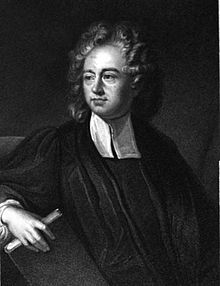
_________________________________________________________________ Title: Eight Sermons Preach’d at the Honourable Robert Boyle’s Lecture, in the First Year, MDCXCII. Creator(s): Bentley, Richard (1662-1742) Rights: Public Domain CCEL Subjects: All; Sermons _________________________________________________________________ EIGHT SERMONS Preach’d at the Honourable ROBERT BOYLE’s LECTURE, In the FIRST YEAR, MDCXCII. By RICHARD BENTLEY Master of Arts. THE FIFTH EDITION. To which is now added a SERMON Preach’d at the Publick-Commencement at Cambridge July V. MDCXCVI. when He Proceded Doctor in Divinity. CAMBRIDGE: Printed for Cornelius Crownfield, Printer to the University; And are to be Sold by James Knapton and Robert Knaplock, Booksellers in LONDON, 1724. _________________________________________________________________ _________________________________________________________________ To my most Honoured Patrons, TRUSTEES, Appointed by the Will of the Honourable Robert Boyle, Esq; The Right Reverend Father in God, THOMAS, Lord Bishop of Lincoln, Sir Henry Ashurst, K^t and Baronet, Sir John Rotheram, Serjeant at Law, John Evelyn senior, Esquire. Most Honoured, GOD having disposed the Heart of that incomparable Person, the Honourable Robert Boyle Esquire, lately deceased, the Glory of our Nation and Age, whose Charity and Goodness were as universal as his Learning and Fame; 'To settle an Annual Salary for some Divine or Preaching Minister, who shall be enjoyned to perform the Offices following: 1. To preach Eight Sermons in the Year, for proving the Christian Religion against notorious Infidels, viz. Atheists, Deists, Pagans, Jews and Mahometans; not descending to any Controversies that are among Christians themselves: The Lectures to be on the First Monday of the respective Months of January, February, March, April, May, September, October, November; in such Church as the Trustees shall from time to time appoint: 2. To be assisting to all Companies, and encouraging them in any Undertaking for propagating the Christian Religion: 3. To be ready to satisfy such Real Scruples as any may have concerning those Matters; and to answer such New Objections or Difficulties as may be started, to which good Answers have not yet been made: You have been pleased to believe me able in some measure to perform these Offices, and to command this First Essay to be made public. I am every sensible of the great Honour, as well as the great Extent and Difficulty of the Task; and shall endeavour to the utmost of my poor ability to answer the religious and generous Design of that Excellent Person, and the good Opinion you have entertained of My most Honoured Patrons, Your very obliged and humble Servant March I7. 169½. R. BENTLEY. _________________________________________________________________ THE CONTENTS. SERMON I. THE Folly of Atheism, and (what is now called) Deism; even with Respect to the Present Life. Psalm XIV. v. 12. The Fool hath said in his Heart, There is no God; they are corrupt, they have done abominable works, there is none that doth good. Pag. 1 SERMON II. Matter and Motion cannot think: Or, a Confutation of Atheism from the Faculties of the Soul. Acts XVII. 27. That they should seek the Lord, if haply they might feel after him, and find him; though he be not far from every one of us: for in him we Live, and Move, and have our Being. p. 45. SERMONS III, IV, V. A Confutation of Atheism from the Structure and Origin of Human Bodies. Acts XVII. 27. That they should seek the Lord, if haply they might feel after him, and find him; though he be not far from every one of us: for in him we Live, and Move, and have our Being. p. 85, 122, 163. SERMONS VI, VII, VIII. A Confutation of Atheism from the Origin and Frame of the World. Acts XIV. 15, &c.. That ye should turn from these vanities unto the living God, who made Heaven and Earth and the Sea, and all things that are therein: Who in times past suffer’d all Nations to walk in their own ways. Nevertheless, he lest not himself without witness, in that he did good and gave us Rain from Heaven, and fruitful Seasons, filling our hearts with Food and Gladness. p. 203, 246, 293. Commencement SERMON. I Peter III. 15. Be ready always to give an answer to every Man, that asketh you a reason of the Hope that is in you. p. 343 _________________________________________________________________ Serm. I. THE Folly of Atheism, And (what is now called) DEISM: Even with Respect to the PRESENT LIFE. The First SERMON Preached March 7. 179½. Psalm XIV. verse 1. The Fool hath said in his Heart, There is no God; they are corrupt, they have done abominable works, there is none that doth good. I Shall not now make any enquiry about the time and occasion and other circumstances of composing this Psalm; nor how it comes to pass, that with very little variation we have it twice over, both here the 14th. and again number the 53d. Not that these and such like are not important considerations in themselves; but that I think them improper now, when we are to argue and expostulate with such persons, as allow no Divine Authority to our Text; and profess no greater, or, it may be they will say, less Veneration for these Sacred Hymns, than for the profane Songs of Anacreon or Horace. So that although I my self do really believe, that all such as say in their Hearts, There is no God, are foolish and corrupt, both in Understanding and Will; because I see infinite Wisdom it self has pronounced them to be so: nevertheless this Argument would at present have no force upon these men, till in due time and method we have evinced the sufficient Authority of Holy Scripture. But however there are other Books extant, which they must needs allow of as proper Evidence; even the mighty Volumes of visible Nature, and the everlasting Tables of Right Reason; wherein, if they do not wilfully shut their Eyes, they may read their own Folly written by the Finger of God, in a much plainer and more terrible Sentence, than [1] f defaced. Whence it will follow, that Speculative Atheism does only subsist in Our speculation; whereas really Humane Nature cannot be guilty of the crime: that indeed a few sensual and voluptuous Persons may for a season eclipse this native Light of the Soul; but can never so wholly smother and extinguish it, but that at come lucid intervals it will recover it self again, and shine forth to the conviction of their Conscience. And therefore they believed, that the words would not admit of a strict and rigorous Interpretation; but ought to be so temper’d and accommodated to the nature of things, as that they may describe those profane persons; who, though they do not, nor can really doubt in their Hearts of the Being of God, yet they openly deny his Providence in the course of their lives. Now if this be all that is meant by the Text, I do not see how we can defend, not only the fitness and propriety, but the very truth of the expression. As to that natural and indeleble signature of God, which Human Souls in their first Origin are supposed to be stamp’d with, I shall shew at a fitter opportunity, that it is a mistake, and that we have no need of it in our Disputes against Atheism. So that being free from that prejudice, I interpret the words of the Text in the literal acceptation, which will likewise take in the Expositions of others. For I believe that the Royal in this comprehensive brevity of speech, There is no God, hath concluded all the various Forms of Impiety; whether of such as excludes the Deity from governing the World by his Providence, or judging it by his Righteousness, or creating it by his Wisdom and Power. Because the consequence and result of all these Opinions is terminated in downright Atheism. For the Divine Inspection into the Affairs of the World doth necessarily follow from the Nature and Being of God. And he that denies this, doth implicitly deny his Existence: he may acknowledg what he will with his mouth, but in his heart he hath said, There is no God. A God, therefore a Providence; was a general argument of virtuous men, and not peculiar to the Stoics alone. And again, No Providence, therefore no God; was the most plausible reason, and the most frequent in the mouth of Atheistical Men. So that it seems to be agreed on all hands, that the Existence of God and his Government of the World do mutually suppose and imply one another. There are some Infidels among us, that not only disbelieve the Christian Religion; but oppose the assertions of Providence, of the Immortality of the Soul, of an Universal judgment to come, and of any Incorporeal Essence: and yet to avoid the odious name of Atheists, would shelter and skreen themselves under a new one of Deists, which is not quite so obnoxious. But I think the Text hath cut them short, and precluded this subterfuge; in as much as it hath declared, that all such wicked Principles are coincident and all one in the issue with the rankest Atheism: The Fool, that doth exempt the affairs of the World from the ordination and disposal of God, hath said in his Heart, There is no God at all. It was the Opinion of many of the Ancients, that [2] Epicurus introduced a Deity into his Philosophy, not because he was persuaded of his Existence, (for when he had brought him upon the Stage of Nature, he made him only Muta persona, and interdicted him from bearing any Part in it,) but purely that he might not incurr the offence of the Magistrate. He was, generally therefore suspected Verbis reliquisse Deum, re sustulisse; to have framed on purpose such a contemptible paultry Hypothesis about him, as indeed lest the Name and Title of God in the World; but nothing of his Nature and Power. Just as a [3] Philosopher of our own Age gave a ludicrous and fictitious notion about the Rest of the Earth, To evade the hard censure and usage which Galileo had lately met with. For my own part, as I do not exclude this reason from being a grand occasion of Epicurus’s owning a God; so I believe that he and Democritus too were compelled to it likewise by the necessity of their own Systems. For seeing they explain’d the Phæmomena of Vision, Imagination, and Thought it self, by certain thin fleeces of Atoms, that flow incessantly from the surfaces of Bodies, and by their subtilty and fineness penetrate any obstacle, and yet retain the exact figures and lineaments of the several bodies from which they proceed; and in this manner insinuating themselves through the pores of Humane Bodies into the Contexture of the Soul, do there excite Sensation and Perception of themselves: in consequence of this Hypothesis they were obliged to maintain, that we could have no Fancy, or Idea, or Conception of any thing, but what did really subsist either intire or in its several parts. Whence it followed, that mankind could have no imaginations of Juppiter or Mars, of Minerva or Isis; if there were not actually such Beings in nature to emit those Effluvia, which gliding into the Soul must beget such imaginations. And thence it was, that those Philosophers adapted their description of the Deity to the vulgar apprehensions of those times; Gods and Goddesses innumerable, and all of Humane figure: because otherwise the conceptions of mankind about them could not possibly be accounted for by their Physiology. So that if Epicurus and Democritus were in earnest about their Philosophy, they did necessarily and really believe the Existence of the Gods. But then as to the nature and authority of them; they bereaved that Juppiter of his Thunder and Majesty: forbidding him to look or peep abroad, so much as to enquire what News in the Infinite Space about him; but, to content himself and be happy with an eternal laziness and dozing, unless some rambling Troops of Atoms upon the dissolution of a neighbouring World might chance to awake him. Now because no Israelite in the days of the Psalmist is likely to have been so curious about natural Knowledge, as to believe the Being of God for such a quaint and airy reason as this, when he had once boldly denied his Dominion over the World; and since there is not now one Infidel living, so ridiculous as to pretend to solve the Phænomena of Sight, Fancy or Cogitation by those fleeting superficial films of Bodies: I must beg leave to think, both that the Fool in the Text was a thorough confirmed Atheist; and that the modern disguised Deists do only call themselves so for the former reason of Epicurus, to decline the publick odium, and resentment of the Magistrate and that they cover the most arrant Atheism under the mask and shadow of a Deity: by which they understand no more, than some eternal inanimate Matter, Come universal Nature, and Soul of the World, void of all sense and cogitation, so far from being endowed with Infinite Wisdom and Goodness. And therefore in this present Discourse they may deservedly come under that Character which the Text hath given of them, of Fools that have said in their Hearts, There is no God. And now having thus far cleared our way; in the next place we shall offer some notorious Proofs of the gross Folly and stupidity of Atheists. If a Person that had a fair Estate in reversion, which in all probability he would speedily be possess’d of, and of which he might reasonably promise to himself a long and happy Enjoyment, should be allured by come skilful Physician; That in a very short time he would inevitably fall into a Disease, which would so totally deprive him of his Understanding and Memory, that he should lose the knowledge of all things without him, nay all consciousness and sense of his own Person and Being: If, I say, upon a certain belief of this indication, the man should appear overjoyed at the News, and be mightily transported with the discovery and expectation; would not all that saw him be astonished at such behaviour? Would they not be forward to conclude, that the Distemper had seized him already, and even then the miserable Creature was become a meer Fool and an Idiot? Now the Carriage of our Atheists or Deists is infinitely more amazing than this; no dotage so infatuate, no phrensie so extravagant as theirs. They have been educated in a Religion, that instructed them in the knowledge of a Supreme Being; a Spirit most excellently Glorious, superlatively Powerful and Wise and Good, Creator of all things out of nothing; That hath endued the Sons of Men, his peculiar Favorites, with a Rational Spirit, and hath placed them as Spectators in this noble Theatre of the World, to view and applaud these glorious Scenes of Earth and Heaven, the Workmanship of his Hands; That hath furnished them in general with a sufficient store of all things, either necessary or convenient for life; and particularly to such as fear and obey him, hath promised a supply of all wants, a deliverance and protection from all dangers: [4] That they that seek him, shall want no manner of thing that is good. Who besides his munificence to them in this life; [5] hath so loved the World, That he sent his Onely-begotten Son,. the express Image of his Substance, and Partaker of his eternal Nature and Glory, to [6] bring Life and Immortality to light, and to tender them to Mankind upon fair and gracious Terms; That if they submit to his [7] easy yoke, and light burthen, and observe his Commandments which are not grievous, he then gives them [8] the promise of eternal Salvation; he hath [9] reserved for them in Heaven an Inheritance incorruptible, and undefiled, and that fadeth not away; he hath prepared for them an. unspeakable, unconceivable Perfection of Joy and Bliss, [10] things that eye hath not seen, nor ear heard, neither have entred into the heart of man. What a delightful and ravishing Hypothesis of Religion in this? And in this Religion they have had their Education. Now let us suppose some great Professor in Atheism to suggest to some of these men, That all this is meer dream and imposture; that there is no such excellent Being, as they suppose, that created and preserves them; that all about them is dark senseless Matter, driven on by the blind impulses of Fatality and Fortune; that Men first sprung up, like Mushroms, out of the mud and slime of the Earth; and that all their Thoughts, and the whole of what they call Soul, are only various Action and Repercussion of small particles of Matter, kept a-while a moving by some Mechanism and Clock-work, which finally must cease and perish by death. If it be true then (as we daily find it is) that Men listen with complacency to these horrid Suggestions; if they let go their hope of Everlasting Life with willingness and joy; if they entertain the thoughts of final Perdition with exultation and triumph; ought they not to be esteem’d most notorious [11] Fools, even destitute of common sense, and abandon'd to a callousness and numness of Soul? What then, is Heaven it self, with its pleasures for evermore, to be parted with so unconcernedly? [12] Is a Crown of Righteousness, a Crown of Life, to be surrendred with laughter? [13] is an exceeding and eternal weight of Glory too light in the balance against the hopeless death of the Atheist, and utter extinction? ’Twas a noble saying of the Emperor Marcus, That he would not endure to live one day in the World, if he did not believe it to be under the government of Providence. Let us but imagin that excellent Person confuted and satisfied by some Epicurean of his time; that All was but Atoms, and Vacuum, and Necessity, and Chance. Would He have been so pleased and delighted with the conviction? would he have so triumph'd in being overcome? or rather, as he hath told us, would he not have gone down with sorrow and despair to the Grave? Did I but once see an Atheist lament and bewail himself; That upon a strict and impartial examination he had found to his cost, that all was a mistake; that the Prerogative of Human Nature was vanished and gone; those glorious hopes of Immortality and Bliss, nothing but cheating Joys and pleasant Delusions; that he had undone himself by losing the comfortable Error, and would give all the World to have better arguments for Religion: there would be great hopes of prevailing upon such an Atheist as this. But, alas! there are none of them of this temper of mind; there are none that [14] understand and seek after God; they have no knowledge; nor any desire of it; they [15] thrust the Word of God from them, and judge themselves unworthy of everlasting life; they willingly prefer Darkness before Light; and obstinately choose to perish for ever in the Grave, rather than be Heirs of Salvation in the Resurrection of the Just. These certainly are the Fools in the Text, indocil intractable Fools, whole stolidity can baffle all Arguments, and be proof against Demonstration it self; [16] whose end (as the words of St. Paul do truly describe them) whose end and very Hope is Destruction, an eternal Deprivation of Being; whose God is their Belly, the gratification of sensual Lusts; whose Glory is in their Shame, in the debasing of Mankind to the condition of Beasts; who mind earthly things, who if (like that great Apostle) they were [17] caught up to the third Heaven, would (as the Spies did of Canaan) [18] bring down an evil report of those Regions of Bliss. And I fear, unless it please God by extraordinary methods [19] to help their unbelief and enlighten the eyes of their understanding; they will carry their Atheism with them to the Pit; and the flames of Hell only must convince them of their Error. This supine and inconsiderate behaviour of the Atheists is so extremely absurd, that it would be deem’d incredible, if it did not occur to our daily Observation; it proclaims aloud, that they are not led astray by their Reasoning, but led captive by their Lusts to the denial of God. When the very pleasures of Paradise are contemn’d and trampled on, like Pearls cast before Swine; there’s small hope of reclaiming them by arguments of Reason. But however, as Solomon adviseth, we will answer these [20] Fools not according to their lest we also be like unto them. It is expedient that we put to silence the ignorance of these foolish men, that Believers may be the more confirmed and more resolute in the Faith. Did Religion bestow Heaven without any terms or conditions indifferently upon all; if the Crown of Life was hereditary, and free to Good and Bad; and not settled by Covenant upon the Elect of God only, such as [21] live soberly and righteously and godly in this present world; I believe there would be no such thing as an Infidel among us. And without controversy ’tis the Way and Means of attaining to Heaven, that makes profane Scorners so willingly let go the Expectation of it. ’Tis not the Articles of the Creed, but the Duty to God and their Neighbour, that is such an inconsistent incredible Legend. They will not practise the Rules of Religion, and therefore they cannot believe the Promises and Rewards of it. But however, let us suppose them to have acted like rational and serious Men: and perhaps upon a diligent inquisition they have found, that the Hope of Immortality deserves to be joyfully quitted, and that either out of Interest, or Necessity. I. And first, One may conceive indeed, how there might possibly be a necessity of quitting it. It might be tied to such Terms, as would render it impossible ever to be obtain’d. For example, if it should be required of all the Candidates of Glory and Immortality, to give a full and knowing Assent to such things as are repugnant to Common Sense, as contradict the koinai ennoi , the universal Notions and indubitable Maxims of Reason; if they were to believe, that One and the same Thing may be and not be at the same time and in the same respect; If allowing the received Idea’s and denominations of Numbers and Figures and Body, they must seriously affirm, that Two and two do make a Dozen, or that the Diameter of a Circle is as long as the Circumference, or that the same Body may be all of it in distant places at once. I must confess that the offers of Happiness upon such Articles of Belief as these, would be meer tantalizing of Rational Creatures; and the Kingdom of Heaven would become the Inheritance of only Idiots and Fools. For whilst a man of Common Capacity doth think and reflect upon such Propositions; he cannot possibly bribe his Understanding to give a Verdict for their Truth. So that he would be quite frustrated of the Hope of Reward, upon such unpracticable Conditions as these: neither could he have any evidence of the Reality of the Promise, superior to what he is conscious to of the Falsity of the Means. Now if any Atheist can shew me, in the System of Christian Religion, any such absurdities and repugnancies to our natural Faculties; I will either evince them to be Interpolations and Corruptions of the Faith, or yield my self a Captive and a Proselyte to his Infidelity. II. Or, 2dly, they may think ’tis the Interest of Mankind, that there should be no Heaven at all; because the Labour to acquire it is more worth than the Purchase: God Almighty (if there be one) having much overvalued the Blessings of his Presence. So that upon a fair estimation, ’tis a greater advantage to take one’s swing in Sensuality, and have a glut of Voluptuousness in this Life, freely resigning all pretenses to future Happiness; which, when a man is once extinguish’d by Death, he cannot be supposed either to want or desire: than to be tied up by Commandments and Rules so contrary to Flesh and Blood; to [22] take up one’s Cross, to deny himself; and refuse the Satisfaction of Natural Desires. This indeed is the true Language of Atheism, and the Cause of it too. Were not this at the Bottom, no man in his Wits could contemn and ridicule the expectation of Immortality. Now what power or influence can Religion have upon the minds of there men; while not only their Affections and Lusts, but their supposed Interest shall plead against it? But if we can once silence this powerful Advocate, we shall without much difficulty carry the Cause at the Bar of impartial Reason. Now here is a notorious instance of the Folly of Atheists, that while they repudiate all Title to the Kingdom of Heaven, meerly for the present Pleasure of Body, and their boasted Tranquillity of Mind; besides the extreme madness in running such a desperate Hazard after Death, (which I will not now treat of) they deprive themselves here of that very Pleasure and Tranquillity they seek for. For I shall now endeavour to shew, That Religion it self gives us the greatest Delights and Advantages even in this life also, though there should prove in the event to be no Resurrection to another. [23] Her ways are ways of pleasure, and all her paths are peace. But before I begin that, I must occurr to one specious Objection both against this Proposition and the past part of my Discourse; Namely, that Religion doth perpetually haunt and disquiet us with dismal apprehensions of everlasting Burnings in Hell; and that there is no shelter or refuge from those Fears, but behind the Principles of Atheism. (1.) First therefore I will freely acknowledge to the Atheists; that some part of what hath been said is not directly conclusive against them; if they say, that before they revolted from the Faith, they had sinned away all expectation of ever arriving at Heaven: and consequently had good reason so joyfully to receive the news of Annihilation by Death, as an advantageous change for the everlasting torments of the Damn’d. But because I cannot expect, that they will make such a shameless and senseless Confession, and supply us with that invincible argument against themselves: I must say again, that to prefer final Extinction before a happy Immortality does declare the most deplorable stupidity of mind. Nay although they should confess, that they believed themselves to be Reprobates, before they disbelieved Religion; and took Atheism as a sanctuary and Refuge from the Terrors of Hell: yet still the imputation of Folly will stick upon them: in as much as they chose Atheism as an Opiate to still those frightning Apprehensions, by inducing a dulness and lethargy of mind; rather than they would make use of that active and salutary Medicine, a hearty Repentance; that they did not know the [24] Riches of the goodness and forbearance and long-suffering of God, and that a sincere Amendment of Life was never too late nor in vain; [25] Jesus Christ being the Saviour of all men, and a propitiation for the sins of the whole world; who came into the world to save sinners, even the chief of them all; and died for the ungodly, and his bitterest enemies. (2.) And secondly, As to the Fears of Damnation; those terrors are not to be charged upon Religion it self, which proceed either from the Want of Religion, or Superstitious mistakes about it. For as an honest and innocent Man doth know the punishments, which the Laws of his Country denounce against Felons and Murderers and Traytors, without being terrified or concern’d at them: So a Christian, in truth as well as in name, though he believe the consuming Vengeance prepared for the disobedient and unbelievers, is not at all dismayed at the apprehensions of it. Indeed it adds spurs, and gives wings to his diligence, it excites him to [26] work out his Salvation with fear and trembling, a religious and ingenuous fear, that is temper’d with hope and with love and unspeakable joy. But he knows, that if he fears him who is [27] able to destroy both soul and body in Hell, he needs not fear that his own soul or body shall ever go thither. I allow that some debauched and profligate Wretches, or some designing perfidious Hypocrites, that are religious in outward profession, but corrupt and abominable in their works, are most justly as well as usually liable to these horrors of mind. ’Tis not my business to defend or excuse such as these; 1 must leave them, as long as they keep their hardness and impenitent hearts, to those gnawing and excruciating Fears, those whips of the divine Nemesis, that frequently scourge even Atheists themselves. For the Atheists also can never wholly extinguish those horrible forebodings of Conscience. They endeavour indeed to compose and charm their Fears, but a thousand occasions daily awaken the sleeping Tormenters. Any slight Consideration either of themselves, or of any thing without; whatsoever they think on, or whatsoever they look on; all administer some reasons for suspicion and diffidence, lest possibly they may be in the wrong; and then ’tis a [28] fearful thing to fall into the hands of the living God. There are they great fear, as ’tis in the 5th verse of this Psalm, under terrible presages of [29] judgment and fiery indignation. Neither can they say, That these Terrors, like Tales about Spectres, may disturb some small Pretenders and puny Novices, but dare not approach the vere Adepti, the Masters and Rabbies of Atheism. [30] For ’tis well known both from ancient and modern Experience, that the very boldest of them, out of their Debauches and Company, when they chance to be surprized with Solitude or Sickness, are the most suspicious and timorous and despondent Wretches in the World: and that the boasted Happy Atheist in the Indolence of body, and an undisturbed Calm and Serenity of mind, is altogether as rare a Creature, as the Vir Sapiens was among the Stoics; whom they often met with in Idea and Description, in Harangues and in Books, but freely own’d that he never had or was like to exist actually in Nature. And now as to the present advantages which we owe to Religion, they are very conspicuous; whether we consider Mankind, (1.) Separately, or (2.) under Society and Government. 1. And first, in a Single Capacity. How is a good Christian animated and cheer’d by a stedfast belief of the Promises of the Gospel; of an everlasting enjoyment of perfect Felicity, such as, after millions of millions of Ages is still youthfull and flourishing and inviting as at the first? no wrinkles in the face, no gray hairs on the head of Eternity; no end, no diminution, no satiety of those delights. What a warm and vigorous influence does a Religious Heart feel from a firm expectation of these Glories? Certainly this Hope alone is of inestimable value; ’tis a kind of anticipation and pledge of those Joys; and at least gives him one Heaven upon Earth, though the other should prove a Delusion. Now what are the mighty Promises of Atheism in competition with these? let us know the glorious Recompences it proposes: utter Extinction and Cessation of Being; to be reduced to the same condition, as if we never had been born. O dismal reward of Infidelity! at which Nature does shrink and shiver with horror. What some of the [31] Learned Doctors among the Jews have esteem’d the most dreadfull of all Punishment, and. have assigned for the portion of the blackest Criminals of the Damn’d; so interpreting Tophet, Ahaddon, the Vale of Slaughter and the like, for final Excision and Deprivation of Being: this Atheism exhibits to us, as an Equivalent to Heaven. ’Tis well known, what hath been disputed among School-men to this effect. And ’tis an observation of [32] Plutarch, that the Generality of Mankind, pantes kai pasai, as well Women as Men, chose rather to endure all the Punishments of Hell, as described by the Poets; than part with the Hope of Immortality, though immortal only in misery. I easily grant, that this would be a very hard Bargain; and that Not to be at all is more eligible, than to be miserable always; our Saviour himself haveing determin'd the question; [33] Wo to that man, by whom the Son of Man is betrayed; good were it for that man, if he had never been born. But however thus much it evidently shews, That this desire of Immortality is a natural Affection of the Soul; ’tis Self-preservation in the highest and truest meaning; ’tis interwoven in the very Frame and Constitution of Man. How then can the Atheist reflect on his own Hypothesis without extreme sorrow and dejection of Spirit? Will he say, that when once he is dead, this Desire will be nothing; and that He that is not, cannot lament his Annihilation? So indeed it would be hereafter according to his Principles. But nevertheless, for the present, while he continues in Life (which we now speak of) that dusky Scene of Horror, that melancholy Prospect of final Perdition will frequently occur to his Fancy: the sweetest Enjoyments of Life will often become flat and insipid, will be damp’d and extinguish’d, be bitter’d and poison’d by the malignant and venomous quality of this Opinion. Is it not more comfortable to a man, to think well of himself, to have a high Value and Conceit of the Dignity of his Nature, to believe a noble Origination of his Race, the Off-spring and Image of the great King of Glory: rather than that men first proceded, as Vermin are thought to do, by the sole influence of the Sun out of Dirt and Putrefaction? Is it not a firmer foundation for Contentment and Tranquillity, to believe that All things were at first created, and are since continually order’d and dispos’d for the best, and that principally for the Benefit and Pleasure of Man: than that the whole Universe is meer bungling and blundring; no Art or Contrivance to be seen in’t: nothing effected for any purpose and design; but all ill-favouredly cobled and jumbled together by the unguided agitation and rude shuffles of Matter? Can any man wish a better Support under affliction, than the Friendship and Favour of Omnipotence, of Infinite Wisdom and Goodness; that is both able, and willing and knows how to relieve him? [34] Such a man can do all things through Christ that strengtheneth him, he can patiently suffer all things with cheerful submission and resignation to the Divine Will. He has a secret Spring of spiritual Joy, and the continual Feast of a good Conscience within, that forbid him to be miserable. Bur what a forlorn destitute Creature is the Atheist in distress? He hath no friend in Extremity, but Poison or a Dagger or a Halter or a Precipice. A violent Death is the last refuge of the Epicureans, as well as the Stoics. This, says [35] Lucretius, is the distinguishing Character of a genuine Son of our Sect, that he will not endure to live in Exile and Want and Disgrace out of a vain fear of Death; but dispatch himself resolutely into the State of eternal Sleep and Insensibility. And yet for all this swaggering, not one of a hundred of them hath boldness enough to follow the Direction. The base and degenerous Saying of one of them is very well known; [36] That Life is always sweet, and he should still desire to prolong it though, after he had been maim’d and distorted by the Rack, he should be condemn’d to hang on a Gibbet. And then, as to the Practical Rules and Duties of Religion. As the Miracles of our Lord are peculiarly eminent above the Lying Wonders of Dæmons, in that they were not made out of vain ostentation of Power, and to raise unprofitable Amazement; but for the real Benefit and Advantage of men, by feeding the Hungry, healing all sorts of Diseases, ejecting of Devils, and reviving the Dead: so likewise the Commands which he hath imposed on his Followers are not like the absurd Ceremonies of Pagan Idolatry, the frivolous Rites of their Initiations and Worship, that might look like Incantation and Magic, but had no tendency in their Nature to make Mankind the happier. Our Saviour hath enjoyn’d us a [37] Reasonable service; accommodated to the rational part of our nature. All his Laws are in themselves, abstracted from any Consideration of Recompense, conducing to the Temporal Interest of them that observe them. For what can be more availing to a man’s Health, or his Credit, or Estate, or Security in this World, than Charity and Meekness, than Sobriety and Temperance, than Homily and Diligence in his Calling? Do not Pride and Arrogance infallibly meet with Contempt? Do not Contentiousness and Cruelty and Study of Revenge seldom fail of Retaliation? Are not envious and covetous, discontented and anxious minds tormenters to themselves? Do not we see, that slothfull and intemperate and incontinent persons destroy their Bodies with diseases, their Reputations with disgrace, and their Families with want? Are Adultery and Fornication forbidden only by Moses and Christ? or do not Heathen Law-givers punish such Enormities with Fines or Imprisonment, with Exile or Death? ’Twas an Objection of [38] Julian the Apostate; that there were no new Precepts of Morality in our Religion: Thou shalt not kill, Thou shalt not steal, Thou shalt not covet thy neighbours wife. Why all the World, says he, is agreed about these Commandments: and in every Country under Heaven, there are Laws and Penalties made to enforce all the Ten, excepting only the Sabbath and the Worship of strange Gods. We can answer Him another way; but he may make our Infidels ashamed to complain of those Ordinances as hard Impositions, which the sense of all Nations has thought to be reasonable: which not only the Philosophers of Greece and Italy and the learned World; but the Banians of Mogul, the Talapoins of Siam, the Mandarins of China, the Moralists of Peru and Mexico, all the Wisdom of Mankind have declared to be necessary Duties. Nay if the Atheists would but live up to the Ethics of Epicurus himself, they would make few or no Proselytes from the Christian Religion. For none revolt from the Faith for such things as are thought peculiar to Christianity; Not because they must [39] love and pray for their enemies, but because they must not poison or stab them: not because they must not [40] look upon a Woman to lust after her, but because they are much more restrain’d from committing the Act. If wanton glances and lascivious thoughts had been permitted by the Gospel, and only the gross Act forbidden; they would have apostatized nevertheless. This we may conjecture from what [41] Plato and others have told us, that it was commonly akrateia hēdonōn kai epithumiōn, immoderate Affections and Lusts, that in the very times of Paganism induced men to be Atheists. It seems their impure and brutal Sensuality was too much confined by the Religion of those Countries, where even Venus and Bacchus had their Temples. Let not therefore voluptuos Atheists lay all the fault of their Sins upon the Infirmity of Humane Nature; nor plead that Flesh and Blood cannot resist those Temptations, which have all their force and prevalence from long Custom and inveterated Habit. What inticement, what pleasure is there in common profane Swearing? yet neither the fear of God nor of the Law will persuade men to leave it. ’Tis prevailing Example that hath now made it fashionable, but it hath not always been so, nor will be hereafter. So other Epidemical Vices; they are rise and predominant only for a season, and must not be ascribed to Humane Nature in the Lump. In some Countries Intemperance is a necessary part of Conversation; in others Sobriety is a Vertue universal, without any respect to the Duties of Religion. Nor can they say, that this is only the difference of Climate, that inclines one Nation to Concupiscence and Sensual Pleasures; another to Blood-thirstiness and Desire of Revenge. It would discover great ignorance in History, not to know that in all Climates a whole People has been over-run with some recently invented or newly imported kind of Vice, which their Grandfathers never knew. In the latest Accounts of the Country of Guiana, we are told that the eating of Humane Flesh is the beloved pleasure of those Savages: two Nations of them by mutual devouring are reduced to two handfulls of men. When the Gospel of our Saviour was preached to them, they received it with gladness of heart; they could be brought to forgoe Plurality of Wives; though that be the main impediment to the conversion of the East Indies. But the great Stumblingblock with these Americans, and the only Rock of Offense was the forbidding them to eat their Enemies; That irresistible Temptation made them quickly to revolt and relapse into their Infidelity. What must we impute this to? to the temperature of the Air, to the nature of the Soil, to the influence of the Stars? Are these Barbarians of man-eating Constitutions, that they so hanker after this inhumane Diet, which We cannot imagin without horror? Is not the same thing practised in other parts of that Continent? Was it not so in Europe of old, and is it not now so in Africa? If an Eleventh Commandment had been given, Thou shalt not eat Humane Flesh; would not these Canibals have esteem’d it more difficult than all the Ten? And would, not they have really had as much reason as our Atheists; to plead the power of the Temptation, and the propensity of Flesh and Blood? How impudent then are the Atheists, that traduce the easie and gracious Conditions of the Gospel, as Unreasonable and Tyrannical Impositions? Are not God’s ways equal, O ye Children of Destruction, and are not your ways unequal? II. Secondly and lastly, For the good Influence of Religion upon Communities and Governments, habemus confitentes reos; ’tis so apparent and unquestionable, that ’tis one of the Objections of the Atheists, That it was first contrived and introduced by Politicians, to bring the wild and draggling Herds of Mankind under Subjection and Laws. [42] Out of thy own mouth shalt thou be judged, thou wicked servant. Thou say’st that the Wide Institutors of Government, Souls elevated above the ordinary pitch of men, thought Religion necessary to Civil Obedience. Why then dost thou endeavour to undermine this Foundation, to undo this Cement of Society, and to reduce all once again to thy imaginary State of Nature, and Original Confusion? No Community ever was or can be begun or maintain’d, but upon the Basis of Religion. What Government can be imagin’d without Judicial Procedings? and what methods of Judicature without a Religious Oath? which implies and supposes an Omniscient Being, as conscious to its falshood or truth, and a revenger of Perjury. So that the very nature of an Oath (and therefore of Society also) is subverted by the Atheist; who professeth to acknowledge nothing superiour to himself, no omnipresent observer of the actions of men. For an [43] Atheist to compose a System of Politics is as absurd and ridiculous, as Epicurus’s Sermons were about [44] Sanctity and Religious Worship. But there was hope, that the Doctrine of absolute uncontroulable Power and the formidable name of Leviathan might flatter and bribe the Government into a toleration of Infidelity. We need have no recourse to notions and supposition; we have sad experience and convincing example before us, what a rare Constitution of Government may be had in a whole Nation of Atheists. The Natives of [45] Newfoundland and new France in America, as they are said to live without any sense of Religion, so they are known to be destitute of its advantages and blessings; without any Law or form of Community; without any Literature or Sciences or Arts; no Towns, no fixed Habitations, no Agriculture, no Navigation. And ’tis entirely owing to the power of Religion, that the whole World is not at this time as barbarous as they. And yet I ought not to have called these miserable Wretches a Nation of Atheists. They cannot be said to be of the Atheist's opinion; because they have no opinion at all in the matter: They do not say in their hearts, There is no God; for they never once deliberated, if there was one or no. They no more deny the Existence of a Deity; than they deny the Antipodes, the Copernican System, or the Satellites Jovis: about which they have had no notion or conception at all. ’Tis the Ignorance of those poor Creatures, and not their Impiety: their Ignorance as much to be pitied, as the impiety of the Atheists to be detested and punish’d. ’Tis of mighty importance to the Government to put some timely stop to the spreading Contagion of this Pestilence that walketh by day, that dares to disperse its cursed seeds and principles in the face of the Sun. The Fool in the Text had only said in his heart, There is no God: he had not spoken it aloud, nor openly blasphem’d, in places of public resort. There’s too much reason to fear, that some of all orders of men, even Magistracy it self, have taken the Infection: a thing of dreadfull consequence and most imminent danger. [46] Epicurus was somewhat wiser than ordinary, when he so earnestly advised his Disciples against medling in publick affairs: He knew the nature and tendency of his own Philosophy; that it would soon become suspected and odious to a Government, if ever Atheists were employ’d in places of Trust. But because he had made one great Rule superior to all, That every man’s only Good was pleasure of Body and contentment of Mind; hence it was that men of ambitious and turbulent Spirits, that were dissatisfied and uneasie with Privacy and Retirement, were allowed by his own Principle to engage in matters of State. And there they generally met with that fortune, which their Master foresaw. Several Cities of [47] Greece that had made experiment of them in Public Concerns, drove them out, as Incendiaries and Pests of Commonweals, by severe Edicts and Proclamations. Atheism is by no means tolerable in the most private condition: but if it aspire to authority and power; if it acquire the Command of an Army or a Navy; if it get upon the Bench or into the Senate, or on a Throne: What then can be expected but the basest Cowardise and Treachery, but the foulest prevarication in Justice, but betraying and selling the Rights and Liberties of a People, but arbitrary Government and tyrannical Oppression? Nay if Atheism were once, as I may say, the National Religion: it would make its own Followers the most miserable of men; it would be the Kingdom of Satan divided against it self; and the Land would be soon brought to desolation. [48] Josephus, that knew them, hath inform’d us, that the Sadducees, those Epicureans among the Jews, were not only rough and cruel to men of a different Sect from their own; but perfidious and inhumane one towards another. This is the genuine spirit and the natural product of Atheism. No man, that adheres to that narrow and selfish Principle, can ever be Just or Generous or Grateful; [49] unless he be sometime overcome by Good-nature and a happy Constitution. No Atheist, as such, can be a true Friend, an affectionate Relation, or a loyal Subject. The appearance and shew of mutual Amity among them, is wholly owing to the smallness of their number, and to the obligations of a Faction. ’Tis like the Friendship of Pickpockets and Highwaymen, that are said to observe strict Justice among themselves, and never to defraud a Comrade of his share of the Booty. But if we could imagine a whole Nation to be Cut-purses and Robbers; would there then be kept that square-dealing and equity in such a monstrous den of Thieves? And if Atheism should be supposed to become universal in this Nation (which seems to be design’d and endeavour’d, though we know the Gates of Hell shall not be able to prevail) farewell all Ties of Friendship and Principles of Honour; all Love for our Country and Loyalty to our Prince; nay, farewel all Government and Society it self, all Professions and Arts, and Conveniencies of Life, all that is laudable or valuable in the World. May the Father of Mercies and God of Infinite Wisdom reduce the Foolish from their Errors, and make them wise unto Salvation; Confirm the Sceptical and wavering Minds, and so prevent Us, that stand fast, in all our doings, and further us with his continual help, that we may not be of them that draw back unto Perdition, but of them that believe to the saving of the Soul, Amen. _________________________________________________________________ [1] Dan. 5. 5. [2] Posidon. apud Ciceron. Plutarch. &c. [3] Mr. Des Cartes. [4] Psal. 34. 9. [5] Joh. 3. 16. [6] 2 Tim. 1. 10. [7] Mat. 11. 30. [8] 1 Joh. 5. 3. [9] Heb. 5. 9. 1 Pet. 1. 4. [10] 1 Cor. 2. 9. [11] Atheon hon alogon kai anaiothēton genos, Max. Tyr. Diss. 1. [12] 2 Tim. 4. 8. Jam. 1. 12. [13] Cor. 4. [14] V. 2. of this Psalm. v. 4. [15] Act. 13. 46. [16] Phil. 3. 19. [17] 2 Cor. 12. 2. [18] Num. 13. 32. [19] Mar. 9. 24. Eph. 1. 19. [20] Prov. 16. 4. [21] Tit. 2. 12. [22] Mark 8. 34. [23] Prov. 3. 17. [24] Rom. 2. r. [25] 1 Tim. 4. 10, 1 Joh. 5. 14. 1 Tim. 1. 15. Rom. 5. 6, 10. [26] Phil. 2. 12. [27] Matt. 10. 28. [28] Heb. 10. 31. [29] Heb. 10. 27. [30] Cic. Plutarch, &c. [31] Vide Pocokii Notas ad Portam Mosis. p. 158. &c. [32] Plutarch. Hoti oud... ..ēn, &c. p. 1104, 1105. Ed. Ruald. [33] Matt. 14. 2. [34] Phil. 4. 13, [35] Lib. 3. [36] Mecænas apud Senec. Ep. 101. Debilem facito manu, Debilem pede, coxa. &c. [37] Rom. 12. 1. [38] Julianus apud Cyrillum, p. 134. [39] Matt. 5. 44. [40] ver. 28. [41] Plato de Legib. lib. 10. p. 886. Ed. Steph. [42] Luke 19. 22. [43] Hobbes de Cive, Leviathan. [44] peri Osiotētos. Laert. De sanctitate, de pietate adversus Deos. Cic. [45] De Laert. p. 34, 47, 50. Voyage du Sieur de Champlain. p. 28. & 93. [46] Plutach. Lathebiasas. Lucret. &c. [47] Plutarch. Hoti oude hēdeōs zēn. Cicero, Athenæus, Ælian. &c. [48] Josephus de Bello Judaico, l. 2. c. 12. [49] Si sibi ipse consentiat, et non interdum natura bonitate vincatur. Cic. de Offic. 1. 2. _________________________________________________________________ Matter and Motion cannot think: OR, A CONFUTATION OF ATHEISM FROM THE Faculties of the Soul. The Second SERMON Preached April 4. 1692. Acts XVII. 27. That they should seek the Lord, if happily they might feel after him, and find him; though he be not far from every one of us: for in him we Live, and Move, and have our Being. THESE words are a part of that Discourse which St. Paul had at Athens. He had not been long in that inquisitive and pragmatical City, but we find him [50] encountered by the Epicureans and Stoics, two sorts of people that were very ill qualified for the Christian Faith: the one by reason of their Carnal Affections, either believing no God at all, or that he was like unto themselves, dissolv’d in [51] Laziness and Ease; the other out of Spiritual Pride presuming to assert, that [52] a Wise Mau of their Sect was equal, and in some cases superior to the Majesty of God himself. These men [53] corrupted through Philosophy and vain deceit, took our Apostle, and carried him unto Areopagus, (a place in the City, whither was the greatest resort of Travellers and Strangers, of the gravest Citizens and Magistrates, of their Orators and Philosophers;) to give an account of himself and the new Doctrine that he spoke of [54] For, say they, thou bringest strange things to our ears; we would know therefore what these things mean. The Apostle, who was to speak to such a promiscuous Assembly, has with most admirable Prudence and Art, so accommodated his Discourse, that every branch and member of it is directly opposed to a known Error and Prejudice of some Party of his Hearers. I will beg leave to be the more prolix in explaining the whole; because it will be a ground and introduction not only to this present, but some other subsequent Discourses. From the Inscription of an Altar to the Unknown God, which is mentioned by Heathen Authors, [55] Lucian, Philostratus, and others, he takes occasion (v. 24.) to declare unto them, that God that made the World and all things therein. This first Doctrine, though admitted by many of his Auditors, is directly both against Epicureans, that ascribed the Origin and Frame of the World not to the Power of God, but the fortuitous concourse of Atoms; and Peripatetics, that supposed all things to have been eternally, as they now are, and never to have been made at all, either by the Deity or without him. Which God, says he, [56] seeing that he is Lord of Heaven and Earth, dwelleth not in the Temples made with hands, neither is worshipped with men’s hands as though he needed any thing, seeing he giveth to all Life and Breath and all things. This is opposed to the Civil and Vulgar Religion of Athens, which furnish’d and serv’d the Deity with Temples and Sacrifices, as if he had really needed Habitation and Sustenance. And that the common Heathens had such mean apprehensions about the Indigency of their Gods, appears plainly, to name no more, from Aristophanes’s Plutus, and the Dialogues of Lucian. But the Philosophers were not concern’d in this point: all Parties and Sects, even the [57] Epicureans themselves, did maintain (to autarkes) the self-sufficiency of the God-head: and seldom or never sacrificed at all, unless in compliance and condescension to the custom of their Country. There’s a very remarkable passage in Tertullian’s Apology, [58] Who forces a Philosopher to sacrifice, &c.? It appears from thence, that the Philosophers, no less than the Christians, neglected the Pagan Worship and Sacrifices; though what was conniv’d at in the one, was made highly penal and capital in the other. [59] And hath made of one blood all nations of men, for to dwell on all the face of the Earth; and hath determin’d the times before appointed, and the bound of their habitation. This Doctrine about the beginning of Humane Race, though agreeable enough to the Platonists and Stoics, is apparently levell’d against the Epicureans and Aristotelians; one of whom produced their Primitive Men from meer Accident or Mechanism; the other denied that Man had any beginning at all, but had eternally continued thus by Succession and Propagation. Neither were the Commonalty of Athens unconcern’d in this point. For although, as we learn from [60] Isocrates, Demosthenes and others of their Countrymen, they professed themselves to be autochthoies, Aborigines, not transplanted by Colonies or otherwise from any Foreign Nation, but born out of their own Soil in Attica, and had the same Earth for their Parent, their Nurse, and their Country; and though some perhaps might believe, [61] that all the rest of Mankind were derived from Them, and so might apply and interpret the Words of the Apostle to this foolish Tradition: yet that conceit of deriving the whole Race of Men from the Aborigines of Attica was entertain’d but by a few; for they generally allowed that the [62] Egyptians and Sicilians, and some others were Aborigines also, as well as themselves. Then follow the words of the Text, [63] That they should seek the Lord, if haply they might feel after him, and find him; though he be not far from every one of us. For in him we Live, and Move, and have our Being. And this he confirms by the Authority of a Writer that lived above 300 years before; As certain also of your own Poets have said, For we are also his Off-spring. This indeed was no Argument to the [64] Epicurean Auditors; who undervalued all Argument from Authority, and especially from the Poets. Their Master Epicurus had boasted, [65] that in all his Writings he had not cited one single Authority out of any Book whatsoever. And the Poets they particularly hated; because on all occasions they introduced the Ministry of the Gods, and taught the separate Existence of humane Souls. But it was of great weight and moment to the Common People, who held the Poets in mighty esteem and veneration, and used them as their Masters of Morality and Religion. And the other Sects too of Philosophers did frequently adorn and confirm their Discourses by Citations out of Poets. [66] For as much then as we are the off-spring of God, we ought not to think that the Godhead is like unto Gold or Silver, or Stone graven by art or man’s device. This is directly levell’d against the gross Idolatry of the Vulgar, (for the Philosophers are not concern’d in it) that believed the very Statues of Gold and Silver and other Materials, to be God, and terminated their Prayers in those Images; as I might shew from many passages of Scripture, from the Apologies of the Primitive Christians, and the Heathen Writers themselves. [67] And the times of this ignorance God winked at, (the meaning of which is, as upon a like occasion the fame Apostle hath expressed it, that [68] in times past he suffer'd all Nations to walk in their own ways) but now commandeth every one to repent; Because he hath appointed a day, in the which he will judge the world in righteousness, by that man whom he hath ordained; whereof he hath given assurance unto all men, in that he hath raised him from the dead. Hitherto the Aponte had never contradicted all his Audience at once: though at every part of his Discourse 16me of them might be mealy, yet others were of his side, and all along a moderate silence and attention was observed; because every Point was agreeable to the notions of the greater Party. But when they heard of the Resurrection of the Dead, the interruption and clamor became universal: so that here the Apostle was obliged to break off, and [69] depart from among them. What could be the reason of this general dissent from the notion of the Resurrection, since almost all of them believed the Immortality of the Soul? St. Chrysostom hath a conceit, that the Athenians took Anastasis (the original word for Resurrection) to be preached to them as a Goddess, and in this fancy he is follow’d by some of the Moderns. The ground of the conjecture is the 18th verse of this Chapter, where some said, What will this Babler say? other some, He seemeth to be a setter forth of strange Gods, (xenōn daimoniōn, strange Deities, which comprehends both Sexes) because he preached unto them, Iēsoun kai tēn Anastasin, Jesus and the Resurrection.. Now, say they, it could not be said Deities in the plural number, unless it be supposed that Anastasis is a Goddess, as well as Jesus a God. But we know, such a permutation of Number is frequent in all Languages. We have another example of it in the very Text, [70] As certain also of your own poets have said, For we are also his Off-spring. And yet the Apostle meant only one, [71] Aratus the Cilician, his Countryman, in whose Astronomical Poem this passage is now extant. So that although he preached to the Athenians Jesus alone, yet by a common mode of Speech he might be called, a setter forth of strange Gods. ’Tis my opinion, that the general distaste and clamour proceeded from a mistake about the nature of the Christian Resurrection. The word Resurrection (anastēsasthai and anastasis) was well enough known amongst the Athenians, as appears at this time from [72] Homer, Æschylus and Sophocles; they could hardly then possibly imagin it to signify a Goddess. But then it always denoted a returning from the State of the Dead to this present World, to eat and drink and converse upon Earth, and so after another period of Life to die again as before. And Festus a Roman seems to have had the same apprehensions about it. For when he declares the case of St. Paul his Prisoner to King Agrippa, he tells him, That the Accusation was only about certain questions of the Jewish Superstition; and [73] of one Jesus which was dead, whom Paul affirmed to be alive. So that when the Athenians heard him mention the Resurrection of the Dead, which according to their acceptation of the word was a contradiction to common Sense, and to the Experience of all Places and Ages; they had no patience to give any longer attention. His [74] words seemed to them as idle tales, as the first news of our Saviour's Resurrection did to the Apostles themselves. All interrupted and mocked him, except a few, that seem to have understood him aright, which said they would hear him again of this matter. Just as when our Saviour said in an Allegorical and Mystical sense, [75] Except ye eat the Flesh of the Son of Man, and drink his Blood, ye have no life in you; the Hearers understood him literally and grosly. [76] The Jews therefore strove among themselves, saying, How can this man give us his Flesh to eat; this is a hard saying, who can hear it? [77] And from that time many of his Disciples went back, and walked no more with him. I have now gone through this excellent Discourse of the Apostle, in which many most important Truths are clearly and succinctly deliver’d; such as the Existence, the Spirituality, and All-sufficiency of God, the Creation of the World, the Origination of Mankind from one common flock according to the History of Moses, the Divine Providence in over-ruling all Nations and People, the new Doctrine of Repentance by the preaching of the Gospel, the Resurrection of the Dead, and the appointed Day of an universal Judgment. To all which particulars by God's Permission and Assistance I shall say something in due time. But at present I have confined my self to that near and internal and convincing Argument of the Being of God, which we have from Human Nature it self; and which appears to be principally here recommended by St. Paul in the words of the Text, That they should seek the Lord, if haply they might feel after him, and find him, though he be not far from every one of us. For in him (that is, by his power) we live, and move, and have our being. The Proposition, which I shall speak to, from this Text is this: That the very Life and Vital Motion and the Formal Essence and Nature of Man is wholly owing to the power of God: and that the consideration of our Selves, of our own Souls and Bodies, doth directly and nearly conduct us to the acknowledgment of his Existence. And, 1. I shall prove, That there is an immaterial Substance in us, which we call Soul and Spirit, essentially distinct from our Bodies: and that this Spirit doth necessarily evince the Existence of a Supreme and Spiritual Being. And, 2. That the Organical Structure of Human Bodies, whereby they are fitted to live and move and be vitally informed by the Soul, is unquestionably the workmanship of a most wise and powerful and beneficent Maker. But I will reserve this latter part for the next opportunity; and my present undertaking shall be this, To evince the Being of God from the consideration of Human Souls. (1.) And first, I say, there is an immaterial Substance in us, which we call Soul, essentially distinct from our Bodies. I shall lay it down as self-evident, That there is something in our Composition, that thinks and apprehends, and reflects and deliberates; that determines and doubts, consents and denies; that wills, and demurrs, and resolves, and chooses, and rejects; that receives various sensations and impressions from external objects, and produces voluntary motions of several parts of our Bodies. This every man is conscious of; neither can any one be so Sceptical as to doubt of or deny it: that very doubting or denying being part of what I would suppose, and including several of the rest in their Idea’s and Notions. And in the next place ’tis as self-evident, that these Faculties and Operations of Thinking, and Willing, and Perceiving, must proceed from something or other as their efficient Cause: meer Nothing being never able to produce any thing at all. So that if these powers of Cogitation, and Volition, and Sensation, are neither inherent in Matter as such, nor producible in Matter by any motion and modification of it; it necessarily follows that they proceed from some cogitative Substance, some incorporeal Inhabitant within us, which we call Spirit and Soul. (1.) But first, these Faculties of Sensation and Preception are not inherent in Matter as such. For if it were so; what monstrous absurdities would follow? Every Stock and Stone would be a percipient and rational Creature. We should have as much feeling upon clipping a Hair of the Head, as upon pricking a Nerve. Or rather, as Men, that is, as a complex Being compounded of many vital parts, we should have no feeling nor perception at all. For every single Atom of our Bodies would be a distinct Animal, endued with self-consciousness and personal Sensation of its own. And a great number of such living and thinking Particles could not possibly by their mutual contact and pressing and striking compose one greater individual Animal, with one Mind and Understanding, and a vital Consension of the whole Body: any more than a swarm of Bees, or a crowd of Men and Women can be conceived to make up one particular Living Creature compounded and constituted of the aggregate of them all. (2.) It remains therefore, secondly, that seeing Matter in general, as Matter, has not any Sensation or Thought; if it have them at all, they must be the result of some Modification of it: it must acquire them by some Organical Disposition; by such and such determinate Motions, by the action and passion of one particle upon another. And this is the Opinion of every Atheist and counterfeit Deist of these times; that believes there is no Substance but Matter, and excludes all incorporeal Nature out of the number of Beings. Now to give a clear and full confutation of this Atheistical Assertion, I will proceed in this method. 1. First I will give a true Notion and Idea of Matter; whereby it will again appear that it has no inherent Faculty of Sense and Perception. 2. I will prove, that no particular sort of Matter, as the Brain and Animal Spirits, hath any power of Sense and Perception. 3.1 will shew, that Motion in general superadded to Matter cannot produce any Sense and Perception. 4. I will demonstrate that no particular sort of Motion, as of the Animal Spirits through Muscles and Nerves, can beget Sense and Perception. 5. I will evince, that no Action and Passion of the Animal Spirits, one Particle upon another, can create any Sense and Perception. 6. I will answer the Atheist’s Argument of matter of Fact and Experience in brute Beasts; which, say they, are allowed to be meer Matter, and yet have some degree of Sense and Perception. And first I will give a true Notion. and Idea of Matter; whereby it will appear that it has no inherent Faculty of Sense and Perception. And I will offer no other, but what all competent Judges, and even Atheists themselves do allow of; and which being part of the Epicurean and Democritean Philosophy is providentially one of the best Antidotes against their other impious Opinions: as the Oil of Scorpions is said to be against the poison of their Stings. When we frame in our minds any notion of Matter, we conceive nothing else but Extension and Bulk; which is impenetrable and divisible and passive; by which three properties is understood, that any particular quantity of Matter doth hinder all other from intruding into its place, till it self be removed out of it; that it may be divided and broken into numerous parts of different sizes and figures, which by various ranging and disposing may produce an immense diversity of Surfaces and Textures; that if it once be bereaved of Motion, it cannot of it self acquire it again, but it either must be impell’d by some other Body from without, or, (say we, though not the Atheist) be intrinsecally moved by an immaterial self-active Substance, that can penetrate and pervade it. Wherefore in the whole Nature and Idea of Matter, we have nothing but Substance with Magnitude, and Figure, and Situation, and a capacity of being moved and divided. So that no parts of Matter consider’d by themselves, are either hot or cold, either white or black, either bitter or sweet, or betwixt those extremes. All the various mixtures and Conjugations of Atoms do beget nothing but new inward Texture, and alteration of Surface. No sensible Qualities, as Light and Colour, and Hear, and Sound, can be subsistent in the Bodies themselves absolutely consider’d, without a relation to our Eyes, and Ears, and other Organs of Sense. These Qualities are only the effects of our Sensation, which arise from the different motions upon our Nerves from objects without, according to their various modification and position. For example, when pellucid colourless Glass, or Water, by being beaten into powder or froth, do acquire a very intense whiteness; what can we imagine to be produced in the Glass or Water, but a new disposition of parts? Nay an object under the self-same disposition and modification, when ’tis viewed by us under differing proportions, doth represent very differing colours, without any change at all in it self. For that very same opake and white Powder of Glass, when ’tis seen thro’ a good Microscope, doth exhibit all its little fragments pellucid and colourless; as the whole appear’d to the naked eye, before it was pounded. So that Whiteness, and Redness, and Coldness, and the like, are only Idea’s and Vital Passions in Us that see and feel: but can no more be conceived to be real and distinct Qualities in the Bodies them-selves; than Roses or Honey can be thought to smell or taste their own Sweetness, or an Organ be conscious of its Music, or Gun-powder of its Flashing and Noise. Thus far then we have proved, and ’tis agreed on all hands, that in our conception of any quantity of Body, there is nothing but Figure and Site, and a Capacity of Motion. Which Motion, if it be actually excited in it, doth only cause a new Order and Contexture of parts: so that all the Idea’s of sensible Qualities are not inherent in the inanimate Bodies; but are the Effects of their Motion upon our Nerves: and sympathetical and vital Passions produced within our selves. 2. Our second enquiry must be; what it is in the constitution and composition of a Man that hath the Faculty of receiving such Idea’s and Passions. Let us carry in our minds this true notion of Body in general, and apply it to our own Substance; and observe what prerogatives this Rational Machine (as the Atheists would make us to be) can challenge above other parcels of Matter. We observe then in this understanding piece of Clock-work; that this Body, as well as other senseless Matter, has colour, and warmth, and softness, and the like. But we have proved it before, and ’tis acknowleged; that there Qualities are not subsistent in those Bodies, but are Idea’s and Sensations begotten in something else. So that ’tis not Blood and Bones, that can be conscious of their own hardness or redness: and we are still to seek for something else in our Frame and Make, that must receive there impressions. Will they say that there Idea’s are performed by the Brain? But the difficulty returns upon them again: for we perceive that the like qualities of softness, whiteness and warmth, do belong to the Brain it self; and since the Brain is but Body, those Qualities (as we have shewn) cannot be inherent in It, but are the Sensations of some other Substance without it. It cannot be the Brain then, which imagins those qualities to be in it self. But they may say., ’tis not the Gross Substance of the Brain that causes Perception; but the Animal Spirits, that have their residence there; which are void of sensible qualities, because they never fall under our Senses by reason of their minuteness. But we conceive, by our Reason, though we cannot see them with our Eyes, that every one of these also hath a determinate figure: they are Spheres, or Cubes, or Pyramids, or Cones, or of come shape or other that is irregular and nameless: and all these are but Modes and Affections of Magnitude; and the Idea’s of such Modes can no more be subsistent in the Atoms so modified, than the Idea of Redness was just now found to be inherent in the Blood, or that of Whiteness in the Brain. And what relation or affinity is there between a minute Body and Cogitation, any more than the greatest? Is a small drop of Rain any wiser than the Ocean? or do we grind inanimate Corn into living and rational Meal? my very Nails, or my Hair, or the Horns and Hoofs of a Beast may bid as fair for Understanding and Sense, as the finest Animal Spirits of the Brain. 3. But Thirdly, they will say, ’tis not the Bulk and Substance of the Animal Spirits, but their Motion and Agility, that produces Cogitation and Sense. If then Motion in general or any degree of its velocity can beget Cogitation; surely a Ship under sail must be a very intelligent Creature; though while she lies at Anchor, those Faculties be asleep: some cold Water or Ice may be phlegmatic and senseless; but when it boils in a Kettle, it has wonderfull Heats of Thinking and Ebullitions of Fancy. Nay the whole corporeal Mass, all the brute and limpid Matter of the Universe must upon these terms be allowed to have Life and Understanding: since there is nothing that we know of, in a state of absolute Rest. Those things that seem to be at rest upon the surface of the Earth, are daily wheel'd about its Axis, and yearly about the Sun with a prodigious swiftness. 4. But Fourthly, they will say, ’tis not Motion in general, that can do there feats of Sensation and Perception; but a particular sort of it in an Organized Body through the determinate Roads and Channels of Muscles and Nerves. But, I pray, among all the kinds of Motion, whether straight or circular, or parabolical or in what curve they please; what pretense can one make to Thinking and Liberty of Will, more than another? Why do not these persons make a Diagram of these cogitative Lines and Angles; and demonstrate their properties of Perception and Appetite, as plainly as we know the other properties of Triangles and Circles? But how little can any Motion, either circular or other, contribute to the production of Thought? No such circular Motion of an Atom can be all of it existent at once; it must needs be made gradually and successively both as to place and time: for Body cannot at the same instant be in more places than one. So that at any instant of time the moving Atom is but in one single point of the Line. Therefore all its Motion but in that one point is either future or past; and no other parts are coexistent or contemporary with it. Now what is not present, is nothing at all, and can be the efficient of nothing. If Motion then be the cause of Thought; Thought must be produced by one single Point of Motion, a Point with relation to time as well as to place. And such a Point to our Conceptions is almost equivalent to Permanency and Rest, or at least to any other Point of any Motion whatsoever. What then is become of the privilege of that organical Motion of the Animal Spirits above any other? Again, we have shown, that this circular and other Motion is but the successive Flux of an Atom, and is never existent together; and indeed is a pure Ens Rationis, an operation of the Soul, which considering past motion and future, and recollecting the whole by the Memory and Fancy, calls this by one denomination and that by another. How then can that Motion be the efficient of Thought, which is evidently the Effect and the Product of it? 5. But Fifthly, they will say farther, (which is their last refuge) that ’tis not Motion alone, or under this or that Denomination, that produceth Cogitation; but when it falls out that numerous Particles of Matter, aptly disposed and directed, do interfere in their Motions, and strike and knock one another; this is it which begets our Sensation. All the active power and vigour of the Mind, our Faculties of Reason, Imagination and Will are the wonderfull result of this mutual Occurse, this Pulsion and Repercussion of Atoms. Just as we experience it in the Flint and the Steel; you may move them apart as long as you please, to very little purpose: but ’tis the Hitting and Collision of them that must make them strike Fire. You may remember I have proved before, that Light and Heat, and the rest of those Qualities, are not such Idea’s in the Bodies, as we perceive in our Selves. So that this smiting of the Steel with the Flint doth only make a Comminution, and a very rapid Whirling and Melting of some Particles: but that Idea of Flame is wholly in Us. But what a strange and miraculous thing should we count it, if the Flint and the Steel, instead of a few Sparks, should chance to strike out Definitions and Syllogisms? And yet it’s altogether as reasonable, as this sottish opinion of the Atheists; That dead senseless Atoms can ever justle and knock one another into Life and Understanding. All that can be effected by such encounters of Atoms, is either the imparting or receiving of Motion, or a new determination and direction of its Course. Matter, when it acts upon Matter, can communicate nothing but Motion; and that we have shew'd before to be utterly unable to produce those Sensations. And again, how can that Concussion of Atoms be capable of begetting those internal and vital Affections, that selfconsciousness and those other Powers and Energies that we feel in our Minds: seeing they only strike upon the outward Surfaces; they cannot inwardly pervade one another: they cannot have any penetration of Dimensions and Conjunction of Substance. But, it may be, these Atoms of theirs may have Sense and Perception in them, but they are refractary and sullen; and therefore, like Men of the same Tempers, must be bang'd and buffeted into Reason. And indeed that way of Argumentation would be most proper and effectual upon these Atheistical Atomists themselves. 'Tis a vigorous Execution of good Laws, and not rational Discourses only, either neglected or not understood, that must reclaim the profaneness of those perverse and unreasonable Men. For what can be said more to such persons, that are either so disingenuous or so stupid, as to profess to believe, That all the natural Powers and acquired Habits of the Mind, that penetrating Understanding and accurate Judgment, that strength of Memory and readiness of Wit, that Liberality and Justice and Prudence and Magnanimity, that Charity and Beneficence to Mankind, that ingenuous Fear and awfull Love of God, that comprehensive Knowledge of the Histories and Languages of so many Nations, that experienced Insight into the works and wonders of Nature, that rich Vein of Poetry and inexhausted Fountain of Eloquence, those lofty flights of Thought and almost intuitive Perceptions of abstruse Notions, those exalted Discoveries of Mathematical Theorems and Divine Contemplations; all the admirable Endowments and Capacities of humane Nature, which we sometimes see actually existent in one and the same Person, can procede from the blind shuffling and casual clashing of Atoms. I could as easily take up with that senseless assertion of the [78] Stoics, That Vertues and Vices and Sciences and Arts, and Fancies and Passions and Appetites are all of them real Bodies and distinct Animals; as with this of the Atheist, That they can all be derived from the Power of mere Bodies. ’Tis utterly incredible and impossible; and we cannot without indignation go about to refute such an absurd imagination, such a gross contradiction to unprejudiced Reason. And yet if the Atheists had not been driven from all their posts and their subterfuges; if we had not pursued their Atoms through all their turnings and windings, their cells and recesses, their interferings and justlings; they would boast, that they could not be answer’d; and make a mighty flutter and triumph. Nay though they are so miserably confounded and baffled, and can offer no further explication of the Cause and the Manner; yet they will, Sixthly, urge matter of Fact and Experience, that mere Body may produce Cogitation and Sense. For, say they, do but observe the actions of some Brutes, how nearly they approach to human Reason, and visibly discover some glimpses of Understanding: and if that be performed by the pure Mechanism of their Bodies (as many do allow, who yet believe the Being of God, and an immaterial Spirit in Man) then ’tis but raising our Conceptions, and supposing Mankind to be Engines of a finer Make and Contexture, and the business is done. I must confess, that the Cartesians and some others, men that have given no occasion to be suspected of Irreligion, have asserted that Brutes are meer Machines and Automata. I cannot now engage in the Controversy, neither is there any necessity to do so; for Religion is not endanger’d by either opinion. If Brutes be said to have Sense and Immaterial Souls; what need we be concern’d, whether those Souls shall be immortal, or annihilated at the time of Death. This objection supposes the Being of God; and He will do all things for the wisest and best ends. Or if Brutes be supposed to be bare Engins and Machines; I admire and adore the divine Artifice and Skill in such a wonderful contrivance. But I shall deny then that they have any Reason or Sense, if they be nothing but Matter. Omnipotence it self cannot create cogitative Body. And ’tis not any imperfection in the power of God, but an incapacity in the Subject; The Idea’s of Matter and Thought are absolutely incompatible. And this the Cartesians themselves do allow. Do but convince Them, that Brutes have the least participation of Thought, or Will, or Appetite, or Sensation, or Fancy; and they’l readily retract their Opinion. For none but besotted Atheists, do join the two Notions together, and believe Brutes to be rational or sensitive Machines. They are either the one or the other; either endued with Sense and some glimmering. Rays of Reason from a higher Principle than Matter; or (as the Cartesians say) they are purely Body, void of all Sensation and Life: and like the Idols of the Gentiles, they have eyes and see not; ears, and hear not; noses, and smell not; they eat without hunger, and drink without thirst, and howl without pain. They perform the outward material actions; but they have no inward Self-consciousness, nor any more Perception of what they do or suffer, than a Looking-Glass has of the Objects it reflects, or the Index of a Watch of the Hour it points to. And as one of those Watches, when it was first presented to the Emperor of China, was taken there for an Animal: so on the contrary, our Cartesians take brute Animals for a sort of Watches. For considering the infinite distance betwixt the poor mortal Artist, and the Almighty Opificer; the few Wheels and Motions of a Watch, and the innumerable Springs and Organs in the Bodies of Brutes; they may affirm (as they think, without either absurdity or impiety) that they are nothing but moving Automata, as the fabulous [79] Statues of Dædalus, bereaved of all true life, and vital Sensation; which never act spontaneously and freely, but as Watches must be wound up to set them a going; so Their Motions also are excited and inhibited, are moderated and managed by the Objects without them. (2.) And now that I have gone through the six parts that I proposed, and sufficiently shewn that Sense and Perception can never be the product of any kind of Matter and Motion; it remains therefore, that it must necessarily procede from some Incorporeal Substance within us. And though we cannot conceive the manner of the Soul’s Action and Passion; nor what hold it can lay on the Body, when it voluntarily moves it: yet we are as certain, that it doth so, as of any Mathematical Truth whatsoever; or at least of such as are proved from the Impossibility or Absurdity of the Contrary, a way of Proof that is allowed for infallible Demonstration. Why one motion of the Body begets an Idea of Pleasure in the Mind, another an Idea of Pain; why such a disposition of the Body induces Sleep, another disturbs all the operations of the Soul, and occasions a Lethargy or Frenzy; this Knowledge exceeds our narrow Faculties, and is out of the reach of our discovery. I discern some excellent Final causes of such a vital Conjunction of Body and Soul; but the instrumental I know not, nor what invisible Bands and Fetters unite them together. I resolve all that into the sole Pleasure and Fiat of our Omnipotent Creator: whose Existence (which is my last Point) is so plainly and nearly deducible from the established proof of an Immaterial Soul; that no wonder the resolved Atheists do so labour and bestir themselves to fetch Sense and Perception out of the Power of Matter. I will dispatch it in three words. For since we have shewn, that there is an Incorporeal Substance within us: whence did that proceed, and how came it into Being? It did not exist from all Eternity, that's too absurd to be supposed; nor could it come out of nothing into Being without an Efficient Cause. Something therefore must have created our Souls out of Nothing; and that Something (since nothing can give more than it has) must it self have all the Perfections, that it hath given to Them. There is therefore an immaterial and intelligent Being, that created our Souls: which Being was either eternal it self, or created immediately or ultimately by some other Eternal, that has all those Perfections. There is therefore Originally an Eternal, immaterial, Intelligent Creator; all which together are the Attributes of God alone. And now that I have finished all the parts, which I proposed to discourse of; I will conclude all with a short application to the Atheists. And I would advise them as a Friend, to leave off this dabbling and smattering in Philosophy, this shuffling and cutting with Atoms. It never succeded well with them, and they always come off with the loss. Their old Master Epicurus seems to have had his Brains so muddled and confounded with them, that he scarce ever kept in the right way; though the main Maxim of his Philosophy was to trust to his Senses, and follow his Nose. [80] I will not take notice of his doting conceit, that the Sun and Moon are no bigger, than they appear to the Eye, a foot or half a yard over; and that the Stars are no larger than so many Glowworms. But let us see how he manages his Atoms, those Almighty Tools that do every thing of themselves without the help of a Workman. [81] When the Atoms (says he) descend in infinite space (very ingeniously spoken, to make High and Low in Infinity) they do not fall plumb down, but decline a little from the Perpendicular, either obliquely or in a Curve: and this Declination (says he) from the direct Line is the cause of our Liberty of Will. But, I say, this Declination of Atoms in their Descent, was it self either necessary or voluntary. If it was necessary, how then could that Necessity ever beget Liberty? if it was voluntary, then Atoms had that power of Volition before: and what becomes then of the Epicurean Doctrine of the fortuitous Production of Worlds? The whole business is Contradiction and ridiculous Nonsense. ’Tis as if one should say, that a Bowl equally poized, and thrown upon a plain and smooth Bowling Green, will run necessarily and fatally in a direct Motion: but if it be made with a Byas, that may decline it a little from a straight Line, it may acquire by that Motion a Liberty of Will, and so run spontaneously to the Jack. It would behoove the Atheists to give over such trifling as this, and resume the old solid way of confuting Religion. They should deny the Being of the Soul, because they cannot see it. This would be an invincible Argument against us: for we can never exhibit it to their Touch, nor expose it to their View; nor shew them the Colour and Complexion of a Soul. They should dispute, as a bold Brother of theirs did; That he was sure there was no God, because (says he) if there was one, he would have struck me to Hell with Thunder and Lightning, that have so reviled and blasphemed him. This would be an Objection indeed. Alas, all that we could answer, is in the next words to the Text, That God hath appointed a day in which he will judge all the world in Righteousness, and that the Goodness and Forbearance, and Long-suffering of God, which are some of his Attributes, and Essential Perfections of his Being, ought not to be abused and perverted into arguments against his Being. But if this will not do, we must yield our selves overcome: for we neither can, nor desire to command fire to come down from Heaven and consume them; and give them such experimental Conviction of the Existence of God. So that they ought to take these Methods, if they would successfully attack Religion. But if they will still be medling with Atoms, be hammering and squeezing Understanding out of them; I would advise them to make use of their own Understandings for the Instance. Nothing, in my opinion could run us down, more effectually than that. For we readily allow, that if any Understanding can possibly be produced by such clashing of senseless Atoms; ’tis that of an Atheist, that hath the fairest Pretensions and the best Title to it. We know, it is the Fool, that hath said in his heart, there is no God. And ’tis no less a Truth than a Paradox, That there are no greater Fools than Atheistical Wits; and none so credulous as Infidels. No Article of Religion, though as demonstrable as the Nature of the thing can admit, hath credibility enough for them. And yet these same cautious and quick sighted Gentlemen can wink and swallow down this sottish Opinion about Percipient Atoms, which excedes in Incredibility all the Fictions of Æsop’s Fables. For is it not every whit as likely or more, that Cocks and Bulls might discourse, and Hinds and Panthers hold Conferences about Religion, as that Atoms can do so? that Atoms can invent Arts and Sciences, can institute Society and Government, can make Leagues and Confederacies, can devise Methods of Peace and Stratagems of War? And moreover, the Modestly of Mythology deserves to be commended, the Scenes there are laid at a distance; ’Tis once upon a time, in the Days of Yore, and in the Land of Utopia, there was a Dialogue between an Oak and a Cedar: whereas the Atheist is so impudently silly, as to bring the Farce of his Atoms upon the Theatre of the present Age; to make dull senseless Matter transact all public and private Affairs, by Sea and by Land, in Houses of Parliament, and Closets of Princes. Can any Credulity be comparable to this? If a Man should affirm, that an Ape casually meeting with Pen, Ink, and Paper, and falling to scribble, did happen to write exactly the Leviathan of Thomas Hobbs; Would an Atheist believe such a story? and yet he can easily digest as incredible as that; that the innumerable Members of a Human Body, which in the style of the Scripture [82] are all written in the Book of God, and may admit of almost infinite Variations and Transpositions above the xxiv Letters of the Alphabet, were at first fortuitously scribled, and by mere accident compacted into this beautiful, and noble, and most wonderfully useful Frame, which we now see it carry. But this will be the Argument of my next Discourse, which is the second Proposition drawn from the Text, That the Admirable Structure of Human Bodies, whereby they are fitted to live and move, and be vitally informed by the Soul, is unquestionably the Workmanship of a most wise and powerful and beneficent Maker: To which Almighty Creator, together with the Son and the Holy Ghost, be all Honour and Glory and Majesty and Power both now and from henceforth evermore. Amen. _________________________________________________________________ [50] Acts 17. 18. [51] Aergon kai ameles. [52] Arriani Epictet. l. 1. c. 12. Hōs katage ton logon, oude cheirōn to Theōn, ouude mikroteros. Seneca Ep. 53. Est aliquid quo sapiens antecedat Deum: ille natura beneficio, non suo sapiens est. [53] V. 19. [54] V. 20. [55] Lucianus in Philopat. Philostrat. de vita Apol. l. 6. c. 2. Pausan. in Eliacis. [56] V. 25. [57] Lucret. 2. Ipsa suis pollens opibus, nihil indiga nostri. [58] Tertul. Apolog. cap. 46. Quis enim Philosophum sacrificare compellit? Quinimmo et deos vestros palam destruunt, et superstitiones vestras commentariis quoque accusant. [59] V. 26. [60] Isocrates in Pangeg. Demosth. in Epitaph. Cic. Or. pro Placco. Euripides, &c. [61] Diog. Laert. in Præf. [62] Thucyd. lib. 6. Herodot. &c. [63] V. 27, 28. [64] Plutarch. de Aud. Poet. & contra Colot. [65] Laert. in vita Epicuri. [66] V. 29. [67] V. 30, 31. [68] Act. 14. 16. [69] V. 33. [70] V. 28. [71] Arati Phœn. v. 5. Pantē de Dios kechrēmeta pantes, Tou gar hon genos esmen. [72] Hom. Il. w. 551. O̡de min anstēseis &c. Æsch. Eumen. 655. A̓ndròs d' e̓peidàn haim' a̓naspásēͅ kónis, Hapax thanóntos ou̓́tis e̓́st' a̓nástasis. Soph. Electra, 136. All' outoi ton g' e̓x a̓ida pankoínou límnas patér' a̓nstáseis, ou̓́te góoisin, ou̓ lit...is. [73] Acts 25.19. [74] Luke 24. 11. [75] John 6. 53. [76] V. 60. [77] V. 66. [78] Seneca Ep. 113. Plutarch. de Contrad. Stoic. [79] Vide Zenobium &c Suidam in Daidalou poiēmata & Scholiastem Eurip. Hecubæ V. 838. [80] Epicurus apud Laert. Lucret. l. 5. Cicero de Fin. l. 1, Acad. l. 2. [81] Lucret. l. 2. Cic. de Fato & de Nat. Deorum Plutarch, &c. [82] Psal. 139. 16. _________________________________________________________________ A CONFUTATION OF ATHEISM FROM THE Structure and Origin of Human Bodies.. PART I. The Third S E R M O N Preached May 2. 1692. ACTS XVII. 27. That they should seek the Lord, if happily they might feel after him, and find him; though he be not far from every one of us: for in him we Live, and Move, and have our Being. I Have said enough in my last, to shew the fitness and pertinency of the Apostle’s Discourse to the persons he address’d to: whereby it sufficiently appears that he was no Babler, as some of the Athenian Rabble reproached him; not a spermologos a busy prating Fellow; as in another language they say [83] Sermones serere, and Rumores serere in a like mode of Expression; that he did not talk at random, but was throughly acquainted with the several humours and opinions of his Auditors. And as Moses was learned in all the Wisdom of the Egyptians, so it is manifest from this Chapter alone, if nothing else had been now extant, that St. Paul was a great Master in all the Learning of the Greeks. One thing further I shall observe from the words of the Text, before I enter upon the Subject which I proposed; that it requires Some industry and consideration to find out the Being of God; we must seek the Lord, and feel after him, before we can find him by the Light of Nature. The search indeed is not very tedious nor difficult; He is not far from every one of us; for in him we live, and move, and have our Being. The Consideration of our Mind and Understanding, which is an incorporeal Substance independent from Matter; and the contemplation of our own Bodies, which have all the stamps and characters of excellent Contrivance; these alone, though we look upon nothing abroad, do very easily and proximately guide us to the wise Author of all things. But however, as we see in our Text, Some Thoughts and Meditation are necessary to it; and a man may possibly be so stupid, or wilfully ignorant or perverse, as not to have God in all his thoughts, or to say in his heart, There is none. And this being observed, we have an effectual answer to that Cavil of the Atheists; who make it an objection against the Being of God, that they do not discover him without any Application, in spite of their corrupt Wills and debauch’d Understandings. If, say they, such a God as we are told of, had created and formed us, surely he would have left upon our Minds, a native and indeleble Inscription of Himself, whereby we must needs have felt him, even without seeking, and believed in him whether we would or no. So that these Atheists being conscious to themselves, that they are void of such Belief, which (they say) if God was, would actually and necessarily be in them, do bring their own wicked Doubting and Denying of God, as Evidence against his Existence; and make their very Infidelity an argument for it self. To which we reply, That God hath endow’d Mankind with Powers and Abilities, which we call natural Light, and Reason, and common Sense; by the due use of which we cannot miss of the Discovery of his Being; and this is sufficient. But as to that original Notion and Proposition, GOD IS, which the Atheist pretends should have been actually imprinted on us, antecedently to all use of our Faculties; we may affirm, that the absence of such a Notion doth not give the least presumption against the truth of Religion: because though God be supposed to be, yet that Notion distinct from our Faculties would not be requisite; nor is it asserted by Religion. First, it would not be requisite; because, without any such primitive Impression, we can easily attain to the knowledge of the Deity by the sole use of our Natural Reason. And again, such an Impression would have render’d the Belief of a God irresistible and necessary, and thereby have bereaved it of all that is good and acceptable in it. For as the taking away the Freedom of Human Will, and making us mere Machines under fatal Ties and Impulses, would destroy the very nature of Moral Vertue; so likewise as to Faith, there would be nothing worthy of praise and recompense in it, if there were lest no possibility of Doubting and Denying. And secondly, such a radical Truth, GOD IS, springing up together with the Essence of the Soul, and previous to all other Thoughts, is not asserted by Religion. No such thing, that I know of, is affirmed or suggested by the Scriptures. There are several Topics there used against the Atheism and Idolatry of the Heathens; such as the visible marks of Divine Wisdom and Goodness in the Works of the Creation, the vital Union of Souls with Matter, and the admirable Structure of animate Bodies, and the like. But if our Apostle had asserted such an anticipating Principle engraven upon our Souls before all Exercise of Reason; what did he talk of seeking the Lord, if haply they might feel after him and find him? since if the knowledge of him was in that manner innate and perpetual, there would be no occasion of seeking, nor any hap or hazard in the finding. Such an Inscription would be self evident without Reasoning or Study, and could not fail constantly to exert its Energy in their Minds. What did he talk of the Unknown God, and ignorantly worshiping? when if such an Original Signature were always inherent in their hearts; God could not be unknown to, or ignorantly worship’d by any. That primary Proposition would have been clear, and distinct, and efficacious, and universal in the minds of Men. S. Paul therefore, it appears, had no apprehension of such a First Notion; nor made use of it for an argument; which (since whosoever hath it, must needs know that he hath it) if it be not believed before by the Adversary, is false; and if it be believed, is superfluous; and is of so frail and brittle a texture, that whereas other arguments are not answered by bare denying without contrary Proof, the mere doubting and disbelieving of this must be granted to be ipso facto the breaking and confuting of it. Thus much therefore we have proved against the Atheists; that such an original irresistible Notion is neither requisite upon supposition of a Deity, nor is pretended to by Religion; so that neither the Absence of it is any argument against the Being of God, nor a supposed false Assertion of it an objection against the Scripture. ’Tis enough that all are furnish’d with such Natural Powers and Capacities; that if they seriously reflect, if they seek the Lord with meditation and study, they cannot fail of finding and discovering him: whereby God is not left without witness, but the Atheist without excuse. And now I haste to the second Proposition deduced from the Text, and to the Argument of my present Discourse, That the organical Structure of humane Bodies whereby they are fitted to live, and move, and be vitally informed by the Soul is unquestionably the workmanship of a most wise, and powerfull, and beneficent Maker. First. ’Tis allowed and acknowledged by all parties, that the Bodies of Men and other Animals are excellently well fitted for Life, and Motion, and Sensation; and the several parts of them well adapted and accommodated to their particular Functions. The Eye is very proper and meet for seeing, the Tongue for tasting and speaking, the Hand for holding and lifting, and ten thousand Operations beside: and so for the inward Parts; the Lungs are suitable for Respiration, the Stomach for Concoction, the Lacteous Vessels for the Reception of the Chyle, the Heart for the Distribution of the Blood to all the parts of the Body, This is matter of Fact, and beyond all dispute; and in effect is no more than to say, that Animals are Animals; for if they were deprived of these Qualifications, they could not be so. This therefore is not the matter in Question between us and the Atheists: But the Controversy is here. We, when we consider so many constituent parts in the Bodies of Men, all admirably compacted into so noble an Engine; in each of the very Fingers, for example, there are Bones, and Gristles, and Ligaments, and Membranes, and Muscles, and Tendons, and Nerves, and Arteries, and Veins, and Skin, and Cuticle, and Nail; together with Marrow, and Fat, and Blood, and other Nutricious Juices; and all those solid Parts of a determinate Size, and Figure, and Texture, and Situation; and each of them made up of Myriads of little Fibres and Filaments, not discoverable by the naked Eye; I say, when we consider how innumerable parts must constitute so small a member, as the Finger, we cannot look upon It or the whole Body, wherein appears so much Fitness, and Use, and Subserviency to infinite Functions, any otherwise than as the effect of Contrivance and Skill, and consequently the Workmanship of a most Intelligent and Beneficent Being. And though now the Propagation of Mankind be in a settled method of Nature, which is the instrument of God: yet we affirm that the first Production of Mankind was by the Immediate Power of the Almighty Author of Nature: and that all succeeding Generations of Men are the Progeny of one primitive Couple. This is a Religious Man’s account of the Frame and Origination of himself. Now the Atheists agree with us, as to the Fitness of Man’s Body and its several Parts to their various Operations and Functions (for that is visible and past all contradiction) but they vehemently oppose, and horribly dread the Thought, That this Usefulness of the Parts and the Whole should first arise from Wisdom and Design. So that here will be the point in debate, and the subject of our present Undertaking; Whether this acknowledged Fitness of Humane Bodies must be attributed, as we say, to a wise and good God; or, as the Atheist averr, to dead senseless Matter. They have contrived several tricks and [84] methods of Deceit, one repugnant to another, to evade (if possible) this most cogent Proof of a Deity; All which I will propose and refute: and I hope to make it appear, that here, as indeed every where, but here certainly, in the great Dramatic Poem of Nature, is, dignus Deo vindice Nodus, a necessity of introducing a God. And first, I will answer what Exceptions they can have against Our account: and secondly, I will confute all the Reasons and Explications they can give of their Own. 1. First, I will answer what Exceptions they can have against Our account of the Production of Mankind. And they may object, That the Body it self, though pretty good in its kind and upon their Hypothesis, nevertheless doth not look like the Workmanship of so great a Master, as is pretended by Us; that infinite Wisdom and Goodness and Power would have bestowed upon us more Senses than five, or at least these five in a much higher Perfection; that we could never have come out of the Hands of the Almighty, so subject to numerous Diseases, so obnoxious to violent Deaths; and at best, of such a short and transitory Life. They can no more ascribe so sorry an Effect to an Omniscient Cause, than some ordinary piece of Clock-work with a very few motions and uses, and those continually out of order, and quickly at an end, to the best Artist of the Age. But to this we reply: First, as to the five Senses, it would be rash indeed to affirm, That God, if he had pleased, could not have endued us with more. But thus much we may averr, That though the Power of God be infinite and perfect yet the Capacities of Matter are within limits and bounds. Why then doth the Atheists suspect that there may possibly be any more ways of Sensation than what we have already? Hath he an Idea, or Notion, or Discovery of any more? So fur from that, that he cannot make any addition or progress in those very Senses he hath, further than they themselves have informed him. He cannot imagin one new Colour, or Tast, or Smell, beside those that have actually fallen under his Senses. Much less can he that is destitute of an entire Sense, have any Idea or Representation of it; as one that is born deaf hath no Notion of Sounds; or Blind, of Colours and Light. if then the Atheists can have no Imagination of more Senses than five, why doth he suppose that a Body is capable of more? If we had double or Triple as many, there might still be the same suspicion for a greater number without end; and the Objection therefore in both cases is equally unreasonable and groundless. Secondly, we affirm, that our Senses have that degree of Perfection which is most fit and suitable to our Estate and Condition. For though the Eye were so piercing, as to discry even opake and little Objects some hundreds of Leagues off, even that improvement of our fight would do us little service; it would be terminated by neighbouring Hills and Woods; or in the largest and evenest plain by the very convexity of the Earth; unless we could always inhabit the tops of Mountains and Cliffs, of had Wings too to fly aloft, when we had a mind to take a Prospect. And if Mankind had had Wings (as perhaps some extravagant Atheist may think us deficient in that) all the World must have consented to clip them; or else Humane Race had been extinct before this time, nothing upon that supposition being safe from Murder and Rapine: Or if the Eye were so acute, as to rival the finest Microscopes, and to discern the smallest Hair upon the leg of a Gnat, it would be a curse and not a blessing to us; it would make all things appear rugged and deformed; the most finely polish’d Chrystal would be uneven and rough: The sight of our own selves would affright us: The smoothest Skin would be beset all over with ragged Scales, and bristly Hairs. And beside, we could not see at one view above what is now the space of an Inch, and it would take a considerable time to survey the then mountainous bulk of our own Bodies. Such a Faculty of sight so disproportion’d to our other Senses and to the Objects about us would be very little better than Blindness it self. And again, God hath furnished us with Invention and Industry, so that by optical Glasses we can more than supply that imaginary defect of our own Eyes, and discover more remote and minute Bodies with that assistance, than perhaps the most whimsical Atheist would desire to do without it. So likewise if our Sense of Hearing were exalted proportionally to the former, what a miserable condition would Mankind be in? What whisper could be low enough, but many would over-hear it? What Affairs, that most require it, could be transacted with secrecy? and whither could we retire from perpetual humming and buzzing? every breath of Wind would incommode and disturb us: we should have no quiet or sleep in the silentest nights and most solitary places; and we must inevitably be struck Deaf or Dead with the noise of a clap of Thunder. And the like inconveniences would follow if the Sense of Feeling was advanced to such a degree as the Atheist requires. How could sustain the pressure of our very Cloaths in such a condition; much less carry burthens and provide for conveniences of Life? We could not bear the assault of an Insect, or a Feather, or a puff of Air without pain. There are examples now of wounded persons, that have roared for anguish and torment at the discharge of Ordnance, though at a very great distance; what insupportable torture then should we be under upon alike concussion in the Air, when all the whole Body would have the tenderness of a Wound? In a word, all the Changes and Emendations that the Atheists would make in our Senses, are so far from being Improvements, that they would prove the utter ruin and Extirpation of Mankind. But perhaps they may have better success in their complaints about the Distempers of the Body and the Shortness of Life. We do not wonder indeed, that the Atheist should lay a mighty stress upon this Objection. For to a man that places all his Happiness in the Indolency and Pleasure of Body, what can be more terrible than Pain or a Fit of Sickness? nothing but Death alone, the most dreadfull thing in the World. When an Atheist reflects upon Death, his very Hope is Despair; and ’tis the crown and top of his Wishes, that it may prove his utter Dissolution and Destruction. No question if an Atheist had had the making of himself, he would have framed a Constitution that could have kept pace with his insatiable Lust, been invincible by Gluttony and Intemperance, and have held out vigorous a thousand years in a perpetual Debauch. But we answer; First, in the words of St. Paul: [85] Nay, but, O Man, who art thou, that repliest against God? shall the thing formed say to him that formed it, Why hast thou made me thus? We do adore and magnifie his most holy Name for his undeserved Mercy towards us, that he made us the Chief of the visible Creation; and freely acquit his Goodness from any imputation of Unkindness, that he has placed us no higher. Secondly, Religion gives us a very good account of the present Infirmity of our Bodies. Man at his first Origin was a Vessel of Honour, when he came first out of the Hands of the Potter; endued with all imaginable Perfections of the Animal Nature; ’till by Disobedience and Sin, Diseases and Death came first into the World. Thirdly, The Distempers of the Body are not so formidable to a Religious Man, as they are to an Atheist: He hath a quite different judgment and apprehension about them: he is willing to believe, that our present condition is better for us in the Issue, than that uninterrupted Health and Security, that the Atheist desires; which would strongly tempt us to forget God and the concerns of a better Life. Whereas now he receives a Fit of Sickness, as the paideia tou patros, the kind Chastisement and Discipline of his Heavenly Father, to wean his Affections from the World, where he is but as on a Journey; and to fix his thoughts and desires on things above, where his Country and his Dwelling is: that where he hath placed his Treasure and Concerns, there his heart may be also. Fourthly, Most of the Distempers that are incident to us are of our own making, the effects of abused Plenty, and Luxury, and must not be charged upon our Maker; who out of the abundant Riches of his Compassion hath provided for us store of excellent Medicines, to alleviate in a great measure those very Evils which we bring upon our selves. And now we are come to the last Objection of the Atheist, That Life is too short. Alas for him, what pity ’tis that he cannot wallow immortally in his sensual Pleasures! But if his Life were many whole Ages longer than it is, he would still make the same Complaint, [86] Brevis est hic fructus homullis. For Eternity, and that’s the thing he trembles at, is every whit as long, after a thousand years as after fifty. But Religion gives Us a better prospect and makes us look beyond the gloomy Regions of Death with Comfort and Delight: When this corruptible shall put on incorruption, and this mortal put on immortality. We are so far from repining at God, that he hath not extended the period of our Lives to the Longevity of the Antediluvians; that we give him thanks for contracting the Days of our Trial, and receiving us more maturely into those Everlasting Habitations above, that he hath prepared for us. And now that I have answer’d all the Atheist’s Exceptions against Our account of the Production of Mankind, I come in the next place to examine all the Reasons and Explications they can give of their own. The Atheists upon this occasion are divided into Sects, and (which is the mark and character of Error) are at variance and repugnancy with each other and with themselves. Some of them will have Mankind to have been thus from all Eternity. But the rest do not approve of infinite Successions, but are positive for a Beginning; and they also are subdivided into three Parties: the first ascribe the Origin of Men to the Influence of the Stars upon some extraordinary Conjunction or Aspect: Others again reject all Astrology; and some of these mechanically produce Mankind, at the very first Experiment, by the action of the Sun upon duly prepared Matter: but others are of opinion, that after infinite blundering and miscarrying, our Bodies at last came into this Figure by mere Chance and Accident. There's no Atheist in the World, that reasons about his Infidelity (which God knows most of them never do) but he takes one of these four Methods. I will refute them every one in the same order that I have named them: the two former in the present Discourse, reserving the others for another occasion. I. And First, the Opinion of those Atheists that will have Mankind and Other Animals to have subsisted eternally in infinite Generations already past, will be found to be flat Nonsense and Contradiction to it self, and repugnant also to matter of Fact. First, it is contradiction to it self. Infinite Generations of Men (they say) are already past and gone: but whatsoever is now past, was once actually present; so that each of those Infinite Generations was once in its turn actually present: therefore all except One Generation were once future and not in being, which destroys the very supposition: for either that One Generation must it self have been Infinite, which is Nonsense; or it was the Finite Beginning of Infinite Generations between it self and us, that is Infinity terminated at both ends, which is Nonsense as before. Again, Infinite past Generations of Men have been once actually present: there may be some one Man suppose then, that was at infinite distance from Us now: therefore that man’s Son likewise, forty years younger suppose than his Father, was either at infinite distance from Us or at finite: if that Son too was at infinite distance from Us, then one Infinite is longer by forty years than another; which is absurd: if at finite, then forty years added to finite makes it infinite, which is as absurd as the other. And again, The number of Men that are already dead and gone is infinite, as they say: but the number of the Eyes of those Men must necessarily be twice as much as that of the Men themselves, and that of the Fingers ten times as much, and that of the Hairs of their Heads thousands of times. So that we have here one Infinite number twice, ten times, and thousands of times as great as another, which is contradiction again. Thus we see it is impossible in it self, that any successive duration should be actually and positively infinite, or have infinite successions already gone and past. Neither can these Difficulties be applied to the Eternal Duration of God Almighty. For though we cannot comprehend Eternity and infinity: yet we underhand what they are Not. And something, we are sure, must have Existed from all Eternity; because all things could not emerge and start out of Nothing. So that if this præ-existent Eternity is not compatible with a successive Duration, as we clearly and distinctly perceive that it is not; then it remains, that some Being, though infinitely above our finite comprehensions, must have an identical, invariable Continuance from all Eternity; which Being is no other than God. For as his Nature is perfect and immutable without the least shadow of change; so his Eternal Duration is permanent and indivisible, not measurable by Time and Motion, nor to be computed by number of successive Moments. One day with the Lord is as a thousand years, and a thousand years as one day. And Secondly, this Opinion of infinite Generation is repugnant likewise to matter of Fact. ’Tis a Truth beyond opposition, that the universal Species of Mankind hath had a gradual increase, notwithstanding what War, and Famine, and Pestilence, and Floods, and Conflagrations, and the Religious Profession of Celibacy, and other Causes, may at certain periods of time have interrupted and retarded it. This is manifest from the History of the Jewish Nation, from the account of the Roman Census, [87] and Registers of our own Country, where the proportion of Births to Burials is found upon observation to be yearly as Fifty to Forty. Now if Mankind do increase though never so slowly, but one Couple suppose in an Age; ’tis enough to evince the falshood of Infinite Generations already expired. For though an Atheist should contend, that there were ten thousand million couple of Mankind now in being, (that we may allow him multitude enough) ’tis but going back so many Ages, and we descend to a single Original Pair. And ’tis all one in respect of Eternal Duration yet behind, whether we begin the world so many millions of Ages ago, or date it from the late Æra of about Six Thousand years. And moreover this recent beginning of the World is further established from the known Original of Empires and Kingdoms, and the Invention of Arts and Sciences: whereas if infinite Ages of Mankind had already preceded, there could nothing have been left to be invented or improved by the successful industry and curiosity of our own. The Circulation of the Blood, and the Weight and Spring of the Air (which is as it were the Vital Pulse and the great Circulation of Nature, and of more importance in all Physiology, than any one Invention since the beginning of Science) had never lain hid so many myriads of Generations, and been reserved for a late happy Discovery by two great Luminaries of this Island. I know the Atheist may endeavour to evade this by supposing, That though Mankind have been from everlasting, and have perpetually encreas’d by generation; yet at certain great periods there may be univerial Deluges, which may not wholly extinguish Mankind (for, they’l say, there is not Water enough in Nature for that) but may cover the Earth to such a Height, that none but a few Mountainers may escape, enough to continue Human Race; and yet being illiterate Rustics (as Mountainers always are) they can preserve no Memoirs of former times, nor propagate any Sciences or Arts; and so the World must needs be thought by Posterity to have begun at such periods. But to this I answer, First, That upon this supposition there must have been infinite Deluges already past: for if ever this Atheist admits of a first Deluge, he is in the same noose that he was. For then he must assert, That there were infinite Generations and an infinite increase of Mankind before that first Deluge; and then the Earth could not receive them, but the infinite Bodies of Men must occupy an infinite Space, and then all the Matter of the Universe must be human Body; and many other absurdities will follow, absurdities as infinite, as the Generations he talks of. But if he says, That there have been infinite Deluges heretofore, this is impossibility again; for all that I said before against the Notion of infinite past Generations, is alike applicable to this. Secondly, Such Universal Deluges (since the Deity is now excluded) must be produced in a natural way: and therefore gradually, and not in an instant: and therefore (because the Tops of Mountains, they lay, are never overflown) the civilized People may escape thither out of Villages and Cities; and consequently, against the Atheist, Arts, and Sciences, and Histories, may be preserved, and derived to the succeding World. Thirdly, Let us imagine the whole Terraqueous Globe with its Atmosphere about it; What is there here, that can naturally died an Universal Deluge? If you would drown one Country or Continent with Rains and Inundations, you must borrow your Vapour and Water from some other part of the Globe. You can never overflow all at a time. If the Atmosphere it self was reduced into Water, (as some think it possible) it would not make an Orb above 32 foot deep, which would soon be swallowed up by the cavity of the Sea, and the depressed parts of the Earth, and be a very feeble attempt towards an Universal Deluge. But then what immense Weight is there above, that must overcome the expansive force of the Air, and compress it into near the thousandth part of the room that it now takes up? We, that acknowledge a God Almighty, can give an account of one Deluge, by saying it was miraculous; but it would be strange to see an Atheist have recourse to a Miracle; and that not once only, but upon infinite occasions. But perhaps they may endeavour to prove the possibility of such a natural Deluge, by borrowing an ingenious Notion, and pretending, That the face of Nature may be now quite changed from what it was; and that formerly the whole Collection of Waters might be an orbicular Abyss, arched over with an exterior Crust or Shell of Earth, and that the breaking and fall of this Crust might naturally make a Deluge. I'll allow the Atheist all the fair play in the world. Let us suppose the Fall of this imaginary Crust. First, It seems to be impossible, but that all the Inhabitants of this Crust must be dash'd to pieces in its Ruins. So that this very Notion brings us to the necessity of a new production of Men; to evade which it is introduced by the Atheist. Again, If such a Crust naturally fell, then it had in its own constitution a tendency towards a Fall; that is, it was more likely and inclinable to fall this thousand years, than the last. But if the Crust was always gradually nearer and nearer to falling; that plainly evinces, that it had not endured eternally before it’s Fall. For let them assign any imaginable period for it’s falling, how could it have held out till then (according to the supposition) the unmeasurable duration of infinite Ages before? And again, such a Crust could fall but once; for what Architect can an Atheist suppose, to rebuild a new Arch out of the ruins of the other? But I have shewn before that this Atheist hath need of infinite Deluges to effect his design; and therefore leave him to contrive how to make infinite Crusts one upon the back of another; and now procede to examine in the second place, The Astrological Explication of the Origin of Men. II. If you ask one of this Party, what Evidence he is able to produce for the truth of his Art, he may perhaps offer some Physical Reasons for a general influence of the Stars upon terrestrial Bodies: but as Astrology is consider’d to be a System of Rules and Propositions, he will not pretend to give any reason of it à priori; but resolves all that into Tradition from the Chaldeans and Egyptians, who first learnt it by long observation, and transmitted it down to Posterity; and that now it is daily confirmed by Events; which are experienced to answer the Predictions. This is all that can be said for Astrology as Art. So that the whole Credibility of this Planetary production of Mankind must depend upon Observation. But are they able to shew among all the Remains of the Chaldaic Observations for Four hundred and seventy thousand years (as they pretended) any Tradition of such a Production? So far from that, that the Chaldeans believed the world and mankind to have been from everlasting, which opinion I have refuted before. Neither can the Egyptian Wizards with their long Catalogue of Dynasties, and Observations for innumerable Years, supply the Atheists with one instance of such a Creation. Where are the fragments of Petosiris and Necepso, that may countenance this Assertion? I believe if they had had any example of men born out of the Soil, they would rather have ascribed it to the fruitful Mud of the [88] Nile (as they did the breeding of Frogs, and Mice, and Monsters) than to the efficacy of Stars. But with the leave of these Fortune-tellers, did the Stars do this feat once only, which gave beginning to Human Race? or have they frequently done so, and may do it again? If frequently, why is not this Rule deliver’d in Ptolemee and Albumazar? If once only at the beginning, then how came it to be discover’d? Who were there then in the world, to observe the Births of those First Men, and calculate their Nativities, as they sprawl’d out of Ditches? Those Sons of Earth were very wise Children, if they themselves knew, that