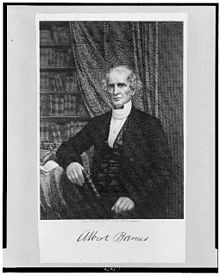
__________________________________________________________________ Title: Barnes' New Testament Notes Creator(s): Barnes, Albert Print Basis: Grand Rapids, Mich. : Baker Book House, 1949. Rights: Public Domain CCEL Subjects: All; Bible LC Call no: BS491 .B37 1949 LC Subjects: The Bible Works about the Bible __________________________________________________________________ Notes on the New Testament Explanatory and Practical by Albert Barnes Enlarged Type Edition Edited by Robert Frew, D.D. with Numerous Additional Notes and a Series of Engravings Baker Book House Grand Rapids 6, Michigan vols. 1 (Matthew and Mark)-2 (Luke-John): 1949 vols. 3+: 1950 __________________________________________________________________ Original Preface to the Notes on the Gospels In the preparation of the following Notes, free use has been made of all the helps within the reach of the author. The works from which most assistance has been derived are, Walton's Polyglott; the Critici Sacri, particularly the Notes of Grotius; Lightfoot's Works; Macknight and Newcome's Harmony of the Gospels; Jahn's Archaeology; Horne's Introduction; Doddridge's Family Expositor; Calmet's Dictionary; Campbell on the Gospels; the Commentaries of Kuinoel, Rosenmuller Clarke, and Henry; Tittman's Meletamata Sacra on John; the Sacred Geography of Wells, and that prepared for the American Sunday School Union, by Messrs J. & J. W. Alexander. The object has been to express, in as few words as possible, the real meaning of the Gospels;--the results of their critical study, rather than the process by which these results were reached. This work is designed to occupy a place, which is supposed to be unappropriated, in attempts to explain the New Testament. It was my wish to present to Sunday school teachers a plain and simple explanation of the more common difficulties of the book which it is their province to teach. This wish has given character to the work. If it should occur to any one that more minute explanations of words, phrases, and customs, have been attempted than might seem to them desirable, it will be recollected that many Sunday school teachers have little access to means of information, and that no small part of their success is dependent on the minuteness and correctness of the explanation which is given to children. This work is designed also to be a Harmony of the Gospels. Particular attention has been bestowed, especially in the Notes on Matthew, to bring the different narratives of the evangelists together, and to show that, in their narration of the same events, there is no real contradiction. It will be recollected, that the sacred narrative of an event is what it is reported to be by all the evangelists. It will also be recollected, that the most plausible objections to the New Testament have been drawn from the apparent contradictions in the Gospels. The importance of meeting these difficulties, in the education of the young, and of showing that these objections are not well founded, will be apparent to all. Particular attention has been paid to the references to parallel passages of Scripture. In all instances, in these Notes, they are an essential part of the explanation of the text. The authority of the Bible has been deemed the only authority that was necessary in such cases; and it is hoped that no one will condemn any explanation offered, without a candid examination of the real meaning of the passages referred to. The main design of these Notes will be accomplished, if they furnish a just explanation of the text. Practical remarks could not have been more full without materially increasing the size of the book, and, as was supposed, without essentially limiting its circulation and its usefulness. All that has been attempted, therefore, in this part of the work, has been to furnish leading thoughts, or heads of practical remark, to be enlarged on at the discretion of the teacher. These Notes have been prepared amidst the pressing and anxious cares of a responsible pastoral charge. Of their imperfections no one can be more sensible than the author. Of the time and patience indispensable in preparing even such brief Notes on the Bible, under the conviction that the opinions expressed may form the sentiments of the young on the subject of the Book of God, and determine their eternal destiny, no one can be sensible who has not made the experiment. The great truth is becoming more and more impressed on the minds of this generation, that the Bible is the only authoritative source of religious belief; and if there is any institution pre-eminently calculated to deepen this impression, and fix it permanently in the minds of the coming age, it is the Sunday school. Every minister of the Gospel, every parent, every Christian, must therefore feel it important that just views of interpretation should be imbibed in these schools. I have felt more deeply than I have any other sentiment, the importance of inculcating on the young proper modes of explaining the sacred Scriptures. If I can be one of the instruments, however humble, in extending such views through the community, my wish in this work will be accomplished. I commit it, therefore, to the blessing of the God of the Bible, with the prayer that it may be one among many instruments of forming correct religious views, and promoting the practical love of God and man among the youth of this country. ALBERT BARNES. PHILADELPHIA, August 25th, 1832. For INTRODUCTION to BARNES See Barnes "Mt 1:2" __________________________________________________________________ PREFACE TO THE GOSPEL ACCORDING TO MATTHEW THE word Gospel means good news, or a joyful message. It commonly signifies the message itself. But it is here used to denote the book containing the record of the message. The title "saint," given to the sacred writers of the New Testament, is of Roman Catholic origin, and is of no authority. It is now conceded pretty generally that Matthew wrote his gospel in his native tongue; that is, the language of Palestine. That language was not pure Hebrew, but a mixture of the Hebrew, Chaldaic, and Syraic, commonly called Syro-Chaldaic, or Aramaean. This language our Saviour undoubtedly used in his conversation; [see instances in Mr 7:34; Mt 27:46] and his disciples would naturally use this language also, unless there were good reasons why they should write in a foreign tongue. It is agreed that the remainder of the New Testament was written in Greek. The reason for this, in preference to the native language of the writers, was, that Greek was the language then generally spoken and understood throughout the eastern countries conquered by Alexander the Great, and particularly in Judea, and in the regions where the apostles first laboured. The Christian Fathers, without any exception, assert that Matthew wrote his gospel for the use of the Christians in Palestine, and say that it was written in the Hebrew dialect. It should be remarked, however, that many modern critics of much eminence do not suppose the evidence that Matthew wrote in Hebrew to be decisive; and believe that there is sufficient proof that, like the other writers of the New Testament, Matthew wrote in Greek. See Lardher's works, vol. v. pp. 308-318, London edition, 1829. The Gospel of Matthew exists now, however, only in Greek. The original Hebrew, or Syro-Chaldaic, if it was written in that language, has been designedly laid aside, or undesignedly lost. The question, then, naturally arises, who is the author of the Greek translation which we possess? and is it to be regarded as of Divine authority? It has been conjectured by some that Matthew himself furnished a Greek translation of the Hebrew. This conjecture, in itself probable enough, wants human testimony to support it. Athanasius, one of the early Fathers, says that it was translated by "James, the brother of our Lord according to the flesh." Papias, another of the early Fathers, says, that "each one translated it as he was able." If James translated it, there can be no question about its inspiration and canonical authority. Nor does it affect the question of its inspiration, even if we are ignorant of the name of the translator. The proper inquiry is, whether it had such evidence of inspiration as to be satisfactory to the church in the times when they were under the direction of the apostles. That it had such evidence, none acquainted with ancient history will doubt. Epiphanius says that the Gospel by Matthew was written while Peter and Paul were preaching at Rome. This was about the year of our Lord 63, about the time of the destruction of Jerusalem. It is now generally supposed that this gospel was written about this time. There is very clear evidence in the gospel that it was written before the destruction of Jerusalem. The destruction of the holy city is clearly and minutely told; but there is not the slightest intimation in it that these predictions had been accomplished; a thing which we should naturally expect if the gospel was not written until after these calamities came upon the Jews. Comp. Ac 11:28. It has been till lately uniformly regarded as having been written before either of the other evangelists. Some of late have, however, endeavoured to show that Luke was written first. All testimony, and all ancient arrangements of the books, are against the opinion; and when such is the fact, it is of little consequence to attend to other arguments. In all copies of the New Testament, and in all translations, this gospel has been placed first. This, it is probable, would not have been done, had not Matthew published his gospel before any other was written. Matthew, the writer of this gospel, called also Levi, son of Alpheus, was a publican, or tax-gatherer, under the Romans. See Barnes "Mt 9:9"; See Barnes "Lu 5:27." Of his life and death little is certainly known. Socrates, a writer of the fifth century, says that he went to Ethiopia, after the apostles were scattered abroad from Judea, and died a martyr in a city called Nadebbar; but by what kind of death is altogether uncertain. However, others speak of his preaching and dying in Parthia or Persia, and the diversity of their accounts seems to show that they are all without good foundation. See Lardher's works, vol. v. pp. 297, 297. __________________________________________________________________ THE GOSPEL ACCORDING TO MATTHEW __________________________________________________________________ THE GOSPEL ACCORDING TO MATTHEW - Chapter 1 __________________________________________________________________ THE GOSPEL ACCORDING TO MATTHEW - Chapter 1 - Verse 1 GOSPEL ACCORDING TO MATTHEW. 1. The book of the generation. This is the proper title of the chapter. It is the same as to say, "The account of the ancestry or family, or the genealogical table of Jesus Christ." The phrase is common in Jewish writings. Compare Ge 5:1, "This is the book of the generations of Adam," that is, the genealogical table of the family or descendants of Adam. See also Ge 6:9. The Jews, moreover, as we do, kept such tables of their own families, and it is probable that this was copied from the record of the family of Joseph. Jesus. See Mt 1:21. Christ. The word Christ is a Greek word, signifying anointed. The Hebrew word signifying the same is Messiah. Hence, Jesus is called either the Messiah, or the Christ, meaning the same thing. The Jews speak of the Messiah; Christians speak of him as the Christ. Anciently, when kings and priests were set apart to their office, they were anointed with oil, Le 4:3; 6:20; Ex 28:41; 29:7; 1 Sa 9:16; 15:1; 2 Sa 23:1. To anoint, therefore, means often the same as to consecrate, or set apart to any office. Thence those thus set apart are said to be anointed, or the anointed of God. It is for this reason that the name is given to the Lord Jesus, Da 9:24. He was set apart by God to be the King, and High Priest, and Prophet of his people. Anointing with oil was, moreover, supposed to be emblematic of the influences of the Holy Spirit; and as God gave him the Spirit without measure, (Joh 3:34) so he is called peculiarly the Anointed of God. The Son of David, The word son, among the Jews, had a great variety of significations. It means, literally, a son; then a grandson; a descendant; an adopted son; a disciple, or one who is an object of tender affection--one who is to us as a son. In this place it means a descendant of David; or one who was of the family of David. It was important to trace the genealogy of Jesus up to David, because the promise had been made that the Messiah should be of his family, and all the Jews expected it would be so. It would be impossible, therefore, to convince a Jew that Jesus was the Messiah, unless it could be shown that he was descended from David. See Jer 23:5 Ps 132:10,11; compared with Ac 13:23; Joh 7:42. The Son of Abraham. The descendant of Abraham. The promise was made to Abraham also. See Ge 12:3; Ge 21:12; comp. Heb 11:13; Ga 3:16. The Jews expected that the Messiah would be descended from him; and it was important, therefore, to trace the genealogy up to him also. Though Jesus was of humble birth, yet he was descended from most illustrious ancestors. Abraham, the father of the faithful--" the beauteous model of an eastern prince,"--and David, the sweet psalmist of Israel, the conqueror, the magnificent and victorious leader of the people of God, were both among his ancestors. From these two persons, the most eminent for piety, and the most renowned for their excellencies of all the men of antiquity, sacred or profane, the Lord Jesus was descended; and though his birth and life were humble, yet they who regard an illustrious descent as of value, may find here all that is to be admired in piety, purity, patriotism, splendour, dignity, and renown. {a} "generation of Jesus Christ" Lu 3:33 {b} "son of David" Ps 132:11; Mt 22:45; Ac 2:30 {c} "son of Abraham" Ge 22:18; Ga 3:16 __________________________________________________________________ THE GOSPEL ACCORDING TO MATTHEW - Chapter 1 - Verse 2 INTRODUCTION. THE writings which are regarded by Christians as the sole standard of faith and practice, have been designated at various periods by different names. They are frequently called The Scriptures, to denote that they are the most important of all writings; The Holy Scriptures, because composed by persons divinely inspired, and containing sacred truth; and The Canonical Scriptures. The word canon means a rule; and it was applied by the Christian fathers to the books of the Bible because they were regarded as an authoritative rule of faith and practice; and also to distinguish them from certain spurious or apocryphal books, which, although some of them might be true as matter of history, or correct in doctrine, were not regarded as a rule of faith, and were therefore considered as not canonical. But the most common appellation given now to these writings is THE BIBLE. This is a Greek word signifying book. It is given to the Scriptures by way of eminence, to denote that this is the Book of books, as being infinitely superior to every unassisted production of the human mind. In the same way, the name Koran or reading is given to the writings of Mohammed, denoting that they are the chief writings to be read, or eminently the reading. The most common and general division of the Bible is into the Old and New Testaments. The word testament, with us, means a will; an instrument in writing, by which a person declares his will in relation to his property after his death. This is not, however, its meaning when applied to the Scriptures. It is taken from the Greek translation of the Hebrew word meaning covenant, compact, or agreement. The word is applied to the covenant or compact which God made with the Jews to be their God, and thus primarily denotes the agreement, the compact, the promises, the institutions, of the old dispensation, and then the record of that compact in the writings of Moses and the Prophets. The name" Old Testament," or" Old Covenant," therefore, denotes the books containing the records of God's compact with his people, or his dispensations under the Mosaic or Jewish state. The phrase New Covenant, or Testament, denotes the books which contain the record of his new covenant or compact With his people under the Messiah, or since Christ came. We find mention made of the Book of the Covenant in Ex 24:7, and in the New Testament the word is once used, (2 Co 3:14,) with an undoubted reference to the sacred books of the Jews. By whom, or at what time, these terms were first used to designate the two divisions of the sacred Scriptures, is not certainly known. There can be no doubt, however, of the great antiquity of the application. The Jews divided the Old Testament into three parts, called THE LAW, THE PROPHETS, and THE HAGIOGRAPHA, or the holy writings. This division is noticed by our Saviour in Lu 24:44. See Barnes "Lu 24:44". "All things must be fulfilled which were written in the Law of Moses, and in the Prophets, and in the Psalms, concerning me." Josephus, the Jewish historian, also makes mention of the same division. (Against Apion). "We have," says he, "only twenty-two books which are to be believed to be of Divine authority; of which five are the books of Moses. From the death of Moses to the reign of Artaxerxes, son of Xerxes, king of Persia, the prophets who were the successors of Moses have written in thirteen books. The remaining four books contain hymns to God and documents of life for the use of men." It is probable that precisely the same books were not always included in the same division; but there can be no doubt that the division itself was always retained. The division into twenty-two books was made partly, no doubt, for the convenience of the memory. This was the number of letters in the Hebrew alphabet. The English Bible contains thirty-nine instead of twenty-two books in the Old Testament. The number which Josephus reckons may be accurately made out as follows: The first division, comprehending the five books of Moses, or THE LAW. The second, including, 1st, Joshua; 2nd, Judges, with Ruth; 3rd, Samuel; 4th, Kings; 5th, Isaiah; 6th, Jeremiah, with Lamentations; 7th, Ezekiel; 8th, Daniel; 9th, the twelve minor prophets; 10th, Job; 11th, Ezra, including Nehemiah; 12th, Esther; 13th, Chronicles: these thirteen books were called THE PROPHETS. The four remaining will be Psalms, Proverbs, Ecclesiastes, and the Song of Solomon. In regard to the second division, it is a fact well known, that the twelve smaller prophets, from Hosea to Malachi, were for convenience uniformly united in one volume; and that the small books of Ruth and Lamentations were attached to the larger works mentioned, and Ezra and Nehemiah were long reckoned as one book. The arrangement of the books of the Bible has not always been the same. The order followed in the English Bible is taken from the Greek translation called the Septuagint. Probably the best way to read the Bible is to read the books as nearly as possible in the order in which they were written. Thus Isaiah informs us, (Isa 1:1) that his prophecies were delivered in the reigns of Uzziah, Jotham, Ahaz, and Hezekiah; and, to be correctly understood, should be read in connexion with the record of those reigns in Kings and Chronicles. The names of most of the books in the Bible are taken from the Greek translation above mentioned. The books of the Bible were anciently written without any breaks, or divisions into chapters and verses. For convenience, the Jews early divided the Old Testament into greater and smaller sections. These sections in the law and prophets were read in the worship of the synagogues. The New Testament was also early divided in a similar manner. The division into chapters and verses is of recent origin. It was first adopted in the 13th century by Cardinal Hugo, who wrote a celebrated commentary on the Scriptures. He divided the Latin Vulgate, the version used in the church of Rome, into chapters nearly the same as those which now exist in our English translation. These chapters he divided into smaller sections by placing the letters A, B, C, etc., at equal distances from each other in the margin. The division into verses was not made until a still later period. The division of Cardinal Hugo into chapters became known to Rabbi Nathan, a distinguished Jew, who adopted it for the Hebrew Bible, and placed the Hebrew letters, used also as numerals, in the margin. This was used by Rabbi Nathan in publishing a concordance, and adopted by Athias in a printed edition of the Hebrew Bible in 1661. The verses into which the New Testament is divided are still more modern, and are an imitation of those used by Rabbi Nathan in the fifteenth century. This division was invented and first used by Stephens, in an edition of the New Testament printed in 1551. The division was made as an amusement while he was on a journey from Lyons to Paris, during the intervals in which he rested in travelling. It has been adopted in all the subsequent editions of the Bible. In regard to this division into chapters and verses, it is clear that they are of no authority whatever. It has been doubted whether the sacred writers used any points or divisions of any kind. It is certain that they were wholly unacquainted with those now in use. It is further evident that, in all cases, these divisions have not been judiciously made. The sense is often interrupted by the close of a chapter, and still oftener by the break in the verses. In reading the Scriptures, little regard should be had to this division. It is of use now only for reference; and inaccurate as it is, it must evidently be substantially retained. All the books that have been printed for three hundred years, which refer to the Bible, have made their reference to these chapters and verses; and to attempt any change now would be to render almost useless a great part of the religious books in our language, and to introduce inextricable confusion in all attempts to quote the Bible. The first translation of the Old Testament was made about the year 270 before the Christian era. It was made at Alexandria, in Egypt, into the Greek language, and probably for the use of the Jews, who were scattered among pagan nations. Ancient writers inform us, indeed, that it was made at the command of Ptolemy Philadelphus, to be deposited in the Library at Alexandria. It bears internal marks of having been made by different individuals, and no doubt at different times. It came to be extensively used in Judea, and no small part of the quotations in the New Testament were taken from it. There is no doubt that the apostles were familiar with it; and as it had obtained general currency, they chose to quote it rather than translate the Hebrew for themselves. It is called the Septuagint, or the version by the Seventy, from a tradition that seventy elders of Israel, deputed for that purpose, were employed in making the translation. The language Spoken by our Saviour and his apostles was a corruption of the Hebrew, a mixture of that and the language spoken in Chaldee, called Syro-Chaldaic, or more commonly the Syriac. The reason why the New Testament was not written in this language was, that the Greek had become the common language used throughout the eastern nations subject to the Romans. This general use of the Greek language was produced by the invasion and conquest of those nations by Alexander the Great, about 330 years before Christ. The New Testament was, however, early translated into the Syriac language. A translation is now extant in that language, held in great veneration by Syrian Christians, said to have been made in the first century, or in the age of the apostles, and acknowledged by all to have been made before the close of the second century. About the beginning of the fourth century, the Bible was translated into Latin by Jerome. This translation was made in consequence, as he says, of the incorrectness of a version then in use, called the Italic. The translation made by Jerome, now called the Latin Vulgate, is the authorized version of the church of Rome. [For an account of this version, See Barnes on "Is 1:1".] The Bible was translated by Luther in the beginning of the Reformation. This translation has done much to fix the German language, and is now the received version among the Lutheran churches. There have been many other translations of the Bible, and there are many more still in progress. More than one hundred and fifty translations of the whole Bible, or parts of it, have been made during the last half century. Those which have been mentioned, together with the English, have been, however, the principal, and are most relied on as faithful exhibitions of the meaning of the sacred Scriptures. The English translation of the Bible now in use was made in the reign of James I. This translation was intended only as an improvement of those previously in existence. A short account of the translation of the Bible into our own language cannot fail to be interesting. It is not easy to ascertain the precise time when the gospel was introduced into Britain, or when the inhabitants were first in possession of the Bible. The earliest version of which we have any account is a translation of the Psalms into the Saxon language, about the year 706. But the principal translation at that early period was made by the "venerable Bede," about the year 730. He translated the whole Bible into the Saxon language. The first English translation of the Bible was executed about the year 1290 by some unknown individual. About the year 1380, John Wickliffe, the morning star of the Reformation, translated the entire Bible into English from the Latin. The great labour and expense of transcribing books, before the invention of printing, probably prevented a very extensive circulation of the Scriptures among the people. [So great was the expense of transcribing the Bible at that time, that the price of one of Wickliffe's New Testaments was not less than forty pounds sterling, or one hundred and seventy-six dollars and seventy- eight cents of our money. And it should be matter of devout gratitude to God that, by the art of printing, the New Testament can now be obtained for the trifling sum of ten cents, and the entire Bible for twenty-five]. Yet the translation of Wickliffe is known to have produced a vast effect on the minds of the people. Knowledge was beginning to be sought for with avidity. The eyes of the people were beginning to open to the abominations of the church of Rome; and the national mind was preparing for the great change which followed in the days of Luther. So deep was the impression made by Wickliffe's' translation, and so dangerous was it thought to be to the interest of the Romish religion, that a bill was brought into the House of Lords for the purpose of suppressing it. The bill was rejected through the influence of the Duke of Lancaster; and this gave encouragement to the friends of Wickliffe to publish a more correct translation of the Bible. At a convocation, however, held at Oxford, in 1408, it was decreed that no one should translate any text of the Holy Scripture into English, by way of a book, or little book, or tract; and that no book of this kind should be read that was composed in the time of John Wickliffe, or since his death. This decree led the way to a great persecution; and many persons were punished severely, and some even with death, for reading the Bible in English. The Bible translated by Wickliffe was never printed. Some years since the New Testament was printed in England. For the first printed English translation of the Scriptures we are indebted to William Tindal. He printed this translation at Antwerp, in Flanders; and the copies were brought thence into England. So great was the opposition to this by the Roman Catholic clergy, that the Bishop of London endeavoured to buy up whole editions as fast as they were printed, to burn them. This effort, however, produced little effect. Copies of the New Testament were multiplied. It is said that, on one occasion, Sir Thomas More, then chancellor of England, asked how Tindal contrived to maintain himself abroad. To which it was replied that the Bishop of London supported him by purchasing the Scriptures as fast as they could be printed. In 1535, the whole Bible, translated into English, was printed in folio, and dedicated to the king, by Miles Coverdale. This was the first English translation of the Bible allowed by royal authority. Various editions and translations of the Scriptures, with various degrees of correctness, were printed in successive years, till, in 1568, the edition appeared which was called "the Bishop's Bible," or "the great English Bible." This was prepared by royal authority. It was the work of much care. Different learned men undertook to translate different parts of the Bible, and after these persons had been carefully compared, the whole was printed, and directed to be used as an authorized English translation of the Scriptures. This, after being reprinted many times, and after being in use for half an century, was succeeded by the translation at present in use. * The following is a specimen of this translation:- __________________________________________________________________ Matthew, chap. v.--And Jhesus seynge the people, went up into an hil; and whanne he was sett, his disciplis camen to him. And he openyde his mouthe, and taughte them; and seide, Blessid be pore men in spirit; for the kyngdom of hevenes is hereun [theirs]. Blessid ben mylde men: for thei schulen weelde the erthe. Blessid ben thei that mournen: for thei schal be comfortid. Blessid be thei that hungten and thirsten rightwisnesse [Rightfulnesse, MS, plures]: for thei schal be fulfilled. Blessid ben merciful men: for thei schul gete mercy. Blessid ben thei that ben of clene herte: for thei schulen se god. Blessid ben pesible men: for thei schulen be clepid goddis children. Blessid ben thei that surften persecucioun for rightwisnesse: for the kyngdom of hevenes is hern. Ye schul be blessid whanne men schul curse you, and schul pursue you: and schul seye al yvel agens you liynge for me. Joie ye and be ye glade:for your meede is plenteous in hevenes: for so thei hah pursued also prophets that weren bifore you. Ye ben salt of the erthe, that if the salt vanishe awey wherynne schal it be salted? to nothing it is worth over, no but it be cast out, and be defoulid of men. Ye ben light of the world, a citee sett on an hil may not be hid. Ne me teendith not a lanterne and puttith it under a bushel; but on a candlesfik that it give light to alle that ben in the hous. So, schyne your light bifore men, that thei see youre gode workis, and glorifie your fadir that is in hevenes. Nyle ghe deme that I cam to undo the Lawe or the prophets, I cam not to undo the lawe but to fulfille. Forsothe I sey to you till hevene and erthe passe, oon lettre, or oon title, schal not passe fro the Lawe till alle thingis be don. Therefore he that brekith oon of these leeste maundementis, and techith thus men, sehal be clepid the Leest in the rewme of hevenes; but he that doth, and techith, schal be clepid greet in the kyngdom of hevenes.--Baber's Edition. __________________________________________________________________ As this is in many respects, the most important of all English translations of the sacred Scriptures, it is proper to dwell more fully . on the circumstances under which it was made. It was undertaken by the authority of King James I. of England. He came to the throne in 1603. Several objections having been made to the "Bishop's Bible," then in general use, he ordered a new translation to be made. This work he committed to fifty-four men; but before the translation was commenced, seven of them had either died, or had declined the task, so that it was actually accomplished by forty-seven. All of them were eminently distinguished for their piety, and for their profound acquaintance with the original languages. This company of eminent men was divided into six classes, and to each class was allotted a distinct part of the Bible to be translated. "Ten were to meet at Westminster, and to translate from Genesis to the end of the second book of Kings. Eight assembled at Cambridge, and were to translate the remaining historical books, the Psalms, Job, Canticles, and Ecclesiastes. At Oxford, seven were to translate the four greater Prophets, the Lamentations of Jeremiah, and the twelve minor Prophets. The four Gospels, the Acts of the Apostles, and the Revelation, were assigned to another company of eight at Oxford; and the Epistles were allotted to a company of seven at Westminster. Lastly, another company at Cambridge were to translate the Apocrypha." To these companies the king gave instructions to guide them in their work, of which the following is the substance:- The Bishop's Bible, then used, to be followed, and to be altered as little as the original would permit. The names of the sacred writers to be retained as they were commonly used. When a word had different significations, that to be kept which hath been most commonly used by the fathers, and most eminent writers. No alteration to be made in the chapters and verses. No marginal notes to be affixed, except to explain the Greek and Hebrew words that could not be briefly and fitly explained in the text. Reference to parallel places to be set down in the margin. Each man of a company to take the same chapters, and translate them according to the best of his abilities; and when this was done, all were to meet together and compare their translations, and agree which should be regarded as correct. Each book, when thus translated and approved, to be sent to every other company for their approbation. Besides this, the translators were authorized, in cases of great difficulty, to send letters to any learned men in the kingdom to obtain their opinions. In this manner the Bible was translated into English. In the first instance, each individual translated each book allotted to his company. Secondly, the readings to be adopted were agreed upon by that company assembled together. The book thus finished was sent to each of the other companies to be examined. At these meetings one read the English, and the rest held in their hands some Bible, of Hebrew, Greek, Latin, French, Spanish, etc. If they found any fault, says Selden, they spoke; if not, he read on. The translation was commenced in 1607, and completed in about three years. At the end of that time, three copies of it were sent to London. Here a committee of six reviewed the work, which was afterwards reviewed by Dr. Smith, who wrote the preface, and by Dr. Bilson. It was first printed, in 1611, at London, by Robert Barker. From this account, it is clear that no ordinary care was taken to furnish to English readers a correct translation of the sacred Scriptures. No translation of the Bible was ever made under more happy auspices; and it would now be impossible to furnish another translation in our language under circumstances so propitious. Whether we contemplate the number, the learning, or the piety of the men employed in it; the cool deliberation with which it was executed; the care taken that it should secure the approbation of the most learned men, in a country that embosomed a vast amount of literature; the harmony with which they conducted their work; or the comparative perfection of the translation, we see equal cause of gratitude to the great Author of the Bible that we have so pure a translation of his word. From this time the English language became fixed. More than two hundred years have elapsed, and yet the simple and majestic purity and power of the English tongue is expressed in the English translation of the Bible, as clearly as when it was given to the world. It has become the standard of our language; and nowhere can the purity and expressive dignity of this language be so fully found as in the sacred Scriptures. The friends of this translation have never claimed for it inspiration or infallibility. Yet it is the concurrent testimony of all who are competent to express an opinion, that no translation of the Bible into any language has preserved so faithfully the sense of the original as the English. Phrases there may be, and it is confessed there are, which modern criticism has shown not to express all the meaning of the original; but as a whole, it indubitably stands unrivalled. Nor is it probable that any translation can now supply its place, or improve upon its substantial correctness. The fact that it has, for two hundred years, poured light into the minds of millions, and guided the steps of generation after generation in the way to heaven, has given to it somewhat of the venerableness which appropriately belongs to a book of God. Successive ages may correct some of its few un- important errors; may throw light on some of its obscure passages; but, to the consummation of all things, it must stand, wherever the English language is spoken, as the purest specimen of its power to give utterance to the meaning of ancient tongues, and of the simple and pure majesty of the language which we speak. These remarks are made, because it is easy for men who dislike the plain doctrines of the Bible, and for those ignorant of the true history of its translation, to throw out insinuations of its unfaithfulness. From various quarters, from men opposed to the clear doctrines of the Scriptures, are often heard demands for a new translation. We by no means assert the entire infallibility, much less the inspiration, of the English translation of the Bible. Yet, of its general faithfulness to the original there can be no doubt. It would be easy to multiply testimonies of the highest authority to this fact. But the general testimony of the world; the profound regard paid to it by men of the purest character and most extensive learning; the fact that it has warmed the hearts of the pious, ministered to the comforts of the wretched and the dying, and guided the steps of millions to glory, for two hundred years, and now commands the high regard of Christians of so many different denominations, evinces that it is, to no ordinary extent, faithful to the original, and has a claim on the continued regard of coming generations. It is perfectly clear, also, that it would be impossible now to translate the Scriptures into the English language, under so favourable circumstances as attended the translation in the time of James I. No single set of men could so command the confidence of the Christian world; no convention who claim the Christian name could be formed, competent to the task, or if formed, could prosecute the work with harmony; no single denomination could make a translation that would secure the undisputed respect of others. The probability is, therefore, that while the English language is spoken, and as far as it is used, the English Bible Will continue to form their faith, and direct their lives; and that the words which now pour light into our minds will continue to illuminate the understandings, and mould the feelings, of unnumbered millions, in their park to immortal life. Verses 2-16. See Barnes on "Mt 1:3". Verse 2. {d} "begat Isaac" Ge 21:2-5 {e} "begat Judah" Ge 25:26 __________________________________________________________________ THE GOSPEL ACCORDING TO MATTHEW - Chapter 1 - Verse 3 Matthew Verses 2-16 Verses 2-16. These verses contain the genealogy of Jesus. Luke also (Lu 3:1) gives a genealogy of the Messiah. No two passages of Scripture have caused more difficulty than these, and various attempts have been made to explain them. There are two sources of difficulty in these catalogues: first, many names that are found in the Old Testament are here omitted; and second, the tables of Matthew and Luke appear in many points to be different. From Adam to Abraham, Luke only has given the record. From Abraham to David the two tables are alike. Of course there is no difficulty in reconciling these two parts of the tables. The difficulty lies in that part of the genealogy from David to Christ. There they are entirely different. They are manifestly different lives. Not only are the names different, but Luke has mentioned, in this part of the genealogy, no less than forty-two names, while Matthew has recorded but twenty-seven. Various ways have been proposed to explain this difficulty; and it must be admitted that none of them are perfectly satisfactory. It does not comport with the design of these Notes to enter minutely into an explanation of the perplexities of these passages. All that can be done is to suggest the various ways in which attempts have been made to explain them. (1.) It is remarked that in nothing are mistakes more likely to occur than in such tables. From the similarity of names, and the various names by which the same person is often called, and from many other causes, errors would be more likely to creep into the text in genealogical tables than in other writings. Some of the difficulties may have possibly occurred from this cause. (2.) Most interpreters have supposed that Matthew gives the genealogy of Joseph, and Luke that of Mary. They were both descended from David, but in different lines. This solution derives some plausibility from the fact that the promise was made to David; and as Jesus was not the son of Joseph, it was important to show that Mary was also descended from him. Though this solution is plausible, and may be true, yet it wants evidence. It cannot, however, be proved that this was not the design of Luke. (3.) It has been said, also, that Joseph was the legal son and heir of Heli, though the real son of Jacob, and thus the two lines terminated in him. This was the ancient explanation of most of the fathers, and on the whole is the most satisfactory. It was a law of the Jews, that if a man died without children, his brother should marry his widow. Thus the two lines might have been intermingled. According to this solution, which was first proposed by Africanus, Matthan, descended from Solomon, married Estha, of whom was born Jacob. After Matthan's death, Matthat being of the same tribe, but of another family, remarried his widow, and of this marriage Heli was born. Jacob and Heli were therefore children of the same mother. Heli dying without children, his brother Jacob married his widow, and begat Joseph, who was thus the legal son of Heli. This is agreeable to the account in the two evangelists. Matthew says that Jacob begat Joseph; Luke says that Joseph was the son of Heli; that is, was his legal heir, or reckoned in law to be his son. This can be seen by the plan on the next page, showing the nature of the connexion. Though these solutions may not seem to be entirely satisfactory, yet there are two additional considerations which should set the matter at rest, and lead to the conclusion that the narratives are not really inconsistent. (1.) No difficulty was ever found, or alleged, in regard to them, by any of the early enemies of Christianity. There is no evidence that they ever adduced them as containing a contradiction. Many of those enemies were acute, learned, and able; and they show by their writings that they were not indisposed to detect all the errors that could possibly be found in the sacred narrative. Now, it is to be remembered that the Jews were fully competent to show that these tables were incorrect, if they were really so; and it is clear that they were fully disposed, if possible, to do it. The fact, therefore, that it is not done, is clear evidence that they thought it to be correct. The same may be said of the acute pagans who wrote against Christianity. None of them have called in question the correctness of these tables. This is full proof that, in a time when it was easy to understand these tables, they were believed to be correct. (2.) The evangelists are not responsible for the correctness of these tables. They are responsible only for what was their real and professed object to do. What was that object? It was to prove, to the satisfaction of the Jews, that Jesus was descended from David, and therefore that there was no argument from his ancestry that he was not the promised Messiah. Now, to make this out it was not necessary, nor would it have conduced to their argument, to have formed a new table of genealogy. All that could be done was, to go to the family records--to the Public tables--and copy them as they were actually kept, and show that, according to the records of the nation, Jesus was descended from David. This, among the Jews, was full and decided testimony in the case. And this was doubtless done. In the same way, the records of a family among us, as they are kept by the family, are proof in courts of justice now, of the birth, names, etc., of individuals. Nor is it necessary or proper for a court to call them in question, or to attempt to correct them. So the tables here are good evidence to the only point that the writers wished to establish; that is, to show to the Jews that Jesus of Nazareth was descended from David. All that can be asked now is, whether they copied the tables of those families correctly. It is clear that no man can prove that they did not so copy them, and, therefore, that no one can adduce them as an argument against the correctness of the New Testament. The Ancestry of Joseph Footnotes for Verse 3. {g} "Judas begat Phares" Ge 38:29,30 {h} "Phares begat Ersom" Ge 46:12 __________________________________________________________________ THE GOSPEL ACCORDING TO MATTHEW - Chapter 1 - Verse 4 Verse 4. No specific Barnes text on this verse. See Barnes on "Mt 1:3". {k} "begat Naason" 1 Ch 2:10; Nu 1:7 {l} "begat Salmon" Ru 4:20 __________________________________________________________________ THE GOSPEL ACCORDING TO MATTHEW - Chapter 1 - Verse 5 Verse 5: No specific Barnes text on this verse. See Barnes on "Mt 1:3" {m} "begat Booz of Rachab" Jos 6:25; Ru 4:21 {n} "begat Obed of Ruth" Ru 4:13 __________________________________________________________________ THE GOSPEL ACCORDING TO MATTHEW - Chapter 1 - Verse 6 Verse 6. No specific Barnes text on this verse. See Barnes on "Mt 1:3" {o} "Jesse begat David the king" 1 Sa 17:12 {p} "begat Solomon" 2 Sa 12:24 __________________________________________________________________ THE GOSPEL ACCORDING TO MATTHEW - Chapter 1 - Verse 7 Verse 7. No specific Barnes text on this verse. See Barnes on "Mt 1:3" {q} "Solomon begat Roboam" 1 Ch 3:10 __________________________________________________________________ THE GOSPEL ACCORDING TO MATTHEW - Chapter 1 - Verse 8 Verse 8. No specific Barnes text on this verse. See Barnes on "Mt 1:3" __________________________________________________________________ THE GOSPEL ACCORDING TO MATTHEW - Chapter 1 - Verse 9 Verse 9. No specific Barnes text on this verse. See Barnes on "Mt 1:3" __________________________________________________________________ THE GOSPEL ACCORDING TO MATTHEW - Chapter 1 - Verse 10 Verse 10. No specific Barnes text on this verse. See Barnes on "Mt 1:3" {r} "Ezekias begat Manasses" 2 Ki 20:21; 1 Ch 3:13 __________________________________________________________________ THE GOSPEL ACCORDING TO MATTHEW - Chapter 1 - Verse 11 Verse 11. No specific Barnes text on this verse. See Barnes on "Mt 1:3" {1} "Josias begat Jechonias", some read "Josias begat Jakim, and Jakim begat Jechonias" __________________________________________________________________ THE GOSPEL ACCORDING TO MATTHEW - Chapter 1 - Verse 12 Verse 12. No specific Barnes text on this verse. See Barnes on "Mt 1:3" {s} "Jechonias begat Salathiel" 1 Ch 3:17 {t} "Salathiel begat Zorobabel" Ne 12:1 __________________________________________________________________ THE GOSPEL ACCORDING TO MATTHEW - Chapter 1 - Verse 13 Verse 13. No specific Barnes text on this verse. See Barnes on "Mt 1:3" __________________________________________________________________ THE GOSPEL ACCORDING TO MATTHEW - Chapter 1 - Verse 14 Verse 14. No specific Barnes text on this verse. See Barnes on "Mt 1:3" __________________________________________________________________ THE GOSPEL ACCORDING TO MATTHEW - Chapter 1 - Verse 15 Verse 15. No specific Barnes text on this verse. See Barnes on "Mt 1:3" __________________________________________________________________ THE GOSPEL ACCORDING TO MATTHEW - Chapter 1 - Verse 16 Verse 16. No specific Barnes text on this verse. See Barnes on "Mt 1:3" __________________________________________________________________ THE GOSPEL ACCORDING TO MATTHEW - Chapter 1 - Verse 17 Verse 17. All the generations, etc. This division of the names in their genealogy was doubtless adopted for the purpose of aiding the memory. It was common among the Jews; and other similar instances are preserved. They were destitute of other books beside the Old Testament, and had but few copies of that among them, and those chiefly in their synagogues. They would, therefore, naturally devise plans to keep up the remembrance of the principal facts in their history. One method of doing this was to divide the tables of genealogy into portions of equal length, to be committed to memory. This greatly facilitated the remembrance of the names. A man who wished to commit to memory the names of a regiment of soldiers, would naturally divide it into companies and platoons, and this would greatly facilitate his work. This was doubtless the reason in the case before us. And though it is not strictly accurate, yet it was the Jewish way of keeping their records, and answered their purpose. There were three leading persons and events that nearly, or quite, divided their history into equal portions--Abraham, David, and the Babylonish captivity. From one to the other was about fourteen generations, and, by omitting a few names, it was sufficiently accurate to be made a general guide or directory in remembering their history. In counting these divisions, however, it will be seen that there is some difficulty in making out the number fourteen in each division. This may be explained in the following manner. In the first division, Abraham is the first, and David the last, making together fourteen In the second series, David would naturally be placed first, and the fourteen was completed in Josiah, about the time of the captivity, as sufficiently near for the purpose of convenient computation, 2 Chron 35. In the third division, Josiah would naturally be placed first, and the number was completed in Joseph. So that David and Josiah would be reckoned twice. This may be shown by the following table of the names: 1st division. 2nd division. 3rd division. Abraham David Josias Isaac Solomon Jechonias Jacob Roboam Salathiel Judas Abia Zorobabel Phares Asa Abiud Esrom Josaphat Eliakim Aram Joram Azor Aminadab Ozias Sadoc Naasson Joatham Achim Salmon Achaz Eliud Booz Ezekias Eleazar Obed Manasses Matthan Jesse Amon Jacob David Josias Joseph -14 -14 -14 Carrying away into Babylon. This refers to the captivity of Jerusalem, and the removal of the Jews to Babylon by Nebuchadnezzar, 588 years before Christ. See 2 Chron. 36. Josiah was king when these calamities began to come upon the Jews; but the exact time of the seventy years of captivity did not commence until the eleventh year of Zedekiah's reign, or 32 years after the death of Josiah. Babylon was situated on the Euphrates, and was encompassed with walls which were about 60 miles in circuit, 87 feet broad, and 350 feet high; and the city was entered by a hundred brazen gates, 25 on each side. It was the capital of a vast empire, and the Jews remained there for seventy years. See Barnes "Is 13:1" and following. __________________________________________________________________ THE GOSPEL ACCORDING TO MATTHEW - Chapter 1 - Verse 18 Verse 18. On this wise. Thus. In this manner. Espoused. Betrothed, or engaged to be married. There was commonly an interval of ten or twelve months, among the Jews, between the contract of marriage and the celebration of the nuptials, see Ge 24:55; Jud 14:8, yet such was the nature of this engagement, that unfaithfulness to each other was deemed adultery. See De 22:25,28. With child of the Holy Ghost. See Barnes "Lu 1:35". {u} "birth of Jesus" Lu 1:27 {*} "espoused to Joseph" "Fifth year before the account called A.D." __________________________________________________________________ THE GOSPEL ACCORDING TO MATTHEW - Chapter 1 - Verse 19 Verse 19. Her husband. The word in the original does not imply that they were married. It means here the man to whom she was espoused. A just man. Justice consists in rendering to every man his own. Yet this is evidently not the character intended to be given here of Joseph. It means that he was kind, tender, merciful; so attached to Mary, that he was not willing that she should be exposed to public shame. He sought, therefore, secretly to dissolve the connexion, and to restore her to her friends without the punishment commonly inflicted on adultery. The word just has not unfrequently this meaning of mildness, or mercy. See 1 Jo 1:9. A public example. To expose her to public shame or infamy. Adultery has always been considered a crime of a very heinous nature. In Egypt it was punished by cutting off the nose of the adulteress; in Persia the nose and ears were cut off; in Judea the punishment was death by stoning, Le 20:10; Eze 16:38, 40; Joh 8:5. This punishment was also inflicted where the person was not married, but betrothed, De 22:23,24. In this case, therefore, the regular punishment would have been death in this painful and ignominious manner. Yet Joseph was a religious man, mild and tender; and he was not willing to complain of her to the magistrate, and expose her to death, but sought to avoid the shame, and to put her away privately. Put her away privily. The law of Moses gave the husband the power of divorce, De 24:1. It was customary, in a bill of divorce, to specify the causes for which the divorce was made, and witnesses were also present to testify to the divorce. But in this case, it seems, Joseph resolved to put her away without specifying the cause: for he was not willing to make her a public example. This is the meaning here of privately. Both to Joseph and Mary this must have been a great trial. Joseph was ardently attached to her, but her character was likely to be ruined, and he deemed it proper to separate her from him. Mary was innocent, but Joseph was not yet satisfied of her innocence. Yet we may learn how to put our trust in God. He will defend the innocent. Mary was in danger of being exposed to shame. Had she been connected with a cruel, passionate, and violent man, she would have died in disgrace. But God had so ordered it, that she was connected with a man mild, amiable, and tender; and, in due time, Joseph was apprized of the truth in the case, and took his faithful and beloved wife to his bosom. Thus our only aim should be to preserve a conscience void of offence, and God will guard our reputation. We may be assailed, or circumstances may be against us; but in due time God will take care to vindicate our character, and save us from ruin. {v} "to put her away privily" De 24:1 __________________________________________________________________ THE GOSPEL ACCORDING TO MATTHEW - Chapter 1 - Verse 20 Verse 20. He thought on these things. He did not act hastily. He did not take the course which the law would have permitted him to do, if he had been hasty, violent, or unjust. It was a case deeply affecting his happiness, his character, and the reputation and character of his chosen companion. God will guide the thoughtful and the anxious. And when we have looked patiently at a perplexed subject, and know not what to do, then God, as in the case of Joseph, will interpose to lead us, and direct our way, Ps 25:9. The angel of the Lord. The word angel literally means a messenger. It is applied chiefly in the Scriptures to those invisible holy beings who have not fallen into sin; who live in heaven, (1 Ti 5:21, comp. Jude 1:6) and who are sent forth to minister to those who shall be heirs of salvation, Heb 1:13,14; Da 9:21. The word is sometimes applied to men, as messengers, (Lu 7:24; 9:52; Jas 2:25) to the winds, (Ps 104:4); to the pestilence, (Ps 78:49); or to whatever is appointed to make known, or to execute the will of God. It is commonly applied, however, to the unfallen, happy spirits that are in heaven, whose only dignity and pleasure it is to do the will of God. Various ways were employed by them in making known the will of God, by dreams, visions, assuming a human appearance, etc. In a dream. This was a common way of making known the will of God to the ancient prophets and people of God, Ge 20:3; 31:10,11,24; 37:5; Ge 41:1; 1 Ki 3:5; Da 7:1; Job 4:13-16. In what way it was ascertained that these dreams were from God, cannot now be told. It is sufficient for us to know that in this way many of the prophecies were communicated; and to remark, that now there is no evidence that we are to put reliance on our dreams. Dreams are wild, irregular movements of the mind, when it is unshackled by reason, and it is mere superstition to suppose that God now makes known his will in this way. See Barnes "Is 37:1". Son of David. Descendant of David. See Mt 1:1. The angel put him in mind of his relation to David, perhaps, to prepare him for the intelligence that Mary was to be the mother of the Messiah--the promised heir of David. Fear not. Do not hesitate, or have fears about her virtue and purity. Do not fear that she will be unworthy of you, or will disgrace you. {w} "in a dream" Mt 1:16 {1} "conceived" or, "begotten" __________________________________________________________________ THE GOSPEL ACCORDING TO MATTHEW - Chapter 1 - Verse 21 Verse 21 His name JESUS. The name Jesus is the same as Saviour. It is derived from the verb signifying to save. In Hebrew it is the same as Joshua. In two places in the New Testament it is used where it means Joshua, the leader of the Jews into Canaan, and in our translation the name Joshua should have been retained, Ac 7:45; Heb 4:8. It was a very common name among the Jews. He shall save. This expresses the same as the name, and on this account the name was given to him. He saves men by having died to redeem them; by giving the Spirit to renew them, (Joh 16:7,8) by his power in enabling them to overcome their spiritual enemies, in defending them from danger, in guiding them in the path of duty, in sustaining them in trials and in death; and he will raise them up at the last day, and exalt them to a world of purity and love. His people. Those whom the Father has given to him. The Jews were called the people of God, because he had chosen them to himself, and regarded them as his peculiar and beloved people, separate from all the nations of the earth. Christians are called the people of Christ, because it was the purpose of the Father to give them to him, (Is 53:11; Joh 6:37) and because in due time he came to redeem them to himself, Tit 2:14; 1 Pe 1:2. From their sins. This is the great business of Jesus in coming and dying. It is not to save men IN their sins, but FROM their sins. Sinners could not be happy in heaven. It would be a place of wretchedness to the guilty. The design of Jesus was, therefore, to save from sin; 1. by dying to make an atonement, (Tit 2:14); and, 2. by renewing the heart, and purifying the soul, and preparing his people for a pure and holy heaven. And from this we may learn, (1.) that Jesus had a design in coming into the world--he came to save his people--and that design will surely be accomplished. It is impossible that in any part of it he should fail. (2.) We have no evidence that we are his people, unless we are saved from the power and dominion of sin. A mere profession of being his people will not answer. Unless we give up our sins; unless we renounce the pride, pomp, and pleasure of the world, and all our lusts and crimes, we have no evidence that we are the children of God. It is impossible that we should be Christians if we indulge in sin, and live in the practice of any known iniquity. (3.) That all professing Christians should feel that there is no salvation unless it is from sin, and that they can never be admitted to a holy heaven hereafter, unless they are made pure, by the blood of Jesus, here. {1} "JESUS" or, "saviour" __________________________________________________________________ THE GOSPEL ACCORDING TO MATTHEW - Chapter 1 - Verse 22 Verses 22, 23. The prophecy here quoted is recorded in Isa 7:14. It was delivered about 740 years before Christ, in the reign of Ahaz, king of Judah. The land of Judea was threatened with an invasion by the united armies of Syria and Israel, under the command of Rezin and Pekah. Ahaz was alarmed, and seems to have contemplated calling in aid from Assyria to defend him. Isaiah was directed in his consternation to go to Ahaz, and tell him to ask a sign from God, (Is 7:10,11); that is, to look to God rather than to Assyria for aid. This he refused to do. He had not confidence in God; but feared that the land would be overrun by the armies of Syria, (Isa 7:12) and relied only on the aid which he hoped to receive from Assyria. Isaiah answered that, in these circumstances, the Lord would himself give a sign, or a pledge, that the land should be delivered. The sign was, that a virgin should have a son, and before that son would arrive to years of discretion, the land would be forsaken by these hostile kings. The prophecy was, therefore, designed originally to denote to Ahaz that the land would certainly be delivered from its calamities and dangers, and that the deliverance would not be long delayed. The united land of Syria and Israel, united now in confederation, would be deprived of both their kings, and thus the land of Judah be freed from the threatening dangers. This appears to be the literal fulfillment of the passage in Isaiah. Might be fulfilled. It is more difficult to know in what sense this could be said to be fulfilled in the birth of Christ. To understand this, it may be remarked that the word fulfilled is used in the Scriptures, and in other writings, in many senses, of which the following are some: 1st. When a thing is clearly predicted, and comes to pass: as the destruction of Babylon, foretold in Isa 13:19-22; and of Jerusalem, in Matthew 24. 2nd. When one thing is testified or shadowed forth by another, the type is said to be fulfilled. This was the case in regard to the types and sacrifices in the Old Testament, which were fulfilled by the coming of Christ. See Hebrews 9. 3rd. When prophecies of future events are expressed in language more elevated and full than the particular thing, at first denoted, demands. Or, when the language, though it may express one event, is also so full and rich as appropriately to express other events in similar circumstances, and of similar import. Thus, e.g., the last chapters of Isaiah, from the fortieth chapter, foretell the return of the Jews from Babylon; and every circumstance mentioned occurred in their return. But the language is more expanded and sublime than was necessary to express their return. It will also express appropriately a much more important and magnificent deliverance--that of the redeemed under the Messiah, and the return of the people of God to him, and the universal spread of the gospel; and therefore it may be said to be fulfilled in the coming of Jesus, and the spread of the gospel. So, if there were any other magnificent and glorious events, still, in similar circumstances, and of like character, it might be said also that these prophecies were fulfilled in all of them. The language is so full and rich, and the promises so grand, that they appropriately express all these deliverances. This may be the sense in which the prophecy now under consideration may be said to have been fulfilled. 4th. Language is said to be fulfilled when though it was used to express one event, yet it may be used also to express another. Thus a fable may be said to be fulfilled when an event occurs similar to the one concerning which it was first spoken. A parable has its fulfillment in all the cases to which it is applicable; and so of a proverb, or a declaration respecting human nature. The declaration "there is none that doeth good," (Ps 14:3,) was at first spoken of a particular race of wicked men. Yet it is applicable to others, and in this sense may be said to have been fulfilled. See Ro 3:10. In this use of the word fulfilled, it means not that the passage was at first intended to apply to this particular thing, but that the words aptly or appropriately express the thing spoken of, and may be applied to it. We may say of this as was said of another thing, and thus the words express both, or are fulfilled. The writers of the New Testament seem occasionally to have used the word in this sense. A virgin shall be with child. Matthew clearly understands this as applying literally to a virgin. Comp. Lu 1:34. It thus implies that the conception of Christ was entirely miraculous, or that the body of the Messiah was created directly by the power of God, agreeably to the declaration in Heb 10:5, "Wherefore, when he cometh into the world, he saith, Sacrifice and offering thou wouldest not, but a body hast thou prepared me." Immanuel. This is a Hebrew word, and means, literally, God with us. Matthew doubtless understands this word as denoting that the Messiah was really "God with us," or that the Divine nature was united to the human. He does not affirm that this was its meaning when used in reference to the child to whom it was first applied; but this was its meaning as applicable to the Messiah. It was fitly expressive of his character; and in this sense it was fulfilled. When first used by Isaiah, it denoted simply that the birth--of the child was a sign that God was with the Jews, to deliver them. The Hebrews often used the name of Jehovah, or God, in their proper names. Thus, Isaiah means "the salvation of Jehovah;" Eleazer, "help of God;" Eli, "my God," etc. But Matthew evidently intends more than was denoted by the simple use of such names. He had just given an account of his miraculous conception; of his being begotten by the Holy Ghost. God was therefore his Father. He was Divine as well as human. His appropriate name was "God with us." And though the mere use of such a name would not prove that he had a Divine nature, yet, as Matthew uses it, and meant evidently to apply it, it does prove that Jesus was more than a man; that he was God as well as man. And it is this which gives glory to the plan of redemption. It is this which is the wonder of angels. It is this which makes the plan so vast, so grand, so full of instruction and comfort to Christians. See Php 2:6-8. It is this which sheds such peace and joy into the sinner's heart; which gives him such security of salvation; and renders the condescension of God in redemption so great, and his character so lovely. "Till God in human flesh I see, My thoughts no comfort find; The holy, just, and sacred Three, Are terror to my mind. "But if IMMANUEL'S face appears, My hope, my joy, begins; His grace removes my slavish fears, His blood removes my sins." For a full examination of the passage, see Barnes "Is 7:14". {y} "saying" Is 7:14 __________________________________________________________________ THE GOSPEL ACCORDING TO MATTHEW - Chapter 1 - Verse 23 Ver 23. No specific Barnes text on this verse. See Barnes on "Mt 1:22" {1} "Emmanuel" or, "his name shall be called" {z} "God with us" Joh 1:14 __________________________________________________________________ THE GOSPEL ACCORDING TO MATTHEW - Chapter 1 - Verse 24 Verse 24. No Barnes text on this verse. __________________________________________________________________ THE GOSPEL ACCORDING TO MATTHEW - Chapter 1 - Verse 25 Verse 25. Knew her not. The doctrine of the virginity of Mary before the birth of Jesus is a doctrine of the Scriptures, and very important to be believed. But the Scriptures do not affirm that she had no children afterwards. Indeed, all the accounts in the New Testament lead us to suppose that she had. See Barnes "Mt 13:55,56". The language here evidently implies that she lived as the wife of Joseph after the birth of Jesus. Her firstborn son. Her eldest son, or he that by the law had the privilege of birthright. This does not of necessity imply that she had other children; though it seems probable. It was the name given to the son which was first born, whether there were others or not. His name JESUS. This was given by Divine appointment, Mt 1:21. It was conferred on him on the eighth day, at the time of his circumcision, Lu 2:21. {a} "firstborn" Ex 13:2 {b} "JESUS" Lu 2:21 __________________________________________________________________ THE GOSPEL ACCORDING TO MATTHEW - Chapter 2 __________________________________________________________________ THE GOSPEL ACCORDING TO MATTHEW - Chapter 2 - Verse 1 MATTHEW Chapter 2 Verse 1. When Jesus was born. See the full account of his birth in Lu 2:1-20. In Bethlehem of Judaea. Bethlehem, the birthplace of Christ, was a small town about six miles south of Jerusalem. The word Bethlehem denotes "house of bread"---perhaps given to the place on account of its great fertility. It was also called Ephratah, a word supposed likewise to signify fertility, Ge 35:19; Ru 4:11; Ps 132:6. It was called the city of David, (Lu 2:4) because it was the city of his nativity, 1 Sa 16:1,18. It was called Bethlehem of Judea, to distinguish it from a town of the same name in Galilee, Jos 19:15. The soil of Bethlehem was noted for its fertility. Ancient travellers frequently spoke of its productions. The town is situated on an eminence, in the midst of hills and vales. At present it contains about 200 houses, inhabited chiefly by Christians and Mohammedans, who live together in peace. About 200 paces east of Bethlehem, the place is still shown where our Saviour is supposed to have been born. There is a church and a convent there; and beneath the church a subterranean chapel, which is lighted by thirty-two lamps, which is said to be the place where was the stable in which Jesus was born. No reliance is, however, to be placed on this tradition. Herod the king. Judea, where our Saviour was born, was a province of the Roman empire. It was taken about sixty-three years before, by Pompey, and placed under tribute. Herod received his appointment from the Romans, and had reigned, at the time, of the birth of Jesus thirty-four years. Though he was permitted to be called king, yet he was in all respects dependent on the Roman emperor. He was commonly called Herod the Great, because he had distinguished himself in the wars with Antigonus, and his other enemies, and because he had evinced great talents, as well as great cruelties and crimes, in governing and defending his country; in repairing the temple; and in building and ornamenting the cities of his kingdom. At this time Augustus was emperor of Rome. The world was at peace. All the known nations of the earth were united under the Roman emperor. Intercourse between different nations was easy and safe. Similar laws prevailed. The use of the Greek language was general throughout the world. All these circumstances combined to render this a favourable time to introduce the gospel, and to spread it through the earth; and the Providence of God was remarkable in fitting the nations in this manner for the easy and rapid spread of the Christian religion among all nations. Wise men. The original word here is magoi from which comes our word magician, now used in a bad sense, but not so in the original. The persons here denoted were philosophers, priests, or astronomers. They dwelt chiefly in Persia and Arabia. They were the learned men of the eastern nations, devoted to astronomy, to religion, and to medicine. They were held in high esteem by the Persian court, were admitted as counsellors, and followed the camps in war, to give advice. From the east. It is unknown whether they came from Persia or Arabia. Both countries might be denoted by the word east--that is, east from Judea. Jerusalem. The capital of Judea. As there is frequent reference in the New Testament to Jerusalem; as it was the place of the public worship of God; as it was the place where many important transactions in the life of the Saviour occurred, and the place where he died; and as no Sabbath-school teacher can intelligently explain the New Testament without some knowledge of that city, it seems desirable to present a brief description of it. A more full description may be seen in Calmet's Dictionary, and in the common works or Jewish Antiquities. Jerusalem was the capital of the kingdom of Judah, and was built on the line dividing this tribe from the tribe of Benjamin. It was once called Salem, (Ge 14:18; Ps 76:2) and, in the days of Abraham, was the abode of Melchizedek. When the Israelites took possession of the promised land, they found this stronghold in the possession of the Jebusites, by whom it was called Jehus or Jebusi, Jos 18:28. The name Jerusalem was compounded probably of the two, by changing a single letter, and calling it, for the sake of the sound, Jerusalem instead of Jebusalem. The ancient Salem was probably built on Mount Moriah or Acra--the eastern and western mountains on which Jerusalem was subsequently built. When the Jebusites became masters of the place, they erected a fortress in the southern quarter of the city, which was subsequently called Mount Zion, but which they called Jebus; and although the Israelites took possession of the adjacent territory, (Jos 18:28) the Jebusites still held this fortress or upper town until the time of David, who wrested it from them, (2 Sa 5:7-9,) and then removed his court from Hebron to Jerusalem, which was thenceforward known as the city of David, 2 Sa 6:12; 1 Ki 8:1. Jerusalem was built on several hills--Mount Zion on the south, Mount Moriah on the east--on which the temple was subsequently built, (See Barnes "Mt 21:12") Mount Acra on the west, and Mount Betheza on the north. Mount Moriah and Mount Zion were separated by a valley called, by Josephus, the Valley of Cheesemongers, over which there was a bridge, or raised way, leading from the one to the other. On the south-east of Mount Moriah and between that and Mount Zion, there was a bluff or high rock, capable of strong fortification, called Ophel. The city was encompassed by hills. On the west there were hills which overlooked the city; on the south was the valley of Jehoshaphat, or the valley of Hinnom, (See Barnes "Mt 5:22") separating it from what is called the Mount of Corruption; on the east was the valley or the brook Kedron, dividing the city from the Mount of Olives; and on the north the country was more level--though it was a broken or rolling country. To the south-east, the valleys of the Kedron and Jehoshaphat united, and the waters flowed through the broken mountains in a south-east direction to the Dead Sea, some fifteen miles distant. The city of Jerusalem stands in 30" 50' north latitude, and 35" 20' east longitude from Greenwich. It is thirty-four miles south-easterly from Jaffa, the ancient Joppa, (which is its seaport,) and one hundred and twenty miles south-westerly from Damascus. The best view of the city of Jerusalem is from Mount Olivet on the east, (See Barnes "Mt 24:3") the mountains on the east being somewhat higher than those on the west. The city was anciently enclosed within walls, a part of which are still standing. The position of the walls has been at various times changed, as the city has been larger or smaller, or as it has extended in different directions. The wall on the south formerly included the whole of Mount Zion, though the modern wall runs over the summit, including about half of the mountain. In the time of the Saviour, the northern wall enclosed only Mounts Acra and Moriah north; though, after his death, Agrippa extended the wall so as to include Mount Bezetha on the north. About half of that is included in the present wall. The limits of the city on the east and the west, being more determined by the nature of the place, have been more fixed and permanent. The city was watered in part by the fountain of Siloam on the east, for a description of which See Barnes "Lu 13:4" See Barnes "Lu 13:4, See Barnes "Isa 7:3" and in part by the fountain of Gihon, on the west of the city, which flowed into the vale of Jehoshaphat; and in the time of Solomon by an aqueduct, part of which is still remaining, by which water was brought from the vicinity of Bethlehem. The "pools of Solomon," three in number, one rising above another, and adapted to hold a large quantity of water, are still remaining in the vicinity of Bethlehem. The fountain of Siloam still flows freely, (See Barnes "Isa 7:3") , though the fountain of Gihon is commonly dry. A reservoir or tank, however, remains at Gihon. Jerusalem had, perhaps, its highest splendour in the time of Solomon. About four hundred years after, it was wholly destroyed by Nebuchadnezzar. It lay utterly desolate during the seventy years of the Jewish captivity. Then it was rebuilt, and restored to some degree of its former magnificence, and remained about six hundred years, when it was utterly destroyed by Titus, A.D. 70. In the reign of Adrian, the city was partly rebuilt under the name of AElia. The monuments of pagan idolatry were erected in it; and it remained under pagan jurisdiction until Helena, the mother of Constantine, overthrew the memorials of idolatry, and erected a magnificent church over the spot which was supposed to be the place of the Redeemer's sufferings and burial. Julian, the apostate, attempting to destroy the credit of the prophecy of the Saviour that the temple should remain in ruins, (Matthew 25.) endeavoured to rebuild the temple. His own historian, Ammianus Marcellinus, (see Warburton's Divine Legation of Moses,) says that the workmen were impeded by balls of fire coming from the earth, and that he was compelled to abandon the undertaking. Jerusalem continued in the power of the eastern emperors till the reign of the caliph Omar, the third in succession from Mohammed, who reduced it under his control about the year 640. The Saracens continued masters of Jerusalem until the year 1099, when it was taken by the crusaders under Godfrey of Bouillon. They founded a new kingdom, of which Jerusalem was the capital, which lasted eighty-eight years under nine kings. At last this kingdom was utterly ruined by Saladin; and though the Christians once more obtained possession of the city, yet they were obliged again to relinquish it. In 1217 the Saracens were expelled by the Turks, who have ever since continued in possession of it. Jerusalem has been taken and pilaged seventeen times, and millions of men have been slaughtered within its walls. At present there is a splendid mosque--the mosque of Omar--on the site of the temple. It is a city containing a population variously estimated at from 15,000, to 50,000, (though probably not far from 20,000,) comprising Jews, Turks, Arabs, Armenians, Greeks, and Papists: The Jews have a number of synagogues. The Catholics have a convent, and have the control of the church of the Holy Sepulchre. The Greeks have twelve convents; the Armenians have three convents on Mount Zion, and one in the city; the Copts, Syrians, and Abyssinians have each of them one convent. The streets are narrow, and the houses are of stone, most of them low and irregular, with flat roofs or terraces, and with small windows only towards the street, usually protected by iron grates. The above description has been obtained from a great variety of sources, and it would be useless to refer to the works where the facts have been obtained. As a reference to Jerusalem often occurs in the New Testament, and as it is very important to possess a correct view of the site of the ancient and modern city, a view is annexed to the second vol. It is by Catherwood, and is probably the most exact view of the city that has been published. {*} "Now when Jesus was born" "4th year before the account called A.D." __________________________________________________________________ THE GOSPEL ACCORDING TO MATTHEW - Chapter 2 - Verse 2 Verse 2. Where is he, etc. There was, at this time, a prevalent expectation that some remarkable personage was about to appear in Judea. The Jews were anxiously looking for the coming of the Messiah. By computing the time mentioned by Daniel, (Da 9:25-27,) they knew that the period was approaching when the Messiah should appear. This personage, they supposed, would be a temporal prince, and they were expecting that he would deliver them from Roman bondage. It was natural that this expectation should spread into other countries. Many Jews, at that time, dwelt in Eypt, in Rome, and in Greece; many, also, had gone to eastern countries, and in every place they carried their Scriptures, and diffused the expectation that some remarkable person was about to appear. Suetonius, a Roman historian, speaking of this rumour, says :--"An ancient and settled persuasion prevailed throughout the East, that the Fates had decreed some one to proceed from Judea, who should attain universal empire." Tacitus, another Roman historian, says:--- "Many were persuaded that it was contained in the ancient books of their priests, that at that very time the East should prevail, and that some one should proceed from Judea and possess the dominion." Josephus also, and Philo, two Jewish historians, make mention of the same expectation. The fact that such a person was expected is clearly attested. Under this expectation these wise men came to do him homage, and inquired anxiously where he was born? His star. Among the ancients, the appearance of a star or comet was regarded as an omen of some remarkable event. Many such appearances are recorded by the Roman historians at the birth or death of distinguished men. Thus, they say, that at the death of Julius Caesar a comet appeared in the heavens, and shone seven days. These wise men also considered this as an evidence that the long-expected Prince was born. It is possible that they had been led to this belief by the prophecy of Balaam, Nu 24:17, "There shall come a star out of Jacob," etc. What this star was, is not known. There have been many conjectures respecting it, but nothing is revealed concerning it. We are not to suppose that it was what we commonly mean by a star. The stars are vast bodies fixed in the heavens, and it is absurd to suppose that one of them was sent to guide the wise men. It is most probable that it was a luminous appearance, or meteor, such as we now see sometimes shoot from the sky, or such as appear stationary, which the wise men saw, and which directed them to Jerusalem. It is possible that the same thing is meant which is mentioned by Lu 2:9--"The glory of the Lord shone round about them," i.e., (See Barnes "Lu 2:9" on this place) a great light appeared shining around them. That light might have been visible from afar, and have been seen by the wise men in the East. In the East. This does not mean that they had seen the star to the east of themselves, but that, when they were in the East, they had seen this star. As this star was in the direction of Jerusalem, it must have been west of them. It might be translated, "We, being in the East, have seen his star." It is called his star, because they supposed it to be intended to indicate the time and place of his birth. To worship him. This does not mean that they had come to pay him religious homage, or to adore him. They regarded him as the King of the Jews. There is no evidence that they supposed he would be Divine. They came to honour him as a prince, or a king, not as God. The original word implies no more than this. It meant to prostrate one's self before another; to fall down and pay homage to another. This was the mode in which homage was paid to earthly kings; and this they wished to pay to the new-born King of the Jews. See the same meaning of the word in Mt 20:20; 18:26; Ac 10:25; Lu 14:10. The English word worship also meant, formerly, "to respect, to honour, to treat with civil reverence." (Webster.) {*} "universal empire" Vespasian, chapter 4. {} "Josephus also" Annals, 5, 13 {c} "King of the Jews" Zec 9:9 {d} "his star" Nu 24:17; Isa 9:3 {e} "worship him" Joh 5:23 __________________________________________________________________ THE GOSPEL ACCORDING TO MATTHEW - Chapter 2 - Verse 3 Verse 3. Had heard these things. Had heard of their coming, and of the star, and of the design of their coming. He was troubled. Herod had obtained the kingdom by great crimes, and by shedding much blood. He was, therefore, easily alarmed by any remarkable appearances; and the fact that this star appeared, and that it was regarded as proof that the King of the Jews was born, alarmed him. Besides, it was a common expectation that the Messiah was about to appear, and he feared that his reign was about to come to an end. He, therefore, began to inquire in what way he might secure his own safety, and the permanency of his government. All Jerusalem. The people of Jerusalem, and particularly the friends of Herod. There were many waiting for the consolation of Israel, to whom the coming of the Messiah would be a matter of joy; but all of Herod's friends would doubtless be alarmed at his coming. __________________________________________________________________ THE GOSPEL ACCORDING TO MATTHEW - Chapter 2 - Verse 4 Verse 4. The Chief Priests. By the chief priests here are meant not only the high priest and his deputy, but also the heads or chiefs of the twenty-four classes into which David had divided the sacerdotal families, 1 Ch 23:6; 24:1; 2 Ch 8:14; 36:14; Ezr 8:24. Scribes. By the scribes, in the New Testament, are meant learned men, men skilled in the law, and members of the great council. They were probably the learned men, or the lawyers of the nation. They kept the records of the court of justice, the registers of the synagogues, wrote their articles of contract and sale, their bills of divorce, &c. They were also called lawyers, Mt 22:35, and doctors of the law, Lu 5:17. They were called scribes from the fact of their writing the public records. They were not, however, a religious sect, but might be either Pharisees or Sadducees. By the chief priests and scribes here mentioned, is denoted the sanhedrim, or great council of the nation. This was composed of seventy-two men, who had the charge of the civil and religious affairs of the Jews. On this occasion, Herod, in alarm, called them together, professedly to make inquiry respecting the birth of the Messiah. Demanded of them. Inquired, or asked of them. As they were the learned men of the nation, and as it was their business to study and explain the Old Testament, they were presumed to know what the prophecies had declared on that point. His object was to ascertain from prophecy where he was born, that he might strike an effectual blow. He seems not to have had any doubt about the time when he should be born. He was satisfied that the time had come. {f} "gathered" Ps 2:2. __________________________________________________________________ THE GOSPEL ACCORDING TO MATTHEW - Chapter 2 - Verse 5 Verses 5, 6. By the prophet. The sanhedrim answered without hesitation. It was settled by prophecy. This prophecy is found in Mic 5:2. In that prophecy, both the place of his birth and the character of the Messiah are so clearly set forth, that there was no room to doubt. It will be observed that there is a considerable difference between the passage as quoted by the sanhedrim, and as it stands in Micah The main point, however, is retained--the place of his birth. We are not concerned, therefore, in showing how these passages can be reconciled. Matthew is not responsible for the correctness of the quotation. He affirms only that they gave this answer to Herod, and that Herod was satisfied. Admitting that they did not quote the passage correctly, it does not prove that Matthew has not reported their answer as they gave it; and this is all that he pretends to give. Art not the least. In Micah, "though thou be little." Though a small place so far as population is concerned, yet it shall not be small, or least, in honour; for the Messiah shall be born there. His birth gave the place an honour which could not be conferred on the larger cities by all their numbers, their splendour, and their wealth. The birth of a distinguished personage was always supposed to give honour and importance to a city or country. Thus seven cities contended for the honour of giving birth to Homer; Stratford-upon-Avon is distinguished as the birth-place of Shakespeare; and Corsica as the birth-place of Napoleon. A Governor. A Ruler. This is one of the characters of the Messiah, who is the King of his people, Joh 18:37. The word rule here means to rule as a shepherd does his flock, in faithfulness and tenderness. Comp. Joh 10:11; Is 40:10,11; 9:6. {g} "by the prophet" Mic 5:2; Joh 7:42 __________________________________________________________________ THE GOSPEL ACCORDING TO MATTHEW - Chapter 2 - Verse 6 Verse 6. No specific Barnes text on this verse. See Barnes on "Mt 2:5" {1} "rule" or, "feed" Isa 40:11 {h} "my people Israel" Re 2:27 __________________________________________________________________ THE GOSPEL ACCORDING TO MATTHEW - Chapter 2 - Verse 7 Verse 7. Privily. Secretly, privately. He did this to ascertain the time when Jesus was born. Diligently. Accurately; exactly. He took pains to learn the precise time that the star appeared. He did this because he naturally concluded that the star appeared just at the time of his birth, and he wished to know precisely how old the child was. __________________________________________________________________ THE GOSPEL ACCORDING TO MATTHEW - Chapter 2 - Verse 8 Verse 8. Go, and search diligently, etc. Herod took all possible means to obtain accurate information respecting the child, that he might be sure of destroying him. He not only ascertained the probable time of his birth, and the place where he would be born, but he sent the wise men that they might actually see him, and bring him word. All this might have looked suspicious if he had not clothed it with the appearance of religion. He said to them, therefore, that he did it that he might go and worship him also. From this we may learn, (1.) that wicked men often cloak their evil designs under the appearance of religion. They attempt to deceive those who are really good, and to make them suppose that they have the same design. But God cannot be deceived, and he will bring them to punishment. (2.) Wicked men often make use of the pious to advance their evil purposes. Men like Herod will stop at nothing if they can carry their ends. They endeavour to deceive the simple, allure the unsuspecting, and to beguile the weak, to answer their purposes of wickedness. (3.) The plans of wicked men are often well laid. They occupy a long time; they make diligent inquiry; and all of it has the appearance of religion. But God sees the design; and though men are deceived, yet God cannot be, Pr 15:3. {i} "and worship him also" Pr 26:24 __________________________________________________________________ THE GOSPEL ACCORDING TO MATTHEW - Chapter 2 - Verse 9 Verses 9,10. The star--went before them. From this it appears that the star was a luminous meteor, perhaps at no great distance from the ground. It is not unlikely that they lost sight of the star after they had commenced their journey from the East. It is probable that it appeared to them first in the direction of Jerusalem. They concluded that the expected King had been born, and immediately commenced their journey to Jerusalem. When they arrived there, it was important that they should be directed to the very place where he was, and the star again appeared. It was for this reason that they rejoiced, They felt assured that they were under a heavenly guidance, and would be conducted to the new-born King of the Jews. And this shows, (1.) that the birth of Jesus was an event of great moment, worthy of the Divine direction of these men to find the place of his nativity. (2.) God will guide those who are disposed to find the Saviour. Even if for a time the light should be withdrawn, yet it will again appear, and direct us in the way to the Redeemer. (3.) Direction to Christ should fill us with joy. He is the way, the truth, and the life; the Saviour, the Friend, the all in all; there is no other way of life, and there is no peace to the soul till he is found. When we are guided ta him, therefore, our hearts should overflow with joy and praise; and we should humbly and thankfully follow every direction that leads to the Son of God, Joh 12:35,36. {k} "in the East" Mt 2:2 __________________________________________________________________ THE GOSPEL ACCORDING TO MATTHEW - Chapter 2 - Verse 10 Verse 10. No specific notes from Barnes on this verse. See Barnes on "Mt 2:9" {l} "rejoiced with exceeding joy" Ps 67:4 __________________________________________________________________ THE GOSPEL ACCORDING TO MATTHEW - Chapter 2 - Verse 11 Verse 11. The house. The place where he was born, or the place where they lived at that time. Fell down. This was the usual way of showing respect or homage among the Jews, Es 8:3; Job 1:20; Da 3:7; Ps 72:11; Isa 46:6. Worshipped him. Did him homage as King of the Jews. See Barnes "Mt 2:2". Had opened their treasures. The treasures which they had brought, or the boxes, etc., in which they had brought their gold, etc. They presented unto him gifts. These were presented to him as King of the Jews, because they supposed he was to be a distinguished prince and conqueror. It was customary at the birth of a prince to show respect for him by making him presents or offerings of this kind. This custom is still common in the East; and it is everywhere there unusual to approach a person of distinguished rank without a valuable present. See Ge 23:14; 43:11; 1 Sa 10:27; 1 Ki 10:2; Ps 72:10-15. Frankincense. This was a production of Arabia. It was a white resin or gum. It was obtained from a tree by making incisions in the bark, and suffering the gum to flow out. It was highly odoriferous or fragrant when burned, and was, therefore, used in worship, where it was burned as a pleasant offering to God. See Ex 30:8; Le 16:12. It is produced, also, in the East Indies, but chiefly in Arabia; and hence it has been supposed probable that the wise men came from Arabia. Myrrh. This was also a production of Arabia, and was obtained from a tree in the same manner as frankincense. The name denotes bitterness, and was given to it on account of its great bitterness. It was used chiefly in embalming the dead, because it had the property of preserving them from putrefaction. Comp. Joh 19:39. It was much used in Egypt and in Judea. It was obtained from a thorny tree, which grows eight or nine feet high. It was at an early period an article of commerce, (Ge 37:25) and was an ingredient of the holy ointment, Ex 30:23. It was also used as an agreeable perfume, Es 2:12; Ps 45:8; Pr 7:17. It was, also, sometimes mingled with wine to form an article of drink. Such a drink was given to our Saviour, when about to be crucified, as a stupefying potion, Mr 15:23. Comp. Mt 27:34. These offerings were made because they were the most valuable which their country produced. They were tokens of respect and homage which they paid to the new-born King of the Jews. They evinced their high regard for him, and their belief that he was to be an illustrious prince; and the fact that their deed is recorded with approbation, shows us that we should offer our most valuable possessions, our all, to the Lord Jesus Christ. Wise men came from far to do him homage, and bowed down and presented their best gifts and offerings. It is right that we give to him, also, our hearts, our property, our all. {m} "gifts" Ps 72:10; Is 40:6 __________________________________________________________________ THE GOSPEL ACCORDING TO MATTHEW - Chapter 2 - Verse 12 Verse 12. Warned of God, etc. This was done, doubtless, because, if they had given Herod precise information where he was, it would have been easy for him to send forth and slay him. And from it we learn that God will watch over those whom he loves; that he knows how to foil the purposes of the wicked, and to deliver his own out of the hands of those who would destroy them. In a dream. See Barnes "Mt 1:20". {a} "in a dream" Mt 1:20 __________________________________________________________________ THE GOSPEL ACCORDING TO MATTHEW - Chapter 2 - Verse 13 Verse 13. The angel. See Mt 1:20. Flee into Egypt. Egypt is situated to the south-west of Judea, and is distant from Bethlehem perhaps about sixty miles. It was at this time a Roman province. The Greek language was spoken there. There were many Jews there, who had a temple and synagogues; and Joseph, therefore, would be among his own countrymen, and yet beyond the reach of Herod. The jurisdiction of Herod extended only to the river Sihon or river of Egypt, and of course, beyond that, Joseph was safe from his designs. For a description of Egypt, See Barnes "Isa 19:1". It is remarkable that this is the only time in which our Saviour was out of Palestine, and that this was in the land where the children of Israel had suffered so much and so long under the oppression of the Egyptian kings. The very land which was the land of bondage and groaning for the Jews, became now the land of refuge and safety for the new-born King of Judea. God can overturn nations and kingdoms, so that those whom he loves shall be safe anywhere. {b} "for Herod" Job 33:15,17 __________________________________________________________________ THE GOSPEL ACCORDING TO MATTHEW - Chapter 2 - Verse 14 Verse 14. No Barnes text on this verse. __________________________________________________________________ THE GOSPEL ACCORDING TO MATTHEW - Chapter 2 - Verse 15 Verse 15. The death of Herod. Herod died in the thirty-seventh year of his reign. It is not certainly known in what year he began his reign, and hence it is impossible to determine the time that Joseph remained in Egypt. The best chronologers have supposed that he died somewhere between two and four years after the birth of Christ; but at what particular time cannot now be determined. Nor can it be determined at what age Jesus was taken into Egypt. It seems probable that he was supposed to be a year old, (Mt 2:16) and of course the time that he remained in Egypt was not long. Herod died of a most painful and loathsome disease in Jericho. See Barnes "Mt 2:16; also Josephus, Ant. xvii. 10. That it might be fulfilled, etc. This language is recorded in Ho 11:1. It there evidently speaks of God's calling his people out of Egypt under Moses. See Ex 4:22,23. It might be said to be fulfilled in his calling Jesus from Egypt, because the words in Hosea aptly expressed this also. The same love which led him to deliver his people Israel from the land of Egypt, now led him also to deliver his Son from that place. The words used by Hosea would express both events See Barnes "Mt 1:22". Perhaps, also, the place in Hosea became a proverb, to express any great deliverance from danger; and thus it could be said to be fulfilled in Christ, as other proverbs are in cases to which they are applicable. It cannot be supposed that the passage in Hosea was a prophecy of the Messiah, but was only used by Matthew appropriately to express the event. {c} "Out of Egypt" Hos 11:1 __________________________________________________________________ THE GOSPEL ACCORDING TO MATTHEW - Chapter 2 - Verse 16 Verse 16. Mocked of the wise men. When he saw that he had been deceived by them; that is, that they did not return as he had expected. It does not mean that they did it for the purpose of mocking or deriding him; but that he was disappointed in their not returning. Exceeding wroth. Very angry. He had been disappointed and deceived. He expected to send an executioner and kill Jesus alone. But since he was disappointed in this, he thought he would accomplish the same thing, and be sure to destroy him, if he sent forth and put all the children in the place to death. This is an illustration of the power of anger. It stops at nothing. If it cannot accomplish just what it wishes, it does not hesitate to go much farther, and accomplish much more evil than it at first designed. He that has a wicked heart, and indulges in anger, knows not where it will end, and will commonly commit far more evil than he at first intended. Slew all the children. That is, all the male children. This is implied in the original. The design of Herod was to cut off him that had been born King of the Jews. His purpose, therefore, did not require that he should slay all the female children; and though he was cruel, yet we have no right to think that he attempted here anything except what he thought to be for his own safety, and to secure himself from a rival. In all the coasts thereof. The word coast is commonly applied now to the regions around the sea, as the sea coast. Here it means the adjacent places, the settlements or hamlets around Bethlehem--all that were in that neighbourhood. We do not know how large a place Bethlehem was; nor, of course, how many were slain. But it was not a large place, and the number could not be very great. It is not probable that it contained more than one or two thousand inhabitants; and in this case the number of children slain was not probably over twenty or thirty. From two years old and under. Some writers have said that this does not mean, in the principal, that they had completed two years; but that they had entered in the second year, or had completed about one year, and entered on the second. But the meaning of the word is doubtful. It is quite probable that they would not be particular about the exact age, but slew all that were about that age. According to the time, etc. He had endeavoured to ascertain of the wise men the exact time of his birth. He supposed he knew the age of Jesus. He slew, therefore, all that were of his age; that is, all that were born about the time when the star appeared, perhaps from six months old to two years. There is no reason to think that he would command those to be slain who had been born after the star appeared. This destruction of the infants is not mentioned by Josephus, but for this omission three reasons may be given: (1.) Josephus, a Jewish historian, and a Jew, would not be likely to record anything that would appear to confirm the truth of Christianity. (2.) This act of Herod was really so small compared with his other crimes, that the historian might not think it worthy of record. Bethlehem was a small and obscure village, and the other crimes of Herod were so great and so public, that it is not to be wondered at that the Jewish historian has passed over this. (3.) The order was probably given in secret, and might not have been known to Josephus. It pertained to the Christian history; and if the evangelists had not written, it might have been unknown or forgotten. Besides, no argument can be drawn from the silence of the Jewish historian. No reason can be given why Matthew should not be considered to be as fully entitled to credit as Josephus. Yet there is no improbability in the account given by Matthew. Herod was an odious and bloody tyrant, and the facts of his reign prove that he was abundantly capable or this wickedness. The following bloody deeds will show that the slaying of the infants was in perfect accordance with his character. The account is taken from Josephus, as arranged by Dr. Lardnet. Aristobulus, brother of his wife Marianne, was murdered by his direction at eighteen years of age, because the people of Jerusalem had shown some affection for his person. In the seventh year of his reign he put to death Hyreanus, grandfather of Mariamne, then eighty years of age, and who had formerly saved Herod's life; a man who had, ill every revolution of fortune, shown a mild and peaceable disposition. His beloved and beautiful wife, Mariamnne, had a public execution, and her mother Alexandra followed soon after. Alexander and Aristobulus, his two sons by Mariamne were strangled in prison by his orders upon groundless suspicions, as it seems, when they were at man's estate, were married, and had children. In his last sickness, a little before he died, he sent orders throughout Judea, requiring the presence of all the chief men of the nation at Jericho. His orders were obeyed, for they were enforced with no less penalty than that of death. When they were come to Jericho, he had them all shut up in the circus; and calling for his sister Salome, and her husband Alexis, he told them--" My life is now short. I know the Jewish people, and nothing will please them better than my death. You have them now in your custody. As soon as the breath is out of my body, and before my death can be known, do you let in the soldiers upon them, and kill them. All Judea, then, and every family, will, though unwillingly, mourn at my death." Nay, Josephus says, that with tears in his eyes he conjured them, by their love to him and their fidelity to God, not to fail of doing him this honour. What objection, after this account, can there be to the account of his murdering the infants at Bethlehem? Surely there could be no cruelty, barbarity, and horrid crime, which such a man was not capable of perpetrating. {d} "diligently inquired" Mt 2:6 __________________________________________________________________ THE GOSPEL ACCORDING TO MATTHEW - Chapter 2 - Verse 17 Verses 17,18. Jeremy. Jeremiah. This quotation is taken from Jer 31:15. The word "fulfilled," here, is taken evidently in the sense that the words in Jeremiah aptly express the event which Matthew was recording. The original design of this prophecy was to describe the sorrowful departure of the people into captivity, after the conquest of Jerusalem by Nebuzaradan. The captives were assembled at Rama, Jeremiah himself being in chains, and there the fate of those who had escaped in the destruction of the city was decided at the will of the conqueror, Jer 40:1. The nobles had been slain, and the eyes of their king put out after the murder of his sons before his sight, and the people were then gathered at Rama in chains, whence they were to start on their mournful journey, slaves to a cruel monarch, leaving behind them all that was dear in life. The sadness of such a scene is well expressed in the language of the prophet, and no less beautifully and fitly applies to the melancholy event which the evangelist records; and there could be no impropriety in his using it as a quotation. Rama was a small town in the tribe of Benjamin, not far from Bethlehem. Rachel was the mother of Benjamin, and was buried near to Bethlehem, Ge 35:16-19. Rama was about six miles north-west of Jerusalem, near Bethel. The name Rama signifies an eminence, and was given to the town because it was situated on a hill. Rama is commonly supposed to be the same as the Arimathea of the New Testament--the place where Joseph lived who begged the body of Jesus. See Mt 27:57. This is also the same place in which Samuel was born, where he resided, died, and was buried, and where he anointed Saul as king, 1 Sa 1:1,19; 2:11; 8:4; 19:18 1 Sa 25:1. Mr. King, an American missionary, was at Rama --now called Romba--in 1824; and Mr. Whiting, another American missionary, was there in 1835. He says, "The situation is exceedingly beautiful. It is about two hours distant from Jerusalem to the north-west, on an eminence commanding a view of a wide extent of beautiful diversified country. Hills, plains, and valleys, highly cultivated fields of wheat and barley, vineyards and oliveyards, are spread out before you as on a map; and numerous villages are scattered here and there over the whole view. To the west and north-west, beyond the hill-country, appears the vast plain of Sharon, and farther still you look out upon the great and wide sea. It occurred to me as not improbable, that in the days of David and Solomon, this place may have been a favourite retreat during the heat of summer; and that here the former may have often struck his sacred lyre. Some of the psalms, or at least one of them, (see Ps 104:25) seem to have been composed in some place which commanded a view of the Mediterranean; and this is the only place, I believe, in the vicinity of Jerusalem, that affords such a view." Rama was once a strongly fortified city, but there is no city here at present. A half-ruined Mohammedan mosque, which was originally a Christian church, stands over the tomb of the prophet; besides which, a few miserable dwellings are the only buildings that remain on this once celebrated spot. There is a town about thirty miles north-west of Jerusalem, on the road to Joppa, now called Ramla, or Ramle, which is described by many geographers, and some of the best maps, as the Rama of Samuel, and the Arimathea of Joseph. It commands a view of the whole valley of Sharon, from the mountains of Jerusalem to the sea, and from the foot of Carmel to the hills of Gaza.--Un. Bib. Die. By a beautiful figure of speech, the prophet introduces the mother weeping over the tribe, her children, and with them weeping over the fallen destiny of Israel, and over the calamities about to come upon the land. Few images could be more striking than thus to introduce a mother, long dead, whose sepulchre was near, weeping bitterly over the terrible calamities that befell her descendants. The language and the image aptly and beautifully expressed the sorrows of the mothers in Bethlehem, when Herod slew their infant children. Under the cruelty of the tyrant, almost every family was a family of tears; and well might there be lamentation, and weeping, and great mourning. We may remark here, that the sacred writers were cautious of speaking of the characters of wicked men. Here was one of the worst men in the world, committing one of the most awful crimes, and yet there is not a single mark of exclamation; not a single reference to any other part of his conduct; nothing that could lead to the knowledge that his other conduct was not upright. There is no wanton and malignant dragging him into the narrative, that they might gratify malice, in making free with a very bad character. What was to their purpose, they record; what was not, they left to others. This is the nature of religion. It does not speak evil of others except when necessary, nor then does it take pleasure in it. {e} "Jeremey" Jer 31:15 __________________________________________________________________ THE GOSPEL ACCORDING TO MATTHEW - Chapter 2 - Verse 18 Verse 18. No specific Barnes text on this verse. See Barnes on "Mt 2:17" __________________________________________________________________ THE GOSPEL ACCORDING TO MATTHEW - Chapter 2 - Verse 19 Verse 19. Herod was dead. See Barnes "Mt 2:15". Herod left three sons, and the kingdom was at his death divided between them. To Archelaus was given Judea, Idumea, and Samaria; to Philip, Batanea, Trachonitis, etc.; to Antipas, Galllea and Perea. Each of these was also called Herod, and these are the individuals who are so frequently referred to in the New Testament during the ministry of the Saviour and the labours of the apostles. The following table will show at a glance the chief connexions of this family, as far as they are mentioned in the sacred history. __________________________________________________________________ Herod's Family Line __________________________________________________________________ THE GOSPEL ACCORDING TO MATTHEW - Chapter 2 - Verse 20 Verse 20. They are dead which sought, etc. This either refers to Herod alone, as is not uncommon, using the plural number for the singular; or it may refer to Herod and his son Antipater. He was of the same cruel disposition as his father, and was put to death by his father about five days before his own death. {f} "they are dead" Ex 4:19 __________________________________________________________________ THE GOSPEL ACCORDING TO MATTHEW - Chapter 2 - Verse 21 Verse 21. No Barnes text on this verse. __________________________________________________________________ THE GOSPEL ACCORDING TO MATTHEW - Chapter 2 - Verse 22 Verse 22. He heard that Archelaus did reign. Archelaus possessed a cruel and tyrannical disposition similar to his father. At one of the passovers he caused three thousand of the people to be put to death in the temple and city. For his crimes, after he had reigned nine years, he was banished by Augustus, the Roman emperor, to Gaul, where he died. Knowing his character, and fearing that he would not be safe there, Joseph hesitated about going there, and was directed by God to go to Galilee, a place of safety. The parts of Galilee. The country of Galilee. At this time the land of Palestine was divided into three parts: GALILEE, on the north; SAMARIA, in the middle; and Judea, on the south. Galilee was under the government of Herod Antipas, who was comparatively a mild prince; and in his dominions Joseph might find safety. {g} "parts of Galilee" Mt 3:13; Lu 2:39 __________________________________________________________________ THE GOSPEL ACCORDING TO MATTHEW - Chapter 2 - Verse 23 Verse 23. Nazareth. This was a small town, situated in Galilee, west of Capernaum, and not far from Cana. It was built partly in a valley, and partly on the declivity of a hill, Luke 4:29. A hill is yet pointed out, to the south of Nazareth, as the one from which the people of the place attempted to precipitate the Saviour. It was a place, at that time, proverbial for wickedness, Joh 1:46. It is now a large village, with a convent and two churches. One of the churches, called the church of the Annunciation, is the finest in the Holy Land, except that of the Holy Sepulchre in Jerusalem. A modern traveller describes Nazareth as situated upon the declivity of a hill, the vale which spreads out before it resembling a circular basin, encompassed by mountains. Fifteen mountains appear to meet to form an enclosure for this beautiful spot, around which they rise like the edge of a shell, to guard it against intrusion. It is a rich and beautiful field in the midst of barren mountains. Another traveller speaks of the streets as narrow and steep; the houses, which are fiat-roofed, are about two hundred and fifty in number, and the inhabitants he estimates at 2000. The population of the place is variously stated, though the average estimate is 3000; of whom about five hundred are Turks, and the residue nominal Christians. As all testimony to the truth and fidelity of the sacred narrative is important, we have thought ourselves justified in connecting with this article a passage from the journal of Mr. Jowett, an intelligent modern traveller; especially as it is so full an illustration of the passage of Luke already cited: "Nazareth is situated on the side, and extends nearly to the foot, of a hill, which, though not very high, is rather steep and overhanging. The eye naturally wanders over its summit, in quest of some point from which it might probably be that the men of this place endeavoured to east our Saviour down, (Lu 4:29) but in vain: no rock adapted to such an object appears here. At the foot of the hill is a modest, simple plain, surrounded by low hills, reaching in length nearly a mile; in breadth, near the city, a hundred and fifty yards; but farther south, about four hundred yards. On this plain there are a few olive and fig trees, sufficient, or rather scarcely sufficient, to make the spot picturesque. Then follows a ravine, which gradually grows deeper and narrower towards the south; till, after walking about another mile, you find yourself in an immense chasm, with steep rocks on either side, from whence you behold, as it were beneath your feet, and before you, the noble plain of Esdraelon. Nothing can be finer than the apparently immeasurable prospect of this plain, bounded on the south by the mountains of Samaria. The elevation of the hills on which the spectator stands in this ravine is very great; and the whole scene, when we saw it, was clothed in the most rich mountain-blue colour that can be conceived. At this spot, on the right hand of the ravine, is shown the rock to which the men of Nazareth are supposed to have conducted our Lord, for the purpose of throwing him down. With the Testament in our hands, we endeavoured to examine the probabilities of the spot; and I confess there is nothing in it which excites a scruple of incredulity in my mind. The rock here is perpendicular for about fifty feet, down which space it would be easy to hurl a person who should be unawares brought to the summit; and his perishing would be a very certain consequence. That the spot might be at considerable distance from the city is an idea not inconsistent with St. Luke's account; for the expression, thrusting Jesus out of the city, and leading him to the brow of the hill, on which their city was built, gives fair scope for imagining, that in their rage and debate the Nazarenes might, without originally intending his murder, press upon him for a considerable distance after they had quitted the synagogue. The distance, as already noticed, from modern Nazareth to the spot, is scarcely two miles; a space which, in the fury of persecution, might soon be passed over. Or, should this appear too considerable, it is by no means certain but that Nazareth may at that time have extended through the principal part of the plain, which I have described as lying before the modern town. In this case, the distance passed over might not exceed a mile. I can see, therefore, no reason for thinking otherwise, than that this may be the real scene where our Divine Prophet, Jesus, received so great a dishonour from the men of his own country and of his own kindred." Mr. Fisk, an American missionary, was at Nazareth in the autumn of 1823. His description Corresponds generally with that of Mr. Jowett. He estimates the population to be from 3000 to 5000, viz., Greeks, three hundred or four hundred families; Turks, two hundred; Catholics, one hundred; Greek Catholics, forty or fifty; Maronites, twenty or thirty; say in all seven hundred houses. That it might be fulfilled which was spoken by the prophets, etc. The words here are not found in any of the books of the Old Testament; and there has been much difficulty in ascertaining the meaning of this passage. Some have supposed that Matthew meant to refer to Jud 13:5, to Samson as a type of Christ; others that he refers to Isa 11:1, where the descendant of Jesse is called "a Branch;" in the Hebrew Netzer. Some have supposed that Matthew refers to some prophecy which was not recorded, but handed down by tradition. But these suppositions are not satisfactory. It is a great deal more probable that Matthew refers not to any particular place, but to the leading characteristics of the prophecies respecting him. The following remarks may make this clear: 1st. He does not say, "by the prophet, as in Mt 1:22; 2:5,15; but "by the prophets," meaning no one particularly, but the general character of the prophecies. 2nd. The leading and most prominent prophecies respecting him were, that he was to be of humble life, to be despised, and rejected. See Isa 53:2,3,7-9,12; Ps 22:1. 3rd. The phrase "he shall be called," means the same as he shall be. 4th. The character of the people of Nazareth was such that they were proverbially despised and contemned, Joh 1:46; 7:52. To come from Nazareth, therefore, or to be a Nazarene, was the same as to be despised, and esteemed of low birth; to be a root out of dry ground, having no form or comeliness. And this was the same as had been predicted by the prophets. When Matthew says, therefore, that the prophecies were fulfilled, it means, that the predictions of the prophets that he should be of humble life, and rejected, were fully accomplished in his being an inhabitant of Nazareth, and despised as such. __________________________________________________________________ THE GOSPEL ACCORDING TO MATTHEW - Chapter 3 __________________________________________________________________ THE GOSPEL ACCORDING TO MATTHEW - Chapter 3 - Verse 1 MATTHEW CHAPTER 3 Verse 1. In those days. The days here referred to cannot be those mentioned in the preceding chapter, for John was but six months older than Christ. Perhaps Matthew intended to extend his narrative to the whole time that Jesus dwelt at Nazareth; and the meaning is, "in those days while Jesus still dwelt at Nazareth." John began to preach. It is not probable that John began to baptize or preach long before the Saviour entered on his ministry; and, consequently, from the time that is mentioned at the close of the second chapter, to that mentioned in the beginning of the third, an interval of twenty-five or more years elapsed. John the Baptist. Or, John the baptizer--so called from his principal office, that of baptizing. Baptism, or the application of water, was a rite well known to the Jews, and practised when they admitted proselytes to their religion from heathenism.--Lightfoot. Preaching. The word rendered to preach, means, to proclaim in the manner of a public crier; to make proclamation. The discourses recorded in the New Testament are mostly brief, sometimes a single sentence. They were public proclamations of some great truth. Such appear to have been the discourses of John, calling men to repentance. In the wilderness of Judea. This country was situated along the Jordan, and the Dead Sea, to the east of Jerusalem. The word translated wilderness does not denote, as with us, a place of boundless forests, entirely destitute of inhabitants; but a mountainous, rough, and thinly-settled country, covered, to some considerable extent, with forests and rocks, and better fitted for pasture than for tilling. There were inhabitants in those places, and even villages, but they were the comparatively unsettled portions of the country, 1 Sa 25:1,2. In the time of Joshua there were six cities in what was then called a wilderness, Jos 15:61,62. {l} "came John" Lu 3:2; Joh 1:18 __________________________________________________________________ THE GOSPEL ACCORDING TO MATTHEW - Chapter 3 - Verse 2 Verse 2. Repent ye. Repentance implies sorrow for past offences, (2 Co 7:10) a deep sense of the evil of sin as committed against God, (Ps 51:4) and a full purpose to turn from transgression and to lead a holy life. A true penitent has sorrow for sin, not only because it is ruinous to his soul, but chiefly because it is an offence against God, and is that abominable thing which he hates, Jer 44:4. It is produced by seeing the great danger and misery to which it exposes us; by seeing the justness and holiness of God, (Job 42:6) and by seeing that our sins have been committed against Christ, and were the cause of his death, Zec 12:10; Lu 22:61,62. There are two words in the New Testament translated repentance-- one of which denotes a change of mind, or a reformation of life; and the other, sorrow or regret that sin has been committed. The word used here is the former; calling the Jews to a change of life, or a reformation of conduct. In the time of John, the nation had become extremely wicked and corrupt, perhaps more so than at any preceding period, Hence both he and Christ began their ministry by calling to repentance. The kingdom of heaven is at hand. The phrases, kingdom of heaven, kingdom of Christ, and kingdom of God, are of frequent occurrence in the Bible. They all refer to the same thing. The expectation of such a kingdom was taken from the Old Testament, and especially from Daniel, Da 7:13,14. The prophets had told of a successor to David that should sit on his throne, 1 Ki 2:4; 8:25; Jer 33:17. The Jews expected a great national deliverer. They supposed that when the Messiah should appear, all the dead would be raised; that the judgment would take place; and that the enemies of the Jews would be destroyed, and themselves advanced to great national dignity and honour. The language in which they were accustomed to describe this event was retained by our Saviour and his apostles. Yet they early attempted to correct the common notions respecting his reign. This was one design, doubtless, of John in preaching repentance. Instead of summoning them to military exercises, and collecting an army, which would have been in accordance with their expectations, he called them to a change of life; to the doctrine of repentance--a state of things far more accordant with the approach of a kingdom of purity. The phrases, kingdom of God and kingdom of heaven, have been supposed to have a considerable variety of meaning. Some have thought that they refer to the state of things in heaven; others, to the personal reign of Christ on earth; others, that they mean the church, or the reign of Christ in the hearts of his people. There can be no doubt that there is reference in the words to the condition of things in heaven, after this life. But the church of God is a preparatory state to that beyond the grave; a state in which Christ pre-eminently rules and reigns; and there is no doubt that it sometimes refers to the state of things in the church; and it means, therefore, the state of things which the Messiah was to set up-- his spiritual reign began in the church on earth, and completed in heaven. The phrase would be best translated, "the reign of God draws near." We do not say commonly of a kingdom that it is moveable, or that it approaches. A reign may be said to be at hand; or the time when Christ should reign was at hand. In this sense it is meant that the time when Christ should reign, or set up his kingdom, or begin his dominion on earth, under the Christian economy, was about to commence. The phrase, then, should not be confined to any period of that reign, but includes his whole dominion over his people on earth and in heaven. In the passage here it clearly means that the coming of the Messiah was near; or that the time of the reign of God, which the Jews had expected, was coming. The word heaven, or heavens, as it is in the original, means sometimes the place, so called; and sometimes is, by a figure of speech, put for the Great Being whose residence is there; as in Da 4:26, "the heavens do rule." See also Mr 11:30; Lu 15:18. As that kingdom was one of purity, it was proper that the people should prepare themselves for it by turning from their sins, and directing their minds to a suitable fitness for his reign. __________________________________________________________________ THE GOSPEL ACCORDING TO MATTHEW - Chapter 3 - Verse 3 Verse 3. The prophet Esaias. The prophet Isaiah. Esias is the Greek mode of writing the name. This passage is taken from Isa 40:3. It is here said to have been spoken in reference to John, the forerunner of Christ. The language is such as was familiar to the Jews, and such as they would understand. It was spoken at first with reference to the return from the captivity at Babylon. Anciently, it was customary in the march of armies to send messengers, or pioneers, before them, to proclaim their approach; to provide for them; to remove obstructions; to make roads, level hills, fill up valleys, etc. Isaiah, describing the return from Babylon, uses language taken from that custom. A crier, or herald is introduced. In the vast deserts that lay between Babylon and Judea, he is represented as lifting up his voice, and, with authority, commanding a public road to be made for the return of the captive Jews, with the Lord as their deliverer. "Prepare ye the way of the Lord, make his paths straight," says he; or, as Isaiah adds, Let the valleys be exalted, or filled up, and the hills be levelled, and a straight, level highway be prepared, that they may march with ease and safety. See Barnes "Isa 40:3". As applied to John, it means, that he was sent to remove obstructions, and to prepare the people for the coming of the Messiah; like a herald going before an army on the march, to make preparations for their coming. {m} "by the prophet Esais" Isa 40:3 __________________________________________________________________ THE GOSPEL ACCORDING TO MATTHEW - Chapter 3 - Verse 4 Verse 4. His raiment of camel's hair. His clothing. This is not the fine hair of the camel from which our elegant cloth is made, called eamlet; nor the more elegant stuff, brought from the East Indies, under the name of camel's hair; but the long, shaggy hair of the camel, from which a coarse, cheap cloth is made, still worn by the poorer classes in the East, and by monks. This dress of the camel's hair, and a leathern girdle, it seems, was the common dress of the prophets, 2 Ki 1:8; Zec 13:4. His meat was locusts. His food. These constituted the food of the common people. Among the Greeks, the vilest of the people used to eat them; and the fact that John made his food of them is significant of his great poverty and humble life. The Jews were allowed to eat them, Le 11:22. Locusts are flying insects, and are of various kinds. The green locusts are about two inches in length, and about the thickness of a man's finger. The common brown locust is about three inches long. The general form and appearance of the locust is not unlike the grasshopper They were one of the plagues of Egypt, Ex 10:1. In eastern countries they are very numerous. They appear in such quantities as to darken the sky, and devour in a short time every green thing. The whole earth is sometimes covered with them for many leagues, Joe 1:4; Isa 33:4. "Some species of the locust are eaten at this day in eastern countries, and are even esteemed a delicacy when properly cooked. After tearing off the legs and wings, and taking out the entrails, they stick them in long rows upon wooden spits, roast them at the fire, and then proceed to devour them with great zest. There are also other ways of preparing them. For example: They cook them and dress them in oil; or, having dried them, they pulverize them, and when other food is scarce make bread of the meal. The Bedouins pack them with salt, in close masses, which they carry in their leathern sacks. From these they cut slices as they may need them. It is singular that even learned men have suffered themselves to hesitate about understanding these passages of the literal locust, when the fact that these are eaten by the orientals is so abundantly proved by the concurrent testimony of travellers. One of them says, they are brought to market on strings in all the cities of Arabia, and that he saw an Arab on Mount Sumara, who had collected a sack full of them. They are prepared in different ways. An Arab in Egypt, of whom he requested that he would immediately eat locusts in his presence, threw them upon the glowing coals; and after he supposed they were roasted enough, he took them by the legs and head, and devoured the remainder at one mouthful. When the Arabs have them in quantities, they roast or dry them in an oven, or boil them and eat them with salt. The Arabs in the kingdom of Morocco boil the locusts; and the Bedouins eat locusts, which are collected in great quantities in the beginning of April, when they are easily caught. After having been roasted a little upon the iron plate on which bread is baked, they are dried in the sun, and then put into large sacks, with the mixture of a little salt. They are never served up as a dish, but every one takes a handful of them when hungry. " Un. Bib. Die Wild honey. This was probably the honey that he found in the rocks of the wilderness. Palestine was often called the land flowing with milk and honey, Ex 3:8,17; 13:5. Bees were kept with great care and great numbers of them abounded in the fissures of trees and the clefts of rocks. There is also a species of honey called wild-honey, or wood-honey 1 Sa 14:27, or honey-dew, produced by certain little insects, and deposited on the leaves of trees, and flowing from them in great quantities to the ground. See 1 Sa 14:24-27. This is said to be produced still in Arabia; and perhaps it was this which John lived upon. {n} "raiment" 2 Ki 1:8; Mt 11:8 {o} "locusts" Le 11:22 __________________________________________________________________ THE GOSPEL ACCORDING TO MATTHEW - Chapter 3 - Verse 5 Verse 5. Jerusalem. The people of Jerusalem. All Judea. Many people from Judea. It does not mean that literally all the people went, but that great multitudes went. It was general. Jerusalem was in the part of the country called Judea. Judea was situated on the west side of the Jordan. See Barnes "Mt 2:1". Region about Jordan. On the east and west side of the river; near to Jordan. __________________________________________________________________ THE GOSPEL ACCORDING TO MATTHEW - Chapter 3 - Verse 6 Verse 6. Were baptized. The word baptize signifies originally to tinge, to dye, to stain, as those who dye clothes. It here means to cleanse or wash anything by the application of water. See Barnes "Mr 7:4". Washing, or ablution, was much in use among the Jews, as one of the rites of their religion, Nu 19:7; Heb 9:10. It was not customary, however, among them, to baptize those who were converted to the Jewish religion until after the Babylonish captivity. At the time of John, and for some time previous, they had been accustomed to administer a rite of baptism, or washing, to those who became proselytes to their religion; that is, who were converted from being Gentiles. This was done to signify that they renounced the errors and worship of the pagans, and as significant of their becoming pure by embracing a new religion. It was a solemn rite of washing, significant of cleansing from their former sins, and purifying them for the peculiar service of Jehovah. John found this custom in use; and as he was calling the Jews to a new dispensation, to a change in their form of religion, he administered this right of baptism, or washing, to signify the cleansing from their sins, and adopting the new dispensation, or the fitness rot the pure reign of the Messiah. They applied an old ordinance to a new purpose. As it was used by John it was a significant rite, or ceremony, intended to denote the putting away of impurity, and a purpose to be pure in heart and life. The Hebrew Word (tabal) which is rendered by the word baptize, occurs in the Old Testament in the following places, viz. :-- Le 4:6; 14:6,51; Nu 19:18; Ru 2:14; Ex 12:22; De 33:24; Eze 23:15 Job 9:31; Le 9:9; 1 Sa 14:27; 2 Ki 5:14; 8:15; Ge 37:31; Jos 3:15. It occurs in no other places; and from a careful examination of these passages, its meaning among the Jews is to be derived. From these passages, it will be seen that its radical meaning is not to sprinkle, or to immerse. It is to dip, commonly for the purpose of sprinkling, or for some other purpose. Thus, to dip the finger, i.e. a part of the finger, in blood--enough to sprinkle with, Le 4:6. To dip a living bird, and cedar wood, and scarlet, and hyssop, in the blood of the bird that was killed, for the purpose of sprinkling; where it could not be that all these should be immersed in the blood of a single bird. To dip hyssop in the water, to sprinkle with, Nu 19:18. To dip a portion of bread in vinegar, Ru 2:14. To dip the feet in oil--an emblem of plenty, De 33:24. To dye, or stain, Eze 23:15. To plunge into a ditch, so as to defile the clothes, Job 9:31. To dip the end of a staff in honey, 1 Sa 14:27. To dip in Jordan--a declaration respecting Naaman the Syrian, 2 Ki 5:14. The direction of the prophet was to wash himself, 2 Ki 5:10. This shows that he understood washing and baptizing to mean the same thing. To dip a towel, or quilt, so as to spread it on the face of a man to smother him, . In none of these cases can it be shown that the meaning of the word is to immerse entirely. But in nearly all the cases, the notion of applying the water to a part only of the person or object, though it was by dipping, is necessarily to be supposed. In the New Testament the word, in various forms, occurs eighty times; fifty-seven with reference to persons. Of these fifty-seven times, it is followed by "in" (en) eighteen times, as in water, in the desert, in Jordan; nine times by "into," (eiv,) as into the name, etc., into Christ; once it is followed by epi (Ac 2:38) and twice by "for," (uper) 1 Co 15:29. The following remarks may be made in view of the investigation of the meaning of this word. 1st. That in baptism it is possible, perhaps probable, that the notion of dipping would be the one that would occur to a Jew. 2nd. It would not occur to him that the word meant of necessity to dip entirely, or completely to immerse. 3rd. The notion of washing would be the one which would most readily occur as connected with a religious rite. See the cases of Naaman, and Mr 7:4, (Greek.) 4th. It cannot be proved from an examination of the passages in the Old and New Testaments, that the idea of a complete immersion ever was connected with the word, or that it ever in any case occurred. If they went into the water, still it is not proved by that, that the only mode of baptism was by immersion, as it might have been by pouring, though they were in the water. 5th. It is not positively enjoined anywhere in the New Testament that the only mode of baptism shall be by an entire submersion of the body under water. Without such a precept, it cannot be made obligatory on people of all ages, nations, and climes, even if it were probable that in the mild climate of Judea it was the usual mode. The river Jordan is the eastern boundary of Palestine or Judea. It rises in Mount Lebanon, on the north of Palestine, and runs in a southerly direction, under ground, for thirteen miles, and then bursts forth with a great noise at Cesarea Philippi. It then unites with two small streams, and runs some miles farther, and empties into the lake Merom. From this small lake it flows thirteen miles, and then falls into the lake Gennesareth, otherwise called the sea of Tiberias, or the sea of Galilee. Through the middle of this lake, which is fifteen miles long and from six to nine broad, it flows undisturbed, and preserves a southerly direction for about seventy miles, and then falls into the Dead Sea. The Jordan, at its entrance into the Dead Sea, is about ninety feet wide. It flows in many places with great rapidity; and when swollen by rains, pours like an impetuous torrent. It formerly regularly overflowed its banks in time of harvest, that is in March, in some places six hundred paces, Jos 3:15; 1 Ch 12:15. These banks are covered with small trees and shrubs, and afford a convenient dwelling for wild beasts. Allusion is often made to these thickets in the sacred Scriptures, Jer 49:19; 50:44, {p} "confessing their sins" Ac 1:5; 2:36; 19:4,5,16 __________________________________________________________________ THE GOSPEL ACCORDING TO MATTHEW - Chapter 3 - Verse 7 Verse 7. Pharisees and Sadducees. The Jews were divided into three great sects, the Pharisees, the Sadducees, and the Essenes. In addition to these, some smaller sects are mentioned in the New Testament, and by Josephus: the Herodians, probably political friends of Herod; the Galileans, a branch of the Pharisees; and the Therapeutae, a branch of the Essenes, but converts from the Greeks. The principal of these sects are supposed to have originated about 150 years before Christ, as they are mentioned by Josephus at about that time in his history. Of course nothing is said of them in the Old Testament, as that was finished about 400 years before the Christian era. I. The PHARISEES were the most numerous and wealthy sect of the Jews. They derived their name from the Hebrew word Pharash, which signifies to set apart, or to separate, because they separated themselves from the rest of their countrymen, and professedly devoted themselves to peculiar strictness in religion. Their leading tenets were the following:-- that the world was governed by fate, or by a fixed decree of God; that the souls of men were immortal, and were either eternally happy or miserable beyond the grave; that the dead would be raised; that there were angels, good and bad; that God was under obligation to bestow peculiar favour on the Jews; and that they were justified by the merits of Abraham, or by their own conformity to the law. They were proud, haughty, self-righteous, and held the common people in great disrespect, Joh 7:49. They sought the offices of the state, and affected great dignity. They were ostentatious in their religious worship, praying in the corners of the streets, and seeking publicity in the bestowment of alms. They sought principally external cleanliness; and dealt much in ceremonial ablutions and washing. Some of the laws of Moses they maintained very strictly. In addition to the written laws, they held to a multitude which they maintained had come down from Moses by tradition. These they felt themselves as much bound to observe as the written law. Under the influence of these laws, they washed themselves before meals with great scrupulousness; they fasted twice a week--on Thursday, when they supposed Moses ascended Mount Sinai, and on Monday, when he descended; they wore broad phylacteries, and enlarged the fringe or borders of their garments; they loved the chief rooms at feasts, and the chief seats in the synagogues. They were in general a corrupt, hypocritical, office-seeking, haughty class of men. There are, however, some honourable exceptions recorded, Ac 5:34. Perhaps, also, Mr 15:43; Lu 2:25; 23:51; Joh 19:38. II. The SADDUCEES are supposed to have taken their name from Sadok, who flourished about 260 years before the Christian era. He was a pupil of Antigonus Sochaeus, president of the sanhedrim, or great council of the nation. He had taught the duty of serving God disinterestedly, without the hope of reward, or the fear of punishment Sadok, not properly understanding the doctrine of his master drew the inference that there was no future state of rewards or punishments and on this belief he founded the sect. The other notions which they held, all to be traced to this leading doctrine, were:-- 1st. That there is no resurrection, neither angel nor spirit, (Mt 22:23; Ac 23:8) and that the soul of man perishes with the body. 2nd. They rejected the doctrine of fate. 3rd. They rejected all traditions, and professed to receive only the books of the Old Testament. They were far less numerous than the Pharisees, but their want of numbers was compensated, in some degree, by their wealth and standing in society. Though they did not generally seek office, yet several of them were advanced to the high-priesthood. III. The ESSENES, a third sect of the Jews, are not mentioned in the New Testament. They differed from both the Pharisees and Sadducees. They were Jewish monks, or hermits, passing their time little in society, but mostly in places of obscurity and retirement. It is not probable, therefore, that our Saviour often, if ever, encountered them; and this, it is supposed, is the reason why they are not mentioned in the New Testament. They were a contemplative sect, having little to do with the common business of life. The property which they possessed they held in common. They denied themselves generally of the usual comforts of life, and were exceedingly strict in the observance of the duties of religion. They were generally more pure than the rest of the Jews, and appear to have been an unambitious, a modest, and retiring sort of people. The two sexes were not in company, except on the Sabbath, when they partook of their coarse fare, bread and salt only, together. They practised dancing in their worship. Few of them were married; they were opposed to oaths; and asserted that slavery was repugnant to nature. In regard to doctrine, they did not differ materially from the Pharisees, except that they objected to the sacrifices of slain animals, and of course did not visit the temple, and were not, therefore, likely to come into public contact with the Saviour. They perpetuated their sect by proselytes, and by taking orphan children to train up. The other sects of the Jews were too insignificant to demand any particular notice here. It may be said of the Jews generally, that they possessed little of the spirit of religion; that they had corrupted some of the most important doctrines of the Bible; and that they were an ignorant, proud, ambitious, and sensual people. There was great propriety, therefore, in John's proclaiming the necessity of repentance. Generation of vipers. Vipers are a species of serpents. They are from two to five feet in length, and about an inch thick, with a flat head. They are of an ash or yellowish colour, speckled with long brown spots. There is no serpent that is more poisonous than their bite; and the person bitten swells up almost immediately, and falls down dead. See Ac 28:6. The word serpent, or viper, is used to denote both cunning and malignancy. In the phrase, be ye wise as serpents, it means, be prudent, or wise, referring to the account in Ge 3:1-6. Among the Jews the serpent was regarded as the symbol of cunning, circumspection, and prudence. He was so regarded in the Egyptian hieroglyphics. In the phrase "-generation of vipers," Mt 12:34, the viper is the symbol of wickedness, of envenomed malice--a symbol drawn from the venom of the serpent. It is not quite certain in which of these senses the phrase is used in this place; probably to denote their malignancy and wickedness. See Mt 12:34; 23:33. Wrath to come. John expresses his astonishment that sinners so hardened and so hypocritical as they were should have been induced to flee from coming wrath. The wrath to come means the Divine indignation, or the punishment that will come on the guilty. See 1 Th 1:10; 2:16. {q} "generation of vipers" Isa 59:5; Mt 12:34; 23:33; Lu 3:7 {r} "flee from the wrath" Jer 51:6; Ro 1:18 __________________________________________________________________ THE GOSPEL ACCORDING TO MATTHEW - Chapter 3 - Verse 8 Verse 8. Bring forth therefore fruits, etc. That is, the proper fruits of reformation, the proper evidence that you are sincere. Do not bring your cunning and dissimulation to this work; carry not your hypocrisy into your professed repentance; but evince your sincerity by forsaking sins, and thus give evidence that this crowding to Jordan Is not some act of dissimulation. No discourse could have been more appropriate or more cutting. Fruits. Conduct. See Mt 7:16-19. Meet for repentance, Fit for repentance; appropriate to it--the proper expression of repentance. __________________________________________________________________ THE GOSPEL ACCORDING TO MATTHEW - Chapter 3 - Verse 9 Verse 9. And think not to say, etc. They regarded it, as sufficient righteousness that they were descended from so holy a man as Abraham. They deemed it as such an honour that it would go far to justify all his descendants, Joh 8:33-37, 53. John assured them that this was a matter of small consequence in the sight of God. Of the very stones of the Jordan he could raise up children to Abraham. The meaning seems to be this: God, from these stones, could more easily raise up those who should be worthy children of Abraham, or be like him, than simply because you are descendants of Abraham make you, who are proud and hypocritical, subjects of the Messiah's kingdom. Or, mere nativity, or the privileges of birth, avail nothing where there is not righteousness of life. Some have supposed, however, that by these stones he meant the Roman soldiers, or the heathen, who might also have attended on his ministry; and that God could of them raise up children to Abraham. {1} "of these stones" or, "answerable to amendment of life" __________________________________________________________________ THE GOSPEL ACCORDING TO MATTHEW - Chapter 3 - Verse 10 Verse 10. The axe is laid unto the root of the trees. Laying the axe at the root of a tree is intended to denote that the tree is to be cut down. It was not merely to be trimmed, to be cut about the limbs, but the very tree itself was to be struck. That is, a searching, trying kind of preaching has been commenced. A kingdom of justice is to be set, up. Principles and conduct are to be investigated. No art, no dissimulations, are to be successful. Men are to be tried by their lives, not by birth, or profession. They who are not found to bear this test, are to be rejected. The very root shall feel the blow, and the fruitless tree shall fall. This is a beautiful and very striking figure of speech, and a very direct threatening of future wrath. John regarded them as making a fair and promising profession, as trees do in blossom. But he told them, also, that they should bear fruit as well as flowers. Their professions of repentance were not enough. They should show, by a holy life, that their profession was genuine. {s} "hewn" Joh 15:6 __________________________________________________________________ THE GOSPEL ACCORDING TO MATTHEW - Chapter 3 - Verse 11 Verse 11. Whose shoes I am not worthy to bear. The word here translated shoes, has a signification different from what it has in our language. At first, in order to keep the feet from the sharp stones, or the burning sand, small pieces of wood were fastened to the soles of the feet, called sandals. Leather, or skins of beasts dressed, afterwards were used. The foot was not covered at all; but the sandal, or piece of leather or wood, was bound by thongs. The wooden sandal is much worn in Arabia, Judea, and Egypt. It has a raised heel and toe, as represented in some of the preceding cuts; and, though often expensive and neat, it was usually a cheap, coarse, and very clumsy article. The people put off these when they entered a house, and put them on when they left it. To loose and bind on sandals, on such occasions, was the business of the lowest servants; and their office was to loose and carry about their masters' sandals. The expression here, then, was an expression of great humility; and John says that he was not worthy to be the servant of Him who should come after him. Shall baptize you. Shall send upon you the Holy Spirit. The Spirit of God is frequently represented as being poured out upon his people, Pro 1:23; Is 44:3; Joe 2:28,29; Ac 2:17,18. The baptism of the Holy Spirit is the same, therefore, as the sending of his influences to convert, purify, and guide the soul. The Holy Ghost: The Third Person of the adorable Trinity, whose office it is to enlighten, renew, sanctify, and comfort the soul. He was promised by the Saviour to convince of sin, Joh 16:8. To enlighten or teach the disciples, Joh 14:26; 16:13. To comfort them in the absence of the Saviour, Joh 14:18; 16:7. To change the heart, Tit 3:5. To be baptized with the Holy Ghost means, that the Messiah would send upon the world a far more powerful and mighty influence than had attended the preaching of John. Many more would be converted. A mighty change would take place. His ministry would not affect the external life only, but the heart, the motives, the soul; and produce rapid and permanent changes in the lives of men. See Ac 2:17,18. With fire. This expression has been very variously understood. Some have supposed that he refers to the afflictions and persecutions with which men would be tried under the gospel; others, that the word fire means judgment or wrath. A part of his hearers he would baptize with the Holy Ghost, but the wicked with fire and vengeance. Fire is a symbol of vengeance. See Is 5:24; 61:2; 66:24. If this be the meaning, as seems to be probable, then John says that the ministry of the Messiah would be far more powerful than his was. It would be more searching and trying; and they who were not fitted to abide the test, would be cast into eternal fire. Some have supposed, however, that by fire, here, he intends to denote that his ministry would be refining, powerful, purifying, as fire is sometimes an emblem of purity, Mal 3:2. It is difficult to ascertain the precise meaning, further than that his ministry would be very trying, purifying, searching. Multitudes would be converted; and those who were not true penitents should not be able to abide the trial, and should be driven away. {u} "with the Holy Ghost" Ac 1:5 __________________________________________________________________ THE GOSPEL ACCORDING TO MATTHEW - Chapter 3 - Verse 12 Verse 12. His fan. It seems probable that this was some portable instrument, made light, so that it might be easily carried about. The fan is a well-known agricultural instrument which was used by the Jews, as it is at the present day, to separate grain from the chaff. The usual custom was to throw the grain in the air by means of a large shovel, and suffer the wind to drive the chaff away; but it is probable that the fan was often employed. See Barnes "Isa 30:24". His floor. The threshing-floor was an open space, or area, in the field, usually on an elevated part of the land, Ge 1:10. It had no covering or walls. It was a space of ground thirty or forty paces in diameter, and made smooth by rolling it, or treading it hard. A high place was selected for rite purpose of keeping it dry, and for the convenience of winnowing the grain by the wind. The grain was usually trodden out by oxen. Sometimes it was beaten with flails, as with us; and sometimes with a sharp threshing instrument, made to roll over the grain, and to cut the straw at the same time, Isa 41:15. After being threshed it was winnowed. The grain was then separated from the dirt and coarse chaff by a sieve, and then still farther cleansed by a fan, an instrument to produce an artificial wind. This method is still practised in eastern nations. Shall purge. Shall cleanse, or purify. Shall remove the chaff, etc. The garner. The granary or place to deposit the wheat. Unquenchable fire. Fire that shall not be extinguished, that will utterly consume it. By the floor, here, is represented the Jewish people. By the wheat, the righteous, or the people of God. By the chaff, the wicked. They are often represented as being driven away like chaff before the wind, Job 21:18; Ps 1:4; Isa 17:13; Ho 13:13. They are also represented as chaff which the fire consumes, Isa 5:24. This image is often used to express judgments. Isa 41:15, "Thou shalt thresh the mountains, and beat them small, and shalt make the hills as chaff." By the unquenchable fire is meant the eternal suffering of the wicked in hell, 2 Th 1:8,9; Mr 9:48; Mt 25:41. {w} "burn up the chaff" Ps 1:4; Mal 4:1; Mr 9:44 __________________________________________________________________ THE GOSPEL ACCORDING TO MATTHEW - Chapter 3 - Verse 13 Verse 13. No Barnes text on this verse. {u} "to be baptized" Mr 1:9; Lu 3:21 __________________________________________________________________ THE GOSPEL ACCORDING TO MATTHEW - Chapter 3 - Verse 14 Verse 14. John forbad him. I have need. It is more fit that I should be baptized with thy baptism, the Holy Ghost, than that thou shouldest be baptized in water by me. I am a sinner, and unworthy to administer this to the Messiah. __________________________________________________________________ THE GOSPEL ACCORDING TO MATTHEW - Chapter 3 - Verse 15 Verse 15. Thus it becometh us. It is fit and proper. And though you may feel yourself unworthy, yet it is proper it should be done. All righteousness. There was no particular precept in the Old Testament requiring this, but he chose to give the sanction of his example to the baptism of John, as to a Divine ordinance. The phrase "all righteousness," here, is the same as a righteous institution or appointment. Jesus had no sin. But he was about to enter on his great work. It was proper that he should be set apart by his forerunner, and show his connection with him, and give his approbation to what John had done. Also, he was baptized that occasion might be taken, at the commencement of his work, for God publicly to declare his approbation of him, and his solemn appointment to the office of Messiah. __________________________________________________________________ THE GOSPEL ACCORDING TO MATTHEW - Chapter 3 - Verse 16 Verse 16. Out of the water. This shows that he had descended to the river. It literally means, "he went up directly FROM the water." The original does not imply that they had descended into the river. The heavens were opened unto him. This was done while he was praying, Lu 3:21. The sacred ordinance of baptism he attended with prayer. The ordinances of religion will be commonly ineffectual without prayer. If in those ordinances we look to God, we may expect he will bless us; the heavens will be opened; light will shine upon our path; and we shall meet with the approbation of God. The expression "the heavens were opened," is one that commonly denotes the appearance of the clouds when it lightens. The heavens appear to open, or give way. Something of this kind probably appeared to John at this time. The same appearance took place at Stephen's death, Ac 7:56. The expression means, he was permitted to see far into the heavens beyond what the natural vision would allow. To him. Some have referred this to Jesus, others to John. It probably refers to John. See Joh 1:33. It was a testimony given to John that this was the Messiah. He saw. John saw. The Spirit of God. See Mt 3:11. This was the Third Person of the Trinity, descending upon him in the form of a dove, Lu 3:22. The dove, among the Jews, was the symbol of purity or harmlessness, (Mt 10:16) and of softness, (Ps 55:7.) The form chosen here was doubtless an emblem of the innocence, meekness, and tenderness of the Saviour. The gift of the Holy Spirit, in this manner, was the public approbation of Jesus, (Joh 1:33,) and a sign of his being set apart to the office of the Messiah. We are not to suppose that there was any change wrought in the moral character of Jesus, but only that he was publicly set apart to his work, and solemnly approved by God in the office to which he was appointed. {y} "Spirit of God" Isa 11:2; 42:1; 61:1; Joh 3:34. __________________________________________________________________ THE GOSPEL ACCORDING TO MATTHEW - Chapter 3 - Verse 17 Verse 17. A voice from heaven". A voice from God. Probably this was heard by all who were present. This voice, or sound, was repeated on the mount of transfiguration, Mt 17:5; Lu 9:35,36; 2 Pe 1:17. It was also heard just before his death, and was then supposed by many to be thunder, Joh 12:28-30. It was a public declaration that Jesus was the Messiah. My beloved Son. This is the title which God himself gave to Jesus. It denotes the nearness of his relation to God, and the love of God for him, Heb 1:2. It implies that he was equal with God, Heb 1:5-8; Joh 9:29-33; Joh 19:7. The term Son is expressive of love; of the nearness of his relation to God, and of his dignity and equality with God. Am well pleased. Am ever delighted. It implies that he was constantly or uniformly well pleased with him; and in this solemn and public manner he expressed his approbation of him as the Redeemer of the world. The baptism of Jesus has usually been considered a striking manifestation of the doctrine of the Trinity, or the doctrine that there are Three Persons in the Divine Nature. (1.) There is the person of Jesus Christ, the Son of God, baptized in the Jordan, elsewhere declared to be equal with God, Joh 10:30. (2.) The Holy Spirit, descending in a bodily form upon the Saviour. The Holy Spirit is also equal with the Father, or is also God, Ac 5:3,4. (3.) The Father, addressing the Son, and declaring that he was well pleased with him. It is impossible to explain this transaction consistently in any other way than by supposing that there are three equal Persons in the Divine Nature or Essence, and that each of these sustains important parts in the work of redeeming men. In the preaching of John the Baptist, we are presented with an example of a faithful minister of God. Neither the wealth, dignity, nor power of his auditors, deterred him from fearlessly declaring the truth respecting their character. He called things by their right names. He did not apologize for their sin. He set it fairly before them, and denounced the appropriate curse. So should all ministers of the gospel. Rank, riches, and power, should have nothing to do in shaping and gauging their ministry. In respectful terms, but without shrinking, all the truths of the gospel must be spoken, or woe will follow the ambassador of Christ. In John we have also an example of humility. Blessed with great success; attended by the great and noble, and with nothing but principle to keep him from turning it to his advantage, he still kept himself out of view, and pointed to a far greater personage at hand, So should every minister of Jesus, however successful, keep the Lamb of God in his eye, and be willing--nay, rejoice--to lay all his success and honours at his feet. Everything about the work of Jesus was wonderful. No person had before come into the world under such circumstances. God would not have attended the commencement of his life with such wonderful events if it had not been of the greatest moment to our race, and if he had not possessed a dignity above all prophets, kings, and priests. He was the Redeemer of men, the mighty God, the Father of eternity, the Prince of peace, (Isa 9:8) and it was proper that a voice from heaven should declare it, that the angels should attend him, and the Holy Spirit signalize his baptism by his personal presence. And it is proper that we, for whom he came, should give to him our undivided affections, our time, our influence, our hearts, and our lives. {z} "Son, in whom" Psa 2:7; Lu 9:35; Eph 1:6; 2 Pe 1:17 __________________________________________________________________ THE GOSPEL ACCORDING TO MATTHEW - Chapter 4 __________________________________________________________________ THE GOSPEL ACCORDING TO MATTHEW - Chapter 4 - Verse 1 MATTHEW CHAPTER 4 Verse 1. The wilderness. See Barnes "Mt 3:1". The Spirit. Luke says, (Lu 4:1,) that Jesus was full of the Holy Spirit. It was by his influence, therefore, that Christ went into the desert. To be tempted. The word to tempt, in the original, means to try, to endeavour, to attempt to do a thing; then, to try the nature of a thing, as metals by fire; then, to test moral qualities by trying them, to see how they will endure; then, to endeavour to draw men away from virtue by suggesting motives to evil. This is the meaning here, and this is now the established meaning of the word in the English language. The devil. This word originally means an adversary, or an accuser; thence any one opposed; thence an enemy of any kind. It is given in the Scriptures, by way of eminence, to the leader of evil angels--a being characterized as full of subtlety, envy, art, and hatred of mankind. He is known, also, by the name of Satan, Job 1:6-12; Mt 12:26; Beelzebub, Mt 12:24; the old Serpent, Re 12:9; and the prince of the power of the air, Eph 2:2. The name is sometimes given to men and women. 2 Ti 3:3 Truce-breakers, slanderers--in the original, devils. 1 Ti 3:2: So must their wives be grave, not slanderers--in the original, devils. {a} "led up of the Spirit" 1 Ki 18:12; Eze 11:1,24; Ac 8:39 {b} "to be tempted" Mr 1:12; Lu 4:1 __________________________________________________________________ THE GOSPEL ACCORDING TO MATTHEW - Chapter 4 - Verse 2 Verse 2. Had fasted. Abstained from food. Forty days and forty nights. It has been questioned by some whether Christ abstained wholly from food, or only from bread and the food to which he was accustomed. Luke says, (Lu 4:2,) that he ate nothing. This settles the question. Mark says, Mr 1:13, that angels came and ministered unto him. At first view, this would seem to imply that he did eat during that time. But Mark does not mention the time when the angels performed the office of kindness; and we are at liberty to suppose that he meant to say that it was done at the close of the forty days; and the rather as Matthew, after giving an account of the temptation, says the same thing, Mr 4:2. There are other instances of persons fasting forty days, recorded in the Scriptures. Thus Moses fasted forty days, Ex 34:28. Elijah also fasted the same length of time, 1 Ki 19:8. In these cases, they were no doubt miraculously supported. __________________________________________________________________ THE GOSPEL ACCORDING TO MATTHEW - Chapter 4 - Verse 3 Verse 3. The tempter. The devil, or Satan. See Mt 4:1. If thou be the Son of God. If thou art the Messiah--if God's own Son--then thou hast power to work a miracle; and here is a fit opportunity to try thy power, and show that thou art truly his Son. Command that these stones, etc. The stones that were lying around him in the wilderness, No temptation could have been more plausible, or more likely to succeed, than this. He had just been declared to be the Son of God, (Mt 3:17) and here was an opportunity to show that he was really so. The circumstances were such as to make it appear plausible and proper to work this miracle. "Here you are," was the language of Satan, "hungry, cast out, alone, needy, poor, and yet the Son of God! If you have this power, how easy could you satisfy your wants! How foolish is it, then, for the Son of God, having all power, to be starving in this manner, when by a word he could show his power, and relieve his wants, and when in the thing itself there could be nothing wrong!" __________________________________________________________________ THE GOSPEL ACCORDING TO MATTHEW - Chapter 4 - Verse 4 Verse 4. But he answered and said, etc. In reply to this artful temptation, Christ answered by a quotation from the Old Testament. The place is found in De 8:3. In that place the discourse is respecting manna. Moses says that the Lord humbled the people, and fed them with manna, an unusual kind of food, that they might learn that man did not live by bread only, but that there were other things to support life, and that every thing which God had commanded was proper for this. The term "word," used in this place, means very often, in Hebrew, thing, and clearly in this place has that meaning. Neither Moses nor our Saviour had any reference to spiritual food, or to the doctrines necessary to support the faith of believers; but they simply meant that God could support life by other things than bread; that man was to live, not by that only, but by every other thing which proceeded out of his mouth; that is, which he chose to command men to eat. The substance of his answer, then, is:--"It is not so imperiously necessary that I should have bread, as to make a miracle proper to procure it. Life depends on the will of God. He can support it in other ways, as well as by bread. He has created other things to be eaten, and man may live by everything that his Maker has commanded." And from this temptation we may learn, (1.) that Satan often takes advantage of our circumstances and wants to tempt us. The poor, and hungry, and naked, he often tempts to repine and complain, and to be dishonest in order to supply their necessities. (2.) Satan's temptations are often the strongest immediately after we have been remarkably favoured. Jesus had just been called the Son of God, and Satan took this opportunity to try him. He often attempts to fill us with pride and vain self-conceit, when we have been favoured with any peace of or any new view of God, and endeavours to urge us to do something which may bring us low, and lead us to sin. (3.) His temptations are plausible. They often seem to be only urging us to do what is good and proper. They seem even to urge us to promote the glory of God, and to honour him. We are not to think, therefore, that because a thing may seem to be good in itself, that therefore it is to be done. Some of his most powerful temptations are when he seems to be urging us to do what shall be for the glory of God. (4.) We are to meet the temptations of Satan, as the Saviour did, with the plain and positive declarations of Scripture. We are to inquire whether the thing is commanded, and whether, therefore, it is right to do it, and not trust to our own feelings, or even our wishes, in tho matter. {c} "Man shall not live by bread" De 8:3. __________________________________________________________________ THE GOSPEL ACCORDING TO MATTHEW - Chapter 4 - Verse 5 Verse 5. Taketh him up. This does not mean that he bore him through the air, or that he compelled him to go against his will, or that he wrought a miracle, in any way, to place him there. There is no evidence that Satan had power to do any of these things; and the word translated taketh him up does not imply any such thing. It means, to conduct one; to lead one; to attend or accompany one; or to induce one to go. It is used in the following places in the same sense. Numb. 23:14: "And he (Balak) brought him (Balaam) into the field of Zophim," etc.; that is, he led him, or induced him to go there. Mt 17:1: "And after six days Jesus taketh Peter, James," etc.; i.e. led, or conducted them--not by any means implying that he bore them by force. Mt 20:17: "Jesus, going to Jerusalem, took the twelve disciples apart," etc. See also Mt 26:37; 27:27; Mr 5:40. From these passages, and many more, it appears that all that is meant here is, that Satan conducted Jesus, or accompanied him; but not that this was done against the will of Jesus. The holy city. Jerusalem--called holy because the temple was there, and it was the place of religious solemnities. Setteth him on a pinnacle of the temple. It is not perfectly certain to what part of the temple the sacred writer here refers. It has been supposed by some that he means the roof. But Josephus says that the roof was covered by spikes of gold, to prevent its being polluted by birds; and such a place would have been very inconvenient to stand upon. Others suppose that it was the top of the porch or entrance to the temple. But it is more than probable that the porch leading to the temple was not as high as the main building. It is more probable that he refers to a part of the sacred edifice sometimes called Solomon's porch. The temple was built on the top of Mount Moriah. The temple itself, together with the courts and porches, occupied a large space of ground. See Barnes "Mt 21:12". To secure a level spot sufficiently large, it was necessary to put up a high wall on the east. The temple was surrounded with porches or piazzas fifty-five feet broad, and seventy-five high. The porch on the south side was, however, sixty-seven feet broad, and one hundred and fifty high. From the top of this to the bottom of the valley below was more than seven hundred feet; and Josephus says that one could scarcely look down without dizziness. The word pinnacle does not quite express the force of the original. It is a word given usually to birds, and denotes wings, or anything in the form of wings, and was given to the roof of this porch because it resembled a bird dropping its wings. It was on this place, doubtless, that Christ was placed. Satan proposed that he should cast himself down thence; and, if he was the Son of God, he said it could do no harm. There was a promise that he should be protected. This promise was taken from Ps 91:11,12. To this passage of Scripture Christ replied With another, which forbade the act. This is taken from De 6:16, "Thou shalt not tempt the Lord thy God." That is, thou shalt not try him; or, thou shalt not, by throwing thyself into voluntary and uncommanded dangers, appeal to God for protection, or trifle with the promises made to those who are thrown into danger by his providence. It is true, indeed, that God aids those of his people who are placed by him in trial or danger; but it is not true that the promise was meant to extend to those who wantonly provoke him, and trifle with the promised help. Thus Satan, artfully using and perverting Scripture, was met and repelled by Scripture rightly applied. {d} "up into the holy city" Ne 11:1; Mt 27:53 __________________________________________________________________ THE GOSPEL ACCORDING TO MATTHEW - Chapter 4 - Verse 6 Verse 6. No Barnes text on this verse. {e} "for it is written" Ps 91:11,12 __________________________________________________________________ THE GOSPEL ACCORDING TO MATTHEW - Chapter 4 - Verse 7 Verse 7. No Barnes text on this verse. {f} "Thou shalt not tempt the Lord thy God" De 6:16 __________________________________________________________________ THE GOSPEL ACCORDING TO MATTHEW - Chapter 4 - Verse 8 Verse 8. An exceeding high mountain. It is not known what mountain this was. It was probably some elevated place in the vicinity of Jerusalem, on the top of which could be seen no small part of the land of Palestine. The Abbe Mariti speaks of a mountain on which he was, which answers to the description here. "This part of the mountain," says he, "overlooks the mountains of Arabia, the country of Gilead, the country of the Arnorites, the plains of Moab, the plains of Jericho, the river Jordan, and the whole extent of the Dead Sea." So Moses, before he died, went up into Mount Nebo, and from it God showed him "all the land of Gilead, unto Dan, and all Naphtali, and the land of Ephraim, and Manasseh, and all the land of Judah, unto the utmost sea, and the south, and the plain of the valley of Jericho, the city of palm trees, unto Zoar," De 34:1-3. This shows that there were mountains from which no small part of the land of Canaan could be seen; and we must not suppose that there was any miracle when they were shown to the Saviour. All the kingdoms of the world. It is not probable that anything more here is intended than the kingdoms of Palestine, or the land of Canaan, and those in the immediate vicinity. Judea was divided into three parts, and those parts were called kingdoms; and the sons of Herod, who presided over them, were called kings. The term world is often used in this limited scale to denote a part, or a large part of the world, particularly the land of Canaan. See Ro 4:13, where it means the land of Judah; also Lu 2:1, See Barnes "Lu 2:1". The glory of them. The riches, splendour, towns, cities, mountains, etc., of this beautiful land. __________________________________________________________________ THE GOSPEL ACCORDING TO MATTHEW - Chapter 4 - Verse 9 Verse 9. All these things, etc. All these kingdoms. All these dominions Satan claimed a right to bestow on whom he pleased, and with considerable justice. They were excessively wicked; and with no small degree of plausibility, therefore, he asserted his claim to give them away. This temptation had much plausibility. Satan regarded Jesus as the King of the Jews. As the Messiah, he supposed he had come to take possession of all that country. He was poor, and unarmed, and without followers or armies. Satan proposed to put him in possession of it at once, without any difficulty, if he would acknowledge him as the proper lord and disposer of that country; if he would trust to him, rather than to God. Worship me. See Barnes "Mt 2:2". The word here seems to mean, to acknowledge Satan as having a right to give these kingdoms to him; to acknowledge his dependence on him rather than God; that is, really to render religious homage. We may be surprised at his boldness. But he had been twice foiled. He supposed it was an object dear to the heart of the Messiah and he seemed not to be asking too much, if he gave them to Jesus, that Jesus should be willing to acknowledge the gift, and express gratitude for it. So plausible are Satan's temptations, even when blasphemous; and so artfully does he present his allurements to the mind. __________________________________________________________________ THE GOSPEL ACCORDING TO MATTHEW - Chapter 4 - Verse 10 Verse 10. Get thee hence. These temptations, and this one especially, our Saviour met with a decided rebuke. This was a bolder attack than any which had been offered. Others had been but an address to his necessities, and an offer of the protection of God in great danger; in both cases plausible, and in neither a direct violation of the law of God. Here was a higher attempt, a more decided and deadly thrust at the piety of the Saviour. It was a proposition that the Son of God should worship the devil, instead of honouring and adoring Him who made heaven and earth; that he should bow down before the prince of wickedness, and give him homage. It is written. In De 6:13. Satan asked him to worship him. This was expressly forbidden. And Jesus therefore drove him from his presence. {g} "Thou shalt worship" De 6:13; 1 Sa 7:3 __________________________________________________________________ THE GOSPEL ACCORDING TO MATTHEW - Chapter 4 - Verse 11 Verse 11. The devil leaveth him. The devil left him for a time, Lu 4:13. He intended to return again to the temptation, and if possible to seduce him yet from God. And, behold, angels came and ministered. See Mt 1:20. They came and supplied his wants, and comforted him. From the whole of this we may learn, (1.) That no one is so holy as to be free from temptation; for the pure Son of God was sorely tempted by the devil. (2.) That when God permits a temptation or trial to come upon us, he will, if we look to him, give us grace to resist and overcome it, 1 Co 10:3. (3.) We see the art of the tempter. His temptations are adapted to times and circumstances. They are plausible. What could have been, more plausible than his suggestions to Christ? They were applicable to his circumstances. They had the appearance of much piety. They were backed by passages of Scripture--misapplied, but still most artfully presented. He never comes boldly and tempts men to sin, telling them that they are committing sin. Such a mode would defeat his design. It would put people on their guard. He commences, therefore, artfully, plausibly, and the real purpose does not appear till he has prepared the mind for it. This is the way with all temptation. No wicked man would at once tempt another to be profane, to be drunk, to be an infidel, or to commit adultery.. The principles are first corrupted; the confidence is secured; the affections are won; and then the allurement is by little and little presented, till the victim fails. How should every one be on his guard at the very first appearance of evil, at the first suggestion that may possibly lead to evil. (4.) One of the best ways of meeting temptation is by applying Scripture. So our Saviour did, and they will always best succeed who best wield the sword of the Spirit, which is the word of God, Eph 6:17. {h} "angels came and ministered" Heb 1:6,14 __________________________________________________________________ THE GOSPEL ACCORDING TO MATTHEW - Chapter 4 - Verse 12 Verse 12. John was cast into prison. For an account of the imprisonment of John, see Mt 14:1-12. He departed into Galilee. See Mt 2:22. The reasons why Jesus went then into Galilee were, probably, not that he might avoid danger-- for he went directly into the dominions of Herod, and Jesus had nothing in particular to fear from Herod, as he had given him no cause of offence --but, (1,) because the attention of the people had been much excited by John's preaching, and it was more favourable for his own ministry. (2.) It seemed desirable to have some one to second John in the work of reformation. (3.) It was less dangerous for him to commence his labours there than near Jerusalem. Judea was under the dominion of the scribes, and Pharisees, and priests. They would naturally look with envy on any one who set up for a public teacher, and who should attract much attention there. It was important, therefore, that the work of Jesus should begin in Galilee, and become somewhat established and known before he went to Jerusalem. {1} "Cast into prison" or, "delivered up" __________________________________________________________________ THE GOSPEL ACCORDING TO MATTHEW - Chapter 4 - Verse 13 Verse 13. Leaving Nazareth. Because his townsmen cast him out, and rejected him. See Lu 4:14-30. Came and dwelt in Capernaum. This was a city on the north-west corner of the sea of Tiberias. It is not mentioned in the Old Testament, but is repeatedly in the Gospels. Though it was once a city of renown, and the metropolis of all Galilee, the site it occupied is now uncertain. When Mr. Fisk, an American missionary, travelled in Syria in 1823, he found twenty or thirty uninhabited Arab huts, occupying what are supposed to be the ruins of the once exalted city of Capernaum. In this place, and its neighbourhood, Jesus spent no small part of the three years of his public ministry. It is hence called his own city, Mt 9:1. Here he healed the nobleman's son, (Joh 4:47) Peter's wife's mother, (Mt 8:14) the centurion's servant, (Mt 8:5) and the ruler's daughter, (Mt 9:28-25.) Upon the sea coast. The sea of Tiberius. In the borders of Zabulon and Nephthalim. These were two tribes of the children of Israel which were located in this part of the land of Canaan, and constituted, in the time of Christ, a part of Galilee. Comp. Ge 49:13; Jos 19:10,32. The word borders here means boundaries. Jesus came and dwelt in the boundaries or regions of Zebulun and Naphtali. __________________________________________________________________ THE GOSPEL ACCORDING TO MATTHEW - Chapter 4 - Verse 14 Verses 14-16. That it might be fulfilled, etc. This place is recorded in Isa 9:1,2. Matthew has given the sense, but not the very words of the prophet. By the way of the sea. Which is near to the sea, or in the vicinity of the sea. Beyond Jordan. This does not mean to the east of Jordan, as the phrase sometimes denotes, but rather in the vicinity of the Jordan, or perhaps in the vicinity of the sources of the Jordan. See De 1:1; 4:49. Galilee of the Gentiles. Galilee was divided into upper and lower Galilee. Upper Galilee was called Galilee of the Gentiles, because it was occupied chiefly by Gentiles. It was in the neighbourhood of Tyre, Sidon, etc. The word Gentiles includes, in the Scriptures, all who are not Jews. It means the same as nations, or, as we should say, the heathen nations. {i} "Esaias the prophet, saying" Is 9:1,2 __________________________________________________________________ THE GOSPEL ACCORDING TO MATTHEW - Chapter 4 - Verse 15 Verse 15. No specific Barnes text on this verse. See Barnes on "Mt 4:14" __________________________________________________________________ THE GOSPEL ACCORDING TO MATTHEW - Chapter 4 - Verse 16 Verse 16. The people which sat in darkness. This is an expression denoting great ignorance. As in darkness or night we can see nothing, and know not where to go, so those who are ignorant of God, and their duty, are said to be in darkness. The instruction which removes this ignorance is called light. See Joh 3:19; 1 Pe 2:9; 1 Jo 1:6; 1 Jo 2:8. As ignorance is often connected with crime and vice, so darkness is sometimes used to denote sin, 1 Th 5:5; Eph 5:11; Lu 22:53. The region and shadow of death. This is a forcible and beautiful image, designed also to denote ignorance and sin. It is often used in the Bible, and is very expressive. A shadow is caused by an object coming between us and the sun. So the Hebrews imaged death as standing between us and the sun, and casting a long, dark, and baleful shadow abroad on the face of the nations, denoting their great ignorance, sin, and woe. It denotes a dismal, gloomy, and dreadful shade, where death and sin reign, like the chill damps, and horrors of the dwelling-place of the dead. See Job 10:21; 16:16; Job 34:22; Ps 23:4; Jer 2:6. These expressions denote that the country of Galilee was peculiarly ignorant and blind. We know that the people were proverbially so. They were distinguished for a coarse, outlandish manner of speech, (Mr 14:70) and are represented as having been distinguished by a general profligacy of morals and manners. It shows the great compassion of the Saviour, that he went to preach to such poor and despised sinners. Instead of seeking the rich and the learned, he chose to minister to the needy, the ignorant, and the contemned. His office is to enlighten the ignorant; his delight to guide the wandering, and to raise up those that are in the shadow of death. In doing this, Jesus set an example for all his followers. It is their duty to seek out those who are sitting in the shadow of death, and to send the gospel to them. No small part of the world is still lying in wickedness, as wicked and wretched as was the land of Zebulun and Naphtali in the time of Jesus. The Lord Jesus is able to enlighten them also. And every Christian should conceive it a privilege, as well as a duty, to imitate his Saviour in this, and to be permitted to send to them the light of life. See Mt 28:19. {k} "saw great light" Isa 42:6,7; Lu 2:32 __________________________________________________________________ THE GOSPEL ACCORDING TO MATTHEW - Chapter 4 - Verse 17 Verse 17. See Mt 3:2 {m} "for the kingdom of heaven is at hand" Mt 3:2; 10:7 __________________________________________________________________ THE GOSPEL ACCORDING TO MATTHEW - Chapter 4 - Verse 18 Verse 18. Sea of Galilee. This was also caned the sea of Tiberias, and the lake of Gennesareth, and also the sea of Chinnereth, Nu 34:11; De 3:17; Jos 12:3. It is about fifteen miles in length, and from six to nine in width. There is no part of Palestine, it is said, which can be compared in beauty with the environs of this lake. Many populous cities once stood on its shores, such as Tiberias, Bethsaida, Capernaum, Chorazin, Hippo, etc. The shores are described by Josephus as a perfect paradise, producing every luxury under heaven, at all seasons of the year. The river Jordan flows directly through the lake, it is said, without mingling with its waters, so that the course of the Jordan can be distinctly seen. The waters of the lake are sweet and pleasant to the taste, and clear. The lake still abounds with fish, and gives employment, as it did in the time of our Saviour, to those who live on its shores. It is, however, stormy, owing probably to the high hills by which it is surrounded. Simon called Peter. The name Peter means a rock; and is the same as Cephas. See Barnes "Mt 16:18"; also See Barnes "Joh 1:42"; See Barnes "1 Co 15:5". {n} "called Peter" Joh 1:42 __________________________________________________________________ THE GOSPEL ACCORDING TO MATTHEW - Chapter 4 - Verse 19 Verse 19. Fishers of men. Ministers or preachers of the gospel, whose business it shall be to win souls to Christ. {o} "fishers of men" Lu 5:10; 1 Co 9:20-22; 2 Co 12:16 __________________________________________________________________ THE GOSPEL ACCORDING TO MATTHEW - Chapter 4 - Verse 20 Verse 20. Straightway. Immediately--as all should do when the Lord Jesus calls them. Left their nets. Their nets were the means of their living, perhaps all their property. By leaving them immediately, and following him, they gave every evidence of sincerity. They showed, what we should, that they were willing to forsake all fro the sake of Jesus, and to follow him wherever he should lead them. They went forth to persecution and death, for the sake of Jesus; but also to the honour of saving souls from death, and establishing a church that shall continue to the end of time. Little did they know what awaited them, when they left their unmended nets to rot on the beach, and followed the unknown and unhonoured Jesus of Nazareth. So we know not what awaits us, when we become his followers but we should cheerfully go, when our Saviour calls, willing to commit all into his hand--come honour or dishonour, sickness or health, riches or poverty, life or death. Be it ours to do our duty at once, and to commit the result to the great Redeemer who has call us. Comp. Mt 6:33; 8:21,22 Joh 21:21,22. Followed him. This is an expression denoting that they became his disciples, 2 Ki 6:19. {p} "their nets" Mr 10:28-31. __________________________________________________________________ THE GOSPEL ACCORDING TO MATTHEW - Chapter 4 - Verse 21 Verse 21. No Barnes text on this verse. __________________________________________________________________ THE GOSPEL ACCORDING TO MATTHEW - Chapter 4 - Verse 22 Verse 22. Left their father. This showed how willing they were to follow Jesus. They left their father. They showed us what we ought to do. If necessary, we should leave father, and mother, and every friend, Lu 14:26. If they will go with us, and be Christians, it is well; if not, yet they should not hinder us. We should be the followers of Jesus. And while, in doing it, we should treat our friends tenderly and kindly, yet we ought at all hazards to obey God, and do our duty to him. We may add, that many, very many children, since Sabbath schools have commenced, have been the means of their parents' conversion. Many children have spoken to their parents, or read the Bible to them, or other books, and prayed for them, and God has blessed them and converted them. Every child in a Sunday school ought to be a Christian; and then should strive and pray that God would convert his parents, and make them Christians too. We see here, too, what humble instruments God makes use of to convert men. He chose fishermen to convert the world. He chooses the foolish to confound the wise. And it shows that religion is true, and is the power of God, when he makes use of such instruments to change the hearts of men, and save their souls. See Barnes "1 Co 1:26" and following. __________________________________________________________________ THE GOSPEL ACCORDING TO MATTHEW - Chapter 4 - Verse 23 Verse 23. All Galilee. See Mt 2:22. Synagogues. Places of worship, or places where the people assembled together to worship God. The origin of synagogues is involved in much obscurity. The sacrifices of the Jews were appointed to be held in one place, at Jerusalem. But there was nothing to forbid the other services of religion to be performed at any place. Accordingly, the praises of God were sung in the schools of the prophets; and those who chose were assembled by the seers on the Sabbath, and the new-moons, for religious worship, 2 Ki 4:23; 1 Sa 10:5-11. The people would soon see the necessity of providing convenient places for their services, to shelter them from storms and heat; and this was probably the origin of synagogues. At what tinge they were commenced is unknown. They are mentioned by Josephus a considerable time before the coming of Christ; and in his time they were multiplied, not only in Judea, but wherever there were Jews. There were no less than 480 in Jerusalem alone, before it was taken by the Romans. The synagogues were built in elevated places--in any place where ten men were found who were willing to associate for the purpose; and were the regular customary places of worship. In them the law, i.e., the Old Testament, divided into suitable portions, was read, prayers were offered, and the Scriptures were expounded. The law was so divided, that the five books of Moses, and portions of the prophets, could be read through each year. The Scriptures, after being read, were expounded. This was done, either by the officers of the synagogues, or by any person who might be invited to it by the officiating minister. Our Saviour and the apostles were in the habit of attending at those places constantly, and of speaking to the people, Lu 4:15-27; Ac 13:14,15. The synagogues were built in imitation of the temple, with a centre building, supported by pillars, and a court surrounding it. See Barnes "Mt 21:12". In the centre building, or chapel, was a place prepared for the reading of the law. The law was kept in a chest, or ark, near to the pulpit. The uppermost seats, (Mt 23:6) were those nearest to the pulpit. The people sat round, facing the pulpit. When the law was read, the officiating person rose; when it was expounded, he was seated. Our Saviour imitated their example, and was commonly seated in addressing the people, Mt 5:1; 13:1. Teaching. Instructing the people, or explaining the gospel. The Gospel of the kingdom. The good news respecting the kingdom which he was about to set up; or the good news respecting the coming of the Messiah and the nature of his kingdom. Preaching. See Mt 3:1. All manner of sickness. All kinds of sickness. {r} "teaching" Mt 9:35; Lu 4:15,44 {s} "Gospel of the Kingdom" Mt 24:14; Mr 1:14 {t} "manner of disease" Ps 103:3; Mt 8:16,17 __________________________________________________________________ THE GOSPEL ACCORDING TO MATTHEW - Chapter 4 - Verse 24 Verse 24. And his fame went throughout all Syria. It is not easy to fix the exact bounds of Syria in the time of our Saviour. It was, perhaps, the general name for the country lying between the Euphrates on the east, and the Mediterranean on the west; and between Mount Taurus on the north, and Arabia on the south. Through all this region his celebrity was spread by his power of working miracles; and, as might be expected, the sick from every quarter were brought to him, in the hope that he would give relief. Those possessed with devils. Much difficulty exists, and much has been written, respecting those in the New Testament said to be possessed with the devil. It has been maintained by many, that the sacred writers meant only by this expression to denote those who were melancholy or epileptic, or afflicted with some other grievous disease. This opinion has been supported by arguments too long to be repeated here. On the other hand, it has been supposed that the persons so described were under the influence of evil spirits, who had complete possession of the faculties, and who produced many symptoms of disease not unlike melancholy, and madness, and epilepsy. That such was the fact, will appear from the following considerations: 1st. That Christ and the apostles spoke to them, and of them as such; that they addressed them, and managed them, precisely as if they were so possessed, leaving their hearers to infer beyond a doubt that such was their real opinion. 2nd. They spake, conversed, asked questions, gave answers, and expressed their knowledge of Christ, and their fear of him--things that certainly could not be said of diseases, Mt 8:29; Lu 8:28. 3rd. They are represented as going out of the persons possessed, and entering the bodies of others, Mt 8:32. 4th. Jesus spoke to them, and asked their name, and they answered him. He threatened them, commanded them to be silent, to depart, and not to return, Mr 1:25; 5:8; 9:26. 5th. Those possessed are said to know Christ; to be acquainted with the Son of God, Lu 4:34; Mr 1:24. This could not be said of diseases. 6th. The early fathers of the church interpreted these passages in the same way. They derived their opinions probably from the apostles themselves, and their opinions are a fair interpretation of the apostles' sentiments. 7th. If it may be denied that Christ believed in such possessions, it does not appear why any other clear sentiment of his may not in the same way be disputed. There is, perhaps, no subject on which he expressed himself more clearly, or acted more uniformly, or which he left more clearly impressed on the minds of his disciples. Nor is there any absurdity in the opinion that those persons were really under the influence of devils. For-- 1st. It is no more absurd to suppose that an angel, or many angels, should have fallen and become wicked, than that so many men should. 2nd. It is no more absurd that Satan should have possession of the human faculties, or inflict diseases, than that men should do it--a thing which is done every day. What more frequent than for a wicked man to corrupt the morals of others, or by inducing them to become intemperate, to produce a state of body and mind quite as bad as to be possessed with the devil? 3rd. We still see a multitude of cases that no man can prove not to be produced by the presence of an evil spirit. Who would attempt to say that some evil being may not have much to do in the case of madmen? 4th. It afforded an opportunity for Christ to show his power over the enemies of himself and of man, and thus to evince himself qualified to meet every enemy of the race, and triumphantly to redeem his people. lie came to destroy the power of Satan, Ac 26:18; Ro 16:20. Those which were lunatick. This name is given to the disease from the Latin name of the moon, (Luna.) It has the same origin in the Greek. It was given because it was formerly imagined that it was affected by the increase or the decrease of the moon. The name is still retained, although it is not certain that the moon has any effect on the disease. On this point physicians are not determined, but no harm arises from the use of the name. It is mentioned only in this place, and in Mt 17:15. It was probably the falling sickness, or the epilepsy, the same as the disease mentioned Mr 9:18-20; Lu 9:39,40. And those that had the palsy. Many infirmities were included under the general name of palsy, in the New Testament. 1st. The paralytic shock, affecting the whole body. 2nd. The hemiplegy, affecting only one side of the body--the most frequent form of the disease. 3rd. The paraplegy, affecting all the system below the neck. 4th. The catalepsy. This is caused by a contraction of the muscles in the whole or a part of the body, and is very dangerous. The effects are very violent and fatal. For instance, if, when a person is struck, he happens to have his hand extended, he is unable to draw it back; if not extended, he is unable to stretch it out. It appears diminished in size, and dried up in appearance. Hence it was called the withered hand, Mt 12:10-13. 5th. The cramp. This, in eastern countries, is a fearful malady, and by no means unfrequent. It originates from chills in the night. The limbs, when seized with it, remain unmovable, and the person afflicted with it resembles one undergoing a torture. This was probably the disease of the servant of the centurion, Mt 8:6; Lu 7:2. Death follows from this disease in a few days. And he healed them. This was done evidently by a miraculous power. A miracle is an effect produced by Divine power above, or opposed to, what are regular effects of the laws of nature. It is not a violation of the laws of nature, but is a suspension of their usual operation, for some important purpose, for instance, the regular effect of death is, that the body returns to corruption. This effect is produced by the appointed laws of nature; or, in other words, God usually produces this effect when he suspends that regular effect, and gives life to a dead body for some important purpose, it is a miracle. Such an effect is clearly the result of Divine power. No other being but God can do it. When, therefore, Christ and the apostles exerted this power, it was clear evidence that God approved of their doctrines; that he had commissioned them; and that they were authorized to declare his will. He would not give this attestation to a false doctrine. Most or all of these diseases were incurable. When Christ cured them by a word, it was the clearest of all proofs that he was sent from heaven. This is one of the strong arguments for Christianity. __________________________________________________________________ THE GOSPEL ACCORDING TO MATTHEW - Chapter 4 - Verse 25 Verse 25. From Decapolis. Decapolis was the name of a region of country in the bounds of the half tribe of Manasseh, mainly on the east of Jordan. It was so called because it included ten cities--the meaning of the word Decapolis in Greek. Geographers generally agree that Scythopolis was the chief of these cities and was the only one of them west of the Jordan; that Hippo, (Hippos,) Gedara, Dion, (or Dios,) Pelea, (or Pella,) Gerasa, (or Gergesa,) Philadelphia and Raphana, (or Raphanae,) were seven of the remaining nine, and the other two were either Kanatha and Capitolias, or Damascus and Otopos. These cities were inhabited chiefly by foreigners (Greeks) in the days of our Saviour, and not by Jews. Hence the keeping of swine by the Gergesenes, (Mt 8:30-33,) which was forbidden by the Jewish law. {u} "great multitudes" Lu 6:17,19 __________________________________________________________________ THE GOSPEL ACCORDING TO MATTHEW - Chapter 5 __________________________________________________________________ THE GOSPEL ACCORDING TO MATTHEW - Chapter 5 - Verse 1 MATTHEW CHAPTER V Verse 1. Seeing the multitudes The great numbers that came to attend on his ministry. The substance of this discourse is recorded in the sixth chapter of Luke. It is commonly called the sermon on the mount. It is not improbable that it was repeated, in substance, on different occasions, and to different people. At those times, parts of it might have been omitted, and Luke may have recorded it as it was pronounced on one of these occasions. See Barnes "Lu 6:17-20". Went up into a mountain. This mountain, or hill, was somewhere in the vicinity of Capernaum, but where precisely is not mentioned. He ascended the hill, doubtless, because it was more convenient to address the multitude from an eminence, than on the same level with them. A hill or mountain is still shown a short distance to the northwest of the ancient site of Capernaum, which tradition reports to have been the place where this sermon was delivered, and which is called on the maps the Mount of Beatitudes. But there is no positive evidence that this is the place where this discourse was uttered. And when he was set. This was the common mode of teaching among the Jews, Lu 4:20; 5:3; Joh 8:2; Ac 13:14; 16:13. His disciples came. The word disciples means learners; those who are taught. Here it is put for those who attended on the ministry of Jesus, and does not imply that they were all Christians. See Joh 6:66. __________________________________________________________________ THE GOSPEL ACCORDING TO MATTHEW - Chapter 5 - Verse 2 Verse 2. No Barnes text on this verse. {v} "taught them saying" Lu 6:20 __________________________________________________________________ THE GOSPEL ACCORDING TO MATTHEW - Chapter 5 - Verse 3 Verse 3. Blessed are the poor in spirit. The word blessed means happy, referring to that which produces felicity, from whatever quarter it may come. Poor in spirit. Luke says simply, blessed are THE poor. It has been disputed whether Christ meant the poor in reference to the things of this life, or the humble. The gospel is said to be preached to the poor, Lu 4:18; Mt 11:5. It was predicted that the Messiah should preach to the poor, Is 61:1. It is said that they have peculiar facilities for being saved, Mt 19:23; Lu 18:24. The state of such persons is therefore comparatively blessed, or happy. Riches produce care, anxiety, and dangers, and not the least is the danger of losing heaven by them. To be poor in spirit is to have a humble opinion of ourselves; to be sensible that we are sinners, and have no righteousness of our own; to be willing to be saved only by the rich grace and mercy of God; to be willing to be where God places us, to bear what he lays on us, to go where he bids us, and to die when he commands; to be willing to be in his hands, and to feel that we deserve no favour from him. It is opposed to pride, and vanity, and ambition. Such are happy: (1.) Because there is more real enjoyment in thinking of ourselves as we are, than in being filled with pride and vanity. (2.) Because such Jesus chooses to bless, and on them he confers his favours here. (3.) Because theirs will be the kingdom of heaven hereafter. It is remarkable that Jesus began his ministry in this manner, so unlike all others. Other teachers had taught that happiness was to be found in honour, or riches, or splendour, or sensual pleasure. Jesus overlooked all those things, and fixed his eye on the poor, and the humble, and said that happiness was to be found in the lowly vale of poverty, more than in the pomp and splendours of life. Their's is the kingdom of heaven. That is, either they have peculiar facilities for entering the kingdom of heaven, and of becoming Christians here, or they shall enter heaven hereafter. Both these ideas are probably included. A state of poverty--a state where we are despised or unhonoured by men--is a state where men are most ready to seek the comforts of religion here, or a home in the heavens hereafter. See Barnes "Mt 2:2". {w} "???????" Isa 57:15; 66:2 {x} "poor in spirit" Jas 2:5 __________________________________________________________________ THE GOSPEL ACCORDING TO MATTHEW - Chapter 5 - Verse 4 Verse 4. Blessed are they that mourn. This is capable of two meanings: either that those are blessed who are afflicted with the loss of friends or possessions; or that they who mourn over sin are blessed. As Christ came to preach repentance, to induce men to mourn over their sins, and to forsake them, it is probable that he had the latter particularly in view, 2 Co 7:10. At the same time, it is true that the gospel only can give true comfort to those in affliction, Is 61:1-3; Lu 4:18. Other sources of consolation do not reach the deep sorrows of the soul. They may blunt the sensibilities of the mind; they may produce a sullen and reluctant submission to what we cannot help; but they do not point to the true source of comfort. In the God of mercy only; in the Saviour; in the peace that flows from the hope of a better world, and there only, is there comfort, 2 Co 3:17,18; 5:1. Those that mourn thus shall be comforted. So those that grieve over sin; that sorrow that they have committed it, and are afflicted and wounded that they have offended God, shall find comfort in the gospel. Through the merciful Saviour those sins may be forgiven. In him the weary and heavy-laden soul shall find peace, (Mt 11:28-30;) and the presence of the Comforter, the Holy Ghost, shall sustain us here, (Joh 14:26,27) and in heaven all tears shall be wiped away, Re 21:4. {y} "mourn" Is 61:3; Eze 7:16 {z} "for they shall be comforted" Joh 16:20; 2 Co 1:7 __________________________________________________________________ THE GOSPEL ACCORDING TO MATTHEW - Chapter 5 - Verse 5 Verse 5. The meek. Meekness is patience in the reception of injuries. It is neither meanness, nor a surrender of our rights, nor cowardice; but it is the opposite of sudden anger, of malice, of long-harboured vengeance. Christ insisted on his right when he said, "If I have done evil, bear witness of the evil; but if well, why smitest thou me?" Joh 18:23. Paul asserted his right when he said, "They have beaten us openly uncondemned, being Romans, and have cast us into prison; and now do they thrust us out privily; nay, verily, but let them come themselves, and fetch us out," Ac 16:37. And yet Christ was the very model of meekness. It was one of his characteristics, "I am meek," Mt 11:29. So of Paul. No man endured more, and more patiently, than he. Yet they were not passionate. They bore it patiently. They did not harbour malice. They did not press their rights through thick and thin, and trample down the rights of others to secure their own. Meekness is the reception of injuries with a belief that God will vindicate us. "Vengeance is mine; I will repay, saith the Lord," Ro 12:19. It little becomes us to take his place, and to do what he has a right to do, and what he has promised to do. Meekness produces peace. It is proof of true greatness of soul. It comes from a heart too great to be moved by little insults. It looks upon those who offer them with pity. He that is constantly ruffled, that suffers every little insult or injury to throw him off his guard, and to raise a storm of passion within, is at the mercy of every mortal that chooses to disturb him. He is like the troubled sea that cannot rest, whose waters cast up mire and dirt. They shall inherit the earth. This might have been translated the land. It is probable that here is a reference to the manner in which the Jews commonly expressed themselves to denote any great blessing. It was promised to them that they should inherit the land of Canaan. For a long time the patriarchs looked forward to this, Ge 15:7,8; Ex 32:13. They regarded it as a great blessing, It was so spoken of in the journey in the wilderness; and their hopes were crowned when they took possession of the promised land, De 1:38; 16:20. In the time of our Saviour they were in the constant habit of using the Old Testament, where this promise perpetually occurs, and they used it as a proverbial expression to denote any great blessing, perhaps as the sum of all blessings, Ps 37:20; Is 60:21. Our Saviour used it in this sense; and meant to say, not that the meek should own great property or have many lands, but that they should possess peculiar blessings. The Jews also considered the land of Canaan as a type of heaven, and of the blessings under the Messiah. To inherit the land became, therefore, an expression denoting those blessings. When our Saviour promises it here, he means that the meek shall be received into his kingdom, and partake of its blessings here, and of the glories of the heavenly Canaan hereafter. The value of meekness, even in regard to worldly property and success in life, is often exhibited in the Scriptures, Pr 22:24,25; 15:1; 25:8,15. It is also seen in common life that a meek, patient, mild man, is the most prospered. An impatient and quarrelsome man raises up enemies; often loses property in lawsuits; spends his time in disputes and broils, rather than in sober, honest industry; and is harassed, vexed, and unsuccessful in all that he does. "Godliness is profitable unto all things, having promise of the life that now is, and of that which is to come" 1 Ti 4:8; 6:3-6, {a} "shall inherit the earth" Ps 37:11 __________________________________________________________________ THE GOSPEL ACCORDING TO MATTHEW - Chapter 5 - Verse 6 Verse 6. Blessed are they that hunger, etc. Hunger and thirst, here, are expressive of strong desire. Nothing would better express the strong desire which we ought to feel to obtain righteousness, than hunger and thirst. No wants are so keen, none so imperiously demand supply as these. They occur daily; and when long continued, as in case of those shipwrecked, and doomed to wander months or years over burning sands, with scarcely any drink or food, nothing is more distressing. An ardent desire for anything is often represented in the Scriptures by hunger and thirst, Ps 42:1,2; 63:1,2. A desire for the blessings of pardon and peace; a deep sense of sin, and want, and wretchedness, is also represented by thirsting, Is 55:1,2. Those that are perishing for want of righteousness; that feel that they are lost sinners, and strongly desire to be holy, shall be filled. Never was there a desire to be holy, which God was not willing to gratify. And the gospel of Christ has made provision to satisfy all who truly desire to be holy. See Is 55:1-13; 65:13; Joh 4:14; 6:35; 7:37,38; Ps 17:15. {b} "for they shall be filled" Ps 34:19; Is 65:13 __________________________________________________________________ THE GOSPEL ACCORDING TO MATTHEW - Chapter 5 - Verse 7 Verse 7. Blessed are the merciful. That is, those who are so affected by the sufferings of others, as to be disposed to alleviate them. This is given as an evidence of piety; and it is said that they who show mercy to others shall obtain it. The same sentiment is found in Mt 10:42. Whosoever shall give a cup of cold water only unto one of these little ones, in the name of a disciple, shall not lose his reward. See also Mt 25:34-40. It should be done to glorify God; that is, in obedience to his commandments, and with a desire that he should be honoured; and feeling that we are benefiting one of his creatures. Then he will regard it as done to him, and will reward us. See the sentiment of this verse, that the merciful shall obtain mercy, more fully expressed in 2 Sa 22:26,27; and in Ps 18:25,26. Nowhere do we imitate God more than in showing mercy. In nothing does God more delight than in the exercise of mercy, Ex 34:6; Eze 33:11 1 Ti 2:4; 2 Pe 3:9. To us, guilty sinners; to us, wretched, dying, and exposed to eternal woe, he has shown his mercy by giving his Son to die for us; by expressing his willingness to pardon and save us; and by sending his Spirit to renew and sanctify the heart. Each day of our life, each hour, and each moment, we partake of his undeserved mercy. All the blessings we enjoy are proofs of his mercy. If we also show mercy to the poor, the wretched, the guilty, it shows that we are like God; we have his spirit, and shall not lose our reward. And we have abundant opportunity to do it. Our world is full of guilt and woe, which we may help to relieve; and every day of our lives we have opportunity by helping the poor and wretched, and by forgiving those who injure us, to show that we are like God. See Barnes "Mt 6:14". {c} "for they shall obtain mercy" Ps 41:1,2. __________________________________________________________________ THE GOSPEL ACCORDING TO MATTHEW - Chapter 5 - Verse 8 Verse 8. Blessed are the pure in heart. That is, whose minds, motives, and principles are pure. Who seek not only to have the external actions correct, but who desire to be holy in heart, and who are so. Man looks on the outward appearance, but God looketh on the heart. They shall see God. There is a sense in which all shall see God, Re 1:7. That is, they shall behold him as a Judge, not as a Friend. In this place it is spoken of as a peculiar favour. So also in Re 22:4. And they shall see his face. To see the face of one, or to be in his presence, were, among the Jews, terms expressive of great favour. It was regarded as a high honour to be in the presence of kings and princes, and to be permitted to see them, Pr 22:29. He shall stand before kings, etc. See also 2 Ki 25:19. "Those that stood in the king's presence;" in the Hebrew, those that saw the face of the king; that is, who were his favourites and friends. So here, to see God, means to be his friends and favourites, and to dwell with him in his kingdom. {d} "pure in heart" Ps 24:3,4; He 12:4; 1 Jn 3:2,3 __________________________________________________________________ THE GOSPEL ACCORDING TO MATTHEW - Chapter 5 - Verse 9 Verse 9. Blessed are the peacemakers. Those who strive to prevent contention, and strife, and war. Who use their influence to reconcile opposing parties, and to prevent lawsuits, and hostilities, in families and neighbourhoods. Every man may do something of this; and no man is more like God than he who does it. There ought not to be unlawful and officious interference in that which is none of our but, has business; without any danger of acquiring this character, every man many opportunities of reconciling opposing parties. Friends, neighbours, men of influence, lawyers, physicians, may do much to promote peace. And it should be taken in hand in the beginning. "The beginning of strife," says Solomon, "is like the letting out of water." "An ounce of prevention," says the English proverb, "is worth a pound of cure." Long and most deadly quarrels might be prevented by a little kind interference in the beginning. Children of God. Those who resemble God, or who manifest a spirit like his. He is the Author of peace, (1 Co 14:33) and all those who endeavour to promote peace are like him, and are worthy to be called his children. {e} "peacemakers" Ps 34:14 __________________________________________________________________ THE GOSPEL ACCORDING TO MATTHEW - Chapter 5 - Verse 10 Verse 10. Persecuted. To persecute, means literally to pursue, follow after, as one does a flying enemy. Here it means to vex, or oppress one, on account of his religion. They persecute others who injure their names, reputation, property, or endanger or take their life, on account of their religious opinions. For righteousness' sake. Because they are righteous, or are the friends of God. We are not to seek persecution. We are not to provoke it by strange sentiments or conduct, or by violating the laws of civil society, or by modes of speech that are unnecessarily offensive to others. But if, in the honest effort to be Christians, and to live the life of Christians, others persecute and revile us, we are to consider this as a blessing. It is all evidence that we are the children of God, and that he will defend us. All that live godly in Christ Jesus shall suffer persecution, 2 Ti 3:12. Their's is the kingdom of heaven. They have evidence that they are Christians, and shall be brought to heaven. {f} "for righteousness's sake" 1 Pe 3:13,14 __________________________________________________________________ THE GOSPEL ACCORDING TO MATTHEW - Chapter 5 - Verse 11 Verse 11. Revile you. Reproach you; call you by evil and contemptuous names; ridicule you because you are Christians. Thus they said of Jesus, that he was a Samaritan and had a devil; that he was mad; and thus they reviled and mocked him on the cross. But being reviled, he reviled not again, (1 Pe 2:23) and thus being reviled, we should bless, (1 Co 4:12) and thus, though the contempt of the world is not in itself desirable, yet it is blessed to tread in the footsteps of Jesus, to imitate his example, and even to suffer for his sake, Php 1:29. All manner of evil--falsely. An emphasis should be laid on the word falsely in this passage. It is not blessed to have evil spoken of us if we deserve it; but if we deserve it not, then we should not consider it as a calamity. We should take it patiently, and show how much the Christian, under the consciousness of innocence, can bear, 1 Pe 3:13-18. For my sake. Because you are attached to me; because you are Christians. We are not to seek such things. We are not to do things to offend others; to treat them harshly or unkindly, and court revilings. We are not to say or do things, though they may be on the subject of religion, designed to disgust or offend. But if, in the faithful endeavour to be Christians, we are reviled, as our Master was, then we are to take it with patience, and to remember that thousands before us have been treated in like manner. When thus reviled, or persecuted, we are to be meek, patient, humble; not angry; not reviling again; but endeavouring to do good to our persecutors and slanderers, 2 Ti 2:24,25. In this way, many have been convinced of the power and excellence of that religion which they were persecuting and reviling. They have seen that nothing else but Christianity could impart such patience and meekness to the persecuted; and have, by this means, been constrained to submit themselves to the gospel of Jesus. Long since, it became a proverb, "that the blood of the martyrs is the seed of the church." {1} "falsely" or, "lying" __________________________________________________________________ THE GOSPEL ACCORDING TO MATTHEW - Chapter 5 - Verse 12 Verse 12. Rejoice, etc. The reward of such suffering is great. To those who suffer most, God imparts the highest rewards. Hence the crown of martyrdom has been thought to be the brightest that any of the redeemed shall wear; and hence many of the early Christians sought to become martyrs, and threw themselves in the way of their persecutors, that they might be put to death. They literally rejoiced, and leaped for joy, at the prospect of death for the sake of Jesus. Though God does not require us to seek persecution, yet all this shows that there is something in religion to sustain the soul, which the-world does not possess. Nothing but the consciousness of innocence, and the presence of God, could have borne them up in the midst of these trials; and the flame, therefore, kindled to consume the martyr, has also been a bright light, showing the truth and power of the gospel of Jesus. The prophets, etc. The holy men who came to predict future events, and who were the religious teachers of the Jews. For an account of their persecutions, see the eleventh chapter of the Epistle to the Hebrews. {g} "great is your reward" 2 Co 4:17 __________________________________________________________________ THE GOSPEL ACCORDING TO MATTHEW - Chapter 5 - Verse 13 Verse 13. Ye are the salt of the earth. Salt renders food pleasant and palatable, and preserves from putrefaction. So Christians, by their lives and instructions, are to keep the world from entire moral corruption. By bringing down, by their prayers, the blessing of God, and by their influence and example, they save the world from universal vice and crime. Salt have lost his savour. That is, if it has become insipid, tasteless, or have lost its preserving properties. The salt used in this country is a chemical compound--muriate of soda-- and if the saltness were lost, or it were to lose its savour, there would be nothing remaining. It enters into the very nature of the substance. In eastern countries, however, the salt used was impure, mingled with vegetable and earthy substances; so that it might lose the whole of its saltness, and a considerable quantity of earthy matter remain. This was good for nothing, except that it was used, as it is said, to place in paths, or walks, as we use gravel. This kind of salt is common still in that country. It is found in the earth in veins or layers, and when exposed to the sun and rain, loses its saltness entirely. Maundrell says, "I broke a piece of it, of which that part that was exposed to the rain, sun, and air, though it had the sparks and particles of salt, yet it had perfectly lost its savour. The inner part, which was connected to the rock, retained its savour, as I found by proof." {h} "salt of the earth" Mr 9:50 __________________________________________________________________ THE GOSPEL ACCORDING TO MATTHEW - Chapter 5 - Verse 14 Verse 14. The light of the world. The light of the world often denotes the sun, Joh 11:9. The sun renders objects visible, shows their form their nature, their beauties, and deformities. The term light is often applied to religious teachers. See Joh 1:4; 8:12; Is 49:6. It is pre-eminently applied to Jesus in these places; because he is, in the moral world, what the sun is in the natural world. The apostles, and Christian ministers, and all Christians, are lights of the world, because they, by their instructions and examples, show what God requires, what is the condition of man, what is the way of duty, peace, and happiness--the way that leads to heaven. A city that is set on an hill, etc. Many of the cities of Judea were placed on the summits or sides of mountains, and could be seen from afar. This was the case with Jerusalem; and it is said by Maundrell, that near the place where our Saviour is supposed to have delivered his sermon, there is still such a town, called Saphat, anciently This can Bethesda. be seen far and near. Perhaps Jesus pointed to such a city, and told his disciples that they were like it. They were seen from far. Their actions could not be hid. The eyes of the World were upon them. They must be seen; and as this was the case, they ought to be holy, harmless, and undefiled. {i} "light" Php 2:15 __________________________________________________________________ THE GOSPEL ACCORDING TO MATTHEW - Chapter 5 - Verse 15 Verse 15. Neither do men light a candle, etc. Jesus proceeded here to show them that the very reason why they were enlightened was, that others might also see the light, and be benefited by it. When men light a candle, they do not conceal the light, but place it where it may be of use. So it is with religion. It is given that we may benefit others. It is not to be concealed, but suffered to show itself, and to shed light on a surrounding wicked world. A bushel. Greek, a measure containing nearly a peck. It denotes anything, here, that might conceal the light. {1} "bushel" or, "The word, in the original, signifieth a measuring containing about a pint less than a peck." __________________________________________________________________ THE GOSPEL ACCORDING TO MATTHEW - Chapter 5 - Verse 16 Verse 16. Let your light so shine, etc. Let your holy life, your pure conversation, and your faithful instruction, be everywhere seen and known, Always, in all societies, in all business, at home and abroad, in prosperity and adversity, let it be seen that you are real Christians. That they may see your good works. This is not the motive to influence us, simply that we must be seen, (comp. Mt 6:1); but that our heavenly Father may be glorified. It is not right to do a thing merely to be seen by others, for this is pride and ostentation; but we are to do it that, being seen, God may be honoured. The Pharisees acted to be seen of men; true Christians act to glorify God, and care little what men may think of them, except as by their conduct others may be brought to honour God. Glorify your Father. Praise, or honour God, or be led to worship him. Seeing in your lives the excellency of religion, the power and purity of the gospel, they may be won to be Christians also, and give praise and glory to God for his mercy to a lost world. We learn here, (1.) that religion, if it exists, cannot be concealed. (2.) That where it is not manifest in the life, it does not exist. (3.) That professors of religion, who live like other men, give evidence that they have never been renewed. (4.) That to attempt to conceal or hide our Christian knowledge or experience is to betray our trust, and injure the cause of piety, and render our lives useless. And, (5.) that good actions will be seen, and will lead men to honour God. If we have no other way of doing good--if we are poor, and unlearned and unknown--yet we may do good by our lives. No sincere and humble Christian lives in vain. The feeblest light at midnight is of use. "How far this little calldie throws his beams!" So shines a good deed in a naughty world!" {k} "glorify" 1 Pe 2:12 __________________________________________________________________ THE GOSPEL ACCORDING TO MATTHEW - Chapter 5 - Verse 17 Verse 17. Think not that I am come, etc. Our Saviour was just entering on his work. It was important for him to state what he came to do. By his setting up to be a teacher in opposition to the Scribes and Pharisees, some might charge him with an intention to destroy their law, and abolish the customs of the nation. He therefore told them that he did not come for that end, but really to fulfil or accomplish what was in the law and the prophets. To destroy. To abrogate; to deny their Divine authority; to set men free from the obligation to obey them. The law. The five books of Moses, called the law. See Barnes "Lu 24:44". The prophets. The books which the prophets wrote. These two divisions here seem to comprehend the Old Testament; and Jesus says that he came not to do away or destroy the authority of the Old Testament. But to fulfil. To complete the design; to fill up what was predicted; to accomplish what was intended in them. The word fulfil, also, means sometimes to teach or inculcate, Co 1:25. The law of Moses contained many sacrifices and rites which were designed to shadow forth the Messiah, Heb 9:1-28. These were fulfilled when he came and offered himself a sacrifice to God-- "A sacrifice of nobler name, And richer blood than they." The prophets contained many predictions respecting his coming and death. These were all to be fulfilled and fully accomplished by his life and his sufferings. {l} "the law" Mt 3:15 {m} "the prophets" Is 42:21 __________________________________________________________________ THE GOSPEL ACCORDING TO MATTHEW - Chapter 5 - Verse 18 Verse 18. Verily. Truly, certainly. A word of strong affirmation. Till heaven and earth pass. This expression denotes that the law never should be destroyed till it should be all fulfilled. It is the same as saying, everything else may change--the very earth and heaven may pass away--but the law of God shall not be destroyed, till its whole design shall be accomplished. One jot. The word jot, or yod--'--is the name of the Hebrew letter I, the smallest letter in the Hebrew alphabet. One tittle. The Hebrew letters were written with small points or apices, as in the letter Schin--*** or Sin ***-- which serve to distinguish one letter from another. To change a small point of one letter, therefore, might vary the meaning of a word, and destroy the sense. Hence the Jews were exceedingly cautious in writing these letters, and considered the smallest change or omission a reason for destroying the whole manuscript when they were transcribing the Old Testament. The expression, "one jot or tittle," became proverbial, and means that the smallest part of the law should not be destroyed. The laws of the Jews are common!y divided into moral, ceremonial, and judicial. The moral laws are such as grow out of the nature of things, which cannot, therefore, be changed--such as the duty of loving God and his creatures. These cannot be abolished as it can never be made right to hate God, or to hate our fellow-men Of this kind are the ten commandments; and these our Saviour has neither abolished nor superseded. The ceremonial laws are such as are appointed to meet certain states of society, or to regulate the religious rites and ceremonies of a people. These can be changed when circumstances are changed, and yet the moral law be untouched. A general may command his soldiers to appear sometimes in a red coat, and sometimes in blue, or in yellow. This would be a ceremonial law, and might be changed as he pleased. The duty of obeying him, and of being faithful to his country, could not be changed. This is a moral law. A parent might suffer his children to have fifty different dresses at different times, and love them equally in all. The dress is a mere matter of ceremony, and may be changed. The child, in all these garments, is bound to love and obey his father. This is a moral law, and cannot be changed. So the laws of the Jews. Those to regulate mere matters of ceremony, and rites of worship, might be changed. Those requiring love and obedience to God, and love to men, could not be changed, and Christ did not attempt it, Mt 19:19; 22:37-39; Lu 10:27; Ro 13:9. A third species of law was the judicial, or those regulating courts of justice, contained in the Old Testament. These were of the nature of the ceremonial law, and might also be changed at pleasure. The judicial law regulated the courts of justice of the Jews. It was adapted to their own civil society. When the form of the Jewish polity was changed, this was of course no longer binding. The ceremonial law was fulfilled by the coming of Christ: the shadow was lost in the substance, and ceased to be binding. The moral law was confirmed and unchanged. {o} "one jot or one tittle" Lu 16:17. __________________________________________________________________ THE GOSPEL ACCORDING TO MATTHEW - Chapter 5 - Verse 19 Verse 19. Shall break. Shall violate, or disobey. These least commandments. The Pharisees, it is probable, divided the precepts of the law into lesser and greater, teaching that they who violated the former were guilty of a trivial offence only. See Mt 23:23. Christ teaches that in his kingdom they who make this distinction, or who taught that any laws of God might be violated with impunity, should be called least; while they should be held in high regard who observed all the laws of God without distinction. Shall be called the least. That is, shall be least. The meaning of this passage seems to be this: "In the kingdom of heaven," that is, in the kingdom of the Messiah, or in the church which he is about to establish, (See Barnes "Mt 3:2") he that breaks the least of these commandments shall be in no esteem, or shall not be regarded as a proper religious teacher. The Pharisees divided the law into greater and lesser precepts. They made no small part of it void by their traditions and divisions, Mt 23:23; 15:3-6. Jesus says, that in his kingdom all this vain division and tradition should cease. Such divisions and distinctions should be a small matter. He that attempted it should be the least of all. Men would be engaged in yielding obedience to all the law of God, without any such vain distinctions. Shall be called great, he that teaches that all the law of God is binding, and that all of it should be obeyed, without attempting to specify what is most important, shall be a teacher worthy of his office, shall teach the truth, and shall be called great. We learn hence, (1.) that all the law of God is binding on Christians. Comp. Jas 2:10 (2.) That all the commands of God should be preached, in their proper place, by Christian ministers. (3.) That they who pretend that there are any laws of God so small that they need not obey them, are unworthy of his kingdom. And, (4.) that true piety has respect to all the commandments of God, and keeps them, Ps 119:6. {p} "shall be called great" 1 Sa 2:30 __________________________________________________________________ THE GOSPEL ACCORDING TO MATTHEW - Chapter 5 - Verse 20 Verse 20. Your righteousness. Your holiness, your views of the nature or righteousness, and your conduct and lives. Unless you are more holy than they are, you cannot be saved. Shall exceed. Shall excel, or abound more. This righteousness was external, and was not real holiness. The righteousness of true Christians is seated in the heart, and is therefore genuine. Jesus means, that unless they had more real holiness of character than the scribes, they could not be saved. The righteousness of the Scribes and Pharisees. See Barnes "Mt 3:7". Their righteousness consisted in outward observances of the ceremonial and traditional law. They offered sacrifices, fasted often, prayed much, were very punctilious about ablutions and tithes and the ceremonies of religion, but neglected justice, truth, purity, holiness of heart, and did not strive to be pure in their motives before God. See Mt 23:13-33. The righteousness that Jesus required in his kingdom was purity, chastity, honesty, temperance, the fear of God, and the love of man. It is pure, eternal, teaching the motives, and making the life holy. The Kingdom of heaven. See Mt 3:2. Shall not be a fit subject of his kingdom here, or saved in the world to come. {q} "shall exceed the righteousness" Mt 23:23-28; Php 3:9 __________________________________________________________________ THE GOSPEL ACCORDING TO MATTHEW - Chapter 5 - Verse 21 Verse 21. Ye have heard. Or, this is the common interpretation among the Jews. Jesus proceeds here to comment on some prevailing opinions among the Jews; to show that the righteousness of the scribes and Pharisees was defective; and that men needed a better righteousness, or they could not be saved. He shows what he meant by that better righteousness, by showing that the common opinions of the scribes were erroneous. By them of old time. This might be translated, to the ancients, referring to Moses and the prophets. But it is more probable that he here refers to the interpreters of the law and the prophets. Jesus did not set himself against the law of Moses, but against the false and pernicious interpretations of the law prevalent in his time. Thou shalt not kill. See Ex 20:13. This literally denotes taking the life of another, with malice, or with intention to murder him. The Jews understood it as meaning no more. The comment of our Saviour shows that it was spiritual, and was designed to extend to the thoughts and feelings, as well as the external act. Shall be in danger of. Shall be held guilty, and be punished by. The law of Moses declared that the murderer should be put to death, Le 24:21; Nu 35:16. It did not say, however, by whom this should be done, and it was left to the Jews to organize courts to have cognizance of such crimes, De 16:18. The judgment. This was the tribunal that had cognizance of cases of murder, etc. It was a court that sat in each city or town, and consisted commonly of seven members. It was the lowest court among the Jews, and from it an appeal might be taken to the Sanhedrim. {1} "by them" or, "to them" {r} "Thou shalt not kill" Ex 20:13; De 5:17 __________________________________________________________________ THE GOSPEL ACCORDING TO MATTHEW - Chapter 5 - Verse 22 Verse 22. But I say unto you. Jesus being God as well as man, (Joh 1:1) and, therefore, being the original Giver of the law, had a right to expound it, or change it as he pleased. Comp. Mt 12:6,8. He therefore spoke here and elsewhere as having authority, and not as the scribes. It may be added here, that no mere man ever spake as Jesus did, when explaining or enforcing the law. He did it as having a right to do it; and he that has a right to ordain and change laws in the government of God must be himself Divine. Is angry without a cause. Anger, or that feeling which we have when we are injured, and which prompts us to defend ourselves when in danger, is a natural feeling, given to us, (1.) as a natural expression of our disapprobation of a course of evil conduct; and, (2.) that we may defend ourselves when suddenly attacked. When excited against sin, it is lawful. God is angry with the wicked. Jesus looked on the hypocritical Pharisees with anger, Mr 3:5. So it is said, Be ye angry, and sin not, Ep 4:26. This anger, or indignation against sin, is not what our Saviour speaks of here. That is anger without a cause; that is, unjustly, rashly, hastily, where no offence had been given or intended. In that case it is evil; and it is a violation of the sixth commandment, because he that hateth his brother is a murderer, 1 Jo 3:15. He has a feeling which would lead him to commit murder if it were fully acted out. His brother. By a brother here seems to be meant a neighbour, or perhaps any one with whom we may be associated. As all men are descended from one Father, and are all the creatures of the same God, so they are all brethren; and so every man should be regarded and treated as a brother. Raca. This is a Syriac word, expressive of great contempt. It comes from a verb signifying to be empty, vain; and hence, as a word of contempt, denotes senseless, stupid, shallow-brains. Jesus teaches here, that to use such words is a violation of the sixth commandment. It is a violation of the spirit of that commandment, and, if indulged, may lead to a more open and dreadful infraction of that law. Children should learn that to use such words is highly offensive to God, for we must give an account of every idle word which we speak in the day of judgment. In danger of the council. The word translated council is, in the original, sanhedrim, and there can be no doubt that he refers to the Jewish tribunal of that name. This was instituted in the time of the Maccabees, probably about 200 years before Christ. It was composed of seventy-two judges; the high priest was the president of this tribunal. The seventy-two members were made up of the chief priests and elders of the people, and the scribes. The chief priests were such as had discharged the office of the high priest, and those who were the heads of the twenty-four classes of priests, who were called in an honorary way high or chief priests. See Mt 2:4. The elders were the princes of the tribes, or heads of the family associations. It is not to be supposed that all the elders had a right to a seat here, but such only as were elected to the office. The scribes were learned men of the nation, elected to this tribunal, being neither of the rank of priests nor elders. This tribunal had cognizance of the great affairs of the nation. Till the time when Judea was subjected to the Romans, it had the power of life and death. It still retained the power of passing sentence, though the Roman magistrate held the right of execution. It usually sat in Jerusalem, in a room near the temple. It was before this tribunal that our Saviour was tried. It was then assembled in the palace of the high priest, Mt 26:3-57; Joh 18:24. Thou fool. This term expressed more than want of wisdom. It was expressive of the highest guilt. It had been commonly used to denote those who were idolaters, (De 22:21) and also one who is guilty of great crimes, Jos 7:15; Ps 14:1. Hellfire. The original of this is, "the GEHENNA of ore." The worn GEHENNA, commonly translated hell, is made up of two Hebrew words, and signifies the valley of Hinnom. This was formerly a pleasant valley, near to Jerusalem, on the south, [or south- east.] A small brook or torrent usually ran through this valley, and partly encompassed the city. This valley the idolatrous Israelites devoted formerly to the horrid worship of Moloch, 2 Ki 16:3; 2 Ch 28:3. In that worship the ancient Jewish writers inform us that the idol of Moloch was of brass, adorned with a royal crown, having the head of a calf, and his arms extended, as if to embrace any one. When they offered children to him, they heated the statue within by a great fire; and when it was burning hot, they put the miserable child into his arms, where it was soon consumed by the heat; and, in order that the cries of the child might not be heard, they made a great noise with drums and other instruments about the idol. These drums were called Toph; and hence a common name of the place was TOPHET, Jer 7:31,32. The following cut may furnish a useful illustration of this idol. After the return of the Jews from captivity, this place was held in such abhorrence, that, by the example of Josiah, (2 Ki 23:10) it was made the place where to throw all the dead carcases and filth of the city; and was not unfrequently the place of executions. It became, therefore, extremely offensive; the sight was terrific; the air was polluted and pestilential; and to preserve it in any manner pure, it was necessary to keep fires continually burning there. The extreme loathsomeness of the place; the filth and putrefaction; the corruption of the atmosphere, and the lurid fires blazing by day and by night, made it one of the most appalling and terrific objects with which a Jew was acquainted. It was called the GEHENNA of fire; and was the image which our Saviour often employed to denote the future punishment of the wicked. In this verse it denotes a degree of suffering higher than the punishment inflicted by the court of seventy, or the sanhedrim; and the whole verse may therefore mean, "He that hates his brother, without a cause, is guilty of a violation of the sixth commandment, and shall be punished with a severity similar to that inflicted by the court of judgment. He that shall suffer his passions to transport him to still greater extravagances, and shall make him an object of derision and contempt, shall be exposed to still severer punishment, corresponding to that which the sanhedrim, or council, inflicts. But he who shall load his brother with odious appellations and abusive language, shall incur the severest degree of punishment, represented by being burnt alive in the horrid and awful valley of Hinnom." The amount, then, of this difficult and important verse is this: The Jews considered but one crime a violation of the sixth commandment, viz., actual murder, or wilful, unlawful, taking life. Jesus says that the commandment is much broader. It relates not only to the external act, but to the feelings and words. He specifies three forms of such violation: (1.) Unjust anger. (2.) Anger accompanied with an expression of contempt. (3.) Anger, with an expression not only of contempt, but wickedness. Among the Jews there were three degrees of condemnation: that by the "judgment," the "council," and the "fire of Hinnom." Jesus says, likewise, there shall be grades of condemnation for the different ways of violating the sixth commandment. Not only murder shall be punished by God; but anger, and contempt, shall be regarded by him as a violation of the law, and punished according to the offence. As these offences were not actually cognizable before the Jewish tribunals, he must mean that they will be punished hereafter. And all these expressions relate to degrees of punishment, proportionate to crime, in the future world--the world of justice and of woe. __________________________________________________________________ THE GOSPEL ACCORDING TO MATTHEW - Chapter 5 - Verse 23 Verses 23,24. Therefore, if thou bring thy gift to the altar, etc. The Pharisees were intent only on the external act in worship. They looked not at all to the internal acts of the mind. If a man conformed to the external rites of religion, however much envy, and malice, and secret hatred he might have, they thought he was doing well. Our Saviour taught a different doctrine. It was of more consequence to have the heart right, than to perform the outward act. If therefore, says he, a man has gone so far as to bring his gift to the very altar, and should remember that any one had anything against him, it was his duty there to leave his offering, and go and be reconciled. While a difference of this nature existed, his offering could not be acceptable. He was not to wait till the offended brother should come to him; he was to go and seek him out, and be reconciled. So now, the worship of God will not be acceptable, however well performed externally, until we are at peace with those that we have injured. "To obey is better than sacrifice." He that comes to worship his Maker filled with malice, and hatred, and envy, and at war with his brethren, is a hypocritical worshipper, and must meet with God's displeasure. God is not deceived; and he will not be mocked. Thy gift. Thy sacrifice. What thou art about to devote to God as an offering. To the altar. The altar was situated in front of the temple, see the representation on following page and was the place on which sacrifices were made. See Barnes "Mt 21:12". To bring a gift to the altar, was expressive of worshipping God, for this was the way in which he was formerly worshipped. Thy brother. Any man, especially any fellow-worshipper. Any one of the same religious society. Hath aught. Is offended, or thinks he has been injured by you in any manner: First be reconciled. This means to settle the difficulty; to make proper acknowledgment, or satisfaction, for the injury. If you have wronged him, make restitution. If you owe him a debt which ought to be paid, pay it. If you have injured his character, confess it, and seek pardon. If he is under an erroneous impression; if your conduct has been such as to lead him to suspect that you have injured him, make an explanation. Do all in your power, and all you ought to do, to have the matter settled. From this we learn, (1.) that in order to worship God acceptably, we must do justice to our fellow-men. (2.) Our worship will not be acceptable, unless we do all we can to live peaceably with others. (3.) It is our duty to seek reconciliation with others when we have injured them. (4.) This should be done before we attempt to worship God. (5.) This is often the reason why God does not accept our offerings, and we go empty away from our devotions. We do not do what we ought to others; we cherish improper feelings, or refuse to make proper acknowledgments, and God will not accept such attempts to worship him. {t} "thy gift" De 16:16,17 __________________________________________________________________ THE GOSPEL ACCORDING TO MATTHEW - Chapter 5 - Verse 24 Verse 24. No specific Barnes text on this verse. See Barnes on "Mt 5:23" __________________________________________________________________ THE GOSPEL ACCORDING TO MATTHEW - Chapter 5 - Verse 25 Verses 25,26. Agree with thine adversary quickly. This is still an illustration of the sixth commandment. To be in hostility, to go to law, to be litigious, is a violation always, on one side or the other, of the law requiring us to love our neighbour; and our Saviour regards it as a violation of the sixth commandment. While you are in the way with him, says he, that is, while you are going to the court, before the trial has taken place, it is your duty, if possible, to come to an agreement. It is wrong to carry the contention to a court of law. See 1 Co 6:6,7. The consequence of not being reconciled, he expresses in the language of courts. The adversary shall deliver thee to the judge, and he to the executioner, and he shall throw you into prison. He did not mean to say, that this would be literally the way with God; but that His dealings with those that harboured these feelings, and would not be reconciled with their brethren, were represented by the punishment inflicted by human tribunals. That is, he would hold all such as violators of the sixth commandment, and would punish them accordingly. There is no propriety in the use sometimes made of this verse, in regarding God as the "adversary" of the sinner, and urging him to be reconciled to God while in the way to judgment. Nor does the phrase, "thou shalt by no means come out thence till thou hast paid the uttermost farthing," refer to the eternity of future punishment. It is language taken from courts of justice, to illustrate the truth that God will punish men according to justice, for not being reconciled. It will be eternal, indeed, but this passage does not prove it. Thine adversary. A man that is opposed to us in law. It here means a creditor; a man who has a just claim on us. In the way with him. While you are going before the court. Before the trial comes on. The officer. The executioner; or, as we should say, the sheriff. The uttermost farthing. The last farthing. All that is due. The farthing was a small coin used in Judea, equal to two mites. It was equal to about seven mills of our money, [three halfpence.] {u} "deliver thee" Pr 25:8; Lu 12:58,59 __________________________________________________________________ THE GOSPEL ACCORDING TO MATTHEW - Chapter 5 - Verse 26 Verse 26. No specific Barnes text on this verse. See Barnes on "Mt 5:25" __________________________________________________________________ THE GOSPEL ACCORDING TO MATTHEW - Chapter 5 - Verse 27 Verses 27,28. Ye have heard--Thou shalt not commit adultery. Our Saviour in these verses explains the seventh commandment. It is probable that the Pharisees had explained this commandment as they had the sixth, as extending only to the external act; and that they regarded evil thoughts and a wanton imagination as of little consequence, or as not forbidden by the law. Our Saviour assures them that the commandment did not regard the external act merely, but the secrets of the heart, and the movements of the eye. That they who indulged a wanton desire; that they who looked on a woman to increase their lust, have already, in the sight of God, violated the commandment, and committed adultery in the heart. Such was the guilt of David, whose deep and awful crime fully shows the danger of indulging in evil desires, and in the rovings of a wanton eye. See 2 Sa 11:1-27 Ps 51:1-19. See also 2 Pe 2:14. So exceeding strict and broad is the law of God! And so heinous in his sight are thoughts and feelings, which may be for ever concealed from the world! __________________________________________________________________ THE GOSPEL ACCORDING TO MATTHEW - Chapter 5 - Verse 28 Verse 28. No specific Barnes text on this verse. See Barnes on "Mt 5:27" {v} "looketh on a woman" Job 31:1; Pr 6:25 __________________________________________________________________ THE GOSPEL ACCORDING TO MATTHEW - Chapter 5 - Verse 29 Verse 29. Thy right eye. The Hebrews, like others, were accustomed to represent the affections of the mind by the members or parts of the body, Ro 7:23; 6:13. Thus, the bowels denoted compassion; the heart, affection or feeling; the reins, understanding, secret purpose. An evil eye denotes sometimes envy, (Mt 20:15) sometimes an evil passion, or sin in general. Mr 7:21,22, "Out of the heart proceedeth an evil eye." In this place as in 2 Pe 2:14 it is used to denote strong adulterous passion, unlawful desire and inclination. The right eye and hand are mentioned, because they are of most use to us, and denote that, however strong the passion may be, or difficult to part with, yet that we should do it. Shall offend thee. The noun from which the verb "offend," in the original, is derived, commonly means a stumbling-block, or a stone placed in the way, over which one might fall. It also means a net, or a certain part of a net, against which, if a bird strikes, it springs the net, and is taken. It comes to signify, therefore, anything by which we fall, or are ensnared; and, applied to morals, means anything by which we fall into sin, or by which we are ensnared. The English word offend means now, commonly, to displease; to make angry; to affront. This is by no means the sense of the word in Scripture. It means, to cause to fall, or to allure, into sin. The eye does this, when it wantonly looks on a woman to lust after her. Pluck it out, etc. It cannot be supposed that Christ intended this to be taken literally. His design was to teach that the dearest objects, if they caused us to sin, were to be abandoned; that, by all sacrifices and self-denials, we must overcome the evil propensities of our natures, and resist our wanton imaginations. Some of the Fathers, however, took this commandment literally. Our Saviour several times repeated this sentiment. See Mt 18:9; Mr 9:43-47. See also Co 3:5. It is profitable for thee. It is better for thee. You will be a gainer by it. One of the members perish. It is better to deny yourself the gratification of an evil passion here, however much it may cost you, than to go down to hell for ever. Thy whole body be cast into hell. Thy body, with all its unsubdued and vicious propensities. This will constitute no small part of the misery of hell. The sinner will be sent there as he is, with every evil desire, every unsubdued propensity, every wicked and troublesome passion, and yet with no possibility of gratification. It constitutes our highest notions of misery, when we think of a man filled with anger, pride, malice, avarice, envy, and lust, and no opportunity of gratifying them for ever. This is all that is necessary to make an eternal hell. {1} "offend thee" or, "cause to offend thee" {w} "cast into hell" Ro 8:13; 1 Co 9:27 __________________________________________________________________ THE GOSPEL ACCORDING TO MATTHEW - Chapter 5 - Verse 30 Verse 30. No Barnes text on this verse. __________________________________________________________________ THE GOSPEL ACCORDING TO MATTHEW - Chapter 5 - Verse 31 Verses 31,32. It hath been said, etc. That is, by Moses, De 24:1,2. The husband was directed, if he put his wife away, to give her a bill of divorce, that is, a certificate of the fact that she had been his wife, and that he had dissolved the marriage. There was considerable difference of opinion among the Jews for what causes the husband was permitted to do this. One of their famous schools maintained that it might be done for any cause, however trivial. The other, that adultery only could justify it. The truth was, however, that the husband exercised this right at pleasure; that he was judge in the case, and dismissed his wife when, and for what cause, he chose. And this seems to be agreeable to the law in Deuteronomy. Our Saviour, in Mr 10:1-12, says that this was permitted on account of the hardness of their hearts; but in the beginning it was not so. God made a single pair, and ordained marriage for life. But Moses found the people so much hardened, so long accustomed to the practice, and so rebellious, that, as a matter of civil appointment, he thought it best not to attempt any change. Our Saviour brought marriage back to its original institution, and declared that whosoever put away his wife henceforward should be guilty of adultery. But one offence, he declared, could justify divorce. This is now the law of God. This was the original institution. This is the only law that is productive of peace and good morals, and the due respect of a wife and the good of children. Nor has any man, or set of men, a right to interfere, and declare that divorces may be granted for any other cause. Whosoever, therefore, are divorced for any cause except the single one of adultery, if they marry again, are, according to the Scriptures, living in adultery. No earthly laws can trample down the laws of God, or make that right which he has solemnly pronounced wrong. {x} "divorcement" De 24:1; Jer 3:1; Mr 10:2-9 __________________________________________________________________ THE GOSPEL ACCORDING TO MATTHEW - Chapter 5 - Verse 32 Verse 32. No Barnes text on this verse. See Barnes on "Mt 5:31" {y} "put away his wife" Mt 19:9; 1 Co 7:10,11 __________________________________________________________________ THE GOSPEL ACCORDING TO MATTHEW - Chapter 5 - Verse 33 Verse 33. Thou shalt not forswear thyself. Christ here proceeds to correct another false interpretation of the law. The law respecting oaths is found in Le 19:12; De 23:23. By those laws, men were forbid to perjure themselves, or to forswear, that is, swear falsely. Perform unto the Lord. Perform literally, really, and religiously, what is promised in an oath. Thine oaths. An oath is a solemn affirmation, or declaration, made with an appeal to God for the truth of what is affirmed, and imprecating his vengeance, and renouncing his favour, if what is affirmed is false. A false oath is called perjury; or, as in this place, forswearing. It appears, however, from this passage, as well as from the ancient writings of the Jewish Rabbins, that while they professedly adhered to the law, they had introduced a number of oaths in common conversation, and oaths which they by no means considered as binding. For example, they would swear by the temple, by the head, by heaven, by the earth. So long as they kept from swearing by the name Jehovah, and so long as they observed the oaths publicly taken, they seemed to consider all others as allowable, and allowedly broken. This is the abuse which Christ wished to correct. It was the practice of swearing in common conversation, and especially swearing by created things. To do this, he said that they were mistaken in their views of the sacredness of such oaths. They were very closely connected with God; and to trifle with them was a species of trifling with God. Heaven is his throne; the earth his footstool; Jerusalem his peculiar abode; the head was made by him, and was so much under his control, that we could not make one hair white or black. To swear by these things, therefore, was to treat irreverently objects created by God; and could not be without guilt Our Saviour here evidently had no reference to judicial oaths, or oaths taken in a court of justice. It was merely the foolish and wicked habit of swearing in private conversation; of swearing on every occasion, and by everything, that he condemned. This he does condemn in a most unqualified manner. He himself, however, did not refuse to take an oath in a court of law, Mt 26:63,64. So Paul often called God to witness his sincerity, which is all that is meant by an oath. See Ro 1:9; 9:1; Ga 1:20; Heb 6:16. Oaths were, moreover, prescribed in the law of Moses, and Christ did not come to repeal those laws. See Ex 22:11; Le 5:1; Nu 5:19 De 29:12,14. {z} "not forswear thyself" Le 19:12; Nu 30:2; De 23:23 __________________________________________________________________ THE GOSPEL ACCORDING TO MATTHEW - Chapter 5 - Verse 34 Verses 34,35. Swear not at all. That is, in the manner which he proceeds to specify. Swear not in any of the common and profane ways customary at that time. By Heaven; for it is God's throne. To swear by that was, if it meant anything, to swear by Him that sitteth thereon, Mt 23:22. The earth; for it is his footstool. Swearing by that, therefore, is really swearing by God. Or perhaps it means, (1.) we have no right to pledge, or swear by, what belongs to God; and, (2.) that oaths by inanimate objects are unmeaning and wicked. If they are real oaths, they are by a living Being, who has power to take vengeance. A footstool is that on which the feet rest when sitting. The term is applied to the earth, to denote how lowly and humble an object it is when compared with God. Jerusalem. Mt 2:1. City of the great King. That is, of God; called the great King because he was the King of the Israelites, and Jerusalem was the capital of the nation, and the place where he was peculiarly honoured as King. {a} "neither by heaven" Mt 23:16-22; Jas 5:12 __________________________________________________________________ THE GOSPEL ACCORDING TO MATTHEW - Chapter 5 - Verse 35 Verse 35. No notes from Barnes on this verse. See Barnes on "Mt 5:34" {b} "the city of the great King" Re 21:2,10. __________________________________________________________________ THE GOSPEL ACCORDING TO MATTHEW - Chapter 5 - Verse 36 Verse 36. Thy head. This was a common oath. The Gentiles also many of them used this oath. To swear by the head was the same as to swear by the life; or to say, I will forfeit my life if what I say is not true. God is the Author of the life, and to swear by that, therefore, is the same as to swear by him. One hair, etc. You have no control or right over your own life. You cannot even change one single hair. God has all that control; and it is therefore improper and profane to pledge what is God's gift and God's property; and it is the same as swearing by God himself. __________________________________________________________________ THE GOSPEL ACCORDING TO MATTHEW - Chapter 5 - Verse 37 Verse 37. Your communication. Your word; what you say. Be, Yea. Yes. This does not mean that we should always use the word yea, for it might as well have been translated yes. But it means that we should simply affirm, or declare that a thing is so. More than these. More than these affirmations. Profane oaths come of evil. Cometh of evil. Is evil. Proceeds from some evil disposition or purpose. And from this we may learn, (1.) that profane swearing is always the evidence of a depraved heart. To trifle with the name of God, or with any of his works, is itself most decided proof of depravity. (2.) That no man is believed any sooner in common conversation because he swears to a thing. When we hear a man swear to a thing, it is pretty good evidence that he knows what he is saying to be false, and we should be on our guard. He that will break the third commandment, will not hesitate to break the ninth also. And this explains the fact that profane swearers are seldom believed. The man who is always believed, is he whose character is beyond suspicion in all things; who obeys all the laws of God; and whose simple declaration therefore is enough. A man that is truly a Christian, and leads a Christian life, does not need oaths and profaneness to make him believed. (3.) It is no mark of a gentleman to swear. The most worthless and vile; the refuse of mankind; the drunkard and the prostitute, swear as well as the best dressed and educated gentleman. No particular endowments are requisite to give a finish to the art of cursing. The basest and meanest of mankind swear with as much tact and skill as the most refined; and he that wishes to degrade himself to the very lowest level of pollution and shame, should learn to be a common swearer. Any man has talents enough to learn to curse God, and his fellow-men, and to pray--for every man who swears, prays--that God would sink him and others into hell. No profane man knows but that God will hear his prayer, and send him to the regions of woe. (4.) Profaneness does no man any good. No man is the richer, or wiser, or happier for it. It helps no one's education, or manners. It commends no one to any society. The profane man must be, of course, shut out from female society; and no refined intercourse can consist with it. It is disgusting to the refined; abominable to the good; insulting to those with whom we associate; degrading to the mind; unprofitable, needless, and injurious, in society; and awful in the sight of God. (5.) God will not hold the profane swearer guiltless. Wantonly to profane his name; to call his vengeance down; to curse him on his throne; to invoke damnation, is perhaps of all offences the most awful. And there is not in the universe more cause of amazement at his forbearance, than that God does not rise in vengeance, and smite the profane swearer at once to hell. Verily, in a world like this, where his name is profaned every day, and hour, and moment, by thousands, God shows that he is slow to anger, and that his mercy is without bounds ! {c} "these cometh of evil" Jas 5:12 __________________________________________________________________ THE GOSPEL ACCORDING TO MATTHEW - Chapter 5 - Verse 38 Verses 38-41. An eye for an eye, etc. This command is found in Ex 21:24; Le 24:20; De 19:21. In these places it was given as a rule to regulate the decisions of judges. They were to take eye for eye, and tooth for tooth, and to inflict burning for a burning. As a judicial rule it is not unjust. Christ finds no fault with the rule as applied to magistrates, and does not take upon himself to repeal it. But, instead of confining it to magistrates, the Jews had extended it to private conduct, and made it the rule by which to take revenge. They considered themselves justified, by this rule, to inflict the same injury on others that they had received. Against this our Saviour remonstrates. He declares that the law had no reference to private revenge; that it was given only to regulate the magistrate; and that their private conduct was to be regulated by different principles. The general principle which he laid down was, that we are not to resist evil; that is, as it is in the Greek, not to set ourselves against an evil person who is injuring us. But even this general direction is not to be pressed too strictly. Christ did not intend to teach that we are to see our families murdered, or to be murdered ourselves, rather than to make resistance. The law of nature, and all laws, human and Divine, have justified self-defence, when life is in danger. It cannot surely be the intention to teach that a father should sit by coolly, and see his family butchered by savages, and not be allowed to defend them. Neither natural nor revealed religion ever did, or ever can, teach this doctrine. Our Saviour immediately explains what he means by it. Had he intended to refer it to a case where life is in danger, he would most surely have mentioned it. Such a case was far more worthy of statement than those which he did mention. A doctrine so unusual, so unlike all that the world had believed, and that the best men had acted on, deserved to be formally stated. Instead of doing this, however, he confines himself to smaller matters, to things of comparatively trivial interest, and says, that in these we had better take wrong than to enter into strife and lawsuits. The first case is, where we are smitten on the cheek. Rather than contend and fight, we should take it patiently, and turn the other cheek. This does not, however, prevent our remonstrating firmly, yet mildly, on the injustice of the thing, and insisting that justice should be done us, as is evident from the example of the Saviour himself. See Joh 18:23. The second evil mentioned is, where a man is litigious, and determined to take all the advantage the law can give him; following us with vexatious and expensive lawsuits. Our Saviour directs us, rather than to imitate him--rather than to contend with a revengeful spirit in courts of justice, and to perpetual broils--so take a trifling injury, and yield to him. This is merely a question about property, and not about conscience and life. Coat. The Jews wore two principal garments, an interior and an exterior. The interior, here called the "coat," or the tunic, was made commonly of linen, and encircled the whole body, extending down to the knees. Sometimes beneath this garment, as in the case of the priests, there was another garment, corresponding to pantaloons. The coat, or tunic, was extended to the neck, and had long or short sleeves. Over this was commonly worn an upper garment, here called "cloak," or mantle. It was made commonly nearly square, of different sizes, five or six cubits long, and as many broad, and wrapped around the body, and thrown off when labour was performed. This was the garment which is said to have been without seam, woven throughout, Joh 19:23. If, said Christ, an adversary wished to obtain, at law, one of these garments, rather than contend with him, let him have the other also. A reference to various articles of apparel occurs frequently in the New Testament, and it is desirable to have a correct view of the ancient mode of dress, in order to a correct understanding of the Bible. The Asiatic modes of dress are nearly the same from age to age; and hence it is not difficult to illustrate the passages where such a reference occurs. The ordinary dress consisted of the inner garment, the outer garment, the girdle, and the sandals. In regard to the sandals, See Barnes "Mt 3:11". The preceding cut will give a sufficiently accurate representation of the more simple and usual modes in which the garments were worn. The following cuts will also show the usual form and use of the girdle. In the girdle was the place of the purse, (Mt 10:9) and to it the sword and dirk were commonly attached. Comp. 2 Sa 20:8. In modern times, the pistols are also fastened to the girdle. It is the common place for the handkerchief, smoking materials, ink-horn, and in general the implements of one's profession. The girdle served to confine the loose flowing robe, or outer garment, to the body. It held the garment when it was tucked up, as it was usually in walking, or in labour. Thence, to gird up the loins became a significant figurative expression, denoting readiness for service, activity, labour, and watchfulness; and to loose the loins, denoted the giving way to repose and indolence, 2 Ki 4:29; Job 38:3 Isa 5:27; Lu 12:35; Joh 21:7. {d} "eye for an eye" Ex 21:24 __________________________________________________________________ THE GOSPEL ACCORDING TO MATTHEW - Chapter 5 - Verse 39 Verse 39. No Barnes text on this verse. See Barnes on "Mt 5:38" {e} "resist not evil" Pr 20:22; 24:29; Ro 12:17-19 {f} "smite thee" Isa 1:6 __________________________________________________________________ THE GOSPEL ACCORDING TO MATTHEW - Chapter 5 - Verse 40 Verse 40. No Barnes text on this verse. See Barnes on "Mt 5:38" __________________________________________________________________ THE GOSPEL ACCORDING TO MATTHEW - Chapter 5 - Verse 41 Verse 41. Whosoever shall compel thee to go a mile. The word translated shall compel, is of Persian origin. Post-offices were then unknown. In order that the royal commands might be delivered with safety and despatch in different parts of the empire, Cyrus stationed horsemen at proper intervals on all the great public highways. One of those delivered the message to another, and intelligence was thus rapidly and safely communicated. These heralds were permitted to compel any person, or to press any horse, boat, ship, or other vehicle that they might need, for the quick transmission of the king's commandments. It was to this custom that our Saviour refers. Rather, says he, than resist a public authority, requiring your attendance and aid for a certain distance, go peaceably twice the distance. A mile. A Roman mile was a thousand paces. Twain. Two. __________________________________________________________________ THE GOSPEL ACCORDING TO MATTHEW - Chapter 5 - Verse 42 Verse 42. Give to him that asketh thee. This is the general rule. It is better to give sometimes to an undeserving person, than to turn away one really necessitous. It is good to be in the habit of giving. At the same time, the rule must be interpreted so as to be consistent with our duty to our families, (1 Ti 5:8) and with other objects of justice and charity. It is seldom, perhaps never, good to give to a man that is able to work, 2 Th 3:10. To give to such is to encourage laziness, and to support the idle at the expense of the industrious. If such a man is indeed hungry, feed him; if he wants anything farther, give him employment. If a widow, an orphan, a man of misfortune, or a man infirm, lame, or sick, is at your door, never send them away empty. See Heb 13:2; Mt 25:35-45. So of a poor and needy friend that wishes to borrow. We are not to turn away, or deny him. This deserves, however, some limitation. It must be done in consistency with other duties. To lend to every worthless man, would be to throw away our property, encourage laziness and crime, and ruin our families. It should be done consistently, and of this every man is to be the judge. Perhaps our Saviour meant to teach that where there was a deserving friend or brother in want, we should lend to him, without usury, and without standing much about the security. {g} "turn not thou away" De 15:7,11 __________________________________________________________________ THE GOSPEL ACCORDING TO MATTHEW - Chapter 5 - Verse 43 Verse 43. Ye have heard that it hath been said, Thou shalt love thy neighbour, and hate thine enemy. The command to love our neighbour was a law of God, Le 19:18. That we must, therefore, hate our enemy, was an inference drawn from it by the Jews. They supposed that if we loved the one, we must, of course, hate the other. They were total strangers to that great, peculiar law of religion, which requires us to love both. A neighbour is literally one that lives near to us; then, one that is near to us by acts of kindness and friendship. This is its meaning here. See also Lu 10:36. {h} "Thou shalt love thy neighbour" De 23:6 __________________________________________________________________ THE GOSPEL ACCORDING TO MATTHEW - Chapter 5 - Verse 44 Verse 44. Love your enemies. There are two kinds of love, involving the same general feeling, or springing from the same fountain of goodwill to all mankind, but differing still so far as to admit of separation in idea. The one is that feeling by which we approve of the conduct of another, commonly called the love of complacency; the other, by which we wish well to the person of another, though we cannot approve his conduct. This is the love of benevolence; and this love we are to bear towards our enemies. It is impossible to love the conduct of a man that curses and reviles us, and injures our person or property, or that violates all the laws of God; but though we may hate his conduct, and feel deeply that we are affected by it, yet we may still wish well to the person; we may pity his madness and folly; we may speak kindly of him, and to him; we may not return evil for evil; we may aid him in the time of trial; and seek to do him good here, and to promote his eternal welfare hereafter, Ro 12:17-20. This seems to be what is meant by loving our enemies; and this is a peculiar law of Christianity, and the highest possible test of piety, and probably the most difficult of all duties to be performed. Bless them that curse you. The word bless here means to speak well of or to. Not to curse again, or to slander, but to speak of those things which we can commend in an enemy; or if there is nothing that we can commend, to say nothing about him. The word bless, spoken of God, means to regard with favour, or to confer benefits, as when God is said to bless his people. When we speak of our blessing God, it means to praise him, or give thanks to him. When we speak of blessing men, it unites the two meanings, and signifies to confer favour, to thank, or to speak well of. Despitefully use you. The word thus translated means, first, to injure by prosecution in law; then, wantonly and unjustly to accuse, and to injure in any way. This seems to be its meaning here. Persecute. See Mt 5:10. {k} "pray for them" Lu 23:34; Ac 7:60 __________________________________________________________________ THE GOSPEL ACCORDING TO MATTHEW - Chapter 5 - Verse 45 Verse 45. That ye may be the children of your Father. In Greek, the sons of your Father. The word son has a variety of significations. See Barnes "Mt 1:1". Christians were called the sons or children of God in several of these senses: as his offspring; as adopted; as his disciples; as imitators of him. In this passage, the word is used because, in doing good to enemies, they resemble God. He makes his sun to rise on the evil and good, and sends rain, without distinction, on the just and unjust. So his people should show that they imitate or resemble him, or possess his spirit by doing good in a similar way. {l} "sun to rise" Job 25:3 __________________________________________________________________ THE GOSPEL ACCORDING TO MATTHEW - Chapter 5 - Verse 46 Verse 46. What reward have ye?, The word reward seems to be used in the sense of deserving of praise, or reward. If you only love those that love you, you are selfish, you are not disinterested; it is not genuine love for the character, but love for the benefit; and you deserve no commendation. The very publicans would do the same. The Publicans, The publicans were tax gatherers. Judea was a province of the Roman empire. The Jews bore this foreign yoke with great impatience, and paid their taxes with great reluctance. It happened, therefore, that those who were appointed to collect taxes were objects of great detestation. They were, beside, men who would be supposed to execute their office at all hazards; men who were willing to engage in an odious and hated employment; men often of abandoned characters, oppressive in their exactions, and dissolute in their lives. By the Jews they were associated in character with thieves, and adulterers, and those who were profane and dissolute. Christ says that even these wretched men would love their benefactors. __________________________________________________________________ THE GOSPEL ACCORDING TO MATTHEW - Chapter 5 - Verse 47 Verse 47. And if ye salute your brethren, etc. The word salute here means to show the customary tokens of civility, or to treat with the common marks of friendship. See Barnes "Lu 10:4". He says that the worst men, the very publicans, would do this. Christians should do more; they should show that they had a different spirit; they should treat their enemies as well as wicked men did their friends. This should be done, (1.) because it is right; it is the only really amiable spirit; and, (2.) we should show that religion is not selfish, and is superior to all other principles of action. __________________________________________________________________ THE GOSPEL ACCORDING TO MATTHEW - Chapter 5 - Verse 48 Verse 48. Be ye therefore perfect, he concludes this part of the discourse by commanding his disciples to be perfect. This word commonly means finished, complete, pure, holy. Originally it is applied to a piece of mechanism, as a machine that is complete in its parts. Applied to men, it refers to completeness of parts, or perfection, when no part is defective or wanting. Thus Job (Job 1:1) is said to be perfect; that is, not holy as God, or sinless--for fault is afterwards found with him, (Job 9:20; 42:6) but his piety was proportionate--had a completeness of parts--was consistent and regular, he exhibited his religion as a prince, a father, an individual, a benefactor of the poor. He was not merely a pious man in one place, but uniformly. He was consistent everywhere. This was the meaning in Matthew. Be not religious merely in loving your friends and neighbours, but let your piety be shown in loving your enemies; be perfect; imitate God; let the piety be complete, and proportionate, and regular. This every Christian may be; this every Christian must be. {m} "Be ye therefore perfect" Ge 17:1; De 18:13; Lu 6:36,40; Co 1:28 ==================== REMARKS on Chapter 5 ==================== 1. The gospel pronounces blessings on things far different from what the world has thought to be a source of happiness. Men suppose that happiness is to be found in mirth, in wealth, in honour, in esteem, in freedom from persecution. Christ says that it is to be sought in the reverse. Often men are most happy in poverty, in sickness, in persecution, when supported by the presence and promises of a merciful God. And if God appoints our station there, we should submit to it, and learn therewith to be content. 2. We may see the evil of anger. It is a species of murder If secretly cherished, or exhibited by contempt and injury, it must bring down the displeasure of God. It is a source of misery. True enjoyment is found in meekness, peace, calmness, and benevolence. In such a firmness, and steadiness, and dependence on God, as to keep the soul unruffled in the midst of provocation, is happiness. Such was Christ. 3. We see the evil of indelicacy of feeling and sentiment, and the extreme strictness and severity of the law respecting the intercourse of the sexes, (Mt 5:28.) And yet what law is more frequently violated? By obscene anecdotes and tales; by songs and jibes; by double meanings and innuendoes; by looks and gestures; by conversation, and obscene books and pictures, this law of our Saviour is perpetually violated. If there is any one sentiment of most value for the comfort, the character, the virtuous sociability of the young--one that will shed the greatest charm over society, and make it the most pure--it is that which inculcates perfect delicacy and purity in the intercourse of the sexes. Virtue of any kind never blooms when this is not cherished. Modesty and purity once gone, every flower that would diffuse its fragrance over life, withers and dies with it. There is no one sin that so withers and blights every virtue; none that so enfeebles and prostrates every ennobling feeling of the soul, as to indulge in a life of impurity. How should purity dwell in the heart; breathe from the lips; kindle in the eye; live in the imagination; and dwell in the intercourse of all the young! An eternal, avenging God is near to every wanton thought; marks every eye that kindles with impure desire; rolls the thunder of justice over every polluted soul; and is preparing woe for every violator of the laws of purity and chastity, Pr 7:22,23; 5:5; 2:18. 4. Revenge is equally forbidden. Persecution, slander, wilful prosecution, anger, personal abuse, duelling, suicide, murder, are all violations of the law of God, and all must call down his vengeance. 5. We are bound to love our enemies, This is a law of Christianity, original and peculiar. No system but this has required it, and no act of Christian piety is more difficult. None shows more the power of the grace of God; none is more ornamental to the character; none more like God; and none furnishes better evidence of piety. He that can meet a man kindly who is seeking his hurt; who can speak well of one that is perpetually slandering and cursing him; that can pray for a man that abuses, injures, and wounds him; and that can seek heaven for him that wishes his damnation, is in the way to life. This is religion, beautiful as its native skies; pure like its Source; kind like its Author; fresh like the dews of the morning; clear and diffusive like the beams of the rising sun; and holy like the feelings and words that come from the bosom of the Son of God. He that can do this need not doubt that he is a Christian. He has caught the very spirit of the Saviour, and he must inherit eternal life. __________________________________________________________________ THE GOSPEL ACCORDING TO MATTHEW - Chapter 6 __________________________________________________________________ THE GOSPEL ACCORDING TO MATTHEW - Chapter 6 - Verse 1 MATTHEW Chapter 6 Verse 1. Alms. Liberality to the poor and needy. Anything given to them to supply their wants. Our Saviour, here, does not positively command his disciples to aid the poor, but supposes that they would do it of course, and gives them direction how to do it. It is the nature of religion to help those who are really poor and needy; and a real Christian does not wait to be commanded to do it, but only asks the opportunity. See Ga 2:10; Jas 1:27; Lu 19:8. Before men, etc. Our Lord does not forbid us to give alms before men always, but only forbids our doing it to be seen of them, for the purpose of ostentation, and to seek their praise. To a person who is disposed to do good from a right motive, it matters little whether it be in public or in private. The only thing that renders it even desirable that our good deeds should be seen is, that God may be glorified. See Mt 5:16. Otherwise. If your only motive for doing it is to be seen of men, God will not reward you. Take heed not to do it to be seen, otherwise God will not reward you. {1} "?????" or, "righteousness" {2} "of your Father" or, "WITH your Father" __________________________________________________________________ THE GOSPEL ACCORDING TO MATTHEW - Chapter 6 - Verse 2 Verse 2. Do not sound a trumpet before thee, as the hypocrites do. The word hypocrite is taken from stage-players, who act the part of others, or speak not their own sentiments, but the sentiments of others. It means here, and in the New Testament generally, those who dissemble or hide their real sentiments, and assume or express other feelings than their own; those who, for purposes of ostentation, or gain, or applause, put on the appearance of religion. It is probable that such persons, when they were about to bestow alms, caused a trumpet to be sounded, professedly to call the poor together to receive it, but really to call the people to attend to it, or perhaps it may mean that they should not make a great noise about it, like sounding a trumpet. In the synagogues. The word synagogue commonly means the place of assembling for religious worship known by that name. See Barnes "Mt 4:23". It might mean, however, any collection of people for any purpose. And it is not improbable that it has that meaning here. It does not appear that they made a noise in bestowing charity in the synagogues, or that it was commonly bestowed there; but it was probably done on occasion of any great assemblage, in any place of concourse, and at the corners of the streets, where it could be seen by many. They have their reward. That is, they obtain the applause they seek, the reputation of being charitable; and as this applause was all they wished, there is of course no further reward to be looked for or obtained. {1} "sound a trumpet" or, "cause a trumpet to be sounded" __________________________________________________________________ THE GOSPEL ACCORDING TO MATTHEW - Chapter 6 - Verse 3 Verses 3,4. Let not thy left hand know, etc. This is a proverbial expression, signifying that the action should be done as secretly as possible. The Hebrews often attribute actions to members which properly belong to persons. The encouragement for doing this is, that it will be pleasing to God; that he will see the act, however secret it may be, and will openly reward it. If the reward is not greater in this life, it will be in the life to come. In multitudes of cases, however, alms given to the poor are "lent to the Lord," (Pr 19:17) and will be repaid in this life. Rarely, perhaps never, has it been found that the man who is liberal to the poor, has ever suffered by it in his worldly circumstances. __________________________________________________________________ THE GOSPEL ACCORDING TO MATTHEW - Chapter 6 - Verse 4 Verse 4. No Barnes text on this verse. See Barnes on "Mt 6:3" {n} "reward thee openly" Lu 8:17; 14:14 __________________________________________________________________ THE GOSPEL ACCORDING TO MATTHEW - Chapter 6 - Verse 5 Verse 5. And when thou prayest, etc. Hypocrites manifested the same spirit about prayer as alms-giving: it was done in public places. The word synagogues, here, clearly means not the place of worship of that name, but places where many were accustomed to assemble-- near the markets, or courts, where they could be seen of many. Our Lord evidently could not mean to condemn prayers in the synagogues. It might be said that he condemned ostentatious prayer there, while they neglected secret prayer; but this does not appear to be his design. The Jews were much in the habit of praying in public places. At certain times of the day they always offered their prayers. Wherever they were, they suspended their employment, and paid their devotions. This is also practised now everywhere by the Mohammedans, and in many places by the Roman Catholics. It seems, also, that they sought publicity, and regarded it as proof of great piety. {o} "they have their reward" Pr 16:5; Jas 4:6 __________________________________________________________________ THE GOSPEL ACCORDING TO MATTHEW - Chapter 6 - Verse 6 Verse 6. Enter into thy closet. Every Jewish house had a place for secret devotion. The roofs of their houses were flat places for walking, conversation, and meditation, in the cool of the evening. See Barnes "Mt 9:2". Over the porch, or entrance of the house, was, however, a small room of the size of the porch, raised a story above the rest of the house, expressly appropriated for the place of retirement, in secrecy and solitude, the pious Jew might offer his prayers, unseen by any but the Searcher of hearts. To this place, or to some similar place, our Saviour directed his disciples to repair when they wished to hold communion with God. This is the place commonly mentioned in the New Testament as the upper room, or the place for secret prayer. The meaning of the Saviour is, that there should be some place where we may be in secret--where we may be alone with God. There should be some place to which we may resort where no ear will hear us but His ear, and no eye can see us but His eye. Unless there is such a place, secret prayer will not be long or strictly maintained. It is often said that we have no such place, and can secure none. We are away from home; we are travelling; we are among strangers; we are in stages and steam-boats, and how can we find such places of retirement? I answer, the desire to pray, and the love of prayer, will create such places in abundance. The Saviour had all the difficulties which we can have, but yet he lived in the practice of secret prayer. To be alone, he rose up "a great while before day," and went into a solitary place and prayed. With him, a grove, a mountain, a garden, furnished such a place; and though a traveller, and among strangers, and without a house, he lived in the habit of secret prayer. What excuse have they who have a home, and who spend the precious hours of the morning in sleep, and who will practise no self-denial that they may be alone with God? O Christian! thy Saviour would have broken in upon these hours, and would have trod his solitary way to the mountain or the grove, there he might pray. He did do it. He did it to pray for thee, too indolent and too unconcerned about thy own salvation and that of the world, to practise the least self-denial in order to commune with God! How can religion live thus ? How can such a soul be saved? The Saviour does not specify the times when we should pray in secret. He does not say how often it should be done. The reasons may have been, (1.) that he designed that his religion should be voluntary--and there is not a better test of true piety than a disposition to engage often in secret prayer. He designed to leave it to his people to show attachment to him by coming to God often--and as often as they chose. (2.) An attempt to specify the times when this should be done would tend to make religion formal and heartless. Mohammed undertook to regulate this, and the consequence is a cold and formal prostration at the appointed hours of prayer all over the land where his religion has spread. (3.) The periods are so numerous, and the seasons for secret prayer vary so much, that it would not be easy to fix rules when this should be done. Yet without giving rules--where the Saviour has given none--we may suggest the following as times when secret prayer is proper: (1.) In the morning. Nothing can be more appropriate when we have been preserved through the night, and when we are about to enter upon the duties and dangers of another day, than to render him thanks, and to commit ourselves to his fatherly care. (2.) In the evening. When the day has closed, what more natural than to render thanks and to implore forgiveness for what we have said or done amiss, and to pray for a blessing on the labours of the day; and when about to lie down again to sleep, not knowing but it may be our last sleep, and that we may awake in eternity, what more proper than to commend ourselves to the care of Him "who never slumbers nor sleeps." (3.) We should pray in times of embarrassment and perplexity. Such times occur in every man's life, and it is then a privilege and a duty to go to God and seek his direction. In the most difficult and embarrassed time of the American revolution, Washington was seen to retire daily to a grove in the vicinity of the camp at Valley Forge. Curiosity led a man to observe him on one occasion, and the father of his country was seen on his knees supplicating the God of Hosts in prayer. Who can tell how much the liberty of this nation is owing to the answer to the secret prayer of Washington? (4.) We should pray when we are beset with strong temptations. So the Saviour prayed in the garden of Gethsemane, (Comp. Heb 5:7,8) and so we should pray when we are tempted. (5.) We should pray when the Spirit prompts us to pray; when we feel just like praying; when nothing can satisfy the soul but prayer. Such times occur in the life, of every Christian; and they are "spring- times" of piety--favourable gales to waft us on to heaven. Prayer to the Christian, at such times, is just as congenial as conversation with a friend when the bosom is filled with love; as the society of father, mother, sister, child is, when the heart glows with attachment; as the strains of sweet music are to the ear best attuned to the love of harmony; as the most exquisite poetry is to the heart enamoured with the muses; and as the most delicious banquet is to the hungry. Prayer, then, is the element of being; the breath; the vital air; and then the Christian must and should pray. He is the most eminent Christian who is most favoured with such strong emotions urging him to prayer. The heart is then full. The soul is tender. The sun of glory shines with unusual splendour. No cloud intervenes. The Christian rises from the earth, and pants for glory. Then we may go alone with God, We may enter the closet, and breathe forth our warm desires into the ever-open ear of God, and he who sees in secret will reward us openly. In secret. Who is unseen. Who seeth in secret. Who sees what the human eye cannot see; who sees the secret real designs and desires of the heart. Prayer should always be offered, remembering that God is acquainted with our real desires; and that it is those real desires, and not the words of prayer, that he will answer. {p} "seeth in secret" Ps 34:15; Is 65:24 __________________________________________________________________ THE GOSPEL ACCORDING TO MATTHEW - Chapter 6 - Verse 7 Verse 7. Use not vain repetitions. The original word here is supposed to be derived from the name of a Greek poet, who made long and weary verses, declaring, by many forms and endless repetitions, the same sentiment. Hence it means to repeat a thing often, to say the same thing in different words, or to repeat the same words, as though God did not hear at first. An example of this we have in 1 Ki 18:26: "They Called on Baal from morning until noon, saying, O Baal, hear us;"* The heathen do. The original word is one commonly translated Gentile. The world was divided into two parts, the Jews and the Gentiles; that is, in the original, the "nations," the nations destitute of the true religion. Christ does not fix the length of our prayers. He says that they should not repeat the same thing, as though God did not hear. And it is not improbable that he intended to condemn the practice of long prayers. His own supplications were remarkably short. {q} "as the heathens do" Ec 5:2 {*} The following is a specimen of the vain repetitions of the Romans. "Pious Antonine, the Gods preserve thee. Gentle Antonine, the Gods preserve thee. Gentle Antonine, the Gods preserve thee." __________________________________________________________________ THE GOSPEL ACCORDING TO MATTHEW - Chapter 6 - Verse 8 Verse 8. No Barnes text on this verse. {s} "Father knoweth" Lu 12:30; Joh 16:23-27 __________________________________________________________________ THE GOSPEL ACCORDING TO MATTHEW - Chapter 6 - Verse 9 Verses 9-13. This passage contains the Lord's prayer, a composition unequalled for comprehensiveness and for beauty. It is supposed that some of these petitions were taken from those in common use among the Jews. Indeed, some of them are still to be found in Jewish writings, but they did not exist in this beautiful combination. This prayer is given as a model. It is designed to express the manner in which we are to pray, evidently not the precise words or petitions which we are to use. The substance of the prayer is recorded by Lu 11:2-4. It, however, varies from the form given in Matthew, showing that he intended not to prescribe this as a form of prayer to be used always, but to express the substance of our petitions, to specify to his disciples what petitions it would be proper to present to God. That he did not intend to prescribe this as a form to be invariably used is farther evident from the fact, that there is no proof that either he or his disciples ever used exactly this form of prayer, but clear evidence that they prayed often in other language. See Mt 26:39-42,44; Lu 22:42; Joh 17:1-26; Ac 1:24. {t} "Our" Lu 11:2 {u} "Father" Ro 8:15 {v} "which art in heaven" Ps 115:3 {w} "Hallowed be thy name" Ps 111:3; 139:20 Verse 9. Our Father. God is called a Father, (1.) as he is the Creator and the Great Parent of all. (2.) The Preserver of the human family, and the Provider for their wants, Mt 5:45; 6:32. (3.) In a peculiar sense the Father of those who are adopted into his family, who put confidence in him, who are true followers of Christ, and made heirs of life, Ro 8:14-17. Hallowed be thy name. The word hallowed means, to render or pronounce holy. God's name is essentially holy; and the meaning of this petition is, "Let thy name be celebrated, and venerated, and esteemed as holy everywhere, and receive of all men proper honours." It is thus the expression of a wish or desire, on the part of the worshipper, that the name of God, or God himself, should be held everywhere in proper veneration. __________________________________________________________________ THE GOSPEL ACCORDING TO MATTHEW - Chapter 6 - Verse 10 Verse 10. Thy kingdom come. The word kingdom here means reign. See Barnes "Mt 3:2". The petition is the expression of a wish that God may reign everywhere; that his laws may be obeyed; and especially that the gospel of Christ may be advanced everywhere, till the world shall be filled with his glory. Thy will be done. The will of God is, that men should obey his law, and be holy. The word will, here, has reference to his law, and to what would be acceptable to him; that is, righteousness. To pray, then, that his will may be done on earth as in heaven, is to pray that his law, his revealed will, may be obeyed and loved. His law is perfectly obeyed in heaven, and his true children most ardently desire and pray that it may also be done on the earth. The object of these three first petitions is that God's name should be glorified, and his kingdom established; and by being placed first, we learn that his glory and kingdom are of more consequence than our wants, and that these should be first in our hearts and petitions before a throne of grace. * {*} The following clauses respecting this prayer are found in the writings of the Jews, and were doubtless familiar in the time of Christ: "That prayer," say the Rabbins, "in which there is no mention made of the kingdom of heaven, is not a prayer.' "What," say they, "is a short prayer? Ans. Do thy will in heaven, and give rest to the spirits fearing thee below." Give us this day, etc. The Jews had a prayer like this: "The necessities of thy people are many, and their knowledge small; so that they do not know how to make known their wants: let it be thy good pleasure to give to each one what is necessary for his sustenance," etc. Deliver us from evil. The Jews prayed, "Be it thy good pleasure to free us from an evil man, and an evil event; from evil affections, from an evil companion and neighbour, from Satan," etc. The prayers of the Jews were generally closed with a doxology, or ascription of praise, not unlike this in the Lord's prayer. The people, at the close of the prayer, generally responded, "Amen!" __________________________________________________________________ THE GOSPEL ACCORDING TO MATTHEW - Chapter 6 - Verse 11 Verse 11. Give us this day, etc. The word bread here denotes, doubtless, everything necessary to sustain life, Mt 4:4; De 8:3. This petition implies our dependence on God for the supply of our wants. As we are dependent on him one day as much as another, it was evidently the intention of our Saviour that prayer should be offered every day. This is, moreover, expressed in the plural number-- give us. It is evidently, therefore, intended to be used by more than one, or by some community of people. No community or congregation can meet every day for worship but families. It is therefore evident that this prayer is a strong implied command for daily family prayer. It can nowhere else be used so as fully to come up to the meaning of the original intention; and nowhere else can it be breathed forth with so much propriety and beauty as from the lips of a father, the venerable priest of his household, and the pleader with God for those rich blessings which a parental bosom desires on his beloved offspring. {z} "daily bread" Pr 30:8; Is 33:16 __________________________________________________________________ THE GOSPEL ACCORDING TO MATTHEW - Chapter 6 - Verse 12 Verse 12. And forgive us our debts, etc. The word debts is here used figuratively. It does not mean literally that we are debtors to God, but that our sins have a resemblance to debts. Debtors are those who are bound to others for some claim in commercial transactions; for something which we have had, and for which we are bound to pay according to contract. Literally, there can be no such transaction between God and us. It must be used figuratively. We have not met the claims of law; we have violated its obligations; we are exposed to its penalty; we are guilty; and God only can forgive, in the same way, as none but a creditor can forgive a debtor. Debts here, therefore, mean sins, or offences against God-- offences which none but God can forgive. The measure by which we may expect forgiveness is that which we use in reference to others. See Ps 18:25,26; Mt 18:28-35; Mr 11:25; Lu 11:4. This is the invariable rule by which God dispenses pardon. He that comes before him unwilling to forgive, harbouring dark and revengeful thoughts, how can he expect that God will show him that mercy which he is unwilling to show to others? It is not, however, required that we should forgive debts in a pecuniary sense. To them we have a right, though they should not be pushed with an overbearing and oppressive spirit; not so as to sacrifice the feelings of mercy, in order to secure the claims of right. No man has a right to oppress; and when a debt cannot be paid, or when it would greatly distress a wife and children, a widow and an orphan, or when calamity has put it out of the power of an honest man to pay the debt, the spirit of Christianity requires that it should be forgiven. To such cases this petition in the Lord's prayer doubtless extends. But it was probably intended to refer principally to injuries of character or person, which we have received from others. If we cannot from the heart forgive them, we have the assurance that God will never forgive us. {z} "forgive us our debts" Mt 18:21-35; Lu 7:40-48 __________________________________________________________________ THE GOSPEL ACCORDING TO MATTHEW - Chapter 6 - Verse 13 Verse 13. And lead us not into temptation. A petition similar to this is offered by David, Ps 141:4 "Incline not my heart to any evil thing, to practise wicked works with men that work iniquity." God tempts no man See Jas 1:13. This phrase, then, must be used in the sense of permitting. Do not suffer us, or permit us, to be tempted to sin. In this it is implied that God has such control over us and the tempter, as to save us from it if we call upon him. The word temptation, however, (See Barnes "Mt 4:1") means sometimes trial, affliction, anything that tests our virtue. If this be the meaning here, as it may be, then the import of the prayer is, "Do not afflict or try us." Deliver us from evil. The original, in this place, has the article-- deliver us from THE evil--that is, as has been supposed, the evil one, or Satan. He is elsewhere called, by way of eminence, the evil one, Mt 13:19; 1 Jn 2:13,14; 3:12. Deliver us from his power, his snares, his arts, his temptations. He is supposed to be the great parent of evil, and to be delivered from him is to be safe. Or it may mean, deliver us from the various evils and trials which beset us, the heavy and oppressive calamities into which we are continually liable to fall. Thine is the kingdom. That is, thine is the reign or dominion. Thou hast control over all these things, and canst so order them as to answer these petitions. Thine is the power. Thou hast power to accomplish what we ask. We are weak, and cannot do it; but Thou art almighty, and all things are possible with thee. Thine is the glory. That is, thine is the honour or praise. Not our honour; but thy glory, thy goodness, will be displayed in providing for our wants; thy power, in defending us; thy praise, in causing thy kingdom to spread through the earth. This doxology, or ascription of praise, is connected with the prayer by the word "for," to signify that all these things--the reign, power, and glory of God--will be manifested by granting these petitions. It is not because we are to be benefited, but that God's name and perfections may be manifested. His glory is, then, the first and principal thing which we are to seek when we approach him. We are to suffer our concerns to be sunk and lost sight of in the superior glory and honour of his name and dominion. We are to seek temporal and eternal life, chiefly because the honour of our Maker will be promoted, and his name be more illustriously displayed to his creatures. He is to be "first, last, supremest, best," in our view; and all selfish and worldly views are to be absorbed in that one great desire of the soul that God may be "all in all." Approaching him with these feelings, our prayers will be answered, our devotions will rise like incense, and the lifting up our hands will be like the evening sacrifice. Amen. This is a word of Hebrew origin, from a verb signifying to be firm, secure, to be true and faithful. It is a word expressing consent or strong approbation, a word of strong asseveration. It means verily, certainly, so be it. It is probable that this word was used by the people in the synagogue to signify their assent to the prayer that was uttered by the minister. And to some extent, it was probably so used in the Christian church. See 1 Co 14:16. It may be proper to remark, that this doxology, "for thine is the kingdom," etc., is wanting in many manuscripts, and that its authenticity is doubtful. {b} "from evil" Joh 17:15 {c} "For thine" Re 5:12,13 __________________________________________________________________ THE GOSPEL ACCORDING TO MATTHEW - Chapter 6 - Verse 14 Verse 14. If ye forgive If ye pardon. Trespasses. Offences, faults. If ye forgive others when they offend or injure you. This is constantly required in the Bible. Our Saviour says we should forgive even if the offence be committed seventy times seven times, Mt 18:22. By this is meant, that when a man asks forgiveness, we are cordially and for ever to pardon the offence; we are to declare our willingness to forgive him. If he does not ask forgiveness, yet we are still to treat him kindly; not to harbour malice; not to speak ill of him; to be ready to do him good; and be always prepared to declare him forgiven when he asks it. __________________________________________________________________ THE GOSPEL ACCORDING TO MATTHEW - Chapter 6 - Verse 15 Verse 15. No notes from Barnes on this verse. {d} "forgive your trespasses" Eph 4:31; Jas 2:13 __________________________________________________________________ THE GOSPEL ACCORDING TO MATTHEW - Chapter 6 - Verse 16 Verse 16. Moreover when ye fast, etc. The word fast literally signifies to abstain from food and drink, whether from necessity or as a religious observance. It is, however, commonly applied in the Bible to the latter. It is, then, an expression of grief or sorrow. Such is the constitution of the body, that in a time of grief or sorrow we are not disposed to eat; or, we have no appetite. The grief of the soul is so absorbing as to destroy the natural appetites of the body. Men in deep affliction eat little, and often pine away and fall into sickness, because the body refuses, on account of the deep sorrow of the mind, to discharge the functions of health. Fasting, then, is the natural expression of grief. It is not arbitrary; it is what every person in sorrow naturally does. This is the foundation of its being applied to religion as a sacred rite. It is because the soul, when oppressed and burdened by a sense of sin, is so filled with grief, that the body refuses food. It is, therefore, appropriated always to scenes of penitence, of godly sorrow, of suffering, and to those facts connected with religion that are fitted to produce grief, as the prevalence of iniquity or some dark impending calamity, or storm, or tempest, pestilence, plague, or famine. It is also used to humble us, to bring us to reflection, to direct the thoughts away from the comforts of this world to the bliss of a better. It is not acceptable except it be the real expression of sorrow, the natural effect of feeling that we are burdened with crime. The Jews fasted often. They had four annual fasts, in commemoration of the capture of Jerusalem, (Jer 52:7) of the burning of the temple, (Zec 7:3) in memory of the death of Gedaliah, (Jer 41:4,) and in memory of the commencement of the attack on Jerusalem, Zec 8:19. In addition to these, they had a multitude of occasional fasts. It was customary, also, for the Pharisees to fast twice a week, Lu 17:12. Of a sad countenance. That is, sour, morose, assumed expressions of unfelt sorrow. They disfigure their faces. That is, they do not anoint and wash themselves as usual; they are uncombed, filthy, squalid, and haggard. It is said that they were often in the habit of throwing ashes on their heads and faces; and this mixing with their tears, seemed still farther to disfigure their faces. So much pains will men take, and so much suffering will they undergo, and so much that is ridiculous will they assume, to impose on God and men. But they deceive neither. God sees through the flimsy veil. Human eyes can pierce a disguise so thin. Hypocrites overact their part. Not having the genuine principles of piety at heart, they know not its proper expression, and hence appear supremely contemptible and abominable. Never should men exhibit outwardly more than they feel; and never should they attempt to exhibit anything for the mere sake of ostentation. {e} "appear unto men to fast" Isa 57:3,5 __________________________________________________________________ THE GOSPEL ACCORDING TO MATTHEW - Chapter 6 - Verse 17 Verse 17. But thou, when thou fastest, anoint, etc. That is, appear as you do daily. Do not assume any new appearance, or change your visage or dress. The Jews and all neighbouring nations were much in the habit of washing and anointing their bodies. This washing was performed at every meal; and where it could be effected, the head, or other parts of the body, was daily anointed with sweet or olive oil. In a warm climate, exposed to the great heat of the sun, this practice conduced much to health, preserved the skin smooth and tender, and afforded a most grateful sensation and odour. See Mr 7:2,3; Jas 5:14 Mr 6:13; Joh 12:3. The meaning of this whole commandment is, when you regard it to be your duty to fast, do it as a thing expressing deep feeling, or sorrow for sin; not by assuming unfelt gravity and moroseness, but in your ordinary dress and appearance; not to attract attention, but as an expression of feeling towards God, and he will approve and reward it. __________________________________________________________________ THE GOSPEL ACCORDING TO MATTHEW - Chapter 6 - Verse 18 Verse 18. No notes from Barnes on this verse. __________________________________________________________________ THE GOSPEL ACCORDING TO MATTHEW - Chapter 6 - Verse 19 Verse 19. Lay not up for yourselves treasures, etc. Treasures, or wealth, among the ancients, consisted in clothes, or changes of raiment, as well as in gold, silver, gems, wine, lands, and oil. It meant an abundance of anything that was held to be conducive to the ornament or comfort of life. As the Orientalists delighted much in display, in splendid equipage, and costly garments, their treasures, in fact, consisted much in beautiful and richly ornamented articles of apparel. See Ge 45:22, where Joseph gave to his brethren changes of raiment; Jos 7:21, where Achan coveted and secreted a goodly Babylonish garment. See also Jud 14:12. This fact will account for the use of the word moth. When we speak of wealth, we think at once of gold, and diver, and lands, and houses. When a Hebrew or an Orientalist spoke of wealth, he thought first of what would make display; and included, as an essential part; splendid articles of dress. The moth is a small insect that finds its way to clothes and garments, and destroys them. The moth would destroy their apparel, the rust their silver and gold; thus all their treasure would waste away. {f} "upon earth" Pr 23:4; Lu 18:24,35; Heb 13:5 __________________________________________________________________ THE GOSPEL ACCORDING TO MATTHEW - Chapter 6 - Verse 20 Verse 20. Lay up treasures...in heaven. That is, have provision made for your eternal felicity. Do not exhaust your strength, and spend your days, in providing for the life here, but let your chief anxiety be to be prepared for eternity. There nothing corrupts, nothing terminates, no enemies plunder or destroy. To have treasure in heaven is to possess evidence that its purity and joys will be ours. It is to be heirs of God, and joint-heirs with Christ to an inheritance incorruptible, undefiled, and that fadeth not away. The heart, or affections, will of course be fixed on the treasure. To regulate the heart, it is therefore important that the treasure, or object of attachment, should be right. __________________________________________________________________ THE GOSPEL ACCORDING TO MATTHEW - Chapter 6 - Verse 21 Verse 21. No Barnes text on this verse. __________________________________________________________________ THE GOSPEL ACCORDING TO MATTHEW - Chapter 6 - Verse 22 Verses 22,23. The light of the body, etc. The sentiment stated in the preceding verses--the duty of fixing the affections on heavenly things--Jesus proceeds to illustrate by a reference to the eye. When the eye is directed singly and steadily towards an object, and is in health, or is single, everything is clear and plain. If it vibrates, flies to different objects, is fixed on no one singly, or is diseased, nothing is seen clearly. Everything is dim and confused. The man, therefore, is unsteady. The eye regulates the motion of the body. To have an object distinctly in view, is necessary to correct and regulate action, Rope-dancers, in order to steady themselves, fix the eye on some object on the wall, and look steadily at that. If they should look down on the rope or the people, they would become dizzy and fall. A man crossing a stream on a log, if he will look across at some object steadily, will be in little danger. If he looks down on the dashing and rolling waters, he will become dizzy, and fall. So Jesus says, in order that the conduct may be right, it is important to fix the affections on heaven. Having the affections there--having the eye of faith single, steady, unwavering--all the conduct will be correspondent. Single. Steady, devoted to one object. Not confused, as persons' eyes are when they see double. Thy whole body shall be full of light. Your conduct will be regular and steady. All that is needful to direct the body is that the eye be fixed right. No other light is required. So all that is needful to direct the soul and the conduct is that the eye of faith be fixed on heaven, that the affections be there. If therefore the light that is in thee, etc. The word light, here, signifies the mind, or principles of the soul. If this be dark, how great is that darkness! The meaning of this passage may be thus expressed: The light of the body, the guide and director, is the eye. All know how calamitous it is when that light is irregular or extinguished, as when the eye is diseased or lost. So the light that is in us is the soul. If that soul is debased by attending exclusively to earthly objects--if it is diseased, and not fixed on heaven--how much darker and more dreadful will it be than any darkness of the eye! Avarice darkens the mind, obscures the view, and brings in a dreadful and gloomy night over all the faculties. {h} "is the eye" Lu 11:34,36 __________________________________________________________________ THE GOSPEL ACCORDING TO MATTHEW - Chapter 6 - Verse 23 Verse 23. No Barnes text on this verse. See Barnes on "Mt 6:22" __________________________________________________________________ THE GOSPEL ACCORDING TO MATTHEW - Chapter 6 - Verse 24 Verse 24. No man can serve two masters, etc. Christ proceeds to illustrate the necessity of laying up treasures in heaven from a well- known fact, that a servant cannot serve two masters at the same time. His affections and obedience would be divided, and he would fail altogether in his duty to one or the other. One he would love, and the other hate. To the interests of one he would adhere, the other he would neglect. This is a law of human nature. The supreme affections can be fixed on only one object. So, says Jesus, the servant of God cannot at the same time obey him and be avaricious, or seek treasures supremely on earth. One interferes with the other, and one will be, and must be surrendered. Mammon. Mammon is a Syriac word, a name given to an idol worshipped as the god of riches. It has the same meaning as Plutus among the Greeks. It is not known that the Jews ever formally worshipped this idol, but they used the word to denote wealth. The meaning is, ye cannot serve the true God, and at the same time be supremely engaged in obtaining the riches of this world. One must interfere with the other. See Lu 16:9-11. {i} "two masters" Lu 16:13 {k} "cannot serve God and mammon" Ga 1:10; 2 Ti 4:10; Jas 4:4 __________________________________________________________________ THE GOSPEL ACCORDING TO MATTHEW - Chapter 6 - Verse 25 Verses 25-34. Therefore I say unto you, Take no thought, etc. The general design of this paragraph, which closes the chapter, is to warn his disciples against avarice and anxiety about the supply of their wants. This he does by four arguments or considerations, expressing, by unequalled beauty and force, the duty of depending for the things which we need on the providence of God. The first is stated in the 25th verse: "Is not the life more than meat, and the body than raiment?" In the beginning of the verse he charged his disciples to take no thought--that is, not to be anxious--about the supply of their wants. God will take care of these. He has given life, a far greater blessing than meat; he has created the body, of far more consequence than raiment. Shall not he, who has conferred the greater blessing, be willing to confer the less? Shall not he, who has formed the body so curiously, and made such a display of power and goodness, see that it is properly protected and clothed? He who has displayed so great goodness as to form the body, and breathe into it the breath of life, will surely follow up the blessing, and confer the smaller favour of providing that that body should be clothed, and that life preserved. No thought. The word thought, when the Bible was translated, meant anxiety, and is so used frequently in old English authors. Thus Bacon says, "Haweis died with thought and anguish before his business came to an end." As such it is here used by our translators, and it answers exactly to the meaning of the original. Like many other words, it has since somewhat changed its signification, and would convey to most readers an improper idea. The word anxiety would now exactly express the sense, and is exactly the thing against which the Saviour would guard us. See Lu 8:14; 21:34; Php 4:6. Thought about the future is right; anxiety, solicitude, trouble, is wrong. There is a degree of thinking and industry about the things of this life which is proper. See 1 Ti 5:8; 2 Th 3:10; Ro 12:11. But it should not be our supreme concern; it should not lead to solicitude or anxiety; it should not take time that ought to be devoted to religion. For your life. For what will support your life. Meat. This word here means food in general, as it does commonly in the Bible. We confine it now to animal food, or the food of animals. When the Bible was translated, it denoted all kinds of food, and is so used in the old English writers. It is one of the words which has changed its meaning since the translation of the Bible was made. Raiment. Clothing. {l} "no thought for your life" 1 Co 7:32; Php 4:6 __________________________________________________________________ THE GOSPEL ACCORDING TO MATTHEW - Chapter 6 - Verse 26 Verse 26. Behold the fowls of the air. The second argument for confidence in the providence of God is derived from a beautiful reference to the fowls of heaven. See, said the Saviour, see the fowls of the air: they have no anxiety about the supply of their wants; they do not sow or reap; in innumerable flocks they fill the air; they fill the grove with music, and meet the coming light of the morning with their songs, and pour their notes on the zephyrs of the evening, unanxious about the supply of their wants; yet how few die with hunger! how regularly are they fed from the hand of God! how he ministers to their unnumbered wants. He sees their young "open wide their mouths, and seek their meat at his hand, and how cheerfully and regularly are their necessities supplied! You, said the Saviour to his disciples, you are of more consequence than they are; and shall God feed them in such numbers, and suffer you to want? It cannot be. Put confidence, then, in that Universal Parent that feeds all the fowls of the air, and fear not that he will also supply your wants. Better than they. Of more consequence. Your lives are of more importance than theirs, and God will therefore provide for them. {m} "Father feedeth" Job 38:41; Lu 12:24 __________________________________________________________________ THE GOSPEL ACCORDING TO MATTHEW - Chapter 6 - Verse 27 Verse 27. Which of you by taking thought. The third argument is taken from their extreme weakness and helplessness. With all your care you cannot increase your stature a single cubit. God has ordered your height. Beyond his appointment your powers are of no avail, and you can do nothing. So of raiment. He, by his providence, orders and arranges the circumstances of your life. Beyond that appointment of his providence, beyond his care for you, your efforts avail nothing. Seeing, then, that he alike orders your growth, and the supply of your wants, how obvious is the duty of depending on him, and of beginning all your efforts, feeling that He only can grant you the means of preserving life! One cubit. The cubit was originally the length from the elbow to the end of the middle finger. The cubit of the Scriptures is not far from twenty-two inches. Terms of length are often applied to life; and it is thought by many to be so here. Thus, it is said, "Thou hast made my days as a handbreadth," Ps 39:5; "Teach me the MEASURE of my days," Ps 39:4. In this place it is used to denote a small length. You cannot increase your stature even a cubit, or in the smallest degree. Compare Lu 12:26. Stature. This word means height. The original word, however, means oftener age, Joh 9:21,23. In these places it is translated age. If this be its meaning here, it denotes that a man cannot increase the length of his life at all. The utmost anxiety will not prolong it one hour beyond the time appointed for death. __________________________________________________________________ THE GOSPEL ACCORDING TO MATTHEW - Chapter 6 - Verse 28 Verses 28,29. The fourth consideration is taken from the lilies of the valley. Watch the growing of the lily. It toils not, and it spins not. Yet night and day it grows. With a beauty which the most splendid monarch of the East never knew, it expands its blossom and fills the air with fragrance. Yet this beauty is of short continuance. Soon it will fade, and the beautiful flower will be cut down and burned. God so little regards the bestowment of beauty and ornament as to give the highest adorning to this which is soon to perish. When he thus clothes a lily--a fair flower, soon to perish--will he be unmindful of his children? Shall they--dear to his heart and imbued with immortality--lack that which is proper for them, and shall they in vain trust the God that decks the lily of the valley? He will much more clothe you. Even Solomon in all his glory, etc. The common dress of eastern kings was purple. But they sometimes wore white robes. See Es 8:15; Da 7:9. It is to this that Christ refers. Solomon, says he, the richest and most magnificent king of Israel, was not clothed in a robe of so pure a white as the lilly of the valley. __________________________________________________________________ THE GOSPEL ACCORDING TO MATTHEW - Chapter 6 - Verse 29 Verse 29. No Barnes text on this verse. See Barnes on "Mt 6:28" __________________________________________________________________ THE GOSPEL ACCORDING TO MATTHEW - Chapter 6 - Verse 30 Verse 30. Is cast into the oven. The Jews had different modes of baking. In early times they frequently baked in the sand, warmed with the heat of the sun. They constructed also moveable ovens, made of clay, brick, or plates of iron. But the most common kind, and the one here probably referred to; was made by excavating the earth two and a half feet in diameter, and from five to six feet deep. This kind of oven still exists in Persia. The bottom was paved with stones. It was heated by putting wood or dry grass into the oven; and when heated, the ashes were removed, and the bread was placed on the heated stones. More commonly, however, the oven was an earthen vessel, without a bottom, about three feet high, smeared outside and inside with clay, and placed upon a frame, or support. Fire was made within it, or below it. When the sides were sufficiently heated, thin patches of dough were spread on the inside, and the top was covered, without removing the fire as in the other cases; and the bread was quickly baked. The preceding representation of it is taken from Niebuhr. __________________________________________________________________ THE GOSPEL ACCORDING TO MATTHEW - Chapter 6 - Verse 31 Verse 31. No Barnes text on this verse. {n} "no thought" Ps 37:3; 55:22; 1 Pe 5:7 __________________________________________________________________ THE GOSPEL ACCORDING TO MATTHEW - Chapter 6 - Verse 32 Verses 32-34. For after all these things do the Gentiles seek. That is, those destitute of the true doctrines of religion, unacquainted with proper dependence on Divine Providence, make it their chief anxiety thus to seek food and raiment. But you, who have a knowledge of your Father in heaven, who know that he will provide for your wants, should not be anxious. Seek first his kingdom; seek first to be righteous, and to become interested in his favour, and all necessary things will be added to you. God has control over all things, and he can give you that which you need. He will give you that which he deems best for you, Take therefore no thought, etc. That is, no anxiety. Commit your way to God. The evil, the trouble, the anxiety of each day as it comes is sufficient, without perplexing the mind with restless cares about another day. It is wholly uncertain whether you live to see that day. If you do, it will bring its own trouble; and it will also bring the proper supply of your wants. God will be the same Father then as to-day, and will make then, as he does now, proper provision for your wants. The morrow shall take thought. The morrow shall have anxieties and cares of its own, but it shall also bring the proper provision for those cares. Though you shall have wants, yet God will provide for them as they occur. Do not, therefore, increase the cares of this day by borrowing trouble respecting the future. Do your duty faithfully now, and depend on the mercy of God and his Divine help for the troubles which are yet to come. REMARKS ON CHAPTER VI. 1. Christ has here forcibly taught the necessity of charity, of prayer, and of all religious duties. 2. We see the necessity of sincerity and honesty in our religious duties. They are not done to be seen of men. If they are, they cannot be performed acceptably. God looks on the heart, nor is it possible to deceive him. And of what avail is it to deceive men? How poor and pitiable is the reward of a hypocrite! How contemptible the praise of men when God is displeased! How awful the condition beyond the grave! 3. Christ has here, in a particular manner, urged the duty of prayer. He has given a model for prayer. Nothing can equal this composition in simplicity, beauty, and comprehensiveness. At the same time that it is so simple that it can be understood by a child, it contains the expression of all the wants of man at any age, and in every rank. The duty of prayer is urged by every consideration. None but God can provide for us; none but he can forgive, and guide, and support us; none but he can bring us into heaven. He is ever ready to hear us. The humble he sends not empty away. Those who ask, receive; and they who seek, find. How natural and proper, then, is prayer! How strange that any can live, and not pour out their desires to God! How strange that any are willing to go to eternity with this sad reflection, "I have gone through this world, spent my probation, wasted my strength, and am dying, and have never prayed!" How awful will be the reflection of the soul through all eternity,"I was offered eternal life, but I never asked for it! I lived from day to day, and from year to year, in God's world; breathed his air, rioted in his beneficence, forgot his goodness, and never once asked him to save my soul!" Who will be to blame if the prayerless soul is lost? Secret and family prayer should be daily. We daily have the same necessities, are exposed to the same dangers, tread on the borders of the same heaven or hell. How should the voice of praise and prayer go up as incense in the morning, and rise as a rich perfume in the shades of each evening! What more lovely object than one, in the bloom of health and the dew of youth, bending with reverence before the King of heaven, seeking forgiveness, peace, guidance, and life! And what a strange, misguided, and piteous object is a soul that never prays! 4. Forgiveness is essential in prayer. If we come to God harbouring malice, and unwilling to forgive, we have his solemn assurance that we shall not be ourselves forgiven. 5. Avarice is alike foolish, and an insult to God, Mt 6:19-24. It is the parent of many foolish and hurtful lusts. It alienates the affections from God, produces envy of another's prosperity, leads to fraud, deception, and crime to obtain wealth, and degrades the soul. Man is formed for nobler pursuits than the mere desire to be rich. He lives for eternity, where silver will not be needed, and where gold will be of no value. That eternity is near; and though we have wealth like Solomon, and though we be adorned as the lily, yet like Solomon we must soon die, and like the lily our beauty will soon fade. Death will lay us alike low; the rich and the poor will sleep together; and the worm will feed no more sweetly on the unfed and unclothed son of poverty, than on the man clothed in fine linen, and the daughter of beauty and pride. As avarice is, moreover, the parent of discontent, he only that is contented with the allotments of Providence, and is not restless for a change, is happy. After all, this is the true source of enjoyment. Anxiety and care, perplexity and disappointment, find their way more readily to the mansions of the rich than the cottages of the poor. It is the mind, not mansions, and gold, and adorning, that gives ease, and he that is content with his situation will smile upon his stool, while Alexander weeps upon the throne of the world. 6. We see how comparatively valueless is beauty. How little it is regarded by God! He gives it to the lily, and in a day it fades and is gone. He gives it to the wings of the butterfly, and soon it dies and its beauty is forgotten. He gives it to the flowers of the spring, soon to fall; to the leaves of the forest, soon to grow yellow and decay in the autumn. How many flowers, lilies, and roses, does he cause to blossom in solitude, where no man is, where they "waste their sweetness on the desert air!" How many streams ripple in the wilderness, and how many cataracts, age after age, have poured their thunders on the air, unheard and unseen by mortals! So little does God think of beauty. So the human form and "face divine." How soon is that beauty marred; and, like the lily, how soon is its last trace obliterated ! In the cold grave, among the undistinguished multitudes of the dead, who can tell which of all the mouldering host was blessed with a lovely "set of features or complexion.?" Alas! all has faded like the morning flower. How vain, then, to set the affections on so frail a treasure! 7. We see the duty and privilege of depending for our daily wants on the bounties of Providence. Satisfied with the troubles of today, let us not add to those troubles by anxieties about tomorrow. The heathen, and they who know not God, will be anxious about the future; but they who know him, and have caught the spirit of Jesus, may surely trust him for the supply of their wants. The young lions do roar, and seek their meat at the hand of God, Ps 104:21. The fowls of heaven are daily supplied. Shall man only, of all the creatures, vex himself, and be filled with anxious cares about the future? Rather, like the rest of the creation, let us depend on the aid of the universal Parent, and feel that HE who hears the young ravens which cry, will also supply our necessities. 8. Especially is the remark of value in reference to those in early life. Life is a stormy ocean. Over that ocean no being presides but God. He holds the winds in his hands, and can still their howlings, and calm the heaving billows. On that ocean the young have just launched their frail bark. Daily they will need protection; daily they will need supplies; daily be in danger, and exposed to the rolling of the billows, that may engulf them for ever. Ignorant, inexperienced, and in danger, how should they look to God to guide and aid them! Instead of vexing themselves with anxious cares about the future, how should they place humble reliance on God! Safe in his hand, we shall outride the storm, and come to a haven of peace. He will supply our wants if we trust him, as he does those of the songsters of the grove. He will be the guide of our youth, and the strength of our manhood. If we seek him, he will be found of us. If we forsake him, he will cast us off for ever, 1 Ch 28:9. 9. From all this, how evident is the propriety of seeking first the kingdom of God! First in our affections, first in the objects of pursuit, first in the feelings and associations of each morning, be the desire and the aim for heaven. Having this, we have assurance of all we need. GoD, our Father, will then befriend us; and in life and death all will be well. __________________________________________________________________ THE GOSPEL ACCORDING TO MATTHEW - Chapter 6 - Verse 33 Verse 33. No Barnes text on this verse. See Barnes on "Mt 6:32" {o} "seek ye first" 1 Ti 4:8 {p} "shall be added" Le 25:20,21; 1 Ki 3:13; Ps 37:25; Mr 10:30 __________________________________________________________________ THE GOSPEL ACCORDING TO MATTHEW - Chapter 6 - Verse 34 Verse 34. No Barnes text on this verse. See Barnes on "Mt 6:32" For Remarks on Chapter 6, See Barnes "Mt 6:34, end of verse. {q} "the things of itself" De 23:25; Heb 13:5,6 __________________________________________________________________ THE GOSPEL ACCORDING TO MATTHEW - Chapter 7 __________________________________________________________________ THE GOSPEL ACCORDING TO MATTHEW - Chapter 7 - Verse 1 MATTHEW CHAPTER 7 Verse 1. Judge not, etc. This command refers to rash, censorious, and unjust judgment. See Ro 2:1. Lu 6:37 explains it in the sense of condemning. Christ does not condemn judging as a magistrate, for that, when according to justice, is lawful and necessary. Nor does he condemn our forming an opinion of the conduct of others, for it is impossible not to form an opinion of conduct that we know to be evil. But what he refers to is a habit of forming a judgment hastily, harshly, and without an allowance for every palliating circumstance, and of expressing such an opinion harshly and unnecessarily when formed. It rather refers to private judgment than judicial, and perhaps primarily to the habits of the scribes and Pharisees. {r} "Judge not" Lu 6:37; Ro 2:1; 1 Co 4:5. __________________________________________________________________ THE GOSPEL ACCORDING TO MATTHEW - Chapter 7 - Verse 2 Verse 2. With what judgment, etc. This was a proverb among the Jews. It expressed a truth; and Christ did not hesitate to adopt it as conveying his own sentiments. It refers no less to the way in which men will judge of us, than to the rule by which God will judge us. See 2 Sa 22:27; Mr 4:24; Jas 2:13. Mete. Measure. You shall be judged by the same rule which you apply to others. {s} "what measure ye mete" Jud 1:7 __________________________________________________________________ THE GOSPEL ACCORDING TO MATTHEW - Chapter 7 - Verse 3 Verse 3. And why beholdest thou the mote, etc. A mote signifies any light substance, as dry chaff, or fine spires of grass or grain. It probably most usually signified the small spiculae or beard on a head of barley or wheat. It is thus placed in opposition to the word beam. Beam. This word here signifies a large piece of squared timber. The one is an exceedingly small object, the other a large one. The meaning is, that we are much more quick and acute to judge of small offences in others, than of much larger offences in ourselves. Even a very small object that should hinder the vision of another, we should discern much more quickly than a much larger one in our own sight. This was also a proverb in frequent use among the Jews, and the same sentiment was common among the Greeks, and deserves to be expressed in every language. __________________________________________________________________ THE GOSPEL ACCORDING TO MATTHEW - Chapter 7 - Verse 4 Verse 4. No Barnes text on this verse. __________________________________________________________________ THE GOSPEL ACCORDING TO MATTHEW - Chapter 7 - Verse 5 Verse 5. Thou hypocrite, first cast out, etc. Christ directs us to the proper way of forming an opinion of others, and of reproving and correcting them. By first amending our own faults, or casting the beam out of our eye, we can consistently advance to correct the faults of others. There will then be no hypocrisy in our conduct. We shall also see clearly to do it. The beam, the thing that obscured our sight, will be removed; and we shall more clearly discern the small object that obscures the sight of our brother. The sentiment is, that the readiest way to judge of the imperfections of others is to be free from greater ones ourselves. This qualifies us for judging, makes us candid and consistent, and enables us to see things as they are, and to make proper allowances for frailty and imperfection. {t} "cast out the beam" Ga 6:1 __________________________________________________________________ THE GOSPEL ACCORDING TO MATTHEW - Chapter 7 - Verse 6 Verse 6. Give not that which is holy, etc. By some, the word holy has been supposed to mean flesh offered in sacrifice, made holy, or separated to a sacred use. But it probably means here anything connected with religion--admonition, precept, or doctrine. Pearls are precious stones found in shell-fish, chiefly in India, in the waters that surround Ceylon. They are used to denote anything peculiarly precious, Re 17:4; 18:12-16; Mt 13:46. In this place they are used to denote the doctrines of the gospel. Dogs signify men who spurn, oppose, and abuse that doctrine; men of peculiar sourness and malignity of temper, who meet it like growling and quarrelsome curs, 2 Pe 2:22; Re 22:15. Swine denote those who would trample the precepts under feet; men of impurity of life; corrupt, polluted, profane, obscene, and sensual; who would not know the value of the gospel, and who would tread it down as swine would pearls, 2 Pe 2:22; Pr 11:22. The meaning of this proverb then is, do not offer your doctrine to those violent and abusive men, who would growl and curse you; nor to those peculiarly debased and profligate, who would not perceive its value, would trample it down, and abuse you. This verse furnishes a beautiful instance of the introverted parallelism. The usual mode of poetry among the Hebrews, and a common mode of expression in proverbs and apothegms, was by the parallelism, where one member of a sentence answered to another, or expressed substantially the same sense with some addition or modification. See my Introduction to Isaiah. Sometimes this was alternate, and sometimes it was introverted--where the first and fourth lines would correspond, and the second and third. This is the case here. The dogs would rend, and not the swine; the swine would trample the pearls under their feet, and not the dogs. It may be thus expressed: Give not that which is holy unto the dogs. Neither cast ye your pearls before swine, Lest they trample them under their feet, And turn again [that is, the dogs] and rend you. {u} "neither cast ye your" Pr 9:7,8; 23:9 __________________________________________________________________ THE GOSPEL ACCORDING TO MATTHEW - Chapter 7 - Verse 7 Verse 7. Ask, and it shall be given you, etc. There are here three different forms presented of seeking the things which we need from God--asking, seeking, and knocking. The latter is taken from the act of knocking at a door for admittance. See Lu 11:7; Re 3:20. The phrases signify to seek with earnestness, and diligence, and perseverance. The promise is, that what we seek shall be given us. It is of course implied that we seek with a proper spirit, with humility, sincerity, and perseverance. It is implied, also, that we ask the things which it may be consistent for God to give--that is, things which he has promised to give, and which would be best for us and his kingdom, 1 Jn 5:14. Of that, God is to be the judge. And here there is the utmost latitude which a creature can ask. God is willing to provide for us, to forgive our sins, to save our souls, to befriend us in trial, to comfort us in death, to extend the gospel through the world. Man can ask no higher things of God; and these he may ask, assured that he is willing to grant them. Christ encourages us to do this by the conduct of parents. No parent turns away his child with that which would be unsatisfactory or injurious. He would not give him a stone instead of bread, nor a serpent instead of a fish. God is better and kinder than the most tender earthly parents; and with what confidence, therefore, may we come as his children, and ask what we need! Parents, he says, are evil; that is, are imperfect, often partial, blind, and sometimes passionate; but God is free from all this, and therefore is ready and willing to aid us. Every one that asketh receiveth. That is, every one that asks aright, that prays in faith, and in submission to the will of God. He does not always give the very thing which we ask, but he gives what would be better. A parent will not always confer the very thing which a child asks, but he will seek the welfare of the child, and give what he thinks will be most for its good. Paul asked that the thorn from his flesh might be removed. God did not literally grant the request, but told him that his grace should be sufficient for him, 2 Co 12:7-9. A fish. A fish has some resemblance to a serpent. Yet no parent would attempt to deceive his child in this. So God will not give to us that which might appear to be of use, but which would be injurious. {v} "shall be give you" Isa 55:6; Lu 18:1 __________________________________________________________________ THE GOSPEL ACCORDING TO MATTHEW - Chapter 7 - Verse 8 Verse 8. No Barnes text on this verse. See Barnes on "Mt 7:7" {w} "asketh receiveth" Ps 81:10,16; Joh 14:13,14; 16:23,24; 1 Jo 3:22 1 Jo 5:14,15. {x} "and he that seeketh" Pr 8:17; Jer 29:12,13 __________________________________________________________________ THE GOSPEL ACCORDING TO MATTHEW - Chapter 7 - Verse 9 Verse 9. No Barnes text on this verse. See Barnes on "Mt 7:7" __________________________________________________________________ THE GOSPEL ACCORDING TO MATTHEW - Chapter 7 - Verse 10 Verse 10. No Barnes text on this verse. See Barnes on "Mt 7:7" __________________________________________________________________ THE GOSPEL ACCORDING TO MATTHEW - Chapter 7 - Verse 11 Verse 11. No Barnes text on this verse. See Barnes on "Mt 7:7" {y} "good gifts unto your children" Lu 11:11 __________________________________________________________________ THE GOSPEL ACCORDING TO MATTHEW - Chapter 7 - Verse 12 Verse 12. All things whatsoever, etc. This command has been usually called the Saviour's golden rule, a name given to it on account of its great value. All that you expect or desire of others in similar circumstances, do to them. Act not from selfishness or injustice, but put yourself in the place of the other, and ask what you would expect of him then. This would make you impartial, and candid, and just. It would destroy avarice, envy, treachery, unkindness, slander, theft, adultery, and murder. It has been well said, that this law is what the balance-wheel is to machinery. It would prevent all irregularity of movement in the moral world, as that does in a steam-engine. It is easily applied, its justice is seen by all men, and all must acknowledge its force and value. This is the law and the prophets. That is, this is the sum or substance of the Old Testament. It is nowhere found in so many words, but it is a summary expression of all that the law required. The sentiment was in use among the Jews. Hillel, an ancient Rabbi, said to a man who wished to become a proselyte, and who asked him to teach him the whole law, "Whatever is hateful to you, do not do to another." Something of the same sentiment was found among the ancient Greeks and Romans. {z} "do ye even so to them" Le 19:18; Ro 13:8-10; Ga 5:14 __________________________________________________________________ THE GOSPEL ACCORDING TO MATTHEW - Chapter 7 - Verse 13 Verse 13. Enter ye in at the strait gate. Christ here compares the way to life to an entrance through a gate. The words straight, and strait, have very different meanings. The former means not crooked; the latter pent up, narrow, difficult to be entered. This is the word used here, and it means that the way to heaven is pent up, narrow, close, and not obviously entered. The way to death is open, broad, and thronged. The Saviour here referred probably to ancient cities. They were surrounded with walls, and entered through gates. Some of those, connected with the great avenues to the city, were broad, and admitted a throng. Others, for more private purposes, were narrow, and few would be seen entering them. So says Christ, is the path to heaven. It is narrow. It is not the great highway that men tread. Few go there. Here and. there one may be seen--- travelling in solitude and singularity. The way to death, on the other hand, is broad. Multitudes are in it. It is the great highway in which men go. They fall into it easily, and without effort, and go without thought. If they wish to leave that, and go by a narrow gate to the city, it would require effort and thought. So, says Christ, diligence is needed to enter into life. See Lu 13:24. None go of course. All must strive to obtain it; and so narrow, unfrequented, and solitary is it, that few find it. This sentiment has been beautifully versified by Watts :--- \- "Broad is the road that leads to death, And thousands walk together there; But wisdom shows a narrower path, With here and there a traveller." __________________________________________________________________ THE GOSPEL ACCORDING TO MATTHEW - Chapter 7 - Verse 14 Verse 14. No Barnes text on this verse. See Barnes on "Mt 7:14" {1} "Because", or "how" {b} "few there be" Mt 20:16; 25:1-12; Ro 9:27,29 __________________________________________________________________ THE GOSPEL ACCORDING TO MATTHEW - Chapter 7 - Verse 15 Verse 15. False prophets. The word prophet originally means, one who foretells future events. As prophets, however, were commonly regarded as public instructors on the subject of religion, the word came to denote all who were religious teachers. In this sense it is probably used here. A false prophet is a teacher of incorrect doctrine, or one falsely and unjustly laying claims to Divine inspiration. It probably had reference to the false teachers then among the Jews. Which come to you in sheeps clothing. The sheep is an emblem of innocence, sincerity, and harmlessness. To come in sheep's clothing, is to assume the appearance of sanctity, and innocence, when the heart is evil. Ravening wolves, Rapacious; or disposed to plunder. Applied to the false teachers, it means that they assumed the appearance of holiness, in order that they might the more readily get the property of the people. They were full of extortion and excess. See Mt 23:25. {c} "false prophets" De 13:1-3; Jer 23:13-16; 1 Jo 4:1 {d} "ravening wolves" Ac 20:29-31 __________________________________________________________________ THE GOSPEL ACCORDING TO MATTHEW - Chapter 7 - Verse 16 Verse 16. Ye shall know them by their fruits. He gives the proper test of their character. Men do not judge of a tree by its leaves, or bark, or flowers, but by the fruit which it bears. The flowers may be handsome and fragrant; the foliage thick and green; but these are merely ornamental. It is the fruit that is of chief service to man; and he forms his opinion of the nature and value of the tree by their fruit. So of pretensions to religion. The profession may be fair; but the conduct--the fruit in the eye of the world--is to determine the nature of the principles. {e} "by their fruits" Mt 12:33 __________________________________________________________________ THE GOSPEL ACCORDING TO MATTHEW - Chapter 7 - Verse 17 Verse 17. A corrupt tree. The word corrupt here does not signify, as our translation would seem to indicate, that the tree had been good, but had become vitiated; but that it was a tree of a useless character, of a nature that produces nothing beneficial. {f} "good tree" Lu 6:43, 45 __________________________________________________________________ THE GOSPEL ACCORDING TO MATTHEW - Chapter 7 - Verse 18 Verse 18. No Barnes text on this verse. __________________________________________________________________ THE GOSPEL ACCORDING TO MATTHEW - Chapter 7 - Verse 19 Verse 19. No Barnes text on this verse. {f} "Every tree" Mt 3:10; Joh 15:2,6 __________________________________________________________________ THE GOSPEL ACCORDING TO MATTHEW - Chapter 7 - Verse 20 Verse 20. No Barnes text on this verse. __________________________________________________________________ THE GOSPEL ACCORDING TO MATTHEW - Chapter 7 - Verse 21 Verse 21. Not every one that saith, etc. He goes on to say that many, on the ground of that profession, will claim admittance into his kingdom. Many will plead that they had done miracles, and preached or prophesied much, and will demand an entrance into heaven. The power of working miracles had no necessary connexion with piety. God may as well, if he chooses, give the power of raising the dead to a wicked man, as the skill of healing to a wicked physician. A miracle is a display of his own power through the medium of another. An act of healing the sick is also a display of his power through the agency of another. In neither of these cases is there any necessary connexion with moral character. So of preaching, or prophesying. God may use the agency of a man of talents, though not pious, to carry forward his purposes. Saving power on the mind is the work of God; and he may convey it by any agency which he may choose. Accordingly, many may be found in the day of judgment who may have been endowed with powers of prophecy, or miracle, as Balaam, or the magicians of Egypt; in the same way as many men of distinguished talents may be found yet destitute of piety, and shut out of his kingdom. See Mr 9:38; Lu 9:49; 1 Co 13:1-3. In this last place, Paul says, that though he spoke with the tongue of angels, and had the gift of prophecy, and could remove mountains, and had not charity or love, all would be of no avail. See Barnes "1 Co 13:1-3". {h} "Lord, Lord" Is 48:1,2; Mt 25:11,12; Lu 6:46; 13:25; Ro 2:13 __________________________________________________________________ THE GOSPEL ACCORDING TO MATTHEW - Chapter 7 - Verse 22 Verse 22. In that day. That is, in the last day, the day of judgment; the time when the principles of all pretenders to prophecy and piety shall be tried. \- {i} "prophesied in thy" Nu 24:4; 1 Ki 22:11; Jer 23:13; Ac 19:13-15 1 Co 13:2 __________________________________________________________________ THE GOSPEL ACCORDING TO MATTHEW - Chapter 7 - Verse 23 Verse 23. Profess unto them. Say unto them; plainly declare. I never knew you. That is, I never approved, loved, or regarded you as my friends. See Ps 1:6; 2 Ti 2:19; 1 Co 8:3. This proves that, with all their pretensions, they had never been true followers of Christ. Jesus will not then say to false prophets and false professors of religion, that he had once known them, and then rejected them; that they had been once Christians and then had fallen away; that they had been pardoned, and then had apostatized; but that he had never known them--THEY HAD NEVER BEEN TRUE CHRISTIANS. Whatever might have been their pretended joys, their raptures, their hopes, their self-confidence, their visions, their zeal, they had never been regarded by the Saviour as his true friends. I know not a more decided proof that Christians do not fall away from grace than this text. It settles the question; and proves that whatever else such men had, they never had any true religion. See 1 Jo 2:19. {k} "from me" Ps 5:5; Mt 25:41; Re 22:15 __________________________________________________________________ THE GOSPEL ACCORDING TO MATTHEW - Chapter 7 - Verse 24 Verses 24-27. Jesus closes the sermon on the mount by a beautiful comparison, illustrating the benefit of attending to his words. It was not sufficient to hear them; they must be obeyed. He compares the man who should hear, and obey him, to a man who built his house on a rock. Palestine was, to a considerable extent, a land of hills and: mountains. Like other countries of that description, it was subject to sudden and violent rains. The Jordan, the principal stream, was annually swollen to a great extent, and became rapid and furious in its course. The streams which ran among the hills, whose channels might have been dry during some months of the year, became suddenly swollen with the rain, and would pour down impetuously into the plains below. Everything in the way of these torrents would be swept off. Even a house erected within the reach of these sudden inundations, and especially if founded on sand, or any unsolid basis, would not stand before them. The rising, bursting stream would shake it to its foundation; the rapid torrent would gradually wash away its base; it would totter and fall, and be swept away. Rocks in that country were common, and it was easy to secure for their houses a solid foundation. No comparison could, to a Jew, have been more striking. So tempests, and storms of affliction and persecution, beat around the soul. Suddenly, when we think we are in safety, the heavens may be overcast; the storm may lower; and calamity beat upon us. In a moment, health, friends, comforts, may be gone. How desirable then to be possessed of something that the tempest cannot reach! Such is an interest in Christ; attention to his words; reliance on his promises; confidence in his protection; and a hope of heaven through his blood. Earthly calamities do not reach these; and, possessed of religion, all the storms and tempests of life may beat harmlessly around us. There is another point in this comparison. The house built on the sand is beat upon by the floods and rains; its foundation gradually is worn away; it falls, and is borne down the stream, and is destroyed. So falls the slumber. The floods are wearing away his sandy foundation; and soon one tremendous storm shall beat upon him, and he and his hopes shall fall, for ever fall. Out of Christ, perhaps having heard his words from very childhood; perhaps having taught them to others in the Sunday-school; perhaps having been the means of laying the foundation on which others shall build for heaven, he has laid for himself no foundation; and soon an eternal tempest shall beat around his naked soul. How great will be that fall! What will be his emotions when sinking for ever in the flood, and destined for ever to live and writhe in the peltings of that ceaseless storm that shall beat when "God shall rain snares, fire, and a horrible tempest" upon the wicked! {l} "Therefore" Lu 6:47 {m} "wise man" Ps 111:10; 119:99,130 __________________________________________________________________ THE GOSPEL ACCORDING TO MATTHEW - Chapter 7 - Verse 25 Verse 25. No Barnes text on this verse. See Barnes on "Mt 7:24" {n} "upon a rock" Ps 92:13-15 __________________________________________________________________ THE GOSPEL ACCORDING TO MATTHEW - Chapter 7 - Verse 26 Verse 26. No Barnes text on this verse. See Barnes on "Mt 7:24" {o} "a foolish man" 1 Sa 2:30; Jer 8:9 __________________________________________________________________ THE GOSPEL ACCORDING TO MATTHEW - Chapter 7 - Verse 27 Verse 27. No Barnes text on this verse. See Barnes on "Mt 7:24" {p} "winds blew" 1 Co 3:13 {q} "great was the fall" Heb 10:26,27 __________________________________________________________________ THE GOSPEL ACCORDING TO MATTHEW - Chapter 7 - Verse 28 Verse 28,29. His doctrine. His teaching. As one having authority, and not as the Scribes. The scribes were the learned men and teachers of the Jewish nation, and were principally Pharisees. They taught chiefly the sentiments of their rabbins, and the traditions which had been delivered; they consumed much of their time in useless disputes, "vain jangling." Jesus was open, plain, grave, useful; delivering truth as became the oracles of God; not spending his time in trifling disputes, and debating questions of no importance; but confirming his doctrine by miracles and argument; teaching as having power, as it is in the original, and not in the vain and foolish manner of the Jewish doctors. He showed that he had authority to explain, enforce, and change the ceremonial laws of the Jews. He came with authority such as no man could have, and it is not remarkable that his explanations astonished them. From this chapter we may learn, (1.) The evil of censorious judging, Mt 7:1-5. We cannot see the heart. We have ourselves possibly greater faults than the persons that we condemn. They may be of a different kind; but it is not strange for persons to be very censorious towards faults in others, which they have to much greater extent themselves. (2.) We see how we are to treat men who are opposers of the gospel, Mt 7:6. We are not to present it to them when we know they will despise it, and abuse us. We should, however, be cautious in forming that opinion of them. Many men may be far more ready to hear the gospel than we imagine; and a word seasonably and kindly spoken may be the means of saving them, Pr 25:11; Ec 11:6. We should not meet violent and wicked opposers of the gospel with a harsh, overbearing, and lordly spirit; a spirit of dogmatizing and anger; nor should we violate the laws of social intercourse under the idea of faithfulness. Religion gains nothing by outraging the established laws of social life, 1 Pe 3:8. If men will not hear us when we speak to them kindly and respectfully, we may be sure they will not when we abuse them, and become angry. We harden them against the truth, and confirm them in the opinion that religion is of no value. Our Saviour was always mild and kind; and in not a single instance did he do violence to the laws of social intercourse, or faith in the respect due from one man to another. When with harshness men speak to their superiors; when they abuse them with unkind words, and coarse epithets, and unfeeling denunciations; when children and youth forget their station, and speak in harsh, authoritative tones to the aged, they are violating the very first principles of the gospel-- meekness, respect, and love. Give honour to whom honour is due, and be kind, be courteous. (3.) Christ gives peculiar encouragement to prayer, Mt 7:7-11. Especially his remarks apply to the young. What child is there that would not go to his parent, and ask him for things which were necessary? What child doubts the willingness of a kind parent to give what he thinks will be best for him? But God is more willing to give than the best parent. We need of him gifts of far more importance than we ever can of an earthly father. None but God can forgive, enlighten, sanctify, and save us. How strange that many ask favours of an earthly parent daily and hourly, and never ask of the Great Universal Father a single blessing, for time or eternity! (4.) The danger of losing the soul, Mt 7:13,14. The way to ruin is broad, the road to heaven is narrow. Men naturally and readily go in the former; they never go in the latter without design. When we enter on the journey of life, we naturally fall into the broad and thronged way to ruin. Our original propensity; our native depravity; our disinclination to God and religion, lead us to that. And we never leave it without effort. How much more natural to tread in a way in which multitudes go, than in one where there are few travellers, and which requires an effort to find it! And how much danger is there that we shall continue to tread in that way, until it terminate in our ruin! No man is saved without effort. No man enters on the narrow way without design; no one by following his natural inclination and propensities. And yet how indisposed we are to effort; how unwilling to listen to the exhortations which would call us from the broad path to a narrower and less frequented course! How prone are men to feel that they are safe if they are with the many, and that the multitude that attend them constitute a safeguard from danger ! "Encompassed by a throng, On numbers they depend; They say so many can't be wrong, And miss a happy end." Yet, did God ever spare a guilty city because it was large? Did he spare the army of Sennacherib from the destroying angel because it was mighty? Does he hesitate to cut men down by the plague, the pestilence, and by famine, because they are numerous? Is he deterred from consigning men to the grave, because they swarm upon the earth, and because a mighty throng is going to death? So in the way to hell. Not numbers, nor power, nor might, nor talent in the road way, will deter him, or make that way safe; nor will the path to heaven be a dangerous road because few are seen travelling there. The Saviour knew and felt that men are in danger; and hence, with much solemnity, he warned them when he lived--and now warns us--to strive to enter into the strait gate. (5.) The necessity of sincerity in religion, Mt 7:15-23. Profession is of no value without it. God sees the heart. And the day is near when he shall cut down and destroy all those who do not bring forth the fruits of righteousness in their lives. If in anything we should be honest and sincere, surely it should be in the things of religion. God is never deceived, Ga 6:7. And the things of eternity are of too much consequence to be lost by deluding ourselves or others. We may deceive our fellow-men, but we do not delude our Maker; and soon he will strip off our thin covering, and show us as we are to the universe. If anything is of prominent value in religion, it is honesty--honesty to ourselves, our fellow-men, and to God. Be willing to know the worst of your case. Be willing to be thought of, by God and men, as you are. Assume nothing which you do not possess; and pretend to nothing which you have not. Judge of yourselves as you do of others--not by words and promises, but by the life. Judge of yourselves as you do of trees--not by leaves and flowers, but by the fruits. (6.) The importance of building our hopes of heaven on a firm foundation, Mt 7:24-27. No other can any man lay than that which is laid, which is Christ, 1 Co 3:11. He is the tried Corner Stone, 1 Pe 2:6; Eph 2:20. On an edifice raised on that foundation, the storms of persecution and calamity will beat in vain. Hopes thus reared sustain every adversity; are unshaken by the terrors of death; and secure us from the tempests of wrath that shall beat upon the guilty. How awful, in the day of judgment, will it be to have been deceived! How dreadful the shock to find then the house built on the sand! How dreadful the emotions, to see our hopes totter on the brink of ruin; to see sand after sand washed away, and the dwelling reel over the heaving deep, and fall into the abyss, to rise no more! Ruin, awful and eternal rum, awaits those who thus deceive themselves, and trust to a name to live, while they are dead. (7.) Under what obligations are we for this sermon on the mount! In all languages there is not a discourse to be found that can be compared with it for purity, and truth, and beauty, and dignity. Were there no other evidence of the Divine mission of Christ, this alone would be sufficient to prove that he was sent from God. Were these doctrines obeyed and loved, how pure and peaceful would be the world! How would hypocrisy be abashed and confounded! How would impurity hang its head! How would peace reign in every family and nation! How would anger and wrath flee! And how would the race--the lost and benighted tribes of men, the poor, and needy, and sorrowful--bend themselves before their common Father, and seek peace and eternal life at the hands of a merciful and faithful God! {r} "astonished" Jer 23:29; Mr 6:2 __________________________________________________________________ THE GOSPEL ACCORDING TO MATTHEW - Chapter 7 - Verse 29 Verse 29. No Barnes notes on this verse. See Barnes on "Mt 7:28" For a summary of Matthew Chapter 7, See Barnes "Mt 7:28". __________________________________________________________________ THE GOSPEL ACCORDING TO MATTHEW - Chapter 8 __________________________________________________________________ THE GOSPEL ACCORDING TO MATTHEW - Chapter 8 - Verse 1 MATTHEW CHAPTER 8 Verse 1. No Barnes text on this verse. __________________________________________________________________ THE GOSPEL ACCORDING TO MATTHEW - Chapter 8 - Verse 2 Verse 2. There came a leper. No disease with which the human family has been afflicted, has been more dreadful than that which is often mentioned in the Bible as the leprosy. It first exhibits itself on the surface of the skin. The appearance is not always the same, but it commonly resembles the spot made by the puncture of a pin, or the pustules of a ring-worm. The spots generally make their appearance very suddenly. Perhaps its appearance might be hastened by any sudden passion, as fear or anger. See Nu 12:10; 2 Ch 26:19. The spots commonly exhibit themselves, at first, on the face, about the nose and eyes, and increase in size a number of years, till they become as large as a pea or a bean. There are three kinds of leprosy, distinguished by the appearance of the spots--the white, the black, and the red leprosy. These spots, though few at first, gradually spread till they cover the whole body. But though the appearance of the disease is at first in the skin, yet it is deeply seated in the bones, and marrow, and joints of the body. We have reason to suppose that, in children, it is concealed in the system for a number of years, till they arrive at the age of puberty; and in adults for three or four years, till at last it gives fearful indications on the skin of its having gained a well-rooted and permanent existence. A leprous person may live twenty, or thirty, or even fifty years, if he received the disease at his birth, but they will be years of indescribable misery. The bones and marrow are pervaded with the disease. The malady advances, from one stage to another, with slow and certain ruin. "Life still lingers amidst the desolation;" the joints, and hands, and feet, lose their power; and the body collapses, or falls together, in a form hideous and awful. There is a form of the disease in which it commences at the extremities: the joints separate; the fingers, toes, and other members, one by one, fall off; and the malady thus gradually approaches the seat of life. The wretched victim is thus doomed to see himself dying piece-meal, assured that no human power can arrest, for a moment, the silent and steady march of this foe to the seat of life. This disease is contagious and hereditary. It is easily communicated from one to another, and is transmitted to the third and fourth generation. The last generation that is afflicted with it commonly exhibits the symptoms by decayed teeth, and fetid breath, and diseased complexion. Moses gave particular directions by which the real leprosy was to be distinguished from other diseases. See Le 13:1 and following. The leprous person was, in order to avoid contagion, very properly separated from the congregation. The inspection of the disease was committed to the priest; and a declaration, on his part, that the person was healed, was sufficient evidence to restore the afflicted man to the congregation. It was required, also, that the leprous person should bring an offering to the priest of two birds, commonly doves, one of which was slain, and the other dismissed. See Le 14:1 and following. In compliance with the laws of the land, Jesus directed the man that he had healed to make the customary offering, and to obtain the testimony of the priest that he was healed. The leprosy has once, and but once appeared in America. This loathsome and most painful disease has, in all other instances, been confined to the old world, and chiefly to the eastern nations. It is matter of profound gratitude to a benignant God, that this scourge has been permitted but once to visit the new world. That awful calamity was in the island of Guadaloupe, in the West Indies, about the year 1730; and is thus described by an eye witness, M. Peyssanel: "Its commencement is imperceptible. There appear only some few white spots on the skin. At first they are attended with no pain or inconvenience; but no means whatever will remove them. The disease imperceptibly increases for many years. The spots become larger, and spread over the whole body. When the disease advances, the upper part of the nose swells, the nostrils become enlarged, and the nose itself soft. Tumours appear on the jaws; the eyebrows swell; the ears become thick; the points of the fingers, as also the feet and the toes, swell; the nails become scaly; the joints of the hands and feet separate, and drop off. In the last stage of the disease the patient becomes a hideous spectacle, and falls to pieces." Worshipped him. Bowed down before him, to show him respect. See Barnes "Mt 2:2". If thou wilt. This was an exhibition of great faith, and also an acknowledgment of his dependence on the will of Jesus, in order to be healed. So every sinner must come. He must feel that Jesus can save him. He must also feel that he has no claim on him; that it depends on his sovereign will; and must cast himself at his feet with the feelings of the leper:-- "I can but perish if I go; I am resolved to try: For if I stay away, I know I shall for ever die." Happily, no one ever came to Jesus with this feeling who was not received, and pardoned. Make me clean. Heal me. The leprosy was regarded as an unclean and disgusting disease. To be healed, therefore, was expressed by being cleansed from it. {s} "leper" Mr 1:40; Lu 5:12 __________________________________________________________________ THE GOSPEL ACCORDING TO MATTHEW - Chapter 8 - Verse 3 Verse 3. And Jesus--touched him. It was an offence to the Jews to touch a leprous person, and was regarded as making him who did it ceremonially impure, Le 13:3. The act of putting forth his hand and touching him, therefore, expressed the intention of Jesus to cure him, and was a pledge that he was, in fact, already cured. __________________________________________________________________ THE GOSPEL ACCORDING TO MATTHEW - Chapter 8 - Verse 4 Verse 4. See thou tell no man. This command is to be understood as extending only to the time until he had made the proper representation to the priest. It was his duty to hasten to him immediately; not to delay by talking about it, but as the first thing to obey the laws of God, and make proper acknowledgments to him by an offering. The place where this cure was wrought was in Galilee, a distance of forty or fifty miles from Jerusalem; and it was his duty to make haste to the residence of the priest, and obtain his sanction to the reality of the cure. Perhaps, also, Christ was apprehensive that the report would go before the man, if he delayed, and the priest, through opposition to Jesus, might pronounce it an imposition. A testimony unto them. Not to the priest, but to the people. Show thyself to the priest, and get his testimony to the reality of the cure, as a proof to the people that the healing is genuine. It was necessary that he should have that testimony before he could be received to the congregation, or allowed to mingle with the people. Having this, he would be, of course, restored to the privileges of social and religious life, and the proof of the miracle, to the people, would be put beyond a doubt. {t} "See thou tell" Mt 9:30; Mr 5:43 {u} "Moses commanded" Le 14:3 __________________________________________________________________ THE GOSPEL ACCORDING TO MATTHEW - Chapter 8 - Verse 5 Verse 5. Capernaum. See Barnes "Mt 4:13". There came unto him a centurion. A centurion was a commander of a hundred men, in the Roman armies. Judea was a Roman province, and garrisons were kept there to preserve the people in subjection. This man was probably by birth a pagan. See Mt 8:10. {v} "a centurion" Lu 7:2 __________________________________________________________________ THE GOSPEL ACCORDING TO MATTHEW - Chapter 8 - Verse 6 Verse 6. Sick of the palsy. See Barnes "Mt 4:24". The particular form which the palsy assumed is not mentioned. It seems it was a violent attack. Perhaps it was the painful form which produced violent cramps, and which immediately endangered his life. __________________________________________________________________ THE GOSPEL ACCORDING TO MATTHEW - Chapter 8 - Verse 7 Verse 7. No Barnes text on this verse. __________________________________________________________________ THE GOSPEL ACCORDING TO MATTHEW - Chapter 8 - Verse 8 Verse 8. I am not worthy, etc. This was an expression of great humility. It refers doubtless to his view of his personal unworthiness, and not merely to the fact that he was a Gentile. It was the expression of a humble spirit; a conviction of the great dignity and power of the Saviour, and a belief that he was so unlike him, that he was not fit that the Son of God should come into his dwelling. So every truly penitent sinner feels--a feeling which is appropriate when he comes to Christ. {w} "not worthy" Ps 10:17; Lu 15:19,21 {x} "the word only" Ps 33:9; 107:20 __________________________________________________________________ THE GOSPEL ACCORDING TO MATTHEW - Chapter 8 - Verse 9 Verse 9. I am a man, etc. He had full confidence in the ability of Jesus to heal his servant, and requested him simply to give the command. This request he presented in a manner appropriate to a soldier. I am a man, says he, under authority. That is, I am subject to the commands of others, and know how to obey. I have also under me soldiers who are accustomed to obedience. I say to one, go, and he goes; and to another, come, and he comes. I am prepared, therefore, to believe that your commands will be obeyed. As these obey me, so do diseases, storms, and seas obey you. If men obey me, who am an inferior officer, subject to another, how much more shall diseases obey you--the original Source of power-- having control over all things! He asked, therefore, simply that Christ would give commandment, and he felt assured he would be obeyed. __________________________________________________________________ THE GOSPEL ACCORDING TO MATTHEW - Chapter 8 - Verse 10 Verse 10. I have not found so great faith. The word faith, here, means confidence, or belief that Christ had power to heal his servant. It does not of necessity imply that he had saving faith; though from the connexion, and the spirit manifested, it seems probable that he had. If this was so, then he was the first Gentile convert to Christianity, and was a very early illustration of what was more dearly revealed afterwards, that the heathen were to be brought to the knowledge of the truth. Jesus---marvelled. Or wondered at his faith; or deemed it remarkable. Not in Israel. Israel was a name given to Jacob, (Ge 32:28,29) because, as a prince, he had power with God; because he persevered in wrestling with the angel that met him, and obtained the blessing. The name is derived from two Hebrew words, signifying Prince and God. He was one of the patriarchs; a progenitor of the Jewish nation; and the names Israel and Israelites were given to them as the name Romans was in honour of Romulus; and the name Americans after Americus Vespuccius. It was given to the whole nation till the time of Jeroboam, when only the ten tribes that revolted received the name, probably because they were a majority of the nation. After the captivity of Babylon, it was given to all the Jews indiscriminately. See Mt 10:6; Ac 7:42; Heb 8:8; Mr 15:32. It here means, "I have not found such an instance of confidence among the Jews." {y} "no, not in all Israel" Mt 15:28 __________________________________________________________________ THE GOSPEL ACCORDING TO MATTHEW - Chapter 8 - Verse 11 Verse 11. Many shall come from the east, etc. Jesus takes occasion, from the faith of a Roman centurion, to state this conversion would not be solitary; that many pagans--many from the east and west-- would be converted to the gospel, and be saved, as Abraham, Isaac, and Jacob were. The phrase "from the east and from the west," in the Scripture, is used to denote the whole world, Isa 45:6; 59:19. The phrase, shall sit down, in the original, refers to the manner of sitting at meals, See Barnes "Mt 23:6" and the enjoyments of heaven are described under the similitude of a feast or banquet--a very common manner of speaking of it, Mt 26:29; Lu 14:15; 22:30. It is used here to denote felicity, enjoyment, or honour. To sit with those distinguished men was an honour, and would be expressive of great felicity. {z} "many shall come" Is 2:2,3; Lu 13:29; Ac 11:18; Eph 3:6; Re 7:9 __________________________________________________________________ THE GOSPEL ACCORDING TO MATTHEW - Chapter 8 - Verse 12 Verse 12. The children of the kingdom. That is, the children, or the people, who expected the kingdom; or to whom it properly belonged; or, in other words, the Jews. They supposed themselves peculiarly the favourites of heaven. They thought the Messiah would, enlarge their nation, and spread the triumphs of their kingdom. They called themselves, therefore, the children of the members of the kingdom of God, to the exclusion of the Gentiles. Our Saviour used the manner of speech to which they were accustomed, and said that many of the pagans would be saved, and many Jews lost. Shall be cast out into outer darkness, etc. This is an image of future punishment. It is not improbable that the image was taken from Roman dungeons or prisons. They were commonly constructed under-ground. They were shut out from the light of the sun. They were, of course, damp, dark, and unhealthy, and probably most filthy. Masters were in the habit of constructing such prisons for their slaves, where the unhappy prisoner, without light, or company, or comfort, spent his days and nights in weeping from grief, and in vainly gnashing his teeth from indignation. The image expresses the fact, that the wicked who are lost will be shut out from the light of heaven, and from peace, and joy; and hope; will be confined in gloomy darkness; will weep in hopeless grief; and gnash their teeth in indignation against God, and murmur against his justice. What a striking image of future woe! Go to a damp, dark, solitary, and squalid dungeon; see a miserable and enraged victim; add to his sufferings the idea of eternity, and then remember that this after all is but an image, a faint image, of hell! See Barnes "Mt 22:13". {a} "of the kingdom" Mt 7:22,23 {b} "be weeping" Mt 13:42,50 __________________________________________________________________ THE GOSPEL ACCORDING TO MATTHEW - Chapter 8 - Verse 13 Verse 13. He was healed in that selfsame hour. This showed decisively the goodness and power of Jesus. No miracle could be more complete. There could be no imposition, or deception. This account, or one similar to this, is found in Lu 7:1-10. There has been a difference of opinion whether that was the same account, or whether a second centurion, encouraged by the success of the first, applied to our Saviour in a similar case and manner, and obtained the same success. In support of the supposition that they are different narratives, it is said that they disagree so far that it is impossible to reconcile them, and that it is not improbable that a similar occurrence might take place, and be attended with similar results. To a plain reader, however, the narratives appear to be the same. They agree in the character of the person, the place, and apparently the time; in the same substantial structure of the account, the expression of similar feelings, and the same answers, and the same result. It is very difficult to believe that all these circumstances would coincide in two different stories. They differ, however. Matthew says, that the centurion came himself. Luke says, that he at first sent elders of the Jews, and then his particular friends. He also adds, that he was friendly to the Jews, and had built them a synagogue. An infidel will ask, whether there is not here a palpable contradiction? In explanation of this, let it be remarked, (1.) that the fact that the centurion came himself is no evidence that others did not come also. It was in the city. The centurion was a great favourite, and had conferred on them many favours; and they would be anxious that the favour which he desired of Jesus should be granted. At his suggestion, or of their own accord, they might apply to Jesus, and press the subject upon him, and be anxious to represent the case as favourably as possible. All this was probably done, as it would be in any other city, in considerable haste and apparent confusion; and one observer might fix strongly on one circumstance, and another on another. It is not at all improbable that the same representation and request might be made both by the centurion and his friends. Matthew might have fixed his eye very strongly on the fact that the centurion came himself, and been particularly struck with his deportment; and Luke on the remarkable zeal shown by the friends of a heathen, the interest they took in his welfare, and the circumstance that he had done much for them. Full of these interesting circumstances, he might comparatively have overlooked the centurion himself. (2.) It was a maxim among the Jews, as it is now in law, that what a man does by another, he does himself. So Jesus is said to baptize, when he only baptized by his disciples. See Joh 4:1 Joh 19:1. Matthew was intent on the great leading facts of the cure. He was studious of brevity. He did not choose to explain the particular circumstances. He says that the centurion made the application, and received the answer, he does not say whether by himself, or by an agent. Luke explains particularly how it was done. There is no more contradiction, therefore, than there would be if it should be said of a man in a court of law, that he came and made application for a new trial, when the application was really made by his lawyer. Two men, narrating the fact, might exhibit the same variety that Matthew and Luke have done; and both be true. One thing is most clearly shown by this narrative, that this account was not invented by the evangelists for the sake of imposition. If it had been, they would have agreed in all the circumstances. __________________________________________________________________ THE GOSPEL ACCORDING TO MATTHEW - Chapter 8 - Verse 14 Verses 14,15. This account is contained also in Mr 1:29-31; and Lu 4:38,39. Mark adds that Simon and Andrew lived together, and that James and John went with them to the house. He adds, also, that before the miracle they spake to him about the sick person. The miracle was direct and complete. She was so completely restored as to attend them, and minister to them. The mention of "Peter's wife's mother," proves that Peter either then was or had been married. The fair and obvious interpretation is, that his wife was then living, comp. 1 Co 9:5; and See Barnes "1 Co 9:15". Peter is claimed by the Roman Catholics to be the head of the church; and the vicegerent of Christ. The pope, according to their view, is the successor of this apostle. On what pretence do they maintain that it is wrong for priests to marry? Why did not Christ at once reject Peter from being an apostle for having a wife? How remarkable that he should be set up as the head of the church, and an example and a model to all who were to succeed him. But all this is human law, and is contrary to the New Testament. That Peter had a wife was no objection to his being an apostle, and marriage has been expressly declared to be "honourable in ALL," Heb 13:4. {c} "wife's mother laid" Mr 1:30,31; Lu 4:38,39 __________________________________________________________________ THE GOSPEL ACCORDING TO MATTHEW - Chapter 8 - Verse 15 Verse 15. No Barnes text on this verse. See Barnes on "Mt 8:14" __________________________________________________________________ THE GOSPEL ACCORDING TO MATTHEW - Chapter 8 - Verse 16 Verse 16. When the even was come, etc. The fame of the miracles of Jesus would probably draw together a crowd, and those who had friends that were afflicted would bring them. All that were brought to him he healed. This was proof of two things: first, his great benevolence; and, secondly, of his Divine mission. He might have established the latter by miracles that would do no good. None of his miracles were performed, however, merely to make a display of power, unless the cursing of the barren fig-tree be an exception comp. Mr 11:11-14. This was on the evening of the sabbath, Mr 1:21-32. The Jews kept the sabbath from evening to evening, Le 23:32. On the sabbath they would not even bring their sick to be healed, (Lu 13:14) but as soon as it was closed, on the evening of the same day, they came in multitudes to be cured. Possessed with devils. See Barnes "Mt 4:24". With his word. By his command; by a word. {d} "brought unto him many" Mr 1:32 __________________________________________________________________ THE GOSPEL ACCORDING TO MATTHEW - Chapter 8 - Verse 17 Verse 17. That it might be fulfilled, etc. This passage is found in Is 53:4. Our English translation of that important passage is, "Surely he hath borne our griefs, and carried our sorrows." The Greek in Matthew is an exact translation of the Hebrew, and the same translation should have been made in both places. In the fifty-third chapter, Isaiah fully states the doctrine of atonement, or that the Messiah was to suffer for sin. In the verse quoted here, however, he states the very truth which Matthew declares. The word translated griefs, in Isaiah, and infirmities, in Matthew, means properly, in the Hebrew and Greek, diseases of the body. In neither does it refer to the disease of the mind, or to sin. To bear those griefs, is clearly to bear them away, or to remove them. This was done by his miraculous power in healing the sick. The word rendered "sorrows," in Isaiah, and" sicknesses," in Matthew, means pains, griefs, or anguish of mind. To carry, then; is to sympathize with the sufferers; to make provision for alleviating those sorrows; and to take them away. This he did by his precepts, his example; and the cause of all sorrows--sin--he removed by his atonement. The passage in Isaiah and Matthew, therefore, mean precisely the same thing. See Magee on Atonement, and See Barnes "Isa 53:1" and following. {e} "Esaias the prophet" Isa 53:4; 1 Pe 2:24 __________________________________________________________________ THE GOSPEL ACCORDING TO MATTHEW - Chapter 8 - Verse 18 Verse 18. Unto the other side. Jesus was now in Capernaum, a city at the north-west corner of the sea of Tiberias, or sea of Galilee. See Barnes "Mt 4:18". The country to which he purposed to go was the region on the east of the Sea of Tiberias. __________________________________________________________________ THE GOSPEL ACCORDING TO MATTHEW - Chapter 8 - Verse 19 Verses 19,20. A certain scribe came, etc. It is not improbable that this man, who had seen the miracles of Jesus, had formed an expectation that by following him he would obtain some considerable worldly advantage. Christ, in reply, proclaimed his own poverty, and dashed the hope of the avaricious scribe. The very foxes and birds, says he, have places of repose and shelter, but the Son of man has no home, and no pillow. He is a stranger in his own world; a wanderer and an outcast from the abodes of men. Comp. Joh 1:11. Son of man. This means evidently Jesus himself. Not title is more frequently given to the Saviour than this; and yet there is much difficulty in explaining it. The word son is used in a great variety of significations. See Barnes "Mt 1:1". The name Son of man is given to Jesus only three times in the New Testament, (Ac 7:56; Re 1:13; 14:14) . The phrase Son of God, given to Christ, denotes peculiar connexion with God, Joh 10:36. The name Son of man probably denotes a corresponding peculiar connexion with man; his peculiar love and friendship for him; and his willingness to devote himself to the best interests of the race. It is sometimes, however, used as synonymous with Messiah, Mt 16:28 Joh 1:34; Ac 7:37; Joh 12:34. {f} "Master, I" Lu 9:57,58 __________________________________________________________________ THE GOSPEL ACCORDING TO MATTHEW - Chapter 8 - Verse 20 Verse 20. No Barnes text on this verse. See Barnes on "Mt 8:19" __________________________________________________________________ THE GOSPEL ACCORDING TO MATTHEW - Chapter 8 - Verse 21 Verse 21. And another of his disciples, etc. The word disciple properly signifies learner; and was given to his followers because they received him as their teacher. See Barnes "Mt 5:1". It does not of necessity mean that a disciple was a pious man, but only one of the multitude, who, for various causes, might attend on his instructions. See Joh 6:66; 9:28 {g} "Lord, suffer" 1 Ki 19:20 __________________________________________________________________ THE GOSPEL ACCORDING TO MATTHEW - Chapter 8 - Verse 22 Verse 22. Let the dead bury their dead. The word dead is used in this passage in two different senses. It is apparently a paradox, but is fitted to convey his idea very distinctly to the mind. The Jews used the word dead often to express indifference towards a thing; or rather, to show that that thing has no influence over us. Thus, to be dead to the world; to be dead to the law Ro 7:4; to be dead to sin Ro 6:11; means that the world, law, and sin, have not influence or control over us; that we are free from them, and as as though they were not. A body in the grave is unaffected by the pomp and vanity, by the gaiety and revelry, by the ambition and splendour that may be near the tomb. So men of the world are dead to religion. They see not its beauty; hear not its voice; are not won by its loveliness. This is the class of men to which the Saviour referred here. Let men, says he, who are uninterested in my work, and who are dead in sin, (Eph 2:1,) take care of the dead. Your duty is now to follow me. There may have been two reasons for this apparently rash direction. One was to test the character and attachment of the man. If he had proper love for Christ, he would be willing to leave his friends even in the most tender and trying circumstances.. This is required, Mt 10:27; Lu 14:26. A second reason might have been, that if he returned, at that time, his friends might ridicule or oppose him, or present plausible arguments, in the afflictions of the family, why he should not return to Christ. The thing to which he was called was moreover of more importance than any earthly consideration; and for that time, Christ chose to require of the man a very extraordinary sacrifice to show his sincere attachment to him. Or it may have been, that the Saviour saw that the effect of visiting his home at that time might have been to drive away all his serious impressions, and that he would return to him no more. These impressions might not have been deep enough, and his purpose to follow our Saviour may not have been strong enough to bear the trial to which he would be subjected. Strange as it may seem, there are few scenes better fitted to drive away serious impressions than those connected with a funeral. We should have supposed it would be otherwise. But facts show it to be so; and show that if this was one of the reasons which influenced the Saviour, he had a thorough knowledge of human nature. The arrangements for the funeral; the preparation of mounting apparel; and the depth of sorrow in such cases, divert the mind from its sins, and its personal need of a Saviour; and hence few persons are awakened or converted as the result of death in a family. The case here was a strong one. It was as strong as can well be conceived. And the Saviour meant to teach by this, that nothing is to be allowed to divert the mind from religion; nothing to be an excuse for not following him. Not even the death of a father, and the sorrows of an afflicted family, are to be suffered to lead a man to defer religion, or to put off the purpose to be a Christian. That is a fixed duty--a duty not to be deferred or neglected--whether in sickness or health, at home or abroad; whether surrounded by living and happy kindred, or whether a father, a mother, a child, or a sister, lies in our house dead. It is the regular duty of children to obey their parents, and to show them kindness in affliction, and to evince proper care and respect for them when dead. Nor did our Saviour show himself insensible to these duties. He taught here, however, as he always taught, that a regard to friends, and ease, and comfit, should be subordinate to the gospel; and that we should always be ready to sacrifice these when duty to God requires it. __________________________________________________________________ THE GOSPEL ACCORDING TO MATTHEW - Chapter 8 - Verse 23 Verse 23. Into a ship. This was on the sea of Tiberias. The ship in which they sailed was probably a small open boat, with sails, such as were commonly used for fishing on the lake. His disciples. Not merely the apostles, but probably many others. There were many other ships in company with him, Mr 4:36. This circumstance would render the miracle much more striking and impressive. __________________________________________________________________ THE GOSPEL ACCORDING TO MATTHEW - Chapter 8 - Verse 24 Verse 24. A great tempest. A violent storm; or a wind so strong as to endanger their lives. This lake was subject to sudden squalls. The ship was covered with the waves. The billows dashed against the ship, (Mr 4:37,) so that it was fast filling and in danger of sinking. He was asleep. On the hinder part of the vessel, on a pillow, Mr 4:38. It was in the night, and Jesus had retired to rest. He was probably weary, and slept calmly and serenely, he apprehended no danger, and showed to his disciples how calmly one can sleep with a pure conscience, and who feels safe in the hands of God. {h} "And, behold" Mr 4:37; Lu 8:23 __________________________________________________________________ THE GOSPEL ACCORDING TO MATTHEW - Chapter 8 - Verse 25 Verse 25. Save us. Save our lives. We perish. We are in danger of perishing. This showed great confidence in the Saviour. It shows, also, where sinners and Christians should always go, who feel that they are in danger of perishing. There is none that can save from the storms of Divine wrath but the Son of God. __________________________________________________________________ THE GOSPEL ACCORDING TO MATTHEW - Chapter 8 - Verse 26 Verse 26. Why are ye fearful. You should have remembered that the Son of God, the Messiah, was on board. You should not have forgotten that he had power to save, and that with him you are safe. So Christians should never fear danger, disease, or death. With Jesus they are safe. No enemy can reach him; and as he is safe, so they shall be also, Joh 14:19. Rebuked the winds. Reproved them; or commanded them to be still. What a power was this! What irresistible proof that he was Divine! His word awed the tempest, and allayed the storm! There is not, anywhere, a sublimer description of a display of power. Nor could there be sublimer proof that he was truly the Son of God. Great calm. The winds were still; and the sea ceased to dash against the vessel, and to endanger their lives. {i} "rebuked" Job 38:11; Ps 89:9; 107:29 __________________________________________________________________ THE GOSPEL ACCORDING TO MATTHEW - Chapter 8 - Verse 27 Verse 27. Men marvelled. Wondered; or were amazed. What manner of man. What personage. How unlike other men! What a vast, minute display of power; and how far exalted above mortals must he be I He spoke to the winds; rebuked their raging, and the sea was suddenly calm. The storm subsided; the ship glided smoothly; danger fled; and in amazement they stood in the presence of Him who controlled the tempests that God had raised: and they felt that He must be God himself. None but God could calm the heaving billows, and scatter the tempest. No scene could have been more grand than this display of the power of Jesus. The darkness; the dashing waves; the howling winds; the heaving and tossing ship; the fears and cries of the seamen; all by a single word hushed into calm repose; all present an image of power and divinity irresistibly grand and awful. So the tempest rolls and thickens over the head of the awakened sinner. So he trembles over immediate and awful destruction. So while the storm of wrath howls, and hell threatens to engulf him, he comes trembling to the Saviour. He hears; he rebukes the storm; and the sinner is safe. An indescribable peace takes possession of the soul; and he glides on a tranquil sea to the haven of eternal rest. See Isa 57:20,21; Ro 5:1; Php 4:7. __________________________________________________________________ THE GOSPEL ACCORDING TO MATTHEW - Chapter 8 - Verse 28 Verses 28-34. The same account of the demoniacs substantially is found in Mr 5:1-20; and Lu 8:26-39. Verse 28. The other side. The other side of the sea of Tiberias. Country of the Gergesenes. Mr 5:1 says, that he came into the country of the Gadarenes. This difference is only apparent. Gadara was a city not far from the lake Gennesareth; one of the ten cities that were called Decapolis. See Barnes "Mt 4:25". Gergesa was a city about twelve miles to the south-east of Gadara, and about twenty miles to the east of the Jordan. There is no contradiction, therefore, in the evangelists. He came into the region in which the two cities were situated, and one mentioned one, and the other another. It shows that the writers had not agreed to impose on the world; for if they had, they would have mentioned the same city; and it shows they were familiar with the country. No man would have written in this manner, but those who were acquainted with the facts. Impostors do not mention places, or names, if they can avoid it. There met him two. Mark and Luke speak of only one that met him. "There met him out of the tombs a man," Mr 5:2. "There met him out of the city a certain man," etc., Lu 8:27. This difference of statement has given rise to considerable difficulty. It is to be observed, however, that neither Mark nor Luke say that there was no more than one. For particular reasons they might have been led to fix the attention on one of them that was more notorious, and furious, and difficult to be managed. Had they denied plainly that there was more than one, and had Matthew affirmed that there were two, there would have been an irreconcilable contradiction. As it is, they relate the affair as other men would. It shows that they were honest witnesses. Had they been impostors; had Matthew and Luke agreed to write books to deceive the world, they would have agreed exactly in a case so easy as this. They would have told the story with the same circumstances. Witnesses in courts of law; often differ in unimportant matters; and, provided the main narrative coincides, their testimony is thought to be more valuable. Luke has given us a hint why he recorded only the cure of one of them. He says, there met him "out of the city," a man, etc.; or, as it should be rendered, "a man of the city," a citizen. Yet the man did not dwell in the city; for he adds in the same verse, "neither abode he in any house, but in the tombs." The truth of the case was, that he was born and educated in the city; he had probably been a man of wealth and eminence; he was well known; and the people felt a deep interest in the case. Luke was, therefore, particularly struck with his case; and as his cure fully established the power of Jesus, he recorded it. The other that Matthew mentions was probably a stranger, or a person less notorious as a maniac, and he felt less interest in the cure. Let two persons go into a lunatic asylum, and meet two insane persons, one of whom should be exceedingly fierce and ungovernable, and well known as having been a man of worth and standing; let them converse with them; and let the more violent one attract the principal attention, and they would very likely give the same account that Matthew and Luke do; and no one would doubt the statement was correct. Possessed with devils. See Barnes "Mt 4:24". Coming out of the tombs. Mark and Luke say that they dwelt in the tombs. The sepulchres of the Jews were commonly caves, beyond the walls of the cities in which they dwelt, or excavations made in the sides of hills, or sometimes in solid rocks. These caves, or excavations, were sometimes of great extent, They descended to them by flights of steps. These graves were not in the midst of cities, but in groves, and mountains, and solitudes. They afforded, therefore, to insane persons and demoniacs retreat and shelter. They delighted in these gloomy and melancholy recesses, as being congenial to the wretched state of their minds. Josephus, also, states that these sepulchres were the haunts and lurking-places of those desperate bands of robbers that infested Judea. The annexed cut will furnish an illustration of the nature of the sepulchres occurring in the east. A more full illustration may be seen by referring to See Barnes "Isa 64:4". {s} "And when" Mr 5:1; Lu 8:26 __________________________________________________________________ THE GOSPEL ACCORDING TO MATTHEW - Chapter 8 - Verse 29 Verse 29. What have we to do with thee. This might have been translated with great propriety, What hast thou to do with us? The meaning is, "Why dost thou trouble, or disturb us?" See 2 Sa 16:10; 2 Ki 9:18; Ezr 4:3. Son of God. The title, Son of God, is often given to Christ. Men are sometimes called sons, or children of God, to denote their piety and adoption into his family, 1 Jn 3:1. But the title given, to Christ denotes his superiority to the prophets, (Heb 1:1) to Moses the founder of the Jewish economy, (Heb 3:6) it denotes his peculiar and near relation to the Father, as evinced by his resurrection, (Ps 2:7; Ac 13:33) it denotes his peculiar relation to God from his miraculous conception, (Lu 1:35) and is equivalent to a declaration that he is Divine, or equal to the Father, Joh 10:36. Art thou come hither to torment us, etc. By the time here mentioned is meant the day of judgment. The Bible reveals the doctrine that evil spirits are not now bound as they will be after that day; that they are permitted to tempt and afflict men; but that in the day of judgment they also will be condemned to everlasting punishment with all the wicked, 2 Pe 2:4; Jude 1:6. These spirits seemed to be apprized of that, and alarmed lest the day that they had feared had come. They besought him, therefore, not to send them out of that country; not to consign them then to hell, but to put off the day of their final punishment. Mark and Luke say that Jesus inquired the name of the principal demoniac, and that he called his name Legion, for they were many. The name legion was given to a division in the Roman army. It did not always denote the same number; but, in the time of Christ, it consisted of six thousand--three thousand foot and three thousand horsemen. It came, therefore, to signify a large number, without specifying the exact amount. __________________________________________________________________ THE GOSPEL ACCORDING TO MATTHEW - Chapter 8 - Verse 30 Verse 30. An herd of many swine. The word herd, here applied to swine, is now commonly given to cattle. Formerly it signified any collection of beasts, or even of men. The number that composed this herd was two thousand, Mr 5:13. __________________________________________________________________ THE GOSPEL ACCORDING TO MATTHEW - Chapter 8 - Verse 31 Verse 31. No Barnes text on this verse. See Barnes on "Mt 8:28" {k} "suffer us" Job 1:10-12; 2:3-6 {l} "???" De 14:8; Isa 65:3,4 __________________________________________________________________ THE GOSPEL ACCORDING TO MATTHEW - Chapter 8 - Verse 32 Verse 32. No Barnes text on this verse. See Barnes on "Mt 8:28" __________________________________________________________________ THE GOSPEL ACCORDING TO MATTHEW - Chapter 8 - Verse 33 Verse 33. They that kept them fled, etc. These swine were doubtless owned by the inhabitants of Gadara. Whether they were Jews or Gentiles is not certainly known. It was not properly in the territory of Judea; but as it was on its borders, it is probable that the inhabitants were a mixture of Jews and Gentiles. Swine were to Jews unclean animals, and it was unlawful for them to eat them, Le 11:7. The Jews were forbidden by their own laws to keep them, even for the purpose of traffic. Either, therefore, they had expressly violated the law, or these swine were owned by the Gentiles. The keepers fled in consternation. They were amazed at his power. Perhaps they feared a further destruction of property; or, more likely, they were acquainted with the laws of the Jews, and regarded this as a judgment of Heaven for keeping forbidden animals, and for tempting the Jews to violate the commands of God. They dreaded, perhaps, further punishment, and foolishly came and besought Jesus to depart from their country. This is the only one of our Saviour's miracles, except the case of the fig-tree that he cursed, (Mt 21:18-20,) in which he caused any destruction of property. It is a striking proof of his benevolence, that his miracles tended directly to the comfort of mankind. It was a proof of goodness added to the direct purpose for which his miracles were wrought. That purpose was to confirm his Divine mission; and it might have been as fully done by splitting rocks, or removing mountains, or causing water to run up steep hills, as by any other display of power. See Ac 2:22. He chose to exhibit the proof of his Divine power, however, in such a way as to benefit mankind. Infidels have objected to this whole narrative. They have said that this was a wanton and unauthorized violation of private rights in the destruction of property. They have said that the account of devils going into swine, and destroying them, was ridiculous. In regard to these objections, the narrative is easily vindicated. 1st. If Christ, as the Bible declares, be Divine as well as human--God as well as man--then he had an original right to that and all other property, and might dispose of it as he pleased, Ps 50:10-12. If God had destroyed them by pestilence, or by lightning, or by an inundation or earthquake, neither the owners, nor any one else, would have had reason to complain. No one now feels that he has a right to murmur if God destroys a thousand times the amount of this property, by overturning a city by an earthquake. Why, then, should complaints be brought against him if he should do the same thing in another way? 2nd. If this property was held by the Jews, it was a violation of their law, and it was right that they should suffer the loss;--if by the Gentiles, it was known also to be a violation of the law of the people among whom they lived; a temptation and a snare to them; and an abomination in their sight; and it was proper that the nuisance should be removed. 3rd. The cure of two men, one of whom was probably a man of distinction and property, was of far more consequence than the amount of property destroyed. To restore a deranged man now, of family and standing, would be an act for which property could not compensate, and which could not be measured in value by any pecuniary consideration. But, 4th. Jesus was not at all answerable for this destruction of property. He did not command, he only suffered or permitted the devils to go into the swine. He commanded them merely to come out of the man. They originated the purpose of destroying the property, doubtless for the sake of doing as much mischief as possible, and of destroying the effect of the miracle of Christ. In this they seem to have had most disastrous success; and they only are responsible. 5th. If it should be said that Christ permitted this, when he might have prevented it, we reply, that the difficulty does not stop there. He permits all the evil that exists, when he might prevent it. He permits men to do much evil, when he might prevent it. He permits one bad man to injure the person and property of another bad man. He permits the bad to injure the good. He often permits a wicked man to fire a city, or to plunder a dwelling, or to rob a traveller, destroying property of many times the amount that was lost at Gadara. Why is it any more absurd to suffer a wicked spirit to do injury, than a wicked man? or to suffer a legion of devils to destroy a herd of swine, than for legions of men to desolate nations, and cover fields and towns with ruin and slaughter? __________________________________________________________________ THE GOSPEL ACCORDING TO MATTHEW - Chapter 8 - Verse 34 Verse 34. The whole city came out. The people of the city probably came with a view of arresting him for the injury done to the property; but seeing him, and being awed by his presence, they only besought him to leave them. Out of their coasts. Out of their country. This shows, 1st. that the design of Satan is to prejudice men against the Saviour; and even to make what Christ does an occasion why they should desire him to leave them. 2nd. The power of avarice. These men preferred their property to the Saviour. They loved it so much, that they were blind to the evidence of the miracle, and to the good he had done to the miserable men that he had healed. It is no uncommon thing for men to love the world so much; to love property, even like that owned by the people of Gadara, so much as to see no beauty in religion, and no excellence in the Saviour; and, rather than part with it, to beseech Jesus to withdraw from them. The most grovelling employment; the most abandoned sins; the most loathsome vices, are often loved more than the presence of Jesus, and more than all the blessings of his salvation. {m} "depart" Job 21:24; Lu 5:18; Ac 16:39 REMARKS ON MATTHEW CHAPTER 8. 1st. The leprosy, the disease mentioned in this chapter, is an apt representation of the nature of sin. Like that, sin is loathsome; it is deep fixed in the frame; penetrating every part of the system; working its way to the surface imperceptibly, but surely; loosing the joints, and consuming the sinews of moral action; and adhering to the system, till it terminates in eternal death. It goes down from age to age. It shuts out men from the society of the pure in heaven, nor can man be elevated there, till God has cleansed the soul by his Spirit, and man is made pure and whole. 2nd. The case of the centurion is a strong instance of the nature and value of humility, Mt 8:6-10. He sustained a fair character, and had done much for the Jews. Yet he had no exalted conception of himself. Compared with the Saviour, he felt that he was unworthy that he should come to his dwelling. So feels every humble soul. Humility is an estimate of ourselves as we are. It is a willingness to be known, and talked of, and treated, just according to truth. It is a view of ourselves as lost, poor and wandering creatures. Compared with other men---with angels, with Jesus, and with God--it is a feeling by which we regard ourselves as unworthy of notice. It is a readiness to occupy our appropriate station in the universe, and to put on humbleness of mind as our proper array, 1 Pe 5:5. 3rd. We have here an equally beautiful exhibition of faith. The centurion had unwavering confidence in the power of Jesus. He did not doubt at all that Jesus was able to do for him just what he needed, and what he wished him to do. This is faith; and every man who has this trust or confidence in Christ for salvation, has saving faith. 4th. Humility and faith are always connected. The one prepares the mind for the other. Having a deep sense of our weakness and unworthiness, we are prepared to look to Him who has strength. Faith also produces humility. Jesus was humble; and believing on him, we catch his spirit, and learn of him, Mt 11:28-30. Compared with him, we see our unworthiness. Seeing HIS strength, we see OUR feebleness; seeing his strength exerted to save creatures, impure and ungrateful as we are, we sink away into an increased sense of our unfitness for his favour. 5th. We see the compassion and kindness of Jesus, Mt 8:16,17. He has borne our heavy griefs. He provides comfort for us in sickness, and sustains us in dying. But for his merciful arm, we should sink; and dying, we should die without hope. But he "Can make a dying bed Feel soft as downy pillows are; Whilst on his breast we lean our head, And breathe our life out sweetly there." 6th. We are forcibly struck with his condescension, Mt 8:19,20. Men of wickedness and crime dwell in splendid mansions, and stretch themselves on couches of ease; when afflicted, they recline on beds of down; but Jesus had no home, and no pillow. The birds that fill the air with music, and warble in the groves, nay, the very foxes, have homes and a shelter from the storms and elements; but He that made them, clothed in human flesh, was a wanderer, and had not where to lay his head. His sorrows he bore alone; his dwelling was in the mountains. In the palaces of the men for whom he toiled, and for whom he was about to bleed on a cross, he found no home, and no sympathy. Surely this was compassion worthy of a God. 7th. It is no disgrace to be poor. The Son of God was poor--and it is no dishonour to be like him. If our Maker, then, has cast our lot in poverty; if he takes away by sickness or calamity the fruits of our toils; if he clothes us in homely and coarse apparel; if he bids the winds of heaven to howl around our open and lonely dwellings, let us remember that the Redeemer of mankind trod the same humble path; and that it can be no dishonour to be likened to him who was the beloved Son of God. 8th. We should be willing to embrace the gospel without hope of earthly reward, Mt 8:19-23. Religion promises no earthly honours or wealth. It bids its disciples to look beyond the grave for its highest rewards. It requires men to love religion for its own sake; to love the Saviour, even when poor, and cast out, and suffering, because he is worthy of love; and to be willing to forsake all the allurements which the world holds out to us, for the sake of the purity and peace of the gospel. 9th. We learn the necessity of forsaking all for the sake of the gospel. Our first duty is to God, our Creator and Saviour; our second to friends, and relations and country, Mt 8:22. When God commands, we must follow him; nor should any consideration of ease, or safety, or imaginary duty, deter us. To us it is of no consequence what men say or think of us. Let the will of God be prayerfully ascertained, and then let it be done, though it carry us through ridicule, racks, and flames. 10th. Jesus can preserve us in the day of danger, Mt 8:23-27. He hushed the storm, and they were safe. His life was also in danger with theirs. Had the ship sunk, without a miracle, he would have perished with them. So in every storm of trial or persecution, in every heaving sea of calamity, he is united to his followers. His interest and theirs is the same. He feels for them; he is touched with their infirmities; and he will sustain them. "Because I live," says he, "ye shall live also." Never, never, then, shall man or devil pluck one of his faithful followers from his hand, Joh 10:27,28. 11th. All that can disturb or injure us is under the control of the Christian's Friend, Mt 8:28-32. The very inhabitants of hell are bound; and beyond his permission they can never injure us. In spite, then, of all the malice of malignant beings, the friends of Jesus are safe. 12th. It is no uncommon thing for men to desire Jesus to depart from them, Mt 8:34. Though he is ready to confer on them important favours, yet they hold his favours to be of far less consequence than some unimportant earthly possession. Sinners never love him, and always wish him away from their dwellings. 13th. It is no uncommon thing for Jesus to take men at their word, and leave them. He gives them over to worldly thoughts and pursuits; he suffers them to sink into crime, and they perish for ever! Alas, how many are there, like the dwellers in Gadara, that ask him to depart; that see him go without a sigh; and that never, never again behold him coming to bless them with salvation! __________________________________________________________________ THE GOSPEL ACCORDING TO MATTHEW - Chapter 9 __________________________________________________________________ THE GOSPEL ACCORDING TO MATTHEW - Chapter 9 - Verse 1 MATTHEW CHAPTER 9 Verse 1. And he entered into a ship, etc. Jesus acceded to the request of the people of Gadara, recrossed the lake of Gennesareth, and returned to his own city. By his own city is meant Capernaum, (Mr 2:1) the city which was at that time his home, or where he had his dwelling, See Mt 4:13. This same account, with some additional circumstances, is contained in Mr 2:3-12, and Lu 5:18-26. __________________________________________________________________ THE GOSPEL ACCORDING TO MATTHEW - Chapter 9 - Verse 2 Verse 2. A man sick of the palsy. See Barnes "Mt 4:24". Lying on a bed. This was probably a mattress, or perhaps a mere blanket spread to lie on, so as to be easily borne. Being light, Jesus might with propriety command him to take it up and walk, Mt 9:6. Mark says, "they uncovered the roof," Mt 2:4 Luke says, "they went upon the housetop, and let him down through the tiling," Mt 5:19 To us it would appear that much injury must have been done to the house where Jesus was, and that they must be much incommoded by the removal of tiles and rafters, etc. An acquaintance, however, with the mode of building in the East removes every difficulty of this nature. Houses, in eastern countries, are commonly square in their form, and of a single story. On approaching them from the street, a single door is seen in the centre, and, usually, directly above it a single latticed window. This destitution of doors and lights from the streets, though it gives their dwellings a sombre appearance, is yet adapted to the habits of retirement and secrecy among the people of the East, where they are desirous of keeping their females from observation. The annexed representation of an Arabian house shows the external appearance of an eastern dwelling, and the upper chamber, or "closet," rising above the main building. See Barnes "Mt 6:6". On entering the only door in front, the first room is a small square room, surrounded with benches, called the porch. In this room the master of the family commonly transacts business, and, on private occasions, receives visits. Passing through the porch, you enter a large square room directly in the centre of the building, called the court. Luke says that the paralytic was let down "into the midst;" not in the midst of the people, but of the building--the middle place of the house. This court is paved commonly with marble; and, if possible, a fountain of water is formed in the centre, to give it beauty, and to diffuse a grateful coolness. This room is surrounded by a gallery, or covered walk on every side. From that covered walk, doors open into the other apartments of the house. This centre room, or court, is commonly uncovered or open above. In wet weather, however, and in times of great heat of the sun, it is covered with an awning or canvass, stretched on cords, and capable of being easily removed or rolled up. This is what Mark means when he says they uncovered the roof. They rolled up or removed this awning. From the court to the roof the ascent is by flights of stairs, either ill the covered walk or gallery, or in the porch. The roof is nearly flat. It is made of earth; or, in houses of the rich, is a firmly constructed flooring, made of coals, chalk, gypsum, and ashes, made hard by repeated blows. On those roofs, spears of grass, wheat, or barley sometimes spring up; but these are soon withered by the sun, Ps 129:6-8. The roof is a favourite place for walking, for repose in the, cool of the day, for conversation, and for devotion. See Barnes "Mt 6:6". On such a roof Rahab concealed the spies, (Jos 2:6) Samuel talked with Saul, (1 Sa 9:25;) David walked at eventide, (2 Sa 11:2) and Peter went up to pray, (Ac 10:9.) The following cut represents the roof of a house, with the battlement, and a person viewing the neighbouring country. This roof was surrounded with a balustrade, or railing, breast high, on the sides; but where a house was contiguous to another, and of the same height, the railing was lower, so as to walk from one roof to another. In cities constructed in this manner, it was possible to walk through a considerable part of the city on the roofs of the houses. A breastwork or riding was of course built in the same manner around the open space in the centre, to prevent them from falling into the court below. This railing, or breastwork, is what Lu 5:19 says they let him down through. They removed it probably so that the couch could be conveniently let down with cords; and standing on the roof over the Saviour, they let the man down directly before him. The perseverance they had manifested was the evidence of their faith or confidence in his power to heal the sick man. The cut on the next page exhibits the ground-plan of an eastern dwelling, and illustrates the account of the cure of the sick man. By looking at this it may be easily seen how the paralytic was presented to Jesus. Suppose the Saviour to be seated in the open court, say at G. The room was thronged. There was but one way of access, through a. It would be easy to ascend the stairs at F, and go round on the gallery till they came over Jesus, and remove a part of the balustrade, or breastwork, and let him down directly before him. Be of good cheer; thy sins be forgiven thee. It may seem remarkable that, since the man came only to be healed, Jesus should have at first declared his sins forgiven. For this the following reasons may be suggested: 1st. The man might have brought on this affection of the palsy by a long course of vicious indulgence. Conscious of guilt, he may have feared that he was so great a sinner that Christ would not regard him. He therefore assured him that his offences were pardoned, and that he might lay aside his fears. 2nd. Jesus might be willing to show his power to forgive sins. Had he stated it without any miracle, the Jews would not have believed it, and even his disciples might have been staggered. In proof of it, he worked a miracle; and no one, therefore, could doubt that he had the power. The miracle was wrought in express attestation of the assertion that he had the power to forgive sins. As God would not work a miracle to confirm a falsehood, or to deceive men, the miracle was a solemn confirmation, on the part of God, that Jesus had the power to forgive sins. 3rd. The Jews regarded disease as the effect of sin, Joh 9:2; Jas 5:14,15. There is a real connexion between sin and suffering, as in the case of gluttony, intemperate drinking, lewdness, debauchery. Jesus might be willing to direct the minds of the spectators to this fact; and by pointing them to a manifest instance of the effect of sin, to lead them to hate and forsake it. Diseases are sometimes the direct judgment of God for sin, 1 Co 5:3-5; 11:30; 2 Sa 24:10-14. This truth, also, Christ might have been desirous of impressing on the people. {o} "Son, be of good cheer" Mr 5:34. __________________________________________________________________ THE GOSPEL ACCORDING TO MATTHEW - Chapter 9 - Verse 3 Verse 3. This man blasphemeth. The word blaspheme originally means to speak evil of any one, to injure by words, to blame unjustly. When applied to God, it means to speak of him unjustly, to ascribe to him acts and attributes which he does not possess, or to speak impiously or profanely. It also means to say or do anything by which his name or honour is insulted, or which conveys an impress on unfavourable to God. It means, also, to attempt to do or say a thing which belongs to him alone, or which he only can do. This is its meaning here. Christ was charged with saying a thing in his own name, or attempting to do a thing which properly belonged to God; thus assuming the place of God, and doing him injury, as the scribes supposed, by an invasion of his prerogatives. "None," said they, (see Mark and Luke,) "can forgive sins but God only" In this they reasoned correctly. See Is 43:25; 44:22. None of the prophets had this power; and by saying that he forgave sins, Jesus was understood to affirm that he was Divine; and as he proved this by working a miracle expressly to confirm the claim, it follows that he is Divine, or equal with the Father. __________________________________________________________________ THE GOSPEL ACCORDING TO MATTHEW - Chapter 9 - Verse 4 Verse 4. Jesus knowing their thoughts. Mark says, "Jesus perceived in his spirit that they so reasoned". The power of searching the hearts, and knowing the thoughts of men, belongs only to God, 1 Ch 28:9; Ro 8:27; Re 2:23; Jer 17:10. In claiming this, as Jesus did here, and often elsewhere, he gave clear proofs of his omniscience, Joh 2:24,25. {p} "their thoughts said" Ps 139:2; Joh 2:24; Heb 4:12; Re 2:23 __________________________________________________________________ THE GOSPEL ACCORDING TO MATTHEW - Chapter 9 - Verse 5 Verse 5. No Barnes text on this verse. __________________________________________________________________ THE GOSPEL ACCORDING TO MATTHEW - Chapter 9 - Verse 6 Verse 6. No Barnes text on this verse. {y} "forgive sins" Mic 7:18 __________________________________________________________________ THE GOSPEL ACCORDING TO MATTHEW - Chapter 9 - Verse 7 Verse 7. No Barnes text on this verse. __________________________________________________________________ THE GOSPEL ACCORDING TO MATTHEW - Chapter 9 - Verse 8 Verse 8. They glorified God. See Barnes "Mt 5:16". To glorify God, here, means to praise him, or to acknowledge his power. The expression, which had given such power to men, was a part of their praise. It expresses no sentiment of the evangelist about the nature of Christ, but is a record of their feelings and their praise. {r} "glorified" Ac 4:21; Ga 1:24 __________________________________________________________________ THE GOSPEL ACCORDING TO MATTHEW - Chapter 9 - Verse 9 Verse 9. Sitting at the receipt of custom. That is, at the place where custom, or tribute, was received; or, in other words, he was a publican, or tax-gatherer. See Barnes "Mt 5:47". This man was Matthew, the writer of this gospel. The same account is found in Mr 2:14; Lu 5:27,28. Both those evangelists call him Levi. That it was the same man is known by the circumstances in which he was called being the same in all the evangelists, and by all concurring in the statement that our Saviour was present at a feast soon after he called him, and by the fact that Levi is not mentioned in the catalogue of the apostles. The Jews were in the habit of giving several names to the same person. Thus Peter was also called Simon and Cephas. It is worthy of remark, that Luke has mentioned a circumstance favourable to Matthew, which Matthew himself has omitted. Luke says, "he left all." Had Matthew said this, it would have been a commendation of himself, utterly unlike the evangelists. No men were ever farther from praising themselves than they were. {s} "And as Jesus passed" Mr 2:14; Lu 5:27 __________________________________________________________________ THE GOSPEL ACCORDING TO MATTHEW - Chapter 9 - Verse 10 Verse 10. And it came to pass, as Jesus sat at meat in the house. This feast was given to him by Levi, or Matthew, Lu 5:29. This is another circumstance favourable to Matthew, but omitted by him, and recorded by Luke; showing, also, that the apostles were averse to praising themselves. To receive Christ hospitably and kindly was a commendable act, and it strongly evinces Matthew's freedom from ostentation that he has supposed the fact. It thus illustrates the command of the Saviour, as recorded by himself, Mt 6:1-4. At meat. At the table, at supper. __________________________________________________________________ THE GOSPEL ACCORDING TO MATTHEW - Chapter 9 - Verse 11 Verse 11. Why eateth and drinketh, etc. To eat and drink with others denotes intimacy and familiarity. The Pharisees, by asking this question, accused him of seeking the society of such men, and of being the companion of the wicked. The inference which they would draw was, that he could not be himself righteous, since he delighted in the company of abandoned men. {t} "and sinners" Mt 11:9; Lu 15:2; Heb 5:2 __________________________________________________________________ THE GOSPEL ACCORDING TO MATTHEW - Chapter 9 - Verse 12 Verse 12. They that be whole, etc. Jesus, in reply, said that the whole needed not a physician. Sick persons only needed his aid. A physician would not commonly be found with those that were in health. His proper place was among the sick. So, says he, "If you Pharisees are such as you think yourselves, already pure and holy, you do not need my aid. It would be of no use to you, and you would not thank me for it. With those persons who fed that they are sinners I may be useful; and there is my proper place." Or, the expression may mean, "I came on purpose to save sinners. My business is with them. There are none righteous; and as a physician is in his proper place with the sick, so am I with guilty and miserable sinners." __________________________________________________________________ THE GOSPEL ACCORDING TO MATTHEW - Chapter 9 - Verse 13 Verse 13. But go ye and learn, etc. To reprove them, and to vindicate his own conduct, he appealed to a passage of Scripture with which they ought to have been acquainted: "I will have mercy, and not sacrifice," Ho 6:6. This is not a declaration on the part of God that he was opposed to sacrifices or offerings for sin; for he had appointed and commanded many, and had therefore expressed his approbation of them. It is a Hebrew mode of speaking, and means, I prefer mercy to sacrifice; or, I am more pleased with acts of benevolence and kindness than with a mere external compliance with the duties of religion. Mercy, here, means benevolence or kindness towards others. Sacrifices were offerings made to God on account of sin, or as an expression of thanksgiving. They were commonly bloody offerings, or animals slain, signifying that the sinner offering them deserved to die himself, and pointing to the great sacrifice or offering which Christ was to make for the sins of the world. Sacrifices were the principal part of the worship of the Jews, and hence came to signify external worship in general. This is the meaning of the word here. The sense in which our Saviour applies it is this. You Pharisees are exceedingly tenacious of the external duties of religion; but God has declared that he prefers benevolence or mercy to those external duties. It is proper, therefore, that I should associate with sinners for the purpose of doing them good. I am not come to call the righteous, etc. No human beings are by nature righteous, Ps 14:3; Ro 1:18-32; 3:10-18. The Pharisees, however, pretended to be righteous. Christ might have meant, by this answer, that it was not the design of his coming to call such persons to repentance, knowing that they would spurn his efforts, and that, to a great extent, they would be vain; or, more probably, he meant to affirm that his proper and only business was to call to repentance such men as he was now with. He came to seek and save such, and it was his proper business, therefore, to associate with them. Repentance. See Barnes "Mt 3:2". {u} "I will have" Pr 21:3; Ho 6:6; Mic 6:8; Mt 12:7 {v} "to repentence" Lu 24:47; Ac 5:31; 2 Pe 3:9 __________________________________________________________________ THE GOSPEL ACCORDING TO MATTHEW - Chapter 9 - Verse 14 Verses 14,15. Then came to him the disciples of John, etc. See also Mr 2:18-22; Lu 5:33-39. That is, of John the Baptist. It is probable that they had understood that John was the forerunner of the Messiah; and if such was the case, they could not account for the fact that there was such a difference between them and the disciples of Jesus. The Pharisees fasted often, regularly twice a week, besides the great national days of fasting, Lu 18:12. See Barnes "Mt 6:16-18". This was the established custom of the land, and John did not feel himself authorized to make so great a change as to dispense with it. They were desirous of knowing, therefore, why Jesus had done it. Besides, it is probable that this question was put to him when John was in prison; and his disciples, involved in deep grief on account of it, observed days of fasting. Fasting was the natural expression of sorrow, and they wondered that the followers of Jesus did not join with them in lamenting the captivity of him who was the forerunner and baptizer of their Lord. Christ, in reply to them, used three illustrations, all of them going to establish the same thing, that we should observe a fitness and propriety in things. The first is taken from a marriage. The children of the bride-chamber--that is, the bridemen, or men who had the special care of the bridal chamber, and who were therefore his special friends--do not think of fasting while he is with them. With them it is a time of festivity and rejoicing; and mourning would not be appropriate. When he is removed, or taken away, then their festivity will be ended, and then will be the proper time of sorrow. So, says he, John, your friend and teacher, is in captivity. With you it is a time of deep grief, and it is fit that you should fast. I am with my disciples. It is, with them, a time of joy. It is not fit that they should use the tokens of grief, and fast now. When I am taken away, it will then be proper that they should fast. For an account of the ceremonies of an eastern marriage, See Barnes "Mt 25:1-13". __________________________________________________________________ THE GOSPEL ACCORDING TO MATTHEW - Chapter 9 - Verse 15 Verse 15. No Barnes text on this verse. See Barnes on "Mt 9:14" {w} "bridegroom is with" Mt 25:1,10; Joh 3:29; Re 21:2 {x} "then shall they fast Isa 22:12 __________________________________________________________________ THE GOSPEL ACCORDING TO MATTHEW - Chapter 9 - Verse 16 Verse 16. No man putteth a piece of new cloth, etc. A second illustration was drawn from a well know fact, showing also that there was a propriety or fitness of things. None of you, says he, in mending an old garment, would take a piece of entire new cloth. There would be a waste in it. An old piece, or a piece like the garment, would be better. The word here treated new, in the original means rude, undressed, or not fulled or cleansed by the cloth-dresser. In this state, if applied to an old garment, and if wet, it would contract and draw off a part of the garment to which it was attached, and thus make the rent worse than it was. So, says he, my new doctrines do not match with the old rites of the Pharisees. There is a fitness of things. Their doctrines required much fasting. In my system it would be incongruous; and if my new doctrines were to be attached to their old ones, it would only make the matter worse. __________________________________________________________________ THE GOSPEL ACCORDING TO MATTHEW - Chapter 9 - Verse 17 Verse 17. Neither do men put new wine, etc. The third illustration was taken from wine put into bottles. Bottles, in eastern nations, were made, and are still, of skins of beasts. Generally the skin was taken entire from a sheep or a goat, and, properly prepared, was filled with wine or water. They are still used, because, in crossing deserts of sand, they have no other conveyances but camels, or other beasts of burden. It would be difficult for them to carry glass bottles or kegs on them. They therefore fill two skins, and fasten them together, and lay them across the back of a camel, and thus carry wine or water to a great distance. They were of course of different sizes, as the skins of kids, goats, or oxen might be used. Bruce describes particularly a bottle which he saw in Arabia, made in this manner, of an ox-skin, which would hold sixty gallons, and two of which were a load for a camel. By long usage, however, they of course became tender, and would be easily ruptured. New wine put into them would ferment, and swell and burst them open. New skins or bottles would yield to the fermenting wine, and be strong enough to hold it from bursting. So, says Christ, there is a fitness or propriety of things. It is not fit that my doctrine should be attached to, or connected with, the old and corrupt doctrines of the Pharisees. New things should be put together, and made to match. This account of eastern bottles may illustrate the following passages in the Bible. The Gibeonites took "wine bottles, old, and rent, and bound up," Jos 9:4. "My belly is ready to burst, like new bottles," Job 32:19. "I am become like a bottle in the smoke," Ps 119:83; i.e., like a bottle of skin hung up in a tent filled with smoke. The preceding cut is copied from a fragment of the Antiquities of Herculaneum, and represents a young woman pouring wine from a bottle into a cup. {y} "else" Job 32:19 __________________________________________________________________ THE GOSPEL ACCORDING TO MATTHEW - Chapter 9 - Verse 18 Verses 18-26. The account contained in these verses is also recorded, with some additional circumstances, in Mr 5:22-43; Lu 8:41-56. Verse 18. There came a certain ruler. Mark and Luke say that his name was Jairus, and that he was a ruler of the synagogue; that is, one of the elders to whom was committed the care of the synagogue. See Barnes "Mt 4:23". And worshipped him. That is, fell down before him, or expressed his respect for him by a token of profound regard. See Barnes "Mt 2:2". My daughter is even now dead. Luke says that this was his only daughter, and that she was twelve years of age. Mark and Luke say that she was at the point of death, and that information of her actual death was brought to him by one who was sent by the ruler of the synagogue, while Jesus was going. Matthew combined the two facts, and stated the representation which was made to Jesus, without stopping particularly to exhibit the manner in which it was done. In a summary way he says that the ruler communicated the information. Luke and Mark, dwelling more particularly on the circumstances, state at length the way in which it was done; that is, by himself stating, in a hurry, that she was about to die, or dying, and then in a few moments sending word that she was dead. The Greek word, rendered is even now dead, does not of necessity mean, as our translation would express, that she had actually expired, but only that she was dying or about to die. Compare Ge 48:21. It is likely that a father, in these circumstances, would use a word as nearly expressing actual death as would be consistent with the fact that she was alive. The passage may be expressed thus: "My daughter was so sick that she must be, by this time, dead." Come and lay thy hand upon her. It was customary for the Jewish prophets, in conferring favours, to lay their hand on the person benefited. Jesus had probably done so also, and the ruler had probably witnessed the fact. {z} "While he spake" Mr 5:22; Lu 8:41 {a} "shall live" Joh 9:22,25 __________________________________________________________________ THE GOSPEL ACCORDING TO MATTHEW - Chapter 9 - Verse 19 Verse 19. No Barnes text on this verse. See Barnes on "Mt 9:18" __________________________________________________________________ THE GOSPEL ACCORDING TO MATTHEW - Chapter 9 - Verse 20 Verse 20. And behold a woman, etc. This disease was by the Jews reckoned unclean, (Le 15:25) and she was unwilling to make personal application to Jesus, or even to touch his person. The disease was regarded as incurable. She had expended all her property, and grew worse, Mr 5:26. Touched the hem of his garment. This garment was probably the square garment which was thrown over the shoulders. See Barnes "Mt 5:40". This was surrounded by a border, or fringe; and this fringe, or the loose threads hanging down, is what is meant by the hem. The Jews were commanded to wear this ill order to distinguish them from other nations. See Nu 15:38,39; De 22:12. Mark says that the woman, fearing and trembling, came and told him all the truth. Perhaps she feared that, from the impure nature of her disease, he would be offended that she touched him. Be of good comfort. Jesus silenced her fears, commended her faith, and sent her away in peace. He used an endearing appellation, calling her daughter, a word of tenderness and affection, and dismissed her who had been twelve long and tedious years labouring under a weakening and offensive disease, now in an instant made whole. Her faith, her strong confidence in Jesus, had been the means of her restoration. It was the power of Jesus that cured her; but that power would not have been exerted but in connexion with faith. So in the salvation of a sinner. No one is saved who does not believe; but faith is the instrument, and not the power, that saves. {b} "And, behold" Mr 5:25; Lu 8:43 __________________________________________________________________ THE GOSPEL ACCORDING TO MATTHEW - Chapter 9 - Verse 21 Verse 21. No Barnes text on this verse. {c} "his garment" Ac 19:12 __________________________________________________________________ THE GOSPEL ACCORDING TO MATTHEW - Chapter 9 - Verse 22 Verse 22. Mark says that the woman, fearing and trembling, came and told him all the truth. Perhaps she feared that, from the impure nature of her disease, he would be offended that she touched him. Be of good comfort. Jesus silenced her fears, commended her faith, and sent her away in peace. He used an endearing appellation, calling her daughter, a word of tenderness and affection, and dismissed her who had been twelve long and tedious years labouring under a weakening and offensive disease, now in an instant made whole. Her faith, her strong confidence in Jesus had been the means of her restoration. It was the power of Jesus that cured her; but that power would not have been exerted but in connexion with faith. So in the salvation of a sinner. No one is saved who does not believe; but faith is the instrument, and not the power that saves. {d} "thy faith" Lu 7:50; 17:19; 18:42; Ac 14:9 {e} "that hour" Joh 4:53 __________________________________________________________________ THE GOSPEL ACCORDING TO MATTHEW - Chapter 9 - Verse 23 Verse 23. And when Jesus came in, etc. Jesus admitted only three of his disciples, Peter, James, and John the brother of James, and the father and mother of the damsel, to go in with him where the corpse lay, Mr 5:37-40. It was important that there should be witnesses of the miracle, and he chose a sufficient number. Five witnesses were enough to establish the fact. The witnesses were impartial. The fact that she was dead was established beyond a doubt. Of this the mourners, the parents, the messengers, the people were satisfied. If she was presented to the people alive, the proof of the miracle was complete. The presence of more than the five witnesses would have made the scene tumultuous, and have been less satisfactory evidence of the fact of the restoration of the child. Five sober witnesses are always better than the confused voices of a rabble. These were the same disciples that were with him in the mount of transfiguration and garden of Gethsemane, Mr 9:2; 14:33; 2 Pe 1:17,18. He saw the minstrels and the people making a noise. Minstrels are persons who play on instruments of music. The people of the East used to bewail the dead by cutting the flesh, tearing the hair, and crying bitterly. See Jer 9:17; 16:6,7; Eze 24:17. The expressions of grief at the death of a friend, in eastern countries, are extreme. As soon as a person dies, all the females in the family set up a loud and doleful cry. They continue it as long as they can without taking breath, and the shriek of wailing dies away in a low sob. Nor do the relatives satisfy themselves with these expressions of violent grief: they hire persons of both sexes, whose employment it is to mourn for the dead in the like frantic manner. See Am 5:16; Jer 9:20. They sing the virtues of the deceased, recount his acts, dwell on his beauty, strength, or learning; on the comforts of his family and home, and in doleful strains ask him why he left his family and friends. To all this they add soft and melancholy music. They employ minstrels to aid their grief, and increase the expression of their sorrow. This violent grief continues, commonly, eight days. In the case of a king, or other very distinguished personage, it is prolonged through an entire month. This grief does not cease at the house; it is exhibited in the procession to the grave; and the air is rent with the wailings of real and of hired mourners. The Jews were forbidden to tear their hair and cut their flesh. See Le 19:28; De 14:1. They showed their grief by howling, by music, by concealing the chin with their garment, by rending the outer garment, by refusing to wash or anoint themselves, or to converse with people, by scattering ashes or dust in the air, or by lying down in them, Job 1:20; 2:12; 2 Sa 1:2-4; 14:2; 15:30; Mr 14:63. The expressions of grief, therefore, mentioned on this occasion, though excessive and foolish, were yet strictly in accordance with eastern customs. {f} "And when" Mr 5:36; Lu 8:51 {g} "the minstrels" 2 Ch 35:25 __________________________________________________________________ THE GOSPEL ACCORDING TO MATTHEW - Chapter 9 - Verse 24 Verse 24. The maid is not dead, but sleepeth. It cannot be supposed that our Lord means literally to say that the child was not dead. Every possible evidence of her death had been given, and he acted on that himself, and conveyed to the people the idea that he raised her from the dead. He meant to speak in opposition to their opinions. It is not unlikely that Jarius and the people favoured the opinions of the Sadducees; and that they understood by her being dead that she had ceased to be, and that she would never be raised up again. In opposition to this he used the expression she sleepeth; affirming mildly both that the body was dead, and implying that her spirit still lived, and that she would be raised up again. A similar mode of speaking is seen in Joh 11:11: "Our friend Lazarus sleepeth." The sacred writers, who hold the doctrine of the resurrection, often spoke of the dead as sleeping, 2 Pe 3:4; Ac 7:60; 1 Co 15:6,18 1 Th 4:13-15. The meaning of this passage then is--the maid has not ceased to exist; but though her body is dead, yet her spirit lives, and she sleeps in the hope of the resurrection. Laughed him to scorn. Derided him, ridiculed him. {h} "is not dead" Ac 20:10 __________________________________________________________________ THE GOSPEL ACCORDING TO MATTHEW - Chapter 9 - Verse 25 Verse 25. He went in. With the father and mother, and three disciples, Mr 5:37-40. The maid arose. She returned to life. There could be no deception here. Parents could not be imposed on in such a case. Nor could such a multitude be deceived. The power of Jesus was undoubtedly shown to be sufficient to raise the dead. If he can restore the body to life, he can also the soul. A word from him can restore the soul to immortal life, so that it shall never see death. {i} "were put forth" 2 Ki 4:33 __________________________________________________________________ THE GOSPEL ACCORDING TO MATTHEW - Chapter 9 - Verse 26 Verse 26. No Barnes text on this verse. {1} "fame" or, "his fame" __________________________________________________________________ THE GOSPEL ACCORDING TO MATTHEW - Chapter 9 - Verse 27 Ver 27. Son of David. By the Son of David the Jews meant the Messiah. He was the Son or descendant of David by way of eminence, Is 9:7; Lu 1:32; Mt 1:1; Re 22:16. {k} "Son of David" Mt 15:22; 20:30,31 __________________________________________________________________ THE GOSPEL ACCORDING TO MATTHEW - Chapter 9 - Verse 28 Verse 28. And when he was come into the house. He went into a house probably to avoid the tumult and publicity of the street. He sought privacy, and was unwilling to make any commotion. __________________________________________________________________ THE GOSPEL ACCORDING TO MATTHEW - Chapter 9 - Verse 29 Verse 29. No Barnes text on this verse. __________________________________________________________________ THE GOSPEL ACCORDING TO MATTHEW - Chapter 9 - Verse 30 Verse 30. No Barnes text on this verse. {l} "know it" Isa 42:2; 52:13; Mt 12:16 __________________________________________________________________ THE GOSPEL ACCORDING TO MATTHEW - Chapter 9 - Verse 31 Verse 31. No Barnes text on this verse. __________________________________________________________________ THE GOSPEL ACCORDING TO MATTHEW - Chapter 9 - Verse 32 Verse 32. No Barnes text on this verse. {m} "dumb man" Mt 12:22; Lu 11:14 __________________________________________________________________ THE GOSPEL ACCORDING TO MATTHEW - Chapter 9 - Verse 33 Verse 33. No Barnes text on this verse. {m} "dumb spake" Isa 35:6 __________________________________________________________________ THE GOSPEL ACCORDING TO MATTHEW - Chapter 9 - Verse 34 Verse 34. Prince of the devils. That is, Beel-Zebub. See Barnes "Mt 12:24". {o} "He casteth" Mt 12:24; Mr 3:22; Lu 11:15 __________________________________________________________________ THE GOSPEL ACCORDING TO MATTHEW - Chapter 9 - Verse 35 Verse 35. The Gospel of the kingdom. That is, the good news of the reign of God, or the good news of the advent and reign of the Messiah, Mt 3:2. {p} "And Jesus" Mt 4:23 __________________________________________________________________ THE GOSPEL ACCORDING TO MATTHEW - Chapter 9 - Verse 36 Verse 36. Because they fainted. The word used here refers to the weariness and fatigue which results from labour and being burdened. He saw the people burdened with the rites of religion and the doctrines of the Pharisees; sinking down under their ignorance and traditions, and neglected by those who ought to have been enlightened teachers, scattered and driven out without care and attention. With great beauty, he compares them to sheep wandering without a shepherd. Judea was a land of flocks and herds. The faithful shepherd, by day and night, was with his flock, He defended it, led it to green pastures, and beside the still waters. Without his care they would stray away. They were in danger of wild beasts. They panted in the summer sun, and knew not where was the cooling shade and stream. So, said he, is it with this people. No wonder that the compassionate Redeemer Was moved with pity! {1} "they fainted" or, "were tired and laid down" {q} "having no shepherd" Nu 27:17; 1 Ki 22:17; Eze 34:5; Zec 10:2 __________________________________________________________________ THE GOSPEL ACCORDING TO MATTHEW - Chapter 9 - Verse 37 Verse 37. The harvest truly is plenteous, etc. Another beautiful image. A waving field of golden grain invites many reapers, and demands haste. By the harvest here, he meant that the multitude of people that flocked to his ministry was great. The people expected the Messiah. They were prepared to receive the gospel. But the labourers were few. Few were engaged in instructing the multitude. He directed them, therefore, to pray to the Lord of the harvest to send forth reapers. God is the Proprietor of the great harvest of the world, and he only can send men to gather it in. {r} "harvest" Lu 10:2; Joh 4:35 REMARKS ON MATTHEW CHAPTER NINE 1. We are presented with an instance of proper perseverance in coming to Christ, Mt 9:1,2. Nothing was suffered to prevent the purpose of presenting the helpless paralytic to the Saviour. So the poor helpless sinner should come. No obstacle should prevent him. He should lay himself at his feet, and feel that Jesus holds over him the power of life and death, and that no other being can save. 2. Jesus has the power to forgive sins, Mt 9:6. He claimed it, and worked a miracle to prove it. If he had it then, he has it still. To him, then, the lost sinner may come, with the assurance that as he freely then exerted that power, so he is ever the same, and will do it now. 3. Jesus Christ is Divine. Nothing could prove it more dearly than the power to pardon rebels. God only can pronounce what shall be done with transgressors of his law, Is 43:25. He that claims this right must be either an impostor or God. But no impostor ever yet worked a miracle. Jesus was therefore Divine. He can save to the uttermost all that come to God through him. 4. We see here the proper rule to be observed in mingling with the wicked, Mt 9:10-13. It should not be of choice, or for pleasure. We should not enter into their follies or vices. We should not seek enjoyment in their society. We should mingle with them simply to transact necessary business, and to do them good, and no further, Ps 1:1. 5. In the case of the ruler and the woman that was diseased, we have a strong instance of the nature of faith. They came not doubting his power--fully assured that he was able to heal. So all genuine believers come to him. They doubt not his power or willingness to save them. Poor, and lost, and ruined by sin, and in danger of eternal death, they come. His heart is open. He puts forth his power, and the soul is healed, and the sin and danger gone. 6. The young must die, and may die in early life, Mt 9:18. Very short graves are in every burying-ground. Thousands and millions, not more than twelve years of age, have died. Thousands and millions, not more than twelve years of age, are yet to die. Many of these may be taken from Sunday-schools. Their class, their teacher, their parents, sisters, and brothers, must be left, and the child be carried to the grave. Many children of that age, that have been in Sunday-schools, have died happy. They loved the Saviour, and they were ready to go. Jesus was near to them when they died, and they are now in heaven. Of every child we may ask, Are you ready also to go when God shah call you? Do you love the Lord Jesus so as to be willing to leave all your friends here, and go to him? 7. Jesus can raise up the dead, and he will raise up all that love him, Mt 9:25. Many little children will be raised up to meet him in the last great day. He shall come in the clouds. The angel shall sound a trumpet, and all the dead shall hear. All shall be raised up and go to meet him. All that loved him here will go to heaven. All that were wicked, and did not love him here, will go to everlasting suffering. 8. We see the duty of praying for the conversion of the world, Mt 9:37,38. The harvest is as plenteous as it was in the time of Christ. More than six hundred millions are still without the gospel; and there are not yet many labourers to go into the harvest. The world is full of wickedness, and God only can qualify those who shall go and preach the gospel to the dark nations of the earth. Without ceasing, we ought to entreat of God to pity the nations, and to send faithful men, who shall tell them of a dying Saviour. __________________________________________________________________ THE GOSPEL ACCORDING TO MATTHEW - Chapter 9 - Verse 38 Verse 38. No Barnes text on this verse. {s} "send forth laborers" Ps 48:11 For a Summary of Matthew Chapter Nine, See Barnes "Mt 9:37". __________________________________________________________________ THE GOSPEL ACCORDING TO MATTHEW - Chapter 10 __________________________________________________________________ THE GOSPEL ACCORDING TO MATTHEW - Chapter 10 - Verse 1 MATTHEW CHAPTER 10 Verse 1. And when he had called unto him his twelve disciples, etc. This account of sending the apostles forth is recorded also in Mr 6:7-11; Lu 9:1-6. Mark says that he sent them out two and two. This was a kind arrangement, that each one might have a companion; and that they might visit more places, and accomplish more labour, than if they were all together. These twelve were the original number of apostles. The word apostle means one that is sent, and was given to them because they were sent forth to preach the gospel. They were ambassadors of Christ. To this number Matthias was afterwards added, to supply the place of Judas, Ac 1:26. And Paul was specially called to be an apostle to the Gentiles, Ro 1:1; 1 Co 15:8,9; Ga 1:1. So that there were in all fourteen apostles. In selecting twelve at first, it is probable that he was somewhat guided by the number of the tribes of Israel. Twelve was, with them, a well-known number, and it was natural that he should select one for every tribe. Their office was clearly made known. They were to heal the sick, raise the dead, preach the gospel, etc. They were to be with him, receive his instructions, learn the nature of his religion, be witnesses of his resurrection, and bear his gospel then around the globe. The number twelve was the best for these purposes that could be selected. It was sufficiently large to answer the purpose of testimony; and it was so small as not to be disorderly, or easily divided into parties or factions. They were not learned men, and could not be supposed to spread their religion by art or talents. They were not men of wealth, and could not bribe men to follow them. They were not men of rank and office, and could not compel men to believe. They were just such men as are always found the best witnesses in courts of justice--plain men, of good sense, of fair character, of great honesty, and with favourable opportunities of ascertaining the facts to which they bore witness. Such men everybody believes, and especially when they are willing to lay down their lives to prove their sincerity. It was important that ho should choose them early in his ministry, that they might be fully acquainted with him; might treasure up his instructions, and observe his manner of life and his person, that by having been long acquainted with him they might be able to testify to his identity, and be competent witnesses of his resurrection. No witnesses were ever so well qualified to give testimony as they; and none ever gave so much evidence of their sincerity as they did. See Ac 1:21,22. {1} "against" or, "over" __________________________________________________________________ THE GOSPEL ACCORDING TO MATTHEW - Chapter 10 - Verse 2 Verse 2. The account which follows is more fully given in Mr 3:13-18; Lu 6:12-19. Both of those evangelists have recorded the circumstances of their appointment. They agree in saying it was done on a mountain; and, according to Luke, it was done before the sermon on the mount was delivered, perhaps on the same mountain, near Capernaum. Luke adds, that the night previous had been spent in prayer to God. See Barnes "Lu 6:12". Simon, who is called Peter. Peter means a rock. He was also called Cephas, Joh 1:42; 1 Co 1:12; 3:22; 15:5; Ga 2:9. This was a Syro-Chaldaic word, signifying the same as Peter. This name was given probably in reference to the resoluteness and firmness which he was to exhibit in preaching the gospel. Before the Saviour's death he was rash, impetuous, and unstable. Afterwards, as all history affirms, he was firm, zealous, steadfast, and immovable. He was crucified at Rome with his head downwards, thinking it too great an honour to die as his Master did. See Barnes "Joh 21:18". James the son of Zebadee, and John his brother. This James was slain by Herod in a persecution, . The other James, the son of Alpheus, was stationed at Jerusalem, and was the author of the epistle that bears his name. See Ga 1:19; 2:9; Ac 15:13. A James is mentioned, (Ga 1:19) as the Lord's brother. It has not been easy to ascertain why he was thus called. He is here called the son of Alpheus, that is, of Cleophas, Joh 19:25. Alpheus and Cleophas were but different ways of writing and pronouncing the same name. This Mary, called the mother of James and Joses, is called the wife of Cleophas, Joh 19:25. {u} "names" Lu 6:13 __________________________________________________________________ THE GOSPEL ACCORDING TO MATTHEW - Chapter 10 - Verse 3 Verse 3. Lebbaeus, whose surname was Thaddeus. These two words have the same signification in Hebrew. Luke calls him Judas, by a slight change from the name Thaddaeus. Such changes are common in all writings. __________________________________________________________________ THE GOSPEL ACCORDING TO MATTHEW - Chapter 10 - Verse 4 Verse 4. Simon the Canaanite. Luke calls him Simon Zelotes, the zealous. It is probable that he was one of a small sect of the Jews called Zealots, on account of peculiar zeal in religion. His native place was probably Cana. Afterwards he might with propriety be called by either title. Judas Iscariot. It is probable this name was given to him to designate his native place. Carioth was a small town in the tribe of Judah. __________________________________________________________________ THE GOSPEL ACCORDING TO MATTHEW - Chapter 10 - Verse 5 Verse 5. Into the way of the Gentiles. That is, among the Gentiles, or nowhere but among the Jews. The full time for preaching the gospel to the Gentiles was not come. It was proper that it should be first preached to the Jews, the ancient covenant people of God, and the people among whom the Messiah was born. He afterwards gave them a charge to go into all the world, Mt 28:19. And into any city of the Samaritans enter ye not, The Samaritans occupied the country formerly belonging to the tribe of Ephraim and the half-tribe of Manasseh. This region was situated between Jerusalem and Galilee; so that in passing from the one to the other, it was a direct course to pass through Samaria. The capital of the country was Samaria, formerly a large and splendid city; It was situated about fifteen miles to the north-west of the city of Shechem or Sychar, See Barnes "Joh 4:6, and about forty miles to the north of Jerusalem. For a description of this city, See Barnes "Is 28:1". Sychar or Shechem was also a city in the limits of Samaria. This people was formerly composed of a few of the ten tribes, and a mixture of foreigners. When the ten tribes were carried away into captivity to Babylon, the king of Assyria sent people from Cuthah, Ava, Hamath, and Sepharvaim, to inhabit their country, 2 Ki 17:24; Ezr 4:2-11. These people at first worshipped the idols of their own nations. But being troubled with lions, which had increased greatly while the country remained uninhabited, they supposed it was because they had not honoured the God of the country. A Jewish priest was therefore sent to them from Babylon, to instruct them in the Jewish religion. They were instructed partially from the books of Moses; but still retained many of their old rites and idolatrous customs, and embraced a religion made up of Judaism and idolatry, 2 Ki 17:26-28. The grounds of difference between the two nations were the following :-- (1.) The Jews, after their return from Babylon, set about rebuilding their temple. The Samaritans offered to aid them. The Jews, however, perceiving that it was not from a love of true religion, but that they might obtain a part of the favors granted to the Jews by Cyrus, rejected their offer. The consequence was, that a state of long and bitter animosity arose between them and the Jews. (2.) While Nehemiah was engaged in building the walls of Jerusalem, the Samaritans used every art to thwart him in his undertaking, Ne 6:1-14. (3.) The Samaritans at length obtained leave of the Persian monarch to build a temple for themselves. This was erected on Mount Gerizim, and they strenuously contended that that was the place designated by Moses as the place where the nation should worship. Sanballat, the leader of the Samaritans, constituted his son-in-law, Manasses, high priest. The religion of the Samaritans thus became perpetuated, and an irreconcilable hatred arose between them and the Jews. See Barnes "Joh 4:20". (4.) Afterwards Samaria became a place of resort for all the outlaws of Judea. They received willingly all the Jewish criminals, and refugees from justice. The violators of the Jewish laws, and those who had been excommunicated, betook themselves for safety to Samaria, and greatly increased their numbers and the hatred which subsisted between the two nations. (5.) The Samaritans received only the five books of Moses, and rejected the writings of the prophets, and all the Jewish traditions. From these causes arose an irreconcilable difference between them, so that the Jews regarded them as the worst of the human race, (Joh 8:48) and had no dealings with them, Joh 4:9. Our Saviour, however, preached the gospel to them afterwards, (Joh 4:6-26) and the apostles imitated his example, Ac 8:25. The gospel was, however, first preached to the Jews. {v} "Samaritans" 2 Ki 17:24; Joh 4:5,9,20 __________________________________________________________________ THE GOSPEL ACCORDING TO MATTHEW - Chapter 10 - Verse 6 Verse 6. But go rather to the lost sheep, etc. That is, to the Jews. He regarded them as wandering and lost, like sheep straying without a shepherd. They had been the chosen people of God; they had long looked for the Messiah; and it was proper that the gospel should be first offered to them. {w} "go rather" Ac 13:46 {x} "lost sheep" Ps 119:176; Is 53:6; Jer 1:6,17; Eze 34:5,6,8 1 Pe 2:25 __________________________________________________________________ THE GOSPEL ACCORDING TO MATTHEW - Chapter 10 - Verse 7 Verse 7. The kingdom of heaven is at hand. Or, more literally, the reign of heaven, or of God, draws near. See Barnes "Mt 3:2". {y} "saying" Mt 3:2; 4:17; Lu 9:2; 10:9 __________________________________________________________________ THE GOSPEL ACCORDING TO MATTHEW - Chapter 10 - Verse 8 Verse 8. Freely ye have received, freely give. That is they were not to sell their favours of healing, preaching, etc. They were not to make a money-making business of it, to bargain specially to heal for so much, and to cast out devils for so much. This, however, neither then nor afterwards precluded them from receiving a competent support. See Lu 10:7; 1 Co 9:8-14; 1 Ti 5:18. {z} "cast out devils" Ac 8:18,20 __________________________________________________________________ THE GOSPEL ACCORDING TO MATTHEW - Chapter 10 - Verse 9 Verses 9-15. See also Mr 6:8-11; Lu 9:3-5. In both these places the substance of this account is given, though not so particularly as in Matthew. The general subject is, the instructions given to the apostles. Verse 9. Nor brass. This prohibition of gold, silver, and brass, was designed to prevent their preparing money for their journey. Pieces of money of small value were made of brass. In your purses. Literally, in your girdles. See Barnes "Mt 5:38-41". A girdle or sash was an indispensable part of the dress. This girdle was made hollow, and answered the purpose of a purse. It was convenient, easily borne, and safe. {1} "Provide" or, "get" {a} "neither gold" Lu 22:35; 1 Co 9:7 __________________________________________________________________ THE GOSPEL ACCORDING TO MATTHEW - Chapter 10 - Verse 10 Verse 10. Neither scrip. That is, knapsack. It was made of skin or coarse cloth, to carry provisions in. It was commonly hung around the neck. As they were to be provided for on their way, it was unnecessary to provide a store of provisions. Neither two coats. See Barnes "Mt 5:40". Neither shoes. The original is the word commonly rendered sandals. See Barnes "Mt 3:11". Mark says, in recording this discourse, "but be shod with sandals." Between this and Matthew there is an apparent contradiction; but there is really no difference. According to Matthew, Jesus does not forbid their wearing the sandals, which they probably had on, but only forbids their supplying themselves with more, or with superfluous ones. Instead of making provision for their feet when their present shoes were worn out, they were to trust to Providence to be supplied, and go as they were. And the meaning of the two evangelists may be thus expressed: "Do not procure anything more for your journey than you have on. Go as you are, shod with sandals, without making any preparation." Nor yet staves. In the margin, in all the ancient versions, and in the common Greek text, it is in the singular number, nor yet A STAFF. But Mark says that they might have a staff: "Jesus commanded them that they should take nothing for their journey, save a staff only. To many this would appear to be a contradiction. Yet the spirit of the instruction, the main thing that the writer aims at, is the same. That was, that they were to go just as they were, to trust to Providence, and not to spend any time in making preparation for their journey. Some of them, probably, when he addressed them had staves, and some had not. To those who had he did not say that they should throw them away, as the instructions he was giving might seem to require, but suffered them to take them, (Mark.) To those who had not, he said they should not spend time in procuring them, (Matthew,) but all go just as they were. The workman is worthy of his meat. This implies that they were to expect proper supply for their wants from those who were benefited. They were not to make bargain and sale of the power of working miracles, but they were to expect competent support from preaching the gospel; and that not merely as a gift, but because they were worthy of it, and had a right to it. {2} "staves" "staff" {b} "for the workman" Lu 10:7 __________________________________________________________________ THE GOSPEL ACCORDING TO MATTHEW - Chapter 10 - Verse 11 Verse 11. Who in it is worthy. That is, who fix it sustains a fair character will be able and disposed to show you hospitality, and will treat you kindly. This shows that they were not suddenly and needlessly to throw themselves in the way of insult or want. And there abide. There remain; as Luke adds, "Go not from house to house." They were to content themselves with one house; not to wander about in the manner of vagrants and mendicants; not to appear to be men of idleness, and fond of change; not to seem dissatisfied with the hospitality of the people; but to show that they had regular, important business; to show that they valued their time, were disposed to give themselves to labour, prayer, and meditation; and to be intent only on the business for which he had sent them. If ministers of the gospel are useful, it will be by not spending their time in idle chitchat, and wandering about as if they had nothing to do; but in an honest and laborious improvement of every moment in study, prayer, preaching, and religious visiting their people. __________________________________________________________________ THE GOSPEL ACCORDING TO MATTHEW - Chapter 10 - Verse 12 Verse 12. And when ye come into an house, salute it. The word house, here, evidently means family, as it does in the following verse. See also Mt 12:25; Joh 4:53, "And himself believed and his whole house." The apostles were directed to salute the family, to show them the customary tokens of respect, and to treat them with civility. Religion never requires or permits its friends to outrage the common rules of social intercourse. It demands of them to exhibit to all the customary and proper tokens of respect, according to their age and station, 1 Pe 2:12-25; 3:8-11; Php 4:8. For the mode of salutation, See Barnes "Lu 10:4, See Barnes "Lu 10:5". __________________________________________________________________ THE GOSPEL ACCORDING TO MATTHEW - Chapter 10 - Verse 13 Verse 13. If the house be worthy. That is, if the family be worthy, or be willing to receive you as my disciples. Let your peace come upon it. That is, let the peace or happiness which you seek, or for which you pray, in saluting it, Lu 10:5 come upon it; or seek their peace and happiness by prayer, instruction, by remaining with them, and imparting to them the blessings of the gospel. But if it be not worthy, etc. If the family be unwilling to receive you; if they show themselves unfriendly to you and your message, let your peace return to you. This is a Hebrew mode of saying that your peace should not come upon it, Ps 35:13. It is a mode of speaking derived from bestowing a gift. If people were willing to receive it, they derived the benefit from it; if not, then of course the present came back, or remained in the hand of the giver. So Christ figuratively speaks of the peace which their labour would confer. If received kindly and hospitably by the people, they would confer on them most valuable blessings. If rejected and persecuted, the blessings which they sought for others would come upon themselves. They would reap the benefit of being cast out and persecuted for their Master's sake, Mt 5:10. {c} "return to you" Ps 35:13 __________________________________________________________________ THE GOSPEL ACCORDING TO MATTHEW - Chapter 10 - Verse 14 Verse 14. Shake off the dust of your feet. The Jews taught uniformly that the dust of the Gentiles was impure, and was to be shaken off. To shake off the dust from the feet, therefore, was a significant act, denoting that they regarded them as impure, profane, and heathenish, and unworthy of their instruction, and that they declined all further connexion with them. It is recorded that this was actually done by some of the apostles. See Ac 13:51; 18:6. {d} "shake off the dust" Ne 5:13; Ac 13:51; 18:6 __________________________________________________________________ THE GOSPEL ACCORDING TO MATTHEW - Chapter 10 - Verse 15 Verse 15. It shall be more tolerable for Sodom, etc. The cities here mentioned, together with Admah and Zeboim, were destroyed by fire and brimstone, or by a volcanic eruption, on account of their great wickedness. They occupied the place afterwards covered by the Dead Sea, bounding Palestine on the south-east, Ge 19:24,25. Christ said that their punishment will be more tolerable--that is, more easily borne--than that of the people who reject his gospel, The reason is, that they were not favoured with so much light and instruction. See Mt 11:23,24; Lu 12:47,48. Sodom and Gomorrah are often referred to as signal instances of Divine vengeance, and as sure proofs that the wicked shall not go unpunished. 2 Pe 2:6; Jude 1:7 {e} "shall be more tolerable" Mt 11:22,24 __________________________________________________________________ THE GOSPEL ACCORDING TO MATTHEW - Chapter 10 - Verse 16 Verse 16. As sheep in the midst of wolves. That is, I send you, inoffensive and harmless, into a cold, unfriendly, and cruel world. Your innocence will not be a protection. Be wise as serpents, etc. Serpents have always been an emblem of wisdom and cunning, Ge 3:1. The Egyptians used the serpent in their hieroglyphics as a symbol of wisdom. Probably the thing in which Christ directed his followers here to imitate the serpent was in its caution in avoiding danger. No animal equals them in the rapidity and skill which they evince in escaping danger. So said Christ to his disciples, You need caution and wisdom, in the midst of a world that will seek your lives. He directs them also to be harmless, not to provoke danger, not to do injury, and thus make their fellow-men justly enraged against them. Doves are, and always have been, a striking emblem of innocence. Most men would foolishly destroy a serpent, be it ever so harmless; yet few are so hard-hearted as to kill a dove. {f} "wise as serpents" Ro 16:19; Eph 5:15 {1} "harmless" or, "simple" {g} "as doves" Php 2:15 __________________________________________________________________ THE GOSPEL ACCORDING TO MATTHEW - Chapter 10 - Verse 17 Verse 17. But beware of men. That is, be on your guard against men who are like wolves, Mt 10:16. Do not run unnecessarily into danger. Use suitable prudence and caution, and do not unnecessarily endanger your lives. Councils. The word here used commonly signifies the great council of the nation, the Sanhedrim. See Barnes "Mt 5:22". Here it seems to refer to any judicial tribunal, of which there were some in every village. They will scourge you in their synagogues. Scourging, or whipping, is often mentioned in the New Testament as a part of punishment. The law of Moses directed that the number of stripes should not exceed forty, but might be any number less, at the discretion of the judge, De 25:2,3. The person who was sentenced to scourging was formerly laid upon the ground, and the blows inflicted on his back in the presence of the judge. Afterwards, the criminal was tied to a low post, Scourging is still practised in the East; but the blows are commonly inflicted on the soles of the feet. It is called the bastinddo. The instrument formerly used was a rod. Afterwards they employed thongs or lashes attached to the rod. To make the blows severe and more painful, they sometimes fastened sharp points of iron, or pieces of lead, in the thongs. These were called scorpions, 1 Ki 12:11. The law was express that the number of stripes should not exceed forty. The Jews, to secure the greater accuracy in counting, used a scourge with three lashes, which inflicted three stripes at once. With this the criminal was struck thirteen times, making the number of blows thirty-nine. Paul was five times scourged in this way. See 2 Co 11:24. The Romans did not feel themselves bound by the law of the Jews in regard to the number of stripes, but inflicted them at pleasure. Thus our Saviour was scourged till he was so weak as not to be able to bear his cross. This was often done in the synagogue. See Mt 23:34; Ac 22:19; 26:11. {h} "beware of men" Php 3:2 {i} "they will deliver you up" Mt 24:9; Mr 13:9 {k} "scourge you" Ac 5:40; 2 Co 11:24 __________________________________________________________________ THE GOSPEL ACCORDING TO MATTHEW - Chapter 10 - Verse 18 Verse 18. And ye shall be brought, etc. This prediction was completely and abundantly fulfilled, Ac 5:26; 12:1-4; 23:33; 16:1,28,30. Peter is said to have been brought before Nero, John before Domitian, Roman emperors; and others before Parthian, Scythian, and Indian kings. They were to stand there to bear a testimony against them; or, as it might be rendered, to them. That is, they were to be witnesses to them of the great facts and doctrines of the Christian religion; and if they rejected Christianity they would be witnesses against them in the day of judgment. The fulfillment of this prophecy is a signal evidence that Christ possessed a knowledge of the future, few things were more improbable when this was uttered than that the fishermen of Galilee would stand before the illustrious and mighty monarchs of the East and the West. {l} "And ye shall" Ac 24:1-25:27 __________________________________________________________________ THE GOSPEL ACCORDING TO MATTHEW - Chapter 10 - Verse 19 Verses 19,20. Take no thought. That is, be not anxious, or unduly solicitous. See Barnes "Mt 6:26". God would inspire them. This was a full promise that they should be inspired, and was a most seasonable consolation. Poor, and ignorant, and obscure fishermen would naturally be solicitous what they should say before the great men of the earth. Eastern people regarded kings as raised far above common mortals: as approaching to divinity. How consoling, then, the assurance that God would aid them, and speak within them! {m} "But when" Mr 13:11; Lu 12:11; 21:14,15 __________________________________________________________________ THE GOSPEL ACCORDING TO MATTHEW - Chapter 10 - Verse 20 Verse 20. No Barnes text on this verse. See Barnes on "Mt 10:19" __________________________________________________________________ THE GOSPEL ACCORDING TO MATTHEW - Chapter 10 - Verse 21 Verse 21. And the brother shall deliver up the brother, etc. Were there no evidence that this had been done, it could scarcely be credible. The ties which bind brothers and sisters, and parents and children together are so strong, that it could scarcely be believed that division of sentiment on religious subjects would cause them to forget these tender relations. Yet history assures us that this has been done. If this be so, then how inexpressibly awful must be the malignity of the human heart by nature against religion! Nothing else but this dreadful opposition to God, and his gospel, ever has induced, or ever can induce men to violate the most tender relations, and consign the best friends to torture, racks, and flames. It adds to the horrors of this, that those who were put to death in persecution were tormented in the most awful modes that human ingenuity could devise. They were crucified; were thrown into boiling oil; were burnt at the stake; were roasted slowly over coals; were compelled to drink melted lead; were torn in pieces by beasts of prey; were covered with pitch, and burned, to give light in the gardens of Nero. Yet dreadful as this prediction was, it was fulfilled; and incredible as it seems, parents and children, and husbands and wives, were found wicked enough to deliver up each other to these cruel modes of death on account of their attachment to the gospel. Such is the opposition of the heart of man to the gospel! That hostility which will overcome the strong ties of natural affection, and which will be satisfied with nothing else to show its power, can be no slight opposition to to the gospel of God. __________________________________________________________________ THE GOSPEL ACCORDING TO MATTHEW - Chapter 10 - Verse 22 Verse 22. Ye shall be hated of all men. That is, of all kinds of men. The human heart would be opposed to them, because it is opposed to Christ. But he that endureth to the end, etc. That is, to the end of life, be it longer or shorter. He that bears all these unspeakable sufferings, and who does not shrink and apostatize, will give decisive evidence of attachment to me, and shall enter into heaven. See Re 3:21,22. {n} "but he that" Da 12:12,13; Re 2:10 __________________________________________________________________ THE GOSPEL ACCORDING TO MATTHEW - Chapter 10 - Verse 23 Verse 23. When they persecute, etc. They were not permitted to throw away their lives. Where they could preserve them, without denying their Lord, they were to do it. Yet all the commands of Christ, as well as their conduct, show that they were rather to lay down their lives than deny their Saviour. We are to preserve our lives by all proper means; but rather die than save ourselves by doing anything wrong. Ye shall not have gone over the cities of Israel, etc. That is, in fleeing from persecutors, from one city to another, you shall not have gone to every city in Judea, till the destruction of Jerusalem, and the end of the Jewish economy. See Barnes "Mt 24:28-30". By the coming of the Son of man, that is, of Christ, is probably meant the destruction of Jerusalem, which happened about thirty years after this was spoken. The words axe often used in this sense. See Mt 24:30; Mr 13:26; Lu 21:27-32. {o} "flee ye into another" Ac 8:1 {1} "Ye shall not" or "end" or "finish" __________________________________________________________________ THE GOSPEL ACCORDING TO MATTHEW - Chapter 10 - Verse 24 Verses 24,25. The disciple is not above his Master, etc. That is, you must expect the same treatment which I have received. They have called me, your Master and Teacher, Beelzebub, the prince of the devils, Mt 12:24; Lu 11:15; Joh 8:48) and you must expect that they will call all of the family by the same name. Beelzebub, or Beelzebul, was a god of the Eckronites. See 2 Ki 1:2. The word literally means the god of flies, so called because this idol was supposed to protect them from the numerous swarms of flies with which that country is supposed to have abounded. The word also signified, among the Jews, the god of filth, and was esteemed as the most low and offensive of all the idol gods. Hence the name was given to the leader, or prince, of all the devils, Lu 11:15; Mr 3:22. By giving the name to Christ, they poured upon him the greatest possible abuse and contempt. {p} "The disciple is not" Lu 6:40; Joh 13:16; 15:20 __________________________________________________________________ THE GOSPEL ACCORDING TO MATTHEW - Chapter 10 - Verse 25 Verse 25. No Barnes text on this verse. See Barnes on "Mt 10:24" {q} "if they have called the master" Joh 8:48 {2} "Beel-Zebub" or "Beelzebul" __________________________________________________________________ THE GOSPEL ACCORDING TO MATTHEW - Chapter 10 - Verse 26 Verse 26. Fear them not, etc. He encouraged them by the assurance that God would protect them, and that their truth and innocence should yet be vindicated. It is probable that the declaration, "There is nothing covered," etc., was a proverb among the Jews. By it our Saviour meant, that their innocence, their principles, and their integrity, though then the world might not acknowledge them, in due time would be revealed; or God would vindicate them, and the universe would do them justice. They were, then, to be willing to be unknown, despised, persecuted, for a time, with the assurance that their true characters should yet be understood, and their sufferings appreciated. {r} "for there is nothing" Mr 4:22; Lu 12:2,3; 1 Co 4:5 __________________________________________________________________ THE GOSPEL ACCORDING TO MATTHEW - Chapter 10 - Verse 27 Verse 27. What I tell you in darkness, etc. That is, in secret, in private, in confidence. The private instructions which I give you while with me, do you proclaim publicly, on the house top. The house top, the flat roof, was a public conspicuous place. See 2 Sa 16:22. See Barnes "Mt 9:2". __________________________________________________________________ THE GOSPEL ACCORDING TO MATTHEW - Chapter 10 - Verse 28 Verse 28. Them which kill the body. That is, men, who have no power to injure the soul, the immortal part. The body is a small matter, in comparison with the soul. Temporal death is a slight thing, compared with eternal death, he directs them, therefore, not to be alarmed at the prospect of temporal death; but to fear God, who can destroy both soul and body for ever. This passage proves that the bodies of the wicked will be raised up to be punished for ever. In hell. See Barnes "Mt 5:22". {s} "And fear not" Is 8:12,13; 51:7,12; 1 Pe 3:14 __________________________________________________________________ THE GOSPEL ACCORDING TO MATTHEW - Chapter 10 - Verse 29 Verses 29-31. Are not two sparrows, etc. He encourages them not to fear by two striking considerations: first, that God took care of sparrows, the smallest and least valuable birds; and, secondly, by the fact, that God numbered even the very hairs of the head. The argument is, if he takes care of birds of the least value; if he regards so small a thing as the hair of the head, and numbers it, he will certainly protect and provide for you. You need not, therefore, fear what man can do to you. Sparrows. Birds of very small kind and value, with a black throat, and brown temples. They were used for food among the Jews; and were an image of sorrow, solitude, and wretchedness. Ps 102:7. "I am as a sparrow alone upon the house top." Farthing. See Barnes "Mt 5:26". Without your Father. That is, God your Father guides and directs its fall. It falls only with his permission, and where he chooses. {1} "farthing" "halfpenny farthing, a 10th part of the Roman penny" Mt 18:28 __________________________________________________________________ THE GOSPEL ACCORDING TO MATTHEW - Chapter 10 - Verse 30 Verse 30. The hairs--are all numbered. That is, each one has exercised the care and attention of God. He has fixed the number; and though of small importance, yet he does not think it beneath him to determine how few, or how many, they shall be. He will, therefore, take care of you. {t} "But the very hairs" Ac 27:34 __________________________________________________________________ THE GOSPEL ACCORDING TO MATTHEW - Chapter 10 - Verse 31 Verse 31. No Barnes text on this verse. __________________________________________________________________ THE GOSPEL ACCORDING TO MATTHEW - Chapter 10 - Verse 32 Verses 32,33. Whosoever therefore shall confess me, etc. The same word, in the original, is translated confess and profess, 1 Ti 6:12,13; 2 Jn 1:7; Ro 10:10. It means, to acknowledge the Lord Jesus Christ, and our dependence on him for salvation, and our attachment to him, in every proper manner. This profession may be made, in uniting with a church; at the communion; in conversation; and in conduct. The Scriptures mean, by a profession of religion, an exhibition of it in every circumstance of the life, and before all men. It is not merely in one act that we must do it, but in every act. We must be ashamed neither of the person, the character, the doctrines, nor the requirements of Christ. If we are; if we deny him in these things before men, or are unwilling to express our attachment to him in every way possible, then it is right that he should disown all connexion with us, or deny us, before God. And he will do it. {u} "him will I confess" Re 3:5 __________________________________________________________________ THE GOSPEL ACCORDING TO MATTHEW - Chapter 10 - Verse 33 Verse 33. No Barnes text on this verse. See Barnes on "Mt 10:32" __________________________________________________________________ THE GOSPEL ACCORDING TO MATTHEW - Chapter 10 - Verse 34 Verses 34-36. Think not that I am come, etc. This is taken from Mic 7:6. Christ did not here mean to say that the object of his coming was to produce discord and contention, for he was the Prince of peace, Is 9:6; 11:6; Lu 2:14; but he means to say that such would be one of the effects of his coming. One part of a family that was opposed to him, would set themselves against those who believed in him. The wickedness of men, and not the religion of the gospel, is the cause of this hostility. It is unnecessary to say that no prophecy has been more strikingly fulfilled; and it will continue to be fulfilled, till all unite in obeying his commandments. Then his religion will produce universal peace. But a sword. The sword is an instrument of death, and to send a sword is the same as to produce hostility and war. {v} "whosoever" 2 Ti 2:12 {w} "I cam not" Lu 12:49,55 __________________________________________________________________ THE GOSPEL ACCORDING TO MATTHEW - Chapter 10 - Verse 35 Verse 35. No Barnes text on this verse. See Barnes on "Mt 10:34" {x} "variance against" Mic 7:5,6 __________________________________________________________________ THE GOSPEL ACCORDING TO MATTHEW - Chapter 10 - Verse 36 Verse 36. No Barnes text on this verse. See Barnes on "Mt 10:34" {y} "And a man's foes" Ps 41:9 __________________________________________________________________ THE GOSPEL ACCORDING TO MATTHEW - Chapter 10 - Verse 37 Verse 37. He that loveth father or mother, etc. The meaning of this is clear. Christ must be loved supremely, or he is not loved at all. If we are not willing to give up all earthly possessions, and forsake all earthly friends; and if we do not obey him rather than all others, we have no true attachment to him. Is not worthy of me. Is not fit to be regarded as a follower of me; or is not a Christian. {z} "He that loveth" Lu 14:26 __________________________________________________________________ THE GOSPEL ACCORDING TO MATTHEW - Chapter 10 - Verse 38 Verse 38. And he that taketh not his cross, etc. When persons were condemned to be crucified, a part of the sentence was, that they should carry the cross on which they were to die to the place of execution. Thus Christ carried his, till he fainted from fatigue and exhaustion. See Barnes "Mt 27:31". The cross was usually composed of two rough beams of wood, united in the form of this figure. It was an instrument of death. See Barnes "Mt 27:31,32". To carry it was burdensome, was disgraceful, was trying to the feelings, was an addition to the punishment. So, to carry the cross is a figurative expression, denoting that we must endure whatever is burdensome, or trying, or considered as disgraceful, in following Christ. It consists simply in doing our duty, let the world think of it or speak of it as they may. It does not consist in making trouble for ourselves, or doing things merely to be opposed; it is doing just what is required of us in the Scriptures, let it produce whatever shame, disgrace, or pain it may. This every follower of Jesus is required to do. __________________________________________________________________ THE GOSPEL ACCORDING TO MATTHEW - Chapter 10 - Verse 39 Verse 39. He that findeth his life, etc. The word life in this passage is used evidently in two senses. The meaning may be expressed thus: He that is anxious to save his temporal life, or his comfort and security here, shall lose eternal life; or shall fail of heaven. He that is willing to risk, or lose, his comfort and life here, for my sake, shall find life everlasting; or shall be saved. The manner of speaking is similar to that where he said, "Let the dead bury their dead." {a} "He that findeth" Mt 16:25 __________________________________________________________________ THE GOSPEL ACCORDING TO MATTHEW - Chapter 10 - Verse 40 Verses 40-42. He that receiveth you, etc. In all these three illustrations Christ meant to teach substantially the same thing, that he that would entertain kindly, or treat with hospitality himself, his disciples, a prophet, or a righteous man, would show that he approved their character, and should not fail of proper reward. To receive in the name of a prophet, is to receive as a prophet; to do proper honour to his character; and to evince attachment to the cause in which he was engaged. {b} "He that receiveth" Mt 18:5; 25:40,45; Joh 12:44 __________________________________________________________________ THE GOSPEL ACCORDING TO MATTHEW - Chapter 10 - Verse 41 Verse 41. No Barnes text on this verse. See Barnes on "Mt 10:40" {c} "He that receiveth a" 1 Ki 17:10; He 6:10 __________________________________________________________________ THE GOSPEL ACCORDING TO MATTHEW - Chapter 10 - Verse 42 Verse 42. These little ones. By these are clearly meant his disciples. They are called little ones, to denote their want of wealth, rank, learning, and whatever the world calls great. They were little in the estimation of the world, and in their own estimation. They were learners, not yet teachers; and they made no pretensions to what attracts the admiration of mankind. A cup of cold water only. Few would refuse a cup of cold water to any man, if thirsty and weary; and yet few would give it to such an one because he was a Christian, or to express attachment to the Lord Jesus. In bestowing it on a man because he was a Christian, he would show love to the Saviour himself; in the other case, he would give it from mere sympathy, or kindness, evincing no regard for the Christian, the Christian's Master, or His cause. In one case, he would show that he loved the cause of religion; in the other, not. REMARKS ON MATTHEW CHAPTER 10 (1.) From the narrative in this chapter, in connexion with that in Luke, we are permitted to see the Savior's habits in regard to prayer. An important event was before him; an event on which, humanly speaking, depended the whole success of his religion--the choice of those who should be his messengers to mankind. He felt its importance; and even the Son of God sought the place of prayer, and during the night watches asked the direction of his Father. His example shows that we, in great and trying circumstances, should seek particularly the direction of God. (2.) We see the benevolence of the gospel, Mt 10:7,8. The apostles were to confer the highest favours on mankind without reward. Like air, and sun-beams, and water--gifts of God--they are without price. The poor are welcome; the rich, unaided by their wealth, are welcome also; the wide world may freely come, and partake the rich blessings of the gospel of peace. (3.) Ministers of the gospel, and all the followers of Jesus, should depend on the providence of God for support, and the supply of their wants, Mt 10:9,10. He sent his apostles into a cold, unfriendly world, and he took care of them. So all that trust him shall not want. The righteous shall not be forsaken. The God who has in his hand all the pearls of the ocean, the gold in the heart of the earth, and the cattle on a thousand hills, and that feeds the raven when it cries, will hear the cries of his children, and supply their wants. (4.) We see the duty of treating kindly the messengers of salvation, Mt 10:11-13. Christ expected that in every city and town they would find some who would welcome them. He promised the reward of a prophet to those who should receive a prophet; and assured of his favour those who had nothing better to bestow than even a cup of cold water. The ministers of religion are sent to benefit the world. It is but right, that in that world they should be kindly received, and their wants supplied. (5.) The guilt of rejecting the gospel, Mt 10:14,15. It is not a small matter to reject an offer of heaven. A palace, a throne, a mine of gold, might be rejected; and, compared with rejecting the gospel, it would be a trifle. But life eternal is not like thrones, and gold, and temples. This lost, all is lost. The gospel rejected, all is gone. Nor hope, nor happiness, awaits him that hath spurned this offer. God requires every one to believe the gospel; and woe, woe, a greater woe than befell the guilty cities of the plain, to him who rejects it. (6.) Judgment will certainly overtake the guilty, Mt 10:15. It fell on Sodom, and it will fall on all transgressors. None shall escape. Damnation may slumber long over the wicked; and they may long mock the God of truth; but in due time their feet will slide, and all creation shall not be able to save them from woe. How dangerous, how awful is the condition of an impenitent sinner! (7.) We are to take proper care of our lives, Mt 10:23. The apostles were to flee from danger, when they could do it without denying their Lord. So are we. He that throws away his life, when it might have been, and ought to have been preserved, is a self-murderer. He that exposes himself when duty does not require it, and whose life pays the forfeit, goes before God "rushing unbid into his Maker's presence," nor can he be held guiltless. (8.) We are to persevere in our duty, through all trials, Mt 10:23. Neither the world, nor pain, poverty, persecution, nor death, is to appall us. He that endures to the end, shall be saved. We hate but one thing to do: to do the will of God; to be the Christian everywhere; and leave the event with him. (9.) God exercises a particular providence, Mt 10:29,30. He watches the falling sparrow, numbers the hairs of the head, and for the same reason presides over all other things. "The Lord reigneth," says the Psalmist, "let the earth rejoice," Ps 97:1. (10.) The duty of making a profession of religion, Mt 10:32,33. It must be done in the proper way, or Christ will disown us in the day of judgment. It is impossible to neglect it, and have evidence of piety. If ashamed of him, he will be of us. (11.) Religion is easy, and easily tested, Mt 10:40-42. What more easy than to give a cup of water to a stranger; and what more easy than to know from what motive we do it! Yet how many are there who, while they would do the thing, would yet lose eternal life, rather than do it with a view of honouring Christ, or showing attachment to him! How dreadful is the opposition of the human heart to religion! How amazing that man will not do the slightest acts to secure an interest in the kingdom of God! __________________________________________________________________ THE GOSPEL ACCORDING TO MATTHEW - Chapter 11 __________________________________________________________________ THE GOSPEL ACCORDING TO MATTHEW - Chapter 11 - Verse 1 MATTHEW CHAPTER 11 Verse 1. And it came to pass, etc. The directions to his apostles were given in the vicinity of Capernaum. He went from thence to preach in their cities; that is, in the cities in the vicinity of Capernaum, or in Galilee. He did not yet go into Judea. __________________________________________________________________ THE GOSPEL ACCORDING TO MATTHEW - Chapter 11 - Verse 2 Verse 2. The account contained in this chapter of Matthew to the 19th verse, is found, with no material variation, in Lu 7:18-35. John was in prison. Herod had thrown him into confinement, on account of John's faithfulness in reproving him for marrying his brother Philip's wife. See Mt 14:3,4. It is not certainly known why John sent to Jesus. It might have been to satisfy his disciples that Jesus was the Messiah; or he might have been desirous of ascertaining for himself whether this person of whom he heard so much was the same one whom he had baptized, and whom he knew to be the Messiah. See Joh 1:29. {d} "Now when John" Lu 7:18 __________________________________________________________________ THE GOSPEL ACCORDING TO MATTHEW - Chapter 11 - Verse 3 Verse 3. Art thou he that should come. That is, art thou the Messiah, or the Christ. The Jews expected a Saviour. His coming had been long foretold, Ge 49:10; Is 9:1-6; 11:1-5; 35:4-6; 53:1-12; Da 9:24-27. See also Joh 6:14. Comp. De 18:18,19. In Common language, therefore, he was familiarly described as he that was to come. Luke adds here, (Lu 7:21) that at the time when the messengers came to him, Jesus cured many of their infirmities, and plagues, and of evil spirits. An answer was, therefore, ready to the inquiries of John. __________________________________________________________________ THE GOSPEL ACCORDING TO MATTHEW - Chapter 11 - Verse 4 Verses 4,5. Go and shew John again, etc. Jesus referred them for an answer to these miracles. They were proof that he was the Messiah. Prophets had indeed wrought miracles, but no prophet had wrought so many, or any so important. Jesus, moreover, wrought them in his own name, and by his own power. Prophets had done it by the power of God. Jesus, therefore, performed the works which none but the Messiah could do; and John might easily infer that he was the Christ. The poor have the Gospel preached to them. It was predicted of the Messiah, that he would preach good tidings to the meek, Is 41:1; or, as it is rendered in the New Testament, preach the gospel to the poor, Lu 4:18. By this therefore, also, John might infer that he was truly the Messiah. It adds to the force of this testimony, that the poor have always been overlooked by Pharisees and philosophers. No sect of philosophers had condescended to notice them before Christ; and no system of religion had attempted to instruct them, before the Christian religion. In all other schemes, the poor have been passed by as unworthy of notice. __________________________________________________________________ THE GOSPEL ACCORDING TO MATTHEW - Chapter 11 - Verse 5 Verse 5. No Barnes text on this verse. See Barnes on "Mt 11:4" __________________________________________________________________ THE GOSPEL ACCORDING TO MATTHEW - Chapter 11 - Verse 6 Verse 6. And blessed is he, etc. The word offence means a stumbling-block. See Barnes "Mt 5:29". This verse might be rendered, "Happy is he to whom I shall not prove a stumbling-block!" That is, happy is he who shall not take offence at my poverty and lowliness of life, so as to reject me and my doctrine. Happy is he who can, notwithstanding that poverty and obscurity, see the evidence that I am the Messiah, and follow me. It is not improbable that John wished Jesus publicly to proclaim himself as the Christ, instead of seeking retirement. Jesus replied that he gave sufficient evidence of that by his works; that a man might discover it if he chose; and that he was blessed who would seek that evidence, and embrace him as the Christ, in spite of his humble manner of life. {e} "not be offended in me" Is 8:14,15; 1 Co 1:22,23; 1 Pe 2:8 __________________________________________________________________ THE GOSPEL ACCORDING TO MATTHEW - Chapter 11 - Verse 7 Verse 7. And as they departed, etc. Jesus took occasion, form the inquiries made by John's disciples, to instruct the people respecting the true character of John. Multitudes had gone out to hear him, when he preached in the desert, (Matt. 3) and it is probable that many had been attracted by the novelty of his appearance or doctrines, and many had gone simply to see and hear a man of singular habits and opinions. Probably many who followed Christ had been of that number. He took occasion, therefore, by some striking questions, to examine the motives by which they had been drawn to his ministry. A reed shaken with the wind? The region of country in which John preached, being overflowed annually by the Jordan, produced great quantities of reeds, or canes, of a light, fragile nature, easily shaken by the wind. They were therefore an image of a light, changing, inconstant man. John's sending to Christ to inquire his character, might have led some to suppose that he was changing and inconstant, like a reed. He had once acknowledged him to be the Messiah, and now, being in prison and sending to him to inquire into the fact, they might have supposed he had no firmness, or fixed principles. Jesus, by asking this question, declared, that notwithstanding this appearance, this was not the character of John. {f} "What went ye" Lu 7:24-30 {g} "with the wind" Ep 4:14; Jas 1:6 __________________________________________________________________ THE GOSPEL ACCORDING TO MATTHEW - Chapter 11 - Verse 8 Verse 8. Clothed in soft raiment. The kind of raiment here denoted was the light, thin clothing worn by effeminate persons. It was made commonly of fine linen, and was worn chiefly for ornament. Christ asks them whether they were attracted by anything like that. He says that the desert was not the place to expect it. In the palaces of kings, in the court of Herod, it might be expected; but not in the place where John was. This kind of clothing was an emblem of riches, splendour, effeminacy, feebleness of character. He meant to say that John was a man of a different stamp: coarse in exterior; hardy in his character; firm in his virtue; fitted to endure trials and privations, and thus qualified to be the forerunner of the toiling and Suffering Messiah. __________________________________________________________________ THE GOSPEL ACCORDING TO MATTHEW - Chapter 11 - Verse 9 Verse 9. A prophet?. He next asks whether they went to see a prophet? They had regarded him as such; and Jesus tells them that in this their apprehensions of him were correct. More than a prophet. Sustaining a character more elevated and sacred than the most distinguished of the ancient prophets. Those had been regarded as the most eminent of the prophets who had most clearly predicted the Messiah. Isaiah had been distinguished above all others for the sublimity of his writings, and the clearness with which he had foretold the coming of Christ. Yet John surpassed even him. He lived in the time of the Christ. He predicted his coming with still more clearness. He was the instrument of introducing him to the nation. He was, therefore, first among the prophets. __________________________________________________________________ THE GOSPEL ACCORDING TO MATTHEW - Chapter 11 - Verse 10 Verse 10. For this is he, etc. The passage of Scripture here quoted is found in Mal 3:1. The substance of it is contained also in Isa 40:3. Prepare thy way. That is, to prepare the people; to make them ready, by proper instructions, to receive the Messiah. {h} "is written" Is 40:3; Mal 3:1; Lu 1:76 __________________________________________________________________ THE GOSPEL ACCORDING TO MATTHEW - Chapter 11 - Verse 11 Verse 11. Them that are born of women. This is an emphatic way of saying that there had never been a greater man than John. See Job 14:1. He that is least in the kingdom of heaven is greater than he. The phrase "kingdom of heaven" is used in many senses. See Barnes "Mt 3:2". It here probably means, in preaching the kingdom of God, or the gospel. It could hardly be affirmed of the obscurest and most ignorant Christian, that he had clearer views than Isaiah or John. But of the apostles of the Saviour, of the first preachers, who were with him, and who heard his instructions, it might be said, that they had more correct apprehensions than any of the ancient prophets, or John. {k} "notwithstanding" Joh 1:15,27; 3:30 __________________________________________________________________ THE GOSPEL ACCORDING TO MATTHEW - Chapter 11 - Verse 12 Verse 12. And from the days of John, etc. That is, from the days when John began to preach. It is not known how long this was, but it was not probably more than a year. Our Saviour here simply states a fact. He says there was a great rush, or a crowd pressing to hear John. Multitudes went out to hear him, as if they were about to take the kingdom of heaven by force. See Mt 3:5. So, says he, it has continued. Since the kingdom of heaven, or the gospel, has been preached, there has been a rush to it. Men have been earnest about it; they have come pressing to obtain the blessing, as if they would take it by violence. There is allusion here to the manner in which cities were taken. Besiegers pressed upon them with violence, and demolished the walls. With such earnestness and violence, he says, men had pressed around him and John, since they began to preach. There is no allusion here to the manner in which individual sinners seek salvation; but it is a simple record of the fact that multitudes had thronged around him and John to hear the gospel. {1} "take it" or, "is gotten by force; and they that thrust men, take it." {l} "of heaven" Lu 16:16; Eph 6:11-13 __________________________________________________________________ THE GOSPEL ACCORDING TO MATTHEW - Chapter 11 - Verse 13 Verse 13. All the prophets, etc. It is meant by this verse that John introduced a new dispensation; and that the old one, where the prophets and the law of Moses were the guide, was closed when he preached that the kingdom of heaven was at hand. By the law is meant the five books of Moses; by the prophets, the remainder of the books of the Old Testament. __________________________________________________________________ THE GOSPEL ACCORDING TO MATTHEW - Chapter 11 - Verse 14 Verse 14. If ye will receive it. This is a way of speaking implying that the doctrine which he was about to state was different from their common views; that he was about to state something which varied from the common expectation, and which, therefore, they might be disposed to reject. This is Elias, etc. That is, Elijah. Elias is the Greek mode of writing the Hebrew word Elijah. An account of him is found in the first and second books of Kings. He was a distinguished prophet, and was taken up to heaven in a chariot of fire, 2 Ki 2:11. The prophet Malachi, (Mal 4:5,6) predicted that Elijah should be sent before the coming of the Messiah, to prepare the way for him. By this was evidently meant, not that he should appear in person, but that one should appear with a striking resemblance to him; or, as Luke Lu 1:17 expresses it, "in the spirit and power of Elijah." But the Jews understood it differently. They expected that Elijah would appear in person. They also supposed that Jeremiah and some other of the prophets would appear also to usher in the promised Messiah, and to grace his advent. Mt 16:14; 17:10; Joh 1:21. This expectation was the reason why he used the words, if ye will receive it, implying that the affirmation that John was the promised Elijah, was a doctrine contrary to their expectation. {m} "which was for" Mal 4:5; Mt 17:12 __________________________________________________________________ THE GOSPEL ACCORDING TO MATTHEW - Chapter 11 - Verse 15 Verse 15. He that hath ears, etc. This expression is frequently used by Christ. It is a proverbial expression, implying that the highest attention should be given to what was spoken. The doctrine about John he regarded as of the greatest importance. He among you, says he, that has the faculty of understanding this, or that will believe that this is the Elijah spoken of, let him attend to it, and remember it. {n} "He that hath" Re 2:7 __________________________________________________________________ THE GOSPEL ACCORDING TO MATTHEW - Chapter 11 - Verse 16 Verses 16-19. But whereunto shall I liken, etc. Christ proceeds to reprove the inconsistency and fickleness of that age of men. He says they were like children. Nothing pleased them. tie refers here to the plays or sport of children. Instrumental music, or piping, and dancing, were used in marriages and festivals, as a sign of joy. Children imitate their parents and others, and act over in play what they see done by others. Among their childish sports, therefore was probably an imitation of a wedding, or festival occasion. We have seen also, See Barnes "Mt 9:23" that funerals were attended with mournful music, and lamentation, and howling. It is not improbable that children also, in play, imitated a mournful funeral procession. One part are represented as sullen and dissatisfied. They would not enter into the play. Nothing pleased them. The others complained of it. We have, said they, taken all pains to please you. We have piped to you, played lively tunes, and engaged in cheerful sports, but you would not join with us; and then we have played different games, and imitated the mourning at funerals, and you are equally sullen; you have not lamented; you have not joined with us. Nothing pleases you. So, said Christ, is this generation of men. John came one way; neither eating nor drinking, abstaining as a Nazarene, and you were not pleased with him. I, the Son of man, have come in a different manner, eating and drinking; not practicing any austerity, but living like other men, and you are equally dissatisfied. Nay, you are less pleased, You calumniate him, and abuse me for not doing the very thing which displeased you in John. Nothing pleases you. You are fickle, changeable, inconstant, and abusive. Markets. Places to sell provisions; places of concourse, where also children flocked together for play. We have piped. We have played on musical instruments. A pipe was a wind instrument of music, often used by shepherds. Neither eating nor drinking. That is, abstaining from some kinds of food, and wine, as a Nazarene. It does not mean that he did not eat at all, but that he was remarkable for abstinence. He hath a devil. He is actuated by a bad spirit. He is irregular, strange, and cannot be a good man. The Son of man came eating and drinking. That is, living as others do; not practicing austerity; and they accuse him of being fond of excess, and seeking the society of the wicked. Gluttonous. One given to excessive eating. Wine-bibber. One who drinks much wine. A great drinker. Jesus undoubtedly lived according to the general customs of the people of his time. He did not affect singularity; he did not separate himself as a Nazarene; he did not practise severe austerities. He ate that which was common, and drank that which was common. As wine was a common article of beverage among the people, he drank it. It was the pure juice of the grape, and, for anything that can be proved, it was without fermentation, In regard to the kind of wine which was used, See Barnes "Joh 2:10". No one should plead this example, at any rate, in favour of making use of the wines that are commonly used in this country--wines, many of which are manufactured here, and without a particle of the pure juice of the grape, and most of which are mixed with brandy, or with noxious drugs, to give them colour and flavour. Wisdom is justified of her children. The children of wisdom are the wise--those who understand. He means, that though that generation of Pharisees and fault-finders did not appreciate the conduct of John and himself, yet the wise, the candid--those who understood the reason of their conduct--would approve of, and do justice to it. {o} "But whereunto" Lu 7:31 __________________________________________________________________ THE GOSPEL ACCORDING TO MATTHEW - Chapter 11 - Verse 17 Verse 17. No Barnes text on this verse. See Barnes on "Mt 11:16" __________________________________________________________________ THE GOSPEL ACCORDING TO MATTHEW - Chapter 11 - Verse 18 Verse 18. No Barnes text on this verse. See Barnes on "Mt 11:16" {p} "hath a devil" Mt 10:25; Joh 7:20 __________________________________________________________________ THE GOSPEL ACCORDING TO MATTHEW - Chapter 11 - Verse 19 Verse 19. No Barnes text on this verse. See Barnes on "Mt 11:16" {q} "eating and drinking" Mt 9:10; Joh 2:2 {r} "Publicans" Lu 15:2; 19:7 {s} "But wisdom" Ps 92:5,6; Pr 17:24 __________________________________________________________________ THE GOSPEL ACCORDING TO MATTHEW - Chapter 11 - Verse 20 Verse 20. Then began he to upbraid, etc. That is, to reprove, rebuke, or denounce heavy judgment. {t} "Then began" Lu 10:13 __________________________________________________________________ THE GOSPEL ACCORDING TO MATTHEW - Chapter 11 - Verse 21 Verse 21. Chorazin and Bethsaida. These were towns not far from Capernaum, but the precise situation is unknown. Bethsaida means literally, a house of hunting or of game; and it was probably situated on the banks of the sea of Galilee, and supported itself by hunting or fishing. It was the residence of Philip, Andrew and Peter, Joh 1:44. It was enlarged by Philip the tetrarch, and called Julia, after the emperor's daughter. Tyre and Sidon. These were cities of Phoenicia, formerly very opulent, and distinguished for merchandise. They were situated on the shore of the Mediterranean Sea, and were on the western part of Judea. They were, therefore, well known to the Jews. Tyre is frequently mentioned in the Old Testament as being the place through which Solomon derived many of the materials for building the temple, 2 Ch 2:11-16. It was also a place against which one of the most important and pointed prophecies of Isaiah was directed. See Barnes "Isa 23:1" and following. Comp. Eze 26:4-14. Both these cities were very ancient. Sidon was situated within the bounds of the tribe of Asher Jos 19:28; but this tribe could never get possession of it, Jud 1:31. It was famous for its great trade and navigation. Its inhabitants were the first remarkable merchants in the world, and were much celebrated for their luxury. In the time of our Saviour it was probably a city of much splendour and extensive commerce. It is now called Seide, or Saide, and is far less populous and splendid than it was in the time of Christ. It was subdued successively by the Babylonians, Egyptians, and Romans, the latter of whom deprived it of its freedom. Messrs. Fisk and King, American missionaries, passed through Sidon in the summer of 1823, and estimated the population, as others have estimated it, at eight or ten thousand; but Mr. Goodell, another American missionary, took up his residence there in June, 1824, for the purpose of studying the Armenian language with a bishop of the Armenian church who lives there, and of course had far better opportunities to know the statistics of the place. He tells us there are six Mohammedan mosques, a Jewish synagogue, a Maronite, Latin, and Greek church. The number of inhabitants may be estimated at three thousand, of whom one-half may be Muslims. Tyre was situated about twenty miles south of Sidon. It was built partly on a small island, about seventy paces from the shore, and partly on the main land. It was a city of great extent and splendour, and extensive commerce. It abounded in luxury and wickedness. It was often besieged. It held out against Shalmanezer five years, and was taken by Nebuchadnezzar after a siege of thirteen years. It was afterwards rebuilt, and was at length taken by Alexander the Great, after a most obstinate siege of five months. There are no signs now of the ancient city. It is the residence only of a few miserable fishermen, and contains, amidst the ruins of its former magnificence, only a few huts. Thus was fulfilled the prophecy of Ezekiel: Thou shalt be built no more; though thou be sought for, yet shalt thou never be found again, Eze 26:21. For a description of Tyre as it was formerly, and as it is now, See Barnes "Isa 23:1" and following. In sackcloth and ashes. Sackcloth was a coarse cloth, like canvass, used for the dress of the poor, and for the more common articles of domestic economy. It was worn also as a sign of mourning. The Jews also frequently threw ashes on their heads, as expressive of grief, Job 1:20; 2:12; Jer 6:26. The meaning is, that they would have repented with expressions of deep sorrow. Like Nineveh, they would have seen their guilt and danger, and would have turned from their iniquity. Heathen cities would have received him better than the cities of the Jews, his native land. {u} "woe unto thee" Joh 12:21 __________________________________________________________________ THE GOSPEL ACCORDING TO MATTHEW - Chapter 11 - Verse 22 Verse 22. No Barnes text on this verse. {v} "It shall be more tolerable" Mt 10:15 __________________________________________________________________ THE GOSPEL ACCORDING TO MATTHEW - Chapter 11 - Verse 23 Verse 23. And thou, Capernaum. See Barnes "Mt 4:13". Which art exalted to heaven. This is an expression used to denote great privileges. He meant, that they were peculiarly favoured with instruction. The city was prosperous. It was successful in commerce. It was signally favoured by its wealth. Most of all, it was signally favoured by the presence, the preaching, and the miracles of the Lord Jesus Christ. Here he spent a large part of his time in the early part of his ministry; and in Capernaum and its neighbourhood he performed his chief miracles. Shalt be brought down to hell. This does not mean that all the people should go to hell; but that the city which had flourished so prosperously, should lose its prosperity, and occupy the lowest place among cities. The word hell is used here, not to denote a place of punishment in the future world, but a state of desolation and destruction as a city. It stands in contrast with the word heaven. As their being exalted to heaven did not mean that the people would all be saved, or dwell in heaven, so their being brought down to hell refers to the desolation of the city. Their privileges, honours, wealth, etc., should be taken away, and they should sink as low among cities as they had been before exalted. This has been strictly fulfilled. In the wars between the Jews and the Romans, Chorazin, Bethsaida, Capernaum, etc., were so completely desolated that it is difficult to determine their former situation. It is not to be denied, also, that he threatened future punishment on those who rejected him. The truth inculcated is, that those who are peculiarly favoured must be punished accordingly if they abuse their privileges. If the mighty works--had been done in Sodom. See Barnes "Mt 10:15". Sodom was destroyed on account of its great wickedness. Christ says, if his miracles had been done there, they would have repented, and consequently the city would not have been destroyed. As it was, it would be better for Sodom in the day of judgment than for Capernaum, for its inhabitants would not be called to answer for the abuse of so great privileges. {w} "exalted" Isa 14:13-15; La 2:1 __________________________________________________________________ THE GOSPEL ACCORDING TO MATTHEW - Chapter 11 - Verse 24 Verse 24. No Barnes text on this verse. {x} "But I say" Mt 11:24 __________________________________________________________________ THE GOSPEL ACCORDING TO MATTHEW - Chapter 11 - Verse 25 Verses 25,26. From the wise and prudent. That is, from those who thought themselves wise--wise according to the world's estimation of wisdom--the men of philosophy, and self-conceit, and science, falsely so called, 1 Co 1:26,27. Hast revealed them unto babes. To the poor, ignorant, and obscure; the teachable, simple, and humble. Such as his disciples were. He had reference here probably to proud and haughty scribes and Pharisees in Capernaum. They rejected his gospel; but it was the pleasure of God to reveal it to obscure and more humble men. The reason given, the only satisfactory reason is, that it so seemed good in the sight of God. In this the Saviour acquiesced, saying, Even so, Father: and in the dealings of God it is fit that all should acquiesce. Such is the will of God, is often the only explanation which can be offered in regard to the various events which happen to us on earth. Such is the will of God, is the only account which can be given of the reason of the dispensations of his grace. Our understanding is often confounded. We are stopped in all our efforts at explanation. Our philosophy fails, and all that we can say is, "Even so, Father: for so it seems good to thee." And this is enough. That GOD does a thing, is, after all, the best reason which we can have that it is right. It is a security that nothing wrong is done; and though now mysterious, yet light will hereafter shine upon it like the light of noon-day. I would have a better security that a thing was right if I could say that I knew such was the will of God, than I could to depend on my own reason. In the one case, I confide in the infallible and most perfect God; in the other, I rely on the reason of a frail and erring man. God never errs; but nothing is more common than for men to err. {y} "At that time" Lu 10:21 {z} "revealed unto babes" Ps 8:2; Jer 1:7,8; 1 Co 1:27 __________________________________________________________________ THE GOSPEL ACCORDING TO MATTHEW - Chapter 11 - Verse 26 Verse 26. No Barnes text on this verse. See Barnes on "Mt 11:25" __________________________________________________________________ THE GOSPEL ACCORDING TO MATTHEW - Chapter 11 - Verse 27 Verse 27. All things are delivered, etc. The same doctrine is clearly taught often in the New Testament. See Joh 3:35; 6:46; 10:15 Co 1:16,17. It means that Christ has control over all things, for the good of his church; that the government of the universe is committed to him as Mediator, that he may redeem his people, and guide them to glory, Eph 1:20-22. No man knoweth the Son. That is, such is the nature of the Son of God; such the mystery of the union between the Divine and human nature; such his exalted character as Divine, that no mortal can fully comprehend him. None but God fully knows him. Had he been a mere man, this language surely would not have been used of him. Neither knoweth any man the Father, etc. In the original this is, neither knoweth any one the Father except the Son. That is, no one man or angel clearly comprehends the character of the infinite God, but the Son--the Lord Jesus--and he to whom he makes him known. This he does by revealing the character of God clearly, and more especially, by manifesting his character as a sin-forgiving God, to the soul that is weary and heavy laden, Joh 17:6. {a} "All things" Mt 28:18; Lu 10:22; Joh 3:35; 17:2; 1 Co 15:27 {b} "neither knoweth" Joh 1:18; 1 Jn 5:20 __________________________________________________________________ THE GOSPEL ACCORDING TO MATTHEW - Chapter 11 - Verse 28 Verse 28. All ye that labour and are heavy laden. He here, perhaps, refers primarily to the Jews, who groaned under the weight of their ceremonial laws, and the traditions of the ciders, Ac 15:10. He tells them, that by coming to him, and embracing the new system of religion; they would be freed from these burdensome rites and ceremonies. There can be no doubt, however, that he meant here chiefly to address the poor, lost, ruined sinner; the man burdened with a consciousness of his transgressions, trembling at his danger, and seeking deliverance. For such there is relief. Christ tells them to come to him, to believe in him, and to trust him, and him only, for salvation. Doing this he will give them rest--rest from their sins; from the alarms of conscience; from the terrors of the law; and from the fears of eternal death. {c} "labour" Is 55:1-4 __________________________________________________________________ THE GOSPEL ACCORDING TO MATTHEW - Chapter 11 - Verse 29 Verse 29. Take my yoke. This is a figure taken from the use of oxen; and hence signifying to labour for one, or in the service of any one. The yoke is used in the Bible as an emblem (1.) of bondage or slavery, Le 26:13 (2.) Of afflictions or crosses, La 3:27. (3.) Of the punishment of sin, La 1:14. (4.) Of the commandments of God, as in this place. (5.) Of legal ceremonies, Ac 15:10; Ga 5:1. It refers here to the religion of the Redeemer; and means that they should embrace his system of religion and obey him. All virtue and all religion imply restraint-- the restraint of our bad passions and inclinations--and subjection to laws; and the Saviour here means to say that the restraints and laws of his religion were mild, and gentle, and easy. Let any one compare them with the burdensome and expensive ceremonies of the Jews, Ac 15:10, or with the religious rites of the heathen everywhere, or with the requirements of the Popish system, and he will see how true it is that his yoke is easy. And let his laws and requirements be compared with the laws which sin imposes on its votaries--the laws of fashion, and honour, and sensuality--and he will feel that religion is "freedom," Joh 8:36. "He is a freeman whom the truth maketh free, and all are slaves beside." It is easier to be a Christian than a sinner; and of all the yokes ever imposed on men, that of the Redeemer is the lightest. For I am meek, etc. See Barnes "Mt 5:5". This was eminently Christ's personal character. But this is not its meaning here. He is giving a reason why they should embrace his religion. That was, that he was not harsh, overbearing, and oppressive, like the Pharisees, but meek, mild, and gentle in his government. His laws were reasonable and tender; and it would be easy to obey him. {d} "learn of me" Php 2:5-8; 1 Pe 2:21 {e} "lowly in heart" Zec 9:9 {f} "ye shall find" Jer 6:16 __________________________________________________________________ THE GOSPEL ACCORDING TO MATTHEW - Chapter 11 - Verse 30 Verse 30. My yoke is easy, etc. That is, the services that I shall require are easily rendered. They are not burdensome, like all other systems of religion. So the Christian always finds them. In coming to him, there is a peace which passeth all understanding; in believing in him, joy; in following him through evil and good report, a comfort which the world giveth not; in bearing trials, and in persecution, the hope of glory; and in keeping his commandments, great reward. {g} "my yoke is easy" 1 Jn 5:3 REMARKS ON MATTHEW CHAPTER 11 (1.) Anxiety about the person and works of Christ is peculiarly proper, Mt 11:2,3. John was solicitous to ascertain his true character; and nothing is of more importance for all, than to understand his true character and will. On him depends all the hope that man has of happiness beyond the grave. He saves, or man must perish. He will save, or we must die for ever. With what earnestness, therefore, should the old and the young inquire into his character and will! Our eternal all demands it; and while this is delayed, we are endangering our everlasting felicity. (2.) Clear proof has been furnished that Jesus is the Christ, and can save us, Mt 11:4,5. If his miracles did not prove that he came from God, nothing can prove it. If he could open the eyes of the blind, then he can enlighten the sinner; if he could unstop the ears of the deaf, then he can cause us to hear and live; if he could heal the sick, and make the lame walk, then he can heal our spiritual maladies, and make us walk in the way of life; if he could raise the dead, then he can raise those dead in sin, and breathe into us the breath of eternal life. If he was willing to do all this for the body, which is soon to die, then he will be much more willing to do it for the soul, that never dies. Then the poor lost sinner may come and live. (3.) We see, in this chapter, Christ's manner of praising or Complimenting men, Mt 11:7-15. He gave, in no measured terms, his exalted opinion of John; gave him praise which had been bestowed on no other mortal; ranked him far above the purest and sublimest of the prophets. But this was not, done in the presence of John; nor was it done in the presence of those who would inform John of it. It was when the disciples of John had "departed," and his commendation of John was spoken to "the multitude," Mt 11:7. He waited till his disciples were gone, apprehending doubtless that they would be likely to report what he said in praise of their master, and then expressed his high opinion of his character. The practice of the world is to praise others to their faces, or in the presence of those who will be sure to inform them of it, and to speak evil of them when absent. Jesus delivered his unfavourable opinions of others to the men themselves, their excellences he took pains to commend where they would not be likely to hear of them. He did good to both; and in both prevented the existence of pride. (4.) The wicked take much pains, and are often fickle and inconsistent, for the sake of abusing and calumniating religious men, Mt 11:18,19. They found much fault with our Saviour for doing the very same thing which they blamed John for not doing. So it is commonly with men who slander professors of religion. They risk their own characters to prove that others are hypocrites, or sinners. The object is not truth, but calumny, and opposition to religion; and hitherto no means have been too base, or too wicked, to pour contempt on the followers of Christ. (5.) The purest characters may expect the shaft of calumny and malice; and often in proportion to their purity, Mt 11:19. Even the Saviour of the world was accused of being intemperate, and a glutton. If the only perfectly pure Being that ever trod the earth was thus accused, let not his followers think that any strange thing has happened to them, if they are falsely accused. (6.) Judgments will overtake guilty men, and cities, and nations, Mt 11:21,22. They fell on Sodom, Tyre, Sidon, and Capernaum. They may long linger; but in due time the hand of God will fall on the wicked, and they will die, for ever die. (7.) The wicked will suffer in proportion to their privileges, Mt 11:23,24. So it was with Capernaum. And if they of ancient days suffered thus; if more tremendous judgments fell on them than even on guilty Sodom, what shall be the doom of those who go down to hell from this day of light? The Saviour was indeed there a few days; he worked a few miracles: but they had not, as we have, all his instructions; they had not Sabbath-schools, and Bible-classes, and the stated preaching of the gospel; nor was the world blessed then as now with extensive and powerful revivals of religion. How awful must be the doom of those who are educated in the ways of religion; who are instructed from sabbath to sabbath; who grow up amidst the means of grace, and then are lost! (8.) The poor and needy; the weary and heavy laden; the soul sick of sin and the world, conscious of guilt, and afraid to die, may come to Jesus Christ, and live, Mt 11:28-30. The invitation is wide as the world. The child and the old man may seek and find salvation at the feet of the same Saviour. No age is too young; no sinner is too old. Christ is full of mercy, and all who come shall find peace. Oh, how should we, in this sinful and miserable world, borne down with sin, and exposed each moment to death, how should we come and find the peace which he has promised to all! and take the yoke which all have found to be light! __________________________________________________________________ THE GOSPEL ACCORDING TO MATTHEW - Chapter 12 __________________________________________________________________ THE GOSPEL ACCORDING TO MATTHEW - Chapter 12 - Verse 1 MATTHEW CHAPTER 12 Verses 1-8. The account contained in these verses is also recorded in Mr 2:23-28; Lu 6:1-5. Verse 1. At that time. Lu 6:1 fixes the time more particularly. He says that it was the second Sabbath after the first. To understand this, it is proper to remark, that the Passover was observed during the month Abib, or Nisan, answering to the latter part of March, and the first of April. The feast was held seven days, commencing on the fourteenth day of the month, Ex 12:1-28; 23:15 on the second day of the paschal week. The law required that a sheaf of barley should be offered up, as the first fruits of the harvest, Le 23:10,11. From this day was reckoned seven weeks to the feast of Pentecost, Le 23:15,16 called also the feast of weeks, De 16:10 and the feast of the harvest, Ex 23:16. This second day in the feast of the passover, or of unleavened bread, was the beginning, therefore, from which they reckoned towards the pentecost. The sabbath in the week following would be the second sabbath after this first one in the reckoning; and this was doubtless the time mentioned when Christ went through the fields. It should be further mentioned that, in Judea, the barley harvest commences about the beginning of May, and both that and the wheat harvest are over by the twentieth. Barley is in full ear in the beginning of April. There is no improbability, therefore, in this narrative on account of the season of the year. This feast was always held at Jerusalem. Through the corn. Through the barley, or wheat. The word corn, as used in our translation of the Bible, has no reference to maize, or Indian corn, as it has with us. Indian corn was unknown till the discovery of America, and it is scarcely probable that the translators knew anything of it. The word was applied, as it is still in England, to wheat, rye, oats, and barley. This explains the circumstance that they rubbed it in their hands Lu 6:1 to separate the grain from the chaff. {h} "At that time" Mr 2:25; Lu 6:1 {i} "???" De 23:25 __________________________________________________________________ THE GOSPEL ACCORDING TO MATTHEW - Chapter 12 - Verse 2 Verse 2. Upon the sabbath day. The Pharisees, doubtless desirous of finding fault with Christ, said that, in plucking the grain on the sabbath day, they had violated the commandment. Moses had commanded the Hebrews to abstain from all servile work on the sabbath, Ex 20:10; 35:2,3; Nu 15:32-36. On any other day this would have been clearly lawful, for it was permitted, De 23:25. {k} "not lawful" Ex 31:15 __________________________________________________________________ THE GOSPEL ACCORDING TO MATTHEW - Chapter 12 - Verse 3 Verse 3. But he said unto them, etc. To vindicate his disciples, he referred them to a similar case, recorded in the Old Testament, and therefore one with which they ought to have been acquainted. This was the case of David. The law commanded that twelve loaves of bread should be laid on the table in the holy place in the tabernacle, to remain a week, and then to be eaten by the priests only. Their place was supplied then by fresh bread. This was called the shew-bread, Le 24:5-9. David, fleeing before Saul, weary and hungry, had come to Ahimelech the priest; had found only this bread; had asked it of him, and had eaten it, contrary to the letter of the law, 1 Sa 21:1-7. David, among the Jews, had high authority. This act had passed uncondemned. It proved that in cases of necessity the laws did not bind a man: a principle which all laws admit. So the necessity of the disciples justified them in doing on the sabbath what would have been otherwise unlawful. {l} "David did" 1 Sa 21:6 __________________________________________________________________ THE GOSPEL ACCORDING TO MATTHEW - Chapter 12 - Verse 4 Verses 4,5. House of God. That was, the tabernacle; the temple not being then built. In the law. In the law of Moses. Profane the sabbath. He referred them to the conduct of the priests also. On the sabbath days they were engaged, as well as on other days, in killing beasts for sacrifice, Nu 28:9,10. Two lambs were killed on the sabbath, in addition to the daily sacrifice. The priests must be engaged in slaying them, and making fires to burn them in sacrifice; whereas to kindle a fire was expressly forbidden the Jews on the sabbath, (Ex 35:3) they were obliged to skin them, prepare them for sacrifice, and burn them, They did that which, for other persons to do, would have been profaning the sabbath. Yet they were blameless. They did what was necessary and commanded. This was done in the very temple, too, the place of holiness, where the law should be most strictly observed. {m} "shewbread" Ex 25:30 {n} "only for priests" Ex 29:32,33 __________________________________________________________________ THE GOSPEL ACCORDING TO MATTHEW - Chapter 12 - Verse 5 Verse 5. No Barnes text on this verse. See Barnes on "Mt 12:4" {o} "in the law" Nu 28:9 {p} "in the temple" Joh 7:22,23 __________________________________________________________________ THE GOSPEL ACCORDING TO MATTHEW - Chapter 12 - Verse 6 Verse 6. One greater than the temple. Here he refers to himself, and to his own dignity and power. "I have power over the laws: I can grant to my disciples a dispensation from the Jewish laws. An act which I command or permit them to do, is therefore right." This proves that he was Divine. None but God can authorize men to do a thing contrary to the Divine laws. He refers them again to a passage he had before quoted, See Barnes "Mt 9:13" showing that God preferred acts of righteousness, rather than a precise observance of a ceremonial law. Mark adds, Mr 2:27 "the Sabbath was made for man, and not man for the Sabbath." That is, the Sabbath was intended for the welfare of man; designed to promote his happiness; and not to produce misery, by harsh, unfeeling requirements. It is not to be so Interpreted as to produce suffering, by making the necessary supply of wants unlawful. Man was not made for the Sabbath. Man was created first, and then the Sabbath was appointed for his happiness, Ge 2:1-3. His necessities, his real comforts and wants, are not to bend to that which was made for him. The laws are to be interpreted favourably to his real wants and comforts. This authorizes works only of real necessity, not of imaginary wants, or amusement, or common business, and worldly employments. To crown all, Christ says that he was Lord of the Sabbath. He had a right to direct the manner of its observance--undoubted proof that he is Divine. {q} "greater than" 2 Ch 6:18; Mal 3:1; Mt 23:17-21 __________________________________________________________________ THE GOSPEL ACCORDING TO MATTHEW - Chapter 12 - Verse 7 Verse 7. No Barnes text on this verse. {r} "what this means" Hos 6:6 __________________________________________________________________ THE GOSPEL ACCORDING TO MATTHEW - Chapter 12 - Verse 8 Verse 8. No Barnes text on this verse. __________________________________________________________________ THE GOSPEL ACCORDING TO MATTHEW - Chapter 12 - Verse 9 Verses 9-13. The account contained in these verses is recorded also in Mr 3:1-5; Lu 6:6-10. {s} "And when he was" Mr 3:1; Lu 6:6 __________________________________________________________________ THE GOSPEL ACCORDING TO MATTHEW - Chapter 12 - Verse 10 Verse 10. A man which had his hand withered. This was probably one form of the palsy. See Barnes "Mt 4:24". Mark and Luke have mentioned some circumstances omitted by Matthew. They say that Jesus addressed the man, and told him to stand forth in the midst. He then addressed the people. He asked them if it was lawful to do good on the Sabbath day? This was admitted by all their teachers, and it could not be denied. They were therefore silent. He then appealed to them, and drew an argument from their own conduct. A man that had a sheep that should fall into a pit on the Sabbath day would exercise the common offices of humanity, and draw it out. If a man would save the life of a sheep, was it not proper to save the life of a man ? By a reference to their own conduct, he silenced them. Mark adds, that he looked on them with anger; that is, with strong disapprobation of their conduct. Their envy and malignity excited feelings of holy indignation. See Barnes "Mr 3:5". {t} "Is it lawful" Lu 14:3 __________________________________________________________________ THE GOSPEL ACCORDING TO MATTHEW - Chapter 12 - Verse 11 Verse 11. No Barnes text on this verse. {u} "and if it fall" De 22:4 __________________________________________________________________ THE GOSPEL ACCORDING TO MATTHEW - Chapter 12 - Verse 12 Verse 12. A man better than a sheep. Of more consequence, or value. If you would show an act of kindness to a brute beast on the Sabbath, how much more important is it to evince similar kindness to one made in the image of God! one for whom the Saviour came to die, and who may be raised up to everlasting life. It is lawful to do well. This was universally allowed by the Jews in the abstract; and Jesus only showed them that the principle on which they acted in other things applied with more force to the case before him, and that the act which he was about to perform was, by their own confession, lawful. __________________________________________________________________ THE GOSPEL ACCORDING TO MATTHEW - Chapter 12 - Verse 13 Verse 13. And he said, Stretch forth thine hand. This was a remarkable commandment. The man might have said that he had no strength; that it was a thing which he could not do. Yet, being commanded, it was his duty to obey. He did so, and was healed. So the sinner; it is his duty to obey whatever God commands. He will give strength to those who attempt to do his will. It is not right to plead, when God commands us to do a thing, that we have no strength. God will give us strength, if there is a disposition to obey. At the same time, however, this passage should not be applied to the sinner, as if it proved that he has no more strength or ability than the man who had the withered hand. It proves no such thing. It has no reference to any such case. And it should not be used as if it proved any such thing. It may be used to prove that man should instantly obey the commands of God, without pausing to examine the question about his ability, and especially without saying that he can do nothing. What would the Saviour have said to this man, if he had objected that he could not stretch out his hand? It was restored whole, Christ had before claimed Divine authority and power, Mt 13:6-9. He now showed that he possessed it. By his own power he healed him; thus evincing, by a miracle, that his claim of being Lord of the Sabbath was well founded. These two cases determine what may be done on the Sabbath. The one was a case of necessity; the other of mercy. The example of the Saviour, and his explanations, show that these are a part of the proper duties of that holy day. Beyond an honest and conscientious discharge of these two duties, men may not devote the Sabbath to any secular purpose. If they do, they do it at their peril. They go beyond what his authority authorizes them to do. They do what he claimed the special right of doing, as being Lord of the Sabbath. They usurp his place; and act and legislate where God only has a right to act and legislate. Men may as well trample down any other law of the Bible, as that respecting the Sabbath. __________________________________________________________________ THE GOSPEL ACCORDING TO MATTHEW - Chapter 12 - Verse 14 Verses 14-21. This account is found also in Mr 3:6-12. Verse 14. The Pharisees--held a council, etc. Mark adds, that the Herodians also took a part in this plot. They were probably a political party, attached firmly to Herod. See Barnes "Mt 3:7". The friends of Herod were opposed to Christ, and ever ready to join any plot against his life. They remembered, doubtless, the attempts of Herod the Great against him when he was the Babe of Bethlehem; and they were stung with the memory of the escape of Jesus from his bloody hands. The attempt against him now was the effect of envy. They were enraged also that he had foiled them in the argument; they hated his popularity; they were losing their influence; and they, therefore, resolved to take him out of the way. {1} "council" or, "took counsel" __________________________________________________________________ THE GOSPEL ACCORDING TO MATTHEW - Chapter 12 - Verse 15 Verse 15. Jesus--withdrew himself, etc. He knew the design against his life. He knew that his hour was not yet come; and he therefore sought security. By remaining, his presence would only have provoked them farther, and endangered his own life. He acted, therefore, the part of Christian prudence, and withdrew. See Barnes "Mt 10:23". Mark adds, that he withdrew to the sea; that is, to the sea of Galilee, or Tiberius. He names, also, the places from which the multitude came; an important circumstance, as it throws light on the passage quoted by Matthew, Mt 13:21 "In his name shalt the Gentiles trust." Pressed by the crowd, Mr 3:9 he went aboard a small vessel, or boat, called by Mark a ship. This he did for the convenience of being separated from them, and more easily addressing them. We are to suppose the lake still and calm; the multitudes, most of whom were sick and diseased, standing on the shore, and pressing to the water's edge; and Jesus thus healing their diseases, and preaching to them the good news of salvation. No scene could be more sub- lime than this. __________________________________________________________________ THE GOSPEL ACCORDING TO MATTHEW - Chapter 12 - Verse 16 Verse 16. And he charged them, etc. He was, at this time, desirous of concealment. He wished to avoid their plots, and to save his life. __________________________________________________________________ THE GOSPEL ACCORDING TO MATTHEW - Chapter 12 - Verse 17 Verse 17. That it might be fulfilled, etc. Matthew here quotes a passage from Isa 43:1-4, to show the reason why he thus retired from his enemies, and sought concealment. The Jews, and the disciples also, at first, expected that the Messiah would be a conqueror, and vindicate himself from all his enemies. When they saw him retiring before them, and instead of subduing them by force, seeking a place of concealment, it was contrary to all their previous notions of the Messiah. Matthew, by this quotation, shows that their conceptions of him had been wrong. Instead of a warrior and an earthly conqueror, he was predicted under a totally different character. Instead of shouting for battle, lifting up his voice in the streets, oppressing the feeble-- breaking bruised reeds, and quenching smoking flax, as a conqueror--he would be peaceful, retiring, and strengthening the feeble, and cherishing the faintest desires of holiness. This appears to be the general meaning of this quotation here. Comp. See Barnes "Isa 42:1" and following. {v} "saying" Isa 42:1 __________________________________________________________________ THE GOSPEL ACCORDING TO MATTHEW - Chapter 12 - Verse 18 Verse 18. My servant. That is, the Messiah, the Lord Jesus, called a servant, from his taking the form of a servant, or his being born in a humble condition, Php 2:7 and from his obeying or serving God. See Heb 10:9. Shall shew judgment to the Gentiles. The word judgment means, in the Hebrew, law, commands, etc., Ps 19:9; 119:29,30. It means the whole system of truth; the law of God in general; the purpose, plan, or judgment of God, about human duty and conduct. Here it means evidently the system of gospel truth, the Christian scheme. Gentiles. All who were not Jews. This prophecy was fulfilled by the multitudes coming to him from Idumea and beyond Jordan, and Tyre and Sidon, as recorded by Mr 3:7,8. __________________________________________________________________ THE GOSPEL ACCORDING TO MATTHEW - Chapter 12 - Verse 19 Verse 19. He shall not strive, etc. He shall not shout, as a warrior. He shall be meek, and retiring, and peaceful. Streets were places of concourse. The meaning is, that he should not seek publicity and popularity. __________________________________________________________________ THE GOSPEL ACCORDING TO MATTHEW - Chapter 12 - Verse 20 Verse 20. A bruised reed, etc. The reed is an emblem of feebleness, as well as change, Mt 11:7. A bruised, broken reed, is an emblem of the poor and oppressed. It means that he would not oppress the feeble and poor, as victorious warriors and conquerors did. It is also an expressive emblem of the soul, broken and contrite on account of sin, weeping and mourning for transgression. He will not break it. That is, he will not be haughty, unforgiving, and cruel. He will heal it, pardon it, and give it strength. Smoking flax. This refers to the wick of a lamp when the oil is exhausted--the dying, flickering flame and smoke that hang over it. It is an emblem, also, of feebleness and infirmity. He would not farther oppress it, and extinguish it. He would not be like the Jews, proud and overbearing, and trampling down the poor. It is expressive, also, of the languishing graces of the people of God. He will not treat them harshly or unkindly, but will cherish the feeble flame, minister the oil of grace, and kindle it into a blaze. Till he send forth judgment unto victory. Judgment here means truth --the truth of God, the gospel. It shall be victorious. It shall not be vanquished. Though not such a conqueror as the Jews expected, ye he shall conquer. Though mild and retiring, yet his scheme shall be victorious. __________________________________________________________________ THE GOSPEL ACCORDING TO MATTHEW - Chapter 12 - Verse 21 Verse 21. And in his name, etc. The Hebrew in Isaiah is, "And the isles shall wait for his law." The idea is, however, the same. The isles denote the Gentiles, or a part of the Gentiles--those out of Judea. The meaning is, that the gospel should be preached to the Gentiles, and that they should receive it. See Barnes "Isa 41:1, for an explanation of the word islands, as it is used in the Bible. __________________________________________________________________ THE GOSPEL ACCORDING TO MATTHEW - Chapter 12 - Verse 22 Verses 22-30. One possessed with a devil. See Barnes "Mt 4:24". The same account, substantially, is found in Mr 3:22-27 Lu 11:14-26. {w} "Then was brought" Mr 3:11; Lu 11:14 __________________________________________________________________ THE GOSPEL ACCORDING TO MATTHEW - Chapter 12 - Verse 23 Verse 23. Is not this the Son of David? That is, is not this the promised descendant of David, the Messiah? They were acquainted with the prophecy in Isa 35:5, "Then the eyes of the blind shall be opened, and the ears of the deaf shall be unstopped;" and they inferred that he must be the promised Messiah Who should be able to do this. This inference was drawn by the common people, and not by the proud and haughty Pharisees. It is not uncommon that men of plain common sense, though unlearned, see the true beauty and meaning of the Bible, while those who are filled with pride and science, falsely so called, are blinded. __________________________________________________________________ THE GOSPEL ACCORDING TO MATTHEW - Chapter 12 - Verse 24 Verse 24. But when the Pharisees heard it, etc. It was necessary for the Pharisees, who had determined to reject Jesus of Nazareth, to account in some way for the miracles he had wrought. Here was a manifest miracle, an exertion of power unquestionably superior to what men could do. The common people were fast drawing the proper inferences from it, and coming into the belief that this was the Messiah. The authority and power of the Pharisees were declining, and about to become extinct. Unless, therefore, some way should be devised of accounting for these facts, their influence would be at an end. Whatever way of accounting for them was adopted, it was necessary that they should acknowledge that there was superhuman power. The people were fully persuaded of this; and no man could deny it. They therefore ascribed it to the Prince of the devils --to Beelzebub. In this they had two objects: 1st. To concede to the people that here was a miracle, or a work above mere human power. 2nd. To throw all possible contempt on Jesus. Beelzebub was an opprobrious name, given to the worst and vilest even of the devils. See Mt 10:25. It denoted the god of flies, or the god of filth; and hence the god of idolatry, as being, in their view, filth and abomination. {1} "Beelzebub" "Beelzebul" __________________________________________________________________ THE GOSPEL ACCORDING TO MATTHEW - Chapter 12 - Verse 25 Verse 25. 25. And Jesus knew their thoughts, etc. To know the thoughts of the heart belongs only to God, Ps 139:2; Jer 17:10. Every kingdom, etc. Their subtle and cunning device was completely foiled, and Jesus made their argument recoil on their own heads. A kingdom, or a family, can prosper only by living in harmony. The different parts and members must unite in promoting the same objects. If divided--if one part undoes what the other does--it must fall. So with the kingdom of Satan. It is your doctrine that Satan has possessed these whom I have cured. It is, also, your doctrine that he has helped me to cure them. If so, then he has helped me to undo what he had done. He has aided me to cast himself out--that is, to oppose and discomfit himself. At this rate, how can there be any stability in his kingdom? It must fall; and Satan must have less than human prudence. {x} "thoughts" Ps 139:2; Joh 2:24,25 __________________________________________________________________ THE GOSPEL ACCORDING TO MATTHEW - Chapter 12 - Verse 26 Verse 26. No Barnes text on this verse. __________________________________________________________________ THE GOSPEL ACCORDING TO MATTHEW - Chapter 12 - Verse 27 Verse 27. By whom do your children, etc. Christ was not satisfied by showing them the intrinsic absurdity of their argument. He showed them that it might as well be applied to them as to him. Your disciples, taught by you, and encouraged by you, pretend to cast out devils. If your argument be true that a man who casts out devils must be in league with the devil, then your disciples have made a covenant with him also. You must therefore either give up this argument, or admit that the working of miracles is proof of the assistance of God. The words of Christ, here, do not prove that they had actually the power of casting out devils, but only that they claimed it, and practised magic or jugglery. See Ac 19:13. Your children. Your disciples, or followers. See Barnes "Mt 1:1". They shall be your judges. They shall condemn you and your argument. They are conclusive witnesses against the force of your reasoning. {y} "Beelzebub" Mt 13:24 __________________________________________________________________ THE GOSPEL ACCORDING TO MATTHEW - Chapter 12 - Verse 28 Verse 28. But if I--by the Spirit of God, etc. The Spirit of God, here, means the power of God--in Luke, by the finger of God. Compare Ex 8:19; Ps 8:3. If this work is not by the aid of Satan, then it is by the aid of God. Then his kingdom, or reign, is come, Mt 3:2. The reign of Satan over men, and the reign of God, are in opposition. If God expels Satan from his dominion over men, then his reign has come. {z} "kingdom of God" Da 2:44; Mt 6:33; Lu 11:20; 17:21; Ro 14:17 __________________________________________________________________ THE GOSPEL ACCORDING TO MATTHEW - Chapter 12 - Verse 29 Verse 29. Or else, etc. He takes a new illustration to confute the Pharisees, drawn from breaking into a house. A man could not break into the house of a strong man, and take his property, unless he had rendered the man himself helpless. If he had taken his goods, it would therefore be sufficient proof that he had bound the man. So I, says he, have taken this property--this possessed person--from the dominion of Satan. It is clear proof that I have subdued Satan himself, the strong being that had him in possession. The words of else, mean or how. How, or in what way, can one, etc. Spoil his goods. The word spoil commonly means now, to corrupt, injure, or destroy. Here it means to plunder, to take with violence, as it commonly does in the Bible. See Col 2:8,15; Ex 3:22. {a} "spoil his goods" Is 49:24; 53:12; Re 12:7-10; 20:2,3 __________________________________________________________________ THE GOSPEL ACCORDING TO MATTHEW - Chapter 12 - Verse 30 Verse 30. He that is not with me, etc. In addition to his other arguments, he urges this general principle that there could be but two parties in the universe. If any one did not act with him, he was against him. If he gathered not with him, he scattered. This is taken from the practice of persons in harvest, he that did not gather with him, or aid him, scattered abroad, or opposed him. The application of this was, "As I have not united with Satan, but opposed him, there can be no league between us." The charge, therefore, is a false one. {b} "against me" 1 Jo 2:19 __________________________________________________________________ THE GOSPEL ACCORDING TO MATTHEW - Chapter 12 - Verse 31 Verses 31,32. In this place, and in Mr 3:28-30, Jesus states the awful nature of the sin of which they had been guilty. That sin was the sin against the Holy Ghost. It consisted in charging Jesus with being in league with the devil, or accusing him with working his miracles, not by the spirit or power of God, but by the aid of the prince of the devils. It was therefore a direct insult, abuse, or evil speaking, against the Holy Ghost--the Spirit by which Jesus worked his miracles. That this was what he intended by this sin, at that time, is clear from Mr 3:30, "Because they said he had an unclean spirit." All other sins--all speaking against the Saviour himself--might be remitted. But this sin was clearly against the Holy One; it was alleging that the highest displays of God's mercy and power were the work of the devil; and it argued, therefore, the highest depravity of mind. The sin of which he speaks is, then, clearly stated. It was accusing him of working miracles by the aid of the devil--thus dishonouring the Holy Ghost. All manner of sin--shall be forgiven. That is, only on condition that men repent and believe. If they continue in this sin, they cannot be forgiven, Mr 16:16; Ro 2:6-9. Blasphemy. Injurious or evil speaking of God. See Barnes "Mt 9:3". A word against the Son of man. The Jews were offended at the humble life and appearance of the Saviour. They reproached him as being a Nazarene--sprung from Nazareth, a place from which no good was expected to proceed; with being a Galilean, from Galilee, a place from which no prophet came, Joh 7:52. Jesus says that reproaches of this kind could be pardoned. Reflections on his poverty, his humble birth, and the lowliness of his human nature, might be forgiven. But for those which affected his Divine nature, accusing him of being in league with the devil, denying his divinity, and attributing the power which manifestly implied divinity, to the prince of fallen spirits, there could be no pardon. This sin was a very different thing from what is now often supposed to be the sin against the Holy Ghost. It was a wanton and blasphemous attack on the Divine power and nature of Christ. Such a sin God would not forgive. Speaketh against the Holy Ghost. This probably refers to the Divine nature of Christ--the power by which he wrought his miracles. There is no evidence that it refers to the Third Person of the Trinity. The word ghost means spirit, and probably means the Divine nature or spirit with which the man Jesus was endowed. And the meaning of the whole passage may be-- "He that speaks against me as a man of Nazareth, that speaks contemptuously of my humble birth, etc., may be pardoned; but he that reproaches my Divine character, charging it as being in league with Satan, and blaspheming the power of God manifestly displayed by me, can never obtain forgiveness." Neither in this world, neither in the world to come. That is, as Mark expresses it, hath never forgiveness, but is in danger of eternal damnation. This fixes the meaning of the phrase. It means, then, not the future age or dispensation, known among the Jews as the world to come; but it means that the guilt will be unpardoned for ever; that such is the purpose of God, that he will not forgive a sin so direct, presumptuous, and awful. It cannot be inferred from this that any sins will be forgiven in hell. He meant simply to say that there were no possible circumstances in which the offender could find forgiveness. He certainly did not say that any sin unpardoned here would be pardoned hereafter. {c} "all manner" Mr 3:28; Lu 12:10 {d} "the Holy Ghost" He 10:29; 1 Jn 5:16 __________________________________________________________________ THE GOSPEL ACCORDING TO MATTHEW - Chapter 12 - Verse 32 Verse 32. No Barnes text on this verse. See Barnes on "Mt 12:31" {e} "it shall be" Lu 7:34; Joh 7:12; 1 Ti 1:13 __________________________________________________________________ THE GOSPEL ACCORDING TO MATTHEW - Chapter 12 - Verse 33 Verse 33. Either make, etc. The fact asserted in this verse is, that a tree is known not by its leaves, or bark, or form, but by its fruit. The application to the argument is this: "You are to judge of man's being in league with Satan by his works. If my doctrines and works be properly the works of Satan, then I am corrupt; if not, then your charge is blasphemy. So, on the other hand, if, not withstanding your professions, your works are the works of the devil, and your doctrines be such as he would teach, it would prove respecting you that which you charge on me." In this indirect but powerful manner, he advances to the charge against them, which he urges in the following verses. __________________________________________________________________ THE GOSPEL ACCORDING TO MATTHEW - Chapter 12 - Verse 34 Verses 34,35. O generation of vipers. Christ here applies the argument which he had suggested in the previous verse. They were a wicked race; like poisonous reptiles, with a corrupt and evil nature. They could not be expected to speak good things--that is, to speak favourably of him and his works. As the bad fruit of a tree was the proper effect of its nature, so were their words about him and his works the proper effects of their nature. The abundance or fulness of the heart produced the words of the lips. Vipers. These are a poisonous kind of serpents, not often a yard long, and about an inch thick, having a flat head. The males have two large teeth, through which a most deadly poison is thrown into the wound made by the bite. They are an emblem of malignity and mischief. These were strong expressions to be used by the meek and lowly Jesus; but they were not the effect of anger and malice; they were a declaration of the true character of the men with whom he was conversing--a declaration most justly deserved. See Barnes "Mt 3:7". {f} "generation" Mt 3:17 {g} "out of the" Lu 6:45 __________________________________________________________________ THE GOSPEL ACCORDING TO MATTHEW - Chapter 12 - Verse 35 Verse 35. No Barnes text on this verse. See Barnes on "Mt 12:34" __________________________________________________________________ THE GOSPEL ACCORDING TO MATTHEW - Chapter 12 - Verse 36 Verse 36. But I say unto you, etc. Christ closes this address to his malignant and wicked hearers by a solemn declaration that for these things God would bring them into judgment. They, therefore, who had spoken so malignantly against him, could not escape. Idle word. This literally means a vain, thoughtless, useless word, that accomplishes no good. Here it means, evidently, wicked and injurious, false and malicious; for such were the words which they had spoken. {h} "give account" Ec 12:14; Eph 5:4,6; Jude 1:15 __________________________________________________________________ THE GOSPEL ACCORDING TO MATTHEW - Chapter 12 - Verse 37 Verse 37. By thy words thou shalt be justified, etc. That is, words shall be the indication of the true principles of the heart; by words the heart shall be known, as the tree is by its fruit. If they are true, proper, chaste, instructive, pious, they will prove that the heart is right. If false, envious, malignant, and impious, they will prove that the heart is wrong, and will therefore be among the causes of condemnation. It is not meant that words will be the only thing that will condemn man; but that they will be all important part of the things for which he shall be condemned. See Jas 3:3-12. {i} "thy words" Pr 13:3 __________________________________________________________________ THE GOSPEL ACCORDING TO MATTHEW - Chapter 12 - Verse 38 Verses 38-42. We would see a sign from thee. See Lu 11:16; 29-32. A sign commonly signifies a miracle; that is, a sign that God was with the person, or had sent him. Comp. See Barnes "Is 7:11". Luke adds that this was done tempting him trying him, doubting if he had the power to do it. If these persons had been present with him for any considerable time, they had already seen sufficient proofs that he was what he pretended. They might have been, however, those who had recently come; and then the emphasis must be laid on "we." We, as well as the others, would see a proof that thou art the Christ. In either case it was a temptation. If they had not seen him work a miracle, yet they should have believed it by testimony. Comp. Joh 20:29. Perhaps the emphasis is to be laid on the words from heaven. They might profess not to doubt that his miracles were real, but they were not quite satisfactory. They were desirous of seeing something, therefore, that should clear up their doubts, where there could be no opportunity for dispute. A comet, or lightning, or thunder, or sudden darkness, or the gift of food raining upon them, they supposed would be decisive. Perhaps they referred in this to Moses. He had been with God amidst thunders and lightnings; and he had given them manna--bread from heaven-- to eat. They wished Jesus to show some miracle equally undoubted. {k} "sign from thee" Mt 16:1; 1 Co 1:22 __________________________________________________________________ THE GOSPEL ACCORDING TO MATTHEW - Chapter 12 - Verse 39 Verse 39. An evil and adulterous generation. The relation of the Jews to God was often represented as a marriage contract;--God as the husband, and the Jewish people as the wife. See Isa 57:3; Ho 3:1 Eze 16:15. Hence their apostasy and idolatry are often represented as adultery. This is the meaning, probably, here. They were evil, and unfaithful to the covenant or to the commandments of God--an apostate and corrupt people. There is, however, evidence that they were literally an adulterous people. There shall no sign be given to it, etc. They sought some direct miracle from heaven. He replied that no such miracle should be given, He did not mean to say that he would work no more miracles, or give no more evidence that he was the Christ; but he would give no such miracle as they required. He would give one that ought to be as satisfactory evidence to them that he was from God, as the miraculous preservation of Jonah was to the Ninevites that he was divinely commissioned. As Jonah was preserved three days by miracle, and then restored alive, so He would be raised from the dead after three days. As on the ground of this preservation the Ninevites believed Jonah and repented, so on the ground of his resurrection the men of an adulterous and wicked generation ought to repent, and believe that He was from God. "The sign of the prophet Jonas," means the sign or evidence which was given to the people of Nineveh that he was from God--to wit, that he had been miraculously preserved, and was therefore divinely commissioned. The word Jonas is the Greek way of writing the Hebrew word Jonah, as Elias is for Elijah. {l} "adulterous generation" Isa 57:3 __________________________________________________________________ THE GOSPEL ACCORDING TO MATTHEW - Chapter 12 - Verse 40 Verse 40. For as Jonas was three days, etc. See Jon 1:17. This event took place in the Mediterranean Sea, somewhere between Joppa and Tarshish, when he was fleeing from Nineveh. It is said that the whale seldom passes into that sea, and that its throat is too small to admit a man. It is probable, therefore, that a fish of the shark kind is intended. Sharks have been known often to swallow a man entire. The fish in the book of Jonah is described merely as a great fish, without specifying the kind. It is well known that the Greek word translated whale, in the New Testament, does not of necessity mean a whale, but may denote a large fish of any kind. Three days and three nights. It will be seen, in the account of the resurrection of Christ, that he was in the grave but two nights and a part of three days. See Mt 28:6. This computation is, however, strictly in accordance with the Jewish mode of reckoning. If it had not been, the Jews would have understood it, and would have charged our Saviour as being a false prophet; for it was well known to them that he had spoken this prophecy, Mt 27:63. Such a charge, however, was never made; and it is plain, therefore, that what was meant by the prediction was accomplished. It was a maxim, also, among the Jews, in computing time, that a part of a day was to be received as the whole. Many instances of this kind occur in both sacred and profane history. See 2 Ch 10:5-12; Ge 42:17,18. Comp. Es 4:16 with Es 5:1. In the heart of the earth. The Jews used the word heart to denote the interior of a thing, or to speak of being in a thing. It means, here, to be in the grave or sepulchre. {m} "as Jonas" Jon 1:17 __________________________________________________________________ THE GOSPEL ACCORDING TO MATTHEW - Chapter 12 - Verse 41 Verse 41. The men of Nineveh. Nineveh was the capital of the Assyrian empire. It was founded by Ashur, Ge 10:11. It was situated on the banks of the river Tigris, to the north-east of Babylon. It is now so completely destroyed that geographers are unable to ascertain whether it was on the eastern or western bank. It was a city of vast extent, and of corresponding wickedness. It was forty-eight miles in circuit; its walls were one hundred feet high, and ten thick, and were defended by fifteen hundred towers, each two hundred feet in height. It contained in the time of Jonah, it is supposed, six hundred thousand inhabitants. The destruction of Nineveh, threatened by Jonah in forty days, was suspended, by their repentance, two hundred years. It was then overthrown by the Babylonians, about six hundred years before Christ. During the siege, a mighty inundation of the river Tigris took place, which threw down a part of the walls, through which the enemy entered, and sacked and destroyed the city. This destruction had been foretold one hundred and fifteen years before, by Nahum, Na 1:8 "But with an overwhelming flood he will make an utter end of the place thereof." And Na 2:6: "The gates of the river shall be opened, and the palace shall be dissolved." The place is completely destroyed. The very situation is unknown. If it seem strange that ancient cities are so completely destroyed that no remains of brick or stone are to be found, it should be remembered that they were built of clay dried only in the sun, and not burned; that frequent rams softened the clay; and that the mighty walls and dwellings, in the lapse of ages, would sink down into an undistinguished heap of ruins. Shall condemn it. That is, their conduct, in repenting at Jonah's prediction, shall condemn this generation. They, ignorant and wicked heathen, repented when threatened with temporal judgment by a mere man--Jonah; you, Jews, professing to be enlightened, though threatened for your great wickedness with eternal punishment by the Son of God---a far greater Being than Jonah--repent not, and must therefore meet with a far heavier condemnation. {n} "condemnation" Ro 2:27 {o} "at the preaching" Jon 3:5 __________________________________________________________________ THE GOSPEL ACCORDING TO MATTHEW - Chapter 12 - Verse 42 Verse 42. The queen of the south. That is, the queen of Sheba, 1 Ki 10:1. Sheba was probably a city of Arabia, situated to the south of Judea. Comp. See Barnes "Isa 60:6". From the uttermost parts of the earth. This means simply from the most distant parts of the hospitable world then known. See a similar expression in De 28:49. As the knowledge of geography was limited, the place was in fact by no means in the extreme parts of the earth. It means that she came from a remote country; and she would condemn that generation, for she came a great distance to hear the wisdom of Solomon; and the Jews of that age would not listen to the wisdom of One much greater than Solomon, though present with them. {p} "queen" Lu 11:31 {q} "she came" 2 Ch 9:1 __________________________________________________________________ THE GOSPEL ACCORDING TO MATTHEW - Chapter 12 - Verse 43 Verses 43-45. When the unclean spirit, etc. The general sentiment which our Saviour here teaches is much more easily understood than the illustration which he uses. The Jews had asked a sign from heaven that should decisively prove that he was the Messiah, and satisfy their unbelief. He replies, that though he should give them such a sign--a proof conclusive and satisfactory; and though for a time they should profess to believe, and apparently reform--yet such was the obstinacy of their unbelief and wickedness, that they would soon return to them, and become worse and worse. Infidelity and wickedness, like an evil spirit in a possessed man, were appropriately at home in them. If driven out, they would find no other place so comfortable and undisturbed as their bosoms, Everywhere they would be comparatively like an evil spirit going through deserts and lonely places, and finding no place of test. They would return, therefore, and dwell with them. He walketh through dry places. That is, through deserts--regions of country unwatered, sandy, barren, desolate, That out Saviour here speaks according to the ancient opinions of the Jews, that evil spirits had their abodes in those desolate uninhabited regions, there can be no doubt. Nor can there be any doubt that the Bible gives countenance to the opinion. Thus Re 18:2: "Babylon--is become the habitation of devils, and the hold of every foul spirit;" that is, has become desolate --a place where evil spirits appropriately dwell. So Isa 13:21: "And satyrs shall dance there;" i.e., according to the ancient Greek translation, "devils, or demons, shall dance there." See also Jer 50:39. See Barnes "Isa 34:14". See Barnes "De 32:17". Seeking rest, and findeth none, Thus desolate and dry regions are represented as uncomfortable habitations; so much so, that the dissatisfied spirit, better pleased with a dwelling in the bosoms of men, as affording an opportunity of doing evil, seeks a return there. {r} "When the unclean" Lu 11:24 {s} "he walketh" Job 1:7; 1 Pe 5:8 __________________________________________________________________ THE GOSPEL ACCORDING TO MATTHEW - Chapter 12 - Verse 44 Verse 44. Then he saith, I will return into my house, etc. The man is called his house, because he had been the place where the spirit had dwelt. He findeth it empty, etc. There is here the continuance of the reference to the dwelling of the spirit in men. He was called his house. By the absence of the evil spirit, the house is represented as unoccupied, or empty, swept, and garnished; that is, while the evil spirit was away, the man was restored to his right mind, was freed from his wicked influence. Garnished. Adorned, put in order, furnished. Applied to the man, it means that his mind was sane and regular when the evil spirit was gone; or, he had a lucid interval. __________________________________________________________________ THE GOSPEL ACCORDING TO MATTHEW - Chapter 12 - Verse 45 Verse 45. Then goeth he, etc. Seeing the state of the man, dissatisfied with a lonely dwelling in the desert where he could do no evil, envious of the happiness of the individual, and supremely bent on evil, he resolved to increase his power of malignant influences, and return. He is therefore represented as taking seven other spirits still worse, and returning to his former habitation. Seven denotes a large but indefinite number. It was a favourite number with the Jews, and was used to denote completeness or perfection, or any finished or complete number. See 1 Sa 2:5; Re 1:4. Here it means a sufficient number completely to occupy and harass his soul. Even so shall it be with this generation. This shows the scope and design of this illustration. The state of that man was a representation of that generation of men. Much might be done to cure their unbelief; much to reform them externally; but such was the firm hold which the principles of infidelity and wickedness had taken of their minds as their proper habitation, that they would return, after all the means used to reform them, and the people would be worse and worse. And this was literally accomplished. After all the instructions and miracles of the Saviour and his apostles; after all that had been done for them by holy men and prophets, and by the judgments and mercies of God; and after all their external temporary reformations--like the temporary departure of an evil spirit from a man possessed--yet such was their love of wickedness, that the nation became worse and worse. They increased in crime, like the sevenfold misery and wretchedness of the man into whose bosom the seven additional evil spirits came. They rejected God's messengers, abused his mercies, crucified his Son, and God gave their temple, and capital, and nation, into the hands of the Romans, and thousands of the people to destruction. It is not proved, by this passage, that evil spirits actually dwell in deserts. It is proved only that such was the opinion of the Jews; that it was drawn from some expressions in the Bible; and that such expressions were sufficiently clear to justify our Saviour in drawing an argument from them to confound those who firmly believed that such was the case. Nor is there any absurdity in the opinion. For (1.) there are evil spirits. See Barnes "Mt 8:33". (2.) They must exist in some place. (3.) There is as much propriety that they should be located about our earth as anywhere. (4.) The clear doctrine of the Bible is, that many of them have much to do with our world. (5.) It is as reasonable that they should dwell commonly in desolate and uninhabited regions as anywhere else. {t} "worse than the first" Heb 6:4; 10:26; 2 Pe 2:20,22 __________________________________________________________________ THE GOSPEL ACCORDING TO MATTHEW - Chapter 12 - Verse 46 Verses 46-50. See also Mr 3:31-35; Lu 8:19-21. His brethren. There has been some difference of opinion about the persons who were meant here; some supposing that they were children of Mary his mother, others that they were the children of Mary the wife of Cleophas or Alpheus his cousins, and called brethren according to the customs of the Jews. The natural and obvious meaning is, however, that they were the children of Mary his mother. See also Mr 6:3. To this opinion, moreover, there can be no valid objection. {u} "his mother" Mr 3:31; Lu 8:19 {v} "brethren stood" Mt 13:55 __________________________________________________________________ THE GOSPEL ACCORDING TO MATTHEW - Chapter 12 - Verse 47 Verse 47. No Barnes text on this verse. See Barnes on "Mt 12:46" __________________________________________________________________ THE GOSPEL ACCORDING TO MATTHEW - Chapter 12 - Verse 48 Verse 48. Who is my mother? etc. There was no want of affection or respect in Jesus towards his mother, as is proved by his whole life. See especially Lu 2:51; Joh 19:25-27. This question was asked merely to fix the attention of the hearers, and to prepare them for the answer; that is, to show them who sustained towards him the nearest and most tender relation. To do this he pointed to his disciples: Dear and tender as were the ties which bound him to his mother and brethren, yet those which bound him to his disciples were more tender and sacred. How great was his love for his disciples, when it was more than even that for his mother! And what a bright illustration of his own doctrine, that we ought to forsake father, and mother, and friends, and-houses, and lands, to be his followers. __________________________________________________________________ THE GOSPEL ACCORDING TO MATTHEW - Chapter 12 - Verse 49 Verse 49. No Barnes text on this verse. See Barnes on "Mt 12:46" __________________________________________________________________ THE GOSPEL ACCORDING TO MATTHEW - Chapter 12 - Verse 50 Verse 50. No Barnes text on this verse. See Barnes on "Mt 12:46" {w} "will of my Father" Mt 7:20; Joh 15:14; Ga 5:6; Heb 2:11; 1 Jn 2:17. REMARKS ON MATTHEW CHAPTER 12 (1.) Our Saviour has taught us the right use of the Sabbath, Mt 12:1-13. His conduct was an explanation of the meaning of the fourth commandment. By his example we may learn what may be done. He himself performed only those works on the Sabbath which were strictly necessary for life, and those which went to benefit the poor, the afflicted, and needy. Whatever work is done on the Sabbath that is not for these ends, must be wrong. All labour that can as well be done on another day; all which is not for the support of life, or to aid the ignorant, poor, and sick, must be wrong. This example justifies teaching the ignorant, supplying the wants of the poor, instructing children in the precepts of religion, teaching those to read in Sabbath-schools who have no other opportunity for learning, and visiting the sick, when we go not for formality, or to save time on some other day, but to do them good. (2.) The Sabbath is of vast service to mankind. It was made for man, not for man to violate or profane, or to be merely idle, but to improve to his spiritual and eternal good. Where men are employed through six days in worldly occupations, it is kind towards them to give them one day particularly to prepare for eternity. Where there is no Sabbath there is no religion. There are no schools for instructing the poor. There are no means of enlightening the ignorant. This truth, from the history of the world, will bear to be recorded in letters of gold, that the true religion will exist among men only when they strictly observe the Sabbath. They, therefore, who do most to promote the observance of the Sabbath, are doing most for religion and the welfare of man. In this respect, Sunday-school teachers may do more, perhaps, than all the world besides, for the best interests of the world. (3.) In the conduct of Christ, Mt 12:14,15 we have an example of Christian prudence. Re did not throw himself needlessly into danger, he did not remain to provoke opposition. He felt that his time was not come, and that his life, by a prudent course, should be preserved. He therefore withdrew. Religion requires us to sacrifice our lives rather than deny the Saviour. To throw our lives away, when with good conscience they might be preserved, is self-murder. (4.) The rejection of the gospel in one place is often the occasion of its being received elsewhere, Mt 12:15 Men may reject it to their own destruction; but somewhere it will be preached, and will be the power of God unto salvation. The wicked cannot drive it out of the world. They only secure their own ruin, and, against their will, benefit and save others. To reject it is like turning a beautiful and fertilizing stream from a man's own land. He does not, he cannot dry it up. It will flow somewhere else. He injures himself, and perhaps benefits multitudes. Men never commit so great foolishness and wickedness, and so completely fail in what they aim at, as in rejecting the gospel. A man, hating the light of the sun, might get into a cave or dungeon, and be in total darkness; but the sun will continue to shine, and millions, in spite of him, will be benefited by it. So it is with the gospel. (5.) Christ was mild, still, retiring; not clamorous or noisy, Mt 12:19. So is all religion. There is no piety in noise; if there was, then thunder and artillery would be piety. Confusion and discord are not religion. Loud words and shouting axe not religion. Religion is love, reverence, fear, holiness, deep and awful regard for the presence of God, profound apprehensions of the solemnities of eternity, imitation of the Saviour. It is still. It is full of awe--an awe too great to strive, or cry, or lift up the voice in the streets. If men ever should be overawed, and filled with emotions repressing noise and clamour, it should be when they approach the great God. This great truth is the essence of religion, that we have most of it when we come nearest in all things to the Lord Jesus Christ. (6.) The feeble may trust to Jesus, Mt 12:20. A child of any age, an ignorant person, the poorest man, may come, and he shall in no wise be cast out. It is a sense of our weakness that Jesus seeks. Where that is, he will strengthen us, and we shall not fail. (7.) Grace shall not be extinguished, Mt 12:20. Jesus, where he finds it in the feeblest degree, will not destroy it. He will cherish it. He will kindle it to a flame. It shall burn brighter and brighter, till it "glows with the pure spirits above." (8.) Men are greatly prone to ascribe all religion to the devil, Mt 12:24. Anything that is unusual, anything that confounds them, anything that troubles their consciences, they ascribe to fanaticism, overheated zeal, and Satan. It has always been so. It is sometimes an easy way to stifle their own convictions, and to bring religion into contempt. Somehow or other, like the Pharisees, infidels must account for revivals of religion, for striking instances of conversion, and for the great and undeniable effects which the gospel produces. How easy to say that it is delusion, and that it is the work of the devil! How easy to show at once the terrible opposition of their own hearts to God, and to boast themselves, in their own wisdom, in having found a cause so simple for all the effects which religion produces in the world! How much pains, also, men will take to secure their own perdition, rather, than to admit it to be possible that Christianity should be true! (9.) We see the danger of blasphemy--the danger of trifling with the influences of the Holy Spirit, Mt 12:31,32. Even if we do not commit the unpardonable sin, yet we see that all trifling with the Holy Ghost is a sin very near to God, and attended with infinite danger. He that laughs away the thoughts of death and eternity; he that seeks the society of the gay and trifling, Or of the sensual and profane, for the express purpose of driving away these thoughts; and he that struggles directly against his convictions, and is resolved that he will not submit to God, may be, for aught he knows, making his damnation sure. Why should God ever return, when he has once rejected the gospel? Who would be to blame if the sinner is then lost? Assuredly not God. None but himself. Children sometimes do this. Then is the time, the very time, when they should begin to love God and Jesus Christ. Then the Spirit also strives. Many have then given their hearts to him, and become Christians. Many more might have clone so, if they had not grieved away the Spirit of God. (10.) We see the danger of rejecting Christ, Mt 12:38-42. All past ages, all the wicked and the good, the foolish and the wise, will rise up in the day of judgment, and condemn fit, if we do not believe the gospel. No people, heretofore, have seen so much light as we do in this age. And no people can be so awfully condemned as those who, in a land of light, of Sabbaths, and Sabbath-schools, reject Christ, and go to hell. Among the hundred and twenty thousand children of Nineveh, Jon 4:11 there was not one single Sunday- school. There was no one to tell them of God and the Saviour. They have died and gone to judgment. Children now living will die also, and go to meet them in the day of judgment. How will they condemn the children of this age, if they do not love the Lord Jesus Christ! (11.) Sinners, when awakened, if they grieve away the Spirit of God, become worse than before, Mt 12:43-45. They are never as they were. Their hearts are hard, their consciences are seared, they hate religious men, and they plunge deeper and deeper into sin. Seven devils often dwell where one did; and God gives the man over to blindness of mind and hardness of heart. This shows, also, the great guilt and danger of grieving the Holy Ghost. (12.) We see the love of Christ for his followers, Mt 12:46-50. Much as he loved his mother, yet he loved his disciples more. He still loves them. He will always love them. His heart is full of affection for them. And though poor, and despised, and unknown to the rich and mighty, yet to Jesus they are still clearer than mother, and sisters, and brothers. __________________________________________________________________ THE GOSPEL ACCORDING TO MATTHEW - Chapter 13 __________________________________________________________________ THE GOSPEL ACCORDING TO MATTHEW - Chapter 13 - Verse 1 MATTHEW CHAPTER 13 Verses 1,2. The sea side. This was the sea of Tiberias. The multitude stood on the shore near to him, so that he could be easily heard. He went into a ship--that is, a boat--and sat down to address them. Few spectacles could be more interesting than a vast crowd, on the banks of a smooth and tranquil sea--an emblem of his instructions-- and the Son of God addressing them on the great interests of eternity. __________________________________________________________________ THE GOSPEL ACCORDING TO MATTHEW - Chapter 13 - Verse 2 Verse 2. No Barnes text on this verse. See Barnes on "Mt 13:1" {x} "into a ship" Lu 5:3 __________________________________________________________________ THE GOSPEL ACCORDING TO MATTHEW - Chapter 13 - Verse 3 Verses 3-9. In parables. The word parable is derived from a Greek word signifying to compare together, and denotes a similitude taken from a natural object to illustrate a spiritual or moral subject. It is a narrative of some fictitious or real event, in order to illustrate more clearly some truth that the speaker wished to communicate. In early ages it was much used. Heathen writers, as AEsop, often employed it. In the time of Christ it was in common use. The prophets had used it, and Christ employed it often in teaching his disciples. It is not necessary to suppose that the narratives were strictly true. The main thing--the inculcation of spiritual truth--was gained equally, whether it was true, or was only a supposed case. Nor was there any dishonesty in this. It was well understood. No person was deceived. The speaker was not understood to affirm the thing literally narrated, but only to fix the attention more firmly on the moral truth that he presented. The design of speaking in parables was the following: (1.) To convey truth in a more interesting manner to the mind; adding to the truth conveyed the beauty of a lovely image or narrative. (2.) To teach spiritual truth so as to arrest the attention of ignorant people, making an appeal to them through the senses. (3.) To convey some offensive truth, some pointed personal rebuke, in such a way as to bring it home to the conscience. Of this kind was the parable which Nathan delivered to David, 2 Sa 12:1-7 and many of our Saviour's parables addressed to the Jews. (4.) To conceal from one part of his audience truths which he intended others should understand. Thus Christ often, by this means, delivered truths to his disciples in the presence of the Jews, which he well knew the Jews would not understand; truths pertaining to them particularly, and which he was under no obligations to explain to the Jews. See Mr 4:33; Mt 13:13-16. Our Saviour's parables are distinguished above all others for clearness, purity, chasteness, intelligibility, importance of instruction, and simplicity. They are taken mostly from the affairs of common life, and intelligible, therefore, to all men. They contain much of himself his doctrine, life, design in coming, and claims; and are therefore of importance to all men; and they are told in a style of native simplicity intelligible to the child, yet instructive to men of every rank and age. In his parables, as in all his instructions, he excelled all men in the purity, importance, and sublimity of Iris doctrine. Verse 3. A Sower went forth to sow. The image here is taken from an employment known to all men, and therefore intelligible to all. Nor can there be a more striking illustration of preaching the gospel, than placing the seed in the ground to spring up hereafter, and bear fruit. Sower. One who sows or scatters seed. A farmer. It is not improbable that one was near the Saviour when he spoke this parable. {y} "sower" Mr 4:2; Lu 8:5 __________________________________________________________________ THE GOSPEL ACCORDING TO MATTHEW - Chapter 13 - Verse 4 Verse 4. Some seeds fell by the way side. That is, the hard path or headland, which the plough had not touched, and where there was no opportunity for it to sink into the earth. __________________________________________________________________ THE GOSPEL ACCORDING TO MATTHEW - Chapter 13 - Verse 5 Verse 5. Stony places. Where there was little earth, but where it was hard and rocky; so that the roots could not strike down into the earth for sufficient moisture to support the plant, When the sun became hot, they of course withered away. They sprang up the sooner because there was little earth to cover them. Forthwith. Immediately. Not that they sprouted and grew any quicker or faster than the others, but they were not so long in reaching the surface. Having little root, they soon withered away. __________________________________________________________________ THE GOSPEL ACCORDING TO MATTHEW - Chapter 13 - Verse 6 Verse 6. No Barnes text on this verse. __________________________________________________________________ THE GOSPEL ACCORDING TO MATTHEW - Chapter 13 - Verse 7 Verse 7. Among thorns. That is, in a part of the field where the thorns and shrubs had been imperfectly cleared away, and not destroyed. They grew with the grain, crowded it, shaded it, exhausted the earth, and thus choked it. __________________________________________________________________ THE GOSPEL ACCORDING TO MATTHEW - Chapter 13 - Verse 8 Verse 8. Into good ground. The fertile and rich soil. In sowing, by far the largest proportion of seed will fall into the good soil; but Christ did not intend to teach that these proportions would be exactly the same among those who heard the gospel. Parables are designed to teach some general truth; and the circumstances should not be pressed too much in explaining them. An hundredfold, etc. That is, a hundred, sixty, or thirty grains, for each one that was sowed--an increase by no means uncommon. Some grains of wheat will produce twelve or fifteen hundred grains. The usual proportion on a field sown, however, is not more than twenty, fifty, or sixty bushels for one. __________________________________________________________________ THE GOSPEL ACCORDING TO MATTHEW - Chapter 13 - Verse 9 Verse 9. Who hath ears, etc. This is a proverbial expression, implying that it was every man's duty to pay attention to what was spoken, Mt 11:15. {z} "Who hath ears" Mt 11:15 __________________________________________________________________ THE GOSPEL ACCORDING TO MATTHEW - Chapter 13 - Verse 10 Verses 10-17. Christ, in these verses, gives a reason why he used this manner of instruction. See also Mr 4:10-12; Lu 8:9,10. __________________________________________________________________ THE GOSPEL ACCORDING TO MATTHEW - Chapter 13 - Verse 11 Verse 11. The mysteries of the kingdom. The word mystery, in the Bible, properly means a thing that is concealed, or that has been concealed. It does not mean that the thing was incomprehensible, or even difficult to be understood. The thing might be plain enough if revealed, but it means simply that it had not been made known. Thus the mysteries of the kingdom do not mean any doctrines incomprehensible in themselves considered, but simply doctrines about the preaching of the gospel, and the establishment of the new kingdom of the Messiah which had not been understood, and which were as yet concealed from the great body of the Jews. See Ro 16:26; 11:25; Eph 3:3,4,9. Of this nature was the truth that the gospel was to be preached to the Gentiles, that the Jewish polity was to cease, that the Messiah was to die, etc. To the disciples it was given to know these truths. It was important for them, as they were to carry the gospel around the globe. To the others it was not then given. They were too gross, too earthly; they had too grovelling conceptions of the Messiah's kingdom to understand these truths, even if presented. They were not to preach it, and hence our Saviour was at particular pains to instruct his apostles. The Pharisees, and Jews generally, were not prepared for it, and would not have believed it, and therefore he purposely employed a kind of teaching that they did not understand. {a} "to know" Mt 11:25; Mr 4:11; 1 Co 2:10-14; Eph 1:9,18; 3:9 Col 1:26,27; 1 Jn 2:27 __________________________________________________________________ THE GOSPEL ACCORDING TO MATTHEW - Chapter 13 - Verse 12 Verse 12. Whosoever hath, etc. This is a proverbial mode of speaking. It means that a man who improves what light, grace, and opportunities he has, shall have them increased. From him that improves them not, it is proper that they should be taken away. The Jews had many opportunities of learning the truth, and some light still lingered among them. But they were gross and sensual, and misimproved them, and it was a just judgment that they should be deprived of them. Superior knowledge was given to the disciples of Christ; they improved it, however slowly, and the promise was that it should be greatly increased. {b} "For whosoever" Mt 25:29; Lu 9:26 __________________________________________________________________ THE GOSPEL ACCORDING TO MATTHEW - Chapter 13 - Verse 13 Verse 13. Because they seeing see not. Mr 4:12; Lu 8:10 say, "That seeing, they may not see," etc. But there is no difference. Matthew simply states the fact, that though they saw the natural meaning of the story--though they literally understood the parable--yet they did not understand its spiritual signification. Mark and Luke do not state the fact, but affirm that he spoke with this intention--implying that such was the result. Nor was there any dishonesty in this, or any unfair disguise, He had truths to state which he wished his disciples particularly to understand. They were of great importance to their ministry. Had he clearly and fully stated them to the Jews, they would have taken his life long before they did. He therefore chose to state the doctrines so that if their hearts had been right, and if they had not been malignant and blind, they might have understood them. His doctrines he stated in the best possible way; and it was not his fault if they did not understand him. By little and little, in this way, he prepared many, even of the Jews, to receive the truth when it was proposed by the only possible way of ever gaining access to their minds. It was, moreover, entirely proper and right to impart instruction to his disciples, which he did not intend for others. __________________________________________________________________ THE GOSPEL ACCORDING TO MATTHEW - Chapter 13 - Verse 14 Verses 14,15. And in them is fulfilled, etc. This place is quoted substantially from Isa 6:9,10. It was literally fulfilled in the time of Isaiah. In the time of Christ the people had the same character. Like them, they closed their eyes upon the truth, and rejected the Divine teaching. The words of Isaiah were, therefore, as well fitted to express the character of the people in the time of Christ, as in that of the prophet. In this sense they were fulfilled, or filled up, or a case occurred that corresponded to their meaning. See Barnes "Mt 1:22". It is not by any means intended that Isaiah, when he spoke these words, had any reference to the time of Christ. The meaning in both places is, that the people were so gross, sensual, and prejudiced, that they would not see the truth, or understand anything that was contrary to their grovelling opinions and sensual desires; a case by no means uncommon in the world. See the passage more fully explained See Barnes "Isa 6:1" and following. Waxed gross. Literally, has become fat. It is commonly applied to the body, but is also used to denote one who is stupid and foolish in mind. Here it means that the people were so sensual and corrupt that they did not see or understand the pure spiritual principles of the gospel. Lest--they should see, etc. Lest they should see their lost condition as sinners, and turn and live. The reason given here why they did not hear and understand the gospel is, that their heart was wrong. They would not attend to the things that make for their peace. I should heal them. Should pardon, sanctify, and save them. Sin is often represented as a disease, and the pardon and recovery of the soul from sin as healing. {c} "of Esias" Isa 6:9 {d} "By hearing" Eze 12:2; Joh 12:40; Ac 28:26,27; Ro 11:8; 2 Co 3:14,15 __________________________________________________________________ THE GOSPEL ACCORDING TO MATTHEW - Chapter 13 - Verse 15 Verse 15. No Barnes text on this verse. See Barnes on "Mt 13:14" {e} "dull of hearing" Heb 5:11 __________________________________________________________________ THE GOSPEL ACCORDING TO MATTHEW - Chapter 13 - Verse 16 Verse 16. Blessed are your eyes, etc. That is, you are happy that you are permitted to see truth which they will not see. You are permitted to understand the spiritual meaning of the parables, and in some degree the plan of salvation. {f} "But blessed" Mt 16:17; Lu 10:23,24; Joh 20:29; 2 Co 4:6 __________________________________________________________________ THE GOSPEL ACCORDING TO MATTHEW - Chapter 13 - Verse 17 Verse 17. Many prophets and righteous men, etc. They wished to see the times of the Messiah. They looked to it as a time when the hopes of the world would be fulfilled, and the just be happy. See Joh 8:5,6, "Abraham rejoiced to see my day; and he saw it, and was glad." See also 1 Pe 1:10-12; Heb 11:13. So Isaiah and the prophets looked forward to the coming of the Messiah as the consummation of their wishes, and the end of the prophecies, Re 19:10. The object always dearest to the hearts of all righteous men is, to witness the coming and advancement of the kingdom of Christ. {g} "that many" Eph 3:5,6; Heb 11:13; 1 Pe 1:10,11 __________________________________________________________________ THE GOSPEL ACCORDING TO MATTHEW - Chapter 13 - Verse 18 Verses 18-23. See also Mr 4:13-20; Lu 8:11-15. Hear ye therefore the parable of the sower. That is, hear the explanation, or spiritual meaning of the narrative given before. Mark adds, Mr 4:13, "Know ye not this parable? and how then will ye know all parables?" By which it seems that he regarded this as one of the simplest and plainest of them, and gave an explanation of it that they might understand the general principles of interpreting them. {h} "Hear ye" Mr 4:14; Lu 8:11 __________________________________________________________________ THE GOSPEL ACCORDING TO MATTHEW - Chapter 13 - Verse 19 Verse 19. When any one heareth, etc. The seed represents the word of God communicated in any manner to the minds of men, by the Scriptures, by preaching, by acts of providence, or by the direct influence of the Holy Spirit. Then cometh the wicked one. That is, Satan, Mr 4:15 or the devil Lu 8:12 the one eminently wicked, the accuser, the tempter. He is represented by the fowls that came and picked up the seed by the way-side. The gospel is preached to men hardened in sin. It makes no impression. It lies like seed in the hard path; it is easily taken away, and never suffered to take root. {i} "word of the kingdom" Mt 4:23 {k} "wicked one" 1 Jo 2:13,14; 3:12 __________________________________________________________________ THE GOSPEL ACCORDING TO MATTHEW - Chapter 13 - Verse 20 Verses 20-22. Into stony places. Jesus explains this as denoting those who hear the gospel; who are caught with it as something new or pleasing; who profess themselves greatly delighted with it, and who are full of zeal for it. Yet they have no root in themselves. They are not true Christians. Their hearts are not changed. They have not seen their guilt and danger, and the true excellency of Christ. They are not really attached to the gospel; and when they are tried and persecution comes, they fall--as the rootless grain withers before the scorching rays of the noon-day sun. Anon. Quickly, or readily. They do not look at it coolly and as matter of principle. Is offended. That is, stumbles and falls. Persecution and trial are placed in his path, and he falls as he would over a stumbling-block, he has not strength of principle enough--not confidence in God to carry him through them. The thorns. These represent cares, anxieties, and the deceitful lure of riches, or the way in which a desire to be rich deceives us. They take the time and attention. They do not leave opportunity to think and examine the state of the soul. Besides, riches allure, and promise what they do not yield. They promise to make us happy; but, when gained, they do not do it. The soul is not satisfied. There is the same desire to possess more wealth. And to this there is no end--but death. In doing it, there is every temptation to be dishonest, to cheat, to take advantage of others, to oppress others, and to wring their hard earnings from the poor. Every evil passion is therefore cherished by the love of gain; and it is no wonder that the word is choked, and every good feeling destroyed, by this "execrable love of gold." See 1 Ti 6:7-11. How many, oh how many, thus foolishly drown themselves in destruction and perdition! How many more might reach heaven, if it were not for this deep-seated love of that which fills with care, deceives the soul, and finally leaves it naked, and guilty, and lost! See Barnes on "Mt 13:18" {l} "joy receiveth" Isa 58:2; Eze 33:31,32; Joh 5:35; Ga 4:15 __________________________________________________________________ THE GOSPEL ACCORDING TO MATTHEW - Chapter 13 - Verse 21 Verse 21. No Barnes text on this verse. See Barnes on "Mt 13:20"; See Barnes on "Mt 13:18" {m} "offended" Mt 24:10; 26:31; 2 Ti 4:16 __________________________________________________________________ THE GOSPEL ACCORDING TO MATTHEW - Chapter 13 - Verse 22 Verse 22. No Barnes text on this verse. See Barnes on "Mt 13:18"; See Barnes on "Mt 13:20" {n} "care of this world" Lu 14:16-24 {o} "choke the word" Mr 10:23; 1 Ti 6:9; 2 Ti 4:10 __________________________________________________________________ THE GOSPEL ACCORDING TO MATTHEW - Chapter 13 - Verse 23 Verse 23. Into the good ground. Those whose hearts are prepared by grace to receive it honestly, and to give it full opportunity to grow. In a rich and mellow soil-- a heart that submits itself to the full influence of truth, unchecked by cares and anxieties; under the showers and summer suns of Divine grace; with the heart spread open, like a broad luxuriant field, to the rays of the morning, and to evening dews--the gospel takes deep root, and grows; it has full room, and then and there only shows what it is. {p} "beareth fruit" Joh 15:5 __________________________________________________________________ THE GOSPEL ACCORDING TO MATTHEW - Chapter 13 - Verse 24 Verses 24-30. The kingdom of heaven is likened, etc. That is, the gospel resembles. The kingdom of heaven, See Barnes "Mt 3:2" means here the effect of the gospel by its being preached. The meaning of this parable is plain. The field represents the world in which the gospel is preached. The good seed, the truths preached by Christ and his apostles. {q} "parable" Isa 28:10,13 {r} "good seed" 1 Pe 1:23 __________________________________________________________________ THE GOSPEL ACCORDING TO MATTHEW - Chapter 13 - Verse 25 Verse 25. While men slept, his enemy came, etc. That is, in the night, when it could be done without being seen, an enemy came and scattered bad seed on the new-ploughed field, perhaps before the good seed had been harrowed in. Satan thus sows false doctrine in darkness. In the very place where the truth is preached, and while the hearts of people are open to receive it, by false but plausible teachers, he takes care to inculcate false sentiments. Often it is one of his arts, in a revival of religion, to spread secretly dangerous notions of piety. Multitudes are persuaded that they are Christians, who are deceived. They are awakened, convicted, and alarmed. They take this for conversion. Or they find their burden gone; they fancy that they hear a voice; or a text of Scripture is brought to them, saying that their sins are forgiven; or they see Christ hanging on the cross in a vision; or they dream that their sins are pardoned, and they suppose they are Christians. But they are deceived. None of these things are any conclusive evidence of piety. All these may exist, and still there be no true love of God, or Christ, and no real hatred of sin, and change of heart. An enemy may do it to deceive them, and to bring dishonour on religion. Sowed tares. By tares is probably meant a degenerate kind of wheat, or the darnel grass growing in Palestine. In its growth and form it has a strong resemblance to genuine wheat. But it either produces no grain, or that of a very inferior and hurtful kind. Probably it comes near to what we mean by chess. It was extremely difficult to separate it from the genuine wheat, on account of its similarity while growing. Thus it aptly represented hypocrites in the church. Strongly resembling Christians in their experience, and, in some respects, their lives, it is impossible to distinguish them from genuine Christians, nor can they be separated until it is done by the great Searcher of hearts at the day of judgment.: An enemy--the devil--hath done it. And nowhere has he shown profounder cunning, or done more to adulterate the purity of the gospel, And went his way. There is something very expressive in this. He knew the soil; he knew how the seed would take root, and grow. He had only to sow the seed, and let alone. So Satan knows the soil in which he sows his doctrine. He knows that in the human heart it will take deep and rapid root. It needs but little culture. Grace needs constant attendance and care. Error, and sin, and hypocrisy, are the native products of the human heart; and, when left alone, start up with deadly luxuriancy. __________________________________________________________________ THE GOSPEL ACCORDING TO MATTHEW - Chapter 13 - Verse 26 Verse 26. Then appeared the tares also. That is, then was first discovered the tares. They had grown with the wheat, but so much like it as not to be noticed, till the wheat began to ripen. So, true piety and false hopes are not known by professions, by "blades," and leaves, and flowers, but by the fruit. __________________________________________________________________ THE GOSPEL ACCORDING TO MATTHEW - Chapter 13 - Verse 27 Verse 27. No Barnes text on this verse. __________________________________________________________________ THE GOSPEL ACCORDING TO MATTHEW - Chapter 13 - Verse 28 Verse 28. No Barnes text on this verse. __________________________________________________________________ THE GOSPEL ACCORDING TO MATTHEW - Chapter 13 - Verse 29 Verse 29. Ye root up also the wheat. They so much resembled the true wheat, that even then it would be difficult to separate them. By gathering them, they would tread down the wheat, loosen and disturb the earth, and greatly injure the crop. In the harvest it could be done without injury. __________________________________________________________________ THE GOSPEL ACCORDING TO MATTHEW - Chapter 13 - Verse 30 Verse 30. Let both grow together. They would not spoil the true wheat; and in time of harvest it would be easy to separate them. Our Saviour teaches us here, (1.) that hypocrites and deceived persons must be expected in the church. (2.) That this is the work of the enemy of man. They are not the work of Christianity, any more than traitors are of patriotism, or counterfeiters are of the proper effect of legislating about money. They belong to the world; and hypocrisy is only one form of sin. The Christian religion never made a hypocrite; nor is there a hypocrite on the face of the earth whose principles and practice it does not condemn. (3.) That all hope of removing them entirely would be vain. (4.) That an attempt to remove them altogether would injure real Christianity, by causing excitements, discord, and hard feelings even among Christians. (5.) That he will himself separate them at the proper time. There is no doubt that it is the duty of the church to attempt to keep itself pure, and to cut off gross and manifest offends, 1 Co 5:4,5. He refers to those who may be suspected of hypocrisy, but against whom it cannot be proved; to those who so successfully imitate Christians as to make it difficult or impossible for man to distinguish them. {s} "time of harvest" 1 Ti 5:24 {t} "to burn them" Mal 4:1 {u} "wheat into my barn" Lu 3:17 __________________________________________________________________ THE GOSPEL ACCORDING TO MATTHEW - Chapter 13 - Verse 31 Verses 31,32. See also Mr 4:30-32. The kingdom of heaven. See Barnes "Mt 3:2". It means here either piety in a renewed heart, or the church. In either case the commencement is small. In the heart, it is at first feeble, easily injured, and much exposed. In the church, there were few at first, ignorant, unknown, and un- honoured; yet soon it was to spread through the world. Grain of mustard seed. The plant here described was very different from that which is known among us. It was several years before it bore fruit, and became properly a tree. Mustard, with us, is an annual plant; it is always small, and is properly an herb. The Hebrew writers speak of the mustard-tree as one on which they could climb, as on a fig-tree. Its size was much owing to the climate. All plants of that nature grow much larger in a warm climate, like that of Palestine, than in colder regions. The seeds of this tree were remarkably small:; so that they, with the great size of the plant, were an apt illustration of the progress of the church, and of the nature of faith, Mt 17:20. Young converts often suppose they have much religion. It is not so. They are, indeed, in a new world. Their hearts glow with new affections. They have an elevation, an ecstasy of motion, which they may not have afterwards--like a blind man suddenly restored to sight, The sensation is new, and peculiarly vivid. Yet little is seen distinctly. His impressions are indeed more vivid and cheering than those of him who has long seen, and to whom objects are familiar. In a little time, too, the young convert will see more distinctly, will judge more intelligently, will love more strongly, though not with so much new emotion, and will be prepared to make more sacrifices for the cause of Christ. {v} "grain of mustard seed" Mr 4:30 __________________________________________________________________ THE GOSPEL ACCORDING TO MATTHEW - Chapter 13 - Verse 32 Verse 32. No Barnes text on this verse. See Barnes on "Mt 13:31" {w} "becometh a tree" Eze 17:23 __________________________________________________________________ THE GOSPEL ACCORDING TO MATTHEW - Chapter 13 - Verse 33 Verse 33. The kingdom of heaven. This, here, means the same as in the last parable, perhaps, however, intending to denote more properly the secret and hidden nature of piety in the soul. The other parable declared the fact that the gospel would greatly spread, and that piety in the heart would greatly increase. This declares the way or mode in which it would be done. It is secret, silent, steady; pervading all the faculties of the soul, and all the kingdoms of the world, as leaven, or yeast, though hidden in the flour, and though deposited only in one place, works silently till all the mass is brought under its influence. Three measures. These were small measures, (see the margin) but the particular amount is of no consequence to the story. Nor is anything to be drawn from the fact that three are mentioned. It is mentioned as a circumstance giving interest to the parable, but designed to convey no spiritual instruction. The measure mentioned here probably contained about a peck and a half. {1} "three measures" "The Greek word signifies a measure, (about a peck and a half, wanting a little more than a pint.) __________________________________________________________________ THE GOSPEL ACCORDING TO MATTHEW - Chapter 13 - Verse 34 Verses 34,35. That it might be fulfilled. This is taken from Ps 78:2,3. The sense, and the very words of the Psalm, are given. Christ taught as did that prophet--Asaph--in parables. The words of Asaph described the manner in which Christ taught, and in this sense it could be said that they were fulfilled. See Barnes "Mt 1:22,23". {x} "in parables" Mr 4:33 __________________________________________________________________ THE GOSPEL ACCORDING TO MATTHEW - Chapter 13 - Verse 35 Verse 35. No Barnes text on this verse. See Barnes on "Mt 13:34" {y} "by the prophet" Ps 78:2 {z} "kept secret" Lu 10:14; Ro 16:25,26; Col 1:26 __________________________________________________________________ THE GOSPEL ACCORDING TO MATTHEW - Chapter 13 - Verse 36 Verses 36-43. Declare unto us. That is, explain the meaning of the parable. This was done in so plain a manner as to render comment unnecessary. The Son of man, the Lord Jesus, sows the good seed; that is, preaches the gospel. This he did personally, and does now by his ministers, his providence, and his Spirit, by all the means of conveying truth to the mind. This seed was, by various means, to be carried over all the world. It was to be confined to no particular nation or people. The good seed was the children of the kingdom; that is, of the kingdom of God, or Christians. For these the Saviour toiled and died. They are the fruit of his labours. Yet amidst them were wicked men; and all hypocrites and unbelievers in the church are the work of Satan. Yet they must remain together till the end; when they shall be separated, and the righteous saved, and the wicked lost. The one shall shine clear as the sun; the other be cast into a furnace of fire--a most expressive image of suffering. We have no idea of more acute suffering, than to be thrown into the fire, and to have our bodies made capable of bearing the burning heat, and living on in this burning heat for ever and for ever. It is not certain that our Saviour meant to teach here that hell is made up of material fire; but it is certain that he meant to teach that this would be a proper representation of those sufferings. We may be further assured that the Redeemer would not deceive, or use words to torment and tantalize us. He would not talk of hell-fire which had no existence; nor would the God of truth hold out frightful images merely to terrify mankind. If he has spoken of hell, then there is a hell. If he meant to say that the wicked shall suffer, then they will suffer. If he did not mean to deceive mankind, then there is a hell; and then the wicked will suffer. The impenitent, therefore, should be alarmed. And the righteous, however much wickedness they may see, and however many hypocrites there may be in the church, should be cheered with the prospect that soon the just shall be separated from the unjust, and that they shall shine as the sun in the kingdom of their Father. __________________________________________________________________ THE GOSPEL ACCORDING TO MATTHEW - Chapter 13 - Verse 37 Verse 37. No Barnes text on this verse. See Barnes on "Mt 13:36" __________________________________________________________________ THE GOSPEL ACCORDING TO MATTHEW - Chapter 13 - Verse 38 Verse 38. No Barnes text on this verse. See Barnes on "Mt 13:36" {a} "the world" Ro 10:18; Col 1:6 {b} "of the kingdom" 1 Pe 1:23 {c} "of the wicked" Joh 8:44; Ac 13:10; 1 Jo 3:8 __________________________________________________________________ THE GOSPEL ACCORDING TO MATTHEW - Chapter 13 - Verse 39 Verse 39. No Barnes text on this verse. See Barnes on "Mt 13:36" {d} "end of the world" Joe 3:13; Re 14:15 {e} "the angels" Re 14:15-19 __________________________________________________________________ THE GOSPEL ACCORDING TO MATTHEW - Chapter 13 - Verse 40 Verse 40. No Barnes text on this verse. See Barnes on "Mt 13:36" __________________________________________________________________ THE GOSPEL ACCORDING TO MATTHEW - Chapter 13 - Verse 41 Verse 41. No Barnes text on this verse. See Barnes on "Mt 13:36" {1} "all things" or, "scandals" {g} "and them" Lu 13:27 __________________________________________________________________ THE GOSPEL ACCORDING TO MATTHEW - Chapter 13 - Verse 42 Verse 42. No Barnes text on this verse. See Barnes on "Mt 13:36" {h} "And shall" Mt 3:12; Re 19:20; 20:10 {i} "there shall be wailing" Mt 13:50; 8:12 __________________________________________________________________ THE GOSPEL ACCORDING TO MATTHEW - Chapter 13 - Verse 43 Verse 43. No Barnes text on this verse. See Barnes on "Mt 13:36" {k} "righteous shine" Da 12:3 __________________________________________________________________ THE GOSPEL ACCORDING TO MATTHEW - Chapter 13 - Verse 44 Verse 44. The kingdom of heaven. The gospel. The new dispensation. The offer of eternal life. See Mt 3:2. He compares it to treasure hid in a field. That is, to money concealed; or, more likely, to a mine of silver or gold, that was undiscovered by others, and unknown to the owner of the field. He hideth. That is, he conceals the fact that he has found it; he does not tell of it. With a view of obtaining this, he says that a man would go and sell his property, and buy the field. The conduct of the man would be dishonest. It would be his duty to inform the owner of the field of the discovery. He would be really endeavouring to gain property belonging to another at far less than its real value; and the principle of real integrity would require him to inform him of the discovery. But Christ does not intend to vindicate his conduct, he merely states the way in which men do actually manage to obtain wealth. He states a case, where a man would actually sacrifice his property, and practise diligence and watchfulness, to obtain it. The point of the parable lies in his earnestness, his anxiety, his care, and his obtaining it. The gospel is valuable as such a treasure, Ps 19:10; Pr 3:13-15. From most men it is hid. When a man sees it, and hears it, it is his duty to sacrifice all in the way to his obtaining it; and to seek it with the earnestness with which other men seek for gold. The truth often lies buried; it is like rich veins of ore in the sacred Scriptures; it must be searched out with diligence; and it will repay him for all his sacrifices, Lu 14:33; Php 3:8. {l} "in a field" Pr 2:4,5 {m} "selleth all" Php 3:7,8 {n} "buyeth" Isa 45:1; Re 3:18 __________________________________________________________________ THE GOSPEL ACCORDING TO MATTHEW - Chapter 13 - Verse 45 Verses 45,46. The kingdom of heaven is like unto a merchant man. The meaning is, that the proper seeking for salvation, or the proper conduct in reference to religion, is like the conduct of a merchantman. In his searches he found one pearl of great value, and sold all his possessions to obtain it. So, says he, men seeking for happiness and finding the gospel--the pearl of great price--should be willing to lose all other things for this. Pearls are precious stones, found in the shells of oysters, chiefly in the East Indies, Mt 7:6. They are valuable on account of their beauty, and because they are rare. The value of them is greatly increased by their size. The meaning of this parable is nearly the same as the other. It is designed to represent the gospel as of more value than all other things, and to impress on us the duty of sacrificing all that we possess in order to obtain it. __________________________________________________________________ THE GOSPEL ACCORDING TO MATTHEW - Chapter 13 - Verse 46 Verse 46. No Barnes text on this verse. See Barnes on "Mt 13:45" {v} "one pearl" Pr 3:14,15; 8:11 __________________________________________________________________ THE GOSPEL ACCORDING TO MATTHEW - Chapter 13 - Verse 47 Verses 47-50. The kingdom of heaven is like unto a net, etc. This parable does not differ in meaning from that of the tares. The gospel is compared to a net, dragging along on the bottom of the lake, and collecting all--good and bad. The gospel may be expected to do the same. But in the end of the world, when the net is drawn in, the bad will be separated from the good: the one will be lost, and the other saved. Our Saviour never fails to keep before our minds the great truth that there is to be a day of judgment, and that there will be a separation of the good and evil. He came to preach salvation; and it is a remarkable fact, also, that all the most striking accounts of hell, and of the sufferings of the damned, are from his lips. How does this agree with the representation of those who say that all will be saved? {p} "of every kind" Mt 22:10 __________________________________________________________________ THE GOSPEL ACCORDING TO MATTHEW - Chapter 13 - Verse 48 Verse 48. No Barnes text on this verse. See Barnes on "Mt 13:47" __________________________________________________________________ THE GOSPEL ACCORDING TO MATTHEW - Chapter 13 - Verse 49 Verse 49. No Barnes text on this verse. See Barnes on "Mt 13:47" {q} "sever" Mt 25:32 __________________________________________________________________ THE GOSPEL ACCORDING TO MATTHEW - Chapter 13 - Verse 50 Verse 50. No Barnes text on this verse. See Barnes on "Mt 13:47" {r} "And shall cast" Mt 13:42 __________________________________________________________________ THE GOSPEL ACCORDING TO MATTHEW - Chapter 13 - Verse 51 Verse 51. Jesus kindly asked them whether they understood these things. If not, he was still willing to teach them. He enjoined on them their duty to make a proper use of this knowledge, by speaking another parable. Every Scribe--instructed unto the kingdom of heaven. That is, every man that is acquainted with the gospel, or with the truth. A scribe was a learned man. As the disciples had said that they had understood the truth, he says that it should not be unemployed. They should bring it forth in due time, like a householder bringing out of his treasury, or place of deposit, what had been laid up there at any time, as it was needed. Bringeth forth. As occasion demands; as sickness, or calamity, or the wants of his family, or the poor require. Treasure. The word treasure here means a place of deposit, not for money merely, but for anything necessary for the comfort of a family. It is the same as treasury, or a place of deposit. New and old. Things lately acquired, or things that had been laid up for a long time. So, said Christ, be you. This truth, new or old, which you have gained, keep it not laid up and hid, but bring it forth, in due season, and on proper occasions, to benefit others. Every preacher should be properly instructed. Christ for three years gave instructions to the apostles; and they who preach should be able to understand the gospel; to defend it; and to communicate its truth to others. Human learning alone is indeed of no value to a minister; but all learning that will enable him better to understand the Bible, and to communicate its truths, is valuable, and should, if possible, be gained. A minister should be like the father of a family: distributing to the church as it needs; and out of his treasures bringing forth truth to confirm the feeble, enlighten the ignorant, and guide those in danger of straying away. __________________________________________________________________ THE GOSPEL ACCORDING TO MATTHEW - Chapter 13 - Verse 52 Verse 52. No Barnes text on this verse. See Barnes on "Mt 13:51" {r} "out of his treasure" Pr 10:21; 15:7; 18:4 {s} "new and old" So 7:13 __________________________________________________________________ THE GOSPEL ACCORDING TO MATTHEW - Chapter 13 - Verse 53 Verse 53. No Barnes text on this verse. See Barnes on "Mt 13:51" __________________________________________________________________ THE GOSPEL ACCORDING TO MATTHEW - Chapter 13 - Verse 54 Verse 54. Into his own country. That is, into Nazareth. Mark, who has also recorded this, Mr 6:1-6, says that it took place on the Sabbath. It was common for our Saviour to speak in the synagogues. Any Jew had a right to address the people, if called on by the minister; and our Saviour often availed himself of the right to instruct the people, and declare his doctrines. See Mt 4:23. {t} "And when" Mr 6:1; Lu 4:16 __________________________________________________________________ THE GOSPEL ACCORDING TO MATTHEW - Chapter 13 - Verse 55 Verses 55,56. Is not this the carpenter's son? Mark says, "Is not this the carpenter, the son of Mary?" Both these expressions would probably be used in the course of the conversation; and Matthew has recorded one, and Mark the other. The expression recorded by Mark is a strong, perhaps decisive, proof that he had worked at the business till he was thirty years of age. The people in the neighbourhood would understand well the nature of his early employments. It is, therefore, almost certain that this had been his manner of life. A useful employment is always honourable. Idleness is the parent of mischief. Our Saviour, therefore, spent the greatest part of his life in honest, useful industry. Till the age of thirty he did not choose to enter on his great work; and it was proper, before that time, that he should set an example to the world of honourable, thorough humble industry. Life is not wasted in such employments. They are appointed as the lot of man. And in fidelity in the relations of life, though obscure; in honest industry, however humble; in patient labour, if connected with a life of religion, we may be sure that God will approve our conduct. It was, moreover, the custom of the Jews to train all their children--even those of wealth and learning--to some trade, or manual occupation. Thus Paul was a tent-maker. Comp. Ac 18:3. This was an example of great condescension and humility. It staggers the faith of man, that the Son of God should labour in an occupation so obscure and lowly. The infidel sneers at the idea that He that made the worlds should live thirty years in humble life, as a poor and unknown mechanic. Yet the same infidel will loudly praise Peter the Great of Russia, because he laid aside his imperial dignity, and endured the British service as a ship-carpenter, that he might learn the art of building a navy. Was the purpose of Peter of more importance than that of the Son of God? If Peter, the heir to the throne of the Czars, might leave his elevated rank, and descend to a humble employment, and secure by it the applause of the world, why might not the King of kings, for an infinitely higher object? His brethren, James, etc. The fair interpretation of this passage is, that these were the sons and daughters of Joseph and Mary. The people in the neighbourhood thought so, and spoke of them as such. __________________________________________________________________ THE GOSPEL ACCORDING TO MATTHEW - Chapter 13 - Verse 56 Verse 56. No Barnes text on this verse. See Barnes on "Mt 13:55" __________________________________________________________________ THE GOSPEL ACCORDING TO MATTHEW - Chapter 13 - Verse 57 Verse 57. They were offended in him. That is, they took offence at his humble birth; and at the indigent circumstances of his family. They were too proud to be taught by one who, in family connexions, they took to be their equal or inferior. Men always look with envy on those of their own rank who advance pretensions to uncommon wisdom or superior power. A prophet is not without honour, etc. This seems to be a proverbial expression. He advances it as a general truth. There might be some exceptions to it, but He was not an exception. Everywhere else he had been more honoured than at home. There they knew his family; they had seen his humble life; they had been his companions; they were envious of his wisdom, and too proud to be taught by him. A case remarkably similar to this occurs in the history of the discovery of America. Columbus, a native of Genoa, had, by patient study, conceived the idea that there was a vast continent which might be reached by sailing to the west. Of this his countrymen had no belief. Learned men had long studied the science of geography, and they had never imagined that such a continent could exist; and they were indignant that he, an obscure man, should suppose that he "possessed wisdom superior to all the rest of mankind united." It is accordingly a fact, that out of his own country he was obliged to seek for patrons of his undertaking; that there he received his first honours; and that to other kingdoms the discoveries of the obscure Genoese gave their chief wealth and highest splendour. {u} "offended" Isa 49:7; 53:3; Joh 6:42 __________________________________________________________________ THE GOSPEL ACCORDING TO MATTHEW - Chapter 13 - Verse 58 Verse 58. Did not many mighty works. Miracles. This implies that he performed some miracles. Mark tells us what they were. He laid his hands on a few sick folk, and healed them. Because of their unbelief. That is, it would have been useless to the great purposes of his mission to have worked miracles there. We are not to suppose that his power was limited by the belief, or unbelief, of men. But they were so prejudiced, so set against him, that they were not in a condition to judge of evidence, and to be convinced. They would have charged it to derangement, or sorcery, or the agency of the devil. Comp. Joh 10:20. It would have been of no use, therefore, in proving to them that he was from God, to have worked miracles. He did, therefore, only those things which were the proper work of benevolence, and which could not easily be charged on the devil. He gave sufficient proof of his mission, and left them in their chosen unbelief, without excuse. It is also true, in spiritual things, that the unbelief of a people prevents the influences of the Holy Spirit from being sent down to bless them. God requires faith. He hears only the prayers of faith. And when there is little true belief, and prayer is cold and formal, there the people sleep in spiritual death, and are unblessed. __________________________________________________________________ THE GOSPEL ACCORDING TO MATTHEW - Chapter 14 __________________________________________________________________ THE GOSPEL ACCORDING TO MATTHEW - Chapter 14 - Verse 1 MATTHEW CHAPTER 14 Verse 1. Herod the tetrarch. See also Mr 6:14-16; Lu 9:7-9. This was a son of Herod the Great. Herod the Great died probably in the first year after the birth of Christ, and left his kingdom to his three sons, of whom this Herod Antipas was one. He ruled over Galilee and Perea. See Barnes "Mt 2:16". The title tetrarch literally denotes one who rules over a fourth part of any country. In a remote signification, it means one who rules over a third, or even a half of a nation. Heard of the fame of Jesus. Jesus had then been a considerable time: engaged in the work of the ministry, and it may seem remarkable that he had not before heard of him. Herod might have, however, been absent on some expedition to a remote part of the country. It is to be remembered, also, that he was a man of much dissoluteness of morals; and that he paid little attention to the affairs of the people. He might have heard of Jesus before, but it had not arrested his attention. He did not think it a matter worthy of much regard. {v} "Herod" Mr 6:14; Lu 9:7 __________________________________________________________________ THE GOSPEL ACCORDING TO MATTHEW - Chapter 14 - Verse 2 Verse 2. This is John the Baptist. Herod feared John. His conscience smote him for his crimes. He remembered that he had wickedly put him to death. He knew him to be a distinguished prophet; and he concluded that no other one was capable of working such miracles but he who had been distinguished in his life, and who had again risen from the dead, and entered the dominions of his murderer. The alarm in his court it seems was general. Herod's conscience told him that this was John. Others thought that it might be the expected Elijah, or one of the old prophets, Mr 6:15. {1} "mighty" or, "are wrought by him" __________________________________________________________________ THE GOSPEL ACCORDING TO MATTHEW - Chapter 14 - Verse 3 Verses 3-5. For Herod had laid hold on John, etc. See . This Herodias was a grand-daughter of Herod the Great. She was first married to Herod Philip, by whom she had a daughter, Salome, probably the one that danced and pleased Herod. Josephus says that this marriage of Herod Antipas with Herodias took place while he was on a journey to Rome. He stopped at his brother's; fell in love with his wife; agreed to put away his own wife, the daughter of Arteas, king of Petraea; and Herodias agreed to leave her own husband, and live with him. They were living, therefore, in adultery; and John in faithfulness, though at the risk of his life, had reproved them for their crimes. Herod was guilty of two crimes in this act: (1) of adultery, as she was the wife of another man; (2) of incest, as she was a near relation, and such marriages were expressly forbidden, Le 18:16. __________________________________________________________________ THE GOSPEL ACCORDING TO MATTHEW - Chapter 14 - Verse 4 Verse 4. No Barnes text on this verse. See Barnes on "Mt 14:3" {w} "it is not lawful" Le 17:16; 20:21 __________________________________________________________________ THE GOSPEL ACCORDING TO MATTHEW - Chapter 14 - Verse 5 Verse 5. No Barnes text on this verse. See Barnes on "Mt 14:3" {x} "a prophet" Mt 21:26; Lu 20:6 __________________________________________________________________ THE GOSPEL ACCORDING TO MATTHEW - Chapter 14 - Verse 6 Verses 6-13. See also Mr 6:21-29. But when Herod's birthday was kept. Kings were accustomed to observe the day of their birth with much pomp, and commonly also by giving a feast to their principal nobility. See Ge 40:20. Mark adds, that this birthday was kept by making a supper to his "lords, high captains, and chief estates in Galilee." That is, to the chief men in office. High captains means, in the original, commanders of thousands, or of a division of a thousand men. The daughter of Herodias. That is, Salome, her daughter by her former husband. This was a violation of all the rules of modesty and propriety. One great principle of all eastern nations is to keep their females from public view. For this purpose they are confined in a particular part of the house, called the harem. See Barnes "Mt 9:2". If they appear in public, it is always with a veil so closely drawn that their faces cannot be seen, No modest woman would have appeared in this manner before the court; and it is probable, therefore, that she partook of the dissolute principles of her mother. It is also probable that the dance was one well known in Greece, the lascivious and wanton dance of the Ionics. {2} "danced before them" or, "in the midst" __________________________________________________________________ THE GOSPEL ACCORDING TO MATTHEW - Chapter 14 - Verse 7 Verse 7. He promised with an oath. This was a foolish and wicked oath. To please a wanton girl, the monarch called the eternal God to witness his willingness to give her half his kingdom. It seems also that he was willing to shed the holiest blood it contained. An oath like this it was not lawful to make, and it should have been broken. See Mt 14:9. __________________________________________________________________ THE GOSPEL ACCORDING TO MATTHEW - Chapter 14 - Verse 8 Verse 8. Being before instructed of her mother. Not before she danced, but afterwards; and before she made the request of Herod. See Mr 6:24. The only appearance of what was right in the whole transaction was her honouring her mother, by consulting her; and in this she only intended to accomplish the purposes of wickedness more effectually. In a charger. The original word means a large platter, on which food is placed. We should have supposed that she would have been struck with abhorrence at such a direction. But she seems to have been gratified. John, by his faithfulness, had offended the whole family; and here was ample opportunity for an adulterous mother and dissolute child to gratify their resentment. It was customary then for princes to require the heads of persons ordered for execution to be brought to them. For this there were two reasons: (1.) To gratify their resentment--to feast their eyes on the proof that their enemy was dead; and, (2.) to ascertain the fact that the sentence had been executed. There is a similar instance in Roman history of a woman requiring the head of an enemy to be brought to her. Agrippina, the mother of Nero, who was afterwards emperor, sent an officer to put to death Lollia Paulins, who had been her rival for the imperial dignity. When Lollia's head was brought to her, not knowing it at first, she examined it with her own hands, till she perceived some particular feature by which the lady was distinguished. * {*} "Lardner's Credibility, Part i., book i., chap. i" {z} "???" Pr 29:10 {a} "???" Jud 11:31,35; Da 6:14-16 __________________________________________________________________ THE GOSPEL ACCORDING TO MATTHEW - Chapter 14 - Verse 9 Verse 9. And the king was sorry. There might have been several reasons for this: (1.) Herod had a high respect for John, and feared him. He knew that he was a holy man, and had "observed him," that is, regarded him with respect and veneration. He had done some things in obedience to John's precepts, Mr 6:20. (2.) John was in high repute among the people, and Herod might have been afraid that his murder might excite commotion, (3.) Herod, though a wicked man, does not appear to have been insensible to some of the common principles of human nature. Here was a great and most manifest crime proposed; no less than the murder of an acknowledged prophet of the Lord. It was deliberate. It was to gratify the malice of a wicked woman. It was the price of a few moments' entertainment. His conscience, though in feeble and dying accents, checked him. He would have preferred a request not so manifestly wicked, and that would not have involved him in so much difficulty. For the oath's sake. Herod felt that he was bound by this oath. But he was not. The oath should not have been taken. But being taken, he could not be bound by it. No oath could justify a man in committing murder. The true principle is, that Herod was bound by a prior obligation, by the law of God, not to commit murder; and no act of his, be it an oath, or anything else, could free him from the obligation. And them which sat with him at meat. This was the strongest reason why Herod murdered John. He had not firmness enough to obey the law of God, and to follow the dictates of conscience, against the opinions of wicked men. He was afraid of the charge of cowardice, and want of spirit; afraid of ridicule, and the contempt of the wicked. This is the principle of the laws of honour--this the foundation of duelling. It is not so much for his own sake that one man murders another in a duel, for the offence is often a mere trifle. It is a word, or look, that never would injure him. It is because the men of honour, as they call themselves, his companions, would consider him a coward, and laugh at him. Those companions may be unprincipled contemners of the laws of God and man. And yet the duellist, against his own conscience, against the laws of God, against the good opinions of the virtuous part of the world, and against the laws of his country, seeks by deadly aim to murder another, merely to gratify his dissolute companions. And this is the law of honour! This is the secret of duelling! This the source of that remorse that settles in awful blackness, and that thunders damnation around the duellist in his dying hours! It should be added, this is the source of all youthful guilt. We are led along by others. We have not firmness enough to follow the teachings of a father, and of the law of God. Young men are afraid of being called mean and cowardly, by the wicked; and they often sink low m wee, never to rise again. At meat. That is, at supper. The word meat, at the time the Bible was translated, meant provisions of all kinds. It is now restricted to flesh, and does not convey a full idea of the original. {b} "oath's sake" Jud 21:1; 1 Sa 14:28; 25:22; Ec 5:2 __________________________________________________________________ THE GOSPEL ACCORDING TO MATTHEW - Chapter 14 - Verse 10 Verse 10. And he sent, and beheaded John. For the sake of these wicked men, the bloody offering, the head of the slaughtered prophet, was brought and given as the reward to the daughter and mother. What an offering to a woman! Josephus says of her, that "she was a woman full of ambition and envy, having a mighty influence on Herod, and able to persuade him to things he was not at all inclined to." This is one of the many proofs that we have that the evangelists drew characters according to truth. __________________________________________________________________ THE GOSPEL ACCORDING TO MATTHEW - Chapter 14 - Verse 11 Verse 11. No Barnes text on this verse. See Barnes on "Mt 14:6" __________________________________________________________________ THE GOSPEL ACCORDING TO MATTHEW - Chapter 14 - Verse 12 Verse 12. And his disciples, etc. The head was with Herodias. The body, with pious care, they buried. And went and told Jesus. This was done probably for the following reasons: (1.) It was an important event, and one particularly connected with the work of Jesus. John was the forerunner; and it was important that he should be made acquainted with his death. (2.) It is not unreasonable to suppose that in their affliction they came to him for consolation; nor is it improper in our affliction to follow their example, and go and tell Jesus. (3.) Their master had been slain by a cruel king; Jesus was engaged in the same cause; and they probably supposed that he was in danger. They therefore came to warn him of it, and he Mt 14:13 sought a place of safety. {c} "buried it" Ac 8:2 __________________________________________________________________ THE GOSPEL ACCORDING TO MATTHEW - Chapter 14 - Verse 13 Verses 13-21. A full narrative of the feeding the five thousand is given in each of the other evangelists: in Mr 6:32-44; Lu 9:10-17; Joh 6:1-14. Verse 13. When Jesus heard of it, he departed, he went to a place of safety, he never threw himself unnecessarily into danger. It was proper that he should secure his life, till the time should come when it would be proper for him to die. By a ship into a desert place. That is, he crossed the sea of Galilee. He went to the country east of the sea, into a place little inhabited. Luke says Lu 9:10 he went to a desert place belonging to the city called Bethsaida. See Barnes "Mt 11:21". A desert place means a place little cultivated, where there were few or no inhabitants. On the east of the sea of Galilee there was a large tract of country of this description--rough, uncultivated, and chiefly used to pasture flocks. {d} "he departed" Mt 10:23; 12:15; Mr 6:32; Lu 9:10; Joh 6:1,2 __________________________________________________________________ THE GOSPEL ACCORDING TO MATTHEW - Chapter 14 - Verse 14 Verse 14. Was moved with compassion. That is, pitied them. Mr 6:34 says he was moved with compassion because they were as sheep having no shepherd. A. shepherd is one who takes care of a flock. It was his duty to feed it, to defend it from wolves and other wild beasts; to take care of the young and feeble; to lead it by green pastures and still waters, Ps 23:1. In eastern countries this was a principal employment of the inhabitants. When Christ says the people were as sheep without a shepherd, he means that they had no teachers and guides who cared for them, and took pains to instruct them. The scribes and Pharisees were haughty and proud, and cared little for the common people; and when they did attempt to teach them, they led them astray. They therefore came in great multitudes to him who preached the gospel to the poor, Mt 11:5 and who was thus the good Shepherd, Joh 10:14. See Barnes on "Mt 14:13" {e} "saw a great multitude" Mt 9:36; 15:32 {f} "with compassion" Heb 4:15 __________________________________________________________________ THE GOSPEL ACCORDING TO MATTHEW - Chapter 14 - Verse 15 Verse 15. The time is now past. That is, the day is passing away; it is near night; and it is proper to make some provision for the temporal wants of so many. Perhaps it may mean, it was past the usual time for refreshment. See Barnes on "Mt 14:13" __________________________________________________________________ THE GOSPEL ACCORDING TO MATTHEW - Chapter 14 - Verse 16 Verse 16. Jesus said--They need not depart; give ye them to eat. John adds, that previous to this, Jesus had addressed Philip, and asked, Whence shall we buy bread that these may eat? This he said to prove him; that is, to try his faith; to test the confidence of Philip in himself. Philip, it seems, had not the kind of confidence which he ought to have had. He immediately began to think of their ability to purchase food for them. Two hundred pennyworth of bread, said he, would not be enough. In the original it is two hundred denarii. These were Roman coins, amounting to about fourteen cents each, [seven pence,] The whole two hundred, therefore, would have been equal to about twenty-eight dollars. In the view of Philip, this was a great sum; a sum which twelve poor fishermen were by no means able to provide. It was this fact, and not any unwillingness to provide for them, which led the disciples to request that they should be sent into the villages around, in order to obtain food. Jesus knew how much they had, and he required of them, as he does of all, implicit faith, and told them to give them to eat. He requires us to do what he commands; and we need not doubt that he will give us strength to accomplish it. See Barnes on "Mt 14:13" __________________________________________________________________ THE GOSPEL ACCORDING TO MATTHEW - Chapter 14 - Verse 17 Verse 17. We have here but five loaves, etc. These loaves were in the possession of a lad, or young man, who was with them, and were made of barley, Joh 6:9. It is possible that this lad was one in attendance on the apostles to carry their food; but it is most probable he was one who had provision to sell among the multitude. Barley was a cheap kind of food, scarcely one-third the value of wheat, and was much used by poor people. A considerable part of the food of the people in that region was probably fish, as they lived on the borders of a lake that abounded in fish. See Barnes on "Mt 14:13" __________________________________________________________________ THE GOSPEL ACCORDING TO MATTHEW - Chapter 14 - Verse 18 Verse 18. No Barnes text on this verse. See Barnes on "Mt 14:13" __________________________________________________________________ THE GOSPEL ACCORDING TO MATTHEW - Chapter 14 - Verse 19 Verse 19. And he commanded the multitude to sit down. In the original it is to recline on the grass, or to lie as they did at their meals. The Jews never sat, as we do at meals, but reclined, or lay at length. See Barnes "Mt 23:6". Mark and Luke add, that they reclined in companies, by hundreds, and by fifties. And looking up to heaven, he blessed. Luke adds, he blessed them; that is, the loaves. The word to bless means, often, to give thanks; sometimes to pray for blessing; that is, to pray for the Divine favour and friendship; to pray that what we do may meet his approbation. In seeking a blessing on our food it means, to pray that it may be made nourishing to our bodies; that we may have proper gratitude to God, the Giver, for providing for our wants; and that we may remember the Creator, while we partake the bounties of his providence. Our Saviour always sought a blessing on his food. In this he was an example for us. What he did, we should do. It is right thus to seek the blessing of God. He provides for us; he daily opens his hand, and satisfieth our wants; and it is proper that we should render suitable acknowledgments for his goodness. The custom, among the Jews, was universal. The form of prayer which they used in the time of Christ has been preserved by their writers, the Talmudists. It is this: "Blessed be thou, O Lord our God, the King of the world, who hast produced this food and this drink, from the earth and the vine." And brake. The loaves of Bread, among the Jews, were made thin and brittle, and were therefore broken and not cut. See Barnes on "Mt 14:13" __________________________________________________________________ THE GOSPEL ACCORDING TO MATTHEW - Chapter 14 - Verse 20 Verse 20. And they did all eat, and were filled. This was an undoubted miracle. The quantity must have been greatly increased, to have supplied so many. He that could increase that small quantity so much, had the power of creation; and he that could do that, could create the world out of nothing, and had no less than Divine power. Twelve baskets full. The size of these baskets is unknown. They were probably such as travellers carried their provisions in. They were used commonly by the Jews in their journeys. In travelling among the Gentiles, or Samaritans, a Jew could expect little hospitality. There were not, as now, public houses for the entertainment of strangers. At great distances there were caravansaries, but they were intended chiefly for lodging-places for the night, and not to provide food for travellers. Hence in journeying among strangers, or in deserts, they carried baskets of provisions; and this is the reason why they were furnished with them here. It is probable that each of the apostles had one, and they were all filled. Joh 6:12 says that Jesus directed them to gather up these fragments, that nothing be lost: an example of economy. God creates all food; it has, therefore, a kind of sacredness; it is all needed by some person or other, and none should be lost. See Barnes on "Mt 14:13" {f} "twelve baskets full" 2 Ki 4:1-7 __________________________________________________________________ THE GOSPEL ACCORDING TO MATTHEW - Chapter 14 - Verse 21 Verse 21. Five thousand men, beside, etc. Probably the number might have been ten thousand. To feed so many was an act of great benevolence, and a stupendous miracle. The effect was such as might be expected. John says Joh 6:14 that they were convinced by it that he was that prophet that should come into the world; that is, the Messiah. See Barnes on "Mt 14:13" __________________________________________________________________ THE GOSPEL ACCORDING TO MATTHEW - Chapter 14 - Verse 22 Verse 22,23. And straightway Jesus constrained, etc. See Mr 6:45-56; Joh 6:16-21. The word straightway means immediately; that is, as soon as the fragments were gathered up. To constrain, means to compel. It here means to command. There was no need of compulsion. They were at this time on the east side of the lake of Gennesaret. He directed them to get into a ship, and cross over to the other side; that is, to Capernaum. Mark adds that he sent them to Bethsaida, Mr 6:45. Bethsaida was situated at the place where the Jordan empties into the lake, on the east side of the river. It is probable that he directed them to go in a ship or boat to Bethsaida, and remain there till he should dismiss the people, and that he would meet them there, and with them cross the lake. The effect of the miracle on the multitudes was so great, Joh 6:14,16 that they believed him to be that Prophet which should come into the world; that is, the Messiah, the King that they had expected, and they were about to take him by force and make him a king. To avoid this, Jesus got away from them as privately as possible, he went into a solitary mountain alone. In view of the temptation--when human honours were offered to him, and almost forced upon him--he retired for private prayer;--an example for all who are pressed with human honours and applause. Nothing is better to keep the mind humble and unambitious, than to seek some lonely place; to shut out the world, with all its honours; to realize that the great God, before whom all creatures and all honours sink to nothing, is round about us; and to ask him to keep us from pride and vain glory. __________________________________________________________________ THE GOSPEL ACCORDING TO MATTHEW - Chapter 14 - Verse 23 Verse 23. No Barnes text on this verse. See Barnes on "Mt 14:22" {h} "he went up" Mr 6:46 __________________________________________________________________ THE GOSPEL ACCORDING TO MATTHEW - Chapter 14 - Verse 24 Verse 24. But the ship was now in the midst of the sea. John says they had sailed about twenty-five or thirty furlongs. About seven and a half Jewish furlongs made a mile; so that the distance they had sailed was not more than about four miles. At no place was the sea of Tiberias more than ten miles in breadth, so that they were literally in the midst of the sea. __________________________________________________________________ THE GOSPEL ACCORDING TO MATTHEW - Chapter 14 - Verse 25 Verse 25. And in the fourth watch of the night. The Jews anciently divided the night into three divisions of four hours each. The first of these watches is mentioned in La 2:19; the middle watch in Jud 7:19 and the morning watch in Ex 14:24. In the time of our Saviour: they divided the night into four watches;the fourth having been introduced by the Romans. These watches consisted of three hours each. The first commenced at six, and continued till nine; the second from nine to twelve; the third from twelve to three; and the fourth from three to six. The first was called evening; the second, midnight; the third, cock-crowing; the fourth, morning, Mr 13:35. It is probable that the term watch was given to each of these divisions, from the practice of placing sentinels around the camp in time of war, or in cities, to watch or guard the camp or city, and that they were at first relieved three times in the night, but under the Romans four times. It was in the last of these watches, or between three and six in the morning, that Jesus appeared to the disciples; so that he had spent most of the night alone on the mountain in prayer. Walking on the sea. A manifest and wonderful miracle. It was a boisterous sea. It was in a dark night. The little boat was four or five miles from the shore, tossed by the billows. __________________________________________________________________ THE GOSPEL ACCORDING TO MATTHEW - Chapter 14 - Verse 26 Verse 26. They were troubled. They were afraid. The sight was remarkable. It was sufficient to awe them. In the dark night, amidst the tumultuous billows, appeared the form of a man. They thought it was a spirit--an apparition. It was a common belief among the ancients that the spirits of men after death frequently appeared to the living. {i} "???" Job 9:8; Joh 6:19 {k} "were troubled" Lu 24:37 __________________________________________________________________ THE GOSPEL ACCORDING TO MATTHEW - Chapter 14 - Verse 27 Verse 27. No Barnes text on this verse. {l} "of good cheer" Ac 23:11 __________________________________________________________________ THE GOSPEL ACCORDING TO MATTHEW - Chapter 14 - Verse 28 Verses 28-31. And Peter answered, etc. Here is an instance of the characteristic ardour and rashness of Peter. He had less real faith than he supposed; more ardour than his faith would justify: he was rash, headlong, incautious, really attached to Jesus, but still easily daunted, and prone to fall. He was afraid, therefore, when in danger, and, sinking, cried again for help. Thus he was suffered to learn his own character, and his dependence on Jesus: a lesson which all Christians are permitted to learn by dear-bought experience. {m} "if it be thou" Php 4:13 __________________________________________________________________ THE GOSPEL ACCORDING TO MATTHEW - Chapter 14 - Verse 29 Verse 29. No Barnes text on this verse. See Barnes on "Mt 14:28" __________________________________________________________________ THE GOSPEL ACCORDING TO MATTHEW - Chapter 14 - Verse 30 Verse 30. No Barnes text on this verse. See Barnes on "Mt 14:28" {1} "boisterous" or, strong {n} "save me" Ps 19:1,2; La 3:57 __________________________________________________________________ THE GOSPEL ACCORDING TO MATTHEW - Chapter 14 - Verse 31 Verse 31. No Barnes text on this verse. See Barnes on "Mt 14:28" {o} "immediately" Isa 53:12 {p} "doubt" Jas 1:6 __________________________________________________________________ THE GOSPEL ACCORDING TO MATTHEW - Chapter 14 - Verse 32 Verse 32. And when they were come into the ship, the wind ceased. Here was a new proof of the power of Jesus. He that has power over winds and waves has all power. John adds, Joh 6:21 that the ship was immediately at the land whither they went;--another proof, amidst this collection of wonders, that the Son of God was with them. They came, therefore, and worshipped him, acknowledging him to be the Son of God. That is, they gave him homage, or honoured him as the Son of God. __________________________________________________________________ THE GOSPEL ACCORDING TO MATTHEW - Chapter 14 - Verse 33 Verse 33. No Barnes text on this verse. {r} "Son of God" Da 3:25; Lu 4:41; Joh 1:49; 6:69; 11:27; Ac 8:37; Ro 1:4 __________________________________________________________________ THE GOSPEL ACCORDING TO MATTHEW - Chapter 14 - Verse 34 Verses 34-36. Land of Gennesaret. This region was in Galilee, on the west side of the sea of Tiberias; and in this land was situated Capernaum, to which he had directed his disciples to go. The hem of his garment. That is, the fringe or border on the outer garment. See Barnes "Mt 9:20". {s} "And when" Mr 6:53 __________________________________________________________________ THE GOSPEL ACCORDING TO MATTHEW - Chapter 14 - Verse 35 Verse 35. No Barnes text on this verse. See Barnes on "Mt 14:34" __________________________________________________________________ THE GOSPEL ACCORDING TO MATTHEW - Chapter 14 - Verse 36 Verse 36. No Barnes text on this verse. See Barnes on "Mt 14:34" {t} "hem of his garment" Nu 15:38; Mt 9:20; Mr 3:10; Lu 6:19 Ac 19:12 {u} "as many" Joh 6:37 REMARKS ON MATTHEW 14 (1.) We learn from this chapter the power of conscience, Mt 14:1-4. Herod's guilt was the only reason why he thought John the Baptist had risen. At another time he would altogether have disbelieved it. Consciousness of guilt will at some period infallibly torment a man. (2.) The duty of faithfulness, Mt 14:4. John reproved Herod at the hazard of his life. And he died for it. But he had the approbation of conscience and of God. So will all who do their duty. Here was an example of fidelity to all ministers of religion. They are not to fear the face of man, however rich, or mighty, or wicked. (3.) The righteous will command the respect of the wicked. Herod was a wicked man, but he respected John, and feared him, Mr 6:20. The wicked profess to despise religion, and many really do. But their consciences tell them that religion is a good thing. In times of trial they will sooner trust Christians than others. In sickness and death they are often glad to see them, and hear them pray, and desire the comfort which they have; and, like Balaam, say, "Let me die the death of the righteous," Nu 23:10. No person, young or old, is ever the less really esteemed for being a Christian. (4.) Men are often restrained from great sins by mere selfish motives--as Herod was--by the love of popularity, Mt 14:5. Herod would have put John to death long before, had it not been that he feared the people. His constantly desiring to do it was a kind of prolonged murder. God will hold men guilty for desiring to do evil; and will not justify them, if they are restrained, not by the fear of him, but by the fear of men. (5.) We see the effect of what is called the principle of honour, Mt 14:9. It was in obedience to this that Herod committed murder. This is the principle of duelling and war. No principle is so foolish and wicked. The great mass of men disapprove it. The wise and good have always disapproved of it. This principle of honour is often the mere love of revenge. It is often the fear of being laughed at. It produces evil. God cannot and will not love it. The way to prevent duels and murders is to restrain the passions, and cultivate a spirit of meekness and forgiveness when young; that is, to come early under the full influence of the gospel. (6.) Men should be cautious about promises, and especially about oaths. Herod made a foolish promise, and confirmed it by a wicked oath, Mt 14:9. Promises should not be made without knowing what is promised, and without knowing that it will be right to perform them. Oaths are always wicked, except when made before a magistrate, and on occasions of real magnitude. The practice of profane and common swearing, like that of Herod, is always foolish and wicked, and sooner or later will bring men into difficulty. (7.) Atonements are often attended with evil consequences, Mt 14:6-11. The dancing of a gay and profligate girl was the means of the death of one of the holiest of men. Dancing, balls, parties, and theatres, are by many thought innocent. But they are a profitless waste of time. They lead to forgetfulness of God. They nourish passion and sensual desires. They often lead to the seduction and ruin of the innocent. They are unfit for dying creatures. From the very midst of such scenes, the gay may go to the bar of God. How poor a preparation to die! How dreadful the judgment-seat to such ! (8.) Jesus will take care of the poor, Mt 14:14-21. He regarded the temporal as well as the spiritual wants of the people, Rather than see them suffer, he worked a miracle to feed them. So rather than see us suffer, God is daily doing what man cannot do. He causes the grain to grow; he fills the land, and seas, arid air, with living creatures; nay, he provides, in desert places, for the support of man. How soon would all men and beasts die, if he did not put forth continued power and goodness for the supply of our wants! (9.) It is the duty of Christians to be solicitous about the temporal wants of the poor, Mt 14:15. They are with us. By regarding them, and providing for them, we have an opportunity of showing our attachment to Christ, and our resemblance to God, who continually does good. (10.) A blessing should be sought in our enjoyments, Mt 14:19. It is always right to imitate Christ. It is right to acknowledge our dependence on God, and in the midst of mercies to pray that we may not forget the Giver. (11.) We see the duty of economy. The Saviour, who had power to create worlds by a word, yet commanded to take up the fragments, that nothing might be lost, Joh 6:12. Nothing that God has created, and given to us, should be wasted. (12.) It is proper to make preparation for private prayer. Jesus sent the people away, that he might be alone, Mt 14:22,23. So, Christians should take pains that they may have time and places for retirement. A grove, or a mountain, was the place where our Saviour sought to pray; and there too may we find and worship God. (13.) In time of temptation, of prosperity, and honour, it is right to devote much time to secret prayer. Jesus, when the people were about to make him a king, retired to the mountain, and continued there till three o'clock in the morning, Joh 6:16. (14.) When Christ commands us to do a thing, we should do it, Mt 14:22. Even if it should expose us to danger, it should be done. (15.) In times of danger and. distress, Jesus will see us, and will come to our relief, Mt 14:25,26. Even in the tempest that howls, or on the waves of affliction that beat around us, he will come, and we shall be safe. (16.) We should never be afraid of him. We should always have good cheer when we see him, Mt 14:27. When he says, "It is I;" he also says, "Be not afraid." He can still the waves, and conduct us safely to the port which we seek. (17.) Nothing is too difficult for us, when we act under the command of Christ. Peter at his command leaves the ship, and walks on the billows, Mt 14:29. (18.) Christ sometimes leaves his people to see their weakness and their need of strength. Without his continued aid, they would sink. Peter had no strength of his own to walk on the deep; and Christ suffered him to see his dependence, Mt 14:30. (19.) The eye, in difficulty, should be fixed on Christ. As soon as Peter began to look at the waves and winds, rather than Christ, he began to sink, Mt 14:30. True courage, in difficulties, consists not in confidence in ourselves, but in confidence in Jesus, the Almighty Saviour and Friend. (20.) Prayer may be instantly answered. When we are in immediate danger, and offer a prayer of faith, we may expect immediate aid, Mt 14:31. (21.) Pride comes before a fall. Peter was self-confident and proud, and he fell. His confidence and rashness were the very means of showing the weakness of his faith, Mt 14:31. (22.) It is proper to render homage to Jesus; and to worship him as the Son of God, Mt 14:33. (23.) We should be desirous that all about us should partake of the benefits that Christ confers. When we know him, and have tested his goodness, we should take pains that all around us may also be brought to him, and be saved, Mt 14:35. (24.) Jesus only can make us perfectly whole. No other being can save us. He that could heal the body, can save the soul. A word can save us. With what earnestness ought we to plead with him that we may obtain his saving, grace! Mt 14:36. __________________________________________________________________ THE GOSPEL ACCORDING TO MATTHEW - Chapter 15 __________________________________________________________________ THE GOSPEL ACCORDING TO MATTHEW - Chapter 15 - Verse 1 MATTHEW CHAPTER 15 Verse 1. See also Mr 7:1-9. Then came to Jesus, etc. Mark says, that they saw the disciples of Jesus eating with hands unwashed. {a} "Then came" Mr 7:1 __________________________________________________________________ THE GOSPEL ACCORDING TO MATTHEW - Chapter 15 - Verse 2 Verse 2. Transgress the tradition of the elders, The word elders means, literally, old men. It here means the ancients, or their ancestors. Tradition means something handed down from one to another by memory: some precept or custom not commanded in the written law, but which they held themselves bound to observe. The Jews supposed that when Moses was on Mount Sinai, two sets of laws were delivered to him: one, they said, was recorded, and is that contained in the Old Testament; the other was handed down from father to son, and kept uncorrupted to their day. They believed that Moses before he died delivered this law to Joshua; he to the judges; they to the prophets; so that it was kept pure till it was recorded in the Talmuds. In these books these pretended laws are now contained. They are exceedingly numerous, and very trifling. They are, however, regarded by the Jews as more important than either Moses or the prophets. One point in which the Pharisees differed from the Sadducees was in holding to these traditions. It seems, however, that in the particular traditions here mentioned all the Jews combined. The Pharisees, and all the Jews, except they wash their hands oft, eat not, Mr 7:3. Mark has also added, that this custom of washing extended not merely to their hands before eating, but in coming from the market; and also to pots, and cups, and brazen vessels and tables, Mr 7:3,4. They did this professedly for the sake of cleanliness. So far it was well. But they made it a matter of superstition. They regarded external purity as of much more importance than the purity of the heart. They had many foolish rules about it: as, the quantity of water that was to be used; the way in which it should be applied; the number of times it should be changed; the number of those that might wash at a time, etc. These foolish rules our Saviour did not think it proper to regard; and this was the reason why they found fault with him. See Barnes on "Mt 15:1" __________________________________________________________________ THE GOSPEL ACCORDING TO MATTHEW - Chapter 15 - Verse 3 Verse 3. But he answered, etc. They accused him of violating their traditions, as though they were obligatory. In his answer he implied that they were not bound to obey their traditions. They were invented by men. He said also that those traditions could not be binding, as they violated the commandments of God. He proceeds to specify a case where their tradition made void one of the plain laws of God. And if that was their character, then they could not blame him for not regarding them. See Barnes on "Mt 15:1" {b} "your tradition?" Col 2:8,23; Tit 1:14 __________________________________________________________________ THE GOSPEL ACCORDING TO MATTHEW - Chapter 15 - Verse 4 Verse 4. For God commanded, etc. That is, in the fifth commandment, Ex 20:12; 21:17. To honour is to obey, to reverence, to speak kindly to, to speak and think well of. To curse is to disobey, to treat with irreverence, to swear at, to speak ill of, to think evil of in the heart, to meditate or do any evil to a parent. All this is included in the original word. Let him die the death. This is a Hebrew phrase, the same as saying, let him surely die. The Jewish law punishes this crime with death. This duty of honouring and obeying a parent was what Christ said they had violated by their traditions. He proceeds to state the way in which it was done. See Barnes on "Mt 15:1" {c} "saying, Honour" Ex 20:12; De 5:16 {d} "He that curseth" Ex 21:17; Le 20:9 __________________________________________________________________ THE GOSPEL ACCORDING TO MATTHEW - Chapter 15 - Verse 5 Verse 5. It is a gift. In Mark it is corban. The word corban is a Hebrew word, denoting a gift. It here means a thing dedicated to the service of God; and, therefore, not to be appropriated to any other use. The Jews were in the habit of making such dedications. They devoted their property to him, for sacred uses, as they pleased. In doing this they used the word corban, or some similar word; saying this thing is corban, i.e., is a gift to God, or is sacred to him. The law required that when a dedication of this kind was made, it should be fulfilled. "Vow, and pay unto the Lord your God," Ps 76:11. See De 23:21. The law of God required that a son should honour his parent; i.e., among other things, provide for his wants when he was old, and in distress. Yet the Jewish teachers said that it was more important for a man to dedicate his property to God than to provide for the wants of his parent. If he had once devoted his property--once said it was corban, or a gift to God --it could not be appropriated even to the support of a parent. If a parent was needy and poor, and if he should apply to a son for assistance, and the son should reply, though in anger, "It is devoted to God--- this property which you need, and by which you might be profited by me, is corban, I give to God,"--the Jews said the property could not be recalled, and the son was not under obligation to aid a parent with it. He had done a more important thing, in giving it to God. The son was free. They would not suffer him to do anything for his father after that. Thus he might in a moment free himself from the obligation to obey his father or mother. In a sense somewhat similar to this the chiefs and priests of the Sandwich Islands had the power of devoting anything to the service of the gods, by saying that it was tabu, or tabued. That is, that it became consecrated to the service of religion; and no matter who had been the owner, it could then be appropriated to no other use. In this way they had complete power over all the possessions of the people, and could appropriate them to their own use under the pretence of devoting them to religion. They thus deprived the people of their property under the plea that it was consecrated to the gods; the Jewish son deprived his parents of a support under the plea that the property was devoted to the service of religion. The principle was the same and both systems were equally a violation of the rights of others. Besides, the law said that a man should die that cursed his father; i.e., that refused to obey him, or to provide for him, or spoke in anger to him. Yet the Jews said, that though in anger, and in real spite and hatred, a son said to his father, "All that I have which could profit you, I have given to God," he should be free from blame. Thus the whole law was made void, or of no use, by what appeared to have the appearance of piety. No man, according to their views, was bound to obey the fifth commandment, and support an aged and needy parent, if either from superstition or spite he chose to give his property to God, that is, to some religious use. Our Saviour did not mean to condemn the practice of giving to God, or to religious and charitable duties. This the law and the gospel equally required. He commended even a poor widow that gave all her living, Mr 12:44. But he meant to condemn the practice of giving to God, where it interfered with our duty to parents and relations: where it was done to get rid of the duty of aiding them; and where it was done out of a malignant and rebellious spirit, with the semblance of piety, to get clear of doing to them what God required. See Barnes on "Mt 15:1" __________________________________________________________________ THE GOSPEL ACCORDING TO MATTHEW - Chapter 15 - Verse 6 Verse 6. No Barnes text on this verse. See Barnes on "Mt 15:1" {e} "honour not" De 27:16 __________________________________________________________________ THE GOSPEL ACCORDING TO MATTHEW - Chapter 15 - Verse 7 Verse 7. Ye hypocrites. See Barnes "Mt 7:5". Hypocrisy is the concealment of some base principle under the pretence of religion. Never was there a clearer instance of it than this--an attempt to get rid of the duty of providing for needy parents under an appearance of piety towards God. Esaias, That is, Isaiah. This prophecy is found in Isa 29:13. Prophesy of you. That is, he spoke of the people of his day--of the Jews, as Jews--in terms that apply to the whole people. He properly characterized the nation in calling them hypocrites. The words are applicable to the nation at all times, and they apply, therefore, to you. He did not mean particularly to speak of the nation in the time of Christ; but he spoke of them as having a national character of hypocrisy. See also Isa 1:4. See Barnes on "Mt 15:1" __________________________________________________________________ THE GOSPEL ACCORDING TO MATTHEW - Chapter 15 - Verse 8 Verse 8. Draweth nigh unto me with their mouth, etc. That is, they are regular in the forms of worship. They are strict in ceremonial observances, and keep the law outwardly; but God requires the heart, and that they have not rendered. See Barnes on "Mt 15:1" {f} "This people" Isa 29:13 __________________________________________________________________ THE GOSPEL ACCORDING TO MATTHEW - Chapter 15 - Verse 9 Verse 9. In vain they do worship me. That is, their attempts to worship are vain, or are not real worship--they are mere forms. Teaching for doctrines, etc. The word doctrines, here, means the requirements of religion--things to be believed and practised in religion. God only has a right to declare what shall be done in his service; but they held their traditions to be superior to the written word of God, and taught them as doctrines binding the conscience. See Barnes on "Mt 15:1" {g} "for doctrines" Col 2:22 __________________________________________________________________ THE GOSPEL ACCORDING TO MATTHEW - Chapter 15 - Verse 10 Verses 10-14. See also Mr 7:15-17. And he called the multitude. In opposition to the doctrines of the Pharisees, the Saviour took occasion to show them that the great source of pollution was the heart. They supposed that external things chiefly defiled a man. On this all their doctrines about purification were founded. This opinion of the Jews it was of great importance to correct, he took occasion, therefore, to direct the people to the true source of defilement--their own hearts. He particularly directed them to it as of importance:--Hear and understand! __________________________________________________________________ THE GOSPEL ACCORDING TO MATTHEW - Chapter 15 - Verse 11 Verse 11. Not that which goeth into the mouth, The disciples were charged with being sinners for transgressing the tradition of the elders, in eating with unwashed hands. Christ replies, that what they should eat could not render them sinners. The man, the moral agent, the soul, could not be polluted by anything that was eaten. What proceeds from the man himself, from his heart, would defile him. Defileth. To pollute, corrupt, to render sinful. See Barnes on "Mt 15:10" {h} "Not that" Ac 10:15; Ro 14:14,20; 1 Ti 4:4; Tit 1:15 __________________________________________________________________ THE GOSPEL ACCORDING TO MATTHEW - Chapter 15 - Verse 12 Verse 12. The Pharisees were offended. They were so zealous of their traditions that they could not endure that their absurdities should be exposed. See Barnes on "Mt 15:10" __________________________________________________________________ THE GOSPEL ACCORDING TO MATTHEW - Chapter 15 - Verse 13 Verse 13. Every plant, etc. Religious doctrine is not unaptly compared to a plant. See 1 Co 3:6-8. It is planted in the mind for the purpose of producing fruit in the life, or conduct. Jesus here says that all those doctrines, of which his Father was not the Author, must be rooted up, or corrected. The false doctrines of the Pharisees, therefore, must be attacked; and it was no wonder if they were indignant. It could not be helped. It was his duty to attack them. lie was not surprised that they were enraged. But, notwithstanding their opposition, their doctrines should be destroyed. See Barnes on "Mt 15:10" {i} "Every plant" Joh 15:2,6 __________________________________________________________________ THE GOSPEL ACCORDING TO MATTHEW - Chapter 15 - Verse 14 Verse 14. Let them alone. That is, do not be troubled at their rage. Be not anxious about it. The thing was to be expected. They were blind; they were in some respects sincere. They are greatly attached to their traditions, and you are not to wonder or interfere when they are indignant. They lead also the blind. They have a vast influence over the multitude, and it is to be expected that they will be enraged at any doctrines that go to lessen their authority or influence. By commanding them to let them alone, he does not mean to suffer them to remain in error, without any attempt to refute or correct them--for this he was doing then; but he meant to charge his disciples not to mind them, or to regard their opposition. It was to be expected. If the blind lead the blind, etc. This was a plain proposition. A blind man, attempting to conduct blind men, would fall into every ditch that was in the way. So with religious teachers. If these Pharisees, themselves ignorant and blind, should be suffered to lead the ignorant multitude, both would be destroyed. This was another reason for confuting their errors, or for rooting up the plants which God had not planted. He wished, by doing it, to save the deluded multitude. God often suffers one man to lead many to ruin. A rich and profligate man, an infidel, a man of learning, a politician, or a teacher, is allowed to sweep multitudes to ruin. This is not unjust, for those who are led are not compelled to follow such men. They are free in choosing such leaders, and they are answerable for being led to ruin. See Barnes on "Mt 15:10" {k} "they be blind" Mt 23:16; Lu 6:39 __________________________________________________________________ THE GOSPEL ACCORDING TO MATTHEW - Chapter 15 - Verse 15 Verses 15-20. See also Mr 7:17-23. Then answered Peter--declare this parable. See Barnes "Mt 13:3". The word parable sometimes means a dark or obscure saying, Ps 78:2. Peter meant, Explain to us more fully this obscure and somewhat novel doctrine. To us, now, it is plain: to the disciples, just coming out of Judaism, taught by the Jewish teachers, the doctrine of Jesus was obscure. Mark says that the disciples asked him. There is no contradiction. The question was put by Peter in the name of the disciples; or several of them put the question, though Matthew has mentioned only one. An omission is not a contradiction. __________________________________________________________________ THE GOSPEL ACCORDING TO MATTHEW - Chapter 15 - Verse 16 Verse 16. Are ye also yet without understanding? He appeals, in explaining this, to their common sense; and he wonders that they had not yet learned to judge the foolish traditions of the Jews by the decisions of common sense, and by his own instructions. See Barnes on "Mt 15:15" __________________________________________________________________ THE GOSPEL ACCORDING TO MATTHEW - Chapter 15 - Verse 17 Verse 17. Do not ye yet understand, etc. The meaning of this may be thus expressed: The food which is eaten does not affect the mind, and therefore cannot pollute it. The doctrine of the Pharisees, that neglect of washing and of similar observances defiles a man, cannot be true. Those things pertain to the body as much as food does, and they cannot affect the soul. That must be purified by something else than external washing; and it is polluted by other things than a neglect of mere outward ceremonies. The seat of corruption is within. It is the heart itself; and if men would be made pure, this must be cleansed. If that is corrupt, the whole man is corrupt. {l} "mouth goeth" Lu 6:45; Jas 3:6 __________________________________________________________________ THE GOSPEL ACCORDING TO MATTHEW - Chapter 15 - Verse 18 Verses 18-20. Christ proceeds to state what does defile the man, or render him a sinner: (1.) Evil thoughts. These are the first things. These are the fountains of all others. Thought precedes action. Thought, or purpose, or motive, gives its character to conduct. All evil thoughts are here intended. Though we labour to suppress them, yet they defile us. They leave pollution behind them. (2.) Murders. Taking the life of others with malice. The malice has its seat in the heart, and the murder therefore proceeds from the heart, 1 Jo 3:15. (3.) Adulteries, fornications. See Mt 5:28. (4.) Thefts. Theft is the taking and carrying away the goods of others without their knowledge or consent. They are produced by coveting the property of others. They proceed, therefore, from the heart, and violate at the same time two commandments--the tenth in thought, and the eighth in act. (5.) False witness. Giving wrong testimony. Concealing the truth, or stating what we know to be false, contrary to the ninth commandment. It proceeds from a desire to injure others, to take away their character or property, or to do them injustice. It proceeds thus from the heart. (6.) Blasphemies. See Barnes "Mt 9:3". Blasphemy proceeds from opposition to God, hatred of his character, Ro 8:7 and from a desire that there should be no God. It proceeds from the heart. See Ps 14:1. Mark adds, (7.) Covetousness, always proceeding from the heart--the unlawful desire of what others possess. (8.) Wickedness. The original here means malice, or a desire of injuring others, Ro 1:29. (9.) Deceit; i.e. fraud, concealment, cheating, in trade. This proceeds from a desire to benefit ourselves by doing injustice to others, and thus proceeds from the heart. (10.) Lasciviousness. Lust, obscenity, unbridled passion--a strong, evil desire of the heart. (11.) An evil eye. That is, an eye sour, malignant, proud, devising or purposing evil. See Mt 5:28; 20:15; 2 Pe 2:14, "Having eyes full of adultery, and that cannot cease from sin." (12.) Pride. An improper estimate of our own importance--thinking that we are of much more consequence than we really are--always the work of an evil heart. (13.) Foolishness. Not want of intellect. Man is not to blame for that. But moral folly, consisting in choosing bad ends, and bad means of gaining them; or, in other words, sin and wickedness. All sin is folly. It is foolish for a man to disobey God; and foolish for any one to go to hell. These are the things which defile a man. What an array of crimes to proceed from the heart of man! What a proof of guilt! What strictness is there in the law of God! How universal is depravity! __________________________________________________________________ THE GOSPEL ACCORDING TO MATTHEW - Chapter 15 - Verse 19 Verse 19. No Barnes text on this verse. See Barnes on "Mt 15:18" {m} "out of the heart" Ge 6:5; 8:21; Pr 6:14; 24:9; Jer 17:9; Ro 3:10-19 Ga 5:19-21; Eph 2:3; Tit 3:3 __________________________________________________________________ THE GOSPEL ACCORDING TO MATTHEW - Chapter 15 - Verse 20 Verse 20. No Barnes text on this verse. See Barnes on "Mt 15:18" __________________________________________________________________ THE GOSPEL ACCORDING TO MATTHEW - Chapter 15 - Verse 21 Verses 21-28. This narrative is also found in Mr 7:24-30. The coasts of Tyre and Sidon. These cities were on the sea-coast or shore of the Mediterranean. See Barnes "Mt 11:21". He went there for the purpose of concealment, Mr 7:24 perhaps still to avoid Herod. {n} "Then Jesus" Mr 7:24 __________________________________________________________________ THE GOSPEL ACCORDING TO MATTHEW - Chapter 15 - Verse 22 Verse 22. A woman of Canaan. This woman is called also a Greek, a Syro-Phoenician by birth, Mr 7:26. Anciently the whole land, including Tyre and Sidon, was in the possession of the Canaanites, and called Canaan. The Phoenicians were descended from the Canaanites. The country, including Tyre and Sidon, was called Phoenicia, or Syro-Phoenicia. That country was taken by the Greeks under Alexander the Great, and those cities, in the time of Christ, were Greek cities. This woman was therefore a Gentile, living under the Greek government, and probably speaking the Greek language. She was by birth a Syro-Phoenician, born in that country, and descended, therefore, from the ancient Canaanites. All these names might with propriety be given to her. Coasts. Regions, or countries. Thou Son of David. Descendant of David. See Barnes "Mt 1:1". Meaning the Messiah. Is grievously vexed with a devil. See Barnes "Mt 4:24". The woman showed great earnestness. She cried unto him, and fell at his feet, Mr 7:25. {o} "Son of God" Lu 18:38,39 __________________________________________________________________ THE GOSPEL ACCORDING TO MATTHEW - Chapter 15 - Verse 23 Verse 23. But he answered her not a word. This was done to test her faith, and that there might be exhibited to the apostles an example of the effect of persevering supplication. The result shows that it was not unwillingness to aid her, or neglect of her. It was proper that the strength of her faith should be fully tried. {p} "not a word" Ps 28:1; La 3:8 __________________________________________________________________ THE GOSPEL ACCORDING TO MATTHEW - Chapter 15 - Verse 24 Verse 24. But he answered---I am not sent, etc. This answer was made to the woman, not to the disciples. The lost sheep of the house of Israel were the Jews. He came first to them. He came as their expected Messiah. He came to preach the gospel himself to the Jews only. Afterwards it was preached to the Gentiles; but the ministry of Jesus was confined almost entirely to the Jews. {q} "I am not sent" Mt 10:5,6; Ac 3:26 __________________________________________________________________ THE GOSPEL ACCORDING TO MATTHEW - Chapter 15 - Verse 25 Verse 25. She came and worshipped. That is, bowed down to him, did him reverence. See Barnes "Mt 8:2". Lord, help me. A proper cry for a poor sinner, who needs the help of the Lord Jesus. __________________________________________________________________ THE GOSPEL ACCORDING TO MATTHEW - Chapter 15 - Verse 26 Verse 26. But he answered and said, It is not meet, etc. That is, it is not fit or proper. Children's bread. The Jews considered themselves as the peculiar children of God. To all other nations they were accustomed to apply terms of contempt, of which dogs was the most common. The Mohammedans still apply the term dogs to Christians, and Christians and Jews to each other. It is designed as an expression of the highest contempt. The Saviour means to say that he was sent to the Jews. The woman was a Gentile. He meant, that it did not comport with the design of his personal ministry to apply benefits intended for the Jews to others. Our Saviour did not intend to justify or sanction the use of such terms, or calling names. He meant to try her faith. As if he had said, "You are a Gentile. I am a Jew. The Jews call themselves children of God. You they vilify, and abuse, calling you a dog. Are you willing to receive of a Jew, then, a favour? Are you willing to submit to these appellations, to receive a favour of one of that nation, and to acknowledge your dependence on a people that so despise you?" It was a trial of her faith, and not lending his sanction to the propriety of the abusive term. He regarded her with a different feeling. {r} "to dogs" Mt 7:6; Re 22:15 __________________________________________________________________ THE GOSPEL ACCORDING TO MATTHEW - Chapter 15 - Verse 27 Verse 27. And she said, Truth, Lord, etc: "What you say is true. Let it be that the best food should he given to the children. Let the Jews have the chief benefit of thy ministry. But the dogs, beneath the table, eat the crumbs. So let me be regarded as a dog, a heathen, as unworthy of everything. Yet grant one exertion of that almighty power, displayed so signally among the Jews, and heal the despised daughter of a despised heathen mother." __________________________________________________________________ THE GOSPEL ACCORDING TO MATTHEW - Chapter 15 - Verse 28 Verse 28. Great is thy faith. That is, thy trust, confidence. The word here seems to include, also, the humility and perseverance manifested in pressing her suit. The daughter was healed then. Going home, she found her well and composed, Mr 7:30. {s} "Then Jesus" Job 13:15; 23:10; La 3:32 {t} "be it" Ps 145:19 __________________________________________________________________ THE GOSPEL ACCORDING TO MATTHEW - Chapter 15 - Verse 29 Verses 29-31. Sea of Galilee. That is, the lake of Gennesaret. For an account of the principal diseases mentioned here, See Barnes "Mt 4:24". Maimed. Those to whom a hand or foot was wanting. See Mt 18:8. To cure them--that is, to restore a hand or foot-- was a direct act of creative power. It is no wonder, therefore, that the people wondered. And they glorified the God of Israel. To glorify, here means to praise, to acknowledge his power and goodness. The God of Israel was the God that the Israelites or Jews worshipped. {v} "And Jesus" Mr 7:31 __________________________________________________________________ THE GOSPEL ACCORDING TO MATTHEW - Chapter 15 - Verse 30 Verse 30. No Barnes text on this verse. See Barnes on "Mt 15:29" {w} "he healed them" Ps 103:3; Is 35:5,6 __________________________________________________________________ THE GOSPEL ACCORDING TO MATTHEW - Chapter 15 - Verse 31 Verse 31. No Barnes text on this verse. See Barnes on "Mt 15:29" __________________________________________________________________ THE GOSPEL ACCORDING TO MATTHEW - Chapter 15 - Verse 32 Verses 32-39. The miracle recorded here, the feeding of the four thousand, took place on a mountain, near the sea of Galilee. The same account is recorded in Mr 8:1-10. The circumstances of the miracle are so similar to the one recorded in Mt 14:14-21, as to need no particular explanation. Verse 32. Three days and have nothing to eat. This is not, perhaps, to be taken literally, but only that during that time they had been deprived of their ordinary, regular food. They had had only a very scanty supply, and on the third day even that began to fail. {x} "Then Jesus" Mr 7:1 __________________________________________________________________ THE GOSPEL ACCORDING TO MATTHEW - Chapter 15 - Verse 33 Verse 33. No Barnes text on this verse. See Barnes on "Mt 15:32" {y} "his disciples" 2 Ki 4:43,44 __________________________________________________________________ THE GOSPEL ACCORDING TO MATTHEW - Chapter 15 - Verse 34 Verse 34. No Barnes text on this verse. See Barnes on "Mt 15:32" __________________________________________________________________ THE GOSPEL ACCORDING TO MATTHEW - Chapter 15 - Verse 35 Verse 35. No Barnes text on this verse. See Barnes on "Mt 15:32" {z} "And he commanded" Mt 14:19 __________________________________________________________________ THE GOSPEL ACCORDING TO MATTHEW - Chapter 15 - Verse 36 Verse 36. No Barnes text on this verse. See Barnes on "Mt 15:32" {a} "and gave thanks" 1 Sa 9:13; Lu 22:19; 24:30 __________________________________________________________________ THE GOSPEL ACCORDING TO MATTHEW - Chapter 15 - Verse 37 Verse 37. No Barnes text on this verse. See Barnes on "Mt 15:32" __________________________________________________________________ THE GOSPEL ACCORDING TO MATTHEW - Chapter 15 - Verse 38 Verse 38. No Barnes text on this verse. See Barnes on "Mt 15:32" __________________________________________________________________ THE GOSPEL ACCORDING TO MATTHEW - Chapter 15 - Verse 39 Verse 39. Coasts of Magdala. Mark says, "The parts of Dalmanutha"." These were probably small towns on the east side of the sea of Galilee, and near to each other. The evangelists do not say that he went to either of those towns, but only to the coasts, or parts, where they were situated. {b} "and came into the coasts" Mr 8:10 REMARKS ON MATTHEW CHAPTER 15 We learn from this chapter, (1.) That men are often far more attached to traditions, and the commandments of men, than the law of God, Mt 15:1-6. (2.) That men are strongly disposed to explain away the law of God, if possible. It is too strict for them, and too spiritual. They dare not often attack it directly, but they will explain it and dilute it so as to make it mean nothing. Wicked men do not love God's law, Mt 15:4-6. (3.) Men are prone to introduce foolish rites into religion. They do not love what God has commanded, and they attempt to compensate for not loving his doctrines by being great sticklers for their own, Mt 15:2; Mr 7:3,4. (4.) All addition to the law of God is evil, Mt 15:3. All ceremonies in religion, which are not authorized by the New Testament, are wrong. Man has no right to ordain rites to bind the conscience, where God has commanded none, Co 2:23. Men come the nearest to that which is right when they live nearest to just what God has commanded in the Bible. (5.) Hypocrites should be unmasked and detected, Mt 15:7. He does a great service to men who detects their hypocrisy. That close and faithful preaching which lays open the heart, and shows men what they are, is that which comes nearest to the example of Christ. It may pain them, but the wounds of a friend are faithful, Pr 27:6 and we should honour and love the man that, by the grace of God, can show us our heart. We always honour most the physician of the body that is most skilled in detecting and curing disease; and so should we the physician of the soul. (6.) We should be exceedingly cautious of formality in worship, Mt 15:8,9. It is hypocrisy. God requires the heart. To render to him only the service of the lips is to mock him. Nothing can be acceptable but true piety, genuine love, and hearty obedience. Nothing more hateful than an appearance of worshipping God, while the heart is in sin and the world. (7.) The duty of honouring parents, Mt 15:4-6. Nothing can explain away this duty. It is binding on all. Parents should be obeyed, loved, respected. God requires it, and we cannot be free from the duty. Under age, a child is bound always to obey a parent, where the parent does not command anything contrary to the Bible. But when the parent commands anything contrary to the Bible, the child is not bound to obey, Ac 5:29. After the child is of age he is to respect, love, and honour the parent; and if poor and needy, to provide for his wants till he dies. It is certainly proper that we do all we can to comfort those in old age, who did so much for us in childhood. A child can never repay a parent for his kindness to him. (8.) We are not at liberty to give to anything else--not even to religious uses--what is necessary to render our parents comfortable, Mt 15:4-6. They have the first claim on us. And though it is our duty to do much in the cause of benevolence, yet our first duty should be to see that our parents do not suffer. (9.) Men easily take offence when they are faithfully reproved, and especially when their hypocrisy is exposed; and especially if this exposure is about some small matter, on which they have greatly set their hearts--some ceremony in worship, or some foolish rite, Mt 5:12. (10.) Every false doctrine is to be opposed, and shall be rooted up, Mt 15:13. It is to be opposed by arguments and candid investigation, and not by abuse and misrepresentation. Christ never misrepresented any man's doctrine. He always stated it just as it was, just as they held it; and then, by argument and the word of God, he showed it was wrong. This is the proper way to manage all controversies. (11.) It is of great importance to search the heart, Mt 15:19,20. It is a fountain of evil. It is the source of all crime. External conduct is comparatively of little importance. In the sight of God the heart is of more importance; and if that were pure, all would be well. (12.) The doctrine of man's depravity is true, Mt 15:19. If the heart produces all these things, it cannot be pure. And yet who is there from whose heart, at some time, these things have not proceeded? Alas! the world is full of instances where the heart produces evil thoughts, etc. (13.) In our distress, and the distress of our children and friends, we should go to Jesus. We should, indeed, use all proper means to restore our friends; but we should feel that God only can grant returning health and life, Mt 15:22. (14.) We should not be discouraged that our prayers are not immediately answered. God knows the proper time to answer them, and it may be of great importance to us that the answer should be deferred, Mt 15:23. (15.) We should still persevere, Mt 15:24-27. We should not be discouraged. We should not be disheartened, even by the appearance of neglect or unkind treatment. (16). Our prayers will be answered if we persevere, Mt 15:28. They that seek shall find. In due time--in the best and most proper time --a gracious God will lend an ear to our request, and grant the thing we need. (17.) We should come with humility and faith, Mt 15:27. We can never think too little of ourselves, or too much of the mercy and faithfulness of Christ. Prayers of humility and faith only are answered. (18.) Christ will take care of his poor and needy followers. We may be assured that he has power to give us all we need; and that in times of necessity he will supply our wants, Mt 15:32-38. (19.) The great number of poor in the world is no reason why he should not supply them, Mt 15:38. He daily supplies the wants of nine hundred millions of human beings, besides countless numbers of the beasts of the field, of the fowls of heaven, and the fishes of the sea. It is a small thing to supply the wants of the few poor on the earth; and He who feeds the world will take care of us in the time of want. (20.) We should be grateful to God for our daily food. We should render to him proper thanksgiving, Mt 15:36 __________________________________________________________________ THE GOSPEL ACCORDING TO MATTHEW - Chapter 16 __________________________________________________________________ THE GOSPEL ACCORDING TO MATTHEW - Chapter 16 - Verse 1 MATTHEW CHAPTER 16 Verses 1-4. See also Mr 8:11,12. The Pharisees also with the Saducees. See Barnes "Mt 3:7. Tempting. That is, trying him --feigning a desire to see evidence that he was the Messiah, but with a real desire to see him make the attempt to work a miracle and fail, that they might betray and ruin him. A sign from heaven. Some miraculous appearance in the sky. Such appearances had been given by the prophets; and they supposed, if he was the Messiah, that his miracles would not all be confined to the earth, but that he was able to give some signal miracle from heaven. Samuel had caused it to thunder, 1 Sa 12:16-18. Isaiah had caused the shadow to go back ten degrees on the dial of Ahaz, Isa 38:8 and Moses had sent them manna from heaven, Ex 16:4; Joh 6:31. It is proper to say, that though Christ did not choose then to show such wonders, yet far more stupendous signs from heaven than these were exhibited at his death. {c} "sign from heaven" Mt 12:38; Mr 8:11; Lu 11:16; 12:54-56; 1 Co 1:22 __________________________________________________________________ THE GOSPEL ACCORDING TO MATTHEW - Chapter 16 - Verse 2 Verses 2,3. He answered, etc. The meaning of this answer is, There are certain indications by which you judge about the weather. In the evening you think you can predict the weather tomorrow. You have evidence in the redness of the sky by which you judge. So there are sufficient indications on which you should judge concerning me and these times. My miracles, and the state of affairs in Judea, are an indication by which you should judge of these times. Is red. Almost all nations have observed this as an indication of the weather. In the morning--the sky is red and lowering. That is, there are threatening clouds in the sky, which are made red by the rays of the rising sun. This, in Judea, was a sign of a tempest. In other places, however, the signs of a storm may be different. The face of the sky. The appearance of the sky. __________________________________________________________________ THE GOSPEL ACCORDING TO MATTHEW - Chapter 16 - Verse 3 Verse 3. No Barnes text on this verse. See Barnes on "Mt 16:2" __________________________________________________________________ THE GOSPEL ACCORDING TO MATTHEW - Chapter 16 - Verse 4 Verse 4. A wicked and adulterous generation, etc. See Barnes "Mt 12:38-40". Mark adds, Mr 8:12 that he sighed deeply in spirit, he did not say this without feeling, he was greatly affected with their perverseness and obstinacy, Mt 16:6-12. This account is recorded also in Mr 8:14-21. {d} "prophet Jonas" Jon 1:17 __________________________________________________________________ THE GOSPEL ACCORDING TO MATTHEW - Chapter 16 - Verse 5 Verse 5. And when his disciples were come to the other side. That is, to the other side of the sea of Galilee. Mark says that he entered into a ship again, and departed to the other side. The conversation with the Pharisees and Sadducees had been on the east of the sea of Galilee. They crossed from that side again to the west. Had forgotten to take bread. That is, had forgotten to lay in a sufficient supply. They had, it seems, not more than one loaf, Mr 8:14. __________________________________________________________________ THE GOSPEL ACCORDING TO MATTHEW - Chapter 16 - Verse 6 Verses 6-8. Take heed, etc. That is, be cautious, be on your guard. The leaven of the Pharisees and of the Sadducees. Leaven is used in making bread. Its use is to pass through the flour, and cause it to ferment or to swell, and become light. It passes secretly, silently, but certainly. None can see its progress. So it was with the doctrines of the Pharisees. They were insinuating, artful, plausible. They concealed the real tendency of their doctrines, they instilled them secretly into the mind, and they pervaded all the faculties, like leaven. They reasoned, etc. The disciples did not understand him as referring to their doctrine, because the word leaven was not often used among the Jews to denote doctrines--no other instance of the use of the word occurring in the Scriptures. Besides, the Jews had many particular rules about the leaven which might be used in making bread. Many held that it was not lawful to eat bread made by the Gentiles; and the disciples, perhaps, supposed that he was cautioning them not to procure a supply from the Pharisees and Sadducees. O ye of little faith. Jesus, in reply, said that they should not be so anxious about the supply of their wants. They should not have supposed, after the miracles that he had wrought in feeding so many, that HE would caution them to be anxious about procuring bread for their necessities. It was improper, then, for them to reason about a thing like that, but they should have supposed he referred to something more important. The miracles had been full proof that he could supply all their wants without such anxiety. {e} "take them" Lu 12:1 {f} "???" 1 Co 5:6-8; Ga 5:9; 2 Ti 2:16,17 __________________________________________________________________ THE GOSPEL ACCORDING TO MATTHEW - Chapter 16 - Verse 7 Verse 7. No Barnes text on this verse. See Barnes on "Mt 16:6" __________________________________________________________________ THE GOSPEL ACCORDING TO MATTHEW - Chapter 16 - Verse 8 Verse 8. No Barnes text on this verse. See Barnes on "Mt 16:6" {g} "unto them" Mt 6:30; 8:26; 14:31 __________________________________________________________________ THE GOSPEL ACCORDING TO MATTHEW - Chapter 16 - Verse 9 Verse 9. No Barnes text on this verse. {h} "Five loaves" Mt 14:19 __________________________________________________________________ THE GOSPEL ACCORDING TO MATTHEW - Chapter 16 - Verse 10 Verse 10. No Barnes text on this verse. {i} "seven loaves" Mt 15:34 __________________________________________________________________ THE GOSPEL ACCORDING TO MATTHEW - Chapter 16 - Verse 11 Verse 11. No Barnes text on this verse. __________________________________________________________________ THE GOSPEL ACCORDING TO MATTHEW - Chapter 16 - Verse 12 Verse 12. Then understood they, etc. After this explanation, they immediately saw that he referred to their doctrines. Erroneous doctrines are like leaven in the following respects: (1.) They are, at first, slight and unimportant in appearance. (2.) They are insinuated into the soul unawares and silently, and are difficult of detection. (3.) They act gradually. (4.) They act most certainly. (5.) They will pervade all the soul, and bring in all the faculties under their control. {k} "the doctrine" Mt 15:1-9 __________________________________________________________________ THE GOSPEL ACCORDING TO MATTHEW - Chapter 16 - Verse 13 Verses 13-20. See also Mr 8:27-29; Lu 9:18-20. Caesarea Philippi: There were two cities in Judea called Caesarea. One was situated on the borders of the Mediterranean and the other was the one mentioned here. It was also called Paneas, was greatly enlarged and ornamented by Philip the tetrarch, son of Herod, and called Caesarea in honour of the Roman emperor, Tiberius Caesar. To distinguish it from the other Caesarea, the name of Philip was added to it, and called Caesarea Philippi, or Caesarea of Philip. It was situated in the boundaries of the tribe of Naphtali, near Mount Lebanon, and was in the most northern part of Judea. It now contains about two hundred houses, and is inhabited chiefly by Turks. When Jesus came. The original is, when Jesus was coming. Mark says Mr 8:27 that this conversation took place when they were in the way, and this idea should have been retained in translating Matthew. While in the way, Jesus took occasion to call their attention to the truth that he was the Messiah. This truth it was of much consequence that they should fully believe and understand; and it was important, therefore, that he should often learn their views, and establish them if right, and correct them if wrong. He began, therefore, by inquiring what was the common report respecting him. Whom do men say, etc. This passage has been variously rendered. Some have translated it. "Whom do men say that I am? The Son of Man? Others. "Whom do men say that I am--I, who am the Son of man, i.e., the Messiah?" The meaning of all is nearly the same. He wished to obtain the sentiments of the people respecting himself. {l} "Whom do" Mr 8:27; Lu 9:18 __________________________________________________________________ THE GOSPEL ACCORDING TO MATTHEW - Chapter 16 - Verse 14 Verse 14. And they said, etc. See Barnes "Mt 11:14". They supposed he might be John the Baptist, as Herod did, risen from the dead. See Mt 14:2. He performed many miracles, and strongly resembled John in his manner of life, and in the doctrines which he taught. {m} "they said" Mt 14:2; Lu 9:7-9 __________________________________________________________________ THE GOSPEL ACCORDING TO MATTHEW - Chapter 16 - Verse 15 Verse 15. No Barnes text on this verse. See Barnes on "16:13" __________________________________________________________________ THE GOSPEL ACCORDING TO MATTHEW - Chapter 16 - Verse 16 Verse 16. And Simon Peter answered, etc. Peter, expressing the views of the apostles, with characteristic forwardness, answered the question proposed to them by Jesus: "Thou art the Christ, the Son of the living God." The Christ. The Messiah, the Anointed of God. See Barnes "Mt 11:14. The Son. That is, the Son by way of eminence, in a peculiar sense. See Barnes "Mt 1:17". This appellation was understood as implying Divinity, Joh 10:29-36. Of the living God. The term living, was given to the true God, to distinguish him from idols, that are dead or lifeless--blocks and stones. He is also the Source of life--temporal, spiritual, and eternal. The term living is often given to him in the Old Testament, Jos 3:10; 1 Sa 17:26,36; Jer 10:9,10 etc. In this noble confession, Peter expressed the full belief of himself and his brethren that he was the long-expected Messiah. Other men have very different opinions of him, but they were satisfied, and were not ashamed to confess it. {n} "and said" Ps 2:7; Mt 14:33; Joh 1:49; Ac 9:20; Heb 1:2,5 __________________________________________________________________ THE GOSPEL ACCORDING TO MATTHEW - Chapter 16 - Verse 17 Verse 17. And Jesus answered--Blessed art thou, Simon Bar-jona is the same as Simon son of Jona. Bar is a Syriac word, signifying son. The father of Peter, therefore, was Jona, or Jonas, Joh 1:42; 21:16,17. Blessed. That is, happy, honoured, evincing a proper spirit, and entitled to the approbation of God. For flesh and blood. This phrase commonly signifies man, (see Ga 1:16; Eph 6:12; and it has been commonly supposed that he meant to say that man had not revealed it. But Jesus seems rather to have referred to himself. "This truth you have not learned from my lowly appearance, from my human nature, from my apparent rank and standing in the world. You, Jews, were expecting to know the Messiah by his external splendour, his pomp and power as a man. But you have not learned me in this manner. I have shown no such indication of my Messiahship. Flesh and blood have not shown it. In spite of my appearance--my lowly state-- my want of resemblance to what you have expected--you have learned it, taught by God." This they had been taught by his miracles, his instructions, and the direct teachings of God on their minds. To reveal is to make known, or communicate something that was unknown, or secret. {o} "flesh and blood" 1 Co 2:10; Ga 1:16; Eph 2:8 {p} "but my Father" 1 Jo 4:15; 5:20 __________________________________________________________________ THE GOSPEL ACCORDING TO MATTHEW - Chapter 16 - Verse 18 Verse 18. And I say also unto thee, That thou art Peter. The word Peter, in Greek, means a rock. It was given to Simon by Christ when he called him to be a disciple, Joh 1:42. Cephas is a Syriac word, meaning the same as Peter--a rock, or stone. The meaning of this phrase may be thus expressed: "Thou, in saying that I am the Son of God, hast called me by a name expressive of my true character. I, also, have given to thee a name expressive of your character. I have called you Peter, a rock, denoting firmness, solidity; and your confession has shown that the name is appropriate. I see that you are worthy of the name, and will be a distinguished support of my religion. And upon this rock, etc. This passage has given rise to many different interpretations. Some have supposed that the word ROCK refers to Peter's confession; and that he meant to say, upon this rock-- this truth that thou hast confessed, that I am the Messiah--and upon confessions of this from all believers, I will build my church. Confessions like this shall be the test of piety; and in such confessions shall my church stand amidst the flames of persecution--the fury of the gates of hell. Others have thought that he referred to himself. Christ is called a rock, Isa 28:16; 1 Pe 2:8. And it has been thought that he turned from Peter to himself, and said: "Upon this rock, this truth that I am the Messiah--upon myself as the Messiah--I will build my church." Both these interpretations, though plausible, seem forced upon the passage to avoid the main difficulty in it. Another interpretation is, that the word rock refers to Peter himself. This is the obvious meaning of the passage; and had it not been that the church of Rome has abused it, and applied it to what was never intended, no other would have been sought for. "Thou art a rock. Thou hast shown thyself firm in and fit for the work of laying the foundation of the church. Upon thee will I build it. Thou shalt be highly honoured; thou shalt be first in making known the gospel to both Jews and Gentiles." This was accomplished. See Ac 2:14-36, where he first preached to the Jews, and Ac 10:1 and following, where he preached the gospel to Cornelius and his neighbours, who were Gentiles. Peter had thus the honour of laying the foundation of the church among the Jews and Gentiles. And this is the plain meaning of this passage. See also Ga 2:9. But Christ did not mean, as the Roman Catholics say he did, to exalt Peter to supreme authority above all the other apostles, or to say that he was the only one on whom he would rear his church. See Acts 15, where the advice of James, and not of Peter, was followed. See also Ga 2:11, where Paul withstood Peter to his face, because he was to be blamed--a thing which could not have happened if Christ, as the Roman Catholics say, meant that Peter should be absolute and infallible. More than all, it is not said here or anywhere else in the Bible, that Peter should have infallible successors who should be the vicegerents of Christ, and the head of the church. The whole meaning of the passage is this: "I will make you the honoured instrument of making known my gospel first to Jews and Gentiles, and will make you a firm and distinguished preacher in building my church." Will build my Church. This refers to the custom of building, in Judea, on a rock or other very firm foundation. See Barnes "Mt 7:24". The word church means, literally, those called out, and often means an assembly or congregation. See Ac 19:32; Gr.; Ac 7:38. It is applied to Christians as being called out from the world. It means, sometimes, the whole body of believers, Ep 1:22; 1 Co 10:32. This is its meaning in this place. It means, also, a particular society of believers, worshipping in one place, Ac 8:1; 9:31; 1 Co 1:2, etc. Sometimes, also, a society in a single house, as Ro 16:5. In common language, it means the church visible--ie. all who profess religion; or invisible, i.e. all who are real Christians, professors or not. And the gates of hell, etc. Ancient cities were surrounded by walls. In the gates, by which they were entered, were the principal places for holding courts, transacting business, and deliberating on public matters. See Barnes "Mt 7:13". The word gates, therefore, is used for counsels, designs, machinations, evil purposes. Hell means, here, the place of departed spirits, particularly evil spirits. And the meaning of the passage is, that all the plots, stratagems, and machinations, of the enemies of the church, should not be able to overcome it--a promise that has been remarkably fulfilled. {q} "Peter" Joh 1:42 {r} "and upon" Eph 2:20; Re 21:14 {s} "gates of hell" Psa 9:13 {t} "prevail against it" Isa 54:17 __________________________________________________________________ THE GOSPEL ACCORDING TO MATTHEW - Chapter 16 - Verse 19 Verse 19. And I will give unto thee, etc. A key is an instrument for opening a door. He that is in possession of it has the power of access, and has a general care and administration of a house. Hence, in the Bible, a key is used as a symbol of superintendence, an emblem of power and authority. See Isa 22:22; Re 1:18; 3:7. The kingdom of heaven here means, doubtless, the church on earth, See Barnes "Mt 3:2". When he says, therefore, he will give him the keys of the kingdom of heaven, he means that he will make him the instrument of opening the door of faith to the world--the first to preach the gospel to both Jews and Gentiles. This was done, Ac 2:14-36; 10:1. The "power of the keys" was given to Peter alone solely for this reason; the power of "binding and loosing" on earth was given to the other apostles with him. See Mt 18:18. The only pre-eminence, then, that Peter had, was the honour of first opening the doors of the gospel to the world. Whatsoever thou shalt bind, etc. The phrase to bind and to loose was often used by the Jews. It meant to prohibit and to permit. To bind a thing was to forbid it; to loose it, to allow it to be done. Thus they said about gathering wood on the sabbath day. "The school of Shammei binds it"--i, e. forbids it; "the school of Hillel looses it"--i. e. allows it. When Jesus gave this power to the apostles, he meant that whatsoever they forbid in the church should have Divine authority; whatever they permitted, or commanded, should also have Divine authority--that is, should be bound or loosed in heaven, or meet the approbation of God. They were to be guided infallibly in the organization of the church, (1.) by the teaching of Christ, and (2.) by the teaching of the Holy Spirit. This does not refer to persons, but to things--"whatsoever," not whosoever. It refers to rites and ceremonies in the church. Such of the Jewish customs as they should forbid were to be forbidden; and such as they thought proper to permit were to be allowed. Such rites as they should appoint in the church were to have the force of Divine authority. Accordingly, they forbid circumcision and the eating of things offered to idols, and strangled, and blood, Ac 15:20. They founded the church, and ordained its rites, as of Divine authority. {u} "whatsoever thou" Mt 18:18 __________________________________________________________________ THE GOSPEL ACCORDING TO MATTHEW - Chapter 16 - Verse 20 Verse 20. Then charged, etc. That is, he then commanded them. Mark Mr 8:30 and Luke Lu 9:21 (Greek) that he strictly or severely charged them. He laid emphasis on it, as a matter of much importance. The reason of this seems to be that his time had not fully come; he was not willing to rouse the Jewish malice, and to endanger his life, by having it proclaimed that he was the Messiah. The word Jesus is wanting in many manuscripts, and should probably be omitted. "Then he charged them strictly to tell no man that he was the Christ or Messiah." {v} "Then charged" Mr 8:30 __________________________________________________________________ THE GOSPEL ACCORDING TO MATTHEW - Chapter 16 - Verse 21 Verses 21-23. See also Mr 7:31-33; Lu 9:22. From that time forth. This was the first intimation that he gave that he was to die in this cruel manner. He had taken much pains to convince them that he was the Messiah; he saw by the confession of Peter that they were convinced; and he then began to prepare theft minds for the awful event which was before him. Had he declared this when he first called them, they would never have followed him. Their minds were not prepared for it. They expected a temporal, triumphant prince, as the Messiah. He first, therefore, convinced them that he was the Christ; and then, with great prudence, began to correct their apprehensions of the proper character of the Messiah. Elders. The men of the great council, or sanhedrim. See Barnes "Mt 5:7". Chief Priests and Scribes. See Barnes "Mt 3:7". {w} "From that time" Lu 9:22; 18:31; 24:6,7; 1 Co 15:3,4 __________________________________________________________________ THE GOSPEL ACCORDING TO MATTHEW - Chapter 16 - Verse 22 Verse 22. Then Peter took him. This may mean, either to interrupt him, or to take him aside, or to take him by the hand, as a friend. This latter is probably the true meaning. Peter was strongly attached to him. He could not bear to think of his death. He expected, moreover, that he would be the triumphant Messiah. He could not hear, therefore, that his death was so near. In his ardour, and confidence, and strong attachment, he seized him by the hand as a friend, and said, "Be it far from thee." This phrase might have been translated, "God be merciful to thee; this shall not be unto thee." It expressed Peter's strong desire that it might not be. The word rebuke here means to admonish, or earnestly to entreat, as in Lu 17:3. It does not mean that Peter assumed authority over Christ; but that he earnestly expressed his wish that it might not be so. Even this was improper. He should have been submissive, and not have interfered. {1} "Be it far from them" or, "pity thyself" __________________________________________________________________ THE GOSPEL ACCORDING TO MATTHEW - Chapter 16 - Verse 23 Verse 23. Get thee behind me, Satan. The word Satan means, literally, an adversary, or one that opposes us in the accomplishment of our designs. It is applied to the devil commonly, as the opposer or adversary of man. But there is no evidence that the Lord Jesus meant to apply this term to Peter, as signifying that he was Satan or the devil, or that he used the term in anger. He may have used it in the general sense which the word bore, as an adversary or opposer; and the meaning may be, that such sentiments as Peter expressed then were opposed to him and his plans. His interference was improper. His views and feelings stood in the way of the accomplishment of the Saviour's designs. There was, undoubtedly, a rebuke in this language; for the conduct of Peter was improper; but the idea which is commonly attached to it, and which, perhaps, our translation conveys, implies a more severe and harsh rebuke than the Saviour intended, and than the language which he used would express. Thou art an offence. That is, a stumbling-block: Your advice and wishes are in my way. If followed, they would prevent the very thing for which I came. Thou savourest not. That is, thou thinkest not. You think that those things should not be done which God wishes to be done. You judge of this matter as men do, who are desirous of honour; and not as God, who sees it best that I should die, to promote the great interests of mankind. {x} "Satan:" 2 Sa 19:22 {y} "an offence" Ro 14:13 __________________________________________________________________ THE GOSPEL ACCORDING TO MATTHEW - Chapter 16 - Verse 24 Verse 24-28. This discourse is also recorded in Mr 8:34-38; 9:1 and Lu 9:23-27 Let him deny himself. That is, let him surrender to God his will, affections, body, and soul. Let him not seek his own happiness as the supreme object, but be willing to renounce all, and lay down his life also, if required. Take up his cross. See Barnes "Mt 10:38". {x} "any man" Mt 10:38; Mr 8:34; Lu 9:23; 14:27; Ac 14:22; 1 Th 3:3 __________________________________________________________________ THE GOSPEL ACCORDING TO MATTHEW - Chapter 16 - Verse 25 Verse 25. Whosoever will save his life, etc. See Barnes "Mt 10:39" {a} "For whosoever" Joh 12:25; Es 4:14 __________________________________________________________________ THE GOSPEL ACCORDING TO MATTHEW - Chapter 16 - Verse 26 Verse 26. For what is a man profited, etc. To gain the whole world means to possess it as our own--all its riches, honours, and pleasures. To lose his own soul means to be cast away, to be shut out from heaven, to be sent to hell. Two things are implied by Christ in these questions: 1st, that they who are striving to gain the world, and are unwilling to give it up for the sake of religion, will lose their souls; and 2nd, that if the soul is lost, nothing can be given in exchange for it, or it can never after be saved. There is no redemption in hell. {b} "or what" Ps 49:7,8 __________________________________________________________________ THE GOSPEL ACCORDING TO MATTHEW - Chapter 16 - Verse 27 Verse 27. For the Son of man, etc. That is, the Lord Jesus Christ shall return to judge the world. He will come in glory--the glory of his Father--the majesty with which God is accustomed to appear, and which befits God. He will be attended by angels. He will judge all men. Reward. The word reward means recompense, or do justice to. He will deal with them according to their character. The righteous he will reward in heaven, with glory and happiness. The wicked he will send to hell, as a reward or recompense for their evil works, This fact, that he will come to judgment, he gives as a reason why we should be willing to deny ourselves and follow him. Even though now it should be attended with contempt and suffering, yet then he will reward his followers for all their shame and sorrows, and receive them to his kingdom. He adds, Mr 8:38, that if we are ashamed of him here, he will be ashamed of us there. That is, if we reject and disown him here, he will reject and disown us there. {c} "For the Son" Da 7:9,10; Zec 14:5; Jude 1:14 {d} "and then" Re 22:12 __________________________________________________________________ THE GOSPEL ACCORDING TO MATTHEW - Chapter 16 - Verse 28 Verse 28. Verily I say unto you, etc. To encourage them, he assured them that though his kingdom was now obscure and despised--though he was cast out and little known--yet the time was near when he should be regarded in a different manner, and his kingdom be established with great power. This cannot refer to the end of the world, and there is no need of referring it to the destruction of Jerusalem. Taste of death. That is, die. Before they die they shall see this. Son of man coming in his kingdom. Mark and Luke have explained this. Mr 9:1, "Until they have seen the kingdom of God come with power." Lu 9:27, "Till they see the kingdom of God." The meaning evidently is, till they should see my kingdom, that is, my church, now small, feeble, and despised, greatly enlarged, established, and spreading with great rapidity and extent. All this was accomplished. All these apostles, except Judas, lived to see the wonders of the day of Pentecost; some of them, John particularly, saw the Jewish nation scattered, the temple destroyed, the gospel established in Asia, Rome, Greece, and in a large part of the known world. {e} "There be" Mr 9:1 {f} "taste of death" Heb 2:9 REMARKS ON MATTHEW CHAPTER 16 (1.) Men will often judge far more correctly about natural than spiritual things, Mt 16:1-3. About natural objects they are watchful. In them they feel a deep interest. And they watch for every sign that may affect their interest. They are too much concerned to judge falsely. But they feel no such interest in religious things. Hence it happens that men who have good sense, and much wisdom in regard to worldly concerns, are exceedingly foolish in regard to religion. They often believe reports respecting religion, revivals, and missions, which they would despise on any other subject. They read and believe newspapers and other publications, which they would hold in contempt on any other topic but religion. (2.) It is of importance to watch the signs of the times, Mt 16:3. days of Christ, it was the duty of the people to look at the evidence that he was the Messiah. It was plain. It is also important to look at the signs of the times in which we live. They are clear also. Much is doing; and the spread of the Bible, the labours among the heathen, the distribution of tracts, and, perhaps above all, the institution of Sabbath schools--all betoken an eventful age, and are an indication that brighter days are about to dawn on the world. We should watch these signs that we may rejoice, that we may pray with more fervour, and that we may do our part to advance the kingdom of God. Little children should grow up believing that they live in an important age, that they enjoy many peculiar privileges, and that they may and must do much to spread the gospel through the earth. Even when children, they should pray, and they should give to benefit others; and, most of all, they should give themselves to Christ, that they may benefit others with a right spirit. (3.) Sinners should be addressed with deep feeling and faithfulness, Mr 8:12. Jesus sighed deeply. So should we. We should not be harsh, or sour, or without feeling. We should weep over them, and pray for them, and speak to them, not as if we were better than they, but with an earnest desire for their salvation. Comp. Ac 20:31; Php 3:18. (4.) Men easily mistake plain instruction, Mt 16:7. And especially is this the case where there is any chance of giving a worldly turn to the instruction. If men's thoughts--even those of Christians-- were more off from the world, and they thought less of the supply of their wants, they would understand the truths of religion much better than they do. No man can understand the doctrines of religion aright, whose principal concern is what he shall eat, and drink, and wear. Hence even Christians are often strangely ignorant of the plainest truths of religion. And hence the importance of teaching those truths to children before their thoughts become engrossed by the world. And hence, too, the importance of Sabbath schools. (5.) We should not have undue anxiety about the supply of our wants. Christ supplied many thousands by a word, and he can easily supply us, Mt 16:9-12. (6.) We should learn, from his past goodness, to trust him for the future, Mt 16:9-12. (7.) We should be on our guard against error, Mt 16:11. It is sly, artful, plausible, working secretly, but effectually. We should always be cautious of what we believe, and examine it by the word of God. False doctrines are often made as much like the truth as possible, for the very purpose of deceiving. Satan is transformed into an angel of light. (8.) It is important to ascertain our views of Christ, Mt 16:13-15. It is our all. If we do not think and feel right respecting him, we cannot be safe. We should often, then, ask ourselves--we should ask one another--what we think of Christ. (9.) It is our duty to profess our attachment to Christ. It should be done boldly, and always, Mt 16:16. We should never be ashamed of him. And to do this we should always, in our own hearts, believe that he is the Christ, the Son of the living God. (10.) We should esteem it a great happiness and honour to be enabled thus to show our attachment to him. The world may not honour us, but God will, and will pronounce us blessed, Mt 16:17. (11.) God only reveals this to us, Mt 16:17. This he does by his word and Spirit. We should, then, search the Bible; and we should pray much that God would reveal his Son in us, and enable us boldly to confess him before men. (12.) The church is safe, Mt 16:18. It may be small--it may be feeble--it may weep much--it may be much opposed and ridiculed --it may have mighty enemies--the rich and the great may set themselves against it--but it is safe. It is founded on a Rock. All its enemies shall not overcome it. Jesus has promised it; and in all ages he has shown that he has remembered his promise. It has not been extinct. It has been persecuted, opposed, ridiculed, and almost driven from the world; but a few have been found who have loved the Lord; and soon the flame has kindled, and the church has shone forth "fair as the sun, clear as the moon, and terrible as an army with banners." So it is still. Feeble churches may mourn much; anxiety may abound; and the few pious people may weep in secret places; but Jesus hears their groans, and counts their tears, and they and their church are safe. He is their Friend, and all the powers of hell shall not prevail against them. (13.) The importance of prudence in delivering truth, Mt 16:21. It should be well-timed. It should be when people are prepared to receive it. Especially is this true of young converts. They have need of milk, and not of strong meat. They should not be surprised that many doctrines of the Bible are mysterious now. But they may fully comprehend them hereafter. Peter, a young convert, did not understand the plain doctrine that Jesus must die for sin. Yet it was afterwards clear to him, and most cordially he loved it. (14.) It is highly wicked and improper to attempt to counsel God, or to think that we understand things better than he does, Mt 16:22,23. His plan is the best plan. And though it does not fall in with our views of wisdom, yet we should be still. It is all wise. And though what he does we know not now, yet we shall know hereafter. (15.) We, see what religion requires, Mt 16:24. We must deny ourselves. We must submit to trials. We must do our duty. We must often suffer persecution. We must be, in all places, among all men, and in every employment, Christians. No matter what may happen. Come poverty, disease, persecution, death, it is ours to take up the cross, and do our duty. So apostles, and martyrs, and the Saviour himself, have gone before us. And we must follow in their steps. "Shall I be carried to the skies On flowery beds of ease, While others fought to win the prize, And sailed through bloody seas? "Sure I must fight, if I would reign: Increase my courage, Lord, To bear the cross, endure the shame, Supported by thy word." (16.) How foolish are the men of this world! Mt 16:26. In a little time, how worthless will be all their wealth! It is gained by anxiety, and toil, and tears. It never satisfies. It harasses them with constant care. It smoothes no wrinkles on theft brow, alleviates no pain when they are sick, saves no friend from death, gives no consolation in regard to the future, and may be left at any moment. Others will soon possess, and perhaps scatter in dissipation, what they have obtained by so much toil. See Ps 39:6. And while they scatter or enjoy it, where shall the soul of him be who spent all his probation to obtain it? Alas! lost, lost, lost--for ever lost! And no wealth, no man, no devil, no angel, can redeem him, or be given for his soul. The harvest will be past, the summer ended, and he not saved. In gaining the world, he gained two things-- disappointment and trouble here, and an eternity of woe hereafter. How foolish and wicked is man! (17.) The righteous should rejoice that Jesus will come again to our world, He will reward them, Mt 16:27. He will come as their Friend, and they shall ascend with him to heaven. (18.) The wicked should weep and Wail that Jesus will come again to our world, He will punish them for their crimes, Mt 16:27. They cannot escape. See Re 1:7. (19.) It will not be long before he will come, Mt 16:28. At any rate, it will not be long before we shall meet him. Death is near. And then we must stand before him, and give an account of the deeds done in the body. __________________________________________________________________ THE GOSPEL ACCORDING TO MATTHEW - Chapter 17 __________________________________________________________________ THE GOSPEL ACCORDING TO MATTHEW - Chapter 17 - Verse 1 MATTHEW CHAPTER 17 Verses 1-9. See also Mr 9:2-10; Lu 9:28-36 Verse 1. And after six days. That is, six days from the conversation recorded in the last chapter. Luke Lu 9:28 says, about eight days after. Matthew mentions the six days that intervened between the day of the conversation and the transfiguration. Luke includes both those days, and thus reckons eight. Besides, Luke does not pretend to fix the precise time. In the Greek it is "about eight days after." Taketh Peter, James, and John. These three disciples were with him also in the garden of Gethsemane, Mr 14:33. He designed to fit them, in an eminent degree, for the work of the gospel ministry, by the previous manifestations of his glory, and of his patience in suffering. Into an high mountain apart. That is, apart from the other disciples. It is commonly supposed that this was Mount Tabor, a high mountain in Galilee. The name of the mountain is not, however, mentioned in the New Testament. Luke adds, Lu 9:28 that he ascended there to pray. Our Saviour prayed much. When he did it, he chose to be alone. For this purpose he often ascended mountains, or went into the deserts. There is something in the solitude and deep and awful stillness of a lofty mountain favourable to devotion. {g} "And after" Mr 9:2; Lu 9:28 __________________________________________________________________ THE GOSPEL ACCORDING TO MATTHEW - Chapter 17 - Verse 2 Verse 2. And was transfigured before them. The word transfigure means, to change the appearance or form. It does not denote the change of the substance of a thing, but simply of its appearance. It puts on a new aspect. What this change was, we are expressly told. (1.) His face shone as the sun; that is, with a peculiar brightness. A similar appearance is described respecting Moses when he came down from the mount, Ex 34:29,30. See also Heb 1:3, where Christ is called the brightness of the glory of God; in the original, the splendour, or shining, like the brightness of the sun. (2.) The second change was that of his garments. They were white as the light. Mark says, white as snow, so as no fuller on earth could whiten them. The word "fuller" means, commonly, one who dresses cloth, or fulls it, so as to make it more thick and strong. Here it means one who bleaches cloth, or makes it white; one who cleanses garments, when by wearing they become soiled. Among the Greeks, that was a distinct trade. Luke says, white and glistering; that is, resplendent, shining, or a very bright white. There is no evidence here that what is commonly said of him is true, that his body was so changed as to show what his glorified body is. His body, so far as the sacred writers inform us, underwent no change. All this splendour and glory was a change in appearance only. The Scriptures should be taken just as they are, without any attempt to affix a meaning to them which the sacred writers did not intend. Raiment. Clothing; apparel. John refers to this transfiguration in Joh 1:14; and Peter in his second Epistle, 2 Pe 1:16,17. {h} "as the sun" Re 1:16 __________________________________________________________________ THE GOSPEL ACCORDING TO MATTHEW - Chapter 17 - Verse 3 Verse 3. And, behold, there appeared unto them Moses and Elias. Moses, a distinguished servant of God, by whom the law was given, and whose institutions typified the Messiah. It was particularly proper that he should appear, when his prophecies and types were about to be fulfilled, and his rites to be done away. Elias, or Elijah, a distinguished prophet, taken to heaven without seeing death. See 2 Ki 2:11. Elijah had been honoured eminently by being thus translated, and still more by being made the model of the forerunner of the Messiah, Mt 11:14; Lu 1:17. They appeared "in glory," Lu 9:31 i.e., as they are in heaven---- with the glory which the redeemed have there. Talking with him. Lu 9:31 informs us that they conversed about his decease, which he should accomplish at Jerusalem. To redeemed spirits, that death was an object of intense interest. By faith in that death they had been saved; and now that the Redeemer of mankind was about to die, it is no wonder that this was the burden of his and their thoughts. Luke adds, Lu 9:32 that Peter and they who were with him were heavy with sleep. It is not improbable that this was in the night; that Jesus was engaged in prayer; and that he had permitted his weary followers to compose themselves to rest. It was after they were awaked that they saw this vision. Probably the sudden splendour, the bright shining, aroused them from sleep. __________________________________________________________________ THE GOSPEL ACCORDING TO MATTHEW - Chapter 17 - Verse 4 Verse 4. Let us make here three tabernacles. A tabernacle is a tent. It was made commonly by fixing posts into the ground, and stretching on them cloth, fastened by cords. See Barnes "Isa 33:20". In some instances, they were made of branches of trees;--a temporary shelter from the sun and rain, not a permanent dwelling. Peter was rejoiced at the vision, and desirous of continuing it. He proposed, therefore, that they should prolong this interview, and dwell there. Mark adds, that they knew not what they said in proposing this. They were frightened, amazed, and rejoiced; and, in the ecstasy of the moment, they proposed to remain there. __________________________________________________________________ THE GOSPEL ACCORDING TO MATTHEW - Chapter 17 - Verse 5 Verse 5. A bright cloud overshadowed them. The word overshadow here means, rather, to be diffused or spread over them. It does not mean that it made a shade. A cloud was a symbol of the Divine Presence. Thus God went before the Israelites in a cloudy pillar--dark by day, and bright by night, (Ex 14:19,20) he appeared on Mount Sinai in a cloud bright by fire, (Ex 24:15-17) and a cloud, the symbol of the Divine Presence--called the Shechinah-- dwelt continually in the Most Holy Place in the temple, 1 Ki 8:10,11; Eze 1:4; 10:4. When, therefore, the disciples saw this cloud, they were prepared to hear the word of the Lord. This is my beloved Son. This was the voice of God. This was the second time that, in a remarkable manner, he had declared this. See Mt 3:17. This was spoken to confirm the disciples; to declare their duty to hear Christ rather than any other, and to honour him more than Moses and Elijah; and to strengthen their faith in him when they should go forth to preach the gospel, after he was shamefully put to death. After this, it was impossible for them to doubt that he was truly the Son of God. See 2 Pe 1:17,18. {i} "voice" Mt 3:17; Mr 1:11; Lu 3:22; 2 Pe 1:17 {k} "in whom" Isa 42:1,21 {l} "hear ye" De 18:15,19; Ac 3:22,23; Heb 1:1,2; 2:1-3 __________________________________________________________________ THE GOSPEL ACCORDING TO MATTHEW - Chapter 17 - Verse 6 Verse 6. They fell on their face. They entered into the cloud; or the cloud enveloped them, Lu 9:34. They were, therefore, afraid. They were awed at the presence of God; and their fears were removed only by the voice of their beloved Master. No man can see God and live. And it is only the glory of God, as it shines in the face of Christ, (see 2 Co 4:6) that mortals can bear. __________________________________________________________________ THE GOSPEL ACCORDING TO MATTHEW - Chapter 17 - Verse 7 Verse 7. No notes from Barnes on this verse. {m} "touched them" Da 10:10,18; Re 1:17 __________________________________________________________________ THE GOSPEL ACCORDING TO MATTHEW - Chapter 17 - Verse 8 Verse 8. No notes from Barnes on this verse. __________________________________________________________________ THE GOSPEL ACCORDING TO MATTHEW - Chapter 17 - Verse 9 Verse 9. Tell the vision to no man. This vision was designed particularly to confirm them in the truth that he was the Messiah. While he was with them, it was unnecessary that they should relate what they had seen. When he was crucified, they would need this evidence that he was the Christ. Then they were to use it. There were three witnesses of it--as many as the law required; and the proof that he was the Messiah was clear. Besides, if they had told it then, it would have provoked the Jews and endangered his life. His time was not yet come. Vision. Sight; appearance. What they had seen on the mount. Charged them. Gave them a commandment. The sole design of this transfiguration was to convince them that he was the Christ; that he was greater than the greatest of the prophets; that he was the Son of God. Mark adds, Mr 9:10 they kept this saying, questioning what the rising of the dead should mean. The Pharisees believed that the dead would rise; and there is no doubt that the disciples believed it. But their views were not clear. And, in particular, they did not understand what he meant by his rising from the dead. They do not appear to have understood, though he had told them Mt 12:40 that he would rise after three days. __________________________________________________________________ THE GOSPEL ACCORDING TO MATTHEW - Chapter 17 - Verse 10 Verses 10-13. See also Mr 9:11-13. Why then say the Scribes, etc. The disciples appear to have been satisfied now, that he was the Messiah. The transfiguration had taken away all their doubts. But they recollected that it was a common doctrine among the Jews that Elijah should appear before the Messiah came; and they did not then recollect that he had appeared. To this difficulty the word then refers. "We are satisfied that thou art the Christ. But Elijah is not yet come, as was expected. What, 'then,' is the meaning of the common opinions of our learned men, the scribes? Were they right or wrong in their expectation of Elijah?" See Barnes "Mt 11:14". {n} "Why then" Mal 4:5,6; Mt 11:14 __________________________________________________________________ THE GOSPEL ACCORDING TO MATTHEW - Chapter 17 - Verse 11 Verse 11. Elias truly shall first come, and restore all things, He did not mean by this that Elijah was yet to come for he directly tells them that he had come; but he meant to affirm that it was a true doctrine which the scribes taught, that Elijah would appear before the coming of the Messiah. To restore, means to put into the former situation. See Mt 12:13. Hence it means, to heal, to correct, to put in proper order. Here it means that Elijah would put things in a proper state; be the instrument of reforming the people; of restoring them, in some measure, to proper notions about the Messiah, and preparing them for his coming. Before the coming of John, their views were erroneous, their expectations worldly, and their conduct exceedingly depraved. He corrected many of their notions about the Messiah, Mt 3:1 and was the instrument of an extensive reformation; and thus restored them, in some degree, to correct notions of their own economy and of the Messiah, and to a preparation for his advent. __________________________________________________________________ THE GOSPEL ACCORDING TO MATTHEW - Chapter 17 - Verse 12 Verse 12. Elias is come. That is, John the Baptist has come, in the spirit and power of Elias. See Lu 1:17. They have done whatsoever they listed. The word list is an old English word, signifying to choose, to desire, to be inclined. See Joh 3:8. It means here, that they had done to John as they pleased; i.e., they had put him to death, Mt 14:10. Mark adds, Mr 9:12, that Jesus told them that it was written of the Son of man that he must suffer many things, and be set at nought. This was written of him particularly in the fifty-third chapter of Isaiah. To be set at nought, is to be esteemed as worthless, or as nothing; to be cast out and despised. No prophecy was ever more strikingly fulfilled. See Lu 23:11. {o} "suffer of them" Mt 16:21 __________________________________________________________________ THE GOSPEL ACCORDING TO MATTHEW - Chapter 17 - Verse 13 Verse 13. No notes from Barnes on this verse. See Barnes on "Mt 17:10" __________________________________________________________________ THE GOSPEL ACCORDING TO MATTHEW - Chapter 17 - Verse 14 Verses 14-21. This narrative, with some additions, is found in Mr 9:14-29; Lu 9:37-43. Verse 14. And when they were come to the multitude. This took place on the day following the transfiguration, Lu 9:37. This multitude was probably composed of persons who had attended on his ministry, and many of whom were his real disciples. With them, as Mark Mr 9:14 informs us, were scribes questioning with them. That is, they were probably professedly making inquiries about the Saviour, but really attempting to introduce their own sentiments, and to draw them off from him. They probably artfully asked them many questions about his birth, his family, his appearance, his manner of life, and his instructions, all which were contrary to the general expectation respecting the Messiah; and they intended, therefore, to insinuate that such a person could not be the Christ. The people were persuaded of it, and it would not have done to have attacked their opinions openly, but they attempted to gain the same point by sly insinuations. Error is always subtle, and often puts on the appearance of calm and honest inquiry. Well had he compared them to leaven, Mt 16:11,12. The multitude, seeing Jesus coming down, left the scribes, and ran to meet him, (Mark.) They were amazed, probably because they had not expected to see him there. In their joy at meeting him in this unexpected manner, they saluted him, (Mark;) i.e., they probably prostrated themselves before him, after the manner of salutation in eastern countries. See Barnes "Lu 10:4". Jesus, seeing the scribes and their artful design, reproved them by asking them why they questioned thus with his disciples? Mr 9:16. Conscious of their guilt and their base purpose, they returned no answer. A certain man kneeling down to him. That is, saluting him, or showing high regard for him. See Barnes "Lu 10:4". It did not imply religious homage, but merely high respect and earnest entreaty. {p} "And when" Mr 9:14; Lu 9:37 __________________________________________________________________ THE GOSPEL ACCORDING TO MATTHEW - Chapter 17 - Verse 15 Verse 15. Lord, have mercy. The word Lord here means Sir, a title of civility, not implying Divinity. My son. This was an only son, (Luke.) He was possessed with a devil. This calamity was attended with the following symptoms:--he was lunatic, See Barnes "Mt 4:24"; he was sore vexed, i.e., he suffered greatly, or was greatly afflicted; he fell often suddenly in the manner of persons having epileptic fits; he was dumb, that is, he was dumb except when the fit was coming on him; for Luke says, that when the spirit took him, he cried suddenly out; he foamed and gnashed with his teeth, and wasted away, or became poor and emaciated. It tore him, (Luke,) and scarcely departed from him, or he had only short intervals of reason; for so the passage in Luke, bruising him, hardly departeth from him," should be translated. __________________________________________________________________ THE GOSPEL ACCORDING TO MATTHEW - Chapter 17 - Verse 16 Verse 16. And I brought him to thy disciples, etc. That is, not to the apostles, for they had power over unclean spirits, Mt 10:8 but to others of his followers, who attempted to work miracles. It is probable that many of his disciples attempted this, who were not personal attendants on his ministry, Mr 9:38. __________________________________________________________________ THE GOSPEL ACCORDING TO MATTHEW - Chapter 17 - Verse 17 Verse 17. Then Jesus answered and said, O faithless and perverse generation! Perverse means that which is twisted or turned from the proper direction; and is often used of the eyes, when one or both are turned from the natural position. Applied to a generation, or race of men, it means that they hold opinions turned or perverted from the truth, and that they were wicked in their conduct. He applied this probably to the Jews, and not to his real disciples. How long shall I suffer you? That is, how long shall I bear with you? How long is it necessary to show such patience and forbearance with your unbelief and perversity? This was not an expression of impatience or complaint, so much as a proof that they were so slow to believe that he was the Messiah, notwithstanding his miracles, and that even his disciples so slowly learned to put the proper trust in him. Mark adds, (Mr 9:20-22,) that when he that was possessed was brought, the spirit, by a last desperate struggle, threw him down, and tore him, and left him apparently dead. He adds farther, that the case had existed during the whole life of his son, from a child. This was a case of uncommon obstinacy. The affliction was fixed and lasting. The disciples, seeing the obstinacy of the case--seeing him dumb, wasted away, torn, and foaming--despaired of being able to cure him. They lacked the faith which was necessary; doubted whether they could cure him, and therefore could not. Jesus said to the father, Mr 9:23 "If thou canst believe, all things are possible to him that believeth." That is, this cure shall be effected if you have faith. Not that his faith would give Jesus the power to heal him, but it would render it proper that he should exert that power in his favour. In this way, and in this only, are all things possible to believers. The man had faith, Mr 9:24. The father came, as a father should do, weeping, and praying that his faith might be increased, so as to make it proper that Jesus should interpose in his behalf, and save his child. "Help my unbelief," (Mr 9:24). This was an expression of humility. If my faith is defective, supply what is lacking. Help me to overcome my unbelief. Let not the defect of my faith be in the way of this blessing. __________________________________________________________________ THE GOSPEL ACCORDING TO MATTHEW - Chapter 17 - Verse 18 Verse 18. And Jesus rebuked the devil. The word rebuke has the combined force of reproving and commanding. He reproved him for having afflicted the child, and he commanded him to come out of him. Mr 9:25 has recorded the words which he used--words implying reproof and command: "Thou dumb and deaf spirit, I charge thee, come out of him, and enter no more into him." And the spirit cried, and with a mighty convulsion came out, leaving him apparently dead. Jesus lifted him up by the hand, (Mark,) and gave him to his father, (Luke.) __________________________________________________________________ THE GOSPEL ACCORDING TO MATTHEW - Chapter 17 - Verse 19 Verse 19. Then came the disciples, etc. This inquiry was made in some house to which they retired near the place where the miracle was performed, (Mark) Jesus told them, in reply, that it was because of their unbelief that they had not been able to cast him out. They were appalled by the difficulty of the case, and the obstinacy of the disease. Their faith would not have made it more easy for God to work this miracle, but such was his will; such the way in which he worked miracles, that he required faith in those who were the instruments. __________________________________________________________________ THE GOSPEL ACCORDING TO MATTHEW - Chapter 17 - Verse 20 Verse 20. As a grain of mustard seed. See Barnes "Mt 13:31,32". The mustard seed was the smallest of all Seeds. It has been supposed by some, therefore, that he meant to say, if ye have the smallest or feeblest faith that is genuine, ye can do all things. The mustard seed produced the largest of all herbs. It has been supposed by others, therefore, to mean, If you have increasing, expanding, enlarged faith, growing and strengthening from small beginnings, you can perform the most difficult undertaking. There is a principle of vitality in the grain of seed, stretching forward to great results, which illustrates the nature of faith. Your faith should be like that. This is probably the true meaning. Ye shall say unto this mountain, etc. Probably he pointed to a mountain near, to assure them, if they had such faith, they might accomplish the most difficult undertakings--things that at first would appear impossible. {q} "unbelief" Heb 3:9 {r} "if ye have" Mt 21:21; Mr 11:23; Lu 17:6; 1 Co 13:2 __________________________________________________________________ THE GOSPEL ACCORDING TO MATTHEW - Chapter 17 - Verse 21 Verse 21. Howbeit this kind, etc. This kind means this kind of devils; this species of possession. Where they have had long possession; where they produce such painful, and fixed, and alarming effects, they can be expelled only in connexion with prayer and fasting. Goeth not out but by prayer and fasting. That is, in order to work miracles of this kind, to cast out devils in cases so obstinate and dreadful as this, faith of the highest kind is necessary. That faith is produced and kept vigorous only by much prayer, and by such abstinence from food as fits the mind for the highest exercises of religion, and leaves it free to hold communion with God. __________________________________________________________________ THE GOSPEL ACCORDING TO MATTHEW - Chapter 17 - Verse 22 Verses 22,23. See also Mr 9:30-33; Lu 9:43-45. And while they abode in Galilee. Galilee, the northern part of Palestine. See Barnes "Mt 2:22. The Son of man shall be betrayed, etc. To betray, means to deliver up in a treacherous manner. This was done by Judas Iscariot, called for that the traitor, Mt 26:14-16,47-50. A traitor, or betrayer, is one who makes use of confidence reposed in him for the purpose of delivering him up, who puts that confidence in him to the hands of enemies. {s} "And while" Mt 16:21; 20:17; Mr 8:31; 9:30,31; 10:33; Lu 9:22,44 Lu 18:31; 24:6,26,46 __________________________________________________________________ THE GOSPEL ACCORDING TO MATTHEW - Chapter 17 - Verse 23 Verse 23. And they shall kill him, and the third day he shall be raised again, See Mt 12:40. Mark and Luke add, that they understood not that saying, and it was hid from them, and they were afraid to ask him. The reasons of this may have been: (1.) They were strongly attached to him, and were exceedingly sorry (Matthew) at any intimation that the was soon to leave them. They learned with great slowness and reluctance, therefore, that he was to be treated in this manner. (2.) They were not willing to believe it. They knew he was the Messiah. But they supposed that he was to be a distinguished Prince, and was to restore the kingdom to Israel, Ac 1:6. But to be betrayed into the hands of his enemies, and be put to death, appeared to them to be frustrating all these expectations. (3.) Though what he said was plain enough, yet they did not understand it; they could not see how he could be the Messiah, and yet be put to death in this manner. Nor did they understand it fully till after the resurrection. __________________________________________________________________ THE GOSPEL ACCORDING TO MATTHEW - Chapter 17 - Verse 24 Verses 24-27. And when they were come to Capernaum. See Barnes "Mt 4:13". They that received tribute. In the original this is, they who received the two drachms. The drachm was a Grecian coin, worth about 12 1/2 cents [about 7d.] of our money. This tribute, consisting of these two drachms, was not paid to the Roman government, but to the Jewish collectors, for the use of the temple service. It was permitted in the law of Moses, (see Ex 30:11-16,) that in numbering the people, half a shekel should be received of each man for the services of religion. This was in addition to the tithes paid by the whole nation, and seems to have been considered as a voluntary offering. It was devoted to the purchase of animals for the daily sacrifice; wood, flour, salt, incense, etc., for the use of the temple. Two drachms were about equal to half a shekel. Doth not your master pay tribute? This tribute was voluntary; and they therefore asked him whether he was in the habit of paying taxes for the support of the temple. Peter replied, that it was his custom to pay all the usual taxes of the nation. {1} "tribute money" "Didrachma, in value about 15d. Ex 38:26 __________________________________________________________________ THE GOSPEL ACCORDING TO MATTHEW - Chapter 17 - Verse 25 Verse 25. Jesus prevented him. That is, Jesus commenced speaking before Peter, or spoke before Peter had told him what he had said. This implies, that though not present with Peter when he gave the answer, yet Jesus was acquainted with what he had said. Prevent here means, to go before, or precede. It does not mean, as now with us, to hinder, or obstruct. See the same use of the word in Ps 59:10; 79:8; 88:13; 119:148; 1 Th 4:15. Of whom do the kings of the earth, etc. That is, earthly kings. Their own brethren. Their sons; the members of the family. Or of strangers? The word strangers does not mean foreigners, but those who were not their own sons, or members of their family. Peter replied, that tribute was collected of those out of their own family. Jesus answered, then are the children, or sons of the kings, free; i.e., taxes are not required of them. The meaning of this may be thus expressed: "Kings do not tax their own sons. This tribute money is taken up for the temple-service; i.e., the service of my Father. I, therefore, being the Son of God, for whom this is taken up, cannot be lawfully required to pay this tribute." __________________________________________________________________ THE GOSPEL ACCORDING TO MATTHEW - Chapter 17 - Verse 26 Verse 26. No Barnes text on this verse. See Barnes on "Mt 17:24" __________________________________________________________________ THE GOSPEL ACCORDING TO MATTHEW - Chapter 17 - Verse 27 Verse 27. Notwithstanding, lest we should offend them. That is, lest they should think that we despise the temple and its service, and thus provoke needless opposition, though we are not under obligation to pay it, yet it is best to pay it to them. Go thou to the sea. This was at Capernaum, on the shore of the sea of Tiberias. Thou shalt find a piece of money. In the original, thou shalt find a stater, a Roman silver coin of the value of four drachms, or one shekel, and of course sufficient to pay the tribute for two, himself and Peter. In whatever way this is regarded, it is proof that Jesus was possessed of Divine attributes. If he knew that the first fish that came up would have such a coin in his mouth, it was proof of omniscience. If he created the coin for the occasion, and placed it there, then it was proof of Divine power. The former is the most probable supposition. It is by no means absurd that a fish should have swallowed a silver coin. Many of them bite eagerly at anything bright, and would not hesitate, therefore, at swallowing a piece of money. {t} "offend" Ro 14:21; 15:1-3; 2 Co 6:3 {2} "stater", "which was half an ounce of silver" REMARKS ON MATTHEW CHAPTER 17 (1.) Secret prayer should be practised alone, or apart from others, Mt 17:1 Christ often went into deserts, and on mountains, that he might be by himself. This should be done, 1st, to avoid the appearance of ostentation; 2nd, pride is easily excited when we know that others hear us pray. Every one should have some place--some closet-to which he may retire daily, with the assurance that none sees him but God. See Barnes "Mt 6:6". (2.) In such seasons we shall meet God, Mt 17:2. It was in such season that the Divine favour was peculiarly shown to Christ.-- Then the transfiguration took place--the brightest manifestation of his glory that ever occurred on earth. So the clearest and most precious manifestations of the love and glory of God will be made to us in prayer. (3.) We see the great glory of Christ, Mt 17:2. No such favour had been granted to any prophet before him. We see the regard in which he was held by Moses and Elias--among the greatest of the prophets. We see the honour which God put on him, exalting him far above them both, Mt 17:5. The glory of heaven encompasses the Lord Jesus, and all its redeemed pay him reverence. In him the Divine nature shines illustriously; and of him and to him the Divinity speaks in glory, as the only begotten Son of God. (4.) It is right to have particular affection for some Christians more than others, at the same time that we should love them all. Christ loved all his disciples; but he admitted some to peculiar friendship and favours, Mt 17:1. Some Christians may be more congenial to us in feeling, age, and education, than others; and it is proper, and may be greatly to our advantage, to admit them among our peculiar friends. (5.) The death of Jesus is an object of great interest to the redeemed. Moses and Elias talked of it, Lu 9:30,31. Angels also desire to look into this great subject, 1 Pe 1:12. By that death, all the redeemed are saved; and in that death the angels see the most signal display of the justice and love of God. (6.) Christians should delight to be where God has manifested his glory. The feeling of Peter was natural, Mt 17:4: His love of the glorious presence of Christ and the redeemed was right. He erred only in the manner of manifesting that love. We should always love the house of prayer--the sanctuary--and the place where Christ has manifested himself as peculiarly glorious and precious to our souls, or as peculiarly our Friend and Deliverer. (7.) We need not be afraid of the most awful displays of Deity, if Christ be with us, Mt 17:7. Were we alone, we should fear. None could see God and live; for he is a consuming fire, Heb 12:29. But with Jesus for our Friend we may go confidently down to death; we may meet him at his awful bar; we may dwell in the full splendours of his presence to all eternity. (8.) Saints at death are taken to happiness, and live now in glory, Mt 17:3. Moses and Elias were not created anew, but came as they were. They came from heaven, and returned thither. The spirits of all men live, therefore, in happiness or woe after the body is dead. (9.) It is not unreasonable to suppose that saints may have some knowledge of what is done here on earth. Moses and Elias appear to have been acquainted with the fact that Jesus was about to die at Jerusalem. (10.) The Scriptures will be fulfilled. The fulfillment may take place when we little know it; or in events that we should not suppose were intended for a fulfillment, Mt 17:12. (11.) Erroneous teachers will endeavour to draw us away from the truth, Mr 9:14. They will do it by art, and caution, and the appearance of calm inquiry. We should always be on our guard against any teachers appearing to call in question what Christ has plainly taught us. (12.) Mr 9:15. Christ, in his word, and by his Spirit, is a safe Teacher. When men are suggesting plausible doubts about doctrine, or attempting to unsettle our minds by cavils and inquiry, we should leave them, and apply by prayer, and by searching the Bible, to Christ, the great Prophet, who is the way, the truth, and the life. (13.) Parents should be earnest for the welfare of their children, Mt 17:15. It is right for them to pray to God in times of sickness, that he would heal them. Miracles are not to be expected; but God only can bless the means which parents use for their sick and afflicted children. (14.) Parents may do much by faith and prayer for their children. Here the faith of the parent was the means of saving the life of the child, Mt 17:14-18. So the faith of parents--a faith producing diligent instruction--a holy example, and much prayer, may be the means of saving their souls. God will not indeed save them on account of the faith of the parent; but the holy life of a father and mother may be the means of training up their children for heaven. (15.) It is proper to pray to Jesus to increase our faith, Mr 9:24. We may be sensible of our unbelief; may feel that we deserve condemnation, and that we deserve no favour that is usually bestowed on faith; but we may come to him, and implore of him an increase of faith, and thus obtain the object of our desires. (16.) Our unbelief hinders our doing much that we might do, Mt 17:20. We shrink from great difficulties, we fail in great duties, because we do not put confidence in God, who is able to help us. The proper way to live a life of religion and peace, is to do just what God requires of us, depending on his grace to aid us. (17.) We see the proper way of increasing our faith, Mt 17:21. It is by much prayer, and self-denial, and fasting. Faith is a plant that never grows in an uncultivated soil, and is never luxuriant, unless it is often exposed to the beams of the Sun of righteousness. (18.) It is right to weep and mourn over the death of Jesus, Mt 17:23. It was a cruel death; and we should mourn that our best Friend passed through such sufferings. Yet we should rather mourn that our sins were the cause of such bitter sorrows; and that but for our sins, and the sins of the rest of mankind, he might have been always happy. 'Twas you, my sins, my cruel sins, His chief tormentors were; Each of my crimes became a nail, And unbelief the spear. 'Twas you that pulled the vengeance down Upon his guiltless head. Break, break, my heart! oh burst, mine eyes! And let my sorrows bleed." (19.) At the same time, we should rejoice that God made his death the source of the richest blessings that ever descended on mankind. He rose and brought life and immortality to light, Mt 17:23. (20.) We should comply with all the requirements of the laws of the laid, if not contrary to the law of God. It is important that governments should be supported, Mt 17:26. See also Ro 13:1-7. (21.) We should also be willing to contribute our just proportion to the support of the institutions of religion. The tribute which Jesus paid here by a miracle was for the support of religion in the temple, Mt 17:24-27. Jesus understood of how much value are the institutions of religion to the welfare of man. He worked a miracle, therefore, to make a voluntary offering to support religion. Religion promotes the purity, peace, intelligence, and order of the community, and every man is therefore under obligation to do his part towards its support. If any man doubts this, he has only to go to the places where there is no religion--among scoffers, and thieves, and adulterers, and prostitutes, and pickpockets, and drunkards. No money is ever lost that goes in any way to suppress these vices. __________________________________________________________________ THE GOSPEL ACCORDING TO MATTHEW - Chapter 18 __________________________________________________________________ THE GOSPEL ACCORDING TO MATTHEW - Chapter 18 - Verse 1 MATTHEW CHAPTER 18 Verses 1-6. See also Mr 9:33-41; Lu 9:46-60. Who is the greatest in the kingdom of heaven? By the kingdom of heaven they meant the kingdom which they supposed he was about to set up-- his kingdom as the Messiah. They asked the question because they supposed, in accordance with the common expectation of the Jews, that he was about to set up a temporal kingdom of great splendour; and they wished to know who should have the principal offices and posts of honour and profit. This was among them a frequent subject of inquiry and controversy. Mr 9:34 informs us that they had had a dispute on this subject in the way. Jesus, he says, inquired of them what they had been disputing about. Lu 9:47 says, that Jesus perceived the thought of their heart;--an act implying omniscience, for none can search the heart but God, Jer 17:10. The disciples, conscious that the subject of their dispute was known, requested Jesus to decide it, Mt 18:1. They were at first silent through shame, Mr 9:34 but perceiving that the subject of their dispute was known, they came, as Matthew states, and referred the matter to him for his opinion. {u} "At the same" Mr 9:33; Lu 9:46; 22:24 __________________________________________________________________ THE GOSPEL ACCORDING TO MATTHEW - Chapter 18 - Verse 2 Verses 2-3. Except ye be converted. The word "converted," means changed, or turned. It means, to change or turn from one habit of life, or set of opinions, to another, Jas 5:19; Lu 22:32. See also Mt 7:6; 16:23; Lu 7:9, etc., where the same word is used in the original. It is sometimes referred to that great change called the new birth, or regeneration, Ps 51:13; Isa 9:5; Ac 3:19 but not always. It is a general word, meaning any change. The word regeneration denotes a particular change--the passing from death to life. The phrase, "except ye be converted," does not imply of necessity that they were not Christians before, or had not been born again. It means, that their opinions and feelings about the kingdom of the Messiah must be changed. They had supposed that he was to be a temporal Prince. They expected that he would reign as other kings did. They supposed he would have his great officers of state, as other monarchs had. And they were ambitiously inquiring who should hold the highest offices, Jesus told them they were wrong in their views and expectations. No such things would take place. From these notions they must be turned, changed, or converted, or they could have no part in his kingdom. These ideas did not fit at all the nature of his kingdom. And become as little children. Children are, to a great extent, destitute of ambition, pride, and haughtiness. They are characteristically humble and teachable. By requiring his disciples to be like them, he did not intend to express any opinion about the native moral character of children, but simply that in these respects they should become like them. They should lay aside their ambitious views, and pride, and be willing to occupy their proper station--a very lowly one. Mr 9:35 says that Jesus, before he placed the little child in the midst of them, told them that "if any man desire to be first, the same shall be last of all, and servant of all." That is, he shall be the most distinguished Christian who is the most humble, and who is willing to be esteemed least, and last of all. To esteem ourselves as God esteems us, is humility. And it cannot be degrading to think of ourselves as we are. But pride, or an attempt to be thought of more importance than we are, is foolish, wicked, and degrading. {v} "ye be converted" Ps 51:10-13; Joh 3:3 {w} "little children" 1 Co 14:20; 1 Pe 2:2 __________________________________________________________________ THE GOSPEL ACCORDING TO MATTHEW - Chapter 18 - Verse 3 Verse 3. No Barnes text on this verse. See Barnes on "Mt 18:2" __________________________________________________________________ THE GOSPEL ACCORDING TO MATTHEW - Chapter 18 - Verse 4 Verse 4. The same is greatest, etc. That is, shall be the most eminent Christian; shall have most of the true spirit of religion. {x} "humble himself" Lu 14:11; Jas 4:10 __________________________________________________________________ THE GOSPEL ACCORDING TO MATTHEW - Chapter 18 - Verse 5 Verse 5. And whoso shall receive one such little child. That is, whoso shall receive and love one with a spirit like this child--one who is humble, meek, unambitious, or a real Christian. In my name. As a follower of me; or, because he is attached to me. Whoso receives one possessed of my spirit, and who, because he has that spirit, loves him, loves me also. The word "receive" means, to approve, love, or treat with kindness; to aid in the time of need. See Mt 25:35-40. Mr 9:38 and Lu 9:49 add a conversation that took place on this occasion, that has been omitted by Matthew. John told him that they had seen one casting out devils in his name, and they forbade him, because he followed not with them. Jesus replied, that he should not have been forbidden, for there was no one who could work a miracle in his name that could lightly speak evil of him. That is, though he did not attend them, though he had not joined himself to their society, yet he could not really be opposed to him. Indeed they should have remembered, that the power to work a miracle must always come from the same source, that is, God; and that he that had the ability given him to work a miracle, and that did it in the name of Christ, must be a real friend to him. It is probable from this, that the power of working miracles in the name of Christ was given to many who did not attend on his ministry. {z} "shall offend" Mr 9:42; Lu 17:1,2 __________________________________________________________________ THE GOSPEL ACCORDING TO MATTHEW - Chapter 18 - Verse 6 Verse 6. Whoso shall offend. That is, cause to fall, or to sin; or who should place anything in their way to hinder their piety or happiness; See Barnes "Mt 5:29". These little ones. That is, Christians, manifesting the spirit of little children, 1 Jo 2:1,12,18,28. It were better for him that a millstone, etc. Mills anciently were either turned by hand, See Barnes "Mt 24:41" or by beasts, chiefly by mules. These were of the larger kind; and the original words denote that it was this kind that was intended. This was one mode of capital punishment practised by the Greeks, Syrians, Romans, and by some other surrounding nations. The meaning is, it would be better for him to die before he had committed the sin. To injure, or to cause to sin, the feeblest Christian, will be regarded as a most serious offence, and will be punished accordingly. {z} "shall offend" Mr 9:42; Lu 17:1,2 __________________________________________________________________ THE GOSPEL ACCORDING TO MATTHEW - Chapter 18 - Verse 7 Verse 7. Woe unto the world because of offences. That is, offences will be the cause of woe, or of suffering. Offences, here, mean things that will produce sin; that will cause us to sin, or temptations to induce others to sin. See Barnes "Mt 5:29". It must needs be, etc. That is, such is the depravity of man, that there will be always some attempting to make others sin; some men of wickedness endeavouring to lead Christians astray, and rejoicing when they have succeeded in causing them to fall. Such, also, is the strength of our native corruption, and the force of passion, that our besetting sins will lead us astray. Woe to that man by whom the offence cometh. He who draws others into sin is awfully guilty. No man can be more guilty, life wickedness can be more deeply seated in the heart, than that which attempts to mar the peace, defile the purity, and destroy the souls of others. And yet, in all ages, there have been multitudes, who, by persecution, threats, arts, allurements, and persuasion, have endeavoured to seduce Christians from the faith, and to lead them into sin. {a} "for it must" 1 Co 11:19; Jude 1:4 {b} "but woe" Jude 1:11 __________________________________________________________________ THE GOSPEL ACCORDING TO MATTHEW - Chapter 18 - Verse 8 Verse 8,9. If thy hand, etc. See Barnes "Mt 5:29,30". The meaning of all these instances is the same. Temptations to sin, attachments, and employments of any kind that cannot be pursued without leading us into sin, be they ever so dear to us, must be abandoned, or the soul must be lost. It is better for thee to enter into life halt or maimed-with one eye, etc. It is not meant by this, that when the body shall be raised it will be maimed and disfigured in this manner. It will be perfect. See 1 Co 15:42-44. But these things are said for the purpose of carrying out or making complete the figure, or the representation of cutting off the hands, etc. The meaning is, it is better to go to heaven, without enjoying the things that caused us to sin, than to enjoy them here, and then be lost. Halt. Lame. Maimed. With a loss of limbs. Into hell fire. It is implied in all this, that if their beloved sins are not abandoned, the soul must go into everlasting fire. This is conclusive proof that the sufferings of the wicked will be eternal. See Barnes "Mr 9:44, See Barnes "Mr 9:46, See Barnes "Mr 9:48". {c} "Wherefore if thy hand" Mt 5:29,30; Mr 9:43,45 __________________________________________________________________ THE GOSPEL ACCORDING TO MATTHEW - Chapter 18 - Verse 9 Verse 9. No Barnes text on this verse. See Barnes on "Mt 18:8" {d} "enter into life" Heb 4:11 {e} "two eyes" Lu 9:25 __________________________________________________________________ THE GOSPEL ACCORDING TO MATTHEW - Chapter 18 - Verse 10 Verse 10. Take heed that ye despise not one of these little ones, etc. That is, one who has become like little children--or, a Christian. Jesus then proceeds to state the reason why we should not despise his feeblest and obscurest follower. That reason is drawn from the care which God exercises over them. The first instance of that care is, that in heaven their angels do always behold his face. He does not mean, I suppose, to state that every good man has his guardian angel, as many of the Jews believed; but that the angels were, in general, the guards of his followers, and aided them, and watched over them, Heb 1:14. Do always behold the face of my Father, etc. This is taken from the practice of earthly courts. To be admitted to the presence of a king; to be permitted to see his face continually; to have free access at all times, was deemed a mark of peculiar favour, 1 Ki 10:8; Es 1:14 and was esteemed a security for his protection. So, says our Saviour, we should not despise the obscurest Christians, for they are ministered to by the highest and noblest of beings; beings who are always enjoying the favour and friendship of God. {f} "angels do always" Ac 12:15 {g} "behold" Ps 17:15 __________________________________________________________________ THE GOSPEL ACCORDING TO MATTHEW - Chapter 18 - Verse 11 Verse 11. For the Son of man, etc. This is a second reason why we should not despise Christians, for the Son of man came to seek and save them. He came in search of them when lost; he found them; he saved them. It was the great object of his life; and though obscure and little in the eye of the world, yet that cannot be worthy of contempt which the Son of God sought by his toils and his death. Son of man. See Barnes "Mt 8:19,20". That which was lost. Property is lost when it is consumed, mislaid, etc.--when we have no longer the use of it. Friends are lost when they die--we enjoy their society no longer. A wicked and profligate man is said to be lost to virtue and happiness. He is useless to society. So all men are lost. They are wicked, miserable wanderers from God. They are lost to piety, to happiness, and heaven. These Jesus came to save by giving his own life a ransom, and shedding his own blood that they might be recovered and saved. {h} "save that" Mt 1:21; Lu 9:56; 19:10; Joh 3:17; 10:10; 12:47 1 Ti 1:15 __________________________________________________________________ THE GOSPEL ACCORDING TO MATTHEW - Chapter 18 - Verse 12 Verses 12-14. To show still farther the reason why we should not despise them, he introduced a parable showing the joy felt when a thing lost is found. Man rejoices over the recovery of one of his flock that had wandered, more than over all that remained. So God rejoices that man is restored, seeks his salvation, and wills that not one thus found should perish. If God thus loves and preserves the redeemed, then surely man should not despise them, See this passage farther explained in Lu 15:4-10. {i} "if a man" Lu 15:4 __________________________________________________________________ THE GOSPEL ACCORDING TO MATTHEW - Chapter 18 - Verse 13 Verse 13. No Barnes text on this verse. See Barnes on "Mt 18:12" __________________________________________________________________ THE GOSPEL ACCORDING TO MATTHEW - Chapter 18 - Verse 14 Verse 14. No Barnes text on this verse. See Barnes on "Mt 18:12" {k} "one of these" 2 Pe 3:9 __________________________________________________________________ THE GOSPEL ACCORDING TO MATTHEW - Chapter 18 - Verse 15 Verses 15-20. Moreover if thy brother. The word brother, here, evidently means a fellow-professor of religion. Christians are called brethren because they belong to the same redeemed family--having a common Father, God, and because they are united in the same feelings, objects, and destiny. Trespass against thee. That is, injure thee in any way, by words or conduct. The original word means, sin against thee. This may be done by injuring the character, person, or property. Go and tell him his fault. This was required under the law, Le 19:17. In the original it is, "go and reprove him." Seek an explanation of his conduct; and if he has done wrong, administer a friendly and brotherly reproof. This is required to be done alone: (1.) That he may have an opportunity of explaining it. In nine cases out of ten, where one supposes he has been injured, a little friendly conversation would set the matter right, and prevent difficulty. (2.) That he may have opportunity of acknowledging his offence, or making reparation, if he has done wrong. Many would be glad of such an opportunity, and it is our duty to furnish it by calling on them. (3.) That we may admonish them of their error, if they have done an injury to the cause of religion. This should not be blazoned abroad. It can do no good. It does injury. It is what the enemies of religion wish. Christ is often wounded in the house of his friends; and religion, as well as an injured brother, often suffers by spreading such faults before the world. Thou hast gained thy brother. To gain means, sometimes, to preserve, or to save, 1 Co 9:19. Here it means, thou hast preserved him, or restored him, to be a consistent Christian. Perhaps it may include the idea also, thou hast reconciled him--thou hast gained him as a Christian brother. {l} "if thy brother" Le 19:17; Lu 17:3 {m} "if he shall hear thee" Jas 5:20 __________________________________________________________________ THE GOSPEL ACCORDING TO MATTHEW - Chapter 18 - Verse 16 Verse 16. If he will not hear thee, etc. That is, if he spurns or abuses you, or will not be entreated by you, and will not reform. Take one or two more. The design of taking them seems to be, (1.) that he might be induced to listen to them, Mt 18:17. They should be persons of influence or authority; his personal friends, or those in whom he could put confidence. (2.) That they might be witnesses of his conduct before the church, Mt 18:17. The law of Moses required two or three witnesses, De 19:15; 2 Co 13:1; Joh 8:17. {n} "witnesses" De 19:15 __________________________________________________________________ THE GOSPEL ACCORDING TO MATTHEW - Chapter 18 - Verse 17 Verse 17. Tell it unto the Church. See Barnes "Mt 16:18". The church may here mean the whole assembly of believers; or it may mean those who are authorized to try such cases--the representatives of the church, or those who act for them. In the Jewish synagogue there was a bench of elders, before whom trials of this kind were brought. It was to be brought to the church, in order that he might be admonished, entreated, and, if possible, reformed. This was, and is always to be, the first business in disciplining an offending brother. If he neglect to hear the Church, let him be, etc. The Jews gave the name heathen or Gentile to all other nations but themselves. With them they had no religious intercourse or communion. Publican. See Barnes "Mt 5:47". Publicans were men of abandoned character, and the Jews would have no intercourse with them. The meaning of this is, cease to have religious intercourse with him, to acknowledge him as a brother. Regard him as obstinate, self-willed, and guilty. It does not mean that we should cease to show kindness to him, and aid him in affliction or trial; for this is required towards all men; but it means that we should disown him as a Christian brother, and treat him as we do other men not connected with the church. This should not be done till all these steps are taken. This is the only way of kindness. This is the only way to preserve peace and purity in the church. {o} "let him be unto" Ro 16:17; 1 Co 5:3-5; 2 Th 3:6,14 __________________________________________________________________ THE GOSPEL ACCORDING TO MATTHEW - Chapter 18 - Verse 18 Verse 18. Whatsoever ye shall bind, See Barnes "Mt 16:19". These words were spoken to the apostles. He had used the same words to Peter, Mt 16:19. He used them here to signify that they all had the same power; that in ordering the affairs of the church he did not intend to give Peter any supremacy, or any exclusive right to regulate it. The meaning of this verse is, whatever you shall do in the discipline of the church shall be approved by God, or bound in heaven. This promise, therefore, cannot be understood as extending to all Christians or ministers; for all others but the apostles may err. {p} "whatsoever ye shall bind" Mt 16:19; Joh 20:23; Ac 15:23-31 2 Co 2:10 __________________________________________________________________ THE GOSPEL ACCORDING TO MATTHEW - Chapter 18 - Verse 19 Verse 19. Again I say unto you, That if two of you, etc. This is connected with the previous verses. The connexion is this: The obstinate man is to be excluded from the church, Mt 18:17. The care of the church--the power of admitting or excluding members--of organizing and establishing it--is committed to you, the apostles, Mt 18:18. Yet there is not need of the whole to give validity to the transaction. When two of you agree, or have the same mind, feelings, and opinion, about the arrangement of affairs in the church, or about things desired for its welfare, and shall ask of God, it shall be done for them. See Ac 1:14-26; 15:1-29. The promise here has respect to the apostles in organizing the church. It cannot, with any propriety, be applied to the ordinary prayers of believers. Other promises are made to them, and it is true that the prayer of faith will be answered; but that is not the truth taught here. {q} "it shall be done" Mr 11:24; Joh 16:24; 1 Jn 5:14 __________________________________________________________________ THE GOSPEL ACCORDING TO MATTHEW - Chapter 18 - Verse 20 Verse 20. For where two or three, etc. This is a general assertion, made to support the particular promise made Mt 18:19 to his apostles. He affirms that wherever two or three are assembled together in his name he is in the midst of them. In my name. That is, (1.) by my authority, acting for me in my church. Joh 10:25; Joh 16:23 (2.) It may mean, for my service, in the place of prayer and praise, assembled in obedience to my command, and with a desire to promote my glory. There am I in the midst of them. Nothing could more clearly prove that Jesus must be everywhere present, and, of course, be God. Every day, perhaps every hour, two or three, or many more, may be assembled in every city or village in the United States, in England, in Greenland, in Africa, in Ceylon, in the Sandwich Islands, in Russia, and in Judea--in almost every part of the world--and in the midst of them all is Jesus the Saviour. Millions thus at the same time, in every quarter of the globe, worship in his name, and experience the truth of the promise that he is present with them. It is impossible that he should be in all these places, and not be God. {r} "gathered together" Joh 20:19; 1 Co 5:4 __________________________________________________________________ THE GOSPEL ACCORDING TO MATTHEW - Chapter 18 - Verse 21 Verses 21,22. Then came Peter, etc, The mention of the duty Mt 18:15 seeing a brother when he had offended us, implying that it was a duty to forgive him, led Peter to ask how often this was to be done. Forgive him? To forgive is to treat as though the offence was not committed--to declare that we will not harbour malice, or treat unkindly, but that the matter shall be buried and forgotten. Till seven times? The Jews taught that a man was to forgive another three times, but not the fourth. Peter more than doubled this, and asked whether forgiveness was to be exercised to so great an extent. Until seventy times seven. The meaning is, that we are not to limit our forgiveness to any fixed number of times. See Ge 4:24. As often as a brother injures us, and asks forgiveness, we are to forgive him. It is his duty to ask forgiveness, Lu 17:4. If he does this, it is our duty to declare that we forgive him, and to treat him accordingly. If he does not ask us to forgive him, yet we are not at liberty to follow him with revenge and malice, but are still to treat him kindly, and to do him good, Lu 10:30-37. {s} "forgive him" Mr 11:25; Lu 17:4; Col 3:13 __________________________________________________________________ THE GOSPEL ACCORDING TO MATTHEW - Chapter 18 - Verse 22 Verse 22. No Barnes text on this verse. See Barnes on "Mt 18:21" __________________________________________________________________ THE GOSPEL ACCORDING TO MATTHEW - Chapter 18 - Verse 23 Verse 23. Therefore is the kingdom of heaven likened, etc. This phrase has reference to the church, or to the way in which God will deal with his people. It shall be in my church as it was with a certain king; or, God will deal with the members of his church as a certain king did with his servants. See Barnes "Mt 3:2". This parable Mt 13:3 is related to show the duty of forgiving others. It is not necessary to suppose that it was a true narrative, but only that it illustrated the truth which he was teaching. At the same time, it may be true that such an occurrence really took place. Would take account of his servants. To take account means to reckon, to settle up the affairs. Servants here means, probably, petty princes, or, more likely, collectors of the revenue or taxes. Among the ancients, kings often farmed out, or sold for a certain sum, the taxes of a particular province. Thus, when Judea was subject to Egypt, or Rome, the kings frequently sold to the high priest the taxes to be raised from Judea, on condition of a much smaller sum being paid to them. This secured to them a certain sum, but it gave occasion to much oppression in the collection of the taxes. It is probable that some such persons are intended by the word servants. {t} "take account" Ro 14:12 __________________________________________________________________ THE GOSPEL ACCORDING TO MATTHEW - Chapter 18 - Verse 24 Verse 24. Ten thousand talents. A talent was a sum of money, or weight of silver or gold, amounting to three thousand shekels. A silver shekelwas worth, after the captivity, not far from half a dollar of our money. A talent of silver was worth 1519 dollars, 23 cents, [or -L-342 3s. 9d.] of gold, 24,309 dollars, 88 cents, [or -L-5,475.] If these were silver talents, as is probable, then the sum owed by the servant was 16,180,000 dollars, [or about -L-8,421,876 sterling]; a sum which proves that he was not a domestic, but some tributary prince. The sum is used to show that the debt was immensely large, and that our sins are so great that they cannot be estimated or numbered. Compare Job 27:5. {1} "thousand talents" "A talent is 750 ounces of silver, which, at 5s, the oz., is 187l. 10s." __________________________________________________________________ THE GOSPEL ACCORDING TO MATTHEW - Chapter 18 - Verse 25 Verse 25. His lord commanded him to be sold, etc. By the laws of the Hebrews, they were permitted to sell debtors, with their wives and children, into servitude for a time sufficient to pay the debt. See 2 Ki 4:1; Le 25:39-46; Am 8:6. {u} "be sold" 2 Ki 4:1; Is 1:1 __________________________________________________________________ THE GOSPEL ACCORDING TO MATTHEW - Chapter 18 - Verse 26 Verse 26. The servant therefore fell down, and worshipped him. This does not mean that he paid him religious homage, but that in a humble, and reverent, and earnest manner, he entreated him to have patience with him. He prostrated himself before his lord, as is customary in all eastern nations, when subjects are in the presence of their king. See Barnes "Mt 2:2". {1} "worshipped" or, "besought him" __________________________________________________________________ THE GOSPEL ACCORDING TO MATTHEW - Chapter 18 - Verse 27 Verse 27. The lord of that servant was moved with compassion, etc. He had pity on him. He saw his distressed condition. He pitied his family. He forgave him the whole debt. This represents the mercy of God to men. They had sinned. They owed to God more than could be paid. They were about to be cast off. But God has mercy on them, and in conexion with their prayers, forgives them. We are not to interpret the circumstances of a parable too strictly. The verse about selling the wife and children is not to be taken literally, as if God was about to punish them for the sins of their father; but it is a circumstance thrown in to keep up the story; to make it consistent; to explain why the servant was so anxious to obtain a delay of the time of payment. {v} "loosed him" Ps 78:38 __________________________________________________________________ THE GOSPEL ACCORDING TO MATTHEW - Chapter 18 - Verse 28 Verses 28,29. He found one of his fellowservants, which owed him an hundred pence. The Penny was a Roman coin, worth about fourteen cents [seven pence] of our money. Consequently, this debt was about fourteen dollars [three pounds three shillings]-- a very small sum compared with what had been forgiven to the first servant. Perhaps our Saviour, by this, meant to teach that the offences which our fellow-men commit against us are very small and insignificant, compared with our offences against God. Since God has forgiven us so much, we ought to forgive each other the small offences which are committed. Took him by the throat. Took him in a violent and rough manner; half choked, or throttled him. This was the more criminal and base, as he had himself been so kindly treated, and dealt so mildly with, by his Lord. Besought. Entreated, pleaded with him. {2} "Penny" "The Roman penny is the 8th part of an ounce, which at 5s, the ounce, is 7d. half-penny." Mt 20:2 {w} "saying" Mt 18:26 __________________________________________________________________ THE GOSPEL ACCORDING TO MATTHEW - Chapter 18 - Verse 29 Verse 29. No Barnes text on this verse. See Barnes on "Mt 18:28" __________________________________________________________________ THE GOSPEL ACCORDING TO MATTHEW - Chapter 18 - Verse 30 Verse 30. No Barnes text on this verse. __________________________________________________________________ THE GOSPEL ACCORDING TO MATTHEW - Chapter 18 - Verse 31 Verse 31. So when his fellowservants, etc. This is a mere circumstance thrown into the story for the sake of keeping, or making a consistent narrative. It cannot be intended to teach that other Christians should go and tell God What a brother had done; for God well knows all the actions of his children, and does not need us, surely, to inform him of what is done. It is abusing the Bible, and departing from the design of parables, to press every circumstance, and to endeavour to extract, from it some spiritual meaning. Our Saviour, in this parable, designed most clearly to exhibit only one great truth--the duty of forgiving our brethren, and the great evil of not forgiving a brother when he offends us. The circumstances of the parable are intended only to make the story consistent with itself, and thus to impress the general truth more fully on the mind. __________________________________________________________________ THE GOSPEL ACCORDING TO MATTHEW - Chapter 18 - Verse 32 Verse 32. No Barnes text on this verse. {x} "wicked servant" Lu 19:22 __________________________________________________________________ THE GOSPEL ACCORDING TO MATTHEW - Chapter 18 - Verse 33 Verse 33. No Barnes text on this verse. __________________________________________________________________ THE GOSPEL ACCORDING TO MATTHEW - Chapter 18 - Verse 34 Verse 34. Delivered him to the tormentors. The word tormentors, here, probably means keepers of the prison. Torments were inflicted on criminals, not on debtors. They were inflicted by stretching the limbs, or pinching the flesh, or taking out the eyes, or taking off the skin while alive, etc. It is not probable that anything of this kind is intended, but only that the servant was punished by imprisonment till the debt should be paid. __________________________________________________________________ THE GOSPEL ACCORDING TO MATTHEW - Chapter 18 - Verse 35 Verse 35. So likewise, etc. This verse contains the sum or moral of the parable. When Christ has explained one of his own parables, we are to receive it just as he has explained it, and not attempt to draw spiritual instruction from any parts or circumstances which he has not explained. The following seems to be the particulars of the general truth which he meant to teach: (1.) That our sins are great. (2.) That God freely forgives them. (3.) That the offences committed against us by our brethren are comparatively small. (4.) That we should, therefore, most freely forgive them. (5.) That if we do not, God will be justly angry with us, and punish us. From your hearts. That is, not merely in words, but really and truly to feel and act towards him as if he had not offended us. Trespasses. Offences, injuries. Remarks and actions designed to do us wrong. {y} "So likewise" Pr 21:13; Mt 6:12; Jas 2:13 REMARKS ON MATTHEW CHAPTER 18 (1.) We see that it is possible to make a profession of religion an occasion of ambition, Mt 18:1. The apostles at first sought honour, and expected office in consequence of following Christ. So thousands have done since. Religion, notwithstanding all the opposition it has met with, really commands the confidence of mankind. To make a profession of it may be a way of access to that confidence; and thousands, it is to be feared, even yet enter the church merely to obtain some worldly benefit. Especially does this danger beset ministers of the gospel. There are few paths to the confidence of mankind so easily trod, as to enter the ministry. Every minister, of course, if at all worthy of his office, has access to the confidence of multitudes, and is never despised but by the worst and lowest of mankind. No way is so easy to step at once to public confidence. Other men toil long to establish influence by personal character. The minister has it by virtue of his office. Those who now enter the ministry are tempted far more in this respect than were the apostles; and how should they search their own hearts, to see that no such abominable motive has induced them to seek that office! (2.) It is consummate wickedness thus to prostrate the most sacred of all offices to the worst of purposes. The apostles, at this time, were ignorant. They expected a kingdom where it would be right to seek distinction. But we labour under no such ignorance. We know that his kingdom is not of this world, and woe to the man that acts as though it were. Deep and awful must be the lot of him who thus seeks the honours of the world, while he is professedly following the meek and lowly Jesus. (3.) Humility is indispensable to religion, Mt 18:3. No man, who is not humble, can possibly be a Christian. He must be willing to esteem himself as he is, and to have others esteem him so also. This is humility. And humility is lovely. It is not meanness; it is not cowardice; it is not want of just self-esteem. It is a view of ourselves just as we are, and a willingness that God and all creatures should so esteem us. What can be more lovely than such an estimation of ourselves? And how foolish and wicked is it to be proud; that is, to think more of ourselves, and wish others to think so, than we really deserve! To put on appearances, and to magnify our own importance, and think that the affairs of the universe could not go on without us, and to be indignant when all the world does not bow down to do us homage-- this is hypocrisy, as well as wickedness; and there may be, therefore, hypocrites out of the church, as well as in it. (4.) Humility is the best evidence of piety, Mt 18:4. The most humble man is the most eminent Christian. He is greatest in the kingdom of heaven. The effect of sin is to produce pride. Religion overcomes it by producing a just sense of ourselves, of other men, of angels, and of God. We may, therefore, measure the advance of piety in our own souls by the increase of humility. (5.) We see the danger of despising and doing injury to real Christians, and more especially the guilt of attempting to draw them into sin, Mt 18:6. God watches over them. He loves them. In the eye of the world they may be of little importance, but not so with God. The most obscure follower of Christ is dear, infinitely dear, to him; and he will take care of him. He that attempts to injure a Christian attempts to injure God; for God has redeemed him, and loves him. (6.) Men will do much to draw others into sin, Mt 18:7. In all communities there are some who seem to live for this. They have often much wealth, or learning, or accomplishment, or address, or professional influence; and they employ it for the sake of seducing the unwary, and leading them into ruin. Hence offences come, and many of the young and thoughtless are led astray. But He who has all power has pronounced woe upon them, and judgment will not always linger. No class of men have a more fearful account to render to God than they who thus lead others into vice and infidelity. (7.) We must forsake our dearest sins, Mt 18:8,9. We must do this, or go to hell-fire. There is no way of avoiding it. We cannot love and cherish those sins, and be saved. (8.) The wicked--they who will not forsake their sins--must certainly go to eternal punishment, Mt 18:8,9. So said the compassionate Saviour. The fair and obvious meaning of his words is, that the sufferings of hell are eternal. And Christ did not use words without meaning. He did not mean to frighten us by bugbears, or to hold up imaginary fears. If Christ speaks of hell, then there is a hell; if he says it is eternal, then it is so. Of this we may be sure, that EVERY WORD which the God of mercy has spoken about the punishment of the wicked is Full OF MEANING. (9.) Christians are protected, Mt 18:10. Angels are appointed as their friends and guardians. Those friends are very near to God. They enjoy his favour, and his children shall be safe. (10.) Christians are safe, Mt 18:11-14. Jesus came to save them. He left the heavens for this end. God rejoices in their salvation. He secures it at great sacrifices, and none can pluck them out of his hand. After the coming of Jesus to save them--after all that he has done for that, and that only--after the joy of God and angels at their recovery--it is impossible that they should be wrested from him and destroyed. See Joh 10:27,28. (11.) It is our duty to admonish our brethren when they injure us, Mt 18:15. We have no right to speak of the offence to any one else, not even to our best friends, until we have given an opportunity to explain. (12.) The way to treat offending brethren is clearly pointed out, Mt 18:15-17. Nor have we a fight to take any other course. Infinite Wisdom--the Prince of Peace--has declared that this is the way to treat our brethren. No other can be right; and no other, therefore, can be so well adapted to promote the peace of the church And yet how different from this is the course commonly pursued! How few go honestly to an offending brother, and tell him his fault! Instead of this, every breeze bears the report--it is magnified-- mole-hills swell to mountains, and a quarrel of years often succeeds what might have been settled at once. No robber is so cruel as he who steals away the character of another. Nothing can compensate for the loss of this. Wealth, health, mansions, and equipage, all are trifles compared with this. Especially is this true of a Christian. His reputation gone, he has lost his power of doing good; he has brought dishonour on the cause he most loved; he has lost his peace, and worlds cannot repay him. 'Who steals my purse, steals trash: 'tis something, nothing: 'Twas mine, 'tis his, and has been slave to thousands. But he that filches from me my good name, Robs me of that which not enriches him, And makes me poor indeed." (13.) We have every encouragement to pray, Mt 18:20. We are poor, and sinful, and dying, and none can comfort us but God. At his throne we may find all that we want. We know not which is most wonderful, that God deigns to hear our prayers, or that men are so unwilling to use so simple and easy a way of obtaining what they so much need. (14.) We should never be weary of forgiving our brethren, Mt 18:22. We should do it cheerfully. We should do it always. We are never better employed than when we are doing good to those who have injured us. Thus doing, we are most like God. (15.) There will be a day in which we must give up our account, Mt 18:23. It may wait long; but God will reckon with us, and everything shall be brought into judgment. (16.) We are greatly indebted to God--far, far beyond what we are able to pay, Mt 18:24. We have sinned, and in no way can we make atonement for past sins. But Jesus the Saviour has made atonement, and paid our debt, and we may be free. (17.) It is right to pray to God when we feel that we have sinned, and are unable to pay the debt, Mt 18:26. We have no other way. Poor, and needy, and wretched, we must cast ourselves upon his mercy, or die--die for ever. (18.) God will have compassion on those who do it, Mt 18:27. At his feet, in the attitude of prayer, the burdened sinner finds peace. We have nowhere else to go but to the very Being that we have offended. No being but He can save us from death. (19.) From the kindness of God to us we should learn not to oppress others, Mt 18:28. (20.) It is our true interest, as well as duty, to forgive those that offend us, Mt 18:34. God will take vengeance; and in due time we must suffer if we do not forgive others. (21.) Christians are often great sufferers for harbouring malice. As a punishment, God withdraws the light of his countenance; they walk in darkness; they cannot enjoy religion; their conscience smites them; and they are wretched. No man ever did, or ever can, enjoy religion, who did not from his heart forgive his brother his trespasses. (22.) One reason why Christians ever walk in darkness is, that there is some such duty neglected. They think they have been injured, and very possibly they may have been. They think they are in the right, and possibly they are so. But mingled with a consciousness of this is an unforgiving spirit; and they cannot enjoy religion till that is subdued. (23.) Forgiveness must not be in word merely, but from the heart, Mt 18:35. No other can be genuine; no other is like God. __________________________________________________________________ THE GOSPEL ACCORDING TO MATTHEW - Chapter 19 __________________________________________________________________ THE GOSPEL ACCORDING TO MATTHEW - Chapter 19 - Verse 1 MATTHEW CHAPTER 19 Verses 1-12. See also Mr 10:1-12. Verse 1. Coasts of Judea beyond Jordan. Probably our Saviour was then going from Galilee up to Jerusalem, to one of the great feasts of the Jews. Samaria was between Galilee and Jerusalem; and, choosing not to go through it, he crossed the Jordan, and passed down on the east side of it, through Peraea, a region of country belonging to Judea, formerly a part of the tribes Reuben, Gad, and Manasseh. See the Map. Coasts of Judea. Regions or parts of Judea. See Barnes "Mt 2:16". {a} "departed from Galilee" Mr 10:1; Joh 10:40 __________________________________________________________________ THE GOSPEL ACCORDING TO MATTHEW - Chapter 19 - Verse 2 Verse 2. No Barnes text on this verse. See Barnes on "Mt 19:1" __________________________________________________________________ THE GOSPEL ACCORDING TO MATTHEW - Chapter 19 - Verse 3 Verse 3. The Pharisees also came. See Barnes "Mt 3:7". Tempting him. This means, to get him, if possible, to express an opinion that should involve him in difficulty. There was the more art in this captious question which they proposed, as at that time the people were very much divided on the subject. A part, following the opinions of Hillel, said, that a man might divorce his wife for any offence, or any dislike he might have of her. See Barnes "Mt 5:31". Others, of the school of Shammai, maintained, that divorce was unlawful, except in case of adultery. Whatever opinion, therefore, Christ expressed, they expected that he would involve himself in difficulty with one of their parties. __________________________________________________________________ THE GOSPEL ACCORDING TO MATTHEW - Chapter 19 - Verse 4 Verses 4-6. And he answered and said, etc. Instead of referring to the opinions of either party, Jesus called their attention to the original design of marriage, to the authority of Moses--an authority acknowledged by them both. Have ye not read. Ge 1:27; 2:21,22. And said, For this cause, etc. Ge 2:24. That is, God at the beginning made but one man and one woman; their posterity should learn that the original intention of marriage was, that a man should have but one wife. Shall leave father and mother. This means, shall bind himself more strongly to his wife than he was to his father or mother. The marriage connexion is the most tender and endearing of all human relations; more tender than even that bond which unites us to a parent. And shall cleave to his wife. The word cleave denotes a union of the firmest kind. It is, in the original, taken from gluing, and means so firmly to adhere together that nothing can separate them. They twain shall be one flesh. That is, they two, or that were two, shall be united as one--one in law, in feeling, in interest, and in affection. They shall no longer have separate interests, but shall act in all things as if they were one--animated by one soul and one wish. The argument of Jesus here is, that since they are so intimately united as to be one, and since in the beginning God made but one woman for one man, it follows that they cannot be separated but by the authority of God. Man may not put away his wife for every cause. What God has joined together, man may not put asunder. In this decision he really decided in favour of one of the parties; and it shows that when it was proper, Jesus answered questions, from whatever cause they might have been proposed, and however much difficulty it might involve him in. Our Lord, in this, also showed consummate wisdom. He answered the question, not from Hillel or Shammai, their teachers, but from Moses, and thus defeated their malice. __________________________________________________________________ THE GOSPEL ACCORDING TO MATTHEW - Chapter 19 - Verse 5 Verse 5. No Barnes text on this verse. See Barnes on "Mt 19:4" {c} "For this cause" Ge 2:24; Eph 5:31 __________________________________________________________________ THE GOSPEL ACCORDING TO MATTHEW - Chapter 19 - Verse 6 Verse 6. No Barnes text on this verse. See Barnes on "Mt 19:4" {d} "What therefore" 1 Co 7:10 __________________________________________________________________ THE GOSPEL ACCORDING TO MATTHEW - Chapter 19 - Verse 7 Verse 7. Why did Moses, etc. To this they objected that Moses had allowed such divorces, De 24:1 and if he had allowed them, they inferred that they could not be unlawful. See Barnes "Mt 5:31". {e} "Why did Moses" De 24:1; Isa 1:1 __________________________________________________________________ THE GOSPEL ACCORDING TO MATTHEW - Chapter 19 - Verse 8 Verse 8. He saith unto them, etc. Jesus admits that this was allowed; but still he contends that this was not the original design of marriage. It was only a temporary expedient, growing out of a peculiar state of things, and not designed to be perpetual. It was on account of the hardness of their hearts. Moses found the custom in use. He found a hard-hearted and rebellious people. In this state of things he did not deem it prudent to forbid a practice so universal: but it might be regulated; and, instead of suffering the husband to divorce his wife in a passion, he required him, in order that he might take time to consider the matter, and thus make it probable that divorces would be less frequent, to give her a writing; to sit down deliberately, to look at the matter, and probably also to bring the case before some scribe or learned man, to write a divorce in the legal form. Thus doing, there might be an opportunity for the matter to be reconciled, and the man to be persuaded not to divorce his wife. This, says our Saviour, was a permission growing out of a particular state of things, and designed to remedy a prevailing evil. But at first it was not so. God intended that marriage should be between one man and one woman, and that they were only to be separated by appointment of him who had formed the union. Hardness of your hearts. He speaks here of his hearers as a part of the nation. The hardness of you Jews; as when we say, we fought with England, and gained our independence; that is, we the American people, though it was done by our fathers, lie does not mean to say, therefore, that this was done on account of the people that he addressed, but of the national hardness of heart--the cruelty of the Jewish people as a people. {e} "Why did Moses" De 24:1; Isa 1:1 __________________________________________________________________ THE GOSPEL ACCORDING TO MATTHEW - Chapter 19 - Verse 9 Verse 9. And I say unto you. Emphasis should be laid here on the word I. This was the opinion of Jesus--this he proclaimed to be the law of his kingdom--this the command of God ever afterwards. Indulgence had been given by. the laws of Moses; but that indulgence was to cease, and the marriage relation to be brought back to its original intention. Only one offence was to make divorce lawful. This is the law of God. And by the same law, all marriages which take place after divorce, where adultery is not the cause of divorce, are adulterous. Legislatures have no Sight to say that men may put away their wives for any other cause; and where they do, and where there is marriage afterwards, by the law of God such marriages are adulterous. {f} "???" Mt 5:32; Lu 16:18 __________________________________________________________________ THE GOSPEL ACCORDING TO MATTHEW - Chapter 19 - Verse 10 Verse 10. His disciples say, etc. The disciples were full of Jewish notions. They thought that the privilege of divorcing a wife when there was a quarrelsome disposition, or anything else that rendered the marriage unhappy, was a great privilege; and that in such cases to be always bound to live with a wife was a great calamity. They said, therefore, that if such was the case in such the condition on which men married--it was better not to marry. {g} "to marry" Pro 19:13; 31:9,19 __________________________________________________________________ THE GOSPEL ACCORDING TO MATTHEW - Chapter 19 - Verse 11 Verse 11. All men cannot receive this saying. The minds of men are not prepared for this. This saying evidently means what the disciples had just said, that it was good for a man not to marry. It might be good in certain circumstances, in times of persecution and trial, or for the sake of lab outing in the cause of religion, without the care and burden of a family. It might be good for many to live as some of the apostles did, without marriage, but it was not given to all men, 1 Co 7:1,7,9. To be married, or unmarried, might be lawful according to circumstances, 1 Co 7:26. __________________________________________________________________ THE GOSPEL ACCORDING TO MATTHEW - Chapter 19 - Verse 12 Verse 12. Jesus proceeds to state that there were some who were able to receive that saying, and to remain in an married state. Some were so born; some made such by the cruelty of men; and some who voluntarily abstained from marriage for the kingdom of heaven's sake--that is, that they might devote themselves entirely to the proper business of religion. Perhaps he refers here to the ESSENES, a sect of the Jews See Barnes "Mt 3:7" who held that marriage was unsuitable to their condition, who had no children of their own, but perpetuated their sect by adopting the poor children of others. Eunuchs were employed chiefly in attending on the females, or in the harem. They rose often to distinction, and hold important offices in the state. Hence the word sometimes denotes such an officer of state, Ac 8:27. {h} "kingdom of heaven's sake" 1 Co 7:32 __________________________________________________________________ THE GOSPEL ACCORDING TO MATTHEW - Chapter 19 - Verse 13 Verse 13. Then were there brought unto him little children. See also Mr 10:13-16; Lu 18:16-17. Probably these were brought by some of his followers, who desired not only to devote themselves to Jesus, but all that they had--their children as well as themselves. All the Jews were accustomed to devote their children to God by circumcision. It was natural, therefore, under the new dispensation, that it should be done. Luke says, they were infants. They were undoubtedly those who were not old enough to come by choice, but their coming was an act of the parents. Put his hands on them, and pray. It was customary among the Jews, when blessings were sought for others in prayer, to lay the hands on the head of the person prayed for, implying a kind of consecration to God. See Ge 48:14; Mt 9:18. They had also much confidence in the prayers of pious men; believing that those blessed by a saint or a prophet would be happy. See Nu 22:6; Lu 2:28. The disciples rebuked them. That is, reproved them, or told them it was improper. This they did, probably, either (1.) because they thought they were too young; or, (2.) because they thought they would be troublesome to their Master. __________________________________________________________________ THE GOSPEL ACCORDING TO MATTHEW - Chapter 19 - Verse 14 Verse 14. But Jesus said, Suffer little children, etc. Mark adds, he was much displeased at what the disciples said. It was a thing highly gratifying to him, and which he earnestly sought, that children should be brought to him; and a case where it was very improper that they should interfere. Of such is the kingdom of heaven. The kingdom of heaven evidently means, here, the church. See Barnes "Mr 3:2". In Mark and Luke, it is said he immediately added, "Whosoever shall not receive the kingdom of God as a little child, shall not enter therein." Whosoever shall not be humble, unambitious, and docile, shall not be a true follower of Christ, or a member of his kingdom. Of such as these--that is, of persons with such tempers as these--is the church to be composed. He does not say of those infants, but of such persons as resembled them, or were like them in temper, was the kingdom of heaven made up. It was proper, therefore, that he should pray for them; it was proper that they who possessed such a temper should be brought to him. The disposition itself--the humility, the teachableness, the want of ambition--was an ornament anywhere, and little children should therefore be brought to him. It is probable--it is greatly to be hoped--that all infants will be saved. No contrary doctrine is taught in the sacred Scriptures. But it does not appear to be the design of this passage to teach that all infants will be saved. It means simply, that they should be suffered to be brought to him as amiable, lovely, and uncorrupted by the world, and having traits of mind resembling those among real Christians. {i} "???" Mr 10:14; Lu 18:16 {k} "such is" Mt 18:3 __________________________________________________________________ THE GOSPEL ACCORDING TO MATTHEW - Chapter 19 - Verse 15 Verse 15. He laid his hands on them. Mark says, he blessed them. That is, he pronounced or sought a blessing on them. __________________________________________________________________ THE GOSPEL ACCORDING TO MATTHEW - Chapter 19 - Verse 16 Verses 16-30. This account is found also in Mr 10:17-31; Lu 18:18-30. Verse 16. One came. This was a young man, Mt 19:20. He was a ruler, (Luke;) probably a ruler in a synagogue, or of the great council of the nation; a place to which he was chosen on account of his unblemished character, and promising talents. He came running, (Mark;) evincing great earnestness and anxiety. He fell upon his knees, (Mark;) not to worship him, but to pay the customary respectful salutation; exhibiting the highest regard for Jesus as an extraordinary religious Teacher. Good Master. The word good here means, doubtless, most excellent; referring not so much to the MORAL character of Jesus as to his character as a religious Teacher. It was probably a title which the Jews were in the habit of applying to their religious teachers. The word Master here means Teacher. What good thing shall I do. He had attempted to keep all the commandments. He had been taught by his Jewish teachers that men were to be saved by doing something, or by their works; and he supposed that this was to be the way under every system of religion. He had lived externally a blameless life; but yet he was not at peace: he was anxious, and he came to ascertain what, in the view of Jesus, was to be done, that his righteousness might be complete. To have eternal life means, to be saved. The happiness of heaven is called life, in opposition to the pains of hell, called death, or an eternal dying, Re 2:2; 20:14. The one is real life, answering the purposes of living--living to the honour of God, and in eternal happiness; the other is a failure of the great ends of existence--prolonged, eternal suffering--of which temporal death is but the feeble image. {l} "what good" Mr 10:17; Lu 10:25; 18:18 __________________________________________________________________ THE GOSPEL ACCORDING TO MATTHEW - Chapter 19 - Verse 17 Verse 17. Why callest thou me good? Why do you give to me a title that belongs only to God? You suppose me to be only a man. Yet you give me an appellation that belongs only to God. It is improper to use titles in this manner. As you Jews use them, they are unmeaning. And though the title may apply to me, yet you did not intend to use it in the sense in which it is proper, as denoting infinite perfection, or Divinity; but you intended to use it as a complimentary or a flattering title, applied to me as if I were a mere man--a title which belongs only to God. The intention, the habit of using mere titles, and applying as compliment terms belonging only to God, is wrong, Christ did not intend here to disclaim Divinity, or to say anything about his own character; but simply to reprove the intention and habit of the young man--a most severe reproof of a foolish habit of compliment and flattery, and seeking pompous title. Keep the commandments. That is, do what God has commanded. He, in the next verses, informs him what he meant by the commandments. Jesus said this, doubtless, to try him, and to convince him that he had by no means kept the commandments; and that in supposing he had, he was altogether deceived. The young man thought he had kept them, and was relying on them for salvation. It was of great importance, therefore, to convince him that he was, after all, a sinner. Christ did not mean to say that any mail would be saved by the works of the law, for the Bible teaches plainly that such will not be the case, Ro 3:20,28; 4:6; Gal 2:16; Eph 2:9; 2 Ti 1:9. At the same time, however, [it is true that if a man perfectly complied with the requirements of the law, he would be saved...EDITOR'S NOTE; the preceding is utter nonsense, please refer to Ga 2:16] for there would be no reason why he should be condemned. Jesus, therefore, since he saw he was depending on his works, told him that if he would enter life he must keep the commandments; if he was depending on them, he must keep them perfectly; and if this was done, [he would be saved...EDITOR'S NOTE this is utter nonsense, I again refer the reader to Ga 2:16] The reasons why Christ gave him this direction were, probably, 1st. Because it was his duty to keep them. 2nd. Because the young man depended on them, and he ought to understand what was required if he did--that they should be kept perfectly, or that they were not kept at all. 3rd. Because he wanted to test him, to show him that he did not keep them, and thus to show him his need of a Saviour. __________________________________________________________________ THE GOSPEL ACCORDING TO MATTHEW - Chapter 19 - Verse 18 Verses 18,19. In reply to the inquiry of the young man, Jesus directed him to the sixth, seventh, eighth, ninth, and fifth, Ex 20:12-16 as containing the substance of the whole--as containing particularly what he intended to show him that he had not kept. See Barnes "Mt 5:21, See Barnes "Mt 5:27". Not steal. To steal is to take the property of another without his knowledge or consent. Bear false witness. Give testimony contrary to truth. This may be done in a court of justice, or by private or public slander. It means, to say things of another which are not true. Honour thy father, etc. That is, 1st. obey them, keep their commands, Co 3:20; Eph 6:1,2,3. 2nd. Respect them, show them reverence. 3rd. Treat their opinions with regard--not despise them, or ridicule them. 4th. Treat their habits with respect. They may be different from ours; may be antiquated, and to us strange, odd, or whimsical; but they are the habits of a parent, and they are not to be ridiculed. 5th. Provide for them when sick, weary, old, and infirm. Bear with their weakness, comply with their wishes, speak to them kindly, and deny ourselves of rest, and sleep, and ease, to promote their welfare. To this he added another--the duty of loving our neighbour, Le 19:18. This Christ declared to be the second great commandment of the law, Mt 22:39. A neighbour means, 1st, any person who lives near to us. 2nd. Any person with whom we have dealings. 3rd. A friend or relative, Mt 5:43. 4th. Any person--friend, relative, countryman, or foe, Mr 12:31. Any person who does us good, or confers a favour on us, Lu 10:27-37. This commandment means evidently, 1st. that we should not injure our neighbour in his person, property, or character. 2nd. That we should not be supremely selfish, and should seek to do him good. 3rd. That in a case of debt, difference, or debate, we should do what is right, regarding his interest as much as our own, and not being influenced by a love of self. 4th. That we should treat his character, property, etc., as we do our own, according to what is right. 5th. That in order to benefit him we should practise self-denial, or do as we would wish him to do to us, Mt 7:12. It does not mean, 1st. that the love of ourselves, according to what we are, or according to truth, is improper. The happiness of myself is of as much importance as that of any other man; and it is as proper that it should be sought. 2nd. It does not mean that I am to neglect my own business to take care of my neighbour's. My happiness, salvation, health, and family, are committed peculiarly to myself; and, provided I do not interfere with my neighbour's rights, or violate my obligations to him, it is my duty to seek the welfare of my own as my first duty, 1 Ti 5:8; Tit 2:5. Mark adds to these commandments, "Defraud not;" by which he meant, doubtless, to express the substance of this, to love our neighbour as ourself. It means, literally, to take away the property of another by violence, or by deceiving him: thus showing that he is not loved as we love ourselves. {m} "shalt do" Ex 20:13; De 5:17 __________________________________________________________________ THE GOSPEL ACCORDING TO MATTHEW - Chapter 19 - Verse 19 Verse 19. No Barnes text on this verse. See Barnes on "Mt 19:18" {n} "Thou shalt love" Le 19:18 __________________________________________________________________ THE GOSPEL ACCORDING TO MATTHEW - Chapter 19 - Verse 20 Verse 20. All these, etc. I have made these the rule of my life. I have endeavoured to obey them. Is there anything that I lack--any new commandments to be kept ? Do you, the Messiah, teach any new commands, besides those which I have learned from the law, and from the Jewish teachers, which it is proper for me to obey, in order to be saved? __________________________________________________________________ THE GOSPEL ACCORDING TO MATTHEW - Chapter 19 - Verse 21 Verse 21. If thou wilt be perfect. The word perfect means complete in all its parts---finished, having no part wanting. Thus a watch is perfect; or complete, when it has all its proper wheels, and hands, and movements in order. Job was said to be perfect, Job 1:1; not that he was sinless, for he is afterwards reproved by God himself, Job 38:1-40:4 but because his piety was proportioned, and had a completeness of parts, he was a pious father, a pious magistrate, a pious neighbour, a pious citizen. His religion was not confined to one thing, but extended to all. Perfect means, sometimes, the filling up, or carrying out, or expression of a principle of action. Thus, 1 Jo 2:5, "Whoso keepeth his word, in him verily is the love of God perfected." That is, the keeping of the commandments of God is the proper expression, carrying out, or completion, of the love of God. This is its meaning here. If thou wilt be perfect, complete, finished if thou wilt show the proper expression of this keeping of the commandments--go, etc. Make the obedience complete. Mark says, (Mr 10:21) Jesus beholding him loved him. He was pleased with his amiableness, his correct character, his frankness, and ingenuousness. Jesus, as a man, was capable of all the emotions of most tender friendship. As a man, we may suppose that his disposition was tender and affectionate, mild and calm. Hence he loved with peculiar affection the disciple John, eminently endowed with these qualities. And hence he was pleased with the same traits in this young man. Still, with all this amiableness, there is reason to think he was not a Christian; and that the love of mere amiable qualities was all the affection that was ever bestowed on him by the Saviour. One thing, adds Mark, thou lackest. There is one thing wanting. You are not complete. This done, you would show that your obedience lacked no essential part, but was complete, finished, proportionate, perfect. Go and sell that thou hast, etc. The young man declared that he had kept the law. That law required, among other things, that he should love his neighbour as himself. It required also that he should love the Lord his God supremely; that is, more than all other objects. If he had that true love to God and man; if he loved his Maker and fellow-creatures more than he did his property, he would be willing to give up his wealth to the service of God and of man. Jesus commanded him to do this, therefore, to test his character, and to show him that he had not kept the law as he pretended; and thus to show him that he needed a better righteousness than his own. Treasure in heaven. See Barnes "Mt 6:20". Follow me. To follow Jesus, then meant to be a personal attendant on his ministry; to go about with him from place to place, as well as to imitate and obey him. Now it means, 1st. to obey his commandments 2nd. to imitate his example, and to live like him. {n} "go and sell" Lu 12:33; 16:9; Ac 2:45; 4:34,35; 1 Ti 6:18,19 {o} "follow me" Joh 12:26 __________________________________________________________________ THE GOSPEL ACCORDING TO MATTHEW - Chapter 19 - Verse 22 Verse 22. He had great possessions. He was very rich. He made an idol of them. He loved them more than God. He had NOT kept the commandments from his youth up; nor had he kept them at all. And rather than do good with his treasures, and seek his salvation by obeying God, this young man chose to turn away from the Saviour, and give over his inquiry about eternal life. He probably returned no more. Alas, how many lovely and amiable young persons follow his example! __________________________________________________________________ THE GOSPEL ACCORDING TO MATTHEW - Chapter 19 - Verse 23 Verse 23. Shall hardly enter into the kingdom of heaven. Shall with difficulty be saved. He has much to struggle with; and it will require the greatest of human efforts to break away from his temptations, and idols, and secure his salvation. {p} "That a rich man" 1 Ti 6:9,10 __________________________________________________________________ THE GOSPEL ACCORDING TO MATTHEW - Chapter 19 - Verse 24 Verse 24. It is easier for a camel, etc. This was a proverb in common use among the Jews, and still common among the Arabians. To denote that a thing was impossible, or exceedingly difficult, they said camel or an elephant might as soon walk through a needle's eye. In the use of such proverbs, it is not necessary to understand them literally, but only to denote the extreme difficulty of the case. A camel. A beast of burden, much used in eastern countries. It is about the size of the largest ox, with one or two bunches on his back, with long neck and legs, no horns, and with feet adapted to the hot and dry sand. They are capable of carrying heavy burdens; will travel sometimes faster than the fleetest horse; and are provided with a stomach which they fill with water, by means of which they can live four or five days without drink. They are very mild and tame, and kneel down to receive and unload their burden. They are chiefly used in deserts and hot climates, where other beasts of burden are with difficulty kept alive. A rich man. This rather means one who loves his riches, and makes an idol of them; or one who supremely desires to be rich. Mark says, "them that trust in riches." While he has this feeling, it is literally impossible that he should be a Christian. For religion is the love of God, rather than the world; the love of Jesus and his cause, more than gold. Still a man may have much property, and not have this feeling. He may have great wealth, and love God more; as a poor man may have little, and love that little more than God. The difficulties in the way of salvation for a rich man are, 1st. that riches engross the affections. 2nd. Men consider wealth as the chief good; and when this is obtained, think they have gained all. 3rd. They are proud of their wealth, and unwilling to be numbered with the poor and despised followers of Jesus. 4th. Riches engross the time, and fill the mind with cares and anxieties, and leave little for God. 5th. They often produce luxury, dissipation, and vice. 6th. It is difficult to obtain wealth without sin, or without avarice, and covetousness, and fraud, and oppression, 1 Ti 6:9,10,17; Jas 5:1-6; Lu 12:16-21; 16:19-31. Still Jesus says, Mt 19:26 all these may be overcome. God can give grace to do it. Though to men it may appear impossible, yet it is easy for God. __________________________________________________________________ THE GOSPEL ACCORDING TO MATTHEW - Chapter 19 - Verse 25 Verse 25. No Barnes text on this verse. __________________________________________________________________ THE GOSPEL ACCORDING TO MATTHEW - Chapter 19 - Verse 26 Verse 26. No Barnes text on this verse. {q} "but with God" Ps 3:8; 42:11; Zec 8:6 __________________________________________________________________ THE GOSPEL ACCORDING TO MATTHEW - Chapter 19 - Verse 27 Verse 27. We have forsaken all. Probably nothing but their fishing-nets, small boats, and cottages. But they were their all; their living, their home. And, forsaking them, they had as really shown their sincerity, as though they had possessed the gold of Ophir, and dwelt in the palaces of kings. What shall we have therefore? We have done as thou didst command this young man to do. What reward may we expect for it? {r} "Then answered" Mr 10:28; Lu 18:28 {s} "forsaken all" Php 3:8 __________________________________________________________________ THE GOSPEL ACCORDING TO MATTHEW - Chapter 19 - Verse 28 Verse 28. Verily I say unto you. Jesus in this verse declares the reward which they would have. They were not to look for it now, but in a future period. In the regeneration. This word occurs but once elsewhere in the New Testament, Tit 3:5. It literally means a new birth, or being born again. Applied to a man, it denotes the great change when the heart is renewed, or when the sinner begins to be a Christian. This is its meaning clearly in Titus. But this meaning cannot be applied here. Christ was not born again, and in no proper sense could it be said that they had followed him in the new birth. The word also means any great changes, or restoration of things to a former state, or to a better state. In this sense it is probably used here. It refers to that great revolution; that restoration of order in the universe; that universal new birth when the dead shall rise, and all human things shall be changed, and a new order of things shall start up out of the ruins of the old, when the Son of man shall come to judgment. The passage, then, should be read, "Ye which have followed me shall, as a reward in the great day of the resurrection of the dead, and of forming the new and eternal order of things--the day of judgment, the regeneration--be signally honoured and blessed." When the Son of man shall sit in the throne of his glory. That is, to judge the world. Throne of glory, means glorious throne, or a splendid throne. It is not to be taken literally, but is used to denote his character as a King and Judge, and to signify the great dignity and majesty which will be displayed by him. See Mt 24:30; 26:64; Ac 1:11; 17:31. Sit upon twelve thrones. This is figurative. To sit on a throne denotes power and honour; and means here that they should be distinguished above others, and be more highly honoured and rewarded. Judging the twelve tribes of Israel. Jesus will be the Judge of quick and dead. He only is qualified for it; and the Father hath given all judgment to the Son, Joh 5:22. To judge, denotes rank, authority, power. The ancient judges of Israel were men of distinguished courage, patriotism, honour, and valour. Hence the word comes to denote, not so much an actual exercise of the power of passing judgment, as the honour attached to the office. And as earthly kings have those around them dignified with honours and office, counsellors and judges, so Christ says his apostles shall occupy the same relative station in the great day. They shall be honoured by him, and by all, as apostles; as having in the face of persecution left all; as having laid the foundations of his church, and endured all the maddened persecutions of the world. The twelve tribes of Israel. This was the number of the ancient tribes. By this name the people of God were denoted. By this name Jesus here denotes his redeemed people. See also Jas 1:1, where Christians are called the twelve tribes. Here it also means not the Jews, not the world, not the wicked, not that the apostles are to pronounce sentence on the enemies of God; but the people of God, the redeemed. Among them Jesus says his apostles shall be honoured in the day of judgment, as earthly kings place in posts of office and honour the counsellors and judges of those who have signally served them. Comp. See Barnes "1 Co 6:2". {t} "ye shall also" Mt 20:21; Lu 22:28-30; 1 Co 6:2,3; Re 2:26 __________________________________________________________________ THE GOSPEL ACCORDING TO MATTHEW - Chapter 19 - Verse 29 Verse 29. Forsaken houses, etc. In the days of Jesus, those who followed him were obliged generally to forsake houses and home, and to attend him. In our times it is not often required that we should literally leave them, except when the life is devoted to him among the heathen; but it is always required that we love them less than we do him; that we give up all that is inconsistent with religion, and be ready to give up all when he demands it. For my name's sake. From attachment to me. Mark adds, "and the gospel's;" that is, from obedience to the requirements of the gospel, and love for the service of the gospel. Shall receive an hundredfold. Mark says, "an hundredfold now in this time, houses, and brethren, and sisters," etc. An hundredfold means a hundred times as much. This is not to be understood literally, but that he will give what will be worth a hundred times as much, in the peace, and joy, and rewards of religion. It is also literally true, that no man's temporal interest is injured by the love of God. Marks adds, "with persecutions." These are not promised as a part of the reward; but amidst their trials and persecutions, they should find reward and peace. {u} "And every one" Mr 10:29,30; Lu 18:29,30; 1 Co 2:9 __________________________________________________________________ THE GOSPEL ACCORDING TO MATTHEW - Chapter 19 - Verse 30 Verse 30. This verse should have been connected with the following chapter. The parable there spoken is expressly to illustrate this sentiment. See its meaning, Mt 20:16. {v} "But many that" Mt 20:16; 21:31,32; Mr 10:31; Lu 13:30; Ga 5:7 Heb 4:1 REMARKS ON MATTHEW CHAPTER 19 (1.) We should not throw ourselves unnecessarily in the way of the enemies of religion, Mt 19:1. Jesus, to avoid the Samaritans, crossed the Jordan, and took a more distant route to Jerusalem. If duty calls us in the way of the enemies of religion, we should go. If we can do them good, we should go. If our presence will only provoke them to anger and bitterness, then we should turn aside. Comp. See Barnes "Mt 10:23". (2.) Men will seek every occasion to ensnare Christians, Mt 19:3. Questions will be proposed with great art, and with an appearance of sincerity, only for the purpose of leading them into difficulty. Cunning men know well how to propose such questions, and triumph much when they have perplexed believers. This is often the boast of men of some standing, who think they accomplish the great purposes of their existence, if they can confound other men; and think it signal triumph if they can make others as miserable as themselves. (3.) We should not refuse to answer such persons with mildness, when the Bible has settled the question, Mt 19:4-6. Jesus answered a captious question, proposed on purpose to ensnare him. We may often do much to confound the enemies of religion, and to recommend it, when without passion we hear their inquiries, and deliberately inform them that the question has been settled by God. We had better however, far better, say nothing in reply, than to answer in anger, or to show that we are irritated, All the object of the enemy is gained, if he can make us mad. (4.) Men will search and pervert the Bible for authority to indulge their sins, and to perplex Christians, Mt 19:7. No device is more common than to produce a passage of Scripture, known to be misquoted or perverted, yet plausible, for the purpose of perplexing Christians. In such cases, the best way is often to say nothing. If unanswered, men will be ashamed of it; if answered, they gain their point, and are ready for debate and abuse. (5.) We learn from this chapter that there is no union so intimate as the marriage connexion, Mt 19:6. Nothing is so tender and endearing as this union appointed by God for the welfare of man. (6.) This union should not be entered into slightly or rashly. It involves all the happiness of this life, and much of that to come. The union demands, (1.) congeniality of feeling and disposition; (2.) of rank or standing in life; (3.) of temper; (4.) similarity of acquirements; (5.) of age; (6.) of talent; (7.) intimate acquaintance. It should also be a union on religious feelings and opinions: (1.) Because religion is more important than anything else. (2.) Because it will give more happiness in the married life than anything else. (3.) Because where one only is pious, there is danger that religion will be obscured and blighted. (4.) Because no prospect is so painful as that of eternal separation. (5.) Because it is heathenish, brutal, and mad, to partake the gifts of God in a family, and offer no thanksgiving; and inexpressibly wicked to live from day to day as if there were no God, no heaven, no hell. (6.) Because death is near, and nothing will soothe the pangs of parting but the hope of meeting in the resurrection of the just. (7.) No human legislature has a right to declare divorces, except in one single case, Mt 19:9. If they do, they are accessaries to the crime that may follow, and presume to legislate where God has legislated before them. (8.) Those thus divorced, or pretended to be divorced, and marrying again, are, by the declaration of Jesus Christ, living in adultery, Mt 19:9. It is no excuse to say that the law of the land divorced them. The law had no such right. If all the legislatures of the world were to say that it was lawful for a man to steal, and commit murder, it would not make it so; and in spite of human permission, God would hold a man answerable for theft and murder. So also of adultery. (9.) The marriage union demands kindness and love, Mt 19:6. Husband and wife are one, Love to each other is love to a second self. Hatred, and anger, and quarrels, are against ourselves. And the evils and quarrels in married life will descend on ourselves, and be gall and wormwood in our own cup. (10.) Infants may be brought to Jesus to receive his blessing, Mt 19:13-15. While on earth, Jesus admitted them to his presence, and blessed them with his prayers. If they might be brought then, they may be brought now. Their souls are as precious; their dangers are as great; their salvation is as important. A parent should require the most indubitable evidence that Jesus will not receive his offspring, and will be displeased if the offering is made, to deter him from this inestimable privilege. (11.) If children may be brought, they should be brought. It is the solemn duty of a parent to seize upon all possible means of benefiting his children, and of presenting them to God, to implore his blessing. In family prayer, and in the sanctuary, the ordinance of baptism, the blessing of the Redeemer should be sought early and constantly on their precious and immortal souls. (12.) Earnestness and deep anxiety are proper in seeking salvation, Mt 19:16. The young man came running; he kneeled. It was not form and ceremony; it was life and reality. Religion is a great subject. Salvation is beyond the power of utterance in importance. Eternity is near; and damnation thunders along the path of the guilty. The sinner must be saved soon, or die for ever. He cannot be too earnest. He cannot press with too great haste to Jesus. He should come running, and kneeling, and humbled, and lifting the agonizing cry, "What shall I do to be saved ?" (13.) He should come young, Mt 19:20. He cannot come too young. God has the first claim on our affections. He made us; he keeps us; he provides for us; and it is right that we should give our first affections to him. No one who has become a Christian ever yet felt that he had become one too young. No young person that given his heart to the Redeemer ever yet regretted it. They may give up the gay world to do it; they may leave the circles of the dance and the song; they may be exposed to contempt and persecution, but no matter. He who becomes a true Christian, no matter of what age or rank, blesses God that he was inclined to do it, and the time never can come when for one moment he will regret it. Why, then, will not the young give their hearts to the Saviour, and do that which they know they never can for one moment regret? (14.) It is no dishonour for those who hold offices, and who are men of rank, to inquire on the subject of religion, Lu 18:18. Men of rank often suppose that it is only the weak, and credulous, and ignorant, that ever feel any anxiety about religion. Never was a greater mistake. It has been only profligate, and weak, and ignorant men, that have been thoughtless. Two-thirds of all the profound investigations of the world have been on this very subject. The wisest and best of the heathens have devoted their lives to inquire about God, and their own destiny. So in Christian lands. Were Bacon, Newton, Locke, Milton, Hale, and Boerhaave men of weak minds? Yet their deepest thoughts and most anxious inquiries were on this very subject. So in our own land. Were Washington, Ames, Henry, Jay, and Rush men of weak minds? Yet they were profound believers in revelation. And yet young men of rank, and wealth, and learning, often think they show great independence in refusing to think of what occupied the profound attention of these men, and fancy they are great only by refusing to tread in their steps. Never was a greater or more foolish mistake. If anything demands attention, it is surely the inquiry whether we are to be happy for ever, or wretched; whether there is a God and Saviour; or whether we are "in a forsaken and fatherless world." (15.) It is as important for the rich to seek religion as the poor. They will as certainly die; they as much need religion. Without it, they cannot be happy, Riches will drive away no pain on a death-bed; they will not go with us; they will not save us. (16.) It is of special importance that wealthy young persons should be Christians. They are exposed to many dangers. The world--the gay and flattering world--will lead them astray. Fond of fashion, dress, and amusement, they are exposed to a thousand follies, from which nothing but religion can secure them. Besides, they may do much good; and God will hold them answerable for all the good they might have done with their wealth. (17.) The amiable, the lovely, the moral, need also an interest in Christ. If amiable, we should suppose they would be ready to embrace the Saviour. None was ever so moral, so lovely, so pure, as he. If we really loved amiableness, then we should come to him. We should love him. But alas! how many amiable young persons turn away from him, and refuse to follow him! Can they be really lovers of that which is pure and lovely? If so, then why turn away from the Lamb of God ? (18.) The amiable and the lovely need a better righteousness than their own. With all this, they may make an idol of the world; they may be proud, sensual, selfish, prayerless, and thoughtless about dying. Externally they appear lovely; but oh, how far is the heart from God! (19.) Inquirers about religion depend on their own works, Mt 19:16 They are not willing to trust to Jesus for salvation; and they ask what they shall do. This is always the case. And it is only when they find that they can do nothing--that they are poor, and helpless, and wretched--that they cast themselves on the mercy of God, and find peace. (20.) Compliments and flattering titles are evil, Mt 19:17. They ascribe something to others which we know they do not possess. Often beauty is praised, where we know there is no beauty; accomplishment where there is no accomplishment; talent, where there is no talent. Such praises are falsehood. We know them to be such. We intend to deceive by them; and we know that they will produce pride and vanity. Often they are used for the purpose of destruction. If a man praises us too much, we should look to our purse, or our virtue. We should feel that we are in danger, and the next thing will be a dreadful blow, the heavier for all this flattery. They that use compliments much, expect them from others; are galled and vexed when they are not obtained, and are in danger when they are. (21.) If we are to be saved, we must do just what God commands us, Mt 19:17,18. This is all we have to do. We are not to invent anything of our own. God has marked out the course, and we must follow it. (22.) We are easily deceived about keeping the law, Mt 19:17. We often think we observe it, when it is only the outward form that we have kept. The law is spiritual; and God requires the heart. (23.) Riches are a blessing, if used aright; if not, they are deceitful, dangerous, ruinous, Mt 19:23,24. Thousands have lost their souls by the love of riches. None have ever been saved by them. (24.) It is our duty to forsake all for Christ, Mt 19:27-29. Be it little or much, it is all the same to him. It is the heart that he looks at; and we may as well show our love by giving up a fishing. boat and net, as by a palace or a crown. If done in either case, it will be accepted. (25.) Religion has its own rewards, Mt 19:28,29. It gives more than it takes. It more than compensates for all that we surrender. It gives peace, joy, comfort in trial and in death, and heaven beyond. This is the testimony of all Christians of all denominations; of all that have lived, and of all that do live, that they never knew true peace till they found it in the gospel. The testimony of so many must be true. They have tried the world in all its forms of gaiety, folly, and vice, and they come and say with one voice, here only is true peace. On any other subject they would be believed. Their testimony here must be true. (26.) Those eminent for usefulness here, will be received to distinguished honours and rewards in heaven, Mt 19:28. They that turn many to righteousness shall shine as stars in the firmament for ever, Da 12:3. __________________________________________________________________ THE GOSPEL ACCORDING TO MATTHEW - Chapter 20 __________________________________________________________________ THE GOSPEL ACCORDING TO MATTHEW - Chapter 20 - Verse 1 MATTHEW CHAPTER 20. Verse 1. For the kingdom of heaven, etc. The word "for" shows that this chapter should have been connected with the preceding. The parable was spoken expressly to illustrate the sentiment in the last verse of that chapter. The kingdom of heaven means here the church, including perhaps its state here and hereafter. See Barnes "Mt 3:2". It has reference to rewards; and the meaning may be thus expressed: "Rewards shalt be bestowed in my kingdom, or on my followers, in the same manner as they were by a certain householder, in such a way as that the last shall be equal to the first, and the first last." An householder. A master of a family. One at the head of family affairs. His vineyard. No inconsiderable part of Judea was employed in the culture of the grape. Vineyards are often used, therefore, to represent a fertile or well cultivated place; and hence the church, denoting the care and culture that God has bestowed on it, Isa 5:7; Jer 12:10. For the manner of their construction, see See Barnes "Mt 21:33". {w} "householder" So 8:11,12 __________________________________________________________________ THE GOSPEL ACCORDING TO MATTHEW - Chapter 20 - Verse 2 Verse 2. A penny a day. The coin here referred to was a Roman coin, equal in value to about 14 cents, [about 7d.] The original denotes the Roman denarius, dhnariou a silver coin, which was originally equivalent to ten asses, (a brass Roman coin,) whence its name The consular denarius bore on one side a head of Rome, and an X or a star to denote the value in asses, and a chariot with either two or four horses. At a later period the casts of different deities were on the obverse; and these were finally superseded by the heads of the Caesars. Many specimens of this coin have been preserved. The preceding cuts will show the usual appearance of the coins. It was probably at that time the price of a day's labour. See Tobit v. 14. This was the common wages of a Roman soldier. In England, before the discovery of the mines of gold and silver of South America, and consequently before money was plenty, the price of labour was about in proportion. In 1351, the price of labour was regulated by law, and was a penny a day. But provisions were of course proportionally cheap; and the avails of a man's labour in articles of food were nearly as much as they are now. {x} "penny" Mt 18:28 __________________________________________________________________ THE GOSPEL ACCORDING TO MATTHEW - Chapter 20 - Verse 3 Verse 3. About the third hour. The Jews divided their days into twelve equal parts, or hours, beginning at sunrise, and ending at sunset. This was, therefore, about nine o'clock in the morning. Standing idle in the marketplace. A place where provisions are sold in towns. Of course many resort to such places; and it would be the readiest place to meet persons, and find employers. They were not, therefore, disposed to be idle, but were waiting in the proper place to find employers. __________________________________________________________________ THE GOSPEL ACCORDING TO MATTHEW - Chapter 20 - Verse 4 Verse 4. Whatever is right. Whatsoever it shall appear you can earn. The contract with the first was definite; with this one it depended on tho judgment of the employer. __________________________________________________________________ THE GOSPEL ACCORDING TO MATTHEW - Chapter 20 - Verse 5 Verse 5. The sixth and ninth hour. That is, about twelve and three o'clock. __________________________________________________________________ THE GOSPEL ACCORDING TO MATTHEW - Chapter 20 - Verse 6 Verse 6. The eleventh hour. About five o'clock in the afternoon; or when there was but one working hour of the day left. {y} "all the day idle" Pr 19:15; Eze 16:49; Ac 17:21; Heb 6:12 __________________________________________________________________ THE GOSPEL ACCORDING TO MATTHEW - Chapter 20 - Verse 7 Verse 7. No Barnes text on this verse. {z} "unto them" Ec 9:10; Joh 9:4 __________________________________________________________________ THE GOSPEL ACCORDING TO MATTHEW - Chapter 20 - Verse 8 Verse 8. When even was come. That is, when the twelfth hour was come; the day was ended, and the time of payment was come. The steward. A steward is one who transacts business in the place of another. He was one who had the administration of affairs in the absence of the householder; who provided for the family; and who was entrusted with the payment of labourers and servants. He was commonly the most trusty and faithful of the servants, raised to that station as a reward for his fidelity. Beginning from the last unto the first. It was immaterial where he began to pay, provided he dealt justly by them. In the parable, this order is mentioned to give opportunity for the remarks which follow. Had those first hired been first paid, they would have departed satisfied, and the point of the parable would have been lost. {a} "and give" Lu 10:7 __________________________________________________________________ THE GOSPEL ACCORDING TO MATTHEW - Chapter 20 - Verse 9 Verse 9. They received every man a penny. There was no agreement how much they should receive, but merely that justice should be done, Mt 20:4,5,7. The householder supposed they had earned it, or chose to make a present to them to compensate for the loss of the first part of the day, when they were willing to work but could not find employment. {b} "eleventh hour" Lu 23:40-43 __________________________________________________________________ THE GOSPEL ACCORDING TO MATTHEW - Chapter 20 - Verse 10 Verse 10. They supposed that they should have received more. They had worked longer; they had been in the heat; they supposed that it was his intention to pay them, not according to contract, but according to the time of the labour. __________________________________________________________________ THE GOSPEL ACCORDING TO MATTHEW - Chapter 20 - Verse 11 Verse 11. Murmured. Complained. Found fault with. The good man of the house. The original here is the same word which, Mt 20:1, is translated householder, and should have been so translated here. It is the old English way of denoting the father of a family. It expresses no moral quality. {c} "against the good man" Lu 15:29,30 __________________________________________________________________ THE GOSPEL ACCORDING TO MATTHEW - Chapter 20 - Verse 12 Verse 12. The burden and the heat of the day. The burden means the heavy labour, the severe toil. We have continued at that toil, in the heat of the day. The others had worked only a little while, and that in the cool of the evening, and when it was far more pleasant and much less fatiguing. {1} "have wrought", or, "have continued one hour only" __________________________________________________________________ THE GOSPEL ACCORDING TO MATTHEW - Chapter 20 - Verse 13 Verse 13. Friend, I do thee no wrong. I have fully complied with the contract. We had an agreement; I have paid it all. If I choose to give a penny to another man if he labours little or not at all; if I should choose to give all my property away to others, it would not affect this contract with you. It is fully met. And with my own-- with that on which you have no further claim--may do as I please. So, if Christians are just, and pay their lawful debts, and injure no one, the world has no right to complain if they give the rest of their property to the poor, or devote it to send the gospel to the heathen, or to release the prisoner or the captive. It is their own. They have a right to do with it as they please. They are answerable not to men, but to God. And infidels, and worldly men, and cold professors in the church, have no right to interfere. {d} "Friend" Mt 22:12 __________________________________________________________________ THE GOSPEL ACCORDING TO MATTHEW - Chapter 20 - Verse 14 Verse 14. Take that thine is. Take what is justly due to you--what is properly your own. {e} "go thy way" Joh 17:2 __________________________________________________________________ THE GOSPEL ACCORDING TO MATTHEW - Chapter 20 - Verse 15 Verse 15. Is thine eye evil because I am good? The Hebrews used the word evil, when applied to the eye, to denote one envious and malicious, De 15:9; Pr 23:6. The eye is called evil in such cases, because envy and malice show themselves directly in the eye. No passions are so fully expressed by the eye as these. "Does envy show itself in the eye; is thine eye so soon turned to express envy and malice, because I have chosen to do good?" {f} "Is it not" Ro 9:15-24; Jas 1:18 {g} "Is thine eye" Mt 19:30 __________________________________________________________________ THE GOSPEL ACCORDING TO MATTHEW - Chapter 20 - Verse 16 Verse 16. So the last shall be first, etc. This is the moral or scope of the parable. To teach this, it was spoken. Many that, in the order of time, shall be brought last into the kingdom, shall be first in the rewards. Higher proportionate rewards shall be given to them than to others. To all justice shall be done. To all to whom the rewards of heaven were promised, they shall be given. Nothing shall be withheld that was promised. If among this number who are called into the kingdom I choose to raise some to stations of distinguished usefulness, and to confer on them peculiar talents and higher rewards, I injure no other one. They shall enter heaven as was promised. If amidst the multitude of Christians, I choose to signalize such men as Paul, and Martyn, and Brainerd, and Spencer, and Summerfield--to appoint some of them to short labour, but to wide usefulness, and raise them to signal rewards--I injure not the great multitude of others who live long lives less useful, and less rewarded. All shall reach heaven, and all shall receive what I promise to the faithful. Many be called, but few chosen. The meaning of this, in this connexion, I take to be simply this: "Many are called into my kingdom; they come and labour as I command them; they are comparatively unknown and obscure; yet they are real Christians, and shall receive the proper reward. A few I have chosen for higher stations in the church. I have endowed them with apostolic gifts, or superior talents, or wider usefulness. They may not be so long in the vineyard; their race may be sooner run; but I have chosen to honour them in this manner; and I have a right to do it. I injure no one; and have a right to do what I will with mine own." Thus explained, this parable has no reference to the call of the Gentiles; nor to the call of aged sinners; nor to the call of sinners out of the church at all. It is simply designed to teach that in the church, among the multitudes that shall be saved, Christ makes a difference. He makes some more useful than others, without regard to the time which they serve; and he will reward them accordingly. The parable teaches one truth, and but one. And where Jesus has explained it, we have no right to add to it, and say that it teaches anything else. It adds to the reason for this interpretation, that Christ was conversing about the rewards that should be given to his followers, and not about the numbers that should be called, or about the doctrine of election. See Barnes "Mt 19:27-29". {h} "the last shall be first" Mt 19:30 {i} "for many" Mt 22:14; 1 Th 2:13; Jas 1:23-25 __________________________________________________________________ THE GOSPEL ACCORDING TO MATTHEW - Chapter 20 - Verse 17 Verses 17-19. See also Mr 10:32-34; Lu 18:31-34. And Jesus going up to Jerusalem. That is, doubtless, to the passover. This journey was from Galilee, on the east side of Jordan, probably to avoid the Samaritans, Mt 19:1. At this time he was on this journey to Jerusalem, probably not far from Jericho. This was his last journey to Jerusalem. He was going up to die for the sins of the world. Took the twelve disciples apart. All the males of the Jews were required to be at this feast, Ex 23:17. The roads, therefore, on such occasions, would probably be thronged. It is probable also, that they would travel in companies, or that whole neighbourhoods would go together. See Lu 2:44. By his taking them apart is meant his taking them aside from the company. He had something to communicate which he did not wish the others to hear. Mark adds, "And Jesus went before them: and they_were amazed; and as they followed, they were afraid," Mt 10:32. He led the way, He had told them before, (Mt 17:22) that he should be betrayed into the hands of men, and be put to death. They began how to be afraid that this would happen, and to be solicitous for his life and for their own safety. {k} "And Jesus" Mt 16:21; Mr 10:32; Lu 18:31; Joh 12:12 __________________________________________________________________ THE GOSPEL ACCORDING TO MATTHEW - Chapter 20 - Verse 18 Verses 18,19. Behold, we go up to Jerusalem. Jesus assured them that what they feared would come to pass. But he had in some measure prepared their minds for this state of suffering, by the promises which he had made to them, Mt 19:27-30; 20:1-16. In all their sufferings they might be assured that eternal rewards were before them. Shall be betrayed. See Mt 17:22. Chief Priests and Scribes. The high priest, and the learned men who composed the Sanhedrim, or great council of the nation. He was thus betrayed by Judas, Mt 26:15. He was delivered to the chief priests and scribes, Mt 26:57. And they shall condemn him to death. They had not power to inflict death, as that was taken away by the Romans; but they had the power of expressing an opinion, and of delivering him to the Romans to be put to death. This they did, Mt 26:66; 27:2. Shall deliver him to the Gentiles. That is, because they have not the right of inflicting capital punishment, they will deliver him to those who have--the Roman authority. The Gentiles here mean Pontius Pilate and the Roman soldiers. See Mt 27:2,27-30. To mock, See Barnes "Mt 2:16". To scourge. That is, to whip. This was done with thongs, or a whip made on purpose; and this punishment was commonly inflicted upon criminals before crucifixion. See Barnes "Mt 10:17". To crucify him. That is, to put him to death on a cross, the com- mon punishment of slaves. See Mt 27:35. The third day, etc. For the evidence that this was fulfilled, see Mt 28:1 and following. Mark and Luke say that he shall be spit upon. Spitting on another has always been considered an expression of the deepest contempt. Luke says, Lu 18:31, "All things that are written by the prophets concerning the Son of man shall be accomplished." Among other things, he says he shall be "spitefully entreated;" that is, treated with spite or malice: malice implying contempt. These sufferings of our Saviour, and this treatment, and his death, had been predicted in many places. See Is 53:1-12; Da 9:26,27 . __________________________________________________________________ THE GOSPEL ACCORDING TO MATTHEW - Chapter 20 - Verse 19 Verse 19. No Barnes text on this verse. See Barnes on "Mt 20:17"; See Barnes on "Mt 20:18" {l} "And shall" Mt 27:2; Mr 15:1; Lu 23:1; Joh 18:28; Ac 3:13 1 Co 15:3-7 {m} "to scourge" Isa 53:5 __________________________________________________________________ THE GOSPEL ACCORDING TO MATTHEW - Chapter 20 - Verse 20 Verse 20. Then came to him the mother of Zebedee's children, etc. This was probably Salome, Mr 15:40; 16:1. With her sons. The names of these were James and John, Mr 10:35. Mark says they came and made the request. That is, they made it through the medium of their mother; they requested her to ask it for them. It is not improbable that she was an ambitious woman, and was desirous to see her sons honoured. Worshipping him. Showing him respect; respectfully saluting him. In the original, kneeling. See Barnes "Mt 8:2". {n} "Then came" Mr 10:35 __________________________________________________________________ THE GOSPEL ACCORDING TO MATTHEW - Chapter 20 - Verse 21 Verse 21. Grant that these my two sons may sit, etc. They were still looking for a temporal kingdom. They expected that he would reign on the earth with great pomp and glory. They expected that he would conquer as a prince and a warrior. They wished to be distinguished in the day of his triumph. To sit on the right and left hand of a prince was a token of confidence, and the highest honour granted to his friends, 1 Ki 2:19; Ps 110:1; 1 Sa 20:25. The disciples here had no reference to the kingdom of heaven, but only to the kingdom which they supposed he was about to set up on the earth. __________________________________________________________________ THE GOSPEL ACCORDING TO MATTHEW - Chapter 20 - Verse 22 Verse 22. Ye know not what ye ask. You do not know the nature of your request, nor what would be involved in it. You suppose that it would be attended only with honour and happiness if the request was granted; whereas, it would require much suffering and trial. Are ye able to drink of the cup, etc. To drink of a cup often, in the Scriptures, signifies to be afflicted, or sometimes to be punished, Isa 51:17,22; Ps 75:8. The figure is taken from a feast, where the master of a feast extends a cup to those present. Thus God is represented as extending to his Son a cup filled with a bitter mixture --one causing deep sufferings, Joh 18:11. This was the cup to which he referred. The baptism that I am baptized with. This is evidently a phrase denoting the same thing. Are ye able to suffer with me---to endure the trials and pains which shall come upon you and me in endeavouring to build up my kingdom? Are you able to be plunged deep in afflictions, to have sorrows cover you like water, and to be sunk beneath calamities as floods, in the work of religion? Afflictions are often expressed by being sunk in the floods, and plunged in the deep waters, Ps 59:2; Is 43:2; Ps 124:4,5; La 3:54. {o} "baptism" Lu 12:50 __________________________________________________________________ THE GOSPEL ACCORDING TO MATTHEW - Chapter 20 - Verse 23 Verse 23. Ye shall drink indeed of my cup, etc. You are truly attached to me, you will follow me, and you will partake of my afflictions, and will suffer as I shall. This was fulfilled. James was slain with the sword by Herod, Ac 12:2. John lived many years. But he attended the Saviour through his sufferings, and was himself banished to Patmos, a solitary island, for the testimony of Jesus Christ --a companion of others in tribulation, Re 1:9. Is not mine to give, etc. The translation of this place evidently does not express the sense of the original. The translation expresses the idea that Jesus has nothing to do in bestowing rewards on his followers. This is at variance with the uniform testimony of the Scriptures, Mt 25:31-40; Joh 5:22-30. The correct translation of the passage would be, "To sit on my right hand and on my left is not mine to give, except to those for whom it is prepared of my Father." The passage thus declares that Christ would give rewards to his followers; but only to such as should be entitled to them according to the purpose of his Father. Much as he might be attached to these two disciples, yet he could not bestow any such signal favours on them out of the regular course of rewards. Rewards were prepared for his followers, and in due time they should be bestowed. He would bestow them according as they had been provided from eternity by God the Father, . The correct sense is seen by leaving out that part of the verse in Italics; and this is one of the places in the Bible where the sense has been obscured or perverted by the introduction of words which have nothing to correspond with them in the original. See a similar instance in 1 Jo 2:23. {p} "Ye shall drink" Ac 12:2; Ro 8:17; 2 Co 1:7; Re 1:9 __________________________________________________________________ THE GOSPEL ACCORDING TO MATTHEW - Chapter 20 - Verse 24 Verse 24. The ten heard it. That is, the ten other apostles. They were moved with indignation. They were offended at their ambition, at their desire to be exalted above their brethren. The word "it" refers not to what Jesus said, but to their request. When the ten heard the request which they had made, they were indignant. __________________________________________________________________ THE GOSPEL ACCORDING TO MATTHEW - Chapter 20 - Verse 25 Verses 25-27. But Jesus called them unto him. That is, he called all the apostles to him, and stated the principles on which they were to act. The princes of the Gentiles exercise dominion over them; that is, over their subjects. "You know that such honours are customary among nations. The kings of the earth raise their favourites to posts of trust and power. They give authority to some over others. But my kingdom is established in a different manner. There are to be no ranks; no places of dominion. All are to be on a level. The rich, the poor, the learned, the unlearned, the bond, the free, are to be equal. He will be the most distinguished that shows most humility, the deepest sense of his unworthiness, and the most earnest desire to promote the welfare of his brethren." Gentiles. All who were not Jews--used here to denote the manner in which human governments are constituted. Minister. A servant. The original word is deacon--a word meaning a servant of any kind; one especially who served at the table; and, in the New Testament, one who serves the church, Ac 6:1-4; 1 Ti 3:8. Preachers of the gospel are called ministers because they are the servants of God and the church, 1 Co 3:6; 4:1; 2 Co 3:6; 6:4; Eph 4:12; an office, therefore, which forbids them to lord it over God's heritage; which is the very opposite of a station of superiority, and which demands the very lowest degree of humility. {q} "Ye know" Lu 22:25,26 __________________________________________________________________ THE GOSPEL ACCORDING TO MATTHEW - Chapter 20 - Verse 26 Verse 26. No Barnes text on this verse. See Barnes on "Mt 20:25" {r} "be so" 1 Pe 5:3 {s} "But whosoever" Mt 23:11; Mr 9:35; 10:43 __________________________________________________________________ THE GOSPEL ACCORDING TO MATTHEW - Chapter 20 - Verse 27 Verse 27. No Barnes text on this verse. See Barnes on "Mt 20:25" __________________________________________________________________ THE GOSPEL ACCORDING TO MATTHEW - Chapter 20 - Verse 28 Verse 28. Even as the Son of man, See Barnes "Mt 8:20". Jesus points them to his own example. He was in the form of God in heaven, Php 2:6. He came to men in the form of a servant, Php 2:7. He came not with pomp and glory, but as a man in humble life. And since he came, he had not required them to minister to him. He laboured for them. He strove to do them good. He provided for their wants, fared as poorly as they did, went before them in dangers and sufferings, practised self-denial on their account, and for them was about to lay down his life. See Joh 13:4,5. To give his life a ransom for many. The word ransom means, literally, a price paid for the redemption of captives. In war, when prisoners are taken by an enemy, the money demanded for their release is called a ransom. That is, it is the means by which they are set at liberty. So anything that releases any one from a state of punishment, or suffering, or sin, is called a ransom. Men are by nature captives to sin. They are sold under it. They are under condemnation, Eph 2:3; Ro 3:9-20,23; 1 Jn 5:19. They are under a curse, Ga 3:10. They are in love with sin. They are under its withering dominion, and are exposed to death eternal, Eze 18:4; Ps 9:17; Ps 11:6; 68:2; 139:19; Mt 25:46; Ro 2:6-9. They must have perished unless there had been some way by which they could be rescued. This was done by the death of Jesus; by giving his life a ransom. The meaning is, that he died in the place of sinners, and that God was willing to accept the pains of his death in the place of the eternal suffering of the redeemed. The reasons why such a ransom was necessary are, 1st. that God had declared that the sinner should die--that is, that he would punish, or show his hatred to all sin. 2nd. That all men had sinned; and if justice was to take its regular course, all must perish. 3rd. That man could make no atonement for his own sins. All that he could do, were he holy would be only to do his duty, and would make no amends for the past. Repentance and future obedience would not blot away one sin. 4th. No man was pure, and no angel could make atonement. God was pleased, therefore, to appoint his only-begotten Son to make such a ransom. See Joh 16:10; 1 Jo 4:10; 1 Pe 1:18,19; Re 13:8; Joh 1:29; Eph 5:2; Heb 7:27; Isa 53:1-12. This is commonly called the atonement. See Barnes "Ro 5:11". For many. See also Mt 26:28; Joh 10:16; 1 Ti 2:6; 1 Jo 2:2 2 Co 5:14,15; Heb 2:9. {t} "but to minister" Lu 22:27; Joh 13:1-38, 4:14; Php 2:7 {u} "and to give" Isa 53:5,8,11; Da 9:24,26; 1 Ti 2:6; Tit 2:14; Heb 9:28 1 Pe 1:18,19; Re 1:5 __________________________________________________________________ THE GOSPEL ACCORDING TO MATTHEW - Chapter 20 - Verse 29 Verses 29-34. See Mr 10:40-52; Lu 18:36-43; 19:1 : where this account of his restoring to sight two blind men is also recorded. And as they departed from Jericho. This was a large town about eight miles west of the Jordan, and about nineteen miles north-east from Jerusalem. Near to this city the Israelites crossed the Jordan, when they entered into the land of Canaan, Jos 13:16. It was the first city taken by Joshua, who destroyed it to the foundation, and pronounced a curse on him who should rebuild it, Jos 6:20,21,26. This curse was literally fulfilled in the days of Ahab--nearly five hundred years after, 1 Ki 16:34. It afterwards became the place of the school of the prophets, 2 Ki 2:6. In this place Elisha worked a signal miracle, greatly to the advantage of the inhabitants, by rendering the waters near it, that were before bitter, sweet, and wholesome, 2 Ki 2:21. In point of size it was second only to Jerusalem. It was sometimes called the city of palm-trees, from the fact that there were many palms in the vicinity. A few of them are still remaining. 2 Ch 28:15; Jud 1:16; 3:13. At this place died Herod the Great, of a most wretched and foul disease. See Barnes "Mt 2:10". It is now a small village, wretched in its appearance, and inhabited by a very few persons, and called Riha, or Rah, situated on the ruins of the ancient city, (or, as some think, three or four miles east of it,) which a modern traveller describes as a poor, dirty village of the Arabs. There are perhaps fifty houses, of rough stone, with roofs of bushes and mud; and the population, two hundred or three hundred in number, is entirely Mohammedan. The road from Jerusalem to Jericho lies through what is called the wilderness of Jericho, and is described by modern travellers as the most dangerous and forbidding about Palestine. As lately as 1820, an English traveller, Sir Frederick Henniker, was attacked on this road by the Arabs, with fire-arms, who left him naked and severely wounded. See Barnes "Lu 10:30. Jesus was going to Jerusalem. He had left Samaria, and crossed the Jordan, Mt 19:1. His regular journey was therefore through Jericho. As they departed from Jericho. Luke says, "As he was come nigh unto Jericho." The original word used in Luke, translated was come nigh, commonly expresses approach to a place. But it does not of necessity mean that always. It may denote nearness to a place, whether going to it or from it. It would be here rendered correctly, "when they were near to Jericho," or when they were in the vicinity of it, without saying whether they were going to or from it. Matthew and Mark say they were going from it. The passage in Lu 19:1, "And Jesus entered and passed through Jericho," which seems to be mentioned as having taken place after the cure of the blind man, does not necessarily suppose that. That passage might be intended to be connected with the account of Zaccheus, and not to denote the order of time in which these events took place; but simply that, as he was passing through Jericho, Zaccheus sought to see him, and invited him to his house. Historians vary in the circumstances and order of events. The main facts of the narrative are observed. And such variations of circumstances and order, where there is no palpable contradiction, show the honesty of the writers; show that they did not conspire together to deceive, and are in all courts, of justice considered as confirmations of the truth of the testimony. __________________________________________________________________ THE GOSPEL ACCORDING TO MATTHEW - Chapter 20 - Verse 30 Verse 30. Two blind men. Mark and Luke mention but one. They do not say, however, that there was no more than one. They mention one because he was probably well known; perhaps the son of a distinguished citizen reduced to poverty. His name was Bartimeus. Bar is a Syriac word, meaning son; and the name means, therefore, "the son of Timeus." Probably Timeus was a man of note; and as the case of his son attracted most attention, Mark and Luke recorded it particularly. Had they said there was only one healed, there would have been a contradiction. As it is, there is no more contradiction or difficulty than there is in the fact that the evangelists, like all other historians, often omit many facts which they do not choose to record. Heard that Jesus passed by. They learned who he was by inquiring. They heard a name, and asked who it was, (Luke.) They had doubtless heard much of his fame, but had never before been where he was, and probably would not be again. They were therefore more earnest in calling upon him. Son of David. That is, Messiah, or Christ. This was the name by which the Messiah was commonly known. He was the illustrious descendant of David, in whom the promises especially centered, Ps 132:11,12; 89:3,4. It was the universal opinion of the Jews that the Messiah was to be the descendant of David. See Mt 22:42. On the use of the word Son, See Barnes "Mt 1:1". {v} "And, behold" Mt 9:27; Mr 10:46; Lu 18:35 __________________________________________________________________ THE GOSPEL ACCORDING TO MATTHEW - Chapter 20 - Verse 31 Verse 31. And the multitude rebuked them, because, etc. They chid or reproved them, and in a threatening manner told them to be silent. They cried the more. Jesus standing still, ordered them to be brought to him, (Mark.) They then addressed the blind men, and told them that Jesus called. Mark adds, that Bartimeus cast away his garment, and rose and came to Jesus. The garment was not his only raiment, but was the outer garment, thrown loosely over him, and commonly laid aside when persons laboured or ran. See Barnes "Mt 5:40". His doing it denoted haste, and earnestness, in order to come to Jesus. __________________________________________________________________ THE GOSPEL ACCORDING TO MATTHEW - Chapter 20 - Verse 32 Verse 32. No Barnes text on this verse. See Barnes on "Mt 20:29" __________________________________________________________________ THE GOSPEL ACCORDING TO MATTHEW - Chapter 20 - Verse 33 Verse 33. No Barnes text on this verse. See Barnes on "Mt 20:29" __________________________________________________________________ THE GOSPEL ACCORDING TO MATTHEW - Chapter 20 - Verse 34 Verse 34. And touched their eyes. Mark and Luke say he added, "Thy faith hath saved thee," Thy confidence, or belief that I could cure, has been the means of obtaining this blessing. Faith had no power to open the eyes, but it led them to Jesus; it showed that they had just views of his power; it was connected with the cure. So faith has no power to save from sin, but it leads the poor, lost, blind sinner to him who has power; and in this sense it is said we are saved by faith. His touching their eyes was merely a sign that the power of healing proceeded from him. Here was an undoubted miracle. (1.) These blind men were well known. One, at least, had been long blind. (2.) They were strangers to Jesus. They could not have, therefore, feigned themselves blind. (3.) The miracle was in the presence of multitudes, who took a deep interest in it, and who could easily have detected the imposition, if there had been one. (4.) The men followed him. They praised or glorified God, (Mark and Luke.) The people gave praise to God also, (Luke.) They were all satisfied that a real miracle was performed. REMARKS ON MATTHEW CHAPTER 20 (1.) From the parable at the beginning of this chapter, Mt 20:1-16 we learn that it is not so much the time that we serve Christ, as the manner, that is to entitle us to high rewards in heaven. Some may be in the church many years, yet accomplish little; others in a few years may be more distinguished in the success of their labours and in their rewards. (2.) God will do justice to all, Mt 20:13. He will give to all his followers all that he promised to give. He will give to him entitled to the least, everything which he has promised, and infinitely more than he has deserved. (3.) On some he will bestow higher rewards than on others, Mt 20:16. There is no reason to think that the condition of men in heaven will be equal, any more than it is on earth. Difference of rank may run through all God's government, and still no one be degraded, or be deprived of his rights. (4.) God does as he please's with his own, Mt 20:15. It is his right to do so--a right which men claim, and which God may claim. If he does injustice to no one, he has a right to bestow what favours on others he pleases. (5.) In doing good to another man, he does no injury to me. He violated none of my rights by bestowing great talents on Newton, or great wealth on Solomon. He did not injure me by making Paul a man of distinguished talents and piety, or John a man of much meekness and love. What he gives me I should be thankful for, and improve; nor should I be envious or malignant, that he has given to others more than he has to me. Nay, I should rejoice that he has bestowed such favours on undeserving men at all; that the race is in possession of such talents and rewards, to whomsoever given; and should believe that in the hands of God such favours will be well bestowed. God is a sovereign; and the Judge of all the earth will do that which is right. (6.) It is our duty to go into the vineyard and labour faithfully, whenever the Lord Jesus calls us, and till he calls us to receive our reward, Mt 20:1-16. He has a right to call us, and there are none who are not invited to labour for him. (7.) Rewards are offered to all who will serve him, Mt 20:4. It is not that we deserve any favour, or that we shall not say at the end of life that we have been unprofitable servants; but he graciously promises that our rewards shall be measured by our faithfulness in his cause. He will have the glory of bringing us into his kingdom and saving us, while he will bestow rewards on us according as we have been faithful in his service. (8.) Men may be saved in old age, Mt 20:6. Old men are sometimes brought into the kingdom of Christ, and made holy. But it is rare. Few aged men are converted. They drop into the grave as they lived. And to a man who wastes his youth and his middle life in sin, and goes down into the vale of years a rebel against God, there is a dreadful probability that he will die as he lived. It will be found to be true, probably, that by far more than half who are saved are converted before they reach the age of twenty-five. Besides, it is foolish as well as wicked to spend the best of our days in the service of Satan, and to give to God only the poor remnant of our lives, that we can no longer use in the cause of wickedness. God should have our first and best days. (9.) Neither this parable, nor any part of the Bible, should be abused, so as to lead us to put off the time of repentance to old age. It is possible, though not probable, that an old man may repent; but it is not probable that we shall live to be old. Few, few of all the world, live to old age. We may die in youth. Thousands die in childhood. The time, the accepted time to serve God, is in childhood. There are more reasons why a child should love the Saviour, than why he should love a parent. He has done much more for us than any parent. And there is no reason why he may not be trained up to love him, as well as his parents. And God will require it at the hands of parents and teachers, if they do not train up the children committed to them to love and obey him. (10.) One reason why we do not understand the plain doctrines of the Bible is our prejudice, Mt 20:17-19. Our Saviour plainly told his disciples that he must die. He stated the manner of his death, and the principal circumstances. To us all this is plain; but they did not understand it, (Luke.) They had filled their heads with notions about his earthly glory and honour, and they were not willing to see the truth as he stated it. Never was there a juster proverb than that, "None are so blind as those who will not see." So to us the Bible might be plain enough. The doctrines of truth are revealed clear as a sunbeam, but we are filled with previous notions; we are determined to think differently; and the easiest way to gratify this is to say we do not see it so. The only correct principle of interpretation is, that the Bible is to be taken just as it is. The meaning that the sacred writers intended to teach is to be sought honestly; and where found, that and that only is religious truth. (11.) Mothers should be cautious about seeking places of honour for their sons, Mt 20:20-22. Doing this, they seldom know what they ask. They may be seeking the ruin of their children. It is not posts of honour that secure happiness or salvation. Contentment and peace are found oftenest in the humble vale of honest and sober industry-- in attempting to fill up our days with usefulness, in the situation where God has placed us. As the purest and loveliest streams often flow in the retired grove, far from the thundering cataract or the stormy ocean, so is the sweet peace of the soul; it dwells oftenest far from the bustle of public life, and the storms and tempests of ambition. (12.) Ambition in the church is exceedingly improper, Mt 20:22. It is not the nature of religion to produce it. It is opposed to all the modest, retiring, and pure virtues that Christianity produces. An ambitious man will be destitute of religion just in proportion to his ambition; and piety may always be graduated by humility. (13.) Our humility is the measure of our religion, Mt 20:26-28. Without humility we can have no religion, He that has the most lowly views of himself, and the highest of God--that is willing to stoop the lowest to aid his fellow-creatures, and to honour God-- has the most genuine piety. Such was the example of our Saviour, and it can never be any dishonour to imitate the Son of God. (14.) The case of the blind men is an expressive representation of the condition of the sinner, Mt 20:30-34. 1st. Men are blinded by reason of sin. They do not by nature see the truth of religion. 2nd. It is proper in this state of blindness to call upon Jesus to open our eyes. If we ever see, it will be by the grace of God. God is the fountain of light, and those in darkness should seek him. 3rd. Present opportunities should be improved. This was the first time that Jesus had been in Jericho. It was the last time he would be there. He was passing through it on his way to Jerusalem. So he passes among us by his ordinances. So it may be the last time that we shall have an opportunity to call upon him. While he is near, we should seek him. 4th. When people rebuke us and laugh at us, it should not deter us from calling on the Saviour. There is danger that they will laugh us out of our purpose to seek him, and we should cry the more earnestly to him. We should feel that our eternal all depends or our being heard. 5th. The persevering cry of those who seek the Saviour aright will not be in vain. They who cry to him sensible of their blindness, and sensible that he only can open their eyes, will be heard, He turns none away who thus cry to him. 6th. Sinners must "rise" and come to Jesus. They must cast away everything that hinders their coming. As the blind Bartimeus threw off his "garments," so sinners should throw away everything that hinders their going to him--everything that obstructs their progress--and cast themselves at his feet. No man will be saved while sitting still. The command is, "Strive to enter in;" and the promise is made to those. Only who "ask," and "seek}" and "knock." 7th. Faith is the only channel through which we shall receive mercy. According to our faith--that is, our confidence in Jesus--our trust and reliance on him--so will it be to us. Without that we shall perish. 8th. They who apply to Jesus thus will receive sight. Their eyes will be opened, and they will see clearly. 9th. They who are thus restored to sight should follow Jesus. They should follow him wherever he leads; they should follow him always; they should follow none else but him. He that can give sight to the blind cannot lead us astray. He that can shed light in the beginning of our faith, can enlighten our goings through all our pilgrimage, and down through the dark valley of the shadow of death. __________________________________________________________________ THE GOSPEL ACCORDING TO MATTHEW - Chapter 21 __________________________________________________________________ THE GOSPEL ACCORDING TO MATTHEW - Chapter 21 - Verse 1 Verses 1-16. See also Mr 11:1-11; Lu 19:29-44 Verse 1. And when they drew nigh unto Jerusalem. They were going up now from Jericho, Mt 20:29. The distance was about nineteen miles. The most of the way was a desert, or filled with caves, and rocks, and woods--a fit place for robbers. See Lu 10:30. The Mount of Olives, or Olivet, is on the east of Jerusalem. Between this and Jerusalem there runs a small stream called the brook Kidron, or Cedron. It is dry in the hot seasons of the year, but swells to a considerable size in time of heavy rains. See Barnes "Joh 8:1". The Mount of Olives was so called from its producing in abundance the olive. It was from Jerusalem about a Sabbath day's journey, Ac 1:12. On the west side of the mountain was the garden of Gethsemane, Lu 22:39; Mr 4:32. On the eastern declivity of the mountain, were the villages of Bethphage and Bethany. Mark and Luke say that he came near to both those places. He came nearest to Bethphage, and sent his disciples to the village over against them, to Bethany, [Bethpage?]. Bethany was the place where Lazarus dwelt whom he raised from the dead, (Joh 11:1) where Martha and Mary dwelt; and where Mary anointed him with ointment against the day of his burying, Joh 12:1-7. These circumstances are omitted by the three first evangelists, but supplied by John, who wrote after them. The Mount of Olives is about a mile in length, and about seven hundred feet in height, and overlooks Jerusalem; so that from its summit almost every part of the city can be seen. The mountain is composed of three peaks or summits. Our Saviour is supposed to have ascended from the middle one. The olive is a fruit well known among us as an article of commerce. The tree blooms in June, and bears white flowers. The fruit is small. It is first green, then pale, and, when fully ripe, black. It incloses a hard stone, in which are the seeds. The wild olive was common, and differed from the other only in being of a smaller size. There are two roads from Jerusalem to Bethany; one around the southern end of the Mount of Olives, and the other across the summit. The latter is considerably shorter, but more difficult; and it was probably along this road that the Saviour went. {w} "And when they" Mr 11:1; Lu 19:29 __________________________________________________________________ THE GOSPEL ACCORDING TO MATTHEW - Chapter 21 - Verse 2 Verse 2. Go into the village over against you. The village here meant was not far from Bethany, and about two miles east of Jerusalem, (Mark and Luke.) He had lodged at Bethphage [Bethany] the night before, and in the morning sent his disciples to the village over against them; that is, to Bethany, [Bethphage,] Joh 12:1-12. Ye shall find an ass tied, etc. In Judea there were few horses, and those were chiefly used in war. Men seldom employed them in common life, and in ordinary journeys. The ass, the mule, and the camel, are still most used in eastern countries. To ride on a horse was sometimes an emblem of war; on a mule and an ass the emblem of peace. Kings and princes commonly rode on them in times of peace; and it is mentioned as a mark of rank and dignity to ride in that manner, Jud 10:4; 12:14; 1 Sa 25:20. So Solomon, when he was inaugurated as king, rode on a mule, 1 Ki 1:33. Riding in this manner, then, denoted neither poverty nor degradation, but was the appropriate way in which a king should ride, and in which, therefore, the King of Zion should enter into his capital--the city of Jerusalem. Mark and Luke say, that he told them they should find "a colt tied." This they were directed to bring. They mention only the colt, because it was this on which he rode. __________________________________________________________________ THE GOSPEL ACCORDING TO MATTHEW - Chapter 21 - Verse 3 Verse 3. The Lord hath need of them. This means no more than the master has need of them. The word lord often means no more than master as opposed to servant, Mt 10:24; Eph 6:6; 1 Pe 3:5,6. The word is sometimes used in the Bible as applied to God, or as a translation of the name JEHOVAH. Its common use is a mere title of respect given by an inferior to a superior, by a servant to a master, by a disciple to a teacher. As a title of high respect it was given to Christ, or the Messiah. The persons to whom these disciples were sent were probably acquainted with the miracles of Jesus, and favourably disposed towards him. He had attracted great notice in that region particularly by raising Lazarus from the dead, and most of the people regarded him as the Messiah. __________________________________________________________________ THE GOSPEL ACCORDING TO MATTHEW - Chapter 21 - Verse 4 Verses 4,5. All this was done, etc. The prophecy here quoted is found in Zec 9:9. It was always, by the Jews, applied to the Messiah. Daughter of Zion. That is, Jerusalem. Zion was one of the hills on which the city of Jerusalem was built. On this stood the city of David and some strong fortresses. The names daughter and virgin were given to it often, in accordance with the oriental figurative manner of expression. See Barnes "Isa 1:8"; See Barnes "Am 5:2"; See Barnes "Ps 137:8; See Barnes "Isa 47:1". It was given to them as an expression of their beauty or comeliness. Meek. See Barnes "Mt 5:5". The expression here rather denotes peaceful, not warlike; not with pomp, and state, and the ensigns of ambition. He came in the manner in which kings were accustomed to ride, but with none of their pride and ambitious feeling. Sitting upon an ass, etc. He rode on the colt, (Mark and Luke.) This expression in Matthew is one which is common with all writers. {x} "prophet" Zec 9:9 __________________________________________________________________ THE GOSPEL ACCORDING TO MATTHEW - Chapter 21 - Verse 5 Verse 5. No Barnes text on this verse. See Barnes on "Mt 21:4" {y} "daughter of Zion" Isa 62:11; Mr 11:4; Joh 12:15 __________________________________________________________________ THE GOSPEL ACCORDING TO MATTHEW - Chapter 21 - Verse 6 Verse 6. No Barnes text on this verse. __________________________________________________________________ THE GOSPEL ACCORDING TO MATTHEW - Chapter 21 - Verse 7 Verse 7. And put on them their clothes. This was done as a token of respect, 2 Ki 9:13. __________________________________________________________________ THE GOSPEL ACCORDING TO MATTHEW - Chapter 21 - Verse 8 Verse 8. And a very great multitude, etc. Others showed the same respect by throwing their garments before him; others by cutting down branches of trees, and casting them in the way. This was the way in which conquerors and princes were often honoured. To cast flowers, or garlands, or evergreens, before a warrior returning from victory, or a king entering into his kingdom, was a common way of testifying joyful and triumphant feeling. Thus Josephus says, that Alexander and Agrippa were received at Jerusalem. So in our own land, some of the most acceptable tokens of rejoicing ever bestowed upon Washington were garlands of roses scattered in his path by children. So the path of Lafayette was often strewed with flowers, as a mark of respect and of a nation's gratitude. John says, Joh 12:13, that these branches were branches of the palm-tree. The palm was an emblem of joy and victory. It was used by the Roman soldiers as well as the Jews, as a symbol of peace. See 1 Mac. 13:51; 2 Mac. 10:6, 7; Re 7:9. The palm-tree is common in warm climates, and was abundant in Palestine. The finest grew about Jericho and Engeddi. Hence Jericho was called the city of palm-trees. The palm has a long and straight body, a spreading-top, and an appearance of very great beauty. It produces an agreeable fruit, a pleasant shade, a kind of honey little inferior to the honey of bees, and from it was drawn a pleasant wine, much used in the east. On ancient coins the palm-tree is often a symbol of Judea. On coins, made after Jerusalem was taken, Judea is represented by a female sitting and weeping under a palm-tree. A reference to the palm-tree occurs often in the Bible, and its general form and uses are familiar to most readers. We give an, engraving of the tree, and add a description of it for the use of those to whom it is not familiar. Strictly speaking, the palm-tree has no branches; but at the summit, from forty to eighty twigs, or leaf-stalks, spring forth, which are intended in Ne 8:15. The leaves are set around the trunk in circles of about six. The lower row is of great length, and the vast leaves bend themselves in a curve towards the earth; as the circle ascend, the leaves are shorter. In the month of February, there sprout from between the junctures of the lower stalks and the trunk little scales, which develop a kind of bud, the germ of the coming fruit. These germs are contained in a thick and tough skin, not unlike leather. According to the account of a modern traveller, a single tree in Barbary and Egypt bears from fifteen to twenty large clusters of dates, weighing from fifteen to twenty pounds each. The palm-tree lives more than two hundred years, and is most productive from the thirtieth until the eightieth year. The Arabs speak of two hundred and sixty uses to which the different parts of the palm-tree are applied. The inhabitants of Egypt, Arabia, and Persia, depend much on the fruit of the palm-tree for their subsistence. Camels feed on the seed; and the leaves, branches, fibres, and sap, are all very valuable. The "branches" referred to by John, (Joh 12:13,) refer to the long leaves which shoot out from the top of the tree, and which were often carried about as the symbol of victory. Comp. See Barnes "Isa 3:26". __________________________________________________________________ THE GOSPEL ACCORDING TO MATTHEW - Chapter 21 - Verse 9 Verse 9. Hosanna to the Son of David\ etc. The word hosanna means, "Save now," or, "Save, I beseech thee." It is a Syriac word, and was the form of acclamation used among the Jews. It was probably used in the celebration of their great festivals. During those festivals they sang the 115th, 116th, 117th, and 118th psalms. In the chanting or singing of those psalms, the Jewish writers inform us, that the people responded frequently hallelujah or hosanna. Their use of it on this occasion was a joyful acclamation, and an invocation of a Divine blessing by the Messiah. Son of David. The Messiah. Blessed is he, etc. That is, blessed be the Messiah. This passage is taken from Ps 118:25,26. To come in the name of the Lord, is to come by the authority of the Lord; to come commissioned by him to reveal his will. The Jews had commonly applied this to the Messiah. Hosanna in the highest. This may mean either "Hosanna in the highest, loftiest strains;" or it may mean a prayer to God, "Save now, O thou that dwellest in the highest heaven, or among the highest angels." Perhaps the whole song of hosanna may be a prayer to the Supreme God, as well as a note of triumphant acclamation: "Save now, O thou supremely great and glorious God; save by the Messiah that comes in thy name." Mark adds, that they shouted "Blessed be the kingdom of our father David, that cometh in the name of the Lord." That is, the kingdom, promised to David, 1 Ki 2:4; 8:25. Coming in the name of the Lord, means coming according to the promise of the Lord. Its meaning may be thus expressed: "Prosperity to the reign of our father David, advancing now according to the promise made to him, and about to be established by the long-promised Messiah, his descendant." Luke adds, "Lu 19:38 that they said, "Peace in heaven, and glory in the highest." The word peace is used here as significant of joy, triumph, exultation in heaven at this event. There will be increased peace and rejoicing from the succession of the redeemed: and let glory and praise be given to God among the highest angels. There is no contradiction here among the evangelists. Among such a multitude the shouts of exultation and triumph would by no means be confined to the same words. Some would say one thing, and some another; and one evangelist recorded what was said by a part of the multitude, and another what was said by another part. {z} "Blessed" Ps 118:26; Mt 23:39 {a} "in the highest" Lu 2:14 __________________________________________________________________ THE GOSPEL ACCORDING TO MATTHEW - Chapter 21 - Verse 10 Verse 10. And when he was come into Jerusalem, all the city was moved. There was great excitement. The sight of such a multitude, the shouts of the people, and the triumphant procession through the city, excited much attention and inquiry. __________________________________________________________________ THE GOSPEL ACCORDING TO MATTHEW - Chapter 21 - Verse 11 Verse 11. No Barnes text on this verse. __________________________________________________________________ THE GOSPEL ACCORDING TO MATTHEW - Chapter 21 - Verse 12 Verses 12-22. This paragraph contains the account of the barren fig-tree, and of the cleansing of the temple, See also Mr 11:12-19 Lu 19:45-48. Verse 12. And Jesus went into the temple of God, etc. From Mr 11:11-15, it is probable that this cleansing of the temple did not take place on the day that he entered Jerusalem in triumph, but on the day following. He came and looked round upon all things, Mark says, and went out to Bethany with the twelve. On the day following, returning from Bethany, he saw the fig-tree. Entering into the temple, he purified it on that day; or, perhaps, he finished the work of purifying it on that day, which he commenced the day before. Matthew has mentioned the purifying of the temple, which was performed probably on two successive days; or has stated the fact, without being particular as to the order of events. Mark has stated them more particularly, and has divided what Matthew mentions together. The temple of God, or the temple dedicated and devoted to the service of God, was built on Mount Moriah. The first temple was built by Solomon, about 1006 years before Christ, 1 Ki 6:1. He was seven years in building it, 1 Ki 6:38. David, his father, had contemplated the design of building it, and had prepared many materials for it, but was prevented, because he had been a man of war, 1 Ch 22:1-9; 1 Ki 5:5. This temple, erected with great magnificence, remained till it was destroyed by the Chaldeans under Nebuchadnezzar, five hundred and eighty-four years before Christ, 2 Ch 36:6,7,19. After the Babylonish captivity, the temple was rebuilt by Zerubbabel, but with vastly inferior and diminished beauty. The aged men wept when they compared it with the glory of the former temple, Ezr 3:8,12. This was called the second temple. This temple was often defiled in the wars before the time of Christ. It had become much decayed and impaired. Herod the Great, being exceedingly unpopular among the Jews, on account of his cruelties, was desirous of doing something to obtain the favour of the people, and accordingly, about sixteen years before Christ, and in the eighteenth year of his reign, he commenced the work of repairing it. This he did, not by taking it down entirely at once, but by removing one part after another till it had become in fact a new temple, greatly surpassing the former in magnificence. It was still called by the Jews the second temple; and by Christ's coming to this temple thus repaired, was fulfilled the prophecy in Hag 2:9. On this building Herod employed eighteen thousand men, and completed it so as to be fit for use in nine years, or about eight years before Christ. But additions continued to be made to it, and it continued increasing in splendour and magnificence, till ANNO DOMINI 64. John says, Joh 2:20, "forty and six years was this temple in building." Christ was then thirty years of age, which, added to the sixteen years occupied in repairing it before his birth, makes forty-six years. The word temple was given, not merely to the sacred edifice, or house itself, but to all the numerous chambers, courts, and rooms connected with it, on the top of Mount Moriah. The temple itself was a small edifice, and was surrounded by courts and chambers half a mile in circumference. Into the sacred edifice itself our Saviour never went. The high priest only went into the holy of holies, and that but once a year; and none but priests were permitted to enter the holy place. Our Saviour was neither. He was of the tribe of Judah, and he consequently was allowed to enter no farther than the other Israelites into the temple. The works that he is said to have performed in the temple, therefore, are to be understood as having been performed in the courts surrounding the sacred edifice. These courts will now be described. The temple was erected on Mount Moriah. The space on the summit of the mount was not, however, large enough for the buildings necessary to be erected. It was therefore enlarged by building high walls, from the valley below, and filling up the space within. One of these walls was six hundred feet in height. The ascent to the temple was by high flights of steps. The entrance to the temple, or to the courts on the top of the mount, was by nine gates, all of them extremely splendid. On every side they were thickly coated with gold and silver. But there was one gate of peculiar magnificence. This was called the beautiful gate, Ac 3:2. It was on the east side, and was made of Corinthian brass, one of the most precious metals in ancient times. See the Introduction to 1 Corinthians, 1. This gate was fifty cubits, or seventy-five feet in height. The whole temple, with all its courts, was surrounded by a wall about twenty-five feet in height. This was built on the wall raised from the base to the top of the mountain; so that from the top of it to the bottom, in a perpendicular descent, was in some places not far from six hundred feet. This was particularly the case on the south-east corner; and it was here, probably, that Satan wished our Saviour to cast himself down. See Barnes "Mt 4:6". On the inside of this wall, between the gates, were piazzas, or covered porches. On the eastern, northern, and western sides there were two rows of these porches; on the south, three. These porches were covered walks, about twenty feet in width, paved with marble of different colours, with a flat roof of costly cedar, which was supported by pillars of solid marble, so large that three men could scarcely stretch their arms so as to meet around them. These walks or porches afforded a grateful shade and protection to the people in hot or stormy weather. The one on the east side was distinguished for its beauty, and was called Solomon's porch, Joh 10:23; Ac 3:11. It stood over the vast terrace or wall which Solomon had raised from the valley beneath, and which was the only thing of his work that remained in the sacred temple. When a person entered any of the gates into this space within the wall, he saw the temple rising before him with great magnificence. But the space was not clear all the way up to it. Going forward, he came to another wall, inclosing considerable ground, considered more holy than the rest of the hill. The space between this first and second wall was called the court of the Gentiles. It was so called because Gentiles might come into it, but they could proceed no farther. On the second wall, and on the gates, were inscriptions in Hebrew, Greek, and Latin, forbidding any Gentile or unclean person from proceeding farther on pain of death: This court was not of equal dimensions all the way round the temple. On the east, north, and west, it was quite narrow. On the south it was wide, occupying nearly half of the whole surface of the hill. In this court the Gentiles might come. Here was the place where much secular business was transacted. This was the place occupied by the buyers, and sellers, and the money-changers, and which Jesus purified by casting them out. The inclosure within the second wall was nearly twice as long from east to west as from north to south. This inclosure was also divided. The eastern part of it was called the court of the women; so called because women might advance thus far, but no farther. This court was square. It was entered by three gates: one on the north, one on the east directly opposite to the beautiful gate, and one on the south. In passing from the court of the Gentiles to that of the women, it was necessary to ascend about nine feet by steps. This court of the women was inclosed with a double wall, with a space between the walls about fifteen feet in width, paved with marble. The inner of these two walls was much higher than the one outside. The court of the women was paved with marble. In the corners of that court were different structures for the various uses of the temple. It was in this court that the Jews commonly worshipped. Here, probably, Peter and John, with others, went up to pray, Ac 3:1. Here, too, the Pharisee and publican prayed: the Pharisee near the gate that led forward to the temple, the publican standing far off on the other side or the court, Lu 18:9-14. Paul also was seized here, and charged with defiling the temple, by bringing the Gentiles into that holy place, Ac 21:26-30. A high wall on the west side of the court of the women divided it from the court of the Israelites; so called because all the males of the Jews might advance there. To this court there was an ascent of fifteen steps. These steps were in the form of a half circle. The great gate to which these steps led was called the gate Nicanor. Besides this, there were three gates on each side, leading from the court of the women to the court of the Israelites. Within the court of the Israelites was the court of the priests, separated by a wall about a foot and a half in height. Within that court was the altar of burnt offering, and the laver standing in front of it. Here the priests performed the daily service of the temple. In this place, also, were accommodations for the priests, when not engaged in conducting the service of the temple; and for the Levites, who conducted the music of the sanctuary. The following is a view of the temple and its courts, as here described: The temple, properly so called, stood within the court. It surpassed in splendour all the other buildings of the holy city; perhaps in magnificence unequalled in the world. It fronted the east, looking down through the gates Nicanor and the beautiful gate, and onward to the Mount of Olives. From the Mount of Olives on the east there was a beautiful and commanding view of the whole sacred edifice. It was there that our Saviour sat, when the disciples directed his attention to the goodly stones with which the temple was built, Mr 13:1. The entrance into the temple itself was from the court of the priests, by an ascent of twelve steps. The porch in front of the temple was a hundred and fifty feet high, and as many broad. The open space in this porch, through which the temple was entered, was one hundred and fifteen feet high, and thirty-seven broad, without doors of any sort. The appearance of this, built as it was with white marble, and decorated with plates of silver, from the Mount of Olives was exceedingly dazzling and splendid. Josephus says, that in the rising of the sun it reflected so strong and dazzling an effulgence, that the eye of the spectator was obliged to turn away. To strangers at a distance it appeared like a mountain covered with snow; for where it was not decorated with plates of silver, it was extremely white and glistening. The temple itself was divided into two parts: the first, called the sanctuary or holy place, was sixty feet in length, sixty feet in height, and thirty feet in width. In this was the golden candlestick, the table of shew-bread, and the a]tar of incense. The holy of holies, or the most holy place, was thirty feet each way. In the first temple, this contained the ark of the covenant, the tables of the law, and over the ark was the mercy-seat and the cherubim. Into this place no person entered but the high priest, and he but once in the year. These two apartments were separated only by a vail, very costly and curiously wrought. It was this rail which was rent from the top to the bottom when the Saviour died, Mt 27:51. Around the walls of the temple, properly so called, was a structure three stories high, containing chambers for the use of the officers of the temple. The temple was wholly rased to the ground by the Romans under Titus and Vespasian, and was wholly destroyed, according to the predictions of the Saviour. See Barnes "Mt 24:2". The site of it was made like a ploughed field. Julian the apostate attempted to rebuild it, but the workmen, according to his own historian, Ammianus Marcellinus, were prevented by balls of fire breaking out from the ground. See Warburton's Divine Legation of Moses. Its site is now occupied by the mosque of Omar, one of the most splendid specimens of Saracenic architecture in the World. And cast out them that bought and sold in the temple. The place where this was done was not the temple itself, but the outer court, or the court of the Gentiles. This was esteemed the least sacred part of the temple; and the Jews, it seems, did not consider it profanation to appropriate this to any business in any way connected with the temple service. The things which they bought and sold were, at first, those pertaining to the sacrifices. It is not improbable, however, that the traffic afterwards extended to all kinds of merchandise. It gave rise to much confusion, noise, contention, and fraud, and was exceedingly improper in the temple of the Lord. The tables of the money changers. Judea was subject to the Romans. The money hi current use was Roman coin. Yet the Jewish law required that every man should pay a tribute to the service of the sanctuary of half a shekel, Ex 30:11-16. This was a Jewish coin; and it was required o herald in that coin. It became therefore a matter of convenience to have a place where the Roman coin might be exchanged for the Jewish half-shekel. This was the professed business of these men. Of course they would demand a small sum for the exchange; and among so many thousands as came up to the great feasts, it would be a very profitable employment, and one easily giving rise to much fraud and oppression. The seats of them that sold doves. Doves were required to be offered in sacrifice, Le 14:22; Lu 2:24. Yet it was difficult to bring them from the distant parts of Judea. It was found much easier to purchase them in Jerusalem. Hence it became a business to keep them to sell to those who were required to offer them. Mark adds, Mr 11:16 that he would not suffer that any man should carry any vessel through the temple. That is, probably, any of the vessels or implements connected with the traffic in oil, incense, wine, etc., that were kept for sale in the temple. {b} "Jesus went" Mr 11:11; Lu 19:45; Joh 2:15 __________________________________________________________________ THE GOSPEL ACCORDING TO MATTHEW - Chapter 21 - Verse 13 Verse 13. And said--It is written, etc. This is written in Is 56:7. The first part of this verse only is quoted from Isaiah. The rest, "but ye have made it a den of thieves," was added by Jesus, denoting their abuse of the temple. Thieves and robbers live in dens and caves. Judea was then much infested with them. In their dens, thieves devise and practise iniquity. These buyers and sellers imitated them. They made the temple a place of gain; they cheated and defrauded; they took advantage of the poor, and by their being under a necessity of purchasing these articles for sacrifice, they robbed them, by selling what they had at an enormous price. The following reasons may be given why this company of buyers and sellers obeyed Christ: (1.) They were overawed by his authority; and struck with the consciousness that he had a right to command. (2.) Their own consciences reproved them; they knew they were guilty, and dared make no resistance. (3.) The people generally were then on the side of Jesus, believing him to be the Messiah. (4.) It had always been the belief of the Jews that a prophet had a right to change, regulate, and order the various affairs relating to external worship, They supposed Jesus to be such, and they dared not resist him. Mark and Luke add, that in consequence of this, the scribes and chief priests attempted to put him to death, Mr 11:18,10 Lu 19:47,48. This they did from envy, Mt 27:18. He drew off the people from them, and they envied and hated him. They were restrained then for fear of the people; and this was the reason why they plotted secretly to put him to death, and why they afterwards so gladly heard the proposals of the traitor, Mt 26:14,15. {c} "is written" Is 56:7 {d} "den of thieves" Je 7:11 __________________________________________________________________ THE GOSPEL ACCORDING TO MATTHEW - Chapter 21 - Verse 14 Verse 14. No Barnes text on this verse. {e} "and he healed them" Isa 35:6 __________________________________________________________________ THE GOSPEL ACCORDING TO MATTHEW - Chapter 21 - Verse 15 Verses 15,16. When the Chief Priests. The chief men of the nation were envious of his popularity. They could not prevent it; but being determined to find fault, they took occasion to do so from the shouts of the children. Men often are offended that children have anything to do with religion, and deem it very improper that they should rejoice that the Saviour has come. Our Lord Jesus viewed this subject differently. He saw that it was proper that they should rejoice. They are interested in the concerns of religion; and then, before evil principles get fast hold of their minds, is a proper time to love and obey him. He confounded them by appealing to a text of their own Scriptures. This text is found in Ps 8:2. This quotation is not made directly from the Hebrew, but from the Greek translation. This, however, should create no difficulty. The point of the quotation was to prove that children might offer praise to God. This is expressed in both the Hebrew and the Greek. {f} "Hosanna" Mt 21:9 __________________________________________________________________ THE GOSPEL ACCORDING TO MATTHEW - Chapter 21 - Verse 16 Verse 16. No Barnes text on this verse. See Barnes on "Mt 21:15" {g} "Out of the" Ps 8:2 __________________________________________________________________ THE GOSPEL ACCORDING TO MATTHEW - Chapter 21 - Verse 17 Verse 17. Bethany. See Barnes "Mt 21:1". __________________________________________________________________ THE GOSPEL ACCORDING TO MATTHEW - Chapter 21 - Verse 18 Verse 18. No Barnes text on this verse. __________________________________________________________________ THE GOSPEL ACCORDING TO MATTHEW - Chapter 21 - Verse 19 Verse 19. And when he saw a fig tree in the way, etc. This tree was standing in the public road. It was therefore common property, and any one might lawfully use its fruit. Mark says, Mr 11:13, "Seeing a fig tree afar off having leaves, he came," etc. That is, not far off from the road; but seeing it at a considerable distance, having leaves appearing healthy and luxuriant, they presumed that there would be fruit on it. Mark says, (Mr 11:13,) "He came, if haply he might find anything thereon." That is, judging from the appearance of the tree, it was probable that there would be fruit on it. We are not to suppose that our Lord was ignorant of the true condition of the tree, but he acted according to the appearance of things; being a man as well as Divine, he acted of course as men do act in such circumstances. And found nothing thereon, but leaves only. Mark Mr 11:13 gives as a reason for this, that "the time of figs was not yet." That is, the time of gathering the figs was not yet, or had not passed. It was a time when figs were ripe, or fit to eat, or he would not have gone to it, expecting to find them. But the time of gathering them had not passed, and it was to be presumed that they were still on the tree. This took place on the week of the passover, or in the beginning of April. Figs in Palestine are commonly ripe at the passover. The summer in Palestine begins in March, and it is no uncommon thing that figs should be eatable in April. It is said that they sometimes produce fruit the year round. Mr 11:12,13 says that this took place on the morning of the day on which he purified the temple. Matthew would lead us to suppose that it was on the day following. Matthew records briefly what Mark records more fully. Matthew states the fact that the fig-tree was barren and withered away, without regarding minutely the order, or the circumstances in which the event took place. There is no contradiction. For Matthew does not affirm that this took place on the morning after the temple was cleansed, though he places it in that order. Nor does he say that a day did not elapse after the fig-tree was cursed before the disciples discovered that it was withered; though he does not affirm that it was so. Such circumstantial variations, where there is no positive contradiction, go greatly to confirm the truth of a narrative. They show that the writers were honest men, and did not conspire to deceive the world. And said unto it, Let no fruit grow on thee, etc. Mark calls this "cursing" the tree, Mr 11:21. The word curse does not imply here anger, or disappointment, or malice. It means only devoting to this destruction, or this withering away. All the curse that was pronounced, was in the words that no fruit should grow on it. The Jews used the word curse, not as always implying wrath, and anger, but to devote to death, or to any kind of destruction, Heb 6:8. It has been commonly thought that he did this to denote the sudden withering away, or destruction of the Jewish people. They, like the fig-tree, promised fair, That was full of leaves, and they full of professions. Yet both were equally barren. And as that was destroyed, so were they soon to be. It is certain that this would be a good illustration of the destruction of the Jewish people; but there is not the least evidence that our Saviour intended it as such; and without such evidence, we have no right to say that that was its meaning. And presently the fig tree withered away. That is, before another day. See Mark. It is probable that they were passing directly onward, and did not stop then to consider it. Matthew does not affirm that it withered away in their presence, and Mark affirms that they made the discovery on the morning after it was "cursed." {h} "when he saw" Mr 11:13 {1} "saw a fig tree", or "One fig tree" {i} "withered away" Jude 1:12 __________________________________________________________________ THE GOSPEL ACCORDING TO MATTHEW - Chapter 21 - Verse 20 Verse 20. And when the disciples saw it. That is, on the morning following that on which it was cursed, Mr 11:20. They marvelled, saying, etc. Peter said this, Mr 11:21. Matthew means only to say that this was said to him; Mark tells us which one of them said it. __________________________________________________________________ THE GOSPEL ACCORDING TO MATTHEW - Chapter 21 - Verse 21 Verse 21. Jesus answered and said, etc. Jesus took occasion from this to establish their faith in God, Mr 11:22. He told them that any difficulty could be removed by faith. To remove a mountain, denotes the power of overcoming any difficulty. The phrase was so used by the Jews. There is no doubt that this was literally true, that if they had the faith of miracles, they could remove the mountain before them the mount of Olives--for this was as easy for God to do by them as to heal the sick, or raise the dead. But he rather referred, probably, to the difficulties and trials which they would be called to endure in preaching the gospel. {k} "If ye have faith" Mt 17:20; Lu 17:6; Jas 1:6 {l} "???" Mt 8:12 __________________________________________________________________ THE GOSPEL ACCORDING TO MATTHEW - Chapter 21 - Verse 22 Verse 22. And all things, etc. He adds an encouragement for them to pray, assuring them that they should have all things which they asked. This promise was evidently a special one, given to them in regard to working miracles. To them it was true. But it is manifest that we have no right to apply this promise to ourselves. It was designed specially for the apostles; nor have we a right to turn it from its original meaning. {m} "in prayer" Mt 7:7; Mr 11:24; Jas 5:16; 1 Jo 3:22; 5:14 __________________________________________________________________ THE GOSPEL ACCORDING TO MATTHEW - Chapter 21 - Verse 23 Verses 23-27. See also Mr 11:27-33; Lu 20:1-8. Verse 23. When he was come into the temple. That is, probably, into the inner court; the court of the Israelites. They took this opportunity when he was not surrounded by the multitude. By what authority, etc. There was a show of propriety in this question. He was making great changes in the affairs of the temple, and they claimed the right to know why this was done, contrary to their permission. He was not a priest; he had no civil or ecclesiastical authority as a Jew. It was sufficient authority indeed, that he came as a prophet, and worked miracles. But they professed not to be satisfied with that. These things. The things which he had just done, in overturning the seats of those that were engaged in traffic, Mt 21:12. {n} "And when" Mr 11:27; Lu 20:1 {o} "By what" Ex 2:14 __________________________________________________________________ THE GOSPEL ACCORDING TO MATTHEW - Chapter 21 - Verse 24 Verses 24,25. And Jesus answered etc. Jesus was under no obligation to give them an answer. They well knew by what authority he did this. He had not concealed his power in working miracles, and had not kept back the knowledge that he was the Messiah. He therefore referred them to a similar case--that of John the Baptist He knew the estimation in which John was held by the people. He took the wise in their own craftiness. Whatever answer they gave, he knew they would convict themselves. And so they saw, when they looked at the question. They reasoned correctly. If they said, From heaven, he would directly ask why they did not believe him. They professed to hear all the prophets. If they said. Of men, their reputation was gone, for all the people believed that John was a prophet. The baptism of John. For an account of this, see Matthew chapter 3. The word baptism here probably includes all his work. This was his principal employment; and hence he was called the Baptist, or the Baptizer. But our Saviour's question refers to his whole ministry.-- "The ministry of John, his baptism, preaching, prophecies--was it from God, or not?" If it was, then the inference was clear that Jesus was the Messiah; and then they might easily know by what authority he did those things. From heaven. By Divine authority, or by the command of God. Of men. By human authority. __________________________________________________________________ THE GOSPEL ACCORDING TO MATTHEW - Chapter 21 - Verse 25 Verse 25. No Barnes text on this verse. See Barnes on "Mt 21:24" __________________________________________________________________ THE GOSPEL ACCORDING TO MATTHEW - Chapter 21 - Verse 26 Verse 26. We fear the people. They feared that the people would stone them, (Luke.) Such an unpopular sentiment as to profess that all that John did was imposture, would have probably ended in tumult, perhaps in their death. {p} "for all held John" Mt 14:5 __________________________________________________________________ THE GOSPEL ACCORDING TO MATTHEW - Chapter 21 - Verse 27 Verse 27. We cannot tell. This was a direct falsehood. They could have told; and it should have been, we will not tell. There was no reason but that why they did not tell. The reason probably why they would not acknowledge that John was a prophet was that, if they did, they saw he could easily show them by what authority he did those things; i.e., as Messiah. John predicted him, pointed him out, baptized him, came as his forerunner, to fulfil the prophecies. If they acknowledged one, they must the other. In this way our Saviour was about to lead these crafty men to answer their own question, to their own confusion, about his authority. They saw this; and having given them a sufficient answer, there was no need of stating anything further. __________________________________________________________________ THE GOSPEL ACCORDING TO MATTHEW - Chapter 21 - Verse 28 Verses 28-32. But what think ye? A way of speaking designed to direct them particularly to what he was saying, that they might be self-convicted. Two sons. By those two sons our Lord intends to represent the conduct of the Jews, and that of the Publicans and sinners. In my vineyard. See Barnes "Mt 21:33". To work in the vineyard here represents the work which God requires man to do. I will not. This had been the language of the Publicans and wicked men. They refused at first, and did not profess to be willing to go. Repented. Changed his mind. Afterwards, at the preaching of John and Christ, the publicans--the wicked--repented, and obeyed. The second--said, I go, sir: and went not. This represented the conduct of the Scribes and Pharisees--professing to obey God; observing the external rites of religion; but opposed really to the kingdom of God, and about to put his Son to death. Whether of them twain, etc. Which of the two. They say unto him, The first. This answer was correct. But it is strange that they did not perceive that it condemned themselves. Go into the kingdom of God. Become Christians, or more readily follow the Saviour. See Barnes "Mt 3:2". Before you. Rather than you. They are more likely to do it than you. You are self-righteous, self-willed, and obstinate. Many of them had believed, but you have not. John came unto you in the way of righteousness. That is, in the right way, or teaching the way to be righteous; to wit, by repentance. Publicans and harlots heard him, and became righteous, but they did not. They saw it, but, as in a thousand other cases, it did not produce the proper effect on them, and they would not repent. __________________________________________________________________ THE GOSPEL ACCORDING TO MATTHEW - Chapter 21 - Verse 29 Verse 29. No Barnes text on this verse. See Barnes on "Mt 21:28" {r} "but afterward" 2 Ch 33:12,13; 1 Co 6:11; Eph 2:1-13 __________________________________________________________________ THE GOSPEL ACCORDING TO MATTHEW - Chapter 21 - Verse 30 Verse 30. No Barnes text on this verse. See Barnes on "Mt 21:28" __________________________________________________________________ THE GOSPEL ACCORDING TO MATTHEW - Chapter 21 - Verse 31 Verse 31. No Barnes text on this verse. See Barnes on "Mt 21:28" __________________________________________________________________ THE GOSPEL ACCORDING TO MATTHEW - Chapter 21 - Verse 32 Verse 32. No Barnes text on this verse. See Barnes on "Mt 21:28" {s} "Publicans" Lu 3:12 {t} "harlots" Lu 7:37 {u} "repented not" Re 2:21 __________________________________________________________________ THE GOSPEL ACCORDING TO MATTHEW - Chapter 21 - Verse 33 Verses 33-46. The parable of the vineyard. This is also recorded in Mr 12:1-12; Lu 20:9-19. Verse 33. Hear another parable. See Barnes "Mt 13:3". A certain householder. See Barnes "Mt 20:1". Planted a vineyard. A place for the cultivation of grapes. It is often used to represent the church of God, as a place cultivated and valuable. Judea was favourable to vines, and the figure is frequently used, therefore, in the sacred writers. See Mt 20:1. It is used here to represent the Jewish people; the people chosen of the Lord, cultivated with care, and signally favoured; or perhaps more definitely, the city of Jerusalem. Hedged it round about. This means, he inclosed it, either with a fence of wood or stone, or more probably with thorns, thick set and growing--a common way of inclosing fields in Judea, as it is in England. And digged a winepress in it. Mark says, "digged a place for the wine-vat." This should have been so rendered in Matthew. The original word does not mean the press in which the grapes were trodden, but the vat, or large cistern into which the wine ran. This was commonly made by digging into the side of a hill. The wine-press was made of two receptacles. The upper one, in Persia at present, is about eight feet square, and four feet high. In this the grapes are thrown, and trodden by men, and the juice runs into the large receptacle, or cistern below. See Barnes "Is 63:2,3". And built a tower. See also Isa 5:2. In eastern countries at present these towers are often eighty feet high, and thirty feet square. They were for the keepers who defended the vineyard from thieves and animals, especially foxes. So 1:6; 2:16. And let it out, etc. This was not an uncommon thing. Vineyards were often planted to be let out for profit. Into a far country. This means, in the original, only that he departed from them. It does not mean that he went out of the land. Luke adds, "for a long time." That is, as appears, till the time of the fruit; perhaps for a year. This vineyard denotes doubtless the Jewish people, or Jerusalem. But these circumstances are not to be particularly explained. They serve to keep up the story. They denote in general that God had taken proper care of his vineyard, i.e. his people; but beyond that we cannot affirm that these circumstances, of building the tower, etc., mean any particular thing, for he has not told us that they do. And where he has not explained them, we have no right to attempt it. {v} "planted" Ps 80:8-16; So 8:11,12; Is 5:1-7; Jer 2:21; Mr 12:1 Lu 20:9 __________________________________________________________________ THE GOSPEL ACCORDING TO MATTHEW - Chapter 21 - Verse 34 Verse 34. And when the time of the fruit drew near, etc. The time of gathering the fruit. The vineyard was let out, probably for a part of the fruit, and the owner sent to receive the part that was his. Sent his servants. These doubtless represent the prophets sent to the Jewish people. {w} "servants" 2 Ki 17:13 __________________________________________________________________ THE GOSPEL ACCORDING TO MATTHEW - Chapter 21 - Verse 35 Verse 35. And beat one. The word here translated beat, properly means to flay, or to take off the skin. Hence to beat, or to whip, so that the skin in many places is taken off. And killed another. Isaiah is said to have been put to death by sawing him asunder. See Lu 13:34; Heb 11:37; 1 Sa 22:18; 1 Ki 19:10. And stoned another. This was, among the Jews, a common way of punishment, De 13:10; 17:7; Jos 7:26. Especially was this the case in times of popular tumult, and of sudden indignation among the people, Ac 7:58; 14:19; Joh 8:59; 10:31. This does not imply of necessity that those who were stoned died, but they might be only severely wounded. Mark says, "At him they cast stones, and wounded him in the head, and sent him away," etc. There is a little variation in the circumstances, as mentioned by Matthew, and by Mark and Luke; but the substance is the same. Mark and Luke are more particular, and state the order in which the servants were sent one after another. They all denote the dealing of the people of Israel towards the prophets. All these things had been done to them. See Heb 11:37; Jer 44:4,5,6; 2 Ch 36:16; Ne 9:26; 2 Ch 24:20,21. {x} "And the husbandman" 2 Ch 36:16; Ne 9:26; Jer 25:3-7; Mt 5:12 Mt 23:34-37; Ac 7:52; 1 Th 2:15; Heb 11:36,37 Re 6:9 __________________________________________________________________ THE GOSPEL ACCORDING TO MATTHEW - Chapter 21 - Verse 36 Verse 36. No Barnes text on this verse. __________________________________________________________________ THE GOSPEL ACCORDING TO MATTHEW - Chapter 21 - Verse 37 Verse 37. Last of all, etc. Mark adds, that this was an only son, greatly beloved. This beautifully and most tenderly exhibits the love of God, in sending his only Son, Jesus Christ, into the world to die for men. Long had he sent the prophets, and they had been persecuted and slain. There was no use in sending any more prophets to the people. They had done all they could do. God had one only-begotten and well-beloved Son, whom he might send into the world, and whom the world ought to reverence, even as they should the Father, Joh 5:23. To reverence, denotes honour, esteem, deference--that feeling which we have in the presence of one greatly our superior;--to give such a person, in our feelings and by our deportment, the honour which is due to his rank and character. God is often represented in the Bible as giving his Son, his only-begotten and well-beloved Son, for a lost world, Joh 3:16,17; 1 Jo 4:9,14; Ro 8:3,32; Ga 4:4. __________________________________________________________________ THE GOSPEL ACCORDING TO MATTHEW - Chapter 21 - Verse 38 Verse 38. But when the husbandmen, etc. They determined to kill him; and as he was the only son, they supposed they could easily seize on the property. It was rented to them, was in their possession, and they resolved to keep it. This circumstance has probably no reference to any particular conduct of the Jews, but is thrown in to keep up the story, and fill up the narrative. An heir is one who succeeds to an estate, commonly a son; an inheritance is what an heir receives. {y} "heir" Heb 1:1,2 __________________________________________________________________ THE GOSPEL ACCORDING TO MATTHEW - Chapter 21 - Verse 39 Verse 39. And they caught him, etc. This refers to the conduct of the Jews in putting the Saviour to death. So they understood it, Mt 21:45. The Jews put him to death, after they had persecuted and slain the prophets. This was done by giving him into the hands of the Romans, and seeking his crucifixion, Mt 27:20-25; Ac 2:23; Ac 7:51,52. And cast him out of the vineyard. The vineyard in this parable may represent Jerusalem. Jesus was crucified out of Jerusalem, on Mount Calvary, Lu 23:33. {z} "caught him" Ac 2:23; 4:25-27 __________________________________________________________________ THE GOSPEL ACCORDING TO MATTHEW - Chapter 21 - Verse 40 Verse 40. When the lord therefore, etc. Jesus then asked them a question about the proper way of dealing with those men. The design of asking them this question was that they might condemn themselves, and admit the justice of the punishment that was soon coming upon them. __________________________________________________________________ THE GOSPEL ACCORDING TO MATTHEW - Chapter 21 - Verse 41 Verse 41. They say, etc. They answered according as they knew men would, act and would act justly in doing it. He would take away their privileges, and confer them on others. This was the answer which Jesus wished. It was so clear, that they could not answer otherwise. He wished to show them the justice of taking away their national privileges, and punishing them in the destruction of their city and nation. Had he stated this at first, they would not have heard him. He, however, by a parable led them along to state themselves the very truth which he wished to communicate, and they had then nothing to answer, they did not, however, yet see the bearing of what they had admitted. {a} "destroy" Ps 2:4,5,9; Zec 12:2 {b} "other husbandmen" Lu 21:24; Ro 9:26; 11:11 __________________________________________________________________ THE GOSPEL ACCORDING TO MATTHEW - Chapter 21 - Verse 42 Verses 42,43. Jesus saith, etc. Jesus, having led them to admit the justice of the great principle on which God was about to act towards them, proceeds to apply it by a text of Scripture, declaring that this very thing which they admitted in the case of the husbandmen, had been predicted respecting themselves. This passage is found in Ps 118:22,23. It was first applicable to David; but no less to Jesus. The stone. The figure is taken from building a house. The principal stone for size and beauty is that commonly laid as the corner stone. Which the builders rejected. On account of its want of beauty, or size, it was laid aside, or deemed unfit to be a corner-stone. This represents the Lord Jesus, proposed to the Jews as the foundation, or corner-stone on which to build the church: rejected by them--the builders --on account of his want of comeliness or beauty; i.e., of what they esteemed to be comely or desirable, Isa 53:2,3. The same is become, etc. Though rejected by them, yet God chose him, and made him the foundation of the church. Christ is often compared to a stone, a corner-stone, a tried, i.e. a sure, firm foundation--all in allusion to the custom of building, Ac 4:11; Ro 9:33; Eph 2:20; 1 Pe 2:7. Lord's doing. The appointment of Jesus of Nazareth to be the foundation of the church, is by miracle and prophecy proved to be the work of God. Marvellous in our eyes. Wonderful in the sight of his people. An object of gratitude and admiration. That he should Select his only Son; that he should stoop so low, be despised, rejected, and put to death; that God should raise him up, and build a church on this foundation, embracing the Gentile as well as the Jew, and spreading through all the world, is a subject of wonder and praise to all the redeemed. {c} "stone" Ps 118:22; Is 28:16; 1 Pe 2:6,7 __________________________________________________________________ THE GOSPEL ACCORDING TO MATTHEW - Chapter 21 - Verse 43 Verse 43. The kingdom of God, etc. Jesus applies the parable to them--the Jews. They had been the children of the kingdom, or under the reign of God; having his law, and acknowledging him as King. They had been his chosen and peculiar people. But he says that now this privilege should be taken away, and they cease to be the peculiar people of God; and the blessing should be given to a nation who would bring forth the fruits thereof, or be righteous; that is, to the Gentiles, Ac 28:28. __________________________________________________________________ THE GOSPEL ACCORDING TO MATTHEW - Chapter 21 - Verse 44 Verse 44. Whosoever shall fall, etc. There is an allusion here, doubtless, to Isa 8:14,15. Having made an allusion to himself as a Stone, or a Rock, Mt 21:42, he proceeds to state the consequences of coming in contact with it. He that falls upon it, shall be broken; he that runs against it--a corner-stone, standing out from the other parts of the foundation--shall be injured, or broken in his limbs or body. He that is offended with my being the foundation, or that opposes me, shall, by the act, injure himself; make himself miserable by so doing, even were there nothing farther, But there is something farther. On whomsoever it shall fall, it will grind him to powder. That is, in the original, will reduce him to dust, so that it may be scattered by the winds. There is an allusion here, doubtless, to the custom of stoning as a punishment among the Jews. A scaffold was erected, twice the height of the man to be stoned. Standing on its edge, he was violently struck off by one of the witnesses; if he died by the blow and the fall, nothing farther was done; if not, a heavy stone was thrown down on him, which at once killed him. So the Saviour speaks of the falling of the stone on his enemies. They who oppose him, reject him, and continue impenitent, shall be crushed by him in the day of judgment, and perish for ever. {g} "it will grind" Heb 2:2,3 __________________________________________________________________ THE GOSPEL ACCORDING TO MATTHEW - Chapter 21 - Verse 45 Verse 45. They at last perceived that he spoke of them, and would have gratified their malice at once, but they feared the people. __________________________________________________________________ THE GOSPEL ACCORDING TO MATTHEW - Chapter 21 - Verse 46 Verse 46. No Barnes text on this verse. {k} "took him for a prophet" Lu 7:16; Joh 7:40 REMARKS ON MATTHEW CHAPTER 21 (1.) Jesus is omniscient, and sees and knows all things, ver. 2. (2.) It is our duty to obey the Lord Jesus, and to do it at once, ver. 3. When he commands, there should be no delay, What he orders is right; and we should not hesitate or deliberate about it. (3.) Especially is this the case where he is to be honoured, as he was on this occasion, vets. 7, 8. If it was for our interest or honour only that we obeyed him, it would be of less consequence. But our obedience will honour him; and we should seek that honour by any sacrifice or self-denial. (4.) We should be willing to give up our property to honour the Lord Jesus, yet. 3. lie has a right to it. If given to spread the gospel, it goes as this did,.to increase "the triumphs of our King." We should be willing to give our wealth, that he might "gird on his sword," and "ride prosperously among the heathen." ]{very one saved among the heathen, by sending the gospel to them, will be for the honour of Jesus. They will go to swell his train, when he shall enter triumphantly into his kingdom at the day of judgment (5.) It is our duty to honour him, vers. 7--9. He is King of Zion He is Lord of all. tie reigns, and shall always reign. \- "Sinners! whose love can ne'er forget.' The wormwood and the gall, Go spread your trophies at his feet, And crown him Lord of all. "Ye chosen seed of Israel's race, Ye ransomed from the fall. Hail him who saves you by his grace. And crown him Lord of all. "Let every kindred, every tribe, On this terrestrial ball, To him all majesty ascribe, And crown himsLord of all." \- (6.) Children should also honour him, and shout hosanna to him, ver. 15. The chief priests and scribes, in the time of our Saviour, were displeased that they did it; and many of the great, and many formal profeasts since, have been displeased that children should __________________________________________________________________ THE GOSPEL ACCORDING TO MATTHEW - Chapter 22 __________________________________________________________________ THE GOSPEL ACCORDING TO MATTHEW - Chapter 22 - Verse 1 MATTHEW CHAPTER 22 Verse 1. Spake--by parables. See Barnes "Mt 13:3". __________________________________________________________________ THE GOSPEL ACCORDING TO MATTHEW - Chapter 22 - Verse 2 Verse 2. The kingdom of heaven. See Barnes "Mt 3:2". The phrase here means, "God deals with man in his kingdom, or in regard to the dispensation of the gospel, as a certain king did," etc. This parable refers undoubtedly to the rejection ofthe Jews, and to the calling of the Gentiles. The gospel, with all its privileges, was offered to the Jewish people; but through their wickedness and pride they rejected it, and all its blessings were offered to the Gentiles, and accepted. This is the general truth. Many circumstances are thrown in to fill out the narrative, which cannot be particularly explained. A marriage for his son. Rather, a marriage feast, or a feast on the occasion of the marriage of his son. The king here doubtless represents God, providing for the salvation of the world. {i} "The kingdom" Lu 14:16 {k} "a marriage" Re 19:7,9 __________________________________________________________________ THE GOSPEL ACCORDING TO MATTHEW - Chapter 22 - Verse 3 Verse 3. And sent forth his servants. These represent the messengers that God has sent to invite men to his kingdom. To call them that were bidden. That is, to give notice to those who had before been invited, that the feast was ready. It appears that there were two invitations, one considerably previous to the time, that they might have opportunity to prepare for it, and the other to give notice of the precise time when they were expected. The wedding. The marriage feast. The same word in the original as in Mt 22:2. They would not come. They might have come if they chose, but they would not. So all the difficulty that sinners ever labour under, in regard to salvation, is in the will. It is a fixed determination not to come and be saved. {l} "And sent forth his servants" Ps 68:11; Jer 25:4; 35:15; Re 22:17 __________________________________________________________________ THE GOSPEL ACCORDING TO MATTHEW - Chapter 22 - Verse 4 Verse 4. Other servants. Who might press it on their attention. So God repeats his message to sinners, when they reject it. My dinner. This word literally denotes the meal taken about noon. It is also taken for a meal in general. As marriages were, among eastern nations, in the evening, it refers here to a meal taken at that time. Fatlings. This word does not refer to any particular species of animals. It denotes any fat animals. As oxen are also mentioned, however, it refers here probably to lambs, or calves, 2 Sa 6:13; 1 Ch 15:26. __________________________________________________________________ THE GOSPEL ACCORDING TO MATTHEW - Chapter 22 - Verse 5 Verse 5. But they made light of it. Treated it with contempt, as a thing of no consequence: an exact representation of the conduct of sinners in regard to the gospel. One to his farm, etc. So men are engaged so much in their worldly employment, that they pretend they have no time to attend to religion. The world is, in their view, of more value than God. Merchandise. Traffic; trading. {m} "light" Ps 106:24,25; Pr 1:24,25; Ac 24:25; Ro 2:4 __________________________________________________________________ THE GOSPEL ACCORDING TO MATTHEW - Chapter 22 - Verse 6 Verse 6. And the remnant, etc. That is, a part made light of it, and treated it with silent contempt, and coolly went about their business. The others were not satisfied with that, but showed positive malignity. Some sinners seem to be well satisfied by merely neglecting religion; while others proceed against it with open violence and bitter malice. Entreated them spitefully. Used harsh and opprobrious words, reviled and abused them. This was done because they hated and despised the king. So sinners often abuse and calumniate ministers of religion because they hate God, and can in no way else show it so well. {n} "entreated them" 1 Th 2:15 __________________________________________________________________ THE GOSPEL ACCORDING TO MATTHEW - Chapter 22 - Verse 7 Verse 7. But when the king heard, etc. This doubtless refers to the Jews, and to Jerusalem. They were murderers, having slain the prophets; and God was about to send forth the armies of the Romans under his providential direction, and to burn up their city. See Barnes "Mt 24:1" and following. Wroth. Angry; displeased. {o} "destroyed those murderers" Da 9:26; Lu 19:27 __________________________________________________________________ THE GOSPEL ACCORDING TO MATTHEW - Chapter 22 - Verse 8 Verse 8. No Barnes text on this verse. {p} "were not worthy" Mt 10:11,13; Ac 13:46; Re 3:4; 22:14 __________________________________________________________________ THE GOSPEL ACCORDING TO MATTHEW - Chapter 22 - Verse 9 Verse 9. The highways. Literally, the exit or going out of the paths or roads. It means the square, or principal street, into which a number of smaller streets enter; a place, therefore, of confluence, where many persons would be seen, and persons of all descriptions. By this is represented the offering of the gospel to the Gentiles. They were commonly regarded among the Jews as living in highways and hedges--cast out, poor, and despised. __________________________________________________________________ THE GOSPEL ACCORDING TO MATTHEW - Chapter 22 - Verse 10 Verse 10. Bad and good. All descriptions of people. None are good by nature; if they were, they would not need the gospel. But some are worse than others; and they have special need of it. None can be saved without it. {q} "together all" Mt 13:47 __________________________________________________________________ THE GOSPEL ACCORDING TO MATTHEW - Chapter 22 - Verse 11 Verse 11. A man which had not on a wedding garment. Anciently, kings and princes were accustomed to make presents of changes of raiment to their friends and favourites, to refuse to receive which was an expression of highest contempt, Ge 14:22; 2 Ki 10:22; Es 6:8; 8:16. It was, of course, expected that such garments would be worn when they came into the presence of the benefactor. The garments worn on festival occasions were chiefly long white robes; and it was the custom of the person who made the feast to prepare such robes to be worn by the guests. This renders the conduct of this man more inexcusable. He came in his common ordinary dress, as he was taken from the highway; and though he had not a garment of his own suitable for the occasion, yet one had been provided for him, if he had applied for it. His not doing it was expressive of the highest disrespect for the king. This beautifully represents the conduct of the hypocrite in the church. A garment of salvation might be his, wrought by the hands of the Saviour, and dyed in his blood. But the hypocrite chooses the filthy rags of his own righteousness, and thus offers the highest contempt for that provided in the gospel. He is to blame, not for being invited; not for coming, if he would come--for he is freely invited; but for offering the highest contempt to the King of Zion, in presenting himself with all his filth and rags, and in refusing to be saved in the way provided in the gospel. {r} "to see" Zep 1:12 {s} "wedding garment" Ps 45:14; Isa 61:10; 2 Co 5:3; Eph 4:24; Re 16:15 Re 19:8 __________________________________________________________________ THE GOSPEL ACCORDING TO MATTHEW - Chapter 22 - Verse 12 Verse 12. Friend. Rather, companion. The word does not imply friendship. He was speechless. He had no excuse. So it will be with all hypocrites. {t} "was speechless" Jer 2:26 __________________________________________________________________ THE GOSPEL ACCORDING TO MATTHEW - Chapter 22 - Verse 13 Verse 13. Cast him into outer darkness. See Barnes "Mt 8:12". This, without doubt, refers to the future punishment of the hypocrite, Mt 23:23-33; 24:51. {u} "him away" Is 52:1; Re 21:27 __________________________________________________________________ THE GOSPEL ACCORDING TO MATTHEW - Chapter 22 - Verse 14 Verse 14. Many are called, but few are chosen. Our Saviour often uses this expression. It was probably proverbial. The Jews had been called, but few of them had been chosen to life. The great mass of the nation were wicked; and showed by their lives that they were not chosen to salvation. The Gentiles also were invited to be saved, Isa 45:22. Nation after nation has been called; but few, few have yet showed that they were real Christians, the elect of God. It is also true, that many who are in the church may prove to be without the wedding garment, and show at last that they were not the chosen of God. This remark in the 14th verse is the in reference from the whole parable, and not of the part about the man without the wedding garment. It does not mean, therefore, that the great mass in the church are simply called and not chosen, or are hypocrites; but the great mass in the human family, in the time of Christ, who had been called, had rejected the mercy of God. {w} "Many are called" Mt 7:14; 20:16; Lu 13:23,24 __________________________________________________________________ THE GOSPEL ACCORDING TO MATTHEW - Chapter 22 - Verse 15 Verses 15-22. The Pharisees and Herodians endeavour to entangle Jesus; This narrative is also found in Mr 12:13-17; Lu 20:20-26. Verse 15. Then went the Pharisees. See Barnes "Mt 3:7". How they might entangle him. To entangle means to ensnare, as birds are taken by a net. This is done secretly, by leading them within the compass of the net, and then suddenly springing it over them. So to entangle is artfully to lay a plan for enticing, to beguile by proposing a question, and by leading, if possible, to am incautious answer. This was the kind proposed here to Jesus. In his talk. The word his is supplied here by the translators, perhaps improperly. It means in conversation, or by talking with him; not alluding to anything he had before said. {y} "Then went" Mr 12:13; Lu 20:20 __________________________________________________________________ THE GOSPEL ACCORDING TO MATTHEW - Chapter 22 - Verse 16 Verse 16. The Herodians. It is not certainly known who these were, it is probable that they took their name from Herod the Great. Perhaps they were first a political party, and were then distinguished for holding some of his peculiar opinions. Dr. Prideaux thinks that those opinions referred to two things: the first respecting subjection to a foreign power. The law of Moses was, that a stranger should not be set over the Jews as a king, De 17:15. Herod, who had received the kingdom of Judea by appointment of the Romans, held that the law of Moses referred only to a voluntary choice of a king, and did not refer to a necessary submission, where they had been overpowered by force. They supposed, therefore, that it was lawful in such cases to pay tribute to a foreign prince. This opinion was, however, extensively unpopular among the Jews; and particularly the Pharisees, who looked upon it as a violation of their law, and all the acts growing out of it as oppressive. Hence the difficulty of the question proposed by them. Whatever way he decided, they supposed he would be involved in difficulty. If he should say it was not lawful, the Herodians were ready to accuse him as being an enemy of Caesar; if he said it was lawful, the Pharisees were ready to accuse him to the people of holding an opinion extremely unpopular among them, and as being an enemy of their rights. The other opinion of Herod, which they seem to have followed, was, that when a people were subjugated by a foreign force, it was right to adopt the rites and customs of their religion. This was what was meant by the "leaven of Herod," Mr 8:15. The Herodians and Sadducees seem on most questions to have been united. Compare Mt 16:6; Mr 8:15. We know that thou art true. A hypocritical compliment, not believed by them, but artfully said, as compliments often are, to conceal their true design. Neither carest thou for any man. That is, thou art an independent teacher, delivering your sentiments without regard to the fear or favour of man. This was true, and probably they believed this. Whatever they might believe about him, they had no reason to doubt that he delivered his sentiments openly and freely. For thou regardest not the person of men. Thou art not partial. Thou wilt decide according to truth, and not from any bias towards either party. To regard the person, or to respect the person, is in the Bible uniformly used to denote partiality; or being influenced in a decision, not by truth, but by previous attachment to a person, or one of the parties--by friendship, or bias, or prejudice, Le 19:15; Jude 1:16; De 16:19; 2 Sa 14:14; Ac 10:34; Jas 2:1,3,9; 1 Pe 1:17. __________________________________________________________________ THE GOSPEL ACCORDING TO MATTHEW - Chapter 22 - Verse 17 Verse 17. Is it lawful to give tribute unto Caesar? Tribute was the tax paid to the Roman government. Caesar. The Roman emperor. The name Caesar, after the time of Julius Caesar, became common to all the emperors, as Pharaoh was the common name of all the kings of Egypt. The Caesar that reigned at this time was Tiberius--a man distinguished for the grossest vices, and most disgusting and debasing sensuality. __________________________________________________________________ THE GOSPEL ACCORDING TO MATTHEW - Chapter 22 - Verse 18 Verse 18. Jesus perceived their wickedness. This must have been done by his power of searching the heart, and proves that he was omniscient. No mere man has the power of discerning the motives of others. Tempt ye me. Try me, or endeavour to lead me into difficulty by an insidious question. Hypocrites. Dissemblers. Professing to be candid inquirers, when their only object is to lead into difficulty. See Barnes "Mt 6:2". __________________________________________________________________ THE GOSPEL ACCORDING TO MATTHEW - Chapter 22 - Verse 19 Verse 19. The tribute money. The money in which the tribute was paid. This was a Roman coin. The tribute for the temple-service was paid in the Jewish shekel; that for the Roman government in foreign coin. Their having that coin about them, and using it, was proof that they themselves held it lawful to pay the tribute; and their pretensions, therefore, were mere hypocrisy. A penny. A Roman denarius, worth about 14 cents, [sevenpence halfpenny.] {1} "penny" or, "In value, sevenpence halfpenny __________________________________________________________________ THE GOSPEL ACCORDING TO MATTHEW - Chapter 22 - Verse 20 Verse 20. This image. The likeness of the reigning prince was probably struck on the coins, as it is now on [English and] Spanish coins. Superscription. The name and titles of the emperor. {2} "superscription", or "inscription" __________________________________________________________________ THE GOSPEL ACCORDING TO MATTHEW - Chapter 22 - Verse 21 Verse 21. Render therefore unto Caesar, etc. Caesar's image and name on the coin proved that it was his. It was proper, therefore, to give it back to him when he called for it. But while this was done, he took occasion to charge them also to give to God what he claimed. This may mean either (1) the annual tribute due to the temple-service, implying that paying tribute to Caesar did not free them from the obligation to do that; or (2) that they should give their hearts, lives, property, and influence, all to God, as his due. {z} "Render" Mt 17:25,27; Ro 13:7 {a} "unto God" Mal 1:6-8; 3:8-10 __________________________________________________________________ THE GOSPEL ACCORDING TO MATTHEW - Chapter 22 - Verse 22 Verse 22. They marvelled. They had been foiled in their attempt. Though he had apparently decided in favour of the Herodians, yet his answer confounded both parties, and wholly prevented the use which they intended to make of it. It was so wise--it so clearly detected their wickedness, and foiled their aim--that they were confounded, and retired covered with shame. __________________________________________________________________ THE GOSPEL ACCORDING TO MATTHEW - Chapter 22 - Verse 23 Verses 23-33. Conversation of Jesus with the Sadducees respecting the resurrection. See also Mr 12:18-27; Lu 20:27-38. Verse 23. The same day came to him the Sadducees. For an account of the Sadducees, See Barnes "Mt 3:7". No resurrection. The resurrection literally means the raising up the body to life after it is dead, Joh 11:24; 5:29; 1 Co 15:22. But the Sadducees not only denied this, but also a future state, and the separate existence of the soul after death, as well as the existence of angels and spirits, Ac 23:8. Both these doctrines have commonly stood or fallen together, and the answer of our Saviour respects both; though it more distinctly refers to the separate existence of the soul, and to a future state of rewards and punishments, than to the resurrection of the body. {b} "The same day" Mr 12:18; Lu 20:27 {c} "which say" Ac 23:8 __________________________________________________________________ THE GOSPEL ACCORDING TO MATTHEW - Chapter 22 - Verse 24 Verse 24. Saying, Master, Moses said, etc. De 25:5,6. This law was given by Moses in order to keep the families and tribes of the Israelites distinct, and to perpetuate them. Raise up seed unto his brother. That is, the children shall be reckoned in the genealogy of the deceased brother; or, to all civil purposes, shall be considered as his. {d} "If a man die" De 25:5; Ru 1:11 __________________________________________________________________ THE GOSPEL ACCORDING TO MATTHEW - Chapter 22 - Verse 25 Verses 25-28. There were with us seven brethren. It is probable that they stated a case as difficult as possible; and though no such case might have occurred, yet it was supposable, and in their view it presented a real difficulty. The difficulty arose from the fact that they supposed that substantially the same state of things takes place in the other world as here; that husbands and wives must be reunited; and they professed not to be able to see how one woman could be the wife of seven men. __________________________________________________________________ THE GOSPEL ACCORDING TO MATTHEW - Chapter 22 - Verse 26 Verse 26. No Barnes text on this verse. See Barnes on "Mt 22:25" {1} "the seventh" or, "Seven" __________________________________________________________________ THE GOSPEL ACCORDING TO MATTHEW - Chapter 22 - Verse 27 Verse 27. No Barnes text on this verse. See Barnes on "Mt 22:25" __________________________________________________________________ THE GOSPEL ACCORDING TO MATTHEW - Chapter 22 - Verse 28 Verse 28. No Barnes text on this verse. See Barnes on "Mt 22:25" __________________________________________________________________ THE GOSPEL ACCORDING TO MATTHEW - Chapter 22 - Verse 29 Verse 29. Ye do err, not knowing, etc. They had taken a wrong view of the doctrine of the resurrection. It was not taught that men would marry there. The Scriptures, here, mean the books of the Old Testament. By appealing to them, he showed that the doctrine of the future state was there, and that the Sadducees should have believed it as it was, and not have added the absurd doctrine to it that men must live there as they do here. The way in which the enemies of the truth attempt to make a doctrine of the Bible ridiculous is by adding to it, and then calling it absurd. He produced a passage from the books of Moses, Mt 22:32, because they had also appealed to his writings, Mt 22:24. Other places of the Old Testament asserted it more clearly, Da 12:2; Isa 26:19; but he wished to meet them on their own ground. None of those Scriptures asserted that men would live there as they do here, and therefore their reasoning was false. Nor the power of God. They probably denied, as many have done since, that God could gather the scattered dust of the dead, and remould it into a body. On this ground they affirmed that the doctrine could not be true--opposing reason to revelation, and supporting that Infinite Power could not reorganize body that it had at first organized, and raise a body for its own dust which it had at first raised from nothing. {e} "not knowing" Joh 20:9 __________________________________________________________________ THE GOSPEL ACCORDING TO MATTHEW - Chapter 22 - Verse 30 Verse 30. Neither marry, etc. This was a full answer to the objections of the Sadducees. But are as the angels of God. That is, in the manner of their intercourse; in regard to marriage, and the mode of their existence, Luke adds, that they shall be "equal to the angels;" that is, they shall be elevated above the circumstances of mortality, and live in a manner, and in a kind of intercourse, equal to the angels. It does not imply that they shall be equal in intellect, but only in the circumstances of their existence, as that is distinguished from the way in which mortals live. He also adds, "Neither can they die any more: but are the children of God, being the children of the resurrection," Lu 20:36 or being accounted worthy to be raised up to life, and therefore sons of God raised up to him. {f} "angels of God" Mt 18:10; 1 Jo 3:2 __________________________________________________________________ THE GOSPEL ACCORDING TO MATTHEW - Chapter 22 - Verse 31 Verses 31,32. As touching, etc. That is, in proof that the dead are raised. The passage which he quotes is recorded in Ex 3:6,15. This was at the burning bush, (Mark and Luke.) Abraham, Isaac, and Jacob had been long dead when Moses spoke this: Abraham 329 years, Isaac 224, and Jacob 198. Yet God spoke then as being still their God. They must, therefore, be still somewhere living; for God is not the God of the dead--i. e., it is absurd to say that God rules over those who are extinct or annihilated--but he is the God only of those who have an existence. Luke adds, "All live unto him." That is, all the righteous dead; all of whom he can be properly called their God, live unto his glory. This passage does not prove directly that the dead body would be raised, but only by consequence. It proves that Abraham, Isaac, and Jacob had an existence then, or that their souls were alive, This the Sadducees denied, Ac 23:8. And this was the main point in dispute. If this was admitted--if there was a state of rewards and punishments--then it would easily follow that the bodies of the dead would be raised. __________________________________________________________________ THE GOSPEL ACCORDING TO MATTHEW - Chapter 22 - Verse 32 Verse 32. No Barnes text on this verse. See Barnes on "Mt 22:31" {g} "I am the God" Ex 3:6,15,16; Heb 11:16 __________________________________________________________________ THE GOSPEL ACCORDING TO MATTHEW - Chapter 22 - Verse 33 Verse 33. No Barnes text on this verse. {h} "astonished at his doctrine" Mt 7:28; Mr 12:17 __________________________________________________________________ THE GOSPEL ACCORDING TO MATTHEW - Chapter 22 - Verse 34 Verses 34-40. Jesus converses with a Pharisee respecting the law. See also Mr 12:28-34. Verse 34. The Pharisees--were gathered together. That is, either to rejoice that their great rivals, the Sadducees, had been so completely silenced, or to lay a new plan for ensnaring him, or perhaps both. They would rejoice that the Sadducees had been confounded, but they would not be the less desirous to involve Jesus in difficulty. They therefore endeavoured, probably, to find the most difficult question in dispute among themselves, and proposed it to him to perplex him. __________________________________________________________________ THE GOSPEL ACCORDING TO MATTHEW - Chapter 22 - Verse 35 Verse 35. A Lawyer. This does not mean one that practised law, as among us; but one learned or skilled in the law of Moses. Mark calls him "one of the scribes." This means the same thing. The scribes were men of learning; particularly men skilled in the law of Moses. He had heard him reasoning with the Sadducees, and perceived that he answered them well; and he was thought to be better qualified to hold a debate with him, (Mark.) This man was probably of a candid turn of mind; perhaps willing to know the truth; and not entering very fully into their malicious intentions, but acting as their agent, Mr 12:34. Tempting him. Trying him. Proposing a question to test his knowledge of the law. {i} "one of them" Lu 10:25 __________________________________________________________________ THE GOSPEL ACCORDING TO MATTHEW - Chapter 22 - Verse 36 Verse 36. Which is the great commandment? That is, the greatest commandment, or the one most important. The Jews are said to have divided the law into greater and smaller, commandments. Which was of the greatest importance they had not determined. Some held that it was the law respecting sacrifice; others, that respecting circumcision; others, that pertaining to washings and purifying, etc. The law. The word law has a great variety of significations; it means, commonly, in the Bible, as it does here, the law given by Moses, recorded in the first five books of the Bible. __________________________________________________________________ THE GOSPEL ACCORDING TO MATTHEW - Chapter 22 - Verse 37 Verse 37. Jesus said unto him, etc. Mark says that he introduced this by referring to the doctrine of the unity of God--"Hear, O Israel; the Lord our God is one Lord"--taken from De 6:4. This was said, probably, because all true obedience depends on the correct knowledge of God. None can keep his commandments who are not acquainted with his nature, his perfections, and his right to command. Thou shalt love the Lord thy God, etc. The meaning of this is, thou shalt love him with all thy faculties or powers. Thou shalt love him supremely, more than all other beings and things, and with all the ardour possible. To love him with all the heart is to fix the affections supremely on him, more strongly than on anything else, and to be willing to give up all that we hold dear at his command. With all thy soul. Or, with all thy life. This means, to be willing to give up the life to him, and to devote it all to his service; to live to him, and to be willing to die at his command. With all thy mind. To submit the intellect to his will. To love his law and gospel more than we do the decisions of our own minds. To be willing to submit all our faculties to his teaching and guidance, and to devote to him all our intellectual attainments, and all the results of our intellectual efforts. With all thy strength, (Mark.) With all the faculties of soul and body. To labour and toil for his glory, and to make that the great object of all our efforts. {k} "Thou shalt" De 6:5; 10:12 __________________________________________________________________ THE GOSPEL ACCORDING TO MATTHEW - Chapter 22 - Verse 38 Verse 38. This is the first and great commandment. This commandment is found in De 6:5. It is the first and greatest of all; first, not in order of time, but of importance; greatest in dignity, in excellence, in extent, and duration. It is the fountain of all others. All beings are to be loved according to their excellence. As God is the most excellent and glorious of all beings, he is to be loved supremely. If He is loved aright, then our affections will be directed towards all created objects in a right manner. __________________________________________________________________ THE GOSPEL ACCORDING TO MATTHEW - Chapter 22 - Verse 39 Verse 39. The second is like unto it. Le 19:18. Resembles it in importance, dignity, purity, and usefulness. This had not been asked by the lawyer, but Jesus took occasion to acquaint him with the substance of the whole law. For its meaning, See Barnes "Mt 19:19". Comp. Ro 13:9. Mark adds, There is no greater commandment than these. None respecting circumcision or sacrifice is greater. They are the fountain of all. {l} "like unto it" Le 19:18 __________________________________________________________________ THE GOSPEL ACCORDING TO MATTHEW - Chapter 22 - Verse 40 Verse 40. On these two commandments hang, etc. That is, these comprehend the substance of what Moses in the law, and what the prophets have spoken. What they have said has been to endeavour to win men to the love of God and each other. Love to God and man comprehends the whole [of] religion; and to produce this has been the design of Moses, the prophets, the Saviour, and the apostles. Mr 12:32-34 adds, that the scribe said, "Well, Master, thou hast said the truth:" and that he assented to what Jesus had said, and admitted that to love God and man in this manner was more than all burnt offerings and sacrifices; that is, was of more value or importance. Jesus, in reply, told him that he was "not far from the kingdom of God;" i.e., by his reply he had shown that he was almost prepared to receive the doctrines of the gospel. He had shown a real acquaintance with the law, which showed he was nearly prepared to receive the teachings of Jesus. See Barnes "Mt 3:2". Mark and Luke say that this had such an effect on them that no man, after that, durst ask him any question, Lu 20:40; Mr 12:34. This does not mean that none of his disciples durst ask him any question, but none of the Jews. He had confounded all their sects: the Herodians, (Mt 22:15-22;) the Sadducees, (Mt 22:23-33;) and last, the Pharisees, (Mt 22:34-40.) All finding themselves unable to confound him, they gave up the attempt. {m} "commandments hang" Ro 13:9; Jas 2:8 __________________________________________________________________ THE GOSPEL ACCORDING TO MATTHEW - Chapter 22 - Verse 41 Verses 41-46. Jesus proposes a question concerning the Messiah. See also Mr 12:35-37; Lu 20:41-44. Verse 41. While the Pharisees, etc. Jesus, having confounded the great sects of the Jews, proceeds in his turn to propose to them a question for their solution. This was done not for the purpose of vain parade and triumph, but, 1st. to show them how ignorant they were of their prophecies. 2nd. To humble them in view of their ignorance. 3rd. To bring to their attention the true doctrine respecting the Messiah --his being possessed of a character superior to that of David, the most mighty king of Israel--being his Lord, at the same time that he was his descendant. __________________________________________________________________ THE GOSPEL ACCORDING TO MATTHEW - Chapter 22 - Verse 42 Verse 42. What think ye Of Christ? What are your views respecting THE MESSIAH, or the Christ, especially respecting his genealogy? He did not ask them their views respecting him in general, but only respecting his ancestry. The article should have been retained in the translation--the Christ, or the Messiah. He did not ask them their opinion respecting himself, his person, and work, as would seem in our translation; but their views respecting the Messiah whom they expected. Whose son is he? Whose descendant? See Barnes "Mt 1:1". The son of David. The descendant of David, according to the promise. {n} "What think ye" Mr 12:35; Lu 20:41 __________________________________________________________________ THE GOSPEL ACCORDING TO MATTHEW - Chapter 22 - Verse 43 Verse 43. How then, etc. How is this doctrine, that he is descended from David, consistent with what David said when he calls him Lord? How can your opinion be reconciled with that ? That is recorded in Ps 110:1. A lord or master is a superior. The word here does not necessarily imply Divinity, but only superiority. David calls him his superior, his Lord, his Master, his Lawgiver; and expresses his willingness to obey him. If the Messiah was to be merely a descendant of David, as other men descended from parents--if he was to have a human nature only, as you Jews suppose--if he did not exist when David wrote-- with what propriety could he, then, call him his Lord? In spirit. By the inspiration of the Holy Spirit. As a prophet, Ac 2:30; 1:16; 2 Sa 23:2. {o} "call him Lord" Ps 110:1; Ac 2:34; Heb 1:13; 10:12,13 __________________________________________________________________ THE GOSPEL ACCORDING TO MATTHEW - Chapter 22 - Verse 44 Verse 44. The Lord said, etc. This is the language of David. "Jehovah said unto my Lord"--the Messiah--" Sit thou," etc. This was a prediction respecting the exaltation of Christ. To be raised to the right hand of a king was significant of favor, trust, and power. See Barnes "Mt 20:21". This was done respecting Christ, Mr 16:19; Ac 7:55; Ro 8:34; Eph 1:20; Heb 1:3; Heb 8:1; 10:12. Thine enemies thy footstool. A footstool is that which is under the feet when we are sitting--implying that we have it under subjection, or at our control. So he shall put all enemies under his feet--all his spiritual foes--all that rise up against him, Ps 2:9,12 Heb 10:13; 1 Co 15:25. __________________________________________________________________ THE GOSPEL ACCORDING TO MATTHEW - Chapter 22 - Verse 45 Verse 45. If David, etc. If he was, then, David's Lord; if he was his superior; if he had an existence at that time, how could he be descended from him ? They could not answer him. Nor is there any way of answering the question but by the admission that the Messiah was Divine as well as human; that he had an existence at the time of David, and was his Lord and Master, his God and King, and that as man he was descended from him. __________________________________________________________________ THE GOSPEL ACCORDING TO MATTHEW - Chapter 22 - Verse 46 Verse 46. No Barnes text on this verse. {p} "And no man" Lu 14:6 {q} "neither durst" Mr 12:34; Lu 20:40 REMARKS ON MATTHEW CHAPTER 22 (1.) Multitudes of men, who are invited to be saved, reject the gospel,: and perish in their sins, Mt 22:3. (2.) if they perish, they only will be to blame. The offer was freely made, the salvation, was provided, and the only reason why they were not saved was because they would not come, Mt 22:3. (3.) Attention to the affairs of this life, the love of the world, will shut many out of the kingdom of heaven, Mt 22:6. Some attention to those things is necessary; but such as to lead to the loss of the soul never can be right. (4.) It is treating God ungratefully to reject his gospel, Mt 22:3-5. He has sent his Son to die for us. He has entreated us to be saved, He has followed us with mercies. And to reject all these, and refuse to be saved, is to treat him with contempt, as well as to overwhelm ourselves in condemnation. Man has no right to be damned, He is under the most solemn obligations to be saved. And after what God has done for us, deep and awful woe will await us if we are so foolish and wicked as to be lost. (5.) May of the poor and needy will. be saved, while the haughty and rich will perish for ever, Mt 22:9,10. (6.) Let those who make a profession of religion look often to the great day when Christ will search them, Mt 22:11. There is a day coming that will try us. His eye will be upon us. He will read our hearts, and see whether we are clothed in his righteousness, or only the filthy rags of our own. (7.) A profession of religion will not save us, Mt 22:11-13. It is foolish to deceive ourselves. It is vain to attempt to deceive God. Nothing but genuine piety, true faith in Jesus, and a holy life, will save us. God asks not profession merely, but the heart, he asks not mockery, but sincerity; not pretension, but reality. (8.) The hypocrite must perish, Mt 22:13. It is right that he should perish. He knew his Master's will, and would not do it. He must perish with an awful, condemnation. No man sins amidst so much light; none with so high a hand. No sin is so awful as to attempt to deceive God, and to palm pretensions on him for reality. (9.) Pretended friends are sometimes more dangerous than avowed enemies, Mt 22:16. Pretended friendship is often for the purpose of decoying us into evil. It throws us off our guard, and we are more easily taken. (10.) The truth is often admitted by wicked men from mere hypocrisy, Mt 22:16. It is only for the purpose of deceiving and leading into sin. (11.) Wicked men can decide correctly on the character of a public preacher, Mt 22:16. They often admit his claim in words, but for an evil purpose. (12.) It may be right for us sometimes to attend to artful and captious questions, Mt 22:18. It may afford opportunity to do good, to confound the wicked, and to inculcate truth. (13.) No cunning can overreach God, Mt 22:18. He knows the heart, and he will perceive the wickedness of all who attempt to deceive him. (14.) It is right to obey the law of the land, Mt 22:21. Conscientious Christians make the best citizens. (15.) We should give honour to civil rulers, Mt 22:21. We should pay respect to the office, whatever may be the character of the ruler. We should speak well of it, not abuse it, yield proper obedience to the requirements, and not rebel against it. Men may be wicked who hold an office, but the office is ordained by God, Ro 13:1,2. and for the sake of the office we must be patient, meek, submissive, and obedient, Mt 23:3. (16.) Yet we are to obey civil rulers no farther than their commands are consistent with the law of God, Mt 22:21. God is to be obeyed rather than man. And when a civil ruler commands a thing contrary to the laws of the Bible and the dictates of our consciences, we may, we must resist it. (17.) The objections of men to the doctrines of the Bible are founded on ignorance of what those doctrines are, and distrust of the power of God, Mt 22:29. Men often setup a notion which they call a doctrine of the Bible, and then fight a shadow, and think they have confuted the truth of God, while the truth was untouched. It is a totally different thing from what they supposed. (18.) When men attack a doctrine, they should be certain that they understand it, Mt 22:29. The Sadducees did not understand the true doctrine of the resurrection. The inquiry which they should have made was, whether they had correct views of it. This is the inquiry which men ought always first to make when they approach a doctrine of the Bible. (19.) We learn the glory and happiness of the state after the resurrection, Mt 22:30, (Luke.) We shall be in some respects equal to the angels. Like them we shall be free from sin, suffering, and death. Like them we shall be complete in knowledge and felicity. Like them we shall be secure of eternal joy. Happy are those, the good of all the earth, who shall have part in that resurrection of the just. (20.) The dead shall be raised, Mt 22:31,32. There is a state of happiness hereafter. This the gospel has revealed; and it is the most consoling and cheering truth that has ever beamed upon the heart of man. (21.) Our pious friends that have died are now happy, Mt 22:31,32. They are with God. God is still their God. A father, or mother, or sister, or friend, that may have left us, is there--there in perfect felicity. We should rejoice at that, nor should we wish them back to the poor comforts and the many sufferings of this world. (22.) It is our duty to love God with all the heart, Mt 22:37. No half, formal, cold, and selfish affection comes up to the requirement. It must be full, entire, absolute. It must be pleasure in all his attributes--his justice, his power, his purposes, as well as his mercy and his goodness. God is to be loved just as he is. If man is not pleased with his whole character, he is not pleased with him at all. (23.) God is worthy of love. He is perfect, He should be early loved. Children should love him more than they do father, or mother, or friends. Their first affections should be fixed on God, and fixed on him supremely, till they die. (24.) We must love our neighbour, Mt 22:39. We must do to all as we would have them do to us. This is the law and the prophets. This is the way of justice, of peace, of kindness, of charity, and of benevolence. If all men obeyed these laws, the earth would be a paradise, and man would taste the bliss of heaven here below. (25.) We may ask here of each one, what think you of Christ? Mt 22:42. What think you of the necessity of a Saviour? What think you of his nature. Is he God as well as man, or do, you regard him only as a man? What think you of his character? Do you see him to be lovely and pure, and is he such as to draw forth the warm affections of your heart? What think you of salvation by him? Do you depend on him, and trust in him, and expect heaven only on the ground of his merits? or do you reject and despise him, and would you have joined in putting him to death? Nothing more certainly tests the character, and shows what the feelings are, than the views which we entertain of Christ. Error, here, is fatal error; but he who has just views of the Redeemer, and right feelings towards him, is SURE OF SALVATION. (26.) We have in this chapter an illustrious specimen of the wisdom of Jesus. He successfully met the snares of his mighty and crafty foes, and with infinite ease confounded them. No art of man could confound him. Never was wisdom more clear, never more triumphant! __________________________________________________________________ THE GOSPEL ACCORDING TO MATTHEW - Chapter 23 __________________________________________________________________ THE GOSPEL ACCORDING TO MATTHEW - Chapter 23 - Verse 1 MATTHEW CHAPTER 23. Verse 1. No Barnes text on this verse. __________________________________________________________________ THE GOSPEL ACCORDING TO MATTHEW - Chapter 23 - Verse 2 Verse 2. Scribes and Pharisees. See Barnes "Mt 3:7". Moses' seat, Moses was a legislator of the Jews. By him the law was given; and the office of explaining that law devolved on the scribes and Pharisees. In the synagogues they sat while expounding the law, and rose when they read it. By sitting in the seat of Moses we are to understand authority to teach the law. Or, as he taught the nation by giving the law, so they taught it by explaining it. {r} "The Scribes" Mal 2:7 __________________________________________________________________ THE GOSPEL ACCORDING TO MATTHEW - Chapter 23 - Verse 3 Verse 3. All therefore whatsoever, etc, That is, all that they teach consistent with the law of Moses; all the commands of Moses which they read to you and properly explain. The word all could not be taken without such a restriction, for Christ himself accuses them of teaching many things contrary to that law, and of making it void by traditions, Mt 15:1-6. They say, and do not. The interpretation they give to the law is in the main correct, but their lives do not correspond with their teaching. It is not the duty of men to imitate their teachers unless their lives are pure; but they are rather to obey the law of God than to frame their lives by the example of evil men. {s} "for they say" Ro 2:21-23 __________________________________________________________________ THE GOSPEL ACCORDING TO MATTHEW - Chapter 23 - Verse 4 Verse 4. They bind heavy burdens, etc. This phrase is derived from the custom of loading animals. The load or burden is bound up, and then laid on the beast. So the Pharisees appoint weighty burdens, or grievous and heavy precepts, and insist that the people should obey them, though they lent no assistance. The heavy burdens refer not here to the traditions and foolish customs of the Pharisees, for Jesus would not command the people to observe them; but they clearly mean the ceremonies and rites appointed by Moses, which Peter says "neither our fathers nor we were able to bear," Ac 15:10. Those rites were numerous, expensive, requiring much tune, much property, and laborious. The Pharisees were rigid in requiring that all the people should pay the taxes, give of their property, comply with every part of the law with the utmost rigour, yet indulged themselves, and bore as little of the expense and trouble as possible; so that, where they could avoid it, they would not lend the least aid to the people in the toils and expense of their religious rites. With one of their fingers. In the least degree, They will not render the least aid. {t} "burdens" Ac 15:10 __________________________________________________________________ THE GOSPEL ACCORDING TO MATTHEW - Chapter 23 - Verse 5 Verse 5. Their phylacteries. The word phylactery comes from a word signifying to keep, preserve, or guard. The name was given because phylacteries were worn as amulets or charms, and were supposed to defend them from evil. They were small slips of parchment or vellum, on which were written certain portions of the Old Testament. The practice of using phylacteries was founded on a literal interpretation of that passage where God commands the Hebrews to have the law as a sign on their foreheads, and as frontlets between their eyes, Ex 13:16; Pr 3:1,3 Pr 6:21. One kind or phylactery was called a "frontlet," and was composed of four pieces of parchment; on the first of which was written, Ex 12:2-10; on the second, Ex 12:11-21; on the third, De 6:4-9; and on the fourth, De 11:18-21. These pieces of parchment, thus inscribed, they enclosed in a piece of tough skin, making a square, on one side of which is placed the Hebrew W letter shin --and bound them round their foreheads with a thong or riband, when they went to the synagogue. Some wore them evening and morning; and others only at the morning prayer. As the token upon the hand was required, as well as the frontlets between the eyes, the Jews made two rolls of parchment, written in square letters, with an ink made on purpose, and with much care. They were rolled up to a point, and enclosed in a sort of case of black calfskin. They were put upon a square bit of the same leather, whence hung a thong of the same, of about a finger in breadth, and about two feet long. These rolls were placed at the bending of the left arm, and after one end of the thong had been made into a little knot in the form of the Hebrew letter ? yod--it was wound about the arm in a spiral line, which ended at the top of the middle finger. The Pharisees enlarged them, or made them wider than other people, either that they might make the letters larger, or write more on them--to show, as they supposed, that they had peculiar reverence for the law. Enlarge the borders of their garments. This refers to the loose threads which were attached to the borders of the outer garment as a fringe. This fringe was commanded in order to distinguish them from other nations, and that they might remember to keep the commandments of God, Nu 15:38-40; De 22:12. They made them broader than other people wore them, to show that they had peculiar respect for the law. {u} "but all their works" Mt 6:1-16 {v} "phylacteries" Nu 15:38 __________________________________________________________________ THE GOSPEL ACCORDING TO MATTHEW - Chapter 23 - Verse 6 Verse 6. The uppermost rooms at feasts. The word rooms, here, by no means expresses the meaning of the original. It would be correctly rendered the uppermost places or couches at feasts. To understand this it is necessary to remark, that the custom among the Jews was not to eat sitting, as we do, but reclining on couches. The table was made by three tables, raised like ours, and placed so as to form a square, with a clear space in the midst, and one end quite open. On the sides; of them were placed cushions, capable of containing three or-more persons, On these the guests reclined, leaning on their left side with their feet extended from the table, and so lying that the head of one naturally reclined on the bosom of another. To recline near to one in this manner denoted intimacy, and was what was meant by lying in the bosom of another, Joh 13:23; Lu 16:22,23. As the feet were extended from the table, and as they reclined instead of sitting, it was easy to approach the feet behind, and even unperceived. Thus in Lu 7:37,38 while Jesus reclined in this manner, a woman that had been a sinner came to his feet behind him, and washed them with her tears, and wiped with the hairs of her head. She stood on the outside of the couches. So our Saviour washed the feet of his disciples as they reclined on a couch in this manner, Joh 13:4-12. Whenever we read in the New Testament of sitting at meals, it always means reclining in this manner, and never sitting as we do. The chief seat, or the uppermost one, was the middle couch at the upper end of the table. This the Pharisees loved, as a post of honour or distinction. The annexed cut will fully illustrate the custom. Chief seats in the synagogues. The seats usually occupied by the elders of the synagogue, near the pulpit. They love a place of distinction. See Barnes "Mt 4:23". {w} "And love" Mr 12:36; Lu 11:43 __________________________________________________________________ THE GOSPEL ACCORDING TO MATTHEW - Chapter 23 - Verse 7 Verse 7. Greetings in the markets. Marks of particular respect shown to them in public places. Markets were places where multitudes of people were assembled together. They were pleased with particular attention among the multitude, and desired that all should show them particular respect. Greetings. Salutations. See Barnes "Lu 10:4". To be called--Rabbi, Rabbi. This word literally signifies great. It was a title given to eminent teachers of the law among the Jews; a title of honour and dignity, denoting their authority and ability to teach. They were gratified with such titles, and wished it given to themselves as denoting superiority. Every time it was given to them it implied their superiority to the persons who used it; and they were fond, therefore, of hearing it often applied to them. There were three titles in use among the Jews--Rab, Rabbi, and Rabban--denoting different degrees of learning and ability, as literary degrees do among us. __________________________________________________________________ THE GOSPEL ACCORDING TO MATTHEW - Chapter 23 - Verse 8 Verse 8. Be not ye, etc. Jesus forbade his disciples to seek such titles of distinction. The reason he gave was, that he was himself their Master and Teacher. They were on a level; they were to be equal in authority; they were brethren; and they should neither covet nor receive a title which implied either an elevation of one above another, or which appeared to infringe on the absolute right of the Saviour to be their only Teacher and Master. The command here is an express command to his disciples not to receive such a title of distinction. They were not to covet it; they were not to seek it; they were not to do anything that implied a wish or a willingness that it should be appended to their names. Everything which would tend to make a distinction among them, or destroy their parity; everything which would lead the world to suppose that there were ranks and grades among them as ministers, they were to avoid. It is to be observed that the command is, that they were not to receive the title. "Be not ye called Rabbi." The Saviour did not forbid them giving the title to others when it was customary or not regarded as improper, (comp. Ac 26:25;) but they were not to receive it. It was to be unknown among them. This title corresponds with the title "Doctor of Divinity," as applied to ministers of the gospel; and so far as I can see, the spirit of the Saviour's command is violated by the reception of such a title, as it would have been by their being called Rabbi. It is a literary distinction. It does not appropriately pertain to office. It makes a distinction among ministers. It tends to engender pride, and a sense of superiority in those who obtain it, and envy and a sense of inferiority in those who do not; and the whole spirit and tendency of it is contrary to the "simplicity that is in Christ" {x} "But be not" Jas 3:1 __________________________________________________________________ THE GOSPEL ACCORDING TO MATTHEW - Chapter 23 - Verse 9 Verse 9. And call no man your father, etc. This does not of course forbid us to apply the term to our real father. Religion requires all proper honour to be shown to him, Ex 20:12; Mt 15:4; Eph 6:1-3. But the word father also denotes authority, eminence, superiority, a right to command, and a claim to particular respect. In this sense it is used here. In this sense it belongs eminently to God, and it is not right to give it to men. Christian brethren are equal. God only has supreme authority. He only has a right to give laws, to declare doctrines to bind the conscience, to punish disobedience. The Jewish teachers affected that title because they seem to have supposed that a teacher formed the man, or gave him real life, and sought therefore to be called father. Christ taught them that the source of all life and truth was God; and they ought not to seek or receive a title which properly belongs to him. {y} "your Father" Mt 6:9 __________________________________________________________________ THE GOSPEL ACCORDING TO MATTHEW - Chapter 23 - Verse 10 Verse 10. Neither--masters. Leaders. Those who go before others; who claim, therefore, the right to direct and control others. This was also a title conferred on Jewish teachers. Neither of these commands forbid us to give proper titles of civil office to men, or to render them the honour belonging to their station, Mt 22:21; Ro 13:7; 1 Pe 2:17. They forbid the disciples of Jesus to seek or receive mere empty titles, producing distinctions among themselves, implying authority to control the opinions and conduct of others, and claiming that others should acknowledge them to be superior to them. __________________________________________________________________ THE GOSPEL ACCORDING TO MATTHEW - Chapter 23 - Verse 11 Verses 11,12. See Barnes "Mt 20:26". He that shall humble himself, etc. God will exalt or honour him that is humble, and that seeks a lowly place among men. That is true religion, and God will and God will reward it. {y} "But he" Mt 20:26,27 __________________________________________________________________ THE GOSPEL ACCORDING TO MATTHEW - Chapter 23 - Verse 12 Verse 12. No Barnes text on this verse. See Barnes on "Mt 23:11" {a} "And whosoever" Pr 15:33; Jas 4:6 __________________________________________________________________ THE GOSPEL ACCORDING TO MATTHEW - Chapter 23 - Verse 13 Verse 13. Woe unto you. You are guilty, and punishment will come unto you. tie proceeds to state wherein they were guilty. This most eloquent, most appalling, and most terrible of all discourses ever delivered to mortals, was pronounced hi the temple, in the presence of multitudes. Never was there more faithful dealing, more terrible reproof, more profound knowledge of the workings of hypocrisy, or more skillful in detecting the concealments of sin. This was the last of his public.discourses; and it is a most impressive summary of all he ever had said, or had to say, of a wicked and hypocritical generation. Scribes and Pharisees. See Barnes "Mt 3:7". Hypocrites. See Barnes "Mt 6:2". Ye shut up the kingdom of heaven. See Barnes "Mt 3:2". They shut it up by their doctrines. By teaching false doctrines respecting the Messiah; by binding the people to an observance of their traditions; by opposing Jesus, and attempting to convince the people that he was an impostor, they prevented many from becoming his followers. Many were ready to embrace Jesus as the Messiah, and were about entering into the kingdom of heaven--i.e. the church--but they prevented it. Luke says Lu 11:52 they had taken away the key of knowledge, and thus prevented their entering in. That is, they had taken away the right interpretation of the ancient prophecies respecting the Messiah, and thus had done all they could to prevent the people from receiving Jesus as the Redeemer. __________________________________________________________________ THE GOSPEL ACCORDING TO MATTHEW - Chapter 23 - Verse 14 Verse 14. Devour widows' houses. The word houses is here used to denote property or possessions of any kind. You take away, or get possession of, by improper arts and pretences. This was done in two ways: (1.) They pretended to a very exact knowledge of the law, and to the poor a perfect observance of it. They pretended to extraordinary justice to the poor, friendship for the distressed, and willingness to aid those who were in embarrassed circumstances. They thus induced widows and poor people to commit the management of their property to them, as guardians and executors, and then took advantage of them, and defrauded them. (2.) By their long prayers they put on the appearance of great sanctity, and induced many weak women to give them much, under pretence of devoting it to religious purposes. Long prayer. Their prayers are said to have been often three hours in length. One rule among them, says Lightfoot, was to meditate an hour, then pray an hour, and then meditate another hour--all of which was included in their long prayers or devotions. Damnation. Condemnation. The word here probably refers to future punishment. It does not always, however. It means, frequently, no more than condemnation, or the Divine disapprobation of a certain course of conduct, as in 1 Co 11:29: "He that eateth and drinketh unworthily, eateth and drinketh damnation to himself." That is, he that eateth and drinketh in an unworthy manner--disorderly, not with reverence--is guilty, and his conduct will be disapproved or condemned by God: referring solely to the impropriety of the manner of partaking of the Lord's Supper, and not at all to the worthiness or unworthiness of the person. See Barnes "1 Co 11:29". Comp. Ro 14:23. For a pretence. For appearance or show; in order that they might the better defraud poor people. They would not be condemned for making long prayers, but because they did it with an evil design. Public prayers should, however, be short, and always to the point. A man praying in a Sunday-school should pray for the school, and usually not for everything else. {b} "widow's houses" 2 Ti 3:6; Tit 1:11 __________________________________________________________________ THE GOSPEL ACCORDING TO MATTHEW - Chapter 23 - Verse 15 Verse 15. Ye compass sea and land. Ye take every means--spare no pains to gain proselytes. Proselyte. One that comes over from a foreign nation, religion, or sect, to us; a convert. Among the Jews there were two kinds of proselytes: (1.) Proselytes of righteousness, or those who wholly and fully embraced the Jewish religion, were baptized, circumcised, and who conformed to all the rites of the Mosaic institutions. (2.) Proselytes of the gate, or those who approved of the Jewish religion, renounced the pagan superstitions, and conformed to some of the rites of the Jews, but were not circumcised or baptized. Twofold more the child of hell. That is, twice as bad. To be a child of hell was a Hebrew phrase, signifying to be deserving of hell, to be awfully wicked. The Jewish writers themselves say that the proselytes were "scabs of Israel," and "hindered the coming of the Messiah" by their great wickedness. The Pharisees gained them either to swell their numbers, or to make gain by extorting their money under various pretences; and when they had accomplished that, they took no pains to instruct them, or to restrain them. They had renounced their superstitions, which had before somewhat restrained them. The Pharisees had given them no religion in its place to restrain them, and they were consequently left to the full indulgence of their vices. {c} "child of hell" Joh 8:44; Ac 13:10; Eph 2:3 __________________________________________________________________ THE GOSPEL ACCORDING TO MATTHEW - Chapter 23 - Verse 16 Verse 16. Whosoever shall swear, etc. See Barnes "Mt 5:33-37". The temple. See Barnes "Mt 21:12". It is nothing. It amounts to nothing. It is not binding. The gold of the temple. Either the golden vessels in the temple, the candlestick, etc., or the gold with which the doors and other parts of the temple were covered; or the gold in the treasury. This, it seems, they considered far more sacred than any other part of the temple, but it is not known why. He is a debtor. He is bound to keep his oath. He is guilty if he violates it. {d} "ye blind guides" Mt 15:14 __________________________________________________________________ THE GOSPEL ACCORDING TO MATTHEW - Chapter 23 - Verse 17 Verse 17. The temple that sanctifieth the gold. To sanctify is to make holy. The gold had no holiness but what it derived from the temple. If in any other place, it would be no more holy than any other gold. It was foolish, then, to suppose that that was more holy than the temple from which it received all the sanctity which it possessed. {e} "ye fools and blind" Psa 94:8 __________________________________________________________________ THE GOSPEL ACCORDING TO MATTHEW - Chapter 23 - Verse 18 Verse 18. The altar. The altar of burnt-offerings, in the court of the priests. See Barnes "Mt 21:12". It was made of brass, about thirty feet in length and breadth, and fifteen feet in height, 2 Ch 4:1. On this altar were offered all the beasts and bloody oblations of the temple. The gift that is upon it. The gift or offering made to God, so called because it was devoted or given to him. The gift upon this altar was always beasts and birds. {1} "is guilty" or, "debtor", or "bound" __________________________________________________________________ THE GOSPEL ACCORDING TO MATTHEW - Chapter 23 - Verse 19 Verse 19. The altar that sanctifieth the gift. The altar, dedicated to God, gave all the value or holiness to the offering, and must therefore be the greatest, or of the most importance. If, therefore, either bound to the fulfillment of an oath, it must be the altar. {f} "sanctifieth the gift" Ex 29:37; 30:29 __________________________________________________________________ THE GOSPEL ACCORDING TO MATTHEW - Chapter 23 - Verse 20 Verse 20. No Barnes text on this verse. __________________________________________________________________ THE GOSPEL ACCORDING TO MATTHEW - Chapter 23 - Verse 21 Verse 21. Him that dwelleth therein. That is, God. The temple was his house, his dwelling. In the first, or Solomon's temple, he dwelt between the cherubims, in the most holy place. He manifested himself there by a visible symbol, in the form of a cloud resting on the mercy-seat, 1 Ki 8:10,13; Ps 80:1. {g} "him that dwelleth" 2 Ch 6:2; Ps 26:8 __________________________________________________________________ THE GOSPEL ACCORDING TO MATTHEW - Chapter 23 - Verse 22 Verse 22. The throne of God. Heaven is his throne, Mt 5:34. It is so called as being the place where he sits in glory. Jesus says, here, that all who swear at all, do in fact swear by God, or the oath is good for nothing. To swear by an altar, a gift, or a temple, is of no force, unless it be meant to appeal to God himself. The essential thing in an oath is calling God to witness our sincerity. If a real oath is taken, therefore, God is appealed to. If not, it is foolish and wicked to swear by anything else. {h} "throne of God" Ps 11:4; Isa 66:1; Mt 5:34 __________________________________________________________________ THE GOSPEL ACCORDING TO MATTHEW - Chapter 23 - Verse 23 Verse 23. Ye pay tithe. A tenth part. The law required the Jews to devote a tenth part of all their property to the support of the Levites, Nu 18:20-24. Another tenth part they paid for the service of the sanctuary, commonly in cattle or grain; but where they lived far from the place of worship, they changed it to money; De 14:22-24 Besides these, there was to be every third year a tenth part given to the poor, to be eaten at their own dwellings, De 14:28,29. So that nearly one-third of the property of the Jews was devoted to religious services by law. This was beside the voluntary offerings which they made. How much more mild and gentle are the laws of Christianity under which we live! Mint. A garden herb, in the original so called from its agreeable flavour. It was used to sprinkle the floors of their houses and synagogues, to produce a pleasant fragrance. Anise. Known commonly among us as dill. It has a fine aromatic smell, and is used by confectioners and perfumers. Cummin. A plant of the same genus, like fennel, and used for similar purposes. These were all herbs of little value. The law of Moses said that they should pay tithes of the fruits of the earth, De 14:22. It said nothing, however, about herbs. It was a question whether these should be tithed. The Pharisees maintained, in their extraordinary strictness, that they ought. Our Saviour says that they were precise in doing small matters, which the law had not expressly commanded, while they omitted the greater things which it had enjoined. Judgment. Justice to others, as magistrates, neighbours, citizens. Giving to all their just dues. Mercy. Compassion and kindness to the poor and miserable. Faith. Piety towards God; confidence in him. Faith in God here means that we are to give to him what is his due; as mercy and justice mean to do to MEN, in all circumstances, what is right toward them. These ought ye to have done. Attention to even the smallest points of the law of God is proper, but it should not interfere with the higher and more important parts of that law. {i} "you pay tithe" Lu 11:42 {1} "anise" or, "dill" {k} "weightier matters" 1 Sa 15:22; Jer 22:15,16; Hos 6:6; Mic 6:8 Mt 9:13 __________________________________________________________________ THE GOSPEL ACCORDING TO MATTHEW - Chapter 23 - Verse 24 Verse 24. Which strain at a gnat, etc. This is a proverb. There is, however, a mistranslation or misprint here, which makes the verse unmeaning. To strain AT a gnat conveys no sense. It should have been, to strain OUT a gnat; and so it is printed in some of the earlier versions; and so it was undoubtedly rendered by the translators. The common reading is a misprint, and should be corrected. The Greek means, to strain out by a cloth or sieve. A gnat. The gnat has its origin in the water, not in great rivers, but in pools and marshes. In the stagnant waters they appear in the form of small grubs, or larvae. These larvae retain their form about three weeks, after which they turn to chrysalids; and after three or four days they pass to the form of gnats. They are then distinguished by their well-known sharp sting. It is probable that the Saviour here refers to the insect as it exists in its grub or larva form, before it appears in the form of a gnat. Water is then its element, and those who were nice in their drink would take pains to strain it out. Hence the proverb. See Calmet's Dict., Art. Gnat. It is here used to denote a very small matter, as a camel is to denote a large object. "You, Jews, take great pains to avoid offence in very small matters, superstitiously observing the smallest points of the law, like a man carefully straining out the animalculae from his wine; while you are at no pains to avoid great sins--hypocrisy, deceit, oppression, and lust--like a man who should swallow a camel." The Arabians have a similar proverb: "He eats an elephant, and is suffocated with a gnat." He is troubled with little things, but pays no attention to great matters. __________________________________________________________________ THE GOSPEL ACCORDING TO MATTHEW - Chapter 23 - Verse 25 Verse 25. The cup and the platter. The drinking cup, and the dish containing food. The Pharisees were diligent in observing all the washings and oblations required by their traditions. Full of extortion and excess. The outside appeared well. The inside was filled with the fruit of extortion, oppression, and wickedness. The meaning is, that though they took much pains to appear well, yet they obtained a living by extortion and crime. Their cups, neat as they appeared outward, were filled not with the fruits of honest industry, but were extorted from the poor by wicked arts. Instead of excess, many manuscripts and editions of the Greek Testament read wickedness. {l} "for ye make" Mr 7:4 __________________________________________________________________ THE GOSPEL ACCORDING TO MATTHEW - Chapter 23 - Verse 26 Verse 26. Cleanse first, etc. Let them be filled with the fruits of honest industry, and then the outside and the inside will be really clean. By this allusion to the cup and platter, he taught them that it was necessary to cleanse the heart first, that the external conduct might be really pure and holy. __________________________________________________________________ THE GOSPEL ACCORDING TO MATTHEW - Chapter 23 - Verse 27 Verse 27. Like unto whited sepulchres. For the construction of sepulchres, See Barnes "Mt 8:28". Those tombs were annually white- washed, to prevent the people from accidentally coming in contact with them as they went up to Jerusalem, The law considered those persons unclean who had touched anything belonging to the dead, Nu 19:16. Sepulchres were therefore often whitewashed, that they might be distinctly seen. Thus "whited," they appeared beautiful; but within they contained the bones and corrupting bodies of the dead. So the Pharisees. Their outward conduct appeared well; but their hearts were full of hypocrisy, envy, pride, lust, and malice--fitly represented by the corruption within a whited tomb. {m} "whited sepulchres" Lu 11:44; Ac 23:3 __________________________________________________________________ THE GOSPEL ACCORDING TO MATTHEW - Chapter 23 - Verse 28 Verse 28. No Barnes text on this verse. __________________________________________________________________ THE GOSPEL ACCORDING TO MATTHEW - Chapter 23 - Verse 29 Verse 29. Ye build the tombs of the prophets. That is, ye build sepulchres or tombs over the prophets that have been slain. This they did professedly from veneration, and respect for their character. This is often done in the East at the present day, and indeed elsewhere. Among the Mohammedans it is a common way of showing respect for any distinguished man to build a tomb for him. By doing this they profess respect for his character, and veneration for his memory. So the Pharisees, by building tombs in this manner, professedly approved of the character and conduct of the prophets, and disapproved of the conduct of their fathers in killing them. And garnish, etc. That is, adorn or ornament. This was done by rebuilding them with more taste, decorating them, and keeping them neat and clean. The original word means, also, to show any proper honour to the memory of the dead; as by speaking well of them, praying near them, or rearing synagogues near to them, in honour of their memory. __________________________________________________________________ THE GOSPEL ACCORDING TO MATTHEW - Chapter 23 - Verse 30 Verse 30. And say, etc. This they professed to say by rebuilding their tombs. They also, probably, publicly expressed their disapprobation of the conduct of their fathers. All this, in building and ornamenting tombs, was a profession of extraordinary piety. Our Lord showed them it was a mere pretence. __________________________________________________________________ THE GOSPEL ACCORDING TO MATTHEW - Chapter 23 - Verse 31 Verse 31. Ye be witnesses unto yourselves. The emphasis, here, lies in the words "unto yourselves." It was an appeal to their conscience. It was not by their building the tombs that they were witnesses that they were the children of those who slew the prophets; but in spite of all this pretence to piety--under cloak of all this profession--they knew in their consciences, and were witnesses to themselves, that it was mere hypocrisy, and that they really approved the conduct of those who slew the prophets. Children of them, etc. Resembling them; approving their conduct; inheriting their feelings. They not only showed that they were descended from them, but that they possessed their spirit, and in similar circumstances would have done as they did. {n} "which killed" Ac 7:52; 1 Th 2:15 __________________________________________________________________ THE GOSPEL ACCORDING TO MATTHEW - Chapter 23 - Verse 32 Verse 32. Fill ye up then, etc. This is a prediction of what they were about to do. He would have them to act out their true spirit, and show what they were, and evince to all that they had the spirit of their fathers. This was done by putting him to death, and persecuting the apostles. The measure. The full amount, so as to make it complete. By your slaying me, fill up what is lacking of the iniquity of your fathers till the measure is full, the national iniquity is complete, as much has been committed as God can possibly bear, and then shall come upon you all this blood, and you shall be destroyed, Mt 23:34,35. {o} "Fill ye up" Ge 15:16; 1 Th 2:16 __________________________________________________________________ THE GOSPEL ACCORDING TO MATTHEW - Chapter 23 - Verse 33 Verse 33. Ye serpents. This name is given to them on account of their pretending to be pious, and very much devoted to God, but being secretly evil. At the heart, with all their pretensions, they were filled with evil designs, as the serpent was, Ge 3:1-5. Generation of vipers. See Barnes "Mt 12:34". Damnation of hell. This refers, beyond all question, to future punishment. So great was their wickedness and hypocrisy, that if they persevered in this course, it was impossible to escape the damnation that should come on the guilty. This is the sternest language that Jesus ever used to wicked men. But it by no means authorizes ministers to use such language to sinners now. Christ knew that this was true of them. He had an authority which none now have. It is not the province of ministers to denounce judgment, or to use severe names; least of all to do it on pretence of imitating Christ. He knew the hearts of men; we know them not. He had authority to declare certainly that those whom he addressed would be lost; we have no such authority. He addressed persons; we address characters. {p} "generation of vipers" Mt 3:7 __________________________________________________________________ THE GOSPEL ACCORDING TO MATTHEW - Chapter 23 - Verse 34 Verse 34. I send unto you prophets, etc. He doubtless refers here to the apostles, and other teachers of religion. Prophets, wise men, and scribes, were the names by which the teachers of religion were known among the Jews; and he, therefore, used the same terms when speaking of the messengers which he would send. I send has the force of the future, I will send. Some of them ye shall kill. As in the case of Stephen, Ac 7:59, and James, Ac 12:1,2. Crucify. Punish with death on the cross. There are no cases of this mentioned; but few historical records of this age have come down to us. The Jews had not the power of crucifying, but they gave them into the hands of the Romans to do it. Shall scourge. See Barnes "Mt 10:17". This was done, Ac 22:19-24; 2 Co 11:24,25. Persecute, etc. See Barnes "Mt 5:10". This was fulfilled it the case of nearly all the apostles. {q} "shall kill" Ac 7:59 {r} "ye scourge" Ac 5:40; 2 Co 11:24,25 {s} "city to city" Heb 11:37 __________________________________________________________________ THE GOSPEL ACCORDING TO MATTHEW - Chapter 23 - Verse 35 Verse 35. That upon you may come, etc. That is, the nation is guilty Your fathers were guilty. You have shown yourselves to be like them. You are about, by slaying the Messiah and his messengers, to fill up the iniquity of the land. The patience of God is exhausted; and the nation is about to be visited with signal vengeance. These national crimes deserve national judgments; and the proper judgments for all these crimes are about to come upon you in the destruction of your temple and city. All the righteous blood. That is, all the judgments due for shedding that blood. God did not hold them guilty for what their fathers did; but temporal judgments descend on children in consequence of the wickedness of parents--as in the case of drunken and profligate parents. A drunken father wastes the property that his children might have possessed. A gambler reduces his children to poverty and want. An imprudent and foolish parent is the occasion of leading his sons into places of poverty, ignorance, and crime, materially affecting their character and destiny. See Barnes "Ro 5:12, also Ro 5:13-19. So of the Jews. The appropriate effects of their fathers' crimes were coming on the nation, and they would suffer. Upon the earth. Upon the land of Judea. The word is often used with this limitation. See Mt 4:8. Righteous Abel. Slain by Cain, his brother, Ge 4:8,9. Zacharias son of Barschias. It is not certainly known who this was. Some have thought it was the Zechariah whose death is recorded in 2 Ch 24:20,21. He is there called the son of Jehoiada; but it is known that it was common among the Jews to have two names, as Matthew is called Levi; Lebbeus, Thaddeus; and Simon, Cephas. Others have thought he referred to Zechariah the prophet, who might have been massacred by the Jews, though no account of his death is recorded. It might have been known by tradition. Whom ye slew. Whom you, Jews, slew. Whom your nation killed. Between the temple and the altar. Between the temple, properly so called, the sanctuary, and the altar of burnt-offering in the court of the priests. See the plan of the temple, Mt 21:12. {u} "Abel" Ge 4:8 {v} "Zacharias" 2 Ch 24:20,21 __________________________________________________________________ THE GOSPEL ACCORDING TO MATTHEW - Chapter 23 - Verse 36 Verse 36. Upon this generation. The destruction of Jerusalem took place about forty years after this was spoken. See the next chapter. __________________________________________________________________ THE GOSPEL ACCORDING TO MATTHEW - Chapter 23 - Verse 37 Verse 37. O Jerusalem, etc. See Barnes "Lu 19:41,42. Would have gathered. Would have protected and saved. Thy children. Thy people. {x} "gathered thy children" De 32:11,12; Ps 91:4 __________________________________________________________________ THE GOSPEL ACCORDING TO MATTHEW - Chapter 23 - Verse 38 Verse 38. Your house. The temple. The house of worship of the Jews. The chief ornament of Jerusalem. Desolate. About to be desolate, or destroyed. To be forsaken as a place of worship, and delivered into the hands of the Romans, and destroyed. See Barnes "Mt 24:1" and following. {y} "desolate" Zec 6:6 __________________________________________________________________ THE GOSPEL ACCORDING TO MATTHEW - Chapter 23 - Verse 39 Verse 39. Ye shall not see me, etc. The day of your mercy is gone by. I have offered you protection and salvation, and you have rejected it. You are about to crucify me, and your temple to be destroyed; and you, as a nation, be given up to long and dreadful suffering. You will not see me as a merciful Saviour, offering you redemption any more, till you have borne these heavy judgments. They must come upon you, and be borne, until you would be glad to hail a deliverer, and say, Blessed is he that cometh in the name of the Lord. Blessed be he that comes as the Messiah, to bring deliverance. This has not been yet accomplished; but the days will come when the Jews, long cast out and rejected, will hail Jesus as the Messiah, and receive him whom their fathers slew, as the merciful Saviour, Ro 11:25-32. {z} "shall say" Ps 118:26; Mt 21:9 REMARKS ON MATTHEW CHAPTER 23 (1.) Proper respect should always be shown to teachers and rulers, Mt 23:3. (2.) We are not to copy the example of wicked men, Mt 23:3. We are to frame our conduct by the law of God, and not by the example of men. (3.) Men are often very rigid in exacting of others what they fail altogether of performing themselves, Mt 23:4. (4.) We are to obey God rather than man; not to seek human honours, Mt 23:8, nor to give flattering titles to others, nor to allow others to give them to us, Mt 28:9. Our highest honour is in humility; and he is most exalted who is most lowly, Mt 23:11,12. (5.) In the descriptions of the Scribes and Pharisees in this chapter, we have a full-length portrait of the hypocrite. 1st. They shut up the kingdom of heaven against others, Mt 23:13. They made great pretensions to knowledge, but they neither entered in themselves nor suffered others. 2nd. They committed the grossest iniquity under a cloak of religion, Mt 23:14. They cheated widows out of their property, and made long prayers to hide their villany. 3rd. They showed great zeal in making proselytes; yet did it only for gain, and made them more wicked, Mt 23:15. 4th. They taught false doctrine--artful contrivances to destroy the force of oaths, and shut out the Creator from their view, Mt 23:16-22. 5th. They were superstitious, Mt 23:23. Small matters they were exact in; matters of real importance they cared little about. 6th. They were openly hypocritical. They took great pains to appear well, while they themselves knew that it was all deceit and falsehood, Mt 23:25-28. 7th. They professed great veneration for the memory of the pious dead, while at the same time they were conscious that they really approved the conduct of those who killed them, Mt 23:29-31. Never, perhaps, was there a combination of more wicked feelings and hypocritical actions, than among them; and never was there more profound knowledge of the human heart, and more faithfulness, than in him who tore off the mask, and showed them what they were. (6.) It is amazing with what power and authority our blessed Lord reproves this wicked people. It is wonderful that they ever waited for a mock trial, and did not kill him at once. But his time was not come; and they were restrained, and not suffered to act out the fury of their mad passions. (7.) Jesus pities dying sinners, Mt 23:37. He seeks their salvation. He pleads with them to be saved. He would gather them to him, if they would come. The most hardened, even like the sinners of Jerusalem, he would save if they would come to him. But they not; they turn from him, and tread the road to death. (8.) The reason why the wicked are not saved is in their obstinacy. They choose not to be saved, and they die. If they will not come to Christ, it is right that they should die. If they do not come, they must die. (9.) The sinner shall be destroyed, Mt 23:38. The day will come when the mercy of God will be clean gone for ever, and the forbearance of God exhausted; and then the sinner must perish. When once God has given him over, he must die. No man, no parent, minister, or friend, no angel or archangel, can then save. Salvation is lost, for ever lost. Oh, how amazing is the folly of the wicked, that they weary out the forbearance of God, and perish in their sins! __________________________________________________________________ THE GOSPEL ACCORDING TO MATTHEW - Chapter 24 __________________________________________________________________ THE GOSPEL ACCORDING TO MATTHEW - Chapter 24 - Verse 1 MATTHEW CHAPTER 24 INTRO: Jesus foretells the destruction of the temple, as he takes his final leave of it, and teaches what were the signs of his coming. These predictions are also recorded in Mr 13:1-37; Lu 21:6-38. Verse 1. And Jesus went out. He was going over to the Mount of Olives, Mt 24:3. The buildings of the temple. The temple itself, with the surrounding courts, porches, and other edifices. See Barnes "Mt 21:12. Mark says, that they particularly pointed out the stones of the temple, as well as the buildings. "In that temple," says Josephus, the Jewish historian, "were several stones which were forty-five cubits in length, five in height, and sixth in breadth;" that is, more than seventy feet long, ten wide, and eight high. These stones, of such enormous size, were principally used in building the high wall on the east side, from the base to the top of the mountain. They were also, it is said, beautifully painted with variegated colours. {a} "And Jesus" Mr 13:1; Lu 21:5 __________________________________________________________________ THE GOSPEL ACCORDING TO MATTHEW - Chapter 24 - Verse 2 Verse 2. There shall not be left here one stone upon another. At the time this was spoken, no event was more improbable than this. The temple was vast, rich, splendid. It was the pride of the nation, and the nation was at peace. Yet in the short space of forty years all this was exactly accomplished. Jerusalem was taken by the Roman armies, under the command of Titus, A. D. 70. The account of the siege and destruction of the city is left us by Josephus, an historian of undoubted veracity and singular fidelity. He was a Jewish priest. In the wars of which he gives an account, he fell into the hands of the Romans, and remained with them during the siege and destruction of the city. Being a Jew, he would of course say nothing designed to confirm the prophecies of Jesus Christ. Yet his whole history appears-almost like a running commentary on these predictions respecting the destruction of the temple. The following particulars are given on his authority: After the city was taken, Josephus says that Titus "gave orders that they should now demolish the whole city and temple, except three towers, which he reserved standing. But for the rest of the wall, it was laid so completely even with the ground by those who dug it up from the foundation, that there was nothing left to make those believe who came hither that it had ever been inhabited." Maimonides, a Jewish writer, has also recorded that "Terentius Rufus, an officer in the army of Titus, with a ploughshare tore up the foundations of the temple," that the prophecy might be fulfilled, "Zion shall be ploughed as a field," Mic 3:12. This was all done by the direction of Divine Providence. Titus was desirous of preserving the temple; and frequently sent Josephus to the Jews to induce them to surrender and save the temple and city. But the prediction of the Saviour had gone forth; and, notwithstanding the wish of the Roman general, the temple was to be destroyed. The Jews themselves first set fire to the porticoes of the temple. One of the Roman soldiers, without any command, threw a burning firebrand into the golden window, and soon the temple was in flames. Titus gave orders to extinguish the fire; but, amidst the tumult, none of his orders were obeyed. The soldiers pressed to the temple, and neither fear, nor entreaties, nor stripes, could restrain them. Their hatred of the Jews urged them on to the work of destruction; and thus, says Josephus, the temple was burnt against the will of Caesar.--Jewish Wars, book vi., chap. iv. S: 5, 6, 7. {b} "there shall not" 1 Ki 9:7; Jer 26:18; Lu 19:44 __________________________________________________________________ THE GOSPEL ACCORDING TO MATTHEW - Chapter 24 - Verse 3 Verse 3. He sat upon the mount of Olives. See Barnes "Mt 21:1". From that mount there was a magnificent view of the whole city. The disciples came unto him privately. Not all of them, but Peter, James, John, and Andrew, Mr 13:3. The prediction that the temple would be destroyed, Mt 24:2 had been made in the presence of all the apostles. A part now came privately to know more particularly when this would be. When shall these things be! There are three questions here: 1st. When those things should take place. 2nd. What should be the signs of his coming. 3rd. What should be the signs that the end of the world was near. To these questions he replies in this and the following chapters. This he does, not by noticing them distinctly, but by intermingling the descriptions of the destruction of Jerusalem, and of the end of the world; so that it is sometimes difficult to tell to what particular subject his remarks apply. The principle on which this combined description of two events was spoken appears to be, that they could be described in the same words, and, therefore, the accounts are intermingled. A similar use of language is found in some parts of Isaiah, where the same language will describe the return from the Babylonish captivity, and deliverance by the Messiah, and therefore was used by the prophet. See Barnes "Isa 1:1, paragraph 7. Sign of thy coming. Evidence that thou art coming. By what token shall we know that thou art coming? {c} "end of the world" 1 Th 5:1 __________________________________________________________________ THE GOSPEL ACCORDING TO MATTHEW - Chapter 24 - Verse 4 Verses 4,5. Take heed, etc. He first gives them a caution to beware of deception. They were to be constantly on their guard, as many would arise to deceive the people. Many shall come in my name. Not in the name or by the authority of Jesus, but in the name of the Messiah, or claiming to be the Messiah. I am Christ. I am the Messiah. Mt 1:1 The Messiah was expected at that time, Mt 2:1,2. Many would lay claims to being the Messiah, and, as he was universally expected, many would easily be led to believe in them. There is abundant evidence that this was fully accomplished. Josephus informs us that there were many, who pretended to Divine inspiration, deceived the people, leading out numbers of them into the desert. "The land," says he, "was overrun with magicians, seducers, and impostors, who drew the people after them in multitudes into solitudes and deserts, to see the signs and miracles which they promised to show by the power of God." Among these are mentioned particularly Dositheus, the Samaritan, who affirmed that he was Christ; Simon Magus, who said he appeared among the Jews as the Son of God; and Theudas, who persuaded many to go with him to the river Jordan, to see the waters divided. The names of twenty-four false Messiahs are recorded as having appeared between the time of the emperor Adrian and the year 1682. {d} "take heed" Col 2:8; 2 Th 2:3 __________________________________________________________________ THE GOSPEL ACCORDING TO MATTHEW - Chapter 24 - Verse 5 Verse 5. No Barnes text on this verse. See Barnes on "Mt 24:2" {e} "in my name" Jer 14:14. __________________________________________________________________ THE GOSPEL ACCORDING TO MATTHEW - Chapter 24 - Verse 6 Verse 6. And ye shall hear of wars, etc. It is recorded in the history of Rome, that the most violent agitations prevailed in the Roman empire previous to the destruction of Jerusalem. Four emperors, Nero, Galba, Otho, and Vitellius, suffered violent deaths, in the short space of eighteen months. In consequence of these changes in the government, there were commotions throughout the empire, Parties were formed; and bloody and violent wars were the consequence of attachment to the particular emperors. This is the more remarkable, as at the time that the prophecy was made the empire was in a state of peace. Rumours of wars. Wars declared, or threatened, but not carried into execution. Josephus says, that Bardanes, and after him Volageses, declared war against the Jews, but it was not carried into execution, Ant. 20,34. He also says that Vitellius, governor of Syria, declared war against Aretas, king of Arabia, and wished to lead his army through Palestine; but the death of Tiberius prevented the war, Ant. 18,5,3. The end is not yet. The end of the Jewish economy; the destruction of Jerusalem will not immediately follow. Be not, therefore, alarmed when you hear of those commotions. Other signs will warn you when to be alarmed, and seek security. {f} "hear of wars" Da 12:1 and following __________________________________________________________________ THE GOSPEL ACCORDING TO MATTHEW - Chapter 24 - Verse 7 Verse 7. Nation shall rise against nation, and kingdom against kingdom. At Caesarea, the Jews and Syrians contended about the right to the city, and twenty thousand of the Jews were slain. At this blow the whole nation of the Jews was exasperated, and carried war and desolation through the Syrian cities and villages. Sedition and civil war spread throughout Judea; Italy was also thrown into civil war, by the contests between Otho and Vitellius for the crown. And there shall be famines. There was a famine foretold by Agabus, Ac 11:28, which is mentioned as having occurred, by Tacitus, Suetonius, and Eusebius; and which was so severe in Jerusalem, Josephus says, that many people perished for want of food, Ant. 20, 2. Four times in the reign of Claudius, (AD 41-54,) famine prevailed in Rome, Palestine, and Greece. Pestilences. Raging, epidemic diseases. The plague, sweeping off multitudes of people at once. It is commonly the attendant of famine, and often produced by it. A pestilence is recorded as raging in Babylonia, AD 40, (Joseph. Ant. 18, 9, 8) in Italy, AD 66, (Tacitus, 16, 13.) Both of these took place before the destruction of Jerusalem. Earthquakes. In prophetic language, earthquakes sometimes mean political commotions. Literally, they are tremors or shakings of the earth, and often shaking cities and towns to ruin. The earth opens, and houses and people sink indiscriminately to destruction. Many of these are mentioned as preceding the destruction of Jerusalem. Tacitus mentions one in the reign of Claudius, at Rome; and says that, in the reign of Nero, the cities of Laodicea, Hierapolis, and Colosse, were overthrown; and the celebrated Pompeii was overwhelmed, and almost destroyed by an earthquake, Annales, 15, 22. Others are mentioned as occurring at Smyrna, Miletus, Chios, and Samos. Luke adds, "And fearful sights and great signs shall there be from heaven," Lu 21:11. Josephus, who had probably never heard of this prophecy, and who certainly would have done nothing designedly to show its fulfillment, records the prodigies and signs which he says preceded the destruction of the city. A star, says he, resembling a sword, stood over the city, and a comet that continued a whole year. At the feast of unleavened bread, during the night, a bright light shone round the altar and the temple, so that it seemed to be bright day, for half an hour. The eastern gate of the temple, of solid brass, fastened with strong bolts and bars, and which had been shut with difficulty by twenty men, opened in the night of its own accord. A few days after that feast, he says, "before sunsetting, chariots and troops of soldiers in their armour were seen running about among the clouds, and surrounding of cities." A great noise, as of the sound of a multitude, was heard in the temple, saying, "LET US REMOVE HENCE." Four years before the war began, Jesus the son of Artanus, a plebeian and a husbandman, came to the feast of the tabernacles, when the city was in peace and prosperity, and began to cry aloud, "A voice from the east, a voice from the west, a voice from the four winds, a voice against Jerusalem and the holy house, a voice against the bridegroom and the brides, and a voice against this whole people!" He was scourged, and at every stroke of the whip he cried, "Woe, woe to Jerusalem!"--This cry he says, was continued every day for more than seven years, till he was killed in the siege of the city, exclaiming, "Woe, woe to myself also."--Jewish Wars, B. vi. ch. v. & 3. __________________________________________________________________ THE GOSPEL ACCORDING TO MATTHEW - Chapter 24 - Verse 8 Verse 8. The beginning of sorrows. Far heavier calamities are yet to come before the end. __________________________________________________________________ THE GOSPEL ACCORDING TO MATTHEW - Chapter 24 - Verse 9 Verse 9. To be afflicted. By persecution, imprisonment, scourging, etc. "They shall deliver you up to councils," Mr 13:9: to the great council, or sanhedrim--for this is the word in the original. See Barnes "Mt 5:22". This was fulfilled when Peter and John were brought before the council, Ac 4:5-7. Mark further adds, Mr 13:9 that they should be delivered to synagogues and to prisons to be beaten, and should be brought before rulers and kings for his name's sake. All this was remarkably fulfilled. Peter and John were imprisoned, Ac 4:3; Paul and Silas also, Ac 16:24. They were also beaten, (Ac 16:23.) Paul was brought before Gallio, Ac 18:12; before Felix, Ac 24:24; and before Agrippa, Ac 25:23. And shall kill you. That is, shall kill some of you. Stephen was stoned, Ac 7:59; James was killed by Herod, Ac 12:2, and in addition to all that the sacred writers have told us, the persecution under Nero took place before the destruction of Jerusalem, in which were put to death, with many others, Peter and Paul. Most of the apostles, it is believed, died by persecution. When they were delivered up, Jesus told them not to premeditate what they should say, for he would give them a mouth of wisdom, which all their adversaries could not gainsay or resist, Lu 21:14,15. The fulfillment of this is recorded in the case of Stephen, Ac 6:10; and of Paul, who made Felix tremble, Ac 24:25. Ye shall be hated of all nations. This was fulfilled then, and has been in all ages. It was judged to be a crime to be a Christian. Multitudes for this, and for nothing else, were put to death. For my name's sake. On account of attachment to me; or because you bear my name as Christians. {h} "Then shall" Lu 21:12 {i} "kill you" Joh 16:2; Ac 7:59 __________________________________________________________________ THE GOSPEL ACCORDING TO MATTHEW - Chapter 24 - Verse 10 Verse 10. Shall many be offended. See Barnes "Mt 5:29". Many shall stumble, fall, apostatize, from a profession of religion. Many who professed to love me, shall then show that they had no real attachment to me; and in those trying times shall show that they knew nothing of genuine Christian love. See 1 Jo 2:19. Shall betray one another. Those who thus apostatize from professed attachment to me shall betray others who really love me. This they would do to secure their own safety, by revealing the names, habitations, or places of concealment of others. Shall hate one another. Not that real Christians would do this, but those who had professed to be such, would then show that they were not, and would hate one another. Luke adds, that they should be betrayed, "by parents, and brethren, and kinsfolks, and friends." They would break over the most tender ties to surrender Christians to punishment. So great would be their hatred of Christianity, that it would overcome all the natural endearments of kindred and home. This, in the persecutions of Christians, has been often done; and nothing shows more fully the deep and deadly hatred of the human heart to the gospel. {k} "offended" Mt 13:21 __________________________________________________________________ THE GOSPEL ACCORDING TO MATTHEW - Chapter 24 - Verse 11 Verse 11. And many false prophets. Many men, pretending to be prophets, or foretellers of future events. This refers not to the false Messiahs of which he had spoken, Mt 24:6 but to prophets who should appear during the siege of the city. Of them Josephus says, "The tyrannical zealots who ruled the city suborned many false prophets to declare that aid would be given to the people from heaven. This was done to prevent them from attempting to desert, and to inspire confidence in God." See Jewish Wars, book vi., Chap. 5, & 2, 3. {l} "And many false" 2 Pe 2:1; 1 Jn 4:3 {m} "deceive many" 1 Ti 4:1 __________________________________________________________________ THE GOSPEL ACCORDING TO MATTHEW - Chapter 24 - Verse 12 Verse 12. And because iniquity, etc. The word iniquity here seems to include the cruelty of the Jews and Romans in their persecutions; the betraying of Christians by those who professed to be such; and the pernicious errors of false prophets and others. The effect of all this would be, that the ardour of feeling of many Christians would be lessened. The word wax means to become. It is an old Saxon word, not used now in this sense, except in the Bible. The fear of death, and the deluding influence of false teachers, would lessen the zeal of many timid and weak professors; perhaps also of many real but feeble Christians. __________________________________________________________________ THE GOSPEL ACCORDING TO MATTHEW - Chapter 24 - Verse 13 Verse 13. He that shall endure unto the end--shall be saved. The word "end" here has by some been thought to mean the destruction of Jerusalem, or the end of the Jewish economy. And the meaning has been supposed to be, he that perseveres in bearing these persecutions to the end of the wars shall be safe. God will protect his people from harm, so that not a hair of the head shall perish. Others, with more probability, have referred this to final salvation, and refer the "end" to the close of life. He that bears afflictions and persecutions faithfully--that constantly adheres to his religion, and does not shrink till death--shall be saved, or shall enter heaven. So Lu 21:18 says, there should not a hair of the head perish; i.e. they should be saved. A hair of the head, or the smallest part or portion, is a proverbial expression, denoting the certainty and completeness of their salvation. Lu 21:19 farther adds, "In your patience possess ye your souls." That is, keep your souls patient; keep proper possession of patience as your own. It is a part of religion to teach it; and in these trying times let it not depart from you. {o} "But he that" Re 2:10 __________________________________________________________________ THE GOSPEL ACCORDING TO MATTHEW - Chapter 24 - Verse 14 Verse 14. And this gospel--shall be preached in all the world. The evidence that this was done is to be chiefly derived from the New Testament, and there it is clear. Thus Paul declares that it was preached to every creature under heaven, Col 1:6,23 that the faith of the Romans was spoken of throughout rite whole world, Ro 1:8 that he preached in Arabia, Ga 1:17 and at Jerusalem, and round about unto Illyricum, Ro 15:19. We know also that he travelled through Asia Minor, Greece, and Crete; that he was in Italy, and probably in Spain and Gaul, Ro 15:24-28. At the same time, the other apostles were not idle; and there is full proof that within thirty years after this prophecy was spoken, churches were established in all these regions. For a witness unto all nations. This preaching the gospel indiscriminately to all the Gentiles shall be a proof to them, or a witness, that the division between the Jews and Gentiles was about to be broken down. Hitherto the blessings of revelation had been confined to the Jews. They were the peculiar people of God. His messages had been sent to them only. When, therefore, God sent the gospel to all other people, it was proof, or a witness unto them, that the peculiar Jewish economy was at an end. Then shall the end come. The end of the Jewish economy. The destruction of the temple and city. {p} "be preached" Mt 28:19; Ro 10:18; Re 14:6 __________________________________________________________________ THE GOSPEL ACCORDING TO MATTHEW - Chapter 24 - Verse 15 Verse 15. The abomination of desolation. This is a Hebrew expression, meaning an abominable or hateful destroyer. The Gentiles were all held in abomination by the Jews, Ac 10:28. The abomination of desolation means the Roman army; and is so explained by Lu 21:20. The Roman army is farther called the abomination, on account of the images of the emperor and the eagles, carried in front of the legions, and regarded by the Romans with divine honours. Spoken of by Daniel the prophet. Da 9:26,27; 11:31; 12:11. Stand in the holy place. Mark says, "standing where it ought not," meaning the same thing. All Jerusalem was esteemed holy, Mt 4:5. The meaning of this is, when you see the Roman armies standing in the holy city, or encamped around the temple, or the Roman ensigns or standards in the temple. Josephus farther relates, that when the city was taken, the Romans brought their idols into the temple, and placed them over the eastern gate, and sacrificed to them there. Jewish Wars, book vi., chap. 6, 1. Whoso readeth, etc. This seems to be a remark made by the evangelist, to direct the attention of the reader particularly to the meaning of the prophecy by Daniel. {q} "spoken of" Da 9:27; 12:11 __________________________________________________________________ THE GOSPEL ACCORDING TO MATTHEW - Chapter 24 - Verse 16 Verse 16. Then let them, etc. Then Christians may know that the end is come, and should seek a place of safety. Destruction would not only visit the city, but would extend to the surrounding part of Judea. The mountains. The mountains of Palestine abound in caves, a safe retreat for those pursued. In all ages these caves were the favourite places of robbers; and were also resorted to by those in danger, 1 Sa 13:6; 22:1; 2 Sa 23:13; Jos 10:16. In those mountains they would be safe. __________________________________________________________________ THE GOSPEL ACCORDING TO MATTHEW - Chapter 24 - Verse 17 Verse 17. Him which is on the housetop. The roofs of the houses in eastern countries were made flat, so that they were favourable places for walking and retirement. See Barnes "Mt 9:2". The meaning here is, that he who should be on the house-top when this calamity came upon the city, should flee without delay; he should not even take time to secure any article of apparel from his house. So sudden would be the calamity, that by doing it he would endanger his life. __________________________________________________________________ THE GOSPEL ACCORDING TO MATTHEW - Chapter 24 - Verse 18 Verse 18. Return back to take his clothes. His clothes which, in working, he had laid aside; or which in fleeing he should throw off as an incumbrance. Clothes here means the outer garment, commonly laid aside when men worked, or ran. See Barnes "Mt 5:40". These directions were followed. It is said that the Christians, warned by these predictions, fled from the city to Pella, and other places beyond Jordan; so that there is not evidence that a single Christian perished in Jerusalem. Eusebius, Hist. Eccl., lib. 3, ch. 6 __________________________________________________________________ THE GOSPEL ACCORDING TO MATTHEW - Chapter 24 - Verse 19 Verse 19. No Barnes text on this verse. {r} "woe unto" Lu 23:29 __________________________________________________________________ THE GOSPEL ACCORDING TO MATTHEW - Chapter 24 - Verse 20 Verse 20. But pray ye, etc. The destruction was certainly coming. It could not be prevented. Yet it was right to pray for a mitigation of the circumstances, that it might be as mild as possible. So we know that calamity is before us; sickness, pain, and bereavement, and death, are in our path; yet though we know that these things must come upon us, it is right to pray that they may come in as mild a manner as may be consistent with the will of God. We must die; but it is right to pray that the pains of our dying may be neither long nor severe. In the winter. On account of the cold, storms, etc. To be turned, then from home, and compelled to take up all abode in caverns, would be a double calamity. Neither on the sabbath day. Journeys were prohibited by the law on the sabbath, Ex 16:29. The law of Moses did not mention the distance to which persons might go on the sabbath; but most of the Jews maintained that it should not be more than two thousand cubits. Some supposed that it was seven furlongs, or nearly a mile. This distance was allowed, in order that they might go to their places of worship. Most of them held that it was not lawful to go farther, under any circumstances of war or affliction. Jesus teaches them to pray that it might not be on the sabbath, because if they should not go farther than a sabbath-day's journey, they would not be beyond the reach of danger; and if they did, they would be exposed to the charge of violating the law. It should be added, that it was almost impracticable to travel in Judea on that day, as the gates of the cities were usually closed, Ne 13:19-22. __________________________________________________________________ THE GOSPEL ACCORDING TO MATTHEW - Chapter 24 - Verse 21 Verse 21. There shall be great tribulation. The word tribulation means calamity, or suffering. Lu 21:24 has specified in what this tribulation should consist. "They shall fall by the edge of the sword, and shall be led away captive into all nations; and Jerusalem shall be trodden down of the Gentiles, until the times of the Gentiles shall be fulfilled." That is, until the time allotted for the Gentiles to do it shall be fully accomplished; or as long as God is pleased to suffer them to do it. The first thing mentioned by Luke is, that they should fall by the edge of the sword. That is, should be slain in war, as the sword was then principally used in war. This was most strikingly fulfilled. Josephus, in describing it, uses almost the very words of our Saviour. All the calamities, says he, which had befallen any nation from the beginning of the world, were but small in comparison with those of the Jews. Jewish Wars, book i., preface, S: 4. He has given the following account of one part of the massacre when the city was taken: "And now rushing into the city, they slew whomsoever they found, without distinction, and burnt the houses and all the people who had fled into them. And when they entered for the sake of plunder, they found whole families of dead persons, and houses full of carcasses destroyed by famine; then they came out with their hands empty. And though they thus pitied the dead, they had not the same emotion for the living, but killed all they met, whereby they filled the lanes with dead bodies. The whole city ran with blood, insomuch that many things which were burning were extinguished by the blood." Jewish Wars, book vi. chap. 8, S: 5; chap. 9, S: 2, 3. He adds, that in the siege of Jerusalem, not fewer than eleven hundred thousand perished (Jewish Wars, book vi., chap. 9, S: 3)--a number almost as great as are in the whole city of London. In the adjacent provinces no fewer than two hundred and fifty thousand are reckoned to have been slain; making in all whose deaths were ascertained, the almost incredible number of one million three hundred and fifty thousand, who were put to death. These were not indeed all slain with the sword. Many were crucified. "Many hundreds," says he, (Jewish Wars, book vi. Chap. xi Chap. xi. S:1) "were first whipped, then tormented with various kinds of tortures, and finally crucified: the Roman soldiers nailing them (out of the wrath and hatred they bore to the Jews) one after one way, and another after another, to crosses, by way of jest, until at length the multitude became so great that room was wanting for crosses, and crosses for the bodies." So terribly was their imprecation fulfilled--" His blood be on us, and on our children," Mt 27:25. If it be asked how it was possible for so many people to be slain in a single city, it is answered, that the siege of Jerusalem commenced during the time of the passover, it is estimated that more than three millions were usually assembled. See Josephus, Jewish Wars, book vi., chap. ix., S: 3, 4. A horrible instance of the distress of Jerusalem is related by Josephus. The famine during the siege became so great that they ate what the most sordid animals refused to touch. A woman of distinguished rank, having been plundered by the soldiers, in hunger, rage, and despair, killed and roasted her babe, and had eaten one half of him before the deed was discovered. Jewish Wars, book vi., chap. 3, S: 3, 4. This cruel and dreadful act was also in fulfillment of prophecy, De 28:53,56,57. Another thing added by Luke Lu 21:24) was, that "they should be led captive into all nations." Josephus informs us that the captives taken during the whole war amounted to ninety-seven thousand. The tall and handsome young men Titus reserved for triumph; of the rest, many were distributed through the Roman provinces, to be destroyed by wild beasts in theatres; many were sent to the works in Egypt; many, especially those under seventeen years of age, were sold for slaves. Jewish Wars, book vi., chap. 9,. S:2,3. {s} "For then shall be" Da 12:1 __________________________________________________________________ THE GOSPEL ACCORDING TO MATTHEW - Chapter 24 - Verse 22 Verse 22. Except those days should be shortened. If the calamities of the siege should be lengthened out. If famine and war should be suffered to rage. No flesh be saved. None of the nations would be preserved alive. All the inhabitants of Judea would perish. The war, famine, and pestilence would entirely destroy them. But for the elect's sake. The elect here doubtless means Christians. See 1 Pe 1:2; Ro 1:7; Eph 1:4; 1 Th 1:4. The word elect means to choose. It is given to Christians because they are "chosen to salvation through sanctification of the Spirit and belief of the truth," 2 Th 2:13. It is probable that in Jerusalem and the adjacent parts of Judea, there were many who were true followers of Christ. On their account--to preserve them alive, and to make them the instruments of spreading the gospel he said those days should not be lengthened out, and suffered to produce their destruction. It is related by Josephus, (Jewish Wars, book i. chap. 12, S: 1,) that Titus at first resolved to reduce the city by famine, he therefore built a wall around it, to keep any provisions from being carried in, and any of the people from going out. The Jews, however, drew up their army near the walls, engaged in battle, and the Romans pursued them, provoked by their attempts, and broke into the city. The affairs of Rome also at that time demanded the presence of Titus there and, contrary to his original intention, he pressed the siege, and took the city by storm--thus shortening the time that would have been occupied in reducing it by famine. This was for the benefit of the "elect." So the designs of wicked men, intended by them for the destruction of the people of God, are intended by God for the good of his chosen people. See Isa 10:7, and See Barnes "Isa 10:7" on that verse. {t} "for the elect's sake" Isa 65:8,9 __________________________________________________________________ THE GOSPEL ACCORDING TO MATTHEW - Chapter 24 - Verse 23 Verse 23. Lo, here is Christ. The Messiah. The Jews expected the Messiah to deliver them from Roman oppression. In the time of these great-calamities they would anxiously look for him, Many would claim to be the Messiah. Many would follow them. Many would rejoice to believe that he was come, and would call on others, Christians with the rest, to follow them. Believe it not. You have evidence that the Messiah has come, and you are not to be deceived by the plausible pretensions of others. {u} "Then if any" De 13:1-3 __________________________________________________________________ THE GOSPEL ACCORDING TO MATTHEW - Chapter 24 - Verse 24 Verse 24. False Christs. Persons claiming to be the Messiah. False prophets. Persons claiming to be the prophet spoken of by Moses, De 18:15 or persons pretending to declare the way of deliverance from the Romans, and calling the people to follow them. See Mt 24:5. Shall shew great signs and wonders. That is, shall pretend to work miracles. Shall so nearly resemble prophets in their miraculous power as to render it difficult to detect the imposture. Josephus represents the false Christs and prophets that appeared, as magicians and sorcerers. He says they led the people out into the deserts, and promised to work miracles to deliver them. Ant., book xx., chap. 8, S: 6. If it were possible, they shall deceive, etc. So nearly would their pretended miracles resemble true miracles, as to render it difficult to detect the imposition; and so much so, that if it were possible they would persuade even true Christians that they were the Messiah. But this was not possible. They would be too firmly established in the belief that Jesus was the Christ, to be wholly led away by others. Christians may be sometimes led far astray; they may be in doubt about some great doctrines of religion; they may be perplexed by the cavils and cunning craftiness of those who do not love the truth; but they cannot be wholly deceived, and seduced from the Saviour. Our Saviour says, that if this were possible, it would be done then. But it was not possible. {v} "For there shall" Mt 24:5,11 {w} "shall shew" 2 Th 2:9-11; Re 13:13 {x} "if it were possible" Joh 10:28,29 __________________________________________________________________ THE GOSPEL ACCORDING TO MATTHEW - Chapter 24 - Verse 25 Verse 25. Behold, etc. Mark adds, Mr 13:23 "Take ye heed." The reason why he told them before, was that they might be on their guard, and be prepared for those calamities. __________________________________________________________________ THE GOSPEL ACCORDING TO MATTHEW - Chapter 24 - Verse 26 Verse 26. Behold, he is in the desert. The Jews had formed the expectation that the Messiah would appear suddenly, from some unexpected quarter. Hence many would be looking to the desert places, expecting that he would come from them. Accordingly, most of the impostors and pretended prophets led their people into the deserts. Go not forth. Do not follow them. They will only deceive you. In the secret chambers. Concealed in some house, or some retired part of the city. Many would, doubtless, pretend that the Messiah was concealed there; and, either for the purpose of encouraging or deceiving the people, would pretend that they had discovered him. __________________________________________________________________ THE GOSPEL ACCORDING TO MATTHEW - Chapter 24 - Verse 27 Verse 27. For as the lightning cometh out of the east, etc. This is not designed to denote the quarter from which he would come, but the manner. He does not mean to affirm that the Son of man will come from the east, but that he will come in a rapid and unexpected manner, like the lightning. Many would be looking for him in the desert; many in secret places. But, he said, it would be useless to be looking in that manner. It was useless to look to any particular part of the heavens, to know where the lightning would next flash. In a moment it would blaze in an unexpected part of the heavens, and shine at once to the other part. So rapidly, so unexpectedly, in so unlooked-for a quarter would be his coming. See Lu 10:18; Zec 9:14. The coming of the Son of man. It has been doubted whether this refers to the destruction of Jerusalem, or to the coming at the day of judgment. For the solution of this doubt, let it be remarked, (1.) that those two events are the principal scenes in which our Lord said he would come, either in person or in judgment. (2.) That the destruction of Jerusalem is described as his coming, his act, for their great crimes. (3.) That these events--the judgment of Jerusalem and the final judgment --in many respects greatly resemble each other. (4.) That they will bear, therefore, to be described in the same language. And, (5.) therefore, that the same words often include both events, as properly described by them. The words, therefore, had doubtless a primary reference to the destruction of Jerusalem, but such an amplitude of meaning as also to express his coming to judgment. See Barnes "Isa 1:1, S: 7, (3.) {y} "the lightning" Zec 9:14; Lu 17:24 __________________________________________________________________ THE GOSPEL ACCORDING TO MATTHEW - Chapter 24 - Verse 28 Verse 28. Wheresoever, etc. The words in this verse are proverbial. Vultures and eagles easily ascertain where dead bodies are, and come to devour them. So with the Roman army. Jerusalem is like a dead and putrid corpse. Its life is gone, and it is ready to be devoured. The Roman armies will find it out, as the vultures do a dead carcass, and will come around it, to devour it. This proverb also teaches a universal truth. Wherever wicked men are, there will be assembled the instruments of their chastisement. The providence of God will direct them there, as the eagles are directed to a dead carcass. This verse is connected with the preceding by the word "for," implying that this is a reason for what is said there, that the Son of man would certainly come to destroy the city, and that he would come suddenly. The meaning is, he would come by means of the Roman armies, as certainly, as suddenly, and as unexpectedly, as whole flocks of vultures and eagles, though unseen before, suddenly find their prey, see it at a great distance, and gather in multitudes around it. Travellers in the deserts of Arabia tell us that they sometimes witness a speck in the distant sky, which for a long time is scarcely visible. At length, it grows larger; it comes nearer; and they at last find that it is a vulture, that has from an immense distance seen a carcass lying on the sand. So keen is their vision, and so aptly does this represent the Roman armies, though at an immense distance, yet spying, as it were, Jerusalem, a putrid carcass, and hastening in multitudes to destroy it. {x} "For wheresoever" Job 39:30 __________________________________________________________________ THE GOSPEL ACCORDING TO MATTHEW - Chapter 24 - Verse 29 Verse 29. Shall the sun be darkened, etc. The images here used are not to be taken literally. They are often used by the sacred writers to denote any great calamities. As the darkening of the sun and moon, and the falling of the stars would be an inexpressible calamity, so any great catastrophe, any overturning of kingdoms or cities, or dethroning of kings and princes, is represented by the darkening of the sun and moon, and by some terrible convulsion in the elements. Thus the destruction of Babylon is foretold in similar terms, Isa 13:10; and of Tyre, Isa 24:23. The slaughter in Bozrah and Idumea is predicted in the same language, Isa 34:4. See also Isa 50:3; 60:19,20; Eze 32:7; Joe 3:15. To the description in Matthew, Luke has added, Lu 21:25 there should be "distress of nations, with perplexity; the sea and the waves roaring; men's hearts falling them for fear, and for looking after those things which are coming upon the earth." All these are figures of great and terrible calamity. The roaring of the waves of the sea denotes great tumult and affliction among the people, Perplexity means doubt, anxiety; not knowing what to do to escape. Men's hearts failing them for fear, or by reason of fear. Their fears would be so great as to take away their courage and strength. {a} "shall be darkened" Isa 13:10; Eze 32:7; Am 5:20; Ac 2:20; Re 6:12 {b} "heavens shall be shaken" 2 Pe 3:10 __________________________________________________________________ THE GOSPEL ACCORDING TO MATTHEW - Chapter 24 - Verse 30 Verse 30. The sign of the Son of man. The evidence that Christ is coming to destroy the city of Jerusalem. It is not to be denied, however, that this description is applicable also to his coming at the day of judgment. The disciples had asked him, Mt 24:3 what should be the sign of his coming, and of the end of the world. In his answer, he has reference to both events, and his language may be regarded as descriptive of both. At the destruction of Jerusalem, the sign or evidence of his coming was found in the fulfillment of these predictions. At the end of the world, the sign of his coming will be his personal approach with the glory of his Father and the holy angels, 1 Th 4:16; Lu 21:27; Mt 26:64; Ac 1:11. All the tribes of the earth mourn. This is, either all the tribes or people of the land of Judea shall mourn at the great calamities coming upon them, or all the nations of the world shall wail when He comes to judgment. All the wicked shall mourn at the prospect of their doom, Re 1:7. The cause of their wailing at the day of judgment shall be chiefly that they have pierced, killed, rejected the Saviour, and that they deserve the condemnation that is coming upon them, Joh 19:37; Zec 12:12. And they shall see the Son of man. The Lord Jesus coming to judgment. Probably this refers more directly to his coming at the last day, though it may also mean that the evidence of his coming to destroy Jerusalem shall then be seen. In the clouds of heaven. He ascended in a cloud, Ac 1:9. He shall return in like manner, Ac 1:11. The clouds of heaven denote not the clouds in heaven, but the clouds that appear to shut heaven, or the sky, from our view. With power. Power, manifest in the destruction of Jerusalem, by the wonders that preceded it, and by the overturning of the temple and city. In the day of judgment, power manifest by consuming the material world, 2 Pe 3:7,10,12 by raising the dead, Joh 5:29,30; 1 Co 15:52 by changing those who may be alive when he shall come; that is, making their bodies like those who have died, and been raised up, 1 Th 4:17; 1 Co 15:52 by bringing the affairs of the world to a close, receiving the righteous to heaven, Mt 25:34; 1 Co 15:57 and by sending the wicked, however numerous or however strong, down to hell, Mt 25:41,46; Joh 5:29. Great glory. The word glory here means the visible display of his honour and majesty. This glory will be manifested by the manner of his coming, Mt 26:64 by the presence of the angels, Mt 25:31; and by the wonders that shall attend him down the sky. {c} "of man in" Da 7:13; Re 1:7 {d} "and they shall" Mt 16:27; Mr 13:26; Lu 22:69 __________________________________________________________________ THE GOSPEL ACCORDING TO MATTHEW - Chapter 24 - Verse 31 Verse 31. And he shall send his angels. Angels signify, literally, messengers, Lu 7:24; 9:52. The word is often applied to inanimate objects, or to anything that God employs to rescue his people from danger, Ps 104:4. But it most commonly refers to the race of intelligences more exalted than man, who are employed often in the work of man's rescue from ruin, and his salvation, Heb 1:14. In either of these senses, it might here refer to deliverance granted to his people in the calamities of Jerusalem. It is said that there is reason to believe that not one Christian perished in the destruction of that city, God having in various ways secured their escape, so that they fled to Pella, where they dwelt when the city was destroyed. But the language seems to refer rather to the end of the world; and no doubt its principal application was intended to be to the gathering of his elect, at the day of judgment. With a great sound of a trumpet. The Jewish assemblies used to be called together by the sound of a trumpet, as ours are by bells, Le 25:9; Nu 10:2; Jud 3:27. Hence, when they spoke of convening an assembly, they spoke also of doing it by sounding a trumpet. Our Saviour, speaking to Jews, used language to which they were accustomed, and described the assembling of the people at the last day in language which they were accustomed to use in calling assemblies together. It is not certain, however, that he meant that this would be literally so, but only to indicate the certainty that the world would be assembled together. Similar language is often used, when speaking of the judgment, 1 Th 4:16; 1 Co 15:52. A trump, or trumpet was a wind instrument, made at first of the horns of oxen, and afterwards of rams' horns, cut off at the smaller extremity. In some instances it was made of brass, in the form of a horn. The common trumpet was straight, made of brass or silver, a cubit in length, the larger extremity shaped so as to resemble a small bell. In times of peace, in assembling the people, this was sounded softly. In times of calamity, or war, or any great commotion, it was sounded loud. Perhaps this was referred to when our Saviour said, with a great sound of a trumpet. They shall gather together his elect. Elect. See Barnes "Mt 24:22". The word means Christians--the chosen of God. If this refers to the destruction of Jerusalem, it means, God shall send forth his messengers--whatever he may choose to employ for that purpose--signs, wonders, human messengers, or the angels themselves--and gather Christians into a place of safety, so that they shall not be destroyed with the Jews. If it refers to the last judgment, as it doubtless in a primary or secondary sense does, then it means that he will send his angels to gather his chosen, his elect, together from all places, Mt 13:39,41-43. This shall be done before the living shall be changed, 1 Co 15:51,52; 1 Th 4:16,17. From the four winds. That is, from the four quarters of the globe--east, west, north, and south. The Jews expressed those quarters by the winds blowing from them. See Eze 37:9. See also Is 43:5,6. From one end of heaven etc. Mark says, Mr 13:27 from the uttermost part of the earth to the uttermost part of heaven." The expression denotes that they shall be gathered from all parts of the earth where they are scattered. The word heaven is here used to denote the visible heavens or the sky, meaning that through the whole world he would gather them. See Ps 19:1-6; De 4:32. {1} "angels" or, "with a trumpet and a great voice" {e} "sound" 1 Th 4:16 {f} "his elect" Zec 14:5 __________________________________________________________________ THE GOSPEL ACCORDING TO MATTHEW - Chapter 24 - Verse 32 Verse 32. Now learn a parable. See Barnes "Mt 13:3". The word here means, rather, an illustration. Make a comparison, or judge of this as you do respecting a fig-tree. Fig tree. This was spoken on the Mount of Olives, which produced not only olives, but figs. Possibly one was near when he spoke this. When his branch, etc. When the juices return from the roots into the branches, and the buds swell and burst, as if tender, and too feeble to-contain the pressing and expanding leaves. When you see that, you judge that spring and summer are near. {g} "learn" Lu 21:29 __________________________________________________________________ THE GOSPEL ACCORDING TO MATTHEW - Chapter 24 - Verse 33 Verse 33. So likewise ye, etc. In the same manner, when you see what I have predicted, the signs around Jerusalem, then know that its destruction is at hand. Is near. Luke says, Lu 21:28 that "your redemption draweth nigh;" and, Lu 21:31 "the kingdom of God is nigh at hand." Your deliverance from the dangers that threaten the city approaches, and the kingdom of God will be set up in the earth; or your everlasting redemption from sin and death will come at the day of judgment, and his eternal kingdom is to be established in the heavens. {1} "it" or, "He" {h} "even" Jas 5:9 __________________________________________________________________ THE GOSPEL ACCORDING TO MATTHEW - Chapter 24 - Verse 34 Verse 34. This generation, etc. This age; this race of men. A generation is about thirty or forty years. The destruction of Jerusalem took place about forty years after this was spoken. See Barnes "Mt 16:28". Till all these things, etc. Till these things shall receive a full accomplishment. Till events shall take place that shall be a complete fulfillment, if there were nothing farther intended. He does not mean to exclude here the reference to the judgment, but to say that the destruction of Jerusalem would be such as to make appropriate the words of the prediction, were there nothing beyond. So when death was threatened to Adam, the propriety of the threatening would have been seen, and the threatening would have been fulfilled, had men suffered only temporal death. At the same time, the threatening had a fulness of meaning, that would cover also, and justify, eternal death in hell. Thus the words of Christ, describing the destruction of Jerusalem, had a fulness of signification that would meet also the events of the judgment, and whose meaning would not be filled up till the world was closed. __________________________________________________________________ THE GOSPEL ACCORDING TO MATTHEW - Chapter 24 - Verse 35 Verse 35. Heaven and earth shall pass away, etc. You may sooner expect to see the heaven and earth pass away, and return to nothing, than my words to fail. {i} "Heaven and earth" Ps 102:26; Isa 51:6 __________________________________________________________________ THE GOSPEL ACCORDING TO MATTHEW - Chapter 24 - Verse 36 Verse 36. But of that day and hour. Of the precise time of the fulfillment. The general signs of its coming have been given; as the budding of the fig-tree is a certain indication that summer is near. But the precise time is not indicated by these things. One part of their inquiry was, Mt 24:3 when those things should be. He now replies to them, by saying that the precise time would not be foretold. Knoweth no man, no, not the angels. See Barnes "Mr 13:32". {k} "But of that" Zec 14:7; 1 Th 5:2 __________________________________________________________________ THE GOSPEL ACCORDING TO MATTHEW - Chapter 24 - Verse 37 Verse 37. Noe. The Greek way of writing Noah. See Ge 6:1-9:29. The coming of the Son of man would be as it was in the days of Noah: 1st. In its being sudden and unexpected, the precise time not being made known, though the general indications had been given. 2nd. The world would be found as it was then. __________________________________________________________________ THE GOSPEL ACCORDING TO MATTHEW - Chapter 24 - Verse 38 Verse 38. For as in the days, etc. The things mentioned here denote attention to the affairs of this life, rather than to what was coming on them. It does not mean that these things were wrong, but only that such was their actual employment, and that they were regardless of what was coming upon them. {l} "until the day" Ge 6:2 __________________________________________________________________ THE GOSPEL ACCORDING TO MATTHEW - Chapter 24 - Verse 39 Verse 39. And knew not. That is, they knew not the exact time, until it came upon them. So, says he, it shall be when the Son of man shah come. They shall not know the precise time until he comes, and then they shall be found engaged in the ordinary business of life unconcerned. __________________________________________________________________ THE GOSPEL ACCORDING TO MATTHEW - Chapter 24 - Verse 40 Verse 40. Then shall two be in the field, etc. The calamity shall come suddenly. There shall be no escape for those whom it overtakes. One shall be taken. The word taken may mean, either to be taken away from the danger, i.e. rescued, as Lot was, Lu 17:28,29 or to be taken away by death. Probably the latter is the meaning. __________________________________________________________________ THE GOSPEL ACCORDING TO MATTHEW - Chapter 24 - Verse 41 Verse 41. Two women, etc. Grinding in the East was performed, as it is now, chiefly by hand. The mill-stones were about two feet in diameter, and half a foot in thickness. The lower one was fixed, and the upper one was turned by a handle, or crank. This was done by two persons, who sat opposite to each other. One took hold of the mill-handle, and turned it half way round; the other then seized it, and completed the revolution. This was done by women; by servants of the lowest order; and was a very laborious employment. See Ex 11:5 Job 31:10; Isa 47:2; Jud 16:21. The meaning of this verse is similar to the former, of two persons sitting near to each other, one shall be taken, and the other left. The calamity would be sudden, and would come upon them before they were aware. __________________________________________________________________ THE GOSPEL ACCORDING TO MATTHEW - Chapter 24 - Verse 42 Verse 42. Watch. Be looking for his coming. Be expecting it as near; as a great event; as coming in an unexpected manner. Watch the signs of his coming, and be ready. {m} "therefore" Lu 12:39; Re 3:3; 16:15 __________________________________________________________________ THE GOSPEL ACCORDING TO MATTHEW - Chapter 24 - Verse 43 Verse 43. But know this, etc. If a man knew the hour, or about the hour, when a robber would come, he would be ready for him. So you know not the exact hour, but you know it is near, when the Son of man will come. He will come suddenly, as a thief comes, without giving previous warning, 1 Th 5:2; 2 Pe 3:10; Re 3:3; 16:15. Goodman. See Barnes "Mt 20:11". Thief. A robber. A thief, with us, means one who takes goods without doing violence --secretly, silently. The original word means one who does it by housebreaking, or by highway violence, Lu 10:30. Broken up. Broken into--either by the doors or windows. In what watch. In which of the four quarters of the night. See Barnes "Mt 14:25". __________________________________________________________________ THE GOSPEL ACCORDING TO MATTHEW - Chapter 24 - Verse 44 Verse 44. Be ye also ready. Lu 21:36 says, that he charged them to pray always, that they might be accounted worthy to escape those things--the judgments coming upon the wicked--and to stand before the Son of man--i. e. to stand there approved by him, or admitted to his favour. He also charged them Lu 21:34 to take heed, and not to suffer their hearts to be overcharged with surfeiting, or too much eating, or drunkenness, or the cares of this life, lest that day should come upon them unawares; things improper if there were no judgment-- peculiarly mad and wicked when the judgment is near. __________________________________________________________________ THE GOSPEL ACCORDING TO MATTHEW - Chapter 24 - Verse 45 Verses 45--51. This passage is in fact a parable, though it is not expressly so called. The design is to show that his disciples should act as if they were each moment expecting his return. This he illustrates by the conduct of a servant who did not expect his master soon to return, who acted with great impropriety, and who was accordingly punished. Verse 45. Who then is a faithful and wise servant, etc. By the conduct of a faithful and wise servant he intends to denote a faithful Christian, a servant of God, or a teacher of religion. Whom his lord. His master. It has no reference to God. It means the lord or master of the servant. Applied to Christian teachers, in the spiritual meaning of the parable, it refers to Christ, who has appointed them as teachers, and who is their Lord and Master, Joh 13:13,14. Over his household. His family. Christian ministers are the servants of God appointed over the church, the family of Christ, 1 Th 5:12,13; 1 Co 3:5; 4:1,2; 12:28. Meat in due season. The word meat here means food of all kinds. When the Bible was translated into English, it included, as the original does, all kinds of provisions requisite to support and nourish life. In due season. At the proper time. As they need it, or in the accustomed times. This was the office of a steward. Among the ancients this office was often filled by a slave--one who had shown himself trusty and faithful. The duty was to have a general superintendence over the affairs of the family. Applied to Christian ministers, it means that they are to feed the flock of God, to minister to their wants, and to do it as they need it, Joh 21:15-17; Ac 20:28; 1 Co 4:1,2. {n} "meat" Jer 3:15 {o} "due season" Mt 13:52 __________________________________________________________________ THE GOSPEL ACCORDING TO MATTHEW - Chapter 24 - Verse 46 Verse 46. No Barnes text on this verse. See Barnes on "Mt 25:45" __________________________________________________________________ THE GOSPEL ACCORDING TO MATTHEW - Chapter 24 - Verse 47 Verse 47. Shall make him ruler, etc. Shall confirm his appointment over his household, and, as a reward, shall place him over all his property. This does not mean that ministers shall have a higher rank or office, but is a circumstance of the parable or story, designed to show the effect of faithfulness. Faithful servants of Christ shall be rewarded. This will be done by his approbation, and by the rewards of the heavenly world. {p} "ruler over all his goods" Mt 25:21 __________________________________________________________________ THE GOSPEL ACCORDING TO MATTHEW - Chapter 24 - Verse 48 Verse 48. That evil servant. If that servant so appointed, having this office, should be evil or wicked. Say in his heart. Secretly suppose. Delayeth his coming. Will not return in a long time; or does not return as soon as was expected, and perhaps may not at all. __________________________________________________________________ THE GOSPEL ACCORDING TO MATTHEW - Chapter 24 - Verse 49 Verse 49. Smite his fellowservants, etc. This is the conduct of a wicked servant, who, supposing he would not be called to account, and abusing his authority, gave himself up to oppression, carousing, and debauchery. It is designed to represent the conduct of ministers who are unfaithful, overbearing, and who abuse their trust in the church. __________________________________________________________________ THE GOSPEL ACCORDING TO MATTHEW - Chapter 24 - Verse 50 Verse 50. No Barnes text on this verse. See Barnes on "Mt 24:45" {q} "in a day" 1 Th 5:3; Re 3:3 __________________________________________________________________ THE GOSPEL ACCORDING TO MATTHEW - Chapter 24 - Verse 51 Verse 51. Shall cut him asunder. This kind of punishment was anciently practised. Sometimes it was done by the sword, sometimes by saws. It was practised among the Chaldeans, Da 2:5; 3:29 and among the Hebrews, 2 Sa 12:31; 1 Sa 15:33; 1 Ki 3:25; Heb 11:37. It was also practised by the Egyptians and Romans. It is not, perhaps, here to be taken literally, but signifies that the wicked servant should be severely punished. Hypocrites. See Barnes "Mt 6:2". They are spoken of here as the worst of men. Weeping and gnashing of teeth. See Barnes "Mt 8:12,13". The unfaithful and wicked minister of God, who lives without expectation or fear of judgment, shall suffer the severest punishment inflicted on sinners in the world of woe. {r} "There shall" Mt 25:30 __________________________________________________________________ THE GOSPEL ACCORDING TO MATTHEW - Chapter 25 __________________________________________________________________ THE GOSPEL ACCORDING TO MATTHEW - Chapter 25 - Verse 1 MATTHEW CHAPTER 25 Verse 1. Then shall the kingdom of heaven. See Barnes "Mt 3:2". The phrase here refers to his coming in the day of judgment. Shall be likened. Or shall resemble. The meaning is, when the Son of man returns to judgment, it shall be as it was in the case of ten virgins in a marriage ceremony. The coming of Christ to receive his people to himself is often represented under the similitude of a marriage--the church being represented as his spouse or bride. The marriage relation is the most tender, firm, and endearing of any known on earth, and on this account it fitly represents the union of believers to Christ. See Mt 9:15; Joh 3:29; Re 19:7; 21:9; Eph 5:25-32. Ten virgins. These virgins, doubtless, represent the church--a name given to it because it is pure and holy. See 2 Co 11:2; La 1:15; 2:13. Which took their lamps, and went forth to meet the bridegroom. The lamps used on such occasions were rather torches or flamebeaux. They were made by winding rags around pieces of iron or earthenware, sometimes hollowed so as to contain oil, and fastened to handles of wood. These torches were dipped in oil, and gave a large light. Marriage ceremonies in the East were conducted with great pomp and Solemnity. The ceremony of marriage was performed commonly in the open air, on the banks of a stream. Both the bridegroom and bride were attended by friends; they were escorted in a palanquin, carried by four or more persons. After the ceremony of marriage succeeded a feast of seven days if the bride was a virgin, or three days if she was a widow. This feast was celebrated in her father's house. At the end of that time the bridegroom conducted the bride, with great pomp and splendour, to his own home. This was done in the evening, or at night, Jer 7:34; 25:10; 33:11. Many friends and relations attended them; and besides those who went with them from the house of the bride, there was another company that came out from the house of the bridegroom to meet them, and welcome them. These were probably female friends and relatives of the bridegroom, who went out to welcome him and his new companion to their home. These are the virgins mentioned in this parable. Not knowing precisely the time when the procession would come, they probably went out early, and waited by the way till they should see indications of its approach. In the celebration of marriages in the East at the present day, many of the peculiar customs of ancient times are observed. At a Hindoo marriage, says a modern missionary, "the procession of which I saw some years ago, the bridegroom came from a distance, and the bride lived at Serampore, to which place the bridegroom was to come by water. After waiting two or three hours, at length, near midnight, it was announced, in the very words of Scripture, 'Behold, the bridegroom cometh; go ye out to meet him.' All the persons employed now lighted their lamps, and ran with them in their hands to fill up their stations in the procession; some of them had lost their lights, and were unprepared, but it was then too late to seek them, and the cavalcade moved forward to the house of the bride; at which place the company entered a large and splendidly illuminated area, before the house, covered with an awning, where a great multitude of friends, dressed in their best apparel, were seated upon mats. The bridegroom was carried in the arms of a friend, and placed in a superb seat in the midst of the company, where he sat a short time, and then went into the house, the door of which was immediately shut, and guarded by sepoys. I and others expostulated with the door-keepers, but in vain. Never was I so struck with our Lord's beautiful parable as at this moment--'And the door was shut.'" The journal of one of the American missionaries in Greece contains an account of an Armenian wedding which she attended; and, after describing the dresses and previous ceremonies, she says, that at twelve o'clock at night, precisely, the cry was made by some of the attendants, Behold, the bridegroom cometh; and immediately five or six men set off to meet him. Bridegroom. A man newly married. {s} "virgins" Ps 45:14; So 6:8,9; 2 Co 11:2 {t} "bridegroom" Joh 3:29 __________________________________________________________________ THE GOSPEL ACCORDING TO MATTHEW - Chapter 25 - Verse 2 Verses 2-4. And five of them were wise. The words wise and foolish, here, refer only to their conduct in regard to the oil. The one part was wise in taking oil, the other foolish in neglecting it. The conduct of those who were wise refers to those who are prepared for the coming of Christ--prepared by possessing real piety, and not merely profession. The conduct of those without oil expresses the conduct of those who profess to love him, but are destitute of true grace, and are unprepared to meet him. Nothing can be argued from the number here, in regard to the proportion of sincere Christians among professors. Circumstances in parables are not to be pressed literally. They are necessary to keep up the story, and we must look chiefly or entirely to the scope or design of the parable to understand its meaning. In this parable the scope is to teach us to watch or be ready, Mt 25:13. It is not to teach us the number of those who shall be saved, and those who shall not. In teaching us to watch and be ready, our Lord gives great additional interest by the circumstances of this narrative; but there is no authority for saying that he meant to teach that just half of professing Christians would be deceived. The probability is, that nothing like that number will be found to have been hypocrites. Oil in their vessels. The five foolish virgins probably expected that the bridegroom would come immediately. They therefore provided for no delay, and no uncertainty. The wise virgins knew that the time of his coming was uncertain, and they therefore furnished themselves with oil. This was carried in vessels, so that it could be poured on the torch or flambeaux when it was necessary. Vessels. Cups, cans, or anything to hold oil. {u} "And five" Jer 24:2-9; Mt 22:10 __________________________________________________________________ THE GOSPEL ACCORDING TO MATTHEW - Chapter 25 - Verse 3 Verse 3. No Barnes text on this verse. See Barnes on "Mt 25:2" {v} "no oil" Isa 48:1 __________________________________________________________________ THE GOSPEL ACCORDING TO MATTHEW - Chapter 25 - Verse 4 Verse 4. No Barnes text on this verse. See Barnes on "Mt 25:2" {w} "oil in their vessels" 1 Jo 2:20 __________________________________________________________________ THE GOSPEL ACCORDING TO MATTHEW - Chapter 25 - Verse 5 Verse 5. The bridegroom tarried. That is, while they waited for him. It was uncertain at what time he would come. He delayed longer than they expected. All slumbered and slept. Waiting till near midnight, they fell into repose. This circumstance is not to be pressed to prove that all Christians will be asleep, or cold and careless, when the Lord Jesus will come. It will not be true. Many may be so; but many also will be looking for his coming. This circumstance is designed simply to show more clearly the duty of being ready, Mt 25:13. It does not mean to affirm it as a fact that none will be ready. {x} "slumbered" 1 Th 5:6 __________________________________________________________________ THE GOSPEL ACCORDING TO MATTHEW - Chapter 25 - Verse 6 Verse 6. At midnight. Later than was the usual custom, and hence they had fallen asleep. A cry made. Of those who were coming with the bridegroom. {y} "midnight" Re 16:15 {z} "a cry made" 1 Th 4:16 __________________________________________________________________ THE GOSPEL ACCORDING TO MATTHEW - Chapter 25 - Verse 7 Verse 7. Trimmed their lamps. Burning till midnight, the oil was exhausted. They gave a dim and obscure light. They trimmed them by removing the burnt parts of the linen or the torch, so that they would burn clear. It was proper also to dip them again in oil, or to pour oil upon them. This strikingly represents the conduct of most men at the approach of death. They then begin to make ready. they are alarmed, anxious, trembling, and asking the aid of others; and often when it is for ever too late. __________________________________________________________________ THE GOSPEL ACCORDING TO MATTHEW - Chapter 25 - Verse 8 Verse 8. No Barnes text on this verse. {1} "gone" or, "are going" {b} "out" Lu 12:35 __________________________________________________________________ THE GOSPEL ACCORDING TO MATTHEW - Chapter 25 - Verse 9 Verse 9. No Barnes text on this verse. {c} "rather" Isa 4:1,6 __________________________________________________________________ THE GOSPEL ACCORDING TO MATTHEW - Chapter 25 - Verse 10 Verse 10. Went in with him to the marriage. The marriage feast. The marriage ceremony took place before the bride left her father's house; but a feast was given at the house of her husband, and which was also called the marriage, or a part of the marriage solemnities. This part of the parable doubtless represents the entrance of those who are ready, or prepared, into the kingdom of God, when the Son of man shall come. They will be ready who repent of their sins; who believe on the Lord Jesus; who live a holy life; and who wait for his coming. See Mr 16:16; Joh 5:24; Ac 3:19; Re 22:11; 2 Pe 3:11,12; 1 Ti 6:17-19; 2 Ti 4:6-8. The door was shut. No more could be admitted to the marriage feast. So, when the truly righteous shall all be received into heaven, it will be closed against all others. There will be no room for preparation afterwards, Re 22:11; Ec 11:3; 9:10; Mt 25:46. {d} "while they went" Am 8:12,13 {e} "was shut" Heb 3:18,19; Re 22:11 __________________________________________________________________ THE GOSPEL ACCORDING TO MATTHEW - Chapter 25 - Verse 11 Verse 11. Open to us. This is not to be understood as implying that any will come after the righteous shall be admitted into the kingdom, and claim admission then. It is a part of the parable to illustrate the general truth inculcated, or to prepare the way for what is afterwards said, and keep up the narrative, and make it consistent. {f} "saying, Lord" Mt 7:21-23; Heb 12:17 __________________________________________________________________ THE GOSPEL ACCORDING TO MATTHEW - Chapter 25 - Verse 12 Verse 12. I know you not. You were not in the company of those who attended me to the marriage feast, and are unknown to me. Applied to professing Christians, having only a profession of religion, but no real piety, it means I know, or acknowledge you not as Christians. I do not approve of you, or delight in you, or admit you to be my friends. The word know is often used in the sense of approving, loving, acknowledging as real friends and followers. See Mt 7:23 Psa 1:6; 2 Ti 2:19; 1 Th 5:12. {g} "I know you not" Hab 1:13 __________________________________________________________________ THE GOSPEL ACCORDING TO MATTHEW - Chapter 25 - Verse 13 Verse 13. Watch therefore, etc. This is the scope or design of the whole parable. This is the great truth he wished to inculcate, and all parts of the parable are to be interpreted in reference to this admonition. Like the virgins, many are professedly going to meet the Bridegroom--the Lord Jesus Christ. Like the coming of the bridegroom, his advent will be sudden. It will be to many at an unexpected time. Many, even professing Christians, will be engaged the business of the world; thoughtless about eternity; not expecting his approach, and not prepared. They will only profess to know him, but in works they will deny him. So death will come. All approaches of the Son of God to judge men are sudden, and to many unexpected. So many, when they shall see him coming, at death or the judgment, will begin, like the foolish virgins, to be active, and to prepare to die. But it will be too late. They that are ready will enter-in, and heaven will be closed for ever against all others. The coming of the Saviour is certain. The precise time when he will come is not certain. As the virgins should all have watched and been ready, so should we. They who are Christians should be ever watchful; and they who are not should lose no time to be ready; for in such an hour as they think not the Son of man shall come. The Son of man cometh. This refers, doubtless, to his coming in the day of judgment. The circumstances of the parable do not seem at all to apply to his coming to destroy Jerusalem, but are aptly expressive of his advent to judge the world. {h} "therefore" Mt 24:42,44; Mr 13:33,35; Lu 21:36 __________________________________________________________________ THE GOSPEL ACCORDING TO MATTHEW - Chapter 25 - Verse 14 Verse 14. For the kingdom of heaven, etc. This parable of the talents was spoken still farther to illustrate the manner in which he would deal with men at his return to judgment, The words, the kingdom of heaven, are not in the original, but are very properly inserted by the translators. The design of the parable is to teach that those who improve their talents or faculties in the cause of religion-- who improve them to their own salvation, and in doing good to others --shall be proportionally rewarded. But they who neglect their talents, and neither secure their own salvation nor do good to others, will be punished. The kingdom of heaven is like such a man; that is, God deals with men, in his government, as such a man did. His own servants. That is, such of them as he judged worthy [of] such a trust. These represent the apostles, Christian ministers, professing Christians, and perhaps all men. The going into a far country may represent the Lord Jesus going into heaven. He has given to all talents to improve, Eph 4:8. His goods. His property-representing the offices, abilities, and opportunities for doing good, which he has given to his professed followers. {i} "For the kingdom of heaven" Lu 19:12 __________________________________________________________________ THE GOSPEL ACCORDING TO MATTHEW - Chapter 25 - Verse 15 Verse 15. Five talents. See Barnes "Mt 18:24". A talent of silver was worth about 1519 dollars, 23 cents, [or -L-342 3s. 9d.] It here denotes the highest abilities given to men; perhaps the highest offices in the church, and the greatest opportunity of doing good. According to his several ability. According to the ability of each one. According as he saw each one was adapted to improve it. So in the church and the world. God gives men stations which he judges them adapted to fill, and requires them to fill them. So he makes distinctions among men in regard to abilities, and in the powers and opportunities of usefulness; requiring them only to occupy those stations, and discharge their duties there, 1 Co 4:7. {1} "talent" "A talent is 187l 10s." Mt 18:24 {k} "ability" Ro 12:6; 1 Co 12:4; Ep 4:11 __________________________________________________________________ THE GOSPEL ACCORDING TO MATTHEW - Chapter 25 - Verse 16 Verses 16,17. The two who had received most employed their money in trade, and by honest industry doubled it before their master returned; representing the conduct of those who make a good improvement of their abilities, and employ them in doing good. __________________________________________________________________ THE GOSPEL ACCORDING TO MATTHEW - Chapter 25 - Verse 17 Verse 17. No Barnes text on this verse. See Barnes on "Mt 25:16" __________________________________________________________________ THE GOSPEL ACCORDING TO MATTHEW - Chapter 25 - Verse 18 Verse 18. Digged in the earth, etc. This represents the conduct of those who neglect the abilities that God has given, and fail to do what he has required. This is done often: 1st. On the plea that they do not occupy a high station. 2nd. That they have slender abilities, and can do little good. 3rd. As it was in this case, that God had not given them as much, as he did others, and they will therefore do nothing. These pleas are without foundation; for, first, God does not require us to do as much as those who have greater abilities; but this is not a reason why we should do nothing, 2 Co 8:12. Second. That situation is honourable, and may be useful, where God has placed us; and though humble, yet in that we may do much good, 1 Co 12:11-31. Third. Men of slender abilities may often do more good in the world than men of much greater talents. It is rather a warm heart than a strong head which is required to do good. A humble Christian, by his life, example, and conversation, may often do much more good than is done by those in more elevated stations, and with far greater gifts. We are not to suppose by this, however, that our Saviour meant to teach that only those of feeble talents neglected their duty. The parable does not require us to do this; and the fact is, perhaps, that those most highly endowed are the farthest from properly improving their talents. __________________________________________________________________ THE GOSPEL ACCORDING TO MATTHEW - Chapter 25 - Verse 19 Verse 19. After a long time, etc. By the return of the lord of those servants to reckon with them, is denoted the return of Christ to call men to an account for the manner in which they have improved their talents. See Ro 14:12; 2 Co 5:10; 1 Th 4:16; Ac 1:11; 17:31 Reckoneth with them. To reckon is to settle accounts. Here it means to inquire into their faithfulness, and to reward or punish them accordingly. {l} "long time" Mt 24:48 {m} "reckoneth" Mt 18:23,24 __________________________________________________________________ THE GOSPEL ACCORDING TO MATTHEW - Chapter 25 - Verse 20 Verse 20. I have gained. Gained by trading, Mt 25:16. By honest industry. __________________________________________________________________ THE GOSPEL ACCORDING TO MATTHEW - Chapter 25 - Verse 21 Verse 21. Ruler over many things. I will promote thee to greater honours and more important trusts. Joy of thy lord. In the mean time, share the pleasures and enjoyments of his palace; be his companion; and receive the rewards which he has promised thee. The joy of his lord may mean either the festivals and rejoicing at his return, or the rewards which his lord had prepared for his faithful servants. Applied to Christians, it means that they who rightly improve their talents shall, at the return of Christ, be promoted to great honours in heaven, and be partakers of the joys of their Lord in the world of glory. See Mt 25:34; 1 Jo 2:28. {n} "ruler" Lu 12:44; 22:29; Re 3:21 __________________________________________________________________ THE GOSPEL ACCORDING TO MATTHEW - Chapter 25 - Verse 22 Verse 22. No Barnes text on this verse. __________________________________________________________________ THE GOSPEL ACCORDING TO MATTHEW - Chapter 25 - Verse 23 Verse 23. No Barnes text on this verse. __________________________________________________________________ THE GOSPEL ACCORDING TO MATTHEW - Chapter 25 - Verse 24 Verse 24. The one talent. The design of this part of the parable is to show that no one is excused in indolence because he has few talents. God will require of him only according to his ability, 1 Co 4:2; Lu 12:48; 2 Co 8:12. An hard man. Of a sordid, griping disposition; taking advantage of the poor, and oppressing them. Reaping, etc. This is indicative of an avaricious and overbearing disposition. Compelling the poor to sow for him, and reaping all the benefit himself. Hast not strawed. The word strew means to scatter--as men scatter seed in sowing it. It may mean also to ventilate, or to fan by ventilating, or winnowing. As sowing the seed is mentioned just before, it may be that this refers to gathering grain fanned or winnowed by others, while he did nothing--indicating also a hard or sordid disposition. {o} "hard man" Job 21:15 {p} "sown" Jer 2:31 __________________________________________________________________ THE GOSPEL ACCORDING TO MATTHEW - Chapter 25 - Verse 25 Verse 25. I was afraid. I feared, lest by some accident thy talent would be lost if I put it out to trade, and that I should be severely punished by a hard master. I therefore kept it laid up safely, and hid it where it could not be lost. That is thine. There is what properly belongs to thee. There is the original talent that thou gavest me, and that is all that can be reasonably required. Observe here, (1.) that this expresses exactly the feelings of all sinners. God, in their view, is hard, cruel, unjust. (2.) All the excuses of sinners are excuses for indolence and sin, and to cheat themselves out of heaven. The effect of this excuse was to lose the reward; so of the excuses of sinners for not doing their duty. (3.) Sinners grudge everything to God. They are never willing to be liberal towards him, but are stinted and close; and if they give, they do it with hard feelings, and say that that is all he can claim. {q} "afraid" @Pr 26:13; Re 21:8 __________________________________________________________________ THE GOSPEL ACCORDING TO MATTHEW - Chapter 25 - Verse 26 Verse 26. Slothful. Indolent, lazy, who had done nothing. God will judge men, not merely for doing wrong, but for not doing right. See Mt 25:45. That servant was wicked, because he had such an opinion of his master; he had shown that he was slothful, by not making good use of the talent, Mt 25:27. Thou knewest, etc. This should be understood, and might have been translated, as a question. If you knew he was such a man, you ought to have acted accordingly, so as to have escaped punishment. "Didst thou know that I reap, etc? Then thou shouldst have given my money to the exchangers," etc. This is not intended to admit that he was such a man, but to convict the slothful servant of guilt and folly in not having been prepared to meet him. {r} "wicked and slothful" Job 15:5,6; Mt 18:32; Lu 19:22; Jude 1:15 __________________________________________________________________ THE GOSPEL ACCORDING TO MATTHEW - Chapter 25 - Verse 27 Verse 27. The exchangers. The exchangers were persons who were in the habit of borrowing money, Or receiving it on deposit at a low rate of interest, to be loaned to others at higher interest. They commonly sat by tables in the temple, with money ready to exchange or loan. See Mt 21:12. This money was left with the servant, not to exchange, nor to increase it by any such idle means, but by honest industry and merchandise; but since he was too indolent for that, he ought at least to have loaned it to the exchangers, that his master might have received some benefit from it. With usury. With interest, increase, or gain. The word usury, in our language, has a bad signification, meaning unlawful or exorbitant interest. This was contrary to the law, Ex 22:25; Le 25:36. The original means gain, increase, or lawful interest. __________________________________________________________________ THE GOSPEL ACCORDING TO MATTHEW - Chapter 25 - Verse 28 Verse 28. No Barnes text on this verse. __________________________________________________________________ THE GOSPEL ACCORDING TO MATTHEW - Chapter 25 - Verse 29 Verse 29. For unto every one that hath shall be given. See Barnes "Mt 13:12". This seems to be a proverbial expression. It means, whosoever rightly improves what is committed to him shall receive more, or shall be rewarded; but he that misimproves what is committed to him shall not be rewarded. In pecuniary matters--in the literal sense of this parable--they who improve their money by industry or merchandise, increase it; they who do not--who are indolent or vicious--lose what they did possess, and it goes into the hands of the faithful and industrious. In the spiritual sense of the parable, it means only that they who are faithful shall be rewarded --not, however, that anything shall be taken from the unfaithful and given to them; and that the unfaithful and indolent shall be taken away from their privileges and punished. {s} "For unto" Mt 13:12; Mr 4:25; Lu 8:18; 19:26 {t} "taken away" Lu 10:42 __________________________________________________________________ THE GOSPEL ACCORDING TO MATTHEW - Chapter 25 - Verse 30 Verse 30. And cast, etc. See Barnes "Mt 8:12". The spiritual meaning of the parable may be thus summed up: (1.) The servants of God are not all endowed with equal gifts and talents. (2.) They are bound to employ their talents in promoting his honour, and in a proper improvement of them. (3.) By employing their talents in a proper manner, they improve and strengthen them. (4.) They will be judged according to the improvements they have made (5.) All sinners look on God as a hard master, and as unreasonable and tyrannical. (6.) They will be judged, not merely for doing wrong, but for neglecting to do right. (7.) If the servant who kept the talent entire without injuring it, and who returned it to his master as he received it, was nevertheless judged, condemned, and cast away, what must they expect who abuse their talents, destroy by drunkenness and lust the noble faculties conferred on them, and squander the property that might be employed in advancing the interests of morals and religion! {u} "there shall be" Mt 8:12 __________________________________________________________________ THE GOSPEL ACCORDING TO MATTHEW - Chapter 25 - Verse 31 Verse 31. When the Son of man, etc. This is in answer to the question which the disciples proposed to him respecting the end of the world, Mt 24:3. That this refers to the last judgment, and not, as some have supposed, to the destruction of Jerusalem, appears (1.) from the fact that it was in answer to an express inquiry respecting the end of the world. (2.) All nations were to be assembled--which did not take place at Jerusalem. (3.) A separation was to take place between the righteous and the wicked --which was not done at Jerusalem. (4.) The rewards and punishments are declared to be eternal. None of these things took place at the destruction of Jerusalem. In his glory. In his own proper honour. With his glorified body, and as the Head and King of the universe, Ac 1:11; Ep 1:20-22; 1 Th 4:16 1 Co 15:24,25. The throne of his glory. This means, in the language of the Hebrews, his glorious or splendid throne. It is not to be taken literally, as if there would be a material throne or seat of the King of Zion. It expresses the idea that he will come as a King and Judge to assemble his subjects before him, and to appoint them their rewards. {v} "When" Da 7:13; Zec 14:5; Mt 16:27; 19:28; Mr 8:38; Ac 1:11; 1 Th 4:16 2 Th 1:7; Jude 1:14; Re 1:7 __________________________________________________________________ THE GOSPEL ACCORDING TO MATTHEW - Chapter 25 - Verse 32 Verse 32. And before him, etc. At his coming to judgment, the world will be burned up and destroyed, 2 Pe 3:10,12; Re 20:11. The dead in Christ, i.e., all true Christians--shall be first raised up from their graves, 1 Th 4:16. The living shall be changed --i.e., shall be made like the glorified bodies of those that are raised from the dead, 1 Co 15:52-54; 1 Th 4:17. All the wicked shall rise and come forth to judgment, Joh 5:28,29; Da 12:2; Mt 13:41,42; Re 20:13. Then shall the world be judged, the righteous saved, and the wicked punished. And he shall separate, etc. Shall determine respecting their character, and shall appoint them their doom accordingly. {w} "And before him" Ro 14:10; 2 Co 5:10; Re 20:12 {x} "separate them" Eze 20:38; Mt 13:49 {y} "shepherd divideth" Ps 78:52; Joh 10:14,27 __________________________________________________________________ THE GOSPEL ACCORDING TO MATTHEW - Chapter 25 - Verse 33 Verse 33. Shall set the sheep, etc. By the sheep are denoted, here, the righteous. The name is given to them because the sheep is an emblem of innocence and harmlessness. See Joh 10:7, 14-16, 27; Ps 100:3; 74:1; 23:1. On his right hand. The right hand is the place of honour, and denotes the situation of those who are honoured, or those who are virtuous. See Ec 10:2; Eph 1:20; Ps 110:1; Ac 2:25,33. The goats. The wicked. See Eze 34:17. The left. That is, the left hand. This was the place of dishonour, denoting condemnation. See Ec 10:2. {z} "right hand" Heb 1:3 __________________________________________________________________ THE GOSPEL ACCORDING TO MATTHEW - Chapter 25 - Verse 34 Verse 34. The King. That is, the Lord Jesus, the King of Zion and of the universe, now acting as Judge, Lu 19:38; Joh 18:37; Re 17:14; 19:16. Blessed of my Father. Made happy, or raised to felicity by my Father. See Barnes "Mt 5:3". Inherit the kingdom. Receive as heirs the kingdom, or be received there as the sons of God. Christians are often called heirs of God, Ro 8:17; Ga 4:6,7; Heb 1:14; 1 Jo 3:2. Prepared for you, etc. That is, designed for you, or appointed for you. The phrase, from the foundation of the world, is used to denote that this was appointed for them in the beginning; that God has no new plan; that the rewards which he will now confer on them he always intended to confer. Christ says to the righteous that the kingdom was prepared for them. Of course God meant to confer it on them. They were individuals; and it follows that he intended to bestow his salvation on them as individuals. Accordingly, the salvation of his people is uniformly represented as the result of the free gift of God, according to his own pleasure, bestowed on individuals, and by a plan which is eternal, Ro 8:29,30; Eph 1:4,5, 11,12; 2 Th 2:13; 1 Pe 1:2; Joh 6:37. This is right and consistent with justice; for, (1.) all men are by nature equally undeserving. (2.) Bestowing favours on one does not do injustice to another, where neither deserves favour. Pardoning one criminal is not injuring another. Bestowing great talents on Locke, Newton, or Paul, did not injure me. (3.) If it is right for God to give eternal life to his people, or to admit them to heaven, it was right to determine to do it, which is but another way of saying that God resolved from all eternity to do right. Those who perish choose the paths which lead to death, and will not be saved by the merits of Jesus. No blame can be charged on God if he does not save them against their will, Joh 5:40; Mr 16:15,16. {a} "blessed of" Ps 115:15 {b} "inherit" Ro 8:17; 1 Pe 1:4 {c} "the kingdom" 1 Th 2:12; Re 5:10 {d} "prepared" 1 Co 2:9; Heb 11:16 __________________________________________________________________ THE GOSPEL ACCORDING TO MATTHEW - Chapter 25 - Verse 35 Verses 35,36. I was an hungred. The union between Christ and his people is the most tender and endearing of all connexions. It is represented by the closest unions of which we have knowledge, Joh 15:4-6; Eph 5:23-32; 1 Co 6:15. This is a union not physical, but moral; a union of feelings, interests, plans, destiny; or, in other words, he and his people have similar feelings, love the same objects, share the same trials, and inherit the same blessedness, Joh 14:19; Re 3:5,21; Ro 8:17. Hence he considers favours shown to his people as shown to himself, and will reward them accordingly, Mt 10:40,42. They show attachment to him, and love to his cause. By showing kindness to the poor, and needy, and sick, they show that they possess his spirit--for he did it when on earth; they evince attachment to him, for he was poor and needy; and they show that they have the proper spirit to fit them for heaven, 1 Jo 3:14,17; Jas 2:1-5; Mr 9:41. Was a stranger. The word stranger means a foreigner, or traveller; in our language, one unknown to us. To receive such to the rites of hospitality was, in eastern countries, where there were few or no public houses, a great virtue. See Ge 18:1-8; Heb 13:2. Took me in. Into your house. Received me kindly. Naked. Poorly clothed. Among the Jews they were called naked who were clad in poor raiment, or they who had on only the tunic or inner garment, without any outer garment. See Barnes "Mt 5:40 Ac 19:16; Mr 14:51,52; Job 22:6; Isa 58:7. {e} "For I was" Is 58:7; Eze 18:7 {f} "stranger" 1 Pe 4:9; 3 Jo 1:5 __________________________________________________________________ THE GOSPEL ACCORDING TO MATTHEW - Chapter 25 - Verse 36 Verse 36. No Barnes text on this verse. See Barnes on "Mt 25:35" {g} "naked" Jas 2:15,16 {h} "ye visited" Jas 1:27 {i} "in prison" 2 Ti 1:16; Heb 13:2 __________________________________________________________________ THE GOSPEL ACCORDING TO MATTHEW - Chapter 25 - Verse 37 Verses 37-39. Then shall the righteous, etc. This answer is indicative of humility--a deep sense of their being unworthy such commendation. They will feel that their poor acts of kindness have come so far short of what they should have been, that they have no claim to praise or reward. It is not, however, to be supposed that in the day of judgment this will be actually said by the righteous, but that this would be a proper expression of their feelings. __________________________________________________________________ THE GOSPEL ACCORDING TO MATTHEW - Chapter 25 - Verse 38 Verse 38. No Barnes text on this verse. See Barnes on "Mt 25:37" __________________________________________________________________ THE GOSPEL ACCORDING TO MATTHEW - Chapter 25 - Verse 39 Verse 39. No Barnes text on this verse. See Barnes on "Mt 25:37" __________________________________________________________________ THE GOSPEL ACCORDING TO MATTHEW - Chapter 25 - Verse 40 Verse 40. One of the least of these. One of the obscurest, least known, poorest, and most despised and afflicted. My brethren. Either those who are Christians, whom he condescends to call brethren, or those who are afflicted, poor, and persecuted, who are his brethren and companions in suffering, and who suffer as he did on earth. See Heb 2:11; Mt 12:50. How great is the condescension and kindness of the Judge of the world, thus to reward our actions, and to consider what we have done to the poor as done to him! {l} "Inasmuch" Pr 19:17; Mr 9:41; Heb 6:10 __________________________________________________________________ THE GOSPEL ACCORDING TO MATTHEW - Chapter 25 - Verse 41 Verse 41. On the left hand. The wicked. Ye cursed. That is, ye who are devoted to destruction, whose characters deserve everlasting punishment, and who are about to enter into it. To curse, is the opposite of to bless. It implies a negation of all the blessings of heaven, and a positive infliction of eternal sufferings. Everlasting fire. Fire, here, is used to denote punishment. The image is employed to express extreme suffering, as a death by burning is one of the most horrible that call be conceived. The image was taken probably from the fires burning in the valley of Hinnom. See Barnes "Mt 5:22". It has been asked, whether the wicked will be burned in literal fire-- and the common impression has been that they will be. Respecting that, however, it is to be observed, (1.) that the main truth intended to be taught refers not to the manner of suffering, but to the certainty and intensity of it. (2.) That the design, therefore, was to present an image of terrific and appalling suffering--an image well represented by fire. (3.) That this image was well known to the Jews, Isa 66:24 and therefore expressed the idea in a very strong manner. (4.) That all the truth that Christ intended to convey appears to be expressed in the certainty, intensity, and eternity of future torment. (5.) That there is no distinct affirmation respecting the mode of that punishment, where the mode was the subject of discourse. (6.) That to us it is a subject of comparatively little consequence what will be the mode of punishment. The fact that the wicked will be eternally punished, cursed of God, should awe every spirit, and lead every man to secure his salvation. As, however, the body will be raised, it is not unreasonable to suppose that a mode of punishment will be adopted suited to the body, perhaps bearing some analogy to suffering here, in its various forms of flames, and racks, and cold, and heat, and war, and disease, and ungratified desire, and remorse--perhaps the concentration of all earthly woes, all that makes man miserable here, poured upon the naked body and spirit of the wicked in hell, for ever and ever. Prepared for the devil. The devil is the prince of evil spirits. This place of punishment was fitted for him when he rebelled against God, Jude 1:6; Re 12:8,9. His angels. His messengers, his servants, or those angels that he drew off from heaven by his rebellion and whom he has employed as his messengers to do evil. The word may extend also to all his followers --fallen angels or men. There is a remarkable difference between the manner in which the righteous shall be addressed, and the wicked. Christ will say to the one that the kingdom was prepared for them; to the other, that the fire was not prepared for them, but for another race of beings. They will inherit it because they have the same character as the devil, and therefore are fitted to the same place--not because it was originally fitted for them. {m} "Depart" Lu 13:27 {n} "into everlasting fire" Mt 13:40,42; Re 14:11 {o} "prepared for the devil" Jude 1:6; Re 20:10 __________________________________________________________________ THE GOSPEL ACCORDING TO MATTHEW - Chapter 25 - Verse 42 Verse 42. No Barnes text on this verse. __________________________________________________________________ THE GOSPEL ACCORDING TO MATTHEW - Chapter 25 - Verse 43 Verse 43. No Barnes text on this verse. __________________________________________________________________ THE GOSPEL ACCORDING TO MATTHEW - Chapter 25 - Verse 44 Verse 44. No Barnes text on this verse. __________________________________________________________________ THE GOSPEL ACCORDING TO MATTHEW - Chapter 25 - Verse 45 Verse 45. Inasmuch as ye did it not, etc. By not doing good to the followers of Christ, they showed that they had no real love to him. By not doing good to the poor and needy, to the stranger and the prisoner, they show that they have not his Spirit, and are not like him, and are unfit for his kingdom. Let it be observed here, that the public ground of their condemnation is the neglect of duty, or because they did it not. We are not to suppose that they will not also be condemned for their open and positive sins. See Ro 2:9; Ep 5:5; Co 3:5,6; 1 Co 6:9,10; Re 21:8; Ps 9:17, but their neglect of charity, or of doing good to him and his people, may be the public reason of condemning them: (1.) Because he wished to give pre-eminence to those virtues, to excite his followers to do them. (2.) Men should be punished for neglect as well as positive sin. Sin is a violation of the law, or refusing to do what God commands. (3.) Nothing better shows the true state of the heart than those duties, and the true character can be as well tested by them as by open crimes. If it be asked how the heathen, who never heard of the name of Christ, can be justly condemned in this manner, it may be answered: 1st. That Christ acknowledges all the poor, and needy, and strangers of every land, as his brethren. See Mt 25:40. 2nd. That by neglecting the duties of charity they show that they have not his Spirit--are not like him. 3rd. That these duties are clearly made known by conscience, and the light of nature, as well as by revelation; and men may therefore be condemned for the neglect of them. 4th. That they are not condemned for not believing in Christ, of whom they have not heard, but for a wrong spirit, neglect of duty, open crime; for being unlike Christ, and therefore unfit for heaven. One of the least of these. These on my right hand. My brethren. Those who are saved. {p} "Inasmuch" Zec 2:8; Ac 9:5 __________________________________________________________________ THE GOSPEL ACCORDING TO MATTHEW - Chapter 25 - Verse 46 Verse 46. And these, etc. These persons. Many, holding the doctrine of universal salvation, have contended that God would punish sin only. Christ says that those on his left hand shall go away-not sins, but sinners. Besides, sin, as an abstract thing, cannot be punished. It is nothing but the acts of transgressors; and to be reached at all, must be reached by punishing the offenders. Into everlasting punishment.The original word, here translated punishment, means torment, or suffering inflicted for crime. The noun is used but in one other place in the New Testament, 1 Jo 4:18, "Fear hath torment." The verb from which the noun is derived is twice used, Ac 4:21; 2 Pe 2:9. In all these places it denotes anguish, suffering, punishment. It does not mean simply a state or condition, but absolute, positive suffering; and if this word does not teach it, no word could express the idea that the wicked would suffer. It has been contended that the sufferings of the wicked would not be eternal, or without end. It is not the purpose of these Notes to enter into debates of that kind farther than to fix the meaning of words. In regard to the meaning of the word everlasting in this place, it is to be observed: 1st. That the literal meaning of the word expresses absolute eternity-- always being, Mt 18:8; 19:16; Mr 3:29; Ro 2:7; Heb 5:9. 2nd. That the obvious, plain interpretation of the word demands this signification. 3rd. That admitting that it was the Saviour's design ever to teach his doctrine, this would be the very word to express it; and if this does not teach it, it could not be taught. 4th. That it is not taught in any plainer manner in any confession of faith on the globe; and if this may be explained away, all those may be 5th. That our Saviour knew that this would be so understood by nine-tenths of the world; and if he did not mean to teach it, he has knowingly led them into error, and his honesty cannot be vindicated. 6th. That he knew that the doctrine was calculated to produce fear and terror; and if he was benevolent, his conduct cannot be vindicated in exciting unnecessary fears. 7th. That the word used here is the same in the original as that used to express the eternal life of the righteous; if one can be proved to be limited in duration, the other can by the same arguments. The proof that the righteous will be happy for ever is precisely the same, and no other than that the wicked will be miserable for ever. 8th. That it is confirmed by many other passages of Scripture, 2 Th 1:7,8,9; Lu 16:26; Re 14:11; Ps 9:17; Is 33:14; Mr 16:16; Joh 3:36. Life eternal. Man by sin has plunged himself into death--temporal, spiritual, eternal. Christ, by coming and dying, has abolished death, and brought life and immortality to light, 2 Ti 1:10. Life is the opposite of death. It denotes, here, freedom from death, and positive holiness and happiness for ever. {q} "And these" Da 12:2; Joh 5:29 __________________________________________________________________ THE GOSPEL ACCORDING TO MATTHEW - Chapter 26 __________________________________________________________________ THE GOSPEL ACCORDING TO MATTHEW - Chapter 26 - Verse 1 MATTHEW CHAPTER 26 Verses 1-16. See also Mr 14:1-11; Lu 22:1-6; Joh 12:1-7 __________________________________________________________________ THE GOSPEL ACCORDING TO MATTHEW - Chapter 26 - Verse 2 Verse 2. After two days is the feast of the Passover. See Barnes "Mt 12:1-8". The festival of the passover was celebrated to preserve among the Jews the memory of their liberation from Egyptian servitude, and of the safety of their firstborn in that night when the firstborn of the Egyptians perished, Ex 12:1. The name passover was given to the feast because the Lord passed over the houses of the Israelites without slaying their firstborn, while the Egyptians were cut off, Ex 12:13. It was celebrated seven days, viz., from the 15th to the 21st of the month ABIB, or NISAN, (April,) Ex 12:15-20. During all this period the people ate unleavened bread, and hence the festival was sometimes called the feast of unleavened bread, Ex 12:18; Le 23:6. On the evening of the fourteenth day, all the leaven or yeast in the family was removed with great care, as it is to the present time--a circumstance to which the apostle alludes in 1 Co 5:7. On the 10th day of the month the master of a family separated a lamb or a goat of a year old from the flock, (Ex 12:1-6,) which he slew on the 14th day before the altar, De 16:2,5,6. The lamb was commonly slain at about 3 o'clock, P.M . The blood of the paschal lamb was, in Egypt, sprinkled on the doorposts of the houses; afterwards it was poured by the priests at the foot of the altar, Ex 12:7. The lamb thus slain was roasted whole, with two spits thrust through it ---one lengthwise, and one transversely--crossing each other near the fore legs; so that the animal was, in a manner, crucified. Not a bone of it might be broken--a circumstance strongly representing the sufferings of our Lord Jesus, the Passover slain for us, Joh 19:36; 1 Co 5:7. Thus roasted, the lamb was served up with wild and bitter herbs. Not fewer than ten, nor more than twenty persons, were admitted to these sacred feasts. At first it was observed with the loins girt about, with sandals on their feet, and with all the preparations for an immediate journey. This, in Egypt, was significant of the haste with which they were about to depart from the land of bondage. The custom was afterwards retained. The order of the celebration of this feast was as follows: The ceremony commenced with drinking a cup of wine mingled with water, after having given thanks to God for it. This was the first cup. Then followed the washing of hands, with another short form of thanksgiving to God. The table was then supplied with the provisions, viz., the bitter salad, the unleavened bread, the lamb, and a thick sauce composed of dates, figs, raisins, vinegar, etc. They then took a small quantity of salad, with another thanksgiving, and ate it. After which, all the dishes were removed from the table, and a second cup of wine set before each guest as at first. The dishes were removed, it is said, to excite the curiosity of children, and to lead them to make inquiry into the cause of this observance. See Ex 12:26,27. The leading person at the feast then began and rehearsed the history of the servitude of the Jews in Egypt, the manner of their deliverance, and the reason of instituting the passover. The dishes were then returned to the table, and he said, "This is the passover which we eat, because that the Lord passed over the houses of our fathers in Egypt;" and then holding up the salad and the unleavened bread, he stated the design, viz., that the one represented the bitterness of the Egyptian bondage, and the other the suddenness of their deliverance. This done, he repeated the 113th and 114th Psalms, offered a short prayer, and all the company drank the wine that had been standing some time before them. This was the second cup. The hands were then again washed, and the meal then eaten, with the usual forms and solemnities. After which they washed the hands again, and then drank another cup of wine, called the cup of blessing, because the leader was accustomed in a particular manner, over that cup, to offer thanks to God for his goodness. This is the cup which our Saviour is supposed to have taken when he instituted the Lord's Supper, called by Paul the cup of blessing, 1 Co 10:16. There was still another cup, which was drunk when they were about to separate, called the Hallel, because in connexion with it they were accustomed to repeat the lesser Hallel, or the 115th, 116th, 117th, 118th Psalms. In accordance with this, our Saviour and his disciples sang a hymn, as they were about to go to the Mount of Olives, Mt 26:30. It is probable that our Saviour complied with these rites according to the custom of the Jews. While doing it, he signified that the typical reference of the passover was about to be accomplished, and he instituted in place of it the Supper--the communion--and of course the obligation to keep the passover then ceased. The Son of man is betrayed. Will be betrayed. He did not mean to say that they then knew that he would be betrayed, for it does not appear that they had been informed of the precise time. But they knew that the passover was at hand, and he then informed them that he would be betrayed. To be crucified. To be put to death on the cross. See Barnes "Mt 27:35". {r} "Ye know" Mr 14:1; Lu 22:1; Joh 13:1 __________________________________________________________________ THE GOSPEL ACCORDING TO MATTHEW - Chapter 26 - Verse 3 Verse 3. Then assembled, etc. This was a meeting of the great council or sanhedrim. See Barnes "Mt 5:22". The palace. The original word properly denotes the hall or large area in the centre of the dwelling, called the court. See Barnes "Mt 9:2". It may be understood, however, as referring to the palace itself. The High Priest. Holding the office that was first conferred on Aaron, Ex 28:1 and following. The office was at first hereditary, descending on the eldest son Nu 3:10. Antiochus Epiphanes, (B. C. 160) when he had possession of Judea, sold the office to the highest bidder. In the year 152 B.C., Alexander, king of Syria, conferred the office on JONATHAN, 1 Mac 10:18-20, whose brother Simon was afterwards created by the Jews both prince and high priest, 1 Mac 14:35-47. His posterity, who at the same time sustained the office of kings, occupied the station of high priest till the time of Herod, who changed the incumbents of the office at pleasure: a liberty which the Romans ever afterwards exercised without any restraint. The office was never more fluctuating than in the time of our Saviour. Hence it is said that Caiaphas was high priest for that year, Joh 11:51. Persons who had been high priests, and had been removed from office, still retained the name. Hence more than one high priest is sometimes mentioned, though strictly there was but one who held the office. __________________________________________________________________ THE GOSPEL ACCORDING TO MATTHEW - Chapter 26 - Verse 4 Verse 4. By subtilty. By guile, deceit, or in some secret manner, so that the people would not know it. Jesus was regarded by the people as a distinguished prophet, and by most of them probably, as the Messiah; and the sanhedrim did not dare to take him away openly, lest the people should rise and rescue him. They were probably aware that he had gone out to Bethany, or to some of the places adjacent to the city; and as he passed his nights there, and not in the city, there was need of guile to ascertain the place where he remained, and to take him. {v} "And consulted" Ps 2:2 __________________________________________________________________ THE GOSPEL ACCORDING TO MATTHEW - Chapter 26 - Verse 5 Verse 5. Not on the feast day. Not during the feast. The feast lasted seven days. A vast multitude attended from all parts of Judea. Jerusalem is said to have contained at such times three millions of people. Amidst such a multitude there were frequent tumults and seditions; and the sanhedrim was justly apprehensive there would be now, if in open day, and in the temple, they took away a teacher so popular as Jesus, and put him to death. They therefore sought how they might do it secretly, and by guile. __________________________________________________________________ THE GOSPEL ACCORDING TO MATTHEW - Chapter 26 - Verse 6 Verse 6. In Bethany. See Barnes "Mt 21:1". Simon the leper Simon who had been a leper. Leper. See Barnes "Mt 8:2". It was unlawful to eat with persons that had the leprosy; and it is more than probable, therefore, that this Simon had been healed--perhaps by our Lord himself. Mt 12:1 says, that this was the house where Lazarus was, who had been raised from the dead. Probably Lazarus was a relative of Simon's, and was living with him. He farther says that they made Jesus a supper, and that Martha served. John says that this was six days before the passover. From the order in which Matthew and Mark mention it, it would have been supposed that it was but two days before the passover, and after the cleansing of the temple. But it is to be observed, (1.) that Matthew and Mark often neglect the exact order of the events that they record. (2.) That they do not affirm at what time this was. They leave it indefinite, saying that while Jesus was in Bethany he was anointed by Mary. (3.) That Matthew introduced it here for the purpose of giving a connected account of the conduct of Judas. Judas murmured at the waste of the ointment, Joh 12;4 and one of the effects of his indignation, it seems, was to betray his Lord. __________________________________________________________________ THE GOSPEL ACCORDING TO MATTHEW - Chapter 26 - Verse 7 Verse 7. There came unto him a woman. This woman was Mary, the sister of Lazarus and Martha, Joh 12:3. Having an alabaster box. The alabaster is a species of marble, distinguished for being light, and of a beautiful white colour, almost transparent. It was much used by the ancients for the purpose of preserving various kinds of ointment in. Of very precious ointment. That is, of ointment of much value; that was rare, and difficult to be obtained. Mark (Mr 14:3) and John (Joh 12:3) say, that it was ointment of spikenard. In the original it is nard. It was procured from an herb growing in the Indies, chiefly obtained from the root--though sometimes also from the bark. It was liquid, so as easily to flow when the box or phial was open, and was distinguished particularly for an agreeable smell. See So 1:12. The ancients were much in the habit of anointing or perfuming their bodies, and the nard was esteemed one of the most precious perfumes. John says there was a pound of this, (Joh 12:3.) The pound in use among them was the Roman, of twelve ounces, answering to our Troy weight. That there was a large quantity is farther evident from the fact that Judas says it might have been sold for three hundred pence, (forty dollars,) [or -L-9,] and that the house was filled with the odour of the ointment, (John.) And poured it on his head. They were accustomed chiefly to anoint the head, or hair. John says (Joh 12:3) that she poured it on the feet of Jesus, and wiped them with her hair. There is, however, no contradiction. She probably poured it both on his head and his feet. Matthew and Mark having recorded the former, John, who wrote his gospel in part to record events omitted by them, relates that the ointment was also poured on the feet of the Saviour. To pour ointment on the head was common. To pour it on the feet was an act of distinguished humility and attachment to the Saviour, and therefore deserved to be particularly recorded. As he sat at meat. That is, at supper. In the original, as he reclined at supper. The ancients did not sit at their meals, but reclined at length on couches. See Barnes "Mt 23:6". She came up, therefore, behind him, as he lay reclined at the table; and bending down over the couch, poured the ointment on his head and his feet; and probably kneeling at his feet, wiped them with her hair. {t} "Then came" Joh 11:1,2; 12:3 __________________________________________________________________ THE GOSPEL ACCORDING TO MATTHEW - Chapter 26 - Verse 8 Verse 8. They had indignation. John says that Judas expressed indignation. Probably some of the others felt indignation, but Judas only gave vent to his feelings. The reason why Judas was indignant was that he had the bag, (Joh 12:6;) i.e., the purse, or repository of articles given to the disciples and to the Saviour. He was a thief; and was in the habit, it seems, of taking out and putting to his own use what was put in for them in common. The leading trait of Judas' character was avarice; and no opportunity was suffered to pass without attempting by base and wicked means, to make money. In his example, an avaricious man may learn the true nature and the effect of that grovelling and wicked passion. It led him to commit the enormous crime of betraying his Lord to death; and it will always lead its possessor to guilt. No small part of the sins of the men of the world can be traced to avarice; and many and many a time since the days of Judas has the Lord Jesus been betrayed among his professed friends by the same base propensity. Is this waste. This loss or destruction of property. They could see no use in it, and they therefore supposed it was lost. __________________________________________________________________ THE GOSPEL ACCORDING TO MATTHEW - Chapter 26 - Verse 9 Verse 9. Sold for much. Mark and John say for 300 pence; that is, for about 40 dollars, [about -L- 9.] This, to them, was a large sum. Mark says, they murmured against her. There was also an implied murmuring against the Saviour for suffering it to be done. The murmuring was, however, without cause. It was the property of Mary. She had a right to dispose of it as she pleased, answerable not to them, but to God. They had no right over it, and no cause of complaint ff it had been wasted. So Christians now are at liberty to dispose of their property as they please, either in distributing the Bible, in supporting the gospel, in sending it to heathen nations, or in aiding the poor. The world, like Judas, esteems it to be wasted. Like Judas, they are indignant. They say it might be disposed of in a better way. Yet, like Judas, they are interfering in that which concerns them not. Like other men, Christians have a right to dispose of their property as they please, answerable only to God. And though an avaricious world esteems it to be waste, yet if their Lord commands it, it will be found to be the only way in which it was right for them to dispose of that property, and will be found not to have been in vain. __________________________________________________________________ THE GOSPEL ACCORDING TO MATTHEW - Chapter 26 - Verse 10 Verse 10. Trouble ye the woman. That is disturb her mind by insinuations, as if she had done wrong. A good work upon me. She has done it with a mind grateful, and full of love to me. The work was good, also, as it was preparative to his death, Mt 26:12. __________________________________________________________________ THE GOSPEL ACCORDING TO MATTHEW - Chapter 26 - Verse 11 Verse 11. For ye have the poor, etc. Mark adds, "Whensoever ye will ye may do them good." It was right that they should regard the poor. It was a plain precept of religion, (see Ps 41:1; Pr 14:21; Pr 29:7; Ga 2:10,) and our Saviour would not prohibit it, but do all that was possible to excite his followers to the duty. But every duty should be done in its place, and the duty then incumbent was that which Mary had performed. They would afterwards have abundant occasion to show their regard for the poor. Me ye have not always. He alludes here to his dying, and his going away to heaven. He would be their Friend and their Saviour, but he would not be bodily present with them always, so that they could show kindness in this way to him. {u} "For ye have the poor" De 15:11 {v} "me ye have not" Joh 14:19; 17:11 __________________________________________________________________ THE GOSPEL ACCORDING TO MATTHEW - Chapter 26 - Verse 12 Verse 12. She did it for my burial. It is not to be supposed that Mary understood clearly that he was then about to die, for the apostles, it seems, did not fully comprehend it, or that she intended it for his burial; but she had done it as an act of kindness and love, to show her regard for her Lord. He said that it was a proper preparation for his burial. Anciently, bodies were anointed and embalmed for the purpose of the sepulchre. Jesus said that this was really a preparation for that burial, as fitting him in a proper manner for the tomb. __________________________________________________________________ THE GOSPEL ACCORDING TO MATTHEW - Chapter 26 - Verse 13 Verse 13. A memorial. Anything to produce remembrance. This should be told to her honour and credit, as a memorial of her piety and self-denial; and it is right that the good deeds of the pious should be recorded and had in recollection. __________________________________________________________________ THE GOSPEL ACCORDING TO MATTHEW - Chapter 26 - Verse 14 Verse 14. Then one of the twelve, etc. Luke says that Satan entered into Judas. That is, Satan tempted or instigated him to do it. Probably he tempted Judas by appealing to his avarice, his ruling passion, and by suggesting that now was a favourable opportunity to make money rapidly, by selling his Lord. Judas Iscariot. See Barnes "Mt 10:4". Unto the Chief Priests. The high priest, and those who had been high priests. The ruling men of the sanhedrim. Luke adds, that he went also to the captains, (Mt 22:4.) It was necessary, on account of the great wealth deposited there, and its great sacredness, to guard the temple by night. Accordingly, men were stationed around it, whose leaders or commanders were caned captains, Ac 4:1. These men were commonly of the tribe of the Levites, were closely connected with the priests, were men of influence; and Judas went to them, therefore, as well as to the priests, to offer himself as a traitor. Probably his object was to get as much money as possible; and he might therefore have attempted to make a bargain with several of them apart from each other. {w} "of the twelve" Mt 10:4 __________________________________________________________________ THE GOSPEL ACCORDING TO MATTHEW - Chapter 26 - Verse 15 Verse 15. And they covenanted with him. Made a bargain with him. Agreed to give him. Mark says they promised to give him money. They did not pay it to him then, lest he should deceive them. When the deed was done, and before he was made sensible of its guilt, they paid him. See Mt 27:3; Ac 1:18. Thirty pieces of silver. Mark and Luke do not mention the sum. They say that they promised him money--in the original, silver. In Matthew, in the original, it is thirty silvers, or silverlings. This was the price of a slave. See Ex 21:32. And it is not unlikely that this sum was fixed on by them to show their contempt of Jesus, and that they regarded him as of little value. There is no doubt, also, that they understood that such was the anxiety of Judas to obtain money, that he would betray his Lord for any sum. The money usually denoted by pieces of silver, when the precise sum is not mentioned, is a shekel --a silver Jewish coin, amounting to about fifty cents, [or 2s. 3d.] The whole sum, therefore, for which Judas committed this crime, was fifteen dollars, [or 3l 7s. 6d.] {x} "covenanted" Zec 11:12,13; Mt 27:3 __________________________________________________________________ THE GOSPEL ACCORDING TO MATTHEW - Chapter 26 - Verse 16 Verse 16. Sought opportunity to betray him. Luke adds, "in the absence of the multitude." This was the chief difficulty, to deliver him into the hands of the priests so as not to have it known by the people, or so as not to excite tumult. The opportunity which he sought, therefore, was one in which the multitude would not see him, or could not rescue the Saviour. To betray him. The word means to deliver into the hands of an enemy by treachery or breach of trust; to do it while friendship or faithfulness is professed. All this took place in the case of Judas. But the word in the original does not necessarily imply this. It means simply to deliver up, or to give into their hands. He sought opportunity how he might deliver him up to them, agreeably to the contract. __________________________________________________________________ THE GOSPEL ACCORDING TO MATTHEW - Chapter 26 - Verse 17 Verses 17-19. See also Mr 14:12-16; Lu 22:7-13 Verse 17. The first day, etc. The feast continued eight days, including the day on which the paschal lamb was killed and eaten, Ex 12:15. That was the fourteenth day of the month Abib, answering to parts of our March and April. Of unleavened bread. Called so because, during those eight days, no bread made with yeast or leaven was allowed to be eaten. Luke says, "when the Passover must be killed." That is, in which the paschal lamb, or the lamb eaten on the occasion, must be killed. The word in the original, translated passover, commonly means, not the feast itself, but the lamb that was killed on the occasion. See Ex 12:43; Nu 9:11; Joh 18:28; 1 Co 5:7, where Christ our Passover, is said to be slain for us; i.e. our Paschal Lamb, so called on account of his innocence, and his being offered as a victim, or sacrifice, for our sins. {y} "Now the first day" Ex 12:6,18 __________________________________________________________________ THE GOSPEL ACCORDING TO MATTHEW - Chapter 26 - Verse 18 Verse 18. Go into the city to such a man. That is, Jerusalem, called the city, by way of eminence. Luke says that the disciples whom he sent were Peter and John. The man to whom they were to go, it seems, he did not mention by name, but he told them that when they came into the city, a man would meet them bearing a pitcher of water. See Mark and Luke. Him they were to follow, and in the house which he entered they would find a room prepared. The name of the man was not mentioned. The house in which they were to keep the passover was not mentioned. The reason of this probably was, that Christ was desirous of concealing from Judas the place where they would keep the passover. He was acquainted with the design of Judas to betray him. He knew that if Judas was acquainted with the place beforehand, he could easily give information to the chief priests, and it would give them a favourable opportunity to surprise them, and apprehend him without making a tumult. Though it was certain that he would not be delivered up before the time appointed by the Father, yet it was proper to use the means to prevent it. There can be but little doubt that Jesus was acquainted with this man, and that he was a disciple. The direction which he gave his disciples most clearly proves that he was omniscient. Amidst so great a multitude going at that time into the city, it was impossible to know that a particular man would be met a man bearing a pitcher of water--unless Jesus had all knowledge, and was therefore Divine. The Master saith. This was the name by which Jesus was probably known among the disciples, and one which he directed them to give him. See Mt 23:8,10. It means, literally, the teacher, as opposed to the disciple, or learner; not the master, as opposed to the servant or slave. The fact that they used this name as if the man would know whom they meant, and the fact that he understood them, and made no inquiries about him, shows that he was acquainted with Jesus, and was probably himself a disciple. My time is at hand. That is, is near. By his time here may be meant, either his time to eat the passover, or the time of his death. It has been supposed by many, that Jesus, in accordance with a part of the Jews who rejected traditions, anticipated the usual observance of the passover, or kept it one day sooner. The Pharisees had devised many forms of ascertaining when the month commenced. They placed witnesses around the heights of the temple to observe the first appearance of the new moon; they examined the witnesses with much formality, and endeavoured also to obtain the exact time by astronomical calculations. Others held that the month properly commenced when the moon was visible. Thus it is said a difference arose between them about the time of the passover, and that Jesus kept it one day sooner than most of the people. The foundation of the opinion that Jesus anticipated the usual time of keeping the passover is the following: (1.) In Joh 18:28, it is said that on the day on which our Lord was crucified, and of course the day after he had eaten the passover, the chief priests would not go into the judgment-hall, lest they should be defiled, but that they might eat the passover, evidently meaning that it was to be eaten that day. (2.) In Joh 19:14, the day on which he was crucified is called the preparation of the passover; that is, the day on which it was prepared to be eaten in the evening. (3.) In John 19:31, the day in which our Lord lay in the grave was called the great day of the Sabbath, "an high day." That is, the day after the passover was killed, the Sabbath occurring on the first day of the feast properly, and therefore a day of peculiar solemnity. Yet our Saviour had partaken of it two days before, and therefore the day before the body of the people. If this opinion be true, then the phrase "my time is at hand" means, my time for keeping the passover is near. Whether the opinion be true or not, there may be a reference also to his death. This was probably a disciple of his, though perhaps a secret one. Jesus might purpose to keep the passover at his house, that he might inform him more particularly respecting his death, and prepare him for it. He sent therefore to him, and said, "I will keep the passover at thy house." Mark and Luke add, that he would show them "a large upper room, furnished and prepared." Ancient writers remark, that at the time of the great feasts the houses in Jerusalem were all open to receive guests; that the houses were in a manner common to the people of Judea; and there is no doubt, therefore, that the master of a house would have it ready on such occasions for company. It is possible also that there might have been an agreement between this man and our Lord, that he would prepare his house for him, though this was unknown to the disciples. The word rendered furnished means, literally, spread; that is, spread with carpets, and with couches, on which to recline as the table, after the manner of the East. See Barnes "Mt 23:6". __________________________________________________________________ THE GOSPEL ACCORDING TO MATTHEW - Chapter 26 - Verse 19 Verse 19. They made ready the Passover. That is, they procured a paschal lamb, multitudes of which were kept for sale in the temple; they procured it to be killed and flayed by the priests, and the blood to be poured at the altar; they roasted the lamb, and prepared the bitter herbs, the sauce, and the unleavened bread. This was done, it seems, while our Lord was absent, by the two disciples. __________________________________________________________________ THE GOSPEL ACCORDING TO MATTHEW - Chapter 26 - Verse 20 Verse 20. When the even was come. The lamb was killed between the evenings, Ex 12:6, (Hebrew) that is, between three o'clock P.M. and nine in the evening. The Jews reckoned two evenings, one from three o'clock P.M. to sunset, the other from sunset to the close of the first watch in the night, or nine o'clock. The paschal supper was commonly eaten after the setting of the sun, and often in the night, Ex 12:8. He sat down. At first, the supper was eaten standing, with the loins girded and their staff in their hand, denoting the haste with which they were about to flee from Egypt. Afterwards, however, they introduced the practice, it seems, of partaking of this as they did of their ordinary meals. The original word is, he reclined; i.e., he placed himself on the couch in a reclining posture, in the usual manner in which they partook of their meals. See Barnes "Mt 23:6". While sitting there at the supper, the disciples had a dispute which should be the greatest. See Barnes "Lu 22:24" and Lu 22:25-30. At this time also, before the institution of the Lord's Supper, Jesus washed the feet of his disciples, to teach them humility. See Barnes "Joh 13:1" and Joh 13:2-20. __________________________________________________________________ THE GOSPEL ACCORDING TO MATTHEW - Chapter 26 - Verse 21 Verses 21-24. As they did eat, etc. The account contained in these verses is also recorded in Mr 14:18-21; Lu 22:21-23; Joh 13:21-22. John 13:21, 22. John says, that before Jesus declared that one of them should betray him, he was troubled in spirit, and testified. That is, he felt deeply the greatness of the crime that Judas was about to commit, and anticipated with much feeling the sufferings that he was to endure. He testified. He bore witness, or he declared. __________________________________________________________________ THE GOSPEL ACCORDING TO MATTHEW - Chapter 26 - Verse 22 Verse 22. They were exceeding sorrowful. John says, they looked on one another, like men in anxiety, conscious each one, except Judas, of no such intention, and each one beginning to examine himself, to find whether he was the person intended. This showed their innocence, and their attachment to Jesus. It showed how sensitive they were to the least suspicion of the kind. It showed that they were willing to know themselves; thus evincing the spirit of the true Christian. Judas only was silent, and was the last to make the inquiry, and that after he had been plainly indicated, Mt 26:25. Thus showing, (1.) that guilt is slow to suspect itself; (2.) that it shrinks from the light; (3.) that it was his purpose to conceal his intention; and, (4.) that nothing but the consciousness that his Lord knew it could induce him to make inquiry. The guilty would, if possible, always conceal their crimes. The innocent are ready to suspect that they may have done wrong. Their feelings are tender, and they inquire with solicitude whether there may not be something in their bosoms unknown to themselves, that may be a departure from right feeling. __________________________________________________________________ THE GOSPEL ACCORDING TO MATTHEW - Chapter 26 - Verse 23 Verse 23. He that dippeth his hand with me in the dish. The Jews, at the observance of this ordinance, used a bitter sauce, made of bunches of raisins, mixed with vinegar and other seasoning of the like kind, which they said represented the clay which their fathers were compelled to use in Egypt, in making brick; thus reminding them of their bitter bondage there. This was probably the dish to which reference is made here. It is not improbable that Judas reclined near to our Saviour at the feast; and by his saying it was one that dipped with him in the dish, he meant one that was near to him, designating him more particularly than he had done before. John adds, (Joh 13:23-30); See Barnes "Joh 13:23" and following, that a disciple (i.e. John himself) was reclining on Jesus' bosom; that Simon Peter beckoned to him to ask Jesus more particularly who it was; that Jesus signified who it was, by giving Judas a sop; i.e., a piece of bread or meat, dipped in the thick sauce; and that Judas, having received it, went out to accomplish his wicked design of betraying him. Judas was not, therefore, present at the institution of the Lord's Supper. {z} "He that" Ps 41:9; 55:12-15 __________________________________________________________________ THE GOSPEL ACCORDING TO MATTHEW - Chapter 26 - Verse 24 Verse 24. The Son of man goeth. That is, the Messiah; the Christ. See Barnes "Mt 8:20. Goeth. Dies, or will die. The Hebrews often spoke in this manner of death, Ps 39:13; Ge 15:2. As it is written of him. That is, as it is written or prophesied of him in the Old Testament. Compare Ps 41:9, with Joh 13:18. See also Da 9:26,27; Isa 53:4-9. Luke Lu 22:22 says, "as it was determined." In the Greek, as it was marked out by a boundary; that is, in the Divine purpose. It was the previous intention of God to give him up to die for sin, or it could not have been certainly predicted. It is also declared to have been by his "determinate counsel and foreknowledge," Ac 2:23. Woe unto that man, etc. The crime is great and awful, and he will be punished accordingly. He states the greatness of his misery in the phrase following. It had been good, etc. That is, it would have been better for him if he had not been born; or it would be better now for him if he was to be as if he had not been born, or if he was annihilated. This was a proverbial mode of speaking among the Jews in frequent use. In relation to Judas it proves the following things: (1.) that the crime which he was about to commit was exceedingly great; (2.) that the misery or punishment due to it would certainly come upon him; (3.) that he would certainly deserve that misery, or it would not be threatened or inflicted; and, (4.) that his punishment would be eternal. If there should be any period when the sufferings of Judas should end, and he be restored and raised to heaven, the blessings of that happiness without end would infinitely overbalance all the sufferings he will endure in a limited time; and consequently it would not be true that it would be better for him not to have been born. Existence to him would be a blessing. It follows that, in relation to one wicked man, the sufferings of hell will be eternal. If of one, then it is equally certain and proper that all the wicked will perish for ever. If it be asked how this crime of Judas could be so great, or could be a crime at all, when it was determined beforehand that the Saviour should be betrayed and die in this manner, it may be answered: (1.) That the crime was what it was in itself, apart from any determination of God. It was a violation of all the duties he owed to God, and to the Lord Jesus; awful ingratitude, detestable covetousness, and most base treachery. As such it deserved to be punished. (2.) The previous purpose of God did not force Judas to do this. In it he acted freely. He did just what his wicked heart prompted him to do. (3.) A previous knowledge of a thing, or a previous purpose to permit a thing, does not alter its nature, or cause it to be a different thing from what it is. (4.) God, who is the best judge of the nature of crime, holds all that was done in crucifying the Saviour, though it was by his determinate counsel and foreknowledge, "to be by wicked hands," "Ac 2:23". This punishment of Judas proves also that sinners cannot take shelter for their sins in the decrees of God, or plead them as an excuse. God will punish crimes for what they are in themselves. His own deep and inscrutable purposes in regard to human actions will not change the nature of those actions, or screen the sinner from the punishment which he deserves. {a} "written of him" Ps 22:1 and following; Isa 53:1-12 __________________________________________________________________ THE GOSPEL ACCORDING TO MATTHEW - Chapter 26 - Verse 25 Verse 25. Thou hast said. That is, thou hast said the truth. It is so. Thou art the man. Compare Mt 26:64, with Mr 14:62. __________________________________________________________________ THE GOSPEL ACCORDING TO MATTHEW - Chapter 26 - Verse 26 Verses 26-30. See also Mr 14:22-26; Lu 22:15-20; 1 Co 11:23-25 Verse 26. As they were eating. As they were eating the paschal supper, near the close of the meal. Luke adds, that he said, just before instituting the sacramental Supper, "With desire have I desired to eat this Passover with you before I suffer." This is a Hebrew manner of expression, signifying, I have greatly desired, he had desired it, doubtless, (1.) that he might institute the Supper, to be a perpetual memorial of him; (2.) that he might strengthen them for their approaching trials; (3.) that he might explain to them the true nature of the passover; and, (4.) that he might spend another season with them in the duties of religion, of worship. Every Christian about to die will also seek opportunities of drawing specially near to God, and of holding communion with him, and with his people. Jesus took bread. That is, the unleavened bread which they used at the celebration of the passover, made into thin cakes, easily broken and distributed. And blessed it. Or sought a blessing on it; or gave thanks to God for it. The word rendered blessed not unfrequently means, to give thanks. Compare Lu 9:16; Joh 6:11. It is also to be remarked, that some manuscripts have the word rendered gave thanks, instead of the one translated blessed. It appears, from the writings of Philo and the Rabbins, that the Jews were never accustomed to eat without giving thanks to God, and seeking his blessing. This was especially the case in both the bread and the wine used at the passover. And brake it. This breaking of the bread represented the sufferings of Jesus about to take place--his body broken or wounded for sin. Hence Paul 1 Co 11:24 adds, "This is my body, which is broken for you." That is, which is about to be broken for you by death, or wounded, pierced, bruised, to make atonement for your sins. This is my body. This represents my body. This broken bread shows the manner in which my body will be broken; or this will serve to call my dying sufferings to your remembrance. It is not meant that his body would be literally broken as the bread was, but that the bread would be a significant emblem or symbol to recall to their remembrance his sufferings. It is not improbable that our Lord pointed to the broken bread, or laid his hands on it, as if he had said, "Lo, my body! or, Behold my body! that which represents my broken body to you." This could not be intended to mean, that that bread was literally his body. It was not. His body was then before them living. And there is no greater absurdity than to imagine his living body there changed at once to death, and then the bread to be changed into that dead body, and all the while the living body of Jesus was before them. Yet this is the absurd and impossible doctrine of the Roman Catholics, holding that the bread and wine were literally changed into the body and blood of our Lord. This was a common mode of speaking among the Jews, and exactly similar to that used by Moses at the institution of the passover, (Ex 12:11) "It," i.e., the lamb, "is the Lord's passover." That is, the lamb and the feast represent the Lord's passing over the houses of the Israelites. It serves to remind you of it. It surely cannot be meant that that lamb was the literal passing over their houses a palpable absurdity--but that it represented it. So Paul and Luke say of the bread, "This is my body, which is broken for you: this do IN REMEMBRANCE of me." This expresses the whole design of the sacramental bread. It is to call to remembrance in a vivid manner the dying sufferings of our Lord. The sacred writers, moreover, often denote that one thing is represented by another by using the word is. See Mt 13:37: He that soweth the good seed is the Son of man; i.e., represents the Son of man. Ge 41:26: The seven good kine ARE seven years; i.e., represent or signify seven years. See also Joh 15:1,5; Ge 17:10. The meaning of this important passage may be thus expressed: "As I give this broken bread to you, to eat, so will I deliver my body to be afflicted and slain for your sins." {b} "And as they" 1 Co 11:23 {1} "blessed it", "Many Greek copies have gave thanks. __________________________________________________________________ THE GOSPEL ACCORDING TO MATTHEW - Chapter 26 - Verse 27 Verse 27. And he took the cup. That is, the cup of wine which they used at the feast of the passover, called the cup of Hallel, or praise, because they commenced then repeating the psalms with which they closed the passover. See Mt 26:30. This cup, Luke says, he took after supper. That is, after they had finished the ordinary celebration of eating the passover. The bread was taken while they were eating, the cup after they had done eating. And gave thanks. See Barnes "Mt 26:26". Drink ye all of it. That is, "all of you, disciples, drink of it;" not, "drink all the wine." __________________________________________________________________ THE GOSPEL ACCORDING TO MATTHEW - Chapter 26 - Verse 28 Verse 28. For this is my blood. This represents my blood: as the bread did his body. Luke and Paul vary the expression, adding what Matthew and Mark have omitted. "This cup is the new testament in my blood." By this cup, he meant the wine in the cup, and not the cup itself. Pointing to it, probably, he said, "This--wine represents my blood about to be shed." The phrase, "new testament," should have been rendered new covenant, referring to the covenant or compact that God was about to make with men through a Redeemer. The old covenant was that which was made with the Jews by the sprinkled of the blood of sacrifices. See Ex 24:8. And Moses took the blood, and sprinkled it on the people, and said, Behold the blood of the covenant which the Lord hath made with you, etc. In allusion to that, Jesus says, this cup is the NEW covenant in my blood; that is, ratified, or sealed and sanctioned by my blood. Anciently, covenants or contracts were ratified by slaying an animal; by the shedding of its blood; imprecating similar vengeance if either party failed in the compact. So Jesus says the covenant which God is about to form with men, the new covenant, or the gospel economy, is sealed or ratified with his blood. Which is shed for many for the remission of sins. In order that sins may be remitted, or forgiven. That is, this is the appointed way by which God will pardon transgressions. That blood is efficacious for the pardon of sin: (1.) Because it is the life of Jesus; the blood being used by the sacred writers as representing life itself, or as containing the elements of life, Ge 9:4; Le 17:14. It was forbidden, therefore, to eat blood, because it contained the life, or was the life, of the animal. When, therefore, Jesus says his blood was shed for many, it is the same as saying that his life was given for many. See Barnes "Ro 3:25". (2.) His life was given for sinners, or he died in the place of sinners, as their substitute. By his death on the cross, the death or punishment due to them in hell may be removed, and their souls be saved. He endured so much suffering, bore so much agony, that God was pleased to accept it in the place of the eternal torments of all the redeemed. The interests of justice, the honour and stability of his government, would be as secure in saving them in this manner, as if the suffering were inflicted on them personally in hell. God, by giving his Son to die for sinners, has shown his infinite abhorrence of sin: since, according to his view, and therefore according to truth, nothing else would show its evil nature, but the awful sufferings of his own Son. That he died in the stead or place of sinners, is abundantly clear from the following passages of Scripture: Joh 1:29; Ep 5:2; Heb 7:27; 1 Jo 2:2; 4:10; Isa 53:10; Ro 8:32; 2 Co 5:15. {c} "new testament" Jer 31:31 __________________________________________________________________ THE GOSPEL ACCORDING TO MATTHEW - Chapter 26 - Verse 29 Verse 29. But I say unto you, etc. That is, the observance of the passover, and of the rites shadowing forth future things, here end. I am about to die. The design of all these types and shadows is about to be accomplished. This is the last time that I shall partake of them with you. Hereafter, when my Father's kingdom is established in heaven, we will partake together of the thing represented by these types and ceremonial observances; the blessings and triumphs of redemption. Fruit of the vine. Wine, the fruit or produce of the vine, made of the grapes of the vine. Until that day. Probably the time when they should be received to heaven. It does not mean here on earth, farther than that they would partake with him in the happiness of spreading the gospel, and the triumphs of his kingdom. When I drink it new with you. Not that he would partake with them of literal wine there, but in the thing represented by it. Wine was an important part of the feast of the passover, and of all feasts. The kingdom of heaven is often represented under the image of a feast. It means that he will partake of joy with them in heaven; that they will share together the honours and happiness of the heavenly world. New. In a new manner; or, perhaps, afresh. In my Father's kingdom. In heaven. The place where God shah reign in a kingdom fully established and pure. {d} "my Father's kingdom" Isa 25:6 __________________________________________________________________ THE GOSPEL ACCORDING TO MATTHEW - Chapter 26 - Verse 30 Verse 30. And when they had sung an hymn. The passover was observed by the Jews by singing, or chanting, the 113th, 114th, 115th, 116th, 117th, and 118th psalms. These they divided into two parts. The 118th and 114th psalms they sung during the observance of the passover, and the others at the close. There can be no doubt that our Saviour, and the apostles also, used the same psalms in their observance of the passover. The word rendered sung a hymn, is a particle, literally meaning hymning, not confined to a single hymn, but admitting many. Mount of Olives. See Barnes "Mt 21:1". {1} "hymn" or, "Psalm" __________________________________________________________________ THE GOSPEL ACCORDING TO MATTHEW - Chapter 26 - Verse 31 Verses 31-35. Jesus foretells the fall of Peter. This is also recorded in Mr 14:27-31; Lu 21:31-34; Joh 13:36-38. Verse 31. Then saith Jesus unto them, etc. The occasion of his saying this was Peter's bold affirmation that that he was ready to die with him, Joh 13:37. Jesus had told them that he was going away; i.e., was about to die. Peter asked him whither he was going. Jesus replied, that he could not follow then, but should afterwards. Peter, not satisfied with that, said that he was ready to lay down his life for him. Jesus then distinctly informed them that all of them would leave him that night. All ye shall be offended because of me. See Barnes "Mt 5:29". It means, here, you will all stumble at my being taken, abused, and set at naught; you will be ashamed to own me as a teacher, and to acknowledge yourselves as my disciples. Or, my being betrayed will prove a snare to you all, so that you shall be guilty of the sin of forsaking me, and by your conduct of denying me. For it is written, etc. See Zec 13:7. This is affirmed here to have reference to the Saviour, and to be fulfilled in him. I will smite. This is the language of God the Father. I will smite, means either that I will give him up to be smitten, (compare Ex 4:21; 8:16, etc.,), or that I will do it myself. Both of thrum things were done. God gave him up to the Jews and Romans, to be smitten for the sins of the world, (Ro 8:32;) and he himself left him to deep and awful sorrows, to bear "the burden of the world's atonement" alone. See Mr 15:34. The shepherd. The Lord Jesus--the Shepherd of his people, Joh 10:11,14; comp. See Barnes "Isa 11:11". The sheep. This means here particularly the apostles. It also refers sometimes to all the followers of Jesus, the friends of God, Joh 10:16; Ps 100:3. Shall be scattered abroad. This refers to their fleeing, and was fulfilled in that. See Mt 26:66. {e} "is written" Zec 13:7 __________________________________________________________________ THE GOSPEL ACCORDING TO MATTHEW - Chapter 26 - Verse 32 Verse 32. But after I am risen, etc. This promise was given them to encourage and support them, and also to give them an indication where he might be found. He did not mean that he would first appear to some of them, but that he would meet them all in Galilee. This was done. See Mr 16:7; Mt 28:16. Galilee. See Barnes "Mt 2:22". {f} "I will go before you" Mt 28:7,10,16 __________________________________________________________________ THE GOSPEL ACCORDING TO MATTHEW - Chapter 26 - Verse 33 Verse 33. Peter answered--though all, etc. The word men is improperly inserted here by the translators. Peter meant only to affirm this of the disciples. This confidence of Peter was entirely characteristic. He was ardent, sincere, and really attached to his Master. Yet this declaration was made, evidently: (1.) From true love to Jesus. (2.) From too much reliance on his own strength. (3.) From ignorance of himself, and of the trials which he was soon to pass through. And it most impressively teaches us: \- (1.) That no strength of attachment to Jesus can justify such confident promises of fidelity, made without dependence on him. (2.) That all promises to adhere to him, should be made relying on him for aid. (3.) That we little know how feeble we are, till we are tried. (4.) That Christians may be left to great and disgraceful sins to show them their weakness. Luke adds, that Jesus said to Peter, that Satan had desired to have him, that he might sift him as wheat; that he might thoroughly try him. But Jesus says that he had prayed for him, that his faith should not fail, and charged him when he was converted, i.e., when he was turned from this sin, to strengthen his brethren, i.e., by teaching them to take warning by his example. See Barnes "Lu 22:31-33". __________________________________________________________________ THE GOSPEL ACCORDING TO MATTHEW - Chapter 26 - Verse 34 Verse 34. This night. This was in the evening when this was spoken, after the observance of the passover, and we may suppose near nine o'clock. Before the cock crow. Mark and Luke add, before the cock crow twice. The cock is accustomed to crow twice, once at midnight, and once in the morning, at break of day. The latter was commonly called cock-crowing. See Mr 13:35. This was the time familiarly known as the cock-crowing; and of this Matthew and John speak, without referring to the other. Mark and Luke speak of the second crowing, and mean the same time; so that there is no contradiction between them. Deny me thrice. That is, as Luke adds, deny that thou knowest me. See Mt 26:74. __________________________________________________________________ THE GOSPEL ACCORDING TO MATTHEW - Chapter 26 - Verse 35 Verse 35. Will I not deny thee. Will not deny my connexion with thee, or that I knew thee. All the disciples said the same thing, and all fled at the approach of danger, forsaking their Master and Friend, and practically denying that they knew him, Mt 26:56. __________________________________________________________________ THE GOSPEL ACCORDING TO MATTHEW - Chapter 26 - Verse 36 Verses 36-45. Jesus' agony in Gethsemane. This account is also recorded in Mr 14:32-42; Lu 22:39-46; Joh 18:1. Verse 36. Then cometh, etc. After the institution of the Supper, in the early part of the night, he went out to the Mount of Olives. In his journey he passed over the brook Cedron, (Joh 18:1,) which bounded Jerusalem on the east. Unto a place. John calls this a garden. This garden was evidently on the western side of the Mount of Olives, a short distance from Jerusalem, and commanding a full view of the city. It is doubted whether the word rendered garden means a villa or country seat, or a garden, properly so called. It is probable that it might include both: a cluster of houses, or a small village in which was a garden. The word here means not properly a garden for the cultivation of vegetables, but a place planted with the olive and other trees, perhaps with a fountain of waters, and with walks and groves--a proper place of refreshment in a hot climate, and of retirement from the noise of the adjacent city. Such places were doubtless common in the vicinity of Jerusalem. Messrs. Fisk and King, American missionaries, were there in 1823. They tell us that the garden is about a stone's cast from the brook of Cedron; that it now contains eight large and venerable-looking olives, whose trunks show their great antiquity. The spot is sandy and barren, and appears like a forsaken place. A low broken wall surrounds it. Mr. K. sat down beneath one of the trees, and read Isa 53:1-12, and also the gospel history of our Redeemer's sorrow during that memorable night in which he was there betrayed; and the interest of the association was heightened by the passing through the place of a party of Bedouins, armed with spears and swords. Jesus, in the silence of the night, free from interruption, made it a place of retirement and prayer. Luke says, he went as he was wont, i.e., accustomed, to the Mount of Olives. Probably he had been in the habit of retiring from Jerusalem to that place for meditation and prayer; thus enforcing by his example what he had so often done by his precepts, the duty of retiring from the noise and bustle of the world to hold communion with God. Gethsemane. This word is made up either of two Hebrew words, signifying valley of fatness, i.e., a fertile valley; or of two words, signifying an olive press, given to it probably because the place was filled with olives. Sit ye here. That is, in one part of the garden, to which they first came. While I go and pray yonder. That is, at the distance of a stone's cast, Lu 22:41. Luke adds, that when he came to the garden, he charged them to pray that they might not enter into temptation--i, e., into deep trials and afflictions--or, more probably, into scenes and dangers that would tempt them to deny him. {g} "Then cometh Jesus" Mr 14:32; Lu 22:39; Joh 18:1 __________________________________________________________________ THE GOSPEL ACCORDING TO MATTHEW - Chapter 26 - Verse 37 Verse 37. And he took with him Peter and the two sons of Zebedee. That is, James and John, Mt 10:2. On two other occasions he had favoured these disciples in a particular manner, suffering them to go with him to witness his power and glory, viz., at the healing of the ruler's daughter, (Lu 8:51,) and at his transfiguration on the mount, Mt 17:1. Sorrowful. Affected with grief. Very heavy. The word in the original is much stronger than the one translated sorrowful. It means, to be pressed down, or overwhelmed with great anguish. This was produced, doubtless, by a foresight of his great sufferings on the cross in making an atonement for the sins of men. __________________________________________________________________ THE GOSPEL ACCORDING TO MATTHEW - Chapter 26 - Verse 38 Verse 38. My soul is exceeding sorrowful. His human nature-his soul- -was much and deeply affected and pressed down. Even unto death. This denotes extreme sorrow and agony. The sufferings of death are the greatest of which we have any knowledge; they are the most feared and dreaded by man; and those sufferings are, therefore, put for extreme and indescribable anguish. The meaning may be thus expressed: My sorrows are so great, that under their burden I am ready to die; such is the anxiety of mind, that I seem to bear the pains of death! Tarry ye here, and watch with me. The word rendered watch, means, literally, to abstain from sleep; then to be vigilant--to guard against danger. Here it seems to mean, to sympathize with him; to unite with him in seeking Divine support; and to prepare themselves for approaching dangers. {h} "My soul" Ps 116:3; Is 53:3,10; Joh 12:27 __________________________________________________________________ THE GOSPEL ACCORDING TO MATTHEW - Chapter 26 - Verse 39 Verse 39. And he went a little farther. That is, at the distance that a man could conveniently cast a stone, (Luke.) Fell on his face. Luke says, he "kneeled doom." He did both. He first kneeled, and then in the fervency of his prayer, and the depth of his sorrow, he fell with his face on the ground, denoting the deepest anguish, and the most earnest entreaty. This was the usual posture of prayer in times of great earnestness. See Nu 16:22; 2 Ch 20:18; Ne 8:6. If it be possible. That is, if the world can be redeemed; if it be consistent with justice, and with maintaining the government of the universe, that men should be saved without this extremity of sorrow, let it be done. There is no doubt that if it had been possible, it would have been done; and the fact that these sufferings were not removed, that the Saviour went forward and bore them without mitigation, shows that it was not consistent with the justice of God, and with the welfare of the universe, that men should be saved without the awful sufferings of such an atonement. Let this cup. These bitter sufferings. These approaching trials. The word cup is often used in this sense, denoting sufferings. See Barnes "Mt 20:22". Not as I will, but as thou wilt. As Jesus was man, as well as God, there is nothing inconsistent in supposing that, like a man, he was deeply affected in view of these sorrows. When he speaks of his will, he expresses what human nature, in view of such great sufferings, would desire. It naturally shrunk from them, and sought deliverance. Yet he sought to do the will of God. He chose rather that the high purpose of God should be done, than that that purpose should be abandoned, and regard be shown to the fears of his human nature. In this he has left a model of prayer in all times of affliction. It is right, in times of calamity, to seek deliverance. Like the Saviour also, in such seasons, we should, we must submit cheerfully to the will of God, confident that, in all these trials, he is wise, and merciful, and good. {i} "and prayed" Heb 5:7 {k} "let this cup" Mt 20:22 {l} "nevertheless" Joh 5:30; 6:38; Ro 15:3; Php 2:8 __________________________________________________________________ THE GOSPEL ACCORDING TO MATTHEW - Chapter 26 - Verse 40 Verse 40. And findeth them asleep. It may seem remarkable that, in such circumstances, with a suffering, pleading Redeemer near, surrounded by danger, and having received a special charge to watch, i.e., not to sleep, they should so soon have fallen asleep. It is frequently supposed that this was proof of wonderful stupidity, and indifference to their Lard's sufferings. The truth is, however, that it was just the reverse; it was proof of their great attachment, and their deep sympathy in his sorrows. Luke has added, that he found them sleeping FOR SORROW. That is, on account of their sorrow: their grief was so great that they naturally fell asleep. Multitudes of facts might be brought to show that is in accordance with the regular effects of grief: Dr. Bush says, "There is another symptom of grief, which is not often noticed, and that is profound sleep. I have often witnessed it even in mothers, immediately after the death of a child. Criminals; we are told by Mr. Akerman, the keeper of Newgate in London, often sleep soundly the night before their execution. The son of General Custine slept nine hours the night before he was led to the guillotine in Paris." Diseases of the Mind, p. 319. Saith unto Peter, etc. This reproof was administered to Peter particularly, in account of his warm professions, his rash zeal, and his self-confidence. If he could not keep awake and watch with the Saviour for one hour, how little probability was there that he would adhere to him in all the trials through which he was soon to pass! __________________________________________________________________ THE GOSPEL ACCORDING TO MATTHEW - Chapter 26 - Verse 41 Verse 41. Watch. See Mt 26:38. Greater trials are coming on. It is necessary, therefore, still to be on your guard. And pray. Seek aid from God by supplication in view of the thickening calamities. That ye enter not into temptation. That ye be not overcome and oppressed with these trials of your faith, so as to deny me. The word temptation here properly means, what would try their faith in the approaching calamities his rejection and death. It would try their faith, because though they supposed he was the Messiah, they were not very clearly aware of the necessity of his death; they did not fully understand that he was to rise again. They had cherished the belief that he was to establish a kingdom while he lived. When they should see him, therefore rejected, tried, crucified, dead; when they should see him submit to all this, as if he had not power to deliver himself, then would be the trial of their faith; and in view of it, he exhorted them to pray that they might not so enter temptation as to be overcome by it, and fall. The spirit indeed is willing, etc. The mind, the disposition is ready, and disposed to bear these trials; but the flesh, the natural feelings, through the fear of danger, is weak, and will be likely to lead you astray when the trial comes. Though you may have strong faith, and believe now that you will not deny me, yet human nature is weak, shrinks at trials, and you should, therefore seek strength from on high. This was not intended for an apology for their sleeping, but to excite them, notwithstanding he knew that they loved him, to be on guard, lest the weakness of human nature should be insufficient to sustain them in the hour of their temptation. {m} "Watch" Mr 13:33; 14:38; Lu 22:40; Eph 6:18; Re 16:15 {n} "ye enter" Pr 4:14,15 {o} "into temptation" Re 3:10 {p} "spirit indeed" Isa 26:8,9; Ro 7:18-25; Ga 5:17 __________________________________________________________________ THE GOSPEL ACCORDING TO MATTHEW - Chapter 26 - Verse 42 Verses 42-44. It is probable that our Lord spent considerable time in prayer, and that the evangelists have recorded rather the substance of his petitions than the very words. He returned repeatedly to his disciples, doubtless to caution them against danger; to show the deep interest which he had in their welfare; and to show them the extent of his sufferings on their behalf. Each time that he returned, these sorrows deepened. Again he sought the place of prayer; and as his approaching sufferings overwhelmed him, this was the burden of his prayer, and he prayed the same words. Luke adds, that amidst, his agonies an angel appeared from heaven, strengthening him. His human nature began to sink, as unequal to his sufferings, and a messenger from heaven appeared, to support him in these heavy trials. It may seem strange, that since Jesus was Divine, (Joh 1:1,) the Divine nature did not minister strength to the human, and that he that was God should receive strength from an angel. But it should be remembered that Jesus came in his human nature, not only to make an atonement, but to be a perfect example of a holy man; that as such, it was necessary to submit to the common conditions of humanity, that he should live as other men, be sustained as other men, suffer as other men, and be strengthened as other men; that he should, so to speak, take no advantage in favour of his piety from his Divinity, but submit, in all things, to the common lot of pious men. Hence he supplied his wants, not by his being Divine, but in the ordinary way of human life. Hence he preserved himself from danger, not as God, but by seeking the usual ways of human prudence and precaution. Hence he met trials as a man; he received comfort as a man; and there is no absurdity in supposing that, in accordance with the condition of his people, his-human nature should be strengthened, as they are, by those who are set forth to be ministering spirits to the heirs of salvation, Heb 1:14. Luke farther adds, (Mt 22:44) that being in an agony, he prayed more earnestly, and his sweat was, as it were, great drops of blood falling down to the ground. The word agony is taken from the anxiety, fear, effort, and strong emotion of the wrestlers in the Greek games, about to engage in a mighty struggle. Here it denotes the extreme anguish of mind; the strong conflict produced between sinking human nature and the prospect of deep and overwhelming calamities. Great drops of blood, Lu 22:44. The word here rendered great drops does not mean drops gently falling on the ground, but rather thick and clammy masses of gore, pressed by inward agony through the skin, and, mixing with the sweat, falling thus to the ground. It has been doubted, by some, whether the sacred writer meant to say that there was actually blood in this sweat, or only that the sweat was in the form of great drops. The natural meaning is, doubtless, that the blood was mingled with his sweat; that it fell profusely--falling masses of gore; that it was pressed out by his inward anguish; and that this was caused in some way in view of his approaching death. This effect of extreme sufferings--of mental anguish--has been known in several other instances. Bloody sweats have been mentioned by many writers as caused by extreme suffering. Dr. Doddridge says, (Note on Luke 22:44,) that "Aristotle and Diodorus Siculus both mention bloody sweats, as attending some extraordinary agony of mind; and I find Loti, in his life of Pope Sextus V, and Sir John Chardin, in his history of Persia, mentioning a like phenomenon, to which Dr. Jackson adds another from Thuanus. It has been objected to this account, that it is improbable, and that such an event could not occur. The instances, however, which are referred to by Doddridge and others, show sufficiently that the objection is unfounded. In addition to these, I may observe, that Voltaire has himself narrated a fact which ought for ever to stop the mouths of infidels. Speaking of Charles IX, of France, in his Universal History, he says, "He died in his thirty-fifth year; his disorder was of a very remarkable kind; the blood oozed out of all his pores. This malady, of which there have been other instances, was owing to either excessive fear, or violent agitation, or to a feverish and melancholy temperament." Various opinions have been given of the probable causes of these sorrows of the Saviour. Some have thought it was a strong shrinking from the manner of dying on the cross, or from an apprehension of being forsaken there by the Father; others that Satan was permitted in a peculiar manner to try him, and to fill his mind with horrors, having departed from him at the beginning of his ministry for a season, (Luke 4:13) only to renew his temptations in a more dreadful manner now; and others that these sufferings were sent upon him as the wrath of God manifested against sin, that God inflicted them directly upon him by his own hand, to show his abhorrence of the sins of men, for which he was about to die. Where the Scriptures are silent about the cause, it does not become us confidently to express an opinion. We may suppose, perhaps, without presumption, that a part or all these things were combined to produce this awful suffering. There is no need of supposing that there was a single thing that produced it; but it is rather probable that this was a rush of feeling from every quarter-- his situation, his approaching death, the temptations of the enemy, and the awful suffering on account of men's sins, and God's hatred of it about to be manifested in his own death--all coming upon his soul at once--sorrow flowing in from every quarter at the concentration of the sufferings of the atonement pouring together upon him, and filling him with unspeakable anguish. __________________________________________________________________ THE GOSPEL ACCORDING TO MATTHEW - Chapter 26 - Verse 43 Verse 43. No Barnes text on this verse. See Barnes on "Mt 26:42" __________________________________________________________________ THE GOSPEL ACCORDING TO MATTHEW - Chapter 26 - Verse 44 Verse 44. No Barnes text on this verse. See Barnes on "Mt 26:42" {q} "the third" 2 Co 12:8 __________________________________________________________________ THE GOSPEL ACCORDING TO MATTHEW - Chapter 26 - Verse 45 Verse 45. Sleep on now, and take your rest. Most interpreters have supposed that this should be translated as a question, rather than a command. "Do you sleep now, and take your rest? Is this a time, amidst so much danger, and so many enemies, to give yourselves to sleep?" This construction is strongly countenanced by Luke, Lu 22:46,) where the expression, "Why sleep ye?" evidently refers to the same point of time. There is no doubt that the Greek will bear this construction; and in this way the apparent inconsistency will be removed between this command, to sleep, and that in the next verse, to rise and be going. Others suppose that, his agony being over, and the necessity of watching with him being now passed, he kindly permitted them to seek repose till they should be roused by the coming of the traitor; that, while they slept, Jesus continued still awake; that some considerable time elapsed between what was spoken here and in the next verse; and that Jesus suffered them to sleep until he saw Judas coming, and then aroused them. Others have supposed that he spoke this in irony: "Sleep on now, if you can; take rest, if possible, in such dangers, and at such a time." But this supposition is unworthy of the Saviour and the occasion. Mark adds, "It is enough." That is, sufficient time has been given to sleep. It is time to arise and be going. The hour is at hand. The time when the Son of man is to be betrayed is near. Sinners. Judas, the Roman soldiers, and the Jews. __________________________________________________________________ THE GOSPEL ACCORDING TO MATTHEW - Chapter 26 - Verse 46 Verse 46. Rise, let us be going. That is, probably, with them. Let us go wheresoever they shall lead us. The time when I must die is come. It is no longer proper to attempt an escape. __________________________________________________________________ THE GOSPEL ACCORDING TO MATTHEW - Chapter 26 - Verse 47 Verses 47-57. The account of Jesus' being betrayed by Judas is recorded by all the evangelists. See Mr 14:43-52; Lu 22:47-53; Joh 18:2-12. Verse 47. Judas, one of the twelve, came. This was done while he was addressing his disciples. John informs us that Judas knew the place, because Jesus was in the habit of going there with his disciples. Judas had passed the time, after he left Jesus and the other disciples at the passover, in arranging matters with the Jews, collecting the band, and preparing to go. Perhaps, also, on this occasion they gave him the money which they had promised. A great multitude with swords and staves. John says, that he had received a band of men and officers from the chief priests, etc. Josephus says, (Ant. xx. ch. iv.) that at the festival of the Passover, when a great multitude of people came to observe the feast, lest there should be any disorder, a band of men was commanded to keep watch at the porches of the temple, to repress a tumult, if any should be excited. This band, or guard, was at the disposal of the chief priests, Mt 27:65. It was composed of Roman soldiers, and was stationed chiefly at the tower of Antonia, at the north-west side of the temple. In addition to this, they had constant guards stationed around the temple, composed of Levites. The Roman soldiers were armed with swords. The other persons that went out carried probably whatever was accessible as a weapon. These were the persons sent by the priests to apprehend Jesus. Perhaps other desperate men might have joined them. Staves. In the original, "wood;" used here in the plural number. It means rather clubs or sticks, than spears. It does not mean staves. Probably it means any weapon at hand, such as a mob can conveniently collect. John says, that they had lanterns and torches. The passover was celebrated at the full moon. But this night might have been cloudy. The place to which they were going was also shaded with trees; and lights, therefore, might be necessary. {r} "Judas" Ac 1:16 __________________________________________________________________ THE GOSPEL ACCORDING TO MATTHEW - Chapter 26 - Verse 48 Verse 48. Gave them a sign. That is, told them of a way by which they might know whom to apprehend, i.e., by his kissing him. It was night. Jesus was, besides, probably personally unknown to the Romans, perhaps to the others also. Judas, therefore, being well acquainted with him, to prevent the possibility of mistake, agreed to designate him by one of the tokens of friendship. John tells us, that Jesus, knowing all things that should come upon him, when they approached him, asked them whom they sought? and that they replied, Jesus of Nazareth. Jesus informed them that he was the person they sought. They, when they heard it, overawed by his presence, and smitten with the consciousness of guilt, went backward, and fell to the ground. He again asked them whom they sought. They made the same declaration--Jesus of Nazareth. Jesus then, since they professed to seek only him, claimed the right that his disciples should be suffered to escape;-- "that the saying might be fulfilled which he spake, Of them which thou gavest me have I lost none," Joh 18:9. See also Joh 17:12. {s} "saying" Ps 38:12 __________________________________________________________________ THE GOSPEL ACCORDING TO MATTHEW - Chapter 26 - Verse 49 Verse 49. Hail, Master. The word translated hail, here means, to rejoice, to have joy; and also to have cause of joy. It thus expresses the joy which one friend has when he meets another, especially after an absence. It was used by the Jews and Greeks as a mode of salutation among friends. It would here seem to express the joy of Judas at finding his Master, and again being with him. Master. In the original, Rabbi. See Barnes "Mt 23:7". Kissed him. Gave him the common salutation of friends, when meeting after absence. This mode of salutation was more common among eastern nations than with us. {t} "kissed him" 2 Sa 3:27; 20:9; Ps 28:3 __________________________________________________________________ THE GOSPEL ACCORDING TO MATTHEW - Chapter 26 - Verse 50 Verse 50. And Jesus said unto him, Friend. It seems strange to us that Jesus should give the endeared name friend to a man that he knew was his enemy, and that was about to betray him. It should be remarked, however, that this is the fault of our language, not of the original. In the Greek there are two words which our translators have rendered friend: one implying affection and regard, the other not. One is properly rendered friend, the other expresses more nearly what we mean by companion. It is this latter word which is given to the disaffected labourer in the vineyard: "Friend, I do thee no wrong," (Mt 20:13) to the guest which had not on the wedding garment, in the parable of the marriage feast, (Mt 22:12) and to Judas in this place. Wherefore art thou come? This was said, not because he was ignorant why he had come, but probably to fill the mind of Judas with the consciousness of his crime, and by a striking question to compel him to think of what he was doing. {u} "Friend" Ps 41:9; 55:13 __________________________________________________________________ THE GOSPEL ACCORDING TO MATTHEW - Chapter 26 - Verse 51 Verse 51. One of them which were with Jesus. John informs us that this was Peter. The other evangelists concealed the name, probably because they wrote while Peter was living, and it might have endangered Peter to have it known. And drew his sword. The apostles were not commonly armed. On this occasion they had provided two swords, Lu 22:38. In seasons of danger, when travelling through the country, they were under the necessity of providing means of defending themselves against the robbers that infested the country. This will account for their having any swords in their possession. See Barnes "Lu 10:30". These swords, Josephus informs us, the people were accustomed to carry under their garments, as they went up to Jerusalem. A servant of the High Priest's. His name, John informs us, was Malchus. Luke adds, that Jesus touched the ear, and healed it; thus showing his benevolence to his foes when they sought his life, and giving them proof that they were attacking Him that was sent from heaven. __________________________________________________________________ THE GOSPEL ACCORDING TO MATTHEW - Chapter 26 - Verse 52 Verse 52. Thy sword into his place. Into the sheath. For all they that take the sword, etc. This passage is capable of different significations. (1.) They who resist by the sword the civil magistrate, shall be punished; and it is dangerous, therefore, to oppose those who come with the authority of the civil ruler. (2.) These men, Jews and Romans, who have taken the sword against the innocent, shall perish by the sword. God will take vengeance on them. But, (3.) the most satisfactory interpretation is that which regards it as a caution to Peter. Peter was rash. Alone he had attacked the whole band. Jesus told him that his unseasonable and imprudent defence might be the occasion of his own destruction. In doing it, he would endanger his life, for they who took the sword perished by it. This was probably a proverb, denoting that they who engaged in wars commonly perished there. {v} Ge 9:6; Eze 35:5,6; Re 13:10 __________________________________________________________________ THE GOSPEL ACCORDING TO MATTHEW - Chapter 26 - Verse 53 Verse 53. Thinkest thou, etc. Jesus says, that not only would Peter endanger himself, but his resistance implied a distrust of the protection of God, and was an improper resistance of his will. If it had been proper that they should be rescued, God could easily have furnished far more efficient aid than that of Peter--a mighty host of angels. Twelve legions. A legion was a division of the Roman army amounting to more than six thousand men. See Barnes "Mt 8:29". The number twelve was mentioned, perhaps, in reference to the number of his apostles, and himself. Judas being away, but eleven disciples remained. God could guard him, and each disciple, with a legion of angels; that is, God could easily protect him, if he should pray to him, and if it was his will. {w} "angels" 2 Ki 6:17; Da 7:10; Mt 4:11 __________________________________________________________________ THE GOSPEL ACCORDING TO MATTHEW - Chapter 26 - Verse 54 Verse 54: But how then shall the Scriptures be fulfilled, etc. That is, the scriptures which foretold of his dying for the world. In some way that must be accomplished; and the time had come when, having finished the work which the Father gave him to do, it was proper that he should submit to a cruel death. This was said doubtless to comfort his disciples; to show them that his death was not a matter of surprise or disappointment to him; and that they, therefore, should not be offended and forsake him. {x} "that thus" Lu 24:26,46 __________________________________________________________________ THE GOSPEL ACCORDING TO MATTHEW - Chapter 26 - Verse 55 Verse 55. Against a thief. Rather, a robber. This was the manner in which they would have sought to take a highwayman of desperate character, and armed to defend his life. It adds not a little to the depth of his humiliation, that he consented to be hunted down thus by wicked men, and to be treated as if he had been the worst of mankind. Daily with you teaching in the temple. For many days before the passover, as recorded in the previous chapter. __________________________________________________________________ THE GOSPEL ACCORDING TO MATTHEW - Chapter 26 - Verse 56 Verse 56. Scriptures of the prophets. The writings of the prophets-- for this is the meaning of the word scriptures. He alludes to those parts of the prophets which foretold his sufferings and death. Then all the disciples, etc. Overcome with fear, when they saw their Master actually taken; alarmed with the terrific appearance of armed men, and torches in a dark night; and forgetting their promises not to forsake him, they all left their Saviour to go alone. Alas! how many, when attachment to Christ would lead them to danger, leave him, and also flee! Mark adds, that after the disciples had fled, a young man, having a linen cloth cast about his naked body, attempted to follow him. Probably he was the owner of the garden, and a friend of Jesus. Aroused by the noise from his repose, he came to defend the Saviour. He cast, in his hurry, a garment at hand round his body, and came to him. The young men among the Romans and Jews attempted to secure him also; but he escaped from them, and fled. See Barnes "Mr 14:50,51. {y} "Scriptures" Ge 3:15; Ps 22:1-31; 69:1-36; Isa 53:1-12; La 4:20 Da 9:24,26; Zec 13:7; Ac 1:16 __________________________________________________________________ THE GOSPEL ACCORDING TO MATTHEW - Chapter 26 - Verse 57 Verses 57-75. The trial of our Lord before the council, and the denial of Peter happening at the same time, might be related one before the other, according to the evangelists' pleasure. Accordingly, Matthew and Mark relate the trial first, and Peter's denial afterwards; Luke mentions the denial first, and John has probably observed the natural order. The parallel places are recorded in Mr 14:53-72; Lu 22:54-71; Joh 18:13-27. Verse 57. To Caiaphas. John says, that they led him first to Annas, the father-in-law of Caiaphas. This was done, probably, as a mark of respect, he having been high priest, and perhaps distinguished for prudence, and capable of advising his son-in-law in a difficult case; and the Saviour was detained there probably until the chief priests and elders were assembled. The High Priest. See Barnes "Mt 26:3". John says, he was high priest for that year. Annas had been high priest some years before, in the time of our Saviour the office was frequently changed by the civil ruler. This Caiaphas had prophesied that it was expedient that one should die for the people. See Barnes "Joh 11:49,50. The Scribes and the elders. The men composing the great council of the nation or sanhedrim. See Barnes "Mt 5:22. It is not probable that they could be immediately assembled; and some part of the transaction respecting the denial of Peter probably took place while they were collecting. {z} "And they" Mr 14:53; Lu 22:54; Joh 18:12 __________________________________________________________________ THE GOSPEL ACCORDING TO MATTHEW - Chapter 26 - Verse 58 Verse 58. Peter followed him afar off. By this he evinced two things: 1st. Real attachment to his Master; a desire to be near him, and to witness his trial. 2nd. Fear respecting his personal safety. He therefore kept so far off as to be out of danger, and yet so near as that he might witness the transactions respecting his Master. Perhaps he expected to be lost and unobserved in the crowd. Many, in this, Imitate Peter. They are afraid to follow the Saviour closely. They fear danger, ridicule, or persecution. They follow him--but it is at a great distance; so far that it is difficult to discern that they are in the train, and are his friends at all. Religion requires us to be near to Christ. We may measure our piety by our desire to be with him; to be like him; and by our willingness to follow him always--through trials, contempt, persecution, and death. John says, that another disciple went with Peter. By that other disciple is commonly supposed, as he did not mention his name, that he meant himself. He was acquainted with the high priest, and went immediately into the hall. Unto the High Priest's palace. The word rendered palace, means rather the hall, or middle court or area of his house. It was situated in the centre of the palace, and was commonly uncovered. See Barnes "Mt 9:2". And went in. John informs us that he did not go immediately in. But the other disciple, being known to the high priest, went in first, while Peter remained at the gate, or entrance. The other disciple then went out, and brought in Peter. Matthew, Mark, and Luke have omitted this circumstance. John recorded it, probably, because they had omitted it, and because he was the "other disciple" concerned in it. Sat with the servants, to see the end. That is, the end of the trial; or to see how it would go with his Master. The other evangelists say, that he stood with the servants warming himself. John says; it being cold, they had made a fire of coals, and warmed themselves. It was then probably not far from midnight. The place where they were was uncovered; and travellers say, that though the days are warm in Judea at that season of the year, yet that the nights are often uncomfortably cold. This fire was made in the hall, (Luke:) The fire was not in a fireplace, as we commonly suppose, but was probably made of coals laid on the pavement. At this place and time was Peter's first denial of his Lord, as is recorded afterwards. See Mt 26:69. __________________________________________________________________ THE GOSPEL ACCORDING TO MATTHEW - Chapter 26 - Verse 59 Verse 59. No notes from Barnes on this verse. See Barnes on "Mt 26:57" __________________________________________________________________ THE GOSPEL ACCORDING TO MATTHEW - Chapter 26 - Verse 60 Verse 60. False witnesses. Witnesses that would accuse him of crime; of violation of the laws of the land or of God. We are not to suppose that they wished them to be false witnesses. They were indifferent, probably, whether they were true or false, if they could succeed in condemning him. The evangelist calls it false testimony, Before these witnesses were sought, we learn from Joh 18:19-23 that the high priest asked Jesus of his disciples, and his doctrine. Jesus replied, that he had taught openly in the temple, and in secret had said nothing; that is, he had no secret doctrines which he had not been willing openly to teach, and he referred them to those who had heard him. In a firm, dignified manner, he put himself on trial, and insisted on his rights. "If I have spoken evil, bear witness of the evil; but if well, why smitest thou me?" This conversation took place probably before the council was assembled, and during this time the denials by Peter occurred. Luke informs us, Lu 22:66 that the council came together as soon as it was day; that is, probably near the morning, or not far from break of day--after Peter had denied him, and gone out. Found they none. That is, they found none on whose testimony they could with any show of reason convict him. The reason was, as Mark says, Mr 14:56 that "their witness agreed not together." They differed about facts, times, and circumstances, as all false witnesses do. Two witnesses were required by their law, and they did not dare to condemn him without conforming, in appearance at least, to the requirements of the law. {a} "the last" Ps 27:12; 35:11 __________________________________________________________________ THE GOSPEL ACCORDING TO MATTHEW - Chapter 26 - Verse 61 Verse 61. And said, This fellow said, etc. Mark has recorded this testimony differently. According to him, they said, "We heard him say, I will destroy this temple that is made with hands, and within three days I will build another made without hands." Probably both forms of giving in the testimony were used on the trial, and Matthew has recorded it as it was given at one time, and Mark at another; so that there is no contradiction. Mark adds, "But neither so did their witness agree together." That which they attempted to accuse him of, is what he had said respecting his body, and their destroying it. Joh 2:19, "Destroy this temple, and in three days I will raise it up." This he spoke of his body; they perverted it, endeavouring to show that he meant the temple at Jerusalem. They neither stated it as it was, nor did they state correctly its meaning: nor did they agree about the words used. It was, therefore, very little to their purpose. {b} "I am able" Joh 2:19-21 __________________________________________________________________ THE GOSPEL ACCORDING TO MATTHEW - Chapter 26 - Verse 62 Verses 62,63. Jesus held his peace. Was silent. He knew that the evidence did not even appear to amount to anything worth a reply. He knew that they were aware of that, and that feeling that, the high priest attempted to draw something from him, on which they could condemn him. I adjure thee by the living God. I put thee upon thy oath before God. This was the usual form of putting an oath among the Jews. It implies, calling God to witness the truth of what was said. The law respecting witnesses also made it a violation of an oath to conceal any part of the truth; and though our Saviour might have felt that such a question, put in such a manner, was very improper, or was unlawful, yet he also knew that to be silent would be construed into a denial of his being the Christ. The question was probably put in anger. They had utterly failed in their proof. They had no way left to accomplish their purpose of condemning him, but to draw it from his own lips. This cunning question was therefore proposed. The difficulty of the question consisted in this: If he confessed that he was the Son of God, they stood ready to condemn him for blasphemy; if he denied it, they were prepared to condemn him for being an impostor, for deluding the people under the pretence of being the Messiah. The living God. Jehovah is called the living God, in opposition to idols, which were without life. The Christ. The Messiah, the Anointed. See Barnes "Mt 1:1". The Son of God. The Jews uniformly expected that the Messiah would be the Son of God. In their view it denoted also that he would be Divine, or equal to the Father, Joh 10:31-36. To claim that title was, therefore, in their view, blasphemy; and as they had determined beforehand, in their own minds, that he was not the Messiah, they were ready at once to accuse him of blasphemy. __________________________________________________________________ THE GOSPEL ACCORDING TO MATTHEW - Chapter 26 - Verse 63 Verse 63. No notes from Barnes on this verse. See Barnes on "Mt 26:62" {e} "But Jesus" Isa 53:7; Mt 27:12,14 __________________________________________________________________ THE GOSPEL ACCORDING TO MATTHEW - Chapter 26 - Verse 64 Verse 64. Thou hast said. This is a form of assenting or affirming. Thou hast said the truth; or, as Lu 22:70 has it, "Ye say that I am." This was not, however, said immediately. Before Jesus acknowledged himself to be the Messiah, he said to them, Lu 22:67-69 "If I tell you, ye will not believe: and if I also ask you" --i.e., propose the proofs of my mission, and require you to give your opinion of them--" ye will not answer me, nor let me go." Nevertheless. This word should have been translated moreover, or furthermore. What follows is designed to explain and give confirmation to what he had said. Sitting on the right hand of power. That is, of God, called here the Power; equivalent to the Mighty, or the Almighty. It denotes dignity and majesty; for, to sit at the right hand of a prince was the chief place of honour. See Barnes "Mt 20:21". Coming in the clouds of heaven. See Barnes Mt 24, Mt 25. The meaning of this is, You shall see the sign from heaven which you have so often demanded; even the Messiah returning himself as the sign, with great glory, to destroy your city, and to judge the world. {f} "shall ye" Da 7:13; Joh 1:51; 1 Th 4:16; Re 1:7 {g} "hand of power" Ps 110:1; Ac 7:55 __________________________________________________________________ THE GOSPEL ACCORDING TO MATTHEW - Chapter 26 - Verse 65 Verse 65. Then the High Priest rent his clothes. The Jews were accustomed to rend their clothes, as a token of grief. This was done often as a matter of form, and consisted in tearing a particular part of the garment reserved for this purpose. It was not lawful for the high priest to rend his clothes, Le 10:6; 21:10. By that was probably intended the robes of his priestly office. The garment which he now rent was probably his ordinary garment, or the garments which he wore as president of the sanhedrim--not those in which he officiated as high priest in the things of religion. This was done on this occasion to denote the great grief of the high priest, that so great a sin as blasphemy had been committed in his presence. He hath spoken blasphemy. That is, he has, under oath, arrogated to himself what belongs to God. In claiming to be the Messiah; in asserting that he was the Son of God, and therefore equal in dignity with the Father; and that he would yet sit at His right hand--he has claimed what belongs to no man, and what is therefore an invasion of the Divine prerogative. If he had not been the Messiah, the charge would have been true. But the question was, whether he had not given evidence that he was the Messiah, and that therefore his claims were just. This point, the only proper point of inquiry, they never examined. They assumed that he was an impostor; and that point being assumed, everything like a pretension to being the Messiah was, in their view, proof that he deserved to die. __________________________________________________________________ THE GOSPEL ACCORDING TO MATTHEW - Chapter 26 - Verse 66 Verse 66. What think ye? What is your opinion? What sentence do you pronounce? As president of the sanhedrim he demanded their judgment. He is guilty of death. This was the form which was used when criminal was condemned to die. The meaning is, he is found guilty of a crime to which the law annexes death. This sentence was used before the Jews became subject to the Romans, when they had the power of inflicting death. After they were subject to the Romans, though the power of inflicting capital punishment was taken away, yet they retained the form, when they expressed their opinion of the guilt of an offender. The law under which they condemned him was that recorded in Le 24:10-16, which sentenced him that was guilty of blasphemy to death by stoning. The chief priests, however, were unwilling to excite a popular tumult by stoning him, and they therefore consulted to deliver him to the Romans to be crucified, under the authority of the Roman name, and thus to prevent say excitement among the people. {h} "death" Le 24:16; Joh 19:7 __________________________________________________________________ THE GOSPEL ACCORDING TO MATTHEW - Chapter 26 - Verse 67 Verse 67. They spit in his face. This, among the Jews, as among us, was significant of the highest contempt and insult, Nu 12:14; Isa 1:6; Job 30:10. And buffeted him. That is, they struck him with their hands closed, or with the fist. Others smote him with the palms of their hands. The word used in the original here means, literally to strike with rods. It also means, to strike the mouth with the open hand, as if to prevent a person's speaking, or to evince abhorrence of what he had spoken. {i} "Then did" Isa 1:6 {1} "with the palms" or "rods" __________________________________________________________________ THE GOSPEL ACCORDING TO MATTHEW - Chapter 26 - Verse 68 Verse 68. Saying, Prophesy unto us, etc. Mark informs us, that before they said this they had blindfolded him. Having prevented his seeing, they ridiculed his pretensions of being the Messiah. If he was the Christ, they supposed he could tell who smote him. As he bore it patiently, and did not answer, they doubtless supposed they had discovered another reason to think he was an impostor; The word prophesy does not mean only to foretell future events--although that is the proper meaning of the word; but also to declare anything that is unknown, or anything which cannot be known by natural knowledge, or without revelation. Luke adds, "And many other things blasphemously spake they against him." There is something very remarkable in this expression. They had charged him with blasphemy in claiming to be the Son of God. This charge they were not able to prove, But the evangelist fixes the charge of blasphemy on them, because he really was the Son of God, and they denied it. __________________________________________________________________ THE GOSPEL ACCORDING TO MATTHEW - Chapter 26 - Verse 69 Verse 69. Now Peter sat without in the palace. Mark says, the first denial took place while Peter was "beneath in the palace." This palace was the large hall or court belonging to the residence of the high priest. The part of it where Jesus and the council were was elevated, probably, above the rest, for a tribunal. Peter was beneath, or in the lower part of the hall, with the servants, at the fire. Yet, as Matthew says, he sat without in the palace--i.e., out of the palace where they were trying Jesus--to wit, in the lower part of the hall with the servants--both narratives are therefore consistent. And a damsel came unto him. Joh 18:17 says, that this damsel was one that kept the door. Thou also wast with Jesus of Galilee. Probably she suspected him from his being in company with John. This was in the early part of the trial of Jesus. {k} "Now Peter" Mr 14:66; Lu 22:55; Joh 18:16 __________________________________________________________________ THE GOSPEL ACCORDING TO MATTHEW - Chapter 26 - Verse 70 Verse 70. But he denied before them all, etc. He denied that he was a disciple; he denied that he knew Jesus; he denied (Mark) that he understood what was meant---i. e., he did not see any reason why this question was asked. All this was palpable falsehood; and Peter must have known that it was such. This is remarkable, because Peter had just before been so confident. It is more remarkable, because the edge of the charge was taken off by the insinuation that John was known to be a disciple--thou also wast with Jesus of Galilee. __________________________________________________________________ THE GOSPEL ACCORDING TO MATTHEW - Chapter 26 - Verse 71 Verse 71. When he was gone out into the porch. The entrances or the small apartment between the outer door and the large hall in the centre of the building. See plan of a house, See Barnes "Mt 9:2". Peter was embarrassed and confused by the question; and to save his confusion attracting notice, he went away from the fire into the porch, where he expected to be unobserved. Yet in vain. By the very movement to avoid detection, he came into contact with another who knew him, and repeated the charge. How clearly does it prove that our Lord was omniscient, that all these things were foreseen! Another maid saw him. Mark simply says that a maid saw him, From Luke, it would appear that a man spoke to him, Lu 22:58. The truth probably is, that both were done. When he first went out, a maid charged him with being a follower of Jesus. He was probably there a considerable time. To this charge he might have been silent, thinking, perhaps, that he was concealed, and there was no need of denying Jesus then. Yet it is very likely that the charge would he repeated. A man also might have repeated it; and Peter, irritated, provoked, perhaps thinking that he was in danger, then denied his Master the second time. This denial was in a stronger manner, and with an oath. While in the porch, Mark says, the cock crew; that is, the first crowing, or not far from midnight. __________________________________________________________________ THE GOSPEL ACCORDING TO MATTHEW - Chapter 26 - Verse 72 Verse 72. No notes from Barnes on this verse. __________________________________________________________________ THE GOSPEL ACCORDING TO MATTHEW - Chapter 26 - Verse 73 Verse 73. And after a while. That is, about an hour after, (Luke.) Peter, by this time, had returned into the palace or hall, and stood warming himself by the fire, Joh 18:25. Thy speech betrayeth thee. Your language makes it manifest that you are of his company. That is, as Mark adds, he was a Galilean; and in this way his speech betrayed him. It is probable that the Galileans were distinguished for some peculiarity of pronunciation, perhaps some peculiar rusticity or coarseness in their manner of speaking, that distinguished them from the refinement of the capital, Jerusalem. This charge, John says, Joh 18:26 was supported by the express affirmation of a kinsman of Malchus, the servant of the high priest, that he had seen him in the garden. __________________________________________________________________ THE GOSPEL ACCORDING TO MATTHEW - Chapter 26 - Verse 74 Verse 74. Then began he to curse, etc. Peter was now irritated beyond endurance. He could no longer resist the evidence that he was known. It had been repeatedly charged on him. His language had betrayed him, and there was a positive witness who had seen him. He felt it necessary, therefore, to be still more decided; and he accordingly added to the sin of denying his Lord, the deep aggravation of profane cursing and swearing; affirming, what he must have known was false, that he knew not the man. Immediately then the cock crew; that is, the second crowing, or not far from three in the morning. __________________________________________________________________ THE GOSPEL ACCORDING TO MATTHEW - Chapter 26 - Verse 75 Verse 75. And Peter remembered the word of Jesus, etc. Luke has mentioned a beautiful and touching circumstance omitted by the other evangelists, that when the cock crew "Jesus turned and looked upon Peter," and that then he remembered his words. They were in the same room--Jesus at the upper end of the hall, elevated for a tribunal, and Peter below with the servants; so that Jesus could look down upon Peter standing near the fire. By a tender and compassionate look--a single glance of his eye--the injured Saviour brought to remembrance all Peter's promises, his own predictions, and the great guilt of the disciple; he overwhelmed him with the remembrance of his sin, and pierced his heart through with many sorrows. The consciousness of deep and awful guilt rushed over Peter's soul; he flew from the palace, he went alone in the darkness of the night, and wept bitterly. The fall of Peter is one of the most melancholy instances of depravity ever committed in our world. But a little while before so confident; seated at the table of the Lord; distinguished, throughout the ministry of Christ, with peculiar favours; cautioned against this very thing; yet so soon denying him, forgetting his promises; and profanely calling on God to witness what he knew to be false, that he did not know him! Had it been but once, it would have been awful guilt--guilt deeply piercing the Redeemer's soul in the day of trial; but it was three times repeated, and at last with profane cursing and swearing. Yet, while we weep over Peter's fall, and seek not to palliate his crime, we should draw from it important practical uses: 1st. The danger of self-confidence. "Let him that thinketh he standeth take heed lest he fall." True Christian confidence is that which relies on God for strength, and feels safety only in the belief that He is able and willing to keep from temptation. 2nd. The highest favours, the most exalted privileges, do not secure us from the danger of falling into sin. Few men were ever so highly favoured as Peter; few ever so dreadfully departed from the Saviour, and brought so deep a scandal on religion. 3rd. When a man begins to sin, his fall from one act to another is easy--perhaps almost certain. At first Peter's sin was only simple denial; then it increased to more violent affirmation, and ended with open profaneness. So the downward road of crime is easy. When sin is once indulged, the way is open for a whole deluge of crime; nor is the course easily stayed till the soul is overwhelmed in awful guilt. 4th. True repentance is deep, thorough, bitter. Peter wept bitterly. It was sincere sorrow--sorrow proportioned to the nature of the offence he had committed. 5th. A look from Jesus--a look of mingled affection, pity, and reproof-- produces bitter sorrow for sin. Him we injure by our crimes, and his tender look, when we err, pierces the soul through with many sorrows, opens fountains of tears in the bosom, and leads us to weep with bitterness over our transgressions. 6th. When we sin--when we fall into temptation--let us retire from the world, seek the place of solitude, and pour out our sorrows before God. He will mark our groans; he will hear our sighs; he will pity his children; and he will receive them; like weeping Peter, to his arms again. 7th. Real Christians may be suffered to go far astray. To show them their weakness, to check self-confidence, and to produce dependence on Jesus Christ, they may be able to show how weak, and feeble, and rash they are. Peter was a real believer. Jesus had prayed for him that his faith should fail not, Lu 22:32. Jesus was always heard in his prayer, Joh 11:42. He was heard, therefore, then. Peter's faith did not fail; that is, his belief in Jesus, his real piety, his true attachment to Jesus. He knew, during the whole transaction, that Jesus was the Messiah, and that he himself was well acquainted with him. But he was suffered to declare that which he knew was not true. And in this consisted his sin. Yet, 8th. though a Christian may be suffered to go astray---may fall into sin--yet he who should, from this example of Peter, think he might lawfully do it, or who should resolve to do it, thinking that he might, like Peter, weep and repent, would give evidence that he knew nothing of the grace of God. He that resolves to sin under the expectation of repenting hereafter, cannot be a Christian. It is worthy of further remark, that the fact that the fall of Peter is recorded by all the evangelists is high proof of their honesty. They were willing to tell the truth as it was; to conceal no fact, even if it made much against themselves; and to make mention of their own faults without attempting to appear to be better than they were. And it is worthy of special observation, that Mark has recorded this with all the circumstances of aggravation, perhaps even more so than the others. Yet, by the universal belief of antiquity, the Gospel of Mark was written under Peter's direction, and every part of it submitted to him for examination. Higher proof of the honesty and candour of the evangelists could not be demanded. {l} "word of Jesus" Mt 26:34; Lu 22:31-34 __________________________________________________________________ THE GOSPEL ACCORDING TO MATTHEW - Chapter 27 __________________________________________________________________ THE GOSPEL ACCORDING TO MATTHEW - Chapter 27 - Verse 1 MATTHEW CHAPTER 27 Verses 1,2. Jesus is brought before Pilate. See also Mr 15:1, Lu 23:1; Joh 18:28, etc. Verse 1. When the morning was come. This was not long after he had been condemned by the sanhedrim. Peter's last denial was probably not far from three o'clock, or near the break of day. As soon as it was light, they consulted together for the purpose of taking his life. The sun rose at that season of the year, in Judea, not far from five o'clock; and the time when they assembled was not long after Peter's denial. The Chief Priests--took counsel. They had agreed that he deserved to die, on a charge of blasphemy. Yet they did not dare to put him to death by stoning, as they did afterwards Stephen, Ac 7:1 and as the law commanded in case of blasphemy, for they feared the people. They therefore consulted, or took counsel together, to determine on what pretence they could deliver him to the Roman emperor, or to fix some charge of a civil nature, by which Pilate might be induced to condemn him. The charge which they fixed on was not that on which they had tried him, and on which they had determined he ought to die, Mt 26:66; but that of "perverting the nation," and of "forbidding to give tribute to Caesar," Lu 23:2. On this accusation, if made out, they supposed Pilate could be induced to condemn Jesus. On a charge of blasphemy they knew he could not, as that was not an offence against the Roman laws, and over which, therefore, Pilate claimed no jurisdiction. To put him to death. To devise some way by which he might be put to death under the authority of the Roman governor. {m} "counsel" Ps 2:2 __________________________________________________________________ THE GOSPEL ACCORDING TO MATTHEW - Chapter 27 - Verse 2 Verse 2. And when they had bound him. He was bound when they took him in the garden, Joh 18:12. Probably when he was tried before the sanhedrim, in the palace of Caiaphas, he had been loosed from his bonds--being there surrounded by multitudes, and supposed to be safe. As they were about to lead him to another part of the city now, they again bound him. The binding consisted, probably, in nothing more than tying his hands. Pontius Pilate the governor. The governor, appointed by the Romans, over Judea. The governor commonly resided at Caesarea; but he came up to Jerusalem usually at the great feasts, when most of the Jews were assembled, to administer justice, and to suppress tumults, if any should arise. The title which Pilate received was that of governor, or procurator. The duties of the office were chiefly to collect the revenues due to the Roman emperor, and, in certain cases, to administer justice. Pilate was appointed governor of Judea by Tiberius, then emperor of Rome. John says Joh 18:28 that they led Jesus from Caiaphas to the hall of judgment--that is, to the part of the praetorium, or governor's palace, where justice was administered. The Jews did not, however, enter in themselves, lest they should be defiled, but that they might eat the passover. In Nu 19:22, it is said, that whosoever touched an unclean thing should be unclean, For this reason they would not enter into the house of a heathen, lest they should contract some defilement that would render them unfit to keep the passover. {n} "him to" Mt 20:19 __________________________________________________________________ THE GOSPEL ACCORDING TO MATTHEW - Chapter 27 - Verse 3 Verse 3. Then Judas--when he saw that he was condemned, repented himself. This shows that Judas did not suppose that the affair would have results in this calamitous manner. He probably expected that Jesus would have worked a miracle to deliver himself, and not have suffered this condemnation to come upon him. When he saw him taken, bound, tried, and condemned; when he saw that all probability that he would deliver himself was taken away, he was overwhelmed with disappointment, sorrow, and remorse of conscience. The word rendered repented himself, it has been observed, does not of necessity denote a change for the better, but any change of views and feelings. Here it evidently means no other change than that produced by the horrors of a guilty conscience, and by deep remorse, for crime at its unexpected results. It was not saving repentance; that leads to a holy life: this led to an increase of crime in his own death. True repentance leads the sinner to the Saviour: this led away from the Saviour to the gallows. Judas, if he had been a true penitent, would have come then to Jesus, confessed his crime at his feet, and sought for pardon there. But, overwhelmed with remorse, and the conviction of vast guilt, he was not willing to come into his presence, and added to the crime of a traitor that of self-murder. Assuredly, such a man could not be a true penitent. __________________________________________________________________ THE GOSPEL ACCORDING TO MATTHEW - Chapter 27 - Verse 4 Verse 4. I have sinned, I have been guilty. I have done wrong. In that I have betrayed the innocent blood. That is, in betraying an innocent being to death. Blood is put here for life, or for the man. The meaning is, that he knew and felt that Jesus was innocent. This confession is a remarkable proof that Jesus was innocent. Judas had been with him three years, he had seen him in public and private; he had heard his public teaching and his private views; he had seen him in all circumstances; and if he had done anything evil, or advanced anything against the Roman emperor, Judas was competent to testify it. Had he known any such thing, he would have stated it. He would have appeared to vindicate himself. His testimony, being a disciple of Jesus, would have been, to the chief priests, far more-valuable than that of any other man; and he might not only have escaped the horrors of a troubled conscience, and an awful death, but have looked for an ample reward. That he did not make such a charge--that he fully and frankly confessed that Jesus was innocent--and that he gave up the ill-gotten price of treason--is full proof that, in the belief of Judas, the Saviour was free from crime, and even the suspicion of crime. What is that to us? This form of speaking denoted that they had nothing to do with his remorse of conscience, and his belief that Jesus was innocent. They had secured what they wanted, the person of Jesus, and they cared little now for the feelings of the traitor, So all wicked men, who make use of the agency of others for the accomplishment of crime, or the gratification of passion, will care little for the effect on the instrument. They will soon cast him off and despise him; and, in thousands of instances, them instruments of villainy, and the panders to the pleasures of others, are abandoned to remorse, wretchedness, crime, and death. {o} "innocent blood" 2 Ki 24:4 __________________________________________________________________ THE GOSPEL ACCORDING TO MATTHEW - Chapter 27 - Verse 5 Verse 5. And he cast down, etc, This was an evidence of his remorse of conscience for his crime. His ill-gotten gain now did him no good. It would not produce relief to his agonized mind. He attempted, therefore, to obtain relief by throwing back the price of treason. But he attempted it in vain. The consciousness of guilt was fastened to his soul; and Judas found, as all win find, that to cast away or abandon ill-gotten wealth will not alleviate the guilty conscience. In the temple, It is not quite certain what part of the temple is here meant. Some have thought it was the place where the sanhedrim was accustomed to sit; others, the treasury; others, the part where the priests offered sacrifice. It is probable that Judas cared little, or thought little, to what particular part of the temple he went. In his deep remorse he hurried to the temple, and probably cast the money down in the most convenient place, and fled to some situation where he might take his life. And went and hanged himself. The word used in the original, here, has given rise to much discussion, whether it means that he was suffocated or strangled by his great grief, or whether he took his life by suspending himself. It is acknowledged on all hands, however, that the latter is its most usual meaning, and it is certainly the most obvious meaning. Peter says, in giving an account of the death of Jesus, Ac 1:18 that Judas, "falling headlong, burst asunder in the midst, and all his bowels gushed out." There has been supposed to be some difficulty in reconciling these two accounts, but there is really no necessary difference. Both accounts are true. Matthew records the mode in which Judas attempted his death by hanging. Peter speaks of the result. Judas probably passed out of the temple in great haste and perturbation of mind. He sought a place where he might perpetrate this crime. He would not, probably, be very careful about the fitness of the means he used. In his anguish, his haste, his desire to die, he seized upon a rope and suspended himself; and it is not at all remarkable, or indeed unusual, that the rope might prove too weak, and break. Falling headlong--that is, on his, face--he burst asunder, and in awful horrors died--a double death, with double pains and double horrors--the reward of his aggravated guilt. __________________________________________________________________ THE GOSPEL ACCORDING TO MATTHEW - Chapter 27 - Verse 6 Verse 6. It is not lawful, etc. It was forbidden De 18:18 to take what was esteemed as an abomination, and to offer it to God. The price of blood--that is, of the life of a man--they justly considered as an improper and unlawful offering. The treasury. The treasury was kept in the court of the women. See plan of the temple, See Barnes "Mt 21:12". It was composed of a number of small chests placed in different parts of the courts to receive the voluntary offerings of the people, as well as the half-shekel required of every Jew. The original word, here rendered treasury, contains the notion of an offering to God. What was given there was considered as an offering made to Him. The price of blood. The life is in the blood. The word blood, here, means the same as life. The price of blood, means the price by which the life of a man has been purchased. This was an acknowledgment that in their view Jesus was innocent. They had bought him, not condemned him justly. It is remarkable that they were so scrupulous now about so small a matter comparatively as putting this money in the treasury, when they had no remorse about murdering an innocent being, and crucifying him who had given full evidence that he was the Messiah. Men are often very scrupulous in small matters, who stick not at great crimes. __________________________________________________________________ THE GOSPEL ACCORDING TO MATTHEW - Chapter 27 - Verse 7 Verse 7. And they took counsel, etc. They consulted among themselves about the proper way to dispose of this money. And bought with them. In Ac 1:18, it is said of Judas that he "purchased a field with the reward of iniquity." By the passage in the Acts is meant no more than that he furnished the means, or was the occasion of purchasing the field. It is not of necessity implied that Judas actually made the contract, and paid down the money to buy a field to bury strangers in--a thing which would be in itself very improbable; but that it was by his means that the field was purchased. It is very frequent in the Scriptures, as well as in other writings, to represent a man as doing that which he is only the cause or occasion of another's doing. See Ac 2:23; Joh 19:1; Mt 27:59,60. The potter's field. Probably this was some, field well known by that name, which was used for the purpose of making earthen vessels. The price paid for a field so near Jerusalem may appear to be very small; but it is not improbable that it had been worked till the clay was exhausted, and was neither fit for that business nor for tillage, and was therefore considered as of little value. To bury strangers in. Jews, who came up from other parts of the world to attend the great feasts at Jerusalem. The high priests, who regarded the Gentiles as abominable, would not be inclined to provide a burial-place for them. __________________________________________________________________ THE GOSPEL ACCORDING TO MATTHEW - Chapter 27 - Verse 8 Verse 8. The field of blood. The field purchased by the price of blood. The name by which this field was called was Aceldama, Ac 1:19. It was just without the walls of Jerusalem, on the south of Mount Zion. It is now used as a burying-place by the Armenian Christians in Jerusalem, who have a magnificent convent on Mount Zion. Miss. Herald, 1824, p. 66. See the map of Jerusalem, and ch. ii. 1. Unto this day. That is, to the day when Matthew wrote this gospel, about thirty years after the field was purchased. __________________________________________________________________ THE GOSPEL ACCORDING TO MATTHEW - Chapter 27 - Verse 9 Verse 9. Spoken by Jeremy the prophet. The words quoted here are not to be found in the prophecy of Jeremiah. Words similar to these are recorded in Zec 11:12,13, and from that place this quotation has been doubtless made. Much difficulty has been experienced in explaining this quotation. Anciently, according to the Jewish writers, Jeremiah was reckoned the first of the prophets, and was placed first in the Book of the Prophets: thus Jeremiah, Ezekiel, Isaiah, and the twelve minor prophets. Some have thought that Matthew, quoting this place, quoted the Book of the Prophets under the name of that which had the first place in the book--i, e., Jeremiah; and though the words are those of Zechariah, yet they are quoted correctly as the words of the Book of the Prophets, the first of which was Jeremiah. Others have thought that there was a mistake made by ancient transcribers, writing the name Jeremiah instead of Zechariah; and it is observed that this might be done by the change of only a single letter. It was often the custom to abridge words in writing them, Thus, instead of writing the name of Jeremiah in full, it would be written in Greek Iriou. So Zechariah would be written Zriou. By the mere change of Z into I, therefore, the mistake might easily be made. Probably this is the correct explanation. Others have supposed that the words were spoken by Jeremiah, and that Zechariah recorded them; and that Matthew quoted them as they were, the words of Jeremiah. The passage is not quoted literally; and by its being fulfilled is meant, probably, that the language used by Zechariah on a similar occasion would express also this event. It was language appropriate to this occasion. The price of him that was valued. That is, the price of him on whom a value was set. The word rendered "valued," here, does not, as often in our language, mean to esteem, but to estimate; not to love, approve, or regard, but to fix a price on, to estimate the value of. This they considered to be thirty pieces of silver, the common price of a slave. They of the children of Israel did value. Some of the Jews, the leaders or priests, acting in the name of the nation. Did value. Did estimate, or fix a price on. {q} "spoken" Zec 11:12,13 {1} "valued" or, "whom they bought of the children of Israel." __________________________________________________________________ THE GOSPEL ACCORDING TO MATTHEW - Chapter 27 - Verse 10 Verse 10. And gave them. In Zechariah it is I gave them. Here it is represented as being given by the priests. The meaning is not, however, different. It is, that this price was given for the potter's field. As the Lord appointed me. That is, commanded me. The meaning of the place in Zechariah is this: He was directed to go to the Jews as a prophet--a pastor of the people. They treated him, as they had done others, with great contempt. He asks them to give him his price-- i.e., the price which they thought he and his pastoral labours were worth, or to show their estimate of his office. If they thought it of value, they were to pay him accordingly; if not, they were to "forbear"-- that is, to give nothing. To show their great contempt of him and his office, and of God who had sent him, they gave him thirty pieces of silver, the price of a slave. This God commanded, or appointed him to give to the potter, or to throw into the pottery--to throw away. So in the time of Jesus the same thing was substantially repeated. Jesus came as the Messiah. They hated and rejected him. To show their contempt of him and his cause, they valued him at the price of a slave. This was thrown down in the temple, taken by the priests, and appropriated to the purchase of a field owned by a potter, worn out, and of little or no value; all showing at how low a price, through the whole transaction, the Son of God was estimated. Though the words quoted here are not precisely like those in Zechariah, yet the sense and general structure are the same. __________________________________________________________________ THE GOSPEL ACCORDING TO MATTHEW - Chapter 27 - Verse 11 Verse 11. And Jesus stood before the governor. Many things are omitted by Matthew in the account of this trial, which are recorded by the other evangelists. A much more full account is found in Joh 18:28-40. And the governor asked him, etc. This question was asked on account of the charge which the Jews brought against Jesus, of "perverting the nation, and forbidding to give tribute to Caesar," Lu 23:2. It was on this charge that, after consultation, they had agreed to arraign him before Pilate. They had condemned him for blasphemy; but they well knew that Pilate would altogether disregard an accusation of that kind. They therefore attempted to substitute a totally different accusation from that on which they had professed to find him guilty; to excite the jealousy of the Roman governor, and to procure his death on a false charge of treason against the Roman emperor. Thou sayest. That is, thou sayest right, or thou sayest the truth. We may wonder why the Jews, if they heard this confession, did not press it upon the attention of Pilate as a full confession of his guilt. It was what they had accused him of. But it might be doubtful whether, in the confusion, they heard the confession; or, if they did, Jesus took away all occasion of triumph by explaining to Pilate the nature of his kingdom, Joh 18:36. Though he acknowledged that he was a king, yet he stated fully that his kingdom was not of this world, and that therefore it could not be alleged against him as treason against the Roman emperor. This was done in the palace, apart from the Jews; and fully satisfied Pilate of his innocence, Joh 18:38. __________________________________________________________________ THE GOSPEL ACCORDING TO MATTHEW - Chapter 27 - Verse 12 Verse 12. When he was accused, etc. To wit, of perverting the nation, and of forbidding to give tribute to Caesar, Lu 23:2,5. Probably this was done in a tumultuous manner, and in every variety of form. He answered nothing. He was conscious of his innocence. He knew that they could not prove these charges. They offered no testimony to prove them; and, in conscious innocence, he was silent. {r} "answered nothing" Mt 26:63 __________________________________________________________________ THE GOSPEL ACCORDING TO MATTHEW - Chapter 27 - Verse 13 Verse 13. They witness against thee. This means, rather, that they accused him. They were not witnesses, but accusers. These accusations were repeated and pressed. They charged him with exciting the people, teaching throughout all Judea, from Galilee to Jerusalem, and exciting them to sedition, Lu 23:6. __________________________________________________________________ THE GOSPEL ACCORDING TO MATTHEW - Chapter 27 - Verse 14 Verse 14. To never a word. That is, not at all. He said nothing. This is a way of speaking, denoting that it was remarkable. It is an emphatic way of saying that he answered nothing. There was no need of his replying. He was innocent, and they offered no proof of guilt. Besides, his appearance was full evidence in his favour. He was poor, unarmed, without powerful friends, and alone. His life had been public, and his sentiments were well known; and the charge had on the face of it the aspect of absurdity. It deserved, therefore, no answer. Marvelled greatly. Wondered exceedingly, or was much surprised. He was probably more surprised that he bore this so meekly, and did not return railing for railing, than that he did not set up a defence. The latter was unnecessary. The former was unusual. The governor was not accustomed to see it, and was therefore greatly amazed. It was at this time that Pilate, having heard them speak of Galilee, Lu 23:5 asked if he was a Galilean. Having ascertained that he was, and probably desirous of freeing himself from any farther trouble in the affair, under pretence that he belonged to Herod's Jurisdiction, he sent Jesus to Herod, who was then at Jerusalem, attending the feast of the Passover, Lu 23:6-12. Herod having examined him, and finding no cause of death in him, sent him back to Pilate. Pleased with the respect which had been shown him, Herod laid aside his enmity against Pilate, and they became friends. The cause of their friendship does not appear to be at all that they were united in opposing the claims of Jesus to be the Messiah, but the respect which Pilate had shown in sending Jesus to him. __________________________________________________________________ THE GOSPEL ACCORDING TO MATTHEW - Chapter 27 - Verse 15 Verses 15-23. See also the parallel places in Mr 15:6-14; Lu 23:17-23 Joh 18:39,40. Verse 15. At that feast. The feast of the passover. The governor was wont to release, etc. Was accustomed to release. From what this custom arose, or by whom it was introduced, is not known. It was probably adopted to secure popularity among the Jews, and to render the government of the Romans less odious. Any little indulgence granted to the Jews, during the heavy oppression of the Romans, would serve to conciliate their favour, and to keep the nation from sedition. It might happen often, that when persons were arraigned before the Romans, on charge of sedition, some peculiar favourite of the people, or some leader, might be among the number. It is evident that if they had the privilege of recovering such a person, it would serve much to allay their feelings, and make tolerable the yoke under which they groaned. {s} "Now at that feast" Mr 15:6; Lu 23:17; Joh 18:39 __________________________________________________________________ THE GOSPEL ACCORDING TO MATTHEW - Chapter 27 - Verse 16 Verse 16. A notable prisoner. The word notable means one that is distinguished in any way, either for great virtues, or great crimes. In this place, it evidently means the latter. He was perhaps a leader of a band who had been guilty of sedition, and had committed murder in an insurrection, Lu 23:19. __________________________________________________________________ THE GOSPEL ACCORDING TO MATTHEW - Chapter 27 - Verse 17 Verse 17. Whom will ye that I release, etc. Pilate was satisfied of the innocence of Jesus, Lu 23:13-16 he was therefore desirous of releasing him. He expected to release one to the people. He knew that Jesus, though condemned by the chief priests, was yet popular among the people. He therefore attempted in this manner to rescue him from the hands of the priests, and expected that the people would prefer him to an odious and infamous robber and murderer. Had the people been left to themselves, it would probably have been done. Jesus which is called Christ. That is, Jesus who claims to be the Messiah. Pilate probably did not believe it, or care much for it. He used the name which Jesus had acquired among the people. Perhaps, also, he thought that they would be more likely to ask him to be released, if he was presented to them as the Messiah. Mark Mr 15:9 adds, that he asked them whether they would that he should release "the King of the Jews?" It is probable that he asked the question in both ways. Perhaps it was several times repeated; and Matthew has recorded one way in which it was asked, and Mark another. He asked them whether they would demand him who was called the Christ--expecting that they would be moved by the claims of the Messiah, claims which, when he entered Jerusalem in triumph, and in the temple, they had acknowledged. He asked them whether they would have the King of the Jews--probably to ridicule the priests who had delivered him on that charge. He did it to show the people how absurd the accusation was. There he stood, apparently a poor, inoffensive, unarmed, and despised man. Herod set him at naught, and scourged him, and sent him back. The charge, therefore, of the priests, that he was a king opposed to the Roman emperor, was supremely ridiculous; and Pilate expecting the people would see it so, hoped also that they would ask him to be released. __________________________________________________________________ THE GOSPEL ACCORDING TO MATTHEW - Chapter 27 - Verse 18 Verse 18. For he knew that for envy, etc. This was envy at his popularity. He drew away the people from them. This Pilate understood probably from his knowledge of the pride and ambition of the rulers, and from the fact that no danger could arise from a person that appeared like Jesus. If Pilate knew this, he was bound to release him himself. As a governor and judge, he was bound to protect the innocent, and should, in spite of all the opposition of the Jews, at once have set him at liberty. But the Scriptures could not then have been fulfilled. It was necessary, in order that an atonement should be made, that Jesus should be condemned to die. At the same time, it shows the wisdom of the overruling providence of God, that he was condemned by a man who was satisfied of his innocence, and who proclaimed before his accusers his full belief that there was no fault in him. {t} "envy" Pr 27:4; Ec 4:4 __________________________________________________________________ THE GOSPEL ACCORDING TO MATTHEW - Chapter 27 - Verse 19 Verse 19. Have thou nothing to do, etc. That is, do not condemn him. Perhaps she was afraid that the vengeance of heaven would follow her husband and family, if he condemned the innocent. That just man. The word just here has the sense of innocent; or not guilty. She might have been satisfied of his innocence from other sources, as well as from the dream. It is possible that the woman might have been a worshipper of the true God, and that she might therefore have desired that the Messiah should be released. I have suffered many things, etc. Dreams were occasionally considered as indications of the Divine will; and, among the Romans and Greeks, as well as the Jews, great reliance was placed on them. Her mind-- probably agitated with the subject; satisfied of the innocence of Jesus; and knowing that the Jews would make every effort to secure his condemnation--was also excited during her sleep, perhaps with a frightful prospect of the judgments that would descend on the family of Pilate if Jesus was condemned. She therefore sent to him to secure if possible his release. {u} "that just man" Isa 53:11; Zec 9:9; Lu 23:47; 1 Pe 2:22; 1 Jn 2:1 __________________________________________________________________ THE GOSPEL ACCORDING TO MATTHEW - Chapter 27 - Verse 20 Verse 20. Persuaded the multitude. The release of a prisoner was to be to the people, not to the rulers. The rulers therefore, in order to secure the condemnation of Jesus, urged on the people to demand Barabbas. The people were greatly under the influence of the priests. Galileans among the citizens of Jerusalem were held in contempt. The priests turned the pretensions of Jesus into ridicule. Hence in a popular tumult, among a flexible and changing multitude, they easily excited them, who but a little before had cried hosanna, to cry crucify him. {v} "Barabbas" Ac 3:14 __________________________________________________________________ THE GOSPEL ACCORDING TO MATTHEW - Chapter 27 - Verse 21 Verse 21. Whether of the twain? Which of the two, Jesus or Barabbas? __________________________________________________________________ THE GOSPEL ACCORDING TO MATTHEW - Chapter 27 - Verse 22 Verse 22. No notes from Barnes on this verse. See Barnes on "Mt 27:15" __________________________________________________________________ THE GOSPEL ACCORDING TO MATTHEW - Chapter 27 - Verse 23 Verse 23. And the governor said, Why? Luke informs us that Pilate put this question to them three times, so anxious was he to release him. He affirmed that he had found no cause of death in him. He said, therefore, that he would chastise him, and let him go. He expected probably, by causing him to be publicly whipped, to excite their compassion, to satisfy them, and thus to evade the demands of the priests, and to set him at liberty with the consent of the people. So weak and irresolute was this Roman governor! Satisfied of his innocence, he should at once have preferred justice to popularity, and acted as became a magistrate in acquitting the innocent. Let him be crucified. See Barnes "Mt 27:39". Luke says they were instant with loud voices demanding this. They urged it. They demanded it with a popular clamour. {w} "Let him be crucified" Mt 21:38,39 __________________________________________________________________ THE GOSPEL ACCORDING TO MATTHEW - Chapter 27 - Verse 24 Verse 24. He took water, etc. The Jews were accustomed to wash their hands when they wished to show that they were innocent of a crime committed by others. See De 21:6; Ps 26:6. They often used signs to represent their meaning. Pilate, in doing this, meant to denote that they were guilty of his death, but that he was innocent. But the mere washing of his hands did not free him from guilt, he was bound as a magistrate to free an innocent man; and whatever might be the clamour of the Jews, he was guilty at the bar of God for suffering the holy Saviour to be led to execution, to gratify the malice of enraged priests, and the clamours of a tumultuous populace. See ye to it. That is, take it upon yourselves. Ye are responsible for it, if ye put him to death. {x} "his hands" De 21:6 __________________________________________________________________ THE GOSPEL ACCORDING TO MATTHEW - Chapter 27 - Verse 25 Verse 25. His blood be on us, etc. That is, let the guilt of putting him to death, if there be any, be on us and our children. We will be answerable for it, and will consent to bear the punishment for it. It is remarked by writers, that among the Athenians, if any one accused another of a capital crime, he devoted himself and children to the same punishment, if the accused was afterwards found innocent. So in all countries the conduct of the parent involves also the children in the consequences of his conduct, The Jews had no right to call down this vengeance on their children, but in the righteous judgment of God it has come upon them. In less than forty years their city and temple were overthrown and destroyed. More than a million of people perished in the siege. Thousands died by famine; thousands by disease; thousands by the sword; and their blood ran down the streets like water, so that, Josephus says, it extinguished things that were burning in the city, Thousands were crucified-- suffering the same punishment that they had inflicted on the Messiah. So great was the number of those who were crucified, that, Josephus says, they were obliged to cease from it, "room being wanting for the crosses, and crosses for the men." To this day, also, the curse has remained. They have been a nation scattered and peeled; persecuted almost everywhere, and a hissing and a by-word among men. No single nation probably has suffered so much; and yet they have been preserved. All classes of men; all the governments of the earth, have conspired to overwhelm them with calamity, and yet they still live as monuments of the justice of God, and as proofs, going down from age to age, that the Christian religion is true-- standing demonstrations of the crime of their fathers in putting the Messiah to death, and in calling down vengeance on their heads. __________________________________________________________________ THE GOSPEL ACCORDING TO MATTHEW - Chapter 27 - Verse 26 Verse 26. And when he had scourged Jesus. See Barnes "Mt 10:17". Among the Romans, it was customary to scourge, or whip, a slave before he was crucified. This was done to inflict a greater suffering than crucifixion would be alone; and to add to the horrors of the punishment. Our Lord, being about to be put to death, after the manner of a slave, was also treated as a slave; as one of the lowest and most despised of mankind, He delivered him, etc. Not merely he gave him up to them to crucify him, as if they only were answerable, but he gave him up as a judge when he ought to have saved his life, and might have done it. Crucifixion was a Roman punishment; it was performed by Roman soldiers; Pilate pronounced the sentence from the tribunal, and Pilate affixed the title to the cross. Pilate, therefore, as well as the Jews, was answerable to God for the death of the Saviour of the world. {z} "scourged Jesus" Isa 53:5; Lu 18:33 __________________________________________________________________ THE GOSPEL ACCORDING TO MATTHEW - Chapter 27 - Verse 27 Verses 27-31. See also Mr 15:15-20; Joh 19:1-3. Verse 27. Into the common hall. Tho original word here means, rather, the governor's palace, or dwelling. The trial of Jesus had taken place out of the palace. The Jews would not enter in; and it is probable that courts were held often in a larger and more public place than would be a room in his dwelling. Jesus, being condemned, was led by the soldiers away from the Jews, within this palace, and subjected to their profane mockery and sport. The whole band. The band or cohort was a tenth part of a Roman legion, and consisted of from four hundred to six hundred men, according to the size of the legion. {1} "common hall" or, "governor's house" __________________________________________________________________ THE GOSPEL ACCORDING TO MATTHEW - Chapter 27 - Verse 28 Verse 28. And they stripped him. That is, they either took off all his upper garments, or removed all his clothing, probably the former. A scarlet robe. Mark says they clothed him in purple. The scarlet colour was obtained from a species of fruit; purple from shell-fish. The ancients gave the name purple to any colour that had a mixture of red in it, and consequently these different colours might be some- times called by the same name. The robe here used was the kind worn by Roman generals, and other distinguished officers of the Roman army, and also by the Roman governors. It was made so as to be placed on the shoulders, and was bound around the body so as to leave the right arm at liberty. As we cannot suppose that Pilate would array him in a new and splendid robe, we must suppose that this was one which had been worn and cast off as useless, and was now used to array the Son of God as an object of ridicule and scorn! __________________________________________________________________ THE GOSPEL ACCORDING TO MATTHEW - Chapter 27 - Verse 29 Verse 29. Had platted. The word platted here means woven together, or having made a wreath of a thorn-bush. A crown. Or perhaps, rather, a wreath. A crown was worn by kings, commonly made of gold, and precious stones. To ridicule the pretensions of Jesus, that he was a king, they probably plucked up a thorn-bush growing near, made it into something resembling, in shape, a royal crown, so as to correspond with the old purple, and to complete the mockery. Of thorns. What is the precise species of shrub denoted here is not certainly known. It was, however, doubtless one of that species that has sharp points of very hard wood. They could therefore be easily pressed into the skin, and cause considerable pain. Probably they seized upon the first thing in their way that could be made into a crown, and this happened to be a thorn: thus increasing the sufferings of the meek Redeemer. And a reed in his right hand. A reed is a straight slender herb, growing in marshy places, and abundant on the banks of the Jordan. It was often used for the purpose of making staves for walking; and it is not improbable that this was such a staff in the possession of some person present. The word is several times thus used. See 2 Ki 18:21; Isa 36:6; Eze 29:6. Kings commonly carried a sceptre, made of ivory or gold, as a sign of their office or rank, Es 4:11; 8:4. This reed or staff they put in his hand, in imitation of a sceptre, to deride also his pretensions of being a king. And they bowed the knee. This was done for mockery. It was an act of pretended homage. It was to ridicule his saying that he was a king. The common mode of showing respect or homage for kings was by kneeling or prostration. It shows amazing forbearance on the part of Jesus, that he thus consented to be ridiculed, and set at naught. No mere human being would have borne it. None but Him who loved us unto death, and who saw the grand results that would come from this scene of sufferings, could have endured such cruel mockery. Hail, king of the Jews! The term hail was a common mode of salutation to a king, or even to a friend. It implies, commonly, the highest respect for office, as well as the person, and is an invocation of blessings on the person. Here it was used to carry on what they thought to be the farce of his being a king; to ridicule in every possible way the pretensions of a poor, unattended, unarmed man of Nazareth, as if he had been a weak impostor, or had been deranged. {a} "mocked him" Ps 69:19,20 __________________________________________________________________ THE GOSPEL ACCORDING TO MATTHEW - Chapter 27 - Verse 30 Verse 30. And they spit upon him. This was a token of the deepest contempt and insult. See Barnes "Mt 26:67". And took the reed. The cane, probably so large as to inflict a heavy blow. And smote him on the head. Not merely to injure him by the force of the blow, but to press the thorns into his head, and thus to add cruelty to insult. {b} "spit" Is 49:7; 50:6; 53:3,7 __________________________________________________________________ THE GOSPEL ACCORDING TO MATTHEW - Chapter 27 - Verse 31 Verses 31,32. As they came out. That is, out of the governor's palace, where he had been treated with such cruelty and contempt, or out of the gates of the city, to crucify him. A man of Cyrene. Cyrene was a city of Libya, in Africa, lying west of Egypt. There were many Jews there, and they were in the habit, like others, of going frequently to Jerusalem. Him they compelled to bear his cross. John says, Joh 19:17 that Jesus went forth "bearing his cross." Luke says, Lu 23:26, that they laid the cross on Simon, that he might bear it after Jesus. There is no contradiction in these accounts. It was a part of the usual punishment of those who were crucified, that they should bear their own cross to the place of execution. It was accordingly laid at first on Jesus, and he went forth, as John says, bearing it. Weak, however, and exhausted by suffering and watchfulness, he probably sunk under the heavy burden, and they laid hold of Simon that he might bear one end of the cross, as Luke says, after Jesus. The cross was composed of two pieces of wood, one of which was placed upright in the earth, and the other crossed it, after the form of the figure t. The upright part was commonly so high that the feet of the person crucified were two or three feet from the ground. On the middle of that upright part there was a projection, or seat, on which the person crucified sat, or, as it were, rode. This was necessary, as the hands were not alone strong enough to bear the weight of the body; as the body was left exposed often many days, and not unfrequently suffered to remain till the flesh had been devoured by vultures, or putrefied in the sun. The feet were fastened to this upright piece, either by nailing them with large spikes driven through the tender part, or by being lashed by cords. To the cross-piece at the top, the hands, being extended, were also fastened, either by spikes or by cords, or perhaps in some cases by both. The hands and feet of our Saviour were both fastened by spikes. Crosses were also sometimes made in the form of the letter X, the limbs of the person crucified being extended to the four parts, and he suffered to die a lingering death in this cruel manner. The cross used in the crucifixion of Christ appears to have been the former. The mention of the cross often occurs in the New Testament. It was the instrument on which the Saviour made atonement for the sins of the world. The whole of the Christian's hope of heaven, and all his peace and consolation in trial and in death, depend on the sacrifice there made for sin, and on just views and feelings in regard to the fact and the design of the Redeemer's death. The following cuts are, therefore, inserted as an illustration of the usual form of the cross, and common method of crucifixion. The annexed cut shows the simplest form of the cross. the usual mode of crucifixion is illustrated by the first cut :-- Other modes of crucifixion are illustrated by the second cut. It was in one of these modes, probably, that Peter was crucified. See Barnes "Joh 21:18". {c} "led him" Nu 15:35; 1 Ki 21:10,13; Ac 7:58; Heb 13:12 __________________________________________________________________ THE GOSPEL ACCORDING TO MATTHEW - Chapter 27 - Verse 32 Verse 32. No Barnes text on this verse. See Barnes on "Mt 27:27" __________________________________________________________________ THE GOSPEL ACCORDING TO MATTHEW - Chapter 27 - Verse 33 Verse 33. Golgotha. This is the Hebrew word signifying the place of a skull, This is the word which in Luke is called Calvary. In the original, there also, it is a skull. The word calvary is a Latin word meaning skull, or place of skulls. It is not known certainly why this name was given to this place. Some have supposed that it was because the mount resembled in shape a human skull. The most probable opinion, however, is that it was a place of execution; that malefactors were beheaded there, or otherwise put to death, and that their bones remained unburied or unburned. Mount Calvary was a small eminence, usually supposed to have been on the northwest of Jerusalem, without the walls of the city, but at a short distance. Jesus was put to death out of the city, because capital punishments were not allowed within the walls. See Nu 15:35,36; 1 Ki 21:13. This was a law among the Romans, as well as the Jews. He also died there, because the bodies of the beasts slain in sacrifice, as typical of him, were burned without the camp. He also, as the antitype, suffered without the gate, Heb 13:11,12. The place which is shown as Calvary now is within the city, and must also have been within the ancient walls; and there is no reason to suppose that it is the place where the Saviour was put to death. __________________________________________________________________ THE GOSPEL ACCORDING TO MATTHEW - Chapter 27 - Verse 34 Verse 34. They gave him vinegar, etc. Mark says that "they gave him to drink wine mingled with myrrh." The two evangelists mean the same thing. Vinegar was made of light wine rendered acid, and was the common drink of the Roman soldiers; and this might be called either vinegar or wine, in common language. Myrrh is a bitter substance, produced in Arabia, but is used often to denote anything bitter. The meaning of the name is bitterness. See Barnes "Mt 2:11". Gall is, properly, a bitter secretion from the liver; but the word is also used to denote anything exceedingly bitter, as wormwood, etc. The drink, therefore, was vinegar or wine, rendered bitter by the infusion of wormwood, or some other very bitter substance. The effect of this, it is said, was to stupify the senses. It was often given to those crucified, to render them insensible to the pains of death. Our Lord knowing this, when he had tasted it, refused to drink, he was unwilling to blunt the pains of dying. The cup which his Father gave him he rather chose to drink, He came to suffer. His sorrows were necessary for the work of the atonement; and he gave himself up to the unmitigated sufferings of the cross. This was presented to him in the early part of his sufferings, or when he was about to be suspended on the cross. Afterward, when he was on the cross, and just before his death, vinegar was offered to him without the myrrh --the vinegar which the soldiers usually drank--and of this he received. See Mt 27:49; Joh 19:28-30. Where Matthew and Mark say that he "would not drink," they refer to a different thing and a different time from John, and there is no contradiction. {d} "gall" Ps 69:21 __________________________________________________________________ THE GOSPEL ACCORDING TO MATTHEW - Chapter 27 - Verse 35 Verse 35. And they crucified him. To crucify, means to put to death on a cross. The cross has been described at Mt 27:32. The manner of the crucifixion was as follows: After the criminal had carried the cross, attended with every possible jibe and insult, to the place of execution, a hole was dug in the earth to receive the foot of it. The cross was laid on the ground; the person condemned to suffer was stripped, and was extended on it, and the soldiers fastened the hands and feet either by nails or thongs. After they had fixed the nails deeply in the wood, they elevated the cross with the agonizing sufferer on it; and, in order to fix it more firmly in the earth, they let it fall violently into the hole which they had dug to receive it; This sudden fall must have given to the person that was nailed to it a most violent and convulsive shock, and greatly increased his sufferings. The crucified person was then suffered to hang, commonly, till pain, exhaustion, thirst, and hunger ended his life. Sometimes the sufferings continued for days; and when friendly death terminated the life, the body was often suffered to remain--a loathsome object, putrefying in the sun, or devoured by the birds. This punishment was deemed the most disgraceful and ignominious that was practised among the Romans. It was the way in which slaves, robbers, and the most notorious and abandoned wretches, were commonly put to death. It was this, among other things, that exposed those who preached the gospel to so much shame and contempt among the Greeks and Romans. They despised everything that was connected with the death of one who had died as a slave and an outlaw. As it was the most ignominious punishment known, so it was the most painful. The following circumstances make it a death of peculiar pain: (1.) The position of the arms and the body was unnatural, the arms being extended back and almost immovable. The least motion gave violent pain in the hands and feet, and in the back, which was lacerated with stripes. (2.) The nails, being driven through the parts of the hands and feet which abound with nerves and tendons, created the most exquisite anguish. (3.) The exposure of so many wounds to the air brought on a violent inflammation, which greatly increased the poignancy of the suffering. (4.) The free circulation of the blood was prevented. More blood was carried out in the arteries than could be returned by the veins. The consequence was, that there was a great increase in the veins of the head, producing an intense pressure and violent pain. The same was true of other parts of the body. This intense pressure in the blood vessels was the source of inexpressible misery. (5.) The pain gradually increased. There was no relaxation, and no rest. There was no prospect but death. The sufferer was commonly able to endure it till the third, and sometimes even to the seventh day. The intense sufferings of the Saviour, however, were sooner terminated. This was caused perhaps, in some measure, by his previous fatigue and exhaustion, but still more by the intense sufferings of His soul, his bearing our griefs, and carrying our sorrows; in making an atonement for the sins of the world. See Barnes "Mr 15:44". And parted his garments. It was customary to crucify a person naked. The clothes of the sufferer belonged to those who were executioners. John says Joh 19:23 that they divided his garments into four parts, to each soldier a part; but for his coat they cast lots. See Barnes "John 19:23". When Matthew says, therefore, that they parted his garments, casting lots, it is to be understood that they divided one part of them, and for the other part of them they cast lots. That it might be fulfilled, etc. The words here quoted are found in Ps 22:18. The whole psalm is usually referred to Christ, and is a most striking description of his sufferings and death. {e} "crucified" Ps 22:16; Mr 15:24; Lu 23:34; Joh 19:24 {f} "spoken by the prophets" Ps 22:18 __________________________________________________________________ THE GOSPEL ACCORDING TO MATTHEW - Chapter 27 - Verse 36 Verse 36. They watched him there. That is, the four soldiers who had crucified him. They watched him lest his friends should come and release him. __________________________________________________________________ THE GOSPEL ACCORDING TO MATTHEW - Chapter 27 - Verse 37 Verse 37. And set up over his head. John says Joh 19:19 that Pilate wrote the title, and put it upon the cross. Probably Pilate wrote it, or caused it to be written, and directed the soldiers to set it up. A man is often said to do what he directs others to do. It was customary to set up over the heads of persons crucified, the crime for which they suffered, and the name of the sufferer. The accusation on which Jesus had been condemned by Pilate, was his claiming to be the King of the Jews. This is Jesus the King of the Jews. The evangelists differ in the account of this title. Mark Mr 15:26 says it was "the King of the Jews." Luke says, Lu 23:38 this is the King of the Jews." John, Joh 19:19, "Jesus of Nazareth the King of the Jews." But the difficulty may be easily removed. John says, that the title was written in Hebrew, Greek, and Latin. It is not at all improbable that the inscription varied in these languages. One evangelist may have translated it from the Hebrew; another from the Greek; a third from the Latin; and a fourth have translated one of the inscriptions a little differently from another. Besides, the evangelists all agree, in the main point of the inscription, viz., that he was the King of the Jews. __________________________________________________________________ THE GOSPEL ACCORDING TO MATTHEW - Chapter 27 - Verse 38 Verse 38. Two thieves crucified, etc. Rather, two robbers. Pilate did not reside in Jerusalem, When he came there on the great feasts, or at other times, it was, in part, to hold courts for the trial of criminals. These robbers had been probably condemned at that time; and to show greater contempt for Jesus, he was crucified between men of that abandoned character, and on a cross that should have been occupied by their companion and leader, Barabbas. {g} "crucified" Isa 53:12 __________________________________________________________________ THE GOSPEL ACCORDING TO MATTHEW - Chapter 27 - Verse 39 Verse 39. Wagging their heads. In token of derision and insult. See Job 16:4; Ps 109:25. {h} "wagging" Ps 22:7; 109:25 __________________________________________________________________ THE GOSPEL ACCORDING TO MATTHEW - Chapter 27 - Verse 40 Verse 40. Thou that destroyest the temple, etc. Meaning, thou that didst boast that thou couldest do it. This was one of the things that had been falsely charged on him. It was intended for painful sarcasm and derision. If he could destroy the temple, they thought he might easily come down from the cross. __________________________________________________________________ THE GOSPEL ACCORDING TO MATTHEW - Chapter 27 - Verse 41 Verse 41. No Barnes text on this verse. {i} "mocking him" Job 13:9; Ps 35:16; Is 28:22; Lu 18:32 __________________________________________________________________ THE GOSPEL ACCORDING TO MATTHEW - Chapter 27 - Verse 42 Verses 42,43. He saved others. It does not seem probable that they meant to admit that he had actually saved others, but only that he pretended to save them from death by miracles, or that he claimed to be the Messiah and thus affirmed that he could save them. This is therefore, cutting irony. If he be the King of Israel etc. It may seem strange to some that Jesus did not vindicate by a great miracle his claims to be the Messiah, and come down from the cross. But the time had come for him to make atonement. He had given full and sufficient proof that he was the Christ. The people would have been as little satisfied that he was, if he had come down from the cross. They said this for the purpose of insult; and Jesus chose rather to suffer though his character was assailed, than to work a new miracle for their gratification. He had foretold his death, and the time had come; and now, amidst revilings, and jibes, and curses, and the severe sarcasms of an angry and apparently triumphant priesthood, he chose to die for the sins of the world. To this they added insult to God, profanely calling upon him to interpose by miracle, and save him, if he was his friend. And all this, when their prophets had foretold this very scene, and when they were fulfilling the predictions of their own Scriptures. So wonderful is the way by which God causes his word to be fulfilled. {k} "let him" Ps 3:2; 22:8; 42:10; 71:11 {l} "he said I" Joh 5:17,18; 10:30,36 __________________________________________________________________ THE GOSPEL ACCORDING TO MATTHEW - Chapter 27 - Verse 43 Verse 43. No Barnes text on this verse. See Barnes on "Mt 27:42" {k} "let him" Ps 3:2; 22:8; 42:10; 71:11 {l} "he said I" Joh 5:17,18; 10:30,36 __________________________________________________________________ THE GOSPEL ACCORDING TO MATTHEW - Chapter 27 - Verse 44 Verse 44. The thieves also. The robbers, or highwaymen. Luke says Lu 23:39 that one of them aid it, and that the other reproved him and was penitent. The account in Luke may, however, easily be reconciled with that in Matthew, by supposing that, at first, both of them reviled the Saviour, and that it is of this fact that Matthew speaks. Afterwards one of them relented, and became penitent-- perhaps from witnessing the patient sufferings of Christ. It is of this particularly that Luke speaks. Or it may be, that what is true of one of the malefactors, is by Matthew attributed to both. The evangelists, when for the sake of brevity they avoid particularizing, often attribute to many what is said or done by single persons, meaning no more than that it was done by some one or more of them, without specifying the one. Compare Mr 7:17, with Mt 15:15; Mr 5:31, with Lu 8:45; Lu 9:13, with Joh 6:8,9. Cast the same in his teeth. This is a most unhappy translation. It means in the original, simply, they upbraided him, or reproached him in the same manner. __________________________________________________________________ THE GOSPEL ACCORDING TO MATTHEW - Chapter 27 - Verse 45 Verse 45. Now from the sixth hour. That is, from our twelve o'clock. The Jews divided their day into twelve hours, beginning to count at sunrise. There was darkness. This could not have been an eclipse of the sun, for the passover was celebrated at the time of the full moon, when the moon is opposite to the sun. Luke says, Lu 23:45, that "the sun was darkened;" but it was not by an eclipse, but, perhaps, by the vapours and clouds that preceded the earthquake. The only cause of this was the interposing power of God--furnishing testimony to the dignity of the Sufferer, and causing the elements to sympathize with the pains of his dying Son. It was also peculiarly proper to furnish this testimony when the Sun of Righteousness was withdrawing his beams for a time, and the Redeemer of men was expiring. A dark, thick cloud, shutting out the light of day, and clothing every object with the darkness of midnight, was the appropriate drapery with which the world should be clad when the Son of God expired, This darkness was noticed by one at least of the pagan writers. Phlegon, a Roman astronomer, speaking of the fourteenth year of the reign of Tiberius, which is supposed to be that in which our Saviour died, says, that "the greatest eclipse of the sun that was ever known happened then, for the day was so turned into night that the stars appeared." Over all the land, That is, probably over the whole land of Judea, and perhaps some of the adjacent countries. The extent of the darkness is not known. The ninth hour. Till about three o'clock in the afternoon, at which time the Saviour is supposed to have died. {m} "darkness" Am 8:9 __________________________________________________________________ THE GOSPEL ACCORDING TO MATTHEW - Chapter 27 - Verse 46 Verse 46. Eli, Eli, etc. This language is not pure Hebrew, nor Syriac, but a mixture of both, called commonly Syro-Chaldaic. This was probably the language which he commonly spoke. The words are taken from Ps 22:1. My God, my God, etc. This expression is one denoting intense suffering. It has been difficult to understand in what sense he was forsaken by God. It is certain that God approved his work. It is certain that Jesus was innocent. He had done nothing to forfeit the favour of God. As his own Son: holy, harmless, undefiled, and obedient-- God still loved him. In either of these senses, God could not have forsaken him. But the expression was probably used in reference to the following circumstances, viz.: (1.) His great bodily sufferings on the cross, greatly aggravated by his previous scourging, and by the want of sympathy, and by the revilings of his enemies on the cross. A person suffering thus, might address God as if he was forsaken, or given up to extreme anguish, (2.) He himself said that this was "the power of darkness," Lu 22:53. The time when his enemies, including the Jews and Satan, were suffered to do their utmost. It was said of the serpent, that he should bruise the heel of the seed of the woman, Ge 3:15. By that has been commonly understood to be meant, that though the Messiah should finally crush and destroy the power of Satan, yet he should himself suffer through the power of the devil. When he was tempted, Lu 4:1 it was said that the tempter "departed from him for a season." There is no improbability in supposing that he might be permitted to return at the time of his death, and exercise his power in increasing the sufferings of the Lord Jesus. In what way this might be done, can be only conjectured. It might be by horrid thoughts; by temptation to despair, or to distrust God, who thus permitted his innocent Son to suffer; or by an increased horror of the pains of dying. (3.) There might have been withheld from the Saviour those strong religious consolations; those clear views of the justice and goodness of God, which would have blunted his pains, and soothed his agonies. Martyrs, under the influence of strong religious feeling have gone triumphantly to the stake; but it is possible that those views might have been withheld from the Redeemer when he came to die. His sufferings were accumulated sufferings: and the design of the atonement seemed to require that he should suffer all that human nature could be made to endure in so short a time. Yet, (4.) we have reason to think that there was still something more than all this that produced this exclamation. Had there been no deeper and more awful sufferings, it would be difficult to see why Jesus should have shrunk from these sorrows, and used such a remarkable expression. Isaiah tells us, Isa 53:4,5 "He hath borne our griefs, and carried our sorrows. He was wounded for our transgressions, he was bruised for our iniquities; the chastisement of our peace was upon him; and with his stripes we are healed." He hath redeemed us from the curse of the law, being made a curse for us, Ga 3:13 he was made a sin-offering, 2 Co 5:21 he died in our place, on our account, that he might bring us near to God. It was this, doubtless, which caused his intense sufferings. It was the manifestation of God's hatred of sin to his soul, in some way which he has not explained, that he experienced in that dread hour. It was suffering, endured by him, that was due to us; and suffering by which, and by which alone, we can be saved from eternal death. {n} "to say" Ps 22:1; Isa 53:10; La 1:12 __________________________________________________________________ THE GOSPEL ACCORDING TO MATTHEW - Chapter 27 - Verse 47 Verse 47. This man calleth for Elias. This was done purposely to deride him and his pretentions to be the Messiah. The words Eli, Eli, they might easily pretend that they understood to mean Elias, or so pervert them. The taunt would be more cutting, because it was the universal belief of the Jews, as well as the doctrine of Christ, that Elias would come before the Messiah. They derided him now, as calling upon Elias, when God would not help him; still keeping up the pretensions to being the Messiah, and invoking Elijah to come from the dead to aid him. Or it is possible that this might have been said by some bystanders, who did not understand the language in which he spoke, or who might not have been near enough to hear him distinctly. __________________________________________________________________ THE GOSPEL ACCORDING TO MATTHEW - Chapter 27 - Verse 48 Verse 48. One of them ran. John Joh 19:28 says, that this was in consequence of Jesus saying, "I thirst." One of the effects of crucifixion was excessive thirst. Took a spunge. A sponge is a well-known porous substance, that easily absorbs water. It was used in this case because, Jesus being elevated, it was difficult to convey a cup to his lips. Filled it with vinegar. This was the common drink of Roman soldiers. It was a light wine, turned sour, and mixed with water. John says, Joh 19:29 there was a vessel set full of vinegar, probably for the use of the soldiers who watched his crucifixion. And put it on a reed. John says, it was put upon hyssop. The hyssop was a shrub, growing so large sometimes as to be called a tree, 1 Ki 4:33. The stalk of this was what Matthew calls a reed. The sponge fastened to this could easily be extended to reach the mouth of Jesus. This vinegar Jesus drank, for it was not intended to stupify him, or blunt his sense of pain like the wine and myrrh. {o} "with vinegar" Ps 69:21 __________________________________________________________________ THE GOSPEL ACCORDING TO MATTHEW - Chapter 27 - Verse 49 Verse 49. The rest said, etc. Still deriding his sufferings, and refusing to allow even the poor consolation of a drink, to assuage the thirst of the Saviour of the world in his dying agonies. __________________________________________________________________ THE GOSPEL ACCORDING TO MATTHEW - Chapter 27 - Verse 50 Verse 50. Cried again with a loud voice. He cried, "It is finished," Joh 19:30. It was in the height of his agony, probably attended with deep groaning, and uttered amidst sorrows which were never else experienced in our world. It finished the work of atonement; made the way of salvation possible; rolled away the curse from guilty men; and opened the kingdom of heaven to all true believers. Yielded up the ghost. This, though a literal translation, is unhappy. It means, resigned his spirit, or expired. The same phrase is used by the Seventy in describing the death of Rachel, Ge 35:18. __________________________________________________________________ THE GOSPEL ACCORDING TO MATTHEW - Chapter 27 - Verse 51 Verse 51. The veil of the temple. This was doubtless the veil, curiously wrought, which separated the holy from the most holy place, dividing the temple into two apartments, Ex 26:31-33. In twain. In two pieces, or parts. This was the time of day when the priest was burning incense in the holy place, and it is probable that he witnessed it. The most holy place has been usually considered as a type of heaven, and the rending of the veil to signify that the way to heaven was now open to all-- the great high Priest, the Lord Jesus, being about to enter in as the Forerunner of his people. However, about the design of the rending of the veil the Scriptures are silent, and conjecture is useless. And the earth did quake. Or shook, Earthquakes are violent convulsions of the ground, caused commonly by confined and rarefied air. This was probably, however, a miraculous convulsion of the earth, in attestation of the truth that the Sufferer was the Messiah, the Son of God; and as an exhibition of his wrath at the crimes of those who put him to death. It was not confined to Judea, but was felt in other countries. It is mentioned by Roman writers. The rocks rent. That is, were torn asunder. Rocks are still seen at Mount Calvary thus rent asunder, which are said to be the ones that were convulsed when the Saviour died. {p} "veil" Ex 26:31; Le 16:2,15; 21:23; 2 Ch 3:14 {q} "rent in twain" Isa 25:7 __________________________________________________________________ THE GOSPEL ACCORDING TO MATTHEW - Chapter 27 - Verse 52 Verse 52. And the graves were opened. Graves, or sepulchres, were most commonly made, among the Jews, in solid rocks, or in caves of rocks. The rending of the rocks, therefore, would lay them open. The graves were opened by this earthquake, but the dead in them did not rise till after his resurrection. And many bodies of the saints--arose. Of course it is not known who these were, nor what became of them. It is probable that they were persons who had recently died, and they appear to have been known in Jerusalem. At least, had the ancient saints risen, they would not have been known, and would not so soon have been credited as those who had recently died. Which slept. Which had died. The death of saints is often called sleep, Da 12:2; 1 Co 15:18; 1 Th 4:15. {r} "And the graves" Isa 25:8; 26:19; Hos 13:14; Joh 5:25,28 {s} "which slept" Da 12:2; 1 Th 4:14 __________________________________________________________________ THE GOSPEL ACCORDING TO MATTHEW - Chapter 27 - Verse 53 Verse 53. And came out of the graves after his resurrection. The narrative of Matthew does not determine whether they came to life before Jesus rose, and remained in the tombs, or came to life after he died. The latter is the probable opinion. There is nothing said of the reason why they were raised. It is not improbable to suppose that it was, amidst the other wonders attending the death of Jesus, to convince the Jews that he was the Messiah. Perhaps some who had been his open friends were raised up now as an attestation, that he in whom they had believed was the Christ. What became of them after they had entered into the city--whether they again died, or ascended to heaven--is not revealed, and conjecture is vain. The holy city. Jerusalem, called holy because the temple was there; because it was devoted to God, and was the place of their religious solemnities. {t} "the graves" 1 Co 15:20 __________________________________________________________________ THE GOSPEL ACCORDING TO MATTHEW - Chapter 27 - Verse 54 Verse 54. Now when the centurion, etc. Centurion, a captain of a hundred soldiers. He was here placed over the band that attended the crucifixion. They feared greatly. They regarded these things as proof that God was angry, and they were terrified at the prospect that vengeance was coming on them. Truly this was the Son of God. They had heard, probably, that before Pilate he professed to be the Son of God. Seeing these wonders, they believed that he was true, and that God was now attesting the truth of his professions. The centurion was a heathen, and had probably no very distinct notions of the phrase the Son of God; perhaps understanding by it only that he was like the heathen heroes who had been deified; but he certainly regarded these wonders as proof that he was what he professed to be. In the original it is, "A son of a god;" an expression perfectly suitable to a polytheist, who believed in the existence of many gods. Mr 15:39 says, that they affirmed that "this man was the Son of God." Luke, Lu 23:47 that they said, "Certainly this was a righteous man." These things were said by different persons, or at different periods of his sufferings--one evangelist having recorded one saying, and another another. {u} "Now when" Mr 15:39; Lu 23:47 __________________________________________________________________ THE GOSPEL ACCORDING TO MATTHEW - Chapter 27 - Verse 55 Verse 55. Beholding afar off. They were probably not suffered to come near the cross, because it was surrounded by soldiers. They witnessed, with intense feelings, his sufferings from some convenient place as near as they could approach. Ministering unto him. Attending him, and providing for his wants. While multitudes of men joined in the cry, Crucify him, and forsook him in his trying moments, it does not appear that any of his female followers were thus unfaithful. In the midst of all his trials, and all the contempt poured upon him, they adhered to their Redeemer. Never did female constancy shine more brightly, and never was a happier example set for all who should afterwards believe on him. {v} "which followed" Lu 8:2,3 __________________________________________________________________ THE GOSPEL ACCORDING TO MATTHEW - Chapter 27 - Verse 56 Verse 56. Mary Magdalene. Mary of Magdala. She had peculiar cause of attachment to the Saviour, having been relieved by him of a most dreadful calamity, and restored to her right mind, after being possessed by seven devils, Mr 16:9. And the mother of Zebedee's children. That is, of James and John, Mt 10:2. Her name was Salome, Mr 15:40. __________________________________________________________________ THE GOSPEL ACCORDING TO MATTHEW - Chapter 27 - Verse 57 Verse 57. When the even was come. That is, some time after three o'clock in the afternoon. Before this, the Jews had besought Pilate that the legs of those who were crucified might be broken, and the bodies be taken down, that they might not remain on the cross during the sabbath. The soldiers coming to Jesus, for that purpose, found that he was already dead, contrary to their expectation. A soldier, however, thrust a spear into his side, and there was furnished the fullest proof that he had expired. See Barnes "Joh 19:31" through verse 37. A rich man of Arimathaea. It is uncertain where Arimathaea was. There were several cities of that name in Judea. It is commonly supposed to be the same as Rama. See Barnes "Mt 2:18". Luke says that this was a" city of the Jews;" and it is probable, therefore, that it was in the tribe of Benjamin, and but a short distance from Jerusalem. This man sustained a high character. He was an "honourable counsellor," Mr 15:43; he "waited for the kingdom of God;" he was "a good man, and a just;" he had nobly set himself against the wicked purposes of the sanhedrim, Lu 23:51; he was a disciple of Jesus, though he was not openly his follower, because he feared the Jews, Joh 19:38. {w} "When the even" Mr 15:42; Lu 23:50; Joh 19:38 __________________________________________________________________ THE GOSPEL ACCORDING TO MATTHEW - Chapter 27 - Verse 58 Verse 58. He went to Pilate. Because no one had a right to remove the body but the magistrate, he was condemned to be crucified--usually a long and most bitter death; and, in common cases, it would have been unlawful to have removed the body so soon. __________________________________________________________________ THE GOSPEL ACCORDING TO MATTHEW - Chapter 27 - Verse 59 Verse 59. He wrapped it in a clean linen cloth. John adds, that this was done with spices, Joh 19:40. The Jews were accustomed to use myrrh, aloes, and other aromatics, in large quantities, when they buried their dead. When they were not regularly embalmed, which was a long and tedious process, they enclosed the spices in the folds of the linen, or wrapped the body in it. Spices were sometimes used in such quantities as to form a heap or bed, on which the dead body was laid. Thus it is said of Asa, (2 Ch 16:14,) they "laid him in the bed which was filled with sweet odours and spices," etc. There not being time properly to embalm the body of Jesus, he was buried in this manner. The women who attended him, either not being aware of this or desirous of showing a farther regard for him, returned from the sepulchre on the first day of the week, and prepared other spices with which to embalm him, Lu 23:56; 24:1. __________________________________________________________________ THE GOSPEL ACCORDING TO MATTHEW - Chapter 27 - Verse 60 Verse 60. In his own new tomb. John says, (Joh 19:41), that this was in a garden that was in or near the place where he was crucified. This tomb Joseph had prepared for himself, as was not uncommon among the Jews. In this tomb Luke and John inform us that no man had been laid. This was so ordered in the providence of God, doubtless, that there might be no suspicion about his identity when he rose; that it might not be alleged that another person had risen; or that he was raised by touching the bones of some prophet, as happened to the corpse that touched the bones of Elisha, 2 Ki 13:21. Farther, by being buried here, an important prophecy was remarkably fulfilled, (Isa 53:9) "he made his grave--with the rich in his death." The fulfillment of this is the more remarkable, because during his life he associated with the poor, and was himself poor. Which he had hewn out in the rock. This was a common way of constructing tombs in Judea. See Barnes "Mt 8:28". Being cut out of a rock, there was no way by which the disciples could have access to it but by the entrance, at which the guard was placed, and consequently it was impossible for them to steal him away. The sepulchre, thus secure, was rendered more so by rolling a great stone at its entrance; all possible precautions thus being used, in the providence of God, against imposition and deceit. {x} "and laid" Isa 53:9 __________________________________________________________________ THE GOSPEL ACCORDING TO MATTHEW - Chapter 27 - Verse 61 Verse 61. No Barnes text on this verse. __________________________________________________________________ THE GOSPEL ACCORDING TO MATTHEW - Chapter 27 - Verse 62 Verse 62. Now the next day, that followed the day of the preparation. The first day of the feast of the passover was called the day of preparation, because all things were on that day got in readiness for the observances of the paschal week. The Jewish day closed at sunset, and the sabbath at that time commenced. The next day mentioned here does not mean the following day in our acceptation of the word, or the following morning, but the next day in the Jewish way of speaking; that is, after the next day had commenced, or after sundown. To suppose them to have waited till the next morning would be absurd; as the disciples would be as likely to steal him away the first night as the second. __________________________________________________________________ THE GOSPEL ACCORDING TO MATTHEW - Chapter 27 - Verse 63 Verse 63. We remember. They had either heard him say this, or, more probably, had understood that this was one of his doctrines. That deceiver. One of the charges against him was, that he deceived the people. By this title they still chose to designate him, thinking that his death had fully confirmed the truth of the charges against him. {y} "deceiver" Joh 7:12,47; 2 Co 6:8 {z} "After three" Mt 16:21; 17:23; 20:19; Lu 24:6,7; Joh 2:19 __________________________________________________________________ THE GOSPEL ACCORDING TO MATTHEW - Chapter 27 - Verse 64 Verse 64. Until the third day. That is, during two nights and the intervening day. This proves, that when the Jews spoke of three days, they did not of necessity mean three whole days, but parts of three days, as was the case in our Saviour's lying in the grave. The last error shall be worse than the first. That is, the last deception, or taking him from the tomb, pretending that he rose, shall have a wider influence among the people than the first, or his pretending to be the Messiah. {a} "steal" Mt 28:13 __________________________________________________________________ THE GOSPEL ACCORDING TO MATTHEW - Chapter 27 - Verse 65 Verse 65. Ye have a watch. The Jews had a guard or watch of Roman soldiers, who kept watch in the tower of Antonia, on the north-west of the temple. Pilate either referred to these, or to the watch that attended the crucifixion: the whole band that had been appointed for that. As the torments of crucifixion sometimes lasted many days, the band had been probably granted to them during that time, and they were, therefore, still at the direction of the chief priests. __________________________________________________________________ THE GOSPEL ACCORDING TO MATTHEW - Chapter 27 - Verse 66 Verse 66. Sealing the stone. The sepulchre was made sure, by affixing the large stone to the entrance in such a way that it could not be removed without detection. It was sealed. In what way this was done cannot now be certainly told. The cave in which Daniel was cast was fastened in the same manner, and sealed with the king's signet, (Da 6:17) perhaps by fastening the stone in its place with cords, and bringing them together and uniting them with wax, and impressing on that the seal of the king. In this way letters and books were anciently sealed. Possibly on the sepulchre of Jesus was impressed in this manner the seal of Pilate--the seal of office-- making it doubly sure. Or it may be, that the stone was fitted into the tomb with clay or cement, and on that was impressed the seal of Pilate. Setting a watch. That is, as large a number of soldiers as they judged necessary to secure the tomb. We cannot but be struck with the wisdom of God, in ordering the circumstances of the Saviour's burial in such a manner as to avoid the possibility of deception. Had all this been done by his friends, it might have been said that they only pretended to secure the tomb, and only pretended that he was dead. But he was adjudged to be dead by the Jews themselves; Pilate was satisfied that that was the fact they had their own way about his burial; he was buried alone; the place of his sepulchre was made sure--expressly to prevent his being removed; and they placed around him a guard, in their own judgment, large enough to prevent his being taken away by force or strength. His very enemies, therefore, took every possible precaution to place his resurrection beyond the possibility of suspicion of fraud and imposture, and were the very means of furnishing the most striking proof that his death, burial, and resurrection were not impositions, but most affecting, awful, and yet cheering realities. {b} "sealing" Da 6:27 __________________________________________________________________ THE GOSPEL ACCORDING TO MATTHEW - Chapter 28 __________________________________________________________________ THE GOSPEL ACCORDING TO MATTHEW - Chapter 28 - Verse 1 MATTHEW CHAPTER 28 Verse 1. In the end of the sabbath. The word end here means the same as after the sabbath; i.e., after the sabbath was fully completed, or finished, and may be expressed in this manner:" In the night following the sabbath, for the sabbath closed at sunset, as it began to dawn," etc. As it began to dawn toward the first day of the week. The word dawn is not of necessity in the original. The word there properly means, as the first day approached, or drew on, without specifying the precise time. Mark says, Mr 16:1,2, that it was after "the sabbath was past, and very early in the morning, at the rising of the sun;" i.e., not that the sun was risen, but that it was about to rise, or at the early break of day. Luke says, Lu 24:1 that it was very early; in the Greek, deep twilight, or when there was scarcely any light. John (Joh 20:1) says, it was "early, when it was yet dark;" that is, it was not yet full daylight, or the sun had not yet risen. The time when they came, therefore, was at the break of day, when the sun was about to rise, but while it was yet so dark as to render objects obscure, or not distinctly visible. The first day of the week. The day which is observed by Christians as the Sabbath. The Jews observed the seventh day of the week, or our Saturday. During that day our Saviour was in the grave. As he rose on the morning of the first day, it has always been observed, in commemoration of so glorious an event. Came Mary Magdalene and the other Mary. From Mary Magdalene Christ had cast out seven devils. Grateful for his great mercy, she was one of his firmest and most faithful followers, and was first at the sepulchre, and was first permitted to see her risen Lord. The other Mary was not the mother of Jesus, but the mother of James and Joses, Mr 16:1. Mark says that Salome attended them. Salome was the wife of Zebedee, and the mother of James and John. From Luke, (Lu 24:10,) it appears that Joanna, wife of Chuza, Herod's steward, (Lu 8:3,) was with them. These four women, Mark says, having brought sweet spices, came to anoint him. They had prepared a part of them on the evening before the Sabbath, Lu 23:56. They now completed the preparation, and bought more: or it may be that it means merely that having bought sweet spices, without specifying the time when, they came now to embalm him. John mentions only Mary Magdalene. He does this probably because his object was to give a particular account of her interview with the risen Saviour. There is no contradiction among the evangelists; for, while one mentions only the names of a part only who were there, he does not deny that others were present also. It is an old maxim, that "he who mentions a few, does not deny that there are more." To see the sepulchre. To see whether it was as is had been left on the evening when he was laid there. To see if the stone was still there, by which they would know that he had not been removed. Mark and Luke say that the design of their coming was to anoint him with the sweet spices which they had prepared. Matthew does not mention that, but he does not deny that that was the ultimate design of their coming. It is not improbable that they might have known the manner in which he was buried, with a large quantity of myrrh and aloes. But that was done in haste; it was done by depositing the myrrh and aloes, without mixture or preparation, in the grave-clothes. They came, that they might embalm his body more deliberately, or at least that they might anoint the bandages, and complete the work of embalming. {c} "In the end" Mr 16:1; Lu 24:1; Joh 20:1 {d} "Mary Magdalene" Mt 27:56 __________________________________________________________________ THE GOSPEL ACCORDING TO MATTHEW - Chapter 28 - Verse 2 Verse 2. There was a great earthquake. Rather, there had been. It does not mean that this was while they were there, or while they were going, but that there had been so violent a commotion as to remove the stone. The word here rendered earthquake does not of necessity mean that the convulsion extended to the earth, but only that there had been such a concussion as to remove the stone. And sat upon it. Sat upon it when the keepers saw him. It is not said that he was sitting when he appeared to the women: from Luke it would rather appear that he was standing. {1} "there was" or "there had been" __________________________________________________________________ THE GOSPEL ACCORDING TO MATTHEW - Chapter 28 - Verse 3 Verse 3. His countenance. In our language, the word countenance refers to the face only. In the original, it refers to his whole person. His general aspect, or the appearance of the angel himself, was, etc. Like lightning. Peculiarly bright and shining. His raiment white as snow. Celestial beings are usually represented as clothed in white, Ac 1:10; Da 7:9; Re 3:4,6; 4:4; 7:13,14. White, among the Jews, was the symbol of purity, or innocence. {e} "countenance" Ps 104:4; Eze 1:4-14; Da 10:6; Re 1:14-15 __________________________________________________________________ THE GOSPEL ACCORDING TO MATTHEW - Chapter 28 - Verse 4 Verse 4. The keepers did shake. It was night. The appearance was sudden and unexpected, and to them terrific. The stone was probably suddenly removed. At the noise, the light, the suddenness of the appearance, they were affrighted. And became as dead men. Probably by terror they fainted, or were thrown into a swoon. At this time it is probable that the Lord Jesus arose; and hence he was not seen by them when he came forth. At what precise time of the night this was, we are not certainly informed. The narrative, however, leads us to suppose that it was not long before the women came to the sepulchre, or near the break of day. __________________________________________________________________ THE GOSPEL ACCORDING TO MATTHEW - Chapter 28 - Verse 5 Verse 5. And the angel answered and said, etc. This was not on the outside of the tomb, for Matthew does not say that the angel appeared to the women then, but only to the keepers. Mark says, "entering into the sepulchre, they saw a young man sitting on the right side, clothed in a long white garment," Mr 16:6. Luke says, (Lu 24:3,4) "They entered in, and found not the body of the Lord Jesus. And as they were much perplexed thereabout behold, two men stood by them in shining garments." Seeing the stone rolled away, and the sepulchre open, they of course anxiously entered into it, to see if the body was there. They did not find it, and there they saw the vision of the angels, who gave them information respecting his resurrection. Infidels have objected that there are three inconsistencies. in the accounts by Mark and Luke: (1.) That Mark says the angel was sitting, and Luke says they were standing. Answer. The word in Luke does not of necessity mean that they stood, but only that they were present. Or it may be that the one that Mark mentions was sitting when they entered, and then arose. (2.) It is objected that Luke mentions two, but Mark and Matthew one. Answer. Mark mentions the one who spoke; for it cannot be supposed they both spake the same thing. He does not deny that another was present with him. Luke affirms that there was. This way of speaking is not unfrequent. Thus Mark and Luke mention only one demoniac who was cured at Gadara. Matthew mentions two. In like manner, Mark and Luke speak of only one blind man who was cured at Jericho, while from Matthew it is certain that two were there. The fact that but one is mentioned--where it is not denied that there were others--does not prove that there could not be others. (3.) Matthew calls this an angel; Mark and Luke a man. Answer. Angels, in the Scriptures, from appearing in the form of men, are often called as they appear, and are mentioned as men. See Ge 18:2,16,22; 19:1,5. Fear not ye. The cause of their fear was doubtless the appearance of the angels; or the word fear may be taken in a wider sense, and mean agitated or troubled. Thus, Be not agitated, or troubled, that you do not find the body of the Saviour. I know that ye seek him, and are troubled that he is removed; but you need not fear that he has been stolen. You will see him again in Galilee. {f} "angel" Heb 1:14 {g} "for I know" Ps 105:3,4 __________________________________________________________________ THE GOSPEL ACCORDING TO MATTHEW - Chapter 28 - Verse 6 Verse 6. He is risen, as he said. He had often predicted that he would rise, but the disciples did not understand it, and consequently did not expect it, Mt 16:21; 20:19. The place where the Lord lay. The place where a body was deposited in a sepulchre was commonly a niche cut in the wall of the sepulchre. The sepulchre was usually large; that of David was more than a hundred feet in length, cut out of solid rock under ground, and separated into various apartments. All round the sides of those apartments were niches for the dead; or they were ranged around the sides, in places cut in the solid rock just large enough to contain the body. In such a place our Lord lay. {h} "he said" Mt 27:63 __________________________________________________________________ THE GOSPEL ACCORDING TO MATTHEW - Chapter 28 - Verse 7 Verse 7. Tell his disciples. Mark adds particularly, tell "Peter." This was a kind message to Peter, who had so recently denied his Lord. It would serve to cheer him in his despondency, and to assure him that his sin had been forgiven; and it shows the tender love and remembrance of Jesus--even for his unfaithful friends. {i} Lu 24:34; 1 Co 15:4 {k} Mt 28:16,17 __________________________________________________________________ THE GOSPEL ACCORDING TO MATTHEW - Chapter 28 - Verse 8 Verse 8. And they departed quickly. Joyful at the news, and wishing to impart it to all, they fled to find the disciples, and tell them that the Lord was risen. With fear and great joy. Fear (1) at the wonderful scenes which they had witnessed--the stone rolled away, and the presence of an angel; (2) a confused state of mind, apprehensive, perhaps, that it might not after all be true. The news was too good to be credited at once. Yet they had sufficient belief in it to fill them with great and unexpected joy. Perhaps no language could better express the state of their minds--the mingled awe and rejoicing--than that which is here used. And did run, etc. They ran to announce what they had seen to the disciples. The city, where the disciples were, was half a mile or more from the place. __________________________________________________________________ THE GOSPEL ACCORDING TO MATTHEW - Chapter 28 - Verse 9 Verse 9. And as they went--Jesus met them. This was when they left the sepulchre the second time. Jesus first appeared to Mary Magdalene, when alone, Joh 20:14. Afterwards he appeared to the other women, as related by Matthew. See the accounts of the resurrection harmonized, at the end of this chapter. All hail. This is a term of salutation. The word "all" has been supplied by the translators. It is not in the original. The meaning of the world "hail" here, is rejoice; a term of salutation connected with the idea of joy--joy at his resurrection, and at meeting them again. Held him by the feet. Or threw themselves prostrate before him. This was the usual posture of supplication. See 2 Ki 4:37. It does not mean that they took hold of his feet, but only that they cast themselves down before him. And worshipped him. See Barnes "Mt 8:2". In this place the word worship seems to denote the homage due to the Messiah risen from the dead; regarded by them now in a proper light, and entitled to the honour which was due to God, agreeably to Joh 5:23. {l} "All hail" Joh 20:19 __________________________________________________________________ THE GOSPEL ACCORDING TO MATTHEW - Chapter 28 - Verse 10 Verse 10. Be not afraid. The ancients, when in the presence of a heavenly being--an angel, or one who was supposed to be possessed of Divine power--were commonly struck with great fear, as well as a great sense of their unworthiness. See Lu 5:8; Jud 6:22,23; 13:21,22. The women were in like manner alarmed when they saw Jesus, believing him now peculiarly to be a Divine Being; seeing him returning from the regions of the dead; and doubtless impressed with a new consciousness that they were unworthy of being in his presence. Jesus comforted them. He was the same Jesus with whom they had been before his death; and they had no reason now to fear him. Go tell my brethren. There is something exceedingly tender in the appellation here used, "my brethren." Though he was risen from the dead--though about to be exalted to heaven--yet he did not disdain to call his disciples his brethren. This was calculated still farther to silence the fears of the women, and inspire them with confidence. Into Galilee. Galilee was the northern part of the land. There the Saviour commenced his ministry; and there, away from the noise and confusion of the city, he purposed again to meet them, in retirement and quietness, to satisfy them of his resurrection, and to commission them to go forth and preach the everlasting gospel. {m} "brethren" Heb 2:11 __________________________________________________________________ THE GOSPEL ACCORDING TO MATTHEW - Chapter 28 - Verse 11 Verse 11. When they were going. Or, when they had gone from the tomb. Some of the watch. Some of the guard that had been set around the tomb to keep it safe. Probably the leaders, or officers, came to give a true account of what had happened. Shewed unto the Chief Priests. To Annas and Caiaphas. __________________________________________________________________ THE GOSPEL ACCORDING TO MATTHEW - Chapter 28 - Verse 12 Verse 12. And when they were assembled, etc. They deemed the matter of so much importance as to justify the calling together of the great council of the nation. Notwithstanding all their caution, it was plain that the body of Jesus was gone. It was farther plain that the disciples would affirm that he was raised. It was not improbable that Jesus would himself appear, and convince multitudes that he was the Messiah; and that the guilt of putting him to death would, after all their caution and cunning, be charged on them. They had been at great pains to procure his death. They had convinced Pilate that he was dead. They had placed a guard for the express purpose of preventing his being taken. It would be in vain, after this, to pretend that he was not dead; that he was in a swoon; that he died in appearance only. They had shut themselves out from this, which would have been the most plausible plea; and whatever course they might now adopt, they were obliged to proceed on the admission that he had been really dead, and that all proper measures had been taken to prevent his being stolen. They concluded, after consultation, that but one way was left--to bribe the soldiers, to induce them to tell a falsehood, and to attempt to convince the world that Jesus, in spite of themselves, and in the face of all probability, and been really stolen. Large money. Much money. This was given to bribe them; to induce them to conceal the truth; and to affirm what they knew was false. __________________________________________________________________ THE GOSPEL ACCORDING TO MATTHEW - Chapter 28 - Verse 13 Verse 13. No Barnes text on this verse. {n} "stole him away" Mt 26:64 __________________________________________________________________ THE GOSPEL ACCORDING TO MATTHEW - Chapter 28 - Verse 14 Verse 14. The governor's ears. To Pilate. If it is reported to him that Jesus was stolen while you slept. We will persuade him. We will convince, or satisfy him, so that he shall not punish you. This they might promise with safety. For, (1.) they knew from the character of Pilate that he could be easily bribed. (2.) Pilate, after the feast of the passover, was accustomed to return to Caesarea. He had not been inclined at all to interfere in anything concerning the Saviour, until it was urged upon him by the Jews. He would not be disposed of himself to take any farther trouble about the matter. He would feel that all that could be demanded of him had been done, and would not be disposed farther to interfere, unless the sanhedrim should demand it. This of course they would not do. __________________________________________________________________ THE GOSPEL ACCORDING TO MATTHEW - Chapter 28 - Verse 15 Verse 15. This saying is--reported. This account of the disappearance of the body of Jesus from the sepulchre is commonly given. Until this day. The time when Matthew wrote this gospel, i.e., about thirty years after the resurrection. The resurrection of the Lord Jesus, of which an account is given in this chapter, is one of the most important doctrines of the Christian religion, and is attested by the strongest evidence that can be adduced in favour of any ancient fact. Let it be considered, (1.) that he had often foretold his own death and resurrection. See Mt 12:40; 16:21; 20:19. (2.) There was no doubt that he was really dead. Of this the Jews, the Romans, and the disciples, were all equally well satisfied. (3.) Every proper precaution was taken to prevent his removal by stealth. A guard, usually consisting of sixty men, was placed there for the express purpose of keeping him, and the sepulchre was secured by a large stone, and by a seal. (4.) On the third day the body was missing. In this all were agreed. The high priest did not dare to call that in question. They laboured, therefore, to account for it. The disciples affirmed that he was alive. The Jews hired the Roman soldiers to affirm that he was stolen while they slept, and succeeded in making many of the people believe it. This account of the Jews is attended with the following difficulties and absurdities: \- (1.) The Roman guard was composed usually of sixty men, and they were stationed there for the express purpose of guarding the body of Jesus. (2.) The punishment of sleeping while on guard in the Roman army was death, and it is perfectly incredible that they should expose themselves in this manner to death. (3.) The disciples were few in number, unarmed, weak, and timid. They had just fled before those who took Jesus in the garden, and how can it be believed that in so short a time they would dare to attempt to take away from a Roman guard of armed men what they were expressly set to defend ? (4.) How could the disciples presume that they would find them asleep; or, if they should, how was it possible to remove the stone and the body, without awaking one of their number? (5.) The regularity and order of the grave-clothes (Joh 20:6,7) show that the body had not been stolen. When men rob graves of the bodies of the dead, they do not wait coolly to fold up the grave-clothes, and lay them carefully by themselves. (6.) If the soldiers were asleep, how did they, or how could they know that the disciples stole the body away? If they were awake, why did they suffer it ? The whole account, therefore, was intrinsically absurd. On the other hand, the account given by the disciples was perfectly natural. (1.) They account for the reason why the soldiers did not see the Saviour when he rose. Terrified at the vision of an angel, they became as dead men. (2.) They affirmed that they saw him. All the apostles affirmed this, and many others. (3.) They affirmed it in Jerusalem, in the presence of the Jews, before the high priest and the people. See the Acts of the Apostles. If the Jews really believed the account which they themselves had given, why did they not apprehend the apostles, and prove them guilty of the theft, and of falsehood: things which they never attempted, and which show, therefore, that they did not credit their own report. (4.) in regard to the Saviour, they could not be deceived. They had been with him three years. They knew him as a friend. They again ate and drank with him; they put their fingers into his hands and side; they conversed with him; they were with him forty days. There were enough of them to bear witness. Law commonly requires not more than one or two competent witnesses; but here were twelve plain, honest men, who affirmed in all places, and at all times, that they had seen him. Can it be possible that they could be deceived? Then all faith in testimony must be given up. (5.) They gave every possible evidence of their sincerity. They were persecuted, ridiculed, scourged, and put to death for affirming this. Yet not one of them ever ex- pressed the least doubt of its truth. They bore everything rather than to deny that they had seen him. They had no motive in doing this, but the love of truth. They obtained no wealth by it; no honour; no pleasure. They gave themselves up to great and unparalleled sufferings: going, from land to land; crossing almost every sea; and enduring the dangers, toils, and privations of almost every clime, for the simple object of affirming everywhere that a Saviour died and rose. If they knew this was an imposition--and if it had been, they would have known it--in what way is this remarkable conduct to be accounted for? Do men conduct in this way for naught? and especially in a plain case, where all that can be required is the testimony of the senses? (6.) The world believed them. Three thousand of the Jews themselves believed in the risen Saviour, on the day of Pentecost, but fifty days after his resurrection, Ac 2:41. Multitudes of other Jews believed during the lives of the apostles. Thousands of Gentiles believed also, and in three hundred years the belief that Jesus rose had spread over and changed the whole Roman empire. Had the apostles been deceivers, that was the age in which they could most easily have been detected. Yet that was the age when converts were most rapidly multiplied, and God affixed his seal to their testimony that it was true. __________________________________________________________________ THE GOSPEL ACCORDING TO MATTHEW - Chapter 28 - Verse 16 Verse 16. Then the eleven disciples. Judas was dead, leaving but eleven of the original number of the apostles. Into a mountain where Jesus had appointed them. This appointment is recorded in Mt 26:32. On what particular mountain this was is not known. It is probable that Jesus, when he made the appointment, specified the place, which has been omitted by the evangelists. Matthew has omitted many appearances which Jesus made to his disciples, which have been recorded by Luke, John, and Paul. See the harmony of the resurrection at the end of the chapter. {o} "Then the eleven" Mt 26:32 __________________________________________________________________ THE GOSPEL ACCORDING TO MATTHEW - Chapter 28 - Verse 17 Verse 17. They worshipped him. Paid him honour as the Messiah. But some doubted. As, for example, Thomas, (Joh 20:25.) The disciples had not expected his resurrection; they were therefore slow to believe. The mention of their doubting shows that they were honest men--that they were not easily imposed on--that they had not previously agreed to affirm that he had risen--that they were convinced only by the strength of the evidence. Their caution in examining the evidence; their slowness to believe; and their firm conviction after all their doubts, and their willingness to show their conviction, even by their death, is most conclusive proof that they were not deceived in regard to the fact of his resurrection. {p} "they saw him" Mt 16:28 __________________________________________________________________ THE GOSPEL ACCORDING TO MATTHEW - Chapter 28 - Verse 18 Verse 18. All power is given unto me in heaven and in earth. The Son of God, as Creator, had an original right to all things, to control them and dispose of them. See Joh 1:3; Col 1:16,17; Heb 1:8. But the universe is put under him more particularly as Mediator, that he might redeem his people, that he might gather a church, that he might defend his chosen, that he might subdue all their enemies, and bring them off conquerors, and more than conquerors, Eph 1:20-23; 1 Co 15:25-27; Joh 5:22,23; Php 2:6-11. It is in reference to this, doubtless, that he speaks here--power or authority committed to him over all things, that he might redeem, defend, and save the church purchased with his own blood. His mediatorial government extends, therefore, over the material world, over angels, over devils, over wicked men, and over his own people. {q} "power" Ps 2:6; 89:19; 110:1-3; Is 9:6,7; Da 7:14; Mt 11:27; Lu 1:32 Joh 17:2; Ro 14:9; Eph 1:20,21; He 2:8; 1 Pe 3:22; Re 11:15 __________________________________________________________________ THE GOSPEL ACCORDING TO MATTHEW - Chapter 28 - Verse 19 Verse 19. Go ye therefore. Because all power is mine, go. I can defend you. The world is placed under my control. It is redeemed. It is given me in promise by my Father, as the purchase of my death. Though you are weak, yet I am strong. Though you will encounter many troubles and dangers, yet I can defend you. Though you die, yet I live, and the work shall be accomplished. Teach all nations. The word rendered teach, here, is not the one that is usually so translated in the New Testament. This word properly means disciple, or make disciples of, all nations. This was to be done, however, by teaching them, and by administering the rite of baptism. All nations. The gracious commission was the foundation of the authority to go to the Gentiles. The Jews had expected that the offers of life, under the Messiah, would be confined to their own nation. Jesus broke down the partition wall, and commissioned his disciples to go everywhere, and bring the world to the knowledge of himself. Baptizing them. Applying to them water, as an emblem of the purifying influences of the Christian religion through the Holy Spirit, and solemnly devoting them to God. In the name, etc. This phrase does not mean, here, by the authority of the Father, etc. To be baptized in the name of the Father, etc., is the same as to be baptized unto the Father; as to believe on the name of Christ is the same as to believe on Christ. Joh 1:12; 2:23; 3:18; 1 Co 1:13. To be baptized unto anyone is publicly to receive and adopt him as a religious teacher or lawgiver; to receive his system of religion. Thus the Jews were baptized "unto Moses" 1 Co 10:2. That is, they received the system that he taught; they acknowledged him as their lawgiver and teacher. So Paul asks, (1 Co 1:13) "Were ye baptized in the name of Paul?" --i.e., Were you devoted to Paul by this rite? Did you bind yourselves to him, and give yourselves away to him, or to God? So to be baptized in the name of the Father, etc., means publicly, by a significant rite, to receive the system of religion, to bind the soul to obey his laws; to be devoted to him; to receive, as the guide and comforter of the life, his system of religion; to obey his laws, and trust to his promises. To be baptized unto the Son, in like manner, is to receive him as the Messiah--our Prophet, Priest, and King; to submit to his laws, and to receive him as the Saviour of the soul. To be baptized unto the Holy Ghost is to receive him publicly as the Sanctifier, Comforter, and Guide of the soul. The meaning, then, may be thus expressed: Baptizing them unto the Father, Son, and Holy Ghost, by a solemn profession of the only true religion, and by a solemn devotion to the service of the sacred Trinity. The union of these three names in the form of baptism proves that the Son and Holy Ghost are equal with the Father. Nothing would be more absurd or blasphemous than to unite the name of a creature --a man or an angel--with the name of the ever-living God, in this solemn rite. If Jesus was a mere man or an angel, as is held by many who deny his Divinity; and if the Holy Ghost was a mere attribute of God; then it would have been the height of absurdity to use a form like this, or to direct the apostles to baptize men unto them. How absurd would be the direction--nay, now blasphemous to have said, "Baptize them unto God, and unto Paul, and unto the wisdom or power of God!" Can we believe that our Saviour would have given a direction so absurd as this? Yet, unless he himself was Divine, and the Holy Spirit was Divine, Jesus gave a direction substantially the same as this. The form of baptism, therefore, has been always understood as an irrefragable argument for the doctrine of the Trinity, or that the Son and Holy Spirit are equal with the Father. {r} "Go ye" Mr 16:15 {1} "teach" or, "make disciples", or "Christians" of all nations {s} "all nations" Isa 52:10; Ro 10:18 __________________________________________________________________ THE GOSPEL ACCORDING TO MATTHEW - Chapter 28 - Verse 20 Verse 20. Lo, I am with you. That is, by my Spirit, my providence, my attending counsel and guidance. I will strengthen, assist, and guide you. This also proves that Christ is Divine. If a mere man, or a creature of the highest order, how could he promise to be with his disciples always--or at all? They would be scattered far and wide. His disciples would greatly increase. If he was with them always, he was God; for no finite creature could thus be present with many men scattered in different parts of the world. Unto the end of the world. The word rendered world, here, sometimes means age or state; and by some it has been supposed to mean, I will be with you until the end of this age, or during the continuance of the Jewish state, to the destruction of Jerusalem. But as the presence of Christ was no less necessary after that than before, there seems to be no propriety in limiting the promise to his own age. It may, therefore, be considered as a gracious promise to aid, strengthen, guide, and defend all his disciples, but more especially his ministers, to the end of time. {t} "Teaching" Ac 2:42; 1 Co 11:2 {u} "I am with" Mt 18:20; Re 1:18 \- HARMONY OF THE ACCOUNTS OF THE RESURRECTION, APPEARANCES, AND ASCENSION OF CHRIST. I. THE RESURRECTION. \- As there has been much difficulty felt in reconciling the accounts of the different evangelists respecting the resurrection of Christ, and as infidels have maintained that they are utterly irreconcilable, it may be proper, in closing the Notes on Matthew, to give these accounts at one view. One thing should always be borne in mind by all who read the gospels, viz.: that the sacred narrative of an event is what it is declared to be by ALL the evangelists. That a thing is omitted by one does not prove that another is false because he has declared it; for the very object of the different gospels was to give the testimony of independent witnesses to the great facts of the life and death of Jesus. Nor does it prove that there is a contradiction because one relates facts in a different order from another; for neither of them professes to relate facts in the precise order in which they occurred. The object was to relate the facts themselves. With these principles in view, which are conceded to profane historians always, let us look at the accounts which are presented in the sacred narrative respecting the resurrection, appearance, and ascension of Christ. 1. Jesus was laid in the tomb on Friday evening, having been wrapped in linen with myrrh and aloes, in a hurried manner, Joh 19:39,40. The women, not apprized of that, or desiring to testify their regard farther, prepared spices on the same evening to embalm him, Lu 23:56. As it was too late that night to complete the preparation, they deferred it till the first day of the week, resting on the sabbath, Lu 23:56. 2. On the first day of the week, early, the women completed their preparation--purchased more spices, and properly mixed them to make an unguent to anoint the bandages in which the body was rolled, Mr 16:1. Or this may refer to the same purchase as is mentioned by Luke. They had bought them--i.e., on Friday evening. 3. They came to the sepulchre just as the day began to dawn, or just as the light appeared in the east, yet so dark as to render objects indistinct. It was "in the end of the sabbath, as it began to dawn toward the first day of the week," Mt 28:1. "Very early in the morning, at the rising of the sun;" or as the sun was about to rise, Mr 16:2. "Very early in the morning," Lu 24:1. "Early, when it was yet dark," Joh 20:1. 4. The persons who came were Mary Magdalene, (Mt 28:1; Joh 20:1); Mary, the mother of James and John, (Mt 28:1; Lu 24:10; Mr 15:40); Salome, the wife of Zebedee, and mother of James and John, (compare Mt 27:56; Mr 15:40; Joanna, the wife of Chuza, Herod's steward, (compare Lu 24:10; 8:3) and certain others not specified, (Lu 24:1,10.) 5. The object of their coming: (1.) To see the sepulchre, Mt 28:1. (2.) To embalm him, or to finish embalming him, Mr 16:1; Lu 24:1. 6. While on the way, they inquired who should roll away the stone for them, that they might have access to the body of Jesus, Mr 16:3. 7. When they arrived, they found there had been an earthquake, or shaking of the tomb, so that the stone was rolled away, Mt 28:2; Mr 16:4. 8. The angel, who rolled the stone away, had sat down on it, and appeared to the keepers, and frightened them; though he did not appear in this place to the women, but only to the keepers, Mt 28:2-4. At that time probably our Saviour had risen--how long before the women came there, is not known, and cannot be ascertained. 9. When they came there, Mary Magdalene, greatly agitated with the appearance, and probably supposing that the body had been stolen, left the other women, and ran to the city, at the distance of half a mile, to inform the disciples, Joh 20:2. 10. While Mary was gone, the others probably looked round the garden in search of the body, and then came and examined the sepulchre to see if it was not there. The tomb was large, and they entered into it. There the angel spake unto them, Mt 28:5. "They saw a young man"--i. e. an angel in the appearance of a young martin,, sitting on the right side," Mr 16:5. When they entered he was sitting; as they entered he rose and stood, Lu 24:4. Luke adds that there was another with him, Lu 24:4; this other one was not seen when they entered into the sepulchre, at the time mentioned by Mark; but was seen when they had fully entered in, as mentioned by Luke. 11. The angel charged them to go and tell the disciples and Peter, (Mt 28:7; Mr 16:7) and to assure them that he would see them in Galilee. The angel also reminded them of what Jesus had said when they were in Galilee, Lu 24:6,7. 12. They went immediately towards the city, yet taking a different way from the one Mary had taken, or going in such a way that they did not meet her when she was returning from the city with Peter and John, Mt 28:8; Mr 16:8. "Neither said they anything to any man," Lu 24:9,10. In Lu 24:10, it is said that it was Mary Magdalene, and Joanna, and Mary the mother of James, that told these things to the disciples. Not that Luke affirms that they were together when they told them, but that the information was given by them, though perhaps at different times. 13. While they were gone, Mary Magdalene returned to the sepulchre, following Peter and John, who came running, Joh 20:2-9. They examined the sepulchre, and found that the body was really gone; but as yet they did not know the reason, not having seen the other women to whom the angel had told the cause, and Mary Magdalene having left the women before the angel had spoken to them. As yet, therefore, she was ignorant of the reason of his removal. 14. Peter and John then left the sepulchre, returned home, and left Mary alone, Joh 20:10. 15. While Mary was there alone, she looked into the sepulchre, and saw two angels, probably the same that had appeared to the other women, Joh 20:11-13. 16. Jesus appeared to Mary while she was alone at the sepulchre, Joh 20:14-18. Thus, according to Mark, (Mr 16:9,); he appeared to Mary Magdalene "first." 17. Mary then went to tell the disciples that she had seen him, but they did not fully believe her, Joh 20:18; Mr 16:10,11. 18. Afterwards Jesus appeared to the other women, Mt 28:9. "As they went to tell his disciples, behold, Jesus met them, saying, All hail." This would seem, in Matthew, to be immediately after they left the sepulchre the first time. But many critics observe, that the words "to tell his disciples" are wanting in many manuscripts, and of doubtful authority. It may be farther said, that the words "as they were going" might have been rendered, "after they were gone." They do not imply, of necessity, that the appearance took place immediately, but only after they were gone, without specifying the time. Probably it was not long after he had appeared to Mary Magdalene. They would probably return to the garden after they had informed the disciples, and linger around there that they might ascertain what had become of him, or learn whether he had been seen by any one. It was then, probably after they had been away and returned, and after he had been seen by Mary, that they saw him. II. APPEARANCES OF JESUS AFTER THE RESURRECTION. \- 1. To Mary Magdalene, Joh 20:14; Mr 16:9. 2. To the other women, Mt 28:9. 3. To Peter, 1 Co 15:5; Lu 24:34. 4. To two disciples as they were going to Emmaus, Mr 16:12. Lu 24:13-32. 5. The same day at evening, to the apostles, in the absence of Thomas, 1 Co 15:5; Mr 16:14; Lu 24:36; Joh 20:19,24. 6. To the apostles when Thomas was present, Joh 20:24-29. 7. In Galilee, at the sea of Tiberias, to Peter, Thomas, Nathanael, James, and John, and two others, Joh 21:1-14. This is said to be the third time that he showed himself to the disciples--i.e., to the apostles--when they were assembled together, Joh 21:14. 8. To the disciples on a mountain in Galilee, Mt 28:16. 9. To more than five hundred brethren at once, 1 Co 15:6. 10. To James, one of the apostles, 1 Co 15:7. 11. To all the apostles assembled together, 1 Co 15:7. He was seen by them forty days after he rose--probably conversing with them familiarly. 12. To the apostles at his ascension, Lu 24:50,51; Ac 1:9,10. 13. To Paul, 1 Co 15:8; Ac 9:3,4,5; 22:6-10. III THE ASCENSION. 1. It was forty days after his resurrection, Ac 1:3. 2. He ascended from the Mount of Olives, near Bethany, Lu 24:50; Ac 1:12 3. It was in the presence of all the apostles, Lu 24:50 Ac 1:9,10 4. He was received into a cloud, and ascended to heaven, Ac 1:9,11; Lu 24:51; Eph 1:20-22. __________________________________________________________________ THE GOSPEL ACCORDING TO MARK __________________________________________________________________ THE GOSPEL ACCORDING TO MARK - Chapter 1 __________________________________________________________________ THE GOSPEL ACCORDING TO MARK - Chapter 1 - Verse 1 THE GOSPEL ACCORDING TO MARK PREFACE Of Mark, the writer of this gospel, little is certainly known. He is commonly supposed to be the same that is several times mentioned in the New Testament. He was not an apostle, or companion of the Lord Jesus, during his ministry, though some of the Fathers affirm that he was one of the seventy disciples. This is improbable, as he is mentioned by Peter (1 Pe 5:13) as his son; from which it is supposed that he was converted by the instrumentality of Peter. From the New Testament, we learn that he was sister's son to Barnabas, (Col 4:10;) and that his mother's name was Mary, a pious woman in Jerusalem, at whose house the apostles and primitive Christians often assembled, Ac 12:12. His Hebrew name was John, (Ac 12:12,) and it is probable that he adopted a name better known, or more familiar, when he visited the Gentiles, a practice not uncommon in that age. He was at first the companion of Paul and Barnabas, in their journeys to propagate Christianity, Ac 13:5. He chose not to attend them through their whole journey, but left them in Pamphylia, and probably returned to Jerusalem, Ac 15:38. Probably at this time he was the companion of Peter, and travelled with him to Babylon, 1 Pe 5:13. Afterwards he went with Barnabas to Cyprus, Ac 15:39. Subsequently he went to Rome, at the express desire of Paul, in company with Timothy, 2 Ti 4:11. He remained at Rome while Paul was a captive there, but how long is uncertain, Col 4:10; Phm 1:24. From Eusebius, Epiphanius, and Jerome, we hear that Mark went from Rome to Alexandria, in Egypt, where he planted a church, and died and was buried in the eighth year of the reign of Nero, A.D. 64. The time when this gospel was written is not certainly known. It is supposed to have been between the years 56 and 63. It is allowed by all that it was written at Rome; of course, it was during the latter years of his life, after the apostles had left Judea, Mr 16:20. Mark was, for a considerable time, the companion of Peter. Though he had not himself been with the Saviour in his ministry, yet, from his long acquaintance with Peter, he was familiar with the events of his life, and with his instructions. The uniform testimony of the Fathers is, that he was the interpreter of Peter, and that he wrote this Gospel under the eye of Peter, and with his approbation. It has come down to us, therefore, with the sanction of Peter's authority. Its right to a place among the inspired books has never been questioned. That it was written by Mark; that it was with Peter's approbation; that it was a record of the facts which Peter stated in his ministry; and that it was, therefore, an inspired book has never been questioned. MARK CHAPTER 1 Verse 1. The beginning of the Gospel. The word gospel literally signifies good tidings, and particularly the good tidings respecting the way of salvation by the Lord Jesus Christ. Some have understood the word gospel here to mean, history or life--the beginning of the history, etc. But Mark says nothing of the early life of the Saviour. It has reference rather to the preaching of John, an account of which immediately follows, and means the beginning of the good news, or annunciation, respecting the Messiah. It was very customary thus to prefix a title to a book. The Son of God. This title was used here to attract attention, and secure the respect of those who should read this gospel. It is no common history. It does not recount the deeds of man--of a hero, or philosopher-- but the doctrines and doings of THE SON OF GOD. The history, therefore, commands respect. {a} "the Son of God" Heb 1:1,2 __________________________________________________________________ THE GOSPEL ACCORDING TO MARK - Chapter 1 - Verse 2 Verses 2,3 As it is written in the prophets. He mentions prophets, here, without specifying which. The places are found in Mal 3:1; and in Isa 40:3. See Barnes "Mt 3:3". {b} "in the prophets" Mal 3:1 __________________________________________________________________ THE GOSPEL ACCORDING TO MARK - Chapter 1 - Verse 3 Verse 3. No Barnes text on this verse. {c} "The voice" Isa 40:3 __________________________________________________________________ THE GOSPEL ACCORDING TO MARK - Chapter 1 - Verse 4 Verse 4. No Barnes text on this verse. {d} "John did" Mt 3:1; Lu 3:3; Joh 3:23 {1} "baptism of repentance" or, "unto repentance" {e} "remission of sins" Ac 22:16 __________________________________________________________________ THE GOSPEL ACCORDING TO MARK - Chapter 1 - Verse 5 Verse 5. No Barnes text on this verse. {f} "confessing their sins." Le 26:40-42; Ps 32:5; Pr 28:13 1 Jo 1:8-10 __________________________________________________________________ THE GOSPEL ACCORDING TO MARK - Chapter 1 - Verse 6 Verse 6. No Barnes text on this verse. {g} "locusts" Le 11:22 __________________________________________________________________ THE GOSPEL ACCORDING TO MARK - Chapter 1 - Verse 7 Verse 7. No Barnes text on this verse. {h} "There cometh" Mt 3:11; Joh 1:27; Ac 13:25 __________________________________________________________________ THE GOSPEL ACCORDING TO MARK - Chapter 1 - Verse 8 Verse 8. No Barnes text on this verse. See Barnes "Mt 3:3, also Mt 3:4-6,11. {i} "baptize you with" Joe 2:28; Ac 1:5; 2:4; 10:45; 11:15,16; 1 Co 12:13 __________________________________________________________________ THE GOSPEL ACCORDING TO MARK - Chapter 1 - Verse 9 Verse 9. No Barnes text on this verse. {k} "baptized of John" Mt 3:13; Lu 3:21 . __________________________________________________________________ THE GOSPEL ACCORDING TO MARK - Chapter 1 - Verse 10 Verse 10. No Barnes text on this verse. {1} "opened" or, "cloven", or "rent" __________________________________________________________________ THE GOSPEL ACCORDING TO MARK - Chapter 1 - Verse 11 Verse 11. No Barnes text on this verse. See Barnes "Mt 3:13, also Mt 3:14-17 {m} "my beloved Son" Psa 2:7 __________________________________________________________________ THE GOSPEL ACCORDING TO MARK - Chapter 1 - Verse 12 Verses 12,13. Mark here relates concisely what Matthew has recorded, more at length in Mt 4. The spirit driveth. The word driveth does not mean that he was compelled forcibly against his will to go there, but that he was inclined to go there by the Spirit, or was led there. The Spirit of God, for important purposes, caused him to go. Comp. Mt 9:25, where the same word is used in the original: "But when the people were put forth"-- in Greek, all driven out. And was with the wild beasts. This is added to show the desolation and danger of his dwelling there. In this place, surrounded by such dangers, the temptations offered by Satan were the stronger. Amidst want, and perils, Satan might suppose he would be more easily seduced from God. But he trusted in his Father, and was alike delivered from dangers, from the wild beasts, and from the power of temptation: thus teaching us what to do in the day of danger and trial. And the angels ministered unto him. From Lu 4:2, we learn that in those days he did eat nothing. When Mark says, therefore, that the angels ministered to him, it means after the days of temptation had expired, as is said by Matthew, Mt 4:11. __________________________________________________________________ THE GOSPEL ACCORDING TO MARK - Chapter 1 - Verse 13 Verse 13. No Barnes text on this verse. {n} "And he was" Mt 4:1; Lu 4:1 __________________________________________________________________ THE GOSPEL ACCORDING TO MARK - Chapter 1 - Verse 14 Verse 14. Now after that John, etc. John was imprisoned by Herod, Mt 14:3. Jesus came into Galilee. He left Judea, and went into the more retired country of Galilee. He supposed that if he remained in Judea, Herod would also persecute him, and attempt his life. His time of death had not come; and he therefore prudently sought safety in retirement, hence we may learn, that when we have great duties to perform for the church of God, we are not wantonly to endanger our lives. When we can secure them without a sacrifice of principle, we are to do it. See Mt 24:16. {o} "Jesus came" Mt 4:23 {p} "The Gospel" Lu 8:1 __________________________________________________________________ THE GOSPEL ACCORDING TO MARK - Chapter 1 - Verse 15 Verse 15. The time is fulfilled. That is, the time for the appearance of the Messiah. The time, so long foretold, has come. The kingdom of God is at hand. See Barnes "Mt 3:2". Repent ye. Exercise sorrow for sins, and turn from them. And believe the Gospel. Literally, trust in the gospel, or believe the good tidings--to wit, respecting salvation. See Barnes "Mt 4:17". {q} "time is" Da 2:44; 9:25; Ga 4:4; Eph 1:10 {r} "repent ye" Ac 2:38 {s} "believe" Ro 16:26 __________________________________________________________________ THE GOSPEL ACCORDING TO MARK - Chapter 1 - Verse 16 Verse 16. No Barnes text on this verse. {t} "Now as he" Mt 4:18; Lu 5:4 __________________________________________________________________ THE GOSPEL ACCORDING TO MARK - Chapter 1 - Verse 17 Verse 17. No Barnes text on this verse. __________________________________________________________________ THE GOSPEL ACCORDING TO MARK - Chapter 1 - Verse 18 Verse 18. No Barnes text on this verse. __________________________________________________________________ THE GOSPEL ACCORDING TO MARK - Chapter 1 - Verse 19 Verse 19. No Barnes text on this verse. __________________________________________________________________ THE GOSPEL ACCORDING TO MARK - Chapter 1 - Verse 20 Verse 20. No Barnes text on this verse. __________________________________________________________________ THE GOSPEL ACCORDING TO MARK - Chapter 1 - Verse 21 Verses 21-27. See Lu 4:31-37 Verse 21. And they went into Capernaum. For the situation of Capernaum, see Mt 4:13. Straightway. Immediately. On the following Sabbath. The synagogue. See Barnes "Mt 4:23". And taught. In the synagogue, the presiding elder, after reading the Scriptures, invited any who chose to address the people, Ac 13:15. Though our Saviour was not a priest of the Levitical order, or an officer of the synagogue, yet we find him often availing himself of this privilege, and delivering his doctrines to the Jews. __________________________________________________________________ THE GOSPEL ACCORDING TO MARK - Chapter 1 - Verse 22 Verse 22. He taught them as one that had authority, etc. See Barnes "Mt 7:29". {u} "And they" Mt 7:26 __________________________________________________________________ THE GOSPEL ACCORDING TO MARK - Chapter 1 - Verse 23 Verse 23. A man with an unclean spirit. See Mt 4:24. It is probable that this man had lucid intervals, or he would not have been admitted into the synagogue. While there, one of his fits came on, and he suddenly cried out. {v} "And there was" Lu 4:33. __________________________________________________________________ THE GOSPEL ACCORDING TO MARK - Chapter 1 - Verse 24 Verse 24. Let us alone. Though but one impure spirit is mentioned as possessing this man, yet that spirit speaks also in the name of others. They were leagued together in the work of evil, and this one knew that if he was punished, others would also share the same fate. What have we to do with thee? This seems to mean, "Have we injured thee?" or, We have done nothing to injure thee. See "1 Ki 17:18". By this the spirit meant to say, that if Jesus cast him out, he would use an improper interference. But this was untrue. The possession of the man was a direct assault on God and his works. Jesus came to destroy the works of the devil, and he had a right, therefore, to liberate the captive, and to punish him who had possessed him. So Satan still considers it an infringement of his rights, when God frees a sinner from bondage, and destroys his influence over the soul. So he still pleads to be let alone, and to be suffered to lead men captive at his will. Art thou come to destroy us? Implying that this could not be the intention of the benevolent Messiah; that to be cast out of that man would, in fact, be his destruction, and that therefore he might be suffered still to remain. Or implying, as in Mt 8:29, that the time of their destruction had not come, and that he ought not to destroy them before that. I know thee, etc. Evil spirits seem to have been acquainted at once with the Messiah. Besides, they had learned from his miracles that he was the Messiah, and had power over them. The Holy One of God. The Messiah. See Da 9:24. He is called the Holy One of God, because, 1st, he was eminently pure; 2nd, because he was the only begotten Son of God--equal with the Father; and, 3rd, because he was anointed, or set apart to the work of the Messiah, the Mediator between God and man. __________________________________________________________________ THE GOSPEL ACCORDING TO MARK - Chapter 1 - Verse 25 Verse 25. And Jesus rebuked him. Chode him, or commanded him, with a threatening, to be still. This was not the man that he rebuked, but the spirit, for he instantly commanded the same being to come out of the man. In all this Jesus did not once address the man. His conversation was with evil spirit; proving conclusively that it was not a mere disease, or derangement---for how could the Son of God hold converse with disease, or delirium?--but that he conversed with a being, who also conversed, reasoned, cavilled, felt, resisted, and knew him. There are, therefore, evil spirits; and those spirits have taken possession of men. Hold thy peace. Greek, Be muzzled. Restrain thyself. Cease from complaints, and come out of the man. This was a very signal proof of the power of Jesus, to be able by a word to silence an evil angel, and, against his will, to compel him to leave a man whom he delighted to torment. __________________________________________________________________ THE GOSPEL ACCORDING TO MARK - Chapter 1 - Verse 26 Verse 26. And when the unclean spirit, etc. Still malignant, though doomed to obey--submitting because he was obliged to, not because he chose--he exerted his last power, inflicted all the pain he could, and then bowed to the Son of God, and came out. This is the nature of an evil disposition. Though compelled to obey, though prevented by the command and Providence of God from doing what it would, yet, in seeming to obey, it does all the ill it can, and makes even the appearance of obedience the occasion for increased crime and mischief. __________________________________________________________________ THE GOSPEL ACCORDING TO MARK - Chapter 1 - Verse 27 Verses 27,28. And they were all amazed, etc. The power of casting out devils was to them new. It was done by a word. He did it in his own name, and by his own authority. This proved that he was superior to all the unclean spirits. In consequence, his fame spread throughout all the country, and the impression became prevalent that he was the Messiah. __________________________________________________________________ THE GOSPEL ACCORDING TO MARK - Chapter 1 - Verse 28 Verse 28. No Barnes text on this verse. __________________________________________________________________ THE GOSPEL ACCORDING TO MARK - Chapter 1 - Verse 29 Verses 29-31. See Mt 8:14,15 {w} "And forthwith" Mt 8:14; Lu 4:38 __________________________________________________________________ THE GOSPEL ACCORDING TO MARK - Chapter 1 - Verse 30 Verse 30. No Barnes text on this verse. __________________________________________________________________ THE GOSPEL ACCORDING TO MARK - Chapter 1 - Verse 31 Verse 31. No Barnes text on this verse. __________________________________________________________________ THE GOSPEL ACCORDING TO MARK - Chapter 1 - Verse 32 Verses 32-34. See Mt 8:16,17. And at even, when the sun did set. See Barnes "Mt 8:1, etc. __________________________________________________________________ THE GOSPEL ACCORDING TO MARK - Chapter 1 - Verse 33 Verse 33. All the city. A great part of the city. A great multitude from the city. __________________________________________________________________ THE GOSPEL ACCORDING TO MARK - Chapter 1 - Verse 34 Verse 34. And suffered not the devils to speak, because they knew him. They knew that he was the Messiah. If they had spoken, they would have made that known to the people. Jesus was not desirous, at that time, that that should be publicly known, or his name be blazoned abroad. The time had not come when he wished it to be promulgated, and he therefore imposed silence on the evil Spirits. {1} "because they knew him" or, "to say that they knew him" __________________________________________________________________ THE GOSPEL ACCORDING TO MARK - Chapter 1 - Verse 35 Verses 35-37. And in the morning, rising up a great while before day. Luke says, (Lu 4:42,) it was day. The passage in Mark means, in the original, not literally a great while before day, but very early, or while there was yet much appearance of night. The place in Luke means, at daybreak, at the beginning of day. Then, also, there is much appearance of night; and Luke and Mark, therefore, refer to the same time--before it was fully light, or just at daybreak. And departed into a solitary place, and there prayed. Here observe, (1.) that the Saviour, though perfectly holy, regarded the duty of secret prayer as of great importance. (2.) That he sought a solitary place for it--far away from the world, and even his disciples. (3.) That it was early in the morning--the first thing after rising-- always the best time, and a time when it should not be omitted. (4.) If Jesus prayed, how much more important is it for us! If he did it in the morning, how much more important is it for us, before the world gets possession of our thoughts; before Satan fills us with unholy feelings; when we rise fresh from beds of repose, and while the world around us is still! David also thus prayed, Ps 5:3. He that wishes to enjoy religion will seek a place of secret prayer in the morning. If that is omitted, all will go wrong. Our piety will wither. The world will fill our thoughts. Temptations will be strong. And through the day we shall find it impossible to raise our feelings to a state of proper devotion. This will be found to be true, universally, that the religious enjoyment through the day will be according to the state of the heart in the morning; and can, therefore be measured by our faithfulness in early secret prayer, how different, too, was the conduct of the Saviour from those who spend the precious hours of the morning in sleep! He knew the value of the morning hours; he rose while the world was still; he saw when the light spread abroad in the east with fresh tokens of his Father's presence, and joined with the universal creation in offering praise to the everywhere present God. __________________________________________________________________ THE GOSPEL ACCORDING TO MARK - Chapter 1 - Verse 36 Verse 36. And Simon. Simon Peter. They that were with him. The other disciples. __________________________________________________________________ THE GOSPEL ACCORDING TO MARK - Chapter 1 - Verse 37 Verse 37. All men seek for thee. That is, many men, or multitudes. The inquiry after him was general. They told him this evidently with a view to induce him to leave his place of retirement, and to prevail upon him to appear publicly, to instruct the multitudes. __________________________________________________________________ THE GOSPEL ACCORDING TO MARK - Chapter 1 - Verse 38 Verse 38. And he said unto them, etc. This was said in answer to their implied request, that he would go and meet the multitudes. "Since the anxiety to hear the truth is so great; since such multitudes are waiting to hear the word, let us go into the next towns," etc. Next towns. Towns in the neighbourhood or vicinity of Capernaum. He proposed to carry the gospel to them, rather than that multitudes should leave their homes and attend him in his ministry. Towns. The word here rendered towns denotes places in size between cities and villages, or large places, but without walls. For therefore came I forth. That is, came forth from God, or was sent by God. Luke says, (Lu 4:43) "for therefore am I sent." Compare Joh 16:28. "I came forth from the Father, and am come into the world." The meaning of this verse therefore is--Since multitudes press to hear the word, let us not remain here, but go into the neighbouring towns also, for I was sent by God not to preach at Capernaum only, but throughout Judea, and it is therefore improper to confine my labours to this place. {x} "therefore" Isa 61:1,2; Joh 17:8 __________________________________________________________________ THE GOSPEL ACCORDING TO MARK - Chapter 1 - Verse 39 Verse 39. And he preached in their synagogues. See Mt 4:23. All Galilee. See Mt 2:22. And cast out devils. See Barnes "Mt 8:1-4". __________________________________________________________________ THE GOSPEL ACCORDING TO MARK - Chapter 1 - Verse 40 Verses 40-45. And there came a leper, etc. See Barnes "Mt 8:1, and Mt 8:1. Kneeling down to him. He kneeled, and inclined his face to the ground, in token of deep humiliation, and earnest entreaty. Compare Lu 5:12. If thou wilt. There was an acknowledgment of the almighty power of Jesus, and an appeal to his benevolence. Make me clean. Canst heal me of this loathsome and offensive disease--in the eye of the law justly regarded as unclean--and render me legally clean, and restore me to the privileges of the congregation. And Jesus--touched him. It was by the law considered as unclean to touch a leprous man. See Nu 5:2. The fact that Jesus touched him was evidence that the requisite power had been already put forth to heal him; that Jesus regarded him as already clean. I will. Here was a most manifest proof of his Divine power. None but God can work a miracle. Yet Jesus does it by his own will --by an exertion of his own power. He was, therefore, Divine. See thou say nothing to any man. The law of Moses required that the man who was healed of the leprosy should be pronounced clean by the priest, before he could be admitted again to the privileges of the congregation, Le 19:1, etc. Christ, though he had cleansed him, yet required him to be obedient to the law of the land; to go at once to the priest, and not to make delay by stopping to converse about his being healed. It was also possible, that if he did not go at once, evil-minded men would go before him and prejudice the priest, and prevent his declaring the healing to be thorough because it was done by Jesus. It was further of importance that the priest should pronounce it to be a genuine cure, that there might be no cavils among the Jews against its being a real miracle. Offer--those things, etc. Two birds, and cedar-wood, and scarlet, and hyssop. And after eight days, two he-lambs, without blemish, and one ewe-lamb, and fine flour, and oil, Le 14:4,10. For a testimony unto them. Not to the priest, but to the people, that they may have evidence that it is a real cure. The testimony of the priest on the subject would be decisive. {a} "those things" Le 14:2-32 {b} "testimony" Ro 15:4; 1 Co 10:11 __________________________________________________________________ THE GOSPEL ACCORDING TO MARK - Chapter 1 - Verse 41 Verse 41. No Barnes text on this verse. __________________________________________________________________ THE GOSPEL ACCORDING TO MARK - Chapter 1 - Verse 42 Verse 42. No Barnes text on this verse. __________________________________________________________________ THE GOSPEL ACCORDING TO MARK - Chapter 1 - Verse 43 Verse 43. No Barnes text on this verse. __________________________________________________________________ THE GOSPEL ACCORDING TO MARK - Chapter 1 - Verse 44 Verse 44. No Barnes text on this verse. __________________________________________________________________ THE GOSPEL ACCORDING TO MARK - Chapter 1 - Verse 45 Verse 45. Began to publish it much. That is, the subject of his own cure. He was so deeply affected with it, and so much rejoiced, that he followed the natural dictates of his own feelings, rather than the command of the Saviour. Jesus could no more openly enter into the city. The word could, here, does not refer to any natural inability, or to any physical obstacle in his way, but only denotes that there was difficulty, or inconvenience, or impropriety, in his doing it then; that he judged it best not then to enter into the city. The difficulty was, probably, that his being in the city drew such crowds of people as rendered it difficult to accommodate them, or so as to excite the opposition of civil rulers. The city. The city, or large town, where the leper was cured. The same reason for not entering that city applied also to others; so that he remained in the deserts, where the multitudes could come to him without any difficulty or opposition. {c} "began to publish" Ps 77:11,12; Tit 1:10 {c} "and they came to him" Mr 2:13 __________________________________________________________________ THE GOSPEL ACCORDING TO MARK - Chapter 2 __________________________________________________________________ THE GOSPEL ACCORDING TO MARK - Chapter 2 - Verse 1 MARK CHAPTER 2 Verse 1. Into Capernaum. See Barnes "Mt 4:13". After some days. The number of days is not known. Probably he remained long enough in the desert to heal the sick that were brought to him, and to give instructions to the multitudes that attended his preaching. Capernaum was not the city mentioned in Mr 1:45, and it is probable that there was no difficulty in his remaining there and preaching. And it was noised, etc. He entered the city, doubtless, privately; but his being there was soon known; and so great had his popularity become, that multitudes pressed to hear him. __________________________________________________________________ THE GOSPEL ACCORDING TO MARK - Chapter 2 - Verse 2 Verse 2. So much as about the door. In the court or yard before the door. They could not get near enough to hear him. Preached the word unto them. The word of God; the revelation or doctrine which he came to deliver, called the word; and the word of God, because it was spoken or revealed by God. Compare Ac 6:2-7. __________________________________________________________________ THE GOSPEL ACCORDING TO MARK - Chapter 2 - Verse 3 Verses 3-12. See Barnes "Mt 9:2, also Mt 9:3-8. Borne of four. Borne on a couch. Mt 9:2 by four men. {f} "And they come" Mt 9:1; Lu 5:18 __________________________________________________________________ THE GOSPEL ACCORDING TO MARK - Chapter 2 - Verse 4 Verse 4. The press. The crowd, the multitude of people. Jesus was probably in the large open area, or hall, in the centre of the house. See Barnes "Mt 9:2". The people pressed into that area, and blocked up the door, so that they could not have access to him. They uncovered the roof where he was. See Barnes "Mt 9:2". Houses were flat. In cities they joined each other, and the roofs constituted an agreeable place for walking. It is not improbable that they ascended a neighbouring house, and came over the hall, where Jesus was. They removed the curtain or awning, drawn over the area, where Jesus was, so that they might let the man down before him. When they had broken it up. When they had removed the awning, and a part of the banisters, so that they could let the man down. __________________________________________________________________ THE GOSPEL ACCORDING TO MARK - Chapter 2 - Verse 5 Verse 5. Their faith. Their confidence, or belief, that he could heal him. Son. Literally, child. The Hebrews used the words son and child with a great latitude of signification. They were applied to children, to grandchildren, to adopted children, to any descendants, to disciples, followers, young people, and to dependents. See Barnes "Mt 1:1". In this place, it denotes affection, or kindness. It was a word of consolation:--an endearing appellation, applied by the Saviour to the sick man, to show his compassion, to inspire confidence, and to assure him that he would heal him. {g} "saw their faith" Ac 14:9; Eph 2:8 __________________________________________________________________ THE GOSPEL ACCORDING TO MARK - Chapter 2 - Verse 6 Verse 6. No Barnes text on this verse. __________________________________________________________________ THE GOSPEL ACCORDING TO MARK - Chapter 2 - Verse 7 Verse 7. No Barnes text on this verse. {h} "forgive sins" Isa 43:25; Da 9:9 __________________________________________________________________ THE GOSPEL ACCORDING TO MARK - Chapter 2 - Verse 8 Verse 8. No Barnes text on this verse. __________________________________________________________________ THE GOSPEL ACCORDING TO MARK - Chapter 2 - Verse 9 Verse 9. No Barnes text on this verse. __________________________________________________________________ THE GOSPEL ACCORDING TO MARK - Chapter 2 - Verse 10 Verse 10. No Barnes text on this verse. {i} "power on earth" Ac 5:31" __________________________________________________________________ THE GOSPEL ACCORDING TO MARK - Chapter 2 - Verse 11 Verse 11. No Barnes text on this verse. __________________________________________________________________ THE GOSPEL ACCORDING TO MARK - Chapter 2 - Verse 12 Verse 12. We never saw it on this fashion. Literally, "we never saw it so." We never saw anything like this. {k} "We never" Joh 7:31; 9:32 __________________________________________________________________ THE GOSPEL ACCORDING TO MARK - Chapter 2 - Verse 13 Verse 13. By the sea side. That is, by the sea of Tiberias, on the shore of which Capernaum was situated. See Barnes "Mt 4:13". __________________________________________________________________ THE GOSPEL ACCORDING TO MARK - Chapter 2 - Verse 14 Verse 14. Levi the son of Alpheus. The same, undoubtedly, as Matthew the writer of the Gospel. It was not uncommon among the Jews to have two names. The receipt of custom. See Barnes "Mt 9:9". {l} "And as" Mt 9:9 {1} "sitting at" or, "at the place where the custom was received" __________________________________________________________________ THE GOSPEL ACCORDING TO MARK - Chapter 2 - Verse 15 Verse 15. Sat at meat in his house. The words "at meat" are not in the original. The phrase means, as he reclined at his meal "--or "as he was eating." This feast was made by Matthew, in honour of the Saviour. See Lu 5:29. Publicans. See Barnes "Mt 5:47". Sinners. Sinners of abandoned character--of the same character that publicans commonly sustained--fit companions of publicans--great sinners. There were many. That is, many disciples. Their following him, leaving their homes, and going with him from place to place, was proof of their attachment to him, There is no doubt that our Saviour, in the early part of his ministry, was extremely popular. Multitudes of the common people attended him, and gave conclusive evidence that they were his real disciples, And it was only after much opposition and ridicule from the rich, and the great, that he ever became unpopular among the people. Perhaps no preacher has ever attracted so universal attention, and produced so decisive effects on mankind, as our Lord did in his personal ministry. {m} "And it came to pass" Mt 9:10 {n} "Publicans" Lu 15:1-5 __________________________________________________________________ THE GOSPEL ACCORDING TO MARK - Chapter 2 - Verse 16 Verse 16,17. Mt 9:12,13 __________________________________________________________________ THE GOSPEL ACCORDING TO MARK - Chapter 2 - Verse 17 Verse 17. No Barnes text on this verse. {o} "They that are whole" Mt 9:12,13; Lu 5:31,32 {p} "sinners" Isa 1:18; 55:7; Mt 18:11; Lu 19:10; 1 Co 6:9-11; 1 Ti 1:15 __________________________________________________________________ THE GOSPEL ACCORDING TO MARK - Chapter 2 - Verse 18 Verse 18. And the disciples of John and of the Pharisees used to fast. Were accustomed often to fast. Compare Lu 5:33; 18:12. __________________________________________________________________ THE GOSPEL ACCORDING TO MARK - Chapter 2 - Verse 19 Verses 19-22. See Mt 9:15-17 {q} "the bridegroom is with" Mt 25:1 __________________________________________________________________ THE GOSPEL ACCORDING TO MARK - Chapter 2 - Verse 20 Verse 20. No Barnes text on this verse. {r} "then shall" Ac 13:2 __________________________________________________________________ THE GOSPEL ACCORDING TO MARK - Chapter 2 - Verse 21 Verse 21. No Barnes text on this verse. {1} "of new cloth" or, "raw", or "unwrought" __________________________________________________________________ THE GOSPEL ACCORDING TO MARK - Chapter 2 - Verse 22 Verse 22. No Barnes text on this verse. {s} "be marred" Job 32:19; Ps 119:80,83 __________________________________________________________________ THE GOSPEL ACCORDING TO MARK - Chapter 2 - Verse 23 Verses 23-28. See Mt 12:1-8. The corn fields. The fields sown with grain, wheat, or barley. The word corn, in the Bible, refers only to grain of that kind, and never to maize or Indian corn. To pluck the ears of corn. They were hungry, (Matthew.) They therefore gathered the wheat, or barley, as they walked, and rubbed it in their hands to shell it, and thus to satisfy their appetite. Though our Lord was with them, and though he had all things at his control, yet he suffered them to resort to this method to supply their wants. When Jesus, thus with his disciples, suffered them to be poor, we may learn that poverty is not disgraceful; that God often suffers it for the good of his people; and that he will take care, in some way, that their wants shall be supplied. It was lawful for them thus to supply their wants. Though the property belonged to another, yet the law of Moses allowed the poor to satisfy theft wants when hungry. See De 23:25. {t} "And it came" Mt 12:1; Lu 6:1 {u} "to pluck" De 23:25 __________________________________________________________________ THE GOSPEL ACCORDING TO MARK - Chapter 2 - Verse 24 Verse 24. That which is not lawful. That is, that which they esteemed to be unlawful on the sabbath day. It was made lawful by Moses, without any distinction of days; but they had denied its lawfulness on the sabbath. Christ shows them, from their own law, that it was not unlawful. __________________________________________________________________ THE GOSPEL ACCORDING TO MARK - Chapter 2 - Verse 25 Verse 25. Have ye never read, etc. See Barnes "Mt 12:3". {v} "what David did" 1 Sa 21:6 __________________________________________________________________ THE GOSPEL ACCORDING TO MARK - Chapter 2 - Verse 26 Verse 26. Abiathar the priest. From 1 Sa 21:1, it appears that Ahimelech was high priest at the time here referred to. And from 1 Sa 23:6, it appears that Abiathar was the son of Ahimelech. Some difficulty has been felt in reconciling these accounts. The probable reason why Mark says it was in the days of Abiathar, is that Abiathar was better known than Ahimelech. The son of the high priest was regarded as his successor, and was often associated with him in the duties of his office. It was not improper, therefore, to designate him as high priest, even during the life of his father, especially as that was the name by which he was afterwards known. Abiathar, moreover, in the calamitous times when David came to the throne, left the interest of Saul, and fled to David, bringing with him the ephod, one of the peculiar garments of the high priest. For a long time, during David's reign, he was high priest, and it became natural, therefore, to associate his name with that of David; to speak of David as king, and Abiathar the high priest of his time. This will account for the fact that he was spoken of, rather than his father. At the same time this was strictly true, that this was done in the days of Abiathar, who was afterwards high priest, and was familiarly spoken of as such; as we say that General Washington was present at the defeat of Braddock, and saved his army; though the title of general did not belong to him till many years afterwards. Shewbread. See Barnes "Mt 12:4". {w} "shewbread" Ex 29:32,33; Le 24:9 __________________________________________________________________ THE GOSPEL ACCORDING TO MARK - Chapter 2 - Verse 27 Verse 27. The sabbath was made for man. For his rest from toil, his rest from the cares and anxieties of the world, to give an opportunity to call off his attention from earthly concerns, and to direct it to the affairs of eternity. It was a kind provision for man that he might refresh his body by relaxing his labours; that he might have undisturbed time to seek the consolations of religion to cheer him in the anxieties and sorrows of a troubled world; and that he might render to God that homage which is most justly due to him as the Creator, Preserver, Benefactor, and Redeemer of the world. And it is easily capable of proof, that no institution has been more signally blessed to man's welfare than the Christian Sabbath. To that we owe, more than to anything else, the peace and older of a civilized community. Where there is no Sabbath, there is ignorance, vice, disorder, and crime. On that holy day, the poor, and the ignorant, as well as the learned, have undisturbed time to learn the requirements of religion, the nature of morals, the law of God, and the way of salvation. On that day, man may offer his praises to the Great Giver of all good, and in the sanctuary seek the blessing of him whose favour is life. Where that day is observed in any manner as it should be, order prevails, morals are promoted, the poor are elevated in their condition, vice flies away, and the community puts on the appearance of neatness, industry, morality, and religion. The Sabbath was, therefore, pre-eminently intended for man's welfare, and the best interests of mankind demand that it should be sacredly regarded as an appointment of merciful heaven, intended for our best good; and, where improved aright, infallibly resulting in our temporal and eternal peace. Not man for the sabbath. Man was made first, and then the Sabbath was appointed for his welfare, Ge 2:1-3. The Sabbath was not first made or contemplated, and then the man made with reference to that. Since, therefore, the Sabbath was intended for man's real good, the law respecting it must not be interpreted so as to oppose his real welfare. It must be explained in consistency with a proper attention to the duties of mercy to the poor and the sick, and to those in peril. It must be, however, in accordance with man's real good on the whole, and with the law of God. The law of God contemplate man's real good on the whole; and we have no right, under the plea that the Sabbath was made for man, to do anything contrary to what the law of God admits. It would not be for our real good, but for our real and eternal injury, to devote the Sabbath to vice, to labour, or to amusement. {x} "for man" Ne 9:14; Isa 58:13; Eze 20:12,20 {y} "Therefore" Col 2:16 __________________________________________________________________ THE GOSPEL ACCORDING TO MARK - Chapter 2 - Verse 28 Verse 28. Therefore the Son of man, etc. See Barnes "Mt 12:8". {z} "Therefore the Son" Joh 9:14; Eph 1:22; Re 1:10 __________________________________________________________________ THE GOSPEL ACCORDING TO MARK - Chapter 3 __________________________________________________________________ THE GOSPEL ACCORDING TO MARK - Chapter 3 - Verse 1 MARK CHAPTER 3 Verses 1-5. See this explained in Mt 12:9-13. {a} "And he entered" Mt 12:9; Lu 6:6 __________________________________________________________________ THE GOSPEL ACCORDING TO MARK - Chapter 3 - Verse 2 Verse 2. No Barnes text on this verse. {b} "watched him" Lu 14:1 __________________________________________________________________ THE GOSPEL ACCORDING TO MARK - Chapter 3 - Verse 3 Verse 3. No Barnes text on this verse. {1} "Stand forth" or, "Arise, in the midst" __________________________________________________________________ THE GOSPEL ACCORDING TO MARK - Chapter 3 - Verse 4 Verse 4. Or to do evil? to saw life, or to kill?. It seems to have been a maxim with the Jews, that not to do good, when we have an opportunity, was to do evil; not to save life was to kill, or to be guilty of murder. If a man has an opportunity of saving a man's life when he is in danger, and does not do it, he is evidently guilty of his death. On this principle our Saviour puts this question to the Jews, whether it was better for him, having the power to heal this man, to do it, or to suffer him to remain in this suffering condition. And he illustrates it by an example, showing that in a matter of much less importance--that respecting their cattle--they would do on the Sabbath just as he would if he should heal this man. The same remark may apply to all opportunities of doing good. "The ability to do good imposes an obligation to do it."--Cotton Mather. He that has the means of feeding the hungry, and clothing the naked, and instructing the ignorant, and sending the gospel to the destitute, and that does it not, is guilty; for he is practically doing evil; he is suffering evils to exist which he might remove, So the wicked will be condemned in the day of judgment, because "they did it not," Mt 25:45. If this be true, what an obligation rests on the rich to do good! {c} "to save life" Ho 6:6 __________________________________________________________________ THE GOSPEL ACCORDING TO MARK - Chapter 3 - Verse 5 Verse 5. With anger. With a severe and stern countenance; with indignation at their hypocrisy and hardness of heart. This was not, however, a spiteful or revengeful passion; it was caused by excessive grief at their state. It was not sudden and tumultuous hatred of the men whose hearts were so hard; it was hatred of the sin which they exhibited, joined with the extreme grief that neither his teaching, nor the law of God, nor any means which could be used, overcame their confirmed wickedness. Such anger is not unlawful, Eph 4:26. And, in this instance, our Lord has taught us that anger is never lawful, except when it is tempered with grief or compassion for those who have offended. Hardness of their hearts. The heart--figuratively the seat of feeling, or affection is said to be tender when it is easily affected by the sufferings of others; by our own sin and danger; by the love and commands of God;--when we are easily made to feel on the great subjects pertaining to our interest, Eze 11:19,20. It is hard, when nothing moves it; when a man is alike insensible to the sufferings of others, the dangers of his own condition, and the commands, the love, and the threatenings of God. It is most tender in youth, or when we have committed fewest crimes. It is made hard by indulgence in sin; by long resisting the offers of life; or by opposing any great and affecting appeals which God may make to us by his Spirit or Providence, by affliction, or by a revival of religion. Hence it is that the most favourable period for securing an interest in Christ, or for becoming a Christian, is in youth; the first, the tenderest, and the best days of life. Nay, in the days of childhood--in the Sabbath-school--God may be found, and the soul prepared to die. {1} "hardness" or, "blindness" __________________________________________________________________ THE GOSPEL ACCORDING TO MARK - Chapter 3 - Verse 6 Verse 6. Straightway. Immediately; or, as soon as possible. Took counsel. Laid a plan, Consulted with them. Literally, "made a consultation." The Herodians. See Barnes "Mt 22:16". How they might destroy him. They hated him for his holiness; because he reproved them; because he laid open their hypocrisy; and because he won the hearts of the people, and lessened their influence. They therefore determined to remove him, if possible, and thus avoid his reproofs. Sinners would often rather put to death the man that reproves them, than to forsake their sins. The Pharisees had rather commit any crime, even to the murder of the Messiah, than forsake the sins of which he rebuked them. {d} "the Herodians" Mt 22:16 __________________________________________________________________ THE GOSPEL ACCORDING TO MARK - Chapter 3 - Verse 7 Verses 7,8. To the sea. The sea of Galilee. Or, to the desert and lonely regions which surrounded the sea, where he might be in obscurity, and avoid their designs against his life. His time had not yet come, and he prudently took care of his life; thus showing that we are not needlessly to throw ourselves into danger. Galilee. See Mt 2:22. Judea. See Mt 2:1. Jerusalem. Jerusalem was in Judaea. It is mentioned particularly to show that not only the people of the surrounding country came, but also many from the capital, the place of wealth, and honour, and power. Idumaea. The country formerly inhabited by the Edomites; in the time of the Saviour, the most southern part of the land of Canaan. The word Idumaea is a Greek word, made from the Hebrew Edom. It signifies the land of Edom, a name given to Esau, one of the sons of Isaac, Ge 25:30. The word signifies red, and was given to him because he sought of Jacob red pottage, as the price of his birthright. He settled in Mount Seir, (De 2:6,) on the south of the land of Canaan, and the country of Idumaea was bounded by Palestine on the north. During the Babylonish captivity, the Edomites spread themselves into the country of Judaea, and occupied a considerable part of the south of Palestine. They had, however, submitted to the rite of circumcision, and were incorporated with the Jews. From them sprang Herod the Great. From beyond Jordan. From the east coast of the river Jordan. The sacred writers lived on the west side of Jordan; and by the country beyond Jordan, they meant that on the east side. Tyre and Sidon. See Barnes "Mt 11:21". {e} "great multitude" Lu 6:17 __________________________________________________________________ THE GOSPEL ACCORDING TO MARK - Chapter 3 - Verse 8 Verse 8. No Barnes text on this verse. __________________________________________________________________ THE GOSPEL ACCORDING TO MARK - Chapter 3 - Verse 9 Verse 9. A small ship. Rather, a boat. There were, properly speaking; no ships on the sea of Tiberias. This was probably a small boat that belonged to his disciples, in which he could sit, off from the shore, and teach the people, without being pressed by them. Lest they should throng him. They pressed upon him in great numbers. He had healed many; and those who were still diseased pressed or crowded on him, so as to endanger his life. He therefore withdrew from the multitude, and sought a situation where he might be free from danger. As many as had plagues. As many as had diseases, or maladies of body or mind. The word plague, now confined to the pestilence, does not express the meaning of the original, and tends to mislead. __________________________________________________________________ THE GOSPEL ACCORDING TO MARK - Chapter 3 - Verse 10 Verse 10. No Barnes text on this verse. {f} "healed many" Mt 12:15; 14:14 {1} "they pressed upon him" or, "rushed" __________________________________________________________________ THE GOSPEL ACCORDING TO MARK - Chapter 3 - Verse 11 Verses 11,12. Unclean spirits. Persons who were possessed of evil spirits. Thou art the Son of God. The Son of God, by way of eminence. In this place it is equivalent to the Messiah, who was, among the Jews, called the Son of God. Hence they were charged not to make him known, because he was not desirous that it should be blazoned abroad that he claimed to be the Messiah. He had not yet done what he wished to establish his claims to the Messiahship; he was poor and unhonoured, and the claim would be treated as that of an impostor, as it was afterwards, and would endanger his life. For the present, therefore, he did not wish that it should be proclaimed abroad that he was the Messiah. This circumstance proves the existence of evil spirits. If these were merely diseased or deranged persons, then it is strange that they should be endowed with knowledge so much superior to those in health. If they were under the influence of an order of spirits superior to man--whose appropriate habitation was in another world--then it is not strange that they should know him, even in the midst of his poverty, to be the Messiah, the Son of God. {g} "and unclean" Mr 1:24; Mt 14:33; Lu 4:41; Jas 2:19 __________________________________________________________________ THE GOSPEL ACCORDING TO MARK - Chapter 3 - Verse 12 Verse 12. No Barnes text on this verse. {h} "him known" Mr 1:25,34 __________________________________________________________________ THE GOSPEL ACCORDING TO MARK - Chapter 3 - Verse 13 Verse 13. For an account of the appointment of the apostles, see Mt 10:1-4. And calleth unto him whom he would. Those whom he chose; whom he was about to appoint to the apostleship. {i} "And he goeth" Mt 10:1 {k} "he would" Mr 1:25,34 __________________________________________________________________ THE GOSPEL ACCORDING TO MARK - Chapter 3 - Verse 14 Verse 14. He ordained twelve. The word rendered ordained, here, does not express our notion of ordination to the ministry. It means, literally, "he made," or he appointed twelve to be with him. Twelve. The reason why twelve were chosen was, probably, that such a number would be deemed competent witnesses of what they saw; that so many could not be supposed to be imposed upon; that they could not be easily charged with being excited by sympathy, or being deluded, as a multitude might; and that, being destined to go into all the world, a considerable number seemed indispensable. Perhaps, also, there was some reference to the fact that twelve was the number of the tribes of Israel. __________________________________________________________________ THE GOSPEL ACCORDING TO MARK - Chapter 3 - Verse 15 Verse 15. No Barnes text on this verse. __________________________________________________________________ THE GOSPEL ACCORDING TO MARK - Chapter 3 - Verse 16 Verse 16. No Barnes text on this verse. {l} "Simon" Joh 1:42 __________________________________________________________________ THE GOSPEL ACCORDING TO MARK - Chapter 3 - Verse 17 Verse 17. Boanerges. This word is made up of two Hebrew words, signifying sons of thunder; meaning that they, on some accounts. resembled thunder. See Barnes "Mt 1:1". It is not known why this name was given to James and John. They are nowhere else called by it. Some suppose it was because they wished to call down fire from heaven, and consume a certain village of the Samaritans, Lu 9:54. It is, however, more probable that it was on account of something fervid, and glowing, and powerful, in their genius and eloquence. {m} "thunder" Isa 58:1; Jer 23:29 __________________________________________________________________ THE GOSPEL ACCORDING TO MARK - Chapter 3 - Verse 18 Verse 18. No Barnes text on this verse. __________________________________________________________________ THE GOSPEL ACCORDING TO MARK - Chapter 3 - Verse 19 Verse 19. No Barnes text on this verse. {1} "they went into a home" or, "home" __________________________________________________________________ THE GOSPEL ACCORDING TO MARK - Chapter 3 - Verse 20 Verse 20. They could not so much as eat bread. Their time and attention were so occupied, that they were obliged to forego their regular meals. The affairs of religion may so occupy the attention of ministers, and others, as to destroy their relish for the ordinary comforts and employments of life, and prevent their engaging in their customary pursuits. Religion is all-important--far more important than the ordinary business of this life; and there is nothing unreasonable if our temporal affairs sometimes give way to the higher interests of our own souls, and the souls of others. At the same time, it is true that religion is ordinarily consistent with a close attention to worldly business, It promotes industry, economy, order, neatness, and punctuality--all indispensable to worldly prosperity. Of these there has been no more illustrious example than that of our Saviour himself. {o} "so that they" Mr 6:31 __________________________________________________________________ THE GOSPEL ACCORDING TO MARK - Chapter 3 - Verse 21 Verse 21. When his friends. Greek, "They who were of him." Not the apostles, but his relatives, his friends, who were in the place of his nativity. Heard of it. Heard of his conduct; his preaching; his appointing the apostles; his drawing such a multitude to his preaching. This shows, that by "his friends" were not meant the apostles, but those at a distance who heard of his conduct. They went out to lay hold on him. To take him away from the multitude, and to remove him to his home, that he might be treated as a maniac, and, by absence from the causes of excitement, might be restored to his right mind. They said. That is, common report said. Or, his friends said, for they did not believe on him, Joh 7:5. Probably the enemies of Jesus raised the report, and his relatives were persuaded to believe it to be true. He is beside himself. He is delirious, or deranged, The reason why this report gained any belief was, probably, that our Lord had lived among them as a carpenter; that he was poor, and unknown; and that now, at thirty years of age, he broke off from his occupations, abandoned his common employment, spent much time in the deserts, denied himself the common comforts of life, and set up his claims to be the Messiah, who was expected by all the people to come with great pomp and splendour. The charge of derangement on account of attention to religion has not been confined to our Saviour. Let a man be made deeply sensible of his sins, and spend much of his time in prayer, and have no relish for the ordinary amusements or business of life; or let a Christian be much impressed with his obligation to devote himself to God, and act as if he believed there was an eternity, and warn his neighbours of their danger; or let a minister show uncommon zeal, and waste his strength in the service of his Master, and the world is not slow to call it derangement. And none will be more ready to originate or believe the charge than an ungodly and infidel parent or brother; a self-righteous Pharisee or professor in the church. At the same time, men may endanger themselves on the bosom of the deep, or in the bowels of the earth, for wealth; or may plunge into the vortex of fashion, and folly, and vice, and break in upon the hours of repose, and neglect their duties to their family, and the demands of business, and in the view of the world it is wisdom, and proof of a sane mind! Such is the consistency of boasted reason; such the wisdom and prudence of worldly men! {2} "his friends" or, "kinsmen" {p} "beside himself" Ho 9:7; Joh 10:20 __________________________________________________________________ THE GOSPEL ACCORDING TO MARK - Chapter 3 - Verse 22 Verses 22-30. And the Scribes, etc. See Barnes "Mt 12:24-32". The occasion of their saying this was, that he had healed a man possessed with a devil. the scribes, who came from Jerusalem to watch his conduct, charged it on a compact or agreement between him and the prince of the devils. {q} "He hath Beelzebub" Mt 9:34; 10:25; 12:24; Lu 11:15; Joh 7:20 Joh 8:48,52. __________________________________________________________________ THE GOSPEL ACCORDING TO MARK - Chapter 3 - Verse 23 Verse 23. No Barnes text on this verse. __________________________________________________________________ THE GOSPEL ACCORDING TO MARK - Chapter 3 - Verse 24 Verse 24. No Barnes text on this verse. __________________________________________________________________ THE GOSPEL ACCORDING TO MARK - Chapter 3 - Verse 25 Verse 25. No Barnes text on this verse. __________________________________________________________________ THE GOSPEL ACCORDING TO MARK - Chapter 3 - Verse 26 Verse 26. No Barnes text on this verse. __________________________________________________________________ THE GOSPEL ACCORDING TO MARK - Chapter 3 - Verse 27 Verse 27. No Barnes text on this verse. {r} "No man" Isa 49:24,26; 61:1; Mt 12:29 __________________________________________________________________ THE GOSPEL ACCORDING TO MARK - Chapter 3 - Verse 28 Verse 28. No Barnes text on this verse. {s} "All sins" Mt 12:31; Lu 12:10 __________________________________________________________________ THE GOSPEL ACCORDING TO MARK - Chapter 3 - Verse 29 Verse 29. No Barnes text on this verse. {t} "Holy Ghost" Heb 10:29 . __________________________________________________________________ THE GOSPEL ACCORDING TO MARK - Chapter 3 - Verse 30 Verse 30. No Barnes text on this verse. __________________________________________________________________ THE GOSPEL ACCORDING TO MARK - Chapter 3 - Verse 31 Verse 31. See Barnes "Mt 12:46-50". {u} "There came" Mt 12:46-48; Lu 8:19-21 __________________________________________________________________ THE GOSPEL ACCORDING TO MARK - Chapter 3 - Verse 32 Verse 32. No Barnes text on this verse. __________________________________________________________________ THE GOSPEL ACCORDING TO MARK - Chapter 3 - Verse 33 Verse 33. No Barnes text on this verse. __________________________________________________________________ THE GOSPEL ACCORDING TO MARK - Chapter 3 - Verse 34 Verse 34. No Barnes text on this verse. __________________________________________________________________ THE GOSPEL ACCORDING TO MARK - Chapter 3 - Verse 35 Verse 35. No Barnes text on this verse. {v} "whosoever shall do" Jas 1:25; 1 Jo 2:17 __________________________________________________________________ THE GOSPEL ACCORDING TO MARK - Chapter 4 __________________________________________________________________ THE GOSPEL ACCORDING TO MARK - Chapter 4 - Verse 1 MARK CHAPTER 4 Verses 1-9. See the parable of the sower See Barnes "Mt 13:1-9. {w} "And he began again" Mt 13:1; Lu 8:4 __________________________________________________________________ THE GOSPEL ACCORDING TO MARK - Chapter 4 - Verse 2 Verse 2. No Barnes text on this verse. {x} "by parables" Ps 78:2; Mr 4:34 __________________________________________________________________ THE GOSPEL ACCORDING TO MARK - Chapter 4 - Verse 3 Verse 3. No Barnes text on this verse. {y} "Hearken" Mr 4:9,23; 7:16 __________________________________________________________________ THE GOSPEL ACCORDING TO MARK - Chapter 4 - Verse 4 Verse 4. No Barnes text on this verse. {z} "fowls" Ge 15:11 __________________________________________________________________ THE GOSPEL ACCORDING TO MARK - Chapter 4 - Verse 5 Verse 5. No Barnes text on this verse. {a} "stony" Eze 11:19; 36:26 __________________________________________________________________ THE GOSPEL ACCORDING TO MARK - Chapter 4 - Verse 6 Verse 6. No Barnes text on this verse. {b} "and because it" Ps 1:4 __________________________________________________________________ THE GOSPEL ACCORDING TO MARK - Chapter 4 - Verse 7 Verse 7. No Barnes text on this verse. {c} "among thorns" Jer 4:3 __________________________________________________________________ THE GOSPEL ACCORDING TO MARK - Chapter 4 - Verse 8 Verse 8. No Barnes text on this verse. {d} "good ground" Heb 6:7,8 {e} "yield fruit" Col 1:6 __________________________________________________________________ THE GOSPEL ACCORDING TO MARK - Chapter 4 - Verse 9 Verse 9. No Barnes text on this verse. __________________________________________________________________ THE GOSPEL ACCORDING TO MARK - Chapter 4 - Verse 10 Verses 10-12. See Barnes "Mt 13:10, and Mt 13:11-17, particularly See Barnes "Joh 12:39"; See Barnes "Joh 12:40". When he was alone. That is, separate from the multitude, When he withdrew from the multitude, a few followed him for the purpose of farther instruction. {f} "And when" Mt 13:10 __________________________________________________________________ THE GOSPEL ACCORDING TO MARK - Chapter 4 - Verse 11 Verse 11. No Barnes text on this verse. {g} "Unto you" Eph 1:9 {h} "are without" Col 4:5; 1 Th 4:12; 1 Ti 3:7 __________________________________________________________________ THE GOSPEL ACCORDING TO MARK - Chapter 4 - Verse 12 Verse 12. No Barnes text on this verse. {i} "That seeing" Isa 6:9,10; Joh 12:40; Ac 28:26,27; Ro 11:8 __________________________________________________________________ THE GOSPEL ACCORDING TO MARK - Chapter 4 - Verse 13 Verse 13. Know ye not this parable? This which is so plain and obvious. How then will ye know all parables? Those which are more difficult and obscure. As they were themselves to be teachers, it was important that they should be acquainted with the whole system of religion --of much more importance for them at that time, than for the mass of the people. __________________________________________________________________ THE GOSPEL ACCORDING TO MARK - Chapter 4 - Verse 14 Verses 14-20. See Mt 13:18-23. {k} "sower" Isa 32:20; 1 Pe 1:25 __________________________________________________________________ THE GOSPEL ACCORDING TO MARK - Chapter 4 - Verse 15 Verse 15. No Barnes text on this verse. {l} "Satan cometh" 1 Pe 5:8; Re 12:9 {m} "away the word" Heb 2:1 __________________________________________________________________ THE GOSPEL ACCORDING TO MARK - Chapter 4 - Verse 16 Verse 16. No Barnes text on this verse. __________________________________________________________________ THE GOSPEL ACCORDING TO MARK - Chapter 4 - Verse 17 Verse 17. No Barnes text on this verse. {n} "no root" Job 19:28 {o} "but for a time" Job 27:10 {p} "immediately" 2 Ti 1:15 __________________________________________________________________ THE GOSPEL ACCORDING TO MARK - Chapter 4 - Verse 18 Verse 18. No Barnes text on this verse. __________________________________________________________________ THE GOSPEL ACCORDING TO MARK - Chapter 4 - Verse 19 Verse 19. No Barnes text on this verse. {q} "cares" Lu 14:18-20; 1 Ti 6:9,17; 2 Ti 4:10 {r} "deceitfulness" Pr 23:5 {s} "lusts" 1 Jo 2:16,17 {t} "unfruitful" Isa 5:2,4 __________________________________________________________________ THE GOSPEL ACCORDING TO MARK - Chapter 4 - Verse 20 Verse 20. No Barnes text on this verse. {u} "fruit" Ro 7:4; Col 1:10; 2 Pe 1:8 __________________________________________________________________ THE GOSPEL ACCORDING TO MARK - Chapter 4 - Verse 21 Verse 21. Is a candle brought, etc. A candle is not lit up to be put immediately under a measure, or a bed, where it can give no light. Its design is to give light. So my preaching by parables is not designed to obscure the truth, but to throw light on it. You should understand those parables; and, understanding them, should impart the truth to others also, as a candle throws its beams upon a dark world. Bushel. In the original, a measure for grain, containing about twelve quarts. Bed. A couch, either to sleep on at night, or to recline on at their meals. Probably the latter is here meant, and is equivalent to our saying, a candle is not brought to be put under the table, but on it. See Barnes "Mt 23:6". {1} "bushel" See Barnes "Mt 5:15" __________________________________________________________________ THE GOSPEL ACCORDING TO MARK - Chapter 4 - Verse 22 Verse 22. There is nothing hid, etc. See Barnes "Mt 10:26". {v} "For there is" Ec 12:14; Mt 10:26; Lu 12:2; 1 Co 4:5 __________________________________________________________________ THE GOSPEL ACCORDING TO MARK - Chapter 4 - Verse 23 Verse 23. No Barnes text on this verse. __________________________________________________________________ THE GOSPEL ACCORDING TO MARK - Chapter 4 - Verse 24 Verse 24. Take heed what ye hear. Or, consider well what you hear Make a good improvement of it. With what measure ye mete, etc. You shall be treated according to the use you make of your opportunities of learning. If you consider it well, and make a good improvement of what you hear, you shall be well rewarded. If not, your reward shall be small. This is a proverbial expression. See Barnes "Mt 7:1,2". Mete. Measure. With what measure ye measure. Unto you that hear. To you who are attentive, and who improve what you hear. {w} "what ye hear" 1 Pe 2:2 {x} "with what measure" Mt 7:2 __________________________________________________________________ THE GOSPEL ACCORDING TO MARK - Chapter 4 - Verse 25 Verse 25. For he that hath, See Barnes "Mt 13:12". The meaning here seems to be--He that diligently attends to my words, shall increase more and more in the knowledge of the truth; but he that neglects them, and is inattentive, shall become more ignorant; the few things which he had learned he will forget, and his trifling knowledge will be diminished. Hath not. Does not improve what he possessed; or does not make proper use of his means of learning. That which he hath. That which he had already learned. By this we are taught the indispensable necessity of giving attention to the means of instruction. The attention must be continued. It is not sufficient that we have learned some things, or appear to have learned much. All will be in vain unless we go forward, and improve every opportunity of learning the will of God, and the way of salvation. So what children are taught will be of little use unless they follow it up, and endeavour to improve themselves. {b} "from him" Lu 8:18 __________________________________________________________________ THE GOSPEL ACCORDING TO MARK - Chapter 4 - Verse 26 Verse 26. So is the kingdom of God. The gospel, or religion in the soul, may be compared to this. See Mt 3:2. {c} "So" Mt 13:24 __________________________________________________________________ THE GOSPEL ACCORDING TO MARK - Chapter 4 - Verse 27 Verse 27. And should sleep, and rise night and day. Should sleep in the night, and rise by day, for so the expression is to be understood. That is, should live in his usual way, without exerting any influence over the growing grain. By this we are not to infer that men are to use no diligence in the obtainment and growth of piety; but the illustration shows this, and this only, that as we cannot tell how grain grows, so we cannot tell the mode in which piety increases in the heart. He knoweth not how. This is still true. After all the researches of philosophers, not one has been able to tell the way in which grain grows. They can observe one fact after another; they can see the changes; they can see the necessity of rains and suns, of care and shelter, but beyond this they cannot go. So in religion. We can mark the change; we can see the need of prayer, and examination, and searching the Scriptures, and the ordinances of religion, but we cannot tell in what way the religious principle is strengthened. As God unseen, yet by the use of proper means, makes the grass to flourish, so God unseen, but by proper means, nourishes the soul, and the plants of piety spring up, and bloom, and bear fruit. See Joh 3:8. __________________________________________________________________ THE GOSPEL ACCORDING TO MARK - Chapter 4 - Verse 28 Verse 28. For the earth bringeth forth fruit of herself. That is, it is done without the power of man. It is done while man is engaged in other things. The scope of the place does not require us to suppose that our Saviour meant to say that the earth had any productive power of itself, but only that it produced its fruits not by the power of man. God gives it its power. It has no power of its own. So religion in the heart is not by the power of man. It grows he cannot tell how; and of course he cannot, without Divine aid, control it. It is by the power of God. At the same time, as without industry man would have no harvest, so without active effort he would have no religion. Both are connected with his effort; both are to be measured commonly by his effort, (Php 2:12) both grow he cannot tell how; both increase when the proper means are used; and both depend on God for increase. First the blade. The green, tender shoot, that first starts out of the earth, before the stalk is formed. Then the ear. The original means, the stalk or spire of wheat or barley, as well as the ear. The full corn. The ripe wheat. The grain swollen to its proper size. By this is denoted, undoubtedly, that grace or religion in the heart is of gradual growth. It is at first tender, feeble, perhaps almost imperceptible, like the first shootings of the grain in the earth. Perhaps also, like grain, it often lies long in the earth before there are signs of life. Like the tender grain, also, it needs care, kindness, and culture. A light frost, a cold storm, or a burning sun, alike injure it. So tender piety, in the heart of a child, needs care, kindness, culture. It needs shelter from the frosts and storms of a cold, unfeeling world. It needs the genial dews and mild suns of heaven. In other words, it needs instruction, prayer, and friendly counsel from parents, teachers, ministers, and experienced Christians, that it may grow, and bring forth the full fruits of holiness. Like the grain also, in due time, it will grow strong; it will produce its appropriate fruit--a full and rich harvest, to the praise of God. {d} "fruit of herself" Ge 1:11,12 {e} "first" Ec 3:1,11 __________________________________________________________________ THE GOSPEL ACCORDING TO MARK - Chapter 4 - Verse 29 Verse 29. Immediately he putteth in the sickle. This is the way with the husbandman. As soon as the grain is ripe, it is cut down. So it is often with the Christian. As soon as he is prepared for heaven, he is taken there. But we are not to press this part of the parable, as if it meant that all are removed as soon as they are fit for heaven. Every parable contains circumstances thrown in to fill up the story, which cannot be literally interpreted. In this, the circumstance of sleeping and rising cannot be applied to Christ; and in like manner the harvest, I suppose, is not to be literally interpreted. Perhaps the whole parable may be differently interpreted. The seed sown may mean the gospel which he was preaching. In Judea its beginnings were small. Yet he would leave it; commit it to his disciples; and return to his Father. The gospel in the meantime, left by him, would take root, spring up, and produce an abundant harvest. In due time he would return, send forth the angels, and gather in the harvest, and save his people for ever. {1} "brought forth" or, "ripe" {f} "putteth in the sickle" Re 14:15 __________________________________________________________________ THE GOSPEL ACCORDING TO MARK - Chapter 4 - Verse 30 Verse 30. Whereunto shall we liken, etc. This shows the great solicitude which Jesus had to adapt his instructions to the capacity of his disciples, he sought out the most plain and striking illustrations-- an example which should be followed by all the ministers of the gospel. At the same time that the instructions of the pulpit should be dignified--as our Saviour's always were--they should be plain, adapted to the capacity of the audience, and easily understood. To do this, the following things are necessary in a minister: (1.) Humility. A freedom from a desire to shine, and astonish the world by the splendour of his talents, and by his learning and eloquence. (2.) Good sense. A satisfaction in being understood. (3.) Acquaintance with the habits of thought and manner of speaking among the people. To do this, frequent intercourse with them is necessary. (4.) A good, sound education. It is the men of ignorance, with some smattering of learning, and with a desire to confound and astonish men by the use of unintelligible words, and by the introduction of matter that is wholly unconnected with the subject, that most often shoot over the heads of the people. Preachers of humility; good sense, and education, are content with being understood, and free from the affectation of saying things to amaze and confound their auditors. The kingdom of God. See Barnes "Mt 3:2". __________________________________________________________________ THE GOSPEL ACCORDING TO MARK - Chapter 4 - Verse 31 Verse 31. See Barnes "Mt 13:31,32" {g} "It is like" Mt 13:31,32; Lu 13:18,19 __________________________________________________________________ THE GOSPEL ACCORDING TO MARK - Chapter 4 - Verse 32 Verse 32. No Barnes text on this verse. {h} "becometh greater" Pr 4:18; Isa 11:9; Da 2:44; Mal 1:11 __________________________________________________________________ THE GOSPEL ACCORDING TO MARK - Chapter 4 - Verse 33 Verse 33. Spake he the word. The word of God. The doctrines of his gospel. As they were able to hear it. As they could comprehend it. They were like children; and he was obliged to lead them along cautiously, and by degrees, to a full understanding of the plan of salvation. {h} "greater than all herbs" Pr 4:18; Isa 11:9; Da 11:44; Mal 1:11 {i} "as they were able" Joh 16:12 __________________________________________________________________ THE GOSPEL ACCORDING TO MARK - Chapter 4 - Verse 34 Verse 34. Without a parable spake he not unto them. That is, the things pertaining to his kingdom. On other subjects he spake without parables. On these, such was their prejudice, so many notions had they contrary to the nature of his kingdom, and so liable would plain instructions have been to give offence, that he employed this method to insinuate truth gradually into their minds, and to prepare them fully to understand the nature of his kingdom. They were alone. His disciples. He expounded. Explained. Showed them more at length the spiritual meaning of the parables. __________________________________________________________________ THE GOSPEL ACCORDING TO MARK - Chapter 4 - Verse 35 Verses 35-41. See Mt 8:18-27. __________________________________________________________________ THE GOSPEL ACCORDING TO MARK - Chapter 4 - Verse 36 Verse 36. Even as he was in the ship. They took him without making any preparation for the voyage; without providing any food or raiment. He was sitting in a ship, or boat, instructing the people. In the same boat, probably ill-fitted to encounter a storm on the lake, they sailed. This would render their danger more imminent, and the miracle more striking. There were also with him other little ships. Belonging probably to the people, who, seeing him sail, resolved to follow him. __________________________________________________________________ THE GOSPEL ACCORDING TO MARK - Chapter 4 - Verse 37 Verse 37. No Barnes text on this verse. {k} "And there arose" Mt 8:24; Lu 8:23 __________________________________________________________________ THE GOSPEL ACCORDING TO MARK - Chapter 4 - Verse 38 Verse 38. No Barnes text on this verse. __________________________________________________________________ THE GOSPEL ACCORDING TO MARK - Chapter 4 - Verse 39 Verse 39. Peace, be still. There is something exceedingly authoritative and majestic in this command of our Lord. Standing amidst the howling tempest, on the heaving sea, and in the darkness of the night, by his own power he stills the waves, and bids the storm subside. None but the God of the storms and the billows could awe, by a word, the troubled elements, and send a universal peace and stillness among the winds and waves. He must, therefore, be Divine. {m} "And the wind" Ps 89:9; La 3:31,32 __________________________________________________________________ THE GOSPEL ACCORDING TO MARK - Chapter 4 - Verse 40 Verse 40. No Barnes text on this verse. {n} "so fearful" Ps 46:1,2; Isa 43:2 __________________________________________________________________ THE GOSPEL ACCORDING TO MARK - Chapter 4 - Verse 41 Verse 41. No Barnes text on this verse. {o} "feared exceedingly" Jon 1:10,16 {p} "the sea" Job 38:11 __________________________________________________________________ THE GOSPEL ACCORDING TO MARK - Chapter 5 __________________________________________________________________ THE GOSPEL ACCORDING TO MARK - Chapter 5 - Verse 1 Verses 1-20. See this account of the demoniacs fully explained in Barnes Notes on Mt 8:28-34. {q} "And they came" Mt 8:28; Lu 8:26 __________________________________________________________________ THE GOSPEL ACCORDING TO MARK - Chapter 5 - Verse 2 Verse 2. No notes from Barnes on this verse. __________________________________________________________________ THE GOSPEL ACCORDING TO MARK - Chapter 5 - Verse 3 Verse 3. No notes from Barnes on this verse. {r} "his dwelling" Isa 65:4 __________________________________________________________________ THE GOSPEL ACCORDING TO MARK - Chapter 5 - Verse 4 Verse 4. No notes from Barnes on this verse. __________________________________________________________________ THE GOSPEL ACCORDING TO MARK - Chapter 5 - Verse 5 Verse 5. No notes from Barnes on this verse. __________________________________________________________________ THE GOSPEL ACCORDING TO MARK - Chapter 5 - Verse 6 Verse 6. Worshipped him. Bowed down before him; rendered him homage. This was an acknowledgment of his power, and of his control over fallen spirits. {s} "worshipped" Ps 72:9 __________________________________________________________________ THE GOSPEL ACCORDING TO MARK - Chapter 5 - Verse 7 Verse 7. No notes from Barnes on this verse. __________________________________________________________________ THE GOSPEL ACCORDING TO MARK - Chapter 5 - Verse 8 Verse 8. No notes from Barnes on this verse. {t} "Come out of him" Ac 16:18; Heb 2:14; 1 Jo 3:8 __________________________________________________________________ THE GOSPEL ACCORDING TO MARK - Chapter 5 - Verse 9 Verse 9. My name is Legion. See Barnes "Mt 8:29". __________________________________________________________________ THE GOSPEL ACCORDING TO MARK - Chapter 5 - Verse 10 Verse 10. No notes from Barnes on this verse. __________________________________________________________________ THE GOSPEL ACCORDING TO MARK - Chapter 5 - Verse 11 Verse 11. No notes from Barnes on this verse. {x} "swine feeding" Le 11:7,8; De 14:8 __________________________________________________________________ THE GOSPEL ACCORDING TO MARK - Chapter 5 - Verse 12 Verse 12. No notes from Barnes on this verse. {y} "besought him" Job 1:10,12; 2:5,6 __________________________________________________________________ THE GOSPEL ACCORDING TO MARK - Chapter 5 - Verse 13 Verse 13. No notes from Barnes on this verse. {z} "gave them leave" Re 13:7; 1 Pe 3:22 __________________________________________________________________ THE GOSPEL ACCORDING TO MARK - Chapter 5 - Verse 14 Verse 14. No notes from Barnes on this verse. __________________________________________________________________ THE GOSPEL ACCORDING TO MARK - Chapter 5 - Verse 15 Verse 15. Sitting, and clothed, and in his right mind. There could be no doubt of the reality of this miracle. The man had been well known. He had long dwelt among the tombs, an object of terror and alarm. To see him all at once peaceful, and calm, and rational, was proof that it was the power of God only that had done it. They were afraid. They were awed, as in the presence of God. The word does not mean here that they feared that any evil would happen to them, but that they were affected with awe; they felt that God was there; they were struck with astonishment at what Jesus had done. {a} "devil, and had" Isa 49:25; Col 1:13 {b} "they were afraid" Job 13:11; Psa 14:5; 2 Ti 1:7 __________________________________________________________________ THE GOSPEL ACCORDING TO MARK - Chapter 5 - Verse 16 Verse 16. No notes from Barnes on this verse. __________________________________________________________________ THE GOSPEL ACCORDING TO MARK - Chapter 5 - Verse 17 Verse 17. No notes from Barnes on this verse. {c} "depart" Job 21:14; Lu 5:8; Ac 16:39 __________________________________________________________________ THE GOSPEL ACCORDING TO MARK - Chapter 5 - Verse 18 Verse 18. No notes from Barnes on this verse. __________________________________________________________________ THE GOSPEL ACCORDING TO MARK - Chapter 5 - Verse 19 Verse 19. Jesus suffered him not. Various reasons have been conjectured why Jesus did not suffer this malt to go with him. It might be, that he wished to leave him among the people, as a conclusive evidence of his power to work miracles. It might be that the man feared that if Jesus left him the devils would return, and that Jesus told him to remain to show to him that the cure was complete and that he had power over the devils when absent, as well as when present. But the probable reason is, that he desired to restore him to his family and friends. He was probably a man of influence, and Jesus was unwilling to delay the joy of his friends, and prolong their anxiety, by suffering him to remain away from them. {d} "and tell them" Ps 66:16; Isa 38:19 __________________________________________________________________ THE GOSPEL ACCORDING TO MARK - Chapter 5 - Verse 20 Verse 20. In Decapolis. See Barnes "Mt 4:25". How great things, etc. This was the natural expression of right feeling at being cured of such a calamity. So the desire of sinners freed from sin is to honour Jesus; to ascribe all to his power; and to invite the world to participate in the same salvation, and to join them in doing honour to the Son of God. Compare Ps 66:16. __________________________________________________________________ THE GOSPEL ACCORDING TO MARK - Chapter 5 - Verse 21 Verse 21. No notes from Barnes on this verse. __________________________________________________________________ THE GOSPEL ACCORDING TO MARK - Chapter 5 - Verse 22 Verses 22-43. See the account of the raising of Jairus' daughter, and the healing of the woman with an issue of blood, fully explained See Barnes "Mt 9:18" and Mt 9:19-26. {e} "And behold" Mt 9:18; Lu 8:41 __________________________________________________________________ THE GOSPEL ACCORDING TO MARK - Chapter 5 - Verse 23 Verse 23. Lieth at the point of death. Is dying; in the last agonies. {f} "point of death" Ps 107:18 __________________________________________________________________ THE GOSPEL ACCORDING TO MARK - Chapter 5 - Verse 24 Verse 24. No notes from Barnes on this verse. __________________________________________________________________ THE GOSPEL ACCORDING TO MARK - Chapter 5 - Verse 25 Verse 25. No notes from Barnes on this verse. {g} "an issue of blood" Lev 15:19 __________________________________________________________________ THE GOSPEL ACCORDING TO MARK - Chapter 5 - Verse 26 Verse 26. Had suffered many things. Had resorted to many things painful, by the direction of the physicians, in order to be healed. {h} "nothing bettered" Job 13:4; Ps 108:12; Jer 30:12,13 __________________________________________________________________ THE GOSPEL ACCORDING TO MARK - Chapter 5 - Verse 27 Verse 27. Came in the press behind. In the crowd that pressed upon him. This was done to avoid being noticed. It was an act of faith. She was full of confidence that Jesus was able to heal: but she trembled on account of her conscious unworthiness, thus illustrating the humility and confidence of a sinner coming ta God for pardon and life. {i} "touched his garment" 2 Ki 13:21; Mt 14:30; Ac 5:15; 19:12 __________________________________________________________________ THE GOSPEL ACCORDING TO MARK - Chapter 5 - Verse 28 Verse 28. No notes from Barnes on this verse. __________________________________________________________________ THE GOSPEL ACCORDING TO MARK - Chapter 5 - Verse 29 Verse 29. No notes from Barnes on this verse. __________________________________________________________________ THE GOSPEL ACCORDING TO MARK - Chapter 5 - Verse 30 Verse 30. Virtue had gone out of him Power to heal. The word in the original means power. Who touched my clothes? This he said, not to obtain information, for he had healed her, and must have known on whom the blessing was conferred; but he did it, that the woman might herself make a confession of the whole matter, by which the power of her faith and the greatness of the miracle might be manifested, to the praise of God. {k} "virtue" Lu 6:19. __________________________________________________________________ THE GOSPEL ACCORDING TO MARK - Chapter 5 - Verse 31 Verse 31. No notes from Barnes on this verse. __________________________________________________________________ THE GOSPEL ACCORDING TO MARK - Chapter 5 - Verse 32 Verse 32. No notes from Barnes on this verse. __________________________________________________________________ THE GOSPEL ACCORDING TO MARK - Chapter 5 - Verse 33 Verse 33. No notes from Barnes on this verse. __________________________________________________________________ THE GOSPEL ACCORDING TO MARK - Chapter 5 - Verse 34 Verse 34. Daughter. A word of kindness, tending to inspire confidence, and to dissipate her fears. Be whole. That is, continue to be whole; for she was already cured. Of thy plague. Thy disease; literally, thy scourge. So a word from Jesus heals the moral malady of the sinner. {m} "faith hath made" Mr 10:52; Ac 14:9 {n} "go in peace" 1 Sa 1:17; 20:42; 2 Ki 5:19 __________________________________________________________________ THE GOSPEL ACCORDING TO MARK - Chapter 5 - Verse 35 Verses 35,36. Why troublest thou, etc. It seems that the people had not yet confidence that Jesus could raise the dead. He had not yet done it; and as the child was now dead, and as they supposed that his power over her was at an end, they wished no farther to trouble him. Jesus kindly set the fears of the ruler at rest, and assured him that he had equal power over the dead as the living, and could as easily raise those who had expired as those who were expiring. {o} "is dead" Joh 5:25; 11:25 __________________________________________________________________ THE GOSPEL ACCORDING TO MARK - Chapter 5 - Verse 36 Verse 36. No notes from Barnes on this verse. {p} "only believe" 2 Ch 20:20; Joh 11:40 __________________________________________________________________ THE GOSPEL ACCORDING TO MARK - Chapter 5 - Verse 37 Verse 37. No notes from Barnes on this verse. {q} "save Peter" Mr 9:2; 14:33 __________________________________________________________________ THE GOSPEL ACCORDING TO MARK - Chapter 5 - Verse 38 Verse 38. The tumult. The confusion and weeping of the assembled people. Wailed. Making inarticulate, mournful sounds, howling for the dead. __________________________________________________________________ THE GOSPEL ACCORDING TO MARK - Chapter 5 - Verse 39 Verse 39. This ado. This tumult, this bustle, or confusion. And weep. Weep in this inordinate and improper manner. But sleepeth. See Mt 9:24. {r} "sleepeth" Joh 11:11-13 __________________________________________________________________ THE GOSPEL ACCORDING TO MARK - Chapter 5 - Verse 40 Verse 40. No notes from Barnes on this verse. __________________________________________________________________ THE GOSPEL ACCORDING TO MARK - Chapter 5 - Verse 41 Verse 41. Talitha cumi. This is the language which our Saviour commonly spoke. It is a mixture of Syriac and Chaldee, called Syro-Chaldaic. The proper translation is given by the evangelist--- "Damsel, arise." {r} "arise" Ac 9:40 __________________________________________________________________ THE GOSPEL ACCORDING TO MARK - Chapter 5 - Verse 42 Verse 42. No notes from Barnes on this verse. __________________________________________________________________ THE GOSPEL ACCORDING TO MARK - Chapter 5 - Verse 43 Verse 43. Something should be given her to eat. "He had raised her by extraordinary power, but he willed that she should be sustained by ordinary means." He also in this gave full evidence that she was really restored to life and health. The changes were great, sudden, and certain. There could be no illusion. So when the Saviour had risen, he gave evidence of his own resurrection, by eating with his disciples, Joh 21:1-13. {s} "charged" Mt 8:4; 12:16-18; Mr 3:12; Lu 5:14 __________________________________________________________________ THE GOSPEL ACCORDING TO MARK - Chapter 6 __________________________________________________________________ THE GOSPEL ACCORDING TO MARK - Chapter 6 - Verse 1 MARK CHAPTER 6 Verses 1-6. See this passage explained See Barnes "Mt 13:54" and Mt 13:55-58. __________________________________________________________________ THE GOSPEL ACCORDING TO MARK - Chapter 6 - Verse 2 Verse 2. No notes from Barnes on this verse. {t} "And when the sabbath" @Mt 13:54; Lu 4:16 __________________________________________________________________ THE GOSPEL ACCORDING TO MARK - Chapter 6 - Verse 3 Verse 3. No notes from Barnes on this verse. {v} "brother of James" Joh 6:42 {w} "were offended" Mt 11:6 __________________________________________________________________ THE GOSPEL ACCORDING TO MARK - Chapter 6 - Verse 4 Verse 4. No notes from Barnes on this verse. {x} "unto them" Mt 13:57; Joh 4:44 __________________________________________________________________ THE GOSPEL ACCORDING TO MARK - Chapter 6 - Verse 5 Verse 5. No notes from Barnes on this verse. {y} "And he could there" Ge 19:22; Mr 9:23 __________________________________________________________________ THE GOSPEL ACCORDING TO MARK - Chapter 6 - Verse 6 Verse 6. No notes from Barnes on this verse. {z} "And he marvelled" Isa 59:16; Jer 2:11 {a} "And he went" Mt 9:35; Lu 13:22; Ac 10:38 __________________________________________________________________ THE GOSPEL ACCORDING TO MARK - Chapter 6 - Verse 7 Verse 7. By two and two. In order that they might support and encourage each other in their work. Amidst the trials and opposition which they would meet with, mutual counsel and aid would greatly lighten their burdens, and alleviate their calamities. Mutual counsel might also contribute to their success, and lead to united plans to advance the kingdom of the Redeemer. Jesus here, as in all the work of religion, consulted at the same time the happiness and usefulness of his disciples. Nor are they ever separated. Whatever contributes to the usefulness of the people, produces also their happiness; or, in other words, the secret of being happy, is to be useful. {b} "And he called unto him" Mt 10:1; Mr 3:13; Lu 9:1; 10:3 __________________________________________________________________ THE GOSPEL ACCORDING TO MARK - Chapter 6 - Verse 8 Verses 8-11. See Barnes "Mt 10:9" and Mt 10:10-15. In Mt 10:5, they were commanded not to go among the Gentiles or Samaritans. Mark omits that direction, perhaps, because he was writing for the Gentiles, and the direction might create unnecessary difficulty or offence. Perhaps he omits it also because the command was given for a temporary purpose, and was not in force at tile time of his writing. {1} "no money" or, "The word signifies a piece of brass money, in value somewhat less than a farthing" Lu 9:3. __________________________________________________________________ THE GOSPEL ACCORDING TO MARK - Chapter 6 - Verse 9 Verse 9. No notes from Barnes on this verse. {c} "shod" Eph 6:15 {d} "sandals" Ac 12:8 __________________________________________________________________ THE GOSPEL ACCORDING TO MARK - Chapter 6 - Verse 10 Verse 10. No notes from Barnes on this verse. __________________________________________________________________ THE GOSPEL ACCORDING TO MARK - Chapter 6 - Verse 11 Verse 11. No notes from Barnes on this verse. {e} "shake" Ne 5:15; Ac 13:51 {2} "Sodom and Gomorrha" "or" __________________________________________________________________ THE GOSPEL ACCORDING TO MARK - Chapter 6 - Verse 12 Verse 12. Preached that men should repent. See the nature of repentance explained in Mt 3:2. They were now called upon to repent, and reform their lives, because sin was evil; because the Messiah had come to preach forgiveness to the penitent; and because at his presence it was fit that the nation should turn from its sins, and prepare to receive him. {f} "repent" Lu 24:47; Ac 2:28; 3:19 __________________________________________________________________ THE GOSPEL ACCORDING TO MARK - Chapter 6 - Verse 13 Verse 13. Cast out many devils. See Barnes "Mt 4:24". And anointed with oil, etc. Anointing with oil was in common use among the Jews in cases of sickness. It was supposed to have a mild, soothing, and alleviating effect on the body. In Jas 5:14, the elders of the church, in connexion with prayers, were directed also to anoint the sick with oil. It was also used in wounds. The good Samaritan poured in oil and wine into the wounds of the waylaid Jew, Lu 10:34. Josephus says, that in the last sickness of Herod, his physicians commanded him to be anointed with oil. It need not be supposed, however, that the apostles used oil for mere medical purposes. It was used, probably, like the imposition of hands, or like our Saviour's anointing the eyes of the blind with clay, merely as a sign, in expectation of imparting that aid and comfort from God which was sought, and which was represented by the natural, soothing, and gentle effect of oil. {g} "many devils" Lu 10:17 {h} "oil" Jas 5:14 __________________________________________________________________ THE GOSPEL ACCORDING TO MARK - Chapter 6 - Verse 14 Verses 14-20. See this account of the death of John the Baptist fully explained in Mt 14:1-12. {g} "King Herod" Mt 14:1; Lu 9:7 __________________________________________________________________ THE GOSPEL ACCORDING TO MARK - Chapter 6 - Verse 15 Verse 15. No Barnes text on this verse. {h} "said" Mt 16:14; Mr 8:28 __________________________________________________________________ THE GOSPEL ACCORDING TO MARK - Chapter 6 - Verse 16 Verse 16. No Barnes text on this verse. __________________________________________________________________ THE GOSPEL ACCORDING TO MARK - Chapter 6 - Verse 17 Verse 17. No Barnes text on this verse. __________________________________________________________________ THE GOSPEL ACCORDING TO MARK - Chapter 6 - Verse 18 Verse 18. No Barnes text on this verse. {i} "lawful" Le 18:16 __________________________________________________________________ THE GOSPEL ACCORDING TO MARK - Chapter 6 - Verse 19 Verse 19. No Barnes text on this verse. {1} "had a quarrel" or, "an inward grudge" __________________________________________________________________ THE GOSPEL ACCORDING TO MARK - Chapter 6 - Verse 20 Verse 20. He did many things. But he did not do the thing which was demanded of him--to break off from his sins. He attempted to make a compromise with his conscience. He still loved his sins, and did other things which he supposed might be accepted, in the place of putting away, as he ought, the wife of his brother--the polluted and adulterous woman with whom he lived. Perhaps he treated John kindly, or spoke well of him, or aided him in his wants; and attempted in this way to silence his rebukes, and destroy his faithfulness. This was probably before John was imprisoned. So sinners often treat ministers kindly, and do much to make them comfortable, and hear them gladly, while they are still unwilling to do the thing which is demanded of them, to repent and believe the gospel. They expect that their kind attentions will be accepted in the place of what God demands--repentance and the forsaking of their sins. {k} "feared" Ex 11:3; Eze 2:5-7 {2} "observed him" or, "kept him", or "saved him" __________________________________________________________________ THE GOSPEL ACCORDING TO MARK - Chapter 6 - Verse 21 Verse 21. No Barnes text on this verse. {l} "???" Ge 40:20 __________________________________________________________________ THE GOSPEL ACCORDING TO MARK - Chapter 6 - Verse 22 Verse 22. No Barnes text on this verse. {m} "and danced" Isa 3:16 __________________________________________________________________ THE GOSPEL ACCORDING TO MARK - Chapter 6 - Verse 23 Verse 23. No Barnes text on this verse. {n} "Whatsoever" Es 5:3,6; 7:2 __________________________________________________________________ THE GOSPEL ACCORDING TO MARK - Chapter 6 - Verse 24 Verse 24. No Barnes text on this verse. __________________________________________________________________ THE GOSPEL ACCORDING TO MARK - Chapter 6 - Verse 25 Verse 25. No Barnes text on this verse. {o} "head of John" Ps 37:12,14 __________________________________________________________________ THE GOSPEL ACCORDING TO MARK - Chapter 6 - Verse 26 Verse 26. No Barnes text on this verse. __________________________________________________________________ THE GOSPEL ACCORDING TO MARK - Chapter 6 - Verse 27 Verse 27. No Barnes text on this verse. {3} "executioner" or, "one of his guard" __________________________________________________________________ THE GOSPEL ACCORDING TO MARK - Chapter 6 - Verse 28 Verse 28. No Barnes text on this verse. __________________________________________________________________ THE GOSPEL ACCORDING TO MARK - Chapter 6 - Verse 29 Verse 29. No Barnes text on this verse. {p} "they came" Ac 8:2 __________________________________________________________________ THE GOSPEL ACCORDING TO MARK - Chapter 6 - Verse 30 Verse 30. And the apostles gathered themselves together. That is, those whom he had sent out two and two, Mr 6:7. Having travelled around the country, they returned and met the Saviour at Capernaum. {q} "And the apostles" Lu 9:10 __________________________________________________________________ THE GOSPEL ACCORDING TO MARK - Chapter 6 - Verse 31 Verse 31. A desert place. A retired place, across the sea from Capernaum, where they would he free from interruption. Coming and going. Coming to be healed and retiring, or coming to hear him preach. It means that they were thronged, that there was a vast multitude attending his preaching. __________________________________________________________________ THE GOSPEL ACCORDING TO MARK - Chapter 6 - Verse 32 Verses 32-44. See Barnes "Mt 14:13" and Mt 14:14-21 Verse 32. By ship. By a boat, a small vessel. Privately. Without making their plan known. They intended to go privately. It appears, however, that their intention became known, and multitudes followed them. __________________________________________________________________ THE GOSPEL ACCORDING TO MARK - Chapter 6 - Verse 33 Verse 33. Afoot thither. On foot to the place where they saw them going. Out of all cities. All cities or large towns in the neighbourhood. __________________________________________________________________ THE GOSPEL ACCORDING TO MARK - Chapter 6 - Verse 34 Verse 34. Much people--as sheep, etc. They had no one to teach them, and guide them. The priests and scribes were proud, corrupt, and despised the common people and neglected them. {r} "because they were" 1 Ki 22:17 __________________________________________________________________ THE GOSPEL ACCORDING TO MARK - Chapter 6 - Verse 35 Verse 35. The time is far passed. The day is almost gone. It is drawing near night. {s} "And when the day" Mt 14:15; Lu 9:12; Joh 6:5 __________________________________________________________________ THE GOSPEL ACCORDING TO MARK - Chapter 6 - Verse 36 Verse 36. No Barnes text on this verse. __________________________________________________________________ THE GOSPEL ACCORDING TO MARK - Chapter 6 - Verse 37 Verse 37. Two hundred pennyworth of bread. About 27 dollars, [or -L-6 sterling.] As the disciples had a common purse in which they carried their little property, consisting of the donations of their friends, and money to be given to the poor, (compare Joh 12:6; Mt 26:8,9; Lu 8:30 it is not improbable that they had, at this time, about this sum in their possession. Philip--for it was he who asked the question, (Joh 6:7)--asked, with a mixture of wonder and agitation, whether they should take all their little property, and spend it on a single meal? And even if we should, said he, it would not be sufficient to satisfy such a multitude. It was implied in this, that in his view they could not provide for them if they wished to, and that it would be better to send them away than to attempt it. {t} "Shall we go" Nu 11:13,22; 2 Ki 4:43 {1} "two hundred" See Barnes "Mt 18:28" __________________________________________________________________ THE GOSPEL ACCORDING TO MARK - Chapter 6 - Verse 38 Verse 38. No Barnes text on this verse. __________________________________________________________________ THE GOSPEL ACCORDING TO MARK - Chapter 6 - Verse 39 Verse 39. No Barnes text on this verse. {u} "commanded" Mt 15:35; Mr 8:6 __________________________________________________________________ THE GOSPEL ACCORDING TO MARK - Chapter 6 - Verse 40 Verse 40. In ranks. Literally, in the form of square beds in a garden. By square, regularly formed companies. By hundreds, and by fifties. Some companies had a hundred in, and some fifty. We need not suppose that these were exactly formed, or arranged; but that this was about the number. The expression indicates a multitude. There were so many, that they sat down, by hundreds and by fifties, in separate companies, on the green grass. __________________________________________________________________ THE GOSPEL ACCORDING TO MARK - Chapter 6 - Verse 41 Verse 41. No Barnes text on this verse. {v} "and blessed" 1 Sa 9:13; Mt 26:26; Lu 24:30 __________________________________________________________________ THE GOSPEL ACCORDING TO MARK - Chapter 6 - Verse 42 Verse 42. No Barnes text on this verse. {w} "And they did" De 8:3 __________________________________________________________________ THE GOSPEL ACCORDING TO MARK - Chapter 6 - Verse 43 Verse 43. Twelve baskets. Baskets belonging to the disciples, in which they carried their provisions, or, perhaps, belonging to some of the multitude. Fragments. Broken pieces of the bread that remained. __________________________________________________________________ THE GOSPEL ACCORDING TO MARK - Chapter 6 - Verse 44 Verse 44. No Barnes text on this verse. __________________________________________________________________ THE GOSPEL ACCORDING TO MARK - Chapter 6 - Verse 45 Verses 45-56. See Barnes "Mt 14:22" and Mt 23:1-26:75 {x} "And straightway" Mt 14:22; Joh 6:17 {2} "before unto Bethsaida" or, "over against Bethsaida" __________________________________________________________________ THE GOSPEL ACCORDING TO MARK - Chapter 6 - Verse 46 Verse 46. No Barnes text on this verse. {y} "he departed" Mt 6:6; Mr 1:35; Lu 6:12 __________________________________________________________________ THE GOSPEL ACCORDING TO MARK - Chapter 6 - Verse 47 Verse 47. No Barnes text on this verse. __________________________________________________________________ THE GOSPEL ACCORDING TO MARK - Chapter 6 - Verse 48 Verse 48. No Barnes text on this verse. {z} "toiling in rowing" Jon 1:13 {a} "have passed" Lu 24:28 __________________________________________________________________ THE GOSPEL ACCORDING TO MARK - Chapter 6 - Verse 49 Verse 49. No Barnes text on this verse. {b} "they saw him" Job 9:8 {c} "they supposed it" Lu 24:37 __________________________________________________________________ THE GOSPEL ACCORDING TO MARK - Chapter 6 - Verse 50 Verse 50. No Barnes text on this verse. {d} "Be of good cheer" Isa 43:2 __________________________________________________________________ THE GOSPEL ACCORDING TO MARK - Chapter 6 - Verse 51 Verse 51. No Barnes text on this verse. {e} "and the wind" Ps 93:3,4 __________________________________________________________________ THE GOSPEL ACCORDING TO MARK - Chapter 6 - Verse 52 Verse 52. They considered not the miracle of the loaves. They did not remember or call to mind the power which Jesus had shown in feeding the five thousand by a miracle, and that, having done that, he had power also to save them from the storm. Their heart was hardened. Their mind was dull to perceive it. This does not mean that they were opposed to Jesus, or that they had what we denominate hardness of heart, but simply, that they were slow to perceive his power; they did not quickly learn, as they ought to have done, that he had all power, and could therefore allay the storm. The word heart is frequently used in this sense. See Eph 1:18, in Greek; Ro 1:21; 2:15; 2 Co 4:6. {f} "hardened" Isa 43:17 __________________________________________________________________ THE GOSPEL ACCORDING TO MARK - Chapter 6 - Verse 53 Verse 53. No Barnes text on this verse. {g} "And when" Mt 14:34 __________________________________________________________________ THE GOSPEL ACCORDING TO MARK - Chapter 6 - Verse 54 Verse 54. they knew him. They recollected him, for he had been there before, and worked miracles. __________________________________________________________________ THE GOSPEL ACCORDING TO MARK - Chapter 6 - Verse 55 Verse 55. No Barnes text on this verse. {h} "And ran" Mt 4:24; Mr 2:1-3 __________________________________________________________________ THE GOSPEL ACCORDING TO MARK - Chapter 6 - Verse 56 Verse 56. The border of his garment. See Barnes "Mt 9:20". {i} "touch" Mt 9:20; Mr 5:27,28; Ac 19:12 {k} "border" Nu 15:38,39 {1} "touched him" or, "it" __________________________________________________________________ THE GOSPEL ACCORDING TO MARK - Chapter 7 __________________________________________________________________ THE GOSPEL ACCORDING TO MARK - Chapter 7 - Verse 1 MARK CHAPTER 7 Verses 1-23. See this passage explained in the Barnes Notes on Mt 15:1-20. See Barnes "Mt 15:1" and Mt 15:2-20. Verse 1. Came from Jerusalem. Probably to observe his conduct, and to find matter of accusation against him. {l} "Then came together" Mt 15:1 __________________________________________________________________ THE GOSPEL ACCORDING TO MARK - Chapter 7 - Verse 2 Verse 2. Defiled hands. The hands were considered defiled, or polluted, unless they were washed previous to every meal. {2} "defiled" or, "common" __________________________________________________________________ THE GOSPEL ACCORDING TO MARK - Chapter 7 - Verse 3 Verse 3. Except they wash their hands oft. The word oft means frequently, often. The word translated oft has been rendered various ways. Some have said that it means "up to the wrist;" unless they wash their hands up to the wrist. Others have said, "up to the elbow." There is evidence that the Pharisees had some such foolish rule as this about washing, and it is likely that they practised it faithfully, But the word probably means, diligently, accurately, carefully. Unless they wash their hands carefully, or according to rule, etc. The tradition. What had been handed down, not what was delivered by writing in the law of Moses, but what had been communicated from father to son, as being proper and binding. The elders. The ancients, not the old men then living, but those who had lived formerly. {1} "hands oft" or, "diligently" "Gr. with the fist" Theophylact, "up to the elbow" {m} "tradition" Ga 1:14; Col 2:8,22,23 __________________________________________________________________ THE GOSPEL ACCORDING TO MARK - Chapter 7 - Verse 4 Verse 4. Market. This word means either the place where provisions were sold, or the place where men were convened for any purpose. In this place it probably means the former. Except they wash. In the original, "Except they baptize." In this place it does not mean to immerse the whole body, but the hands only. There is no evidence that the Jews washed their whole bodies every time they came from market. It is probable they washed as a mere ceremony; and often, doubtless, with the use of a very small quantity of water. The washing of cups. In the Greek, the baptism of cups. Cups. Drinking vessels. Those used at their meals. Pots. Measures of liquids. Vessels made of wood, used to hold wine, vinegar, etc. Brasen vessels. Vessels made of brass, used in cooking or otherwise. These, if much polluted, were commonly passed through the fire; if slightly polluted, they were washed. Earthen vessels, if defiled, were usually broken. Tables. This word means, in the original, beds or couches. It refers not to the tables on which they ate, but to the couches on which they reclined at their meals. See Barnes "Mt 23:6". These were supposed to be defiled when any unclean or polluted person had reclined on them; and they deemed it necessary to purify them with water. The word baptism is here used--in the original, the baptism of tables; but as it cannot be supposed that couches were entirely immersed in water, the word baptism, here, must denote some other application of water, by sprinkling or otherwise, and shows that the term is used in the sense of washing in any way. If the word here is used, as is clear, to denote anything except entire immersion, it may be elsewhere; and baptism is lawfully performed without immersing the whole body in water. {n} "except they wash" Job 9:30,31 {2} "and pots" "Sexatarius is about a pint and a half" {3} "of tables" or, "tables" __________________________________________________________________ THE GOSPEL ACCORDING TO MARK - Chapter 7 - Verse 5 Verse 5. No Barnes text on this verse. __________________________________________________________________ THE GOSPEL ACCORDING TO MARK - Chapter 7 - Verse 6 Verse 6. No Barnes text on this verse. {o} "Esaias" Isa 29:13 __________________________________________________________________ THE GOSPEL ACCORDING TO MARK - Chapter 7 - Verse 7 Verse 7. For doctrines. For commands of God binding on the conscience. Imposing your traditions as equal in authority to the commands of God. __________________________________________________________________ THE GOSPEL ACCORDING TO MARK - Chapter 7 - Verse 8 Verse 8. Laying aside. Rejecting, or making it give place to traditions; considering the traditions as superior in authority to the Divine law. This was the uniform doctrine of the Pharisees. See Mt 15:1-9. The tradition of men. What has been handed down by men, or what rests solely on their authority. {p} "For laying aside" Isa 1:12 __________________________________________________________________ THE GOSPEL ACCORDING TO MARK - Chapter 7 - Verse 9 Verse 9. Full well. These words are capable of different interpretations. Some read them as a question: "Do ye do well in rejecting?" etc. Others suppose they mean skilfully, cunningly. "You show great cunning, or art, in laying aside God's commands, and substituting in their place those of men." Others suppose them to be ironical. "How nobly you act! From conscientious attachment to your traditions, you have made void the law of God;" meaning to intimate by it, that they had acted wickedly and basely. {1} "reject" or, "frustrate" __________________________________________________________________ THE GOSPEL ACCORDING TO MARK - Chapter 7 - Verse 10 Verse 10. No Barnes text on this verse. {q} "Honour thy father" Ex 20:12; De 5:16 __________________________________________________________________ THE GOSPEL ACCORDING TO MARK - Chapter 7 - Verse 11 Verse 11. No Barnes text on this verse. {r} "Whoso curses" Ex 21:17; Le 20:9; Pr 20:20 __________________________________________________________________ THE GOSPEL ACCORDING TO MARK - Chapter 7 - Verse 12 Verse 12. No Barnes text on this verse. __________________________________________________________________ THE GOSPEL ACCORDING TO MARK - Chapter 7 - Verse 13 Verse 13. No Barnes text on this verse. __________________________________________________________________ THE GOSPEL ACCORDING TO MARK - Chapter 7 - Verse 14 Verse 14. No Barnes text on this verse. {t} "and understand" Pr 8:5; Isa 6:9; Ac 8:30 __________________________________________________________________ THE GOSPEL ACCORDING TO MARK - Chapter 7 - Verse 15 Verse 15. No Barnes text on this verse. __________________________________________________________________ THE GOSPEL ACCORDING TO MARK - Chapter 7 - Verse 16 Verse 16. No Barnes text on this verse. {u} "If any man" Mt 11:15 __________________________________________________________________ THE GOSPEL ACCORDING TO MARK - Chapter 7 - Verse 17 Verse 17. The parable. The obscure and difficult remarks which he had made in Mr 7:15. The word parable, here, means obscure and difficult saying. They could not understand it. They had probably imbibed many of the popular notions of the Pharisees, and they could not understand why a man was not defiled by external things. It was, moreover, a doctrine of the law, that men were ceremonially polluted by contact with dead bodies, etc., and they could not understand how it could be otherwise. {v} "And when" Mt 15:15 __________________________________________________________________ THE GOSPEL ACCORDING TO MARK - Chapter 7 - Verse 18 Verse 18. Cannot defile him. Cannot render his soul polluted; cannot make him a sinner, so as to need this purifying as a religious observance. __________________________________________________________________ THE GOSPEL ACCORDING TO MARK - Chapter 7 - Verse 19 Verse 19. Entereth not into his heart. Does not reach or affect the mind, the soul, and consequently cannot pollute it. Even if it should affect the body, yet it cannot the soul, and consequently cannot need to be cleansed by a religious ordinance. The notions of the Pharisees, therefore, are not founded in reason, but are mere superstition. The draught. The sink, the vault. Purging all meats, The word purging, here, means to purify, to cleanse. What is thrown out of the body is the innutrious part of the food taken into the stomach, and leaving only that which is proper for the support of life; and it cannot, therefore, defile the soul. All meats. All food; all that is taken into the body to support life. The meaning is, that the economy or process by which life is supported, purifies or renders nutritious all kinds of food. The unwholesome parts are separated, and the wholesome only are taken into the system. This agrees with all that has since been discovered of the process of digestion, and of the support of life. The food taken into the stomach is, by the gastric juice, converted into a thick pulp, called chyme. The nutritious part of this is conveyed into small vessels and changed into a milky substance called chyle. This is changed into blood, and the blood conveys nutriment and support to all parts of the system. The useless parts of the food are thrown off. {w} "but into" 1 Co 6:13 __________________________________________________________________ THE GOSPEL ACCORDING TO MARK - Chapter 7 - Verse 20 Verse 20. That which cometh out of the man. His words; the expression of his thoughts and feelings; his conduct, as the expression of in- ward malice, anger, covetousness, lust, etc. Defileth the man. Is really polluted, or offensive in the sight of God. They render the soul corrupt and abominable in the sight of God. See Mt 15:18-20. __________________________________________________________________ THE GOSPEL ACCORDING TO MARK - Chapter 7 - Verse 21 Verse 21. No notes from Barnes on this verse. {x} "For from within" Ge 6:5; Ps 14:1,3; 53:1,3; Jer 17:9 __________________________________________________________________ THE GOSPEL ACCORDING TO MARK - Chapter 7 - Verse 22 Verse 22. No notes from Barnes on this verse. {1} "covetousness, wickedness" "wickednesses" __________________________________________________________________ THE GOSPEL ACCORDING TO MARK - Chapter 7 - Verse 23 Verse 23. No notes from Barnes on this verse. __________________________________________________________________ THE GOSPEL ACCORDING TO MARK - Chapter 7 - Verse 24 Verses 24-30. See this miracle explained in Mt 15:21-28. Verse 24. Would have no man know it. To avoid the designs of the Pharisees, he wished to be retired. {y} "And from thence" Mt 15:21 {z} "but he could not be hid" Mr 2:1 __________________________________________________________________ THE GOSPEL ACCORDING TO MARK - Chapter 7 - Verse 25 Verse 25. No notes from Barnes on this verse. __________________________________________________________________ THE GOSPEL ACCORDING TO MARK - Chapter 7 - Verse 26 Verse 26. A Greek. The Jews called all persons Greeks who were not of their nation. Compare Ro 1:14. The whole world was considered as divided into Jews and Greeks. Though she might not have been strictly a Greek, yet she came under this general appellation. {1} "Greek" or, "Gentile" __________________________________________________________________ THE GOSPEL ACCORDING TO MARK - Chapter 7 - Verse 27 Verse 27. No notes from Barnes on this verse. {a} "for it is not" Mt 7:6; 10:5,6 __________________________________________________________________ THE GOSPEL ACCORDING TO MARK - Chapter 7 - Verse 28 Verse 28. No notes from Barnes on this verse. {b} "yet the dogs" Ro 15:8,9; Eph 2:12-14 __________________________________________________________________ THE GOSPEL ACCORDING TO MARK - Chapter 7 - Verse 29 Verse 29. No notes from Barnes on this verse. {c} "For this saying" Isa 66:2 __________________________________________________________________ THE GOSPEL ACCORDING TO MARK - Chapter 7 - Verse 30 Verse 30. No notes from Barnes on this verse. {d} "the devil gone out" 1 Jo 3:8 __________________________________________________________________ THE GOSPEL ACCORDING TO MARK - Chapter 7 - Verse 31 Verse 31. Departing from the coasts. The country, or regions of Tyre. Came unto the sea of Galilee. The sea of Tiberias. Decapolis. See Mt 4:25. He did not go immediately into Capernaum, or any city where he was known, but into the retired regions around the sea of Galilee. This was done to avoid the designs of the Pharisees who sought his life. {e} "And again" Mt 15:29 __________________________________________________________________ THE GOSPEL ACCORDING TO MARK - Chapter 7 - Verse 32 Verse 32. They bring. That is, his friends brought, or the people brought. One that was deaf, and had an impediment in his speech. Not entirely dumb, but who spoke indistinctly or with difficulty. His deafness might not have been of long standing; and his speech, therefore, not entirely ruined. To put his hand upon him. That is, to cure him. Blessings were commonly imparted by laying on the hands. __________________________________________________________________ THE GOSPEL ACCORDING TO MARK - Chapter 7 - Verse 33 Verse 33. And he took him aside from the multitude. Why this was done we have no means of information. It might have been to conceal from the multitude everything respecting the manner of cure, in order that none might attempt to cure in a similar way. And put his fingers into his ears, etc. Why this was done it has been found exceedingly difficult to explain. Our Lord had power at once to open his ears and loose his tongue, but for some cause he chose to accompany it with a sign. It was intended, probably, simply as a sign that the power of healing came from Jesus; to satisfy the man by the touch that he had this power, and that it could come from no other quarter. Our Saviour often used signs in this way to denote his power to heal. See Mr 8:23; Joh 9:6. {f} "and he spit" Mr 8:23; Joh 9:6 __________________________________________________________________ THE GOSPEL ACCORDING TO MARK - Chapter 7 - Verse 34 Verse 34. Looking up to heaven. To lift up the eyes to heaven is an act imploring aid from God, and denotes an attitude of prayer, Ps 121:1,2; Mr 6:41; Joh 11:41. He sighed. Pitying the sufferings of the man who stood before him, Ephphatha. This word is Syriac, the language which our Lord used in addressing the man, and means, "Be opened." {g} "And looking up to heaven" Mr 6:41; Joh 11:41; 17:1 {h} "he sighed" Joh 11:33,38 __________________________________________________________________ THE GOSPEL ACCORDING TO MARK - Chapter 7 - Verse 35 Verse 35. The string of his tongue was loosed. The difficulty in his speaking was removed. {i} "straightway" Isa 35:5,6 __________________________________________________________________ THE GOSPEL ACCORDING TO MARK - Chapter 7 - Verse 36 Verse 36. Tell no man. Do not noise it abroad. He was not ambitious of being known; and he knew that if much was said of his cures, it would excite the jealousy of the Pharisees, and endanger his life. __________________________________________________________________ THE GOSPEL ACCORDING TO MARK - Chapter 7 - Verse 37 Verse 37. Beyond measure. Exceedingly; very much. In the Greek, "Very abundantly." He hath done all things well. All things in a remarkable manner; or, he has perfectly effected the cure of the deaf and the dumb. {k} "saying" Ps 139:14; Ac 14:11 {l} "maketh both the deaf" Ex 4:10,11 __________________________________________________________________ THE GOSPEL ACCORDING TO MARK - Chapter 8 __________________________________________________________________ THE GOSPEL ACCORDING TO MARK - Chapter 8 - Verse 1 MARK CHAPTER 8 Verses 1-9. See this passage explained in Mt 15:32-39. Verse 1. In those days. While in the wilderness, where he had cured the deaf and dumb man. Having nothing to eat. Having come unprovided, or having consumed what they had brought. {m} "In those days" Mt 15:32 __________________________________________________________________ THE GOSPEL ACCORDING TO MARK - Chapter 8 - Verse 2 Verse 2. I have compassion. I pity their condition. I am disposed to relieve them. {n} "compassion" Ps 145:8,15; Heb 5:2 __________________________________________________________________ THE GOSPEL ACCORDING TO MARK - Chapter 8 - Verse 3 Verse 3. No notes from Barnes on this verse. __________________________________________________________________ THE GOSPEL ACCORDING TO MARK - Chapter 8 - Verse 4 Verse 4. No notes from Barnes on this verse. {o} "From whence" Mr 6:36,37 __________________________________________________________________ THE GOSPEL ACCORDING TO MARK - Chapter 8 - Verse 5 Verse 5. No notes from Barnes on this verse. __________________________________________________________________ THE GOSPEL ACCORDING TO MARK - Chapter 8 - Verse 6 Verse 6. No notes from Barnes on this verse. __________________________________________________________________ THE GOSPEL ACCORDING TO MARK - Chapter 8 - Verse 7 Verse 7. No notes from Barnes on this verse. {p} "he blessed" Mt 14:19 __________________________________________________________________ THE GOSPEL ACCORDING TO MARK - Chapter 8 - Verse 8 Verse 8. No notes from Barnes on this verse. {q} "and were filled" Ps 107:5,6; 145:16 {r} "and they took" 1 Ki 17:14-16 __________________________________________________________________ THE GOSPEL ACCORDING TO MARK - Chapter 8 - Verse 9 Verse 9. Four thousand. Four thousand men, besides women and children. See Mt 15:38. __________________________________________________________________ THE GOSPEL ACCORDING TO MARK - Chapter 8 - Verse 10 Verse 10. Dalmanutha. In Mt 15:39, it is said that he came into the coasts of Magdala. See Barnes "Mt 15:39". {s} "straightway" Mt 15:39 __________________________________________________________________ THE GOSPEL ACCORDING TO MARK - Chapter 8 - Verse 11 Verses 11-21. See this passage explained in Mt 16:1-12. __________________________________________________________________ THE GOSPEL ACCORDING TO MARK - Chapter 8 - Verse 12 Verse 12. Sighed deeply in his spirit. His soul, his heart, was deeply affected at their wickedness and hypocrisy. The word spirit, here, means human soul. He drew groans deeply from his breast. No sign be given. That is, no such sign as they asked--to wit, a sign from heaven. He said a sign should be given, the same as was furnished by Jonas, Mt 16:1. But this was not what they asked, nor would it be given because they asked it. __________________________________________________________________ THE GOSPEL ACCORDING TO MARK - Chapter 8 - Verse 13 Verse 13. No Barnes text on this verse. __________________________________________________________________ THE GOSPEL ACCORDING TO MARK - Chapter 8 - Verse 14 Verse 14. No Barnes text on this verse. __________________________________________________________________ THE GOSPEL ACCORDING TO MARK - Chapter 8 - Verse 15 Verse 15. Beware of the leaven of the Pharisees. See Mt 16:6. Of the Herodians--of Herod and his followers. Matthew, instead of "Herod," has "the Sadducees." It is not improbable that he cautioned them against them all. The Pharisees sought his life, and were exceedingly corrupt in their doctrine and practice; the Sadducees denied some of the essential doctrines of religion; and the Herodians, it is supposed, maintained the opinion that it was lawful for the Jews to acknowledge a foreign prince, and join equally with the Pharisees and Sadducees in opposing the claims of Jesus. Matthew has recorded his caution to avoid the Pharisees and Sadducees, and Mark has added, what Matthew had omitted, the caution likewise to beware of the Herodians. Thus the evangelists speak the same thing. {u} "beware of the" Pr 19:27; Lu 12:1 {v} "leaven of the" Ex 12:20; Le 2:11; 1 Co 5:6-8 __________________________________________________________________ THE GOSPEL ACCORDING TO MARK - Chapter 8 - Verse 16 Verse 16. No Barnes text on this verse. __________________________________________________________________ THE GOSPEL ACCORDING TO MARK - Chapter 8 - Verse 17 Verse 17. No Barnes text on this verse. {w} "perceive" Mr 6:52 {x} "ye your heart" Mr 3:5; 16:14 __________________________________________________________________ THE GOSPEL ACCORDING TO MARK - Chapter 8 - Verse 18 Verse 18. No Barnes text on this verse. {y} "Having ears" Isa 44:18 __________________________________________________________________ THE GOSPEL ACCORDING TO MARK - Chapter 8 - Verse 19 Verse 19. No Barnes text on this verse. {a} "five loaves" Mr 6:38,44; Mt 14:17-21; Lu 9:12-17; Joh 6:5-13 __________________________________________________________________ THE GOSPEL ACCORDING TO MARK - Chapter 8 - Verse 20 Verse 20. No Barnes text on this verse. {b} "seven among" Mr 8:1-9; Mt 15:34-38 __________________________________________________________________ THE GOSPEL ACCORDING TO MARK - Chapter 8 - Verse 21 Verse 21. No Barnes text on this verse. __________________________________________________________________ THE GOSPEL ACCORDING TO MARK - Chapter 8 - Verse 22 Verse 22. To Bethsaida. See Barnes "Mt 11:21". Besought him to touch him. That is, to heal him; for they believed that his touch would restore his sight. {c} "to touch him" Isa 35:5,6; Mt 11:5 __________________________________________________________________ THE GOSPEL ACCORDING TO MARK - Chapter 8 - Verse 23 Verse 23. Led him out of the town. Why this was done the sacred writers have not told us. It might have been to avoid the collecting of a multitude, and thus to have escaped the designs of the Pharisees who were attempting to take his life, and chiefly on a charge of sedition, and of exciting the people. On this account Jesus chose to perform the miracle alone; thus showing, that while he did good he desired to do it in such a way as to avoid the appearance of evil, and to prevent, at the same time, ostentation, and the malice of his enemies. Spit on his eyes. Why this was done is not known. It was evidently not intended to perform the cure by any natural effect of the spittle. It was to the man a sign, an evidence, that it was the power of Jesus. The eyes were probably closed. They were perhaps "gummed," or united together by a secretion that had become hard. To apply spittle to them-- to wet them would be a sign, a natural expression of removing the obstruction and opening them. The power was not in the spittle, but it attended the application of it. Saw ought. Saw anything. {d} "spit" Mr 7:33 __________________________________________________________________ THE GOSPEL ACCORDING TO MARK - Chapter 8 - Verse 24 Verse 24. I see men as trees, walking. I see men walking; but see them so indistinctly, that but for their motion I could not distinguish them from trees. I cannot distinctly see their shapes and features. Probably our Lord did not at once restore him fully to sight, that he might strengthen his faith. Seeing that Jesus had partially restored him, it was evidence that he could wholly, and it led him to exercise faith anew in him, and to feel more strikingly his dependence on him. {e} "and said" Jud 9:36; Isa 29:18; 1 Co 13:11,12 __________________________________________________________________ THE GOSPEL ACCORDING TO MARK - Chapter 8 - Verse 25 Verse 25. Every man clearly. Could see their form and features. His sight was completely restored. Though our Lord did not by this, probably, intend to teach any lesson in regard to the way in which the mind of a sinner is enlightened, yet it affords a striking illustration of it. Sinners are by nature blind, 2 Co 4:4; 1 Jo 2:11; Joh 9:39. The effect of religion, or of the influence of the Holy Spirit, is to open the eyes, to show the sinner his condition and his danger, and to lead him to look on him whom he has pierced. Yet at first he sees indistinctly. He does not soon learn to distinguish objects. When converted, he is in a new world. Light is shed on every object, and he sees the Scriptures, the Saviour, and the works of creation, the sun, and stars, and hills, and vales, in a new light. He sees the beauty of the plan of salvation, and wonders that he has not seen it before. Yet he sees at first indistinctly. It is only by repeated applications to the Source of Light that he sees all things clearly. At first, religion may appear full of mysteries. Doctrines and facts appear on every hand that he cannot fully comprehend. His mind is still perplexed, and he may doubt whether he has ever seen aught, or has been ever renewed. Yet let him not despair. Light, in due time, will be shed on these obscure and mysterious truths. Faithful and repeated application to the Father of Lights in prayer, and in searching the Scriptures, and in the ordinances of religion, will dissipate all these doubts, and he will see all things clearly, and the universe will appear to be filled with one broad flood of light. {f} "saw every man" Pr 4:18; Isa 32:3; 1 Pe 2:9 __________________________________________________________________ THE GOSPEL ACCORDING TO MARK - Chapter 8 - Verse 26 Verse 26. The town. The town of Bethsaida. Nor tell it, etc. Lest it excite the jealousy of the Pharisees, and produce commotion and danger. __________________________________________________________________ THE GOSPEL ACCORDING TO MARK - Chapter 8 - Verse 27 Verses 27-38. See this passage illustrated in Mt 16:13-28. {f} "And Jesus" Mt 16:13; Lu 9:18 __________________________________________________________________ THE GOSPEL ACCORDING TO MARK - Chapter 8 - Verse 28 Verse 28. No Barnes text on this verse. {g} "John" Mt 14:2 __________________________________________________________________ THE GOSPEL ACCORDING TO MARK - Chapter 8 - Verse 29 Verse 29. No Barnes text on this verse. {h} "Thou art" Joh 1:41-49; 6:69; 11:27; Ac 8:37; 1 Jo 5:1 __________________________________________________________________ THE GOSPEL ACCORDING TO MARK - Chapter 8 - Verse 30 Verse 30. No Barnes text on this verse. __________________________________________________________________ THE GOSPEL ACCORDING TO MARK - Chapter 8 - Verse 31 Verse 31. No Barnes text on this verse. __________________________________________________________________ THE GOSPEL ACCORDING TO MARK - Chapter 8 - Verse 32 Verse 32. He spake that saying openly; With boldness or confidence, or without parables or figures; so that there could be no possibility, of misunderstanding him. __________________________________________________________________ THE GOSPEL ACCORDING TO MARK - Chapter 8 - Verse 33 Verse 33. No Barnes text on this verse. {i} "rebuked Peter" Re 3:19 {k} "Satan" 1 Co 5:5 __________________________________________________________________ THE GOSPEL ACCORDING TO MARK - Chapter 8 - Verse 34 Verse 34. No Barnes text on this verse. {l} "Whosoever" Mt 10:38; 16:24; Lu 9:23; 14:27; Tit 2:12 __________________________________________________________________ THE GOSPEL ACCORDING TO MARK - Chapter 8 - Verse 35 Verse 35. No Barnes text on this verse. {m} "For whosoever" Es 4:14; Mt 10:39; 16:25; Lu 9:24; 17:33 Joh 12:25; 2 Ti 2:11; 4:6,8; Re 2:10; 7:14-17 __________________________________________________________________ THE GOSPEL ACCORDING TO MARK - Chapter 8 - Verse 36 Verse 36. No Barnes text on this verse. __________________________________________________________________ THE GOSPEL ACCORDING TO MARK - Chapter 8 - Verse 37 Verse 37. No Barnes text on this verse. __________________________________________________________________ THE GOSPEL ACCORDING TO MARK - Chapter 8 - Verse 38 Verse 38. Ashamed of me. Ashamed to own attachment to me on account of my lowly appearance, and my poverty, contempt, and sufferings. And of my words. My doctrines, my instructions. This adulterous and sinful generation. This age given to wickedness, particularly to adultery. In the glory of his Father. In the day of judgment. See Barnes "Mt 25:31". The meaning of this verse is, whosoever shall refuse, through pride or wickedness, to acknowledge and serve Christ here, shall be excluded from his kingdom hereafter. He was lowly, meek, and despised. Yet there was an inimitable beauty in his character even then. But he will come again in awful grandeur;--not as the babe of Bethlehem; not as the Man of Nazareth; but as the Son of God, in majesty and glory. They that would not acknowledge him here must be rejected by him there; they that would not serve him always, will never enjoy him; they that would cast him out and despise him, must be cast out by him, and consigned to eternal, hopeless sorrows. {n} "Whosoever" Lu 12:9; 2 Ti 1:8 __________________________________________________________________ THE GOSPEL ACCORDING TO MARK - Chapter 9 __________________________________________________________________ THE GOSPEL ACCORDING TO MARK - Chapter 9 - Verse 1 Verse 1. Verily I say, etc. See Barnes "Mt 16:28". This verse properly belongs to the preceding chapter, and the preceding discourse. {o} "Verily" Mt 16:28; Lu 9:27 {p} "not taste" Joh 8:52; Heb 2:9 __________________________________________________________________ THE GOSPEL ACCORDING TO MARK - Chapter 9 - Verse 2 Verses 2-10. And after six days, etc. See this passage explained; See Barnes "Mt 17:1-9". {q} "And after six days" Mt 17:1; Lu 9:28 __________________________________________________________________ THE GOSPEL ACCORDING TO MARK - Chapter 9 - Verse 3 Verse 3. No fuller. Rather, no scourer. The office of the person here mentioned was to scour or whiten cloth; not to full it, or to render it thicker. {r} "exceeding white" Da 7:9; Mt 28:3 __________________________________________________________________ THE GOSPEL ACCORDING TO MARK - Chapter 9 - Verse 4 Verse 4. No Barnes text on this verse. __________________________________________________________________ THE GOSPEL ACCORDING TO MARK - Chapter 9 - Verse 5 Verse 5. No Barnes text on this verse. {s} Ps 63:2; 84:10 __________________________________________________________________ THE GOSPEL ACCORDING TO MARK - Chapter 9 - Verse 6 Verse 6. He wist not. He knew not. He was desirous of saying something, and he knew not what would be proper. {t} "wist not" Da 10:15; Re 1:17 __________________________________________________________________ THE GOSPEL ACCORDING TO MARK - Chapter 9 - Verse 7 Verse 7. No Barnes text on this verse. {u} "This is my" Ps 2:7; Mt 3:17; 2 Pe 1:17 {v} "hear him" De 18:15 __________________________________________________________________ THE GOSPEL ACCORDING TO MARK - Chapter 9 - Verse 8 Verse 8. No Barnes text on this verse. __________________________________________________________________ THE GOSPEL ACCORDING TO MARK - Chapter 9 - Verse 9 Verse 9. No Barnes text on this verse. __________________________________________________________________ THE GOSPEL ACCORDING TO MARK - Chapter 9 - Verse 10 Verse 10. No Barnes text on this verse. {w} "should mean" Ac 17:18 __________________________________________________________________ THE GOSPEL ACCORDING TO MARK - Chapter 9 - Verse 11 Verses 11-13. Why say the Scribes, etc. See Barnes "Mt 17:10" and Mt 17:11-13. {x} "Elias" Mal 4:5 __________________________________________________________________ THE GOSPEL ACCORDING TO MARK - Chapter 9 - Verse 12 Verse 12. No Barnes text on this verse. {y} "written of the Son" Ps 22:1; Isa 53:1 {z} "be set" Ps 74:22; Lu 23:11; Php 2:7 __________________________________________________________________ THE GOSPEL ACCORDING TO MARK - Chapter 9 - Verse 13 Verse 13. No Barnes text on this verse. {a} "That Elias" Mt 11:14; Lu 1:17 __________________________________________________________________ THE GOSPEL ACCORDING TO MARK - Chapter 9 - Verse 14 Verses 14-29. See Barnes "Mt 17:14" and Mt 17:15-21 Verse 14. Questioning with them. Debating with the disciples, and attempting to confound them. This he saw as he came down from the mount. In his absence they had taken occasion to attempt to perplex and confound his followers. __________________________________________________________________ THE GOSPEL ACCORDING TO MARK - Chapter 9 - Verse 15 Verse 15. Were greatly amazed. Were astonished and surprised at his sudden appearance among them. Saluted him. Received him with the customary marks of affection and respect. It is probable that this was not by any formal manner of salutation, but by the rush of the multitude, and by hailing him as the Messiah. __________________________________________________________________ THE GOSPEL ACCORDING TO MARK - Chapter 9 - Verse 16 Verse 16. What question ye? What is the subject of your inquiry or debate with the disciples? {1} "question ye" or, "among yourselves" __________________________________________________________________ THE GOSPEL ACCORDING TO MARK - Chapter 9 - Verse 17 Verse 17. A dumb spirit. A spirit which deprived his son of the power of speaking. {b} "a dumb spirit" Mt 12:22; Lu 11:14 __________________________________________________________________ THE GOSPEL ACCORDING TO MARK - Chapter 9 - Verse 18 Verse 18. And wheresoever. In whatever place, at home or abroad, alone or in public. He teareth him. He rends, distracts, or throws into convulsions. He foameth. At the mouth, like a mad animal. Among us, these would all be considered as marks of violent derangement or madness. And pineth away. Becomes thin, haggard, and emaciated. This was the effect of the violence of his struggles, and perhaps of the want of food. {1} "teareth" or, "dasheth" {c} "foameth" Jude 1:13 __________________________________________________________________ THE GOSPEL ACCORDING TO MARK - Chapter 9 - Verse 19 Verse 19. No Barnes text on this verse. {d} "faithless" De 32:20; Ps 78:8; Heb 3:10 __________________________________________________________________ THE GOSPEL ACCORDING TO MARK - Chapter 9 - Verse 20 Verse 20. No Barnes text on this verse. __________________________________________________________________ THE GOSPEL ACCORDING TO MARK - Chapter 9 - Verse 21 Verse 21. No Barnes text on this verse. {e} "of a child" Job 5:7; Ps 51:5 __________________________________________________________________ THE GOSPEL ACCORDING TO MARK - Chapter 9 - Verse 22 Verse 22. If thou canst do any thing. I have brought him to the disciples, and they could not help him. If THOU canst do anything, have compassion, etc. __________________________________________________________________ THE GOSPEL ACCORDING TO MARK - Chapter 9 - Verse 23 Verse 23. If thou canst believe. This was an answer to the request; and there was a reference in the answer to the doubt in the man's mind about the power of Jesus. I can help him. If THOU canst believe, it shall be done. Jesus here demanded faith or confidence in his power of healing. So he demands faith of every sinner that comes to him; and none that come without confidence in him can obtain the blessing. All things are possible to him that believeth. All things can be effected or accomplished--to wit, by God--in favour of him that believes; and if thou canst believe, this will be done. God will do nothing in our favour without faith. It is right that we should have confidence in him; and if we have confidence, it is easy for him to help us, and he willingly does it. In our weakness, then, we should go to God our Saviour; and though we have no strength, yet he can aid us, and he will make all things easy for us. __________________________________________________________________ THE GOSPEL ACCORDING TO MARK - Chapter 9 - Verse 24 Verse 24. Said with tears. The man felt the implied rebuke in the Saviour's language. And feeling grieved that he should be thought to be destitute of faith, and feeling deeply for the welfare of his afflicted son, he wept. Nothing can be more touching or natural than this. An anxious father distressed at the condition of his son; having applied to the disciples in vain, now coming to the Saviour, and not having full confidence that he had the proper qualification to be aided, he wept. Any man would have wept in his condition, nor would the Saviour turn the weeping suppliant away. I believe. I have faith. I do put confidence in thee; though I know that my faith is not as strong as it should be. Lord. This word, here, signifies merely master, or sir, as it does often in the New Testament. We have no evidence that he had any knowledge of the Divine nature of our Saviour and he applied the word, probably, as he would have done to any other teacher or worker of miracles. Help thou mine unbelief. Supply thou the defects of my faith. Give me strength and grace to put entire confidence in thee. Every one who comes to the Saviour for help has need of offering this prayer. In our unbelief and our doubts we need his aid, nor can we ever put sufficient reliance on him without his gracious help. {g} "tears" Ps 126:5 {h} "help thou" Heb 12:2 __________________________________________________________________ THE GOSPEL ACCORDING TO MARK - Chapter 9 - Verse 25 Verse 25. No Barnes text on this verse. __________________________________________________________________ THE GOSPEL ACCORDING TO MARK - Chapter 9 - Verse 26 Verse 26. No Barnes text on this verse. {i} "rent him sore" Re 12:12 __________________________________________________________________ THE GOSPEL ACCORDING TO MARK - Chapter 9 - Verse 27 Verse 27. No Barnes text on this verse. {k} "by the hand" Isa 41:13 __________________________________________________________________ THE GOSPEL ACCORDING TO MARK - Chapter 9 - Verse 28 Verse 28. No Barnes text on this verse. __________________________________________________________________ THE GOSPEL ACCORDING TO MARK - Chapter 9 - Verse 29 Verse 29. No Barnes text on this verse. {l} "by prayer" Eph 6:18 {m} "and fasting" 1 Co 9:27 __________________________________________________________________ THE GOSPEL ACCORDING TO MARK - Chapter 9 - Verse 30 Verses 30-32. Mt 17:22,23 __________________________________________________________________ THE GOSPEL ACCORDING TO MARK - Chapter 9 - Verse 31 Verse 31. Is delivered. Is given to me to make atonement by his sufferings and death, and will in due time be taken and killed. __________________________________________________________________ THE GOSPEL ACCORDING TO MARK - Chapter 9 - Verse 32 Verse 32. No Barnes text on this verse. {n} "ask him" Joh 16:19 __________________________________________________________________ THE GOSPEL ACCORDING TO MARK - Chapter 9 - Verse 33 Verse 33. See Barnes "Mt 18:1, and Mt 18:2-6" {o} "And he came" Mt 18:1; Lu 9:46; 22:24 __________________________________________________________________ THE GOSPEL ACCORDING TO MARK - Chapter 9 - Verse 34 Verse 34. No Barnes text on this verse. __________________________________________________________________ THE GOSPEL ACCORDING TO MARK - Chapter 9 - Verse 35 Verse 35. No Barnes text on this verse. {p} "If amy man" Mt 20:26; Mr 10:43 __________________________________________________________________ THE GOSPEL ACCORDING TO MARK - Chapter 9 - Verse 36 Verse 36. No Barnes text on this verse. __________________________________________________________________ THE GOSPEL ACCORDING TO MARK - Chapter 9 - Verse 37 Verse 37. No Barnes text on this verse. {q} "Whosoever" Lu 9:48 __________________________________________________________________ THE GOSPEL ACCORDING TO MARK - Chapter 9 - Verse 38 Verse 38. We saw one, etc. There is no improbability in supposing that this might have been one of the disciples of John, or one of the seventy whom Jesus had sent out, and who, though he did not personally attend on Jesus, yet had the power of working miracles. There is no evidence that he was merely an exorcist, or that he used the name of Jesus merely as a pretence. {r} "we saw one" Nu 11:26-28 __________________________________________________________________ THE GOSPEL ACCORDING TO MARK - Chapter 9 - Verse 39 Verse 39. Forbid him not. Do not prevent his doing good. If he can work a miracle in my name, it is sufficient proof of attachment to me, and he should not be prevented. Can lightly speak evil of me. The word here rendered lightly, means quickly, or immediately. The meaning of the passage is, that he to whom God gave the power of working a miracle, by that gave evidence that he could not soon be found among the enemies of Jesus. He ought not, therefore, to be prevented from doing it. There is no reason to think, here, that John had any improper designs in opposing the man. He thought that it was evidence that he could not be right, because he did not Join them and follow the Saviour. Our Lord thought differently. He opposed no one who gave evidence that he loved him. Wherever he might be, or whatever his work, yet, if he did it in the name of Jesus, and with the approbation of God, it was evidence sufficient that he was right. Christians should rejoice in good done by their brethren of any denomination. There are men calling themselves Christians who seem to look with doubt and suspicion on all that is done by those who do not walk with them. They undervalue their labours, attempt to lessen the evidences of their success, and to diminish their influence. True likeness to the Saviour would lead us to rejoice in all the good accomplished, by whomsoever it may be done; and to rejoice that the kingdom of Christ is advanced, whether by a Presbyterian, an Episcopalian, a Baptist, or a Methodist. Compare Php 1:18. {s} "there is no man" 1 Co 12:3 __________________________________________________________________ THE GOSPEL ACCORDING TO MARK - Chapter 9 - Verse 40 Verse 40. No Barnes text on this verse. {t} "For he that" Mt 12:30 __________________________________________________________________ THE GOSPEL ACCORDING TO MARK - Chapter 9 - Verse 41 Verse 41. Whosoever shall give you a cup, etc. How easy it is to be a Christian! What is easier than to give a cup of cold water to a thirsty disciple of Jesus! But it must be in his name--that is, because he is a Christian, and therefore from love to the Saviour. This is very different from giving it from a mere motive of common kindness. If done from love to Christ, it will be rewarded; and hence we learn that the humblest acts of Christians, the lowest service that is rendered, will be graciously noticed by Jesus, and rewarded. None are so humble in his kingdom as not to be able to do good; and none so poor that, in his circumstances, may not show attach merit to him. Their feeblest service will be accepted; and acts of love, that may be forgotten by man, will be remembered by him, and rewarded in heaven. {u} "for whosoever" Mt 10:42; 25:40 __________________________________________________________________ THE GOSPEL ACCORDING TO MARK - Chapter 9 - Verse 42 Verses 42-50. See Mt 18:7-9. Millstone. See Mt 18:6. __________________________________________________________________ THE GOSPEL ACCORDING TO MARK - Chapter 9 - Verse 43 Verse 43. No Barnes text on this verse. {w} "And if thine hand" De 13:6 {1} "offend" or, "cause thee to offend" __________________________________________________________________ THE GOSPEL ACCORDING TO MARK - Chapter 9 - Verse 44 Verses 44,46. Their worm. This figure is clearly taken from Isa 66:24. In describing the great prosperity of the kingdom of the Messiah, Isaiah says, that the people of God shall go forth, and look upon the carcasses of men who have transgressed against God. Their enemies Shall be overcome. They shall be slain. The people of God shall triumph. The figure is taken from heaps of the dead slain in battle; and the prophet says, that the number shall be so great, that their worm--the worm feeding on the dead--shall not die, shall live long--as long as there are carcasses to be devoured; and that the fire which was used to burn the bodies of the dead shall continue long to burn, and shall not be extinguished till they are consumed. The figure, therefore, denotes great misery, and certain and terrible destruction. In these verses it is applied to the state beyond the grave, and is intended to denote that the destruction of the wicked will be awful, wide-spread, and eternal. It is not to be supposed that there will be any real worm in hell--perhaps no material fire. Nor can it be told what was particularly intended by the undying worm. There is no authority for applying it, as is often done, to remorse of conscience, any more than to any other of the pains and reflections of hell. It is a mere image of loathsome, dreadful, and eternal sufferings. In what that suffering will consist, it is probably beyond the power of any living mortal to imagine. The word "their," in the phrase "their worm," is used merely to keep up the image or figure. Dead bodies, putrefying in that valley, would be overrun with worms, while the fire was not confined to them, but spread to other objects, kindled by combustibles through all the valley. It is not meant, therefore, that every particular sufferer has a peculiar worm, or has particular sins that cause remorse of conscience. That is a truth; but it does not appear that it is intended to be taught here. {x} "Where their worm" Isa 66:24; Re 14:11 __________________________________________________________________ THE GOSPEL ACCORDING TO MARK - Chapter 9 - Verse 45 Verse 45. No Barnes text on this verse. __________________________________________________________________ THE GOSPEL ACCORDING TO MARK - Chapter 9 - Verse 46 Verse 46. No notes from Barnes on this verse. __________________________________________________________________ THE GOSPEL ACCORDING TO MARK - Chapter 9 - Verse 47 Verse 47. See Barnes "Mr 9:43". {3} "offend" Mr 9:43 __________________________________________________________________ THE GOSPEL ACCORDING TO MARK - Chapter 9 - Verse 48 Verse 48. No Barnes text on this verse. __________________________________________________________________ THE GOSPEL ACCORDING TO MARK - Chapter 9 - Verse 49 Verse 49. Every one shall be salted with fire. PERHAPS NO PASSAGE IN THE New Testament has given more perplexity to commentators than this; and it may be impossible now to fix its precise meaning. The common meaning affixed to it has been, that as salt preserves from putrefaction, so fire, applied to the wicked in hell, shall have the property of preserving them in existence, or they shall be preserved amidst the sprinkling of fire, to be continually, in their sufferings, a sacrifice to the justice of God. But this meaning is not quite satisfactory. Another opinion has been, that as salt is sprinkled on the victim preparatory to its being devoted to God, (Le 2:13) so should the apostles, by trials, calamities, etc., represented here by fire be prepared as a sacrifice and offering to God. Probably the passage has not reference at all to future punishment; and the difficulty of interpreting it has arisen from supposing it connected with the 48th verse, or given as a reason for what is said in that verse, rather than considering it as designed to illustrate the general design of the passage. The main scope of the passage was not to discourse of future punishment. That is brought in incidentally. The chief object of the passage was, (1st) to teach them that other men, not with them, might be true Christians, Mr 9:38,39. (2nd.) That they should be disposed to look favourably upon the slightest evidence that they might be, Mr 9:41 (3rd.) That they ought to avoid giving offence to such feeble and obscure Christians, Mr 9:42. (4th.) That everything calculated to give offence, or to dishonour religion, should be removed, Mr 9:43. And, (5th.) that everything which would endanger their salvation should be sacrificed; that they should deny themselves and practise all self-denials, in order to obtain eternal life. In this way they would be preserved to eternal life. The word "fire" here, therefore, denotes self-denials, sacrifices, trials, in keeping ourselves from the gratification of the flesh. As if he had said: "Look at the sacrifice on the altar. It is an offering to God, about to be presented to him. It is sprinkled with salt, emblematic of PURITY, of PRESERVATION, and of fitting it, therefore, for a sacrifice. So you are devoted to God. YOU are sacrifices, victims, offerings, to him in his service. To make you acceptable offerings, everything must be done to preserve you from sin, to purify you, and to make you fit offerings. Self-denials, subduing the lusts, enduring trials, removing offences, are the proper preservatives in the service of God. Doing this, you will be acceptable offerings, and be saved; without this, you will be unfit for his eternal service, and will be lost." {z} "sacrifice" Le 2:13; Eze 43:24 __________________________________________________________________ THE GOSPEL ACCORDING TO MARK - Chapter 9 - Verse 50 Verse 50. Lost his saltness, etc. See Barnes "Mt 5:13". Have salt in yourselves. Have the preserving, purifying principle always; the principles of denying yourselves of suppressing pride, ambition, contention, etc., and thus you will be an acceptable offering to God. Have peace. Avoid contention and quarrelling, struggling for places, honours, and office, and seek each other's welfare, and religion will be honoured and preserved in the world. {a} "salt have lost" Mt 5:13; Lu 14:34 {b} "salt in yourselves" Col 4:6 {c} "have peace one" Ps 34:14; 2 Co 13:11; Heb 12:14 __________________________________________________________________ THE GOSPEL ACCORDING TO MARK - Chapter 10 __________________________________________________________________ THE GOSPEL ACCORDING TO MARK - Chapter 10 - Verse 1 MARK CHAPTER 10 Verses 1-12. See this question about divorce explained in See Barnes "Mt 19:3, and Mt 19:4-12 {d} "And he arose" Mt 19:1 __________________________________________________________________ THE GOSPEL ACCORDING TO MARK - Chapter 10 - Verse 2 Verse 2. No Barnes text on this verse. __________________________________________________________________ THE GOSPEL ACCORDING TO MARK - Chapter 10 - Verse 3 Verse 3. No Barnes text on this verse. __________________________________________________________________ THE GOSPEL ACCORDING TO MARK - Chapter 10 - Verse 4 Verse 4. No Barnes text on this verse. {e} "Moses suffered" De 24:1; Mt 5:31 __________________________________________________________________ THE GOSPEL ACCORDING TO MARK - Chapter 10 - Verse 5 Verse 5. No Barnes text on this verse. __________________________________________________________________ THE GOSPEL ACCORDING TO MARK - Chapter 10 - Verse 6 Verse 6. No Barnes text on this verse. {f} "God made them" Ge 1:27; 5:2; Mal 2:15 __________________________________________________________________ THE GOSPEL ACCORDING TO MARK - Chapter 10 - Verse 7 Verse 7. No Barnes text on this verse. {g} "For this cause" Ge 11:24 __________________________________________________________________ THE GOSPEL ACCORDING TO MARK - Chapter 10 - Verse 8 Verse 8. No Barnes text on this verse. {h} "one flesh" 1 Co 6:16; Eph 5:31 __________________________________________________________________ THE GOSPEL ACCORDING TO MARK - Chapter 10 - Verse 9 Verse 9. No Barnes text on this verse. __________________________________________________________________ THE GOSPEL ACCORDING TO MARK - Chapter 10 - Verse 10 Verse 10. No Barnes text on this verse. __________________________________________________________________ THE GOSPEL ACCORDING TO MARK - Chapter 10 - Verse 11 Verse 11. No Barnes text on this verse. {i} "Whosoever shall" Mt 5:32; 19:9; Lu 16:18; Ro 7:3; 1 Co 7:10,11 __________________________________________________________________ THE GOSPEL ACCORDING TO MARK - Chapter 10 - Verse 12 Verse 12. No Barnes text on this verse. __________________________________________________________________ THE GOSPEL ACCORDING TO MARK - Chapter 10 - Verse 13 Verses 13-16. See Barnes "Mt 19:13" and Mt 19:14-15 Verse 13. Should touch them. That is, should lay his hands on them, and pray for them, and bless them. Compare Mt 19:13. It was common to lay the hands on the head of a person for whom a blessing was asked. See the case of Jacob, Ge 48:14. {k} "And they" Mt 19:13; Lu 18:15 __________________________________________________________________ THE GOSPEL ACCORDING TO MARK - Chapter 10 - Verse 14 Verse 14. Saw it. Saw the conduct of his disciples. Was much displeased. Because, first, it was a pleasure to him to receive and bless little children; and, secondly, they were doing what they were not commanded to do--interfering in a case where it was evidently improper. {l} "much displease" Eph 4:26 {m} "of such is" Mt 18:10; 1 Co 14:20; 1 Pe 2:2; Re 14:5 __________________________________________________________________ THE GOSPEL ACCORDING TO MARK - Chapter 10 - Verse 15 Verse 15. Whosoever shall not receive. Whosoever shall not manifest the spirit of a little child. The kingdom of God. The gospel. The new dispensation by the Messiah, or the reign of God through a Mediator. See Barnes "Mt 3:2". As a little child. With the temper and spirit of a child teachable, mild, humble, and free from prejudice and obstinacy. Shall not enter therein. Shall not be a Christian; shall not be a real member of the family of Christ on earth, though he may be a professor; and shall never enter heaven. __________________________________________________________________ THE GOSPEL ACCORDING TO MARK - Chapter 10 - Verse 16 Verse 16. Took them up in his arms. These were small children. Blessed them. Prayed for them, sought a blessing on them, or gave them the assurance of his favour as the Messiah. How happy would it be if all parents thus felt it to be their privilege to present their children to Christ! The question with a parent should be, not whether he ought to present them by prayer, but whether he may do it. And so, too, the question respecting infant baptism is not so much whether a parent OUGHT to devote his children to God in this ordinance, as whether he MAY do it. It is an inestimable privilege to do it; not a matter of mere stern and iron-handed duty; and a parent with right feelings will come to God with his children in every way, and seek his blessing on them in the beginning of their journey of life. Our children are given to us but for a little time. They are in a world of danger, sin, and woe. They are exposed to temptation on every hand. If God be not their Friend, they have no friend that can aid them in the day of adversity, or keep them from the snares of the destroyer. If He is their Friend, they have nothing to fear. The proper expression, then, of parental feeling, is to come and offer them early to God. A parent should ask only the privilege of doing it. He should seek God's favour as the best inheritance of his children; and if a parent may devote his offspring to God if he may daily seek his blessing on them by prayer--it is all that he should ask. With proper feelings, he will rush to the throne of grace, and daily seek the protection and guidance of God for his children amidst the temptations and snares of an ungodly world, and implore Him to be their guide when the parent shall be laid in the silent grave. So, children who have been devoted to God; who have been the daily objects of a father's prayers and a mother's tears; who have been again and again presented to Jesus in infancy and childhood; are under the most sacred obligations to live to God. They should never forget that a parent sought the favour of God as the chief blessing; and having been offered to Jesus by prayer and baptism in their first days on earth, they should make it their great aim to be prepared to meet him when he shall come in the clouds of heaven. __________________________________________________________________ THE GOSPEL ACCORDING TO MARK - Chapter 10 - Verse 17 Verses 17-31. See Barnes "See Barnes "Mt 19:16, and Mt 19:17-30. Verse 17. Gone forth. From the place where he had been teaching. Into the way. Into the road or path on his journey. Running. Thus showing the intensity with which he desired to know the way of life. Zeal to know the way to be saved is proper; nor is it possible to be too intense, if well directed. Nothing else is so important, and nothing demands, therefore, so much effort and haste. __________________________________________________________________ THE GOSPEL ACCORDING TO MARK - Chapter 10 - Verse 18 Verse 18. No Barnes text on this verse. {o} "one" Ps 86:5; 119:68 __________________________________________________________________ THE GOSPEL ACCORDING TO MARK - Chapter 10 - Verse 19 Verse 19. Defraud not. Do not take away your neighbour's property by fraud or dishonesty. To cheat or defraud supposes a covetous desire of a neighbour's property, and is usually attended with falsehood or false witness against a neighbour in obtaining it. It is thus a violation of the ninth and tenth commandments; and our Saviour very properly, therefore, condensed the two, and expressed their substance in this--not to defraud. It is, besides, expressly forbidden in Le 19:13--"Thou shalt not defraud thy neighbour." {p} "commandments" Ex 20:1; Ro 13:9 __________________________________________________________________ THE GOSPEL ACCORDING TO MARK - Chapter 10 - Verse 20 Verse 20. No Barnes text on this verse. {q} "all these" Isa 58:2; Eze 33:31,32; Mal 3:8; Ro 7:9; Php 3:6 __________________________________________________________________ THE GOSPEL ACCORDING TO MARK - Chapter 10 - Verse 21 Verse 21. Jesus--loved him. What occurred afterwards showed that the young man did not love the Saviour, or was not a true disciple. So that this expression denotes, simply, natural affection; or means that Jesus was pleased with his amiableness, his morality, and his external regard for the law of God. At the same time, this was entirely consistent with deep sorrow that he would not give his heart to God, and with deep abhorrence of such a love of the world as to blind the mind to the beauty of true religion, and to lead to the rejection of the Messiah, and the destruction of the soul. One thing thou lackest. When the young man came to Jesus, he asked him, "What lack I yet?" Mt 19:20. This question Mark has omitted, but he has retained the answer. The answer means-- There is one thing yet wanting. Though all that you have said should be true yet to make the system complete, or to show that you really are disposed to keep the commands of God, go and sell your property. See whether you love God more than you do your wealth. By doing that, you will show that your love of God is supreme; that your obedience is not merely external and formal, but sincere and real; the thing, now lacking, will be made up. {r} "One thing" Jas 2:10 {s} "treasure" Mt 6:19,20; Lu 12:33; 16:9 __________________________________________________________________ THE GOSPEL ACCORDING TO MARK - Chapter 10 - Verse 22 Verse 22. No Barnes text on this verse. __________________________________________________________________ THE GOSPEL ACCORDING TO MARK - Chapter 10 - Verse 23 Verse 23. No Barnes text on this verse. __________________________________________________________________ THE GOSPEL ACCORDING TO MARK - Chapter 10 - Verse 24 Verse 24. Children. An expression of affection, perhaps also implying a reproof that their slowness of understanding was like children. When they should have seen at once the truth of what he said, they were slow to learn it. It became necessary, therefore, to repeat what he had said. How hard. With how much difficulty. {t} "trust in riches" Job 31:24; Ps 52:7; 62:10; Hab 2:9; 1 Ti 6:17 Re 3:17 __________________________________________________________________ THE GOSPEL ACCORDING TO MARK - Chapter 10 - Verse 25 Verse 25. No Barnes text on this verse. __________________________________________________________________ THE GOSPEL ACCORDING TO MARK - Chapter 10 - Verse 26 Verse 26. Out of measure. Very much, or exceedingly. The Greek means no more than this. __________________________________________________________________ THE GOSPEL ACCORDING TO MARK - Chapter 10 - Verse 27 Verse 27. No Barnes text on this verse. {u} "with God" Gen 18:14; Job 42:2; Jer 32:17; Lu 1:37 __________________________________________________________________ THE GOSPEL ACCORDING TO MARK - Chapter 10 - Verse 28 Verse 28. No Barnes text on this verse. __________________________________________________________________ THE GOSPEL ACCORDING TO MARK - Chapter 10 - Verse 29 Verse 29. No Barnes text on this verse. __________________________________________________________________ THE GOSPEL ACCORDING TO MARK - Chapter 10 - Verse 30 Verse 30. An hundredfold. A hundred times as much. In this time. In this life. In the time that he forsakes all. Houses, etc. This cannot be taken literally, as promising a hundred times as many mothers, sisters, etc. It means, evidently, that the loss shall be a hundred times compensated or made up; or that, in the possession of religion, we have a hundred times the value of all that we forsake. This consists in the pardon of sin, in the favour of God, in peace of conscience, in support in trials and in death, and in raising up friends in the place of those who are left--spiritual brethren, and sisters, and mothers, etc. And this corresponds to the experience of all who ever became Christians. At the same time, it is true that godliness is profitable for all things, having the promise of the life that is, as well as of that which is to come. The favour of God is the security for every blessing. Obedience to his law secures industry, temperance, chastity, economy, prudence, health, and the confidence of the world--all indispensable to success in life, and all connected, commonly, with success. Though the wicked sometimes prosper, yet the surest way of prosperity is to fear God and keep his commandments. Thus will all needed blessings descend on us here, and eternal blessings hereafter. With persecutions. Persecutions, or the contempt of the world, and bodily sufferings on account of their religion, they must meet. Jesus did not conceal this. But he consoled them. He assured them that amidst these, or perhaps it should be rendered "after" these, they should find friends and comfort. It is well to bear trial if God be our friend. With the promises of the Bible in oar hand, we may hail persecutions, and thank God that, amidst so many sorrows, he has furnished such superabundant consolations. __________________________________________________________________ THE GOSPEL ACCORDING TO MARK - Chapter 10 - Verse 31 Verse 31. No Barnes text on this verse. {u} "But many" Mt 20:16; Lu 13:30 __________________________________________________________________ THE GOSPEL ACCORDING TO MARK - Chapter 10 - Verse 32 Verses 32-34. See Mt 20:17-19 Verse 32. Jesus went before them. In the manner of an intrepid, fearless leader and guide, exposing himself to danger and death rather than his followers. And they were amazed, etc. They were afraid that evil would befall him in the city; that the scribes and Pharisees, who had so often sought to kill him, would then do it. Their fear and amazement were increased when he told them what would befall him there. They were amazed that, when he knew so well what would happen, he should still persevere in going up to the city. {v} "But many" Mt 20:17; Lu 18:31 __________________________________________________________________ THE GOSPEL ACCORDING TO MARK - Chapter 10 - Verse 33 Verse 33. No Barnes text on this verse. {w} "we go up" Ac 20:22 __________________________________________________________________ THE GOSPEL ACCORDING TO MARK - Chapter 10 - Verse 34 Verse 34. No Barnes text on this verse. {x} "and they shall mock" Ps 22:6,7,13 __________________________________________________________________ THE GOSPEL ACCORDING TO MARK - Chapter 10 - Verse 35 Verse 35-45. See Barnes "Mt 20:20-28". Verse 35. And James and John--come unto him. They did this through the instrumentality of their mother. They did not come in person, but they got their mother to make the request for them. Comp. Matthew. __________________________________________________________________ THE GOSPEL ACCORDING TO MARK - Chapter 10 - Verse 36 Verse 36. No Barnes text on this verse. __________________________________________________________________ THE GOSPEL ACCORDING TO MARK - Chapter 10 - Verse 37 Verse 37. No Barnes text on this verse. __________________________________________________________________ THE GOSPEL ACCORDING TO MARK - Chapter 10 - Verse 38 Verse 38. No Barnes text on this verse. {y} "Ye know not what you ask" Jas 4:3 {z} "baptism" Lu 12:50 __________________________________________________________________ THE GOSPEL ACCORDING TO MARK - Chapter 10 - Verse 39 Verse 39. No Barnes text on this verse. {a} "Ye shall" Mt 10:25; Joh 17:14 {b} "cup that I drink" Mr 14:36 __________________________________________________________________ THE GOSPEL ACCORDING TO MARK - Chapter 10 - Verse 40 Verse 40. No Barnes text on this verse. {c} "it is prepared" Mt 25:34; Heb 11:16 __________________________________________________________________ THE GOSPEL ACCORDING TO MARK - Chapter 10 - Verse 41 Verse 41. No Barnes text on this verse. __________________________________________________________________ THE GOSPEL ACCORDING TO MARK - Chapter 10 - Verse 42 Verse 42. No Barnes text on this verse. {d} "Ye know" Lu 22:25 {1} "which are accounted" or, "think good" __________________________________________________________________ THE GOSPEL ACCORDING TO MARK - Chapter 10 - Verse 43 Verse 43. No Barnes text on this verse. {e} "but whosoever" Mt 20:26,28; Mr 9:35; Lu 9:48 __________________________________________________________________ THE GOSPEL ACCORDING TO MARK - Chapter 10 - Verse 44 Verse 44. No Barnes text on this verse. __________________________________________________________________ THE GOSPEL ACCORDING TO MARK - Chapter 10 - Verse 45 Verse 45. No Barnes text on this verse. {f} "but to minister" Joh 13:14; Php 2:7 {g} "to give his" Isa 53:11,12; Da 9:26; 2 Co 5:21; Gal 3:13; 1 Ti 2:6 Tit 2:14 __________________________________________________________________ THE GOSPEL ACCORDING TO MARK - Chapter 10 - Verse 46 Verses 46-52. See Barnes "Mt 20:29, Mt 20:30-34. Verse 46. Blind Bartimaeus. Matthew says there were two. Mark mentions but one, though he does not deny that there was another. He mentions this man because he was well known--Bartimaeus, THE blind man. {h} "And they came" Mt 20:29; Lu 18:35 __________________________________________________________________ THE GOSPEL ACCORDING TO MARK - Chapter 10 - Verse 47 Verse 47. No Barnes text on this verse. __________________________________________________________________ THE GOSPEL ACCORDING TO MARK - Chapter 10 - Verse 48 Verse 48. No Barnes text on this verse. {k} "the more a great" Jer 29:13 {l} "mercy on me" Ps 62:12 __________________________________________________________________ THE GOSPEL ACCORDING TO MARK - Chapter 10 - Verse 49 Verse 49. No Barnes text on this verse. {m} "he calleth thee" Joh 11:28 __________________________________________________________________ THE GOSPEL ACCORDING TO MARK - Chapter 10 - Verse 50 Verse 50. Casting away his garment. That is, his outer garment; the one that was thrown loosely over him. See Mt 5:40. He threw it off, full of joy at the prospect of being healed, and that he might run without impediment to Jesus. This may be used to illustrate-- though it had no such original reference--the manner in which a sinner should come to Jesus. He should throw away the garments of his own righteousness--he should rise speedily--should run with joy--should have full faith in the rower of Jesus, and cast himself entirely upon his mercy. {n} "casting" Php 3:7-9 __________________________________________________________________ THE GOSPEL ACCORDING TO MARK - Chapter 10 - Verse 51 Verse 51. No Barnes text on this verse. __________________________________________________________________ THE GOSPEL ACCORDING TO MARK - Chapter 10 - Verse 52 Verse 52. No Barnes text on this verse. {o} "thy faith" Mt 9:22; Mr 5:34 {2} "made thee whole" or, "saved thee" __________________________________________________________________ THE GOSPEL ACCORDING TO MARK - Chapter 11 __________________________________________________________________ THE GOSPEL ACCORDING TO MARK - Chapter 11 - Verse 1 MARK CHAPTER 11. Verses 1-10. See this passage illustrated in Mt 21:1-16 {p} "And when they came nigh" Mt 21:1; Lu 19:29; Joh 12:14 __________________________________________________________________ THE GOSPEL ACCORDING TO MARK - Chapter 11 - Verse 2 Verse 2. No Barnes text on this verse. __________________________________________________________________ THE GOSPEL ACCORDING TO MARK - Chapter 11 - Verse 3 Verse 3. No Barnes text on this verse. {q} "need of him" Ac 17:25 __________________________________________________________________ THE GOSPEL ACCORDING TO MARK - Chapter 11 - Verse 4 Verse 4. No Barnes text on this verse. __________________________________________________________________ THE GOSPEL ACCORDING TO MARK - Chapter 11 - Verse 5 Verse 5. What do ye, loosing the colt?. Or, why do ye do this? What authority have you for doing it? __________________________________________________________________ THE GOSPEL ACCORDING TO MARK - Chapter 11 - Verse 6 Verse 6. No Barnes text on this verse. __________________________________________________________________ THE GOSPEL ACCORDING TO MARK - Chapter 11 - Verse 7 Verse 7. No Barnes text on this verse. {r} "and he sat" Zec 9:9 __________________________________________________________________ THE GOSPEL ACCORDING TO MARK - Chapter 11 - Verse 8 Verse 8. No Barnes text on this verse. __________________________________________________________________ THE GOSPEL ACCORDING TO MARK - Chapter 11 - Verse 9 Verse 9. No Barnes text on this verse. {s} "Blessed is" #Ps 118:26 __________________________________________________________________ THE GOSPEL ACCORDING TO MARK - Chapter 11 - Verse 10 Verse 10. No Barnes text on this verse. {u} "kingdom" Ps 148:1 __________________________________________________________________ THE GOSPEL ACCORDING TO MARK - Chapter 11 - Verse 11 Verse 11-26. See Barnes "Mt 21:18" and Mt 21:19-22 Verse 11. Into the temple. Not into the edifice properly called the temple, but into the courts which surrounded the principal edifice. Our Saviour, not being of the tribe of Levi, was not permitted to enter into the holy or most holy place; and when, therefore, it is said that he went into the temple, it is always to be understood of the courts surrounding the temple. See Mt 21:12. And when he had looked round about upon all. Having seen or examined everything. He saw the abominations and abuses which he afterwards corrected. It may be wondered at, that he did not at once correct them, instead of waiting to another day. But it may be observed that God is slow to anger, that he does not at once smite the guilty, but waits patiently before he rebukes and chastises. The eventide. The evening; the time after three o'clock, P.M. It is very probable that this was before sunset. The religious services of the temple closed, without the offering of the evening sacrifice, at three o'clock, P. M., and Jesus probably soon left the city. {v} "and when" Zep 1:12; Eze 8:9 __________________________________________________________________ THE GOSPEL ACCORDING TO MARK - Chapter 11 - Verse 12 Verse 12. No Barnes text on this verse. {w} "And on the morrow" Mt 21:18 __________________________________________________________________ THE GOSPEL ACCORDING TO MARK - Chapter 11 - Verse 13 Verses 13,14. Afar off. See Barnes "Mt 21:19" {x} "nothing but leaves" Isa 5:7 __________________________________________________________________ THE GOSPEL ACCORDING TO MARK - Chapter 11 - Verse 14 Verse 14. No Barnes text on this verse. __________________________________________________________________ THE GOSPEL ACCORDING TO MARK - Chapter 11 - Verse 15 Verse 15. See Barnes "Mt 21:12, also Mt 21:13-15 {y} "And they came" Mt 21:12; Lu 19:45; Joh 2:14 {z} "moneychangers" De 14:25,26 __________________________________________________________________ THE GOSPEL ACCORDING TO MARK - Chapter 11 - Verse 16 Verse 16. Any vessel. Any vessel used in cooking, or connected with the sale of their articles or merchandise. __________________________________________________________________ THE GOSPEL ACCORDING TO MARK - Chapter 11 - Verse 17 Verse 17. No Barnes text on this verse. {a} "Is it not written" Isa 61:7 {1} "called" or, "an house of prayer for all nations" {b} "den of thieves" Jer 7:11 __________________________________________________________________ THE GOSPEL ACCORDING TO MARK - Chapter 11 - Verse 18 Verse 18. All the people was astonished. He became popular among them. The Pharisees saw that their authority was lessened, or destroyed. They were therefore envious of him, and sought his life. His doctrine. His teaching. He taught with power and authority so great that the multitudes were awed, and were constrained to obey. {c} "astonished" Mt 7:28; Mr 1:22; Lu 4:32 __________________________________________________________________ THE GOSPEL ACCORDING TO MARK - Chapter 11 - Verse 19 Verse 19. No Barnes text on this verse. __________________________________________________________________ THE GOSPEL ACCORDING TO MARK - Chapter 11 - Verse 20 Verse 20. No Barnes text on this verse. __________________________________________________________________ THE GOSPEL ACCORDING TO MARK - Chapter 11 - Verse 21 Verse 21. Thou cursedst. To curse means to devote to destruction. This is the meaning here. It does not, in this place, imply blame; but simply that it should be destroyed. __________________________________________________________________ THE GOSPEL ACCORDING TO MARK - Chapter 11 - Verse 22 Verse 22. Have faith in God. Literally, "Have the faith of God." This may mean, Have strong faith. or have confidence in God; a strong belief that he is able to accomplish things that appear most difficult with infinite ease, as the fig-tree was made to wither away by a word. {2} "Have faith in God" or, "Have the faith of God" __________________________________________________________________ THE GOSPEL ACCORDING TO MARK - Chapter 11 - Verse 23 Verse 23. No Barnes text on this verse. {d} "whosoever" Mt 17:20; Lu 17:6 __________________________________________________________________ THE GOSPEL ACCORDING TO MARK - Chapter 11 - Verse 24 Verse 24. No Barnes text on this verse. {e} "What things soever" Mt 7:7; Lu 11:9; 17:1; Joh 14:13; 15:7; 16:24 Jas 1:5,6 __________________________________________________________________ THE GOSPEL ACCORDING TO MARK - Chapter 11 - Verse 25 Verse 25. And when ye stand praying. When ye pray. It seems that the posture in prayer was sometimes standing and sometimes kneeling. God looks upon the heart rather than upon our position in worship; and if the heart be right, any posture may be proper. It cannot be doubted, however, that in private, in the family, and wherever it can be conveniently done, the kneeling posture is more proper, as expressing more humility and reverence, and more in accordance with Scripture examples, Compare Ps 95:6; 2 Ch 6:13; Da 6:10; Lu 22:41; Ac 7:60; 9:40. Yet a subject like this may be regarded as of too much consequence, and we should be careful that anxiety about a mere form should not exclude anxiety about a far more important matter--the state of the soul. Forgive, etc. See Barnes "Mt 6:12,15". {f} "forgive" Mt 6:14; Col 3:13 __________________________________________________________________ THE GOSPEL ACCORDING TO MARK - Chapter 11 - Verse 26 Verse 26. No Barnes text on this verse. {g} "But if ye do" Mt 18:35 __________________________________________________________________ THE GOSPEL ACCORDING TO MARK - Chapter 11 - Verse 27 Verse 27. No Barnes text on this verse. {h} "and as he was walking" Mt 21:23; Lu 20:1 __________________________________________________________________ THE GOSPEL ACCORDING TO MARK - Chapter 11 - Verse 28 Verse 28. No Barnes text on this verse. {i} "say unto him" Nu 16:3 __________________________________________________________________ THE GOSPEL ACCORDING TO MARK - Chapter 11 - Verse 29 Verse 29. No Barnes text on this verse. {1} "one question" or "one thing" __________________________________________________________________ THE GOSPEL ACCORDING TO MARK - Chapter 11 - Verse 30 Verse 30. No Barnes text on this verse. __________________________________________________________________ THE GOSPEL ACCORDING TO MARK - Chapter 11 - Verse 31 Verse 31. No Barnes text on this verse. __________________________________________________________________ THE GOSPEL ACCORDING TO MARK - Chapter 11 - Verse 32 Verse 32. No Barnes text on this verse. {k} "for all men counted John" Mt 3:5,6; 14:5; Mr 6:20 __________________________________________________________________ THE GOSPEL ACCORDING TO MARK - Chapter 11 - Verse 33 Verse 33. No Barnes text on this verse. {l} "We cannot tell" Isa 1:3; 29:14; Jer 8:7; Ho 4:6 {m} "Neither do I tell" Lu 10:21,22 __________________________________________________________________ THE GOSPEL ACCORDING TO MARK - Chapter 12 __________________________________________________________________ THE GOSPEL ACCORDING TO MARK - Chapter 12 - Verse 1 MARK CHAPTER 12 Verses 1-12. See this parable explained in Barnes Notes on Mt 21:33-46 {n} "A certain man" Mt 21:33; Lu 20:9 __________________________________________________________________ THE GOSPEL ACCORDING TO MARK - Chapter 12 - Verse 2 Verse 2. No Barnes text on this verse. {o} "fruit" So 8:11; Mic 7:1; Lu 12:48; Joh 15:1-8 __________________________________________________________________ THE GOSPEL ACCORDING TO MARK - Chapter 12 - Verse 3 Verse 3. No Barnes text on this verse. __________________________________________________________________ THE GOSPEL ACCORDING TO MARK - Chapter 12 - Verse 4 Verse 4. No Barnes text on this verse. {p} "cast stones" Heb 11:37 __________________________________________________________________ THE GOSPEL ACCORDING TO MARK - Chapter 12 - Verse 5 Verse 5. No Barnes text on this verse. {q} "and many others" Ne 9:30; Jer 7:25 {r} "killing some" Mt 23:37 __________________________________________________________________ THE GOSPEL ACCORDING TO MARK - Chapter 12 - Verse 6 Verse 6. No Barnes text on this verse. {s} "he sent" Heb 13:12 __________________________________________________________________ THE GOSPEL ACCORDING TO MARK - Chapter 12 - Verse 7 Verse 7. No Barnes text on this verse. __________________________________________________________________ THE GOSPEL ACCORDING TO MARK - Chapter 12 - Verse 8 Verse 8. No Barnes text on this verse. {t} "cast him out" Heb 13:12; 9:26 __________________________________________________________________ THE GOSPEL ACCORDING TO MARK - Chapter 12 - Verse 9 Verse 9. No Barnes text on this verse. {u} "and destroy" Pr 1:24-31 {v} "will give" Jer 17:3 __________________________________________________________________ THE GOSPEL ACCORDING TO MARK - Chapter 12 - Verse 10 Verse 10. No Barnes text on this verse. {w} "stone which" #Ps 118:22 __________________________________________________________________ THE GOSPEL ACCORDING TO MARK - Chapter 12 - Verse 11 Verse 11. No Barnes text on this verse. __________________________________________________________________ THE GOSPEL ACCORDING TO MARK - Chapter 12 - Verse 12 Verse 12. No Barnes text on this verse. {x} "And they sought" Mr 11:18; Joh 7:30 __________________________________________________________________ THE GOSPEL ACCORDING TO MARK - Chapter 12 - Verse 13 Verses 13-17. See Barnes "Mt 22:15" and Mt 22:16-22 Verse 13. No Barnes text on this verse. {y} "And they send" Mt 22:15; Lu 20:20 __________________________________________________________________ THE GOSPEL ACCORDING TO MARK - Chapter 12 - Verse 14 Verse 14. No Barnes text on this verse. __________________________________________________________________ THE GOSPEL ACCORDING TO MARK - Chapter 12 - Verse 15 Verse 15. No Barnes text on this verse. {1} "penny" or "Valuing of our money, seven pence halfpenny, as Mt 22:19 __________________________________________________________________ THE GOSPEL ACCORDING TO MARK - Chapter 12 - Verse 16 Verse 16. No Barnes text on this verse. __________________________________________________________________ THE GOSPEL ACCORDING TO MARK - Chapter 12 - Verse 17 Verse 17. No Barnes text on this verse. {z} "to Caesar" Mt 17:25-27; Ro 13:7; 1 Pe 2:17 {a} "to God" Ec 5:4,5; Mal 1:6 __________________________________________________________________ THE GOSPEL ACCORDING TO MARK - Chapter 12 - Verse 18 Verses 18-27. See this passage fully explained in Mt 22:23-33. Verse 18. No Barnes text on this verse. {b} "Then come unto him" Mt 22:23; Lu 20:27 {c} "say there is" Ac 23:8 __________________________________________________________________ THE GOSPEL ACCORDING TO MARK - Chapter 12 - Verse 19 Verse 19. No Barnes text on this verse. {d} "wrote unto us" De 25:5 {e} "his brother should" Ru 1:11,13 __________________________________________________________________ THE GOSPEL ACCORDING TO MARK - Chapter 12 - Verse 20 Verse 20. No Barnes text on this verse. __________________________________________________________________ THE GOSPEL ACCORDING TO MARK - Chapter 12 - Verse 21 Verse 21. No Barnes text on this verse. __________________________________________________________________ THE GOSPEL ACCORDING TO MARK - Chapter 12 - Verse 22 Verse 22. No Barnes text on this verse. __________________________________________________________________ THE GOSPEL ACCORDING TO MARK - Chapter 12 - Verse 23 Verse 23. No Barnes text on this verse. __________________________________________________________________ THE GOSPEL ACCORDING TO MARK - Chapter 12 - Verse 24 Verse 24. No Barnes text on this verse. __________________________________________________________________ THE GOSPEL ACCORDING TO MARK - Chapter 12 - Verse 25 Verse 25. Are as the angels. That is, as the angels in respect to connexions and relations. What that may be we know not; but this passage teaches that the peculiar relation of marriage will not exist. It does not affirm, however, that there will be no recollection of former marriages, or no recognition of each other as having existed in this tender relation. {f} "but are" 1 Co 15:42-53 __________________________________________________________________ THE GOSPEL ACCORDING TO MARK - Chapter 12 - Verse 26 Verse 26. How in the bush. At the burning bush. See Ex 3:6. In that part of the book of Exodus which contains the account of the burning bush. When there were no chapters and verses, it was the easiest way of quoting a book of the Old Testament by the subject, and in this way it was often done by the Jews. Mr 12:28-34. See Mt 22:34-40. {g} "saying, I am" Ex 3:6 __________________________________________________________________ THE GOSPEL ACCORDING TO MARK - Chapter 12 - Verse 27 Verse 27. No Barnes text on this verse. {h} "ye do therefore" Mr 12:24 __________________________________________________________________ THE GOSPEL ACCORDING TO MARK - Chapter 12 - Verse 28 Verses 28-34. See Mt 22:34-40. Verse 28. Perceiving that he answered them well. That is, with wisdom, and with a proper understanding of the law. In this case the opinion of the Saviour corresponded with that of the Pharisees; and this question seems to have been one of the very few candid inquiries made of him by the Jews, for the purpose of obtaining information. Jesus answered it in like spirit of kindness, and commend the conduct of the man. {i} "And one of the Scribes" Mt 22:35 __________________________________________________________________ THE GOSPEL ACCORDING TO MARK - Chapter 12 - Verse 29 Verse 29. Hear, O Israel. This was said to call the attention of the to the great importance of the truth about to be proclaimed. See De 6:4,6. The Lord our God, etc. Literally, "Jehovah, our God, is one Jehovah." The other nations worshipped many gods, but the God of the Jews was one, and one only. Jehovah was undivided; and this great truth it was the design of the separation of the Jewish people from other nations to keep in mind. This was the peculiar truth which was communicated to the Jews, and this they were required to keep and remember for ever. {k} "commandments is" De 6:4,5; Lu 10:27 __________________________________________________________________ THE GOSPEL ACCORDING TO MARK - Chapter 12 - Verse 30 Verse 30. And thou shalt love. If Jehovah was the only God, then they ought not to love any other being supremely. Then they might not bow down before any idol. They were required to love God above all other beings or things, and with all the faculties of their minds. __________________________________________________________________ THE GOSPEL ACCORDING TO MARK - Chapter 12 - Verse 31 Verse 31. No Barnes text on this verse. {l} "Thou shalt love" Le 19:18; Mt 22:39; Ro 13:9 __________________________________________________________________ THE GOSPEL ACCORDING TO MARK - Chapter 12 - Verse 32 Verses 32-34. This answer of the scribe is not found in Matthew. Verse 32. Is more than all. Is of more importance and value. Discreetly. Wisely, according to truth. Not far from the kingdom of God. Thou who dost prefer the internal to the external worship of God--who hast so just a view of the requirements of the law--canst easily become a follower of me, and art almost fit to be numbered among my disciples. This shows that a proper understanding of the Old Testament, of its laws and requirements, would prepare the mind for Christianity, and fit a man at once to embrace it when presented. One system is grafted on the other, agreeably to Ga 3:24. No man durst ask him any question. That is, no one of the scribes, the Pharisees, or the Sadducees, durst ask him a question for the purpose of tempting him, or entangling him. He had completely silenced them. It does not appear, however, but that his disciples dared to ask him questions for the purpose of information. {m} "and there is" De 4:39; Isa 45:5,6,14; 46:9 __________________________________________________________________ THE GOSPEL ACCORDING TO MARK - Chapter 12 - Verse 33 Verse 33. No Barnes text on this verse. {n} "is more than" 1 Sa 15:22; Ho 6:6; Mic 6:6-8 __________________________________________________________________ THE GOSPEL ACCORDING TO MARK - Chapter 12 - Verse 34 Verse 34. No Barnes text on this verse. {o} "ask him any question" Mt 22:46 __________________________________________________________________ THE GOSPEL ACCORDING TO MARK - Chapter 12 - Verse 35 Verses 35-37. See Mt 22:41-46 Verse 35. No Barnes text on this verse. {p} "And Jesus" Mt 22:41; Lu 20:41 __________________________________________________________________ THE GOSPEL ACCORDING TO MARK - Chapter 12 - Verse 36 Verse 36. No Barnes text on this verse. {q} "by the Holy Ghost" 2 Sa 23:2; 2 Ti 3:16 __________________________________________________________________ THE GOSPEL ACCORDING TO MARK - Chapter 12 - Verse 37 Verse 37. The common people heard him gladly. The success of our Saviour in his preaching was chiefly among the common or the poorer class of people. The rich and the mighty were too proud to listen to his instructions. So it is still. The chief success of the gospel is there, and there it pours down its chief blessings. This is not the fault of the gospel. It would bless the rich and the mighty as well as the poor, if they came with like humble hearts. God knows no distinctions of men in conferring his favours; and wherever there is a poor, contrite, and humble spirit--be it clothed in rags or in purple--be it on a throne or a dunghill--there he confers the blessings of salvation. __________________________________________________________________ THE GOSPEL ACCORDING TO MARK - Chapter 12 - Verse 38 Verse 38. In his doctrine. In his teaching, for so it should be rendered. Beware of the Scribes. Be on your guard, Be cautious about hearing them, or following them. Scribes. The learned men of the Jewish nation. Which love to go in long clothing. In long flowing robes, as significant of their consequence, leisure, and learning. Salutations, etc. See Mt 23:6,7. __________________________________________________________________ THE GOSPEL ACCORDING TO MARK - Chapter 12 - Verse 39 Verse 39. No Barnes text on this verse. {u} "chief seats" Lu 11:43 __________________________________________________________________ THE GOSPEL ACCORDING TO MARK - Chapter 12 - Verse 40 Verse 40. Which devour widows' houses. Which devour the families of widows, or the means of supporting their families. This they did under pretence of counselling them in the knowledge of the law, and in the management of their estates. They took advantage of their ignorance and unprotected state, and either extorted large sums for their counsel, or perverted the property to their own use. No wonder that our Saviour denounced them! If there is any sin of peculiar enormity, it is thus taking advantage of the circumstances of the poor, the needy, and the helpless, and wronging them out of the pittance on which they depend to support their families. And as God is the Friend of the widow and the fatherless, it may be expected that such will be visited with heavy condemnation. For a pretence. For show, or pretending great devotion. {v} "widow's houses" 2 Ti 3:6 __________________________________________________________________ THE GOSPEL ACCORDING TO MARK - Chapter 12 - Verse 41 Verse 41. Sat over against. Opposite to, in full sight of. The treasury. This was in the court of the women. See Mt 21:12. In that court there were fixed a number of places or coffers, made with a large open mouth, in the shape of a trumpet, for the purpose of receiving the offerings of the people; and the money thus contributed was devoted to the service of the temple--to incense, sacrifice, etc. {w} "And Jesus sat" Lu 21:3 {1} "cast money" "A piece of brass money;" see Mt 10:9 __________________________________________________________________ THE GOSPEL ACCORDING TO MARK - Chapter 12 - Verse 42 Verse 42. Two mites. The word translated mite denotes a small coin made of brass, the smallest in use among the Jews. The precise value cannot now be easily estimated. It was much less than any coin we have, as the farthing was less than an English farthing. It was in value about three mills and a half, or one third of a cent. {2} "two mites" "7th part of that piece of brass money" __________________________________________________________________ THE GOSPEL ACCORDING TO MARK - Chapter 12 - Verse 43 Verse 43. This poor widow hath cast more in, etc. That is, more in proportion to her means, and therefore more that was acceptable to God. He does not mean that this was more in value than all which the others had put in, but it showed more love to the sacred cause, more self-denial, and of course more sincerity in what she did. This is the rule by which God will reward us. Compare 2 Co 8:12. {x} "this poor widow" 2 Co 8:2,12 __________________________________________________________________ THE GOSPEL ACCORDING TO MARK - Chapter 12 - Verse 44 Verse 44. Of their abundance. Of their superfluous store. They have given what they did not need. They could afford it as well as not; and in doing it they have shown no self-denial. She of her want. Of her poverty. All her living. All that she had to live on. She trusted in God to supply her wants, and devoted her little property entirely to him. From this passage we may learn: (1.) That God is pleased with offerings made to him and his cause. (2.) That it is our duty to devote our property to God. We received it from him; and we shall not employ it in a proper manner unless we feel that we are stewards, and ask of him what we shall do with it. Jesus approved the conduct of all who had given money to the treasury. (3.) That the highest evidence of love to the cause of religion is not the amount given, but the amount compared with our means. (4.) That it may be proper to give all our property to God, and to depend on his Providence for the supply of our wants. (5.) That God does not despise the humblest offering, if made in sincerity, He loves a cheerful giver. (6.) That there are none who may not in this way show their love to the cause of religion. There are few, very few scholars in all our Sabbath schools, who may not give as much to the cause of religion as this poor widow; and Jesus would be as ready to approve their offerings as he was hers, and the time to begin to be benevolent and to do good is in early life, in childhood. (7.) That it is every man's duty to make inquiry, not how much he gives, but how much compared with what he has; how much self-denial he practises, and what is the motive with which it is done. (8.) We may remark that few practise self-denial for the purposes of charity. Most give of their abundance--that is, what they can spare without feeling it--and many feel that this is the same as throwing it away. Among all the thousands who give to these objects, how few deny themselves of one comfort, even the least, that they may advance the kingdom of Christ! {y} "abundance" 1 Ch 29:3,17; 2 Ch 24:10 {z} "even all her living" De 24:6 __________________________________________________________________ THE GOSPEL ACCORDING TO MARK - Chapter 13 __________________________________________________________________ THE GOSPEL ACCORDING TO MARK - Chapter 13 - Verse 1 MARK Chapter 13. Verse 1. The principal things in this chapter are fully explained in the twenty-fourth chapter of Matthew. 1. What manner of stones. The stones here referred to were those used in the building of the temple, and the walls on the sides of Mount Moriah on which the temple stood. The temple was constructed of white marble, and the blocks were of a prodigious size. Josephus says that these stones were some of them fifty feet long, twenty-four broad, and sixteen in thickness. {a} "And as he went out" Mt 24:1, etc. __________________________________________________________________ THE GOSPEL ACCORDING TO MARK - Chapter 13 - Verse 2 Verse 2. No Barnes text on this verse. {b} "great buildings" Lu 19:44 __________________________________________________________________ THE GOSPEL ACCORDING TO MARK - Chapter 13 - Verse 3 Verse 3. Upon the mount of Olives over against the temple. The Mount of Olives was directly east of Jerusalem, and from it there was a fine view of the temple. __________________________________________________________________ THE GOSPEL ACCORDING TO MARK - Chapter 13 - Verse 4 Verse 4. No Barnes text on this verse. __________________________________________________________________ THE GOSPEL ACCORDING TO MARK - Chapter 13 - Verse 5 Verse 5. No Barnes text on this verse. {c} "Take heed" Jer 29:8; Eph 5:6; 2 Th 2:3; Re 20:7,8 __________________________________________________________________ THE GOSPEL ACCORDING TO MARK - Chapter 13 - Verse 6 Verse 6. No Barnes text on this verse. {d} "come in my name" Ac 5:36-39; 1 Jo 4:1 __________________________________________________________________ THE GOSPEL ACCORDING TO MARK - Chapter 13 - Verse 7 Verse 7. No Barnes text on this verse. {e} "be ye not troubled" Ps 27:3; 46:1,2; Pr 3:25; Joh 14:1,27 __________________________________________________________________ THE GOSPEL ACCORDING TO MARK - Chapter 13 - Verse 8 Verse 8. No Barnes text on this verse. {1} "beginning of sorrows" "The word in the original importeth" the pains of a woman in travail. __________________________________________________________________ THE GOSPEL ACCORDING TO MARK - Chapter 13 - Verse 9 Verse 9. Take heed to yourselves. Be cautious that no man deceive you; or, take care of your lives, not to run into unnecessary danger. To councils. The higher ecclesiastical courts of the Jews, including the Sanhedrim, or great council of the nation. Rulers and kings. Referring to Roman officers. For a testimony against them. Rather, to bear testimony to them; or to be witnesses before them of the truth. This was for the sake of Jesus, or because they were attached to him; and God would overrule it so that at the same time they should bear witness to the rulers of the truth, as was the case with Peter and John, Ac 4; iv.; with Stephen, Ac 6, Ac 7; and with Paul, Ac 23; Ac 24:24,25. {f} "they shall deliver" Mt 10:17; Re 2:10 __________________________________________________________________ THE GOSPEL ACCORDING TO MARK - Chapter 13 - Verse 10 Verse 10. No Barnes text on this verse. {g} "And the Gospel" Mt 28:19; Re 14:6 __________________________________________________________________ THE GOSPEL ACCORDING TO MARK - Chapter 13 - Verse 11 Verse 11. Neither do ye premeditate. Do not think beforehand, or prepare an answer. You know not what the accusations will be; and God will furnish you with a reply that shall be adapted to the occasion. Not ye that speak, but the Holy Ghost. This is a full promise that they should be inspired; and consequently their defences recorded in the Acts of the Apostles are the words of the Holy Ghost. There could be no more explicit promise that they should be under an infallible guidance; and we are not left to doubt that they were taught of God. At the same time, this was a most desirable and gracious aid. They were illiterate, unknown, without power. They were unfit of themselves to make the important statements of religion which were requisite. But God gave them power, and they spake with a wisdom, fearlessness, pungency, and ability, which no other men have ever manifested--full proof that these illiterate fishermen were under the influence of the Holy Ghost. {h} "Holy Ghost" Ac 2:4; 4:8,31; 6:10 __________________________________________________________________ THE GOSPEL ACCORDING TO MARK - Chapter 13 - Verse 12 Verse 12. The brother shall betray, etc. The brother shall give up in a treacherous manner his brother to be put to death, on account of his attachment to Jesus. Through fear, in the hope of reward and the hatred of the gospel, he will overcome all the natural ties of brotherhood, and give up his own kindred to be burnt or crucified. Perhaps nothing could more clearly show the dreadful evil of those times, as well as the natural opposition of the heart to the religion of Christ. {i} "brother" Mic 7:6 __________________________________________________________________ THE GOSPEL ACCORDING TO MARK - Chapter 13 - Verse 13 Verse 13. No Barnes text on this verse. {k} "hated" Lu 6:22; Joh 17:14 {l} "but he that shall endure" Da 12:12; Re 2:10 __________________________________________________________________ THE GOSPEL ACCORDING TO MARK - Chapter 13 - Verse 14 Verse 14. No Barnes text on this verse. {m} "of by Daniel" Da 9:27 __________________________________________________________________ THE GOSPEL ACCORDING TO MARK - Chapter 13 - Verse 15 Verse 15. On the housetop. See Mt 9:1-8. __________________________________________________________________ THE GOSPEL ACCORDING TO MARK - Chapter 13 - Verse 16 Verse 16. No Barnes text on this verse. __________________________________________________________________ THE GOSPEL ACCORDING TO MARK - Chapter 13 - Verse 17 Verse 17. No Barnes text on this verse. __________________________________________________________________ THE GOSPEL ACCORDING TO MARK - Chapter 13 - Verse 18 Verse 18. No Barnes text on this verse. __________________________________________________________________ THE GOSPEL ACCORDING TO MARK - Chapter 13 - Verse 19 Verse 19. No Barnes text on this verse. {n} "For in those days" Da 12:1; Joe 2:2 __________________________________________________________________ THE GOSPEL ACCORDING TO MARK - Chapter 13 - Verse 20 Verse 20. No Barnes text on this verse. __________________________________________________________________ THE GOSPEL ACCORDING TO MARK - Chapter 13 - Verse 21 Verse 21. No Barnes text on this verse. {o} "Lo, here is" Lu 17:23 __________________________________________________________________ THE GOSPEL ACCORDING TO MARK - Chapter 13 - Verse 22 Verse 22. No Barnes text on this verse. __________________________________________________________________ THE GOSPEL ACCORDING TO MARK - Chapter 13 - Verse 23 Verse 23. No Barnes text on this verse. {p} "take ye heed" 2 Pe 3:17 __________________________________________________________________ THE GOSPEL ACCORDING TO MARK - Chapter 13 - Verse 24 Verse 24. No Barnes text on this verse. {q} "tribulation" Da 12:1; Zep 1:15-17 __________________________________________________________________ THE GOSPEL ACCORDING TO MARK - Chapter 13 - Verse 25 Verse 25. No Barnes text on this verse. {r} "the stars of heaven" Isa 13:10; 24:20,23; Jer 4:28; 2 Pe 3:10,12 Re 6:12-14; 20:11 __________________________________________________________________ THE GOSPEL ACCORDING TO MARK - Chapter 13 - Verse 26 Verse 26. No Barnes text on this verse. {s} "and then" Da 7:9-14; Mt 16:27; 24:30; Mr 14:62; Ac 1:11; 1 Th 4:16 2 Th 1:7,10; Re 1:7 __________________________________________________________________ THE GOSPEL ACCORDING TO MARK - Chapter 13 - Verse 27 Verse 27. No Barnes text on this verse. __________________________________________________________________ THE GOSPEL ACCORDING TO MARK - Chapter 13 - Verse 28 Verse 28. No Barnes text on this verse. __________________________________________________________________ THE GOSPEL ACCORDING TO MARK - Chapter 13 - Verse 29 Verse 29. No Barnes text on this verse. __________________________________________________________________ THE GOSPEL ACCORDING TO MARK - Chapter 13 - Verse 30 Verse 30. No Barnes text on this verse. __________________________________________________________________ THE GOSPEL ACCORDING TO MARK - Chapter 13 - Verse 31 Verse 31. No Barnes text on this verse. {t} "but my words" Isa 40:8 __________________________________________________________________ THE GOSPEL ACCORDING TO MARK - Chapter 13 - Verse 32 Verse 32. Neither the Son. This text has always presented serious difficulties. It has been asked, If Jesus had a Divine nature, how could he say he knew not the day and hour of a future event? In reply, it has been said that the passage was wanting, according to Ambrose, in some Greek manuscripts. But it is now found in all, and there can be little doubt that the passage is genuine. Others have said that the verb rendered "knoweth," means sometimes to make known, or to reveal; and that the passage means, "That day and hour none makes known, neither the angels, nor the Son, but the Father." It is true, the word has sometimes that meaning, as in 1 Co 2:2; but then it is natural to ask where has the Father made it known? In what place did he reveal it? After all, the passage has no more difficulty than that in Lu 2:52, where it is said that Jesus increased in wisdom and stature. He had a human nature. He grew as a man in knowledge. As a man, his knowledge must be finite, for the faculties of the human soul are not infinite. As a man, he often spoke, reasoned, inquired, felt, feared, read, learned, ate, drank, and walked. Why are not all these, which imply that he was a man--that, as a man, he was not infinite --why are not these as difficult as the want of knowledge respecting the particular time of a future event; especially when that time must be made known by God, and when he chose that the man, Christ Jesus, should grow and think, and speak as a man? __________________________________________________________________ THE GOSPEL ACCORDING TO MARK - Chapter 13 - Verse 33 Verse 33. No Barnes text on this verse. {u} "Take ye heed" Mt 24:42; 25:13; Lu 12:40; 21:34; Ro 13:11,12 1 Th 5:6; Re 16:15 __________________________________________________________________ THE GOSPEL ACCORDING TO MARK - Chapter 13 - Verse 34 Verse 34. Who left his house. The word house often means family. Our Saviour here represents himself as going away, leaving his household the Church, assigning to the apostles and all his servants their duty, and leaving it uncertain when he would return. As his return was a matter of vast consequence--and as the affairs of his kingdom were entrusted to them, just as the affairs of a house are to servants, when the master is absent---so it was of Vast importance that they should be faithful at their post, defend the house from danger, and be ready for his return. The porter. The door-keeper. To the janitor or door-keeper was entrusted, particularly, the faithful care of the house, whose duty it was to attend faithfully on those who came, and those who left the house. __________________________________________________________________ THE GOSPEL ACCORDING TO MARK - Chapter 13 - Verse 35 Verse 35. Watch ye. Be diligent, faithful, and waiting for the return of your Lord, who will come at an unexpected hour. Master of the house. Denoting here the Lord Jesus. At even, or at midnight or, at etc.: This refers to the four divisions into which the Jews divided the night. __________________________________________________________________ THE GOSPEL ACCORDING TO MARK - Chapter 13 - Verse 36 Verse 36. Find you sleeping. Inattentive to your post, neglecting your duty, and unprepared for his coming. {v} "sleeping" Mt 25:5 __________________________________________________________________ THE GOSPEL ACCORDING TO MARK - Chapter 13 - Verse 37 Verse 37. All, Watch. This command was proper, not only for those who were expecting the calamities that were soon to come upon the Jews, but for all who are soon to die, and to go to the judgment. We know not the time of our death. We know not how soon we shall be called to the judgment. The Son of man may come at any moment, and we should, therefore, be ready. If we are his friends-- if we have been renewed and pardoned--if we have repented of our sins, and have believed on him, and are leading a holy life--we are ready. If not, we are unprepared; and soon, probably while we are not expecting it, the cold hand of death will be laid on us, and we shall be hurried to the place where is weeping, and wailing, and gnashing of teeth. Oh, how important it is to be ready, and to escape the awful sufferings of an ETERNAL HELL! {w} "Watch" Mr 13:33,35 __________________________________________________________________ THE GOSPEL ACCORDING TO MARK - Chapter 14 __________________________________________________________________ THE GOSPEL ACCORDING TO MARK - Chapter 14 - Verse 1 MARK CHAPTER 14 Verses 1-11. See this passage explained in Mt 26:1-16 Verse 1. And of unleavened bread. So called because that at that feast no other bread was used but that which had been made without leaven or yeast. By craft. By subtilty, (Matt.;) that is, by some secret plan that would secure possession of him without exciting the opposition of the people. __________________________________________________________________ THE GOSPEL ACCORDING TO MARK - Chapter 14 - Verse 2 Verse 2. No notes from Barnes on this verse. __________________________________________________________________ THE GOSPEL ACCORDING TO MARK - Chapter 14 - Verse 3 Verse 3. Ointment. This word does not convey quite the proper meaning. This was a perfume: it was used only to give a pleasant odour, and was liquid. Of spikenard. The nard, from which this perfume was made, is a plant of the East Indies, with a small slender stalk, and a heavy, thick root. The best perfume is obtained from the root, though the stalk and fruit are used for that purpose. And she brake the box. This may mean no more than that she broke the seal of the box. so that it could be poured out. Boxes of perfumes are often sealed, or made fast with wax, to prevent the perfume from escaping. It was not likely that she would break the box itself when it was unnecessary; and when the unguent, being liquid, would have been wasted, when it was very precious. Nor from a broken box or phial, could she easily have poured it on his head. __________________________________________________________________ THE GOSPEL ACCORDING TO MARK - Chapter 14 - Verse 4 Verse 4. No notes from Barnes on this verse. __________________________________________________________________ THE GOSPEL ACCORDING TO MARK - Chapter 14 - Verse 5 Verse 5. Three hundred pence. About 41 dollars 40 cents. {1} "three hundred pence" Mt 18:28 __________________________________________________________________ THE GOSPEL ACCORDING TO MARK - Chapter 14 - Verse 6 Verse 6. No notes from Barnes on this verse. __________________________________________________________________ THE GOSPEL ACCORDING TO MARK - Chapter 14 - Verse 7 Verse 7. No notes from Barnes on this verse. {y} "For ye" De 15:11 __________________________________________________________________ THE GOSPEL ACCORDING TO MARK - Chapter 14 - Verse 8 Verse 8. She hath done what she could. She has showed the highest attachment in her power; and it was, as it is now, a sufficient argument against there being any real waste, that it was done for the honour of Christ. __________________________________________________________________ THE GOSPEL ACCORDING TO MARK - Chapter 14 - Verse 9 Verse 9. No notes from Barnes on this verse. __________________________________________________________________ THE GOSPEL ACCORDING TO MARK - Chapter 14 - Verse 10 Verse 10. No notes from Barnes on this verse. {z} "Judas Iscariot" Mt 16:14; Lu 22:3 {a} "betray him" Joh 13:2 __________________________________________________________________ THE GOSPEL ACCORDING TO MARK - Chapter 14 - Verse 11 Verse 11. No notes from Barnes on this verse. {b} "him money" 1 Ki 21:20; Pr 1:10-16 __________________________________________________________________ THE GOSPEL ACCORDING TO MARK - Chapter 14 - Verse 12 Verses 12-16. See Mt 16:17-19 Verses 12,13. They killed the passover. The paschal lamb, which was slain in keeping the passover. Go and prepare. Go and prepare a lamb, have it roasted, and properly prepared with the usual things to eat with it. The city. The city of Jerusalem. They were now in Bethany, about two miles from the city. A man bearing a pitcher of water. This could have been known only by the infinite knowledge of Christ. Such a thing could not have been conjectured, nor was there any concert between him and the man, that at that time he should be in a particular place to meet them, for the disciples themselves proposed the inquiry. If Jesus knew a circumstance like that, then he, in the same way, must have known all things. Then he sees all the actions of man; hears every word, and marks every thought. Then the righteous are under his care; and the wicked, much as they may wish to be unseen, cannot escape the notice of his eye. {d} "unleavened bread" Ex 12:8 {1} "killed" or "sacrificed" __________________________________________________________________ THE GOSPEL ACCORDING TO MARK - Chapter 14 - Verse 13 Verse 13. No notes from Barnes on this verse. {e} "Go ye" Mr 11:2,3; Heb 4:13. __________________________________________________________________ THE GOSPEL ACCORDING TO MARK - Chapter 14 - Verse 14 Verse 14. The goodman of the house. This signifies simply the master of the house. The original word expresses nothing respecting his character, whether it was good or bad. The guestchamber. A chamber for guests or friends--an unoccupied room. {f} "Master saith" Joh 11:28; 13:13 {g} "shall eat" Re 3:20 __________________________________________________________________ THE GOSPEL ACCORDING TO MARK - Chapter 14 - Verse 15 Verse 15. A large upper room. The word used here denotes the upper room devoted to purposes of prayer, repose, and often of eating. See Barnes "Mt 9:2". Furnished and prepared. Literally, spread and ready. Spread with a carpet, or with couches, such as were used in eating. See Barnes "Mt 23:6". __________________________________________________________________ THE GOSPEL ACCORDING TO MARK - Chapter 14 - Verse 16 Verse 16. No notes from Barnes on this verse. {h} "found as" Joh 16:4 __________________________________________________________________ THE GOSPEL ACCORDING TO MARK - Chapter 14 - Verse 17 Verses 17-31. See Barnes "Mt 26:20" and Mt 26:21-35. __________________________________________________________________ THE GOSPEL ACCORDING TO MARK - Chapter 14 - Verse 18 Verse 18. No notes from Barnes on this verse. __________________________________________________________________ THE GOSPEL ACCORDING TO MARK - Chapter 14 - Verse 19 Verse 19. No notes from Barnes on this verse. __________________________________________________________________ THE GOSPEL ACCORDING TO MARK - Chapter 14 - Verse 20 Verse 20. No notes from Barnes on this verse. __________________________________________________________________ THE GOSPEL ACCORDING TO MARK - Chapter 14 - Verse 21 Verse 21. No notes from Barnes on this verse. {k} "good were it" Mt 18:6,7 __________________________________________________________________ THE GOSPEL ACCORDING TO MARK - Chapter 14 - Verse 22 Verse 22. No notes from Barnes on this verse. {l} "as they did eat" Mt 26:26; Lu 22:19; 1 Co 11:23 {m} "Take, eat" Joh 6:48-58 __________________________________________________________________ THE GOSPEL ACCORDING TO MARK - Chapter 14 - Verse 23 Verse 23. No notes from Barnes on this verse. __________________________________________________________________ THE GOSPEL ACCORDING TO MARK - Chapter 14 - Verse 24 Verse 24. No notes from Barnes on this verse. {n} "This is my blood" 1 Co 10:16; Joh 6:53 __________________________________________________________________ THE GOSPEL ACCORDING TO MARK - Chapter 14 - Verse 25 Verse 25. No notes from Barnes on this verse. {o} "it new" Joe 3:18; Am 9:13,14 __________________________________________________________________ THE GOSPEL ACCORDING TO MARK - Chapter 14 - Verse 26 Verse 26. No notes from Barnes on this verse. {2} "hymn" or "psalm" __________________________________________________________________ THE GOSPEL ACCORDING TO MARK - Chapter 14 - Verse 27 Verse 27. No notes from Barnes on this verse. {p} "it is written" Zec 13:7 __________________________________________________________________ THE GOSPEL ACCORDING TO MARK - Chapter 14 - Verse 28 Verse 28. No notes from Barnes on this verse. {q} "But after that I am" Mr 16:7 __________________________________________________________________ THE GOSPEL ACCORDING TO MARK - Chapter 14 - Verse 29 Verse 29. No notes from Barnes on this verse. {r} "But Peter" Mt 26:33,34; Lu 22:33,34; Joh 13:37,38 __________________________________________________________________ THE GOSPEL ACCORDING TO MARK - Chapter 14 - Verse 30 Verse 30. No notes from Barnes on this verse. __________________________________________________________________ THE GOSPEL ACCORDING TO MARK - Chapter 14 - Verse 31 Verse 31. More vehemently. More earnestly, more confidently. __________________________________________________________________ THE GOSPEL ACCORDING TO MARK - Chapter 14 - Verse 32 Verses 32-42. See Barnes "Mt 26:36-46" {s} "And they came" Mt 26:36; Lu 22:39; Joh 18:1 __________________________________________________________________ THE GOSPEL ACCORDING TO MARK - Chapter 14 - Verse 33 Verse 33. No notes from Barnes on this verse. __________________________________________________________________ THE GOSPEL ACCORDING TO MARK - Chapter 14 - Verse 34 Verse 34. No notes from Barnes on this verse. {t} "soul is" Joh 12:27 __________________________________________________________________ THE GOSPEL ACCORDING TO MARK - Chapter 14 - Verse 35 Verse 35. No notes from Barnes on this verse. {u} "prayed" Heb 5:7 __________________________________________________________________ THE GOSPEL ACCORDING TO MARK - Chapter 14 - Verse 36 Verse 36. Abba. This word denotes father. It is a Syriac word, and is used by our Saviour as a word denoting filial affection and tenderness. See Ro 8:15. {v} "Said, Abba" Ro 8:15; Ga 4:6 {w} "nevertheless, not" Ps 40:8; Joh 4:34; 5:30; 6:38,39; 18:11; Php 2:8 . __________________________________________________________________ THE GOSPEL ACCORDING TO MARK - Chapter 14 - Verse 37 Verse 37. No notes from Barnes on this verse. __________________________________________________________________ THE GOSPEL ACCORDING TO MARK - Chapter 14 - Verse 38 Verse 38. No notes from Barnes on this verse. {x} "spirit truly" Ro 7:18-25; Ga 5:17 __________________________________________________________________ THE GOSPEL ACCORDING TO MARK - Chapter 14 - Verse 39 Verse 39. No notes from Barnes on this verse. __________________________________________________________________ THE GOSPEL ACCORDING TO MARK - Chapter 14 - Verse 40 Verse 40. Neither wist they, etc. Neither knew they. They were so conscious of the impropriety of sleeping at that time, that they could not find any answer to give to the inquiry why they had done it. __________________________________________________________________ THE GOSPEL ACCORDING TO MARK - Chapter 14 - Verse 41 Verse 41. It is enough. There has been much difficulty in determining the meaning of this phrase. Campbell translates it, "All is over;" i.e., the time when you could have been of service to me is gone by. They might have aided him by watching for him, when they were sleeping; but now the time was past, and he was already, as it were, in the hands of his enemies. It is not improbable, however, that after his agony some time elapsed before Judas came. He had required them to watch, i. e., to keep awake, during that season of agony. After that, they might have been suffered to sleep, while Jesus watched alone. As he saw Judas approach, he probably roused them, saying, It is sufficient--as much repose has been taken as is allowable--the enemy is near, and the Son of man is about to be betrayed. {y} "hour is come" Joh 7:30; 8:20; 13:1 __________________________________________________________________ THE GOSPEL ACCORDING TO MARK - Chapter 14 - Verse 42 Verse 42. No notes from Barnes on this verse. __________________________________________________________________ THE GOSPEL ACCORDING TO MARK - Chapter 14 - Verse 43 Verses 43-52. See Barnes "Mt 26:47, Mt 26:48-56". {z} "immediately" Mt 26:47; Lu 22:47; Joh 18:3 {a} "multitude with" Ps 2:2 __________________________________________________________________ THE GOSPEL ACCORDING TO MARK - Chapter 14 - Verse 44 Verse 44. No notes from Barnes on this verse. {c} "kiss" 2 Sa 20:9; Ps 55:21; Pr 27:6 __________________________________________________________________ THE GOSPEL ACCORDING TO MARK - Chapter 14 - Verse 45 Verse 45. Master, master. As if expressing great joy that he had found him again. {d} "Master" Ps 22:1; Isa 53:1-12; Lu 24:44 __________________________________________________________________ THE GOSPEL ACCORDING TO MARK - Chapter 14 - Verse 46 Verse 46. No notes from Barnes on this verse. __________________________________________________________________ THE GOSPEL ACCORDING TO MARK - Chapter 14 - Verse 47 Verse 47. No notes from Barnes on this verse. __________________________________________________________________ THE GOSPEL ACCORDING TO MARK - Chapter 14 - Verse 48 Verse 48. No notes from Barnes on this verse. __________________________________________________________________ THE GOSPEL ACCORDING TO MARK - Chapter 14 - Verse 49 Verse 49. No notes from Barnes on this verse. {e} "Scriptures" Ps 22:1; Isa 53:1-12; Lu 24:44 __________________________________________________________________ THE GOSPEL ACCORDING TO MARK - Chapter 14 - Verse 50 Verse 50. No notes from Barnes on this verse. {f} "And they all" Mr 14:27; Ps 88:8; Isa 63:3 __________________________________________________________________ THE GOSPEL ACCORDING TO MARK - Chapter 14 - Verse 51 Verse 51. A certain young man. Who this was, we have no means of determining. That he was not one of the apostles is dear. It is probable that he was of one of the neighbouring villages or houses, and was roused from sleep by the noise made by the rabble, and came to see what was doing; nor is it known why this circumstance is recorded by Mark. It is omitted by all the other evangelists. It may have been recorded to show that the conspirators had instructions to take the apostles as well as Jesus; and supposing him to be one of them, they laid hold of him to take him before the high priest. A linen cloth cast about his naked body. He was roused from sleep, and probably threw around him what was most convenient. They slept in linen bedclothes commonly, and he seized a part of the clothes, and hastily threw it round him. The young men. The Roman soldiers, They were called young men because they were made up chiefly of youth originally. This was a Jewish mode of speaking. See Ge 14:24; 2 Sa 2:14; Isa 13:18. Laid hold on him. Supposing him to be one of the apostles. __________________________________________________________________ THE GOSPEL ACCORDING TO MARK - Chapter 14 - Verse 52 Verse 52. No notes from Barnes on this verse. {g} "left the linen" Mr 13:16 __________________________________________________________________ THE GOSPEL ACCORDING TO MARK - Chapter 14 - Verse 53 Verse 53. No notes from Barnes on this verse. {h} "And they led" Mt 26:57; Lu 22:54; Joh 18:13 __________________________________________________________________ THE GOSPEL ACCORDING TO MARK - Chapter 14 - Verse 54 Verse 54. No notes from Barnes on this verse. __________________________________________________________________ THE GOSPEL ACCORDING TO MARK - Chapter 14 - Verse 55 Verse 55. No notes from Barnes on this verse. __________________________________________________________________ THE GOSPEL ACCORDING TO MARK - Chapter 14 - Verse 56 Verse 56. No notes from Barnes on this verse. {i} "For many bare" Ps 35:11 __________________________________________________________________ THE GOSPEL ACCORDING TO MARK - Chapter 14 - Verse 57 Verse 57. No notes from Barnes on this verse. __________________________________________________________________ THE GOSPEL ACCORDING TO MARK - Chapter 14 - Verse 58 Verse 58. No notes from Barnes on this verse. {k} "I will" Mr 15:29; Joh 2:19 __________________________________________________________________ THE GOSPEL ACCORDING TO MARK - Chapter 14 - Verse 59 Verse 59. No notes from Barnes on this verse. __________________________________________________________________ THE GOSPEL ACCORDING TO MARK - Chapter 14 - Verse 60 Verse 60. No notes from Barnes on this verse. {l} "against thee" Mt 26:62 __________________________________________________________________ THE GOSPEL ACCORDING TO MARK - Chapter 14 - Verse 61 Verse 61. No notes from Barnes on this verse. {m} "But he held" Ps 39:9; Isa 53:7; 1 Pe 2:23 __________________________________________________________________ THE GOSPEL ACCORDING TO MARK - Chapter 14 - Verse 62 Verse 62. No notes from Barnes on this verse. {n} "and ye shall" Da 7:13; Mt 24:30; 26:64; Lu 22:69; Mr 15:19 __________________________________________________________________ THE GOSPEL ACCORDING TO MARK - Chapter 14 - Verse 63 Verse 63. No notes from Barnes on this verse. {o} "rent his" # Isa 58:1 __________________________________________________________________ THE GOSPEL ACCORDING TO MARK - Chapter 14 - Verse 64 Verse 64. No notes from Barnes on this verse. __________________________________________________________________ THE GOSPEL ACCORDING TO MARK - Chapter 14 - Verse 65 Verse 65. No notes from Barnes on this verse. {p} "spit on him" Isa 1:6; Mr 15:19 __________________________________________________________________ THE GOSPEL ACCORDING TO MARK - Chapter 14 - Verse 66 Verse 66. No notes from Barnes on this verse. {q} "And as Peter" Mt 26:69; Lu 22:55; Joh 18:16 __________________________________________________________________ THE GOSPEL ACCORDING TO MARK - Chapter 14 - Verse 67 Verse 67. No notes from Barnes on this verse. __________________________________________________________________ THE GOSPEL ACCORDING TO MARK - Chapter 14 - Verse 68 Verse 68. No notes from Barnes on this verse. {r} "denied, saying" 2 Ti 2:12,13 __________________________________________________________________ THE GOSPEL ACCORDING TO MARK - Chapter 14 - Verse 69 Verse 69. No notes from Barnes on this verse. __________________________________________________________________ THE GOSPEL ACCORDING TO MARK - Chapter 14 - Verse 70 Verse 70. No notes from Barnes on this verse. {s} "Galilean" Ac 2:7 __________________________________________________________________ THE GOSPEL ACCORDING TO MARK - Chapter 14 - Verse 71 Verse 71. No notes from Barnes on this verse. __________________________________________________________________ THE GOSPEL ACCORDING TO MARK - Chapter 14 - Verse 72 Verse 72. No notes from Barnes on this verse. __________________________________________________________________ THE GOSPEL ACCORDING TO MARK - Chapter 15 __________________________________________________________________ THE GOSPEL ACCORDING TO MARK - Chapter 15 - Verse 1 MARK Chapter 15. Verses 1-15. See the principal events in this chapter explained in Mt 27. {u} "consultation" Ps 2:2; Mt 27:1; Lu 23:1; Joh 18:28; Ac 3:13; 4:26 __________________________________________________________________ THE GOSPEL ACCORDING TO MARK - Chapter 15 - Verse 2 Verse 2. No notes from Barnes on this verse. __________________________________________________________________ THE GOSPEL ACCORDING TO MARK - Chapter 15 - Verse 3 Verse 3. No notes from Barnes on this verse. __________________________________________________________________ THE GOSPEL ACCORDING TO MARK - Chapter 15 - Verse 4 Verse 4. No notes from Barnes on this verse. __________________________________________________________________ THE GOSPEL ACCORDING TO MARK - Chapter 15 - Verse 5 Verse 5. No notes from Barnes on this verse. {v} "But Jesus" Isa 53:7; Joh 19:9 __________________________________________________________________ THE GOSPEL ACCORDING TO MARK - Chapter 15 - Verse 6 Verse 6. No notes from Barnes on this verse. {w} "Now, at that" Mt 27:15; Lu 23:17; Joh 18:39 __________________________________________________________________ THE GOSPEL ACCORDING TO MARK - Chapter 15 - Verse 7 Verse 7. No notes from Barnes on this verse. __________________________________________________________________ THE GOSPEL ACCORDING TO MARK - Chapter 15 - Verse 8 Verse 8. No notes from Barnes on this verse. __________________________________________________________________ THE GOSPEL ACCORDING TO MARK - Chapter 15 - Verse 9 Verse 9. No notes from Barnes on this verse. __________________________________________________________________ THE GOSPEL ACCORDING TO MARK - Chapter 15 - Verse 10 Verse 10. No notes from Barnes on this verse. {x} "envy" Pr 27:4; Ec 4:4; Ac 13:45; Tit 3:3 __________________________________________________________________ THE GOSPEL ACCORDING TO MARK - Chapter 15 - Verse 11 Verse 11. No notes from Barnes on this verse. {y} "release Barabbas" Ac 3:14 __________________________________________________________________ THE GOSPEL ACCORDING TO MARK - Chapter 15 - Verse 12 Verse 12. No notes from Barnes on this verse. {z} "King of the Jews" Ps 2:6; Jer 23:5; Ac 5:31 __________________________________________________________________ THE GOSPEL ACCORDING TO MARK - Chapter 15 - Verse 13 Verse 13. No notes from Barnes on this verse. __________________________________________________________________ THE GOSPEL ACCORDING TO MARK - Chapter 15 - Verse 14 Verse 14. No notes from Barnes on this verse. {a} "what evil" Isa 53:9 __________________________________________________________________ THE GOSPEL ACCORDING TO MARK - Chapter 15 - Verse 15 Verse 15. No notes from Barnes on this verse. __________________________________________________________________ THE GOSPEL ACCORDING TO MARK - Chapter 15 - Verse 16 Verse 16. Called Praetorium. The hall of the praetor, or Roman governor, where he sat to administer justice. Whole band. See Barnes "Mt 27:27". {b} "the soldiers" Mt 27:27; Joh 18:28,33; 19:9 __________________________________________________________________ THE GOSPEL ACCORDING TO MARK - Chapter 15 - Verse 17 Verse 17. With purple. Matthew says scarlet. See Barnes "Mt 27:28". About his head. In the form of a garland, or diadem. The whole head was not covered, but it was placed in a circle round the temples. __________________________________________________________________ THE GOSPEL ACCORDING TO MARK - Chapter 15 - Verse 18 Verse 18. No notes from Barnes on this verse. __________________________________________________________________ THE GOSPEL ACCORDING TO MARK - Chapter 15 - Verse 19 Verse 19. Worshipped him. Mocked him with the appearance of homage. The word worship here denotes only the respect and honour done to princes and kings. It does not refer to any religious homage. They regarded him as foolishly and madly claiming to be a king--not as claiming to be Divine. {c} "spit upon him" Mr 14:65 __________________________________________________________________ THE GOSPEL ACCORDING TO MARK - Chapter 15 - Verse 20 Verse 20. No notes from Barnes on this verse. __________________________________________________________________ THE GOSPEL ACCORDING TO MARK - Chapter 15 - Verse 21 Verse 21. No notes from Barnes on this verse. __________________________________________________________________ THE GOSPEL ACCORDING TO MARK - Chapter 15 - Verse 22 Verse 22. No notes from Barnes on this verse. {e} "And they brang" Mt 27:33; Lu 23:33; Joh 19:17 __________________________________________________________________ THE GOSPEL ACCORDING TO MARK - Chapter 15 - Verse 23 Verse 23. Wine mingled, etc. Matthew says, vinegar. It was probably wine soured, so that it might be called either. This was the common drink of the Roman soldiers. Myrrh. See Barnes "Mt 27:34". __________________________________________________________________ THE GOSPEL ACCORDING TO MARK - Chapter 15 - Verse 24 Verse 24. No notes from Barnes on this verse. {f} "they parted" Ps 22:18 __________________________________________________________________ THE GOSPEL ACCORDING TO MARK - Chapter 15 - Verse 25 Verse 25. And it was the third hour, etc. In Joh 19:14, it is said, "And it was the preparation of the Passover, and about the sixth hour," etc. Much difficulty has been felt in reconciling these passages; and infidels have usually adduced them to prove that the evangelists have contradicted themselves. In reconciling them the following remarks may perhaps make the matter clear. (1.) The Jews divided both the night and the day into four equal parts of three hours each. See Barnes "Mt 14:25". The first division of the day commenced at six o'clock in the morning, and ended at nine; the second commenced at nine, and ended at twelve, etc. The third hour, mentioned by Mark, would therefore correspond with our nine o'clock; the sixth hour, mentioned by John, would correspond with our twelve, or noon. (2.) Mark professes to give the time accurately; John does not. He says "it was about the sixth hour," without affirming that this was exactly the time. (3.) A mistake in numbers is easily made; and if it should be admitted that such an error had crept into the text here, it would be nothing more than has occurred in many ancient writings. It has been proved, moreover, that it was common not to write the words indicating numbers at length, but to use letters. The Greeks designated numbers by the letters of the alphabet; and this mode of computation is found in ancient manuscripts, For example, the Cambridge Ms. of the New Testament has in this very place in Mark not the word third written at length, but the letter g, Gamma, the usual notation for third. Now, it is well known that it would be easy to mistake this for the mark denoting six, 6. All error of this kind in an early MS might be extensively propagated, and might have led to the present reading of the text. Such an error is actually known to exist in the "Chronicon" of Paschal, where Otho is said to have reigned 6 (six) months; whereas it is known that he reigned but three; and in this place therefore the g, three, was mistaken for 6, six. (4.) There is some external authority for reading "third" in Joh 19:14. The Cambridge MS has this reading. Nonnus, who lived in the fifth century, says that this was the true reading. (Wetstein.) Peter of Alexandria, in a fragment concerning the passover, as quoted by Usher, says, "It was the preparation of the passover, and about the third hour, as," he adds, "the most accurate copies of the Bible have it; and this was the handwriting of the Evangelist (John) which is kept, by the grace of God, in his most holy church at Ephesus." (Mill.) It is to be admitted, however, that no great reliance is to be placed on this account. That a mistake might have occurred in the early MSS. is not improbable. No man can prove that it did not so occur; and as long as this cannot be proved, the passages should not be adduced as conclusive proof of contradiction. After all, perhaps the whole difficulty may be removed by the following statements: (1.) Calvary was without the walls of Jerusalem. It was a considerable distance from the place where Jesus was tried and condemned. Some time--more or less--would be occupied in going there, and in the preparatory measures for crucifying him. (2.) It is not necessary to understand Mark as saying that it was precisely nine o'clock, according to our expression. With the Jews, it was six until seven; it was the third hour until the fourth commenced; it was the ninth until it was the tenth. They included in the third hour the whole time from the third to the fourth. The same mode they adopted in regard to their days. See Barnes "Mt 12:40". (3.) It is not unduly pressing the matter to suppose that Mark spoke of the time when the process for crucifixion commenced; i. e., when he was condemned; when they entered upon it; when they made the preparation. Between that and the time when he was taken out of Jerusalem to Mount Calvary, and when he was actually nailed to the tree, there is no improbability in supposing that there might have been an interval of more than an hour. Indeed, the presumption is, that considerably more time than that would elapse. (4.) John does not profess, as has been remarked, to be strictly accurate. He says, "it was about the sixth hour," etc. (5.) Now suppose that John meant to indicate the tune when he was actually suspended on the cross; that he spoke of the crucifixion denoting the act of suspension, as it struck him, and there is no difficulty. Any other two men--many witnesses might give just such an account now. One man would speak of the time when the process for an execution commenced, another perhaps of the very act of the execution, and would both speak of it in general terms, and say that a man was executed at such a time. And the circumstantial variation would prove that there was no collusion--no agreement to impose on a court--that they were honest witnesses. That is prosed here, (6.) That this is the true account of the matter is clear from the evangelists themselves; and especially from Mark. The three first evangelists concur in stating that there was a remarkable darkness over the whole land from the sixth to the ninth hour, Mt 27:45; Mr 15:33; Lu 23:44. This fact would seem to indicate that the actual crucifixion continued only during that time--that he was, in fact, suspended at about the sixth hour, though the preparations for crucifying him had been going on (Mark) for two hours before. The fact, that Mark (Mr 15:33) mentions this darkness as commencing at the sixth and not at the third hour, is one of the circumstances undesignedly occurring that seems to signify that the crucifixion then had actually taken place--though the various arrangements for it (Mr 15:26) had been going on from the third hour. One thing is conclusively proved by this, that the evangelists did not conspire together to impose on the world. They are independent witnesses; and they were honest men. And the circumstance adverted to here is one that is allowed to be of great value in testimony in courts of justice--circumstantial variation with essential agreement. __________________________________________________________________ THE GOSPEL ACCORDING TO MARK - Chapter 15 - Verse 26 Verse 26. The superscription The writing over his head on the cross. The King of the Jews. See Barnes "Mt 27:37". __________________________________________________________________ THE GOSPEL ACCORDING TO MARK - Chapter 15 - Verse 27 Verse 27. No notes from Barnes on this verse. __________________________________________________________________ THE GOSPEL ACCORDING TO MARK - Chapter 15 - Verse 28 Verse 28. And the Scripture was fulfilled, etc. This passage of Scripture is found in Isa 53:12. This does not mean that he was a transgressor, but simply, that in dying, he had a place with transgressors. Nor does it mean that God regarded him as a sinner; but that, at his death, in popular estimation, or by the sentence of the judge, he was regarded as a transgressor, and was treated in the same manner as the others put to death for their transgressions. Jesus died, "the just for the unjust," and in his death, as well as in his life, he was "holy, harmless, undefiled." {g} "Scripture" Isa 53:12 __________________________________________________________________ THE GOSPEL ACCORDING TO MARK - Chapter 15 - Verse 29 Verse 29. No notes from Barnes on this verse. {h} "And they" Ps 22:7 . __________________________________________________________________ THE GOSPEL ACCORDING TO MARK - Chapter 15 - Verse 30 Verse 30. No notes from Barnes on this verse. __________________________________________________________________ THE GOSPEL ACCORDING TO MARK - Chapter 15 - Verse 31 Verse 31. No notes from Barnes on this verse. __________________________________________________________________ THE GOSPEL ACCORDING TO MARK - Chapter 15 - Verse 32 Verse 32. No notes from Barnes on this verse. {k} "may see and" Ro 3:3; 2 Ti 2:13 __________________________________________________________________ THE GOSPEL ACCORDING TO MARK - Chapter 15 - Verse 33 Verse 33. No notes from Barnes on this verse. {l} "And when" Mt 27:45; Lu 23:44 __________________________________________________________________ THE GOSPEL ACCORDING TO MARK - Chapter 15 - Verse 34 Verse 34. No notes from Barnes on this verse. {m} "saying" Ps 22:1 {n} "forsaken me" Ps 42:9; 71:11; La 1:12 __________________________________________________________________ THE GOSPEL ACCORDING TO MARK - Chapter 15 - Verse 35 Verse 35. No notes from Barnes on this verse. __________________________________________________________________ THE GOSPEL ACCORDING TO MARK - Chapter 15 - Verse 36 Verse 36. No notes from Barnes on this verse. {o} "and gave" Ps 69:21 __________________________________________________________________ THE GOSPEL ACCORDING TO MARK - Chapter 15 - Verse 37 Verse 37. No notes from Barnes on this verse. {p} "And Jesus" Mt 27:50; Lu 23:46; Joh 19:30 __________________________________________________________________ THE GOSPEL ACCORDING TO MARK - Chapter 15 - Verse 38 Verse 39. No notes from Barnes on this verse. __________________________________________________________________ THE GOSPEL ACCORDING TO MARK - Chapter 15 - Verse 39 Verse 39. No notes from Barnes on this verse. __________________________________________________________________ THE GOSPEL ACCORDING TO MARK - Chapter 15 - Verse 40 Verse 40. No notes from Barnes on this verse. {q} "afar off" Ps 38:11 __________________________________________________________________ THE GOSPEL ACCORDING TO MARK - Chapter 15 - Verse 41 Verse 41. No notes from Barnes on this verse. {r} "ministered" Lu 8:2,3 __________________________________________________________________ THE GOSPEL ACCORDING TO MARK - Chapter 15 - Verse 42 Verse 42. The even. The time after three o'clock in the afternoon. The preparation, etc. The following day was to be a day of peculiar solemnity, called the great day of the feast. More than ordinary preparation was, therefore, made for that sabbath on the day before. Hence the day was known as a day of preparation. This preparation consisted in food, etc., to be used on the sabbath. __________________________________________________________________ THE GOSPEL ACCORDING TO MARK - Chapter 15 - Verse 43 Verse 43. Joseph--an honourable counsellor. A distinguished man, who probably held a high office among the Jews, as one of their great council or a Jewish senator. The word honourable here is not a mere title of office, but is given in reference to his personal character, as being a man of integrity and blameless life. Waited for the kingdom of God. Waited for, or expected, the coming of the Messiah. But this expression means more than an indefinite expectation that the Messiah would come, for all the Jews expected that. It implies that he believed Jesus to be the Messiah, and that he had waited for him to build up the kingdom of God; and this agrees with what John says, Joh 19:38 that he was a disciple of Jesus, but secretly, for fear of the Jews. He had retained his secret belief in the hope that Jesus would be proclaimed and treated as the Messiah, and then he probably proposed openly to acknowledge his attachment to him. But God called him to a public profession of attachment in a different manner, and gave this distinguished man grace to evince it. So men often delay a profession of attachment to Christ. They cherish a secret love; they indulge a hope in the mercy of God; but they conceal it for fear of man. Whereas God requires that the attachment should be made known. "He that is ashamed of me," said the Saviour, "and of my words before men, of him shall the Son of man be ashamed when he shall come in the glory of his Father and of the holy angels." Those who love the Saviour have no right to hide their light under a bushel. As soon as they have evidence, satisfactory to their own mind, that they are Christians, or have a prevalent belief, after faithful examination, that they truly love God, and depend on the Lord Jesus for salvation, so soon are they bound to profess Christ before men. This is the command of God, and this is the way of peace. None have the prospect of comfort in religion, who do not have respect to all of the commandments of God. Went in boldly unto Pilate. God had raised up this distinguished counsellor and secret disciple for a special and most important vocation. The disciples of Jesus had fled; and if they had not, they had no influence with Pilate. Unless there had been a special application to Pilate in behalf of Jesus, his body would have been buried that night in the common grave with the malefactors: for it was a law of the Jews that the body of an executed man should not remain on the cross on the sabbath. At this critical juncture, God called forward this secret disciple--this friend of Jesus, though unknown as such to the world, and gave him confidence; he dared to express sympathy for the Saviour; he went in boldly, and begged the body of Jesus. It needed no small measure of courage to do this. Jesus had just been condemned, mocked, spit on, crucified--the death of a slave, or the most guilty wretch. To avow attachment for him now was proof of sincere affection; and the Holy Spirit has thought this worthy of special notice; and has set down this bold attachment of a senator for Jesus, for our imitation. Craved the body. Begged, or asked. {s} "also waited" Lu 2:25,38 __________________________________________________________________ THE GOSPEL ACCORDING TO MARK - Chapter 15 - Verse 44 Verse 44. And Pilate marvelled if, etc. Wondered if he was dead; or wondered that he was so soon dead. It was not common for persons crucified to expire under two or three days, sometimes not until the sixth or seventh. Joseph had asked for the body, implying that he was dead. That he was had been ascertained by the soldiers. See Joh 19:33. __________________________________________________________________ THE GOSPEL ACCORDING TO MARK - Chapter 15 - Verse 45 Verse 45. When he knew it of the centurion. Being informed by the centurion of the fact that he was dead. The centurion had charge of the soldiers who watched him, and could therefore give correct information. __________________________________________________________________ THE GOSPEL ACCORDING TO MARK - Chapter 15 - Verse 46 Verse 46. No Barnes text on this verse. {t} "a stone" Mr 16:3,4 __________________________________________________________________ THE GOSPEL ACCORDING TO MARK - Chapter 15 - Verse 47 Verse 47. Beheld where he was laid. The affection of these pious females never forsook them, in all the trials and sufferings of their Lord. With true love they followed him to the cross; they came as near to him as they were permitted to come, in his last moments; they followed him when taken down and laid in the tomb. The strong, the mighty, the youthful, had fled; but female love never forsook him, even in his deepest humiliation. This is the nature of true love. It is strongest in such scenes. While professed attachment will abound in prosperity, and live most in sunshine, it is only genuine love that will go into the dark shades of adversity, and flourish there. In scenes of poverty, want, affliction, and death, it shows its genuineness. That which lives there is genuine; that which turns away from such scenes is spurious. __________________________________________________________________ THE GOSPEL ACCORDING TO MARK - Chapter 16 __________________________________________________________________ THE GOSPEL ACCORDING TO MARK - Chapter 16 - Verse 1 MARK Chapter 16 Verses 1-8. See this passage explained on Mt 28:1-8 Verse 1. Sweet spices. Aromatics. Substances used in embalming. The idea of sweetness is not, however, implied in the original, Many of the substances used for embalming were bitter; as, e.g., myrrh, and none of them perhaps could properly be called sweet. The word spices expresses all that there is in the original. Anoint him. Embalm him. Or, apply these spices to his body to keep it from putrefaction. This is proof that they did not suppose he would rise again. And the fact that they did not expect he would rise gives more strength to the evidence for his resurrection. {u} "And when the" Mt 28:1; Lu 24:1; Joh 20:1 __________________________________________________________________ THE GOSPEL ACCORDING TO MARK - Chapter 16 - Verse 2 Verse 2. No Barnes text on this verse. __________________________________________________________________ THE GOSPEL ACCORDING TO MARK - Chapter 16 - Verse 3 Verse 3. No Barnes text on this verse. __________________________________________________________________ THE GOSPEL ACCORDING TO MARK - Chapter 16 - Verse 4 Verse 4. It was very great. These words belong to the third verse: "Who shall roll us away the stone from the door of the sepulchre? for," the evangelist adds, "it was very great." __________________________________________________________________ THE GOSPEL ACCORDING TO MARK - Chapter 16 - Verse 5 Verse 5. Sitting on the right side. As they entered. The sepulchre was large enough to admit persons to go into it; not unlike, in that respect, our vaults. __________________________________________________________________ THE GOSPEL ACCORDING TO MARK - Chapter 16 - Verse 6 Verse 6. No Barnes text on this verse. {w} "he is risen" Ps 71:20 __________________________________________________________________ THE GOSPEL ACCORDING TO MARK - Chapter 16 - Verse 7 Verse 7. And Peter. It is remarkable that Peter is singled out for special notice. It was proof of the kindness and mercy of the Lord Jesus. Peter, just before the death of Jesus, had denied him. He had brought dishonour on his profession of attachment to him. He had been brought to see the crime, and to weep bitterly. It would have been right if the Lord Jesus had from that moment cast him off, and noticed him no more. But he loved him still. Having loved him once, he loved unto the end, Joh 13:1. As a proof that he forgave him, and still loved him, he sent him this special message---the assurance that though he had denied him, and had done much to aggravate his sufferings, yet he had risen, and was still his Lord and Redeemer. We are not to infer, because the angel said, "Tell his disciples and Peter," that Peter was not still a disciple. The meaning is, "Tell his disciples, and especially Peter:" sending to him a particular message. Peter was still a disciple. Before his fall, Jesus had prayed for him that his faith should not fail, (Lu 22:32;) and as the prayer of Jesus was always heard, Joh 11:42, so it follows that Peter still retained faith sufficient to be a disciple though, like other disciples, he was suffered to fall into sin. __________________________________________________________________ THE GOSPEL ACCORDING TO MARK - Chapter 16 - Verse 8 Verse 8. No Barnes text on this verse. __________________________________________________________________ THE GOSPEL ACCORDING TO MARK - Chapter 16 - Verse 9 Verse 9. No Barnes text on this verse. __________________________________________________________________ THE GOSPEL ACCORDING TO MARK - Chapter 16 - Verse 10 Verse 10. No Barnes text on this verse. __________________________________________________________________ THE GOSPEL ACCORDING TO MARK - Chapter 16 - Verse 11 Verse 11. Believed not. This is proof that they did not expect his resurrection; proof that they were not easily deceived; and that nothing but the clearest evidence could undeceive them. __________________________________________________________________ THE GOSPEL ACCORDING TO MARK - Chapter 16 - Verse 12 Verse 12. He appeared in another form. In a form unlike his ordinary appearance, so much so that they did not at first know him. See Barnes "Lu 24:13" and Lu 24:14-31. As they walked, and went into the country. To Emmaus, Lu 24:13. {x} "two of them" Lu 24:13 __________________________________________________________________ THE GOSPEL ACCORDING TO MARK - Chapter 16 - Verse 13 Verse 13. The residue. The remainder. Those who remained at Jerusalem. __________________________________________________________________ THE GOSPEL ACCORDING TO MARK - Chapter 16 - Verse 14 Verse 14. See Barnes "Mt 28:16" and Mt 28:17-20. As they sat at meat. The word meat here means food, or meals. As they were reclining at their meals. And upbraided them, etc. Rebuked them, or reproached them. This was done because, after all the evidence they had had of his resurrection, still they did not believe. This is a most important circumstance in the history of our Lord's resurrection. Never were men more difficult to be convinced of anything, than they were of that fact. And this shows, conclusively, that they had not conspired to impose on the world; that they had given up all for lost when he died; that they did not expect his resurrection; and all this is the strongest proof that he truly rose. They were not convinced, until it was impossible for them longer to deny it. Had they expected it, they would have caught easily at the slightest evidence, and even turned every circumstance in favour of such an event. It may be added, that it was impossible that eleven men of good natural understanding should have been deceived in so plain a case. They had been with Jesus three years; they perfectly knew his features, voice, manner. And it was impossible that they should have been deceived by any one who might have pretended to have been the Lord Jesus. {y} "Afterward" Lu 24:36; 1 Co 15:5 {1} "sat" or "together" {z} "unbelief" Lu 24:25 __________________________________________________________________ THE GOSPEL ACCORDING TO MARK - Chapter 16 - Verse 15 Verse 15. Into all the world. To the Gentiles as well as the Jews. This was contrary to the opinions of the Jews, that the Gentiles should be admitted to the privileges of the Messiah's kingdom, or that the partition wall between them should be broken down. See Ac 22:21,22. It was long before the disciples could be trained to the belief that the gospel was to be preached to all men; and it was only by special revelation, even after this command, that Peter preached to the Gentile centurion, Ac 10:1. Jesus has graciously ordered that the preaching of the gospel shall be stopped by no barriers. Wherever there is man, there it is to be proclaimed. To every sinner he offers life; and all the world is included in the message of mercy, and every child of Adam offered eternal salvation. Preach. Proclaim: make known: offer. To do this to every creature, is to offer pardon and eternal life to him on the terms of the plan of mercy--through repentance and faith in the Lord Jesus. The Gospel. The good news. The tidings of salvation. The assurance that the Messiah is come, and that sin may be forgiven, and the soul saved. To every creature. To the whole creation. That is, to every human being. Man has no right to limit this offer to any class of men. God commands his servants to offer the salvation to all men. If they reject it, it is at their peril. God is not to blame if they do not choose to be saved. His mercy is manifest; his grace is boundless in offering life to a creature so guilty as man. {b} "creature" Ro 10:18; Col 1:23 __________________________________________________________________ THE GOSPEL ACCORDING TO MARK - Chapter 16 - Verse 16 Verse 16. He that believeth. That is, believeth the gospel. Credits it to be true, and acts as if it were true. This is the whole of faith. Man is a sinner, he should act on the belief of this truth, and repent. There is a God. Man should believe it, and fear and love him, and seek his favour. The Lord Jesus died to save him. To have faith in him, is to believe that this is true, and to act accordingly; i.e., to trust him, to rely on him, to love him, to feel that we have no merit, and to cast our all upon him. There is a heaven and a hell. To believe this, is to credit the account, and act as if it were true; to seek the one, and avoid the other. We are to die. To believe this, is to act as if this were so; to be in readiness for it, and to expect it daily and hourly. In one word, faith is feeling and acting as if there were a God, a Saviour, a heaven, a hell; as if we were sinners, and must die; as if we deserved eternal death, and were in danger of it; and, in view of all, casting our eternal interests on the mercy of God in Christ Jesus. To do this, is to be a Christian; not to do it, is to be an infidel. Is baptized. Is initiated into the church by the application of water, as significant that he is a sinner, and needs the purifying influences of the Holy Ghost. It is worthy of remark, that Jesus has made baptism of so much importance, he did not say, indeed, that a man could not be saved without baptism, but he has strongly implied that where this is neglected, knowing it to be a command of the Saviour, it endangers the salvation of the soul. Faith and baptism are the beginnings of a Christian life: the one the beginning of piety in the soul, the other of its manifestation before men, or of a profession of religion. And every man endangers his eternal interest by being ashamed of Christ before men. See Mr 8:38. Shall be saved. Saved from sin, (Mt 1:21,) and from eternal death, (Joh 5:24; Joh 3:36, ) and raised to eternal life in heaven, Joh 5:28,29; Joh 17:2,24. Shall be damned. That is, condemned by God, and cast off from his presence, 2 Th 1:6-9. It implies that they will be adjudged to be guilty by God in the day of judgment, Ro 2:12,16; Mt 25:41; that they will deserve to die for ever, (Ro 2:6,8) and that they will be cast out into a place of woe to all eternity, Mt 25:46. It may be asked how it can be just in God to condemn men for ever for not believing the gospel. I answer: (1.) God has a right to appoint his own terms of mercy. (2.) Man has no claim on him for heaven (3.) The sinner rejects the terms of salvation knowingly, deliberately, and perseveringly. (4.) He has a special disregard and contempt for the gospel. (5.) His unbelief is produced by the love of sin. (6.) He shows by this that he has no love for God, and his law, and for eternity. (7.) He slights the objects dearest to God, and most like him; and, (8.) he must be miserable. A creature who has no confidence in God, who does not believe that he is true or worthy of his regard, and who never seeks his favour, must be wretched. He rejects God, and he must go into eternity without a Father and without a God. And he has no source of comfort in himself, and must die for ever. There is no being in eternity but God that can make man happy; and without his favour the sinner must be wretched. {c} "he that believeth" Joh 3:18,36; Ac 16:31-33; Ro 10:9; 1 Pe 3:21 {d} "but he" Joh 12:48; 2 Th 2:12 __________________________________________________________________ THE GOSPEL ACCORDING TO MARK - Chapter 16 - Verse 17 Verse 17. And these signs. These miracles. These evidences that they are sent from God. Them that believe. The apostles and those in the primitive age who were endowed with like power. The promise is fulfilled if it can be shown that these signs followed in the case of any who believed, and it is not necessary to suppose that they would follow in the case of all. The meaning is, that they should be the result of faith, or of the belief of the gospel. It is true that they were. They were shown in the case of the apostles and early Christians. The infidel cannot say that the promise has not been fulfilled, unless he can show that it never occurred; the Christian should be satisfied that the promise was fulfilled if these miracles were ever actually wrought, though they do not occur now; and the believer now should not expect a miracle in his case. Miracles were necessary for the establishment of religion in the world; they are not necessary now. In my name. By my authority, and using the power that would in such cases, if bodily present. This was done: and in this they differed essentially from the manner in which Jesus himself wrought miracles, He did it in his own name. He did it as possessing original, underived authority. See the account of his stilling the sea, (Mt 8:26, etc.) of his healing the sick, Mt 9:5,6; of his raising Lazarus, Joh 11:1. The prophets spoke in the name of the Lord. The apostles did likewise, Ac 3:6, etc. There was, therefore, an important difference between Jesus and all the other messengers that God has sent into the world, He acted in his own name; they in the name of another, he wielded his own power; they were the instruments by which God put forth the omnipotence of his arm to save. He was, therefore, God; they were men of like passions as other men, Ac 14:15. Shall they cast out devils. See Barnes "Mt 4:24". Comp. Ac 16:16-18. Shall speak with new tongues. Shall speak other languages than their native language. This was remarkably fulfilled on the day of Pentecost, Ac 2:4-11. It existed also in other places. See 1 Co 12:10,18. {e} "in my name" Lu 10:17; Ac 5:16; 8:7; 16:18; 19:12 {f} "speak with new" Ac 2:4; 10:46; 1 Co 12:10,28 __________________________________________________________________ THE GOSPEL ACCORDING TO MARK - Chapter 16 - Verse 18 Verse 18. They shall take up serpents. When it is necessary for the sake of establishing religion, they shall handle poisonous reptiles without injury: thus showing that God was with him, to keep them from harm. This was literally fulfilled when Paul shook the viper from his hand. See Ac 28:5,6. Any deadly thing. Any poison usually causing death. Shall not hurt them. There is a similar promise in Isa 43:2. They shall lay hands on the sick, etc. See instances of this in the Acts of the Apostles, Ac 3:6,7; 5:15, etc. {g} "serpents" Lu 10:19; Ac 28:5 {h} "they shall lay" Ac 5:15,16; 28:8; Jas 5:14,15 __________________________________________________________________ THE GOSPEL ACCORDING TO MARK - Chapter 16 - Verse 19 Verse 19. He was received up into heaven. In a cloud from the Mount of Olives. See Ac 1:9. The right hand of God. We are not to suppose that God has hands, or that Jesus sits in any particular direction from God. This phrase is taken from the manner of speaking among men, and means that he was exalted to honour and power in the heavens. It was esteemed the place of the highest honour to be seated at the right hand of a prince. So, to be seated at the right hand of God, means only that Jesus is exalted to the highest honor of the universe. Compare Eph 1:20-22. {i} "so then" Ac 1:2,3; Lu 24:51 {k} "on the right hand" Ps 110:1; 1 Pe 3:22; Re 3:21 __________________________________________________________________ THE GOSPEL ACCORDING TO MARK - Chapter 16 - Verse 20 Verse 20. They went forth. The apostles. Every where. In all parts of the world. See the account in the Acts and the Epistles. The Lord working with them. By miracles; by removing obstacles; by supporting them, and by giving the gospel success, and making it effectual to saving men. Confirming the word. Showing it to be the word of God, or a revelation from heaven. With signs following. By attending miracles. By raising the dead, healing the sick, etc., as signs that God was with them, and had sent them forth to preach. Amen. Truly, verily. So be it. This word here is of no authority. There is no reason to think that it was added by Mark. Mark is more concise than any other of the evangelists. In most instances he coincides with Matthew, though he has added some circumstances which Matthew had omitted. There is no evidence, however, that he copied from Matthew. The last chapter in Mark contains some things omitted in Matthew, and some things of fearful import. We learn from it that the gospel is to be preached to all mankind. Every man is to be offered eternal life; and he rejects it at his peril. The condition of the man who will not believe is fearfully awful. The Son of God has solemnly declared that he shall be damned. He will judge the world; and there is none that can deliver out of his hand. No excuse will be allowed for not believing. Unless a man has faith, he must be lost for ever. This is the solemn assurance of the whole Bible, and in view of this awful declaration of the merciful Redeemer, how sad is the condition of him who has no confidence in Jesus, and who has never looked to him for eternal life! And how important that without delay he should make his peace with God, and possess that faith which is connected with eternal life! {l} "the Lord" Ac 5:12; 14:3; Heb 2:4 __________________________________________________________________ THE GOSPEL ACCORDING TO LUKE __________________________________________________________________ THE GOSPEL ACCORDING TO LUKE - Chapter 1 __________________________________________________________________ THE GOSPEL ACCORDING TO LUKE - Chapter 1 - Verse 1 PREFACE TO THE GOSPEL ACCORDING TO LUKE. Little is certainly known concerning the time and place of writing this Gospel, or concerning the author. The first time we have any mention of the author is in his own history, Ac 16:10,11. He was then the companion of Paul in his travel, and it is evident that he often attended Paul in his journeys, comp. Ac 16:11-17; Ac 21:1-6. In each of these places the author of "the Acts" speaks of his being in company with Paul. That the same person was the writer of this Gospel is also clear from Ac 1:1. From this circumstance the ancients regarded this Gospel as in fact the Gospel which Paul had preached. They affirm that Luke recorded what the apostle preached. Thus Irenaeus says, "Luke, the companion of Paul, put down in a book the gospel preached by him." He also says, "Luke was not only a companion, but also a fellow-labourer of the apostles, especially of Paul." Origen, speaking of the Gospels, says, "The third is that according to Luke, the gospel commended by Paul, published for the sake of the Gentile converts." The testimony of the fathers is uniform that it was written by Luke, the companion of Paul, and was therefore regarded by them as really the gospel which Paul preached. It is not known where it was written. Jerome says it was composed in Achaia. There seems to be some probability that it was written to persons that were well acquainted with Jewish manners, as the author does not stop to explain the peculiar customs of the Jews, as some of the other evangelists have done. Respecting the time when it was written nothing very definite is known. All that can with certainty be ascertained is that it was written before the death of Paul (A.D. 65), for it was written before the Acts (Ac 1:1), and that book only brings down the life of Paul to his imprisonment at Rome, and previous to his going into Spain. It has been made a matter of inquiry whether Luke was a Gentile or a Jew. On this subject there is no positive testimony. Jerome and others of the fathers say that he was a Syrian, and born at Antioch. The most probable opinion seems to be that he was a proselyte to the Jewish religion, though descended from Gentile parents. For this opinion two reasons may be assigned of some weight. 1st. He was intimately acquainted, as appears by the Gospel and the Acts, with the Jewish rites, customs, opinions, and prejudices; and he wrote in their dialect, that is, with much of the Hebrew phraseology, in a style similar to the other evangelists, from which it appears that he was accustomed to the Jewish religion, and was, therefore, probably a proselyte. Yet the preface to his Gospel, as critics have remarked, is pure classic Greek, unlike the Greek that was used by native Jews; from which it seems not improbable that he was by birth and education a Gentile. 2nd. In Ac 21:27, it is said that the Asiatic Jews excited the multitude against Paul because he had introduced Gentiles into the temple, thus defiling it. In Ac 21:28 it is said that the Gentile to whom they had reference was Trophimus, an Ephesian. Yet Luke was also at that time with Paul. If he had been regarded as a Gentile it is probable that they would have made complaint respecting him as well as Trophimus; from which it is supposed that he was a Jewish proselyte. But again, in the Epistle to the Colossians, Co 4:9-11, we find Paul saying that Aristarchus, and Marcus, and Barnabas, and Justus saluted them, "who are," he adds, "of the circumcision," that is, Jews by birth. In Co 4:14 he says that Luke, the beloved physician, and Demas also saluted them; from which it is inferred that they were not of the circumcision, but were by birth Gentiles. Most writers suppose that Luke, the writer of this Gospel, was intended in the above place in Colossians. If so, his profession was that of a physician; and it has been remarked that his descriptions of diseases are more accurate and circumstantial, and have more of technical correctness than those of the other evangelists. Luke does not profess to have been an eye-witness of what he recorded. See Lu 1:2,3. It is clear, therefore, that he was not one of the seventy disciples, nor one of the two who went to Emmaus, as has been sometimes supposed. Nor was he an apostle. By the fathers he is uniformly called the companion of the apostles, and especially of Paul. If he was not one of the apostles, and if he was not one of those expressly commissioned by our Lord to whom the promise of the infallible teaching of the Holy Ghost was given, the question arises by what authority his Gospel and the Acts have a place in the sacred canon, or what evidence is there that he was divinely inspired? In regard to this question the following considerations may give satisfaction: 1st. They were received by all the churches on the same footing as the first three Gospels. There is not a dissenting voice in regard to their authenticity and authority. The value of this argument is this--that if they had been spurious, or without authority, the fathers were the proper persons to know it. 2nd. They were published during the lives of the apostles Peter, Paul, and John, and were received during their lives as books of sacred authority. If the writings of Luke were not inspired, and had no authority, those apostles could easily have destroyed their credit, and we have reason to think it would have been done. 3rd. It is the united testimony of the fathers that this Gospel was submitted to Paul, and received his express approbation. It was regarded as the substance of his preaching, and if it received his approbation it comes to us on the authority of his name. Indeed, if this be the case, it rests on the same authority as the epistles of Paul himself. 4th. It bears the same marks of inspiration as the other books. It is simple, pure, yet sublime; there is nothing unworthy of God; and it is elevated far above the writings of any uninspired man. 5th. If he was not inspired--if, as we suppose, he was a Gentile by birth--and if, as is most clear, he was not an eyewitness witness of what he records, it is inconceivable that he did not contradict the other evangelists. That he did not borrow from them is clear. Nor is it possible to conceive that he could write a book varying in the order of its arrangement so much, and adding so many new facts, and repeating so many recorded also by the others, without often having contradicted what was written by them. Let any man compare this Gospel with the spurious gospels of the following centuries, and he will be struck with the force of this remark. 6th. If it be objected that, not being an apostle, he did not come within the promise of inspiration (Joh 14:26; 16:13,14) made to the apostles, it may be replied that this was also the case with Paul; yet no small part of the New Testament is composed of his writings. The evidence of the inspiration of the writings of Luke and Paul is to be judged, not only by that promise, but by the early reception of the churches; by the testimony of the fathers as to the judgment of inspired men when living, and by the internal character of the works. Luke has all these equally with the other evangelists. THE GOSPEL ACCORDING TO LUKE CHAPTER 1 Verse 1. Forasmuch as many. It has been doubted who are referred to here by the word many. It seems clear that it could not be the other evangelists, for the gospel by John was not yet written, and the word many denotes clearly more than two. Besides, it is said that they undertook to record what the eye-witnesses had delivered to them, so that the writers did not pretend to be eye-witnesses themselves. It is clear, therefore, that other writings are meant than the gospels which we now have, but what they were is a matter of conjecture. What are now known as spurious gospels were written long after Luke wrote his. It is probable that Luke refers to fragments of history, or to narratives of detached sayings, acts, or parables of our Lord, which had been made and circulated among the disciples and others. His doctrines were original, bold, pure, and authoritative. His miracles had been extraordinary, clear, and awful. His life and death had been peculiar; and it is not improbable--indeed it is highly probable--that such broken accounts and narratives of detached facts would be preserved. That this is what Luke means appears farther from Lu 1:3 where he professes to give a regular, full, and systematic account from the very beginning-- "having had perfect understanding of all things from the very first." The records of the others --the "many"--were broken and incomplete. His were to be regular and full. Taken in hand. Undertaken, attempted. To set forth in order. To compose a narrative. It does not refer to the order or arrangement, but means simply to give a narrative. The word rendered here in order is different from that in the third verse, which has reference to order, or to a full and fair arrangement of the principal facts, &c., in the history of our Lord. A declaration. A narrative -- an account of. Which are most surely believed among us. Among Christians -- among all the Christians then living. Here we may remark -- 1st. That Christians of that day had the best of all opportunities for knowing whether those things were true. Many had seen them, and all others had had the account from those who had witnessed them. 2nd. That infidels now cannot possibly be as good judges in the matter as those who lived at the time, and who were thus competent to determine whether these things were true or false. 3rd. That all Christians do most surely believe the truth of the gospel. It is their life, their hope, their all. Nor can they doubt that their Saviour lived, bled, died, rose, and still lives; that he was their atoning sacrifice, and that he is God over all, blessed for ever. __________________________________________________________________ THE GOSPEL ACCORDING TO LUKE - Chapter 1 - Verse 2 Verse 2. No Barnes text on this verse. __________________________________________________________________ THE GOSPEL ACCORDING TO LUKE - Chapter 1 - Verse 3 Verse 3. It seemed good. I thought it best; or, I have also determined. It seemed to be called for that there should be a full, authentic, and accurate account of these matters. Having had perfect understanding, &c. The literal translation of the original here would be, "having exactly traced everything from the first;" or, "having, by diligent and careful investigation, followed up everything to the source, to obtain an accurate account of the matter." This much better expresses the idea. Luke did not profess to have seen these things, and this expression is designed to show how he acquired his information. It was by tracing up every account till he became satisfied of its truth. Here observe, 1st. That in religion God does not set aside our natural faculties. He calls us to look at evidence; to examine accounts; to make up our own minds. Nor will any man be convinced of the truth of religion who does not make investigation and set himself seriously to the task. 2nd. We see the nature of Luke's inspiration. It was consistent with his using his natural faculties or his own powers of mind in investigating the truth. God, by his Holy Spirit, presided over his faculties, directed them, and kept him from error. In order. {c} This word does not indicate that the exact order of time would be observed, for that is not the way in which he writes; but it means distinctly, particularly, in opposition to the confused and broken accounts to which he had referred before. Most excellent Theophilus. {d} The word Theophilus means a friend of God, or a pious man; and it has been supposed by some that Luke did not refer to any particular individual, but to any man that loved God; but there is no reason for this opinion. Significant names were very common, and there is no good reason to doubt that this was some individual known to Luke. The application of the title "most excellent" farther proves it. It would not be given to an unknown man. The title most excellent has by some been supposed to be given to express his character, but it is rather to be considered as denoting rank or office. It occurs only in three other places in the New Testament, and is there given to men in office -- to Felix and Festus, Ac 23:26; Ac 24:3; 26:25. These titles express no quality of the men, but belong to the office; and we may hence learn that it is not improper for Christians, in giving honour to whom honour is due, to address men in office by their customary titles, even if their moral character be altogether unworthy of it. Who Theophilus was is unknown. It is probable that he was some distinguished Roman or Greek who had been converted, who was a friend of Luke, and who had requested an account of these things. It is possible that this preface might have been sent to him as a private letter with the gospel, and Theophilus chose to have them published together. {c} Ac 11:4 {d} Ac 1:1 __________________________________________________________________ THE GOSPEL ACCORDING TO LUKE - Chapter 1 - Verse 4 Verse 4. No Barnes text on this verse. __________________________________________________________________ THE GOSPEL ACCORDING TO LUKE - Chapter 1 - Verse 5 Verse 5. No Barnes text on this verse. __________________________________________________________________ THE GOSPEL ACCORDING TO LUKE - Chapter 1 - Verse 6 Verse 6. No Barnes text on this verse. __________________________________________________________________ THE GOSPEL ACCORDING TO LUKE - Chapter 1 - Verse 7 Verse 7. No Barnes text on this verse. __________________________________________________________________ THE GOSPEL ACCORDING TO LUKE - Chapter 1 - Verse 8 Verse 8. __________________________________________________________________ THE GOSPEL ACCORDING TO LUKE - Chapter 1 - Verse 9 Verse 9. No Barnes text on this verse. __________________________________________________________________ THE GOSPEL ACCORDING TO LUKE - Chapter 1 - Verse 10 Verse 10. No Barnes text on this verse. __________________________________________________________________ THE GOSPEL ACCORDING TO LUKE - Chapter 1 - Verse 15 Verse 15. Shall be great. {q} Shall be eminent, or distinguished as a preacher. In the sight of the Lord. Greek, before the Lord. That is, shall be really or truly great. God shall regard him as such. Shall drink neither wine. The kind of wine commonly used in Judea was a light wine, often not stronger than cider in this country. It was the common drink of all classes of the people. See Barnes on "Joh 2:11". The use of wine was forbidden only to the Nazarite, Nu 6:3. It was because John sustained this character that he abstained from the use of wine. Strong drink. {r} It is not easy to ascertain precisely what is meant by this word, but we are certain that it does not mean strong drink in our sense of the term. Distilled spirits were not then known. The art of distilling was discovered by an Arabian chemist in the ninth or tenth century; but distilled liquors are not used by Arabians. They banished them at once, as if sensible of their pernicious influence; nor are they used in Eastern nations at all. Europe and America have been the places where this poison has been most extensively used, and there it has beggared and ruined millions, and is yearly sweeping thousands unprepared into a wretched eternity. The strong drink among the Jews was probably nothing more than fermented liquors, or a drink obtained from fermented dates, figs, and the juice of the palm, or the lees of wine, mingled with sugar, and having the property of producing intoxication. Many of the Jewish writers say that by the word here translated strong drink was meant nothing more than old wine, which probably had the power of producing intoxication. See Barnes on "Isa 5:11". Shall be filled with the Holy Ghost, {s} &c. Shall be divinely designated or appointed to this office, and qualified for it by all needful communications of the Holy Spirit. To be filled with the Holy Spirit is to be illuminated, sanctified, and guided by his influence. In this place it refers -- 1st. To the divine intention that he should be set apart to this work, as God designed that Paul should be an apostle from his mother's womb, Ga 1:15. 2nd. It refers to an actual fitting for the work from the birth by the influence of the Holy Spirit, as was the case with Jeremiah (Jer 1:5), and with the Messiah himself, Ps 22:9,10. {q} Lu 7:28 {r} Nu 6:3 {s} Jer 1:5 __________________________________________________________________ THE GOSPEL ACCORDING TO LUKE - Chapter 1 - Verse 16 Verse 16. Children of Israel. Jews. Descendants of Israel or Jacob. Shall he turn. By repentance. He shall call them from their sins, and persuade them to forsake them, and to seek the Lord their God. __________________________________________________________________ THE GOSPEL ACCORDING TO LUKE - Chapter 1 - Verse 17 Verse 17. Shall go before him. {t} Before the Messiah. The connection here leads us to suppose that the word him refers to the "Lord their God" in the previous verse. If so, then it will follow that the Messiah was the Lord God of Israel-- a character abundantly given him in other parts of the New Testament. In the spirit and power of Elias. See Barnes on "Mt 11:14" To turn the hearts of the fathers to the children. In the time of John the Jews were divided into a number of different sects. See Barnes on "Mt 3:7". They were opposed violently to each other, and pursued their opposition with great animosity. It was impossible but that this opposition should find its way into families, and divide parents and children from each other. John came that he might allay these animosities and produce better feeling. By directing them all to one Master, the Messiah, he would divert their attention from the causes of their difference and bring them to union. He would restore peace to their families, and reconcile those parents and children who had chosen different sects, and who had suffered their attachment to sect to interrupt the harmony of their households. The effect of true religion on a family will always be to produce harmony. It attaches all the family to one great Master, and by attachment to him all minor causes of difference are forgotten. And the disobedient to the wisdom of the just. The disobedient here are the unbelieving, and hence the impious, the wicked. These he would turn to the wisdom of the just, or to such wisdom as the just or pious manifest-- that is, to true wisdom. To make ready a people {v}, &c. To prepare them for his coming by announcing that the Messiah was about to appear, and by calling them to repentance. God has always required men to be pure in a special manner when he was about to appear among them. Thus the Israelites were required to purify themselves for three days when he was about to come down on Mount Sinai, Ex 19:14,15. And so, when God the Son was about to appear as the Redeemer, he required that men should prepare themselves for his coming. So in view of the future judgment--the second coming of the Son of man--he requires that men should repent, believe, and be pure, 1 Pe 4:7; 2 Pe 3:11,12. {t} Mal 4:5,6; Mt 11:14; Mr 9:12,13 {u} Ps 111:10 __________________________________________________________________ THE GOSPEL ACCORDING TO LUKE - Chapter 1 - Verse 18 Verse 18. Whereby shall I know this? {w} The thing was improbable, and he desired evidence that it would take place. The testimony of an angel, and in such a place, should have been proof enough; but men are slow to believe the testimony of heavenly messengers. As a consequence of not believing, he was struck dumb. {w} Ge 17:17 __________________________________________________________________ THE GOSPEL ACCORDING TO LUKE - Chapter 1 - Verse 19 Verse 19. I am Gabriel. The word Gabriel is made up of two Hebrew words, and signifies man of God. This angel is mentioned as having been deputed to inform Daniel that his prayers were heard. See Barnes on "Da 8:16; 9:21". That stand in the presence of God. To stand in the presence of one is a phrase denoting honour or favour. To be admitted to the presence of a king, or to be with him, was a token of favour. So to stand before God signifies merely that he was honoured or favoured by God. He was permitted to come near him, and to see much of his glory. Comp. 1 Ki 10:8; 1 Ki 12:6; 17:1; Pr 22:29. And am sent, &c. The angels are "ministering spirits sent forth to minister for them who shall be heirs of salvation," {y} Heb 1:7,14. They delight to do the will of God, and one way of doing that will is by aiding his children here, by succouring the afflicted, and by defending those who are in danger. There is no more absurdity or impropriety in supposing that angels may render such aid, than there is in supposing that good men may assist one another; and there can be no doubt that it affords high pleasure to the angels of God to be permitted to aid those who are treading the dangerous and trying path which leads to eternity. Holiness is the same as benevolence, and holy beings seek and love opportunities to do good to their fellow-creatures. In the eye of holy beings all God's creatures are parts of one great family, and whenever they can do them good they rejoice in the opportunity, at any sacrifice. These glad tidings. This good news respecting the birth of a son. {y} Heb 1:14 __________________________________________________________________ THE GOSPEL ACCORDING TO LUKE - Chapter 1 - Verse 20 Verse 20. Because thou believest not {z} , &c. This was both a sign and a judgment-- a sign that he had come from God, and that the thing would be fulfilled; and a judgment for not giving credit to what he had said. There is no sin in the sight of God more aggravated than unbelief. When GOD speaks, man should believe; nor can he that will not believe escape punishment. God speaks only truth, and we should believe him. God speaks only what is for our good, and it is right that we should suffer if we do not credit what he says. {z} Eze 3:26 __________________________________________________________________ THE GOSPEL ACCORDING TO LUKE - Chapter 1 - Verse 21 Verse 21. The people waited. That is, beyond the usual time. Marvelled. Wondered. The priest, it is said, was not accustomed to remain in the temple more than half an hour commonly. Having remained on this occasion a longer time, the people became apprehensive of his safety, and wondered what had happened to him. __________________________________________________________________ THE GOSPEL ACCORDING TO LUKE - Chapter 1 - Verse 22 Verse 22. Had seen a vision. The word vision means sight, appearance, or spectre, and is commonly applied to spirits, or to beings from another world. When he came out of the temple, it is probable that they suspected that something of this nature had detained him there, and that, on inquiry of him, he signified by a nod that this was the case. He was unable to speak, and they had no way of "perceiving" it but by such a sign. On the word vision, See Barnes on "Isa 1:1". For he beckoned unto them. That is, by beckoning unto them, or by a sign, he informed them of what he had seen. __________________________________________________________________ THE GOSPEL ACCORDING TO LUKE - Chapter 1 - Verse 23 23. As soon as the days of his ministration, &c. As soon as he had fulfilled the duties of the week. It might have been supposed that the extraordinary occurrence in the temple, together with his own calamity, would have induced him at once to leave this place and return home; but his duty was in the temple. His piety prompted him to remain there in the service of God. He was not unfitted for burning incense by his dumbness, and it was not proper for him to leave his post. It is the duty of ministers of religion to re- main at their work until they are unfitted for it, and unable to serve God in their profession. Then they must retire. But until that time, he that for trifling causes forsakes his post is guilty of unfaithfulness to his Master. __________________________________________________________________ THE GOSPEL ACCORDING TO LUKE - Chapter 1 - Verse 24 Verse 24. Hid herself. Did not go forth into public, and concealed her condition. This might have been done that she might spend her time more entirely. in giving praise to God for his mercies, and that she might have the fullest proof of the accomplishment of the promise before she appeared in public or spoke of the mercies of God. __________________________________________________________________ THE GOSPEL ACCORDING TO LUKE - Chapter 1 - Verse 25 Verse 25. Thus. In this merciful manner. To take away my reproach {a}. Among the Jews, a family of children was counted a signal blessing, an evidence of the favour of God, Ps 113:9; 128:3; Isa 4:1; 44:3,4; Le 26:9. To be barren, therefore, or to be destitute of children, was considered a reproach or a disgrace, 1 Sa 1:6. {a} Ge 30:23; 1 Sa 1:6; Isa 54:1,4 __________________________________________________________________ THE GOSPEL ACCORDING TO LUKE - Chapter 1 - Verse 26 Verse 26. In the sixth month. The sixth month after Elisabeth's conception. A city of Galilee, named Nazareth. See Barnes on "Mt 2:22,23". __________________________________________________________________ THE GOSPEL ACCORDING TO LUKE - Chapter 1 - Verse 27 Verse 27. To a virgin {b} espoused, &c. See Barnes on "Mt 1:18" See Barnes on "Mt 1:19" See Barnes on "Is 7:14" House of David. Family of David, or descendants of David. {b} Mt 1:18 __________________________________________________________________ THE GOSPEL ACCORDING TO LUKE - Chapter 1 - Verse 28 Verse 28. Hail {c} . This word of salutation is equivalent to Peace be with thee, or Joy be with thee; a form of speech implying that she was signally favoured, and expressing joy at meeting her. Highly favoured {2}. By being the mother of the long-expected Messiah--the mother of the Redeemer of mankind. Long had he been predicted; long had the eyes of the nation been turned to him, and long had his coming been an object of intense desire. To be reckoned among his ancestors was accounted sufficient honour for even Abraham and David. But now the happy individual was designated who was to be his mother; and on Mary, a poor virgin of Nazareth, was to come this honour, which would have rendered infinitely illustrious any of the daughters of Adam--the honour of giving birth to the world's Redeemer and the Son of God. The Lord is with thee {d} . The word is is not in the original, and the passage may be rendered either "the Lord is with thee," or "the Lord be with thee," implying the prayer of the angel that all blessings from God might descend and rest upon her. Blessed art thou among women. This passage is equivalent to saying "thou art the most happy of women." {c} Da 9:23 {2} or graciously accepted, or much graced {d} Jud 6:12 __________________________________________________________________ THE GOSPEL ACCORDING TO LUKE - Chapter 1 - Verse 29 Verse 29. Troubled at his saying. Disturbed or perplexed at what he said. It was so unexpected, so sudden, so extraordinary, and was so high an honour, that she was filled with anxious thoughts, and did not know what to make of it. Cast in her mind. Thought, or revolved in her mind. What manner of salutation. What this salutation could mean. __________________________________________________________________ THE GOSPEL ACCORDING TO LUKE - Chapter 1 - Verse 30 Verse 30. Fear not, Mary. Do not be alarmed at this appearance of an angel. He only comes to announce to you good tidings. Similar language was addressed by an angel to Joseph. See Barnes on "Mt 1:20". Thou hast found favour with God. Eminent favour or mercy in being selected to be the mother of the Messiah. __________________________________________________________________ THE GOSPEL ACCORDING TO LUKE - Chapter 1 - Verse 31 Verse 31. And, behold, {e} thou shalt conceive in thy womb. See Barnes on "Isa 7:14". And shalt call his name Jesus. A Saviour. See Barnes on "Mt 1:21". All this was announced, also, by an angel to Joseph, after this visitation to Mary. See Barnes on "Mt 1:20,21". {e} Is 7:14; Mt 1:21 __________________________________________________________________ THE GOSPEL ACCORDING TO LUKE - Chapter 1 - Verse 32 Verse 32. He shall be {f} great. There is undoubted reference in this passage to Isa 9:6,7. By his being great is meant he shall be distinguished or illustrious; great in power, in wisdom, in dominion, on earth and in heaven. Shall be {g} called. This is the same as to say he shall be the Son, &c. The Hebrews often used this form of speech. Mt 21:13. The {h} Highest. God, who is infinitely exalted; called the Highest, because he is exalted over all his creatures on earth and in heaven. Mr 5:7. The throne. The kingdom; or shall appoint him as the lineal successor of David in the kingdom. His father David. David is called his father because Jesus was lineally descended from him. Mt 1:1. The promise to David was, that there should not fail a man to sit on his throne, or that his throne should be perpetual, and the promise was fulfilled by exalting Jesus to be a Prince and a Saviour, and the perpetual King of his people. {f} Mt 1:21 {g} He 1:2-8 {h} 2 Sa 7:11,12; Isa 9:6,7 __________________________________________________________________ THE GOSPEL ACCORDING TO LUKE - Chapter 1 - Verse 33 Verse 33. Over the house of Jacob. The house of Jacob means the same thing as the family of Jacob, or the descendants of Jacob--that is, the children of Israel. This was the name by which the ancient people of God were known, and it is the same as saying that he would reign over his own church and people for ever. This he does by giving them laws, by defending them, and by guiding them; and this he will do for ever in the kingdom of his glory. {i} Of his kingdom there shall be no end. He shall reign among his people on earth until the end of time, and be their king for ever in heaven. His is the only kingdom that shall never have an end; He the only King that shall never lay aside his diadem and robes, and that shall never die. He the only King that can defend us from all our enemies, sustain us in death, and reward us in eternity. O how important, then, to have an interest in his kingdom! and how unimportant, compared with his favour, is the favour of all earthly monarchs! {i} Da 7:14,27; Mi 4:7 __________________________________________________________________ THE GOSPEL ACCORDING TO LUKE - Chapter 1 - Verse 34 Verse 34. See Barnes on "Lu 1:35". No material from Barnes on this particular verse. __________________________________________________________________ THE GOSPEL ACCORDING TO LUKE - Chapter 1 - Verse 35 Verse 35. The Holy Ghost shall come upon thee. Mt 1:20. The power of the Highest, &c. This evidently means that the body of Jesus would be created by the direct power of God. It was not by ordinary generation; but, as the Messiah came to redeem sinners--to make atonement for others, and not for himself--it was necessary that his human nature should be pure, and free from the corruption of the fall. God therefore prepared him a body by direct creation that should be pure and holy. See He 10:5. That holy thing, &c. That holy progeny or child. Shall be called {k} the Son of God. This is spoken in reference to the human nature of Christ, and this passage proves, beyond controversy, that one reason why Jesus was called the Son of God was because he was begotten in a supernatural manner. He is also called the Son of God on account of his resurrection, Ro 1:4; Ac 13:33; Ps 2:7. __________________________________________________________________ THE GOSPEL ACCORDING TO LUKE - Chapter 1 - Verse 36 Verse 36. Thy cousin Elisabeth, &c. The case of Elisabeth is mentioned to inspire Mary with confidence, and to assure her that what was now promised would be fulfilled. It was almost as improbable that Elisabeth should have a child at her time of life, as it was that Mary should under the circumstances promised. __________________________________________________________________ THE GOSPEL ACCORDING TO LUKE - Chapter 1 - Verse 37 Verse 37. No Barnes text on this verse. {l} "For with God" Mt 19:26; Ro 4:21 __________________________________________________________________ THE GOSPEL ACCORDING TO LUKE - Chapter 1 - Verse 38 Verse 38. And Mary said, Behold the handmaid {m}, &c. This was an expression of resignation to the will of God, and of faith in the promise. To be the hand-maid of the Lord is to be submissive and obedient, and is the same as saying, "I fully credit all that is said, and am perfectly ready to obey all the commands of the Lord." {m} Ps 116:16 {n} "according to thy word" Ps 119:38 __________________________________________________________________ THE GOSPEL ACCORDING TO LUKE - Chapter 1 - Verse 39 Verse 39. And Mary arose. The word arose here is equivalent to setting out, or starting on a journey. The hill country. The region in the vicinity of Jerusalem, commonly called the hill country of Judea. City of Juda. What city is meant is not known. Some have supposed it to be Jerusalem, others Hebron; but all is conjecture. It was probably a Levitical city, and the residence of Zacharias when he was not employed in the temple. __________________________________________________________________ THE GOSPEL ACCORDING TO LUKE - Chapter 1 - Verse 40 Verse 40. Saluted Elisabeth. Expressed great joy and gratification at seeing her, and used the customary tokens of affectionate salutation. __________________________________________________________________ THE GOSPEL ACCORDING TO LUKE - Chapter 1 - Verse 41 Verse 41. Elisabeth was filled with the Holy Ghost. The meaning of this seems to be that she was filled with joy; with a disposition to praise God; with a prophetic spirit, or a knowledge of the character of the child that should be born of her. All these were produced by the Holy Ghost. __________________________________________________________________ THE GOSPEL ACCORDING TO LUKE - Chapter 1 - Verse 42 Verse 42.{p} Blessed art thou among women. She here repeated nearly the words of the angel to Mary, esteeming it to be the highest honour among mothers to be the mother of the Messiah. See Barnes on "Lu 1:28" {p} Jud 5:24; Lu 1:28 __________________________________________________________________ THE GOSPEL ACCORDING TO LUKE - Chapter 1 - Verse 43 Verse 43. And whence is this to me? An expression of humility. Why is it that the mother of my Lord {q} should come to me, as if to honour me? Mother of my Lord. The word Lord sometimes denotes divinity, and sometimes superior, master, teacher, or governor. It was given by the Jews to their expected Messiah; but whether they understood it as denoting divinity cannot now be ascertained. It is clear only that Elisabeth used it as denoting great dignity and honour. {q} Joh 13:13 __________________________________________________________________ THE GOSPEL ACCORDING TO LUKE - Chapter 1 - Verse 44 Verse 44. No Barnes text on this verse. __________________________________________________________________ THE GOSPEL ACCORDING TO LUKE - Chapter 1 - Verse 45 Verse 45. Blessed is she {3} that believed. That is, Mary, who believed what the angel spoke to her. She was blessed not only in the act of believing, but because the thing promised would certainly be fulfilled. From these expressions of Elisabeth we may learn-- 1st. That the spirit of prophecy had not entirely ceased among the Jews. 2nd. That the Holy Ghost is the source of light, comfort, and joy. 3rd. That everything about the birth of Jesus was remarkable, and that he must have been more than a mere man. 4th. That the prospect of the coming of the Messiah was one of great joy and rejoicing to ancient saints; and, 5th. That it was a high honour to be the mother of him that should redeem mankind. It is from that honour that the Roman Catholics have determined that it is right to worship the Virgin Mary and to offer prayers to her--an act of worship as idolatrous as any that could be offered to a creature. For-- \- 1st. It is not anywhere commanded in the Bible. 2nd. It is expressly forbidden to worship any being but God, Ex 34:14; 20:4,5; De 6:13,14; Isa 45:20. 3rd. It is idolatry to worship or pray to a creature. 4th. It is absurd to suppose that the Virgin Mary can be in all places at the same time to hear the prayers of thousands at once, or to aid them. There is no idolatry more gross, and of course more wicked, than to worship the creature more than the Creator, Ro 1:25. \- {3} or, which believed that there shall be __________________________________________________________________ THE GOSPEL ACCORDING TO LUKE - Chapter 1 - Verse 46 Verse 46. {r} My soul doth magnify the Lord. To magnify means to make great, and then to extol, to praise, to celebrate. It does not mean here strictly to make great, but to increase in our estimation --that is, to praise or extol. See Ps 34:3; 2 Sa 7:26. {r} 1 Sa 2:1; Ps 34:2,3 __________________________________________________________________ THE GOSPEL ACCORDING TO LUKE - Chapter 1 - Verse 47 Verse 47. In God my Saviour. God is called Saviour, as he saves people from sin and death. He was Mary's Saviour, as he had redeemed her soul and given her a title to eternal life; and she rejoiced {s} for that, and especially for his mercy in honouring her by her being made the mother of the Messiah. {s} Ps 35:9; Hab 3:18 __________________________________________________________________ THE GOSPEL ACCORDING TO LUKE - Chapter 1 - Verse 48 Verse 48. He hath regarded the {t} low estate of his handmaid. Literally, he has looked upon the low or humble condition of his handmaid. That is, notwithstanding her humble rank and poverty, he has shown her favour. And this example abundantly teaches what is elsewhere fully taught in the Bible, that God is not a respecter of persons; that he is not influenced, in conferring favours, by wealth, honour, or office, Ro 2:11; Ro 10:11,12. He seeks the humble and the contrite; he imparts his rich blessings to those who feel that they need them, and who will bless him for them, Ps 138:6; Is 57:15. From henceforth. Hereafter, or in consequence of this. All generations. All men. All posterity. {u} Call me blessed. Pronounce me highly favoured or happy in being the mother of the Messiah. It is therefore right to consider her as highly favoured or happy; but this certainly does not warrant us to worship her or to pray to her. Abraham was blessed in being the father of the faithful; Paul in being the apostle to the Gentiles; Peter in first preaching the gospel to them; but who would think of worshipping or praying to Abraham, Paul, or Peter? {t} Ps 136:23 {u} Mal 3:12; Lu 11:27 __________________________________________________________________ THE GOSPEL ACCORDING TO LUKE - Chapter 1 - Verse 49 Verse 49. He that is {v} mighty. God. Hath done to me {w} great things. Hath conferred on me great favours and distinguished mercies. And holy {x} is his name. This is an expression of Mary's feelings, desiring to bestow on God all honour and praise. As the highest honour, she declared that his name was holy--that is, that God was free from sin, injustice, and impurity. The "name" of God is often put for God himself. The proper name of God is Jehovah, a word expressive of his essential being, derived from the word to be, Ex 3:14; Ex 6:3; Ps 83:18. That name is holy; is to be regarded as holy; and to make a common or profane use of it is solemnly forbidden, Ex 20:7. {v} Ge 17:1 {w} Ps 71:21; 126:2,3; Eph 3:20 {x} Ps 111:9 __________________________________________________________________ THE GOSPEL ACCORDING TO LUKE - Chapter 1 - Verse 50 Verse 50. His {y} mercy. Favour shown to the miserable and the guilty. Is on them. Is shown or manifested to them. That fear him. That reverence or honour him. One kind of fear is that which a servant has of a cruel master, or which a man has of a precipice, the plague, or death. This is not the fear which we ought to have toward God. It is the fear which a dutiful child has of a kind and virtuous father -- a fear of injuring his feelings; of dishonouring him by our life; of doing anything which he would disapprove. It is on those who have such fear of God that his mercy descends. This is the fear of the Lord which is the beginning of wisdom, Ps 111:10; Job 28:28. From generation to generation. From one age to another --that is, it is unceasing; it continues and abounds. But it means also more than this. It means that God's mercy will descend on the children and children's children of those that fear him and keep his commandments, Ex 20:6. In this respect it is an unspeakable privilege to be descended from pious parents; to have been the subject of their prayers, and to have received their blessing. It is also a matter of vast guilt not to copy their example and to walk in their steps. If God is disposed to show mercy to thousands of generations, how heavy will be the condemnation if the children of pious parents do not avail themselves of it and early seek his favour! {y} Ge 17:17; Ex 20:6; Ps 103:17 __________________________________________________________________ THE GOSPEL ACCORDING TO LUKE - Chapter 1 - Verse 51 Verse 51. {z} Hath showed strength with his arm. The arm is the symbol of strength. The expression in this and the subsequent verses has no particular reference to his mercy to Mary. From a contemplation of his goodness to her, she enlarges her views to a contemplation of his goodness and power in general, and to a celebration of the praises of God for all that he has done to all men. This is the nature of true piety. It does not terminate in thinking of God's mercy toward ourselves. It thinks of others, and praises God that others also are made partakers of his mercy, and that his goodness is manifested to all his works. He {a} scattereth the proud. He hath often done it in time of battle and war. When the proud Assyrian, Egyptian, or Babylonian had come against the people of God, he had often scattered them and driven away their armies. In the imagination of their hearts. Those who were lifted up or exalted in their own view. Those who thought themselves to be superior to other men. {z} Ps 98:1; Is 51:9; 52:10; 63:5 {a} 1 Sa 2:9; Da 4:37 __________________________________________________________________ THE GOSPEL ACCORDING TO LUKE - Chapter 1 - Verse 52 Verse 52. Hath put down the mighty {b}. The mighty here denotes princes, kings, or conquerors. See Is 14:12-14. Their seats. Their thrones, or the places where they sat in pomp and power. Exalted them. Raised them up, or placed them in the seats of those who had been removed. Low degree. Low or humble birth and condition in life. This probably has reference to the case of her ancestor David. Mary was celebrating the mercies of God to herself, to her family, and of course to her ancestors. It was natural to allude to that great event in their history when Saul was overcome in battle, and when David was taken from the sheepfold and placed on the throne. The origin of illustrious families is often obscure. Men are often raised by industry, talent, and the favour of God, from very humble stations --from the farm or mechanic's shop-- to places of great trust in the church and state. They who are thus elevated, if imbued with right feelings, will not despise their former employments nor their former companions, nor will they esteem their parents or friends the less because they still remain in the same rank in life. No conduct is more odious and unchristian than to be ashamed of our birth or the humble circumstances of our friends. {b} Job 5:11; Lu 18:14 __________________________________________________________________ THE GOSPEL ACCORDING TO LUKE - Chapter 1 - Verse 53 Verse 53. He hath {c} filled the hungry with good things. This is a celebration of the general mercy of God. He hath daily fed the poor, the needy, and those who came to him with humble hearts. The rich he hath sent, &c. While the poor come to him for a supply of their daily wants, the rich come not that their necessities should be supplied, but come with lofty hearts, and insatiable desires that their riches may be increased. When this is the case, God not unfrequently not only withholds what they ask, but he takes their riches away by fire, or flood, or disappointments, and sends them away empty, Pr 23:5. It is better to be poor and go to God for our daily bread, than to be rich and forget our dependence on him, and to seek only a great increase of our property. {c} 1 Sa 2:5 __________________________________________________________________ THE GOSPEL ACCORDING TO LUKE - Chapter 1 - Verse 54 Verse 54. Hath holpen. Hath helped or assisted. The word rendered "holpen" denotes properly, to take hold of one, to help him up when he is in danger of falling, and here means that God had succoured his people when they were feeble, and were in danger of falling or being overthrown. His servant Israel. His people the Israelites, or those who truly feared him and kept his commandments. See Isa 41:8,9; Ho 11:1. In remembrance {d} of his mercy. Or that his mercy may be remembered. {d} Ps 98:3 __________________________________________________________________ THE GOSPEL ACCORDING TO LUKE - Chapter 1 - Verse 55 Verse 55. As he spake {e} to our fathers, &c. That is, he has dealt mercifully with the children of Israel, according as he promised Abraham, Isaac, and Jacob. The promise particularly here referred to is that respecting the Messiah which was now about to be fulfilled; but there is no doubt that there was also included the promises respecting all the other mercies which had been conferred on the children of Israel. See Ge 22:17,18. For ever. These words are to be referred to the preceding verse-- "in remembrance of his mercy for ever, to Abraham and to his seed for ever. {e} Ge 17:19; Ps 132:11 __________________________________________________________________ THE GOSPEL ACCORDING TO LUKE - Chapter 1 - Verse 56 Verse 56. No Barnes text on this verse. __________________________________________________________________ THE GOSPEL ACCORDING TO LUKE - Chapter 1 - Verse 57 Verse 57. No Barnes text on this verse. __________________________________________________________________ THE GOSPEL ACCORDING TO LUKE - Chapter 1 - Verse 58 Verse 58. No Barnes text on this verse." {f} "rejoiced" {f} Lu 1:14 __________________________________________________________________ THE GOSPEL ACCORDING TO LUKE - Chapter 1 - Verse 59 Verse 59. On the eighth day. This was the day on which it was required to circumcise children, Ge 21:4. And they called him Zacharias. The name of the child was commonly given at the time of the circumcision, Ge 21:3,4. The name commonly given to the eldest son was that of the father. __________________________________________________________________ THE GOSPEL ACCORDING TO LUKE - Chapter 1 - Verse 60 Verse 60. Shall be called John. This was the name which the angel had said should be given to him, of which Zacharias had probably informed Elisabeth by writing. __________________________________________________________________ THE GOSPEL ACCORDING TO LUKE - Chapter 1 - Verse 61 Verse 61. There is none of thy kindred, &c. The Jewish tribes and families were kept distinct. To do this, and to avoid confusion in their genealogical tables, they probably gave only those names which were found among their ancestors. Another reason for this, common to all people, is the respect which is felt for honoured parents and ancestors. __________________________________________________________________ THE GOSPEL ACCORDING TO LUKE - Chapter 1 - Verse 62 Verse 62. No entry from BARNES for this verse. __________________________________________________________________ THE GOSPEL ACCORDING TO LUKE - Chapter 1 - Verse 63 Verse 63. He asked. That is, by signs. A writing table. The table denoted by this word was usually made of wood and covered with wax. The ancients used to write on such tables, as they had not the use of paper. The instrument used for writing was an iron pen or style, by which they marked on the wax which covered the table. Sometimes the writing-table was made entirely of lead. {g} "John" Lu 1:13 __________________________________________________________________ THE GOSPEL ACCORDING TO LUKE - Chapter 1 - Verse 64 Verse 64. His mouth {h} was opened, &c. That is, he was enabled to speak. For nine months he had been dumb, and it is probable that they supposed that he had been afflicted with a paralytic affection, and that he would not recover. Hence their amazement when he spoke. For one act of disbelief all this calamity had come upon him, and it had not come without effect. With true gratitude he offered praise to God for the birth of a son, and for his restoration to the blessings of speech. {h} Lu 1:20 __________________________________________________________________ THE GOSPEL ACCORDING TO LUKE - Chapter 1 - Verse 65 Verse 65. And fear came, &c. The word fear often denotes religious reverence. The remarkable circumstances attending the birth of John, and the fact that Zacharias was suddenly restored to speech, convinced them that God was there, and filled their minds with awe and veneration. {4} "sayings" or "things" __________________________________________________________________ THE GOSPEL ACCORDING TO LUKE - Chapter 1 - Verse 66 Verse 66. What manner of child, &c. Such were the remarkable circumstances of his birth that they apprehended that he would be distinguished as a prophet, or that great events would result from his life. The hand {k} of the Lord was with him. The word hand is used to denote aid, protection, favour. We stretch out the hand to aid those whom we wish to help. The expression here means that God aided him, protected him, or showed him favour. Some think that these words are a part of the speech of the neighbours -- "What manner of child shall this be? God is so evidently with him!" {i} "laid them up" Lu 2:19,51 {k} Ps 80:17 __________________________________________________________________ THE GOSPEL ACCORDING TO LUKE - Chapter 1 - Verse 67 Verse 67. Filled with the Holy Ghost. See Lu 1:15. And prophesied. The word prophesy means -- 1st. To foretell future events. 2nd. To celebrate the praises of God (see 1 Sa 10:5,6; 1 Ki 18:29); then to, 3rd. Teach or preach the gospel, &c. See Barnes on "Ro 12:6". This song of Zacharias partakes of all. It is principally employed in the praises of god, but it also predicts the future character and preaching of John. __________________________________________________________________ THE GOSPEL ACCORDING TO LUKE - Chapter 1 - Verse 68 Verse 68. Blessed. {l} See Barnes on "Mt 5:3". Hath visited. The word here rendered visited means properly to look upon; then to look upon in order to know the state of anyone; then to visit for the purposed of aiding those who need aid, or alleviating misery. Comp. Mt 25:43. In this sense it is used here. God looked upon the world-- he saw it miserable-- he came to relieve it, and brought salvation. And redeemed. That is, was about to redeem, or had given the pledge that he would redeem. This was spoken under the belief that the Messiah, the Redeemer, was about to appear, and would certainly accomplish his work. The literal translation of this passage is, "He hath made a ransom for his people." A ransom was the price paid to deliver a captive taken in war. A is a prisoner taken in war by B. B has a right to detain him as a prisoner by the laws of war, but C offers B a price if he will release A and suffer him to go at liberty. The price which he pays, and which must be satisfactory to B--that is, be a reason to B why he should release him--is called a price or ransom. Men are sinners. They are bound over to just punishment by the law. The law is holy, and God, as a just governor, must see that the law is honoured and the wicked punished; but if anything can be done which will have the same good effect as the punishment of the sinner, or which will be an equivalent for it--that is, be of equal value to the universe--God may consistently release him. If he can show the same hatred of sin, and deter others from sinning, and secure the purity of the sinner, the sinner may be released. Whatever will accomplish this is called a ransom, because it is, in the eye of God, a sufficient reason, why the sinner should not be punished; it is an equivalent for his sufferings, and God is satisfied. The blood of Jesus -- that is, his death in the place of sinners--constitutes such a ransom. It is in their stead. It is for them. It is equivalent to their punishment. It is not itself a punishment, for that always supposes personal crime, but it is what God is pleased to accept in the place of the eternal sufferings of the sinner. The king of the Locrians made a law that an adulterer should be punished with the loss of his eyes. His son was the first offender, and the father decreed that his son should lose one eye, and he himself one also. This was the ransom. He showed his love, his regard for the honour of his law, and the determination that the guilty should not escape. So God gave his Son a ransom to show his love, his regard to justice, and his willingness to save men; and his Son, in his death, was a ransom. He is often so called in the New Testament, Mt 20:28; Mr 10:45; Tit 2:14; Heb 9:12. For a fuller view of the nature of a ransom, see Barnes "Ro 3:24,25". {l} Ps 72:18 __________________________________________________________________ THE GOSPEL ACCORDING TO LUKE - Chapter 1 - Verse 69 Verse 69. And hath raised up a horn. A horn is a symbol of strength. The figure is taken from the fact that in horned animals the strength lies in the horn. Particularly, the great power of the rhinoceros or unicorn is manifested by the use of a single horn of great strength, placed on the head near the end of the nose. When the sacred writers, therefore, speak of great strength they often use the word horn, Ps 148:14; De 33:17; Da 7:7,8; Da 8:21. The word salvation, connected here with the word horn, means that this strength, or this mighty Redeemer, was able to save. It is possible that this whole figure may be taken from the Jewish altar. On each of the four corners of the altar there was an eminence or small projection called a horn. To this persons might flee for safety when in danger, and be safe, 1 Ki 1:50; 1 Ki 2:28. Comp. See Barnes on "Lu 1:11". So the Redeemer may be called the "horn of salvation," because those who flee to him are safe. In the house. In the family, or among the descendants of David. __________________________________________________________________ THE GOSPEL ACCORDING TO LUKE - Chapter 1 - Verse 70 Verse 70. His holy prophets, &c. All the prophets are said to have referred to the Messiah, from the beginning of the world. The most striking of these were Jacob (Ge 49:10); Moses (De 18:15); Isaiah (Isa 9:6,7; 53:1-12) . Since the world began. This is not to be taken literally, for there were no prophets immediately after the creation. It is merely a general expression, designed to denote that all the prophets had predicted the coming of the Messiah. Comp. See Barnes on "Lu 24:27" See Barnes on "Re 19:10" {n} "spake" Jer 23:5,6; Da 9:24 __________________________________________________________________ THE GOSPEL ACCORDING TO LUKE - Chapter 1 - Verse 71 Verse 71. {o} Saved from our enemies. The enemies of man are his sins, his carnal propensities, his lusts, and the great adversary Satan and his angels, who continually seek to destroy him. From these the Messiah came to save us. Comp. Ge 3:15; Mt 1:21. The hand. The power; or to save us from them. {o} Isa 54:7-17; Jer 30:10,11 {p} Le 26:42; Ps 105:8-10; Eze 16:60 __________________________________________________________________ THE GOSPEL ACCORDING TO LUKE - Chapter 1 - Verse 72 Verse 72. To perform the mercy. To show the mercy promised. The expression in the original is, "To make mercy with our fathers "-- that is, to show kindness to our fathers; and the propriety of it is founded on the fact that mercy to children is regarded as kindness to the parent. Blessing the children was blessing the nation; was fulfilling the promises made to the fathers, and showing that he regarded them in mercy. His holy covenant. The word covenant means compact or agreement. This is in use among men. It implies equality in the parties; freedom from constraint; freedom from previous obligation to do the thing now covenanted; and freedom from obligation to enter into a compact, unless a man chooses so to do. Such a transaction evidently can never take place between man and God, for they are not equal. Man is not at liberty to decline what God proposes, and he is under obligation to do all that God commands. When the word covenant, therefore, is used in the Bible, it means sometimes a command; sometimes a promise; sometimes a regular law -- as the covenant of the day and night; and sometimes the way in which God dispenses mercy--that is, by the old and new covenants. In the place before us it means the promise made to Abraham, as the following verses clearly show. __________________________________________________________________ THE GOSPEL ACCORDING TO LUKE - Chapter 1 - Verse 73 Verse 73. The oath {q}. This oath is recorded in Ge 22:16,17. It was an oath in which God swore by himself (because he could swear by no greater, Heb 6:13,14) that he would surely bless Abraham and his posterity. That promise was now to be entirely fulfilled by the coming of the Messiah. {q} Ge 22:16,17 __________________________________________________________________ THE GOSPEL ACCORDING TO LUKE - Chapter 1 - Verse 74 Verse 74. Might serve him. Might obey, honour, and worship him. This was regarded as a favour. This was what was promised, and for this Zacharias praised God. Without fear. Fear of death, of spiritual enemies, or of external foes. In the sure hope of God's eternal favour beyond the grave. {r} "might serve him without fear" Ro 6:22 __________________________________________________________________ THE GOSPEL ACCORDING TO LUKE - Chapter 1 - Verse 75 Verse 75. In holiness, &c. In piety and strict justice. Before him. In the presence of God. Performed as in his presence, and with the full consciousness that he sees the heart. The holiness was not to be merely external, but spiritual, internal, pure, such as God would see and approve. All the days {t} of our life. To death. True religion increases and expands till death. {t} Re 2:10 __________________________________________________________________ THE GOSPEL ACCORDING TO LUKE - Chapter 1 - Verse 76 Verse 76. And thou, child, &c. Zacharias predicts in this and the following verses the dignity, the employment, and the success of John. He declares what would be the subject of his preaching, and what his success. Prophet of the Highest. Prophet of God; a prophet appointed by God to declare his will, and to prepare the way for the coming of the Messiah. The face of the Lord. The Lord Jesus, the Messiah, that was about to appear. To go before the face of one is the same as to go immediately before one, or to be immediately followed by another. To prepare his ways. This is taken from Isa 40:3 See Barnes on "Mt 3:3" See Barnes on "Isa 40:3" {u} "go before the face" Mal 3:1 __________________________________________________________________ THE GOSPEL ACCORDING TO LUKE - Chapter 1 - Verse 77 Verse 77. To give knowledge of salvation. Knowledge of the way of salvation; that it was provided, and that the author of salvation was about to appear. By the remission {v} of their sins. The word remission means pardon or forgiveness. It implies that God will treat the sinner as if he had not committed the sin. The idea here is, that the salvation about to be offered was that which was connected with the pardon of sin. There can be no other. God cannot treat men as his friends unless they come to him by repentance and obtain forgiveness. When that is obtained, which he is always disposed to grant, they can be treated with kindness and mercy. {5} "by" or "for" {v} Ac 5:31 __________________________________________________________________ THE GOSPEL ACCORDING TO LUKE - Chapter 1 - Verse 78 Verse 78. Whereby the dayspring, &c. The word dayspring {7} means the morning light, the aurora, the rising of the sun. It is called the dayspring from on high because the light of the gospel shines forth from heaven. God is its author, and through his mercy it shines on men. There is here, doubtless, a reference to Isa 40:1,2; indeed, almost the very words of that place are quoted. Comp. also Re 22:16. {6} "tender mercy" or "bowels of the mercy" {7} "dayspring" or "sunrising" or "branch" Isa 11:1; Zec 3:8; 6:12 __________________________________________________________________ THE GOSPEL ACCORDING TO LUKE - Chapter 1 - Verse 79 Verse 79. To give light {w} , &c. See Barnes on "Mt 4:16, guide our feet, &c. The figure in these verses is taken from travellers, who, being overtaken by night, know not what to do, and who wait patiently for the morning light, that they may know which way to go. So man wandered. So he became benighted. So he sat in the shadow of death. So he knew not which way to go until the Sun of righteousness arose, and then the light shone brightly on his way, and the road was open to the promised land of rest--to heaven. This song of Zacharias is exceedingly beautiful. It expresses with elegance the great points of the plan of redemption, and the mercy of God in providing that plan. That mercy is great. It is worthy of praise--of our highest, loftiest songs of thanksgiving; for we were in the shadow of death--sinful, wretched, wandering--and the light arose, the gospel came, and men may rejoice in hope of eternal life. {w} Isa 9:2; 49:9 __________________________________________________________________ THE GOSPEL ACCORDING TO LUKE - Chapter 1 - Verse 80 Verse 80. Waxed strong in spirit. That is, in courage, understanding, and purposes of good, fitting him for his future work. The word wax means to increase, to grow, from an old Saxon word. In the deserts. In Hebron, and in the hill country where his father resided. He dwelt in obscurity, and was not known publicly by the people. Until the day of his showing. Until he entered on his public ministry, as recorded in Mt 3; --that is, probably, until he was about thirty years of age. See Lu 3. __________________________________________________________________ THE GOSPEL ACCORDING TO LUKE - Chapter 2 __________________________________________________________________ THE GOSPEL ACCORDING TO LUKE - Chapter 2 - Verse 1 LUKE CHAPTER II. Verse 1. In those days. About the time of the birth of John and of Christ. A decree. A law commanding a thing to be done. Caesar Augustus. This was the Roman emperor. His first name was Octavianus. He was the nephew of Julius Caesar, and obtained the empire after his death. He took the name Augustus -- i.e. august, or honourable-- as a compliment to his own greatness; and from him the month August, which was before called Sextilis, received its name. That all the world. There has been much difficulty respecting this passage, from the fact that no such taxing of all the world is mentioned by ancient writers. It should have been rendered the whole land--that is, the whole land of Palestine. The whole land is mentioned to show that it was not Judea only, but that it included also Galilee, the place where Joseph and Mary dwelt. That the passage refers only to the land of Palestine, and not to the whole world, or to all the Roman empire, is clear from the following considerations: 1st. The fact that no such taxing is mentioned as pertaining to any other country. 2nd. The account of Luke demands only that it should be understood of Palestine, or the country where the Saviour was born. 3rd. The words world and whole world are not unfrequently used in this limited sense as confined to a single country. See Mt 4:8, where Satan is said to have shown to Christ all the kingdoms of the world, that is, of the land of Judea. See also Jos 2:3; Lu 4:25 (Lu 4:25 Greek) Lu 21:26; Ac 11:28. Should be taxed. Our word tax means to levy and raise money for the use of the government. This is not the meaning of the original word here. It means rather to enroll, or take a list of the citizens, with their employments, the amount of their property, &c., equivalent to what was meant by census. Judea was at that time tributary to Rome. It paid taxes to the Roman emperor; and, though Herod was king, yet he held his appointment under the Roman emperor, and was subject in most matters to him. Farther, as this enrolment was merely to ascertain the numbers and property of the Jews, it is probable that they were very willing to be enrolled in this manner; and hence we hear that they went willingly, without tumult-- contrary to the common way when they were to be taxed. __________________________________________________________________ THE GOSPEL ACCORDING TO LUKE - Chapter 2 - Verse 2 Verse 2. And this taxing was first made, &c. This verse has given as much perplexity, perhaps, as any one in the New Testament. The difficulty consists in the fact that Cyrenius, or Quirinius, was not governor of Syria until twelve or fifteen years after the birth of Jesus. Jesus was born during the reign of Herod. At that time Varus was president of Syria. Herod was succeeded by Archelaus, who reigned eight or nine years; and after he was removed, Judea was annexed to the province of Syria, and Cyrenius was sent as the governor (Josephus, Ant., b. xvii. S: 5). The difficulty has been to reconcile this account with that in Luke. Various attempts have been made to do this. The one that seems most satisfactory is that proposed by Dr. Lardher. According to his view, the passage here means, "This was the first census of Cyrenius, governor of Syria." It is called the first to distinguish it from one afterward taken by Cyrenius, Ac 5:37. It is said to be the census taken by Cyrenius, governor of Syria; not that he was then governor, but that it was taken by him who was afterward familiarly known as governor. Cyrenius, governor of Syria, was the name by which the man was known when Luke wrote his gospel, and it was not improper to say that the taxing was made by Cyrenius, the governor of Syria, though he might not have been actually governor for many years afterward. Thus Herodian says that "to Marcus the emperor were born several daughters and two sons," though several of those children were born to him before he was emperor. Thus it is not improper to say that General Washington saved Braddock's army, or was engaged in the old French war, though he was not actually made general till many years afterward. According to this Augustus sent Cyrenius, an active, enterprising man, to take the census. At that time he was a Roman senator. Afterward he was made governor of the same country, and received the title which Luke gives him. Syria. The region of country north of Palestine, and lying between the Mediterranean and the Euphrates. Syria, called in the Hebrew Aram, from a son of Shem (Ge 10:22), in its largest acceptation extended from the Mediterranean and the river Cydnus to the Euphrates, and from Mount Taurus on the north to Arabia and the border of Egypt on the south. It was divided into Syria Palestine, including Canaan and Phoenicia; Coele-Syria, the tract of country lying between two ridges of Mount Lebanon and Upper Syria. The last was known as Syria in the restricted sense, or as the term was commonly used. The leading features in the physical aspect of Syria consist of the great mountainous chains of Lebanon, or Libanus and Anti-Libanus, extending from north to south, and the great desert lying on the south-east and east. The valleys are of great fertility, and yield abundance of grain, vines, mulberries, tobacco, olives, excellent fruits, as oranges, figs, pistachios, &c. The climate in the inhabited parts is exceedingly fine. Syria is inhabited by various descriptions of people, but Turks and Greeks form the basis of the population in the cities. The only tribes that can be considered as peculiar to Syria are the tenants of the heights of Lebanon. The most remarkable of these are the Druses and Maronites. The general language is Arabic; the soldiers and officers of government speak Turkish. Of the old Syriac language no traces now exist. __________________________________________________________________ THE GOSPEL ACCORDING TO LUKE - Chapter 2 - Verse 3 Verse 3. No entries in BARNES for this verse. __________________________________________________________________ THE GOSPEL ACCORDING TO LUKE - Chapter 2 - Verse 4 Verse 4. The city of David. Bethlehem, called the city of David because it was the place of his birth. See Barnes on "Mt 2:2". Because he Was of the house. Of the family. And lineage. The lineage denotes that he was descended from David as his father or ancestor. In taking a Jewish census, families were kept distinct; hence all went to the place where their family had resided. Joseph was of the family of David, and hence he went up to the city of David. It is not improbable that he might also have had a small paternal estate in Bethlehem that rendered his presence there more desirable. __________________________________________________________________ THE GOSPEL ACCORDING TO LUKE - Chapter 2 - Verse 5 Verse 5. No entries in BARNES for this verse. __________________________________________________________________ THE GOSPEL ACCORDING TO LUKE - Chapter 2 - Verse 6 Verse 6. No entries in BARNES for this verse. __________________________________________________________________ THE GOSPEL ACCORDING TO LUKE - Chapter 2 - Verse 7 Verse 7. Her first-born son. Whether Mary had any other children or not has been a matter of controversy. The obvious meaning of the Bible is that she had; and if this be the case, the word first-born is here to be taken in its common signification. Swaddling clothes. When a child among the Hebrews was born, it was washed in water, rubbed in salt, and then wrapped in swaddling clothes; that is, not garments regularly made, as with us, but bands or blankets that confined the limbs closely, Eze 16:4. There was nothing peculiar in the manner in which the infant Jesus was treated. Laid him in a manger. The word rendered "inn" in this verse means simply a place of halting, a lodging-place; in modern terms, a khan or caravanserai (Robinson's Bib. Res. in Palest., iii. 431). The word rendered "manger" means simply a crib or place where cattle were fed. "Inns," in our sense of the term, were anciently unknown in the East, and now they are not common. Hospitality was generally practised, so that a traveller had little difficulty in obtaining shelter and food when necessary. As travelling became more frequent, however, khans or caravanserais were erected for public use--large structures where the traveller might freely repair and find lodging for himself and his beast, he himself providing food and forage. Many such khans were placed at regular intervals in Persia. To such a place it was, though already crowded, that Joseph and Mary resorted at Bethlehem. Instead of finding a place in the "inn," or the part of the caravanserai where the travellers themselves found a place of repose, they were obliged to be contented in one of the stalls or recesses appropriated to the beasts on which they rode. The following description of an Eastern inn or caravanserai, by Dr. Kitto, will well illustrate this passage: "It presents an external appearance which suggests to a European traveller the idea of a fortress, being an extensive square pile of strong and lofty walls, mostly of brick upon a basement of stone, with a grand archway entrance. This leads . . . to a large open area, with a well in the middle, and surrounded on three or four sides with a kind of piazza raised upon a platform 3 or 4 feet high, in the wall behind which are small doors leading to the cells or oblong chambers which form the lodgings. The cell, with the space on the platform in front of it, forms the domain of each individual traveller, where he is completely secluded, as the apparent piazza is not open, but is composed of the front arches of each compartment. There is, however, in the centre of one or more of the sides a large arched hall quite open in front. . . The cells are completely unfurnished, and have generally no light but from the door, and the traveller is generally seen in the recess in front of his apartment except during the heat of the day .... Many of these caravanserais have no stables, the cattle of the travellers being accommodated in the open area; but in the more complete establishments . . . there are . . . spacious stables, formed of covered avenues extending between the back wall of the lodging apartments and the outer wall of the whole building, the entrance being at one or more of the corners of the inner quadrangle. The stable is on the same level with the court, and thus below the level of the tenements which stand on the raised platform. Nevertheless, this platform is allowed to project behind into the stable, so as to form a bench .... It also often happens that not only this bench exists in the stable, forming a more or less narrow platform along its extent, but also recesses corresponding to these in front of the cells toward the open area, and formed, in fact, by the side-walls of these cells being allowed to project behind to the boundary of the platform. These, though small and shallow, form convenient retreats for servants and muleteers in bad weather. . . . Such a recess we conceive that Joseph and Mary occupied, with their ass or mule--if they had one, as they perhaps had--tethered in front .... it might be rendered quite private by a cloth being stretched across the lower part." It may be remarked that the fact that Joseph and Mary were in that place, and under a necessity of taking up their lodgings there, was in itself no proof of poverty; it was a simple matter of necessity-there was no room at the inn. Yet it is worthy of our consideration that Jesus was born poor. He did not inherit a princely estate. He was not cradled, as many are, in a palace. He had no rich friends. He had virtuous, pious parents, of more value to a child than many riches. And in this we are shown that it is no dishonour to be poor. Happy is that child who, whether his parents be rich or poor, has a pious father and mother. It is no matter if he has not as much wealth, as fine clothes, or as splendid a house as another. It is enough for him to be as Jesus was, and God will bless him. No room at the inn. Many people assembled to be enrolled, and the tavern was filled before Joseph and Mary arrived. {a} "brought forth" Mt 1:25 __________________________________________________________________ THE GOSPEL ACCORDING TO LUKE - Chapter 2 - Verse 8 Verse 8. The same country. Round about Bethlehem. Shepherds. Men who tended flocks of sheep. Abiding in the field. Remaining out of doors, under the open sky, with their flocks. This was commonly done. The climate was mild, and, to keep their flocks from straying, they spent the night with them. It is also a fact that the Jews sent out their flocks into the mountainous and desert regions during the summer months, and took them up in the latter part of October or the first of November, when the cold weather commenced. While away in these deserts and mountainous regions, it was proper that there should be some one to attend them to keep them from straying, and from the ravages of wolves and other wild beasts. It is probable from this that our Saviour was born before the 25th of December, or before what we call Christmas. At that time it is cold, and especially in the high and mountainous regions about Bethlehem. But the exact time of his birth is unknown; there is no way to ascertain it. By different learned men it has been fixed at each month in the year. Nor is it of consequence to know the time; if it were, God would have preserved the record of it. Matters of moment are clearly revealed; those which he regards as of no importance are concealed. Keeping watch {2} , &c. More literally, "tending their flocks by turns through the night watches." {2} "watch" or "the night watches" __________________________________________________________________ THE GOSPEL ACCORDING TO LUKE - Chapter 2 - Verse 9 Verse 9. The glory of the Lord. This is the same as a great glory--that is, a splendid appearance or light. The word glory is often the same as light, 1 Co 15:41; Lu 9:31; Ac 22:11. The words Lord and God are often used to denote greatness or intensity. Thus, trees of God mean great trees; hills of God, high or lofty hills, &c. So the glory of the Lord here means an exceedingly great or bright luminous appearance--perhaps not unlike what Paul saw on the way to Damascus. __________________________________________________________________ THE GOSPEL ACCORDING TO LUKE - Chapter 2 - Verse 10 Verse 10. No entry from BARNES for this verse. __________________________________________________________________ THE GOSPEL ACCORDING TO LUKE - Chapter 2 - Verse 11 Verse 11. No entry from BARNES for this verse. __________________________________________________________________ THE GOSPEL ACCORDING TO LUKE - Chapter 2 - Verse 12 Verse. 12. This shall be a sign, &c. The evidence by which you shall know the child is that you will find him wrapped in swaddling clothes and lying in a manger. __________________________________________________________________ THE GOSPEL ACCORDING TO LUKE - Chapter 2 - Verse 13 No entry from BARNES for this verse. {c} "with the angel a multitude" Ps 103:21; 1 Pe 1:12 __________________________________________________________________ THE GOSPEL ACCORDING TO LUKE - Chapter 2 - Verse 14 Verse 14. Glory to God. Praise be to God, or honour be to God. That is, the praise of redeeming man is due to God. The plan of redemption will bring glory to God, and is designed to express his glory. This it does by evincing his love to men, his mercy, his condescension, and his regard to the honour of his law and the stability of his own government. It is the highest expression of his love and mercy. Nowhere, so far as we can see, could his glory be more strikingly exhibited than in giving his only-begotten Son to die for men. In the highest. This is capable of several meanings: 1st. In the highest strains, or in the highest possible manner. 2nd. Among the highest--that is, among the angels of God; indicating that they felt a deep interest in this work, and were called on to praise God for the redemption of man. 3rd. In the highest heavens --indicating that the praise of redemption should not be confined to the earth, but should spread throughout the universe. 4th. The words "God in the highest" may be equivalent to the most high God, and be the same as saying, "Let the most high God be praised for his love and mercy to men." Which of these meanings is the true one it is difficult to determine; but in this they all agree, that high praise is to be given to God for his love in redeeming men. O that not only angels, but men, would join universally in this song of praise! On earth peace {d}. That is, the gospel will bring peace. The Saviour was predicted as the Prince of peace, Isa 9:6. The world is at war with God; sinners are at enmity against their Maker and against each other. There is no peace to the wicked. But Jesus came to make peace; and this he did, 1st. By reconciling the world to God by his atonement. 2nd. By bringing the sinner to a state of peace with his Maker; inducing him to lay down the weapons of rebellion and to submit his soul to God, thus giving him the peace which passeth all understanding. 3rd. By diffusing in the heart universal good-will to men--disposing men to lay aside their differences, to love one another, to seek each other's welfare, and to banish envy, malice, pride, lust, passion, and covetousness --in all ages the most fruitful causes of difference among men. And, 4th. By diffusing the principles of universal peace among nations. If the gospel of Jesus should universally prevail, there would be an end of war. In the days of the millennium there will be universal peace; all the causes of war will have ceased; men will love each other and do justly; all nations will be brought under the influence of the gospel. O how should each one toil and pray that the great object of the gospel should be universally accomplished, and the world be filled with peace! Good will toward men. The gift of the Saviour is an expression of good-will or love to men, and therefore God is to be praised. The work of redemption is uniformly represented as the fruit of the love of God, Joh 3:16; Eph 5:2; 1 Jo 4:10; Re 1:5. No words can express the greatness of that love. It can only be measured by the misery, helplessness, and danger of man; by the extent of his sufferings here and in the world of woe if he had not been saved; by the condescension, sufferings, and death of Jesus; and by the eternal honour and happiness to which he will raise his people. All these are beyond our full comprehension. Yet how little does man feel it! and how many turn away from the highest love of God, and treat the expression of that love with contempt! Surely, if God so loved us first, we ought also to love him, 1 Jo 4:19. {d} Is 57:19 __________________________________________________________________ THE GOSPEL ACCORDING TO LUKE - Chapter 2 - Verse 15 Verse 15. No entry from BARNES for this verse. __________________________________________________________________ THE GOSPEL ACCORDING TO LUKE - Chapter 2 - Verse 16 Verse 16. Unto Bethlehem. The city of David, where the angel had told them they would find the Saviour. These shepherds appear to have been pious men. They were waiting for the coming of the Messiah. On the first intimation that he had actually appeared they went with haste to find him. So all men should without delay seek the Saviour. When told of him by the servants of God, they should, like these shepherds, forsake all, and give no rest to their eyes until they have found him. We may always find him. We need not travel to Bethlehem. We have only to cast our eyes to heaven; to look to him and to believe on him, and we shall find him ever near to us, and for ever our Saviour and friend. __________________________________________________________________ THE GOSPEL ACCORDING TO LUKE - Chapter 2 - Verse 17 Verse 17. When they had seen it. When they had satisfied themselves of the truth of the coming of the Messiah, and had ascertained that they could not have been mistaken in the appearance of the angels. There was evidence enough to satisfy them that what the angels said was true, or they would not have gone to Bethlehem. Having seen the child themselves, they had now evidence that would satisfy others; and accordingly they became the first preachers of the gospel, and went and proclaimed to others that the Messiah had come. One of the first duties of those who are newly converted to God, and a duty in which they delight, is to proclaim to others what they have seen and felt. It should be done in a proper way and at the proper time; but nothing can or should prevent a Christian recently converted from telling his feelings and views to others--to his friends, to his parents, to his brothers, and to his old companions. And it may be remarked that often more good may be done then than during any other period of their life. Entreaties then make an impression; nor can a sinner well resist the appeals made to him by one who was just now with him in the way to ruin, but who now treads the way to heaven. __________________________________________________________________ THE GOSPEL ACCORDING TO LUKE - Chapter 2 - Verse 18 Verse 18. No entry from BARNES for this verse. __________________________________________________________________ THE GOSPEL ACCORDING TO LUKE - Chapter 2 - Verse 19 Verse 19. Mary kept all these things. All that happened, and all that was said respecting her child. She remembered what the angel had said to her; what had happened to Elisabeth and to the shepherds---all the extraordinary circumstances which had attended the birth of her son. Here is a delicate and beautiful expression of the feelings of a mother. A mother forgets none of those things which occur respecting her children. Everything they do or suffer --everything that is said of them, is treasured up in her mind; and often, often, she thinks of those things, and anxiously seeks what they may indicate respecting the future character and welfare of her child. Pondered. Weighed. This is the original meaning of the word weighed. She kept them; she revolved them; she weighed them in her mind, giving to each circumstance its just importance, and anxiously seeking what it might indicate respecting her child. In her heart. In her mind. She thought of these things often and anxiously. __________________________________________________________________ THE GOSPEL ACCORDING TO LUKE - Chapter 2 - Verse 20 Verse 20. The shepherds returned. To their flocks. Glorifying, &c. Giving honour to God, and celebrating his praises. __________________________________________________________________ THE GOSPEL ACCORDING TO LUKE - Chapter 2 - Verse 21 Verse 21. Eight {e} days, &c. This was the regular time for performing the rite of circumcision, Ge 17:12. Called Jesus. See Barnes on "Mt 1:21". {e} Le 12:3 {f} "so named of the angel" Mt 1:21; Lu 1:31 __________________________________________________________________ THE GOSPEL ACCORDING TO LUKE - Chapter 2 - Verse 22 Verse 22. Days {g} of her purification. Among the Hebrews a mother was required to remain at home for about forty days after the birth of a male child and about eighty for a female, and during that time she was reckoned as impure --that is, she was not permitted to go to the temple or to engage in religious services with the congregation, Le 12:3,4. To Jerusalem. The place where the temple was, and where the ordinances of religion were celebrated. To present him to the Lord. Every first-born male child among the Jews was regarded as holy to the Lord, Ex 13:2. By their being holy unto the Lord was meant that unto them belonged the office of priests. It was theirs to be set apart to the service of God -- to offer sacrifice, and to perform the duties of religion. It is probable that at first the duties of religion devolved on the father, and that, when he became infirm or died, that duty devolved on the eldest son; and it is still manifestly proper that where the father is infirm or has deceased, the duty of conducting family worship should be performed by the eldest son. Afterward God chose the tribe of Levi in the place to serve him in the sanctuary, Nu 8:13-18. Yet still it was proper to present the child to God, and it was required that it should be done with an offering. __________________________________________________________________ THE GOSPEL ACCORDING TO LUKE - Chapter 2 - Verse 23 Verse 23. As it is written, &c., Ex 13:2 {h} "Every male that openeth the womb" Ex 13:12; 22:29; Nu 8:17 __________________________________________________________________ THE GOSPEL ACCORDING TO LUKE - Chapter 2 - Verse 24 Verse 24. And to offer a sacrifice, &c. Those who were able on such an occasion were required to offer a lamb for a burnt-offering, and a pigeon or a turtle-dove for a sin-offering. If not able to bring a lamb, then they were permitted to bring two turtle-doves or two young pigeons, Le 12:6,8. Turtle-doves. Doves distinguished for having a plaintive and tender voice. By Mary's making this offering she showed her poverty; and our Saviour, by coming in a state of poverty, has shown that it is not dishonourable to be poor. No station is dishonourable where God places us. He knows what is best for us, and he often makes a state of poverty an occasion of the highest blessings. If with poverty he grants us, as is often the case, peace, contentment, and religion, it is worth far more than all the jewels of Golconda or the gold of Mexico. If it be asked why, since the Saviour was pure from any moral defilement in his conception and birth, it was necessary to offer such a sacrifice; why was it necessary that he should be circumcised, since he had no sin, it may be answered -- 1st. That it was proper to fulfil all righteousness, and to show obedience to the law, Mt 3:15. 2nd. It was necessary for the future usefulness of Christ. Unless he had been circumcised, he could not have been admitted to any synagogue or to the temple. He would have had no access to the people, and could not have been regarded as the Messiah. Both he and Mary, therefore, yielded obedience to the laws of the land, and thus set us an example that we should walk in their steps. Comp. See Barnes on "Mt 3:15". __________________________________________________________________ THE GOSPEL ACCORDING TO LUKE - Chapter 2 - Verse 25 Verse 25. Whose name was Simeon. Some have supposed that this Simeon was a son of the famous Hillel, a distinguished teacher in Jerusalem, and president of the Sanhedrim; but nothing is certainly known of him but what is here related. He was an aged man, of distinguished piety and reputation, and was anxiously expecting the coming of the Messiah. Such an old age is peculiarly honourable. No spectacle is more sublime than an old man of piety and high character looking for the appearing of the Lord, and patiently waiting for the time to come when he may be blessed with the sight of his Redeemer. Just. Righteous before God and man; approved by God as a righteous man, and discharging faithfully his duty to man. Devout {i} . This word means a religious man, or a pious man. The original expresses the idea of good reputation, well received, or of high standing among the people. Waiting for the consolation {k} of Israel. That is, waiting for the Messiah, who is called the consolation of Israel because he would give comfort to them by his appearing. This term was often applied to the Messiah before he actually appeared. It was common to swear, also, by "the consolation of Israel "--that is, by the Messiah about to come. See Lightfoot on this place. The Holy Ghost, &c. He was a holy man, and was divinely inspired respecting the Messiah about to appear. {i} Mr 15:43; Lu 2:38 {k} Isa 40:1 __________________________________________________________________ THE GOSPEL ACCORDING TO LUKE - Chapter 2 - Verse 26 Verse 26. And it was revealed unto him. In what way this was done we are not informed. Sometimes a revelation was made by a dream, at others by a voice, and at others by silent suggestion. All we know of this is that it was by the Holy Ghost. Not see death {l}. Should not die. To see death and to taste of death, was a common way among the Hebrews of expressing death itself. Comp. Ps 89:48. The Lord's Christ. Rather the Lord's Anointed. The word Christ means anointed, and it would have been better to use that word here. To an aged man who had been long waiting for the Messiah, how grateful must have been this revelation--this solemn assurance that the Messiah was near! But this revelation is now given to every man, that he need not taste of death till, by the eye of faith, he may see the Christ of God. He is offered freely. He has come. He waits to manifest himself to the world, and he is not willing that any should die for ever. To us also it will be as great a privilege in our dying hours to have seen Christ by faith as it was to Simeon. It will be the only thing that can support us then--the only thing that will enable us to depart in peace. {l} Ps 89:48; Heb 11:5 __________________________________________________________________ THE GOSPEL ACCORDING TO LUKE - Chapter 2 - Verse 27 Verse 27. By the Spirit. By the direction of the Spirit. Into the temple. Into that part of the temple where the public worship was chiefly performed--into the court of the women. See Barnes on "Mt 21:12". The custom of the law. That is, to make an offering for purification, and to present him to God. __________________________________________________________________ THE GOSPEL ACCORDING TO LUKE - Chapter 2 - Verse 28 Verse 28. Blessed God. Thanked or praised God. __________________________________________________________________ THE GOSPEL ACCORDING TO LUKE - Chapter 2 - Verse 29 Verse 29. {m} Now lettest. Now thou dost let or permit. This word is in the indicative mood, and signifies that God was permitting him to die in peace {n}, by having relieved his anxieties, allayed his fears, fulfilled the promises, and having, by the appearing of the Messiah, removed every reason why he should live any longer, and every wish to live. Depart. Die. According to thy word. Thy promise made by revelation. God never disappoints. To many it might have appeared improbable, when such a promise was made to an old man, that it should be fulfilled. But God fulfills all his word, keeps all his promises, and NEVER disappoints those who trust in him. {m} Ge 46:30 {n} Isa 57:2; Re 14:13 __________________________________________________________________ THE GOSPEL ACCORDING TO LUKE - Chapter 2 - Verse 30 Verse 30. Thy salvation. Him who is to procure salvation for his people; or, the Saviour. {o} "seen" Isa 52:10; Lu 3:6; Ac 4:12 __________________________________________________________________ THE GOSPEL ACCORDING TO LUKE - Chapter 2 - Verse 31 Verse 31. Before the face of all people. Whom thou hast provided for all people, or whom thou dost design to reveal to all people. __________________________________________________________________ THE GOSPEL ACCORDING TO LUKE - Chapter 2 - Verse 32 Verse 32. A light to lighten the Gentiles {p}. This is in accordance with the prophecies in the Old Testament, Isa 49:1-26; 9:6,7 Ps 98:3; Mal 4:2. The Gentiles are represented as sitting in darkness--that is, in ignorance and sin. Christ is a light to them, as by him they will be made acquainted with the character of the true God, his law, and the plan of redemption. As the darkness rolls away when the sun arises, so ignorance and error flee away when Jesus gives light to the mind. Nations shall come to his light, and kings to the brightness of his rising, Isa 60:3. And the glory, &c. The first offer of salvation was made to the Jews, Joh 4:22; Lu 24:47. Jesus was born among the Jews; to them had been given the prophecies respecting him, and his first ministry was among them. Hence he was their glory, their honour, their light. But it is a subject of special gratitude to us that the Saviour was given also for the Gentiles; for, 1. We are Gentiles, and if he had not come we should have been shut out from the blessings of redemption. 2. It is he only that now "Can make our dying bed Feel soft as downy pillows are, While on his breast we lean our head, And breathe our life out sweetly there." Thus our departure may be like that of Simeon. Thus we may die in peace. Thus it will be a blessing to die. But, 3. In order to do this, our life must be like that of Simeon. We must wait for the consolation of Israel. We must look for his coming. We must be holy, harmless, undefiled, loving the Saviour. Then death to us, like death to Simeon, will have no terror; we shall depart in peace, and in heaven see the salvation of God, 2 Pe 3:11,12. But, 4. Children, as well as the hoary-headed Simeon, may look for the coming of Christ. They too must die; and their death will be happy only as they depend on the Lord Jesus, and are prepared to meet him. {p} Isa 42:6; 49:6; 60:3; Ac 13:47,48 __________________________________________________________________ THE GOSPEL ACCORDING TO LUKE - Chapter 2 - Verse 33 Verse 33. No entry from BARNES for this verse. __________________________________________________________________ THE GOSPEL ACCORDING TO LUKE - Chapter 2 - Verse 34 Verse 34. Simeon blessed them. Joseph and Mary. On them he sought the blessing of God. Is set. Is appointed or constituted for that, or such will be he effect of his coming. The fall. The word fall here denotes misery, suffering, disappointment, or ruin. There is a plain reference to the passage where it is said that he should be a stone of stumbling and a rock of offence, Isa 8:14,15. Many expected a temporal prince, and in this they were disappointed. They loved darkness rather than light, and rejected him, and fell unto destruction. Many that were proud were brought low by his preaching. They fell from the vain and giddy height of their own self-righteousness, and were humbled before God, and then, through him, rose again to a better righteousness and to better hopes. The nation also rejected him and put him to death, and, as a judgment, fell into the hands of the Romans. Thousands were led into captivity, and thousands perished. The nation rushed into ruin, the temple was destroyed, and the people were scattered into all the nations. See Ro 9:32,33; 1 Pe 2:8; 1 Co 1:23,24. And rising again. The word "again" is not expressed in the Greek. It seems to be supposed, in our translation, that the same persons would fall and rise again; but this is not the meaning of the passage. It denotes that many would be ruined by his coming, and that many others would be made happy or be saved. Many of the poor and humble, that were willing to receive him, would obtain pardon of sin and peace--would rise from their sins and sorrows here, and finally ascend to eternal life. And for a sign, &c. The word sign here denotes a conspicuous or distinguished object, and the Lord Jesus was such an object of contempt and rejection by all the people. He was despised, and his religion has been the common mark or sign for all the wicked, the profligate, and the profane, to curse, and ridicule, and oppose. Comp. Isa 8:18; Ac 28:22. Never was a prophecy more exactly fulfilled than this. Thousands have rejected the gospel and fallen into ruin; thousands are still falling of those who are ashamed of Jesus; thousands blaspheme him, deny him, speak all manner of evil against him, and would crucify him again if he were in their hands; but thousands also by him are renewed, justified, and raised up to life and peace. {q} "fall" Isa 8:14; Ro 9:32,33; 1 Co 1:23,24; 2 Co 2:16; 1 Pe 2:7,8 {r} "spoken against" Ac 28:22 __________________________________________________________________ THE GOSPEL ACCORDING TO LUKE - Chapter 2 - Verse 35 Verse 35. Yea, a sword {s} , &c. The sufferings and death of thy Son shall deeply afflict thy soul. And if Mary had not been thus forewarned and sustained by strong faith, she could not have borne the trials which came upon her Son; but God prepared her for it, and the holy mother of the dying Saviour was sustained. That the thoughts, &c. This is connected with the preceding verse: "He shall be a sign, a conspicuous object to be spoken against, that the thoughts of many hearts may be made manifest"-- that is, that they might show how much they hated holiness. Nothing so brings out the feelings of sinners as to tell them of Jesus Christ. Many treat him with silent contempt; many are ready to gnash their teeth; many curse him; all show how much by nature the heart is opposed to religion, and thus are really, in spite of themselves, fulfilling the Scriptures and the prophecies. So true is it that "none can say that Jesus is Lord but by the Holy Ghost," 1 Co 12:3. {s} Joh 19:25 __________________________________________________________________ THE GOSPEL ACCORDING TO LUKE - Chapter 2 - Verse 36 Verse 36. Of the tribe of Aser. The tribe of Aser, or Asher, dwelt in the northern part of the land of Canaan. Why Anna was called a prophetess is not known. It might be because she had been the wife of a prophet, or because she was employed in celebrating the praises of God (comp. 1 Ch 25:1,2,4; 1 Sa 10:5) , or because she herself foretold future events, being inspired. __________________________________________________________________ THE GOSPEL ACCORDING TO LUKE - Chapter 2 - Verse 37 Verse 37. And she was a widow of about four-score and four years. That is, she was about eighty-four years of age. It does not mean that she had been a widow for that long time. Fastings and prayers {u} Constant religious service. Spending her time in prayer, and in all the ordinances of religion. Night and day. Continually--that is, at the usual times of public worship and in private. When it is said that she departed not from the temple, it is meant that she was constant and regular in all the public services at the temple, or was never absent from those services. God blesses those who wait at his temple gates. {u} Ac 26:7; 1 Ti 5:5 __________________________________________________________________ THE GOSPEL ACCORDING TO LUKE - Chapter 2 - Verse 38 Verse 38. No entry from BARNES for this verse. {v} "looked for redemption" Lu 2:25 {4} "in Jerusalem", or "Israel" __________________________________________________________________ THE GOSPEL ACCORDING TO LUKE - Chapter 2 - Verse 39 Verse 39. They returned into Galilee. Not immediately, but after a time. Luke has omitted the flight into Egypt recorded by Matthew; but he has not denied it, nor are his words to be pressed as if he meant to affirm that they went immediately to Nazareth. A parallel case we have in the life of Paul. When he was converted it is said that he came to Jerusalem, as if he had gone there immediately after his conversion (Ac 9:26); yet we learn in another place that this was after an interval of three years, Ga 1:17,18. In the case before us there is no improbability in supposing that they returned to Bethlehem, then went to Egypt, and then to Galilee. __________________________________________________________________ THE GOSPEL ACCORDING TO LUKE - Chapter 2 - Verse 40 Verse 40. Strong in spirit. In mind, intellect, understanding. Jesus had a human soul, and that soul was subject to all the proper laws of a human spirit. It therefore increased in knowledge, strength, and character. Nor is it any more inconsistent with his being God to say that his soul expanded, than to say that his body grew. Filled with wisdom. Eminent for wisdom when a child--that is, exhibiting an extraordinary understanding, and wise to flee from everything sinful and evil. And the grace of God, &c. The word grace in the New Testament commonly means unmerited favour shown to sinners. Here it means no more than favour. God showed him favour, or was pleased with him and blessed him. It is remarkable that this is all that is recorded of the infancy of Jesus; and this, with the short account that follows of his going to Jerusalem, is all that we know of him for thirty years of his life. The design of the evangelists was to give an account of his public ministry, and not his private life. Hence they say little of him in regard to his first years. What they do say, however, corresponds entirely with what we might expect. He was wise, pure, pleasing God, and deeply skilled in the knowledge of the divine law. He set a lovely example for all children; was subject to his parents, and increased in favour with God and man. {w} "filled with wisdom" Isa 11:2,3; Lu 2:52 __________________________________________________________________ THE GOSPEL ACCORDING TO LUKE - Chapter 2 - Verse 41 Verse 41. No entry from BARNES for this verse. {x} "every year at the feast of the passover" Ex 23:15; De 16:1 __________________________________________________________________ THE GOSPEL ACCORDING TO LUKE - Chapter 2 - Verse 42 Verse 42. Twelve years old. All males among the Hebrews were required to appear three times a year before God, to attend on the ordinances of religion in the temple, and it is probable that this was the age at which they first went up to Jerusalem, Ex 23:14-17; De 16:16. To Jerusalem. Where the feasts of the Jews were all held. This was a journey from Nazareth of about 70 miles. After the custom of the feast. According to the usual manner of the feast. __________________________________________________________________ THE GOSPEL ACCORDING TO LUKE - Chapter 2 - Verse 43 Verse 43. Had fulfilled the days. The days of the Passover. These were eight days in all--one day for killing the paschal lamb, and seven days for the observance of the feast of unleavened bread, Ex 12:15; Le 23:5,6. __________________________________________________________________ THE GOSPEL ACCORDING TO LUKE - Chapter 2 - Verse 44 Verse 44. Supposing him to have been in the company. It may seem very remarkable that parents should not have been more attentive to their only son, and that they should not have been assured of his presence with them when they left Jerusalem; but the difficulty may be explained by the following considerations: 1. In going to these great feasts, families and neighbours would join together, and form a large collection. 2. It is not improbable that Jesus was with them when they were about to start from Jerusalem and were making preparations. Seeing him then, they might have been certain as to his presence. 3. A part of the company might have left before the others, and Joseph and Mary may have supposed that he was with them, until they overtook them at night and ascertained their mistake. Kinsfolk. Relatives. Acquaintances. Neighbours who had gone up with them in the same company to Jerusalem. __________________________________________________________________ THE GOSPEL ACCORDING TO LUKE - Chapter 2 - Verse 45 Verse 45. No entry from BARNES for this verse. __________________________________________________________________ THE GOSPEL ACCORDING TO LUKE - Chapter 2 - Verse 46 Verse 46. After three days. This means, probably, on the third day after they had left Jerusalem -- that is, the first day they went toward Galilee, on the second they returned to Jerusalem, and on the third they found him. Comp. Mt 27:63; Mr 8:31. In the temple. In the court of the temple, for Jesus, not being a Levitical priest, could not enter into the temple itself. See Mt 21:12. In the midst of the doctors. The teachers, the Rabbins, who were the instructors of the people in matters of religion. Asking them questions. Proposing questions to them respecting the law and the prophets. There is no reason to suppose that this was for the purpose of perplexing or confounding them. The questions were doubtless proposed in a respectful manner, and the answers listened to with proper deference to their age and rank. Jesus was a child, and religion does not teach a child to be rude or uncivil, even though he may really know much more than more aged persons. Religion teaches all, and especially the young, to treat others with respect, to show them the honour that is due, to venerate age, and to speak kindly to all, 1 Pe 2:17; 1 Pe 3:8,9; Ex 20:12; Mt 23:3; Ro 13:7 __________________________________________________________________ THE GOSPEL ACCORDING TO LUKE - Chapter 2 - Verse 47 Verse 47. No entry from BARNES for this verse. {y} "understanding and answers" Ps 119:99; Mt 7:28; Mr 1:22 Lu 4:22,32; Joh 7:15,46 __________________________________________________________________ THE GOSPEL ACCORDING TO LUKE - Chapter 2 - Verse 48 Verse 48. Why hast thou thus dealt with us? Why hast thou given us all this trouble and anxiety, in going so far and returning with so much solicitude? Thy father. Joseph was not the real father of Jesus, but he was legally so; and as the secret of his birth was not commonly known, he was called his father. Mary, in accordance with that usage, also called him so. Sorrowing. Anxious, lest in the multitude he might not be found, or lest some accident might have happened to him. __________________________________________________________________ THE GOSPEL ACCORDING TO LUKE - Chapter 2 - Verse 49 Verse 49. How is it, &c. Why have ye sought me with so much anxiety? Mary should have known that the Son of God was safe; that his heavenly Father would take care of him, and that he could do nothing amiss. Wist ye not. Know ye not. You had reason to know. You knew my design in coming into the world, and that design was superior to the duty of obeying earthly parents, and they should be willing always to give me up to the proper business for which I live. My Father's business. Some think that this should be translated "in my Father's house" -- that is, in the temple. Jesus reminded them here that he came down from heaven; that he had a higher Father than an earthly parent; and that, even in early life, it was proper that he should be engaged in the work for which he came. He did not enter, indeed, upon his public work for eighteen years after this; yet still the work of God was his work, and always, even in childhood, it was proper for him to be engaged in the great business for which he came down from heaven. {z} Joh 5:17; 9:4 __________________________________________________________________ THE GOSPEL ACCORDING TO LUKE - Chapter 2 - Verse 50 Verse 50. They understood not, &c. It is remarkable that they did not understand Jesus in this, but it shows how slow persons are to believe. Even his parents, after all that had taken place, did not seem to comprehend that he was to be the Saviour of men, or if they did, they understood it in a very imperfect manner. __________________________________________________________________ THE GOSPEL ACCORDING TO LUKE - Chapter 2 - Verse 51 Verse 51. Went down with them. Down from Jerusalem, which was in a high, mountainous region. Was subject unto them. Performed the duty of a faithful and obedient child, and not improbably was engaged in the trade of Joseph--- that of a carpenter. Every Jew was required to learn some trade, and there is every reason to think that our Saviour followed that of his reputed father. And from this we learn-- 1. That obedience to parents is a duty. Jesus has set an example in this that all children should follow. Though he was the Son of God, and on proper occasions was engaged in the great work of redemption, yet he was also the son of Mary, and he loved and obeyed his mother, and was subject to her. 2. It is no dishonour to be a mechanic, or to be brought up in an obscure employment. Jesus has conferred honour on virtuous industry, and no man should be ashamed of industrious parents, though poor, or of a condition of life that is far from ease and affluence. Industry is honourable, and virtuous poverty should not be regarded as a matter of reproach. The only thing to be ashamed of, in regard to this matter, is when men are idle, or when children are too proud to hear or speak of the occupation of their parents, or to follow the same occupation. {a} "his mother kept all these sayings" Da 7:28; Lu 2:19 __________________________________________________________________ THE GOSPEL ACCORDING TO LUKE - Chapter 2 - Verse 52 Verse 52. In favour with God. That is, in proportion to his advance in wisdom. This does not imply that he ever lacked the favour of God, but that God regarded him with favour in proportion as he showed an understanding and spirit like his own. Happy are those children who imitate the example of Jesus--who are obedient to parents--who increase in wisdom--who are sober, temperate, and industrious, and who thus increase in favour with God and men. {b} "increased in wisdom" 1 Sa 2:26; Lu 2:40 {5} "stature", or "age" __________________________________________________________________ THE GOSPEL ACCORDING TO LUKE - Chapter 3 __________________________________________________________________ THE GOSPEL ACCORDING TO LUKE - Chapter 3 - Verse 1 LUKE CHAPTER III. Verse 1. Now in the fifteenth year. This was the thirteenth year of his being sole emperor. He was two years joint emperor with Augustus, and Luke reckons from the time when he was admitted to share the empire with Augustus Caesar. See Lardner's Credibility, vol. i. Tiberius Caesar. Tiberius succeeded Augustus in the empire, and began his sole reign Aug. 19, A.D. 14. He was a most infamous character -- a scourge to the Roman people. He reigned twenty-three years, and was succeeded by Caius Caligula, whom he appointed his successor on account of his notorious wickedness, and that he might be, as he expressed it, a serpent to the Romans. Pontius Pilate. Herod the Great left his kingdom to three sons. See Barnes "Mt 2:22". To Archelaus he left Judea. Archelaus reigned nine years, when, on account of his crimes, he was banished into Vienne, and Judea was made a Roman province, and placed entirely under Roman governors or procurators, and became completely tributary to Rome. Pontius Pilate was the fifth governor that had been sent, and of course had been in Judea but a short time. See the chronological table at the end of the volume. Herod being tetrarch of Galilee. This was Herod Antipas, son of Herod the Great, to whom Galilee had been left as his part of his father's kingdom. The word tetrarch properly denotes one who presides over a fourth part of a country or province; but it also came to be a general title, denoting one who reigned over any part--a, third, a half, &c. In this case Herod had a third of the dominions of his father, but he was called tetrarch. It was this Herod who imprisoned John the Baptist, and to whom our Saviour, when arraigned, was sent by Pilate. And his brother Philip tetrarch of Iturea. Iturea was so called from Jetur, one of the sons of Ishmael, Ge 25:15; 1 Ch 1:31. It was situated on the east side of the Jordan, and was taken from the descendants of Jetur by the tribes of Reuben and Gad and the half tribe of Manasseh, 1 Ch 5:19. Region of Trachonitis. This region was also on the east of the Jordan, and extended northward to the district of Damascus and eastward to the deserts of Arabia. It was bounded on the west by Gaulonitis and south by the city of Bostra. Philip had obtained this region from the Romans on condition that he would extirpate the robbers. Lysanias the tetrarch of Abilene. Abilene was so called from Abila, its chief city. It was situated in Syria, north-west of Damascus and south-east of Mount Lebanon, and was adjacent to Galilee. __________________________________________________________________ THE GOSPEL ACCORDING TO LUKE - Chapter 3 - Verse 2 Verse 2. Annas {a} and Caiaphas being high-priests. There was, properly speaking, but one high-priest of the Jews; yet the name of high-priest continued to be given to those who had been in that office, and especially when they still possessed some civil office after they had left the high-priesthood. In this case it appears that Caiaphas was high-priest, and Annas had been, but had been dismissed from the office. It is highly probable that he still held an office under the Romans, and was perhaps president of the Sanhedrim. He is mentioned before Caiaphas because he was father-in-law to Caiaphas, and probably was the eldest, and had been longest in office. Instances similar to this may be found in Josephus. There is one remark to be made here about the manner in which the gospels are written. They have every mark of openness and honesty. An impostor does not mention names, and times, and places particularly. If he did, it would be easy to ascertain that he was an impostor. But the sacred writers describe objects and men as if they were perfectly familiar with them. They never appear to be guarding themselves. They speak of things most minutely. If, therefore, they had been impostors, it would have been easy to detect them. If, for example, John did not begin to preach in the fifteenth year of Tiberius--if Philip was not tetrarch of Iturea--if Pontius Pilate was not governor of Judea, how easy would it have been to detect them in falsehood! Yet it was never done. Nay, we have evidence of that age, in Josephus, that these descriptions are strictly true; and, consequently, the gospels must have been written by men who were personally acquainted with what they wrote, who were not impostors, and who were honest men. If they were honest, then the Christian religion is true. {a} Joh 11:49,51; 18:13; Ac 4:6 __________________________________________________________________ THE GOSPEL ACCORDING TO LUKE - Chapter 3 - Verse 3 Verse 3. On the baptism of John, See Barnes on "Mt 3:1". {b} "And" Mt 3:1; Mr 1:4 {c} "baptism of repentance" Lu 1:77 __________________________________________________________________ THE GOSPEL ACCORDING TO LUKE - Chapter 3 - Verse 4 Verse 4. No entry from BARNES for this verse. {d} "The voice of one crying in the wilderness" Isa 40:3 __________________________________________________________________ THE GOSPEL ACCORDING TO LUKE - Chapter 3 - Verse 5 Verse 5. No entry from BARNES for this verse. __________________________________________________________________ THE GOSPEL ACCORDING TO LUKE - Chapter 3 - Verse 6 Verse 6. No entry from BARNES for this verse. {e} "And all flesh" Ps 98:2; Isa 40:5; 52:10; Ro 10:12,18 __________________________________________________________________ THE GOSPEL ACCORDING TO LUKE - Chapter 3 - Verse 7 Verse 7. No entry from BARNES for this verse. {f} "O generation of vipers" Mt 3:7 __________________________________________________________________ THE GOSPEL ACCORDING TO LUKE - Chapter 3 - Verse 8 Verse 8. No entry from BARNES for this verse. {1} "fruits worthy of repentance", or "meet for" __________________________________________________________________ THE GOSPEL ACCORDING TO LUKE - Chapter 3 - Verse 9 Verse 9. No entry from BARNES for this verse. {g} "every tree" Mt 7:19; Lu 13:7,9 __________________________________________________________________ THE GOSPEL ACCORDING TO LUKE - Chapter 3 - Verse 10 Verse 10. What shall we do, then? John had told them to bring forth fruits appropriate to repentance, or to lead a life which showed that their repentance was genuine. They very properly, therefore, asked how it should be done, or what would be such a life. __________________________________________________________________ THE GOSPEL ACCORDING TO LUKE - Chapter 3 - Verse 11 Verse 11.He {h} that hath two coats, &c. Or, in other words, aid the poor according to your ability; be benevolent, and you will thus show that your repentance is genuine. It is remarkable that one of the first demands of religion is to do good, and it is in this way that it may be shown that the repentance is not feigned. For 1st. The nature of religion is to do good. 2nd. This requires self-denial, and none will deny themselves who are not attached to God. And 3rd. This is to imitate Jesus Christ, who, though he was rich, yet for our sakes became poor. Coats See Barnes on "Mt 5:40". Meat. Provision of any kind. {h} Lu 11:41; 2 Co 8:14; 1 Jo 3:17 __________________________________________________________________ THE GOSPEL ACCORDING TO LUKE - Chapter 3 - Verse 12 Verse 12. The publicans {i} . See Barnes on "Mt 5:47". There is reason to think that the publicans or tax-gatherers were peculiarly oppressive and hard in their dealings with the people; and that, as they had every opportunity of exacting more than they ought, so they often did it, and thus enriched themselves. The evidence of repentance in them would be to break off their sins in this respect, and to deal justly. {i} Mt 21:32; Lu 7:29 __________________________________________________________________ THE GOSPEL ACCORDING TO LUKE - Chapter 3 - Verse 13 Verse 13. Exact {k}. Demand, or take, no more. Than that which is appointed. That is, by the government. John does not condemn the office, or say that the employment should be forsaken. Though it was hated by the people--though often abused and therefore unpopular --yet the office itself was not dishonourable. If there is a government, it must be supported; and of course there must be men whose duty it is to collect taxes, as the means of the proper support of the government; and as such a support of the government is necessary, so the people should pay cheerfully the just apportionment of their rulers, and regard favourably those who are authorized to collect it. See Ro 13:1-6. {k} Lu 19:8; 1 Co 6:10 __________________________________________________________________ THE GOSPEL ACCORDING TO LUKE - Chapter 3 - Verse 14 Verse 14. The soldiers likewise. It seems that they also came to his baptism. Whether these were Jews or Romans cannot be ascertained. It is not improbable that, as Judea was a Roman province, they were Jews or Jewish proselytes in the service of Herod Antipas or Philip, and so were really in the Roman service. Do violence {2}, &c. Do not take the property of any by unlawful force, or do not use unjust force against the person or property of any individual. It is probable that many of them were oppressive, or prone to violence, rapine, or theft, and burdensome even in times of peace to the inhabitants. Neither accuse any falsely. It is probable that when they wished the property of others and could not obtain it by violence, or when there was no pretext for violence, they often attempted the same-thing in another way, and falsely accused the persons of crime. The word rendered falsely accused is the one from which our word sycophant is derived. The proper meaning of the word sycophant was this: There was a law in Athens which prohibited the importation of figs. The sycophant (literally the man who made figs to appear, or who showed them) was one who made complaint to the magistrate of persons who had imported figs contrary to law, or who was an informer; and then the word came to be used in a general sense to denote any complainer -- a calumniator--an accuser --an informer. As such persons were usually cringing and fawning, and looked for a reward, the word came to be used also to denote a fawner or flatterer. It is always used in a bad sense. It is correctly rendered here, "do not accuse any falsely." Be content, &c. Do not murmur or complain, or take unlawful means to increase your wages. Wages. This word means not only the money which was paid them, but also their rations or daily allowance of food. By this they were to show that their repentance was genuine; that it had a practical influence; that it produced a real reformation of life; and it is clear that no other repentance would be genuine. Every profession of repentance which is not attended with a change of life is mere hypocrisy. It did not condemn their profession, or say that it was unlawful to be a soldier, or that they must abandon the business in order to be true penitents. It was possible to be a good man and yet a soldier. What was required was that in their profession they should show that they were really upright, and did not commit the crimes which were often practised in that calling. It is lawful to defend one's self, one's family, or one's country, and hence it is lawful to be a soldier. Man everywhere, in all professions, should be a Christian, and then he will do honour to his profession, and his profession, if it is not a direct violation of the law of God, will be honourable. {2} "Do violence" or "Put no man in fear" __________________________________________________________________ THE GOSPEL ACCORDING TO LUKE - Chapter 3 - Verse 15 Verse 15. In expectation. Expecting the Messiah. Marg. suspense. That is, they were not certain whether John was not himself the Messiah. They confidently expected his appearing, and there minds were in suspense, or they were in a state of doubt whether he had not already come, and whether John was not the Messiah. Mused in their hearts of John. Thought of his character, his preaching, and his success, and anxiously inquired whether he did not do the things which were expected of the Messiah. {4} "in expectation" or "in suspense" {5} "mused" or "reasoned" or "debated" __________________________________________________________________ THE GOSPEL ACCORDING TO LUKE - Chapter 3 - Verse 16 Verse 16. See Barnes on "Mt 11:11"; See Barnes on "Mt 11:12" __________________________________________________________________ THE GOSPEL ACCORDING TO LUKE - Chapter 3 - Verse 17 Verse 17. See Barnes on "Mt 11:11" See Barnes on "Mt 11:12" {n} "fan" Jer 15:7 {o} "will gather" Mic 4:12; Mt 13:30 {p} "chaff" Ps 1:4 {q} "burn with fire unquenchable" Ps 21:9; Mr 9:44,48 __________________________________________________________________ THE GOSPEL ACCORDING TO LUKE - Chapter 3 - Verse 18 Verse 18. See Barnes on "Mt 11:11" See Barnes on "Mt 11:12" __________________________________________________________________ THE GOSPEL ACCORDING TO LUKE - Chapter 3 - Verse 19 Verse 19. See Barnes on "Mt 14:1" See Barnes on "Mt 14:2" See Barnes on "Mt 14:3"; See Barnes on "Mt 14:4" See Barnes on "Mt 14:5"; See Barnes on "Mt 14:6" See Barnes on "Mt 14:7"; See Barnes on "Mt 14:8" See Barnes on "Mt 14:9"; See Barnes on "Mt 14:10" See Barnes on "Mt 14:11"; See Barnes on "Mt 14:12" See Barnes on "Mt 14:13" Added this above all, To all his former crimes he added this; not implying that this was the worst of his acts, but that this was one of his deeds, of like character as the others. The event here mentioned did not take place until some time after this, but it is mentioned here to show what was the end of John's preaching, or to fill out the account concerning him. {r} "Herod the tetrarch" Mt 14:3; Mr 6:17 __________________________________________________________________ THE GOSPEL ACCORDING TO LUKE - Chapter 3 - Verse 20 Verse 20. See Barnes on "Mt 14:1" See Barnes on "Mt 14:2" See Barnes on "Mt 14:3"; See Barnes on "Mt 14:4" See Barnes on "Mt 14:5"; See Barnes on "Mt 14:6" See Barnes on "Mt 14:7"; See Barnes on "Mt 14:8" See Barnes on "Mt 14:9"; See Barnes on "Mt 14:10" See Barnes on "Mt 14:11"; See Barnes on "Mt 14:12" See Barnes on "Mt 14:13" __________________________________________________________________ THE GOSPEL ACCORDING TO LUKE - Chapter 3 - Verse 21 Verse 21. See Barnes on "Mt 3:13"; See Barnes on "Mt 3:14" See Barnes on "Mt 3:15"; See Barnes on "Mt 3:16" See Barnes on "Mt 3:17" Jesus being baptized; or, Jesus having been baptized. This took place after the baptism, and not during its administration, Mt 3:16. Praying. This circumstance is omitted by the other evangelists; and it shows, 1st. That Jesus was in the habit of prayer. 2nd. That it is proper to offer up special prayer at the administration of the ordinances of religion. 3rd. That it is possible to pray in the midst of a great multitude, yet in secret. The prayer consisted, doubtless, in lifting up the heart silently to God. So we may do it anywhere--about our daily toil--in the midst of multitudes, and thus may pray always. {s} "it came to pass" Mt 3:13; Joh 1:32 __________________________________________________________________ THE GOSPEL ACCORDING TO LUKE - Chapter 3 - Verse 22 Verse 22. In a bodily shape. This was a real visible appearance, and was doubtless seen by the people. The dove is an emblem of purity and harmlessness, and the form of the dove was assumed on this occasion to signify, probably, that the spirit with which Jesus would be endowed would be one of purity and innocence. The Holy Spirit, when he assumes a visible form, assumes that which will be emblematic of the thing to be represented. Thus he assumed the form of tongues, to signify the miraculous powers of language with which the apostles would be endowed; the appearance of fire, to denote their power, &c., Ac 2:3. __________________________________________________________________ THE GOSPEL ACCORDING TO LUKE - Chapter 3 - Verse 23 Verse 23. Jesus began to be, &c. This was the age at which the priests entered on their office, Nu 4:3,47; but it is not evident that Jesus had any reference to that in delaying his work to his thirtieth year. He was not subjected to the Levitical law in regard to the priesthood, and it does not appear that prophets and teachers did not commence their work before that age. As was supposed. As was commonly thought, or perhaps being levitically reckoned as his son. {t} "son of Joseph" Mt 13:55; Joh 6:42 __________________________________________________________________ THE GOSPEL ACCORDING TO LUKE - Chapter 3 - Verse 24 Verse 24. See Barnes on "Mt 1:1-16" See, on this genealogy, See Barnes "Mt 1:1" also Mt 1:2-16. __________________________________________________________________ THE GOSPEL ACCORDING TO LUKE - Chapter 3 - Verse 25 Verse 25. No entry from BARNES for this verse. __________________________________________________________________ THE GOSPEL ACCORDING TO LUKE - Chapter 3 - Verse 26 Verse 26. No entry from BARNES for this verse. __________________________________________________________________ THE GOSPEL ACCORDING TO LUKE - Chapter 3 - Verse 27 Verse 27. No entry from BARNES for this verse. __________________________________________________________________ THE GOSPEL ACCORDING TO LUKE - Chapter 3 - Verse 28 Verse 28. No entry from BARNES for this verse. __________________________________________________________________ THE GOSPEL ACCORDING TO LUKE - Chapter 3 - Verse 29 Verse 29. No entry from BARNES for this verse. __________________________________________________________________ THE GOSPEL ACCORDING TO LUKE - Chapter 3 - Verse 30 Verse 30. No entry from BARNES for this verse. __________________________________________________________________ THE GOSPEL ACCORDING TO LUKE - Chapter 3 - Verse 31 Verse 31. No entry from BARNES for this verse. {u} "Nathan" Zec 12:12; 2 Sa 5:14 __________________________________________________________________ THE GOSPEL ACCORDING TO LUKE - Chapter 3 - Verse 32 Verse 32. No entry from BARNES for this verse. {v} "Jesse" Ru 4:18,22 __________________________________________________________________ THE GOSPEL ACCORDING TO LUKE - Chapter 3 - Verse 33 Verse 33. No entry from BARNES for this verse. __________________________________________________________________ THE GOSPEL ACCORDING TO LUKE - Chapter 3 - Verse 34 Verse 34. No entry from BARNES for this verse. {w} "Abraham" Ge 11:24-26 __________________________________________________________________ THE GOSPEL ACCORDING TO LUKE - Chapter 3 - Verse 35 Verse 35. No entry from BARNES for this verse. __________________________________________________________________ THE GOSPEL ACCORDING TO LUKE - Chapter 3 - Verse 36 Verse 36. No entry from BARNES for this verse. {x} "Arphaxad" Ge 11:12 {y} "Lamech" Ge 5:25 __________________________________________________________________ THE GOSPEL ACCORDING TO LUKE - Chapter 3 - Verse 37 Verse 37. No entry from BARNES for this verse. __________________________________________________________________ THE GOSPEL ACCORDING TO LUKE - Chapter 3 - Verse 38 Verse 38. No entry from BARNES for this verse. {z} "the son of God" Ge 1:26; 2:7; Isa 64:8; 1 Co 15:45,47 __________________________________________________________________ THE GOSPEL ACCORDING TO LUKE - Chapter 4 __________________________________________________________________ THE GOSPEL ACCORDING TO LUKE - Chapter 4 - Verse 1 LUKE CHAPTER IV. Verses 1-14. On the temptation of Jesus See Barnes on "Mt 4:1" {a} "And Jesus" Mt 4:1; Mr 1:2; Lu 4:14 __________________________________________________________________ THE GOSPEL ACCORDING TO LUKE - Chapter 4 - Verse 2 Verse 2. Being forty days tempted. That is, through forty days he was tried in various ways by the devil. The temptations, however, which are recorded by Matthew and Luke did not take place until the forty days were finished. See Mt 4:2,3. He did eat nothing. He was sustained by the power of God during this season of extraordinary fasting. {b} "in those days" Ex 34:28; 1 Ki 19:8 __________________________________________________________________ THE GOSPEL ACCORDING TO LUKE - Chapter 4 - Verse 3 Verse 3. No entry from BARNES for this verse. __________________________________________________________________ THE GOSPEL ACCORDING TO LUKE - Chapter 4 - Verse 4 Verse 4. No entry from BARNES for this verse. {c} "It is written" De 8:3 __________________________________________________________________ THE GOSPEL ACCORDING TO LUKE - Chapter 4 - Verse 5 Verse 5. No entry from BARNES for this verse. __________________________________________________________________ THE GOSPEL ACCORDING TO LUKE - Chapter 4 - Verse 6 Verse 6. No entry from BARNES for this verse. {d} "for that is delivered to me" __________________________________________________________________ THE GOSPEL ACCORDING TO LUKE - Chapter 4 - Verse 7 Verse 7. No entry from BARNES for this verse. {1} "wilt worship me" or "fall down before me" __________________________________________________________________ THE GOSPEL ACCORDING TO LUKE - Chapter 4 - Verse 8 Verse 8. No entry from BARNES for this verse. {e} "Thou shalt worship the Lord thy God" De 6:13; 10:20 __________________________________________________________________ THE GOSPEL ACCORDING TO LUKE - Chapter 4 - Verse 9 Verse 9. No entry from BARNES for this verse. __________________________________________________________________ THE GOSPEL ACCORDING TO LUKE - Chapter 4 - Verse 10 Verse 10. No entry from BARNES for this verse. {f} "He shall give his angels charge over thee" Ps 91:11 __________________________________________________________________ THE GOSPEL ACCORDING TO LUKE - Chapter 4 - Verse 11 Verse 11. No entry from BARNES for this verse. __________________________________________________________________ THE GOSPEL ACCORDING TO LUKE - Chapter 4 - Verse 12 Verse 12. No entry from BARNES for this verse. {g} "Thou shalt not tempt the Lord thy God" De 6:16 __________________________________________________________________ THE GOSPEL ACCORDING TO LUKE - Chapter 4 - Verse 13 Verse 13. Departed for a season. For a time. From this it appears that our Saviour was afterward subjected to temptations by Satan, but no particular temptations are recorded after this. From Joh 14:30, it seems that the devil tried or tempted him in the agony in Gethsemane. Comp. See Barnes on "Heb 12:4". It is more than probable, also, that Satan did much to excite the Pharisees and Sadducees to endeavour to entangle him, and the priests and rulers to oppose him; yet out of all his temptations God delivered him; and so he will make a way to escape for all that are tempted, and will not suffer them to be tempted above that which they are able to bear, 1 Co 10:13. {h} "all the temptation" Heb 4:15 __________________________________________________________________ THE GOSPEL ACCORDING TO LUKE - Chapter 4 - Verse 14 Verse 14. In the power of the Spirit. By the influence or direction of the Spirit. A fame. A report. See Mt 4:24 {i} "returned in the power of the Spirit" Joh 4:43; Ac 10:37 __________________________________________________________________ THE GOSPEL ACCORDING TO LUKE - Chapter 4 - Verse 15 Verse 15. Glorified of all. Praised by all; or, all were pleased with his instructions, and admired his wisdom. __________________________________________________________________ THE GOSPEL ACCORDING TO LUKE - Chapter 4 - Verse 16 Verse 16. And, as his custom was, he went {l}, &c. From this it appears that the Saviour regularly attended the service of the synagogue. In that service the Scriptures of the Old Testament were read, prayers were offered, and the Word of God was explained. See Barnes on "Mt 4:23". There was great corruption in doctrine and practice at that time, but Christ did not on that account keep away from the place of public worship. From this we may learn-- 1st. That it is our duty regularly to attend public worship. 2nd. That it is better to attend a place of worship which is not entirely pure, or where just such doctrines are not delivered as we would wish, than not attend at all. It is of vast importance that the public worship of God should be maintained; and it is our duty to assist in maintaining it, to show by our example that we love it, and to win others also to love it. See Heb 10:25. At the same time, this remark should not be construed as enjoining it as our duty to attend where the true God is not worshipped, or where he is worshipped by pagan rites and pagan prayers. If, therefore, the Unitarian does not worship the true God, and if the Roman Catholic worships God in a manner forbidden, and offers homage to the creatures of God, thus being guilty of idolatry, it cannot be a duty to attend on such a place of worship. The synagogue. See Mt 4:23. Stood up for to read. The books of Moses were so divided that they could be read through in the synagogues once in a year. To these were added portions out of the prophets, so that no small part of them was read also once a year. It is not known whether our Saviour read the lesson which was the regular one for that day, though it might seem probable that he would not depart from the usual custom. Yet, as the eyes of all were fixed on him; as he deliberately looked out a place; and as the people were evidently surprised at what he did, it seems to be intimated that he selected a lesson which was not the regular one for that day. The same ceremonies in regard to conducting public worship which are here described are observed at Jerusalem by the Jews at the present time. Professor Hackett (Illustrations of Scripture, p. 232) says: "I attended the Jewish worship at Jerusalem, and was struck with the accordance of the ceremonies with those mentioned in the New Testament. The sacred roll was brought from the chest or closet where it was kept; it was handed by an attendant to the reader; a portion of it was rehearsed; the congregation rose and stood while it was read, whereas the speaker, as well as the others present, sat during the delivery of the address which formed a part of the service." {k} "Nazareth" Mt 2:23 {l} Mt 13:54; Joh 18:20; Ac 13:14; 17:2 __________________________________________________________________ THE GOSPEL ACCORDING TO LUKE - Chapter 4 - Verse 17 Verse 17. There was delivered unto him. By the minister of the synagogue, or the keeper of the sacred books. They were kept in an ark or chest, not far from the pulpit, and the minister gave them to whomsoever he chose, to read them publicly. The book. The volume contained the prophecy of Isaiah. It would seem, from this, that the books were kept separate, and not united into one as with us. When he had opened the book. Literally, when he had unrolled the book. Books, among the ancients, were written on parchments or vellum that is, skins of beasts, and were rolled together on two rollers, beginning at each end, so that while reading they rolled off from one to the other. Different forms of books were indeed used, but this was the most common. When used the reader unrolled the MS as far as the place which he wished to find, and kept before him just so much as he would read. When the roller was done with, it was carefully deposited in a case. The place where it was written. Isa 61:1,2 __________________________________________________________________ THE GOSPEL ACCORDING TO LUKE - Chapter 4 - Verse 18 Verse 18. The Spirit {m} of the Lord is upon me. Or, I speak by divine appointment. I am divinely inspired to speak. There can be no doubt that the passage in Isaiah had a principal reference to the Messiah. Our Saviour directly applies it to himself, and it is not easily applicable to any other prophet. Its first application might have been to the restoration of the Jews from Babylon; but the language of prophecy is often applicable to two similar events, and the secondary event is often the most important. In this case the prophet uses most striking poetic images to depict the return from Babylon, but the same images also describe the appropriate work of the Son of God. Hath anointed me. Anciently kings and prophets and the high-priest were set apart to their work by anointing with oil, 1 Ki 19:15,16; Ex 29:7; 1 Sa 9:16, &c. This oil or ointment was made of various substances, and it was forbidden to imitate it, Ex 30:34-38. Hence those who were set apart to the work of God as king, prophet, or priest, were called the Lord's anointed, 1 Sa 16:6; Ps 84:9; Isa 45:1. Hence the Son of God is called the Messiah, a Hebrew word signifying the Anointed, or the Christ, a Greek word signifying the same thing. And by his being anointed is not meant that he was literally anointed, for he was never set apart in that manner, but that God had set him apart for this work; that he had constituted or appointed him to be the prophet, priest, and king of his people. See Barnes on "Mt 1:1". To preach the gospel to the poor. The English word gospel is derived from two words--God or good, and spell, an old Saxon word meaning history, relation, narration, word, or speech, and the word therefore means a good communication or message. This corresponds exactly with the meaning of the Greek word -- a good or joyful message--glad tidings. By the poor are meant all those who are destitute of the comforts of this life, and who therefore may be more readily disposed to seek treasures in heaven; all those who are sensible of their sins, or are poor in spirit (Mt 5:3); and all the miserable and the afflicted, Isa 58:7. Our Saviour gave it as one proof that he was the Messiah, or was from God, that he preached to the poor, Mt 11:5. The Pharisees and Sadducees despised the poor; ancient philosophers neglected them; but the gospel seeks to bless them--to give comfort where it is felt to be needed, and where it will be received with gratitude. Riches fill the mind with pride, with self-complacency, and with a feeling that the gospel is not needed. The poor feel their need of some sources of comfort that the world cannot give, and accordingly our Saviour met with his greatest success among the poor; and there also, since, the gospel has shed its richest blessings and its purest joys. It is also one proof that the gospel is true. If it had been of men, it would have sought the rich and mighty; but it pours contempt on all human greatness, and seeks, like God, to do good to those whom the world overlooks or despises. See Barnes on "1 Co 1:26". To heal the brokenhearted. To console those who are deeply afflicted, or whose hearts are broken by external calamities or by a sense of their sinfulness. Deliverance to the captives. This is a figure originally applicable to those who were in captivity in Babylon. They were miserable. To grant deliverance to them and restore them to their country -- to grant deliverance to those who are in prison and restore them to their families--to give liberty to the slave and restore him to freedom, was to confer the highest benefit and impart the richest favour. In this manner the gospel imparts favour. It does not, indeed, literally open the doors of prisons, but it releases the mind captive under sin; it gives comfort to the prisoner, and it will finally open all prison doors and break off all the chains of slavery, and, by preventing crime, prevent also the sufferings that are the consequence of crime. Sight to the blind. This was often literally fulfilled, Mt 1:5; Joh 9:11; Mt 9:30, &c. To set at liberty them that are bruised. The word bruised, here, evidently has the same general signification as broken- hearted or the contrite. It means those who are pressed down by great calamity, or whose hearts are pressed or bruised by the consciousness of sin. To set them at liberty is the same as to free them from this pressure, or to give them consolation. {m} Isa 61:1 {n} "heal" 2 Ch 34:27; Ps 34:18; 51:17; 147:3; Isa 57:15 {o} "recovering" Ps 146:8; Is 29:18 __________________________________________________________________ THE GOSPEL ACCORDING TO LUKE - Chapter 4 - Verse 19 Verse 19. To preach the acceptable {q} year of the Lord. The time when God is willing to accept of men, or to receive sinners coming to him. The gospel assures us that the guilty may return, and that God will graciously receive them. There is, perhaps, here, an allusion to the year of jubilee--the fiftieth year, when the trumpet was blown, and through the whole land proclamation was made of the liberty of Hebrew slaves, of the remission of debts, and of the restoration of possessions to their original families, Le 25:8-13. The phrase "the acceptable year" means the time when it would be acceptable to God to proclaim such a message, or agreeable to him---to wit, under the gospel. {q} Isa 61:2; 63:4 __________________________________________________________________ THE GOSPEL ACCORDING TO LUKE - Chapter 4 - Verse 20 Verse 20. And he closed the book. That is, he rolled it up again. See Barnes "Lu 4:17". And he gave it again to the minister. That is, to the one in the synagogue who had charge of the books. The word means servant, and the office was not much unlike that of a sexton now. It was his duty, among other things, to take charge of the books, to hand them to the reader of the law, and then return them to their place. And sat down. This was usual in speaking in their synagogues. See Barnes on "Mt 5:1". Were fastened on him. Were intently fixed on him, waiting to see what explanation he would give of the words. __________________________________________________________________ THE GOSPEL ACCORDING TO LUKE - Chapter 4 - Verse 21 Verse 21. This scripture. This writing, or this part of the Scriptures. Fulfilled. It is coming to pass; the thing originally intended by it is about to be accomplished. In your ears. In your hearing; or you hear, in my preaching, the fulfillment of this prophecy. It is probable that he said much more than is here recorded, but Luke has preserved only the substance of his discourse. This was the amount or sum of his sermon, or his explanation of the passage, that it was now receiving its accomplishment. __________________________________________________________________ THE GOSPEL ACCORDING TO LUKE - Chapter 4 - Verse 22 Verse 22. All bare him witness. All were witnesses of the power and truth of what he said. Their reason and conscience approved of it, and they were constrained to admit the force and propriety of it, and on this account they wondered. They wondered. They were struck with the truth and force of his words; and especially when they remembered that he was a native of their own place, and that they had been long acquainted with him, and that he should now claim to be the Messiah, and give so much evidence that he was the Christ. The gracious {r} words. The words of grace or favour; the kind, affectionate, and tender exposition of the words, and explanation of the design of his coming, and the nature of the plan of redemption. It was so different from the harsh and unfeeling mode of the Pharisees; so different from all their expectations respecting the Messiah, who they supposed to be a prince and a bloody conqueror, that they were filled with astonishment and awe. {r} Ps 45:2; Isa 50:4; Mt 13:54; Mr 6:2; Lu 2:47 {s} "Is not this Joseph's son" Joh 6:42 __________________________________________________________________ THE GOSPEL ACCORDING TO LUKE - Chapter 4 - Verse 23 Verse 23. Physician, heal thyself. This proverb was probably in common use at that time. The meaning is this: Suppose that a man should attempt to heal another when he was himself diseased in the same manner; it would be natural to ask him first to cure himself, and thus to render it manifest that he was worthy of confidence. The connection of this proverb, here, is this: "You profess to be the Messiah. You have wrought miracles at Capernaum. You profess to be able to deliver us from our maladies, our sins, our afflictions. Show that you have the power, that you are worthy of our confidence, by working miracles here, as you profess to have done at Capernaum." It does not refer, therefore, to any purification of his own, or imply any reflection on him for setting up to teach them. It was only a demand that he would show the proper evidence by miracles why they should trust in him, and he proceeds to show them why he would not give them this evidence. Whatsoever we have heard done. Whatsoever we have heard that thou hast done. It would seem, from this, that Christ had before this wrought miracles in Capernaum, though the evangelist has not recorded them. In Capernaum. Capernaum was on the north-west corner of the Sea of Tiberias, and was not far from Nazareth. It is not improbable that some of those who then heard him might have been present and witnessed some of his miracles at Capernaum. See Barnes on "Mt 4:13". __________________________________________________________________ THE GOSPEL ACCORDING TO LUKE - Chapter 4 - Verse 24 Verse 24. No {u} prophet is accepted. Has honour, or is acknowledged as a prophet. See Barnes on "Mt 13:57". {u} Mt 13:57; Joh 4:44 __________________________________________________________________ THE GOSPEL ACCORDING TO LUKE - Chapter 4 - Verse 25 Verse 25. Of a truth. Truly, and therefore worthy of your credit. He calls attention to two cases where acknowledged prophets had so little honour in their own nation that they bestowed their favours on foreigners. So, says he, such is the want of faith in my own country, that I shall work no miracles here, but shall give the evidence of my divine mission to others. In Israel. In the land of Israel, or Judea. It was therefore the more remarkable, since there were so many in his own country whom he might have helped, that the prophet should have gone to a heathen city and aided a poor widow there. The days of Elias. The days of Elijah. See the account of this in 1 Ki 17:8-24. Three years and six months. From 1 Ki 18:1,45, it would seem that the rain fell on the third year--that is, at the end of the third year after the rain had ceased to fall at the usual time. There were two seasons of the year when rains fell in Judea--in October and April, called the early and latter rain; consequently there was an interval between them of six months. To the three years, therefore, when rain was withheld at the usual times, are to be added the previous six months, when no rain fell as a matter of course, and consequently three years and six months elapsed without rain. A great famine. A great want of food, from long-continued and distressing drought. __________________________________________________________________ THE GOSPEL ACCORDING TO LUKE - Chapter 4 - Verse 26 Verse 26. Save unto Sarepta. Sarepta was a town between Tyre and Sidon, near the Mediterranean Sea. It was not a Jewish city, but a Sidonian, and therefore a Gentile town. The word "save" in this verse does not express the meaning of the original. It would seem to imply that the city was Jewish. The meaning of the verse is this: "He was sent to none of the widows in Israel. He was not sent except to Sarepta, to a woman that was a Sidonian." Dr. Thomson (The Land and the Book, vol. i. p. 232-236) regards Sarepta as the modern Sarafend. He says that the ruins have been frequently dug over for stone to build the barracks at Betrout, and that the broken columns, marble slabs, sarcophagi, and other ruins indicate that it was once a flourishing city. A large town was built there in the time of the Crusades. __________________________________________________________________ THE GOSPEL ACCORDING TO LUKE - Chapter 4 - Verse 27 Verse 27. Many {x} lepers. For an account of the leprosy See Barnes on "Mt 8:1". Time of Eliseus. Time of Elisha. The word Eliseus is the Greek way of writing the word Elisha, as Elias is of Elijah. Saving Naaman the Syrian. The account of his cure is contained in 2 Ki 5:1-27. {x} 2 Ki 5:14 __________________________________________________________________ THE GOSPEL ACCORDING TO LUKE - Chapter 4 - Verse 28 Verse 28. Filled with wrath. They were enraged, probably, for the following reasons: 1st. They saw that the cases applied to themselves, because they would not receive the miraculous evidences of his mission. 2nd. That he would direct his attention to others, and not to them. 3rd. That the Gentiles were objects of compassion with God, and that God often showed more favour to a single Gentile than to multitudes of Jews in the same circumstances. 4th. That they might be worse than the Gentiles. And, 5th. That it was a part of his design to preach the gospel to the Gentiles, and not confine his labours to them only. On these accounts their favour was soon turned to wrath, and the whole transaction shows us -- 1st. That popular applause is of little value. 2nd. That the slightest circumstances may soon turn the warmest professed friendship to hatred. And, 3rd. That men are exceedingly unreasonable in being unwilling to hear the truth and profit by it. __________________________________________________________________ THE GOSPEL ACCORDING TO LUKE - Chapter 4 - Verse 29 Verse 29. The brow {2} of the hill whereon, &c. The region in which Nazareth was is hilly, though Nazareth was situated between two hills, or in a vale among mountains. The place to which they led the Saviour is still shown, and is called the Mount of Precipitation. It is at a short distance to the south of Nazareth. See BARNES on "Mt 2:23". Cast him down. This was the effect of a popular tumult. They had no legal right to take life on any occasion, and least of all in this furious and irregular manner. The whole transaction shows-- 1st. That the character given of the Galileans elsewhere as being peculiarly wicked was a just one. 2nd. To what extremities the wickedness of the heart will lead men when it is acted out. And, 3rd. That men are opposed to the truth, and that they would do anything, if not restrained, to manifest their opposition. {2} or "edge" {y} "that they might cast him down" Ps 37:32,33 __________________________________________________________________ THE GOSPEL ACCORDING TO LUKE - Chapter 4 - Verse 30 Verse 30. Passing through the midst of them, went his way. This escape was very remarkable. It is remarkable that he should escape out of their hands when their very object was to destroy him, and that he should escape in so peaceful a manner, without violence or conflict. A similar case is recorded in Joh 8:59. There are but two ways of accounting for this: 1st. That other Nazarenes, who had not been present in the synagogue, heard what was doing and came to rescue him, and in the contest that rose between the two parties Jesus silently escaped. 2nd. More probably that Jesus by divine power, by the force of a word or look, stilled their passions, arrested-their purposes, and passed silently through them. That he had such a power over the spirits of men we learn from the occurrence in Gethsemane, when he said, "I am he; and they went backward and fell to the ground," Joh 18:6. {a} "passing through the midst" Joh 8:59; 10:39 __________________________________________________________________ THE GOSPEL ACCORDING TO LUKE - Chapter 4 - Verse 31 Verse 31. No entry from BARNES for this verse. See Barnes on "Mt 1:21" through Mt 1:39 __________________________________________________________________ THE GOSPEL ACCORDING TO LUKE - Chapter 4 - Verse 32 Verse 32. No entry from BARNES for this verse. {a} "for his word" Jer 23:29; Mt 7:28,29; Tit 2:15; Heb 4:1,2 __________________________________________________________________ THE GOSPEL ACCORDING TO LUKE - Chapter 4 - Verse 33 Verse 33. No entry from BARNES for this verse. {b} "in the synagogue" Mr 1:23 __________________________________________________________________ THE GOSPEL ACCORDING TO LUKE - Chapter 4 - Verse 34 Verse 34. No entry from BARNES for this verse. {3} "Let us alone" or "away" {c} "What have we to do with thee" Jas 2:19 {d} "I know thee" Lu 4:41 {e} "the Holy One of God" Ps 16:10; Da 9:24; Lu 1:35; Ac 3:14 __________________________________________________________________ THE GOSPEL ACCORDING TO LUKE - Chapter 4 - Verse 35 Verse 35. No entry from BARNES for this verse. __________________________________________________________________ THE GOSPEL ACCORDING TO LUKE - Chapter 4 - Verse 36 Verse 36. No entry from BARNES for this verse. {f} "and they came out" 1 Pe 3:22 __________________________________________________________________ THE GOSPEL ACCORDING TO LUKE - Chapter 4 - Verse 37 Verse 37. No entry from BARNES for this verse. __________________________________________________________________ THE GOSPEL ACCORDING TO LUKE - Chapter 4 - Verse 38 Verse 38. No entry from BARNES for this verse. {g} "And Simon's wife's" Mt 8:14; Mr 1:29 __________________________________________________________________ THE GOSPEL ACCORDING TO LUKE - Chapter 4 - Verse 39 Verse 39. No entry from BARNES for this verse. __________________________________________________________________ THE GOSPEL ACCORDING TO LUKE - Chapter 4 - Verse 40 Verse 40. No entry from BARNES for this verse. __________________________________________________________________ THE GOSPEL ACCORDING TO LUKE - Chapter 4 - Verse 41 Verse 41. No entry from BARNES for this verse. {4} "suffered them not to speak", or "to say that they knew him to be" "Christ" __________________________________________________________________ THE GOSPEL ACCORDING TO LUKE - Chapter 4 - Verse 42 Verse 42. No entry from BARNES for this verse. __________________________________________________________________ THE GOSPEL ACCORDING TO LUKE - Chapter 4 - Verse 43 Verse 43. No entry from BARNES for this verse. {h} "therefore am I sent" Mr 1:38 __________________________________________________________________ THE GOSPEL ACCORDING TO LUKE - Chapter 4 - Verse 44 Verse 44. No entry from BARNES for this verse. __________________________________________________________________ THE GOSPEL ACCORDING TO LUKE - Chapter 5 __________________________________________________________________ THE GOSPEL ACCORDING TO LUKE - Chapter 5 - Verse 1 LUKE CHAPTER V. Verse 1. The people pressed upon him. Multitudes came to hear. There were times in the life of our Saviour when thousands were anxious to hear him, and when many, as we have no reason to doubt, became his true followers. Indeed, it is not possible to tell what might have been his success, had not the Pharisees and scribes, and those who were in Office, opposed him, and taken measures to draw the people away from his ministry; for the common people heard him gladly, Mr 12:37. The Lake of Gennesaret. Called also the Sea of Galilee and the Sea of Tiberias. "Gennesaret was the more ancient name of the lake, taken from a small territory or plain of that name on its western borders. See Nu 34:11; Jos 19:35, where, after the Hebrew orthography, it is called Chinnereth" (Owen). The plain lying between Capernaum and Tiberias is said by Dr. Thomson (The Land and the Book, vol. i. p. 536) to be a little longer than thirty, and not quite twenty furlongs in breadth. It is described by Josephus as being, in his time, universally fertile. "Its nature is wonderful as well as its beauty. Its soil is so fruitful that all sorts of trees can grow upon it, and the inhabitants accordingly plant all sorts of trees there; for the temperature of the air is so well mixed that it agrees very well with these several sorts; particularly walnuts, which require the coldest air, flourish there in vast plenty. One may call this the ambition of Nature, where it forces those plants which are naturally enemies to one another to agree together. It is a happy conjunction of the seasons, as if every one laid claim to this country; for it not only nourishes different sorts of autumnal fruits beyond men's expectations, but preserves them a great while. It supplies men with the principal fruits; with grapes and figs continually during ten months of the year, and the rest of the fruits, as they become ripe, through the whole year; for, besides the good temperature of the air, it is also watered from a most fertile fountain." Dr. Thomson describes it now as "preeminently fruitful in thorns." This was the region of the early toils of our Redeemer. Here he performed some of his first and most amazing miracles; here he selected his disciples; and here, on the shores of this little and retired lake, among people of poverty and inured to the privations of fishermen, he laid the foundation of a religion which is yet to spread through all the world, and which has already blessed millions of guilty and miserable men, and translated them to heaven. {a} "And it came to pass" Mt 4:18; Mr 1:16 __________________________________________________________________ THE GOSPEL ACCORDING TO LUKE - Chapter 5 - Verse 2 Verse 2. Two ships. The ships used on so small a lake were probably no more than fishing-boats without decks, and easily drawn up on the beach. Josephus says there were 230 of them on the lake, attended by four or five men each. That they were small is also clear from the account commonly given of them. A single large draught of fishes endangered them and came near sinking them. Standing by the lake. Anchored by the lake, or drawn up upon the beach. __________________________________________________________________ THE GOSPEL ACCORDING TO LUKE - Chapter 5 - Verse 3 Verse 3. Which was Simon's. Simon Peter's. Prayed him. Asked him. He sat down. This was the common posture of Jewish teachers. They seldom or never spoke to the people standing. Comp. Mt 5:1. It may be somewhat difficult to conceive why Jesus should go into a boat and put off from the shore in order to speak to the multitude; but it is probable that this was a small bay or cove, and that when he was in the boat, the people on the shore stood round him in the form of an amphitheatre. It is not improbable that the lake was still; that scarcely a breeze passed over it; that all was silence on the shore, and that there was nothing to disturb his voice. In such a situation he could be heard by multitudes; and no spectacle could be more sublime than that of the Son of God--the Redeemer of the world--thus speaking from the bosom of a placid lake--the emblem of the peaceful influence of his own doctrines --to the poor, the ignorant, and the attentive multitudes assembled on the shore. Oh how much more effect may we suppose the gospel would have in such circumstances, than when pro- claimed among the proud, the gay, the honoured, even when assembled in the most splendid edifice that wealth and art could finish! __________________________________________________________________ THE GOSPEL ACCORDING TO LUKE - Chapter 5 - Verse 4 Verse 4. Launch {b} out. Go out with your vessels. Into the deep. Into the sea; at a distance from the shore. For a draught. A draught of fish; or let down your nets for the taking of fish. {b} Joh 21:6 __________________________________________________________________ THE GOSPEL ACCORDING TO LUKE - Chapter 5 - Verse 5 Verse 5. Master. This is the first time that the word here translated Master {c} occurs in the New Testament, and it is used only by Luke. The other evangelists call him Rabbi, or Lord. The word here used means a prefect, or one placed over others, and hence it comes to mean teacher or guide. At thy word. At thy command. Though it seemed so improbable that they would take anything after having in vain toiled all night, yet he was willing to trust the word of Jesus and make the trial. This was a remarkable instance of faith. Peter, as it appears, knew little then of Jesus. He was not then a chosen apostle. Jesus came to these fishermen almost a stranger and unknown, and yet at his command Peter resolved to make another trial, and go once more out into the deep. Oh, if all would as readily obey him, all would be in like manner blessed. If sinners would thus obey him, they would find all his promises sure. He never disappoints. He asks only that we have confidence in him, and he will give to us every needful blessing. {c} Ps 127:1,2; Eze 37:11,12 __________________________________________________________________ THE GOSPEL ACCORDING TO LUKE - Chapter 5 - Verse 6 Verse 6. Their net brake. Or their net began, to break, or was about to break. This is all that is implied in the Greek word. If their nets had actually broken, as our English word seems to suppose, the fish would have escaped; but no more is meant than that there was such a multitude of fishes that their net was on the point of being rent asunder. {d} "And when they" Ec 11:6; Ga 6:9 __________________________________________________________________ THE GOSPEL ACCORDING TO LUKE - Chapter 5 - Verse 7 Verse 7. They beckoned. They gave signs. Perhaps they were at a considerable distance, so that they could not be easily heard. Their partners. James and John. See Lu 5:10. The following remarks of Dr. Thomson (The Land and the Book, vol. it. p. 80,81) will furnish a good illustration of this passage. After describing the mode of fishing with the "hand-net" and the "drag-net," he adds: "Again, there is the bag-net and basket-net, of various kinds, which are so constructed and worked as to enclose the fish out in deep water. I have seen them of almost every conceivable size and pattern. It was with some one of this sort, I suppose, that Simon had toiled all night without catching anything, but which, when let down at the command of Jesus, enclosed so great a multitude that the net brake, and they filled two ships with the fish until they began to sink. Peter here speaks of toiling all night; and there are certain kinds of fishing always carried on at night. It is a beautiful sight. With blazing torch the boat glides over the flashing sea, and the men stand gazing keenly into it until their prey is sighted, when, quick as lightning, they fling their net or fly their spear; and often you see the tired fishermen come sullenly into harbour in the morning, having toiled all night in vain. Indeed, every kind of fishing is uncertain. A dozen times the angler jerks out a naked hook; the hand-net closes down on nothing; the drag-net brings in only weeds; the bag comes up empty. And then again, every throw is successful--every net is full; and frequently without any other apparent reason than that of throwing it on the right side of the ship instead of the left, as it happened to the disciples here at Tiberias." {e} Ex 23:5; Ga 6:2; Pr 18:24 __________________________________________________________________ THE GOSPEL ACCORDING TO LUKE - Chapter 5 - Verse 8 Verse 8. When Simon Peter saw it. Saw the great amount of fishes; the remarkable success of letting down the net. He fell down at Jesus' knees. This was a common posture of supplication. He had no doubt now of the power and knowledge of Jesus. In amazement, wonder, and gratitude, and not doubting that he was in the presence of some divine being, he prostrated himself to the earth, trembling and afraid. So should sinful men always throw themselves at the feet of Jesus at the proofs of his power; so should they humble themselves before him at the manifestations of his goodness. Depart from me. This is an expression of Peter's humility, and of his consciousness of his unworthiness. It was not from want of love to Jesus; it did not show that he would not be pleased with his favour and presence; but it was the result of being convinced that Jesus was a messenger from God -- a high and holy being; and he felt that he was unworthy to be in his presence. In his deep consciousness of sin, therefore, he requested that Jesus would depart from him and his little vessel. Peter's feeling was not unnatural, though it was not proper to request Jesus to leave him. It was an involuntary, sudden request, and arose from ignorance of the character of Jesus. We are not worthy to be with him, to be reckoned among his friends, or to dwell in heaven with him; but he came to seek the lost and to save the impure. He graciously condescends to dwell with those who are humble and contrite, though they are conscious that they are not worthy of his presence; and we may therefore come boldly to him, and ask him to receive us to his home--to an eternal dwelling with him in the heavens. __________________________________________________________________ THE GOSPEL ACCORDING TO LUKE - Chapter 5 - Verse 9 Verse 9. No entry from BARNES for this verse. __________________________________________________________________ THE GOSPEL ACCORDING TO LUKE - Chapter 5 - Verse 10 Verse 10. Fear not. He calmed their fears. With mildness and tenderness he stilled all their troubled feelings, and to their surprise announced that henceforward they should be appointed as heralds of salvation. From henceforth. Hereafter. Shalt catch men. Thou shalt be a minister of the gospel, and thy business shall be to win men to the truth that they may be saved. __________________________________________________________________ THE GOSPEL ACCORDING TO LUKE - Chapter 5 - Verse 11 Verse 11. Forsook {h} all. It was not much that they left -- a couple of small boats and their nets; but it was all they had, even all their living. But this showed their love of Jesus, and their willingness to deny themselves, as really as if they had forsaken palaces and gold. All that Jesus asks is that we should leave all we have for him; that we should love him more than we do whatever friends or property we may possess, and be willing to give them all up when he requires it. {h} Mt 4:20; 19:27; Php 3:7,8 __________________________________________________________________ THE GOSPEL ACCORDING TO LUKE - Chapter 5 - Verse 12 Verse 12. No entry from BARNES for this verse. See Barnes on "Mt 8:2" through Mt 8:4 {i} "it came to pass" Mt 8:2; Mr 1:40 __________________________________________________________________ THE GOSPEL ACCORDING TO LUKE - Chapter 5 - Verse 13 Verse 13. No entry from BARNES for this verse. {k} "I will; be thou clean" 2 Ki 5:10,14 __________________________________________________________________ THE GOSPEL ACCORDING TO LUKE - Chapter 5 - Verse 14 Verse 14. No entry from BARNES for this verse. {l} "as Moses commanded Le 14:4 __________________________________________________________________ THE GOSPEL ACCORDING TO LUKE - Chapter 5 - Verse 15 Verse 15. No entry from BARNES for this verse. {m} "and great multitudes" Mt 4:25; Mr 3:7; Joh 6:2 __________________________________________________________________ THE GOSPEL ACCORDING TO LUKE - Chapter 5 - Verse 16 Verse 16. No entry from BARNES for this verse. {n} "And he withdrew" Mt 14:23; Mr 3:7; Joh 6:2 __________________________________________________________________ THE GOSPEL ACCORDING TO LUKE - Chapter 5 - Verse 17 Verse 17. See this passage explained in Barnes "Mt 9:1" through Mt 9:7. On a certain day. The time and place are not particularly mentioned here, but from Mt 9:1 it seems it was at Capernaum. __________________________________________________________________ THE GOSPEL ACCORDING TO LUKE - Chapter 5 - Verse 18 Verse 18. No entry from BARNES for this verse. {p} "And, behold" Mt 9:2; Mr 2:3 __________________________________________________________________ THE GOSPEL ACCORDING TO LUKE - Chapter 5 - Verse 19 Verse 19. The tiling See Barnes on "Mt 9:1" also Mt 9:2-7. __________________________________________________________________ THE GOSPEL ACCORDING TO LUKE - Chapter 5 - Verse 20 Verse 20. No entry from BARNES for this verse. __________________________________________________________________ THE GOSPEL ACCORDING TO LUKE - Chapter 5 - Verse 21 Verse 21. No entry from BARNES for this verse. {q} "who can forgive" Ps 22:5; 103:3; 130:4; Is 1:18; 43:25 __________________________________________________________________ THE GOSPEL ACCORDING TO LUKE - Chapter 5 - Verse 22 Verse 22. No entry from BARNES for this verse. __________________________________________________________________ THE GOSPEL ACCORDING TO LUKE - Chapter 5 - Verse 23 Verse 23. No entry from BARNES for this verse. __________________________________________________________________ THE GOSPEL ACCORDING TO LUKE - Chapter 5 - Verse 24 Verse 24. No entry from BARNES for this verse. {r} "take up thy couch" Joh 5:8,12 __________________________________________________________________ THE GOSPEL ACCORDING TO LUKE - Chapter 5 - Verse 25 Verse 25. No entry from BARNES for this verse. __________________________________________________________________ THE GOSPEL ACCORDING TO LUKE - Chapter 5 - Verse 26 Verse 26. No entry from BARNES for this verse. {s} "glorified God" Ac 4:21; Ga 1:24 {t} "were filled with fear" Lu 5:8 __________________________________________________________________ THE GOSPEL ACCORDING TO LUKE - Chapter 5 - Verse 27 Verse 27. No entry from BARNES for this verse. See Barnes on "Mt 9:9" through Mt 9:13 {u} "And after these things" Mt 9:9; Mr 2:13 Verses 27-32. See Barnes on "Mt 9:9" through Mt 9:13. __________________________________________________________________ THE GOSPEL ACCORDING TO LUKE - Chapter 5 - Verse 28 Verse 28. No entry from BARNES for this verse. __________________________________________________________________ THE GOSPEL ACCORDING TO LUKE - Chapter 5 - Verse 29 Verse 29. Made him a great feast. This circumstance Matthew, or Levi as he is here called, has omitted in his own gospel. This fact shows how little inclined the evangelists are to say anything in favour of themselves or to praise themselves. True religion does not seek to commend itself, or to speak of what it does, even when it is done for the Son of God. It seeks retirement; it delights rather in the consciousness of doing well than in its being known; and it leaves its good deeds to be spoken of, if spoken of at all, by others. This is agreeable to the direction of Solomon (Pr 27:2): "Let another man praise thee, and not thine own mouth." This feast was made expressly for our Lord, and was attended by many publicans, probably men of wicked character; and it is not improbable that Matthew got them together for the purpose of bringing them into contact with our Lord to do them good. Our Saviour did not refuse to go, and to go, too, at the risk of being accused of being a gluttonous man and a wine-bibber, a friend of publicans and sinners, Mt 11:19. But his motives were pure. In the thing itself there was no harm. It afforded an opportunity of doing good, and we have no reason to doubt that the opportunity was improved by the Lord Jesus. Happy would it be if all the great feasts that are made were made in honour of our Lord; happy if he would be a welcome guest there; and happy if ministers and pious people who attend them demeaned themselves as the Lord Jesus did, and they were always made the means of advancing his kingdom. But, alas! there are few places where our Lord would be so unwelcome as at great feasts, and few places that serve so much to render the mind gross, dissipated, and irreligious. __________________________________________________________________ THE GOSPEL ACCORDING TO LUKE - Chapter 5 - Verse 30 Verse 30. No entry from BARNES for this verse. __________________________________________________________________ THE GOSPEL ACCORDING TO LUKE - Chapter 5 - Verse 31 Verse 31. No entry from BARNES for this verse. {w} "physician" Jer 8:22 __________________________________________________________________ THE GOSPEL ACCORDING TO LUKE - Chapter 5 - Verse 32 Verse 32. No entry from BARNES for this verse. {x} "sinners to repentance" Lu 15:7,10; 1 Co 6:9-11; 1 Ti 1:15; 2 Pe 3:9 __________________________________________________________________ THE GOSPEL ACCORDING TO LUKE - Chapter 5 - Verse 33 Verse 33. See this passage illustrated in Barnes on "Mt 9:14, also Mt 9:15-17. {y} "but thine eat and drink" Lu 7:34,35 __________________________________________________________________ THE GOSPEL ACCORDING TO LUKE - Chapter 5 - Verse 34 Verse 34. No entry from BARNES for this verse. __________________________________________________________________ THE GOSPEL ACCORDING TO LUKE - Chapter 5 - Verse 35 Verse 35. No entry from BARNES for this verse. {z} "fast in those days" Isa 22:12 __________________________________________________________________ THE GOSPEL ACCORDING TO LUKE - Chapter 5 - Verse 36 Verse 36. No entry from BARNES for this verse. {a} "And he spake a parable" Mt 9:16,17; Mr 2:21,22 {b} "agreeth" Le 19:19; De 22:11; 2 Co 6:16 __________________________________________________________________ THE GOSPEL ACCORDING TO LUKE - Chapter 5 - Verse 37 Verse 37. No Barnes text on this verse. __________________________________________________________________ THE GOSPEL ACCORDING TO LUKE - Chapter 5 - Verse 38 Verse 38. No entry from BARNES for this verse. __________________________________________________________________ THE GOSPEL ACCORDING TO LUKE - Chapter 5 - Verse 39 Verse 39. Having drunk old wine, &c. Wine increases its strength and flavour, and its mildness and mellowness, by age, and the old is therefore preferable. They who had tasted such mild and mellow wine would not readily drink the comparatively sour and astringent juice of the grape as it came from the press. The meaning of this proverb in this place seems to be this: You Pharisees wish to draw my disciples to the austere and rigid duties of the ceremonial law--to fasting and painful rites; but they have come under a milder system. They have tasted the gentle and tender blessings of the gospel; they have no relish for your stern and harsh requirements. To insist now on their observing them would be like telling a man who had tasted of good, ripe, and mild wine to partake of that which is sour and unpalatable. At the proper time all the sterner duties of religion will be properly regarded; but at present, to teach them to fast when they see no occasion for it--when they are full of joy at the presence of their Master--would be like putting a piece of new cloth on an old garment, or new wine into old bottles, or drinking unpleasant wine after one had tasted that which was pleasanter. It would be ill-timed, inappropriate, and incongruous. {z} "The old is better" Jer 6:16 __________________________________________________________________ THE GOSPEL ACCORDING TO LUKE - Chapter 6 __________________________________________________________________ THE GOSPEL ACCORDING TO LUKE - Chapter 6 - Verse 1 LUKE CHAPTER VI. Verses 1-11. See this passage explained: See Barnes on "Mt 12:1, also Mt 12:2-13. 1. Second sabbath after the first. See Barnes on "Mt 12:1". This phrase has given great perplexity to commentators. A literal translation would be, "on the sabbath called second first," or second first Sabbath. The word occurs nowhere else. It is therefore exceedingly difficult of interpretation. The most natural and easy explanation is that proposed by Scaliger. The second day of the Passover was a great festival, on which the wave-sheaf was offered, Le 23:11. From that day they reckoned seven weeks, or seven Sabbaths, to the day of Pentecost. The first Sabbath after that second day was called the second first, or the first from the second day of the feast. The second Sabbath was called the second second, or the second Sabbath from the second day of the feast; the third the third second, &c. This day, therefore, on which the Saviour went through the fields, was the first Sabbath that occurred after the second day of the feast. Rubbing them in their hands. The word corn here means wheat or barley, and not maize, as in America. They rubbed it in their hands to separate the grain from the chaff. This was common and allowable. Dr. Thomson (The Land and the Book, vol. it. p. 510, 511) says: "I have often seen my muleteers, as we passed along the wheat-fields, pluck off ears, rub them in their hands, and eat the grains, unroasted, just as the apostles are said to have done. This also is allowable. The Pharisees did not object to the thing itself, only to the time when it was done. They said it was not lawful to do this on the Sabbath-day. It was work forbidden by those who, through their traditions, had made man for the Sabbath, not the Sabbath for man." So Professor Hackett (Illustrations of Scripture, p. 176, 177) says: "The incident of plucking the ears of wheat, rubbing out the kernels in their hands, and eating them (Lu 6:1), is one which the traveller sees often at present who is in Palestine at the time of the gathering of the harvest. Dr. Robinson relates the following case: `Our Arabs were an hungered, and, going into the fields, they plucked the ears of corn and did eat, rubbing them in their hands. On being questioned, they said this was an old custom, and no one would speak against it; they were supposed to be hungry, and it was allowed as a charity.'* The Pharisees complained of the disciples for violating the Sabbath and not any rights of property." {*} Biblical Researches, vol. ii. p. 192. {a} "And it came to pass" Mt 12:1; Mr 2:23 __________________________________________________________________ THE GOSPEL ACCORDING TO LUKE - Chapter 6 - Verse 2 Verse 2. No entry from BARNES for this verse. {b} "that which is not lawful" Ex 20:10; Is 58:13 __________________________________________________________________ THE GOSPEL ACCORDING TO LUKE - Chapter 6 - Verse 3 Verse 3. No entry from BARNES for this verse. {c} "what David did" 1 Sa 21:6. __________________________________________________________________ THE GOSPEL ACCORDING TO LUKE - Chapter 6 - Verse 4 Verse 4. No entry from BARNES for this verse. {d} "which it is not lawful" Le 24:9 __________________________________________________________________ THE GOSPEL ACCORDING TO LUKE - Chapter 6 - Verse 5 Verse 5. No entry from BARNES for this verse. __________________________________________________________________ THE GOSPEL ACCORDING TO LUKE - Chapter 6 - Verse 6 Verse 6. No entry from BARNES for this verse. {e} "And it came to pass" Mt 12:10; Mr 3:1; Lu 13:14; 14:3 __________________________________________________________________ THE GOSPEL ACCORDING TO LUKE - Chapter 6 - Verse 7 Verse 7. No entry from BARNES for this verse. {f} "heal on the Sabbath day" Joh 9:16 __________________________________________________________________ THE GOSPEL ACCORDING TO LUKE - Chapter 6 - Verse 8 Verse 8. But he knew their thoughts. He knew their thoughts--their dark, malicious designs--by the question which they proposed to him, whether it was lawful to heal on the Sabbath-days (Matthew). In reply to their question, Jesus asked them whether they would not release a sheep on the Sabbath-day if it was fallen into a pit, and also asked them whether it was better to do good than to do evil on that day, implying that to omit to do good was, in fact, doing evil. {g} "But he knew their thoughts" Job 42:2 __________________________________________________________________ THE GOSPEL ACCORDING TO LUKE - Chapter 6 - Verse 9 Verse 9. No entry from BARNES for this verse. {h} "Is it lawful on the sabbath days" Ex 20:10; Lu 14:3 __________________________________________________________________ THE GOSPEL ACCORDING TO LUKE - Chapter 6 - Verse 10 Verse 10. No entry from BARNES for this verse. __________________________________________________________________ THE GOSPEL ACCORDING TO LUKE - Chapter 6 - Verse 11 Verse 11. Were filled with madness. Probably -- 1st. Because he had shown his power to work a miracle. 2nd. Because he had shown his power to do it contrary to what they thought was right. 3rd. Because by doing it he had shown that he was from God, and that they were therefore wrong in their views of the Sabbath. And, 4th. Because he had shown no respect to their views of what the law of God demanded. Pride, obstinacy, malice, and disappointed self- confidence were all combined, therefore, in producing madness. Nor were they alone. Men are often enraged because others do good in a way which they do not approve of. God gives success to others; and because he has not accommodated himself to their views of what is right, and done it in the way which they would have prescribed, they are enraged, and filled with envy at men more successful than themselves. Communed one with another. Spoke together, or laid a plan. __________________________________________________________________ THE GOSPEL ACCORDING TO LUKE - Chapter 6 - Verse 12 Verse 12. And it came to pass in those days. The designation of the time here is very general. It means about the time when the events occurred which had been just narrated. He went out into a mountain. Jesus was accustomed to resort to such places to hold communion with God, Mr 6:46. He did it because it was retired, free from interruption, and fitted by impressiveness and grandeur to raise the thoughts to the God that had formed the high hills and the deep-shaded groves, And continued all night in prayer to God. There has been a difference of opinion about this passage, whether it means that he spent the night in the act of praying to God, or in a place of prayer. The Jews had places of prayer, called oratories, built out of their cities or towns, where they could retire from the bustle of a city and hold communion with God. They were built on the banks of rivers (comp. Ac 16:13), in groves, or on hills. They were rude enclosures, made by building a rough wall of stone around a level piece of ground, and capable of accommodating a small number who might resort thither to pray. But the more probable opinion is that he spent the whole night in supplication; for -- 1st. This is the obvious meaning of the passage. 2nd. The object for which he went out, was to pray. 3rd. It was an occasion of great importance. He was about to send out his apostles --to lay the foundation of his religion --and he therefore set apart this time specially to seek the divine blessing. 4th. It was no unusual thing for Jesus to spend much time in prayer, and we are not to wonder that he passed an entire night in supplication. If it be asked why Jesus should pray at all if he was divine, it may be replied that he was also a man -- a man subject to the same sufferings as others, and, as a man, needing the divine blessing. There was no more inconsistency in his praying than there was in his eating. Both were means employed for an end, and both were equally consistent with his being divine. But Jesus was also Mediator, and as such it was proper to seek the divine direction and blessing. In this case he has set us an example that we should follow. In great emergencies, when we have important duties, or are about to encounter special difficulties, we should seek the divine blessing and direction by prayer. We should set apart an unusual portion of time for supplication. Nay, if we pass the whole night in prayer, it should not be charged as enthusiasm. Our Saviour did it. Men of the world often pass whole nights in plans of gain or in dissipation, and shall it be esteemed strange that Christians should spend an equal portion of time in the far more important business of religion? {l} "And it came to pass" Mt 14:23 {m} "into a mountain to pray" Mt 6:6 __________________________________________________________________ THE GOSPEL ACCORDING TO LUKE - Chapter 6 - Verse 13 Verse 13. See Barnes on "Mt 10:1"; See Barnes on "Mt 10:2" See Barnes on "Mt 10:3"; See Barnes on "Mt 10:4" __________________________________________________________________ THE GOSPEL ACCORDING TO LUKE - Chapter 6 - Verse 14 Verse 14. See Barnes on "Mt 10:1"; See Barnes on "Mt 10:2" See Barnes on "Mt 10:3"; See Barnes on "Mt 10:4" __________________________________________________________________ THE GOSPEL ACCORDING TO LUKE - Chapter 6 - Verse 15 Verse 15. See Barnes on "Mt 10:1"; See Barnes on "Mt 10:2" See Barnes on "Mt 10:3"; See Barnes on "Mt 10:4" __________________________________________________________________ THE GOSPEL ACCORDING TO LUKE - Chapter 6 - Verse 16 Verse 16. See Barnes on "Mt 10:1"; See Barnes on "Mt 10:2" See Barnes on "Mt 10:3"; See Barnes on "Mt 10:4" {p} "Judas, the brother" Jude 1:1 __________________________________________________________________ THE GOSPEL ACCORDING TO LUKE - Chapter 6 - Verse 17 Verse 17. And stood in the plain. It is not affirmed, however, that he stood in the plain when he delivered the following discourse. There has been some doubt whether the following discourse is the same as that recorded in the 5th, 6th, and 7th chapters of Matthew, or whether the Saviour repeated the substance of that discourse, and that Luke recorded it as he repeated it. The reasons which have led many to sup- pose that they refer to the same are -- 1st. That the beginning and the close are alike. 2nd. That the substance of each is the same. And, 3rd. That after the discourse was delivered, both affirm that Jesus went to Capernaum and healed the servant of the centurion, Mt 8:5-13; Lu 7:1-10. On the other hand, Matthew says that the sermon was delivered on the mountain (Mt 5:1); it is thought to be implied that Luke affirms that it was in the plain. Matthew says that he sat; Luke, that he stood. Yet there is no reason to suppose that there is a difference in the evangelists. Jesus spent the night on the mountain in prayer. In the morning he descended into the open plain and healed many. While there, as Luke says, he "stood" and received those who came to him, and healed their diseases. There is no impropriety in supposing that, being pressed by multitudes, he retired into the mountain again, or to an eminence in the plain, or to the side of the mountain, where the people might be more conveniently arranged and seated to hear him. There he sat, as recorded by Matthew, and delivered the discourse; for it is to be observed that Luke does not say that he delivered the sermon on the plain, but only that he healed the sick there. Tyre and Sidon. See Barnes on "Mt 11:21". {q} "great multitude", Mt 4:25; Mr 3:7 {r} "to be healed", Ps 103:3; 107:17-20 __________________________________________________________________ THE GOSPEL ACCORDING TO LUKE - Chapter 6 - Verse 18 Verse 18. Vexed. The word vex with us means to provoke, irritate, by petty provocations. Here it means, however, to afflict, to torment -- denoting deep and heavy trials. Unclean spirits. Demons that Were impure and unholy, having a delight in tormenting, and in inflicting painful and loathsome diseases. __________________________________________________________________ THE GOSPEL ACCORDING TO LUKE - Chapter 6 - Verse 19 Verse 19. Virtue Healing power. See Barnes on "Mr 5:30". {s} "touch him", Nu 21:8,9; Mt 14:36; Joh 3:14,15 {t} "there went virtue out of him", Mr 5:30; Lu 8:46 __________________________________________________________________ THE GOSPEL ACCORDING TO LUKE - Chapter 6 - Verse 20 Verses 20-49. See this passage fully illustrated in the sermon on the mount, in the 5th, 6th, and 7th chapters of Matthew. {u} "he lifted up his eyes", Mt 5:2 {v} "ye that weep", Jas 2:5 __________________________________________________________________ THE GOSPEL ACCORDING TO LUKE - Chapter 6 - Verse 21 Verse 21. That hunger now. Matthew has it, "that hunger and thirst after righteousness." Matthew has expressed more fully what Luke has briefly, but there is no contradiction. {w} "that hunger now", Is 55:1 {x} "shall be filled", Ps 107:9 {y} "that weep now", Is 61:3; Re 21:4 __________________________________________________________________ THE GOSPEL ACCORDING TO LUKE - Chapter 6 - Verse 22 Verse 22. No Barnes text for this verse. {z} "hate you", Joh 17:14 {a} "separate you", 1 Pe 2:19,20; 3:14; 4:14 __________________________________________________________________ THE GOSPEL ACCORDING TO LUKE - Chapter 6 - Verse 23 Verse 23. No Barnes text for this verse. {b} "Rejoice ye in that day", Ac 5:41; Col 1:24; Jas 1:2 {c} "for in the like manner", Hab 2:9; Jas 5:1 __________________________________________________________________ THE GOSPEL ACCORDING TO LUKE - Chapter 6 - Verse 24 Verses 24-26. These verses have been omitted by Matthew. They seem to have been spoken to the Pharisees. Verse 24. Who are rich. In this world's goods. They loved them; they had sought for them; they found their consolation in them. It implies, farther, that they would not seek or receive consolation from the gospel. They were proud, and would not seek it; satisfied, and did not desire it; filled with cares, and had no time or disposition to attend to it. All the consolation which they had reason to expect they had received. Alas! how poor and worthless is such consolation, compared with that which the gospel would give! Woe unto you that are full! Not hungry. Satisfied with their wealth, and not feeling their need of anything better than earthly wealth can give. Many, alas! are thus full. They profess to be satisfied. They desire nothing but wealth, and a sufficiency to satisfy the wants of the body. They have no anxiety for the riches that shall endure for ever. Ye shall hunger. Your property shall be taken away, or you shall see that it is of little value; and then you shall see the need of something better. You shall feel your want and wretchedness, and shall hunger for something to satisfy the desires of a dying, sinful soul. That laugh now. Are happy, or thoughtless, or gay, or filled with levity. Shall mourn and weep. The time is coming when you shall sorrow deeply. In sickness, in calamity, in the prospect of death, in the fear of eternity, your laughter shall be turned into sorrow. There is a place where you cannot laugh, and there you will see the folly of having passed the proper time of preparing for such scenes in levity and folly. Alas! how many thus spend their youth ! and how many weep when it is too late! God gives them over, and laughs at THEIR calamity, and mocks when their fear comes, Pr 1:26. To be happy in such scenes, it is necessary to be sober, humble, pious in early life. Then we need not weep in the day of calamity; then there will be no terror in death; then there will be nothing to fear in the grave. {d} "you that are rich", Hab 2:9; Jas 5:1 {e} "ye have received", Lu 16:25 __________________________________________________________________ THE GOSPEL ACCORDING TO LUKE - Chapter 6 - Verse 25 Verse 25. No Barnes text for this verse. {f} "you that are full", Is 28:7; 65:13 {g} "laugh now", Pr 14:13; Eph 5:4 __________________________________________________________________ THE GOSPEL ACCORDING TO LUKE - Chapter 6 - Verse 26 Verses 24-26. These verses have been omitted by Matthew. They seem to have been spoken to the Pharisees. Who are rich. In this world's goods. They loved them; they had sought for them; they found their consolation in them. It implies, farther, that they would not seek or receive consolation from the gospel. They were proud, and would not seek it; satisfied, and did not desire it; filled with cares, and had no time or disposition to attend to it. All the consolation which they had reason to expect they had received. Alas! how poor and worthless is such consolation, compared with that which the gospel would give! Woe unto you that are full! Not hungry. Satisfied with their wealth, and not feeling their need of anything better than earthly wealth can give. Many, alas! are thus full. They profess to be satisfied. They desire nothing but wealth, and a sufficiency to satisfy the wants of the body. They have no anxiety for the riches that shall endure for ever. Ye shall hunger. Your property shall be taken away, or you shall see that it is of little value; and then you shall see the need of something better. You shall feel your want and wretchedness, and shall hunger for something to satisfy the desires of a dying, sinful soul. That laugh now. Are happy, or thoughtless, or gay, or filled with levity. Shall mourn and weep. The time is coming when you shall sorrow deeply. In sickness, in calamity, in the prospect of death, in the fear of eternity, your laughter shall be turned into sorrow. There is a place where you cannot laugh, and there you will see the folly of having passed the proper time of preparing for such scenes in levity and folly. Alas! how many thus spend their youth! and how many weep when it is too late! God gives them over, and laughs at THEIR calamity, and mocks when their fear comes, Pr 1:26. To be happy in such scenes, it is necessary to be sober, humble, pious in early life. Then we need not weep in the day of calamity; then there will be no terror in death; then there will be nothing to fear in the grave. {d} "you that are rich", Hab 2:9; Jas 5:1 {e} "ye have received", Lu 16:25 __________________________________________________________________ THE GOSPEL ACCORDING TO LUKE - Chapter 6 - Verse 27 Verse 27. See Barnes "Mt 5:44,45" {i} "Love you enemies", Joh 4:5 __________________________________________________________________ THE GOSPEL ACCORDING TO LUKE - Chapter 6 - Verse 28 Verse 28. See Barnes "Mt 5:44,45" {k} "pray for them" Ex 23:4,5; Pr 25:21; Mt 5:44; Lu 6:35; Ro 12:20 __________________________________________________________________ THE GOSPEL ACCORDING TO LUKE - Chapter 6 - Verse 29 Verse 29. See Barnes "Mt 5:39" {l} "and unto him that smiteth thee on one cheek" Mt 5:39 {m} "And him that taketh away thy cloak" 1 Co 6:7 __________________________________________________________________ THE GOSPEL ACCORDING TO LUKE - Chapter 6 - Verse 30 Verse 30. See Barnes "Mt 5:42" {n} "Give to every man" De 15:7,8,10; Pr 19:17; 21:26; Mt 5:42 __________________________________________________________________ THE GOSPEL ACCORDING TO LUKE - Chapter 6 - Verse 31 Verse 31. See Barnes Mt 7:12 {o} "And as you would that men" Mt 7:12 __________________________________________________________________ THE GOSPEL ACCORDING TO LUKE - Chapter 6 - Verse 32 Verses 32-36. See Barnes "Mt 5:46-48" {p} "love ye your enemies" Lu 6:37 {q} "lend" Ps 37:26; 112:5 {r} "ye shall be the children" Mt 5:45 __________________________________________________________________ THE GOSPEL ACCORDING TO LUKE - Chapter 6 - Verse 33 Verse 33. See Barnes "Mt 5:46-48" __________________________________________________________________ THE GOSPEL ACCORDING TO LUKE - Chapter 6 - Verse 34 Verse 34. See Barnes "Mt 5:46-48" __________________________________________________________________ THE GOSPEL ACCORDING TO LUKE - Chapter 6 - Verse 35 Verse 35. See Barnes "Mt 5:46-48" {p} "love ye your enemies" Lu 6:27 {q} "lend" Ps 37:26; 112:5 {r} "ye shall be the children" Mt 5:45 __________________________________________________________________ THE GOSPEL ACCORDING TO LUKE - Chapter 6 - Verse 36 Verse 36. See Barnes "Mt 5:46-48" __________________________________________________________________ THE GOSPEL ACCORDING TO LUKE - Chapter 6 - Verse 37 Verses 37-42. See Barnes "Mt 7:1-9" {s} "judge not" Mt 7:1 __________________________________________________________________ THE GOSPEL ACCORDING TO LUKE - Chapter 6 - Verse 38 Verse 38. Good measure. They shall give you good measure, or full measure. Pressed down. As figs or grapes might be, and thus many more might be put into the measure. Shaken together. To make it more compact, and thus to give more. Running over. So full that the measure would overflow. Shall men give. This is said to be the reward of giving to the poor and needy; and the meaning is that the man who is liberal will find others liberal to him in dealing with them, and when he is also in circumstances of want. A man who is himself kind to the poor--who has that character established--will find many who are ready to help him abundantly when he is in want. He that is parsimonious, close, niggardly, will find few or none who will aid him. Into your bosom. That is, to you. The word bosom here has reference to a custom among Oriental nations of making the bosom or front part of their garments large, so that articles could be carried in them, answering the purpose of our pockets. Comp. Ex 4:6,7; Pr 6:27; Ru 3:15. {t} "and it shall be given unto you" Pr 19:17; Mt 10:42 {u} "shall men give into your bosom" Ps 79:12 {v} "for with the same measure" Mt 7:2; Mr 4:24; Jas 2:13 __________________________________________________________________ THE GOSPEL ACCORDING TO LUKE - Chapter 6 - Verse 39 Verse 39. A parable. A proverb or similitude. Can the blind lead the blind? See Barnes on "Mt 15:14. {w} "Can the blind" Mt 15:14. __________________________________________________________________ THE GOSPEL ACCORDING TO LUKE - Chapter 6 - Verse 40 Verse 40. The disciple is not, &c. The learner is not above his teacher, does not know more, and must expect to fare no better. This seems to have been spoken to show them that they were not to expect that their disciples would go beyond them in attainments; that if they were blind, their followers would be also; and that therefore it was important for them to understand fully the doctrines of the gospel, and not to be blind leaders of the blind. Every one that is perfect. The word rendered is perfect means sometimes to repair or mend, and is thus applied to mending nets, Mt 4:21; Mr 1:19. Hence it means to repair or amend in a moral sense, or to make whole or complete. Here it means, evidently, thoroughly instructed or informed. The Christian should be like his master --holy, harmless, and undefiled, and separate from sinners. He should copy his example, and grow into the likeness of his Redeemer. Nor can any other be a Christian. {x} "The disciple" Mt 10:24; Joh 13:16; 15:20 {1} "that is perfect" \\or shall be perfected as his master . __________________________________________________________________ THE GOSPEL ACCORDING TO LUKE - Chapter 6 - Verse 41 Verses 41, 42. See Barnes "Mt 7:3, See Barnes on "Mt 7:4" See Barnes on "Mt 7:5". __________________________________________________________________ THE GOSPEL ACCORDING TO LUKE - Chapter 6 - Verse 42 Verse 42. See Barnes on "Mt 7:3"; See Barnes on "Mt 7:4"; See Barnes on "Mt 7:5". {y} "cast out", Pr 18:17; Ro 2:1,21 __________________________________________________________________ THE GOSPEL ACCORDING TO LUKE - Chapter 6 - Verse 43 Verse 43. See Barnes "Mt 7:16"; See Barnes "Mt 7:17"; See Barnes "Mt 7:18". {z} "a good tree" Mt 7:16,17 __________________________________________________________________ THE GOSPEL ACCORDING TO LUKE - Chapter 6 - Verse 44 Verse 44. See Barnes "Mt 7:16; See Barnes "Mt 7:17"; See Barnes "Mt 7:18". {a} "every tree" Mt 12:33\\ {2} "grapes" or, "a grape" __________________________________________________________________ THE GOSPEL ACCORDING TO LUKE - Chapter 6 - Verse 45 Verse 45. This verse is not found in the sermon on the mount as recorded by Matthew, but is recorded by him in Mt 12:35. See Barnes on "Mt 12:35". {b} "A good man" Mt 12:35. __________________________________________________________________ THE GOSPEL ACCORDING TO LUKE - Chapter 6 - Verse 46 Verse 46. See Barnes on "Mt 7:21"; See Barnes on "Mt 7:22"; See Barnes on "Mt 7:23"; See Barnes on "Mt 7:24"; See Barnes on "Mt 7:25"; See Barnes on "Mt 7:26"; See Barnes on "Mt 7:27". {c} "call ye me good" Mal 1:6; Mt 7:21; 25:11; Lu 13:25; Ga 6:7 __________________________________________________________________ THE GOSPEL ACCORDING TO LUKE - Chapter 6 - Verse 47 Verse 47. See Barnes on "Mt 7:21"; See Barnes on "Mt 7:22"; See Barnes on "Mt 7:23"; See Barnes on "Mt 7:24"; See Barnes on "Mt 7:25"; See Barnes on "Mt 7:26"; See Barnes on "Mt 7:27". __________________________________________________________________ THE GOSPEL ACCORDING TO LUKE - Chapter 6 - Verse 48 Verse 48. See Barnes on "Mt 7:21"; See Barnes on "Mt 7:22"; See Barnes on "Mt 7:23"; See Barnes on "Mt 7:24"; See Barnes on "Mt 7:25"; See Barnes on "Mt 7:26"; See Barnes on "Mt 7:27". {d} "is like a man" Mt 7:25,26 {e} "could not shake it" 2 Pe 1:10; Jude 1:24 {f} "founded upon a rock" Ps 46:1-3; 62:2 __________________________________________________________________ THE GOSPEL ACCORDING TO LUKE - Chapter 6 - Verse 49 Verse 49. See Barnes on "Mt 7:21"; See Barnes on "Mt 7:22"; See Barnes on "Mt 7:23"; See Barnes on "Mt 7:24"; See Barnes on "Mt 7:25"; See Barnes on "Mt 7:26"; See Barnes on "Mt 7:27". {g} "heareth" Jas 1:24-26 {h} "it fell" Pr 28:18; Hos 4:14 __________________________________________________________________ THE GOSPEL ACCORDING TO LUKE - Chapter 7 __________________________________________________________________ THE GOSPEL ACCORDING TO LUKE - Chapter 7 - Verse 1 Verses 1-10. See Barnes "Mt 8:5"; See Barnes "Mt 8:6"; See Barnes "Mt 8:7"; See Barnes "Mt 8:8"; See Barnes "Mt 8:9"; See Barnes "Mt 8:10"; See Barnes "Mt 8:11"; See Barnes "Mt 8:12" ' See Barnes "Mt 8:13" Verse 1. In the audience of the people. In the hearing of the people. {a} "Now when he had ended" Mt 8:5 __________________________________________________________________ THE GOSPEL ACCORDING TO LUKE - Chapter 7 - Verse 2 Verse 2. Who was dear unto him. That is, he was valuable, trusty, and honoured. {b} "dear" Job 31:15; Pr 29:21 __________________________________________________________________ THE GOSPEL ACCORDING TO LUKE - Chapter 7 - Verse 3 Verse 3. No notes from Barnes on this verse. __________________________________________________________________ THE GOSPEL ACCORDING TO LUKE - Chapter 7 - Verse 4 Verse 4. They besought him instantly. Urgently or earnestly. He was worthy. The centurion. He had showed favour to the Jews, and it was not improper to show him a kindness. __________________________________________________________________ THE GOSPEL ACCORDING TO LUKE - Chapter 7 - Verse 5 Verse 5. No note by Barnes on this verse. {c} "loveth our nation" 1 Ki 5:1; Ga 5:6; 1 Jo 3:14; 5:1,2 __________________________________________________________________ THE GOSPEL ACCORDING TO LUKE - Chapter 7 - Verse 6 Verse 6. No notes by Barnes on this verse. {d} "trouble not thyself" Lu 8:49 __________________________________________________________________ THE GOSPEL ACCORDING TO LUKE - Chapter 7 - Verse 7 Verse 7. No notes by Barnes on this verse. {e} "say in a word" Ps 107:20. __________________________________________________________________ THE GOSPEL ACCORDING TO LUKE - Chapter 7 - Verse 8 Verse 8. No notes by Barnes on this verse. {1} "one" or, "this man" __________________________________________________________________ THE GOSPEL ACCORDING TO LUKE - Chapter 7 - Verse 9 Verse 9. No notes on this verse by Barnes. __________________________________________________________________ THE GOSPEL ACCORDING TO LUKE - Chapter 7 - Verse 10 Verse 10. No notes by Barnes on this verse. __________________________________________________________________ THE GOSPEL ACCORDING TO LUKE - Chapter 7 - Verse 11 Verse 11. A city called Nain. This city was in Galilee, in the boundaries of the tribe of Issachar. It was about two miles south of Mount Tabor, and not far from Capernaum. It is now a small village inhabited by Jews, Mohammedans, and Christians. Dr. Thomson (The Land and the Book, vol. ii. p. 158) locates it on the north-west corner of a mount now called Jebel ed Duhy, one hour's ride from the foot of Mount Tabor. Of this place he says: "This mount is now called Jebel ed Duhy, and that small hamlet on the north-west comer of it is Nain, famous for the restoration of the widow's son to life. It was once a place of considerable extent, but is now little more than a cluster of ruins, among which dwell a few families of fanatical Moslems. It is in keeping with the one historic incident that renders it dear to the Christian, that its only antiquities are tombs. These are situated mainly on the east of the village, and it was in that direction, I presume, that the widow's son was being carried on that memorable occasion. It took me just an hour to ride from the foot of Tabor to Nain." __________________________________________________________________ THE GOSPEL ACCORDING TO LUKE - Chapter 7 - Verse 12 Verse 12. The gate of the city. Cities were surrounded by walls, to defend them from their enemies. They were entered through gates placed at convenient distances from each other. In most cities it was not allowed to bury the dead within the walls; hence they were borne to some convenient burial-place in the vicinity of the city. A dead man carried out. A funeral procession. Anciently no Jews were buried within the walls of the city, except the kings and distinguished persons, 1 Sa 28:3;2 Ki 21:18. The custom of burying within cities, and especially within the walls of churches or in their vicinity, had its origin among Christians very early; yet perhaps few customs are more deleterious to health than burials within large cities, especially within the walls of frequented buildings. The effluvia from dead bodies is excessively unwholesome. Burial places should be in situations of retirement, far from the tread of the gay and busy world, where all the feelings may be still and calm, and where there can be no injury to health from the mouldering bodies of the dead. __________________________________________________________________ THE GOSPEL ACCORDING TO LUKE - Chapter 7 - Verse 13 Verse 13. No notes by Barnes on this verse. __________________________________________________________________ THE GOSPEL ACCORDING TO LUKE - Chapter 7 - Verse 14 Verse 14. No notes by Barnes on this verse. {2} "bier" or, "coffin" {f} "Arise" Lu 8:54; Ac 9:40; Ro 4:17 __________________________________________________________________ THE GOSPEL ACCORDING TO LUKE - Chapter 7 - Verse 15 Verse 15. No notes by Barnes on this verse. {g} "sat up" 2 Ki 4:32-37; Lu 13:21; Joh 11:44 __________________________________________________________________ THE GOSPEL ACCORDING TO LUKE - Chapter 7 - Verse 16 Verse 16. Came a fear on all. An awe or solemnity at the presence of one who had power to raise the dead, and at the miracle which had been performed. Glorified God. Praised or honoured God that he had sent such a prophet. And, That God hath visited his people. Some said one thing and some another, but all expressing their belief that God had showed peculiar favour to the people. Hath visited. See Barnes "Lu 1:68". The raising of this young man was one of the most decisive and instructive of our Lord's miracles. There was no doubt that he was dead. There could be no delusion, and no agreement to impose on the people. He came near to the city with no reference to this young man; he met the funeral procession, as it were, by accident, and by a word he restored him to life. All those who had the best opportunity of judging-the mother, the friends-- believed him to be dead, and were about to bury him. The evidence that he came to life was decisive. He sat up, he spake, and all were impressed with the full assurance that God had raised him to life. Many witnesses were present, and none doubted that Jesus by a word had restored him to his weeping mother. The whole scene was affecting. Here was a widowed mother who was following her only son, her stay and hope, to the grave. He was borne along--one in the prime of life and the only comfort of his parent--impressive proof that the young, the useful, the vigorous, and the lovely may die. Jesus met them, apparently a stranger. He approached the procession as if he had something important to say; he touched the bier, and the procession stood still. He was full of compassion for the weeping parent, and by a word restored the youth, stretched upon the bier, to life. He sat up, and spake. Jesus therefore had power over the dead. He also has power to raise sinners, dead in trespasses and sins, to life. He can speak the word, and, though in their death of sin they are borne along toward ruin, he can open their eyes, and raise them up, and restore them revived to real life or to their friends. Often he raises up children in this manner, and gives them, converted to God, to their friends, imparting as real joy as he gave to the widow of Nain by raising her son from the dead. And every child should remember, if he has pious parents, that there is no way in which he can give so much joy to them as embracing Him who is the resurrection and the life, and resolving to live to his glory. {h} "great prophet" Lu 24:19 {i} "God hath visited" Lu 1:68 __________________________________________________________________ THE GOSPEL ACCORDING TO LUKE - Chapter 7 - Verse 17 Verse 17. No Barnes text on this verse. __________________________________________________________________ THE GOSPEL ACCORDING TO LUKE - Chapter 7 - Verse 18 Verse 18. No Barnes text on this verse. __________________________________________________________________ THE GOSPEL ACCORDING TO LUKE - Chapter 7 - Verse 19 Verses 19-35. See Barnes on "Mt 11:2" through Matthew 11:19. Verse 19. No specific Barnes text on this verse. {k} "And John, calling" Mt 11:2 . __________________________________________________________________ THE GOSPEL ACCORDING TO LUKE - Chapter 7 - Verse 20 Verse 20. No Barnes notes on this verse. __________________________________________________________________ THE GOSPEL ACCORDING TO LUKE - Chapter 7 - Verse 21 Verse 21. No Barnes text on this verse. __________________________________________________________________ THE GOSPEL ACCORDING TO LUKE - Chapter 7 - Verse 22 Verse 22. No Barnes text on this verse. {m} "tell John" Joh 1:46 {n} "the blind see" Is 35:5,6 {o} "to the poor the gospel is preached" Lu 4:18; Jas 2:5 __________________________________________________________________ THE GOSPEL ACCORDING TO LUKE - Chapter 7 - Verse 23 Verse 23. No Barnes text on this verse. {p} "offended in me." Is 8:14-15; Mt 11:6; 13:57; Lu 2:34; Joh 6:66 1 Co 1:21-28 __________________________________________________________________ THE GOSPEL ACCORDING TO LUKE - Chapter 7 - Verse 24 Verse 24. No Barnes text on this verse. __________________________________________________________________ THE GOSPEL ACCORDING TO LUKE - Chapter 7 - Verse 25 Verse 25. No Barnes text on this verse. {q} "in kings' courts" 2 Sa 19:35; Es 1:3,11 __________________________________________________________________ THE GOSPEL ACCORDING TO LUKE - Chapter 7 - Verse 26 Verse 26. No Barnes text on this verse. {r} "A prophet" Lu 1:76 __________________________________________________________________ THE GOSPEL ACCORDING TO LUKE - Chapter 7 - Verse 27 Verse 27. No Barnes text on this verse. {s} "Behold, I sold" Mal 3:1; Lu 1:15-17 __________________________________________________________________ THE GOSPEL ACCORDING TO LUKE - Chapter 7 - Verse 28 Verse 28. No Barnes text on this verse. __________________________________________________________________ THE GOSPEL ACCORDING TO LUKE - Chapter 7 - Verse 29 Verse 29. The people. The common people. That heard him. That heard John. The publicans. The tax-gatherers, the worst kind of people, who had, however, been converted. Justified God. Considered God as just or right in the counsel which he gave by John --to wit, in calling men to repentance, and in denouncing future wrath on the impenitent. Comp. Mt 11:19. Being baptized, &c. They showed that they approved of the message of God by submitting to the ordinance which he commanded--the ordinance of baptism. This verse and the following are not to be considered as the words of Luke, but the continuation of the discourse of our Lord. He is saying what took place in regard to John. Among the common people he was approved and obeyed; among the rich and learned he was despised. {t} "justified" Ps 51:4; Ro 3:4 {u} "baptized" Mt 3:5,6; Lu 3:12 __________________________________________________________________ THE GOSPEL ACCORDING TO LUKE - Chapter 7 - Verse 30 Verse 30. But the Pharisees and lawyers rejected, &c. It appears from Mt 3:7 that some of the Pharisees came to John to be baptized; but still this is entirely consistent with the supposition that the great mass of Pharisees and lawyers rejected him. The counsel of God. The counsel of God toward them was the solemn admonition by John to repent and be baptized, and be prepared to receive the Messiah. This was the command or revealed will of God in relation to them. When it is said that they rejected the counsel of God, it does not mean that they could frustrate his purposes, but merely that they violated his commands. Men cannot frustrate the real purposes of God, but they can contemn his messages, they can violate his commands, and thus they can reject the counsel which he gives them, and treat with contempt the desire which he manifests for their welfare. Against themselves. To their own hurt or detriment. God is wise and good. He knows what is best for us. He, therefore, that rejects what God commands, rejects it to his own injury. It cannot be well for any mortal to despise what God commands him to do. {3} "rejected" or, "frustrated" {v} "counsel of God" Ac 20:27 {4} "against themselves" or, "within themselves" __________________________________________________________________ THE GOSPEL ACCORDING TO LUKE - Chapter 7 - Verse 31 Verse 31. See this passage explained in the Notes on Mt. 11:16-19. See Barnes on "Mt 11:16"; See Barnes on "Mt 11:17"; See Barnes on "Mt 11:18"; See Barnes on "Mt 11:19". {w} "Whereunto then shall I" Mt 3:4; Mr 1:6; Lu 1:15 __________________________________________________________________ THE GOSPEL ACCORDING TO LUKE - Chapter 7 - Verse 32 Verse 32. See this passage explained in the Notes on Mt. 11:16-19. See Barnes on "Mt 11:16"; See Barnes on "Mt 11:17"; See Barnes on "Mt 11:18"; See Barnes on "Mt 11:19". __________________________________________________________________ THE GOSPEL ACCORDING TO LUKE - Chapter 7 - Verse 33 Verse 33. See this passage explained in the Notes on Mt. 11:16-19. See Barnes on "Mt 11:16"; See Barnes on "Mt 11:17"; See Barnes on "Mt 11:18"; See Barnes on "Mt 11:19". {x} "came neither eating bread" Mt 3:4; Mr 1:6; Lu 1:15 __________________________________________________________________ THE GOSPEL ACCORDING TO LUKE - Chapter 7 - Verse 34 Verse 34. See this passage explained in the Notes on Mt. 11:16-19. See Barnes on "Mt 11:16"; See Barnes on "Mt 11:17"; See Barnes on "Mt 11:18"; See Barnes on "Mt 11:19". {y} "Son of man" Joh 2:2; 12:2; Lu 7:36 __________________________________________________________________ THE GOSPEL ACCORDING TO LUKE - Chapter 7 - Verse 35 Verse 35. And the Lord said. This clause is wanting in almost all the manuscripts, and is omitted by the best critics. {z} "Wisdom is justified" Pr 8:32-36; 17:16 __________________________________________________________________ THE GOSPEL ACCORDING TO LUKE - Chapter 7 - Verse 36 Verse 36. One of the Pharisees. His name was Simon, Lu 7:10. Nothing more is known of him. It is not improbable, however, from what follows (Lu 7:40-47), that he had been healed by the Saviour of some afflictive disease, and made this feast to show his gratitude. Sat down to meat. The original word here means only that he placed himself or reclined at the table. The notion of sitting at meals is taken from modern customs, and was not practised by the Jews. See Barnes "Mt 23:6". Meat. Supper. Food of any kind. Sat down to eat. {a} "one of the Pharisees" Mt 26:6; Mr 14:3; Joh 11:2 __________________________________________________________________ THE GOSPEL ACCORDING TO LUKE - Chapter 7 - Verse 37 Verse 37. In the city. What city is meant is unknown. Some have supposed it was Nain; some Capernaum; some Magdala; and some Jerusalem. Which was a sinner. Who was depraved or wicked. This woman, it seems, was known to be a sinner--perhaps an abandoned woman or a prostitute. It is certain that she had much to be forgiven, and she had probably passed her life in crime. There is no evidence that this was the woman commonly called Mary Magdalene. An alabaster-box, &c. See Barnes "Mr 14:3". {b} "a sinner" Lu 5:32; Lu 7:34; 1 Ti 1:15 __________________________________________________________________ THE GOSPEL ACCORDING TO LUKE - Chapter 7 - Verse 38 Verse 38. Stood at his feet behind him. They reclined, at their meals, on their left side, and their feet, therefore, were extended from the table, so that persons could easily approach them. See Barnes "Mt 23:6". Began to wash his feet. The Jews wore sandals. These were taken off when they entered a house. It was an act of hospitality and kindness to wash the feet of a guest. She therefore began to show her love for the Saviour, and at the same time her humility and penitence, by pouring forth a flood of tears, and washing his feet in the manner of a servant. Kissed his feet. The kiss was an emblem of love and affection. In this manner she testified her love for the Lord Jesus, and at the same time her humility and sense of sin by kissing his feet, There could be few expressions of penitence more deep and tender than were these. A sense of all her sins rushed over her mind; her heart burst at the remembrance of them, and at the presence of the pure Redeemer; with deep sorrow she humbled herself and sought forgiveness. She showed her love for him by a kiss of affection; her humility, by bathing his feet; her veneration, by breaking a costly box--perhaps procured by a guilty life--and anointing his feet. In this way we should all come, embracing him as the loved Redeemer, humbled at his feet, and offering all we have--all that we have gained in lives of sin, in our professions, by merchandise and toil, while we were sinners--offering all to his service. Thus shall we show the sincerity of our repentance, and thus shall we hear his gracious voice pronounce our sins forgiven. __________________________________________________________________ THE GOSPEL ACCORDING TO LUKE - Chapter 7 - Verse 39 Verse 39. He spake within himself. Thought. If he were a prophet. The word prophet here means, not one who predicts future events, but one who knows the hearts of men. If Jesus had been sent from God as a prophet, he supposed that he would have known the character of the woman and would have rebuked her. Would have known, etc. Because Jesus did not rebuke her and drive her from his presence, he inferred that he could not be acquainted with her character. The Pharisees considered it improper to hold communion with those who were notorious sinners. They judged our Saviour by their own rules, and supposed that he would act in the same way; and Simon therefore concluded that he did not know her character and could not be a prophet. Jesus did not refuse the society of the guilty. He came to save the lost; and no person ever came to him so sure of finding a friend, as those who came conscious that they were deeply depraved, and mourning on account of their crimes. That toucheth him. The touch of a Gentile, or a person singularly wicked, they supposed to be polluting, and the Pharisees avoided it. See Mt 9:11. {c} "This man" Joh 9:24 {d} "she is a sinner" Lu 15:2 __________________________________________________________________ THE GOSPEL ACCORDING TO LUKE - Chapter 7 - Verse 40 Verse 40. No Barnes text on this verse. __________________________________________________________________ THE GOSPEL ACCORDING TO LUKE - Chapter 7 - Verse 41 Verse 41. A certain creditor. A man who had lent money or sold property, the payment for which was yet due. Five hundred pence. About 69 dollars 26 cents, or -L-14, 11s. 8d. See Barnes "Mt 18:28". Fifty. About 7 dollars, or -L-1, 9s. 2d {5} "pence" See Barnes "Mt 18:28". __________________________________________________________________ THE GOSPEL ACCORDING TO LUKE - Chapter 7 - Verse 42 Verse 42. Frankly forgave. Freely forgave, or forgave entirely without any compensation. This is not designed to express anything about the way in which God forgives sinners. He forgives-- forgives freely, but it is in connection with the atonement made by the Lord Jesus. If it was a mere debt which we owed to God, he might forgive, as this creditor did, without any equivalent. But it is crime which he forgives. He pardons as a moral governor. A parent might forgive a debt without any equivalent; but he cannot pardon an offending child without regarding his own character as a parent, the truth of his threatenings, the good order of his house, and the maintenance of his authority. So our sins against God, though they are called debts, are called so figuratively. It is not an affair of money, and God cannot forgive us without maintaining his word, the honour of his government, and law--in other words, without an atonement. It is clear that by the creditor here our Saviour meant to designate GOD, and by the debtors, sinners and the woman present. Simon, whose life had been comparatively upright, was denoted by the one that owed fifty pence; the woman, who had been an open and shameless sinner, was represented by the one that owed five hundred. Yet neither could pay. Both must be forgiven or perish. So, however much difference there is among men, all need the pardoning mercy of God, and all, without that, must perish. __________________________________________________________________ THE GOSPEL ACCORDING TO LUKE - Chapter 7 - Verse 43 Verse 43. I suppose, &c. He saw not the point of our Lord's parable. By thus saying, therefore, he condemned himself, and prepared the way for our Lord's reproof. {f} {rightly judged} Ps 116:16-18; 1 Co 15:9; 1 Ti 1:13-16 __________________________________________________________________ THE GOSPEL ACCORDING TO LUKE - Chapter 7 - Verse 44 Verse 44. Seest thou this woman? You see what this woman has done to me, compared with what you have done. She has shown me expressions of regard which you, in your own house, have not shown. I entered into thine house. I came at your invitation, where I might expect all the usual rites of hospitality. Thou gavest me no water for my feet. Among Eastern people it was customary, before eating, to wash the feet; and to do this, or to bring water for it, was one of the rites of hospitality. See Ge 18:4; Jud 19:21. The reasons for this were, that they wore sandals, which covered only the bottom of the feet, and that when they ate they reclined on couches or sofas. It became therefore necessary that the feet should be often washed. __________________________________________________________________ THE GOSPEL ACCORDING TO LUKE - Chapter 7 - Verse 45 Verse 45. Thou gavest me no kiss. The kiss was a token of affection or a common mode of salutation, and Simon had even neglected this mark or welcoming him to his house. It was often used among men as a sign of salutation. Comp. Ge 33:4; Ex 18:7; Mt 26:49. Hath not ceased to kiss my feet. How striking the difference between the conduct of Simon and this woman! He, with all the richness of a splendid preparation, had omitted the common marks of regard and affection. She, in humility, had bowed at his feet, had watered them with tears, and had not ceased to kiss them. The most splendid entertainments do not always express the greatest welcome. There may be in such entertainments much insincerity--much seeking of popularity or some other motive; but no such motive could have operated in inducing a broken-hearted sinner to wash the Saviour's feet with tears. __________________________________________________________________ THE GOSPEL ACCORDING TO LUKE - Chapter 7 - Verse 46 Verse 46. My head with oil. The custom of pouring oil upon the head was universal among the Jews. The oil used was sweet oil or oil of olives, prepared in such a way as to give an agreeable smell. It was also used to render the hair more smooth and elegant. Ru 3:3; 2 Sa 12:20; 2 Sa 14:2; Ps 23:5. With ointment. This ointment was a mixture of various aromatics, and was therefore far more costly and precious than the oil commonly used for anointing the head. Her conduct, compared with that of Simon, was therefore more striking. He did not give even the common oil for his head used on such occasions. She had applied to his feet a far more precious and valuable unguent. He, therefore, showed comparatively little love. She showed much. {g} "My head" Ps 23:5. __________________________________________________________________ THE GOSPEL ACCORDING TO LUKE - Chapter 7 - Verse 47 Verse 47. Wherefore I say unto thee. As the result of this, or because she has done this; meaning by this that she had given evidence that her sins had been forgiven. The inquiry with Simon was whether it was proper for Jesus to touch her or to allow her to touch him, because she was such a sinner, Lu 7:39. Jesus said, in substance, to Simon, "Grant that she has been as great a sinner as you affirm, and even grant that if she had continued so it might be improper to suffer her to touch me, yet her conduct shows that her sins have been forgiven. She has evinced so much love for me as to show that she is no longer such a sinner as you suppose, and it is not, therefore, improper that she should be suffered to come near me." For she loved much. In our translation this would seem to be given as a reason why her sins had been forgiven--that she had loved much before they were pardoned; but this is clearly not the meaning. This would be contrary to the whole New Testament, which supposes that love succeeds, not precedes forgiveness; and which nowhere supposes that sins are forgiven because we love God. It would be also contrary to the design of the Saviour here. It was not to show why her sins had been forgiven, but to show that she had given evidence that they actually had been, and that it was proper, therefore, that she should come near to him and manifest this love. The meaning may be thus expressed: "That her sins, so many and aggravated, have been forgiven--that she is no longer such a sinner as you suppose, is manifest from her conduct. She shows deep gratitude, penitence, love. Her conduct is the proper expression of that love. While you have shown comparatively little evidence that you felt that your sins were great, and comparatively little love at their being forgiven, she has shown that she felt hers to be great, and has loved much." To whom little is forgiven. He who feels that little has been forgiven--that his sins were not as great as those of others. A man's love to God will be in proportion to the obligation he feels to him for forgiveness. God is to be loved for his perfections, apart from what he has done for us. But still it is proper that our love should be increased by a consideration of his goodness; and they who feel--as Christians do--that they are the chief of sinners, will feel under infinite obligation to love God and their Redeemer, and that no expression of attachment to him can be beyond what is due. __________________________________________________________________ THE GOSPEL ACCORDING TO LUKE - Chapter 7 - Verse 48 Verse 48. Thy sins are forgiven. What a gracious assurance to the weeping, loving, penitent! How that voice, spoken to the troubled sinner, stills his anguish, allays his troubled feelings, and produces peace to the soul! And how manifest is it that he that could say thus must be God! No man has a right to forgive sin. No man can speak peace to the soul, and give assurance that its transgressions are pardoned. Here, then, Jesus gave indubitable proof that he was God as well as man; that he was Lord of the conscience as well as the pitying friend; and that he was as able to read the heart and give peace there, as he was to witness the external expression of sorrow for sin. __________________________________________________________________ THE GOSPEL ACCORDING TO LUKE - Chapter 7 - Verse 49 Verse 49. Who is this, &c. A very pertinent question. Who could he be but God? Man could not do it, and there is no wonder that they were amazed. {h} {Who is this that forgiveth sins.} Mt 9:2,3; Mr 2:7 __________________________________________________________________ THE GOSPEL ACCORDING TO LUKE - Chapter 7 - Verse 50 Verse 50. Thy faith hath saved thee; go in peace. See Barnes on "Mr 5:34". {i} "Thy faith" Hab 2:4; Mt 9:22; Mr 5:34; 10:52; Lu 8:48; 18:42; Eph 2:8 __________________________________________________________________ THE GOSPEL ACCORDING TO LUKE - Chapter 8 __________________________________________________________________ THE GOSPEL ACCORDING TO LUKE - Chapter 8 - Verse 1 Verse 1. Every city and village. Of Galilee. Preaching and showing the glad tidings of the kingdom of God. That the kingdom of God was about to come, or that his reign in the gospel was about to be set up over men. See Barnes "Mt 3:2". The twelve. The twelve apostles. __________________________________________________________________ THE GOSPEL ACCORDING TO LUKE - Chapter 8 - Verse 2 Verse 2. Infirmities. Sickness. Mary called Magdalene. So called from Magdala, the place of her residence. It was situated on the Sea of Galilee, south of Capernaum. To this place Jesus retired after feeding the four thousand. See Barnes "Mt 15:39". Out of whom went. By the power of Jesus. Seven devils. The word seven is often used for an indefinite number, and may signify merely many devils. The expression is used to signify that she was grievously tormented, and rendered, doubtless, insane by the power of evil spirits. See Barnes "Mt 4:24". It has been commonly supposed that Mary Magdalene was a woman of abandoned character, but of this there is not the least evidence. All that we know of her is that she was formerly grievously afflicted by the presence of those evil spirits, that she was perfectly cured by Jesus, and that afterward she became one of his most faithful and humble followers. She was at his crucifixion (Joh 19:25) and burial (Mr 15:47), and she was among those who had prepared the materials to embalm him (Mr 16:1), and who first went to the sepulchre after the resurrection; and what is particularly interesting in her history, she was the first to whom the risen Redeemer appeared (Mr 16:9), and his conversation with her is exceeded in interest and pathos by no massage of history, sacred or profane, Joh 20:11-18. {a} "certain woman" Mt 27:55 {b} "out of whom went seven devils" Mr 16:9; Lu 8:30 __________________________________________________________________ THE GOSPEL ACCORDING TO LUKE - Chapter 8 - Verse 3 Verse 3. Herod's Steward. Herod Antipas, who reigned in Galilee. He was a son of Herod the Great. The word steward means one who has charge of the domestic affairs of a family, to provide for it. This office was generally held by a slave who was esteemed the most faithful, and was often conferred as a reward of fidelity. Ministered. Gave for his support. Of their substance. Their property; their possessions. Christians then believed, when they professed to follow christ, that it was proper to give all up to him--that is, to commit all that we have to his disposal; to be willing to part with it for the promotion of his glory, and to leave it when he calls us away from it. {c} "ministered" 2 Co 8:9 __________________________________________________________________ THE GOSPEL ACCORDING TO LUKE - Chapter 8 - Verse 4 Verses 4-15. See the parable of the Sower explained in Barnes Notes on Mt 13:1-23. See Barnes on "Mt 13:1, and following. __________________________________________________________________ THE GOSPEL ACCORDING TO LUKE - Chapter 8 - Verse 5 Verse 5. No Barnes text on this verse. {d} "sower" Mt 13:3; Mr 4:3 {e} "trodden down" Ps 119:118; Mt 5:13 __________________________________________________________________ THE GOSPEL ACCORDING TO LUKE - Chapter 8 - Verse 6 Verse 6. No Barnes text on this verse. {f} "rock" Jer 5:3 __________________________________________________________________ THE GOSPEL ACCORDING TO LUKE - Chapter 8 - Verse 7 Verse 7. No Barnes text on this verse. {???} "among thorns" Jer 4:3 __________________________________________________________________ THE GOSPEL ACCORDING TO LUKE - Chapter 8 - Verse 8 Verse 8. No Barnes text on this verse. {h} "an hundred fold" Ge 26:12 {l} "He that hath ears to hear" Mt 13:18; Mr 4:14 __________________________________________________________________ THE GOSPEL ACCORDING TO LUKE - Chapter 8 - Verse 9 Verse 9. No Barnes text on this verse. __________________________________________________________________ THE GOSPEL ACCORDING TO LUKE - Chapter 8 - Verse 10 Verse 10. No Barnes text on this verse. {k} "seeing they might not see" Is 6:9 . __________________________________________________________________ THE GOSPEL ACCORDING TO LUKE - Chapter 8 - Verse 11 Verse 11. No Barnes text on this verse. {l} "Now, the parable is this:" Mt 13:18; Mr 4:14 {m} "seed" 1 Pe 1:23 __________________________________________________________________ THE GOSPEL ACCORDING TO LUKE - Chapter 8 - Verse 12 Verse 12. No Barnes text on this verse. {n} "taketh" Pr 4:5; Isa 65:11; Jas 1:23,24 __________________________________________________________________ THE GOSPEL ACCORDING TO LUKE - Chapter 8 - Verse 13 Verse 13. No Barnes text on this verse. {o} "receive the word with joy" Ps 106:12,13; Is 58:2; Ga 3:1,4; 4:15 {p} "have no root" Pr 12:3; Hos 6:4 __________________________________________________________________ THE GOSPEL ACCORDING TO LUKE - Chapter 8 - Verse 14 Verse 14. No Barnes text on this verse. {q} "are choked" 1 Ti 6:9,10; 2 Ti 4:10; 1 Jo 2:15-17 {r} "bring no fruit" Joh 15:16 __________________________________________________________________ THE GOSPEL ACCORDING TO LUKE - Chapter 8 - Verse 15 Verse 15. No Barnes text on this verse. {s} "honest" Jer 32:39 {t} "patience" He 10:36; Jas 1:4 __________________________________________________________________ THE GOSPEL ACCORDING TO LUKE - Chapter 8 - Verse 16 Verse 16. No Barnes text on this verse. See Barnes "Mr 4:21, and Mr 4:22-25 {u} "No man" Mt 5:15; Mr 4:21; Lu 11:23 __________________________________________________________________ THE GOSPEL ACCORDING TO LUKE - Chapter 8 - Verse 17 Verse 17. No Barnes text on this verse. See Barnes "Mr 4:21, and Mr 4:22-25 {v} "nothing is secret" Ec 12:4; Mt 10:26 __________________________________________________________________ THE GOSPEL ACCORDING TO LUKE - Chapter 8 - Verse 18 Verse 18. No Barnes text on this verse. See Barnes "Mr 4:21, and Mr 4:22-25 {w} "take heed" Jas 1:21-25 {x} "whosoever hath" Mt 13:12; 25:29; Lu 19:26 {1} "seemeth to have", or "thinketh that he hath" __________________________________________________________________ THE GOSPEL ACCORDING TO LUKE - Chapter 8 - Verse 19 Verse 19. No Barnes text on this verse. See Barnes "Mt 12:46, and Mt 12:47-50 {y} "Then came to him" Mt 12:46; Mr 3:32 __________________________________________________________________ THE GOSPEL ACCORDING TO LUKE - Chapter 8 - Verse 20 Verse 20. No Barnes text on this verse. __________________________________________________________________ THE GOSPEL ACCORDING TO LUKE - Chapter 8 - Verse 21 Verse 21. No Barnes text on this verse. __________________________________________________________________ THE GOSPEL ACCORDING TO LUKE - Chapter 8 - Verse 22 Verses 22-39. See this passage explained in the Barnes Notes on See Barnes "Mt 8:23" See Barnes "Mt 8:24 See Barnes "Mr 5:1, also Mr 5:2-20. Verse 22. No Barnes text on this verse. {z} "Now it came to pass" Mt 8:23; Mr 4:35 __________________________________________________________________ THE GOSPEL ACCORDING TO LUKE - Chapter 8 - Verse 23 Verse 23. No Barnes text on this verse. __________________________________________________________________ THE GOSPEL ACCORDING TO LUKE - Chapter 8 - Verse 24 Verse 24. No Barnes text on this verse. {a} "and awoke him" Ps 44:23; Is 51:9,10 __________________________________________________________________ THE GOSPEL ACCORDING TO LUKE - Chapter 8 - Verse 25 Verse 25. No Barnes text on this verse. __________________________________________________________________ THE GOSPEL ACCORDING TO LUKE - Chapter 8 - Verse 26 Verse 26. No Barnes text on this verse. {b} "And they arrived" Mt 8:28; Mr 5:1 __________________________________________________________________ THE GOSPEL ACCORDING TO LUKE - Chapter 8 - Verse 27 Verse 27. No Barnes text on this verse. __________________________________________________________________ THE GOSPEL ACCORDING TO LUKE - Chapter 8 - Verse 28 Verse 28. No Barnes text on this verse. {c} "torment me not" Is 27:1; Jas 2:19; Re 20:10 __________________________________________________________________ THE GOSPEL ACCORDING TO LUKE - Chapter 8 - Verse 29 Verse 29. No Barnes text on this verse. __________________________________________________________________ THE GOSPEL ACCORDING TO LUKE - Chapter 8 - Verse 30 Verse 30. No Barnes text on this verse. __________________________________________________________________ THE GOSPEL ACCORDING TO LUKE - Chapter 8 - Verse 31 Verse 31. No Barnes text on this verse. {d} "out into the deep" Re 20:3 __________________________________________________________________ THE GOSPEL ACCORDING TO LUKE - Chapter 8 - Verse 32 Verse 32. No Barnes text on this verse. __________________________________________________________________ THE GOSPEL ACCORDING TO LUKE - Chapter 8 - Verse 33 Verse 33. No Barnes text on this verse. __________________________________________________________________ THE GOSPEL ACCORDING TO LUKE - Chapter 8 - Verse 34 Verse 34. No Barnes text on this verse. {e} "they fled" Ac 19:16,17 __________________________________________________________________ THE GOSPEL ACCORDING TO LUKE - Chapter 8 - Verse 35 Verse 35. No Barnes text on this verse. {f} "right mind" Ps 51:10 __________________________________________________________________ THE GOSPEL ACCORDING TO LUKE - Chapter 8 - Verse 36 Verse 36. No Barnes text on this verse. __________________________________________________________________ THE GOSPEL ACCORDING TO LUKE - Chapter 8 - Verse 37 Verse 37. No Barnes text on this verse. {g} "besought him to depart" Ac 16:39 __________________________________________________________________ THE GOSPEL ACCORDING TO LUKE - Chapter 8 - Verse 38 Verse 38. No Barnes text on this verse. {h} "besought him" De 10:20,21; Ps 116:12,16 __________________________________________________________________ THE GOSPEL ACCORDING TO LUKE - Chapter 8 - Verse 39 Verse 39. No Barnes text on this verse. {k} "great things" Ps 126:2,3 __________________________________________________________________ THE GOSPEL ACCORDING TO LUKE - Chapter 8 - Verse 40 Verses 40-56. See this passage explained in the Notes on Mt 9:18-26 and Mr 5:21-43. See Barnes "Mt 9:18, and Mt 9:19-26 See Barnes "Mr 5:21, and Mr 5:22-43 Verse 40. No Barnes text on this verse. __________________________________________________________________ THE GOSPEL ACCORDING TO LUKE - Chapter 8 - Verse 41 Verse 41. No Barnes text on this verse. {l} "there came a man named Jarius" Mt 9:13; Mr 5:22 __________________________________________________________________ THE GOSPEL ACCORDING TO LUKE - Chapter 8 - Verse 42 Verse 42. No Barnes text on this verse. __________________________________________________________________ THE GOSPEL ACCORDING TO LUKE - Chapter 8 - Verse 43 Verse 43. No Barnes text on this verse. {m} "had spent" 2 Ch 16:12; Is 55:2 {n} "physicians" Lu 6:19; 1 Pe 2:9 __________________________________________________________________ THE GOSPEL ACCORDING TO LUKE - Chapter 8 - Verse 44 Verse 44. No Barnes text on this verse. {o} "immediately" Mt 8:3; Lu 13:13 __________________________________________________________________ THE GOSPEL ACCORDING TO LUKE - Chapter 8 - Verse 45 Verse 45. No Barnes text on this verse. __________________________________________________________________ THE GOSPEL ACCORDING TO LUKE - Chapter 8 - Verse 46 Verse 46. No Barnes text on this verse. __________________________________________________________________ THE GOSPEL ACCORDING TO LUKE - Chapter 8 - Verse 47 Verse 47. No Barnes text on this verse. {q} "she was not hid" Ps 38:9; Ho 5:3 __________________________________________________________________ THE GOSPEL ACCORDING TO LUKE - Chapter 8 - Verse 48 Verse 48. No Barnes text on this verse. __________________________________________________________________ THE GOSPEL ACCORDING TO LUKE - Chapter 8 - Verse 49 Verse 49. No Barnes text on this verse. {s} "while she yet spoke" Mt 9:23; Mr 5:35 {t} "ruler of the synagogue" Lu 8:41,42 __________________________________________________________________ THE GOSPEL ACCORDING TO LUKE - Chapter 8 - Verse 50 Verse 50. No Barnes text on this verse. {u} "Fear not" Joh 11:25; Ro 4:17 __________________________________________________________________ THE GOSPEL ACCORDING TO LUKE - Chapter 8 - Verse 51 Verse 51. No Barnes text on this verse. __________________________________________________________________ THE GOSPEL ACCORDING TO LUKE - Chapter 8 - Verse 52 Verse 52. No Barnes text on this verse. {v} "sleepeth" Joh 11:11,13 __________________________________________________________________ THE GOSPEL ACCORDING TO LUKE - Chapter 8 - Verse 53 Verse 53. No Barnes text on this verse. {w} "laughed" Ps 22:7; Lu 16:14 __________________________________________________________________ THE GOSPEL ACCORDING TO LUKE - Chapter 8 - Verse 54 Verse 54. No Barnes text on this verse. {x} "arise" Lu 7:14; Joh 11:43 __________________________________________________________________ THE GOSPEL ACCORDING TO LUKE - Chapter 8 - Verse 55 Verse 55. No Barnes text on this verse. __________________________________________________________________ THE GOSPEL ACCORDING TO LUKE - Chapter 8 - Verse 56 Verse 56. No Barnes text on this verse. {y} "charged them" Mt 8:4; 9:30; Mr 5:43 __________________________________________________________________ THE GOSPEL ACCORDING TO LUKE - Chapter 9 __________________________________________________________________ THE GOSPEL ACCORDING TO LUKE - Chapter 9 - Verse 1 Verses 1-6. See Barnes "Mt 10:1, and Barnes on Mt 10:2-14 Verse 1. No Barnes text on this verse. {a} "Then he called" Mt 10:1; Mr 3:13; 6:7 __________________________________________________________________ THE GOSPEL ACCORDING TO LUKE - Chapter 9 - Verse 2 Verse 2. No Barnes text on this verse. __________________________________________________________________ THE GOSPEL ACCORDING TO LUKE - Chapter 9 - Verse 3 Verse 3. No Barnes text on this verse. {b} "Take nothing" Lu 10:4; 12:22 __________________________________________________________________ THE GOSPEL ACCORDING TO LUKE - Chapter 9 - Verse 4 Verse 4. No Barnes text on this verse. __________________________________________________________________ THE GOSPEL ACCORDING TO LUKE - Chapter 9 - Verse 5 Verse 5. No Barnes text on this verse. {c} "shake off" Ne 5:13; Ac 13:51; 18:6 __________________________________________________________________ THE GOSPEL ACCORDING TO LUKE - Chapter 9 - Verse 6 Verse 6. No Barnes text on this verse. __________________________________________________________________ THE GOSPEL ACCORDING TO LUKE - Chapter 9 - Verse 7 Verse 7. No Barnes text on this verse. {d} "Herod" Mt 14:1; Mr 6:14 __________________________________________________________________ THE GOSPEL ACCORDING TO LUKE - Chapter 9 - Verse 8 Verse 8. No Barnes text on this verse. __________________________________________________________________ THE GOSPEL ACCORDING TO LUKE - Chapter 9 - Verse 9 Verse 9. No Barnes text on this verse. {e} "desired to see him" Lu 23:8 __________________________________________________________________ THE GOSPEL ACCORDING TO LUKE - Chapter 9 - Verse 10 Verses 10-17. See Barnes "Mt 14:13, also Mt 14:14-21. Verse 10. No Barnes text on this verse. __________________________________________________________________ THE GOSPEL ACCORDING TO LUKE - Chapter 9 - Verse 11 Verse 11. No Barnes text on this verse. {f} "when they knew it" Ro 10:14,17 {g} "he received them" Joh 6:37 {h} "kingdom of God" Ac 28:31 __________________________________________________________________ THE GOSPEL ACCORDING TO LUKE - Chapter 9 - Verse 12 Verse 12. No Barnes text on this verse. {k} "And when the day" Mt 14:15 {l} "desert place" Ps 78:19,20; Eze 34:25; Ho 13:5 __________________________________________________________________ THE GOSPEL ACCORDING TO LUKE - Chapter 9 - Verse 13 Verse 13. No Barnes text on this verse. __________________________________________________________________ THE GOSPEL ACCORDING TO LUKE - Chapter 9 - Verse 14 Verse 14. No Barnes text on this verse. {m} "Make them sit down" 1 Co 14:40 __________________________________________________________________ THE GOSPEL ACCORDING TO LUKE - Chapter 9 - Verse 15 Verse 15. No Barnes text on this verse. __________________________________________________________________ THE GOSPEL ACCORDING TO LUKE - Chapter 9 - Verse 16 Verse 16. No Barnes text on this verse. __________________________________________________________________ THE GOSPEL ACCORDING TO LUKE - Chapter 9 - Verse 17 Verse 17. No Barnes text on this verse. {n} "were all filled" Ps 107:9 __________________________________________________________________ THE GOSPEL ACCORDING TO LUKE - Chapter 9 - Verse 18 Verses 18-26. See Barnes "Mt 16:13, and Barnes on Mt 16:14-27 See Barnes "Mr 8:27, and Barnes on Mr 28-38. Verse 18. No Barnes text on this verse. {o} "it came to pass" Mt 16:13; Mr 8:27 __________________________________________________________________ THE GOSPEL ACCORDING TO LUKE - Chapter 9 - Verse 19 Verse 19. No Barnes text on this verse. {p} "John the Baptist" Mt 14:2; Lu 9:7,8 __________________________________________________________________ THE GOSPEL ACCORDING TO LUKE - Chapter 9 - Verse 20 Verse 20. The Christ of God. The Anointed of God. The Messiah appointed by God, and who had been long promised by him. See Barnes "Mt 1:1". {q} "Peter answering" Joh 6:69 __________________________________________________________________ THE GOSPEL ACCORDING TO LUKE - Chapter 9 - Verse 21 Verse 21. No Barnes text on this verse. __________________________________________________________________ THE GOSPEL ACCORDING TO LUKE - Chapter 9 - Verse 22 Verse 22. No Barnes text on this verse. {r} "The Son of man" Mt 16:21; 17:22 __________________________________________________________________ THE GOSPEL ACCORDING TO LUKE - Chapter 9 - Verse 23 Verse 23. No Barnes text on this verse. {s} "If any man" Mt 10:38; 16:24; Mr 8:34; Lu 14:27; Ro 8:13; Col 3:5 __________________________________________________________________ THE GOSPEL ACCORDING TO LUKE - Chapter 9 - Verse 24 Verse 24. No Barnes text on this verse. __________________________________________________________________ THE GOSPEL ACCORDING TO LUKE - Chapter 9 - Verse 25 Verse 25. No Barnes text on this verse. __________________________________________________________________ THE GOSPEL ACCORDING TO LUKE - Chapter 9 - Verse 26 Verse 26. No Barnes text on this verse. {t} "For whosoever shall" Mt 10:33; Mr 8:38; 2 Ti 2:12 __________________________________________________________________ THE GOSPEL ACCORDING TO LUKE - Chapter 9 - Verse 27 Verse 27. No Barnes text on this verse. {u} "But I tell you a truth" Mt 16:28; Mr 9:1 __________________________________________________________________ THE GOSPEL ACCORDING TO LUKE - Chapter 9 - Verse 28 Verses 28-36. See an account of the transfiguration in Mt 17:1-13 Mr 9:23. Verse 28. No Barnes text on this verse. {w} "And it came to pass" Mt 17:1; 9:2 {1} "sayings", or "things" __________________________________________________________________ THE GOSPEL ACCORDING TO LUKE - Chapter 9 - Verse 29 Verse 29. The fashion. The appearance. Glistering. Shining like lightning--of a bright, dazzling whiteness. As Mark says, "more white than any fuller could make it." __________________________________________________________________ THE GOSPEL ACCORDING TO LUKE - Chapter 9 - Verse 30 Verse 30. No Barnes text on this verse. __________________________________________________________________ THE GOSPEL ACCORDING TO LUKE - Chapter 9 - Verse 31 Verse 31. In glory. Of a glorious appearance. Of an appearance like that which the saints have in heaven. His decease. Literally his exit or departure. The word translated here decease--that is, exit, or going out--is elsewhere used to denote death. See Barnes "2 Pe 1:15". Death is a departure or going out from this life. In this word there may be an allusion to the departure of the children of Israel from Egypt. As that was going out from bondage, pain, and humiliation, so death, to a saint, is but going forth from a land of captivity and thraldom to one of plenty and freedom; to the land of promise, the Canaan in the skies. He should accomplish. Which was about to take place. __________________________________________________________________ THE GOSPEL ACCORDING TO LUKE - Chapter 9 - Verse 32 Verse 32. Heavy with sleep. Borne down with sleep--oppressed, overcome with sleep. It may seem remarkable that they should fall asleep on such an occasion; but we are to bear in mind that this may have been in the night, and that they were weary with the toils of the day. Besides, they did not fall asleep while the transfiguration lasted. While Jesus was praying, or perhaps after he closed, they fell asleep. While they were sleeping his countenance was changed, and Moses and Elias appeared. The first that they saw of it was after they awoke, having been probably awakened by the shining of the light around them. {x} "heavy with sleep" Da 8:18; 10:9 {y} "they saw his glory" Joh 1:14 __________________________________________________________________ THE GOSPEL ACCORDING TO LUKE - Chapter 9 - Verse 33 Verse 33. No Barnes text on this verse. {z} "It is good for us to be here" Ps 27:4; 73:28 {a} "not knowing what he said" Mr 10:38 __________________________________________________________________ THE GOSPEL ACCORDING TO LUKE - Chapter 9 - Verse 34 Verse 34. No Barnes text on this verse. __________________________________________________________________ THE GOSPEL ACCORDING TO LUKE - Chapter 9 - Verse 35 Verse 35. No Barnes text on this verse. {c} "hear him" De 18:15; Ac 3:22 __________________________________________________________________ THE GOSPEL ACCORDING TO LUKE - Chapter 9 - Verse 36 Verse 36. Jesus was found alone. That is, the two men had left him. In respect to them he was alone. {d} "told no man" Ec 3:7. __________________________________________________________________ THE GOSPEL ACCORDING TO LUKE - Chapter 9 - Verse 37 Verses 37-43. See this passage explained in the Notes on Mt 17:14-21, and Mr 9:14-29. See Barnes "Mt 17:14, and Mt 17:15-21. See Barnes "Mr 9:14, and Mr 9:15-29. Verse 37. No Barnes text on this verse. {e} "it came to pass" Mt 17:14; Mr 9:17 __________________________________________________________________ THE GOSPEL ACCORDING TO LUKE - Chapter 9 - Verse 38 Verse 38. No Barnes text on this verse. {f} "only child" Zec 12:10 . __________________________________________________________________ THE GOSPEL ACCORDING TO LUKE - Chapter 9 - Verse 39 Verse 39. No Barnes text on this verse. __________________________________________________________________ THE GOSPEL ACCORDING TO LUKE - Chapter 9 - Verse 40 Verse 40. No Barnes text on this verse. {g} "they could not" Ac 19:13-16 . __________________________________________________________________ THE GOSPEL ACCORDING TO LUKE - Chapter 9 - Verse 41 Verse 41. No Barnes text on this verse. {h} "faithless" Joh 20:27; Heb 4:2 {i} "perverse" De 32:5; Ps 78:8 __________________________________________________________________ THE GOSPEL ACCORDING TO LUKE - Chapter 9 - Verse 42 Verse 42. No Barnes text on this verse. {k} "rebuked" Mr 1:27 __________________________________________________________________ THE GOSPEL ACCORDING TO LUKE - Chapter 9 - Verse 43 Verse 43. No Barnes text on this verse. {l} "amazed" Ps 139:14; Zec 8:6 __________________________________________________________________ THE GOSPEL ACCORDING TO LUKE - Chapter 9 - Verse 44 Verse 44. Let these sayings. Probably this refers to the sayings of the people, who had seen his miracles, and who on that account had praised and glorified God. On that ground they had acknowledged him to be the Christ. As if he had said, "I am about to die. You will then be disconsolate, and perhaps doubtful about my being the Christ. Then do you remember these miracles, and the confessions of the people--the evidence which I gave you that I was from God." Or it may mean, "Remember that I am about to die, and let my sayings in regard to that sink down into your hearts, for it is a most important event; and you will have need of remembering, when it takes place, that I told you of it." This last interpretation, however, does not agree as well with the Greek as the former. {m} "for the Son of man" Mt 17:22 __________________________________________________________________ THE GOSPEL ACCORDING TO LUKE - Chapter 9 - Verse 45 Verse 45. It was hid from them. They had imbibed the common notions of the Jews that he was to be a prince and a conqueror, to deliver the nation. They could not understand how that could be, if he was soon to be delivered into the hands of his enemies to die. In this way it was hid from them--not by God, but by their previous false belief. And from this we may learn that the plainest truths of the Bible are unintelligible to many because they have embraced some belief or opinion before which is erroneous, and which they are unwilling to abandon. The proper way of reading the Bible is to lay aside all previous opinions and submit entirely to God. The apostles should have supposed that their previous notions of the Messiah were wrong, and should have renounced them. They should have believed that what Jesus then said was consistent with his being the Christ. So we should believe that all that God says is consistent with truth, and should forsake all other opinions. {o} "But they understood not" Mar 9:32; Lu 2:50; 18:34 __________________________________________________________________ THE GOSPEL ACCORDING TO LUKE - Chapter 9 - Verse 46 Verses 46-50. See Barnes "Mt 18:1, and Mt 18:2-5. Comp. Mr 9:33-38. {p} "Then there arose" Mt 18:1; Mr 9:34 __________________________________________________________________ THE GOSPEL ACCORDING TO LUKE - Chapter 9 - Verse 47 Verse 47. No Barnes text on this verse. __________________________________________________________________ THE GOSPEL ACCORDING TO LUKE - Chapter 9 - Verse 48 Verse 48. No Barnes text on this verse. {q} "Whosoever shall receive" Mt 23:11,12; Lu 14:11 __________________________________________________________________ THE GOSPEL ACCORDING TO LUKE - Chapter 9 - Verse 49 Verse 49. No Barnes text on this verse. {a} "we saw one casting" Nu 11:27-29 __________________________________________________________________ THE GOSPEL ACCORDING TO LUKE - Chapter 9 - Verse 50 Verse 50. No Barnes text on this verse. {t} "for he that is not against us" Mt 12:30; Lu 16:13. __________________________________________________________________ THE GOSPEL ACCORDING TO LUKE - Chapter 9 - Verse 51 Verse 51. Should be received up. The word here translated "received up" means literally a removal from a lower to a higher place, and here it refers evidently to the solemn ascension of Jesus to heaven. It is often used to describe that great event. See Ac 1:11,22; Mr 16:19, 1 Ti 3:16. The time appointed for him to remain on the earth was about expiring, and he resolved to go to Jerusalem and die. And from this we learn that Jesus made a voluntary sacrifice; that he chose to give his life for the sins of men. Humanly speaking, had he remained in Galilee he would have been safe; but that it might appear that he did not shun danger, and that he was really a voluntary sacrifice-- that no man had power over his life except as he was permitted (Joh 19:11)--he chose to put himself in the way of danger, and even to go into scenes which he knew would end in his death. He steadfastly set his face. He determined to go to Jerusalem, or he set out resolutely. When a man goes toward an object, he may be said to set his face toward it. The expression here means only that he resolved to go, and it implies that he was not appalled by the dangers--that he was determined to brave all, and go up into the midst of his enemies-- to die. {u} "received up" Mr 16:19; Ac 1:2. __________________________________________________________________ THE GOSPEL ACCORDING TO LUKE - Chapter 9 - Verse 52 Verse 52. Sent messengers. In the original the word is angels; and the use of that word here shows that the word angel in the Bible does not always mean heavenly beings. To make ready. To prepare a place, lodgings, refreshments. He had no reason to expect that he would experience any kind treatment from the Samaritans if he came suddenly among them, and if they saw that he was going to Jerusalem. He therefore made provision beforehand, and thus has shown us that it is not improper to look out beforehand for the supply of our wants, and to guard against want and poverty. Samaritans, See Barnes "Mt 10:5" {v} "Samaritans" Joh 4:4 __________________________________________________________________ THE GOSPEL ACCORDING TO LUKE - Chapter 9 - Verse 53 Verse 53. They did not receive him. Did not entertain him hospitably, or receive him with kindness. Because his face was, &c. Because they ascertained that he was going to Jerusalem. One of the subjects of dispute between the Jews and Samaritans pertained to the proper situation of the temple. The Jews contended that it should be at Jerusalem; the Samaritans, on Mount Gerizim, and accordingly they had built one there. They had probably heard of the miracles of Jesus, and that he claimed to be the Messiah. Perhaps they had hoped that he would decide that they were right in regard to the building of the temple. Had he decided the question in that way, they would have received him as the Messiah gladly; but when they saw that he was going among the Jews-- that by going he would decide in their favour, they resolved to have nothing to do with him, and they rejected him. And from this we may learn--- 1st. That men wish all the teachers of religion to fall in with their own views. 2nd. That if a doctrine does not accord with their selfish desires, they are very apt to reject it. 3rd. That if a religious teacher or a doctrine favours a rival sect, it is commonly rejected without examination. And, 4th. That men, from a regard to their own views and selfishness, often reject the true religion, as the Samaritans did the Son of God, and bring upon themselves swift destruction. __________________________________________________________________ THE GOSPEL ACCORDING TO LUKE - Chapter 9 - Verse 54 Verse 54. James and John. They were called Boanerges --sons of thunder--probably on account of their energy and power in preaching the gospel, or of their vehement and rash zeal--a remarkable example of which we have in this instance, Mr 3:17. Wilt thou, &c. The insult had been offered to Jesus, their friend, and they felt it; but their zeal was rash and their spirit bad. Vengeance belongs to God: it was not theirs to attempt it, Fire from heaven. Lightning, to consume them. As Elias did. By this they wished to justify their zeal. Perhaps, while they were speaking, they saw Jesus look at them with disapprobation, and to vindicate themselves they referred to the case of Elijah. The case is recorded in 2 Ki 1:10-12. {w} "as Elias did" 2 Ki 1:10,12. __________________________________________________________________ THE GOSPEL ACCORDING TO LUKE - Chapter 9 - Verse 55 Verse 55. Ye know not what manner of spirit ye are of. You suppose that you are actuated by a proper love for me; but you know not yourselves. It is rather a love of revenge; rather revengeful feelings toward the Samaritans than proper feelings toward me. We learn here-- 1st. That apparent zeal for God may be only improper opposition toward our fellow-men. 2nd. That men, when they wish to honour God, should examine their spirit, and see if there is not lying at the bottom of their professed zeal for God some bad feeling toward their fellow-men. 3rd. That the highest opposition which Jesus met with was not inconsistent with his loving those who opposed him, and with his seeking to do them good. __________________________________________________________________ THE GOSPEL ACCORDING TO LUKE - Chapter 9 - Verse 56 Verse 56. For the Son of man, &c. You should imitate, in your spirit, the Son of man. He came not to destroy. If he had come for that purpose, he would have destroyed these Samaritans; but he came to save. He is not soon angry. He bears patiently opposition to himself, and you should bear opposition to him. You should catch his spirit; temper your zeal like his; seek to do good to those who injure you and him; be mild, kind, patient, and forgiving. {x} "For the Son of man" Joh 3:17; 12:47 __________________________________________________________________ THE GOSPEL ACCORDING TO LUKE - Chapter 9 - Verse 57 Verses 57-60. See Barnes on "Mt 8:19, and Mt 8:20-22. Verse 57. No Barnes text on this verse. {y} "And it came to pass" Mt 8:19 __________________________________________________________________ THE GOSPEL ACCORDING TO LUKE - Chapter 9 - Verse 58 Verse 58. No Barnes text on this verse. __________________________________________________________________ THE GOSPEL ACCORDING TO LUKE - Chapter 9 - Verse 59 Verse 59. No Barnes text on this verse. {z} "Lord, suffer me first" 1 Ki 19:20. __________________________________________________________________ THE GOSPEL ACCORDING TO LUKE - Chapter 9 - Verse 60 Verse 60. No Barnes text on this verse. __________________________________________________________________ THE GOSPEL ACCORDING TO LUKE - Chapter 9 - Verse 61 Verse 61. Bid them farewell. To take leave, inform them of the design, and set things at home in order. Jesus did not suffer this, because he probably saw that he would be influenced by a love of his friends, or by their persuasions, not to return to him. The purpose to be a Christian requires decision. Men should not tamper with the world. They should not consult earthly friends about it. They should not even allow worldly friends to give them advice whether to be Christians or not. God is to be obeyed rather than man, and they should come forth boldly, and resolve at once to give themselves to his service. __________________________________________________________________ THE GOSPEL ACCORDING TO LUKE - Chapter 9 - Verse 62 Verse 62. No man, having put his hand, &c. To put one's hand to a plough is a proverbial expression to signify undertaking any business. In order that a ploughman may accomplish his work, it is necessary to look onward--to be intent on his employment--not to be looking back with regret that he undertook it. So in religion. He that enters on it must do it with his whole heart. He that comes still loving the world--still looking with regret on its pleasures, its wealth, and its honours--that has not wholly forsaken them as his portion, cannot be a Christian, and is not fit for the kingdom of God. How searching is this test to those who profess to be Christians! And how solemn the duty of all men to renounce all earthly objects, and to be not only almost, but altogether, followers of the Son of God! It is perilous to tamper with the world --to look at its pleasures or to seek its society. He that would enter heaven must come with a heart full of love to God; giving all into his hands, and prepared always to give up all his property, his health, his friends, his body, his soul to God, when he demands them, or he cannot be a Christian. Religion is everything or nothing. He that is not willing to sacrifice everything for the cause of God, is really willing to sacrifice nothing. __________________________________________________________________ THE GOSPEL ACCORDING TO LUKE - Chapter 10 __________________________________________________________________ THE GOSPEL ACCORDING TO LUKE - Chapter 10 - Verse 1 Verse 1. After these things. After the appointment of the twelve apostles, and the transactions recorded in the previous chapters. Verse 1. Other seventy. Seventy others besides the apostles. They were appointed for a different purpose from the apostles. The apostles were to be with him; to hear his instructions; to be witnesses of his miracles, his sufferings, his death, his resurrection and ascension, that they might there go and proclaim all these things to the world. The seventy were sent out to preach immediately, and chiefly where he himself was about to come. They were appointed for a temporary object. They were to go into the villages and towns, and prepare the way for his coming. The number seventy was a favourite number among the Jews. Thus the family of Jacob that came into Egypt consisted of seventy, Ge 46:27. The number of elders that Moses appointed to aid him was the same, Nu 11:16,25. The number which composed the great Sanhedrim, or council of the nation, was the same. It is not improbable that our Saviour appointed this number with reference to the fact that it so often occurred among the Jews, or after the example of Moses, who appointed seventy to aid him in his work; but it is evident that the office was temporary--that it had a specific design --and of course that it would be improper to attempt to find now a continuation, of it, or a parallel to it, in the Christian ministry. Two and two. There was much wisdom in sending them in this manner. It was done, doubtless, that they might aid one another by mutual counsel, and that they might sustain and comfort one another in their persecutions and trials. Our Lord in this showed the propriety of having a religious friend, who would be a confidant and help. Every Christian, and especially every Christian minister, needs such a friend, and should seek some one to whom he can unbosom himself, and with whom he can mingle his feelings and prayers. __________________________________________________________________ THE GOSPEL ACCORDING TO LUKE - Chapter 10 - Verse 2 Verse 2. See Barnes "Mt 9:36"; See Barnes "Mt 9:37" {b} "The harvest truly is great" Mt 9:37; Joh 4:35 {c} "the labourers are few" 1 Co 3:9; 1 Ti 5:17 __________________________________________________________________ THE GOSPEL ACCORDING TO LUKE - Chapter 10 - Verse 3 Verse 3. See Barnes "Mt 10:16" __________________________________________________________________ THE GOSPEL ACCORDING TO LUKE - Chapter 10 - Verse 4 Verse 4. Purse--scrip--shoes. See Barnes on "Mt 10:10". Salute no man by the way. Salutations among the Orientals did not consist, as among us, of a slight bow or an extension of the hand, but was performed by many embraces and inclinations, and even prostrations of the body on the ground. All this required much time; and as the business on which the seventy were sent was urgent, they were required not to delay their journey by long and formal salutations of the persons whom they met. "If two Arabs of equal rank meet each other, they extend to each other the right hand, and having clasped, they elevate them as if to kiss them. Each one then draws back his hand and kisses it instead of his friend's, and then places it upon his forehead. The parties then continue the salutation by kissing each other's beard. They give thanks to God that they are once more permitted to see their friend--they pray to the Almighty in his behalf. Sometimes they repeat not less than ten times the ceremony of grasping hands and kissing." It may also be added, in the language of Dr. Thomson (The Land and the Book, vol. i. p. 534), that "there is such an amount of insincerity, flattery, and falsehood in the terms of salutation prescribed by etiquette, that our Lord, who is truth itself, desired his representatives to dispense with them as far as possible, perhaps tacitly to rebuke them. These 'instructions' were also intended to reprove another propensity which an Oriental can scarcely resist, no matter how urgent his business. If he meets an acquaintance, he must stop and make an endless number of inquiries and answer as many. If they come upon men making a bargain or discussing any other matter, they must pause and intrude their own ideas, and enter keenly into the business, though it in no wise concerns them; and more especially, an Oriental can never resist the temptation to assist where accounts are being settled or money counted out. The clink of coin has a positive fascination to them. Now the command of our Saviour strictly forbade all such loiterings. They would waste time, distract attention, and in many ways hinder the prompt and faithful discharge of their important mission." The salutation of friends, therefore, was a ceremony which consumed much time; and it was on this account that our Lord on this occasion forbade them to delay their journey to greet others. A similar direction is found in 2 Ki 4:29. {d} "Carry neither" Lu 9:3 {e} "salute no man" Ge 24:33,56; 2 Ki 4:29; Pr 4:25 __________________________________________________________________ THE GOSPEL ACCORDING TO LUKE - Chapter 10 - Verse 5 Verse 5. See Barnes on "Mt 10:13" __________________________________________________________________ THE GOSPEL ACCORDING TO LUKE - Chapter 10 - Verse 6 Verse 6. The son of peace That is, if the house or family be worthy, or be disposed to receive you in peace and kindness. Mt 10:13. The son of peace means one disposed to peace, or peaceful and kind in his disposition. Comp. Mt 1:1. {f} "son of peace" Is 9:6 {g} "your peace shall rest" Ge 24:33,65; 2 Ki 4:29; Pr 4:25 __________________________________________________________________ THE GOSPEL ACCORDING TO LUKE - Chapter 10 - Verse 7 Verse 7. See Barnes on "Mt 10:11". On this passage Dr. Thomson (The Land and the Book, vol. i. p. 534) remarks: "The reason [for the command, 'Go not from house to house'] is very obvious to one acquainted with Oriental customs. When a stranger arrives in a village or an encampment, the neighbours, one after another, must invite him to eat with them. There is a strict etiquette about it, involving much ostentation and hypocrisy, and a failure in the due observance of this system of hospitality is violently resented, and often leads to alienations and feuds among neighbours; it also consumes much time, causes unusual distraction of mind, leads to levity, and every way counteracts the success of a spiritual mission." {h} "the labourer is" 1 Co 9:4-14; 1 Ti 5:18 {i} "Go not from house" 1 Ti 5:13 __________________________________________________________________ THE GOSPEL ACCORDING TO LUKE - Chapter 10 - Verse 8 Verses 8-12. See Barnes "Mt 10:14, See Barnes "Mt 10:15". Verse 8. No Barnes text on this verse. {k} "eat such things as are set before you" 1 Co 10:27. __________________________________________________________________ THE GOSPEL ACCORDING TO LUKE - Chapter 10 - Verse 9 Verses 8-12. See Barnes "Mt 10:14, See Barnes "Mt 10:15". Verse 9. No Barnes text on this verse. {l} "The kingdom of God" Mt 3:2. __________________________________________________________________ THE GOSPEL ACCORDING TO LUKE - Chapter 10 - Verse 10 Verses 8-12. See Barnes "Mt 10:14, See Barnes "Mt 10:15". Verse 10. No Barnes text on this verse. __________________________________________________________________ THE GOSPEL ACCORDING TO LUKE - Chapter 10 - Verse 11 Verses 8-12. See Barnes "Mt 10:14, See Barnes "Mt 10:15". Verse 11. No Barnes text on this verse. {m} "the very dust of your city" Lu 9:5. __________________________________________________________________ THE GOSPEL ACCORDING TO LUKE - Chapter 10 - Verse 12 Verses 8-12. See Barnes "Mt 10:14, See Barnes "Mt 10:15". Verse 12. No Barnes text on this verse. __________________________________________________________________ THE GOSPEL ACCORDING TO LUKE - Chapter 10 - Verse 13 Verses 13-15. See Barnes on "Mt 11:21"; See Barnes on "Mt 11:22" See Barnes on "Mt 11:23". Verse 13. No Barnes text on this verse. {n} "Woe" Mt 11:21 {o} "if the mighty works" Eze 3:6 __________________________________________________________________ THE GOSPEL ACCORDING TO LUKE - Chapter 10 - Verse 14 Verses 13-15. See Barnes on "Mt 11:21"; See Barnes on "Mt 11:22" See Barnes on "Mt 11:23". Verse 14. No Barnes text on this verse. __________________________________________________________________ THE GOSPEL ACCORDING TO LUKE - Chapter 10 - Verse 15 Verses 13-15. See Barnes on "Mt 11:21"; See Barnes on "Mt 11:22" See Barnes on "Mt 11:23". Verse 15. No Barnes text on this verse. {p} "which are exalted to heaven" Eze 26:20; 31:18 {r} "shalt be thrust down to hell" Joh 13:20 __________________________________________________________________ THE GOSPEL ACCORDING TO LUKE - Chapter 10 - Verse 16 Verse 16. See Barnes on "Mt 10:40". No Barnes text on this verse. {r} "He that heareth you" Joh 13:20 {s} "he that despiseth you" Ac 5:4 {t} "he that despiseth me" Joh 5:23 __________________________________________________________________ THE GOSPEL ACCORDING TO LUKE - Chapter 10 - Verse 17 Verse 17. The devils are subject unto us. The devils obey us. We have been able to cast them out. Through thy name.When commanded in thy name to come out of those who are possessed. __________________________________________________________________ THE GOSPEL ACCORDING TO LUKE - Chapter 10 - Verse 18 Verse 18. I beheld Satan, &c. Satan here denotes evidently the prince of the devils who had been cast out by the seventy disciples, for the discourse was respecting their power over evil spirits. Lightening is an image of rapidity or quickness. I saw Satan fall quickly or rapidly--as quick as lightning. The phrase "from heaven" is to be referred to the lightning, and does not mean that he saw Satan fall from heaven, but that he fell as quick as lightning from heaven or from the clouds. The whole expression then may mean, "I saw at your command devils immediately depart, as quick as the flash of lightning. I gave you this power-- I saw it put forth--and I give also now, in addition to this, the power to tread on serpents," &c. {u} "Satan as lightning" Re 12:8,9 __________________________________________________________________ THE GOSPEL ACCORDING TO LUKE - Chapter 10 - Verse 19 Verse 19. To tread on serpents. Preservation from danger. If you tread on a poisonous reptile that would otherwise injure you, I will keep you from danger. If you go among bitter and malignant enemies that would seek your life, I will preserve you. See Barnes "Mr 16:18". Scorpions. The scorpion is an animal with eight feet, eight eyes, and a long jointed tail, ending in a pointed weapon or sting. It is found in tropical climates, and seldom exceeds 4 inches in length. Its sting is extremely poisonous, and it is sometimes fatal to life. It is in Scripture the emblem of malicious and crafty men. When rolled up it has some resemblance to an egg, Lu 12:12; Eze 2:6. The annexed cut will give an idea of its usual form and appearance. The enemy. Satan. The meaning of this verse is, that Jesus would preserve them from the power of Satan and all his emissaries--from all wicked and crafty men; and this shows that he had divine power. He that can control Satan and his hosts--that can be present to guard from all their machinations, see all their plans, and destroy all their designs, must be clothed with no less than almighty power. {v} "tread on serpents" Mr 16:18; Ac 28:5 __________________________________________________________________ THE GOSPEL ACCORDING TO LUKE - Chapter 10 - Verse 20 Verse 20. Rather rejoice, &c. Though it was an honour to work miracles, though it is an honour to be endowed with talents, and influence, and learning, yet it is a subject of chief joy that we are numbered among the people of God, and have a title to everlasting life. Names are written in heaven. The names of citizens of a city or state were accustomed to be written in a book or register, from which they were blotted out when they became unworthy, or forfeited the favour of their country. Comp. Ps 69:28; Ex 32:32; De 9:14; Re 3:5. That their names were written in heaven means that they were citizens of heaven; that they were friends of God and approved by him, and would be permitted to dwell with him. This was of far more value than all earthly honour, power, or wealth, and in this men should rejoice more than in eminent endowments of influence, learning, talents, or possessions. {w} "your names are written" Ex 32:32; Ps 69:28; Is 4:3; Da 12:1 Php 4:3; Heb 12:23; Re 13:8; 20:12; 21:27 __________________________________________________________________ THE GOSPEL ACCORDING TO LUKE - Chapter 10 - Verse 21 Verses 21-22. See Barnes "Mt 11:25; See Barnes "Mt 11:26"; See Barnes "Mt 11:27. {1} "All things", Many ancient copies add, "And turning to his disciples, he said" {x} "things" Mt 28:18; Joh 3:35 __________________________________________________________________ THE GOSPEL ACCORDING TO LUKE - Chapter 10 - Verse 22 Verses 21-22. See Barnes "Mt 11:25; See Barnes "Mt 11:26"; See Barnes "Mt 11:27. Verse 22. No Barnes text on this verse. {y} "no man knoweth who the Son is" Joh 6:44,46 __________________________________________________________________ THE GOSPEL ACCORDING TO LUKE - Chapter 10 - Verse 23 Verses 23-24. See Barnes "Mt 13:16"; See Barnes "Mt 13:17". No Barnes text on this verse. __________________________________________________________________ THE GOSPEL ACCORDING TO LUKE - Chapter 10 - Verse 24 Verse 23-24. See Barnes "Mt 13:16"; See Barnes "Mt 13:17". {z} "many prophets and kings" 1 Pe 1:10 __________________________________________________________________ THE GOSPEL ACCORDING TO LUKE - Chapter 10 - Verse 25 Verse 25. A certain lawyer. One who professed to be well skilled in the laws of Moses; and whose business it was to explain them. Stood up. Rose--came forward to address him. Tempted him. Feigned a desire to be instructed, but did it to perplex him, or to lead him, if possible, to contradict some of the maxims of the law. Inherit eternal life. Be saved. This was the common inquiry among the Jews. They had said that man must keep the commandments--the written and oral law. {a} "what shall I do" Ac 16:30,31 {b} "to inherit eternal" Ga 3:18 __________________________________________________________________ THE GOSPEL ACCORDING TO LUKE - Chapter 10 - Verse 26 Verse 26. What is written, &c. Jesus referred him to the law as a safe rule, and asked him what was said there. The lawyer was doubtless endeavouring to justify himself by obeying the law. He trusted to his own works. To bring him off from that ground--to make him feel that it was an unsafe foundation, Jesus showed him what the law required, and thus showed him that he needed a better righteousness than his own. This is the proper use of the law. By comparing ourselves with that we see our own defects, and are thus prepared to welcome a better righteousness than our own that of the Lord Jesus Christ. Thus the law becomes a schoolmaster to lead us to him, Ga 3:24 __________________________________________________________________ THE GOSPEL ACCORDING TO LUKE - Chapter 10 - Verse 27 Verses 27-28. See Barnes "Mt 22:37"; See Barnes "Mt 22:38"; See Barnes "Mt 22:39"; See Barnes "Mt 22:40". Verse 27. No Barnes text on this verse. {c} "Thou shalt love" De 6:5 {d} "thy neighbour as" Le 19:18 __________________________________________________________________ THE GOSPEL ACCORDING TO LUKE - Chapter 10 - Verse 28 Verses 27-28. See Barnes "Mt 22:37"; See Barnes "Mt 22:38"; See Barnes "Mt 22:39"; See Barnes "Mt 22:40". Verse 28. No Barnes text on this verse. {e} "This do" Le 18:5; Ne 9:29; Eze 20:11,21; Ro 10:6; Ga 3:12 __________________________________________________________________ THE GOSPEL ACCORDING TO LUKE - Chapter 10 - Verse 29 Verse 29. To justify himself. Desirous to appear blameless, or to vindicate himself, and show that he had kept the law. Jesus wished to lead him to a proper view of his own sinfulness, and his real departure from the law. The man was desirous of showing that he had kept the law; or perhaps he was desirous of justifying himself for asking the question; of showing that it could not be so easily settled; that a mere reference to the words of the law did not determine it. It was still a question what was meant by neighbour. The Pharisees held that the Jews only were to be regarded as such, and that the obligation did not extend at all to the Gentiles. The lawyer was probably ready to affirm that he had discharged faithfully his duty to his countrymen, and had thus kept the law, and could justify himself. Every sinner is desirous of justifying himself. He seeks to do it by his own works. For this purpose he perverts the meaning of the law, destroys its spirituality, and brings down the law to his standard, rather than attempt to frame his life by its requirements. {f} "justify" Job 32:2; Lu 16:15; Ro 4:2; Ga 3:11; Jas 2:24 {g} "neighbour" Mt 5:43,44 __________________________________________________________________ THE GOSPEL ACCORDING TO LUKE - Chapter 10 - Verse 30 Verse 30. Jesus answering. Jesus answered him in a very different manner from what he expected. By one of the most tender and affecting narratives to be found anywhere, he made the lawyer his own judge in the case, and constrained him to admit what at first he would probably have denied. He compelled him to acknowledge that a Samaritan--of a race most hated of all people by the Jews--had shown the kindness of a neighbour, while a priest and a Levite had denied it to their own countrymen. From Jerusalem to Jericho. Jericho was situated about 15 miles to the north-east of Jerusalem, and about 8 west of the river Jordan. See Barnes "Mt 20:29". Fell among thieves. Fell among robbers. The word thieves means those who merely take property. These were highwaymen, and not merely took the property, but endangered the life. They were robbers. From Jerusalem to Jericho the country was rocky and mountainous, and in some parts scarcely inhabited. It afforded, therefore, among the rocks and fastnesses, a convenient place for highwaymen. This was also a very frequented road. Jericho was a large place, and there was much travelling to Jerusalem. At this time, also, Judea abounded with robbers. Josephus says that at one time Herod the Great dismissed forty thousand men who had been employed in building the temple, a large part of whom became highwaymen (Josephus' Antiquities, xv. 7). The following remarks of Professor Hackett, who visited Palestine in 1852, will furnish a good illustration of the scene of this parable. It is remarkable that a parable uttered more than eighteen hundred years ago might still be appropriately located in this region. Professor Hackett (Illustrations of Scripture, p. 215, 216) says of this region: "It is famous at the present day as the haunt of thieves and robbers. No part of the traveller's journey is so dangerous as the expedition to Jericho and the Dead Sea. The Oriental pilgrims who repair to the Jordan have the protection of an escort of Turkish soldiers; and others who would make the same journey must either go in company with them, or provide for their safety by procuring a special guard. I was so fortunate as to be able to accompany the great caravan at the time of the annual pilgrimage. Yet, in spite of every precaution, hardly a season passes in which some luckless wayfarer is not killed or robbed in 'going down from Jerusalem to Jericho.' The place derives its hostile character from its terrible wildness and desolation. If we might conceive of the ocean as being suddenly congealed and petrified when its waves are tossed mountain high, and dashing in wild confusion against each other, we should then have some idea of the aspect of the desert in which the Saviour has placed so truthfully the parable of the good Samaritan. The ravines, the almost inaccessible cliffs, the caverns, furnish admirable lurking-places for robbers. They can rush forth unexpectedly upon their victims, and escape as soon almost beyond the possibility of pursuit. Every circumstance in this parable, therefore, was full of significance to those who heard it. The Saviour delivered it near Bethany, on the border of the frightful desert, Lu 10:25,38. Jericho was a sacerdotal city. The passing of priests and Levites between that place and Jerusalem was an everyday occurrence. The idea of a caravanserai or 'inn' on the way was not invented, probably, for the sake of the allegory, but borrowed from the landscape. There are the ruins now of such a shelter for the benighted or unfortunate on one of the heights which overlook the infested road. Thus it is that the instructions of our Lord derive often the form and much of their pertinence from the accidental connections of time and place." __________________________________________________________________ THE GOSPEL ACCORDING TO LUKE - Chapter 10 - Verse 31 Verse 31. By chance. Accidentally, or as it happened. It means that he did not do it with a design to aid the man that was wounded. A certain priest. It is said that not less than twelve thousand priests and Levites dwelt at Jericho; and as their business was at Jerusalem, of course there would be many of them constantly travelling on that road. When he saw him. He saw him lie, but came not near him. Passed by on the other side. On the farther side of the way. Did not turn out of his course even to come and see him. {h} "passed by on the other side" Ps 38:11 __________________________________________________________________ THE GOSPEL ACCORDING TO LUKE - Chapter 10 - Verse 32 Verse 32. A Levite. The Levites, as well as the priests, were of the tribe of Levi, and were set apart to the duties of religion. The peculiar duty of the priest was to offer sacrifice at the temple; to present incense; to conduct the morning and evening services of the temple, &c. The office or duty of the Levites was to render assistance to the priests in their services. In the journey of the Israelites through the wilderness, it was their duty to transport the various parts of the tabernacle and the sacred utensils. It was their duty to see that the tabernacle and the temple were kept clean; to prepare supplies for the sanctuary, such as oil, incense, wine, &c. They had also the care of the sacred revenues, and after the time of David they conducted the sacred music of the temple service, Nu 8:5-22; 1 Ch 23:3-5,24-32; 24:27-31. Came and looked on him. It is remarked by critics, here, that the expression used does not denote, as in the case of the priest, that he accidentally saw him and took no farther notice of him, but that he came and looked on him more attentively, but still did nothing to relieve him. {i} "came and looked on him" Ps 109:25; Pr 27:10 __________________________________________________________________ THE GOSPEL ACCORDING TO LUKE - Chapter 10 - Verse 33 Verse 33. A certain Samaritan. The Samaritans were the most inveterate foes of the Jews. They had no dealings with each other. See Barnes "Mt 10:5". It was this fact which rendered the conduct of this good man so striking, and which was thus set in strong contrast with the conduct of the priest and the Levite. They would not help their own afflicted and wounded countryman. He, who could not be expected to aid a Jew, overcame all the usual hostility between the people; saw in the wounded man a neighbour, a brother, one who needed aid; and kindly denied himself to show kindness to the stranger. {k} "Samaritan" Joh 4:9 __________________________________________________________________ THE GOSPEL ACCORDING TO LUKE - Chapter 10 - Verse 34 Verse 34. Pouring in oil and wine. These were often used in medicine to heal wounds. Probably they were mingled together, and had a highly sanative quality. How strikingly is his conduct contrasted with the priest and Levite! and how particularly as well as beautifully by this does our Saviour show what we ought to do to those who are in circumstances of need! He does not merely say in general that he showed him kindness, but he told how it was done. He stopped--came where he was --pitied him--bound up his wounds-- set him on his own beast--conducted him to a tavern--passed the night with him, and then secured the kind attendances of the landlord, promising him to pay him for his trouble--and all this without desiring or expecting any reward. If this had been by a Jew, it would have been signal kindness; if it had been by a Gentile, it would also have been great kindness; but it was by a Samaritan --a man of a nation most hateful to the Jews, and therefore it most strikingly shows what we are to do to friends and foes when they are in distress. __________________________________________________________________ THE GOSPEL ACCORDING TO LUKE - Chapter 10 - Verse 35 Verse 35. Two pence. About 27 cents, or 1s. 2d. This may seem a small sum, but we are to remember that that sum was probably ten times as valuable then as now--that is, that it would purchase ten times as much food and the common necessaries of life as the same sum would now. Besides, it is probable that all the man wanted was attention and kindness, and for all these it was the purpose of the Samaritan to pay when he returned. The host. The innkeeper. {n} "I will repay thee" Pr 19:17; Lu 14:14 __________________________________________________________________ THE GOSPEL ACCORDING TO LUKE - Chapter 10 - Verse 36 Verse 36. Was neighbour. Showed the kindness of a neighbour, or evinced the proper feelings of a neighbour. The lawyer had asked him who was his neighbour? Jesus in this beautiful narrative showed him who and what a neighbour was, and he did this in a way that disarmed his prejudice, deeply affected him in regard to his own duty, and evinced the beauty of religion. Had he at first told him that a Samaritan might be a neighbour to a Jew and deserve his kindness, he would have been at once revolted at it; but when, by a beautiful and affecting narrative, he brought the man himself to see that it might be, he was constrained to admit it. Here we see the beauty of a parable and its use. It disarmed prejudice, fixed the attention, took the mind gently yet irresistibly, and prevented the possibility of cavil or objection. Compare, also, the address of Nathan to David, 2 Sa 12:1-7. __________________________________________________________________ THE GOSPEL ACCORDING TO LUKE - Chapter 10 - Verse 37 Verse 37. He that showed mercy. His Jewish prejudice would not permit him to name the Samaritan, but there was no impropriety, even in his view, in saying that the man who showed so much mercy was really the neighbour to the afflicted, and not he who professed to be his neighbour, but who would do nothing for his welfare. Go, and do thou likewise. Show the same kindness to all--to friend and foe--and then you will have evidence that you keep the law, and not till then. Of this man we know nothing farther; but from this inimitably beautiful parable we may learn-- 1. That the knowledge of the law is useful to make us acquainted with our own sinfulness and need of a Saviour. 2. That it is not he who professes most kindness that really loves us most, but he who will most deny himself that he may do us good in times of want. 3. That religion requires us to do good to all men, however accidentally we may become acquainted with their calamities. 4. That we should do good to our enemies. Real love to them will lead us to deny ourselves, and to sacrifice our own welfare, that we may help them in times of distress and alleviate their wants. 5. That he is really our neighbour who does us the most good-- who helps us in our necessities, and especially if he does this when there has been a controversy or difference between us and him. 6. We hence see the beauty of religion. Nothing else will induce men to surmount their prejudices, to overcome opposition, and to do good to those who are at enmity with them. True religion teaches us to regard every man as our neighbour; prompts us to do good to all, to forget all national or sectional distinctions, and to aid all those who are in circumstances of poverty and want. If religion were valuable for nothing but this, it would be the most lovely and desirable principle on earth, and all, especially in their early years, should seek it. Nothing that a young person can gain will be so valuable as the feeling that regards all the world as one great family, and to learn early to to do good TO ALL. 7. The difference between the Jew and the Samaritan was a difference in religion and religious opinion; and from the example of the latter we may learn that, while men differ in opinions on subjects of religion, and while they are zealous for what they hold to be the truth, still they should treat each other kindly; that they should aid each other in necessity; and that they should thus show that religion is a principle superior to the love of sect, and that the cord which binds man to man is one that is to be sundered by no difference of opinion, that Christian kindness is to be marred by no forms of Worship, and by no bigoted attachment for what we esteem the doctrines of the gospel. {o} "He that showed mercy" Pr 14:21; Ho 6:6; Mic 6:8; Mt 23:23 __________________________________________________________________ THE GOSPEL ACCORDING TO LUKE - Chapter 10 - Verse 38 Verse 38. A certain village. Bethany. See Joh 11:1. It was on the eastern declivity of the Mount of Olives. See Barnes "Mt 21:1". Received him. Received him kindly and hospitably. From this it would seem that Martha was properly the mistress of the house. Possibly she was a widow, and her brother Lazarus and younger sister Mary lived with her; and as she had the care of the household, this will also show why she was so diligently employed about domestic affairs. {p} "Martha" Joh 11:1; 12:2,3 __________________________________________________________________ THE GOSPEL ACCORDING TO LUKE - Chapter 10 - Verse 39 Verse 39. Sat at Jesus' feet. This was the ancient posture of disciples or learners. They sat at the feet of their teachers-- that is, beneath them, in a humble place. Hence Paul is represented as having been brought up at the feet of Gamaliel, Ac 22:3. When it is said that Mary sat at Jesus' feet, it means that she was a disciple of his; that she listened attentively to his instructions, and was anxious to learn his doctrine. {q} "sat at Jesus' feet" Lu 8:35; Ac 22:3 __________________________________________________________________ THE GOSPEL ACCORDING TO LUKE - Chapter 10 - Verse 40 Verse 40. Martha was cumbered about much serving. Was much distracted with the cares of the family, and providing suitably to entertain the Saviour. It should be said here that there is no evidence that Martha had a worldly or covetous disposition. Her anxiety was to pro- vide suitable entertainment for the Lord Jesus. As mistress of the family, this care properly devolved on her; and the only fault which can be charged on her was too earnest a desire to make such entertainment, when she might have sat with Mary at his feet, and, perhaps, too much haste and fretfulness in speaking to Jesus about Mary. Dost thou not care, &c. This was an improper reproof of our Lord, as if he encouraged Mary in neglecting her duty. Or perhaps Martha supposed that Mary was sitting there to show him the proper expressions of courtesy and kindness, and that she would not think it proper to leave him without his direction and permission. She therefore hinted to Jesus her busy employments, her need of the aid of her sister, and requested that he would signify his wish that Mary should assist her. __________________________________________________________________ THE GOSPEL ACCORDING TO LUKE - Chapter 10 - Verse 41 Verse 41. Thou art careful. Thou art anxious. Troubled. Disturbed, distracted, very solicitous. Many things. The many objects which excite your attention in the family. This was probably designed as a slight reproof, or a tender hint that she was improperly anxious about those things, and that she should, with Mary, rather choose to hear the discourses of heavenly wisdom. {r} "thou art" Mr 4:19; Lu 21:34; 1 Co 7:32,35 __________________________________________________________________ THE GOSPEL ACCORDING TO LUKE - Chapter 10 - Verse 42 Verse 42. But one thing is needful. That is, religion, or piety. This is eminently and peculiarly needful. Other things are of little importance. This should be secured first, and then all other things will be added. See 1 Ti 4:8; Mt 6:33. That good part. The portion of the gospel; the love of God, and an interest in his kingdom. She had chosen to be a Christian, and to give up her time and affections to God. Which shall not be taken away. God will not take away his grace from his people, neither shall any man pluck them out of his hand, Joh 10:28,29. From this interesting narrative we learn-- 1st. That the cares of this life are dangerous, even when they seem to be most lawful and commendable. Nothing of a worldly nature could have been more proper than to provide for the Lord Jesus and supply his wants. Yet even for this, because it too much engrossed her mind, the Lord Jesus gently reproved Martha. So a care for our families may be the means of our neglecting religion and losing our souls. 2nd. It is of more importance to attend to the instructions of the Lord Jesus than to be engaged in the affairs of the world. The one will abide for ever; the other will be but for a little time. 3rd. There are times when it is proper to suspend worldly employments, and to attend to the affairs of the soul. It was proper for Mary to do it. It would have been proper for Martha to have done it. It is proper for all--on the Sabbath and at other occasional seasons --seasons of prayer and for searching the word of God--to suspend worldly concerns and to attend to religion. 4th. If attention to religion be omitted at the proper time, it will always be omitted. If Mary had neglected to hear Jesus then, she might never have heard him. 5th. Piety is the chief thing needed. Other things will perish. We shall soon die, All that we can gain we must leave. But the soul will live. There is a judgment-seat; there is a heaven; there is a hell; and all that is needful to prepare us to die, and to make us happy forever, is to be a friend of Jesus, and to listen to his teaching: 6th. Piety is the chief ornament in a female. It sweetens every other virtue; adorns every other grace; gives new loveliness to the tenderness, mildness, and grace of the female character. Nothing is more lovely than a female sitting at the feet of the meek and lowly Jesus, like Mary; nothing more unlovely than entire absorption in the affairs of the world, like Martha. The most lovely female is she who has most of the spirit of Jesus; the least amiable, she who neglects her soul--who is proud, gay, thoughtless, envious, and unlike the meek and lowly Redeemer. At his feet are peace, purity, joy. Everywhere else an alluring and wicked world steals the affections and renders us vain, gay, wicked, proud, and unwilling to die. {s} "one thing" Ps 27:4; Ec 12:13; Mr 8:36; Lu 18:22; 1 Co 13:3 __________________________________________________________________ THE GOSPEL ACCORDING TO LUKE - Chapter 11 __________________________________________________________________ THE GOSPEL ACCORDING TO LUKE - Chapter 11 - Verse 1 Verse 1. As he was praying. Luke has taken notice of our Saviour's praying often. Thus, at his baptism Lu 3:21; in the wilderness (Lu 5:16); before the appointment of the apostles, he continued all night in prayer (Lu 6:12); he was alone praying (Lu 9:18); his transfiguration also took place when he went up to pray Lu 9:28,29. Teach us to Pray. Probably they had been struck with the excellency and fervour of his prayers, and, recollecting that John had taught his disciples to pray, they asked him also to teach them. We learn, therefore-- 1st. That the gifts and graces of others should lead us to desire the same. 2nd. That the true method of praying can be learned only by our being properly taught. Indeed, we cannot pray acceptably at all unless God shall teach us how to pray. 3rd. That it is proper for us to meditate beforehand what we are to ask of God, and to arrange our thoughts, that we may not come thoughtlessly into his presence. __________________________________________________________________ THE GOSPEL ACCORDING TO LUKE - Chapter 11 - Verse 2 Verses 2-4. See Barnes "Mt 6:9"; See Barnes "Mt 6:10"; See Barnes "Mt 6:11"; See Barnes "Mt 6:12"; See Barnes "Mt 6:13" Verse 2. No Barnes text on this verse. {a} "Our Father" Mt 6:9 __________________________________________________________________ THE GOSPEL ACCORDING TO LUKE - Chapter 11 - Verse 3 Verse 3. See Barnes "Mt 6:9"; See Barnes "Mt 6:10"; See Barnes "Mt 6:11"; See Barnes "Mt 6:12"; See Barnes "Mt 6:13" No Barnes text on this verse. {1} "day by day" or, "for the day" __________________________________________________________________ THE GOSPEL ACCORDING TO LUKE - Chapter 11 - Verse 4 Verse 4. For we also forgive, &c. This is somewhat different from the expression in Matthew, though the sense is the same. The idea is, that unless we forgive others, God will not forgive us; and unless we come to him really forgiving all others, we cannot expect pardon. It does not mean that by forgiving others we deserve forgiveness ourselves, or merit it, but that this is a disposition or state of mind without which God cannot consistently pardon us. Everyone that is indebted to us. Every one that has injured us. This does not refer to pecuniary transactions, but to offences similar to those which we have committed against God, and for which we ask forgiveness. Besides the variations in the expressions in this prayer, Luke has omitted the doxology, or close, altogether; and this shows that Jesus did not intend that we should always use just this form, but that it was a general direction how to pray; or, rather, that we were to pray for these things, though not always using the same words. {b} "for we also forgive everyone" Mr 11:25,26. __________________________________________________________________ THE GOSPEL ACCORDING TO LUKE - Chapter 11 - Verse 5 Verses 5-7. And he said unto them, &c. Jesus proceeds to show that, in order to obtain the blessing, it was necessary to persevere in asking for it. For this purpose he introduces the case of a friend's asking bread of another for one who had come to him unexpectedly. His design is solely to show the necessity of being importunate or persevering in prayer to God. At midnight. A time when it would be most inconvenient for his friend to help him; an hour when he would naturally be in bed and his house shut. Three loaves. There is nothing particularly denoted by the number three in this place. Jesus often threw in such particulars merely to fill up the story, or to preserve the consistency of it. My children are with me in bed. This does not necessarily mean that they were in the same bed with him, but that they were all in bed, the house was still, the door was shut, and it was troublesome for him to rise at that time of night to accommodate him. It should be observed, however, that the customs of Orientals differ in this respect from our own. Among them it is not uncommon--indeed it is the common practice--for a whole family--parents, children, and servants--to sleep in the same room. See (The Land and the Book, vol. i. p. 180). This is not to be applied to God, as if it were troublesome to him to be sought unto, or as if he would ever reply to a sinner in that manner. All that is to be applied to God in this parable is simply that it is proper to persevere in prayer. As a man often gives because the request is repeated, and as one is not discouraged because the favour that he asks of his neighbour is delayed, so God often answers us after long and importunate requests. __________________________________________________________________ THE GOSPEL ACCORDING TO LUKE - Chapter 11 - Verse 6 Verse 6. No Barnes text on this verse. {2} "in his journey", or "out of his way" __________________________________________________________________ THE GOSPEL ACCORDING TO LUKE - Chapter 11 - Verse 7 Verse 7. No Barnes text on this verse. __________________________________________________________________ THE GOSPEL ACCORDING TO LUKE - Chapter 11 - Verse 8 Verse 8. I tell you. The Latin Vulgate here adds, "if he shall continue knocking." Though this is not in the Greek, yet it is indispensable that it should be understood in order to the sense. Knocking once would not denote importunity, but it was because he continued knocking. His importunity. His troublesome perseverance; his continuing to disturb the man, and refusing to take any denial. The word importunity denotes perseverance in an object, without any regard to time, place, or circumstances--an improper perseverance. By this the man was influenced. Rather than be disturbed, he would rise and give what was asked. This is to be applied to God in no other sense than that he often hears prayers and grants blessings even long after they appear to be unanswered or withheld. He does not promise to give blessings at once. He promises only that he will do it, or will answer prayer. But he often causes his people long to wait. He tries their faith. He leaves them to persevere for months or years, until they feel entirely their dependence on him, until they see that they can obtain the blessing in no other way, and until they are prepared to receive it. Often they are not prepared to receive it when they ask it at first. They may be proud, or have no just sense of their dependence, or they would not value the blessing, or it may at that time not be best for them to obtain it. But let no one despair. If the thing is for our good, and if it is proper that it should be granted, God will give it. Let us first ask aright; let us see that our minds are in a proper state; let us feel our need of the blessing; let us inquire whether God has promised such a blessing, and then let us persevere until God gives it. Again: men, when they ask anything of God, often give over seeking. They go once, and if it is not granted they are discouraged. It is not so when we ask anything of men. Then we persevere; we take no denial; we go again, and press the matter till we obtain it. So we should of God. We should go again and again, until the prayer is heard, and God grants what we ask of him. {c} "yet, because of his importunity" Lu 18:1-8. __________________________________________________________________ THE GOSPEL ACCORDING TO LUKE - Chapter 11 - Verse 9 Verses 9-12. See Barnes "Mt 7:7, See Barnes "Mt 7:8, See Barnes "Mt 7:9, See Barnes "Mt 7:10, See Barnes "Mt 7:11" Verse 9. No Barnes text on this verse. {d} "Ask, and it shall" Mt 7:7; 21:22; Joh 15:7; Jas 1:5; Joh 3:22 __________________________________________________________________ THE GOSPEL ACCORDING TO LUKE - Chapter 11 - Verse 10 Verses 9-12. See Barnes "Mt 7:7, See Barnes "Mt 7:8, See Barnes "Mt 7:9, See Barnes "Mt 7:10, See Barnes "Mt 7:11" Verse 10. No Barnes text on this verse. __________________________________________________________________ THE GOSPEL ACCORDING TO LUKE - Chapter 11 - Verse 11 Verses 9-12. See Barnes "Mt 7:7, See Barnes "Mt 7:8, See Barnes "Mt 7:9, See Barnes "Mt 7:10, See Barnes "Mt 7:11" Verse 11. No Barnes text on this verse. __________________________________________________________________ THE GOSPEL ACCORDING TO LUKE - Chapter 11 - Verse 12 Verses 9-12. See Barnes "Mt 7:7, See Barnes "Mt 7:8, See Barnes "Mt 7:9, See Barnes "Mt 7:10, See Barnes "Mt 7:11" Verse 12. A scorpion. See Barnes "Lu 10:19". Dr. Thomson (The Land and the Book, vol. i. p. 379) says: "There is no imaginable likeness between an egg and the ordinary black scorpion of this country, neither in colour nor size, nor, when the tail is extended, in shape; but old writers speak of a white scorpion, and such a one, with the tail folded up, as in specimens of fossil trilobites, would not look unlike a small egg. Perhaps the contrast, however, refers only to the different properties of the egg and the scorpion, which is sufficiently emphatic." Pliny (N. H., xi. 25) says that in Judea the scorpions are about the size of an egg, and not unlike one in shape. {3} "offer" or, "give" __________________________________________________________________ THE GOSPEL ACCORDING TO LUKE - Chapter 11 - Verse 13 Verse 13. No Barnes text on this verse. __________________________________________________________________ THE GOSPEL ACCORDING TO LUKE - Chapter 11 - Verse 14 Verses 14-23. See Barnes "Mt 12:22" and Mt 12:23-30 Verse 14. No Barnes text on this verse. {e} "he was casting" Mt 9:32; 12:22 __________________________________________________________________ THE GOSPEL ACCORDING TO LUKE - Chapter 11 - Verse 15 Verses 14-23. See Barnes "Mt 12:22" and Mt 12:23-30 Verse 15. No Barnes text on this verse. {4} "Beelzebub" Lu 11:18,19 __________________________________________________________________ THE GOSPEL ACCORDING TO LUKE - Chapter 11 - Verse 16 Verses 14-23. See Barnes "Mt 12:22" and Mt 12:23-30 Verse 16. No Barnes text on this verse. {f} "tempting him" Mt 12:38; 16:1 __________________________________________________________________ THE GOSPEL ACCORDING TO LUKE - Chapter 11 - Verse 17 Verses 14-23. See Barnes "Mt 12:22" and Mt 12:23-30 Verse 17. No Barnes text on this verse. {g} "knowing their thoughts" Joh 2:25 {h} "Every kingdom divided" Mt 12:25; Mr 3:24 __________________________________________________________________ THE GOSPEL ACCORDING TO LUKE - Chapter 11 - Verse 18 Verses 14-23. See Barnes "Mt 12:22" and Mt 12:23-30 Verse 18. No Barnes text on this verse. __________________________________________________________________ THE GOSPEL ACCORDING TO LUKE - Chapter 11 - Verse 19 Verses 14-23. See Barnes "Mt 12:22" and Mt 12:23-30 Verse 19. No Barnes text on this verse. __________________________________________________________________ THE GOSPEL ACCORDING TO LUKE - Chapter 11 - Verse 20 Verses 14-23. See Barnes "Mt 12:22" and Mt 12:23-30 Verse 20. No Barnes text on this verse. {i} "finger of God" Ex 8:19 __________________________________________________________________ THE GOSPEL ACCORDING TO LUKE - Chapter 11 - Verse 21 Verses 14-23. See Barnes "Mt 12:22" and Mt 12:23-30 Verse 21. No Barnes text on this verse. __________________________________________________________________ THE GOSPEL ACCORDING TO LUKE - Chapter 11 - Verse 22 Verses 14-23. See Barnes "Mt 12:22" and Mt 12:23-30 Verse 22. No Barnes text on this verse. {k} "stronger than he" Is 53:12; Col 2:15 __________________________________________________________________ THE GOSPEL ACCORDING TO LUKE - Chapter 11 - Verse 23 Verses 14-23. See Barnes "Mt 12:22" and Mt 12:23-30 Verse 23. No Barnes text on this verse. __________________________________________________________________ THE GOSPEL ACCORDING TO LUKE - Chapter 11 - Verse 24 Verses 24-26. See Barnes "Mt 12:43" and Mt 12:44,45 Verse 24. No Barnes text on this verse. __________________________________________________________________ THE GOSPEL ACCORDING TO LUKE - Chapter 11 - Verse 25 Verses 24-26. See Barnes "Mt 12:43" and Mt 12:44,45 Verse 25. No Barnes text on this verse. __________________________________________________________________ THE GOSPEL ACCORDING TO LUKE - Chapter 11 - Verse 26 Verses 24-26. See Barnes "Mt 12:43" and Mt 12:44,45 Verse 26. No Barnes text on this verse. {l} "worse than the first" Joh 5:14; Heb 6:4; 10:26,27; 2 Pe 2:20,21 __________________________________________________________________ THE GOSPEL ACCORDING TO LUKE - Chapter 11 - Verse 27 Verses 27,28. A certain woman. One of the crowd. Verse 27. Blessed is the womb, &c. She thought that the mother of such a person must be peculiarly happy in having such a son. Yea, rather blessed, c. Jesus admits that she was happy -- it was an honour to be his mother, but he say that the chief happiness, the highest honour, was to obey the word of God. Compared with this, all earthly distinctions and honours are as nothing. Man's greatest dignity is in keeping the holy commandments of God, and in being prepared for heaven. See Barnes "Lu 10:20". {m} "Blessed" Lu 1:28,48 __________________________________________________________________ THE GOSPEL ACCORDING TO LUKE - Chapter 11 - Verse 28 Verses 27,28. A certain woman. One of the crowd. Verse 28. No Barnes text on this verse. {n} "Yea" Ps 119:1,2; Mt 7:21; Lu 8:21; Jas 1:25 __________________________________________________________________ THE GOSPEL ACCORDING TO LUKE - Chapter 11 - Verse 29 Verses 29-32. See Barnes "Mt 12:38, also Mt 12:39-42 Verse 29. No Barnes text on this verse. {o} "there shall be no sign given" Mt 12:40; Mr 8:12 __________________________________________________________________ THE GOSPEL ACCORDING TO LUKE - Chapter 11 - Verse 30 Verses 29-32. See Barnes "Mt 12:38, also Mt 12:39-42 Verse 30. No Barnes text on this verse. {p} "Jonas" Jon 1:17; 2:10 __________________________________________________________________ THE GOSPEL ACCORDING TO LUKE - Chapter 11 - Verse 31 Verses 29-32. See Barnes "Mt 12:38, also Mt 12:39-42 Verse 31. No Barnes text on this verse. {q} "queen of the south" 1 Ki 10:1 __________________________________________________________________ THE GOSPEL ACCORDING TO LUKE - Chapter 11 - Verse 32 Verses 29-32. See Barnes "Mt 12:38, also Mt 12:39-42 Verse 32. No Barnes text on this verse. __________________________________________________________________ THE GOSPEL ACCORDING TO LUKE - Chapter 11 - Verse 33 Verses 33-36. These verses are found in Matthew, but in a different connection. See Barnes "Mt 5:15, See Barnes "Mt 6:22, See Barnes "Mt 6:23". Verse 33. No Barnes text on this verse. {s} "No man" Mt 5:15 __________________________________________________________________ THE GOSPEL ACCORDING TO LUKE - Chapter 11 - Verse 34 Verses 33-36. These verses are found in Matthew, but in a different connection. See Barnes "Mt 5:15, See Barnes "Mt 6:22, See Barnes "Mt 6:23". Verse 34. No Barnes text on this verse. {t} "light of the body" Mt 6:22 {u} "thine eye is evil" Pr 28:22; Mr 7:22 __________________________________________________________________ THE GOSPEL ACCORDING TO LUKE - Chapter 11 - Verse 35 Verses 33-36. These verses are found in Matthew, but in a different connection. See Barnes "Mt 5:15, See Barnes "Mt 6:22, See Barnes "Mt 6:23". Verse 35. No Barnes text on this verse. __________________________________________________________________ THE GOSPEL ACCORDING TO LUKE - Chapter 11 - Verse 36 Verses 33-36. These verses are found in Matthew, but in a different connection. See Barnes "Mt 5:15, See Barnes "Mt 6:22, See Barnes "Mt 6:23". Verse 36. No Barnes text on this verse. {v} "full of light" Ps 119:105; Pr 6:23; Is 8:20; 2 Co 4:6 {5} "the" or "a candle by its bright shining" {w} "bright shining" Pr 14:18; 20:27 __________________________________________________________________ THE GOSPEL ACCORDING TO LUKE - Chapter 11 - Verse 37 Verse 37. And as he spake. While he was addressing the people, and particularly while he was reproving that generation and declaring its crimes. A certain Pharisee. The Pharisees had been particularly referred to in the discourse of the Saviour recorded in the previous verses. This one, perhaps, having felt particularly the force of the remarks of Jesus, and being desirous of being alone with him, invited him to go home with him. There is little doubt that this was for the purpose of drawing him away from the people; that he did it with a malignant intention, perhaps with a design to confute Jesus in private, or to reprove him for thus condemning the whole nation as he did. He might have seen that those who attacked Jesus publicly were commonly unsuccessful, and he desired, probably, to encounter him more privately. Besought him. Asked him. To dine with him. The Jews, as well as the Greeks and Romans, had but two principal meals. The first was a slight repast, and was taken about ten or eleven o'clock of our time, and consisted chiefly of fruit, milk, cheese, &c. The second meal was partaken of about three o'clock P.M., and was their principal meal. The first is the one here intended. He went in. Though he knew the evil design of the Pharisee, yet he did not decline the invitation. He knew that it might afford him an opportunity to do good. These two things are to be observed in regard to our Saviour's conduct in such matters: 1st. That he did not decline an invitation to dine with a man simply because he was a Pharisee, or because he was a wicked man. Hence he was charged with being gluttonous, and a friend of publicans and sinners, Mt 11:19. 2nd. He seized upon all occasions to do good. He never shrank from declaring the truth, and making such occasions of spreading the gospel. If Christians and Christian ministers would follow the example of the Saviour always, they would avoid all scandal, and might do even in such places a vast amount of good. Sat down. Reclined at the table. See Barnes "Mt 23:6". __________________________________________________________________ THE GOSPEL ACCORDING TO LUKE - Chapter 11 - Verse 38 Verse 38. Saw it. Saw that he sat immediately down without washing. Marvelled. Wondered. Was amazed. It was so unusual, and in his view so improper. Had not first washed. He wondered particularly, as he had been among a mixed multitude, and they esteemed the touch of such persons polluting. They never ate, therefore, without such washing. The origin of the custom of washing with so much formality before they partook of their meals was that they did not use, as we do, knives and forks, but used their hands only. Hence, as their hands would be often in a dish on the table, it was esteemed proper that they should be washed clean before eating. Nor was their impropriety in the thing itself, but the Pharisees made it a matter of ceremony; they placed no small part of their religion in such ceremonies; and it was right, therefore, that our Lord should take occasion to reprove them for it. Comp. Mr 7:4. {x} "when the Pharisees" Mr 7:3. __________________________________________________________________ THE GOSPEL ACCORDING TO LUKE - Chapter 11 - Verse 39 Verse 39. See Mt 23:25. Ravening. Robbery, plunder. Here the sense is that the cup and platter were filled with what had been unjustly taken from others. That is, they lived by their wickedness; their food was procured by dishonesty and extortion. This was a most terrible charge; and as it was applied, among others, to the man who had invited the Saviour to dine with him, it shows that nothing would prevent his dealing faithfully with the souls of men. Even in the Pharisee's own house, and when expressly invited to partake of his hospitality, he loved his soul so much that he faithfully warned him of his crimes. {z} "but your inward part" Tit 1:15 __________________________________________________________________ THE GOSPEL ACCORDING TO LUKE - Chapter 11 - Verse 40 Verse 40. Ye fools. How unwise and wicked is your conduct! The word denotes not only want of wisdoms, but also wickedness. Comp. Ps 14:1; Pr 13:19; Pr 14:9. Your conduct is not merely foolish, but it is a cloak for sin--designed to countenance wickedness. Did not he, &c. Did not God, who made the body, make also the soul? You Pharisees take great pains to cleanse the body, under a pretence of pleasing God. Did he not also make the mind? and is it not of as much importance that that should be pure, as that the body should? __________________________________________________________________ THE GOSPEL ACCORDING TO LUKE - Chapter 11 - Verse 41 Verse 41. Alms. Charity. Benefactions to the poor. Such things as ye have. Your property; though it has been gained unjustly: though you have lived by rapine, and have amassed wealth in an improper manner, yet, since you have it, it is your duty to make the best of it and do good. By giving to the poor, you may show your repentance for your crimes in amassing money in this manner. You may show that you disapprove of your former course of life, and are disposed henceforward to live honestly. If this be the meaning of this passage, then it shows what is the duty of those who have by unjust gains become wealthy, and who are then converted to God. It may not be possible for them in every case to make exact restitution to those whom they have injured; thousands of instances of wrong they may have forgotten; many persons whom they have injured may have died; but still they may show, by giving to others, that they do not think their gains acquired honestly, and that they truly repent. They may devote their property to God; distribute it to the poor; or give it to send the gospel to the heathen world. Thus may they show that they disapprove of their former conduct; and thus may be seen one great principle of God's government --that good finally comes out of evil. And behold, &c. Doing this will show that you are a true penitent, and the remainder of your property you will enjoy with a feeling that you have done your duty, and no longer be smitten with the consciousness of hoarding unjust gains. The object of the Saviour here seems to have been to bring the Pharisee to repentance. Repentance consists in sorrow for sin, and in forsaking it. This he endeavoured to produce by showing him-- 1st, the evil and hypocrisy of his conduct; and, 2nd, by exhorting him to forsake his sins, and to show this by doing good. Thus doing, he would evince that the mind was clean as well the body; the inside as well as the outside. {a} "rather give alms" Is 58:7; Lu 12:22 {6} "alms" or, "as you are able" __________________________________________________________________ THE GOSPEL ACCORDING TO LUKE - Chapter 11 - Verse 42 Verse 42. See Mt 23:23. Rue. This is a small garden plant, and is used as a medicine. It has a rosy flower, a bitter, penetrating taste, and a strong smell. {b} "woe unto you" Mt 23:23,27 __________________________________________________________________ THE GOSPEL ACCORDING TO LUKE - Chapter 11 - Verse 43 Verses 43,44. See Mt 23:6,27 Verse 43. No Barnes text on this verse. {c} "for ye love" Mt 23:6 __________________________________________________________________ THE GOSPEL ACCORDING TO LUKE - Chapter 11 - Verse 44 Verses 43,44. See Mt 23:6,27 Verse 44. No Barnes text on this verse. {d} "as graves which appear not" Ps 5:9 __________________________________________________________________ THE GOSPEL ACCORDING TO LUKE - Chapter 11 - Verse 45 Verse 45. Lawyers. Men learned in the law; but it is not known in what way the lawyers differed from the scribes, or whether they were Pharisees or Sadducees. Thus saying, thou, &c. He felt that the remarks of Jesus about loving the chief seats, &c., applied to them as well as to the Pharisees. His conscience told him that if they were to blame, he was also, and he therefore applied the discourse to himself. Reproachest. Accusest. Dost calumniate or blame us, for we do the same things. Sinners often consider faithfulness as reproach--they know not how to separate them. Jesus did not reproach or abuse them. He dealt faithfully with them; reproved them; told them the unvarnished truth. Such faithfulness is rare; but when it is used, we must expect that men will flinch, perhaps be enraged. Though their consciences tell them they are guilty, still they will consider it as abuse. __________________________________________________________________ THE GOSPEL ACCORDING TO LUKE - Chapter 11 - Verse 46 Verse 46. See Barnes "Mt 23:4". No Barnes text on this verse. {e} "touch not the burdens" Is 58:6 __________________________________________________________________ THE GOSPEL ACCORDING TO LUKE - Chapter 11 - Verse 47 Verse 47. See Barnes "Mt 23:29". Also Mt 23:30-36. No Barnes text on this verse. __________________________________________________________________ THE GOSPEL ACCORDING TO LUKE - Chapter 11 - Verse 48 Verse 48. See Barnes "Mt 23:29". Also Mt 23:30-36. No Barnes text on this verse. {f} "ye allow" Eze 18:19 {g} "they indeed killed" He 11:35,37 __________________________________________________________________ THE GOSPEL ACCORDING TO LUKE - Chapter 11 - Verse 49 Verse 49. See Barnes "Mt 23:29". Also Mt 23:30-36. The wisdom of God. By the wisdom of God, here, is undoubtedly meant the Saviour himself. What he immediately says is not written in the Old Testament. Jesus is called the word of God (Joh 1:1), because he is the medium by which God speaks or makes his will known. He is called the wisdom of God, because by him God makes his wisdom known in creation (Co 1:13-18) and in redemption (1 Co 1:30). Many have also thought that the Messiah was referred to in the 8th chapter of Proverbs, under the name of Wisdom. I will send, &c. See Lu 10:3; Mt 10:16. Shall slay, &c. Comp. Joh 16:2; Ac 7:52,59; Jas 5:10; Ac 12:2; 22:19; 2 Co 11:24,25; 2 Ch 36:15,16. __________________________________________________________________ THE GOSPEL ACCORDING TO LUKE - Chapter 11 - Verse 50 Verse 50. See Barnes "Mt 23:29". Also Mt 23:30-36. No Barnes text on this verse. __________________________________________________________________ THE GOSPEL ACCORDING TO LUKE - Chapter 11 - Verse 51 Verse 51. See Barnes "Mt 23:29". Also Mt 23:30-36. No Barnes text on this verse. {i} "Abel" Ge 4:8 {k} "Zacharias" 2 Ch 24:20 {l} "required" Jer 7:28,29 __________________________________________________________________ THE GOSPEL ACCORDING TO LUKE - Chapter 11 - Verse 52 Verse 52. Woe unto you, lawyers! See Barnes "Mt 23:13. The key of knowledge. A key is made to open a lock or door. By their false interpretation of the Old Testament they had taken away the true key or method of understanding it. They had hindered the people from understanding it aright. "You endeavour to prevent the people also from understanding the Scriptures respecting the Messiah, and those who were coming to me ye hindered." If there is any sin of peculiar magnitude, it is that of keeping the people in ignorance; and few men are so guilty as they who by false instructions prevent them from coming to a knowledge of the truth, and embracing it as it is in Jesus. {m} "key of knowledge" Mal 1:2,7 {7} "hindered" or, "forbade" __________________________________________________________________ THE GOSPEL ACCORDING TO LUKE - Chapter 11 - Verse 53 Verse 53. To urge him vehemently. To press upon him violently. They were enraged against him. They therefore pressed upon him; asked him many questions; sought to entrap him, that they might accuse him. Provoke him, &c. This means that they put many questions to him about various matters, without giving him proper time to answer. They proposed questions as fast as possible, and about as many things as possible, that they might get him, in the hurry, to say something that would be wrong, that they might thus accuse him. This was a remarkable instance of their cunning, malignity, and unfairness. {n} "provoke" 1 Co 13:5 __________________________________________________________________ THE GOSPEL ACCORDING TO LUKE - Chapter 11 - Verse 54 Verse 54. Laying wait for him. Or, rather, laying snares for him. It means that they endeavoured to entangle him in his talk; that they did as men do who catch birds--who lay snares, and deceive them, and take them unawares. That they might accuse him. Before the Sanhedrim, or great council of the nation, and thus secure his being put to death. From this we may learn-- 1st. That faithful reproofs must be expected to excite opposition and hatred. Though the conscience may be roused, and may testify against the man that is reproved, yet that does not prevent his hating the reproof and the reprover. 2nd. We see here the manner in which wicked men endeavour to escape the reproofs of conscience. Instead of repenting, they seek vengeance, and resolve to put the reprover to shame or to death. 3rd. We see the exceeding malignity which men have against the Lord Jesus. Well was it said that he was set for the fall of many in Israel, that thereby the thoughts of many hearts might be revealed! Lu 2:34,35. Men, now, are not by nature less opposed to Jesus than they were then. 4th. We see the wisdom, purity, and firmness of the Saviour. To their souls he had been faithful. He had boldly reproved them for their sins. They sought his life. Multitudes of the artful and learned gathered around him, to endeavour to draw out something of which they might accuse him, yet in vain. Not a word fell from his lips of which they could accuse him. Everything that he said was calm, mild, peaceful, wise, and lovely. Even his cunning and bitter adversaries were always confounded, and retired in shame and confusion. Here, surely, must have been something more than man. None but God manifest in the flesh could have known all their designs, seen all their wickedness and their wiles and escaped the cunning stratagems that were laid to confound and entangle him in his conversation. 5th. The same infinitely wise Saviour can still meet and confound all his own enemies and those of his people, and deliver all his followers, as he did himself, from all the snares laid by a wicked world to lead them to sin and death. {o} "and seeking" Mr 12:13 __________________________________________________________________ THE GOSPEL ACCORDING TO LUKE - Chapter 12 __________________________________________________________________ THE GOSPEL ACCORDING TO LUKE - Chapter 12 - Verse 1 Verse 1. In the mean time. While he was discoursing with the scribes and Pharisees, as recorded in the last chapter. An innumerable multitude. The original word is myriads, or ten thousands. It is used here to signify that there was a great crowd or collection of people, who were anxious to hear him. Multitudes were attracted to the Saviour's ministry, and it is worthy of remark that he never had more to hear him than when he was most faithful and severe in his reproofs of sinners. Men's consciences are on the side of the faithful reprover of their sins; and though they deeply feel the reproof, yet they will still respect and hear him that reproves. To his disciples, first of all. This does not mean that his disciples were, before all others, to avoid hypocrisy, but that this was the first or chief thing of which they were to beware. The meaning is this: "He said to his disciples, Above all things beware," &c. The leaven. See Barnes "Mt 16:6". Which is hypocrisy. See Barnes "Mt 7:5". Hypocrisy is like leaven or yeast, because-- 1st. It may exist without being immediately detected. Leaven mixed in flour is not known until it produces its effects. 2nd. It is insinuating. Leaven will soon pervade the whole mass. So